EP3004222B1 - Polymeric composite materials and methods of making them - Google Patents
Polymeric composite materials and methods of making them Download PDFInfo
- Publication number
- EP3004222B1 EP3004222B1 EP14734668.8A EP14734668A EP3004222B1 EP 3004222 B1 EP3004222 B1 EP 3004222B1 EP 14734668 A EP14734668 A EP 14734668A EP 3004222 B1 EP3004222 B1 EP 3004222B1
- Authority
- EP
- European Patent Office
- Prior art keywords
- dispersed
- polymer
- torr
- millitorr
- precursor
- Prior art date
- Legal status (The legal status is an assumption and is not a legal conclusion. Google has not performed a legal analysis and makes no representation as to the accuracy of the status listed.)
- Active
Links
- 239000002131 composite material Substances 0.000 title claims description 50
- 238000000034 method Methods 0.000 title claims description 38
- 239000000203 mixture Substances 0.000 claims description 27
- 239000004927 clay Substances 0.000 claims description 23
- JVTAAEKCZFNVCJ-UHFFFAOYSA-N lactic acid Chemical compound CC(O)C(O)=O JVTAAEKCZFNVCJ-UHFFFAOYSA-N 0.000 claims description 22
- 239000002243 precursor Substances 0.000 claims description 22
- 229920000642 polymer Polymers 0.000 claims description 20
- 239000000463 material Substances 0.000 claims description 18
- XLYOFNOQVPJJNP-UHFFFAOYSA-N water Substances O XLYOFNOQVPJJNP-UHFFFAOYSA-N 0.000 claims description 12
- 229920001046 Nanocellulose Polymers 0.000 claims description 11
- 239000007795 chemical reaction product Substances 0.000 claims description 11
- 239000004310 lactic acid Substances 0.000 claims description 11
- 235000014655 lactic acid Nutrition 0.000 claims description 11
- 239000007788 liquid Substances 0.000 claims description 11
- LEQAOMBKQFMDFZ-UHFFFAOYSA-N glyoxal Chemical compound O=CC=O LEQAOMBKQFMDFZ-UHFFFAOYSA-N 0.000 claims description 10
- 229910010272 inorganic material Inorganic materials 0.000 claims description 10
- 239000011147 inorganic material Substances 0.000 claims description 10
- 239000000454 talc Substances 0.000 claims description 8
- 229910052623 talc Inorganic materials 0.000 claims description 8
- 150000001875 compounds Chemical class 0.000 claims description 7
- 239000002657 fibrous material Substances 0.000 claims description 7
- 239000011159 matrix material Substances 0.000 claims description 7
- 238000006243 chemical reaction Methods 0.000 claims description 6
- KRKNYBCHXYNGOX-UHFFFAOYSA-N citric acid Chemical compound OC(=O)CC(O)(C(O)=O)CC(O)=O KRKNYBCHXYNGOX-UHFFFAOYSA-N 0.000 claims description 6
- 239000003431 cross linking reagent Substances 0.000 claims description 6
- 229940015043 glyoxal Drugs 0.000 claims description 5
- 238000002156 mixing Methods 0.000 claims description 5
- WRAGBEWQGHCDDU-UHFFFAOYSA-M C([O-])([O-])=O.[NH4+].[Zr+] Chemical compound C([O-])([O-])=O.[NH4+].[Zr+] WRAGBEWQGHCDDU-UHFFFAOYSA-M 0.000 claims description 4
- BPQQTUXANYXVAA-UHFFFAOYSA-N Orthosilicate Chemical compound [O-][Si]([O-])([O-])[O-] BPQQTUXANYXVAA-UHFFFAOYSA-N 0.000 claims description 4
- GWEVSGVZZGPLCZ-UHFFFAOYSA-N Titan oxide Chemical group O=[Ti]=O GWEVSGVZZGPLCZ-UHFFFAOYSA-N 0.000 claims description 4
- 238000000149 argon plasma sintering Methods 0.000 claims description 4
- TZCXTZWJZNENPQ-UHFFFAOYSA-L barium sulfate Chemical compound [Ba+2].[O-]S([O-])(=O)=O TZCXTZWJZNENPQ-UHFFFAOYSA-L 0.000 claims description 4
- 238000009835 boiling Methods 0.000 claims description 4
- WBFZBNKJVDQAMA-UHFFFAOYSA-D dipotassium;zirconium(4+);pentacarbonate Chemical compound [K+].[K+].[Zr+4].[Zr+4].[O-]C([O-])=O.[O-]C([O-])=O.[O-]C([O-])=O.[O-]C([O-])=O.[O-]C([O-])=O WBFZBNKJVDQAMA-UHFFFAOYSA-D 0.000 claims description 4
- 229910044991 metal oxide Inorganic materials 0.000 claims description 4
- 150000004706 metal oxides Chemical class 0.000 claims description 4
- 239000011490 mineral wool Substances 0.000 claims description 4
- 229910000323 aluminium silicate Inorganic materials 0.000 claims description 3
- 239000007850 fluorescent dye Substances 0.000 claims description 3
- 239000012263 liquid product Substances 0.000 claims description 3
- 150000007524 organic acids Chemical class 0.000 claims description 3
- 229920000728 polyester Polymers 0.000 claims description 3
- 238000006116 polymerization reaction Methods 0.000 claims description 3
- JAHNSTQSQJOJLO-UHFFFAOYSA-N 2-(3-fluorophenyl)-1h-imidazole Chemical compound FC1=CC=CC(C=2NC=CN=2)=C1 JAHNSTQSQJOJLO-UHFFFAOYSA-N 0.000 claims description 2
- 244000025254 Cannabis sativa Species 0.000 claims description 2
- 235000012766 Cannabis sativa ssp. sativa var. sativa Nutrition 0.000 claims description 2
- 235000012765 Cannabis sativa ssp. sativa var. spontanea Nutrition 0.000 claims description 2
- 240000000491 Corchorus aestuans Species 0.000 claims description 2
- 235000011777 Corchorus aestuans Nutrition 0.000 claims description 2
- 235000010862 Corchorus capsularis Nutrition 0.000 claims description 2
- 229920000742 Cotton Polymers 0.000 claims description 2
- 241000219146 Gossypium Species 0.000 claims description 2
- 240000006240 Linum usitatissimum Species 0.000 claims description 2
- 235000004431 Linum usitatissimum Nutrition 0.000 claims description 2
- 229920000877 Melamine resin Polymers 0.000 claims description 2
- 239000004677 Nylon Substances 0.000 claims description 2
- 229920000297 Rayon Polymers 0.000 claims description 2
- 229920002522 Wood fibre Polymers 0.000 claims description 2
- 239000004844 aliphatic epoxy resin Substances 0.000 claims description 2
- RREGISFBPQOLTM-UHFFFAOYSA-N alumane;trihydrate Chemical compound O.O.O.[AlH3] RREGISFBPQOLTM-UHFFFAOYSA-N 0.000 claims description 2
- 229910000410 antimony oxide Inorganic materials 0.000 claims description 2
- 239000004760 aramid Substances 0.000 claims description 2
- 229920006231 aramid fiber Polymers 0.000 claims description 2
- 239000010425 asbestos Substances 0.000 claims description 2
- 235000009120 camo Nutrition 0.000 claims description 2
- 235000005607 chanvre indien Nutrition 0.000 claims description 2
- HNPSIPDUKPIQMN-UHFFFAOYSA-N dioxosilane;oxo(oxoalumanyloxy)alumane Chemical compound O=[Si]=O.O=[Al]O[Al]=O HNPSIPDUKPIQMN-UHFFFAOYSA-N 0.000 claims description 2
- 239000011152 fibreglass Substances 0.000 claims description 2
- 239000011487 hemp Substances 0.000 claims description 2
- 239000012948 isocyanate Substances 0.000 claims description 2
- 150000002513 isocyanates Chemical class 0.000 claims description 2
- LVHBHZANLOWSRM-UHFFFAOYSA-N methylenebutanedioic acid Natural products OC(=O)CC(=C)C(O)=O LVHBHZANLOWSRM-UHFFFAOYSA-N 0.000 claims description 2
- 229920001778 nylon Polymers 0.000 claims description 2
- VTRUBDSFZJNXHI-UHFFFAOYSA-N oxoantimony Chemical compound [Sb]=O VTRUBDSFZJNXHI-UHFFFAOYSA-N 0.000 claims description 2
- 239000002964 rayon Substances 0.000 claims description 2
- 229910052895 riebeckite Inorganic materials 0.000 claims description 2
- 239000004408 titanium dioxide Substances 0.000 claims description 2
- 239000002025 wood fiber Substances 0.000 claims description 2
- 238000000354 decomposition reaction Methods 0.000 claims 2
- 238000000576 coating method Methods 0.000 description 34
- 239000000123 paper Substances 0.000 description 33
- 239000011248 coating agent Substances 0.000 description 27
- YMWUJEATGCHHMB-UHFFFAOYSA-N Dichloromethane Chemical compound ClCCl YMWUJEATGCHHMB-UHFFFAOYSA-N 0.000 description 15
- 239000007787 solid Substances 0.000 description 11
- 239000004626 polylactic acid Substances 0.000 description 9
- 238000012360 testing method Methods 0.000 description 8
- 229920002472 Starch Polymers 0.000 description 7
- 239000008199 coating composition Substances 0.000 description 7
- 239000008107 starch Substances 0.000 description 7
- 235000019698 starch Nutrition 0.000 description 7
- 239000004372 Polyvinyl alcohol Substances 0.000 description 6
- 239000011230 binding agent Substances 0.000 description 6
- 229920002451 polyvinyl alcohol Polymers 0.000 description 6
- 239000006185 dispersion Substances 0.000 description 5
- 229920003023 plastic Polymers 0.000 description 5
- 239000004033 plastic Substances 0.000 description 5
- 229920000747 poly(lactic acid) Polymers 0.000 description 5
- 238000001878 scanning electron micrograph Methods 0.000 description 4
- 239000000126 substance Substances 0.000 description 4
- 239000000758 substrate Substances 0.000 description 4
- LFQSCWFLJHTTHZ-UHFFFAOYSA-N Ethanol Chemical group CCO LFQSCWFLJHTTHZ-UHFFFAOYSA-N 0.000 description 3
- OKKJLVBELUTLKV-UHFFFAOYSA-N Methanol Chemical group OC OKKJLVBELUTLKV-UHFFFAOYSA-N 0.000 description 3
- 230000002209 hydrophobic effect Effects 0.000 description 3
- -1 polyethylene Polymers 0.000 description 3
- 239000002002 slurry Substances 0.000 description 3
- ALRHLSYJTWAHJZ-UHFFFAOYSA-N 3-hydroxypropionic acid Chemical compound OCCC(O)=O ALRHLSYJTWAHJZ-UHFFFAOYSA-N 0.000 description 2
- 229920003043 Cellulose fiber Polymers 0.000 description 2
- 229930182843 D-Lactic acid Natural products 0.000 description 2
- JVTAAEKCZFNVCJ-UWTATZPHSA-N D-lactic acid Chemical compound C[C@@H](O)C(O)=O JVTAAEKCZFNVCJ-UWTATZPHSA-N 0.000 description 2
- 230000008901 benefit Effects 0.000 description 2
- 229940022769 d- lactic acid Drugs 0.000 description 2
- 238000001035 drying Methods 0.000 description 2
- 238000000605 extraction Methods 0.000 description 2
- 239000004744 fabric Substances 0.000 description 2
- 239000000835 fiber Substances 0.000 description 2
- 239000002655 kraft paper Substances 0.000 description 2
- 238000001000 micrograph Methods 0.000 description 2
- 230000005012 migration Effects 0.000 description 2
- 238000013508 migration Methods 0.000 description 2
- 239000003973 paint Substances 0.000 description 2
- 239000002245 particle Substances 0.000 description 2
- 229920001296 polysiloxane Polymers 0.000 description 2
- 230000008569 process Effects 0.000 description 2
- 239000012744 reinforcing agent Substances 0.000 description 2
- 239000004447 silicone coating Substances 0.000 description 2
- 239000002904 solvent Substances 0.000 description 2
- 239000002023 wood Substances 0.000 description 2
- 229920002261 Corn starch Polymers 0.000 description 1
- 208000034530 PLAA-associated neurodevelopmental disease Diseases 0.000 description 1
- 239000004952 Polyamide Substances 0.000 description 1
- 239000004698 Polyethylene Substances 0.000 description 1
- 239000004743 Polypropylene Substances 0.000 description 1
- 229920001131 Pulp (paper) Polymers 0.000 description 1
- 238000010521 absorption reaction Methods 0.000 description 1
- 239000012298 atmosphere Substances 0.000 description 1
- 230000004888 barrier function Effects 0.000 description 1
- 230000015572 biosynthetic process Effects 0.000 description 1
- 238000005282 brightening Methods 0.000 description 1
- 229920002678 cellulose Polymers 0.000 description 1
- 239000001913 cellulose Substances 0.000 description 1
- 239000003795 chemical substances by application Substances 0.000 description 1
- 229910052570 clay Inorganic materials 0.000 description 1
- 239000011247 coating layer Substances 0.000 description 1
- 238000006482 condensation reaction Methods 0.000 description 1
- 238000007796 conventional method Methods 0.000 description 1
- 239000008120 corn starch Substances 0.000 description 1
- 235000014113 dietary fatty acids Nutrition 0.000 description 1
- 239000002270 dispersing agent Substances 0.000 description 1
- 238000004090 dissolution Methods 0.000 description 1
- 238000009826 distribution Methods 0.000 description 1
- 239000000975 dye Substances 0.000 description 1
- 230000002708 enhancing effect Effects 0.000 description 1
- 239000000194 fatty acid Substances 0.000 description 1
- 229930195729 fatty acid Natural products 0.000 description 1
- 150000004665 fatty acids Chemical class 0.000 description 1
- 239000000945 filler Substances 0.000 description 1
- 239000010408 film Substances 0.000 description 1
- 239000011888 foil Substances 0.000 description 1
- 238000009472 formulation Methods 0.000 description 1
- 230000005484 gravity Effects 0.000 description 1
- 239000011121 hardwood Substances 0.000 description 1
- 229910052500 inorganic mineral Inorganic materials 0.000 description 1
- 239000010954 inorganic particle Substances 0.000 description 1
- NLYAJNPCOHFWQQ-UHFFFAOYSA-N kaolin Chemical compound O.O.O=[Al]O[Si](=O)O[Si](=O)O[Al]=O NLYAJNPCOHFWQQ-UHFFFAOYSA-N 0.000 description 1
- 239000004816 latex Substances 0.000 description 1
- 229920000126 latex Polymers 0.000 description 1
- 239000010410 layer Substances 0.000 description 1
- 230000031700 light absorption Effects 0.000 description 1
- 238000009449 lightweight packaging Methods 0.000 description 1
- 229910052751 metal Inorganic materials 0.000 description 1
- 239000002184 metal Substances 0.000 description 1
- 239000011707 mineral Substances 0.000 description 1
- 230000003287 optical effect Effects 0.000 description 1
- 238000004806 packaging method and process Methods 0.000 description 1
- 229910001562 pearlite Inorganic materials 0.000 description 1
- 230000035699 permeability Effects 0.000 description 1
- 150000002978 peroxides Chemical group 0.000 description 1
- 239000003208 petroleum Substances 0.000 description 1
- 239000000049 pigment Substances 0.000 description 1
- 229920002647 polyamide Polymers 0.000 description 1
- 229920000573 polyethylene Polymers 0.000 description 1
- 229920001155 polypropylene Polymers 0.000 description 1
- 239000010453 quartz Substances 0.000 description 1
- 238000002310 reflectometry Methods 0.000 description 1
- 230000003014 reinforcing effect Effects 0.000 description 1
- 150000004760 silicates Chemical class 0.000 description 1
- VYPSYNLAJGMNEJ-UHFFFAOYSA-N silicon dioxide Inorganic materials O=[Si]=O VYPSYNLAJGMNEJ-UHFFFAOYSA-N 0.000 description 1
- 238000004513 sizing Methods 0.000 description 1
- 150000003384 small molecules Chemical class 0.000 description 1
- 239000011122 softwood Substances 0.000 description 1
- 238000001228 spectrum Methods 0.000 description 1
- 230000007480 spreading Effects 0.000 description 1
- 238000003892 spreading Methods 0.000 description 1
- 238000010561 standard procedure Methods 0.000 description 1
- 239000010455 vermiculite Substances 0.000 description 1
- 229910052902 vermiculite Inorganic materials 0.000 description 1
- 235000019354 vermiculite Nutrition 0.000 description 1
- 239000001993 wax Substances 0.000 description 1
- 239000010457 zeolite Substances 0.000 description 1
Images


Classifications
-
- C—CHEMISTRY; METALLURGY
- C08—ORGANIC MACROMOLECULAR COMPOUNDS; THEIR PREPARATION OR CHEMICAL WORKING-UP; COMPOSITIONS BASED THEREON
- C08L—COMPOSITIONS OF MACROMOLECULAR COMPOUNDS
- C08L67/00—Compositions of polyesters obtained by reactions forming a carboxylic ester link in the main chain; Compositions of derivatives of such polymers
- C08L67/04—Polyesters derived from hydroxycarboxylic acids, e.g. lactones
-
- C—CHEMISTRY; METALLURGY
- C08—ORGANIC MACROMOLECULAR COMPOUNDS; THEIR PREPARATION OR CHEMICAL WORKING-UP; COMPOSITIONS BASED THEREON
- C08K—Use of inorganic or non-macromolecular organic substances as compounding ingredients
- C08K3/00—Use of inorganic substances as compounding ingredients
- C08K3/18—Oxygen-containing compounds, e.g. metal carbonyls
- C08K3/20—Oxides; Hydroxides
- C08K3/22—Oxides; Hydroxides of metals
-
- C—CHEMISTRY; METALLURGY
- C08—ORGANIC MACROMOLECULAR COMPOUNDS; THEIR PREPARATION OR CHEMICAL WORKING-UP; COMPOSITIONS BASED THEREON
- C08K—Use of inorganic or non-macromolecular organic substances as compounding ingredients
- C08K3/00—Use of inorganic substances as compounding ingredients
- C08K3/30—Sulfur-, selenium- or tellurium-containing compounds
-
- C—CHEMISTRY; METALLURGY
- C08—ORGANIC MACROMOLECULAR COMPOUNDS; THEIR PREPARATION OR CHEMICAL WORKING-UP; COMPOSITIONS BASED THEREON
- C08K—Use of inorganic or non-macromolecular organic substances as compounding ingredients
- C08K3/00—Use of inorganic substances as compounding ingredients
- C08K3/34—Silicon-containing compounds
-
- C—CHEMISTRY; METALLURGY
- C08—ORGANIC MACROMOLECULAR COMPOUNDS; THEIR PREPARATION OR CHEMICAL WORKING-UP; COMPOSITIONS BASED THEREON
- C08K—Use of inorganic or non-macromolecular organic substances as compounding ingredients
- C08K3/00—Use of inorganic substances as compounding ingredients
- C08K3/34—Silicon-containing compounds
- C08K3/346—Clay
-
- C—CHEMISTRY; METALLURGY
- C08—ORGANIC MACROMOLECULAR COMPOUNDS; THEIR PREPARATION OR CHEMICAL WORKING-UP; COMPOSITIONS BASED THEREON
- C08L—COMPOSITIONS OF MACROMOLECULAR COMPOUNDS
- C08L1/00—Compositions of cellulose, modified cellulose or cellulose derivatives
- C08L1/02—Cellulose; Modified cellulose
-
- C—CHEMISTRY; METALLURGY
- C08—ORGANIC MACROMOLECULAR COMPOUNDS; THEIR PREPARATION OR CHEMICAL WORKING-UP; COMPOSITIONS BASED THEREON
- C08L—COMPOSITIONS OF MACROMOLECULAR COMPOUNDS
- C08L67/00—Compositions of polyesters obtained by reactions forming a carboxylic ester link in the main chain; Compositions of derivatives of such polymers
- C08L67/02—Polyesters derived from dicarboxylic acids and dihydroxy compounds
-
- C—CHEMISTRY; METALLURGY
- C09—DYES; PAINTS; POLISHES; NATURAL RESINS; ADHESIVES; COMPOSITIONS NOT OTHERWISE PROVIDED FOR; APPLICATIONS OF MATERIALS NOT OTHERWISE PROVIDED FOR
- C09D—COATING COMPOSITIONS, e.g. PAINTS, VARNISHES OR LACQUERS; FILLING PASTES; CHEMICAL PAINT OR INK REMOVERS; INKS; CORRECTING FLUIDS; WOODSTAINS; PASTES OR SOLIDS FOR COLOURING OR PRINTING; USE OF MATERIALS THEREFOR
- C09D167/00—Coating compositions based on polyesters obtained by reactions forming a carboxylic ester link in the main chain; Coating compositions based on derivatives of such polymers
- C09D167/04—Polyesters derived from hydroxycarboxylic acids, e.g. lactones
-
- C—CHEMISTRY; METALLURGY
- C08—ORGANIC MACROMOLECULAR COMPOUNDS; THEIR PREPARATION OR CHEMICAL WORKING-UP; COMPOSITIONS BASED THEREON
- C08L—COMPOSITIONS OF MACROMOLECULAR COMPOUNDS
- C08L2205/00—Polymer mixtures characterised by other features
- C08L2205/14—Polymer mixtures characterised by other features containing polymeric additives characterised by shape
- C08L2205/16—Fibres; Fibrils
Definitions
- the invention relates to processes for making polymeric composite materials and composite materials made from those processes.
- the invention is directed to a method of producing a composite material having a matrix and a dispersed phase as defined in the claims appended hereto.
- the liquid can be any liquid suitable for use with the polymer precursor and dispersed-phase precursor under the conditions of the methods.
- the liquid can be used to aid in spreading the polymer precursor over large quantities of dispersed inorganic material prior to undergoing recation.
- Suitable liquides include water, waxes, fatty acids, polyamides, polyesters and the like.
- the liquid is water.
- the temperature refers to the temperature of the mixture. In some embodiments, the temperature is between about 70 °C and about 200 °C. In some embodiments, the temperature is between about 120 °C and about 170 °C. If a correlation between the temperature of the mixture and a different temperature (e.g., of the reaction vessel, of the atmosphere within the reaction vessel) is established, it is possible to monitor the temperature of the mixture using this surrogate temperature.
- a different temperature e.g., of the reaction vessel, of the atmosphere within the reaction vessel
- the pressure is between about 10 millitorr and about 250 torr. In some embodiments, pressure is between about 10 millitorr and about 50 torr. In some embodiments, the pressure is between about 10 millitorr and about 1 torr.
- the temperature is between about 120 °C and about 170 °C; and the pressure is between about 10 millitorr and about 1 torr.
- the boiling point of the liquid and reaction product refers to the boiling point at the pressure of the reaction conditions. When more than one liquid is present, it refers to the highest boiling point of any liquid present. Where appropriate, it refers to an azeotrope between two or more liquids.
- the reaction product will typically be a small molecule that is a liquid (under ambient conditions).
- the reaction product is water.
- the reaction product is methanol.
- the reaction product is ethanol.
- the reaction product is peroxide.
- both the liquid and the reaction product are water.
- the polymer precursor is an organic acid selected from lactic acid, itaconic acid and citric acid.
- the dispersed-phase precursor comprises an inorganic material or fibrous material.
- the dispersed-phase precursor is an inorganic material.
- the inorganic material is clay, talc, aluminum trihydrate, barium sulfate, a metal oxide or a silicate.
- Silicates include oxides (e.g.,quartz family) and alumino-silicates (e.g., zeolites, benonites).
- the inorganic material is clay.
- the metal oxide is titanium dioxide or antimony oxide.
- the silicate is an alumino-silicate.
- the dispersed-phase precursor is a fibrous material.
- the fibrous material is wood fiber, flax, cotton, hemp, jute, nanocellulose, rayon, polyester, nylon, aramid fibers, rock wool, mineral wool, asbestos or fiberglass.
- the fibrous material is nanocellulose.
- the invention is directed to a method of producing a composite material as described above, and further treating the composite material with a cross-linking agent.
- the cross-linking agent is ammonium zirconium carbonate, potassium zirconium carbonate, a glyoxal, an aliphatic epoxy resin, a melamine formaldehyde resin or a blocked isocyanate. In some embodiments, the cross-linking agent is ammonium zirconium carbonate, potassium zirconium carbonate or glyoxal.
- one or more additional components are blended with the mixture as the composite material is being formed, when the conditions of hydrophobicity, pH, viscosity, etc. are advantageous. This can be during polymerization, or after the polymerization reaction is essentially complete. Advantageously, this permits the addition of materials to the composites that would otherwise be very difficult to do or that are inherently incompatible with the composite in its final form (e.g., a hydrophilic cellulose fiber or hydrous clay into a hydrophobic, high viscosity polymer matrix).
- the mixture is blended with a light-scattering compound.
- a light-scattering compound changes the light-scattering coefficient (s) of the material to which it is added by about 10 cm 2 /g or more.
- the mixture is blended with a light-absorbing compound.
- a light-absorbing compound changes the light-absorption coefficient (k) of the material to which it is added by about 0.1 cm 2 /g or more.
- the mixture is blended with a fluorescent compound.
- a fluorescent compound is an Optical Brightening Agent (OBA), i.e, a dye that absorbs energy in the uv portion of the electromagnetic spectrum and emits energy in the visible light portion.
- OBA Optical Brightening Agent
- an OBA increases the TAPPI Brightness (measured according to T-452) of the material to which it is added by about 0.2 points or more.
- the mixture is blended with a low-density material.
- a low-density material has a specific gravity less than the polymer of the composite.
- a low-density material is hollow plastic pigment, vermiculite or pearlite.
- the methods of the invention are capable of producing composite materials with a higher dispersed phase concentration, a lower viscosity and/or a higher degree of dispersion and/or distribution than is possible with existing methods.
- the composite material has a weight concentration of nanocellulose of 5%, 6%, 7%, 8%, 9%, 10% or higher (e.g., 15%, 20%, 25%, 30%, 40% or 50%).
- the nanocellulose is well dispersed and the composite material is easily pumped.
- the high solids dispersion of nanocellulose presents an expanded opportunity to incorporate sufficient fractions of the material into paper coating, paints and composites to improve properties of these materials.
- these embodiments also have the advantage of improved compatibility of nanocellulose when used as a reinforcing agent in hydrophobic systems such as high molecular weight polylactic acid, polyethylene, polypropylene, and other plastics and composites.
- the composite material has a weight concentration of clay of 75%, 77%, 79% or 80%. In such a material, the clay is well dispersed and the composite material is easily pumped.
- a composite produced using the methods of the invention results in a well dispersed, high solids material with oligomer chemically reacted onto the surface of the clay.
- the elevated temperature and low pressure conditions that drive off the water present in the solution of lactic acid, the clay slurry and the water formed during the condensation reaction also drives off the layer of water strongly absorbed onto the surface of the clay, exposing a highly reactive mineral surface that reacts with the lactic acid, forming a highly stable chemical bond between the oligomer and the surface of the clay.
- Evidence of this chemical bond is demonstrated by the improved solvent resistance of the polymeric composite compared to that of a simple admixture of the same polylactic acid oligomer and clay, as demonstrated in Example 1.
- Binder migration in paper coatings which takes place during the coating drying process, can lead to print quality problems.
- the chemical bond between the oligomer and the surface of clay particles in a composite produced by the methods of the invention immobilizes the composite within the coating layer when used as a coating binder. This minimizes binder migration during the drying of a coating and overcomes a limitation of conventional paper coating binders.
- the high solids composite can be used as a binder in paints and coatings, replacing higher cost, non-biodegradable petroleum-based latex binders.
- the composite can also be used as a reinforcing agent in plastics and other composites.
- the composite can be cross-linked, using compounds such as AZC, KZC or glyoxal, further enhancing its binding and reinforcing properties.
- compositions produced by this method have been demonstrated to be useful as a coating for paper, wood, cloth, metal, plastic, film or foil.
- the reaction between the polymer and dispersed phase material produces a composite that promotes improved coverage of the substrate compared to a composite made by simply blending the polymer and dispered phase materials together.
- This example demonstrates the improved chemical resistance of the composite material produced according to the methods of the invention.
- Composite A - C Three composites, labeled Composite A - C, were produced according to the methods of the invention by blending a polymer precursor and various dispersed-phase precursors, in accordance with Table 1, and subjected to a temperature of 150 °C and a step-wise decrease in pressure from atmospheric pressure to 28 torr until substantially all of the water was removed.
- a fourth composite, Composite D is a simple mixture of polylactic acid polymer blended, but not reacted with, talc. Table 1. Compositions prior to methylene chloride extraction.
- Polylactic acid is soluble in methylene chloride.
- Composites A, B and C, produced according to the methods of the invention demonstrated a significant resistance to dissolution by the methylene chloride solvent compared to Composite D, a mixture of polylactic acid polymer blended, but not reacted with, talc.
- This example demonstrates the improved substrate coverage for the composite material of the invention.
- Coating A was prepared according to the methods of the invention (labeled as "reacted” in Table 3, below).
- Coating B is a blended (non-reacted) composition.
- the composition of the coatings is shown in Table 3. Table 3.
- Coating Compositions Coating Method Polymer Precursor Dispersed Phase Precursor Identity % wt Identity % wt A Reacted lactic acid 96 nanocellulose 4 B Blended lactic acid 96 nanocellulose 4
- a flooded nip size press is often used to apply sizing or a surface coating to a broad range of paper grades, including printing and writing and packaging grades.
- One of the benefits of this coating application is to seal the surface of the paper, thereby improving print quality and/or reducing air porosity.
- This type of coating application method is limited to low viscosity coating formulations (less than 700 cps Brookfield viscosity) to prevent coating rejection at the nip and poor coating coverage.
- low viscosity coating formulations less than 700 cps Brookfield viscosity
- a release base paper grade was produced using the pilot paper machine at the University of Maine with a nominal basis weight of 80 gm/m 2 .
- the fiber furnish was 70% northern bleached hardwood kraft and 30% northern bleached softwood kraft, refined to a freeness of 200 ml Canadian Standard Freeness.
- Cellulose nanofibrils and cooked corn starch were blended together and added to the furnish at a rate of 200 Ib/ton of fiber.
- the pH of the wet end was maintained at approximately 7 and no filler was added to the furnish.
- An inclined size press was used to apply two separate size press coating formulations to the basepaper.
- the first formation was a blend of 96 wt% starch and 4 wt% polyvinyl alcohol and the second coating formulation was a 70% PLA and 30% Clay novel composite material produced according to the invention. Both sets of papers were then calendared using a hot, soft nip calendar with 3000 pli of pressure and a roll surface temperature of 200 F.
- Both papers were then silicone coated with 0.71 Ib of silicone/3000ft 2 of paper.
- a test ink was applied to the surface of the paper and the unabsorbed ink wiped with a cloth. The ink that penetrated into the structure of the paper remained leaving a dark stain pattern in the test sample.
- Figure 5A is an image of the starch/PVA coated samples after the test stain was applied to the surface and wiped clean.
- Figure 5B is an image of the PLA/Clay coated paper sample after the ink stain test. A comparison of the two test samples shows the improved barrier properties for the PLA/Clay composite coated sample compared to the starch/PVA coated paper.
Landscapes
- Chemical & Material Sciences (AREA)
- Chemical Kinetics & Catalysis (AREA)
- Organic Chemistry (AREA)
- Health & Medical Sciences (AREA)
- Medicinal Chemistry (AREA)
- Polymers & Plastics (AREA)
- Engineering & Computer Science (AREA)
- Life Sciences & Earth Sciences (AREA)
- Dispersion Chemistry (AREA)
- Materials Engineering (AREA)
- Wood Science & Technology (AREA)
- Compositions Of Macromolecular Compounds (AREA)
- Paper (AREA)
- Processing And Handling Of Plastics And Other Materials For Molding In General (AREA)
- Casting Or Compression Moulding Of Plastics Or The Like (AREA)
- Processes Of Treating Macromolecular Substances (AREA)
Description
- The invention relates to processes for making polymeric composite materials and composite materials made from those processes.
- Conventional methods of achieving well dispersed blends of inorganic material or cellulose fiber in a polymer matrix include simple mixing, high shear mixing (as developed in a Kady mill or Cowles mixer, or a high pressure homogenizer) or through the use of dispersants. With such methods, it can be difficult to disperse inorganic particles or fibrous materials uniformly throughout the polymer matrix. For example, the high water content and hydrophilic nature of nanocellulose makes it difficult to disperse this material in many polymeric systems, such as plastics and other hydrophobic composites. Additionally, it can be difficult with existing methods to produce a high solids dispersion of some materials. For example, it is difficult with existing methods to achieve greater than 3% solids content of nanocellulose in a water-based slurry and still have a slurry that flows or can be pumped. Similarly, it is difficult with existing methods to achieve greater than 70-72% solids content of inorganic materials in an aqueous slurry that is still pumpable.
- There remains a need for methods of making polymeric composite materials that permit a higher degree of dispersion of and/or a high concentration of a dispersed phase than is possible with existing methods.
- In one aspect, the invention is directed to a method of producing a composite material having a matrix and a dispersed phase as defined in the claims appended hereto.
-
-
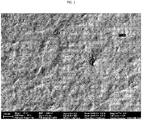
FIG. 1 is a low-magnification (81X) scanning electron microscopy (SEM) image of a surface of paper coated with coating A according to Example 2. -
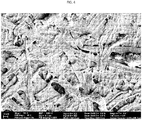
FIG. 2 is a low-magnification (81X) scanning electron microscopy (SEM) image of a surface of paper coated with coating B according to Example 2. -
FIG. 3 is a high-magnification (183X) scanning electron microscopy (SEM) image of a surface of paper coated with coating A according to Example 2. -
FIG. 4 is a high-magnification (183X) scanning electron microscopy (SEM) image of a surface of paper coated with coating B according to Example 2. -
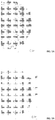
FIG. 5A is an image of paper coated with a starch and polyvinyl alcohol coating and a silicone coating, after stain testing, according to Example 4 -
FIG. 5B is an image of paper coated with a PLA/Clay composite coating and a silicone coating, after stain testing, according to Example 4. - The liquid can be any liquid suitable for use with the polymer precursor and dispersed-phase precursor under the conditions of the methods. The liquid can be used to aid in spreading the polymer precursor over large quantities of dispersed inorganic material prior to undergoing recation. Suitable liquides include water, waxes, fatty acids, polyamides, polyesters and the like. In some embodiments, the liquid is water.
- The temperature refers to the temperature of the mixture. In some embodiments, the temperature is between about 70 °C and about 200 °C. In some embodiments, the temperature is between about 120 °C and about 170 °C. If a correlation between the temperature of the mixture and a different temperature (e.g., of the reaction vessel, of the atmosphere within the reaction vessel) is established, it is possible to monitor the temperature of the mixture using this surrogate temperature.
- In some embodiments, the pressure is between about 10 millitorr and about 250 torr. In some embodiments, pressure is between about 10 millitorr and about 50 torr. In some embodiments, the pressure is between about 10 millitorr and about 1 torr.
- In some embodiments, the temperature is between about 120 °C and about 170 °C; and the pressure is between about 10 millitorr and about 1 torr.
- The boiling point of the liquid and reaction product refers to the boiling point at the pressure of the reaction conditions. When more than one liquid is present, it refers to the highest boiling point of any liquid present. Where appropriate, it refers to an azeotrope between two or more liquids. The reaction product will typically be a small molecule that is a liquid (under ambient conditions). In some embodiments, the reaction product is water. In some embodiments, the reaction product is methanol. In some embodiments, the reaction product is ethanol. In some embodiments, the reaction product is peroxide. In some embodiments, both the liquid and the reaction product are water.
- The polymer precursor is an organic acid selected from lactic acid, itaconic acid and citric acid.
- The dispersed-phase precursor comprises an inorganic material or fibrous material.
- In some embodiments, the dispersed-phase precursor is an inorganic material. In some embodiments, the inorganic material is clay, talc, aluminum trihydrate, barium sulfate, a metal oxide or a silicate. Silicates include oxides (e.g.,quartz family) and alumino-silicates (e.g., zeolites, benonites). In some embodiments, the inorganic material is clay. In some embodiments, the metal oxide is titanium dioxide or antimony oxide. In some embodiments, the silicate is an alumino-silicate.
- In some embodiments, the dispersed-phase precursor is a fibrous material. In some embodiments, the fibrous material is wood fiber, flax, cotton, hemp, jute, nanocellulose, rayon, polyester, nylon, aramid fibers, rock wool, mineral wool, asbestos or fiberglass. In some embodiments, the fibrous material is nanocellulose.
- In some embodiments, the invention is directed to a method of producing a composite material as described above, and further treating the composite material with a cross-linking agent.
- In some embodiments, the cross-linking agent is ammonium zirconium carbonate, potassium zirconium carbonate, a glyoxal, an aliphatic epoxy resin, a melamine formaldehyde resin or a blocked isocyanate. In some embodiments, the cross-linking agent is ammonium zirconium carbonate, potassium zirconium carbonate or glyoxal.
- In some embodiments, one or more additional components are blended with the mixture as the composite material is being formed, when the conditions of hydrophobicity, pH, viscosity, etc. are advantageous. This can be during polymerization, or after the polymerization reaction is essentially complete. Advantageously, this permits the addition of materials to the composites that would otherwise be very difficult to do or that are inherently incompatible with the composite in its final form (e.g., a hydrophilic cellulose fiber or hydrous clay into a hydrophobic, high viscosity polymer matrix).
- In some embodiments, the mixture is blended with a light-scattering compound. In some embodiments, a light-scattering compound changes the light-scattering coefficient (s) of the material to which it is added by about 10 cm2/g or more. In some embodiments, the mixture is blended with a light-absorbing compound. In some embodiments, a light-absorbing compound changes the light-absorption coefficient (k) of the material to which it is added by about 0.1 cm2/g or more. The coefficients s and k are to be understood in terms of Kubelka-Munk theory as described in the Technical Association of Pulp and Paper Industries (TAPPI) Standard Practice T 1214 sp-12 "Interrelation of reflectance, reflectivity; TAPPI opacity; scattering and absorption."
- In some embodiments, the mixture is blended with a fluorescent compound. In some embodiments, a fluorescent compound is an Optical Brightening Agent (OBA), i.e, a dye that absorbs energy in the uv portion of the electromagnetic spectrum and emits energy in the visible light portion. In some embodiments, an OBA increases the TAPPI Brightness (measured according to T-452) of the material to which it is added by about 0.2 points or more.
- In some embodiments, the mixture is blended with a low-density material. A low-density material has a specific gravity less than the polymer of the composite. In some embodiments, a low-density material is hollow plastic pigment, vermiculite or pearlite.
- The methods of the invention are capable of producing composite materials with a higher dispersed phase concentration, a lower viscosity and/or a higher degree of dispersion and/or distribution than is possible with existing methods.
- In some embodiments, the composite material has a weight concentration of nanocellulose of 5%, 6%, 7%, 8%, 9%, 10% or higher (e.g., 15%, 20%, 25%, 30%, 40% or 50%). In such a material, the nanocellulose is well dispersed and the composite material is easily pumped. The high solids dispersion of nanocellulose presents an expanded opportunity to incorporate sufficient fractions of the material into paper coating, paints and composites to improve properties of these materials.
- In addition to the high degree of particle dispersion in the composite, these embodiments also have the advantage of improved compatibility of nanocellulose when used as a reinforcing agent in hydrophobic systems such as high molecular weight polylactic acid, polyethylene, polypropylene, and other plastics and composites.
- In some embodiments, the composite material has a weight concentration of clay of 75%, 77%, 79% or 80%. In such a material, the clay is well dispersed and the composite material is easily pumped.
- In the case of a high aspect ratio clay and lactic acid, a composite produced using the methods of the invention results in a well dispersed, high solids material with oligomer chemically reacted onto the surface of the clay. The elevated temperature and low pressure conditions that drive off the water present in the solution of lactic acid, the clay slurry and the water formed during the condensation reaction also drives off the layer of water strongly absorbed onto the surface of the clay, exposing a highly reactive mineral surface that reacts with the lactic acid, forming a highly stable chemical bond between the oligomer and the surface of the clay. Evidence of this chemical bond is demonstrated by the improved solvent resistance of the polymeric composite compared to that of a simple admixture of the same polylactic acid oligomer and clay, as demonstrated in Example 1.
- Binder migration in paper coatings, which takes place during the coating drying process, can lead to print quality problems. The chemical bond between the oligomer and the surface of clay particles in a composite produced by the methods of the invention immobilizes the composite within the coating layer when used as a coating binder. This minimizes binder migration during the drying of a coating and overcomes a limitation of conventional paper coating binders.
- The high solids composite can be used as a binder in paints and coatings, replacing higher cost, non-biodegradable petroleum-based latex binders. The composite can also be used as a reinforcing agent in plastics and other composites. The composite can be cross-linked, using compounds such as AZC, KZC or glyoxal, further enhancing its binding and reinforcing properties.
- The compositions produced by this method have been demonstrated to be useful as a coating for paper, wood, cloth, metal, plastic, film or foil. As shown in Example 2, the reaction between the polymer and dispersed phase material produces a composite that promotes improved coverage of the substrate compared to a composite made by simply blending the polymer and dispered phase materials together.
- This example demonstrates the improved chemical resistance of the composite material produced according to the methods of the invention.
- Three composites, labeled Composite A - C, were produced according to the methods of the invention by blending a polymer precursor and various dispersed-phase precursors, in accordance with Table 1, and subjected to a temperature of 150 °C and a step-wise decrease in pressure from atmospheric pressure to 28 torr until substantially all of the water was removed. A fourth composite, Composite D, is a simple mixture of polylactic acid polymer blended, but not reacted with, talc.
Table 1. Compositions prior to methylene chloride extraction. Composite Polymer Precursor Dispersed Phase Precursor Identity Amount (gms) Identity Amount (gms) A lactic acid 5.623 talc 13.120 B lactic acid 5.588 dispersed clay 13.038 C lactic acid 4.778 non-dispersed clay 11.148 D lactic acid 9.070 talc 9.072 - The composites were then refluxed with methylene chloride for four hours and the composition of the resulting residual was determined analyzed by adapting Tappi standard method T211 om-85 "Ash in wood and pulp". The composition of the resulting material is presented in Table 2 below for each composite described in Table 1.
Table 2. Compositions following methylene chloride extraction. Composite Polymer Precursor Dispersed Phase Precursor Polymer Extracted Identity Amount (gms) Identity Amount (gms) A lactic acid 1.042 talc 12.800 81% B lactic acid 1.124 dispersed clay 13.020 80% C lactic acid 1.321 non-dispersed clay 11.102 72% D lactic acid 0.000 talc 8.412 100% - Polylactic acid is soluble in methylene chloride. As shown in Table 2, Composites A, B and C, produced according to the methods of the invention, demonstrated a significant resistance to dissolution by the methylene chloride solvent compared to Composite D, a mixture of polylactic acid polymer blended, but not reacted with, talc.
- This example demonstrates the improved substrate coverage for the composite material of the invention.
- Two coatings of similar composition, designated A and B, were prepared. Coating A was prepared according to the methods of the invention (labeled as "reacted" in Table 3, below). Coating B is a blended (non-reacted) composition. The composition of the coatings is shown in Table 3.
Table 3. Coating Compositions. Coating Method Polymer Precursor Dispersed Phase Precursor Identity % wt Identity % wt A Reacted lactic acid 96 nanocellulose 4 B Blended lactic acid 96 nanocellulose 4 - A paper coating substrate with a nominal basis weight of 32 grams per m2, typical of light weight packaging papers, was coated with coatings A and B using a standard laboratory coating draw-down method. The coatings were applied at a coatweight of approximately 10 grams per m2, as determined gravimetrically.
- Scanning electron microscope images were taken of the coated paper surfaces as shown in
FIG. 1-4 . The microphotographs clearly show the improved substrate coverage for the composition of the invention compared to the similar composition which was blended. - A flooded nip size press is often used to apply sizing or a surface coating to a broad range of paper grades, including printing and writing and packaging grades. One of the benefits of this coating application is to seal the surface of the paper, thereby improving print quality and/or reducing air porosity.
- This type of coating application method is limited to low viscosity coating formulations (less than 700 cps Brookfield viscosity) to prevent coating rejection at the nip and poor coating coverage. For starch-based coating formulations, this limits coating solids to 15% solids or less and, therefore, the level of coat weight that can be applied to the surface of the paper.
- A nominal 38 gsm uncoated paper, made from bleached chemical pulp, was coated on the pilot paper machine at the University of Maine using a conventional, inclined, flooded nip size press. A typical 96 wt% starch and 4 wt% polyvinyl alcohol coating formulation at 15% solids was used as the control coating and compared to a coating containing a poly-lactic acid (PLA)/Clay composite, made by the method of the invention, at 54% solids. Both coating formulations exhibited similar viscosities and both performed well on the coater. As shown in Table 4, the results of the paper testing shows that the PLA/Clay composite was much more effective in developing low air permeability compared to the standard starch/PVA formulation.
Table 4. Coated Paper. Sample Gurley Porosity, sec (for 100 cc air) Coating % solids Uncoated Base Paper 17.3 N/A Base Paper with Control Coating 21.8 15.1% Base Paper with PLA/Clay coating 222 54.1% - A release base paper grade was produced using the pilot paper machine at the University of Maine with a nominal basis weight of 80 gm/m2. The fiber furnish was 70% northern bleached hardwood kraft and 30% northern bleached softwood kraft, refined to a freeness of 200 ml Canadian Standard Freeness. Cellulose nanofibrils and cooked corn starch were blended together and added to the furnish at a rate of 200 Ib/ton of fiber. The pH of the wet end was maintained at approximately 7 and no filler was added to the furnish.
- An inclined size press was used to apply two separate size press coating formulations to the basepaper. The first formation was a blend of 96 wt% starch and 4 wt% polyvinyl alcohol and the second coating formulation was a 70% PLA and 30% Clay novel composite material produced according to the invention. Both sets of papers were then calendared using a hot, soft nip calendar with 3000 pli of pressure and a roll surface temperature of 200 F.
- Both papers were then silicone coated with 0.71 Ib of silicone/3000ft2 of paper. A test ink was applied to the surface of the paper and the unabsorbed ink wiped with a cloth. The ink that penetrated into the structure of the paper remained leaving a dark stain pattern in the test sample.
-
Figure 5A is an image of the starch/PVA coated samples after the test stain was applied to the surface and wiped clean.Figure 5B is an image of the PLA/Clay coated paper sample after the ink stain test. A comparison of the two test samples shows the improved barrier properties for the PLA/Clay composite coated sample compared to the starch/PVA coated paper.
Claims (14)
- A method of producing a composite material having a matrix and a dispersed phase, comprising:(A) providing a mixture, comprising:(i) a liquid;(ii) a polymer precursor, wherein the polymer precursor comprises an organic acid, wherein the organic acid is lactic acid, itaconic acid or citric acid; and(iii) a dispersed-phase precursor, wherein the dispersed-phase precursor comprises an inorganic material or fibrous material;and(B) subjecting the mixture to reaction conditions sufficient:whereby the matrix comprises the polymer, and the dispersed phase comprises the dispersed-phase precursor dispersed within the matrix.(i) to effect polymerization of the polymer precursor to produce a polymer and a reaction product; and(ii) to remove substantially all the liquid and reaction product from the mixture;
wherein said reaction conditions comprise:(a) pressure between about 10 millitorr (1.3 Pa) and about 300 torr (400 hPa); and(b) temperature:(i) greater than or equal to the highest boiling point of the liquid and reaction product;(ii) less than the decomposition temperature of the polymer; and(iii) less than the decomposition temperature of the dispersed-phase precursor; - The method according to claim 1, wherein the temperature is: (a) between about 70 °C and about 200 °C; or (b) between about 120 °C and about 170 °C.
- The method according to claim 1, wherein the pressure is: (a) between about 10 millitorr (1.3 Pa) and about 250 torr (333 hPa); (b) between about 10 millitorr (1.3 Pa) and about 50 torr (67 hPa); or (c) between about 10 millitorr (1.3 Pa) and about 1 torr (133 Pa).
- The method according to claim 1, wherein:the temperature is between about 120 °C and about 170 °C; andthe pressure is between about 10 millitorr (1.3 Pa) and about 1 torr (133 Pa).
- The method according to any of claims 1-4, wherein the inorganic material comprises clay.
- The method according to claim 1, wherein the inorganic material comprises talc, aluminum trihydrate, barium sulfate, a metal oxide or a silicate, optionally wherein: (a) the metal oxide is titanium dioxide or antimony oxide; or (b) the silicate is an alumino-silicate.
- The method according to any of claims 1-4, wherein the fibrous material comprises wood fiber, flax, cotton, hemp, jute, nanocellulose, rayon, polyester, nylon, aramid fibers, rock wool, mineral wool, asbestos or fiberglass.
- The method according to any of claims 1-7, wherein the liquid comprises water.
- The method according to any of claims 1-8, wherein the reaction product is water.
- The method according to any of claims 1-9, further comprising treating the composite material with a cross-linking agent.
- The method according to claim 10, wherein the cross-linking agent comprises ammonium zirconium carbonate, potassium zirconium carbonate, a glyoxal, an aliphatic epoxy resin, a melamine formaldehyde resin or a blocked isocyanate.
- The method according to claim 11, wherein the cross-linking agent comprises ammonium zirconium carbonate, potassium zirconium carbonate, or glyoxal.
- The method according to any of claims 1-9, further comprising blending the mixture with: (a) a light-scattering compound; (b) a light-absorbing compound; (c) a fluorescent compound; or (d) low-density material.
- A composite material produced by the method according to any one of claims 1-13.
Applications Claiming Priority (2)
| Application Number | Priority Date | Filing Date | Title |
|---|---|---|---|
| US201361829395P | 2013-05-31 | 2013-05-31 | |
| PCT/US2014/040268 WO2014194215A2 (en) | 2013-05-31 | 2014-05-30 | Polymeric composite materials and methods of making them |
Publications (2)
| Publication Number | Publication Date |
|---|---|
| EP3004222A2 EP3004222A2 (en) | 2016-04-13 |
| EP3004222B1 true EP3004222B1 (en) | 2018-12-05 |
Family
ID=51059618
Family Applications (1)
| Application Number | Title | Priority Date | Filing Date |
|---|---|---|---|
| EP14734668.8A Active EP3004222B1 (en) | 2013-05-31 | 2014-05-30 | Polymeric composite materials and methods of making them |
Country Status (6)
| Country | Link |
|---|---|
| US (3) | US9944789B2 (en) |
| EP (1) | EP3004222B1 (en) |
| BR (1) | BR112015029624B1 (en) |
| CA (1) | CA2913605C (en) |
| MX (1) | MX364784B (en) |
| WO (1) | WO2014194215A2 (en) |
Families Citing this family (3)
| Publication number | Priority date | Publication date | Assignee | Title |
|---|---|---|---|---|
| ES2625421T3 (en) * | 2012-06-15 | 2017-07-19 | University Of Maine System Board Of Trustees | Non-stick paper and processing method |
| WO2014194215A2 (en) * | 2013-05-31 | 2014-12-04 | University Of Maine System Board Of Trustees | Polymeric composite materials and methods of making them |
| US10662327B2 (en) * | 2016-10-28 | 2020-05-26 | GranBio Intellectual Property Holdings, LLC | Nanocellulose nucleating agents for crystallization of polylactides and other polymers |
Family Cites Families (15)
| Publication number | Priority date | Publication date | Assignee | Title |
|---|---|---|---|---|
| DE19820302A1 (en) * | 1998-05-04 | 2000-02-24 | Basf Ag | Core / shell particles, their manufacture and use |
| US6632894B1 (en) * | 1999-12-30 | 2003-10-14 | Phillips Petroleum Company | Organometal catalyst compositions |
| US6824700B2 (en) * | 2003-01-15 | 2004-11-30 | Delphi Technologies, Inc. | Glycol-based MR fluids with thickening agent |
| US20060141183A1 (en) * | 2004-12-22 | 2006-06-29 | Williamson David T | Polyester clay nanocomposites for barrier applications |
| WO2006102669A1 (en) * | 2005-03-24 | 2006-09-28 | E. I. Du Pont De Nemours And Company | Process for uniformly dispersing particles in a polymer |
| US20060270806A1 (en) * | 2005-05-26 | 2006-11-30 | Hale Wesley R | Miscible high Tg polyester/polymer blend compositions and films formed therefrom |
| US20090286023A1 (en) * | 2005-09-16 | 2009-11-19 | Pactiv Corporation | Polymer films with treated fillers and improved properties and products and methods using same |
| US20080315453A1 (en) * | 2007-06-22 | 2008-12-25 | Michael Joseph Molitor | Process for the production of polyester nanocomposites |
| ES2864172T3 (en) * | 2007-11-08 | 2021-10-13 | Univ Maine System | Lightweight composite article with controlled biodegradation |
| EP2547505A1 (en) * | 2010-03-16 | 2013-01-23 | Andersen Corporation | Sustainable compositions, related methods, and members formed therefrom |
| US20120065294A1 (en) * | 2010-09-10 | 2012-03-15 | Alliant Techsystems Inc. | Insulative compositions, article incorporating the same and methods of forming the same |
| US9358576B2 (en) * | 2010-11-05 | 2016-06-07 | International Paper Company | Packaging material having moisture barrier and methods for preparing same |
| CN103044911B (en) * | 2012-12-21 | 2015-02-04 | 湖北工业大学 | Nylon 6/plant fiber composite material and preparation method thereof |
| WO2014194215A2 (en) * | 2013-05-31 | 2014-12-04 | University Of Maine System Board Of Trustees | Polymeric composite materials and methods of making them |
| US11148885B1 (en) | 2020-12-29 | 2021-10-19 | Dos Santos International | Trailing sandwich conveyor system for continuous mining machines along a high-angle tunnel |
-
2014
- 2014-05-30 WO PCT/US2014/040268 patent/WO2014194215A2/en not_active Ceased
- 2014-05-30 MX MX2015016396A patent/MX364784B/en active IP Right Grant
- 2014-05-30 EP EP14734668.8A patent/EP3004222B1/en active Active
- 2014-05-30 US US14/894,120 patent/US9944789B2/en not_active Expired - Fee Related
- 2014-05-30 BR BR112015029624-6A patent/BR112015029624B1/en not_active IP Right Cessation
- 2014-05-30 CA CA2913605A patent/CA2913605C/en active Active
-
2018
- 2018-03-05 US US15/911,506 patent/US11485850B2/en active Active
-
2022
- 2022-09-26 US US17/952,400 patent/US11732127B2/en active Active
Non-Patent Citations (1)
| Title |
|---|
| None * |
Also Published As
| Publication number | Publication date |
|---|---|
| US20160102201A1 (en) | 2016-04-14 |
| WO2014194215A2 (en) | 2014-12-04 |
| US11485850B2 (en) | 2022-11-01 |
| BR112015029624A2 (en) | 2017-07-25 |
| BR112015029624B1 (en) | 2020-12-01 |
| US20180194939A1 (en) | 2018-07-12 |
| CA2913605A1 (en) | 2014-12-04 |
| CA2913605C (en) | 2021-10-19 |
| MX364784B (en) | 2019-05-07 |
| MX2015016396A (en) | 2016-09-16 |
| WO2014194215A3 (en) | 2015-03-05 |
| US11732127B2 (en) | 2023-08-22 |
| EP3004222A2 (en) | 2016-04-13 |
| US20230117442A1 (en) | 2023-04-20 |
| US9944789B2 (en) | 2018-04-17 |
Similar Documents
| Publication | Publication Date | Title |
|---|---|---|
| US11732127B2 (en) | Polymeric composite materials and methods of making them | |
| DK2740685T3 (en) | PROCEDURE FOR MANUFACTURING A COATED PACKAGING MATERIAL AND PACKAGING MATERIAL WITH AT LEAST ONE LAYOUT FOR HYDROPHOBIC COMPOUNDS | |
| EP4146866B1 (en) | Coated paper substrate suitable for metallization | |
| EP2529942B1 (en) | Process for manufacturing coated substrates | |
| CN101903596B (en) | Base paper for decorative coating materials | |
| WO2011056130A1 (en) | A coated substrate, a process for production of a coated substrate, a package and a dispersion coating | |
| WO2017179740A1 (en) | Barrier paper and paper cup | |
| CA3179407A1 (en) | Process for production of nano-coated substrate | |
| Yenidoğan | Nanocrystalline cellulose and polyvinyl alcohol coating application to cardboard packaging papers and investigation of the effects on paper properties | |
| Schnell et al. | Coatings of xylan/chitosan complexes reinforced with micro/nanocellulose for food packaging applications | |
| Orelma et al. | Improving mechanical performance and functionality of birch veneer with mechano-enzymatic microfibrillated cellulose coating | |
| WO2025133894A1 (en) | Coated paper or paperboard | |
| AU2012264985B2 (en) | Process for manufacturing coated substrates | |
| US20140065412A1 (en) | Dispersed nanoparticles in transparent coatings | |
| Lee et al. | Starch composites and their reduction of air permeation for self-extinguishable paper | |
| Orelma et al. | Improving mechanical performance and functionality of birch veneer with mechano-enzymatic nanocellulose coating | |
| WO2025229256A1 (en) | Aqueous suberin dispersion | |
| KR20170096245A (en) | Registry for security documents | |
| WO2026062489A1 (en) | Light-barrier coating for paper and paperboard | |
| EP4448286A1 (en) | Coating agent for paper base material | |
| CN121311418A (en) | Environmentally friendly packaging materials | |
| Mirvakili | Surface engineering of wood fiber/filler networks | |
| DE102022106229A1 (en) | Paper-based composite as food packaging material |
Legal Events
| Date | Code | Title | Description |
|---|---|---|---|
| PUAI | Public reference made under article 153(3) epc to a published international application that has entered the european phase |
Free format text: ORIGINAL CODE: 0009012 |
|
| 17P | Request for examination filed |
Effective date: 20160104 |
|
| AK | Designated contracting states |
Kind code of ref document: A2 Designated state(s): AL AT BE BG CH CY CZ DE DK EE ES FI FR GB GR HR HU IE IS IT LI LT LU LV MC MK MT NL NO PL PT RO RS SE SI SK SM TR |
|
| AX | Request for extension of the european patent |
Extension state: BA ME |
|
| STAA | Information on the status of an ep patent application or granted ep patent |
Free format text: STATUS: EXAMINATION IS IN PROGRESS |
|
| 17Q | First examination report despatched |
Effective date: 20171208 |
|
| GRAP | Despatch of communication of intention to grant a patent |
Free format text: ORIGINAL CODE: EPIDOSNIGR1 |
|
| STAA | Information on the status of an ep patent application or granted ep patent |
Free format text: STATUS: GRANT OF PATENT IS INTENDED |
|
| INTG | Intention to grant announced |
Effective date: 20180620 |
|
| RAX | Requested extension states of the european patent have changed |
Extension state: BA Payment date: 20160411 Extension state: ME Payment date: 20160411 |
|
| GRAS | Grant fee paid |
Free format text: ORIGINAL CODE: EPIDOSNIGR3 |
|
| GRAA | (expected) grant |
Free format text: ORIGINAL CODE: 0009210 |
|
| STAA | Information on the status of an ep patent application or granted ep patent |
Free format text: STATUS: THE PATENT HAS BEEN GRANTED |
|
| AK | Designated contracting states |
Kind code of ref document: B1 Designated state(s): AL AT BE BG CH CY CZ DE DK EE ES FI FR GB GR HR HU IE IS IT LI LT LU LV MC MK MT NL NO PL PT RO RS SE SI SK SM TR |
|
| AX | Request for extension of the european patent |
Extension state: BA ME |
|
| REG | Reference to a national code |
Ref country code: GB Ref legal event code: FG4D |
|
| REG | Reference to a national code |
Ref country code: CH Ref legal event code: EP |
|
| REG | Reference to a national code |
Ref country code: AT Ref legal event code: REF Ref document number: 1072970 Country of ref document: AT Kind code of ref document: T Effective date: 20181215 |
|
| REG | Reference to a national code |
Ref country code: IE Ref legal event code: FG4D |
|
| REG | Reference to a national code |
Ref country code: DE Ref legal event code: R096 Ref document number: 602014037408 Country of ref document: DE |
|
| REG | Reference to a national code |
Ref country code: NL Ref legal event code: MP Effective date: 20181205 |
|
| REG | Reference to a national code |
Ref country code: AT Ref legal event code: MK05 Ref document number: 1072970 Country of ref document: AT Kind code of ref document: T Effective date: 20181205 |
|
| REG | Reference to a national code |
Ref country code: LT Ref legal event code: MG4D |
|
| PG25 | Lapsed in a contracting state [announced via postgrant information from national office to epo] |
Ref country code: LV Free format text: LAPSE BECAUSE OF FAILURE TO SUBMIT A TRANSLATION OF THE DESCRIPTION OR TO PAY THE FEE WITHIN THE PRESCRIBED TIME-LIMIT Effective date: 20181205 Ref country code: AT Free format text: LAPSE BECAUSE OF FAILURE TO SUBMIT A TRANSLATION OF THE DESCRIPTION OR TO PAY THE FEE WITHIN THE PRESCRIBED TIME-LIMIT Effective date: 20181205 Ref country code: FI Free format text: LAPSE BECAUSE OF FAILURE TO SUBMIT A TRANSLATION OF THE DESCRIPTION OR TO PAY THE FEE WITHIN THE PRESCRIBED TIME-LIMIT Effective date: 20181205 Ref country code: HR Free format text: LAPSE BECAUSE OF FAILURE TO SUBMIT A TRANSLATION OF THE DESCRIPTION OR TO PAY THE FEE WITHIN THE PRESCRIBED TIME-LIMIT Effective date: 20181205 Ref country code: NO Free format text: LAPSE BECAUSE OF FAILURE TO SUBMIT A TRANSLATION OF THE DESCRIPTION OR TO PAY THE FEE WITHIN THE PRESCRIBED TIME-LIMIT Effective date: 20190305 Ref country code: BG Free format text: LAPSE BECAUSE OF FAILURE TO SUBMIT A TRANSLATION OF THE DESCRIPTION OR TO PAY THE FEE WITHIN THE PRESCRIBED TIME-LIMIT Effective date: 20190305 Ref country code: ES Free format text: LAPSE BECAUSE OF FAILURE TO SUBMIT A TRANSLATION OF THE DESCRIPTION OR TO PAY THE FEE WITHIN THE PRESCRIBED TIME-LIMIT Effective date: 20181205 Ref country code: LT Free format text: LAPSE BECAUSE OF FAILURE TO SUBMIT A TRANSLATION OF THE DESCRIPTION OR TO PAY THE FEE WITHIN THE PRESCRIBED TIME-LIMIT Effective date: 20181205 |
|
| PG25 | Lapsed in a contracting state [announced via postgrant information from national office to epo] |
Ref country code: RS Free format text: LAPSE BECAUSE OF FAILURE TO SUBMIT A TRANSLATION OF THE DESCRIPTION OR TO PAY THE FEE WITHIN THE PRESCRIBED TIME-LIMIT Effective date: 20181205 Ref country code: GR Free format text: LAPSE BECAUSE OF FAILURE TO SUBMIT A TRANSLATION OF THE DESCRIPTION OR TO PAY THE FEE WITHIN THE PRESCRIBED TIME-LIMIT Effective date: 20190306 Ref country code: SE Free format text: LAPSE BECAUSE OF FAILURE TO SUBMIT A TRANSLATION OF THE DESCRIPTION OR TO PAY THE FEE WITHIN THE PRESCRIBED TIME-LIMIT Effective date: 20181205 Ref country code: AL Free format text: LAPSE BECAUSE OF FAILURE TO SUBMIT A TRANSLATION OF THE DESCRIPTION OR TO PAY THE FEE WITHIN THE PRESCRIBED TIME-LIMIT Effective date: 20181205 |
|
| PG25 | Lapsed in a contracting state [announced via postgrant information from national office to epo] |
Ref country code: NL Free format text: LAPSE BECAUSE OF FAILURE TO SUBMIT A TRANSLATION OF THE DESCRIPTION OR TO PAY THE FEE WITHIN THE PRESCRIBED TIME-LIMIT Effective date: 20181205 |
|
| PG25 | Lapsed in a contracting state [announced via postgrant information from national office to epo] |
Ref country code: PL Free format text: LAPSE BECAUSE OF FAILURE TO SUBMIT A TRANSLATION OF THE DESCRIPTION OR TO PAY THE FEE WITHIN THE PRESCRIBED TIME-LIMIT Effective date: 20181205 Ref country code: PT Free format text: LAPSE BECAUSE OF FAILURE TO SUBMIT A TRANSLATION OF THE DESCRIPTION OR TO PAY THE FEE WITHIN THE PRESCRIBED TIME-LIMIT Effective date: 20190405 Ref country code: CZ Free format text: LAPSE BECAUSE OF FAILURE TO SUBMIT A TRANSLATION OF THE DESCRIPTION OR TO PAY THE FEE WITHIN THE PRESCRIBED TIME-LIMIT Effective date: 20181205 Ref country code: IT Free format text: LAPSE BECAUSE OF FAILURE TO SUBMIT A TRANSLATION OF THE DESCRIPTION OR TO PAY THE FEE WITHIN THE PRESCRIBED TIME-LIMIT Effective date: 20181205 |
|
| PG25 | Lapsed in a contracting state [announced via postgrant information from national office to epo] |
Ref country code: RO Free format text: LAPSE BECAUSE OF FAILURE TO SUBMIT A TRANSLATION OF THE DESCRIPTION OR TO PAY THE FEE WITHIN THE PRESCRIBED TIME-LIMIT Effective date: 20181205 Ref country code: IS Free format text: LAPSE BECAUSE OF FAILURE TO SUBMIT A TRANSLATION OF THE DESCRIPTION OR TO PAY THE FEE WITHIN THE PRESCRIBED TIME-LIMIT Effective date: 20190405 Ref country code: SK Free format text: LAPSE BECAUSE OF FAILURE TO SUBMIT A TRANSLATION OF THE DESCRIPTION OR TO PAY THE FEE WITHIN THE PRESCRIBED TIME-LIMIT Effective date: 20181205 Ref country code: EE Free format text: LAPSE BECAUSE OF FAILURE TO SUBMIT A TRANSLATION OF THE DESCRIPTION OR TO PAY THE FEE WITHIN THE PRESCRIBED TIME-LIMIT Effective date: 20181205 Ref country code: SM Free format text: LAPSE BECAUSE OF FAILURE TO SUBMIT A TRANSLATION OF THE DESCRIPTION OR TO PAY THE FEE WITHIN THE PRESCRIBED TIME-LIMIT Effective date: 20181205 |
|
| REG | Reference to a national code |
Ref country code: DE Ref legal event code: R097 Ref document number: 602014037408 Country of ref document: DE |
|
| PLBE | No opposition filed within time limit |
Free format text: ORIGINAL CODE: 0009261 |
|
| STAA | Information on the status of an ep patent application or granted ep patent |
Free format text: STATUS: NO OPPOSITION FILED WITHIN TIME LIMIT |
|
| PG25 | Lapsed in a contracting state [announced via postgrant information from national office to epo] |
Ref country code: SI Free format text: LAPSE BECAUSE OF FAILURE TO SUBMIT A TRANSLATION OF THE DESCRIPTION OR TO PAY THE FEE WITHIN THE PRESCRIBED TIME-LIMIT Effective date: 20181205 Ref country code: DK Free format text: LAPSE BECAUSE OF FAILURE TO SUBMIT A TRANSLATION OF THE DESCRIPTION OR TO PAY THE FEE WITHIN THE PRESCRIBED TIME-LIMIT Effective date: 20181205 |
|
| 26N | No opposition filed |
Effective date: 20190906 |
|
| REG | Reference to a national code |
Ref country code: CH Ref legal event code: PL |
|
| PG25 | Lapsed in a contracting state [announced via postgrant information from national office to epo] |
Ref country code: LI Free format text: LAPSE BECAUSE OF NON-PAYMENT OF DUE FEES Effective date: 20190531 Ref country code: MC Free format text: LAPSE BECAUSE OF FAILURE TO SUBMIT A TRANSLATION OF THE DESCRIPTION OR TO PAY THE FEE WITHIN THE PRESCRIBED TIME-LIMIT Effective date: 20181205 Ref country code: CH Free format text: LAPSE BECAUSE OF NON-PAYMENT OF DUE FEES Effective date: 20190531 |
|
| REG | Reference to a national code |
Ref country code: BE Ref legal event code: MM Effective date: 20190531 |
|
| PG25 | Lapsed in a contracting state [announced via postgrant information from national office to epo] |
Ref country code: LU Free format text: LAPSE BECAUSE OF NON-PAYMENT OF DUE FEES Effective date: 20190530 |
|
| PG25 | Lapsed in a contracting state [announced via postgrant information from national office to epo] |
Ref country code: TR Free format text: LAPSE BECAUSE OF FAILURE TO SUBMIT A TRANSLATION OF THE DESCRIPTION OR TO PAY THE FEE WITHIN THE PRESCRIBED TIME-LIMIT Effective date: 20181205 |
|
| PG25 | Lapsed in a contracting state [announced via postgrant information from national office to epo] |
Ref country code: IE Free format text: LAPSE BECAUSE OF NON-PAYMENT OF DUE FEES Effective date: 20190530 |
|
| PG25 | Lapsed in a contracting state [announced via postgrant information from national office to epo] |
Ref country code: BE Free format text: LAPSE BECAUSE OF NON-PAYMENT OF DUE FEES Effective date: 20190531 |
|
| PG25 | Lapsed in a contracting state [announced via postgrant information from national office to epo] |
Ref country code: CY Free format text: LAPSE BECAUSE OF FAILURE TO SUBMIT A TRANSLATION OF THE DESCRIPTION OR TO PAY THE FEE WITHIN THE PRESCRIBED TIME-LIMIT Effective date: 20181205 |
|
| PG25 | Lapsed in a contracting state [announced via postgrant information from national office to epo] |
Ref country code: MT Free format text: LAPSE BECAUSE OF FAILURE TO SUBMIT A TRANSLATION OF THE DESCRIPTION OR TO PAY THE FEE WITHIN THE PRESCRIBED TIME-LIMIT Effective date: 20181205 Ref country code: HU Free format text: LAPSE BECAUSE OF FAILURE TO SUBMIT A TRANSLATION OF THE DESCRIPTION OR TO PAY THE FEE WITHIN THE PRESCRIBED TIME-LIMIT; INVALID AB INITIO Effective date: 20140530 |
|
| PG25 | Lapsed in a contracting state [announced via postgrant information from national office to epo] |
Ref country code: MK Free format text: LAPSE BECAUSE OF FAILURE TO SUBMIT A TRANSLATION OF THE DESCRIPTION OR TO PAY THE FEE WITHIN THE PRESCRIBED TIME-LIMIT Effective date: 20181205 |
|
| P01 | Opt-out of the competence of the unified patent court (upc) registered |
Effective date: 20230515 |
|
| PGFP | Annual fee paid to national office [announced via postgrant information from national office to epo] |
Ref country code: FR Payment date: 20230525 Year of fee payment: 10 Ref country code: DE Payment date: 20230530 Year of fee payment: 10 |
|
| PGFP | Annual fee paid to national office [announced via postgrant information from national office to epo] |
Ref country code: GB Payment date: 20230529 Year of fee payment: 10 |
|
| REG | Reference to a national code |
Ref country code: DE Ref legal event code: R119 Ref document number: 602014037408 Country of ref document: DE |
|
| GBPC | Gb: european patent ceased through non-payment of renewal fee |
Effective date: 20240530 |
|
| PG25 | Lapsed in a contracting state [announced via postgrant information from national office to epo] |
Ref country code: DE Free format text: LAPSE BECAUSE OF NON-PAYMENT OF DUE FEES Effective date: 20241203 |
|
| PG25 | Lapsed in a contracting state [announced via postgrant information from national office to epo] |
Ref country code: FR Free format text: LAPSE BECAUSE OF NON-PAYMENT OF DUE FEES Effective date: 20240531 |
|
| PG25 | Lapsed in a contracting state [announced via postgrant information from national office to epo] |
Ref country code: GB Free format text: LAPSE BECAUSE OF NON-PAYMENT OF DUE FEES Effective date: 20240530 |