EP3001346A1 - Directory service device, client device, key cloud system, method thereof, and program - Google Patents
Directory service device, client device, key cloud system, method thereof, and program Download PDFInfo
- Publication number
- EP3001346A1 EP3001346A1 EP14826385.8A EP14826385A EP3001346A1 EP 3001346 A1 EP3001346 A1 EP 3001346A1 EP 14826385 A EP14826385 A EP 14826385A EP 3001346 A1 EP3001346 A1 EP 3001346A1
- Authority
- EP
- European Patent Office
- Prior art keywords
- key
- decryption
- cloud
- information
- name information
- Prior art date
- Legal status (The legal status is an assumption and is not a legal conclusion. Google has not performed a legal analysis and makes no representation as to the accuracy of the status listed.)
- Granted
Links
Images

Classifications
-
- H—ELECTRICITY
- H04—ELECTRIC COMMUNICATION TECHNIQUE
- H04L—TRANSMISSION OF DIGITAL INFORMATION, e.g. TELEGRAPHIC COMMUNICATION
- H04L63/00—Network architectures or network communication protocols for network security
- H04L63/06—Network architectures or network communication protocols for network security for supporting key management in a packet data network
- H04L63/061—Network architectures or network communication protocols for network security for supporting key management in a packet data network for key exchange, e.g. in peer-to-peer networks
-
- H—ELECTRICITY
- H04—ELECTRIC COMMUNICATION TECHNIQUE
- H04L—TRANSMISSION OF DIGITAL INFORMATION, e.g. TELEGRAPHIC COMMUNICATION
- H04L9/00—Cryptographic mechanisms or cryptographic arrangements for secret or secure communications; Network security protocols
- H04L9/08—Key distribution or management, e.g. generation, sharing or updating, of cryptographic keys or passwords
- H04L9/0816—Key establishment, i.e. cryptographic processes or cryptographic protocols whereby a shared secret becomes available to two or more parties, for subsequent use
- H04L9/0819—Key transport or distribution, i.e. key establishment techniques where one party creates or otherwise obtains a secret value, and securely transfers it to the other(s)
- H04L9/0822—Key transport or distribution, i.e. key establishment techniques where one party creates or otherwise obtains a secret value, and securely transfers it to the other(s) using key encryption key
-
- H—ELECTRICITY
- H04—ELECTRIC COMMUNICATION TECHNIQUE
- H04L—TRANSMISSION OF DIGITAL INFORMATION, e.g. TELEGRAPHIC COMMUNICATION
- H04L63/00—Network architectures or network communication protocols for network security
- H04L63/04—Network architectures or network communication protocols for network security for providing a confidential data exchange among entities communicating through data packet networks
- H04L63/0428—Network architectures or network communication protocols for network security for providing a confidential data exchange among entities communicating through data packet networks wherein the data content is protected, e.g. by encrypting or encapsulating the payload
- H04L63/0435—Network architectures or network communication protocols for network security for providing a confidential data exchange among entities communicating through data packet networks wherein the data content is protected, e.g. by encrypting or encapsulating the payload wherein the sending and receiving network entities apply symmetric encryption, i.e. same key used for encryption and decryption
-
- H—ELECTRICITY
- H04—ELECTRIC COMMUNICATION TECHNIQUE
- H04L—TRANSMISSION OF DIGITAL INFORMATION, e.g. TELEGRAPHIC COMMUNICATION
- H04L63/00—Network architectures or network communication protocols for network security
- H04L63/08—Network architectures or network communication protocols for network security for authentication of entities
- H04L63/0853—Network architectures or network communication protocols for network security for authentication of entities using an additional device, e.g. smartcard, SIM or a different communication terminal
-
- H—ELECTRICITY
- H04—ELECTRIC COMMUNICATION TECHNIQUE
- H04L—TRANSMISSION OF DIGITAL INFORMATION, e.g. TELEGRAPHIC COMMUNICATION
- H04L63/00—Network architectures or network communication protocols for network security
- H04L63/08—Network architectures or network communication protocols for network security for authentication of entities
- H04L63/0876—Network architectures or network communication protocols for network security for authentication of entities based on the identity of the terminal or configuration, e.g. MAC address, hardware or software configuration or device fingerprint
-
- H—ELECTRICITY
- H04—ELECTRIC COMMUNICATION TECHNIQUE
- H04L—TRANSMISSION OF DIGITAL INFORMATION, e.g. TELEGRAPHIC COMMUNICATION
- H04L67/00—Network arrangements or protocols for supporting network services or applications
- H04L67/50—Network services
- H04L67/60—Scheduling or organising the servicing of application requests, e.g. requests for application data transmissions using the analysis and optimisation of the required network resources
- H04L67/63—Routing a service request depending on the request content or context
-
- H—ELECTRICITY
- H04—ELECTRIC COMMUNICATION TECHNIQUE
- H04L—TRANSMISSION OF DIGITAL INFORMATION, e.g. TELEGRAPHIC COMMUNICATION
- H04L9/00—Cryptographic mechanisms or cryptographic arrangements for secret or secure communications; Network security protocols
- H04L9/08—Key distribution or management, e.g. generation, sharing or updating, of cryptographic keys or passwords
- H04L9/0861—Generation of secret information including derivation or calculation of cryptographic keys or passwords
- H04L9/0866—Generation of secret information including derivation or calculation of cryptographic keys or passwords involving user or device identifiers, e.g. serial number, physical or biometrical information, DNA, hand-signature or measurable physical characteristics
-
- H—ELECTRICITY
- H04—ELECTRIC COMMUNICATION TECHNIQUE
- H04L—TRANSMISSION OF DIGITAL INFORMATION, e.g. TELEGRAPHIC COMMUNICATION
- H04L2209/00—Additional information or applications relating to cryptographic mechanisms or cryptographic arrangements for secret or secure communication H04L9/00
- H04L2209/60—Digital content management, e.g. content distribution
Definitions
- the present invention relates to a technique for providing a cloud-key management type decryption service.
- Examples of information for uniquely specifying a device such as a server device on a network include name information (logical name) such as a fully qualified domain name (FQDN) and a netbios name and address information, such as an IP address, which is unique to a device.
- name information such as a fully qualified domain name (FQDN)
- FQDN fully qualified domain name
- IP address IP address
- a device name is commonly specified by name information such as a FQDN and a netbios name in communication
- the name information is converted into address information such as an IP address by utilizing name resolution such as a domain name system (DNS) and Windows (a registered trade mark) Internet Name Service (WINS), and communication with the device is started by using the address information.
- DNS domain name system
- WINS Windows (a registered trade mark) Internet Name Service
- the DNS server device tracks a hierarchy from a route server device of the DNS or requests name resolution from a server device of an upper stage, for example, so as to be able to return an IP address corresponding to the FQDN to the client (refer to Patent Literature 1).
- Non-Patent Literature 1 a cloud-key management type encryption for solving a key management issue of a decryption key (for example, a symmetric key in a case of a symmetric key cryptosystem and a private key in a case of a public key cryptosystem) is proposed and the general description of the system (cloud key system) is disclosed by a literature and the like (refer to Non-Patent Literature 1).
- Patent literature 1 Japanese Patent Application Laid Open No. 2012-238935
- Non-patent literature 1 “ Cloud-managed-key Cryptographic Scheme” as a Drastic Solution to Data Protection Issues in an Online Environment”, NTT Technical Review, May, 2012, pp.46-47
- a physically-single key cloud device provides a decryption service of an encrypted content. Therefore, a client device to receive the decryption service has been able to access the single key cloud device and receive the decryption service if the client device holds only name information of the key cloud device.
- a client device to receive a decryption service of a certain encrypted content needs to access a key cloud device which provides a decryption service corresponding to the encrypted content among a plurality of pieces of key cloud devices.
- a client device Even in a case where only a physically-single key cloud device provides a decryption service of an encrypted content, a client device sometimes does not know name information of the key cloud device.
- the present invention provides a technique which enables a client device to easily access a key cloud device which provides a decryption service corresponding to an encrypted content in a case where key cloud devices provide decryption services using respective decryption keys.
- Address information of a key cloud device which provides a cloud-key management type decryption service using a decryption key is obtained by using name information which is generated by using a value corresponding to the decryption key for decrypting an encrypted content.
- a client device can easily access a key cloud device which provides a decryption service corresponding to an encrypted content.
- a key cloud system 1 includes a management device 11 which manages the system, J pieces of client devices 13-1 to 13-J which perform encryption, a client device 14 which receives a cloud-key management type decryption service, J pieces of key cloud devices 15-1 to 15-J which provide cloud-key management type decryption services, and a directory service device 12 which performs name resolution of the key cloud devices 15-1 to 15-J, and these devices are configured to be able to communicate with each other through the network.
- J ⁇ 1 holds, and for example, J ⁇ 2 holds.
- Fig. 1 illustrates J pieces of client devices 13-1 to 13-J, but J+1 or more pieces of client devices 13 which perform encryption may exist.
- each client device 13-j may be more than one and these client devices 13-j may constitute a group corresponding to each j.
- Fig. 1 illustrates a single piece of client device 14, but two or more pieces of client devices which receive decryption services may exist.
- Fig. 1 illustrates J pieces of key cloud devices 15-1 to 15-J, but J+1 or more pieces of key cloud devices which provide decryption services may exist.
- Fig. 1 illustrates only a single piece of directory service device 12. However, in a case where address information is constituted in a hierarchical fashion, one or more pieces of upper-stage directory service devices for performing name resolution of respective layers may exist.
- the directory service device 12 includes a storage 121, an input unit 122, an output unit 123, a registration processing unit 124, and a searching unit 125.
- the client device 13-j (here, j ⁇ ⁇ 1, ..., J ⁇ ) includes a storage 131-j, an input unit 132-j, an output unit 133-j, and an encryption unit 134-j.
- the client device 14 includes a storage 141, an input unit 142, an output unit 143, a name information generation unit 144, and a decryption processing unit 145.
- the key cloud device 15-j (here, j ⁇ ⁇ 1, ..., J ⁇ ) includes a storage 151-j, an input unit 152-j, an output unit 153-j, and a decryption capability provision unit 154-j.
- Each of the management device 11, the directory service device 12, the client devices 13-1 to 13-J, the client device 14, and the key cloud devices 15-1 to 15-J is a device which is constituted when a general-purpose or special-purpose computer which is provided with a processor (hardware processor) such as a central processing unit (CPU), a memory such as a random-access memory (RAM) and a read-only memory (ROM), and the like executes a predetermined program.
- the computer may include a single piece of processor or a single piece of memory or include a plurality of processors or a plurality of memories. This program may be installed on the computer or may be recorded in a ROM or the like in advance.
- a part or all processing units may be constituted by using an electronic circuit which independently realizes the processing function instead of an electronic circuit (circuitry), which realizes the functional configuration when a program is read, such as a CPU.
- an electronic circuit constituting a single piece of device may include a plurality of CPUs.
- the management device 11 is a server device
- specific examples of the directory service device 12 include a DNS server device and a WINS server device
- the client devices 13-1 to 13-J and the client device 14 are terminal devices
- the key cloud devices 15-1 to 15-J are server devices.
- the management device 11 sets an encryption key EK(j) for performing encryption by a predetermined encryption system S(j) (here, j ⁇ ⁇ 1, ..., J ⁇ ) to generate an encrypted content C(j), and a decryption key DK(j) for decrypting the encrypted content C(j).
- Encryption systems S(1), ..., S(J) may be identical to each other or may be different from each other.
- Encryption keys EK(1), ..., EK(J) are mutually collision-resistant and decryption keys DK(1), ..., DK(J) are mutually collision-resistant. It is preferable that the encryption keys EK(1), ..., EK(J) be different from each other and the decryption keys DK(1), ..., DK(J) be different from each other.
- the encryption system S(j) include the public key cryptosystem, the ID based cryptosystem, the functional cryptosystem, the symmetric key cryptosystem, and the like.
- the encryption key EK(j) is a public key
- the decryption key DK(j) is a private key corresponding to this public key.
- the encryption key EK(j) is an identifier such as a mail address and the decryption key DK(j) is a private key corresponding to this identifier.
- the encryption key EK(j) is a vector which represents an attribute and the like and the decryption key DK(j) is a private key corresponding to this vector.
- the decryption key DK(j) is secret information in all encryption systems.
- the encryption key EK(j) is public information in the public key cryptosystem, the ID based cryptosystem, and the functional cryptosystem, while the encryption key EK(j) is secret information in the symmetric key cryptosystem.
- the encryption key EK(j) (here, j ⁇ ⁇ 1, ..., J ⁇ ) is stored in the storage 131-j of the client device 13-j ( Fig. 3A ).
- the decryption key DK(j) (here, j ⁇ ⁇ 1, ..., J ⁇ ) is stored in the storage 151-j of the key cloud device 15-j.
- the management device 11 outputs a registration request by a value corresponding to the decryption key DK(j) (here, j ⁇ ⁇ 1, ..., J ⁇ ) (step S101).
- This registration request includes a value corresponding to the decryption key DK(j) and address information A(j) (for example, an IP address) unique to the key cloud device 15-j which provides a cloud-key management type decryption service in which the decryption key DK(j) is used.
- a value corresponding to the decryption key DK(1) to a value corresponding to the decryption key DK(J) are mutually collision-resistant to be different values from each other with overwhelming probability.
- a value corresponding to the decryption key DK(j) is public information and it is difficult to specify the decryption key DK(j) only by the value corresponding to the decryption key DK(j).
- the encryption system S(j) is the public key cryptosystem, the ID based cryptosystem, or the functional cryptosystem
- a value corresponding to the decryption key DK(j) is the encryption key EK(j) such as a public key, an identifier, and a vector respectively.
- the registration request is transmitted through the network to be inputted into the input unit 122 of the directory service device 12 ( Fig. 2A ) and transmitted to the registration processing unit 124 (step S102).
- the registration processing unit 124 generates name information N(j) (second name information) corresponding to the key cloud device 15-j (second key cloud device) by using a value corresponding to the decryption key DK(j) (second decryption key) included in the registration request (step S103).
- the name information N(j) corresponding to the key cloud device 15-j is obtained from a value corresponding to the decryption key DK(j) and is composed of a character string (for example, a hexadecimal ASCII character string) registerable in the directory service device 12.
- name information N(1) corresponding to the key cloud device 15-1 to name information N(J) corresponding to the key cloud device 15-J are mutually collision-resistant and are different from each other with overwhelming probability.
- name information N(j) corresponding to the key cloud device 15-j is a character string including information representing a value corresponding to the decryption key DK(j) or a part of information representing the value corresponding to the decryption key DK(j).
- an authoritative domain of the directory service device 12 is "ntt.local” and name information N(j) is a hierarchical domain name in which a top level domain is "local”, a second level domain is "ntt", and a third level domain is a hexadecimal character string "37" which represents a public key which is the encryption key EK(j).
- the registration processing unit 124 generates name information "37.ntt.local” by using the authoritative domain “ntt.local” which is preset and the hexadecimal character string "37" which is inputted and represents a public key.
- name information N(j) is a character string including information which represents a cryptologic hash value of a value corresponding to the decryption key DK(j) or a part of the information which represents the hash value.
- a cryptologic hash value of a value corresponding to the decryption key DK(j) represents a functional value which is obtained by applying a cryptologic hash function such as SHA-1 to a value corresponding to the decryption key DK(j).
- a cryptologic hash value has collision resistance.
- the longer encryption key EK(j) provides higher security in general.
- the data amount to be registered is larger in a case of longer name information, so that an upper limit of the length of name information is sometimes set.
- name information N(j) is a hierarchical domain name in which a top level domain is "local”, a second level domain is "ntt", and a third level domain is a character string "***" which represents a cryptologic hash value of a hexadecimal character string "37".
- Fig. 2C name information N(j) is a hierarchical domain name in which a top level domain is "local”, a second level domain is "ntt", and a third level domain is a character string "***" which represents a cryptologic hash value of a hexadecimal character string "37".
- name information N(j) is a hierarchical domain name in which a third level domain is "**" which is a part of a character string "***” which represents a cryptologic hash value of a character string "0x37".
- the registration processing unit 124 generates name information "***.ntt.local” or "**.ntt.local” by using the authoritative domain "ntt.local” which is preset, the cryptologic hash value which is preset, and the character string "0x37” which is inputted and represents a public key.
- the name information N(j) is a character string further including an identifier ID(j) which represents the encryption system S(j) corresponding to the decryption key DK(j). That is, the name information N(j) may further include the identifier ID(j) in addition to information representing a value corresponding to the decryption key DK(j) or a part of the information representing the value corresponding to the decryption key DK(j), and/or information representing a cryptologic hash value of a value corresponding to the decryption key DK(j) or a part of the information representing the hash value.
- name information N(j) is a hierarchical domain name in which a top level domain is "local", a second level domain is "ntt", and a third level domain is a connection value of a hexadecimal character string "37" which represents a public key, which is the encryption key EK(j), and the identifier ID(j).
- the registration processing unit 124 generates name information "37
- ⁇ " represents concatenation of character strings ⁇ and ⁇ .
- the registration processing unit 124 stores the generated name information N(j) (second name information) and the address information A(j) (second address information), which is included in a registration request and is unique to the key cloud device 15-j (second key cloud device), in the storage 21 in a manner to associate the name information N(j) with the address information A(j), for each j ⁇ ⁇ 1, ..., J ⁇ (step S104).
- the registration processing unit 124 stores "37.ntt.local” which is the name information N(j) and exemplified in Fig. 2B and an IP address "192.168.1.54" which is the address information A(j) in the storage 21 in a manner to associate "37.ntt.local” with "192.168.1.54".
- a plain text content is inputted into the input unit 132-j of any client device 13-j ( Fig. 3A ) which performs encryption and the content is transmitted to the encryption unit 134-j.
- the encryption unit 134-j encrypts the content in accordance with the encryption system S(j) by using the encryption key EK(j) which is read from the storage 131-j, so as to generate and output an encrypted content C(j).
- the above-described "value corresponding to the decryption key DK(j)" is embedded.
- the encryption key EK(j) is embedded as the "value corresponding to the decryption key DK(j)" in the encrypted content C(j).
- the encryption system S(j) is the symmetric key cryptosystem
- the encrypted content C(j) is transmitted to the output unit 133-j to be outputted from the output unit 133-j.
- the encrypted content C(j) is transmitted through the network to be inputted into the input unit 142 of the client device 14 ( Fig. 3B ) (step S111).
- the encryption key EK(j) which is embedded as the "value corresponding to the decryption key DK(j)" in the encrypted content C(j) or the key identifier corresponding to the encryption key EK(j) is transmitted to the name information generation unit 144.
- the name information generation unit 144 generates name information N(j) of the key cloud device 15-j which provides a cloud-key management type decryption service in which the decryption key DK(j) is used, by using the encryption key EK(j) or the key identifier corresponding to the encryption key EK(j) (the value corresponding to the decryption key DK(j)) so as to output the name information N(j) (step S112).
- a generation method of the name information N(j) in step S112 is same as the generation method of the name information N(j) in step S103 in the registration processing.
- the name information N(j) which is generated is transmitted to the output unit 143 and the output unit 143 outputs a name resolution request including the name information N(j) to the directory service device 12 (step S113).
- the output unit 143 transmits the name information to the directory service device 12 by using the address information.
- the output unit 143 may track a hierarchy from a directory service device of the route and request name resolution from an upper-stage directory service device, for example, so as to acquire address information of the directory service device 12.
- the name resolution request is transmitted through the network to be inputted into the input unit 122 of the directory service device 12 and the name information N(j) included in the name resolution request is transmitted to the searching unit 125 (step S114).
- the searching unit 125 searches the storage 121 by using the inputted name information N(j) so as to obtain address information A(j) corresponding to the inputted name information N(j) (obtain second address information corresponding to the inputted name information N(j) as address information A(j)) and output the address information A(j) (step S115).
- the searching unit 125 specifies name information, which is in the storage 121 and is accorded with the inputted name information N(j) so as to obtain and output the address information A(j) associated with the specified name information. For example, when name information "37.ntt.local" is associated with address information "192.168.1.54" in the storage 121 and the name information "37.ntt.local” is inputted into the searching unit 125, the searching unit 125 obtains and outputs the address information "192.168.1.54".
- the obtained address information A(j) is address information of the key cloud device 15-j which provides the cloud-key management type decryption service in which the decryption key DK(j) is used.
- the address information A(j) is transmitted to the output unit 123 to be outputted (step S116).
- the address information A(j) is transmitted through the network, inputted into the input unit 142 of the client device 14, and transmitted to the decryption processing unit 145 (step S117).
- the decryption processing unit 145 connects to the key cloud device 15-j from the output unit 143 through the network by using the address information A(j).
- the decryption capability provision unit 154-j of the key cloud device 15-j ( Fig.
- step S118, step S119 provides a decryption service from the output unit 153-j to the decryption processing unit 145 through the network, and the decryption processing unit 145 obtains a decryption result of the encrypted content C(j) due to the reception of the decryption service and outputs the decryption result of the encrypted content C(j) (step S118, step S119).
- a decryption service is provided by using the self-correction technique of related art, for example (refer to International Publication Nos. WO/2012/057134 , WO/2011/086992 , and WO/2012/121152 , for example).
- the self-correction technique is a technique for performing correct calculation at all time by using a calculator or a system which does not always output a correct calculation result (when a calculator which outputs a correct calculation result is used, a correct calculation result is outputted, and when a calculator which does not always output a correct result is used, a correct calculation result is obtained or a result representing that the calculation is impossible is obtained).
- the decryption service using the self-correction technique includes processing in which the key cloud device 15-j provides the client device 14 with information for obtaining a decryption value of the encrypted content C(j) (a cipher text of a decryption object) in the client device 14 without providing a client device 14 of the outside with information of the decryption key DK(j).
- the key cloud device 15-j provides the client device 14 with information for obtaining a decryption value of the encrypted content C(j) without obtaining information of the encrypted content C(j) from the client device 14 (for example, by obtaining information which is obtained by perturbing the encrypted content C(j)).
- G and H denote groups
- f(x) denotes a decryption function for obtaining an element of the group G by decrypting a cipher text x which is an element of the group H by a specific decryption key DK(j)
- X 1 and X 2 denote random variables values of which are in the group G
- X 1 denotes an realization of the random variable X 1
- x 2 denotes an realization of the random variable X 2
- a and b denote natural numbers which are coprime.
- the following example does not limit the present invention and other self-correction techniques may be adopted.
- Step 118a The decryption processing unit 145 outputs first input information ⁇ 1 and second input information ⁇ 2 which correspond to the encrypted content C(j) and are elements of the group H.
- f(x) is a homomorphic function
- the group H is a cyclic group
- a generator of the cyclic group H is denoted as ⁇ h
- r1 and r2 denote random natural numbers which are 0 or larger
- ⁇ 1 ⁇ h r1 x b
- ⁇ 2 ⁇ h r2 x a
- one of a and b may be a constant such as 1.
- the first input information ⁇ 1 and the second input information ⁇ 2 are transmitted to the key cloud device 15-j.
- a certain probability is an unignorable probability.
- An example of "an unignorable probability” is a probability which is equal to or larger than 1/ ⁇ (k) where a polynomial which is a monotonically non-decreasing function about a security parameter k is set to a polynomial ⁇ (k).
- the first output information z 1 is transmitted to the client device 14.
- the second output information z 2 is transmitted to the client device 14.
- the calculation result u which is generated is stored in a storage (not illustrated in the drawing) of the decryption processing unit 145.
- the calculation result v which is generated is stored in the storage (not illustrated in the drawing) of the decryption processing unit 145.
- the processing of step 118d may be performed even between step 118b and step 118c.
- the decryption processing unit 145 obtains a correct decryption value or a result representing that decryption is impossible.
- a probability in which the decryption processing unit 145 obtains an incorrect decryption value is small to the ignorable extent. Accordingly, in a case where a decryption service using the self-correction technique is provided, the client device 14 is not misrepresented such that an incorrect decryption value is a correct decryption value even without confirming validity of a "value corresponding to the decryption key DK(j)" such as a public key and validity of the key cloud device 15-j. Consequently, it is not necessary to verify a public key certificate or to perform authentication processing.
- the present invention is not limited to the above-described embodiment.
- the example in which a decryption service is provided by using the self-correction technique is provided in the above-described embodiment.
- a decryption service may be provided without using the self-correction technique.
- a client device which receives a decryption service may connect to the key cloud device 15-j through the network by using the address information A(j) and transmit the encrypted content C(j) to the key cloud device 15-j. Then, the key cloud device 15-j may decrypt the encrypted content C(j) by using the decryption key DK(j) and transmit a decryption value which is obtained through the encryption to the client device.
- a combination composed of a part of the management device 11, the directory service device 12, the client devices 13-1 to 13-J, the client device 14, and the key cloud devices 15-1 to 15-J may be implemented on a single computer. That is, the combination composed of a part of these devices may be a single device.
- Name information is not limited to a domain name such as a FQDN or a netbios name described above.
- an identifier such as a user ID and a device ID may be name information.
- Address information is not limited to an IP address described above.
- a mail address, a MAC address, and the like may be address information.
- the self-correction technique is not limited to the one previously described.
- the group H may be a direct product group GxG of the group G
- the group G may be a cyclic group
- a generator of the cyclic group G may be ⁇ g
- cipher text x (c 1 ,c 2 )
- (V,W) may be an element of the group H
- f(V,W) Y
- r4 to r7 may be random numbers of natural numbers which are 0 or larger
- ⁇ 1 (c 2 b W r4 ,c 1 b V r4 ⁇ g r5 )
- ⁇ 2 (c 2 a W r6 ,c 1 a V r6 ⁇ g r7 )
- u z 1 Y -r4 ⁇ g -r5
- v z 2 Y -r6 ⁇ g -r7 .
- processing contents of functions which should be obtained by respective devices are described by a program.
- the above-described processing functions are realized on the computer.
- the program in which the processing contents are described can be recorded in a recording medium which is readable by a computer.
- An example of the recording medium which is readable by a computer is a non-transitory recording medium. Examples of such recording medium include a magnetic recording device, an optical disk, a magnetooptical recording medium, a semiconductor memory, and the like.
- This program is distributed by selling, transferring, or lending a portable recording medium such as a DVD and a CD-ROM in which the program is recorded, for example. Further, this program may be distributed such that this program is stored in a storage device of a server computer and is transferred from the server computer to other computers through the network.
- a computer which executes such program once stores the program which is recorded in a portable recording medium or the program transferred from the server computer in a storage device thereof, for example.
- the computer reads the program which is stored in the storage device thereof and executes processing in accordance with the program which is read.
- a computer may directly read the program from a portable recording medium so as to execute processing in accordance with the program, and further, the computer may sequentially execute processing in accordance with a received program whenever a program is transferred from the server computer to this computer.
- the processing functions of the present device are realized by executing a predetermined program on a computer in the above-described embodiment, but at least a part of these processing functions may be realized on hardware.
- a directory service device which receives an input of name information which is generated by using a value corresponding to a decryption key and obtains address information of a key cloud device, which provides a cloud-key management type decryption service in which the decryption key is used.
- the directory service device including:
- the directory service device in which the decryption service includes processing in which the key cloud device provides, without providing an outside client device with information of the decryption key, the client device with information for obtaining a decryption value of a cipher text in the client device by using a self-correction technique.
- the directory service device according to any one of Items 1 to 3, including:
- the directory service device according to any one of Items 1 to 4, in which the name information includes information representing a value corresponding to the decryption key or a part of information representing a value corresponding to the decryption key.
- the directory service device according to any one of Items 1 to 5, in which the name information includes information representing a cryptologic hash value of a value corresponding to the decryption key or a part of information representing the hash value.
- the directory service device according to any one of Items 1 to 6, in which the name information includes an identifier representing an encryption system corresponding to the decryption key.
- the directory service device according to any one of Items 1 to 7, in which the decryption key is secret information which is stored in the key cloud device and a value corresponding to the decryption key is public information.
- the directory service device according to any one of Items 1 to 8, in which the decryption key is a private key and a value corresponding to the decryption key is a public key.
Landscapes
- Engineering & Computer Science (AREA)
- Computer Networks & Wireless Communication (AREA)
- Signal Processing (AREA)
- Computer Security & Cryptography (AREA)
- Computer Hardware Design (AREA)
- Computing Systems (AREA)
- General Engineering & Computer Science (AREA)
- Power Engineering (AREA)
- Storage Device Security (AREA)
- Computer And Data Communications (AREA)
Abstract
Description
- The present invention relates to a technique for providing a cloud-key management type decryption service.
- Examples of information for uniquely specifying a device such as a server device on a network include name information (logical name) such as a fully qualified domain name (FQDN) and a netbios name and address information, such as an IP address, which is unique to a device. Here, address information such as an IP address is static and it is not easy to make a change of the address information. Therefore, a device name is commonly specified by name information such as a FQDN and a netbios name in communication, the name information is converted into address information such as an IP address by utilizing name resolution such as a domain name system (DNS) and Windows (a registered trade mark) Internet Name Service (WINS), and communication with the device is started by using the address information. In the DNS, for example, when a client requests name resolution for a FQDN from a DNS server which is specified by a LAN and a WAN, the DNS server device tracks a hierarchy from a route server device of the DNS or requests name resolution from a server device of an upper stage, for example, so as to be able to return an IP address corresponding to the FQDN to the client (refer to Patent Literature 1).
- Meanwhile, a cloud-key management type encryption for solving a key management issue of a decryption key (for example, a symmetric key in a case of a symmetric key cryptosystem and a private key in a case of a public key cryptosystem) is proposed and the general description of the system (cloud key system) is disclosed by a literature and the like (refer to Non-Patent Literature 1).
- Patent literature 1: Japanese Patent Application Laid Open No.
2012-238935 - Non-patent literature 1: "Cloud-managed-key Cryptographic Scheme" as a Drastic Solution to Data Protection Issues in an Online Environment", NTT Technical Review, May, 2012, pp.46-47
- In a cloud key system which has been conventionally proposed, a physically-single key cloud device provides a decryption service of an encrypted content. Therefore, a client device to receive the decryption service has been able to access the single key cloud device and receive the decryption service if the client device holds only name information of the key cloud device.
- On the other hand, it can be assumed to construct a cloud key system in which a plurality of pieces of key cloud devices are logically and physically arranged on the network in a dispersed manner and respective key cloud devices provide decryption services using respective decryption keys. In such case, a client device to receive a decryption service of a certain encrypted content needs to access a key cloud device which provides a decryption service corresponding to the encrypted content among a plurality of pieces of key cloud devices. Even in a case where only a physically-single key cloud device provides a decryption service of an encrypted content, a client device sometimes does not know name information of the key cloud device.
- The present invention provides a technique which enables a client device to easily access a key cloud device which provides a decryption service corresponding to an encrypted content in a case where key cloud devices provide decryption services using respective decryption keys.
- Address information of a key cloud device which provides a cloud-key management type decryption service using a decryption key is obtained by using name information which is generated by using a value corresponding to the decryption key for decrypting an encrypted content.
- Accordingly, a client device can easily access a key cloud device which provides a decryption service corresponding to an encrypted content.
-
-
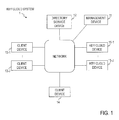
Fig. 1 is a block diagram illustrating the configuration of a key cloud system according to an embodiment. -
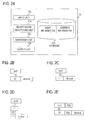
Fig. 2A is a block diagram illustrating the configuration of a directory service device according to the embodiment. -
Figs. 2B to 2E illustrate name information according to the embodiment. -
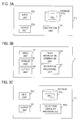
Fig. 3A is a block diagram illustrating the configuration of a client device which performs encryption. -
Fig. 3B is a block diagram illustrating the configuration of a client device which receives a decryption service. -
Fig. 3C is a block diagram illustrating the configuration of a key cloud device which provides a decryption service. -
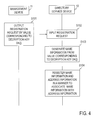
Fig. 4 illustrates registration processing according to the embodiment. -
Fig. 5 illustrates key cloud processing according to the embodiment. - An embodiment of the present invention is described below with reference to the accompanying drawings.
- As illustrated in
Fig. 1 , akey cloud system 1 according to the present embodiment includes amanagement device 11 which manages the system, J pieces of client devices 13-1 to 13-J which perform encryption, aclient device 14 which receives a cloud-key management type decryption service, J pieces of key cloud devices 15-1 to 15-J which provide cloud-key management type decryption services, and adirectory service device 12 which performs name resolution of the key cloud devices 15-1 to 15-J, and these devices are configured to be able to communicate with each other through the network. Here, J≥1 holds, and for example, J≥2 holds.Fig. 1 illustrates J pieces of client devices 13-1 to 13-J, but J+1 or more pieces ofclient devices 13 which perform encryption may exist. For example, the number of each client device 13-j (here, j ∈ {1, ..., J}) may be more than one and these client devices 13-j may constitute a group corresponding to each j. Further,Fig. 1 illustrates a single piece ofclient device 14, but two or more pieces of client devices which receive decryption services may exist. Furthermore,Fig. 1 illustrates J pieces of key cloud devices 15-1 to 15-J, but J+1 or more pieces of key cloud devices which provide decryption services may exist. Furthermore,Fig. 1 illustrates only a single piece ofdirectory service device 12. However, in a case where address information is constituted in a hierarchical fashion, one or more pieces of upper-stage directory service devices for performing name resolution of respective layers may exist. - As illustrated in
Fig. 2A , thedirectory service device 12 includes astorage 121, aninput unit 122, anoutput unit 123, aregistration processing unit 124, and asearching unit 125. As illustrated inFig. 3A , the client device 13-j (here, j ∈ {1, ..., J}) includes a storage 131-j, an input unit 132-j, an output unit 133-j, and an encryption unit 134-j. As illustrated inFig. 3B , theclient device 14 includes astorage 141, aninput unit 142, anoutput unit 143, a nameinformation generation unit 144, and adecryption processing unit 145. As illustrated inFig. 3C , the key cloud device 15-j (here, j ∈ {1, ..., J}) includes a storage 151-j, an input unit 152-j, an output unit 153-j, and a decryption capability provision unit 154-j. - Each of the
management device 11, thedirectory service device 12, the client devices 13-1 to 13-J, theclient device 14, and the key cloud devices 15-1 to 15-J is a device which is constituted when a general-purpose or special-purpose computer which is provided with a processor (hardware processor) such as a central processing unit (CPU), a memory such as a random-access memory (RAM) and a read-only memory (ROM), and the like executes a predetermined program. The computer may include a single piece of processor or a single piece of memory or include a plurality of processors or a plurality of memories. This program may be installed on the computer or may be recorded in a ROM or the like in advance. Further, a part or all processing units may be constituted by using an electronic circuit which independently realizes the processing function instead of an electronic circuit (circuitry), which realizes the functional configuration when a program is read, such as a CPU. Furthermore, an electronic circuit constituting a single piece of device may include a plurality of CPUs. For example, themanagement device 11 is a server device, specific examples of thedirectory service device 12 include a DNS server device and a WINS server device, the client devices 13-1 to 13-J and theclient device 14 are terminal devices, and the key cloud devices 15-1 to 15-J are server devices. - The
management device 11 sets an encryption key EK(j) for performing encryption by a predetermined encryption system S(j) (here, j ∈ {1, ..., J}) to generate an encrypted content C(j), and a decryption key DK(j) for decrypting the encrypted content C(j). Encryption systems S(1), ..., S(J) may be identical to each other or may be different from each other. Encryption keys EK(1), ..., EK(J) are mutually collision-resistant and decryption keys DK(1), ..., DK(J) are mutually collision-resistant. It is preferable that the encryption keys EK(1), ..., EK(J) be different from each other and the decryption keys DK(1), ..., DK(J) be different from each other. - Specific examples of the encryption system S(j) include the public key cryptosystem, the ID based cryptosystem, the functional cryptosystem, the symmetric key cryptosystem, and the like. For example, when the encryption system S(j) is the public key cryptosystem, the encryption key EK(j) is a public key, and the decryption key DK(j) is a private key corresponding to this public key. When the encryption system S(j) is the ID based cryptosystem, the encryption key EK(j) is an identifier such as a mail address and the decryption key DK(j) is a private key corresponding to this identifier. When the encryption system S(j) is the functional cryptosystem, the encryption key EK(j) is a vector which represents an attribute and the like and the decryption key DK(j) is a private key corresponding to this vector. When the encryption system S(j) is the symmetric key cryptosystem, the encryption key EK(j) and the decryption key DK(j) are symmetric keys and EK(j)=DK(j) holds. The decryption key DK(j) is secret information in all encryption systems. On the other hand, the encryption key EK(j) is public information in the public key cryptosystem, the ID based cryptosystem, and the functional cryptosystem, while the encryption key EK(j) is secret information in the symmetric key cryptosystem.
- The encryption key EK(j) (here, j ∈ {1, ..., J}) is stored in the storage 131-j of the client device 13-j (
Fig. 3A ). The decryption key DK(j) (here, j ∈ {1, ..., J}) is stored in the storage 151-j of the key cloud device 15-j. - As illustrated in
Fig. 4 , themanagement device 11 outputs a registration request by a value corresponding to the decryption key DK(j) (here, j ∈ {1, ..., J}) (step S101). This registration request includes a value corresponding to the decryption key DK(j) and address information A(j) (for example, an IP address) unique to the key cloud device 15-j which provides a cloud-key management type decryption service in which the decryption key DK(j) is used. - A value corresponding to the decryption key DK(1) to a value corresponding to the decryption key DK(J) are mutually collision-resistant to be different values from each other with overwhelming probability. For example, a value corresponding to the decryption key DK(j) is public information and it is difficult to specify the decryption key DK(j) only by the value corresponding to the decryption key DK(j). For example, when the encryption system S(j) is the public key cryptosystem, the ID based cryptosystem, or the functional cryptosystem, a value corresponding to the decryption key DK(j) is the encryption key EK(j) such as a public key, an identifier, and a vector respectively. When the encryption system S(j) is the symmetric key cryptosystem, a value corresponding to the decryption key DK(j) is a key identifier corresponding to the encryption key EK(j) (=DK(j)) which is a symmetric key.
- The registration request is transmitted through the network to be inputted into the
input unit 122 of the directory service device 12 (Fig. 2A ) and transmitted to the registration processing unit 124 (step S102). Theregistration processing unit 124 generates name information N(j) (second name information) corresponding to the key cloud device 15-j (second key cloud device) by using a value corresponding to the decryption key DK(j) (second decryption key) included in the registration request (step S103). The name information N(j) corresponding to the key cloud device 15-j is obtained from a value corresponding to the decryption key DK(j) and is composed of a character string (for example, a hexadecimal ASCII character string) registerable in thedirectory service device 12. Further, name information N(1) corresponding to the key cloud device 15-1 to name information N(J) corresponding to the key cloud device 15-J are mutually collision-resistant and are different from each other with overwhelming probability. - An example of the name information N(j) corresponding to the key cloud device 15-j is a character string including information representing a value corresponding to the decryption key DK(j) or a part of information representing the value corresponding to the decryption key DK(j). In an example of
Fig. 2B , an authoritative domain of thedirectory service device 12 is "ntt.local" and name information N(j) is a hierarchical domain name in which a top level domain is "local", a second level domain is "ntt", and a third level domain is a hexadecimal character string "37" which represents a public key which is the encryption key EK(j). In the case of this example, theregistration processing unit 124 generates name information "37.ntt.local" by using the authoritative domain "ntt.local" which is preset and the hexadecimal character string "37" which is inputted and represents a public key. - Another example of the name information N(j) is a character string including information which represents a cryptologic hash value of a value corresponding to the decryption key DK(j) or a part of the information which represents the hash value. A cryptologic hash value of a value corresponding to the decryption key DK(j) represents a functional value which is obtained by applying a cryptologic hash function such as SHA-1 to a value corresponding to the decryption key DK(j). A cryptologic hash value has collision resistance. The longer encryption key EK(j) provides higher security in general. On the other hand, the data amount to be registered is larger in a case of longer name information, so that an upper limit of the length of name information is sometimes set. By adopting name information including information which represents a cryptologic hash value of a value corresponding to the decryption key DK(j) or including a part of the information, high security can be secured and the length of name information can be shortened. In an example of
Fig. 2C , name information N(j) is a hierarchical domain name in which a top level domain is "local", a second level domain is "ntt", and a third level domain is a character string "***" which represents a cryptologic hash value of a hexadecimal character string "37". In an example ofFig. 2D , name information N(j) is a hierarchical domain name in which a third level domain is "**" which is a part of a character string "***" which represents a cryptologic hash value of a character string "0x37". In cases of these examples, theregistration processing unit 124 generates name information "***.ntt.local" or "**.ntt.local" by using the authoritative domain "ntt.local" which is preset, the cryptologic hash value which is preset, and the character string "0x37" which is inputted and represents a public key. - Still another example of the name information N(j) is a character string further including an identifier ID(j) which represents the encryption system S(j) corresponding to the decryption key DK(j). That is, the name information N(j) may further include the identifier ID(j) in addition to information representing a value corresponding to the decryption key DK(j) or a part of the information representing the value corresponding to the decryption key DK(j), and/or information representing a cryptologic hash value of a value corresponding to the decryption key DK(j) or a part of the information representing the hash value. In an example of
Fig. 2E , name information N(j) is a hierarchical domain name in which a top level domain is "local", a second level domain is "ntt", and a third level domain is a connection value of a hexadecimal character string "37" which represents a public key, which is the encryption key EK(j), and the identifier ID(j). In a case of this example, theregistration processing unit 124 generates name information "37|ID(j).ntt.local" by using the authoritative domain "ntt.local" which is preset, the hexadecimal character string "37" which is inputted and represents a public key, and the identifier ID(j) corresponding to this public key. Here, "α|β" represents concatenation of character strings α and β. - The
registration processing unit 124 stores the generated name information N(j) (second name information) and the address information A(j) (second address information), which is included in a registration request and is unique to the key cloud device 15-j (second key cloud device), in the storage 21 in a manner to associate the name information N(j) with the address information A(j), for each j ∈ {1, ..., J} (step S104). For example, theregistration processing unit 124 stores "37.ntt.local" which is the name information N(j) and exemplified inFig. 2B and an IP address "192.168.1.54" which is the address information A(j) in the storage 21 in a manner to associate "37.ntt.local" with "192.168.1.54". - A plain text content is inputted into the input unit 132-j of any client device 13-j (
Fig. 3A ) which performs encryption and the content is transmitted to the encryption unit 134-j. The encryption unit 134-j encrypts the content in accordance with the encryption system S(j) by using the encryption key EK(j) which is read from the storage 131-j, so as to generate and output an encrypted content C(j). In the encrypted content C(j), the above-described "value corresponding to the decryption key DK(j)" is embedded. For example, when the encryption system S(j) is the public key cryptosystem, the ID based cryptosystem, or the functional cryptosystem, the encryption key EK(j) is embedded as the "value corresponding to the decryption key DK(j)" in the encrypted content C(j). For example, when the encryption system S(j) is the symmetric key cryptosystem, a key identifier corresponding to the encryption key EK(j)=DK(j) is embedded as the "value corresponding to the decryption key DK(j)" in the encrypted content C(j). The encrypted content C(j) is transmitted to the output unit 133-j to be outputted from the output unit 133-j. - The encrypted content C(j) is transmitted through the network to be inputted into the
input unit 142 of the client device 14 (Fig. 3B ) (step S111). - The encryption key EK(j) which is embedded as the "value corresponding to the decryption key DK(j)" in the encrypted content C(j) or the key identifier corresponding to the encryption key EK(j) is transmitted to the name
information generation unit 144. The nameinformation generation unit 144 generates name information N(j) of the key cloud device 15-j which provides a cloud-key management type decryption service in which the decryption key DK(j) is used, by using the encryption key EK(j) or the key identifier corresponding to the encryption key EK(j) (the value corresponding to the decryption key DK(j)) so as to output the name information N(j) (step S112). A generation method of the name information N(j) in step S112 is same as the generation method of the name information N(j) in step S103 in the registration processing. The name information N(j) which is generated is transmitted to theoutput unit 143 and theoutput unit 143 outputs a name resolution request including the name information N(j) to the directory service device 12 (step S113). Here, in a case where theoutput unit 143 knows address information of thedirectory service device 12, theoutput unit 143 transmits the name information to thedirectory service device 12 by using the address information. In a case where upper-stage directory service devices exist as a DNS server device, theoutput unit 143 may track a hierarchy from a directory service device of the route and request name resolution from an upper-stage directory service device, for example, so as to acquire address information of thedirectory service device 12. - The name resolution request is transmitted through the network to be inputted into the
input unit 122 of thedirectory service device 12 and the name information N(j) included in the name resolution request is transmitted to the searching unit 125 (step S114). The searchingunit 125 searches thestorage 121 by using the inputted name information N(j) so as to obtain address information A(j) corresponding to the inputted name information N(j) (obtain second address information corresponding to the inputted name information N(j) as address information A(j)) and output the address information A(j) (step S115). For example, the searchingunit 125 specifies name information, which is in thestorage 121 and is accorded with the inputted name information N(j) so as to obtain and output the address information A(j) associated with the specified name information. For example, when name information "37.ntt.local" is associated with address information "192.168.1.54" in thestorage 121 and the name information "37.ntt.local" is inputted into the searchingunit 125, the searchingunit 125 obtains and outputs the address information "192.168.1.54". The obtained address information A(j) is address information of the key cloud device 15-j which provides the cloud-key management type decryption service in which the decryption key DK(j) is used. The address information A(j) is transmitted to theoutput unit 123 to be outputted (step S116). - The address information A(j) is transmitted through the network, inputted into the
input unit 142 of theclient device 14, and transmitted to the decryption processing unit 145 (step S117). Thedecryption processing unit 145 connects to the key cloud device 15-j from theoutput unit 143 through the network by using the address information A(j). In response to this, the decryption capability provision unit 154-j of the key cloud device 15-j (Fig. 3C ) provides a decryption service from the output unit 153-j to thedecryption processing unit 145 through the network, and thedecryption processing unit 145 obtains a decryption result of the encrypted content C(j) due to the reception of the decryption service and outputs the decryption result of the encrypted content C(j) (step S118, step S119). - A decryption service is provided by using the self-correction technique of related art, for example (refer to International Publication Nos.
WO/2012/057134 ,WO/2011/086992 , andWO/2012/121152 , for example). The self-correction technique is a technique for performing correct calculation at all time by using a calculator or a system which does not always output a correct calculation result (when a calculator which outputs a correct calculation result is used, a correct calculation result is outputted, and when a calculator which does not always output a correct result is used, a correct calculation result is obtained or a result representing that the calculation is impossible is obtained). The decryption service using the self-correction technique includes processing in which the key cloud device 15-j provides theclient device 14 with information for obtaining a decryption value of the encrypted content C(j) (a cipher text of a decryption object) in theclient device 14 without providing aclient device 14 of the outside with information of the decryption key DK(j). Preferably, the key cloud device 15-j provides theclient device 14 with information for obtaining a decryption value of the encrypted content C(j) without obtaining information of the encrypted content C(j) from the client device 14 (for example, by obtaining information which is obtained by perturbing the encrypted content C(j)). - Processing for providing a decryption service by using the self-correction technique is exemplified below. In the following example, G and H denote groups, f(x) denotes a decryption function for obtaining an element of the group G by decrypting a cipher text x which is an element of the group H by a specific decryption key DK(j), X1 and X2 denote random variables values of which are in the group G, X1 denotes an realization of the random variable X1, x2 denotes an realization of the random variable X2, and a and b denote natural numbers which are coprime. However, the following example does not limit the present invention and other self-correction techniques may be adopted.
- Step 118a: The
decryption processing unit 145 outputs first input information τ1 and second input information τ2 which correspond to the encrypted content C(j) and are elements of the group H. For example, f(x) is a homomorphic function, the group H is a cyclic group, a generator of the cyclic group H is denoted as µh, r1 and r2 denote random natural numbers which are 0 or larger, τ1=µh r1xb, and τ2=µh r2xa. Further, one of a and b may be a constant such as 1. The first input information τ1 and the second input information τ2 are transmitted to the key cloud device 15-j. - Step 119a: The decryption capability provision unit 154-j correctly calculates f(τ1) with a probability larger than a certain probability by using the transmitted first input information τ1 so as to set the obtained calculation result as first output information z1. That is, there are a case of z1=f(τ1) and a case of z1≠f(τ1). In other words, the decryption capability provision unit 154-j is capable of calculating f(τ1), but the decryption capability provision unit 154-j may output a calculation result including an intended or unintended error. "A certain probability" is a probability which is smaller than 100% and equal to or larger than 0%. An example of "a certain probability" is an unignorable probability. An example of "an unignorable probability" is a probability which is equal to or larger than 1/Ψ(k) where a polynomial which is a monotonically non-decreasing function about a security parameter k is set to a polynomial Ψ(k). The first output information z1 is transmitted to the
client device 14. - Step 119b: The decryption capability provision unit 154-j correctly calculates f(τ2) with a probability larger than a certain probability by using the transmitted second input information τ2 so as to set the obtained calculation result as second output information z2. That is, there are a case of z2=f(τ2) and a case of z2≠f(τ2). In other words, the decryption capability provision unit 154-j is capable of calculating f(τ2), but the decryption capability provision unit 154-j may output a calculation result including an intended or unintended error. The second output information z2 is transmitted to the
client device 14. - Step 118b: The
decryption processing unit 145 generates a calculation result u=f(x)bx1 from the first output information z1 which is transmitted. For example, v=f(µh) holds and u=z1v-r1 holds. The calculation result u which is generated is stored in a storage (not illustrated in the drawing) of thedecryption processing unit 145. - Step 118c: The
decryption processing unit 145 generates a calculation result v=f(x)ax2 from the second output information z2 which is transmitted. For example, v=z2v-r2 holds. The calculation result v which is generated is stored in the storage (not illustrated in the drawing) of thedecryption processing unit 145. - Step 118d: The
decryption processing unit 145 determines whether any pair of u and v which is stored in the storage satisfies ua=vb or not. When any pair of u and v satisfies ua=vb, thedecryption processing unit 145 outputs a pair of u and v which satisfies ua=vb and ub'va' on integers a' and b' which satisfy a'a+b'b=1 as decryption values. When the calculation results u and v do not satisfy ua=vb even though the processing of steps 118a to 118d, 119a, and 119b are repeated predetermined times, thedecryption processing unit 145 outputs error information which represents that decryption is impossible. Here, in a case where one or more pieces of v are stored in the storage (not illustrated in the drawing) of thedecryption processing unit 145, the processing of step 118d may be performed even between step 118b and step 118c. - When a decryption service using the self-correction technique is provided, the
decryption processing unit 145 obtains a correct decryption value or a result representing that decryption is impossible. A probability in which thedecryption processing unit 145 obtains an incorrect decryption value is small to the ignorable extent. Accordingly, in a case where a decryption service using the self-correction technique is provided, theclient device 14 is not misrepresented such that an incorrect decryption value is a correct decryption value even without confirming validity of a "value corresponding to the decryption key DK(j)" such as a public key and validity of the key cloud device 15-j. Consequently, it is not necessary to verify a public key certificate or to perform authentication processing. - The present invention is not limited to the above-described embodiment. For example, the example in which a decryption service is provided by using the self-correction technique is provided in the above-described embodiment. However, a decryption service may be provided without using the self-correction technique. For example, a client device which receives a decryption service may connect to the key cloud device 15-j through the network by using the address information A(j) and transmit the encrypted content C(j) to the key cloud device 15-j. Then, the key cloud device 15-j may decrypt the encrypted content C(j) by using the decryption key DK(j) and transmit a decryption value which is obtained through the encryption to the client device.
- Further, a combination composed of a part of the
management device 11, thedirectory service device 12, the client devices 13-1 to 13-J, theclient device 14, and the key cloud devices 15-1 to 15-J may be implemented on a single computer. That is, the combination composed of a part of these devices may be a single device. - Name information is not limited to a domain name such as a FQDN or a netbios name described above. For example, an identifier such as a user ID and a device ID may be name information. Address information is not limited to an IP address described above. For example, a mail address, a MAC address, and the like may be address information.
- Further, the self-correction technique is not limited to the one previously described. For example, the group H may be a direct product group GxG of the group G, the group G may be a cyclic group, a generator of the cyclic group G may be µg, cipher text x=(c1,c2), (V,W) may be an element of the group H, f(V,W)=Y, r4 to r7 may be random numbers of natural numbers which are 0 or larger, τ1=(c2 bWr4,c1 bVr4µg r5), τ2=(c2 aWr6,c1 aVr6µgr7), u=z1Y-r4µg-r5, and v=z2Y-r6µg -r7.
- Further, the above-described various types of processing may be executed not only in time-series manner in accordance with the description but also in a parallel manner or an independent manner, depending on a processing capability of a device which executes the processing or as necessary. Furthermore, it is indisputable that alterations can be arbitrarily made without departing from the intent of the present invention.
- In a case where the above-described configuration is realized by a computer, processing contents of functions which should be obtained by respective devices are described by a program. By executing this program by a computer, the above-described processing functions are realized on the computer. The program in which the processing contents are described can be recorded in a recording medium which is readable by a computer. An example of the recording medium which is readable by a computer is a non-transitory recording medium. Examples of such recording medium include a magnetic recording device, an optical disk, a magnetooptical recording medium, a semiconductor memory, and the like.
- This program is distributed by selling, transferring, or lending a portable recording medium such as a DVD and a CD-ROM in which the program is recorded, for example. Further, this program may be distributed such that this program is stored in a storage device of a server computer and is transferred from the server computer to other computers through the network.
- A computer which executes such program once stores the program which is recorded in a portable recording medium or the program transferred from the server computer in a storage device thereof, for example. In execution of processing, the computer reads the program which is stored in the storage device thereof and executes processing in accordance with the program which is read. As another executing configuration of this program, a computer may directly read the program from a portable recording medium so as to execute processing in accordance with the program, and further, the computer may sequentially execute processing in accordance with a received program whenever a program is transferred from the server computer to this computer.
- The processing functions of the present device are realized by executing a predetermined program on a computer in the above-described embodiment, but at least a part of these processing functions may be realized on hardware.
- A directory service device which receives an input of name information which is generated by using a value corresponding to a decryption key and obtains address information of a key cloud device, which provides a cloud-key management type decryption service in which the decryption key is used.
- The directory service device according to
Item 1, including: - a storage which stores second name information, which is generated by using a value corresponding to a second decryption key, and second address information of a second key cloud device, which provides a cloud-key management type decryption service in which the second decryption key is used, in a manner to associate the second name information with the second address information; and
- a searching unit which searches the storage by using the name information which is inputted to obtain the second address information corresponding to the name information, as the address information.
- The directory service device according to
Item 1 or 2, in which
the decryption service includes processing in which the key cloud device provides, without providing an outside client device with information of the decryption key, the client device with information for obtaining a decryption value of a cipher text in the client device by using a self-correction technique. - The directory service device according to any one of
Items 1 to 3, including: - a registration processing unit which generates the second name information by using a value corresponding to the second decryption key and stores the second name information which is generated and the second address information of the second key cloud device, which provides a cloud-key management type decryption service in which the second decryption key is used, in the storage in a manner to associate the second name information with the second address information.
- The directory service device according to any one of
Items 1 to 4, in which
the name information includes information representing a value corresponding to the decryption key or a part of information representing a value corresponding to the decryption key. - The directory service device according to any one of
Items 1 to 5, in which
the name information includes information representing a cryptologic hash value of a value corresponding to the decryption key or a part of information representing the hash value. - The directory service device according to any one of
Items 1 to 6, in which
the name information includes an identifier representing an encryption system corresponding to the decryption key. - The directory service device according to any one of
Items 1 to 7, in which
the decryption key is secret information which is stored in the key cloud device and a value corresponding to the decryption key is public information. - The directory service device according to any one of
Items 1 to 8, in which
the decryption key is a private key and a value corresponding to the decryption key is a public key. -
- 1: key cloud system
- 12: directory service device
- 13-1 to 13-J, 14: client device
- 15-1 to 15-J: key cloud device
Claims (12)
- A directory service device which receives an input of name information, the name information being generated by using a value corresponding to a decryption key, and obtains address information of a key cloud device, the key cloud device providing a cloud-key management type decryption service in which the decryption key is used.
- The directory service device according to Claim 1, comprising:a storage which stores second name information, the second name information being generated by using a value corresponding to a second decryption key, and second address information of a second key cloud device, the second key cloud device providing a cloud-key management type decryption service in which the second decryption key is used, in a manner to associate the second name information with the second address information; anda searching unit which searches the storage by using the name information, the name information being inputted, to obtain the second address information corresponding to the name information, as the address information.
- The directory service device according to Claim 2, wherein
the decryption service includes processing in which the key cloud device provides, without providing an outside client device with information of the decryption key, the client device with information for obtaining a decryption value of a cipher text in the client device by using a self-correction technique. - The directory service device according to Claim 2, comprising:a registration processing unit which generates the second name information by using a value corresponding to the second decryption key and stores the second name information which is generated and the second address information of the second key cloud device, the second key cloud device providing a cloud-key management type decryption service in which the second decryption key is used, in the storage in a manner to associate the second name information with the second address information.
- The directory service device according to Claim 2, wherein
the name information includes information representing a value corresponding to the decryption key or a part of information representing a value corresponding to the decryption key, and/or
the name information includes information representing a cryptologic hash value of a value corresponding to the decryption key or a part of information representing the hash value, and/or
the name information includes an identifier representing an encryption system corresponding to the decryption key. - The directory service device according to Claim 4 or 5, wherein
the decryption key is a private key and a value corresponding to the decryption key is a public key. - A client device comprising:an output unit which outputs name information, the name information being generated by using a value corresponding to a decryption key, to a directory service device;an input unit which receives address information of a key cloud device which provides a cloud-key management type decryption service in which the decryption key is used; anda decryption processing unit which connects to the key cloud device by using the address information to receive the decryption service by the key cloud device.
- A key cloud system comprising:a client device;a directory service device; anda key cloud device; whereinthe client device outputs name information which is generated by using a value corresponding to a decryption key,the directory service device obtains address information of a key cloud device, the key cloud device providing a cloud-key management type decryption service in which the decryption key is used, by using the name information to output the address information, andthe client device connects to the key cloud device by using the address information to receive the decryption service by the key cloud device.
- A directory service method comprising:receiving an input of name information which is generated by using a value corresponding to a decryption key; andobtaining address information of a key cloud device which provides a cloud-key management type decryption service in which the decryption key is used.
- A key cloud method comprising:outputting name information, the name information being generated by using a value corresponding to a decryption key, by a client device;obtaining address information of a key cloud device, the key cloud device providing a cloud-key management type decryption service in which the decryption key is used, by using the name information to output the address information, by a directory service device; andconnecting to the key cloud device by using the address information to receive the decryption service by the key cloud device, by the client device.
- A program for allowing a computer to function as the directory service device according to Claim 1 or 2.
- A program for allowing a computer to function as the client device according to Claim 7.
Applications Claiming Priority (2)
| Application Number | Priority Date | Filing Date | Title |
|---|---|---|---|
| JP2013149150 | 2013-07-18 | ||
| PCT/JP2014/068851 WO2015008769A1 (en) | 2013-07-18 | 2014-07-16 | Directory service device, client device, key cloud system, method thereof, and program |
Publications (3)
| Publication Number | Publication Date |
|---|---|
| EP3001346A1 true EP3001346A1 (en) | 2016-03-30 |
| EP3001346A4 EP3001346A4 (en) | 2017-03-22 |
| EP3001346B1 EP3001346B1 (en) | 2018-04-04 |
Family
ID=52346218
Family Applications (1)
| Application Number | Title | Priority Date | Filing Date |
|---|---|---|---|
| EP14826385.8A Active EP3001346B1 (en) | 2013-07-18 | 2014-07-16 | Directory service device, client device, key cloud system, method thereof, and program |
Country Status (5)
| Country | Link |
|---|---|
| US (1) | US10033711B2 (en) |
| EP (1) | EP3001346B1 (en) |
| JP (1) | JP6055919B2 (en) |
| CN (1) | CN105264539B (en) |
| WO (1) | WO2015008769A1 (en) |
Families Citing this family (4)
| Publication number | Priority date | Publication date | Assignee | Title |
|---|---|---|---|---|
| CN109074463A (en) | 2016-04-27 | 2018-12-21 | 三菱电机株式会社 | Attribute cooperation device, transfer system, attribute cooperation method, and attribute cooperation program |
| KR102079626B1 (en) * | 2017-01-06 | 2020-04-07 | 경일대학교산학협력단 | System for hiding information using lightweight mutual authentication based on biometric in mobile environment, method thereof and computer recordable medium storing program to perform the method |
| KR102050887B1 (en) | 2017-11-29 | 2019-12-02 | 고려대학교 산학협력단 | METHOD AND SYSTEM FOR DATA SHARING FOR INTERNET OF THINGS(IoT) MANAGEMENT IN CLOUD COMPUTING |
| US12099997B1 (en) | 2020-01-31 | 2024-09-24 | Steven Mark Hoffberg | Tokenized fungible liabilities |
Family Cites Families (10)
| Publication number | Priority date | Publication date | Assignee | Title |
|---|---|---|---|---|
| JP3862081B2 (en) * | 2002-11-07 | 2006-12-27 | 日本電信電話株式会社 | Name resolution method, name resolution system, name resolution directory, communication terminal device, program, and recording medium |
| DE602004010519T2 (en) * | 2003-07-04 | 2008-11-13 | Nippon Telegraph And Telephone Corp. | REMOTE ACCESS VPN TREATMENT PROCESS AND TREATMENT DEVICE |
| JP4490354B2 (en) * | 2005-09-05 | 2010-06-23 | Kddi株式会社 | Domain management method |
| US9037623B2 (en) | 2010-01-12 | 2015-05-19 | Nippon Telegraph And Telephone Corporation | Proxy calculation system, proxy calculation method, proxy calculation requesting apparatus, and proxy calculation program and recording medium therefor |
| US8621220B2 (en) * | 2010-03-11 | 2013-12-31 | Ebay Inc. | Systems and methods for identity encapsulated cryptography |
| CN103221988B (en) | 2010-10-26 | 2016-08-03 | 日本电信电话株式会社 | Calculating system, calculating device, ability offer device are provided, computational methods, ability offer method are provided |
| EP2667371B8 (en) | 2011-03-04 | 2018-03-07 | Nippon Telegraph And Telephone Corporation | Proxy calculation system, method, request device, and program |
| JP2012238935A (en) | 2011-05-10 | 2012-12-06 | Nippon Telegr & Teleph Corp <Ntt> | Name management server and access control method |
| CN103765832B (en) | 2011-09-01 | 2016-12-21 | 华为技术有限公司 | General dual-mode data Forwarding plane for information centre's network |
| EP2797254A4 (en) * | 2011-12-20 | 2015-10-28 | Mitsubishi Electric Corp | DEVICE FOR ENCRYPTED DATA MANAGEMENT, METHOD FOR ENCRYPTED DATA MANAGEMENT AND CLASSED DATA MANAGEMENT PROGRAM |
-
2014
- 2014-07-16 WO PCT/JP2014/068851 patent/WO2015008769A1/en not_active Ceased
- 2014-07-16 EP EP14826385.8A patent/EP3001346B1/en active Active
- 2014-07-16 US US14/896,184 patent/US10033711B2/en active Active
- 2014-07-16 CN CN201480030328.6A patent/CN105264539B/en active Active
- 2014-07-16 JP JP2015527308A patent/JP6055919B2/en active Active
Non-Patent Citations (1)
| Title |
|---|
| See references of WO2015008769A1 * |
Also Published As
| Publication number | Publication date |
|---|---|
| CN105264539B (en) | 2018-02-27 |
| US10033711B2 (en) | 2018-07-24 |
| EP3001346B1 (en) | 2018-04-04 |
| JPWO2015008769A1 (en) | 2017-03-02 |
| WO2015008769A1 (en) | 2015-01-22 |
| EP3001346A4 (en) | 2017-03-22 |
| JP6055919B2 (en) | 2016-12-27 |
| US20160127335A1 (en) | 2016-05-05 |
| CN105264539A (en) | 2016-01-20 |
Similar Documents
| Publication | Publication Date | Title |
|---|---|---|
| US11921911B2 (en) | Peripheral device | |
| JP6547079B1 (en) | Registration / authorization method, device and system | |
| US10880100B2 (en) | Apparatus and method for certificate enrollment | |
| CN112737779B (en) | Cryptographic machine service method, device, cryptographic machine and storage medium | |
| Yang et al. | Provable data possession of resource-constrained mobile devices in cloud computing | |
| US9768957B2 (en) | Generation and management of multiple base keys based on a device generated key | |
| US10686604B2 (en) | Key device, key cloud system, decryption method, and program | |
| CN109981641A (en) | A kind of safe distribution subscription system and distribution subscription method based on block chain technology | |
| US20190140819A1 (en) | System and method for mekle puzzles symeteric key establishment and generation of lamport merkle signatures | |
| JP2019511855A (en) | Personal Device Security Using Elliptic Curve Cryptography for Secret Sharing | |
| US9230114B1 (en) | Remote verification of file protections for cloud data storage | |
| JP2019507510A (en) | Common secret determination for secure exchange of information and hierarchical and deterministic encryption keys | |
| CN113824553B (en) | Key management method, device and system | |
| CN109347857A (en) | A kind of general inter-network authentication method based on mark | |
| EP3001346B1 (en) | Directory service device, client device, key cloud system, method thereof, and program | |
| Lee et al. | Security analysis and modification of ID-based encryption with equality test from ACISP 2017 | |
| JP2018037938A (en) | Key exchange method, key exchange system | |
| CN114039753A (en) | An access control method, device, storage medium and electronic device | |
| JP6368047B2 (en) | Key exchange method, key exchange system, key distribution device, representative communication device, general communication device, and program | |
| JP2016129302A (en) | Signature generation apparatus, signature system, signature generation method, and program | |
| CN116055105B (en) | Cloud storage data processing methods, devices and servers | |
| CN109257167B (en) | A Resource Allocation Method to Protect Privacy in Fog Computing | |
| Li et al. | Secure and Revocable Multi-authority CP-ABE for Mobile Cloud Computing | |
| Román et al. | Post-quantum Secure Communication with IoT Devices Using Kyber and SRAM Behavioral and Physical Unclonable Functions | |
| CN116886374A (en) | Identity authentication method and cloud computing service platform |
Legal Events
| Date | Code | Title | Description |
|---|---|---|---|
| PUAI | Public reference made under article 153(3) epc to a published international application that has entered the european phase |
Free format text: ORIGINAL CODE: 0009012 |
|
| 17P | Request for examination filed |
Effective date: 20151222 |
|
| AK | Designated contracting states |
Kind code of ref document: A1 Designated state(s): AL AT BE BG CH CY CZ DE DK EE ES FI FR GB GR HR HU IE IS IT LI LT LU LV MC MK MT NL NO PL PT RO RS SE SI SK SM TR |
|
| AX | Request for extension of the european patent |
Extension state: BA ME |
|
| DAX | Request for extension of the european patent (deleted) | ||
| A4 | Supplementary search report drawn up and despatched |
Effective date: 20170221 |
|
| RIC1 | Information provided on ipc code assigned before grant |
Ipc: H04L 29/06 20060101ALI20170215BHEP Ipc: H04L 9/14 20060101ALI20170215BHEP Ipc: H04L 9/08 20060101ALI20170215BHEP Ipc: H04L 29/08 20060101ALI20170215BHEP Ipc: G06F 21/62 20130101AFI20170215BHEP |
|
| GRAP | Despatch of communication of intention to grant a patent |
Free format text: ORIGINAL CODE: EPIDOSNIGR1 |
|
| STAA | Information on the status of an ep patent application or granted ep patent |
Free format text: STATUS: GRANT OF PATENT IS INTENDED |
|
| INTG | Intention to grant announced |
Effective date: 20171013 |
|
| GRAS | Grant fee paid |
Free format text: ORIGINAL CODE: EPIDOSNIGR3 |
|
| GRAA | (expected) grant |
Free format text: ORIGINAL CODE: 0009210 |
|
| STAA | Information on the status of an ep patent application or granted ep patent |
Free format text: STATUS: THE PATENT HAS BEEN GRANTED |
|
| AK | Designated contracting states |
Kind code of ref document: B1 Designated state(s): AL AT BE BG CH CY CZ DE DK EE ES FI FR GB GR HR HU IE IS IT LI LT LU LV MC MK MT NL NO PL PT RO RS SE SI SK SM TR |
|
| REG | Reference to a national code |
Ref country code: GB Ref legal event code: FG4D |
|
| REG | Reference to a national code |
Ref country code: CH Ref legal event code: EP |
|
| REG | Reference to a national code |
Ref country code: AT Ref legal event code: REF Ref document number: 986338 Country of ref document: AT Kind code of ref document: T Effective date: 20180415 |
|
| REG | Reference to a national code |
Ref country code: IE Ref legal event code: FG4D |
|
| REG | Reference to a national code |
Ref country code: DE Ref legal event code: R096 Ref document number: 602014023479 Country of ref document: DE |
|
| REG | Reference to a national code |
Ref country code: FR Ref legal event code: PLFP Year of fee payment: 5 |
|
| REG | Reference to a national code |
Ref country code: NL Ref legal event code: MP Effective date: 20180404 |
|
| REG | Reference to a national code |
Ref country code: LT Ref legal event code: MG4D |
|
| PG25 | Lapsed in a contracting state [announced via postgrant information from national office to epo] |
Ref country code: NL Free format text: LAPSE BECAUSE OF FAILURE TO SUBMIT A TRANSLATION OF THE DESCRIPTION OR TO PAY THE FEE WITHIN THE PRESCRIBED TIME-LIMIT Effective date: 20180404 |
|
| PG25 | Lapsed in a contracting state [announced via postgrant information from national office to epo] |
Ref country code: SE Free format text: LAPSE BECAUSE OF FAILURE TO SUBMIT A TRANSLATION OF THE DESCRIPTION OR TO PAY THE FEE WITHIN THE PRESCRIBED TIME-LIMIT Effective date: 20180404 Ref country code: LT Free format text: LAPSE BECAUSE OF FAILURE TO SUBMIT A TRANSLATION OF THE DESCRIPTION OR TO PAY THE FEE WITHIN THE PRESCRIBED TIME-LIMIT Effective date: 20180404 Ref country code: ES Free format text: LAPSE BECAUSE OF FAILURE TO SUBMIT A TRANSLATION OF THE DESCRIPTION OR TO PAY THE FEE WITHIN THE PRESCRIBED TIME-LIMIT Effective date: 20180404 Ref country code: AL Free format text: LAPSE BECAUSE OF FAILURE TO SUBMIT A TRANSLATION OF THE DESCRIPTION OR TO PAY THE FEE WITHIN THE PRESCRIBED TIME-LIMIT Effective date: 20180404 Ref country code: NO Free format text: LAPSE BECAUSE OF FAILURE TO SUBMIT A TRANSLATION OF THE DESCRIPTION OR TO PAY THE FEE WITHIN THE PRESCRIBED TIME-LIMIT Effective date: 20180704 Ref country code: PL Free format text: LAPSE BECAUSE OF FAILURE TO SUBMIT A TRANSLATION OF THE DESCRIPTION OR TO PAY THE FEE WITHIN THE PRESCRIBED TIME-LIMIT Effective date: 20180404 Ref country code: FI Free format text: LAPSE BECAUSE OF FAILURE TO SUBMIT A TRANSLATION OF THE DESCRIPTION OR TO PAY THE FEE WITHIN THE PRESCRIBED TIME-LIMIT Effective date: 20180404 Ref country code: BG Free format text: LAPSE BECAUSE OF FAILURE TO SUBMIT A TRANSLATION OF THE DESCRIPTION OR TO PAY THE FEE WITHIN THE PRESCRIBED TIME-LIMIT Effective date: 20180704 |
|
| PG25 | Lapsed in a contracting state [announced via postgrant information from national office to epo] |
Ref country code: HR Free format text: LAPSE BECAUSE OF FAILURE TO SUBMIT A TRANSLATION OF THE DESCRIPTION OR TO PAY THE FEE WITHIN THE PRESCRIBED TIME-LIMIT Effective date: 20180404 Ref country code: RS Free format text: LAPSE BECAUSE OF FAILURE TO SUBMIT A TRANSLATION OF THE DESCRIPTION OR TO PAY THE FEE WITHIN THE PRESCRIBED TIME-LIMIT Effective date: 20180404 Ref country code: LV Free format text: LAPSE BECAUSE OF FAILURE TO SUBMIT A TRANSLATION OF THE DESCRIPTION OR TO PAY THE FEE WITHIN THE PRESCRIBED TIME-LIMIT Effective date: 20180404 Ref country code: GR Free format text: LAPSE BECAUSE OF FAILURE TO SUBMIT A TRANSLATION OF THE DESCRIPTION OR TO PAY THE FEE WITHIN THE PRESCRIBED TIME-LIMIT Effective date: 20180705 |
|
| REG | Reference to a national code |
Ref country code: AT Ref legal event code: MK05 Ref document number: 986338 Country of ref document: AT Kind code of ref document: T Effective date: 20180404 |
|
| PG25 | Lapsed in a contracting state [announced via postgrant information from national office to epo] |
Ref country code: PT Free format text: LAPSE BECAUSE OF FAILURE TO SUBMIT A TRANSLATION OF THE DESCRIPTION OR TO PAY THE FEE WITHIN THE PRESCRIBED TIME-LIMIT Effective date: 20180806 |
|
| REG | Reference to a national code |
Ref country code: DE Ref legal event code: R097 Ref document number: 602014023479 Country of ref document: DE |
|
| PG25 | Lapsed in a contracting state [announced via postgrant information from national office to epo] |
Ref country code: DK Free format text: LAPSE BECAUSE OF FAILURE TO SUBMIT A TRANSLATION OF THE DESCRIPTION OR TO PAY THE FEE WITHIN THE PRESCRIBED TIME-LIMIT Effective date: 20180404 Ref country code: AT Free format text: LAPSE BECAUSE OF FAILURE TO SUBMIT A TRANSLATION OF THE DESCRIPTION OR TO PAY THE FEE WITHIN THE PRESCRIBED TIME-LIMIT Effective date: 20180404 Ref country code: EE Free format text: LAPSE BECAUSE OF FAILURE TO SUBMIT A TRANSLATION OF THE DESCRIPTION OR TO PAY THE FEE WITHIN THE PRESCRIBED TIME-LIMIT Effective date: 20180404 Ref country code: SK Free format text: LAPSE BECAUSE OF FAILURE TO SUBMIT A TRANSLATION OF THE DESCRIPTION OR TO PAY THE FEE WITHIN THE PRESCRIBED TIME-LIMIT Effective date: 20180404 Ref country code: CZ Free format text: LAPSE BECAUSE OF FAILURE TO SUBMIT A TRANSLATION OF THE DESCRIPTION OR TO PAY THE FEE WITHIN THE PRESCRIBED TIME-LIMIT Effective date: 20180404 Ref country code: RO Free format text: LAPSE BECAUSE OF FAILURE TO SUBMIT A TRANSLATION OF THE DESCRIPTION OR TO PAY THE FEE WITHIN THE PRESCRIBED TIME-LIMIT Effective date: 20180404 |
|
| PLBE | No opposition filed within time limit |
Free format text: ORIGINAL CODE: 0009261 |
|
| STAA | Information on the status of an ep patent application or granted ep patent |
Free format text: STATUS: NO OPPOSITION FILED WITHIN TIME LIMIT |
|
| PG25 | Lapsed in a contracting state [announced via postgrant information from national office to epo] |
Ref country code: SM Free format text: LAPSE BECAUSE OF FAILURE TO SUBMIT A TRANSLATION OF THE DESCRIPTION OR TO PAY THE FEE WITHIN THE PRESCRIBED TIME-LIMIT Effective date: 20180404 Ref country code: IT Free format text: LAPSE BECAUSE OF FAILURE TO SUBMIT A TRANSLATION OF THE DESCRIPTION OR TO PAY THE FEE WITHIN THE PRESCRIBED TIME-LIMIT Effective date: 20180404 |
|
| REG | Reference to a national code |
Ref country code: CH Ref legal event code: PL |
|
| 26N | No opposition filed |
Effective date: 20190107 |
|
| PG25 | Lapsed in a contracting state [announced via postgrant information from national office to epo] |
Ref country code: LU Free format text: LAPSE BECAUSE OF NON-PAYMENT OF DUE FEES Effective date: 20180716 Ref country code: MC Free format text: LAPSE BECAUSE OF FAILURE TO SUBMIT A TRANSLATION OF THE DESCRIPTION OR TO PAY THE FEE WITHIN THE PRESCRIBED TIME-LIMIT Effective date: 20180404 |
|
| REG | Reference to a national code |
Ref country code: BE Ref legal event code: MM Effective date: 20180731 |
|
| REG | Reference to a national code |
Ref country code: IE Ref legal event code: MM4A |
|
| PG25 | Lapsed in a contracting state [announced via postgrant information from national office to epo] |
Ref country code: LI Free format text: LAPSE BECAUSE OF NON-PAYMENT OF DUE FEES Effective date: 20180731 Ref country code: CH Free format text: LAPSE BECAUSE OF NON-PAYMENT OF DUE FEES Effective date: 20180731 Ref country code: IE Free format text: LAPSE BECAUSE OF NON-PAYMENT OF DUE FEES Effective date: 20180716 |
|
| PG25 | Lapsed in a contracting state [announced via postgrant information from national office to epo] |
Ref country code: BE Free format text: LAPSE BECAUSE OF NON-PAYMENT OF DUE FEES Effective date: 20180731 Ref country code: SI Free format text: LAPSE BECAUSE OF FAILURE TO SUBMIT A TRANSLATION OF THE DESCRIPTION OR TO PAY THE FEE WITHIN THE PRESCRIBED TIME-LIMIT Effective date: 20180404 |
|
| PG25 | Lapsed in a contracting state [announced via postgrant information from national office to epo] |
Ref country code: MT Free format text: LAPSE BECAUSE OF NON-PAYMENT OF DUE FEES Effective date: 20180716 |
|
| PG25 | Lapsed in a contracting state [announced via postgrant information from national office to epo] |
Ref country code: TR Free format text: LAPSE BECAUSE OF FAILURE TO SUBMIT A TRANSLATION OF THE DESCRIPTION OR TO PAY THE FEE WITHIN THE PRESCRIBED TIME-LIMIT Effective date: 20180404 |
|
| PG25 | Lapsed in a contracting state [announced via postgrant information from national office to epo] |
Ref country code: MK Free format text: LAPSE BECAUSE OF NON-PAYMENT OF DUE FEES Effective date: 20180404 Ref country code: CY Free format text: LAPSE BECAUSE OF FAILURE TO SUBMIT A TRANSLATION OF THE DESCRIPTION OR TO PAY THE FEE WITHIN THE PRESCRIBED TIME-LIMIT Effective date: 20180404 Ref country code: HU Free format text: LAPSE BECAUSE OF FAILURE TO SUBMIT A TRANSLATION OF THE DESCRIPTION OR TO PAY THE FEE WITHIN THE PRESCRIBED TIME-LIMIT; INVALID AB INITIO Effective date: 20140716 |
|
| PG25 | Lapsed in a contracting state [announced via postgrant information from national office to epo] |
Ref country code: IS Free format text: LAPSE BECAUSE OF FAILURE TO SUBMIT A TRANSLATION OF THE DESCRIPTION OR TO PAY THE FEE WITHIN THE PRESCRIBED TIME-LIMIT Effective date: 20180804 |
|
| PGFP | Annual fee paid to national office [announced via postgrant information from national office to epo] |
Ref country code: DE Payment date: 20250722 Year of fee payment: 12 |
|
| PGFP | Annual fee paid to national office [announced via postgrant information from national office to epo] |
Ref country code: GB Payment date: 20250722 Year of fee payment: 12 |
|
| PGFP | Annual fee paid to national office [announced via postgrant information from national office to epo] |
Ref country code: FR Payment date: 20250725 Year of fee payment: 12 |
|
| REG | Reference to a national code |
Ref country code: DE Ref legal event code: R081 Ref document number: 602014023479 Country of ref document: DE Owner name: NTT, INC., JP Free format text: FORMER OWNER: NIPPON TELEGRAPH AND TELEPHONE CORPORATION, TOKYO, JP Ref country code: DE Ref legal event code: R082 Ref document number: 602014023479 Country of ref document: DE Representative=s name: DENNEMEYER & ASSOCIATES RECHTSANWALTSGESELLSCH, DE |