EP3001337A2 - Method and system for determining health condition of a subject - Google Patents
Method and system for determining health condition of a subject Download PDFInfo
- Publication number
- EP3001337A2 EP3001337A2 EP15177581.4A EP15177581A EP3001337A2 EP 3001337 A2 EP3001337 A2 EP 3001337A2 EP 15177581 A EP15177581 A EP 15177581A EP 3001337 A2 EP3001337 A2 EP 3001337A2
- Authority
- EP
- European Patent Office
- Prior art keywords
- subject
- level
- oxygen saturation
- oxygen
- processor
- Prior art date
- Legal status (The legal status is an assumption and is not a legal conclusion. Google has not performed a legal analysis and makes no representation as to the accuracy of the status listed.)
- Granted
Links
Images




Classifications
-
- G—PHYSICS
- G16—INFORMATION AND COMMUNICATION TECHNOLOGY [ICT] SPECIALLY ADAPTED FOR SPECIFIC APPLICATION FIELDS
- G16H—HEALTHCARE INFORMATICS, i.e. INFORMATION AND COMMUNICATION TECHNOLOGY [ICT] SPECIALLY ADAPTED FOR THE HANDLING OR PROCESSING OF MEDICAL OR HEALTHCARE DATA
- G16H50/00—ICT specially adapted for medical diagnosis, medical simulation or medical data mining; ICT specially adapted for detecting, monitoring or modelling epidemics or pandemics
- G16H50/20—ICT specially adapted for medical diagnosis, medical simulation or medical data mining; ICT specially adapted for detecting, monitoring or modelling epidemics or pandemics for computer-aided diagnosis, e.g. based on medical expert systems
Definitions
- the present subject matter is related, in general to health monitoring and more particularly, but not exclusively to, a method and a system for determining the mental fatigue level of a subject.
- Human fatigue is a temporary inability to maintain optimal cognitive performance. The onset of human fatigue during any cognitive activity is gradual, and depends upon an indivdual's cognitive ability, and also upon other factors, such as sleep deprivation and overall health. Human fatigue has also been shown to adversely affect physical performance.
- the present techniques do not detect mental fatigue levels using non-invasive methods. Hence, it becomes difficult to continuously monitor a person's stress levels and ability to maintain optimal performance.
- the method comprises receiving, by a computing unit, a first oxygen saturation level and a second oxygen saturation level from at least two sensors placed on the subject. Then, the method determines cerebral extraction of oxygen using the first and second oxygen saturation levels. Further, the method comprises comparing the cerebral extraction of oxygen with a threshold level and identifying a mental fatigue level of the subject based on outcome of the comparison. The mental fatigue level may indicate the health condition of the subject.
- a system for determining health condition of a subject comprises a processor and a memory communicatively coupled to the processor.
- the memory stores processor-executable instructions which on execution, causes the processor to receive a first oxygen saturation level and a second oxygen saturation level from at least two sensors placed on the subject. Then, the processor determines cerebral extraction of oxygen using the first and second oxygen saturation levels. Further, the processor compares the cerebral extraction of oxygen with a threshold level and identifies a mental fatigue level of the subject based on outcome of the comparison. The mental fatigue level indicates the health condition of the subject.
- a non-transitory computer readable medium for generating interaction diagrams for a process.
- the non-transitory computer readable medium includes instructions stored thereon that when processed by a processor causes a system to perform one or more acts.
- First act is receiving a first oxygen saturation level and a second oxygen saturation level from at least two sensors placed on the subject.
- act is to determine cerebral extraction of oxygen using the first and second oxygen saturation levels.
- act is to compare the cerebral extraction of oxygen with a threshold level and identify a mental fatigue level of the subject based on outcome of the comparison. The mental fatigue level indicates the health condition of the subject.
- Embodiments of the present disclosure are related to a method and a system for determining health condition of a subject.
- the present disclosure relates to determining mental fatigue level of a subject.
- the subject may be a human being or an animal.
- a human being has been used as an exemplary subject to explain the working of the present disclosure.
- Fig. 1A is a schematic illustration of the neck region of a human body showing some of the major arteries and veins of the cardiovascular system.
- common carotid arteries 108 are arteries that supply the head and neck including brain with oxygenated blood.
- the common carotid artery 108 divides in the neck to form the internal carotid artery 104 and external carotid artery 105.
- the jugular veins are veins that bring deoxygenated blood from the head back to the heart.
- Each side of the neck has two jugular veins, external jugular vein 106 and internal jugular vein 107.
- the external jugular vein 106 carries blood from the face, neck, and scalp and has two branches, posterior and anterior.
- the internal jugular vein 107 receives blood from the brain, the deeper tissues of the neck and the interior of the skull.
- the method disclosed in the present disclosure measures the oxygen levels consumed by the brain while the subject is continuously performing an activity.
- the activity indicates a task performed by the subject continuously which involves taking appropriate decisions, for example driving, technician in an assembly line, stock trader, etc.
- the method comprises sensing oxygen saturation level in a noninvasive manner by using one or more sensors on the body of the subject. Then, the sensed oxygen saturation level is collected using a data aggregator. The data aggregator transmits the oxygen saturation levels to a computing unit. The computing unit computes Cerebral Extraction of Oxygen (CEO2) indicating the oxygen levels of the blood flowing through the brain. The cerebral extraction of oxygen is then compared with a threshold level to identify a mental fatigue level of the subject. In an embodiment, the threshold levels may be personalized for each subject using the historical fatigue trends. Finally, the mental fatigue level of the subject is displayed on a display unit. In an embodiment, a measurement error may be detected while determining the mental fatigue level.
- CEO2 Cerebral Extraction of Oxygen
- the term “health condition” includes, but is not limited to, the fatigue of the subject.
- the term “fatigue” in ordinary describes a very common phenomenon.
- “fatigue” comprises and may be defined as: - awareness of a decreased capacity for physical and/or mental activity due to an imbalance in the availability, utilization, and/or restoration of resources needed to perform activity - a state of weariness related to reduced motivation a transitional state between wakefulness and sleep physical state of disturbed homeostasis due to work or stress, which manifest in loss in efficiency and a general disinclination to work - a feeling of weariness and inability to mobilize energy.
- fatigue used in the disclosure may be understood to comprise also any term mentioned below so for purposes of this disclosure. Following terms characterizing fatigue may be considered as synonyms.
- fatigue can be suitably understood as opposite to following terms: vigilance, alertness, watchfulness, and wakefulness. Any of these terms as for example lack of vigilance, lack of alertness, can be also suitably treated as replacement of word fatigue in accordance with this disclosure.
- Fig. 1B illustrates an exemplary computing unit 100 adopted for determining health condition of a subject in accordance with some embodiments of the present disclosure.
- the computing unit 100 may include at least one central processing unit (“CPU” or "processor”) 101 and a memory 103 storing instructions executable by the at least one processor 101.
- the instructions configure the processor 101 to receive oxygen saturation levels from a plurality of sensors placed on the subject.
- the subject may be one of human being and animal.
- the processor 101 may comprise at least one data processor for executing program components for executing user- or system-generated requests.
- a user may include a person, a person using a device such as those included in this disclosure, or such a device itself.
- the sensors measure oxygen saturation levels of the subject.
- the sensors are configured on a patch which is positioned on the neck of the subject.
- a first sensor captures a first oxygen saturation level (SaO2) in the incoming blood flow to brain via carotid artery of the subject.
- a second sensor captures a second oxygen saturation level (SjvO2) in an outgoing blood flow from brain via jugular vein of the subject.
- the first and second oxygen saturation levels are measured simultaneously at a predefined interval of time to determine the oxygen levels consumed by the brain.
- the processor 101 determines cerebral extraction of oxygen based on the first and second oxygen saturation levels from the sensors. The cerebral extraction of oxygen is determined by calculating a difference between the first and second oxygen saturation levels as shown below.
- CEO 2 i SaO 2 i - SjvO 2 i / SaO 2 i * 100 where ' i ' indicate i th sample in the time sequence.
- the trend of CEO2 indicates the oxygen consumption of brain and mental stress over a period of time.
- the processor 101 generates a mental fatigue level by comparing the cerebral extraction of oxygen with a predefined threshold level.
- the mental fatigue level indicates the health condition of the subject. If the values of CEO2 are above a threshold level for a predefined interval of time, then the mental fatigue of the subject is detected.
- the computing unit 100 may comprise an alert system (not shown) for generating an alarm.
- the alarm may be generated if the mental fatigue level is substantially close to or greater than the predefined threshold level.
- Figs. 2A and 2B illustrates a computing unit 100 to monitor health condition of a subject and display the mental fatigue level on an associated display unit, in accordance with some embodiments of the present disclosure.
- the computing unit 100 may comprise at least one processor 101, a memory 103 storing instructions executable by the at least one processor 101 and a display unit 201 for displaying mental fatigue information 203 of at least one subject, as shown in Fig. 2A .
- the computing unit may comprise at least one processor 101, a memory 103 storing instructions executable by the at least one processor 101 and an associated external display unit 201 for displaying mental fatigue information 203 of at least one subject, as shown in Fig. 2B .
- the computing unit 100 transmits the mental fatigue information 203 such as, but not limited to, mental fatigue level, number of subjects for which fatigue score is generated, to the display unit 201.
- the display unit 201 displays the fatigue information, as received from the computing unit 100.
- Fig. 3A illustrates an environment in which a computing unit 100 receives signals associated with a subject in accordance with some embodiments of the present disclosure.
- the computing unit 100 may be configured to receive oxygen saturation levels 305 from a plurality of sensors (S1, S2... Sn) 303 placed on the subject 301.
- the subject 301 may be one of a human being and an animal.
- the oxygen saturation levels may be received from plurality of sensors such as pulse oximetry sensors.
- a person skilled in the art would understand that any other sensor which provides oxygen saturation levels of blood can be used with the method of the present disclosure.
- the sensors 303 may be placed in the form of adhesive patches on the body of a subject 301 such as, but not limited to a worker or an employee.
- a pulse oximetry sensor may be placed on the neck region of the worker.
- a first sensor is to be placed on the carotid artery and the second sensor is to be places on jugular vein.
- the computing unit 100 may receive the signals 305 from the plurality of sensors (S1, S2... Sn) 303, using either wired or wireless means.
- the computing unit 100 may receive the physiological signals 305 using wireless radio technology such as, but not limited to, WiFi, Bluetooth and Zigbee.
- the computing unit 100 may include a data aggregator for acquiring the physiological signals 305 from plurality of sensors 303.
- the data aggregator may be placed in the vicinity of the subject for data aggregation.
- the signals are stored in the memory 103 for further processing.
- the processor 101 may estimate a mental fatigue level from the oxygen saturation levels 305 using sensor specific methodologies.
- the signals 305 are received by the computing unit 100 from the plurality of sensors 303, wherein each sensor signals are converted into digital data and queued by the data aggregator.
- the queued data is processed using sensor specific method.
- the estimated fatigue values are stored in the memory of the computing unit 101 for further processing.
- the processor 101 computes the cerebral extraction of oxygen for each sample of oxygen saturation levels received for duration of predefined amount of time. Then, the processor 101 computes a median value of the sets of windowed data of cerebral extraction of oxygen. This is done to avoid outliers which are caused due to sampling or measurement errors.
- processor 101 analyzes the trend of cerebral extraction of oxygen to determine the health condition of the subject.
- the fatigue is a slow varying characteristic, therefore the values of CEO2 for a predefined amount of time are taken into consideration.
- the CEO2 values of recent 5 minutes can be considered for analysis.
- the CEO2 values are analyzed by comparing the CEO2 values with the threshold level.
- single threshold level may be used with the method of present disclosure. If the CEO2 value of the subject is substantially near or equal to the threshold level, then an alarm is generated by the computing unit 100 to notify the subject or any other system or person regarding the health condition of the subject.
- the threshold levels may also be classified at least one of low threshold level, medium threshold level and high threshold level.
- the CEO2 of the subject can be compared with at least one of these levels to monitor health condition of the subject.
- the CEO2 value of the subject is substantially near or equal to the low threshold level, then the subject is considered to have low mental fatigue. In such a case, the subject can perform tasks without any difficulty/risk.
- the CEO2 value of the subject is substantially near or equal to the medium threshold level, then the subject is considered to have medium mental fatigue. In such a case, the subject can perform tasks, however fatigue level of the subject needs to be monitored continuously.
- the CEO2 value is substantially near or equal to the high threshold level, then the subject needs to take rest and should not be allowed to perform tasks that require concentration.
- the threshold level may be created based on a population database.
- the population database comprises values of cerebral extraction of oxygen for a large population with various age groups. These values are used to create the threshold levels for different age groups.
- Table 1 shows exemplary values of threshold levels for different age groups. Table 1 Age (in years) Low threshold level Medium threshold level High threshold level ⁇ 20 80 85 90 20-30 75 80 85 30-40 70 80 85 40-50 65 75 80 50-70 60 70 75 >70 50 60 70
- the threshold levels may be personalized for each subject, as different subjects have different health conditions and the fatigue level may not be same for all the subjects.
- the threshold levels may be personalized for a subject by considering CEO2 levels of the subject during resting, normal activity and restlessness scenarios over a period of time.
- the PERSONAL_OFFSET of a subject can be calculated using the CEO2 value during rest.
- the range of CEO2 may vary depending on the variations in the blood flow to brain. This can be normalized by using the PERSONAL_OFFSET.
- the processor 101 Upon comparison of the CEO2 values with the threshold levels, the processor 101 identifies a mental fatigue level of the subject.
- the mental fatigue level indicates the health condition of the subject.
- the processor 101 may display the mental fatigue level on the associated display unit 203.
- Fig. 4A and 4B illustrate exemplary fatigue charts representing mental fatigue level of a subject in accordance with some embodiments of the present disclosure.
- Fig. 4A illustrates an increasing fatigue condition 401 for a subject, where the mental fatigue level of the subject is increasing with time.
- Fig. 4B illustrates decreasing fatigue condition 404 for a subject, where the mental fatigue level of the subject is decreasing with time.
- only two threshold levels i.e. medium threshold level 402 and high threshold level 403 have been considered for determining health condition of the patient.
- the supervisor of the subject may change or reschedule the worker-job assignments for the subject.
- the computing unit 100 may generate an alarm to indicate of the mental CEO2 level is above nearing, equal or above the predefined threshold level.
- the alarm may be displayed using image, video, text on the display 201.
- the alarm may be provided to the subject or other system using audio.
- the computing unit 100 detects a measurement error while determining the mental fatigue level.
- the status of the mental fatigue level at each time interval may be aggregated and analyzed to avoid any spurious or false values. Also, the analyzing of the status would help in generating realistic mental fatigue status.
- statistical models such as Bayes theorem may be used for detecting the measurement error while determining the mental fatigue level.
- the status continuously shows medium fatigue for 5 minutes and in between there is one high fatigue status.
- the high fatigue status may be due to measurement error. This may happen if the sensor is defective, the sensor is not placed properly on the subject, transmission error etc. This information may be passed as input to the post processing to evaluate real fatigue situation.
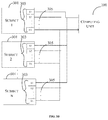
- Fig. 3B illustrates an environment in which a computing unit 100 receives oxygen saturation levels 305 from a plurality of subjects (subject 1, subject 2... subject n) 301 in accordance with some embodiments of the present disclosure.
- the computing unit 100 includes at least one processor 101 and a memory 103 storing instructions executable by the at least one processor 101. Initially, the processor 101 determines cerebral extraction of oxygen using the oxygen saturation levels. Thereafter, the processor 101 identifies the mental fatigue level of the subject by comparing the cerebral extraction of oxygen with a threshold level. The mental fatigue level indicates the health condition of the subject.
- the computing unit may further comprise an alert system for generating an alarm.
- the fatigue information of each subject or worker may be displayed on a display 201 by the computing unit 100.
- Fig. 5 illustrates an exemplary computing unit 100 to monitor health condition of a human 301 along with an associated display 201 in accordance with an example embodiment of the present disclosure.
- the computing unit 100 may be configured to receive oxygen saturation levels 305 from a plurality of sensors (S1, S2... Sn) 303 placed on the human 301.
- a plurality of sensors S1, S2... Sn
- two sensors are placed on the neck of the subject using a patch.
- the sensors may be placed on sides of the neck.
- the two sensors may be put on a single patch and placed on one side of the neck.
- the oxygen saturation levels may be transmitted by a transmitter 501 placed along with the plurality of sensors, on the body of a human 301 .
- Fig. 6 shows a flowchart illustrating a method for determining health condition of a subject using a computing unit in accordance with some embodiments of the present disclosure.
- the method 600 comprises one or more blocks for determining health condition of a subject by the computing unit 100.
- the method 600 may be described in the general context of computer executable instructions.
- computer executable instructions can include routines, programs, objects, components, data structures, procedures, modules, and functions, which perform particular functions or implement particular abstract data types.
- the order in which the method 600 is described is not intended to be construed as a limitation, and any number of the described method blocks can be combined in any order to implement the method 600. Additionally, individual blocks may be deleted from the method 600 without departing from the spirit and scope of the subject matter described herein. Furthermore, the method 600 can be implemented in any suitable hardware, software, firmware, or combination thereof.
- first oxygen saturation level and a second oxygen saturation level from at least two sensors placed on the subject.
- the at least two sensors of sensors are placed on neck of the subject.
- the subject may be one of human and animal.
- the first oxygen saturation level is oxygen saturation level in the incoming blood flow via carotid artery of the subject.
- the second oxygen saturation level is oxygen saturation level in an outgoing blood flow via jugular vein of the subject.
- the first oxygen saturation level and the second oxygen saturation level are received at a predefined time interval from the at least two sensors.
- the cerebral extraction of oxygen is determined by a difference between the first and the second oxygen saturation levels.
- the threshold level may be classified as at least one of low threshold level, medium threshold level and high threshold level.
- a mental fatigue level of the subject based on outcome of the comparison.
- the comparison of the cerebral extraction of oxygen with the threshold levels provides a mental fatigue level of the subject.
- the mental fatigue level indicates the health condition of the subject.
- the computing unit if the mental fatigue level is greater than at least one of medium threshold level and high threshold level, the computing unit generates an alarm signal.
- the alarm signal may be provided to display unit in form of audio/image/video.
- FIG. 7 illustrates a block diagram of an exemplary computer system 700 for implementing embodiments consistent with the present disclosure.
- the computer system 700 is used to implement the computing unit 100.
- the computer system 700 monitors the health condition of a subject.
- the computer system 700 may comprise a central processing unit (“CPU” or "processor") 702.
- the processor 702 may comprise at least one data processor for executing program components for executing user- or system-generated business processes.
- a user may include a person, a person using a device such as those included in this disclosure, or such a device itself.
- the processor 702 may include specialized processing units such as integrated system (bus) controllers, memory management control units, floating point units, graphics processing units, digital signal processing units, etc.
- bus integrated system
- the processor 702 may be disposed in communication with one or more input/output (I/O) devices (711 and 712) via I/O interface 701.
- the I/O interface 701 may employ communication protocols/methods such as, without limitation, audio, analog, digital, monoaural, RCA, stereo, IEEE-1394, serial bus, universal serial bus (USB), infrared, PS/2, BNC, coaxial, component, composite, digital visual interface (DVI), high-definition multimedia interface (HDMI), RF antennas, S-Video, VGA, IEEE 802.n /b/g/n/x, Bluetooth, cellular (e.g., code-division multiple access (CDMA), high-speed packet access (HSPA+), global system for mobile communications (GSM), long-term evolution (LTE), WiMax, or the like), etc.
- CDMA code-division multiple access
- HSPA+ high-speed packet access
- GSM global system for mobile communications
- LTE long-term evolution
- WiMax wireless wide area network
- the computer system 700 may communicate with one or more I/O devices (711 and 712).
- the input device 711 may be an antenna, keyboard, mouse, joystick, (infrared) remote control, camera, card reader, fax machine, dongle, biometric reader, microphone, touch screen, touchpad, trackball, stylus, scanner, storage device, transceiver, video device/source, etc.
- the output device 712 may be a printer, fax machine, video display (e.g., cathode ray tube (CRT), liquid crystal display (LCD), light-emitting diode (LED), plasma, Plasma display panel (PDP), Organic light-emitting diode display (OLED) or the like), audio speaker, etc.
- CTR cathode ray tube
- LCD liquid crystal display
- LED light-emitting diode
- PDP Plasma display panel
- OLED Organic light-emitting diode display
- the processor 702 may be disposed in communication with a communication network 709 via a network interface 703.
- the network interface 703 may communicate with the communication network 709.
- the network interface 703 may employ connection protocols including, without limitation, direct connect, Ethernet (e.g., twisted pair 10/100/1000 Base T), transmission control protocol/internet protocol (TCP/IP), token ring, IEEE 802.11a/b/g/n/x, etc.
- the communication network 709 may include, without limitation, a direct interconnection, local area network (LAN), wide area network (WAN), wireless network (e.g., using Wireless Application Protocol), the Internet, etc.
- the computer system 700 may communicate with data aggregator or sensors 710.
- the processor 702 may be disposed in communication with a memory 705 (e.g., RAM, ROM, etc. not shown in figure 7 ) via a storage interface 704.
- the storage interface 704 may connect to memory 705 including, without limitation, memory drives, removable disc drives, etc., employing connection protocols such as serial advanced technology attachment (SATA), Integrated Drive Electronics (IDE), IEEE-1394, Universal Serial Bus (USB), fiber channel, Small Computer Systems Interface (SCSI), etc.
- the memory drives may further include a drum, magnetic disc drive, magneto-optical drive, optical drive, Redundant Array of Independent Discs (RAID), solid-state memory devices, solid-state drives, etc.
- the memory 705 may store a collection of program or database components, including, without limitation, user interface application 706, an operating system 707, web server 708 etc.
- computer system 700 may store user/application data 706, such as the data, variables, records, etc. as described in this disclosure.
- databases may be implemented as fault-tolerant, relational, scalable, secure databases such as Oracle or Sybase.
- the operating system 707 may facilitate resource management and operation of the computer system 700.
- Examples of operating systems include, without limitation, Apple Macintosh OS X, Unix, Unix-like system distributions (e.g., Berkeley Software Distribution (BSD), FreeBSD, NetBSD, OpenBSD, etc.), Linux distributions (e.g., Red Hat, Ubuntu, Kubuntu, etc.), IBM OS/2, Microsoft Windows (XP, Vista/7/8, etc.), Apple iOS, Google Android, Blackberry OS, or the like.
- User interface 717 may facilitate display, execution, interaction, manipulation, or operation of program components through textual or graphical facilities.
- GUIs may provide computer interaction interface elements on a display system operatively connected to the computer system 700, such as cursors, icons, check boxes, menus, scrollers, windows, widgets, etc.
- Graphical user interfaces may be employed, including, without limitation, Apple Macintosh operating systems' Aqua, IBM OS/2, Microsoft Windows (e.g., Aero, Metro, etc.), Unix X-Windows, web interface libraries (e.g., ActiveX, Java, Javascript, AJAX, HTML, Adobe Flash, etc.), or the like.
- the computer system 700 may implement a web browser 708 stored program component.
- the web browser may be a hypertext viewing application, such as Microsoft Internet Explorer, Google Chrome, Mozilla Firefox, Apple Safari, etc. Secure web browsing may be provided using HTTPS (secure hypertext transport protocol), secure sockets layer (SSL), Transport Layer Security (TLS), etc. Web browsers may utilize facilities such as AJAX, DHTML, Adobe Flash, JavaScript, Java, application programming interfaces (APIs), etc.
- the computer system 700 may implement a mail server 719 stored program component.
- the mail server may be an Internet mail server such as Microsoft Exchange, or the like.
- the mail server may utilize facilities such as ASP, ActiveX, ANSI C++/C#, Microsoft .NET, CGI scripts, Java, JavaScript, PERL, PHP, Python, WebObjects, etc.
- the mail server may utilize communication protocols such as Internet Message Access Protocol (IMAP), Messaging Application Programming Interface (MAPI), Microsoft Exchange, Post Office Protocol (POP), Simple Mail Transfer Protocol (SMTP), or the like.
- IMAP Internet Message Access Protocol
- MAPI Messaging Application Programming Interface
- PMP Post Office Protocol
- SMTP Simple Mail Transfer Protocol
- the computer system 700 may implement a mail client stored program component.
- the mail client may be a mail viewing application, such as Apple Mail, Microsoft Entourage, Microsoft Outlook, Mozilla Thunderbird, etc.
- a computer-readable storage medium refers to any type of physical memory on which information or data readable by a processor may be stored.
- a computer-readable storage medium may store instructions for execution by one or more processors, including instructions for causing the processor(s) to perform steps or stages consistent with the embodiments described herein.
- the term "computer-readable medium” should be understood to include tangible items and exclude carrier waves and transient signals, i.e., be non-transitory. Examples include Random Access Memory (RAM), Read-Only Memory (ROM), volatile memory, nonvolatile memory, hard drives, CD ROMs, DVDs, flash drives, disks, and any other known physical storage media.
- Embodiment of the present disclosure provides noninvasive measurement of mental fatigue of a subject.
- the method of present disclosure measuring oxygen saturation levels of carotid artery and jugular vein provides more reliable readings of mental fatigue as fatigue is state of brain's alertness.
- any measurement errors while determining the mental fatigue level can be detected.
- the described operations may be implemented as a method, system or article of manufacture using standard programming and/or engineering techniques to produce software, firmware, hardware, or any combination thereof.
- the described operations may be implemented as code maintained in a "non-transitory computer readable medium", where a processor may read and execute the code from the computer readable medium.
- the processor is at least one of a microprocessor and a processor capable of processing and executing the queries.
- a non-transitory computer readable medium may comprise media such as magnetic storage medium (e.g., hard disk drives, floppy disks, tape, etc.), optical storage (CD-ROMs, DVDs, optical disks, etc.), volatile and nonvolatile memory devices (e.g., EEPROMs, ROMs, PROMs, RAMs, DRAMs, SRAMs, Flash Memory, firmware, programmable logic, etc.), etc.
- non-transitory computer-readable media comprise all computer-readable media except for a transitory.
- the code implementing the described operations may further be implemented in hardware logic (e.g., an integrated circuit chip, Programmable Gate Array (PGA), Application Specific Integrated Circuit (ASIC), etc.).
- the code implementing the described operations may be implemented in "transmission signals", where transmission signals may propagate through space or through a transmission media, such as an optical fiber, copper wire, etc.
- the transmission signals in which the code or logic is encoded may further comprise a wireless signal, satellite transmission, radio waves, infrared signals, Bluetooth, etc.
- the transmission signals in which the code or logic is encoded is capable of being transmitted by a transmitting station and received by a receiving station, where the code or logic encoded in the transmission signal may be decoded and stored in hardware or a non-transitory computer readable medium at the receiving and transmitting stations or devices.
- An “article of manufacture” comprises non-transitory computer readable medium, hardware logic, and/or transmission signals in which code may be implemented.
- a device in which the code implementing the described embodiments of operations is encoded may comprise a computer readable medium or hardware logic.
- the code implementing the described embodiments of operations may comprise a computer readable medium or hardware logic.
- an embodiment means “one or more (but not all) embodiments of the invention(s)" unless expressly specified otherwise.
Landscapes
- Engineering & Computer Science (AREA)
- Health & Medical Sciences (AREA)
- Medical Informatics (AREA)
- Biomedical Technology (AREA)
- Public Health (AREA)
- Pathology (AREA)
- Databases & Information Systems (AREA)
- Data Mining & Analysis (AREA)
- Epidemiology (AREA)
- General Health & Medical Sciences (AREA)
- Primary Health Care (AREA)
- Measurement Of The Respiration, Hearing Ability, Form, And Blood Characteristics Of Living Organisms (AREA)
- Medical Treatment And Welfare Office Work (AREA)
Abstract
Description
- The present subject matter is related, in general to health monitoring and more particularly, but not exclusively to, a method and a system for determining the mental fatigue level of a subject.
- Human fatigue is a temporary inability to maintain optimal cognitive performance. The onset of human fatigue during any cognitive activity is gradual, and depends upon an indivdual's cognitive ability, and also upon other factors, such as sleep deprivation and overall health. Human fatigue has also been shown to adversely affect physical performance.
- In recent years, experts have been emphasizing the importance of an objective assessment of human fatigue for preventing deaths caused by accidents and overwork in the automotive and occupational fields. For example, in the mining industry, the driver of a truck who is on extended work durations needs to be attentive to avoid any kind of accident during the transportation to avoid any loss of assets, life and production time. Similarly, a stock trader needs to be attentive to take appropriate decisions quickly to avoid losses. Detection of fatigue is critical in various other fields of work also, such as, mining, aviation, etc. Upon assessing such fatigue, it is important to make the assessment in real time in practical situations, and to notify the user to pay attention to his fatigue, instead of the conventional fatigue assessments made in laboratories. However, the conventional assessments methods were neither non-invasive, nor simple, making the conventional methods difficult to use in practical assessments.
- Existing techniques usually measure some physiological parameters related to eye and/or a body part, pressure, Electro Cardiography (ECG), etc. and then try to correlate them to deduce to an overall fatigue of the person. Such measurement techniques cause much inconvenience to the person. Additionally, the existing measurements are directed to assessing the physical fatigue and not for calculating the mental fatigue of the person. The physical fatigue was evaluated relatively easily in reference to some external indices such as muscular weakness, whereas mental fatigue was evaluated mostly by carrying out surveys or the like. Therefore, it has always been difficult to exclude arbitrariness from mental fatigue evaluation.
- Also, the present techniques do not detect mental fatigue levels using non-invasive methods. Hence, it becomes difficult to continuously monitor a person's stress levels and ability to maintain optimal performance.
- Therefore, there is a need for a method and a system to monitor mental fatigue level of a subject in a non-invasive manner.
- One or more shortcomings of the prior art are overcome and additional advantages are provided through the present disclosure. Additional features and advantages are realized through the techniques of the present disclosure. Other embodiments and aspects of the disclosure are described in detail herein and are considered a part of the claimed disclosure.
- Disclosed herein is a method for determining health condition of a subject. The method comprises receiving, by a computing unit, a first oxygen saturation level and a second oxygen saturation level from at least two sensors placed on the subject. Then, the method determines cerebral extraction of oxygen using the first and second oxygen saturation levels. Further, the method comprises comparing the cerebral extraction of oxygen with a threshold level and identifying a mental fatigue level of the subject based on outcome of the comparison. The mental fatigue level may indicate the health condition of the subject.
- In an aspect of the present disclosure, a system for determining health condition of a subject is disclosed. The system comprises a processor and a memory communicatively coupled to the processor. The memory stores processor-executable instructions which on execution, causes the processor to receive a first oxygen saturation level and a second oxygen saturation level from at least two sensors placed on the subject. Then, the processor determines cerebral extraction of oxygen using the first and second oxygen saturation levels. Further, the processor compares the cerebral extraction of oxygen with a threshold level and identifies a mental fatigue level of the subject based on outcome of the comparison. The mental fatigue level indicates the health condition of the subject.
- In another aspect of the present disclosure, a non-transitory computer readable medium for generating interaction diagrams for a process is disclosed. The non-transitory computer readable medium includes instructions stored thereon that when processed by a processor causes a system to perform one or more acts. First act is receiving a first oxygen saturation level and a second oxygen saturation level from at least two sensors placed on the subject. Next, act is to determine cerebral extraction of oxygen using the first and second oxygen saturation levels. Next, act is to compare the cerebral extraction of oxygen with a threshold level and identify a mental fatigue level of the subject based on outcome of the comparison. The mental fatigue level indicates the health condition of the subject.
- The foregoing summary is illustrative only and is not intended to be in any way limiting. In addition to the illustrative aspects, embodiments, and features described above, further aspects, embodiments, and features will become apparent by reference to the drawings and the following detailed description.
- The accompanying drawings, which are incorporated in and constitute a part of this disclosure, illustrate exemplary embodiments and, together with the description, serve to explain the disclosed principles. In the figures, the left-most digit(s) of a reference number identifies the figure in which the reference number first appears. The same numbers are used throughout the figures to reference like features and components. Some embodiments of system and/or methods in accordance with embodiments of the present subject matter are now described, by way of example only, and with reference to the accompanying figures, in which:
-
Fig. 1A is a schematic illustration of the neck region of a human body; -
Fig. 1B illustrates a block diagram of an exemplary computing unit to monitor health condition of a subject in accordance with some embodiments of the present disclosure; -
Fig. 2A illustrates a block diagram of an exemplary computing unit to monitor health condition of a subject and display the mental fatigue level on an associated display in accordance with some embodiments of the present disclosure; -
Fig. 2B illustrates a block diagram of an exemplary computing unit to monitor health condition of a subject and an associated display unit for displaying mental fatigue level in accordance with some embodiments of the present disclosure; -
Fig. 3A illustrates an environment in which a computing unit receives physiological signals associated with a subject in accordance with some embodiments of the present disclosure; -
Fig. 3B illustrates an environment in which a computing unit receives physiological signals from a plurality of subjects in accordance with some embodiments of the present disclosure; -
Fig. 4A and 4B illustrate exemplary fatigue charts representing of a mental fatigue level of a subject in accordance with some embodiments of the present disclosure; -
Fig. 5 illustrates an exemplary environment in which health condition of a human is monitored using an exemplary computing unit in accordance with an example embodiment of the present disclosure; -
Fig. 6 shows a flowchart illustrating a method of determining health condition of a subject using a computing device in accordance with some embodiments of the present disclosure; and -
Figure 7 illustrates a block diagram of an exemplary computer system for implementing embodiments consistent with the present disclosure. - It should be appreciated by those skilled in the art that any block diagrams herein represent conceptual views of illustrative systems embodying the principles of the present subject matter. Similarly, it will be appreciated that any flow charts, flow diagrams, state transition diagrams, pseudo code, and the like represent various processes which may be substantially represented in computer readable medium and executed by a computer or processor, whether or not such computer or processor is explicitly shown.
- In the present document, the word "exemplary" is used herein to mean "serving as an example, instance, or illustration." Any embodiment or implementation of the present subject matter described herein as "exemplary" is not necessarily to be construed as preferred or advantageous over other embodiments.
- While the disclosure is susceptible to various modifications and alternative forms, specific embodiment thereof has been shown by way of example in the drawings and will be described in detail below. It should be understood, however that it is not intended to limit the disclosure to the particular forms disclosed, but on the contrary, the disclosure is to cover all modifications, equivalents, and alternative falling within the spirit and the scope of the disclosure.
- The terms "comprises", "comprising", or any other variations thereof, are intended to cover a non-exclusive inclusion, such that a setup, device or method that comprises a list of components or steps does not include only those components or steps but may include other components or steps not expressly listed or inherent to such setup or device or method. In other words, one or more elements in a system or apparatus proceeded by "comprises... a" does not, without more constraints, preclude the existence of other elements or additional elements in the system or apparatus.
- Embodiments of the present disclosure are related to a method and a system for determining health condition of a subject. In particular, the present disclosure relates to determining mental fatigue level of a subject. The subject may be a human being or an animal. In the present disclosure, a human being has been used as an exemplary subject to explain the working of the present disclosure. Further, some of the basic vascular anatomy associated with the cardiovascular system of a human being is illustrated in
Fig. 1A. Fig. 1A is a schematic illustration of the neck region of a human body showing some of the major arteries and veins of the cardiovascular system. In an embodiment, commoncarotid arteries 108 are arteries that supply the head and neck including brain with oxygenated blood. The commoncarotid artery 108 divides in the neck to form the internalcarotid artery 104 and externalcarotid artery 105. The jugular veins are veins that bring deoxygenated blood from the head back to the heart. Each side of the neck has two jugular veins, externaljugular vein 106 and internaljugular vein 107. The externaljugular vein 106 carries blood from the face, neck, and scalp and has two branches, posterior and anterior. The internaljugular vein 107 receives blood from the brain, the deeper tissues of the neck and the interior of the skull. - The method disclosed in the present disclosure measures the oxygen levels consumed by the brain while the subject is continuously performing an activity. Here, the activity indicates a task performed by the subject continuously which involves taking appropriate decisions, for example driving, technician in an assembly line, stock trader, etc. In an embodiment, the method comprises sensing oxygen saturation level in a noninvasive manner by using one or more sensors on the body of the subject. Then, the sensed oxygen saturation level is collected using a data aggregator. The data aggregator transmits the oxygen saturation levels to a computing unit. The computing unit computes Cerebral Extraction of Oxygen (CEO2) indicating the oxygen levels of the blood flowing through the brain. The cerebral extraction of oxygen is then compared with a threshold level to identify a mental fatigue level of the subject. In an embodiment, the threshold levels may be personalized for each subject using the historical fatigue trends. Finally, the mental fatigue level of the subject is displayed on a display unit. In an embodiment, a measurement error may be detected while determining the mental fatigue level.
- The term "health condition" includes, but is not limited to, the fatigue of the subject. The term "fatigue" in ordinary describes a very common phenomenon. For purpose of this disclosure "fatigue" comprises and may be defined as: - awareness of a decreased capacity for physical and/or mental activity due to an imbalance in the availability, utilization, and/or restoration of resources needed to perform activity - a state of weariness related to reduced motivation a transitional state between wakefulness and sleep physical state of disturbed homeostasis due to work or stress, which manifest in loss in efficiency and a general disinclination to work - a feeling of weariness and inability to mobilize energy. Onset of fatigue is associated with increased anxiety, decreased short term memory, slowed reaction time, decreased work efficiency, reduced motivational drive, decreased vigilance, increased variability in work performance, increased errors and omissions which increase when time pressure, diminishing of information processing and sustained attention. The term "fatigue" used in the disclosure may be understood to comprise also any term mentioned below so for purposes of this disclosure. Following terms characterizing fatigue may be considered as synonyms. They are: exhaustion, lack of motivation, tiredness, boredom, sleepiness, feeling tired and listless, apathy, indifference, inertia, lethargy, stolidity, vacancy, drowsiness, depletion, feeling weary, feeling tired, strained or sleepy, being tired, being sleepy, being drained, being worn out, being spent, overworked. Also, fatigue can be suitably understood as opposite to following terms: vigilance, alertness, watchfulness, and wakefulness. Any of these terms as for example lack of vigilance, lack of alertness, can be also suitably treated as replacement of word fatigue in accordance with this disclosure.
- In the following detailed description of the embodiments of the disclosure, reference is made to the accompanying drawings that form a part hereof, and in which are shown by way of illustration specific embodiments in which the disclosure may be practiced. These embodiments are described in sufficient detail to enable those skilled in the art to practice the disclosure, and it is to be understood that other embodiments may be utilized and that changes may be made without departing from the scope of the present disclosure. The following description is, therefore, not to be taken in a limiting sense.
-
Fig. 1B illustrates anexemplary computing unit 100 adopted for determining health condition of a subject in accordance with some embodiments of the present disclosure. Thecomputing unit 100 may include at least one central processing unit ("CPU" or "processor") 101 and amemory 103 storing instructions executable by the at least oneprocessor 101. The instructions configure theprocessor 101 to receive oxygen saturation levels from a plurality of sensors placed on the subject. The subject may be one of human being and animal. - The
processor 101 may comprise at least one data processor for executing program components for executing user- or system-generated requests. A user may include a person, a person using a device such as those included in this disclosure, or such a device itself. - The sensors measure oxygen saturation levels of the subject. In an example, the sensors are configured on a patch which is positioned on the neck of the subject. In an embodiment, a first sensor captures a first oxygen saturation level (SaO2) in the incoming blood flow to brain via carotid artery of the subject. A second sensor captures a second oxygen saturation level (SjvO2) in an outgoing blood flow from brain via jugular vein of the subject. The first and second oxygen saturation levels are measured simultaneously at a predefined interval of time to determine the oxygen levels consumed by the brain. Initially, the
processor 101 determines cerebral extraction of oxygen based on the first and second oxygen saturation levels from the sensors. The cerebral extraction of oxygen is determined by calculating a difference between the first and second oxygen saturation levels as shown below.
where 'i' indicate ith sample in the time sequence. - The trend of CEO2 indicates the oxygen consumption of brain and mental stress over a period of time.
- Thereafter, the
processor 101 generates a mental fatigue level by comparing the cerebral extraction of oxygen with a predefined threshold level. The mental fatigue level indicates the health condition of the subject. If the values of CEO2 are above a threshold level for a predefined interval of time, then the mental fatigue of the subject is detected. - In some embodiments of the present disclosure, the
computing unit 100 may comprise an alert system (not shown) for generating an alarm. The alarm may be generated if the mental fatigue level is substantially close to or greater than the predefined threshold level. -
Figs. 2A and2B illustrates acomputing unit 100 to monitor health condition of a subject and display the mental fatigue level on an associated display unit, in accordance with some embodiments of the present disclosure. In some embodiments, thecomputing unit 100 may comprise at least oneprocessor 101, amemory 103 storing instructions executable by the at least oneprocessor 101 and adisplay unit 201 for displayingmental fatigue information 203 of at least one subject, as shown inFig. 2A . In some embodiments, the computing unit may comprise at least oneprocessor 101, amemory 103 storing instructions executable by the at least oneprocessor 101 and an associatedexternal display unit 201 for displayingmental fatigue information 203 of at least one subject, as shown inFig. 2B . Thecomputing unit 100 transmits themental fatigue information 203 such as, but not limited to, mental fatigue level, number of subjects for which fatigue score is generated, to thedisplay unit 201. Thedisplay unit 201 displays the fatigue information, as received from thecomputing unit 100. -
Fig. 3A illustrates an environment in which acomputing unit 100 receives signals associated with a subject in accordance with some embodiments of the present disclosure. Thecomputing unit 100 may be configured to receiveoxygen saturation levels 305 from a plurality of sensors (S1, S2... Sn) 303 placed on the subject 301. The subject 301 may be one of a human being and an animal. The oxygen saturation levels may be received from plurality of sensors such as pulse oximetry sensors. A person skilled in the art would understand that any other sensor which provides oxygen saturation levels of blood can be used with the method of the present disclosure. - In an exemplary embodiment, the
sensors 303 may be placed in the form of adhesive patches on the body of a subject 301 such as, but not limited to a worker or an employee. For example, a pulse oximetry sensor may be placed on the neck region of the worker. In particular, a first sensor is to be placed on the carotid artery and the second sensor is to be places on jugular vein. - The
computing unit 100 may receive thesignals 305 from the plurality of sensors (S1, S2... Sn) 303, using either wired or wireless means. In one exemplary embodiment, thecomputing unit 100 may receive thephysiological signals 305 using wireless radio technology such as, but not limited to, WiFi, Bluetooth and Zigbee. Further, thecomputing unit 100 may include a data aggregator for acquiring thephysiological signals 305 from plurality ofsensors 303. The data aggregator may be placed in the vicinity of the subject for data aggregation. Upon acquiring thephysiological signals 305 by the data aggregator, the signals are stored in thememory 103 for further processing. - The
processor 101 may estimate a mental fatigue level from theoxygen saturation levels 305 using sensor specific methodologies. Thesignals 305 are received by thecomputing unit 100 from the plurality ofsensors 303, wherein each sensor signals are converted into digital data and queued by the data aggregator. The queued data is processed using sensor specific method. The estimated fatigue values are stored in the memory of thecomputing unit 101 for further processing. - The
processor 101 computes the cerebral extraction of oxygen for each sample of oxygen saturation levels received for duration of predefined amount of time. Then, theprocessor 101 computes a median value of the sets of windowed data of cerebral extraction of oxygen. This is done to avoid outliers which are caused due to sampling or measurement errors. - Then
processor 101 then analyzes the trend of cerebral extraction of oxygen to determine the health condition of the subject. The fatigue is a slow varying characteristic, therefore the values of CEO2 for a predefined amount of time are taken into consideration. For example, the CEO2 values of recent 5 minutes can be considered for analysis. In an embodiment, the CEO2 values are analyzed by comparing the CEO2 values with the threshold level. - In an embodiment, single threshold level may be used with the method of present disclosure. If the CEO2 value of the subject is substantially near or equal to the threshold level, then an alarm is generated by the
computing unit 100 to notify the subject or any other system or person regarding the health condition of the subject. - The threshold levels may also be classified at least one of low threshold level, medium threshold level and high threshold level. As an example, the CEO2 of the subject can be compared with at least one of these levels to monitor health condition of the subject. In an embodiment, if the CEO2 value of the subject is substantially near or equal to the low threshold level, then the subject is considered to have low mental fatigue. In such a case, the subject can perform tasks without any difficulty/risk. If the CEO2 value of the subject is substantially near or equal to the medium threshold level, then the subject is considered to have medium mental fatigue. In such a case, the subject can perform tasks, however fatigue level of the subject needs to be monitored continuously. In the alternative, if the CEO2 value is substantially near or equal to the high threshold level, then the subject needs to take rest and should not be allowed to perform tasks that require concentration.
- The threshold level may be created based on a population database. The population database comprises values of cerebral extraction of oxygen for a large population with various age groups. These values are used to create the threshold levels for different age groups. The below table, Table 1 shows exemplary values of threshold levels for different age groups.
Table 1 Age (in years) Low threshold level Medium threshold level High threshold level <20 80 85 90 20-30 75 80 85 30-40 70 80 85 40-50 65 75 80 50-70 60 70 75 >70 50 60 70 - In an embodiment, the threshold levels may be personalized for each subject, as different subjects have different health conditions and the fatigue level may not be same for all the subjects. The threshold levels may be personalized for a subject by considering CEO2 levels of the subject during resting, normal activity and restlessness scenarios over a period of time.
- As an example of personalization of the threshold values, the PERSONAL_OFFSET of a subject can be calculated using the CEO2 value during rest. For different subjects of same age group, the range of CEO2 may vary depending on the variations in the blood flow to brain. This can be normalized by using the PERSONAL_OFFSET. The final CEO2 value for trend analysis is calculated as shown below:


where, - Individual_Rest_CEO2 is CEO2 measured during resting of the individual,
- Population_Rest_CEO2 is CEO2 of the population database of similar age group during rest,
- Measured_CEO2 is CEO2 of the individual measured using carotid artery and jugular vein blood saturation values, and
- Wt1 is weightage given to personal offset value which ranges from 0 to 1. In an embodiment, the weightage is assigned based on information in the population database.
- Upon comparison of the CEO2 values with the threshold levels, the
processor 101 identifies a mental fatigue level of the subject. The mental fatigue level indicates the health condition of the subject. After determining the health condition of the subject, theprocessor 101 may display the mental fatigue level on the associateddisplay unit 203.Fig. 4A and 4B illustrate exemplary fatigue charts representing mental fatigue level of a subject in accordance with some embodiments of the present disclosure.Fig. 4A illustrates an increasingfatigue condition 401 for a subject, where the mental fatigue level of the subject is increasing with time.Fig. 4B illustrates decreasingfatigue condition 404 for a subject, where the mental fatigue level of the subject is decreasing with time. In both the fatigue charts, only two threshold levels, i.e.medium threshold level 402 andhigh threshold level 403 have been considered for determining health condition of the patient. Using the trend in the fatigue chart, the supervisor of the subject may change or reschedule the worker-job assignments for the subject. - In some embodiments of the present disclosure, the
computing unit 100 may generate an alarm to indicate of the mental CEO2 level is above nearing, equal or above the predefined threshold level. The alarm may be displayed using image, video, text on thedisplay 201. Alternatively or in addition, the alarm may be provided to the subject or other system using audio. - In an embodiment, the
computing unit 100 detects a measurement error while determining the mental fatigue level. The status of the mental fatigue level at each time interval may be aggregated and analyzed to avoid any spurious or false values. Also, the analyzing of the status would help in generating realistic mental fatigue status. As an example, statistical models such as Bayes theorem may be used for detecting the measurement error while determining the mental fatigue level. - An exemplary scenario of aggregated mental fatigue status over a period of time is shown below. Here each value indicates the status of mental fatigue during a time window of 'X' minutes, say 5 minutes.
N N N M M M H H H H - N - Normal
- M - Medium Fatigue
- S - High Fatigue
- For example, the status continuously shows medium fatigue for 5 minutes and in between there is one high fatigue status. In such a case, the high fatigue status may be due to measurement error. This may happen if the sensor is defective, the sensor is not placed properly on the subject, transmission error etc. This information may be passed as input to the post processing to evaluate real fatigue situation.
-
Fig. 3B illustrates an environment in which acomputing unit 100 receivesoxygen saturation levels 305 from a plurality of subjects (subject 1, subject 2... subject n) 301 in accordance with some embodiments of the present disclosure. Thecomputing unit 100 includes at least oneprocessor 101 and amemory 103 storing instructions executable by the at least oneprocessor 101. Initially, theprocessor 101 determines cerebral extraction of oxygen using the oxygen saturation levels. Thereafter, theprocessor 101 identifies the mental fatigue level of the subject by comparing the cerebral extraction of oxygen with a threshold level. The mental fatigue level indicates the health condition of the subject. - The computing unit may further comprise an alert system for generating an alarm. In some embodiment, the fatigue information of each subject or worker may be displayed on a
display 201 by thecomputing unit 100. -
Fig. 5 illustrates anexemplary computing unit 100 to monitor health condition of a human 301 along with an associateddisplay 201 in accordance with an example embodiment of the present disclosure. Thecomputing unit 100 may be configured to receiveoxygen saturation levels 305 from a plurality of sensors (S1, S2... Sn) 303 placed on the human 301. Particularly, in the illustrated figure, two sensors are placed on the neck of the subject using a patch. The sensors may be placed on sides of the neck. Also, the two sensors may be put on a single patch and placed on one side of the neck. In some exemplary embodiments, the oxygen saturation levels may be transmitted by a transmitter 501 placed along with the plurality of sensors, on the body of a human 301. -
Fig. 6 shows a flowchart illustrating a method for determining health condition of a subject using a computing unit in accordance with some embodiments of the present disclosure. - As illustrated in
Figure 6 , themethod 600 comprises one or more blocks for determining health condition of a subject by thecomputing unit 100. Themethod 600 may be described in the general context of computer executable instructions. Generally, computer executable instructions can include routines, programs, objects, components, data structures, procedures, modules, and functions, which perform particular functions or implement particular abstract data types. - The order in which the
method 600 is described is not intended to be construed as a limitation, and any number of the described method blocks can be combined in any order to implement themethod 600. Additionally, individual blocks may be deleted from themethod 600 without departing from the spirit and scope of the subject matter described herein. Furthermore, themethod 600 can be implemented in any suitable hardware, software, firmware, or combination thereof. - At
block 610, receive a first oxygen saturation level and a second oxygen saturation level from at least two sensors placed on the subject. The at least two sensors of sensors are placed on neck of the subject. The subject may be one of human and animal. In an embodiment, the first oxygen saturation level is oxygen saturation level in the incoming blood flow via carotid artery of the subject. The second oxygen saturation level is oxygen saturation level in an outgoing blood flow via jugular vein of the subject. The first oxygen saturation level and the second oxygen saturation level are received at a predefined time interval from the at least two sensors. - At block 620, determine cerebral extraction of oxygen using the first and second oxygen saturation levels. The cerebral extraction of oxygen is determined by a difference between the first and the second oxygen saturation levels.
- At
block 630, compare the cerebral extraction of oxygen with a threshold level. The threshold level may be classified as at least one of low threshold level, medium threshold level and high threshold level. - At
block 640, identify a mental fatigue level of the subject based on outcome of the comparison. The comparison of the cerebral extraction of oxygen with the threshold levels provides a mental fatigue level of the subject. The mental fatigue level indicates the health condition of the subject. In an embodiment, if the mental fatigue level is greater than at least one of medium threshold level and high threshold level, the computing unit generates an alarm signal. The alarm signal may be provided to display unit in form of audio/image/video. -
Figure 7 illustrates a block diagram of anexemplary computer system 700 for implementing embodiments consistent with the present disclosure. In an embodiment, thecomputer system 700 is used to implement thecomputing unit 100. Thecomputer system 700 monitors the health condition of a subject. Thecomputer system 700 may comprise a central processing unit ("CPU" or "processor") 702. Theprocessor 702 may comprise at least one data processor for executing program components for executing user- or system-generated business processes. A user may include a person, a person using a device such as those included in this disclosure, or such a device itself. Theprocessor 702 may include specialized processing units such as integrated system (bus) controllers, memory management control units, floating point units, graphics processing units, digital signal processing units, etc. - The
processor 702 may be disposed in communication with one or more input/output (I/O) devices (711 and 712) via I/O interface 701. The I/O interface 701 may employ communication protocols/methods such as, without limitation, audio, analog, digital, monoaural, RCA, stereo, IEEE-1394, serial bus, universal serial bus (USB), infrared, PS/2, BNC, coaxial, component, composite, digital visual interface (DVI), high-definition multimedia interface (HDMI), RF antennas, S-Video, VGA, IEEE 802.n /b/g/n/x, Bluetooth, cellular (e.g., code-division multiple access (CDMA), high-speed packet access (HSPA+), global system for mobile communications (GSM), long-term evolution (LTE), WiMax, or the like), etc. - Using the I/
O interface 701, thecomputer system 700 may communicate with one or more I/O devices (711 and 712). For example, theinput device 711 may be an antenna, keyboard, mouse, joystick, (infrared) remote control, camera, card reader, fax machine, dongle, biometric reader, microphone, touch screen, touchpad, trackball, stylus, scanner, storage device, transceiver, video device/source, etc. Theoutput device 712 may be a printer, fax machine, video display (e.g., cathode ray tube (CRT), liquid crystal display (LCD), light-emitting diode (LED), plasma, Plasma display panel (PDP), Organic light-emitting diode display (OLED) or the like), audio speaker, etc. - In some embodiments, the
processor 702 may be disposed in communication with acommunication network 709 via anetwork interface 703. Thenetwork interface 703 may communicate with thecommunication network 709. Thenetwork interface 703 may employ connection protocols including, without limitation, direct connect, Ethernet (e.g., twisted pair 10/100/1000 Base T), transmission control protocol/internet protocol (TCP/IP), token ring, IEEE 802.11a/b/g/n/x, etc. Thecommunication network 709 may include, without limitation, a direct interconnection, local area network (LAN), wide area network (WAN), wireless network (e.g., using Wireless Application Protocol), the Internet, etc. Using thenetwork interface 703 and thecommunication network 709, thecomputer system 700 may communicate with data aggregator or sensors 710. - In some embodiments, the
processor 702 may be disposed in communication with a memory 705 (e.g., RAM, ROM, etc. not shown infigure 7 ) via astorage interface 704. Thestorage interface 704 may connect tomemory 705 including, without limitation, memory drives, removable disc drives, etc., employing connection protocols such as serial advanced technology attachment (SATA), Integrated Drive Electronics (IDE), IEEE-1394, Universal Serial Bus (USB), fiber channel, Small Computer Systems Interface (SCSI), etc. The memory drives may further include a drum, magnetic disc drive, magneto-optical drive, optical drive, Redundant Array of Independent Discs (RAID), solid-state memory devices, solid-state drives, etc. - The
memory 705 may store a collection of program or database components, including, without limitation, user interface application 706, anoperating system 707,web server 708 etc. In some embodiments,computer system 700 may store user/application data 706, such as the data, variables, records, etc. as described in this disclosure. Such databases may be implemented as fault-tolerant, relational, scalable, secure databases such as Oracle or Sybase. - The
operating system 707 may facilitate resource management and operation of thecomputer system 700. Examples of operating systems include, without limitation, Apple Macintosh OS X, Unix, Unix-like system distributions (e.g., Berkeley Software Distribution (BSD), FreeBSD, NetBSD, OpenBSD, etc.), Linux distributions (e.g., Red Hat, Ubuntu, Kubuntu, etc.), IBM OS/2, Microsoft Windows (XP, Vista/7/8, etc.), Apple iOS, Google Android, Blackberry OS, or the like. User interface 717 may facilitate display, execution, interaction, manipulation, or operation of program components through textual or graphical facilities. For example, user interfaces may provide computer interaction interface elements on a display system operatively connected to thecomputer system 700, such as cursors, icons, check boxes, menus, scrollers, windows, widgets, etc. Graphical user interfaces (GUIs) may be employed, including, without limitation, Apple Macintosh operating systems' Aqua, IBM OS/2, Microsoft Windows (e.g., Aero, Metro, etc.), Unix X-Windows, web interface libraries (e.g., ActiveX, Java, Javascript, AJAX, HTML, Adobe Flash, etc.), or the like. - In some embodiments, the
computer system 700 may implement aweb browser 708 stored program component. The web browser may be a hypertext viewing application, such as Microsoft Internet Explorer, Google Chrome, Mozilla Firefox, Apple Safari, etc. Secure web browsing may be provided using HTTPS (secure hypertext transport protocol), secure sockets layer (SSL), Transport Layer Security (TLS), etc. Web browsers may utilize facilities such as AJAX, DHTML, Adobe Flash, JavaScript, Java, application programming interfaces (APIs), etc. In some embodiments, thecomputer system 700 may implement a mail server 719 stored program component. The mail server may be an Internet mail server such as Microsoft Exchange, or the like. The mail server may utilize facilities such as ASP, ActiveX, ANSI C++/C#, Microsoft .NET, CGI scripts, Java, JavaScript, PERL, PHP, Python, WebObjects, etc. The mail server may utilize communication protocols such as Internet Message Access Protocol (IMAP), Messaging Application Programming Interface (MAPI), Microsoft Exchange, Post Office Protocol (POP), Simple Mail Transfer Protocol (SMTP), or the like. In some embodiments, thecomputer system 700 may implement a mail client stored program component. The mail client may be a mail viewing application, such as Apple Mail, Microsoft Entourage, Microsoft Outlook, Mozilla Thunderbird, etc. - Furthermore, one or more computer-readable storage media may be utilized in implementing embodiments consistent with the present disclosure. A computer-readable storage medium refers to any type of physical memory on which information or data readable by a processor may be stored. Thus, a computer-readable storage medium may store instructions for execution by one or more processors, including instructions for causing the processor(s) to perform steps or stages consistent with the embodiments described herein. The term "computer-readable medium" should be understood to include tangible items and exclude carrier waves and transient signals, i.e., be non-transitory. Examples include Random Access Memory (RAM), Read-Only Memory (ROM), volatile memory, nonvolatile memory, hard drives, CD ROMs, DVDs, flash drives, disks, and any other known physical storage media.
- Advantages of the embodiment of the present disclosure are illustrated herein.
- Embodiment of the present disclosure provides noninvasive measurement of mental fatigue of a subject.
- The method of present disclosure measuring oxygen saturation levels of carotid artery and jugular vein provides more reliable readings of mental fatigue as fatigue is state of brain's alertness.
- In an embodiment of the present disclosure, any measurement errors while determining the mental fatigue level can be detected.
- The described operations may be implemented as a method, system or article of manufacture using standard programming and/or engineering techniques to produce software, firmware, hardware, or any combination thereof. The described operations may be implemented as code maintained in a "non-transitory computer readable medium", where a processor may read and execute the code from the computer readable medium. The processor is at least one of a microprocessor and a processor capable of processing and executing the queries. A non-transitory computer readable medium may comprise media such as magnetic storage medium (e.g., hard disk drives, floppy disks, tape, etc.), optical storage (CD-ROMs, DVDs, optical disks, etc.), volatile and nonvolatile memory devices (e.g., EEPROMs, ROMs, PROMs, RAMs, DRAMs, SRAMs, Flash Memory, firmware, programmable logic, etc.), etc. Further, non-transitory computer-readable media comprise all computer-readable media except for a transitory. The code implementing the described operations may further be implemented in hardware logic (e.g., an integrated circuit chip, Programmable Gate Array (PGA), Application Specific Integrated Circuit (ASIC), etc.).
- Still further, the code implementing the described operations may be implemented in "transmission signals", where transmission signals may propagate through space or through a transmission media, such as an optical fiber, copper wire, etc. The transmission signals in which the code or logic is encoded may further comprise a wireless signal, satellite transmission, radio waves, infrared signals, Bluetooth, etc. The transmission signals in which the code or logic is encoded is capable of being transmitted by a transmitting station and received by a receiving station, where the code or logic encoded in the transmission signal may be decoded and stored in hardware or a non-transitory computer readable medium at the receiving and transmitting stations or devices. An "article of manufacture" comprises non-transitory computer readable medium, hardware logic, and/or transmission signals in which code may be implemented. A device in which the code implementing the described embodiments of operations is encoded may comprise a computer readable medium or hardware logic. Of course, those skilled in the art will recognize that many modifications may be made to this configuration without departing from the scope of the invention, and that the article of manufacture may comprise suitable information bearing medium known in the art.
- The terms "an embodiment", "embodiment", "embodiments", "the embodiment", "the embodiments", "one or more embodiments", "some embodiments", and "one embodiment" mean "one or more (but not all) embodiments of the invention(s)" unless expressly specified otherwise.
- The terms "including", "comprising", "having" and variations thereof mean "including but not limited to", unless expressly specified otherwise.
- The enumerated listing of items does not imply that any or all of the items are mutually exclusive, unless expressly specified otherwise.
- The terms "a", "an" and "the" mean "one or more", unless expressly specified otherwise.
- A description of an embodiment with several components in communication with each other does not imply that all such components are required. On the contrary a variety of optional components are described to illustrate the wide variety of possible embodiments of the invention.
- When a single device or article is described herein, it will be readily apparent that more than one device/article (whether or not they cooperate) may be used in place of a single device/article. Similarly, where more than one device or article is described herein (whether or not they cooperate), it will be readily apparent that a single device/article may be used in place of the more than one device or article or a different number of devices/articles may be used instead of the shown number of devices or programs. The functionality and/or the features of a device may be alternatively embodied by one or more other devices which are not explicitly described as having such functionality/features. Thus, other embodiments of the invention need not include the device itself.
- The illustrated operations of
Figure 6 show certain events occurring in a certain order. In alternative embodiments, certain operations may be performed in a different order, modified or removed. Moreover, steps may be added to the above described logic and still conform to the described embodiments. Further, operations described herein may occur sequentially or certain operations may be processed in parallel. Yet further, operations may be performed by a single processing unit or by distributed processing units. - Finally, the language used in the specification has been principally selected for readability and instructional purposes, and it may not have been selected to delineate or circumscribe the inventive subject matter. It is therefore intended that the scope of the invention be limited not by this detailed description, but rather by any claims that issue on an application based here on. Accordingly, the disclosure of the embodiments of the invention is intended to be illustrative, but not limiting, of the scope of the invention, which is set forth in the following claims.
- While various aspects and embodiments have been disclosed herein, other aspects and embodiments will be apparent to those skilled in the art. The various aspects and embodiments disclosed herein are for purposes of illustration and are not intended to be limiting, with the true scope being indicated by the following claims.
Claims (12)
- A method for determining a health condition of a subject, the method comprising:receiving, by a computing unit, a first oxygen saturation level and a second oxygen saturation level from at least two sensors;determining, by the computing unit, cerebral extraction of oxygen using the first and second oxygen saturation levels;comparing, by the computing unit, the cerebral extraction of oxygen with a threshold level; andidentifying, by the computing unit, a mental fatigue level of the subject based on the comparison, wherein the mental fatigue level indicates the health condition of the subject.
- The method as claimed in claim 1, wherein the first and second oxygen saturation levels are received from at least two sensors placed on the subject.
- The method as claimed in claim 1 or claim 2, wherein the first oxygen saturation level and the second oxygen saturation level are received at a predefined time interval.
- The method as claimed in any of the preceding claims, wherein the cerebral extraction of oxygen is determined by a difference between the first and the second oxygen saturation levels.
- The method as claimed in any of the preceding claims, wherein the first oxygen saturation level is an oxygen saturation level in incoming blood flow via a carotid artery of the subject and the second oxygen saturation level is an oxygen saturation level in outgoing blood flow via a jugular vein of the subject.
- The method as claimed in any of the preceding claims, further comprising displaying at least one of the mental fatigue level and the threshold level on a display unit associated with the computing unit.
- The method as claimed in any of the preceding claims, wherein the threshold level comprises at least one of a low threshold level, a medium threshold level and a high threshold level.
- The method as claimed in claim 7, further comprising generating an alarm if the mental fatigue level is greater than at least one of the medium threshold level and the high threshold level.
- The method as claimed in any of the preceding claims, further comprising detecting a measurement error while determining the mental fatigue level.
- The method as claimed in any of the preceding claims, wherein the threshold level is personalized based on at least one of age of the subject, historical data of cerebral extraction of oxygen of the subject.
- A computing unit for determining a health condition of a subject, comprising:a processor; anda memory communicatively coupled to the processor, wherein the memory stores processor-executable instructions, which, on execution, cause the processor to perform the method of any of the preceding claims.
- A computer readable medium including instructions stored thereon that when processed by at least one processor cause the processor to perform the method of any of claims 1 to 10.
Applications Claiming Priority (2)
| Application Number | Priority Date | Filing Date | Title |
|---|---|---|---|
| IN4654CH2014 | 2014-09-24 | ||
| US14/575,449 US9913606B2 (en) | 2014-09-24 | 2014-12-18 | Method and system for determining health condition of a subject |
Publications (3)
| Publication Number | Publication Date |
|---|---|
| EP3001337A2 true EP3001337A2 (en) | 2016-03-30 |
| EP3001337A3 EP3001337A3 (en) | 2018-03-14 |
| EP3001337B1 EP3001337B1 (en) | 2023-11-15 |
Family
ID=53761968
Family Applications (1)
| Application Number | Title | Priority Date | Filing Date |
|---|---|---|---|
| EP15177581.4A Active EP3001337B1 (en) | 2014-09-24 | 2015-07-20 | Method and system for determining health condition of a subject |
Country Status (1)
| Country | Link |
|---|---|
| EP (1) | EP3001337B1 (en) |
Family Cites Families (4)
| Publication number | Priority date | Publication date | Assignee | Title |
|---|---|---|---|---|
| US20060247542A1 (en) * | 2003-06-27 | 2006-11-02 | Yasuyoshi Watanabe | Fatigue degree estimating method, fatigue degree estimating device, and database |
| US8956292B2 (en) * | 2005-03-02 | 2015-02-17 | Spacelabs Healthcare Llc | Trending display of patient wellness |
| US8463348B2 (en) * | 2009-02-27 | 2013-06-11 | Mespere Lifesciences Inc. | System and method for non-invasive monitoring of cerebral tissue hemodynamics |
| US8416085B2 (en) * | 2010-02-18 | 2013-04-09 | The University Of Utah Research Foundation | Medical personnel alert rules based on grouping |
-
2015
- 2015-07-20 EP EP15177581.4A patent/EP3001337B1/en active Active
Non-Patent Citations (1)
| Title |
|---|
| None |
Also Published As
| Publication number | Publication date |
|---|---|
| EP3001337B1 (en) | 2023-11-15 |
| EP3001337A3 (en) | 2018-03-14 |
Similar Documents
| Publication | Publication Date | Title |
|---|---|---|
| JP7662739B2 (en) | Devices, systems and methods for encephalopathy/delirium screening and monitoring | |
| US12471786B2 (en) | Methods and systems for arrhythmia tracking and scoring | |
| US9801553B2 (en) | System, method, and computer program product for the real-time mobile evaluation of physiological stress | |
| EP4196006B1 (en) | Detection of user temperature and assessment of physiological symptoms with respiratory diseases | |
| JP7665335B2 (en) | DEVICE AND METHOD FOR STRESS ASSESSMENT USING PHYSIOLOGICAL DATA - Patent application | |
| US20160113559A1 (en) | Interface For Displaying Temporal Blood Oxygen Levels | |
| EP3567601A1 (en) | Personalized recommendations for health management | |
| US20240274294A1 (en) | A method and system for risk prediction of neonatal infection | |
| US20190355448A1 (en) | Automated health assessment system and method thereof | |
| US9913606B2 (en) | Method and system for determining health condition of a subject | |
| US20160143571A1 (en) | Method and system for determining psychological disorder condition in a person and providing assistance therefor | |
| EP3001337B1 (en) | Method and system for determining health condition of a subject | |
| US20210022620A1 (en) | Systems, Methods and Media for Estimating Compensatory Reserve and Predicting Hemodynamic Decompensation Using Physiological Data | |
| US20160078192A1 (en) | Processing medical data on a cloud server | |
| Ridwan | Early Detection System for Heartbeat Abnormalities in Autistic Children Using Support Vector Machine | |
| Karsa et al. | Smart IoT Health Monitoring Using Spectral HRV Analysis for Early Stress and Autonomic Imbalance | |
| US9943255B2 (en) | Method and a system for monitoring oxygen level of an environment | |
| CN113712513A (en) | Physiological detection method and device |
Legal Events
| Date | Code | Title | Description |
|---|---|---|---|
| PUAI | Public reference made under article 153(3) epc to a published international application that has entered the european phase |
Free format text: ORIGINAL CODE: 0009012 |
|
| AK | Designated contracting states |
Kind code of ref document: A2 Designated state(s): AL AT BE BG CH CY CZ DE DK EE ES FI FR GB GR HR HU IE IS IT LI LT LU LV MC MK MT NL NO PL PT RO RS SE SI SK SM TR |
|
| AX | Request for extension of the european patent |
Extension state: BA ME |
|
| PUAL | Search report despatched |
Free format text: ORIGINAL CODE: 0009013 |
|
| AK | Designated contracting states |
Kind code of ref document: A3 Designated state(s): AL AT BE BG CH CY CZ DE DK EE ES FI FR GB GR HR HU IE IS IT LI LT LU LV MC MK MT NL NO PL PT RO RS SE SI SK SM TR |
|
| AX | Request for extension of the european patent |
Extension state: BA ME |
|
| RIC1 | Information provided on ipc code assigned before grant |
Ipc: G06F 19/00 20180101AFI20180202BHEP |
|
| STAA | Information on the status of an ep patent application or granted ep patent |
Free format text: STATUS: REQUEST FOR EXAMINATION WAS MADE |
|
| 17P | Request for examination filed |
Effective date: 20180913 |
|
| RBV | Designated contracting states (corrected) |
Designated state(s): AL AT BE BG CH CY CZ DE DK EE ES FI FR GB GR HR HU IE IS IT LI LT LU LV MC MK MT NL NO PL PT RO RS SE SI SK SM TR |
|
| STAA | Information on the status of an ep patent application or granted ep patent |
Free format text: STATUS: EXAMINATION IS IN PROGRESS |
|
| 17Q | First examination report despatched |
Effective date: 20220311 |
|
| REG | Reference to a national code |
Ref country code: DE Ref legal event code: R079 Free format text: PREVIOUS MAIN CLASS: G06F0019000000 Ipc: G16H0050200000 Ref country code: DE Ref legal event code: R079 Ref document number: 602015086516 Country of ref document: DE Free format text: PREVIOUS MAIN CLASS: G06F0019000000 Ipc: G16H0050200000 |
|
| GRAP | Despatch of communication of intention to grant a patent |
Free format text: ORIGINAL CODE: EPIDOSNIGR1 |
|
| STAA | Information on the status of an ep patent application or granted ep patent |
Free format text: STATUS: GRANT OF PATENT IS INTENDED |
|
| RIC1 | Information provided on ipc code assigned before grant |
Ipc: G16H 50/20 20180101AFI20230807BHEP |
|
| INTG | Intention to grant announced |
Effective date: 20230828 |
|
| GRAS | Grant fee paid |
Free format text: ORIGINAL CODE: EPIDOSNIGR3 |
|
| GRAA | (expected) grant |
Free format text: ORIGINAL CODE: 0009210 |
|
| STAA | Information on the status of an ep patent application or granted ep patent |
Free format text: STATUS: THE PATENT HAS BEEN GRANTED |
|
| AK | Designated contracting states |
Kind code of ref document: B1 Designated state(s): AL AT BE BG CH CY CZ DE DK EE ES FI FR GB GR HR HU IE IS IT LI LT LU LV MC MK MT NL NO PL PT RO RS SE SI SK SM TR |
|
| P01 | Opt-out of the competence of the unified patent court (upc) registered |
Effective date: 20231010 |
|
| REG | Reference to a national code |
Ref country code: CH Ref legal event code: EP Ref country code: GB Ref legal event code: FG4D |
|
| REG | Reference to a national code |
Ref country code: DE Ref legal event code: R096 Ref document number: 602015086516 Country of ref document: DE |
|
| REG | Reference to a national code |
Ref country code: IE Ref legal event code: FG4D |
|
| REG | Reference to a national code |
Ref country code: LT Ref legal event code: MG9D |
|
| REG | Reference to a national code |
Ref country code: NL Ref legal event code: MP Effective date: 20231115 |
|
| PG25 | Lapsed in a contracting state [announced via postgrant information from national office to epo] |
Ref country code: GR Free format text: LAPSE BECAUSE OF FAILURE TO SUBMIT A TRANSLATION OF THE DESCRIPTION OR TO PAY THE FEE WITHIN THE PRESCRIBED TIME-LIMIT Effective date: 20240216 |
|
| PG25 | Lapsed in a contracting state [announced via postgrant information from national office to epo] |
Ref country code: IS Free format text: LAPSE BECAUSE OF FAILURE TO SUBMIT A TRANSLATION OF THE DESCRIPTION OR TO PAY THE FEE WITHIN THE PRESCRIBED TIME-LIMIT Effective date: 20240315 |
|
| PG25 | Lapsed in a contracting state [announced via postgrant information from national office to epo] |
Ref country code: LT Free format text: LAPSE BECAUSE OF FAILURE TO SUBMIT A TRANSLATION OF THE DESCRIPTION OR TO PAY THE FEE WITHIN THE PRESCRIBED TIME-LIMIT Effective date: 20231115 |
|
| REG | Reference to a national code |
Ref country code: AT Ref legal event code: MK05 Ref document number: 1632555 Country of ref document: AT Kind code of ref document: T Effective date: 20231115 |
|
| PG25 | Lapsed in a contracting state [announced via postgrant information from national office to epo] |
Ref country code: NL Free format text: LAPSE BECAUSE OF FAILURE TO SUBMIT A TRANSLATION OF THE DESCRIPTION OR TO PAY THE FEE WITHIN THE PRESCRIBED TIME-LIMIT Effective date: 20231115 |
|
| PG25 | Lapsed in a contracting state [announced via postgrant information from national office to epo] |
Ref country code: AT Free format text: LAPSE BECAUSE OF FAILURE TO SUBMIT A TRANSLATION OF THE DESCRIPTION OR TO PAY THE FEE WITHIN THE PRESCRIBED TIME-LIMIT Effective date: 20231115 |
|
| PG25 | Lapsed in a contracting state [announced via postgrant information from national office to epo] |
Ref country code: ES Free format text: LAPSE BECAUSE OF FAILURE TO SUBMIT A TRANSLATION OF THE DESCRIPTION OR TO PAY THE FEE WITHIN THE PRESCRIBED TIME-LIMIT Effective date: 20231115 |
|
| PG25 | Lapsed in a contracting state [announced via postgrant information from national office to epo] |
Ref country code: NL Free format text: LAPSE BECAUSE OF FAILURE TO SUBMIT A TRANSLATION OF THE DESCRIPTION OR TO PAY THE FEE WITHIN THE PRESCRIBED TIME-LIMIT Effective date: 20231115 Ref country code: LT Free format text: LAPSE BECAUSE OF FAILURE TO SUBMIT A TRANSLATION OF THE DESCRIPTION OR TO PAY THE FEE WITHIN THE PRESCRIBED TIME-LIMIT Effective date: 20231115 Ref country code: IS Free format text: LAPSE BECAUSE OF FAILURE TO SUBMIT A TRANSLATION OF THE DESCRIPTION OR TO PAY THE FEE WITHIN THE PRESCRIBED TIME-LIMIT Effective date: 20240315 Ref country code: GR Free format text: LAPSE BECAUSE OF FAILURE TO SUBMIT A TRANSLATION OF THE DESCRIPTION OR TO PAY THE FEE WITHIN THE PRESCRIBED TIME-LIMIT Effective date: 20240216 Ref country code: ES Free format text: LAPSE BECAUSE OF FAILURE TO SUBMIT A TRANSLATION OF THE DESCRIPTION OR TO PAY THE FEE WITHIN THE PRESCRIBED TIME-LIMIT Effective date: 20231115 Ref country code: BG Free format text: LAPSE BECAUSE OF FAILURE TO SUBMIT A TRANSLATION OF THE DESCRIPTION OR TO PAY THE FEE WITHIN THE PRESCRIBED TIME-LIMIT Effective date: 20240215 Ref country code: AT Free format text: LAPSE BECAUSE OF FAILURE TO SUBMIT A TRANSLATION OF THE DESCRIPTION OR TO PAY THE FEE WITHIN THE PRESCRIBED TIME-LIMIT Effective date: 20231115 Ref country code: PT Free format text: LAPSE BECAUSE OF FAILURE TO SUBMIT A TRANSLATION OF THE DESCRIPTION OR TO PAY THE FEE WITHIN THE PRESCRIBED TIME-LIMIT Effective date: 20240315 |
|
| PG25 | Lapsed in a contracting state [announced via postgrant information from national office to epo] |
Ref country code: SE Free format text: LAPSE BECAUSE OF FAILURE TO SUBMIT A TRANSLATION OF THE DESCRIPTION OR TO PAY THE FEE WITHIN THE PRESCRIBED TIME-LIMIT Effective date: 20231115 Ref country code: RS Free format text: LAPSE BECAUSE OF FAILURE TO SUBMIT A TRANSLATION OF THE DESCRIPTION OR TO PAY THE FEE WITHIN THE PRESCRIBED TIME-LIMIT Effective date: 20231115 Ref country code: PL Free format text: LAPSE BECAUSE OF FAILURE TO SUBMIT A TRANSLATION OF THE DESCRIPTION OR TO PAY THE FEE WITHIN THE PRESCRIBED TIME-LIMIT Effective date: 20231115 Ref country code: NO Free format text: LAPSE BECAUSE OF FAILURE TO SUBMIT A TRANSLATION OF THE DESCRIPTION OR TO PAY THE FEE WITHIN THE PRESCRIBED TIME-LIMIT Effective date: 20240215 Ref country code: LV Free format text: LAPSE BECAUSE OF FAILURE TO SUBMIT A TRANSLATION OF THE DESCRIPTION OR TO PAY THE FEE WITHIN THE PRESCRIBED TIME-LIMIT Effective date: 20231115 Ref country code: HR Free format text: LAPSE BECAUSE OF FAILURE TO SUBMIT A TRANSLATION OF THE DESCRIPTION OR TO PAY THE FEE WITHIN THE PRESCRIBED TIME-LIMIT Effective date: 20231115 |
|
| PG25 | Lapsed in a contracting state [announced via postgrant information from national office to epo] |
Ref country code: DK Free format text: LAPSE BECAUSE OF FAILURE TO SUBMIT A TRANSLATION OF THE DESCRIPTION OR TO PAY THE FEE WITHIN THE PRESCRIBED TIME-LIMIT Effective date: 20231115 |
|
| PG25 | Lapsed in a contracting state [announced via postgrant information from national office to epo] |
Ref country code: CZ Free format text: LAPSE BECAUSE OF FAILURE TO SUBMIT A TRANSLATION OF THE DESCRIPTION OR TO PAY THE FEE WITHIN THE PRESCRIBED TIME-LIMIT Effective date: 20231115 |
|
| PG25 | Lapsed in a contracting state [announced via postgrant information from national office to epo] |
Ref country code: SK Free format text: LAPSE BECAUSE OF FAILURE TO SUBMIT A TRANSLATION OF THE DESCRIPTION OR TO PAY THE FEE WITHIN THE PRESCRIBED TIME-LIMIT Effective date: 20231115 |
|
| PG25 | Lapsed in a contracting state [announced via postgrant information from national office to epo] |
Ref country code: SM Free format text: LAPSE BECAUSE OF FAILURE TO SUBMIT A TRANSLATION OF THE DESCRIPTION OR TO PAY THE FEE WITHIN THE PRESCRIBED TIME-LIMIT Effective date: 20231115 Ref country code: SK Free format text: LAPSE BECAUSE OF FAILURE TO SUBMIT A TRANSLATION OF THE DESCRIPTION OR TO PAY THE FEE WITHIN THE PRESCRIBED TIME-LIMIT Effective date: 20231115 Ref country code: RO Free format text: LAPSE BECAUSE OF FAILURE TO SUBMIT A TRANSLATION OF THE DESCRIPTION OR TO PAY THE FEE WITHIN THE PRESCRIBED TIME-LIMIT Effective date: 20231115 Ref country code: IT Free format text: LAPSE BECAUSE OF FAILURE TO SUBMIT A TRANSLATION OF THE DESCRIPTION OR TO PAY THE FEE WITHIN THE PRESCRIBED TIME-LIMIT Effective date: 20231115 Ref country code: EE Free format text: LAPSE BECAUSE OF FAILURE TO SUBMIT A TRANSLATION OF THE DESCRIPTION OR TO PAY THE FEE WITHIN THE PRESCRIBED TIME-LIMIT Effective date: 20231115 Ref country code: DK Free format text: LAPSE BECAUSE OF FAILURE TO SUBMIT A TRANSLATION OF THE DESCRIPTION OR TO PAY THE FEE WITHIN THE PRESCRIBED TIME-LIMIT Effective date: 20231115 Ref country code: CZ Free format text: LAPSE BECAUSE OF FAILURE TO SUBMIT A TRANSLATION OF THE DESCRIPTION OR TO PAY THE FEE WITHIN THE PRESCRIBED TIME-LIMIT Effective date: 20231115 |
|
| REG | Reference to a national code |
Ref country code: DE Ref legal event code: R097 Ref document number: 602015086516 Country of ref document: DE |
|
| PLBE | No opposition filed within time limit |
Free format text: ORIGINAL CODE: 0009261 |
|
| STAA | Information on the status of an ep patent application or granted ep patent |
Free format text: STATUS: NO OPPOSITION FILED WITHIN TIME LIMIT |
|
| 26N | No opposition filed |
Effective date: 20240819 |
|
| PG25 | Lapsed in a contracting state [announced via postgrant information from national office to epo] |
Ref country code: SI Free format text: LAPSE BECAUSE OF FAILURE TO SUBMIT A TRANSLATION OF THE DESCRIPTION OR TO PAY THE FEE WITHIN THE PRESCRIBED TIME-LIMIT Effective date: 20231115 |
|
| PG25 | Lapsed in a contracting state [announced via postgrant information from national office to epo] |
Ref country code: SI Free format text: LAPSE BECAUSE OF FAILURE TO SUBMIT A TRANSLATION OF THE DESCRIPTION OR TO PAY THE FEE WITHIN THE PRESCRIBED TIME-LIMIT Effective date: 20231115 |
|
| PG25 | Lapsed in a contracting state [announced via postgrant information from national office to epo] |
Ref country code: MC Free format text: LAPSE BECAUSE OF FAILURE TO SUBMIT A TRANSLATION OF THE DESCRIPTION OR TO PAY THE FEE WITHIN THE PRESCRIBED TIME-LIMIT Effective date: 20231115 |
|
| REG | Reference to a national code |
Ref country code: CH Ref legal event code: PL |
|
| PG25 | Lapsed in a contracting state [announced via postgrant information from national office to epo] |
Ref country code: LU Free format text: LAPSE BECAUSE OF NON-PAYMENT OF DUE FEES Effective date: 20240720 |
|
| PG25 | Lapsed in a contracting state [announced via postgrant information from national office to epo] |
Ref country code: LU Free format text: LAPSE BECAUSE OF NON-PAYMENT OF DUE FEES Effective date: 20240720 |
|
| PG25 | Lapsed in a contracting state [announced via postgrant information from national office to epo] |
Ref country code: CH Free format text: LAPSE BECAUSE OF NON-PAYMENT OF DUE FEES Effective date: 20240731 Ref country code: BE Free format text: LAPSE BECAUSE OF NON-PAYMENT OF DUE FEES Effective date: 20240731 |
|
| REG | Reference to a national code |
Ref country code: BE Ref legal event code: MM Effective date: 20240731 |
|
| PGFP | Annual fee paid to national office [announced via postgrant information from national office to epo] |
Ref country code: GB Payment date: 20250605 Year of fee payment: 11 |
|
| PGFP | Annual fee paid to national office [announced via postgrant information from national office to epo] |
Ref country code: FR Payment date: 20250610 Year of fee payment: 11 |
|
| PG25 | Lapsed in a contracting state [announced via postgrant information from national office to epo] |
Ref country code: IE Free format text: LAPSE BECAUSE OF NON-PAYMENT OF DUE FEES Effective date: 20240720 |
|
| PG25 | Lapsed in a contracting state [announced via postgrant information from national office to epo] |
Ref country code: FI Free format text: LAPSE BECAUSE OF FAILURE TO SUBMIT A TRANSLATION OF THE DESCRIPTION OR TO PAY THE FEE WITHIN THE PRESCRIBED TIME-LIMIT Effective date: 20231115 |
|
| PGFP | Annual fee paid to national office [announced via postgrant information from national office to epo] |
Ref country code: DE Payment date: 20250604 Year of fee payment: 11 |
|
| PG25 | Lapsed in a contracting state [announced via postgrant information from national office to epo] |
Ref country code: CY Free format text: LAPSE BECAUSE OF FAILURE TO SUBMIT A TRANSLATION OF THE DESCRIPTION OR TO PAY THE FEE WITHIN THE PRESCRIBED TIME-LIMIT; INVALID AB INITIO Effective date: 20150720 |
|
| PG25 | Lapsed in a contracting state [announced via postgrant information from national office to epo] |
Ref country code: HU Free format text: LAPSE BECAUSE OF FAILURE TO SUBMIT A TRANSLATION OF THE DESCRIPTION OR TO PAY THE FEE WITHIN THE PRESCRIBED TIME-LIMIT; INVALID AB INITIO Effective date: 20150720 |