EP3000212B1 - Sms fraud detection - Google Patents
Sms fraud detection Download PDFInfo
- Publication number
- EP3000212B1 EP3000212B1 EP14724413.1A EP14724413A EP3000212B1 EP 3000212 B1 EP3000212 B1 EP 3000212B1 EP 14724413 A EP14724413 A EP 14724413A EP 3000212 B1 EP3000212 B1 EP 3000212B1
- Authority
- EP
- European Patent Office
- Prior art keywords
- foreign
- address
- location register
- originator
- source node
- Prior art date
- Legal status (The legal status is an assumption and is not a legal conclusion. Google has not performed a legal analysis and makes no representation as to the accuracy of the status listed.)
- Active
Links
Images

Classifications
-
- H—ELECTRICITY
- H04—ELECTRIC COMMUNICATION TECHNIQUE
- H04W—WIRELESS COMMUNICATION NETWORKS
- H04W12/00—Security arrangements; Authentication; Protecting privacy or anonymity
- H04W12/12—Detection or prevention of fraud
-
- H—ELECTRICITY
- H04—ELECTRIC COMMUNICATION TECHNIQUE
- H04L—TRANSMISSION OF DIGITAL INFORMATION, e.g. TELEGRAPHIC COMMUNICATION
- H04L51/00—User-to-user messaging in packet-switching networks, transmitted according to store-and-forward or real-time protocols, e.g. e-mail
- H04L51/21—Monitoring or handling of messages
- H04L51/212—Monitoring or handling of messages using filtering or selective blocking
-
- H—ELECTRICITY
- H04—ELECTRIC COMMUNICATION TECHNIQUE
- H04L—TRANSMISSION OF DIGITAL INFORMATION, e.g. TELEGRAPHIC COMMUNICATION
- H04L51/00—User-to-user messaging in packet-switching networks, transmitted according to store-and-forward or real-time protocols, e.g. e-mail
- H04L51/58—Message adaptation for wireless communication
-
- H—ELECTRICITY
- H04—ELECTRIC COMMUNICATION TECHNIQUE
- H04L—TRANSMISSION OF DIGITAL INFORMATION, e.g. TELEGRAPHIC COMMUNICATION
- H04L63/00—Network architectures or network communication protocols for network security
- H04L63/12—Applying verification of the received information
- H04L63/126—Applying verification of the received information the source of the received data
-
- H—ELECTRICITY
- H04—ELECTRIC COMMUNICATION TECHNIQUE
- H04L—TRANSMISSION OF DIGITAL INFORMATION, e.g. TELEGRAPHIC COMMUNICATION
- H04L63/00—Network architectures or network communication protocols for network security
- H04L63/14—Network architectures or network communication protocols for network security for detecting or protecting against malicious traffic
- H04L63/1441—Countermeasures against malicious traffic
- H04L63/1466—Active attacks involving interception, injection, modification, spoofing of data unit addresses, e.g. hijacking, packet injection or TCP sequence number attacks
-
- H—ELECTRICITY
- H04—ELECTRIC COMMUNICATION TECHNIQUE
- H04W—WIRELESS COMMUNICATION NETWORKS
- H04W12/00—Security arrangements; Authentication; Protecting privacy or anonymity
- H04W12/12—Detection or prevention of fraud
- H04W12/128—Anti-malware arrangements, e.g. protection against SMS fraud or mobile malware
-
- H—ELECTRICITY
- H04—ELECTRIC COMMUNICATION TECHNIQUE
- H04W—WIRELESS COMMUNICATION NETWORKS
- H04W4/00—Services specially adapted for wireless communication networks; Facilities therefor
- H04W4/12—Messaging; Mailboxes; Announcements
- H04W4/14—Short messaging services, e.g. short message services [SMS] or unstructured supplementary service data [USSD]
Definitions
- the invention relates to detection of "SMS Grey Routes" type of fraud, SMS routes that are legal for one country or the party on one end, but illegal on the alternative end.
- US2010/0105355 (Nooren ) describes a method and system for detection of an unauthorized service message in a network. This approach is based on USSD (unstructured supplementary service data) service.
- US2008/0026778 (Cai et al ) describes message spoofing detection via validation of an originating switch (e.g. MSC). This is related to the SMS-SC incoming Mobile Originating (MO) type of SMS traffic, while "SMS grey routes” relate to incoming foreign Mobile Terminated (MT) type of SMS traffic.
- originating switch e.g. MSC
- SMS-SC incoming Mobile Originating (MO) type of SMS traffic incoming Mobile Originating (MO) type of SMS traffic
- SMS grey routes relate to incoming foreign Mobile Terminated (MT) type of SMS traffic.
- US6546416 describes selectively blocking email.
- US2005/0044352 describes DNS message processing.
- SMS-based marketing is becoming increasingly utilized and powerful in everyday society. Studies show that consumers are much more likely to read and respond to text messages than traditional electronic channels, such as e-mail. As with any other market, mobile marketing landscape is also subjected to a certain level of legality. Crossing its boundaries would take place in the area of low-cost, bulk SMS delivery.
- SMS service providers or SMS “aggregators”, but not operators
- SMS “aggregators” are currently offering wholesale SMS services at a reduced price to their customers.
- this is not necessarily an illegal activity (when based on direct connectivity to the operator's network)
- conveying of short messages in many cases relies on indirect routes (either through interconnect hubs or other operator interconnect routes).
- Such routes can be perfectly legal on one end (originating or terminating), but they can be illegal on the other end respectively.
- Grey Routes An example is a marketing campaign realized through networks of mobile operator A targeting the subscriber base of operator B.
- these routes can be either legal or illegal.
- the lawfulness of conveying the traffic through a particular route might be based only on human-to-human traffic, while messages delivered in the scope of advertisement campaigns are prohibited.
- grey routes is based on detecting SMS traffic exchange via SS7 links, while the interconnect agreements between the two operators are set to be via SMPP interconnect links only.
- the source of the "illegal" messages appears to be perfectly legal as it fakes either a mobile originating MSISDN or the originating mobile network.
- Exploitation of the grey routes is generally utilized to lower the cost of inter-network SMS termination of any nature (peer to peer, application to peer and peer to application).
- the invention addresses this problem.
- the invention relates to a method and a group of network nodes as defined in independent claims 1 and 6, respectively. Particular embodiments are defined in the dependent claims.
- this invention matches the ranges of originating addresses of the message delivering entities (e.g. SMS Service Centres) and of the queried ones (i.e. the HLRs/HSSs from foreign PLMNs). It makes use of known operations such as MT-FSM and SRI-for-SM or ATI, ATM to validate the legitimacy of the route the message delivery followed.
- this invention extends the SMS anti-fake approach described in our prior published specification number US2008/092225 .
- this invention applies them to different type of traffic (i.e. foreign MT-FSM) and the information analysed is different (i.e. it does not in some embodiments make use of the originating switch / address of the originating number provided in the answer from HLR/HSS).
- a network MNO1 i.e. foreign PLMN
- a network MNO2 i.e. home PLMN
- a SMSC 101 originates an SMS delivery session for delivery of a message to a recipient device in the network MNO2.
- the originating network MNO1 also has a HLR (102).
- the receiving node 201 performs a query on the address of the originator of the foreign PLMN MNO1 (step 2) and then also validates this as set out in step 3 of Fig. 1 .
- the node 201 querying the HLR 102 is not to determine the serving VLR address, nor is it performed to determine an address of the originator device such as an originator MSISDN, but rather to:
- the home PLMN MNO2/200 identifies the fact that the message originator is allowed to use the foreign SMS-SC (101) to deliver short messages (by comparing the address ranges of the responding foreign HLR 102 and the delivering foreign SMSC 101.
- the validation is performed before attempting to perform tasks for delivery of the message.
- Fig. 2 shows the full detail of the interactions for implementation of the invention for the scenario where the SMS node 201 queries where to route the message.
- SMS delivery takes places in two steps:
- SMS node (201) that intercepts foreign SMS traffic for monitoring / screening purposes before passing it further towards the recipients.
- a message delivery request (i.e. MT-FSM) 1 is sent to the SMS node 201.
- This sends in step 2 a request to the HLR 102 of the supposedly originating foreign PLMN MNO1 for routing information concerning the originator.
- MT-FSM message delivery request
- the HLR 102 Upon receiving the response from the HLR 102, it requests validation of the retrieved information as listed in 203, to validate both the foreign originator and the originating foreign PLMN MNO1.
- the SMS node 201 also makes the conventional HLR 202 look-up for the recipient in step 4, before performing message delivery in step 5.
- the sending SMS node 101 first queries where to route the message.
- the receiving SMS node 201 advises that the message needs to be routed to it, known as foreign message interception, and answers this query.
- step 2 in Fig. 1 the originator MSISDN is extracted along with the sending SMS node identification.
- step 2 in Fig. 1 To verify the validity of the originating foreign MSISDN and its association with the source network a SRI-for-SM operation for the originating foreign MSISDN is performed (step 2 in Fig. 1 ). Upon completion of this operation the following items (a) and (b) are checked as part of the invention.
- step 3 in Fig. 1 shown in more detail by means of the operations performed by the "SMS Router MNO 2" node in Fig. 2 after receiving the MAP SRI-for-SM from "HLR MNO X".
- MNO X may be, and indeed is likely to be, MNO1.
- the message is received without the need to answer a routing query.
- This option is relevant in case of mobile network interconnectivity based on SMPP links. This option is shown in Fig. 3 .
- the initial interrogation of the recipient location is made towards the local HLR 102.
- the HLR response in this case would indicate that the recipient belongs to another mobile network through an identifier that is eventually used to route the message over an SMPP interconnect link.
- the originator MSISDN is extracted.
- a SRI-for-SM operation for the originating MSISDN is performed.
- the SRI-for-SM operation is performed towards the local HLR / MNP DB 202.
- the following item (c) is checked as part of the invention. This is step 3 in Fig. 1 , shown in more detail by means of the operations performed by the "SMS Router MNO 2" node in Fig. 3 after receiving the MAP SRI-for-SM response from the local HLR or MNP DB of MNO2.
- the response code - this step validates the authenticity of the originator MSISDN.
- the error code may indicate an unavailable number.
- Such a result indicates a potentially forged MSISDN. This could translate into an attempt of a content provider to make use of a grey route.
- the need to hide one's identity can be triggered by economical aspects (such as unattractive price policy of the targeted operator) or purely due to SPAM attacks.
- an identifier is returned revealing the association of the originating MSISDN to the operator network that initiated the message delivery.
- SMS-SCs Such a situation can be caused by "open SMS-SCs" (i.e. SMS-SCs that do not impose any address screening on submission); interconnect agreements deemed to be legal on the initiating side but illegal on the receiving side of message trajectory.
- the invention offers operators better control over the interconnect traffic. It provides them with better insights on actual interconnect and roaming agreements with other operators (for both the incoming and the outgoing traffic). On the other side, it offers better protection for the operator's own subscriber base, helping the operator protect its brand name and maintain subscriber loyalty.
- This invention provides advantages over the recommendations and guidelines outlined by GSM Association due to SRI-for-SM operation performed for the originating subscriber of a foreign MT short message thus enabling validation of the subscriber and legitimacy of the undertaken message route.
Landscapes
- Engineering & Computer Science (AREA)
- Computer Security & Cryptography (AREA)
- Computer Networks & Wireless Communication (AREA)
- Signal Processing (AREA)
- Computer Hardware Design (AREA)
- Computing Systems (AREA)
- General Engineering & Computer Science (AREA)
- Mobile Radio Communication Systems (AREA)
- Data Exchanges In Wide-Area Networks (AREA)
Description
- The invention relates to detection of "SMS Grey Routes" type of fraud, SMS routes that are legal for one country or the party on one end, but illegal on the alternative end.
- Our prior published US patent specification number
US2008/092225 describes an approach to preventing entry of spam messages into a network. It is based on correlating an incoming SRI-for-SM request with the subsequent incoming MT-FSM message delivery attempt. -
US2010/0105355 (Nooren ) describes a method and system for detection of an unauthorized service message in a network. This approach is based on USSD (unstructured supplementary service data) service. -
US2008/0026778 (Cai et al ) describes message spoofing detection via validation of an originating switch (e.g. MSC). This is related to the SMS-SC incoming Mobile Originating (MO) type of SMS traffic, while "SMS grey routes" relate to incoming foreign Mobile Terminated (MT) type of SMS traffic.US6546416 describes selectively blocking email.US2005/0044352 describes DNS message processing. - There is an increasing problem with the extent of messages received into networks which are fraudulent because of faking of originating subscribers or networks.
- SMS-based marketing is becoming increasingly utilized and powerful in everyday society. Studies show that consumers are much more likely to read and respond to text messages than traditional electronic channels, such as e-mail. As with any other market, mobile marketing landscape is also subjected to a certain level of legality. Crossing its boundaries would take place in the area of low-cost, bulk SMS delivery.
- A lot of SMS service providers (or SMS "aggregators", but not operators) are currently offering wholesale SMS services at a reduced price to their customers. Although in itself this is not necessarily an illegal activity (when based on direct connectivity to the operator's network), it has been observed that conveying of short messages in many cases relies on indirect routes (either through interconnect hubs or other operator interconnect routes). Such routes can be perfectly legal on one end (originating or terminating), but they can be illegal on the other end respectively. These are so-called "Grey Routes". An example is a marketing campaign realized through networks of mobile operator A targeting the subscriber base of operator B. Depending on interconnect agreements between operator A and operator B, these routes can be either legal or illegal. The lawfulness of conveying the traffic through a particular route might be based only on human-to-human traffic, while messages delivered in the scope of advertisement campaigns are prohibited.
- Another related example of "grey routes" is based on detecting SMS traffic exchange via SS7 links, while the interconnect agreements between the two operators are set to be via SMPP interconnect links only.
- In many cases, to avoid the detection of agreement violation, the source of the "illegal" messages appears to be perfectly legal as it fakes either a mobile originating MSISDN or the originating mobile network.
- Exploitation of the grey routes is generally utilized to lower the cost of inter-network SMS termination of any nature (peer to peer, application to peer and peer to application).
The invention addresses this problem. -
- 3GPP
- 3rd Generation Partnership Project. The organisation that publishes and maintains the GSM-based standards from 2G through 3G to 4G.
- Grey Route
- A type of inter-operator traffic routes that is legal for one country or the party on one end, such as the sender or the receiver, but deemed to be prohibited at the other end i.e. origination or termination.
- GSMA
- GSM Association is an association of mobile operators and related companies devoted to supporting the standardizing, deployment and promotion of the GSM mobile telephone system.
- GT
- Global Title is an address used in SCCP protocol for routing signalling messages on telecommunications networks. In theory, a global title is a unique address which refers to only one destination, though in practice destinations can change over time.
- HLR
- The Home Location Register is the database that contains a subscription record for each subscriber of the network. A GSM subscriber is typically associated with one particular HLR. The HLR is responsible for the sending of subscription data to the VLR (during registration) or GMSC (during mobile terminating call handling).
- IMSI
- International Mobile Subscriber Identity is embedded on the SIM card and is used to identify a subscriber. The IMSI is also contained in the subscription data in the HLR. The IMSI is used for identifying the subscriber for various processes in the GSM network.
- MAP
- Mobile Application Part is the signalling protocol used for call control, subscriber registration, short message service, etc.; MAP is used over many of the GSM network interfaces
- MAP SC
- MAP Service Centre
- MSC
- the mobile service switching centre (MSC) is the core switching entity in the network. The MSC is connected to the radio access network (RAN); the RAN is formed by the BSCs and BTSs within the Public Land Mobile Network (PLMN). Users of the GSM network are registered with an MSC; all calls to and from the user are controlled by the MSC. A GSM network has one or more MSCs, geographically distributed.
- MSISDN
- Mobile Station Integrated Services Digital Network Number is used to identify the subscriber when, among other things, establishing a call to that subscriber or sending an SMS to that subscriber.
- SCCP
- Signalling Connection Control Part - part of the SS7 stack that provides the signalling connection between two signalling end-points in the SS7 network.
- SMS
- Short Message Service - a text messaging service component of phone, web, or mobile communication systems, using standardized communications protocols that allow the exchange of short messages between fixed line or mobile phone devices.
- SMS-C
- Short message service centre is a network element in the mobile telephone network which delivers SMS messages.
- SRI-for-SM
- SendRoutinglnformationforShortMessage. GSM/3GPP MAP operation issued by an SMSC in order to determine where (which network element) to send the message for onward delivery to the recipient.
- STP
- Signalling Transfer Point
- VLR
- the visitor location register (VLR) contains subscriber data for subscribers registered in an MSC. Every MSC contains a VLR. Although MSC and VLR are individually addressable, they are always contained in one integrated node.
- PLMN
- Public Land Mobile Network
- The invention relates to a method and a group of network nodes as defined in
independent claims 1 and 6, respectively. Particular embodiments are defined in the dependent claims. - The invention will be more clearly understood from the following description of some embodiments thereof, given by way of example only with reference to the accompanying drawings in which:-
-
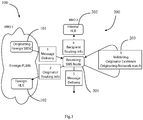
Fig. 1 is a high level flow diagram illustrating major steps of the invention for SMS fraud detection; and -
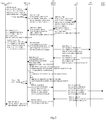
Figs. 2 and3 are "ladder" message sequence diagrams illustrating the steps in more detail for two different scenarios. - Within the context of "grey routes" detection, this invention matches the ranges of originating addresses of the message delivering entities (e.g. SMS Service Centres) and of the queried ones (i.e. the HLRs/HSSs from foreign PLMNs). It makes use of known operations such as MT-FSM and SRI-for-SM or ATI, ATM to validate the legitimacy of the route the message delivery followed.
- Next to "grey routes" detection, this invention extends the SMS anti-fake approach described in our prior published specification number
US2008/092225 . By initiating the additional SRI-for-SM or ATI or ATM operations in the context of "grey routes", it also validates the authenticity of the foreign message originator by analysing the response code of the query request. - Although some of the tools (i.e. the operations) used are the same as in the earlier mentioned filings, this invention applies them to different type of traffic (i.e. foreign MT-FSM) and the information analysed is different (i.e. it does not in some embodiments make use of the originating switch / address of the originating number provided in the answer from HLR/HSS).
- Referring to
Fig. 1 a network MNO1 (i.e. foreign PLMN) sends an SMS to a network MNO2 (i.e. home PLMN). In the originating network MNO1 aSMSC 101 originates an SMS delivery session for delivery of a message to a recipient device in the network MNO2. The originating network MNO1 also has a HLR (102). There is a receivingnode 201 in the receiving network MNO2. - Importantly, the receiving
node 201 performs a query on the address of the originator of the foreign PLMN MNO1 (step 2) and then also validates this as set out instep 3 ofFig. 1 . - The
node 201 querying theHLR 102 is not to determine the serving VLR address, nor is it performed to determine an address of the originator device such as an originator MSISDN, but rather to: - (a) validate the existence of the already-received information such as originator MSISDN, and
- (b) subsequently to identify whether the responding
HLR 102 is part of the same network as thesource SMSC 101 delivering the MT-FWD-SM message. - The home PLMN MNO2/200 identifies the fact that the message originator is allowed to use the foreign SMS-SC (101) to deliver short messages (by comparing the address ranges of the responding
foreign HLR 102 and the deliveringforeign SMSC 101. - In more detail, the overall method may be summarised in one embodiment as follows:
- the receiving node in the home PLMN MNO2/200 receives a message delivery (e.g, MT-FSM) request from a source delivery entity (e.g. SMSC 101) in a foreign PLMN 100 (MNO 1),
- upon receiving such a request, the receiving
node 201 queries the foreign network location register in this caseforeign HLR 102 to validate the authenticity (i.e. the existence/availability) of the address of the originator device, such as an originator MSISDN, and - whether the addresses of the queried
location register 102 matches (203) with those of the node (SMSC 101) delivering the message in an attempt to validate the legal use of the foreign PLMN (100). The node (201) validates the route of the message by comparing (3) the address of the queriedlocation register 102 with the address of the foreign MT-FSM source node (101), to verify the association of the foreign source node with a foreign location register. - The validation is performed before attempting to perform tasks for delivery of the message.
-
Fig. 2 shows the full detail of the interactions for implementation of the invention for the scenario where theSMS node 201 queries where to route the message. - SMS delivery takes places in two steps:
- 1. An SRI-for-SM request is sent out to query the location of the recipient;
- 2. Upon receiving a valid SRI-for-SM response, the MT-FSM is initiated towards the recipient.
- Both of this operations are received by the SMS node (201) (that intercepts foreign SMS traffic for monitoring / screening purposes before passing it further towards the recipients).
- At the start of the session a message delivery request (i.e. MT-FSM) 1 is sent to the
SMS node 201. This sends in step 2 a request to theHLR 102 of the supposedly originating foreign PLMN MNO1 for routing information concerning the originator. Upon receiving the response from theHLR 102, it requests validation of the retrieved information as listed in 203, to validate both the foreign originator and the originating foreign PLMN MNO1. - The
SMS node 201 also makes theconventional HLR 202 look-up for the recipient instep 4, before performing message delivery instep 5. - As shown in
Fig. 2 the sendingSMS node 101 first queries where to route the message. The receivingSMS node 201 advises that the message needs to be routed to it, known as foreign message interception, and answers this query. - Once the MT-FWD-SM message is received the originator MSISDN is extracted along with the sending SMS node identification. To verify the validity of the originating foreign MSISDN and its association with the source network a SRI-for-SM operation for the originating foreign MSISDN is performed (
step 2 inFig. 1 ). Upon completion of this operation the following items (a) and (b) are checked as part of the invention. This isstep 3 inFig. 1 , shown in more detail by means of the operations performed by the "SMS Router MNO 2" node inFig. 2 after receiving the MAP SRI-for-SM from "HLR MNO X". MNO X may be, and indeed is likely to be, MNO1. - (a) The response code - this step validates the authenticity of the MSISDN.
In case of a negative response, the error code may indicate an unavailable number. Such a result indicates a potentially forged MSISDN. This could translate into an attempt of a content provider to make use of a grey route. The need to hide one's identity can be triggered by economical aspects (such as unattractive price policy of the targeted operator) or purely due to SPAM attacks.
In case of a positive response the location and the International Mobile Subscriber Identifier (IMSI) of the originating MSISDN is received. The location is received in the form of an MSC or SGSN address allowing for isolation of the originating location within the originating network. The IMSI received is used to verify the association of the subscriber with the originating operator. - (b) The SCCP CgPa GT address digits identifying the source address of the responding HLR. These address digits are used to compare the addresses belonging to the responding HLR and the SMS node originating the MT short message. As a specialization a configurable number of digits (e.g. the first X digits, the last Y digits) are used in the comparison. That is the SCCP CgPa GT address digits of the responding HLR are compared against the address digits identifying the originating foreign SMS node.
When the compared addresses appear to belong to different operators additional analysis is required as this can relate to a potential fraud case.
Such a situation can be caused by "open SMS-SCs" (i.e. SMS-SCs that do not impose any address screening on submission); interconnect agreements deemed to be legal on the initiating side but illegal on the receiving side of message trajectory. - In another option, the message is received without the need to answer a routing query. This option is relevant in case of mobile network interconnectivity based on SMPP links. This option is shown in
Fig. 3 . In these environments, the initial interrogation of the recipient location is made towards thelocal HLR 102. The HLR response in this case would indicate that the recipient belongs to another mobile network through an identifier that is eventually used to route the message over an SMPP interconnect link. - In many cases mobile operators implement network identifiers in the form of real IMSI addresses and MSC or SGSN addresses to accommodate interworking with other network elements in operator's environment.
- Similar to the SS7-based interconnectivity, once the MT message is received by the receiving
SMS node 201 over SMPP links, the originator MSISDN is extracted. To verify the validity of the originating MSISDN and its association with the source network a SRI-for-SM operation for the originating MSISDN is performed. In this case the SRI-for-SM operation is performed towards the local HLR /MNP DB 202. Upon completion of this operation the following item (c) is checked as part of the invention. This isstep 3 inFig. 1 , shown in more detail by means of the operations performed by the "SMS Router MNO 2" node inFig. 3 after receiving the MAP SRI-for-SM response from the local HLR or MNP DB of MNO2.
(c) The response code - this step validates the authenticity of the originator MSISDN.
In case of a negative response, the error code may indicate an unavailable number. Such a result indicates a potentially forged MSISDN.
This could translate into an attempt of a content provider to make use of a grey route. The need to hide one's identity can be triggered by economical aspects (such as unattractive price policy of the targeted operator) or purely due to SPAM attacks.
In case of a positive response an identifier is returned revealing the association of the originating MSISDN to the operator network that initiated the message delivery. - Such a situation can be caused by "open SMS-SCs" (i.e. SMS-SCs that do not impose any address screening on submission); interconnect agreements deemed to be legal on the initiating side but illegal on the receiving side of message trajectory. It will therefore be appreciated that the invention offers operators better control over the interconnect traffic. It provides them with better insights on actual interconnect and roaming agreements with other operators (for both the incoming and the outgoing traffic). On the other side, it offers better protection for the operator's own subscriber base, helping the operator protect its brand name and maintain subscriber loyalty. This invention provides advantages over the recommendations and guidelines outlined by GSM Association due to SRI-for-SM operation performed for the originating subscriber of a foreign MT short message thus enabling validation of the subscriber and legitimacy of the undertaken message route.
- The scope of the invention is determined by the appended claims.
Claims (6)
- A method performed by a receiving Public Land Mobile Network (PLMN) (MNO 2) including at least a receiving node (201), the method comprising steps of:
said receiving node (201):receiving from a foreign delivery entity source node (101) in a foreign PLMN (MNO 1) a MT message having an originator and having a recipient,extracting from said message an MSISDN of said originator and an address of said foreign delivery entity source node (101) andperforming validation steps of:wherein said validation steps (a) and (b) are performed before attempting to perform tasks for delivery of the message.(a) performing an SRI-for-SM operation for the extracted originator MSISDN on a foreign location register (102) having a foreign location register address, and in case of a negative response with an error code indicating an unavailable number, determining a potentially forged originator MSISDN, in case of a positive response, receiving the location and the IMSI of the originator MSISDN and using the received IMSI to verify association of the originator with the foreign network,(b) verifying association of said foreign source node (101) with said foreign location register (102) by comparing (3) said foreign location register (102) address with said foreign delivery entity source node (101) address, including identifying said foreign location register address (102) according to SCCP CgPa GT address digits of said foreign location register, and using said digits to compare said addresses of said foreign location register and said foreign delivery entity source node (101), - The method as claimed in claim 1, wherein a configurable sub-set of said digits are used in said comparison of said addresses of said foreign location register and said foreign source node.
- The method as claimed in claims 1 or 2, wherein said validation step (b) includes comparing SCCP CgPa GT address digits of said foreign location register address against SCCP CgPa GT address digits of said foreign source node address.
- The method as claimed in any preceding claim, wherein said validation step (b) includes comparing SCCP CgPa GT address digits of said foreign location register address against GSM MAP Service Centre originating address digits of said foreign source node.
- The method as claimed in any preceding claim, wherein said receiving PLMN performs said validation steps (a) and (b) whether the message delivery request uses SS7 or SMPP protocols.
- A group of one or more mobile network nodes (201, 203) comprising digital data processors and ports for transmitting and receiving data, and being programmed to reside in a PLMN network and perform steps of:receiving from a foreign delivery entity source node (101) in a foreign PLMN (MNO 1) a MT message having an originator and a recipient,extracting from said message an extracted originator MSISDN of said originator and a foreign source node address of said foreign source node,performing validation steps of:wherein said validation steps are performed before attempting to perform tasks for delivery of the message.performing an SRI-for-SM operation for the extracted originator MSISDN on a foreign location register (102) having a foreign location register address, andin case of a negative response with an error code indicating an unavailable number, determining a potentially forged originator MSISDN,in case of a positive response the location and the IMSI of the originator MSISDN is received and using the received IMSI to verify association of the originator with the foreign network,verifying association of said foreign source node with said foreign location register by comparing (3) said foreign location register (102) address with said foreign source node (101) address, including identifying said foreign location register address (102) according to SCCP CgPa GT address digits of said foreign location register, and using said digits to compare said addresses of said foreignlocation register and said foreign source node,
Priority Applications (1)
| Application Number | Priority Date | Filing Date | Title |
|---|---|---|---|
| EP14724413.1A EP3000212B1 (en) | 2013-05-23 | 2014-05-13 | Sms fraud detection |
Applications Claiming Priority (3)
| Application Number | Priority Date | Filing Date | Title |
|---|---|---|---|
| EP13169030 | 2013-05-23 | ||
| EP14724413.1A EP3000212B1 (en) | 2013-05-23 | 2014-05-13 | Sms fraud detection |
| PCT/EP2014/059741 WO2014187696A1 (en) | 2013-05-23 | 2014-05-13 | Sms fraud detection |
Publications (2)
| Publication Number | Publication Date |
|---|---|
| EP3000212A1 EP3000212A1 (en) | 2016-03-30 |
| EP3000212B1 true EP3000212B1 (en) | 2020-05-06 |
Family
ID=48520729
Family Applications (1)
| Application Number | Title | Priority Date | Filing Date |
|---|---|---|---|
| EP14724413.1A Active EP3000212B1 (en) | 2013-05-23 | 2014-05-13 | Sms fraud detection |
Country Status (3)
| Country | Link |
|---|---|
| US (1) | US9661502B2 (en) |
| EP (1) | EP3000212B1 (en) |
| WO (1) | WO2014187696A1 (en) |
Cited By (2)
| Publication number | Priority date | Publication date | Assignee | Title |
|---|---|---|---|---|
| US12437066B2 (en) | 2023-06-29 | 2025-10-07 | Bank Of America Corporation | System and method for classifying suspicious text messages received by a user device |
| US12549599B2 (en) | 2023-06-29 | 2026-02-10 | Bank Of America Corporation | System and method for intercepting and classifying suspicious text messages between user devices |
Families Citing this family (8)
| Publication number | Priority date | Publication date | Assignee | Title |
|---|---|---|---|---|
| DE102014117713B4 (en) * | 2014-12-02 | 2016-12-01 | GSMK Gesellschaft für sichere mobile Kommunikation mbH | Method and device for securing a signaling system No. 7 interface |
| GB2534864A (en) * | 2015-01-30 | 2016-08-10 | Dialogue Malta Ltd | Identification of sources of media traffic through a network |
| CN106714119A (en) * | 2015-07-28 | 2017-05-24 | 中兴通讯股份有限公司 | Short message sending monitoring method and system |
| US11381387B2 (en) * | 2016-07-25 | 2022-07-05 | Telefonaktiebolaget Lm Ericsson (Publ) | Proof-of-presence indicator |
| CN107734461A (en) * | 2017-09-26 | 2018-02-23 | 上海欣方智能系统有限公司 | A kind of Novel telephone swindle detection and prevention method based on location determination |
| CN108391240B (en) * | 2018-05-23 | 2021-08-24 | 中国联合网络通信集团有限公司 | Method and device for judging spam multimedia messages |
| CN108769933B (en) * | 2018-05-31 | 2021-06-04 | 中国联合网络通信集团有限公司 | MMS identification method and MMS identification system |
| KR102877312B1 (en) | 2018-09-12 | 2025-10-29 | 삼성전자주식회사 | Electronic apparatus and control method thereof |
Family Cites Families (18)
| Publication number | Priority date | Publication date | Assignee | Title |
|---|---|---|---|---|
| US6546416B1 (en) * | 1998-12-09 | 2003-04-08 | Infoseek Corporation | Method and system for selectively blocking delivery of bulk electronic mail |
| US7134012B2 (en) * | 2001-08-15 | 2006-11-07 | International Business Machines Corporation | Methods, systems and computer program products for detecting a spoofed source address in IP datagrams |
| US7313815B2 (en) * | 2001-08-30 | 2007-12-25 | Cisco Technology, Inc. | Protecting against spoofed DNS messages |
| EP1736016B1 (en) * | 2004-04-14 | 2015-06-24 | MBalance Research B.V. | Method for preventing the delivery of short message service message spam |
| US20090233630A1 (en) * | 2004-11-12 | 2009-09-17 | Jeffrey Wilson | Telecommunications services apparatus and methods |
| GB0425905D0 (en) * | 2004-11-25 | 2004-12-29 | Intellprop Ltd | Telecommunications services apparatus and method |
| EP1839417B1 (en) | 2005-01-19 | 2009-02-18 | Markport Limited | A mobile network security system |
| US8121624B2 (en) * | 2006-07-25 | 2012-02-21 | Alcatel Lucent | Message spoofing detection via validation of originating switch |
| US9408046B2 (en) * | 2006-10-03 | 2016-08-02 | Telecommunication Systems, Inc. | 911 data messaging |
| CN101669376A (en) * | 2007-01-18 | 2010-03-10 | 泰克莱克公司 | Methods, systems, and computer program products for routing Short Message Service (SMS) messages from a 2G network to a Session Initiation Protocol (SIP) based network |
| GB2447433A (en) * | 2007-02-07 | 2008-09-17 | Vodafone Plc | Reduce signalling load |
| ES2449570T3 (en) * | 2007-11-15 | 2014-03-20 | Deutsche Telekom Ag | Procedure and system to provide an unconditional short message forwarding service (SMS) |
| EP2086280A1 (en) * | 2008-02-04 | 2009-08-05 | Nokia Siemens Networks Oy | Improved provision of value added short message services |
| WO2010045646A2 (en) | 2008-10-17 | 2010-04-22 | Tekelec | Methods, systems, and computer readable media for detection of an unautorized service message in a network |
| US8150428B2 (en) * | 2008-11-24 | 2012-04-03 | Verizon Patent And Licensing Inc. | Mobile originated SMS over a wireless IP network |
| WO2010105099A2 (en) * | 2009-03-11 | 2010-09-16 | Tekelec | Systems, methods, and computer readable media for detecting and mitigating address spoofing in messaging service transactions |
| US20120083243A1 (en) * | 2010-04-30 | 2012-04-05 | Ari Kahn | Communication Network Signaling |
| GB201105565D0 (en) * | 2011-04-01 | 2011-05-18 | Vodafone Ip Licensing Ltd | Network architecture |
-
2014
- 2014-05-13 US US14/893,302 patent/US9661502B2/en active Active
- 2014-05-13 EP EP14724413.1A patent/EP3000212B1/en active Active
- 2014-05-13 WO PCT/EP2014/059741 patent/WO2014187696A1/en not_active Ceased
Non-Patent Citations (1)
| Title |
|---|
| None * |
Cited By (2)
| Publication number | Priority date | Publication date | Assignee | Title |
|---|---|---|---|---|
| US12437066B2 (en) | 2023-06-29 | 2025-10-07 | Bank Of America Corporation | System and method for classifying suspicious text messages received by a user device |
| US12549599B2 (en) | 2023-06-29 | 2026-02-10 | Bank Of America Corporation | System and method for intercepting and classifying suspicious text messages between user devices |
Also Published As
| Publication number | Publication date |
|---|---|
| WO2014187696A1 (en) | 2014-11-27 |
| US20160174077A1 (en) | 2016-06-16 |
| EP3000212A1 (en) | 2016-03-30 |
| US9661502B2 (en) | 2017-05-23 |
Similar Documents
| Publication | Publication Date | Title |
|---|---|---|
| US9661502B2 (en) | SMS fraud detection | |
| US8908864B2 (en) | Systems, methods, and computer readable media for detecting and mitigating address spoofing in messaging service transactions | |
| US8121624B2 (en) | Message spoofing detection via validation of originating switch | |
| EP2149271B1 (en) | Insertion of advertisement content into a text message | |
| AU2005223809B2 (en) | Telecommunications services apparatus and methods | |
| DK1736016T3 (en) | Process for the prevention of delivery of spam via sms | |
| JP5826187B2 (en) | Management of SMS spoofing using the SMPP protocol | |
| US10498678B2 (en) | Method for user reporting of spam mobile messages and filter node | |
| JP6000125B2 (en) | Method and apparatus for selective message service blocking | |
| CA2706193A1 (en) | Method, device and system for message identification | |
| KR101152057B1 (en) | Spam checking for internetwork messages | |
| US20070287463A1 (en) | Telecommunications Services Apparatus And Method For Modifying The Routing Of Mobile Terminated Short Messages (Sms) | |
| EP2597847B1 (en) | Inbound unified identifier telecommunication system | |
| US11039316B2 (en) | Contextual signaling system 7 (SS7) firewall and associated method of use | |
| WO2021101417A1 (en) | System for controlling mobile advertising | |
| CN106470408B (en) | A kind of international roaming short message protecting method, device and system | |
| US20100112993A1 (en) | Method, device and system for message identification | |
| EP3857927A1 (en) | Universal packet signaling messaging system | |
| CN104581658A (en) | Terminating processing method and device | |
| EP4490903B1 (en) | Automated fraud call detection | |
| FI111900B (en) | Apparatus for forming an interface in a telecommunications network |
Legal Events
| Date | Code | Title | Description |
|---|---|---|---|
| PUAI | Public reference made under article 153(3) epc to a published international application that has entered the european phase |
Free format text: ORIGINAL CODE: 0009012 |
|
| 17P | Request for examination filed |
Effective date: 20151119 |
|
| AK | Designated contracting states |
Kind code of ref document: A1 Designated state(s): AL AT BE BG CH CY CZ DE DK EE ES FI FR GB GR HR HU IE IS IT LI LT LU LV MC MK MT NL NO PL PT RO RS SE SI SK SM TR |
|
| AX | Request for extension of the european patent |
Extension state: BA ME |
|
| DAX | Request for extension of the european patent (deleted) | ||
| RAP1 | Party data changed (applicant data changed or rights of an application transferred) |
Owner name: MARKPORT LIMITED |
|
| STAA | Information on the status of an ep patent application or granted ep patent |
Free format text: STATUS: EXAMINATION IS IN PROGRESS |
|
| 17Q | First examination report despatched |
Effective date: 20181120 |
|
| RIC1 | Information provided on ipc code assigned before grant |
Ipc: H04W 12/12 20090101ALI20191021BHEP Ipc: H04L 12/58 20060101ALI20191021BHEP Ipc: H04L 29/06 20060101AFI20191021BHEP |
|
| GRAP | Despatch of communication of intention to grant a patent |
Free format text: ORIGINAL CODE: EPIDOSNIGR1 |
|
| STAA | Information on the status of an ep patent application or granted ep patent |
Free format text: STATUS: GRANT OF PATENT IS INTENDED |
|
| INTG | Intention to grant announced |
Effective date: 20191206 |
|
| GRAS | Grant fee paid |
Free format text: ORIGINAL CODE: EPIDOSNIGR3 |
|
| GRAA | (expected) grant |
Free format text: ORIGINAL CODE: 0009210 |
|
| STAA | Information on the status of an ep patent application or granted ep patent |
Free format text: STATUS: THE PATENT HAS BEEN GRANTED |
|
| AK | Designated contracting states |
Kind code of ref document: B1 Designated state(s): AL AT BE BG CH CY CZ DE DK EE ES FI FR GB GR HR HU IE IS IT LI LT LU LV MC MK MT NL NO PL PT RO RS SE SI SK SM TR |
|
| REG | Reference to a national code |
Ref country code: GB Ref legal event code: FG4D |
|
| REG | Reference to a national code |
Ref country code: CH Ref legal event code: EP Ref country code: AT Ref legal event code: REF Ref document number: 1268632 Country of ref document: AT Kind code of ref document: T Effective date: 20200515 |
|
| REG | Reference to a national code |
Ref country code: IE Ref legal event code: FG4D |
|
| REG | Reference to a national code |
Ref country code: DE Ref legal event code: R096 Ref document number: 602014064934 Country of ref document: DE |
|
| REG | Reference to a national code |
Ref country code: LT Ref legal event code: MG4D |
|
| REG | Reference to a national code |
Ref country code: NL Ref legal event code: MP Effective date: 20200506 |
|
| PG25 | Lapsed in a contracting state [announced via postgrant information from national office to epo] |
Ref country code: PT Free format text: LAPSE BECAUSE OF FAILURE TO SUBMIT A TRANSLATION OF THE DESCRIPTION OR TO PAY THE FEE WITHIN THE PRESCRIBED TIME-LIMIT Effective date: 20200907 Ref country code: FI Free format text: LAPSE BECAUSE OF FAILURE TO SUBMIT A TRANSLATION OF THE DESCRIPTION OR TO PAY THE FEE WITHIN THE PRESCRIBED TIME-LIMIT Effective date: 20200506 Ref country code: LT Free format text: LAPSE BECAUSE OF FAILURE TO SUBMIT A TRANSLATION OF THE DESCRIPTION OR TO PAY THE FEE WITHIN THE PRESCRIBED TIME-LIMIT Effective date: 20200506 Ref country code: SE Free format text: LAPSE BECAUSE OF FAILURE TO SUBMIT A TRANSLATION OF THE DESCRIPTION OR TO PAY THE FEE WITHIN THE PRESCRIBED TIME-LIMIT Effective date: 20200506 Ref country code: GR Free format text: LAPSE BECAUSE OF FAILURE TO SUBMIT A TRANSLATION OF THE DESCRIPTION OR TO PAY THE FEE WITHIN THE PRESCRIBED TIME-LIMIT Effective date: 20200807 Ref country code: IS Free format text: LAPSE BECAUSE OF FAILURE TO SUBMIT A TRANSLATION OF THE DESCRIPTION OR TO PAY THE FEE WITHIN THE PRESCRIBED TIME-LIMIT Effective date: 20200906 Ref country code: NO Free format text: LAPSE BECAUSE OF FAILURE TO SUBMIT A TRANSLATION OF THE DESCRIPTION OR TO PAY THE FEE WITHIN THE PRESCRIBED TIME-LIMIT Effective date: 20200806 |
|
| PG25 | Lapsed in a contracting state [announced via postgrant information from national office to epo] |
Ref country code: BG Free format text: LAPSE BECAUSE OF FAILURE TO SUBMIT A TRANSLATION OF THE DESCRIPTION OR TO PAY THE FEE WITHIN THE PRESCRIBED TIME-LIMIT Effective date: 20200806 Ref country code: HR Free format text: LAPSE BECAUSE OF FAILURE TO SUBMIT A TRANSLATION OF THE DESCRIPTION OR TO PAY THE FEE WITHIN THE PRESCRIBED TIME-LIMIT Effective date: 20200506 Ref country code: RS Free format text: LAPSE BECAUSE OF FAILURE TO SUBMIT A TRANSLATION OF THE DESCRIPTION OR TO PAY THE FEE WITHIN THE PRESCRIBED TIME-LIMIT Effective date: 20200506 Ref country code: LV Free format text: LAPSE BECAUSE OF FAILURE TO SUBMIT A TRANSLATION OF THE DESCRIPTION OR TO PAY THE FEE WITHIN THE PRESCRIBED TIME-LIMIT Effective date: 20200506 |
|
| REG | Reference to a national code |
Ref country code: AT Ref legal event code: MK05 Ref document number: 1268632 Country of ref document: AT Kind code of ref document: T Effective date: 20200506 |
|
| PG25 | Lapsed in a contracting state [announced via postgrant information from national office to epo] |
Ref country code: AL Free format text: LAPSE BECAUSE OF FAILURE TO SUBMIT A TRANSLATION OF THE DESCRIPTION OR TO PAY THE FEE WITHIN THE PRESCRIBED TIME-LIMIT Effective date: 20200506 Ref country code: NL Free format text: LAPSE BECAUSE OF FAILURE TO SUBMIT A TRANSLATION OF THE DESCRIPTION OR TO PAY THE FEE WITHIN THE PRESCRIBED TIME-LIMIT Effective date: 20200506 |
|
| PG25 | Lapsed in a contracting state [announced via postgrant information from national office to epo] |
Ref country code: SM Free format text: LAPSE BECAUSE OF FAILURE TO SUBMIT A TRANSLATION OF THE DESCRIPTION OR TO PAY THE FEE WITHIN THE PRESCRIBED TIME-LIMIT Effective date: 20200506 Ref country code: EE Free format text: LAPSE BECAUSE OF FAILURE TO SUBMIT A TRANSLATION OF THE DESCRIPTION OR TO PAY THE FEE WITHIN THE PRESCRIBED TIME-LIMIT Effective date: 20200506 Ref country code: CH Free format text: LAPSE BECAUSE OF NON-PAYMENT OF DUE FEES Effective date: 20200531 Ref country code: DK Free format text: LAPSE BECAUSE OF FAILURE TO SUBMIT A TRANSLATION OF THE DESCRIPTION OR TO PAY THE FEE WITHIN THE PRESCRIBED TIME-LIMIT Effective date: 20200506 Ref country code: AT Free format text: LAPSE BECAUSE OF FAILURE TO SUBMIT A TRANSLATION OF THE DESCRIPTION OR TO PAY THE FEE WITHIN THE PRESCRIBED TIME-LIMIT Effective date: 20200506 Ref country code: ES Free format text: LAPSE BECAUSE OF FAILURE TO SUBMIT A TRANSLATION OF THE DESCRIPTION OR TO PAY THE FEE WITHIN THE PRESCRIBED TIME-LIMIT Effective date: 20200506 Ref country code: CZ Free format text: LAPSE BECAUSE OF FAILURE TO SUBMIT A TRANSLATION OF THE DESCRIPTION OR TO PAY THE FEE WITHIN THE PRESCRIBED TIME-LIMIT Effective date: 20200506 Ref country code: LI Free format text: LAPSE BECAUSE OF NON-PAYMENT OF DUE FEES Effective date: 20200531 Ref country code: RO Free format text: LAPSE BECAUSE OF FAILURE TO SUBMIT A TRANSLATION OF THE DESCRIPTION OR TO PAY THE FEE WITHIN THE PRESCRIBED TIME-LIMIT Effective date: 20200506 Ref country code: IT Free format text: LAPSE BECAUSE OF FAILURE TO SUBMIT A TRANSLATION OF THE DESCRIPTION OR TO PAY THE FEE WITHIN THE PRESCRIBED TIME-LIMIT Effective date: 20200506 |
|
| REG | Reference to a national code |
Ref country code: DE Ref legal event code: R097 Ref document number: 602014064934 Country of ref document: DE |
|
| PG25 | Lapsed in a contracting state [announced via postgrant information from national office to epo] |
Ref country code: PL Free format text: LAPSE BECAUSE OF FAILURE TO SUBMIT A TRANSLATION OF THE DESCRIPTION OR TO PAY THE FEE WITHIN THE PRESCRIBED TIME-LIMIT Effective date: 20200506 Ref country code: MC Free format text: LAPSE BECAUSE OF FAILURE TO SUBMIT A TRANSLATION OF THE DESCRIPTION OR TO PAY THE FEE WITHIN THE PRESCRIBED TIME-LIMIT Effective date: 20200506 Ref country code: SK Free format text: LAPSE BECAUSE OF FAILURE TO SUBMIT A TRANSLATION OF THE DESCRIPTION OR TO PAY THE FEE WITHIN THE PRESCRIBED TIME-LIMIT Effective date: 20200506 |
|
| PLBE | No opposition filed within time limit |
Free format text: ORIGINAL CODE: 0009261 |
|
| STAA | Information on the status of an ep patent application or granted ep patent |
Free format text: STATUS: NO OPPOSITION FILED WITHIN TIME LIMIT |
|
| REG | Reference to a national code |
Ref country code: BE Ref legal event code: MM Effective date: 20200531 |
|
| PG25 | Lapsed in a contracting state [announced via postgrant information from national office to epo] |
Ref country code: LU Free format text: LAPSE BECAUSE OF NON-PAYMENT OF DUE FEES Effective date: 20200513 |
|
| 26N | No opposition filed |
Effective date: 20210209 |
|
| PG25 | Lapsed in a contracting state [announced via postgrant information from national office to epo] |
Ref country code: FR Free format text: LAPSE BECAUSE OF NON-PAYMENT OF DUE FEES Effective date: 20200706 Ref country code: IE Free format text: LAPSE BECAUSE OF NON-PAYMENT OF DUE FEES Effective date: 20200513 |
|
| PG25 | Lapsed in a contracting state [announced via postgrant information from national office to epo] |
Ref country code: BE Free format text: LAPSE BECAUSE OF NON-PAYMENT OF DUE FEES Effective date: 20200531 Ref country code: SI Free format text: LAPSE BECAUSE OF FAILURE TO SUBMIT A TRANSLATION OF THE DESCRIPTION OR TO PAY THE FEE WITHIN THE PRESCRIBED TIME-LIMIT Effective date: 20200506 |
|
| REG | Reference to a national code |
Ref country code: DE Ref legal event code: R079 Ref document number: 602014064934 Country of ref document: DE Free format text: PREVIOUS MAIN CLASS: H04L0029060000 Ipc: H04L0065000000 |
|
| PG25 | Lapsed in a contracting state [announced via postgrant information from national office to epo] |
Ref country code: TR Free format text: LAPSE BECAUSE OF FAILURE TO SUBMIT A TRANSLATION OF THE DESCRIPTION OR TO PAY THE FEE WITHIN THE PRESCRIBED TIME-LIMIT Effective date: 20200506 Ref country code: MT Free format text: LAPSE BECAUSE OF FAILURE TO SUBMIT A TRANSLATION OF THE DESCRIPTION OR TO PAY THE FEE WITHIN THE PRESCRIBED TIME-LIMIT Effective date: 20200506 Ref country code: CY Free format text: LAPSE BECAUSE OF FAILURE TO SUBMIT A TRANSLATION OF THE DESCRIPTION OR TO PAY THE FEE WITHIN THE PRESCRIBED TIME-LIMIT Effective date: 20200506 |
|
| PG25 | Lapsed in a contracting state [announced via postgrant information from national office to epo] |
Ref country code: MK Free format text: LAPSE BECAUSE OF FAILURE TO SUBMIT A TRANSLATION OF THE DESCRIPTION OR TO PAY THE FEE WITHIN THE PRESCRIBED TIME-LIMIT Effective date: 20200506 |
|
| REG | Reference to a national code |
Ref country code: DE Ref legal event code: R082 Ref document number: 602014064934 Country of ref document: DE Representative=s name: BALS & VOGEL PATENTANWAELTE PARTG MBB, DE |
|
| P01 | Opt-out of the competence of the unified patent court (upc) registered |
Effective date: 20230601 |
|
| PGFP | Annual fee paid to national office [announced via postgrant information from national office to epo] |
Ref country code: DE Payment date: 20250529 Year of fee payment: 12 |
|
| PGFP | Annual fee paid to national office [announced via postgrant information from national office to epo] |
Ref country code: GB Payment date: 20250527 Year of fee payment: 12 |