EP2998893A1 - Medical device system and medical device - Google Patents
Medical device system and medical device Download PDFInfo
- Publication number
- EP2998893A1 EP2998893A1 EP15181786.3A EP15181786A EP2998893A1 EP 2998893 A1 EP2998893 A1 EP 2998893A1 EP 15181786 A EP15181786 A EP 15181786A EP 2998893 A1 EP2998893 A1 EP 2998893A1
- Authority
- EP
- European Patent Office
- Prior art keywords
- medical device
- measurement data
- unit
- certification
- communication unit
- Prior art date
- Legal status (The legal status is an assumption and is not a legal conclusion. Google has not performed a legal analysis and makes no representation as to the accuracy of the status listed.)
- Ceased
Links
Images



Classifications
-
- G—PHYSICS
- G16—INFORMATION AND COMMUNICATION TECHNOLOGY [ICT] SPECIALLY ADAPTED FOR SPECIFIC APPLICATION FIELDS
- G16H—HEALTHCARE INFORMATICS, i.e. INFORMATION AND COMMUNICATION TECHNOLOGY [ICT] SPECIALLY ADAPTED FOR THE HANDLING OR PROCESSING OF MEDICAL OR HEALTHCARE DATA
- G16H10/00—ICT specially adapted for the handling or processing of patient-related medical or healthcare data
- G16H10/60—ICT specially adapted for the handling or processing of patient-related medical or healthcare data for patient-specific data, e.g. for electronic patient records
-
- A—HUMAN NECESSITIES
- A61—MEDICAL OR VETERINARY SCIENCE; HYGIENE
- A61B—DIAGNOSIS; SURGERY; IDENTIFICATION
- A61B5/00—Measuring for diagnostic purposes; Identification of persons
- A61B5/0002—Remote monitoring of patients using telemetry, e.g. transmission of vital signals via a communication network
-
- G—PHYSICS
- G16—INFORMATION AND COMMUNICATION TECHNOLOGY [ICT] SPECIALLY ADAPTED FOR SPECIFIC APPLICATION FIELDS
- G16H—HEALTHCARE INFORMATICS, i.e. INFORMATION AND COMMUNICATION TECHNOLOGY [ICT] SPECIALLY ADAPTED FOR THE HANDLING OR PROCESSING OF MEDICAL OR HEALTHCARE DATA
- G16H40/00—ICT specially adapted for the management or administration of healthcare resources or facilities; ICT specially adapted for the management or operation of medical equipment or devices
- G16H40/60—ICT specially adapted for the management or administration of healthcare resources or facilities; ICT specially adapted for the management or operation of medical equipment or devices for the operation of medical equipment or devices
- G16H40/63—ICT specially adapted for the management or administration of healthcare resources or facilities; ICT specially adapted for the management or operation of medical equipment or devices for the operation of medical equipment or devices for local operation
-
- G—PHYSICS
- G16—INFORMATION AND COMMUNICATION TECHNOLOGY [ICT] SPECIALLY ADAPTED FOR SPECIFIC APPLICATION FIELDS
- G16H—HEALTHCARE INFORMATICS, i.e. INFORMATION AND COMMUNICATION TECHNOLOGY [ICT] SPECIALLY ADAPTED FOR THE HANDLING OR PROCESSING OF MEDICAL OR HEALTHCARE DATA
- G16H40/00—ICT specially adapted for the management or administration of healthcare resources or facilities; ICT specially adapted for the management or operation of medical equipment or devices
- G16H40/60—ICT specially adapted for the management or administration of healthcare resources or facilities; ICT specially adapted for the management or operation of medical equipment or devices for the operation of medical equipment or devices
- G16H40/67—ICT specially adapted for the management or administration of healthcare resources or facilities; ICT specially adapted for the management or operation of medical equipment or devices for the operation of medical equipment or devices for remote operation
Definitions
- the present invention relates to a medical device system and a medical device, in particular, to a medical device system and a medical device, which sends and receives measurement data of vital signs using a communication function.
- JP-A-2009-508618 discloses a system in which ECG (Electrocardiogram) is transmitted from a first medical monitoring device (such as AED) to a second device (such as a defibrillator for an emergency rescue team).
- ECG Electrocardiogram
- JP-A-2005-152401 discloses a system in which a medical measuring device transmits measurement data in a wireless manner.
- the medical measuring device decides whether or not an opposing device receives the measurement data by ACK and retransmits the measurement data if it is decided that the measurement data is not received.
- JP-A-2012-235874 discloses one aspect of AED (Automated External Defibrillator) having a communication function.
- the AED includes a sensor for measuring vital signs (such as body temperature). Also, the AED transmits information measured by the sensor to a server of a medical institution.
- the present invention has been made in view of the above problem, and a primary object thereof is to provide a medical device system and a medical device, in which a transmission and reception of measurement data can be performed between correct devices.
- a medical device system includes a first medical device and a second medical device.
- the first medical devices includes a first measuring unit that acquires measurement data of vital signs of a patient and a first communication unit that transmits the measurement data acquired by the first measuring unit to the second medical device.
- the second medical device includes a second communication unit that receives the measurement data from the first communication unit.
- the first and second medical devices are configured so that if certification processing succeeds, the measurement data is permitted to be used in the second medical device.
- Fig. 1 is a block diagram showing a configuration of a medical device system according to the embodiment 1.
- the medical device system 1 includes a defibrillator 10 (first medical device) and a patient monitor 20 (second medical device).
- the defibrillator 10 and the patient monitor 20 are one aspect of medical devices for measuring vital signs (e.g., body temperature, blood pressure, electrocardiogram, SpO2 and the like) of a patient.
- the defibrillator 10 is equipped in an ambulance, for example.
- the defibrillator 10 is configured to acquire and display measurement data (such as electrocardiogram) of various vital signs as well as to perform defibrillating (electric shock) or pacing.
- the defibrillator 10 includes a display unit 11 (first display unit), a measuring unit 12 (first measuring unit), a storage unit 13, a communication unit 14 (first communication unit), an input unit 15 and a certification unit 16.
- the defibrillator 10 has a capacitor for charging energy, a control unit including a CPU (Central Processing Unit), connectors for electrodes and the like.
- CPU Central Processing Unit
- the defibrillator 10 is connected to a skin surface of a patient via electrodes (not shown).
- the patient monitor 20 is connected to the skin surface of the patient via electrodes (not shown).
- the patient monitor 20 is configured to measure parameters of various vital signs from electrical signals acquired through the electrodes.
- the display unit 11 is a liquid crystal display or the like provided on a surface of a housing of the defibrillator 10.
- the input unit 15 is various input interfaces (knobs, buttons and the like provided on a body of the housing) for operating the defibrillator 10.
- the display unit 11 and the input unit 15 may be an integrated configuration, such as a touch display.
- a user inputs certification information (input password) through the input unit 15.
- the measuring unit 12 acquires measurement data (body temperature, blood pressure, electrocardiogram, SpO2 and the like) of various vital signs received from electrodes not shown. For example, the measuring unit 12 acquires electrocardiogram waveforms by filtering and amplifying electrocardiogram signals received from the electrodes not shown. The measuring unit 12 stores the measurement data of the vital signs (e.g., electrocardiogram waveforms) to the storage unit 13 and also displays the measurement data on the display unit 11.
- measurement data body temperature, blood pressure, electrocardiogram, SpO2 and the like
- the storage unit 13 is a secondary storage device such as a hard disk.
- the storage unit 13 is configured to store therein various programs, audio data and measurement data (such as electrocardiogram) measured by the measuring unit 12.
- a part of the storage unit 13 may be configured to be removable from the defibrillator 10, such as a USB (Universal Serial Bus) memory.
- USB Universal Serial Bus
- the certification unit 16 creates a password (in the following description, also referred to as a required password) which must be inputted through the input unit 15 of the defibrillator 10.
- the certification unit 16 displays the created required password on the display unit 11 or a display unit 22 (display) of the patient monitor 20.
- the certification unit 16 decides whether or not certification information (input password) inputted through the input unit 15 corresponds to the required password.
- the certification unit 16 decides that certification succeeds if the input password corresponds to the required password.
- the measurement data is allowed to be used in the patient monitor 20.
- the phrase "the input password corresponds to the required password” preferably means that both are identical, but not required to be perfectly identical.
- the concept encompasses a relationship that both passwords correspond to each other in accordance with a predetermined rule as in the Cesar's code.
- the communication unit 14 is a communication interface for transmitting the measurement data to the patient monitor 20.
- the communication unit 14 is an interface equipped with, for example, Bluetooth (registered trademark).
- the communication unit 14 transmits the measurement data, which are stored in the storage unit 13, to the patient monitor 20. Upon transmitting, the communication unit 14 performs such processing by referring to whether certification processing succeeds. Details of the certification processing will be described below with reference to Figs. 2 and 4 .
- the patient monitor 20 includes a measuring unit 21 (second measuring unit), a display unit 22 (second display unit), a communication unit 23 (second communication unit), an input unit 24 and a storage unit 25.
- the measuring unit 21 acquires measurement data (body temperature, blood pressure, electrocardiogram, SpO2 and the like) of various vital signs based on electrical signals from electrodes not shown.
- the measuring unit 21 stores the acquired measurement data to the storage unit 25. Also, the measuring unit 21 displays the acquired measurement data to the display unit 22.
- the display unit 22 is a liquid crystal display or the like provided on the patient monitor 20. Alternatively, the display unit 22 may be combined with an input unit as in a touch display.
- the storage unit 25 is configured to store therein various programs for operating the patient monitor 20, audio programs, various vital sign data acquired by the measuring unit 21, and the like.
- a part of the storage unit 25 may be configured to be removable from the patient monitor 20, such as a USB (Universal Serial Bus) memory.
- USB Universal Serial Bus
- the communication unit 23 is a communication interface for transmitting and receiving data to and from the defibrillator 10.
- the communication unit 23 is an interface equipped with, for example, Bluetooth (registered trademark) which is a short-distance wireless communication standard.
- the input unit 24 is an input interface provided on the patient monitor 20 and, for example, is buttons, a touch display and the like.
- the input password and the required password are not necessary to be letters (such as alphabet), and thus may be combinations of alphabet and numbers, ones including symbols (such as quadrangles, triangles and circles) and the like.
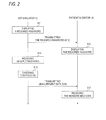
- Fig. 2 is a timing chart showing a first certification processing example between the defibrillator 10 and the patient monitor 20 according to the present embodiment.
- the certification unit 16 in the defibrillator 10 creates a required password (S11). In this case, preferably, creation of the required password is performed by creating a random letter string.
- a letter string in which a type of the input unit 15 (such as the number of input buttons) is taken into account is employed.
- the certification unit 16 transmits the created required password to the patient monitor 20 through the communication unit 14 (S12).
- the display unit 22 in the patient monitor 20 displays the received required password (S 13).
- a user e.g., a nurse
- the certification unit 16 decides whether or not the input password corresponds to the required password and then decides that certification succeeds if the input password corresponds to the required password (S 15).
- the communication unit 14 transmits measurement data to the patient monitor 20 (S16).
- the communication unit 23 displays the received measurement data on the display unit 22 (S17).
- Fig. 3 is an example of a display screen of the display unit 22 after the measurement data is received.
- the display screen is configured to array and display various measurement data 101 acquired at the defibrillator 10 and various measurement data 102 acquired at the patient monitor in time series.
- measurement data generally means data in which time information and numerical information are paired.
- the patient monitor 20 is preferably configured to array and display the measurement data 101 acquired at the defibrillator 10 and the measurement data 102 acquired at the patient monitor 20 in time series.
- the communication unit 14 in the defibrillator 10 transmits a transmission demand of measurement data to the patient monitor 20 (S21). Then, the certification unit 16 in the defibrillator 10 creates a required password and displays the required password on the display unit 11 (S22).
- a certain trigger e.g., a transmission demand by operation of the input unit 15
- the communication unit 14 in the defibrillator 10 transmits a transmission demand of measurement data to the patient monitor 20 (S21).
- the certification unit 16 in the defibrillator 10 creates a required password and displays the required password on the display unit 11 (S22).
- a user e.g., a nurse
- the communication unit 23 transmits the input password to the defibrillator 10 (S23).
- the communication unit 14 of the defibrillator 10 receives the input password (S23).
- the certification unit 16 decides whether or not the received input password corresponds to the required password (S24). When two passwords do not correspond to each other, the communication unit 14 does not perform transmission of measurement data. When two passwords correspond to each other, the certification unit 16 decides that transmission of the measurement data acquired by the measuring unit 12 is permitted. When transmission of the measurement data is permitted, the communication unit 14 transmits the measurement data acquired by the measuring unit 12 to the patient monitor 20 (S26).
- the communication unit 23 receives the measurement data from the defibrillator 10 (S26). Then, the communication unit 23 displays the received measurement data on the display unit 22 (S27).
- the third certification processing example will be now described with reference to Fig. 5 .
- the communication unit 14 of the defibrillator 10 transmits measurement data to the patient monitor 20 (S31). Also, the certification unit 16 of the defibrillator 10 creates a required password and displays the required password on the display unit 11 (S32).
- a user e.g., a nurse
- the communication unit 23 transmits the input password to the defibrillator 10 (S33).
- the communication unit 14 of the defibrillator 10 receives the input password (S33).
- the certification unit 16 decides whether or not the received input password corresponds to the required password (S34). If two passwords do not correspond to each other, the communication unit 14 does not transmit an acquisition permission notification for the measurement data. On the other hand, if two passwords correspond to each other, the communication unit 14 transmits the acquisition permission notification for the measurement data (S35).
- the communication unit 23 When receiving the acquisition permission notification for the measurement data, the communication unit 23 displays the measurement data received at S31 on the display unit 22 (S36). Meanwhile, the patient monitor 20 deletes the measurement data received from the defibrillator 10, if a predetermined period of time is elapsed without receiving the acquisition permission notification for the measurement data after transmitting the input password.
- the medical device system 1 according to the present embodiment is different from the embodiment 1, in that certification processing is performed on a receiving-side device.
- differences from the embodiment 1 will be mainly described.
- processing unit designated by the same terms and reference numerals as those of the embodiment 1 in the drawings are regarded as performing the same processing as those of the embodiment 1, if not specifically mentioned.
- Fig. 6 is a block diagram showing a configuration of the medical device system 1 according to the present embodiment.
- a defibrillator 10 according to the present embodiment has a configuration in which the certification unit 16 is not equipped therein, as compared to the configuration shown in Fig. 1 .
- a patient monitor 20 is different from the configuration of Fig. 1 in that a certification unit 26 is equipped therein.
- the patient monitor 20 receives an input password from the defibrillator 10.
- the patient monitor 20 performs certification processing using the received input password and a required password, and if the certification succeeds, measurement data measured by the defibrillator 10 is permitted to be used in the patient monitor 20.
- specific examples of the certification processing will be described with reference to Figs. 7 and 8 .
- Fig. 7 is a timing chart showing a fourth certification processing example (continued from the embodiment 1) between the defibrillator 10 and the patient monitor 20 according to the present embodiment.
- a communication unit 14 in the defibrillator 10 transmits a transmission demand to the patient monitor 20 (S41).
- a communication unit 23 in the patient monitor 20 receives the transmission demand (S41).
- the certification unit 26 in the patient monitor 20 creates a required password and displays the required password on a display unit 22 (S42).
- a user of the defibrillator 10 inputs a password while referring to the required password displayed on the patient monitor 20.
- the communication unit 14 transmits the input password to the patient monitor 20 (S43).
- the communication unit 23 of the patient monitor 20 receives the input password (S43). Also, the certification unit 26 decides whether or not the input password corresponds to the required password (S44). If the input password corresponds to the required password, the certification unit 26 transmits a transmission permission to the defibrillator 10 through the communication unit 23 (S45).
- the communication unit 14 receives the transmission permission (S45). After receiving the transmission permission, the communication unit 14 reads measurement data from a storage unit 13 and then transmits the measurement data to the patient monitor 20 (S46). The communication unit 23 receives the measurement data transmitted from the defibrillator 10 (S46). The communication unit 23 displays the received measurement data on the display unit 22 (S47).
- Fig. 8 is a timing chart showing the fifth certification processing example between a defibrillator 10 and a patient monitor 20 according to the present embodiment.
- the communication unit 14 of the defibrillator 10 transmits measurement data to the patient monitor 20 (S51). Also, the certification unit 26 of the patient monitor 20 creates a required password after receiving the measurement data, and then displays the required password on the display unit 22 (S52).
- a certain trigger e.g., pressing of a transmission button provided on the defibrillator 10
- a user who is to perform operation for data transfer between the defibrillator 10 and the patient monitor 20, inputs a password corresponding to the required password through an input unit 15 of the defibrillator 10 while referring to the required password displayed on the patient monitor 20.
- the communication unit 14 transmits the input password to the patient monitor 20 (S53).
- the communication unit 23 receives the input password transmitted from the defibrillator 10 (S53).
- the certification unit 26 decides whether or not the received input password corresponds to the required password (S54). If two passwords do not correspond to each other, the communication unit 23 deletes the measurement data received form the defibrillator 10. On the other hand, if two passwords correspond to each other, the patient monitor 20 displays the received measurement data on the display unit 22 (S55).
- the patient monitor 20 receives and uses measurement data acquired by the defibrillator 10, only if certification between the defibrillator 10 and the patient monitor 20 succeeds.
- certification processings data transfer between correct devices can be ensured. Because data transfer between correct devices can be realized, unintended transmission and reception of measurement data can be avoided. Thus, a risk, such as confusing data of patients, can be reduced.
- the patient monitor 20 by which measurement data is received, displays the measurement data measured by the defibrillator 10 and the measurement data measured by the patient monitor 20 side by side in time series ( Fig. 3 ).
- a user can treat a patient while referring to a state of the patient during a period of time during which the patient was treated by the defibrillator 10. For example, when treating a patient who comes by an ambulance, doctors or nurses can treat the patient while visually referring to both of measurement data of vital signs measured in the ambulance and measurement data of the current vital signs.
- the communication unit 14 and the communication unit 23 are contemplated to perform communication processing based on short-distance wireless communication standards, including Bluetooth (registered trademark).
- the defibrillator 10 communicates with the patient monitor 20 at a physically close distance. As the physical distance becomes close, a user can input the input password while precisely referring to the required password. Accordingly, a case where a transmission destination is incorrectly inputted can be avoided.
- the first to fifth certification processing examples ( Figs. 2 , 4 , 5 , 7 and 8 ) as described above will be considered.
- the patient monitor 20 cannot refer to the measurement data until certification succeeds.
- data of a patient is hidden in the defibrillator 10 until a transmission source and a transmission destination are confirmed by certification, and this is preferable in terms of management of personal information.
- the defibrillator 20 performs creation of the required password and certification processing, and the patient monitor 20 performs only displaying processing of the required password. Accordingly, the need of changing in design of the patient monitor 20 or the like is not caused, and thus the existing patient monitor 20 can be substantially intactly used to implement the certification as described above.
- the present invention is not necessarily limited thereto.
- the present invention can be applied to transfer data between any measuring devices of the medical field, and for example, can be also applied to transfer data between patient monitors. Also, it will be appreciated that the present invention can be applied to other types of medical devices, such as an electrocardiogram measuring device.
- the patient monitor 20 is used to display the received measurement data
- the measurement data may be used in analyzing states of a patient or the like.
- the first medical device and the second medical device are configured to perform data transfer after certification processing is performed. By performing the certification processing, a data transfer between correct devices can be ensured. Because a data transfer between correct devices can be realized, problems, such as confusingly handling data of patients, can be avoided.
- the present invention can provide a medical device system and a medical device, in which a correct transmission and reception of measurement data can be performed between correct devices.
Landscapes
- Health & Medical Sciences (AREA)
- Engineering & Computer Science (AREA)
- Biomedical Technology (AREA)
- Medical Informatics (AREA)
- Public Health (AREA)
- General Health & Medical Sciences (AREA)
- Primary Health Care (AREA)
- Epidemiology (AREA)
- Life Sciences & Earth Sciences (AREA)
- Business, Economics & Management (AREA)
- General Business, Economics & Management (AREA)
- Heart & Thoracic Surgery (AREA)
- Physics & Mathematics (AREA)
- Biophysics (AREA)
- Pathology (AREA)
- Computer Networks & Wireless Communication (AREA)
- Molecular Biology (AREA)
- Surgery (AREA)
- Animal Behavior & Ethology (AREA)
- Veterinary Medicine (AREA)
- Electrotherapy Devices (AREA)
- Measuring And Recording Apparatus For Diagnosis (AREA)
- Measurement And Recording Of Electrical Phenomena And Electrical Characteristics Of The Living Body (AREA)
- Medical Treatment And Welfare Office Work (AREA)
Abstract
Description
- The present invention relates to a medical device system and a medical device, in particular, to a medical device system and a medical device, which sends and receives measurement data of vital signs using a communication function.
- Recently, networking of medical devices is progressed. As a result, an ability of transmitting and receiving data between medical devices is also enhanced. Such a data communication between medical devices needs to be smoothly performed and also to be correctly performed so that confusion in information of patients is not occurred.
- Now, techniques related to data transmission and reception between medical devices or between a medical device and a medical system server will be described.
JP-A-2009-508618 - Also,
JP-A-2005-152401 -
JP-A-2012-235874 - As described above, there is a case where data measured by a certain medical device is desired to be transmitted to other medical devices. For example, it is preferable that measurement data acquired by a defibrillator equipped in an ambulance can be transmitted to a patient monitor of a medical institution and the like. As a result, doctors or nurses can also refer to various measurement data before a patient is connected to the patient monitor.
- At this time, in order to avoid confusion between patients in transferring of data, transmission and reception of correct measurement data between both devices have to be ensured. For example, a situation where the patient monitor connected to a certain patient is handling measurement data of another patient has to be avoided.
- However, in the related art including
JP-A-2009-508618 JP-A-2005-152401 JP-A-2012-235874 - Accordingly, the present invention has been made in view of the above problem, and a primary object thereof is to provide a medical device system and a medical device, in which a transmission and reception of measurement data can be performed between correct devices.
- According to an aspect of the invention, a medical device system includes a first medical device and a second medical device. The first medical devices includes a first measuring unit that acquires measurement data of vital signs of a patient and a first communication unit that transmits the measurement data acquired by the first measuring unit to the second medical device. The second medical device includes a second communication unit that receives the measurement data from the first communication unit. The first and second medical devices are configured so that if certification processing succeeds, the measurement data is permitted to be used in the second medical device.
-
-
Fig. 1 is a block diagram showing a configuration of a medical device system according to anembodiment 1. -
Fig. 2 is a timing chart showing a first certification processing example between adefibrillator 10 and apatient monitor 20 according to the present invention. -
Fig. 3 is a view showing an example of a display screen of adisplay unit 22 according to theembodiment 1. -
Fig. 4 is a timing chart showing a second certification processing example between thedefibrillator 10 and thepatient monitor 20 according to the present invention. -
Fig. 5 is a timing chart showing a third certification processing example between thedefibrillator 10 and thepatient monitor 20 according to the present invention. -
Fig. 6 is a block diagram showing a configuration of a medical device system according to an embodiment 2. -
Fig. 7 is a timing chart showing a fourth certification processing example between thedefibrillator 10 and thepatient monitor 20 according to the present invention. -
Fig. 8 is a timing chart showing a fifth certification processing example between thedefibrillator 10 and thepatient monitor 20 according to the present invention. - Embodiments of the present invention will be now described with reference to the accompanying drawings.
Fig. 1 is a block diagram showing a configuration of a medical device system according to theembodiment 1. Themedical device system 1 includes a defibrillator 10 (first medical device) and a patient monitor 20 (second medical device). Thedefibrillator 10 and thepatient monitor 20 are one aspect of medical devices for measuring vital signs (e.g., body temperature, blood pressure, electrocardiogram, SpO2 and the like) of a patient. - The
defibrillator 10 is equipped in an ambulance, for example. Thedefibrillator 10 is configured to acquire and display measurement data (such as electrocardiogram) of various vital signs as well as to perform defibrillating (electric shock) or pacing. Thedefibrillator 10 includes a display unit 11 (first display unit), a measuring unit 12 (first measuring unit), astorage unit 13, a communication unit 14 (first communication unit), aninput unit 15 and acertification unit 16. In addition to such processing units, thedefibrillator 10 has a capacitor for charging energy, a control unit including a CPU (Central Processing Unit), connectors for electrodes and the like. - The
defibrillator 10 is connected to a skin surface of a patient via electrodes (not shown). Similarly, thepatient monitor 20 is connected to the skin surface of the patient via electrodes (not shown). Thepatient monitor 20 is configured to measure parameters of various vital signs from electrical signals acquired through the electrodes. - In the following description, a case where a
defibrillator 10 in an ambulance or the like is removed from a patient, to whom thedefibrillator 10 has been mounted, and then apatient monitor 20 is mounted to the patient will be described as an example. At this time, it is assumed that measurement data acquired by thedefibrillator 10 is used in thepatient monitor 20. - The
display unit 11 is a liquid crystal display or the like provided on a surface of a housing of thedefibrillator 10. Theinput unit 15 is various input interfaces (knobs, buttons and the like provided on a body of the housing) for operating thedefibrillator 10. Alternatively, thedisplay unit 11 and theinput unit 15 may be an integrated configuration, such as a touch display. A user inputs certification information (input password) through theinput unit 15. - The
measuring unit 12 acquires measurement data (body temperature, blood pressure, electrocardiogram, SpO2 and the like) of various vital signs received from electrodes not shown. For example, themeasuring unit 12 acquires electrocardiogram waveforms by filtering and amplifying electrocardiogram signals received from the electrodes not shown. Themeasuring unit 12 stores the measurement data of the vital signs (e.g., electrocardiogram waveforms) to thestorage unit 13 and also displays the measurement data on thedisplay unit 11. - The
storage unit 13 is a secondary storage device such as a hard disk. Thestorage unit 13 is configured to store therein various programs, audio data and measurement data (such as electrocardiogram) measured by themeasuring unit 12. A part of thestorage unit 13 may be configured to be removable from thedefibrillator 10, such as a USB (Universal Serial Bus) memory. - The
certification unit 16 creates a password (in the following description, also referred to as a required password) which must be inputted through theinput unit 15 of thedefibrillator 10. Thecertification unit 16 displays the created required password on thedisplay unit 11 or a display unit 22 (display) of thepatient monitor 20. Also, thecertification unit 16 decides whether or not certification information (input password) inputted through theinput unit 15 corresponds to the required password. Thecertification unit 16 decides that certification succeeds if the input password corresponds to the required password. When certification succeeds, the measurement data is allowed to be used in thepatient monitor 20. Herein, the phrase "the input password corresponds to the required password" preferably means that both are identical, but not required to be perfectly identical. For example, the concept encompasses a relationship that both passwords correspond to each other in accordance with a predetermined rule as in the Cesar's code. - The
communication unit 14 is a communication interface for transmitting the measurement data to thepatient monitor 20. Thecommunication unit 14 is an interface equipped with, for example, Bluetooth (registered trademark). Thecommunication unit 14 transmits the measurement data, which are stored in thestorage unit 13, to thepatient monitor 20. Upon transmitting, thecommunication unit 14 performs such processing by referring to whether certification processing succeeds. Details of the certification processing will be described below with reference toFigs. 2 and4 . - Next, a configuration of the patient monitor 20 will be described. The patient monitor 20 includes a measuring unit 21 (second measuring unit), a display unit 22 (second display unit), a communication unit 23 (second communication unit), an
input unit 24 and astorage unit 25. - The measuring
unit 21 acquires measurement data (body temperature, blood pressure, electrocardiogram, SpO2 and the like) of various vital signs based on electrical signals from electrodes not shown. The measuringunit 21 stores the acquired measurement data to thestorage unit 25. Also, the measuringunit 21 displays the acquired measurement data to thedisplay unit 22. - The
display unit 22 is a liquid crystal display or the like provided on thepatient monitor 20. Alternatively, thedisplay unit 22 may be combined with an input unit as in a touch display. - The
storage unit 25 is configured to store therein various programs for operating thepatient monitor 20, audio programs, various vital sign data acquired by the measuringunit 21, and the like. A part of thestorage unit 25 may be configured to be removable from thepatient monitor 20, such as a USB (Universal Serial Bus) memory. - The
communication unit 23 is a communication interface for transmitting and receiving data to and from thedefibrillator 10. Thecommunication unit 23 is an interface equipped with, for example, Bluetooth (registered trademark) which is a short-distance wireless communication standard. - The
input unit 24 is an input interface provided on the patient monitor 20 and, for example, is buttons, a touch display and the like. - The input password and the required password are not necessary to be letters (such as alphabet), and thus may be combinations of alphabet and numbers, ones including symbols (such as quadrangles, triangles and circles) and the like.
- Next, details of certification processing between the
defibrillator 10 and the patient monitor 20 will be described with reference toFigs. 2 and3 . -
Fig. 2 is a timing chart showing a first certification processing example between thedefibrillator 10 and the patient monitor 20 according to the present embodiment. - The
certification unit 16 in thedefibrillator 10 creates a required password (S11). In this case, preferably, creation of the required password is performed by creating a random letter string. Herein, as the required password, a letter string in which a type of the input unit 15 (such as the number of input buttons) is taken into account is employed. Thecertification unit 16 transmits the created required password to the patient monitor 20 through the communication unit 14 (S12). Thedisplay unit 22 in the patient monitor 20 displays the received required password (S 13). A user (e.g., a nurse) inputs a password through theinput unit 15 of thedefibrillator 10, while referring to the required password displayed on the patient monitor 20 (S14). Thecertification unit 16 decides whether or not the input password corresponds to the required password and then decides that certification succeeds if the input password corresponds to the required password (S 15). When certification succeeds, thecommunication unit 14 transmits measurement data to the patient monitor 20 (S16). Thecommunication unit 23 displays the received measurement data on the display unit 22 (S17). -
Fig. 3 is an example of a display screen of thedisplay unit 22 after the measurement data is received. The display screen is configured to array and displayvarious measurement data 101 acquired at thedefibrillator 10 andvarious measurement data 102 acquired at the patient monitor in time series. Herein, the term measurement data generally means data in which time information and numerical information are paired. Accordingly, as shown inFig. 3 , the patient monitor 20 is preferably configured to array and display themeasurement data 101 acquired at thedefibrillator 10 and themeasurement data 102 acquired at the patient monitor 20 in time series. - The second certification processing example will be now described with reference to
Fig. 4 . In response to a certain trigger (e.g., a transmission demand by operation of the input unit 15), thecommunication unit 14 in thedefibrillator 10 transmits a transmission demand of measurement data to the patient monitor 20 (S21). Then, thecertification unit 16 in thedefibrillator 10 creates a required password and displays the required password on the display unit 11 (S22). - A user (e.g., a nurse), who is to perform operation for data transfer, inputs a password corresponding to the required password through the
input unit 24 while referring to the required password displayed on the display unit 11 (S23). Then, thecommunication unit 23 transmits the input password to the defibrillator 10 (S23). - The
communication unit 14 of thedefibrillator 10 receives the input password (S23). Thecertification unit 16 decides whether or not the received input password corresponds to the required password (S24). When two passwords do not correspond to each other, thecommunication unit 14 does not perform transmission of measurement data. When two passwords correspond to each other, thecertification unit 16 decides that transmission of the measurement data acquired by the measuringunit 12 is permitted. When transmission of the measurement data is permitted, thecommunication unit 14 transmits the measurement data acquired by the measuringunit 12 to the patient monitor 20 (S26). - The
communication unit 23 receives the measurement data from the defibrillator 10 (S26). Then, thecommunication unit 23 displays the received measurement data on the display unit 22 (S27). - The third certification processing example will be now described with reference to
Fig. 5 . On the basis of a certain trigger (e.g., pressing of a transmission button), thecommunication unit 14 of thedefibrillator 10 transmits measurement data to the patient monitor 20 (S31). Also, thecertification unit 16 of thedefibrillator 10 creates a required password and displays the required password on the display unit 11 (S32). - A user (e.g., a nurse), who is to perform operation for data transfer, inputs a password corresponding to the required password through the
input unit 24 while referring to the required password displayed on the display unit 11 (S33). Then, thecommunication unit 23 transmits the input password to the defibrillator 10 (S33). - The
communication unit 14 of thedefibrillator 10 receives the input password (S33). Thecertification unit 16 decides whether or not the received input password corresponds to the required password (S34). If two passwords do not correspond to each other, thecommunication unit 14 does not transmit an acquisition permission notification for the measurement data. On the other hand, if two passwords correspond to each other, thecommunication unit 14 transmits the acquisition permission notification for the measurement data (S35). - When receiving the acquisition permission notification for the measurement data, the
communication unit 23 displays the measurement data received at S31 on the display unit 22 (S36). Meanwhile, the patient monitor 20 deletes the measurement data received from thedefibrillator 10, if a predetermined period of time is elapsed without receiving the acquisition permission notification for the measurement data after transmitting the input password. - Next, a configuration of a
medical device system 1 according to the embodiment 2 will be described. Themedical device system 1 according to the present embodiment is different from theembodiment 1, in that certification processing is performed on a receiving-side device. Hereinafter, differences from theembodiment 1 will be mainly described. Meanwhile, processing unit designated by the same terms and reference numerals as those of theembodiment 1 in the drawings are regarded as performing the same processing as those of theembodiment 1, if not specifically mentioned. -
Fig. 6 is a block diagram showing a configuration of themedical device system 1 according to the present embodiment. Adefibrillator 10 according to the present embodiment has a configuration in which thecertification unit 16 is not equipped therein, as compared to the configuration shown inFig. 1 . A patient monitor 20 is different from the configuration ofFig. 1 in that acertification unit 26 is equipped therein. - Operations using the
medical device system 1 according to the present embodiment will be schematically described. The patient monitor 20 receives an input password from thedefibrillator 10. The patient monitor 20 performs certification processing using the received input password and a required password, and if the certification succeeds, measurement data measured by thedefibrillator 10 is permitted to be used in thepatient monitor 20. Hereinafter, specific examples of the certification processing will be described with reference toFigs. 7 and8 . -
Fig. 7 is a timing chart showing a fourth certification processing example (continued from the embodiment 1) between thedefibrillator 10 and the patient monitor 20 according to the present embodiment. - Prior to transmission of measurement data, a
communication unit 14 in thedefibrillator 10 transmits a transmission demand to the patient monitor 20 (S41). Acommunication unit 23 in the patient monitor 20 receives the transmission demand (S41). Then, thecertification unit 26 in the patient monitor 20 creates a required password and displays the required password on a display unit 22 (S42). - A user of the
defibrillator 10 inputs a password while referring to the required password displayed on thepatient monitor 20. Thecommunication unit 14 transmits the input password to the patient monitor 20 (S43). - The
communication unit 23 of the patient monitor 20 receives the input password (S43). Also, thecertification unit 26 decides whether or not the input password corresponds to the required password (S44). If the input password corresponds to the required password, thecertification unit 26 transmits a transmission permission to thedefibrillator 10 through the communication unit 23 (S45). - The
communication unit 14 receives the transmission permission (S45). After receiving the transmission permission, thecommunication unit 14 reads measurement data from astorage unit 13 and then transmits the measurement data to the patient monitor 20 (S46). Thecommunication unit 23 receives the measurement data transmitted from the defibrillator 10 (S46). Thecommunication unit 23 displays the received measurement data on the display unit 22 (S47). - Next, a fifth certification processing example (continued from the embodiment 1) of the medical device system according to the embodiment 2 will be described.
Fig. 8 is a timing chart showing the fifth certification processing example between adefibrillator 10 and apatient monitor 20 according to the present embodiment. - On the basis of a certain trigger (e.g., pressing of a transmission button provided on the defibrillator 10), the
communication unit 14 of thedefibrillator 10 transmits measurement data to the patient monitor 20 (S51). Also, thecertification unit 26 of the patient monitor 20 creates a required password after receiving the measurement data, and then displays the required password on the display unit 22 (S52). - A user (e.g., a nurse), who is to perform operation for data transfer between the
defibrillator 10 and thepatient monitor 20, inputs a password corresponding to the required password through aninput unit 15 of thedefibrillator 10 while referring to the required password displayed on thepatient monitor 20. Thecommunication unit 14 transmits the input password to the patient monitor 20 (S53). - The
communication unit 23 receives the input password transmitted from the defibrillator 10 (S53). Thecertification unit 26 decides whether or not the received input password corresponds to the required password (S54). If two passwords do not correspond to each other, thecommunication unit 23 deletes the measurement data received form thedefibrillator 10. On the other hand, if two passwords correspond to each other, the patient monitor 20 displays the received measurement data on the display unit 22 (S55). - Next, the effects of the
medical device system 1 of the present invention will be described. In the first to fifth certification processings as described above, the patient monitor 20 receives and uses measurement data acquired by thedefibrillator 10, only if certification between thedefibrillator 10 and the patient monitor 20 succeeds. By performing such certification processings, data transfer between correct devices can be ensured. Because data transfer between correct devices can be realized, unintended transmission and reception of measurement data can be avoided. Thus, a risk, such as confusing data of patients, can be reduced. - Also, the
patient monitor 20, by which measurement data is received, displays the measurement data measured by thedefibrillator 10 and the measurement data measured by the patient monitor 20 side by side in time series (Fig. 3 ). Thus, a user can treat a patient while referring to a state of the patient during a period of time during which the patient was treated by thedefibrillator 10. For example, when treating a patient who comes by an ambulance, doctors or nurses can treat the patient while visually referring to both of measurement data of vital signs measured in the ambulance and measurement data of the current vital signs. - Also, the
communication unit 14 and thecommunication unit 23 are contemplated to perform communication processing based on short-distance wireless communication standards, including Bluetooth (registered trademark). Thus, thedefibrillator 10 communicates with the patient monitor 20 at a physically close distance. As the physical distance becomes close, a user can input the input password while precisely referring to the required password. Accordingly, a case where a transmission destination is incorrectly inputted can be avoided. - Next, the first to fifth certification processing examples (
Figs. 2 ,4 ,5 ,7 and8 ) as described above will be considered. When thedefibrillator 10 transmits measurement data after it is decided that certification succeeds (first, second and fourth certification processing examples), the patient monitor 20 cannot refer to the measurement data until certification succeeds. Thus, data of a patient is hidden in thedefibrillator 10 until a transmission source and a transmission destination are confirmed by certification, and this is preferable in terms of management of personal information. - Also, in the first certification processing example, the
defibrillator 20 performs creation of the required password and certification processing, and the patient monitor 20 performs only displaying processing of the required password. Accordingly, the need of changing in design of the patient monitor 20 or the like is not caused, and thus the existing patient monitor 20 can be substantially intactly used to implement the certification as described above. - In the foregoing, the invention achieved by the present inventors has been described in detail based on the embodiments thereof, but it will be appreciated that the present invention is not limited to the above mentioned embodiments and various modifications thereof can be made without departing from the spirit thereof.
- For example, although in the foregoing description, the case where data is transmitted from the
defibrillator 10 to the patient monitor 20 is described, the present invention is not necessarily limited thereto. The present invention can be applied to transfer data between any measuring devices of the medical field, and for example, can be also applied to transfer data between patient monitors. Also, it will be appreciated that the present invention can be applied to other types of medical devices, such as an electrocardiogram measuring device. - Also, although in the foregoing description, the patient monitor 20 is used to display the received measurement data, the measurement data may be used in analyzing states of a patient or the like.
- The first medical device and the second medical device are configured to perform data transfer after certification processing is performed. By performing the certification processing, a data transfer between correct devices can be ensured. Because a data transfer between correct devices can be realized, problems, such as confusingly handling data of patients, can be avoided.
- The present invention can provide a medical device system and a medical device, in which a correct transmission and reception of measurement data can be performed between correct devices.
Claims (7)
- A medical device system comprising a first medical device and a second medical device,
wherein the first medical devices includes:a first measuring unit that acquires measurement data of vital signs of a patient; anda first communication unit that transmits the measurement data acquired by the first measuring unit to the second medical device,wherein the second medical device includes a second communication unit that receives the measurement data from the first communication unit, and
wherein the first and second medical devices are configured so that if certification processing succeeds, the measurement data is permitted to be used in the second medical device. - The medical device system according to claim 1, wherein the first medical device further includes:a certification unit that creates a required password, which is a password required to be inputted; anda first display unit that displays the required password,wherein the certification unit decides that the certification processing succeeds when an input password inputted from a user to the first medical device corresponds to the required password; andwherein the first communication unit transmits the measurement data acquired by the first measuring unit after the certification unit decides that certification succeeds.
- The medical device system according to claim 1,
wherein the first communication unit transmits an input password inputted from a user to the first medical device, to the second communication unit,
wherein the second medical device includes a certification unit that creates a required password, which is a password required to be inputted, and decides that the certification processing succeeds when the input password corresponds to the required password, and
wherein the first communication unit transmits the measurement data acquired by the first measuring unit after the certification unit decides that certification succeeds. - The medical device system according to any one of claims 1 to 3, wherein the second medical device includes:a second measuring unit that acquires measurement data of vital signs of the patient; anda second display unit that displays the measurement data received from the first medical device and the measurement data acquired by the second measuring unit side by side in time series.
- The medical device system according to any one of claims 1 to 4, wherein the first communication unit and the second communication unit perform communication processing based on a short-distance wireless communication standard.
- A medical device comprising:a first measuring unit that acquires measurement data of vital signs of a patient; anda first communication unit that transmits the measurement data acquired by the first measuring unit to an opposing device which is a data transmission destination, after certification processing between the medical device and the opposing device succeeds.
- A medical device that receives measurement data of vital signs of a patient measured by a opposing device to be used in the medical device itself when a certification processing between the medical device and the opposing device succeeds.
Applications Claiming Priority (1)
| Application Number | Priority Date | Filing Date | Title |
|---|---|---|---|
| JP2014174783A JP2016051240A (en) | 2014-08-29 | 2014-08-29 | Medical device system and medical device |
Publications (1)
| Publication Number | Publication Date |
|---|---|
| EP2998893A1 true EP2998893A1 (en) | 2016-03-23 |
Family
ID=54065182
Family Applications (1)
| Application Number | Title | Priority Date | Filing Date |
|---|---|---|---|
| EP15181786.3A Ceased EP2998893A1 (en) | 2014-08-29 | 2015-08-20 | Medical device system and medical device |
Country Status (4)
| Country | Link |
|---|---|
| US (1) | US10568509B2 (en) |
| EP (1) | EP2998893A1 (en) |
| JP (1) | JP2016051240A (en) |
| CN (1) | CN105380594A (en) |
Families Citing this family (1)
| Publication number | Priority date | Publication date | Assignee | Title |
|---|---|---|---|---|
| JP6423120B1 (en) * | 2018-07-04 | 2018-11-14 | 株式会社キャピタルメディカ | Communication terminal, communication terminal control method, and communication terminal control program |
Citations (7)
| Publication number | Priority date | Publication date | Assignee | Title |
|---|---|---|---|---|
| JP2005152401A (en) | 2003-11-27 | 2005-06-16 | Nippon Koden Corp | Biological signal data transmission / reception system, biological signal measurement device, and biological signal data transmission / reception method |
| US20060200009A1 (en) * | 2005-03-02 | 2006-09-07 | Spacelabs Medical, Inc. | Trending display of patient wellness |
| EP2001188A1 (en) * | 2007-06-08 | 2008-12-10 | F.Hoffmann-La Roche Ag | Method for authenticating a medical device and a remote device |
| JP2009508618A (en) | 2005-09-22 | 2009-03-05 | コーニンクレッカ フィリップス エレクトロニクス エヌ ヴィ | System and method for providing event summary information using an encoded ECG waveform |
| US8090409B2 (en) * | 2006-07-14 | 2012-01-03 | Research In Motion Limited | System and method to provision a mobile device |
| JP2012235874A (en) | 2011-05-11 | 2012-12-06 | Hitachi Kokusai Electric Inc | Aed |
| WO2014097117A2 (en) * | 2012-12-18 | 2014-06-26 | Koninklijke Philips N.V. | Integrating defibrillator data with a patient monitor |
Family Cites Families (51)
| Publication number | Priority date | Publication date | Assignee | Title |
|---|---|---|---|---|
| US5423325A (en) * | 1993-03-12 | 1995-06-13 | Hewlett-Packard Corporation | Methods for enhancement of HRV and late potentials measurements |
| JPH07184873A (en) * | 1993-12-28 | 1995-07-25 | Hitachi Medical Corp | Method and apparatus for magnetic resonance examination |
| US6047207A (en) * | 1994-09-28 | 2000-04-04 | Heartstream, Inc. | Method of using a measuring instrument and data gathering system |
| US5767791A (en) * | 1995-11-13 | 1998-06-16 | Vitalcom | Low-power circuit and method for providing rapid frequency lock in a wireless communications device |
| US6057758A (en) * | 1998-05-20 | 2000-05-02 | Hewlett-Packard Company | Handheld clinical terminal |
| US6141584A (en) * | 1998-09-30 | 2000-10-31 | Agilent Technologies, Inc. | Defibrillator with wireless communications |
| US6990371B2 (en) * | 1999-10-14 | 2006-01-24 | Koninklijke Philips Electronics N.V. | Method and apparatus for providing on-screen incident review in an AED |
| US6813519B2 (en) * | 2000-01-21 | 2004-11-02 | Medtronic Minimed, Inc. | Ambulatory medical apparatus and method using a robust communication protocol |
| US6665558B2 (en) * | 2000-12-15 | 2003-12-16 | Cardiac Pacemakers, Inc. | System and method for correlation of patient health information and implant device data |
| US7623970B2 (en) * | 2001-04-17 | 2009-11-24 | Panasonic Corporation | Personal authentication method and device |
| US20030093503A1 (en) * | 2001-09-05 | 2003-05-15 | Olympus Optical Co., Ltd. | System for controling medical instruments |
| IL147502A0 (en) * | 2002-01-07 | 2002-08-14 | Widemed Ltd | Self-adaptive system, for the analysis of biomedical signals of a patient |
| JP2003271737A (en) * | 2002-03-15 | 2003-09-26 | Matsushita Electric Ind Co Ltd | Examination support device |
| JP2003319913A (en) * | 2002-05-07 | 2003-11-11 | Nippon Koden Corp | Biological information distribution method and biological information distribution system |
| US20040116969A1 (en) * | 2002-08-26 | 2004-06-17 | Owen James M. | Pulse detection using patient physiological signals |
| US7231258B2 (en) * | 2002-12-26 | 2007-06-12 | Medtronic Physio-Control Corp. | Communicating medical event information |
| US20040204743A1 (en) * | 2003-01-14 | 2004-10-14 | Mcgrath Thomas J. | Remotely operating external medical devices |
| US7291107B2 (en) * | 2004-08-26 | 2007-11-06 | Roche Diagnostics Operations, Inc. | Insulin bolus recommendation system |
| WO2006049191A1 (en) | 2004-11-08 | 2006-05-11 | Sony Corporation | Information processing system and information processing device |
| US8255238B2 (en) * | 2005-01-03 | 2012-08-28 | Airstrip Ip Holdings, Llc | System and method for real time viewing of critical patient data on mobile devices |
| WO2006117773A1 (en) * | 2005-05-03 | 2006-11-09 | Paieon Inc. | Method and apparatus for positioning a biventrivular pacemaker lead and electrode |
| US7925022B2 (en) * | 2005-05-23 | 2011-04-12 | The Invention Science Fund I, Llc | Device pairing via device to device contact |
| US8391975B2 (en) * | 2005-09-28 | 2013-03-05 | Medtronic, Inc. | Telemetry of combined endocavitary atrial and ventricular signals |
| US20080004663A1 (en) * | 2005-12-22 | 2008-01-03 | Medtronic Emergency Response Systems, Inc. | Defibrillator with implantable medical device detection |
| KR100735382B1 (en) * | 2006-02-08 | 2007-07-04 | 삼성전자주식회사 | Secure communication method and device of a Bluetooth device |
| US8753274B2 (en) * | 2006-07-05 | 2014-06-17 | Elcam Medical Agricultural Cooperative Association, Ltd. | Wireless medical monitoring system |
| US20090096573A1 (en) * | 2007-10-10 | 2009-04-16 | Apple Inc. | Activation of Cryptographically Paired Device |
| EP2211499A4 (en) | 2007-11-16 | 2017-06-21 | Fujitsu Ten Limited | Authentication method, authentication system, on-vehicle device, and authentication device |
| US8978117B2 (en) * | 2007-11-19 | 2015-03-10 | Avaya Inc. | Authentication frequency and challenge type based on environmental and physiological properties |
| CN101981940B (en) | 2008-03-28 | 2014-09-03 | 夏普株式会社 | Remote operation device, operation target device, control method of remote operation device, control method of operation target device, and remote operating system |
| JP5420261B2 (en) * | 2008-03-28 | 2014-02-19 | シャープ株式会社 | Remote operation device, operation target device, control method for remote operation device, control method for operation target device, and remote operation system |
| US20100045425A1 (en) * | 2008-08-21 | 2010-02-25 | Chivallier M Laurent | data transmission of sensors |
| JP2012008931A (en) | 2010-06-28 | 2012-01-12 | Sharp Corp | Biological information processing device, biological information display device, remote medical care system, remote medical care method, processing control program, display control program and recording medium |
| US8907782B2 (en) * | 2010-06-30 | 2014-12-09 | Welch Allyn, Inc. | Medical devices with proximity detection |
| US8957777B2 (en) * | 2010-06-30 | 2015-02-17 | Welch Allyn, Inc. | Body area network pairing improvements for clinical workflows |
| JP5845260B2 (en) * | 2010-08-20 | 2016-01-20 | シー・アール・バード・インコーポレーテッドC R Bard Incorporated | Reconfirmation of ECG support catheter tip placement |
| US9514276B2 (en) * | 2010-11-12 | 2016-12-06 | Physio-Control, Inc. | Manually initiating wireless transmission of resuscitation event data to medical device |
| US8730243B2 (en) * | 2011-01-19 | 2014-05-20 | General Electric Company | Systems, methods, and user interfaces for displaying waveform information |
| CA2870560C (en) * | 2012-04-16 | 2020-05-05 | Airstrip Ip Holdings, Llc | Systems and methods for displaying patient data |
| US8639348B2 (en) * | 2012-06-29 | 2014-01-28 | Zoll Medical Corporation | Providing life support |
| JP2014096054A (en) * | 2012-11-09 | 2014-05-22 | Xacti Corp | Image transfer device |
| JP5796789B2 (en) * | 2012-12-20 | 2015-10-21 | カシオ計算機株式会社 | Wireless terminal in information processing system and method for starting portable information terminal by wireless terminal |
| CN102989054A (en) | 2012-12-24 | 2013-03-27 | 江苏人先医疗科技有限公司 | Infusion pump system with blood oxygen and blood pressure monitor function |
| US9070280B2 (en) * | 2013-01-24 | 2015-06-30 | L&P Property Mangement Company | Remote and controller synchronization for automated furniture controls |
| CN104969510B (en) * | 2013-03-13 | 2019-11-19 | 英特尔公司 | Device-to-device communication for resource sharing |
| JP6381637B2 (en) * | 2013-06-11 | 2018-08-29 | コーニンクレッカ フィリップス エヌ ヴェKoninklijke Philips N.V. | Synchronous cardio version mixed mode operation and timing verification |
| EP3087548A4 (en) * | 2013-12-26 | 2017-09-13 | Tandem Diabetes Care, Inc. | Safety processor for wireless control of a drug delivery device |
| WO2015100439A1 (en) * | 2013-12-26 | 2015-07-02 | Tandem Diabetes Care, Inc. | Integration of infusion pump with remote electronic device |
| US9577999B1 (en) * | 2014-05-02 | 2017-02-21 | Nok Nok Labs, Inc. | Enhanced security for registration of authentication devices |
| US9532225B2 (en) * | 2014-06-12 | 2016-12-27 | General Electric Company | Secure pairing of end user devices with instruments |
| US9455979B2 (en) * | 2014-07-31 | 2016-09-27 | Nok Nok Labs, Inc. | System and method for establishing trust using secure transmission protocols |
-
2014
- 2014-08-29 JP JP2014174783A patent/JP2016051240A/en active Pending
-
2015
- 2015-08-20 EP EP15181786.3A patent/EP2998893A1/en not_active Ceased
- 2015-08-20 US US14/831,222 patent/US10568509B2/en active Active
- 2015-08-21 CN CN201510519875.7A patent/CN105380594A/en active Pending
Patent Citations (7)
| Publication number | Priority date | Publication date | Assignee | Title |
|---|---|---|---|---|
| JP2005152401A (en) | 2003-11-27 | 2005-06-16 | Nippon Koden Corp | Biological signal data transmission / reception system, biological signal measurement device, and biological signal data transmission / reception method |
| US20060200009A1 (en) * | 2005-03-02 | 2006-09-07 | Spacelabs Medical, Inc. | Trending display of patient wellness |
| JP2009508618A (en) | 2005-09-22 | 2009-03-05 | コーニンクレッカ フィリップス エレクトロニクス エヌ ヴィ | System and method for providing event summary information using an encoded ECG waveform |
| US8090409B2 (en) * | 2006-07-14 | 2012-01-03 | Research In Motion Limited | System and method to provision a mobile device |
| EP2001188A1 (en) * | 2007-06-08 | 2008-12-10 | F.Hoffmann-La Roche Ag | Method for authenticating a medical device and a remote device |
| JP2012235874A (en) | 2011-05-11 | 2012-12-06 | Hitachi Kokusai Electric Inc | Aed |
| WO2014097117A2 (en) * | 2012-12-18 | 2014-06-26 | Koninklijke Philips N.V. | Integrating defibrillator data with a patient monitor |
Non-Patent Citations (1)
| Title |
|---|
| ANONYMOUS: "Monitor (Medizin) - Wikipedia", 28 March 2013 (2013-03-28), XP055249905, Retrieved from the Internet <URL:https://de.wikipedia.org/w/index.php?title=Monitor_(Medizin)&oldid=116047028> [retrieved on 20160215] * |
Also Published As
| Publication number | Publication date |
|---|---|
| US20160058285A1 (en) | 2016-03-03 |
| US10568509B2 (en) | 2020-02-25 |
| CN105380594A (en) | 2016-03-09 |
| JP2016051240A (en) | 2016-04-11 |
Similar Documents
| Publication | Publication Date | Title |
|---|---|---|
| US12070292B2 (en) | Systems and methods of integrating ambulatory medical devices | |
| KR102420853B1 (en) | Bio-processor for measuring each of biological signals and wearable device having the same | |
| US20200188683A1 (en) | Systems for medical device interactions | |
| EP3614393A1 (en) | Remote biometric monitoring and communication system | |
| US9180302B2 (en) | Touch screen finger position indicator for a spinal cord stimulation programming device | |
| US9913991B2 (en) | Defibrillation apparatus for wireless data exchange with a patient monitoring apparatus | |
| EP2888001B1 (en) | Location-based user access to and programming of an implantable medical device | |
| US20070233199A1 (en) | Communicating Medical Event Information | |
| EP3730043A1 (en) | Transmitting treatment information | |
| WO2014051563A1 (en) | Medical sensor cradle | |
| US20140310024A1 (en) | Wifi cloud electronic vital-sign monitoring system | |
| US10568509B2 (en) | Medical device system and medical device | |
| US20220005560A1 (en) | Data generation device, method, and non-transitory storage medium storing program | |
| CN110113989B (en) | System and method for patient monitor control authentication of physiological acquisition device | |
| Leahy et al. | Home monitoring for cardiovascular implantable electronic devices: benefits to patients and to their follow-up clinic | |
| WO2022233557A1 (en) | Caregiver app for implantable devices | |
| KR20200021671A (en) | System of integrated management for patient | |
| TWI552106B (en) | Medical care platform and integrated inquire system | |
| Kyller et al. | A 2-Tiered Approach to In-Hospital Defibrillation: Nurses Respond to a Trial of Using Automated External Defibrillators as Part of a Code-Team Protocol | |
| JP6811591B2 (en) | Training management system, training management server, training management method, training management program and storage medium | |
| Kaushik et al. | Optimum Utilization of Modern-Day Technology with Wearable Devices Using IoT | |
| JP2017086773A (en) | Biological information measuring instrument | |
| JP2022046814A (en) | Bedside monitor and display method | |
| Hosen et al. | Real Time Heart Disease Monitoring System | |
| von Scheidt et al. | What is new in the 2009 ESC guidelines? |
Legal Events
| Date | Code | Title | Description |
|---|---|---|---|
| PUAI | Public reference made under article 153(3) epc to a published international application that has entered the european phase |
Free format text: ORIGINAL CODE: 0009012 |
|
| AK | Designated contracting states |
Kind code of ref document: A1 Designated state(s): AL AT BE BG CH CY CZ DE DK EE ES FI FR GB GR HR HU IE IS IT LI LT LU LV MC MK MT NL NO PL PT RO RS SE SI SK SM TR |
|
| AX | Request for extension of the european patent |
Extension state: BA ME |
|
| 17P | Request for examination filed |
Effective date: 20160922 |
|
| RBV | Designated contracting states (corrected) |
Designated state(s): AL AT BE BG CH CY CZ DE DK EE ES FI FR GB GR HR HU IE IS IT LI LT LU LV MC MK MT NL NO PL PT RO RS SE SI SK SM TR |
|
| 17Q | First examination report despatched |
Effective date: 20180810 |
|
| STAA | Information on the status of an ep patent application or granted ep patent |
Free format text: STATUS: THE APPLICATION HAS BEEN REFUSED |
|
| 18R | Application refused |
Effective date: 20191217 |