EP2997984A1 - Method for immobilization of heparin on a polymeric material - Google Patents
Method for immobilization of heparin on a polymeric material Download PDFInfo
- Publication number
- EP2997984A1 EP2997984A1 EP15185576.4A EP15185576A EP2997984A1 EP 2997984 A1 EP2997984 A1 EP 2997984A1 EP 15185576 A EP15185576 A EP 15185576A EP 2997984 A1 EP2997984 A1 EP 2997984A1
- Authority
- EP
- European Patent Office
- Prior art keywords
- polymeric material
- substrate
- heparin
- radicals
- vacuum chamber
- Prior art date
- Legal status (The legal status is an assumption and is not a legal conclusion. Google has not performed a legal analysis and makes no representation as to the accuracy of the status listed.)
- Granted
Links
Images



Classifications
-
- A—HUMAN NECESSITIES
- A61—MEDICAL OR VETERINARY SCIENCE; HYGIENE
- A61L—METHODS OR APPARATUS FOR STERILISING MATERIALS OR OBJECTS IN GENERAL; DISINFECTION, STERILISATION OR DEODORISATION OF AIR; CHEMICAL ASPECTS OF BANDAGES, DRESSINGS, ABSORBENT PADS OR SURGICAL ARTICLES; MATERIALS FOR BANDAGES, DRESSINGS, ABSORBENT PADS OR SURGICAL ARTICLES
- A61L29/00—Materials for catheters, medical tubing, cannulae, or endoscopes or for coating catheters
- A61L29/04—Macromolecular materials
- A61L29/06—Macromolecular materials obtained otherwise than by reactions only involving carbon-to-carbon unsaturated bonds
-
- A—HUMAN NECESSITIES
- A61—MEDICAL OR VETERINARY SCIENCE; HYGIENE
- A61L—METHODS OR APPARATUS FOR STERILISING MATERIALS OR OBJECTS IN GENERAL; DISINFECTION, STERILISATION OR DEODORISATION OF AIR; CHEMICAL ASPECTS OF BANDAGES, DRESSINGS, ABSORBENT PADS OR SURGICAL ARTICLES; MATERIALS FOR BANDAGES, DRESSINGS, ABSORBENT PADS OR SURGICAL ARTICLES
- A61L27/00—Materials for grafts or prostheses or for coating grafts or prostheses
- A61L27/14—Macromolecular materials
- A61L27/18—Macromolecular materials obtained otherwise than by reactions only involving carbon-to-carbon unsaturated bonds
-
- A—HUMAN NECESSITIES
- A61—MEDICAL OR VETERINARY SCIENCE; HYGIENE
- A61L—METHODS OR APPARATUS FOR STERILISING MATERIALS OR OBJECTS IN GENERAL; DISINFECTION, STERILISATION OR DEODORISATION OF AIR; CHEMICAL ASPECTS OF BANDAGES, DRESSINGS, ABSORBENT PADS OR SURGICAL ARTICLES; MATERIALS FOR BANDAGES, DRESSINGS, ABSORBENT PADS OR SURGICAL ARTICLES
- A61L27/00—Materials for grafts or prostheses or for coating grafts or prostheses
- A61L27/28—Materials for coating prostheses
- A61L27/34—Macromolecular materials
-
- A—HUMAN NECESSITIES
- A61—MEDICAL OR VETERINARY SCIENCE; HYGIENE
- A61L—METHODS OR APPARATUS FOR STERILISING MATERIALS OR OBJECTS IN GENERAL; DISINFECTION, STERILISATION OR DEODORISATION OF AIR; CHEMICAL ASPECTS OF BANDAGES, DRESSINGS, ABSORBENT PADS OR SURGICAL ARTICLES; MATERIALS FOR BANDAGES, DRESSINGS, ABSORBENT PADS OR SURGICAL ARTICLES
- A61L27/00—Materials for grafts or prostheses or for coating grafts or prostheses
- A61L27/50—Materials characterised by their function or physical properties, e.g. injectable or lubricating compositions, shape-memory materials, surface modified materials
- A61L27/54—Biologically active materials, e.g. therapeutic substances
-
- A—HUMAN NECESSITIES
- A61—MEDICAL OR VETERINARY SCIENCE; HYGIENE
- A61L—METHODS OR APPARATUS FOR STERILISING MATERIALS OR OBJECTS IN GENERAL; DISINFECTION, STERILISATION OR DEODORISATION OF AIR; CHEMICAL ASPECTS OF BANDAGES, DRESSINGS, ABSORBENT PADS OR SURGICAL ARTICLES; MATERIALS FOR BANDAGES, DRESSINGS, ABSORBENT PADS OR SURGICAL ARTICLES
- A61L29/00—Materials for catheters, medical tubing, cannulae, or endoscopes or for coating catheters
- A61L29/08—Materials for coatings
- A61L29/085—Macromolecular materials
-
- A—HUMAN NECESSITIES
- A61—MEDICAL OR VETERINARY SCIENCE; HYGIENE
- A61L—METHODS OR APPARATUS FOR STERILISING MATERIALS OR OBJECTS IN GENERAL; DISINFECTION, STERILISATION OR DEODORISATION OF AIR; CHEMICAL ASPECTS OF BANDAGES, DRESSINGS, ABSORBENT PADS OR SURGICAL ARTICLES; MATERIALS FOR BANDAGES, DRESSINGS, ABSORBENT PADS OR SURGICAL ARTICLES
- A61L29/00—Materials for catheters, medical tubing, cannulae, or endoscopes or for coating catheters
- A61L29/14—Materials characterised by their function or physical properties, e.g. lubricating compositions
- A61L29/16—Biologically active materials, e.g. therapeutic substances
-
- A—HUMAN NECESSITIES
- A61—MEDICAL OR VETERINARY SCIENCE; HYGIENE
- A61L—METHODS OR APPARATUS FOR STERILISING MATERIALS OR OBJECTS IN GENERAL; DISINFECTION, STERILISATION OR DEODORISATION OF AIR; CHEMICAL ASPECTS OF BANDAGES, DRESSINGS, ABSORBENT PADS OR SURGICAL ARTICLES; MATERIALS FOR BANDAGES, DRESSINGS, ABSORBENT PADS OR SURGICAL ARTICLES
- A61L31/00—Materials for other surgical articles, e.g. stents, stent-grafts, shunts, surgical drapes, guide wires, materials for adhesion prevention, occluding devices, surgical gloves, tissue fixation devices
- A61L31/04—Macromolecular materials
- A61L31/06—Macromolecular materials obtained otherwise than by reactions only involving carbon-to-carbon unsaturated bonds
-
- A—HUMAN NECESSITIES
- A61—MEDICAL OR VETERINARY SCIENCE; HYGIENE
- A61L—METHODS OR APPARATUS FOR STERILISING MATERIALS OR OBJECTS IN GENERAL; DISINFECTION, STERILISATION OR DEODORISATION OF AIR; CHEMICAL ASPECTS OF BANDAGES, DRESSINGS, ABSORBENT PADS OR SURGICAL ARTICLES; MATERIALS FOR BANDAGES, DRESSINGS, ABSORBENT PADS OR SURGICAL ARTICLES
- A61L31/00—Materials for other surgical articles, e.g. stents, stent-grafts, shunts, surgical drapes, guide wires, materials for adhesion prevention, occluding devices, surgical gloves, tissue fixation devices
- A61L31/08—Materials for coatings
- A61L31/10—Macromolecular materials
-
- A—HUMAN NECESSITIES
- A61—MEDICAL OR VETERINARY SCIENCE; HYGIENE
- A61L—METHODS OR APPARATUS FOR STERILISING MATERIALS OR OBJECTS IN GENERAL; DISINFECTION, STERILISATION OR DEODORISATION OF AIR; CHEMICAL ASPECTS OF BANDAGES, DRESSINGS, ABSORBENT PADS OR SURGICAL ARTICLES; MATERIALS FOR BANDAGES, DRESSINGS, ABSORBENT PADS OR SURGICAL ARTICLES
- A61L31/00—Materials for other surgical articles, e.g. stents, stent-grafts, shunts, surgical drapes, guide wires, materials for adhesion prevention, occluding devices, surgical gloves, tissue fixation devices
- A61L31/14—Materials characterised by their function or physical properties, e.g. injectable or lubricating compositions, shape-memory materials, surface modified materials
- A61L31/16—Biologically active materials, e.g. therapeutic substances
-
- A—HUMAN NECESSITIES
- A61—MEDICAL OR VETERINARY SCIENCE; HYGIENE
- A61L—METHODS OR APPARATUS FOR STERILISING MATERIALS OR OBJECTS IN GENERAL; DISINFECTION, STERILISATION OR DEODORISATION OF AIR; CHEMICAL ASPECTS OF BANDAGES, DRESSINGS, ABSORBENT PADS OR SURGICAL ARTICLES; MATERIALS FOR BANDAGES, DRESSINGS, ABSORBENT PADS OR SURGICAL ARTICLES
- A61L33/00—Antithrombogenic treatment of surgical articles, e.g. sutures, catheters, prostheses, or of articles for the manipulation or conditioning of blood; Materials for such treatment
- A61L33/0005—Use of materials characterised by their function or physical properties
- A61L33/0011—Anticoagulant, e.g. heparin, platelet aggregation inhibitor, fibrinolytic agent, other than enzymes, attached to the substrate
-
- A—HUMAN NECESSITIES
- A61—MEDICAL OR VETERINARY SCIENCE; HYGIENE
- A61L—METHODS OR APPARATUS FOR STERILISING MATERIALS OR OBJECTS IN GENERAL; DISINFECTION, STERILISATION OR DEODORISATION OF AIR; CHEMICAL ASPECTS OF BANDAGES, DRESSINGS, ABSORBENT PADS OR SURGICAL ARTICLES; MATERIALS FOR BANDAGES, DRESSINGS, ABSORBENT PADS OR SURGICAL ARTICLES
- A61L33/00—Antithrombogenic treatment of surgical articles, e.g. sutures, catheters, prostheses, or of articles for the manipulation or conditioning of blood; Materials for such treatment
- A61L33/0094—Physical treatment, e.g. plasma treatment
-
- A—HUMAN NECESSITIES
- A61—MEDICAL OR VETERINARY SCIENCE; HYGIENE
- A61L—METHODS OR APPARATUS FOR STERILISING MATERIALS OR OBJECTS IN GENERAL; DISINFECTION, STERILISATION OR DEODORISATION OF AIR; CHEMICAL ASPECTS OF BANDAGES, DRESSINGS, ABSORBENT PADS OR SURGICAL ARTICLES; MATERIALS FOR BANDAGES, DRESSINGS, ABSORBENT PADS OR SURGICAL ARTICLES
- A61L2300/00—Biologically active materials used in bandages, wound dressings, absorbent pads or medical devices
- A61L2300/40—Biologically active materials used in bandages, wound dressings, absorbent pads or medical devices characterised by a specific therapeutic activity or mode of action
- A61L2300/42—Anti-thrombotic agents, anticoagulants, anti-platelet agents
Definitions
- the present invention relates to method for immobilization of heparin on polymeric material as well as materials and products produced thereby.
- vascular grafts are widely used for treatment of obstructive atherosclerotic disease, which is a major cause of mortality in the western world, especially in cases where replacement with an autologous vascular graft is not an option.
- Vascular grafts have been used successfully to replace large-diameter blood vessels, however on the other hand the long term patency of small-diameter vascular grafts is still unacceptable, primarily due to stenosis and thrombus formation. Therefore, special surface modification of vascular grafts is required to overcome this problem.
- Recent discoveries by Cvelbar et. al. WO2009051567 A2 have successfully utilized the surface modification by means of gaseous plasma to improve biocompatibility of the prosthetic vascular grafts. However a rather large problem arises here, that is the ageing of the surface. After the surface modification, the generated functional groups start to react with the surrounding atmosphere and/or start to diffuse into the treated sample.
- the immobilized anticoagulant such as heparin improves the haemocompatibility of the artificial surface by binding to anti-thrombin III and inhibiting thrombogenesis primarily through inactivation of factors Ha and Xa.
- Known methods of heparin immobilization include physical adsorption, ion bonding and covalent bonding.
- WO2008039521 covalent immobilization of heparin to plasma treated polymer surface is disclosed.
- Surface was plasma treated either with O 2 , N 2 or amine gas.
- NZ546981 deals with a polymer having active functional groups like amine, carboxyl and sulphhydryl groups which are capable of chemically binding biological molecules like heparin.
- a step of depositing biological molecules on the surface of polymer takes place in a single step by means of cold plasma methods.
- KR20100059367 heparin was fixed to the polymer surface via activated carboxylic groups which were grafted to the polymer surface previously activated in plasma by means of He, Ar, N 2 , O 2 , H 2 , CO 2 CO, NH 3 and H 2 O plasma or their mixtures.
- heparin was then chemically coupled by the use of 1-Ethyl-3-(3-dimethylaminopropyl)carbodiimide. Chemical modification of the polymer surface and covalent coupling of heparin by condensation of carboxyl and azyl groups in the presence of crosslinking agent was used also in CN1563157 . In WO9410938 heparin was attached directly (or indirectly via spacer groups) to N-vinyl-pyrrolidone which was deposited to the polymer substrate by plasma polymerization.
- JPH0274261 preparation of antithrombogenic surface by formation of heparin treated layer due to reaction of heparin with surface reactive agent film which was prepared by using solvent with ammonium salt is disclosed.
- a method can include plasma treatment of polymeric substrate before immersing into solution of ammonium salt.
- a medical device was coated with solution containing a photosensitive polymer, heparin and cross-linking salt and exposed to UV radiation to induce crosslinking of the polymer.
- Embodimens disclosed in US3617344 , US3846353 US3616935 were based on binding quaternary amines to a polymer surface and subsequently ionically binding heparin thereto. These methods have the disadvantage of leaching of the antithrombogenic material rendering the system non-permanent and ineffective for long term internal use in the body.
- an object of the present invention is providing of an improved method for immobilization of anticoagulant substance on polymeric materials.
- the present invention relates to a method for immobilization of heparin on a polymeric material, said method comprising selecting a substrate made from a polymeric material, pre-treating said substrate, mounting said substrate into a vacuum chamber, evacuating the vacuum chamber to pressure essentially below 100 Pa, preferably below 1 Pa, selecting a source of NH2 radicals, leaking the NH2 radicals from said source into said vacuum chamber during continuous pumping of said vacuum chamber, interacting said NH2 (NH 2 ) radicals with said substrate made from a polymeric material, evacuating said vacuum chamber, venting said vacuum chamber to atmospheric pressure, and covalently bonding or applying, respectively heparin on said substrate.
- activated heparin is bonded or coated to a pre-conditioned surface of a substrate is provided. Therefor adhesion of activated heparin on said surface of the substrate is effective showing exceptional anti-thrombogenic results.
- the substrate according to the present invention may be part of an implantable medical device as stated below, thereby no coagulation of blood on the surface of the device, i.e. substrate surface, can be avoided.
- the heparin can be covalently or covalent bonded by single-point or multi-point activation.
- Multi-point activation can be done by means of water solution containing of heparin activated by N-(3-Dimethylaminopropyl)-N'-ethylcarbodiimide hydrochloride (EDC)/N-Hydroxysuccinimide (NHS) which is then correspondingly put in contact with the substrate.
- EDC N-(3-Dimethylaminopropyl)-N'-ethylcarbodiimide hydrochloride
- NHS N-Hydroxysuccinimide
- heparin on a polymeric material by subsequent interacting said polymeric material with NH 2 radicals. Later on heparin can be bonded by means of water solution of heparin activated with EDC/NHS and careful drying in a limited range of temperatures.
- the present invention also relates to materials produces by methods of present invention and to products produced from such materials.
- said polymeric material is selected from the group consisting of biopolymers, synthetic polymers, inorganic polymers, polyethylene, polypropylene, polyurethane, and polyester.
- heparin can be applied on the substrate by means of alternative methods, like for instance ionic attachment or the like.
- Other methods ensuring a covalent bonding of heparin on the substrate are also conceivable within the scope of the present invention.
- the substrate can be coated with heparin by means of an end-point attachment, wherein the molecule of heparin will be attached, that is immobilized, only by means of one point.
- This is known in the art as single-point bonding of heparin on surfaces, but it was observed that immobilization of heparin on pre-treated substrates according to the present invention by means of this bonding method delivered very good results.
- the step of selecting of NH 2 radicals according to the present invention may be performed by providing a NH source and subsequently using said NH source to provide NH 2 radicals for further processing of the inventive method.
- a NH source for instance plasma can be used for interacting with the NH source to provide NH 2 radicals according to the present invention.
- plasma can be used for interacting with the NH source to provide NH 2 radicals according to the present invention. It should be noted that other processes for providing NH 2 radicals in accordance with the present invention are conceivable.
- the water solution containing heparin is applied on the substrate, wherein said applying step can correspond to a dipping step of said pre-treated substrate into said water solution. Subsequently heparin could be therefore immobilized on said polymeric material.
- the present method do not apply cationic binding of anticoagulant substance on polymeric materials, however it applies covalent binding.
- covalent binding is achieved according to the methods of invention in such a way that said polymeric material is essentially interacting with NH 2 radicals proceeded by covalent bonding done by single or multi-point activation of heparin.
- NH 2 radical represents a molecule composed of one nitrogen and two hydrogen atoms, both hydrogen atoms being bonded to nitrogen atom with a covalent bond. Unlike ammonia molecule (NH 3 ) where all nitrogen valence electrons are coupled with hydrogen atoms, the NH 2 radical has one dangling bond.
- the present invention does not apply collagen as an essential interface between the polymeric material and anticoagulant substance (heparin), but applies direct covalent bonding between polymeric material and anticoagulant substance, what is realized by a modification of the polymeric material surface with NH 2 radicals.
- the present invention does not modify bulk properties of polymeric material since no treatments by UV radiation is applied. Furthermore the methods of invention do not apply surface modification of polymeric materials by gaseous plasma.
- wet chemical method steps could be minimized to a minimum, and thereby increasing the uniformity of the treatment and decreasing the residues of reactants and/or impurities generated before, during or after the reactions.
- said cleaning step or pre-treating step comprises treating of said substrate made from a polymeric material in ethanol using an ultrasound bath and drying said substrate made from a polymeric material.
- the method further comprises interacting said substrate with said water solution, rinsing (i.e. cleaning or washout with some suitable substances) said substrate made from a polymeric material, drying said substrate made from a polymeric material. These steps can be performed after the water solution containing heparin was applied on the substrate according to the present invention.
- a particularly preferred polymeric material is poly(ethylene terephthalate) (PET).
- a polymeric material is in any form including foil and fibrous material as well as fabrics either non-woven or woven or knitted.
- the processing of polymeric materials according to the methods of invention is realized at temperatures between 270 K and 310 K.
- Such a temperature range allows for negligible modification of polymeric materials' properties due to thermal effects.
- the polymeric materials are not exposed to any radiation source including infrared, intensive visible, ultraviolet or X-ray, gamma-radiation.
- a source of such radiation could be gaseous plasma, UV lamp, laser beams, electron or ion beams or any other sources. Such an absence of radiation minimizes the risk of changing structural properties of polymeric materials.
- the present invention also relates to a product comprising the polymeric material of the invention.
- the product is selected from implantable medical products such as stents, vascular grafts, heart valves and/or catheters or the like.
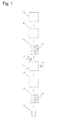
- the method according to the invention encompasses a treatment of a polymeric material through a procedure shown schematically in fig. 1 .
- the sample 1 of polymeric material is first cleaned (pre-treated) in an ultrasound bath 2 containing ethanol or similar solvent 3. This procedure allows for removal of any surface impurities.
- Drying is an essential step since it minimizes the risks of contamination of a vacuum chamber 5 with excessive water and/or ethanol and/or other vapor. Once the polymeric sample is dried appropriately it is mounted into the vacuum chamber 5.
- the vacuum chamber 5 is evacuated using one or more vacuum pumps 6.
- the vacuum pumps 6 are selected in such a way that the ultimate pressure achieved in a reasonable time while keeping the vacuum system at room temperature is below 1 Pa, preferably below 0.1 Pa.
- NH 2 radicals are leaked into the vacuum chamber 5 from a source 7. Leakage is realized in such a way that the supply of NH 2 radicals or any other gasses which might be leaked intentionally or unintentionally into the vacuum chamber 5 is continuously removed by one or more pumps 6.
- the concentration of NH 2 radicals during continuous leaking and pumping is such to allow for achieving an appropriate fluence onto the polymeric material in a reasonable time, preferably between 10s and 1000 s.
- the appropriate fluence according to the method of invention is between 10 22 and 10 24 radicals/m 2 . Such fluence allows for saturation of the surface of the polymer sample with amino functional groups.
- the polymeric sample is left incubating inside the container 9 for an appropriate period of time, wherein the heparin containing water solution is applied on the substrate.
- the water solution 10 in the container 9 is kept between 272 K and 282 K for several hours.
- Incubating stands for interacting said polymeric material with said water solution of heparin EDC for an appropriate period of time, preferably between 4 hours to 10 hours.
- the polymeric material is then rinsed thoroughly using an 3M solution of NaCl inside a rinsing container 11 for a period of 24 hours. After rinsing with said sodium chloride solution the container 11 is filled with deionized water in order to remove traces of NaCl and loosely or non-covalently bound heparin from the surface of polymeric material.
- the final step in the procedure according to the methods of invention is drying the polymeric material in dry air, preferably a desiccator 12.
- the effectiveness of heparin immobilization is best determined from adsorption and activation of blood platelets on the surface of a solid material.
- Blood platelets adsorb in large concentrations on the surface of a solid material which exhibits high thrombogenicity. Furthermore blood platelets quickly activate on the surface of solid material which exhibits high thrombogenicity.
- the activation is best monitored from morphological changes of blood platelets. In inactive state the blood platelets are found in spherical shape. Upon activation on a surface of a thrombogenic material the blood platelets spread over a large surface area, so the shape is not spherical, however rather of circular flakes.
- the change of the blood platelets morphology is accompanied with release of certain enzymes and factors which facilitate coagulation of blood proteins and thus formation of a thrombus.
- Fig. 2 shows a XPS survey spectrum of a polymeric material treated according to the method of the present invention.
- the polymeric material 1 is placed or mounted in a ultrasound bath 2 containing ethanol 3, dried in dry box 4 and interacted with NH 2 radicals from the source 7 inside the vacuum chamber 5 (before A and after B vapor phase derivatization with 4-chlorobenzaldehide).
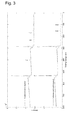
- Fig. 3 shows a XPS survey spectrum of untreated polymeric material 1 and polymeric material 1 treated with a method according to the present invention.
- This example illustrates rather high thrombogenicity of a polymeric material.
- PET poly(ethylene terephthalate)
- no heparin was immobilized on the surface.
- the sample of this example was incubated with fresh whole blood according to the procedure described to details above.
- Fig. 4 shows a typical optical image of the untreated polymeric material.
- a great number of spread platelets observed in fig. 4 indicate thrombogenic properties of untreated PET sample used in this example.
- the flakes observed in this figure are highly activated blood platelets.
- This example illustrates moderate thrombogenicity of a polymeric material.
- PET poly(ethylene terephthalate)
- the polymeric material was treated according to the methods of invention following all steps from 1 to 12 presented schematically in figure 1 .
- the conditions of major step according to the methods of invention, i.e. interacting with NH 2 radicals were not optimal.
- the ultimate pressure in the vacuum chamber 5 during interacting with NH 2 radicals from the source 7 was 3 Pa.
- Such a pressure which is higher than prescribed according to the methods of invention, does not allow for optimal immobilization of heparin on the surface of the polymeric material described in example 2.
- Fig. 5 shows a typical optical image of the polymeric material treated according to the methods of invention at insufficiently low pressure in the vacuum chamber 5.
- a small number of spread platelets observed in fig. 5 indicate improved properties of PET immobilized with heparin sample used in this example as compared to example 1.
- the antithrombogenic properties of this example however are still not optimal.
- Fig. 5 shows an optical image of polymeric material treated according to the methods of invention following all steps from 2 to 12 as shown with reference to fig. 1 at insufficiently low pressure in the vacuum chamber 5 and incubated with fresh whole blood from a healthy donor.
- a small number of spread platelets observed in fig. 5 indicate improved properties of PET immobilized with heparin sample used in this example as compared to fig. 4 .
- This example illustrates moderate thrombogenicity of a polymeric material.
- PET poly(ethylene terephthalate)
- the polymeric material was treated according to the methods of invention following all steps from 1 to 12 presented schematically in fig. 1 .
- the conditions of major step according to the methods of invention, i.e. interacting with NH 2 radicals were not optimal.
- the ultimate pressure in the vacuum chamber 5 during interacting with NH 2 radicals from the source 7 was 0.1 Pa. Such a pressure is favorable according to the methods of invention.
- the fluence of NH 2 radicals was 1 ⁇ 1019 radicals/m 2 , thus not an optimal value according to the methods of invention.
- Fig. 6 shows a typical optical image of the polymeric material treated according to the methods of invention at insufficiently high fluence of NH 2 radical in the vacuum chamber 5.
- a small number of spread platelets observed in fig. 6 indicate improved properties of PET immobilized with heparin sample used in this example as compared to example 1.
- the antithrombogenic properties of this example however are still not optimal.
- This example illustrates optimal thrombogenicity of a polymeric material.
- PET poly(ethylene terephthalate)
- the polymeric material was treated according to the methods of invention following all steps from 1 to 12 presented schematically in fig. 1 .
- the conditions of all steps according to the methods of invention were optimal.
- the ultimate pressure in the vacuum chamber 5 during interacting with NH 2 radicals from the source 7 was 0.1 Pa. Such a pressure is favorable according to the methods of invention.
- the fluence of NH 2 radicals was 1 ⁇ 10 22 radicals/m 2 , thus an optimal value according to the methods of invention.
- the sample of this example was incubated with fresh whole blood according to the procedure described to details above. Fig.
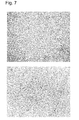
- FIG. 7 shows a typical optical image of the polymeric material treated according to the methods of invention at optimal fluence of NH 2 radical in the vacuum chamber 5, evacuated to a favorite vacuum level. There is hardly any spread flake observed in fig. 7 indicating almost excellent antithrombogenic properties of PET immobilized with heparin.
- the optimal antithrombogenic properties of polymeric material shown in example 4 are due to the optimal conditions during the treatment following the steps 1 to 12 according to the methods of invention.
- the interacting of the polymeric material with NH 2 radicals from the source 7 in the vacuum chamber 5 allows for functionalization of the surface of the polymeric material with amino groups.
- a confirmation of the presence of amino groups on the surface of the polymeric material after treatment in the vacuum chamber 5 is presented in fig. 2 .
- This figure represents two XPS spectra of polymeric material.
- the curve A is for untreated polymeric material
- the curve B is for polymeric material treated according to the methods of invention followings steps 1 to 5.
- Chlorine appears on the surface due to vapor phase derivatization with 4-chlorobenzaldehide (4-CBA).
- 4-CBA is applied as a derivatizing agent who interacts solely with amino groups forming imine bond, but not with other functional groups present on the surface of untreated polymeric material.
- the small amount of chlorine thus confirms the presence of amino groups on the surface of the polymeric material treated according to the methods of invention following steps 1 to 5.
- Fig. 7 shows an optical image of polymeric material treated according to the methods of invention following all steps from 2 to 12 shown in fig. 1 at optimal fluence of NH 2 radical in the vacuum chamber 5, evacuated to a favorite vacuum level and incubated with fresh whole blood from a healthy donor. There is hardly any spread flake observed, indicating excellent anti-thrombogenic property of the polymeric material treating according to the methods of invention.
Landscapes
- Health & Medical Sciences (AREA)
- Life Sciences & Earth Sciences (AREA)
- Epidemiology (AREA)
- Animal Behavior & Ethology (AREA)
- General Health & Medical Sciences (AREA)
- Public Health (AREA)
- Veterinary Medicine (AREA)
- Chemical & Material Sciences (AREA)
- Medicinal Chemistry (AREA)
- Engineering & Computer Science (AREA)
- Surgery (AREA)
- Biomedical Technology (AREA)
- Vascular Medicine (AREA)
- Heart & Thoracic Surgery (AREA)
- Molecular Biology (AREA)
- Chemical Kinetics & Catalysis (AREA)
- Dermatology (AREA)
- Oral & Maxillofacial Surgery (AREA)
- Transplantation (AREA)
- Hematology (AREA)
- Physics & Mathematics (AREA)
- Plasma & Fusion (AREA)
- Materials Engineering (AREA)
- Materials For Medical Uses (AREA)
Abstract
Description
- The present invention relates to method for immobilization of heparin on polymeric material as well as materials and products produced thereby.
- Artificial vascular grafts are widely used for treatment of obstructive atherosclerotic disease, which is a major cause of mortality in the western world, especially in cases where replacement with an autologous vascular graft is not an option. Vascular grafts have been used successfully to replace large-diameter blood vessels, however on the other hand the long term patency of small-diameter vascular grafts is still unacceptable, primarily due to stenosis and thrombus formation. Therefore, special surface modification of vascular grafts is required to overcome this problem. Recent discoveries by
Cvelbar et. al. WO2009051567 A2 have successfully utilized the surface modification by means of gaseous plasma to improve biocompatibility of the prosthetic vascular grafts. However a rather large problem arises here, that is the ageing of the surface. After the surface modification, the generated functional groups start to react with the surrounding atmosphere and/or start to diffuse into the treated sample. - There have been numerous attempts to improve biocompatibility of the artificial vascular grafts, mainly by immobilizing the anticoagulant agents on the surface. The immobilized anticoagulant such as heparin improves the haemocompatibility of the artificial surface by binding to anti-thrombin III and inhibiting thrombogenesis primarily through inactivation of factors Ha and Xa. Known methods of heparin immobilization include physical adsorption, ion bonding and covalent bonding.
- In
WO2008039521 covalent immobilization of heparin to plasma treated polymer surface is disclosed. Surface was plasma treated either with O2, N2 or amine gas.NZ546981 KR20100059367 - Grafting was used in
CN101024150 where polyacrylic acid was grafted to the surface. Heparin was then chemically coupled by the use of 1-Ethyl-3-(3-dimethylaminopropyl)carbodiimide. Chemical modification of the polymer surface and covalent coupling of heparin by condensation of carboxyl and azyl groups in the presence of crosslinking agent was used also inCN1563157 . InWO9410938 - In
RU803193 WO9314127 - In
US4291133 polymer with pendant aliphatic side chains with reacting groups which may react with heparin is disclosed. In JPH06125980 heparin was ionically bonded to phosphatide polymer. InCN101966350 special heparin complex was prepared and dissolved into solution to prepare a coating liquid.EP2272549 describes immobilization of heparin by ring opening polymerization of cyclic lacton forming biodegradable co-polymer with dicarboxylic anhydride and a heparin. InCN101130902 andUS2006240110 electrospinning method to prepare heparin containing fibers from mixed solution of heparin and polymer is disclosed. - In JPH0274261 preparation of antithrombogenic surface by formation of heparin treated layer due to reaction of heparin with surface reactive agent film which was prepared by using solvent with ammonium salt is disclosed. Optionally, a method can include plasma treatment of polymeric substrate before immersing into solution of ammonium salt. In
CA1257561 a medical device was coated with solution containing a photosensitive polymer, heparin and cross-linking salt and exposed to UV radiation to induce crosslinking of the polymer. - Embodimens disclosed in
US3617344 ,US3846353 US3616935 were based on binding quaternary amines to a polymer surface and subsequently ionically binding heparin thereto. These methods have the disadvantage of leaching of the antithrombogenic material rendering the system non-permanent and ineffective for long term internal use in the body. - The commercially available collagen-, gelatin-, heparin- and albumin- coated vascular grafts have overcame the above mentioned leeching problem by covalently immobilizing heparin on the surface (
WO 9608149 EP 1501565 ,FR 2793693 DE 19724869 ,WO2005053765 ,US 4326532 ,US 20060228391 ,US 4987181 inUS 20040234575 ). - One disadvantage of these techniques c is among other things that wet methods of chemical surface treatments to produce the desired product are used.
- Hence an object of the present invention is providing of an improved method for immobilization of anticoagulant substance on polymeric materials.
- The present invention is defined by the appended independent claims.
- The present invention relates to a method for immobilization of heparin on a polymeric material, said method comprising selecting a substrate made from a polymeric material, pre-treating said substrate, mounting said substrate into a vacuum chamber, evacuating the vacuum chamber to pressure essentially below 100 Pa, preferably below 1 Pa, selecting a source of NH2 radicals, leaking the NH2 radicals from said source into said vacuum chamber during continuous pumping of said vacuum chamber, interacting said NH2 (NH2) radicals with said substrate made from a polymeric material, evacuating said vacuum chamber, venting said vacuum chamber to atmospheric pressure, and covalently bonding or applying, respectively heparin on said substrate. According to the invention activated heparin is bonded or coated to a pre-conditioned surface of a substrate is provided. Therefor adhesion of activated heparin on said surface of the substrate is effective showing exceptional anti-thrombogenic results.
- The substrate according to the present invention may be part of an implantable medical device as stated below, thereby no coagulation of blood on the surface of the device, i.e. substrate surface, can be avoided.
- According to the present invention the heparin can be covalently or covalent bonded by single-point or multi-point activation. Multi-point activation can be done by means of water solution containing of heparin activated by N-(3-Dimethylaminopropyl)-N'-ethylcarbodiimide hydrochloride (EDC)/N-Hydroxysuccinimide (NHS) which is then correspondingly put in contact with the substrate. By means of this method step optimal bonding of activated heparin on the surface could be reached.
- Hence, it is provided a method for immobilization of heparin on a polymeric material by subsequent interacting said polymeric material with NH2 radicals. Later on heparin can be bonded by means of water solution of heparin activated with EDC/NHS and careful drying in a limited range of temperatures. The present invention also relates to materials produces by methods of present invention and to products produced from such materials. In the preferred embodiment said polymeric material is selected from the group consisting of biopolymers, synthetic polymers, inorganic polymers, polyethylene, polypropylene, polyurethane, and polyester.
- According to other embodiments heparin can be applied on the substrate by means of alternative methods, like for instance ionic attachment or the like. Other methods ensuring a covalent bonding of heparin on the substrate are also conceivable within the scope of the present invention.
- According to another embodiment the substrate can be coated with heparin by means of an end-point attachment, wherein the molecule of heparin will be attached, that is immobilized, only by means of one point. This is known in the art as single-point bonding of heparin on surfaces, but it was observed that immobilization of heparin on pre-treated substrates according to the present invention by means of this bonding method delivered very good results.
- The step of selecting of NH2 radicals according to the present invention may be performed by providing a NH source and subsequently using said NH source to provide NH2 radicals for further processing of the inventive method. For instance plasma can be used for interacting with the NH source to provide NH2 radicals according to the present invention. It should be noted that other processes for providing NH2 radicals in accordance with the present invention are conceivable.
- The water solution containing heparin is applied on the substrate, wherein said applying step can correspond to a dipping step of said pre-treated substrate into said water solution. Subsequently heparin could be therefore immobilized on said polymeric material.
- In particular the present method do not apply cationic binding of anticoagulant substance on polymeric materials, however it applies covalent binding. Such a covalent bounding is achieved according to the methods of invention in such a way that said polymeric material is essentially interacting with NH2 radicals proceeded by covalent bonding done by single or multi-point activation of heparin.
- The term "NH2 radical" represents a molecule composed of one nitrogen and two hydrogen atoms, both hydrogen atoms being bonded to nitrogen atom with a covalent bond. Unlike ammonia molecule (NH3) where all nitrogen valence electrons are coupled with hydrogen atoms, the NH2 radical has one dangling bond.
- Advantageously the present invention does not apply collagen as an essential interface between the polymeric material and anticoagulant substance (heparin), but applies direct covalent bonding between polymeric material and anticoagulant substance, what is realized by a modification of the polymeric material surface with NH2 radicals.
- Advantageously the present invention does not modify bulk properties of polymeric material since no treatments by UV radiation is applied. Furthermore the methods of invention do not apply surface modification of polymeric materials by gaseous plasma.
- According to the present invention wet chemical method steps could be minimized to a minimum, and thereby increasing the uniformity of the treatment and decreasing the residues of reactants and/or impurities generated before, during or after the reactions.
- According to one embodiment of the invention said cleaning step or pre-treating step comprises treating of said substrate made from a polymeric material in ethanol using an ultrasound bath and drying said substrate made from a polymeric material. Hence an optimal pre-treated substrate in accordance with the present invention can be provided.
- According to one embodiment of the invention the method further comprises interacting said substrate with said water solution, rinsing (i.e. cleaning or washout with some suitable substances) said substrate made from a polymeric material, drying said substrate made from a polymeric material. These steps can be performed after the water solution containing heparin was applied on the substrate according to the present invention.
- A particularly preferred polymeric material is poly(ethylene terephthalate) (PET).
- In preferred embodiments of the invention a polymeric material is in any form including foil and fibrous material as well as fabrics either non-woven or woven or knitted.
- Preferably, the processing of polymeric materials according to the methods of invention is realized at temperatures between 270 K and 310 K. Such a temperature range allows for negligible modification of polymeric materials' properties due to thermal effects.
- In the preferred embodiment the polymeric materials are not exposed to any radiation source including infrared, intensive visible, ultraviolet or X-ray, gamma-radiation. A source of such radiation could be gaseous plasma, UV lamp, laser beams, electron or ion beams or any other sources. Such an absence of radiation minimizes the risk of changing structural properties of polymeric materials.
- The present invention also relates to a product comprising the polymeric material of the invention. In preferred embodiments the product is selected from implantable medical products such as stents, vascular grafts, heart valves and/or catheters or the like.
- The invention is herein described, by way of example only, with reference to the accompanying drawings, wherein:
- Fig.1
- shows an arrangement for conducting a method of the invention according to one embodiment;
- Fig. 2
- shows a XPS survey spectrum of a polymeric material treated according to the method of the present invention;
- Fig. 3
- shows a XPS survey spectrum of untreated polymeric material and polymeric material treated with a method according to the present invention;
- Fig. 4
- shows an optical image (left image was acquired at 10x magnification, the right image was acquired at 50x magnification) of untreated polymeric material incubated with fresh whole blood from a healthy donor (with reference to example 1);
- Fig. 5
- shows a first optical image (left image was acquired at 10x magnification, the right image was acquired at 50x magnification) of polymeric material treated with a method according to the present invention (with reference to example 2);
- Fig. 6
- shows a second optical image (left image was acquired at 10x magnification, the right image was acquired at 50x magnification) of polymeric material treated with a method according to the present invention (with reference toexample 3); and
- Fig. 7
- shows a third optical image (left image was acquired at 10x magnification, the right image was acquired at 50x magnification) of polymeric material treated with a method according to the present invention (with reference to example 4).
- The method according to the invention encompasses a treatment of a polymeric material through a procedure shown schematically in
fig. 1 . The sample 1 of polymeric material is first cleaned (pre-treated) in anultrasound bath 2 containing ethanol or similar solvent 3. This procedure allows for removal of any surface impurities. - Cleaning is followed by drying in a
dry box 4, which is preferably at the room temperature. Drying is an essential step since it minimizes the risks of contamination of avacuum chamber 5 with excessive water and/or ethanol and/or other vapor. Once the polymeric sample is dried appropriately it is mounted into thevacuum chamber 5. - The
vacuum chamber 5 is evacuated using one ormore vacuum pumps 6. Thevacuum pumps 6 are selected in such a way that the ultimate pressure achieved in a reasonable time while keeping the vacuum system at room temperature is below 1 Pa, preferably below 0.1 Pa. Once a suitable level of vacuum inside thevacuum chamber 5 is achieved, NH2 radicals are leaked into thevacuum chamber 5 from a source 7. Leakage is realized in such a way that the supply of NH2 radicals or any other gasses which might be leaked intentionally or unintentionally into thevacuum chamber 5 is continuously removed by one or more pumps 6. - In a preferred embodiment the concentration of NH2 radicals during continuous leaking and pumping is such to allow for achieving an appropriate fluence onto the polymeric material in a reasonable time, preferably between 10s and 1000 s. The appropriate fluence according to the method of invention is between 1022 and 1024 radicals/m2. Such fluence allows for saturation of the surface of the polymer sample with amino functional groups. After achieving the appropriate fluence the leakage of NH2 radicals from the source 7 is terminated, the
vacuum chamber 5 is evacuated to the ultimate pressure, preferably below 1 Pa. Thevacuum pumps 6 are turned off and dry air at room temperature is leaked into thevacuum chamber 5 through the vacuum valve 8. Once the pressure in thevacuum chamber 5 equals to the ambient pressure the vacuum chamber is opened and the polymeric material is immediately dipped into the water solution of heparin act with EDC/NHS 10 which has been prepared previously in an appropriate container 9. - The polymeric sample is left incubating inside the container 9 for an appropriate period of time, wherein the heparin containing water solution is applied on the substrate. In the preferred embodiment the
water solution 10 in the container 9 is kept between 272 K and 282 K for several hours. Incubating stands for interacting said polymeric material with said water solution of heparin EDC for an appropriate period of time, preferably between 4 hours to 10 hours. The polymeric material is then rinsed thoroughly using an 3M solution of NaCl inside a rinsingcontainer 11 for a period of 24 hours. After rinsing with said sodium chloride solution thecontainer 11 is filled with deionized water in order to remove traces of NaCl and loosely or non-covalently bound heparin from the surface of polymeric material. The final step in the procedure according to the methods of invention is drying the polymeric material in dry air, preferably adesiccator 12. - The effectiveness of heparin immobilization is best determined from adsorption and activation of blood platelets on the surface of a solid material. Blood platelets adsorb in large concentrations on the surface of a solid material which exhibits high thrombogenicity. Furthermore blood platelets quickly activate on the surface of solid material which exhibits high thrombogenicity. The activation is best monitored from morphological changes of blood platelets. In inactive state the blood platelets are found in spherical shape. Upon activation on a surface of a thrombogenic material the blood platelets spread over a large surface area, so the shape is not spherical, however rather of circular flakes. The change of the blood platelets morphology is accompanied with release of certain enzymes and factors which facilitate coagulation of blood proteins and thus formation of a thrombus.
- Both untreated polymeric materials as well as treated ones were incubated with fresh whole blood of a healthy donor according to the strict protocol simulating the shear force inside the blood vessel. Polymeric materials with diameter of 10 mm were incubated in 24-well cell culture microplates Blood obtained by venepuncture was collected into 4.5 ml BD Vacutainer tubes with Na-citrate as anticoagulant. 1 ml of fresh whole blood was added to the samples and incubated at 37 °C in shaker-incubator at 250 RPM. Time of incubation was 20 minutes. After incubation samples were rinsed with 1xPBS for several times in order to remove all residual blood constituents. (In order to perform further analysis, samples were fixed in 2.5 % glutaraldehyde solution at 4 °C for 25 minutes. After fixation polymers were rinsed in double deionized and air-dried.)
-
Fig. 2 shows a XPS survey spectrum of a polymeric material treated according to the method of the present invention. The polymeric material 1 is placed or mounted in aultrasound bath 2 containing ethanol 3, dried indry box 4 and interacted with NH2 radicals from the source 7 inside the vacuum chamber 5 (before A and after B vapor phase derivatization with 4-chlorobenzaldehide). -
Fig. 3 shows a XPS survey spectrum of untreated polymeric material 1 and polymeric material 1 treated with a method according to the present invention. - It should be noted that in
figures 4 to 6 the right side shows a higher optical magnification of the substrate area shown respectively on the left side of the corresponding figure. - This example illustrates rather high thrombogenicity of a polymeric material. We selected poly(ethylene terephthalate) (PET) which is often applied as the material of choice in synthesizing cardiovascular implants. For this example no heparin was immobilized on the surface. The sample of this example was incubated with fresh whole blood according to the procedure described to details above.
Fig. 4 shows a typical optical image of the untreated polymeric material. A great number of spread platelets observed infig. 4 indicate thrombogenic properties of untreated PET sample used in this example. The flakes observed in this figure are highly activated blood platelets. - This example illustrates moderate thrombogenicity of a polymeric material. We selected poly(ethylene terephthalate) (PET) which is often applied as the material of choice in synthesizing cardiovascular implants. For this example the polymeric material was treated according to the methods of invention following all steps from 1 to 12 presented schematically in
figure 1 . The conditions of major step according to the methods of invention, i.e. interacting with NH2 radicals were not optimal. The ultimate pressure in thevacuum chamber 5 during interacting with NH2 radicals from the source 7 was 3 Pa. Such a pressure, which is higher than prescribed according to the methods of invention, does not allow for optimal immobilization of heparin on the surface of the polymeric material described in example 2. The fluence or fluency of NH2 radicals was 1· 1022 radicals/m2. The sample of this example was incubated with fresh whole blood according to the procedure described to details above.Fig. 5 shows a typical optical image of the polymeric material treated according to the methods of invention at insufficiently low pressure in thevacuum chamber 5. A small number of spread platelets observed infig. 5 indicate improved properties of PET immobilized with heparin sample used in this example as compared to example 1. The antithrombogenic properties of this example however are still not optimal. -
Fig. 5 shows an optical image of polymeric material treated according to the methods of invention following all steps from 2 to 12 as shown with reference tofig. 1 at insufficiently low pressure in thevacuum chamber 5 and incubated with fresh whole blood from a healthy donor. A small number of spread platelets observed infig. 5 indicate improved properties of PET immobilized with heparin sample used in this example as compared tofig. 4 . - This example illustrates moderate thrombogenicity of a polymeric material. We selected poly(ethylene terephthalate) (PET) which is often applied as the material of choice in synthesizing cardiovascular implants. For this example the polymeric material was treated according to the methods of invention following all steps from 1 to 12 presented schematically in
fig. 1 . The conditions of major step according to the methods of invention, i.e. interacting with NH2 radicals were not optimal. The ultimate pressure in thevacuum chamber 5 during interacting with NH2 radicals from the source 7 was 0.1 Pa. Such a pressure is favorable according to the methods of invention. The fluence of NH2 radicals was 1 · 1019 radicals/m2, thus not an optimal value according to the methods of invention. The sample of this example was incubated with fresh whole blood according to the procedure described to details above.Fig. 6 shows a typical optical image of the polymeric material treated according to the methods of invention at insufficiently high fluence of NH2 radical in thevacuum chamber 5. A small number of spread platelets observed infig. 6 indicate improved properties of PET immobilized with heparin sample used in this example as compared to example 1. The antithrombogenic properties of this example however are still not optimal. - This example illustrates optimal thrombogenicity of a polymeric material. We selected poly(ethylene terephthalate) (PET) which is often applied as the material of choice in synthesizing cardiovascular implants. For this example the polymeric material was treated according to the methods of invention following all steps from 1 to 12 presented schematically in
fig. 1 . The conditions of all steps according to the methods of invention were optimal. The ultimate pressure in thevacuum chamber 5 during interacting with NH2 radicals from the source 7 was 0.1 Pa. Such a pressure is favorable according to the methods of invention. The fluence of NH2 radicals was 1 · 1022 radicals/m2, thus an optimal value according to the methods of invention. The sample of this example was incubated with fresh whole blood according to the procedure described to details above.Fig. 7 shows a typical optical image of the polymeric material treated according to the methods of invention at optimal fluence of NH2 radical in thevacuum chamber 5, evacuated to a favorite vacuum level. There is hardly any spread flake observed infig. 7 indicating almost excellent antithrombogenic properties of PET immobilized with heparin. - The optimal antithrombogenic properties of polymeric material shown in example 4 are due to the optimal conditions during the treatment following the steps 1 to 12 according to the methods of invention. The interacting of the polymeric material with NH2 radicals from the source 7 in the
vacuum chamber 5 allows for functionalization of the surface of the polymeric material with amino groups. A confirmation of the presence of amino groups on the surface of the polymeric material after treatment in thevacuum chamber 5 is presented infig. 2 . This figure represents two XPS spectra of polymeric material. The curve A is for untreated polymeric material, and the curve B is for polymeric material treated according to the methods of invention followings steps 1 to 5. The key difference between the spectra presented infig. 2 is appearance of chlorine on the surface of polymeric material treated according to the methods of invention following steps 1 to 5. Chlorine appears on the surface due to vapor phase derivatization with 4-chlorobenzaldehide (4-CBA). The 4-CBA is applied as a derivatizing agent who interacts solely with amino groups forming imine bond, but not with other functional groups present on the surface of untreated polymeric material. The small amount of chlorine, thus confirms the presence of amino groups on the surface of the polymeric material treated according to the methods of invention following steps 1 to 5. -
Fig. 7 shows an optical image of polymeric material treated according to the methods of invention following all steps from 2 to 12 shown infig. 1 at optimal fluence of NH2 radical in thevacuum chamber 5, evacuated to a favorite vacuum level and incubated with fresh whole blood from a healthy donor. There is hardly any spread flake observed, indicating excellent anti-thrombogenic property of the polymeric material treating according to the methods of invention. - Many modifications and other embodiments of the inventions set forth herein will come to mind to one skilled in the art to which these inventions pertain having the benefit of the teachings presented in the foregoing descriptions and the associated drawings. Therefore, it is to be understood that the inventions are not to be limited to the specific embodiments disclosed and that modifications and other embodiments are intended to be included within the scope of the appended claims. Moreover, although the foregoing descriptions and the associated drawings describe example embodiments in the context of certain example combinations of elements and/or functions, it should be appreciated that different combinations of elements and/or functions may be provided by alternative embodiments without departing from the scope of the appended claims. In this regard, for example, different combinations of elements and/or functions than those explicitly described above are also contemplated as may be set forth in some of the appended claims. Although specific terms are employed herein, they are used in a generic and descriptive sense only and not for purposes of limitation.
Claims (15)
- Method for immobilization of heparin on a polymeric material, said method comprising the steps of:- selecting a substrate made from a polymeric material;- cleaning said substrate;- mounting said substrate into a vacuum chamber;- evacuating the vacuum chamber to pressure essentially below 100 Pa, preferably below 1 Pa;- selecting a source of NH2 radicals;- leaking the NH2 radicals from said source into said vacuum chamber during continuous pumping of said vacuum chamber;- interacting said NH2 radicals with said substrate;- evacuating said vacuum chamber;- venting said vacuum chamber to atmospheric pressure; and- covalent bonding of activated heparin on said substrate.
- Method according to claim 1, said cleaning step comprising:- treating of said substrate made from a polymeric material in ethanol or other appropriate solvent using an ultrasound bath; and- drying said substrate made from a polymeric material.
- Method according to claims 1 or 2 wherein said covalent bonding of activated heparin on said substrate is performed by interacting a water solution containing of heparin activated by N-(3-Dimethylaminopropyl)-N'-ethylcarbodiimide hydrochloride (EDC)/ N-Hydroxysuccinimide (NHS) on said substrate, and said method further comprising:- rinsing said substrate; and- drying said substrate.
- Method according to anyone of the preceding claims, wherein said polymeric material is selected from the group of biopolymers, synthetic polymers, inorganic polymers, polyethylene, polypropylene, polyurethane, and polyester.
- Method according to anyone of the preceding claims, wherein said polymeric material is poly(ethylene terephthalate) (PET) in any form including foil, fiber, non-woven or woven fabrics.
- Method of anyone of the preceding claims, wherein the partial pressures of air, nitrogen, oxygen and water vapor are below 0.1 Pa.
- Method according to anyone of the preceding claims wherein said source of NH2 radicals supply at least 1 · 1018 NH2 radicals per second.
- Method according to anyone of the preceding claims wherein the said vacuum chamber is pumping continuously during leaking of the NH2 radicals with pumping speed at least 10 m3/h.
- Method according to anyone of the preceding claims wherein the fluence of NH2 radicals onto the surface of said polymeric material is between 1020 and 1025 radicals/m2, preferably between 1022 and 1024 radicals/m2.
- Method according to anyone of the preceding claims wherein said water solution containing heparin activated with N-(3-Dimethylaminopropyl)-N'-ethylcarbodiimide hydrochloride (EDC)/N-Hydroxysuccinimide (NHS) contains EDC:NHS:heparin in the molar ratio approximately 0.4:0.24:1.
- Method according to anyone of the preceding claims wherein interacting of said substrate made from a polymeric material with said water solution lasts at least 1 hour, preferably between 5 and 10 hours.
- Method according to anyone of the preceding claims wherein said drying of said substrate after interacting with said water solution is performed between 270 K and 310 K, preferably between 272 K and 282 K, most preferably between 274 K and 278 K.
- A polymeric material treated by a method according to anyone of the preceding claims.
- A product comprising a polymeric material of claim 13.
- A product of claim 14 wherein said product is an implantable medical product, such as stents, vascular grafts, heart valves and/or catheters.
Applications Claiming Priority (1)
| Application Number | Priority Date | Filing Date | Title |
|---|---|---|---|
| GBGB1416593.0A GB201416593D0 (en) | 2014-09-19 | 2014-09-19 | Method for immobilization of heparin on a polymeric material |
Publications (2)
| Publication Number | Publication Date |
|---|---|
| EP2997984A1 true EP2997984A1 (en) | 2016-03-23 |
| EP2997984B1 EP2997984B1 (en) | 2020-06-03 |
Family
ID=51869176
Family Applications (1)
| Application Number | Title | Priority Date | Filing Date |
|---|---|---|---|
| EP15185576.4A Active EP2997984B1 (en) | 2014-09-19 | 2015-09-17 | Method for immobilization of heparin on a polymeric material |
Country Status (2)
| Country | Link |
|---|---|
| EP (1) | EP2997984B1 (en) |
| GB (1) | GB201416593D0 (en) |
Cited By (1)
| Publication number | Priority date | Publication date | Assignee | Title |
|---|---|---|---|---|
| KR20180080626A (en) * | 2017-01-04 | 2018-07-12 | 한국원자력연구원 | Method for preparing heparin immobilized polymer material and heparin immobilized polymer material prepared by the same |
Citations (4)
| Publication number | Priority date | Publication date | Assignee | Title |
|---|---|---|---|---|
| EP0124200A2 (en) * | 1983-04-27 | 1984-11-07 | Becton Dickinson and Company | Heparinization of plasma treated substrates |
| US5914115A (en) * | 1994-10-17 | 1999-06-22 | Surface Genesis, Inc. | Biocompatible coating, medical device using the same and methods |
| CN101214395A (en) * | 2008-01-02 | 2008-07-09 | 西南交通大学 | A kind of method of biochemical surface of inorganic material |
| WO2013049068A1 (en) * | 2011-09-27 | 2013-04-04 | Glumetrics, Inc. | Method for functionalizing a porous membrane covering of an optical sensor to facilitate coupling of an antithrom-bogenic agent |
-
2014
- 2014-09-19 GB GBGB1416593.0A patent/GB201416593D0/en not_active Ceased
-
2015
- 2015-09-17 EP EP15185576.4A patent/EP2997984B1/en active Active
Patent Citations (4)
| Publication number | Priority date | Publication date | Assignee | Title |
|---|---|---|---|---|
| EP0124200A2 (en) * | 1983-04-27 | 1984-11-07 | Becton Dickinson and Company | Heparinization of plasma treated substrates |
| US5914115A (en) * | 1994-10-17 | 1999-06-22 | Surface Genesis, Inc. | Biocompatible coating, medical device using the same and methods |
| CN101214395A (en) * | 2008-01-02 | 2008-07-09 | 西南交通大学 | A kind of method of biochemical surface of inorganic material |
| WO2013049068A1 (en) * | 2011-09-27 | 2013-04-04 | Glumetrics, Inc. | Method for functionalizing a porous membrane covering of an optical sensor to facilitate coupling of an antithrom-bogenic agent |
Non-Patent Citations (1)
| Title |
|---|
| M.Ö ÖTEYAKA ET AL: "Effect of surface modification by ammonia plasma on vascular graft: PET film and PET scaffold", ACTA PHYSICA POLONICA A, vol. 121, 1 January 2012 (2012-01-01), pages 125 - 127, XP055237949 * |
Cited By (1)
| Publication number | Priority date | Publication date | Assignee | Title |
|---|---|---|---|---|
| KR20180080626A (en) * | 2017-01-04 | 2018-07-12 | 한국원자력연구원 | Method for preparing heparin immobilized polymer material and heparin immobilized polymer material prepared by the same |
Also Published As
| Publication number | Publication date |
|---|---|
| EP2997984B1 (en) | 2020-06-03 |
| GB201416593D0 (en) | 2014-11-05 |
Similar Documents
| Publication | Publication Date | Title |
|---|---|---|
| US7815922B2 (en) | Articles having bioactive surfaces and solvent-free methods of preparation thereof | |
| CN107189096B (en) | Surface modification method of high polymer material, product and application thereof | |
| JP6538767B2 (en) | Novel heparin body and its use | |
| Siow et al. | Plasma methods for the generation of chemically reactive surfaces for biomolecule immobilization and cell colonization‐a review | |
| EP1368075B1 (en) | Plasma surface graft process for reducing thrombogenicity | |
| Hamerli et al. | Surface properties of and cell adhesion onto allylamine-plasma-coated polyethylenterephtalat membranes | |
| Yoshida et al. | Surface modification of polymers by plasma treatments for the enhancement of biocompatibility and controlled drug release | |
| CN103748147B (en) | The Medical Devices of plasma modification and method | |
| CN106730051B (en) | Anticoagulation polymer biological material and preparation method and application thereof | |
| Bilek et al. | Plasma treatment in air at atmospheric pressure that enables reagent-free covalent immobilization of biomolecules on polytetrafluoroethylene (PTFE) | |
| CZ293637B6 (en) | Process for coating surface of an object with hyaluronic acid or derivative thereof | |
| Favia et al. | Immobilization of heparin and highly-sulphated hyaluronic acid onto plasma-treated polyethylene | |
| Pezzoli et al. | Biomimetic coating of cross‐linked gelatin to improve mechanical and biological properties of electrospun PET: A promising approach for small caliber vascular graft applications | |
| Morelli et al. | Utilizing radio frequency plasma treatment to modify polymeric materials for biomedical applications | |
| Cools et al. | PLA enhanced via plasma technology: a review | |
| Steffen et al. | Biocompatible surfaces by immobilization of heparin on diamond‐like carbon films deposited on various substrates | |
| AU2015316192B2 (en) | Medical devices with reduced thrombogenicity | |
| Gabriel et al. | Wet-chemical approach for the cell-adhesive modification of polytetrafluoroethylene | |
| Mantovani et al. | Ammonia RF-plasma treatment of tubular ePTFE vascular prostheses | |
| EP2997984B1 (en) | Method for immobilization of heparin on a polymeric material | |
| Li et al. | Layer-by-layer construction of the heparin/fibronectin coatings on titanium surface: stability and functionality | |
| Hirsh et al. | Ion implanted, radical-rich surfaces for the rapid covalent immobilization of active biomolecules | |
| US20190275214A1 (en) | Medical devices with reduced thrombogenicity | |
| Chang et al. | Modified Polymer Surfaces: Biocompatibility and Cell Interactions | |
| Huang et al. | Surface modification of blood contacting biomaterials |
Legal Events
| Date | Code | Title | Description |
|---|---|---|---|
| PUAI | Public reference made under article 153(3) epc to a published international application that has entered the european phase |
Free format text: ORIGINAL CODE: 0009012 |
|
| AK | Designated contracting states |
Kind code of ref document: A1 Designated state(s): AL AT BE BG CH CY CZ DE DK EE ES FI FR GB GR HR HU IE IS IT LI LT LU LV MC MK MT NL NO PL PT RO RS SE SI SK SM TR |
|
| AX | Request for extension of the european patent |
Extension state: BA ME |
|
| STAA | Information on the status of an ep patent application or granted ep patent |
Free format text: STATUS: REQUEST FOR EXAMINATION WAS MADE |
|
| 17P | Request for examination filed |
Effective date: 20160923 |
|
| RBV | Designated contracting states (corrected) |
Designated state(s): AL AT BE BG CH CY CZ DE DK EE ES FI FR GB GR HR HU IE IS IT LI LT LU LV MC MK MT NL NO PL PT RO RS SE SI SK SM TR |
|
| STAA | Information on the status of an ep patent application or granted ep patent |
Free format text: STATUS: EXAMINATION IS IN PROGRESS |
|
| 17Q | First examination report despatched |
Effective date: 20180219 |
|
| GRAP | Despatch of communication of intention to grant a patent |
Free format text: ORIGINAL CODE: EPIDOSNIGR1 |
|
| STAA | Information on the status of an ep patent application or granted ep patent |
Free format text: STATUS: GRANT OF PATENT IS INTENDED |
|
| INTG | Intention to grant announced |
Effective date: 20191220 |
|
| GRAS | Grant fee paid |
Free format text: ORIGINAL CODE: EPIDOSNIGR3 |
|
| GRAA | (expected) grant |
Free format text: ORIGINAL CODE: 0009210 |
|
| STAA | Information on the status of an ep patent application or granted ep patent |
Free format text: STATUS: THE PATENT HAS BEEN GRANTED |
|
| AK | Designated contracting states |
Kind code of ref document: B1 Designated state(s): AL AT BE BG CH CY CZ DE DK EE ES FI FR GB GR HR HU IE IS IT LI LT LU LV MC MK MT NL NO PL PT RO RS SE SI SK SM TR |
|
| REG | Reference to a national code |
Ref country code: GB Ref legal event code: FG4D |
|
| REG | Reference to a national code |
Ref country code: CH Ref legal event code: EP Ref country code: AT Ref legal event code: REF Ref document number: 1276321 Country of ref document: AT Kind code of ref document: T Effective date: 20200615 |
|
| REG | Reference to a national code |
Ref country code: DE Ref legal event code: R096 Ref document number: 602015053659 Country of ref document: DE |
|
| REG | Reference to a national code |
Ref country code: LT Ref legal event code: MG4D |
|
| PG25 | Lapsed in a contracting state [announced via postgrant information from national office to epo] |
Ref country code: SE Free format text: LAPSE BECAUSE OF FAILURE TO SUBMIT A TRANSLATION OF THE DESCRIPTION OR TO PAY THE FEE WITHIN THE PRESCRIBED TIME-LIMIT Effective date: 20200603 Ref country code: FI Free format text: LAPSE BECAUSE OF FAILURE TO SUBMIT A TRANSLATION OF THE DESCRIPTION OR TO PAY THE FEE WITHIN THE PRESCRIBED TIME-LIMIT Effective date: 20200603 Ref country code: GR Free format text: LAPSE BECAUSE OF FAILURE TO SUBMIT A TRANSLATION OF THE DESCRIPTION OR TO PAY THE FEE WITHIN THE PRESCRIBED TIME-LIMIT Effective date: 20200904 Ref country code: NO Free format text: LAPSE BECAUSE OF FAILURE TO SUBMIT A TRANSLATION OF THE DESCRIPTION OR TO PAY THE FEE WITHIN THE PRESCRIBED TIME-LIMIT Effective date: 20200903 Ref country code: LT Free format text: LAPSE BECAUSE OF FAILURE TO SUBMIT A TRANSLATION OF THE DESCRIPTION OR TO PAY THE FEE WITHIN THE PRESCRIBED TIME-LIMIT Effective date: 20200603 |
|
| REG | Reference to a national code |
Ref country code: NL Ref legal event code: MP Effective date: 20200603 |
|
| PG25 | Lapsed in a contracting state [announced via postgrant information from national office to epo] |
Ref country code: BG Free format text: LAPSE BECAUSE OF FAILURE TO SUBMIT A TRANSLATION OF THE DESCRIPTION OR TO PAY THE FEE WITHIN THE PRESCRIBED TIME-LIMIT Effective date: 20200903 Ref country code: RS Free format text: LAPSE BECAUSE OF FAILURE TO SUBMIT A TRANSLATION OF THE DESCRIPTION OR TO PAY THE FEE WITHIN THE PRESCRIBED TIME-LIMIT Effective date: 20200603 Ref country code: HR Free format text: LAPSE BECAUSE OF FAILURE TO SUBMIT A TRANSLATION OF THE DESCRIPTION OR TO PAY THE FEE WITHIN THE PRESCRIBED TIME-LIMIT Effective date: 20200603 Ref country code: LV Free format text: LAPSE BECAUSE OF FAILURE TO SUBMIT A TRANSLATION OF THE DESCRIPTION OR TO PAY THE FEE WITHIN THE PRESCRIBED TIME-LIMIT Effective date: 20200603 |
|
| REG | Reference to a national code |
Ref country code: AT Ref legal event code: MK05 Ref document number: 1276321 Country of ref document: AT Kind code of ref document: T Effective date: 20200603 |
|
| PG25 | Lapsed in a contracting state [announced via postgrant information from national office to epo] |
Ref country code: AL Free format text: LAPSE BECAUSE OF FAILURE TO SUBMIT A TRANSLATION OF THE DESCRIPTION OR TO PAY THE FEE WITHIN THE PRESCRIBED TIME-LIMIT Effective date: 20200603 Ref country code: NL Free format text: LAPSE BECAUSE OF FAILURE TO SUBMIT A TRANSLATION OF THE DESCRIPTION OR TO PAY THE FEE WITHIN THE PRESCRIBED TIME-LIMIT Effective date: 20200603 |
|
| PG25 | Lapsed in a contracting state [announced via postgrant information from national office to epo] |
Ref country code: SM Free format text: LAPSE BECAUSE OF FAILURE TO SUBMIT A TRANSLATION OF THE DESCRIPTION OR TO PAY THE FEE WITHIN THE PRESCRIBED TIME-LIMIT Effective date: 20200603 Ref country code: EE Free format text: LAPSE BECAUSE OF FAILURE TO SUBMIT A TRANSLATION OF THE DESCRIPTION OR TO PAY THE FEE WITHIN THE PRESCRIBED TIME-LIMIT Effective date: 20200603 Ref country code: IT Free format text: LAPSE BECAUSE OF FAILURE TO SUBMIT A TRANSLATION OF THE DESCRIPTION OR TO PAY THE FEE WITHIN THE PRESCRIBED TIME-LIMIT Effective date: 20200603 Ref country code: PT Free format text: LAPSE BECAUSE OF FAILURE TO SUBMIT A TRANSLATION OF THE DESCRIPTION OR TO PAY THE FEE WITHIN THE PRESCRIBED TIME-LIMIT Effective date: 20201006 Ref country code: AT Free format text: LAPSE BECAUSE OF FAILURE TO SUBMIT A TRANSLATION OF THE DESCRIPTION OR TO PAY THE FEE WITHIN THE PRESCRIBED TIME-LIMIT Effective date: 20200603 Ref country code: CZ Free format text: LAPSE BECAUSE OF FAILURE TO SUBMIT A TRANSLATION OF THE DESCRIPTION OR TO PAY THE FEE WITHIN THE PRESCRIBED TIME-LIMIT Effective date: 20200603 Ref country code: RO Free format text: LAPSE BECAUSE OF FAILURE TO SUBMIT A TRANSLATION OF THE DESCRIPTION OR TO PAY THE FEE WITHIN THE PRESCRIBED TIME-LIMIT Effective date: 20200603 Ref country code: ES Free format text: LAPSE BECAUSE OF FAILURE TO SUBMIT A TRANSLATION OF THE DESCRIPTION OR TO PAY THE FEE WITHIN THE PRESCRIBED TIME-LIMIT Effective date: 20200603 |
|
| PG25 | Lapsed in a contracting state [announced via postgrant information from national office to epo] |
Ref country code: SK Free format text: LAPSE BECAUSE OF FAILURE TO SUBMIT A TRANSLATION OF THE DESCRIPTION OR TO PAY THE FEE WITHIN THE PRESCRIBED TIME-LIMIT Effective date: 20200603 Ref country code: PL Free format text: LAPSE BECAUSE OF FAILURE TO SUBMIT A TRANSLATION OF THE DESCRIPTION OR TO PAY THE FEE WITHIN THE PRESCRIBED TIME-LIMIT Effective date: 20200603 Ref country code: IS Free format text: LAPSE BECAUSE OF FAILURE TO SUBMIT A TRANSLATION OF THE DESCRIPTION OR TO PAY THE FEE WITHIN THE PRESCRIBED TIME-LIMIT Effective date: 20201003 |
|
| REG | Reference to a national code |
Ref country code: DE Ref legal event code: R097 Ref document number: 602015053659 Country of ref document: DE |
|
| PLBE | No opposition filed within time limit |
Free format text: ORIGINAL CODE: 0009261 |
|
| STAA | Information on the status of an ep patent application or granted ep patent |
Free format text: STATUS: NO OPPOSITION FILED WITHIN TIME LIMIT |
|
| PG25 | Lapsed in a contracting state [announced via postgrant information from national office to epo] |
Ref country code: DK Free format text: LAPSE BECAUSE OF FAILURE TO SUBMIT A TRANSLATION OF THE DESCRIPTION OR TO PAY THE FEE WITHIN THE PRESCRIBED TIME-LIMIT Effective date: 20200603 Ref country code: MC Free format text: LAPSE BECAUSE OF FAILURE TO SUBMIT A TRANSLATION OF THE DESCRIPTION OR TO PAY THE FEE WITHIN THE PRESCRIBED TIME-LIMIT Effective date: 20200603 |
|
| REG | Reference to a national code |
Ref country code: CH Ref legal event code: PL |
|
| 26N | No opposition filed |
Effective date: 20210304 |
|
| GBPC | Gb: european patent ceased through non-payment of renewal fee |
Effective date: 20200917 |
|
| PG25 | Lapsed in a contracting state [announced via postgrant information from national office to epo] |
Ref country code: SI Free format text: LAPSE BECAUSE OF FAILURE TO SUBMIT A TRANSLATION OF THE DESCRIPTION OR TO PAY THE FEE WITHIN THE PRESCRIBED TIME-LIMIT Effective date: 20200603 |
|
| REG | Reference to a national code |
Ref country code: BE Ref legal event code: MM Effective date: 20200930 |
|
| PG25 | Lapsed in a contracting state [announced via postgrant information from national office to epo] |
Ref country code: LU Free format text: LAPSE BECAUSE OF NON-PAYMENT OF DUE FEES Effective date: 20200917 |
|
| PG25 | Lapsed in a contracting state [announced via postgrant information from national office to epo] |
Ref country code: FR Free format text: LAPSE BECAUSE OF NON-PAYMENT OF DUE FEES Effective date: 20200930 |
|
| PG25 | Lapsed in a contracting state [announced via postgrant information from national office to epo] |
Ref country code: LI Free format text: LAPSE BECAUSE OF NON-PAYMENT OF DUE FEES Effective date: 20200930 Ref country code: GB Free format text: LAPSE BECAUSE OF NON-PAYMENT OF DUE FEES Effective date: 20200917 Ref country code: IE Free format text: LAPSE BECAUSE OF NON-PAYMENT OF DUE FEES Effective date: 20200917 Ref country code: BE Free format text: LAPSE BECAUSE OF NON-PAYMENT OF DUE FEES Effective date: 20200930 Ref country code: CH Free format text: LAPSE BECAUSE OF NON-PAYMENT OF DUE FEES Effective date: 20200930 |
|
| PG25 | Lapsed in a contracting state [announced via postgrant information from national office to epo] |
Ref country code: TR Free format text: LAPSE BECAUSE OF FAILURE TO SUBMIT A TRANSLATION OF THE DESCRIPTION OR TO PAY THE FEE WITHIN THE PRESCRIBED TIME-LIMIT Effective date: 20200603 Ref country code: MT Free format text: LAPSE BECAUSE OF FAILURE TO SUBMIT A TRANSLATION OF THE DESCRIPTION OR TO PAY THE FEE WITHIN THE PRESCRIBED TIME-LIMIT Effective date: 20200603 Ref country code: CY Free format text: LAPSE BECAUSE OF FAILURE TO SUBMIT A TRANSLATION OF THE DESCRIPTION OR TO PAY THE FEE WITHIN THE PRESCRIBED TIME-LIMIT Effective date: 20200603 |
|
| PG25 | Lapsed in a contracting state [announced via postgrant information from national office to epo] |
Ref country code: MK Free format text: LAPSE BECAUSE OF FAILURE TO SUBMIT A TRANSLATION OF THE DESCRIPTION OR TO PAY THE FEE WITHIN THE PRESCRIBED TIME-LIMIT Effective date: 20200603 |
|
| PGFP | Annual fee paid to national office [announced via postgrant information from national office to epo] |
Ref country code: DE Payment date: 20221124 Year of fee payment: 8 |
|
| REG | Reference to a national code |
Ref country code: DE Ref legal event code: R119 Ref document number: 602015053659 Country of ref document: DE |
|
| PG25 | Lapsed in a contracting state [announced via postgrant information from national office to epo] |
Ref country code: DE Free format text: LAPSE BECAUSE OF NON-PAYMENT OF DUE FEES Effective date: 20240403 |