EP2996401A1 - Mobile device management - Google Patents
Mobile device management Download PDFInfo
- Publication number
- EP2996401A1 EP2996401A1 EP14003151.9A EP14003151A EP2996401A1 EP 2996401 A1 EP2996401 A1 EP 2996401A1 EP 14003151 A EP14003151 A EP 14003151A EP 2996401 A1 EP2996401 A1 EP 2996401A1
- Authority
- EP
- European Patent Office
- Prior art keywords
- network
- mobile device
- captured
- capturing
- information
- Prior art date
- Legal status (The legal status is an assumption and is not a legal conclusion. Google has not performed a legal analysis and makes no representation as to the accuracy of the status listed.)
- Granted
Links
Images

Classifications
-
- H—ELECTRICITY
- H04—ELECTRIC COMMUNICATION TECHNIQUE
- H04W—WIRELESS COMMUNICATION NETWORKS
- H04W8/00—Network data management
- H04W8/18—Processing of user or subscriber data, e.g. subscribed services, user preferences or user profiles; Transfer of user or subscriber data
- H04W8/183—Processing at user equipment or user record carrier
-
- H—ELECTRICITY
- H04—ELECTRIC COMMUNICATION TECHNIQUE
- H04W—WIRELESS COMMUNICATION NETWORKS
- H04W48/00—Access restriction; Network selection; Access point selection
- H04W48/18—Selecting a network or a communication service
-
- H—ELECTRICITY
- H04—ELECTRIC COMMUNICATION TECHNIQUE
- H04W—WIRELESS COMMUNICATION NETWORKS
- H04W48/00—Access restriction; Network selection; Access point selection
- H04W48/16—Discovering, processing access restriction or access information
Definitions
- the present invention relates to a method for managing a mobile device, particularly a subscription of the mobile device, an accordingly arranged mobile device, and to a security element for a mobile device.
- a user of a mobile device has access to a mobile communication network of a certain network operator based on his subscription.
- the mobile device typically stores the access data, such as IMSI and an authentication key, of the subscription.
- a subscription is thus normally attached to a network of a specific network operator. It specifies the conditions describing and limiting a data communication of the user over the network.
- a subscription can be formed by an application installed in a security element of the user's mobile device. Such an application can also be arranged to manage a plurality of subscriptions.
- the application has for example the task of securely storing and managing access data necessary for accessing the data communication network of the network operator, for example an access key.
- a mobile device typically, a mobile device only supports one active subscription at a time.
- the security element used may be for example a UICC/SIM mobile radio card or a secure region in the end device, a so-called TEE ("trusted execution environment"), to be described more exactly hereinafter.
- TEE trusted execution environment
- a mobile device For a mobile device several different networks can be selectable, depending for example on the location, the current time or the like. It is e.g. possible that, when the user of the mobile device moves, the mobile device automatically selects a new network, e.g. when the user crosses the border between two countries. Depending on the selected network, it may be advantageous or desirable for the user of the mobile device to replace a currently activated subscription by another subscription, i.e. to change the subscription.
- the new subscription is attached to the currently selected network.
- common automatic subscription management causes problems.
- the object of the present invention is to propose a method for managing a mobile device, preferably a subscription thereof, the method taking this problem into account.
- a preferred embodiment of a method for managing, e.g. subscriptions - preferably stored on a security element - for, a mobile device comprises the following steps:
- a network selected by the mobile device In order to recognize a newly selected network, in a first step, information about a network selected by the mobile device is captured. Such information can be in particular an identifier of the selected network or an identifier of a mobile radio cell of the selected network.
- the step of capturing information about a network selected by the mobile device is normally repeated at regular or irregular intervals. In this way, the captured information can be kept current, and changes in the selection of networks can be promptly recognized.
- the captured information is evaluated in order to recognize the new network, i.e. the network newly selected by the mobile device.
- the evaluation step in general, the selected network is identified.
- a further step it is determined whether the captured information satisfies a specified stability condition.
- the captured information is said to satisfy a stability condition within the meaning of the present invention if the captured information indicates that the selection of the network by the mobile device is in some respects stable and lasting.
- information that has been captured in one or more earlier capturing steps is for example compared with information that has been captured in one or more later capturing steps. In so doing, it can be recognized for example that there has been captured in a later capturing step a network's identifier that had not yet been captured at an earlier time.
- Each of these stability conditions ensures in its way that the selection of the new network is stable and lasting in a certain way. In this way, the initiating of the subscription management step is prevented from being already effected when the mobile device e.g. accidentally selects a new network for a short period of time or when the selection of the network changes frequently, e.g. in a border region.
- the loading of a subscription to the security element of the mobile device can for example be associated with the selected network.
- a subscription management step there can be initiated as a subscription management step a changing of the subscription.
- a currently active subscription is normally deactivated and another subscription activated.
- This other subscription can already have been present in an executable way on the security element of the mobile device previously or, as mentioned hereinabove, be loaded to the security element of the mobile device for the purpose of activation.
- the services of an external subscription management system can be utilized.
- all steps of the method are executed by at least one application on the mobile device.
- this at least one application is executed on the security element of the mobile device. It is e.g. possible that one application carries out the capturing step, the evaluating step, and the determining step, while the subscription management is up to another application.
- a specified stability condition is satisfied when the captured information about a network selected by the mobile device remains unchanged over a specified minimum time period.
- it can be required that the captured information essentially remains unchanged over the specified minimum time period, i.e. for example at least over a specified portion of the minimum time period.
- the question of whether or not the captured information about a network selected by the mobile device remains unchanged over a specified minimum time period is e.g. determined by checking whether or nor the same information about the selected network is captured in each or almost each capturing step that is carried out within the specified minimum time period.
- a specified stability condition can be regarded as satisfied when the captured information about a network selected by the mobile device remains unchanged in a specified minimum number of capturing steps.
- This embodiment is preferably implemented employing a counter.
- the counter can for example be incremented upon each capturing step if the information about the selected network is the same.
- the counter is generally reset.
- it can be required that information captured about the selected network is the same at least in a specified number of directly consecutive capturing steps.
- the counter is reset when no information about the selected network is captured in a certain number of directly or indirectly consecutive steps.
- a specified stability condition is satisfied when in a specified minimum number of capturing steps an identifier of the same selected network is captured and when in each of the capturing steps of the specified minimum number of capturing steps a captured identifier of a mobile radio cell of the selected network differs from the identifier of the mobile radio cell captured in the preceding capturing step.
- the stability condition can be regarded as satisfied when at least a second specified minimum number of mutually different identifiers of a mobile radio cell of the selected network are captured in a first specified minimum number of capturing steps. In this way, it can be assumed in all probability that the selected network into whose effective range a user of the mobile device has moved is selected by the mobile device in a stable and lasting way.
- This variant is preferably implemented with the aid of a list or the like and extends the counter solution. Now those capturing steps that capture information about the selected network are no longer only counted, but rather the individual captured information is additionally stored in a list or the like. In this way, it can be recognized for example whether information about one or very few mobile radio cells is always only captured, or whether the user of the mobile device was situated in the area of a relatively great minimum number of different mobile radio cells. Additionally or alternatively to the identifiers of the mobile radio cells, there can be stored in such a list other, temporally or spatially varying information about the network.
- an above-mentioned counter or a last-described list is respectively reset when an initiated subscription management step has then been carried out.
- the counter and/or the list are generally also reset in case it is determined that the information captured about the network selected by the mobile device does finally not satisfy the specified stability condition.
- the determining step is only carried out in case the selected network is not listed in a predefined network list, which list can e.g. be stored in the mobile device or the security element. In this way, resources of the mobile device and/or the security element can be saved.
- the network list can e.g. include a number of networks, that, when selected, do not give rise to a change of the currently activated or a default subscription.
- the management step is a subscription management step.
- a subscription at least comprises network access data, e.g. an subscriber identifier (IMSI, SIP address, IMPU ...) and a network access key (Ki, ).
- IMSI subscriber identifier
- Ki network access key
- the network access data are locally stored in a secure element of the mobile device.
- Mobile devices using remote subscriptions wherein the network access data are at least partly only stored and used by a server.
- the subscription data of the device may comprise subscription profile data.
- the subscription management step thus preferably comprises amending the subscription data, which are stored in the mobile device or in the remote subscription server for the mobile device. For example, a second subscription may be loaded and/or activated.
- the present solution does not require amendments in/ may advantageously coexist with other components of the mobile communication network, such as a device management server and/or a server changing network selection rules.
- the management step could as well comprise: notifying a central server, e.g. that the user now is abroad, that the subscription has changed or that it should be changed now, starting an application on the mobile device or amending function limitations on the secure element of the mobile device.
- a preferred embodiment of a security element, according to the invention, of a mobile device comprises at least one application which is arranged to carry out a hereinabove described method.
- a preferred embodiment of a mobile device having a security element comprises at least one application which is arranged to execute a method of the hereinabove described type.
- the application can be present on the end device itself or on a security element integrated into the end device.
- Fig. 1 schematically shows a mobile device 1 into which a security element 2, e.g. in the form of a UICC, is integrated.
- the mobile device e.g. a smart phone, includes at least one common network interface 11 in order to be attached to a selected network.
- the network can be selected by the mobile device 1 by means of a network selection application 12.
- the security element 2 On a security element 2 of the end device 1 one or more subscriptions 31, 32, 33 can be present. Normally, one thereof is active at a time.
- the security element 2 includes a subscription management application 30 that is arranged to manage the different subscriptions 31, 32, 33, e.g. to change subscriptions and/or load new subscriptions.
- the subscriptions 31, 32, 33 can be present on a conventional, known security element 2 - for example an UICC/SIM card, a secure mass storage card or an embedded secure element (eUICC) - or be downloaded onto the security element in the form of a virtual SIM (vSIM).
- the security element 2 in use may also be a secure region formed in the end device by suitable software means and/or hardware means, for example in the form of a so-called "trusted execution environment" (TEE).
- TEE trusted execution environment
- a TEE is in general a secure region and can in principle also be made available merely on the basis of a suitable software architecture within an operating system.
- a TEE is preferably realized by providing different regions within a suitable processor, i.e. a normal region ("normal world") and a secure region ("secure world”) that is separated therefrom by hardware technology.
- An accordingly arranged processor is based for example on the known ARM TrustZone® technology.
- the normal region can run a conventional operating system, for example Android.
- the secure region uses a special security operating system, for example MobiCore.
- the security element 2 further includes a number of memory areas that are arranged to store certain parameters which govern the method described below with reference to Fig. 2 .
- a memory area 40 (“Network info”), e.g., an identifier of a network currently selected by the mobile device 1, can be stored.
- Further memory areas 22, 23, 24, and 25 can be provided in order to store a predefined network list ("SubManList”), called “subscription management list", an identifier of the network (“Last Network”) and the mobile radio cell of that network (“Last Cell”) previously identified, and a counter
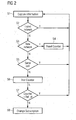
- a first step S1 information about a network selected by the mobile device 1 is captured.
- This step as well as normally the hereinafter described steps S2 to S8, are preferably executed by at least one application 20, 30 on the mobile device 1.
- the at least one application 20, 30 can be executed on the mobile device 1 itself or preferably on a security element 2 of the mobile device 1.
- information about a network selected in particular includes an identifier of the selected network and/or an identifier of a mobile radio cell of the selected network.
- the capturing step S1 is carried out regularly, i.e. at specified intervals.
- step S2 it is determined whether the selected network is listed in a predefined network list, referred to as "subscription management list" in the example.
- This list can be stored on the security element 2 and contains a list of networks, that, when selected, do not give rise to a subscription management, in particular to a change of the currently active subscription.
- step S3 Only in case the selected network is identified as not being included in the "subscription management list", it is determined in step S3 whether the selected network is new, i.e. whether the network that has been identified as selected in the preceding capturing step, and an identifier of which has e.g. been stored in the memory area 23 ("Last Network"), is the same as the network which is currently selected.
- step S1 In case the currently selected network is new, i.e. differs from the previously selected network, the counter 25 is reset. Further, the memory area 23 is updated to now store the identifier of the currently selected network, and the method continues with step S1.
- step S6 namely by incrementing the counter 25.
- step S5 before incrementing the counter 25, it can be determined whether the identifier of the mobile radio cell actually captured is the same as the identifier of the mobile radio cell that was captured in the previous capturing step, the latter identifier being stored e.g. in the memory area 24 ("last cell"). Only in case the memory cell has changed, indirectly indicating that the user of the mobile device has moved within the region of the selected network, the counter 25 is incremented (step S6). Otherwise, the method continues with step S1.
- step S5 it can further be determined whether the identifier of the mobile radio cell currently captured differs from respective identifiers captured in the last n, e.g. the last 5 or 10, capturing steps.
- This variant necessitates storing not only the "last cell", but the last n cells, e.g. in suitable data structure, such as a FIFO-List.
- step S7 it is determined whether the captured information "is stable", i.e. satisfies a specific stability condition. Stability, in the example, is measured by the counter 25. In each round, when the selected network remains stable, i.e. no new network is selected (cf. step S3, omitting optional step S5), the counter is incremented (cf. step S6). According to the variant including optional step S5, stability further means that the user of the mobile device moves in or into the area of the selected network, which can be seen by the changing identifiers of the mobile radio cell (cf. step S5).
- a subscription management step is initiated in step S8, e.g. a change of the subscription.
- the currently active subscription is deactivated and a subscription is activated which can be associated with the selected network.
- This loading step can be supported by an external subscription management system.
- the counter 25 and the memory areas 22 to 24 are reset. Otherwise, the method proceeds with step S1.
- the described method thus makes it possible in a simple way to recognize a selected network and helps to avoid unwanted effects that can occur at the borders of mutually overlapping networks. Further, the method can remain transparent to the user of the end device and normally requires no adapting of external systems.
Landscapes
- Engineering & Computer Science (AREA)
- Computer Networks & Wireless Communication (AREA)
- Signal Processing (AREA)
- Computer Security & Cryptography (AREA)
- Databases & Information Systems (AREA)
- Mobile Radio Communication Systems (AREA)
Abstract
Description
- The present invention relates to a method for managing a mobile device, particularly a subscription of the mobile device, an accordingly arranged mobile device, and to a security element for a mobile device.
- A user of a mobile device, for example a mobile radio end device, a smart phone or a tablet computer, has access to a mobile communication network of a certain network operator based on his subscription. The mobile device typically stores the access data, such as IMSI and an authentication key, of the subscription. A subscription is thus normally attached to a network of a specific network operator. It specifies the conditions describing and limiting a data communication of the user over the network. A subscription can be formed by an application installed in a security element of the user's mobile device. Such an application can also be arranged to manage a plurality of subscriptions. The application has for example the task of securely storing and managing access data necessary for accessing the data communication network of the network operator, for example an access key. Typically, a mobile device only supports one active subscription at a time.
- The security element used may be for example a UICC/SIM mobile radio card or a secure region in the end device, a so-called TEE ("trusted execution environment"), to be described more exactly hereinafter.
- For a mobile device several different networks can be selectable, depending for example on the location, the current time or the like. It is e.g. possible that, when the user of the mobile device moves, the mobile device automatically selects a new network, e.g. when the user crosses the border between two countries. Depending on the selected network, it may be advantageous or desirable for the user of the mobile device to replace a currently activated subscription by another subscription, i.e. to change the subscription. Advantageously, the new subscription is attached to the currently selected network. However, in particular in situations where the mobile device repeatedly selects a new network rather frequently, e.g. in border regions, common automatic subscription management causes problems.
- The object of the present invention is to propose a method for managing a mobile device, preferably a subscription thereof, the method taking this problem into account.
- This object is achieved by a method, a security element and a mobile device having the features of the independent claims. Advantageous embodiments and developments are stated in the dependent claims.
- A preferred embodiment of a method for managing, e.g. subscriptions - preferably stored on a security element - for, a mobile device comprises the following steps:
- Basically, when a new network is recognized, i.e. when it is recognized, that the mobile device has selected a new network, which network differs from the previously selected network, a (subscription) management step can be initiated.
- In order to recognize a newly selected network, in a first step, information about a network selected by the mobile device is captured. Such information can be in particular an identifier of the selected network or an identifier of a mobile radio cell of the selected network. The step of capturing information about a network selected by the mobile device is normally repeated at regular or irregular intervals. In this way, the captured information can be kept current, and changes in the selection of networks can be promptly recognized.
- In a second step following the capturing step, the captured information is evaluated in order to recognize the new network, i.e. the network newly selected by the mobile device. In the evaluation step, in general, the selected network is identified.
- In a further step, it is determined whether the captured information satisfies a specified stability condition. The captured information is said to satisfy a stability condition within the meaning of the present invention if the captured information indicates that the selection of the network by the mobile device is in some respects stable and lasting. In the determining step, information that has been captured in one or more earlier capturing steps is for example compared with information that has been captured in one or more later capturing steps. In so doing, it can be recognized for example that there has been captured in a later capturing step a network's identifier that had not yet been captured at an earlier time.
- Finally, if the specified stability condition is satisfied, a (subscription) management step is initiated.
- Different stability conditions can be specified here, which will be described in detail hereinafter. Each of these stability conditions ensures in its way that the selection of the new network is stable and lasting in a certain way. In this way, the initiating of the subscription management step is prevented from being already effected when the mobile device e.g. accidentally selects a new network for a short period of time or when the selection of the network changes frequently, e.g. in a border region.
- According to a first preferred embodiment, there can be initiated as a subscription management step the loading of a subscription to the security element of the mobile device. In so doing, the loaded subscription can for example be associated with the selected network.
- According to a second preferred embodiment, there can be initiated as a subscription management step a changing of the subscription. In so doing, a currently active subscription is normally deactivated and another subscription activated. This other subscription can already have been present in an executable way on the security element of the mobile device previously or, as mentioned hereinabove, be loaded to the security element of the mobile device for the purpose of activation. In so doing, the services of an external subscription management system can be utilized.
- Normally, all steps of the method are executed by at least one application on the mobile device. Preferably, this at least one application is executed on the security element of the mobile device. It is e.g. possible that one application carries out the capturing step, the evaluating step, and the determining step, while the subscription management is up to another application.
- According to a preferred embodiment of the method, a specified stability condition is satisfied when the captured information about a network selected by the mobile device remains unchanged over a specified minimum time period. According to a weaker variant of the embodiment, it can be required that the captured information essentially remains unchanged over the specified minimum time period, i.e. for example at least over a specified portion of the minimum time period.
- The question of whether or not the captured information about a network selected by the mobile device remains unchanged over a specified minimum time period is e.g. determined by checking whether or nor the same information about the selected network is captured in each or almost each capturing step that is carried out within the specified minimum time period.
- According to a further preferred embodiment, a specified stability condition can be regarded as satisfied when the captured information about a network selected by the mobile device remains unchanged in a specified minimum number of capturing steps. This embodiment is preferably implemented employing a counter. In so doing, the counter can for example be incremented upon each capturing step if the information about the selected network is the same. In case information about a new network is captured that differs from the previously selected network, the counter is generally reset. According to a variant of the embodiment, it can be required that information captured about the selected network is the same at least in a specified number of directly consecutive capturing steps. According to a further variant, it can be provided that the counter is reset when no information about the selected network is captured in a certain number of directly or indirectly consecutive steps.
- According to a further preferred embodiment, a specified stability condition is satisfied when in a specified minimum number of capturing steps an identifier of the same selected network is captured and when in each of the capturing steps of the specified minimum number of capturing steps a captured identifier of a mobile radio cell of the selected network differs from the identifier of the mobile radio cell captured in the preceding capturing step. According to a preferred variant of the above-described embodiment, the stability condition can be regarded as satisfied when at least a second specified minimum number of mutually different identifiers of a mobile radio cell of the selected network are captured in a first specified minimum number of capturing steps. In this way, it can be assumed in all probability that the selected network into whose effective range a user of the mobile device has moved is selected by the mobile device in a stable and lasting way.
- This variant is preferably implemented with the aid of a list or the like and extends the counter solution. Now those capturing steps that capture information about the selected network are no longer only counted, but rather the individual captured information is additionally stored in a list or the like. In this way, it can be recognized for example whether information about one or very few mobile radio cells is always only captured, or whether the user of the mobile device was situated in the area of a relatively great minimum number of different mobile radio cells. Additionally or alternatively to the identifiers of the mobile radio cells, there can be stored in such a list other, temporally or spatially varying information about the network.
- It will be appreciated that normally an above-mentioned counter or a last-described list is respectively reset when an initiated subscription management step has then been carried out. The counter and/or the list are generally also reset in case it is determined that the information captured about the network selected by the mobile device does finally not satisfy the specified stability condition.
- Generally, the determining step is only carried out in case the selected network is not listed in a predefined network list, which list can e.g. be stored in the mobile device or the security element. In this way, resources of the mobile device and/or the security element can be saved. The network list can e.g. include a number of networks, that, when selected, do not give rise to a change of the currently activated or a default subscription.
- Preferably, the management step is a subscription management step. A subscription at least comprises network access data, e.g. an subscriber identifier (IMSI, SIP address, IMPU ...) and a network access key (Ki, ...). In most of the present systems the network access data are locally stored in a secure element of the mobile device. Mobile devices using remote subscriptions, wherein the network access data are at least partly only stored and used by a server. The subscription data of the device may comprise subscription profile data. The subscription management step thus preferably comprises amending the subscription data, which are stored in the mobile device or in the remote subscription server for the mobile device. For example, a second subscription may be loaded and/or activated. The present solution does not require amendments in/ may advantageously coexist with other components of the mobile communication network, such as a device management server and/or a server changing network selection rules. However, the management step could as well comprise: notifying a central server, e.g. that the user now is abroad, that the subscription has changed or that it should be changed now, starting an application on the mobile device or amending function limitations on the secure element of the mobile device.
- A preferred embodiment of a security element, according to the invention, of a mobile device comprises at least one application which is arranged to carry out a hereinabove described method.
- A preferred embodiment of a mobile device having a security element comprises at least one application which is arranged to execute a method of the hereinabove described type. The application can be present on the end device itself or on a security element integrated into the end device.
- The present invention will be described hereinafter by way of example with reference to the attached drawings. Therein,
- Fig. 1
- shows components of a preferred embodiment of an inventive mobile device having integrated a preferred embodiment of an inventive security element, and
- Fig. 1
- shows steps of a preferred embodiment of a method according to the invention.
- Hereinafter a method for managing subscriptions on a security element of a mobile device will be described by way of example in connection with so-called "roaming". Here, a user of the end device moves on the border of two mutually overlapping networks, in particular at the border between two countries. The method is fundamentally not restricted to roaming, however, and can be used in other application contexts.
-
Fig. 1 schematically shows a mobile device 1 into which asecurity element 2, e.g. in the form of a UICC, is integrated. The mobile device 1, e.g. a smart phone, includes at least onecommon network interface 11 in order to be attached to a selected network. The network can be selected by the mobile device 1 by means of anetwork selection application 12. - On a
security element 2 of the end device 1 one ormore subscriptions security element 2 includes asubscription management application 30 that is arranged to manage thedifferent subscriptions - The
subscriptions security element 2 in use may also be a secure region formed in the end device by suitable software means and/or hardware means, for example in the form of a so-called "trusted execution environment" (TEE). - A TEE is in general a secure region and can in principle also be made available merely on the basis of a suitable software architecture within an operating system. However, a TEE is preferably realized by providing different regions within a suitable processor, i.e. a normal region ("normal world") and a secure region ("secure world") that is separated therefrom by hardware technology. An accordingly arranged processor is based for example on the known ARM TrustZone® technology. The normal region can run a conventional operating system, for example Android. The secure region uses a special security operating system, for example MobiCore.
- The
security element 2 further includes a number of memory areas that are arranged to store certain parameters which govern the method described below with reference toFig. 2 . In a memory area 40 ("Network info"), e.g., an identifier of a network currently selected by the mobile device 1, can be stored.Further memory areas - ("Counter"). The specific meaning of the respective terms will become evident below with reference to the method for managing subscriptions on a security element of a mobile device. The method can be carried out by a specific application 20 ("stability app") on the mobile device 1 or, as shown in
Fig. 1 , on thesecurity element 2. - As indicated in
Fig. 2 , in a first step S1, information about a network selected by the mobile device 1 is captured. This step, as well as normally the hereinafter described steps S2 to S8, are preferably executed by at least oneapplication application security element 2 of the mobile device 1. - The term "information about a network selected" in particular includes an identifier of the selected network and/or an identifier of a mobile radio cell of the selected network.
- Normally, the capturing step S1 is carried out regularly, i.e. at specified intervals.
- In step S2 it is determined whether the selected network is listed in a predefined network list, referred to as "subscription management list" in the example. This list can be stored on the
security element 2 and contains a list of networks, that, when selected, do not give rise to a subscription management, in particular to a change of the currently active subscription. - Only in case the selected network is identified as not being included in the "subscription management list", it is determined in step S3 whether the selected network is new, i.e. whether the network that has been identified as selected in the preceding capturing step, and an identifier of which has e.g. been stored in the memory area 23 ("Last Network"), is the same as the network which is currently selected.
- In case the currently selected network is new, i.e. differs from the previously selected network, the
counter 25 is reset. Further, thememory area 23 is updated to now store the identifier of the currently selected network, and the method continues with step S1. - In case, however, it is determined that the selected network has not changed since the last capturing step, i.e. the currently selected network is not new, the method can proceed with step S6, namely by incrementing the
counter 25. - In an optional step S5, before incrementing the
counter 25, it can be determined whether the identifier of the mobile radio cell actually captured is the same as the identifier of the mobile radio cell that was captured in the previous capturing step, the latter identifier being stored e.g. in the memory area 24 ("last cell"). Only in case the memory cell has changed, indirectly indicating that the user of the mobile device has moved within the region of the selected network, thecounter 25 is incremented (step S6). Otherwise, the method continues with step S1. - According to a variant of step S5, it can further be determined whether the identifier of the mobile radio cell currently captured differs from respective identifiers captured in the last n, e.g. the last 5 or 10, capturing steps. This variant necessitates storing not only the "last cell", but the last n cells, e.g. in suitable data structure, such as a FIFO-List.
- In step S7 it is determined whether the captured information "is stable", i.e. satisfies a specific stability condition. Stability, in the example, is measured by the
counter 25. In each round, when the selected network remains stable, i.e. no new network is selected (cf. step S3, omitting optional step S5), the counter is incremented (cf. step S6). According to the variant including optional step S5, stability further means that the user of the mobile device moves in or into the area of the selected network, which can be seen by the changing identifiers of the mobile radio cell (cf. step S5). - In case the counter has reached a given stability threshold ("Ref_st"), a subscription management step is initiated in step S8, e.g. a change of the subscription. In other words, the currently active subscription is deactivated and a subscription is activated which can be associated with the selected network. In so doing, it is possible that the subscription to be newly activated, before being activated, is first loaded to the security element of the end device. This loading step can be supported by an external subscription management system. Generally, in case a subscription management step is initiated, the
counter 25 and thememory areas 22 to 24 are reset. Otherwise, the method proceeds with step S1. - The described method thus makes it possible in a simple way to recognize a selected network and helps to avoid unwanted effects that can occur at the borders of mutually overlapping networks. Further, the method can remain transparent to the user of the end device and normally requires no adapting of external systems.
Claims (15)
- A method for managing a mobile device (1), comprising the steps of:- recognizing (S3) a new network; and- initiating (S8) a management step;
characterized by- capturing (S1) information about a network selected by the mobile device (1);- evaluating the captured information in order to recognize (S2, S3) the new network;- determining (S6, S7) whether the captured information satisfies a specified stability condition;- initiating (S8) the management step if the specified stability condition is satisfied. - The method according to claim 1, characterized in that there is initiated as the management step a subscription management step, preferably by a loading of a subscription to the security element of the mobile device.
- The method according to claim 1 or 2, characterized in that there is initiated as the management step a changing of the subscription.
- The method according to any of claims 1 to 3, characterized in that at least one of the steps of the method, preferably all steps of the method, are executed by at least one application on the mobile device, preferably by at least one application on the security element of the mobile device.
- The method according to any of claims 1 to 4, characterized in that in the capturing step there is captured as information about a network selected by the mobile device an identifier of the selected network and/or an identifier of a mobile radio cell of the selected network.
- The method according to any of claims 1 to 5, characterized in that the capturing step is repeated at regular or irregular intervals.
- The method according to claim 6, characterized in that in the determining step information that has been captured in one or more earlier capturing steps is compared with information that has been captured in one or more later capturing steps.
- The method according to any of claims 1 to 7, characterized in that a specified stability condition is satisfied when the captured information about a network selected by the mobile device remains unchanged over a specified minimum time period.
- The method according to any of claims 1 to 8, characterized in that the question of whether the captured information about a network selected by the mobile device remains unchanged over a specified minimum time period is determined by checking whether the same information about the selected network is captured in each capturing step that is carried out within the specified minimum time period.
- The method according to any of claims 1 to 9, characterized in that a specified stability condition is satisfied when the captured information about a network selected by the mobile device remains unchanged in a specified minimum number of capturing steps.
- The method according to any of claims 1 to 10, characterized in that a specified stability condition is satisfied when in a specified minimum number of capturing steps an identifier of the same selected network is captured and in each of the capturing steps of the specified minimum number of capturing steps a captured identifier of a mobile radio cell of the selected network differs from the identifier of the mobile radio cell captured in the preceding capturing step.
- The method according to claim 11, characterized in that a specified stability condition is satisfied when at least a second specified minimum number of mutually different identifiers of a mobile radio cell of the selected network are captured in the specified minimum number of capturing steps.
- The method according to any of claims 1 to 12, characterized in that the determining step is only carried out in case the selected network is not listed in a predefined network list.
- A security element for a mobile device, characterized by at least one application which is arranged to carry out a method according to any of claims 1 to 13.
- A mobile device having a security element, characterized by at least one application which is arranged to carry out a method according to any of claims 1 to 13.
Priority Applications (2)
| Application Number | Priority Date | Filing Date | Title |
|---|---|---|---|
| EP14003151.9A EP2996401B1 (en) | 2014-09-11 | 2014-09-11 | Mobile device management |
| US14/813,476 US9794773B2 (en) | 2014-09-11 | 2015-07-30 | Mobile device management |
Applications Claiming Priority (1)
| Application Number | Priority Date | Filing Date | Title |
|---|---|---|---|
| EP14003151.9A EP2996401B1 (en) | 2014-09-11 | 2014-09-11 | Mobile device management |
Publications (2)
| Publication Number | Publication Date |
|---|---|
| EP2996401A1 true EP2996401A1 (en) | 2016-03-16 |
| EP2996401B1 EP2996401B1 (en) | 2017-11-15 |
Family
ID=51609882
Family Applications (1)
| Application Number | Title | Priority Date | Filing Date |
|---|---|---|---|
| EP14003151.9A Active EP2996401B1 (en) | 2014-09-11 | 2014-09-11 | Mobile device management |
Country Status (2)
| Country | Link |
|---|---|
| US (1) | US9794773B2 (en) |
| EP (1) | EP2996401B1 (en) |
Cited By (1)
| Publication number | Priority date | Publication date | Assignee | Title |
|---|---|---|---|---|
| CN111093183A (en) * | 2019-11-13 | 2020-05-01 | 华为技术有限公司 | Mobile equipment management method and equipment |
Families Citing this family (2)
| Publication number | Priority date | Publication date | Assignee | Title |
|---|---|---|---|---|
| US9253630B2 (en) | 2011-06-02 | 2016-02-02 | Truphone Limited | Identity management for mobile devices |
| US9603006B2 (en) | 2011-09-19 | 2017-03-21 | Truphone Limited | Managing mobile device identities |
Citations (3)
| Publication number | Priority date | Publication date | Assignee | Title |
|---|---|---|---|---|
| US20060030319A1 (en) * | 2004-08-06 | 2006-02-09 | Industrial Technology Research Institute | Method and system for selecting an access network in a heterogeneous network environment |
| WO2006123916A1 (en) * | 2005-05-20 | 2006-11-23 | Electronics And Telecommunications Research Institute | Multi-mode user equipment and routing controlling method thereby |
| US20070297362A1 (en) * | 2006-03-31 | 2007-12-27 | Nec Corporation | Radio communication system, system control unit, base station, communication control method, and program |
Family Cites Families (2)
| Publication number | Priority date | Publication date | Assignee | Title |
|---|---|---|---|---|
| US6934272B2 (en) * | 2003-01-08 | 2005-08-23 | Nokia Corporation | Apparatus, and associated method, for performing packet zone timing operations at a mobile node operable in a packet radio communication system |
| WO2012084053A1 (en) * | 2010-12-23 | 2012-06-28 | Telefonaktiebolaget Lm Ericsson (Publ) | Location based network selection |
-
2014
- 2014-09-11 EP EP14003151.9A patent/EP2996401B1/en active Active
-
2015
- 2015-07-30 US US14/813,476 patent/US9794773B2/en active Active
Patent Citations (3)
| Publication number | Priority date | Publication date | Assignee | Title |
|---|---|---|---|---|
| US20060030319A1 (en) * | 2004-08-06 | 2006-02-09 | Industrial Technology Research Institute | Method and system for selecting an access network in a heterogeneous network environment |
| WO2006123916A1 (en) * | 2005-05-20 | 2006-11-23 | Electronics And Telecommunications Research Institute | Multi-mode user equipment and routing controlling method thereby |
| US20070297362A1 (en) * | 2006-03-31 | 2007-12-27 | Nec Corporation | Radio communication system, system control unit, base station, communication control method, and program |
Cited By (2)
| Publication number | Priority date | Publication date | Assignee | Title |
|---|---|---|---|---|
| CN111093183A (en) * | 2019-11-13 | 2020-05-01 | 华为技术有限公司 | Mobile equipment management method and equipment |
| US11863386B2 (en) | 2019-11-13 | 2024-01-02 | Huawei Technologies Co., Ltd. | Mobile device management method and device |
Also Published As
| Publication number | Publication date |
|---|---|
| EP2996401B1 (en) | 2017-11-15 |
| US20160080930A1 (en) | 2016-03-17 |
| US9794773B2 (en) | 2017-10-17 |
Similar Documents
| Publication | Publication Date | Title |
|---|---|---|
| US8626125B2 (en) | Apparatus and method for securing mobile terminal | |
| JP6638890B2 (en) | Dynamic subscriber identification module | |
| US8863157B2 (en) | Method, device, and mobile terminal for API interception | |
| US8806478B2 (en) | Customizing operating system based on detected carrier | |
| US8875127B2 (en) | Operating system customization | |
| JP5948458B2 (en) | Electronic subscriber identification module (eSIM) type parameter tamper prevention | |
| EP3603017A1 (en) | Tiered developer unlock of network hub with software defined radio protection | |
| US10862881B2 (en) | Method of managing shared files and device for authenticating subscriber by using same | |
| KR102487943B1 (en) | Implicit file creation in apdu scripts | |
| CN103473502A (en) | Method and system for acquiring Root rights of android-based mobile terminal | |
| US20140137101A1 (en) | Automatically installing operating system specific to a detected network | |
| US10070302B2 (en) | Internet of things (IoT) delay tolerant wireless network service | |
| US10224972B2 (en) | Systems, methods, and computer-readable media for tracking updates and loading data | |
| EP2996401B1 (en) | Mobile device management | |
| EP2911428B1 (en) | Management of virtual subscriptions | |
| CN105447384B (en) | A kind of anti-method monitored, system and mobile terminal | |
| TR201818712T4 (en) | Running Subscriber Identity Module | |
| CN105843833A (en) | Mobile terminal application preference parameter management method and system | |
| CN106550405B (en) | Network data receiving control method and system based on mobile terminal | |
| EP3024254A1 (en) | Auto reconfiguration of SIM card while roaming | |
| KR102371839B1 (en) | Method for administering life cycles of communication profiles | |
| CN111757386B (en) | Download control method and device | |
| EP2938130B1 (en) | Method and mobile terminal for managing a cell lock list in a mobile terminal | |
| EP2799982B1 (en) | Smart card applications for rendering digital text on a mobile equipment | |
| CN110557746B (en) | State display updating method and device |
Legal Events
| Date | Code | Title | Description |
|---|---|---|---|
| PUAI | Public reference made under article 153(3) epc to a published international application that has entered the european phase |
Free format text: ORIGINAL CODE: 0009012 |
|
| AK | Designated contracting states |
Kind code of ref document: A1 Designated state(s): AL AT BE BG CH CY CZ DE DK EE ES FI FR GB GR HR HU IE IS IT LI LT LU LV MC MK MT NL NO PL PT RO RS SE SI SK SM TR |
|
| AX | Request for extension of the european patent |
Extension state: BA ME |
|
| 17P | Request for examination filed |
Effective date: 20160916 |
|
| RBV | Designated contracting states (corrected) |
Designated state(s): AL AT BE BG CH CY CZ DE DK EE ES FI FR GB GR HR HU IE IS IT LI LT LU LV MC MK MT NL NO PL PT RO RS SE SI SK SM TR |
|
| GRAP | Despatch of communication of intention to grant a patent |
Free format text: ORIGINAL CODE: EPIDOSNIGR1 |
|
| RIC1 | Information provided on ipc code assigned before grant |
Ipc: H04W 48/18 20090101AFI20170302BHEP |
|
| INTG | Intention to grant announced |
Effective date: 20170329 |
|
| GRAS | Grant fee paid |
Free format text: ORIGINAL CODE: EPIDOSNIGR3 |
|
| RAP1 | Party data changed (applicant data changed or rights of an application transferred) |
Owner name: GIESECKE+DEVRIENT MOBILE SECURITY GMBH |
|
| GRAA | (expected) grant |
Free format text: ORIGINAL CODE: 0009210 |
|
| AK | Designated contracting states |
Kind code of ref document: B1 Designated state(s): AL AT BE BG CH CY CZ DE DK EE ES FI FR GB GR HR HU IE IS IT LI LT LU LV MC MK MT NL NO PL PT RO RS SE SI SK SM TR |
|
| REG | Reference to a national code |
Ref country code: CH Ref legal event code: EP Ref country code: GB Ref legal event code: FG4D Ref country code: AT Ref legal event code: REF Ref document number: 947434 Country of ref document: AT Kind code of ref document: T Effective date: 20171115 |
|
| REG | Reference to a national code |
Ref country code: IE Ref legal event code: FG4D |
|
| REG | Reference to a national code |
Ref country code: DE Ref legal event code: R096 Ref document number: 602014017100 Country of ref document: DE |
|
| REG | Reference to a national code |
Ref country code: CH Ref legal event code: NV Representative=s name: PATENTANWAELTE SCHAAD, BALASS, MENZL AND PARTN, CH |
|
| REG | Reference to a national code |
Ref country code: NL Ref legal event code: MP Effective date: 20171115 |
|
| REG | Reference to a national code |
Ref country code: LT Ref legal event code: MG4D |
|
| REG | Reference to a national code |
Ref country code: AT Ref legal event code: MK05 Ref document number: 947434 Country of ref document: AT Kind code of ref document: T Effective date: 20171115 |
|
| PG25 | Lapsed in a contracting state [announced via postgrant information from national office to epo] |
Ref country code: LT Free format text: LAPSE BECAUSE OF FAILURE TO SUBMIT A TRANSLATION OF THE DESCRIPTION OR TO PAY THE FEE WITHIN THE PRESCRIBED TIME-LIMIT Effective date: 20171115 Ref country code: ES Free format text: LAPSE BECAUSE OF FAILURE TO SUBMIT A TRANSLATION OF THE DESCRIPTION OR TO PAY THE FEE WITHIN THE PRESCRIBED TIME-LIMIT Effective date: 20171115 Ref country code: NO Free format text: LAPSE BECAUSE OF FAILURE TO SUBMIT A TRANSLATION OF THE DESCRIPTION OR TO PAY THE FEE WITHIN THE PRESCRIBED TIME-LIMIT Effective date: 20180215 Ref country code: FI Free format text: LAPSE BECAUSE OF FAILURE TO SUBMIT A TRANSLATION OF THE DESCRIPTION OR TO PAY THE FEE WITHIN THE PRESCRIBED TIME-LIMIT Effective date: 20171115 Ref country code: SE Free format text: LAPSE BECAUSE OF FAILURE TO SUBMIT A TRANSLATION OF THE DESCRIPTION OR TO PAY THE FEE WITHIN THE PRESCRIBED TIME-LIMIT Effective date: 20171115 Ref country code: NL Free format text: LAPSE BECAUSE OF FAILURE TO SUBMIT A TRANSLATION OF THE DESCRIPTION OR TO PAY THE FEE WITHIN THE PRESCRIBED TIME-LIMIT Effective date: 20171115 |
|
| PG25 | Lapsed in a contracting state [announced via postgrant information from national office to epo] |
Ref country code: BG Free format text: LAPSE BECAUSE OF FAILURE TO SUBMIT A TRANSLATION OF THE DESCRIPTION OR TO PAY THE FEE WITHIN THE PRESCRIBED TIME-LIMIT Effective date: 20180215 Ref country code: GR Free format text: LAPSE BECAUSE OF FAILURE TO SUBMIT A TRANSLATION OF THE DESCRIPTION OR TO PAY THE FEE WITHIN THE PRESCRIBED TIME-LIMIT Effective date: 20180216 Ref country code: RS Free format text: LAPSE BECAUSE OF FAILURE TO SUBMIT A TRANSLATION OF THE DESCRIPTION OR TO PAY THE FEE WITHIN THE PRESCRIBED TIME-LIMIT Effective date: 20171115 Ref country code: HR Free format text: LAPSE BECAUSE OF FAILURE TO SUBMIT A TRANSLATION OF THE DESCRIPTION OR TO PAY THE FEE WITHIN THE PRESCRIBED TIME-LIMIT Effective date: 20171115 Ref country code: AT Free format text: LAPSE BECAUSE OF FAILURE TO SUBMIT A TRANSLATION OF THE DESCRIPTION OR TO PAY THE FEE WITHIN THE PRESCRIBED TIME-LIMIT Effective date: 20171115 Ref country code: LV Free format text: LAPSE BECAUSE OF FAILURE TO SUBMIT A TRANSLATION OF THE DESCRIPTION OR TO PAY THE FEE WITHIN THE PRESCRIBED TIME-LIMIT Effective date: 20171115 |
|
| PG25 | Lapsed in a contracting state [announced via postgrant information from national office to epo] |
Ref country code: EE Free format text: LAPSE BECAUSE OF FAILURE TO SUBMIT A TRANSLATION OF THE DESCRIPTION OR TO PAY THE FEE WITHIN THE PRESCRIBED TIME-LIMIT Effective date: 20171115 Ref country code: CY Free format text: LAPSE BECAUSE OF FAILURE TO SUBMIT A TRANSLATION OF THE DESCRIPTION OR TO PAY THE FEE WITHIN THE PRESCRIBED TIME-LIMIT Effective date: 20171115 Ref country code: DK Free format text: LAPSE BECAUSE OF FAILURE TO SUBMIT A TRANSLATION OF THE DESCRIPTION OR TO PAY THE FEE WITHIN THE PRESCRIBED TIME-LIMIT Effective date: 20171115 Ref country code: SK Free format text: LAPSE BECAUSE OF FAILURE TO SUBMIT A TRANSLATION OF THE DESCRIPTION OR TO PAY THE FEE WITHIN THE PRESCRIBED TIME-LIMIT Effective date: 20171115 Ref country code: CZ Free format text: LAPSE BECAUSE OF FAILURE TO SUBMIT A TRANSLATION OF THE DESCRIPTION OR TO PAY THE FEE WITHIN THE PRESCRIBED TIME-LIMIT Effective date: 20171115 |
|
| REG | Reference to a national code |
Ref country code: DE Ref legal event code: R097 Ref document number: 602014017100 Country of ref document: DE |
|
| PG25 | Lapsed in a contracting state [announced via postgrant information from national office to epo] |
Ref country code: SM Free format text: LAPSE BECAUSE OF FAILURE TO SUBMIT A TRANSLATION OF THE DESCRIPTION OR TO PAY THE FEE WITHIN THE PRESCRIBED TIME-LIMIT Effective date: 20171115 Ref country code: PL Free format text: LAPSE BECAUSE OF FAILURE TO SUBMIT A TRANSLATION OF THE DESCRIPTION OR TO PAY THE FEE WITHIN THE PRESCRIBED TIME-LIMIT Effective date: 20171115 Ref country code: IT Free format text: LAPSE BECAUSE OF FAILURE TO SUBMIT A TRANSLATION OF THE DESCRIPTION OR TO PAY THE FEE WITHIN THE PRESCRIBED TIME-LIMIT Effective date: 20171115 Ref country code: RO Free format text: LAPSE BECAUSE OF FAILURE TO SUBMIT A TRANSLATION OF THE DESCRIPTION OR TO PAY THE FEE WITHIN THE PRESCRIBED TIME-LIMIT Effective date: 20171115 |
|
| PLBE | No opposition filed within time limit |
Free format text: ORIGINAL CODE: 0009261 |
|
| STAA | Information on the status of an ep patent application or granted ep patent |
Free format text: STATUS: NO OPPOSITION FILED WITHIN TIME LIMIT |
|
| 26N | No opposition filed |
Effective date: 20180817 |
|
| PG25 | Lapsed in a contracting state [announced via postgrant information from national office to epo] |
Ref country code: SI Free format text: LAPSE BECAUSE OF FAILURE TO SUBMIT A TRANSLATION OF THE DESCRIPTION OR TO PAY THE FEE WITHIN THE PRESCRIBED TIME-LIMIT Effective date: 20171115 |
|
| PG25 | Lapsed in a contracting state [announced via postgrant information from national office to epo] |
Ref country code: MC Free format text: LAPSE BECAUSE OF FAILURE TO SUBMIT A TRANSLATION OF THE DESCRIPTION OR TO PAY THE FEE WITHIN THE PRESCRIBED TIME-LIMIT Effective date: 20171115 |
|
| REG | Reference to a national code |
Ref country code: BE Ref legal event code: MM Effective date: 20180930 |
|
| REG | Reference to a national code |
Ref country code: IE Ref legal event code: MM4A |
|
| PG25 | Lapsed in a contracting state [announced via postgrant information from national office to epo] |
Ref country code: LU Free format text: LAPSE BECAUSE OF NON-PAYMENT OF DUE FEES Effective date: 20180911 |
|
| PG25 | Lapsed in a contracting state [announced via postgrant information from national office to epo] |
Ref country code: IE Free format text: LAPSE BECAUSE OF NON-PAYMENT OF DUE FEES Effective date: 20180911 |
|
| PG25 | Lapsed in a contracting state [announced via postgrant information from national office to epo] |
Ref country code: BE Free format text: LAPSE BECAUSE OF NON-PAYMENT OF DUE FEES Effective date: 20180930 Ref country code: FR Free format text: LAPSE BECAUSE OF NON-PAYMENT OF DUE FEES Effective date: 20180930 |
|
| PG25 | Lapsed in a contracting state [announced via postgrant information from national office to epo] |
Ref country code: MT Free format text: LAPSE BECAUSE OF NON-PAYMENT OF DUE FEES Effective date: 20180911 |
|
| PG25 | Lapsed in a contracting state [announced via postgrant information from national office to epo] |
Ref country code: PT Free format text: LAPSE BECAUSE OF FAILURE TO SUBMIT A TRANSLATION OF THE DESCRIPTION OR TO PAY THE FEE WITHIN THE PRESCRIBED TIME-LIMIT Effective date: 20171115 |
|
| PG25 | Lapsed in a contracting state [announced via postgrant information from national office to epo] |
Ref country code: HU Free format text: LAPSE BECAUSE OF FAILURE TO SUBMIT A TRANSLATION OF THE DESCRIPTION OR TO PAY THE FEE WITHIN THE PRESCRIBED TIME-LIMIT; INVALID AB INITIO Effective date: 20140911 Ref country code: MK Free format text: LAPSE BECAUSE OF NON-PAYMENT OF DUE FEES Effective date: 20171115 |
|
| PG25 | Lapsed in a contracting state [announced via postgrant information from national office to epo] |
Ref country code: AL Free format text: LAPSE BECAUSE OF FAILURE TO SUBMIT A TRANSLATION OF THE DESCRIPTION OR TO PAY THE FEE WITHIN THE PRESCRIBED TIME-LIMIT Effective date: 20171115 Ref country code: IS Free format text: LAPSE BECAUSE OF FAILURE TO SUBMIT A TRANSLATION OF THE DESCRIPTION OR TO PAY THE FEE WITHIN THE PRESCRIBED TIME-LIMIT Effective date: 20180315 |
|
| P01 | Opt-out of the competence of the unified patent court (upc) registered |
Effective date: 20230520 |
|
| REG | Reference to a national code |
Ref country code: DE Ref legal event code: R081 Ref document number: 602014017100 Country of ref document: DE Owner name: GIESECKE+DEVRIENT EPAYMENTS GMBH, DE Free format text: FORMER OWNER: GIESECKE+DEVRIENT MOBILE SECURITY GMBH, 81677 MUENCHEN, DE |
|
| REG | Reference to a national code |
Ref country code: CH Ref legal event code: U11 Free format text: ST27 STATUS EVENT CODE: U-0-0-U10-U11 (AS PROVIDED BY THE NATIONAL OFFICE) Effective date: 20251001 |
|
| PGFP | Annual fee paid to national office [announced via postgrant information from national office to epo] |
Ref country code: DE Payment date: 20250919 Year of fee payment: 12 |
|
| PGFP | Annual fee paid to national office [announced via postgrant information from national office to epo] |
Ref country code: TR Payment date: 20250908 Year of fee payment: 12 |
|
| PGFP | Annual fee paid to national office [announced via postgrant information from national office to epo] |
Ref country code: GB Payment date: 20250923 Year of fee payment: 12 |
|
| PGFP | Annual fee paid to national office [announced via postgrant information from national office to epo] |
Ref country code: CH Payment date: 20251001 Year of fee payment: 12 |