EP2995065B1 - A media player for receiving media content from a remote server - Google Patents
A media player for receiving media content from a remote server Download PDFInfo
- Publication number
- EP2995065B1 EP2995065B1 EP14722666.6A EP14722666A EP2995065B1 EP 2995065 B1 EP2995065 B1 EP 2995065B1 EP 14722666 A EP14722666 A EP 14722666A EP 2995065 B1 EP2995065 B1 EP 2995065B1
- Authority
- EP
- European Patent Office
- Prior art keywords
- media player
- control parameter
- media
- absolute value
- user
- Prior art date
- Legal status (The legal status is an assumption and is not a legal conclusion. Google has not performed a legal analysis and makes no representation as to the accuracy of the status listed.)
- Active
Links
Images
Classifications
-
- H—ELECTRICITY
- H04—ELECTRIC COMMUNICATION TECHNIQUE
- H04L—TRANSMISSION OF DIGITAL INFORMATION, e.g. TELEGRAPHIC COMMUNICATION
- H04L65/00—Network arrangements, protocols or services for supporting real-time applications in data packet communication
- H04L65/60—Network streaming of media packets
-
- H—ELECTRICITY
- H04—ELECTRIC COMMUNICATION TECHNIQUE
- H04L—TRANSMISSION OF DIGITAL INFORMATION, e.g. TELEGRAPHIC COMMUNICATION
- H04L65/00—Network arrangements, protocols or services for supporting real-time applications in data packet communication
- H04L65/60—Network streaming of media packets
- H04L65/61—Network streaming of media packets for supporting one-way streaming services, e.g. Internet radio
- H04L65/612—Network streaming of media packets for supporting one-way streaming services, e.g. Internet radio for unicast
-
- H—ELECTRICITY
- H04—ELECTRIC COMMUNICATION TECHNIQUE
- H04L—TRANSMISSION OF DIGITAL INFORMATION, e.g. TELEGRAPHIC COMMUNICATION
- H04L65/00—Network arrangements, protocols or services for supporting real-time applications in data packet communication
- H04L65/80—Responding to QoS
-
- H—ELECTRICITY
- H04—ELECTRIC COMMUNICATION TECHNIQUE
- H04L—TRANSMISSION OF DIGITAL INFORMATION, e.g. TELEGRAPHIC COMMUNICATION
- H04L67/00—Network arrangements or protocols for supporting network services or applications
- H04L67/01—Protocols
- H04L67/10—Protocols in which an application is distributed across nodes in the network
-
- H—ELECTRICITY
- H04—ELECTRIC COMMUNICATION TECHNIQUE
- H04L—TRANSMISSION OF DIGITAL INFORMATION, e.g. TELEGRAPHIC COMMUNICATION
- H04L67/00—Network arrangements or protocols for supporting network services or applications
- H04L67/01—Protocols
- H04L67/10—Protocols in which an application is distributed across nodes in the network
- H04L67/1095—Replication or mirroring of data, e.g. scheduling or transport for data synchronisation between network nodes
-
- H—ELECTRICITY
- H04—ELECTRIC COMMUNICATION TECHNIQUE
- H04L—TRANSMISSION OF DIGITAL INFORMATION, e.g. TELEGRAPHIC COMMUNICATION
- H04L67/00—Network arrangements or protocols for supporting network services or applications
- H04L67/2866—Architectures; Arrangements
- H04L67/30—Profiles
- H04L67/303—Terminal profiles
-
- H—ELECTRICITY
- H04—ELECTRIC COMMUNICATION TECHNIQUE
- H04L—TRANSMISSION OF DIGITAL INFORMATION, e.g. TELEGRAPHIC COMMUNICATION
- H04L67/00—Network arrangements or protocols for supporting network services or applications
- H04L67/2866—Architectures; Arrangements
- H04L67/30—Profiles
- H04L67/306—User profiles
-
- H—ELECTRICITY
- H04—ELECTRIC COMMUNICATION TECHNIQUE
- H04L—TRANSMISSION OF DIGITAL INFORMATION, e.g. TELEGRAPHIC COMMUNICATION
- H04L67/00—Network arrangements or protocols for supporting network services or applications
- H04L67/34—Network arrangements or protocols for supporting network services or applications involving the movement of software or configuration parameters
-
- H—ELECTRICITY
- H04—ELECTRIC COMMUNICATION TECHNIQUE
- H04L—TRANSMISSION OF DIGITAL INFORMATION, e.g. TELEGRAPHIC COMMUNICATION
- H04L67/00—Network arrangements or protocols for supporting network services or applications
- H04L67/50—Network services
- H04L67/56—Provisioning of proxy services
- H04L67/565—Conversion or adaptation of application format or content
-
- H—ELECTRICITY
- H04—ELECTRIC COMMUNICATION TECHNIQUE
- H04N—PICTORIAL COMMUNICATION, e.g. TELEVISION
- H04N21/00—Selective content distribution, e.g. interactive television or video on demand [VOD]
- H04N21/20—Servers specifically adapted for the distribution of content, e.g. VOD servers; Operations thereof
- H04N21/25—Management operations performed by the server for facilitating the content distribution or administrating data related to end-users or client devices, e.g. end-user or client device authentication, learning user preferences for recommending movies
- H04N21/258—Client or end-user data management, e.g. managing client capabilities, user preferences or demographics, processing of multiple end-users preferences to derive collaborative data
- H04N21/25866—Management of end-user data
- H04N21/25891—Management of end-user data being end-user preferences
-
- H—ELECTRICITY
- H04—ELECTRIC COMMUNICATION TECHNIQUE
- H04N—PICTORIAL COMMUNICATION, e.g. TELEVISION
- H04N21/00—Selective content distribution, e.g. interactive television or video on demand [VOD]
- H04N21/40—Client devices specifically adapted for the reception of or interaction with content, e.g. set-top-box [STB]; Operations thereof
- H04N21/41—Structure of client; Structure of client peripherals
- H04N21/422—Input-only peripherals, i.e. input devices connected to specially adapted client devices, e.g. global positioning system [GPS]
- H04N21/42201—Input-only peripherals, i.e. input devices connected to specially adapted client devices, e.g. global positioning system [GPS] biosensors, e.g. heat sensor for presence detection, EEG sensors or any limb activity sensors worn by the user
-
- H—ELECTRICITY
- H04—ELECTRIC COMMUNICATION TECHNIQUE
- H04N—PICTORIAL COMMUNICATION, e.g. TELEVISION
- H04N21/00—Selective content distribution, e.g. interactive television or video on demand [VOD]
- H04N21/40—Client devices specifically adapted for the reception of or interaction with content, e.g. set-top-box [STB]; Operations thereof
- H04N21/43—Processing of content or additional data, e.g. demultiplexing additional data from a digital video stream; Elementary client operations, e.g. monitoring of home network or synchronising decoder's clock; Client middleware
- H04N21/442—Monitoring of processes or resources, e.g. detecting the failure of a recording device, monitoring the downstream bandwidth, the number of times a movie has been viewed, the storage space available from the internal hard disk
- H04N21/44213—Monitoring of end-user related data
- H04N21/44218—Detecting physical presence or behaviour of the user, e.g. using sensors to detect if the user is leaving the room or changes his face expression during a TV programme
-
- H—ELECTRICITY
- H04—ELECTRIC COMMUNICATION TECHNIQUE
- H04N—PICTORIAL COMMUNICATION, e.g. TELEVISION
- H04N21/00—Selective content distribution, e.g. interactive television or video on demand [VOD]
- H04N21/40—Client devices specifically adapted for the reception of or interaction with content, e.g. set-top-box [STB]; Operations thereof
- H04N21/47—End-user applications
- H04N21/485—End-user interface for client configuration
- H04N21/4852—End-user interface for client configuration for modifying audio parameters, e.g. switching between mono and stereo
-
- H—ELECTRICITY
- H04—ELECTRIC COMMUNICATION TECHNIQUE
- H04N—PICTORIAL COMMUNICATION, e.g. TELEVISION
- H04N21/00—Selective content distribution, e.g. interactive television or video on demand [VOD]
- H04N21/40—Client devices specifically adapted for the reception of or interaction with content, e.g. set-top-box [STB]; Operations thereof
- H04N21/47—End-user applications
- H04N21/485—End-user interface for client configuration
- H04N21/4854—End-user interface for client configuration for modifying image parameters, e.g. image brightness, contrast
-
- H—ELECTRICITY
- H04—ELECTRIC COMMUNICATION TECHNIQUE
- H04N—PICTORIAL COMMUNICATION, e.g. TELEVISION
- H04N21/00—Selective content distribution, e.g. interactive television or video on demand [VOD]
- H04N21/60—Network structure or processes for video distribution between server and client or between remote clients; Control signalling between clients, server and network components; Transmission of management data between server and client, e.g. sending from server to client commands for recording incoming content stream; Communication details between server and client
- H04N21/65—Transmission of management data between client and server
- H04N21/658—Transmission by the client directed to the server
- H04N21/6582—Data stored in the client, e.g. viewing habits, hardware capabilities, credit card number
-
- H—ELECTRICITY
- H04—ELECTRIC COMMUNICATION TECHNIQUE
- H04W—WIRELESS COMMUNICATION NETWORKS
- H04W12/00—Security arrangements; Authentication; Protecting privacy or anonymity
- H04W12/06—Authentication
-
- H—ELECTRICITY
- H04—ELECTRIC COMMUNICATION TECHNIQUE
- H04W—WIRELESS COMMUNICATION NETWORKS
- H04W4/00—Services specially adapted for wireless communication networks; Facilities therefor
- H04W4/18—Information format or content conversion, e.g. adaptation by the network of the transmitted or received information for the purpose of wireless delivery to users or terminals
-
- H—ELECTRICITY
- H04—ELECTRIC COMMUNICATION TECHNIQUE
- H04L—TRANSMISSION OF DIGITAL INFORMATION, e.g. TELEGRAPHIC COMMUNICATION
- H04L63/00—Network architectures or network communication protocols for network security
- H04L63/08—Network architectures or network communication protocols for network security for authentication of entities
- H04L63/0861—Network architectures or network communication protocols for network security for authentication of entities using biometrical features, e.g. fingerprint, retina-scan
-
- H—ELECTRICITY
- H04—ELECTRIC COMMUNICATION TECHNIQUE
- H04N—PICTORIAL COMMUNICATION, e.g. TELEVISION
- H04N9/00—Details of colour television systems
- H04N9/79—Processing of colour television signals in connection with recording
- H04N9/80—Transformation of the television signal for recording, e.g. modulation, frequency changing; Inverse transformation for playback
- H04N9/82—Transformation of the television signal for recording, e.g. modulation, frequency changing; Inverse transformation for playback the individual colour picture signal components being recorded simultaneously only
- H04N9/8205—Transformation of the television signal for recording, e.g. modulation, frequency changing; Inverse transformation for playback the individual colour picture signal components being recorded simultaneously only involving the multiplexing of an additional signal and the colour video signal
Definitions
- the present invention relates to a method for rendering a media content, and a system comprising a first media player, a second media player, and a server.
- United States Patent Publication number 8,027,518 B2 discloses an architecture that can obtain biometric data from a user as the user interacts with a piece of digital equipment. Based upon the obtained biometric data, the architecture can determine an identity of the user and automatically apply settings to the piece of digital equipment, the settings being associated with the particular user.
- the disclosure therefore is addressed at solving a problem of automatically configuring the piece of digital equipment according to a particular user, the user being sufficiently authenticated in a convenient manner without requiring the user to perform an activity over and above the gestures he would normally make when using the equipment.
- the level of authentication need not be particularly high and so authentication by biometric means, although recognised as being imperfect, is deemed to be sufficient for this application. Since the purpose of the mentioned disclosure is not for automatically setting controls of any one from a plurality of potential rendering devices such that a user may experience a particular media content according to his pre-determined preference, specific provision for achieving such benefits is not disclosed therein.
- United States Patent Application Publication number 2011/0154212 A1 describes a method for providing, upon request, an augmented user interface (AUI) providing functionality to a user having a particular type of special need such a user having diminished sight faculties for example.
- AUI configuration information for a particular user is collected, recorded in a preference file, and sent to a remote server for storage.
- the remote server Upon reception of a login request by the remote server, the remote server authenticates the user, retrieves the stored preference file and sends the preference file to the computer currently being used by the user.
- the computer being used by the user can then configure an appropriate AUI for that user. This provides an adequate interface for the user to continue working with his computer using an interface with which he is familiar and which is adapted to his special needs.
- United States Patent Application Publication number 2007/0033634 A1 is directed towards rendering a media presentation to a user in manner which is specific to that user depending on some current information regarding the user.
- the current information depends on a context and a pre-determined user-profile.
- the context is provided by context sensors, which may be movement detectors or biometric detectors for example to determine what the user is doing at that particular time.
- the context is interpreted using the user-profile to map to a mood or physical state of the user, thereby allowing for the rendering of the media presentation to be adjusted.
- Such adjustment may include timing of when an advertisement is shown or different presenters may be shown or adjustment of playback parameters of the playback device may be made (e.g.
- United States Patent Application Publication number 2008/020943 A1 describes a content browsing apparatus and method in which a user profile and a terminal profile are stored.
- the user profile comprises information regarding user-preferred content
- the terminal profile comprises information related to the browsing apparatus, such as a user's preferred listening volume on that apparatus.
- the terminal profile is created once and is stored on the terminal (browsing apparatus). Provision is thereby made for apparatus to present the viewer with content according to the user's preferred content and the preset parameters affecting the playback of the content. This does not address the problem of accessing particular content from any device and having it played back on that device according to pre-determined settings for that content.
- United States Patent Application Publication number US 2009/313564 A1 discloses systems and methods for adjusting playback and graphical representations of media files, including monitoring a characteristic of a playback of a media file, storing usage metadata based on said monitoring and adjusting the characteristic for a subsequent playback of the media file based on the stored usage metadata.
- the present invention is aimed at solving some of the problems apparent in the prior art, including the technology mentioned above.
- the method includes recovering, from a remote server, a pre-stored metadata file associated with the pre-stored media content, the metadata file comprising settings personalised for the user, the settings affecting parameters related to the rendering of the media content on the media player.
- the parameters include volume level, bass level, treble level, fader position, balance position, brightness level, colour level, contrast level among others.
- the media player can also automatically store and synchronise preferred settings for rendering of media content files using the media player, said synchronizing taking place between the media player and a remote server.
- Provision is made for a particular file format for a metadata file comprising settings allowing for a media player to be configured either according to a user's predetermined choice or according to particular requirements of a particular media content file or file-type or according to a particular media player of media player type.
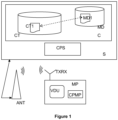
- Figure 1 shows a system in which an embodiment of the present invention may be deployed.
- a user When using a media player to play media content, i.e. to play a media content file, a user generally has to adjust various parameters associated with the rendering of the media content file on his media player. Such parameters include listening volume, fade setting, balance setting, bass level and treble level among others. According to embodiments of the present invention there is provided a method for storing such settings in a metadata file on a remote server along with the media content file and to recover the settings in a manner which will allow any particular media player selected by the user to render the media content file according to the user's predetermined preferences.
- remote server it is meant one or more storage facilities provided outwith the media player where one or more media content files may be stored.
- the remote storage facilities can be provided on one or more computers accessible via a network such as the Internet for example.
- Such remote servers may also be referred to as the Cloud.
- a particular user may have a Personal Cloud in that access to the content stored in the Personal Cloud is reserved to that particular user, preferably through a process including identification and authentication of the user.
- the remote server is accessible by the user from a large number of geographical locations, preferably anywhere, and using any media player as long as it is capable of receiving the media content from the remote server and rendering the media content.
- the media player could be any from of a personal computer (otherwise known as a laptop computer or desktop computer), a personal digital assistant (PDA), a mobile telephone (particularly of a so-called Smart-phone type), a computer tablet, a mobile digital audio file player, a mobile digital video player, a set-top box, a digital television set (such as an integrated digital TV, mobile or fixed, especially one adapted for playing content from a remote server (IPTV)) or any other digital electronic device allowing for either a hardware, software or mixed hardware/software media playing function to be installed and operated.
- PDA personal digital assistant
- IPTV remote server
- a media player comprising a storage module upon which a media content file may be stored.
- the storage medium may also serve to store a metadata file comprising parameter settings useful during rendering of the media content file by the same media player or another media player.
- control parameter may also be used to mean the parameter setting.
- the metadata file may be used to adjust various parameter settings of the media player. By adjusting the parameter settings the rendering of the media content by the media player may be altered in a way which is perceptible by the user. It can therefore also be said that the media player is configured such that at least one characteristic related to the rendering of media content is adjustable according to a value of on or more control parameters.
- control parameters are associated at least with a particular media content.
- the storage module thus provides at least temporary storage for at least the metadata file, since the media player further comprises a communication interface for storing at least the metadata file on a remote server.
- the communication interface must be bidirectional, thereby allowing the media player to send the metadata file to the remote server or to recover a media data file and/or its associated metadata file from the receiver, as will be seen later.
- the media content file is also stored on the server.
- the media content file and the metadata file are associated with each other in the sense that the settings within the metadata file are to be applied to a media player whenever that particular media content file is to be rendered.
- media content files may comprise audio, video or audio/video content.
- Settings which may be stored in the metadata file may therefore be applicable to any of the usual parameters associated with the rendering of the media content file, such as listening volume level, fade setting, balance setting, bass level and treble level, fader position, balance position, brightness level, colour level and contrast level, among others. These are otherwise known as characteristics related to the rendering of the media content.
- These settings and levels are parameters which affect the qualities perceived by a user during rendering of the content by the media player. To be more specific, loudness is a quality perceptible by the user, bass level is a quality perceptible by the user etc. These qualities can also be known as characteristics related to the rendering of the media content.
- FIG 1 shows an exemplary system in which an embodiment of the present invention may be deployed.
- a user has access to a personal cloud (C) on a remote server (S), the server having a storage module with a first storage space (CT) for one or more media content files (CT1) and a second storage space (MD) for metadata files (MD1) a metadata file (MD1) being associable with a media content file (CT1).
- CT1 first storage space
- MD1 metadata file
- a dotted arrow is shown between the media content file (CT1) and the metadata (MD1) file, indicating that the two files are associated with each other, meaning that a user has already chosen his settings for that particular media content file (CT1) and saved it in the metadata file (MD1) on his personal cloud (C) on the remote server (S).
- the server has processing means (CPS), which may be used for processing the metadata file (MD1).
- the remote server (S) has a communication link (ANT, TXRX) to a media player (MP) and as such the media player (MP) may upload or download data from the server (S).
- the media player has rendering device (VDU), such as a speaker or a display or a display and a speaker, for rendering the media content.
- the media player further comprises a processor (CPMP) which may be used for processing settings from the metadata files (MD).
- CPMP processor
- a media player stores a metadata file on a remote server, the metadata file comprising the user's preferred settings for the rendering of a particular media content file.
- the user may choose whether or not he wants to use his preferred settings for rendering of the selected media content file.
- the previously stored settings associated with the selected media content file are recovered from the metadata file stored on the server and the settings are applied to the media player for the rendering of the content.
- the media content file may either be played from the memory module of the media player or recovered from the remote server along with the associated metadata file (by either downloading or streaming).
- the user decides not to use the previously stored settings, then he will configure new settings for the media player manually.
- the settings in the metadata file are stored in absolute form, where the actual value of the parameter setting is stored in the file.
- a relative value is stored, for example in percentage terms. A 50% value for a particular setting would mean that the parameter setting was at 50% of its maximum in this case.
- both the absolute and relative values could be stored to allow for flexibility in applying the settings depending on whether or not the settings will be applied to the same media player which was used to determine the settings or a different media player.
- a relative value means a value from which the actual parameter setting may be derived given the predetermined range of possible values for the media player.
- the same media player or the same type or model or manufacturer of media player is used to replay a content file, then it is simple to use just the absolute value of a setting from the metadata file to programme the media player during subsequent playing of the same content.
- a different type of media player is used for the subsequent playing or a different manufacturer or different model, then it is advantageous to use the relative settings.
- An application in the server or on the media player can be executed on a processor to convert the relative value to a value which will be understood by the media player.
- the calculation of the required commands to be applied to the media player could be done using the processor on the remote server. Such calculations could be based on known elements relative to the media player identification in terms of type, model etc stored in a library on the server or taken directly from the media player when it connects to the server. Alternatively, it could be left for the processor on the media player itself to interpret the settings from the metadata file.
- the remote server storage device further comprises an area where a library of known media players is stored.
- This library can be updated as and when users save their settings.
- An application on the remote server retrieves a device identifier from a media device when it connects and stores the device's capabilities in a file pertaining to the particular device type or model. This information may also help in determining a device's maximum and minimum settings per parameter (predetermined range), which will help when the settings in a metadata file are expressed in relative terms such as in percentage value for example.
- the media player may be any of the known types as long as it has access to the remote server. Typically this will be an internet protocol interface capable of accessing the user's so-called private cloud on the internet.
- the media player typically referred to as a client device since it is configured to connect to a server, according to an embodiment, is further configured to communicate its device type and capabilities to the server.
- the server is configured to adapt the settings from the metadata file to be suitable for the particular client according to the capabilities communicated by the client to the server.
- the server has a processor to be able to translate the settings in relative terms to absolute terms using the discovered capabilities of the media player. By discover it means that the media player sends its capabilities in terms of predetermined ranges of its settings to the server at some point during a communication between the two.
- it is the client itself which is configured to extract the settings from the metadata file and to interpret the settings in an appropriate manner to be able to apply them to its own particular settings requirements.
- the metadata file may include all settings applicable to a large set of known clients, each client using only those settings which are applicable to it, or the server configuring those settings on the client which are applicable to that particular client. Different clients may have different settings including HD/SD, surround sound type, noise reduction type, stereo/mono, 2D/3D etc.
- the metadata file further includes settings applicable to a media player, the settings having been predetermined by a particular user.
- the settings could be predetermined with respect to a particular media player without such settings having been predetermined by a particular user but rather a set of default settings, possibly manufacturer-suggested settings applicable to the particular media player or rather media player type.
- a further variant of this embodiment is where the settings are related to a particular content or a particular content type. In this case the settings are predetermined according to the media content itself or the media content type itself. This is useful when the particular media content or type is best rendered when a media player is configured according to a set of settings, perhaps predetermined by the originator or author of the content.
- a composer of a particular piece of music may suggest that the particular piece be best experienced when the piece is played at a particularly low volume for example. He could then associate the appropriate settings with his piece.
- Another work may be best experienced in 2D, in which case a media player having 3D capability will nonetheless render the content in 2D thanks to the predetermined settings.
- a particular cartoon may be best viewed with the contrast at a particularly high value, in which case such a setting may be associated with that content and included in the metadata file.
- the settings in the metadata file may include values having an effect on physical parameters of the media player.
- physical parameters it is meant parameters having an effect which is not necessarily limited directly to the rendering of the content but rather having an effect on the media player itself such as powering down of the media player or editing a real time clock within the media player or delaying a time of rendering of the content or changing channel for example.
- These functions which do not simply have an effect on the quality of the rendering of the content perceived by the user, shall be known as physical functions of the media player.
- the media player further comprises a biometric sensor to measure at least one biometric characteristic of the user. This measurement is then used (either by a processor in the media player or by a processor on the server) to identify the user and then to impose a predetermined set of settings applicable during the rendering of the content for that user. For example, this would be the case when the media player further comprises a sensor configured to detect at least one biometric parameter of the user, and further configured to use the biometric parameter to affect the rendering of the media content file.
- the media player may be operably connected to a camera configured to detect the distance between the user's eyes.
- the inter-ocular distance between an adult's eyes is greater than that between a child's eyes
- a measurement made thanks to the camera and a processor configured to calculate the inter-ocular distance for the user, may be included as a parameter in the metadata file to set the media player to prevent playing of a particular content or content type should the inter-ocular distance fall below a predetermined threshold.
- the embodiment mentioned in the paragraph above may be adapted to allow for parental control, whereby if the media player detects that a child is watching the content, then any of the known limitations can be applied, such as limiting the listening volume or limiting the time which the user can spend viewing the content.
- the media player further comprises a clock at least for measuring playing time of a piece of content. For media players comprising a clock configured to measure time of day, then the volume could be limited when content is watched later than a predetermined time of day.
- the processor in the media player can monitor the necessary parameters (time, inter-ocular distance etc) and adjust the settings in the metadata file as a function of the readings from the clock and/or the biometric sensor when the metadata file is downloaded from the remote server.
- the server which is configured to edit the settings before editing the settings in the metadata file and transmitting the metadata file to the media player.
- Any of the known transmission methods may be used to transmitting the settings to the media player although in a preferred embodiment such transmission is via the bidirectional communication channel which exists between the communication interface of the media player and the remote server.
- the media player may be further configured to detect whether or not the user is wearing 3D glasses and to edit the settings in any of the ways mentioned previously to force the media player to render the content either in 2D or 3D according to whether or not the user is wearing the 3D glasses.
- Embodiments of the present invention allow for a user to save a number of parameters associated with playback of a media content file or parameters otherwise affecting a media player during playback of a particular media content file.
- Such parameters are usually those chosen or otherwise previously set by the user and are saved on a remote server within a metadata file associated with the particular media content file.
- the user advantageously has access to his chosen settings any time he plays the media content file.
- the user may further share the settings with another user so that the other user can also enjoy the experience afforded by the use of the saved settings during playback of the media content file.
- a general set of settings can be saved in a metadata file on the remote server, where the general set of settings is not particularly associated with any one piece of media content but rather is one user's settings for a particular media player or type of media player or model of media player.
- the metadata file comprising the settings may have any of the known formats for machine-readable or human-readable computer files as long as the format is suitable to be properly interpreted by the media player.
- Known formats for the settings file include simple ASCII text files or script files such as java, perl or php for example.
- Mark-up language file formats may also be used, including for example XML files, XrML files or HTML files.
- the settings comprised in the metadata file on the remote server may further include the user's favourite in terms of a preferred composer, a preferred film director, a preferred interpreter, a preferred musical style or a preferred film genre for example.
- a media library such as a media server or a library on a hard disk
- the media player can extract the user's favourites and scan the library for media content which corresponds to the user's services and propose the content found to the user.
- the favourites may of course be direct references to particular content rather then just a genre.
- the favourites may include the title of a particular film or piece of music.
- An example of an embodiment of the present invention in use would be a user who decides to watch a particular film which is stored in his private cloud (i.e. on a remote server giving restricted access to the user) switches on his TV, connects to his private cloud and authenticated himself.
- Any of the known means of authentication are possible, such as a username and a PIN or a username and a password or any of the known authentications via biometric techniques for example.
- a system in which the embodiment of the invention is deployed may further comprise a conditional access module known in the domain of Pay-TV in order to perform any of the known cryptographic authentication techniques.
- the media content files thereon selects one for rendering (viewing in the case of a film or listening in the case of audio content such as a music file).
- the user downloads a copy of the film to his TV or streams a copy of the film to his TV and begins watching it. He adjusts the brightness, colour, volume, and bass and sets the player to render the audio part of the content in stereo.
- the player saves the settings that were used to play the film in a metadata file and stores the metadata file on the user's cloud and associates the metadata file to the media content file which has the film. At some point in the future the user decides to watch the same film again.
- the new media player which is the mobile phone, is able to reproduce the same settings that were previously used on the TV.
- the translation of the relative values to values required for the new media player may be carried out by an appropriate processor on the remote server (cloud) or alternatively may be carried out by an appropriate processor comprised in the media player.
- the processor (either remote or local) may also take care of properly interpreting certain settings and either ignoring them where a certain setting is not applicable or interpreting them where a particular setting has a different meaning or has otherwise to be deduced.
- Another example of the embodiment of the present invention in use would be similar to the above except that after the user watches the film for the first time and saves the settings on the cloud, he goes to his friend's house to watch the same movie with his friend on his friend's TV.
- An application is available on the cloud, configured to interpret metadata files and to translate the settings therein from being suitable from a first media player model to being suitable for a second media player model. The user decides to share his settings with his friend. The user accesses his cloud, runs the application to translate his settings for his TV to be compatible with the settings required by his friend's TV to create a second metadata file and designates the second metadata file as being shareable with his friend. His friend then recovers the settings from the second metadata file and applies them to his TV while watching the film with the user.
- Predetermined preferences are associated at least with the content to be rendered and may be recovered in a secure way from a server following appropriate authentication.
Landscapes
- Engineering & Computer Science (AREA)
- Signal Processing (AREA)
- Computer Networks & Wireless Communication (AREA)
- Multimedia (AREA)
- Databases & Information Systems (AREA)
- Health & Medical Sciences (AREA)
- General Health & Medical Sciences (AREA)
- Computer Security & Cryptography (AREA)
- Social Psychology (AREA)
- Human Computer Interaction (AREA)
- Biomedical Technology (AREA)
- Biophysics (AREA)
- Chemical & Material Sciences (AREA)
- Analytical Chemistry (AREA)
- Life Sciences & Earth Sciences (AREA)
- Computer Graphics (AREA)
- Neurosurgery (AREA)
- Two-Way Televisions, Distribution Of Moving Picture Or The Like (AREA)
- Computer Hardware Design (AREA)
- Computing Systems (AREA)
- General Engineering & Computer Science (AREA)
- Television Signal Processing For Recording (AREA)
- User Interface Of Digital Computer (AREA)
Description
- The present invention relates to a method for rendering a media content, and a system comprising a first media player, a second media player, and a server.
-
United States Patent Publication number 8,027,518 B2 discloses an architecture that can obtain biometric data from a user as the user interacts with a piece of digital equipment. Based upon the obtained biometric data, the architecture can determine an identity of the user and automatically apply settings to the piece of digital equipment, the settings being associated with the particular user. The disclosure therefore is addressed at solving a problem of automatically configuring the piece of digital equipment according to a particular user, the user being sufficiently authenticated in a convenient manner without requiring the user to perform an activity over and above the gestures he would normally make when using the equipment. Given that the field of application does not present a high incentive for piracy, then the level of authentication need not be particularly high and so authentication by biometric means, although recognised as being imperfect, is deemed to be sufficient for this application. Since the purpose of the mentioned disclosure is not for automatically setting controls of any one from a plurality of potential rendering devices such that a user may experience a particular media content according to his pre-determined preference, specific provision for achieving such benefits is not disclosed therein. -
United States Patent Application Publication number 2011/0154212 A1 describes a method for providing, upon request, an augmented user interface (AUI) providing functionality to a user having a particular type of special need such a user having diminished sight faculties for example. AUI configuration information for a particular user is collected, recorded in a preference file, and sent to a remote server for storage. Upon reception of a login request by the remote server, the remote server authenticates the user, retrieves the stored preference file and sends the preference file to the computer currently being used by the user. The computer being used by the user can then configure an appropriate AUI for that user. This provides an adequate interface for the user to continue working with his computer using an interface with which he is familiar and which is adapted to his special needs. -
United States Patent Application Publication number 2007/0033634 A1 is directed towards rendering a media presentation to a user in manner which is specific to that user depending on some current information regarding the user. The current information depends on a context and a pre-determined user-profile. The context is provided by context sensors, which may be movement detectors or biometric detectors for example to determine what the user is doing at that particular time. The context is interpreted using the user-profile to map to a mood or physical state of the user, thereby allowing for the rendering of the media presentation to be adjusted. Such adjustment may include timing of when an advertisement is shown or different presenters may be shown or adjustment of playback parameters of the playback device may be made (e.g. volume or brightness) or even environmental conditions may be adjusted, such as dimming the room lighting for example. In this manner, the user experience while the media presentation is being rendered can be altered depending on a profile and the viewer's current behaviour. The purpose thus achieved is therefore not one of ensuring that a particular content will be experienced according to a user's pre-determined control settings irrespective of the particular device which is being used. -
United States Patent Application Publication number 2008/020943 A1 describes a content browsing apparatus and method in which a user profile and a terminal profile are stored. The user profile comprises information regarding user-preferred content, while the terminal profile comprises information related to the browsing apparatus, such as a user's preferred listening volume on that apparatus. The terminal profile is created once and is stored on the terminal (browsing apparatus). Provision is thereby made for apparatus to present the viewer with content according to the user's preferred content and the preset parameters affecting the playback of the content. This does not address the problem of accessing particular content from any device and having it played back on that device according to pre-determined settings for that content. - International Patent Application Publication number
WO 2009/023289 A1 discloses a system and a method for selecting and applying equaliser settings of a media player when playing a particular music file. In order to achieve this, the optimal equaliser settings are stored in the metadata of the music file and then used to adjust the equaliser settings of the media player when it plays the music file. - United States Patent Application Publication number
US 2009/313564 A1 discloses systems and methods for adjusting playback and graphical representations of media files, including monitoring a characteristic of a playback of a media file, storing usage metadata based on said monitoring and adjusting the characteristic for a subsequent playback of the media file based on the stored usage metadata. - The present invention is aimed at solving some of the problems apparent in the prior art, including the technology mentioned above.
- A method is provided for giving access, using a media player, to a media content file, said access allowing for a user to experience rendering of the media content file according to a predetermined set of parameters associated with said rendering of said content. The method includes recovering, from a remote server, a pre-stored metadata file associated with the pre-stored media content, the metadata file comprising settings personalised for the user, the settings affecting parameters related to the rendering of the media content on the media player. The parameters include volume level, bass level, treble level, fader position, balance position, brightness level, colour level, contrast level among others.
- There is provided a media player for performing the above method. The media player can also automatically store and synchronise preferred settings for rendering of media content files using the media player, said synchronizing taking place between the media player and a remote server.
- Provision is made for a particular file format for a metadata file comprising settings allowing for a media player to be configured either according to a user's predetermined choice or according to particular requirements of a particular media content file or file-type or according to a particular media player of media player type.
- A combination of the settings mentioned in this paragraph may be applied.
- Provision is made for a media player for rendering a media content, the media player comprising processing means and configured such that at least one characteristic related to said rendering of the media content is adjustable according to a value of at least one control parameter;
characterised in that:
the media player is further configured to: - store a predetermined value of the control parameter on a server, the media content being associated with the predetermined value of the control parameter;
- recover the predetermined value of the control parameter from the server; and
- adjust the characteristic related to said rendering of the media content using a control setting value derived from the recovered predetermined value of the control parameter.
- There is provided a system comprising:
- a media player for rendering a media content; and
- a server having a remote connection to the media player;
- the media player comprising processing means and configured such that at least one characteristic related to said rendering of the media content is adjustable according to a value of at least one control parameter; characterised in that:
- the media player is further configured to:
- store a predetermined value of the control parameter on the server, the media content being associated with the predetermined value of the control parameter;
- recover the predetermined value of the control parameter from the server; and
- adjust the characteristic related to said rendering of the media content using a control setting value derived from the recovered predetermined value of the control parameter.
- According to an aspect of the present invention there is provided a method for rendering a media content as set out in claim 1.
- According to a further aspect of the present invention there is provided a system as set out in claim 9.
- Accordingly, there is provided a technique for automatically setting controls of any one from a plurality of potential rendering devices such that a user may experience a particular media content according to his pre-determined preference irrespective of which rendering device is being used.
- The present invention will be better understood thanks to the detailed description which follows and the accompanying drawings, which are given as non-limiting examples of embodiments of the invention, wherein:
Figure 1 shows a system in which an embodiment of the present invention may be deployed. - When using a media player to play media content, i.e. to play a media content file, a user generally has to adjust various parameters associated with the rendering of the media content file on his media player. Such parameters include listening volume, fade setting, balance setting, bass level and treble level among others. According to embodiments of the present invention there is provided a method for storing such settings in a metadata file on a remote server along with the media content file and to recover the settings in a manner which will allow any particular media player selected by the user to render the media content file according to the user's predetermined preferences. By remote server it is meant one or more storage facilities provided outwith the media player where one or more media content files may be stored. The remote storage facilities can be provided on one or more computers accessible via a network such as the Internet for example. Such remote servers may also be referred to as the Cloud. A particular user may have a Personal Cloud in that access to the content stored in the Personal Cloud is reserved to that particular user, preferably through a process including identification and authentication of the user. Advantageously the remote server is accessible by the user from a large number of geographical locations, preferably anywhere, and using any media player as long as it is capable of receiving the media content from the remote server and rendering the media content.
- According to embodiments of the present invention the media player could be any from of a personal computer (otherwise known as a laptop computer or desktop computer), a personal digital assistant (PDA), a mobile telephone (particularly of a so-called Smart-phone type), a computer tablet, a mobile digital audio file player, a mobile digital video player, a set-top box, a digital television set (such as an integrated digital TV, mobile or fixed, especially one adapted for playing content from a remote server (IPTV)) or any other digital electronic device allowing for either a hardware, software or mixed hardware/software media playing function to be installed and operated.
- According to a first embodiment of the present invention a media player is provided, the media player comprising a storage module upon which a media content file may be stored. The storage medium may also serve to store a metadata file comprising parameter settings useful during rendering of the media content file by the same media player or another media player. Throughout this document, the term control parameter may also be used to mean the parameter setting. The metadata file may be used to adjust various parameter settings of the media player. By adjusting the parameter settings the rendering of the media content by the media player may be altered in a way which is perceptible by the user. It can therefore also be said that the media player is configured such that at least one characteristic related to the rendering of media content is adjustable according to a value of on or more control parameters. Whereas it is not usual for control parameters, as described herein, to be associated with a piece of media content, according to embodiments of the present invention, control parameters are associated at least with a particular media content. The storage module thus provides at least temporary storage for at least the metadata file, since the media player further comprises a communication interface for storing at least the metadata file on a remote server. The communication interface must be bidirectional, thereby allowing the media player to send the metadata file to the remote server or to recover a media data file and/or its associated metadata file from the receiver, as will be seen later. According to preferred embodiments, the media content file is also stored on the server. According to some embodiments, the media content file and the metadata file are associated with each other in the sense that the settings within the metadata file are to be applied to a media player whenever that particular media content file is to be rendered. It will be recognised by the person of ordinary skill in the art that media content files may comprise audio, video or audio/video content. Settings which may be stored in the metadata file may therefore be applicable to any of the usual parameters associated with the rendering of the media content file, such as listening volume level, fade setting, balance setting, bass level and treble level, fader position, balance position, brightness level, colour level and contrast level, among others. These are otherwise known as characteristics related to the rendering of the media content. These settings and levels are parameters which affect the qualities perceived by a user during rendering of the content by the media player. To be more specific, loudness is a quality perceptible by the user, bass level is a quality perceptible by the user etc. These qualities can also be known as characteristics related to the rendering of the media content.
-
Figure 1 shows an exemplary system in which an embodiment of the present invention may be deployed. A user has access to a personal cloud (C) on a remote server (S), the server having a storage module with a first storage space (CT) for one or more media content files (CT1) and a second storage space (MD) for metadata files (MD1) a metadata file (MD1) being associable with a media content file (CT1). InFigure 1 a dotted arrow is shown between the media content file (CT1) and the metadata (MD1) file, indicating that the two files are associated with each other, meaning that a user has already chosen his settings for that particular media content file (CT1) and saved it in the metadata file (MD1) on his personal cloud (C) on the remote server (S). By personal cloud (C) it is meant a space on the server which is accessible by the user upon successful authentication. The server has processing means (CPS), which may be used for processing the metadata file (MD1). The remote server (S) has a communication link (ANT, TXRX) to a media player (MP) and as such the media player (MP) may upload or download data from the server (S). The media player has rendering device (VDU), such as a speaker or a display or a display and a speaker, for rendering the media content. The media player further comprises a processor (CPMP) which may be used for processing settings from the metadata files (MD). The bidirectional link may also be referred to as a bidirectional channel. - During operation of a media player according to any of the embodiments of the present invention, a media player stores a metadata file on a remote server, the metadata file comprising the user's preferred settings for the rendering of a particular media content file. When the same media content file is subsequently selected by the user for rendering on the same media player or another media player, the user may choose whether or not he wants to use his preferred settings for rendering of the selected media content file. In the case that the user does want to use his preferred settings, the previously stored settings associated with the selected media content file are recovered from the metadata file stored on the server and the settings are applied to the media player for the rendering of the content. The media content file may either be played from the memory module of the media player or recovered from the remote server along with the associated metadata file (by either downloading or streaming). In the case that the user decides not to use the previously stored settings, then he will configure new settings for the media player manually.
- According to embodiments of the present invention the settings in the metadata file are stored in absolute form, where the actual value of the parameter setting is stored in the file. Alternatively a relative value is stored, for example in percentage terms. A 50% value for a particular setting would mean that the parameter setting was at 50% of its maximum in this case. Alternatively, both the absolute and relative values could be stored to allow for flexibility in applying the settings depending on whether or not the settings will be applied to the same media player which was used to determine the settings or a different media player. In the context of the present invention, a relative value means a value from which the actual parameter setting may be derived given the predetermined range of possible values for the media player.
- If the same media player or the same type or model or manufacturer of media player is used to replay a content file, then it is simple to use just the absolute value of a setting from the metadata file to programme the media player during subsequent playing of the same content. Alternatively, if a different type of media player is used for the subsequent playing or a different manufacturer or different model, then it is advantageous to use the relative settings. An application in the server or on the media player can be executed on a processor to convert the relative value to a value which will be understood by the media player.
- As mentioned above, the calculation of the required commands to be applied to the media player could be done using the processor on the remote server. Such calculations could be based on known elements relative to the media player identification in terms of type, model etc stored in a library on the server or taken directly from the media player when it connects to the server. Alternatively, it could be left for the processor on the media player itself to interpret the settings from the metadata file.
- By having both relative and absolute settings recorded in the metadata file it is then easy to configure a media player of the same model as the one which was used to generate the parameter settings by simply using the absolute settings. Similarly it easy to configure a media player of a different make or model by deriving settings based on the relative settings in the metadata file.
- For systems in which embodiments of the present invention are deployed where both the media content file and the metadata file are stored on the remote server, access is guaranteed even if rendering of content is required on a different device from the one which was used when storing the settings.
- According to another embodiment of the present invention, the remote server storage device further comprises an area where a library of known media players is stored. This library can be updated as and when users save their settings. An application on the remote server retrieves a device identifier from a media device when it connects and stores the device's capabilities in a file pertaining to the particular device type or model. This information may also help in determining a device's maximum and minimum settings per parameter (predetermined range), which will help when the settings in a metadata file are expressed in relative terms such as in percentage value for example.
- As mentioned above, the media player may be any of the known types as long as it has access to the remote server. Typically this will be an internet protocol interface capable of accessing the user's so-called private cloud on the internet. The media player, typically referred to as a client device since it is configured to connect to a server, according to an embodiment, is further configured to communicate its device type and capabilities to the server.
- According to an embodiment, the server is configured to adapt the settings from the metadata file to be suitable for the particular client according to the capabilities communicated by the client to the server. For this the server has a processor to be able to translate the settings in relative terms to absolute terms using the discovered capabilities of the media player. By discover it means that the media player sends its capabilities in terms of predetermined ranges of its settings to the server at some point during a communication between the two. In another embodiment it is the client itself which is configured to extract the settings from the metadata file and to interpret the settings in an appropriate manner to be able to apply them to its own particular settings requirements. The metadata file may include all settings applicable to a large set of known clients, each client using only those settings which are applicable to it, or the server configuring those settings on the client which are applicable to that particular client. Different clients may have different settings including HD/SD, surround sound type, noise reduction type, stereo/mono, 2D/3D etc.
- According to the various embodiment of the present invention discussed above, the metadata file further includes settings applicable to a media player, the settings having been predetermined by a particular user. According to another embodiment of the present invention, the settings could be predetermined with respect to a particular media player without such settings having been predetermined by a particular user but rather a set of default settings, possibly manufacturer-suggested settings applicable to the particular media player or rather media player type. A further variant of this embodiment is where the settings are related to a particular content or a particular content type. In this case the settings are predetermined according to the media content itself or the media content type itself. This is useful when the particular media content or type is best rendered when a media player is configured according to a set of settings, perhaps predetermined by the originator or author of the content. For example, a composer of a particular piece of music may suggest that the particular piece be best experienced when the piece is played at a particularly low volume for example. He could then associate the appropriate settings with his piece. Another work may be best experienced in 2D, in which case a media player having 3D capability will nonetheless render the content in 2D thanks to the predetermined settings. A particular cartoon may be best viewed with the contrast at a particularly high value, in which case such a setting may be associated with that content and included in the metadata file.
- According to yet another embodiment of the present invention, which may be combined with any of the previously described embodiments, the settings in the metadata file may include values having an effect on physical parameters of the media player. By physical parameters it is meant parameters having an effect which is not necessarily limited directly to the rendering of the content but rather having an effect on the media player itself such as powering down of the media player or editing a real time clock within the media player or delaying a time of rendering of the content or changing channel for example. These functions, which do not simply have an effect on the quality of the rendering of the content perceived by the user, shall be known as physical functions of the media player.
- According to another embodiment of the present invention, where the settings in the metadata file are at least associated with at least one user, the media player further comprises a biometric sensor to measure at least one biometric characteristic of the user. This measurement is then used (either by a processor in the media player or by a processor on the server) to identify the user and then to impose a predetermined set of settings applicable during the rendering of the content for that user. For example, this would be the case when the media player further comprises a sensor configured to detect at least one biometric parameter of the user, and further configured to use the biometric parameter to affect the rendering of the media content file. For example, the media player may be operably connected to a camera configured to detect the distance between the user's eyes. Given that the inter-ocular distance between an adult's eyes is greater than that between a child's eyes, such a measurement, made thanks to the camera and a processor configured to calculate the inter-ocular distance for the user, may be included as a parameter in the metadata file to set the media player to prevent playing of a particular content or content type should the inter-ocular distance fall below a predetermined threshold.
- The embodiment mentioned in the paragraph above may be adapted to allow for parental control, whereby if the media player detects that a child is watching the content, then any of the known limitations can be applied, such as limiting the listening volume or limiting the time which the user can spend viewing the content. In this case the media player further comprises a clock at least for measuring playing time of a piece of content. For media players comprising a clock configured to measure time of day, then the volume could be limited when content is watched later than a predetermined time of day. In these embodiments the processor in the media player can monitor the necessary parameters (time, inter-ocular distance etc) and adjust the settings in the metadata file as a function of the readings from the clock and/or the biometric sensor when the metadata file is downloaded from the remote server. Alternatively it could be the server which is configured to edit the settings before editing the settings in the metadata file and transmitting the metadata file to the media player. Any of the known transmission methods may be used to transmitting the settings to the media player although in a preferred embodiment such transmission is via the bidirectional communication channel which exists between the communication interface of the media player and the remote server.
- In a particular embodiment of the present invention where the media player is configured to be able to render the media content in 3D, the media player may be further configured to detect whether or not the user is wearing 3D glasses and to edit the settings in any of the ways mentioned previously to force the media player to render the content either in 2D or 3D according to whether or not the user is wearing the 3D glasses.
- Embodiments of the present invention allow for a user to save a number of parameters associated with playback of a media content file or parameters otherwise affecting a media player during playback of a particular media content file. Such parameters are usually those chosen or otherwise previously set by the user and are saved on a remote server within a metadata file associated with the particular media content file. In this manner the user advantageously has access to his chosen settings any time he plays the media content file. The user may further share the settings with another user so that the other user can also enjoy the experience afforded by the use of the saved settings during playback of the media content file. According to a particular embodiment, a general set of settings can be saved in a metadata file on the remote server, where the general set of settings is not particularly associated with any one piece of media content but rather is one user's settings for a particular media player or type of media player or model of media player.
- The metadata file comprising the settings (.settings for example) may have any of the known formats for machine-readable or human-readable computer files as long as the format is suitable to be properly interpreted by the media player. Known formats for the settings file include simple ASCII text files or script files such as java, perl or php for example. Mark-up language file formats may also be used, including for example XML files, XrML files or HTML files.
- According to yet another embodiment, the settings comprised in the metadata file on the remote server may further include the user's favourite in terms of a preferred composer, a preferred film director, a preferred interpreter, a preferred musical style or a preferred film genre for example. In this way, if the media player obtains access to a media library, such as a media server or a library on a hard disk, then by downloading the user's settings from the metadata file on the remote server, the media player can extract the user's favourites and scan the library for media content which corresponds to the user's services and propose the content found to the user. The favourites may of course be direct references to particular content rather then just a genre. For example the favourites may include the title of a particular film or piece of music.
- An example of an embodiment of the present invention in use would be a user who decides to watch a particular film which is stored in his private cloud (i.e. on a remote server giving restricted access to the user) switches on his TV, connects to his private cloud and authenticated himself. Any of the known means of authentication are possible, such as a username and a PIN or a username and a password or any of the known authentications via biometric techniques for example. A system in which the embodiment of the invention is deployed may further comprise a conditional access module known in the domain of Pay-TV in order to perform any of the known cryptographic authentication techniques. Once successfully authenticated, the user browses through the data available on his cloud, i.e. the media content files thereon, and selects one for rendering (viewing in the case of a film or listening in the case of audio content such as a music file). The user downloads a copy of the film to his TV or streams a copy of the film to his TV and begins watching it. He adjusts the brightness, colour, volume, and bass and sets the player to render the audio part of the content in stereo. When the user has finished watching, the player saves the settings that were used to play the film in a metadata file and stores the metadata file on the user's cloud and associates the metadata file to the media content file which has the film. At some point in the future the user decides to watch the same film again. He authenticates himself again and watches the film again on his TV, this time directly using the settings that he last used thanks to having also downloaded the settings from the metadata file associated with the film. Alternatively, if he chose to access the film from his mobile phone while traveling, thanks to the fact that the settings are also stored in relative values as well as or instead of absolute values, then the new media player, which is the mobile phone, is able to reproduce the same settings that were previously used on the TV. The translation of the relative values to values required for the new media player may be carried out by an appropriate processor on the remote server (cloud) or alternatively may be carried out by an appropriate processor comprised in the media player. The processor (either remote or local) may also take care of properly interpreting certain settings and either ignoring them where a certain setting is not applicable or interpreting them where a particular setting has a different meaning or has otherwise to be deduced.
- Another example of the embodiment of the present invention in use would be similar to the above except that after the user watches the film for the first time and saves the settings on the cloud, he goes to his friend's house to watch the same movie with his friend on his friend's TV. An application is available on the cloud, configured to interpret metadata files and to translate the settings therein from being suitable from a first media player model to being suitable for a second media player model. The user decides to share his settings with his friend. The user accesses his cloud, runs the application to translate his settings for his TV to be compatible with the settings required by his friend's TV to create a second metadata file and designates the second metadata file as being shareable with his friend. His friend then recovers the settings from the second metadata file and applies them to his TV while watching the film with the user.
- Accordingly, there is provided a technique for automatically setting controls of any one from a plurality of potential rendering devices such that a user may experience a particular media content according to his pre-determined preference irrespective of which rendering device is being used. Predetermined preferences are associated at least with the content to be rendered and may be recovered in a secure way from a server following appropriate authentication.
Claims (10)
- A method for rendering a media content such that at least one characteristic related to said rendering of the media content is adjustable according to a value of at least one control parameter, the method comprising:determining, at a first media player, a first absolute value of a control parameter, the first absolute value of the control parameter being predetermined by a user and being associated with both the media content and the first media player;providing, by the first media player, the first absolute value of the control parameter for storage as a relative value of the control parameter in a metadata file on a server, wherein the relative value of the control parameter is calculated based on the first absolute value of the control parameter associated with the first media player, wherein the relative value of the control parameter is a value from which the absolute value of the control parameter for a specific media player can be derived based on a predetermined range of possible values of the control parameter for the specific media player;rendering, at a second media player, the media content using a second absolute value of the control parameter associated with the second media player, wherein the second absolute value is calculated based on the stored relative value of the control parameter and information about a predetermined range of possible values of the control parameter for the second media player, and wherein the characteristic related to said rendering of the media content on the second media player is adjusted using the second absolute value of the control parameter.
- The method according to claim 1, further comprising:
determining the first absolute value of the control parameter associated with the first media player by adjusting the control parameter to a desired value while rendering the media content on the first media player. - The method according to claim 1, the first media player further comprising a biometric sensor for measuring at least one biometric characteristic of the user of the first media player, the method further comprising:
determining the first absolute value of the control parameter based at least on the measured biometric characteristic. - The method according to any of claims 1 to 3, wherein the second absolute value of the control parameter associated with the second media player is proportional to the first absolute value of the control parameter associated with the first media player.
- The method according to any of the preceding claims, wherein the characteristic related to said rendering of the media content is one from a group of volume level, fade setting, balance setting, bass level, treble level, fader position, balance position, brightness level, colour level and contrast level.
- The method according to any of the preceding claims, wherein the calculation of the second absolute value of the control parameter associated with the second media player allows for a control setting value to be adjusted in a way which reproduces the same characteristic on the second media player as that on the first media player.
- The method according to any of claims 3 to 6, wherein the second media player further comprises a clock configured to measure time of day, wherein calculating the second absolute value of the control parameter includes checking whether the time of day is later than a predetermined time of day, the adjustment being a reduction in volume if the check is positive.
- The method according to any of claims 3 to 6, wherein the second media player further comprises a clock configured to limit the time which the user can spend viewing the media content and a camera to detect an inter-ocular distance of the user and determine whether the user is a child, the adjustment being a limit to the amount of time the playing of the media content lasts.
- A system comprising:a first media player for rendering a media content to a user;a second media player; anda server having a remote connection to both of the media players;the media players comprising processing means and configured such that at least one characteristic related to said rendering of the media content is adjustable according to a value of at least one control parameter;characterised in that:the first media player is further configured to:determine a first absolute value of the control parameter, the first absolute value of the control parameter being predetermined by the user and being associated with both the media content and the first media player; andprovide the first absolute value of the control parameter for storage as a relative value of the control parameter in a metadata file on the server, wherein the relative value of the control parameter is calculated based on the first absolute value of the control parameter associated with the first media player, wherein the relative value of the control parameter is a value from which the absolute value of a control parameter for a specific media player can be derived based on a predetermined range of possible values of the control value for the specific media player;the second media player being configured to:
render the media content using a second absolute value of the control parameter associated with the second media player, wherein the second absolute value is calculated based on the relative value of the control parameter stored on the server and information about a predetermined range of possible value of the control parameter for the second media player, and wherein the characteristic related to said rendering of the media content is adjusted using the second absolute value of the control parameter associated with the second media player. - The system according to claim 9, wherein the first media player further comprises a biometric sensor for measuring at least one biometric characteristic of the user of the first media player and further configured to predetermine the first absolute value of the control parameter based on the biometric characteristic of the user of the first media player.
Priority Applications (1)
| Application Number | Priority Date | Filing Date | Title |
|---|---|---|---|
| EP14722666.6A EP2995065B1 (en) | 2013-05-07 | 2014-05-07 | A media player for receiving media content from a remote server |
Applications Claiming Priority (3)
| Application Number | Priority Date | Filing Date | Title |
|---|---|---|---|
| EP20130166886 EP2802122A1 (en) | 2013-05-07 | 2013-05-07 | A Media Player for Receiving Media Content from a Remote Server |
| EP14722666.6A EP2995065B1 (en) | 2013-05-07 | 2014-05-07 | A media player for receiving media content from a remote server |
| PCT/EP2014/059398 WO2014180934A1 (en) | 2013-05-07 | 2014-05-07 | A media player for receiving media content from a remote server |
Publications (2)
| Publication Number | Publication Date |
|---|---|
| EP2995065A1 EP2995065A1 (en) | 2016-03-16 |
| EP2995065B1 true EP2995065B1 (en) | 2025-02-19 |
Family
ID=48326155
Family Applications (2)
| Application Number | Title | Priority Date | Filing Date |
|---|---|---|---|
| EP20130166886 Withdrawn EP2802122A1 (en) | 2013-05-07 | 2013-05-07 | A Media Player for Receiving Media Content from a Remote Server |
| EP14722666.6A Active EP2995065B1 (en) | 2013-05-07 | 2014-05-07 | A media player for receiving media content from a remote server |
Family Applications Before (1)
| Application Number | Title | Priority Date | Filing Date |
|---|---|---|---|
| EP20130166886 Withdrawn EP2802122A1 (en) | 2013-05-07 | 2013-05-07 | A Media Player for Receiving Media Content from a Remote Server |
Country Status (7)
| Country | Link |
|---|---|
| US (4) | US10476924B2 (en) |
| EP (2) | EP2802122A1 (en) |
| KR (1) | KR20160006170A (en) |
| CN (1) | CN105284095B (en) |
| CA (1) | CA2910052A1 (en) |
| MX (1) | MX2015015437A (en) |
| WO (1) | WO2014180934A1 (en) |
Families Citing this family (5)
| Publication number | Priority date | Publication date | Assignee | Title |
|---|---|---|---|---|
| EP2802122A1 (en) | 2013-05-07 | 2014-11-12 | Nagravision S.A. | A Media Player for Receiving Media Content from a Remote Server |
| US10481749B1 (en) | 2014-12-01 | 2019-11-19 | Google Llc | Identifying and rendering content relevant to a user's current mental state and context |
| CN105827716A (en) * | 2016-04-18 | 2016-08-03 | 苏州寅初信息科技有限公司 | LED advertisement screen control system based on big data |
| CN107612912B (en) * | 2017-09-20 | 2022-02-25 | 北京京东尚科信息技术有限公司 | A method and device for setting playback parameters |
| CN116009998A (en) * | 2021-10-21 | 2023-04-25 | 华为技术有限公司 | A rendering method and related device |
Family Cites Families (69)
| Publication number | Priority date | Publication date | Assignee | Title |
|---|---|---|---|---|
| US5949471A (en) * | 1993-07-29 | 1999-09-07 | Gemstar Development Corporation | Apparatus and method for improved parental control of television use |
| DE10021068A1 (en) * | 2000-04-28 | 2001-10-31 | Bosch Gmbh Robert | User-specific device tuning method for e.g. vehicle involves tuning device based on stored user-specific data consisting of full or partial device independent reference values |
| JP4460133B2 (en) * | 2000-09-25 | 2010-05-12 | アイシン精機株式会社 | Vehicle seat weight detection device |
| KR100946318B1 (en) * | 2000-10-11 | 2010-03-09 | 유나이티드 비디오 프로퍼티즈, 인크. | System and method for providing data storage to server of on-demand media delivery system |
| US6722984B1 (en) * | 2000-11-22 | 2004-04-20 | Universal Electronics Inc. | Game controller with parental control functionality |
| US7722453B2 (en) * | 2001-03-27 | 2010-05-25 | Igt | Interactive game playing preferences |
| GB0112990D0 (en) * | 2001-05-26 | 2001-07-18 | Central Research Lab Ltd | Automatic classification and/or counting system |
| US20060206725A1 (en) * | 2002-04-23 | 2006-09-14 | Michael Milgramm | System and method for platform-independent biometrically verified secure information transfer and access control |
| US20070033634A1 (en) * | 2003-08-29 | 2007-02-08 | Koninklijke Philips Electronics N.V. | User-profile controls rendering of content information |
| US20050144305A1 (en) * | 2003-10-21 | 2005-06-30 | The Board Of Trustees Operating Michigan State University | Systems and methods for identifying, segmenting, collecting, annotating, and publishing multimedia materials |
| US7136709B2 (en) * | 2003-11-04 | 2006-11-14 | Universal Electronics Inc. | Home appliance control system and methods in a networked environment |
| US9131272B2 (en) * | 2003-11-04 | 2015-09-08 | Universal Electronics Inc. | System and method for saving and recalling state data for media and home appliances |
| US7155305B2 (en) * | 2003-11-04 | 2006-12-26 | Universal Electronics Inc. | System and methods for home appliance identification and control in a networked environment |
| US7341872B1 (en) | 2004-04-29 | 2008-03-11 | Uop Llc | Multiautoclave with set of vessels for combinatorial synthesis of zeolites and other materials |
| CA2581810C (en) * | 2004-10-26 | 2013-12-17 | Dolby Laboratories Licensing Corporation | Calculating and adjusting the perceived loudness and/or the perceived spectral balance of an audio signal |
| KR100628311B1 (en) * | 2004-11-22 | 2006-09-27 | 한국전자통신연구원 | Content browser device and method |
| US8683532B2 (en) * | 2005-11-29 | 2014-03-25 | International Business Machines Corporation | Space-shifting media streaming system |
| KR100754196B1 (en) * | 2005-12-10 | 2007-09-03 | 삼성전자주식회사 | How to change content playback device during streaming playback and device therefor |
| US8689253B2 (en) * | 2006-03-03 | 2014-04-01 | Sharp Laboratories Of America, Inc. | Method and system for configuring media-playing sets |
| US9300920B2 (en) * | 2006-03-03 | 2016-03-29 | Sharp Laboratories Of America, Inc. | Method and system for configuring media-playing sets |
| US20080002839A1 (en) * | 2006-06-28 | 2008-01-03 | Microsoft Corporation | Smart equalizer |
| US20080026816A1 (en) * | 2006-07-25 | 2008-01-31 | Sammon Russell P | Providing Benefits To Players Who Agree To Appropriation Of A Portion Of Future Winnings |
| US9202509B2 (en) * | 2006-09-12 | 2015-12-01 | Sonos, Inc. | Controlling and grouping in a multi-zone media system |
| US10452756B2 (en) * | 2006-09-29 | 2019-10-22 | Oath Inc. | Platform for rendering content for a remote device |
| JP4345829B2 (en) * | 2007-03-09 | 2009-10-14 | ソニー株式会社 | Image display system, image display apparatus, image display method, and program |
| US8027518B2 (en) * | 2007-06-25 | 2011-09-27 | Microsoft Corporation | Automatic configuration of devices based on biometric data |
| US20090047993A1 (en) * | 2007-08-14 | 2009-02-19 | Vasa Yojak H | Method of using music metadata to save music listening preferences |
| US20090083281A1 (en) * | 2007-08-22 | 2009-03-26 | Amnon Sarig | System and method for real time local music playback and remote server lyric timing synchronization utilizing social networks and wiki technology |
| US8512131B2 (en) * | 2007-11-08 | 2013-08-20 | Igt | Player bonus choice |
| US20090313564A1 (en) * | 2008-06-12 | 2009-12-17 | Apple Inc. | Systems and methods for adjusting playback of media files based on previous usage |
| US8505056B2 (en) * | 2008-07-10 | 2013-08-06 | Apple Inc. | Updating properties of remote A/V performance nodes |
| US20100070089A1 (en) * | 2008-09-15 | 2010-03-18 | Johnson Controls Technology Company | Hvac controller user interfaces |
| US20110012896A1 (en) * | 2009-06-22 | 2011-01-20 | Ji Maengsob | Image display apparatus, 3d glasses, and method for operating the image display apparatus |
| US9875671B2 (en) | 2009-12-17 | 2018-01-23 | Google Llc | Cloud-based user interface augmentation |
| US20110156998A1 (en) * | 2009-12-28 | 2011-06-30 | Acer Incorporated | Method for switching to display three-dimensional images and digital display system |
| US20110157329A1 (en) * | 2009-12-28 | 2011-06-30 | Acer Incorporated | Method for switching to display three-dimensional images and digital display system |
| US8447042B2 (en) * | 2010-02-16 | 2013-05-21 | Nicholas Hall Gurin | System and method for audiometric assessment and user-specific audio enhancement |
| JP4951076B2 (en) * | 2010-03-05 | 2012-06-13 | 株式会社東芝 | Display device, system, and glasses |
| US8370873B2 (en) * | 2010-03-09 | 2013-02-05 | Sony Corporation | 3D TV glasses with TV mode control |
| US8995685B2 (en) * | 2010-05-28 | 2015-03-31 | Echostar Technologies L.L.C. | Apparatus, systems and methods for limiting output volume of a media presentation device |
| US8836865B2 (en) * | 2010-07-21 | 2014-09-16 | Broadcom Corporation | Method and system for applying content-based picture quality profiles |
| EP2622518A1 (en) * | 2010-09-29 | 2013-08-07 | BrainLAB AG | Method and device for controlling appartus |
| US8608550B1 (en) * | 2010-11-12 | 2013-12-17 | Wms Gaming, Inc | Coordinating three dimensional wagering game content presentations |
| US20120210354A1 (en) * | 2011-02-11 | 2012-08-16 | Sony Network Entertainment International Llc | Graphical native user interface and control for devices without graphical user interface |
| JP2012205267A (en) * | 2011-03-28 | 2012-10-22 | Sony Corp | Display control device, display control method, detection device, detection method, program, and display system |
| JP5452537B2 (en) * | 2011-04-04 | 2014-03-26 | 日立コンシューマエレクトロニクス株式会社 | Video display system and display device |
| US8782716B2 (en) * | 2011-07-29 | 2014-07-15 | Google Inc. | Systems and methods for rendering user interface objects in accordance with a variable scaling factor |
| US8906300B2 (en) | 2011-08-11 | 2014-12-09 | The University Of Kentucky Research Foundation | Even perfusion pump-integrated blood oxygenator |
| US8971546B2 (en) * | 2011-10-14 | 2015-03-03 | Sonos, Inc. | Systems, methods, apparatus, and articles of manufacture to control audio playback devices |
| CN102447693A (en) * | 2011-11-02 | 2012-05-09 | 中兴通讯股份有限公司 | Screen sharing method and system for DLNA terminal in home network |
| JP5868196B2 (en) | 2012-01-27 | 2016-02-24 | キヤノン株式会社 | COMMUNICATION DEVICE, ITS CONTROL METHOD, AND PROGRAM |
| GB2498954B (en) * | 2012-01-31 | 2015-04-15 | Samsung Electronics Co Ltd | Detecting an object in an image |
| EP2654315A1 (en) * | 2012-04-18 | 2013-10-23 | Harman International Industries, Incorporated | Multimedia system and method of performing a playback by means of a multimedia system |
| US10225300B2 (en) * | 2012-06-10 | 2019-03-05 | Apple Inc. | Unified playback position |
| US9276543B2 (en) * | 2012-06-26 | 2016-03-01 | Nook Digital, Llc | Enhanced audio component in streamed media |
| US20140007154A1 (en) * | 2012-06-29 | 2014-01-02 | United Video Properties, Inc. | Systems and methods for providing individualized control of media assets |
| US20140040945A1 (en) * | 2012-08-03 | 2014-02-06 | Elwha, LLC, a limited liability corporation of the State of Delaware | Dynamic customization of audio visual content using personalizing information |
| US9167042B1 (en) * | 2012-09-10 | 2015-10-20 | Amazon Technologies, Inc. | Maintaining communication channel for device notifications |
| US20140143551A1 (en) * | 2012-11-21 | 2014-05-22 | Leigh M. Rothschild | Encoding biometric identification information into digital files |
| US8914818B2 (en) * | 2012-12-13 | 2014-12-16 | Intel Corporation | Media device power management techniques |
| US9769538B2 (en) * | 2012-12-17 | 2017-09-19 | Cox Communications, Inc. | Systems and methods for content delivery |
| BR112015017064B1 (en) * | 2013-01-21 | 2022-03-22 | Dolby Laboratories Licensing Corporation | Method, computer and device readable medium for optimizing sound intensity level and dynamic range across different playback devices |
| EP2802122A1 (en) * | 2013-05-07 | 2014-11-12 | Nagravision S.A. | A Media Player for Receiving Media Content from a Remote Server |
| DK2808870T3 (en) * | 2013-05-30 | 2016-04-18 | Spotify Ab | Crowdsourcing remix rules for streamed music |
| US9240763B2 (en) * | 2013-11-25 | 2016-01-19 | Apple Inc. | Loudness normalization based on user feedback |
| US20160055857A1 (en) * | 2014-08-19 | 2016-02-25 | Matthew Lee Johnston | System and method for generating dynamic sound environments |
| US9985846B1 (en) * | 2017-01-15 | 2018-05-29 | Essential Products, Inc. | Assistant for management of network devices |
| KR102253524B1 (en) * | 2019-09-02 | 2021-05-20 | 네이버 주식회사 | Method and system for applying loudness normalization |
| KR102287497B1 (en) * | 2019-12-11 | 2021-08-09 | 네이버 주식회사 | Platform adaptive audio normalization method and system |
-
2013
- 2013-05-07 EP EP20130166886 patent/EP2802122A1/en not_active Withdrawn
-
2014
- 2014-05-07 WO PCT/EP2014/059398 patent/WO2014180934A1/en not_active Ceased
- 2014-05-07 MX MX2015015437A patent/MX2015015437A/en unknown
- 2014-05-07 KR KR1020157030345A patent/KR20160006170A/en not_active Withdrawn
- 2014-05-07 CN CN201480025015.1A patent/CN105284095B/en active Active
- 2014-05-07 CA CA2910052A patent/CA2910052A1/en not_active Abandoned
- 2014-05-07 US US14/889,694 patent/US10476924B2/en active Active
- 2014-05-07 EP EP14722666.6A patent/EP2995065B1/en active Active
-
2019
- 2019-10-08 US US16/596,294 patent/US11212357B2/en active Active
-
2021
- 2021-11-19 US US17/531,152 patent/US11924302B2/en active Active
-
2024
- 2024-01-18 US US18/416,561 patent/US12542836B2/en active Active
Also Published As
| Publication number | Publication date |
|---|---|
| US20200145471A1 (en) | 2020-05-07 |
| US20240275862A1 (en) | 2024-08-15 |
| BR112015028177A2 (en) | 2017-07-25 |
| US10476924B2 (en) | 2019-11-12 |
| CN105284095B (en) | 2019-05-10 |
| US20220159088A1 (en) | 2022-05-19 |
| US11212357B2 (en) | 2021-12-28 |
| US11924302B2 (en) | 2024-03-05 |
| US12542836B2 (en) | 2026-02-03 |
| MX2015015437A (en) | 2016-03-15 |
| CN105284095A (en) | 2016-01-27 |
| US20160308925A1 (en) | 2016-10-20 |
| WO2014180934A1 (en) | 2014-11-13 |
| EP2802122A1 (en) | 2014-11-12 |
| EP2995065A1 (en) | 2016-03-16 |
| KR20160006170A (en) | 2016-01-18 |
| CA2910052A1 (en) | 2014-11-13 |
Similar Documents
| Publication | Publication Date | Title |
|---|---|---|
| US12542836B2 (en) | Media player for receiving media content from a remote server | |
| US12549795B2 (en) | Systems and methods for presenting content simultaneously in different forms based on parental control settings | |
| US9848221B2 (en) | Method and infrastructure for synchronized streaming of content | |
| US11812087B2 (en) | Systems and methods for displaying multiple media assets for a plurality of users | |
| CN107113465B (en) | Method, device and system for audiovisual synchronization with a plurality of output devices | |
| US20150296247A1 (en) | Interaction of user devices and video devices | |
| US9955204B2 (en) | System and method for distributing content through a set-top box | |
| MX2015001986A (en) | Methods and devices for terminal control. | |
| US20120259957A1 (en) | Apparatus and method for providing content using a network condition-based adaptive data streaming service | |
| JP2014032669A (en) | User device, second screen system and method for rendering second screen information on second screen | |
| US10419865B2 (en) | Methods and systems for rendering binaural audio content | |
| CA3104348A1 (en) | Systems and methods for playback of content using progress point information | |
| JP2023501442A (en) | User-generated content with ESRB ratings for automatic editing of playback based on player age, country and legal requirements | |
| US10075140B1 (en) | Adaptive user interface configuration | |
| US10951951B2 (en) | Haptics metadata in a spectating stream | |
| KR20220149654A (en) | Playback device adaptation system and method for content display | |
| BR112015028177B1 (en) | METHOD FOR RENDERING MEDIA CONTENT AND RELATED SYSTEM |
Legal Events
| Date | Code | Title | Description |
|---|---|---|---|
| PUAI | Public reference made under article 153(3) epc to a published international application that has entered the european phase |
Free format text: ORIGINAL CODE: 0009012 |
|
| 17P | Request for examination filed |
Effective date: 20151109 |
|
| AK | Designated contracting states |
Kind code of ref document: A1 Designated state(s): AL AT BE BG CH CY CZ DE DK EE ES FI FR GB GR HR HU IE IS IT LI LT LU LV MC MK MT NL NO PL PT RO RS SE SI SK SM TR |
|
| AX | Request for extension of the european patent |
Extension state: BA ME |
|
| DAX | Request for extension of the european patent (deleted) | ||
| STAA | Information on the status of an ep patent application or granted ep patent |
Free format text: STATUS: EXAMINATION IS IN PROGRESS |
|
| 17Q | First examination report despatched |
Effective date: 20181214 |
|
| RAP3 | Party data changed (applicant data changed or rights of an application transferred) |
Owner name: NAGRAVISION SARL |
|
| REG | Reference to a national code |
Ref country code: DE Ref legal event code: R079 Free format text: PREVIOUS MAIN CLASS: H04L0029080000 Ipc: H04W0012060000 Ref country code: DE Ref legal event code: R079 Ref document number: 602014091573 Country of ref document: DE Free format text: PREVIOUS MAIN CLASS: H04L0029080000 Ipc: H04W0012060000 |
|
| GRAP | Despatch of communication of intention to grant a patent |
Free format text: ORIGINAL CODE: EPIDOSNIGR1 |
|
| STAA | Information on the status of an ep patent application or granted ep patent |
Free format text: STATUS: GRANT OF PATENT IS INTENDED |
|
| RIC1 | Information provided on ipc code assigned before grant |
Ipc: H04L 67/565 20220101ALI20240829BHEP Ipc: H04L 9/40 20220101ALI20240829BHEP Ipc: H04L 67/303 20220101ALI20240829BHEP Ipc: H04L 67/306 20220101ALI20240829BHEP Ipc: H04W 4/18 20090101ALI20240829BHEP Ipc: H04W 12/06 20090101AFI20240829BHEP |
|
| INTG | Intention to grant announced |
Effective date: 20240918 |
|
| GRAS | Grant fee paid |
Free format text: ORIGINAL CODE: EPIDOSNIGR3 |
|
| GRAA | (expected) grant |
Free format text: ORIGINAL CODE: 0009210 |
|
| STAA | Information on the status of an ep patent application or granted ep patent |
Free format text: STATUS: THE PATENT HAS BEEN GRANTED |
|
| P01 | Opt-out of the competence of the unified patent court (upc) registered |
Free format text: CASE NUMBER: APP_65928/2024 Effective date: 20241213 |
|
| AK | Designated contracting states |
Kind code of ref document: B1 Designated state(s): AL AT BE BG CH CY CZ DE DK EE ES FI FR GB GR HR HU IE IS IT LI LT LU LV MC MK MT NL NO PL PT RO RS SE SI SK SM TR |
|
| REG | Reference to a national code |
Ref country code: GB Ref legal event code: FG4D |
|
| REG | Reference to a national code |
Ref country code: CH Ref legal event code: EP |
|
| REG | Reference to a national code |
Ref country code: DE Ref legal event code: R096 Ref document number: 602014091573 Country of ref document: DE |
|
| REG | Reference to a national code |
Ref country code: IE Ref legal event code: FG4D |
|
| REG | Reference to a national code |
Ref country code: NL Ref legal event code: MP Effective date: 20250219 |
|
| PG25 | Lapsed in a contracting state [announced via postgrant information from national office to epo] |
Ref country code: RS Free format text: LAPSE BECAUSE OF FAILURE TO SUBMIT A TRANSLATION OF THE DESCRIPTION OR TO PAY THE FEE WITHIN THE PRESCRIBED TIME-LIMIT Effective date: 20250519 |
|
| PG25 | Lapsed in a contracting state [announced via postgrant information from national office to epo] |
Ref country code: FI Free format text: LAPSE BECAUSE OF FAILURE TO SUBMIT A TRANSLATION OF THE DESCRIPTION OR TO PAY THE FEE WITHIN THE PRESCRIBED TIME-LIMIT Effective date: 20250219 |
|
| PG25 | Lapsed in a contracting state [announced via postgrant information from national office to epo] |
Ref country code: PL Free format text: LAPSE BECAUSE OF FAILURE TO SUBMIT A TRANSLATION OF THE DESCRIPTION OR TO PAY THE FEE WITHIN THE PRESCRIBED TIME-LIMIT Effective date: 20250219 |
|
| PGFP | Annual fee paid to national office [announced via postgrant information from national office to epo] |
Ref country code: DE Payment date: 20250423 Year of fee payment: 12 |
|
| PG25 | Lapsed in a contracting state [announced via postgrant information from national office to epo] |
Ref country code: ES Free format text: LAPSE BECAUSE OF FAILURE TO SUBMIT A TRANSLATION OF THE DESCRIPTION OR TO PAY THE FEE WITHIN THE PRESCRIBED TIME-LIMIT Effective date: 20250219 |
|
| PGFP | Annual fee paid to national office [announced via postgrant information from national office to epo] |
Ref country code: GB Payment date: 20250423 Year of fee payment: 12 |
|
| REG | Reference to a national code |
Ref country code: LT Ref legal event code: MG9D |
|
| PG25 | Lapsed in a contracting state [announced via postgrant information from national office to epo] |
Ref country code: IS Free format text: LAPSE BECAUSE OF FAILURE TO SUBMIT A TRANSLATION OF THE DESCRIPTION OR TO PAY THE FEE WITHIN THE PRESCRIBED TIME-LIMIT Effective date: 20250619 Ref country code: NO Free format text: LAPSE BECAUSE OF FAILURE TO SUBMIT A TRANSLATION OF THE DESCRIPTION OR TO PAY THE FEE WITHIN THE PRESCRIBED TIME-LIMIT Effective date: 20250519 |
|
| PG25 | Lapsed in a contracting state [announced via postgrant information from national office to epo] |
Ref country code: NL Free format text: LAPSE BECAUSE OF FAILURE TO SUBMIT A TRANSLATION OF THE DESCRIPTION OR TO PAY THE FEE WITHIN THE PRESCRIBED TIME-LIMIT Effective date: 20250219 |
|
| PG25 | Lapsed in a contracting state [announced via postgrant information from national office to epo] |
Ref country code: HR Free format text: LAPSE BECAUSE OF FAILURE TO SUBMIT A TRANSLATION OF THE DESCRIPTION OR TO PAY THE FEE WITHIN THE PRESCRIBED TIME-LIMIT Effective date: 20250219 |
|
| PG25 | Lapsed in a contracting state [announced via postgrant information from national office to epo] |
Ref country code: LV Free format text: LAPSE BECAUSE OF FAILURE TO SUBMIT A TRANSLATION OF THE DESCRIPTION OR TO PAY THE FEE WITHIN THE PRESCRIBED TIME-LIMIT Effective date: 20250219 Ref country code: PT Free format text: LAPSE BECAUSE OF FAILURE TO SUBMIT A TRANSLATION OF THE DESCRIPTION OR TO PAY THE FEE WITHIN THE PRESCRIBED TIME-LIMIT Effective date: 20250620 |
|
| PGFP | Annual fee paid to national office [announced via postgrant information from national office to epo] |
Ref country code: FR Payment date: 20250423 Year of fee payment: 12 |
|
| PG25 | Lapsed in a contracting state [announced via postgrant information from national office to epo] |
Ref country code: BG Free format text: LAPSE BECAUSE OF FAILURE TO SUBMIT A TRANSLATION OF THE DESCRIPTION OR TO PAY THE FEE WITHIN THE PRESCRIBED TIME-LIMIT Effective date: 20250219 Ref country code: GR Free format text: LAPSE BECAUSE OF FAILURE TO SUBMIT A TRANSLATION OF THE DESCRIPTION OR TO PAY THE FEE WITHIN THE PRESCRIBED TIME-LIMIT Effective date: 20250520 |
|
| REG | Reference to a national code |
Ref country code: AT Ref legal event code: MK05 Ref document number: 1769544 Country of ref document: AT Kind code of ref document: T Effective date: 20250219 |
|
| PG25 | Lapsed in a contracting state [announced via postgrant information from national office to epo] |
Ref country code: SE Free format text: LAPSE BECAUSE OF FAILURE TO SUBMIT A TRANSLATION OF THE DESCRIPTION OR TO PAY THE FEE WITHIN THE PRESCRIBED TIME-LIMIT Effective date: 20250219 |
|
| PG25 | Lapsed in a contracting state [announced via postgrant information from national office to epo] |
Ref country code: SM Free format text: LAPSE BECAUSE OF FAILURE TO SUBMIT A TRANSLATION OF THE DESCRIPTION OR TO PAY THE FEE WITHIN THE PRESCRIBED TIME-LIMIT Effective date: 20250219 |
|
| PG25 | Lapsed in a contracting state [announced via postgrant information from national office to epo] |
Ref country code: DK Free format text: LAPSE BECAUSE OF FAILURE TO SUBMIT A TRANSLATION OF THE DESCRIPTION OR TO PAY THE FEE WITHIN THE PRESCRIBED TIME-LIMIT Effective date: 20250219 |
|
| PG25 | Lapsed in a contracting state [announced via postgrant information from national office to epo] |
Ref country code: IT Free format text: LAPSE BECAUSE OF FAILURE TO SUBMIT A TRANSLATION OF THE DESCRIPTION OR TO PAY THE FEE WITHIN THE PRESCRIBED TIME-LIMIT Effective date: 20250219 |
|
| PG25 | Lapsed in a contracting state [announced via postgrant information from national office to epo] |
Ref country code: AT Free format text: LAPSE BECAUSE OF FAILURE TO SUBMIT A TRANSLATION OF THE DESCRIPTION OR TO PAY THE FEE WITHIN THE PRESCRIBED TIME-LIMIT Effective date: 20250219 |
|
| PG25 | Lapsed in a contracting state [announced via postgrant information from national office to epo] |
Ref country code: EE Free format text: LAPSE BECAUSE OF FAILURE TO SUBMIT A TRANSLATION OF THE DESCRIPTION OR TO PAY THE FEE WITHIN THE PRESCRIBED TIME-LIMIT Effective date: 20250219 Ref country code: CZ Free format text: LAPSE BECAUSE OF FAILURE TO SUBMIT A TRANSLATION OF THE DESCRIPTION OR TO PAY THE FEE WITHIN THE PRESCRIBED TIME-LIMIT Effective date: 20250219 |
|
| PG25 | Lapsed in a contracting state [announced via postgrant information from national office to epo] |
Ref country code: RO Free format text: LAPSE BECAUSE OF FAILURE TO SUBMIT A TRANSLATION OF THE DESCRIPTION OR TO PAY THE FEE WITHIN THE PRESCRIBED TIME-LIMIT Effective date: 20250219 |
|
| PG25 | Lapsed in a contracting state [announced via postgrant information from national office to epo] |
Ref country code: SK Free format text: LAPSE BECAUSE OF FAILURE TO SUBMIT A TRANSLATION OF THE DESCRIPTION OR TO PAY THE FEE WITHIN THE PRESCRIBED TIME-LIMIT Effective date: 20250219 |
|
| REG | Reference to a national code |
Ref country code: DE Ref legal event code: R097 Ref document number: 602014091573 Country of ref document: DE |
|
| REG | Reference to a national code |
Ref country code: CH Ref legal event code: H13 Free format text: ST27 STATUS EVENT CODE: U-0-0-H10-H13 (AS PROVIDED BY THE NATIONAL OFFICE) Effective date: 20251223 |
|
| PLBE | No opposition filed within time limit |
Free format text: ORIGINAL CODE: 0009261 |
|
| STAA | Information on the status of an ep patent application or granted ep patent |
Free format text: STATUS: NO OPPOSITION FILED WITHIN TIME LIMIT |
|
| PG25 | Lapsed in a contracting state [announced via postgrant information from national office to epo] |
Ref country code: LU Free format text: LAPSE BECAUSE OF NON-PAYMENT OF DUE FEES Effective date: 20250507 |
|
| PG25 | Lapsed in a contracting state [announced via postgrant information from national office to epo] |
Ref country code: CH Free format text: LAPSE BECAUSE OF NON-PAYMENT OF DUE FEES Effective date: 20250531 |
|
| 26N | No opposition filed |
Effective date: 20251120 |
|
| REG | Reference to a national code |
Ref country code: BE Ref legal event code: MM Effective date: 20250531 |
|
| PG25 | Lapsed in a contracting state [announced via postgrant information from national office to epo] |
Ref country code: MC Free format text: LAPSE BECAUSE OF FAILURE TO SUBMIT A TRANSLATION OF THE DESCRIPTION OR TO PAY THE FEE WITHIN THE PRESCRIBED TIME-LIMIT Effective date: 20250219 |
|
| PG25 | Lapsed in a contracting state [announced via postgrant information from national office to epo] |
Ref country code: IE Free format text: LAPSE BECAUSE OF NON-PAYMENT OF DUE FEES Effective date: 20250507 |
|
| PG25 | Lapsed in a contracting state [announced via postgrant information from national office to epo] |
Ref country code: BE Free format text: LAPSE BECAUSE OF NON-PAYMENT OF DUE FEES Effective date: 20250531 |