EP2994454B1 - An improved process for the preparation of (3r,4r)-(1-benzyl-4-methylpiperidin-3-yl)-methylamine - Google Patents
An improved process for the preparation of (3r,4r)-(1-benzyl-4-methylpiperidin-3-yl)-methylamine Download PDFInfo
- Publication number
- EP2994454B1 EP2994454B1 EP14869304.7A EP14869304A EP2994454B1 EP 2994454 B1 EP2994454 B1 EP 2994454B1 EP 14869304 A EP14869304 A EP 14869304A EP 2994454 B1 EP2994454 B1 EP 2994454B1
- Authority
- EP
- European Patent Office
- Prior art keywords
- acid
- formula
- benzyl
- chloride
- group
- Prior art date
- Legal status (The legal status is an assumption and is not a legal conclusion. Google has not performed a legal analysis and makes no representation as to the accuracy of the status listed.)
- Active
Links
- 0 Cc(ccnc1)c1NC(*)=O Chemical compound Cc(ccnc1)c1NC(*)=O 0.000 description 3
- FZTYHUQYOISLBQ-UHFFFAOYSA-N CC(CCN(Cc1ccccc1)C1)=C1NC(OC)=O Chemical compound CC(CCN(Cc1ccccc1)C1)=C1NC(OC)=O FZTYHUQYOISLBQ-UHFFFAOYSA-N 0.000 description 1
- GPVCMYFIPZLWLJ-UHFFFAOYSA-N CCN(CCC1C)CC1=O Chemical compound CCN(CCC1C)CC1=O GPVCMYFIPZLWLJ-UHFFFAOYSA-N 0.000 description 1
- CXPRCKVLPNJWNB-UHFFFAOYSA-O Cc1c(C)c(NC(OC)=O)c[n+](Cc2ccccc2)c1 Chemical compound Cc1c(C)c(NC(OC)=O)c[n+](Cc2ccccc2)c1 CXPRCKVLPNJWNB-UHFFFAOYSA-O 0.000 description 1
Classifications
-
- C—CHEMISTRY; METALLURGY
- C07—ORGANIC CHEMISTRY
- C07D—HETEROCYCLIC COMPOUNDS
- C07D211/00—Heterocyclic compounds containing hydrogenated pyridine rings, not condensed with other rings
- C07D211/02—Preparation by ring-closure or hydrogenation
-
- C—CHEMISTRY; METALLURGY
- C07—ORGANIC CHEMISTRY
- C07D—HETEROCYCLIC COMPOUNDS
- C07D211/00—Heterocyclic compounds containing hydrogenated pyridine rings, not condensed with other rings
- C07D211/04—Heterocyclic compounds containing hydrogenated pyridine rings, not condensed with other rings with only hydrogen or carbon atoms directly attached to the ring nitrogen atom
- C07D211/06—Heterocyclic compounds containing hydrogenated pyridine rings, not condensed with other rings with only hydrogen or carbon atoms directly attached to the ring nitrogen atom having no double bonds between ring members or between ring members and non-ring members
- C07D211/36—Heterocyclic compounds containing hydrogenated pyridine rings, not condensed with other rings with only hydrogen or carbon atoms directly attached to the ring nitrogen atom having no double bonds between ring members or between ring members and non-ring members with hetero atoms or with carbon atoms having three bonds to hetero atoms with at the most one bond to halogen, e.g. ester or nitrile radicals, directly attached to ring carbon atoms
- C07D211/56—Nitrogen atoms
-
- C—CHEMISTRY; METALLURGY
- C07—ORGANIC CHEMISTRY
- C07D—HETEROCYCLIC COMPOUNDS
- C07D211/00—Heterocyclic compounds containing hydrogenated pyridine rings, not condensed with other rings
- C07D211/04—Heterocyclic compounds containing hydrogenated pyridine rings, not condensed with other rings with only hydrogen or carbon atoms directly attached to the ring nitrogen atom
- C07D211/68—Heterocyclic compounds containing hydrogenated pyridine rings, not condensed with other rings with only hydrogen or carbon atoms directly attached to the ring nitrogen atom having one double bond between ring members or between a ring member and a non-ring member
- C07D211/72—Heterocyclic compounds containing hydrogenated pyridine rings, not condensed with other rings with only hydrogen or carbon atoms directly attached to the ring nitrogen atom having one double bond between ring members or between a ring member and a non-ring member with hetero atoms or with carbon atoms having three bonds to hetero atoms, with at the most one bond to halogen, directly attached to ring carbon atoms
-
- C—CHEMISTRY; METALLURGY
- C07—ORGANIC CHEMISTRY
- C07D—HETEROCYCLIC COMPOUNDS
- C07D211/00—Heterocyclic compounds containing hydrogenated pyridine rings, not condensed with other rings
- C07D211/92—Heterocyclic compounds containing hydrogenated pyridine rings, not condensed with other rings with a hetero atom directly attached to the ring nitrogen atom
- C07D211/98—Nitrogen atom
-
- C—CHEMISTRY; METALLURGY
- C07—ORGANIC CHEMISTRY
- C07D—HETEROCYCLIC COMPOUNDS
- C07D213/00—Heterocyclic compounds containing six-membered rings, not condensed with other rings, with one nitrogen atom as the only ring hetero atom and three or more double bonds between ring members or between ring members and non-ring members
- C07D213/02—Heterocyclic compounds containing six-membered rings, not condensed with other rings, with one nitrogen atom as the only ring hetero atom and three or more double bonds between ring members or between ring members and non-ring members having three double bonds between ring members or between ring members and non-ring members
- C07D213/04—Heterocyclic compounds containing six-membered rings, not condensed with other rings, with one nitrogen atom as the only ring hetero atom and three or more double bonds between ring members or between ring members and non-ring members having three double bonds between ring members or between ring members and non-ring members having no bond between the ring nitrogen atom and a non-ring member or having only hydrogen or carbon atoms directly attached to the ring nitrogen atom
- C07D213/60—Heterocyclic compounds containing six-membered rings, not condensed with other rings, with one nitrogen atom as the only ring hetero atom and three or more double bonds between ring members or between ring members and non-ring members having three double bonds between ring members or between ring members and non-ring members having no bond between the ring nitrogen atom and a non-ring member or having only hydrogen or carbon atoms directly attached to the ring nitrogen atom with hetero atoms or with carbon atoms having three bonds to hetero atoms with at the most one bond to halogen, e.g. ester or nitrile radicals, directly attached to ring carbon atoms
- C07D213/72—Nitrogen atoms
- C07D213/74—Amino or imino radicals substituted by hydrocarbon or substituted hydrocarbon radicals
-
- C—CHEMISTRY; METALLURGY
- C07—ORGANIC CHEMISTRY
- C07D—HETEROCYCLIC COMPOUNDS
- C07D213/00—Heterocyclic compounds containing six-membered rings, not condensed with other rings, with one nitrogen atom as the only ring hetero atom and three or more double bonds between ring members or between ring members and non-ring members
- C07D213/02—Heterocyclic compounds containing six-membered rings, not condensed with other rings, with one nitrogen atom as the only ring hetero atom and three or more double bonds between ring members or between ring members and non-ring members having three double bonds between ring members or between ring members and non-ring members
- C07D213/04—Heterocyclic compounds containing six-membered rings, not condensed with other rings, with one nitrogen atom as the only ring hetero atom and three or more double bonds between ring members or between ring members and non-ring members having three double bonds between ring members or between ring members and non-ring members having no bond between the ring nitrogen atom and a non-ring member or having only hydrogen or carbon atoms directly attached to the ring nitrogen atom
- C07D213/60—Heterocyclic compounds containing six-membered rings, not condensed with other rings, with one nitrogen atom as the only ring hetero atom and three or more double bonds between ring members or between ring members and non-ring members having three double bonds between ring members or between ring members and non-ring members having no bond between the ring nitrogen atom and a non-ring member or having only hydrogen or carbon atoms directly attached to the ring nitrogen atom with hetero atoms or with carbon atoms having three bonds to hetero atoms with at the most one bond to halogen, e.g. ester or nitrile radicals, directly attached to ring carbon atoms
- C07D213/72—Nitrogen atoms
- C07D213/75—Amino or imino radicals, acylated by carboxylic or carbonic acids, or by sulfur or nitrogen analogues thereof, e.g. carbamates
Definitions
- the present invention provides an efficient and improved process for the preparation of (3R,4R)-(1-benzyl-4-methylpiperidin-3-yl)-methylamine; a key starting material for the synthesis of 3- ⁇ (3R,4R)-4-methyl-3-[methyl(7H-pyrrolo[2,3-d]pyrimidin-4-yl)amino]piperidin-1-yl ⁇ -3-oxo-propanenitrile.
- WO 2007/012953 discloses preparation of 1-Benzyl-3-methoxycarbonylamino-4-methyl-pyridinium bromide and it's asymmetric reduction using mixture of Ruthenium and Iridium based chiral catalysts under hydrogenation condition to provide (3R,4R)-(1-Benzyl-4-methylpiperidin-3-yl)-methylamine with 84% cis isomer, having 68% ee.
- the patent further discloses the preparation of same intermediate by applying partial reduction followed by asymmetric reduction approach to obtain highly enriched Piperidine derivative as depicted in Scheme-2.
- WO 2010/123919 provides an additional process for preparation of (1-Benzyl-4-methylpiperidin-3-yl)-methylamine, which includes:
- WO 2010/123919 further reveals an additional procedure for the preparation of (1-Benzyl-4-methylpiperidin-3-yl)-methylamine and the synthetic procedure is summarized in Scheme-3.
- Process involves debenzylation and quaternization of ethyl 1-Benzyl-3-oxopiperidine-4-carboxylate followed by protection of the resulted Ethyl 3-oxopiperidine-4-carboxylate derivative using di-tert-butyl dicarbonate.
- Protected Piperidine derivative was methylated by abstracting the Methylenic proton using Sodium hydride and further reaction with Iodomethane.
- the overall conversion involves five stages from quite a complex starting material.
- the process involves protection and deprotection in different stages.
- Use of costly, non safe reagents such as Sodium hydride and lacrimatic Benzyl bromide and Sodium triacetoxyborohydride limit its commercial scale production.
- the process has major draw back with respect to the use of column chromatography at three stages. Moreover disclosure of process is silent about the purity of intermediates and of the target molecule produced.
- the overall yield mentioned for the process is also very low i.e. 13.6 molar percent.
- US6627754 provides a similar reductive amination route as discussed in WO 2010/123919 for the synthesis of (1-Benzyl-4-methyl piperidin-3-yl)-methylamine from 1-Benzyl-4-methylpiperidin-3-one in a sealed tube using Sodium triacetoxyborohydride as a reducing agent.
- Sodium triacetoxyborohydride is extremely moisture sensitive pyrophoric reagent. Sealed tube reaction is difficult to execute on large scale.
- the main object of the present invention is to provide an improved and efficient process for the preparation of (1-Benzyl-4-methylpiperidin-3-yl)-methylamine which has better over all yield.
- Another object of the invention is to provide a cost effective, environment friendly and energy economic process to prepare (3R,4R)-(1-Benzyl-4-methylpiperidin-3-yl)-methylamine
- Yet another object of the invention is to provide a process for the synthesis of (3R,4R)-(1-Benzyl-4-methylpiperidin-3-yl)-methylamine to prepare 3- ⁇ (3R,4R)-4-methyl-3-[methyl(7H-pyrrolo[2,3-d]pyrimidin-4-yl)amino]piperidin-1-yl ⁇ -3-oxo-propanenitrile,2-hydroxypropane-1,2,3-tricarboxylate (FORMULA I).
- Another aspect of the present invention is to provide a process for the preparation of a compound of Formula IIa, as depicted in Scheme-4, comprising:
- Prior art WO 2010/123919 uses reactants of different class of compounds.
- the two routes of synthesis (ROS) are dissimilar.
- WO 2010/123919 does not envisage use of anhydride in the first step.
- the intermediate formed in the reaction of the present invention has a Methyl in the side chain which is not the case with prior art.
- Initial use of different class of reactants in the present invention produces different classes of intermediates. Hydrolysis and reductive amination steps and the intermediates formed are unique to the ROS of the present invention. These are absent in the prior art.
- Lithium Aluminium Hydride is essential in WO 2010/123919 but is absent in present invention.
- Inventive step of the present invention also resides in surprisingly reduced durations of various reaction steps as compared to those in WO 2010/123919 .
- Preparation of 1,2,5,6-Tetrahydropyridine system of Formula VIa can be completed 30% of time required by WO 2010/123919 .
- Yet another aspect of the present invention is to provide a process for the preparation of (3R,4R)-(1-benzyl-4-methylpiperidin-3-yl)-methylamine of Formula (II), as depicted in Scheme 5, comprising:
- Reagent (i) Acetyl chloride, acetic acid, room temperature; (ii) Benzylchloride, toluene, 110°C; (iii) Sodium borohydride, methanol, 0°C to 5°C or sodium borohydride, water, 0°C to 5°C; (iv) HCl, AcOH, 80°C to 85°C; (v) Titanium(IV) tetraisopropoxide, methanolic methylamine, NaBH 4 , MeOH, 0°C to 5°C; (vi) Ditoluoyl-L-tartaric acid, MeOH-water (1:1)
- the present invention relates to an improved and efficient process for the preparation of compound of formula (IIa) comprising:
- C1 acid anhydride is an anhydride of Acetic acid i.e. Acetic anhydride.
- C2 acid anhydride is an anhydride of Propanoic acid.
- C1-10 Acid chloride is to be construed as Acid chloride of Formic acid to Decanoic acid, aryl acid chlorides or substituted acid chlorides having upto 10 carbon atoms.
- C1-C5 alcohols are to be construed as Methnol, Ethanol, Propanol, Butanol and Pentanol. Better overall yield is to be interpreted as overall yield more than 50% for the synthesis of 1-Benzyl-4-methylpiperidine-3-yl)-methylamine an intermediate before resolution.
- N-acylation of 3-Amino-4-methyl pyridine (Formula III) with alkyl, aryl or substituted aryl acid anhydride includes C1-10 anhydride, acetic anhydride, and more preferably acetic anhydride.
- N-acylation of 3-Amino-4-methyl pyridine (Formula III) with alkyl, aryl or substituted aryl acid chloride includes C1-10 acid chloride, acetyl chlorides, benzoyl chloride etc. more preferably acetyl chloride.
- N acylation leads to formation of the compound of the formula (IVa) and salts thereof, wherein R represents C1-C10 alkyl, aryl or substituted aryl, but not including iso-propyl, t-butyl and phenyl.
- R represents C3-C10 alkyl, aryl or substituted aryl, but not including iso-propyl, t-butyl and phenyl, novel compounds are formed.
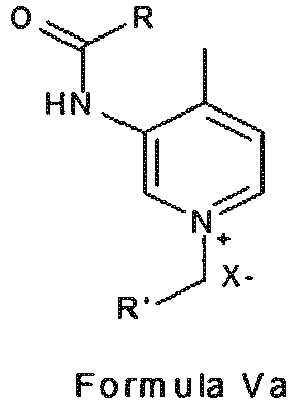
- Quarternization of Nitrogen of Pyridine system having Formula IVa, using benzyl or substituted benzyl halide includes Benzyl chloride, Benzyl bromides etc. more preferably benzyl chloride.
- Quarternization of Nitrogen of Pyridine system having Formula IVa, to get Formula Va is carried out using Benzyl halide or substituted benzyl halide in presence of an organic or aqueous-organic solvent which includes Toluene, Xylenes, alcoholic solvents, ethereal solvents more preferably Toluene and Xylenes most preferably Toluene.
- an organic or aqueous-organic solvent which includes Toluene, Xylenes, alcoholic solvents, ethereal solvents more preferably Toluene and Xylenes most preferably Toluene.
- Polar, protic, aprotic solvents are to be interpreted as per prevailing definitions.
- Partial reduction of the quarternized pyridine system of Formula Va produces 1,2,5,6-Tetrahydropyridine system of Formula Via, in presence of a reducing agent such as borohydride agent including Sodium borohydride, Sodium cyanoborohydride, Sodium triacetoxyborohydride more preferably Sodium borohydride and the organic solvent selected from the group consisting of alcoholic solvents such as Methanol, Ethanol ethereal solvents such as Di-isopropyl ether (DIPE), Methyl tertiary butyl ether (MTB) or Toluene, Xylenes or aqueous mixture thereof more preferably Methanol, water most preferably water.
- DIPE Di-isopropyl ether
- MTB Methyl tertiary butyl ether
- Toluene Xylenes or aqueous mixture thereof more preferably Methanol, water most preferably water.
- the reduction using the borohydride reagent
- 1,2,5,6-Tetrahydropyridine system of Formula VIa can be obtained from Pyridine system having Formula IVa optionally isolating quarternized Pyridine system having Formula Va.
- a compound of the formula (VIa) and salts thereof can be obtained from Pyridine system having Formula IVa optionally isolating quarternized Pyridine system having Formula Va.
- Hydrolysis of 1,2,5,6-Tetrahydropyridine system of Formula VIa in presence of an acid or mixture of acids which includes Hydrochloric acid, Sulfuric acid, Phosphoric acid, Trifluoroacetic acid, Trichloroacetic acid, acetic acid or aqueous solutions thereof or mixture(s) thereof more preferably Hydrochloric acid and Acetic acid most preferably mixture of Hydrochloric acid and Acetic acid.
- Reductive amination of Formula VIIa can be carried out by using Methylamine in presence of any Lewis acids such as AlCl 3 , InCl 3 , Titanium(IV) tetraisopropoxide, FeCl 3 etc. more preferably Titanium(IV) tetraisopropoxide.
- Lewis acids such as AlCl 3 , InCl 3 , Titanium(IV) tetraisopropoxide, FeCl 3 etc. more preferably Titanium(IV) tetraisopropoxide.
- Reductive amination of Formula VIIa can be carried out by using Methylamine in presence of any Lewis acids in an organic solvent such as alcoholic solvent like Methanol, Ethanol or ethereal solvents like Di-isopropyl ether (DIPE), Methyl tertiary butyl ether (MTB) or Toluene, Xylenes or aqueous mixture(s) thereof more preferably Methanol or water most preferably water.
- DIPE Di-isopropyl ether
- MTB Methyl tertiary butyl ether
- Toluene Xylenes or aqueous mixture(s) thereof more preferably Methanol or water most preferably water.
- Reductive amination of Formula VIIa using Methylamine in presence of any Lewis acids in an organic solvent followed by reduction using any reducing agent such as alkali metal borohydride derivatives which includes Sodium borohydride, Sodium cyanoborohydride, Sodium triacetoxyborohydride more preferably Sodium borohydride to produce compound of Formula VIlla.
- Reductive amination of Formula VIIa using Methylamine in presence of any Lewis acids in an organic solvent followed by reduction using any reducing agent or any alkali metal borohydride derivatives to get compound of Formula VIIIa was carried out at temperature between 0°C to 10°C more preferably between 0°C to 5°C.
- Resolution of compound VIIIa in presence of any resoluting agent in an organic solvent includes alcoholic solvent such as Methanol, Ethanol, ethereal solvents, Toluene, Xylenes or aqueous mixture(s) thereof, more preferably methanol to get compound of Formula IIa.
- Ethereal solvents include Di-isopropyl ether (DIPE), Methyl tertiary butyl ether (MTB) but not limited only to these two solvents.
- DIPE Di-isopropyl ether
- MTB Methyl tertiary butyl ether
- Toluene (1L) and N-(4-methylpyridin-3-yl)-acetamide (200 gm) were charged in a 2L 4-neck round bottom flask with an overhead stirrer and stirred for 15 minutes at RT.
- Benzyl chloride (202 gm) or Benzyl bromide (273 gm) was added to the insoluble reaction mass and stirred for 15 minutes at RT.
- the temperature of the reaction mass was raised to 80°C to 85°C and stirred until the completion of the reaction (monitored by TLC, HPLC).
- the reaction mass was then cooled to 25°C to 30°C and decanted out the toluene layer.
- Toluene (1L) was charged to the reaction mixture and stirred for 15 minutes at RT.
- Benzyl chloride (202 gm) or Benzyl bromide (273 gm) was added into the insoluble reaction mass and stirred for 15 minutes at that temperature
- the temperature was then raised to 80°C to 85°C and stirred the reaction mixture at that temperature for 8-10 h as required to complete the reaction (monitored by TLC, HPLC).
- the reaction mass was cooled to 25°C to 30°C.
- Water (1L) was then charged to the reaction mixture and stirred for 15 minutes. Separated out aqueous layer and cooled it to 0°C to 5°C.
- Acetic acid 100 mL
- 1-Benzyl-4-methyl-1,2,5,6-tetrahydropyridine-3-yl-acetylamine 100 gm
- Temperature of the reaction mixture was raised slowly to 85°C to 90°C and stirred for 3-4 h to complete the reaction (monitored by TLC, HPLC).
- the reaction mixture was then cooled to 25°C to 30°C and extracted with toluene (500 mL) to get the pure product. Yield: 95%; HPLC: 90%.
Landscapes
- Chemical & Material Sciences (AREA)
- Organic Chemistry (AREA)
- Hydrogenated Pyridines (AREA)
- Plural Heterocyclic Compounds (AREA)
- Pyridine Compounds (AREA)
- Pharmaceuticals Containing Other Organic And Inorganic Compounds (AREA)
- Low-Molecular Organic Synthesis Reactions Using Catalysts (AREA)
Description
- The present invention provides an efficient and improved process for the preparation of (3R,4R)-(1-benzyl-4-methylpiperidin-3-yl)-methylamine; a key starting material for the synthesis of 3-{(3R,4R)-4-methyl-3-[methyl(7H-pyrrolo[2,3-d]pyrimidin-4-yl)amino]piperidin-1-yl}-3-oxo-propanenitrile.
- 3-{(3R,4R)-4-methyl-3-[methyl(7H-pyrrolo[2,3-d]pyrimidin-4-yl)amino]piperidin-1-yl}-3-oxo-propanenitrile,2-hydroxypropane-1,2,3-tricarboxylate described as FORMULA I below and as disclosed in
WO 02/096909 US7301023 . US FDA approved it for rheumatoid arthritis.
- The key step for the preparation of 3-{(3R,4R)-4-methyl-3-[methyl(7H-pyrrolo[2,3-d]pyrimidin-4-yl)amino]piperidin-1-yl}-3-oxo-propanenitrile as depicted in (Scheme-1)
WO 02/096909 - (i) resolution of racemic (1-Benzyl-4-methylpiperidin-3-yl)-methylamine to (3R,4R)-(1-Benzyl-4-methylpiperidin-3-yl)-methylamine using Di-p-toluoyl-L-tartarate;
- (ii) condensation of 4-Chlropyrrolo[2,3-d]pyrimidine with (3R,4R)-(1-Benzyl-4-methylpiperidin-3-yl)-methylamine to get (3R,4R)-(1-benzyl-4-methylpiperidin-3-yl)methyl-(7H-pyrrolo[2,3-d]pyrimidin-4-yl)-amine; and
- (iii) debenzylation of (3R,4R)-(1-Benzyl-4-methylpiperidin-3-yl)methyl-(7H-pyrrolo[2,3-d]pyrimidin-4-yl)-amine followed by condensation with cyano acetic acid derivative to get 3-{(3R,4R)-4-methyl-3-[methyl(7H-pyrrolo[2,3-d]pyrimidin-4-yl)amino]piperidin-1-yl}-3-oxo-propanenitrile (FORMULA I), (Scheme-1).
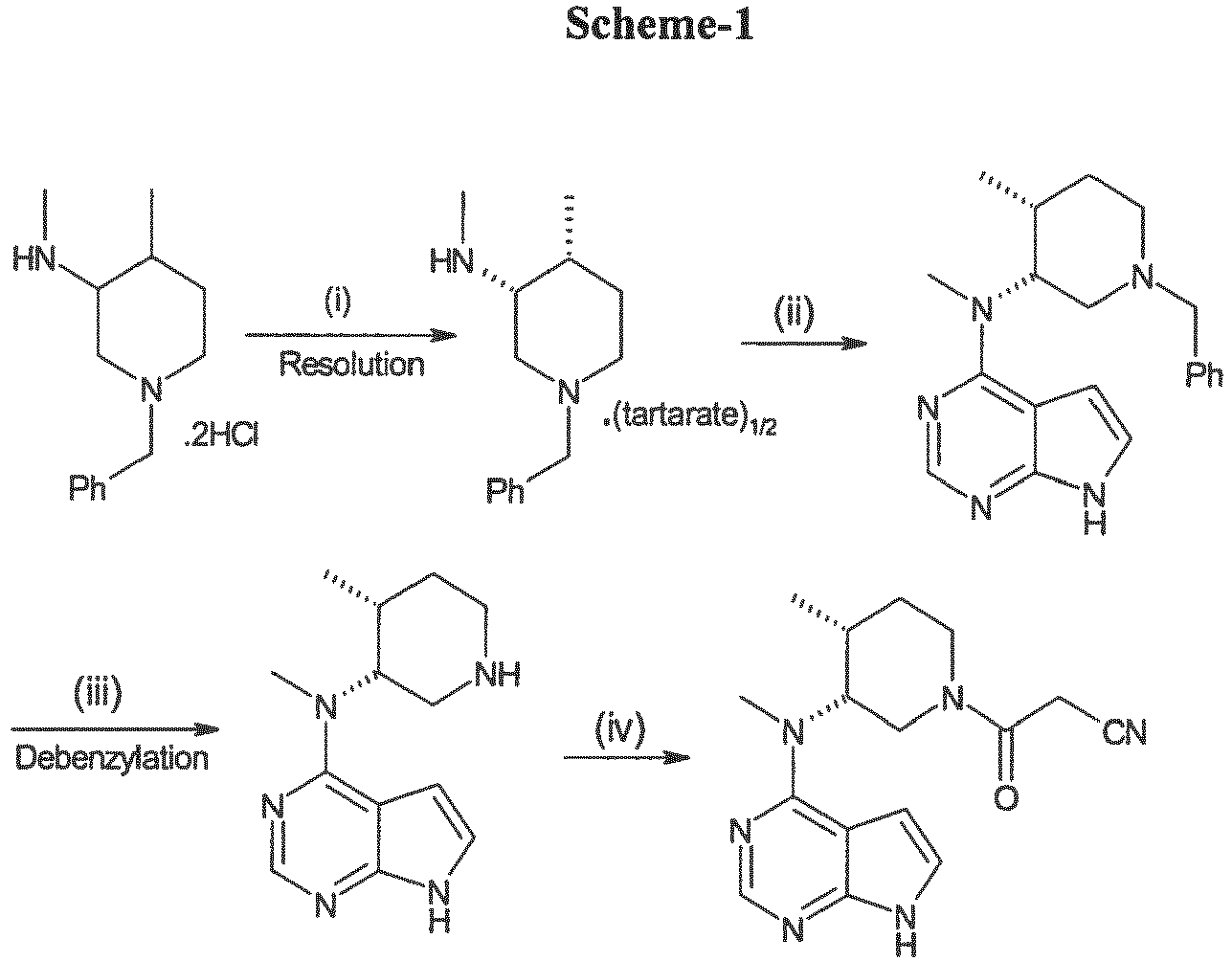
- The most important part for the preparation of FORMULA I is the synthesis of (3R,4R)-(1-Benzyl-4-methylpiperidin-3-yl)-methylamine as it is very tedious synthesis and also requires very expensive reagent. There are several processes reported in literature for the synthesis and resolution of racemic (1-Benzyl-4-methylpiperidin-3-yl)-methylamine to (3R,4R)-(1-Benzyl-4-methylpiperidin-3-yl)-methylamine.
-
WO 2007/012953 discloses preparation of 1-Benzyl-3-methoxycarbonylamino-4-methyl-pyridinium bromide and it's asymmetric reduction using mixture of Ruthenium and Iridium based chiral catalysts under hydrogenation condition to provide (3R,4R)-(1-Benzyl-4-methylpiperidin-3-yl)-methylamine with 84% cis isomer, having 68% ee. - The patent further discloses the preparation of same intermediate by applying partial reduction followed by asymmetric reduction approach to obtain highly enriched Piperidine derivative as depicted in Scheme-2.

- Both the approaches make use of very high chiral catalyst loading and render their commercial use expensive and difficult. Further, the process requires very high pressure which makes it risky, costlier and unfavorable for scale up.
-
WO 2010/123919 provides an additional process for preparation of (1-Benzyl-4-methylpiperidin-3-yl)-methylamine, which includes: - (i) protection of amino group of 3-Amino-4-methyl pyridine with Dimethyl carbonate in presence of Potassium tert-butoxide in Tetrahydrofuran;
- (ii) quaternization of Nitrogen of Pyridine system using Benzyl bromide in Toluene;
- (iii) partial reduction of the quaternized Pyridine system to produce 1,2,5,6-Tetrahydropyridine in presence of Sodium borohydride in Methanol;
- (iv) reduction with Platinum oxide in Methanol provides Piperidine derivative. Followed by the purification by column chromatography; and
- (v) further reaction with Lithium aluminium hydride and purification by column chromatography to get (1-Benzyl-4-methyl-piperidin-3-yl)-methylamine.
- The process has several drawbacks. Overall process yield is very poor i.e. approximately 40%. The process uses column chromatography at two stages. Lithium aluminum hydride, a known pyrophoric reagent, account for the safety risk during its manufacturing. Lastly Platinum oxide is very explosive in presence of hydrogen. It is very costly reagent which discourages its use on plant scale. Overall the process is costlier, not so safe to work on commercial scale and demands stringent skill of art.
-
WO 2010/123919 further reveals an additional procedure for the preparation of (1-Benzyl-4-methylpiperidin-3-yl)-methylamine and the synthetic procedure is summarized in Scheme-3.
- Process involves debenzylation and quaternization of ethyl 1-Benzyl-3-oxopiperidine-4-carboxylate followed by protection of the resulted Ethyl 3-oxopiperidine-4-carboxylate derivative using di-tert-butyl dicarbonate. Protected Piperidine derivative was methylated by abstracting the Methylenic proton using Sodium hydride and further reaction with Iodomethane. In the next stage deprotection of N-tert-butoxycarbonyl group was carried out in acidic media, and the resulting 4-Methylpiperidin-3-one was benzylated followed by reductive amination with Methylamine and Sodium triacetoxyborohydride provide the desired product (1-Benzyl-4-methylpiperidin-3-yl)-methylamine.
- The overall conversion involves five stages from quite a complex starting material. The process involves protection and deprotection in different stages. Use of costly, non safe reagents such as Sodium hydride and lacrimatic Benzyl bromide and Sodium triacetoxyborohydride limit its commercial scale production. The process has major draw back with respect to the use of column chromatography at three stages. Moreover disclosure of process is silent about the purity of intermediates and of the target molecule produced. The overall yield mentioned for the process is also very low i.e. 13.6 molar percent.
-
US6627754 provides a similar reductive amination route as discussed inWO 2010/123919 for the synthesis of (1-Benzyl-4-methyl piperidin-3-yl)-methylamine from 1-Benzyl-4-methylpiperidin-3-one in a sealed tube using Sodium triacetoxyborohydride as a reducing agent. Sodium triacetoxyborohydride is extremely moisture sensitive pyrophoric reagent. Sealed tube reaction is difficult to execute on large scale. - The processes taught by prior art have several drawbacks namely expensive, not suitable for scale up at plant level, energy intensive, difficult, giving lower yields, forcing use of corrosive acids, longer duration of corrosive reactions and less user friendly. Considering the drawbacks of prior art and very complex methodologies applied, for the preparation of the (1-Benzyl-4-methyl piperidin-3-yl)-methylamine, there is a urgent and pressing need for simple, energy economical, financially cheaper plant friendly process, environment friendly process for the preparation of (3R,4R)-(1-Benzyl-4-methylpiperidin-3-yl)-methylamine to synthesize FORMULA I that does not use hygroscopic and pyrophoric chemicals and yet provides better yields.
- The main object of the present invention is to provide an improved and efficient process for the preparation of (1-Benzyl-4-methylpiperidin-3-yl)-methylamine which has better over all yield.
- Another object of the invention is to provide a cost effective, environment friendly and energy economic process to prepare (3R,4R)-(1-Benzyl-4-methylpiperidin-3-yl)-methylamine
- Yet another object of the invention is to provide a process for the synthesis of (3R,4R)-(1-Benzyl-4-methylpiperidin-3-yl)-methylamine to prepare 3-{(3R,4R)-4-methyl-3-[methyl(7H-pyrrolo[2,3-d]pyrimidin-4-yl)amino]piperidin-1-yl}-3-oxo-propanenitrile,2-hydroxypropane-1,2,3-tricarboxylate (FORMULA I).
- According to the first aspect of the present invention an improved and efficient process for the preparation of (3R,4R)-(1-Benzyl-4-methylpiperidin-3-yl)-methylamine, of the Formula II is provided .
- Another aspect of the present invention is to provide a process for the preparation of a compound of Formula IIa, as depicted in Scheme-4, comprising:
- (i) N-acylation of 3-Amino-4-methyl pyridine (Formula III) with alkyl, aryl or substituted aryl acid anhydride or acid chloride to get Formula IVa;
- (ii) quaternization of Nitrogen of Pyridine system having Formula IVa, using Benzyl or substituted Benzyl halide in an organic solvent or aqueous solvent or mixture(s) thereof to get Formula Va;
- (iii) partial reduction of the optionally isolated quarternized pyridine system having Formula Va to produce 1,2,5,6-Tetrahydropyridine system of Formula VIa in the presence of a reducing agent or any Borohydride agent in an organic solvent or aqueous solvent or mixture(s) thereof, at an ambient temperature;
- (iv) hydrolysis of 1,2,5,6-Tetrahydropyridine system of Formula VIa in presence of an acid or mixture of acids to get Formula VIIa, at an ambient temperature;
- (v) reductive amination of Formula VIIa using Methylamine in presence of any Lewis acids in an organic solvent or aqueous solvent or mixture(s) thereof followed by reduction using any reducing agent or any alkali metal Borohydride derivatives produce compound of Formula VIIIa, at an ambient temperature; and
- (vi) further resolution of compound VIIIa in presence of any resoluting agent in an organic solvent or aqueous solvent or mixture(s) thereof produce compound of Formula IIa.


- Prior art
WO 2010/123919 uses reactants of different class of compounds. The two routes of synthesis (ROS) are dissimilar.WO 2010/123919 does not envisage use of anhydride in the first step. The intermediate formed in the reaction of the present invention has a Methyl in the side chain which is not the case with prior art. Initial use of different class of reactants in the present invention produces different classes of intermediates. Hydrolysis and reductive amination steps and the intermediates formed are unique to the ROS of the present invention. These are absent in the prior art. Lithium Aluminium Hydride is essential inWO 2010/123919 but is absent in present invention. Inventive step of the present invention also resides in surprisingly reduced durations of various reaction steps as compared to those inWO 2010/123919 . Preparation of 1,2,5,6-Tetrahydropyridine system of Formula VIa can be completed 30% of time required byWO 2010/123919 . - Yet another aspect of the present invention is to provide a process for the preparation of (3R,4R)-(1-benzyl-4-methylpiperidin-3-yl)-methylamine of Formula (II), as depicted in Scheme 5, comprising:
- (i) N-acylation of 3-amino-4-methyl pyridine with Acetyl chloride or Acetic anhydride to get Formula IV;
- (ii) quaternization of Nitrogen of pyridine system having Formula IV, using Benzyl chloride in presence of toluene to get Formula V;
- (iii) partial reduction of the optionally isolated quaternized Pyridine system of Formula V to produce 1,2,5,6-Tetrahydropyridine system of Formula VI in presence of Sodium borohydride in Methanol or water to get Formula VI, at an ambient temperature;
- (iv) hydrolysis of 1,2,5,6-Tetrahydropyridine system of Formula V in presence of mixture of Hydrochloric acid and Acetic acid to get Formula VII, at an ambient temperature;
- (v) reductive amination of Formula VII in presence of Titanium(IV) tetraisopropoxide in Methylamine followed by reduction with Sodium borohydride to get 1-Benzyl-4-methylpiperidin-3-yl)-methylamine of Formula VIII, at an ambient temperature; and
- (vi) further resolution of compound of Formula VIII in presence of a resoluting agent such as Dibenzoyl-L-tartaric acid or Ditoluoyl-L-tartaric acid in the mixture of methanol and/or water to produce (3R,4R)-(1-Benzyl-4-methylpiperidin-3-yl)-methylamine of the Formula II.


- Reagent : (i) Acetyl chloride, acetic acid, room temperature; (ii) Benzylchloride, toluene, 110°C; (iii) Sodium borohydride, methanol, 0°C to 5°C or sodium borohydride, water, 0°C to 5°C; (iv) HCl, AcOH, 80°C to 85°C; (v) Titanium(IV) tetraisopropoxide, methanolic methylamine, NaBH4, MeOH, 0°C to 5°C; (vi) Ditoluoyl-L-tartaric acid, MeOH-water (1:1)
- The present invention relates to an improved and efficient process for the preparation of compound of formula (IIa) comprising:
- (i) N-acylation of 3-amino-4-methyl pyridine (Formula III) with alkyl, aryl or substituted aryl acid anhydride or acid chloride to get Formula IVa;
- (ii) quarternization of Nitrogen of Pyridine system having Formula IVa, using Benzyl or substituted Benzyl halide in an organic solvent to get Formula Va;
- (iii) partial reduction of the quarternized pyridine system having Formula Va to produce 1,2,5,6-Tetrahydropyridine system of Formula VIa in presence of a reducing agent or any Borohydride agent in an organic solvent, at an ambient temperature;
- (iv) hydrolysis of 1,2,5,6-Tetrahydropyridine system of Formula VIa in presence of acid or mixture of acids to get Formula VIIa, at an ambient temperature;
- (v) reductive amination of Formula VIIa using Methylamine in presence of any Lewis acids in an organic solvent or aqueous solvent or mixture(s) thereof followed by reduction using any reducing agent or any alkali metal borohydride derivatives produce compound of Formula VIIIa, at an ambient temperature; and
- (vi) further resolution of compound VIIIa in presence of any resoluting agent in an organic solvent or aqueous solvent or mixture(s) thereof produce compound of Formula IIa
- C1 acid anhydride is an anhydride of Acetic acid i.e. Acetic anhydride. C2 acid anhydride is an anhydride of Propanoic acid. In the present invention one may use anhydrides of C1-10 acids. C1-10 Acid chloride is to be construed as Acid chloride of Formic acid to Decanoic acid, aryl acid chlorides or substituted acid chlorides having upto 10 carbon atoms. C1-C5 alcohols are to be construed as Methnol, Ethanol, Propanol, Butanol and Pentanol. Better overall yield is to be interpreted as overall yield more than 50% for the synthesis of 1-Benzyl-4-methylpiperidine-3-yl)-methylamine an intermediate before resolution.
- Terms quarternization and quaternization are used interchangeably and have the same meaning with respect to attachments to tertiary Nitrogen. Terms improved and efficient are to be construed in view of better yields, less energy intensive, reactions of shorter durations besides reduced costs of inputs and simplicity of the procedures involved, better scalability to plant level. Pyridine system means pyridine ring portion in the molecular structure with or without substituents. Ambient temperature is to be interpreted as temperature between 0°C to 30°C. RT is room temperature. Terms Methylene chloride and Methylene dichloride i.e. MDC are used interchangeably. The inventive step of the present invention resides in (Scheme-6):
- (i) N-acylation of 3-Amino-4-methyl pyridine (Formula III) with alkyl, aryl or substituted aryl acid anhydride or acid chloride to get Formula IVa. Prior art is devoid of acetylation reaction at this stage. Prior art teaches use of Dimethyl carbonate and due to difference in reactants of this initial stage, structurally different intermediates are formed belonging to different classes of chemical compounds exhibiting different properties;
- (ii) quarternization of Nitrogen of Pyridine system having Formula IVa, using Benzyl or substituted Benzyl halide in an organic solvent to get Formula Va;
- (iii) partial reduction of the optionally isolating quarternized Pyridine system having Formula Va to produce 1,2,5,6-Tetrahydropyridine system of Formula VIa in presence of a reducing agent or any borohydride agent in an organic solvent at an ambient temperature;
- (iv) hydrolysis of 1,2,5,6-Tetrahydropyridine system of Formula VIa in presence of acid or mixture of acids to get Formula VIIa at an ambient temperature; and
- (v) reductive amination of Formula VIIa using Methylamine in presence of any Lewis acids in an organic solvent or aqueous solvent or mixture(s) thereof followed by reduction using any reducing agent or any alkali metal borohydride derivatives produce compound of Formula VIIIa at an ambient temperature.


- N-acylation of 3-Amino-4-methyl pyridine (Formula III) with alkyl, aryl or substituted aryl acid anhydride includes C1-10 anhydride, acetic anhydride, and more preferably acetic anhydride.
- N-acylation of 3-Amino-4-methyl pyridine (Formula III) with alkyl, aryl or substituted aryl acid chloride includes C1-10 acid chloride, acetyl chlorides, benzoyl chloride etc. more preferably acetyl chloride. N acylation leads to formation of the compound of the formula (IVa) and salts thereof,

- Quarternization of Nitrogen of Pyridine system having Formula IVa, using benzyl or substituted benzyl halide includes Benzyl chloride, Benzyl bromides etc. more preferably benzyl chloride.
- Quarternization of Nitrogen of Pyridine system having Formula IVa, to get Formula Va is carried out using Benzyl halide or substituted benzyl halide in presence of an organic or aqueous-organic solvent which includes Toluene, Xylenes, alcoholic solvents, ethereal solvents more preferably Toluene and Xylenes most preferably Toluene. Polar, protic, aprotic solvents are to be interpreted as per prevailing definitions.
- Quarternization of Nitrogen of Pyridine system having Formula IVa, using benzyl or substituted benzyl halide in presence of an organic solvent to get Formula Va was carried out at temperature between 40°C to 110°C more preferably between 75°C to 85°C. A compound of the formula (Va)

- Partial reduction of the quarternized pyridine system of Formula Va produces 1,2,5,6-Tetrahydropyridine system of Formula Via, in presence of a reducing agent such as borohydride agent including Sodium borohydride, Sodium cyanoborohydride, Sodium triacetoxyborohydride more preferably Sodium borohydride and the organic solvent selected from the group consisting of alcoholic solvents such as Methanol, Ethanol ethereal solvents such as Di-isopropyl ether (DIPE), Methyl tertiary butyl ether (MTB) or Toluene, Xylenes or aqueous mixture thereof more preferably Methanol, water most preferably water. The reduction using the borohydride reagent was carried out between 0°C to 10°C more preferably between 0°C to 5°C.
- 1,2,5,6-Tetrahydropyridine system of Formula VIa can be obtained from Pyridine system having Formula IVa optionally isolating quarternized Pyridine system having Formula Va. A compound of the formula (VIa) and salts thereof

- wherein R represents alkyl, aryl or substituted aryl more preferably methyl;
- R' represents aryl or substituted aryl group more preferably phenyl.
- Hydrolysis of 1,2,5,6-Tetrahydropyridine system of Formula VIa in presence of an acid or mixture of acids which includes Hydrochloric acid, Sulfuric acid, Phosphoric acid, Trifluoroacetic acid, Trichloroacetic acid, acetic acid or aqueous solutions thereof or mixture(s) thereof more preferably Hydrochloric acid and Acetic acid most preferably mixture of Hydrochloric acid and Acetic acid.
- Hydrolysis of 1,2,5,6-Tetrahydropyridine system of Formula VIa in presence of an acid or mixture of acids was carried out at temperature between 40°C to 110°C more preferably between 75°C to 90°C most preferably between 85°C to 90°C.
- Reductive amination of Formula VIIa can be carried out by using Methylamine in presence of any Lewis acids such as AlCl3, InCl3, Titanium(IV) tetraisopropoxide, FeCl3 etc. more preferably Titanium(IV) tetraisopropoxide. Reductive amination of Formula VIIa can be carried out by using Methylamine in presence of any Lewis acids in an organic solvent such as alcoholic solvent like Methanol, Ethanol or ethereal solvents like Di-isopropyl ether (DIPE), Methyl tertiary butyl ether (MTB) or Toluene, Xylenes or aqueous mixture(s) thereof more preferably Methanol or water most preferably water.
- Reductive amination of Formula VIIa using Methylamine in presence of any Lewis acids in an organic solvent followed by reduction using any reducing agent such as alkali metal borohydride derivatives which includes Sodium borohydride, Sodium cyanoborohydride, Sodium triacetoxyborohydride more preferably Sodium borohydride to produce compound of Formula VIlla. Reductive amination of Formula VIIa using Methylamine in presence of any Lewis acids in an organic solvent followed by reduction using any reducing agent or any alkali metal borohydride derivatives to get compound of Formula VIIIa was carried out at temperature between 0°C to 10°C more preferably between 0°C to 5°C.
- Resolution of Formula VIIIa in presence of resoluting agent which includes Tartaric acid, Dibenzoyl tartaric acid (DBTA), Ditoluoyl tartaric acid (DTTA), Mandalic acid, Camphor sulphonic acid etc. more preferably Dibenzoyl tartaric acid (DBTA), Ditoluoyl tartaric acid (DTTA) most preferably Ditoluoyl tartaric acid (DTTA) to get compound of Formula IIa
- Resolution of compound VIIIa in presence of any resoluting agent in an organic solvent includes alcoholic solvent such as Methanol, Ethanol, ethereal solvents, Toluene, Xylenes or aqueous mixture(s) thereof, more preferably methanol to get compound of Formula IIa. Ethereal solvents include Di-isopropyl ether (DIPE), Methyl tertiary butyl ether (MTB) but not limited only to these two solvents. The invention is further illustrated by way of the following examples.
- 3-Amino-4-methyl pyridine (200 gm) and Acetic acid (600 mL) were charged in a 2L 4-neck round bottom flask with an overhead stirrer and stirred for 15 minutes at RT. Acetic anhydride (284 gm/263 mL) or Acetyl chloride (174 gm) was added drop wise within 1-2 h at that temperature. The reaction mass was then stirred at RT for 8-10 h. After the completion of the reaction as monitored by TLC, HPLC; acetic acid was distilled out under vacuum. Methanol (1L) was then added to the reaction mixture and the pH of the reaction mixture was maintained around 10-12 by liq. Ammonia. Methanol was distilled out completely under vacuum at 50°C to 55°C. The product was then extracted with MDC (1L) to get the pure product. Yield: 98% w/w; HPLC Purity: 98%.
- 3-Amino-4-methyl pyridine (200 gm) and Acetic anhydride (284 gm/263 mL) in a 2L 4-neck round bottom flask with an overhead stirrer were stirred for 15 minutes at RT. The stirring was continued at RT for 1-3 h. After the completion of the reaction as monitored by TLC, Methanol (1L) was added to the reaction mixture and the pH of the reaction mixture was maintained around 10-12 by liq. Ammonia. Methanol was distilled out completely under vacuum at 50°C to 55°C. Extraction with MDC (1L) gave pure product. Yield: 98% w/w; HPLC Purity: 98%.
- 3-Amino-4-methyl pyridine (200 gm), Acetic anhydride (284 gm/263 mL) or Acetyl chloride (174 gm) and MDC (1L) in a 2L 4-neck round bottom flask with an overhead stirrer were stirred for 15 minuets at RT. The reaction mass was stirred at RT for 8-10 h. Completion of the reaction was monitored by TLC, HPLC. Extraction with MDC (1L) gave pure product. Yield: 98% w/w; HPLC Purity: 98%.
- 3-Amino-4-methyl pyridine (200gm), Acetic anhydride (284 gm/263 mL) or Acetyl chloride (174 gm) and MDC (1L) in a 2L 4-neck round bottom flask with an overhead stirrer were stirred for 15 minutes at RT. The reaction mass then stirred at RT for 8-10 h. Completion of the reaction as monitored by TLC. pH of the reaction mixture was maintained around 10-12 by liq. Ammonia. Extraction with MDC (1L) gave pure product. Yield: 98% w/w; HPLC Purity: 98%.
- Toluene (1L) and N-(4-methylpyridin-3-yl)-acetamide (200 gm) were charged in a 2L 4-neck round bottom flask with an overhead stirrer and stirred for 15 minutes at RT. Benzyl chloride (202 gm) or Benzyl bromide (273 gm) was added to the insoluble reaction mass and stirred for 15 minutes at RT. The temperature of the reaction mass was raised to 80°C to 85°C and stirred until the completion of the reaction (monitored by TLC, HPLC). The reaction mass was then cooled to 25°C to 30°C and decanted out the toluene layer. Methanol (1L) was charged to the reaction mixture, stirred to get clear solution and was cooled to 0°C to 5°C. Sodium borohydride solution (60 gm in 0.1 N Sodium hydroxide) was added drop wise at 0°C to 5°C. The reaction mixture was then stirred for 10-12 h as required to complete the reaction (monitored by TLC, HPLC). Water (600 mL) was added to the reaction mass and stirred to get clear solution. Distilled out Methanol under vacuum. Solid precipitation observed was filtered by Buckner funnel to get the pure product. (Yield = 84-87%; HPLC: 90%).
- Toluene (1L), N-acetyl-3-amino-4-methyl pyridine (200 gm) were charged in a 2L 4-neck round bottom flask with an overhead stirrer and stirred for 15 minutes at RT. Benzyl chloride (202 gm) or Benzyl bromide (273 gm) was added to the insoluble reaction mass and stirred for 15 minutes at that temperature. The temperature of the reaction mass was then raised to 80°C to 85°C and stirred the reaction mixture at that temperature for 8-10 h as required to complete the reaction (monitored by TLC, HPLC). The reaction mass was cooled to 25°C to 30°C. Water (1L) was charged to the reaction mixture and stirred for 15 minutes. Separated out aqueous layer and cooled it to 0°C to 5°C. Sodium borohydride solution (60 gm in 0.1 N Sodium hydroxide) was then added into the aqueous layer drop wise at 0°C to 5°C. The reaction mixture was then stirred for 10-12 h to complete the reaction (monitored by TLC, HPLC). After the completion of the reaction solid precipitation observed was filtered by Buckner funnel to get the pure product. (Yield = 84-87%; HPLC: 90%)
- Toluene (1L), N-(4-methylpyridin-3-yl)-acetamide (200 gm) were charged in a 2L 4-neck round bottom flask with an overhead stirrer and stirred for 15 minutes at RT. Benzyl chloride (202 gm) or Benzyl bromide (273 gm) was added into the insoluble reaction mass and stirred for 15 minutes at that temperature. The temperature of the reaction mass was then raised to 80°C to 85°C and stirred for 8-10 h to complete the reaction (monitored by TLC, HPLC). The reaction mass was then cooled to 25°C to 30°C and filtered off the Toluene layer to get pure benzyl quarternized salt of N-(4-methylpyridin-3-yl)-acetamide (Yield = 98%; HPLC: 95 %)
- Methanol (1L), benzyl quarternized salt of N-(4-methylpyridin-3-yl)-acetamide (200 gm) were charged in a 2L 4-neck round bottom flask with an overhead stirrer and stirred for 15 minutes at RT. Cooled the reaction mixture to 0°C to 5°C and added Sodium borohydride solution (60 gm in 0.1 N Sodium hydroxide) drop wise at that temperature. Stirred for 10-12 h to complete the reaction (monitored by TLC, HPLC). After the completion of the reaction, water (600 mL) was added and stirred to get clear solution. Distilled out methanol under vacuum. Solid precipitation observed was filtered to get the pure product. (Yield = 75%; HPLC: 98%).
- 3-Amino-4-methyl pyridine (200 gm) and Acetic anhydride (284 gm/263 mL) were charged in a 2L 4-neck round bottom flask with an overhead stirrer and stirred at 25°C to 30°C for 1-3 h. After the completion of the reaction as monitored by TLC, methanol (1L) was added to the reaction mixture and the pH maintained around 10-12 by liq. Ammonia. Methanol was distilled out completely under vacuum at 50°C to 55°C. The product was then extracted with MDC (1L) and distilled out the organic layer to get crude N-(4-methylpyridin-3-yl)-acetamide.
- Toluene (1L) was charged to the reaction mixture and stirred for 15 minutes at RT. Benzyl chloride (202 gm) or Benzyl bromide (273 gm) was added into the insoluble reaction mass and stirred for 15 minutes at that temperature The temperature was then raised to 80°C to 85°C and stirred the reaction mixture at that temperature for 8-10 h as required to complete the reaction (monitored by TLC, HPLC). The reaction mass was cooled to 25°C to 30°C. Water (1L) was then charged to the reaction mixture and stirred for 15 minutes. Separated out aqueous layer and cooled it to 0°C to 5°C. Sodium borohydride solution (60 gm in 0.1N Sodium hydroxide) was added into the aqueous layer drop wise at 0°C to 5°C. The reaction mixture was then stirred for 10-12 h as required to complete the reaction (monitored by TLC, HPLC). After the completion of the reaction solid precipitation observed was filtered by Buckner funnel to get the pure product. (Yield = 84-87%; HPLC: 90%).
- Acetic acid (50 mL), Conc. HCl 35% (100 mL) were charged in a 2L 4-neck round bottom flask with an overhead stirrer and stirred for 10 minutes at RT. 1-Benzyl-4-methyl-1,2,5,6-tetrahydropyridin-3-yl-acetylamine (100 gm) was then added into the reaction mass at that temperature. Temperature of the reaction mixture was raised slowly to 85°C to 90°C and stirred for 3-4 h at that temperature as required to complete the reaction (monitored by TLC, HPLC). The reaction mixture was cooled to 25°C to 30°C and extracted with Toluene (500 mL) to get the pure product. Yield: 95%; HPLC: 95%
- Conc. HCl 35% (150 mL) and 1-Benzyl-4-methyl-1,2,5,6-tetrahydropyridin-3-yl-acetylamine (100 gm) were charged in a 2L 4-neck round bottom flask with an over-head stirrer and stirred for 10 minutes at RT. Temperature of the reaction mixture was raised slowly to 85°C to 90°C and stirred for 3-4 h to complete the reaction (monitored by TLC, HPLC). The reaction mixture was then cooled to 25°C to 30°C and extracted with Toluene (500 mL) to get the pure product. Yield: 95%; HPLC: 90%.
- Acetic acid (100 mL) and 1-Benzyl-4-methyl-1,2,5,6-tetrahydropyridine-3-yl-acetylamine (100 gm) were charged in a 2L 4-neck round bottom flask with an overhead stirrer and stirred for 15 minutes at RT. Temperature of the reaction mixture was raised slowly to 85°C to 90°C and stirred for 3-4 h to complete the reaction (monitored by TLC, HPLC). The reaction mixture was then cooled to 25°C to 30°C and extracted with toluene (500 mL) to get the pure product. Yield: 95%; HPLC: 90%.
- Methanol (500 mL) and N-Benzyl-4-methylpiperid-3-one (100 gm) were charged in a 2L 4-neck round bottom flask with an overhead stirrer and stirred for 15 minutes at RT. The reaction mass was cooled to 0°C to 5°C and Titanium(IV) tetraisopropoxide solution (175 mL) was added drop wise within 30-45 minutes. The reaction mass was stirred at 0°C to 5°C for 30 minutes and Methanolic methylamine solution (30%) (100 mL) was added drop wise at 0°C to 5°C within 30-45 minutes. The reaction mass was stirred for 2-3 h at 0°C to 5°C. Sodium borohydride (22 gm) was then added to the reaction mass within 30-45 minutes at 0°C to 5°C and stirred for 2-3 h. After the completion of the reaction as monitored by TLC, HPLC; water (500 mL) was added to the reaction mixture and stirred for 30-45 minutes at RT. The product was extracted using MDC (500 mL) to get the pure product. Yield: 90%; HPLC: 90%.
- Methanol (500 mL) and N-Benzyl-4-methylpiperid-3-one (100 gm) were charged in a 2L 4-neck round bottom flask with an overhead stirrer. Stirred for 15 minutes at RT. The reaction mass was cooled to 0°C to 5°C and Titanium(IV) tetraisopropoxide solution (175 mL) was added drop wise within 30-45 minutes. The reaction mass was stirred at 0°C to 5°C for 30 minutes and Methylamine hydrochloride (66 gm) was added at 0°C to 5°C within 30-45 minutes. The reaction mass was stirred for 2-3 h at 0°C to 5°C. Sodium borohydride (22 gm) was added to the reaction mass within 30-45 minutes at 0°C to 5°C and stirred for 2-3 h. After the completion of the reaction as monitored by TLC, HPLC; water (500 mL) was added to the reaction mass and stirred for 30-45 minutes at RT. The product was extracted by using MDC (500 mL) to get the pure product. Yield: 95%; HPLC: 90%.
- Methanol (500 mL) and (1-Benzyl-4-methylpiperidin-3-yl)-methylamine (100 gm) were charged in a 2L 4-neck round bottom flask with an overhead stirrer and stirred for 15 minutes at RT. Ditoluoyl-L-tartaric acid (DTTA) (106 gm) or Dibenzoyl-L-tartaric acid (DBTA) (98 gm) was added to the reaction mixture and stirred for 15 minutes to get clear solution. Water (500 mL) was added to the reaction mass and the temperature was raised to 65°C to 70°C and stirred for 1h. The reaction mass was cooled to 10°C to 15°C and maintained for 3h. The solid precipitated was filtered off to get pure Ditoluoyl-L-tartaric acid (DTTA) or Dibenzoyl-L-tartaric acid (DBTA) salt of (3R,4R)-(1-Benzyl-4-methylpiperidin-3-yl)-methylamine. Yield = 80-82%; HPLC: 98%.
- Although the invention has been described with reference to specific embodiments, it is not meant to be construed in a limiting sense. Various modifications of the disclosed embodiments and alternate embodiments of the said invention, will become apparent to persons skilled in the art upon reference to the description of the invention. It is therefore contemplated that such modifications can be made without departing from the scope of the present invention as exemplified and claimed herein below.
Claims (19)
- A process for the preparation of Formula IIa comprising the steps of:
 (i) N-acylation of 3-Amino-4-methyl pyridine of Formula III with alkyl, aryl or substituted aryl acid chloride or acid anhydride to prepare a compound of Formula IVa and optionally isolating it;
 (ii) quaternization of Nitrogen of Pyridine system in the compound of Formula IVa, using benzyl or substituted benzyl halide in an organic solvent to prepare a compound of Formula Va and optionally isolating it;
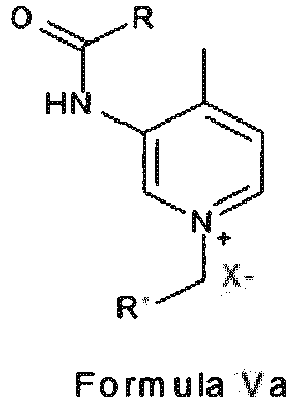 (iii) partial reduction of the compound of Formula Va to produce 1,2,5,6-Tetrahydropyridine system of Formula VIa in presence of a reducing agent in a organic solvent, at an ambient temperature;
 (iv) hydrolysis of 1,2,5,6-Tetrahydropyridine system of Formula VIa in presence of an acid or mixture of acids to prepare a compound of the Formula VIIa at an ambient temperature;
 (v) reductive amination of the compound of Formula VIIa using Methylamine in presence of a Lewis acids in an organic solvent or an aqueous solvent or mixture(s) thereof followed by reduction using a reducing agent to prepare a compound of Formula VIIIa at an ambient temperature; and
 (vi) resolution of a compound of formula VIIIa in presence of a resoluting agent in an organic solvent or an aqueous solvent or mixture(s) thereof to prepare the compound of Formula IIa.
 - The process according to claim 1(i) wherein the alkyl, aryl or substituted aryl acid anhydride comprises an anhydride of C1-10 acids.
- The process according to claim 1(i) wherein the alkyl, aryl or substituted aryl acid chloride is selected from C1-10 Acid chloride, Acetyl chloride, or Benzoyl chloride.
- The process according to claim 1(ii) wherein the benzyl or substituted benzyl halide is selected from the group consisting of Benzyl chloride, Benzyl bromide, substituted Benzyl chloride and substituted Benzyl bromide.
- The process according to claim 1(ii) wherein the solvent is selected from the group consisting of aromatic solvents, polar aprotic solvents, non-polar solvents, ethers, esters, ketonic solvents, water and mixture(s) thereof.
- The process according to claim 5 wherein the solvent is selected from the group consisting of Toluene, Xylenes, Cyclohexane, water and mixture(s) thereof.
- The process according to claim 6 wherein the solvent is selected from Toluene, Xylene or mixture thereof.
- The process according to claim 1(iii) and (v) wherein the reducing agent is selected from the group consisting of Sodium borohydride, Sodium cyanoborohydride, and Sodium triacetoxyborohydride.
- The process according to claim 1(iii) wherein the solvent is selected from the group consisting of water, C1-C5 alcohol, diisopropyl ether, methyl tertiary butyl ether, toluene, xylene and mixture(s) thereof.
- The process according to claim 1(iv) wherein the acid is selected from the group consisting of Hydrochloric acid, Sulfuric acid, Phosphoric acid, Trifluoroacetic acid, Trichloroacetic acid, substituted halo acetic acid, Acetic acid, HI, HBr, mineral acids, organic acids, aqueous solutions thereof and mixture(s) thereof.
- The process according to claim 1(v) wherein the Lewis acid is selected from the group consisting of Aluminium trichloride, Ferric chloride, Zinc chloride, Indium chloride, and Titanium(IV) tetraisopropoxide.
- The process according to claim 1(vi) wherein the resoluting agent is selected from the group consisting of Dibenzoyl tartaric acid, Ditoluoyl tartaric acid, Tartaric acid, Mandelic acid, and Camphor sulphonic acid.
- A compound of formula (Va)

- A compound of formula (VIa) and salts thereof
 wherein R represents methyl; andR' represents phenyl.
 - The process according to claim 1(v) wherein the organic solvent is selected from the group consisting of methanol, ethanol, diisopropyl ether, methyl tertiary butyl ether, toluene, xylene and aqueous mixture(s) thereof.
- A process for preparation of Formula Va

comprising the steps of:(i) N-acylation of 3-Amino-4-methyl pyridine (Formula III) with alkyl, aryl or substituted aryl acid chloride or acid anhydride to prepare a compound of Formula IVa and optionally isolating it;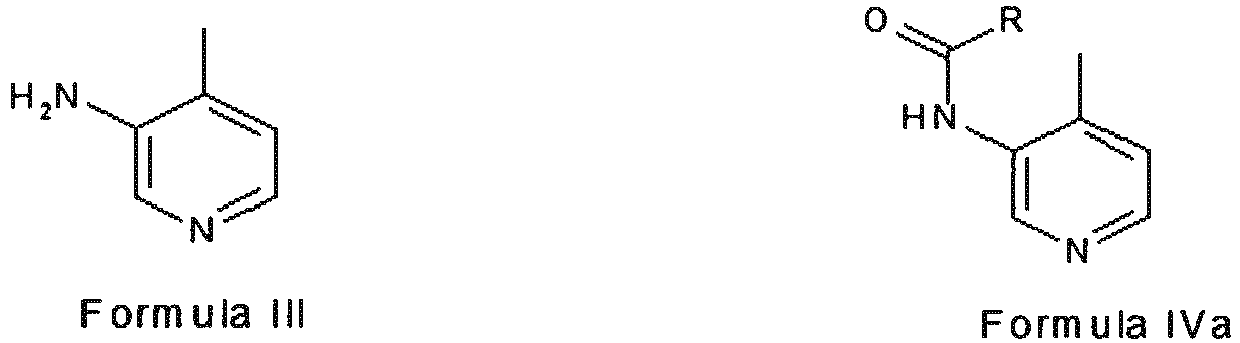 (ii) quaternization of Nitrogen of the Pyridine system in the compound of Formula IVa, using benzyl or substituted benzyl halide in an organic solvent to prepare the compound of Formula Va;wherein;
alkyl, aryl or substituted aryl acid anhydride of step (i) comprises an anhydride of C1-10 acids;
alkyl, aryl or substituted aryl acid chloride of step (i) is selected from a C1-10 Acid chloride, Acetyl chloride, or Benzoyl chloride;
benzyl or substituted benzyl halide of step (ii) is selected from the group consisting of Benzyl chloride, Benzyl bromide, substituted Benzyl chloride and substituted Benzyl bromide; and
the solvent of step (ii) is selected from the group consisting of aromatic solvents, polar aprotic solvents, non-polar solvents, ethers, esters, ketonic solvents, water and mixture(s) thereof. - A process for the preparation of Formula VIa,

comprising the steps of:(i) N-acylation of 3-Amino-4-methyl pyridine (Formula III) with alkyl, aryl or substituted aryl acid chloride or acid anhydride to prepare a compound of Formula IVa and optionally isolating it;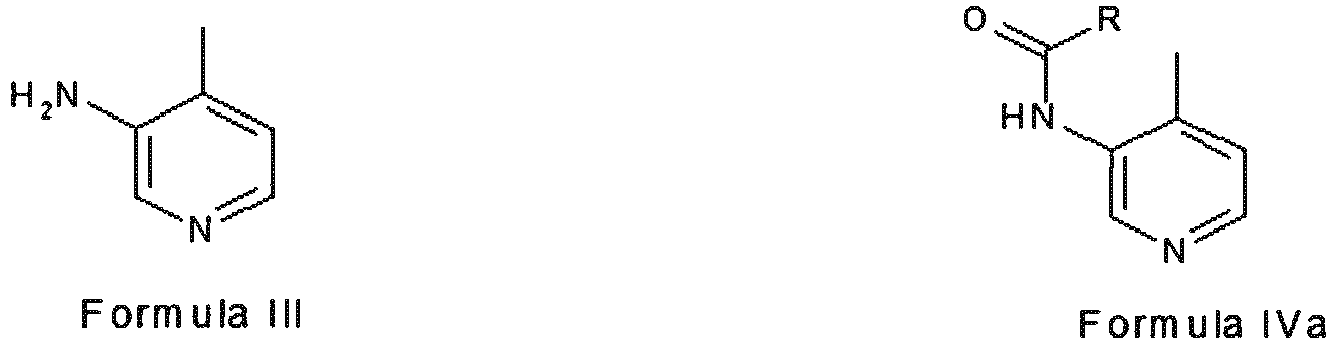 (ii) quaternization of Nitrogen of the Pyridine system in the compound of Formula IVa, using benzyl or substituted benzyl halide in an organic solvent to prepare a compound of Formula Va; and optionally isolating it; and
 (iii) partial reduction of the compound of Formula Va to produce 1,2,5,6-Tetrahydropyridine system of Formula VIa in presence of a reducing agent in a suitable solvent, at an ambient temperature,wherein;
alkyl, aryl or substituted aryl acid anhydride of step (i) comprises an anhydride of C1-10 acids;
alkyl, aryl or substituted aryl acid chloride of step (i) is selected from a C1-10 Acid chloride, Acetyl chloride, or Benzoyl chloride;
benzyl or substituted benzyl halide of step (ii) is selected from the group consisting of Benzyl chloride, Benzyl bromide, substituted Benzyl chloride and substituted Benzyl bromide;
solvent of step (ii) is selected from the group consisting of aromatic solvents, polar aprotic solvents, non-polar solvents, ethers, esters, ketonic solvents, water and mixture(s) thereof;
reducing agent of step (iii) is selected from the group consisting of Sodium borohydride, Sodium cyanoborohydride, and Sodium triacetoxyborohydride; and
solvent of step (iii) is selected from the group consisting of water, C1-C5 alcohol , DIPE, MTB, Toluene, xylene and mixture(s) thereof. - A process for the preparation of Formula VIIa,

comprising the steps of:(i) N-acylation of 3-Amino-4-methyl pyridine (Formula III) with alkyl, aryl or substituted aryl acid chloride or acid anhydride to prepare a compound of Formula IVa and optionally isolating it; (ii) quaternization of Nitrogen of the Pyridine system in the compound of Formula IVa, using benzyl or substituted benzyl halide in an organic solvent to prepare a compound of Formula Va; and optionally isolating it;
 (iii) partial reduction of the compound of Formula Va to produce 1,2,5,6-Tetrahydropyridine system of Formula VIa in presence of a reducing agent in a suitable solvent, at an ambient temperature; andwherein;
alkyl, aryl or substituted aryl acid anhydride of step (i) comprises an anhydride of C1-10 acids;
alkyl, aryl or substituted aryl acid chloride of step (i) is selected from a C1-10 Acid chloride, Acetyl chloride, or Benzoyl chloride;
benzyl or substituted benzyl halide of step (ii) is selected from the group consisting of Benzyl chloride, Benzyl bromide, substituted Benzyl chloride and substituted Benzyl bromide;
solvent of step (ii) is selected from the group consisting of aromatic solvents, polar aprotic solvents, non-polar solvents, ethers, esters, ketonic solvents, water and mixture(s) thereof;
reducing agent of steps (iii) is selected from the group consisting of Sodium borohydride, Sodium cyanoborohydride, and Sodium triacetoxyborohydride;
suitable solvent of step (iii) is selected from the group consisting of water, C1-C5 alcohol, DIPE, MTB, Toluene, xylene and mixture(s) thereof; and
acid or mixture of acids of step (iv) is selected from the group consisting of Hydrochloric acid, Sulfuric acid, Phosphoric acid, Trifluoroacetic acid, Trichloroacetic acid, substituted halo acetic acid, Acetic acid, HI, HBr, aqueous solutions thereof and mixture(s) thereof. - A process for the preparation of Formula VIIIa,

comprising the steps of:(i) N-acylation of 3-Amino-4-methyl pyridine (Formula III) with alkyl, aryl or substituted aryl acid chloride or acid anhydride to prepare a compound of Formula IVa and optionally isolating it;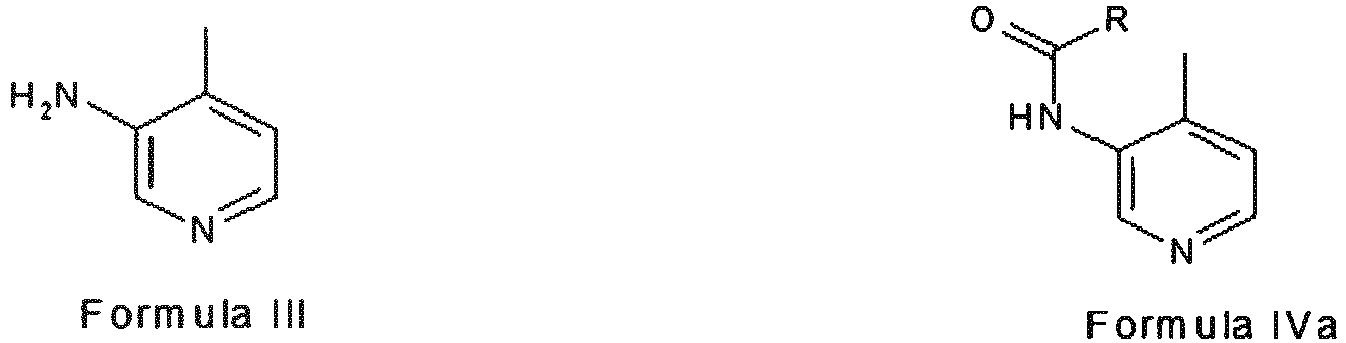 (ii) quaternization of Nitrogen of the Pyridine system in the compound of Formula IVa, using benzyl or substituted benzyl halide in an organic solvent to prepare a compound of Formula Va; and optionally isolating it;
 (iii) partial reduction of the compound of Formula Va to produce 1,2,5,6-Tetrahydropyridine system of Formula VIa in presence of a reducing agent in a suitable solvent, at an ambient temperature;
 (iv) hydrolysis of 1,2,5,6-Tetrahydropyridine system of Formula VIa in presence of an acid or mixture of acids to prepare a compound of Formula VIIa at a temperature in the range of from 40° C. to 100° C; and
 (v) reductive amination of the compound of Formula VIIa using Methylamine in presence of a Lewis acid in an organic solvent or an aqueous solutions or mixture(s) thereof followed by reduction using a reducing agent to prepare the compound of Formula VIIIa at an ambient temperature,wherein;
alkyl, aryl or substituted aryl acid anhydride of step (i) comprises an anhydride of C1-10 acids;
alkyl, aryl or substituted aryl acid chloride of step (i) is selected from a C1-10 Acid chloride, Acetyl chloride, or Benzoyl chloride;
benzyl or substituted benzyl halide of step (ii) is selected from the group consisting of Benzyl chloride, Benzyl bromide, substituted Benzyl chloride and substituted Benzyl bromide;
solvent of step (ii) is selected from the group consisting of aromatic solvents, polar aprotic solvents, non-polar solvents, ethers, esters, ketonic solvents, water and mixture(s) thereof;
reducing agent of steps (iii) is selected from the group consisting of Sodium borohydride, Sodium cyanoborohydride, and Sodium triacetoxyborohydride;
solvent of step (iii) is selected from the group consisting of water, C1-C5 alcohol , DIPE, MTB, Toluene, xylene and mixture(s) thereof;
acid or mixture of acids of step (iv) is selected from the group consisting of Hydrochloric acid, Sulfuric acid, Phosphoric acid, Trifluoroacetic acid, Trichloroacetic acid, substituted halo acetic acid, Acetic acid, HI, HBr, aqueous solutions thereof and mixture(s) thereof;
lewis acid of step (v) is selected from the group consisting of Aluminium trichloride, Ferric chloride, Zinc chloride, Indium chloride, and Titanium(IV) tetraisopropoxide; and
organic solvent of step (v) is selected from methanol, ethanol, DIPE, MTB, toluene and xylene or aqueous mixture(s) thereof.
Priority Applications (4)
| Application Number | Priority Date | Filing Date | Title |
|---|---|---|---|
| PL14869304T PL2994454T3 (en) | 2013-12-09 | 2014-12-02 | An improved process for the preparation of (3r,4r)-(1-benzyl-4-methylpiperidin-3-yl)-methylamine |
| EP19150972.8A EP3539965B1 (en) | 2013-12-09 | 2014-12-02 | An improved process for the preparation of (3r,4r)-(1-benzyl-4-methylpiperidin-3-yl)-methylamine |
| SI201431159T SI2994454T1 (en) | 2013-12-09 | 2014-12-02 | An improved process for the preparation of (3r,4r)-(1-benzyl-4-methylpiperidin-3-yl)-methylamine |
| PL19150972T PL3539965T3 (en) | 2013-12-09 | 2014-12-02 | An improved process for the preparation of (3r,4r)-(1-benzyl-4-methylpiperidin-3-yl)-methylamine |
Applications Claiming Priority (2)
| Application Number | Priority Date | Filing Date | Title |
|---|---|---|---|
| PCT/IB2014/066510 WO2015087201A1 (en) | 2013-12-09 | 2014-12-02 | An improved process for the preparation of (3r,4r)-(1-benzyl-4-methylpiperidin-3-yl)-methylamine |
| IN3843MU2013 IN2013MU03843A (en) | 2013-12-09 | 2014-12-02 |
Related Child Applications (2)
| Application Number | Title | Priority Date | Filing Date |
|---|---|---|---|
| EP19150972.8A Division EP3539965B1 (en) | 2013-12-09 | 2014-12-02 | An improved process for the preparation of (3r,4r)-(1-benzyl-4-methylpiperidin-3-yl)-methylamine |
| EP19150972.8A Division-Into EP3539965B1 (en) | 2013-12-09 | 2014-12-02 | An improved process for the preparation of (3r,4r)-(1-benzyl-4-methylpiperidin-3-yl)-methylamine |
Publications (3)
| Publication Number | Publication Date |
|---|---|
| EP2994454A1 EP2994454A1 (en) | 2016-03-16 |
| EP2994454A4 EP2994454A4 (en) | 2016-12-21 |
| EP2994454B1 true EP2994454B1 (en) | 2019-03-06 |
Family
ID=53370688
Family Applications (2)
| Application Number | Title | Priority Date | Filing Date |
|---|---|---|---|
| EP14869304.7A Active EP2994454B1 (en) | 2013-12-09 | 2014-12-02 | An improved process for the preparation of (3r,4r)-(1-benzyl-4-methylpiperidin-3-yl)-methylamine |
| EP19150972.8A Active EP3539965B1 (en) | 2013-12-09 | 2014-12-02 | An improved process for the preparation of (3r,4r)-(1-benzyl-4-methylpiperidin-3-yl)-methylamine |
Family Applications After (1)
| Application Number | Title | Priority Date | Filing Date |
|---|---|---|---|
| EP19150972.8A Active EP3539965B1 (en) | 2013-12-09 | 2014-12-02 | An improved process for the preparation of (3r,4r)-(1-benzyl-4-methylpiperidin-3-yl)-methylamine |
Country Status (14)
| Country | Link |
|---|---|
| US (4) | US9951012B2 (en) |
| EP (2) | EP2994454B1 (en) |
| JP (1) | JP6368794B2 (en) |
| BR (1) | BR112015025543B1 (en) |
| ES (2) | ES2865058T3 (en) |
| HU (2) | HUE042911T2 (en) |
| IN (1) | IN2013MU03843A (en) |
| MX (1) | MX362290B (en) |
| PL (2) | PL3539965T3 (en) |
| PT (2) | PT2994454T (en) |
| SI (2) | SI2994454T1 (en) |
| TR (1) | TR201904767T4 (en) |
| WO (1) | WO2015087201A1 (en) |
| ZA (1) | ZA201506551B (en) |
Families Citing this family (12)
| Publication number | Priority date | Publication date | Assignee | Title |
|---|---|---|---|---|
| MX362290B (en) * | 2013-12-09 | 2019-01-10 | Unichem Lab Ltd | An improved process for the preparation of (3r,4r)-(1-benzyl-4-me thylpiperidin-3-yl)-methylamine. |
| AU2016208906B2 (en) | 2015-01-20 | 2018-07-12 | Wuxi Fortune Pharmaceutical Co., Ltd | JAK inhibitor |
| UA119701C2 (en) | 2015-04-29 | 2019-07-25 | Вуксі Фортуне Фармасьютікал Ко., Лтд | Jak inhibitors |
| DK3305788T3 (en) | 2015-05-29 | 2020-09-28 | Wuxi Fortune Pharmaceutical Co Ltd | JANUS-KINASE-HIMMER |
| CN105237463B (en) * | 2015-10-09 | 2017-10-10 | 刘卫国 | Preparation methods of one kind (3R, 4R) (base of 1 benzyl, 4 methyl piperidine 3) methylamine L bis- to toluoyltartrates |
| CN105884781B (en) * | 2016-04-18 | 2018-04-20 | 山东罗欣药业集团股份有限公司 | Preparation method of tofacitinib citrate |
| EP3301087A1 (en) * | 2016-09-30 | 2018-04-04 | DPx Fine Chemicals Austria GmbH & Co KG | Process for preparing chiral amines |
| CN107056681B (en) * | 2017-03-30 | 2019-10-01 | 广州白云山光华制药股份有限公司 | A kind of support method replaces the preparation method of cloth intermediate |
| CN110668995A (en) * | 2018-07-03 | 2020-01-10 | 江苏海悦康医药科技有限公司 | Tofacitinib citrate intermediate and preparation method of tofacitinib citrate |
| CN112645866B (en) * | 2020-12-22 | 2024-03-22 | 浙江奥翔药业股份有限公司 | Synthesis and application of 1-benzyl-4-methyl-5-alkoxy-1, 2,3, 6-tetrahydropyridine derivative |
| CN114685515A (en) * | 2022-03-15 | 2022-07-01 | 上海蓝乐鸟实业有限公司 | A kind of preparation method of tofacitinib |
| CN115872923B (en) * | 2022-12-29 | 2023-04-28 | 成都泰和伟业生物科技有限公司 | Compound and preparation method thereof |
Family Cites Families (16)
| Publication number | Priority date | Publication date | Assignee | Title |
|---|---|---|---|---|
| JPH06145144A (en) | 1992-11-04 | 1994-05-24 | Ihara Chem Ind Co Ltd | Novel 3-aminopyridine derivative quaternary ammonium salt and anticancer agent containing the same |
| JP4671079B2 (en) * | 1999-07-05 | 2011-04-13 | 日本農薬株式会社 | Phthalamide derivatives, intermediates thereof, agricultural and horticultural insecticides, and methods of use thereof |
| EP1307455B1 (en) * | 1999-10-20 | 2005-04-06 | Tanabe Seiyaku Co., Ltd. | Inhibitors of alpha-l beta-2 mediated cell adhesion |
| EA006227B1 (en) | 1999-12-10 | 2005-10-27 | Пфайзер Продактс Инк. | PIRROLO(2,3-d)PYRIMIDINE COMPOUNDS |
| EE05643B1 (en) | 2001-02-24 | 2013-04-15 | Boehringer Ingelheim Pharma Gmbh & Co. Kg | Xanthine derivatives, their preparation and use as medicaments |
| US7301023B2 (en) * | 2001-05-31 | 2007-11-27 | Pfizer Inc. | Chiral salt resolution |
| PY0228255A (en) * | 2001-12-06 | 2004-06-01 | Pfizer Prod Inc | NOVEL CRYSTALLINE COMPOUNDS |
| MX2007007574A (en) * | 2004-12-22 | 2007-07-24 | Astrazeneca Ab | Pyridine carboxamide derivatives for use as anticancer agents. |
| CN101233138A (en) | 2005-07-29 | 2008-07-30 | 辉瑞产品公司 | Pyrrolo[2,3-d]pyrimidine derivatives, intermediates and synthetic methods thereof |
| WO2008029237A2 (en) * | 2006-09-05 | 2008-03-13 | Pfizer Products Inc. | Combination therapies for rheumatoid arthritis |
| EP2324020A2 (en) * | 2008-08-01 | 2011-05-25 | Biocryst Pharmaceuticals, Inc. | Piperidine derivatives as jak3 inhibitors |
| CA2758359A1 (en) | 2009-04-14 | 2010-10-21 | Astellas Pharma Inc. | Fused pyrrolopyridine derivative |
| EP3026052A1 (en) | 2009-04-20 | 2016-06-01 | Auspex Pharmaceuticals, Inc. | Preparation of deuterated piperidine inhibitors of janus kinase 3 |
| ES2547072T3 (en) * | 2009-07-21 | 2015-10-01 | The Board Of Trustees Of The Leland Stanford Junior University | Heteroaryl benzamides, compositions and methods of use |
| SG179120A1 (en) * | 2009-09-29 | 2012-05-30 | Glaxo Group Ltd | Novel compounds |
| MX362290B (en) * | 2013-12-09 | 2019-01-10 | Unichem Lab Ltd | An improved process for the preparation of (3r,4r)-(1-benzyl-4-me thylpiperidin-3-yl)-methylamine. |
-
2014
- 2014-12-02 MX MX2015015432A patent/MX362290B/en active IP Right Grant
- 2014-12-02 JP JP2016557204A patent/JP6368794B2/en not_active Expired - Fee Related
- 2014-12-02 PL PL19150972T patent/PL3539965T3/en unknown
- 2014-12-02 ES ES19150972T patent/ES2865058T3/en active Active
- 2014-12-02 SI SI201431159T patent/SI2994454T1/en unknown
- 2014-12-02 WO PCT/IB2014/066510 patent/WO2015087201A1/en not_active Ceased
- 2014-12-02 SI SI201431805T patent/SI3539965T1/en unknown
- 2014-12-02 BR BR112015025543-4A patent/BR112015025543B1/en not_active IP Right Cessation
- 2014-12-02 PT PT14869304T patent/PT2994454T/en unknown
- 2014-12-02 ES ES14869304T patent/ES2720066T3/en active Active
- 2014-12-02 US US14/891,028 patent/US9951012B2/en active Active
- 2014-12-02 PL PL14869304T patent/PL2994454T3/en unknown
- 2014-12-02 PT PT191509728T patent/PT3539965T/en unknown
- 2014-12-02 HU HUE14869304A patent/HUE042911T2/en unknown
- 2014-12-02 HU HUE19150972A patent/HUE053975T2/en unknown
- 2014-12-02 TR TR2019/04767T patent/TR201904767T4/en unknown
- 2014-12-02 EP EP14869304.7A patent/EP2994454B1/en active Active
- 2014-12-02 EP EP19150972.8A patent/EP3539965B1/en active Active
- 2014-12-02 IN IN3843MU2013 patent/IN2013MU03843A/en unknown
-
2015
- 2015-09-04 ZA ZA2015/06551A patent/ZA201506551B/en unknown
-
2017
- 2017-05-09 US US15/590,408 patent/US20170240510A1/en not_active Abandoned
- 2017-10-17 US US15/786,195 patent/US20180037551A1/en not_active Abandoned
-
2018
- 2018-01-11 US US15/868,331 patent/US10829450B2/en not_active Expired - Fee Related
Non-Patent Citations (1)
| Title |
|---|
| None * |
Also Published As
| Publication number | Publication date |
|---|---|
| JP6368794B2 (en) | 2018-08-01 |
| PT3539965T (en) | 2021-04-07 |
| ES2865058T3 (en) | 2021-10-14 |
| EP3539965A1 (en) | 2019-09-18 |
| IN2013MU03843A (en) | 2015-08-14 |
| US20170240510A1 (en) | 2017-08-24 |
| SI2994454T1 (en) | 2019-05-31 |
| US20160102057A1 (en) | 2016-04-14 |
| US9951012B2 (en) | 2018-04-24 |
| HUE053975T2 (en) | 2021-08-30 |
| US10829450B2 (en) | 2020-11-10 |
| PT2994454T (en) | 2019-04-02 |
| US20180037551A1 (en) | 2018-02-08 |
| PL3539965T3 (en) | 2021-07-05 |
| BR112015025543B1 (en) | 2020-11-03 |
| EP3539965B1 (en) | 2021-01-20 |
| EP2994454A1 (en) | 2016-03-16 |
| BR112015025543A2 (en) | 2017-07-18 |
| PL2994454T3 (en) | 2019-09-30 |
| US20180134661A1 (en) | 2018-05-17 |
| ZA201506551B (en) | 2017-02-22 |
| MX2015015432A (en) | 2016-03-15 |
| EP2994454A4 (en) | 2016-12-21 |
| TR201904767T4 (en) | 2019-05-21 |
| MX362290B (en) | 2019-01-10 |
| HUE042911T2 (en) | 2019-07-29 |
| ES2720066T3 (en) | 2019-07-17 |
| WO2015087201A1 (en) | 2015-06-18 |
| SI3539965T1 (en) | 2021-07-30 |
| JP2017503007A (en) | 2017-01-26 |
Similar Documents
| Publication | Publication Date | Title |
|---|---|---|
| EP3539965B1 (en) | An improved process for the preparation of (3r,4r)-(1-benzyl-4-methylpiperidin-3-yl)-methylamine | |
| CN104447445B (en) | A kind of preparation method synthesizing Apremilast intermediate | |
| US9040698B2 (en) | Method for preparing optically pure (+)-ambrisentan and (+)-darusentan | |
| US11639349B2 (en) | Stereoselective synthesis of intermediate for preparation of heterocyclic compound | |
| IL226721A (en) | Method for synthesising substituted aminocyclohexanone derivatives and substituted spirocondensed aminocyclohexane with ortho-condensed indole-oxane system derivatives | |
| CN111793016B (en) | Preparation method of larotinib intermediate and intermediate compound | |
| EP1973878B1 (en) | Process and intermediate for preparation of donepezil | |
| EP2234974B1 (en) | Process for the preparation of (s)-1-alkyl-2',6'-pipecoloxylidide compound | |
| CN108440349B (en) | Preparation method of chiral optical pure p-toluenesulfinamide | |
| CN104892491B (en) | Method for synthesizing paroxetine chiral intermediate | |
| WO2011101704A1 (en) | Process for preparing (4s, 6s)-4-(ethylamino)-5,6-dihydro-6-methyl-4h-thieno-[2,3-b]thiopyran-2-sulfonamide-7,7-dioxide and its intermediates | |
| CN108558714B (en) | Preparation method of chiral optical pure p-toluenesulfinamide | |
| EP2234975B1 (en) | Process for producing pipecolic-2-acid-2 ',6'-xylidide useful as an intermediate for the preparation of local anesthetics | |
| US7041826B2 (en) | Process for preparing 1-methyl-3-phenylpiperazine using a novel intermediate | |
| CN108484455B (en) | Method for synthesizing chiral optical pure p-toluenesulfinamide | |
| KR100710547B1 (en) | (s) -3-amino-2,3,4,5-tetrahydro-2-oxo-1H-benzazepine-1-acetic acid and a method for producing an ester compound thereof | |
| CN105111136A (en) | Method for preparing 3-mehtyl-1-phenethyl piperidine-4-ketone or 1-phenethyl piperidine-4-ketone | |
| JP2002212155A (en) | Process for producing optically active asparagine ester derivative, optically active 3-aminopyrrolidine-2,5-dione derivative and optically active 3-aminopyrrolidine derivative | |
| EP3199523A1 (en) | The new process for producing n-phenyl-n-(4-piperidinyl) amide derivatives such as remifentanil and carfentanil | |
| US20040171837A1 (en) | Method for preparing 4-amino-4-phenylpiperidines | |
| JP2005120020A (en) | Optically active mandelamide derivative and method for producing optically active phenylethanolamine derivative | |
| HK1185864A (en) | Method for synthesising substituted aminocyclohexanone derivatives | |
| HK1185864B (en) | Method for synthesising substituted aminocyclohexanone derivatives | |
| WO2014083150A1 (en) | Preparation of 3-amino-piperidine compounds via nitro-tetrahydropyridine precursors |
Legal Events
| Date | Code | Title | Description |
|---|---|---|---|
| PUAI | Public reference made under article 153(3) epc to a published international application that has entered the european phase |
Free format text: ORIGINAL CODE: 0009012 |
|
| 17P | Request for examination filed |
Effective date: 20151201 |
|
| AK | Designated contracting states |
Kind code of ref document: A1 Designated state(s): AL AT BE BG CH CY CZ DE DK EE ES FI FR GB GR HR HU IE IS IT LI LT LU LV MC MK MT NL NO PL PT RO RS SE SI SK SM TR |
|
| AX | Request for extension of the european patent |
Extension state: BA ME |
|
| A4 | Supplementary search report drawn up and despatched |
Effective date: 20161122 |
|
| RIC1 | Information provided on ipc code assigned before grant |
Ipc: C07D 211/56 20060101AFI20161116BHEP Ipc: C07D 213/74 20060101ALI20161116BHEP Ipc: C07D 211/72 20060101ALI20161116BHEP |
|
| DAX | Request for extension of the european patent (deleted) | ||
| GRAP | Despatch of communication of intention to grant a patent |
Free format text: ORIGINAL CODE: EPIDOSNIGR1 |
|
| STAA | Information on the status of an ep patent application or granted ep patent |
Free format text: STATUS: GRANT OF PATENT IS INTENDED |
|
| INTG | Intention to grant announced |
Effective date: 20180720 |
|
| RAP1 | Party data changed (applicant data changed or rights of an application transferred) |
Owner name: UNICHEM LABORATORIES LIMITED |
|
| GRAJ | Information related to disapproval of communication of intention to grant by the applicant or resumption of examination proceedings by the epo deleted |
Free format text: ORIGINAL CODE: EPIDOSDIGR1 |
|
| STAA | Information on the status of an ep patent application or granted ep patent |
Free format text: STATUS: REQUEST FOR EXAMINATION WAS MADE |
|
| GRAS | Grant fee paid |
Free format text: ORIGINAL CODE: EPIDOSNIGR3 |
|
| STAA | Information on the status of an ep patent application or granted ep patent |
Free format text: STATUS: GRANT OF PATENT IS INTENDED |
|
| GRAP | Despatch of communication of intention to grant a patent |
Free format text: ORIGINAL CODE: EPIDOSNIGR1 |
|
| INTG | Intention to grant announced |
Effective date: 20181130 |
|
| GRAA | (expected) grant |
Free format text: ORIGINAL CODE: 0009210 |
|
| STAA | Information on the status of an ep patent application or granted ep patent |
Free format text: STATUS: THE PATENT HAS BEEN GRANTED |
|
| AK | Designated contracting states |
Kind code of ref document: B1 Designated state(s): AL AT BE BG CH CY CZ DE DK EE ES FI FR GB GR HR HU IE IS IT LI LT LU LV MC MK MT NL NO PL PT RO RS SE SI SK SM TR |
|
| REG | Reference to a national code |
Ref country code: GB Ref legal event code: FG4D |
|
| REG | Reference to a national code |
Ref country code: CH Ref legal event code: EP Ref country code: AT Ref legal event code: REF Ref document number: 1104358 Country of ref document: AT Kind code of ref document: T Effective date: 20190315 |
|
| REG | Reference to a national code |
Ref country code: DE Ref legal event code: R096 Ref document number: 602014042575 Country of ref document: DE |
|
| REG | Reference to a national code |
Ref country code: PT Ref legal event code: SC4A Ref document number: 2994454 Country of ref document: PT Date of ref document: 20190402 Kind code of ref document: T Free format text: AVAILABILITY OF NATIONAL TRANSLATION Effective date: 20190325 |
|
| REG | Reference to a national code |
Ref country code: IE Ref legal event code: FG4D |
|
| REG | Reference to a national code |
Ref country code: NL Ref legal event code: FP |
|
| REG | Reference to a national code |
Ref country code: ES Ref legal event code: FG2A Ref document number: 2720066 Country of ref document: ES Kind code of ref document: T3 Effective date: 20190717 |
|
| REG | Reference to a national code |
Ref country code: LT Ref legal event code: MG4D |
|
| REG | Reference to a national code |
Ref country code: HU Ref legal event code: AG4A Ref document number: E042911 Country of ref document: HU |
|
| PG25 | Lapsed in a contracting state [announced via postgrant information from national office to epo] |
Ref country code: SE Free format text: LAPSE BECAUSE OF FAILURE TO SUBMIT A TRANSLATION OF THE DESCRIPTION OR TO PAY THE FEE WITHIN THE PRESCRIBED TIME-LIMIT Effective date: 20190306 Ref country code: LT Free format text: LAPSE BECAUSE OF FAILURE TO SUBMIT A TRANSLATION OF THE DESCRIPTION OR TO PAY THE FEE WITHIN THE PRESCRIBED TIME-LIMIT Effective date: 20190306 Ref country code: FI Free format text: LAPSE BECAUSE OF FAILURE TO SUBMIT A TRANSLATION OF THE DESCRIPTION OR TO PAY THE FEE WITHIN THE PRESCRIBED TIME-LIMIT Effective date: 20190306 Ref country code: NO Free format text: LAPSE BECAUSE OF FAILURE TO SUBMIT A TRANSLATION OF THE DESCRIPTION OR TO PAY THE FEE WITHIN THE PRESCRIBED TIME-LIMIT Effective date: 20190606 |
|
| PG25 | Lapsed in a contracting state [announced via postgrant information from national office to epo] |
Ref country code: GR Free format text: LAPSE BECAUSE OF FAILURE TO SUBMIT A TRANSLATION OF THE DESCRIPTION OR TO PAY THE FEE WITHIN THE PRESCRIBED TIME-LIMIT Effective date: 20190607 Ref country code: RS Free format text: LAPSE BECAUSE OF FAILURE TO SUBMIT A TRANSLATION OF THE DESCRIPTION OR TO PAY THE FEE WITHIN THE PRESCRIBED TIME-LIMIT Effective date: 20190306 Ref country code: BG Free format text: LAPSE BECAUSE OF FAILURE TO SUBMIT A TRANSLATION OF THE DESCRIPTION OR TO PAY THE FEE WITHIN THE PRESCRIBED TIME-LIMIT Effective date: 20190606 Ref country code: LV Free format text: LAPSE BECAUSE OF FAILURE TO SUBMIT A TRANSLATION OF THE DESCRIPTION OR TO PAY THE FEE WITHIN THE PRESCRIBED TIME-LIMIT Effective date: 20190306 Ref country code: HR Free format text: LAPSE BECAUSE OF FAILURE TO SUBMIT A TRANSLATION OF THE DESCRIPTION OR TO PAY THE FEE WITHIN THE PRESCRIBED TIME-LIMIT Effective date: 20190306 |
|
| REG | Reference to a national code |
Ref country code: AT Ref legal event code: MK05 Ref document number: 1104358 Country of ref document: AT Kind code of ref document: T Effective date: 20190306 |
|
| PG25 | Lapsed in a contracting state [announced via postgrant information from national office to epo] |
Ref country code: RO Free format text: LAPSE BECAUSE OF FAILURE TO SUBMIT A TRANSLATION OF THE DESCRIPTION OR TO PAY THE FEE WITHIN THE PRESCRIBED TIME-LIMIT Effective date: 20190306 Ref country code: CZ Free format text: LAPSE BECAUSE OF FAILURE TO SUBMIT A TRANSLATION OF THE DESCRIPTION OR TO PAY THE FEE WITHIN THE PRESCRIBED TIME-LIMIT Effective date: 20190306 Ref country code: AL Free format text: LAPSE BECAUSE OF FAILURE TO SUBMIT A TRANSLATION OF THE DESCRIPTION OR TO PAY THE FEE WITHIN THE PRESCRIBED TIME-LIMIT Effective date: 20190306 Ref country code: SK Free format text: LAPSE BECAUSE OF FAILURE TO SUBMIT A TRANSLATION OF THE DESCRIPTION OR TO PAY THE FEE WITHIN THE PRESCRIBED TIME-LIMIT Effective date: 20190306 Ref country code: EE Free format text: LAPSE BECAUSE OF FAILURE TO SUBMIT A TRANSLATION OF THE DESCRIPTION OR TO PAY THE FEE WITHIN THE PRESCRIBED TIME-LIMIT Effective date: 20190306 |
|
| PG25 | Lapsed in a contracting state [announced via postgrant information from national office to epo] |
Ref country code: SM Free format text: LAPSE BECAUSE OF FAILURE TO SUBMIT A TRANSLATION OF THE DESCRIPTION OR TO PAY THE FEE WITHIN THE PRESCRIBED TIME-LIMIT Effective date: 20190306 |
|
| REG | Reference to a national code |
Ref country code: DE Ref legal event code: R097 Ref document number: 602014042575 Country of ref document: DE |
|
| PG25 | Lapsed in a contracting state [announced via postgrant information from national office to epo] |
Ref country code: IS Free format text: LAPSE BECAUSE OF FAILURE TO SUBMIT A TRANSLATION OF THE DESCRIPTION OR TO PAY THE FEE WITHIN THE PRESCRIBED TIME-LIMIT Effective date: 20190706 Ref country code: AT Free format text: LAPSE BECAUSE OF FAILURE TO SUBMIT A TRANSLATION OF THE DESCRIPTION OR TO PAY THE FEE WITHIN THE PRESCRIBED TIME-LIMIT Effective date: 20190306 |
|
| PLBE | No opposition filed within time limit |
Free format text: ORIGINAL CODE: 0009261 |
|
| STAA | Information on the status of an ep patent application or granted ep patent |
Free format text: STATUS: NO OPPOSITION FILED WITHIN TIME LIMIT |
|
| PG25 | Lapsed in a contracting state [announced via postgrant information from national office to epo] |
Ref country code: DK Free format text: LAPSE BECAUSE OF FAILURE TO SUBMIT A TRANSLATION OF THE DESCRIPTION OR TO PAY THE FEE WITHIN THE PRESCRIBED TIME-LIMIT Effective date: 20190306 |
|
| 26N | No opposition filed |
Effective date: 20191209 |
|
| REG | Reference to a national code |
Ref country code: CH Ref legal event code: PL |
|
| PG25 | Lapsed in a contracting state [announced via postgrant information from national office to epo] |
Ref country code: MC Free format text: LAPSE BECAUSE OF FAILURE TO SUBMIT A TRANSLATION OF THE DESCRIPTION OR TO PAY THE FEE WITHIN THE PRESCRIBED TIME-LIMIT Effective date: 20190306 |
|
| PG25 | Lapsed in a contracting state [announced via postgrant information from national office to epo] |
Ref country code: LU Free format text: LAPSE BECAUSE OF NON-PAYMENT OF DUE FEES Effective date: 20191202 |
|
| PG25 | Lapsed in a contracting state [announced via postgrant information from national office to epo] |
Ref country code: CH Free format text: LAPSE BECAUSE OF NON-PAYMENT OF DUE FEES Effective date: 20191231 Ref country code: LI Free format text: LAPSE BECAUSE OF NON-PAYMENT OF DUE FEES Effective date: 20191231 |
|
| PG25 | Lapsed in a contracting state [announced via postgrant information from national office to epo] |
Ref country code: CY Free format text: LAPSE BECAUSE OF FAILURE TO SUBMIT A TRANSLATION OF THE DESCRIPTION OR TO PAY THE FEE WITHIN THE PRESCRIBED TIME-LIMIT Effective date: 20190306 |
|
| PG25 | Lapsed in a contracting state [announced via postgrant information from national office to epo] |
Ref country code: MT Free format text: LAPSE BECAUSE OF FAILURE TO SUBMIT A TRANSLATION OF THE DESCRIPTION OR TO PAY THE FEE WITHIN THE PRESCRIBED TIME-LIMIT Effective date: 20190306 |
|
| PGFP | Annual fee paid to national office [announced via postgrant information from national office to epo] |
Ref country code: FR Payment date: 20211224 Year of fee payment: 8 Ref country code: DE Payment date: 20211210 Year of fee payment: 8 |
|
| PGFP | Annual fee paid to national office [announced via postgrant information from national office to epo] |
Ref country code: IT Payment date: 20211224 Year of fee payment: 8 Ref country code: ES Payment date: 20220222 Year of fee payment: 8 |
|
| PG25 | Lapsed in a contracting state [announced via postgrant information from national office to epo] |
Ref country code: MK Free format text: LAPSE BECAUSE OF FAILURE TO SUBMIT A TRANSLATION OF THE DESCRIPTION OR TO PAY THE FEE WITHIN THE PRESCRIBED TIME-LIMIT Effective date: 20190306 |
|
| PGFP | Annual fee paid to national office [announced via postgrant information from national office to epo] |
Ref country code: TR Payment date: 20221118 Year of fee payment: 9 Ref country code: PT Payment date: 20221117 Year of fee payment: 9 Ref country code: NL Payment date: 20221214 Year of fee payment: 9 Ref country code: IE Payment date: 20221208 Year of fee payment: 9 Ref country code: GB Payment date: 20221213 Year of fee payment: 9 |
|
| PGFP | Annual fee paid to national office [announced via postgrant information from national office to epo] |
Ref country code: SI Payment date: 20221117 Year of fee payment: 9 Ref country code: PL Payment date: 20221124 Year of fee payment: 9 Ref country code: HU Payment date: 20221116 Year of fee payment: 9 Ref country code: BE Payment date: 20221214 Year of fee payment: 9 |
|
| REG | Reference to a national code |
Ref country code: DE Ref legal event code: R119 Ref document number: 602014042575 Country of ref document: DE |
|
| PG25 | Lapsed in a contracting state [announced via postgrant information from national office to epo] |
Ref country code: DE Free format text: LAPSE BECAUSE OF NON-PAYMENT OF DUE FEES Effective date: 20230701 |
|
| PG25 | Lapsed in a contracting state [announced via postgrant information from national office to epo] |
Ref country code: FR Free format text: LAPSE BECAUSE OF NON-PAYMENT OF DUE FEES Effective date: 20221231 |
|
| REG | Reference to a national code |
Ref country code: ES Ref legal event code: FD2A Effective date: 20240126 |
|
| PG25 | Lapsed in a contracting state [announced via postgrant information from national office to epo] |
Ref country code: IT Free format text: LAPSE BECAUSE OF NON-PAYMENT OF DUE FEES Effective date: 20221202 |
|
| PG25 | Lapsed in a contracting state [announced via postgrant information from national office to epo] |
Ref country code: ES Free format text: LAPSE BECAUSE OF NON-PAYMENT OF DUE FEES Effective date: 20221203 |
|
| PG25 | Lapsed in a contracting state [announced via postgrant information from national office to epo] |
Ref country code: ES Free format text: LAPSE BECAUSE OF NON-PAYMENT OF DUE FEES Effective date: 20221203 |
|
| PG25 | Lapsed in a contracting state [announced via postgrant information from national office to epo] |
Ref country code: SI Free format text: LAPSE BECAUSE OF NON-PAYMENT OF DUE FEES Effective date: 20231203 |
|
| PG25 | Lapsed in a contracting state [announced via postgrant information from national office to epo] |
Ref country code: PT Free format text: LAPSE BECAUSE OF NON-PAYMENT OF DUE FEES Effective date: 20240603 |
|
| REG | Reference to a national code |
Ref country code: NL Ref legal event code: MM Effective date: 20240101 |
|
| GBPC | Gb: european patent ceased through non-payment of renewal fee |
Effective date: 20231202 |
|
| REG | Reference to a national code |
Ref country code: BE Ref legal event code: MM Effective date: 20231231 |
|
| PG25 | Lapsed in a contracting state [announced via postgrant information from national office to epo] |
Ref country code: PT Free format text: LAPSE BECAUSE OF NON-PAYMENT OF DUE FEES Effective date: 20240603 |
|
| PG25 | Lapsed in a contracting state [announced via postgrant information from national office to epo] |
Ref country code: NL Free format text: LAPSE BECAUSE OF NON-PAYMENT OF DUE FEES Effective date: 20240101 |
|
| PG25 | Lapsed in a contracting state [announced via postgrant information from national office to epo] |
Ref country code: NL Free format text: LAPSE BECAUSE OF NON-PAYMENT OF DUE FEES Effective date: 20240101 |
|
| REG | Reference to a national code |
Ref country code: SI Ref legal event code: KO00 Effective date: 20240819 |
|
| REG | Reference to a national code |
Ref country code: IE Ref legal event code: MM4A |
|
| PG25 | Lapsed in a contracting state [announced via postgrant information from national office to epo] |
Ref country code: IE Free format text: LAPSE BECAUSE OF NON-PAYMENT OF DUE FEES Effective date: 20231202 |
|
| PG25 | Lapsed in a contracting state [announced via postgrant information from national office to epo] |
Ref country code: GB Free format text: LAPSE BECAUSE OF NON-PAYMENT OF DUE FEES Effective date: 20231202 |
|
| PG25 | Lapsed in a contracting state [announced via postgrant information from national office to epo] |
Ref country code: BE Free format text: LAPSE BECAUSE OF NON-PAYMENT OF DUE FEES Effective date: 20231231 |
|
| PG25 | Lapsed in a contracting state [announced via postgrant information from national office to epo] |
Ref country code: HU Free format text: LAPSE BECAUSE OF NON-PAYMENT OF DUE FEES Effective date: 20231203 |
|
| PG25 | Lapsed in a contracting state [announced via postgrant information from national office to epo] |
Ref country code: IE Free format text: LAPSE BECAUSE OF NON-PAYMENT OF DUE FEES Effective date: 20231202 Ref country code: HU Free format text: LAPSE BECAUSE OF NON-PAYMENT OF DUE FEES Effective date: 20231203 Ref country code: GB Free format text: LAPSE BECAUSE OF NON-PAYMENT OF DUE FEES Effective date: 20231202 Ref country code: BE Free format text: LAPSE BECAUSE OF NON-PAYMENT OF DUE FEES Effective date: 20231231 |
|
| PG25 | Lapsed in a contracting state [announced via postgrant information from national office to epo] |
Ref country code: PL Free format text: LAPSE BECAUSE OF NON-PAYMENT OF DUE FEES Effective date: 20231202 |