EP2992891B1 - Pharmaceutical composition comprising brivaracetam and lacosamide with synergistic anticonvulsant effect - Google Patents
Pharmaceutical composition comprising brivaracetam and lacosamide with synergistic anticonvulsant effect Download PDFInfo
- Publication number
- EP2992891B1 EP2992891B1 EP15156237.8A EP15156237A EP2992891B1 EP 2992891 B1 EP2992891 B1 EP 2992891B1 EP 15156237 A EP15156237 A EP 15156237A EP 2992891 B1 EP2992891 B1 EP 2992891B1
- Authority
- EP
- European Patent Office
- Prior art keywords
- pharmaceutical composition
- lacosamide
- brivaracetam
- dose
- seizures
- Prior art date
- Legal status (The legal status is an assumption and is not a legal conclusion. Google has not performed a legal analysis and makes no representation as to the accuracy of the status listed.)
- Active
Links
Images




Classifications
-
- A—HUMAN NECESSITIES
- A61—MEDICAL OR VETERINARY SCIENCE; HYGIENE
- A61K—PREPARATIONS FOR MEDICAL, DENTAL OR TOILETRY PURPOSES
- A61K38/00—Medicinal preparations containing peptides
- A61K38/04—Peptides having up to 20 amino acids in a fully defined sequence; Derivatives thereof
-
- A—HUMAN NECESSITIES
- A61—MEDICAL OR VETERINARY SCIENCE; HYGIENE
- A61K—PREPARATIONS FOR MEDICAL, DENTAL OR TOILETRY PURPOSES
- A61K31/00—Medicinal preparations containing organic active ingredients
- A61K31/185—Acids; Anhydrides, halides or salts thereof, e.g. sulfur acids, imidic, hydrazonic or hydroximic acids
- A61K31/19—Carboxylic acids, e.g. valproic acid
-
- A—HUMAN NECESSITIES
- A61—MEDICAL OR VETERINARY SCIENCE; HYGIENE
- A61K—PREPARATIONS FOR MEDICAL, DENTAL OR TOILETRY PURPOSES
- A61K31/00—Medicinal preparations containing organic active ingredients
- A61K31/16—Amides, e.g. hydroxamic acids
- A61K31/165—Amides, e.g. hydroxamic acids having aromatic rings, e.g. colchicine, atenolol, progabide
-
- A—HUMAN NECESSITIES
- A61—MEDICAL OR VETERINARY SCIENCE; HYGIENE
- A61K—PREPARATIONS FOR MEDICAL, DENTAL OR TOILETRY PURPOSES
- A61K31/00—Medicinal preparations containing organic active ingredients
- A61K31/185—Acids; Anhydrides, halides or salts thereof, e.g. sulfur acids, imidic, hydrazonic or hydroximic acids
- A61K31/19—Carboxylic acids, e.g. valproic acid
- A61K31/195—Carboxylic acids, e.g. valproic acid having an amino group
-
- A—HUMAN NECESSITIES
- A61—MEDICAL OR VETERINARY SCIENCE; HYGIENE
- A61K—PREPARATIONS FOR MEDICAL, DENTAL OR TOILETRY PURPOSES
- A61K31/00—Medicinal preparations containing organic active ingredients
- A61K31/33—Heterocyclic compounds
- A61K31/335—Heterocyclic compounds having oxygen as the only ring hetero atom, e.g. fungichromin
- A61K31/35—Heterocyclic compounds having oxygen as the only ring hetero atom, e.g. fungichromin having six-membered rings with one oxygen as the only ring hetero atom
-
- A—HUMAN NECESSITIES
- A61—MEDICAL OR VETERINARY SCIENCE; HYGIENE
- A61K—PREPARATIONS FOR MEDICAL, DENTAL OR TOILETRY PURPOSES
- A61K31/00—Medicinal preparations containing organic active ingredients
- A61K31/33—Heterocyclic compounds
- A61K31/395—Heterocyclic compounds having nitrogen as a ring hetero atom, e.g. guanethidine or rifamycins
- A61K31/40—Heterocyclic compounds having nitrogen as a ring hetero atom, e.g. guanethidine or rifamycins having five-membered rings with one nitrogen as the only ring hetero atom, e.g. sulpiride, succinimide, tolmetin, buflomedil
-
- A—HUMAN NECESSITIES
- A61—MEDICAL OR VETERINARY SCIENCE; HYGIENE
- A61K—PREPARATIONS FOR MEDICAL, DENTAL OR TOILETRY PURPOSES
- A61K31/00—Medicinal preparations containing organic active ingredients
- A61K31/33—Heterocyclic compounds
- A61K31/395—Heterocyclic compounds having nitrogen as a ring hetero atom, e.g. guanethidine or rifamycins
- A61K31/40—Heterocyclic compounds having nitrogen as a ring hetero atom, e.g. guanethidine or rifamycins having five-membered rings with one nitrogen as the only ring hetero atom, e.g. sulpiride, succinimide, tolmetin, buflomedil
- A61K31/4015—Heterocyclic compounds having nitrogen as a ring hetero atom, e.g. guanethidine or rifamycins having five-membered rings with one nitrogen as the only ring hetero atom, e.g. sulpiride, succinimide, tolmetin, buflomedil having oxo groups directly attached to the heterocyclic ring, e.g. piracetam, ethosuximide
-
- A—HUMAN NECESSITIES
- A61—MEDICAL OR VETERINARY SCIENCE; HYGIENE
- A61K—PREPARATIONS FOR MEDICAL, DENTAL OR TOILETRY PURPOSES
- A61K31/00—Medicinal preparations containing organic active ingredients
- A61K31/33—Heterocyclic compounds
- A61K31/395—Heterocyclic compounds having nitrogen as a ring hetero atom, e.g. guanethidine or rifamycins
- A61K31/41—Heterocyclic compounds having nitrogen as a ring hetero atom, e.g. guanethidine or rifamycins having five-membered rings with two or more ring hetero atoms, at least one of which being nitrogen, e.g. tetrazole
- A61K31/4164—1,3-Diazoles
- A61K31/4166—1,3-Diazoles having oxo groups directly attached to the heterocyclic ring, e.g. phenytoin
-
- A—HUMAN NECESSITIES
- A61—MEDICAL OR VETERINARY SCIENCE; HYGIENE
- A61K—PREPARATIONS FOR MEDICAL, DENTAL OR TOILETRY PURPOSES
- A61K31/00—Medicinal preparations containing organic active ingredients
- A61K31/33—Heterocyclic compounds
- A61K31/395—Heterocyclic compounds having nitrogen as a ring hetero atom, e.g. guanethidine or rifamycins
- A61K31/53—Heterocyclic compounds having nitrogen as a ring hetero atom, e.g. guanethidine or rifamycins having six-membered rings with three nitrogens as the only ring hetero atoms, e.g. chlorazanil, melamine
-
- A—HUMAN NECESSITIES
- A61—MEDICAL OR VETERINARY SCIENCE; HYGIENE
- A61K—PREPARATIONS FOR MEDICAL, DENTAL OR TOILETRY PURPOSES
- A61K31/00—Medicinal preparations containing organic active ingredients
- A61K31/33—Heterocyclic compounds
- A61K31/395—Heterocyclic compounds having nitrogen as a ring hetero atom, e.g. guanethidine or rifamycins
- A61K31/55—Heterocyclic compounds having nitrogen as a ring hetero atom, e.g. guanethidine or rifamycins having seven-membered rings, e.g. azelastine, pentylenetetrazole
-
- A—HUMAN NECESSITIES
- A61—MEDICAL OR VETERINARY SCIENCE; HYGIENE
- A61K—PREPARATIONS FOR MEDICAL, DENTAL OR TOILETRY PURPOSES
- A61K38/00—Medicinal preparations containing peptides
- A61K38/04—Peptides having up to 20 amino acids in a fully defined sequence; Derivatives thereof
- A61K38/05—Dipeptides
-
- A—HUMAN NECESSITIES
- A61—MEDICAL OR VETERINARY SCIENCE; HYGIENE
- A61K—PREPARATIONS FOR MEDICAL, DENTAL OR TOILETRY PURPOSES
- A61K45/00—Medicinal preparations containing active ingredients not provided for in groups A61K31/00 - A61K41/00
- A61K45/06—Mixtures of active ingredients without chemical characterisation, e.g. antiphlogistics and cardiaca
-
- A—HUMAN NECESSITIES
- A61—MEDICAL OR VETERINARY SCIENCE; HYGIENE
- A61P—SPECIFIC THERAPEUTIC ACTIVITY OF CHEMICAL COMPOUNDS OR MEDICINAL PREPARATIONS
- A61P25/00—Drugs for disorders of the nervous system
-
- A—HUMAN NECESSITIES
- A61—MEDICAL OR VETERINARY SCIENCE; HYGIENE
- A61P—SPECIFIC THERAPEUTIC ACTIVITY OF CHEMICAL COMPOUNDS OR MEDICINAL PREPARATIONS
- A61P25/00—Drugs for disorders of the nervous system
- A61P25/08—Antiepileptics; Anticonvulsants
-
- A—HUMAN NECESSITIES
- A61—MEDICAL OR VETERINARY SCIENCE; HYGIENE
- A61P—SPECIFIC THERAPEUTIC ACTIVITY OF CHEMICAL COMPOUNDS OR MEDICINAL PREPARATIONS
- A61P25/00—Drugs for disorders of the nervous system
- A61P25/08—Antiepileptics; Anticonvulsants
- A61P25/10—Antiepileptics; Anticonvulsants for petit-mal
-
- A—HUMAN NECESSITIES
- A61—MEDICAL OR VETERINARY SCIENCE; HYGIENE
- A61P—SPECIFIC THERAPEUTIC ACTIVITY OF CHEMICAL COMPOUNDS OR MEDICINAL PREPARATIONS
- A61P25/00—Drugs for disorders of the nervous system
- A61P25/08—Antiepileptics; Anticonvulsants
- A61P25/12—Antiepileptics; Anticonvulsants for grand-mal
-
- A—HUMAN NECESSITIES
- A61—MEDICAL OR VETERINARY SCIENCE; HYGIENE
- A61P—SPECIFIC THERAPEUTIC ACTIVITY OF CHEMICAL COMPOUNDS OR MEDICINAL PREPARATIONS
- A61P43/00—Drugs for specific purposes, not provided for in groups A61P1/00-A61P41/00
-
- B—PERFORMING OPERATIONS; TRANSPORTING
- B65—CONVEYING; PACKING; STORING; HANDLING THIN OR FILAMENTARY MATERIAL
- B65D—CONTAINERS FOR STORAGE OR TRANSPORT OF ARTICLES OR MATERIALS, e.g. BAGS, BARRELS, BOTTLES, BOXES, CANS, CARTONS, CRATES, DRUMS, JARS, TANKS, HOPPERS, FORWARDING CONTAINERS; ACCESSORIES, CLOSURES, OR FITTINGS THEREFOR; PACKAGING ELEMENTS; PACKAGES
- B65D81/00—Containers, packaging elements, or packages, for contents presenting particular transport or storage problems, or adapted to be used for non-packaging purposes after removal of contents
- B65D81/32—Containers, packaging elements, or packages, for contents presenting particular transport or storage problems, or adapted to be used for non-packaging purposes after removal of contents for packaging two or more different materials which must be maintained separate prior to use in admixture
Definitions
- the present invention is directed to a pharmaceutical composition
- a pharmaceutical composition comprising (a) lacosamide and (b) brivaracetam wherein this composition has a synergistic effect on the prevention, alleviation or/and treatment of epileptic seizures as compared to the effect of the compounds (a) or (b) given alone.
- Certain peptides are known to exhibit central nervous system (CNS) activity and are useful in the treatment of epilepsy and other CNS disorders. These peptides are described in the U.S. Patent No. 5,378,729 and in U.S. Patent No. 5,773,475 .
- EP 1 541 138 is directed to the use of a class of peptide compounds for treating status epilepticus or related conditions, such as acute repetitive seizures and seizure clusters. EP 1 541 138 is further directed to the prevention of generalized tonic clonic convulsions.
- Seizures are the consequence of a paroxysmal brain dysfunction related to excessive neuronal activity that leads to an alteration of behaviour or consciousness.
- Epilepsy represents the recurrence of two or more unprovoked seizures and represents a chronic brain disease.
- Partial seizures are manifested in multiple ways depending on the area that is affected (confusion, automatic body movements, hallucinations, etc), and if they spread in the brain can end up in a generalized tonic-clonic event (a convulsion).
- convulsive tonic-clonic, tonic, clonic, myoclonic
- non-convulsive absences, atonic
- SE Status epilepticus
- SE has been defined as a seizure that lasts for 30 or more minutes, or a series of consecutive seizures that occur for 30 or more minutes during which the subject does not completely recover consciousness.
- generalized SE which can be convulsive or non-convulsive
- focal SE Generalized convulsive SE is the most severe type and is associated with high morbidity and mortality. SE can occur in patients with a prior diagnosis of epilepsy. However, the onset of SE is more frequent in subjects without previous epilepsy and is often related to a severe and acute brain disease (for example, encephalitis or stroke) or trauma.
- SE neuronal cell loss andepileptogenesis
- Lacosamide (LCM, R-2-acetamido-N-benzyl-3-methoxypropionamide) is a member of a series of functionalized amino acid with anticonvulsant activity.
- the anticonvulsant activity has been shown in large clinical studies and in animal models of epilepsy, including maximal electroshock seizure [MES], the 6 Hz refractory seizure model, and sound-induced seizure in Frings mice (Bialer et al., 2001, 2002; Hovinga 2003).
- MES maximal electroshock seizure
- 6 Hz refractory seizure model the 6 Hz refractory seizure model
- sound-induced seizure in Frings mice
- LCM is active against refractory self-sustaining status epilepticus.
- cobalt- homocysteine- and lithium-pilocarpine-induced status epilepticus (Bialer et al., 2001, 2002).
- LCM has a dual mode of action: it enhances slow inactivation of voltage-gated sodium channels and modulates collapsing response mediator protein CRMP-2.
- LCM will be useful in the treatment of partial onset and generalized tonic-clonic seizures.
- New antiepileptic drugs such as LCM are initially licensed as add-on treatment, often with no evidence to suggest which existing therapies they should be employed with.
- AED antiepileptic drugs
- approximately 30 % of patients with epilepsy are prescribed polytherapy regimens.
- AED polytherapy i.e. to develop anticonvulsant compositions with improved effectiveness by improving efficacy, tolerability, or both.
- compositions comprising (a) lacosamide and (b) at least one further compound for the prevention, alleviation or/and treatment of epileptic seizures wherein the effect of this composition in the prevention, alleviation or/and treatment of epileptic seizures is synergistic as compared to the effect of the compounds (a) or (b) given alone have not been reported previously.
- the present invention concerns a pharmaceutical composition comprising (a) lacosamide or a pharmaceutically acceptable salt thereof, and (b) at least one further compound for the prevention, alleviation or/and treatment of epileptic seizures optionally together with a pharmaceutically acceptable carrier, diluent or/and adjuvant.
- the effect of this composition in the prevention, alleviation or/ and treatment of epileptic seizures may be synergistic as compared to the effect of the compounds (a) or (b) given alone.
- the compound (b) is brivaracetam.
- the term "synergistic effect on the prevention, alleviation or/and treatment of epileptic seizures” refers to an effect of the pharmaceutical composition according to the invention on the prevention, alleviation or/and treatment of epileptic seizures that is more than additive as compared to the effect of the compounds (a) or (b) given alone.
- the synergistic effect of the present invention may be defined as asynergism of the combination of compounds (a) and (b) in a therapeutically desired effect (synergistic therapeutic effect) in the treatment of epileptic seizures.
- the synergistic effect of the present invention may also be defined as a synergism of the combination of compounds (a) and (b) in reduction of adverse side effect, which may be smaller in the combination of compounds (a) and (b) as compared to the side effects of compounds (a) and (b) given alone.
- an isobolographic method used to evaluate interactions among AEDs is considered to be the optimal method for detecting synergy, additivity or antagonism among AEDs in animal models of epilepsy, such as the 6Hz seizure model in mice.
- the experimental (EDmix) and theoretical additive (EDadd) ED50 values are determined from the dose-response curves of combined drugs.
- ED50 is defined as a dose of a drug protecting 50% of the animals against 6 Hz-induced seizures.
- ED50mix is an experimentally determined total dose of the mixture of two component drugs, which were administered in the fixed- ratio combination sufficient for a 50% protective effect.
- ED50add represents a total additive dose of two drugs (calculated from the line of additivity), theoretically providing 50% protection against seizures.
- index is larger than 1.3, this may indicate an antagonistic effect, and if the index is in between this may indicate purely additive interaction (Luszczki et al., 2003; Kerry et al., 1975; Bourgeois, Wad, 1984, 1988; Bourgeois, 1988).
- the synergistic effect of the pharmaceutical composition of the present invention is defined as a value of the interaction index of the composition of up to about 0.7, preferably of up to about 0.6, more preferably of up to about 0.5, wherein ⁇ > 0.
- Examples for the interaction index are about 0.1, about 0.2, about 0.3, about 0.4, about 0.5, about 0.6, and about 0.7.
- a protective index can be calculated by dividing a given TD50, determined in an animal model quantifying toxic effects of anticonvulsants, by the respective ED50 determined in an animal model for epileptic seizures.
- the PI is considered a satisfactory margin of safety between AED doses and doses of AEDs exerting sedative, ataxic, or other neurotoxic side effects (Löscher et al., 1991).
- PI mix is a protective index experimentally determined
- PI add is a protective index theoretically calculated from the lines of additivity in the epileptic seizure model and the model quantifying toxic effects.
- BI fit index
- the synergistic effect of the pharmaceutical composition of the present invention is defined as a value of the benefit index BI of the composition of at least about 1.3, preferably of at least about 1.4, more preferably of at least about 1.5.
- Examples for the benefit index BI are about 1.3, about 1.4, about 1.5, about 1.6, about 1.7, about 1.8, about 1.9, and about 2.0.
- fixed-dose ratio of compound (b): compound (a) of 1:1, calculated on the ED50 values of the individual compounds (b) and (a) refers to compositions comprising both compound (b) and compound (a) in a dose corresponding to 50 % of the respective ED50 dose of the individual compounds (b) and (a) or a multiple of this fixed-dose ratio.
- a "fixed-dose ratio of compound (b): compound (a) of 3:1, calculated on the ED50 values of the individual compounds (b) and (a)” refers to compositions comprising compound (b) in a dose corresponding to 75 % of the respective ED50 dose and compound (a) in a dose corresponding to 25 % of the respective ED50 dose of compound (a) or a multiple of this fixed-dose ratio.
- the "fixed-dose ratio of compound (b): compound (a) of X:Y, calculated on the ED50 values of the individual compounds (b) and (a)” refers to compositions comprising both compound (b) and compound (a), wherein the dose of compound (b) corresponds to X ⁇ ED 50 /(X+Y) of compound (b), and the dose of compound (a) corresponds to Y ⁇ ED 50 /(X+Y) of compound (a), or a multiple of this fixed dose ratio.
- the term “multiple” refers to a composition comprising a larger or a smaller amount of compounds (a) and (b) with reference to the amount as defined by the ED50 values, while maintaining the fixed dose ratio.
- a composition comprising a multiple of the fixed dose ratio as indicated above may thus comprise at least 0.1 times the fixed dose ratio, at least 0.2 times, at least 0.5 times, at least 2 times, at least 5 times, or at least 10 times the fixed dose ratio, or/and at the maximum 100 times the fixed dose ratio, at the maximum 50 times, or at the maximum 20 times the fixed dose ratio.
- compound (b) and compound (a) are present in the pharmaceutical composition of the present invention in a fixed- dose ratio of compound (b): compound (a) of about 1:6 to about 6:1, preferably of about 1:3 to about 6:1, more preferably of about 1:1 to about 6:1, even more preferably of about 3:1 to about 6:1, wherein the fixed-dose ratio is calculated on the ED 50 values of the individual compounds (b) and (a).
- Examples for fixed-dose ratios of compound (b): compound (a) according to the present invention are fixed-dose ratios of about 1:6, about 1:3, about 1:1, about 3:1, and about 6:1.
- Further examples for fixed-dose ratios according to the present invention are fixed-dose ratios of about 1:5, about 1:4, about 1:2, about 2:1, about 4:1, and about 5:1.
- compound (b) and compound (a) are present in the pharmaceutical composition of the present invention in a fixed-dose ratio of compound (b): compound (a) of at least about 1:6, at least about 1:3, at least about 1:1, more preferably at least about 3:1, wherein the fixed-dose ratio is calculated on the ED 50 values of the individual compounds (b) and (a).
- fixed-dose ratios of compound (b): compound (a) according to this more preferred embodiment of the present invention are fixed-dose ratios of about 1:1, about 2:1, about 3:1, about 4:1, about 5:1, and about 6:1.
- compound (b) and compound (a) are present in the pharmaceutical composition of the present invention in a fixed- dose ratio of compound (b): compound (a) of at the maximum about 6:1, wherein the fixed-dose ratio is calculated on the ED 50 values of the individual compounds (b) and (a).
- ED50 values may be determined by methods known in the art. It is preferred that the ED50 values are determined by preclinical or/and clinical trials. Published ED50 values may also be used. Tables 5 and 6 disclose specific ED50 values obtained in various models of the rat and the mouse. A person skilled in the art knows that in a particular model, among different species, ED50 values show a variation by a factor of up to 5 or even larger.
- the ED50 of lacosamide is in a range of at least about 0.5mg/kg up to about 30 mg/kg body weight p.o. or i.p. More particularly, the ED50 of lacosamide is about 10 mg/kg body weight i.p.
- compositions of the present invention comprises brivaracetam and lacosamide or/and a pharmaceutically acceptable salt thereof, optionally together with a pharmaceutically acceptable carrier, diluent or/and adjuvant.
- This particularly preferred composition may have a synergistic effect in the prevention, alleviation or/and treatment of epileptic seizures, as compared to the effect of lacosamide and brivaracetam alone, wherein epileptic seizures are as defined herein.
- brivaracetam and lacosamide may be present in a fixed-dose ratio of brivaracetam : lacosamide of at least about 1:3, at least about 1:1, or at least about 3:1, wherein the fixed-dose ratio is this particularly preferred composition, the fixed-dose ratio of brivaracetam : lacosamide may be at the maximum about 6:1.
- the fixed dose ratio may be calculated on the basis of a brivaracetam ED50 known in the art or/and on the basis of a lacosamide ED50 value disclosed herein or known in the art.
- the synergistic effect may also be defined in terms of the interaction index a, as described herein, or in terms of the benefit index, as described herein.
- compositions described herein may preferably be prepared for i.v. or oral administration.
- the synergistic effect of the pharmaceutical composition of the present invention is defined as a reduced adverse effect of the combination of compound (a) and compound as compared with the compounds (a) and (b) given alone.
- the epileptic seizures are selected from partial seizures with and without secondary generalisation, primarily generalised seizures, and status epilepticus.
- Yet another aspect of the present invention is the use of the pharmaceutical composition of the invention for the preparation of a medicament for the prevention, alleviation or/and treatment of epileptic seizures, wherein epileptic seizures are as defined herein.
- Yet another aspect of the present invention is a method for the prevention, alleviation or/and treatment of epileptic seizures, wherein epileptic seizures are as defined herein, comprising administering an effective amount of the pharmaceutical composition of the invention to a subject in need thereof.
- Lacosamide is well tolerated, which is an advantage over other commonly used therapeutics for treatment of epileptic seizures.
- Lacosamide and brivaracetam may be formulated in one pharmaceutical preparation (single dosage form) for administration at the same time or may be formulated in two or more distinct preparations (separate dosage forms), which separate dose forms may be administered simultaneously or/and subsequently.
- Thedistinct preparations in the separate dosage forms may be administered by the same route or by different routes.
- the pharmaceutical composition of the present invention may thus comprise a single dosage form comprising lacosamide and brivaracetam.
- composition of the present invention may also comprise a separate dosage form comprising
- the second composition (ii) may be a commercially available composition.
- Separate dosage forms can optionally be co-packaged, for example in a single container or in a plurality of containers within a single outer package, or co-presented in separate packaging ("common presentation").
- a kit is contemplated comprising, in separate containers, lacosamide and brivaracetam.
- lacosamide and brivaracetam are separately packaged and available for sale independently of one another, but are co-marketed or co-promoted for use according to the invention.
- the separate dose forms may also be presented to a subject separately and independently, for use according to the invention.
- the pharmaceutical composition of the present invention is preferably prepared for administration in mammals, preferably in humans.
- composition of the present invention comprising (a) lacosamide and (b) brivaracetam may be prepared for the prevention, alleviation or/and treatment of epileptic seizures, as defined herein.
- the administration interval of lacosamide and brivaracetam may depend on the dosage forms.
- Lacosamide may be administered first, or brivaracetam may be administered first.
- lacosamide is substantially enantiopure.
- substantially enantiopure refers to a content of the R enantiomer of at least 99.5%. This corresponds to an enantiomeric excess (ee) of 99%.
- the respective quantities of R and S enantiomer may be determined by chiral column chromatography, e.g. by HPLC with "ChiralPak” as chiral, stationary phase.
- Lacosamide is useful as such or can be employed in the form of salts in view of its basic nature by the presence of the free amino group.
- lacosamide (III) forms salts with a wide variety of acids, inorganic and organic, including pharmaceutically acceptable acids.
- the salts with therapeutically acceptable acids are of course useful in the preparation of formulations where enhanced water solubility is most advantageous.
- These pharmaceutically acceptable salts have also therapeutic efficacy.
- These salts include salts of inorganic acids such as hydrochloric, hydroiodic, hydrobromic, phosphoric, metaphosphoric, nitric acid and sulfuric acids as well as salts of organic acids, such as tartaric, acetic, citric, malic, benzoic, perchloric, glycolic, gluconic, succinic, aryl sulfonic, (e.g., p-toluene sulfonic acids, benzenesulfonic), phosphoric, malonic, and the like.
- inorganic acids such as hydrochloric, hydroiodic, hydrobromic, phosphoric, metaphosphoric, nitric acid and sulfuric acids
- organic acids such as tartaric, acetic, citric, malic, benzoic, perchloric, glycolic, gluconic, succinic, aryl sulfonic, (e.g., p-to
- the physician will determine the dosage of the present therapeutic combinations which will be most suitable and it will vary with the form of administration and the particular compound chosen, and furthermore, it will vary with the patient under treatment, the age of the patient, the type of malady being treated. He will generally wish to initiate treatment with small dosages substantially less than the optimum dose of the combinations and increase the dosage by small increments until the optimum effect under the circumstances is reached. When the composition is administered orally, larger quantities of the active agent will be required to produce the same effect as a smaller quantity given parenterally.
- the combinations of the present invention are useful in the same manner as comparable therapeutic agents and the dosage level is of the same order of magnitude as is generally employed with these other therapeutic agents.
- lacosamide is administered in amounts ranging from about 1 mg to about 100 mg per kilogram of body weight per day, more preferably in amounts ranging from about 1 mg to about 10 mg per kilogram of body weight per day.
- This dosage regimen may be adjusted by the physician to provide the optimum therapeutic response.
- Patients in need thereof may be treated with doses of lacosamide of at least 50 mg/day, preferably of at least 200 mg/day, more preferably of at least 300 mg/day, still more preferably of at least 400 mg/day and most preferably of at least 600 mg/day.
- a patient in need thereof may be treated with doses at a maximum of 6 g/day, more preferably a maximum of 1 g/day, still more a maximum of 800 mg/day, and most preferably a maximum of 600 mg/day.
- brivaracetam is administered in amounts ranging from about 100 mg/ day to about 4 g/day.
- the daily doses are increased until a predetermined daily dose is reached which is maintained during the further treatment.
- several divided doses may be administered daily.
- three doses per day may be administered, preferably two doses per day. It is more preferred to administer a single dose per day.
- an amount of lacosamide may be administered which results in a plasma concentration of 0.1 to 15 ⁇ g/ml (trough) and 5 to 18.5 ⁇ g/ml (peak), calculated as an average over a plurality of treated subjects, intravenous administration in emergency treatment might result in peak plasmid levels of up to 30 ⁇ g/ml.
- the combinations of lacosamide and brivaracetam may be administered in a convenient manner, such as by oral, intravenous (where water soluble), intramuscular, intrathecal, rectal (e.g. suppository, gel, liquid, etc.) or subcutaneous routes. Oral, rectal or/and i.v. administration is preferred. In emergency treatment, i.v. administration is most preferred.
- composition of the present invention may be prepared for the treatment regimen as described above, in particular for the treatment with doses as described above, to effect plasma concentrations as described above, for administration periods or/and administration routes as specified in the embodiments of the present invention as described above.
- the combinations of lacosamide and brivaracetam may be orally administered, for example, with an inert diluent or with an assimilable edible carrier, or it may be enclosed in hard or soft shell gelatin capsules, or it may be compressed into tablets, or it may be incorporated directly into the food of the diet.
- the combinations of lacosamide and brivaracetam may be incorporated with excipients and used in the form of ingestible tablets, buccal tablets, troches, capsules, elixirs, suspensions, syrups, wafers, and the like.
- compositions and preparations should contain at least 1 % of lacosamide.
- the percentage of the compositions and preparations may, of course, be varied and may conveniently be between about 5 to about 80 % of the weight of the unit.
- the amount of combinations of lacosamide and brivaracetam is such that a suitable dosage will be obtained.
- Preferred compositions or preparations according to the present invention contains between about 10 mg and 6 g active compound of lacosamide.
- the tablets, troches, pills, capsules and the like may also contain the following: A binder such as gum tragacanth, acacia, corn starch or gelatin; excipients such as dicalcium phosphate; a disintegrating agent such as corn starch, potato starch, alginic acid and the like; a lubricant such as magnesium stearate; and a sweetening agent such as sucrose, lactose or saccharin may be added or a flavoring agent such as peppermint, oil of wintergreen, or cherry flavoring.
- a binder such as gum tragacanth, acacia, corn starch or gelatin
- excipients such as dicalcium phosphate
- a disintegrating agent such as corn starch, potato starch, alginic acid and the like
- a lubricant such as magnesium stearate
- a sweetening agent such as sucrose, lactose or saccharin may be added or a flavoring agent such as peppermint,
- any material used in preparing any dosage unit form should be pharmaceutically pure and substantially non-toxic in the amounts employed.
- the active compound may be incorporated into sustained-release preparations and formulations.
- sustained release dosage forms are contemplated wherein the active ingredient is bound to an ion exchange resin which, optionally, can be coated with a diffusion barrier coating to modify the release properties of the resin.
- the pharmaceutical composition may also be administered parenterally or intraperitoneally.
- Dispersions can also be prepared in glycerol, liquid, polyethylene glycols, and mixtures thereof and in oils. Under ordinary conditions of storage and use, these preparations contain a preservative to prevent the growth of microorganisms.
- the pharmaceutical forms suitable for injectable use include sterile aqueous solutions (where water soluble) or dispersions and sterile powders for the extemporaneous preparation of sterile injectable solutions or dispersions.
- the form must be sterile and must be fluid to the extent that easy syringability exists. It must be stable under the conditions of manufacture and storage and must be preserved against the contaminating action of microorganisms such as bacteria and fungi.
- the carrier can be a solvent or dispersion medium containing, for example, water, ethanol, polyol (for example, glycerol, propylene glycol, and liquid polyethylene glycol, and the like), suitable mixtures thereof, and vegetable oils.
- the proper fluidity can be maintained, for example, by the use of a coating such as lecithin, by the maintenance of the required particle size in the case of dispersions and by the use of surfactants.
- the prevention of the action of microorganisms can be brought about by various antibacterial and antifungal agents, for example, parabens, chlorobutanol, phenol, sorbic acid, thimerosal, and the like. In many cases, it will be preferable to include isotonic agents, for example, sugars or sodium chloride.
- Prolonged absorption of the injectable compositions can be brought about by the use in the compositions of agents delaying absorption, for example, aluminium monostearate and gelatin.
- Sterile injectable solutions are prepared by incorporating the active compounds in the required amount in the appropriate solvent with various of the other ingredients enumerated above, as required, followed by filtered sterilization.
- dispersions are prepared by incorporating the various sterilized active ingredient into a sterile vehicle which contains the basic dispersion medium and the required other ingredients from those enumerated above.
- the preferred methods of preparation are vacuum drying, or freeze-drying optionally together with any additional desired ingredient.
- pharmaceutically acceptable carrier includes any and all solvents, dispersion media, coatings, antibacterial and antifungal agent, isotonic and absorption delaying agents for pharmaceutical active substances as well known in the art. Except insofar as any conventional media or agent is incompatible with the active ingredient, its use in the therapeutic compositions is contemplated. Supplementary active ingredients can also be incorporated into the compositions.
- Dosage unit form refers to physically discrete units suited as unitary dosages for the mammalian subjects to be treated; each unit containing a predetermined quantity of active material calculated to produce the desired therapeutic effect in association with the required pharmaceutical carrier.
- the specifics for the novel dosage unit forms of the invention are dictated by and directly dependent on (a) the unique characteristics of the active material and the particular therapeutic effect to be achieved, and (b) the limitations inherent in the art of compounding such as active material for the treatment of disease in living subjects having a diseased condition in which bodily health is impaired as herein disclosed in detail.
- the principal active ingredients are compounded for convenient and effective administration in effective amounts with a suitable pharmaceutically acceptable carrier in dosage unit form as hereinbefore described.
- a unit dosage form can, for example, contain the principal active compound (a) in amounts ranging from about 10 mg to about 6 g. Expressed in proportions, the active compound is generally present in from about 1 to about 750 mg/ml of carrier. In the case of compositions containing supplementary active ingredients, the dosages are determined by reference to the usual dose and manner of administration of the said ingredients.
- patient refers to a warm blooded animal, and preferably mammals, such as, for example, cats, dogs, horses, cows, pigs, mice, rats and primates, including humans.
- mammals such as, for example, cats, dogs, horses, cows, pigs, mice, rats and primates, including humans.
- the preferred patient is a human.
- treat refers to either relieving the pain associated with a disease or condition, to curing or alleviating the patient's disease or condition.
- the compounds of the present invention are administered to a patient suffering from the aforementioned type of disorder in an effective amount. These amounts are equivalent to the therapeutically effective amounts described herein above.
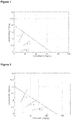
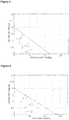
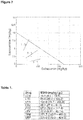
- FIGS 1 to 7 and tables 2 to 4 show interactions between Lacosamide and various AEDs to illustrate the design of the interaction studies described herein.
- the aim of this study was to investigate potential interactions between LCM and a second AED; the combinations of LCM and certain conventional AEDs (phenytoin (PHT), carbamazepine (CBZ), valproate (VPA), lamotrigine (LTG) or between LCM and novel AEDs, topiramate (TPM), gabapentin (GBP) or levetiracetam (LEV)) in the 6Hz seizure model in mice using the isobolographic analysis are shown to illustrate the design of the lacosamide interaction studies but do as such not form part of the present claims.According to Deckers et al.
- mice adult male CBA mice (University Odessa) weighing between 20 and 28 g.
- the mice were kept in colony cages with free access to food and water, under standard laboratory conditions with natural light-dark cycle. After 1 week adaptation to laboratory conditions, the animals were randomly assigned to experimental groups consisting of ten mice. Each mouse was used only once. All experiments were performed between 9 am and 4 pm. Procedures involving animals and their care were conducted in accordance with current European Community regulations.
- Fresh drug solutions were prepared ex tempore on each day of experimentation. These pretreatment times before testing of AEDs were based on information about their biologic activity from the literature (Barton et al., 2001; Luszczki et al., 2006).
- Psychomotor seizures were induced via corneal stimulation (6Hz, 32 mA, 0.2 ms rectangular pulse width, 3 s duration) using a Grass S48 stimulator (Barton et al., 2001).
- a drop of 0.5% tetracaine was applied to the eyes of all animals. Prior to the placement of corneal electrodes a drop of 0.9% saline was placed on the eyes. Animals were manually restrained and released immediately following the stimulation and observed for the presence or absence of seizure activity, being characterized by stun, forelimb clonus twitching of the ibrissae and Straub-tail. Protection was defined as the absence of a seizure (Barton et al., 2001). In control groups (with vehicle injection) all animals exhibited seizures. The protective efficacy of AEDs was determined as their ability to protect 50% of mice against 6 Hz seizure and expressed as respective median effective dose (ED50) values.
- ED50 median effective dose
- ED50 values were calculated by computer probit analysis (Litchfield, Wilcoxon, 1949) and subsequently transformed into standard errors of mean (SEM).
- the impaired motor function was quantified by the rotarod test in mice according to Dunham and Miya (1957).
- the rotarod test was undertaken by use of a rod of 3 cm diameter, rotating at constant speed of 6 rpm.
- an acute neurological deficit (adverse effects produced by AEDs) was indicated by the inability of the animals to maintain their equilibrium for at least 120 s on the rotating rod.
- the dose ratio assessed in this model was always 1:1. For comparison, each AED was tested alone at its ED50 and 50% of its ED50 in the 6Hz model.
- the isobolographic analysis is based on a comparison of equieffective drug doses.
- interactions between drugs, as regards their anticonvulsant efficacy against 6 Hz seizure test were evaluated isobolographically according to the procedure elaborated by Tallarida (1992); Porreca et al. (1990); Luszczki et al. (2006).
- the experimental (EDmix) and theoretical additive (EDadd) were determined from the dose-response curves of combined drugs (Tallarida et al., 1997).
- ED50 is defined as a dose of a drug protecting 50% of the animals against 6 Hz-induced seizures.
- ED50mix is an experimentally determined total dose of the mixture of two component drugs, which were administered in the fixed-ratio combination sufficient for a 50% protective effect.
- ED50add represents a total additive dose of two drugs (calculated from the line of additivity), theoretically providing 50% protection against seizures.
- the respective 95% confidence limits of EDmix were calculated according to Litchfield and Wilcoxon (1949), and these of EDadd according to Tallarida and Murray (1987), and subsequently transformed to SEM, according to a procedure described in detail by Luszczki, et al. (2003).
- index is larger than 1.3, this indicate an antagonistic effect, and if the index is in between this indicates purely additive interaction (Luszczki et al., 2003; Kerry et al., 1975; Bourgeois, Wad, 1984, 1988; Bourgeois, 1988).
- a protective index can be calculated by dividing a given TD50, obtained in the rotorod test, by the respective ED50 determined in the 6 Hz seizure test.
- the PI is considered a satisfactory margin of safety between AED doses and doses of AEDs exerting sedative, ataxic, or other neurotoxic side effects ( Loscher, W., Nolting, B., The role of technical, biological and pharmacological factors in the laboratory evaluation of anticonvulsant drugs. IV. Protective indices, Epilepsy Res (1991), 9:1-10 ).
- a benefit index is defined as a quotient of PI mix and PI add of respective fixed-ratio combinations, obtained directly from the isobolographic analysis.
- PI mix is a protective index experimentally determined
- PI add is a protective index theoretically calculated from the lines of additivity in the 6 Hz seizure and the rotorod test.
- BI provides the rationale for combining the respective AEDs in clinical practice if its value is > 1.3, whereas BI ⁇ 0.7 indicates unfavourable combinations of AEDs ( Luszczki JJ, Borowicz KK, Swiader M, Czuczwar SJ, Interactions between oxcarbazepine and conventional antiepileptic drugs in the maximal electroshock test in mice: an isobolographic analysis, Epilepsia (2003), 44:489-99 ).
- mice All studied AEDs (LCM, LTG, VPA, CBZ, PHT, LEV, TPM, GBP) produced dose-dependent anticonvulsant effects against 6 Hz seizure in mice.
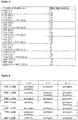
- the ED50 values for the drugs administered alone are presented in Table 1.
- Table 4 summarizes the types of interactions observed between 7 drug pairs with respect to 6 Hz-induced seizures test.
- Lacosamide is the drug with the highest potency in this model when compared to the other tested AEDs. In contrast to the sodium channel modulators phenytoin, lamotrigine and carbamazepine it did not impair rotarod performance at pharmacological doses.
- the 6Hz test is regarded a model for treatment resistant seizures e.g. due to the observation that LEV provides complete protection in this model despite being inactive in a variety of other models (Gower et al., 1993; Klitgaard et al., 1998; Löscher, Honack, 1993; Patsalos, 2004).
- Our data confirm the differences in the pharmacological profile of the MES and 6 Hz seizure models.
- Barton et al. (2001) used the immediate early gene c-Fos as a marker of seizure induced neuronal activation and showed that 6 Hz induced seizures result in a clearly different pattern of neuronal activation than that observed following maximal electroshock or PTZ induced seizures.
- Duncan and Kohn (2004) showed by using the 2-deoxy glucose technique that this specific pattern of neuronal activation was attenuated by lacosamide while the drug had no effect on basal patterns.
- LCM acts synergistically with LEV and CBZ across all examined fixed ratios.
- LTG, TPM and GBP in combination with LCM were similarly associated with synergistic interactions and showed tendency towards synergistic interactions at fixed ratios of 1:3 ( Figure 1 , Figure 6 and Figure 7 ).
- the interactions between LCM and VPA or PHT were additive for protection against 6 Hz-induced seizures ( Figure 2 , Figure 4 ).
- the dose ratio may be critical for the final outcome of type of an interaction between AEDs. This is evident from the present result that in some dose ratios, the interactions were simply additive (e.g. LCM+GBP, 1:3) and in other dose ratios were therapeutically synergistic. Results from other studies also point to this problem (Gordon et al., 1993; Borowicz et al., 2000). For instance, Borowicz et al. (2002) by using the MEStest in mice it has been observed that GBP in combination with CBZ showed an additive interaction at a dose ratio of 1:1 but for many others very significant synergistic interactions. From this point of view this must be considered by the clinicians when introducing drug combinations in epilepsy patients.
Landscapes
- Health & Medical Sciences (AREA)
- Life Sciences & Earth Sciences (AREA)
- General Health & Medical Sciences (AREA)
- Chemical & Material Sciences (AREA)
- Medicinal Chemistry (AREA)
- Veterinary Medicine (AREA)
- Public Health (AREA)
- Pharmacology & Pharmacy (AREA)
- Animal Behavior & Ethology (AREA)
- Epidemiology (AREA)
- Engineering & Computer Science (AREA)
- Bioinformatics & Cheminformatics (AREA)
- Immunology (AREA)
- Gastroenterology & Hepatology (AREA)
- Proteomics, Peptides & Aminoacids (AREA)
- General Chemical & Material Sciences (AREA)
- Organic Chemistry (AREA)
- Chemical Kinetics & Catalysis (AREA)
- Nuclear Medicine, Radiotherapy & Molecular Imaging (AREA)
- Biomedical Technology (AREA)
- Neurology (AREA)
- Neurosurgery (AREA)
- Pain & Pain Management (AREA)
- Mechanical Engineering (AREA)
- Pharmaceuticals Containing Other Organic And Inorganic Compounds (AREA)
- Acyclic And Carbocyclic Compounds In Medicinal Compositions (AREA)
- Medicines That Contain Protein Lipid Enzymes And Other Medicines (AREA)
- Medicinal Preparation (AREA)
Description
- The present application claims the priorities of
US 60/813.967 EP 06 021 470.7 of 12 October 2006 EP 06 021 469.9 of 12 October 2006 EP 06 024 241.9 of 22 November 2006 - The present invention is directed to a pharmaceutical composition comprising (a) lacosamide and (b) brivaracetam wherein this composition has a synergistic effect on the prevention, alleviation or/and treatment of epileptic seizures as compared to the effect of the compounds (a) or (b) given alone.
- Certain peptides are known to exhibit central nervous system (CNS) activity and are useful in the treatment of epilepsy and other CNS disorders. These peptides are described in the
U.S. Patent No. 5,378,729 and inU.S. Patent No. 5,773,475 . -
EP 1 541 138 is directed to the use of a class of peptide compounds for treating status epilepticus or related conditions, such as acute repetitive seizures and seizure clusters.EP 1 541 138 - Seizures are the consequence of a paroxysmal brain dysfunction related to excessive neuronal activity that leads to an alteration of behaviour or consciousness. Epilepsy represents the recurrence of two or more unprovoked seizures and represents a chronic brain disease.
- There are two major types of seizures: partial or focal eizures, which originate in a location in the brain, but can spread in the course of the event; and generalized seizures, which can affect both hemispheres simultaneously. Partial seizures are manifested in multiple ways depending on the area that is affected (confusion, automatic body movements, hallucinations, etc), and if they spread in the brain can end up in a generalized tonic-clonic event (a convulsion). There are several types of generalized seizures: convulsive (tonic-clonic, tonic, clonic, myoclonic) and non-convulsive (absences, atonic). Typically all kinds of seizures last a few minutes, usually less than five minutes. Convulsive seizures, particularly tonic-clonic events, typically result in the loss of consciousness.
- Status epilepticus (SE) has been defined as a seizure that lasts for 30 or more minutes, or a series of consecutive seizures that occur for 30 or more minutes during which the subject does not completely recover consciousness. Many clinicians and many recent major research articles, however, consider a patient to be in SE if seizures last more than 5 minutes. There are two main types of SE: generalized SE, which can be convulsive or non-convulsive, and focal SE. Generalized convulsive SE is the most severe type and is associated with high morbidity and mortality. SE can occur in patients with a prior diagnosis of epilepsy. However, the onset of SE is more frequent in subjects without previous epilepsy and is often related to a severe and acute brain disease (for example, encephalitis or stroke) or trauma. In addition to these, a variety of conditions including hypoglycemia, hyperthermia, drug overdose and alcohol or drug withdrawal can be a cause of SE. Thus, anticonvulsant activity of a compound or combination, for example in models for or patients with complex partial seizures, is not necessarily predictive for activity against SE. SE is not only a life threatening disease but also causes neuronal cell loss andepileptogenesis.
- In spite of remarkable medical advances in the past 50 years, progress in epilepsy therapy has been quite inadequate for a large number of patients. The worldwide prevalence of epilepsy is estimated at between 0.3 and 0.6% (Sander et al., 1987; Schmidt et al., 1986; Loiseau, 1988). About 20-30% of patients suffer from intractable epilepsy or severe side effects despite early treatment and an optimum daily dosage of an adequate antiepileptic drug (Schmidt, 1992; Kramer, 1997; Brodie, 2001). In such cases, an alternative monotherapy may control the seizures; however, a complete suppression of convulsive attacks can be seldom achieved with an AED, even if it is administered at the maximally prescribed dose (Kramer, 1997). When monotherapy with antiepileptic drugs fails, combination therapy is tried in an attempt to improve effectiveness by improving efficacy, tolerability or both.
- Lacosamide (LCM, R-2-acetamido-N-benzyl-3-methoxypropionamide) is a member of a series of functionalized amino acid with anticonvulsant activity. The anticonvulsant activity has been shown in large clinical studies and in animal models of epilepsy, including maximal electroshock seizure [MES], the 6 Hz refractory seizure model, and sound-induced seizure in Frings mice (Bialer et al., 2001, 2002; Hovinga 2003). Further, LCM is active against refractory self-sustaining status epilepticus. In addition to the activity of the drug in electrically induced seizures, it is effective against cobalt- homocysteine- and lithium-pilocarpine-induced status epilepticus (Bialer et al., 2001, 2002).
- Initially there was a suggestion that LCM possessed affinity for the strychnine-insensitive glycine site of the NMDA receptor, however, further study suggest that this might not be a direct effect by which the drug exerts its anticonvulsant activity (Bialer et al., 2001, 2002). In receptor-binding studies (on more than 100 different sites), neither LCM nor its metabolites bind to a large variety of neurotransmitter receptors or ion channels (Errington et al. 2006). In cell/tissue culture, LCM had no effects on NMDA- evoked currents or at voltage gated sodium channels. In mouse cortical neurons, the drug increased GABA currents and inhibited glutamate transmission indirectly, most likely through non-specific mechanism (Bialer et al., 2002). Recent data indicate that LCM has a dual mode of action: it enhances slow inactivation of voltage-gated sodium channels and modulates collapsing response mediator protein CRMP-2.
- The preclinical profile suggests that LCM will be useful in the treatment of partial onset and generalized tonic-clonic seizures. New antiepileptic drugs (AED) such as LCM are initially licensed as add-on treatment, often with no evidence to suggest which existing therapies they should be employed with. In addition, approximately 30 % of patients with epilepsy are prescribed polytherapy regimens. There is, thus, a clear need to develop a rational basis for AED polytherapy, i.e. to develop anticonvulsant compositions with improved effectiveness by improving efficacy, tolerability, or both. Effective AED combinations were empirically evaluated in patients with intractable seizures; however, such evaluations were often accompanied with deleterious adverse-effect reactions (Warner et al., 1992; Luszczki et al., 2003). Thus, preclinical models are used as an alternative for the evaluation of pharmacodynamic drug interactions.
- Pharmaceutical compositions comprising (a) lacosamide and (b) at least one further compound for the prevention, alleviation or/and treatment of epileptic seizures wherein the effect of this composition in the prevention, alleviation or/and treatment of epileptic seizures is synergistic as compared to the effect of the compounds (a) or (b) given alone have not been reported previously. Thus, the present invention concerns a pharmaceutical composition comprising (a) lacosamide or a pharmaceutically acceptable salt thereof, and (b) at least one further compound for the prevention, alleviation or/and treatment of epileptic seizures optionally together with a pharmaceutically acceptable carrier, diluent or/and adjuvant. The effect of this composition in the prevention, alleviation or/ and treatment of epileptic seizures may be synergistic as compared to the effect of the compounds (a) or (b) given alone.
- The term "synergistic effect on the prevention, alleviation or/and treatment of epileptic seizures" refers to an effect of the pharmaceutical composition according to the invention on the prevention, alleviation or/and treatment of epileptic seizures that is more than additive as compared to the effect of the compounds (a) or (b) given alone.
- The synergistic effect of the present invention may be defined as asynergism of the combination of compounds (a) and (b) in a therapeutically desired effect (synergistic therapeutic effect) in the treatment of epileptic seizures.
- The synergistic effect of the present invention may also be defined as a synergism of the combination of compounds (a) and (b) in reduction of adverse side effect, which may be smaller in the combination of compounds (a) and (b) as compared to the side effects of compounds (a) and (b) given alone.
- According to Deckers et al. (2000) an isobolographic method used to evaluate interactions among AEDs is considered to be the optimal method for detecting synergy, additivity or antagonism among AEDs in animal models of epilepsy, such as the 6Hz seizure model in mice. For isobolographic analysis, the experimental (EDmix) and theoretical additive (EDadd) ED50 values are determined from the dose-response curves of combined drugs. ED50 is defined as a dose of a drug protecting 50% of the animals against 6 Hz-induced seizures. ED50mix is an experimentally determined total dose of the mixture of two component drugs, which were administered in the fixed- ratio combination sufficient for a 50% protective effect. Conversely, ED50add represents a total additive dose of two drugs (calculated from the line of additivity), theoretically providing 50% protection against seizures.
- The term "interaction index □" refers to the ratio of ED50mix/ED50add. This ratio seems to be a good describer of the strength of interaction between two AEDs in isobolographic analysis (Luszczki et al., 2003; Berenbaum, 1989; Tallarida et al., 1999; Tallarida, 2001, 2002). If ED50mix = ED50add, then α = 1. Small derivations of α from 1 may not be considered as significant. If α is smaller than 0.7, this may indicate a synergistic effect. If the index is larger than 1.3, this may indicate an antagonistic effect, and if the index is in between this may indicate purely additive interaction (Luszczki et al., 2003; Kerry et al., 1975; Bourgeois, Wad, 1984, 1988; Bourgeois, 1988).
- In a preferred embodiment, the synergistic effect of the pharmaceutical composition of the present invention is defined as a value of the interaction index of the composition of up to about 0.7, preferably of up to about 0.6, more preferably of up to about 0.5, wherein α > 0. Examples for the interaction index are about 0.1, about 0.2, about 0.3, about 0.4, about 0.5, about 0.6, and about 0.7.
- A protective index (PI) can be calculated by dividing a given TD50, determined in an animal model quantifying toxic effects of anticonvulsants, by the respective ED50 determined in an animal model for epileptic seizures. The PI is considered a satisfactory margin of safety between AED doses and doses of AEDs exerting sedative, ataxic, or other neurotoxic side effects (Löscher et al., 1991). PImix is a protective index experimentally determined, and PIadd is a protective index theoretically calculated from the lines of additivity in the epileptic seizure model and the model quantifying toxic effects.
- The term "benefit index (BI)" refers to a quotient of PImix and PIadd of respective fixed-ratio combinations, obtained directly from the isobolographic analysis. BI unequivocally estimates advantages of the combination of two drugs applied in various fixed-ratio combinations. Moreover, BI may provide the rationale for combining the respective AEDs in clinical practice if its value is > 1.3, whereas BI < 0.7 may indicate unfavourable combinations of AEDs (Luszczki et al., 2003, Epilepsia 44: 489).
- In another preferred embodiment, the synergistic effect of the pharmaceutical composition of the present invention is defined as a value of the benefit index BI of the composition of at least about 1.3, preferably of at least about 1.4, more preferably of at least about 1.5. Examples for the benefit index BI are about 1.3, about 1.4, about 1.5, about 1.6, about 1.7, about 1.8, about 1.9, and about 2.0.
- The term "fixed-dose ratio of compound (b): compound (a) of 1:1, calculated on the ED50 values of the individual compounds (b) and (a)" refers to compositions comprising both compound (b) and compound (a) in a dose corresponding to 50 % of the respective ED50 dose of the individual compounds (b) and (a) or a multiple of this fixed-dose ratio. Correspondingly, a "fixed-dose ratio of compound (b): compound (a) of 3:1, calculated on the ED50 values of the individual compounds (b) and (a)" refers to compositions comprising compound (b) in a dose corresponding to 75 % of the respective ED50 dose and compound (a) in a dose corresponding to 25 % of the respective ED50 dose of compound (a) or a multiple of this fixed-dose ratio.
- In general, the "fixed-dose ratio of compound (b): compound (a) of X:Y, calculated on the ED50 values of the individual compounds (b) and (a)" refers to compositions comprising both compound (b) and compound (a), wherein the dose of compound (b) corresponds to X·ED50/(X+Y) of compound (b), and the dose of compound (a) corresponds to Y·ED50/(X+Y) of compound (a), or a multiple of this fixed dose ratio.
- Thus, a composition comprising both compound (b) and compound (a) in a fixed dose ratio of at least X:Y comprises at least X/(at least X+Y) parts of compound (b), wherein 1 part is an amount corresponding to the ED50 of compound (b), and Y/(at least X+Y) parts of compound (a), wherein 1 part is an amount corresponding to the ED50 of compound (a), or a multiple of this fixed dose ratio. The term "multiple" refers to a composition comprising a larger or a smaller amount of compounds (a) and (b) with reference to the amount as defined by the ED50 values, while maintaining the fixed dose ratio. A composition comprising a multiple of the fixed dose ratio as indicated above may thus comprise at least 0.1 times the fixed dose ratio, at least 0.2 times, at least 0.5 times, at least 2 times, at least 5 times, or at least 10 times the fixed dose ratio, or/and at the maximum 100 times the fixed dose ratio, at the maximum 50 times, or at the maximum 20 times the fixed dose ratio.
- In yet another preferred embodiment, compound (b) and compound (a) are present in the pharmaceutical composition of the present invention in a fixed- dose ratio of compound (b): compound (a) of about 1:6 to about 6:1, preferably of about 1:3 to about 6:1, more preferably of about 1:1 to about 6:1, even more preferably of about 3:1 to about 6:1, wherein the fixed-dose ratio is calculated on the ED50 values of the individual compounds (b) and (a). Examples for fixed-dose ratios of compound (b): compound (a) according to the present invention are fixed-dose ratios of about 1:6, about 1:3, about 1:1, about 3:1, and about 6:1. Further examples for fixed-dose ratios according to the present invention are fixed-dose ratios of about 1:5, about 1:4, about 1:2, about 2:1, about 4:1, and about 5:1.
- In a preferred embodiment, compound (b) and compound (a) are present in the pharmaceutical composition of the present invention in a fixed-dose ratio of compound (b): compound (a) of at least about 1:6, at least about 1:3, at least about 1:1, more preferably at least about 3:1, wherein the fixed-dose ratio is calculated on the ED50 values of the individual compounds (b) and (a). Examples for fixed-dose ratios of compound (b): compound (a) according to this more preferred embodiment of the present invention are fixed-dose ratios of about 1:1, about 2:1, about 3:1, about 4:1, about 5:1, and about 6:1.
- In yet another preferred embodiment, compound (b) and compound (a) are present in the pharmaceutical composition of the present invention in a fixed- dose ratio of compound (b): compound (a) of at the maximum about 6:1, wherein the fixed-dose ratio is calculated on the ED50 values of the individual compounds (b) and (a).
- The skilled person may determine the ED50 values by methods known in the art. It is preferred that the ED50 values are determined by preclinical or/and clinical trials. Published ED50 values may also be used. Tables 5 and 6 disclose specific ED50 values obtained in various models of the rat and the mouse. A person skilled in the art knows that in a particular model, among different species, ED50 values show a variation by a factor of up to 5 or even larger.
- In particular, the ED50 of lacosamide is in a range of at least about 0.5mg/kg up to about 30 mg/kg body weight p.o. or i.p. More particularly, the ED50 of lacosamide is about 10 mg/kg body weight i.p.
- Another particularly preferred pharmaceutical composition of the present invention comprises brivaracetam and lacosamide or/and a pharmaceutically acceptable salt thereof, optionally together with a pharmaceutically acceptable carrier, diluent or/and adjuvant.
- This particularly preferred composition may have a synergistic effect in the prevention, alleviation or/and treatment of epileptic seizures, as compared to the effect of lacosamide and brivaracetam alone, wherein epileptic seizures are as defined herein.
- In this particularly preferred composition, brivaracetam and lacosamide may be present in a fixed-dose ratio of brivaracetam : lacosamide of at least about 1:3, at least about 1:1, or at least about 3:1, wherein the fixed-dose ratio is this particularly preferred composition, the fixed-dose ratio of brivaracetam : lacosamide may be at the maximum about 6:1. The fixed dose ratio may be calculated on the basis of a brivaracetam ED50 known in the art or/and on the basis of a lacosamide ED50 value disclosed herein or known in the art.
- In the particularly preferred compositions described herein, the synergistic effect may also be defined in terms of the interaction index a, as described herein, or in terms of the benefit index, as described herein.
- The particularly preferred pharmaceutical compositions described herein may preferably be prepared for i.v. or oral administration.
- In yet another embodiment of the present invention, the synergistic effect of the pharmaceutical composition of the present invention is defined as a reduced adverse effect of the combination of compound (a) and compound as compared with the compounds (a) and (b) given alone.
- In a preferred embodiment, the epileptic seizures are selected from partial seizures with and without secondary generalisation, primarily generalised seizures, and status epilepticus.
- Yet another aspect of the present invention is the use of the pharmaceutical composition of the invention for the preparation of a medicament for the prevention, alleviation or/and treatment of epileptic seizures, wherein epileptic seizures are as defined herein.
- Yet another aspect of the present invention is a method for the prevention, alleviation or/and treatment of epileptic seizures, wherein epileptic seizures are as defined herein, comprising administering an effective amount of the pharmaceutical composition of the invention to a subject in need thereof.
- Lacosamide is well tolerated, which is an advantage over other commonly used therapeutics for treatment of epileptic seizures.
- Lacosamide and brivaracetam may be formulated in one pharmaceutical preparation (single dosage form) for administration at the same time or may be formulated in two or more distinct preparations (separate dosage forms), which separate dose forms may be administered simultaneously or/and subsequently. Thedistinct preparations in the separate dosage forms may be administered by the same route or by different routes.
- The pharmaceutical composition of the present invention may thus comprise a single dosage form comprising lacosamide and brivaracetam.
- The pharmaceutical composition of the present invention may also comprise a separate dosage form comprising
- (i) a first composition comprising lacosamide-and
- (ii) a second composition comprising brivaracetam.
- In yet another preferred embodiment of the present invention, the second composition (ii) may be a commercially available composition.
- Separate dosage forms can optionally be co-packaged, for example in a single container or in a plurality of containers within a single outer package, or co-presented in separate packaging ("common presentation"). As an example of co-packaging or common presentation, a kit is contemplated comprising, in separate containers, lacosamide and brivaracetam. In another example, lacosamide and brivaracetam are separately packaged and available for sale independently of one another, but are co-marketed or co-promoted for use according to the invention. The separate dose forms may also be presented to a subject separately and independently, for use according to the invention.
- The pharmaceutical composition of the present invention is preferably prepared for administration in mammals, preferably in humans.
- The pharmaceutical composition of the present invention comprising (a) lacosamide and (b) brivaracetam may be prepared for the prevention, alleviation or/and treatment of epileptic seizures, as defined herein.
- The administration interval of lacosamide and brivaracetam may depend on the dosage forms. Lacosamide may be administered first, or brivaracetam may be administered first.
- It is preferred that lacosamide is substantially enantiopure. As used herein, the term "substantially enantiopure" refers to a content of the R enantiomer of at least 99.5%. This corresponds to an enantiomeric excess (ee) of 99%. The respective quantities of R and S enantiomer may be determined by chiral column chromatography, e.g. by HPLC with "ChiralPak" as chiral, stationary phase.
- The manufacture of compounds utilized in the present invention is described in
U.S. Patent Nos. 5,378,729 and5,773,475 , and in the international applicationPCT/EP 2005/010603 - These pharmaceutically acceptable salts have also therapeutic efficacy. These salts include salts of inorganic acids such as hydrochloric, hydroiodic, hydrobromic, phosphoric, metaphosphoric, nitric acid and sulfuric acids as well as salts of organic acids, such as tartaric, acetic, citric, malic, benzoic, perchloric, glycolic, gluconic, succinic, aryl sulfonic, (e.g., p-toluene sulfonic acids, benzenesulfonic), phosphoric, malonic, and the like.
- The physician will determine the dosage of the present therapeutic combinations which will be most suitable and it will vary with the form of administration and the particular compound chosen, and furthermore, it will vary with the patient under treatment, the age of the patient, the type of malady being treated. He will generally wish to initiate treatment with small dosages substantially less than the optimum dose of the combinations and increase the dosage by small increments until the optimum effect under the circumstances is reached. When the composition is administered orally, larger quantities of the active agent will be required to produce the same effect as a smaller quantity given parenterally. The combinations of the present invention are useful in the same manner as comparable therapeutic agents and the dosage level is of the same order of magnitude as is generally employed with these other therapeutic agents.
- In a preferred embodiment, lacosamide is administered in amounts ranging from about 1 mg to about 100 mg per kilogram of body weight per day, more preferably in amounts ranging from about 1 mg to about 10 mg per kilogram of body weight per day. This dosage regimen may be adjusted by the physician to provide the optimum therapeutic response. Patients in need thereof may be treated with doses of lacosamide of at least 50 mg/day, preferably of at least 200 mg/day, more preferably of at least 300 mg/day, still more preferably of at least 400 mg/day and most preferably of at least 600 mg/day. Generally, a patient in need thereof may be treated with doses at a maximum of 6 g/day, more preferably a maximum of 1 g/day, still more a maximum of 800 mg/day, and most preferably a maximum of 600 mg/day.
- In some cases, however, higher or lower doses may be needed.
- In a further preferred embodiment, brivaracetam is administered in amounts ranging from about 100 mg/ day to about 4 g/day.
- In another preferred embodiment, the daily doses are increased until a predetermined daily dose is reached which is maintained during the further treatment.
- In yet another preferred embodiment, several divided doses may be administered daily. For example, three doses per day may be administered, preferably two doses per day. It is more preferred to administer a single dose per day.
- In yet another preferred embodiment, an amount of lacosamide may be administered which results in a plasma concentration of 0.1 to 15 µg/ml (trough) and 5 to 18.5 µg/ml (peak), calculated as an average over a plurality of treated subjects, intravenous administration in emergency treatment might result in peak plasmid levels of up to 30 µg/ml.
- The combinations of lacosamide and brivaracetam may be administered in a convenient manner, such as by oral, intravenous (where water soluble), intramuscular, intrathecal, rectal (e.g. suppository, gel, liquid, etc.) or subcutaneous routes. Oral, rectal or/and i.v. administration is preferred. In emergency treatment, i.v. administration is most preferred.
- The pharmaceutical composition of the present invention may be prepared for the treatment regimen as described above, in particular for the treatment with doses as described above, to effect plasma concentrations as described above, for administration periods or/and administration routes as specified in the embodiments of the present invention as described above.
- The combinations of lacosamide and brivaracetam may be orally administered, for example, with an inert diluent or with an assimilable edible carrier, or it may be enclosed in hard or soft shell gelatin capsules, or it may be compressed into tablets, or it may be incorporated directly into the food of the diet. For oral therapeutic administration, the combinations of lacosamide and brivaracetam may be incorporated with excipients and used in the form of ingestible tablets, buccal tablets, troches, capsules, elixirs, suspensions, syrups, wafers, and the like. Such compositions and preparations should contain at least 1 % of lacosamide.The percentage of the compositions and preparations may, of course, be varied and may conveniently be between about 5 to about 80 % of the weight of the unit. The amount of combinations of lacosamide and brivaracetam is such that a suitable dosage will be obtained. Preferred compositions or preparations according to the present invention contains between about 10 mg and 6 g active compound of lacosamide.
- The tablets, troches, pills, capsules and the like may also contain the following: A binder such as gum tragacanth, acacia, corn starch or gelatin; excipients such as dicalcium phosphate; a disintegrating agent such as corn starch, potato starch, alginic acid and the like; a lubricant such as magnesium stearate; and a sweetening agent such as sucrose, lactose or saccharin may be added or a flavoring agent such as peppermint, oil of wintergreen, or cherry flavoring. When the dosage unit form is a capsule, it may contain, in addition to materials of the above type, a liquid carrier.
- Various other materials may be present as coatings or otherwise modify the physical form of the dosage unit. For instance, tablets, pills, or capsules may be coated with shellac, sugar or both. A syrup or elixir may contain the active compounds, sucrose as a sweetening agent, methyl and propylparabens as preservatives, a dye and flavoring such as cherry or orange flavor. Of course, any material used in preparing any dosage unit form should be pharmaceutically pure and substantially non-toxic in the amounts employed. In addition, the active compound may be incorporated into sustained-release preparations and formulations. For example, sustained release dosage forms are contemplated wherein the active ingredient is bound to an ion exchange resin which, optionally, can be coated with a diffusion barrier coating to modify the release properties of the resin.
- The pharmaceutical composition may also be administered parenterally or intraperitoneally. Dispersions can also be prepared in glycerol, liquid, polyethylene glycols, and mixtures thereof and in oils. Under ordinary conditions of storage and use, these preparations contain a preservative to prevent the growth of microorganisms.
- The pharmaceutical forms suitable for injectable use include sterile aqueous solutions (where water soluble) or dispersions and sterile powders for the extemporaneous preparation of sterile injectable solutions or dispersions. In all cases the form must be sterile and must be fluid to the extent that easy syringability exists. It must be stable under the conditions of manufacture and storage and must be preserved against the contaminating action of microorganisms such as bacteria and fungi. The carrier can be a solvent or dispersion medium containing, for example, water, ethanol, polyol (for example, glycerol, propylene glycol, and liquid polyethylene glycol, and the like), suitable mixtures thereof, and vegetable oils. The proper fluidity can be maintained, for example, by the use of a coating such as lecithin, by the maintenance of the required particle size in the case of dispersions and by the use of surfactants. The prevention of the action of microorganisms can be brought about by various antibacterial and antifungal agents, for example, parabens, chlorobutanol, phenol, sorbic acid, thimerosal, and the like. In many cases, it will be preferable to include isotonic agents, for example, sugars or sodium chloride. Prolonged absorption of the injectable compositions can be brought about by the use in the compositions of agents delaying absorption, for example, aluminium monostearate and gelatin.
- Sterile injectable solutions are prepared by incorporating the active compounds in the required amount in the appropriate solvent with various of the other ingredients enumerated above, as required, followed by filtered sterilization. Generally, dispersions are prepared by incorporating the various sterilized active ingredient into a sterile vehicle which contains the basic dispersion medium and the required other ingredients from those enumerated above. In the case of preparing sterile powders for the manufacture of sterile injectable solutions, the preferred methods of preparation are vacuum drying, or freeze-drying optionally together with any additional desired ingredient.
- As used herein, "pharmaceutically acceptable carrier" includes any and all solvents, dispersion media, coatings, antibacterial and antifungal agent, isotonic and absorption delaying agents for pharmaceutical active substances as well known in the art. Except insofar as any conventional media or agent is incompatible with the active ingredient, its use in the therapeutic compositions is contemplated. Supplementary active ingredients can also be incorporated into the compositions.
- It is especially advantageous to formulate parenteral compositions in dosage unit form or ease of administration and uniformity of dosage. Dosage unit form as used herein refers to physically discrete units suited as unitary dosages for the mammalian subjects to be treated; each unit containing a predetermined quantity of active material calculated to produce the desired therapeutic effect in association with the required pharmaceutical carrier. The specifics for the novel dosage unit forms of the invention are dictated by and directly dependent on (a) the unique characteristics of the active material and the particular therapeutic effect to be achieved, and (b) the limitations inherent in the art of compounding such as active material for the treatment of disease in living subjects having a diseased condition in which bodily health is impaired as herein disclosed in detail.
- The principal active ingredients are compounded for convenient and effective administration in effective amounts with a suitable pharmaceutically acceptable carrier in dosage unit form as hereinbefore described. A unit dosage form can, for example, contain the principal active compound (a) in amounts ranging from about 10 mg to about 6 g. Expressed in proportions, the active compound is generally present in from about 1 to about 750 mg/ml of carrier. In the case of compositions containing supplementary active ingredients, the dosages are determined by reference to the usual dose and manner of administration of the said ingredients.
- As used herein the term "patient" or "subject" refers to a warm blooded animal, and preferably mammals, such as, for example, cats, dogs, horses, cows, pigs, mice, rats and primates, including humans. The preferred patient is a human.
- The term "treat" refers to either relieving the pain associated with a disease or condition, to curing or alleviating the patient's disease or condition.
- The compounds of the present invention are administered to a patient suffering from the aforementioned type of disorder in an effective amount. These amounts are equivalent to the therapeutically effective amounts described herein above.
- The present invention is further illustrated by the following example, figures, and tables.
-
Figures 1 to 7 and tables 2 to 4 show interactions between Lacosamide and various AEDs to illustrate the design of the interaction studies described herein. -
Figure 1 : Isobologram showing interactions between Lamotrigine and Lacosamide for three fixed-ratio combinations in the 6 Hz induced seizure model in mice. Median effective dose (ED50) values for LTG and LCM are placed on the X- and Y-axes, respectively. The straight line connecting these both ED50 values represents the theoretic line of additivity for a continuum of different fixed-dose ratios. The solid points depict the experimentally derived ED50mix values (with 95% confidence limits as the error bars) for total dose expressed as the proportion of LTG and LCM that produce a 50% effect. -
Figure 2 : Interactions between Valproate and Lacosamide (see details inFigure 1 ) -
Figure 3 : Interactions between Carbamazepine and Lacosamide (see details inFigure 1 ) -
Figure 4 : Interactions between Phenytoin and Lacosamide (see details inFigure 1 ) -
Figure 5 : Interactions between Levetiracetam and Lacosamide (see details inFigure 1 ) -
Figure 6 : Interactions between Topiramate and Lacosamide (see details inFigure 1 ) -
Figure 7 : Interactions between Gabapentin and Lacosamide (see details inFigure 1 ) - Table 1: Effects of LCM and conventional antiepileptic drugs against 6 Hz
- Table 2: Isobolographic characterization of the interaction between LCM and various AEDs in the 6 Hz seizures tests in mice.
- Table 3: The effects of various AEDs administered alone and in combination with lacosamide on motor coordination in the rotarod test in mice. The results of the rotarod test are expressed as a percentage of animals showing motor co-ordination impairment. Each group consisted of 10 animals. For the testing of each AED alone at its ED50, each group consisted of 20 animals. The Fisher's exact test was used for statistical comparisons.
- Table 4: Summary of combined interaction results for anticonvulsant drug pairs obtained in 6 Hz-induced seizures model in mice.
- Table 5: Profile of anticonvulsant activity and minimal toxicity of lacosamide in mice and rats.
- Table 6: Profile of anticonvulsant activity and minimal toxicity of prototype anticonvulsants in mice and rats.
- The aim of this study was to investigate potential interactions between LCM and a second AED; the combinations of LCM and certain conventional AEDs (phenytoin (PHT), carbamazepine (CBZ), valproate (VPA), lamotrigine (LTG) or between LCM and novel AEDs, topiramate (TPM), gabapentin (GBP) or levetiracetam (LEV)) in the 6Hz seizure model in mice using the isobolographic analysis are shown to illustrate the design of the lacosamide interaction studies but do as such not form part of the present claims.According to Deckers et al. (2000) an isobolographic method used to evaluate interactions among AEDs is considered to be the optimal method for detecting synergy, additivity or antagonism among AEDs in animal models of epilepsy. The adverse effects of such combinations were evaluated in the rotarod test.
- The experiments were performed on adult male CBA mice (University Odessa) weighing between 20 and 28 g. The mice were kept in colony cages with free access to food and water, under standard laboratory conditions with natural light-dark cycle. After 1 week adaptation to laboratory conditions, the animals were randomly assigned to experimental groups consisting of ten mice. Each mouse was used only once. All experiments were performed between 9 am and 4 pm. Procedures involving animals and their care were conducted in accordance with current European Community regulations.
- The following AEDs were used in this study: LCM, LTG, VPA, CBZ, PHT, LEV, TPM, GBP donated by SCHWARZ Pharma. All drugs were dissolved in 0.5% methylcellulose and administered intraperitoneally (i. p.) in a volume of 0.2 ml/20 g body weight (CBZ, VPA - 15 min; LCM, LTG - 30 min; LEV, GBP - 60 min; PHT, TPM - 120 min before the test).
- Fresh drug solutions were prepared ex tempore on each day of experimentation. These pretreatment times before testing of AEDs were based on information about their biologic activity from the literature (Barton et al., 2001; Luszczki et al., 2006).
- "Psychomotor" seizures were induced via corneal stimulation (6Hz, 32 mA, 0.2 ms rectangular pulse width, 3 s duration) using a Grass S48 stimulator (Barton et al., 2001).
- At the time of drug administration, a drop of 0.5% tetracaine was applied to the eyes of all animals. Prior to the placement of corneal electrodes a drop of 0.9% saline was placed on the eyes. Animals were manually restrained and released immediately following the stimulation and observed for the presence or absence of seizure activity, being characterized by stun, forelimb clonus twitching of the ibrissae and Straub-tail. Protection was defined as the absence of a seizure (Barton et al., 2001). In control groups (with vehicle injection) all animals exhibited seizures. The protective efficacy of AEDs was determined as their ability to protect 50% of mice against 6 Hz seizure and expressed as respective median effective dose (ED50) values. To evaluate each ED50 value, at least four groups of 10 mice, after receiving progressive doses of an AED, were challenged with 6 Hz seizure. ED50 values (with 95% confidence limits) were calculated by computer probit analysis (Litchfield, Wilcoxon, 1949) and subsequently transformed into standard errors of mean (SEM).
- The impaired motor function was quantified by the rotarod test in mice according to Dunham and Miya (1957). The rotarod test was undertaken by use of a rod of 3 cm diameter, rotating at constant speed of 6 rpm. In this test, an acute neurological deficit (adverse effects produced by AEDs) was indicated by the inability of the animals to maintain their equilibrium for at least 120 s on the rotating rod. The dose ratio assessed in this model was always 1:1. For comparison, each AED was tested alone at its ED50 and 50% of its ED50 in the 6Hz model.
- The isobolographic analysis is based on a comparison of equieffective drug doses. In the present study, interactions between drugs, as regards their anticonvulsant efficacy against 6 Hz seizure test were evaluated isobolographically according to the procedure elaborated by Tallarida (1992); Porreca et al. (1990); Luszczki et al. (2006). The experimental (EDmix) and theoretical additive (EDadd) were determined from the dose-response curves of combined drugs (Tallarida et al., 1997). ED50 is defined as a dose of a drug protecting 50% of the animals against 6 Hz-induced seizures. ED50mix is an experimentally determined total dose of the mixture of two component drugs, which were administered in the fixed-ratio combination sufficient for a 50% protective effect. Conversely, ED50add represents a total additive dose of two drugs (calculated from the line of additivity), theoretically providing 50% protection against seizures. The respective 95% confidence limits of EDmix were calculated according to Litchfield and Wilcoxon (1949), and these of EDadd according to Tallarida and Murray (1987), and subsequently transformed to SEM, according to a procedure described in detail by Luszczki, et al. (2003).
- To estimate the types of interactions, three fixed-dose ratios of the drugs were examined as follows 1:3, 1:1, and 3:1 in the 6 Hz-induced seizures. To visualize the types of interactions between LCM and AEDs studied, the isoboles were drawn by plotting the points reflecting the respective doses of LCM (on Y-axis) and doses of an AED on the X-axis. The straight line connecting ED50 values for the two tested drugs administered alone against 6 Hz-induces seizures, represents the theoretic isobole for additivity. If experimentally determined data points, reflecting the combinations of various fixed ratios, lie on this line the drug effects are additive (no interaction). If the points fall significantly below the additive line, the two component drugs act synergistically. Conversely, antagonism may be recognized if these points are localized above the additive isobole.
- Moreover, an interaction index for various fixed-ratio combinations of two AEDs in the 6 Hz-test was calculated as a ratio ED50mix / ED50add. This ratio seems to be a good describer of the strength of interaction between two AEDs in isobolographic analysis (Luszczki et al., 2003; Berenbaum, 1989; Tallarida et al., 1999; Tallarida, 2001, 2002). If the index is smaller than 0.7, this indicates a synergistic effect. If the index is larger than 1.3, this indicate an antagonistic effect, and if the index is in between this indicates purely additive interaction (Luszczki et al., 2003; Kerry et al., 1975; Bourgeois, Wad, 1984, 1988; Bourgeois, 1988).
- A protective index (PI) can be calculated by dividing a given TD50, obtained in the rotorod test, by the respective ED50 determined in the 6 Hz seizure test. The PI is considered a satisfactory margin of safety between AED doses and doses of AEDs exerting sedative, ataxic, or other neurotoxic side effects (Loscher, W., Nolting, B., The role of technical, biological and pharmacological factors in the laboratory evaluation of anticonvulsant drugs. IV. Protective indices, Epilepsy Res (1991), 9:1-10).
- A benefit index (BI) is defined as a quotient of PImix and PIadd of respective fixed-ratio combinations, obtained directly from the isobolographic analysis. PImix is a protective index experimentally determined, and PIadd is a protective index theoretically calculated from the lines of additivity in the 6 Hz seizure and the rotorod test. BI unequivocally estimates advantages of the combination of two drugs applied in various fixed-ratio combinations. Moreover, BI provides the rationale for combining the respective AEDs in clinical practice if its value is > 1.3, whereas BI < 0.7 indicates unfavourable combinations of AEDs (Luszczki JJ, Borowicz KK, Swiader M, Czuczwar SJ, Interactions between oxcarbazepine and conventional antiepileptic drugs in the maximal electroshock test in mice: an isobolographic analysis, Epilepsia (2003), 44:489-99).
- All studied AEDs (LCM, LTG, VPA, CBZ, PHT, LEV, TPM, GBP) produced dose-dependent anticonvulsant effects against 6 Hz seizure in mice. The ED50 values for the drugs administered alone are presented in Table 1. Among the drugs lacosamide displayed the highest potency (i.e. lowest ED50).
- Based on ED50 values determined for each AED individually, a theoretical additive ED50 for drug mixtures (ED50add values) was calculated for three fixed-ratios (1:3, 1:1 and 3:1). Subsequently, the experimental ED50mix values were determined for the same fixed-ratio combinations in the 6 Hz seizure test (Table 2). The isobolographic analysis demonstrated additive interactions between LCM+PHT (
Figure 4 ) and LCM+VPA (Figure 2 ) in all fixed-ratio combinations (a non-significant synergistic effect, as the ED50mix is only slightly smaller than the ED50add). The combinations of LCM with LTG (Figure 1 ), TPM (Figure 6 ) and GBP (Figure 7 ) exerted additive interactions for low doses of the test AED combined with high doses of LCM (i.e. at a fixed ratio of 1:3). For the 1:1 ratios synergistic effects were observed between LCM and LTG, TPM or GBP, respectively. Similarly, synergistic interactions were noted for high doses of LTG, TPM or GBP, respectively, combined with a low doses of LCM (i.e. fixed ratio of 3:1; Table 2). Interaction between LCM+CBZ (Figure 3 ) and LCM+LEV (Figure 5 ) were synergistic across all ratios (Table 2), since interaction indices for these combinations were lower than 0.7 (Table 2). - Detailed results are shown in Table 3. LCM co-administered with other AEDs in the dose ratio of 1:1 in no case did produce significant impairment of motor performance in mice.
- Table 4 summarizes the types of interactions observed between 7 drug pairs with respect to 6 Hz-induced seizures test.
- This study demonstrates that LCM fully protected mice from 6 Hz psychomotor seizures with an ED50 of 10.1 mg/kg. This dose corresponds well with the ED50 (9.9 mg/kg) determined in the anticonvulsant drug screening program of NINDS but is 2-3 times higher than the ED50 needed for protection of maximal electroshock seizures in mice and rats (Stoehr et al., submitted). Furthermore, the antiseizure effect of various AEDs (LTG, CBZ, PHT, TPM, GBP; Table 1) occurred at significantly higher doses than those needed for suppression of seizures in the MES test obtained in other studies. In general our data are in agreement with those reported by Barton et al. (2001). Lacosamide is the drug with the highest potency in this model when compared to the other tested AEDs. In contrast to the sodium channel modulators phenytoin, lamotrigine and carbamazepine it did not impair rotarod performance at pharmacological doses.
- The 6Hz test is regarded a model for treatment resistant seizures e.g. due to the observation that LEV provides complete protection in this model despite being inactive in a variety of other models (Gower et al., 1993; Klitgaard et al., 1998; Löscher, Honack, 1993; Patsalos, 2004). Our data confirm the differences in the pharmacological profile of the MES and 6 Hz seizure models. Barton et al. (2001) used the immediate early gene c-Fos as a marker of seizure induced neuronal activation and showed that 6 Hz induced seizures result in a clearly different pattern of neuronal activation than that observed following maximal electroshock or PTZ induced seizures. Duncan and Kohn (2004) showed by using the 2-deoxy glucose technique that this specific pattern of neuronal activation was attenuated by lacosamide while the drug had no effect on basal patterns.
- The isobolographic analysis revealed that LCM acts synergistically with LEV and CBZ across all examined fixed ratios. LTG, TPM and GBP in combination with LCM (at the fixed ratios of 1:1 and 3:1) were similarly associated with synergistic interactions and showed tendency towards synergistic interactions at fixed ratios of 1:3 (
Figure 1 ,Figure 6 andFigure 7 ). Additionally, it was found that the interactions between LCM and VPA or PHT were additive for protection against 6 Hz-induced seizures (Figure 2 ,Figure 4 ). - None of the drug combinations studied exhibited infraadditive effects (antagonism between drugs for antiseizure efficacy) or potentiation of toxicities. In no cases in which there was potentiation of antiseizure activities there was also potentiation of acute neurotoxicities. This is, of course, a desirable interaction for any drug combination since the result is an improved margin of safety.
- It is of interest to note that in general a combination of low dose lacosamide with a high dose of another AED yielded higher levels of synergism as vice versa. This and the fact that lacosamide acted at least additively with all other tested AEDs makes it an ideal add-on drug for the therapy of treatment resistant seizures.
- We can suggest some mechanism underlying the different types of interactions observed between LCM and other AEDs. First of all one can exclude pharmacokinetic effects as the reason for the additive or synergistic effects although plasma levels of AEDs have not been determined. LCM does not inhibit or induce a large variety of drug metabolizing enzymes, noris it metabolized to a significant extent by one of them. Additionally, clinical population pharmacokinetic analysis provided no evidence for any effect of LCM on plasma levels of AEDs or vice versa. Thus the interactions found in the present study are purely of pharmacodynamic nature.
- The mechanisms of action underlying the nature of the synergistic or additive interaction between LCM and tested AEDs are unknown. According to Deckers et al. (2000), synergistic interactions are likely between drugs with different mechanisms of action, and additivity may be expected for drugs sharing similar mechanisms.
- From the analysis of the adverse activity in the rotarod test it may be postulated that the combinations displaying clear-cut synergy or additivity in the 6 Hz seizure test didn't associate with impairment of motor coordination in mice.
- It should be emphasized that the dose ratio may be critical for the final outcome of type of an interaction between AEDs. This is evident from the present result that in some dose ratios, the interactions were simply additive (e.g. LCM+GBP, 1:3) and in other dose ratios were therapeutically synergistic. Results from other studies also point to this problem (Gordon et al., 1993; Borowicz et al., 2000). For instance, Borowicz et al. (2002) by using the MEStest in mice it has been observed that GBP in combination with CBZ showed an additive interaction at a dose ratio of 1:1 but for many others very significant synergistic interactions. From this point of view this must be considered by the clinicians when introducing drug combinations in epilepsy patients.
- Theoretically, a drug combination showing only additivity for anticonvulsant actions but not or minimal adverse effects, also is relevant from a clinical point of view (Luszczki et al., 2003), since combinations of low doses can provide the same antiseizure effect while having diminished side effects.
-
- Barton, M.E., Klein, B.D., Wolf, H.H., White, H.S, Pharmacological characterization of the 6 Hz psychomotor seizure model of partial epilepsy, Epilepsy Res., 47 (2001), pp. 217-227.
- Berenbaum, M.C., What is synergy? Pharmacol Rev, 41 (1989), pp. 93-141. Bialer, M., Johannessen, S.I., Kupferberg, H.J., Levy, R.H., Loiseau, P., Perucca, E., Progress report on new antiepileptic drugs: a summary of the
- Fifth Eilat Conference (EILAT V), Epilepsy Research, 43 (2001), pp. 11- 58. Bialer, M., Johannessen, S.I., Kupferberg, H.J., Levy, R.H., Loiseau, P., Perucca, E., Progress report on new antiepileptic drugs: a summary of the Sixth Eilat Conference (EILAT VI), Epilepsy Research, 51 (2002), pp. 31-71.
- Bialer, M., Johannessen, S.I., Kupferberg, H.J., Levy, R.H., Perucca, E., Torbjorn, T., Progress report on new antiepileptic drugs: a summary of the Seventh Eilat Conference (EILAT VII), Epilepsy Research, 61 (2004), pp. 1-48.
- Borowicz, K.K., Kleinrok, Z., Czuczwar, S.J., The AMPA/kainate receptor antagonist, LY 300164, increases the anticonvulsant effects of diazepam, Naunyn Schmiedebergs Arch Pharmacol (2000),361:629-35.
- Borowicz, K.K., Swiader, M., Luszczki, J., Czuczwar, S.J., Effect of gabapentin on the anticonvulsant activity of antiepileptic drugs against electroconvulsions in mice: an isobolographic analysis, Epilepsia, 43 (2002), pp. 956-963.
- Bourgeois, B.F.D., Anticonvulsant potency and neurotoxicity of valproate alone and in combination with carbamazepine and phenobarbital, Clin Neuropharmacol (1988), 11:348-59.
- Bourgeois, B.F.D., Wad, N., Combined administration of carbamazepine and phenobarbital: effect on anticonvulsant activity and neurotoxicity, Epilepsia (1988), 29:482-7.
- Brodie, M.J., Do we need any more new antiepileptic drugs? Epilepsy Res, 45 (2001), 3-6.
- Deckers, C.L.P., Czuczwar, S.J., Hekster, Y.A., et al., Selection of antiepileptic drug polytherapy based on mechanisms of action: the evidence reviewed, Epilepsia, 41 (2000), pp. 1364-1374.
- Dunham, N.W., Miya, T.S., A note on a simple apparatus for detecting neurological deficit in rats and mice, J. Am. Pharm. Assoc. 46 (1957), pp. 208-209.
- Gower, A.J., Noyer, M., Verloes, R., et al., Ucb L059, a novel anticonvulsant drug: pharmacological profile in animals, Eur J Pharmacol 222 (1992), pp. 193-203; Erratum published in: Eur J Pharmacol (1993), 230:389. Hovinga, C.A., Erlosamide Schwarz Pharma, IDrugs 6 (Suppl. 5,2003).
- Kerry, D.W., Hamilton-Miller, J.M.T., Brumfitt, W., Trimethoprim and rifampicin: in vitro activities separately and in combination, J Antimicrob Chemother (1975), 1:417-27.
- Klitgaard, H., Matagne, A., Gobert, J., et al., Evidence for a unique profile of levetiracetam in rodent models of seizures and epilepsy, Eur J Pharmacol, 353 (1998), pp. 191-206.
- Kramer, G., The limitations of antiepileptic drug monotherapy. Epilepsia, 38 (Suppl. 5, 1997), S9-S13.
- Litchfield, J.T., Wilcoxon, F., A simplified method of evaluating dose-effect experiments, J. Pharmacol Exp Ther 96 (1949), pp. 99-113.
- Loiseau, P., DO we need novel anti-epileptic drugs? Br. J. Clin. Pract., 42 (1988) 2-3.
- Löscher, W., Hönack, D., Profile of ucb L059, a novel anticonvulsant drug, in models of partial and generalized epilepsy in mice and rats, Eur J Pharmacol, 232 (1993), pp. 147-158.
- Löscher, W., Nolting, B., The role of technical, biological and pharmacological factors in the laboratory evaluation of anticonvulsant drugs. IV. Protective indices, Epilepsy Res (1991),9:1-10
- Luszczki, J.J., Andres, M.M., Czuczwar, P., Cioczek-Czuczwar, A., Ratnaraj, N., Patsalos, P.N. and Czuczwar S.J., Pharmacodynamic and pharmacokinetic characterization of interactions between Levetiracetam and numerous antiepileptic drugs in the mouse maximal electroshock seizure model: an isobolographical analysis, Epilepsia, 47 (2006), pp. 10- 20.
- Luszczki, J.J., Czuczwar, M., Kis, J., Krysa, J., Pasztelan, I., Swiader, M. and Czuczwar, S.J., Interactions of lamotrigine with topiramate and first-generation antiepileptic drugs in the maximal electroshock test in mice: an isobolographic analysis, Epilepsia, 44 (8), (2003) pp. 1003-1013.
- Luszczki JJ, Borowicz KK, Swiader M, Czuczwar SJ, Interactions between oxcarbazepine and conventional antiepileptic drugs in the maximal electroshock test in mice: an isobolographic analysis, Epilepsia (2003), 44:489-99
- Luszczki, J.J., Czuczwar, S.J., Isobolographic and subthreshold methods in the detection of interactions between oxcarbazepine and conventional antiepileptics - a comparative study, Epilepsy Res., 56 (2003), pp. 27-42.
- Patsalos, P.N., Levetiracetam: pharmacology and therapeutics in the treatment of epilepsy and other neurological conditions, Rev Contemp Pharmacother, 13 (2004), pp. 1-168.
- Porreca, F., Jiang, Q., Tallarida, R.J., Modulation of morphine antinociception by peripheral [Leu5] enkephalin: a synergistic interaction, Eur J Pharmacol, 179 (1990), pp. 463-468.
- Sander, J.W.A.S. and Shorvon, S.D., Incidence and prevalence studies in epilepsy and their methodological problems: a review, J. Neurol. Neurosurg. Phychiat., 50 (1987) 829-839.
- Schmidt, D. and Morselli, P.L. (Eds.), Intractable Epilepsy: Experimental and Clinical Aspects, Raven Press, New York, NY (1986).
- Tallarida, R.J., Statistical analysis of drug combinations for synergism, Pain (1992),49:93-7.
- Tallarida, R.J., Stone, D.J., McCary, J.D., et al., Response surface analysis of synergism between morphine and clonidine, J Pharmacol Exp Ther (1999), 289:8-13.
- Tallarida, R.J., Stone, D.J., Raffa, R.B., Efficient designs for studying synergistic drug combinations, Life Sci (1997),61 :PL417-25.
- Tallarida, R.J., The interaction index: a measure of drug synergism, Pain (2002), 98:163-8.
- Warner, T.,Patsalos, P.N., Prevett, M., et al., Lamotrigine-induced carbamazepine toxicity: an interaction with carbamazepine-10,11-epoxide, Epilepsy Res (1992), 11:147-50.
Claims (12)
- A pharmaceutical composition comprising brivaracetam and lacosamide or/and a pharmaceutically acceptable salt thereof, optionally together with a pharmaceutically acceptable carrier, diluent or/and adjuvant.
- A pharmaceutical composition according to claim 1, comprising brivaracetam and lacosamide.
- A pharmaceutical composition according to anyone of the preceding claims,
wherein brivaracetam and lacosamide are present in a fixed-dose ratio of brivaracetam : lacosamide of at least about 1:3, wherein the fixed-dose ratio is calculated on the individual ED50 values of brivaracetam and lacosamide. - A pharmaceutical composition according to anyone of the preceding claims,
wherein brivaracetam and lacosamide are present in a fixed-dose ratio of brivaracetam : lacosamide of at least about 1:3 and at a maximum of 6:1, wherein the fixed-dose ratio is calculated on the individual ED50 values of brivaracetam and lacosamide. - A pharmaceutical composition according to anyone of the preceding claims
wherein the pharmaceutical composition comprises a single dose form or comprises a separate dose form comprising (i) a first composition comprising lacosamide, and (ii) a second composition comprising brivaracetam. - A pharmaceutical composition according to anyone of the preceding claims,
wherein brivaracetam and lacosamide are formulated in one pharmaceutical preparation (single dosage form) for administration at the same time, or are formulated in separate dosage forms, which are administered simultaneously or/and subsequently, wherein the separate dosage forms are co-packaged in a single container or in a plurality of containers within a single outer package, are co-presented in separate packaging ("common presentation"), or are separately packaged and available for sale independently of one another, but are co-marketed or co-promoted. - A pharmaceutical composition according to anyone of the preceding claims, wherein brivaracetam and lacosamide are formulated in a single dosage form, or are formulated in separate dosage forms, which are administered simultaneously or/and subsequently, wherein the separate dosage forms are co-packaged in a single container or in a plurality of containers within a single outer package, are co-presented in separate packaging ("common presentation").
- A pharmaceutical composition according to anyone of the preceding claims for use in the prevention, alleviation or/and treatment of epileptic seizures.
- A pharmaceutical composition for use according to claim 8, wherein the epileptic seizures are selected from partial seizures with and without secondary generalisation, primarily generalised seizures, and status epilepticus.
- The pharmaceutical composition or the pharmaceutical composition for use according to any one of the preceding claims,
wherein the pharmaceutical composition is prepared for oral or i.v. administration. - The pharmaceutical composition or the pharmaceutical composition for use according to any one of the preceding claims,
wherein the pharmaceutical composition is prepared for oral administration , and is selected from the group of ingestible tablets, buccal tablets, troches, capsules, elixirs, suspensions, syrups, and wafers, or is incorporated directly into the food of the diet. - The pharmaceutical composition or the pharmaceutical composition for use according to any one of the preceding claims,
wherein the pharmaceutical composition is prepared for administration in humans.
Applications Claiming Priority (6)
| Application Number | Priority Date | Filing Date | Title |
|---|---|---|---|
| US81396706P | 2006-06-15 | 2006-06-15 | |
| EP06021470A EP1920780A1 (en) | 2006-10-12 | 2006-10-12 | Peptide compounds for the treatment of hyperexcitability disorders |
| EP06021469 | 2006-10-12 | ||
| EP06024241A EP1925314A1 (en) | 2006-11-22 | 2006-11-22 | Pharmaceutical composition with synergistic anticonvulsant effect |
| PCT/EP2007/005304 WO2007144195A2 (en) | 2006-06-15 | 2007-06-15 | Pharmaceutical composition with synergistic anticonvulsant effect |
| EP07764676.8A EP2037965B1 (en) | 2006-06-15 | 2007-06-15 | Pharmaceutical composition with synergistic anticonvulsant effect |
Related Parent Applications (2)
| Application Number | Title | Priority Date | Filing Date |
|---|---|---|---|
| EP07764676.8A Division EP2037965B1 (en) | 2006-06-15 | 2007-06-15 | Pharmaceutical composition with synergistic anticonvulsant effect |
| EP07764676.8A Division-Into EP2037965B1 (en) | 2006-06-15 | 2007-06-15 | Pharmaceutical composition with synergistic anticonvulsant effect |
Publications (2)
| Publication Number | Publication Date |
|---|---|
| EP2992891A1 EP2992891A1 (en) | 2016-03-09 |
| EP2992891B1 true EP2992891B1 (en) | 2020-08-05 |
Family
ID=42738170
Family Applications (4)
| Application Number | Title | Priority Date | Filing Date |
|---|---|---|---|
| EP12001535.9A Not-in-force EP2462990B2 (en) | 2006-06-15 | 2007-06-15 | Pharmaceutical composition comprising lacosamide and levetiracetam with synergistic anticonvulsant effect |
| EP07764676.8A Revoked EP2037965B1 (en) | 2006-06-15 | 2007-06-15 | Pharmaceutical composition with synergistic anticonvulsant effect |
| EP13004798.8A Not-in-force EP2695618B2 (en) | 2006-06-15 | 2007-06-15 | Pharmaceutical composition comprising lacosamide and levetiracetam for use in the treatment of epilepsy |
| EP15156237.8A Active EP2992891B1 (en) | 2006-06-15 | 2007-06-15 | Pharmaceutical composition comprising brivaracetam and lacosamide with synergistic anticonvulsant effect |
Family Applications Before (3)
| Application Number | Title | Priority Date | Filing Date |
|---|---|---|---|
| EP12001535.9A Not-in-force EP2462990B2 (en) | 2006-06-15 | 2007-06-15 | Pharmaceutical composition comprising lacosamide and levetiracetam with synergistic anticonvulsant effect |
| EP07764676.8A Revoked EP2037965B1 (en) | 2006-06-15 | 2007-06-15 | Pharmaceutical composition with synergistic anticonvulsant effect |
| EP13004798.8A Not-in-force EP2695618B2 (en) | 2006-06-15 | 2007-06-15 | Pharmaceutical composition comprising lacosamide and levetiracetam for use in the treatment of epilepsy |
Country Status (19)
| Country | Link |
|---|---|
| US (4) | US8735356B2 (en) |
| EP (4) | EP2462990B2 (en) |
| JP (3) | JP5443981B2 (en) |
| KR (2) | KR20150003925A (en) |
| CN (1) | CN102846601B (en) |
| AR (1) | AR061476A1 (en) |
| AU (1) | AU2007260207B2 (en) |
| BR (1) | BRPI0713594A2 (en) |
| CA (1) | CA2651679C (en) |
| CY (1) | CY1114920T1 (en) |
| DK (1) | DK2462990T3 (en) |
| EA (2) | EA019757B1 (en) |
| ES (4) | ES2531118T5 (en) |
| MX (1) | MX2008016000A (en) |
| PL (1) | PL2462990T3 (en) |
| PT (1) | PT2462990E (en) |
| SI (1) | SI2462990T1 (en) |
| TW (1) | TWI397417B (en) |
| WO (1) | WO2007144195A2 (en) |
Families Citing this family (23)
| Publication number | Priority date | Publication date | Assignee | Title |
|---|---|---|---|---|
| DE60100055T2 (en) * | 2001-03-21 | 2003-07-24 | Schwarz Pharma Ag | New use of a class of peptide compounds for the treatment of allodynia or other types of chronic or phantom pain |
| US20100256179A1 (en) * | 2004-03-26 | 2010-10-07 | Ucb Pharma Gmbh | Combination therapy for pain in painful diabetic neuropathy |
| KR20070007931A (en) * | 2004-04-16 | 2007-01-16 | 쉬바르츠파르마에이지 | Use of Peptide Compounds for the Prevention and Treatment of Chronic Headaches |
| EP1604655A1 (en) | 2004-06-09 | 2005-12-14 | Schwarz Pharma Ag | Novel use of peptide compounds for treating pain in trigeminal neuralgia |
| PL1781276T3 (en) * | 2004-08-27 | 2010-11-30 | Ucb Pharma Gmbh | Use of peptide compounds for treating bone cancer pain, chemotherapy- and nucleoside-induced pain |
| EP1642889A1 (en) * | 2004-10-02 | 2006-04-05 | Schwarz Pharma Ag | Improved synthesis scheme for lacosamide |
| EP1754476A1 (en) * | 2005-08-18 | 2007-02-21 | Schwarz Pharma Ag | Lacosamide (SPM 927) for treating myalgia, e.g. fibromyalgia |
| EP1873527A1 (en) * | 2006-06-30 | 2008-01-02 | Schwarz Pharma Ag | Method for identifying CRMP modulators |
| CN101466390B (en) * | 2006-06-15 | 2014-03-12 | 优时比制药有限公司 | Peptide compounds for the treatment of refractory status epilepticus |
| EA019757B1 (en) * | 2006-06-15 | 2014-06-30 | ЮСиБи ФАРМА ГМБХ | Pharmaceutical composition with synergistic anticonvulsant effect |
| JP2010024156A (en) * | 2008-07-16 | 2010-02-04 | Ucb Pharma Sa | Pharmaceutical composition comprising levetiracetam |
| US8829033B2 (en) | 2009-09-23 | 2014-09-09 | The University Of North Carolina At Chapel Hill | N-benzylamide substituted derivatives of 2-(acylamido)acetic acid and 2-(acylamido)propionic acids: potent neurological agents |
| EP2468261A1 (en) | 2010-12-02 | 2012-06-27 | UCB Pharma GmbH | Formulation of lacosamide |
| EP2646001A2 (en) | 2010-12-02 | 2013-10-09 | UCB Pharma GmbH | Formulation of lacosamide |
| WO2015079010A2 (en) * | 2013-11-29 | 2015-06-04 | Ucb Pharma Gmbh | Pharmaceutical composition comprising lacosamide and levetiracetam |
| EP2878296A1 (en) | 2013-11-29 | 2015-06-03 | UCB Pharma GmbH | Pharmaceutical composition comprising lacosamide and levetiracetam |
| ME03518B (en) | 2014-01-21 | 2020-04-20 | Janssen Pharmaceutica Nv | COMBINATIONS INCLUDING POSITIVE ALOSTERIC MODULATORS OR ORTHOSTERIC AGONISTS OF METABOTROPIC GLUTAMATERGIC RECEPTOR SUBTYPE 2 AND THEIR APPLICATIONS |
| PL3096790T3 (en) * | 2014-01-21 | 2020-01-31 | Janssen Pharmaceutica, N.V. | COMBINATIONS CONTAINING POSITIVE ALLOSTERIC MODULATORS OR ORTOSTERIC AGONISTS OF THE METABOTROPIC GLUTAMINERGIC SUB-TYPE 2 RECEPTOR AND THEIR USE |
| EP3397253A1 (en) | 2015-12-30 | 2018-11-07 | Adamas Pharmaceuticals, Inc. | Methods and compositions for the treatment of seizure-related disorders |
| SI3464336T1 (en) | 2016-06-01 | 2022-06-30 | Athira Pharma, Inc. | Compounds |
| CA3224492A1 (en) | 2021-07-19 | 2023-01-26 | Xiaojun Han | Immunoconjugates and methods |
| US11806405B1 (en) | 2021-07-19 | 2023-11-07 | Zeno Management, Inc. | Immunoconjugates and methods |
| CN116359512A (en) * | 2023-03-08 | 2023-06-30 | 南方医科大学南方医院 | Application of CRMP3 as molecular marker for diagnosis, treatment and prognosis of epilepsy |
Citations (1)
| Publication number | Priority date | Publication date | Assignee | Title |
|---|---|---|---|---|
| WO2006079547A2 (en) | 2005-01-28 | 2006-08-03 | Schwarz Pharma Ag | Spm 927 for add-on therapy of schizophrenia |
Family Cites Families (122)
| Publication number | Priority date | Publication date | Assignee | Title |
|---|---|---|---|---|
| DE2937698A1 (en) * | 1979-09-18 | 1981-04-02 | A. Nattermann & Cie GmbH, 5000 Köln | N-PROPIONYLSARCOSINANILIDES, THEIR PRODUCTION METHOD AND MEDICINAL PRODUCTS BASED ON THEM |
| FR2480747A1 (en) * | 1980-04-17 | 1981-10-23 | Roques Bernard | AMINO ACID DERIVATIVES AND THEIR THERAPEUTIC APPLICATION |
| US4533657A (en) * | 1981-07-24 | 1985-08-06 | Sterling Drug Inc. | Analgesic dipeptide amides and method of use and composition thereof |
| FR2518088B1 (en) * | 1981-12-16 | 1987-11-27 | Roques Bernard | NOVEL AMINO ACID DERIVATIVES AND THEIR THERAPEUTIC APPLICATION |
| US4510082A (en) * | 1983-03-07 | 1985-04-09 | Eli Lilly And Company | Pharmacologically active peptides |
| JPH0680079B2 (en) * | 1984-11-09 | 1994-10-12 | エーザイ株式会社 | Polypeptide |
| US5378729A (en) * | 1985-02-15 | 1995-01-03 | Research Corporation Technologies, Inc. | Amino acid derivative anticonvulsant |
| US5654301A (en) | 1985-02-15 | 1997-08-05 | Research Corporation Technologies, Inc. | Amino acid derivative anticonvulsant |
| US5962490A (en) * | 1987-09-25 | 1999-10-05 | Texas Biotechnology Corporation | Thienyl-, furyl- and pyrrolyl-sulfonamides and derivatives thereof that modulate the activity of endothelin |
| CA2017217C (en) | 1989-05-19 | 2002-02-19 | Harold L. Kohn | Amino acid derivative anticonvulsant |
| GB9103454D0 (en) | 1991-02-19 | 1991-04-03 | Pfizer Ltd | Therapeutic agents |
| US5656267A (en) * | 1991-08-22 | 1997-08-12 | Sagen; Jacqueline | Implantable cells that alleviate chronic pain in humans |
| TW217417B (en) | 1991-12-04 | 1993-12-11 | Manyu Seiyaku Kk | |
| US5585358A (en) * | 1993-07-06 | 1996-12-17 | Yissum Research Development Corporation Of The Hebrew University Of Jerusalem | Derivatives of valproic acid amides and 2-valproenoic acid amides, method of making and use thereof as anticonvulsant agents |
| GB9504854D0 (en) * | 1994-03-31 | 1995-04-26 | Zeneca Ltd | Nitrogen derivatives |
| US5536853A (en) * | 1994-04-11 | 1996-07-16 | Chiron Corporation | Opiate receptor ligands |
| MY113062A (en) | 1994-05-10 | 2001-11-30 | The Wellcome Foundation Ltd | Amide derivatives and their therapeutic use |
| US5508266A (en) * | 1994-06-22 | 1996-04-16 | Ciba-Geigy Corporation | Gem-disubstituted amino acid derivatives |
| JP3787605B2 (en) | 1994-10-05 | 2006-06-21 | ダーウィン・ディスカバリー・リミテッド | Peptidyl compounds and their therapeutic use as inhibitors of metalloproteases |
| DE19533023B4 (en) | 1994-10-14 | 2007-05-16 | Basf Ag | New carboxylic acid derivatives, their preparation and use |
| US5780589A (en) * | 1994-11-30 | 1998-07-14 | The United States Of America As Represented By The Department Of Health And Human Services | Ultraselective opioidmimetic peptides and pharmacological and therapeutic uses thereof |
| US5760038A (en) * | 1995-02-06 | 1998-06-02 | Bristol-Myers Squibb Company | Substituted biphenyl sulfonamide endothelin antagonists |
| US5849737A (en) | 1995-04-14 | 1998-12-15 | The Regents Of The University Of California | Compositions and methods for treating pain |
| JP4313435B2 (en) * | 1995-07-24 | 2009-08-12 | トラスティーズ オブ ボストン ユニバーシティー | Inhibition of NMDA receptor activity by pregnenolone sulfate derivatives |
| DE19544687A1 (en) | 1995-11-30 | 1997-06-05 | Thomae Gmbh Dr K | Amino acid derivatives, medicaments containing these compounds and processes for their preparation |
| US6114390A (en) * | 1995-11-30 | 2000-09-05 | Karl Thomae Gmbh | Amino acid derivatives, pharmaceutical compositions containing these compounds and processes for preparing them |
| US6037324A (en) * | 1996-01-04 | 2000-03-14 | Leukosite, Inc. | Inhibitors of MAdCAM-1-mediated interactions and methods of use therefor |
| GB9601724D0 (en) * | 1996-01-29 | 1996-03-27 | Merck Sharp & Dohme | Therapeutic agents |
| US5773475A (en) | 1997-03-17 | 1998-06-30 | Research Corporation Technologies, Inc. | Anticonvulsant enantiomeric amino acid derivatives |
| DE19614534A1 (en) | 1996-04-12 | 1997-10-16 | Basf Ag | New carboxylic acid derivatives, their production and use |
| DE19614542A1 (en) * | 1996-04-12 | 1997-10-16 | Basf Ag | New carboxylic acid derivatives, their production and use |
| DE19614533A1 (en) | 1996-04-12 | 1997-10-16 | Basf Ag | New alpha-hydroxy acid derivatives, their production and use |
| US6277825B1 (en) * | 1996-07-22 | 2001-08-21 | University Of Utah Research Foundation | Use of conantokins for treating pain |
| EP0934061B3 (en) * | 1996-07-24 | 2015-01-21 | Warner-Lambert Company LLC | Isobutylgaba and its derivatives for the treatment of pain |
| US6589994B1 (en) | 1996-08-30 | 2003-07-08 | Nps Pharmaceuticals, Inc. | Treating a variety of pathological conditions, including spasticity and convulsions, by effecting a modulation of CNS activity with isovaleramide, isovaleric acid, or a related compound |
| US6126939A (en) * | 1996-09-03 | 2000-10-03 | Yeda Research And Development Co. Ltd. | Anti-inflammatory dipeptide and pharmaceutical composition thereof |
| DE19636046A1 (en) | 1996-09-05 | 1998-03-12 | Basf Ag | New carboxylic acid derivatives, their production and use as mixed ET¶A¶ / ET¶B¶ receptor antagonists |
| US6048899A (en) * | 1997-03-17 | 2000-04-11 | Research Corporation Tech., Inc. | Anticonvulsant enantiomeric amino acid derivatives |
| US5866585A (en) * | 1997-05-22 | 1999-02-02 | Synchroneuron, Llc | Methods of treating tardive dyskinesia using NMDA receptor antagonists |
| DE69833858T2 (en) | 1997-07-08 | 2007-02-22 | Ono Pharmaceutical Co. Ltd. | AMINO ACID DERIVATIVES |
| DE69808475T2 (en) * | 1997-07-15 | 2003-01-30 | Research Corp. Technologies, Inc. | AMINO ACID DERIVATIVES FOR TREATING STROKE |
| US6737408B1 (en) * | 1997-08-07 | 2004-05-18 | University Of Cincinnati | Compounds for control of appetite, blood pressure, cardiovascular response, libido, and circadian rhythm |
| AU7696098A (en) | 1997-08-11 | 1999-03-01 | Algos Pharmaceutical Corporation | Substance p inhibitors in combination with nmda-blockers for treating pain |
| DE19743143A1 (en) | 1997-09-30 | 1999-04-01 | Knoll Ag | Combination pharmaceutical preparations |
| PL340871A1 (en) | 1997-10-31 | 2001-03-12 | Basf Ag | Novel derivatives of carboxylic with admidic side chains, method of obtaining them and application of such novel derivatives as antagonists of endothelin rceptors |
| US6492553B1 (en) * | 1998-01-29 | 2002-12-10 | Aventis Pharamaceuticals Inc. | Methods for preparing N-[(aliphatic or aromatic)carbonyl)]-2-aminoaetamide compounds and for cyclizing such compounds |
| US6028102A (en) | 1998-02-24 | 2000-02-22 | Yissum Research Development Company Of The Hebrew University Of Jerusalem | Anticonvulsant drugs and pharmaceutical compositions thereof |
| US6673832B1 (en) | 1998-05-04 | 2004-01-06 | Gudarz Davar | Methods for identifying compounds for treating pain |
| GB9816228D0 (en) | 1998-07-24 | 1998-09-23 | Pfizer Ltd | Isoquinolines |
| AU746887B2 (en) * | 1998-09-15 | 2002-05-02 | Eli Lilly And Company | Treatment of persistent pain |
| DE69942009D1 (en) | 1998-10-15 | 2010-03-25 | Imp Innovations Ltd | CONNECTIONS FOR THE TREATMENT OF WEIGHT LOSS |
| EP1210118B1 (en) * | 1999-08-20 | 2004-12-08 | Ortho-McNeil Pharmaceutical, Inc. | Composition comprising a tramadol material and an anticonvulsant drug |
| CN100424079C (en) | 1999-09-03 | 2008-10-08 | 埃科特莱茵药品有限公司 | Disulfonamide |
| CA2392879C (en) * | 1999-12-01 | 2005-03-29 | Ucb, S.A. | A pyrrolidineacetamide derivative alone or in combination for treatment of cns disorders |
| GB0004297D0 (en) * | 2000-02-23 | 2000-04-12 | Ucb Sa | 2-oxo-1 pyrrolidine derivatives process for preparing them and their uses |
| SE0001373D0 (en) | 2000-04-13 | 2000-04-13 | Karolinska Innovations Ab | NPY Y1 receptor agonists and antagonists |
| EP1160248A1 (en) | 2000-05-31 | 2001-12-05 | Pfizer Inc. | N-(Isoxazol-5-yl)-sulfonamide derivatives and their use as endothelin antagonists |
| DK1311256T3 (en) | 2000-08-17 | 2005-11-28 | Teva Pharma | Use of derivatives of valproic acid amides and 2-valproic acid amides for the treatment or prevention of pain and / or headache disorders |
| DE10041478A1 (en) | 2000-08-24 | 2002-03-14 | Sanol Arznei Schwarz Gmbh | New pharmaceutical composition |
| CA2419285C (en) | 2000-08-25 | 2011-08-02 | Research Corporation Technologies, Inc. | New uses for amino acid anticonvulsants |
| US6821978B2 (en) * | 2000-09-19 | 2004-11-23 | Schering Corporation | Xanthine phosphodiesterase V inhibitors |
| US7112612B2 (en) | 2000-11-21 | 2006-09-26 | Ucb S.A. | N-alkylated GABA compounds, processes for their preparation and their use as medicaments |
| EG26979A (en) | 2000-12-21 | 2015-03-01 | Astrazeneca Ab | Chemical compounds |
| CA2434495A1 (en) | 2001-01-30 | 2002-08-08 | Merck & Co., Inc. | Ophthalmic compositions for treating ocular hypertension |
| ATE327744T1 (en) | 2001-03-20 | 2006-06-15 | Sanol Arznei Schwarz Gmbh | NEW USE OF PEPTIDE COMPOUNDS IN THE TREATMENT OF NON-NEUROPATHIC INFLAMMATORY PAIN |
| DE60100055T2 (en) * | 2001-03-21 | 2003-07-24 | Schwarz Pharma Ag | New use of a class of peptide compounds for the treatment of allodynia or other types of chronic or phantom pain |
| JP2004529132A (en) | 2001-03-27 | 2004-09-24 | アクテリオン ファマシューティカルズ リミテッド | 1,2,3,4-tetrahydroisoquinoline derivative |
| WO2002087548A1 (en) | 2001-04-26 | 2002-11-07 | Bristol-Myers Squibb Company | A pharmaceutical tablet having a high api content |
| ITMI20011308A1 (en) | 2001-06-21 | 2002-12-21 | Nicox Sa | DRUGS FOR CHRONIC PAIN |
| FR2831820B1 (en) | 2001-11-05 | 2004-08-20 | Ethypharm Sa | ORODISPERSIBLE TABLET HAVING HIGH HOMOGENEITY AND PREPARATION METHOD THEREOF |
| US6559293B1 (en) * | 2002-02-15 | 2003-05-06 | Transform Pharmaceuticals, Inc. | Topiramate sodium trihydrate |
| WO2003099338A2 (en) * | 2002-05-17 | 2003-12-04 | Xenoport, Inc. | Amino acid conjugates providing for sustained systemic concentrations of gaba analogues |
| GB0213669D0 (en) | 2002-06-14 | 2002-07-24 | Astrazeneca Ab | Chemical compounds |
| ES2285227T3 (en) | 2002-08-05 | 2007-11-16 | Eli Lilly And Company | ARILBENZODIAZEPINAS REPLACED WITH PIPERAZINA. |
| BR0315815A (en) | 2002-11-01 | 2005-09-13 | Takeda Pharmaceutical | Agents for preventing or treating neuropathy, for promoting the production or secretion of a neurotropic factor, for improving pain, neuroprotective and pharmaceutical compound, methods for preventing or treating neuropathy and for promoting the production or secretion of a neurotropic factor. improve pain to protect a nerve in a mammal and produce a compound and use of a compound |
| CA2505361A1 (en) | 2002-11-11 | 2004-05-27 | Bayer Healthcare Ag | Phenyl or heteroaryl amino alkane derivatives as ip receptor antagonist |
| WO2004046178A2 (en) | 2002-11-18 | 2004-06-03 | Stewart John M | Shrew paralytic peptide for use in neuromuscular therapy |
| US7687080B2 (en) * | 2002-11-25 | 2010-03-30 | Taraxos Inc. | Treatment of neuropathy |
| WO2004051222A2 (en) * | 2002-12-03 | 2004-06-17 | Ucb, S.A. | Methods for the identification of agents for the treatment of seizures, neurological diseases, endocrinopathies and hormonal diseases |
| US7090985B2 (en) * | 2002-12-03 | 2006-08-15 | Ucb, S.A. | Methods for the identification of agents for the treatment of seizures, neurological diseases, endocrinopathies and hormonal diseases |
| JP2006513238A (en) * | 2002-12-19 | 2006-04-20 | ファルマシア・コーポレーション | Non-hygroscopic formulations containing hygroscopic drugs |
| CA2514574A1 (en) | 2003-01-30 | 2004-08-12 | Dynogen Pharmaceuticals, Inc. | Use of sodium channel modulators for treating gastrointestinal tract disorders |
| AU2004207010A1 (en) | 2003-01-30 | 2004-08-12 | Dynogen Pharmaceuticals, Inc. | Methods of treating lower urinary tract disorders using sodium channel modulators |
| US20040265375A1 (en) | 2003-04-16 | 2004-12-30 | Platteeuw Johannes J. | Orally disintegrating tablets |
| WO2004100871A2 (en) | 2003-05-09 | 2004-11-25 | Pharmacia Corporation | Combination of an aldosterone receptor antagonist and a renin inhibitor |
| US7320675B2 (en) * | 2003-08-21 | 2008-01-22 | Cardiac Pacemakers, Inc. | Method and apparatus for modulating cellular metabolism during post-ischemia or heart failure |
| US20070208166A1 (en) | 2003-10-24 | 2007-09-06 | Exelixis, Inc. | Tao Kinase Modulators And Method Of Use |
| US7794987B2 (en) | 2003-12-02 | 2010-09-14 | Ucb Pharma Gmbh | Method for treating central neuropathic pain |
| EP1537862A1 (en) | 2003-12-02 | 2005-06-08 | Schwarz Pharma Ag | Novel use of peptide compounds for treating central neuropathic pain |
| JP2005160825A (en) | 2003-12-04 | 2005-06-23 | Satoshi Onishi | Surgical gauze to which contactless ic chip is attached, and managing apparatus therefor |
| US20060009384A1 (en) * | 2003-12-05 | 2006-01-12 | David Rudd | Novel use of peptide compounds for treating status epilepticus or related conditions |
| EP1541138A1 (en) | 2003-12-05 | 2005-06-15 | Schwarz Pharma Ag | Novel use of peptide compounds for treating status epilepticus or related conditions |
| US20070042969A1 (en) | 2004-03-26 | 2007-02-22 | Srz Properties, Inc. | Combination therapy for pain in painful diabetic neuropathy |
| US20100256179A1 (en) * | 2004-03-26 | 2010-10-07 | Ucb Pharma Gmbh | Combination therapy for pain in painful diabetic neuropathy |
| EP1579858A1 (en) | 2004-03-26 | 2005-09-28 | Schwarz Pharma Ag | Novel use of peptide compounds for treating pain in painful diabetic neuropathy |
| US20050227961A1 (en) * | 2004-04-08 | 2005-10-13 | Vela Pharmaceuticals, Inc. | Compositions and methods for treatment of neuropathic pain, fibromyalgia and chronic fatigue syndrome |
| KR20070007931A (en) * | 2004-04-16 | 2007-01-16 | 쉬바르츠파르마에이지 | Use of Peptide Compounds for the Prevention and Treatment of Chronic Headaches |
| MXPA06012685A (en) | 2004-05-03 | 2007-01-16 | Univ Duke | Compositions for affecting weight loss. |
| EP1604654A1 (en) * | 2004-05-18 | 2005-12-14 | Schwarz Pharma Ag | Novel use of peptide compounds for treating dyskinesia |
| EP1604655A1 (en) | 2004-06-09 | 2005-12-14 | Schwarz Pharma Ag | Novel use of peptide compounds for treating pain in trigeminal neuralgia |
| EP1604656A1 (en) * | 2004-06-09 | 2005-12-14 | Schwarz Pharma Ag | Novel use of peptide compounds for treating amyotrophic lateral sclerosis (ALS) |
| US7427601B2 (en) * | 2004-06-24 | 2008-09-23 | Schwarz Pharma Ag | Method for treating tremor |
| JP5053088B2 (en) | 2004-07-16 | 2012-10-17 | ザ リージェンツ オブ ザ ユニバーシティ オブ カリフォルニア | Compositions and methods for diagnosis and treatment of epilepsy |
| PL1781276T3 (en) * | 2004-08-27 | 2010-11-30 | Ucb Pharma Gmbh | Use of peptide compounds for treating bone cancer pain, chemotherapy- and nucleoside-induced pain |
| PT1809273E (en) * | 2004-09-16 | 2010-05-10 | Janssen Pharmaceutica Nv | Use of 2-phenyl-1,2-ethanediol-(di)carbamates for treating epileptogenesis |
| EP1642889A1 (en) | 2004-10-02 | 2006-04-05 | Schwarz Pharma Ag | Improved synthesis scheme for lacosamide |
| US20080096872A1 (en) * | 2004-12-22 | 2008-04-24 | Friedman Robert S | Composition for Treatment of Pain Specification |
| EP1688137A1 (en) | 2005-01-28 | 2006-08-09 | Schwarz Pharma Ag | SPM 927 for add-on therapy of schizophrenia |
| US20060252749A1 (en) * | 2005-01-28 | 2006-11-09 | Srz Properties, Inc. | Lacosamide for add-on therapy of psychosis |
| EP1731149A1 (en) * | 2005-06-08 | 2006-12-13 | Ucb S.A. | Use of 2-oxo-1-pyrrolidone derivatives for the treatment of diseases characterized by progressive myoclonic epilepsy |
| US20070043120A1 (en) * | 2005-08-18 | 2007-02-22 | Bettina Beyreuther | Therapeutic combination for painful medical conditions |
| US20070048372A1 (en) * | 2005-08-18 | 2007-03-01 | Srz Properties, Inc. | Method for treating non-inflammatory osteoarthritic pain |
| EP1754476A1 (en) * | 2005-08-18 | 2007-02-21 | Schwarz Pharma Ag | Lacosamide (SPM 927) for treating myalgia, e.g. fibromyalgia |
| WO2007137164A2 (en) * | 2006-05-19 | 2007-11-29 | Janssen Pharmaceutica N.V. | Co-therapy for the treatment of epilepsy and related disorders |
| CN101466390B (en) | 2006-06-15 | 2014-03-12 | 优时比制药有限公司 | Peptide compounds for the treatment of refractory status epilepticus |
| EA019757B1 (en) * | 2006-06-15 | 2014-06-30 | ЮСиБи ФАРМА ГМБХ | Pharmaceutical composition with synergistic anticonvulsant effect |
| EP1873527A1 (en) * | 2006-06-30 | 2008-01-02 | Schwarz Pharma Ag | Method for identifying CRMP modulators |
| US20100260716A1 (en) * | 2007-10-23 | 2010-10-14 | Ucb Pharma Gmbh | Compounds for treating demyelination conditions |
| WO2010025931A2 (en) * | 2008-09-05 | 2010-03-11 | Grünenthal GmbH | Pharmaceutical combination |
| ES2619403T3 (en) * | 2010-10-19 | 2017-06-26 | Euticals Gmbh | Process to produce lacosamide |
| EP2646001A2 (en) | 2010-12-02 | 2013-10-09 | UCB Pharma GmbH | Formulation of lacosamide |
| EP2468261A1 (en) | 2010-12-02 | 2012-06-27 | UCB Pharma GmbH | Formulation of lacosamide |
-
2007
- 2007-06-15 EA EA200900020A patent/EA019757B1/en not_active IP Right Cessation
- 2007-06-15 CN CN201210334137.1A patent/CN102846601B/en not_active Expired - Fee Related
- 2007-06-15 ES ES13004798T patent/ES2531118T5/en active Active
- 2007-06-15 BR BRPI0713594-7A patent/BRPI0713594A2/en not_active IP Right Cessation
- 2007-06-15 ES ES15156237T patent/ES2822904T3/en active Active
- 2007-06-15 JP JP2009514711A patent/JP5443981B2/en active Active
- 2007-06-15 PT PT120015359T patent/PT2462990E/en unknown
- 2007-06-15 ES ES12001535.9T patent/ES2450070T5/en active Active
- 2007-06-15 TW TW096121853A patent/TWI397417B/en not_active IP Right Cessation
- 2007-06-15 EP EP12001535.9A patent/EP2462990B2/en not_active Not-in-force
- 2007-06-15 CA CA2651679A patent/CA2651679C/en not_active Expired - Fee Related
- 2007-06-15 SI SI200731422T patent/SI2462990T1/en unknown
- 2007-06-15 AU AU2007260207A patent/AU2007260207B2/en not_active Ceased
- 2007-06-15 US US12/304,023 patent/US8735356B2/en not_active Expired - Fee Related
- 2007-06-15 WO PCT/EP2007/005304 patent/WO2007144195A2/en not_active Ceased
- 2007-06-15 EA EA201300702A patent/EA027836B1/en not_active IP Right Cessation
- 2007-06-15 KR KR1020147035732A patent/KR20150003925A/en not_active Ceased
- 2007-06-15 AR ARP070102636A patent/AR061476A1/en unknown
- 2007-06-15 EP EP07764676.8A patent/EP2037965B1/en not_active Revoked
- 2007-06-15 DK DK12001535.9T patent/DK2462990T3/en active
- 2007-06-15 ES ES07764676.8T patent/ES2645529T3/en active Active
- 2007-06-15 EP EP13004798.8A patent/EP2695618B2/en not_active Not-in-force
- 2007-06-15 KR KR1020097000805A patent/KR101518427B1/en not_active Expired - Fee Related
- 2007-06-15 EP EP15156237.8A patent/EP2992891B1/en active Active
- 2007-06-15 MX MX2008016000A patent/MX2008016000A/en active IP Right Grant
- 2007-06-15 PL PL12001535T patent/PL2462990T3/en unknown
-
2012
- 2012-03-23 US US13/428,419 patent/US8828943B2/en not_active Expired - Fee Related
-
2013
- 2013-09-02 JP JP2013180975A patent/JP5898149B2/en active Active
- 2013-11-14 US US14/080,440 patent/US9095557B2/en active Active
-
2014
- 2014-02-28 CY CY20141100167T patent/CY1114920T1/en unknown
-
2015
- 2015-03-31 US US14/674,418 patent/US9446011B2/en active Active
-
2016
- 2016-02-23 JP JP2016031870A patent/JP6158376B2/en active Active
Patent Citations (1)
| Publication number | Priority date | Publication date | Assignee | Title |
|---|---|---|---|---|
| WO2006079547A2 (en) | 2005-01-28 | 2006-08-03 | Schwarz Pharma Ag | Spm 927 for add-on therapy of schizophrenia |
Non-Patent Citations (4)
| Title |
|---|
| ANONYMOUS: "UCB ANNOUNCES PROPOSED ACQUISITION OF SCHWARZ PHARMA FOR CASH AND SHARES, VALUING SCHWARZ PHARMA AT 4.4 BILLION EUROS BUILDING THE NEXT GENERATION GLOBAL BIOPHARMACEUTICAL LEADER", UCB PRESS RELEASE, 25 September 2006 (2006-09-25), pages 1 - 7, XP055803700, Retrieved from the Internet <URL:http://hugin.info/133973/R/1077360/185588.pdf> [retrieved on 20210511] |
| JATUZIS D., ET AL: "Evaluation of the Effect of oral Lacosamide on concomitant AED Plasma Concentrations on Patients with partial Seizures", EPILEPSIA (AES PROCEEDINGS), vol. 46, no. 8, 1 January 2008 (2008-01-01), pages 170, XP055492673 |
| KWAN PATRICK, ET AL: "Combination Therapy in Epilepsy", DRUGS, vol. 66, 1 January 2006 (2006-01-01), pages 1817 - 1829, XP055803695 |
| MALAWSKA B, KULIG K: "BRIVARACETAM UCB", CURRENT OPINION IN INVESTIGATIONAL DRUGS, PHARMAPRESS, US, vol. 06, no. 07, 1 January 2005 (2005-01-01), US, pages 740 - 746, XP009055914, ISSN: 1472-4472 |
Also Published As
Similar Documents
| Publication | Publication Date | Title |
|---|---|---|
| EP2037965B1 (en) | Pharmaceutical composition with synergistic anticonvulsant effect | |
| KR101517133B1 (en) | Pharmaceutical composition with synergistic anticonvulsant effect | |
| US5605911A (en) | Use of alpha-2 adrenergic drugs to prevent adverse effects of NMDA receptor hypofunction (NRH) | |
| EP1925314A1 (en) | Pharmaceutical composition with synergistic anticonvulsant effect | |
| HK1180245A (en) | Pharmaceutical composition with synergistic anticonvulsant effect |
Legal Events
| Date | Code | Title | Description |
|---|---|---|---|
| APBK | Appeal reference recorded |
Free format text: ORIGINAL CODE: EPIDOSNREFNE |
|
| APBN | Date of receipt of notice of appeal recorded |
Free format text: ORIGINAL CODE: EPIDOSNNOA2E |
|
| APBR | Date of receipt of statement of grounds of appeal recorded |
Free format text: ORIGINAL CODE: EPIDOSNNOA3E |
|
| APBV | Interlocutory revision of appeal recorded |
Free format text: ORIGINAL CODE: EPIDOSNIRAPE |
|
| PUAI | Public reference made under article 153(3) epc to a published international application that has entered the european phase |
Free format text: ORIGINAL CODE: 0009012 |
|
| AC | Divisional application: reference to earlier application |
Ref document number: 2037965 Country of ref document: EP Kind code of ref document: P |
|
| AK | Designated contracting states |
Kind code of ref document: A1 Designated state(s): AT BE BG CH CY CZ DE DK EE ES FI FR GB GR HU IE IS IT LI LT LU LV MC MT NL PL PT RO SE SI SK TR |
|
| 17P | Request for examination filed |
Effective date: 20160909 |
|
| RBV | Designated contracting states (corrected) |
Designated state(s): AT BE BG CH CY CZ DE DK EE ES FI FR GB GR HU IE IS IT LI LT LU LV MC MT NL PL PT RO SE SI SK TR |
|
| STAA | Information on the status of an ep patent application or granted ep patent |
Free format text: STATUS: EXAMINATION IS IN PROGRESS |
|
| 17Q | First examination report despatched |
Effective date: 20161208 |
|
| REG | Reference to a national code |
Ref country code: DE Ref legal event code: R079 Ref document number: 602007060525 Country of ref document: DE Free format text: PREVIOUS MAIN CLASS: A61K0038040000 Ipc: A61K0038050000 |
|
| GRAP | Despatch of communication of intention to grant a patent |
Free format text: ORIGINAL CODE: EPIDOSNIGR1 |
|
| STAA | Information on the status of an ep patent application or granted ep patent |
Free format text: STATUS: GRANT OF PATENT IS INTENDED |
|
| RIC1 | Information provided on ipc code assigned before grant |
Ipc: A61K 31/195 20060101ALI20200120BHEP Ipc: A61K 31/53 20060101ALI20200120BHEP Ipc: A61K 31/35 20060101ALI20200120BHEP Ipc: A61K 38/05 20060101AFI20200120BHEP Ipc: A61K 31/165 20060101ALI20200120BHEP Ipc: A61K 38/04 20060101ALI20200120BHEP Ipc: A61K 31/40 20060101ALI20200120BHEP Ipc: A61K 31/4166 20060101ALI20200120BHEP Ipc: A61K 45/06 20060101ALI20200120BHEP Ipc: A61P 25/08 20060101ALI20200120BHEP Ipc: A61K 31/55 20060101ALI20200120BHEP Ipc: A61K 31/4015 20060101ALI20200120BHEP Ipc: A61K 31/19 20060101ALI20200120BHEP |
|
| INTG | Intention to grant announced |
Effective date: 20200225 |
|
| GRAS | Grant fee paid |
Free format text: ORIGINAL CODE: EPIDOSNIGR3 |
|
| GRAA | (expected) grant |
Free format text: ORIGINAL CODE: 0009210 |
|
| STAA | Information on the status of an ep patent application or granted ep patent |
Free format text: STATUS: THE PATENT HAS BEEN GRANTED |
|
| AC | Divisional application: reference to earlier application |
Ref document number: 2037965 Country of ref document: EP Kind code of ref document: P |
|
| AK | Designated contracting states |
Kind code of ref document: B1 Designated state(s): AT BE BG CH CY CZ DE DK EE ES FI FR GB GR HU IE IS IT LI LT LU LV MC MT NL PL PT RO SE SI SK TR |
|
| REG | Reference to a national code |
Ref country code: GB Ref legal event code: FG4D |
|
| REG | Reference to a national code |
Ref country code: CH Ref legal event code: EP |
|
| REG | Reference to a national code |
Ref country code: AT Ref legal event code: REF Ref document number: 1297757 Country of ref document: AT Kind code of ref document: T Effective date: 20200815 |
|
| REG | Reference to a national code |
Ref country code: DE Ref legal event code: R096 Ref document number: 602007060525 Country of ref document: DE |
|
| REG | Reference to a national code |
Ref country code: IE Ref legal event code: FG4D |
|
| REG | Reference to a national code |
Ref country code: NL Ref legal event code: FP |
|
| REG | Reference to a national code |
Ref country code: LT Ref legal event code: MG4D |
|
| PG25 | Lapsed in a contracting state [announced via postgrant information from national office to epo] |
Ref country code: BG Free format text: LAPSE BECAUSE OF FAILURE TO SUBMIT A TRANSLATION OF THE DESCRIPTION OR TO PAY THE FEE WITHIN THE PRESCRIBED TIME-LIMIT Effective date: 20201105 Ref country code: GR Free format text: LAPSE BECAUSE OF FAILURE TO SUBMIT A TRANSLATION OF THE DESCRIPTION OR TO PAY THE FEE WITHIN THE PRESCRIBED TIME-LIMIT Effective date: 20201106 Ref country code: SE Free format text: LAPSE BECAUSE OF FAILURE TO SUBMIT A TRANSLATION OF THE DESCRIPTION OR TO PAY THE FEE WITHIN THE PRESCRIBED TIME-LIMIT Effective date: 20200805 Ref country code: FI Free format text: LAPSE BECAUSE OF FAILURE TO SUBMIT A TRANSLATION OF THE DESCRIPTION OR TO PAY THE FEE WITHIN THE PRESCRIBED TIME-LIMIT Effective date: 20200805 Ref country code: LT Free format text: LAPSE BECAUSE OF FAILURE TO SUBMIT A TRANSLATION OF THE DESCRIPTION OR TO PAY THE FEE WITHIN THE PRESCRIBED TIME-LIMIT Effective date: 20200805 Ref country code: PT Free format text: LAPSE BECAUSE OF FAILURE TO SUBMIT A TRANSLATION OF THE DESCRIPTION OR TO PAY THE FEE WITHIN THE PRESCRIBED TIME-LIMIT Effective date: 20201207 |
|
| PG25 | Lapsed in a contracting state [announced via postgrant information from national office to epo] |
Ref country code: LV Free format text: LAPSE BECAUSE OF FAILURE TO SUBMIT A TRANSLATION OF THE DESCRIPTION OR TO PAY THE FEE WITHIN THE PRESCRIBED TIME-LIMIT Effective date: 20200805 Ref country code: PL Free format text: LAPSE BECAUSE OF FAILURE TO SUBMIT A TRANSLATION OF THE DESCRIPTION OR TO PAY THE FEE WITHIN THE PRESCRIBED TIME-LIMIT Effective date: 20200805 Ref country code: IS Free format text: LAPSE BECAUSE OF FAILURE TO SUBMIT A TRANSLATION OF THE DESCRIPTION OR TO PAY THE FEE WITHIN THE PRESCRIBED TIME-LIMIT Effective date: 20201205 |
|
| PG25 | Lapsed in a contracting state [announced via postgrant information from national office to epo] |
Ref country code: RO Free format text: LAPSE BECAUSE OF FAILURE TO SUBMIT A TRANSLATION OF THE DESCRIPTION OR TO PAY THE FEE WITHIN THE PRESCRIBED TIME-LIMIT Effective date: 20200805 Ref country code: EE Free format text: LAPSE BECAUSE OF FAILURE TO SUBMIT A TRANSLATION OF THE DESCRIPTION OR TO PAY THE FEE WITHIN THE PRESCRIBED TIME-LIMIT Effective date: 20200805 Ref country code: CZ Free format text: LAPSE BECAUSE OF FAILURE TO SUBMIT A TRANSLATION OF THE DESCRIPTION OR TO PAY THE FEE WITHIN THE PRESCRIBED TIME-LIMIT Effective date: 20200805 Ref country code: DK Free format text: LAPSE BECAUSE OF FAILURE TO SUBMIT A TRANSLATION OF THE DESCRIPTION OR TO PAY THE FEE WITHIN THE PRESCRIBED TIME-LIMIT Effective date: 20200805 |
|
| REG | Reference to a national code |
Ref country code: DE Ref legal event code: R026 Ref document number: 602007060525 Country of ref document: DE |
|
| REG | Reference to a national code |
Ref country code: ES Ref legal event code: FG2A Ref document number: 2822904 Country of ref document: ES Kind code of ref document: T3 Effective date: 20210505 |
|
| PLBI | Opposition filed |
Free format text: ORIGINAL CODE: 0009260 |
|
| REG | Reference to a national code |
Ref country code: AT Ref legal event code: UEP Ref document number: 1297757 Country of ref document: AT Kind code of ref document: T Effective date: 20200805 |
|
| PLAX | Notice of opposition and request to file observation + time limit sent |
Free format text: ORIGINAL CODE: EPIDOSNOBS2 |
|
| 26 | Opposition filed |
Opponent name: LEDERER & KELLER PATENTANWAELTE PARTNERSCHAFT MBB Effective date: 20210503 |
|
| PG25 | Lapsed in a contracting state [announced via postgrant information from national office to epo] |
Ref country code: SK Free format text: LAPSE BECAUSE OF FAILURE TO SUBMIT A TRANSLATION OF THE DESCRIPTION OR TO PAY THE FEE WITHIN THE PRESCRIBED TIME-LIMIT Effective date: 20200805 |
|
| PG25 | Lapsed in a contracting state [announced via postgrant information from national office to epo] |
Ref country code: SI Free format text: LAPSE BECAUSE OF FAILURE TO SUBMIT A TRANSLATION OF THE DESCRIPTION OR TO PAY THE FEE WITHIN THE PRESCRIBED TIME-LIMIT Effective date: 20200805 |
|
| PLBB | Reply of patent proprietor to notice(s) of opposition received |
Free format text: ORIGINAL CODE: EPIDOSNOBS3 |
|
| PG25 | Lapsed in a contracting state [announced via postgrant information from national office to epo] |
Ref country code: MC Free format text: LAPSE BECAUSE OF FAILURE TO SUBMIT A TRANSLATION OF THE DESCRIPTION OR TO PAY THE FEE WITHIN THE PRESCRIBED TIME-LIMIT Effective date: 20200805 |
|
| PG25 | Lapsed in a contracting state [announced via postgrant information from national office to epo] |
Ref country code: LU Free format text: LAPSE BECAUSE OF NON-PAYMENT OF DUE FEES Effective date: 20210615 |
|
| PG25 | Lapsed in a contracting state [announced via postgrant information from national office to epo] |
Ref country code: IE Free format text: LAPSE BECAUSE OF NON-PAYMENT OF DUE FEES Effective date: 20210615 |
|
| REG | Reference to a national code |
Ref country code: FR Ref legal event code: PLFP Year of fee payment: 17 |
|
| PG25 | Lapsed in a contracting state [announced via postgrant information from national office to epo] |
Ref country code: HU Free format text: LAPSE BECAUSE OF FAILURE TO SUBMIT A TRANSLATION OF THE DESCRIPTION OR TO PAY THE FEE WITHIN THE PRESCRIBED TIME-LIMIT; INVALID AB INITIO Effective date: 20070615 Ref country code: CY Free format text: LAPSE BECAUSE OF FAILURE TO SUBMIT A TRANSLATION OF THE DESCRIPTION OR TO PAY THE FEE WITHIN THE PRESCRIBED TIME-LIMIT Effective date: 20200805 |
|
| P01 | Opt-out of the competence of the unified patent court (upc) registered |
Effective date: 20230421 |
|
| PLBD | Termination of opposition procedure: decision despatched |
Free format text: ORIGINAL CODE: EPIDOSNOPC1 |
|
| PLBP | Opposition withdrawn |
Free format text: ORIGINAL CODE: 0009264 |
|
| REG | Reference to a national code |
Ref country code: DE Ref legal event code: R100 Ref document number: 602007060525 Country of ref document: DE |
|
| PLBM | Termination of opposition procedure: date of legal effect published |
Free format text: ORIGINAL CODE: 0009276 |
|
| 27C | Opposition proceedings terminated |
Effective date: 20230806 |
|
| PGFP | Annual fee paid to national office [announced via postgrant information from national office to epo] |
Ref country code: NL Payment date: 20240415 Year of fee payment: 18 |
|
| PGFP | Annual fee paid to national office [announced via postgrant information from national office to epo] |
Ref country code: GB Payment date: 20240402 Year of fee payment: 18 |
|
| PGFP | Annual fee paid to national office [announced via postgrant information from national office to epo] |
Ref country code: DE Payment date: 20240328 Year of fee payment: 18 |
|
| PGFP | Annual fee paid to national office [announced via postgrant information from national office to epo] |
Ref country code: AT Payment date: 20240529 Year of fee payment: 18 |
|
| PGFP | Annual fee paid to national office [announced via postgrant information from national office to epo] |
Ref country code: IT Payment date: 20240513 Year of fee payment: 18 Ref country code: FR Payment date: 20240408 Year of fee payment: 18 |
|
| PGFP | Annual fee paid to national office [announced via postgrant information from national office to epo] |
Ref country code: BE Payment date: 20240515 Year of fee payment: 18 |
|
| PG25 | Lapsed in a contracting state [announced via postgrant information from national office to epo] |
Ref country code: MT Free format text: LAPSE BECAUSE OF FAILURE TO SUBMIT A TRANSLATION OF THE DESCRIPTION OR TO PAY THE FEE WITHIN THE PRESCRIBED TIME-LIMIT Effective date: 20200805 |
|
| PGFP | Annual fee paid to national office [announced via postgrant information from national office to epo] |
Ref country code: ES Payment date: 20240704 Year of fee payment: 18 Ref country code: CH Payment date: 20240701 Year of fee payment: 18 |
|
| PG25 | Lapsed in a contracting state [announced via postgrant information from national office to epo] |
Ref country code: TR Free format text: LAPSE BECAUSE OF FAILURE TO SUBMIT A TRANSLATION OF THE DESCRIPTION OR TO PAY THE FEE WITHIN THE PRESCRIBED TIME-LIMIT Effective date: 20200805 |
|
| REG | Reference to a national code |
Ref country code: DE Ref legal event code: R119 Ref document number: 602007060525 Country of ref document: DE |
|
| REG | Reference to a national code |
Ref country code: CH Ref legal event code: H13 Free format text: ST27 STATUS EVENT CODE: U-0-0-H10-H13 (AS PROVIDED BY THE NATIONAL OFFICE) Effective date: 20260127 |
|
| REG | Reference to a national code |
Ref country code: NL Ref legal event code: MM Effective date: 20250701 |
|
| REG | Reference to a national code |
Ref country code: AT Ref legal event code: MM01 Ref document number: 1297757 Country of ref document: AT Kind code of ref document: T Effective date: 20250615 |
|
| GBPC | Gb: european patent ceased through non-payment of renewal fee |
Effective date: 20250615 |
|
| REG | Reference to a national code |
Ref country code: BE Ref legal event code: MM Effective date: 20250630 |
|
| PG25 | Lapsed in a contracting state [announced via postgrant information from national office to epo] |
Ref country code: NL Free format text: LAPSE BECAUSE OF NON-PAYMENT OF DUE FEES Effective date: 20250701 |
|
| PG25 | Lapsed in a contracting state [announced via postgrant information from national office to epo] |
Ref country code: GB Free format text: LAPSE BECAUSE OF NON-PAYMENT OF DUE FEES Effective date: 20250615 |
|
| PG25 | Lapsed in a contracting state [announced via postgrant information from national office to epo] |
Ref country code: DE Free format text: LAPSE BECAUSE OF NON-PAYMENT OF DUE FEES Effective date: 20260101 |
|
| PG25 | Lapsed in a contracting state [announced via postgrant information from national office to epo] |
Ref country code: AT Free format text: LAPSE BECAUSE OF NON-PAYMENT OF DUE FEES Effective date: 20250615 |
|
| PG25 | Lapsed in a contracting state [announced via postgrant information from national office to epo] |
Ref country code: BE Free format text: LAPSE BECAUSE OF NON-PAYMENT OF DUE FEES Effective date: 20250630 Ref country code: IT Free format text: LAPSE BECAUSE OF NON-PAYMENT OF DUE FEES Effective date: 20250615 |
|
| PG25 | Lapsed in a contracting state [announced via postgrant information from national office to epo] |
Ref country code: FR Free format text: LAPSE BECAUSE OF NON-PAYMENT OF DUE FEES Effective date: 20250630 |
|
| PG25 | Lapsed in a contracting state [announced via postgrant information from national office to epo] |
Ref country code: CH Free format text: LAPSE BECAUSE OF NON-PAYMENT OF DUE FEES Effective date: 20250630 |
|
| REG | Reference to a national code |
Ref country code: ES Ref legal event code: FD2A Effective date: 20260731 |