EP2992883A1 - Pharmaceutical use of hexahydro-dibenzo[a,g]quinolizine compounds - Google Patents
Pharmaceutical use of hexahydro-dibenzo[a,g]quinolizine compounds Download PDFInfo
- Publication number
- EP2992883A1 EP2992883A1 EP14792040.9A EP14792040A EP2992883A1 EP 2992883 A1 EP2992883 A1 EP 2992883A1 EP 14792040 A EP14792040 A EP 14792040A EP 2992883 A1 EP2992883 A1 EP 2992883A1
- Authority
- EP
- European Patent Office
- Prior art keywords
- substituted
- unsubstituted
- halogen
- compound
- alkyl
- Prior art date
- Legal status (The legal status is an assumption and is not a legal conclusion. Google has not performed a legal analysis and makes no representation as to the accuracy of the status listed.)
- Granted
Links
- CYFJQIZLSYVYDV-SFHVURJKSA-N CCCOc1cc(C[C@@H](c(c(CC2)c3)cc4c3OCO4)N2C2)c2cc1OC Chemical compound CCCOc1cc(C[C@@H](c(c(CC2)c3)cc4c3OCO4)N2C2)c2cc1OC CYFJQIZLSYVYDV-SFHVURJKSA-N 0.000 description 1
- YOAUKNYXWBTMMF-KRWDZBQOSA-N COc(cc(CCN(Cc1c2)[C@H]3Cc1cc(OC)c2OC)c3c1)c1OC Chemical compound COc(cc(CCN(Cc1c2)[C@H]3Cc1cc(OC)c2OC)c3c1)c1OC YOAUKNYXWBTMMF-KRWDZBQOSA-N 0.000 description 1
- FQQMOAGZGFRHIK-KRWDZBQOSA-N COc(cc(CN(CCc1c2)[C@@H](C3)c1cc1c2OCO1)c3c1)c1OCCO Chemical compound COc(cc(CN(CCc1c2)[C@@H](C3)c1cc1c2OCO1)c3c1)c1OCCO FQQMOAGZGFRHIK-KRWDZBQOSA-N 0.000 description 1
- GPCYWUOZHBSVDY-QFIPXVFZSA-N COc(cc(CN(CCc1c2)[C@@H](C3)c1cc1c2OCO1)c3c1)c1OCc1ccccc1 Chemical compound COc(cc(CN(CCc1c2)[C@@H](C3)c1cc1c2OCO1)c3c1)c1OCc1ccccc1 GPCYWUOZHBSVDY-QFIPXVFZSA-N 0.000 description 1
- VVBPPHYYUWLALJ-QFIPXVFZSA-N COc1cc(C[C@@H](c(c(CC2)c3)cc4c3OCO4)N2C2)c2cc1OCc1ccccc1 Chemical compound COc1cc(C[C@@H](c(c(CC2)c3)cc4c3OCO4)N2C2)c2cc1OCc1ccccc1 VVBPPHYYUWLALJ-QFIPXVFZSA-N 0.000 description 1
- 0 COc1cc(C[C@@](c(c(CC2)c3)cc4c3OCO4)N2C2)c2cc1* Chemical compound COc1cc(C[C@@](c(c(CC2)c3)cc4c3OCO4)N2C2)c2cc1* 0.000 description 1
- ZAODQVCWAXRSRG-ACJLOTCBSA-N C[C@H](c(c(C1)c2)cc(OC)c2OC)N(CCc2c3)[C@@H]1c2cc(OC)c3OC Chemical compound C[C@H](c(c(C1)c2)cc(OC)c2OC)N(CCc2c3)[C@@H]1c2cc(OC)c3OC ZAODQVCWAXRSRG-ACJLOTCBSA-N 0.000 description 1
Images


Classifications
-
- A—HUMAN NECESSITIES
- A61—MEDICAL OR VETERINARY SCIENCE; HYGIENE
- A61K—PREPARATIONS FOR MEDICAL, DENTAL OR TOILETRY PURPOSES
- A61K31/00—Medicinal preparations containing organic active ingredients
- A61K31/33—Heterocyclic compounds
- A61K31/395—Heterocyclic compounds having nitrogen as a ring hetero atom, e.g. guanethidine or rifamycins
- A61K31/435—Heterocyclic compounds having nitrogen as a ring hetero atom, e.g. guanethidine or rifamycins having six-membered rings with one nitrogen as the only ring hetero atom
- A61K31/4353—Heterocyclic compounds having nitrogen as a ring hetero atom, e.g. guanethidine or rifamycins having six-membered rings with one nitrogen as the only ring hetero atom ortho- or peri-condensed with heterocyclic ring systems
- A61K31/4375—Heterocyclic compounds having nitrogen as a ring hetero atom, e.g. guanethidine or rifamycins having six-membered rings with one nitrogen as the only ring hetero atom ortho- or peri-condensed with heterocyclic ring systems the heterocyclic ring system containing a six-membered ring having nitrogen as a ring heteroatom, e.g. quinolizines, naphthyridines, berberine, vincamine
-
- A—HUMAN NECESSITIES
- A61—MEDICAL OR VETERINARY SCIENCE; HYGIENE
- A61K—PREPARATIONS FOR MEDICAL, DENTAL OR TOILETRY PURPOSES
- A61K31/00—Medicinal preparations containing organic active ingredients
- A61K31/33—Heterocyclic compounds
- A61K31/395—Heterocyclic compounds having nitrogen as a ring hetero atom, e.g. guanethidine or rifamycins
- A61K31/435—Heterocyclic compounds having nitrogen as a ring hetero atom, e.g. guanethidine or rifamycins having six-membered rings with one nitrogen as the only ring hetero atom
- A61K31/4353—Heterocyclic compounds having nitrogen as a ring hetero atom, e.g. guanethidine or rifamycins having six-membered rings with one nitrogen as the only ring hetero atom ortho- or peri-condensed with heterocyclic ring systems
- A61K31/4355—Heterocyclic compounds having nitrogen as a ring hetero atom, e.g. guanethidine or rifamycins having six-membered rings with one nitrogen as the only ring hetero atom ortho- or peri-condensed with heterocyclic ring systems the heterocyclic ring system containing a five-membered ring having oxygen as a ring hetero atom
-
- A—HUMAN NECESSITIES
- A61—MEDICAL OR VETERINARY SCIENCE; HYGIENE
- A61K—PREPARATIONS FOR MEDICAL, DENTAL OR TOILETRY PURPOSES
- A61K31/00—Medicinal preparations containing organic active ingredients
- A61K31/33—Heterocyclic compounds
- A61K31/395—Heterocyclic compounds having nitrogen as a ring hetero atom, e.g. guanethidine or rifamycins
- A61K31/435—Heterocyclic compounds having nitrogen as a ring hetero atom, e.g. guanethidine or rifamycins having six-membered rings with one nitrogen as the only ring hetero atom
- A61K31/4353—Heterocyclic compounds having nitrogen as a ring hetero atom, e.g. guanethidine or rifamycins having six-membered rings with one nitrogen as the only ring hetero atom ortho- or peri-condensed with heterocyclic ring systems
- A61K31/436—Heterocyclic compounds having nitrogen as a ring hetero atom, e.g. guanethidine or rifamycins having six-membered rings with one nitrogen as the only ring hetero atom ortho- or peri-condensed with heterocyclic ring systems the heterocyclic ring system containing a six-membered ring having oxygen as a ring hetero atom, e.g. rapamycin
-
- A—HUMAN NECESSITIES
- A61—MEDICAL OR VETERINARY SCIENCE; HYGIENE
- A61P—SPECIFIC THERAPEUTIC ACTIVITY OF CHEMICAL COMPOUNDS OR MEDICINAL PREPARATIONS
- A61P13/00—Drugs for disorders of the urinary system
- A61P13/08—Drugs for disorders of the urinary system of the prostate
-
- A—HUMAN NECESSITIES
- A61—MEDICAL OR VETERINARY SCIENCE; HYGIENE
- A61P—SPECIFIC THERAPEUTIC ACTIVITY OF CHEMICAL COMPOUNDS OR MEDICINAL PREPARATIONS
- A61P15/00—Drugs for genital or sexual disorders; Contraceptives
- A61P15/08—Drugs for genital or sexual disorders; Contraceptives for gonadal disorders or for enhancing fertility, e.g. inducers of ovulation or of spermatogenesis
-
- A—HUMAN NECESSITIES
- A61—MEDICAL OR VETERINARY SCIENCE; HYGIENE
- A61P—SPECIFIC THERAPEUTIC ACTIVITY OF CHEMICAL COMPOUNDS OR MEDICINAL PREPARATIONS
- A61P35/00—Antineoplastic agents
-
- A—HUMAN NECESSITIES
- A61—MEDICAL OR VETERINARY SCIENCE; HYGIENE
- A61P—SPECIFIC THERAPEUTIC ACTIVITY OF CHEMICAL COMPOUNDS OR MEDICINAL PREPARATIONS
- A61P43/00—Drugs for specific purposes, not provided for in groups A61P1/00-A61P41/00
Definitions
- the present invention relates to field of pharmaceutical use of hexahydrodibenzo[a,g]quinolizine compound, and particularly to use of hexahydrodibenzo[a,g]quinolizine compound in preparing medicine for treating and/or preventing benign prostatic hyperplasia diseases.
- Benign prostatic hyperplasia is a physiological disease common in middle-aged and elderly men. Along with the inevitable aging population, the incidence of BPH grows significantly than that in the past, and BPH has become one of the most common diseases of middle-aged and elderly men in China. Statistics show that prostate hyperplasia morbidity is very low before age 40, about half suffer from benign prostatic hyperplasia in men over the age of 50, and nearly 90% of 80-year-old males suffer from this disease. Benign prostatic hyperplasia is a benign adenomatous hyperplasia of prostatic urethra surrounding area cells, and the progressive enlargement of gland causes prostate urethra structure and causes urinary bladder outflow obstruction.
- the pathogenesis of benign prostatic hyperplasia is very complicated, and relates to various enzymes and receptors.
- two drugs most widely used for treatment of BPH in clinical are 5 ⁇ -reductase inhibitors and ⁇ 1 -adrenergic receptors antagonists, whose treatment respectively aims at prostate volume and smooth muscle tension which are two factors causing symptoms of benign prostatic hyperplasia.
- the 5 ⁇ -reductase inhibitors reduce prostate volume and improve dysuria through inhibiting conversion of testosterone to dihydrotestosterone in body, thereby reducing content of dihydrotestosterone in the prostate.
- Adrenergic receptors are divided into ⁇ -receptors and ⁇ -receptors, and ⁇ -adrenergic receptors ( ⁇ -ARs) are divided into two types of receptors, i.e., ⁇ 1 and ⁇ 2 .
- ⁇ 1 and ⁇ 2 Adrenergic receptors
- ⁇ 1A , ⁇ 1B and ⁇ 1D Three kinds of ⁇ 1 -receptor subtypes ( ⁇ 1A , ⁇ 1B and ⁇ 1D ) have been identified.
- ⁇ 1 receptors mainly present in prostate matrix components and glandular epithelium, in which ⁇ 1A -AR accounts for about 70% of total ⁇ 1 -ARs in human prostate and urinary system.
- ⁇ 1A -receptors are mainly distributed in the prostate, urethra and bladder trigone, and vas deferens; ⁇ 1B -receptors are mainly distributed in blood vessels; and ⁇ 1D -receptors are mainly distributed in detrusor of bladder and ureter smooth muscle.
- ⁇ 1 -ARs density is significantly increased. Additionally, distribution of ⁇ 1 -ARs subtypes is different when age changes. The correlation between age and distribution is significant for understanding and treatment of benign prostatic hyperplasia and lower urinary tract symptoms, and for development of ⁇ 1 -adrenergic receptor antagonists.
- ⁇ 1A -adrenergic receptor is considered to be an ideal target for treatment of benign prostatic hyperplasia, and blocking it has been proved to effectively reduce frequency of prostate smooth muscle contraction and improve bladder evacuation simultaneously. Blocking ⁇ 1B -adrenergic receptor leads to vascular smooth muscle relaxation, arteriovenous expansion, peripheral resistance decrease and other symptoms, and may cause side effects such as dizziness and hypotension in some patients.
- ⁇ 1D -adrenergic receptor can lead to detrusor hyperactivity, and blocking it can reduce occurrence of evacuation symptoms as proven in animal experiments.
- ⁇ 1A and ⁇ 1D -adrenergic receptor dual inhibitors are very effective drugs for controlling benign prostatic hyperplasia, because it has two functions, i.e., reducing frequency of prostate smooth muscle contraction and inhibiting detrusor dysfunction, and, additionally, it can avoid cardiovascular side effects caused by ⁇ 1B - adrenergic receptor blockade.
- Phenoxybenzamine as the first generation of ⁇ receptor repressor is developed and utilized for effectively curing symptoms of benign prostatic hyperplasia.
- Phenoxybenzamine is an irreversible and non-selective ⁇ 1 / ⁇ 2 receptor repressor and belongs to ⁇ -haloalkane, and it blocks ⁇ receptor in prostate and results in laxity of prostate fibrous tissue.
- Phenoxybenzamine is used in clinical to treat urination difficulty caused by non-mechanical urethra obstruction caused by prostate.
- Phenoxybenzamine contains ⁇ -chloroethylamine structure which easily reacts with other enzymes in body, thereby inducing toxicity and side effects.
- phenoxybenzamine blocks ⁇ 1 -receptors and presynaptic ⁇ 2 receptors, and causes feedback to the nerve endings to release norepinephrine, thereby inducing reflex tachycardia, arrhythmia and other side effects.
- ⁇ 1 -adrenergic receptor antagonists are developed with a high selectivity for ⁇ 1 -receptor (such as: prazosin, terazosin, doxazosin, alfuzosin).
- ⁇ 1 -adrenergic receptor can alleviate prostate and urethra smooth muscle shrinkage caused by the sympathetic, and kinetically reduce symptoms of urethral obstruction. These drugs can effectively relieve lower urinary tract symptoms and reduce side effects caused by vasodilation.
- Prazosin drugs all have quinazoline nucleus structure, and are commonly used to treat lower urinary tract symptoms (LUTS) caused by BPH in clinical.
- LUTS lower urinary tract symptoms
- ⁇ 1A receptor selective antagonists tamsulosin and silodosin.
- Tamsulosin is considered as ⁇ 1A -receptor selective antagonists, but it has poor selectivity to other ⁇ 1 -receptors, and due to an earlier time on the market, it has a large market share. But it still has some side effects, such as side effects on immunity system and ocular region. Additionally, it may causes ejaculation disorders, lower blood pressure, headaches and other side effects.
- the drug silodosin which entered into market recently has good receptor selectivity which is better than that of tamsulosin, and now its side effects in clinic are less than those of tamsulosin. Therefore, the drugs having good ⁇ 1A -receptor selectivity undoubtedly has good market prospect for treating benign prostatic hyperplasia.
- One object of the present invention is to provide a pharmaceutical use of hexahydrodibenzo[a,g]quinolizine compound.
- Another object of the present invention is to provide a medicine with better ⁇ 1A -receptor selectivity for treatment of benign prostatic hyperplasia.
- the first aspect of the invention provides a use of hexahydrodibenzo[a,g]quinolizine compound of formula (I), or a pharmaceutically acceptable salt, solvate, stereoisomer, tautomer thereof for preparing a medicine for treating and/or preventing benign prostatic hyperplasia,
- each of R 1 , R 2 , R 4 , R 5 , R 6 and R 7 is independently hydrogen, hydroxy, halogen, a substituted or unsubstituted C 1-C4 alkoxy, a substituted or unsubstituted C1-C4 alkyl, a substituted or unsubstituted C2-C4 alkenyl, a substituted or unsubstituted C2-C4 alkynyl, a substituted or unsubstituted C3-C6 cycloalkyl, a substituted or unsubstituted benzyloxy, wherein a substituent for substitution is halogen, hydroxy , amino or sulfonyl; R 3 is hydrogen, halogen, an unsubstituted or halogen-substituted C1-C4 alkyl, or an unsubstituted or halogen-substituted C1-C4 alkoxy; R 1 and R 2 can together form
- each of R 1 , R 2 , R 4 , R 5 , R 6 and R 7 is independently hydrogen, hydroxy, halogen, a substituted or unsubstituted C 1-C4 alkoxy, a substituted or unsubstituted C1-C4 alkyl, or a substituted or unsubstituted benzyloxy, wherein a substituent for substitution can be halogen, hydroxy, or amino;
- R 3 is hydrogen, halogen, and an unsubstituted or halogen-substituted C1-C4 alkyl;
- R 1 and R 2 can together form a substituted or unsubstituted 5 or 6 membered heterocycle, wherein a substituent for substitution is halogen or an unsubstituted or halogen-substituted C1-C4 alkyl, and said heterocycle contains 1-3 heteroatoms selected from N, O, or S; any two adjacent substituents of R 4 , R 5 , R 6
- each of R 1 , R 2 , R 4 , R 5 , R 6 and R 7 is independently hydrogen, hydroxy, halogen, a substituted or unsubstituted C 1-C4 alkoxy, a substituted or unsubstituted C1-C4 alkyl, or a substituted or unsubstituted benzyloxy, wherein a substituent for substitution is halogen, or hydroxy;
- R 3 is hydrogen, halogen, or an unsubstituted or halogen-substituted C 1-C4 alkyl;
- R 1 and R 2 can together form a 5 or 6 membered heterocycle which contains 1 to 2 heteroatoms selected from N, O, or S;
- R 5 and R 6 can together form a 5 or 6 membered heterocycle which contains 1 to 2 heteroatoms selected from N, O, or S;
- the configuration of the chiral carbon atom in compound of general formula (I) is either R or S.
- the hexahydrodibenzo[a,g]quinolizine compounds of general formula (I) are selected from the following compounds: NO. Structure NO. Structure DC037001 DC037007 DC037002 DC037008 DC037003 DC037009 DC037004 DC037010 DC037005 DC037011 DC037006 DC037012 DC037013 DC037019 DC037014 DC037020 DC037015 DC037021 DC037016 DC037022 DC037017 DC037023 DC037018 wherein, the configuration of the unmarked chiral carbon atom is either R or S.
- the medicine is used for selectively binding to ⁇ 1A -adrenergic receptors.
- IC 50 ( ⁇ 1B / ⁇ 1A ) is ⁇ 2, preferably ⁇ 5, more preferably ⁇ 10, wherein IC 50 ( ⁇ 1B / ⁇ 1A ) is a ratio of IC 50 of said medicine binding to ⁇ 1B -adrenergic receptors and IC 50 of said medicine binding to ⁇ 1A -adrenergic receptors.
- IC 50 ( ⁇ 1B / ⁇ 1A ) is 2-3000, wherein IC 50 ( ⁇ 1B / ⁇ 1A ) is a ratio of IC 50 of said medicine binding to ⁇ 1B -adrenergic receptors and IC 50 value of said medicine binding to ⁇ 1A -adrenergic receptors.
- IC 50 of said medicine binding to ⁇ 1B -adrenergic receptors is ⁇ 150nM, preferably ⁇ 500nM, and more preferably ⁇ 1000nM.
- said medicine is used to selectively inhibit contraction of urinary system smooth muscle.
- said urinary system smooth muscle is selected from urethra smooth muscle, and prostate smooth muscle.
- the second aspect of the invention provides an in vitro non-therapeutic method for inhibiting the ⁇ 1A -adrenergic receptor, comprising a step of administering an inhibitively effective amount of a hexahydrodibenzo[a,g]quinolizine compound of general formula (I), or a pharmaceutically acceptable salt, solvate, stereoisomer, tautomer thereof to an object in need thereof.
- the inhibition is selective inhibition of ⁇ 1A -adrenergic receptor.
- the object to be inhibited is a cell or animal in vitro tissue expressing ⁇ 1A -adrenergic receptor.
- the object to be inhibited is a cell or animal in vitro tissue expressing ⁇ 1A -adrenergic receptor and ⁇ 1B -adrenergic receptor, and preferably, the object also expresses ⁇ 1D -adrenergic receptor.
- the object to be inhibited is urethra smooth muscle, or prostate smooth muscle.
- the third aspect of the invention provides a method for preparing a pharmaceutical composition, comprising mixing a compound of general formula (I), or a pharmaceutically acceptable salt, solvate, stereoisomer, or tautomer thereof with a pharmaceutically acceptable carrier to form a pharmaceutical composition.
- the pharmaceutically acceptable carrier is selected from oral preparation carriers or injection carriers.
- the fifth aspect of the invention provides a use of a compound of formula (I) in the first aspect of the invention, wherein the compound is used as inhibitor for treating prostate; and/or the compound is used for antagonizing norepinephrine-induced contraction of urethra smooth muscle and/or prostatic smooth muscle.
- an ⁇ 1A -adrenergic receptor selective inhibitor which comprises an inhibitively effective amount of the compound of formula (I), or a pharmaceutically acceptable salt, solvate, stereoisomer, tautomer thereof.
- the seventh aspect of the invention provides a method for treating and/or preventing benign prostatic hyperplasia diseases, comprising a step of administering a therapeutically effective amount of the compound of formula (I), or a pharmaceutically acceptable salt, solvate, stereoisomer, tautomer thereof to a subject in need thereof.
- a pharmaceutical composition for treating or inhibiting benign prostatic hyperplasia diseases comprising (a) a pharmaceutically acceptable carrier, and (b) the compound of formula (I), or a pharmaceutically acceptable salt, solvate, stereoisomer, tautomer thereof.
- the formulation of the pharmaceutical composition is oral formulation or injection formulation.
- hexahydrodibenzo[a,g]quinolizine compounds can selectively binding to ⁇ 1A -adrenergic receptor and not binding to ⁇ 1B -adrenergic receptor, and therefore can be used for preparing medicines for controlling benign prostatic hyperplasia with reduced cardiovascular side effects. Based on this discovery, the inventors have completed the present invention.
- C1-C6 alkoxy refers to a straight or branched alkoxy having 1-6 carbon atoms, such as methoxy, ethoxy, propoxy, isopropoxy, butoxy, isobutoxy, sec-butoxy, tert-butoxy, and the like.
- C1-C6 alkyl refers to a straight or branched alkyl having 1-6 carbon atoms, such as methyl, ethyl, propyl, isopropyl, butyl, isobutyl, sec-butyl, tert-butyl , and the like.
- C3-C6 cycloalkyl refers to a cycloalkyl group having 3-6 carbon atoms, such as cyclopropyl, cyclobutyl, cyclopentyl, cycloheptyl, and the like.
- C2-C6 alkenyl refers to an alkenyl group having 1-6 carbon atoms, such as ethenyl, propenyl, isopropenyl, butenyl, isobutenyl, sec-butenyl, tert-butenyl, and the like.
- C2-C6 alkynyl refers to an alkynyl group having 1-6 carbon atoms, such as ethynyl, propynyl, iso-alkynyl, butynyl, iso-alkynyl, sec-butynyl, tert-butynyl group, and the like.
- sulfonyl refers to a group having "C1-C6 alkyl-SO 2 -" or "aryl-SO 2 -” structure, such as methylsulfonyl, ethylsulfonyl, propylsulfonyl, isopropylsulfonyl, butylsulfonyl, iso-butylsulfonyl, sec-butylsulfonyl, tert-butylsulfonyl, benzenesulfonyl, tosyl and the like.
- 5-7 membered heterocycle refers to a cyclic structure having one or more and preferably 1-3 heteroatoms, and said heterocycle is saturated or unsaturated.
- R 1 and R 2 can together form a heterocycle means that R 1 , R 2 and form a heterocyclic ring together with a carbon chain to which they are attached.
- halogen refers to F, Cl, Br and I.
- the term "the configuration of the chiral carbon atom is either R or S" means that the chiral carbon atom in the structural formula may be R configuration, S configuration, or a mixture thereof, and preferably is a single R configuration or S configuration.
- the term "pharmaceutically acceptable salt” refers to salts formed by a compound of the present invention with a pharmaceutically acceptable inorganic and organic acid.
- the preferred inorganic acid includes (but is not limited to): hydrochloric acid, hydrogen bromic acid, phosphoric acid, nitric acid, sulfuric acid; and preferred organic acid includes (but is not limited to): formic acid, acetic acid, propionic acid, succinic acid, naphthalene dicarboxylic acid (1,5), asiatic acid, oxalic acid, tartaric acid, lactic acid , salicylic acid, benzoic acid, pentanoic acid, diethyl acetic acid, malonic acid, succinic acid, fumaric acid, pimelic acid, adipic acid, maleic acid, malic acid, sulfamic acid, phenylpropionic acid, gluconic acid, ascorbic acid, nicotinic acid, isonicotinic acid
- the term "pharmaceutically acceptable solvate” refers to a solvate formed by a compound of the present invention with a pharmaceutically acceptable solvent, wherein the pharmaceutically acceptable solvent includes (but is not limited to): water, ethanol, methanol, isopropanol, tetrahydrofuran, and methylene chloride.
- the term "pharmaceutically acceptable stereoisomer” refers to a compound of the present invention in which the chiral carbon atom is R configuration, or S configuration, or a combination thereof.
- the present invention also provides a pharmaceutical composition, which has significant efficacy which comprises a therapeutically effective amount of a compound of formula I, or a pharmaceutically acceptable salt thereof, and one or more pharmaceutically acceptable carriers.
- a mixture formed by compound itself or a pharmaceutically acceptable salt thereof with a pharmaceutically acceptable excipient or diluent can be orally administered in the form of tablets, capsules, granules, powders or syrups, or non-orally administered in the form of injection.
- the pharmaceutical composition preferably contains 0.01-99wt% of the compound of formula I or a pharmaceutically acceptable salt thereof as an active ingredient, and more preferably contains 0.1-90wt% of the active ingredient.
- excipients e.g. sugar derivatives such as lactose, sucrose, glucose, mannitol and sorbitol; starch derivatives such as corn starch, potato starch, dextrin and carboxymethyl starch; cellulose derivatives such as crystalline cellulose, hydroxypropyl cellulose, carboxymethyl cellulose, carboxymethyl cellulose calcium, carboxymethyl cellulose sodium; gum arabic; dextran; silicate derivative such as metasilicate magnesium aluminum; phosphate derivatives such as calcium phosphate; carbonate derivatives such as calcium carbonate; sulfate derivatives such as calcium sulfate), binders (e.g., gelatin, polyvinyl pyrrolidone, and polyethylene glycols), disintegrants (e.g., cellulose derivatives such as sodium carboxymethyl cellulose, polyvinylpyrrolidone), lubricants (e.g.,
- the compound of the invention, pharmaceutically acceptable salt or prodrug thereof, or the pharmaceutical composition thereof can be administrated in different dosage which varies with age, gender, race, and diseases.
- the present invention provide a use of hexahydrodibenzo[a,g]quinolizine compound of formula (I), or a pharmaceutically acceptable salt, solvate, stereoisomer, tautomer thereof for preparing a medicine for treating and/or preventing benign prostatic hyperplasia,
- each of R 1 , R 2 , R 4 , R 5 , R 6 and R 7 is independently hydrogen, hydroxy, halogen, a substituted or unsubstituted C1-C4 alkoxy, a substituted or unsubstituted C1-C4 alkyl, a substituted or unsubstituted C2-C4 alkenyl, a substituted or unsubstituted C2-C4 alkynyl, a substituted or unsubstituted C3-C6 cycloalkyl, a substituted or unsubstituted benzyloxy, wherein a substituent for substitution is halogen, hydroxy, amino or sulfonyl; R 3 is hydrogen, halogen, an unsubstituted or halogen-substituted C1-C4 alkyl, or an unsubstituted or halogen-substituted C1-C4 alkoxy; R
- each of R 1 , R 2 , R 4 , R 5 , R 6 and R 7 is independently hydrogen, hydroxy, halogen, a substituted or unsubstituted C1-C4 alkoxy, a substituted or unsubstituted C1-C4 alkyl, or a substituted or unsubstituted benzyloxy, wherein a substituent for substitution is halogen, hydroxy, or amino;
- R 3 is hydrogen, halogen, an unsubstituted or halogen-substituted C1-C4 alkyl;
- R 1 and R 2 can together form a substituted or unsubstituted 5 or 6 membered heterocycle, wherein a substituent for substitution is halogen or an unsubstituted or halogen-substituted C1-C4 alkyl, and said heterocycle contains 1-3 heteroatoms selected from N, O, or S; any two adjacent substituents of R 4 , R
- each of R 1 , R 2 , R 4 , R 5 , R 6 and R 7 is independently hydrogen, hydroxy, halogen, a substituted or unsubstituted C 1-C4 alkoxy, a substituted or unsubstituted C1-C4 alkyl, or a substituted or unsubstituted benzyloxy, wherein a substituent for substitution is halogen, or hydroxy;
- R 3 is hydrogen, halogen, an unsubstituted or halogen-substituted C1-C4 alkyl;
- R 1 and R 2 can together form a 5 or 6 membered heterocycle which contains 1 to 2 heteroatoms selected from N, O, or S;
- R 5 and R 6 can together form a 5 or 6 membered heterocycle which contains 1 to 2 heteroatoms selected from N, O, or S; and the configuration of the chiral carbon atom in compound of general formula (I) is either R or S.
- the halogen is F, Cl, Br or I.
- hexahydrodibenzo[a,g]quinolizine compounds of the invention including a pharmaceutically acceptable salt, solvate, stereoisomer, tautomer thereof are selected from the following compounds: NO. Structure NO. Structure DC037001 DC037007 DC037002 DC037008 DC037003 DC037009 DC037004 DC037010 DC037005 DC037011 DC037006 DC037012 DC037013 DC037019 DC037014 DC037020 DC037015 DC037021 DC037016 DC037022 DC037017 DC037023 DC037018
- the most preferred compound of present invention is S-(-)-2,3-methylenedioxy-10,11-dimethoxy-5,8,13,13a-tetrahydro- 6H -dibenzo[a,g] quinolizine (DC037009), including a pharmaceutically acceptable salt, solvate, stereoisomer, tautomer thereof.
- Another object of the present invention is to provide a pharmaceutical composition
- a pharmaceutical composition comprising the compound of formula (I), or a pharmaceutically acceptable salt, solvate, stereoisomer, tautomer, prodrug thereof and a pharmaceutically acceptable carrier.
- the present invention relates to a medicine for treating and/or preventing benign prostatic hyperplasia which is prepared using hexahydrodibenzo[a,g]quinolizine compounds as shown in formula (I) or a pharmaceutically acceptable salt, solvate, stereoisomer, tautomer, prodrug or the mixture thereof as an active ingredient.
- the medicine can be introduced into body such as muscle, intradermal, subcutaneous, intravenous, mucosal tissue by injection, spray, nasal inhalation, eye drop, penetration, absorption, physical or chemical-mediated method; or the medicine is mixed with or wrapped by other substances before being introduced into body.
- one or more pharmaceutically acceptable carriers can be added into the above-mentioned medicine.
- the carriers include diluents, excipients, fillers, binders, wetting agents, disintegrators, absorption promoters, surfactant, adsorption carrier, lubricant and the like which are conventional in the pharmaceutical field.
- hexahydrodibenzo[a,g]quinolizine compounds as shown in formula (I) or a pharmaceutically acceptable salt, solvate, stereoisomer, tautomer, or prodrug thereof as an active ingredient can be used alone or in combination with other medicines, or is mixed with auxiliary materials and formulated into various preparations, including but not limited to tablets, powders, pills, injections, capsules, films, suppositories, paste, granules and so on.
- the above various preparations can be prepared according to conventional methods in the field of pharmacy.
- HEK293 cells stably expressing ⁇ 1A-AR/G ⁇ 16, ⁇ 1B-AR/G ⁇ 16, ⁇ 1D-AR/G ⁇ 16 were seeded in a 96-well plate, and cultured for 24 hours. Then the medium was removed and 40 ⁇ L Hank's balanced salt solution (HBSS: containing 5.4 mM KCI, 0.3 mM Na 2 HPO 4 , 0.4 mM KH 2 PO 4 , 4.2 mM NaHCO 3 , 1.3 mM CaCl 2 , 0.5 mM MgCl 2 , 0.6 mM MgSO 4 , 137 mM NaCl, 5.6 mM D-glucose, and 250 ⁇ M sulfinpyrazone, pH 7.4) containing 2 ⁇ M Fluo-4 AM was added into each well, and incubated at 37 °C for 45 min.
- HBSS Hank's balanced salt solution
- Dye was removed and 50 ⁇ L of HBSS containing either test compound or 1% DMSO (negative control) was added. After incubation at room temperature for 10 min, Flex Station 3 microplate reader was used to read the value. At specified time points, 25 ⁇ L of agonist (phenylephrine, final concentration 30 nM) was dispensed into the well automatically using the reader and fluorescence intensity change of dye caused by intracellular calcium concentration change was detected at an excitation wavelength of 485 nm and an emission wavelength of 525 nm.
- agonist phenylephrine, final concentration 30 nM
- reaction rate % D ⁇ B / S ⁇ B * 100 % ; wherein D is calcium mobilization signal peak provoked by phenylephrine after incubation with the test drug, B is calcium mobilization signal peak provoked by phenylephrine after incubation with 10 ⁇ M positive control drug tamsulosin, S is calcium mobilization signal peak provoked by phenylephrine after incubation with negative control of 1% DMSO.
- Tag-lite assay was used to study receptor binding activity.
- Tag-lite assay was a combination of SNAP-Tag and HTRF technology, and was used to analyze surface receptors on live cell.
- SNAPs were small tag fusion proteins which could irreversibly, specifically and covalently bind to substrates via benzylmethyl, and the substrates were benzylmethyl guanine and benzylmethyl cytosine.
- Substrates and various dyes formed derivatives, and through covalent reaction, the dye was labeled onto SANPs.
- Plasmid was constructed using pSNAP and ⁇ 1 -AR encoding gene. After transfection into cells, N-terminal fusion protein of SNAP and ⁇ 1-AR was expressed.
- the substrate and HTRF fluorescent dye (donor compound Lumi4-Tb) formed a derivative which reacted with SANP- ⁇ 1-AR fusion protein so that Tb was labeled onto ⁇ 1-AR.
- acceptor fluorescent dye-labeled ligand After adding acceptor fluorescent dye-labeled ligand, the receptor and ligand binding experiment was performed.
- HEK293 cells stably expressing SNAP- ⁇ 1A-AR, SNAP- ⁇ 1B-AR, SNAP- ⁇ 1D-AR were seeded in 3 cm dishes, and cultured for 24 hours.
- 100 nM Tag-lite SNAP Lumi4Tb was added and incubated for 1 h in an incubator. Cells were detached and washed with a labeling buffer for 4 times, and then was added into a 384-well plate in a volume of 10 ⁇ L per well. 5 ⁇ L test compound and 5 ⁇ L red fluorescein-labeled known ligand with gradually increased concentration were added. After incubation at room temperature for 1 hour, fluorescence intensity changes caused by cell receptor and ligand changes were detected using 665 nm (acceptor) and 620 nm (donor) at same time.
- reaction rate % D ⁇ B / S ⁇ B * 100 % wherein D is signal peak provoked by fluorescein-labeled known ligand after incubation with test drug, B is signal peak provoked by 10 ⁇ M positive control drug tamsulosin, and S is signal peak provoked by negative control DMSO.
- norepinephrine was added with a final concentration of 3 ⁇ 10 -4 mol/L in bath tube. When the contraction curve reached the highest point, it was rinsed immediately to recover to baseline levels. When baseline was stabilized, test drug with different concentrations was added respectively, and incubated 3-5 mins. 60 ⁇ L 1 ⁇ 10 -1 M norepinephrine was added with a final concentration of 3 ⁇ 10 -4 mol/L in bath tube, and the contraction curve was recorded.
- the selectivity of DC037009 was better than those of tamsulosin and silodosin, because it was 1671 folds of that of tamsulosin and 11 folds of that of Silodosin. It suggested that it was very important to reduce side effects of existing drugs.
- rats having abnormal urination were firstly excluded. Then, the normal BPH model rats were divided into 2 groups, 12 rats every group, and 12 rats of Sham group were singled out as control group. Grouping principles were as follows: there were significant differences of body weight, frequency of urination within two hours, single urine output and the total amount of urination between the two groups of BPH model and Sham group, and there were no significant differences between the two groups of BPH model. The results showed that two groups of BPH model rats is significantly different from Sham group in body weight, frequency of urination within two hours, and single urine output while there was no difference in frequency of urination and the total amount of urination ( Figure 3 ).
- Efficacy verification experiment had seven groups: Sham group, silodosin group (BPH-1,3-group dose) and DC037009 group (BPH-2,3- group dose). Rats received gavage in a dosage of 5mL/kg and each dose of the compound dissolved with CMCNa. After 20min, the rats received gavage in a dosage of 30mL/kg water. The study time interval of different doses of the same compound was over 24 hours.
- Gavage administration to rats 3 healthy SD rats (male, weighed 200-220g) were fasted for 12 hours before the administration but were allowed to drink water.
- Compound DC037009 was formulated with 10% DMSO/10% Tween 80/80% saline and was administered by 20 mg/kg dose and the dosing volume was 10 mL/kg.
- Intravenous administration to rats 3 healthy SD rats (male, weighed 200-220g) were fasted for 12 hours before the administration but were allowed to drink water.
- Compound DC037009 was formulated with 10% DMSO/10% Tween 80/80% saline and was administered via the rat tail vein injection by 10 mg/kg dose and the dosing volume was 5 mL/kg.
- Gavage administration 0.25, 0.5, 1.0, 2.0, 3.0, 5.0, 7.0, 9.0 and 24h after administration; Intravenous administration: 5 min, 0.25, 0.5, 1.0, 2.0, 3.0, 5.0, 7.0, 9.0 and 24 hrs after administration.
- 0.3 mL blood obtained from post-eye venous plexus of rat was set into a heparinized tube, which was 11000 rpm centrifuged for 5 min, and the plasma was separated and frozen at -20°C in a refrigerator.
- the time reaching peak plasma concentration in rats T max was 0.67 ⁇ 0.29 h
- the peak concentration C max was 453 ⁇ 147 ng/mL
- the plasma concentration-time area under the curve AUC 0-t was 2867 ⁇ 798 ng ⁇ h/mL
- the elimination half-life t 1/2 was 3.26 ⁇ 0.82 h.
- AUC 0-t was 4196 ⁇ 141 ng ⁇ h/mL
- t 1/2 was 5.44 ⁇ 0.85 h
- plasma clearance rate CL was 2.38 ⁇ 0.08 L/h/kg
- volume distribution stead state Vss was 3.49 ⁇ 0.24 L/kg (see Figure 5 ).
- Table 4 Pharmacokinetic parameters after administrating 20 mg/kg DC037009 via gavage Animal No.
- Example 7 In vitro comparative study of DC037009 of metabolism between different species
- the total volume of each incubation system was 200 ⁇ L, and the medium was 100 mM phosphate buffer solution (PBS, pH7.4) comprising a final concentration of 3 ⁇ M DC037009 and 2 mM NADPH.
- PBS phosphate buffer solution
- A37°C water bath was used for incubation.
- various liver microsomes protein were added into the buffer-substrate-cofactors mixture to start reaction.
- the concentration of liver microsomal protein of various species was 1.0 mg/mL. After reacting 60 min, the reaction was terminated with isovolumetric ice-cold acetonitrile.
- the total volume of blank was 200 ⁇ L, and the medium was 100 mM phosphate buffer solution (PBS, pH 7.4), comprising a final concentration of 3 ⁇ M DC037009 and heat inactivated microsomal proteins. All incubation samples were double.
- PBS phosphate buffer solution
- the metabolism of DC037009 in the monkey and mouse liver microsome was unstable, and only a small amount of prototype drug was detected. Metabolic stability in dog and rat liver microsome was in second place, and the metabolic stability in human liver microsome was relatively higher. After 60 min incubation, approximately 26% of prototype drug was metabolized. Four kinds of metabolites in human liver microsome were detected, seven kinds of metabolites were detected in monkey liver microsome, six kinds of metabolites were detected in dog liver microsome, eight kinds of metabolites were detected in rat liver microsome, and eight kinds of metabolite in mouse liver microsome were detected. The production of each of metabolites was NADPH dependent.
- the major metabolic pathway of DC037009 in human liver microsome was O -demethylation, dioxolane ring opening and dehydrogenation, and the relative proportions of metabolites generated showed that human and dog liver microsomes had good similarity.
- the antagonistic activity of DC037009 to ⁇ 1A -receptor was 272 folds of its inhibitory activity on hERG, indicating that the compound had a weak inhibitory effect on heart, and it was less likely to produce side effects on heart.
- SD rats were administered compound DC037009 with single dose of 500 and 1000 mg/kg by oral gavage. No death rat was found and no obvious drug-related changes was seen after anatomy and the maximum tolerated dose (MTD) was 1000 mg/kg.
- MTD maximum tolerated dose
- SD rats were orally administered with drug in a dosage of 0, 100 and 200 mg/kg for 14 days, and no death rat was found.
- the test result of blood and coagulation indicators and serum biochemical indicators in the animals given 100 and 200 mg/kg showed that the changes of blood and coagulation indicators and changes of serum biochemical indicators were not dose-dependent and in the laboratory normal range. Therefore, it did not show any toxicological significance. In gross anatomy, all animals showed no pathological changes related to administrated drug.
- the solubility in acidic solution was greater than that in alkaline solution, and pH of solution would increase after adding compound DC037009.
Landscapes
- Health & Medical Sciences (AREA)
- General Health & Medical Sciences (AREA)
- Life Sciences & Earth Sciences (AREA)
- Chemical & Material Sciences (AREA)
- Veterinary Medicine (AREA)
- Pharmacology & Pharmacy (AREA)
- Medicinal Chemistry (AREA)
- Animal Behavior & Ethology (AREA)
- Public Health (AREA)
- Nuclear Medicine, Radiotherapy & Molecular Imaging (AREA)
- General Chemical & Material Sciences (AREA)
- Organic Chemistry (AREA)
- Chemical Kinetics & Catalysis (AREA)
- Bioinformatics & Cheminformatics (AREA)
- Engineering & Computer Science (AREA)
- Epidemiology (AREA)
- Reproductive Health (AREA)
- Gynecology & Obstetrics (AREA)
- Pregnancy & Childbirth (AREA)
- Endocrinology (AREA)
- Urology & Nephrology (AREA)
- Pharmaceuticals Containing Other Organic And Inorganic Compounds (AREA)
- Dermatology (AREA)
- Measuring Or Testing Involving Enzymes Or Micro-Organisms (AREA)
Abstract
Description
- The present invention relates to field of pharmaceutical use of hexahydrodibenzo[a,g]quinolizine compound, and particularly to use of hexahydrodibenzo[a,g]quinolizine compound in preparing medicine for treating and/or preventing benign prostatic hyperplasia diseases.
- Benign prostatic hyperplasia (BPH) is a physiological disease common in middle-aged and elderly men. Along with the inevitable aging population, the incidence of BPH grows significantly than that in the past, and BPH has become one of the most common diseases of middle-aged and elderly men in China. Statistics show that prostate hyperplasia morbidity is very low before age 40, about half suffer from benign prostatic hyperplasia in men over the age of 50, and nearly 90% of 80-year-old males suffer from this disease. Benign prostatic hyperplasia is a benign adenomatous hyperplasia of prostatic urethra surrounding area cells, and the progressive enlargement of gland causes prostate urethra structure and causes urinary bladder outflow obstruction. Initial clinical manifestation is lower urinary tract symptoms (LUTS), and it eventually may develop into urinary retention, bladder infections, bladder stones and kidney failure, and even endangers patient's life. Therefore, benign prostatic hyperplasia, as one of common diseases in middle-aged and elderly men in China and abroad, greatly reduces life quality of patients.
- The pathogenesis of benign prostatic hyperplasia is very complicated, and relates to various enzymes and receptors. Currently, two drugs most widely used for treatment of BPH in clinical are 5α-reductase inhibitors and α1-adrenergic receptors antagonists, whose treatment respectively aims at prostate volume and smooth muscle tension which are two factors causing symptoms of benign prostatic hyperplasia. The 5α-reductase inhibitors reduce prostate volume and improve dysuria through inhibiting conversion of testosterone to dihydrotestosterone in body, thereby reducing content of dihydrotestosterone in the prostate. But these drugs are only suitable for treating BPH patients with increased prostate volume and lower urinary tract symptom, and often are accompanied with erectile dysfunction, abnormal ejaculation, low libido and other side effects such as the feminization of male breast, breast pain etc. Thus, the most widely used drug in clinical is α1-adrenergic receptor antagonist.
- Adrenergic receptors (ARs) are divided into α-receptors and β-receptors, and α-adrenergic receptors (α-ARs) are divided into two types of receptors, i.e., α1 and α2. Now three kinds of α1-receptor subtypes (α1A, α1B and α1D) have been identified. Research shows that α1 receptors mainly present in prostate matrix components and glandular epithelium, in which α1A-AR accounts for about 70% of total α1-ARs in human prostate and urinary system. In reproductive and urinary system, α1A-receptors are mainly distributed in the prostate, urethra and bladder trigone, and vas deferens; α1B-receptors are mainly distributed in blood vessels; and α1D-receptors are mainly distributed in detrusor of bladder and ureter smooth muscle.
- In BPH pathological cases, α1-ARs density is significantly increased. Additionally, distribution of α1-ARs subtypes is different when age changes. The correlation between age and distribution is significant for understanding and treatment of benign prostatic hyperplasia and lower urinary tract symptoms, and for development of α1-adrenergic receptor antagonists. α1A-adrenergic receptor is considered to be an ideal target for treatment of benign prostatic hyperplasia, and blocking it has been proved to effectively reduce frequency of prostate smooth muscle contraction and improve bladder evacuation simultaneously. Blocking α1B-adrenergic receptor leads to vascular smooth muscle relaxation, arteriovenous expansion, peripheral resistance decrease and other symptoms, and may cause side effects such as dizziness and hypotension in some patients. Activating α1D-adrenergic receptor can lead to detrusor hyperactivity, and blocking it can reduce occurrence of evacuation symptoms as proven in animal experiments. Theoretically, α1A and α1D-adrenergic receptor dual inhibitors are very effective drugs for controlling benign prostatic hyperplasia, because it has two functions, i.e., reducing frequency of prostate smooth muscle contraction and inhibiting detrusor dysfunction, and, additionally, it can avoid cardiovascular side effects caused by α1B- adrenergic receptor blockade.
- Phenoxybenzamine as the first generation of α receptor repressor is developed and utilized for effectively curing symptoms of benign prostatic hyperplasia. Phenoxybenzamine is an irreversible and non-selective α1/α2 receptor repressor and belongs to β-haloalkane, and it blocks α receptor in prostate and results in laxity of prostate fibrous tissue. Phenoxybenzamine is used in clinical to treat urination difficulty caused by non-mechanical urethra obstruction caused by prostate. Phenoxybenzamine contains β-chloroethylamine structure which easily reacts with other enzymes in body, thereby inducing toxicity and side effects. As a non-selective α-receptor repressor, phenoxybenzamine blocks α1-receptors and presynaptic α2 receptors, and causes feedback to the nerve endings to release norepinephrine, thereby inducing reflex tachycardia, arrhythmia and other side effects.
- In order to reduce these side effects, the second generation of α1-adrenergic receptor antagonists are developed with a high selectivity for α1-receptor (such as: prazosin, terazosin, doxazosin, alfuzosin). α1-adrenergic receptor can alleviate prostate and urethra smooth muscle shrinkage caused by the sympathetic, and kinetically reduce symptoms of urethral obstruction. These drugs can effectively relieve lower urinary tract symptoms and reduce side effects caused by vasodilation. Prazosin drugs all have quinazoline nucleus structure, and are commonly used to treat lower urinary tract symptoms (LUTS) caused by BPH in clinical. However, due to widespread of α1-adrenergic receptor and important physiological functions, using α1-adrenergic receptor antagonists often lead to orthostatic hypotension, dizziness, weakness and other side effects.
- In recent years, approved drugs for treating benign prostatic hyperplasia are α1A receptor selective antagonists tamsulosin and silodosin. Tamsulosin is considered as α1A-receptor selective antagonists, but it has poor selectivity to other α1-receptors, and due to an earlier time on the market, it has a large market share. But it still has some side effects, such as side effects on immunity system and ocular region. Additionally, it may causes ejaculation disorders, lower blood pressure, headaches and other side effects. The drug silodosin which entered into market recently has good receptor selectivity which is better than that of tamsulosin, and now its side effects in clinic are less than those of tamsulosin. Therefore, the drugs having good α1A-receptor selectivity undoubtedly has good market prospect for treating benign prostatic hyperplasia.
- One object of the present invention is to provide a pharmaceutical use of hexahydrodibenzo[a,g]quinolizine compound.
- Another object of the present invention is to provide a medicine with better α1A-receptor selectivity for treatment of benign prostatic hyperplasia.
- In the first aspect of the invention, it provides a use of hexahydrodibenzo[a,g]quinolizine compound of formula (I), or a pharmaceutically acceptable salt, solvate, stereoisomer, tautomer thereof for preparing a medicine for treating and/or preventing benign prostatic hyperplasia,

- wherein, each of R1, R2, R4, R5, R6 and R7 is independently hydrogen, hydroxy, halogen, a substituted or unsubstituted C1-C6 alkoxy, a substituted or unsubstituted C1-C6 alkyl, a substituted or unsubstituted C2-C6 alkenyl, a substituted or unsubstituted C2-C6 alkynyl, a substituted or unsubstituted C3-C6 cycloalkyl, a substituted or unsubstituted benzyloxy, wherein a substituent for substitution is halogen, hydroxy, amino or sulfonyl;
- R3 is hydrogen, halogen, an unsubstituted or halogen-substituted C1-C6 alkyl, or an unsubstituted or halogen-substituted C1-C6 alkoxy;
- R1 and R2 can together form a substituted or unsubstituted 5-7 membered heterocycle, wherein a substituent for substitution is halogen or a unsubstituted or halogen-substituted C1-C6 alkyl, and said heterocycle contains 1-3 heteroatoms selected from N, O, or S;
- any two adjacent substituents of R4, R5, R6 and R7 can together form a substituted or unsubstituted 5-7 membered heterocycle, wherein a substituent for substitutions is halogen, an unsubstituted or halogen-substituted C1-C6 alkyl or a unsubstituted or halogen-substituted C1-C6 alkoxy, and said heterocycle contains 1-3 heteroatoms selected from N, O, or S;
- the configuration of the chiral carbon atom in compound of general formula (I) is either R or S.
- In one embodiment, each of R1, R2, R4, R5, R6 and R7 is independently hydrogen, hydroxy, halogen, a substituted or unsubstituted C 1-C4 alkoxy, a substituted or unsubstituted C1-C4 alkyl, a substituted or unsubstituted C2-C4 alkenyl, a substituted or unsubstituted C2-C4 alkynyl, a substituted or unsubstituted C3-C6 cycloalkyl, a substituted or unsubstituted benzyloxy, wherein a substituent for substitution is halogen, hydroxy , amino or sulfonyl;
R3 is hydrogen, halogen, an unsubstituted or halogen-substituted C1-C4 alkyl, or an unsubstituted or halogen-substituted C1-C4 alkoxy;
R1 and R2 can together form a substituted or unsubstituted 5-7 membered heterocycle, wherein a substituent for substitution is halogen or an unsubstituted or halogen-substituted C1-C4 alkyl, and said heterocycle contains 1-3 heteroatoms selected from N, O, or S;
any two adjacent substituents of R4, R5, R6 and R7 can together form a substituted or unsubstituted 5-7 membered heterocycle, wherein a substituent for substitutions is halogen, a unsubstituted or halogen-substituted C1-C4 alkyl or a unsubstituted or halogen-substituted C 1-C4 alkoxy, and said heterocycle contains 1-3 heteroatoms selected from N, O, or S;
the configuration of the chiral carbon atom in compound of general formula (I) is either R or S. - In one embodiment, each of R1, R2, R4, R5, R6 and R7 is independently hydrogen, hydroxy, halogen, a substituted or unsubstituted C 1-C4 alkoxy, a substituted or unsubstituted C1-C4 alkyl, or a substituted or unsubstituted benzyloxy, wherein a substituent for substitution can be halogen, hydroxy, or amino;
R3 is hydrogen, halogen, and an unsubstituted or halogen-substituted C1-C4 alkyl;
R1 and R2 can together form a substituted or unsubstituted 5 or 6 membered heterocycle, wherein a substituent for substitution is halogen or an unsubstituted or halogen-substituted C1-C4 alkyl, and said heterocycle contains 1-3 heteroatoms selected from N, O, or S;
any two adjacent substituents of R4, R5, R6 and R7 can together form a substituted or unsubstituted 5 or 6 membered heterocycle, wherein a substituent for substitutions is halogen, a unsubstituted or halogen-substituted C1-C4 alkyl or a unsubstituted or halogen-substituted C 1-C4 alkoxy, and said heterocycle contains 1-3 heteroatoms selected from N, O, or S;
the configuration of the chiral carbon atom in compound of general formula (I) is either R or S. - In one embodiment, each of R1, R2, R4, R5, R6 and R7 is independently hydrogen, hydroxy, halogen, a substituted or unsubstituted C 1-C4 alkoxy, a substituted or unsubstituted C1-C4 alkyl, or a substituted or unsubstituted benzyloxy, wherein a substituent for substitution is halogen, or hydroxy;
R3 is hydrogen, halogen, or an unsubstituted or halogen-substituted C 1-C4 alkyl;
R1 and R2 can together form a 5 or 6 membered heterocycle which contains 1 to 2 heteroatoms selected from N, O, or S;
R5 and R6 can together form a 5 or 6 membered heterocycle which contains 1 to 2 heteroatoms selected from N, O, or S;
the configuration of the chiral carbon atom in compound of general formula (I) is either R or S. - In one embodiment, the hexahydrodibenzo[a,g]quinolizine compounds of general formula (I) are selected from the following compounds:
NO. Structure NO. Structure DC037001 
DC037007 
DC037002 
DC037008 
DC037003 
DC037009 
DC037004 
DC037010 
DC037005 
DC037011 
DC037006 
DC037012 
DC037013 
DC037019 
DC037014 
DC037020 
DC037015 
DC037021 
DC037016 
DC037022 
DC037017 
DC037023 
DC037018 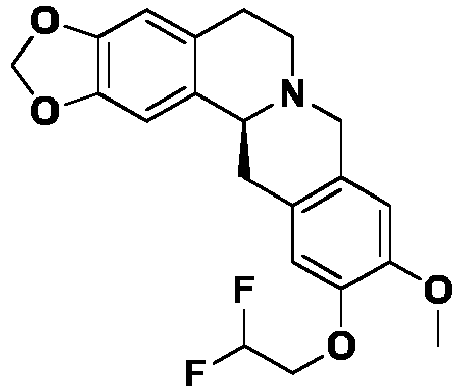
- In one embodiment, the medicine is used for selectively binding to α1A-adrenergic receptors.
- In one embodiment, IC50(α1B/α1A) is ≥2, preferably≥5, more preferably≥10, wherein IC50(α1B/α1A) is a ratio of IC50 of said medicine binding to α1B-adrenergic receptors and IC50 of said medicine binding to α1A-adrenergic receptors.
- In one embodiment, IC50(α1B/α1A) is 2-3000, wherein IC50(α1B/α1A) is a ratio of IC50 of said medicine binding to α1B-adrenergic receptors and IC50 value of said medicine binding to α1A-adrenergic receptors.
- In one embodiment, IC50 of said medicine binding to α1B-adrenergic receptors is ≥150nM, preferably≥500nM, and more preferably≥1000nM.
- In one embodiment, said medicine is used to selectively inhibit contraction of urinary system smooth muscle.
- In one embodiment, said urinary system smooth muscle is selected from urethra smooth muscle, and prostate smooth muscle.
- In the second aspect of the invention, it provides an in vitro non-therapeutic method for inhibiting the α1A-adrenergic receptor, comprising a step of administering an inhibitively effective amount of a hexahydrodibenzo[a,g]quinolizine compound of general formula (I), or a pharmaceutically acceptable salt, solvate, stereoisomer, tautomer thereof to an object in need thereof.
- In one embodiment, the inhibition is selective inhibition of α1A-adrenergic receptor.
- In one embodiment, the object to be inhibited is a cell or animal in vitro tissue expressing α1A-adrenergic receptor.
- In one embodiment, the object to be inhibited is a cell or animal in vitro tissue expressing α1A-adrenergic receptor and α1B-adrenergic receptor, and preferably, the object also expresses α1D-adrenergic receptor.
- In one embodiment, the object to be inhibited is urethra smooth muscle, or prostate smooth muscle.
- In the third aspect of the invention, it provides a method for preparing a pharmaceutical composition, comprising mixing a compound of general formula (I), or a pharmaceutically acceptable salt, solvate, stereoisomer, or tautomer thereof with a pharmaceutically acceptable carrier to form a pharmaceutical composition.
- In one embodiment, the pharmaceutically acceptable carrier is selected from oral preparation carriers or injection carriers.
- In the forth aspect of the invention, it provides a use of a compound of formula (I) compound in the first aspect of the invention for preparing a inhibitor selectively binding to α1A-adrenergic receptor.
- In the fifth aspect of the invention, it provides a use of a compound of formula (I) in the first aspect of the invention, wherein the compound is used as inhibitor for treating prostate; and/or the compound is used for antagonizing norepinephrine-induced contraction of urethra smooth muscle and/or prostatic smooth muscle.
- In the sixth aspect of the invention, it provides an α1A-adrenergic receptor selective inhibitor, which comprises an inhibitively effective amount of the compound of formula (I), or a pharmaceutically acceptable salt, solvate, stereoisomer, tautomer thereof.
- In the seventh aspect of the invention, it provides a method for treating and/or preventing benign prostatic hyperplasia diseases, comprising a step of administering a therapeutically effective amount of the compound of formula (I), or a pharmaceutically acceptable salt, solvate, stereoisomer, tautomer thereof to a subject in need thereof.
- In the eighth aspect of the invention, it provides a pharmaceutical composition for treating or inhibiting benign prostatic hyperplasia diseases, comprising (a) a pharmaceutically acceptable carrier, and (b) the compound of formula (I), or a pharmaceutically acceptable salt, solvate, stereoisomer, tautomer thereof.
- In one embodiment, the formulation of the pharmaceutical composition is oral formulation or injection formulation.
- It should be understood that in the present invention, the technical features specifically described above and hereinafter (such as the Examples) can be combined with each other, thereby constituting a new or preferred technical solution, which needs not be specified one by one.
-
-
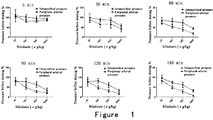
Figure 1 is an experimental curve in Example 4 of invention showing effects of positive drug silodosin on rat urethral pressure (IUP), and peripheral arterial pressure(MBP). -
Figure 2 is an experimental curve in Example 4 of invention showing effects of DC037009 on rat urethral pressure (IUP) and peripheral arterial pressure(MBP). -
Figure 3 shows micturition frequency, mean voided volume, total voided volume of rats in Sham group and BPH group in Example 5 of invention. -
Figure 4 shows micturition frequency, mean voided volume, total voided volume of rats in sham group, silodosin group (BPH-1,3 dosage group) and DC037009 group (BPH-2,3 dosage group) in Example 5 of invention. -
Figure 5 shows a plasma concentration-time curve after intragastric administration and intravenous injection of DC037009 to rats in Example 6 of invention. - Through intensive and long-term research, the inventors have unexpectedly discovered that, hexahydrodibenzo[a,g]quinolizine compounds can selectively binding to α1A-adrenergic receptor and not binding to α1B-adrenergic receptor, and therefore can be used for preparing medicines for controlling benign prostatic hyperplasia with reduced cardiovascular side effects. Based on this discovery, the inventors have completed the present invention.
- The term "C1-C6 alkoxy" refers to a straight or branched alkoxy having 1-6 carbon atoms, such as methoxy, ethoxy, propoxy, isopropoxy, butoxy, isobutoxy, sec-butoxy, tert-butoxy, and the like.
- The term "C1-C6 alkyl" refers to a straight or branched alkyl having 1-6 carbon atoms, such as methyl, ethyl, propyl, isopropyl, butyl, isobutyl, sec-butyl, tert-butyl , and the like.
- The term "C3-C6 cycloalkyl" refers to a cycloalkyl group having 3-6 carbon atoms, such as cyclopropyl, cyclobutyl, cyclopentyl, cycloheptyl, and the like.
- The term "C2-C6 alkenyl" refers to an alkenyl group having 1-6 carbon atoms, such as ethenyl, propenyl, isopropenyl, butenyl, isobutenyl, sec-butenyl, tert-butenyl, and the like.
- The term "C2-C6 alkynyl" refers to an alkynyl group having 1-6 carbon atoms, such as ethynyl, propynyl, iso-alkynyl, butynyl, iso-alkynyl, sec-butynyl, tert-butynyl group, and the like.
- The term "sulfonyl" refers to a group having "C1-C6 alkyl-SO2-" or "aryl-SO2-" structure, such as methylsulfonyl, ethylsulfonyl, propylsulfonyl, isopropylsulfonyl, butylsulfonyl, iso-butylsulfonyl, sec-butylsulfonyl, tert-butylsulfonyl, benzenesulfonyl, tosyl and the like.
- The term "5-7 membered heterocycle" refers to a cyclic structure having one or more and preferably 1-3 heteroatoms, and said heterocycle is saturated or unsaturated. In particular, "R1 and R2 can together form a heterocycle" means that R1, R2 and form a heterocyclic ring together with a carbon chain to which they are attached.
- The term "halogen" refers to F, Cl, Br and I.
- As used herein, the term "Rx and Ry (x and y are selected from 1, 2, 4, 5, 6, 7 ) can together form a substituted or unsubstituted m-membered heterocycle (m=5, 6 or 7)" means that Rx, Ry and 1-3 adjacent carbon atoms together form a substituted or unsubstituted m-membered heterocycle (m=5,6 or 7).
- As used herein, the term "the configuration of the chiral carbon atom is either R or S" means that the chiral carbon atom in the structural formula may be R configuration, S configuration, or a mixture thereof, and preferably is a single R configuration or S configuration.
- As used herein, the term "pharmaceutically acceptable salt" refers to salts formed by a compound of the present invention with a pharmaceutically acceptable inorganic and organic acid. The preferred inorganic acid includes (but is not limited to): hydrochloric acid, hydrogen bromic acid, phosphoric acid, nitric acid, sulfuric acid; and preferred organic acid includes (but is not limited to): formic acid, acetic acid, propionic acid, succinic acid, naphthalene dicarboxylic acid (1,5), asiatic acid, oxalic acid, tartaric acid, lactic acid , salicylic acid, benzoic acid, pentanoic acid, diethyl acetic acid, malonic acid, succinic acid, fumaric acid, pimelic acid, adipic acid, maleic acid, malic acid, sulfamic acid, phenylpropionic acid, gluconic acid, ascorbic acid, nicotinic acid, isonicotinic acid, methanesulfonic acid, p-toluenesulfonic acid, citric acid, and amino acid.
- As used herein, the term "pharmaceutically acceptable solvate" refers to a solvate formed by a compound of the present invention with a pharmaceutically acceptable solvent, wherein the pharmaceutically acceptable solvent includes (but is not limited to): water, ethanol, methanol, isopropanol, tetrahydrofuran, and methylene chloride.
- As used herein, the term "pharmaceutically acceptable stereoisomer" refers to a compound of the present invention in which the chiral carbon atom is R configuration, or S configuration, or a combination thereof.
- The present invention also provides a pharmaceutical composition, which has significant efficacy which comprises a therapeutically effective amount of a compound of formula I, or a pharmaceutically acceptable salt thereof, and one or more pharmaceutically acceptable carriers.
- A mixture formed by compound itself or a pharmaceutically acceptable salt thereof with a pharmaceutically acceptable excipient or diluent, can be orally administered in the form of tablets, capsules, granules, powders or syrups, or non-orally administered in the form of injection. The pharmaceutical composition preferably contains 0.01-99wt% of the compound of formula I or a pharmaceutically acceptable salt thereof as an active ingredient, and more preferably contains 0.1-90wt% of the active ingredient.
- The above formulations may be prepared by conventional methods of pharmacy. Examples of available pharmaceutically acceptable adjuvants include excipients (e.g. sugar derivatives such as lactose, sucrose, glucose, mannitol and sorbitol; starch derivatives such as corn starch, potato starch, dextrin and carboxymethyl starch; cellulose derivatives such as crystalline cellulose, hydroxypropyl cellulose, carboxymethyl cellulose, carboxymethyl cellulose calcium, carboxymethyl cellulose sodium; gum arabic; dextran; silicate derivative such as metasilicate magnesium aluminum; phosphate derivatives such as calcium phosphate; carbonate derivatives such as calcium carbonate; sulfate derivatives such as calcium sulfate), binders (e.g., gelatin, polyvinyl pyrrolidone, and polyethylene glycols), disintegrants (e.g., cellulose derivatives such as sodium carboxymethyl cellulose, polyvinylpyrrolidone), lubricants (e.g., talc, calcium stearate, magnesium stearate, spermaceti, boric acid, sodium benzoate, leucine), stabilizers (methyl paraben, propyl paraben, etc.), flavoring agents (e.g., common sweeteners, sour agents and perfumes and the like), diluents and injection solvent (such as water, ethanol and glycerol, etc.).
- The compound of the invention, pharmaceutically acceptable salt or prodrug thereof, or the pharmaceutical composition thereof can be administrated in different dosage which varies with age, gender, race, and diseases.
- The present invention provide a use of hexahydrodibenzo[a,g]quinolizine compound of formula (I), or a pharmaceutically acceptable salt, solvate, stereoisomer, tautomer thereof for preparing a medicine for treating and/or preventing benign prostatic hyperplasia,

- wherein, each of R1, R2, R4, R5, R6 and R7 is independently hydrogen, hydroxy, halogen, a substituted or unsubstituted C1-C6 alkoxy, a substituted or unsubstituted C1-C6 alkyl, a substituted or unsubstituted C2-C6 alkenyl, a substituted or unsubstituted C2-C6 alkynyl, a substituted or unsubstituted C3-C6 cycloalkyl, a substituted or unsubstituted benzyloxy, wherein a substituent for substitution is halogen, hydroxy, amino or sulfonyl;
- R3 is hydrogen, halogen, an unsubstituted or halogen-substituted C1-C6 alkyl, or an unsubstituted or halogen-substituted C1-C6 alkoxy;
- R1 and R2 can together form a substituted or unsubstituted 5-7 membered heterocycle, wherein a substituent for substitution is halogen or an unsubstituted or halogen-substituted C1-C6 alkyl, and said heterocycle contains 1-3 heteroatoms selected from N, O, or S;
- any two adjacent substituents of R4, R5, R6 and R7 can together form a substituted or unsubstituted 5-7 membered heterocycle, wherein a substituent for substitutions is halogen, a unsubstituted or halogen-substituted C1-C6 alkyl or an unsubstituted or halogen-substituted C1-C6 alkoxy, and said heterocycle contains 1-3 heteroatoms selected from N, O, or S;
- the configuration of the chiral carbon atom in compound of general formula (I) is either R or S.
- Preferably, in compound of formula (I), each of R1, R2, R4, R5, R6 and R7 is independently hydrogen, hydroxy, halogen, a substituted or unsubstituted C1-C4 alkoxy, a substituted or unsubstituted C1-C4 alkyl, a substituted or unsubstituted C2-C4 alkenyl, a substituted or unsubstituted C2-C4 alkynyl, a substituted or unsubstituted C3-C6 cycloalkyl, a substituted or unsubstituted benzyloxy, wherein a substituent for substitution is halogen, hydroxy, amino or sulfonyl;
R3 is hydrogen, halogen, an unsubstituted or halogen-substituted C1-C4 alkyl, or an unsubstituted or halogen-substituted C1-C4 alkoxy;
R1 and R2 can together form a substituted or unsubstituted 5-7 membered heterocycle, wherein a substituent for substitution is halogen or unsubstituted or halogen-substituted C1-C4 alkyl, and said heterocycle contains 1-3 heteroatoms selected from N, O, or S;
any two adjacent substituents of R4, R5, R6 and R7 can together form a substituted or unsubstituted 5-7 membered heterocycle, wherein a substituent for substitutions is halogen, a unsubstituted or halogen-substituted C1-C4 alkyl or a unsubstituted or halogen-substituted C 1-C4 alkoxy, and said heterocycle contains 1-3 heteroatoms selected from N, O, or S;
the configuration of the chiral carbon atom in compound of general formula (I) is either R or S. - More preferably, in formula (I) compound, each of R1, R2, R4, R5, R6 and R7 is independently hydrogen, hydroxy, halogen, a substituted or unsubstituted C1-C4 alkoxy, a substituted or unsubstituted C1-C4 alkyl, or a substituted or unsubstituted benzyloxy, wherein a substituent for substitution is halogen, hydroxy, or amino;
R3 is hydrogen, halogen, an unsubstituted or halogen-substituted C1-C4 alkyl;
R1 and R2 can together form a substituted or unsubstituted 5 or 6 membered heterocycle, wherein a substituent for substitution is halogen or an unsubstituted or halogen-substituted C1-C4 alkyl, and said heterocycle contains 1-3 heteroatoms selected from N, O, or S;
any two adjacent substituents of R4, R5, R6 and R7 can together form a substituted or unsubstituted 5 or 6 membered heterocycle, wherein a substituent for substitutions is halogen, a unsubstituted or halogen-substituted C1-C4 alkyl or a unsubstituted or halogen-substituted C 1-C4 alkoxy, and said heterocycle contains 1-3 heteroatoms selected from N, O, or S;
the configuration of the chiral carbon atom in compound of general formula (I) is either R or S. - Further preferably, in compound of formula (I), each of R1, R2, R4, R5, R6 and R7 is independently hydrogen, hydroxy, halogen, a substituted or unsubstituted C 1-C4 alkoxy, a substituted or unsubstituted C1-C4 alkyl, or a substituted or unsubstituted benzyloxy, wherein a substituent for substitution is halogen, or hydroxy;
R3 is hydrogen, halogen, an unsubstituted or halogen-substituted C1-C4 alkyl;
R1 and R2 can together form a 5 or 6 membered heterocycle which contains 1 to 2 heteroatoms selected from N, O, or S;
R5 and R6 can together form a 5 or 6 membered heterocycle which contains 1 to 2 heteroatoms selected from N, O, or S; and
the configuration of the chiral carbon atom in compound of general formula (I) is either R or S. - The halogen is F, Cl, Br or I.
- The most preferred hexahydrodibenzo[a,g]quinolizine compounds of the invention including a pharmaceutically acceptable salt, solvate, stereoisomer, tautomer thereof are selected from the following compounds:
NO. Structure NO. Structure DC037001 
DC037007 
DC037002 
DC037008 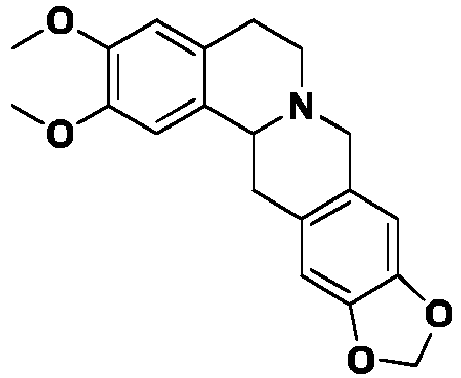
DC037003 
DC037009 
DC037004 
DC037010 
DC037005 
DC037011 
DC037006 
DC037012 
DC037013 
DC037019 
DC037014 
DC037020 
DC037015 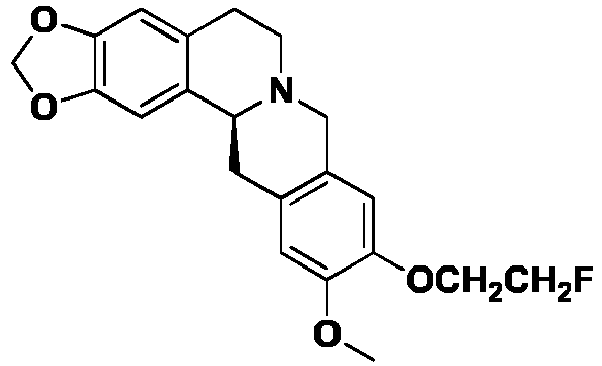
DC037021 
DC037016 
DC037022 
DC037017 
DC037023 
DC037018 
- The most preferred compound of present invention is S-(-)-2,3-methylenedioxy-10,11-dimethoxy-5,8,13,13a-tetrahydro-6H-dibenzo[a,g] quinolizine (DC037009), including a pharmaceutically acceptable salt, solvate, stereoisomer, tautomer thereof.
- Another object of the present invention is to provide a pharmaceutical composition comprising the compound of formula (I), or a pharmaceutically acceptable salt, solvate, stereoisomer, tautomer, prodrug thereof and a pharmaceutically acceptable carrier.
- The present invention relates to a medicine for treating and/or preventing benign prostatic hyperplasia which is prepared using hexahydrodibenzo[a,g]quinolizine compounds as shown in formula (I) or a pharmaceutically acceptable salt, solvate, stereoisomer, tautomer, prodrug or the mixture thereof as an active ingredient.
- The medicine can be introduced into body such as muscle, intradermal, subcutaneous, intravenous, mucosal tissue by injection, spray, nasal inhalation, eye drop, penetration, absorption, physical or chemical-mediated method; or the medicine is mixed with or wrapped by other substances before being introduced into body.
- When necessary, one or more pharmaceutically acceptable carriers can be added into the above-mentioned medicine. The carriers include diluents, excipients, fillers, binders, wetting agents, disintegrators, absorption promoters, surfactant, adsorption carrier, lubricant and the like which are conventional in the pharmaceutical field.
- The hexahydrodibenzo[a,g]quinolizine compounds as shown in formula (I) or a pharmaceutically acceptable salt, solvate, stereoisomer, tautomer, or prodrug thereof as an active ingredient can be used alone or in combination with other medicines, or is mixed with auxiliary materials and formulated into various preparations, including but not limited to tablets, powders, pills, injections, capsules, films, suppositories, paste, granules and so on. The above various preparations can be prepared according to conventional methods in the field of pharmacy.
- The present invention will be further illustrated below with reference to the specific examples. It should be understood that these examples are only to illustrate the invention, not to limit the scope of the invention. The experimental methods with no specific conditions described in the following examples are generally performed under the conventional conditions (e.g., the conditions described by Sambrook et al., Molecular Cloning: A Laboratory Manual (New York: Cold Spring Harbor Laboratory Press, 1989)), or according to the manufacture's instructions. Unless indicated otherwise, parts and percentage are calculated by weight. The reagents and biological materials are commercially available if there is no specified description.
- HEK293 cells stably expressing α1A-AR/Gα16, α1B-AR/Gα16, α1D-AR/Gα16 were seeded in a 96-well plate, and cultured for 24 hours. Then the medium was removed and 40 µL Hank's balanced salt solution (HBSS: containing 5.4 mM KCI, 0.3 mM Na2HPO4, 0.4 mM KH2PO4, 4.2 mM NaHCO3, 1.3 mM CaCl2, 0.5 mM MgCl2, 0.6 mM MgSO4, 137 mM NaCl, 5.6 mM D-glucose, and 250 µM sulfinpyrazone, pH 7.4) containing 2 µM Fluo-4 AM was added into each well, and incubated at 37 °C for 45 min. Dye was removed and 50 µL of HBSS containing either test compound or 1% DMSO (negative control) was added. After incubation at room temperature for 10 min,
Flex Station 3 microplate reader was used to read the value. At specified time points, 25 µL of agonist (phenylephrine,final concentration 30 nM) was dispensed into the well automatically using the reader and fluorescence intensity change of dye caused by intracellular calcium concentration change was detected at an excitation wavelength of 485 nm and an emission wavelength of 525 nm. - After incubation with different drugs, the reaction rate of cells to 1-AR agonist phenylephrine was calculated as follows:

- The reaction rate of the same drug at different doses was tested using GraphPad Prism software by non-linear regression analysis, and the dose-response curve was obtained and IC50 values was measured. Data were obtained from three separate experiments, and each experiment included three duplicate wells.
Table 1. Data of activity on cell and selectivity of some compounds No. α1A (IC50 nM) α1B (IC50 nM) α1D (IC50 nM) α1B/α1A DC037001 122.5 173.9 8711 1.4 DC037002 502.3 17178 2516 34.2 DC037003 91.32 249369 2480 2731 DC037004 93.87 189.4 422.5 2.0 DC037005 159.8 1653 2953 10.3 DC037007 968.7 12966 75.85 13.4 DC037008 552.3 68790 2118 125 DC037009 29.76 5207 260.3 175 DC037010 237.7 1198 2557 5.0 DC037011 531.6 34251 2645 64.4 DC037012 257.1 7519 241.8 29.2 DC037013 267.7 4305 263.2 16.1 DC037014 303.3 35948 1340 118.5 DC037016 34.84 4251 190.6 122 Tamsulosin 1.85 3.08 0.18 1.7 - Cell experiments showed that although the activity of compounds including DC037009 on α1A-receptor was slightly weaker than that of positive drug tamsulosin, the selectivity of compounds on α1A-receptor was significantly better than those of tamsulosin, indicating these compounds were worthy of further study.
- Tag-lite assay was used to study receptor binding activity. Tag-lite assay was a combination of SNAP-Tag and HTRF technology, and was used to analyze surface receptors on live cell. SNAPs were small tag fusion proteins which could irreversibly, specifically and covalently bind to substrates via benzylmethyl, and the substrates were benzylmethyl guanine and benzylmethyl cytosine. Substrates and various dyes formed derivatives, and through covalent reaction, the dye was labeled onto SANPs. Plasmid was constructed using pSNAP and α1-AR encoding gene. After transfection into cells, N-terminal fusion protein of SNAP and α1-AR was expressed. The substrate and HTRF fluorescent dye (donor compound Lumi4-Tb) formed a derivative which reacted with SANP-α1-AR fusion protein so that Tb was labeled onto α1-AR. After adding acceptor fluorescent dye-labeled ligand, the receptor and ligand binding experiment was performed.
- HEK293 cells stably expressing SNAP-α1A-AR, SNAP-α1B-AR, SNAP-α1D-AR were seeded in 3 cm dishes, and cultured for 24 hours. 100 nM Tag-lite SNAP Lumi4Tb was added and incubated for 1 h in an incubator. Cells were detached and washed with a labeling buffer for 4 times, and then was added into a 384-well plate in a volume of 10 µL per well. 5 µL test compound and 5 µL red fluorescein-labeled known ligand with gradually increased concentration were added. After incubation at room temperature for 1 hour, fluorescence intensity changes caused by cell receptor and ligand changes were detected using 665 nm (acceptor) and 620 nm (donor) at same time.
- After incubation with different drugs, the reaction rate of cells to 1-AR fluorescein-labeled known ligand was calculated as follows:

- The reaction rate of the same drug at different doses was tested using GraphPad Prism software by non-linear regression analysis, and the dose-response curve was obtained and K i values was measured. Data were obtained from three separate experiments, and each experiment includes three duplicate wells.
Table 2. The receptor binding activity of some compounds No. α1A (IC50 nM) α1B (IC50 nM) α1B/α1A DC037009 2.83 128.3 45.3 DC037016 16.56 560.2 33.8 DC037018 0.95 48.62 51.2 Silodosin 0.07 0.61 8.7 Tamsulosin 0.44 0.16 0.4 - Cell experiments showed that although the activity of compounds including DC037009 on α1A-receptor was slightly weaker than those of positive drug tamsulosin and silodosin, the selectivity of compounds on α1B was significantly better than those of positive control drugs, indicating such compounds were worthy of further study.
- Healthy male Wistar rats were hit head to cause faint. The abdominal cavity and the pubic symphysis was quickly cut so as to quickly remove the prostatic urethra, which was immediately placed into a dish filled with 4°C Kerbs-Henseleit solution (K-H solution). The surrounding tissue were carefully separated, and muscle strips about 3-5 mm were obtained, and the lower end was fixed onto a 20 mL of thermostatic bath and the upper end was connected onto a pressure transducer. Nutrient liquid was K-H solution, and carbogen (95% oxygen and 5% carbon dioxide) was aerated, and the bath temperature was 37°C, and resting tension applied was 0.5g. The nutrient liquid was replaced every 6-8 mins. Until baseline stabilized, norepinephrine was added with a final concentration of 3×10⁻⁴ mol/L in bath tube. When the contraction curve reached the highest point, it was rinsed immediately to recover to baseline levels. When baseline was stabilized, test drug with different concentrations was added respectively, and incubated 3-5 mins. 60
µL 1×10⁻¹ M norepinephrine was added with a final concentration of 3×10⁻⁴ mol/L in bath tube, and the contraction curve was recorded. - Healthy male Wistar rats were hit head to cause faint. The abdominal cavity was quickly cut, and the thoracic aorta was taken out. The attached tissue was separated and cut into 2-3 mm vascular rings. The experiment was carried out in the same manner as in urethral smooth muscle experiment. The resting tension applied was 1 g, and when baseline was stabilized, norepinephrine was added with a final concentration of 10-7 mol/L in bath tube. When the contraction curve reached the highest point, rinse was performed immediately to recover to baseline levels. When baseline was stabilized, test drug with different concentrations was added respectively, and incubated 3-5 mins. 20
µL 1×10⁻⁴ M norepinephrine was added with a final concentration of 10-7 mol/L in bath tube, and contraction curve was recorded.Table 3. Data of experiments of compounds on isolated rat tissues No. Urethra contraction (IC50 nM) Aorta contraction (IC50 nM) Urethra inhibition rate (%) Aorta / Urethra DC037009 1.66 1417 80 873 DC037016 5.12 10000 38 1953 DC037018 146.8 2213 61 61 Tamsulosin 0.47 0.25 82 0.53 Silodosin 0.82 62.96 88 76.8 - As for DC037009 compound, it showed an obvious antagonistic effect on norepinephrine-induced urethra smooth muscle contraction (IC50 = 1.66 nM), which is significantly stronger than the inhibition of norepinephrine-induced vascular smooth muscle contraction, and the receptor selectivity ratio reached 873 and the urethra suppression rate was comparable to that of the positive drugs. The selectivity of DC037009 was better than those of tamsulosin and silodosin, because it was 1671 folds of that of tamsulosin and 11 folds of that of Silodosin. It suggested that it was very important to reduce side effects of existing drugs.
- Male SD rats (200-450g) were anesthetized with an i.p. administration of urethane (1.25 g/kg). The urinary bladder, prostate, and urethra were exposed through an abdominal midline and symphysis pubica incision. A catheter was placed into the prostatic urethra through the bladder dome and secured at bladder neck (vesico-urethral junction) with a silk suture. The distal urethra under pubica was closed. The other side of the catheter was connected to a pressure transducer to measure the intraurethral pressure (IUP). After separating the duodenum and cutting open at about 2cm from the stomach pylorus, intubating and performing purse-string suture, the test sample was supplied. Then, the median carotid incision was performed, carotid artery was separated, and the arterial blood pressure was measured by pressure transducer connected to artery cannula. Be careful not to hurt the nerves and blood vessels throughout the procedure. After surgery, a small amount (0.1∼0.2 mL) of saline was injected to balance the intraurethral pressure at around 10 cm of water. Then an intravenous injection at a concentration of 30 µg/mL of hydrochloride (PHE) 1 mL/kg was performed before administration and 5 min, 30 min, 1 h, 1.5 h, 2 h, 3 h after administration to induce intraurethral pressure elevation. (If the effect was stable or weakened, then the experiment was ended.) The changes of intraurethral pressure and blood pressure induced by phenylephrine in rats were observed and recorded at different time points before and after administration.
- Experimental results showed that silodosin and DC037009 could dose-dependently inhibit the phenylephrine-induced intraurethral pressure (IUP) and peripheral arterial blood pressure (MBP) elevation. The inhibition of phenylephrine-induced intraurethral pressure elevation was as follows: DC037009>Silodosin. The inhibition of phenylephrine-induced blood pressure elevation was Silodosin>DC037009. The selectivity to urethra was DC037009> Silodosin. Additionally, the onset dose of DC037009 was significantly lower than that of positive drug silodosin (see
Figure 1 andFigure 2 ). - Establishing of BPH Rat model: 6-week-old male SD rats (n=49) (body weight about 200g), in which 37 rats were BPH model group and daily injected testosterone propionate subcutaneously, and the other 12 rats were Sham group and injected olive oil, for 4 weeks. After 4 weeks, 49 rats received gavage in a dosage of 30mL/kg of water, and urination for each rat was observed and recorded (recording each urine output and frequency of urination within two hours).
- According to the above verification results, rats having abnormal urination were firstly excluded. Then, the normal BPH model rats were divided into 2 groups, 12 rats every group, and 12 rats of Sham group were singled out as control group. Grouping principles were as follows: there were significant differences of body weight, frequency of urination within two hours, single urine output and the total amount of urination between the two groups of BPH model and Sham group, and there were no significant differences between the two groups of BPH model. The results showed that two groups of BPH model rats is significantly different from Sham group in body weight, frequency of urination within two hours, and single urine output while there was no difference in frequency of urination and the total amount of urination (
Figure 3 ). - Efficacy verification experiment. The experiment had seven groups: Sham group, silodosin group (BPH-1,3-group dose) and DC037009 group (BPH-2,3- group dose). Rats received gavage in a dosage of 5mL/kg and each dose of the compound dissolved with CMCNa. After 20min, the rats received gavage in a dosage of 30mL/kg water. The study time interval of different doses of the same compound was over 24 hours.
- The frequency of urination, single urine output of silodosin and DC037009 group rats all showed a dose-dependent relationship. DC037009 was comparable to the positive drug, and the onset dose was 1mg/kg. Pharmacodynamic experiment proved that, under certain total urine output, compound DC037009 could significantly increase the single urine output and reduce frequency of urination (
Figure 4 ). - Gavage administration to rats. 3 healthy SD rats (male, weighed 200-220g) were fasted for 12 hours before the administration but were allowed to drink water. Compound DC037009 was formulated with 10% DMSO/10% Tween 80/80% saline and was administered by 20 mg/kg dose and the dosing volume was 10 mL/kg.
- Intravenous administration to rats. 3 healthy SD rats (male, weighed 200-220g) were fasted for 12 hours before the administration but were allowed to drink water. Compound DC037009 was formulated with 10% DMSO/10% Tween 80/80% saline and was administered via the rat tail vein injection by 10 mg/kg dose and the dosing volume was 5 mL/kg.
- Gavage administration: 0.25, 0.5, 1.0, 2.0, 3.0, 5.0, 7.0, 9.0 and 24h after administration;
Intravenous administration: 5 min, 0.25, 0.5, 1.0, 2.0, 3.0, 5.0, 7.0, 9.0 and 24 hrs after administration. - At the above time points, 0.3 mL blood obtained from post-eye venous plexus of rat was set into a heparinized tube, which was 11000 rpm centrifuged for 5 min, and the plasma was separated and frozen at -20°C in a refrigerator.
- After gavage administration to rats with 20 mg/kg DC037009, the time reaching peak plasma concentration in rats Tmax was 0.67 ± 0.29 h, the peak concentration Cmax was 453 ± 147 ng/mL, the plasma concentration-time area under the curve AUC0-t was 2867 ± 798 ng·h/mL, and the elimination half-life t1/2 was 3.26 ± 0.82 h.
- After administered 10 mg/kg DC037009 via intravenous injection, AUC0-t was 4196 ± 141 ng·h/mL, t1/2 was 5.44 ± 0.85 h, plasma clearance rate CL was 2.38 ± 0.08 L/h/kg, and volume distribution stead state Vss was 3.49 ± 0.24 L/kg (see
Figure 5 ).Table 4. Pharmacokinetic parameters after administrating 20 mg/kg DC037009 via gavage Animal No. Tmax (h) C max (ng/mL) AUCO-t (ng•h/mL) AUC0-∞ (ng•h/mL) MRT (h) t1/2 (h) F (%) 1 0.50 494 2260 2265 4.00 2.89 2 1.00 575 3771 3779 4.67 2.70 3 0.50 289 2570 2629 6.45 4.20 Mean value 0.67 453 2867 2891 5.04 3.26 34.2 Standard 0.29 147 798 790 1.27 0.82 CV (%) 43.3 32.6 27.8 27.3 25.1 25.1 - As for bioavailability and half-life, the half-life and bioavailability of compound DC037009 in rats were 3.26h and 34.2% respectively, and AUC0-t was 2260 ng-h/mL. The preliminary results of pharmacokinetics experiments showed that this class of compounds had better pharmacokinetic properties.
- The total volume of each incubation system was 200 µL, and the medium was 100 mM phosphate buffer solution (PBS, pH7.4) comprising a final concentration of 3µM DC037009 and 2 mM NADPH. A37°C water bath was used for incubation. After 3 minutes of pre-incubation, various liver microsomes protein were added into the buffer-substrate-cofactors mixture to start reaction. The concentration of liver microsomal protein of various species was 1.0 mg/mL. After reacting 60 min, the reaction was terminated with isovolumetric ice-cold acetonitrile. The total volume of blank was 200 µL, and the medium was 100 mM phosphate buffer solution (PBS, pH 7.4), comprising a final concentration of 3 µM DC037009 and heat inactivated microsomal proteins. All incubation samples were double.
- A 150 µL sample from each of double incubation samples was mixed. A 300 µL of acetonitrile was added, mixed by vortexing for 1 min, and centrifuged 5 min (11000 rpm). The supernatant was placed in a 10 mL tube, and dried in 40°C with nitrogen stream. The residue was dissolved with 100 µL methanol/water (1: 9, v/v). A 10 µL sample was taken for UPLC/Q-TOF MS analysis.
Table 5. Metabolism information of DC037009 in liver microsomes from five species including human, monkey, dog, rat and mice. No. Metabolic pathways Mass-to-char ge ratio Formula Retention time (min) Mass area Human monkey dog rat mice M0 Prototype drug 340.155 C20H21NO4 9.1 416.8 1.6 171.3 115.4 6.3 M1 Double O- demethylation and dehydrogenation 310.108 C18H15NO4 8.3 - 30.8 13.3 24.0 M2 Double O-demethylation 312.124 C18H17NO4 6.4 - 57.0 7.2 10.1 46.3 M3 Single-O-demethylation and dioxolane ring opening 314.139 C18H19NO4 4.9 - 57.0 11.1 19.5 32.2 M4 Single-O-demethylation and continuous dehydrogenation 322.105 C19H15NO4 10.1 - - - 12.0 12.0 M5 Single-O-demethylation and dehydrogenation 324.124 C19H17NO4 9.2 26.5 23.7 45.3 43.3 30.6 M6-1 Single-O-demethylation 326.139 C19H19NO4 7.3 10.8 9.6 65.8 30.1 32.0 M6-2 Single-O-demethylation 326.139 C19H19NO4 8.1 18.0 3.2 11.4 73.5 21.0 M7 Dioxolane ring opening 328.155 C19H21NO4 6.3 89.2 15.2 164.6 23.2 24.8 - The metabolism of DC037009 in the monkey and mouse liver microsome was unstable, and only a small amount of prototype drug was detected. Metabolic stability in dog and rat liver microsome was in second place, and the metabolic stability in human liver microsome was relatively higher. After 60 min incubation, approximately 26% of prototype drug was metabolized. Four kinds of metabolites in human liver microsome were detected, seven kinds of metabolites were detected in monkey liver microsome, six kinds of metabolites were detected in dog liver microsome, eight kinds of metabolites were detected in rat liver microsome, and eight kinds of metabolite in mouse liver microsome were detected. The production of each of metabolites was NADPH dependent. The major metabolic pathway of DC037009 in human liver microsome was O-demethylation, dioxolane ring opening and dehydrogenation, and the relative proportions of metabolites generated showed that human and dog liver microsomes had good similarity.
- In vitro results of metabolism difference of various species showed that although the metabolisms of compound DC037009 were unstable in monkey and mouse liver microsome cells, the types of metabolites in human liver microsome cell were obviously decreased, and the stability was greatly improved, and after 60 min incubation, only 26% of the prototype drug was metabolized. This further illustrated that DC037009 had good drug metabolic properties and had potential to become a medicine.
-
Table 6. Inhibition effect of DC037009 on hERG Compound Maximum inhibition rate (%) IC50 (µM) DC037009 84.7 8.1 Dofetilide (Control) 97.7 0.089 - The antagonistic activity of DC037009 to α1A-receptor was 272 folds of its inhibitory activity on hERG, indicating that the compound had a weak inhibitory effect on heart, and it was less likely to produce side effects on heart.
- Experimental results showed that DC037009 had no significant inhibitive effect on contraction amplitude and area under contraction curve in rat seminal vesicle induced by electrical stimulation (P>0.05), indicating that the test compound did not act on the seminal vesicle of rats to affect its ejaculation function. This further proved that the side effect of this compound is possibly small.
- SD rats were administered compound DC037009 with single dose of 500 and 1000 mg/kg by oral gavage. No death rat was found and no obvious drug-related changes was seen after anatomy and the maximum tolerated dose (MTD) was 1000 mg/kg.
- SD rats were orally administered with drug in a dosage of 0, 100 and 200 mg/kg for 14 days, and no death rat was found.
- Compared with the excipient control group, the test result of blood and coagulation indicators and serum biochemical indicators in the animals given 100 and 200 mg/kg showed that the changes of blood and coagulation indicators and changes of serum biochemical indicators were not dose-dependent and in the laboratory normal range. Therefore, it did not show any toxicological significance. In gross anatomy, all animals showed no pathological changes related to administrated drug.
- Acute toxicity and sub acute toxicity test results showed that the toxicity of compound DC037009 in rats was small, and it was safe and reliable. Meanwhile, compound DC037009 exhibited a large therapeutic window, indicating that the compound had great application value.
-
Table 7. Solubility in different pH solution and pH changes of the solution Test sample Solubility(1) (µg/mL) Solubility (2) (µg/mL) Dissolving capacity pH value(1) pH value (2) pH=1 >1000 >1000 Slightly soluble 1.09 1.03 pH=2 >1000 >1000 Slightly soluble 2.02 2.07 pH=4 400.51 402.68 Slightly soluble 5.02 5.10 pH=6 46.01 50.16 Sparingly soluble 6.11 6.14 pH=8 <10 <10 Sparingly soluble 8.06 8.07 - The solubility in acidic solution was greater than that in alkaline solution, and pH of solution would increase after adding compound DC037009.
- Compound DC037009 was heated at 80°C for 24 hours, and the compound purity only varied 0.5%. The pKa of the compound in different solvents were pKa (H2O) = 7.28, and pKa (CH3OH) = 6.81.
- The above pharmacy data indicated that compound DC037009 had basic nature to become a medicine and had potential applications.
- All documents referred to in the present invention are incorporated by reference as if each reference is cited alone as a reference in the present application. In addition, it should be understood that after reading the teachings of the present invention described above, a skilled person in the art can make various changes or modifications of the invention, and these equivalent forms also fall into the scope as defined by the appended claims of the present application.
Claims (14)
- A use of hexahydrodibenzo[a,g]quinolizine compound of formula (I), or a pharmaceutically acceptable salt, solvate, stereoisomer, tautomer thereof for preparing a medicine for treating and/or preventing benign prostatic hyperplasia,
 wherein, each of R1, R2, R4, R5, R6 and R7 is independently hydrogen, hydroxy, halogen, a substituted or unsubstituted C1-C6 alkoxy, a substituted or unsubstituted C1-C6 alkyl, a substituted or unsubstituted C2-C6 alkenyl, a substituted or unsubstituted C2-C6 alkynyl, a substituted or unsubstituted C3-C6 cycloalkyl, a substituted or unsubstituted benzyloxy, wherein a substituent for substitution is halogen, hydroxy, amino or sulfonyl;R3 is hydrogen, halogen, an unsubstituted or halogen-substituted C1-C6 alkyl, or an unsubstituted or halogen-substituted C1-C6 alkoxy;R1 and R2 can together form a substituted or unsubstituted 5-7 membered heterocycle, wherein a substituent for substitution is halogen or an unsubstituted or halogen-substituted C1-C6 alkyl, and said heterocycle contains 1-3 heteroatoms selected from N, O, or S;any two adjacent substituents of R4, R5, R6 and R7 can together form a substituted or unsubstituted 5-7 membered heterocycle, wherein a substituent for substitutions is halogen, an unsubstituted or halogen-substituted C1-C6 alkyl or an unsubstituted or halogen-substituted C1-C6 alkoxy, and said heterocycle contains 1-3 heteroatoms selected from N, O, or S;the configuration of the chiral carbon atom in compound of general formula (I) is either R or S.
 - The use of claim 1, wherein, each of R1, R2, R4, R5, R6 and R7 is independently hydrogen, hydroxy, halogen, a substituted or unsubstituted C 1-C4 alkoxy, a substituted or unsubstituted C1-C4 alkyl, a substituted or unsubstituted C2-C4 alkenyl, a substituted or unsubstituted C2-C4 alkynyl, a substituted or unsubstituted C3-C6 cycloalkyl, a substituted or unsubstituted benzyloxy, wherein a substituent for substitution is halogen, hydroxy, amino or sulfonyl;
R3 is hydrogen, halogen, an unsubstituted or halogen-substituted C1-C4 alkyl, or an unsubstituted or halogen-substituted C1-C4 alkoxy;
R1 and R2 can together form a substituted or unsubstituted 5-7 membered heterocycle, wherein a substituent for substitution is halogen or unsubstituted or halogen-substituted C 1-C4 alkyl, and said heterocycle contains 1-3 heteroatoms selected from N, O, or S;
any two adjacent substituents of R4, R5, R6 and R7 can together form a substituted or unsubstituted 5-7 membered heterocycle, wherein a substituent for substitutions is halogen, a unsubstituted or halogen-substituted C1-C4 alkyl or a unsubstituted or halogen-substituted C 1-C4 alkoxy, and said heterocycle contains 1-3 heteroatoms selected from N, O, or S;
the configuration of the chiral carbon atom in compound of general formula (I) is either R or S. - The use of claim 1, wherein,
each of R1, R2, R4, R5, R6 and R7 is independently hydrogen, hydroxy, halogen, a substituted or unsubstituted C 1-C4 alkoxy, a substituted or unsubstituted C 1-C4 alkyl, or a substituted or unsubstituted benzyloxy, wherein a substituent for substitution is halogen, hydroxy , or an amino;
R3 is hydrogen, halogen, an unsubstituted or halogen-substituted C1-C4 alkyl;
R1 and R2 can together form a substituted or unsubstituted 5 or 6 membered heterocycle, wherein a substituent for substitution is halogen or an unsubstituted or halogen-substituted C 1-C4 alkyl, and said heterocycle contains 1-3 heteroatoms selected from N, O, or S;
any two adjacent substituents of R4, R5, R6 and R7 can together form a substituted or unsubstituted 5 or 6 membered heterocycle, wherein a substituent for substitutions is halogen, a unsubstituted or halogen-substituted C1-C4 alkyl or a unsubstituted or halogen-substituted C1-C4 alkoxy, and said heterocycle contains 1-3 heteroatoms selected from N, O, or S;
the configuration of the chiral carbon atom in compound of general formula (I) is either R or S. - The use of claim 1, wherein, each of R1, R2, R4, R5, R6 and R7 is independently hydrogen, hydroxy, halogen, a substituted or unsubstituted C 1-C4 alkoxy, a substituted or unsubstituted C1-C4 alkyl, or a substituted or unsubstituted benzyloxy, wherein a substituent for substitution is halogen, or hydroxy;
R3 is hydrogen, halogen, an unsubstituted or halogen-substituted C1-C4 alkyl;
R1 and R2 can together form a 5 or 6 membered heterocycle which contains 1 to 2 heteroatoms selected from N, O, or S;
R5 and R6 can together form a 5 or 6 membered heterocycle which contains 1 to 2 heteroatoms selected from N, O, or S;
the configuration of the chiral carbon atom in compound of general formula (I) is either R or S. - The use of claim 1, wherein, the hexahydrodibenzo[a,g]quinolizine compounds of general formula (I) are selected from any of the following compounds:
NO. Structure NO. Structure DC037001 
DC037007 
DC037002 
DC037008 
DC037003 
DC037009 
DC037004 
DC037010 
DC037005 
DC037011 
DC037006 
DC037012 
DC037013 
DC037019 
DC037014 
DC037020 
DC037015 
DC037021 
DC037016 
DC037022 
DC037017 
DC037023 
DC037018 
- The use of claim 1, wherein, the medicine is used for selectively binding to α1A adrenergic receptors.
- The use of claim 1, wherein, the medicine is used to selectively inhibit contraction of urinary system smooth muscle.
- An in vitro non-therapeutic method for inhibiting α1A-adrenergic receptor, wherein, said method comprises a step of administering an inhibitively effective amount of a hexahydrodibenzo[a,g]quinolizine compounds of general formula (I), or a pharmaceutically acceptable salt, solvate, stereoisomer, tautomer thereof to a subject in need thereof; or
culturing an object to be inhibited in a culture system containing an inhibitively effective amount of a hexahydrodibenzo[a,g]quinolizine compounds of general formula (I), or a pharmaceutically acceptable salt, solvate, stereoisomer, tautomer thereof. - A method for preparing a pharmaceutical composition, wherein said method comprises: mixing a compound of general formula (I), or a pharmaceutically acceptable salt, solvate, stereoisomer, tautomer thereof and a pharmaceutically acceptable carrier to form a pharmaceutical composition.
- A use of the compound of formula (I) according to claim 1 for preparing an inhibitor selectively binding with α1A-adrenergic receptor.
- A use of the compound of formula (I) according to claim 1, wherein the compound is used as an inhibitor for treating prostate; and/or the compound is used for antagonizing norepinephrine-induced contraction of urethra smooth muscle and/or prostatic smooth muscle.
- An α1A adrenergic receptor selective inhibitor, wherein, said inhibitor comprises an inhibitively effective amount of the compound of formula (I), or a pharmaceutically acceptable salt, solvate, stereoisomer, tautomer thereof.
- A method for treating and/or preventing benign prostatic hyperplasia diseases, wherein said method comprises a step of administering a therapeutically effective amount of the compound of formula (I), or a pharmaceutically acceptable salt, solvate, stereoisomer, tautomer thereof to a subject in need thereof.
- A pharmaceutical composition used for treating or inhibiting a benign prostatic hyperplasia disease, wherein said pharmaceutical composition comprises (a) a pharmaceutically acceptable carrier, and (b) a compound of formula (I), or a pharmaceutically acceptable salt, solvate, stereoisomer, tautomer thereof.
Applications Claiming Priority (2)
| Application Number | Priority Date | Filing Date | Title |
|---|---|---|---|
| CN201310161512.1A CN104127414B (en) | 2013-05-03 | 2013-05-03 | A kind of medicinal usage of hexahydro dibenzo [a, g] quinolizine class compound |
| PCT/CN2014/076743 WO2014177065A1 (en) | 2013-05-03 | 2014-05-04 | Pharmaceutical use of hexahydro-dibenzo[a,g]quinolizine compounds |
Publications (4)
| Publication Number | Publication Date |
|---|---|
| EP2992883A1 true EP2992883A1 (en) | 2016-03-09 |
| EP2992883A4 EP2992883A4 (en) | 2016-05-25 |
| EP2992883B1 EP2992883B1 (en) | 2024-04-24 |
| EP2992883C0 EP2992883C0 (en) | 2024-04-24 |
Family
ID=51800438
Family Applications (1)
| Application Number | Title | Priority Date | Filing Date |
|---|---|---|---|
| EP14792040.9A Active EP2992883B1 (en) | 2013-05-03 | 2014-05-04 | Pharmaceutical use of hexahydro-dibenzo[a,g]quinolizine compounds |
Country Status (9)
| Country | Link |
|---|---|
| US (1) | US9737517B2 (en) |
| EP (1) | EP2992883B1 (en) |
| JP (1) | JP6585033B2 (en) |
| KR (1) | KR102384381B1 (en) |
| CN (1) | CN104127414B (en) |
| AU (1) | AU2014261899B2 (en) |
| BR (1) | BR112015027695B1 (en) |
| RU (1) | RU2704257C2 (en) |
| WO (1) | WO2014177065A1 (en) |
Families Citing this family (1)
| Publication number | Priority date | Publication date | Assignee | Title |
|---|---|---|---|---|
| CN114989162B (en) * | 2021-02-02 | 2024-12-24 | 江苏康缘药业股份有限公司 | A compound crystal form and its preparation method and application |
Family Cites Families (12)
| Publication number | Priority date | Publication date | Assignee | Title |
|---|---|---|---|---|
| FR2537583B1 (en) * | 1982-12-14 | 1985-08-09 | Urpha | LEVOGYRIC ENANTIOMERS OF TETRAHYDRO-5, 6, 13, 13A 8H-DIBENZO (A, G-) QUINOLIZINE DERIVATIVES, PROCESSES FOR OBTAINING THEM, PHARMACEUTICAL COMPOSITIONS CONTAINING THEM AND APPLICATION |
| JPH0672876A (en) * | 1992-03-26 | 1994-03-15 | Tsumura & Co | Antihypertensive agent by improvement of peripheral vascular resistance |
| FR2728902B1 (en) * | 1994-12-29 | 1997-01-31 | Synthelabo | 8-OXO-5,8-DIHYDRO-6H-DIBENZO (A, G) QUINOLIZINE-13-PROPANOIC ACID DERIVATIVES, THEIR PREPARATION AND THEIR THERAPEUTIC APPLICATION |
| JPH107569A (en) * | 1996-06-18 | 1998-01-13 | Kureha Chem Ind Co Ltd | HSP47 synthesis inhibitor containing berberine derivative |
| WO2000029386A1 (en) * | 1998-11-12 | 2000-05-25 | Merck & Co., Inc. | Pyrimidinedione derivatives useful as alpha 1a adrenoceptor antagonists |
| RU2295336C2 (en) * | 2004-06-01 | 2007-03-20 | Вениамин Абрамович Хазанов | Means for correcting urologic andrological pathologies |
| US8501762B2 (en) * | 2005-07-08 | 2013-08-06 | Shanghai Institute Of Materia Medica, Chinese Academy Of Sciences | Tetrahydroprotoberberine compounds, the synthetic method and the use thereof |
| US8003795B2 (en) * | 2007-06-22 | 2011-08-23 | Cvi Pharmaceuticals Limited | Compounds and compositions for reducing lipid levels |
| KR20090032617A (en) * | 2007-09-28 | 2009-04-01 | 충북대학교 산학협력단 | Anticancer and anticancer chemotherapy composition containing berberine as an active ingredient |
| CN102796096B (en) * | 2011-05-27 | 2016-09-14 | 中国科学院上海药物研究所 | Hexahydro dibenzo [a, g] quinolizine compounds, its preparation method, pharmaceutical composition and application thereof |
| TWI430801B (en) * | 2011-06-14 | 2014-03-21 | Univ Nat Taiwan Normal | Use of berberine-containing compound for preparing drug for inhibiting cancer stem cells growth or metastasis |
| CN102526305A (en) | 2012-02-14 | 2012-07-04 | 史志辉 | Chinese medicinal capsules for treating prostatitis and prostatic hyperplasia and preparation method for Chinese medicinal capsules |
-
2013
- 2013-05-03 CN CN201310161512.1A patent/CN104127414B/en active Active
-
2014
- 2014-05-04 WO PCT/CN2014/076743 patent/WO2014177065A1/en not_active Ceased
- 2014-05-04 AU AU2014261899A patent/AU2014261899B2/en active Active
- 2014-05-04 US US14/888,797 patent/US9737517B2/en active Active
- 2014-05-04 RU RU2015151257A patent/RU2704257C2/en active
- 2014-05-04 JP JP2016510930A patent/JP6585033B2/en active Active
- 2014-05-04 BR BR112015027695-4A patent/BR112015027695B1/en active IP Right Grant
- 2014-05-04 EP EP14792040.9A patent/EP2992883B1/en active Active
- 2014-05-04 KR KR1020157034064A patent/KR102384381B1/en active Active
Also Published As
| Publication number | Publication date |
|---|---|
| JP2016520045A (en) | 2016-07-11 |
| AU2014261899B2 (en) | 2019-08-01 |
| EP2992883A4 (en) | 2016-05-25 |
| BR112015027695B1 (en) | 2022-05-10 |
| KR20160037840A (en) | 2016-04-06 |
| JP6585033B2 (en) | 2019-10-02 |
| RU2015151257A (en) | 2017-06-08 |
| WO2014177065A1 (en) | 2014-11-06 |
| CN104127414B (en) | 2018-04-13 |
| BR112015027695A2 (en) | 2017-08-29 |
| RU2015151257A3 (en) | 2018-03-22 |
| US20160193195A1 (en) | 2016-07-07 |
| KR102384381B1 (en) | 2022-04-12 |
| EP2992883B1 (en) | 2024-04-24 |
| RU2704257C2 (en) | 2019-10-25 |
| AU2014261899A1 (en) | 2015-12-17 |
| EP2992883C0 (en) | 2024-04-24 |
| US9737517B2 (en) | 2017-08-22 |
| CN104127414A (en) | 2014-11-05 |
Similar Documents
| Publication | Publication Date | Title |
|---|---|---|
| US9045491B2 (en) | Thienyl [3,2-D] pyrimidin-4-one compounds, preparation method, pharmaceutical compositions and use thereof | |
| US20100280041A1 (en) | Rhokinase-dependent inhibition activity on pulmonary artery endothelium dysfunction, medial wall thickness and vascular obstruction of pulmodil and pulmodil-1 | |
| US11103511B2 (en) | Substituted indolo[2,1-b]quinazolines as inhibitors of tryptophan dioxygenase and indoleamine 2,3-dioxygenase 1 | |
| CN102887889B (en) | Heterocyclic substitute dpyrimidines | |
| CN106957315B (en) | N- replaces benzenesulfonyl-azaindole oxybenzamide class compound and its prepares the purposes of drug | |
| US20250361240A1 (en) | Pyranopyridine compound, process for preparing the same, pharmaceutical composition and use thereof | |
| EP2992883B1 (en) | Pharmaceutical use of hexahydro-dibenzo[a,g]quinolizine compounds | |
| TWI682931B (en) | Xanthine derivatives, their pharmaceutical compositions, their preparations and their uses | |
| US20260008772A1 (en) | 2-Indolone Derivatives and Use Thereof | |
| US20090005402A1 (en) | Medicine containing pyrimidine derivative | |
| HUP0303609A2 (en) | Remedies for vesical hyperesthesia | |
| WO2023109761A1 (en) | Crystal of pyrazolopyrimidinone compound and salt thereof | |
| CN108299411B (en) | 4, 4-diphenyl piperidine compound or pharmaceutically acceptable salt, pharmaceutical composition and application thereof | |
| CN120676945A (en) | Purine nucleoside phosphorylase inhibitors for the treatment of metabolic syndrome and related conditions | |
| US20240034727A1 (en) | Imidazole compounds as inhibitors of enpp1 | |
| KR20210040228A (en) | Anti-histamine compounds, pharmaceutical compositions and medical-use thereof | |
| KR20040106345A (en) | Oral therapeutic or preventive drugs for pollakiuria and urinary incontinence or oral sleep inducers, containing tropolone derivatives | |
| HK1245796B (en) | Xanthine derivative | |
| NZ626495A (en) | Treatment of type i and type ii diabetes | |
| NZ626495B2 (en) | Treatment of type i and type ii diabetes | |
| HK1192542B (en) | Heterocyclic substituted pyrimidine compound |
Legal Events
| Date | Code | Title | Description |
|---|---|---|---|
| PUAI | Public reference made under article 153(3) epc to a published international application that has entered the european phase |
Free format text: ORIGINAL CODE: 0009012 |
|
| 17P | Request for examination filed |
Effective date: 20151202 |
|
| AK | Designated contracting states |
Kind code of ref document: A1 Designated state(s): AL AT BE BG CH CY CZ DE DK EE ES FI FR GB GR HR HU IE IS IT LI LT LU LV MC MK MT NL NO PL PT RO RS SE SI SK SM TR |
|
| AX | Request for extension of the european patent |
Extension state: BA ME |
|
| A4 | Supplementary search report drawn up and despatched |
Effective date: 20160428 |
|
| RIC1 | Information provided on ipc code assigned before grant |
Ipc: A61P 13/08 20060101ALI20160419BHEP Ipc: A61K 31/4375 20060101AFI20160419BHEP |
|
| DAX | Request for extension of the european patent (deleted) | ||
| STAA | Information on the status of an ep patent application or granted ep patent |
Free format text: STATUS: EXAMINATION IS IN PROGRESS |
|
| 17Q | First examination report despatched |
Effective date: 20180102 |
|
| REG | Reference to a national code |
Ref country code: DE Ref legal event code: R079 Ref document number: 602014090029 Country of ref document: DE Free format text: PREVIOUS MAIN CLASS: A61K0031435000 Ipc: A61K0031437500 Ref country code: DE Ref legal event code: R079 Free format text: PREVIOUS MAIN CLASS: A61K0031435000 Ipc: A61K0031437500 |
|
| GRAP | Despatch of communication of intention to grant a patent |
Free format text: ORIGINAL CODE: EPIDOSNIGR1 |
|
| STAA | Information on the status of an ep patent application or granted ep patent |
Free format text: STATUS: GRANT OF PATENT IS INTENDED |
|
| RIC1 | Information provided on ipc code assigned before grant |
Ipc: A61P 13/10 20060101ALI20230421BHEP Ipc: A61P 13/02 20060101ALI20230421BHEP Ipc: A61P 13/08 20060101ALI20230421BHEP Ipc: A61K 31/4375 20060101AFI20230421BHEP |
|
| INTG | Intention to grant announced |
Effective date: 20230524 |
|
| GRAS | Grant fee paid |
Free format text: ORIGINAL CODE: EPIDOSNIGR3 |
|
| GRAA | (expected) grant |
Free format text: ORIGINAL CODE: 0009210 |
|
| STAA | Information on the status of an ep patent application or granted ep patent |
Free format text: STATUS: THE PATENT HAS BEEN GRANTED |
|
| AK | Designated contracting states |
Kind code of ref document: B1 Designated state(s): AL AT BE BG CH CY CZ DE DK EE ES FI FR GB GR HR HU IE IS IT LI LT LU LV MC MK MT NL NO PL PT RO RS SE SI SK SM TR |
|
| REG | Reference to a national code |
Ref country code: GB Ref legal event code: FG4D |
|
| REG | Reference to a national code |
Ref country code: CH Ref legal event code: EP |
|
| REG | Reference to a national code |
Ref country code: DE Ref legal event code: R096 Ref document number: 602014090029 Country of ref document: DE |
|
| REG | Reference to a national code |
Ref country code: IE Ref legal event code: FG4D |
|
| U01 | Request for unitary effect filed |
Effective date: 20240521 |
|
| U07 | Unitary effect registered |
Designated state(s): AT BE BG DE DK EE FI FR IT LT LU LV MT NL PT SE SI Effective date: 20240529 |
|
| U20 | Renewal fee for the european patent with unitary effect paid |
Year of fee payment: 11 Effective date: 20240625 |
|
| PG25 | Lapsed in a contracting state [announced via postgrant information from national office to epo] |
Ref country code: IS Free format text: LAPSE BECAUSE OF FAILURE TO SUBMIT A TRANSLATION OF THE DESCRIPTION OR TO PAY THE FEE WITHIN THE PRESCRIBED TIME-LIMIT Effective date: 20240824 |
|
| PG25 | Lapsed in a contracting state [announced via postgrant information from national office to epo] |
Ref country code: HR Free format text: LAPSE BECAUSE OF FAILURE TO SUBMIT A TRANSLATION OF THE DESCRIPTION OR TO PAY THE FEE WITHIN THE PRESCRIBED TIME-LIMIT Effective date: 20240424 |
|
| PG25 | Lapsed in a contracting state [announced via postgrant information from national office to epo] |
Ref country code: GR Free format text: LAPSE BECAUSE OF FAILURE TO SUBMIT A TRANSLATION OF THE DESCRIPTION OR TO PAY THE FEE WITHIN THE PRESCRIBED TIME-LIMIT Effective date: 20240725 |
|
| PG25 | Lapsed in a contracting state [announced via postgrant information from national office to epo] |
Ref country code: ES Free format text: LAPSE BECAUSE OF FAILURE TO SUBMIT A TRANSLATION OF THE DESCRIPTION OR TO PAY THE FEE WITHIN THE PRESCRIBED TIME-LIMIT Effective date: 20240424 |
|
| PG25 | Lapsed in a contracting state [announced via postgrant information from national office to epo] |
Ref country code: PL Free format text: LAPSE BECAUSE OF FAILURE TO SUBMIT A TRANSLATION OF THE DESCRIPTION OR TO PAY THE FEE WITHIN THE PRESCRIBED TIME-LIMIT Effective date: 20240424 |
|
| PG25 | Lapsed in a contracting state [announced via postgrant information from national office to epo] |
Ref country code: PL Free format text: LAPSE BECAUSE OF FAILURE TO SUBMIT A TRANSLATION OF THE DESCRIPTION OR TO PAY THE FEE WITHIN THE PRESCRIBED TIME-LIMIT Effective date: 20240424 Ref country code: NO Free format text: LAPSE BECAUSE OF FAILURE TO SUBMIT A TRANSLATION OF THE DESCRIPTION OR TO PAY THE FEE WITHIN THE PRESCRIBED TIME-LIMIT Effective date: 20240724 Ref country code: IS Free format text: LAPSE BECAUSE OF FAILURE TO SUBMIT A TRANSLATION OF THE DESCRIPTION OR TO PAY THE FEE WITHIN THE PRESCRIBED TIME-LIMIT Effective date: 20240824 Ref country code: HR Free format text: LAPSE BECAUSE OF FAILURE TO SUBMIT A TRANSLATION OF THE DESCRIPTION OR TO PAY THE FEE WITHIN THE PRESCRIBED TIME-LIMIT Effective date: 20240424 Ref country code: GR Free format text: LAPSE BECAUSE OF FAILURE TO SUBMIT A TRANSLATION OF THE DESCRIPTION OR TO PAY THE FEE WITHIN THE PRESCRIBED TIME-LIMIT Effective date: 20240725 Ref country code: ES Free format text: LAPSE BECAUSE OF FAILURE TO SUBMIT A TRANSLATION OF THE DESCRIPTION OR TO PAY THE FEE WITHIN THE PRESCRIBED TIME-LIMIT Effective date: 20240424 Ref country code: RS Free format text: LAPSE BECAUSE OF FAILURE TO SUBMIT A TRANSLATION OF THE DESCRIPTION OR TO PAY THE FEE WITHIN THE PRESCRIBED TIME-LIMIT Effective date: 20240724 |
|
| REG | Reference to a national code |
Ref country code: CH Ref legal event code: PL |
|
| PG25 | Lapsed in a contracting state [announced via postgrant information from national office to epo] |
Ref country code: CZ Free format text: LAPSE BECAUSE OF FAILURE TO SUBMIT A TRANSLATION OF THE DESCRIPTION OR TO PAY THE FEE WITHIN THE PRESCRIBED TIME-LIMIT Effective date: 20240424 |
|
| PG25 | Lapsed in a contracting state [announced via postgrant information from national office to epo] |
Ref country code: SK Free format text: LAPSE BECAUSE OF FAILURE TO SUBMIT A TRANSLATION OF THE DESCRIPTION OR TO PAY THE FEE WITHIN THE PRESCRIBED TIME-LIMIT Effective date: 20240424 Ref country code: RO Free format text: LAPSE BECAUSE OF FAILURE TO SUBMIT A TRANSLATION OF THE DESCRIPTION OR TO PAY THE FEE WITHIN THE PRESCRIBED TIME-LIMIT Effective date: 20240424 |
|
| REG | Reference to a national code |
Ref country code: DE Ref legal event code: R097 Ref document number: 602014090029 Country of ref document: DE |
|
| PG25 | Lapsed in a contracting state [announced via postgrant information from national office to epo] |
Ref country code: SM Free format text: LAPSE BECAUSE OF FAILURE TO SUBMIT A TRANSLATION OF THE DESCRIPTION OR TO PAY THE FEE WITHIN THE PRESCRIBED TIME-LIMIT Effective date: 20240424 |
|
| PG25 | Lapsed in a contracting state [announced via postgrant information from national office to epo] |
Ref country code: SM Free format text: LAPSE BECAUSE OF FAILURE TO SUBMIT A TRANSLATION OF THE DESCRIPTION OR TO PAY THE FEE WITHIN THE PRESCRIBED TIME-LIMIT Effective date: 20240424 Ref country code: SK Free format text: LAPSE BECAUSE OF FAILURE TO SUBMIT A TRANSLATION OF THE DESCRIPTION OR TO PAY THE FEE WITHIN THE PRESCRIBED TIME-LIMIT Effective date: 20240424 Ref country code: RO Free format text: LAPSE BECAUSE OF FAILURE TO SUBMIT A TRANSLATION OF THE DESCRIPTION OR TO PAY THE FEE WITHIN THE PRESCRIBED TIME-LIMIT Effective date: 20240424 Ref country code: CZ Free format text: LAPSE BECAUSE OF FAILURE TO SUBMIT A TRANSLATION OF THE DESCRIPTION OR TO PAY THE FEE WITHIN THE PRESCRIBED TIME-LIMIT Effective date: 20240424 Ref country code: CH Free format text: LAPSE BECAUSE OF NON-PAYMENT OF DUE FEES Effective date: 20240531 Ref country code: MC Free format text: LAPSE BECAUSE OF FAILURE TO SUBMIT A TRANSLATION OF THE DESCRIPTION OR TO PAY THE FEE WITHIN THE PRESCRIBED TIME-LIMIT Effective date: 20240424 |
|
| PLBE | No opposition filed within time limit |
Free format text: ORIGINAL CODE: 0009261 |
|
| STAA | Information on the status of an ep patent application or granted ep patent |
Free format text: STATUS: NO OPPOSITION FILED WITHIN TIME LIMIT |
|
| 26N | No opposition filed |
Effective date: 20250127 |
|
| PG25 | Lapsed in a contracting state [announced via postgrant information from national office to epo] |
Ref country code: IE Free format text: LAPSE BECAUSE OF NON-PAYMENT OF DUE FEES Effective date: 20240504 |
|
| U20 | Renewal fee for the european patent with unitary effect paid |
Year of fee payment: 12 Effective date: 20250520 |
|
| PGFP | Annual fee paid to national office [announced via postgrant information from national office to epo] |
Ref country code: GB Payment date: 20250524 Year of fee payment: 12 |
|
| PG25 | Lapsed in a contracting state [announced via postgrant information from national office to epo] |
Ref country code: CY Free format text: LAPSE BECAUSE OF FAILURE TO SUBMIT A TRANSLATION OF THE DESCRIPTION OR TO PAY THE FEE WITHIN THE PRESCRIBED TIME-LIMIT; INVALID AB INITIO Effective date: 20140504 |
|
| PG25 | Lapsed in a contracting state [announced via postgrant information from national office to epo] |
Ref country code: HU Free format text: LAPSE BECAUSE OF FAILURE TO SUBMIT A TRANSLATION OF THE DESCRIPTION OR TO PAY THE FEE WITHIN THE PRESCRIBED TIME-LIMIT; INVALID AB INITIO Effective date: 20140504 |