EP2992820A2 - Measuring blood pressure - Google Patents
Measuring blood pressure Download PDFInfo
- Publication number
- EP2992820A2 EP2992820A2 EP15155771.7A EP15155771A EP2992820A2 EP 2992820 A2 EP2992820 A2 EP 2992820A2 EP 15155771 A EP15155771 A EP 15155771A EP 2992820 A2 EP2992820 A2 EP 2992820A2
- Authority
- EP
- European Patent Office
- Prior art keywords
- subject
- ppg
- blood pressure
- features
- reference model
- Prior art date
- Legal status (The legal status is an assumption and is not a legal conclusion. Google has not performed a legal analysis and makes no representation as to the accuracy of the status listed.)
- Granted
Links
Images


Classifications
-
- A—HUMAN NECESSITIES
- A61—MEDICAL OR VETERINARY SCIENCE; HYGIENE
- A61B—DIAGNOSIS; SURGERY; IDENTIFICATION
- A61B5/00—Measuring for diagnostic purposes; Identification of persons
- A61B5/02—Detecting, measuring or recording for evaluating the cardiovascular system, e.g. pulse, heart rate, blood pressure or blood flow
- A61B5/0205—Simultaneously evaluating both cardiovascular conditions and different types of body conditions, e.g. heart and respiratory condition
-
- A—HUMAN NECESSITIES
- A61—MEDICAL OR VETERINARY SCIENCE; HYGIENE
- A61B—DIAGNOSIS; SURGERY; IDENTIFICATION
- A61B5/00—Measuring for diagnostic purposes; Identification of persons
- A61B5/02—Detecting, measuring or recording for evaluating the cardiovascular system, e.g. pulse, heart rate, blood pressure or blood flow
- A61B5/02007—Evaluating blood vessel condition, e.g. elasticity, compliance
-
- A—HUMAN NECESSITIES
- A61—MEDICAL OR VETERINARY SCIENCE; HYGIENE
- A61B—DIAGNOSIS; SURGERY; IDENTIFICATION
- A61B5/00—Measuring for diagnostic purposes; Identification of persons
- A61B5/02—Detecting, measuring or recording for evaluating the cardiovascular system, e.g. pulse, heart rate, blood pressure or blood flow
- A61B5/021—Measuring pressure in heart or blood vessels
- A61B5/02108—Measuring pressure in heart or blood vessels from analysis of pulse wave characteristics
- A61B5/02116—Measuring pressure in heart or blood vessels from analysis of pulse wave characteristics of pulse wave amplitude
-
- A—HUMAN NECESSITIES
- A61—MEDICAL OR VETERINARY SCIENCE; HYGIENE
- A61B—DIAGNOSIS; SURGERY; IDENTIFICATION
- A61B5/00—Measuring for diagnostic purposes; Identification of persons
- A61B5/02—Detecting, measuring or recording for evaluating the cardiovascular system, e.g. pulse, heart rate, blood pressure or blood flow
- A61B5/021—Measuring pressure in heart or blood vessels
- A61B5/02108—Measuring pressure in heart or blood vessels from analysis of pulse wave characteristics
- A61B5/02125—Measuring pressure in heart or blood vessels from analysis of pulse wave characteristics of pulse wave propagation time
-
- A—HUMAN NECESSITIES
- A61—MEDICAL OR VETERINARY SCIENCE; HYGIENE
- A61B—DIAGNOSIS; SURGERY; IDENTIFICATION
- A61B5/00—Measuring for diagnostic purposes; Identification of persons
- A61B5/02—Detecting, measuring or recording for evaluating the cardiovascular system, e.g. pulse, heart rate, blood pressure or blood flow
- A61B5/024—Measuring pulse rate or heart rate
- A61B5/02416—Measuring pulse rate or heart rate using photoplethysmograph signals, e.g. generated by infrared radiation
-
- A—HUMAN NECESSITIES
- A61—MEDICAL OR VETERINARY SCIENCE; HYGIENE
- A61B—DIAGNOSIS; SURGERY; IDENTIFICATION
- A61B5/00—Measuring for diagnostic purposes; Identification of persons
- A61B5/72—Signal processing specially adapted for physiological signals or for diagnostic purposes
- A61B5/7235—Details of waveform analysis
- A61B5/7246—Details of waveform analysis using correlation, e.g. template matching or determination of similarity
-
- A—HUMAN NECESSITIES
- A61—MEDICAL OR VETERINARY SCIENCE; HYGIENE
- A61B—DIAGNOSIS; SURGERY; IDENTIFICATION
- A61B5/00—Measuring for diagnostic purposes; Identification of persons
- A61B5/72—Signal processing specially adapted for physiological signals or for diagnostic purposes
- A61B5/7235—Details of waveform analysis
- A61B5/7264—Classification of physiological signals or data, e.g. using neural networks, statistical classifiers, expert systems or fuzzy systems
-
- A—HUMAN NECESSITIES
- A61—MEDICAL OR VETERINARY SCIENCE; HYGIENE
- A61B—DIAGNOSIS; SURGERY; IDENTIFICATION
- A61B5/00—Measuring for diagnostic purposes; Identification of persons
- A61B5/72—Signal processing specially adapted for physiological signals or for diagnostic purposes
- A61B5/7271—Specific aspects of physiological measurement analysis
- A61B5/7278—Artificial waveform generation or derivation, e.g. synthesizing signals from measured signals
-
- G—PHYSICS
- G16—INFORMATION AND COMMUNICATION TECHNOLOGY [ICT] SPECIALLY ADAPTED FOR SPECIFIC APPLICATION FIELDS
- G16H—HEALTHCARE INFORMATICS, i.e. INFORMATION AND COMMUNICATION TECHNOLOGY [ICT] SPECIALLY ADAPTED FOR THE HANDLING OR PROCESSING OF MEDICAL OR HEALTHCARE DATA
- G16H50/00—ICT specially adapted for medical diagnosis, medical simulation or medical data mining; ICT specially adapted for detecting, monitoring or modelling epidemics or pandemics
- G16H50/50—ICT specially adapted for medical diagnosis, medical simulation or medical data mining; ICT specially adapted for detecting, monitoring or modelling epidemics or pandemics for simulation or modelling of medical disorders
-
- A—HUMAN NECESSITIES
- A61—MEDICAL OR VETERINARY SCIENCE; HYGIENE
- A61B—DIAGNOSIS; SURGERY; IDENTIFICATION
- A61B5/00—Measuring for diagnostic purposes; Identification of persons
- A61B5/02—Detecting, measuring or recording for evaluating the cardiovascular system, e.g. pulse, heart rate, blood pressure or blood flow
- A61B5/021—Measuring pressure in heart or blood vessels
- A61B5/022—Measuring pressure in heart or blood vessels by applying pressure to close blood vessels, e.g. against the skin; Ophthalmodynamometers
- A61B5/02233—Occluders specially adapted therefor
- A61B5/02241—Occluders specially adapted therefor of small dimensions, e.g. adapted to fingers
-
- G—PHYSICS
- G16—INFORMATION AND COMMUNICATION TECHNOLOGY [ICT] SPECIALLY ADAPTED FOR SPECIFIC APPLICATION FIELDS
- G16H—HEALTHCARE INFORMATICS, i.e. INFORMATION AND COMMUNICATION TECHNOLOGY [ICT] SPECIALLY ADAPTED FOR THE HANDLING OR PROCESSING OF MEDICAL OR HEALTHCARE DATA
- G16H40/00—ICT specially adapted for the management or administration of healthcare resources or facilities; ICT specially adapted for the management or operation of medical equipment or devices
- G16H40/60—ICT specially adapted for the management or administration of healthcare resources or facilities; ICT specially adapted for the management or operation of medical equipment or devices for the operation of medical equipment or devices
- G16H40/67—ICT specially adapted for the management or administration of healthcare resources or facilities; ICT specially adapted for the management or operation of medical equipment or devices for the operation of medical equipment or devices for remote operation
-
- G—PHYSICS
- G16—INFORMATION AND COMMUNICATION TECHNOLOGY [ICT] SPECIALLY ADAPTED FOR SPECIFIC APPLICATION FIELDS
- G16H—HEALTHCARE INFORMATICS, i.e. INFORMATION AND COMMUNICATION TECHNOLOGY [ICT] SPECIALLY ADAPTED FOR THE HANDLING OR PROCESSING OF MEDICAL OR HEALTHCARE DATA
- G16H50/00—ICT specially adapted for medical diagnosis, medical simulation or medical data mining; ICT specially adapted for detecting, monitoring or modelling epidemics or pandemics
- G16H50/20—ICT specially adapted for medical diagnosis, medical simulation or medical data mining; ICT specially adapted for detecting, monitoring or modelling epidemics or pandemics for computer-aided diagnosis, e.g. based on medical expert systems
Definitions
- the present subject matter relates, in general, to measurement of a physiological parameter of a subject and, particularly but not exclusively, to measuring blood pressure of a subject.
- Photoplethysmography is a non-intrusive technique for measuring blood pressure of an individual.
- a photoplethysmogram PPG
- PPG photoplethysmogram
- the present subject matter relates to measuring blood pressure of a subject, for example, an individual, based on a photoplethysmogram (PPG) associated with the subject.
- PPG photoplethysmogram
- an individual seeking to get his/her blood pressure measured may visit a medical clinic or a hospital.
- a physician or a trained medical technician measures the blood pressure of the individual with the help of medical instruments, such as a sphygmomanometer and a stethoscope.
- medical instruments such as a sphygmomanometer and a stethoscope.
- measurement of the blood pressure may only be performed by individuals having specific skill set suitable for efficiently using the medical instruments for measuring the blood pressure.
- periodical measurement of blood pressure may require regular visits to the medical clinic or hospital and may prove to be a cost intensive method for the individual.
- an over the counter device implementing photoplethysmography may be used for measuring blood pressure.
- the photoplethysmography may be understood as a non-invasive optical technique for measuring physiological parameters, such as respiration rate, heart rate, and blood pressure of an individual.
- a PPG waveform associated with the individual may be obtained by processing a video of the individual or a video of a part of the body of the individual. Based on the PPG waveform and a predetermined statistical model, the blood pressure of the individual may then be determined.
- determination of the blood pressure based on the aforementioned approach may, at times, result in vague blood pressure measurement.
- the blood pressure may be inaccurately determined.
- the aforementioned approach based on the statistical model may not yield accurate measurement of the blood pressure. Further, the aforementioned approach does not take into account other physiological parameters of the individual. Thus, the approach may not provide for a true measurement of the blood pressure of the individual.
- the present subject matter describes methods, system, and devices to measure blood pressure of a subject, for example, an individual.
- the blood pressure of the individual may be measured based on a PPG waveform associated with the subject and a reference model.
- the reference model may be based on one or more latent parameters, such as arterial compliance (R), peripheral resistance (C), blood flow from ventricles to artery (I 0 ), and cardiac output (C o ), associated with the individual.
- R arterial compliance
- C peripheral resistance
- I 0 ventricles to artery
- C o cardiac output
- the reference model may be determined based on a sample dataset comprising physiological data associated with each of a plurality of test subjects.
- the physiological data, corresponding to a test subject may include a ground truth value of blood pressure of the test subject and a PPG waveform associated with the subject.
- the ground truth value may be understood as a value of blood pressure measured using a conventional sphygmomanometer device.
- the PPG waveform may be processed for obtaining a plurality of PPG features.
- Examples of the PPG features may include, but are not limited to, systolic upstroke time period (T s ), diastolic time period (T d ), and a sum (B) of systolic width and diastolic width at predetermined intervals.
- latent parameters associated with the test subject may be computed. As may be understood, the latent parameters for each of the test subjects are obtained. Latent parameters may be understood as parameters indicative of one or more physiological parameters of an individual.
- the reference model may be determined by correlating the latent parameters of the test subjects with the PPG features of the test subjects. The reference model may then be deployed in devices, for example, user equipments, such as mobile phones, laptops, and desktops, for measuring blood pressure of a subject in real time.
- a plurality of PPG features associated with the subject may be obtained.
- the PPG features may be obtained by processing a PPG waveform associated with the subject.
- one or more latent parameters associated with the subject may be ascertained.
- the reference model indicates a correlation between the PPG features and the latent parameters.
- a value of each of the latent parameters corresponding to the PPG features of the subject may be identified based on the reference model.
- the blood pressure of the subject may then be determined.
- latent parameters associated with a subject are taken into account while measuring the blood pressure of the subject.
- measurement of the blood pressure of a subject in accordance with the present subject matter is not totally dependent on a statistical model and involves latent parameters of the subject.
- high level of accuracy in measurement of blood pressure of a subject may be achieved.
- FIG. 1 illustrates a network environment 100 for facilitating measurement of blood pressure of a subject, in accordance with an embodiment of the present subject matter.
- the network environment 100 includes a modeling system 102 and a plurality of devices 104-1, 104-2, across, and 104-N, hereinafter collectively referred to as the devices 104 and individually referred to as the device 104.
- the modeling system 102 and the devices 104 may communicate with each other, through a network 106, according to an embodiment of the present subject matter.
- the modeling system 102 may be implemented as one or more systems, such as a cloud server, a mainframe computer, a workstation, a multiprocessor system, a network computer, and a gateway server.
- the modeling system 102 may be provisioned to develop a reference model for facilitating measurement of blood pressure of a subject, for example, an individual, by using the devices 104. Based on the reference model, the blood pressure of the subject may be measured in real time.
- the device 104 may include, but are not limited to, a mobile phone, a smart phone, a personal digital assistant (PDA), a tablet, a laptop, a workstation computer, a server, and a personal computer.
- PDA personal digital assistant
- the network 106 may be a wireless network, a wired network, or a combination thereof.
- the network 106 can also be an individual network or a collection of many such individual networks, interconnected with each other and functioning as a single large network, e.g., the Internet or an intranet.
- the network 106 can be implemented as one of the different types of networks, such as an intranet, local area network (LAN), wide area network (WAN), the internet, and such.
- the network 106 may include network devices that may interact with the modeling system 102 and the devices 104 through communication links.
- the modeling system 102 and the device 104 include processors 108-1 and 108-2, respectively.
- the processors 108-1 and 108-2 hereinafter collectively referred to as the processor 108, may be implemented as one or more microprocessors, microcomputers, microcontrollers, digital signal processors, central processing units, state machines, logic circuitries, and/or any devices that manipulate signals based on operational instructions.
- the processor(s) is configured to fetch and execute computer-readable instructions stored in the memory.
- processors may be provided through the use of dedicated hardware as well as hardware capable of executing software in association with appropriate software.
- the functions may be provided by a single dedicated processor, by a single shared processor, or by a plurality of individual processors, some of which may be shared.
- the modeling system 102 and the device 104 include I/O interface(s) 110-1 and 110-2, respectively.
- the I/O interfaces 110-1 and 110-2, collectively referred to as I/O interfaces 110 may include a variety of software and hardware interfaces that allow the modeling system 102 and the device 104 to interact with the network 106, or with each other. Further, the I/O interfaces 110 may enable the modeling system 102 and the device 104 to communicate with other communication and devices, such as web servers and external repositories.
- the modeling system 102 and the device 104 may further include memory 112-1 and 112-2, respectively, collectively referred to as memory 112.
- the memory 112-1 and 112-2 may be coupled to the processor 108-1, and the processor 108-2, respectively.
- the memory 112 may include any computer-readable medium known in the art including, for example, volatile memory (e.g., RAM), and/or non-volatile memory (e.g., EPROM, flash memory, etc.).
- the modeling system 102 and the device 104 include modules 114-1, 114-2 and data 116-1, 116-2, respectively, collectively referred to as modules 114 and data 116, respectively.
- the modules 114 include routines, programs, objects, components, data structures, and the like, which perform particular tasks or implement particular abstract data types.
- the modules 114 further include modules that supplement applications on the modeling system 102 and the device 104, for example, modules of an operating system.
- modules 114 can be implemented in hardware, instructions executed by a processing unit, or by a combination thereof.
- the processing unit can comprise a computer, a processor, such as the processor 108, a state machine, a logic array or any other suitable devices capable of processing instructions.
- the processing unit can be a general-purpose processor which executes instructions to cause the general-purpose processor to perform the required tasks, or the processing unit can be dedicated to perform the required functions.
- the modules 114 may be machine-readable instructions (software) which, when executed by a processor/processing unit, perform any of the described functionalities.
- the machine-readable instructions may be stored on an electronic memory device, hard disk, optical disk, or other machine-readable storage medium or non-transitory medium.
- the machine-readable instructions can be also be downloaded to the storage medium via a network connection.
- the data 116 serves, amongst other things, as a repository for storing data that may be fetched, processed, received, or generated by one or more of the modules 114.
- the modules 114-1 of the modeling system 102 include an analysis module 118 and other module(s) 120.
- the data 116-1 of the modeling system 102 includes test data 122 and other data 124.
- the other module(s) 120 may include programs or coded instructions that supplement applications and functions, for example, programs in the operating system of the modeling system 102.
- the other data 124 comprise data corresponding to one or more other module(s) 120.
- the modules 114-2 of the device 104 include a blood pressure measurement module 126 and other module(s) 128.
- the data 116-2 of the device 104 includes reference data 130 and other data 132.
- the other module(s) 128 may include programs or coded instructions that supplement applications and functions, for example, programs in the operating system of the device 104.
- the other data 132 comprise data corresponding to one or more other module(s) 128.
- the analysis module 118 may obtain a sample dataset for developing the reference model.
- the sample dataset may be understood as a collection of physiological data corresponding to each of a plurality of test subjects.
- the physiological data may include at least one ground truth value of blood pressure of a test subject and a PPG waveform associated with the test subject.
- the analysis module 118 may process the physiological data for obtaining a plurality of PPG features associated with the test subject.
- Examples of the PPG features may include, but are not limited to, a systolic upstroke time period (T s ), a diastolic time period (T d ), and a sum (B) of systolic width and diastolic width determined, based on the PPG waveform, at predetermined intervals.
- the analysis module 118 may ascertain a time difference between a trough and a peak point immediate to the trough using known techniques. The time difference ascertained represents the systolic upstroke time period (T s ).
- the analysis module 118 may then ascertain a time difference between a peak point and a trough immediate to the peak point using known techniques for identifying the diastolic time period (T d ). Similarly, the analysis module 118 may compute the sum (B) at predetermined intervals, say at thirty three percent and seventy five percent of the peak amplitude.
- the analysis module 118 may compute one or more latent parameters associated with the test subject based on the PPG features and the at least one ground truth value.
- the latent parameters may include, but are not limited to, arterial compliance (R) and peripheral resistance (C), of the test subject.
- the maximum value of the blood pressure may also be referred to as systolic blood pressure.
- P ts is the initial value of the systolic blood pressure
- I O is the blood flow from the ventricles to the arteries.
- P d P td e - / RC T d
- P d a ground truth value
- P td is the initial value of the diastolic blood pressure.
- the analysis module 118 may ascertain the equations 1(a) and 1(b) using a two-element Windkessel model. In said example, the analysis module 118 may replace the resistance of the two-element Windkessel model with arterial compliance and the capacitance with the peripheral resistance. Thereafter, the analysis module 118 may perform one or more linear regressions for obtaining the equations 1(a) and 1(b) and may store the same in test data 122.
- the analysis module 118 may correlate the latent parameters of the test subject with the PPG features of the test subject. For example, for a set of values of PPG features, the corresponding latent parameters computed may be correlated with the set of PPG features. As may be understood, the analysis module 118 may correlate the latent parameters and the PPG features for each of the test subjects. Based on the correlation, the analysis module 118 may then determine the reference model. The reference model may then be used for measuring blood pressure of an individual in real time. For example, the reference model may be deployed in the devices 104 for facilitating measurement of blood pressure of a subject in real time.
- the blood pressure measurement (BPM) module 126 may obtain a plurality of PPG features of a subject whose blood pressure is to be determined.
- the PPG features may be obtained from a user input provided by a user.
- values of the PPG features may be received from the user through an input device, such as a keyboard or a touch screen.
- the BPM module 126 may obtain the PPG features from a setup (not shown in figure) deployed for monitoring the PPG of the subject.
- the BPM module 126 may ascertain one or more latent parameters associated with the subject based on the PPG features and the reference model.
- the reference model may be stored in the reference data 130.
- the reference model includes a plurality of correlations between latent parameters and PPG features.
- the BPM module 126 may compare the PPG features of the subject with the plurality of PPG features in the reference model. In a case where the BPM module 126 ascertains a successful match with any of the PPG features of the reference model, the BPM model 126 may ascertain the latent parameters value corresponding to the PPG features to be the latent parameters associated with the subject. Thereafter, the BPM module 126 may determine the blood pressure of the subject based on the latent parameters and the PPG features. In an example, the BPM module 126 may determine the blood pressure based on the equations 1(a) and 1(b) stated above.
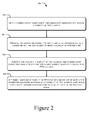
- Figure 2 illustrates a method 200 for determining a reference model to measure blood pressure of a subject
- figure 3 illustrates a method 300 for measuring the blood pressure of the subject, according to an embodiment of the present subject matter.
- the order in which the methods is described is not intended to be construed as a limitation, and any number of the described methods blocks can be combined in any order to implement the methods or any alternative methods. Additionally, individual blocks may be deleted from the methods without departing from the spirit and scope of the subject matter described herein.
- the methods can be implemented in any suitable hardware, software, firmware, or combination thereof.
- the methods may be described in the general context of computer executable instructions.
- computer executable instructions can include routines, programs, objects, components, data structures, procedures, modules, functions, etc., that perform particular functions or implement particular abstract data types.
- the methods may also be practiced in a distributed computing environment where functions are performed by remote processing devices that are linked through a communications network.
- computer executable instructions may be located in both local and remote computer storage media, including memory storage devices.
- one or more of the methods described herein may be implemented at least in part as instructions embodied in a non-transitory computer-readable medium and executable by one or more computing devices.
- a processor for example, a microprocessor, receives instructions from a non-transitory computer-readable medium, for example, a memory, and executes those instructions, thereby performing one or more methods, including one or more of the methods described herein.
- Such instructions may be stored and/or transmitted using any of a variety of known computer-readable media.
- a sample dataset comprising physiological data associated with each of a plurality of test subjects is obtained.
- the physiological data may comprise a PPG waveform associated with a test subject and at least one ground truth value of blood pressure of the test subject.
- the ground truth value may be understood as a value of blood pressure measured using a conventional sphygmomanometer device. Examples of the ground truth value may include, but are not limited to, a maximum value of the blood pressure, i.e., systolic blood pressure, and a minimum value of the blood pressure, i.e., diastolic blood pressure.
- the physiological data associated with the test subject is processed to obtain a plurality of PPG features.
- the PPG features may include, but are not limited to, a systolic upstroke time period (T s ), a diastolic time period (T d ), and a sum (B) of systolic width and diastolic width determined, based on the PPG waveform, at predetermined intervals.
- T s systolic upstroke time period
- T d diastolic time period
- B sum of systolic width and diastolic width determined, based on the PPG waveform, at predetermined intervals.
- a distance between a trough and an immediate peak point may be ascertained to be the T s .
- a distance between a peak point and an immediate trough may be ascertained to be the T d .
- one or more latent parameters associated with the test subject are computed based at least on the plurality of PPG features.
- the latent parameters may be computed based on the PPG features and the ground truth value of the blood pressure of the individual.
- the latent parameters may be computed using the equations 1(a) and 1(b) as illustrated in Figure 1 above.
- a reference model for determining blood pressure of a subject is determined.
- the PPG features and the latent parameters of each of the test subjects may be correlated.
- the reference model may be determined. The reference model may then be deployed in devices for measuring the blood pressure of the subject.
- figure 3 illustrates a method 300 for measuring blood pressure of a subject.
- a plurality of PPG features associated with a subject is obtained.
- the PPG features may be ascertained from a PPG waveform associated with the subject.
- the PPG waveform may be processed using known techniques for obtaining the PPG features.
- a device such as the device 104, may obtain the features by processing the PPG waveform.
- the device may obtain the PPG features through a user input.
- one or more latent parameters associated with the subject are ascertained based on the PPG features and a reference model.
- the reference model may indicate a correlation between the PPG features and the latent parameters.
- the reference model may be determined based on physiological data associated with a plurality of test subjects.
- the PPG features of the subject may be compared with the PPG features included in the reference model, and in case of a successful match, the latent parameters corresponding to the PPG features of the reference model may be identified to be the latent parameters of the subject.
- the latent parameters may be ascertained based on the reference model and the PPG features using machine learning techniques.
- blood pressure of the subject is determined based on the latent parameters and the PPG features.
- a systolic blood pressure (P s ) and a diastolic blood pressure (P d ) of the subject may be determined based on the latent parameters and the PPG features using the equations 1(a) and 1(b) as illustrated in Figure 1 above.
Landscapes
- Health & Medical Sciences (AREA)
- Life Sciences & Earth Sciences (AREA)
- Engineering & Computer Science (AREA)
- Medical Informatics (AREA)
- Public Health (AREA)
- Physiology (AREA)
- Physics & Mathematics (AREA)
- General Health & Medical Sciences (AREA)
- Pathology (AREA)
- Biomedical Technology (AREA)
- Cardiology (AREA)
- Animal Behavior & Ethology (AREA)
- Surgery (AREA)
- Heart & Thoracic Surgery (AREA)
- Biophysics (AREA)
- Veterinary Medicine (AREA)
- Molecular Biology (AREA)
- Artificial Intelligence (AREA)
- Signal Processing (AREA)
- Psychiatry (AREA)
- Computer Vision & Pattern Recognition (AREA)
- Vascular Medicine (AREA)
- Databases & Information Systems (AREA)
- Primary Health Care (AREA)
- Evolutionary Computation (AREA)
- Fuzzy Systems (AREA)
- Mathematical Physics (AREA)
- Epidemiology (AREA)
- Data Mining & Analysis (AREA)
- Pulmonology (AREA)
- Measuring Pulse, Heart Rate, Blood Pressure Or Blood Flow (AREA)
Abstract
Description
- The present subject matter relates, in general, to measurement of a physiological parameter of a subject and, particularly but not exclusively, to measuring blood pressure of a subject.
- Measurement of various physiological parameters, such as blood pressure of an individual is typically performed in a clinical setting. For measuring blood pressure, several unobtrusive techniques have been developed. One such technique for measuring the blood pressure is photoplethysmography. Photoplethysmography is a non-intrusive technique for measuring blood pressure of an individual. In said technique, a photoplethysmogram (PPG), a type of an optical plethysomogram, associated with the individual may be analyzed for measuring the blood pressure of the individual.
- The detailed description is described with reference to the accompanying figures. In the figures, the left-most digit(s) of a reference number identifies the figure in which the reference number first appears. The same numbers are used throughout the drawings to reference like features and components.
-
Figure 1 illustrates a network environment for facilitating measurement of blood pressure of a subject, in accordance with an implementation of the present subject matter; -
Figure 2 illustrates a method for determining a reference model to measure blood pressure of a subject, in accordance with an implementation of the present subject matter; and -
Figure 3 illustrates a method for measuring the blood pressure of the subject, in accordance with an implementation of the present subject matter. - The present subject matter relates to measuring blood pressure of a subject, for example, an individual, based on a photoplethysmogram (PPG) associated with the subject.
- Typically, an individual seeking to get his/her blood pressure measured may visit a medical clinic or a hospital. In such scenario, a physician or a trained medical technician measures the blood pressure of the individual with the help of medical instruments, such as a sphygmomanometer and a stethoscope. As may be gathered, in the aforementioned scenario, measurement of the blood pressure may only be performed by individuals having specific skill set suitable for efficiently using the medical instruments for measuring the blood pressure. Thus, periodical measurement of blood pressure may require regular visits to the medical clinic or hospital and may prove to be a cost intensive method for the individual.
- In a conventional approach, an over the counter device implementing photoplethysmography may be used for measuring blood pressure. The photoplethysmography may be understood as a non-invasive optical technique for measuring physiological parameters, such as respiration rate, heart rate, and blood pressure of an individual. In such conventional approach, a PPG waveform associated with the individual may be obtained by processing a video of the individual or a video of a part of the body of the individual. Based on the PPG waveform and a predetermined statistical model, the blood pressure of the individual may then be determined. However, determination of the blood pressure based on the aforementioned approach may, at times, result in vague blood pressure measurement. For example, in a case where a statistical model based on a large dataset of blood pressure records is used for determining the blood pressure, accurate measurement of the blood pressure may be achieved. While, in a case where a statistical model based on a small dataset of blood pressure records is used, for example, in a case where low-budget devices are used for measuring the blood pressure, the blood pressure may be inaccurately determined. As may be gathered, the aforementioned approach based on the statistical model may not yield accurate measurement of the blood pressure. Further, the aforementioned approach does not take into account other physiological parameters of the individual. Thus, the approach may not provide for a true measurement of the blood pressure of the individual.
- The present subject matter describes methods, system, and devices to measure blood pressure of a subject, for example, an individual. According to an aspect of the present subject matter, the blood pressure of the individual may be measured based on a PPG waveform associated with the subject and a reference model. In accordance with the present subject matter, the reference model may be based on one or more latent parameters, such as arterial compliance (R), peripheral resistance (C), blood flow from ventricles to artery (I0), and cardiac output (Co), associated with the individual. Measurement of the blood pressure of an individual based on the latent parameters of the individual results in higher degree of accuracy in the value of the blood pressure measured.
- In an implementation, the reference model may be determined based on a sample dataset comprising physiological data associated with each of a plurality of test subjects. In an example, the physiological data, corresponding to a test subject, may include a ground truth value of blood pressure of the test subject and a PPG waveform associated with the subject. The ground truth value may be understood as a value of blood pressure measured using a conventional sphygmomanometer device. In said implementation, the PPG waveform may be processed for obtaining a plurality of PPG features. Examples of the PPG features may include, but are not limited to, systolic upstroke time period (Ts), diastolic time period (Td), and a sum (B) of systolic width and diastolic width at predetermined intervals. Based on the PPG features and the ground truth value of the blood pressure, latent parameters associated with the test subject may be computed. As may be understood, the latent parameters for each of the test subjects are obtained. Latent parameters may be understood as parameters indicative of one or more physiological parameters of an individual. Thereafter, the reference model may be determined by correlating the latent parameters of the test subjects with the PPG features of the test subjects. The reference model may then be deployed in devices, for example, user equipments, such as mobile phones, laptops, and desktops, for measuring blood pressure of a subject in real time.
- In an implementation, for measuring the blood pressure of the subject, a plurality of PPG features associated with the subject may be obtained. In an example, the PPG features may be obtained by processing a PPG waveform associated with the subject. Thereafter, based on the reference model and the PPG features, one or more latent parameters associated with the subject may be ascertained. As mentioned above, the reference model indicates a correlation between the PPG features and the latent parameters. Thus, a value of each of the latent parameters corresponding to the PPG features of the subject may be identified based on the reference model. Based on the latent parameters and the PPG features, the blood pressure of the subject may then be determined.
- As will be clear from the foregoing description, latent parameters associated with a subject are taken into account while measuring the blood pressure of the subject. As a result, measurement of the blood pressure of a subject in accordance with the present subject matter is not totally dependent on a statistical model and involves latent parameters of the subject. Thus, high level of accuracy in measurement of blood pressure of a subject may be achieved.
- These and other advantages of the present subject matter would be described in greater detail in conjunction with the following figures. While aspects of described systems and methods for measuring blood pressure can be implemented in any number of different computing systems, environments, and/or configurations, the embodiments are described in the context of the following device(s).
-
Figure 1 illustrates anetwork environment 100 for facilitating measurement of blood pressure of a subject, in accordance with an embodiment of the present subject matter. Thenetwork environment 100 includes amodeling system 102 and a plurality of devices 104-1, 104-2, ....., and 104-N, hereinafter collectively referred to as thedevices 104 and individually referred to as thedevice 104. Themodeling system 102 and thedevices 104 may communicate with each other, through anetwork 106, according to an embodiment of the present subject matter. - In an implementation, the
modeling system 102 may be implemented as one or more systems, such as a cloud server, a mainframe computer, a workstation, a multiprocessor system, a network computer, and a gateway server. In an example, themodeling system 102 may be provisioned to develop a reference model for facilitating measurement of blood pressure of a subject, for example, an individual, by using thedevices 104. Based on the reference model, the blood pressure of the subject may be measured in real time. Examples of thedevice 104 may include, but are not limited to, a mobile phone, a smart phone, a personal digital assistant (PDA), a tablet, a laptop, a workstation computer, a server, and a personal computer. - The
network 106 may be a wireless network, a wired network, or a combination thereof. Thenetwork 106 can also be an individual network or a collection of many such individual networks, interconnected with each other and functioning as a single large network, e.g., the Internet or an intranet. Thenetwork 106 can be implemented as one of the different types of networks, such as an intranet, local area network (LAN), wide area network (WAN), the internet, and such. Further, thenetwork 106 may include network devices that may interact with themodeling system 102 and thedevices 104 through communication links. - In one implementation, the
modeling system 102 and thedevice 104 include processors 108-1 and 108-2, respectively. The processors 108-1 and 108-2, hereinafter collectively referred to as the processor 108, may be implemented as one or more microprocessors, microcomputers, microcontrollers, digital signal processors, central processing units, state machines, logic circuitries, and/or any devices that manipulate signals based on operational instructions. Among other capabilities, the processor(s) is configured to fetch and execute computer-readable instructions stored in the memory. - The functions of the various elements shown in the figure, including any functional blocks labeled as "processor(s)", may be provided through the use of dedicated hardware as well as hardware capable of executing software in association with appropriate software. When provided by a processor, the functions may be provided by a single dedicated processor, by a single shared processor, or by a plurality of individual processors, some of which may be shared.
- Also, the
modeling system 102 and thedevice 104 include I/O interface(s) 110-1 and 110-2, respectively. The I/O interfaces 110-1 and 110-2, collectively referred to as I/O interfaces 110 may include a variety of software and hardware interfaces that allow themodeling system 102 and thedevice 104 to interact with thenetwork 106, or with each other. Further, the I/O interfaces 110 may enable themodeling system 102 and thedevice 104 to communicate with other communication and devices, such as web servers and external repositories. Themodeling system 102 and thedevice 104 may further include memory 112-1 and 112-2, respectively, collectively referred to as memory 112. The memory 112-1 and 112-2 may be coupled to the processor 108-1, and the processor 108-2, respectively. The memory 112 may include any computer-readable medium known in the art including, for example, volatile memory (e.g., RAM), and/or non-volatile memory (e.g., EPROM, flash memory, etc.). - The
modeling system 102 and thedevice 104 include modules 114-1, 114-2 and data 116-1, 116-2, respectively, collectively referred to as modules 114 and data 116, respectively. The modules 114 include routines, programs, objects, components, data structures, and the like, which perform particular tasks or implement particular abstract data types. The modules 114 further include modules that supplement applications on themodeling system 102 and thedevice 104, for example, modules of an operating system. - Further, the modules 114 can be implemented in hardware, instructions executed by a processing unit, or by a combination thereof. The processing unit can comprise a computer, a processor, such as the processor 108, a state machine, a logic array or any other suitable devices capable of processing instructions. The processing unit can be a general-purpose processor which executes instructions to cause the general-purpose processor to perform the required tasks, or the processing unit can be dedicated to perform the required functions.
- In another aspect of the present subject matter, the modules 114 may be machine-readable instructions (software) which, when executed by a processor/processing unit, perform any of the described functionalities. The machine-readable instructions may be stored on an electronic memory device, hard disk, optical disk, or other machine-readable storage medium or non-transitory medium. In one implementation, the machine-readable instructions can be also be downloaded to the storage medium via a network connection. The data 116 serves, amongst other things, as a repository for storing data that may be fetched, processed, received, or generated by one or more of the modules 114.
- In an implementation, the modules 114-1 of the
modeling system 102 include ananalysis module 118 and other module(s) 120. In said implementation, the data 116-1 of themodeling system 102 includes test data 122 andother data 124. The other module(s) 120 may include programs or coded instructions that supplement applications and functions, for example, programs in the operating system of themodeling system 102. Theother data 124 comprise data corresponding to one or more other module(s) 120. - Similarly, in an implementation, the modules 114-2 of the
device 104 include a bloodpressure measurement module 126 and other module(s) 128. In said implementation, the data 116-2 of thedevice 104 includes reference data 130 and other data 132. The other module(s) 128 may include programs or coded instructions that supplement applications and functions, for example, programs in the operating system of thedevice 104. The other data 132 comprise data corresponding to one or more other module(s) 128. - In operation, the
analysis module 118 may obtain a sample dataset for developing the reference model. The sample dataset may be understood as a collection of physiological data corresponding to each of a plurality of test subjects. In an example, the physiological data may include at least one ground truth value of blood pressure of a test subject and a PPG waveform associated with the test subject. In an implementation, theanalysis module 118 may process the physiological data for obtaining a plurality of PPG features associated with the test subject. Examples of the PPG features may include, but are not limited to, a systolic upstroke time period (Ts), a diastolic time period (Td), and a sum (B) of systolic width and diastolic width determined, based on the PPG waveform, at predetermined intervals. For example, theanalysis module 118 may ascertain a time difference between a trough and a peak point immediate to the trough using known techniques. The time difference ascertained represents the systolic upstroke time period (Ts). Similarly, theanalysis module 118 may then ascertain a time difference between a peak point and a trough immediate to the peak point using known techniques for identifying the diastolic time period (Td). Similarly, theanalysis module 118 may compute the sum (B) at predetermined intervals, say at thirty three percent and seventy five percent of the peak amplitude. - Thereafter, the
analysis module 118 may compute one or more latent parameters associated with the test subject based on the PPG features and the at least one ground truth value. Examples of the latent parameters may include, but are not limited to, arterial compliance (R) and peripheral resistance (C), of the test subject. In an example, theanalysis module 118 may compute the latent parameters using equations 1(a) and 1(b) illustrated below:

- In an example, the
analysis module 118 may ascertain the equations 1(a) and 1(b) using a two-element Windkessel model. In said example, theanalysis module 118 may replace the resistance of the two-element Windkessel model with arterial compliance and the capacitance with the peripheral resistance. Thereafter, theanalysis module 118 may perform one or more linear regressions for obtaining the equations 1(a) and 1(b) and may store the same in test data 122. - Upon computing the values for the latent parameters of the test subject, the
analysis module 118 may correlate the latent parameters of the test subject with the PPG features of the test subject. For example, for a set of values of PPG features, the corresponding latent parameters computed may be correlated with the set of PPG features. As may be understood, theanalysis module 118 may correlate the latent parameters and the PPG features for each of the test subjects. Based on the correlation, theanalysis module 118 may then determine the reference model. The reference model may then be used for measuring blood pressure of an individual in real time. For example, the reference model may be deployed in thedevices 104 for facilitating measurement of blood pressure of a subject in real time. - In an implementation, the blood pressure measurement (BPM)
module 126 may obtain a plurality of PPG features of a subject whose blood pressure is to be determined. In an example, the PPG features may be obtained from a user input provided by a user. For instance, values of the PPG features may be received from the user through an input device, such as a keyboard or a touch screen. In another example, theBPM module 126 may obtain the PPG features from a setup (not shown in figure) deployed for monitoring the PPG of the subject. - Upon obtaining the PPG features, the
BPM module 126 may ascertain one or more latent parameters associated with the subject based on the PPG features and the reference model. The reference model may be stored in the reference data 130. As mentioned above, the reference model includes a plurality of correlations between latent parameters and PPG features. In order to ascertain the latent parameters, theBPM module 126 may compare the PPG features of the subject with the plurality of PPG features in the reference model. In a case where theBPM module 126 ascertains a successful match with any of the PPG features of the reference model, theBPM model 126 may ascertain the latent parameters value corresponding to the PPG features to be the latent parameters associated with the subject. Thereafter, theBPM module 126 may determine the blood pressure of the subject based on the latent parameters and the PPG features. In an example, theBPM module 126 may determine the blood pressure based on the equations 1(a) and 1(b) stated above. -
Figure 2 illustrates amethod 200 for determining a reference model to measure blood pressure of a subject, andfigure 3 illustrates amethod 300 for measuring the blood pressure of the subject, according to an embodiment of the present subject matter. The order in which the methods is described is not intended to be construed as a limitation, and any number of the described methods blocks can be combined in any order to implement the methods or any alternative methods. Additionally, individual blocks may be deleted from the methods without departing from the spirit and scope of the subject matter described herein. Furthermore, the methods can be implemented in any suitable hardware, software, firmware, or combination thereof. - The methods may be described in the general context of computer executable instructions. Generally, computer executable instructions can include routines, programs, objects, components, data structures, procedures, modules, functions, etc., that perform particular functions or implement particular abstract data types. The methods may also be practiced in a distributed computing environment where functions are performed by remote processing devices that are linked through a communications network. In a distributed computing environment, computer executable instructions may be located in both local and remote computer storage media, including memory storage devices.
- In an implementation, one or more of the methods described herein may be implemented at least in part as instructions embodied in a non-transitory computer-readable medium and executable by one or more computing devices. In general, a processor, for example, a microprocessor, receives instructions from a non-transitory computer-readable medium, for example, a memory, and executes those instructions, thereby performing one or more methods, including one or more of the methods described herein. Such instructions may be stored and/or transmitted using any of a variety of known computer-readable media.
- With reference to the description of
Figure 2 andFigure 3 , for the sake of brevity, the details of the components of themodeling system 102 and thedevice 104 are not discussed here. Such details can be understood as provided in the description provided with reference tofigure 1 . - Referring to
Figure 2 , atblock 202, a sample dataset comprising physiological data associated with each of a plurality of test subjects is obtained. In an example, the physiological data may comprise a PPG waveform associated with a test subject and at least one ground truth value of blood pressure of the test subject. The ground truth value may be understood as a value of blood pressure measured using a conventional sphygmomanometer device. Examples of the ground truth value may include, but are not limited to, a maximum value of the blood pressure, i.e., systolic blood pressure, and a minimum value of the blood pressure, i.e., diastolic blood pressure. - At
block 204, for each of the plurality of test subjects, the physiological data associated with the test subject is processed to obtain a plurality of PPG features. Example, of the PPG features may include, but are not limited to, a systolic upstroke time period (Ts), a diastolic time period (Td), and a sum (B) of systolic width and diastolic width determined, based on the PPG waveform, at predetermined intervals. In an example, a distance between a trough and an immediate peak point may be ascertained to be the Ts. In another example, a distance between a peak point and an immediate trough may be ascertained to be the Td. - At
block 206, for each of the plurality of test subjects, one or more latent parameters associated with the test subject are computed based at least on the plurality of PPG features. In an example, the latent parameters may be computed based on the PPG features and the ground truth value of the blood pressure of the individual. In said example, the latent parameters may be computed using the equations 1(a) and 1(b) as illustrated inFigure 1 above. - At
block 208, based on the plurality of PPG features and the one or more latent parameters associated with each of the plurality of test subjects, a reference model for determining blood pressure of a subject is determined. In an example, the PPG features and the latent parameters of each of the test subjects may be correlated. Based on the correlation for each of the test subjects, the reference model may be determined. The reference model may then be deployed in devices for measuring the blood pressure of the subject. - Further,
figure 3 illustrates amethod 300 for measuring blood pressure of a subject. Referring tofigure 3 , atblock 302, a plurality of PPG features associated with a subject is obtained. In an example, the PPG features may be ascertained from a PPG waveform associated with the subject. In said example, the PPG waveform may be processed using known techniques for obtaining the PPG features. In an example, a device, such as thedevice 104, may obtain the features by processing the PPG waveform. In another example, the device may obtain the PPG features through a user input. - At
block 304, one or more latent parameters associated with the subject are ascertained based on the PPG features and a reference model. In an example, the reference model may indicate a correlation between the PPG features and the latent parameters. In said example, the reference model may be determined based on physiological data associated with a plurality of test subjects. In an example, the PPG features of the subject may be compared with the PPG features included in the reference model, and in case of a successful match, the latent parameters corresponding to the PPG features of the reference model may be identified to be the latent parameters of the subject. In another example, the latent parameters may be ascertained based on the reference model and the PPG features using machine learning techniques. - At
block 306, blood pressure of the subject is determined based on the latent parameters and the PPG features. In an example, a systolic blood pressure (Ps) and a diastolic blood pressure (Pd) of the subject may be determined based on the latent parameters and the PPG features using the equations 1(a) and 1(b) as illustrated inFigure 1 above. - Although implementations for methods and systems for measuring blood pressure of a subject are described, it is to be understood that the present subject matter is not necessarily limited to the specific features or methods described. Rather, the specific features and methods are disclosed as implementations for measuring blood pressure of a subject.
Claims (14)
- A device (104) for measuring blood pressure of a subject, the device (104) comprising:a processor (108); anda blood pressure measurement (BPM) module (126) coupled to the processor (108) to,obtain a plurality of photoplethysmogram (PPG) features associated with the subject;ascertain one or more latent parameters associated with the subject based on the plurality of PPG features and a reference model, wherein the reference model indicates a correlation between the plurality of PPG features and the one or more latent parameters; anddetermine blood pressure of the subject based on the one or more latent parameters and the plurality of PPG features.
- The device (104) as claimed in claim 1, wherein the BPM module (126) further is to analyze a PPG waveform associated with the subject for obtaining the plurality of PPG features.
- The device (104) as claimed in claim 2, wherein each PPG feature from amongst the plurality of PPG features is extracted in one of a time domain and a frequency domain.
- The device (104) as claimed in claim 1, wherein the one or more latent parameters associated with the subject comprises at least an arterial compliance and a peripheral resistance of the subject.
- A method for measuring blood pressure of a subject, the method comprising:obtaining a plurality of photoplethysmogram (PPG) features associated with the subject;ascertaining one or more latent parameters associated with the subject based on the plurality of PPG features and a reference model, wherein the reference model indicates a correlation between the plurality of PPG features and the one or more latent parameters; anddetermining blood pressure of the subject based on the one or more latent parameters and the plurality of PPG features.
- The method as claimed in claim 5, wherein the one or more latent parameters associated with the subject comprises at least an arterial compliance and a peripheral resistance of the subject.
- The method as claimed in claim 5, wherein each PPG feature from amongst the plurality of PPG features is extracted in one of a time domain and a frequency domain.
- A modeling system (102) for measuring blood pressure of a subject, the modeling system comprising:a processor (108); andan analysis module (118) coupled to the processor (108) to,obtain a sample dataset comprising physiological data associated with each of a test subject from amongst a plurality of test subjects, wherein the physiological data comprises at least one ground truth value of blood pressure associated with the test subject and a PPG waveform associated with the test subject;process, for each of the plurality of test subjects, the physiological data associated with the test subject to obtain a plurality of PPG features;compute, for each of the plurality of test subjects, one or more latent parameters associated with the test subject based on the plurality of PPG features and the at least one ground truth value; anddetermine, based on the one or more latent parameters and the PPG features associated with each of the plurality of test subjects, a reference model for measuring blood pressure of the subject in real time, wherein the reference model indicates a correlation between the one or more latent parameters and the PPG features associated with each of the plurality of test subjects.
- The modeling system (102) as claimed in claim 8, wherein the analysis module (118) further is to determine the reference model based on a machine learning technique.
- The modeling system (102) as claimed in claim 8, wherein the analysis module (118) further is to extract the plurality of PPG features from the PPG waveform in one of a time domain and a frequency domain.
- A method for measuring blood pressure of a subject, the method comprising:receiving a sample dataset comprising physiological data associated with each of a test subject from amongst a plurality of test subjects, wherein the physiological data comprises at least one ground truth value of blood pressure associated with the test subject and a PPG waveform associated with the test subject;processing, for each of the plurality of test subjects, the physiological data associated with the test subject to obtain a plurality of PPG features;computing, for each of the plurality of test subjects, one or more latent parameters associated with the test subject based on the plurality of PPG features and the at least one ground truth value; anddetermining, based on the one or more latent parameters and the PPG features associated with each of the plurality of test subjects, a reference model for measuring blood pressure of the subject in real time, wherein the reference model indicates a correlation between the one or more latent parameters and the PPG features associated with each of the plurality of test subjects.
- The method as claimed in claim 11, wherein the determining the reference model is based on a machine learning technique.
- The method as claimed in claim 11, wherein the processing comprises extracting the plurality of PPG features from the PPG waveform in one of a time domain and a frequency domain.
- A non-transitory computer readable medium having a set of computer readable instructions that, when executed, cause a device (104) to:obtain a plurality of photoplethysmogram (PPG) features associated with the subject;ascertain one or more latent parameters associated with the subject based on the plurality of PPG features and a reference model, wherein the reference model indicates a correlation between the plurality of PPG features and the one or more latent parameters; anddetermine blood pressure of the subject based on the one or more latent parameters and the plurality of PPG features.
Applications Claiming Priority (1)
| Application Number | Priority Date | Filing Date | Title |
|---|---|---|---|
| IN2593MU2014 | 2014-08-11 |
Publications (3)
| Publication Number | Publication Date |
|---|---|
| EP2992820A2 true EP2992820A2 (en) | 2016-03-09 |
| EP2992820A3 EP2992820A3 (en) | 2016-06-01 |
| EP2992820B1 EP2992820B1 (en) | 2023-05-10 |
Family
ID=52473809
Family Applications (1)
| Application Number | Title | Priority Date | Filing Date |
|---|---|---|---|
| EP15155771.7A Active EP2992820B1 (en) | 2014-08-11 | 2015-02-19 | Measuring blood pressure |
Country Status (5)
| Country | Link |
|---|---|
| US (1) | US11357410B2 (en) |
| EP (1) | EP2992820B1 (en) |
| JP (1) | JP6517051B2 (en) |
| CN (1) | CN105361869B (en) |
| AU (1) | AU2015201213B2 (en) |
Cited By (5)
| Publication number | Priority date | Publication date | Assignee | Title |
|---|---|---|---|---|
| US10420475B2 (en) | 2015-06-15 | 2019-09-24 | Vital Labs, Inc. | Method and system for cardiovascular disease assessment and management |
| US10420515B2 (en) | 2015-06-15 | 2019-09-24 | Vital Labs, Inc. | Method and system for acquiring data for assessment of cardiovascular disease |
| US11324411B2 (en) | 2019-10-01 | 2022-05-10 | Riva Health, Inc. | Method and system for determining cardiovascular parameters |
| US11744523B2 (en) | 2021-03-05 | 2023-09-05 | Riva Health, Inc. | System and method for validating cardiovascular parameter monitors |
| US11830624B2 (en) | 2021-09-07 | 2023-11-28 | Riva Health, Inc. | System and method for determining data quality for cardiovascular parameter determination |
Families Citing this family (19)
| Publication number | Priority date | Publication date | Assignee | Title |
|---|---|---|---|---|
| US9936885B1 (en) | 2014-03-31 | 2018-04-10 | Sensogram Technologies, Inc. | Apparatus for ambient noise cancellation in PPG sensors |
| US10327649B1 (en) | 2014-03-31 | 2019-06-25 | Sensogram Technologies, Inc. | Non-invasive wearable blood pressure monitoring system |
| US10117586B1 (en) | 2014-03-31 | 2018-11-06 | Sensogram Technologies, Inc. | Continuous non-invasive wearable blood pressure monitoring system |
| US20170049404A1 (en) * | 2015-08-19 | 2017-02-23 | Amiigo, Inc. | Wearable LED Sensor Device Configured to Identify a Wearer's Pulse |
| US10117598B1 (en) | 2015-11-08 | 2018-11-06 | Sensogram Technologies, Inc. | Non-invasive wearable respiration rate monitoring system |
| EP3435851A4 (en) * | 2016-04-01 | 2019-11-06 | The Trustees Of The University Of Pennsylvania | METHODS, SYSTEMS, AND COMPUTER-READABLE MEDIA FOR MEASURING SYSTEMIC VASCULAR RESISTANCE |
| WO2019019119A1 (en) * | 2017-07-27 | 2019-01-31 | Vita-Course Technologies (Hainan) Co., Ltd. | Systems and methods for determining blood pressure of subject |
| US20190082984A1 (en) * | 2017-09-19 | 2019-03-21 | Pixart Imaging Inc. | Method and electronic device capable of establishing personal blood pressure estimation model for specific user/person |
| JP6620999B2 (en) * | 2017-11-30 | 2019-12-18 | 国立大学法人東北大学 | Biological information measuring device, biological information measuring program, and biological information measuring method |
| EP3787486A4 (en) * | 2018-06-01 | 2021-05-05 | Vita-Course Technologies Co. Ltd. | PULSE TRANSIT TIME DETERMINATION PROCESSES AND SYSTEMS |
| US11690520B2 (en) * | 2018-06-20 | 2023-07-04 | Samsung Electronics Co., Ltd. | Apparatus and method for measuring bio-information |
| KR102806305B1 (en) | 2019-07-04 | 2025-05-09 | 삼성전자주식회사 | Apparatus and method for calibrating bio-information estimation model and, apparatus for estimating bio-information |
| CN114340483B (en) * | 2019-09-25 | 2024-06-14 | 长桑医疗(海南)有限公司 | A blood pressure calibration selection method and modeling method thereof |
| CN110652288A (en) * | 2019-10-30 | 2020-01-07 | 四川安雅仕健康管理有限公司 | Voice recognition's hypertension symptom collection and artificial intelligence analytical equipment |
| US12347566B2 (en) | 2020-04-27 | 2025-07-01 | Viavi Solutions Inc. | Blood pressure estimation with photoplethysmography measurement |
| US12507901B2 (en) | 2020-07-14 | 2025-12-30 | Apple Inc. | Integrated flexible sensor for blood pressure measurements |
| US11744476B2 (en) | 2020-08-20 | 2023-09-05 | Apple Inc. | Blood pressure measurement using device with piezoelectric sensor |
| CN111870237B (en) * | 2020-09-04 | 2022-08-16 | 平安科技(深圳)有限公司 | Blood pressure detection device, blood pressure detection apparatus, and blood pressure detection medium |
| US12251204B2 (en) | 2021-02-03 | 2025-03-18 | Apple Inc. | Blood pressure monitoring system including a liquid filled sensor |
Family Cites Families (19)
| Publication number | Priority date | Publication date | Assignee | Title |
|---|---|---|---|---|
| ATE199820T1 (en) * | 1991-06-12 | 2001-04-15 | Univ Florida Atlantic | DETECTION OF ATHEROSCLEROSIS IN HUMAN BEINGS |
| US5533511A (en) * | 1994-01-05 | 1996-07-09 | Vital Insite, Incorporated | Apparatus and method for noninvasive blood pressure measurement |
| JP3666987B2 (en) * | 1996-05-02 | 2005-06-29 | コーリンメディカルテクノロジー株式会社 | Blood pressure monitoring device |
| US6616613B1 (en) | 2000-04-27 | 2003-09-09 | Vitalsines International, Inc. | Physiological signal monitoring system |
| JP5076229B2 (en) * | 2001-06-21 | 2012-11-21 | 学校法人日本大学 | Vascular disease inspection device and bypass vascular diagnosis device |
| JP2003175105A (en) * | 2001-12-11 | 2003-06-24 | K & S:Kk | Anesthetic depth measuring instrument |
| DE60207183T2 (en) * | 2001-12-10 | 2006-08-10 | Kabushiki Gaisha K-And-S | Device for monitoring biological data |
| JP3706841B2 (en) * | 2002-04-16 | 2005-10-19 | 株式会社ケーアンドエス | Biological data measuring device |
| JP2006192052A (en) * | 2005-01-13 | 2006-07-27 | Yokogawa Electric Corp | Blood pressure measurement device |
| EP2074942B1 (en) * | 2007-12-21 | 2012-02-01 | CSEM Centre Suisse d'Electronique et de Microtechnique SA - Recherche et Développement | Method and apparatus for a continuous non-invasive and non-obstrusive monitoring of blood pressure |
| US8574162B2 (en) * | 2008-06-30 | 2013-11-05 | Nellcor Puritan Bennett Ireland | Systems and methods for detecting pulses |
| US8398556B2 (en) | 2008-06-30 | 2013-03-19 | Covidien Lp | Systems and methods for non-invasive continuous blood pressure determination |
| US8532751B2 (en) * | 2008-09-30 | 2013-09-10 | Covidien Lp | Laser self-mixing sensors for biological sensing |
| US9204857B2 (en) * | 2009-06-05 | 2015-12-08 | General Electric Company | System and method for monitoring hemodynamic state |
| US8825428B2 (en) * | 2010-11-30 | 2014-09-02 | Neilcor Puritan Bennett Ireland | Methods and systems for recalibrating a blood pressure monitor with memory |
| WO2013056319A1 (en) * | 2011-10-21 | 2013-04-25 | University Of Technology, Sydney | A system and method for determining blood pressure |
| CN102488503B (en) * | 2011-12-14 | 2014-02-19 | 中国航天员科研训练中心 | Continuous Blood Pressure Measurement Device |
| US20150208923A1 (en) * | 2014-01-28 | 2015-07-30 | The Texas A&M University System | Non-Invasive Monitoring of Tissue Mechanical Properties |
| US20160022213A1 (en) * | 2014-07-25 | 2016-01-28 | Salutron, Inc. | Clip adaptor for an activity monitor device and other devices |
-
2015
- 2015-02-19 EP EP15155771.7A patent/EP2992820B1/en active Active
- 2015-03-09 JP JP2015045683A patent/JP6517051B2/en active Active
- 2015-03-09 AU AU2015201213A patent/AU2015201213B2/en active Active
- 2015-03-10 US US14/643,333 patent/US11357410B2/en active Active
- 2015-04-07 CN CN201510160232.8A patent/CN105361869B/en active Active
Non-Patent Citations (1)
| Title |
|---|
| None |
Cited By (11)
| Publication number | Priority date | Publication date | Assignee | Title |
|---|---|---|---|---|
| US10420475B2 (en) | 2015-06-15 | 2019-09-24 | Vital Labs, Inc. | Method and system for cardiovascular disease assessment and management |
| US10420515B2 (en) | 2015-06-15 | 2019-09-24 | Vital Labs, Inc. | Method and system for acquiring data for assessment of cardiovascular disease |
| US11266356B2 (en) | 2015-06-15 | 2022-03-08 | Riva Health, Inc. | Method and system for acquiring data for assessment of cardiovascular disease |
| US11424032B2 (en) | 2015-06-15 | 2022-08-23 | Riva Health, Inc. | Method and system for cardiovascular disease assessment and management |
| US11862340B2 (en) | 2015-06-15 | 2024-01-02 | Riva Health, Inc. | Method and system for cardiovascular disease assessment and management |
| US11872061B2 (en) | 2015-06-15 | 2024-01-16 | Riva Health, Inc. | Method and system for acquiring data for assessment of cardiovascular disease |
| US12094613B2 (en) | 2015-06-15 | 2024-09-17 | Riva Health, Inc. | Method and system for cardiovascular disease assessment and management |
| US12109050B2 (en) | 2015-06-15 | 2024-10-08 | Riva Health, Inc. | Method and system for acquiring data for assessment of cardiovascular disease |
| US11324411B2 (en) | 2019-10-01 | 2022-05-10 | Riva Health, Inc. | Method and system for determining cardiovascular parameters |
| US11744523B2 (en) | 2021-03-05 | 2023-09-05 | Riva Health, Inc. | System and method for validating cardiovascular parameter monitors |
| US11830624B2 (en) | 2021-09-07 | 2023-11-28 | Riva Health, Inc. | System and method for determining data quality for cardiovascular parameter determination |
Also Published As
| Publication number | Publication date |
|---|---|
| US11357410B2 (en) | 2022-06-14 |
| EP2992820B1 (en) | 2023-05-10 |
| AU2015201213A1 (en) | 2016-02-25 |
| JP2016036716A (en) | 2016-03-22 |
| US20160038044A1 (en) | 2016-02-11 |
| AU2015201213B2 (en) | 2020-06-04 |
| CN105361869A (en) | 2016-03-02 |
| CN105361869B (en) | 2021-02-26 |
| JP6517051B2 (en) | 2019-05-22 |
| EP2992820A3 (en) | 2016-06-01 |
Similar Documents
| Publication | Publication Date | Title |
|---|---|---|
| EP2992820B1 (en) | Measuring blood pressure | |
| US20250279164A1 (en) | Discovering novel features to use in machine learning techniques, such as machine learning techniques for diagnosing medical conditions | |
| US10980429B2 (en) | Method and system for cuffless blood pressure estimation using photoplethysmogram features and pulse transit time | |
| US12097049B2 (en) | Methods, apparatus and systems for adaptable presentation of sensor data | |
| KR20180040400A (en) | Apparatus and method for estimating bio-information | |
| KR20160094265A (en) | Computing device and method for analyzing biophysiological rate features thereof | |
| Rahman et al. | Internet of things (IoT) based ECG system for rural health care | |
| CA3016149C (en) | Patient diabetes monitoring system with clustering of unsupervised daily cgm profiles (or insulin profiles) and method thereof | |
| CN111317484A (en) | Apparatus and method for estimating blood glucose | |
| CN113100736B (en) | Cerebral blood flow autonomic nerve disorder assessment device, system and storage medium | |
| WO2020187987A1 (en) | Population-level gaussian processes for clinical time series forecasting | |
| Ara | Machine-Learning Models For Predicting Blood Pressure And Cardiac Function Using Wearable Sensor Data | |
| CN114271804B (en) | Heart rate state auxiliary detection system, heart state monitoring system, heart state auxiliary detection method, heart state auxiliary detection storage medium and heart state auxiliary detection terminal based on consumer-level equipment | |
| US20240215898A1 (en) | Systems for diagnosis structural heart disease based on electrocardogram data | |
| EP3435853B1 (en) | A method of deriving systolic blood pressure and/or diastolic blood pressure of a subject | |
| Liu et al. | Relationship between the heart rate variability and the heart rate errors estimated via the photoplethysmograms | |
| Kim et al. | A personal health index system with IoT devices | |
| US20200288998A1 (en) | Modelling and extracting information from a photoplethysmography, ppg, signal | |
| Kumar et al. | ISSK-an integrated self service kiosk for health monitoring and management | |
| Moran et al. | Design of a Prevention and Monitoring System for People with Hypertension | |
| US20230371824A1 (en) | Assessing a cardiac condition independently of ppg waveform amplitude analysis | |
| Bhattacharyya | Continuous tracking of aortic aneurysm diameter with peripheral pulse waves: a computational framework combining sequential Markov chain Monte Carlo with Kalman filtering | |
| Reddy et al. | Integration of Modern Sensor Technology in Traditional Ayurvedic Health Diagnosis | |
| EP3705038A1 (en) | A pattern recognition system for classifying the functional status of patients with chronic heart, lung, and pulmonary vascular diseases | |
| Alam et al. | A Low Cost ECG Monitoring System with ECG Data Filtering |
Legal Events
| Date | Code | Title | Description |
|---|---|---|---|
| PUAI | Public reference made under article 153(3) epc to a published international application that has entered the european phase |
Free format text: ORIGINAL CODE: 0009012 |
|
| AK | Designated contracting states |
Kind code of ref document: A2 Designated state(s): AL AT BE BG CH CY CZ DE DK EE ES FI FR GB GR HR HU IE IS IT LI LT LU LV MC MK MT NL NO PL PT RO RS SE SI SK SM TR |
|
| AX | Request for extension of the european patent |
Extension state: BA ME |
|
| RIN1 | Information on inventor provided before grant (corrected) |
Inventor name: SINHA, ANIRUDDHA Inventor name: BANERJEE, ROHAN Inventor name: DUTTA CHOUDHURY, ANIRBAN |
|
| PUAL | Search report despatched |
Free format text: ORIGINAL CODE: 0009013 |
|
| AK | Designated contracting states |
Kind code of ref document: A3 Designated state(s): AL AT BE BG CH CY CZ DE DK EE ES FI FR GB GR HR HU IE IS IT LI LT LU LV MC MK MT NL NO PL PT RO RS SE SI SK SM TR |
|
| AX | Request for extension of the european patent |
Extension state: BA ME |
|
| RIC1 | Information provided on ipc code assigned before grant |
Ipc: A61B 5/021 20060101ALI20160428BHEP Ipc: A61B 5/00 20060101ALI20160428BHEP Ipc: G06F 19/00 20110101ALI20160428BHEP Ipc: A61B 5/024 20060101AFI20160428BHEP Ipc: A61B 5/0205 20060101ALI20160428BHEP Ipc: A61B 5/022 20060101ALI20160428BHEP |
|
| STAA | Information on the status of an ep patent application or granted ep patent |
Free format text: STATUS: REQUEST FOR EXAMINATION WAS MADE |
|
| 17P | Request for examination filed |
Effective date: 20161201 |
|
| RBV | Designated contracting states (corrected) |
Designated state(s): AL AT BE BG CH CY CZ DE DK EE ES FI FR GB GR HR HU IE IS IT LI LT LU LV MC MK MT NL NO PL PT RO RS SE SI SK SM TR |
|
| STAA | Information on the status of an ep patent application or granted ep patent |
Free format text: STATUS: EXAMINATION IS IN PROGRESS |
|
| 17Q | First examination report despatched |
Effective date: 20200309 |
|
| RIC1 | Information provided on ipc code assigned before grant |
Ipc: G16H 50/50 20180101AFI20221027BHEP |
|
| RIC1 | Information provided on ipc code assigned before grant |
Ipc: G16H 50/50 20180101ALI20221204BHEP Ipc: A61B 5/0205 20060101ALI20221204BHEP Ipc: A61B 5/00 20060101ALI20221204BHEP Ipc: A61B 5/022 20060101ALI20221204BHEP Ipc: A61B 5/021 20060101ALI20221204BHEP Ipc: A61B 5/024 20060101AFI20221204BHEP |
|
| GRAP | Despatch of communication of intention to grant a patent |
Free format text: ORIGINAL CODE: EPIDOSNIGR1 |
|
| STAA | Information on the status of an ep patent application or granted ep patent |
Free format text: STATUS: GRANT OF PATENT IS INTENDED |
|
| INTG | Intention to grant announced |
Effective date: 20230203 |
|
| GRAS | Grant fee paid |
Free format text: ORIGINAL CODE: EPIDOSNIGR3 |
|
| GRAA | (expected) grant |
Free format text: ORIGINAL CODE: 0009210 |
|
| STAA | Information on the status of an ep patent application or granted ep patent |
Free format text: STATUS: THE PATENT HAS BEEN GRANTED |
|
| AK | Designated contracting states |
Kind code of ref document: B1 Designated state(s): AL AT BE BG CH CY CZ DE DK EE ES FI FR GB GR HR HU IE IS IT LI LT LU LV MC MK MT NL NO PL PT RO RS SE SI SK SM TR |
|
| REG | Reference to a national code |
Ref country code: GB Ref legal event code: FG4D |
|
| REG | Reference to a national code |
Ref country code: AT Ref legal event code: REF Ref document number: 1565941 Country of ref document: AT Kind code of ref document: T Effective date: 20230515 Ref country code: CH Ref legal event code: EP |
|
| REG | Reference to a national code |
Ref country code: DE Ref legal event code: R096 Ref document number: 602015083489 Country of ref document: DE |
|
| REG | Reference to a national code |
Ref country code: IE Ref legal event code: FG4D |
|
| P01 | Opt-out of the competence of the unified patent court (upc) registered |
Effective date: 20230526 |
|
| REG | Reference to a national code |
Ref country code: NL Ref legal event code: FP |
|
| REG | Reference to a national code |
Ref country code: LT Ref legal event code: MG9D |
|
| REG | Reference to a national code |
Ref country code: AT Ref legal event code: MK05 Ref document number: 1565941 Country of ref document: AT Kind code of ref document: T Effective date: 20230510 |
|
| PG25 | Lapsed in a contracting state [announced via postgrant information from national office to epo] |
Ref country code: SE Free format text: LAPSE BECAUSE OF FAILURE TO SUBMIT A TRANSLATION OF THE DESCRIPTION OR TO PAY THE FEE WITHIN THE PRESCRIBED TIME-LIMIT Effective date: 20230510 Ref country code: PT Free format text: LAPSE BECAUSE OF FAILURE TO SUBMIT A TRANSLATION OF THE DESCRIPTION OR TO PAY THE FEE WITHIN THE PRESCRIBED TIME-LIMIT Effective date: 20230911 Ref country code: NO Free format text: LAPSE BECAUSE OF FAILURE TO SUBMIT A TRANSLATION OF THE DESCRIPTION OR TO PAY THE FEE WITHIN THE PRESCRIBED TIME-LIMIT Effective date: 20230810 Ref country code: ES Free format text: LAPSE BECAUSE OF FAILURE TO SUBMIT A TRANSLATION OF THE DESCRIPTION OR TO PAY THE FEE WITHIN THE PRESCRIBED TIME-LIMIT Effective date: 20230510 Ref country code: AT Free format text: LAPSE BECAUSE OF FAILURE TO SUBMIT A TRANSLATION OF THE DESCRIPTION OR TO PAY THE FEE WITHIN THE PRESCRIBED TIME-LIMIT Effective date: 20230510 |
|
| PG25 | Lapsed in a contracting state [announced via postgrant information from national office to epo] |
Ref country code: RS Free format text: LAPSE BECAUSE OF FAILURE TO SUBMIT A TRANSLATION OF THE DESCRIPTION OR TO PAY THE FEE WITHIN THE PRESCRIBED TIME-LIMIT Effective date: 20230510 Ref country code: PL Free format text: LAPSE BECAUSE OF FAILURE TO SUBMIT A TRANSLATION OF THE DESCRIPTION OR TO PAY THE FEE WITHIN THE PRESCRIBED TIME-LIMIT Effective date: 20230510 Ref country code: LV Free format text: LAPSE BECAUSE OF FAILURE TO SUBMIT A TRANSLATION OF THE DESCRIPTION OR TO PAY THE FEE WITHIN THE PRESCRIBED TIME-LIMIT Effective date: 20230510 Ref country code: LT Free format text: LAPSE BECAUSE OF FAILURE TO SUBMIT A TRANSLATION OF THE DESCRIPTION OR TO PAY THE FEE WITHIN THE PRESCRIBED TIME-LIMIT Effective date: 20230510 Ref country code: IS Free format text: LAPSE BECAUSE OF FAILURE TO SUBMIT A TRANSLATION OF THE DESCRIPTION OR TO PAY THE FEE WITHIN THE PRESCRIBED TIME-LIMIT Effective date: 20230910 Ref country code: HR Free format text: LAPSE BECAUSE OF FAILURE TO SUBMIT A TRANSLATION OF THE DESCRIPTION OR TO PAY THE FEE WITHIN THE PRESCRIBED TIME-LIMIT Effective date: 20230510 Ref country code: GR Free format text: LAPSE BECAUSE OF FAILURE TO SUBMIT A TRANSLATION OF THE DESCRIPTION OR TO PAY THE FEE WITHIN THE PRESCRIBED TIME-LIMIT Effective date: 20230811 |
|
| PG25 | Lapsed in a contracting state [announced via postgrant information from national office to epo] |
Ref country code: FI Free format text: LAPSE BECAUSE OF FAILURE TO SUBMIT A TRANSLATION OF THE DESCRIPTION OR TO PAY THE FEE WITHIN THE PRESCRIBED TIME-LIMIT Effective date: 20230510 |
|
| PG25 | Lapsed in a contracting state [announced via postgrant information from national office to epo] |
Ref country code: SK Free format text: LAPSE BECAUSE OF FAILURE TO SUBMIT A TRANSLATION OF THE DESCRIPTION OR TO PAY THE FEE WITHIN THE PRESCRIBED TIME-LIMIT Effective date: 20230510 |
|
| PG25 | Lapsed in a contracting state [announced via postgrant information from national office to epo] |
Ref country code: SM Free format text: LAPSE BECAUSE OF FAILURE TO SUBMIT A TRANSLATION OF THE DESCRIPTION OR TO PAY THE FEE WITHIN THE PRESCRIBED TIME-LIMIT Effective date: 20230510 Ref country code: SK Free format text: LAPSE BECAUSE OF FAILURE TO SUBMIT A TRANSLATION OF THE DESCRIPTION OR TO PAY THE FEE WITHIN THE PRESCRIBED TIME-LIMIT Effective date: 20230510 Ref country code: RO Free format text: LAPSE BECAUSE OF FAILURE TO SUBMIT A TRANSLATION OF THE DESCRIPTION OR TO PAY THE FEE WITHIN THE PRESCRIBED TIME-LIMIT Effective date: 20230510 Ref country code: EE Free format text: LAPSE BECAUSE OF FAILURE TO SUBMIT A TRANSLATION OF THE DESCRIPTION OR TO PAY THE FEE WITHIN THE PRESCRIBED TIME-LIMIT Effective date: 20230510 Ref country code: DK Free format text: LAPSE BECAUSE OF FAILURE TO SUBMIT A TRANSLATION OF THE DESCRIPTION OR TO PAY THE FEE WITHIN THE PRESCRIBED TIME-LIMIT Effective date: 20230510 Ref country code: CZ Free format text: LAPSE BECAUSE OF FAILURE TO SUBMIT A TRANSLATION OF THE DESCRIPTION OR TO PAY THE FEE WITHIN THE PRESCRIBED TIME-LIMIT Effective date: 20230510 |
|
| REG | Reference to a national code |
Ref country code: DE Ref legal event code: R097 Ref document number: 602015083489 Country of ref document: DE |
|
| PLBE | No opposition filed within time limit |
Free format text: ORIGINAL CODE: 0009261 |
|
| STAA | Information on the status of an ep patent application or granted ep patent |
Free format text: STATUS: NO OPPOSITION FILED WITHIN TIME LIMIT |
|
| 26N | No opposition filed |
Effective date: 20240213 |
|
| PG25 | Lapsed in a contracting state [announced via postgrant information from national office to epo] |
Ref country code: SI Free format text: LAPSE BECAUSE OF FAILURE TO SUBMIT A TRANSLATION OF THE DESCRIPTION OR TO PAY THE FEE WITHIN THE PRESCRIBED TIME-LIMIT Effective date: 20230510 |
|
| PG25 | Lapsed in a contracting state [announced via postgrant information from national office to epo] |
Ref country code: SI Free format text: LAPSE BECAUSE OF FAILURE TO SUBMIT A TRANSLATION OF THE DESCRIPTION OR TO PAY THE FEE WITHIN THE PRESCRIBED TIME-LIMIT Effective date: 20230510 Ref country code: IT Free format text: LAPSE BECAUSE OF FAILURE TO SUBMIT A TRANSLATION OF THE DESCRIPTION OR TO PAY THE FEE WITHIN THE PRESCRIBED TIME-LIMIT Effective date: 20230510 |
|
| PG25 | Lapsed in a contracting state [announced via postgrant information from national office to epo] |
Ref country code: MC Free format text: LAPSE BECAUSE OF FAILURE TO SUBMIT A TRANSLATION OF THE DESCRIPTION OR TO PAY THE FEE WITHIN THE PRESCRIBED TIME-LIMIT Effective date: 20230510 |
|
| PG25 | Lapsed in a contracting state [announced via postgrant information from national office to epo] |
Ref country code: LU Free format text: LAPSE BECAUSE OF NON-PAYMENT OF DUE FEES Effective date: 20240219 |
|
| PG25 | Lapsed in a contracting state [announced via postgrant information from national office to epo] |
Ref country code: LU Free format text: LAPSE BECAUSE OF NON-PAYMENT OF DUE FEES Effective date: 20240219 |
|
| PG25 | Lapsed in a contracting state [announced via postgrant information from national office to epo] |
Ref country code: BG Free format text: LAPSE BECAUSE OF FAILURE TO SUBMIT A TRANSLATION OF THE DESCRIPTION OR TO PAY THE FEE WITHIN THE PRESCRIBED TIME-LIMIT Effective date: 20230510 |
|
| PG25 | Lapsed in a contracting state [announced via postgrant information from national office to epo] |
Ref country code: BG Free format text: LAPSE BECAUSE OF FAILURE TO SUBMIT A TRANSLATION OF THE DESCRIPTION OR TO PAY THE FEE WITHIN THE PRESCRIBED TIME-LIMIT Effective date: 20230510 |
|
| REG | Reference to a national code |
Ref country code: BE Ref legal event code: MM Effective date: 20240229 |
|
| PG25 | Lapsed in a contracting state [announced via postgrant information from national office to epo] |
Ref country code: BE Free format text: LAPSE BECAUSE OF NON-PAYMENT OF DUE FEES Effective date: 20240229 |
|
| PG25 | Lapsed in a contracting state [announced via postgrant information from national office to epo] |
Ref country code: IE Free format text: LAPSE BECAUSE OF NON-PAYMENT OF DUE FEES Effective date: 20240219 |
|
| PG25 | Lapsed in a contracting state [announced via postgrant information from national office to epo] |
Ref country code: IE Free format text: LAPSE BECAUSE OF NON-PAYMENT OF DUE FEES Effective date: 20240219 Ref country code: BE Free format text: LAPSE BECAUSE OF NON-PAYMENT OF DUE FEES Effective date: 20240229 |
|
| PG25 | Lapsed in a contracting state [announced via postgrant information from national office to epo] |
Ref country code: CY Free format text: LAPSE BECAUSE OF FAILURE TO SUBMIT A TRANSLATION OF THE DESCRIPTION OR TO PAY THE FEE WITHIN THE PRESCRIBED TIME-LIMIT; INVALID AB INITIO Effective date: 20150219 |
|
| PG25 | Lapsed in a contracting state [announced via postgrant information from national office to epo] |
Ref country code: HU Free format text: LAPSE BECAUSE OF FAILURE TO SUBMIT A TRANSLATION OF THE DESCRIPTION OR TO PAY THE FEE WITHIN THE PRESCRIBED TIME-LIMIT; INVALID AB INITIO Effective date: 20150219 |
|
| PG25 | Lapsed in a contracting state [announced via postgrant information from national office to epo] |
Ref country code: TR Free format text: LAPSE BECAUSE OF FAILURE TO SUBMIT A TRANSLATION OF THE DESCRIPTION OR TO PAY THE FEE WITHIN THE PRESCRIBED TIME-LIMIT Effective date: 20230510 |
|
| REG | Reference to a national code |
Ref country code: CH Ref legal event code: U11 Free format text: ST27 STATUS EVENT CODE: U-0-0-U10-U11 (AS PROVIDED BY THE NATIONAL OFFICE) Effective date: 20260301 |
|
| PGFP | Annual fee paid to national office [announced via postgrant information from national office to epo] |
Ref country code: NL Payment date: 20260218 Year of fee payment: 12 |
|
| PGFP | Annual fee paid to national office [announced via postgrant information from national office to epo] |
Ref country code: GB Payment date: 20260219 Year of fee payment: 12 |
|
| PGFP | Annual fee paid to national office [announced via postgrant information from national office to epo] |
Ref country code: DE Payment date: 20260218 Year of fee payment: 12 |
|
| PGFP | Annual fee paid to national office [announced via postgrant information from national office to epo] |
Ref country code: FR Payment date: 20260218 Year of fee payment: 12 |
|
| PGFP | Annual fee paid to national office [announced via postgrant information from national office to epo] |
Ref country code: CH Payment date: 20260301 Year of fee payment: 12 |