EP2991264A1 - Encrypted text matching system, method and program - Google Patents
Encrypted text matching system, method and program Download PDFInfo
- Publication number
- EP2991264A1 EP2991264A1 EP14787526.4A EP14787526A EP2991264A1 EP 2991264 A1 EP2991264 A1 EP 2991264A1 EP 14787526 A EP14787526 A EP 14787526A EP 2991264 A1 EP2991264 A1 EP 2991264A1
- Authority
- EP
- European Patent Office
- Prior art keywords
- data
- unit
- encrypted text
- encrypting
- key
- Prior art date
- Legal status (The legal status is an assumption and is not a legal conclusion. Google has not performed a legal analysis and makes no representation as to the accuracy of the status listed.)
- Granted
Links
Images


Classifications
-
- H—ELECTRICITY
- H04—ELECTRIC COMMUNICATION TECHNIQUE
- H04L—TRANSMISSION OF DIGITAL INFORMATION, e.g. TELEGRAPHIC COMMUNICATION
- H04L9/00—Cryptographic mechanisms or cryptographic arrangements for secret or secure communications; Network security protocols
- H04L9/06—Cryptographic mechanisms or cryptographic arrangements for secret or secure communications; Network security protocols the encryption apparatus using shift registers or memories for block-wise or stream coding, e.g. DES systems or RC4; Hash functions; Pseudorandom sequence generators
- H04L9/0618—Block ciphers, i.e. encrypting groups of characters of a plain text message using fixed encryption transformation
-
- G—PHYSICS
- G06—COMPUTING OR CALCULATING; COUNTING
- G06F—ELECTRIC DIGITAL DATA PROCESSING
- G06F21/00—Security arrangements for protecting computers, components thereof, programs or data against unauthorised activity
- G06F21/60—Protecting data
- G06F21/62—Protecting access to data via a platform, e.g. using keys or access control rules
-
- H—ELECTRICITY
- H04—ELECTRIC COMMUNICATION TECHNIQUE
- H04L—TRANSMISSION OF DIGITAL INFORMATION, e.g. TELEGRAPHIC COMMUNICATION
- H04L9/00—Cryptographic mechanisms or cryptographic arrangements for secret or secure communications; Network security protocols
- H04L9/008—Cryptographic mechanisms or cryptographic arrangements for secret or secure communications; Network security protocols involving homomorphic encryption
-
- H—ELECTRICITY
- H04—ELECTRIC COMMUNICATION TECHNIQUE
- H04L—TRANSMISSION OF DIGITAL INFORMATION, e.g. TELEGRAPHIC COMMUNICATION
- H04L9/00—Cryptographic mechanisms or cryptographic arrangements for secret or secure communications; Network security protocols
- H04L9/32—Cryptographic mechanisms or cryptographic arrangements for secret or secure communications; Network security protocols including means for verifying the identity or authority of a user of the system or for message authentication, e.g. authorization, entity authentication, data integrity or data verification, non-repudiation, key authentication or verification of credentials
- H04L9/3226—Cryptographic mechanisms or cryptographic arrangements for secret or secure communications; Network security protocols including means for verifying the identity or authority of a user of the system or for message authentication, e.g. authorization, entity authentication, data integrity or data verification, non-repudiation, key authentication or verification of credentials using a predetermined code, e.g. password, passphrase or PIN
- H04L9/3231—Biological data, e.g. fingerprint, voice or retina
-
- H—ELECTRICITY
- H04—ELECTRIC COMMUNICATION TECHNIQUE
- H04L—TRANSMISSION OF DIGITAL INFORMATION, e.g. TELEGRAPHIC COMMUNICATION
- H04L9/00—Cryptographic mechanisms or cryptographic arrangements for secret or secure communications; Network security protocols
- H04L9/32—Cryptographic mechanisms or cryptographic arrangements for secret or secure communications; Network security protocols including means for verifying the identity or authority of a user of the system or for message authentication, e.g. authorization, entity authentication, data integrity or data verification, non-repudiation, key authentication or verification of credentials
- H04L9/3236—Cryptographic mechanisms or cryptographic arrangements for secret or secure communications; Network security protocols including means for verifying the identity or authority of a user of the system or for message authentication, e.g. authorization, entity authentication, data integrity or data verification, non-repudiation, key authentication or verification of credentials using cryptographic hash functions
- H04L9/3239—Cryptographic mechanisms or cryptographic arrangements for secret or secure communications; Network security protocols including means for verifying the identity or authority of a user of the system or for message authentication, e.g. authorization, entity authentication, data integrity or data verification, non-repudiation, key authentication or verification of credentials using cryptographic hash functions involving non-keyed hash functions, e.g. modification detection codes [MDCs], MD5, SHA or RIPEMD
-
- H—ELECTRICITY
- H04—ELECTRIC COMMUNICATION TECHNIQUE
- H04L—TRANSMISSION OF DIGITAL INFORMATION, e.g. TELEGRAPHIC COMMUNICATION
- H04L9/00—Cryptographic mechanisms or cryptographic arrangements for secret or secure communications; Network security protocols
- H04L9/32—Cryptographic mechanisms or cryptographic arrangements for secret or secure communications; Network security protocols including means for verifying the identity or authority of a user of the system or for message authentication, e.g. authorization, entity authentication, data integrity or data verification, non-repudiation, key authentication or verification of credentials
- H04L9/3236—Cryptographic mechanisms or cryptographic arrangements for secret or secure communications; Network security protocols including means for verifying the identity or authority of a user of the system or for message authentication, e.g. authorization, entity authentication, data integrity or data verification, non-repudiation, key authentication or verification of credentials using cryptographic hash functions
- H04L9/3242—Cryptographic mechanisms or cryptographic arrangements for secret or secure communications; Network security protocols including means for verifying the identity or authority of a user of the system or for message authentication, e.g. authorization, entity authentication, data integrity or data verification, non-repudiation, key authentication or verification of credentials using cryptographic hash functions involving keyed hash functions, e.g. message authentication codes [MACs], CBC-MAC or HMAC
-
- H—ELECTRICITY
- H04—ELECTRIC COMMUNICATION TECHNIQUE
- H04L—TRANSMISSION OF DIGITAL INFORMATION, e.g. TELEGRAPHIC COMMUNICATION
- H04L2209/00—Additional information or applications relating to cryptographic mechanisms or cryptographic arrangements for secret or secure communication H04L9/00
- H04L2209/24—Key scheduling, i.e. generating round keys or sub-keys for block encryption
-
- H—ELECTRICITY
- H04—ELECTRIC COMMUNICATION TECHNIQUE
- H04L—TRANSMISSION OF DIGITAL INFORMATION, e.g. TELEGRAPHIC COMMUNICATION
- H04L2209/00—Additional information or applications relating to cryptographic mechanisms or cryptographic arrangements for secret or secure communication H04L9/00
- H04L2209/34—Encoding or coding, e.g. Huffman coding or error correction
Definitions
- the present invention relates to an encrypted text matching system, method, and program.
- Biometric authentication requires a template related to biometric information to be stored in a database in order to verify authentication information.
- Biometric information such as fingerprints or veins is the data that is basically unchanged through one's lifetime.
- Biometric information requires highest-level security protection because serious damages will occur if such information is leaked. Thus, impersonation or the like must be prevented even when the template is leaked.
- PTL 1 discloses a method for performing biometric authentication by representing fingerprint data as points on a polynomial expression, adding random points to the points to conceal the fingerprint data, and using the concealed data as a template.
- NPL 1 discloses a method for protecting biometric information by masking a template stored in a database with a random Bose-Chaudhuri-Hocquenghem (BCH) code word.
- BCH Bose-Chaudhuri-Hocquenghem
- Verification of whether the template generated through the above steps (1) to (4) and another piece of biometric information Z' have been obtained from the same person is performed as described below.
- the method can be regarded as a method for checking whether an encrypted text has been obtained by encrypting data that falls within a certain Hamming distance from the presented data, without decrypting concealed (encrypted) data.
- NPL 1 Pim Tuyls, Anton H. M. Akkermans, Tom A. M. Kevenaar, Geert-Jan Schrijen, Asker M. Bazen and Raimond N. J. Veldhuis, "Practical Biometric Authentication with Templete Protection", Proceedings of AVBPA 2005, Lecture Notes in Computer Science, Vol. 3546, Springer Verlag, pp. 436-446, (2005 )
- a problem of the above-described related arts is that information about a plaintext might be leaked during matching with an encrypted text stored in a database to the administrator or the like who performs the matching. The following describes the reasons.
- leaks might occur because, in order to make it possible to check whether an encrypted text has been obtained by encrypting data that falls within a certain Hamming distance from the presented data, information about a plaintext needs to be transmitted during the checking.
- the present invention has been created in view of the above problems, with an object of providing a system, method, and program that can avoid leaks of information about the original plaintext and assure security when performing the matching of encrypted texts.
- An encrypted text matching system includes: means for generating first auxiliary data and second auxiliary data, respectively, which are for verification of matching between a first encrypted text that is obtained by encrypting at least one of a plurality of data segments into which input data is divided by segmenting means and that is registered with a storage device and a second encrypted text that is obtained by encrypting at least one of a plurality of data segments into which input data to be matched is divided by segmenting means, the verification being performed by using a Hamming distance between plaintexts; and means for taking a difference between the first encrypted text and the second encrypted text, and determining whether a Hamming distance between plaintexts that corresponds to the difference between the first encrypted text and the second encrypted text is equal to or less than a predetermined certain value by using the first auxiliary data and the second auxiliary data.
- a biometric authentication system including the encrypted text matching system is provided.
- a method for matching encrypted text includes: generating first auxiliary data and second auxiliary data, respectively, which are for verification of matching between a first encrypted text that is obtained by encrypting at least one of a plurality of data segments into which input data is divided and that is registered with a storage device and a second encrypted text that is obtained by encrypting at least one of a plurality of data segments into which input data to be matched is divided, the verification being performed by using a Hamming distance between plaintexts; and taking a difference between the first encrypted text and the second encrypted text, and determining whether a Hamming distance between plaintexts that corresponds to the difference between the first encrypted text and the second encrypted text is equal to or less than a predetermined certain value by using the first auxiliary data and the second auxiliary data.
- a program according to the present invention causes a computer to execute: a process which generates first auxiliary data and second auxiliary data, respectively, which are for verification of matching between a first encrypted text that is obtained by encrypting at least one of a plurality of data segments into which input data is divided and that is registered with a storage device and a second encrypted text that is obtained by encrypting at least one of a plurality of data segments into which input data to be matched is divided, the verification being performed by using a Hamming distance between plaintexts; and a process which takes a difference between the first encrypted text and the second encrypted text, and determines whether a Hamming distance between plaintexts that corresponds to the difference between the first encrypted text and the second encrypted text is equal to or less than a predetermined certain value by using the first auxiliary data and the second auxiliary data.
- a computer-readable recording medium magnetic/optical recording medium or semiconductor recording medium that records the program is provided.
- the input data to be matched is encrypted, while the registered data with which the input data will be matched has been encrypted.
- a Hamming distance between plaintexts is used as an indicator (indicator of ambiguity) for determining (verifying) the matching (agreement).
- the input data for the matching is encrypted through the use of an encryption method having high concealing strength.
- an encrypted text matching system 10 (encrypted text matching device) includes at least: an auxiliary data generating means (unit) (16) which generates auxiliary data from an encrypted text; and a matching determining means (unit) (17) which makes a determination from the encrypted texts and auxiliary data on the matching between the encrypted input data and the registered encrypted data.
- the auxiliary data is used for verifying the matching of encrypted texts by using a Hamming distance between plaintexts.
- the auxiliary data generating means (16) generates auxiliary data 1 and auxiliary data 2, which are for verification of matching between an encrypted text 1 that is obtained by encrypting with a first encrypting means (13) at least one of a plurality of data segments into which input data is divided by a first segmenting means (11) and that is registered with a storage device (15) and an encrypted text 2 that is obtained by encrypting with a second encrypting means (14) at least one of a plurality of data segments into which input data to be matched is divided by a second segmenting means (12), the verification being performed by using a Hamming distance between plaintexts.
- the verification of the matching may be, for example, verifying that the Hamming distance between plaintexts of the encrypted text 1 and the encrypted text 2 is equal or less than a predetermined certain value.
- a matching determining means (17) takes a difference between the first and second encrypted texts and determines whether a Hamming distance between plaintexts that corresponds to the difference between the first and second encrypted texts is equal to or less than a predetermined certain value by using the first and second auxiliary data.
- Processes and functions of the individual means in the encrypted text matching system 10 may be implemented by a program to be executed on a computer constituting the encrypted text matching system 10.
- an encrypted text is a result of an exclusive OR operation between a code word, which is obtained by encoding a key for encrypting the plaintext of the input data with an error-correcting code having linearity, and the plaintext; and the first and second auxiliary data related to the encrypted text registered with the storage device and the encrypted text of the input data to be matched are respectively calculated based on an exclusive OR between an inner product of the key and a constant, and a cryptographic hash function applied to the encrypted text and a random number.
- the present invention guarantees that, with respect to a hash function for determining a matching result, it is possible to calculate a hash value of the sum of two pieces of data from their hash values.
- the data transmitted by the user who is going to do the matching is also encrypted by an encryption key that is unknown to, for example, the database administrator or the like who performs matching operations. Consequently, leaks of information about the original plaintext can be prevented during the matching process, even when the matching is performed repeatedly or when the database administrator or the like who performs matching operations has malicious intent.
- a system includes a registration data generating device 100, a storage device 200, a data concealing device 300, and a specified data matching device 400.
- these devices may be configured to gather at a single site or the like to form a single apparatus, or may be configured to be distributed and connected to one another via a communication means.
- the registration data generating device 100 includes an encrypting unit 101, a key generating unit 102, a registration auxiliary data generating unit 103, and a data segmenting unit 104.
- the data segmenting unit 104 receives input data to be concealed, as an input, and outputs a plurality of (at least two) data segments obtained by dividing the input data.
- the encrypting unit 101 receives a data segment that is obtained by dividing the input data to be concealed and a key to be used for concealing the data segment, as inputs, and outputs encrypted data obtained by applying the concealing process using the key to the data segment that is obtained by dividing the input data.
- the key generating unit 102 generates a key to be used for the encrypting unit 101 to conceal the data segment, and then outputs the generated key to the encrypting unit 101 and to the registration auxiliary data generating unit 103.
- the registration auxiliary data generating unit 103 receives:
- the encrypted text output from the encrypting unit 101 in the registration data generating device 100 satisfies the following:
- the storage device 200 includes an identifier managing unit 201, an encrypted text storage unit 202, and an auxiliary data storage unit 203.
- the encrypted text storage unit 202 and the auxiliary data storage unit 203 respectively store the encrypted data and registration auxiliary data output from the registration data generating device 100.
- the encrypted text storage unit 202 and the auxiliary data storage unit 203 may be configured as databases (or may be comprised of files).
- the encrypted text storage unit 202 and the auxiliary data storage unit 203 output to the specified data matching device 400, under the control of the identifier managing unit 201, the encrypted data and auxiliary data corresponding to an identifier input from the specified data matching device 400.
- the identifier managing unit 201 in the storage device 200 manages identifiers that uniquely identify encrypted data and auxiliary data input from the registration data generating device 100.
- the identifier managing unit 201 When inputting an identifier from the specified data matching device 400, the identifier managing unit 201 outputs to the encrypted text storage unit 202 and to the auxiliary data storage unit 203 an instruction to respectively output the encrypted data and the auxiliary data corresponding to the input identifier.
- the encrypted text storage unit 202 receives and stores the encrypted data output from the encrypting unit 101 in the registration data generating device 100. In addition, when inputting an instruction to output encrypted data from the identifier managing unit 201, the encrypted text storage unit 202 outputs the corresponding encrypted data.
- the auxiliary data storage unit 203 receives and stores the auxiliary data output from the registration auxiliary data generating unit 103 in the registration data generating device 100. In addition, when inputting an instruction to output encrypted data from the identifier managing unit 201, the auxiliary data storage unit 203 outputs the corresponding auxiliary data.
- the encrypted text storage unit 202 and the auxiliary data storage unit 203 may be configured as databases (or may be comprised of files).
- the data concealing device 300 includes an encrypting unit 301, a key generating unit 302, an auxiliary data generating unit 303, and a data segmenting unit 304.
- the data segmenting unit 304 receives input data to be concealed, as an input, and outputs a plurality of (at least two) data segments obtained by dividing the input data.
- the encrypting unit 301 receives a data segment that is obtained by dividing the input data to be concealed (input data to be matched) and a key to be used for concealing the data segment, as inputs, and outputs encrypted data obtained by applying the concealing process with the key to the data segment.
- the key generating unit 302 generates a key to be used for the encrypting unit 301 to conceal the data segment, and then outputs the generated key to the encrypting unit 301 and to the auxiliary data generating unit 303.
- the auxiliary data generating unit 303 receives,
- the encrypted text output from the encrypting unit 301 in the data concealing device 300 is calculated in the same way as in the encrypting unit 101. That is:
- the specified data matching device 400 includes an identifier holding unit 401, an encrypted text subtracting unit 402, a matching determining unit 403, and a control unit 404.
- the identifier holding unit 401 receives an identifier, as an input, and outputs an instruction to the identifier managing unit 201 in the storage device 200 to output the encrypted text data and the auxiliary data that correspond to the identifier input to the storage device 200.
- the encrypted text subtracting unit 402 receives:
- the matching determining unit 403 receives:
- the matching determining unit 403 outputs a determination, based on:
- the control unit 404 controls communications and the like for exchanging data between the data concealing device 300 and the specified data matching device 400.
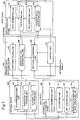
- Operations of the exemplary embodiment 1 will be described with reference to the flowchart in Fig. 2 .
- Operations of the encrypted text matching system according to the exemplary embodiment 1 are broadly divided into two phases: a data registration phase and an encrypted text matching phase.
- input data is input to the registration data generating device 100, encrypted, and registered with the storage device 200 along with auxiliary data.
- the input data input to the data concealing device 300 is encrypted, and then it is determined whether the encrypted data and auxiliary data, as generated in the encryption process, represent plaintexts that are close to the encrypted data and auxiliary data that are stored in the storage device and are specified by an identifier to be separately input (that is, whether the Hamming distance is equal to or less than a predetermined certain value).
- the input data to be concealed is input to the encrypting unit 101 in the registration data generating device 100 (Step A1 in Fig. 2 (A) ).
- the data segmenting unit 104 in the registration data generating device 100 receives the input data, as an input, and outputs a plurality of (at least two) data segments obtained by dividing the input data (Step A2 in Fig. 2 (A) ).
- the key generating unit 102 in the registration data generating device 100 generates a key to be used for concealing the data segment and outputs the key to the encrypting unit 101 and to the registration auxiliary data generating unit 103 (Step A3 in Fig. 2 (A) ).
- the encrypting unit 101 in the registration data generating device 100 calculates encrypted data that is obtained by encrypting the data segment using the input data segment and the key, and then stores the encrypted data in the encrypted text storage unit 202 (Step A4 in Fig. 2(A) ).
- Step A2 the data segment input in Step A2, the key generated in Step A3, and the encrypted data generated in Step A4 are input to the registration auxiliary data generating unit 103 in the registration data generating device 100, and then the auxiliary data output from the registration auxiliary data generating unit 103 is stored in the auxiliary data storage unit 203 in the storage device 200 (Step A5 in Fig. 2 (A) ).
- the input data in the storage device 200 can be assigned a unique identifier by the identifier managing unit 201 and can be later retrieved (read) with the assigned identifier.
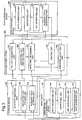
- an identifier is input to the identifier holding unit 401 in the specified data matching device 400, and then the encrypted data (registered encrypted data) corresponding to the input identifier is input to the encrypted text subtracting unit 402 in the specified data matching device 400 from the encrypted text storage unit 202 in the storage device 200.
- the auxiliary data corresponding to the input identifier is input to the matching determining unit 403 from the auxiliary data storage unit 203 (Step B 1 in Fig. 2 (B) ).
- the data segmenting unit 304 in the data concealing device 300 outputs a plurality of (at least two) data segments obtained by dividing the input data to be matched (Step B2 in Fig. 2 (B) ).
- a data segment obtained by dividing the input data to be matched is input to the encrypting unit 301 in the data concealing device 300 (Step B3 in Fig. 2 (B) ).
- the key generating unit 302 in the data concealing device 300 generates a key to be used for concealing the data segment and outputs the created key to the encrypting unit 301 and to the auxiliary data generating unit 303 (Step B4 in Fig. 2 (B) ).
- the encrypting unit 301 in the data concealing device 300 calculates encrypted data that is obtained by encrypting the data segment using the data segment input in Step B3 and the key input in Step B4, and then inputs the encrypted data into the encrypted text subtracting unit 402 in the specified data matching device 400 (Step B5 in Fig. 2 (B) ).
- the encrypted text subtracting unit 402 after receiving the encrypted data from the encrypted text storage unit 202 in the storage device 200 and the encrypted data from the encrypting unit 301 in the data concealing device 300, as inputs, and outputs the difference between the two input pieces of encrypted data to the matching determining unit 403 (Step B6 in Fig. 2 (B) ).
- the auxiliary data from the auxiliary data storage unit 203 and the auxiliary data from the auxiliary data generating unit 303 are input to the matching determining unit 403 in the specified data matching device 400, through communications in concert between the auxiliary data storage unit 203 in the storage device 200 and the auxiliary data generating unit 303 in the data concealing device 300 under the control of the control unit 404 (Step B6 in Fig. 2 (B) ).
- the matching determining unit 403 in the specified data matching device 400 after receiving, as an input, the difference between the two pieces of encrypted data output from the encrypted text subtracting unit 402 in the specified data matching device 400 in Step B6, as well as receiving, as an input, the auxiliary data from the auxiliary data generating unit 303 in the data concealing device 300, determines whether the Hamming distance between the plaintext of the encrypted data that has been input to the encrypted text subtracting unit 402 in the specified data matching device 400 in Step B1 and the plaintext of the encrypted data that has been input to the encrypted text subtracting unit 402 in the specified data matching device 400 in Step B5 is equal to or less than a predetermined certain value, and outputs the determination result (Step B7 in Fig. 2 (B) ).
- the devices 100, 200, 300, and 400 shown in Fig. 1 may be implemented on a single computer system, or may be configured as individual devices. Alternatively, the units in each of the devices 100, 200, 300, and 400 may be configured in the form of individual devices. Processes handled by individual units in individual devices shown in Fig. 1 may be implemented by a program to be executed by a computer. According to the present invention, a recording medium (semiconductor memory or a magnetic/optical disk) that records such program is provided.
- the system according to the exemplary embodiment 2 is composed of a registration data generating device 100, a storage device 200, a data concealing device 300, and a data matching device 500. While the registration data generating device 100, the storage device 200, and the data concealing device 300 are configured in the same way as in the exemplary embodiment 1, the configuration of the data matching device 500 is different from that of the exemplary embodiment 1.
- the data matching device 500 includes an all data requesting unit 501, an encrypted text subtracting unit 502, a matching determining unit 503, a control unit 504, and an identifier outputting unit 505.
- the all data requesting unit 501 inputs, into the identifier managing unit 201, an instruction for sequentially reading every piece of data stored in the storage device 200.
- the encrypted text subtracting unit 502 receives, as inputs, one piece of the encrypted data stored in the encrypted text storage unit 202 in the storage device 200 and the encrypted data output from the encrypting unit in the data concealing device 300, and then outputs a difference, c1 - c2, between the two pieces of input encrypted data c1 and c2.
- the matching determining unit 503 receives:
- the matching determining unit 503 outputs a determination, based on:
- the control unit 504 controls communications for exchanging data between the data concealing device 300 and the data matching device 500.
- the identifier outputting unit 505 receives:
- the operations are broadly divided into two phases: a data registration phase and an encrypted text matching phase.
- the data registration phase input data is input to the registration data generating device 100, encrypted, and registered with the storage device 200 along with auxiliary data.
- the encrypted text matching phase the input data in the data concealing device 300 is encrypted and then an identifier is output, the identifier being corresponding to the encrypted data stored in the storage device 200 that represents a plaintext being close (whose Hamming distance is small) to the encrypted data and the auxiliary data generated in the encryption process.
- Operations in the data registration phase are the same as those described for the exemplary embodiment 1 and thus omitted here.
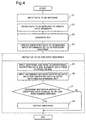
- the input data is input to the data concealing device 300 (Step C1 in Fig. 4 ).
- the data segmenting unit 304 in the data concealing device 300 divides the data into a plurality of segments (Step C2 in Fig. 4 ).
- the key generating unit 302 in the data concealing device 300 generates a key to be used for concealing the input data and outputs the key to the encrypting unit 301 in the data concealing device 300 and to the auxiliary data generating unit 303 (Step C3 in Fig. 4 ).
- the encrypting unit 301 in the data concealing device 300 calculates encrypted data that is obtained by encrypting the input data using the input data in Step C 1 and the key in Step C2, and then inputs the encrypted data into the encrypted text subtracting unit 502 in the data matching device 500 (Step C4 in Fig. 4 ).
- the all data requesting unit 501 in the data matching device 500 inputs an identifier to the identifier managing unit 201 in the storage device 200.
- the encrypted data corresponding to the identifier is input from the encrypted text storage unit 202 in the storage device 200 to the encrypted text subtracting unit 502 in the data matching device 500.
- the auxiliary data corresponding to the input identifier is input from the auxiliary data storage unit 203 to the matching determining unit 503 in the data matching device 500 (Step C5 in Fig. 4 ).
- the encrypted text subtracting unit 502 in the data matching device 500 after receiving encrypted texts, as inputs, from the encrypted text storage unit 202 in the storage device 200 and from the encrypting unit 301 in the data concealing device 300, outputs the difference between the two input pieces of encrypted data to the matching determining unit 503 (Step C6 in Fig. 4 ).
- the auxiliary data from the auxiliary data storage unit 203 in the storage device 200 and the auxiliary data from the auxiliary data generating unit 303 in the data concealing device 300 are input to the matching determining unit 503, through communications in concert between the auxiliary data storage unit 203 in the storage device 200 and the auxiliary data generating unit 303 in the data concealing device 300 under the control of the control unit 504 in the data matching device 500.
- the matching determining unit 503 in the data matching device 500 after receiving, as an input, the difference between the two pieces of encrypted data output from the encrypted text subtracting unit 502 in the specified data matching device 500 in Step C5, as well as receiving, as inputs, the post-conversion auxiliary data from the auxiliary data storage unit 203 in the storage device 200 and the auxiliary data from the auxiliary data generating unit 303 in the data concealing device 300 in Step C6, determines, from the difference between two pieces of encrypted data and from the auxiliary data, whether the Hamming distance between the plaintext of the encrypted data that has been input to the encrypted text subtracting unit 502 in the data matching device 500 in Step C1 and the plaintext of the encrypted data that has been input to the encrypted text subtracting unit 502 in the data matching device 500 in Step C4 is equal to or less than a predetermined certain value, and outputs the determination result (Step C7 in Fig. 4 ).
- the identifier outputting unit 505 in the data matching device 500 outputs the identifier that has been input to the identifier managing unit 201 in the storage device 200 in Step C4 (Step C8 in Fig. 4 ).
- Step C5 to Step C8 are repeated for every identifier (corresponding to encrypted data and auxiliary data) that is stored in the storage device 200 and managed by the identifier managing unit 201 in the storage device 200.
- the devices 100, 200, 300, and 500 shown in Fig. 3 may be implemented on a single computer system, or may be configured as individual devices. Alternatively, the units in each of the devices 100, 200, 300, and 500 may be configured in the form of individual devices. Processes handled by individual units in individual devices shown in Fig. 3 may be implemented by a program to be executed by a computer. According to the present invention, a recording medium (semiconductor memory or a magnetic/optical disk) that records such program is provided.
- a recording medium semiconductor memory or a magnetic/optical disk
- the example 1 is a specific example of the exemplary embodiment 1.
- a 2N-bit binary string Z is input to the registration data generating device 100.
- the key generating unit 102 in the registration data generating device 100 generates a key (a K-bit random number) S and outputs the key to the encrypting unit 101 and to the registration auxiliary data generating unit 103.
- the encrypting unit 101 calculates N-bit encrypted data W1 (the following equation (1)), which is obtained by calculating an exclusive OR between an N-bit code word C obtained by encoding the input K-bit key S with a binary BCH code, and the N-bit input data Z1, and then stores the encrypted data in the encrypted text storage unit 202 in the storage device 200.
- W 1 C + Z 1
- (+) represents a bitwise exclusive OR. It is assumed that the binary BCH code used here is a code that inputs K-bit data and outputs N-bit data (where N > K) and guarantees that a Hamming distance between any different code words is at least d.
- the input data Z, the key S, and the encrypted data W1 are input to the registration auxiliary data generating unit 103, which in turn calculates auxiliary data W2 in accordance with the following equation (2).
- W 2 h c S + h W 1 , R
- H(a, b, c) is defined here as a function represented by the following equation (3).
- H(x, y, z) satisfies the following equation (4).
- H a 1 , b 1 , c 1 + H a 2 , b 2 , c 2 H a 1 + a 2 , b 1 , c 1 + h b 2 , c 2
- the registration auxiliary data generating unit 103 calculates auxiliary data W3 from C3 and Z2 in accordance with the following equation (6).
- W 3 C 3 + Z 2
- the registration auxiliary data generating unit 103 registers, as auxiliary data, the pair (W2, W3) as obtained in accordance with the above equations (2) and (6) with the auxiliary data storage unit 203.
- the input data in the storage device 200 can be assigned a unique identifier by the identifier managing unit 201 and can be later retrieved with the assigned identifier.
- the encrypted data W1, the auxiliary data W2, and the auxiliary data W3, which are associated with an identifier i, are hereinafter denoted as W1[i], W2[i], and W3[i], respectively.
- an identifier i is input to the identifier holding unit 401 in the specified data matching device 400.
- the encrypted data W1[i] corresponding to the input identifier i is read from the encrypted text storage unit 202 in the storage device 200 and is input to the encrypted text subtracting unit 402 in the specified data matching device 400.
- the auxiliary data W2[i] and the auxiliary data W3[i] corresponding to input identifier i are read from the auxiliary data storage unit 203 in the storage device 200 and are input to the matching determining unit 403 in the specified data matching device 400.
- 2N-bit binary string input data Z' (data to be matched) is input to the data concealing device 300.
- the key generating unit 302 in the data concealing device 300 generates a key (a K-bit random number) S' to be used for concealing the input data Z1', and outputs the key to the encrypting unit 301 and to the auxiliary data generating unit 303.
- the encrypting unit 301 in the data concealing device 300 calculates encrypted data W1', which is obtained by calculating an exclusive OR between the code word C', which is obtained through error-correcting coding with a binary BCH code applied to the key S' as input from the key generating unit 302, and the input data Z1' (the following equation (7)).
- W 1 ⁇ C ⁇ + Z 1 ⁇
- the encrypting unit 301 in the data concealing device 300 inputs the encrypted data W1' to the encrypted text subtracting unit 402 in the specified data matching device 400.
- the encrypted text subtracting unit 402 in the specified data matching device 400 receives, as inputs, the encrypted data W1' from the encrypting unit 301 in the data concealing device 300 and the encrypted data W1[i] corresponding to the identifier i from the encrypted text storage unit 202 in the storage device 200, and then calculates the difference (exclusive OR) between the two pieces of input encrypted data W1' and W1[i] (the following expression (8)).
- the encrypted text subtracting unit 402 in the specified data matching device 400 supplies the difference between two pieces of encrypted data W1' and W1[i] to the matching determining unit 403.
- g**ns represents the ns-th power of g on the group G (** is an exponentiation operator).
- group G means a set with a binary operation that abides by the following rules:
- the group G is a cyclic group with respect to multiplication.
- the control unit 404 in the specified data matching device 400 outputs W3[i] and g_s to the auxiliary data generating unit 303 in the data concealing device 300.
- the auxiliary data generating unit 303 in the data concealing device 300 applies the decrypting process of the binary BCH code to the value obtained by calculating an exclusive OR between W3[i] and the data segment Z2': W 3 i + Z 2 ⁇ to obtain h', which is the decryption result.
- the auxiliary data generating unit 303 in the data concealing device 300 calculates W2' and g_c, from the key S', the encrypted data W1', the decryption result h', and g, g_s in the equation (9), and the random number nc, based on the following equations (11a) and (11b), and then outputs the calculated values to the matching determining unit 403 in the specified data matching device 400.
- W 2 ⁇ H S ⁇ , W 1 ⁇ , g_s * * nc + h ⁇ )
- g_c g * * nc
- the matching determining unit 403 in the specified data matching device 400 applies the decrypting process of the binary BCH code to the difference between two pieces of input encrypted data W1' and W[i]: W 1 ⁇ + W i to calculate T, which is a result of decrypting the difference between the two pieces of encrypted data W1' and W[i].
- the matching determining unit 403 in the specified data matching device 400 calculates a hash value (the following expression (13)) of the result of an exclusive OR operation: H T , W 1 ⁇ , g_c * * ns + W 2 ⁇ between H(T, W1', g_c**ns), which is obtained through calculation using T, W1', and g_c**ns, where T is a result of decrypting the difference between the two pieces of encrypted data W1' and W[i], and W2', which is provided by the equation (11a).
- the matching determining unit 403 in the specified data matching device 400 checks whether the value calculated in accordance with the above expression (13) is equal to W2[i]; in other words it checks whether the following equation (14) is satisfied.
- W 2 i h ( H T , W 1 , g_c * * ns + W 2 ⁇ )
- the matching determining unit 403 in the specified data matching device 400 outputs a determination result by determining that the Hamming distance between the original data (plaintext) of W1[i] and the input data (plaintext) Z' is equal to or less than d if the equation (14) is satisfied, or by determining that the Hamming distance between the original data (plaintext) of W1[i] and the input data (plaintext) Z' exceeds d if the equation (14) is not satisfied.
- the above-described BCH coding assumes that a Hamming distance between any different code words exceeds at least d.
- the example 2 will be described in detail with reference to Fig. 3 .
- the example 2 is a specific example of the exemplary embodiment 2.
- a 2N-bit binary string Z is input to the registration data generating device 100.
- the key generating unit 102 in the registration data generating device 100 generates a K-bit random number S and outputs the number to the encrypting unit 101 and to the registration auxiliary data generating unit 103.
- the encrypting unit 101 calculates encrypted data W1, which is obtained by calculating an exclusive OR between a code word C obtained by encoding the input key S with a binary BCH code, and the input data Z1, and then stores the encrypted data in the encrypted text storage unit 202.
- the binary BCH code used here is a code that inputs K-bit data and outputs N-bit data and guarantees that a Hamming distance between any different code words is at least d.
- the registration auxiliary data generating unit 103 calculates auxiliary data W2 in accordance with the following equation (15).
- W 2 h c S + h W 1 , R
- H(x, y, z) is defined as a function represented by the equation (16) (the same as the equation (3) above).
- H x y z c x + h y z
- the registration auxiliary data generating unit 103 registers, as auxiliary data, the pair (W2, W3) as generated above with the auxiliary data storage unit 203.
- the input data in the storage device 200 can be assigned a unique identifier by the identifier managing unit 201 and can be later retrieved with the assigned identifier.
- W1, W2, and W3, which are associated with an identifier i, are hereinafter denoted as W1[i], W2[i], and W3[i], respectively.
- the input data Z' is input to the data concealing device 300.
- the key generating unit 302 in the data concealing device 300 generates a key S' (a K-bit random number) to be used for concealing the input data Z', and outputs the key to the encrypting unit 301 and to the auxiliary data generating unit 303 in the data concealing device 300.
- a key S' a K-bit random number
- the encrypting unit 301 in the data concealing device 300 calculates encrypted data W1', which is obtained by calculating an exclusive OR between the code word C', which is obtained by encoding the input key S' with a binary BCH code, and the input data Z1' (the following equation (19)).
- the encrypting unit 301 in the data concealing device 300 inputs the calculated encrypted data W1' to the encrypted text subtracting unit 502 in the data matching device 500.
- W 1 ⁇ C ⁇ + Z 1 ⁇
- the all data requesting unit 501 in the data matching device 500 inputs an identifier i to the identifier managing unit 201 in the storage device 200.
- the encrypted data W1[i] corresponding to the input identifier i is read from the encrypted text storage unit 202 in the storage device 200 and is input to the encrypted text subtracting unit 502 in the data matching device 500.
- the auxiliary data W2[i] and the auxiliary data W3[i] corresponding to the identifier i are read from the auxiliary data storage unit, and then input to the matching determining unit 503 in the data matching device 500.
- the encrypted text subtracting unit 502 in the data matching device 500 after receiving the encrypted data W1[i] from the encrypted text storage unit 202 in the storage device 200 and the encrypted data W1' from the encrypting unit 301 in the data concealing device 300, as inputs, outputs the difference (exclusive OR) between the two input pieces of encrypted data W1' and W1[i] (the following expression (20)) to the matching determining unit 503.
- the auxiliary data generating unit 303 in the data concealing device 300 calculates W2' and g_c based on the following equations (23a) and (23b).
- W 2 ⁇ H S 1 ⁇ , W 1 ⁇ , g_s * * nc
- g_c g * * nc
- the matching determining unit 503 in the data matching device 500 applies the decrypting process of the binary BCH code to the difference between two pieces of input encrypted data: W 1 ⁇ + W 1 i to calculate T, which is a result of decrypting the difference between the two pieces of encrypted data W1' and W1[i].
- the matching determining unit 503 in the data matching device 500 applies the decrypting process of the binary BCH code to the exclusive OR between the auxiliary data W3[i] and W3': W 3 i + W 3 ⁇ to calculate w3, which is a result of decrypting W3[i] (+) W3'.
- the matching determining unit 503 in the data matching device 500 outputs the result H(T, W1', g_c**ns), which is calculated by using T, which is a result of decrypting the difference between two pieces of encrypted data, and W1' and g_c**ns, as well as outputting W2' and w3.
- H T , W 1 ⁇ , g_c * * ns + W 2 ⁇ + w 3 is calculated (the following expression (28)), where H(T, W1', g_c**ns) is obtained through calculation on T, which is a result of decoding the difference between two pieces of encrypted data, W1', and g_c**ns.
- the matching determining unit 503 in the data matching device 500 checks whether the value calculated in accordance with the expression (28) is equal to W2[i]; in other words it checks whether the equation (29) is satisfied.
- W 2 i h ( H T , W 1 ⁇ , g_c * * ns + W 2 ⁇ + w 3 )
- the identifier outputting unit 505 in the data matching device 500 determines that the Hamming distance between the original data of W1[i] and Z' is equal to or less than d and outputs the identifier i. If the equation (29) is not satisfied, the identifier outputting unit 505 in the data matching device 500 determines that the Hamming distance exceeds d and thus does not output the identifier i.
- Example applications of the example 1 or 2 include authentication where biometric information is protected. The following outlines such authentication.
- the input data in the data registration phase and the input data in the encrypted text matching phase may be biometric information obtained from fingerprints, veins, or the like. While the biometric information remains concealed (encrypted), it can be determined whether the encrypted biometric data stored in the storage device and the encrypted biometric data transmitted from the data concealing device have been taken from the same person, depending on whether the Hamming distance between the two pieces of input data is equal to or less than a predetermined certain value, thereby achieving authentication. Concerning biometric information, the same data may not always be obtained steadily. However, it can be assumed that pieces of data obtained from the same person are similar to one another (a Hamming distance between two pieces of such data is small). Therefore, the present invention is regarded as suitable for application to, for example, biometric authentication (however, it should be noted that the application is not limited to biometric authentication).
Landscapes
- Engineering & Computer Science (AREA)
- Computer Security & Cryptography (AREA)
- Signal Processing (AREA)
- Computer Networks & Wireless Communication (AREA)
- Theoretical Computer Science (AREA)
- General Health & Medical Sciences (AREA)
- Health & Medical Sciences (AREA)
- Computer Hardware Design (AREA)
- General Engineering & Computer Science (AREA)
- General Physics & Mathematics (AREA)
- Physics & Mathematics (AREA)
- Software Systems (AREA)
- Bioethics (AREA)
- Life Sciences & Earth Sciences (AREA)
- Biodiversity & Conservation Biology (AREA)
- Biomedical Technology (AREA)
- Power Engineering (AREA)
- Storage Device Security (AREA)
Abstract
Description
- The present invention is based on Japanese Patent Application No.
2013-091467 (filed on April 24, 2013 - The present invention relates to an encrypted text matching system, method, and program.
- With the wide-spreading cloud computing, there has recently been a rapid expansion of services based on the user data stored in computational resources connected to networks. Such services more often involve opportunities to deal with sensitive user data. Therefore, it is becoming important to assure users that their data is securely managed. Under such circumstances, research and development are actively promoted for techniques to manage data that remains encrypted in open network environments and to perform searches, statistical processing, and the like on the data without decrypting it.
- In addition, crimes are more frequently occurring that exploit the vulnerability of personal authentication based on passwords or magnetic cards. Thus, more secure biometric authentication techniques using biological features such as fingerprints or veins are drawing attention. Biometric authentication requires a template related to biometric information to be stored in a database in order to verify authentication information. Biometric information such as fingerprints or veins is the data that is basically unchanged through one's lifetime. Biometric information requires highest-level security protection because serious damages will occur if such information is leaked. Thus, impersonation or the like must be prevented even when the template is leaked.
- Accordingly, it is becoming important to have a template protection type biometric authentication technique which performs authentication with the template information concealed.
- For example,
PTL 1 discloses a method for performing biometric authentication by representing fingerprint data as points on a polynomial expression, adding random points to the points to conceal the fingerprint data, and using the concealed data as a template. - However, the method of
PTL 1 is known to be problematic concerning whether the biometric information still remains protected with adequate strength after biometric authentication is repeated many times. - NPL 1 discloses a method for protecting biometric information by masking a template stored in a database with a random Bose-Chaudhuri-Hocquenghem (BCH) code word. According to NPL 1, biometric information Z and secret information S are used to generate a template for biometric authentication.
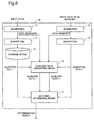
Fig. 5 is a diagram based onFig. 2 inNPL 1, with the feature extraction, statistical analysis, quantization, and the like shown inFig. 2 inNPL 1 omitted. The enrollment of the template is performed as described below. - (1) Input the secret information S to an encoder (enc), perform error correcting coding (ECC) and generate a code word C. For ECC, binary BCH codes with parameters (K, s, d) are used, where K denotes the length of the code words, s the number of information symbols, and d the number of errors that can be corrected.
- (2) Calculate an exclusive OR between C and Z, namely W2 = C (+) Z (where (+) represents a bitwise exclusive OR operation (bitwise XOR)).
- (3) Input S to a cryptographic (one-way) hash function H, such as Secure Hash Algorithm (SHA)-1, and obtain a hash value H(S).
- (4) Store W2 and H(S) as template information in a database (DB).
- Verification of whether the template generated through the above steps (1) to (4) and another piece of biometric information Z' have been obtained from the same person is performed as described below.
- (1) Calculate an exclusive OR between Z' and W2, namely C' = W2 (+) Z' = C (+) (Z (+) Z').
- (2) Input C' to a decoder (DEC), perform error-correcting decoding of the BCH code and calculate S'.
- (3) Input S' to a cryptographic (one-way) hash function H, such as SHA-1 and calculate a hash value H(S').
- (4) Read H(S) from the DB and check whether H(S) = H(S') is satisfied. If H(S) = H(S') is satisfied, it is determined that the template and the biometric information Z' were taken from the same person. If H(S) = H(S') is not satisfied, it is determined that the template and the biometric information Z' were taken from different persons.
- The above-described method is not dependent on how the biometric information Z is obtained. Therefore, in general, the method can be regarded as a method for checking whether an encrypted text has been obtained by encrypting data that falls within a certain Hamming distance from the presented data, without decrypting concealed (encrypted) data.
- PTL 1: Japanese Unexamined Patent Application Publication No.
2006-158851 - NPL 1: Pim Tuyls, Anton H. M. Akkermans, Tom A. M. Kevenaar, Geert-Jan Schrijen, Asker M. Bazen and Raimond N. J. Veldhuis, "Practical Biometric Authentication with Templete Protection", Proceedings of AVBPA 2005, Lecture Notes in Computer Science, Vol. 3546, Springer Verlag, pp. 436-446, (2005)
- Analyses of related arts are provided below.
- A problem of the above-described related arts is that information about a plaintext might be leaked during matching with an encrypted text stored in a database to the administrator or the like who performs the matching. The following describes the reasons.
- For example, with regard to
PTL 1 above, such leaks might occur due to insufficient concealing strength on encrypted texts. - With regard to
NPL 1 above, such leaks might occur because, in order to make it possible to check whether an encrypted text has been obtained by encrypting data that falls within a certain Hamming distance from the presented data, information about a plaintext needs to be transmitted during the checking. - As described above, information about the original plaintext might be leaked when the matching process is carried out repeatedly, and sufficient security cannot be assured if, for example, the database administrator or the like performing the matching process has malicious intent.
- Accordingly, the present invention has been created in view of the above problems, with an object of providing a system, method, and program that can avoid leaks of information about the original plaintext and assure security when performing the matching of encrypted texts.
- An encrypted text matching system according to the present invention includes: means for generating first auxiliary data and second auxiliary data, respectively, which are for verification of matching between a first encrypted text that is obtained by encrypting at least one of a plurality of data segments into which input data is divided by segmenting means and that is registered with a storage device and a second encrypted text that is obtained by encrypting at least one of a plurality of data segments into which input data to be matched is divided by segmenting means, the verification being performed by using a Hamming distance between plaintexts; and means for taking a difference between the first encrypted text and the second encrypted text, and determining whether a Hamming distance between plaintexts that corresponds to the difference between the first encrypted text and the second encrypted text is equal to or less than a predetermined certain value by using the first auxiliary data and the second auxiliary data.
- According to the present invention, a biometric authentication system including the encrypted text matching system is provided.
- A method for matching encrypted text according to the present invention, and the method includes: generating first auxiliary data and second auxiliary data, respectively, which are for verification of matching between a first encrypted text that is obtained by encrypting at least one of a plurality of data segments into which input data is divided and that is registered with a storage device and a second encrypted text that is obtained by encrypting at least one of a plurality of data segments into which input data to be matched is divided, the verification being performed by using a Hamming distance between plaintexts; and taking a difference between the first encrypted text and the second encrypted text, and determining whether a Hamming distance between plaintexts that corresponds to the difference between the first encrypted text and the second encrypted text is equal to or less than a predetermined certain value by using the first auxiliary data and the second auxiliary data.
- A program according to the present invention causes a computer to execute: a process which generates first auxiliary data and second auxiliary data, respectively, which are for verification of matching between a first encrypted text that is obtained by encrypting at least one of a plurality of data segments into which input data is divided and that is registered with a storage device and a second encrypted text that is obtained by encrypting at least one of a plurality of data segments into which input data to be matched is divided, the verification being performed by using a Hamming distance between plaintexts; and a process which takes a difference between the first encrypted text and the second encrypted text, and determines whether a Hamming distance between plaintexts that corresponds to the difference between the first encrypted text and the second encrypted text is equal to or less than a predetermined certain value by using the first auxiliary data and the second auxiliary data.
- According to the present invention, a computer-readable recording medium (magnetic/optical recording medium or semiconductor recording medium) that records the program is provided.
- According to the present invention, it is made possible to avoid leaks of information about an original plaintext and assure security during matching of encrypted texts.
-
-
Fig. 1 is a diagram illustrating an example configuration according to anexemplary embodiment 1 of the present invention. -
Figs. 2 (A) and 2 (B) are explanatory diagrams describing registration and matching operations according to theexemplary embodiment 1 of the present invention. -
Fig. 3 is a diagram illustrating an example configuration according to anexemplary embodiment 2 of the present invention. -
Fig. 4 is an explanatory diagram describing matching operations according to theexemplary embodiment 2 of the present invention. -
Fig. 5 is adiagram describing NPL 1. -
Fig. 6 is a diagram describing the inventive concept. - Embodiments of the present invention will be described. First, the basic concept of the present invention is described below. According to one aspect of the present invention, the input data to be matched is encrypted, while the registered data with which the input data will be matched has been encrypted. In addition, a Hamming distance between plaintexts is used as an indicator (indicator of ambiguity) for determining (verifying) the matching (agreement). Not only the registered encrypted data but also the input data for the matching is encrypted through the use of an encryption method having high concealing strength. When the same input data is used to perform the matching repeatedly, information about a key that is used for concealing data is changed every time the matching is performed. Thus, even when the matching is performed repeatedly, the present invention can reduce the possibility to cause leaks of information about a plaintext to a low level and contributes to greater resistance to attacks and improved security.
- With reference to
Fig. 6 , an encrypted text matching system 10 (encrypted text matching device) according to one aspect of the present invention includes at least: an auxiliary data generating means (unit) (16) which generates auxiliary data from an encrypted text; and a matching determining means (unit) (17) which makes a determination from the encrypted texts and auxiliary data on the matching between the encrypted input data and the registered encrypted data. The auxiliary data is used for verifying the matching of encrypted texts by using a Hamming distance between plaintexts. - The auxiliary data generating means (16) generates
auxiliary data 1 andauxiliary data 2, which are for verification of matching between anencrypted text 1 that is obtained by encrypting with a first encrypting means (13) at least one of a plurality of data segments into which input data is divided by a first segmenting means (11) and that is registered with a storage device (15) and anencrypted text 2 that is obtained by encrypting with a second encrypting means (14) at least one of a plurality of data segments into which input data to be matched is divided by a second segmenting means (12), the verification being performed by using a Hamming distance between plaintexts. The verification of the matching may be, for example, verifying that the Hamming distance between plaintexts of theencrypted text 1 and theencrypted text 2 is equal or less than a predetermined certain value. - A matching determining means (17) takes a difference between the first and second encrypted texts and determines whether a Hamming distance between plaintexts that corresponds to the difference between the first and second encrypted texts is equal to or less than a predetermined certain value by using the first and second auxiliary data. Processes and functions of the individual means in the encrypted
text matching system 10 may be implemented by a program to be executed on a computer constituting the encryptedtext matching system 10. - According to the present invention, the first segmenting means (11) may divide the input data (Z) into at least a first data segment and a second data segment (Z1, Z2), and the second segmenting means (12) may divide the input data to be matched (Z') into at least a first data segment and a second data segment (Z1', Z2'),
where
letting S be a key input to a first encrypting means (13),
letting W be the first encrypted text obtained by encrypting the first data segment (Z1) with the first encrypting means (13), the first data segment (Z1) being obtained by dividing the input data (Z) with the first segmenting means (11), and
letting R be data that is less likely to be repeatedly used, then the first auxiliary data may include
data (such as W2 in the equation (2) described later) calculated in accordance with the following equation:
data (such as W3 in the equation (6) described later) which is generated from the second data segment (Z2) obtained by dividing the input data (Z) with the first segmenting means (11),
and where
letting S' be a key input to the second encrypting means,
letting W1' be the second encrypted text obtained by encrypting the first data segment (Z1') with the second encrypting means (12), the first data segment (Z1') being obtained by dividing the input data to be matched (Z') with the second segmenting means (12), and
letting R' be data that is less likely to be repeatedly used, then the second auxiliary data may include
data (such as W2' in the equation (11a) described later) calculated in accordance with the following equation:
data (for example, the equation (10) described later) which is generated from the second data segment (Z2') obtained by dividing the input data to be matched (Z') with the second segmenting means (12). - According to the present invention, an encrypted text is a result of an exclusive OR operation between a code word, which is obtained by encoding a key for encrypting the plaintext of the input data with an error-correcting code having linearity, and the plaintext; and the first and second auxiliary data related to the encrypted text registered with the storage device and the encrypted text of the input data to be matched are respectively calculated based on an exclusive OR between an inner product of the key and a constant, and a cryptographic hash function applied to the encrypted text and a random number.
- In addition, in order to accomplish the matching between two pieces of encrypted data, which is not achieved by
NPL 1 described above, the present invention guarantees that, with respect to a hash function for determining a matching result, it is possible to calculate a hash value of the sum of two pieces of data from their hash values. - Furthermore, as described above, according to the present invention, during the matching process between encrypted texts, the data transmitted by the user who is going to do the matching is also encrypted by an encryption key that is unknown to, for example, the database administrator or the like who performs matching operations. Consequently, leaks of information about the original plaintext can be prevented during the matching process, even when the matching is performed repeatedly or when the database administrator or the like who performs matching operations has malicious intent. Some exemplary embodiments will be described below.
- With reference to
Fig. 1 , a system according to anexemplary embodiment 1 of the present invention includes a registrationdata generating device 100, astorage device 200, adata concealing device 300, and a specifieddata matching device 400. Note that these devices may be configured to gather at a single site or the like to form a single apparatus, or may be configured to be distributed and connected to one another via a communication means. - The registration
data generating device 100 includes anencrypting unit 101, akey generating unit 102, a registration auxiliarydata generating unit 103, and adata segmenting unit 104. - The
data segmenting unit 104 receives input data to be concealed, as an input, and outputs a plurality of (at least two) data segments obtained by dividing the input data. - The encrypting
unit 101 receives a data segment that is obtained by dividing the input data to be concealed and a key to be used for concealing the data segment, as inputs, and outputs encrypted data obtained by applying the concealing process using the key to the data segment that is obtained by dividing the input data. - The
key generating unit 102 generates a key to be used for the encryptingunit 101 to conceal the data segment, and then outputs the generated key to theencrypting unit 101 and to the registration auxiliarydata generating unit 103. - The registration auxiliary
data generating unit 103 receives: - a data segment from a
data segmenting unit 104; - encrypted data from the encrypting
unit 101; and - a key from the
key generating unit 102, - as inputs. The registration auxiliary
data generating unit 103 outputs data for determining whether a Hamming distance between the input data (plaintext) corresponding to the encrypted data output from an encryptingunit 301 in thedata concealing device 300 and the input data (plaintext) input to theencrypting unit 101 is equal to or less than a predetermined certain value (within a certain numerical range). - The encrypted text output from the encrypting
unit 101 in the registrationdata generating device 100 satisfies the following: - let c1 be the encrypted text obtained by encrypting the input data m1 with the key k1; and
- let c2 be the encrypted text obtained by encrypting the input data m2 with the key k2; then
- the sum of c1 and c2, c1 + c2, is the encrypted text obtained by encrypting the input data m1 + m2 with the key k1 + k2.
- The
storage device 200 includes anidentifier managing unit 201, an encryptedtext storage unit 202, and an auxiliarydata storage unit 203. The encryptedtext storage unit 202 and the auxiliarydata storage unit 203 respectively store the encrypted data and registration auxiliary data output from the registrationdata generating device 100. The encryptedtext storage unit 202 and the auxiliarydata storage unit 203 may be configured as databases (or may be comprised of files). - During the matching of encrypted data, the encrypted
text storage unit 202 and the auxiliarydata storage unit 203 output to the specifieddata matching device 400, under the control of theidentifier managing unit 201, the encrypted data and auxiliary data corresponding to an identifier input from the specifieddata matching device 400. - The
identifier managing unit 201 in thestorage device 200 manages identifiers that uniquely identify encrypted data and auxiliary data input from the registrationdata generating device 100. - When inputting an identifier from the specified
data matching device 400, theidentifier managing unit 201 outputs to the encryptedtext storage unit 202 and to the auxiliarydata storage unit 203 an instruction to respectively output the encrypted data and the auxiliary data corresponding to the input identifier. - The encrypted
text storage unit 202 receives and stores the encrypted data output from the encryptingunit 101 in the registrationdata generating device 100. In addition, when inputting an instruction to output encrypted data from theidentifier managing unit 201, the encryptedtext storage unit 202 outputs the corresponding encrypted data. - The auxiliary
data storage unit 203 receives and stores the auxiliary data output from the registration auxiliarydata generating unit 103 in the registrationdata generating device 100. In addition, when inputting an instruction to output encrypted data from theidentifier managing unit 201, the auxiliarydata storage unit 203 outputs the corresponding auxiliary data. The encryptedtext storage unit 202 and the auxiliarydata storage unit 203 may be configured as databases (or may be comprised of files). - The
data concealing device 300 includes anencrypting unit 301, akey generating unit 302, an auxiliarydata generating unit 303, and adata segmenting unit 304. - The
data segmenting unit 304 receives input data to be concealed, as an input, and outputs a plurality of (at least two) data segments obtained by dividing the input data. - The encrypting
unit 301 receives a data segment that is obtained by dividing the input data to be concealed (input data to be matched) and a key to be used for concealing the data segment, as inputs, and outputs encrypted data obtained by applying the concealing process with the key to the data segment. - The
key generating unit 302 generates a key to be used for the encryptingunit 301 to conceal the data segment, and then outputs the generated key to theencrypting unit 301 and to the auxiliarydata generating unit 303. - The auxiliary
data generating unit 303 receives, - a data segment from the
data segmenting unit 304; - encrypted data from the encrypting
unit 301; and - a key output from the
key generating unit 302 to theencrypting unit 301, - The encrypted text output from the encrypting
unit 301 in thedata concealing device 300 is calculated in the same way as in theencrypting unit 101. That is: - let c1 be the encrypted text obtained by encrypting the input data m1 with the key k1; and
- let c2 be the encrypted text obtained by encrypting the input data m2 with the key k2; then
- the sum of c1 and c2, c1 + c2, is the encrypted text obtained by encrypting the input data m1 + m2 with the key k1 + k2.
- The specified
data matching device 400 includes anidentifier holding unit 401, an encryptedtext subtracting unit 402, amatching determining unit 403, and acontrol unit 404. - The
identifier holding unit 401 receives an identifier, as an input, and outputs an instruction to theidentifier managing unit 201 in thestorage device 200 to output the encrypted text data and the auxiliary data that correspond to the identifier input to thestorage device 200. - The encrypted
text subtracting unit 402 receives: - one piece of encrypted data (registered encrypted data) stored in the encrypted
text storage unit 202 in thestorage device 200; and - the encrypted data output from the encrypting
unit 301 in thedata concealing device 300, as inputs, - Owing to the properties of the encrypting
units - let c1 be the encrypted text obtained by encrypting the input data m1 with the key k1; and
- let c2 be the encrypted text obtained by encrypting the input data m2 with the key k2; then
- the difference c1 - c2 between the two encrypted texts c1 and c2 is the encrypted text obtained by encrypting the input data m1 - m2 with the key k1 - k2.
- The
matching determining unit 403 receives: - the auxiliary data stored in the auxiliary
data storage unit 203 in thestorage device 200; - the auxiliary data output from the auxiliary
data generating unit 303 in thedata concealing device 300; and - the difference between two pieces of encrypted data output from the encrypted
text subtracting unit 402, - The
matching determining unit 403 outputs a determination, based on: - the auxiliary data output from the auxiliary
data generating unit 303 in thedata concealing device 300; - the difference between the two pieces of encrypted data output from the encrypted
text subtracting unit 402; and - one piece of the auxiliary data stored in the auxiliary
data storage unit 203 in thestorage device 200; - The
control unit 404 controls communications and the like for exchanging data between thedata concealing device 300 and the specifieddata matching device 400. - Operations of the
exemplary embodiment 1 will be described with reference to the flowchart inFig. 2 . Operations of the encrypted text matching system according to theexemplary embodiment 1 are broadly divided into two phases: a data registration phase and an encrypted text matching phase. - In the data registration phase, input data is input to the registration
data generating device 100, encrypted, and registered with thestorage device 200 along with auxiliary data. - In the encrypted text matching phase, the input data input to the
data concealing device 300 is encrypted, and then it is determined whether the encrypted data and auxiliary data, as generated in the encryption process, represent plaintexts that are close to the encrypted data and auxiliary data that are stored in the storage device and are specified by an identifier to be separately input (that is, whether the Hamming distance is equal to or less than a predetermined certain value). - In the data registration phase, first, the input data to be concealed is input to the
encrypting unit 101 in the registration data generating device 100 (Step A1 inFig. 2 (A) ). - Next, the
data segmenting unit 104 in the registrationdata generating device 100 receives the input data, as an input, and outputs a plurality of (at least two) data segments obtained by dividing the input data (Step A2 inFig. 2 (A) ). - Next, the
key generating unit 102 in the registrationdata generating device 100 generates a key to be used for concealing the data segment and outputs the key to theencrypting unit 101 and to the registration auxiliary data generating unit 103 (Step A3 inFig. 2 (A) ). - Next, the encrypting
unit 101 in the registrationdata generating device 100 calculates encrypted data that is obtained by encrypting the data segment using the input data segment and the key, and then stores the encrypted data in the encrypted text storage unit 202 (Step A4 inFig. 2(A) ). - Next, the data segment input in Step A2, the key generated in Step A3, and the encrypted data generated in Step A4 are input to the registration auxiliary
data generating unit 103 in the registrationdata generating device 100, and then the auxiliary data output from the registration auxiliarydata generating unit 103 is stored in the auxiliarydata storage unit 203 in the storage device 200 (Step A5 inFig. 2 (A) ). - When the above operations are completed, the input data in the
storage device 200 can be assigned a unique identifier by theidentifier managing unit 201 and can be later retrieved (read) with the assigned identifier. - In the encrypted text matching phase, first, an identifier is input to the
identifier holding unit 401 in the specifieddata matching device 400, and then the encrypted data (registered encrypted data) corresponding to the input identifier is input to the encryptedtext subtracting unit 402 in the specifieddata matching device 400 from the encryptedtext storage unit 202 in thestorage device 200. In addition, the auxiliary data corresponding to the input identifier is input to thematching determining unit 403 from the auxiliary data storage unit 203 (Step B 1 inFig. 2 (B) ). - Next, the
data segmenting unit 304 in thedata concealing device 300 outputs a plurality of (at least two) data segments obtained by dividing the input data to be matched (Step B2 inFig. 2 (B) ). - Next, a data segment obtained by dividing the input data to be matched is input to the
encrypting unit 301 in the data concealing device 300 (Step B3 inFig. 2 (B) ). - Next, the
key generating unit 302 in thedata concealing device 300 generates a key to be used for concealing the data segment and outputs the created key to theencrypting unit 301 and to the auxiliary data generating unit 303 (Step B4 inFig. 2 (B) ). - Next, the encrypting
unit 301 in thedata concealing device 300 calculates encrypted data that is obtained by encrypting the data segment using the data segment input in Step B3 and the key input in Step B4, and then inputs the encrypted data into the encryptedtext subtracting unit 402 in the specified data matching device 400 (Step B5 inFig. 2 (B) ). - The encrypted
text subtracting unit 402, after receiving the encrypted data from the encryptedtext storage unit 202 in thestorage device 200 and the encrypted data from the encryptingunit 301 in thedata concealing device 300, as inputs, and outputs the difference between the two input pieces of encrypted data to the matching determining unit 403 (Step B6 inFig. 2 (B) ). Next, the auxiliary data from the auxiliarydata storage unit 203 and the auxiliary data from the auxiliarydata generating unit 303 are input to thematching determining unit 403 in the specifieddata matching device 400, through communications in concert between the auxiliarydata storage unit 203 in thestorage device 200 and the auxiliarydata generating unit 303 in thedata concealing device 300 under the control of the control unit 404 (Step B6 inFig. 2 (B) ). - The
matching determining unit 403 in the specifieddata matching device 400, after receiving, as an input, the difference between the two pieces of encrypted data output from the encryptedtext subtracting unit 402 in the specifieddata matching device 400 in Step B6, as well as receiving, as an input, the auxiliary data from the auxiliarydata generating unit 303 in thedata concealing device 300, determines whether the Hamming distance between the plaintext of the encrypted data that has been input to the encryptedtext subtracting unit 402 in the specifieddata matching device 400 in Step B1 and the plaintext of the encrypted data that has been input to the encryptedtext subtracting unit 402 in the specifieddata matching device 400 in Step B5 is equal to or less than a predetermined certain value, and outputs the determination result (Step B7 inFig. 2 (B) ). - Note that the
devices Fig. 1 may be implemented on a single computer system, or may be configured as individual devices. Alternatively, the units in each of thedevices Fig. 1 may be implemented by a program to be executed by a computer. According to the present invention, a recording medium (semiconductor memory or a magnetic/optical disk) that records such program is provided. - An
exemplary embodiment 2 of the present invention will be described. In the encrypted text matching system according to the above-describedexemplary embodiment 1, input data and an identifier are input to the system, and the input data is matched with the plaintext of the encrypted data corresponding to the identifier, while in the present exemplary embodiment, in contrast, input data is only input to the system, which outputs an identifier corresponding to the encrypted data to be matched with the input data. - With reference to
Fig. 3 , the system according to theexemplary embodiment 2 is composed of a registrationdata generating device 100, astorage device 200, adata concealing device 300, and adata matching device 500. While the registrationdata generating device 100, thestorage device 200, and thedata concealing device 300 are configured in the same way as in theexemplary embodiment 1, the configuration of thedata matching device 500 is different from that of theexemplary embodiment 1. - The
data matching device 500 includes an alldata requesting unit 501, an encryptedtext subtracting unit 502, amatching determining unit 503, acontrol unit 504, and anidentifier outputting unit 505. - In accordance with an instruction given by the
identifier outputting unit 505, the alldata requesting unit 501 inputs, into theidentifier managing unit 201, an instruction for sequentially reading every piece of data stored in thestorage device 200. - The encrypted
text subtracting unit 502 receives, as inputs, one piece of the encrypted data stored in the encryptedtext storage unit 202 in thestorage device 200 and the encrypted data output from the encrypting unit in thedata concealing device 300, and then outputs a difference, c1 - c2, between the two pieces of input encrypted data c1 and c2. - Owing to the properties of the encrypting
units - let c1 be the encrypted text obtained by encrypting the input data m1 with the key k1; and
- let c2 be the encrypted text obtained by encrypting the input data m2 with the key k2; then
- the difference c1 - c2 between the two encrypted texts c1 and c2 is the encrypted text obtained by encrypting the input data m1 - m2 with the key k1 - k2.
- The
matching determining unit 503 receives: - the auxiliary data stored in the auxiliary
data storage unit 203 in thestorage device 200; - the auxiliary data output from the auxiliary
data generating unit 303 in thedata concealing device 300; and - the difference between two pieces of encrypted data output from the encrypted
text subtracting unit 502, - The
matching determining unit 503 outputs a determination, based on: - the auxiliary data output from the auxiliary
data generating unit 303 in thedata concealing device 300; - the difference between the two pieces of encrypted data output from the encrypted
text subtracting unit 502; and - one piece of the auxiliary data stored in the auxiliary
data storage unit 203 in thestorage device 200, - The
control unit 504 controls communications for exchanging data between thedata concealing device 300 and thedata matching device 500. - The
identifier outputting unit 505 receives: - the identifier for which the
identifier managing unit 201 has issued an instruction to the encryptedtext storage unit 202 and the auxiliarydata storage unit 203 to output the corresponding data; and - the matching result output from the
matching determining unit 503, - Operations according to the
exemplary embodiment 2 will be described with reference to the flowchart inFig. 4 . The operations are broadly divided into two phases: a data registration phase and an encrypted text matching phase. In the data registration phase, input data is input to the registrationdata generating device 100, encrypted, and registered with thestorage device 200 along with auxiliary data. In the encrypted text matching phase, the input data in thedata concealing device 300 is encrypted and then an identifier is output, the identifier being corresponding to the encrypted data stored in thestorage device 200 that represents a plaintext being close (whose Hamming distance is small) to the encrypted data and the auxiliary data generated in the encryption process. Operations in the data registration phase are the same as those described for theexemplary embodiment 1 and thus omitted here. - In the encrypted text matching phase, first, the input data is input to the data concealing device 300 (Step C1 in
Fig. 4 ). - Next, the
data segmenting unit 304 in thedata concealing device 300 divides the data into a plurality of segments (Step C2 inFig. 4 ). - Next, the
key generating unit 302 in thedata concealing device 300 generates a key to be used for concealing the input data and outputs the key to theencrypting unit 301 in thedata concealing device 300 and to the auxiliary data generating unit 303 (Step C3 inFig. 4 ). - Then, the encrypting
unit 301 in thedata concealing device 300 calculates encrypted data that is obtained by encrypting the input data using the input data inStep C 1 and the key in Step C2, and then inputs the encrypted data into the encryptedtext subtracting unit 502 in the data matching device 500 (Step C4 inFig. 4 ). - Next, the all
data requesting unit 501 in thedata matching device 500 inputs an identifier to theidentifier managing unit 201 in thestorage device 200. The encrypted data corresponding to the identifier is input from the encryptedtext storage unit 202 in thestorage device 200 to the encryptedtext subtracting unit 502 in thedata matching device 500. In addition, the auxiliary data corresponding to the input identifier is input from the auxiliarydata storage unit 203 to thematching determining unit 503 in the data matching device 500 (Step C5 inFig. 4 ). - The encrypted
text subtracting unit 502 in thedata matching device 500, after receiving encrypted texts, as inputs, from the encryptedtext storage unit 202 in thestorage device 200 and from the encryptingunit 301 in thedata concealing device 300, outputs the difference between the two input pieces of encrypted data to the matching determining unit 503 (Step C6 inFig. 4 ). - Next, the auxiliary data from the auxiliary
data storage unit 203 in thestorage device 200 and the auxiliary data from the auxiliarydata generating unit 303 in thedata concealing device 300 are input to thematching determining unit 503, through communications in concert between the auxiliarydata storage unit 203 in thestorage device 200 and the auxiliarydata generating unit 303 in thedata concealing device 300 under the control of thecontrol unit 504 in thedata matching device 500. - The
matching determining unit 503 in thedata matching device 500, after receiving, as an input, the difference between the two pieces of encrypted data output from the encryptedtext subtracting unit 502 in the specifieddata matching device 500 in Step C5, as well as receiving, as inputs, the post-conversion auxiliary data from the auxiliarydata storage unit 203 in thestorage device 200 and the auxiliary data from the auxiliarydata generating unit 303 in thedata concealing device 300 in Step C6, determines, from the difference between two pieces of encrypted data and from the auxiliary data, whether the Hamming distance between the plaintext of the encrypted data that has been input to the encryptedtext subtracting unit 502 in thedata matching device 500 in Step C1 and the plaintext of the encrypted data that has been input to the encryptedtext subtracting unit 502 in thedata matching device 500 in Step C4 is equal to or less than a predetermined certain value, and outputs the determination result (Step C7 inFig. 4 ). - If the result confirms the matching in Step C7, the
identifier outputting unit 505 in thedata matching device 500 outputs the identifier that has been input to theidentifier managing unit 201 in thestorage device 200 in Step C4 (Step C8 inFig. 4 ). - The processes from Step C5 to Step C8 are repeated for every identifier (corresponding to encrypted data and auxiliary data) that is stored in the
storage device 200 and managed by theidentifier managing unit 201 in thestorage device 200. - Note that the
devices Fig. 3 may be implemented on a single computer system, or may be configured as individual devices. Alternatively, the units in each of thedevices Fig. 3 may be implemented by a program to be executed by a computer. According to the present invention, a recording medium (semiconductor memory or a magnetic/optical disk) that records such program is provided. The exemplary embodiments are further described below with reference to more specific examples. - An example 1 of the present invention will be described in detail with reference to
Fig. 1 . The example 1 is a specific example of theexemplary embodiment 1. - In the data registration phase, first, a 2N-bit binary string Z is input to the registration
data generating device 100. - Next, the
data segmenting unit 104 divides the input data into two or more data segments. For simplicity, the following describes dividing the input data into two segments. It is assumed that each of segments Z1 and Z2 is an N-bit binary string, expressed as:
Z1 represents the first N bits; and
Z2 represents the latter N bits. - Then, the
key generating unit 102 in the registrationdata generating device 100 generates a key (a K-bit random number) S and outputs the key to theencrypting unit 101 and to the registration auxiliarydata generating unit 103. - Next, the encrypting
unit 101 calculates N-bit encrypted data W1 (the following equation (1)), which is obtained by calculating an exclusive OR between an N-bit code word C obtained by encoding the input K-bit key S with a binary BCH code, and the N-bit input data Z1, and then stores the encrypted data in the encryptedtext storage unit 202 in thestorage device 200.
- In the above equation, (+) represents a bitwise exclusive OR. It is assumed that the binary BCH code used here is a code that inputs K-bit data and outputs N-bit data (where N > K) and guarantees that a Hamming distance between any different code words is at least d.
- Next, the input data Z, the key S, and the encrypted data W1 are input to the registration auxiliary
data generating unit 103, which in turn calculates auxiliary data W2 in accordance with the following equation (2).
- In the above equation (2),
c is a K-bit constant;
R is an N-bit random number (data less likely to be used repeatedly);
(c, S) represents an inner product, that is, (A, B) represents an inner product of A and B, where two pieces of K = (m * k)-bit data A and B are regarded as vectors into which A and B are divided in units of k bits (it is assumed that the calculation is performed on a Galois extension field GF (2k));
(+) represents a bitwise exclusive OR; and
h is a cryptographic hash function which generates k-bit output data (for example, SHA-256). - H(a, b, c) is defined here as a function represented by the following equation (3).
-

- H(x, y, z) satisfies the following equation (4).

- In addition, for a random number r of (K - k) bits, letting C3 be the code word data that is obtained through error-correcting coding with a BCH code applied to:

data generating unit 103 calculates auxiliary data W3 from C3 and Z2 in accordance with the following equation (6).
- The registration auxiliary
data generating unit 103 registers, as auxiliary data, the pair (W2, W3) as obtained in accordance with the above equations (2) and (6) with the auxiliarydata storage unit 203. - When the above operations are completed, the input data in the
storage device 200 can be assigned a unique identifier by theidentifier managing unit 201 and can be later retrieved with the assigned identifier. - The encrypted data W1, the auxiliary data W2, and the auxiliary data W3, which are associated with an identifier i, are hereinafter denoted as W1[i], W2[i], and W3[i], respectively.
- In the encrypted text matching phase, first, an identifier i is input to the
identifier holding unit 401 in the specifieddata matching device 400. The encrypted data W1[i] corresponding to the input identifier i is read from the encryptedtext storage unit 202 in thestorage device 200 and is input to the encryptedtext subtracting unit 402 in the specifieddata matching device 400. In addition, the auxiliary data W2[i] and the auxiliary data W3[i] corresponding to input identifier i are read from the auxiliarydata storage unit 203 in thestorage device 200 and are input to thematching determining unit 403 in the specifieddata matching device 400. - Next, 2N-bit binary string input data Z' (data to be matched) is input to the
data concealing device 300. - Next, the
data segmenting unit 304 divides the input data into two or more data segments. For simplicity, the following describes dividing the input data into two segments. It is assumed that each of segments Z1' and Z2' is an N-bit binary string, expressed as Z' = Z1' ∥ Z2' (where ∥ is a bit concatenation operator). - Next, the
key generating unit 302 in thedata concealing device 300 generates a key (a K-bit random number) S' to be used for concealing the input data Z1', and outputs the key to theencrypting unit 301 and to the auxiliarydata generating unit 303. - The encrypting
unit 301 in thedata concealing device 300 calculates encrypted data W1', which is obtained by calculating an exclusive OR between the code word C', which is obtained through error-correcting coding with a binary BCH code applied to the key S' as input from thekey generating unit 302, and the input data Z1' (the following equation (7)).
- The encrypting
unit 301 in thedata concealing device 300 inputs the encrypted data W1' to the encryptedtext subtracting unit 402 in the specifieddata matching device 400. - The encrypted
text subtracting unit 402 in the specifieddata matching device 400 receives, as inputs, the encrypted data W1' from the encryptingunit 301 in thedata concealing device 300 and the encrypted data W1[i] corresponding to the identifier i from the encryptedtext storage unit 202 in thestorage device 200, and then calculates the difference (exclusive OR) between the two pieces of input encrypted data W1' and W1[i] (the following expression (8)).
- The encrypted
text subtracting unit 402 in the specifieddata matching device 400 supplies the difference between two pieces of encrypted data W1' and W1[i] to thematching determining unit 403. - Next, for a random number ns and an element (generator) g of a predetermined group G, the
control unit 404 in the specifieddata matching device 400 calculates the following equation (9):
- In the equation (9), g**ns represents the ns-th power of g on the group G (** is an exponentiation operator). Note that the group G means a set with a binary operation that abides by the following rules:
- 1. Associative law ((a · b) · c = a · (b c) for ∀ a, b, c ∈ G)
- 2. Existence of identity element (a · e = e · a = a for ∃ e ∈ G, ∀a ∈ G)
- 3. Existence of inverse element (3 b ∈ G, a · b = b · a = e for ∀a ∈ G)
- In the equation (9), the group G is a cyclic group with respect to multiplication. The group G is a cyclic group with respect to multiplication and is constituted of a multiplicative group Zp (= Z/pZ) of order p with a prime number p, and a value of g**ns is given by a remainder of modulo a prime number p (mod p).
- The
control unit 404 in the specifieddata matching device 400 outputs W3[i] and g_s to the auxiliarydata generating unit 303 in thedata concealing device 300. - Next, the auxiliary
data generating unit 303 in thedata concealing device 300 applies the decrypting process of the binary BCH code to the value obtained by calculating an exclusive OR between W3[i] and the data segment Z2':
- The auxiliary
data generating unit 303 in thedata concealing device 300 calculates W2' and g_c, from the key S', the encrypted data W1', the decryption result h', and g, g_s in the equation (9), and the random number nc, based on the following equations (11a) and (11b), and then outputs the calculated values to thematching determining unit 403 in the specifieddata matching device 400.

- Next, the
matching determining unit 403 in the specifieddata matching device 400 applies the decrypting process of the binary BCH code to the difference between two pieces of input encrypted data W1' and W[i]:
- Then, the
matching determining unit 403 in the specifieddata matching device 400 calculates a hash value (the following expression (13)) of the result of an exclusive OR operation:

- The
matching determining unit 403 in the specifieddata matching device 400 checks whether the value calculated in accordance with the above expression (13) is equal to W2[i]; in other words it checks whether the following equation (14) is satisfied.
- The
matching determining unit 403 in the specifieddata matching device 400 outputs a determination result by determining that the Hamming distance between the original data (plaintext) of W1[i] and the input data (plaintext) Z' is equal to or less than d if the equation (14) is satisfied, or by determining that the Hamming distance between the original data (plaintext) of W1[i] and the input data (plaintext) Z' exceeds d if the equation (14) is not satisfied. Note that the above-described BCH coding assumes that a Hamming distance between any different code words exceeds at least d. - Both of the
matching determining unit 403 in the specifieddata matching device 400 and the auxiliarydata generating unit 303 in thedata concealing device 300 may be configured to generate g_s**nc = (g**ns)**nc) (= R') in the auxiliary data W2' = (H(S', W1', g_s**nc) (+) h'), which is generated by the auxiliarydata generating unit 303 in thedata concealing device 300; and g_c**ns (= (g**nc)**ns) in thematching determining unit 403 in the specifieddata matching device 400, through the use of, for example, the known Diffie-Hellman key exchange method. - An example 2 will be described in detail with reference to
Fig. 3 . The example 2 is a specific example of theexemplary embodiment 2. - In the data registration phase, first, a 2N-bit binary string Z is input to the registration
data generating device 100. - Next, the
data segmenting unit 104 divides the input data into two or more data segments. For simplicity, the following describes dividing the input data into two segments. It is assumed that each of segments Z1 and Z2 is an N-bit binary string, expressed as:
Z1 represents the first N bits; and
Z2 represents the latter N bits. - Then, the
key generating unit 102 in the registrationdata generating device 100 generates a K-bit random number S and outputs the number to theencrypting unit 101 and to the registration auxiliarydata generating unit 103. - Next, the encrypting
unit 101 calculates encrypted data W1, which is obtained by calculating an exclusive OR between a code word C obtained by encoding the input key S with a binary BCH code, and the input data Z1, and then stores the encrypted data in the encryptedtext storage unit 202. It is assumed that the binary BCH code used here is a code that inputs K-bit data and outputs N-bit data and guarantees that a Hamming distance between any different code words is at least d. - Next, the input data Z, the key S, and the encrypted data W1 are input to the registration auxiliary
data generating unit 103. The registration auxiliarydata generating unit 103 calculates auxiliary data W2 in accordance with the following equation (15).
- In the above equation (15),
c is a K-bit constant;
R is a random number (data less likely to be used repeatedly);
(A, B) represents an inner product of A and B, where two pieces of K = (m * k)-bit data A and B are regarded as vectors into which A and B are divided in units of k bits (it is assumed that the calculation is performed on a Galois extension field GF (2k));
(+) represents a bitwise exclusive OR; and
h is a cryptographic hash function which generates k-bit output data (for example, SHA-256). - H(x, y, z) is defined as a function represented by the equation (16) (the same as the equation (3) above).

- For a random number r of K - k bits, letting C3 be the code word data that is obtained by encoding:

data generating unit 103 calculates W3 from C3 and Z in accordance with the following equation:
- The registration auxiliary
data generating unit 103 registers, as auxiliary data, the pair (W2, W3) as generated above with the auxiliarydata storage unit 203. - When the above operations are completed, the input data in the
storage device 200 can be assigned a unique identifier by theidentifier managing unit 201 and can be later retrieved with the assigned identifier. W1, W2, and W3, which are associated with an identifier i, are hereinafter denoted as W1[i], W2[i], and W3[i], respectively. - In the encrypted text matching phase, first, the input data Z' is input to the
data concealing device 300. - Next, the
data segmenting unit 304 divides the input data into two or more data segments. For simplicity, the following describes dividing the input data into two segments. It is assumed that each of segments Z1' and Z2' is an N-bit binary string, expressed as:
Z1' represents the first N bits of Z'; and
Z2' represents the latter N bits of Z'. - Next, the
key generating unit 302 in thedata concealing device 300 generates a key S' (a K-bit random number) to be used for concealing the input data Z', and outputs the key to theencrypting unit 301 and to the auxiliarydata generating unit 303 in thedata concealing device 300. - The encrypting
unit 301 in thedata concealing device 300 calculates encrypted data W1', which is obtained by calculating an exclusive OR between the code word C', which is obtained by encoding the input key S' with a binary BCH code, and the input data Z1' (the following equation (19)). The encryptingunit 301 in thedata concealing device 300 inputs the calculated encrypted data W1' to the encryptedtext subtracting unit 502 in thedata matching device 500.
- Next, the all
data requesting unit 501 in thedata matching device 500 inputs an identifier i to theidentifier managing unit 201 in thestorage device 200. The encrypted data W1[i] corresponding to the input identifier i is read from the encryptedtext storage unit 202 in thestorage device 200 and is input to the encryptedtext subtracting unit 502 in thedata matching device 500. In addition, the auxiliary data W2[i] and the auxiliary data W3[i] corresponding to the identifier i are read from the auxiliary data storage unit, and then input to thematching determining unit 503 in thedata matching device 500. - The encrypted
text subtracting unit 502 in thedata matching device 500, after receiving the encrypted data W1[i] from the encryptedtext storage unit 202 in thestorage device 200 and the encrypted data W1' from the encryptingunit 301 in thedata concealing device 300, as inputs, outputs the difference (exclusive OR) between the two input pieces of encrypted data W1' and W1[i] (the following expression (20)) to thematching determining unit 503.
- Next, for a random number ns and an element g of a predetermined group G, the
control unit 504 in thedata matching device 500 calculates the following:
data generating unit 303 in thedata concealing device 300. - Next, the auxiliary
data generating unit 303 in thedata concealing device 300 randomly selects S1' and S2', which satisfy:
- The auxiliary
data generating unit 303 in thedata concealing device 300 calculates W2' and g_c based on the following equations (23a) and (23b).

- Next, from C3, which is obtained through binary BCH error-correcting coding applied to the data concealing from concatenation of bits on an inner product (c, S2') and a random number r':

data generating unit 303 in thedata concealing device 300 calculates W3' in accordance with the following equation:
matching determining unit 503 in thedata matching device 500. - Next, the
matching determining unit 503 in thedata matching device 500 applies the decrypting process of the binary BCH code to the difference between two pieces of input encrypted data:
- In addition, the
matching determining unit 503 in thedata matching device 500 applies the decrypting process of the binary BCH code to the exclusive OR between the auxiliary data W3[i] and W3':
- The
matching determining unit 503 in thedata matching device 500 outputs the result H(T, W1', g_c**ns), which is calculated by using T, which is a result of decrypting the difference between two pieces of encrypted data, and W1' and g_c**ns, as well as outputting W2' and w3. A hash value of the result of a bitwise exclusive OR operation among H(T, W1', g_c**ns), W2', and w3:

- The
matching determining unit 503 in thedata matching device 500 checks whether the value calculated in accordance with the expression (28) is equal to W2[i]; in other words it checks whether the equation (29) is satisfied.
- If the equation (29) is satisfied, the
identifier outputting unit 505 in thedata matching device 500 determines that the Hamming distance between the original data of W1[i] and Z' is equal to or less than d and outputs the identifier i. If the equation (29) is not satisfied, theidentifier outputting unit 505 in thedata matching device 500 determines that the Hamming distance exceeds d and thus does not output the identifier i. - The above operations are repeated on every identifier i, which is managed by the storage device, to output every identifier for any original data whose Hamming distance to the input data Z' is equal to or less than d.
- Similarly to the example 1, in the example 2, both of the
matching determining unit 503 in thedata matching device 500 and the auxiliarydata generating unit 303 in thedata concealing device 300 may be configured to generate *g_s**nc (= (g**ns)**nc) (= R') in the auxiliary data W2' = H(S', W1', g_s**nc), which is generated by the auxiliarydata generating unit 303 in thedata concealing device 300 and g_c**ns (= (g**nc)**ns) in thematching determining unit 503 in thedata matching device 500, through the use of, for example, the known Diffie-Hellman key exchange method. - Example applications of the example 1 or 2 include authentication where biometric information is protected. The following outlines such authentication.
- The input data in the data registration phase and the input data in the encrypted text matching phase may be biometric information obtained from fingerprints, veins, or the like. While the biometric information remains concealed (encrypted), it can be determined whether the encrypted biometric data stored in the storage device and the encrypted biometric data transmitted from the data concealing device have been taken from the same person, depending on whether the Hamming distance between the two pieces of input data is equal to or less than a predetermined certain value, thereby achieving authentication. Concerning biometric information, the same data may not always be obtained steadily. However, it can be assumed that pieces of data obtained from the same person are similar to one another (a Hamming distance between two pieces of such data is small). Therefore, the present invention is regarded as suitable for application to, for example, biometric authentication (however, it should be noted that the application is not limited to biometric authentication).
- The respective disclosures of the patent and non-patent literatures described above are incorporated herein by reference. Modifications and adjustments of exemplary embodiments and examples may be made within the bounds of the entire disclosure (including the scope of the claims) of the present invention, and also based on fundamental technological concepts thereof. Furthermore, various combinations and selections of various disclosed elements (including respective elements of the respective claims, respective elements of the respective examples, respective elements of the respective drawings, and the like) are possible within the bounds of the claims of the present invention. That is, the present invention clearly includes every type of transformation and modification that a person skilled in the art can realize according to the entire disclosure of the present invention including the claims and to technological concepts thereof.
-
- 10
- Encrypted text matching system
- 11, 12
- Segmenting (first and second segmenting means)
- 13, 14
- Encrypting (first and second encrypting means)
- 15
- Storage device
- 16
- Auxiliary data generating means
- 17
- Matching determining means
- 100, 100'
- Registration data generating device
- 101
- Encrypting unit
- 102
- Key generating unit
- 103
- Registration auxiliary data generating unit
- 104, 304
- Data segmenting unit
- 200
- Storage device
- 201
- Identifier managing unit
- 202
- Encrypted text storage unit
- 203
- Auxiliary data storage unit
- 300, 300'
- Data concealing device
- 301
- Encrypting unit
- 302
- Key generating unit
- 303
- Auxiliary data generating unit
- 400
- Specified data matching device
- 401
- Identifier holding unit
- 402
- Encrypted text subtracting unit
- 403
- Matching determining unit
- 404
- Control unit
- 500
- Data matching device
- 501
- All data requesting unit
- 502
- Encrypted text subtracting unit
- 503
- Matching determining unit
- 504
- Control unit
- 505
- Identifier outputting unit
Claims (10)
- An encrypted text matching system comprising:means for generating first auxiliary data and second auxiliary data, respectively, which are for verification of matching between a first encrypted text that is obtained by encrypting at least one of a plurality of data segments into which input data is divided by segmenting means and that is registered with a storage device and a second encrypted text that is obtained by encrypting at least one of a plurality of data segments into which input data to be matched is divided by segmenting means, the verification being performed by using a Hamming distance between plaintexts; andmeans for taking a difference between the first encrypted text and the second encrypted text, and determining whether a Hamming distance between plaintexts that corresponds to the difference between the first encrypted text and the second encrypted text is equal to or less than a predetermined certain value by using the first auxiliary data and the second auxiliary data.
- The encrypted text matching system according to claim 1,
wherein the encrypted text is a result of an exclusive OR operation between a code word, which is obtained by encoding a key for encrypting the plaintext of the data segment of the input data with an error-correcting code having linearity, and the plaintext,
and wherein the system calculates each of the first auxiliary data and the second auxiliary data that are related to the first encrypted text and the second encrypted text, respectively, based on an exclusive OR between an inner product of the corresponding key and a constant, and an output of a cryptographic hash function for a bit string that is based on the corresponding encrypted text. - The encrypted text matching system according to claim 1, comprising:a registration data generating device;a storage device;a data concealing device; anda specified data matching device,wherein the registration data generating device comprises:a first data segmenting unit which divides the input data of a fixed length into a plurality of segments;a first encrypting unit which receives a data segment from the first data segmenting unit and a key, as inputs,and outputs a first encrypted text that is obtained by encrypting the data segment with the key,the first encrypted text satisfying a relationship where the sum of an encrypted text 1 obtained by encrypting a plaintext 1 with a key 1 and an encrypted text 2 obtained by encrypting a plaintext 2 with a key 2 is equal to an encrypted text obtained by encrypting the sum of the plaintext 1 and the plaintext 2 with the sum of the key 1 and the key 2;a first key generating unit which generates the key to be input to the first encrypting unit; anda registration auxiliary data generating unit which receives at least one of the data segments from the first data segmenting unit and the key generated by the first key generating unit, as inputs, and outputs first auxiliary data for verifying that a Hamming distance between a plaintext of the first encrypted text output from the first encrypting unit and a plaintext of the second encrypted text output from the data concealing device is equal to or less than a predetermined certain value,and wherein the storage device comprises:an encrypted text storage unit which stores one or more of the first encrypted texts output from the first encrypting unit in the registration data generating device;an auxiliary data storage unit which stores one or more pieces of the first auxiliary data output from the registration auxiliary data generating unit in the registration data generating device; andan identifier managing unit which receives an identifier, as an input, from the specified data matching device and causes the encrypted text storage unit and the auxiliary data storage unit to output the first encrypted text and the first auxiliary data that correspond to the identifier, respectively,and wherein the data concealing device comprises:a second data segmenting unit which divides the input data to be matched into a plurality of segments;a second encrypting unit which receives a data segment from the second data segmenting unit and a key, as inputs, and outputs a second encrypted text that is obtained by encrypting the data segment with the key, the second encrypted text satisfying a relationship where the sum of an encrypted text 1 obtained by encrypting a plaintext 1 with a key 1 and an encrypted text 2 obtained by encrypting a plaintext 2 with a key 2 is equal to an encrypted text obtained by encrypting the sum of the plaintext 1 and the plaintext 2 with the sum of the key 1 and the key 2;a second key generating unit which generates the key to be input to the second encrypting unit; andan auxiliary data generating unit which receives a data segment from the first data segmenting unit and the key generated by the second key generating unit, as inputs, and outputs second auxiliary data for verifying that a Hamming distance between a plaintext of the second encrypted text output from the second encrypting unit and a plaintext of the first encrypted text output from the first encrypting unit in the registration data generating device is equal to or less than a predetermined certain value,and wherein the specified data matching device comprises:an identifier holding unit which receives an identifier, as an input, outputs the identifier to the identifier managing unit in the storage device, and instructs the identifier managing unit to output the encrypted text and the auxiliary data that correspond to the identifier;an encrypted text subtracting unit which receives a second encrypted text output from the second encrypting unit in the data concealing device and a first encrypted text stored in the encrypted text storage unit in the storage device, as inputs, and outputs a difference between the input first and second encrypted texts;a matching determining unit which receives:the difference between the first and second encrypted texts, the difference being output from the encrypted text subtracting unit;the first auxiliary data stored in the auxiliary data storage unit in the storage device; andthe second auxiliary data output from the auxiliary data generating unit in the data concealing device,as inputs,and determines whether a Hamming distance between plaintexts that corresponds to the difference between the first and second encrypted texts is equal to or less than a predetermined certain value; anda control unit which controls data exchanges between the data concealing device and the specified data matching device.
- The encrypted text matching system according to claim 1, comprising:a registration data generating device;a storage device;a data concealing device; anda data matching device,wherein the registration data generating device comprises:a first data segmenting unit which divides the input data of a fixed length into a plurality of segments;a first encrypting unit which receives a data segment from the first data segmenting unit and a key, as inputs, and outputs a first encrypted text that is obtained by encrypting the data segment with the key,the first encrypted text satisfying a relationship where the sum of an encrypted text 1 obtained by encrypting a plaintext 1 with a key 1 and an encrypted text 2 obtained by encrypting a plaintext 2 with a key 2 is equal to an encrypted text obtained by encrypting the sum of the plaintext 1 and the plaintext 2 with the sum of the key 1 and the key 2;a first key generating unit which generates the key to be input to the first encrypting unit; anda registration auxiliary data generating unit which receives the input data and the key generated by the first key generating unit, as inputs, and outputs first auxiliary data for verifying that a Hamming distance between a plaintext of the encrypted text output from the first encrypting unit and a plaintext of an encrypted text output from the data concealing device is equal to or less than a predetermined value,and wherein the storage device comprises:an encrypted text storage unit which stores one or more of the first encrypted texts output from the first encrypting unit in the registration data generating device;an auxiliary data storage unit which stores one or more pieces of the first auxiliary data output from the registration auxiliary data generating unit in the registration data generating device; andan identifier managing unit which receives an identifier, as an input, from the data matching device and causes the encrypted text storage unit and the auxiliary data storage unit to output the first encrypted text and the first auxiliary data that correspond to the identifier, respectively,and wherein the data concealing device comprises:a second data segmenting unit which divides input data of a fixed length into a plurality of segments;a second encrypting unit which receives a data segment from the second data segmenting unit and a key, as inputs, and outputs a second encrypted text that is obtained by encrypting the data segment with the key,the second encrypted text satisfying a relationship where the sum of an encrypted text 1 obtained by encrypting a plaintext 1 with a key 1 and an encrypted text 2 obtained by encrypting a plaintext 2 with a key 2 is equal to an encrypted text obtained by encrypting the sum of the plaintext 1 and the plaintext 2 with the sum of the key 1 and the key 2;a second key generating unit which generates the key to be input to the second encrypting unit; andan auxiliary data generating unit which receives the input data and the key generated by the second key generating unit, as inputs, and outputs second auxiliary data for verifying that a Hamming distance between a plaintext of an encrypted text output from the second encrypting unit and a plaintext of an encrypted text output from the first encrypting unit in the registration data generating device is equal to or less than a predetermined certain value; andand wherein the data matching device comprises:an all data requesting unit which inputs into the identifier managing unit an instruction for sequentially reading every piece of data stored in the storage device, in accordance with an instruction from an identifier outputting unit;an encrypted text subtracting unit which receives a second encrypted text output from the second encrypting unit in the data concealing device and a first encrypted text stored in the encrypted text storage unit in the storage device, as inputs, and outputs a difference between the input first and second encrypted texts;a matching determining unit which receives:the difference between the first and second encrypted texts, the difference being output from the encrypted text subtracting unit;the first auxiliary data stored in the auxiliary data storage unit in the storage device; andthe second auxiliary data output from the auxiliary data generating unit in the data concealing device,as inputs, and determines whether a Hamming distance between plaintexts that corresponds to the difference between the first and second encrypted texts is equal to or less than a predetermined certain value;the identifier outputting unit which receives, as inputs, an output of a determination result from the matching determining unit and an output from the identifier managing unit and outputs an identifier corresponding to the data for which the matching determining unit determines that the Hamming distance between plaintexts is equal to or less than a predetermined certain value; anda control device which controls data exchanges between the data concealing device and the specified data matching device.
- The encrypted text matching system according to claim 3 or 4, wherein, for the key and the plaintext of the input data, each of the first and second encrypting units encodes the key with an error-correcting code having linearity and outputs, as the encrypted text, a result of calculating a vectorial sum of a code word, which is an encoded result of error-correcting coding, and the plaintext.
- The encrypted text matching system according to claim 3 or 4,
wherein the first auxiliary data output from the registration auxiliary data generating unit in the registration data generating device comprises:data that is calculated according to the following equation:letting S be a key that is input to the first encrypting unit in the registration data generating device;letting W1 be the first encrypted text obtained by encrypting a first data segment in the first encrypting unit, the first data segment being obtained by dividing the input data in the first data segmenting unit; andletting R be data that is less likely to be repeatedly used, (c, S) (+) h(W1, R)(where c is a constant; (x, y) represents an inner product of vectors x and y, and (c, S) is an inner product of c and S; h is a cryptographic hash function; and (+) represents a bitwise exclusive OR),
and data that is generated from a second data segment obtained by dividing the input data in the first data segmenting unit,
and wherein the second auxiliary data output from the auxiliary data generating unit in the data concealing device comprises:data that is calculated according to the following equation:letting S' be a key that is input to the second encrypting unit in the data concealing device;letting W1' be the second encrypted text obtained by encrypting a first data segment in the second encrypting unit, the first data segment being obtained by dividing the input data to be matched in the second data segmenting unit; andletting R' be data that is less likely to be repeatedly used, h((c, S') (+) h(W1', R')),and data that is generated from a second data segment obtained by dividing the input data to be matched in the second data segmenting unit. - The encrypted text matching system according to claim 6, wherein the R' is generated by both of the matching determining unit in the specified data matching device or in the data matching device and the auxiliary data generating unit in the data concealing device through the use of a Diffie-Hellman key exchange method.
- A biometric authentication system comprising the encrypted text matching system according to any one of claims 1 to 7, wherein biometric authentication is performed by generating, based on biometric information, input data to be input to the registration data generating device and to the data concealing device, and by determining whether input data in the specified data matching device or the data matching device via the data concealing device matches data stored in the storage device.
- A method for encrypting a method comprising:generating first auxiliary data and second auxiliary data, respectively, which are for verification of matching between a first encrypted text that is obtained by encrypting at least one of a plurality of data segments into which input data is divided and that is registered with a storage device and a second encrypted text that is obtained by encrypting at least one of a plurality of data segments into which input data to be matched is divided, the verification being performed by using a Hamming distance between plaintexts; andtaking a difference between the first encrypted text and the second encrypted text, and determining whether a Hamming distance between plaintexts that corresponds to the difference between the first encrypted text and the second encrypted text is equal to or less than a predetermined certain value by using the first auxiliary data and the second auxiliary data.
- A program causing a computer to execute:a process which generates first auxiliary data and second auxiliary data, respectively, which are for verification of matching between a first encrypted text that is obtained by encrypting at least one of a plurality of data segments into which input data is divided and that is registered with a storage device and a second encrypted text that is obtained by encrypting at least one of a plurality of data segments into which input data to be matched is divided, the verification being performed by using a Hamming distance between plaintexts; anda process which takes a difference between the first encrypted text and the second encrypted text, and determines whether a Hamming distance between plaintexts that corresponds to the difference between the first encrypted text and the second encrypted text is equal to or less than a predetermined certain value by using the first auxiliary data and the second auxiliary data.
Applications Claiming Priority (2)
| Application Number | Priority Date | Filing Date | Title |
|---|---|---|---|
| JP2013091467 | 2013-04-24 | ||
| PCT/JP2014/061409 WO2014175326A1 (en) | 2013-04-24 | 2014-04-23 | Encrypted text matching system, method and program |
Publications (3)
| Publication Number | Publication Date |
|---|---|
| EP2991264A1 true EP2991264A1 (en) | 2016-03-02 |
| EP2991264A4 EP2991264A4 (en) | 2016-12-14 |
| EP2991264B1 EP2991264B1 (en) | 2021-06-02 |
Family
ID=51791896
Family Applications (1)
| Application Number | Title | Priority Date | Filing Date |
|---|---|---|---|
| EP14787526.4A Active EP2991264B1 (en) | 2013-04-24 | 2014-04-23 | Encrypted text matching system, method and program |
Country Status (4)
| Country | Link |
|---|---|
| US (1) | US9882712B2 (en) |
| EP (1) | EP2991264B1 (en) |
| JP (1) | JP6229714B2 (en) |
| WO (1) | WO2014175326A1 (en) |
Cited By (1)
| Publication number | Priority date | Publication date | Assignee | Title |
|---|---|---|---|---|
| US20230222335A1 (en) * | 2020-06-12 | 2023-07-13 | Qualcomm Incorporated | Training user authentication models with federated learning |
Families Citing this family (8)
| Publication number | Priority date | Publication date | Assignee | Title |
|---|---|---|---|---|
| JP6048204B2 (en) * | 2013-02-20 | 2016-12-21 | 株式会社リコー | Information processing apparatus, information processing system, and information processing program |
| US10044583B2 (en) | 2015-08-21 | 2018-08-07 | Barefoot Networks, Inc. | Fast detection and identification of lost packets |
| CN110019994A (en) | 2017-11-13 | 2019-07-16 | 阿里巴巴集团控股有限公司 | Data encryption, decryption and querying method, data ciphering and deciphering and inquiry unit |
| US10454681B1 (en) | 2017-11-17 | 2019-10-22 | ISARA Corporation | Multi-use key encapsulation processes |
| US10031795B1 (en) * | 2017-12-22 | 2018-07-24 | ISARA Corporation | Using conversion schemes in public key cryptosystems |
| US10061636B1 (en) * | 2017-12-22 | 2018-08-28 | ISARA Corporation | Conversion schemes for public key cryptosystems |
| US10936708B2 (en) * | 2018-10-01 | 2021-03-02 | International Business Machines Corporation | Biometric data protection |
| EP4338369B1 (en) * | 2022-06-14 | 2025-02-26 | Google LLC | Cryptographic computation techniques for multi-party reach and frequency |
Family Cites Families (7)
| Publication number | Priority date | Publication date | Assignee | Title |
|---|---|---|---|---|
| RU2316120C2 (en) * | 2004-05-12 | 2008-01-27 | Корпорация "Самсунг Электроникс" | Biometric authentication system |
| KR20070024576A (en) * | 2004-06-09 | 2007-03-02 | 코닌클리케 필립스 일렉트로닉스 엔.브이. | Biometric Template Protection and Feature Processing |
| JP4564348B2 (en) | 2004-12-10 | 2010-10-20 | 株式会社日立製作所 | Biometric information feature amount conversion method and biometric authentication system |
| JP2007114814A (en) * | 2005-10-17 | 2007-05-10 | Telemidic Ltd | Biometrics authentication system |
| CN101331706B (en) * | 2005-12-13 | 2012-09-05 | 皇家飞利浦电子股份有限公司 | Secure threshold decryption protocol computation |
| WO2011052056A1 (en) * | 2009-10-29 | 2011-05-05 | 三菱電機株式会社 | Data processing device |
| IN2014DN11080A (en) | 2012-07-13 | 2015-09-25 | Nec Corp |
-
2014
- 2014-04-23 US US14/786,771 patent/US9882712B2/en active Active
- 2014-04-23 WO PCT/JP2014/061409 patent/WO2014175326A1/en not_active Ceased
- 2014-04-23 JP JP2015513796A patent/JP6229714B2/en active Active
- 2014-04-23 EP EP14787526.4A patent/EP2991264B1/en active Active
Cited By (1)
| Publication number | Priority date | Publication date | Assignee | Title |
|---|---|---|---|---|
| US20230222335A1 (en) * | 2020-06-12 | 2023-07-13 | Qualcomm Incorporated | Training user authentication models with federated learning |
Also Published As
| Publication number | Publication date |
|---|---|
| WO2014175326A1 (en) | 2014-10-30 |
| US9882712B2 (en) | 2018-01-30 |
| US20160105277A1 (en) | 2016-04-14 |
| JPWO2014175326A1 (en) | 2017-02-23 |
| JP6229714B2 (en) | 2017-11-15 |
| EP2991264A4 (en) | 2016-12-14 |
| EP2991264B1 (en) | 2021-06-02 |
Similar Documents
| Publication | Publication Date | Title |
|---|---|---|
| EP2991264B1 (en) | Encrypted text matching system, method and program | |
| JP6048501B2 (en) | Ciphertext verification system, method and program | |
| EP2991265B1 (en) | Encrypted text matching system, method and program | |
| JP6323338B2 (en) | Bit string collation system, method and program | |
| JP6931247B2 (en) | Ciphertext matching systems, methods, and programs | |
| US10484182B2 (en) | Encrypted text verification system, method, and recording medium | |
| KR101942030B1 (en) | Electronic device for performing code-based encryption supporting integrity verification of a message and operating method thereof | |
| EP2991266B1 (en) | Encrypted text matching system, method, and computer readable medium | |
| KR101913644B1 (en) | Code-based encryption apparatus and method capable of message authentication | |
| KR101593673B1 (en) | Method and Apparatus for generating encrypted signature based lattices, Method and Apparatus for restoring encrypted signature based lattices | |
| US10354065B2 (en) | Method for protecting data and data processing device | |
| Yasuda et al. | Privacy-preserving fuzzy commitment for biometrics via layered error-correcting codes | |
| CN117992989A (en) | A decryption method, system, device and storage medium |
Legal Events
| Date | Code | Title | Description |
|---|---|---|---|
| PUAI | Public reference made under article 153(3) epc to a published international application that has entered the european phase |
Free format text: ORIGINAL CODE: 0009012 |
|
| 17P | Request for examination filed |
Effective date: 20151120 |
|
| AK | Designated contracting states |
Kind code of ref document: A1 Designated state(s): AL AT BE BG CH CY CZ DE DK EE ES FI FR GB GR HR HU IE IS IT LI LT LU LV MC MK MT NL NO PL PT RO RS SE SI SK SM TR |
|
| AX | Request for extension of the european patent |
Extension state: BA ME |
|
| DAX | Request for extension of the european patent (deleted) | ||
| REG | Reference to a national code |
Ref country code: DE Ref legal event code: R079 Ref document number: 602014077908 Country of ref document: DE Free format text: PREVIOUS MAIN CLASS: H04L0009320000 Ipc: H04L0009000000 |
|
| A4 | Supplementary search report drawn up and despatched |
Effective date: 20161115 |
|
| RIC1 | Information provided on ipc code assigned before grant |
Ipc: G06F 21/62 20130101ALI20161109BHEP Ipc: H04L 9/32 20060101ALI20161109BHEP Ipc: H04L 9/00 20060101AFI20161109BHEP |
|
| STAA | Information on the status of an ep patent application or granted ep patent |
Free format text: STATUS: EXAMINATION IS IN PROGRESS |
|
| 17Q | First examination report despatched |
Effective date: 20190919 |
|
| GRAP | Despatch of communication of intention to grant a patent |
Free format text: ORIGINAL CODE: EPIDOSNIGR1 |
|
| STAA | Information on the status of an ep patent application or granted ep patent |
Free format text: STATUS: GRANT OF PATENT IS INTENDED |
|
| INTG | Intention to grant announced |
Effective date: 20201028 |
|
| GRAJ | Information related to disapproval of communication of intention to grant by the applicant or resumption of examination proceedings by the epo deleted |
Free format text: ORIGINAL CODE: EPIDOSDIGR1 |
|
| STAA | Information on the status of an ep patent application or granted ep patent |
Free format text: STATUS: EXAMINATION IS IN PROGRESS |
|
| GRAS | Grant fee paid |
Free format text: ORIGINAL CODE: EPIDOSNIGR3 |
|
| STAA | Information on the status of an ep patent application or granted ep patent |
Free format text: STATUS: GRANT OF PATENT IS INTENDED |
|
| GRAP | Despatch of communication of intention to grant a patent |
Free format text: ORIGINAL CODE: EPIDOSNIGR1 |
|
| INTC | Intention to grant announced (deleted) | ||
| INTG | Intention to grant announced |
Effective date: 20210225 |
|
| GRAA | (expected) grant |
Free format text: ORIGINAL CODE: 0009210 |
|
| STAA | Information on the status of an ep patent application or granted ep patent |
Free format text: STATUS: THE PATENT HAS BEEN GRANTED |
|
| REG | Reference to a national code |
Ref country code: CH Ref legal event code: EP |
|
| AK | Designated contracting states |
Kind code of ref document: B1 Designated state(s): AL AT BE BG CH CY CZ DE DK EE ES FI FR GB GR HR HU IE IS IT LI LT LU LV MC MK MT NL NO PL PT RO RS SE SI SK SM TR |
|
| REG | Reference to a national code |
Ref country code: GB Ref legal event code: FG4D |
|
| REG | Reference to a national code |
Ref country code: AT Ref legal event code: REF Ref document number: 1399463 Country of ref document: AT Kind code of ref document: T Effective date: 20210615 |
|
| REG | Reference to a national code |
Ref country code: IE Ref legal event code: FG4D |
|
| REG | Reference to a national code |
Ref country code: DE Ref legal event code: R096 Ref document number: 602014077908 Country of ref document: DE |
|
| REG | Reference to a national code |
Ref country code: LT Ref legal event code: MG9D |
|
| PG25 | Lapsed in a contracting state [announced via postgrant information from national office to epo] |
Ref country code: HR Free format text: LAPSE BECAUSE OF FAILURE TO SUBMIT A TRANSLATION OF THE DESCRIPTION OR TO PAY THE FEE WITHIN THE PRESCRIBED TIME-LIMIT Effective date: 20210602 Ref country code: LT Free format text: LAPSE BECAUSE OF FAILURE TO SUBMIT A TRANSLATION OF THE DESCRIPTION OR TO PAY THE FEE WITHIN THE PRESCRIBED TIME-LIMIT Effective date: 20210602 Ref country code: FI Free format text: LAPSE BECAUSE OF FAILURE TO SUBMIT A TRANSLATION OF THE DESCRIPTION OR TO PAY THE FEE WITHIN THE PRESCRIBED TIME-LIMIT Effective date: 20210602 Ref country code: BG Free format text: LAPSE BECAUSE OF FAILURE TO SUBMIT A TRANSLATION OF THE DESCRIPTION OR TO PAY THE FEE WITHIN THE PRESCRIBED TIME-LIMIT Effective date: 20210902 |
|
| REG | Reference to a national code |
Ref country code: NL Ref legal event code: MP Effective date: 20210602 |
|
| REG | Reference to a national code |
Ref country code: AT Ref legal event code: MK05 Ref document number: 1399463 Country of ref document: AT Kind code of ref document: T Effective date: 20210602 |
|
| PG25 | Lapsed in a contracting state [announced via postgrant information from national office to epo] |
Ref country code: LV Free format text: LAPSE BECAUSE OF FAILURE TO SUBMIT A TRANSLATION OF THE DESCRIPTION OR TO PAY THE FEE WITHIN THE PRESCRIBED TIME-LIMIT Effective date: 20210602 Ref country code: GR Free format text: LAPSE BECAUSE OF FAILURE TO SUBMIT A TRANSLATION OF THE DESCRIPTION OR TO PAY THE FEE WITHIN THE PRESCRIBED TIME-LIMIT Effective date: 20210903 Ref country code: PL Free format text: LAPSE BECAUSE OF FAILURE TO SUBMIT A TRANSLATION OF THE DESCRIPTION OR TO PAY THE FEE WITHIN THE PRESCRIBED TIME-LIMIT Effective date: 20210602 Ref country code: NO Free format text: LAPSE BECAUSE OF FAILURE TO SUBMIT A TRANSLATION OF THE DESCRIPTION OR TO PAY THE FEE WITHIN THE PRESCRIBED TIME-LIMIT Effective date: 20210902 Ref country code: RS Free format text: LAPSE BECAUSE OF FAILURE TO SUBMIT A TRANSLATION OF THE DESCRIPTION OR TO PAY THE FEE WITHIN THE PRESCRIBED TIME-LIMIT Effective date: 20210602 Ref country code: SE Free format text: LAPSE BECAUSE OF FAILURE TO SUBMIT A TRANSLATION OF THE DESCRIPTION OR TO PAY THE FEE WITHIN THE PRESCRIBED TIME-LIMIT Effective date: 20210602 |
|
| PG25 | Lapsed in a contracting state [announced via postgrant information from national office to epo] |
Ref country code: AT Free format text: LAPSE BECAUSE OF FAILURE TO SUBMIT A TRANSLATION OF THE DESCRIPTION OR TO PAY THE FEE WITHIN THE PRESCRIBED TIME-LIMIT Effective date: 20210602 Ref country code: ES Free format text: LAPSE BECAUSE OF FAILURE TO SUBMIT A TRANSLATION OF THE DESCRIPTION OR TO PAY THE FEE WITHIN THE PRESCRIBED TIME-LIMIT Effective date: 20210602 Ref country code: RO Free format text: LAPSE BECAUSE OF FAILURE TO SUBMIT A TRANSLATION OF THE DESCRIPTION OR TO PAY THE FEE WITHIN THE PRESCRIBED TIME-LIMIT Effective date: 20210602 Ref country code: NL Free format text: LAPSE BECAUSE OF FAILURE TO SUBMIT A TRANSLATION OF THE DESCRIPTION OR TO PAY THE FEE WITHIN THE PRESCRIBED TIME-LIMIT Effective date: 20210602 Ref country code: PT Free format text: LAPSE BECAUSE OF FAILURE TO SUBMIT A TRANSLATION OF THE DESCRIPTION OR TO PAY THE FEE WITHIN THE PRESCRIBED TIME-LIMIT Effective date: 20211004 Ref country code: SK Free format text: LAPSE BECAUSE OF FAILURE TO SUBMIT A TRANSLATION OF THE DESCRIPTION OR TO PAY THE FEE WITHIN THE PRESCRIBED TIME-LIMIT Effective date: 20210602 Ref country code: SM Free format text: LAPSE BECAUSE OF FAILURE TO SUBMIT A TRANSLATION OF THE DESCRIPTION OR TO PAY THE FEE WITHIN THE PRESCRIBED TIME-LIMIT Effective date: 20210602 Ref country code: EE Free format text: LAPSE BECAUSE OF FAILURE TO SUBMIT A TRANSLATION OF THE DESCRIPTION OR TO PAY THE FEE WITHIN THE PRESCRIBED TIME-LIMIT Effective date: 20210602 Ref country code: CZ Free format text: LAPSE BECAUSE OF FAILURE TO SUBMIT A TRANSLATION OF THE DESCRIPTION OR TO PAY THE FEE WITHIN THE PRESCRIBED TIME-LIMIT Effective date: 20210602 |
|
| REG | Reference to a national code |
Ref country code: DE Ref legal event code: R097 Ref document number: 602014077908 Country of ref document: DE |
|
| PLBE | No opposition filed within time limit |
Free format text: ORIGINAL CODE: 0009261 |
|
| STAA | Information on the status of an ep patent application or granted ep patent |
Free format text: STATUS: NO OPPOSITION FILED WITHIN TIME LIMIT |
|
| PG25 | Lapsed in a contracting state [announced via postgrant information from national office to epo] |
Ref country code: DK Free format text: LAPSE BECAUSE OF FAILURE TO SUBMIT A TRANSLATION OF THE DESCRIPTION OR TO PAY THE FEE WITHIN THE PRESCRIBED TIME-LIMIT Effective date: 20210602 |
|
| 26N | No opposition filed |
Effective date: 20220303 |
|
| PG25 | Lapsed in a contracting state [announced via postgrant information from national office to epo] |
Ref country code: AL Free format text: LAPSE BECAUSE OF FAILURE TO SUBMIT A TRANSLATION OF THE DESCRIPTION OR TO PAY THE FEE WITHIN THE PRESCRIBED TIME-LIMIT Effective date: 20210602 |
|
| PG25 | Lapsed in a contracting state [announced via postgrant information from national office to epo] |
Ref country code: IT Free format text: LAPSE BECAUSE OF FAILURE TO SUBMIT A TRANSLATION OF THE DESCRIPTION OR TO PAY THE FEE WITHIN THE PRESCRIBED TIME-LIMIT Effective date: 20210602 |
|
| REG | Reference to a national code |
Ref country code: DE Ref legal event code: R119 Ref document number: 602014077908 Country of ref document: DE |
|
| REG | Reference to a national code |
Ref country code: CH Ref legal event code: PL |
|
| GBPC | Gb: european patent ceased through non-payment of renewal fee |
Effective date: 20220423 |
|
| REG | Reference to a national code |
Ref country code: BE Ref legal event code: MM Effective date: 20220430 |
|
| PG25 | Lapsed in a contracting state [announced via postgrant information from national office to epo] |
Ref country code: MC Free format text: LAPSE BECAUSE OF FAILURE TO SUBMIT A TRANSLATION OF THE DESCRIPTION OR TO PAY THE FEE WITHIN THE PRESCRIBED TIME-LIMIT Effective date: 20210602 Ref country code: LU Free format text: LAPSE BECAUSE OF NON-PAYMENT OF DUE FEES Effective date: 20220423 Ref country code: LI Free format text: LAPSE BECAUSE OF NON-PAYMENT OF DUE FEES Effective date: 20220430 Ref country code: GB Free format text: LAPSE BECAUSE OF NON-PAYMENT OF DUE FEES Effective date: 20220423 Ref country code: DE Free format text: LAPSE BECAUSE OF NON-PAYMENT OF DUE FEES Effective date: 20221103 Ref country code: CH Free format text: LAPSE BECAUSE OF NON-PAYMENT OF DUE FEES Effective date: 20220430 |
|
| PG25 | Lapsed in a contracting state [announced via postgrant information from national office to epo] |
Ref country code: BE Free format text: LAPSE BECAUSE OF NON-PAYMENT OF DUE FEES Effective date: 20220430 |
|
| PG25 | Lapsed in a contracting state [announced via postgrant information from national office to epo] |
Ref country code: IE Free format text: LAPSE BECAUSE OF NON-PAYMENT OF DUE FEES Effective date: 20220423 |
|
| PG25 | Lapsed in a contracting state [announced via postgrant information from national office to epo] |
Ref country code: HU Free format text: LAPSE BECAUSE OF FAILURE TO SUBMIT A TRANSLATION OF THE DESCRIPTION OR TO PAY THE FEE WITHIN THE PRESCRIBED TIME-LIMIT; INVALID AB INITIO Effective date: 20140423 |
|
| PG25 | Lapsed in a contracting state [announced via postgrant information from national office to epo] |
Ref country code: MK Free format text: LAPSE BECAUSE OF FAILURE TO SUBMIT A TRANSLATION OF THE DESCRIPTION OR TO PAY THE FEE WITHIN THE PRESCRIBED TIME-LIMIT Effective date: 20210602 Ref country code: CY Free format text: LAPSE BECAUSE OF FAILURE TO SUBMIT A TRANSLATION OF THE DESCRIPTION OR TO PAY THE FEE WITHIN THE PRESCRIBED TIME-LIMIT Effective date: 20210602 |
|
| PG25 | Lapsed in a contracting state [announced via postgrant information from national office to epo] |
Ref country code: TR Free format text: LAPSE BECAUSE OF FAILURE TO SUBMIT A TRANSLATION OF THE DESCRIPTION OR TO PAY THE FEE WITHIN THE PRESCRIBED TIME-LIMIT Effective date: 20210602 |
|
| PG25 | Lapsed in a contracting state [announced via postgrant information from national office to epo] |
Ref country code: MT Free format text: LAPSE BECAUSE OF FAILURE TO SUBMIT A TRANSLATION OF THE DESCRIPTION OR TO PAY THE FEE WITHIN THE PRESCRIBED TIME-LIMIT Effective date: 20210602 |
|
| PGFP | Annual fee paid to national office [announced via postgrant information from national office to epo] |
Ref country code: FR Payment date: 20250425 Year of fee payment: 12 |