EP2988210B1 - Gesture control method, apparatus and system - Google Patents
Gesture control method, apparatus and system Download PDFInfo
- Publication number
- EP2988210B1 EP2988210B1 EP13882158.2A EP13882158A EP2988210B1 EP 2988210 B1 EP2988210 B1 EP 2988210B1 EP 13882158 A EP13882158 A EP 13882158A EP 2988210 B1 EP2988210 B1 EP 2988210B1
- Authority
- EP
- European Patent Office
- Prior art keywords
- gesture
- controlled device
- control center
- manipulation
- module
- Prior art date
- Legal status (The legal status is an assumption and is not a legal conclusion. Google has not performed a legal analysis and makes no representation as to the accuracy of the status listed.)
- Active
Links
Images

Classifications
-
- G—PHYSICS
- G06—COMPUTING OR CALCULATING; COUNTING
- G06F—ELECTRIC DIGITAL DATA PROCESSING
- G06F3/00—Input arrangements for transferring data to be processed into a form capable of being handled by the computer; Output arrangements for transferring data from processing unit to output unit, e.g. interface arrangements
- G06F3/01—Input arrangements or combined input and output arrangements for interaction between user and computer
- G06F3/017—Gesture based interaction, e.g. based on a set of recognized hand gestures
-
- G—PHYSICS
- G06—COMPUTING OR CALCULATING; COUNTING
- G06F—ELECTRIC DIGITAL DATA PROCESSING
- G06F3/00—Input arrangements for transferring data to be processed into a form capable of being handled by the computer; Output arrangements for transferring data from processing unit to output unit, e.g. interface arrangements
- G06F3/01—Input arrangements or combined input and output arrangements for interaction between user and computer
- G06F3/03—Arrangements for converting the position or the displacement of a member into a coded form
- G06F3/0304—Detection arrangements using opto-electronic means
-
- G—PHYSICS
- G06—COMPUTING OR CALCULATING; COUNTING
- G06V—IMAGE OR VIDEO RECOGNITION OR UNDERSTANDING
- G06V40/00—Recognition of biometric, human-related or animal-related patterns in image or video data
- G06V40/20—Movements or behaviour, e.g. gesture recognition
-
- G—PHYSICS
- G06—COMPUTING OR CALCULATING; COUNTING
- G06F—ELECTRIC DIGITAL DATA PROCESSING
- G06F3/00—Input arrangements for transferring data to be processed into a form capable of being handled by the computer; Output arrangements for transferring data from processing unit to output unit, e.g. interface arrangements
- G06F3/01—Input arrangements or combined input and output arrangements for interaction between user and computer
- G06F3/011—Arrangements for interaction with the human body, e.g. for user immersion in virtual reality
-
- G—PHYSICS
- G06—COMPUTING OR CALCULATING; COUNTING
- G06F—ELECTRIC DIGITAL DATA PROCESSING
- G06F3/00—Input arrangements for transferring data to be processed into a form capable of being handled by the computer; Output arrangements for transferring data from processing unit to output unit, e.g. interface arrangements
- G06F3/01—Input arrangements or combined input and output arrangements for interaction between user and computer
- G06F3/03—Arrangements for converting the position or the displacement of a member into a coded form
- G06F3/033—Pointing devices displaced or positioned by the user, e.g. mice, trackballs, pens or joysticks; Accessories therefor
- G06F3/0346—Pointing devices displaced or positioned by the user, e.g. mice, trackballs, pens or joysticks; Accessories therefor with detection of the device orientation or free movement in a three-dimensional [3D] space, e.g. 3D mice, 6-DOF [six degrees of freedom] pointers using gyroscopes, accelerometers or tilt-sensors
-
- G—PHYSICS
- G08—SIGNALLING
- G08C—TRANSMISSION SYSTEMS FOR MEASURED VALUES, CONTROL OR SIMILAR SIGNALS
- G08C2201/00—Transmission systems of control signals via wireless link
- G08C2201/30—User interface
- G08C2201/32—Remote control based on movements, attitude of remote control device
-
- H—ELECTRICITY
- H04—ELECTRIC COMMUNICATION TECHNIQUE
- H04N—PICTORIAL COMMUNICATION, e.g. TELEVISION
- H04N21/00—Selective content distribution, e.g. interactive television or video on demand [VOD]
- H04N21/40—Client devices specifically adapted for the reception of or interaction with content, e.g. set-top-box [STB]; Operations thereof
- H04N21/43—Processing of content or additional data, e.g. demultiplexing additional data from a digital video stream; Elementary client operations, e.g. monitoring of home network or synchronising decoder's clock; Client middleware
- H04N21/436—Interfacing a local distribution network, e.g. communicating with another STB or one or more peripheral devices inside the home
- H04N21/43615—Interfacing a Home Network, e.g. for connecting the client to a plurality of peripherals
Definitions
- the disclosure relates to the field of communication, and in particular to a gesture control method, apparatus and system.
- each device has a respective remote controller to perform control, but these remote controllers are not universal, and most of these controllers, such as a traditional TV or sound box, cannot be networked.
- a device e.g., a mobile phone, a pad
- computing and networking capabilities can be loaded with software supporting intercommunication protocols to control another equipment.
- the above device control method is apparently not so convenient, people may need to select one remote controller corresponding to a specific device from a pile of remote controllers and change remote controllers from time to time to control different devices, or the device can be controlled through operations on a pad or a mobile phone by people familiar with basic operations on computers, or a single device is controlled by simple gestures.
- people often need to learn how to use different manipulation tools, resulting in tedious operations.
- People prefer to use an easier and more natural operation way to control a device, based on such demands, gesture control advents; gesture control is currently a relatively new control way, and when gesture control is performed, a camera on a device monitors and identifies gestures and the device is controlled according to control commands corresponding to identified gestures.
- a controlled device is required to be equipped with a camera configured to implement visual identification.
- multiple gesture control enabled devices have their respective cameras and gesture identification software, which results in not only a waste of resources but also possible malfunctions during gesture identification, e.g., a gesture instruction for a TV is taken for a manipulation of a set-top box by the latter.
- gesture control cannot be implemented thereon.
- WO 2012/099584 A1 discloses a single gesture and multimodal controller that can be used to control multiple entertainment devices.
- a user interacts with multiple devices in which two or more can be controlled via the same interaction mechanism, the multimodal and gestural control system helps to distinguish which device a particular interaction is intended for.
- This document discloses several meta-interaction approaches for allowing a user to specify the particular device for which the interactions are intended.
- Fig. 4D depicts a "spatial" meta-interaction approach, in which the gesture recognition space of the interaction may be sub-divided into different spatial regions which are mapped to different devices such that an interaction triggered in a particular spatial region is destined towards a particular device.
- EP1184982A1 discloses a remote control including a camera and an image processing unit to identify a device to which the remote control points.
- an infrared spot meter might be employed to identify a device to which the remote control points on basis of an infrared code transmitted by said device;
- a scanner unit may be used to identify a device to which the remote control points on basis of a bar code attached to said device.
- aspects of the invention are intended to provide a gesture control method according to claim 1, apparatus according to claim 8, and system according to claim 15 so as to implement unified gesture control.
- Preferred embodiments are defined in the dependent claims. It is hereby noted that throughout the description, the term “embodiment” does in itself not mean that such embodiment is necessarily an embodiment of the invention. The invention is defined by the appended claims.
- gesture control techniques it is possible to ensure that gesture manipulation of multiple devices can be implemented by only one gesture identification device such as the gesture control center, and thus a unified gesture control is implemented, thereby avoiding possible malfunctions that may be generated during gesture control of different devices and also avoiding a waste of resources; furthermore, it is possible to provide a convenient manipulation way to devices that don't support manipulation through gesture identification and save costs for those devices to be added with a gesture identification component, and all above benefits improve effectively user satisfaction.
- the technical problem to be solved by embodiments of the disclosure is to implement control of controlled devices using an apparatus capable of controlling controlled devices in a unified way.
- the above apparatus capable of controlling controlled devices in a unified way is a gesture control center having gesture identification capability and being network-enabled, and it can identify a gesture and a controlled device to which the gesture directs, and convert the gesture to a manipulation command or store a gesture feature; the gesture control center can further interconnect with the controlled device and transmit, to the controlled device, a message containing the manipulation command or gesture feature.
- the gesture control center can implement operations containing following steps:
- the gesture control center when identifying the controlled device within its visible range, can identify and record at least one of a device identifier, a device address and a device position of the controlled device.
- the gesture control center when identifying the gesture for the controlled device, can identify a manipulation command corresponding to the gesture and a controlled device to which the gesture directs, e.g., by analyzing motional feature of the gesture.
- the gesture control center can transmit a manipulation command or gesture feature data.
- the controlled device can further analyze the transmitted gesture feature data to obtain a corresponding manipulation command.
- step 4 the controlled device establishes a connection with the gesture control center, and the gesture control center implements, based on the connection, manipulation of the controlled device through a session using a message.
- manipulation command and the gesture feature data can be a protocol instruction, i.e., a protocol message and corresponding parameters specified in a certain application protocol.
- FIG. 1 it shows an application scenario in which devices and mutual relationship therebetween are included.
- Fig. 1 shows, from left to right, four devices, i.e., a home storage server, a DVD player, a TV and a gesture control center, and positioning relationship between all these devices ensures there are no shelters between the gesture control center and any other devices, in this way, light emitted from the gesture control center can directly impinge on a device without any obstacle.
- the light emitted from the gesture control center is not limited to that emitted at a unique angle.
- All the above four devices are provided with a network interface (e.g., a network interface supporting IEEE 802.11b/g/n or a network interface supporting IEEE 802.3) so that they can be connected to a communication network such as an IP network.
- Each device includes a communication module, having service capability, configured to discover other devices and be discovered by other devices, connect with other devices, transmit and receive messages to/from other devices, and process and forward manipulation commands.
- the above service capability can be implemented using existing Universal Plug and Play (UPnP) techniques, multicast Domain Name System (mDNS) and DNS Service Discovery (DNS-SD) techniques, and can be used in an IP network to respond to a query and provide function scheduling according to a predefined message format in a unicast, multicast query way.
- UPnP techniques specify how a media display device (e.g., TV) and a server (e.g., DVD player and home storage server) respond to queries and what functions they can provide for scheduling.
- the gesture control center further includes a video collection module (e.g., camera, and a camera is taken as an example hereinafter) having image and video collection capability and a distance measuring module.
- the gesture control center further include an identification module, a data storage module, a control module and a network service module.
- the camera of the gesture control center can implement below functions: taking photos of a device within its visible range and identifying information contained in a tag attached on the device; capturing gestures of a user and identifying corresponding operation target, operation command or gesture feature data.
- the distance measuring module is similar to a hand-held laser/infrared distance finder that calculates the distance between the gesture control center and a controlled device based on propagation and reflection of light such as infrared.
- the gesture control center can transmit manipulation information corresponding to an identified gesture to the controlled device so that the controlled device performs a corresponding operation according to received manipulation information.
- the identification module can include an image identification module and a gesture identification module to implement identification of an image and a gesture, respectively.
- the gesture control center can identify a device within its visible range, and the identification method includes: the camera, distance measuring module collects images while rotating within a 3D space, searches for a predefined tag pattern in collected images and analyzes a sought out tag pattern.
- the camera of the gesture control center collects an image by taking a photo, and there are three controlled device in the image, i.e., the TV, the DVD player and the home storage server, each with a tag such as a bar code or 2D code attached to, printed on or embedded in it.
- the image identification module of the gesture control center After analyzing the image, the image identification module of the gesture control center recognizes that there are several tags in the image, identifies each of the tags and store identified tag information, then performs distance measurement on a controlled device where each tag is located, and stores the measured distances together with respective tag information.
- Fig. 2 Similar to Fig. 1 , there are also three controlled devices in Fig. 2 , i.e., the TV, the DVD player and the home storage server; additionally, Fig. 2 includes three cameras having image and video collection capability, which belong to the gesture control center.
- the gesture control center in Fig. 2 doesn't have a distance measuring function. The positioning relationship between all devices in Fig. 2 ensures there are no shelters between the gesture control center and any other devices, in other words, light emitted from the gesture control center can directly impinge on each controlled device without any obstacle.
- the mutual spatial positioning relationship between the three cameras is predefined, in other words, the gesture control center records distances between three cameras and angles between respective directions of the three cameras.
- the three cameras are not located in a same straight line, and respective directions of the three cameras are not parallel to one another or the angles therebetween are no more than 90 degree.
- the three cameras can communicate with one another, exchange collected images and videos with one another or transmit respectively collected images and videos to a specified device.
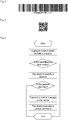
- the aforementioned bar code is as shown in Fig. 3 , the information on the bar code tag is "dvdplayer-192.1.1.1" representing that the controlled device corresponding to the bar code tag is a DVD player with an IP address of 192.1.1.1.
- the bar code tag can be attached to, printed on or embedded in the DVD player.
- the aforementioned 2D code is as shown in Fig. 4 , the information on the 2D code tag is "tv-192.1.1.2" representing that the controlled device corresponding to the 2D code tag is a TV with an IP address of 192.1.1.2.
- the 2D code tag can be attached to, printed on or embedded in the TV.
- the tag information may further contain more content, such as a simplified name or self-defined name of the controlled device.
- content such as a simplified name or self-defined name of the controlled device.
- the identification module of the gesture control center can establish a three-dimensional (3D) coordinates, and the gesture control center or a self-defined spatial position point can be selected as the origin of the 3D coordinates, and should be stored in the gesture control center. In case as shown in Fig. 2 , one of the three cameras can be selected as the origin of the 3D coordinates.
- the identification module within the gesture control center takes charge of measuring, labeling, and calculating position of a controlled device, and measuring, labeling and calculating a controlled device to which a gesture directs.
- the gesture control center identifies a controlled device.
- the gesture control center upon starting or regularly, collects an image within its visible range through a camera, and then identifies a collected image to check whether there is a identifiable controlled device. If the specific identification method relates to the bar code and the 2D code as shown in Fig. 2 and Fig. 3 , it can be determined first whether there is a bar code or 2D code in the collected image, and after the determination of a region where the bar code or 2D code is located, information represented by the bar code or the 2D code is identified.
- the gesture control center confirms with the identified controlled device.
- the gesture control center can interact with the controlled device through a network, e.g., by searching for the controlled device using an existing UPnP protocol or DNS-SD, so as to determine information such as address and functions of the controlled device.
- the gesture control center gets ready to identify a gesture.
- a video collection module (e.g., camera) of the gesture control center monitors images in within a video range and collects a gesture.
- the identification of a gesture can be implemented by Histogram method or Hidden Markov model. Firstly, a gesture of a user falls into a capture range of the camera so that the camera can generate a gesture video and transmits it to the identification module, the identification module identifies the position of the hand making the gesture from gesture images of the received gesture video through analysis of the color, profile and structured light, detects and segments a gesture object, extracts a gesture feature and tracks movement of the gesture; then processes a finger direction and movement direction sequence to finally identify completely the gesture; then the identified gesture is for example compared with a predefined gesture space to determine the user's intention of the gesture.
- the above identification of the gesture further includes identification of a controlled device to which the gesture directs.
- the method for determining a controlled device to which a gesture directs is a calculation based on an angle between the gesture and the controlled device. For example, when a user is taken as the origin, there is an angle between the controlled device and the gesture of the user.
- the gesture control center identifies the gesture, it can identify an angle and distance between an extension line of the gesture of the user and each controlled device.
- the gesture control center can first identify an arm, and takes the elbow as the origin. Taking a scenario where there is not any controlled device as an example, if the palm moves from left to right, the angle varies from 0° to 360°, and if the palm moves from top to bottom, the angle varies from 0° to 180°.
- what the identification module needs to calculate is an angle between a line from the elbow to each controlled device and a line from the elbow to the palm (i.e., the arm) in a triangle consisting of each controlled device, the palm and the elbow.
- a smaller angle between the arm and a controlled device represents that the gesture is more likely to direct to the controlled device. Specific meanings represented by angles within different ranges are as follows.
- 0°-90° representing that the gesture is likely to direct to a controlled device which the user expects to manipulate
- the angle is 0°, it is asserted that the gesture directs to the specific controlled device
- 90°-180° representing that the gesture is most likely not to direct to a controlled device which the user expects to manipulate
- the gesture control center selects a controlled device corresponding to the smallest angle, and determines the controlled device as the controlled device which the user expects to manipulate.
- the identification module can directly calculate lengths of the above three lines, or calculate according to a certain proportion after measurement of a reference distance. Then the above angles are calculated according to trigonometric formulas for determination.
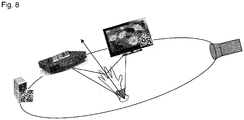
- Fig. 8 shows how to determine a controlled device to which a gesture directs: a line from the palm to the arm directs to a direction, and an angle forms between the line from the palm to the arm and a line from the elbow to the device; as shown in Fig. 8 , it illustrates an angle between a line from the elbow to a DVD player and a line from the palm to the arm, and also an angle between a line from the elbow to a TV and a line from the palm to the arm.
- the gesture control center through comparison of the two angles, determines that the user expects to control the DVD player through the gesture.
- Fig. 8 also illustrates the aforementioned (two) triangles, and as another method to calculate angles, angles can be calculated based on each of the two triangles using trigonometric formulas. The method shown in Fig. 8 can be applied to gesture control of more controlled devices.
- the gesture control center After identifying a manipulation command corresponding to the gesture, the gesture control center transmits a command message to the controlled device.
- the gesture control center defines and stores correspondences between gestures and command messages. After determining through identification the manipulation command and the controlled device corresponding to the manipulation command, the gesture control center can transmit the manipulation command to the controlled device through a network connection with the controlled device.
- the manipulation command can be universal instructions, e.g., playback or power off , and can also be device specific instructions, such as switching channel or volume up, and can further be protocol instructions, i.e., instructions specified in an application protocol, for example media content sharing in protocols such as UPnP.
- protocol instructions i.e., instructions specified in an application protocol, for example media content sharing in protocols such as UPnP.
- the controlled device receiving the manipulation command executes the manipulation command.
- the controlled device receives the manipulation command through the network connection and executes it. As described in step 4, the controlled device, according to specific content of the command, executes an internal program, or communicates with other devices to implement the command collaboratively.
- the controlled device analyzes and calculates the feature data to obtain and execute a corresponding instruction.
- the operation of the gesture control center includes two main steps: implementation of visual discovery of the controlled device, and transmission of the manipulation command.
- the gesture control center scans for a controlled device within its visible range, and identifies and stores a tag of the scanned controlled device. At this point, it is not required to use a network.
- the gesture control center can interact with the controlled device through a network, e..g, by searching for the controlled device using an existing UPnP protocol or DNS-SD, so as to determine information such as address and functions of the controlled device.
- the gesture control center analyzes the gesture to find out a gesture object and intension, and maps the intension to a manipulation command or gesture feature data.
- the gesture control center transmits the manipulation command to a controlled device to which the gesture directs. It is required at this point that there is a network connection between the gesture control center and the controlled device to which the gesture directs, and a network message can be transmitted using a protocol message such as a UPnP protocol message.
- the gesture control center identifies respective gestures and transmits respective manipulation commands to respective controlled devices.
- the controlled device receiving the manipulation command implements an operation corresponding to the manipulation command.
- the manipulation command can be universal instructions, e.g., playback or power off , and can also be device specific instructions, such as switching channel or volume up, and can further be protocol instructions, i.e., instructions specified in an application protocol, for example media content sharing in protocols such as UPnP, playback of content by a DVD player on a TV.
- protocol instructions i.e., instructions specified in an application protocol, for example media content sharing in protocols such as UPnP, playback of content by a DVD player on a TV.
- the controlled device is not limited to aforementioned TV, player and storage server, it can also be a computer, stereo, sound box, projector, set-top box, or even an auto, machine tool, ship and the like.
- the controlled device can be an existing device equipped with a camera such that gesture control can be implemented independently based on visual identification, and can also be other devices not equipped with a camera.
- the camera of the gesture control center can be of various spec, for example, it can be of a fixed focal length or variable focal length with a rotation space of all directions or only a left-to-right rotation space.
- the distance measuring module can measure distance using infrared or using light of other wavebands.
- the aforementioned three cameras can be used to measure distance, and more cameras can be used to measure distance (e.g., weighting adjustment and the like).
- the aforementioned communication module can be a transceiver;
- the distance measuring module can be a distance finder;
- the identification module can be a single chip microcomputer, a processor and the like;
- the gesture identification module can be a single chip microcomputer and processor that can identify a gesture;
- the data storage module can be a memory;
- the control module can be an integrated circuit that can process data and perform control, such as a CPU; and
- the network service module can be a network server.
- gesture control techniques according to embodiments of the disclosure can be represented by the flow as shown in Fig. 7 , and the flow includes the following steps:
- gesture control techniques it is possible to ensure that gesture manipulation of multiple devices can be implemented by only one gesture identification device such as the gesture control center, and thus a unified gesture control is implemented, thereby avoiding possible malfunctions that may be generated during gesture control of different devices and also avoiding a waste of resources; furthermore, it is possible to provide a convenient manipulation way to devices that don't support manipulation through gesture identification and save costs for those devices to be added with a gesture identification component, and all above benefits improve effectively user satisfaction.
Landscapes
- Engineering & Computer Science (AREA)
- Theoretical Computer Science (AREA)
- General Engineering & Computer Science (AREA)
- Human Computer Interaction (AREA)
- Physics & Mathematics (AREA)
- General Physics & Mathematics (AREA)
- General Health & Medical Sciences (AREA)
- Computer Vision & Pattern Recognition (AREA)
- Health & Medical Sciences (AREA)
- Psychiatry (AREA)
- Social Psychology (AREA)
- Multimedia (AREA)
- User Interface Of Digital Computer (AREA)
- Selective Calling Equipment (AREA)
- Image Analysis (AREA)
- Details Of Television Systems (AREA)
Description
- The disclosure relates to the field of communication, and in particular to a gesture control method, apparatus and system.
- With the development of digital multimedia and networks, entertainment experiences in daily life are enriched. People can control playing of a device through a remote controller or a gesture, such as controlling it to switch to a previous channel program or a next channel program.
- For controlling multiple devices, generally each device has a respective remote controller to perform control, but these remote controllers are not universal, and most of these controllers, such as a traditional TV or sound box, cannot be networked. There may be some network enabled controllers, for example, a device (e.g., a mobile phone, a pad) having computing and networking capabilities can be loaded with software supporting intercommunication protocols to control another equipment.
- The above device control method is apparently not so convenient, people may need to select one remote controller corresponding to a specific device from a pile of remote controllers and change remote controllers from time to time to control different devices, or the device can be controlled through operations on a pad or a mobile phone by people familiar with basic operations on computers, or a single device is controlled by simple gestures. Obviously, to control different devices, people often need to learn how to use different manipulation tools, resulting in tedious operations. People prefer to use an easier and more natural operation way to control a device, based on such demands, gesture control advents; gesture control is currently a relatively new control way, and when gesture control is performed, a camera on a device monitors and identifies gestures and the device is controlled according to control commands corresponding to identified gestures.
- At present, to implement gesture control, a controlled device is required to be equipped with a camera configured to implement visual identification. In practical application environments, there may be cases where multiple gesture control enabled devices have their respective cameras and gesture identification software, which results in not only a waste of resources but also possible malfunctions during gesture identification, e.g., a gesture instruction for a TV is taken for a manipulation of a set-top box by the latter. In addition, there are some devices not equipped with cameras and gesture identification software, and thus gesture control cannot be implemented thereon.
-
WO 2012/099584 A1 discloses a single gesture and multimodal controller that can be used to control multiple entertainment devices. According to this document, a user interacts with multiple devices in which two or more can be controlled via the same interaction mechanism, the multimodal and gestural control system helps to distinguish which device a particular interaction is intended for. This document discloses several meta-interaction approaches for allowing a user to specify the particular device for which the interactions are intended.Fig. 4D depicts a "spatial" meta-interaction approach, in which the gesture recognition space of the interaction may be sub-divided into different spatial regions which are mapped to different devices such that an interaction triggered in a particular spatial region is destined towards a particular device. -
EP1184982A1 discloses a remote control including a camera and an image processing unit to identify a device to which the remote control points. According to this document, an infrared spot meter might be employed to identify a device to which the remote control points on basis of an infrared code transmitted by said device; a scanner unit may be used to identify a device to which the remote control points on basis of a bar code attached to said device. - In view of the above, aspects of the invention are intended to provide a gesture control method according to claim 1, apparatus according to claim 8, and system according to claim 15 so as to implement unified gesture control. Preferred embodiments are defined in the dependent claims. It is hereby noted that throughout the description, the term "embodiment" does in itself not mean that such embodiment is necessarily an embodiment of the invention. The invention is defined by the appended claims.
- By means of gesture control techniques according to embodiments of the disclosure, it is possible to ensure that gesture manipulation of multiple devices can be implemented by only one gesture identification device such as the gesture control center, and thus a unified gesture control is implemented, thereby avoiding possible malfunctions that may be generated during gesture control of different devices and also avoiding a waste of resources; furthermore, it is possible to provide a convenient manipulation way to devices that don't support manipulation through gesture identification and save costs for those devices to be added with a gesture identification component, and all above benefits improve effectively user satisfaction.
-
-
Fig. 1 is a schematic diagram of a gesture control system according to an embodiment of the disclosure; -
Fig. 2 is a schematic diagram of a gesture control system according to another embodiment of the disclosure; -
Fig. 3 is a schematic diagram of a bar code used during implementation of gesture control according to an embodiment of the disclosure; -
Fig. 4 is a schematic diagram of a two-dimensional (2D) code used during implementation of gesture control according to an embodiment of the disclosure; -
Fig. 5 is a flow chart showing gesture control according to an embodiment of the disclosure; -
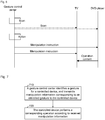
Fig. 6 is a schematic diagram showing messages flowing between a gesture control center and a controlled device according to an embodiment of the disclosure; -
Fig. 7 is a simplified flow chart showing gesture control according to an embodiment of the disclosure; and -
Fig. 8 is a schematic diagram showing the principle of determination of a controlled device to which a gesture directs. - The technical problem to be solved by embodiments of the disclosure is to implement control of controlled devices using an apparatus capable of controlling controlled devices in a unified way.
- The above apparatus capable of controlling controlled devices in a unified way is a gesture control center having gesture identification capability and being network-enabled, and it can identify a gesture and a controlled device to which the gesture directs, and convert the gesture to a manipulation command or store a gesture feature; the gesture control center can further interconnect with the controlled device and transmit, to the controlled device, a message containing the manipulation command or gesture feature.
- The gesture control center can implement operations containing following steps:
- step 1, the gesture control center identifies a controlled device within its visible range;
- step 2, the gesture control center identifies a gesture;
- step 3, the gesture control center transmits manipulation information to a controlled device to which the gesture directs; and
- step 4 the controlled device performs a corresponding operation according to received manipulation information.
- Further, in step 1, when identifying the controlled device within its visible range, the gesture control center can identify and record at least one of a device identifier, a device address and a device position of the controlled device.
- Further, in step 2, when identifying the gesture for the controlled device, the gesture control center can identify a manipulation command corresponding to the gesture and a controlled device to which the gesture directs, e.g., by analyzing motional feature of the gesture.
- Further, in step 3, the gesture control center can transmit a manipulation command or gesture feature data. The controlled device can further analyze the transmitted gesture feature data to obtain a corresponding manipulation command.
- Further, in step 4, the controlled device establishes a connection with the gesture control center, and the gesture control center implements, based on the connection, manipulation of the controlled device through a session using a message.
- Further, the manipulation command and the gesture feature data can be a protocol instruction, i.e., a protocol message and corresponding parameters specified in a certain application protocol.
- The present invention will be elaborated below with reference to accompanying drawings in conjunction with embodiments.
- Referring to
Fig. 1 , it shows an application scenario in which devices and mutual relationship therebetween are included. -
Fig. 1 shows, from left to right, four devices, i.e., a home storage server, a DVD player, a TV and a gesture control center, and positioning relationship between all these devices ensures there are no shelters between the gesture control center and any other devices, in this way, light emitted from the gesture control center can directly impinge on a device without any obstacle. However, the light emitted from the gesture control center is not limited to that emitted at a unique angle. - All the above four devices are provided with a network interface (e.g., a network interface supporting IEEE 802.11b/g/n or a network interface supporting IEEE 802.3) so that they can be connected to a communication network such as an IP network. Each device includes a communication module, having service capability, configured to discover other devices and be discovered by other devices, connect with other devices, transmit and receive messages to/from other devices, and process and forward manipulation commands. The above service capability can be implemented using existing Universal Plug and Play (UPnP) techniques, multicast Domain Name System (mDNS) and DNS Service Discovery (DNS-SD) techniques, and can be used in an IP network to respond to a query and provide function scheduling according to a predefined message format in a unicast, multicast query way. For example, UPnP techniques specify how a media display device (e.g., TV) and a server (e.g., DVD player and home storage server) respond to queries and what functions they can provide for scheduling.
- The gesture control center further includes a video collection module (e.g., camera, and a camera is taken as an example hereinafter) having image and video collection capability and a distance measuring module. The gesture control center further include an identification module, a data storage module, a control module and a network service module. The camera of the gesture control center can implement below functions: taking photos of a device within its visible range and identifying information contained in a tag attached on the device; capturing gestures of a user and identifying corresponding operation target, operation command or gesture feature data. The distance measuring module is similar to a hand-held laser/infrared distance finder that calculates the distance between the gesture control center and a controlled device based on propagation and reflection of light such as infrared. Typically, it is applicable to select a distance measuring module having an accuracy of about 2 mm. The gesture control center can transmit manipulation information corresponding to an identified gesture to the controlled device so that the controlled device performs a corresponding operation according to received manipulation information. The identification module can include an image identification module and a gesture identification module to implement identification of an image and a gesture, respectively.
- The gesture control center can identify a device within its visible range, and the identification method includes: the camera, distance measuring module collects images while rotating within a 3D space, searches for a predefined tag pattern in collected images and analyzes a sought out tag pattern. As shown in
Fig. 1 , the camera of the gesture control center collects an image by taking a photo, and there are three controlled device in the image, i.e., the TV, the DVD player and the home storage server, each with a tag such as a bar code or 2D code attached to, printed on or embedded in it. After analyzing the image, the image identification module of the gesture control center recognizes that there are several tags in the image, identifies each of the tags and store identified tag information, then performs distance measurement on a controlled device where each tag is located, and stores the measured distances together with respective tag information. - Similar to
Fig. 1 , there are also three controlled devices inFig. 2 , i.e., the TV, the DVD player and the home storage server; additionally,Fig. 2 includes three cameras having image and video collection capability, which belong to the gesture control center. The gesture control center inFig. 2 doesn't have a distance measuring function. The positioning relationship between all devices inFig. 2 ensures there are no shelters between the gesture control center and any other devices, in other words, light emitted from the gesture control center can directly impinge on each controlled device without any obstacle. - The mutual spatial positioning relationship between the three cameras is predefined, in other words, the gesture control center records distances between three cameras and angles between respective directions of the three cameras. Typically, the three cameras are not located in a same straight line, and respective directions of the three cameras are not parallel to one another or the angles therebetween are no more than 90 degree. The three cameras can communicate with one another, exchange collected images and videos with one another or transmit respectively collected images and videos to a specified device.
- Based on the above positioning relationship (distances between three cameras and angles between respective directions of the three cameras), after each of the three cameras collects relative angles (e.g., relative to the horizontal plane) of a controlled device and gesture falling within its collection range, it is thus possible to calculate positions of the controlled device and the gesture and the direction of the gesture through coordinate transformation and trigonometric formulas.
- The aforementioned bar code is as shown in
Fig. 3 , the information on the bar code tag is "dvdplayer-192.1.1.1" representing that the controlled device corresponding to the bar code tag is a DVD player with an IP address of 192.1.1.1. The bar code tag can be attached to, printed on or embedded in the DVD player. - The aforementioned 2D code is as shown in
Fig. 4 , the information on the 2D code tag is "tv-192.1.1.2" representing that the controlled device corresponding to the 2D code tag is a TV with an IP address of 192.1.1.2. The 2D code tag can be attached to, printed on or embedded in the TV. - Besides the above bar code and 2D code, the tag information may further contain more content, such as a simplified name or self-defined name of the controlled device. For example, texts are directly labeled on a controlled device so that the gesture control center identifies the controlled device according to the texts labeled on the controlled device.
- To identify a controlled device, a gesture and a controlled device to which the gesture directs, the identification module of the gesture control center can establish a three-dimensional (3D) coordinates, and the gesture control center or a self-defined spatial position point can be selected as the origin of the 3D coordinates, and should be stored in the gesture control center. In case as shown in
Fig. 2 , one of the three cameras can be selected as the origin of the 3D coordinates. The identification module within the gesture control center takes charge of measuring, labeling, and calculating position of a controlled device, and measuring, labeling and calculating a controlled device to which a gesture directs. - The operation process of the gesture control center will be described below with reference to
Fig. 1 andFig. 5 . - The gesture control center, upon starting or regularly, collects an image within its visible range through a camera, and then identifies a collected image to check whether there is a identifiable controlled device. If the specific identification method relates to the bar code and the 2D code as shown in
Fig. 2 andFig. 3 , it can be determined first whether there is a bar code or 2D code in the collected image, and after the determination of a region where the bar code or 2D code is located, information represented by the bar code or the 2D code is identified. - After identifying the controlled device, the gesture control center can interact with the controlled device through a network, e.g., by searching for the controlled device using an existing UPnP protocol or DNS-SD, so as to determine information such as address and functions of the controlled device.
- A video collection module (e.g., camera) of the gesture control center monitors images in within a video range and collects a gesture.
- The identification of a gesture can be implemented by Histogram method or Hidden Markov model. Firstly, a gesture of a user falls into a capture range of the camera so that the camera can generate a gesture video and transmits it to the identification module, the identification module identifies the position of the hand making the gesture from gesture images of the received gesture video through analysis of the color, profile and structured light, detects and segments a gesture object, extracts a gesture feature and tracks movement of the gesture; then processes a finger direction and movement direction sequence to finally identify completely the gesture; then the identified gesture is for example compared with a predefined gesture space to determine the user's intention of the gesture.
- The above identification of the gesture further includes identification of a controlled device to which the gesture directs.
- The method for determining a controlled device to which a gesture directs according the embodiment is a calculation based on an angle between the gesture and the controlled device. For example, when a user is taken as the origin, there is an angle between the controlled device and the gesture of the user. When the gesture control center identifies the gesture, it can identify an angle and distance between an extension line of the gesture of the user and each controlled device.
- Specifically, the gesture control center can first identify an arm, and takes the elbow as the origin. Taking a scenario where there is not any controlled device as an example, if the palm moves from left to right, the angle varies from 0° to 360°, and if the palm moves from top to bottom, the angle varies from 0° to 180°. Here what the identification module needs to calculate is an angle between a line from the elbow to each controlled device and a line from the elbow to the palm (i.e., the arm) in a triangle consisting of each controlled device, the palm and the elbow. A smaller angle between the arm and a controlled device represents that the gesture is more likely to direct to the controlled device. Specific meanings represented by angles within different ranges are as follows.
0°-90°: representing that the gesture is likely to direct to a controlled device which the user expects to manipulate; if the angle is 0°, it is asserted that the gesture directs to the specific controlled device;
90°-180°: representing that the gesture is most likely not to direct to a controlled device which the user expects to manipulate;
After calculation of the angle between each controlled device and the gesture, the gesture control center selects a controlled device corresponding to the smallest angle, and determines the controlled device as the controlled device which the user expects to manipulate. - In practical applications, it is also possible to calculate lengths of below three lines after the measurement of distances between the gesture, the controlled device and the gesture control center: in a triangle consisting of the controlled device, the palm and the elbow, a line from the elbow to the controlled device, a line from the elbow to the palm (arm) and a line from the palm to the controlled device. Regarding the calculation of lengths, the identification module can directly calculate lengths of the above three lines, or calculate according to a certain proportion after measurement of a reference distance. Then the above angles are calculated according to trigonometric formulas for determination.
-
Fig. 8 shows how to determine a controlled device to which a gesture directs: a line from the palm to the arm directs to a direction, and an angle forms between the line from the palm to the arm and a line from the elbow to the device; as shown inFig. 8 , it illustrates an angle between a line from the elbow to a DVD player and a line from the palm to the arm, and also an angle between a line from the elbow to a TV and a line from the palm to the arm. The gesture control center, through comparison of the two angles, determines that the user expects to control the DVD player through the gesture.Fig. 8 also illustrates the aforementioned (two) triangles, and as another method to calculate angles, angles can be calculated based on each of the two triangles using trigonometric formulas. The method shown inFig. 8 can be applied to gesture control of more controlled devices. - In practical applications, there may be problems regarding selection of a center point of a measurement object (e.g., palm, arm, controlled device), which can be resolved by mathematical operations.
- The gesture control center defines and stores correspondences between gestures and command messages. After determining through identification the manipulation command and the controlled device corresponding to the manipulation command, the gesture control center can transmit the manipulation command to the controlled device through a network connection with the controlled device.
- The manipulation command can be universal instructions, e.g., playback or power off , and can also be device specific instructions, such as switching channel or volume up, and can further be protocol instructions, i.e., instructions specified in an application protocol, for example media content sharing in protocols such as UPnP.
- The controlled device receives the manipulation command through the network connection and executes it. As described in step 4, the controlled device, according to specific content of the command, executes an internal program, or communicates with other devices to implement the command collaboratively.
- If what contained in the instruction message is feature data of the gesture, the controlled device analyzes and calculates the feature data to obtain and execute a corresponding instruction.
- To sum up, in a message flow of interaction between the gesture control center and the controlled device as shown in
Fig. 6 , the operation of the gesture control center includes two main steps: implementation of visual discovery of the controlled device, and transmission of the manipulation command. - Specifically, firstly, the gesture control center scans for a controlled device within its visible range, and identifies and stores a tag of the scanned controlled device. At this point, it is not required to use a network.
- After identifying the controlled device, the gesture control center can interact with the controlled device through a network, e..g, by searching for the controlled device using an existing UPnP protocol or DNS-SD, so as to determine information such as address and functions of the controlled device.
- Next, when identifying the gesture, the gesture control center analyzes the gesture to find out a gesture object and intension, and maps the intension to a manipulation command or gesture feature data.
- Then, the gesture control center transmits the manipulation command to a controlled device to which the gesture directs. It is required at this point that there is a network connection between the gesture control center and the controlled device to which the gesture directs, and a network message can be transmitted using a protocol message such as a UPnP protocol message.
- If the above gesture is a predefined collaborative gesture, e.g., consecutive gesture operations performed on a TV and DVD player, the gesture control center identifies respective gestures and transmits respective manipulation commands to respective controlled devices.
- Finally, the controlled device receiving the manipulation command implements an operation corresponding to the manipulation command.
- The manipulation command can be universal instructions, e.g., playback or power off , and can also be device specific instructions, such as switching channel or volume up, and can further be protocol instructions, i.e., instructions specified in an application protocol, for example media content sharing in protocols such as UPnP, playback of content by a DVD player on a TV.
- It should be noted that the controlled device is not limited to aforementioned TV, player and storage server, it can also be a computer, stereo, sound box, projector, set-top box, or even an auto, machine tool, ship and the like. Furthermore, the controlled device can be an existing device equipped with a camera such that gesture control can be implemented independently based on visual identification, and can also be other devices not equipped with a camera.
- In addition, the camera of the gesture control center can be of various spec, for example, it can be of a fixed focal length or variable focal length with a rotation space of all directions or only a left-to-right rotation space. The distance measuring module can measure distance using infrared or using light of other wavebands. The aforementioned three cameras can be used to measure distance, and more cameras can be used to measure distance (e.g., weighting adjustment and the like).
- Moreover, the aforementioned communication module can be a transceiver; the distance measuring module can be a distance finder; the identification module can be a single chip microcomputer, a processor and the like; the gesture identification module can be a single chip microcomputer and processor that can identify a gesture; the data storage module can be a memory; the control module can be an integrated circuit that can process data and perform control, such as a CPU; and the network service module can be a network server.
- It can be seen from the above description that gesture control techniques according to embodiments of the disclosure can be represented by the flow as shown in
Fig. 7 , and the flow includes the following steps: -
step 710, a gesture control center identifies a gesture for a controlled device and a controlled device to which the gesture directs; and -
step 720, the gesture control center transmit manipulation information to the controlled device to which the gesture directs, and the controlled device performs a corresponding operation according to received manipulation information. - To sum up, by means of gesture control techniques according to embodiments of the disclosure, it is possible to ensure that gesture manipulation of multiple devices can be implemented by only one gesture identification device such as the gesture control center, and thus a unified gesture control is implemented, thereby avoiding possible malfunctions that may be generated during gesture control of different devices and also avoiding a waste of resources; furthermore, it is possible to provide a convenient manipulation way to devices that don't support manipulation through gesture identification and save costs for those devices to be added with a gesture identification component, and all above benefits improve effectively user satisfaction.
- What described are merely preferable embodiments of the disclosure, and are not intended to limit the disclosure.
Claims (17)
- A gesture control method, comprising:capturing images of a gesture and identifying from said captured images by a gesture control center comprising a video collection module, anidentification module and a control module, a gesture for a controlled device, and transmitting from the control module manipulation information corresponding to an identified gesture to the controlled device (710); andperforming, by the controlled device, a corresponding operation according to received manipulation information (720),characterized in that, the method further comprises:before the identifying of a gesture for a controlled device, identifying, by the gesture control center, a controlled device within its visible range,wherein when identifying the controlled device within its visible range, the gesture control center identifies and records a device position of the controlled device.
- The method according to claim 1, further comprising: calculating, by the gesture control center, a distance between the gesture control center and the controlled device.
- The method according to claim 1, wherein upon identification of the controlled device within its visible range, the gesture control center further identifies and records at least one of a device identifier and a device address of the controlled device.
- The method according to any one of claims 1 to 3, wherein when identifying the gesture for the controlled device, the gesture control center identifies a manipulation command corresponding to the gesture and a controlled device towards which the gesture is directed.
- The method according to claim 4, wherein identifying by the gesture control center the controlled device towards which the gesture is directed comprises:calculating an angle between a line from an elbow to a palm of a body of a person that performs the gesture, and a line from the elbow to the controlled device; orafter measurement of distances between the body of the person that performs the gesture, the controlled device and the gesture control center, calculating angles using trigonometric formulas.
- The method according to claim 4, wherein the transmitting by the gesture control center of the manipulation information comprises transmitting a manipulation command or gesture feature data; and/or
when the manipulation information received by the controlled device is the manipulation command, performing an operation corresponding to the manipulation command; when the manipulation information received by the controlled device is the gesture feature data, analyzing the received gesture feature data to obtain a manipulation command, and performing an operation corresponding to the obtained manipulation command. - The method according to claim 1, further comprising: establishing, by the controlled device, a connection with the gesture control center, and implementing, by the gesture control center based on the connection, manipulation of the controlled device through a session using a message.
- A gesture control center apparatus, comprising a video collection module, an identification module and a control module,
wherein the video collection module is configured to capture images of a gesture for a controlled device;
wherein the identification module is configured to identify from said captured images the gesture; and
wherein the control module is configured to transmit manipulation information corresponding to an identified gesture to the controlled device,
characterized in that the gesture control center is configured to, before the identifying of a gesture for a controlled device, identify a controlled device within its visible range, and the apparatus further comprises:
a data storage module configured to, upon identification of a controlled device within the visible range, record a device position of an identified controlled device. - The apparatus according to claim 8, wherein the distance measuring module is further configured to calculate a distance between the apparatus and the controlled device.
- The apparatus according to claim 9, wherein data storage module is further configured to, upon identification of the controlled device within the visible range, identify and record at least one of a device identifier and a device address of the controlled device.
- The apparatus according to any one of claims 8 to 10, wherein the identification module comprises an image identification module and a gesture identification module,
wherein the image identification module is configured to identify a manipulation command corresponding to a gesture; and
wherein the gesture identification module is configured to identify a controlled device towards which the gesture is directed. - The apparatus according to claim 11, wherein the gesture identification module is configured to, when identifying the controlled device towards
which the gesture is directed, calculate an angle between a line from an elbow to a palm of a body of a person that performs the gesture, and a line from the elbow to the controlled device; or
after measurement of distances between the body of the person that performs the gesture, the controlled device and the apparatus, calculate angles using trigonometric formulas. - The apparatus according to claim 11, wherein the control module is configured to, when transmitting the manipulation information, transmit a manipulation command or gesture feature data.
- The apparatus according to claim 8, further comprising: a network service module configured to establish a connection with the controlled device, and implement, based on the connection, manipulation of the controlled device through a session using a message.
- A gesture control system, comprising a gesture control center and a controlled device, the gesture control center comprising a video collection module, an identification module and a control module
wherein the gesture control center is configured to capture images of a gesture and identify from said captured images a gesture for the controlled device, and transmit from the control module manipulation information corresponding to an identified gesture to the controlled device; and
wherein the controlled device is configured to perform a corresponding operation according to received manipulation information,
characterized in that the gesture control center is further configured to, before the identifying of a gesture for a controlled device, identify a controlled device within its visible range,
wherein when identifying the controlled device within its visible range, the gesture control center identifies and records a device position of the controlled device. - The system according to claim 15, wherein
the gesture control center is configured to, when transmitting the manipulation information, transmit a manipulation command or gesture feature data; and/or
the controlled device is configured to, when the received manipulation information is the manipulation command, perform an operation corresponding to the manipulation command, and when the received manipulation information is the gesture feature data, analyze the received gesture feature data to obtain a manipulation command, and perform an operation corresponding to the obtained manipulation command. - The system according to claim 15 or 16, wherein the controlled device is configured to, when performing the corresponding operation according to the received manipulation information, establish a connection with the gesture control center, based on which manipulation of the controlled device is implemented through a session using a message.
Applications Claiming Priority (2)
| Application Number | Priority Date | Filing Date | Title |
|---|---|---|---|
| CN201310130673.4A CN104102335B (en) | 2013-04-15 | 2013-04-15 | A kind of gestural control method, device and system |
| PCT/CN2013/083690 WO2014169566A1 (en) | 2013-04-15 | 2013-09-17 | Gesture control method, apparatus and system |
Publications (3)
| Publication Number | Publication Date |
|---|---|
| EP2988210A1 EP2988210A1 (en) | 2016-02-24 |
| EP2988210A4 EP2988210A4 (en) | 2016-05-25 |
| EP2988210B1 true EP2988210B1 (en) | 2018-11-28 |
Family
ID=51670543
Family Applications (1)
| Application Number | Title | Priority Date | Filing Date |
|---|---|---|---|
| EP13882158.2A Active EP2988210B1 (en) | 2013-04-15 | 2013-09-17 | Gesture control method, apparatus and system |
Country Status (8)
| Country | Link |
|---|---|
| US (1) | US10013067B2 (en) |
| EP (1) | EP2988210B1 (en) |
| JP (1) | JP6126738B2 (en) |
| KR (1) | KR101969624B1 (en) |
| CN (1) | CN104102335B (en) |
| DK (1) | DK2988210T3 (en) |
| HU (1) | HUE043509T2 (en) |
| WO (1) | WO2014169566A1 (en) |
Families Citing this family (35)
| Publication number | Priority date | Publication date | Assignee | Title |
|---|---|---|---|---|
| WO2015011703A1 (en) * | 2013-07-21 | 2015-01-29 | Pointgrab Ltd. | Method and system for touchless activation of a device |
| CN105589550A (en) * | 2014-10-21 | 2016-05-18 | 中兴通讯股份有限公司 | Information publishing method, information receiving method, information publishing device, information receiving device and information sharing system |
| CN105630142A (en) * | 2014-11-07 | 2016-06-01 | 中兴通讯股份有限公司 | Method and device for publishing and transferring identification information, and information identification system |
| CN105807549A (en) * | 2014-12-30 | 2016-07-27 | 联想(北京)有限公司 | Electronic device |
| US10484827B2 (en) | 2015-01-30 | 2019-11-19 | Lutron Technology Company Llc | Gesture-based load control via wearable devices |
| CN104699244B (en) * | 2015-02-26 | 2018-07-06 | 小米科技有限责任公司 | The control method and device of smart machine |
| US10460227B2 (en) | 2015-05-15 | 2019-10-29 | Apple Inc. | Virtual assistant in a communication session |
| US11224111B2 (en) | 2015-12-14 | 2022-01-11 | Signify Holding B.V. | Method and system for controlling a lighting device based on a location and an orientation of a user input device relative to the lighting device |
| CN106886279A (en) * | 2015-12-16 | 2017-06-23 | 华为技术有限公司 | A kind of control method and device |
| CN105681859A (en) * | 2016-01-12 | 2016-06-15 | 东华大学 | Man-machine interaction method for controlling smart TV based on human skeletal tracking |
| CN107436678B (en) * | 2016-05-27 | 2020-05-19 | 富泰华工业(深圳)有限公司 | Gesture control system and method |
| EP3529675B1 (en) | 2016-10-21 | 2022-12-14 | Trumpf Werkzeugmaschinen GmbH + Co. KG | Interior person-tracking-based control of manufacturing in the metalworking industry |
| EP3529674B1 (en) | 2016-10-21 | 2025-07-02 | TRUMPF Werkzeugmaschinen SE + Co. KG | Interior tracking system-based control of manufacturing processes in the metalworking industry |
| WO2019044124A1 (en) | 2017-09-04 | 2019-03-07 | 大樹 梶田 | Multiple-viewpoint video image viewing system and camera system |
| CN108259671B (en) * | 2018-01-30 | 2020-01-03 | 深圳市科迈爱康科技有限公司 | Translation content transmission method and system |
| US10296102B1 (en) * | 2018-01-31 | 2019-05-21 | Piccolo Labs Inc. | Gesture and motion recognition using skeleton tracking |
| WO2019176441A1 (en) * | 2018-03-15 | 2019-09-19 | ソニー株式会社 | Information processing device, information processing method, and program |
| CN108389459A (en) * | 2018-03-15 | 2018-08-10 | 湖南工业大学 | A kind of printing simulation system based on virtual reality |
| DK180639B1 (en) | 2018-06-01 | 2021-11-04 | Apple Inc | DISABILITY OF ATTENTION-ATTENTIVE VIRTUAL ASSISTANT |
| US11003629B2 (en) * | 2018-10-31 | 2021-05-11 | EMC IP Holding Company LLC | Dual layer deduplication for application specific file types in an information processing system |
| CN109934152B (en) * | 2019-03-08 | 2021-02-09 | 浙江理工大学 | Improved small-bent-arm image segmentation method for sign language image |
| US11543888B2 (en) * | 2019-06-27 | 2023-01-03 | Google Llc | Intent detection with a computing device |
| CN112698716A (en) * | 2019-10-23 | 2021-04-23 | 上海博泰悦臻电子设备制造有限公司 | In-vehicle setting and control method, system, medium and device based on gesture recognition |
| US11144128B2 (en) * | 2019-11-20 | 2021-10-12 | Verizon Patent And Licensing Inc. | Systems and methods for controlling video wall content using air gestures |
| CN111880422B (en) * | 2020-07-20 | 2024-01-05 | Oppo广东移动通信有限公司 | Equipment control method and device, equipment and storage medium |
| CN112071053B (en) * | 2020-09-09 | 2025-02-18 | 杭州敏和光电子技术有限公司 | A gesture recognition device and recognition method with infrared remote control receiving function |
| US11978283B2 (en) | 2021-03-16 | 2024-05-07 | Snap Inc. | Mirroring device with a hands-free mode |
| US11734959B2 (en) | 2021-03-16 | 2023-08-22 | Snap Inc. | Activating hands-free mode on mirroring device |
| US11908243B2 (en) | 2021-03-16 | 2024-02-20 | Snap Inc. | Menu hierarchy navigation on electronic mirroring devices |
| US11798201B2 (en) | 2021-03-16 | 2023-10-24 | Snap Inc. | Mirroring device with whole-body outfits |
| US11809633B2 (en) * | 2021-03-16 | 2023-11-07 | Snap Inc. | Mirroring device with pointing based navigation |
| CN113223344B (en) * | 2021-05-25 | 2022-08-23 | 湖南汽车工程职业学院 | Big data-based professional teaching display system for art design |
| US12422933B2 (en) * | 2021-09-03 | 2025-09-23 | Apple Inc. | Multi-device gesture control |
| US20230409179A1 (en) | 2022-06-15 | 2023-12-21 | Apple Inc. | Home automation device control and designation |
| CN115778046B (en) * | 2023-02-09 | 2023-06-09 | 深圳豪成通讯科技有限公司 | Intelligent safety helmet adjusting control method and system based on data analysis |
Family Cites Families (13)
| Publication number | Priority date | Publication date | Assignee | Title |
|---|---|---|---|---|
| DE60042156D1 (en) * | 2000-08-24 | 2009-06-18 | Sony Deutschland Gmbh | remote control transmitter |
| US20060125968A1 (en) * | 2004-12-10 | 2006-06-15 | Seiko Epson Corporation | Control system, apparatus compatible with the system, and remote controller |
| KR102305019B1 (en) * | 2005-03-04 | 2021-09-27 | 애플 인크. | Multi-functional hand-held device |
| JP5091857B2 (en) * | 2005-06-30 | 2012-12-05 | コーニンクレッカ フィリップス エレクトロニクス エヌ ヴィ | System control method |
| US8599132B2 (en) * | 2008-06-10 | 2013-12-03 | Mediatek Inc. | Methods and systems for controlling electronic devices according to signals from digital camera and sensor modules |
| JP5544570B2 (en) * | 2010-08-27 | 2014-07-09 | 公立大学法人首都大学東京 | Information presentation system, information presentation program, and information presentation method |
| US20120068857A1 (en) * | 2010-09-22 | 2012-03-22 | Apple Inc. | Configurable remote control |
| US9423878B2 (en) * | 2011-01-06 | 2016-08-23 | Blackberry Limited | Electronic device and method of displaying information in response to a gesture |
| US9778747B2 (en) * | 2011-01-19 | 2017-10-03 | Hewlett-Packard Development Company, L.P. | Method and system for multimodal and gestural control |
| CN102810023B (en) | 2011-06-03 | 2015-09-23 | 联想(北京)有限公司 | Identify method and the terminal device of gesture motion |
| US9152376B2 (en) * | 2011-12-01 | 2015-10-06 | At&T Intellectual Property I, L.P. | System and method for continuous multimodal speech and gesture interaction |
| CN102915111B (en) * | 2012-04-06 | 2017-05-31 | 寇传阳 | A kind of wrist gesture control system and method |
| CN102778954B (en) | 2012-06-29 | 2016-05-11 | Tcl集团股份有限公司 | A kind of gesture operation management method and device |
-
2013
- 2013-04-15 CN CN201310130673.4A patent/CN104102335B/en active Active
- 2013-09-17 HU HUE13882158A patent/HUE043509T2/en unknown
- 2013-09-17 EP EP13882158.2A patent/EP2988210B1/en active Active
- 2013-09-17 US US14/784,435 patent/US10013067B2/en active Active
- 2013-09-17 KR KR1020157032564A patent/KR101969624B1/en active Active
- 2013-09-17 DK DK13882158.2T patent/DK2988210T3/en active
- 2013-09-17 WO PCT/CN2013/083690 patent/WO2014169566A1/en not_active Ceased
- 2013-09-17 JP JP2016506752A patent/JP6126738B2/en active Active
Non-Patent Citations (1)
| Title |
|---|
| None * |
Also Published As
| Publication number | Publication date |
|---|---|
| DK2988210T3 (en) | 2019-02-25 |
| EP2988210A4 (en) | 2016-05-25 |
| US20160266653A1 (en) | 2016-09-15 |
| US10013067B2 (en) | 2018-07-03 |
| JP2016518657A (en) | 2016-06-23 |
| CN104102335A (en) | 2014-10-15 |
| EP2988210A1 (en) | 2016-02-24 |
| CN104102335B (en) | 2018-10-02 |
| HUE043509T2 (en) | 2019-08-28 |
| JP6126738B2 (en) | 2017-05-10 |
| KR101969624B1 (en) | 2019-04-16 |
| WO2014169566A1 (en) | 2014-10-23 |
| KR20150143724A (en) | 2015-12-23 |
Similar Documents
| Publication | Publication Date | Title |
|---|---|---|
| US10013067B2 (en) | Gesture control method, apparatus and system | |
| US11914792B2 (en) | Systems and methods of tracking moving hands and recognizing gestural interactions | |
| CN111989537B (en) | Systems and methods for detecting human gaze and gestures in an unconstrained environment | |
| US8230075B1 (en) | Method and device for identifying devices which can be targeted for the purpose of establishing a communication session | |
| TWI446175B (en) | Communication control device, communication control method, and related congater-readable medium | |
| EP2974509B1 (en) | Personal information communicator | |
| US20140267031A1 (en) | Spatially aware pointer for mobile appliances | |
| CN108520552A (en) | Image processing method, image processing device, storage medium and electronic equipment | |
| US20110092222A1 (en) | Vectoring service initiation system and method based on sensor assisted positioning | |
| US20190096130A1 (en) | Virtual mobile terminal implementing system in mixed reality and control method thereof | |
| US20170262061A1 (en) | Hand gesture recognition method, device, system, and computer storage medium | |
| CN109992111B (en) | Augmented reality extension method and electronic device | |
| WO2017147909A1 (en) | Target device control method and apparatus | |
| CN104239842B (en) | A method, device and system for realizing visual recognition | |
| US20170026617A1 (en) | Method and apparatus for real-time video interaction by transmitting and displaying user interface correpsonding to user input | |
| CN115070789B (en) | Multi-robot intelligent control interaction platform | |
| JP2004030284A (en) | Seamless pointing system | |
| JP2009296239A (en) | Information processing system, and information processing method | |
| WO2016062191A1 (en) | Information publication method, information receiving method and apparatus, and information sharing system | |
| CN104216506B (en) | Data interactive method and device based on gesture operation | |
| CN111373732A (en) | Information processing apparatus, information processing method, and information processing system | |
| CN115243085B (en) | Display device and device interconnection method | |
| US9413950B2 (en) | Determining a device identifier from a light signal emitted by a device | |
| CN116055774B (en) | Display device and control method thereof | |
| WO2022094772A1 (en) | Position estimation method, following control method, device and storage medium |
Legal Events
| Date | Code | Title | Description |
|---|---|---|---|
| PUAI | Public reference made under article 153(3) epc to a published international application that has entered the european phase |
Free format text: ORIGINAL CODE: 0009012 |
|
| 17P | Request for examination filed |
Effective date: 20151112 |
|
| AK | Designated contracting states |
Kind code of ref document: A1 Designated state(s): AL AT BE BG CH CY CZ DE DK EE ES FI FR GB GR HR HU IE IS IT LI LT LU LV MC MK MT NL NO PL PT RO RS SE SI SK SM TR |
|
| AX | Request for extension of the european patent |
Extension state: BA ME |
|
| A4 | Supplementary search report drawn up and despatched |
Effective date: 20160421 |
|
| RIC1 | Information provided on ipc code assigned before grant |
Ipc: G08C 23/04 20060101ALN20160415BHEP Ipc: G06F 3/03 20060101ALI20160415BHEP Ipc: G06F 3/01 20060101AFI20160415BHEP Ipc: G06K 9/00 20060101ALN20160415BHEP |
|
| DAX | Request for extension of the european patent (deleted) | ||
| STAA | Information on the status of an ep patent application or granted ep patent |
Free format text: STATUS: EXAMINATION IS IN PROGRESS |
|
| 17Q | First examination report despatched |
Effective date: 20170619 |
|
| REG | Reference to a national code |
Ref country code: DE Ref legal event code: R079 Ref document number: 602013047629 Country of ref document: DE Free format text: PREVIOUS MAIN CLASS: G06F0009450000 Ipc: G06F0003010000 |
|
| GRAP | Despatch of communication of intention to grant a patent |
Free format text: ORIGINAL CODE: EPIDOSNIGR1 |
|
| STAA | Information on the status of an ep patent application or granted ep patent |
Free format text: STATUS: GRANT OF PATENT IS INTENDED |
|
| RIC1 | Information provided on ipc code assigned before grant |
Ipc: G06K 9/00 20060101ALN20180522BHEP Ipc: G08C 23/04 20060101ALN20180522BHEP Ipc: G06F 3/03 20060101ALI20180522BHEP Ipc: G06F 3/01 20060101AFI20180522BHEP |
|
| RIC1 | Information provided on ipc code assigned before grant |
Ipc: G08C 23/04 20060101ALN20180604BHEP Ipc: G06F 3/01 20060101AFI20180604BHEP Ipc: G06K 9/00 20060101ALN20180604BHEP Ipc: G06F 3/03 20060101ALI20180604BHEP |
|
| INTG | Intention to grant announced |
Effective date: 20180619 |
|
| RIC1 | Information provided on ipc code assigned before grant |
Ipc: G06K 9/00 20060101ALN20180608BHEP Ipc: G06F 3/01 20060101AFI20180608BHEP Ipc: G06F 3/03 20060101ALI20180608BHEP Ipc: G08C 23/04 20060101ALN20180608BHEP |
|
| GRAS | Grant fee paid |
Free format text: ORIGINAL CODE: EPIDOSNIGR3 |
|
| GRAA | (expected) grant |
Free format text: ORIGINAL CODE: 0009210 |
|
| STAA | Information on the status of an ep patent application or granted ep patent |
Free format text: STATUS: THE PATENT HAS BEEN GRANTED |
|
| AK | Designated contracting states |
Kind code of ref document: B1 Designated state(s): AL AT BE BG CH CY CZ DE DK EE ES FI FR GB GR HR HU IE IS IT LI LT LU LV MC MK MT NL NO PL PT RO RS SE SI SK SM TR |
|
| REG | Reference to a national code |
Ref country code: CH Ref legal event code: EP |
|
| REG | Reference to a national code |
Ref country code: AT Ref legal event code: REF Ref document number: 1070982 Country of ref document: AT Kind code of ref document: T Effective date: 20181215 |
|
| REG | Reference to a national code |
Ref country code: DE Ref legal event code: R096 Ref document number: 602013047629 Country of ref document: DE |
|
| REG | Reference to a national code |
Ref country code: IE Ref legal event code: FG4D |
|
| REG | Reference to a national code |
Ref country code: DK Ref legal event code: T3 Effective date: 20190221 |
|
| REG | Reference to a national code |
Ref country code: SE Ref legal event code: TRGR |
|
| REG | Reference to a national code |
Ref country code: NL Ref legal event code: FP |
|
| REG | Reference to a national code |
Ref country code: LT Ref legal event code: MG4D |
|
| REG | Reference to a national code |
Ref country code: AT Ref legal event code: MK05 Ref document number: 1070982 Country of ref document: AT Kind code of ref document: T Effective date: 20181128 |
|
| PG25 | Lapsed in a contracting state [announced via postgrant information from national office to epo] |
Ref country code: HR Free format text: LAPSE BECAUSE OF FAILURE TO SUBMIT A TRANSLATION OF THE DESCRIPTION OR TO PAY THE FEE WITHIN THE PRESCRIBED TIME-LIMIT Effective date: 20181128 Ref country code: AT Free format text: LAPSE BECAUSE OF FAILURE TO SUBMIT A TRANSLATION OF THE DESCRIPTION OR TO PAY THE FEE WITHIN THE PRESCRIBED TIME-LIMIT Effective date: 20181128 Ref country code: LT Free format text: LAPSE BECAUSE OF FAILURE TO SUBMIT A TRANSLATION OF THE DESCRIPTION OR TO PAY THE FEE WITHIN THE PRESCRIBED TIME-LIMIT Effective date: 20181128 Ref country code: BG Free format text: LAPSE BECAUSE OF FAILURE TO SUBMIT A TRANSLATION OF THE DESCRIPTION OR TO PAY THE FEE WITHIN THE PRESCRIBED TIME-LIMIT Effective date: 20190228 Ref country code: ES Free format text: LAPSE BECAUSE OF FAILURE TO SUBMIT A TRANSLATION OF THE DESCRIPTION OR TO PAY THE FEE WITHIN THE PRESCRIBED TIME-LIMIT Effective date: 20181128 Ref country code: IS Free format text: LAPSE BECAUSE OF FAILURE TO SUBMIT A TRANSLATION OF THE DESCRIPTION OR TO PAY THE FEE WITHIN THE PRESCRIBED TIME-LIMIT Effective date: 20190328 Ref country code: FI Free format text: LAPSE BECAUSE OF FAILURE TO SUBMIT A TRANSLATION OF THE DESCRIPTION OR TO PAY THE FEE WITHIN THE PRESCRIBED TIME-LIMIT Effective date: 20181128 Ref country code: LV Free format text: LAPSE BECAUSE OF FAILURE TO SUBMIT A TRANSLATION OF THE DESCRIPTION OR TO PAY THE FEE WITHIN THE PRESCRIBED TIME-LIMIT Effective date: 20181128 |
|
| REG | Reference to a national code |
Ref country code: NO Ref legal event code: T2 Effective date: 20181128 |
|
| PG25 | Lapsed in a contracting state [announced via postgrant information from national office to epo] |
Ref country code: RS Free format text: LAPSE BECAUSE OF FAILURE TO SUBMIT A TRANSLATION OF THE DESCRIPTION OR TO PAY THE FEE WITHIN THE PRESCRIBED TIME-LIMIT Effective date: 20181128 Ref country code: AL Free format text: LAPSE BECAUSE OF FAILURE TO SUBMIT A TRANSLATION OF THE DESCRIPTION OR TO PAY THE FEE WITHIN THE PRESCRIBED TIME-LIMIT Effective date: 20181128 Ref country code: GR Free format text: LAPSE BECAUSE OF FAILURE TO SUBMIT A TRANSLATION OF THE DESCRIPTION OR TO PAY THE FEE WITHIN THE PRESCRIBED TIME-LIMIT Effective date: 20190301 Ref country code: PT Free format text: LAPSE BECAUSE OF FAILURE TO SUBMIT A TRANSLATION OF THE DESCRIPTION OR TO PAY THE FEE WITHIN THE PRESCRIBED TIME-LIMIT Effective date: 20190328 |
|
| PG25 | Lapsed in a contracting state [announced via postgrant information from national office to epo] |
Ref country code: PL Free format text: LAPSE BECAUSE OF FAILURE TO SUBMIT A TRANSLATION OF THE DESCRIPTION OR TO PAY THE FEE WITHIN THE PRESCRIBED TIME-LIMIT Effective date: 20181128 Ref country code: CZ Free format text: LAPSE BECAUSE OF FAILURE TO SUBMIT A TRANSLATION OF THE DESCRIPTION OR TO PAY THE FEE WITHIN THE PRESCRIBED TIME-LIMIT Effective date: 20181128 |
|
| REG | Reference to a national code |
Ref country code: HU Ref legal event code: AG4A Ref document number: E043509 Country of ref document: HU |
|
| REG | Reference to a national code |
Ref country code: DE Ref legal event code: R097 Ref document number: 602013047629 Country of ref document: DE |
|
| PG25 | Lapsed in a contracting state [announced via postgrant information from national office to epo] |
Ref country code: RO Free format text: LAPSE BECAUSE OF FAILURE TO SUBMIT A TRANSLATION OF THE DESCRIPTION OR TO PAY THE FEE WITHIN THE PRESCRIBED TIME-LIMIT Effective date: 20181128 Ref country code: EE Free format text: LAPSE BECAUSE OF FAILURE TO SUBMIT A TRANSLATION OF THE DESCRIPTION OR TO PAY THE FEE WITHIN THE PRESCRIBED TIME-LIMIT Effective date: 20181128 Ref country code: SM Free format text: LAPSE BECAUSE OF FAILURE TO SUBMIT A TRANSLATION OF THE DESCRIPTION OR TO PAY THE FEE WITHIN THE PRESCRIBED TIME-LIMIT Effective date: 20181128 Ref country code: SK Free format text: LAPSE BECAUSE OF FAILURE TO SUBMIT A TRANSLATION OF THE DESCRIPTION OR TO PAY THE FEE WITHIN THE PRESCRIBED TIME-LIMIT Effective date: 20181128 |
|
| PLBE | No opposition filed within time limit |
Free format text: ORIGINAL CODE: 0009261 |
|
| STAA | Information on the status of an ep patent application or granted ep patent |
Free format text: STATUS: NO OPPOSITION FILED WITHIN TIME LIMIT |
|
| PG25 | Lapsed in a contracting state [announced via postgrant information from national office to epo] |
Ref country code: SI Free format text: LAPSE BECAUSE OF FAILURE TO SUBMIT A TRANSLATION OF THE DESCRIPTION OR TO PAY THE FEE WITHIN THE PRESCRIBED TIME-LIMIT Effective date: 20181128 |
|
| 26N | No opposition filed |
Effective date: 20190829 |
|
| PG25 | Lapsed in a contracting state [announced via postgrant information from national office to epo] |
Ref country code: TR Free format text: LAPSE BECAUSE OF FAILURE TO SUBMIT A TRANSLATION OF THE DESCRIPTION OR TO PAY THE FEE WITHIN THE PRESCRIBED TIME-LIMIT Effective date: 20181128 |
|
| PG25 | Lapsed in a contracting state [announced via postgrant information from national office to epo] |
Ref country code: MC Free format text: LAPSE BECAUSE OF FAILURE TO SUBMIT A TRANSLATION OF THE DESCRIPTION OR TO PAY THE FEE WITHIN THE PRESCRIBED TIME-LIMIT Effective date: 20181128 |
|
| PG25 | Lapsed in a contracting state [announced via postgrant information from national office to epo] |
Ref country code: IE Free format text: LAPSE BECAUSE OF NON-PAYMENT OF DUE FEES Effective date: 20190917 Ref country code: LU Free format text: LAPSE BECAUSE OF NON-PAYMENT OF DUE FEES Effective date: 20190917 |
|
| PG25 | Lapsed in a contracting state [announced via postgrant information from national office to epo] |
Ref country code: CY Free format text: LAPSE BECAUSE OF FAILURE TO SUBMIT A TRANSLATION OF THE DESCRIPTION OR TO PAY THE FEE WITHIN THE PRESCRIBED TIME-LIMIT Effective date: 20181128 |
|
| PG25 | Lapsed in a contracting state [announced via postgrant information from national office to epo] |
Ref country code: MT Free format text: LAPSE BECAUSE OF FAILURE TO SUBMIT A TRANSLATION OF THE DESCRIPTION OR TO PAY THE FEE WITHIN THE PRESCRIBED TIME-LIMIT Effective date: 20181128 |
|
| PG25 | Lapsed in a contracting state [announced via postgrant information from national office to epo] |
Ref country code: MK Free format text: LAPSE BECAUSE OF FAILURE TO SUBMIT A TRANSLATION OF THE DESCRIPTION OR TO PAY THE FEE WITHIN THE PRESCRIBED TIME-LIMIT Effective date: 20181128 |
|
| PGFP | Annual fee paid to national office [announced via postgrant information from national office to epo] |
Ref country code: NL Payment date: 20250704 Year of fee payment: 13 |
|
| REG | Reference to a national code |
Ref country code: CH Ref legal event code: U11 Free format text: ST27 STATUS EVENT CODE: U-0-0-U10-U11 (AS PROVIDED BY THE NATIONAL OFFICE) Effective date: 20251001 |
|
| PGFP | Annual fee paid to national office [announced via postgrant information from national office to epo] |
Ref country code: DE Payment date: 20250702 Year of fee payment: 13 Ref country code: DK Payment date: 20250911 Year of fee payment: 13 |
|
| PGFP | Annual fee paid to national office [announced via postgrant information from national office to epo] |
Ref country code: NO Payment date: 20250909 Year of fee payment: 13 |
|
| PGFP | Annual fee paid to national office [announced via postgrant information from national office to epo] |
Ref country code: IT Payment date: 20250825 Year of fee payment: 13 |
|
| PGFP | Annual fee paid to national office [announced via postgrant information from national office to epo] |
Ref country code: HU Payment date: 20250813 Year of fee payment: 13 Ref country code: BE Payment date: 20250703 Year of fee payment: 13 Ref country code: GB Payment date: 20250703 Year of fee payment: 13 |
|
| PGFP | Annual fee paid to national office [announced via postgrant information from national office to epo] |
Ref country code: FR Payment date: 20250708 Year of fee payment: 13 |
|
| PGFP | Annual fee paid to national office [announced via postgrant information from national office to epo] |
Ref country code: SE Payment date: 20250702 Year of fee payment: 13 |
|
| PGFP | Annual fee paid to national office [announced via postgrant information from national office to epo] |
Ref country code: CH Payment date: 20251001 Year of fee payment: 13 |