EP2985724A1 - Remote load and update card emulation support - Google Patents
Remote load and update card emulation support Download PDFInfo
- Publication number
- EP2985724A1 EP2985724A1 EP15176096.4A EP15176096A EP2985724A1 EP 2985724 A1 EP2985724 A1 EP 2985724A1 EP 15176096 A EP15176096 A EP 15176096A EP 2985724 A1 EP2985724 A1 EP 2985724A1
- Authority
- EP
- European Patent Office
- Prior art keywords
- key
- encrypted
- communication
- card
- scrw
- Prior art date
- Legal status (The legal status is an assumption and is not a legal conclusion. Google has not performed a legal analysis and makes no representation as to the accuracy of the status listed.)
- Granted
Links
Images








Classifications
-
- G—PHYSICS
- G06—COMPUTING OR CALCULATING; COUNTING
- G06Q—INFORMATION AND COMMUNICATION TECHNOLOGY [ICT] SPECIALLY ADAPTED FOR ADMINISTRATIVE, COMMERCIAL, FINANCIAL, MANAGERIAL OR SUPERVISORY PURPOSES; SYSTEMS OR METHODS SPECIALLY ADAPTED FOR ADMINISTRATIVE, COMMERCIAL, FINANCIAL, MANAGERIAL OR SUPERVISORY PURPOSES, NOT OTHERWISE PROVIDED FOR
- G06Q20/00—Payment architectures, schemes or protocols
- G06Q20/30—Payment architectures, schemes or protocols characterised by the use of specific devices or networks
- G06Q20/34—Payment architectures, schemes or protocols characterised by the use of specific devices or networks using cards, e.g. integrated circuit [IC] cards or magnetic cards
- G06Q20/357—Cards having a plurality of specified features
- G06Q20/3576—Multiple memory zones on card
- G06Q20/35765—Access rights to memory zones
-
- G—PHYSICS
- G06—COMPUTING OR CALCULATING; COUNTING
- G06Q—INFORMATION AND COMMUNICATION TECHNOLOGY [ICT] SPECIALLY ADAPTED FOR ADMINISTRATIVE, COMMERCIAL, FINANCIAL, MANAGERIAL OR SUPERVISORY PURPOSES; SYSTEMS OR METHODS SPECIALLY ADAPTED FOR ADMINISTRATIVE, COMMERCIAL, FINANCIAL, MANAGERIAL OR SUPERVISORY PURPOSES, NOT OTHERWISE PROVIDED FOR
- G06Q20/00—Payment architectures, schemes or protocols
- G06Q20/30—Payment architectures, schemes or protocols characterised by the use of specific devices or networks
- G06Q20/32—Payment architectures, schemes or protocols characterised by the use of specific devices or networks using wireless devices
- G06Q20/327—Short range or proximity payments by means of M-devices
- G06Q20/3278—RFID or NFC payments by means of M-devices
-
- G—PHYSICS
- G06—COMPUTING OR CALCULATING; COUNTING
- G06Q—INFORMATION AND COMMUNICATION TECHNOLOGY [ICT] SPECIALLY ADAPTED FOR ADMINISTRATIVE, COMMERCIAL, FINANCIAL, MANAGERIAL OR SUPERVISORY PURPOSES; SYSTEMS OR METHODS SPECIALLY ADAPTED FOR ADMINISTRATIVE, COMMERCIAL, FINANCIAL, MANAGERIAL OR SUPERVISORY PURPOSES, NOT OTHERWISE PROVIDED FOR
- G06Q20/00—Payment architectures, schemes or protocols
- G06Q20/30—Payment architectures, schemes or protocols characterised by the use of specific devices or networks
- G06Q20/34—Payment architectures, schemes or protocols characterised by the use of specific devices or networks using cards, e.g. integrated circuit [IC] cards or magnetic cards
- G06Q20/355—Personalisation of cards for use
-
- G—PHYSICS
- G06—COMPUTING OR CALCULATING; COUNTING
- G06Q—INFORMATION AND COMMUNICATION TECHNOLOGY [ICT] SPECIALLY ADAPTED FOR ADMINISTRATIVE, COMMERCIAL, FINANCIAL, MANAGERIAL OR SUPERVISORY PURPOSES; SYSTEMS OR METHODS SPECIALLY ADAPTED FOR ADMINISTRATIVE, COMMERCIAL, FINANCIAL, MANAGERIAL OR SUPERVISORY PURPOSES, NOT OTHERWISE PROVIDED FOR
- G06Q20/00—Payment architectures, schemes or protocols
- G06Q20/30—Payment architectures, schemes or protocols characterised by the use of specific devices or networks
- G06Q20/36—Payment architectures, schemes or protocols characterised by the use of specific devices or networks using electronic wallets or electronic money safes
- G06Q20/367—Payment architectures, schemes or protocols characterised by the use of specific devices or networks using electronic wallets or electronic money safes involving electronic purses or money safes
- G06Q20/3674—Payment architectures, schemes or protocols characterised by the use of specific devices or networks using electronic wallets or electronic money safes involving electronic purses or money safes involving authentication
Definitions
- Contactless transaction, payment, and tagging options typically include contactless cards and near field communication (NFC) tags.
- a contactless smart card is typically a pocket-sized card with embedded integrated circuits (ICs) that process and store data, and communicate with a terminal via radio waves.
- ICs integrated circuits
- NFC tags when a NFC-capable phone is placed near or tapped on a tag, the programmed action is undertaken.
- host card emulation HCE is the presentation of a virtual and exact representation of a smart card using software.
- the terms “a” and “an” are intended to denote at least one of a particular element.
- the term “includes” means includes but not limited to, the term “including” means including but not limited to.
- the term “based on” means based at least in part on.
- NFC technology is used with mobile devices, such as mobile phones to emulate secure contactless cards. Emulation may be based on various types of communication including plain communication and encrypted communication.
- Plain communication includes unencrypted communication, for example, between a mobile device and a point of sale (PoS) device to implement a contactless communication.
- An example of the contactless communication includes a transit communication where the mobile device is placed near the PoS device to implement a transit operation.
- An example of a transit operation includes a commuter operation that provides for a user to swipe the mobile device adjacent the PoS device to enter a train terminal.
- a contactless communication may generally include a communication where there is no direct physical contact between a secure element that is implemented on the hardware of the mobile device and the PoS device (e.g., when the mobile device is tapped on a PoS device).
- a contact based communication may include a communication between an application such as a mobile application on the mobile device and the secure element of the mobile device.
- a remote load and update card emulation support apparatus and a method for remote load and update card emulation support are disclosed herein.
- the remote load and update card emulation support apparatus may include at least one processor, and a secure element that is executed by the at least one processor to provide emulation support for an emulated card by executing at least one command set from command sets that include an encrypted read write command set that uses a secure communication read write (SCRW) key, a plain read write command set that uses a plain communication read write (PCRW) key, and an encrypted read command set that uses a secure communication read only (SCR) key.
- the secure element may utilize the encrypted read write command set to implement an update command related to the emulated card by using the SCRW key to authenticate the update command related to the emulated card.
- the secure element may utilize the plain read write command set to implement NFC based communication with a PoS device by using the PCRW key to authenticate the communication with the PoS device.
- the secure element may utilize the encrypted read command set to implement a read command related to the emulated card by using the SCR key to authenticate the read command related to the emulated card.
- a user of the remote load and update card emulation support apparatus may download a mobile application for implementing, for example, update and local query functionality related to the emulated card.
- the user may register a unique username and password using the mobile application.
- a registration service on a server may facilitate the registration process to ensure the uniqueness of the user.
- a username and password may be generated along with unique data that is stored in a user registration database of the server.
- the unique data may include, for example, the username, the password, a unique secure element identification (USEID) that is a random unique number generated and assigned against each user, a diversified SCRW key, a diversified PCRW key, and a SCR key.
- USEID unique secure element identification
- the SCRW and PCRW keys may be diversified by generating unique keys that are derived, for example, by using the USEID and a master key. Further, the SCR key may be generated, for example, by implementing an XOR operation on a hash of the username and a hash of the password.
- the remote load and update card emulation support apparatus and the method for remote load and update card emulation support disclosed herein provide a technical solution to technical problems related, for example, to plain and encrypted communication with respect to an emulated card.
- the apparatus and method disclosed herein provide the technical solution of a secure element to provide emulation support for an emulated card by executing a command set from command sets that include an encrypted read write command set that uses a SCRW key, a plain read write command set that uses a PCRW key, and an encrypted read command set that uses a SCR key.
- the secure element may utilize the encrypted read write command set to implement an update command related to the emulated card by using the SCRW key to authenticate the update command related to the emulated card.
- the secure element may utilize the plain read write command set to implement NFC based communication with a PoS device by using the PCRW key to authenticate the communication with the PoS device. Further, the secure element may utilize the encrypted read command set to implement a read command related to the emulated card by using the SCR key to authenticate the read command related to the emulated card.
- the secure element thus provides for plain and encrypted communication with respect to an emulated card, without the performance degradation with respect to the encrypted communication.
- the apparatus and method disclosed herein further provide the technical solution of an authenticator to authenticate and/or control authentication of various operations related to the secure element. The authenticator thus limits unnecessary resource utilization or access to the secure element and the data related to the emulated card.
- FIG. 1 illustrates a detailed architecture of a remote load and update card emulation support apparatus 100, according to an example of the present disclosure.
- the apparatus 100 may include a secure element 102 to provide emulation support for an emulated card 104 by executing a command set from command sets 106 that include an encrypted read write command set 108 that uses a SCRW key 110, a plain read write command set 112 that uses a PCRW key 114, and an encrypted read command set 116 that uses a SCR key 118.
- the SCRW key 110, PCRW key 114, and SCR key 118 may be maintained in a diversified key store 120 of the secure element 102.
- the secure element 102 may utilize the encrypted read write command set 108 to implement, for example, an update command (e.g., top-up, or adding an additional monetary amount) related to the emulated card 104 by using the SCRW key 110 to authenticate the update command related to the emulated card 104.
- an update command e.g., top-up, or adding an additional monetary amount
- the command data for the encrypted read write command set 108 may be encrypted using the SCRW key 110.
- the secure element 102 may utilize the plain read write command set 112 to implement NFC based communication (e.g., for use of the emulated card 104 for transit) with a PoS device 122 (see Figure 4 ) by using the PCRW key 114 to authenticate the communication with the PoS device 122.
- the plain read write command set 112 may be used for communication with the PoS device 122.
- the secure element 102 may utilize the encrypted read command set 116 to implement a read command (e.g., balance check, or another query) related to the emulated card 104 by using the SCR key 118 to authenticate the read command related to the emulated card 104.
- a read command e.g., balance check, or another query
- the encrypted read command set 116 may be performed locally on a mobile device 124.
- the secure element 102 may be implemented on a board of the mobile device 124. Alternatively or additionally, the secure element 102 may be provided on a subscriber identity module (SIM) or a NFC card of the mobile device 124. Alternatively or additionally, the secure element 102 may be implemented as an applet.
- SIM subscriber identity module
- NFC card of the mobile device 124.
- the secure element 102 may be implemented as an applet.
- the apparatus 100 may be implemented in the mobile device 124.
- the mobile device 124 may include a NFC based mobile phone, or a similar mobile device.
- the emulated card 104 may include card data 126 that includes various details and information related to the emulated card 104.
- the card data 126 may include information related to the balance on the emulated card 104, the currency type used by the emulated card 104, etc.
- the secure element 102 may include a USEID 128 that is specific to a user 130 of the mobile device 124.
- the secure element 102 may include an authenticator 132 that is to authenticate and/or control authentication of various operations related to the secure element 102 as described herein.
- the user 130 of the apparatus 100 may download a mobile application 134 on the mobile device 124.
- the mobile application 134 is to provide for communication between external sources such as a server 136 and the secure element 102, and/or between the user 130 and the secure element 102.
- the mobile application 134 is to provide for communication between the server 136 via the Internet for communication with respect to the SCRW key 110.
- the communication between the mobile application 134 and the secure element 102 may be designated as contact based communication.
- the mobile application 134 may include a registrar 138 that is to register a username and password for the user 130 with the server 136.
- the mobile application 134 may include an update interface 140 that is to implement over the air updates (e.g., addition of a monetary value) with respect to the emulated card 104.
- a local query interface 142 is to implement local queries (e.g., check balance) with respect to the emulated card 104.
- a NFC controller 144 is to operate in conjunction with a NFC card to implement contactless communication with an external device, such as the PoS device 122 (see Figure 4 ).
- the NFC controller 144 may implement contactless communication between the PoS device 122 and the secure element 102.
- the server 136 may include a user registration database 146 that includes details such as the user name, password, USEID 128, and associated master SCRW, PCRW, and SCR keys 148.
- a registration service 150 of the server 136 is to facilitate registration of the mobile device 124 and the user 130 with the server 136.
- a personalization service 152 is to operate in conjunction with a personalization device 154 that includes a personalization interface 156 to implement personalization of the mobile device 124 with respect to the specifics of the user 130.
- An authentication and update service 158 is to operate in conjunction with the mobile application 134 and the secure element 102 to implement authentication and update of various commands (e.g., update, check balance, communicate with PoS device, etc.) by the user 130.
- commands e.g., update, check balance, communicate with PoS device, etc.
- the elements of the remote load and update card emulation support apparatus 100 may be machine readable instructions stored on a non-transitory computer readable medium.
- the elements of the remote load and update card emulation support apparatus 100 may be hardware or a combination of machine readable instructions and hardware.
- FIG. 2 illustrates a key loading process for the remote load and update card emulation support apparatus, according to an example of the present disclosure.
- these keys may be loaded onto the secure element 102 that is used for communication with the personalization device 154.
- the SCRW key 110, the PCRW key 114, and the SCR key 118 may be unique for each mobile device 124.
- the personalization interface 156 may be used to perform personalization in a secure environment where the mobile device 124 is to be connected to the personalization device 154 for loading of the keys.
- the personalization device 154 may retrieve the appropriate SCRW key 110, the PCRW key 114, and the SCR key 118 based on the USEID 128 from the server 136.
- Figure 3A illustrates a secure load process 300 using the SCRW key 110, according to an example of the present disclosure.
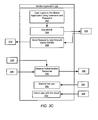
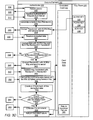
- Figures 3B-3D illustrate expanded views of the secure load process of Figure 3A using the SCRW key 110, according to an example of the present disclosure.
- the user 130 may login to the mobile application 134 using the user's username and password.
- the mobile application 134 may retrieve the USEID 128 associated with the username and password, and forward the USEID 128 to the authenticator 132 of the secure element 102.
- the authenticator 132 may authenticate and return the USEID 128 to the mobile application 134.
- the user 130 via the mobile application 134, may send a request to load a predetermined amount (e.g., dollar or other currency value) to the emulated card 104.
- a predetermined amount e.g., dollar or other currency value
- the authentication process for loading of the predetermined amount to the emulated card 104 may begin at the server 136.
- the server 136 may send an authentication command, which is received by the authenticator 132 at block 314.
- the authenticator 132 may generate a random key (e.g., RandomA).
- the authenticator 132 may encrypt the random key (e.g., RandomA) with the SCRW key 110, and send the encrypted random key to the server 136.
- the random key e.g., RandomA
- the random key (e.g., RandomA) encrypted with the SCRW key 110 may be decrypted with the SCRW key 322 for the given USEID 128 that is retrieved by the server 136 at block 324.
- the random key (e.g., RandomA) may be fetched after decryption at block 320.
- a new random number (e.g., RandomB) may be generated at the server 136.
- the random key e.g., RandomA
- the new random number e.g., RandomB
- the authenticator 132 may decrypt the encrypted random key (e.g., RandomA) and the new random number (e.g., RandomB) with the SCRW key 110 (i.e., to fetch RandomA1+RandomB1).
- RandomA the encrypted random key
- RandomB the new random number
- a determination may be made as to whether the random key (e.g., RandomA) is equal to RandomA1.
- the determination at block 336 may be used to effectively confirm that the server 136 is an authorized server.
- the failed authentication may be reported to the server 136.
- the random key e.g., RandomA
- a failed authentication response may be received by the mobile application 134.
- the failed authentication response may be reported to the user 130.
- RandomB1 may be encrypted with the SCRW key 110 and sent to the server 136.
- the RandomB1 that is encrypted with the SCRW key 110 may be decrypted with the SCRW key 322 at the server 136.
- RandomB is equal to RandomB1.
- the determination at block 346 may be used to effectively confirm that the mobile device 124 is an authorized mobile device (i.e., a mobile device that has been personalized for the specific user 130).
- an authentication response may be sent to the mobile application 134.
- the authentication response may be received by the mobile application 134 at block 340, and reported to the user 130.
- a session key may be generated at the server 136 based on RandomA and RandomB.
- a hash for the command data for the encrypted read write command set 108 may be generated at the server 136, and the command data may be encrypted with the session key generated at block 350.
- the encrypted command data may be appended to the hashed data, and sent to the secure element 102.
- a command code for the encrypted read write command set 108 is represented by X (i.e., the command code before encryption at block 352).
- the encrypted command data with the session key from block 350 is represented by Y.
- a 32 byte hash may be created for the hash of X, and represented as Z.
- the encrypted command data that is appended to the hashed data, and sent to the secure element 102 may be represented as Y + Z (i.e., append Z to Y ).
- the authenticator 132 may decrypt the command data using the session key generated at block 356 (i.e., session key based on RandomA1 and RandomB1).
- the first 32 bytes of the encrypted read write command set 108 may be removed.
- Y + Z that is sent to the secure element 102 may be received at block 354.
- the last 32 bytes i.e., Z and Y remain
- Y may be decrypted with the session key from block 356 to obtain X .
- the authenticator 132 may generate a hash of the decrypted command data from block 354.
- the authenticator 132 may generate a 32 byte hash of the decrypted command data from block 354.
- the authenticator 132 may generate a 32 byte hash of X obtained at block 354.
- the authenticator 132 may determine whether the original hash (i.e., from block 352) and the created hash (i.e., from block 358) match. For the example of Figure 3E , the authenticator 132 may determine whether the hash of X from block 358 matches the value of Z from block 352. The determination at block 360 may be used to effectively confirm that the command data has not been compromised after authentication of the request at block 308, and further the secure element 102 and the server 136.
- the original request at block 308 by the user 130 may be declined.
- the original request at block 308 by the user 130 may be executed at the emulated card 104.
- a success or failure notification with respect to the execution of the original request at block 308 may be returned from the emulated card 104 at block 366.
- the authenticator 132 may receive the success or failure notification from the emulated card 104 from block 366.
- the mobile application 134 may receive the success or failure notification from the authenticator 132 at block 368, and notify the user 130 of the successful (or unsuccessful) execution of the original request at block 308.
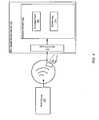
- FIG. 4 illustrates PoS device interaction using the PCRW key 114, according to an example of the present disclosure.
- the PoS device interaction using the PCRW key 114 may include using the mobile device 124 which includes the secure element 102 including the emulated card 104, and the PCRW key 114 to access the emulated card 104.
- the emulated card 104 may be used (i.e., in place of an actual physical card for processing a transaction).
- the communication between PoS device 122 and mobile device 124 may be implemented via the NFC controller 144.
- the NFC controller 144 may communicate with the secure element 102 to thus make the communication channel between the PoS device 122 and mobile device 124 secure.
- Figure 5A illustrates a plain load process 500 using the PCRW key 114, according to an example of the present disclosure.
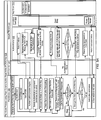
- Figures 5B and 5C illustrate expanded views of the plain load process of Figure 5A using the PCRW key 114, according to an example of the present disclosure.
- the emulated card 104 may be detected at the PoS device 122.
- the PoS device 122 may request retrieval of the USEID 128 related to the emulated card 104.
- the authenticator 132 may receive the USEID 128 request from the PoS device 122, and return the USEID 128 to the PoS device 122.
- the authentication process for the emulated card 104 may begin at the PoS device 122.
- the PoS device 122 may send the authentication command with the key to be used to the authenticator 132, which receives the authentication command at block 512.
- the authenticator 132 may generate a random key (e.g., RandomA).
- the authenticator 132 may encrypt the random key (e.g., RandomA) with the PCRW key 114, and send the encrypted random key to the PoS device 122.
- the random key e.g., RandomA
- the PoS device 122 may decrypt the encrypted random key with the PCRW key 520 that is retrieved at block 522 by the PoS device 122 for the given USEID 128.
- the PoS device 122 may fetch the random key (e.g., RandomA) based on the decryption at block 518.
- the random key e.g., RandomA
- the PoS device 122 may generate a new random number (e.g., RandomB).
- the PoS device 122 may encrypt the random key (e.g., RandomA) and the new random number (e.g., RandomB) with the PCRW key 520, and send the encrypted random key and new random number to the authenticator 132.
- the random key e.g., RandomA
- the new random number e.g., RandomB
- the authenticator 132 may receive the encrypted random key and new random number from the PoS device 122.
- the authenticator 132 may decrypt the encrypted random key and new random number from the PoS device 122, and fetch RandomA1 and RandomB1.
- the authenticator 132 may determine whether RandomA is equal to RandomA1. The determination at block 534 may be used to effectively confirm that the PoS device 122 is an authorized PoS device.
- the authentication failure may be received by the PoS device 122.
- the encrypted RandomB1 with the PCRW key 114 may be decrypted.
- the encrypted RandomB1 with the PCRW key 114 may be received from block 544, which is based on a determination that RandomA is equal to RandomA1 at block 534.
- a determination may be made as to whether RandomB is equal to RandomB1.
- the determination at block 546 may be used to effectively confirm that the mobile device 124 is an authorized mobile device (i.e., a mobile device that has been personalized for the specific user 130).
- the command to execute the transaction may be sent to the authenticator 132 that executes the transaction at block 550.
- the authenticator 132 may keep track of the type of key used for authentication (e.g., SCRW, PCRW, or SCR), and accordingly manage the further communication once authenticated.
- a success or failure notification with respect to the execution of the original communication at block 502 may be returned from the emulated card 104 at block 552.
- the authenticator 132 may receive the success or failure notification from the emulated card 104 from block 552.
- the PoS device 122 may receive the success or failure notification from the authenticator 132 at block 554, and notify the user 130 of the successful (or unsuccessful) communication and further processing results (not shown) related to the PoS device 122.
- Figure 6A illustrates a secure query process 600 using the SCR key 118, according to an example of the present disclosure.
- Figures 6B and 6C illustrate expanded views of the secure query process of Figure 6A using the SCR key 118, according to an example of the present disclosure.
- the user 130 may login to the mobile application 134 using the username and password.
- the user 130 may enter an inquiry for the emulated card 104.
- the user 130 may enter a balance amount check request for the emulated card 104.
- the mobile application 134 may send an authenticate request commend to the authenticator 132 of the secure element 102, which receives the authenticate request command at block 608.
- the authenticator 132 may generate a random number (e.g., RandomA).
- the authenticator 132 may encrypt the random number (e.g., RandomA) with the SCR key 118, and send the encrypted random number to the mobile application 134.
- the random number e.g., RandomA
- the mobile application 134 may decrypt the encrypted random number with a mobile application based SCR key that is fetched from block 616.
- the mobile application based SCR key may be generated based on an XOR operation performed on a hash of the username and password for the user 130.
- the mobile application 134 may fetch RandomA from the decrypted random number with the mobile application based SCR key.
- the mobile application 134 may generate a new random number (e.g., RandomB).
- the random number (e.g., RandomA) and the new random number (e.g., RandomB) may be encrypted with the mobile application based SCR key, and sent to the authenticator 132, which receives the encrypted random number and the new random number at block 624.
- the authenticator 132 may decrypt the encrypted random number (e.g., RandomA) and the new random number (e.g., RandomB) with the SCR key 118 to fetch RandomA1 and RandomB1.
- the encrypted random number e.g., RandomA
- the new random number e.g., RandomB
- the authenticator 132 may determine whether the random number (e.g., RandomA) is equal to RandomA1. The determination at block 628 may be used to effectively confirm that the mobile application 134 is an authorized mobile application.
- RandomA random number
- the authenticator 132 may generate an authentication fail notification.
- the mobile application 134 may inform the user 130 of the unsuccessful authentication.
- the authenticator 132 may encrypt RandomB1 with the SCR key 118, and forward the encrypted RandomB1 to the mobile application 134.
- the random number e.g., RandomA
- the mobile application 134 may decrypt the encrypted RandomB1 with the mobile application based SCR key that is fetched from block 616.
- the mobile application 134 may determine whether the RandomB is equal to RandomB1. The determination at block 640 may be used to effectively confirm that the secure element 102 is an authorized secure element (i.e., a secure element that has been personalized for the specific user 130).
- the mobile application 134 may inform the user 130 of the unsuccessful authentication.
- the mobile application 134 may send the authentication response to the authenticator 132, which is received by the authenticator 132 at block 644.
- the mobile application 134 may generate a session key with RandomA and RandomB.
- the mobile application 134 may generate a hash for the command data for the encrypted read command set 116, and encrypt the command data with the session key generated at block 646.
- the encrypted command data may be appended to the hashed data, and sent to the authenticator 132.
- the authenticator 132 may generate a session key with RandomA1 and RandomB1.
- the authenticator 132 may decrypt the encrypted command data from block 648 using the session key generated at block 650, with the first 32 bytes being left out.
- the authenticator 132 may generate a hash of the decrypted data from block 652.
- the hash may be a 32 byte hash.
- the authenticator 132 may determine whether the original hash (e.g., the hash from block 648) matches the hash from block 654. The determination at block 656 may be used to effectively confirm that the command data has not been compromised.
- the inquiry for block 604 for the emulated card 104 may be declined.
- the inquiry for block 604 for the emulated card 104 may be executed, and the executed inquiry may be received by the emulated card 104 at block 662, where the card data 126 is returned to the authenticator 132.
- the authenticator 132 may return the received card data from block 662 encrypted with the session key from block 650 to the mobile application 134.
- the mobile application 134 may generate a signal to display the relevant information and/or results of the inquiry for block 604 to the user 130.
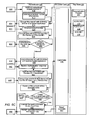
- Figures 7 and 8 illustrate flowcharts of methods 700 and 800 for remote load and update card emulation support, according to examples.
- the methods 700 and 800 may be implemented on the remote load and update card emulation support apparatus 100 described above with reference to Figures 1-6 by way of example and not limitation.
- the methods 700 and 800 may be practiced in other systems.
- the method 700 may include receiving a SCRW key, a PCRW key, and a SCR key that are specific to a device that emulates a card and/or a user of the device.
- the secure element 102 may receive the SCRW key 110, the PCRW key 114, and the SCR key 118 that are specific to the mobile device 124 that emulates a card (e.g., the emulated card 104) and/or the user 130 of the mobile device 124.
- the method 700 may include using the SCRW key, the PCRW key, or the SCR key to provide emulation support for the emulated card by executing a corresponding command set from command sets that include an encrypted read write command set that uses the SCRW key, a plain read write command set that uses the PCRW key, and an encrypted read command set that uses the SCR key.
- the SCRW key 110, the PCRW key 114, or the SCR key 118 may be used to provide emulation support for the emulated card 104 by executing a corresponding command set from command sets 106 that include an encrypted read write command set 108 that uses the SCRW key 110, a plain read write command set 112 that uses the PCRW key 114, and an encrypted read command set 116 that uses the SCR key 118.
- using the SCRW key 110 to provide emulation support for the emulated card 104 by executing the encrypted read write command set 108 that uses the SCRW key 110 may further include encrypting a random key by using the SCRW key 110 (e.g., see block 318 of Figure 3D ), and determining whether an update command related to the emulated card is authentic by comparing (e.g., see block 336 of Figure 3D ) a value of the random key before encryption by using the SCRW key 110 to a value of the random key after the random key has been encrypted by using an authorized entity SCRW key (e.g., SCRW key 322) and further decrypted by using the SCRW key (e.g., see block 334 of Figure 3D ).
- an authorized entity SCRW key e.g., SCRW key 322
- the method 700 may further include decrypting (e.g., see block 354 of Figure 3D ) encrypted command data for the encrypted read write command set 108 by using a session key (e.g., see block 356 of Figure 3D ) that is generated by keys based on the SCRW key 110.
- the command data may be encrypted (e.g., see block 352 of Figure 3B ) by using the random key and another random key that is generated by an authorized entity (e.g., the server 136) of the authorized entity SCRW key (e.g., SCRW key 322).
- the method 700 may further include comparing (e.g., see block 360 of Figure 3D ) a hash of the command data with a hash of the decrypted command data, and in response to a determination that the hash of the command data is equal to the hash of the decrypted command data, executing (e.g., see block 364 of Figure 3D ) the update command related to the emulated card 104.
- using the PCRW key 114 to provide emulation support for the emulated card 104 by executing the plain read write command set 112 that uses the PCRW key 114 may further include encrypting a random key by using the PCRW key (e.g., see block 516 of Figure 5C ), and determining whether a communication related to the emulated card 104 is authentic by comparing (e.g., see block 534 of Figure 5C ) a value of the random key before encryption by using the PCRW key 114 to a value of the random key after the random key has been encrypted by using an authorized PoS device PCRW key (e.g., PCRW key 520) and further decrypted by using the PCRW key (e.g., see block 532 of Figure 5C ).
- an authorized PoS device PCRW key e.g., PCRW key 520
- using the SCR key 118 to provide emulation support for the emulated card 104 by executing the encrypted read command set 116 that uses the SCR key 118 may further include encrypting a random key by using the SCR key (e.g., see block 612 of Figure 6C ), and determining whether a query (e.g., see block 604 of Figure 6B ) related to the emulated card 104 is authentic by comparing (e.g., see block 628 of Figure 6C ) a value of the random key before encryption by using the SCR key 118 to a value of the random key after the random key has been encrypted by using a mobile application based SCR key (e.g., SCR key generated at block 616 of Figure 6B ) and further decrypted (e.g., see block 626 of Figure 6C ) by using the SCR key 118.
- a mobile application based SCR key e.g., SCR key generated at block 616 of Figure 6B
- the method 700 may further include decrypting encrypted command data for the encrypted read command set 116 by using a session key (e.g., see block 650 of Figure 6C ) that is generated by keys based on the SCR key 118.
- the command data may be encrypted (e.g., see block 648 of Figure 6B ) by using the random key and another random key that is generated by a mobile application 134 of the mobile application based SCR key (e.g., SCR key generated at block 616 of Figure 6B ).
- the method 700 may further include comparing (e.g., see block 656 of Figure 6C ) a hash of the command data with a hash of the decrypted command data, and in response to a determination that the hash of the command data is equal to the hash of the decrypted command data, executing (e.g., see block 660 of Figure 6C ) the query related to the emulated card 104.
- the method 800 may include receiving a communication related to an emulated card.
- the secure element 102 may receive a communication related to an emulated card 104.
- the method 800 may include determining whether the communication is related to an update, a contactless transaction, or a query related to the emulated card.
- the authenticator 132 may determine whether the communication is related to an update, a contactless transaction, or a query related to the emulated card 104.
- the method 800 may include executing an encrypted read write command set that uses a SCRW key upon authentication of the communication.
- the secure element 102 may execute an encrypted read write command set 108 that uses a SCRW key 110 upon authentication of the communication by the authenticator 132
- the method 800 may include executing a plain read write command set that uses a PCRW key upon authentication of the communication.
- the secure element 102 may execute a plain read write command set 112 that uses a PCRW key 114 upon authentication of the communication by the authenticator 132.
- the method 800 may include executing an encrypted read command set that uses a SCR key upon authentication of the communication.
- the secure element 102 may execute an encrypted read command set 116 that uses a SCR key 118 upon authentication of the communication by the authenticator 132.
- authentication of the communication with respect to the update related to the emulated card 104 may further include encrypting a random key by using the SCRW key 110 (e.g., see block 318 of Figure 3D ), and determining whether the update related to the emulated card is authentic by comparing (e.g., see block 336 of Figure 3D ) a value of the random key before encryption by using the SCRW key 110 to a value of the random key after the random key has been encrypted by using an authorized entity SCRW key (e.g., SCRW key 322) and further decrypted by using the SCRW key (e.g., see block 334 of Figure 3D ).
- SCRW key 110 e.g., see block 318 of Figure 3D
- determining whether the update related to the emulated card is authentic by comparing (e.g., see block 336 of Figure 3D ) a value of the random key before encryption by using the SCRW key 110 to a value of the random key after the random key has been encrypted
- authentication of the communication with respect to the contactless transaction related to the emulated card 104 may further encrypting a random key by using the PCRW key 114 (e.g., see block 516 of Figure 5C ), and determining whether the contactless transaction related to the emulated card is authentic by comparing (e.g., see block 534 of Figure 5C ) a value of the random key before encryption by using the PCRW key 114 to a value of the random key after the random key has been encrypted by using an authorized device PCRW key (e.g., PCRW key 520) for the authorized device and further decrypted by using the PCRW key (e.g., see block 532 of Figure 5C ).
- an authorized device PCRW key e.g., PCRW key 520
- authentication of the communication with respect to the query related to the emulated card may further include encrypting a random key by using the SCR key 118 (e.g., see block 612 of Figure 6C ), and determining whether the query (e.g., see block 604 of Figure 6B ) related to the emulated card is authentic by comparing (e.g., see block 628 of Figure 6C ) a value of the random key before encryption by using the SCR key 118 to a value of the random key after the random key has been encrypted by using a mobile application based SCR key (e.g., SCR key generated at block 616 of Figure 6B ) and further decrypted (e.g., see block 626 of Figure 6C ) by using the SCR key 118.
- a mobile application based SCR key e.g., SCR key generated at block 616 of Figure 6B
- decrypted e.g., see block 626 of Figure 6C
- Figure 9 shows a computer system 900 that may be used with the examples described herein.
- the computer system may represent a generic platform that includes components that may be in a server or another computer system.
- the computer system 900 may be used as a platform for the apparatus 100.
- the computer system 900 may execute, by a processor (e.g., a single or multiple processors) or other hardware processing circuit, the methods, functions and other processes described herein.
- a processor e.g., a single or multiple processors
- a computer readable medium which may be non-transitory, such as hardware storage devices (e.g., RAM (random access memory), ROM (read only memory), EPROM (erasable, programmable ROM), EEPROM (electrically erasable, programmable ROM), hard drives, and flash memory).
- RAM random access memory
- ROM read only memory
- EPROM erasable, programmable ROM
- EEPROM electrically erasable, programmable ROM
- hard drives e.g., hard drives, and flash memory
- the computer system 900 may include a processor 902 that may implement or execute machine readable instructions performing some or all of the methods, functions and other processes described herein. Commands and data from the processor 902 may be communicated over a communication bus 904.
- the computer system may also include a main memory 906, such as a random access memory (RAM), where the machine readable instructions and data for the processor 902 may reside during runtime, and a secondary data storage 908, which may be non-volatile and stores machine readable instructions and data.
- the memory and data storage are examples of computer readable mediums.
- the memory 906 may include a remote load and update card emulation support module 920 including machine readable instructions residing in the memory 906 during runtime and executed by the processor 902.
- the remote load and update card emulation support module 920 may include the elements of the apparatus 100 shown in Figure 1 .
- the computer system 900 may include an I/O device 910, such as a keyboard, a mouse, a display, etc.
- the computer system may include a network interface 912 for connecting to a network.
- Other known electronic components may be added or substituted in the computer system.
Landscapes
- Engineering & Computer Science (AREA)
- Business, Economics & Management (AREA)
- Accounting & Taxation (AREA)
- Computer Networks & Wireless Communication (AREA)
- Strategic Management (AREA)
- Physics & Mathematics (AREA)
- General Business, Economics & Management (AREA)
- General Physics & Mathematics (AREA)
- Theoretical Computer Science (AREA)
- Microelectronics & Electronic Packaging (AREA)
- Finance (AREA)
- Mobile Radio Communication Systems (AREA)
Description
- Contactless transaction, payment, and tagging options typically include contactless cards and near field communication (NFC) tags. A contactless smart card is typically a pocket-sized card with embedded integrated circuits (ICs) that process and store data, and communicate with a terminal via radio waves. With respect to NFC tags, when a NFC-capable phone is placed near or tapped on a tag, the programmed action is undertaken. In the areas of contactless cards and NFC tags, host card emulation (HCE) is the presentation of a virtual and exact representation of a smart card using software.
- Features of the present disclosure are illustrated by way of examples shown in the following figures. In the following figures, like numerals indicate like elements, in which:
-
Figure 1 illustrates a detailed architecture of a remote load and update card emulation support apparatus, according to an example of the present disclosure; -
Figure 2 illustrates a key loading process for the remote load and update card emulation support apparatus, according to an example of the present disclosure; -
Figure 3A illustrates a secure load process using a secure communication read write (SCRW) key, according to an example of the present disclosure; -
Figures 3B-3D illustrate expanded views of the secure load process ofFigure 3A using the SCRW key, according to an example of the present disclosure; -
Figure 3E illustrates creation of a hash of command data, according to an example of the present disclosure; -
Figure 4 illustrates point of sale (PoS) device interaction using a plain communication read write (PCRW) key, according to an example of the present disclosure; -
Figure 5A illustrates a plain load process using the PCRW key, according to an example of the present disclosure; -
Figures 5B and5C illustrate expanded views of the plain load process ofFigure 5A using the PCRW key, according to an example of the present disclosure; -
Figure 6A illustrates a secure query process using a secure communication read only (SCR) key, according to an example of the present disclosure; -
Figures 6B and6C illustrate expanded views of the secure query process ofFigure 6A using the SCR key, according to an example of the present disclosure; -
Figure 7 illustrates a method for remote load and update card emulation support, according to an example of the present disclosure; -
Figure 8 illustrates further details of the method for remote load and update card emulation support, according to an example of the present disclosure; and -
Figure 9 illustrates a computer system, according to an example of the present disclosure. - For simplicity and illustrative purposes, the present disclosure is described by referring mainly to examples thereof. In the following description, numerous specific details are set forth in order to provide a thorough understanding of the present disclosure. It will be readily apparent however, that the present disclosure may be practiced without limitation to these specific details. In other instances, some methods and structures have not been described in detail so as not to unnecessarily obscure the present disclosure.
- Throughout the present disclosure, the terms "a" and "an" are intended to denote at least one of a particular element. As used herein, the term "includes" means includes but not limited to, the term "including" means including but not limited to. The term "based on" means based at least in part on.
- NFC technology is used with mobile devices, such as mobile phones to emulate secure contactless cards. Emulation may be based on various types of communication including plain communication and encrypted communication. Plain communication includes unencrypted communication, for example, between a mobile device and a point of sale (PoS) device to implement a contactless communication. An example of the contactless communication includes a transit communication where the mobile device is placed near the PoS device to implement a transit operation. An example of a transit operation includes a commuter operation that provides for a user to swipe the mobile device adjacent the PoS device to enter a train terminal. A contactless communication may generally include a communication where there is no direct physical contact between a secure element that is implemented on the hardware of the mobile device and the PoS device (e.g., when the mobile device is tapped on a PoS device). Alternatively, a contact based communication may include a communication between an application such as a mobile application on the mobile device and the secure element of the mobile device. These different types of communication techniques are challenging to implement in a mobile device to provide for plain and encrypted communication with respect to an emulated card. For example, if plain communication is emulated, then the remote update of emulated card data may not be secure as the communication may be intercepted by an unauthorized entity. If encrypted communication is emulated, then the performance on PoS devices may become degraded.
- In order to address at least the foregoing aspects related to implementation of different communication techniques in a mobile device with respect to an emulated card, according to examples disclosed herein, a remote load and update card emulation support apparatus and a method for remote load and update card emulation support are disclosed herein. According to an example, the remote load and update card emulation support apparatus may include at least one processor, and a secure element that is executed by the at least one processor to provide emulation support for an emulated card by executing at least one command set from command sets that include an encrypted read write command set that uses a secure communication read write (SCRW) key, a plain read write command set that uses a plain communication read write (PCRW) key, and an encrypted read command set that uses a secure communication read only (SCR) key. The secure element may utilize the encrypted read write command set to implement an update command related to the emulated card by using the SCRW key to authenticate the update command related to the emulated card. The secure element may utilize the plain read write command set to implement NFC based communication with a PoS device by using the PCRW key to authenticate the communication with the PoS device. The secure element may utilize the encrypted read command set to implement a read command related to the emulated card by using the SCR key to authenticate the read command related to the emulated card.
- A user of the remote load and update card emulation support apparatus may download a mobile application for implementing, for example, update and local query functionality related to the emulated card. The user may register a unique username and password using the mobile application. A registration service on a server may facilitate the registration process to ensure the uniqueness of the user. For example, a username and password may be generated along with unique data that is stored in a user registration database of the server. The unique data may include, for example, the username, the password, a unique secure element identification (USEID) that is a random unique number generated and assigned against each user, a diversified SCRW key, a diversified PCRW key, and a SCR key. The SCRW and PCRW keys may be diversified by generating unique keys that are derived, for example, by using the USEID and a master key. Further, the SCR key may be generated, for example, by implementing an XOR operation on a hash of the username and a hash of the password.
- The remote load and update card emulation support apparatus and the method for remote load and update card emulation support disclosed herein provide a technical solution to technical problems related, for example, to plain and encrypted communication with respect to an emulated card. The apparatus and method disclosed herein provide the technical solution of a secure element to provide emulation support for an emulated card by executing a command set from command sets that include an encrypted read write command set that uses a SCRW key, a plain read write command set that uses a PCRW key, and an encrypted read command set that uses a SCR key. The secure element may utilize the encrypted read write command set to implement an update command related to the emulated card by using the SCRW key to authenticate the update command related to the emulated card. The secure element may utilize the plain read write command set to implement NFC based communication with a PoS device by using the PCRW key to authenticate the communication with the PoS device. Further, the secure element may utilize the encrypted read command set to implement a read command related to the emulated card by using the SCR key to authenticate the read command related to the emulated card. The secure element thus provides for plain and encrypted communication with respect to an emulated card, without the performance degradation with respect to the encrypted communication. The apparatus and method disclosed herein further provide the technical solution of an authenticator to authenticate and/or control authentication of various operations related to the secure element. The authenticator thus limits unnecessary resource utilization or access to the secure element and the data related to the emulated card.
-
Figure 1 illustrates a detailed architecture of a remote load and update card emulation support apparatus 100, according to an example of the present disclosure. The apparatus 100 may include asecure element 102 to provide emulation support for an emulatedcard 104 by executing a command set fromcommand sets 106 that include an encrypted readwrite command set 108 that uses aSCRW key 110, a plain readwrite command set 112 that uses aPCRW key 114, and an encryptedread command set 116 that uses aSCR key 118. TheSCRW key 110,PCRW key 114, andSCR key 118 may be maintained in a diversifiedkey store 120 of thesecure element 102. - The
secure element 102 may utilize the encrypted read write command set 108 to implement, for example, an update command (e.g., top-up, or adding an additional monetary amount) related to the emulatedcard 104 by using theSCRW key 110 to authenticate the update command related to the emulatedcard 104. Upon authentication by theSCRW key 110, the command data for the encrypted readwrite command set 108 may be encrypted using theSCRW key 110. - The
secure element 102 may utilize the plain read write command set 112 to implement NFC based communication (e.g., for use of the emulatedcard 104 for transit) with a PoS device 122 (seeFigure 4 ) by using thePCRW key 114 to authenticate the communication with thePoS device 122. In this regard, the plain readwrite command set 112 may be used for communication with thePoS device 122. - The
secure element 102 may utilize the encrypted read command set 116 to implement a read command (e.g., balance check, or another query) related to the emulatedcard 104 by using the SCR key 118 to authenticate the read command related to the emulatedcard 104. In this regard, the encrypted read command set 116 may be performed locally on amobile device 124. - The
secure element 102 may be implemented on a board of themobile device 124. Alternatively or additionally, thesecure element 102 may be provided on a subscriber identity module (SIM) or a NFC card of themobile device 124. Alternatively or additionally, thesecure element 102 may be implemented as an applet. - According to an example, the apparatus 100 may be implemented in the
mobile device 124. According to an example, themobile device 124 may include a NFC based mobile phone, or a similar mobile device. - The emulated
card 104 may includecard data 126 that includes various details and information related to the emulatedcard 104. For example, thecard data 126 may include information related to the balance on the emulatedcard 104, the currency type used by the emulatedcard 104, etc. - The
secure element 102 may include aUSEID 128 that is specific to a user 130 of themobile device 124. - The
secure element 102 may include anauthenticator 132 that is to authenticate and/or control authentication of various operations related to thesecure element 102 as described herein. - The user 130 of the apparatus 100 may download a
mobile application 134 on themobile device 124. Themobile application 134 is to provide for communication between external sources such as aserver 136 and thesecure element 102, and/or between the user 130 and thesecure element 102. For example, themobile application 134 is to provide for communication between theserver 136 via the Internet for communication with respect to theSCRW key 110. The communication between themobile application 134 and thesecure element 102 may be designated as contact based communication. Themobile application 134 may include aregistrar 138 that is to register a username and password for the user 130 with theserver 136. Themobile application 134 may include anupdate interface 140 that is to implement over the air updates (e.g., addition of a monetary value) with respect to the emulatedcard 104. Alocal query interface 142 is to implement local queries (e.g., check balance) with respect to the emulatedcard 104. - A
NFC controller 144 is to operate in conjunction with a NFC card to implement contactless communication with an external device, such as the PoS device 122 (seeFigure 4 ). For example, theNFC controller 144 may implement contactless communication between thePoS device 122 and thesecure element 102. - The
server 136 may include auser registration database 146 that includes details such as the user name, password,USEID 128, and associated master SCRW, PCRW, andSCR keys 148. - A
registration service 150 of theserver 136 is to facilitate registration of themobile device 124 and the user 130 with theserver 136. - A
personalization service 152 is to operate in conjunction with apersonalization device 154 that includes apersonalization interface 156 to implement personalization of themobile device 124 with respect to the specifics of the user 130. - An authentication and
update service 158 is to operate in conjunction with themobile application 134 and thesecure element 102 to implement authentication and update of various commands (e.g., update, check balance, communicate with PoS device, etc.) by the user 130. - As described herein, the elements of the remote load and update card emulation support apparatus 100 may be machine readable instructions stored on a non-transitory computer readable medium. In addition, or alternatively, the elements of the remote load and update card emulation support apparatus 100 may be hardware or a combination of machine readable instructions and hardware.
-
Figure 2 illustrates a key loading process for the remote load and update card emulation support apparatus, according to an example of the present disclosure. With respect to personalization of thesecure element 102 with the SCRW key 110, the PCRW key 114, and theSCR key 118, these keys may be loaded onto thesecure element 102 that is used for communication with thepersonalization device 154. The SCRW key 110, the PCRW key 114, and the SCR key 118 may be unique for eachmobile device 124. Thepersonalization interface 156 may be used to perform personalization in a secure environment where themobile device 124 is to be connected to thepersonalization device 154 for loading of the keys. Thepersonalization device 154 may retrieve the appropriate SCRW key 110, the PCRW key 114, and the SCR key 118 based on theUSEID 128 from theserver 136. -
Figure 3A illustrates asecure load process 300 using the SCRW key 110, according to an example of the present disclosure.Figures 3B-3D illustrate expanded views of the secure load process ofFigure 3A using the SCRW key 110, according to an example of the present disclosure. - Referring to
Figures 3A-3D , atblock 302, the user 130 may login to themobile application 134 using the user's username and password. - At
block 304, themobile application 134 may retrieve theUSEID 128 associated with the username and password, and forward theUSEID 128 to theauthenticator 132 of thesecure element 102. - At
block 306, theauthenticator 132 may authenticate and return theUSEID 128 to themobile application 134. - At
block 308, the user 130, via themobile application 134, may send a request to load a predetermined amount (e.g., dollar or other currency value) to the emulatedcard 104. - At
block 310, the authentication process for loading of the predetermined amount to the emulatedcard 104 may begin at theserver 136. - At
block 312, theserver 136 may send an authentication command, which is received by theauthenticator 132 atblock 314. - At
block 316, theauthenticator 132 may generate a random key (e.g., RandomA). - At
block 318, theauthenticator 132 may encrypt the random key (e.g., RandomA) with the SCRW key 110, and send the encrypted random key to theserver 136. - At
block 320, the random key (e.g., RandomA) encrypted with the SCRW key 110 may be decrypted with theSCRW key 322 for the givenUSEID 128 that is retrieved by theserver 136 atblock 324. - At
block 326, the random key (e.g., RandomA) may be fetched after decryption atblock 320. - At
block 328, a new random number (e.g., RandomB) may be generated at theserver 136. - At
block 330, the random key (e.g., RandomA) and the new random number (e.g., RandomB) may be encrypted with theSCRW key 322 and sent to theauthenticator 132, which receives the encrypted data atblock 332. - At
block 334, theauthenticator 132 may decrypt the encrypted random key (e.g., RandomA) and the new random number (e.g., RandomB) with the SCRW key 110 (i.e., to fetch RandomA1+RandomB1). - At
block 336, a determination may be made as to whether the random key (e.g., RandomA) is equal to RandomA1. The determination atblock 336 may be used to effectively confirm that theserver 136 is an authorized server. - In response to a determination that the random key (e.g., RandomA) is not equal to RandomA1, at
block 338, the failed authentication may be reported to theserver 136. - Further to the failed authentication that is reported to the
server 136 atblock 338, atblock 340, a failed authentication response may be received by themobile application 134. The failed authentication response may be reported to the user 130. - In response to a determination that the random key (e.g., RandomA) is equal to RandomA1, at
block 342, RandomB1 may be encrypted with theSCRW key 110 and sent to theserver 136. - At
block 344, the RandomB1 that is encrypted with the SCRW key 110 may be decrypted with the SCRW key 322 at theserver 136. - At
block 346, a determination is made as to whether RandomB is equal to RandomB1. The determination atblock 346 may be used to effectively confirm that themobile device 124 is an authorized mobile device (i.e., a mobile device that has been personalized for the specific user 130). - In response to a determination that RandomB is equal to RandomB1, at
block 348, an authentication response may be sent to themobile application 134. The authentication response may be received by themobile application 134 atblock 340, and reported to the user 130. - At
block 350, a session key may be generated at theserver 136 based on RandomA and RandomB. - At
block 352, a hash for the command data for the encrypted readwrite command set 108 may be generated at theserver 136, and the command data may be encrypted with the session key generated atblock 350. The encrypted command data may be appended to the hashed data, and sent to thesecure element 102. For example, referring toFigure 3E , an example of a command code for the encrypted readwrite command set 108 is represented by X (i.e., the command code before encryption at block 352). The encrypted command data with the session key fromblock 350 is represented by Y. In order to ensure that the encrypted command data is not tampered with, a 32 byte hash may be created for the hash of X, and represented as Z. The encrypted command data that is appended to the hashed data, and sent to thesecure element 102 may be represented as Y + Z (i.e., append Z to Y ). - At
block 354, theauthenticator 132 may decrypt the command data using the session key generated at block 356 (i.e., session key based on RandomA1 and RandomB1). The first 32 bytes of the encrypted readwrite command set 108 may be removed. For example, referring toFigure 3E , Y+ Z that is sent to thesecure element 102 may be received atblock 354. The last 32 bytes (i.e., Z and Y remain) may be removed. Further, Y may be decrypted with the session key fromblock 356 to obtain X. - At
block 358, theauthenticator 132 may generate a hash of the decrypted command data fromblock 354. For example, theauthenticator 132 may generate a 32 byte hash of the decrypted command data fromblock 354. For the example ofFigure 3E , theauthenticator 132 may generate a 32 byte hash of X obtained atblock 354. - At
block 360, theauthenticator 132 may determine whether the original hash (i.e., from block 352) and the created hash (i.e., from block 358) match. For the example ofFigure 3E , theauthenticator 132 may determine whether the hash of X fromblock 358 matches the value of Z fromblock 352. The determination atblock 360 may be used to effectively confirm that the command data has not been compromised after authentication of the request atblock 308, and further thesecure element 102 and theserver 136. - In response to a determination that the original hash (i.e., from block 352) does not match the created hash (i.e., from block 358), at
block 362, the original request atblock 308 by the user 130 may be declined. - In response to a determination that the original hash (i.e., from block 352) matches the created hash (i.e., from block 358), at
block 364, the original request atblock 308 by the user 130 may be executed at the emulatedcard 104. - A success or failure notification with respect to the execution of the original request at
block 308 may be returned from the emulatedcard 104 atblock 366. - At
block 368, theauthenticator 132 may receive the success or failure notification from the emulatedcard 104 fromblock 366. - At
block 370, themobile application 134 may receive the success or failure notification from theauthenticator 132 atblock 368, and notify the user 130 of the successful (or unsuccessful) execution of the original request atblock 308. -
Figure 4 illustrates PoS device interaction using the PCRW key 114, according to an example of the present disclosure. The PoS device interaction using the PCRW key 114 may include using themobile device 124 which includes thesecure element 102 including the emulatedcard 104, and the PCRW key 114 to access the emulatedcard 104. When themobile device 124 is placed, for example, in front of aPoS device 122, the emulatedcard 104 may be used (i.e., in place of an actual physical card for processing a transaction). The communication betweenPoS device 122 andmobile device 124 may be implemented via theNFC controller 144. TheNFC controller 144 may communicate with thesecure element 102 to thus make the communication channel between thePoS device 122 andmobile device 124 secure. -
Figure 5A illustrates a plain load process 500 using the PCRW key 114, according to an example of the present disclosure.Figures 5B and5C illustrate expanded views of the plain load process ofFigure 5A using the PCRW key 114, according to an example of the present disclosure. - Referring to
Figures 5A-5C , atblock 502, the emulatedcard 104 may be detected at thePoS device 122. - At
block 504, thePoS device 122 may request retrieval of theUSEID 128 related to the emulatedcard 104. - At
block 506, theauthenticator 132 may receive theUSEID 128 request from thePoS device 122, and return theUSEID 128 to thePoS device 122. - At
block 508, the authentication process for the emulatedcard 104 may begin at thePoS device 122. - At
block 510, thePoS device 122 may send the authentication command with the key to be used to theauthenticator 132, which receives the authentication command atblock 512. - At
block 514, theauthenticator 132 may generate a random key (e.g., RandomA). - At
block 516, theauthenticator 132 may encrypt the random key (e.g., RandomA) with the PCRW key 114, and send the encrypted random key to thePoS device 122. - At
block 518, thePoS device 122 may decrypt the encrypted random key with the PCRW key 520 that is retrieved atblock 522 by thePoS device 122 for the givenUSEID 128. - At
block 524, thePoS device 122 may fetch the random key (e.g., RandomA) based on the decryption atblock 518. - At
block 526, thePoS device 122 may generate a new random number (e.g., RandomB). - At
block 528, thePoS device 122 may encrypt the random key (e.g., RandomA) and the new random number (e.g., RandomB) with the PCRW key 520, and send the encrypted random key and new random number to theauthenticator 132. - At
block 530, theauthenticator 132 may receive the encrypted random key and new random number from thePoS device 122. - At
block 532, theauthenticator 132 may decrypt the encrypted random key and new random number from thePoS device 122, and fetch RandomA1 and RandomB1. - At
block 534, theauthenticator 132 may determine whether RandomA is equal to RandomA1. The determination atblock 534 may be used to effectively confirm that thePoS device 122 is an authorized PoS device. - In response to a determination that RandomA is not equal to RandomA1, at
block 536, the authentication failure may be received by thePoS device 122. - At
block 538, a determination is made as to whether the authentication is successful. - In response to a determination that the authentication is not successful, at
block 540, further execution related to the plain load process may be stopped. - In response to a determination that the authentication is successful, at
block 542, the encrypted RandomB1 with the PCRW key 114 may be decrypted. The encrypted RandomB1 with the PCRW key 114 may be received fromblock 544, which is based on a determination that RandomA is equal to RandomA1 atblock 534. - At
block 546, a determination may be made as to whether RandomB is equal to RandomB1. The determination atblock 546 may be used to effectively confirm that themobile device 124 is an authorized mobile device (i.e., a mobile device that has been personalized for the specific user 130). - In response to a determination that RandomB is not equal to RandomB1, at
block 540, further execution related to the plain load process may be stopped. - In response to a determination that RandomB is equal to RandomB1, at
block 548, the command to execute the transaction may be sent to theauthenticator 132 that executes the transaction atblock 550. Theauthenticator 132 may keep track of the type of key used for authentication (e.g., SCRW, PCRW, or SCR), and accordingly manage the further communication once authenticated. - A success or failure notification with respect to the execution of the original communication at
block 502 may be returned from the emulatedcard 104 atblock 552. - At
block 554, theauthenticator 132 may receive the success or failure notification from the emulatedcard 104 fromblock 552. - At
block 556, thePoS device 122 may receive the success or failure notification from theauthenticator 132 atblock 554, and notify the user 130 of the successful (or unsuccessful) communication and further processing results (not shown) related to thePoS device 122. -
Figure 6A illustrates a secure query process 600 using theSCR key 118, according to an example of the present disclosure.Figures 6B and6C illustrate expanded views of the secure query process ofFigure 6A using theSCR key 118, according to an example of the present disclosure. - Referring to
Figures 6A-6C , at block 602, the user 130 may login to themobile application 134 using the username and password. - At block 604, the user 130 may enter an inquiry for the emulated
card 104. For example, the user 130 may enter a balance amount check request for the emulatedcard 104. - At
block 606, themobile application 134 may send an authenticate request commend to theauthenticator 132 of thesecure element 102, which receives the authenticate request command atblock 608. - At
block 610, theauthenticator 132 may generate a random number (e.g., RandomA). - At
block 612, theauthenticator 132 may encrypt the random number (e.g., RandomA) with theSCR key 118, and send the encrypted random number to themobile application 134. - At
block 614, themobile application 134 may decrypt the encrypted random number with a mobile application based SCR key that is fetched fromblock 616. - At
block 616, with respect to generation of the mobile application based SCR key, the mobile application based SCR key may be generated based on an XOR operation performed on a hash of the username and password for the user 130. - At
block 618, themobile application 134 may fetch RandomA from the decrypted random number with the mobile application based SCR key. - At block 620, the
mobile application 134 may generate a new random number (e.g., RandomB). - At
block 622, the random number (e.g., RandomA) and the new random number (e.g., RandomB) may be encrypted with the mobile application based SCR key, and sent to theauthenticator 132, which receives the encrypted random number and the new random number atblock 624. - At
block 626, theauthenticator 132 may decrypt the encrypted random number (e.g., RandomA) and the new random number (e.g., RandomB) with the SCR key 118 to fetch RandomA1 and RandomB1. - At
block 628, theauthenticator 132 may determine whether the random number (e.g., RandomA) is equal to RandomA1. The determination atblock 628 may be used to effectively confirm that themobile application 134 is an authorized mobile application. - In response to a determination that the random number (e.g., RandomA) is not equal to RandomA1, at
block 630, theauthenticator 132 may generate an authentication fail notification. - At
block 632, themobile application 134 may inform the user 130 of the unsuccessful authentication. - In response to a determination that the random number (e.g., RandomA) is equal to RandomA1, at
block 636, theauthenticator 132 may encrypt RandomB1 with theSCR key 118, and forward the encrypted RandomB1 to themobile application 134. - At
block 638, themobile application 134 may decrypt the encrypted RandomB1 with the mobile application based SCR key that is fetched fromblock 616. - At
block 640, themobile application 134 may determine whether the RandomB is equal to RandomB1. The determination atblock 640 may be used to effectively confirm that thesecure element 102 is an authorized secure element (i.e., a secure element that has been personalized for the specific user 130). - In response to a determination that RandomB is not equal to RandomB1, at
block 632, themobile application 134 may inform the user 130 of the unsuccessful authentication. - In response to a determination that RandomB is equal to RandomB1, at
block 642, themobile application 134 may send the authentication response to theauthenticator 132, which is received by theauthenticator 132 atblock 644. - At
block 646, themobile application 134 may generate a session key with RandomA and RandomB. - At
block 648, themobile application 134 may generate a hash for the command data for the encrypted read command set 116, and encrypt the command data with the session key generated atblock 646. The encrypted command data may be appended to the hashed data, and sent to theauthenticator 132. - At
block 650, theauthenticator 132 may generate a session key with RandomA1 and RandomB1. - At
block 652, theauthenticator 132 may decrypt the encrypted command data fromblock 648 using the session key generated atblock 650, with the first 32 bytes being left out. - At
block 654, theauthenticator 132 may generate a hash of the decrypted data fromblock 652. For example, the hash may be a 32 byte hash. - At
block 656, theauthenticator 132 may determine whether the original hash (e.g., the hash from block 648) matches the hash fromblock 654. The determination atblock 656 may be used to effectively confirm that the command data has not been compromised. - In response to a determination that the original hash (e.g., the hash from block 648) does not match the hash from
block 654, at block 658, the inquiry for block 604 for the emulatedcard 104 may be declined. - In response to a determination that the original hash (e.g., the hash from block 648) matches the hash from
block 654, atblock 660, the inquiry for block 604 for the emulatedcard 104 may be executed, and the executed inquiry may be received by the emulatedcard 104 atblock 662, where thecard data 126 is returned to theauthenticator 132. - At
block 664, theauthenticator 132 may return the received card data fromblock 662 encrypted with the session key fromblock 650 to themobile application 134. - At
block 666, themobile application 134 may generate a signal to display the relevant information and/or results of the inquiry for block 604 to the user 130. -
Figures 7 and8 illustrate flowcharts ofmethods methods Figures 1-6 by way of example and not limitation. Themethods - Referring to
Figure 1 and7 , atblock 702, themethod 700 may include receiving a SCRW key, a PCRW key, and a SCR key that are specific to a device that emulates a card and/or a user of the device. For example, referring toFigure 1 , thesecure element 102 may receive the SCRW key 110, the PCRW key 114, and the SCR key 118 that are specific to themobile device 124 that emulates a card (e.g., the emulated card 104) and/or the user 130 of themobile device 124. - At
block 704, themethod 700 may include using the SCRW key, the PCRW key, or the SCR key to provide emulation support for the emulated card by executing a corresponding command set from command sets that include an encrypted read write command set that uses the SCRW key, a plain read write command set that uses the PCRW key, and an encrypted read command set that uses the SCR key. For example, referring toFigure 1 , the SCRW key 110, the PCRW key 114, or the SCR key 118 may be used to provide emulation support for the emulatedcard 104 by executing a corresponding command set from command sets 106 that include an encrypted readwrite command set 108 that uses the SCRW key 110, a plain readwrite command set 112 that uses the PCRW key 114, and an encrypted read command set 116 that uses theSCR key 118. - According to an example, for the
method 700, using the SCRW key 110 to provide emulation support for the emulatedcard 104 by executing the encrypted readwrite command set 108 that uses the SCRW key 110 may further include encrypting a random key by using the SCRW key 110 (e.g., seeblock 318 ofFigure 3D ), and determining whether an update command related to the emulated card is authentic by comparing (e.g., seeblock 336 ofFigure 3D ) a value of the random key before encryption by using the SCRW key 110 to a value of the random key after the random key has been encrypted by using an authorized entity SCRW key (e.g., SCRW key 322) and further decrypted by using the SCRW key (e.g., seeblock 334 ofFigure 3D ). - According to an example, the
method 700 may further include decrypting (e.g., seeblock 354 ofFigure 3D ) encrypted command data for the encrypted readwrite command set 108 by using a session key (e.g., seeblock 356 ofFigure 3D ) that is generated by keys based on theSCRW key 110. The command data may be encrypted (e.g., seeblock 352 ofFigure 3B ) by using the random key and another random key that is generated by an authorized entity (e.g., the server 136) of the authorized entity SCRW key (e.g., SCRW key 322). Themethod 700 may further include comparing (e.g., seeblock 360 ofFigure 3D ) a hash of the command data with a hash of the decrypted command data, and in response to a determination that the hash of the command data is equal to the hash of the decrypted command data, executing (e.g., seeblock 364 ofFigure 3D ) the update command related to the emulatedcard 104. - According to an example, for the
method 700, using the PCRW key 114 to provide emulation support for the emulatedcard 104 by executing the plain readwrite command set 112 that uses the PCRW key 114 may further include encrypting a random key by using the PCRW key (e.g., seeblock 516 ofFigure 5C ), and determining whether a communication related to the emulatedcard 104 is authentic by comparing (e.g., seeblock 534 ofFigure 5C ) a value of the random key before encryption by using the PCRW key 114 to a value of the random key after the random key has been encrypted by using an authorized PoS device PCRW key (e.g., PCRW key 520) and further decrypted by using the PCRW key (e.g., seeblock 532 ofFigure 5C ). - According to an example, for the
method 700, using the SCR key 118 to provide emulation support for the emulatedcard 104 by executing the encrypted read command set 116 that uses the SCR key 118 may further include encrypting a random key by using the SCR key (e.g., seeblock 612 ofFigure 6C ), and determining whether a query (e.g., see block 604 ofFigure 6B ) related to the emulatedcard 104 is authentic by comparing (e.g., seeblock 628 ofFigure 6C ) a value of the random key before encryption by using the SCR key 118 to a value of the random key after the random key has been encrypted by using a mobile application based SCR key (e.g., SCR key generated atblock 616 ofFigure 6B ) and further decrypted (e.g., seeblock 626 ofFigure 6C ) by using theSCR key 118. - According to an example, the
method 700 may further include decrypting encrypted command data for the encrypted read command set 116 by using a session key (e.g., seeblock 650 ofFigure 6C ) that is generated by keys based on theSCR key 118. The command data may be encrypted (e.g., seeblock 648 ofFigure 6B ) by using the random key and another random key that is generated by amobile application 134 of the mobile application based SCR key (e.g., SCR key generated atblock 616 ofFigure 6B ). Themethod 700 may further include comparing (e.g., seeblock 656 ofFigure 6C ) a hash of the command data with a hash of the decrypted command data, and in response to a determination that the hash of the command data is equal to the hash of the decrypted command data, executing (e.g., seeblock 660 ofFigure 6C ) the query related to the emulatedcard 104. - Referring to
Figure 1 and8 , atblock 802, themethod 800 may include receiving a communication related to an emulated card. For example, referring toFigure 1 , thesecure element 102 may receive a communication related to an emulatedcard 104. - At
block 802, themethod 800 may include determining whether the communication is related to an update, a contactless transaction, or a query related to the emulated card. For example, referring toFigure 1 , theauthenticator 132 may determine whether the communication is related to an update, a contactless transaction, or a query related to the emulatedcard 104. - In response to a determination that the communication is related to the update related to the emulated card, at
block 804, themethod 800 may include executing an encrypted read write command set that uses a SCRW key upon authentication of the communication. For example, referring toFigure 1 , in response to a determination that the communication is related to the update related to the emulatedcard 104, thesecure element 102 may execute an encrypted readwrite command set 108 that uses a SCRW key 110 upon authentication of the communication by theauthenticator 132 - In response to a determination that the communication is related to the contactless transaction related to the emulated card with an authorized device, at block 806, the
method 800 may include executing a plain read write command set that uses a PCRW key upon authentication of the communication. For example, referring toFigure 1 , in response to a determination that the communication is related to the contactless transaction related to the emulatedcard 104 with an authorized device (e.g., the PoS device 122), thesecure element 102 may execute a plain readwrite command set 112 that uses a PCRW key 114 upon authentication of the communication by theauthenticator 132. - In response to a determination that the communication is related to the query related to the emulated card, at
block 808, themethod 800 may include executing an encrypted read command set that uses a SCR key upon authentication of the communication. For example, referring toFigure 1 , in response to a determination that the communication is related to the query related to the emulated card 104thesecure element 102 may execute an encrypted read command set 116 that uses a SCR key 118 upon authentication of the communication by theauthenticator 132. - According to an example, for the
method 800, authentication of the communication with respect to the update related to the emulatedcard 104 may further include encrypting a random key by using the SCRW key 110 (e.g., seeblock 318 ofFigure 3D ), and determining whether the update related to the emulated card is authentic by comparing (e.g., seeblock 336 ofFigure 3D ) a value of the random key before encryption by using the SCRW key 110 to a value of the random key after the random key has been encrypted by using an authorized entity SCRW key (e.g., SCRW key 322) and further decrypted by using the SCRW key (e.g., seeblock 334 ofFigure 3D ). - According to an example, for the
method 800, authentication of the communication with respect to the contactless transaction related to the emulatedcard 104 may further encrypting a random key by using the PCRW key 114 (e.g., seeblock 516 ofFigure 5C ), and determining whether the contactless transaction related to the emulated card is authentic by comparing (e.g., seeblock 534 ofFigure 5C ) a value of the random key before encryption by using the PCRW key 114 to a value of the random key after the random key has been encrypted by using an authorized device PCRW key (e.g., PCRW key 520) for the authorized device and further decrypted by using the PCRW key (e.g., seeblock 532 ofFigure 5C ). - According to an example, for the
method 800, authentication of the communication with respect to the query related to the emulated card may further include encrypting a random key by using the SCR key 118 (e.g., seeblock 612 ofFigure 6C ), and determining whether the query (e.g., see block 604 ofFigure 6B ) related to the emulated card is authentic by comparing (e.g., seeblock 628 ofFigure 6C ) a value of the random key before encryption by using the SCR key 118 to a value of the random key after the random key has been encrypted by using a mobile application based SCR key (e.g., SCR key generated atblock 616 ofFigure 6B ) and further decrypted (e.g., seeblock 626 ofFigure 6C ) by using theSCR key 118. -
Figure 9 shows acomputer system 900 that may be used with the examples described herein. The computer system may represent a generic platform that includes components that may be in a server or another computer system. Thecomputer system 900 may be used as a platform for the apparatus 100. Thecomputer system 900 may execute, by a processor (e.g., a single or multiple processors) or other hardware processing circuit, the methods, functions and other processes described herein. These methods, functions and other processes may be embodied as machine readable instructions stored on a computer readable medium, which may be non-transitory, such as hardware storage devices (e.g., RAM (random access memory), ROM (read only memory), EPROM (erasable, programmable ROM), EEPROM (electrically erasable, programmable ROM), hard drives, and flash memory). - The
computer system 900 may include aprocessor 902 that may implement or execute machine readable instructions performing some or all of the methods, functions and other processes described herein. Commands and data from theprocessor 902 may be communicated over acommunication bus 904. The computer system may also include amain memory 906, such as a random access memory (RAM), where the machine readable instructions and data for theprocessor 902 may reside during runtime, and asecondary data storage 908, which may be non-volatile and stores machine readable instructions and data. The memory and data storage are examples of computer readable mediums. Thememory 906 may include a remote load and update cardemulation support module 920 including machine readable instructions residing in thememory 906 during runtime and executed by theprocessor 902. The remote load and update cardemulation support module 920 may include the elements of the apparatus 100 shown inFigure 1 . - The
computer system 900 may include an I/O device 910, such as a keyboard, a mouse, a display, etc. The computer system may include anetwork interface 912 for connecting to a network. Other known electronic components may be added or substituted in the computer system. - What has been described and illustrated herein is an example along with some of its variations. The terms, descriptions and figures used herein are set forth by way of illustration only and are not meant as limitations. Many variations are possible within the spirit and scope of the subject matter, which is intended to be defined by the following claims -- and their equivalents -- in which all terms are meant in their broadest reasonable sense unless otherwise indicated.
Claims (15)
- A remote load and update card emulation support apparatus comprising:at least one processor; anda secure element, executed by the at least one processor, to provide emulation support for an emulated card by executing at least one command set from command sets that include
an encrypted read write command set that uses a secure communication read write (SCRW) key,
a plain read write command set that uses a plain communication read write (PCRW) key, and
an encrypted read command set that uses a secure communication read only (SCR) key. - The remote load and update card emulation support apparatus according to claim 1, wherein the secure element is to utilize the encrypted read write command set to implement an update command related to the emulated card;
wherein the secure element may be to utilize the encrypted read write command set to implement an update command related to the emulated card by
using the SCRW key to authenticate the update command related to the emulated card. - The remote load and update card emulation support apparatus according to claim 1 or claim 2, wherein the secure element is to utilize the plain read write command set to implement near field communication (NFC) based communication with a point of sale (PoS) device;
wherein the secure element may be to utilize the plain read write command set to implement NFC based communication with a PoS device by
using the PCRW key to authenticate the communication with the PoS device. - The remote load and update card emulation support apparatus according to any one of the preceding claims, wherein the secure element is to utilize the encrypted read command set to implement a read command related to the emulated card;
wherein the secure element may be to utilize the encrypted read command set to implement a read command related to the emulated card by
using the SCR key to authenticate the read command related to the emulated card. - The remote load and update card emulation support apparatus according to any one of the preceding claims, wherein the remote load and update card emulation support apparatus is implemented on a mobile device;
wherein the mobile device may include a mobile phone. - A method for remote load and update card emulation support, the method comprising:receiving a secure communication read write (SCRW) key, a plain communication read write (PCRW) key, and a secure communication read only (SCR) key that are specific to at least one of a device that emulates a card and a user of the device; andusing the SCRW key, the PCRW key, or the SCR key to provide emulation support for the emulated card by executing a corresponding command set from command sets that include
an encrypted read write command set that uses the SCRW key,
a plain read write command set that uses the PCRW key, and
an encrypted read command set that uses the SCR key. - The method according to claim 6, wherein using the SCRW key to provide emulation support for the emulated card by executing the encrypted read write command set that uses the SCRW key further comprises:encrypting a random key by using the SCRW key; anddetermining whether an update command related to the emulated card is authentic by comparing a value of the random key before encryption by using the SCRW key to a value of the random key after the random key has been encrypted by using an authorized entity SCRW key and further decrypted by using the SCRW key.
- The method according to claim 7, further comprising:decrypting encrypted command data for the encrypted read write command set by using a session key that is generated by keys based on the SCRW key, wherein the command data is encrypted by using the random key and another random key that is generated by an authorized entity of the authorized entity SCRW key;comparing a hash of the command data with a hash of the decrypted command data; andin response to a determination that the hash of the command data is equal to the hash of the decrypted command data, executing the update command related to the emulated card.
- The method according to any one of claims 6-8, wherein using the PCRW key to provide emulation support for the emulated card by executing the plain read write command set that uses the PCRW key further comprises:encrypting a random key by using the PCRW key; anddetermining whether a communication related to the emulated card is authentic by comparing a value of the random key before encryption by using the PCRW key to a value of the random key after the random key has been encrypted by using an authorized point of sale (PoS) device PCRW key and further decrypted by using the PCRW key.
- The method according to any one of claims 6-9, wherein using the SCR key to provide emulation support for the emulated card by executing the encrypted read command set that uses the SCR key further comprises:encrypting a random key by using the SCR key; anddetermining whether a query related to the emulated card is authentic by comparing a value of the random key before encryption by using the SCR key to a value of the random key after the random key has been encrypted by using a mobile application based SCR key and further decrypted by using the SCR key.
- The method according to claim 10, further comprising:decrypting encrypted command data for the encrypted read command set by using a session key that is generated by keys based on the SCR key, wherein the command data is encrypted by using the random key and another random key that is generated by a mobile application of the mobile application based SCR key;comparing a hash of the command data with a hash of the decrypted command data; andin response to a determination that the hash of the command data is equal to the hash of the decrypted command data, executing the query related to the emulated card.
- A non-transitory computer readable medium having stored thereon machine readable instructions for remote load and update card emulation support, the machine readable instructions when executed cause a processor to:receive a communication related to an emulated card;determine whether the communication is related to an update, a contactless transaction, or a query related to the emulated card;in response to a determination that the communication is related to the update related to the emulated card, execute an encrypted read write command set that uses a secure communication read write (SCRW) key upon authentication of the communication;in response to a determination that the communication is related to the contactless transaction related to the emulated card with an authorized device, execute a plain read write command set that uses a plain communication read write (PCRW) key upon authentication of the communication; andin response to a determination that the communication is related to the query related to the emulated card, execute an encrypted read command set that uses a secure communication read only (SCR) key upon authentication of the communication.
- The non-transitory computer readable medium of claim 12, wherein the authorized device is a point of sale (PoS) device; and/or
wherein authentication of the communication with respect to the update related to the emulated card further comprises:encrypting a random key by using the SCRW key; anddetermining whether the update related to the emulated card is authentic by comparing a value of the random key before encryption by using the SCRW key to a value of the random key after the random key has been encrypted by using an authorized entity SCRW key and further decrypted by using the SCRW key. - The non-transitory computer readable medium of claim 12 or claim 13, wherein authentication of the communication with respect to the contactless transaction related to the emulated card further comprises:encrypting a random key by using the PCRW key; anddetermining whether the contactless transaction related to the emulated card is authentic by comparing a value of the random key before encryption by using the PCRW key to a value of the random key after the random key has been encrypted by using an authorized device PCRW key for the authorized device and further decrypted by using the PCRW key.
- The non-transitory computer readable medium of any one of claims 12-14, wherein authentication of the communication with respect to the query related to the emulated card further comprises:encrypting a random key by using the SCR key; anddetermining whether the query related to the emulated card is authentic by comparing a value of the random key before encryption by using the SCR key to a value of the random key after the random key has been encrypted by using a mobile application based SCR key and further decrypted by using the SCR key.
Applications Claiming Priority (2)
| Application Number | Priority Date | Filing Date | Title |
|---|---|---|---|
| IN4006CH2014 | 2014-08-16 | ||
| US14/514,040 US9734091B2 (en) | 2014-08-16 | 2014-10-14 | Remote load and update card emulation support |
Publications (2)
| Publication Number | Publication Date |
|---|---|
| EP2985724A1 true EP2985724A1 (en) | 2016-02-17 |
| EP2985724B1 EP2985724B1 (en) | 2017-05-03 |
Family
ID=53525140
Family Applications (1)
| Application Number | Title | Priority Date | Filing Date |
|---|---|---|---|
| EP15176096.4A Active EP2985724B1 (en) | 2014-08-16 | 2015-07-09 | Remote load and update card emulation support |
Country Status (1)
| Country | Link |
|---|---|
| EP (1) | EP2985724B1 (en) |
Cited By (1)
| Publication number | Priority date | Publication date | Assignee | Title |
|---|---|---|---|---|
| CN110430052A (en) * | 2019-08-05 | 2019-11-08 | 中国工商银行股份有限公司 | A kind of online filling method and device of POS key |
Citations (2)
| Publication number | Priority date | Publication date | Assignee | Title |
|---|---|---|---|---|
| US20130178159A1 (en) * | 2006-09-24 | 2013-07-11 | Rfcyber Corporation | Method and apparatus for emulating multiple cards in mobile devices |
| EP2690839A1 (en) * | 2012-07-23 | 2014-01-29 | STMicroelectronics (Rousset) SAS | NFC apparatus capable to perform a contactless tag reading function |
-
2015
- 2015-07-09 EP EP15176096.4A patent/EP2985724B1/en active Active
Patent Citations (2)
| Publication number | Priority date | Publication date | Assignee | Title |
|---|---|---|---|---|
| US20130178159A1 (en) * | 2006-09-24 | 2013-07-11 | Rfcyber Corporation | Method and apparatus for emulating multiple cards in mobile devices |
| EP2690839A1 (en) * | 2012-07-23 | 2014-01-29 | STMicroelectronics (Rousset) SAS | NFC apparatus capable to perform a contactless tag reading function |
Non-Patent Citations (3)
| Title |
|---|
| HSU-CHEN CHENG ET AL: "A secure and practical key management mechanism for NFC read-write mode", ADVANCED COMMUNICATION TECHNOLOGY (ICACT), 2011 13TH INTERNATIONAL CONFERENCE ON, IEEE, 13 February 2011 (2011-02-13), pages 1095 - 1011, XP032013235, ISBN: 978-1-4244-8830-8 * |
| ISO: "IDENTIFICATION CARDS -- INTEGRATED CIRCUIT CARDS -- PART 4: ORGANIZATION, SECURITY AND COMMANDS FOR INTERCHANGE ISO/IEC 7816-4", INTERNATIONAL STANDARD ISO/IEC, XX, XX, 5 January 2005 (2005-01-05), pages 90, XP008077622 * |
| MIFARE4MOBILE: "Specification MIFARE4Mobile - Guidance Manual", 23 December 2013 (2013-12-23), XP055225895, Retrieved from the Internet <URL:http://www.mifare4mobile.org/wp-content/uploads/2015/09/MIFARE4Mobile-Guidance.2.1.pdf> [retrieved on 20151104] * |
Cited By (2)
| Publication number | Priority date | Publication date | Assignee | Title |
|---|---|---|---|---|
| CN110430052A (en) * | 2019-08-05 | 2019-11-08 | 中国工商银行股份有限公司 | A kind of online filling method and device of POS key |
| CN110430052B (en) * | 2019-08-05 | 2023-01-31 | 中国工商银行股份有限公司 | POS key online filling method and device |
Also Published As
| Publication number | Publication date |
|---|---|
| EP2985724B1 (en) | 2017-05-03 |
Similar Documents
| Publication | Publication Date | Title |
|---|---|---|
| US9734091B2 (en) | Remote load and update card emulation support | |
| EP3241364B1 (en) | Over-the-air provisioning of application library | |
| EP2852121A2 (en) | Pre-generation of session keys for electronic transactions and devices that pre-generate session keys for electronic transactions | |
| US9430650B2 (en) | Method for managing memory space in a secure non-volatile memory of a secure element | |
| CN106909421B (en) | Safe financial POS machine firmware upgrading method | |
| US11880832B2 (en) | Method and system for enhancing the security of a transaction | |
| CA2921718C (en) | Facilitating secure transactions using a contactless interface | |
| US11887022B2 (en) | Systems and methods for provisioning point of sale terminals | |
| WO2014104436A1 (en) | Method for mutual authentication for payment device | |
| CN105516948A (en) | Device control method and device control unit | |
| CN113595714A (en) | Contactless card with multiple rotating security keys | |
| KR20240024112A (en) | System and method for contactless card communication and multi-device key pair cryptographic authentication | |
| KR102071438B1 (en) | Payment authentication method and apparatus of mobile terminal and mobile terminal | |
| US9246677B2 (en) | Method and system for secure data communication between a user device and a server | |
| WO2018156384A1 (en) | Determining legitimate conditions at a computing device | |
| CN105187410A (en) | Application self-upgrading method and system | |
| CN110313005B (en) | Security architecture for device applications | |
| KR101710950B1 (en) | Method for distributing encrypt key, card reader and system for distributing encrypt key thereof | |
| US20190122205A1 (en) | Card issuing and payment system and method using mobile device | |
| CN113010908B (en) | Safe storage method suitable for large-capacity SIM card | |
| EP2985724B1 (en) | Remote load and update card emulation support | |
| JP6800732B2 (en) | Processing system and terminal | |
| KR101957885B1 (en) | Method of payment processing and security card reader device performing the same | |
| JP6801448B2 (en) | Electronic information storage media, authentication systems, authentication methods, and authentication application programs | |
| EP2940647A1 (en) | Method for processing issuance of mobile credit card |
Legal Events
| Date | Code | Title | Description |
|---|---|---|---|
| PUAI | Public reference made under article 153(3) epc to a published international application that has entered the european phase |
Free format text: ORIGINAL CODE: 0009012 |
|
| AK | Designated contracting states |
Kind code of ref document: A1 Designated state(s): AL AT BE BG CH CY CZ DE DK EE ES FI FR GB GR HR HU IE IS IT LI LT LU LV MC MK MT NL NO PL PT RO RS SE SI SK SM TR |
|
| AX | Request for extension of the european patent |
Extension state: BA ME |
|
| 17P | Request for examination filed |
Effective date: 20160331 |
|
| RBV | Designated contracting states (corrected) |
Designated state(s): AL AT BE BG CH CY CZ DE DK EE ES FI FR GB GR HR HU IE IS IT LI LT LU LV MC MK MT NL NO PL PT RO RS SE SI SK SM TR |
|
| RIC1 | Information provided on ipc code assigned before grant |
Ipc: G06Q 20/36 20120101ALI20161104BHEP Ipc: G06Q 20/34 20120101ALI20161104BHEP Ipc: G06Q 20/32 20120101AFI20161104BHEP |
|
| GRAP | Despatch of communication of intention to grant a patent |
Free format text: ORIGINAL CODE: EPIDOSNIGR1 |
|
| INTG | Intention to grant announced |
Effective date: 20170109 |
|
| GRAS | Grant fee paid |
Free format text: ORIGINAL CODE: EPIDOSNIGR3 |
|
| GRAA | (expected) grant |
Free format text: ORIGINAL CODE: 0009210 |
|
| AK | Designated contracting states |
Kind code of ref document: B1 Designated state(s): AL AT BE BG CH CY CZ DE DK EE ES FI FR GB GR HR HU IE IS IT LI LT LU LV MC MK MT NL NO PL PT RO RS SE SI SK SM TR |
|
| REG | Reference to a national code |
Ref country code: GB Ref legal event code: FG4D |
|
| REG | Reference to a national code |
Ref country code: AT Ref legal event code: REF Ref document number: 890739 Country of ref document: AT Kind code of ref document: T Effective date: 20170515 Ref country code: CH Ref legal event code: EP |
|
| REG | Reference to a national code |
Ref country code: IE Ref legal event code: FG4D |
|
| REG | Reference to a national code |
Ref country code: DE Ref legal event code: R096 Ref document number: 602015002516 Country of ref document: DE |
|
| REG | Reference to a national code |
Ref country code: FR Ref legal event code: PLFP Year of fee payment: 3 |
|
| REG | Reference to a national code |
Ref country code: NL Ref legal event code: MP Effective date: 20170503 |
|
| REG | Reference to a national code |
Ref country code: AT Ref legal event code: MK05 Ref document number: 890739 Country of ref document: AT Kind code of ref document: T Effective date: 20170503 |
|
| REG | Reference to a national code |
Ref country code: LT Ref legal event code: MG4D |
|
| PG25 | Lapsed in a contracting state [announced via postgrant information from national office to epo] |
Ref country code: AT Free format text: LAPSE BECAUSE OF FAILURE TO SUBMIT A TRANSLATION OF THE DESCRIPTION OR TO PAY THE FEE WITHIN THE PRESCRIBED TIME-LIMIT Effective date: 20170503 Ref country code: ES Free format text: LAPSE BECAUSE OF FAILURE TO SUBMIT A TRANSLATION OF THE DESCRIPTION OR TO PAY THE FEE WITHIN THE PRESCRIBED TIME-LIMIT Effective date: 20170503 Ref country code: HR Free format text: LAPSE BECAUSE OF FAILURE TO SUBMIT A TRANSLATION OF THE DESCRIPTION OR TO PAY THE FEE WITHIN THE PRESCRIBED TIME-LIMIT Effective date: 20170503 Ref country code: GR Free format text: LAPSE BECAUSE OF FAILURE TO SUBMIT A TRANSLATION OF THE DESCRIPTION OR TO PAY THE FEE WITHIN THE PRESCRIBED TIME-LIMIT Effective date: 20170804 Ref country code: LT Free format text: LAPSE BECAUSE OF FAILURE TO SUBMIT A TRANSLATION OF THE DESCRIPTION OR TO PAY THE FEE WITHIN THE PRESCRIBED TIME-LIMIT Effective date: 20170503 Ref country code: NO Free format text: LAPSE BECAUSE OF FAILURE TO SUBMIT A TRANSLATION OF THE DESCRIPTION OR TO PAY THE FEE WITHIN THE PRESCRIBED TIME-LIMIT Effective date: 20170803 Ref country code: FI Free format text: LAPSE BECAUSE OF FAILURE TO SUBMIT A TRANSLATION OF THE DESCRIPTION OR TO PAY THE FEE WITHIN THE PRESCRIBED TIME-LIMIT Effective date: 20170503 |
|
| PG25 | Lapsed in a contracting state [announced via postgrant information from national office to epo] |
Ref country code: LV Free format text: LAPSE BECAUSE OF FAILURE TO SUBMIT A TRANSLATION OF THE DESCRIPTION OR TO PAY THE FEE WITHIN THE PRESCRIBED TIME-LIMIT Effective date: 20170503 Ref country code: RS Free format text: LAPSE BECAUSE OF FAILURE TO SUBMIT A TRANSLATION OF THE DESCRIPTION OR TO PAY THE FEE WITHIN THE PRESCRIBED TIME-LIMIT Effective date: 20170503 Ref country code: SE Free format text: LAPSE BECAUSE OF FAILURE TO SUBMIT A TRANSLATION OF THE DESCRIPTION OR TO PAY THE FEE WITHIN THE PRESCRIBED TIME-LIMIT Effective date: 20170503 Ref country code: PL Free format text: LAPSE BECAUSE OF FAILURE TO SUBMIT A TRANSLATION OF THE DESCRIPTION OR TO PAY THE FEE WITHIN THE PRESCRIBED TIME-LIMIT Effective date: 20170503 Ref country code: NL Free format text: LAPSE BECAUSE OF FAILURE TO SUBMIT A TRANSLATION OF THE DESCRIPTION OR TO PAY THE FEE WITHIN THE PRESCRIBED TIME-LIMIT Effective date: 20170503 Ref country code: IS Free format text: LAPSE BECAUSE OF FAILURE TO SUBMIT A TRANSLATION OF THE DESCRIPTION OR TO PAY THE FEE WITHIN THE PRESCRIBED TIME-LIMIT Effective date: 20170903 Ref country code: BG Free format text: LAPSE BECAUSE OF FAILURE TO SUBMIT A TRANSLATION OF THE DESCRIPTION OR TO PAY THE FEE WITHIN THE PRESCRIBED TIME-LIMIT Effective date: 20170803 |
|
| PG25 | Lapsed in a contracting state [announced via postgrant information from national office to epo] |
Ref country code: DK Free format text: LAPSE BECAUSE OF FAILURE TO SUBMIT A TRANSLATION OF THE DESCRIPTION OR TO PAY THE FEE WITHIN THE PRESCRIBED TIME-LIMIT Effective date: 20170503 Ref country code: EE Free format text: LAPSE BECAUSE OF FAILURE TO SUBMIT A TRANSLATION OF THE DESCRIPTION OR TO PAY THE FEE WITHIN THE PRESCRIBED TIME-LIMIT Effective date: 20170503 Ref country code: CZ Free format text: LAPSE BECAUSE OF FAILURE TO SUBMIT A TRANSLATION OF THE DESCRIPTION OR TO PAY THE FEE WITHIN THE PRESCRIBED TIME-LIMIT Effective date: 20170503 Ref country code: RO Free format text: LAPSE BECAUSE OF FAILURE TO SUBMIT A TRANSLATION OF THE DESCRIPTION OR TO PAY THE FEE WITHIN THE PRESCRIBED TIME-LIMIT Effective date: 20170503 Ref country code: SK Free format text: LAPSE BECAUSE OF FAILURE TO SUBMIT A TRANSLATION OF THE DESCRIPTION OR TO PAY THE FEE WITHIN THE PRESCRIBED TIME-LIMIT Effective date: 20170503 |
|
| REG | Reference to a national code |
Ref country code: DE Ref legal event code: R097 Ref document number: 602015002516 Country of ref document: DE |
|
| PG25 | Lapsed in a contracting state [announced via postgrant information from national office to epo] |
Ref country code: IT Free format text: LAPSE BECAUSE OF FAILURE TO SUBMIT A TRANSLATION OF THE DESCRIPTION OR TO PAY THE FEE WITHIN THE PRESCRIBED TIME-LIMIT Effective date: 20170503 Ref country code: SM Free format text: LAPSE BECAUSE OF FAILURE TO SUBMIT A TRANSLATION OF THE DESCRIPTION OR TO PAY THE FEE WITHIN THE PRESCRIBED TIME-LIMIT Effective date: 20170503 |
|
| PLBE | No opposition filed within time limit |
Free format text: ORIGINAL CODE: 0009261 |
|
| STAA | Information on the status of an ep patent application or granted ep patent |
Free format text: STATUS: NO OPPOSITION FILED WITHIN TIME LIMIT |
|
| 26N | No opposition filed |
Effective date: 20180206 |
|
| REG | Reference to a national code |
Ref country code: BE Ref legal event code: MM Effective date: 20170731 |
|
| PG25 | Lapsed in a contracting state [announced via postgrant information from national office to epo] |
Ref country code: SI Free format text: LAPSE BECAUSE OF FAILURE TO SUBMIT A TRANSLATION OF THE DESCRIPTION OR TO PAY THE FEE WITHIN THE PRESCRIBED TIME-LIMIT Effective date: 20170503 |
|
| REG | Reference to a national code |
Ref country code: FR Ref legal event code: PLFP Year of fee payment: 4 |
|
| PG25 | Lapsed in a contracting state [announced via postgrant information from national office to epo] |
Ref country code: LU Free format text: LAPSE BECAUSE OF NON-PAYMENT OF DUE FEES Effective date: 20170709 |
|
| PG25 | Lapsed in a contracting state [announced via postgrant information from national office to epo] |
Ref country code: BE Free format text: LAPSE BECAUSE OF NON-PAYMENT OF DUE FEES Effective date: 20170731 |
|
| PG25 | Lapsed in a contracting state [announced via postgrant information from national office to epo] |
Ref country code: MT Free format text: LAPSE BECAUSE OF NON-PAYMENT OF DUE FEES Effective date: 20170709 |
|
| REG | Reference to a national code |
Ref country code: CH Ref legal event code: PL |
|
| PG25 | Lapsed in a contracting state [announced via postgrant information from national office to epo] |
Ref country code: CH Free format text: LAPSE BECAUSE OF NON-PAYMENT OF DUE FEES Effective date: 20180731 Ref country code: LI Free format text: LAPSE BECAUSE OF NON-PAYMENT OF DUE FEES Effective date: 20180731 |
|
| PG25 | Lapsed in a contracting state [announced via postgrant information from national office to epo] |
Ref country code: HU Free format text: LAPSE BECAUSE OF FAILURE TO SUBMIT A TRANSLATION OF THE DESCRIPTION OR TO PAY THE FEE WITHIN THE PRESCRIBED TIME-LIMIT; INVALID AB INITIO Effective date: 20150709 Ref country code: MC Free format text: LAPSE BECAUSE OF FAILURE TO SUBMIT A TRANSLATION OF THE DESCRIPTION OR TO PAY THE FEE WITHIN THE PRESCRIBED TIME-LIMIT Effective date: 20170503 |
|
| PG25 | Lapsed in a contracting state [announced via postgrant information from national office to epo] |
Ref country code: CY Free format text: LAPSE BECAUSE OF FAILURE TO SUBMIT A TRANSLATION OF THE DESCRIPTION OR TO PAY THE FEE WITHIN THE PRESCRIBED TIME-LIMIT Effective date: 20170503 |
|
| PG25 | Lapsed in a contracting state [announced via postgrant information from national office to epo] |
Ref country code: MK Free format text: LAPSE BECAUSE OF FAILURE TO SUBMIT A TRANSLATION OF THE DESCRIPTION OR TO PAY THE FEE WITHIN THE PRESCRIBED TIME-LIMIT Effective date: 20170503 |
|
| PG25 | Lapsed in a contracting state [announced via postgrant information from national office to epo] |
Ref country code: TR Free format text: LAPSE BECAUSE OF FAILURE TO SUBMIT A TRANSLATION OF THE DESCRIPTION OR TO PAY THE FEE WITHIN THE PRESCRIBED TIME-LIMIT Effective date: 20170503 |
|
| PG25 | Lapsed in a contracting state [announced via postgrant information from national office to epo] |
Ref country code: PT Free format text: LAPSE BECAUSE OF FAILURE TO SUBMIT A TRANSLATION OF THE DESCRIPTION OR TO PAY THE FEE WITHIN THE PRESCRIBED TIME-LIMIT Effective date: 20170503 |
|
| PG25 | Lapsed in a contracting state [announced via postgrant information from national office to epo] |
Ref country code: AL Free format text: LAPSE BECAUSE OF FAILURE TO SUBMIT A TRANSLATION OF THE DESCRIPTION OR TO PAY THE FEE WITHIN THE PRESCRIBED TIME-LIMIT Effective date: 20170503 |
|
| P01 | Opt-out of the competence of the unified patent court (upc) registered |
Effective date: 20230523 |
|
| PGFP | Annual fee paid to national office [announced via postgrant information from national office to epo] |
Ref country code: GB Payment date: 20250529 Year of fee payment: 11 |
|
| PGFP | Annual fee paid to national office [announced via postgrant information from national office to epo] |
Ref country code: FR Payment date: 20250610 Year of fee payment: 11 |
|
| PGFP | Annual fee paid to national office [announced via postgrant information from national office to epo] |
Ref country code: IE Payment date: 20250610 Year of fee payment: 11 |
|
| PGFP | Annual fee paid to national office [announced via postgrant information from national office to epo] |
Ref country code: DE Payment date: 20250604 Year of fee payment: 11 |