EP2983902B1 - Surface repair patch and method of using same - Google Patents
Surface repair patch and method of using same Download PDFInfo
- Publication number
- EP2983902B1 EP2983902B1 EP14782965.9A EP14782965A EP2983902B1 EP 2983902 B1 EP2983902 B1 EP 2983902B1 EP 14782965 A EP14782965 A EP 14782965A EP 2983902 B1 EP2983902 B1 EP 2983902B1
- Authority
- EP
- European Patent Office
- Prior art keywords
- repair
- repair patch
- adhesive
- mask
- patch
- Prior art date
- Legal status (The legal status is an assumption and is not a legal conclusion. Google has not performed a legal analysis and makes no representation as to the accuracy of the status listed.)
- Active
Links
Images


Classifications
-
- C—CHEMISTRY; METALLURGY
- C09—DYES; PAINTS; POLISHES; NATURAL RESINS; ADHESIVES; COMPOSITIONS NOT OTHERWISE PROVIDED FOR; APPLICATIONS OF MATERIALS NOT OTHERWISE PROVIDED FOR
- C09J—ADHESIVES; NON-MECHANICAL ASPECTS OF ADHESIVE PROCESSES IN GENERAL; ADHESIVE PROCESSES NOT PROVIDED FOR ELSEWHERE; USE OF MATERIALS AS ADHESIVES
- C09J5/00—Adhesive processes in general; Adhesive processes not provided for elsewhere, e.g. relating to primers
-
- B—PERFORMING OPERATIONS; TRANSPORTING
- B29—WORKING OF PLASTICS; WORKING OF SUBSTANCES IN A PLASTIC STATE IN GENERAL
- B29C—SHAPING OR JOINING OF PLASTICS; SHAPING OF MATERIAL IN A PLASTIC STATE, NOT OTHERWISE PROVIDED FOR; AFTER-TREATMENT OF THE SHAPED PRODUCTS, e.g. REPAIRING
- B29C73/00—Repairing of articles made from plastics or substances in a plastic state, e.g. of articles shaped or produced by using techniques covered by this subclass or subclass B29D
- B29C73/04—Repairing of articles made from plastics or substances in a plastic state, e.g. of articles shaped or produced by using techniques covered by this subclass or subclass B29D using preformed elements
- B29C73/10—Repairing of articles made from plastics or substances in a plastic state, e.g. of articles shaped or produced by using techniques covered by this subclass or subclass B29D using preformed elements using patches sealing on the surface of the article
-
- C—CHEMISTRY; METALLURGY
- C09—DYES; PAINTS; POLISHES; NATURAL RESINS; ADHESIVES; COMPOSITIONS NOT OTHERWISE PROVIDED FOR; APPLICATIONS OF MATERIALS NOT OTHERWISE PROVIDED FOR
- C09J—ADHESIVES; NON-MECHANICAL ASPECTS OF ADHESIVE PROCESSES IN GENERAL; ADHESIVE PROCESSES NOT PROVIDED FOR ELSEWHERE; USE OF MATERIALS AS ADHESIVES
- C09J7/00—Adhesives in the form of films or foils
- C09J7/20—Adhesives in the form of films or foils characterised by their carriers
- C09J7/22—Plastics; Metallised plastics
- C09J7/24—Plastics; Metallised plastics based on macromolecular compounds obtained by reactions involving only carbon-to-carbon unsaturated bonds
- C09J7/245—Vinyl resins, e.g. polyvinyl chloride [PVC]
-
- C—CHEMISTRY; METALLURGY
- C09—DYES; PAINTS; POLISHES; NATURAL RESINS; ADHESIVES; COMPOSITIONS NOT OTHERWISE PROVIDED FOR; APPLICATIONS OF MATERIALS NOT OTHERWISE PROVIDED FOR
- C09J—ADHESIVES; NON-MECHANICAL ASPECTS OF ADHESIVE PROCESSES IN GENERAL; ADHESIVE PROCESSES NOT PROVIDED FOR ELSEWHERE; USE OF MATERIALS AS ADHESIVES
- C09J7/00—Adhesives in the form of films or foils
- C09J7/20—Adhesives in the form of films or foils characterised by their carriers
- C09J7/22—Plastics; Metallised plastics
- C09J7/25—Plastics; Metallised plastics based on macromolecular compounds obtained otherwise than by reactions involving only carbon-to-carbon unsaturated bonds
-
- C—CHEMISTRY; METALLURGY
- C09—DYES; PAINTS; POLISHES; NATURAL RESINS; ADHESIVES; COMPOSITIONS NOT OTHERWISE PROVIDED FOR; APPLICATIONS OF MATERIALS NOT OTHERWISE PROVIDED FOR
- C09J—ADHESIVES; NON-MECHANICAL ASPECTS OF ADHESIVE PROCESSES IN GENERAL; ADHESIVE PROCESSES NOT PROVIDED FOR ELSEWHERE; USE OF MATERIALS AS ADHESIVES
- C09J7/00—Adhesives in the form of films or foils
- C09J7/30—Adhesives in the form of films or foils characterised by the adhesive composition
- C09J7/38—Pressure-sensitive adhesives [PSA]
-
- C—CHEMISTRY; METALLURGY
- C09—DYES; PAINTS; POLISHES; NATURAL RESINS; ADHESIVES; COMPOSITIONS NOT OTHERWISE PROVIDED FOR; APPLICATIONS OF MATERIALS NOT OTHERWISE PROVIDED FOR
- C09J—ADHESIVES; NON-MECHANICAL ASPECTS OF ADHESIVE PROCESSES IN GENERAL; ADHESIVE PROCESSES NOT PROVIDED FOR ELSEWHERE; USE OF MATERIALS AS ADHESIVES
- C09J2475/00—Presence of polyurethane
- C09J2475/006—Presence of polyurethane in the substrate
-
- Y—GENERAL TAGGING OF NEW TECHNOLOGICAL DEVELOPMENTS; GENERAL TAGGING OF CROSS-SECTIONAL TECHNOLOGIES SPANNING OVER SEVERAL SECTIONS OF THE IPC; TECHNICAL SUBJECTS COVERED BY FORMER USPC CROSS-REFERENCE ART COLLECTIONS [XRACs] AND DIGESTS
- Y10—TECHNICAL SUBJECTS COVERED BY FORMER USPC
- Y10T—TECHNICAL SUBJECTS COVERED BY FORMER US CLASSIFICATION
- Y10T428/00—Stock material or miscellaneous articles
- Y10T428/14—Layer or component removable to expose adhesive
Definitions
- the present disclosure pertains to the field of medical surface repair such as, for example, within a healthcare environment.
- the present disclosure provides a repair device and method.
- Healthcare device undergoes significant use and wear throughout its lifespan. Damage to the surface of the healthcare device, such as, tears, punctures, rips, bums, wear, cracks, and other surface damage, presents a potential health risks to patients and healthcare providers. Increasingly, healthcare providers are becoming aware of the role that contaminated environmental surfaces play in the transmission of infections. Patient care initiatives, particularly infection control efforts, are becoming more prevalent. At least 30% of healthcare associated infections can be prevented by following infection prevention and control strategies ( Haley, RW et al. Am J Epidemiol (1985) Vol. 121:159-67 ). One challenge in cleaning or disinfecting the surfaces of healthcare devices is the occurrence of damage to the surface of the device as damaged surfaces cannot be easily cleaned or disinfected thereby creating a potential reservoir for infectious agents.
- Hospital mattresses may be damaged by a variety of means, such as, for example, extensive use, tears and sharp objects, such as needles.
- damaged mattresses have had a role in outbreaks, the transmission of disease to patients, and in some cases patient death (see Creamer E, et al. J Hosp Infect (2008)Vol. 69:8-23 ; Sherertz, RJ et al. J Infect Dis (1985) Vol.
- IPC Infection Prevention and Control
- one aspect of IPC is maintaining an intact, contiguous, surface on furniture and devices within the healthcare environment so as to enable proper cleaning and maintenance.
- many healthcare providers have instituted policies requiring the replacement of healthcare devices having damaged surfaces or the replacement of the damaged components of the device.
- replacement of a healthcare device or its damaged components can be costly, may result in device downtime, and the likelihood of a tear or other surface damage occurring after replacement is high.
- many damaged healthcare devices are left in use.
- the present invention is defined in the appended claims.
- the present disclosure provides a repair device for health care devices, the repair device comprising:
- repair patch refers to a device of a size and shape to cover damage to a health care device.
- the present repair patches may comprise a film.
- pre-mask refers to a device of a size and shape to be used to position the repair patch during a repair and then removed.
- the present pre-mask may be a film substrate coated with removable adhesive.
- release liner refers to a device of a size and shape to shield the present permanent adhesive before use of the present repair device.
- the release liner may be a sheet of Kraft paper or the like that can be removed to expose the permanent adhesive prior to application of the repair patch.
- adheresion value refers to the bond strength the adhesive provides between one material and another. Adhesion values may, for example, be measured by ASTM D3330.
- the term "permanent adhesive” refers to an adhesive capable of forming a durable bond between the device to be repaired and the repair patch. Such adhesives will generally provide an adhesion value of 200 g/cm or greater to the surface to be repaired.
- the permanent adhesive may provide an adhesion value of about 300 g/cm or greater, about 400 g/cm or greater, about 500 g/cm or greater, about 600 g/cm or greater, about 700 g/cm or greater, about 800 g/cm or greater, about 900 g/cm or greater, about 1000 g/cm or greater.
- the term "removable adhesive” refers to an adhesive capable of forming a nondurable bond between the pre-mask and the repair patch. Such adhesives will generally provide an adhesion value of 200 g/cm or less to the repair patch.
- the removable adhesive may provide an adhesion value of about 180 g/cm or less, about 160 g/cm or less, about 140 g/cm or less, about 120 g/cm or less, about 100 g/cm or less, about 80 g/cm or less, about 60 g/cm or less, about 40 g/cm or less.
- Furniture particularly in the healthcare environment, may incur surface damage during its lifespan. Such damage may include tears which results in a non-intact surface. Non-intact surfaces are problematic to clean and disinfect properly. This can create a reservoir for infectious agents/diseases and result in hospital acquired infections.
- furniture includes without limitation, articles, units, furniture, equipment, beds, accessories, tables, stools, wheelchairs, racks, trolleys, stretchers, and mattresses.
- tissue includes punctures, rips, and any disruption in the contiguous surface which results in the surface no longer being fully intact.
- a repair patch for use in the repair of tears in furniture, or otherwise disrupted surface will preferably not promote the accumulation or growth of pathogens, it will preferably adhere strongly to the surface being repaired, and will preferably not wrinkle once applied. Further, its application will preferably not significantly interfere with the operation or use of the healthcare device to which it is applied. Certain embodiments of the present repair device will preferably have one or more of the following characteristics:
- Repair can be difficult for a user to handle, manipulate and/or apply to a surface.
- the product may fold back on itself leaving wrinkles or bubbles after application.
- the addition of an interlayer between the repair patch and the adhesive can assist in the handling and application of the repair patch.
- the interlayer increases the overall thickness which can be disadvantageous leading to discomfort for patients, an edge for dirt buildup and microbial growth, or a point of contact and abrasion during cleaning or wiping.
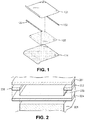
- FIG. 1 shows one conformation of the present repair device, which comprises a pre-mask, a repair patch and at least one release liner; the repair patch comprises a repair film and permanent adhesive.
- the upper element of the repair device comprises a polymeric film with a removable adhesive (not shown) to create a carrier layer ("pre-mask") 101 that can act as a supporting layer for the repair patch to aid with product handling and application of the repair patch.
- the removable adhesive may be selected so as to enable the pre-mask layer to be removed after product application without leaving behind significant residue on repair patch 103 , and/or causing the repair patch to lift from the target surface.
- the repair patch 103 is smaller in area than the upper pre-mask 101 .
- the overhanging area of the pre-mask forms are covered with release liner 102 present on opposing ends of the pre-mask 101.
- Repair patch 103 has a permanent adhesive present on the side opposing pre-mask 101 , such adhesive having the characteristics further disclosed herein.
- the repair device further comprises a release liner 104 which can be of identical size to pre-mask.
- the present repair device comprises a repair patch, which may comprise of a film onto which permanent adhesive is applied, wherein the repair patch is interposed between a pre-mask and release liner; with permanent adhesive interposed between the repair film and the release liner.
- the permanent adhesive exhibits a preferential bonding to the repair patch as compared to the release liner, as further described herein.
- the pre-mask may comprise a polymeric film and a removable adhesive, with the removable adhesive interposed between said polymeric film and repair film of the repair device.
- the removable adhesive exhibits preferential bonding to the pre-mask polymeric film as compared to the repair film.
- the pre-mask creates a support layer for aiding in the handling and application of the repair patch. For example, the pre-mask can be removed from the repair patch following the removal of the release liner and the application of the repair patch to a target surface such as a medical device or furniture.
- the pre-mask comprises a removable adhesive with an adhesion value to the repair patch that is no less than about 28g/cm, such as no less than about 40g/cm.
- the adhesion value to the repair patch is no higher than about 200g/cm. It is preferred that such values are maintained for at least 2 years as measured under accelerated aging conditions, as generally known in the art.
- the adhesion value between the pre-mask and the repair patch is preferably greater than the adhesion between the permanent adhesive and the release liner, otherwise the pre-mask may lift from the repair patch during removal of the release liner by the user without the user intending to do so.
- the adhesion value between the pre-mask and the repair patch is preferably lower than the adhesion level between the permanent adhesive and the target surface, otherwise it could cause inadvertent lifting of the repair patch from the surface after the repair patch is applied to a surface, when the pre-mask is removed by the user. This is of particular importance for the application of the repair patch in a healthcare environment as there is a low tolerance for peeling or lifting which could lead to a non-intact surface.
- the present removable adhesive may be any suitable adhesive.
- adhesives include, pressure-sensitive adhesives (PSA), microsphere-based adhesives, or the like.
- PSA pressure-sensitive adhesives
- the adhesive may be non-cytotoxic, hypoallergenic, resistant to bacterial growth, or a combination thereof.
- the adhesive may be in the form of an adhesive layer.
- a pressure-sensitive adhesive may comprise polyurethane, silicone polymer, acrylic, or other synthetic polymer based adhesive, and may or may not be cross-linked.
- Adhesives are available commercially from, for example, Adchem Inc. (New York, USA), 3M Canada Inc. (Ontario, Canada). Flexcon Inc. (Massachusetts, USA), Medical Adhesive Tape Technologies Inc.
- Microsphere ultra-removable adhesives include Technicote (Microsphere ultra-removable TR-1); Raflatac (Ultra-removable microsphere adhesives RR 522 U, RR 523 U, and RR 524 U, XR-13); Franklin Adhesives and Polymers (MicronaxTM 240 and Micronax 250); Green Bay Packaging (Microsphere removable adhesive 272, 275 and 278); 3 Sigma Corporation (Microsphere removable adhesive REP-16); AERO Chemical (Ultra-removable microsphere suspension adhesive ARU01, ARU02, and ARU03); Herma GmbH (acrylic microsphere ultra-removable adhesive 42Upp); Advanced Polymers International (Gel-TacTM 172G, 101A, 219D).
- Table 1 shows various adhesion values observed for removable PSA (SMI_PM2-Removable Pressure Sensitive adhesive with Polyester Film or SMI_PM3-Removable Pressure Sensitive adhesive with Polyester Film) with various pre-mask compositions, as tested against polyurethane test surfaces, which mimic the adherence of the pre-mask to the repair film as contemplated herein.
- Table 1 Adhesion values of pre-mask to exemplary repair film Composition (adhesive and pre-mask) Exemplary Repair Film Test Surface Adhesion to Test Surface (g/cm) SMI_PM1-Adhesive with Paper Film SMI_RF1-Polyurethane Film Paper torn during removal SMI_PM2-Removable Pressure SMI_RFI-Polyurethane Film 51.3 Sensitive adhesive with Polyester Film SMI PM3-Removable Pressure Sensitive adhesive with Polyester Film SMI_RF1-Polyurethane Film 25.3 SMI PM3-Removable Pressure Sensitive adhesive with Polyester Film SMI _RF2-Polyurethane Film 12.6 SMI_PM4-Microsphere adhesive with Polypropylene Film SMI_RF1-Polyurethane Film 42.2 SMI_PM4-Microsphere adhesive with Polypropylene Film SMI _RF2-Polyurethane Film 80.0 SMI_PM5-Removable Pressure Sensitive adhesive with Polyester Film S
- the pre-mask can provide rigidity to the repair patch, so that after the release liner is removed from the repair device, the repair device will not fold back onto itself.
- the pre-mask is preferably not be too rigid such that when the user is removing the pre-mask after application of the repair patch, the user can peel the pre-mask at a 90° to 180° angle; otherwise the removal of the pre-mask may result in the lifting of the repair patch from the surface to which it is applied to, potentially creating bubbles or wrinkles.
- Table 2 shows the ability to remove various pre-masks at a 180° angle. Table 2: Removal of select compositions of pre-mask at 180° angles.
- the pre-mask is larger in size than the repair patch, creating an area free of repair patch for the user to grasp during application, which allows for release liner removal and application of the remaining assembled device elements without coming into contact with the permanent adhesive layer of the repair patch.
- Such areas may be referred to as "release tabs".
- Release tabs protruding beyond the repair patch contain on their bottom side either a removable adhesive free area, or protective liners 102 as shown in FIG 1 ; so as to allow a user to apply the repair patch without touching any removable adhesive.
- the release tabs may provide a start point for the user to grip the pre-mask for removal from the repair patch after the repair patch is applied.
- the pre-mask surface opposite the removable adhesive is capable of receiving and retaining ink such as, for example, the printing of application instructions and/or other labeling information.
- Table 3 shows the results of testing various pre-mask adhesive/film combinations.
- Table 3 Summary of pre-mask characteristics Pre-Mask Tested PU, PP or PET Latex Free Differential Release Rigidity + 180 Degree Removal Application with or without gloves Printable SMI _PM1-Adhesive with Paper Film No Yes No No No Yes SMI _PM12-Removable adhesive with Kraft Paper Liner No No No No Yes Yes SMI _PM5-Removable Pressure Sensitive adhesive with Polyester Film Yes Yes No Yes Yes Yes Yes SMI_PM6-Removable Pressure Sensitive adhesive with Polyester Film Yes Yes Yes Yes Yes No Yes Yes Yes SMI_PM2-Removable Pressure Sensitive adhesive with Polyester Film Yes Yes Yes Yes n/a Yes Yes SMI_PM3 -Removable Pressure Sensitive adhesive with Polyester Film Yes Yes Yes No Yes Yes Yes Yes SMI _PM4-Microsphere adhesive with Polypropylene Film Yes Yes Yes Yes Yes Yes Yes Yes Yes Yes SMI _PM8-Microsphere
- the adhesive selected for the repair patch will generally be a permanent adhesive, due to its intended application for long-term repair of surfaces in a healthcare environment.
- a removable adhesive typically has an adhesion value of 200g/cm or less.
- the adhesive of the present repair patch will preferably have an adhesion value of about 200g/cm or greater, adhesion value of 200 g/cm or greater such as, for example, about 300 g/cm or greater, about 400 g/cm or greater, about 500 g/cm or greater, about 600 g/cm or greater, about 700 g/cm or greater, about 800 g/cm or greater, about 900 g/cm or greater, about 1000 g/cm or greater.
- Adhesion value may be measured by ASTMD3330 or PSTC-101.
- the permanent adhesive will preferably have a bond to the repair patch that is higher than the bond between the permanent adhesive and the surface.
- the adhesion value between the permanent adhesive and the repair patch is preferably be higher than about 800g/cm 7 days after application, more preferably higher than about 1000g/cm.
- Lower adhesion values raise the risk that the repair patch may de-bond during use leaving behind adhesive residue on the surface. Such adhesive residue may be difficult to remove through standard cleaning protocols and create an environment that could attract pathogens and encourage microbial growth.
- the present permanent adhesive preferably has an adhesion value of two or more times that of the removable adhesive. For example, three or more, four or more, five or more, six or more, seven or more, eight or more, nine or more, ten or more times.
- any suitable permanent adhesive may be used herein.
- PSA pressure-sensitive adhesives
- permanent adhesives adhesives that cure with time
- light-activated adhesives that cure with electromagnetic energy such as UV or visible light
- heat-activated adhesives may be used.
- the adhesive may be non-cytotoxic, hypoallergenic, resistant to bacterial growth, or a combination thereof.
- the adhesive may be in the form of an adhesive layer.
- a pressure-sensitive adhesive may comprise polyurethane, silicone polymer, acrylic, or other synthetic polymer based adhesive, and may or may not be cross-linked.
- Adhesives are available commercially from, for example, Adchem Inc. (New York, USA), 3M Canada Inc. (Ontario, Canada). Flexcon Inc. (Massachusetts, USA), and Medical Adhesive Tape Technologies Inc. (New York, USA).
- the permanent adhesive which forms a bond between the repair patch and a surface as contemplated herein has an adhesion value to the target surface that is at least about 800 g/cm on a polyurethane mattress cover 7 days after application, at the environmental condition of 16 °C to 21 °C and 35-85% relative humidity.
- Polyurethane was chosen to represent an exemplary surface in need of repair in the healthcare environment, as it is a common material forming mattress coverings in healthcare. Adhesion strengths below this value, when subjected to the forces arising from normal mattress usage, can lead to premature peeling and lifting of the repair patch from the mattress, compromising its ability to maintain an intact surface for cleaning and disinfection.
- the present permanent adhesive should show sufficient differential from the pre-mask adhesive to allow the repair patch to be applied and the pre-mask to be removed without causing lifting or shifting of the repair patch from the surface.
- the permanent adhesive will preferably not contain chemical agents or material that is toxic to human cells. Further, the permanent adhesive will preferably not elicit an allergic response in humans or animals in close contact with the repair patch and its associated adhesive. The permanent adhesive will preferably not promote microbial growth.
- the permanent adhesives will preferably be resistant to existing hospital cleaning solutions such as, but not limited to, Hydrogen Peroxide, Isopropanol, Quaternary Ammonium compounds, and Sodium Hypochlorite.
- the permanent adhesive is a Pressure Sensitive Adhesive as quick application of the repair patch is desirable, such as for example during routine or terminal (between patients) cleaning. Therefore it is preferable to enable the application of the repair patch without use of, or aid of, tools such as a heat gun.
- Table 4 A summary of the desired properties against selected adhesive compositions is presented in Table 4.
- Table 4 Summary of properties of select adhesives Criteria Adhesive Tested Non-Cytotoxic Hypoallergenic No Microbial Growth Chemical Resistance Adhesive Force PSA SMI_AD1-Acrylic Pressure Sensitive Adhesive No No Yes Yes Yes Yes SMI_AD2-Acrylic Pressure Sensitive Adhesive No No No No No Yes SMI _AD3-Acrylic Pressure Sensitive Adhesive No No No No No No No Yes SMI_AD4-Acrylic Pressure Sensitive Adhesive Yes Yes Yes Yes Yes Yes Yes Yes Yes Yes Yes Yes Yes Yes Yes Yes Yes Yes SMI_AD5-Acrylic Pressure Sensitive Adhesive Yes Yes Yes Yes Yes Yes Yes Yes SMI_AD6-Pressure Sensitive Adhesive Yes* Yes* Yes* No n/a No SMI_AD7-Pressure Sensitive Adhesive Yes* Yes* Yes* No n/a No SMI _ 8Pressure Sensitive Adhesive Yes*
- the repair patch forming part of the repair device of the present disclosure may be of a thickness and shape appropriate for the intended purpose of the application in the healthcare environment.
- the repair patch preferably does not promote microbial growth and demonstrates a microbial growth rate of less than 10% based on test standard ASTM G21-96.
- the repair patch is preferably resistant to UV radiation effects on the structural integrity of the repair patch, which could compromise its ability to maintain an intact surface following its application.
- the present repair patch is preferably resistant to standard cleaning solvents used in healthcare environment so it can be cleaned and disinfected to the same degree as the mattress surface.
- cleaning chemicals may include, but are not limited to, hydrogen peroxide, sodium hypochlorite, isopropanol, and quaternary ammonium based cleaning solutions.
- a hospital mattress may be cleaned several times a day for disinfection, therefore a repair patch that can withstand the daily hospital cleaning routines and remain fully intact to the mattress over time is advantageous. Peeling or lifting of the repair patch can create an area that is difficult to fully clean and disinfect using standard mattress cleaning protocols, therefore creating a potential harbor for pathogens.
- the present repair patch may contain a bio-additive or anti-microbial capable of inhibiting the growth of pathogens at the area of repair patch application, creating a further barrier to pathogen migration from inside the mattress onto the surface through the damaged area.
- the edge of the present repair patch preferably has a total thickness of 0.254millimeters or less. Such thickness reduces the risk of the repair patch lifting or peeling from routine cleaning.
- Table 5 shows a summary of select repair films tested for use herein. 30 different prototypes were developed and tested based on combinations of 15 films and 10 adhesives, as otherwise described herein. Table 5. Summary of repair film compositions and their characteristics Film Tested Criteria Polyurethane High Surface Energy Bio-Additive Non-Cytotoxic Hypoallergenic No Microbial Growth Chemical resistance UV Resistance SMI_RF1-Polyurethane Film Yes Yes Yes Yes Yes Yes Yes Yes Yes Yes Yes SMI_RF2-Polyurethane Film Yes Yes Yes Yes Yes Yes Yes Yes Yes Yes Yes Yes Yes Yes Yes Yes Yes Yes Yes Yes Yes Yes Yes Yes Yes Yes Yes Yes Yes Yes Yes Yes Yes Yes Yes Yes Yes Yes Yes Yes Yes SMI_RF4-Polyurethane Film Yes No No Yes Yes Yes Yes Yes Yes Yes Yes Yes Yes SMI_RF5-Polyurethane Film Yes No No Yes Yes Yes Yes Yes Yes Yes Yes SMI_RF6-Polyurethane Film Yes No No Yes Yes Yes Yes Yes Yes Yes Yes SMI_RF7-Polyester Film No No No No No No No Yes Yes S
- the present repair patch may be made any suitable substance or combination of substances.
- the repair patch may comprise (or consist of) a film layer.
- the repair patch may comprise a thermoplastic or thermosetting polymer or a combination of polymers.
- thermoplastic polymers include, but are not limited to, polyacetals, polyolefins, polyacrylics, polycarbonates, polystyrenes, polyesters, polyamides, polyvinyl, polysulfonates, polysulfides, polythioesters, polysulfones, polysulfonamides, polyureas, polyurethane, or the like, and combinations thereof.
- the present repair patch may comprise a polyethylene, polyurethane, polypropylene, nylon, silicone, polyamide, polyester, polyvinyl, or the like, or combinations thereof.
- the repair patch comprises a film of polyvinyl, polyurethane, or the like.
- films are available commercially from a variety of sources, such as, for example Dartex Coatings Inc. (Nottingham, UK), DermaMed Coatings Company LLC. (Ohio, USA), Argotec Inc. (Massachusetts, USA), Flexcon Inc. (Massachusetts, USA), ETC Technologies Inc. (Massachusetts, USA), and Medical Adhesive Tape Technologies Inc. (New York, USA).
- the present pre-mask may be made any suitable substance or combination of substances.
- the pre-mask may comprise a suitable film substrate such as paper, polyester, polypropylene, or the like.
- FIG 2 shows an exemplary exploded representation of the assembled repair device of the present disclosure, comprising an uper pre-mask 201 with removable adhesive (not shown) adjacent to repair patch 203 which is in turn bracketed by release liners 202 , and a further release liner 204 on the side of the repair patch 203 opposing the pre-mask 201.
- an uper pre-mask 201 with removable adhesive (not shown) adjacent to repair patch 203 which is in turn bracketed by release liners 202 , and a further release liner 204 on the side of the repair patch 203 opposing the pre-mask 201.
- a layer of permanent adhesive (not shown) interposed between the release liner 204 and repair film (not shown), as further described herein.
- a surface in need of repair 205 is also pictured in FIG 2 .
- FIG 3 shows the assembled repair device 301 , with dotted lines 302 representing the area of the repair patch (as represented in 103 and 203) , of smaller size than the topmost pre-mask (as represented in 101 and 201) and bottom release liner (as represented in 104 and 204).
- the area of pre-mask not covered by repair patch may be covered by release liner, or in the alternative may be free of adhesive, so as to increase ease of application by a user.
- FIG 4a illustrates one exemplary application of assembled repair device 404 on to a surface 403 which contains a tear 402 .
- Release liner 401 is removed from the assembled repair device 404 , exposing the permanent adhesive side of the repair patch.
- FIG 4b shows the placement of the repair patch following removal of release liner 401 ( FIG4a ) on tear 402 present on surface 403.
- Pre-mask 405 is removed from repair patch 407 , with the release tab 406 used to maintain a grip of pre-mask 405 without the user coming into contact with the removable adhesive holding the pre-mask 405 to repair patch 407.
- FIG 4c shows the repair patch 407 remaining over tear 402, thereby restoring integrity to surface 403.
Landscapes
- Chemical & Material Sciences (AREA)
- Organic Chemistry (AREA)
- Chemical Kinetics & Catalysis (AREA)
- Engineering & Computer Science (AREA)
- Mechanical Engineering (AREA)
- Medicinal Preparation (AREA)
- Adhesive Tapes (AREA)
Description
- The present disclosure pertains to the field of medical surface repair such as, for example, within a healthcare environment. In particular, the present disclosure provides a repair device and method.
- Healthcare device undergoes significant use and wear throughout its lifespan. Damage to the surface of the healthcare device, such as, tears, punctures, rips, bums, wear, cracks, and other surface damage, presents a potential health risks to patients and healthcare providers. Increasingly, healthcare providers are becoming aware of the role that contaminated environmental surfaces play in the transmission of infections. Patient care initiatives, particularly infection control efforts, are becoming more prevalent. At least 30% of healthcare associated infections can be prevented by following infection prevention and control strategies (Haley, RW et al. Am J Epidemiol (1985) Vol. 121:159-67). One challenge in cleaning or disinfecting the surfaces of healthcare devices is the occurrence of damage to the surface of the device as damaged surfaces cannot be easily cleaned or disinfected thereby creating a potential reservoir for infectious agents.
- Healthcare devices used in hospital environments have been found to be a source of healthcare acquired infections. Environmental microbiological surveys have indicated that hospital devices (for example, beds, tables, stools, wheelchairs, racks, trolleys, stretchers, mattresses, catheter-bag, and other furniture, equipment and articles used in a hospital environment) can be contaminated with pathogens at a higher incidence relative to other surfaces (see, for example, Rampling, A et al. J Hosp Infect. (2001) Vol. 49:109-116; and Blythe, D et al. J Hosp Infect (1998)Vol. 38:67-70). In addition, there have been reports of hospital mattresses contaminated with infectious agents, including for example, Pseudomonas aeruginosa, methicillin-resistant Staphylococcus aureus (MRSA), vancomycin-resistant Enterococci (VRE), Acinetobacter, and other fungal and viral pathogens. Hospital mattresses may be damaged by a variety of means, such as, for example, extensive use, tears and sharp objects, such as needles. Several studies have demonstrated that damaged mattresses have had a role in outbreaks, the transmission of disease to patients, and in some cases patient death (see Creamer E, et al. J Hosp Infect (2008)Vol. 69:8-23; Sherertz, RJ et al. J Infect Dis (1985) Vol. 151:252-258; Moore EP, et al. J Hosp Infect (1991) Vol.19:5-16; Ndawula, EM et al. Lancet (1991) Vol. 337:488.; Fujita, K et al. Br Med J (1981) Vol. 283:219-220; Robertson, MH et al. Br Med J (1981) Vol. 280:831-832; and O'Donoghue, MA et al. J Hosp Infect (1992) Vol. 22:73-79). These studies indicate that damaged hospital mattresses may harbour infectious agents and result in hospital acquired infections; whereas intact mattresses or healthcare devices are preferred for appropriate cleaning, disinfection and infection prevention and control.
- Infection Prevention and Control (IPC) is an important aspect of proper application and management of healthcare, and one aspect of IPC is maintaining an intact, contiguous, surface on furniture and devices within the healthcare environment so as to enable proper cleaning and maintenance. As a result, many healthcare providers have instituted policies requiring the replacement of healthcare devices having damaged surfaces or the replacement of the damaged components of the device. However, replacement of a healthcare device or its damaged components can be costly, may result in device downtime, and the likelihood of a tear or other surface damage occurring after replacement is high. Thus many damaged healthcare devices are left in use.
- Solutions exist to repair damaged surfaces of a variety of non-medical devices. In one solution, ready-mix glue is applied to the damaged portion of the surface. However, this solution tends to be messy, leaves the surface temporarily out of service, and may create toxic fumes or be toxic through direct contact. In another solution, duct, surgical or other types of tape are applied to the damaged portion of the surface. However, the edges of the tape tend to breakdown after extended use or following the application of liquids or body fluids. These edges can be difficult to clean properly, thereby, creating an additional potential reservoir for infectious agents.
PCT Patent Application by Collins, T. et al., WO2012/119227 describes an adhesive patch for repairing damaged surfaces of health care devices. - The present invention is defined in the appended claims. The present disclosure provides a repair device for health care devices, the repair device comprising:
- pre-mask,
- repair patch, and
- release liner;
- wherein the repair patch is interposed between the pre-mask and release liner; removable adhesive interposed between the pre-mask and repair patch; and permanent adhesive interposed between the repair patch and the release liner; wherein the adhesion value of the removable adhesive with respect to the repair patch is lower than the adhesion value of the permanent adhesive with respect to the repair surface, wherein an adhesion value between the removable adhesive and the repair patch is between 28g/cm and 200g/cm and wherein at least one area of the pre-mask is not in contact with the repair patch and thereby forms a release tab, and wherein the release tab is free of adhesive or covered by a further release liner.
- As used herein, the term "repair patch" refers to a device of a size and shape to cover damage to a health care device. For example, the present repair patches may comprise a film.
- As used herein, the term "pre-mask" refers to a device of a size and shape to be used to position the repair patch during a repair and then removed. For example, the present pre-mask may be a film substrate coated with removable adhesive.
- As used herein, the term "release liner" refers to a device of a size and shape to shield the present permanent adhesive before use of the present repair device. For example, the release liner may be a sheet of Kraft paper or the like that can be removed to expose the permanent adhesive prior to application of the repair patch.
- As used herein, the term "adhesion value" refers to the bond strength the adhesive provides between one material and another. Adhesion values may, for example, be measured by ASTM D3330.
- As used herein, the term "permanent adhesive" refers to an adhesive capable of forming a durable bond between the device to be repaired and the repair patch. Such adhesives will generally provide an adhesion value of 200 g/cm or greater to the surface to be repaired. For example, the permanent adhesive may provide an adhesion value of about 300 g/cm or greater, about 400 g/cm or greater, about 500 g/cm or greater, about 600 g/cm or greater, about 700 g/cm or greater, about 800 g/cm or greater, about 900 g/cm or greater, about 1000 g/cm or greater.
- As used herein, the term "removable adhesive" refers to an adhesive capable of forming a nondurable bond between the pre-mask and the repair patch. Such adhesives will generally provide an adhesion value of 200 g/cm or less to the repair patch. For example, the removable adhesive may provide an adhesion value of about 180 g/cm or less, about 160 g/cm or less, about 140 g/cm or less, about 120 g/cm or less, about 100 g/cm or less, about 80 g/cm or less, about 60 g/cm or less, about 40 g/cm or less.
-
-
FIG 1 shows an exploded diagrammatic representation of an embodiment of the present repair device; -
FIG 2 shows a three quarters perspective of an exploded cross-sectional view of an embodiment of the present repair device; -
FIG 3 shows a three quarters perspective of the assembled repair device of an embodiment of the present repair device; and -
FIG 4 shows the process of application of the repair patch to repair a tear in a surface using an embodiment of the present repair device. - Furniture, particularly in the healthcare environment, may incur surface damage during its lifespan. Such damage may include tears which results in a non-intact surface. Non-intact surfaces are problematic to clean and disinfect properly. This can create a reservoir for infectious agents/diseases and result in hospital acquired infections. As used herein "furniture" includes without limitation, articles, units, furniture, equipment, beds, accessories, tables, stools, wheelchairs, racks, trolleys, stretchers, and mattresses. As used herein "tear" includes punctures, rips, and any disruption in the contiguous surface which results in the surface no longer being fully intact.
- Within the healthcare environment, a repair patch for use in the repair of tears in furniture, or otherwise disrupted surface, will preferably not promote the accumulation or growth of pathogens, it will preferably adhere strongly to the surface being repaired, and will preferably not wrinkle once applied. Further, its application will preferably not significantly interfere with the operation or use of the healthcare device to which it is applied. Certain embodiments of the present repair device will preferably have one or more of the following characteristics:
- i. the repair patch, once applied, is preferably 0.254 mm or less in thickness. This will help prevent the accumulation and growth of pathogens along the edge of the repair patch;
- ii. the repair patch preferably adheres fully to the intended surface: any bubbles, wrinkles or flagging can compromise its ability to re-establish the intactness of the surface;
- iii. the top surface of the repair patch that is exposed to the environment is preferably non-toxic and is not adhesive. The top surface is also preferably cleanable with existing hospital cleaning solutions such as, but not limited to, Hydrogen Peroxide, Isopropanol, Quaternary Ammonium compounds, and Sodium Hypochlorite;
- iv. the user is preferably able to apply the repair patch without touching the permanent adhesive layer of the repair patch, as oil residue or other contaminants from the user might affect the repair patch's ability to fully adhere to the intended surface; and
- v. as the intended use of the repair patch is in a healthcare environment, the user will preferably be able to apply the repair patch while wearing medical gloves.
- Repair can be difficult for a user to handle, manipulate and/or apply to a surface. For example, the product may fold back on itself leaving wrinkles or bubbles after application. The addition of an interlayer between the repair patch and the adhesive can assist in the handling and application of the repair patch. However, the interlayer increases the overall thickness which can be disadvantageous leading to discomfort for patients, an edge for dirt buildup and microbial growth, or a point of contact and abrasion during cleaning or wiping.
- The present disclosure provides a repair patch for furniture, particularly in the healthcare environment.
FIG. 1 shows one conformation of the present repair device, which comprises a pre-mask, a repair patch and at least one release liner; the repair patch comprises a repair film and permanent adhesive. The upper element of the repair device comprises a polymeric film with a removable adhesive (not shown) to create a carrier layer ("pre-mask") 101 that can act as a supporting layer for the repair patch to aid with product handling and application of the repair patch. The removable adhesive may be selected so as to enable the pre-mask layer to be removed after product application without leaving behind significant residue onrepair patch 103, and/or causing the repair patch to lift from the target surface. Therepair patch 103 is smaller in area than theupper pre-mask 101. The overhanging area of the pre-mask forms are covered withrelease liner 102 present on opposing ends of the pre-mask 101.Repair patch 103 has a permanent adhesive present on theside opposing pre-mask 101, such adhesive having the characteristics further disclosed herein. The repair device further comprises arelease liner 104 which can be of identical size to pre-mask. - The present repair device comprises a repair patch, which may comprise of a film onto which permanent adhesive is applied, wherein the repair patch is interposed between a pre-mask and release liner; with permanent adhesive interposed between the repair film and the release liner. The permanent adhesive exhibits a preferential bonding to the repair patch as compared to the release liner, as further described herein. The pre-mask may comprise a polymeric film and a removable adhesive, with the removable adhesive interposed between said polymeric film and repair film of the repair device. The removable adhesive exhibits preferential bonding to the pre-mask polymeric film as compared to the repair film. The pre-mask creates a support layer for aiding in the handling and application of the repair patch. For example, the pre-mask can be removed from the repair patch following the removal of the release liner and the application of the repair patch to a target surface such as a medical device or furniture.
- The pre-mask comprises a removable adhesive with an adhesion value to the repair patch that is no less than about 28g/cm, such as no less than about 40g/cm. The adhesion value to the repair patch is no higher than about 200g/cm. It is preferred that such values are maintained for at least 2 years as measured under accelerated aging conditions, as generally known in the art. The adhesion value between the pre-mask and the repair patch is preferably greater than the adhesion between the permanent adhesive and the release liner, otherwise the pre-mask may lift from the repair patch during removal of the release liner by the user without the user intending to do so. The adhesion value between the pre-mask and the repair patch is preferably lower than the adhesion level between the permanent adhesive and the target surface, otherwise it could cause inadvertent lifting of the repair patch from the surface after the repair patch is applied to a surface, when the pre-mask is removed by the user. This is of particular importance for the application of the repair patch in a healthcare environment as there is a low tolerance for peeling or lifting which could lead to a non-intact surface.
- The present removable adhesive may be any suitable adhesive. Examples of adhesives include, pressure-sensitive adhesives (PSA), microsphere-based adhesives, or the like. The adhesive may be non-cytotoxic, hypoallergenic, resistant to bacterial growth, or a combination thereof. The adhesive may be in the form of an adhesive layer. A pressure-sensitive adhesive may comprise polyurethane, silicone polymer, acrylic, or other synthetic polymer based adhesive, and may or may not be cross-linked. Adhesives are available commercially from, for example, Adchem Inc. (New York, USA), 3M Canada Inc. (Ontario, Canada). Flexcon Inc. (Massachusetts, USA), Medical Adhesive Tape Technologies Inc. (New York, USA), UPM Raflatac (North Carolina, USA), Novacel (Massachusetts, USA), American Biltrite (New Jersey, USA). Microsphere ultra-removable adhesives include Technicote (Microsphere ultra-removable TR-1); Raflatac (Ultra-removable microsphere adhesives RR 522 U, RR 523 U, and RR 524 U, XR-13); Franklin Adhesives and Polymers (Micronax™ 240 and Micronax 250); Green Bay Packaging (Microsphere removable adhesive 272, 275 and 278); 3 Sigma Corporation (Microsphere removable adhesive REP-16); AERO Chemical (Ultra-removable microsphere suspension adhesive ARU01, ARU02, and ARU03); Herma GmbH (acrylic microsphere ultra-removable adhesive 42Upp); Advanced Polymers International (Gel-Tac™ 172G, 101A, 219D).
- Table 1 shows various adhesion values observed for removable PSA (SMI_PM2-Removable Pressure Sensitive adhesive with Polyester Film or SMI_PM3-Removable Pressure Sensitive adhesive with Polyester Film) with various pre-mask compositions, as tested against polyurethane test surfaces, which mimic the adherence of the pre-mask to the repair film as contemplated herein.
Table 1: Adhesion values of pre-mask to exemplary repair film Composition (adhesive and pre-mask) Exemplary Repair Film Test Surface Adhesion to Test Surface (g/cm) SMI_PM1-Adhesive with Paper Film SMI_RF1-Polyurethane Film Paper torn during removal SMI_PM2-Removable Pressure SMI_RFI-Polyurethane Film 51.3 Sensitive adhesive with Polyester Film SMI PM3-Removable Pressure Sensitive adhesive with Polyester Film SMI_RF1-Polyurethane Film 25.3 SMI PM3-Removable Pressure Sensitive adhesive with Polyester Film SMI _RF2-Polyurethane Film 12.6 SMI_PM4-Microsphere adhesive with Polypropylene Film SMI_RF1-Polyurethane Film 42.2 SMI_PM4-Microsphere adhesive with Polypropylene Film SMI _RF2-Polyurethane Film 80.0 SMI_PM5-Removable Pressure Sensitive adhesive with Polyester Film SMI_RF1-Polyurethane Film 11.9 SMI_PM6-Removable Pressure Sensitive adhesive with Polyester Film SMI_RF1-Polyurethane Film 42.2 SMI_PM7-Microsphere adhesive with Kraft Paper release liner SMI _RF2-Polyurethane Film 28.1 SMI_PM8-Microsphere adhesive with Polypropylene film and kraft paper release liner SMI _RF2-Polyurethane Film 33.0 SMI_PM8-Microsphere adhesive with Polypropylene film and kraft paper release liner SMI _RF3-Polyurethane Film 96.4 SMI_PM9-Removable adhesive with Kraft Paper Liner SMI_RF3-Polyurethane Film 20.1 SMI_PM9-Removable adhesive with Kraft Paper Liner SMI_RF3-Polyurethane Film 76.3 SMI_PM11-Removable adhesive with Kraft Paper Liner SMI_RF3-Polyurethane Film 88.4 - The pre-mask can provide rigidity to the repair patch, so that after the release liner is removed from the repair device, the repair device will not fold back onto itself. However the pre-mask is preferably not be too rigid such that when the user is removing the pre-mask after application of the repair patch, the user can peel the pre-mask at a 90° to 180° angle; otherwise the removal of the pre-mask may result in the lifting of the repair patch from the surface to which it is applied to, potentially creating bubbles or wrinkles. Table 2 shows the ability to remove various pre-masks at a 180° angle.
Table 2: Removal of select compositions of pre-mask at 180° angles. Pre-Mask Tested Rigidity + 180 Degree Removal SMI_PM5-Removable Pressure Sensitive adhesive with Polyester Film Yes SMI_PM12-Removable adhesive with Kraft Paper Liner No SMI_PM6-Removable Pressure Sensitive adhesive with Polyester Film No SMI_PM2-Removable Pressure Sensitive adhesive with Polyester Film Yes SMI_PM3-Removable Pressure Sensitive adhesive with Polyester Film Yes SMI_PM8-Microsphere adhesive with Polypropylene film and kraft paper release liner Yes SMI_PM7-Microsphere adhesive with Kraft Paper release liner Yes SMI_PM9-Removable adhesive with Kraft Paper Liner No SMI_PM10-Removable adhesive with Kraft Paper Liner No SMI_PM11-Removable adhesive with Kraft Paper Liner Yes - The pre-mask is larger in size than the repair patch, creating an area free of repair patch for the user to grasp during application, which allows for release liner removal and application of the remaining assembled device elements without coming into contact with the permanent adhesive layer of the repair patch. Such areas may be referred to as "release tabs". Release tabs protruding beyond the repair patch contain on their bottom side either a removable adhesive free area, or
protective liners 102 as shown inFIG 1 ; so as to allow a user to apply the repair patch without touching any removable adhesive. The release tabs may provide a start point for the user to grip the pre-mask for removal from the repair patch after the repair patch is applied. In one embodiment the pre-mask surface opposite the removable adhesive is capable of receiving and retaining ink such as, for example, the printing of application instructions and/or other labeling information. - Table 3 shows the results of testing various pre-mask adhesive/film combinations.
Table 3: Summary of pre-mask characteristics Pre-Mask Tested PU, PP or PET Latex Free Differential Release Rigidity + 180 Degree Removal Application with or without gloves Printable SMI _PM1-Adhesive with Paper Film No Yes No No No Yes SMI _PM12-Removable adhesive with Kraft Paper Liner No No No No Yes Yes SMI _PM5-Removable Pressure Sensitive adhesive with Polyester Film Yes Yes No Yes Yes Yes SMI_PM6-Removable Pressure Sensitive adhesive with Polyester Film Yes Yes Yes No Yes Yes SMI_PM2-Removable Pressure Sensitive adhesive with Polyester Film Yes Yes Yes n/a Yes Yes SMI_PM3 -Removable Pressure Sensitive adhesive with Polyester Film Yes Yes No Yes Yes Yes SMI _PM4-Microsphere adhesive with Polypropylene Film Yes Yes Yes Yes Yes Yes SMI _PM8-Microsphere adhesive with Polypropylene film and kraft paper release liner No Yes Yes No Yes Yes SMI _PM9-Removable adhesive with Kraft Paper Liner Yes Yes No No Yes Yes SMI _PM10-Removable adhesive with Kraft Paper Liner Yes Yes No No Yes Yes SMI _PM11-Removable adhesive with Kraft Paper Liner Yes Yes No Yes Yes Yes - The adhesive selected for the repair patch will generally be a permanent adhesive, due to its intended application for long-term repair of surfaces in a healthcare environment. A removable adhesive typically has an adhesion value of 200g/cm or less. The adhesive of the present repair patch will preferably have an adhesion value of about 200g/cm or greater, adhesion value of 200 g/cm or greater such as, for example, about 300 g/cm or greater, about 400 g/cm or greater, about 500 g/cm or greater, about 600 g/cm or greater, about 700 g/cm or greater, about 800 g/cm or greater, about 900 g/cm or greater, about 1000 g/cm or greater. Adhesion value may be measured by ASTMD3330 or PSTC-101. The permanent adhesive will preferably have a bond to the repair patch that is higher than the bond between the permanent adhesive and the surface. For instance, the adhesion value between the permanent adhesive and the repair patch is preferably be higher than about 800g/cm 7 days after application, more preferably higher than about 1000g/cm. Lower adhesion values raise the risk that the repair patch may de-bond during use leaving behind adhesive residue on the surface. Such adhesive residue may be difficult to remove through standard cleaning protocols and create an environment that could attract pathogens and encourage microbial growth.
- The present permanent adhesive preferably has an adhesion value of two or more times that of the removable adhesive. For example, three or more, four or more, five or more, six or more, seven or more, eight or more, nine or more, ten or more times.
- Any suitable permanent adhesive may be used herein. For example, pressure-sensitive adhesives (PSA), permanent adhesives, adhesives that cure with time, light-activated adhesives that cure with electromagnetic energy such as UV or visible light, or heat-activated adhesives may be used. The adhesive may be non-cytotoxic, hypoallergenic, resistant to bacterial growth, or a combination thereof. The adhesive may be in the form of an adhesive layer. A pressure-sensitive adhesive may comprise polyurethane, silicone polymer, acrylic, or other synthetic polymer based adhesive, and may or may not be cross-linked. Adhesives are available commercially from, for example, Adchem Inc. (New York, USA), 3M Canada Inc. (Ontario, Canada). Flexcon Inc. (Massachusetts, USA), and Medical Adhesive Tape Technologies Inc. (New York, USA).
- In a preferred embodiment, the permanent adhesive which forms a bond between the repair patch and a surface as contemplated herein, has an adhesion value to the target surface that is at least about 800 g/cm on a polyurethane mattress cover 7 days after application, at the environmental condition of 16 °C to 21 °C and 35-85% relative humidity. Polyurethane was chosen to represent an exemplary surface in need of repair in the healthcare environment, as it is a common material forming mattress coverings in healthcare. Adhesion strengths below this value, when subjected to the forces arising from normal mattress usage, can lead to premature peeling and lifting of the repair patch from the mattress, compromising its ability to maintain an intact surface for cleaning and disinfection. This is important for the application of the repair patch in a healthcare environmental as there is a low tolerance for any peeling or lifting of the repair patch as a result of patient movement, or cleaning by cleaning staff in a healthcare environment. In addition, the present permanent adhesive should show sufficient differential from the pre-mask adhesive to allow the repair patch to be applied and the pre-mask to be removed without causing lifting or shifting of the repair patch from the surface.
- The permanent adhesive will preferably not contain chemical agents or material that is toxic to human cells. Further, the permanent adhesive will preferably not elicit an allergic response in humans or animals in close contact with the repair patch and its associated adhesive. The permanent adhesive will preferably not promote microbial growth. The permanent adhesives will preferably be resistant to existing hospital cleaning solutions such as, but not limited to, Hydrogen Peroxide, Isopropanol, Quaternary Ammonium compounds, and Sodium Hypochlorite.
- In a preferred embodiment the permanent adhesive is a Pressure Sensitive Adhesive as quick application of the repair patch is desirable, such as for example during routine or terminal (between patients) cleaning. Therefore it is preferable to enable the application of the repair patch without use of, or aid of, tools such as a heat gun. A summary of the desired properties against selected adhesive compositions is presented in Table 4.
Table 4: Summary of properties of select adhesives Criteria Adhesive Tested Non-Cytotoxic Hypoallergenic No Microbial Growth Chemical Resistance Adhesive Force PSA SMI_AD1-Acrylic Pressure Sensitive Adhesive No No Yes Yes Yes Yes SMI_AD2-Acrylic Pressure Sensitive Adhesive No No No No No Yes SMI _AD3-Acrylic Pressure Sensitive Adhesive No No No No No Yes SMI_AD4-Acrylic Pressure Sensitive Adhesive Yes Yes Yes Yes Yes Yes SMI_AD5-Acrylic Pressure Sensitive Adhesive Yes Yes Yes Yes Yes Yes SMI_AD6-Pressure Sensitive Adhesive Yes* Yes* Yes* No n/a No SMI_AD7-Pressure Sensitive Adhesive Yes* Yes* Yes* No n/a No SMI _ 8Pressure Sensitive Adhesive Yes* Yes* Yes* No n/a No *based on technical data from manufacturer - The repair patch forming part of the repair device of the present disclosure may be of a thickness and shape appropriate for the intended purpose of the application in the healthcare environment. The repair patch preferably does not promote microbial growth and demonstrates a microbial growth rate of less than 10% based on test standard ASTM G21-96. The repair patch is preferably resistant to UV radiation effects on the structural integrity of the repair patch, which could compromise its ability to maintain an intact surface following its application.
- The present repair patch is preferably resistant to standard cleaning solvents used in healthcare environment so it can be cleaned and disinfected to the same degree as the mattress surface. Such cleaning chemicals may include, but are not limited to, hydrogen peroxide, sodium hypochlorite, isopropanol, and quaternary ammonium based cleaning solutions. A hospital mattress may be cleaned several times a day for disinfection, therefore a repair patch that can withstand the daily hospital cleaning routines and remain fully intact to the mattress over time is advantageous. Peeling or lifting of the repair patch can create an area that is difficult to fully clean and disinfect using standard mattress cleaning protocols, therefore creating a potential harbor for pathogens. It is contemplated that the present repair patch may contain a bio-additive or anti-microbial capable of inhibiting the growth of pathogens at the area of repair patch application, creating a further barrier to pathogen migration from inside the mattress onto the surface through the damaged area. The edge of the present repair patch preferably has a total thickness of 0.254millimeters or less. Such thickness reduces the risk of the repair patch lifting or peeling from routine cleaning.
- Table 5 shows a summary of select repair films tested for use herein. 30 different prototypes were developed and tested based on combinations of 15 films and 10 adhesives, as otherwise described herein.
Table 5. Summary of repair film compositions and their characteristics Film Tested Criteria Polyurethane High Surface Energy Bio-Additive Non-Cytotoxic Hypoallergenic No Microbial Growth Chemical resistance UV Resistance SMI_RF1-Polyurethane Film Yes Yes Yes Yes Yes Yes Yes Yes SMI_RF2-Polyurethane Film Yes Yes Yes Yes Yes Yes Yes Yes SMI_RF3-Polyurethane Film Yes Yes Yes Yes Yes Yes Yes Yes SMI_RF4-Polyurethane Film Yes No No Yes Yes Yes Yes Yes SMI_RF5-Polyurethane Film Yes No No Yes Yes Yes Yes Yes SMI_RF6-Polyurethane Film Yes No No Yes Yes Yes Yes Yes SMI_RF7-Polyester Film No No No No No No Yes Yes SMI_RF8-Polyurethane Film Yes No No Yes Yes Yes Yes Yes SMI_RF9-Polyurethane Film Yes No No No No No Yes Yes SMI_RF1 0-Polyvinyl Film No No No No No No Yes Yes SMI_RF1 1-Polyvinyl Film No No No No No No Yes Yes - The present repair patch may be made any suitable substance or combination of substances. For example, the repair patch may comprise (or consist of) a film layer. The repair patch may comprise a thermoplastic or thermosetting polymer or a combination of polymers. Examples of thermoplastic polymers include, but are not limited to, polyacetals, polyolefins, polyacrylics, polycarbonates, polystyrenes, polyesters, polyamides, polyvinyl, polysulfonates, polysulfides, polythioesters, polysulfones, polysulfonamides, polyureas, polyurethane, or the like, and combinations thereof. The present repair patch may comprise a polyethylene, polyurethane, polypropylene, nylon, silicone, polyamide, polyester, polyvinyl, or the like, or combinations thereof. Preferably the repair patch comprises a film of polyvinyl, polyurethane, or the like. Such films are available commercially from a variety of sources, such as, for example Dartex Coatings Inc. (Nottingham, UK), DermaMed Coatings Company LLC. (Ohio, USA), Argotec Inc. (Massachusetts, USA), Flexcon Inc. (Massachusetts, USA), ETC Technologies Inc. (Massachusetts, USA), and Medical Adhesive Tape Technologies Inc. (New York, USA).
- The present pre-mask may be made any suitable substance or combination of substances. For example, the pre-mask may comprise a suitable film substrate such as paper, polyester, polypropylene, or the like.
-
FIG 2 shows an exemplary exploded representation of the assembled repair device of the present disclosure, comprising anuper pre-mask 201 with removable adhesive (not shown) adjacent to repairpatch 203 which is in turn bracketed byrelease liners 202, and afurther release liner 204 on the side of therepair patch 203 opposing the pre-mask 201. On the side ofrepair patch 203, opposingpre-mask 201, is a layer of permanent adhesive (not shown) interposed between therelease liner 204 and repair film (not shown), as further described herein. Also pictured inFIG 2 is a surface in need ofrepair 205. -
FIG 3 shows the assembledrepair device 301, withdotted lines 302 representing the area of the repair patch (as represented in 103 and 203), of smaller size than the topmost pre-mask (as represented in 101 and 201) and bottom release liner (as represented in 104 and 204). As described herein, the area of pre-mask not covered by repair patch may be covered by release liner, or in the alternative may be free of adhesive, so as to increase ease of application by a user. -
FIG 4a illustrates one exemplary application of assembledrepair device 404 on to asurface 403 which contains atear 402.Release liner 401 is removed from the assembledrepair device 404, exposing the permanent adhesive side of the repair patch.FIG 4b shows the placement of the repair patch following removal of release liner 401 (FIG4a ) ontear 402 present onsurface 403.Pre-mask 405 is removed fromrepair patch 407, with therelease tab 406 used to maintain a grip ofpre-mask 405 without the user coming into contact with the removable adhesive holding the pre-mask 405 to repairpatch 407.FIG 4c shows therepair patch 407 remaining overtear 402, thereby restoring integrity tosurface 403. - It is contemplated that the different parts of the present description may be combined in any suitable manner. For instance, the present examples, methods, aspects, embodiments or the like may be suitably implemented or combined with any other embodiment, method, example or aspect of the invention.
- Unless defined otherwise, all technical and scientific terms used herein have the same meaning as is commonly understood by one of ordinary skill in the art to which this invention belongs.
- Use of examples in the specification, including examples of terms, is for illustrative purposes only and is not intended to limit the scope and meaning of the embodiments of the invention herein. Numeric ranges are inclusive of the numbers defining the range. In the specification, the word "comprising" is used as an open-ended term, substantially equivalent to the phrase "including, but not limited to," and the word "comprises" has a corresponding meaning.
- The invention includes all embodiments, modifications and variations substantially as hereinbefore described and with reference to the examples and figures.
Claims (15)
- A repair device for a health care device, the repair device comprising:a repair patch;a pre-mask; anda release liner;wherein the repair patch is interposed between the pre-mask and the release liner;
wherein a removable adhesive is interposed between the pre-mask and the repair patch;
wherein a permanent adhesive is interposed between the repair patch and the release liner;
wherein an adhesion value between the removable adhesive and the repair patch is between 28g/cm and 200g/cm per ASTMD3330 testing standards and wherein an adhesion value between the permanent adhesive and the health care device as determined on the exemplary surface according to the method as described in the description is greater than the adhesion value between the removable adhesive and the repair patch; and wherein at least one area of the pre-mask is not in contact with the repair patch and thereby forms a release tab, and wherein the release tab is free of adhesive. - The repair device of claim 1 wherein the adhesion value between the permanent adhesive and the health care device is at least three times that of the adhesion value between the removable adhesive and the repair patch.
- The repair device of claim 1 wherein the adhesion value between the permanent adhesive and the health care device is at least eight times that of the adhesion value between the removable adhesive and the repair patch.
- The repair device of claim 1 wherein the adhesion value between the removable adhesive and the repair patch is between 28g/cm and 100g/cm per ASTMD3330 testing standards.
- The repair device of claim 1 wherein the adhesion value between the permanent adhesive and the health care device is 600g/cm or greater per ASTMD3330 testing standards.
- The repair device of claim 1 wherein the adhesion value between the permanent adhesive and the health care device is 800g/cm or greater per ASTMD3330 testing standards.
- The repair device of claim 1 wherein the permanent adhesive is a pressure-sensitive adhesive.
- The repair device of claim 1 wherein the repair patch comprises a film of polyvinyl, polyurethane, or a combination thereof.
- The repair device of claim 1 wherein the pre-mask is larger than the repair patch.
- A method of applying a repair patch to a health care device, said method comprising:providing the repair device according to anyone of claims 1-9;removing the release liner;applying the repair patch to the health care device; andremoving the pre-mask from the repair patch.
- The method of claim 12 wherein the health care device is a mattress.
- A method of manufacturing a repair device for a health care device, said method comprising:providing a repair patch interposed between a pre-mask and a release liner;interposing a removable adhesive between the pre-mask and the repair patch, wherein an adhesion value between the repair patch and the removable adhesive is between 28g/cm and 200g/cm per ASTMD3330 testing standards; andinterposing a permanent adhesive between the repair patch and the release liner;wherein the adhesion value between the removable adhesive and the repair patch is lower than the adhesion value between the permanent adhesive and the health care device as determined on the exemplary surface according to the method as described in the description; andwherein at least one area of the pre-mask is not in contact with the repair patch and thereby forms a release tab, and wherein the release tab is free of adhesive.
- The repair device of claim 1 wherein the pre-mask comprises at least one of a paper film, a polyester film, and a polypropylene film.
- A repair device for a health care device, the repair device comprising:a repair patch;a pre-mask; anda release liner;wherein the repair patch is interposed between the pre-mask and the release liner;
wherein a removable adhesive is interposed between the pre-mask and the repair patch;
wherein a permanent adhesive is interposed between the repair patch and the release liner;
wherein an adhesion value between the removable adhesive and the repair patch is between 28g/cm and 200g/cm per ASTMD3330 testing standards and wherein an adhesion value between the permanent adhesive and the health care device as determined on the exemplary surface according to the method as described in the description is greater than the adhesion value between the removable adhesive and the repair patch; and wherein at least one area of the pre-mask is not in contact with the repair patch and thereby forms a release tab, and wherein the release tab is covered by a further release liner. - A method of manufacturing a repair device for a health care device, said method comprising:providing a repair patch interposed between a pre-mask and a release liner;interposing a removable adhesive between the pre-mask and the repair patch, wherein an adhesion value between the repair patch and the removable adhesive is between 28g/cm and 200g/cm per ASTMD3330 testing standards; andinterposing a permanent adhesive between the repair patch and the release liner;wherein the adhesion value between the removable adhesive and the repair patch is lower than the adhesion value between the permanent adhesive and the health care device as determined on the exemplary surface according to the method as described in the description; andwherein at least one area of the pre-mask is not in contact with the repair patch and thereby forms a release tab, and wherein the release tab is covered by a further release liner.
Applications Claiming Priority (2)
| Application Number | Priority Date | Filing Date | Title |
|---|---|---|---|
| US201361810085P | 2013-04-09 | 2013-04-09 | |
| PCT/CA2014/050365 WO2014165996A1 (en) | 2013-04-09 | 2014-04-09 | Surface repair patch and method of using same |
Publications (3)
| Publication Number | Publication Date |
|---|---|
| EP2983902A1 EP2983902A1 (en) | 2016-02-17 |
| EP2983902A4 EP2983902A4 (en) | 2017-02-15 |
| EP2983902B1 true EP2983902B1 (en) | 2020-11-25 |
Family
ID=51688795
Family Applications (1)
| Application Number | Title | Priority Date | Filing Date |
|---|---|---|---|
| EP14782965.9A Active EP2983902B1 (en) | 2013-04-09 | 2014-04-09 | Surface repair patch and method of using same |
Country Status (5)
| Country | Link |
|---|---|
| US (1) | US10988641B2 (en) |
| EP (1) | EP2983902B1 (en) |
| AU (1) | AU2014252677B2 (en) |
| CA (1) | CA2907627C (en) |
| WO (1) | WO2014165996A1 (en) |
Families Citing this family (3)
| Publication number | Priority date | Publication date | Assignee | Title |
|---|---|---|---|---|
| DE102015008312A1 (en) * | 2015-06-30 | 2017-01-05 | Airbus Defence and Space GmbH | Method and device for repairing components |
| US20190152003A1 (en) * | 2017-11-22 | 2019-05-23 | Scott Gungel | Strengthening Repair Wrap |
| WO2020232360A1 (en) * | 2019-05-15 | 2020-11-19 | Dap Products, Inc | Layered apparatus and method |
Family Cites Families (13)
| Publication number | Priority date | Publication date | Assignee | Title |
|---|---|---|---|---|
| US2833327A (en) * | 1953-08-28 | 1958-05-06 | Boyce Reginald Donovan | Adhesive repair patches |
| FR2626446B3 (en) * | 1988-01-29 | 1990-06-15 | Enel Confection | ADHESIVE PROTECTION |
| GB2247662B (en) * | 1990-08-31 | 1994-11-02 | Instance Ltd David J | Labels and manufacture thereof |
| DE4300922A1 (en) * | 1993-01-15 | 1994-07-21 | Guenter Dr Med Hesse | Repair patch for covering blemishes |
| US5406945A (en) * | 1993-05-24 | 1995-04-18 | Ndm Acquisition Corp. | Biomedical electrode having a secured one-piece conductive terminal |
| CA2227525A1 (en) * | 1995-07-26 | 1997-02-13 | Minnesota Mining And Manufacturing Company | Pressure sensitive adhesive patch |
| US5727819A (en) * | 1996-05-31 | 1998-03-17 | Pharmagraphics L.L.C, Midwest | Resealable laminated package label having tamper resistant feature |
| US20070259171A1 (en) * | 2006-05-02 | 2007-11-08 | 3M Innovative Properties Company | Repair laminate for mounting brackets and method of using the same |
| GB0625312D0 (en) * | 2006-12-19 | 2007-01-24 | Syngenta Participations Ag | Formulation |
| US8399083B2 (en) * | 2007-08-06 | 2013-03-19 | Randy G. Cowan | Label structure incorporating a leaflet for use on small containers |
| GB2461518B (en) * | 2008-06-30 | 2013-03-13 | Donna Evelyn Clarke | Furniture patch |
| US8616582B2 (en) * | 2011-01-11 | 2013-12-31 | The Kennedy Group Inc. | Booklet with ultra removable adhesive label |
| WO2012119227A1 (en) * | 2011-03-04 | 2012-09-13 | Surface Medical Inc. | Adhesive patch and method of using the same |
-
2014
- 2014-04-09 CA CA2907627A patent/CA2907627C/en active Active
- 2014-04-09 WO PCT/CA2014/050365 patent/WO2014165996A1/en not_active Ceased
- 2014-04-09 EP EP14782965.9A patent/EP2983902B1/en active Active
- 2014-04-09 AU AU2014252677A patent/AU2014252677B2/en active Active
-
2015
- 2015-09-28 US US14/868,297 patent/US10988641B2/en active Active
Non-Patent Citations (1)
| Title |
|---|
| None * |
Also Published As
| Publication number | Publication date |
|---|---|
| US20160017183A1 (en) | 2016-01-21 |
| US10988641B2 (en) | 2021-04-27 |
| AU2014252677A1 (en) | 2015-10-15 |
| WO2014165996A1 (en) | 2014-10-16 |
| CA2907627A1 (en) | 2014-10-16 |
| EP2983902A1 (en) | 2016-02-17 |
| AU2014252677B2 (en) | 2018-07-26 |
| CA2907627C (en) | 2021-01-19 |
| EP2983902A4 (en) | 2017-02-15 |
Similar Documents
| Publication | Publication Date | Title |
|---|---|---|
| JP5535651B2 (en) | Method for antibacterial protection of object surface using antibacterial self-adhesive plastic film | |
| JP7821549B2 (en) | Microstructured surfaces, articles, and methods for improved microbial removal during cleaning | |
| US11213432B2 (en) | Transparent cover dressing application system and inclusion of label strip | |
| US10988641B2 (en) | Surface repair patch and method of using same | |
| JP2015057317A (en) | Transparent laminate and protective equipment using the same | |
| US9532836B2 (en) | Layered sterile workspace assembly | |
| US10799408B2 (en) | Adhesive patch and method of using the same | |
| EP2799229B1 (en) | Supporting film for tape and tape | |
| US20060111656A1 (en) | Tattoo cover and related method | |
| JP2655823B2 (en) | Removable antibacterial transparent adhesive tape / sheet | |
| WO2023223976A1 (en) | Film laminate, method for producing film laminate, protector and method for producing protector | |
| US20220234340A1 (en) | Multi-layer self-adhesive surface protection film and methods of use | |
| DE202020103628U1 (en) | Antique germ foil | |
| WO2023223977A1 (en) | Film laminate, method for producing film laminate, protector and method for producing protector | |
| US20140044766A1 (en) | Method for the antimicrobial protection of an object using an antimicrobial pressure-sensitive adhesive plastics film | |
| CN111483700A (en) | Medical sterile packaging film with tear resistance and production process thereof | |
| JPH07289498A (en) | Mats used in hospital | |
| TW201345516A (en) | Antibacterial adhesive patch for infusion |
Legal Events
| Date | Code | Title | Description |
|---|---|---|---|
| PUAI | Public reference made under article 153(3) epc to a published international application that has entered the european phase |
Free format text: ORIGINAL CODE: 0009012 |
|
| 17P | Request for examination filed |
Effective date: 20150929 |
|
| AK | Designated contracting states |
Kind code of ref document: A1 Designated state(s): AL AT BE BG CH CY CZ DE DK EE ES FI FR GB GR HR HU IE IS IT LI LT LU LV MC MK MT NL NO PL PT RO RS SE SI SK SM TR |
|
| AX | Request for extension of the european patent |
Extension state: BA ME |
|
| DAX | Request for extension of the european patent (deleted) | ||
| A4 | Supplementary search report drawn up and despatched |
Effective date: 20170118 |
|
| RIC1 | Information provided on ipc code assigned before grant |
Ipc: C09J 7/02 20060101ALI20170112BHEP Ipc: B68G 7/12 20060101ALI20170112BHEP Ipc: B68G 15/00 20060101ALI20170112BHEP Ipc: B29C 73/10 20060101AFI20170112BHEP Ipc: A47C 31/00 20060101ALI20170112BHEP Ipc: A61G 7/05 20060101ALI20170112BHEP |
|
| STAA | Information on the status of an ep patent application or granted ep patent |
Free format text: STATUS: EXAMINATION IS IN PROGRESS |
|
| 17Q | First examination report despatched |
Effective date: 20190318 |
|
| GRAP | Despatch of communication of intention to grant a patent |
Free format text: ORIGINAL CODE: EPIDOSNIGR1 |
|
| RIC1 | Information provided on ipc code assigned before grant |
Ipc: C09J 7/38 20180101ALI20200604BHEP Ipc: B29C 73/10 20060101AFI20200604BHEP Ipc: C09J 7/25 20180101ALI20200604BHEP Ipc: C09J 7/24 20180101ALI20200604BHEP |
|
| STAA | Information on the status of an ep patent application or granted ep patent |
Free format text: STATUS: GRANT OF PATENT IS INTENDED |
|
| INTG | Intention to grant announced |
Effective date: 20200709 |
|
| GRAS | Grant fee paid |
Free format text: ORIGINAL CODE: EPIDOSNIGR3 |
|
| GRAA | (expected) grant |
Free format text: ORIGINAL CODE: 0009210 |
|
| STAA | Information on the status of an ep patent application or granted ep patent |
Free format text: STATUS: THE PATENT HAS BEEN GRANTED |
|
| AK | Designated contracting states |
Kind code of ref document: B1 Designated state(s): AL AT BE BG CH CY CZ DE DK EE ES FI FR GB GR HR HU IE IS IT LI LT LU LV MC MK MT NL NO PL PT RO RS SE SI SK SM TR |
|
| REG | Reference to a national code |
Ref country code: GB Ref legal event code: FG4D |
|
| REG | Reference to a national code |
Ref country code: CH Ref legal event code: EP |
|
| REG | Reference to a national code |
Ref country code: AT Ref legal event code: REF Ref document number: 1337807 Country of ref document: AT Kind code of ref document: T Effective date: 20201215 |
|
| REG | Reference to a national code |
Ref country code: DE Ref legal event code: R096 Ref document number: 602014072710 Country of ref document: DE |
|
| REG | Reference to a national code |
Ref country code: IE Ref legal event code: FG4D |
|
| REG | Reference to a national code |
Ref country code: AT Ref legal event code: MK05 Ref document number: 1337807 Country of ref document: AT Kind code of ref document: T Effective date: 20201125 |
|
| REG | Reference to a national code |
Ref country code: NL Ref legal event code: MP Effective date: 20201125 |
|
| PG25 | Lapsed in a contracting state [announced via postgrant information from national office to epo] |
Ref country code: GR Free format text: LAPSE BECAUSE OF FAILURE TO SUBMIT A TRANSLATION OF THE DESCRIPTION OR TO PAY THE FEE WITHIN THE PRESCRIBED TIME-LIMIT Effective date: 20210226 Ref country code: FI Free format text: LAPSE BECAUSE OF FAILURE TO SUBMIT A TRANSLATION OF THE DESCRIPTION OR TO PAY THE FEE WITHIN THE PRESCRIBED TIME-LIMIT Effective date: 20201125 Ref country code: RS Free format text: LAPSE BECAUSE OF FAILURE TO SUBMIT A TRANSLATION OF THE DESCRIPTION OR TO PAY THE FEE WITHIN THE PRESCRIBED TIME-LIMIT Effective date: 20201125 Ref country code: NO Free format text: LAPSE BECAUSE OF FAILURE TO SUBMIT A TRANSLATION OF THE DESCRIPTION OR TO PAY THE FEE WITHIN THE PRESCRIBED TIME-LIMIT Effective date: 20210225 Ref country code: PT Free format text: LAPSE BECAUSE OF FAILURE TO SUBMIT A TRANSLATION OF THE DESCRIPTION OR TO PAY THE FEE WITHIN THE PRESCRIBED TIME-LIMIT Effective date: 20210325 |
|
| PG25 | Lapsed in a contracting state [announced via postgrant information from national office to epo] |
Ref country code: BG Free format text: LAPSE BECAUSE OF FAILURE TO SUBMIT A TRANSLATION OF THE DESCRIPTION OR TO PAY THE FEE WITHIN THE PRESCRIBED TIME-LIMIT Effective date: 20210225 Ref country code: AT Free format text: LAPSE BECAUSE OF FAILURE TO SUBMIT A TRANSLATION OF THE DESCRIPTION OR TO PAY THE FEE WITHIN THE PRESCRIBED TIME-LIMIT Effective date: 20201125 Ref country code: PL Free format text: LAPSE BECAUSE OF FAILURE TO SUBMIT A TRANSLATION OF THE DESCRIPTION OR TO PAY THE FEE WITHIN THE PRESCRIBED TIME-LIMIT Effective date: 20201125 Ref country code: LV Free format text: LAPSE BECAUSE OF FAILURE TO SUBMIT A TRANSLATION OF THE DESCRIPTION OR TO PAY THE FEE WITHIN THE PRESCRIBED TIME-LIMIT Effective date: 20201125 Ref country code: IS Free format text: LAPSE BECAUSE OF FAILURE TO SUBMIT A TRANSLATION OF THE DESCRIPTION OR TO PAY THE FEE WITHIN THE PRESCRIBED TIME-LIMIT Effective date: 20210325 Ref country code: SE Free format text: LAPSE BECAUSE OF FAILURE TO SUBMIT A TRANSLATION OF THE DESCRIPTION OR TO PAY THE FEE WITHIN THE PRESCRIBED TIME-LIMIT Effective date: 20201125 |
|
| REG | Reference to a national code |
Ref country code: LT Ref legal event code: MG9D |
|
| PG25 | Lapsed in a contracting state [announced via postgrant information from national office to epo] |
Ref country code: HR Free format text: LAPSE BECAUSE OF FAILURE TO SUBMIT A TRANSLATION OF THE DESCRIPTION OR TO PAY THE FEE WITHIN THE PRESCRIBED TIME-LIMIT Effective date: 20201125 |
|
| PG25 | Lapsed in a contracting state [announced via postgrant information from national office to epo] |
Ref country code: SM Free format text: LAPSE BECAUSE OF FAILURE TO SUBMIT A TRANSLATION OF THE DESCRIPTION OR TO PAY THE FEE WITHIN THE PRESCRIBED TIME-LIMIT Effective date: 20201125 Ref country code: CZ Free format text: LAPSE BECAUSE OF FAILURE TO SUBMIT A TRANSLATION OF THE DESCRIPTION OR TO PAY THE FEE WITHIN THE PRESCRIBED TIME-LIMIT Effective date: 20201125 Ref country code: EE Free format text: LAPSE BECAUSE OF FAILURE TO SUBMIT A TRANSLATION OF THE DESCRIPTION OR TO PAY THE FEE WITHIN THE PRESCRIBED TIME-LIMIT Effective date: 20201125 Ref country code: RO Free format text: LAPSE BECAUSE OF FAILURE TO SUBMIT A TRANSLATION OF THE DESCRIPTION OR TO PAY THE FEE WITHIN THE PRESCRIBED TIME-LIMIT Effective date: 20201125 Ref country code: SK Free format text: LAPSE BECAUSE OF FAILURE TO SUBMIT A TRANSLATION OF THE DESCRIPTION OR TO PAY THE FEE WITHIN THE PRESCRIBED TIME-LIMIT Effective date: 20201125 Ref country code: LT Free format text: LAPSE BECAUSE OF FAILURE TO SUBMIT A TRANSLATION OF THE DESCRIPTION OR TO PAY THE FEE WITHIN THE PRESCRIBED TIME-LIMIT Effective date: 20201125 |
|
| REG | Reference to a national code |
Ref country code: DE Ref legal event code: R097 Ref document number: 602014072710 Country of ref document: DE |
|
| PG25 | Lapsed in a contracting state [announced via postgrant information from national office to epo] |
Ref country code: DK Free format text: LAPSE BECAUSE OF FAILURE TO SUBMIT A TRANSLATION OF THE DESCRIPTION OR TO PAY THE FEE WITHIN THE PRESCRIBED TIME-LIMIT Effective date: 20201125 |
|
| PLBE | No opposition filed within time limit |
Free format text: ORIGINAL CODE: 0009261 |
|
| STAA | Information on the status of an ep patent application or granted ep patent |
Free format text: STATUS: NO OPPOSITION FILED WITHIN TIME LIMIT |
|
| PG25 | Lapsed in a contracting state [announced via postgrant information from national office to epo] |
Ref country code: AL Free format text: LAPSE BECAUSE OF FAILURE TO SUBMIT A TRANSLATION OF THE DESCRIPTION OR TO PAY THE FEE WITHIN THE PRESCRIBED TIME-LIMIT Effective date: 20201125 Ref country code: NL Free format text: LAPSE BECAUSE OF FAILURE TO SUBMIT A TRANSLATION OF THE DESCRIPTION OR TO PAY THE FEE WITHIN THE PRESCRIBED TIME-LIMIT Effective date: 20201125 Ref country code: IT Free format text: LAPSE BECAUSE OF FAILURE TO SUBMIT A TRANSLATION OF THE DESCRIPTION OR TO PAY THE FEE WITHIN THE PRESCRIBED TIME-LIMIT Effective date: 20201125 |
|
| 26N | No opposition filed |
Effective date: 20210826 |
|
| PG25 | Lapsed in a contracting state [announced via postgrant information from national office to epo] |
Ref country code: SI Free format text: LAPSE BECAUSE OF FAILURE TO SUBMIT A TRANSLATION OF THE DESCRIPTION OR TO PAY THE FEE WITHIN THE PRESCRIBED TIME-LIMIT Effective date: 20201125 Ref country code: MC Free format text: LAPSE BECAUSE OF FAILURE TO SUBMIT A TRANSLATION OF THE DESCRIPTION OR TO PAY THE FEE WITHIN THE PRESCRIBED TIME-LIMIT Effective date: 20201125 Ref country code: ES Free format text: LAPSE BECAUSE OF FAILURE TO SUBMIT A TRANSLATION OF THE DESCRIPTION OR TO PAY THE FEE WITHIN THE PRESCRIBED TIME-LIMIT Effective date: 20201125 |
|
| PG25 | Lapsed in a contracting state [announced via postgrant information from national office to epo] |
Ref country code: LU Free format text: LAPSE BECAUSE OF NON-PAYMENT OF DUE FEES Effective date: 20210409 |
|
| REG | Reference to a national code |
Ref country code: BE Ref legal event code: MM Effective date: 20210430 |
|
| PG25 | Lapsed in a contracting state [announced via postgrant information from national office to epo] |
Ref country code: CH Free format text: LAPSE BECAUSE OF NON-PAYMENT OF DUE FEES Effective date: 20210430 Ref country code: LI Free format text: LAPSE BECAUSE OF NON-PAYMENT OF DUE FEES Effective date: 20210430 |
|
| PG25 | Lapsed in a contracting state [announced via postgrant information from national office to epo] |
Ref country code: IE Free format text: LAPSE BECAUSE OF NON-PAYMENT OF DUE FEES Effective date: 20210409 |
|
| PG25 | Lapsed in a contracting state [announced via postgrant information from national office to epo] |
Ref country code: IS Free format text: LAPSE BECAUSE OF FAILURE TO SUBMIT A TRANSLATION OF THE DESCRIPTION OR TO PAY THE FEE WITHIN THE PRESCRIBED TIME-LIMIT Effective date: 20210325 |
|
| PG25 | Lapsed in a contracting state [announced via postgrant information from national office to epo] |
Ref country code: BE Free format text: LAPSE BECAUSE OF NON-PAYMENT OF DUE FEES Effective date: 20210430 |
|
| REG | Reference to a national code |
Ref country code: DE Ref legal event code: R082 Ref document number: 602014072710 Country of ref document: DE Representative=s name: KRAUSS, JAN, DR., DE |
|
| PG25 | Lapsed in a contracting state [announced via postgrant information from national office to epo] |
Ref country code: HU Free format text: LAPSE BECAUSE OF FAILURE TO SUBMIT A TRANSLATION OF THE DESCRIPTION OR TO PAY THE FEE WITHIN THE PRESCRIBED TIME-LIMIT; INVALID AB INITIO Effective date: 20140409 |
|
| PG25 | Lapsed in a contracting state [announced via postgrant information from national office to epo] |
Ref country code: CY Free format text: LAPSE BECAUSE OF FAILURE TO SUBMIT A TRANSLATION OF THE DESCRIPTION OR TO PAY THE FEE WITHIN THE PRESCRIBED TIME-LIMIT Effective date: 20201125 |
|
| PG25 | Lapsed in a contracting state [announced via postgrant information from national office to epo] |
Ref country code: MK Free format text: LAPSE BECAUSE OF FAILURE TO SUBMIT A TRANSLATION OF THE DESCRIPTION OR TO PAY THE FEE WITHIN THE PRESCRIBED TIME-LIMIT Effective date: 20201125 |
|
| PG25 | Lapsed in a contracting state [announced via postgrant information from national office to epo] |
Ref country code: MT Free format text: LAPSE BECAUSE OF FAILURE TO SUBMIT A TRANSLATION OF THE DESCRIPTION OR TO PAY THE FEE WITHIN THE PRESCRIBED TIME-LIMIT Effective date: 20201125 |
|
| PG25 | Lapsed in a contracting state [announced via postgrant information from national office to epo] |
Ref country code: TR Free format text: LAPSE BECAUSE OF FAILURE TO SUBMIT A TRANSLATION OF THE DESCRIPTION OR TO PAY THE FEE WITHIN THE PRESCRIBED TIME-LIMIT Effective date: 20201125 |
|
| PGFP | Annual fee paid to national office [announced via postgrant information from national office to epo] |
Ref country code: GB Payment date: 20260223 Year of fee payment: 13 |
|
| PGFP | Annual fee paid to national office [announced via postgrant information from national office to epo] |
Ref country code: FR Payment date: 20260209 Year of fee payment: 13 |
|
| PGFP | Annual fee paid to national office [announced via postgrant information from national office to epo] |
Ref country code: DE Payment date: 20260211 Year of fee payment: 13 |