EP2983699B1 - Sulfolobal phosphotriesterase-like (pll) lactonases activity having enhanced properties and the uses thereof - Google Patents
Sulfolobal phosphotriesterase-like (pll) lactonases activity having enhanced properties and the uses thereof Download PDFInfo
- Publication number
- EP2983699B1 EP2983699B1 EP14716874.4A EP14716874A EP2983699B1 EP 2983699 B1 EP2983699 B1 EP 2983699B1 EP 14716874 A EP14716874 A EP 14716874A EP 2983699 B1 EP2983699 B1 EP 2983699B1
- Authority
- EP
- European Patent Office
- Prior art keywords
- group
- amino acid
- acid selected
- substitution
- notably
- Prior art date
- Legal status (The legal status is an assumption and is not a legal conclusion. Google has not performed a legal analysis and makes no representation as to the accuracy of the status listed.)
- Active
Links
Images




Classifications
-
- C—CHEMISTRY; METALLURGY
- C12—BIOCHEMISTRY; BEER; SPIRITS; WINE; VINEGAR; MICROBIOLOGY; ENZYMOLOGY; MUTATION OR GENETIC ENGINEERING
- C12N—MICROORGANISMS OR ENZYMES; COMPOSITIONS THEREOF; PROPAGATING, PRESERVING, OR MAINTAINING MICROORGANISMS; MUTATION OR GENETIC ENGINEERING; CULTURE MEDIA
- C12N9/00—Enzymes; Proenzymes; Compositions thereof; Processes for preparing, activating, inhibiting, separating or purifying enzymes
- C12N9/14—Hydrolases (3)
- C12N9/16—Hydrolases (3) acting on ester bonds (3.1)
-
- A—HUMAN NECESSITIES
- A01—AGRICULTURE; FORESTRY; ANIMAL HUSBANDRY; HUNTING; TRAPPING; FISHING
- A01N—PRESERVATION OF BODIES OF HUMANS OR ANIMALS OR PLANTS OR PARTS THEREOF; BIOCIDES, e.g. AS DISINFECTANTS, AS PESTICIDES OR AS HERBICIDES; PEST REPELLANTS OR ATTRACTANTS; PLANT GROWTH REGULATORS
- A01N63/00—Biocides, pest repellants or attractants, or plant growth regulators containing microorganisms, viruses, microbial fungi, animals or substances produced by, or obtained from, microorganisms, viruses, microbial fungi or animals, e.g. enzymes or fermentates
- A01N63/50—Isolated enzymes; Isolated proteins
-
- C—CHEMISTRY; METALLURGY
- C12—BIOCHEMISTRY; BEER; SPIRITS; WINE; VINEGAR; MICROBIOLOGY; ENZYMOLOGY; MUTATION OR GENETIC ENGINEERING
- C12Y—ENZYMES
- C12Y301/00—Hydrolases acting on ester bonds (3.1)
- C12Y301/08—Phosphoric triester hydrolases (3.1.8)
- C12Y301/08001—Aryldialkylphosphatase (3.1.8.1), i.e. paraoxonase
-
- A—HUMAN NECESSITIES
- A61—MEDICAL OR VETERINARY SCIENCE; HYGIENE
- A61K—PREPARATIONS FOR MEDICAL, DENTAL OR TOILETRY PURPOSES
- A61K38/00—Medicinal preparations containing peptides
-
- C—CHEMISTRY; METALLURGY
- C12—BIOCHEMISTRY; BEER; SPIRITS; WINE; VINEGAR; MICROBIOLOGY; ENZYMOLOGY; MUTATION OR GENETIC ENGINEERING
- C12Y—ENZYMES
- C12Y301/00—Hydrolases acting on ester bonds (3.1)
- C12Y301/08—Phosphoric triester hydrolases (3.1.8)
Definitions
- the present invention relates to Sulfolobal Phosphotriesterase-Like Lactonases (PLL) activity having enhanced properties and the uses thereof, notably as bioscavenger of organophosphorus compounds or as quorum quencher of the bacteria using lactones to communicate.
- PLL Sulfolobal Phosphotriesterase-Like Lactonases
- Organophosphate (OPs) insecticides have become the most widely used insecticides available today. OPs are used in agriculture, at home, in gardens, and in veterinary practice. Since most of these compounds inhibit some esterase enzymes, exposure to OPs can lead to serious toxicity by multiple routes. Irreversible inhibition of acetylcholinesterase by OPs, a key enzyme of the mammalian nervous system, causes severe damage for all vertebrates. Loss of enzyme function leads to accumulation of acetylcholine in different compartments of the body causing muscle contraction, paralysis and respiratory depression. Increased pulmonary secretions with respiratory failure are the usual causes of death from organophosphate poisoning.
- OPs have also been developed by armies before the World War II.
- CWA chemical warfar agents
- OPs insecticides being easily accessible and not so less toxic as compared to CWA OPs, constitute an important risk for the population. Faced with these growing threats, the development of anti-dotes has never been more urgent.
- OPs are efficiently absorbed by inhalation, ingestion, and skin penetration because of the hydrophobicity of these molecules.
- the occurrence of poisoning depends on the absorption rate of the compound. Symptoms of acute OPs poisoning develop during or after exposure, within minutes to hours, depending of the method of the contact. Exposure by inhalation results in the fastest appearance of toxic symptoms, followed by the gastrointestinal route and finally dermal route.
- the first OPs-hydrolases have been identified in several bacteria in the early 90's ( Cheng et al., 1993, Appl. Environ. Microbiol., 59: 3138-3140 , Raveh et al., 1993, Biochem Pharmacol., 45: 2465-2474 ). These enzymes are able to catalyze the hydrolysis of phosphoester bounds in OPs. Unfortunately, due to their low stoichiometric binding capacity to OPs, huge quantity of enzymes is needed to cure the poisoning individuals. This renders the use of these enzymes disproportionate and quite expensive.
- PTEs phosphotriesterases
- hyperthermophilic PTEs The catalytic properties of hyperthermophilic PTEs are extensively studied because of their ability to hydrolyze pesticides and several nerve agents ( Jackson et al., 2005, Biochem Biophys Acta, 1752: 56-64 / Jackson et al., 2008, J Mol Biol, 375: 1189-1196 / Wong et al., 2007, Biochemistry, 46: 13352-13369 / Elias et al., 2008, J Mol Biol, 379: 1017-1028 / Pompea et al., 2009, Extremophiles, 13: 461-470 ).
- the hyperthermophilic PTEs have the advantage of being very stable and inexpensive to produce due to their capacity to resist to organic solvents or detergents at moderate temperature. Thus, hyperthermophilic PTEs are promising for the development of a bioscavenger for neurotoxic agents such as OPs.
- SsoPox was isolated from Sulfolobus solfataricus ( Merone et al., 2005, Extremophiles, 9: 297-305 )
- SacPox was isolated from Sulfolobus acidicaldarius ( Porzio et al., 2007, Biochimie, 89: 625-636 )
- SisLac also called SisPox was isolated from Sulfolobus islandicus ( Gotthard et al., 2011, Acta Crystallogr Sect F Struct Biol Cryst Commun 67: 354-357 / Hiblot et al., 2012, PLoS One 7: e47028 ).
- SsoPox, SacPox and SisLac are members of an enzyme family called phosphotriesterase-Like Lactonase (PLL).
- PLL phosphotriesterase-Like Lactonase
- SsoPox and SisLac enzymes are native lactonases endowed with promiscuous paraoxonase activity and more generally with organophosphate hydrolase activity ( Afriat et al., 2006, Biochemistry, 45: 13677-13686 / Elias et al., 2012, J Biol Chem., 287(1): 11-20 ).
- PTEs and PLLs enzymes exhibit the same ( ⁇ / ⁇ ) 8 barrel fold or so-called TIM barrel, their ability to hydrolyze different kinds of substrates such as lactones or OPs is different.
- Lactones are signalling molecules synthesized by bacteria which allow them to detect the population density. This cell-to-cell communication process is termed quorum sensing (QS) and is well known to modulate many key biological functions of bacteria including biofilm formation ( Popat et al., 2008, British Medical Bulletin, 87: 63-75 ). This link between QS and virulence is central to the pathogenesis of many bacterial infections, including P. aeruginosa ( Sakuragi et al., 2007, J Bacteriol, 189: 5383-5386 ) but also A. baumanii ( Stacy et al., 2012, ACS Chem Biol, 7(10): 1719-1728 ), Bulkolderia sp.
- QS quorum sensing
- N-acylhomoserine lactones are molecules that mediate bacterial communication for many Gram negative bacteria and some Archaeal organisms ( Zhang et al., 2012, ISME J., Jul; 6(7):1336-44 ). It classically regulates infection and virulence functions. These molecules accumulate in the media to reach a certain threshold for which the transcriptional profile of the bacteria is altered ( Hentzer et al., 2003, Embo J, 22: 3803-3815 ).
- lactonases like PLLs can quench the AHL-mediated communication between bacteria, as seen for human paraoxonases ( Ma et al., 2009, Appl Microbiol Biotechnol, 83: 135-141 ) or AiiA lactonase ( Dong et al., 2001, Nature, 411: 813-817 ). Because of their dual catalytic activities, lactonases and phosphotriesterases, PLLs constitute highly attractive candidate for biotechnological utilization as quorum quenching agent or OPs bioscavenger.
- the inventors of the present invention provide novel PTEs being more active vis-à-vis the OPs by introducing mutations in close vicinity of the active site of SsoPox.
- the main aim of this work was to obtain new enzymes with catalytic performance close to the ones of mesophilic PTEs.
- the inventors discovered that the introduction of mutations in several ⁇ sheets or loops of the PLLs enzymes could increase not only the OPs hydrolyse activity but also the lactonases activity of said enzymes.
- One aspect of the present invention as defined in the claims is to provide, novel mutated hyperthermophilic PTEs having a lactonase activity, having the advantages of being both:
- Another aspect of the present description contemplates a method for the establishment of a library of mutated hyperthermophilic PTE variants.
- Another aspect of the present description is to provide efficient tools for the decontamination of OPs polluted surfaces of materials, of the skin, of hairs or mucous membranes.
- Said tools can be compositions, bioscavengers, cartridge decontamination, kit of decontamination, impregnated materials with new mutated hyperthermophilic PTEs.
- Another aspect of the present description is to provide vectors and host cells able to synthesize the new mutated hyperthermophilic PTEs in large scale with a reduced cost.
- Yet another aspect of the present description is directed to the use of new mutated hyperthermophilic PTEs as bioscavengers within the context of the decontamination of the surfaces of materials, of the skin or mucous membranes contaminated with organophosphorus compounds, or within the context of the pollution control of water polluted with organophosphorus compounds, or within the context of the destruction of stocks of neurotoxic agents.
- Still another aspect of the present invention is to provide compositions comprising new mutated hyperthermophilic PTEs for their use in the treatment of diseases caused by bacteria using AHLs to communicate.
- the expression bacteria relates not only to bacteria but also to Archae.
- a subject of the description is mutated hyperthermophilic PTE having a lactonase activity derived from a hyperthermophilic phosphotriesterase corresponding to the consensus sequence of SEQ ID NO: 1, said mutated PTE comprise the at least one mutation selected from the group consisting of: substitutions of the glycine G in position 9, the lysine K in position 10, the valine V in position 29, the phenylalanine F or leucine L in position 48, the lysine K in position 56, the proline P in position 69, the threonine T in position 70, the leucine L in position 74, the isoleucine I in position 78, the valine V in position 85, the tyrosine Y in position 99, the tyrosine Y in position 101, the isoleucine I in position 124, the leucine L or serine S or asparagine N in position 132, the aspartic acid D in position 143, the lysine K or asparag
- PTEs are zinc-metalloproteases that were originally identified for their ability to hydrolyse phosphotriesterase-containing organophosphorous compounds, but recently more members of this family were found to possess lactonase activity as well. Lactonase activity is the ability to hydrolyze the ester bound in the lactone ring.
- mutated hyperthermophilic PTE having a lactonase activity relates to any enzyme having both lactonase and phosphotriesterase catalytic activities, said enzymes being isolated from thermophilic or hyperthermophilic bacteria belonging to the PLLs or PTEs superfamilies.
- superfamiliy is meant a large group of proteins sharing the same fold (topology and secondary structure elements), and the same active site architecture.
- a superfamily is comprised of dozens of groups of proteins sharing the same three dimensional structure and functions, each group exhibiting a different function. These functions typically share a common element (e.g. a key chemical step in enzyme catalysis) and also the active site residues executing this element.
- thermophilic bacteria are meant bacteria livingbetween 45°C to 120°C.
- hyperthermophilic bacteria is meant bacteria for which the optimal temperatures are above 80°C.
- thermostability of the enzymes isolated from thermophilic or hyperthermophilic bacteria confers them the advantage of being inexpensive to produce, on the one hand because they are stable in organic solvents which make them more suitable for industrial processes, and, on the other hand, because they are very inexpensive to purify by the technique of heating the cell lysates of the cells producing the above-mentioned enzymes; a large yield and high purity are thus obtained in one stage.
- Lactonase and phosphotriesterase catalytic activities can be tested on their respective substrats according to methods disclosed in experimental part of the invention.
- the introduction of an amino acid residue in position 2 of SEQ ID NO: 1 results from the experimental protocols used to performe the differents mutated hyperthermophilic PTEs, notably due to the choice of restriction enzyme in the cloning site of vectors for the building of the mutated hyperthermophilic PTEs.
- restriction enzyme in the cloning site of vectors for the building of the mutated hyperthermophilic PTEs.
- Ncol restriction enzyme in the cloning site of said vectors leads to the addition of the alanine residue in position 2 of SEQ ID NO: 1 in order to avoid a change in the reading frame.
- the introduction of said alanine residue in position 2 of SEQ ID NO: 1 has no effect in the activity of either the wild type or the mutated hyperthermophilic PTEs.
- the substitution can be done with one of the amino acid described in the consensus sequence, i.e. already existing in natural hyperthermophilic PTEs only if said substitution on said positions is always associated with at least any other substitution chosen among the above-mentioned position. For example, if phenylalanine F in position 48 is substituted by a leucine L, then another substitution should be done at least in any of the 52 other positions as disclosed.
- the first proviso aims to exclude a single mutation at positions Y99, Y101, R225 or C260 of SEQ ID NO: 1.
- the natural amino acid at one of the above-mentioned position is mutated, then it is always associated with at least one the 39 substitutions in position G9, K10, F/L48, K56, 178, V85, 1124, L/S/N132, K/N166, 1169, D193, G195, L230, L232, Y259, C261, T262, 1263, D264, G266, T/I267, A268, K/R269, P270, E271, Y/L272, K273, P274, K275, L276, A277, P278, R/K279, S281, I/M282, T/A/S283, L284, 1285, N/S/T299 of SEQ ID NO: 1.
- the second proviso aims to exclude all the combinations of at least one mutation selected from the group consisting of substitution of the valine V in position 29, substitution of the proline P in position 69, substitution of the threonine T in position 70, substitution of the leucine L in position 74, substitution of the aspartic acid D in position 143, substitution of the glycine G in position 227, substitution of the leucine L in position 228, substitution of the phenylalanine F in position 231, substitution of the tryptophane W in position 265, substitution of the tryptophane W in position 280 associated with at least one mutation selected from the group consisting of the tyrosine Y in position 99, substitution of the tyrosine Y in position 101, substitution of the arginine R in position 225, substitution of the cysteine C in position 260 of SEQ ID NO: 1.When such a combination of mutations occurred, then it is always associated with at least one the 39 substitutions in position G9, K10, F/L48, K56
- the aim of the above-mentionned proviso is to exclude some specific mutated hyperthermophilic phosphotriesterase (PTEs) previously disclosed by the inventor in WO 2008/145865 .
- PTEs hyperthermophilic phosphotriesterase
- the mutated hyperthermophilic phosphotriesterase (PTEs) having a lactonase activity of the invention have the advantage of being more active than the wild type hyperthermophilic phosphotriesterase (PTEs) having a lactonase activity from which they derived not only within the context of hydrolysis of OPs but also within the context of the treatment of diseases caused by bacteria using AHLs to communicate, notably by hydrolysis of AHLs.
- the mutated hyperthermophilic phosphotriesterase (PTE) having a lactonase activity derived from a hyperthermophilic phosphotriesterase according to the present invention wherein the amino acid in position 2 in SEQ ID NO: 1 is missing, said mutated PTE comprise the at least one mutation selected from the group consisting of: substitutions of the glycine G in position 8, the lysine K in position 9, the valine V in position 28, the phenylalanine F or leucine L in position 47, the lysine K in position 55, the proline P in position 68, the threonine T in position 69, the leucine L in position 73, the isoleucine I in position 77, the valine V in position 84, the tyrosine Y in position 98, the tyrosine Y in position 100, the isoleucine I in position 123, the leucine L or serine S or asparagine N in position 131,
- the alanine residue in position 2 is absent of the SEQ ID NO: 1.
- the first proviso aims to exclude a single mutation at positions Y98, Y100, R224 or C259 of SEQ ID NO: 1.
- the natural amino acid at one of the above-mentioned position is mutated, then it is always associated with at least one the 39 substitutions in position G8, K9, F/L47, K55, 177, V84, 1123, L/S/N131, K/N165, 1168, D192, G194, L229, L231, Y258, C260, T261, 1262, D263, G265, T/I266, A267, K/R268, P269, E270, Y/L271, K272, P273, K274, L275, A276, P277, R/K278, S280, I/M281, T/A/S282, L283, 1284, N/S/T298 of SEQ ID NO: 1.
- the second proviso aims to exclude all the combinations of at least one mutation selected from the group consisting of substitution of the valine V in position 28, substitution of the proline P in position 68, substitution of the threonine T in position 69, substitution of the leucine L in position 73, substitution of the aspartic acid D in position 142, substitution of the glycine G in position 226, substitution of the leucine L in position 227, substitution of the phenylalanine F in position 230, substitution of the tryptophane W in position 264, substitution of the tryptophane W in position 279 associated with at least one mutation selected from the group consisting of the tyrosine Y in position 98, substitution of the tyrosine Y in position 100, substitution of the arginine R in position 224, substitution of the cysteine C in position 259 of SEQ ID NO: 1.
- substitution of the valine V in position 28 substitution of the proline P in position 68, substitution of the threonine T in position
- the alanine residue in position 2 and the threonine residue in position 3 are absent of the SEQ ID NO: 1.
- the first proviso aims to exclude a single mutation at positions Y97, Y99, R223 or C258 of SEQ ID NO: 1.
- the natural amino acid at one of the above-mentioned position is mutated, then it is always associated with at least one the 39 substitutions in position G7, K8, F46, K54, I76, V83, 1122, L130, K164, 1167, D191, G193, L228, L230, Y257, C259, T260, 1261, D262, G264, T265, A266, K267, P268, E269, Y270, K271, P272, K273, L274, A275, P276, R277, S279, 1280, T281, L282, 1283, N297 of SEQ ID NO: 1.
- the second proviso aims to exclude all the combinations of at least one mutation selected from the group consisting of substitution of the valine V in position 27, substitution of the proline P in position 67, substitution of the threonine T in position 68, substitution of the leucine L in position 72, substitution of the aspartic acid D in position 141, substitution of the glycine G in position 225, substitution of the leucine L in position 226, substitution of the phenylalanine F in position 229, substitution of the tryptophane W in position 263, substitution of the tryptophane W in position 278 associated with at least one mutation selected from the group consisting of the tyrosine Y in position 97, substitution of the tyrosine Y in position 99, substitution of the arginine R in position 223, substitution of the cysteine C in position 258 of SEQ ID NO: 1.
- substitution of the valine V in position 27 substitution of the proline P in position 67, substitution of the threonine T in position 68, substitution
- the description relates more particularly to the above-mentioned mutated hyperthermophilic PTEs having a lactonase activity, derived from a hyperthermophilic phosphotriesterase according to the present invention, wherein the amino acid in position 2 in SEQ ID NO: 1 is missing, said mutated PTEs comprise the at least one mutation selected from the group consisting of: substitutions of the valine V in position 28, the proline P in position 68, the threonine T in position 69, the leucine L in position 73, the tyrosine Y in position 98, the tyrosine Y in position 100, the aspartic acid D in position 142, the arginine R in position 224, the glycine G in position 226, the leucine L in position 227, the phenylalanine F in position 230, the cysteine C in position 259, the tryptophane W in position 264 and the tryptophan W in position 279, of SEQ ID NO:
- the above-mentioned mutated hyperthermophilic PTEs having a lactonase activity, derived from a hyperthermophilic phosphotriesterase according to the present invention, wherein the amino acid in position 2 in SEQ ID NO: 1 is missing, comprise only one mutation, said mutation being selected from the group consisting of: substitutions of the valine V in position 28, the proline P in position 68, the threonine T in position 69, the leucine L in position 73, the aspartic acid D in position 142, the glycine G in position 226, the leucine L in position 227, the phenylalanine F in position 230, the tryptophane W in position 264 and the tryptophan W in position 279, of SEQ ID NO: 1 by any other natural amino acid different from the one(s) described in the consensus sequence or by any other non-natural amino acid.
- the above-mentioned mutated hyperthermophilic PTEs having a lactonase activity, derived from a hyperthermophilic phosphotriesterase according to the present invention, wherein the amino acid in position 2 in SEQ ID NO: 1 is missing comprise the at least one mutation selected from the group consisting of: substitutions of the glycine G in position 8, the lysine K in position 9, the phenylalanine F or leucine L in position 47, the lysine K in position 55, the isoleucine I in position 77, the valine V in position 84, the isoleucine I in position 123, the leucine L or serine S or asparagine N in position 131, the lysine K or asparagine N in position 165, the isoleucine I in position 168, the aspartic acid D in position 192, the glycine G in position 194, the leucine L in position 229, the leucine L in position
- the above-mentioned mutated hyperthermophilic PTEs having a lactonase activity, derived from a hyperthermophilic phosphotriesterase according to the present invention, wherein the amino acid in position 2 in SEQ ID NO: 1 is missing, comprise only one mutation, said mutation being selected from the group consisting of: substitutions of the glycine G in position 8, the lysine K in position 9, the phenylalanine F or leucine L in position 47, the lysine K in position 55, the isoleucine I in position 77, the valine V in position 84, the isoleucine I in position 123, the leucine L or serine S or asparagine N in position 131, the lysine K or asparagine N in position 165, the isoleucine I in position 168, the aspartic acid D in position 192, the glycine G in position 194, the leucine L in position 229, the leucine L
- a more particular subject of the description is the above-mentioned mutated hyperthermophilic PTEs having a lactonase activity, derived from the hyperthermophilic PTE of Sulfolobus solfataricus corresponding to the sequence SEQ ID NO: 3, or from the hyperthermophilic PTE of Sulfolobus acidocaldarius corresponding to the sequence SEQ ID NO: 5, or from the hyperthermophilic PTE of Sulfolobus islandicus corresponding to the sequence SEQ ID NO: 7, said sequences SEQ ID NO: 3, SEQ ID NO: 5 and SEQ ID NO: 7 belonging to the consensus sequence SEQ ID NO: 1, the amino acids in position 2 in SEQ ID NO: 1 being missing from SEQ ID NO: 5 and the amino acids in position 2 and 3 in SEQ ID NO: 1 being missing from SEQ ID NO: 3 and SEQ ID NO: 7.
- the description relates more particularly to the above-mentioned mutated hyperthermophilic PTEs having a lactonase activity, derived from a hyperthermophilic phosphotriesterase according to the present invention, wherein the amino acid in position 2 in SEQ ID NO: 1 is missing, and wherein the at least one mutation is selected from the group consisting of:
- positions are considered as key positions to modulate enzymatic activities and are also implicated in AHLs substrats accomodation within the active site of the enzyme. Said positions had been identified by directed evolution strategy.
- substitution is meant the replacement of one amino acid by another.
- the substitutions can be conservative, i.e. the substituted amino acid is replaced by an amino acid of the same structure or with the same physico-chemical properties (polar, hydrophobic, acidic, basic amino acids) such that the three dimensional structure of the protein remains unchanged, or by contrast non conservative.
- set 1 When set 1 is related to a sequence, it means that at least one substitution of said set occurs in said sequence.
- the description relates more particularly to the above-mentioned mutated hyperthermophilic PTE having a lactonase activity, derived from a hyperthermophilic phosphotriesterase according to the present invention, wherein the amino acid in position 2 in SEQ ID NO: 1 is missing, and wherein the at least one mutation is selected from the group consisting of:
- set 2 is related to a sequence, it means that at least one substitution of said set occurs in said sequence.
- the description relates more particularly to the above-mentioned mutated hyperthermophilic PTE having a lactonase activity, derived from a hyperthermophilic phosphotriesterase according to the present invention, wherein the amino acid in position 2 in SEQ ID NO: 1 is missing, and wherein the at least one mutation is selected from the group consisting of:
- set 3 is related to a sequence, it means that at least one substitution of said set occurs in said sequence.
- the description relates even more particularly to the above-mentioned mutated hyperthermophilic PTE having a lactonase activity, derived from a hyperthermophilic phosphotriesterase according to the present invention, wherein the amino acid in position 2 in SEQ ID NO: 1 is missing, and wherein the at least one mutation selected from the group consisting of:
- the description relates even more particularly to the above-mentioned mutated hyperthermophilic PTE having a lactonase activity, derived from a hyperthermophilic phosphotriesterase according to the present invention, wherein the amino acid in position 2 in SEQ ID NO: 1 is missing, and wherein the at least one mutation selected from the group consisting of:
- the description relates even more particularly to the above-mentioned mutated hyperthermophilic PTE having a lactonase activity, derived from a hyperthermophilic phosphotriesterase according to the present invention, wherein the amino acid in position 2 in SEQ ID NO: 1 is missing, and wherein the at least one mutation selected from the group consisting of:
- the description relates even more particularly to the above-mentioned mutated hyperthermophilic PTE having a lactonase activity, derived from a hyperthermophilic phosphotriesterase according to the present invention, wherein the amino acid in position 2 in SEQ ID NO: 1 is missing, and wherein the at least one mutation selected from the group consisting of:
- At the at least one substitution among the 21 particular substitutions of set 2 in position 1168, D192, Y258, C260, T261, D263, G265, T/I266, A267, K/R268, P269, E270, Y/L271, K272, P273, K274, P277, R/K278, S280, T/A/S282 and 1284 can be associated with at least one substitution among the 3 particular substitutions of set 3 in position P68, G226 and W279.
- the description relates more particularly to the above-mentioned mutated hyperthermophilic PTEs having a lactonase activity, derived from the hyperthermophilic PTE of Sulfolobus solfataricus corresponding to the sequence SEQ ID NO: 3, said mutated PTEs comprising the at least one mutation selected from the group consisting of: substitutions of the valine V in position 27, the proline P in position 67, the threonine T in position 68, the leucine L in position 72, the tyrosine Y in position 97, the tyrosine Y in position 99, the aspartic acid D in position 141, the arginine R in position 223, the glycine G in position 225, the leucine L in position 226, the phenylalanine F in position 229, the cysteine C in position 258, the tryptophane W in position 263 and the tryptophan W in position 278, of SEQ ID NO: 3 by any other natural or non-
- the above-mentioned mutated hyperthermophilic PTEs having a lactonase activity comprise only one mutation, said mutation being selected from the group consisting of: substitutions of the valine V in position 27, the proline P in position 67, the threonine T in position 68, the leucine L in position 72, the aspartic acid D in position 141, the glycine G in position 225, the leucine L in position 226, the phenylalanine F in position 229, the tryptophane W in position 263 and the tryptophan W in position 278, of SEQ ID NO: 3 by any other natural or non-natural amino acid.
- the above-mentioned mutated hyperthermophilic PTEs having a lactonase activity comprise the at least one mutation selected from the group consisting of: substitutions of the glycine G in position 7, the lysine K in position 8, the phenylalanine F in position 46, the lysine K in position 54, the isoleucine I in position 76, the valine V in position 83, the isoleucine I in position 122, the leucine L in position 130, the lysine K in position 164, the isoleucine I in position 167, the aspartic acid D in position 191, the glycine G in position 193, the leucine L in position 228, the leucine L in position 230, the tyrosine Y position 257, the cysteine C in position 259, the thre
- the above-mentioned mutated hyperthermophilic PTEs having a lactonase activity comprise only one mutation, said mutation being selected from the group consisting of: substitutions of the glycine G in position 7, the lysine K in position 8, the phenylalanine F in position 46, the lysine K in position 54, the isoleucine I in position 76, the valine V in position 83, the isoleucine I in position 122, the leucine L in position 130, the lysine K in position 164, the isoleucine I in position 167, the aspartic acid D in position 191, the glycine G in position 193, the leucine L in position 228, the leucine L in position 230, the tyrosine Y position 257, the cysteine C in position 259, the
- the description relates more particularly to the above-mentioned mutated hyperthermophilic PTE having a lactonase activity, derived from the hyperthermophilic PTE of Sulfolobus solfataricus corresponding to the sequence SEQ ID NO: 3, and wherein the at least one mutation is selected from the group consisting of:
- the description relates more particularly to the above-mentioned mutated hyperthermophilic PTE having a lactonase activity, derived from the hyperthermophilic PTE of Sulfolobus solfataricus corresponding to the sequence SEQ ID NO: 3, and wherein the at least one mutation is selected from the group consisting of:
- the description relates more particularly to the above-mentioned mutated hyperthermophilic PTE having a lactonase activity, derived from the hyperthermophilic PTE of Sulfolobus solfataricus corresponding to the sequence SEQ ID NO: 3, and wherein the at least one mutation is selected from the group consisting of:
- the description also relates to the above-mentioned mutated hyperthermophilic PTE having a lactonase activity, derived from the hyperthermophilic PTE of Sulfolobus solfataricus corresponding to the sequence SEQ ID NO: 3, wherein the at least one mutation selected from the group consisting of:
- At least one substitution among the 29 particular substitutions of set 4 in position G7, K8, V27, F46, K54, T68, L72, 176, V83, Y97, Y99, 1122, L130, D141, N164, G193, R223, L226, L228, F229, L230, C258, 1261, W263, L274, A275, 1280, L282 and N297 can be associated with at least one substitution among the 21 particular substitutions of set 5 in position 1167, D191, Y257, C259, T260, D262, G264, T265, A266, K267, P268, E269, Y270, K271, P272, K273, P276, R277, S279, T281.
- the description also relates to the above-mentioned mutated hyperthermophilic PTE having a lactonase activity, derived from the hyperthermophilic PTE of Sulfolobus solfataricus corresponding to the sequence SEQ ID NO: 3, wherein the at least one mutation selected from the group consisting of:
- the description also relates to the above-mentioned mutated hyperthermophilic PTE having a lactonase activity, derived from the hyperthermophilic PTE of Sulfolobus solfataricus corresponding to the sequence SEQ ID NO: 3, wherein the at least one mutation selected from the group consisting of:
- the description also relates to the above-mentioned mutated hyperthermophilic PTE having a lactonase activity, derived from the hyperthermophilic PTE of Sulfolobus solfataricus corresponding to the sequence SEQ ID NO: 3, wherein the at least one mutation selected from the group consisting of:
- the at least one substitution among the 21 particular substitutions of set 5 in position 1167, D191, Y257, C259, T260, D262, G264, T265, A266, K267, P268, E269, Y270, K271, P272, K273, P276, R277, S279, T281 can be associated with at least one substitution among the 3 particular substitutions of set 6 in position P67, G225 and W278.
- a more particular subject of the description is mutated hyperthermophilic PTE having a lactonase activity according to the present invention, derived from the hyperthermophilic PTE of Sulfolobus solfataricus corresponding to the sequence SEQ ID NO: 3, said mutated hyperthermophilic PTE correspond to the following sequences:
- the coding sequence of the above-mentioned mutated hyperthermophilic PTE having a lactonase activity according to the present invention derived from the hyperthermophilic PTE of Sulfolobus solfataricus corresponding to the sequence SEQ ID NO: 3 and corresponding to the following sequences SEQ ID NO: 8, 10, 12, 14, 16, 18, 20, 22, 24, 26, 28, 30, 32, 34, 36, 38, 40, 42, 44, 46, and 48 are also part of the invention.
- mutated hyperthermophilic PTE having a lactonase activity derived from the hyperthermophilic PTE of Sulfolobus solfataricus corresponding to the sequence SEQ ID NO: 3, said mutated hyperthermophilic PTE correspond to the following sequences SEQ ID NO: 139, 141, 143, 145, 147, 149, 151, 153, 155, 157, 159, 161, 163, 165, 167, 169, 171, 173, 175, 177 and 179 for the proteins and to their respective coding sequences SEQ ID NO: 138, 140, 142, 144, 146, 148, 150, 152, 154, 156, 158, 160, 162, 164, 166, 168, 170, 172, 174, 176 and 178.
- a more particular subject of the description is the above-mentioned mutated hyperthermophilic PTE having a lactonase activity, in which at least one of the amino acids involved in the salt bridges is modified by substitution, or deletion, such that the activation temperature of said mutated hyperthermophilic PTE having a lactonase activity is reduced compared with the activation temperature of the mutated hyperthermophilic PTE having a lactonase activity in which the amino acids involved in the salt bridges is unmodified.
- substitution is meant the replacement of an amino acid by another.
- deletion is meant the removal of an amino acid, such that the protein sequence which has bveen subjected to said deletion is shorter than the sequence wich has not been subjected to said deletion.
- the amino acids involved in the salt bridges mentioned previously can be replaced by a sequence of at least two amino acids. This is then an "addition" and the the protein sequence which has been subjected to said addition is longer than the sequence wich has not been subjected to said addition.
- substitutions defined according to the invention relate equally to natural or non-natural (artificial) amino acids.
- the amino acids involved in salt bridges can be replaced by a natural or an artificial amino acid.
- the description relates more particularly to the above-mentioned mutated hyperthermophilic PTE having a lactonase activity, derived from the hyperthermophilic PTE of Sulfolobus solfataricus corresponding to the sequence SEQ ID NO: 3, further comprising at least one mutation corresponding to a substitution of at least one of the amino acids of the following amino acid pairs, the positions of which in SEQ ID NO: 3 are indicated hereafter, by another natural or non-natural amino acid: 2R/314S, 14K/12E, 26R/75D, 26R/42E, 33R/42E, 33R/45E, 55R/52E, 55R/285E, 74R/121D, 81K/42E, 81K/43D, 84K/80E, 109R/113E, 123K/162E, 147K/148D, 151K/148D, 154R/150E, 154R/187E, 154R/188E, 161K/188E, 183
- the description relates also to the above-mentioned mutated hyperthermophilic PTEs having a lactonase activity, derived from the hyperthermophilic PTE of Sulfolobus acidocaldarius corresponding to the sequence SEQ ID NO: 5, said mutated PTEs comprising the at least one mutation selected from the group consisting of: substitutions of the glycine G in position 8, the lysine K in position 9, the valine V in position 28, the leucine L in position 47, the lysine K in position 55, the proline P in position 68, the threonine T in position 69, the leucine L in position 73, the isoleucine I in position 77, the valine V in position 84, the tyrosine Y in position 98, the tyrosine Y in position 100, the isoleucine I in position 123, the asparagine N in position 131, the aspartic acid D in position 142, the asparagine N
- the above-mentioned mutated hyperthermophilic PTEs having a lactonase activity comprise the at least one mutation selected from the group consisting of: substitutions of the valine V in position 28, the proline P in position 68, the threonine T in position 69, the leucine L in position 73, the tyrosine Y in position 98, the tyrosine Y in position 100, the aspartic acid D in position 142, the arginine R in position 224, the glycine G in position 226, the leucine L in position 227, the phenylalanine F in position 230, the cysteine C in position 259, the tryptophane W in position 264 and the tryptophan W in position 279, of SEQ ID NO : 5 by any other natural or non-natural amino acid
- the above-mentioned mutated hyperthermophilic PTEs having a lactonase activity comprise only one mutation, said mutation being selected from the group consisting of: substitutions of the valine V in position 28, the proline P in position 68, the threonine T in position 69, the leucine L in position 73, the aspartic acid D in position 142, the glycine G in position 226, the leucine L in position 227, the phenylalanine F in position 230, the tryptophane W in position 264, the tryptophan W in position 279, of SEQ ID NO : 5 by any other natural or non-natural amino acid.
- the above-mentioned mutated hyperthermophilic PTEs having a lactonase activity comprise the at least one mutation selected from the group consisting of: substitutions of the glycine G in position 8, the lysine K in position 9, the leucine L in position 47, the lysine K in position 55, the isoleucine I in position 77, the valine V in position 84, the isoleucine I in position 123, the asparagine N in position 131, the asparagine N in position 165, the isoleucine I in position 168, the aspartic acid D in position 192, the glycine G in position 194, the leucine L in position 229, the leucine L in position 231, the tyrosine Y position 258, the cysteine C in position 260, the thre
- the above-mentioned mutated hyperthermophilic PTEs having a lactonase activity comprise only one mutation, said mutation being selected from the group consisting of: substitutions of the glycine G in position 8, the lysine K in position 9, the leucine L in position 47, the lysine K in position 55, the isoleucine I in position 77, the valine V in position 84, the isoleucine I in position 123, the asparagine N in position 131, the asparagine N in position 165, the isoleucine I in position 168, the aspartic acid D in position 192, the glycine G in position 194, the leucine L in position 229, the leucine L in position 231, the tyrosine Y position 258, the cysteine C in position 260, the
- the description relates more particularly to the above-mentioned mutated hyperthermophilic PTE having a lactonase activity, derived from the hyperthermophilic PTE of Sulfolobus acidocaldarius corresponding to the sequence SEQ ID NO: 5, and wherein the at least one mutation is selected from the group consisting of:
- the description relates more particularly to the above-mentioned mutated hyperthermophilic PTE having a lactonase activity, derived from the hyperthermophilic PTE of Sulfolobus acidocaldarius corresponding to the sequence SEQ ID NO: 5, and wherein the at least one mutation is selected from the group consisting of:
- the description relates more particularly to the above-mentioned mutated hyperthermophilic PTE having a lactonase activity, derived from the hyperthermophilic PTE of Sulfolobus acidocaldarius corresponding to the sequence SEQ ID NO: 5, and wherein the at least one mutation is selected from the group consisting of:
- the description also relates to the above-mentioned mutated hyperthermophilic PTE having a lactonase activity, derived from the hyperthermophilic PTE of Sulfolobus acidocaldarius corresponding to the sequence SEQ ID NO: 5, and wherein the at least one mutation selected from the group consisting of:
- At least one substitution among the 29 particular substitutions of set 7 in position G8, K9, V28, L47, K55, T69, L73, I77, V84, Y98, Y100, 1123, N131, D142, N165, G194, R224, L227, L229, F230, L231, C259, 1262, W264, L275, A276, M281, L283 and T298 can be associated with at least one substitution among the 21 particular substitutions of set 8 in position 1168, D192, Y258, C260, T261, D263, G265, 1266, A267, K268, P269, E270, Y/L271, K272, P273, K274, P277, K278, S280, S282 and 1284.
- the description also relates to the above-mentioned mutated hyperthermophilic PTE having a lactonase activity, derived from the hyperthermophilic PTE of Sulfolobus acidocaldarius corresponding to the sequence SEQ ID NO: 5, and wherein the at least one mutation is selected from the group consisting of:
- the description also relates to the above-mentioned mutated hyperthermophilic PTE having a lactonase activity, derived from the hyperthermophilic PTE of Sulfolobus acidocaldarius corresponding to the sequence SEQ ID NO: 5, and wherein the at least one mutation selected from the group consisting of:
- At least one substitution among the 29 particular substitutions of set 7 in position G8, K9, V28, L47, K55, T69, L73, I77, V84, Y98, Y100, 1123, N131, D142, N165, G194, R224, L227, L229, F230, L231, C259, 1262, W264, L275, A276, M281, L283 and T298 can be associated with at least one substitution among the 21 particular substitutions of set 8 in position 1168, D192, Y258, C260, T261, D263, G265, 1266, A267, K268, P269, E270, Y/L271, K272, P273, K274, P277, K278, S280, S282 and 1284 and with at least at least one substitution among the 3 particular substitutions of set 9 in position P68, G226 and W279.
- the description also relates to the above-mentioned mutated hyperthermophilic PTE having a lactonase activity, derived from the hyperthermophilic PTE of Sulfolobus acidocaldarius corresponding to the sequence SEQ ID NO: 5, and wherein the at least one mutation selected from the group consisting of:
- At least one substitution among the 21 particular substitutions of set 8 in position 1168, D192, Y258, C260, T261, D263, G265, 1266, A267, K268, P269, E270, Y/L271, K272, P273, K274, P277, K278, S280, S282 and 1284 can be associated with at least at least one substitution among the 3 particular substitutions of set 9 in position P68, G226 and W279.
- mutated hyperthermophilic PTE having a lactonase activity according to the present invention, derived from the hyperthermophilic PTE of Sulfolobus acidocaldarius corresponding to the sequence SEQ ID NO: 5, said mutated hyperthermophilic PTE correspond to the following sequences:
- the coding sequence of the above-mentioned mutated hyperthermophilic PTE having a lactonase activity derived from the hyperthermophilic PTE of Sulfolobus acidocaldarius corresponding to the sequence SEQ ID NO: 5 and corresponding to the following sequences SEQ ID NO: 50, 52, 54, 56, 58, 60, 62, 64, 66, 68, 70, 72, 74, 76, 78, 80, 82, 84, 86, 88, 90 and 92 are also part of the invention.
- mutated hyperthermophilic PTE having a lactonase activity derived from the hyperthermophilic PTE of Sulfolobus acidocaldarius corresponding to the sequence SEQ ID NO: 5, said mutated hyperthermophilic PTE correspond to the following sequences SEQ ID NO: 181, 183, 185, 187, 189, 191, 193, 195, 197, 199, 201, 203, 205, 207, 209, 21, 213, 215, 217, 219, 221 and 223 for the proteins and to their respective coding sequences SEQ ID NO: 180, 182, 184, 186, 188, 190, 192, 194, 196, 198, 200, 202, 204, 206, 208, 210, 212, 214, 216, 218, 220 and 222.
- the description relates more particularly to the above-mentioned mutated hyperthermophilic PTE having a lactonase activity, derived from the hyperthermophilic PTE of Sulfolobus acidocaldarius corresponding to the sequence SEQ ID NO: 5, further comprising at least one mutation corresponding to a substitution of at least one of the amino acids of the following amino acid pairs, the positions of which in SEQ ID NO: 5 are indicated hereafter, by another natural or non-natural amino acid: 3K/315S, 15G/13S, 27R/76D, 27R/43E, 34R/43E, 34R/46E, 56T/53E, 56T/286T, 75R/122D, 82K/43E, 82K/44D, 85K/81E, 110R/114E, 124K/163E, 148R/149D, 152R/149D, 155R/151E, 155R/188E, 155R/189E, 162K/189E, 184R
- the description relates also to the above-mentioned mutated hyperthermophilic PTEs having a lactonase activity, derived from the hyperthermophilic PTE of Sulfolobus islandicus corresponding to the sequence SEQ ID NO: 7, said mutated PTEs comprise the at least one mutation selected from the group consisting of: substitutions of the glycine G in position 7, the lysine K in position 8, the valine V in position 27, the leucine L in position 46, the lysine K in position 54, the proline P in position 67, the threonine T in position 68, the leucine L in position 72, the isoleucine I in position 76, the valine V in position 83, the tyrosine Y in position 97, the tyrosine Y in position 99, the isoleucine I in position 122, the serine S in position 130, the aspartic acid D in position 141, the lysine K in position 164, the iso
- the above-mentioned mutated hyperthermophilic PTEs having a lactonase activity comprise the at least one mutation selected from the group consisting of: substitutions of the valine V in position 27, the proline P in position 67, the threonine T in position 68, the leucine L in position 72, the tyrosine Y in position 97, the tyrosine Y in position 99, the aspartic acid D in position 141, the arginine R in position 223, the glycine G in position 225, the leucine L in position 226, the phenylalanine F in position 229, the cysteine C in position 258, the tryptophane W in position 263 and the tryptophan W in position 278, of SEQ ID NO: 7 by any other natural or non-natural amino acid.
- the above-mentioned mutated hyperthermophilic PTEs having a lactonase activity derived from the hyperthermophilic PTE of Sulfolobus islandicus corresponding to the sequence SEQ ID NO: 7, comprise only one mutation, said mutation being selected from the group consisting of: substitutions of the valine V in position 27, the proline P in position 67, the threonine T in position 68, the leucine L in position 72, the aspartic acid D in position 141, the glycine G in position 225, the leucine L in position 226, the phenylalanine F in position 229, the tryptophane W in position 263 and the tryptophan W in position 278, of SEQ ID NO: 7 by any other natural or non-natural amino acid.
- the above-mentioned mutated hyperthermophilic PTEs having a lactonase activity derived from the hyperthermophilic PTE of Sulfolobus islandicus corresponding to the sequence SEQ ID NO: 7, comprise the at least one mutation selected from the group consisting of: substitutions of the glycine G in position 7, the lysine K in position 8, the leucine L in position 46, the lysine K in position 54, the isoleucine I in position 76, the valine V in position 83, the isoleucine I in position 122, the serine S in position 130, the lysine K in position 164, the isoleucine I in position 167, the aspartic acid D in position 191, the glycine G in position 193, the leucine L in position 228, the leucine L in position 230, the tyrosine Y position 257, the cysteine C in position 259, the threonine T in position
- the above-mentioned mutated hyperthermophilic PTEs having a lactonase activity derived from the hyperthermophilic PTE of Sulfolobus islandicus corresponding to the sequence SEQ ID NO: 7, comprise only one mutation, said mutation being selected from the group consisting of: substitutions of the glycine G in position 7, the lysine K in position 8, the leucine L in position 46, the lysine K in position 54, the isoleucine I in position 76, the valine V in position 83, the isoleucine I in position 122, the serine S in position 130, the lysine K in position 164, the isoleucine I in position 167, the aspartic acid D in position 191, the glycine G in position 193, the leucine L in position 228, the leucine L in position 230, the tyrosine Y position 257, the cysteine C in position 259, the threonine T in
- the description relates more particularly to the above-mentioned mutated hyperthermophilic PTE having a lactonase activity, derived from the hyperthermophilic PTE of Sulfolobus islandicus corresponding to the sequence SEQ ID NO: 7, and wherein the at least one mutation is selected from the group consisting of:
- the description relates more particularly to the above-mentioned mutated hyperthermophilic PTE having a lactonase activity, derived from the hyperthermophilic PTE of Sulfolobus islandicus corresponding to the sequence SEQ ID NO: 7, and wherein the at least one mutation is selected from the group consisting of:
- the description relates more particularly to the above-mentioned mutated hyperthermophilic PTE having a lactonase activity, derived from the hyperthermophilic PTE of Sulfolobus islandicus corresponding to the sequence SEQ ID NO: 7, and wherein the at least one mutation is selected from the group consisting of:
- the description also relates to the above-mentioned mutated hyperthermophilic PTE having a lactonase activity, derived from the hyperthermophilic PTE of Sulfolobus islandicus corresponding to the sequence SEQ ID NO: 7, wherein the at least one mutation selected from the group consisting of:
- At least one substitution among the 29 particular substitutions of set 10 in position G7, K8, V27, F46, K54, T68, L72, I76, V83, Y97, Y99, 1122, S130, D141, K164, G193, R223, L226, L228, F229, L230, C258, 1261, W263, L274, A275, M280, L282 and N297 can be associated with at least one substitution among the 21 particular substitutions of set 11 in position 1167, D191, Y257, C259, T260, D262, G264, T265, A266, R267, P268, E269, L270, K271, P272, K273, P276, R277, S279, A281 and 1283.
- the description also relates to the above-mentioned mutated hyperthermophilic PTE having a lactonase activity, derived from the hyperthermophilic PTE of Sulfolobus islandicus corresponding to the sequence SEQ ID NO: 7, wherein the at least one mutation selected from the group consisting of:
- At least one substitution among the 29 particular substitutions of set 10 in position G7, K8, V27, F46, K54, T68, L72, I76, V83, Y97, Y99, 1122, S130, D141, K164, G193, R223, L226, L228, F229, L230, C258, 1261, W263, L274, A275, M280, L282 and N297 can be associated with at least one substitution among the, K273, P276, R277, S279, A281 and 1283 and with at least one substitution among the 3 particular substitutions of set 12 in position P67, G225 and W278.
- the description also relates to the above-mentioned mutated hyperthermophilic PTE having a lactonase activity, derived from the hyperthermophilic PTE of Sulfolobus islandicus corresponding to the sequence SEQ ID NO: 7, wherein the at least one mutation selected from the group consisting of:
- the description also relates to the above-mentioned mutated hyperthermophilic PTE having a lactonase activity, derived from the hyperthermophilic PTE of Sulfolobus islandicus corresponding to the sequence SEQ ID NO: 7, wherein the at least one mutation selected from the group consisting of:
- At least one substitution among the 21 particular substitutions of set 11 in position 1167, D191, Y257, C259, T260, D262, G264, T265, A266, R267, P268, E269, L270, K271, P272, K273, P276, R277, S279, A281 and 1283 can be associated with at least one substitution among the 3 particular substitutions of set 12 in position P67, G225 and W278.
- a more particular subject of the description is mutated hyperthermophilic PTE having a lactonase activity according to the present invention, derived from the hyperthermophilic PTE of Sulfolobus islandicus corresponding to the sequence SEQ ID NO: 7, said mutated hyperthermophilic PTE correspond to the following sequences:
- the coding sequence of the above-mentioned mutated hyperthermophilic PTE having a lactonase activity according to the present invention derived from the hyperthermophilic PTE of Sulfolobus islandicus corresponding to the sequence SEQ ID NO: 7 and corresponding to the following sequences SEQ ID NO: 94, 96, 98, 100, 102, 104, 106, 108, 110, 112, 114, 116, 118, 120, 122, 124, 126, 128, 130, 132, 134 and 136 are also part of the invention.
- mutated hyperthermophilic PTE having a lactonase activity derived from the hyperthermophilic PTE of Sulfolobus islandicus corresponding to the sequence SEQ ID NO: 7, said mutated hyperthermophilic PTE corresponding to the following sequences SEQ ID NO: 225, 227, 229, 231, 233, 235, 237, 239, 241, 243, 245, 247, 249, 251, 253, 255, 257, 259, 261, 263, 265and 267 for the proteins and to their respective coding sequences SEQ ID NO: 224, 226, 228, 230, 232, 234, 236, 238, 240, 242, 244, 246, 248, 250, 252, 254, 256, 258, 260, 262, 264 and 266.
- the description relates more particularly to the above-mentioned mutated hyperthermophilic PTE having a lactonase activity, derived from the hyperthermophilic PTE of Sulfolobus islandicus corresponding to the sequence SEQ ID NO: 7, further comprising at least one mutation corresponding to a substitution of at least one of the amino acids of the following amino acid pairs, the positions of which in SEQ ID NO: 7 are indicated hereafter, by another natural or non-natural amino acid: 2R/314S, 14E/12E, 26R/75D, 26R/42E, 33R/42E, 33R/45E, 55R/52E, 55R/285E, 74R/121D, 81K/42E, 81K/43D, 84K/80E, 109R/113E, 123K/162E, 147K/148D, 151K/148D, 154R/150E, 154R/187E, 154R/188E, 161K/188E, 183R/
- the invention also relates to a mutated hyperthermophilic phosphotriesterase having a lactonase activity derived from a hyperthermophilic phosphotriesterase defined by the consensus sequence SEQ ID NO: 1, said mutated hyperthermophilic phosphotriesterase having a single mutation being a substitution of the tryptophan W in position 265 of the consensus sequence SEQ ID NO : 1.
- the invention relates to a mutated hyperthermophilic phosphotriesterase as defined above, said mutated hyperthermophilic phosphotriesterase having a single mutation being a substitution of the tryptophan W in position 265 of the consensus sequence SEQ ID NO : 1 by a threonine T.
- the invention relates to a mutated hyperthermophilic phosphotriesterase as defined above, said mutated hyperthermophilic phosphotriesterase having a single mutation being a substitution of the tryptophan W in position 263 of the sequence SEQ ID NO : 3 by an isoleucine I, a valine V, a threonine T or an alanine A.
- the description also relates to the isolated nucleic acid sequence encoding the mutated hyperthermophilic PTE having a lactonase activity as defined above.
- a subject of the description is also the vectors comprising the nucleic acid encoding the mutated hyperthermophilic PTE having a lactonase activity as defined above.
- Such vectors can be plasmids, cosmids, phagemids or any other tool useful for cloning and expressing a nucleic acid.
- the description also relates to host cells, in particular bacteria, transformed by using the vector as defined above, such that their genome contains nucleotide sequences encoding the mutated hyperthermophilic PTE having a lactonase activity as defined above, said mutated hyperthermophilic PTE having a lactonase activity being produced in the cytoplasm of the host cells or secreted at their surface.
- a subject of the description is also is a method for generating a library of mutated hyperthermophilic PTE variants having a lactonase activity comprising:
- the description also relates to a library of mutated hyperthermophilic PTE variants having a lactonase activity obtainable by the method for generating a library of mutated hyperthermophilic PTE variants having a lactonase activity as disclosed above.
- the aim of said library is to provide polypeptide variants of mutated hyperthermophilic PTE having a lactonase activity with enhanced phenotypic properties relative to those of the wild-type hyperthermophilic PTE having a lactonase activity from which they derived.
- the invention also relates to the use of a mutation to increase a lactonase catalytic activity of a hyperthermophilic phosphotriesterase which has a sequence corresponding to the consensus sequence of SEQ ID NO : 1, wherein the amino acid W in position 265 is substituted by an amino acid chosen in the group consisting of the amino acids isoleucine I, valine V, threonine T or alanine A, to obtain a mutated hyperthermophilic phosphotriesterase which has an increased lactonase catalytic activity in comparison of the lactonase activity of said hyperthermophilic phosphotriesterase corresponding to the consensus sequence of SEQ ID NO : 1.
- the invention also relates to the use of a single mutation to increase a lactonase catalytic activity of a hyperthermophilic phosphotriesterase which has a sequence corresponding to the consensus sequence of SEQ ID NO : 1, wherein the amino acid W in position 265 is substituted by an amino acid chosen in the group consisting of the amino acids isoleucine I, valine V, threonine T or alanine A, to obtain a mutated hyperthermophilic phosphotriesterase which has an increased lactonase catalytic activity in comparison of the lactonase activity of said hyperthermophilic phosphotriesterase corresponding to the consensus sequence of SEQ ID NO : 1.
- the description also relates to a process for increasing a lactonase catalytic activity of a hyperthermophilic phosphotriesterase which has a sequence corresponding to the consensus sequence of SEQ ID NO : 1, comprising a step of substitution of the amino acid W in position 265 by an amino acid chosen in the group consisting of the amino acids isoleucine I, valine V, threonine T or alanine A, to obtain a mutated hyperthermophilic phosphotriesterase which has an increased lactonase catalytic activity in comparison of the lactonase activity of said hyperthermophilic phosphotriesterase corresponding to the consensus sequence of SEQ ID NO : 1.
- the description also relates to a process for increasing a lactonase catalytic activity of a hyperthermophilic phosphotriesterase which has a sequence corresponding to the consensus sequence of SEQ ID NO : 1, comprising a step of a single substitution of the amino acid W in position 265 by an amino acid chosen in the group consisting of the amino acids isoleucine I, valine V, threonine T or alanine A, to obtain a mutated hyperthermophilic phosphotriesterase which has an increased lactonase catalytic activity in comparison of the lactonase activity of said hyperthermophilic phosphotriesterase corresponding to the consensus sequence of SEQ ID NO : 1.
- a lactonase catalytic activity refers to the hydrolysis of lactones, in particular N-acylhomoserine lactones (AHLs), which mediate bacterial communication for many Gram negative bacteria and some Archaeal organisms.
- AHLs N-acylhomoserine lactones
- an increased lactonase catalytic activity means that, for the hydrolysis of an AHL, the mutated hyperthermophilic PTE has a higher value of the ratio K cat /K M in comparison of the value of the ratio K cat /K M of the non-mutated hyperthermophilic PTE of which it derives.
- K cat /K M of the mutated hyperthermophilic PTE is increased of at least two times, more preferably between 25 and 70 times, in comparison of the non mutated hyperthermophilic PTE.
- the description concerns the use, or the process, as defined above, wherein said hyperthermophilic phosphotriesterase is a wild-type hyperthermophilic phosphotriesterase.
- the invention concerns the use, as defined above, wherein hydrolyzis of 3-oxo-C12 AHL by said mutated hyperthermophilic phosphotriesterase is increased by at least 2 times, in particular from 25 to 70 times, in comparison of hydrolyzis of 3-oxo-C12 AHL by said hyperthermophilic phosphotriesterase.
- the description concerns the process, as defined above, wherein hydrolyzis of 3-oxo-C12 AHL by said mutated hyperthermophilic phosphotriesterase is increased by at least 2 times, in particular from 25 to 70 times, in comparison of hydrolyzis of 3-oxo-C12 AHL by said hyperthermophilic phosphotriesterase.
- K cat /K M of the mutated hyperthermophilic PTE is increased of at least two times, more preferably between 25 and 70 times, in comparison of the non mutated hyperthermophilic PTE.
- the invention concerns the use, as defined above, wherein said mutated hyperthermophilic phosphotriesterase has a thermostability, which is substantially similar to the thermostability of said hyperthermophilic phosphotriesterase.
- the description concerns the process, as defined above, wherein said mutated hyperthermophilic phosphotriesterase has a thermostability, which is substantially similar to the thermostability of said hyperthermophilic phosphotriesterase.
- thermostability refers to the ability of the PTE to resist to high temperatures, in particular above 70°C, more particularly between 70°C and 120°C. At these temperatures, the 3D structure of the PTE is maintained, and these enzymes are still active and able to hydrolyze OPs or lactones.
- the mutated PTEs of the invention have a thermostability which is substantially similar to the thermostability of said hyperthermophilic phosphotriesterase.
- thermostability of the PTE can be verified by determining the melting temperature.
- the melting temperature of the mutated PTE of the invention is higher than 80°C, preferably higher than 85°C, preferably higher than 90°C.
- This melting temperature can be measured by circular dichroism spectroscopy.
- the invention concerns the use, as defined above, wherein the amino acid in position 2 in SEQ ID NO : 1 is missing.
- the description concerns the process, as defined above, wherein the amino acid in position 2 in SEQ ID NO : 1 is missing.
- the invention concerns the use, as defined above, wherein said hyperthermophilic phosphotriesterase is chosen in the group consisting of SEQ ID NO : 3 from Sulfolobus solfataricus, SEQ ID NO : 5 from Sulfolobus acidocalaricus, or from SEQ ID NO : 7 Sulfolobus islandicus, wherein said sequences SEQ ID NO : 3, SEQ ID NO : 5 and SEQ ID NO : 7 belong to the consensus SEQ ID NO : 1, the amino acid in position 2 in SEQ ID NO: 1 being missing from SEQ ID NO: 5 and the amino acids in position 2 and 3 in SEQ ID NO: 1 being missing from SEQ ID NO: 3 and SEQ ID NO: 7.
- the description concerns the process, as defined above, wherein said hyperthermophilic phosphotriesterase is chosen in the group consisting of SEQ ID NO : 3 from Sulfolobus solfataricus, SEQ ID NO : 5 from Sulfolobus acidocalaricus, or from SEQ ID NO : 7 Sulfolobus islandicus, wherein said sequences SEQ ID NO : 3, SEQ ID NO : 5 and SEQ ID NO : 7 belong to the consensus SEQ ID NO : 1, the amino acid in position 2 in SEQ ID NO: 1 being missing from SEQ ID NO: 5 and the amino acids in position 2 and 3 in SEQ ID NO: 1 being missing from SEQ ID NO: 3 and SEQ ID NO: 7.
- the description concerns the use, or the process, as defined above, wherein at least the amino acid W in position 265 is substituted by an amino acid chosen in the group consisting of the amino acids isoleucine I, valine V, threonine T or alanine A.
- the invention concerns the use, as defined above, wherein said amino acid W in position 265 is substituted by an amino acid Isoleucine I.
- the description concerns the process, as defined above, wherein said amino acid W in position 265 is substituted by an amino acid Isoleucine I.
- the description concerns the use, or the process, as defined above, wherein said mutated hyperthermophilic phosphotriesterase further comprises at least one additional substitution, said at least one additional substitution being selected from the group consisting of substitutions in positions G9, K10, V29, F/L48, K56, P69, T70, L74, 178, V85, 1124, L/S/N132, D143, K/N166, 1169, D193, G195, G227, L228, L230, F231, L232, Y259, C261, T262, 1263, D264, G266, T/I267, A268, K/R269, P270, E271, Y/L272, K273, P274, K275, L276, A277, P278, R/K279, W280, S281, I/M282, T/A/S283, L284, 1285, N/S/T299 of SEQ ID NO: 1.
- the description concerns the use, or the process, as defined above, wherein said mutated hyperthermophilic phosphotriesterase further comprises at least one additional substitution, said at least one additional substitution being selected from the group consisting of substitutions in positions G9, K10, V29, F/L48, K56, P69, T70, L74, 178, V85, 1124, L/S/N132, D143, K/N166, 1169, D193, G195, G227, L228, L230, F231, L232, Y259, C261, T262, 1263, D264, G266, T/I267, A268, K/R269, P270, E271, Y/L272, K273, P274, K275, L276, A277, P278, W280, S281, I/M282, T/A/S283, L284, 1285, N/S/T299 of SEQ ID NO: 1.
- the description concerns the use, or the process, as defined above, wherein said mutated hyperthermophilic phosphotriesterase further comprises at least one supplementary substitution, said at least one supplementary substitution being selected from the group consisting of substitutions in positions Y99, Y101, R225 and C260 of SEQ ID NO: 1.
- the invention concerns the use, as defined above, said mutated hyperthermophilic PTE corresponding to the following sequences : SEQ ID NO: 13, SEQ ID NO: 15, SEQ ID NO: 17, SEQ ID NO: 19, SEQ ID NO: 57, SEQ ID NO: 59, SEQ ID NO: 61, SEQ ID NO: 63, SEQ ID NO: 101, SEQ ID NO: 103, SEQ ID NO: 105, SEQ ID NO: 107.
- the description concerns the process, as defined above, said mutated hyperthermophilic PTE corresponding to the following sequences : SEQ ID NO: 13, SEQ ID NO: 15, SEQ ID NO: 17, SEQ ID NO: 19, SEQ ID NO: 57, SEQ ID NO: 59, SEQ ID NO: 61, SEQ ID NO: 63, SEQ ID NO: 101, SEQ ID NO: 103, SEQ ID NO: 105, SEQ ID NO: 107.
- the description concerns the use, or the process, as defined above, said mutated hyperthermophilic PTE corresponding to the following sequences : SEQ ID NO: 21, SEQ ID NO: 65 or SEQ ID NO: 109.
- the invention also relates to compositions comprising the mutated hyperthermophilic PTE having a lactonase activity as defined above.
- compositions as defined above comprising the mutated hyperthermophilic PTE having a lactonase activity further comprise at least one detergent.
- the above mentioned composition comprising both the mutated hyperthermophilic PTE having a lactonase activity and at least one detergent can be used as laundry detergent to clean up materials impregnated with OPs compounds.
- An aspect of the description concerns the use of the mutated hyperthermophilic PTE of the invention for the decontamination of the organophosphorous compounds. This aspect is based on the capacity of the mutated hyperthermophilic PTE to catalyze the hydrolysis of phosphoester bounds in OPs.
- the description also relates to the use of a mutated hyperthermophilic PTE having a lactonase activity as defined above, or of host cells as defined above, as bioscavengers :
- the description relates to the use as defined above, wherein said mutated hyperthermophilic PTE are chosen among the group consisting of : SEQ ID NO : 9, SEQ ID NO : 11, SEQ ID NO : 23, SEQ ID NO : 27, SEQ ID NO : 29, SEQ ID NO : 31, SEQ ID NO : 53, SEQ ID NO : 55, SEQ ID NO : 67, SEQ ID NO : 71, SEQ ID NO : 73, SEQ ID NO : 75, SEQ ID NO : 97, SEQ ID NO : 99, SEQ ID NO : 111, SEQ ID NO: 115, SEQ ID NO: 117, SEQ ID NO: 119.
- the description relates to the use as defined above, wherein said mutated hyperthermophilic PTE are chosen among the group consisting of : SEQ ID NO : 9, SEQ ID NO : 11, SEQ ID NO : 23, SEQ ID NO : 27, SEQ ID NO : 29, SEQ ID NO : 31, SEQ ID NO : 53, SEQ ID NO : 55, SEQ ID NO : 67, SEQ ID NO : 71, SEQ ID NO : 73, SEQ ID NO : 75, SEQ ID NO : 97, SEQ ID NO : 99, SEQ ID NO : 111, SEQ ID NO : 115, SEQ ID NO : 117, SEQ ID NO : 119, SEQ ID NO: 21, SEQ ID NO: 65 and SEQ ID NO : 109.
- a subject of the description is also materials impregnated with mutated hyperthermophilic PTE having a lactonase activity as defined above, in liquid or solid form, such as gloves, various garments, wipes, spray foams.
- kits of decontamination of the surfaces of the materials, of the skins or mucous membranes, contaminated with organophosphorus compounds, or for the pollution control of water polluted with organophosphorus compounds comprising mutated hyperthermophilic PTE having a lactonase activity as defined above, or materials impregnated with mutated hyperthermophilic PTE having a lactonase activity as defined above.
- a subject of the description is also bioscavengers of organophosphorus compounds comprising mutated hyperthermophilic PTE having a lactonase activity as defined above.
- cartridges for external decontamination inside which mutated hyperthermophilic PTE having a lactonase activity as defined above are grafted Said cartridges can be used for decontaminating the blood of an individual poisoned with OPs compounds.
- Another aspect of the invention concerns the use of the mutated hyperthermophilic PTE of the invention as antibacterial agents. This aspect is based on the capacity of the mutated hyperthermophilic PTE of the invention to hydrolyze lactones and, thus, to disrupt the quorum sensing of micro-organisms using homoserin lactone substrates to communicate.
- the invention concerns the use of a mutated hyperthermophilic phosphotriesterase as defined above to disrupt quorum-sensing in bacteria.
- the invention concerns the use of a mutated hyperthermophilic phosphotriesterase, which has a sequence corresponding to the consensus sequence of SEQ ID NO : 1, wherein the amino acid W in position 265 is substituted by an amino acid chosen in the group consisting of the amino acids isoleucine I, valine V, threonine T or alanine A, which has an increased lactonase catalytic activity in comparison of the lactonase activity of said hyperthermophilic phosphotriesterase corresponding to the consensus sequence of SEQ ID NO : 1.
- the invention concerns the use of a mutated hyperthermophilic phosphotriesterase as defined above to disrupt quorum-sensing in bacteria, said mutated hyperthermophilic PTE being chosen in the group consisting of : SEQ ID NO: 13, SEQ ID NO: 15, SEQ ID NO: 17, SEQ ID NO: 19, SEQ ID NO: 57, SEQ ID NO: 59, SEQ ID NO: 61, SEQ ID NO: 63, SEQ ID NO: 101, SEQ ID NO: 103, SEQ ID NO: 105, SEQ ID NO: 107.
- the description concerns the use of a mutated hyperthermophilic phosphotriesterase as defined above to disrupt quorum-sensing in bacteria, said mutated hyperthermophilic PTE being chosen in the group consisting of : SEQ ID NO: 21, SEQ ID NO: 65 and SEQ ID NO : 109.
- the description concerns the use of a mutated hyperthermophilic phosphotriesterase as defined above to disrupt quorum-sensing in bacteria, said mutated hyperthermophilic PTE being chosen in the group consisting of : SEQ ID NO : 9, SEQ ID NO : 11, SEQ ID NO : 23, SEQ ID NO : 27, SEQ ID NO : 29, SEQ ID NO : 31, SEQ ID NO : 53, SEQ ID NO : 55, SEQ ID NO : 67, SEQ ID NO : 71, SEQ ID NO : 73, SEQ ID NO : 75, SEQ ID NO : 97, SEQ ID NO : 99, SEQ ID NO : 111, SEQ ID NO : 115, SEQ ID NO : 117, SEQ ID NO : 119, SEQ ID NO: 21, SEQ ID NO: 65 and SEQ ID NO : 109.
- the invention concerns the use of a mutated hyperthermophilic PTE of the invention to limit the formation of biofilms, notably in boats or other sea equipments.
- a mutated hyperthermophilic PTE can be added to painting media in order to limit the formation of biofilms, notably in boats or other sea equipments.
- the invention concerns the use of a mutated hyperthermophilic PTE of the invention to inhibit the fire blight in plants or to inhibit the rotting of vegetables.
- Fire blight in plants is due to infections by bacteria of the genus Erwinia, whereas rotting of vegetables is due to infections by bacteria of the genus Serratia.
- Colonization of plants and vegetables by Erwinia and Serratia bacteria both involve a quorum sensing based on lactone substrates.
- lactone substrates can be hydrolysed by PTE to prevent and/or to treat Erwinia and Serratia infections.
- a subject of the invention is also a phytosanitary composition comprising as active ingredient at least one mutated hyperthermophilic PTE as defined above.
- a subject of the invention is also an antibacterial composition comprising as an active ingredient at least one mutated hyperthermophilic PTE as defined above.
- the invention is also related to pharmaceutical compositions comprising as active ingredient at least one mutated hyperthermophilic PTE having a lactonase activity as defined above in combination with a pharmaceutically acceptable vehicle.
- the invention also relates to pharmaceutical compositions for their use in the treatment of pathology due to the presence of bacteria, notably pneumonia or nosocomial diseases.
- the invention also relates to pharmaceutical compositions for their use in the treatment of dental plaque.
- the invention also relates to pharmaceutical compositions for their use as eye drops in the treatment of eye infections or eye surface healing.
- compositions as defined above comprising the mutated hyperthermophilic PTE having a lactonase activity further comprise at least one antibiotic selected from the group consisting of gentamycine, ciprofloxacin, ceftazidime, imipenem, tobramycine.
- compositions as defined above are presented in a form which can be administered by injectable route, in particular in solution or packaged or pegylated, or by topical route, in particular in the form of an ointment, aerosol or wipes.
- the description also related to use of materials impregnated with or comprising the mutated hyperthermophilic PTE having a lactonase activity, as antiseptics for the decontamination of the surface bacterial infection.
- the invention also relates to compositions or pharmaceutical composition comprising the mutated hyperthermophilic PTE having a lactonase activity for its use in the treatment of bacterial infections caused by bacteria using homoserin lactone substrates to communicate, in particular in the blood, wounds, burn, skin, biomaterial-body contact area.
- a subject of the description is also a method for disrupting the quorum sensing of micro-organisms using homoserin lactone substrates to communicate, said method consisting of administering to a patient in need thereof a sufficient amount of composition or pharmaceutical composition comprising the mutated hyperthermophilic PTE having a lactonase activity as defined above.
- Another subject of the invention is also a mutated hyperthermophilic PTE as defined above for its use as a medicament.
- the invention concerns a mutated hyperthermophilic PTE as defined above, for its use in the treatment of bacterial infections.
- the invention concerns a mutated hyperthermophilic PTE as defined above for its use in the treatment of pneumonia or nosocomial diseases, caused by bacteria using homoserin lactone substrates to communicate, in particular in the blood, wounds, burn, skin, biomaterial-body contact area.
- the invention concerns a mutated hyperthermophilic PTE as defined above for its use in the treatment of dental plaque.
- the invention concerns a mutated hyperthermophilic PTE as defined above for its use in the treatment of eye infections or eye surface healing.
- the invention is further illustrated by the following figures and examples of the phosphotriesterase of Sulfolobus solfataricus, and mutations made to the latter within the context of the preparation of mutated hyperthermophilic PTE having a lactonase activity as defined above according to the invention. These examples are not intented to be limitation of the invention.
- the Sso Pox sequence has been verified by sequencage (Sequencagemaschine, Timone, Marseille, France). Both plasmids have been used for evolution protocols.
- a saturation site of position W263 of Sso Pox was ordered to service provider (GeneArt, Invitrogen; Germany) from the initially used plasmid pET22b- Sso Pox. Each variant were checked by sequencing and provided as Escherichia coli DH5 ⁇ cell glycerol stocks.
- the 20 plasmids (pET22b- Sso Pox-W263X) have been purified from E. coli DH5 ⁇ cells and transformed into BL21(DE 3 )-pLysS strain by electroporation for activity screening and into BL21(DE3)-pGro7/EL (TaKaRa) for high amount production/purification (see concerning section below).
- pfu Turbo polymerase (Agilent) has been used to amplify the overall plasmid using primers incorporating wanted variations.
- PCR composition has been performed as advised by the customer in a final volume of 25 ⁇ L and amplification was performed from 100 ng of plasmid.
- the PCR protocol was the following: ⁇ 95°C 10' 1X ⁇ 95°C 45" ⁇ 50°C 1' 30X ⁇ 68°C 15' ⁇ 68°C 20' 1X ⁇ 14°C ⁇ 1X
- Remaining initial plasmids were removed by Dpn I enzymatic digestion (1 ⁇ l; Fermentas) during 45' at 37 °C. After inactivation of 20' at 90 °C, DNA was purified (QIAquick PCR Purification Kit; Qiagen) to obtain about 30 ⁇ L of variable amount of DNA. 5 ⁇ L of purified DNA was then transformed into Escherichia coli electrocompetent cells (50 ⁇ L; E. cloni ; Lucigen), recovered in 1 mL of SOC medium during 1h at 37°C and then plated on agar medium supplemented with ampicillin (100 ⁇ g/mL).
- Directed evolution protocol has been performed using the GeneMorph® II Random Mutagenesis Kit in 25 ⁇ L final, using primers T7-promotor (TAA TAC GAC TCA CTA TAG GG) and T7-RP (GCT AGT TAT TGC TCA GCG G) and 500 ng of matrix (correspond to 6 ⁇ g of pET32b- ⁇ Trx- Sso Pox plasmid). Others PCR elements have been performed as advised by the customer recommendations. The PCR protocol was the following: ⁇ 95°C 5' 1X ⁇ 95°C 30" ⁇ 55°C 30" 30X ⁇ 72°C 4' ⁇ 72°C 10' 1X ⁇ 14°C ⁇ 1X
- Remaining plasmid was then digested by Dpn I enzyme (1 ⁇ l; Fermentas) during 45' at 37 °C and then inactivated 20', 90 °C. DNA was then purified (QIAquick PCR Purification Kit; Qiagen) to obtain about 50 ⁇ L of DNA at 100 ng/ ⁇ L. For the next steps please refer to part "clonage and bank generation”.
- SsoPox coding gene has been amplified from pET32b- ⁇ Trx- Sso Pox plasmid by PCR (500 ⁇ L RedTaq; Sigma) using primers T7-promotor (TAA TAC GAC TCA CTA TAG GG) and T7-RP (GCT AGT TAT TGC TCA GCG G).
- the PCR protocol was the following: ⁇ 95°C 2' 1X ⁇ 95°C 30" ⁇ 55°C 1.5' 25X ⁇ 72°C 1.2' ⁇ 72°C 7' 1X ⁇ 16°C ⁇ 1X
- Remaining plasmid was then digested by Dpn I enzyme (1 ⁇ l; Fermentas) during 45' at 37 °C and then inactivated 20', 90 °C. DNA was then purified (QIAquick PCR Purification Kit; Qiagen) to obtain about 100 ⁇ L of DNA at 200 ng/ ⁇ L. 15 ⁇ L of DNA ( ⁇ 3 ⁇ g) was digested by 2 UE of DNAseI (TaKaRa) in buffer TrisHCl 100 mM pH 7.5, MnCl 2 10 mM at 20°C during 30", 1' and 2'. Digestions were stopped by 10' incubation at 90°C in presence of EDTA 60 mM.
- DNA extracted from gel was used as matrix in "assembly PCR" consisting of 100 ng of matrix, 2 pmol of primers incorporating mutations and using 2.5 UE of Pfu Turbo polymerase (Agilent) with a final volume of 25 ⁇ l.
- the primer mix was composed of an oligonucleotide mix consisting of equivalent amount of modified positions.
- the PCR protocol was the following: ⁇ 94°C 2' 1X ⁇ 94°C 30" ⁇ 65°C 1,5' ⁇ 62°C 1,5' ⁇ 59°C 1,5' ⁇ 56°C 1,5' ⁇ 53°C 1,5' 35X ⁇ 50°C 1,5' ⁇ 47°C 1,5' ⁇ 45°C 1,5' ⁇ 41°C 1,5' ⁇ 72°C 45" ⁇ 72°C 7' 1X ⁇ 4°C ⁇ 1X
- the primer incorporating mutations in the directions 5'-3' are as follows: Table 1: Listing of primers used to create SsoPox variants SEQ ID NO Primer Sequence 5'-3' SEQ ID NO: 268 W263M - F TGCACCATTGATATGGGCACCGCAAAACCG SEQ ID NO: 269 W263M - R CGGTTTTGCGGTGCCCATATCAATGGTGCA SEQ ID NO: 270 W263L - F TGCACCATTGATCTGGGCACCGCAAAACCG SEQ ID NO: 271 W263L - R CGGTTTTGCGGTGCCCAGATCAATGGTGCA SEQ ID NO: 272 W263A - F TGCACCATTGATGCAGGCACCGCAAAACCG SEQ ID NO: 273 W263A - R CGGTTTTGCGGTGCCTGCATCAATGGTGCA SEQ ID NO: 274 W2631 - F TGCACCATTGATATTGGCACCGCAAAACCG SEQ ID NO
- assembly PCR was used as matrix for "nested PCR”. 1 ⁇ L of assembly PCR was used as classical PCR (50 ⁇ L, RedTaq; Sigma) with cloning primers SsoPox-lib-pET-5'(ATGCGCATTCCGCTGGTTGG) and SsoPox-lib-pET-3' ( TTATTAGCTAAAGAATTTTTTCGGATTTTC).
- the PCR protocol was the following: ⁇ 95°C 2' 1X ⁇ 95°C 30" 25X ⁇ 65°C 1,5' ⁇ 72°C 7' 1X ⁇ 16°C ⁇ 1X
- PCR product has been purified using extraction kit (QIAquick PCR Purification Kit; Qiagen) and then digested for 45' at 37 °C by Nco I Fastdigest and Not I Fastdigest enzymes (12UE of each enzyme; Fermentas). Enzymes were then inactivated by 20' incubation at 90°C and then purified (QIAquick PCR Purification Kit; Qiagen) to be cloned into pET32b- ⁇ trx plasmid at the corresponding restriction sites previously dephosphorylated as recommended by the customer (10 UE/ ⁇ l CIP; NEB). Ligation has been performed in a molar ratio 1:3 with 50 ng of plasmid using T4-DNA ligase during 16h at 16°C (20 UE; NEB).
- ligase was inactivated 20' at 90 °C and then purified from salts by classical alcohol precipitation and recovered in 10 ⁇ L of water.
- Escherichia coli electrocompetent cells 50 ⁇ L; E. cloni ; Lucingen
- E. cloni E. cloni ; Lucingen
- All 1 mL was then plated on agar selected medium (ampicillin 100 ⁇ g/mL) and incubated overnight at 37°C.
- plasmidic extraction kit solution 1 Qiaprep Spin Miniprep kit; Quiagen
- plasmids were then extracted from cells following the recommended procedure.
- the plasmid pool obtained constituting the bank 100 ng were used to electroporate 50 ⁇ L of electrocompetent BL21(DE3)-pGro7/EL (TaKaRa).
- TaKaRa electrocompetent BL21(DE3)-pGro7/EL
- After 1h of recovering in SOC medium at 37 °C cells were plated on agar plate added of ampicillin (100 ⁇ g/mL) and chloramphenicol (37 ⁇ g/mL).
- Microcultures consisting of 600 ⁇ L of ZYP medium [3,4] supplemented by ampicillin (100 ⁇ g/mL) and chloramphenicol (34 ⁇ g/mL) are inoculated by a tip picked colony in 96 well plates. Cultures grew at 37 °C under 1 600 rpm agitation for 5h before activation mediated by temperature transition to 25 °C and addition of CoCl 2 (0.2 mM) and arabinose (0.2 %, w/v). After overnight growth, tips were removed and used to pick separated colony on agar plate (ampicilin 100 ⁇ g/mL; chloramphenicol 34 ⁇ g/mL) for strain conservation.
- Phosphotriesterase activity screening was mediate by monitoring chromophoric phosphotriester hydrolysis (paraoxon, methyl-paroxon, parathion, methyl parathion (1 mM or 100 ⁇ M, Fluka).
- Lactonase activity screening was mediated by a genetically modified strain PAO1 of Pseudomonas aeruginosa (PAO1- ⁇ las I-JP2).
- the JP2 plasmid encodes proteins coding for bioluminescence production in presence of 3-oxo-C12 AHLs in P. aeruginosa; the las I gene, responsible of 3-oxo-C12 AHLs synthesis in wt P. aeruginosa. , is deleted.
- SsoPox variants (5 ⁇ L of tenfold diluted partially purified variants) are mixed in 100 ⁇ L of pte buffer with 3-oxo-C12 AHL (100 nM) and incubated 20 minutes at room temperature.
- a volume of 450 ⁇ L of LB media (Trimethoprime lactate 300 ⁇ g/mL) was inoculated by overnight preculture of P. aeruginosa PAO1- ⁇ las I-JP2 (1/50) and supplemented with the mixture protein/AHLs (50 ⁇ L).
- the final theoretical concentration of 3-oxo-C12 AHLs is 20 nM, prior to enzymatic hydrolysis by SsoPox.
- the high amount of protein production was performed using E. coli strain BL21(DE 3 )-pGro7/GroEL (TaKaRa). Productions have been performed in 500 mL of ZYP medium [3] (100 ⁇ g/ml ampicilline, 34 ⁇ g/ml chloramphenicol) as previously explained [4,6,7], 0.2 % (w/v) arabinose (Sigma-Aldrich; France) was added to induce the expression of the chaperones GroEL/ES and temperature transition to 25°C was perfomed. Purification was performed as previously explained [7].
- Catalytic parameters were evaluated at 25°C, and recorded with a microplate reader (Synergy HT, BioTek, USA) and the Gen5.1 software in a 6.2 mm path length cell for 200 ⁇ L reaction in 96-well plate as previously explained [6]. Catalytic parameters were obtained by fitting the data to the Michaelis-Menten (MM) equation [9] using Graph-Pad Prism 5 software. When V max could not be reached in the experiments, the catalytic efficiency was obtained by fitting the linear part of MM plot to a linear regression using Graph-Pad Prism 5 software.
- Kinetics have also been performed in pte buffer added of 0.1 and/or 0.01 % of SDS as previously exemplified [1].
- lactonase kinetics were performed using a previously described protocol [6].
- the time course hydrolysis of lactones were performed in lac buffer (Bicine 2,5 mM pH 8,3, NaCl 150 mM, CoCl 2 0,2 mM, Cresol purple 0,25 mM and 0.5 % DMSO) over a concentration range 0-2 mM for AHLs.
- Cresol purple pK a 8,3 at 25 °C
- Molar coefficient extinction at 577 nm was evaluated recording absorbance of the buffer over an acetic acid range of concentration 0-0,35 mM.
- Circular Dichroism spectra were recorded as previously explained [6] using a Jasco J-810 spectropolarimeter equipped with a Pelletier type temperature control system (Jasco PTC-4235) in a 1 mm thick quartz cell and using the Spectra Manager software. Briefly, measurements were performed in 10 mM sodium phosphate buffer at pH 8 with a protein concentration of 0.1 mg/mL. Denaturation was recorded at 222 nm by increasing the temperature from 20 to 95°C (at 5°C/min) in 10 mM sodium phosphate buffer at pH 8 containing increasing concentrations (1.5-4 M) of guanidinium chloride. The theoretical Tm without guanidinium chloride was extrapolated by a linear fit using the GraphPadPrism 5 software.
- a saturation site of the W263 position has been performed in the aim to screen phosphotriesterase and lactonase activities.
- Each variant have been produced in small amount (3 mL) and partially purified exploiting the natural thermoresistance of Sso Pox to perform activity screening.
- CMP-coumarin ( Figure 1-C ) is a cyclosarin derivative used also to evaluate the ability of variants to hydrolyse nerve agents (50 ⁇ M).
- the improvements range between 4 and 11 times compared to Sso Pox wt.
- this strain doesn't produce by itself 3-oxo-C12 AHLs and, thus, doesn't generate intrinsically bioluminescence.
- the bioluminescence intensity in experiment is only due to exogenously added 3-oxo-C12 AHLs.
- the bioluminescence will be inversely proportional to lactonase (3-oxo-C12 AHLase) activity.
- Sso Pox W263L variant was selected for its phosphotriesterase activity improvement. Owing its potential for phosphotriester hydrolysis, its ability to hydrolyze different nerve agent derivatives has been addressed (Table 3).
- Table 3 Phosphotriesterase activity of W263L variant of Sso Pox. ND corresponds to not determined value.
- experimental data were fitted to substrate inhibition equation because of a more suitable fit than with classical MM equation. As a consequence, the calculated catalytic efficiencies are available only at low substrate concentration.
- the catalytic efficiency improvement induced by SDS on SsoPox W263L (19,8 times) is higher than one observed for wt Sso Pox (12,4 times). It was proposed that activity improvement by SDS is due to global flexibilisation of the protein ( Hiblot et al., 2012, PloS One 7(10), e47028 ). The higher improvement observed for SsoPox W263L could be due to variation-induced flexibility mimicking partially the SDS-induced flexibility. Indeed, leucine being less cumbersome than Trp, the phosphotriesterase improvement can be imputed to steric hindrance reduction.
- SDS at 0,01% is also able to enhance methyl-paraoxon hydrolysis by SsoPox W263L (5,3 times).
- DOC Deoxycholate acid
- PTE mutated hyperthermophilic phosphotriesterase
- SsoPox ⁇ sD6 exhibits the highest paraoxonase catalytic efficiency for ethyl-paraoxon, ethyl-parathion and methyl parathion.
- SsoPox ⁇ sC6 exhibits the highest paraoxonase catalytic efficiency for malathion.
- SsoPox ⁇ sA6, ⁇ sB5, ⁇ sC6 and ⁇ sD6 are now able to hydrolyze methyl parathion.
- SsoPox ⁇ sD6 is probably the most interesting variant of SsoPox for its capacity to hydrolyze several OPs subtrats.
- the laboratory strain PAO1 (ATCC reference 15692) was used in all experiments. Strains were grown in LB (BD, France) medium and were maintained at -80 °C in 50 % LB broth and 50 % glycerol. P. aeruginosa PAO1 carrying a chromosomally integrated P lasB-luxCDABE reporter construct [11] was maintained in the same way as the wild-type strain. Strains were grown at 37 °C in Luria-Bertani (LB) medium (BD, France) with shaking (200 rpm). LB was solidified with 1.5 % bacto agar when required.
- LB Luria-Bertani
- PBS phosphate buffered saline
- One animal of each group was sacrificed after 6, 24 and 48 hours.
- Surviving animals were sacrificed after 48 hours. Lungs were removed after death and their macroscopic aspect was noted, then they were preserved in formaldehyde for histological assessment.
- 1.6 - Rat respiratory infection model and SsoPox W263I treatment Three groups of 20 animals were infected by intra tracheal inoculation of 250 ⁇ l of a solution of PBS containing 10 8 CFU/ml of P. aeruginosa PAO1. At the same time, a first group received 250 additional ⁇ l of PBS into the trachea (non-treated group: NT), another group received 250 ⁇ l of Sso Pox W263I at a concentration of 1 mg/ml (immediate treatment group: IT). In the last group, animals received 250 ⁇ l of SsoPox W263I at 1 mg/ml 3 hours later (deferred treatment group: DT). SsoPox W263I and additional PBS were delivered intratracheally using the same anesthetic procedure as for the infection.
- HSS group identity
- the number of studied animals (20 animals per group) was calculated based on a mortality reduction from 80 % in the NT group infected with PAO1 (known from literature data [12]) to an expected mortality rate of 50 % in the treated groups, with 90 % statistical power and a two-sided alpha value of 0.05.
- Biofilm development is also regulated in part by quorum sensing.
- the effect of Sso Pox W263I on the ability of P. aeruginosa to form biofilms was investigated.
- Our results show that the lactonase inhibits biofilm formation in a dose-dependent manner, with a [C 1/2 ] of approximately 170 ⁇ g/mL ( Figure 5 ).
- Sso Pox treatment The effects of Sso Pox treatment on rat respiratory tissues were investigated. Tracheal instillation of Sso Pox W263I was well tolerated - no spontaneous mortality was observed regardless of the dose administered (up to 2.5 mg). Lungs removed after treatment showed no macroscopic signs of injury and histological analysis showed normal lung parenchyma. Sso Pox W263I caused no observable acute inflammatory reactions in the rat respiratory parenchyma.
- Sso Pox The ecotoxicity of Sso Pox has been tested on the viability and development of oyster larvae ( Crassostrea gigas ) and sea urchins larvae ( Paracentrotus lividus ) during 24 hours and 48 hours respectively. Experiments have been done using 10 mg/l, 1 mg/l, 100 ⁇ g/l, 10 ⁇ g/l, 1 ⁇ g/l or 100 ng/l of Sso Pox and two samples of at least 100 larvae have been analyzed. CuSO4 has been used as a toxic control.
Landscapes
- Life Sciences & Earth Sciences (AREA)
- Health & Medical Sciences (AREA)
- Engineering & Computer Science (AREA)
- Zoology (AREA)
- Chemical & Material Sciences (AREA)
- Wood Science & Technology (AREA)
- General Health & Medical Sciences (AREA)
- Organic Chemistry (AREA)
- Genetics & Genomics (AREA)
- Bioinformatics & Cheminformatics (AREA)
- Biotechnology (AREA)
- Microbiology (AREA)
- General Engineering & Computer Science (AREA)
- Biochemistry (AREA)
- Agronomy & Crop Science (AREA)
- Virology (AREA)
- Environmental Sciences (AREA)
- Plant Pathology (AREA)
- Pest Control & Pesticides (AREA)
- Dentistry (AREA)
- Medicinal Chemistry (AREA)
- Molecular Biology (AREA)
- Biomedical Technology (AREA)
- Proteomics, Peptides & Aminoacids (AREA)
- Enzymes And Modification Thereof (AREA)
- Medicines That Contain Protein Lipid Enzymes And Other Medicines (AREA)
- Micro-Organisms Or Cultivation Processes Thereof (AREA)
Description
- The present invention relates to Sulfolobal Phosphotriesterase-Like Lactonases (PLL) activity having enhanced properties and the uses thereof, notably as bioscavenger of organophosphorus compounds or as quorum quencher of the bacteria using lactones to communicate.
- Organophosphate (OPs) insecticides have become the most widely used insecticides available today. OPs are used in agriculture, at home, in gardens, and in veterinary practice. Since most of these compounds inhibit some esterase enzymes, exposure to OPs can lead to serious toxicity by multiple routes. Irreversible inhibition of acetylcholinesterase by OPs, a key enzyme of the mammalian nervous system, causes severe damage for all vertebrates. Loss of enzyme function leads to accumulation of acetylcholine in different compartments of the body causing muscle contraction, paralysis and respiratory depression. Increased pulmonary secretions with respiratory failure are the usual causes of death from organophosphate poisoning.
- Some of OPs have also been developed by armies before the World War II. The discovery of OPs with improved toxicity and/or higher stability has lead to the development of chemical warfar agents (CWA) such as sarin, soman, tabun or VX. Moreover, OPs insecticides, being easily accessible and not so less toxic as compared to CWA OPs, constitute an important risk for the population. Faced with these growing threats, the development of anti-dotes has never been more urgent.
- OPs are efficiently absorbed by inhalation, ingestion, and skin penetration because of the hydrophobicity of these molecules. The occurrence of poisoning depends on the absorption rate of the compound. Symptoms of acute OPs poisoning develop during or after exposure, within minutes to hours, depending of the method of the contact. Exposure by inhalation results in the fastest appearance of toxic symptoms, followed by the gastrointestinal route and finally dermal route.
- Protective suits and masks do not always offer an effective protection against OPs. In patients poisoned by OPs contamination of skin, clothing or hair, decontamination must proceed with surgical soap or laundry detergents. Treatment of highly contaminated persons results in administering atropine or diazepam which antagonize the effects of excessive concentrations of acetylcholine at end-organs having muscarinic receptors. Unfortunately, atropine remains ineffective against nicotinic actions, specifically muscle weakness and respiratory depression in case of severe poisoning. Pralidoxime, a cholinesterase reactivator, relieves the nicotinic as well as the muscarinic effects effects of OPs poisoning when administering less than 48 hours after poisoning. The use of this compound remains uneffective against sarin which holds a very quickly effect once inhalated. Clearing airway and improving tissue oxygenation is also very helpful.
- Although some progress in prophylaxia has been made with the abovementioned techniques, existing protection and the treatments for these poisoning nevertheless remain unsatisfactory.
- The first OPs-hydrolases have been identified in several bacteria in the early 90's (Cheng et al., 1993, Appl. Environ. Microbiol., 59: 3138-3140, Raveh et al., 1993, Biochem Pharmacol., 45: 2465-2474). These enzymes are able to catalyze the hydrolysis of phosphoester bounds in OPs. Unfortunately, due to their low stoichiometric binding capacity to OPs, huge quantity of enzymes is needed to cure the poisoning individuals. This renders the use of these enzymes disproportionate and quite expensive.
- Some other microbial enzymes generally called phosphotriesterases (PTEs) show preferences for organophosphorous compounds with P-O or P-S bonds. These enzymes are members of the aminohydrolase superfamily, enzymes catalyzing hydrolysis of a broad range of compounds with different chemical properties (phosphoesters, esters, amides, etc). Their coding genes, opd (organo phosphate degradation), were isolated in soil bacteria such as Pseudomonas diminuta, also called Brevundominas diminuta (Munnecke et al., 1976, Appl. Environ. Microbiol., 32: 7-13), Flavobacterium sp. (Sethunathan et al., 1973, Can J Microbiol, 19: 873-875) and Agrobacterium radiobacter (Home et al., 2003, FEMS Microbiol Lett, 222: 1-8), and genes similar to opd were also identified in Archaea (Merone et al., 2005, Extremophiles, 9: 297-305). The catalytic properties of hyperthermophilic PTEs are extensively studied because of their ability to hydrolyze pesticides and several nerve agents (Jackson et al., 2005, Biochem Biophys Acta, 1752: 56-64/ Jackson et al., 2008, J Mol Biol, 375: 1189-1196/ Wong et al., 2007, Biochemistry, 46: 13352-13369/ Elias et al., 2008, J Mol Biol, 379: 1017-1028/ Pompea et al., 2009, Extremophiles, 13: 461-470). The hyperthermophilic PTEs have the advantage of being very stable and inexpensive to produce due to their capacity to resist to organic solvents or detergents at moderate temperature. Thus, hyperthermophilic PTEs are promising for the development of a bioscavenger for neurotoxic agents such as OPs.
- Recently, three hyperthermophilic PTEs were isolated and purified from Sulfolobus sp. : SsoPox was isolated from Sulfolobus solfataricus (Merone et al., 2005, Extremophiles, 9: 297-305), SacPox was isolated from Sulfolobus acidicaldarius (Porzio et al., 2007, Biochimie, 89: 625-636) and SisLac (also called SisPox) was isolated from Sulfolobus islandicus (Gotthard et al., 2011, Acta Crystallogr Sect F Struct Biol Cryst Commun 67: 354-357/ Hiblot et al., 2012, PLoS One 7: e47028). SsoPox, SacPox and SisLac are members of an enzyme family called phosphotriesterase-Like Lactonase (PLL). Phylogenetic and biochemical studies have revealed that SsoPox and SisLac enzymes are native lactonases endowed with promiscuous paraoxonase activity and more generally with organophosphate hydrolase activity (Afriat et al., 2006, Biochemistry, 45: 13677-13686/ Elias et al., 2012, J Biol Chem., 287(1): 11-20). Despite PTEs and PLLs enzymes exhibit the same (β/α)8 barrel fold or so-called TIM barrel, their ability to hydrolyze different kinds of substrates such as lactones or OPs is different.
- Lactones are signalling molecules synthesized by bacteria which allow them to detect the population density. This cell-to-cell communication process is termed quorum sensing (QS) and is well known to modulate many key biological functions of bacteria including biofilm formation (Popat et al., 2008, British Medical Bulletin, 87: 63-75). This link between QS and virulence is central to the pathogenesis of many bacterial infections, including P. aeruginosa (Sakuragi et al., 2007, J Bacteriol, 189: 5383-5386) but also A. baumanii (Stacy et al., 2012, ACS Chem Biol, 7(10): 1719-1728), Bulkolderia sp. (McKeon et al., 2011, J Infect Dis, Feb 1;203(3):383-92), Vibrio sp. (Augustine et al., 2010, Arch Microbiol 192(12): 1019-1022) or E. caratovora (Dong et al., 2001, Nature, 411: 813-817). Interfering with QS system, also called quorum quenching, is a promising approach to control bacterial diseases in plants and animals (Dong et al., 2001, nature, 411: 813-817). N-acylhomoserine lactones (AHLs) are molecules that mediate bacterial communication for many Gram negative bacteria and some Archaeal organisms (Zhang et al., 2012, ISME J., Jul; 6(7):1336-44). It classically regulates infection and virulence functions. These molecules accumulate in the media to reach a certain threshold for which the transcriptional profile of the bacteria is altered (Hentzer et al., 2003, Embo J, 22: 3803-3815). By hydrolyzing AHLs, lactonases like PLLs can quench the AHL-mediated communication between bacteria, as seen for human paraoxonases (Ma et al., 2009, Appl Microbiol Biotechnol, 83: 135-141) or AiiA lactonase (Dong et al., 2001, Nature, 411: 813-817). Because of their dual catalytic activities, lactonases and phosphotriesterases, PLLs constitute highly attractive candidate for biotechnological utilization as quorum quenching agent or OPs bioscavenger.
- In
WO 2008/145865 , the inventors of the present invention provide novel PTEs being more active vis-à-vis the OPs by introducing mutations in close vicinity of the active site of SsoPox. The main aim of this work was to obtain new enzymes with catalytic performance close to the ones of mesophilic PTEs. - Surprisingly, the inventors discovered that the introduction of mutations in several β sheets or loops of the PLLs enzymes could increase not only the OPs hydrolyse activity but also the lactonases activity of said enzymes.
- One aspect of the present invention as defined in the claims is to provide, novel mutated hyperthermophilic PTEs having a lactonase activity, having the advantages of being both:
- more active vis-à-vis the OPs, or more active vis-à-vis the AHLs, or more active vis-à-vis the OPs and vis-à-vis the AHLs than the wild type hyperthermophilic PTEs,
- more stable and less expensive to produce than the mesophilic PTEs.
- Another aspect of the present description contemplates a method for the establishment of a library of mutated hyperthermophilic PTE variants.
- Another aspect of the present description is to provide efficient tools for the decontamination of OPs polluted surfaces of materials, of the skin, of hairs or mucous membranes. Said tools can be compositions, bioscavengers, cartridge decontamination, kit of decontamination, impregnated materials with new mutated hyperthermophilic PTEs.
- Another aspect of the present description is to provide vectors and host cells able to synthesize the new mutated hyperthermophilic PTEs in large scale with a reduced cost.
- Yet another aspect of the present description is directed to the use of new mutated hyperthermophilic PTEs as bioscavengers within the context of the decontamination of the surfaces of materials, of the skin or mucous membranes contaminated with organophosphorus compounds, or within the context of the pollution control of water polluted with organophosphorus compounds, or within the context of the destruction of stocks of neurotoxic agents.
- Still another aspect of the present invention is to provide compositions comprising new mutated hyperthermophilic PTEs for their use in the treatment of diseases caused by bacteria using AHLs to communicate. The expression bacteria relates not only to bacteria but also to Archae.
- A subject of the description is mutated hyperthermophilic PTE having a lactonase activity derived from a hyperthermophilic phosphotriesterase corresponding to the consensus sequence of SEQ ID NO: 1, said mutated PTE comprise the at least one mutation selected from the group consisting of: substitutions of the glycine G in position 9, the lysine K in position 10, the valine V in position 29, the phenylalanine F or leucine L in position 48, the lysine K in position 56, the proline P in position 69, the threonine T in position 70, the leucine L in position 74, the isoleucine I in position 78, the valine V in position 85, the tyrosine Y in position 99, the tyrosine Y in position 101, the isoleucine I in position 124, the leucine L or serine S or asparagine N in position 132, the aspartic acid D in position 143, the lysine K or asparagine N in position 166, the isoleucine I in position 169, the aspartic acid D in position 193, the glycine G in position 195, the arginine R in position 225, the glycine G in position 227, the leucine L in position 228, the leucine L in position 230, the phenylalanine F in position 231, the leucine L in position 232, the tyrosine Y position 259, the cysteine C in position 260, the cysteine C in position 261, the threonine T in position 262, the isoleucine I in position 263, the aspartic acid D in position 264, the tryptophane W in position 265, the glycine G in position 266, the threonine T or isoleucine I in position 267, the alanine A in position 268, the lysine K or arginine R in position 269, the proline P in position 270, the glutamic acid E in position 271, the tyrosine Y or leucine L in position 272, the lysine K in position 273, the proline P in position 274, the lysine K in position 275, the leucine L in position 276, the alanine A in position 277, the proline P in position 278, the arginine R or lysine K in position 279, the tryptophan W in position 280, the serine S in position 281, the isoleucine I or methionine M in position 282, the threonine T or alanine A or serine S in position 283, the leucine L in position 284, the isoleucine I in position 285, the asparagine N or serine S or threonine T in position 299, of SEQ ID NO: 1 by any other natural amino acid different from the one(s) described in the consensus sequence, with an exception for positions 48, 132, 166, 267, 269, 272, 279, 282, 283 and 299 where the substitution can be done with one amino acid described in the consensus sequence only if said substitution on said positions is always associated with at least another substitution chosen among the above-mentioned positions, or by any other non-natural amino acid, with the proviso that when the at least one mutation is selected from the group consisting of substitutions of the tyrosine Y in position 99, the tyrosine Y in position 101, the arginine R in position 225, the cysteine C in position 260, then the said at least one mutation is always associated with at least one mutation selected from the group consisting of substitutions of the glycine G in position 9, the lysine K in position 10, the phenylalanine F or leucine L in position 48, the lysine K in position 56, the isoleucine I in position 78, the valine V in position 85, the isoleucine I in position 124, the leucine L or serine S or asparagine N in position 132, the lysine K or asparagine N in position 166, the isoleucine I in position 169, the aspartic acid D in position 193, the glycine G in position 195, the leucine L in position 230, the leucine L in position 232, the tyrosine Y in position 259, the cysteine C in position 261, the threonine T in position 262, the isoleucine I in position 263, the aspartic acid D in position 264, the glycine G in position 266, the threonine T or isoleucine I in position 267, the alanine A in position 268, the lysine K or arginine R in position 269, the proline P in position 270, the glutamic acid E in position 271, the tyrosine Y or leucine L in position 272, the lysine K in position 273, the proline P in position 274, the lysine K in position 275, the leucine L in position 276, the alanine A in position 277, the proline P in position 278, the arginine R or lysine K in position 279, the serine S in position 281, the isoleucine I or methionine M in position 282, the threonine T or alanine A or serine S in position 283, the leucine L in position 284, the isoleucine I in position 285, the asparagine N or serine S or threonine T in position 299,
and with the proviso that when the at least one mutation selected from the group consisting of substitutions of the valine V in position 29, the proline P in position 69, the threonine T in position 70, the leucine L in position 74, the aspartic acid D in position 143, the glycine G in position 227, the leucine L in position 228, the phenylalanine F in position 231, the tryptophane W in position 265, the tryptophane W in position 280 is associated with the at least one mutation selected from the group consisting of the substitutions of the tyrosine Y in position 99, the tyrosine Y in position 101, the arginine R in position 225, the cysteine C in position 260 to form associated mutations, then the said associated mutations are always associated with at least one mutation selected from the group consisting of substitutions of the glycine G in position 9, the lysine K in position 10, the phenylalanine F or leucine L in position 48, the lysine K in position 56, the isoleucine I in position 78, the valine V in position 85, the isoleucine I in position 124, the leucine L or serine S or asparagine N in position 132, the lysine K or asparagine N in position 166, the isoleucine I in position 169, the aspartic acid D in position 193, the glycine G in position 195, the leucine L in position 230, the leucine L in position 232, the tyrosine Y in position 259, the cysteine C in position 261, the threonine T in position 262, the isoleucine I in position 263, the aspartic acid D in position 264, the glycine G in position 266, the threonine T or isoleucine I in position 267, the alanine A in position 268, the lysine K or arginine R in position 269, the proline P in position 270, the glutamic acid E in position 271, the tyrosine Y or leucine L in position 272, the lysine K in position 273, the proline P in position 274, the lysine K in position 275, the leucine L in position 276, the alanine A in position 277, the proline P in position 278, the arginine R or lysine K in position 279, the serine S in position 281, the isoleucine I or methionine M in position 282, the threonine T or alanine A or serine S in position 283, the leucine L in position 284, the isoleucine I in position 285, the asparagine N or serine S or threonine T in position 299. - PTEs are zinc-metalloproteases that were originally identified for their ability to hydrolyse phosphotriesterase-containing organophosphorous compounds, but recently more members of this family were found to possess lactonase activity as well. Lactonase activity is the ability to hydrolyze the ester bound in the lactone ring.
- The expression "mutated hyperthermophilic PTE having a lactonase activity" relates to any enzyme having both lactonase and phosphotriesterase catalytic activities, said enzymes being isolated from thermophilic or hyperthermophilic bacteria belonging to the PLLs or PTEs superfamilies. By "superfamiliy" is meant a large group of proteins sharing the same fold (topology and secondary structure elements), and the same active site architecture. A superfamily is comprised of dozens of groups of proteins sharing the same three dimensional structure and functions, each group exhibiting a different function. These functions typically share a common element (e.g. a key chemical step in enzyme catalysis) and also the active site residues executing this element. By "thermophilic bacteria" are meant bacteria livingbetween 45°C to 120°C. By "hyperthermophilic bacteria" is meant bacteria for which the optimal temperatures are above 80°C. The thermostability of the enzymes isolated from thermophilic or hyperthermophilic bacteria confers them the advantage of being inexpensive to produce, on the one hand because they are stable in organic solvents which make them more suitable for industrial processes, and, on the other hand, because they are very inexpensive to purify by the technique of heating the cell lysates of the cells producing the above-mentioned enzymes; a large yield and high purity are thus obtained in one stage.
- Lactonase and phosphotriesterase catalytic activities can be tested on their respective substrats according to methods disclosed in experimental part of the invention.
- The introduction of an amino acid residue in
position 2 of SEQ ID NO: 1 results from the experimental protocols used to performe the differents mutated hyperthermophilic PTEs, notably due to the choice of restriction enzyme in the cloning site of vectors for the building of the mutated hyperthermophilic PTEs. For example, the use of Ncol restriction enzyme in the cloning site of said vectors leads to the addition of the alanine residue inposition 2 of SEQ ID NO: 1 in order to avoid a change in the reading frame. The introduction of said alanine residue inposition 2 of SEQ ID NO: 1 has no effect in the activity of either the wild type or the mutated hyperthermophilic PTEs. It means that two mutated hyperthermophilic PTEs having a sequence derived from SEQ ID NO: 1, one bearing an added alanine residue inposition 2, the other one being free of said alanine residue inposition 2 share exactly the same enzymatic activity in terms of performance. - For positions 48, 132, 166, 267, 269, 272, 279, 282, 283 and 299, the substitution can be done with one of the amino acid described in the consensus sequence, i.e. already existing in natural hyperthermophilic PTEs only if said substitution on said positions is always associated with at least any other substitution chosen among the above-mentioned position. For example, if phenylalanine F in position 48 is substituted by a leucine L, then another substitution should be done at least in any of the 52 other positions as disclosed.
- The first proviso aims to exclude a single mutation at positions Y99, Y101, R225 or C260 of SEQ ID NO: 1.When the natural amino acid at one of the above-mentioned position is mutated, then it is always associated with at least one the 39 substitutions in position G9, K10, F/L48, K56, 178, V85, 1124, L/S/N132, K/N166, 1169, D193, G195, L230, L232, Y259, C261, T262, 1263, D264, G266, T/I267, A268, K/R269, P270, E271, Y/L272, K273, P274, K275, L276, A277, P278, R/K279, S281, I/M282, T/A/S283, L284, 1285, N/S/T299 of SEQ ID NO: 1.
- The second proviso aims to exclude all the combinations of at least one mutation selected from the group consisting of substitution of the valine V in position 29, substitution of the proline P in position 69, substitution of the threonine T in position 70, substitution of the leucine L in position 74, substitution of the aspartic acid D in position 143, substitution of the glycine G in position 227, substitution of the leucine L in position 228, substitution of the phenylalanine F in position 231, substitution of the tryptophane W in position 265, substitution of the tryptophane W in position 280 associated with at least one mutation selected from the group consisting of the tyrosine Y in position 99, substitution of the tyrosine Y in position 101, substitution of the arginine R in position 225, substitution of the cysteine C in position 260 of SEQ ID NO: 1.When such a combination of mutations occurred, then it is always associated with at least one the 39 substitutions in position G9, K10, F/L48, K56,178, V85, 1124, L/S/N132, K/N166, 1169, D193, G195, L230, L232, Y259, C261, T262, 1263, D264, G266, T/I267, A268, K/R269, P270, E271, Y/L272, K273, P274, K275, L276, A277, P278, R/K279, S281, I/M282, T/A/S283, L284, 1285, N/S/T299 of SEQ ID NO: 1.
- The aim of the above-mentionned proviso is to exclude some specific mutated hyperthermophilic phosphotriesterase (PTEs) previously disclosed by the inventor in
WO 2008/145865 . - The mutated hyperthermophilic phosphotriesterase (PTEs) having a lactonase activity of the invention have the advantage of being more active than the wild type hyperthermophilic phosphotriesterase (PTEs) having a lactonase activity from which they derived not only within the context of hydrolysis of OPs but also within the context of the treatment of diseases caused by bacteria using AHLs to communicate, notably by hydrolysis of AHLs.
- The hyperthermophilic PTEs having a lactonase activity of the present invention also have the advantage of being more active:
- within the context of the hydrolysis of the OPs, and/or,
- within the context of quorum quenching, i.e. within the context of resistance to pathogen infections,
- In a preferred embodiment, the mutated hyperthermophilic phosphotriesterase (PTE) having a lactonase activity derived from a hyperthermophilic phosphotriesterase according to the present invention, wherein the amino acid in position 2 in SEQ ID NO: 1 is missing, said mutated PTE comprise the at least one mutation selected from the group consisting of: substitutions of the glycine G in position 8, the lysine K in position 9, the valine V in position 28, the phenylalanine F or leucine L in position 47, the lysine K in position 55, the proline P in position 68, the threonine T in position 69, the leucine L in position 73, the isoleucine I in position 77, the valine V in position 84, the tyrosine Y in position 98, the tyrosine Y in position 100, the isoleucine I in position 123, the leucine L or serine S or asparagine N in position 131, the aspartic acid D in position 142, the lysine K or asparagine N in position 165, the isoleucine I in position 168, the aspartic acid D in position 192, the glycine G in position 194, the arginine R in position 224, the glycine G in position 226, the leucine L in position 227, the leucine L in position 229, the phenylalanine F in position 230, the leucine L in position 231, the tyrosine Y position 258, the cysteine C in position 259, the cysteine C in position 260, the threonine T in position 261, the isoleucine I in position 262, the aspartic acid D in position 263, the tryptophane W in position 264, the glycine G in position 265, the threonine T or isoleucine I in position 266, the alanine A in position 267, the lysine K or arginine R in position 268, the proline P in position 269, the glutamic acid E in position 270, the tyrosine Y or leucine L in position 271, the lysine K in position 272, the proline P in position 273, the lysine K in position 274, the leucine L in position 275, the alanine A in position 276, the proline P in position 277, the arginine R or lysine K in position 278, the tryptophan W in position 279, the serine S in position 280, the isoleucine I or methionine M in position 281, the threonine T or alanine A or serine S in position 282, the leucine L in position 283, the isoleucine I in position 284, the asparagine N or serine S or threonine T in position 298, of SEQ ID NO: 1 by any other natural amino acid different from the one(s) described in the consensus sequence,
with an exception for positions 47, 131, 165, 266, 268, 271, 278, 281, 282 and 298 where the substitution can be done with one amino acid described in the consensus sequence only if said substitution on said positions is always associated with at least another substitution chosen among the above-mentioned positions, or by any other non-natural amino acid, with the proviso that when the at least one mutation is selected from the group consisting of substitutions of the tyrosine Y in position 98, the tyrosine Y in position 100, the arginine R in position 224, the cysteine C in position 259, then the said at least one mutation is always associated with at least one mutation selected from the group consisting of substitutions of the glycine G in position 8, the lysine K in position 9, the phenylalanine F or leucine L in position 47, the lysine K in position 55, the isoleucine I in position 77, the valine V in position 84, the isoleucine I in position 123, the leucine L or serine S or asparagine N in position 131, the lysine K or asparagine N in position 165, the isoleucine I in position 168, the aspartic acid D in position 192, the glycine G in position 194, the leucine L in position 229, the leucine L in position 231, the tyrosine Y in position 258, the cysteine C in position 260, the threonine T in position 261, the isoleucine I in position 262, the aspartic acid D in position 263, the glycine G in position 265, the threonine T or isoleucine I in position 266, the alanine A in position 267, the lysine K or arginine R in position 268, the proline P in position 269, the glutamic acid E in position 270, the tyrosine Y or leucine L in position 271, the lysine K in position 272, the proline P in position 273, the lysine K in position 274, the leucine L in position 275, the alanine A in position 276, the proline P in position 277, the arginine R or lysine K in position 278, the serine S in position 280, the isoleucine I or methionine M in position 281, the threonine T or alanine A or serine S in position 282, the leucine L in position 283, the isoleucine I in position 284, the asparagine N or serine S or threonine T in position 298,
and with the proviso that when the at least one mutation selected from the group consisting of substitutions of the valine V in position 28, the proline P in position 68, the threonine T in position 69, the leucine L in position 73, the aspartic acid D in position 142, the glycine G in position 226, the leucine L in position 227, the phenylalanine F in position 230, the tryptophane W in position 264, the tryptophane W in position 279 is associated with the at least one mutation selected from the group consisting of the substitutions of the tyrosine Y in position 98, the tyrosine Y in position 100, the arginine R in position 224, the cysteine C in position 259 to form associated mutations, then the said associated mutations are always associated with at least one mutation selected from the group consisting of substitutions of the glycine G in position 8, the lysine K in position 9, the phenylalanine F or leucine L in position 47, the lysine K in position 55, the isoleucine I in position 77, the valine V in position 84, the isoleucine I in position 123, the leucine L or serine S or asparagine N in position 131, the lysine K or asparagine N in position 165, the isoleucine I in position 168, the aspartic acid D in position 192, the glycine G in position 194, the leucine L in position 229, the leucine L in position 231, the tyrosine Y in position 258, the cysteine C in position 260, the threonine T in position 261, the isoleucine I in position 262, the aspartic acid D in position 263, the glycine G in position 265, the threonine T or isoleucine I in position 266, the alanine A in position 267, the lysine K or arginine R in position 268, the proline P in position 269, the glutamic acid E in position 270, the tyrosine Y or leucine L in position 271, the lysine K in position 272, the proline P in position 273, the lysine K in position 274, the leucine L in position 275, the alanine A in position 276, the proline P in position 277, the arginine R or lysine K in position 278, the serine S in position 280, the isoleucine I or methionine M in position 281, the threonine T or alanine A or serine S in position 282, the leucine L in position 283, the isoleucine I in position 284, the asparagine N or serine S or threonine T in position 298. - In this preferred embodiment, the alanine residue in
position 2 is absent of the SEQ ID NO: 1. - The first proviso aims to exclude a single mutation at positions Y98, Y100, R224 or C259 of SEQ ID NO: 1.When the natural amino acid at one of the above-mentioned position is mutated, then it is always associated with at least one the 39 substitutions in position G8, K9, F/L47, K55, 177, V84, 1123, L/S/N131, K/N165, 1168, D192, G194, L229, L231, Y258, C260, T261, 1262, D263, G265, T/I266, A267, K/R268, P269, E270, Y/L271, K272, P273, K274, L275, A276, P277, R/K278, S280, I/M281, T/A/S282, L283, 1284, N/S/T298 of SEQ ID NO: 1.
- The second proviso aims to exclude all the combinations of at least one mutation selected from the group consisting of substitution of the valine V in position 28, substitution of the proline P in position 68, substitution of the threonine T in position 69, substitution of the leucine L in position 73, substitution of the aspartic acid D in position 142, substitution of the glycine G in position 226, substitution of the leucine L in position 227, substitution of the phenylalanine F in position 230, substitution of the tryptophane W in position 264, substitution of the tryptophane W in position 279 associated with at least one mutation selected from the group consisting of the tyrosine Y in position 98, substitution of the tyrosine Y in position 100, substitution of the arginine R in position 224, substitution of the cysteine C in position 259 of SEQ ID NO: 1.When such a combination of mutations occurred, then it is always associated with at least one the 39 substitutions in position G8, K9, F/L47, K55, 177, V84, 1123, L/S/N131, K/N165, 1168, D192, G194, L229, L231, Y258, C260, T261, 1262, D263, G265, T/I266, A267, K/R268, P269, E270, Y/L271, K272, P273, K274, L275, A276, P277, R/K278, S280, I/M281, T/A/S282, L283, 1284, N/S/T298 of SEQ ID NO: 1.
- In a more preferred embodiment, the mutated hyperthermophilic PTEs having a lactonase activity according to the present invention corresponding to the sequence of SEQ ID NO : 3 or having at least 70% or more identity to the amino acid sequence of SEQ ID NO: 3, said mutated PTE comprise the at least one mutation selected from the group consisting of: substitutions of the glycine G in position 7, the lysine K in position 8, the valine V in position 27, the phenylalanine F in position 46, the lysine K in position 54, the proline P in position 67, the threonine T in position 68, the leucine L in position 72, the isoleucine I in position 76, the valine V in position 83, the tyrosine Y in position 97, the tyrosine Y in position 99, the isoleucine I in position 122, the leucine L in position 130, the aspartic acid D in position 141, the lysine K in position 164, the isoleucine I in position 167, the aspartic acid D in position 191, the glycine G in position 193, the arginine R in position 223, the glycine G in position 225, the leucine L in position 226, the leucine L in position 228, the phenylalanine F in position 229, the leucine L in position 230, the tyrosine Y position 257, the cysteine C in position 258, the cysteine C in position 259, the threonine T in position 260, the isoleucine I in position 261, the aspartic acid D in position 262, the tryptophane W in position 263, the glycine G in position 264, the threonine T in position 265, the alanine A in position 266, the lysine K in position 267, the proline P in position 268, the glutamic acid E in position 269, the tyrosine Y in position 270, the lysine K in position 271, the proline P in position 272, the lysine K in position 273, the leucine L in position 274, the alanine A in position 275, the proline P in position 276, the arginine R in position 277, the tryptophan W in position 278, the serine S in position 279, the isoleucine I in position 280, the threonine T in position 281, the leucine L in position 282, the isoleucine I in position 283, the asparagine N in position 297, of SEQ ID NO : 3 by any other natural or non-natural amino acid,
with the proviso that when the at least one mutation is selected from the group consisting of substitutions of the tyrosine Y in position 97, the tyrosine Y in position 99, the arginine R in position 223, the cysteine C in position 258, then the said at least one mutation is always associated with at least one mutation selected from the group consisting of substitutions of the glycine G in position 7, the lysine K in position 8, the phenylalanine F in position 46, the lysine K in position 54, the isoleucine I in position 76, the valine V in position 83, the isoleucine I in position 122, the leucine L in position 130, the lysine K in position 164, the isoleucine I in position 167, the aspartic acid D in position 191, the glycine G in position 193, the leucine L in position 228, the leucine L in position 230, the tyrosine Y in position 257, the cysteine C in position 259, the threonine T in position 260, the isoleucine I in position 261, the aspartic acid D in position 262, the glycine G in position 264, the threonine T in position 265, the alanine A in position 266, the lysine K in position 267, the proline P in position 268, the glutamic acid E in position 269, the tyrosine Y in position 270, the lysine K in position 271, the proline P in position 272, the lysine K in position 273, the leucine L in position 274, the alanine A in position 275, the proline P in position 276, the arginine R in position 277, the serine S in position 279, the isoleucine I in position 280, the threonine T in position 281, the leucine L in position 282, the isoleucine I in position 283, the asparagine N in position 297,
and with the proviso that when the at least one mutation selected from the group consisting of substitutions of the valine V in position 27, the proline P in position 67, the threonine T in position 68, the leucine L in position 72, the aspartic acid D in position 141, the glycine G in position 225, the leucine L in position 226, the phenylalanine F in position 229, the tryptophane W in position 263, the tryptophane W in position 278 is associated with the at least one mutation selected from the group consisting of the substitutions of the tyrosine Y in position 97, the tyrosine Y in position 99, the arginine R in position 223, the cysteine C in position 258 to form associated mutations, then the said associated mutations are always associated with at least one mutation selected from the group consisting of substitutions of the glycine G in position 7, the lysine K in position 8, the phenylalanine F in position 46, the lysine K in position 54, the isoleucine I in position 76, the valine V in position 83, the isoleucine I in position 122, the leucine L in position 130, the lysine K in position 164, the isoleucine I in position 167, the aspartic acid D in position 191, the glycine G in position 193, the leucine L in position 228, the leucine L in position 230, the tyrosine Y in position 257, the cysteine C in position 259, the threonine T in position 260, the isoleucine I in position 261, the aspartic acid D in position 262, the glycine G in position 264, the threonine T in position 265, the alanine A in position 266, the lysine K in position 267, the proline P in position 268, the glutamic acid E in position 269, the tyrosine Y in position 270, the lysine K in position 271, the proline P in position 272, the lysine K in position 273, the leucine L in position 274, the alanine A in position 275, the proline P in position 276, the arginine R in position 277, the serine S in position 279, the isoleucine I in position 280, the threonine T in position 281, the leucine L in position 282, the isoleucine I in position 283, the asparagine N in position 297. - In this more preferred embodiment, the alanine residue in
position 2 and the threonine residue inposition 3 are absent of the SEQ ID NO: 1. - The first proviso aims to exclude a single mutation at positions Y97, Y99, R223 or C258 of SEQ ID NO: 1.When the natural amino acid at one of the above-mentioned position is mutated, then it is always associated with at least one the 39 substitutions in position G7, K8, F46, K54, I76, V83, 1122, L130, K164, 1167, D191, G193, L228, L230, Y257, C259, T260, 1261, D262, G264, T265, A266, K267, P268, E269, Y270, K271, P272, K273, L274, A275, P276, R277, S279, 1280, T281, L282, 1283, N297 of SEQ ID NO: 1.
- The second proviso aims to exclude all the combinations of at least one mutation selected from the group consisting of substitution of the valine V in position 27, substitution of the proline P in position 67, substitution of the threonine T in position 68, substitution of the leucine L in position 72, substitution of the aspartic acid D in position 141, substitution of the glycine G in position 225, substitution of the leucine L in position 226, substitution of the phenylalanine F in position 229, substitution of the tryptophane W in position 263, substitution of the tryptophane W in position 278 associated with at least one mutation selected from the group consisting of the tyrosine Y in position 97, substitution of the tyrosine Y in position 99, substitution of the arginine R in position 223, substitution of the cysteine C in position 258 of SEQ ID NO: 1.When such a combination of mutations occurred, then it is always associated with at least one the 39 substitutions in position G7, K8, F46, K54, 176, V83, 1122, L130, K164, 1167, D191, G193, L228, L230, Y257, C259, T260, 1261, D262, G264, T265, A266, K267, P268, E269, Y270, K271, P272, K273, L274, A275, P276, R277, S279, 1280, T281, L282, 1283, N297 of SEQ ID NO: 1.
- The description relates more particularly to the above-mentioned mutated hyperthermophilic PTEs having a lactonase activity, derived from a hyperthermophilic phosphotriesterase according to the present invention, wherein the amino acid in
position 2 in SEQ ID NO: 1 is missing, said mutated PTEs comprise the at least one mutation selected from the group consisting of: substitutions of the valine V in position 28, the proline P in position 68, the threonine T in position 69, the leucine L in position 73, the tyrosine Y in position 98, the tyrosine Y inposition 100, the aspartic acid D in position 142, the arginine R in position 224, the glycine G in position 226, the leucine L in position 227, the phenylalanine F in position 230, the cysteine C in position 259, the tryptophane W in position 264 and the tryptophan W in position 279, of SEQ ID NO: 1 by any other natural amino acid different from the one(s) described in the consensus sequence or by any other non-natural amino acid. - In an even more specific embodiment, the above-mentioned mutated hyperthermophilic PTEs having a lactonase activity, derived from a hyperthermophilic phosphotriesterase according to the present invention, wherein the amino acid in
position 2 in SEQ ID NO: 1 is missing, comprise only one mutation, said mutation being selected from the group consisting of: substitutions of the valine V in position 28, the proline P in position 68, the threonine T in position 69, the leucine L in position 73, the aspartic acid D in position 142, the glycine G in position 226, the leucine L in position 227, the phenylalanine F in position 230, the tryptophane W in position 264 and the tryptophan W in position 279, of SEQ ID NO: 1 by any other natural amino acid different from the one(s) described in the consensus sequence or by any other non-natural amino acid. - In a more specific embodiment, the above-mentioned mutated hyperthermophilic PTEs having a lactonase activity, derived from a hyperthermophilic phosphotriesterase according to the present invention, wherein the amino acid in position 2 in SEQ ID NO: 1 is missing, comprise the at least one mutation selected from the group consisting of: substitutions of the glycine G in position 8, the lysine K in position 9, the phenylalanine F or leucine L in position 47, the lysine K in position 55, the isoleucine I in position 77, the valine V in position 84, the isoleucine I in position 123, the leucine L or serine S or asparagine N in position 131, the lysine K or asparagine N in position 165, the isoleucine I in position 168, the aspartic acid D in position 192, the glycine G in position 194, the leucine L in position 229, the leucine L in position 231, the tyrosine Y position 258, the cysteine C in position 260, the threonine T in position 261, the isoleucine I in position 262, the aspartic acid D in position 263, the glycine G in position 265, the threonine T or isoleucine I in position 266, the alanine A in position 267, the lysine K or arginine R in position 268, the proline P in position 269, the glutamic acid E in position 270, the tyrosine Y or leucine L in position 271, the lysine K in position 272, the proline P in position 273, the lysine K in position 274, the leucine L in position 275, the alanine A in position 276, the proline P in position 277, the arginine R or lysine K in position 278, the serine S in position 280, the isoleucine I or methionine M in position 281, the threonine T or alanine A or serine S in position 282, the leucine L in position 283, the isoleucine I in position 284 and the asparagine N or serine S or threonine T in position 298, of SEQ ID NO: 1 by any other natural amino acid different from the one(s) described in the consensus sequence or by any other non-natural amino acid.
- In an even more specific embodiment, the above-mentioned mutated hyperthermophilic PTEs having a lactonase activity, derived from a hyperthermophilic phosphotriesterase according to the present invention, wherein the amino acid in position 2 in SEQ ID NO: 1 is missing, comprise only one mutation, said mutation being selected from the group consisting of: substitutions of the glycine G in position 8, the lysine K in position 9, the phenylalanine F or leucine L in position 47, the lysine K in position 55, the isoleucine I in position 77, the valine V in position 84, the isoleucine I in position 123, the leucine L or serine S or asparagine N in position 131, the lysine K or asparagine N in position 165, the isoleucine I in position 168, the aspartic acid D in position 192, the glycine G in position 194, the leucine L in position 229, the leucine L in position 231, the tyrosine Y position 258, the cysteine C in position 260, the threonine T in position 261, the isoleucine I in position 262, the aspartic acid D in position 263, the glycine G in position 265, the threonine T or isoleucine I in position 266, the alanine A in position 267, the lysine K or arginine R in position 268, the proline P in position 269, the glutamic acid E in position 270, the tyrosine Y or leucine L in position 271, the lysine K in position 272, the proline P in position 273, the lysine K in position 274, the leucine L in position 275, the alanine A in position 276, the proline P in position 277, the arginine R or lysine K in position 278, the serine S in position 280, the isoleucine I or methionine M in position 281, the threonine T or alanine A or serine S in position 282, the leucine L in position 283, the isoleucine I in position 284 and the asparagine N or serine S or threonine T in position 298, of SEQ ID NO: 1 by any other natural amino acid different from the one(s) described in the consensus sequence or by any other non-natural amino acid.
- A more particular subject of the description is the above-mentioned mutated hyperthermophilic PTEs having a lactonase activity, derived from the hyperthermophilic PTE of Sulfolobus solfataricus corresponding to the sequence SEQ ID NO: 3, or from the hyperthermophilic PTE of Sulfolobus acidocaldarius corresponding to the sequence SEQ ID NO: 5, or from the hyperthermophilic PTE of Sulfolobus islandicus corresponding to the sequence SEQ ID NO: 7, said sequences SEQ ID NO: 3, SEQ ID NO: 5 and SEQ ID NO: 7 belonging to the consensus sequence SEQ ID NO: 1, the amino acids in
position 2 in SEQ ID NO: 1 being missing from SEQ ID NO: 5 and the amino acids inposition - The description relates more particularly to the above-mentioned mutated hyperthermophilic PTEs having a lactonase activity, derived from a hyperthermophilic phosphotriesterase according to the present invention, wherein the amino acid in
position 2 in SEQ ID NO: 1 is missing, and wherein the at least one mutation is selected from the group consisting of: - substitution of the glycine G in
position 8 by a non-bulky amino acid selected from the group consisting of PLIVADCSTN, in particular STA, notably S, - substitution of the lysine K in
position 9 by a charged amino acid selected from the group consisting of RHDEC, in particular EDR, notably E, - substitution of the valine V in position 28 by a non-bulky amino acid selected from the group consisting of GPLIADCSTN or by a hydrophobic amino acid selected from the group consisting of ILMFGAPWYC, in particular GIFA, notably A,
- substitution of the phenylalanine F in position 47 by a non-bulky amino acid selected from the group consisting of GPLIVADCSTN or by a polar amino acid selected from the group consisting of WYSTCQNRKHDE, in particular LYW, notably L, or substitution of the leucine L in position 47 by a non-bulky amino acid selected from the group consisting of GPIVADCSTN or by a polar amino acid selected from the group consisting of WYSTCQNRKHDE, in particular YW,
- substitution of the lysine K in
position 55 by a bulky amino acid selected from the group consisting of EHRQYWFM or by a hydrophobic amino acid selected from the group consisting of VILMFGAPWYC, in particular IRL, notably I, - substitution of the threonine T in position 69 by a non-bulky amino acid selected from the group consisting of GPLIVADCSN, in particular VAS, notably S,
- substitution of the leucine L in position 73 by a hydrophobic amino acid selected from the group consisting of VIMFGAPWYC, in particular CAMI, notably I,
- substitution of the isoleucine I in position 77 by a non-bulky amino acid selected from the group consisting of GPLVADCSTN, in particular PTV, notably T,
- substitution of the valine V in position 84 by a non-bulky amino acid selected from the group consisting of GPLIADCSTN or by a hydrophobic amino acid selected from the group consisting of ILMFGAPWYC, in particular AGI, notably A,
- substitution of the tyrosine Y in position 98 by a bulky amino acid selected from the group consisting of EHKRQWFM or by a hydrophobic amino acid selected from the group consisting of VILMFGAPWC, in particular FCLW, notably W,
- substitution of the tyrosine Y in
position 100 by a bulky amino acid selected from the group consisting of EHKRQWFM or by a hydrophobic amino acid selected from the group consisting of VILMFGAPWC, in particular GEWF, notably F, - substitution of the isoleucine I in position 123 by a non-bulky amino acid selected from the group consisting of GPLVADCSTN, in particular LAV, notably L,
- substitution of the leucine L or serine S or asparagine N in position 131 by a non-bulky amino acid selected from the group consisting of GPIVADCT, in particular PT, notably P,
- substitution of the aspartic acid D in position 142 by a polar amino acid selected from the group consisting of WYSTCQNRKHE, in particular SET, notably T,
- substitution of the lysine K in position 165 by a polar amino acid selected from the group consisting of WYSTCNQRHDE, in particular NQR, notably N, or substitution of the asparagine N in position 165 by a polar amino acid selected from the group consisting of WYSTCQRKHDE, in particular QR,
- substitution of the glycine G in position 194 by a non-bulky amino acid selected from the group consisting of PLIVADCSTN or by a polar amino acid selected from the group consisting of WYSTCNQRKHDE, in particular ST, notably S,
- substitution of the arginine R in position 224 by a non-bulky amino acid selected from the group consisting of GPLIVADCSTN or by a polar amino acid selected from the group consisting of WYSTCQNKHDE, in particular CSTAH, notably AC,
- substitution of the leucine L in position 227 by a non-bulky amino acid selected from the group consisting of GPIVADCSTN or by apolar amino acid selected from the group consisting of WYSTCQNRKHDE, in particular AIVH, notably V,
- substitution of the leucine L in position 229 by a non-bulky amino acid selected from the group consisting of GPIVADCSTN or by a hydrophobic amino acid selected from the group consisting of VIMFGAPWYC, in particular IM, notably M,
- substitution of the phenylalanine F in position 230 by a non-bulky amino acid selected from the group consisting of GPLIVADCSTN, in particular LTAS, notably S,
- substitution of the leucine L in position 231 by a non-bulky amino acid selected from the group consisting of GPIVADCSTN, in particular PVA, notably P,
- substitution of the cysteine C in position 259 by a hydrophobic amino acid selected from the group consisting of VILMFGAPWY, in particular YLIA, notably LA,
- substitution of the isoleucine I in position 262 by a hydrophobic amino acid selected from the group consisting of VLMFGAPWYC, in particular FWC, notably F,
- substitution of the tryptophane W in position 264 by a hydrophobic amino acid selected from the group consisting of VILMFGAPYC or by a non-bulky amino acid selected from the group consisting of GPLIVADCSTN, in particular ALMFCITV, notably F, with the proviso that the tryptophane W in position 264 can not be substituted by a phenylalanine F in SEQ ID NO: 3,
- substitution of the leucine L in position 275 by a hydrophobic amino acid selected from the group consisting of VIMFGAPWYC, in particular AVP, notably P,
- substitution of the alanine A in position 276 by a hydrophobic amino acid selected from the group consisting of VILMFGPWYC or by a non-bulky amino acid selected from the group consisting of GPLIVDCSTN, in particular NVMT, notably T,
- substitution of the isoleucine I or methionine M in position 281 by a non-bulky amino acid selected from the group consisting of GPLVADCSTN or by a hydrophobic amino acid selected from the group consisting of VLFGAPWYC, in particular TYP, notably T,
- substitution of the leucine L in position 283 by a bulky amino acid selected from the group consisting of EKHRQYWFM, in particular FMH, notably M,
- and substitution of the asparagine N or serine S or threonine T in position 298 by a polar amino acid selected from the group consisting of WYCQRKHDE, notably Q.
- These 29 particular substitutions in position G8, K9, V28, F/L47, K55, T69, L73, 177, V84, Y98, Y100, 1123, L/S/N131, D142, K/N165, G194, R224, L227, L229, F230, L231, C259, 1262, W264, L275, A276, I/M281, L283 and N/S/T298 belong to the first set of substitutions called
set 1. - These positions are considered as key positions to modulate enzymatic activities and are also implicated in AHLs substrats accomodation within the active site of the enzyme. Said positions had been identified by directed evolution strategy.
- By the term "substitution" is meant the replacement of one amino acid by another. The substitutions can be conservative, i.e. the substituted amino acid is replaced by an amino acid of the same structure or with the same physico-chemical properties (polar, hydrophobic, acidic, basic amino acids) such that the three dimensional structure of the protein remains unchanged, or by contrast non conservative.
- When set 1 is related to a sequence, it means that at least one substitution of said set occurs in said sequence.
- The description relates more particularly to the above-mentioned mutated hyperthermophilic PTE having a lactonase activity, derived from a hyperthermophilic phosphotriesterase according to the present invention, wherein the amino acid in
position 2 in SEQ ID NO: 1 is missing, and wherein the at least one mutation is selected from the group consisting of: - substitution of the isoleucine I in position 168 by a non-bulky amino acid selected from the group consisting of GPLVADCSTN or by a hydrophobic amino acid selected from the group consisting of VLMFGAPWYC, in particular VAL, notably V,
- substitution of the aspartic acid D in position 192 by a non-bulky amino acid selected from the group consisting of GPLIVADCSTN or by a polar amino acid selected from the group consisting of WYSTCQNRKHE, in particular ST, notably S,
- substitution of the tyrosine Y position 258 by a non-bulky amino acid selected from the group consisting of GPLIVADCSTN or by a hydrophobic amino acid selected from the group consisting of VLMFGAPWC, in particular CSVW, notably C,
- substitution of the cysteine C in position 260 a non-bulky amino acid selected from the group consisting of GPLIVADSTN or by a hydrophobic amino acid selected from the group consisting of VILMFGAPWY, in particular SFWV, notably S,
- substitution of the threonine T in position 261 a non-bulky amino acid selected from the group consisting of GPLIVADCSN or by a polar amino acid selected from the group consisting of WYSCQNRKHE, in particular GH, notably G,
- substitution of the aspartic acid D in position 263 by a polar amino acid selected from the group consisting of WYSTCQNRKHE or by a non-bulky amino acid selected from the group consisting of GPLIVACSTN, in particular SLH,
- substitution of the glycine G in position 265 non-bulky amino acid selected from the group consisting of PLIVADCSTN or by a hydrophobic amino acid selected from the group consisting of VILMFAPWYC, in particular AVP,
- substitution of the threonine T or isoleucine I in position 266 by a hydrophobic amino acid selected from the group consisting of VLMFGAPWYC or by a non-bulky amino acid selected from the group consisting of GPLVADCSN, in particular VWP, notably V,
- substitution of the alanine A in position 267 by a polar amino acid selected from the group consisting of WYSTCQNRKHDE, in particular NQ, notably N,
- substitution of the lysine K or arginine R in position 268 by a non-bulky amino acid selected from the group consisting of GPLIVADCSTN or by a hydrophobic amino acid selected from the group consisting of VILMFGAPWYC, in particular IAP, notably IP,
- substitution of the proline P in position 269 by a hydrophobic amino acid selected from the group consisting of VILMFGACWY, in particular MCL, notably M,
- substitution of the glutamic acid E in position 270 by a polar amino acid selected from the group consisting of WYSTCQNRKHD, in particular DQ, notably D,
- substitution of the tyrosine Y or leucine L in position 271 by a non-bulky amino acid selected from the group consisting of GPIVADCSTN or by a hydrophobic amino acid selected from the group consisting of VIMFGAPWC, in particular VA,
- substitution of the lysine K in position 272 by a bulky amino acid selected from the group consisting of EHRQYWFM or by a hydrophobic amino acid selected from the group consisting of VILMFGAPWYC, in particular MLA,
- substitution of the proline P in position 273 by a non-bulky amino acid selected from the group consisting of GLIVADCSTN or by a polar amino acid selected from the group consisting of WYSTCQNRKHDE, in particular DEL, notably DL,
- substitution of the lysine K in position 274 by a non-bulky amino acid selected from the group consisting of GLIVADCSTN or by a polar amino acid selected from the group consisting of WYSTCQNRHD, in particular R,
- substitution of the proline P in position 277 by a bulky amino acid selected from the group consisting of EHKRQYWFM or by a hydrophobic amino acid selected from the group consisting of VILMFGAWYC, in particular KAV, notably K,
- substitution of the arginine R or lysine K in position 278 by a polar amino acid selected from the group consisting of WYSTCQNHDE, in particular DNQ, notably DN,
- substitution of the serine S in position 280 by a non-bulky amino acid selected from the group consisting of GPLIVADCTN or by a polar amino acid selected from the group consisting of WYTCQNRKHDE, in particular GH,
- substitution of the threonine T or alanine A or serine S in position 282 by a non-bulky amino acid selected from the group consisting of GPLIVDCN or by a hydrophobic amino acid selected from the group consisting of VILMFGPWYC, in particular LV, notably L,
- and substitution of the isoleucine I in position 284 non-bulky amino acid selected from the group consisting of GPLVADCSTN, in particular VAL, notably V.
- These 21 particular substitutions in position 1168, D192, Y258, C260, T261, D263, G265, T/I266, A267, K/R268, P269, E270, Y/L271, K272, P273, K274, P277, R/K278, S280, T/A/S282 and 1284 belong to the second set of substitutions called
set 2. - These positions are mainly implicated in AHLs substrats accomodation within the active site of the enzyme. They were selected by analyzing the evolutive history of this family of enzymes.
- When set 2 is related to a sequence, it means that at least one substitution of said set occurs in said sequence.
- The description relates more particularly to the above-mentioned mutated hyperthermophilic PTE having a lactonase activity, derived from a hyperthermophilic phosphotriesterase according to the present invention, wherein the amino acid in
position 2 in SEQ ID NO: 1 is missing, and wherein the at least one mutation is selected from the group consisting of: - substitution of the proline P in position 68 by a non-bulky amino acid selected from the group consisting of GLIVADCSTN, in particular GAV,
- substitution of the glycine G in position 226 by a non-bulky amino acid selected from the group consisting of PLIVADCSTN, in particular AVP,
- and substitution of the tryptophan W in position 279 by a hydrophobic amino acid selected from the group consisting of VILMFGAPYC or by a charged amino acid selected from the group consisting of RKHDEC, in particular RKDI, notably R.
- These 3 particular substitutions in position P68, G226 and W279 belong to the third set of substitutions called
set 3. - These positions are highly suspected as being implicated in enzymatic activities of the enzyme.
- When set 3 is related to a sequence, it means that at least one substitution of said set occurs in said sequence.
- The description relates even more particularly to the above-mentioned mutated hyperthermophilic PTE having a lactonase activity, derived from a hyperthermophilic phosphotriesterase according to the present invention, wherein the amino acid in
position 2 in SEQ ID NO: 1 is missing, and wherein the at least one mutation selected from the group consisting of: - substitution of the glycine G in
position 8 by a non-bulky amino acid selected from the group consisting of PLIVADCSTN, in particular STA, notably S, - substitution of the lysine K in
position 9 by a charged amino acid selected from the group consisting of RHDEC, in particular EDR, notably E, - substitution of the valine V in position 28 by a non-bulky amino acid selected from the group consisting of GPLIADCSTN or by a hydrophobic amino acid selected from the group consisting of ILMFGAPWYC, in particular GIFA, notably A,
- substitution of the phenylalanine F in position 47 by a non-bulky amino acid selected from the group consisting of GPLIVADCSTN or by a polar amino acid selected from the group consisting of WYSTCQNRKHDE, in particular LYW, notably L, or substitution of the leucine L in position 47 by a non-bulky amino acid selected from the group consisting of GPIVADCSTN or by a polar amino acid selected from the group consisting of WYSTCQNRKHDE, in particular YW,
- substitution of the lysine K in
position 55 by a bulky amino acid selected from the group consisting of EHRQYWFM or by a hydrophobic amino acid selected from the group consisting of VILMFGAPWYC, in particular IRL, notably I, - substitution of the threonine T in position 69 by a non-bulky amino acid selected from the group consisting of GPLIVADCSN, in particular VAS, notably S,
- substitution of the leucine L in position 73 by a hydrophobic amino acid selected from the group consisting of VIMFGAPWYC, in particular CAMI, notably I,
- substitution of the isoleucine I in position 77 by a non-bulky amino acid selected from the group consisting of GPLVADCSTN, in particular PTV, notably T,
- substitution of the valine V in position 84 by a non-bulky amino acid selected from the group consisting of GPLIADCSTN or by a hydrophobic amino acid selected from the group consisting of ILMFGAPWYC, in particular AGI, notably A,
- substitution of the tyrosine Y in position 98 by a bulky amino acid selected from the group consisting of EHKRQWFM or by a hydrophobic amino acid selected from the group consisting of VILMFGAPWC, in particular FCLW, notably W,
- substitution of the tyrosine Y in
position 100 by a bulky amino acid selected from the group consisting of EHKRQWFM or by a hydrophobic amino acid selected from the group consisting of VILMFGAPWC, in particular GEWF, notably F, - substitution of the isoleucine I in position 123 by a non-bulky amino acid selected from the group consisting of GPLVADCSTN, in particular LAV, notably L,
- substitution of the leucine L or serine S or asparagine N in position 131 by a non-bulky amino acid selected from the group consisting of GPIVADCT, in particular PT, notably P,
- substitution of the aspartic acid D in position 142 by a polar amino acid selected from the group consisting of WYSTCQNRKHE, in particular SET, notably T,
- substitution of the lysine K in position 165 by a polar amino acid selected from the group consisting of WYSTCNQRHDE, in particular NQR, notably N, or substitution of the asparagine N in position 165 by a polar amino acid selected from the group consisting of WYSTCQRKHDE, in particular QR,
- substitution of the glycine G in position 194 by a non-bulky amino acid selected from the group consisting of PLIVADCSTN or by a polar amino acid selected from the group consisting of WYSTCNQRKHDE, in particular ST, notably S,
- substitution of the arginine R in position 224 by a non-bulky amino acid selected from the group consisting of GPLIVADCSTN or by a polar amino acid selected from the group consisting of WYSTCQNKHDE, in particular CSTAH, notably AC,
- substitution of the leucine L in position 227 by a non-bulky amino acid selected from the group consisting of GPIVADCSTN or by apolar amino acid selected from the group consisting of WYSTCQNRKHDE, in particular AIVH, notably V,
- substitution of the leucine L in position 229 by a non-bulky amino acid selected from the group consisting of GPIVADCSTN or by a hydrophobic amino acid selected from the group consisting of VIMFGAPWYC, in particular IM, notably M,
- substitution of the phenylalanine F in position 230 by a non-bulky amino acid selected from the group consisting of GPLIVADCSTN, in particular LTAS, notably S,
- substitution of the leucine L in position 231 by a non-bulky amino acid selected from the group consisting of GPIVADCSTN, in particular PVA, notably P,
- substitution of the cysteine C in position 259 by a hydrophobic amino acid selected from the group consisting of VILMFGAPWY, in particular YLIA, notably LA,
- substitution of the isoleucine I in position 262 by a hydrophobic amino acid selected from the group consisting of VLMFGAPWYC, in particular FWC, notably F,
- substitution of the tryptophane W in position 264 by a hydrophobic amino acid selected from the group consisting of VILMFGAPYC or by a non-bulky amino acid selected from the group consisting of GPLIVADCSTN, in particular ALMFCITV, notably F, with the proviso that the tryptophane W in position 264 can not be substituted by a phenylalanine F in SEQ ID NO: 3,
- substitution of the leucine L in position 275 by a hydrophobic amino acid selected from the group consisting of VIMFGAPWYC, in particular AVP, notably P,
- substitution of the alanine A in position 276 by a hydrophobic amino acid selected from the group consisting of VILMFGPWYC or by a non-bulky amino acid selected from the group consisting of GPLIVDCSTN, in particular NVMT, notably T,
- substitution of the isoleucine I or methionine M in position 281 by a non-bulky amino acid selected from the group consisting of GPLVADCSTN or by a hydrophobic amino acid selected from the group consisting of VLFGAPWYC, in particular TYP, notably T,
- substitution of the leucine L in position 283 by a bulky amino acid selected from the group consisting of EKHRQYWFM, in particular FMH, notably M,
- and substitution of the asparagine N or serine S or threonine T in position 298 by a polar amino acid selected from the group consisting of WYCQRKHDE, notably Q,
- substitution of the isoleucine I in position 168 by a non-bulky amino acid selected from the group consisting of GPLVADCSTN or by a hydrophobic amino acid selected from the group consisting of VLMFGAPWYC, in particular VAL, notably V,
- substitution of the aspartic acid D in position 192 by a non-bulky amino acid selected from the group consisting of GPLIVADCSTN or by a polar amino acid selected from the group consisting of WYSTCQNRKHE, in particular ST, notably S,
- substitution of the tyrosine Y position 258 by a non-bulky amino acid selected from the group consisting of GPLIVADCSTN or by a hydrophobic amino acid selected from the group consisting of VLMFGAPWC, in particular CSVW, notably C,
- substitution of the cysteine C in position 260 a non-bulky amino acid selected from the group consisting of GPLIVADSTN or by a hydrophobic amino acid selected from the group consisting of VILMFGAPWY, in particular SFWV, notably S,
- substitution of the threonine T in position 261 a non-bulky amino acid selected from the group consisting of GPLIVADCSN or by a polar amino acid selected from the group consisting of WYSCQNRKHE, in particular GH, notably G,
- substitution of the aspartic acid D in position 263 by a polar amino acid selected from the group consisting of WYSTCQNRKHE or by a non-bulky amino acid selected from the group consisting of GPLIVACSTN, in particular SLH,
- substitution of the glycine G in position 265 non-bulky amino acid selected from the group consisting of PLIVADCSTN or by a hydrophobic amino acid selected from the group consisting of VILMFAPWYC, in particular AVP,
- substitution of the threonine T or isoleucine I in position 266 by a hydrophobic amino acid selected from the group consisting of VLMFGAPWYC or by a non-bulky amino acid selected from the group consisting of GPLVADCSN, in particular VWP, notably V,
- substitution of the alanine A in position 267 by a polar amino acid selected from the group consisting of WYSTCQNRKHDE, in particular NQ, notably N,
- substitution of the lysine K or arginine R in position 268 by a non-bulky amino acid selected from the group consisting of GPLIVADCSTN or by a hydrophobic amino acid selected from the group consisting of VILMFGAPWYC, in particular IAP, notably IP,
- substitution of the proline P in position 269 by a hydrophobic amino acid selected from the group consisting of VILMFGACWY, in particular MCL, notably M,
- substitution of the glutamic acid E in position 270 by a polar amino acid selected from the group consisting of WYSTCQNRKHD, in particular DQ, notably D,
- substitution of the tyrosine Y or leucine L in position 271 by a non-bulky amino acid selected from the group consisting of GPIVADCSTN or by a hydrophobic amino acid selected from the group consisting of VIMFGAPWC, in particular VA,
- substitution of the lysine K in position 272 by a bulky amino acid selected from the group consisting of EHRQYWFM or by a hydrophobic amino acid selected from the group consisting of VILMFGAPWYC, in particular MLA,
- substitution of the proline P in position 273 by a non-bulky amino acid selected from the group consisting of GLIVADCSTN or by a polar amino acid selected from the group consisting of WYSTCQNRKHDE, in particular DEL, notably DL,
- substitution of the lysine K in position 274 by a non-bulky amino acid selected from the group consisting of GLIVADCSTN or by a polar amino acid selected from the group consisting of WYSTCQNRHD, in particular R,
- substitution of the proline P in position 277 by a bulky amino acid selected from the group consisting of EHKRQYWFM or by a hydrophobic amino acid selected from the group consisting of VILMFGAWYC, in particular KAV, notably K,
- substitution of the arginine R or lysine K in position 278 by a polar amino acid selected from the group consisting of WYSTCQNHDE, in particular DNQ, notably DN,
- substitution of the serine S in position 280 by a non-bulky amino acid selected from the group consisting of GPLIVADCTN or by a polar amino acid selected from the group consisting of WYTCQNRKHDE, in particular GH,
- substitution of the threonine T or alanine A or serine S in position 282 by a non-bulky amino acid selected from the group consisting of GPLIVDCN or by a hydrophobic amino acid selected from the group consisting of VILMFGPWYC, in particular LV, notably L,
- and substitution of the isoleucine I in position 284 non-bulky amino acid selected from the group consisting of GPLVADCSTN, in particular VAL, notably V.
- It means that at least one substitution among the 29 particular substitutions of
set 1 in position G8, K9, V28, F/L47, K55, T69, L73, I77, V84, Y98, Y100, 1123, L/S/N131, D142, N165, G194, R224, L227, L229, F230, L231, C259, 1262, W264, L275, A276, I/M281, L283 and N/S/T298 can be associated with at least one substitution among the 21 particular substitutions ofset 2 in position 1168, D192, Y258, C260, T261, D263, G265, T/I266, A267, K/R268, P269, E270, Y/L271, K272, P273, K274, P277, R/K278, S280, T/A/S282 and 1284. - The description relates even more particularly to the above-mentioned mutated hyperthermophilic PTE having a lactonase activity, derived from a hyperthermophilic phosphotriesterase according to the present invention, wherein the amino acid in
position 2 in SEQ ID NO: 1 is missing, and wherein the at least one mutation selected from the group consisting of: - substitution of the glycine G in
position 8 by a non-bulky amino acid selected from the group consisting of PLIVADCSTN, in particular STA, notably S, - substitution of the lysine K in
position 9 by a charged amino acid selected from the group consisting of RHDEC, in particular EDR, notably E, - substitution of the valine V in position 28 by a non-bulky amino acid selected from the group consisting of GPLIADCSTN or by a hydrophobic amino acid selected from the group consisting of ILMFGAPWYC, in particular GIFA, notably A,
- substitution of the phenylalanine F in position 47 by a non-bulky amino acid selected from the group consisting of GPLIVADCSTN or by a polar amino acid selected from the group consisting of WYSTCQNRKHDE, in particular LYW, notably L, or substitution of the leucine L in position 47 by a non-bulky amino acid selected from the group consisting of GPIVADCSTN or by a polar amino acid selected from the group consisting of WYSTCQNRKHDE, in particular YW,
- substitution of the lysine K in
position 55 by a bulky amino acid selected from the group consisting of EHRQYWFM or by a hydrophobic amino acid selected from the group consisting of VILMFGAPWYC, in particular IRL, notably I, - substitution of the threonine T in position 69 by a non-bulky amino acid selected from the group consisting of GPLIVADCSN, in particular VAS, notably S,
- substitution of the leucine L in position 73 by a hydrophobic amino acid selected from the group consisting of VIMFGAPWYC, in particular CAMI, notably I,
- substitution of the isoleucine I in position 77 by a non-bulky amino acid selected from the group consisting of GPLVADCSTN, in particular PTV, notably T,
- substitution of the valine V in position 84 by a non-bulky amino acid selected from the group consisting of GPLIADCSTN or by a hydrophobic amino acid selected from the group consisting of ILMFGAPWYC, in particular AGI, notably A,
- substitution of the tyrosine Y in position 98 by a bulky amino acid selected from the group consisting of EHKRQWFM or by a hydrophobic amino acid selected from the group consisting of VILMFGAPWC, in particular FCLW, notably W,
- substitution of the tyrosine Y in
position 100 by a bulky amino acid selected from the group consisting of EHKRQWFM or by a hydrophobic amino acid selected from the group consisting of VILMFGAPWC, in particular GEWF, notably F, - substitution of the isoleucine I in position 123 by a non-bulky amino acid selected from the group consisting of GPLVADCSTN, in particular LAV, notably L,
- substitution of the leucine L or serine S or asparagine N in position 131 by a non-bulky amino acid selected from the group consisting of GPIVADCT, in particular PT, notably P,
- substitution of the aspartic acid D in position 142 by a polar amino acid selected from the group consisting of WYSTCQNRKHE, in particular SET, notably T,
- substitution of the lysine K in position 165 by a polar amino acid selected from the group consisting of WYSTCNQRHDE, in particular NQR, notably N, or substitution of the asparagine N in position 165 by a polar amino acid selected from the group consisting of WYSTCQRKHDE, in particular QR,
- substitution of the glycine G in position 194 by a non-bulky amino acid selected from the group consisting of PLIVADCSTN or by a polar amino acid selected from the group consisting of WYSTCNQRKHDE, in particular ST, notably S,
- substitution of the arginine R in position 224 by a non-bulky amino acid selected from the group consisting of GPLIVADCSTN or by a polar amino acid selected from the group consisting of WYSTCQNKHDE, in particular CSTAH, notably AC,
- substitution of the leucine L in position 227 by a non-bulky amino acid selected from the group consisting of GPIVADCSTN or by apolar amino acid selected from the group consisting of WYSTCQNRKHDE, in particular AIVH, notably V,
- substitution of the leucine L in position 229 by a non-bulky amino acid selected from the group consisting of GPIVADCSTN or by a hydrophobic amino acid selected from the group consisting of VIMFGAPWYC, in particular IM, notably M,
- substitution of the phenylalanine F in position 230 by a non-bulky amino acid selected from the group consisting of GPLIVADCSTN, in particular LTAS, notably S,
- substitution of the leucine L in position 231 by a non-bulky amino acid selected from the group consisting of GPIVADCSTN, in particular PVA, notably P,
- substitution of the cysteine C in position 259 by a hydrophobic amino acid selected from the group consisting of VILMFGAPWY, in particular YLIA, notably LA,
- substitution of the isoleucine I in position 262 by a hydrophobic amino acid selected from the group consisting of VLMFGAPWYC, in particular FWC, notably F,
- substitution of the tryptophane W in position 264 by a hydrophobic amino acid selected from the group consisting of VILMFGAPYC or by a non-bulky amino acid selected from the group consisting of GPLIVADCSTN, in particular ALMFCITV, notably F, with the proviso that the tryptophane W in position 264 can not be substituted by a phenylalanine F in SEQ ID NO: 3,
- substitution of the leucine L in position 275 by a hydrophobic amino acid selected from the group consisting of VIMFGAPWYC, in particular AVP, notably P,
- substitution of the alanine A in position 276 by a hydrophobic amino acid selected from the group consisting of VILMFGPWYC or by a non-bulky amino acid selected from the group consisting of GPLIVDCSTN, in particular NVMT, notably T,
- substitution of the isoleucine I or methionine M in position 281 by a non-bulky amino acid selected from the group consisting of GPLVADCSTN or by a hydrophobic amino acid selected from the group consisting of VLFGAPWYC, in particular TYP, notably T,
- substitution of the leucine L in position 283 by a bulky amino acid selected from the group consisting of EKHRQYWFM, in particular FMH, notably M,
- and substitution of the asparagine N or serine S or threonine T in position 298 by a polar amino acid selected from the group consisting of WYCQRKHDE, notably Q,
- substitution of the proline P in position 68 by a non-bulky amino acid selected from the group consisting of GLIVADCSTN, in particular GAV,
- substitution of the glycine G in position 226 by a non-bulky amino acid selected from the group consisting of PLIVADCSTN, in particular AVP,
- and substitution of the tryptophan W in position 279 by a hydrophobic amino acid selected from the group consisting of VILMFGAPYC or by a charged amino acid selected from the group consisting of RKHDEC, in particular RKDI, notably R.
- It means that at least one substitution among the 29 particular substitutions of
set 1 in position G8, K9, V28, F/L47, K55, T69, L73, I77, V84, Y98, Y100, 1123, L/S/N131, D142, N165, G194, R224, L227, L229, F230, L231, C259, 1262, W264, L275, A276, I/M281, L283 and N/S/T298 can be associated with at least one substitution among the 3 particular substitutions ofset 3 in position P68, G226 and W279. - The description relates even more particularly to the above-mentioned mutated hyperthermophilic PTE having a lactonase activity, derived from a hyperthermophilic phosphotriesterase according to the present invention, wherein the amino acid in
position 2 in SEQ ID NO: 1 is missing, and wherein the at least one mutation selected from the group consisting of: - substitution of the glycine G in
position 8 by a non-bulky amino acid selected from the group consisting of PLIVADCSTN, in particular STA, notably S, - substitution of the lysine K in
position 9 by a charged amino acid selected from the group consisting of RHDEC, in particular EDR, notably E, - substitution of the valine V in position 28 by a non-bulky amino acid selected from the group consisting of GPLIADCSTN or by a hydrophobic amino acid selected from the group consisting of ILMFGAPWYC, in particular GIFA, notably A,
- substitution of the phenylalanine F in position 47 by a non-bulky amino acid selected from the group consisting of GPLIVADCSTN or by a polar amino acid selected from the group consisting of WYSTCQNRKHDE, in particular LYW, notably L, or substitution of the leucine L in position 47 by a non-bulky amino acid selected from the group consisting of GPIVADCSTN or by a polar amino acid selected from the group consisting of WYSTCQNRKHDE, in particular YW,
- substitution of the lysine K in
position 55 by a bulky amino acid selected from the group consisting of EHRQYWFM or by a hydrophobic amino acid selected from the group consisting of VILMFGAPWYC, in particular IRL, notably I, - substitution of the threonine T in position 69 by a non-bulky amino acid selected from the group consisting of GPLIVADCSN, in particular VAS, notably S,
- substitution of the leucine L in position 73 by a hydrophobic amino acid selected from the group consisting of VIMFGAPWYC, in particular CAMI, notably I,
- substitution of the isoleucine I in position 77 by a non-bulky amino acid selected from the group consisting of GPLVADCSTN, in particular PTV, notably T,
- substitution of the valine V in position 84 by a non-bulky amino acid selected from the group consisting of GPLIADCSTN or by a hydrophobic amino acid selected from the group consisting of ILMFGAPWYC, in particular AGI, notably A,
- substitution of the tyrosine Y in position 98 by a bulky amino acid selected from the group consisting of EHKRQWFM or by a hydrophobic amino acid selected from the group consisting of VILMFGAPWC, in particular FCLW, notably W,
- substitution of the tyrosine Y in
position 100 by a bulky amino acid selected from the group consisting of EHKRQWFM or by a hydrophobic amino acid selected from the group consisting of VILMFGAPWC, in particular GEWF, notably F, - substitution of the isoleucine I in position 123 by a non-bulky amino acid selected from the group consisting of GPLVADCSTN, in particular LAV, notably L,
- substitution of the leucine L or serine S or asparagine N in position 131 by a non-bulky amino acid selected from the group consisting of GPIVADCT, in particular PT, notably P,
- substitution of the aspartic acid D in position 142 by a polar amino acid selected from the group consisting of WYSTCQNRKHE, in particular SET, notably T,
- substitution of the lysine K in position 165 by a polar amino acid selected from the group consisting of WYSTCNQRHDE, in particular NQR, notably N, or substitution of the asparagine N in position 165 by a polar amino acid selected from the group consisting of WYSTCQRKHDE, in particular QR,
- substitution of the glycine G in position 194 by a non-bulky amino acid selected from the group consisting of PLIVADCSTN or by a polar amino acid selected from the group consisting of WYSTCNQRKHDE, in particular ST, notably S,
- substitution of the arginine R in position 224 by a non-bulky amino acid selected from the group consisting of GPLIVADCSTN or by a polar amino acid selected from the group consisting of WYSTCQNKHDE, in particular CSTAH, notably AC,
- substitution of the leucine L in position 227 by a non-bulky amino acid selected from the group consisting of GPIVADCSTN or by apolar amino acid selected from the group consisting of WYSTCQNRKHDE, in particular AIVH, notably V,
- substitution of the leucine L in position 229 by a non-bulky amino acid selected from the group consisting of GPIVADCSTN or by a hydrophobic amino acid selected from the group consisting of VIMFGAPWYC, in particular IM, notably M,
- substitution of the phenylalanine F in position 230 by a non-bulky amino acid selected from the group consisting of GPLIVADCSTN, in particular LTAS, notably S,
- substitution of the leucine L in position 231 by a non-bulky amino acid selected from the group consisting of GPIVADCSTN, in particular PVA, notably P,
- substitution of the cysteine C in position 259 by a hydrophobic amino acid selected from the group consisting of VILMFGAPWY, in particular YLIA, notably LA,
- substitution of the isoleucine I in position 262 by a hydrophobic amino acid selected from the group consisting of VLMFGAPWYC, in particular FWC, notably F,
- substitution of the tryptophane W in position 264 by a hydrophobic amino acid selected from the group consisting of VILMFGAPYC or by a non-bulky amino acid selected from the group consisting of GPLIVADCSTN, in particular ALMFCITV, notably F, with the proviso that the tryptophane W in position 264 can not be substituted by a phenylalanine F in SEQ ID NO: 3,
- substitution of the leucine L in position 275 by a hydrophobic amino acid selected from the group consisting of VIMFGAPWYC, in particular AVP, notably P,
- substitution of the alanine A in position 276 by a hydrophobic amino acid selected from the group consisting of VILMFGPWYC or by a non-bulky amino acid selected from the group consisting of GPLIVDCSTN, in particular NVMT, notably T,
- substitution of the isoleucine I or methionine M in position 281 by a non-bulky amino acid selected from the group consisting of GPLVADCSTN or by a hydrophobic amino acid selected from the group consisting of VLFGAPWYC, in particular TYP, notably T,
- substitution of the leucine L in position 283 by a bulky amino acid selected from the group consisting of EKHRQYWFM, in particular FMH, notably M,
- and substitution of the asparagine N or serine S or threonine T in position 298 by a polar amino acid selected from the group consisting of WYCQRKHDE, notably Q,
- substitution of the isoleucine I in position 168 by a non-bulky amino acid selected from the group consisting of GPLVADCSTN or by a hydrophobic amino acid selected from the group consisting of VLMFGAPWYC, in particular VAL, notably V,
- substitution of the aspartic acid D in position 192 by a non-bulky amino acid selected from the group consisting of GPLIVADCSTN or by a polar amino acid selected from the group consisting of WYSTCQNRKHE, in particular ST, notably S,
- substitution of the tyrosine Y position 258 by a non-bulky amino acid selected from the group consisting of GPLIVADCSTN or by a hydrophobic amino acid selected from the group consisting of VLMFGAPWC, in particular CSVW, notably C,
- substitution of the cysteine C in position 260 a non-bulky amino acid selected from the group consisting of GPLIVADSTN or by a hydrophobic amino acid selected from the group consisting of VILMFGAPWY, in particular SFWV, notably S,
- substitution of the threonine T in position 261 a non-bulky amino acid selected from the group consisting of GPLIVADCSN or by a polar amino acid selected from the group consisting of WYSCQNRKHE, in particular GH, notably G,
- substitution of the aspartic acid D in position 263 by a polar amino acid selected from the group consisting of WYSTCQNRKHE or by a non-bulky amino acid selected from the group consisting of GPLIVACSTN, in particular SLH,
- substitution of the glycine G in position 265 non-bulky amino acid selected from the group consisting of PLIVADCSTN or by a hydrophobic amino acid selected from the group consisting of VILMFAPWYC, in particular AVP,
- substitution of the threonine T or isoleucine I in position 266 by a hydrophobic amino acid selected from the group consisting of VLMFGAPWYC or by a non-bulky amino acid selected from the group consisting of GPLVADCSN, in particular VWP, notably V,
- substitution of the alanine A in position 267 by a polar amino acid selected from the group consisting of WYSTCQNRKHDE, in particular NQ, notably N,
- substitution of the lysine K or arginine R in position 268 by a non-bulky amino acid selected from the group consisting of GPLIVADCSTN or by a hydrophobic amino acid selected from the group consisting of VILMFGAPWYC, in particular IAP, notably IP,
- substitution of the proline P in position 269 by a hydrophobic amino acid selected from the group consisting of VILMFGACWY, in particular MCL, notably M,
- substitution of the glutamic acid E in position 270 by a polar amino acid selected from the group consisting of WYSTCQNRKHD, in particular DQ, notably D,
- substitution of the tyrosine Y or leucine L in position 271 by a non-bulky amino acid selected from the group consisting of GPIVADCSTN or by a hydrophobic amino acid selected from the group consisting of VIMFGAPWC, in particular VA,
- substitution of the lysine K in position 272 by a bulky amino acid selected from the group consisting of EHRQYWFM or by a hydrophobic amino acid selected from the group consisting of VILMFGAPWYC, in particular MLA,
- substitution of the proline P in position 273 by a non-bulky amino acid selected from the group consisting of GLIVADCSTN or by a polar amino acid selected from the group consisting of WYSTCQNRKHDE, in particular DEL, notably DL,
- substitution of the lysine K in position 274 by a non-bulky amino acid selected from the group consisting of GLIVADCSTN or by a polar amino acid selected from the group consisting of WYSTCQNRHD, in particular R,
- substitution of the proline P in position 277 by a bulky amino acid selected from the group consisting of EHKRQYWFM or by a hydrophobic amino acid selected from the group consisting of VILMFGAWYC, in particular KAV, notably K,
- substitution of the arginine R or lysine K in position 278 by a polar amino acid selected from the group consisting of WYSTCQNHDE, in particular DNQ, notably DN,
- substitution of the serine S in position 280 by a non-bulky amino acid selected from the group consisting of GPLIVADCTN or by a polar amino acid selected from the group consisting of WYTCQNRKHDE, in particular GH,
- substitution of the threonine T or alanine A or serine S in position 282 by a non-bulky amino acid selected from the group consisting of GPLIVDCN or by a hydrophobic amino acid selected from the group consisting of VILMFGPWYC, in particular LV, notably L,
- and substitution of the isoleucine I in position 284 non-bulky amino acid selected from the group consisting of GPLVADCSTN, in particular VAL, notably V,
- substitution of the proline P in position 68 by a non-bulky amino acid selected from the group consisting of GLIVADCSTN, in particular GAV,
- substitution of the glycine G in position 226 by a non-bulky amino acid selected from the group consisting of PLIVADCSTN, in particular AVP,
- and substitution of the tryptophan W in position 279 by a hydrophobic amino acid selected from the group consisting of VILMFGAPYC or by a charged amino acid selected from the group consisting of RKHDEC, in particular RKDI, notably R.
- It means that at the at least one substitution among the 29 particular substitutions of
set 1 in position G8, K9, V28, F/L47, K55, T69, L73, 177, V84, Y98, Y100, 1123, L/S/N131, D142, N165, G194, R224, L227, L229, F230, L231, C259, 1262, W264, L275, A276, I/M281, L283 and N/S/T298 can be associated with at least one substitution among the 21 particular substitutions ofset 2 in position 1168, D192, Y258, C260, T261, D263, G265, T/I266, A267, K/R268, P269, E270, Y/L271, K272, P273, K274, P277, R/K278, S280, T/A/S282 and 1284 and with at least one substitution among the 3 particular substitutions ofset 3 in position P68, G226 and W279. - The description relates even more particularly to the above-mentioned mutated hyperthermophilic PTE having a lactonase activity, derived from a hyperthermophilic phosphotriesterase according to the present invention, wherein the amino acid in
position 2 in SEQ ID NO: 1 is missing, and wherein the at least one mutation selected from the group consisting of: - substitution of the isoleucine I in position 168 by a non-bulky amino acid selected from the group consisting of GPLVADCSTN or by a hydrophobic amino acid selected from the group consisting of VLMFGAPWYC, in particular VAL, notably V,
- substitution of the aspartic acid D in position 192 by a non-bulky amino acid selected from the group consisting of GPLIVADCSTN or by a polar amino acid selected from the group consisting of WYSTCQNRKHE, in particular ST, notably S,
- substitution of the tyrosine Y position 258 by a non-bulky amino acid selected from the group consisting of GPLIVADCSTN or by a hydrophobic amino acid selected from the group consisting of VLMFGAPWC, in particular CSVW, notably C,
- substitution of the cysteine C in position 260 a non-bulky amino acid selected from the group consisting of GPLIVADSTN or by a hydrophobic amino acid selected from the group consisting of VILMFGAPWY, in particular SFWV, notably S,
- substitution of the threonine T in position 261 a non-bulky amino acid selected from the group consisting of GPLIVADCSN or by a polar amino acid selected from the group consisting of WYSCQNRKHE, in particular GH, notably G,
- substitution of the aspartic acid D in position 263 by a polar amino acid selected from the group consisting of WYSTCQNRKHE or by a non-bulky amino acid selected from the group consisting of GPLIVACSTN, in particular SLH,
- substitution of the glycine G in position 265 non-bulky amino acid selected from the group consisting of PLIVADCSTN or by a hydrophobic amino acid selected from the group consisting of VILMFAPWYC, in particular AVP,
- substitution of the threonine T or isoleucine I in position 266 by a hydrophobic amino acid selected from the group consisting of VLMFGAPWYC or by a non-bulky amino acid selected from the group consisting of GPLVADCSN, in particular VWP, notably V,
- substitution of the alanine A in position 267 by a polar amino acid selected from the group consisting of WYSTCQNRKHDE, in particular NQ, notably N,
- substitution of the lysine K or arginine R in position 268 by a non-bulky amino acid selected from the group consisting of GPLIVADCSTN or by a hydrophobic amino acid selected from the group consisting of VILMFGAPWYC, in particular IAP, notably IP,
- substitution of the proline P in position 269 by a hydrophobic amino acid selected from the group consisting of VILMFGACWY, in particular MCL, notably M,
- substitution of the glutamic acid E in position 270 by a polar amino acid selected from the group consisting of WYSTCQNRKHD, in particular DQ, notably D,
- substitution of the tyrosine Y or leucine L in position 271 by a non-bulky amino acid selected from the group consisting of GPIVADCSTN or by a hydrophobic amino acid selected from the group consisting of VIMFGAPWC, in particular VA,
- substitution of the lysine K in position 272 by a bulky amino acid selected from the group consisting of EHRQYWFM or by a hydrophobic amino acid selected from the group consisting of VILMFGAPWYC, in particular MLA,
- substitution of the proline P in position 273 by a non-bulky amino acid selected from the group consisting of GLIVADCSTN or by a polar amino acid selected from the group consisting of WYSTCQNRKHDE, in particular DEL, notably DL,
- substitution of the lysine K in position 274 by a non-bulky amino acid selected from the group consisting of GLIVADCSTN or by a polar amino acid selected from the group consisting of WYSTCQNRHD, in particular R,
- substitution of the proline P in position 277 by a bulky amino acid selected from the group consisting of EHKRQYWFM or by a hydrophobic amino acid selected from the group consisting of VILMFGAWYC, in particular KAV, notably K,
- substitution of the arginine R or lysine K in position 278 by a polar amino acid selected from the group consisting of WYSTCQNHDE, in particular DNQ, notably DN,
- substitution of the serine S in position 280 by a non-bulky amino acid selected from the group consisting of GPLIVADCTN or by a polar amino acid selected from the group consisting of WYTCQNRKHDE, in particular GH,
- substitution of the threonine T or alanine A or serine S in position 282 by a non-bulky amino acid selected from the group consisting of GPLIVDCN or by a hydrophobic amino acid selected from the group consisting of VILMFGPWYC, in particular LV, notably L,
- and substitution of the isoleucine I in position 284 non-bulky amino acid selected from the group consisting of GPLVADCSTN, in particular VAL, notably V,
- substitution of the proline P in position 68 by a non-bulky amino acid selected from the group consisting of GLIVADCSTN, in particular GAV,
- substitution of the glycine G in position 226 by a non-bulky amino acid selected from the group consisting of PLIVADCSTN, in particular AVP,
- and substitution of the tryptophan W in position 279 by a hydrophobic amino acid selected from the group consisting of VILMFGAPYC or by a charged amino acid selected from the group consisting of RKHDEC, in particular RKDI, notably R.
- It means that at the at least one substitution among the 21 particular substitutions of
set 2 in position 1168, D192, Y258, C260, T261, D263, G265, T/I266, A267, K/R268, P269, E270, Y/L271, K272, P273, K274, P277, R/K278, S280, T/A/S282 and 1284 can be associated with at least one substitution among the 3 particular substitutions ofset 3 in position P68, G226 and W279. - The description relates more particularly to the above-mentioned mutated hyperthermophilic PTEs having a lactonase activity, derived from the hyperthermophilic PTE of Sulfolobus solfataricus corresponding to the sequence SEQ ID NO: 3, said mutated PTEs comprising the at least one mutation selected from the group consisting of: substitutions of the valine V in position 27, the proline P in position 67, the threonine T in position 68, the leucine L in position 72, the tyrosine Y in position 97, the tyrosine Y in position 99, the aspartic acid D in position 141, the arginine R in position 223, the glycine G in position 225, the leucine L in position 226, the phenylalanine F in position 229, the cysteine C in position 258, the tryptophane W in position 263 and the tryptophan W in position 278, of SEQ ID NO: 3 by any other natural or non-natural amino acid.
- In an even more specific embodiment, the above-mentioned mutated hyperthermophilic PTEs having a lactonase activity, derived from the hyperthermophilic PTE of Sulfolobus solfataricus corresponding to the sequence SEQ ID NO: 3, comprise only one mutation, said mutation being selected from the group consisting of: substitutions of the valine V in position 27, the proline P in position 67, the threonine T in position 68, the leucine L in position 72, the aspartic acid D in position 141, the glycine G in position 225, the leucine L in position 226, the phenylalanine F in position 229, the tryptophane W in position 263 and the tryptophan W in position 278, of SEQ ID NO: 3 by any other natural or non-natural amino acid.
- In a more specific embodiment, the above-mentioned mutated hyperthermophilic PTEs having a lactonase activity, derived from the hyperthermophilic PTE of Sulfolobus solfataricus corresponding to the sequence SEQ ID NO: 3, comprise the at least one mutation selected from the group consisting of: substitutions of the glycine G in position 7, the lysine K in position 8, the phenylalanine F in position 46, the lysine K in position 54, the isoleucine I in position 76, the valine V in position 83, the isoleucine I in position 122, the leucine L in position 130, the lysine K in position 164, the isoleucine I in position 167, the aspartic acid D in position 191, the glycine G in position 193, the leucine L in position 228, the leucine L in position 230, the tyrosine Y position 257, the cysteine C in position 259, the threonine T in position 260, the isoleucine I in position 261, the aspartic acid D in position 262, the glycine G in position 264, the threonine T in position 265, the alanine A in position 266, the lysine K in position 267, the proline P in position 268, the glutamic acid E in position 269, the tyrosine Y in position 270, the lysine K in position 271, the proline P in position 272, the lysine K in position 273, the leucine L in position 274, the alanine A in position 275, the proline P in position 276, the arginine R in position 277, the serine S in position 279, the isoleucine I in position 280, the threonine T in position 281, the leucine L in position 282, the isoleucine I in position 283 and the asparagine N in position 297, of SEQ ID NO: 3 by any other natural or non-natural amino acid.
- In an even more specific embodiment, the above-mentioned mutated hyperthermophilic PTEs having a lactonase activity, derived from the hyperthermophilic PTE of Sulfolobus solfataricus corresponding to the sequence SEQ ID NO: 3, comprise only one mutation, said mutation being selected from the group consisting of: substitutions of the glycine G in position 7, the lysine K in position 8, the phenylalanine F in position 46, the lysine K in position 54, the isoleucine I in position 76, the valine V in position 83, the isoleucine I in position 122, the leucine L in position 130, the lysine K in position 164, the isoleucine I in position 167, the aspartic acid D in position 191, the glycine G in position 193, the leucine L in position 228, the leucine L in position 230, the tyrosine Y position 257, the cysteine C in position 259, the threonine T in position 260, the isoleucine I in position 261, the aspartic acid D in position 262, the glycine G in position 264, the threonine T in position 265, the alanine A in position 266, the lysine K in position 267, the proline P in position 268, the glutamic acid E in position 269, the tyrosine Y in position 270, the lysine K in position 271, the proline P in position 272, the lysine K in position 273, the leucine L in position 274, the alanine A in position 275, the proline P in position 276, the arginine R in position 277, the serine S in position 279, the isoleucine I in position 280, the threonine T in position 281, the leucine L in position 282, the isoleucine I in position 283 and the asparagine N in position 297, of SEQ ID NO: 3 by any other natural or non-natural amino acid.
- The description relates more particularly to the above-mentioned mutated hyperthermophilic PTE having a lactonase activity, derived from the hyperthermophilic PTE of Sulfolobus solfataricus corresponding to the sequence SEQ ID NO: 3, and wherein the at least one mutation is selected from the group consisting of:
- substitution of the glycine G in
position 7 by a non-bulky amino acid selected from the group consisting of PLIVADCSTN, in particular STA, notably S, - substitution of the lysine K in
position 8 by a charged amino acid selected from the group consisting of RHDEC, in particular EDR, notably E, - substitution of the valine V in position 27 by a non-bulky amino acid selected from the group consisting of GPLIADCSTN or by a hydrophobic amino acid selected from the group consisting of ILMFGAPWYC, in particular GIFA, notably A,
- substitution of the phenylalanine F in position 46 by a non-bulky amino acid selected from the group consisting of GPLIVADCSTN or by a polar amino acid selected from the group consisting of WYSTCQNRKHDE, in particular LYW, notably L,
- substitution of the lysine K in position 54 by a bulky amino acid selected from the group consisting of EHRQYWFM or by a hydrophobic amino acid selected from the group consisting of VILMFGAPWYC, in particular IRL, notably I,
- substitution of the threonine T in position 68 by a non-bulky amino acid selected from the group consisting of GPLIVADCSN, in particular VAS, notably S,
- substitution of the leucine L in position 72 by a hydrophobic amino acid selected from the group consisting of VIMFGAPWYC, in particular CAMI, notably I,
- substitution of the isoleucine I in position 76 by a non-bulky amino acid selected from the group consisting of GPLVADCSTN, in particular PTV, notably T,
- substitution of the valine V in position 83 by a non-bulky amino acid selected from the group consisting of GPLIADCSTN or by a hydrophobic amino acid selected from the group consisting of ILMFGAPWYC, in particular AGI, notably A,
- substitution of the tyrosine Y in position 97 by a bulky amino acid selected from the group consisting of EHKRQWFM or by a hydrophobic amino acid selected from the group consisting of VILMFGAPWC, in particular FCLW, notably W,
- substitution of the tyrosine Y in position 99 by a bulky amino acid selected from the group consisting of EHKRQWFM or by a hydrophobic amino acid selected from the group consisting of VILMFGAPWC, in particular GEWF, notably F,
- substitution of the isoleucine I in position 122 by a non-bulky amino acid selected from the group consisting of GPLVADCSTN, in particular LAV, notably L,
- substitution of the leucine L in position 130 by a non-bulky amino acid selected from the group consisting of GPLIVADCSTN, in particular PST, notably P,
- substitution of the aspartic acid D in position 141 by a polar amino acid selected from the group consisting of WYSTCQNRKHE, in particular SET, notably T,
- substitution of the lysine K in position 164 by a polar amino acid selected from the group consisting of WYSTCQNRHDE, in particular NQR, notably N,
- substitution of the glycine G in position 193 by a non-bulky amino acid selected from the group consisting of PLIVADCSTN or by a polar amino acid selected from the group consisting of WYSTCNQRKHDE, in particular ST, notably S,
- substitution of the arginine R in position 223 by a non-bulky amino acid selected from the group consisting of GPLIVADCSTN or by a polar amino acid selected from the group consisting of WYSTCQNKHDE, in particular CSTAH, notably AC,
- substitution of the leucine L in position 226 by a non-bulky amino acid selected from the group consisting of GPIVADCSTN or by apolar amino acid selected from the group consisting of WYSTCQNRKHDE, in particular AIVH, notably V,
- substitution of the leucine L in position 228 by a non-bulky amino acid selected from the group consisting of GPIVADCSTN or by a hydrophobic amino acid selected from the group consisting of VIMFGAPWYC, in particular IM, notably M,
- substitution of the phenylalanine F in position 229 by a non-bulky amino acid selected from the group consisting of GPLIVADCSTN, in particular LTAS, notably S,
- substitution of the leucine L in position 230 by a non-bulky amino acid selected from the group consisting of GPIVADCSTN, in particular PVA, notably P,
- substitution of the cysteine C in position 258 by a hydrophobic amino acid selected from the group consisting of VILMFGAPWY, in particular YLIA, notably LA,
- substitution of the isoleucine I in position 261 by a hydrophobic amino acid selected from the group consisting of VLMFGAPWYC, in particular FWC, notably F,
- substitution of the tryptophane W in position 263 by a non-bulky amino acid selected from the group consisting of GPLIVADCSTN or by a hydrophobic amino acid selected from the group consisting of VILMGAPYC, in particular ALMCITV,
- substitution of the leucine L in position 274 by a hydrophobic amino acid selected from the group consisting of VIMFGAPWYC, in particular AVP, notably P,
- substitution of the alanine A in position 275 by a hydrophobic amino acid selected from the group consisting of VILMFGPWYC or by a non-bulky amino acid selected from the group consisting of GPLIVDCSTN, in particular NVMT, notably T,
- substitution of the isoleucine I in position 280 by a non-bulky amino acid selected from the group consisting of GPLVADCSTN or by a hydrophobic amino acid selected from the group consisting of VLMFGAPWYC, in particular TMYP, notably T,
- substitution of the leucine L in position 282 by a bulky amino acid selected from the group consisting of EKHRQYWFM, in particular FMH, notably M,
- and substitution of the asparagine N in position 297 by a polar amino acid selected from the group consisting of WYSTCQRKHDE, in particular QST, notably S.
- These 29 particular substitutions in position G7, K8, V27, F46, K54, T68, L72, 176, V83, Y97, Y99, 1122, L130, D141, N164, G193, R223, L226, L228, F229, L230, C258, 1261, W263, L274, A275, 1280, L282 and N297 belong to the four set of substitutions called
set 4. - The description relates more particularly to the above-mentioned mutated hyperthermophilic PTE having a lactonase activity, derived from the hyperthermophilic PTE of Sulfolobus solfataricus corresponding to the sequence SEQ ID NO: 3, and wherein the at least one mutation is selected from the group consisting of:
- substitution of the isoleucine I in position 167 by a non-bulky amino acid selected from the group consisting of GPLVADCSTN or by a hydrophobic amino acid selected from the group consisting of VLMFGAPWYC, in particular VAL, notably V,
- substitution of the aspartic acid D in position 191 by a non-bulky amino acid selected from the group consisting of GPLIVADCSTN or by a polar amino acid selected from the group consisting of WYSTCQNRKHE, in particular ST, notably S,
- substitution of the tyrosine Y position 257 by a non-bulky amino acid selected from the group consisting of GPLIVADCSTN or by a hydrophobic amino acid selected from the group consisting of VLMFGAPWC, in particular CSVW, notably C,
- substitution of the cysteine C in position 259 a non-bulky amino acid selected from the group consisting of GPLIVADSTN or by a hydrophobic amino acid selected from the group consisting of VILMFGAPWY, in particular SFWV, notably S,
- substitution of the threonine T in position 260 a non-bulky amino acid selected from the group consisting of GPLIVADCSN or by a polar amino acid selected from the group consisting of WYSCQNRKHE, in particular GH, notably G,
- substitution of the aspartic acid D in position 262 by a polar amino acid selected from the group consisting of WYSTCQNRKHE or by a non-bulky amino acid selected from the group consisting of GPLIVADCSTN, in particular SLH,
- substitution of the glycine G in position 264 non-bulky amino acid selected from the group consisting of PLIVADCSTN or by a hydrophobic amino acid selected from the group consisting of VILMFAPWYC, in particular AVP,
- substitution of the threonine T in position 265 by a hydrophobic amino acid selected from the group consisting of VILMFGAPWYC or by a non-bulky amino acid selected from the group consisting of GPLIVADCSN, in particular VWP, notably V,
- substitution of the alanine A in position 266 by a polar amino acid selected from the group consisting of WYSTCQNRKHDE, in particular NQ, notably N,
- substitution of the lysine K in position 267 by a non-bulky amino acid selected from the group consisting of GPLIVADCSTN or by a hydrophobic amino acid selected from the group consisting of VILMFGAPWYC, in particular IAP, notably IP,
- substitution of the proline P in position 268 by a hydrophobic amino acid selected from the group consisting of VILMFGAWYC, in particular MCL, notably M,
- substitution of the glutamic acid E in position 269 by a polar amino acid selected from the group consisting of WYSTCQNRKHD, in particular DQ, notably D,
- substitution of the tyrosine Y in position 270 by a non-bulky amino acid selected from the group consisting of GPLIVADCSTN or by a hydrophobic amino acid selected from the group consisting of VILMFGAPWC, in particular VAL,
- substitution of the lysine K in position 271 by a bulky amino acid selected from the group consisting of EHRQYWFM or by a hydrophobic amino acid selected from the group consisting of VILMFGAPWYC, in particular MLA,
- substitution of the proline P in position 272 by a non-bulky amino acid selected from the group consisting of GLIVADCSTN or by a polar amino acid selected from the group consisting of WYSTCQNRKHDE, in particular DEL, notably DL,
- substitution of the lysine K in position 273 by a non-bulky amino acid selected from the group consisting of GPLIVADCSTN or by a polar amino acid selected from the group consisting of WYSTCQNRHD, in particular RP,
- substitution of the proline P in position 276 by a bulky amino acid selected from the group consisting of EHRQYWFM or by a hydrophobic amino acid selected from the group consisting of VILMFGAWYC, in particular KAV, notably K,
- substitution of the arginine R in position 277 by a polar amino acid selected from the group consisting of WYSTCQNKHDE, in particular DNQ, notably DN,
- substitution of the serine S in position 279 by a non-bulky amino acid selected from the group consisting of GPLIVADCTN or by a polar amino acid selected from the group consisting of WYTCQNRKHDE, in particular GH,
- substitution of the threonine T in position 281 by a non-bulky amino acid selected from the group consisting of GPLIVADCSN or by a hydrophobic amino acid selected from the group consisting of VILMFGAPWYC, in particular ALV, notably AL,
- and substitution of the isoleucine I in position 283 non-bulky amino acid selected from the group consisting of GPLVADCSTN, in particular VAL, notably V.
- These 21 particular substitutions in position 1167, D191, Y257, C259, T260, D262, G264, T265, A266, K267, P268, E269, Y270, K271, P272, K273, P276, R277, S279, T281 and 1283 belong to the fith set of substitutions called
set 5. - The description relates more particularly to the above-mentioned mutated hyperthermophilic PTE having a lactonase activity, derived from the hyperthermophilic PTE of Sulfolobus solfataricus corresponding to the sequence SEQ ID NO: 3, and wherein the at least one mutation is selected from the group consisting of:
- substitution of the proline P in position 67 by a non-bulky amino acid selected from the group consisting of GLIVADCSTN, in particular GAV,
- substitution of the glycine G in position 225 by a non-bulky amino acid selected from the group consisting of PLIVADCSTN, in particular AVP,
- and substitution of the tryptophan W in position 278 by a hydrophobic amino acid selected from the group consisting of VILMFGAPYC or by a charged amino acid selected from the group consisting of RKHDEC, in particular RKDI, notably R.
- These 3 particular substitutions in position P67, G225 and W278 belong to the sixth set of substitutions called
set 6. - The description also relates to the above-mentioned mutated hyperthermophilic PTE having a lactonase activity, derived from the hyperthermophilic PTE of Sulfolobus solfataricus corresponding to the sequence SEQ ID NO: 3, wherein the at least one mutation selected from the group consisting of:
- substitution of the glycine G in
position 7 by a non-bulky amino acid selected from the group consisting of PLIVADCSTN, in particular STA, notably S, - substitution of the lysine K in
position 8 by a charged amino acid selected from the group consisting of RHDEC, in particular EDR, notably E, - substitution of the valine V in position 27 by a non-bulky amino acid selected from the group consisting of GPLIADCSTN or by a hydrophobic amino acid selected from the group consisting of ILMFGAPWYC, in particular GIFA, notably A,
- substitution of the phenylalanine F in position 46 by a non-bulky amino acid selected from the group consisting of GPLIVADCSTN or by a polar amino acid selected from the group consisting of WYSTCQNRKHDE, in particular LYW, notably L,
- substitution of the lysine K in position 54 by a bulky amino acid selected from the group consisting of EHRQYWFM or by a hydrophobic amino acid selected from the group consisting of VILMFGAPWYC, in particular IRL, notably I,
- substitution of the threonine T in position 68 by a non-bulky amino acid selected from the group consisting of GPLIVADCSN, in particular VAS, notably S,
- substitution of the leucine L in position 72 by a hydrophobic amino acid selected from the group consisting of VIMFGAPWYC, in particular CAMI, notably I,
- substitution of the isoleucine I in position 76 by a non-bulky amino acid selected from the group consisting of GPLVADCSTN, in particular PTV, notably T,
- substitution of the valine V in position 83 by a non-bulky amino acid selected from the group consisting of GPLIADCSTN or by a hydrophobic amino acid selected from the group consisting of ILMFGAPWYC, in particular AGI, notably A,
- substitution of the tyrosine Y in position 97 by a bulky amino acid selected from the group consisting of EHKRQWFM or by a hydrophobic amino acid selected from the group consisting of VILMFGAPWC, in particular FCLW, notably W,
- substitution of the tyrosine Y in position 99 by a bulky amino acid selected from the group consisting of EHKRQWFM or by a hydrophobic amino acid selected from the group consisting of VILMFGAPWC, in particular GEWF, notably F,
- substitution of the isoleucine I in position 122 by a non-bulky amino acid selected from the group consisting of GPLVADCSTN, in particular LAV, notably L,
- substitution of the leucine L in position 130 by a non-bulky amino acid selected from the group consisting of GPLIVADCSTN, in particular PST, notably P,
- substitution of the aspartic acid D in position 141 by a polar amino acid selected from the group consisting of WYSTCQNRKHE, in particular SET, notably T,
- substitution of the lysine K in position 164 by a polar amino acid selected from the group consisting of WYSTCQNRHDE, in particular NQR, notably N,
- substitution of the glycine G in position 193 by a non-bulky amino acid selected from the group consisting of PLIVADCSTN or by a polar amino acid selected from the group consisting of WYSTCNQRKHDE, in particular ST, notably S,
- substitution of the arginine R in position 223 by a non-bulky amino acid selected from the group consisting of GPLIVADCSTN or by a polar amino acid selected from the group consisting of WYSTCQNKHDE, in particular CSTAH, notably AC,
- substitution of the leucine L in position 226 by a non-bulky amino acid selected from the group consisting of GPIVADCSTN or by apolar amino acid selected from the group consisting of WYSTCQNRKHDE, in particular AIVH, notably V,
- substitution of the leucine L in position 228 by a non-bulky amino acid selected from the group consisting of GPIVADCSTN or by a hydrophobic amino acid selected from the group consisting of VIMFGAPWYC, in particular IM, notably M,
- substitution of the phenylalanine F in position 229 by a non-bulky amino acid selected from the group consisting of GPLIVADCSTN, in particular LTAS, notably S,
- substitution of the leucine L in position 230 by a non-bulky amino acid selected from the group consisting of GPIVADCSTN, in particular PVA, notably P,
- substitution of the cysteine C in position 258 by a hydrophobic amino acid selected from the group consisting of VILMFGAPWY, in particular YLIA, notably LA,
- substitution of the isoleucine I in position 261 by a hydrophobic amino acid selected from the group consisting of VLMFGAPWYC, in particular FWC, notably F,
- substitution of the tryptophane W in position 263 by a non-bulky amino acid selected from the group consisting of GPLIVADCSTN or by a hydrophobic amino acid selected from the group consisting of VILMGAPYC, in particular ALMCITV,
- substitution of the leucine L in position 274 by a hydrophobic amino acid selected from the group consisting of VIMFGAPWYC, in particular AVP, notably P,
- substitution of the alanine A in position 275 by a hydrophobic amino acid selected from the group consisting of VILMFGPWYC or by a non-bulky amino acid selected from the group consisting of GPLIVDCSTN, in particular NVMT, notably T,
- substitution of the isoleucine I in position 280 by a non-bulky amino acid selected from the group consisting of GPLVADCSTN or by a hydrophobic amino acid selected from the group consisting of VLMFGAPWYC, in particular TMYP, notably T,
- substitution of the leucine L in position 282 by a bulky amino acid selected from the group consisting of EKHRQYWFM, in particular FMH, notably M,
- and substitution of the asparagine N in position 297 by a polar amino acid selected from the group consisting of WYSTCQRKHDE, in particular QST, notably S,
- substitution of the isoleucine I in position 167 by a non-bulky amino acid selected from the group consisting of GPLVADCSTN or by a hydrophobic amino acid selected from the group consisting of VLMFGAPWYC, in particular VAL, notably V,
- substitution of the aspartic acid D in position 191 by a non-bulky amino acid selected from the group consisting of GPLIVADCSTN or by a polar amino acid selected from the group consisting of WYSTCQNRKHE, in particular ST, notably S,
- substitution of the tyrosine Y position 257 by a non-bulky amino acid selected from the group consisting of GPLIVADCSTN or by a hydrophobic amino acid selected from the group consisting of VLMFGAPWC, in particular CSVW, notably C,
- substitution of the cysteine C in position 259 a non-bulky amino acid selected from the group consisting of GPLIVADSTN or by a hydrophobic amino acid selected from the group consisting of VILMFGAPWY, in particular SFWV, notably S,
- substitution of the threonine T in position 260 a non-bulky amino acid selected from the group consisting of GPLIVADCSN or by a polar amino acid selected from the group consisting of WYSCQNRKHE, in particular GH, notably G,
- substitution of the aspartic acid D in position 262 by a polar amino acid selected from the group consisting of WYSTCQNRKHE or by a non-bulky amino acid selected from the group consisting of GPLIVADCSTN, in particular SLH,
- substitution of the glycine G in position 264 non-bulky amino acid selected from the group consisting of PLIVADCSTN or by a hydrophobic amino acid selected from the group consisting of VILMFAPWYC, in particular AVP,
- substitution of the threonine T in position 265 by a hydrophobic amino acid selected from the group consisting of VILMFGAPWYC or by a non-bulky amino acid selected from the group consisting of GPLIVADCSN, in particular VWP, notably V,
- substitution of the alanine A in position 266 by a polar amino acid selected from the group consisting of WYSTCQNRKHDE, in particular NQ, notably N,
- substitution of the lysine K in position 267 by a non-bulky amino acid selected from the group consisting of GPLIVADCSTN or by a hydrophobic amino acid selected from the group consisting of VILMFGAPWYC, in particular IAP, notably IP,
- substitution of the proline P in position 268 by a hydrophobic amino acid selected from the group consisting of VILMFGAWYC, in particular MCL, notably M,
- substitution of the glutamic acid E in position 269 by a polar amino acid selected from the group consisting of WYSTCQNRKHD, in particular DQ, notably D,
- substitution of the tyrosine Y in position 270 by a non-bulky amino acid selected from the group consisting of GPLIVADCSTN or by a hydrophobic amino acid selected from the group consisting of VILMFGAPWC, in particular VAL,
- substitution of the lysine K in position 271 by a bulky amino acid selected from the group consisting of EHRQYWFM or by a hydrophobic amino acid selected from the group consisting of VILMFGAPWYC, in particular MLA,
- substitution of the proline P in position 272 by a non-bulky amino acid selected from the group consisting of GLIVADCSTN or by a polar amino acid selected from the group consisting of WYSTCQNRKHDE, in particular DEL, notably DL,
- substitution of the lysine K in position 273 by a non-bulky amino acid selected from the group consisting of GPLIVADCSTN or by a polar amino acid selected from the group consisting of WYSTCQNRHD, in particular RP,
- substitution of the proline P in position 276 by a bulky amino acid selected from the group consisting of EHRQYWFM or by a hydrophobic amino acid selected from the group consisting of VILMFGAWYC, in particular KAV, notably K,
- substitution of the arginine R in position 277 by a polar amino acid selected from the group consisting of WYSTCQNKHDE, in particular DNQ, notably DN,
- substitution of the serine S in position 279 by a non-bulky amino acid selected from the group consisting of GPLIVADCTN or by a polar amino acid selected from the group consisting of WYTCQNRKHDE, in particular GH,
- substitution of the threonine T in position 281 by a non-bulky amino acid selected from the group consisting of GPLIVADCSN or by a hydrophobic amino acid selected from the group consisting of VILMFGAPWYC, in particular ALV, notably AL,
- and substitution of the isoleucine I in position 283 non-bulky amino acid selected from the group consisting of GPLVADCSTN, in particular VAL, notably V.
- It means that at least one substitution among the 29 particular substitutions of
set 4 in position G7, K8, V27, F46, K54, T68, L72, 176, V83, Y97, Y99, 1122, L130, D141, N164, G193, R223, L226, L228, F229, L230, C258, 1261, W263, L274, A275, 1280, L282 and N297 can be associated with at least one substitution among the 21 particular substitutions ofset 5 in position 1167, D191, Y257, C259, T260, D262, G264, T265, A266, K267, P268, E269, Y270, K271, P272, K273, P276, R277, S279, T281. - The description also relates to the above-mentioned mutated hyperthermophilic PTE having a lactonase activity, derived from the hyperthermophilic PTE of Sulfolobus solfataricus corresponding to the sequence SEQ ID NO: 3, wherein the at least one mutation selected from the group consisting of:
- substitution of the glycine G in
position 7 by a non-bulky amino acid selected from the group consisting of PLIVADCSTN, in particular STA, notably S, - substitution of the lysine K in
position 8 by a charged amino acid selected from the group consisting of RHDEC, in particular EDR, notably E, - substitution of the valine V in position 27 by a non-bulky amino acid selected from the group consisting of GPLIADCSTN or by a hydrophobic amino acid selected from the group consisting of ILMFGAPWYC, in particular GIFA, notably A,
- substitution of the phenylalanine F in position 46 by a non-bulky amino acid selected from the group consisting of GPLIVADCSTN or by a polar amino acid selected from the group consisting of WYSTCQNRKHDE, in particular LYW, notably L,
- substitution of the lysine K in position 54 by a bulky amino acid selected from the group consisting of EHRQYWFM or by a hydrophobic amino acid selected from the group consisting of VILMFGAPWYC, in particular IRL, notably I,
- substitution of the threonine T in position 68 by a non-bulky amino acid selected from the group consisting of GPLIVADCSN, in particular VAS, notably S,
- substitution of the leucine L in position 72 by a hydrophobic amino acid selected from the group consisting of VIMFGAPWYC, in particular CAMI, notably I,
- substitution of the isoleucine I in position 76 by a non-bulky amino acid selected from the group consisting of GPLVADCSTN, in particular PTV, notably T,
- substitution of the valine V in position 83 by a non-bulky amino acid selected from the group consisting of GPLIADCSTN or by a hydrophobic amino acid selected from the group consisting of ILMFGAPWYC, in particular AGI, notably A,
- substitution of the tyrosine Y in position 97 by a bulky amino acid selected from the group consisting of EHKRQWFM or by a hydrophobic amino acid selected from the group consisting of VILMFGAPWC, in particular FCLW, notably W,
- substitution of the tyrosine Y in position 99 by a bulky amino acid selected from the group consisting of EHKRQWFM or by a hydrophobic amino acid selected from the group consisting of VILMFGAPWC, in particular GEWF, notably F,
- substitution of the isoleucine I in position 122 by a non-bulky amino acid selected from the group consisting of GPLVADCSTN, in particular LAV, notably L,
- substitution of the leucine L in position 130 by a non-bulky amino acid selected from the group consisting of GPLIVADCSTN, in particular PST, notably P,
- substitution of the aspartic acid D in position 141 by a polar amino acid selected from the group consisting of WYSTCQNRKHE, in particular SET, notably T,
- substitution of the lysine K in position 164 by a polar amino acid selected from the group consisting of WYSTCQNRHDE, in particular NQR, notably N,
- substitution of the glycine G in position 193 by a non-bulky amino acid selected from the group consisting of PLIVADCSTN or by a polar amino acid selected from the group consisting of WYSTCNQRKHDE, in particular ST, notably S,
- substitution of the arginine R in position 223 by a non-bulky amino acid selected from the group consisting of GPLIVADCSTN or by a polar amino acid selected from the group consisting of WYSTCQNKHDE, in particular CSTAH, notably AC,
- substitution of the leucine L in position 226 by a non-bulky amino acid selected from the group consisting of GPIVADCSTN or by apolar amino acid selected from the group consisting of WYSTCQNRKHDE, in particular AIVH, notably V,
- substitution of the leucine L in position 228 by a non-bulky amino acid selected from the group consisting of GPIVADCSTN or by a hydrophobic amino acid selected from the group consisting of VIMFGAPWYC, in particular IM, notably M,
- substitution of the phenylalanine F in position 229 by a non-bulky amino acid selected from the group consisting of GPLIVADCSTN, in particular LTAS, notably S,
- substitution of the leucine L in position 230 by a non-bulky amino acid selected from the group consisting of GPIVADCSTN, in particular PVA, notably P,
- substitution of the cysteine C in position 258 by a hydrophobic amino acid selected from the group consisting of VILMFGAPWY, in particular YLIA, notably LA,
- substitution of the isoleucine I in position 261 by a hydrophobic amino acid selected from the group consisting of VLMFGAPWYC, in particular FWC, notably F,
- substitution of the tryptophane W in position 263 by a non-bulky amino acid selected from the group consisting of GPLIVADCSTN or by a hydrophobic amino acid selected from the group consisting of VILMGAPYC, in particular ALMCITV,
- substitution of the leucine L in position 274 by a hydrophobic amino acid selected from the group consisting of VIMFGAPWYC, in particular AVP, notably P,
- substitution of the alanine A in position 275 by a hydrophobic amino acid selected from the group consisting of VILMFGPWYC or by a non-bulky amino acid selected from the group consisting of GPLIVDCSTN, in particular NVMT, notably T,
- substitution of the isoleucine I in position 280 by a non-bulky amino acid selected from the group consisting of GPLVADCSTN or by a hydrophobic amino acid selected from the group consisting of VLMFGAPWYC, in particular TMYP, notably T,
- substitution of the leucine L in position 282 by a bulky amino acid selected from the group consisting of EKHRQYWFM, in particular FMH, notably M,
- and substitution of the asparagine N in position 297 by a polar amino acid selected from the group consisting of WYSTCQRKHDE, in particular QST, notably S,
- substitution of the proline P in position 67 by a non-bulky amino acid selected from the group consisting of GLIVADCSTN, in particular GAV,
- substitution of the glycine G in position 225 by a non-bulky amino acid selected from the group consisting of PLIVADCSTN, in particular AVP,
- and substitution of the tryptophan W in position 278 by a hydrophobic amino acid selected from the group consisting of VILMFGAPYC or by a charged amino acid selected from the group consisting of RKHDEC, in particular RKDI, notably R.
- It means that at least one substitution among the 29 particular substitutions of
set 4 in position G7, K8, V27, F46, K54, T68, L72, 176, V83, Y97, Y99, 1122, L130, D141, N164, G193, R223, L226, L228, F229, L230, C258, 1261, W263, L274, A275, 1280, L282 and N297 can be associated with at least one substitution among the 3 particular substitutions ofset 6 in position P67, G225 and W278. - The description also relates to the above-mentioned mutated hyperthermophilic PTE having a lactonase activity, derived from the hyperthermophilic PTE of Sulfolobus solfataricus corresponding to the sequence SEQ ID NO: 3, wherein the at least one mutation selected from the group consisting of:
- substitution of the glycine G in
position 7 by a non-bulky amino acid selected from the group consisting of PLIVADCSTN, in particular STA, notably S, - substitution of the lysine K in
position 8 by a charged amino acid selected from the group consisting of RHDEC, in particular EDR, notably E, - substitution of the valine V in position 27 by a non-bulky amino acid selected from the group consisting of GPLIADCSTN or by a hydrophobic amino acid selected from the group consisting of ILMFGAPWYC, in particular GIFA, notably A,
- substitution of the phenylalanine F in position 46 by a non-bulky amino acid selected from the group consisting of GPLIVADCSTN or by a polar amino acid selected from the group consisting of WYSTCQNRKHDE, in particular LYW, notably L,
- substitution of the lysine K in position 54 by a bulky amino acid selected from the group consisting of EHRQYWFM or by a hydrophobic amino acid selected from the group consisting of VILMFGAPWYC, in particular IRL, notably I,
- substitution of the threonine T in position 68 by a non-bulky amino acid selected from the group consisting of GPLIVADCSN, in particular VAS, notably S,
- substitution of the leucine L in position 72 by a hydrophobic amino acid selected from the group consisting of VIMFGAPWYC, in particular CAMI, notably I,
- substitution of the isoleucine I in position 76 by a non-bulky amino acid selected from the group consisting of GPLVADCSTN, in particular PTV, notably T,
- substitution of the valine V in position 83 by a non-bulky amino acid selected from the group consisting of GPLIADCSTN or by a hydrophobic amino acid selected from the group consisting of ILMFGAPWYC, in particular AGI, notably A,
- substitution of the tyrosine Y in position 97 by a bulky amino acid selected from the group consisting of EHKRQWFM or by a hydrophobic amino acid selected from the group consisting of VILMFGAPWC, in particular FCLW, notably W,
- substitution of the tyrosine Y in position 99 by a bulky amino acid selected from the group consisting of EHKRQWFM or by a hydrophobic amino acid selected from the group consisting of VILMFGAPWC, in particular GEWF, notably F,
- substitution of the isoleucine I in position 122 by a non-bulky amino acid selected from the group consisting of GPLVADCSTN, in particular LAV, notably L,
- substitution of the leucine L in position 130 by a non-bulky amino acid selected from the group consisting of GPLIVADCSTN, in particular PST, notably P,
- substitution of the aspartic acid D in position 141 by a polar amino acid selected from the group consisting of WYSTCQNRKHE, in particular SET, notably T,
- substitution of the lysine K in position 164 by a polar amino acid selected from the group consisting of WYSTCQNRHDE, in particular NQR, notably N,
- substitution of the glycine G in position 193 by a non-bulky amino acid selected from the group consisting of PLIVADCSTN or by a polar amino acid selected from the group consisting of WYSTCNQRKHDE, in particular ST, notably S,
- substitution of the arginine R in position 223 by a non-bulky amino acid selected from the group consisting of GPLIVADCSTN or by a polar amino acid selected from the group consisting of WYSTCQNKHDE, in particular CSTAH, notably AC,
- substitution of the leucine L in position 226 by a non-bulky amino acid selected from the group consisting of GPIVADCSTN or by apolar amino acid selected from the group consisting of WYSTCQNRKHDE, in particular AIVH, notably V,
- substitution of the leucine L in position 228 by a non-bulky amino acid selected from the group consisting of GPIVADCSTN or by a hydrophobic amino acid selected from the group consisting of VIMFGAPWYC, in particular IM, notably M,
- substitution of the phenylalanine F in position 229 by a non-bulky amino acid selected from the group consisting of GPLIVADCSTN, in particular LTAS, notably S,
- substitution of the leucine L in position 230 by a non-bulky amino acid selected from the group consisting of GPIVADCSTN, in particular PVA, notably P,
- substitution of the cysteine C in position 258 by a hydrophobic amino acid selected from the group consisting of VILMFGAPWY, in particular YLIA, notably LA,
- substitution of the isoleucine I in position 261 by a hydrophobic amino acid selected from the group consisting of VLMFGAPWYC, in particular FWC, notably F,
- substitution of the tryptophane W in position 263 by a non-bulky amino acid selected from the group consisting of GPLIVADCSTN or by a hydrophobic amino acid selected from the group consisting of VILMGAPYC, in particular ALMCITV,
- substitution of the leucine L in position 274 by a hydrophobic amino acid selected from the group consisting of VIMFGAPWYC, in particular AVP, notably P,
- substitution of the alanine A in position 275 by a hydrophobic amino acid selected from the group consisting of VILMFGPWYC or by a non-bulky amino acid selected from the group consisting of GPLIVDCSTN, in particular NVMT, notably T,
- substitution of the isoleucine I in position 280 by a non-bulky amino acid selected from the group consisting of GPLVADCSTN or by a hydrophobic amino acid selected from the group consisting of VLMFGAPWYC, in particular TMYP, notably T,
- substitution of the leucine L in position 282 by a bulky amino acid selected from the group consisting of EKHRQYWFM, in particular FMH, notably M,
- and substitution of the asparagine N in position 297 by a polar amino acid selected from the group consisting of WYSTCQRKHDE, in particular QST, notably S,
- substitution of the isoleucine I in position 167 by a non-bulky amino acid selected from the group consisting of GPLVADCSTN or by a hydrophobic amino acid selected from the group consisting of VLMFGAPWYC, in particular VAL, notably V,
- substitution of the aspartic acid D in position 191 by a non-bulky amino acid selected from the group consisting of GPLIVADCSTN or by a polar amino acid selected from the group consisting of WYSTCQNRKHE, in particular ST, notably S,
- substitution of the tyrosine Y position 257 by a non-bulky amino acid selected from the group consisting of GPLIVADCSTN or by a hydrophobic amino acid selected from the group consisting of VLMFGAPWC, in particular CSVW, notably C,
- substitution of the cysteine C in position 259 a non-bulky amino acid selected from the group consisting of GPLIVADSTN or by a hydrophobic amino acid selected from the group consisting of VILMFGAPWY, in particular SFWV, notably S,
- substitution of the threonine T in position 260 a non-bulky amino acid selected from the group consisting of GPLIVADCSN or by a polar amino acid selected from the group consisting of WYSCQNRKHE, in particular GH, notably G,
- substitution of the aspartic acid D in position 262 by a polar amino acid selected from the group consisting of WYSTCQNRKHE or by a non-bulky amino acid selected from the group consisting of GPLIVADCSTN, in particular SLH,
- substitution of the glycine G in position 264 non-bulky amino acid selected from the group consisting of PLIVADCSTN or by a hydrophobic amino acid selected from the group consisting of VILMFAPWYC, in particular AVP,
- substitution of the threonine T in position 265 by a hydrophobic amino acid selected from the group consisting of VILMFGAPWYC or by a non-bulky amino acid selected from the group consisting of GPLIVADCSN, in particular VWP, notably V,
- substitution of the alanine A in position 266 by a polar amino acid selected from the group consisting of WYSTCQNRKHDE, in particular NQ, notably N,
- substitution of the lysine K in position 267 by a non-bulky amino acid selected from the group consisting of GPLIVADCSTN or by a hydrophobic amino acid selected from the group consisting of VILMFGAPWYC, in particular IAP, notably IP,
- substitution of the proline P in position 268 by a hydrophobic amino acid selected from the group consisting of VILMFGAWYC, in particular MCL, notably M,
- substitution of the glutamic acid E in position 269 by a polar amino acid selected from the group consisting of WYSTCQNRKHD, in particular DQ, notably D,
- substitution of the tyrosine Y in position 270 by a non-bulky amino acid selected from the group consisting of GPLIVADCSTN or by a hydrophobic amino acid selected from the group consisting of VILMFGAPWC, in particular VAL,
- substitution of the lysine K in position 271 by a bulky amino acid selected from the group consisting of EHRQYWFM or by a hydrophobic amino acid selected from the group consisting of VILMFGAPWYC, in particular MLA,
- substitution of the proline P in position 272 by a non-bulky amino acid selected from the group consisting of GLIVADCSTN or by a polar amino acid selected from the group consisting of WYSTCQNRKHDE, in particular DEL, notably DL,
- substitution of the lysine K in position 273 by a non-bulky amino acid selected from the group consisting of GPLIVADCSTN or by a polar amino acid selected from the group consisting of WYSTCQNRHD, in particular RP,
- substitution of the proline P in position 276 by a bulky amino acid selected from the group consisting of EHRQYWFM or by a hydrophobic amino acid selected from the group consisting of VILMFGAWYC, in particular KAV, notably K,
- substitution of the arginine R in position 277 by a polar amino acid selected from the group consisting of WYSTCQNKHDE, in particular DNQ, notably DN,
- substitution of the serine S in position 279 by a non-bulky amino acid selected from the group consisting of GPLIVADCTN or by a polar amino acid selected from the group consisting of WYTCQNRKHDE, in particular GH,
- substitution of the threonine T in position 281 by a non-bulky amino acid selected from the group consisting of GPLIVADCSN or by a hydrophobic amino acid selected from the group consisting of VILMFGAPWYC, in particular ALV, notably AL,
- and substitution of the isoleucine I in position 283 non-bulky amino acid selected from the group consisting of GPLVADCSTN, in particular VAL, notably V,
- substitution of the proline P in position 67 by a non-bulky amino acid selected from the group consisting of GLIVADCSTN, in particular GAV,
- substitution of the glycine G in position 225 by a non-bulky amino acid selected from the group consisting of PLIVADCSTN, in particular AVP,
- and substitution of the tryptophan W in position 278 by a hydrophobic amino acid selected from the group consisting of VILMFGAPYC or by a charged amino acid selected from the group consisting of RKHDEC, in particular RKDI, notably R.
- It means that at least one substitution among the 29 particular substitutions of
set 4 in position G7, K8, V27, F46, K54, T68, L72, 176, V83, Y97, Y99, 1122, L130, D141, N164, G193, R223, L226, L228, F229, L230, C258, 1261, W263, L274, A275, 1280, L282 and N297 can be associated with at least one substitution among the 21 particular substitutions ofset 5 in position 1167, D191, Y257, C259, T260, D262, G264, T265, A266, K267, P268, E269, Y270, K271, P272, K273, P276, R277, S279, T281 and with at least one substitution among the 3 particular substitutions ofset 6 in position P67, G225 and W278. - The description also relates to the above-mentioned mutated hyperthermophilic PTE having a lactonase activity, derived from the hyperthermophilic PTE of Sulfolobus solfataricus corresponding to the sequence SEQ ID NO: 3, wherein the at least one mutation selected from the group consisting of:
- substitution of the isoleucine I in position 167 by a non-bulky amino acid selected from the group consisting of GPLVADCSTN or by a hydrophobic amino acid selected from the group consisting of VLMFGAPWYC, in particular VAL, notably V,
- substitution of the aspartic acid D in position 191 by a non-bulky amino acid selected from the group consisting of GPLIVADCSTN or by a polar amino acid selected from the group consisting of WYSTCQNRKHE, in particular ST, notably S,
- substitution of the tyrosine Y position 257 by a non-bulky amino acid selected from the group consisting of GPLIVADCSTN or by a hydrophobic amino acid selected from the group consisting of VLMFGAPWC, in particular CSVW, notably C,
- substitution of the cysteine C in position 259 a non-bulky amino acid selected from the group consisting of GPLIVADSTN or by a hydrophobic amino acid selected from the group consisting of VILMFGAPWY, in particular SFWV, notably S,
- substitution of the threonine T in position 260 a non-bulky amino acid selected from the group consisting of GPLIVADCSN or by a polar amino acid selected from the group consisting of WYSCQNRKHE, in particular GH, notably G,
- substitution of the aspartic acid D in position 262 by a polar amino acid selected from the group consisting of WYSTCQNRKHE or by a non-bulky amino acid selected from the group consisting of GPLIVADCSTN, in particular SLH,
- substitution of the glycine G in position 264 non-bulky amino acid selected from the group consisting of PLIVADCSTN or by a hydrophobic amino acid selected from the group consisting of VILMFAPWYC, in particular AVP,
- substitution of the threonine T in position 265 by a hydrophobic amino acid selected from the group consisting of VILMFGAPWYC or by a non-bulky amino acid selected from the group consisting of GPLIVADCSN, in particular VWP, notably V,
- substitution of the alanine A in position 266 by a polar amino acid selected from the group consisting of WYSTCQNRKHDE, in particular NQ, notably N,
- substitution of the lysine K in position 267 by a non-bulky amino acid selected from the group consisting of GPLIVADCSTN or by a hydrophobic amino acid selected from the group consisting of VILMFGAPWYC, in particular IAP, notably IP,
- substitution of the proline P in position 268 by a hydrophobic amino acid selected from the group consisting of VILMFGAWYC, in particular MCL, notably M,
- substitution of the glutamic acid E in position 269 by a polar amino acid selected from the group consisting of WYSTCQNRKHD, in particular DQ, notably D,
- substitution of the tyrosine Y in position 270 by a non-bulky amino acid selected from the group consisting of GPLIVADCSTN or by a hydrophobic amino acid selected from the group consisting of VILMFGAPWC, in particular VAL,
- substitution of the lysine K in position 271 by a bulky amino acid selected from the group consisting of EHRQYWFM or by a hydrophobic amino acid selected from the group consisting of VILMFGAPWYC, in particular MLA,
- substitution of the proline P in position 272 by a non-bulky amino acid selected from the group consisting of GLIVADCSTN or by a polar amino acid selected from the group consisting of WYSTCQNRKHDE, in particular DEL, notably DL,
- substitution of the lysine K in position 273 by a non-bulky amino acid selected from the group consisting of GPLIVADCSTN or by a polar amino acid selected from the group consisting of WYSTCQNRHD, in particular RP,
- substitution of the proline P in position 276 by a bulky amino acid selected from the group consisting of EHRQYWFM or by a hydrophobic amino acid selected from the group consisting of VILMFGAWYC, in particular KAV, notably K,
- substitution of the arginine R in position 277 by a polar amino acid selected from the group consisting of WYSTCQNKHDE, in particular DNQ, notably DN,
- substitution of the serine S in position 279 by a non-bulky amino acid selected from the group consisting of GPLIVADCTN or by a polar amino acid selected from the group consisting of WYTCQNRKHDE, in particular GH,
- substitution of the threonine T in position 281 by a non-bulky amino acid selected from the group consisting of GPLIVADCSN or by a hydrophobic amino acid selected from the group consisting of VILMFGAPWYC, in particular ALV, notably AL,
- and substitution of the isoleucine I in position 283 non-bulky amino acid selected from the group consisting of GPLVADCSTN, in particular VAL, notably V,
- substitution of the proline P in position 67 by a non-bulky amino acid selected from the group consisting of GLIVADCSTN, in particular GAV,
- substitution of the glycine G in position 225 by a non-bulky amino acid selected from the group consisting of PLIVADCSTN, in particular AVP,
- and substitution of the tryptophan W in position 278 by a hydrophobic amino acid selected from the group consisting of VILMFGAPYC or by a charged amino acid selected from the group consisting of RKHDEC, in particular RKDI, notably R.
- It means that the at least one substitution among the 21 particular substitutions of
set 5 in position 1167, D191, Y257, C259, T260, D262, G264, T265, A266, K267, P268, E269, Y270, K271, P272, K273, P276, R277, S279, T281 can be associated with at least one substitution among the 3 particular substitutions ofset 6 in position P67, G225 and W278. - A more particular subject of the description is mutated hyperthermophilic PTE having a lactonase activity according to the present invention, derived from the hyperthermophilic PTE of Sulfolobus solfataricus corresponding to the sequence SEQ ID NO: 3, said mutated hyperthermophilic PTE correspond to the following sequences:
- SEQ ID NO: 9 corresponding to the SEQ ID NO: 3 comprising the following one mutation: substitution of the tryptophan W in position 263 by a methionine M,
- SEQ ID NO: 11 corresponding to the SEQ ID NO: 3 comprising the following one mutation: substitution of the tryptophan W in position 263 by a leucine L,
- SEQ ID NO: 13 corresponding to the SEQ ID NO: 3 comprising the following one mutation: substitution of the tryptophan W in position 263 by an alanine A,
- SEQ ID NO: 15 corresponding to the SEQ ID NO: 3 comprising the following one mutation: substitution of the tryptophan W in position 263 by an isoleucine I,
- SEQ ID NO: 17 corresponding to the SEQ ID NO: 3 comprising the following one mutation: substitution of the tryptophan W in position 263 by a valine V,
- SEQ ID NO: 19 corresponding to the SEQ ID NO: 3 comprising the following one mutation: substitution of the tryptophan W in position 263 by a threonine T,
- SEQ ID NO: 21 corresponding to the SEQ ID NO: 3 comprising the following three mutations: substitution of the cysteine C in position 258 by a leucine L, substitution of the isoleucine I in position 261 by a phenylalanine F, substitution of the tryptophan W in position 263 by an alanine A,
- SEQ ID NO: 23 corresponding to the SEQ ID NO: 3 comprising the following four mutations: substitution of the valine V in position 27 by an alanine A, substitution of the tyrosine Y in position 97 by a tryptophan W, substitution of the leucine L in position 228 by a methionine M, substitution of the tryptophan W in position 263 by a methionine M,
- SEQ ID NO: 25 corresponding to the SEQ ID NO: 3 comprising the following four mutations: substitution of the valine V in position 27 by an alanine A, substitution of the tyrosine Y in position 97 by a tryptophan W, substitution of the tryptophan W in position 263 by a leucine L, substitution of the isoleucine I in position 280 by a threonine T,
- SEQ ID NO: 27 corresponding to the SEQ ID NO: 3 comprising the following four mutations: substitution of the phenylalanine F in position 46 by a leucine L, substitution of the cytosine C in position 258 by an alanine A, substitution of the tryptophan W in position 263 by a methionine M, substitution of the isoleucine I in position 280 by a threonine T,
- SEQ ID NO: 29 corresponding to the SEQ ID NO: 3 comprising the following six mutations: substitution of the valine V in position 27 by an alanine A, substitution of the isoleucine I in position 76 by a threonine T, substitution of the tyrosine Y in position 97 by a tryptophan W, substitution of the tyrosine Y in position 99 by a phenylalanine F, substitution of the leucine L in position 130 by a proline P, substitution of the leucine L in position 226 by a valine V,
- SEQ ID NO: 31 corresponding to the SEQ ID NO: 3 comprising the following six mutations: substitution of the leucine L in position 72 by an isoleucine I, substitution of the tyrosine Y in position 99 by a phenylalanine F, substitution of the isoleucine I in position 122 by a leucine L, substitution of the leucine L in position 228 by a methionine M, substitution of the phenylalanine F in position 229 by a serine S, substitution of the tryptophan W in position 263 by a leucine L,
- SEQ ID NO: 33 corresponding to the SEQ ID NO: 3 comprising the following seven mutations: substitution of the threonine T in position 68 by a serine S, substitution of the leucine L in position 72 by an isoleucine I, substitution of the leucine L in position 130 by a proline P, substitution of the leucine L in position 228 by a methionine M, substitution of the phenylalanine F in position 229 by a serine S, substitution of the tryptophan W in position 263 by a methionine M, substitution of the leucine L in position 274 by a proline P,
- SEQ ID NO: 35 corresponding to the SEQ ID NO: 3 comprising the following six mutations: substitution of the threonine T in position 68 by a serine S, substitution of the isoleucine I in position 76 by a threonine T, substitution of the tyrosine Y in position 97 by a tryptophan W, substitution of the tyrosine Y in position 99 by a phenylalanine F, substitution of the leucine L in position 228 by a methionine M, substitution of the tryptophan W in position 263 by a leucine L,
- SEQ ID NO: 37 corresponding to the SEQ ID NO: 3 comprising the following five mutations: substitution of the lysine K in
position 8 by an glutamic acid E, substitution of the phenylalanine F in position 46 by a leucine L, substitution of the tyrosine Y in position 97 by a tryptophan W, substitution of the tyrosine Y in position 99 by a phenylalanine F, substitution of the leucine L in position 228 by a methionine M, - SEQ ID NO: 39 corresponding to the SEQ ID NO: 3 comprising the following two mutations: substitution of the leucine L in position 72 by an isoleucine I, substitution of the tryptophan W in position 263 by a phenylalanine F,
- SEQ ID NO: 41 corresponding to the SEQ ID NO: 3 comprising the following five mutations: substitution of the threonine T in position 68 by a serine S, substitution of the tyrosine Y in position 97 by a tryptophan W, substitution of the tyrosine Y in position 99 by a phenylalanine F, substitution of the leucine L in position 130 by a proline P, substitution of the leucine L in position 228 by a methionine M,
- SEQ ID NO: 43 corresponding to the SEQ ID NO: 3 comprising the following four mutations: substitution of the valine V in position 27 by an alanine A, substitution of the phenylalanine F in position 46 by a leucine L, substitution of the leucine L in position 226 by a valine V, substitution the tryptophan W in position 263 by a leucine L,
- SEQ ID NO: 45 corresponding to the SEQ ID NO: 3 comprising the following eight mutations: substitution of the proline P in position 67 by a valine V, substitution of the threonine T in position 68 by a serine S, substitution of the tyrosine Y in position 97 by a tryptophan W, substitution of the tyrosine Y in position 99 by a phenylalanine F, substitution of the leucine L in position 228 by a methionine M, substitution of the cysteine C in position 258 by an alanine A, substitution the tryptophan W in position 263 by a leucine L, substitution of the isoleucine I in position 280 by a threonine T,
- SEQ ID NO: 47 corresponding to the SEQ ID NO: 3 comprising the following eight mutations: substitution of the phenylalanine F in position 46 by a leucine L, substitution of the threonine T in position 68 by a serine S, substitution of the tyrosine Y in position 97 by a tryptophan W, substitution of the tyrosine Y in position 99 by a phenylalanine F, substitution of the leucine L in position 130 by a proline P, substitution of the lysine K in position 164 by an asparagine N, substitution of the leucine L in position 226 by a valine V, substitution the tryptophan W in position 263 by a methionine M,
- SEQ ID NO: 49 corresponding to the SEQ ID NO: 3 comprising the following five mutations: substitution of the threonine T in position 68 by a serine S, substitution of the leucine L in position 72 by an isoleucine I, substitution of the tyrosine Y in position 97 by a tryptophan W, substitution of the tyrosine Y in position 99 by a phenylalanine F, substitution of the leucine L in position 130 by a proline P.
- The coding sequence of the above-mentioned mutated hyperthermophilic PTE having a lactonase activity according to the present invention, derived from the hyperthermophilic PTE of Sulfolobus solfataricus corresponding to the sequence SEQ ID NO: 3 and corresponding to the following sequences SEQ ID NO: 8, 10, 12, 14, 16, 18, 20, 22, 24, 26, 28, 30, 32, 34, 36, 38, 40, 42, 44, 46, and 48 are also part of the invention.
- The description also related to mutated hyperthermophilic PTE having a lactonase activity according to the present invention, derived from the hyperthermophilic PTE of Sulfolobus solfataricus corresponding to the sequence SEQ ID NO: 3, said mutated hyperthermophilic PTE correspond to the following sequences SEQ ID NO: 139, 141, 143, 145, 147, 149, 151, 153, 155, 157, 159, 161, 163, 165, 167, 169, 171, 173, 175, 177 and 179 for the proteins and to their respective coding sequences SEQ ID NO: 138, 140, 142, 144, 146, 148, 150, 152, 154, 156, 158, 160, 162, 164, 166, 168, 170, 172, 174, 176 and 178.
- A more particular subject of the description is the above-mentioned mutated hyperthermophilic PTE having a lactonase activity, in which at least one of the amino acids involved in the salt bridges is modified by substitution, or deletion, such that the activation temperature of said mutated hyperthermophilic PTE having a lactonase activity is reduced compared with the activation temperature of the mutated hyperthermophilic PTE having a lactonase activity in which the amino acids involved in the salt bridges is unmodified.
- By "susbstitution" is meant the replacement of an amino acid by another. By "deletion" is meant the removal of an amino acid, such that the protein sequence which has bveen subjected to said deletion is shorter than the sequence wich has not been subjected to said deletion.
- In a preferred embodiment, the amino acids involved in the salt bridges mentioned previously can be replaced by a sequence of at least two amino acids. This is then an "addition" and the the protein sequence which has been subjected to said addition is longer than the sequence wich has not been subjected to said addition.
- The substitutions defined according to the invention relate equally to natural or non-natural (artificial) amino acids. Thus, the amino acids involved in salt bridges can be replaced by a natural or an artificial amino acid.
- The description relates more particularly to the above-mentioned mutated hyperthermophilic PTE having a lactonase activity, derived from the hyperthermophilic PTE of Sulfolobus solfataricus corresponding to the sequence SEQ ID NO: 3, further comprising at least one mutation corresponding to a substitution of at least one of the amino acids of the following amino acid pairs, the positions of which in SEQ ID NO: 3 are indicated hereafter, by another natural or non-natural amino acid: 2R/314S, 14K/12E, 26R/75D, 26R/42E, 33R/42E, 33R/45E, 55R/52E, 55R/285E, 74R/121D, 81K/42E, 81K/43D, 84K/80E, 109R/113E, 123K/162E, 147K/148D, 151K/148D, 154R/150E, 154R/187E, 154R/188E, 161K/188E, 183R/150E, 183R/187E, 183R/180E, 210K/245D, 215K/214D, 223R/256D, 223R/202D, 234K/204D, 235R/202D, 241R/245D, 245D/244K, 250K/249D, 277R/286D, 292K/298E, 310K/307E.
- The description relates also to the above-mentioned mutated hyperthermophilic PTEs having a lactonase activity, derived from the hyperthermophilic PTE of Sulfolobus acidocaldarius corresponding to the sequence SEQ ID NO: 5, said mutated PTEs comprising the at least one mutation selected from the group consisting of: substitutions of the glycine G in position 8, the lysine K in position 9, the valine V in position 28, the leucine L in position 47, the lysine K in position 55, the proline P in position 68, the threonine T in position 69, the leucine L in position 73, the isoleucine I in position 77, the valine V in position 84, the tyrosine Y in position 98, the tyrosine Y in position 100, the isoleucine I in position 123, the asparagine N in position 131, the aspartic acid D in position 142, the asparagine N in position 165, the isoleucine I in position 168, the aspartic acid D in position 192, the glycine G in position 194, the arginine R in position 224, the glycine G in position 226, the leucine L in position 227, the leucine L in position 229, the phenylalanine F in position 230, the leucine L in position 231, the tyrosine Y position 258, the cysteine C in position 259, the cysteine C in position 260, the threonine T in position 261, the isoleucine I in position 262, the aspartic acid D in position 263, the tryptophane W in position 264, the glycine G in position 265, the isoleucine I in position 266, the alanine A in position 267, the lysine K in position 268, the proline P in position 269, the glutamic acid E in position 270, the tyrosine Y in position 271, the lysine K in position 272, the proline P in position 273, the lysine K in position 274, the leucine L in position 275, the alanine A in position 276, the proline P in position 277, the lysine K in position 278, the tryptophan W in position 279, the serine S in position 280, the methionine M in position 281, the serine S in position 282, the leucine L in position 283, the isoleucine I in position 284 and the threonine T in position 298, of SEQ ID NO : 5 by any other natural or non-natural amino acid.
- In a more specific embodiment, the above-mentioned mutated hyperthermophilic PTEs having a lactonase activity, derived from the hyperthermophilic PTE of Sulfolobus acidocaldarius corresponding to the sequence SEQ ID NO: 5, comprise the at least one mutation selected from the group consisting of: substitutions of the valine V in position 28, the proline P in position 68, the threonine T in position 69, the leucine L in position 73, the tyrosine Y in position 98, the tyrosine Y in
position 100, the aspartic acid D in position 142, the arginine R in position 224, the glycine G in position 226, the leucine L in position 227, the phenylalanine F in position 230, the cysteine C in position 259, the tryptophane W in position 264 and the tryptophan W in position 279, of SEQ ID NO : 5 by any other natural or non-natural amino acid. - In an even more specific embodiment, the above-mentioned mutated hyperthermophilic PTEs having a lactonase activity, derived from the hyperthermophilic PTE of Sulfolobus acidocaldarius corresponding to the sequence SEQ ID NO: 5, comprise only one mutation, said mutation being selected from the group consisting of: substitutions of the valine V in position 28, the proline P in position 68, the threonine T in position 69, the leucine L in position 73, the aspartic acid D in position 142, the glycine G in position 226, the leucine L in position 227, the phenylalanine F in position 230, the tryptophane W in position 264, the tryptophan W in position 279, of SEQ ID NO : 5 by any other natural or non-natural amino acid.
- In a more specific embodiment, the above-mentioned mutated hyperthermophilic PTEs having a lactonase activity, derived from the hyperthermophilic PTE of Sulfolobus acidocaldarius corresponding to the sequence SEQ ID NO: 5, comprise the at least one mutation selected from the group consisting of: substitutions of the glycine G in position 8, the lysine K in position 9, the leucine L in position 47, the lysine K in position 55, the isoleucine I in position 77, the valine V in position 84, the isoleucine I in position 123, the asparagine N in position 131, the asparagine N in position 165, the isoleucine I in position 168, the aspartic acid D in position 192, the glycine G in position 194, the leucine L in position 229, the leucine L in position 231, the tyrosine Y position 258, the cysteine C in position 260, the threonine T in position 261, the isoleucine I in position 262, the aspartic acid D in position 263, the glycine G in position 265, the isoleucine I in position 266, the alanine A in position 267, the lysine K in position 268, the proline P in position 269, the glutamic acid E in position 270, the tyrosine Y in position 271, the lysine K in position 272, the proline P in position 273, the lysine K in position 274, the leucine L in position 275, the alanine A in position 276, the proline P in position 277, the lysine K in position 278, the serine S in position 280, the methionine M in position 281, the serine S in position 282, the leucine L in position 283, the isoleucine I in position 284 and the threonine T in position 298, of SEQ ID NO : 5 by any other natural or non-natural amino acid.
- In an even more specific embodiment, the above-mentioned mutated hyperthermophilic PTEs having a lactonase activity, derived from the hyperthermophilic PTE of Sulfolobus acidocaldarius corresponding to the sequence SEQ ID NO: 5, comprise only one mutation, said mutation being selected from the group consisting of: substitutions of the glycine G in position 8, the lysine K in position 9, the leucine L in position 47, the lysine K in position 55, the isoleucine I in position 77, the valine V in position 84, the isoleucine I in position 123, the asparagine N in position 131, the asparagine N in position 165, the isoleucine I in position 168, the aspartic acid D in position 192, the glycine G in position 194, the leucine L in position 229, the leucine L in position 231, the tyrosine Y position 258, the cysteine C in position 260, the threonine T in position 261, the isoleucine I in position 262, the aspartic acid D in position 263, the glycine G in position 265, the isoleucine I in position 266, the alanine A in position 267, the lysine K in position 268, the proline P in position 269, the glutamic acid E in position 270, the tyrosine Y in position 271, the lysine K in position 272, the proline P in position 273, the lysine K in position 274, the leucine L in position 275, the alanine A in position 276, the proline P in position 277, the lysine K in position 278, the serine S in position 280, the methionine M in position 281, the serine S in position 282, the leucine L in position 283, the isoleucine I in position 284, the threonine T in position 298, of SEQ ID NO : 5 by any other natural or non-natural amino acid.
- The description relates more particularly to the above-mentioned mutated hyperthermophilic PTE having a lactonase activity, derived from the hyperthermophilic PTE of Sulfolobus acidocaldarius corresponding to the sequence SEQ ID NO: 5, and wherein the at least one mutation is selected from the group consisting of:
- substitution of the glycine G in
position 8 by a non-bulky amino acid selected from the group consisting of PLIVADCSTN, in particular STA, notably S, - substitution of the lysine K in
position 9 by a charged amino acid selected from the group consisting of RHDEC, in particular EDR, notably E, - substitution of the valine V in position 28 by a non-bulky amino acid selected from the group consisting of GPLIADCSTN or by a hydrophobic amino acid selected from the group consisting of ILMFGAPWYC, in particular GIFA, notably A,
- substitution of the leucine L in position 47 by a non-bulky amino acid selected from the group consisting of GPIVADCSTN or by a polar amino acid selected from the group consisting of WYSTCQNRKHDE, in particular YW,
- substitution of the lysine K in
position 55 by a bulky amino acid selected from the group consisting of EHRQYWFM or by a hydrophobic amino acid selected from the group consisting of VILMFGAPWYC, in particular IRL, notably I, - substitution of the threonine T in position 69 by a non-bulky amino acid selected from the group consisting of GPLIVADCSN, in particular VAS, notably S,
- substitution of the leucine L in position 73 by a hydrophobic amino acid selected from the group consisting of VIMFGAPWYC, in particular CAMI, notably I,
- substitution of the isoleucine I in position 77 by a non-bulky amino acid selected from the group consisting of GPLVADCSTN, in particular PTV, notably T,
- substitution of the valine V in position 84 by a non-bulky amino acid selected from the group consisting of GPLIADCSTN or by a hydrophobic amino acid selected from the group consisting of ILMFGAPWYC, in particular AGI, notably A,
- substitution of the tyrosine Y in position 98 by a bulky amino acid selected from the group consisting of EHKRQWFM or by a hydrophobic amino acid selected from the group consisting of VILMFGAPWC, in particular FCLW, notably W,
- substitution of the tyrosine Y in
position 100 by a bulky amino acid selected from the group consisting of EHKRQWFM or by a hydrophobic amino acid selected from the group consisting of VILMFGAPWC, in particular GEWF, notably F, - substitution of the isoleucine I in position 123 by a non-bulky amino acid selected from the group consisting of GPLVADCSTN, in particular LAV, notably L,
- substitution of the asparagine N in position 131 by a non-bulky amino acid selected from the group consisting of GPLIVADCSTN, in particular PST, notably P,
- substitution of the aspartic acid D in position 142 by a polar amino acid selected from the group consisting of WYSTCQNRKHE, in particular SET, notably T,
- substitution of the asparagine N in position 165 by a polar amino acid selected from the group consisting of WYSTCQRKHDE, in particular QR,
- substitution of the glycine G in position 194 by a non-bulky amino acid selected from the group consisting of PLIVADCSTN or by a polar amino acid selected from the group consisting of WYSTCNQRKHDE, in particular ST, notably S,
- substitution of the arginine R in position 224 by a non-bulky amino acid selected from the group consisting of GPLIVADCSTN or by a polar amino acid selected from the group consisting of WYSTCQNKHDE, in particular CSTAH, notably AC,
- substitution of the leucine L in position 227 by a non-bulky amino acid selected from the group consisting of GPIVADCSTN or by apolar amino acid selected from the group consisting of WYSTCQNRKHDE, in particular AIVH, notably V,
- substitution of the leucine L in position 229 by a non-bulky amino acid selected from the group consisting of GPIVADCSTN or by a hydrophobic amino acid selected from the group consisting of VIMFGAPWYC, in particular IM, notably M,
- substitution of the phenylalanine F in position 230 by a non-bulky amino acid selected from the group consisting of GPLIVADCSTN, in particular LTAS, notably S,
- substitution of the leucine L in position 231 by a non-bulky amino acid selected from the group consisting of GPIVADCSTN, in particular PVA, notably P,
- substitution of the cysteine C in position 259 by a hydrophobic amino acid selected from the group consisting of VILMFGAPWY, in particular YLIA, notably LA,
- substitution of the isoleucine I in position 262 by a hydrophobic amino acid selected from the group consisting of VLMFGAPWYC, in particular FWC, notably F,
- substitution of the tryptophane W in position 264 by a non-bulky amino acid selected from the group consisting of GPLIVADCSTN or by a hydrophobic amino acid selected from the group consisting of VILMFGAPYC, in particular ALMFCITV, notably F,
- substitution of the leucine L in position 275 by a hydrophobic amino acid selected from the group consisting of VIMFGAPWYC, in particular AVP, notably P,
- substitution of the alanine A in position 276 by a hydrophobic amino acid selected from the group consisting of VILMFGPWYC or by a non-bulky amino acid selected from the group consisting of GPLIVDCSTN, in particular NVMT, notably T,
- substitution of the methionine M in position 281 by a non-bulky amino acid selected from the group consisting of GPLIVADCSTN or by a hydrophobic amino acid selected from the group consisting of VILFGAPWYC, in particular TYP, notably T,
- substitution of the leucine L in position 283 by a bulky amino acid selected from the group consisting of EKHRQYWFM, in particular FMH, notably M,
- and substitution of the threonine T in position 298 by a polar amino acid selected from the group consisting of WYSCQNRKHDE, in particular QS, notably S.
- These 29 particular substitutions in position G8, K9, V28, L47, K55, T69, L73, 177, V84, Y98, Y100, 1123, N131, D142, N165, G194, R224, L227, L229, F230, L231, C259, 1262, W264, L275, A276, M281, L283 and T298 belong to the seventh set of substitutions called
set 7. - The description relates more particularly to the above-mentioned mutated hyperthermophilic PTE having a lactonase activity, derived from the hyperthermophilic PTE of Sulfolobus acidocaldarius corresponding to the sequence SEQ ID NO: 5, and wherein the at least one mutation is selected from the group consisting of:
- substitution of the isoleucine I in position 168 by a non-bulky amino acid selected from the group consisting of GPLIVADCSTN or by a hydrophobic amino acid selected from the group consisting of VLMFGAPWYC, in particular VAL, notably V,
- substitution of the aspartic acid D in position 192 by a non-bulky amino acid selected from the group consisting of GPLVADCSTN or by a polar amino acid selected from the group consisting of WYSTCQNRKHE, in particular ST, notably S,
- substitution of the tyrosine Y position 258 by a non-bulky amino acid selected from the group consisting of GPLIVADCSTN or by a hydrophobic amino acid selected from the group consisting of VLMFGAPWC, in particular CSVW, notably C,
- substitution of the cysteine C in position 260 a non-bulky amino acid selected from the group consisting of GPLIVADSTN or by a hydrophobic amino acid selected from the group consisting of VILMFGAPWY, in particular SFWV, notably S,
- substitution of the threonine T in position 261 a non-bulky amino acid selected from the group consisting of GPLIVADCSN or by a polar amino acid selected from the group consisting of WYSCQNRKHE, in particular GH, notably G,
- substitution of the aspartic acid D in position 263 by a polar amino acid selected from the group consisting of WYSTCQNRKHE or by a non-bulky amino acid selected from the group consisting of GPLIVACSTN, in particular SLH,
- substitution of the glycine G in position 265 non-bulky amino acid selected from the group consisting of PLIVADCSTN or by a hydrophobic amino acid selected from the group consisting of VILMFAPWYC, in particular AVP,
- substitution of the isoleucine I in position 266 by a hydrophobic amino acid selected from the group consisting of VLMFGAPWYC or by a non-bulky amino acid selected from the group consisting of GPLVADCSTN, in particular VWP, notably V,
- substitution of the alanine A in position 267 by a polar amino acid selected from the group consisting of WYSTCQNRKHDE, in particular NQ, notably N,
- substitution of the lysine K in position 268 by a non-bulky amino acid selected from the group consisting of GPLIVADCSTN or by a hydrophobic amino acid selected from the group consisting of VILMFGAPWYC, in particular IAP, notably IP,
- substitution of the proline P in position 269 by a hydrophobic amino acid selected from the group consisting of VILMFGAWYC, in particular MCL, notably M,
- substitution of the glutamic acid E in position 270 by a polar amino acid selected from the group consisting of WYSTCQNRKHD, in particular DQ, notably D,
- substitution of the tyrosine Y in position 271 by a non-bulky amino acid selected from the group consisting of GPLIVADCSTN or by a hydrophobic amino acid selected from the group consisting of VILMFGAPWC, in particular VAL,
- substitution of the lysine K in position 272 by a bulky amino acid selected from the group consisting of EHRQYWFM or by a hydrophobic amino acid selected from the group consisting of VILMFGAPWYC, in particular MLA,
- substitution of the proline P in position 273 by a non-bulky amino acid selected from the group consisting of GPLIVADCSTN or by a polar amino acid selected from the group consisting of WYSTCQNRKHDE, in particular DEL, notably DL,
- substitution of the lysine K in position 274 by a non-bulky amino acid selected from the group consisting of GPLIVADCSTN or by a polar amino acid selected from the group consisting of WYSTCQNRHD, in particular RP,
- substitution of the proline P in position 277 by a bulky amino acid selected from the group consisting of EHKRQYWFM or by a hydrophobic amino acid selected from the group consisting of VILMFGAWYC, in particular KAV, notably K,
- substitution of the lysine K in position 278 by a polar amino acid selected from the group consisting of WYSTCQNRHDE, in particular DNQ, notably DN,
- substitution of the serine S in position 280 by a non-bulky amino acid selected from the group consisting of GPLIVADCTN or by a polar amino acid selected from the group consisting of WYTCQNRKHDE, in particular GH,
- substitution of the serine S in position 282 by a non-bulky amino acid selected from the group consisting of GPLIVADCTN or by a hydrophobic amino acid selected from the group consisting of VILMFGAPWYC, in particular ALV, notably AL,
- and substitution of the isoleucine I in position 284 non-bulky amino acid selected from the group consisting of GPLVADCSTN, in particular VAL, notably V.
- These 21 particular substitutions in position 1168, D192, Y258, C260, T261, D263, G265, 1266, A267, K268, P269, E270, Y/L271, K272, P273, K274, P277, K278, S280, S282 and 1284 belong to the eighth set of substitutions called
set 8. - The description relates more particularly to the above-mentioned mutated hyperthermophilic PTE having a lactonase activity, derived from the hyperthermophilic PTE of Sulfolobus acidocaldarius corresponding to the sequence SEQ ID NO: 5, and wherein the at least one mutation is selected from the group consisting of:
- substitution of the proline P in position 68 by a non-bulky amino acid selected from the group consisting of GLIVADCSTN, in particular GAV,
- substitution of the glycine G in position 226 by a non-bulky amino acid selected from the group consisting of PLIVADCSTN, in particular AVP,
- and substitution of the tryptophan W in position 279 by a hydrophobic amino acid selected from the group consisting of VILMFGAPYC or by a charged amino acid selected from the group consisting of RKHDEC, in particular RKDI, notably R. These 3 particular substitutions in position P68, G226 and W279 belong to the nineth set of substitutions called
set 9. - The description also relates to the above-mentioned mutated hyperthermophilic PTE having a lactonase activity, derived from the hyperthermophilic PTE of Sulfolobus acidocaldarius corresponding to the sequence SEQ ID NO: 5, and wherein the at least one mutation selected from the group consisting of:
- substitution of the glycine G in
position 8 by a non-bulky amino acid selected from the group consisting of PLIVADCSTN, in particular STA, notably S, - substitution of the lysine K in
position 9 by a charged amino acid selected from the group consisting of RHDEC, in particular EDR, notably E, - substitution of the valine V in position 28 by a non-bulky amino acid selected from the group consisting of GPLIADCSTN or by a hydrophobic amino acid selected from the group consisting of ILMFGAPWYC, in particular GIFA, notably A,
- substitution of the leucine L in position 47 by a non-bulky amino acid selected from the group consisting of GPIVADCSTN or by a polar amino acid selected from the group consisting of WYSTCQNRKHDE, in particular YW,
- substitution of the lysine K in
position 55 by a bulky amino acid selected from the group consisting of EHRQYWFM or by a hydrophobic amino acid selected from the group consisting of VILMFGAPWYC, in particular IRL, notably I, - substitution of the threonine T in position 69 by a non-bulky amino acid selected from the group consisting of GPLIVADCSN, in particular VAS, notably S,
- substitution of the leucine L in position 73 by a hydrophobic amino acid selected from the group consisting of VIMFGAPWYC, in particular CAMI, notably I,
- substitution of the isoleucine I in position 77 by a non-bulky amino acid selected from the group consisting of GPLVADCSTN, in particular PTV, notably T,
- substitution of the valine V in position 84 by a non-bulky amino acid selected from the group consisting of GPLIADCSTN or by a hydrophobic amino acid selected from the group consisting of ILMFGAPWYC, in particular AGI, notably A,
- substitution of the tyrosine Y in position 98 by a bulky amino acid selected from the group consisting of EHKRQWFM or by a hydrophobic amino acid selected from the group consisting of VILMFGAPWC, in particular FCLW, notably W,
- substitution of the tyrosine Y in
position 100 by a bulky amino acid selected from the group consisting of EHKRQWFM or by a hydrophobic amino acid selected from the group consisting of VILMFGAPWC, in particular GEWF, notably F, - substitution of the isoleucine I in position 123 by a non-bulky amino acid selected from the group consisting of GPLVADCSTN, in particular LAV, notably L,
- substitution of the asparagine N in position 131 by a non-bulky amino acid selected from the group consisting of GPLIVADCSTN, in particular PST, notably P,
- substitution of the aspartic acid D in position 142 by a polar amino acid selected from the group consisting of WYSTCQNRKHE, in particular SET, notably T,
- substitution of the asparagine N in position 165 by a polar amino acid selected from the group consisting of WYSTCQRKHDE, in particular QR,
- substitution of the glycine G in position 194 by a non-bulky amino acid selected from the group consisting of PLIVADCSTN or by a polar amino acid selected from the group consisting of WYSTCNQRKHDE, in particular ST, notably S,
- substitution of the arginine R in position 224 by a non-bulky amino acid selected from the group consisting of GPLIVADCSTN or by a polar amino acid selected from the group consisting of WYSTCQNKHDE, in particular CSTAH, notably AC,
- substitution of the leucine L in position 227 by a non-bulky amino acid selected from the group consisting of GPIVADCSTN or by apolar amino acid selected from the group consisting of WYSTCQNRKHDE, in particular AIVH, notably V,
- substitution of the leucine L in position 229 by a non-bulky amino acid selected from the group consisting of GPIVADCSTN or by a hydrophobic amino acid selected from the group consisting of VIMFGAPWYC, in particular IM, notably M,
- substitution of the phenylalanine F in position 230 by a non-bulky amino acid selected from the group consisting of GPLIVADCSTN, in particular LTAS, notably S,
- substitution of the leucine L in position 231 by a non-bulky amino acid selected from the group consisting of GPIVADCSTN, in particular PVA, notably P,
- substitution of the cysteine C in position 259 by a hydrophobic amino acid selected from the group consisting of VILMFGAPWY, in particular YLIA, notably LA,
- substitution of the isoleucine I in position 262 by a hydrophobic amino acid selected from the group consisting of VLMFGAPWYC, in particular FWC, notably F,
- substitution of the tryptophane W in position 264 by a non-bulky amino acid selected from the group consisting of GPLIVADCSTN or by a hydrophobic amino acid selected from the group consisting of VILMFGAPYC, in particular ALMFCITV, notably F,
- substitution of the leucine L in position 275 by a hydrophobic amino acid selected from the group consisting of VIMFGAPWYC, in particular AVP, notably P,
- substitution of the alanine A in position 276 by a hydrophobic amino acid selected from the group consisting of VILMFGPWYC or by a non-bulky amino acid selected from the group consisting of GPLIVDCSTN, in particular NVMT, notably T,
- substitution of the methionine M in position 281 by a non-bulky amino acid selected from the group consisting of GPLIVADCSTN or by a hydrophobic amino acid selected from the group consisting of VILFGAPWYC, in particular TYP, notably T,
- substitution of the leucine L in position 283 by a bulky amino acid selected from the group consisting of EKHRQYWFM, in particular FMH, notably M,
- and substitution of the threonine T in position 298 by a polar amino acid selected from the group consisting of WYSCQNRKHDE, in particular QS, notably S,
- substitution of the isoleucine I in position 168 by a non-bulky amino acid selected from the group consisting of GPLIVADCSTN or by a hydrophobic amino acid selected from the group consisting of VLMFGAPWYC, in particular VAL, notably V,
- substitution of the aspartic acid D in position 192 by a non-bulky amino acid selected from the group consisting of GPLVADCSTN or by a polar amino acid selected from the group consisting of WYSTCQNRKHE, in particular ST, notably S,
- substitution of the tyrosine Y position 258 by a non-bulky amino acid selected from the group consisting of GPLIVADCSTN or by a hydrophobic amino acid selected from the group consisting of VLMFGAPWC, in particular CSVW, notably C,
- substitution of the cysteine C in position 260 a non-bulky amino acid selected from the group consisting of GPLIVADSTN or by a hydrophobic amino acid selected from the group consisting of VILMFGAPWY, in particular SFWV, notably S,
- substitution of the threonine T in position 261 a non-bulky amino acid selected from the group consisting of GPLIVADCSN or by a polar amino acid selected from the group consisting of WYSCQNRKHE, in particular GH, notably G,
- substitution of the aspartic acid D in position 263 by a polar amino acid selected from the group consisting of WYSTCQNRKHE or by a non-bulky amino acid selected from the group consisting of GPLIVACSTN, in particular SLH,
- substitution of the glycine G in position 265 non-bulky amino acid selected from the group consisting of PLIVADCSTN or by a hydrophobic amino acid selected from the group consisting of VILMFAPWYC, in particular AVP,
- substitution of the isoleucine I in position 266 by a hydrophobic amino acid selected from the group consisting of VLMFGAPWYC or by a non-bulky amino acid selected from the group consisting of GPLVADCSTN, in particular VWP, notably V,
- substitution of the alanine A in position 267 by a polar amino acid selected from the group consisting of WYSTCQNRKHDE, in particular NQ, notably N,
- substitution of the lysine K in position 268 by a non-bulky amino acid selected from the group consisting of GPLIVADCSTN or by a hydrophobic amino acid selected from the group consisting of VILMFGAPWYC, in particular IAP, notably IP,
- substitution of the proline P in position 269 by a hydrophobic amino acid selected from the group consisting of VILMFGAWYC, in particular MCL, notably M,
- substitution of the glutamic acid E in position 270 by a polar amino acid selected from the group consisting of WYSTCQNRKHD, in particular DQ, notably D,
- substitution of the tyrosine Y in position 271 by a non-bulky amino acid selected from the group consisting of GPLIVADCSTN or by a hydrophobic amino acid selected from the group consisting of VILMFGAPWC, in particular VAL,
- substitution of the lysine K in position 272 by a bulky amino acid selected from the group consisting of EHRQYWFM or by a hydrophobic amino acid selected from the group consisting of VILMFGAPWYC, in particular MLA,
- substitution of the proline P in position 273 by a non-bulky amino acid selected from the group consisting of GPLIVADCSTN or by a polar amino acid selected from the group consisting of WYSTCQNRKHDE, in particular DEL, notably DL,
- substitution of the lysine K in position 274 by a non-bulky amino acid selected from the group consisting of GPLIVADCSTN or by a polar amino acid selected from the group consisting of WYSTCQNRHD, in particular RP,
- substitution of the proline P in position 277 by a bulky amino acid selected from the group consisting of EHKRQYWFM or by a hydrophobic amino acid selected from the group consisting of VILMFGAWYC, in particular KAV, notably K,
- substitution of the lysine K in position 278 by a polar amino acid selected from the group consisting of WYSTCQNRHDE, in particular DNQ, notably DN,
- substitution of the serine S in position 280 by a non-bulky amino acid selected from the group consisting of GPLIVADCTN or by a polar amino acid selected from the group consisting of WYTCQNRKHDE, in particular GH,
- substitution of the serine S in position 282 by a non-bulky amino acid selected from the group consisting of GPLIVADCTN or by a hydrophobic amino acid selected from the group consisting of VILMFGAPWYC, in particular ALV, notably AL,
- and substitution of the isoleucine I in position 284 non-bulky amino acid selected from the group consisting of GPLVADCSTN, in particular VAL, notably V.
- It means that at least one substitution among the 29 particular substitutions of
set 7 in position G8, K9, V28, L47, K55, T69, L73, I77, V84, Y98, Y100, 1123, N131, D142, N165, G194, R224, L227, L229, F230, L231, C259, 1262, W264, L275, A276, M281, L283 and T298 can be associated with at least one substitution among the 21 particular substitutions ofset 8 in position 1168, D192, Y258, C260, T261, D263, G265, 1266, A267, K268, P269, E270, Y/L271, K272, P273, K274, P277, K278, S280, S282 and 1284. - The description also relates to the above-mentioned mutated hyperthermophilic PTE having a lactonase activity, derived from the hyperthermophilic PTE of Sulfolobus acidocaldarius corresponding to the sequence SEQ ID NO: 5, and wherein the at least one mutation is selected from the group consisting of:
- substitution of the glycine G in
position 8 by a non-bulky amino acid selected from the group consisting of PLIVADCSTN, in particular STA, notably S, - substitution of the lysine K in
position 9 by a charged amino acid selected from the group consisting of RHDEC, in particular EDR, notably E, - substitution of the valine V in position 28 by a non-bulky amino acid selected from the group consisting of GPLIADCSTN or by a hydrophobic amino acid selected from the group consisting of ILMFGAPWYC, in particular GIFA, notably A,
- substitution of the leucine L in position 47 by a non-bulky amino acid selected from the group consisting of GPIVADCSTN or by a polar amino acid selected from the group consisting of WYSTCQNRKHDE, in particular YW,
- substitution of the lysine K in
position 55 by a bulky amino acid selected from the group consisting of EHRQYWFM or by a hydrophobic amino acid selected from the group consisting of VILMFGAPWYC, in particular IRL, notably I, - substitution of the threonine T in position 69 by a non-bulky amino acid selected from the group consisting of GPLIVADCSN, in particular VAS, notably S,
- substitution of the leucine L in position 73 by a hydrophobic amino acid selected from the group consisting of VIMFGAPWYC, in particular CAMI, notably I,
- substitution of the isoleucine I in position 77 by a non-bulky amino acid selected from the group consisting of GPLVADCSTN, in particular PTV, notably T,
- substitution of the valine V in position 84 by a non-bulky amino acid selected from the group consisting of GPLIADCSTN or by a hydrophobic amino acid selected from the group consisting of ILMFGAPWYC, in particular AGI, notably A,
- substitution of the tyrosine Y in position 98 by a bulky amino acid selected from the group consisting of EHKRQWFM or by a hydrophobic amino acid selected from the group consisting of VILMFGAPWC, in particular FCLW, notably W,
- substitution of the tyrosine Y in
position 100 by a bulky amino acid selected from the group consisting of EHKRQWFM or by a hydrophobic amino acid selected from the group consisting of VILMFGAPWC, in particular GEWF, notably F, - substitution of the isoleucine I in position 123 by a non-bulky amino acid selected from the group consisting of GPLVADCSTN, in particular LAV, notably L,
- substitution of the asparagine N in position 131 by a non-bulky amino acid selected from the group consisting of GPLIVADCSTN, in particular PST, notably P,
- substitution of the aspartic acid D in position 142 by a polar amino acid selected from the group consisting of WYSTCQNRKHE, in particular SET, notably T,
- substitution of the asparagine N in position 165 by a polar amino acid selected from the group consisting of WYSTCQRKHDE, in particular QR,
- substitution of the glycine G in position 194 by a non-bulky amino acid selected from the group consisting of PLIVADCSTN or by a polar amino acid selected from the group consisting of WYSTCNQRKHDE, in particular ST, notably S,
- substitution of the arginine R in position 224 by a non-bulky amino acid selected from the group consisting of GPLIVADCSTN or by a polar amino acid selected from the group consisting of WYSTCQNKHDE, in particular CSTAH, notably AC,
- substitution of the leucine L in position 227 by a non-bulky amino acid selected from the group consisting of GPIVADCSTN or by apolar amino acid selected from the group consisting of WYSTCQNRKHDE, in particular AIVH, notably V,
- substitution of the leucine L in position 229 by a non-bulky amino acid selected from the group consisting of GPIVADCSTN or by a hydrophobic amino acid selected from the group consisting of VIMFGAPWYC, in particular IM, notably M,
- substitution of the phenylalanine F in position 230 by a non-bulky amino acid selected from the group consisting of GPLIVADCSTN, in particular LTAS, notably S,
- substitution of the leucine L in position 231 by a non-bulky amino acid selected from the group consisting of GPIVADCSTN, in particular PVA, notably P,
- substitution of the cysteine C in position 259 by a hydrophobic amino acid selected from the group consisting of VILMFGAPWY, in particular YLIA, notably LA,
- substitution of the isoleucine I in position 262 by a hydrophobic amino acid selected from the group consisting of VLMFGAPWYC, in particular FWC, notably F,
- substitution of the tryptophane W in position 264 by a non-bulky amino acid selected from the group consisting of GPLIVADCSTN or by a hydrophobic amino acid selected from the group consisting of VILMFGAPYC, in particular ALMFCITV, notably F,
- substitution of the leucine L in position 275 by a hydrophobic amino acid selected from the group consisting of VIMFGAPWYC, in particular AVP, notably P,
- substitution of the alanine A in position 276 by a hydrophobic amino acid selected from the group consisting of VILMFGPWYC or by a non-bulky amino acid selected from the group consisting of GPLIVDCSTN, in particular NVMT, notably T,
- substitution of the methionine M in position 281 by a non-bulky amino acid selected from the group consisting of GPLIVADCSTN or by a hydrophobic amino acid selected from the group consisting of VILFGAPWYC, in particular TYP, notably T,
- substitution of the leucine L in position 283 by a bulky amino acid selected from the group consisting of EKHRQYWFM, in particular FMH, notably M,
- and substitution of the threonine T in position 298 by a polar amino acid selected from the group consisting of WYSCQNRKHDE, in particular QS, notably S,
- substitution of the proline P in position 68 by a non-bulky amino acid selected from the group consisting of GLIVADCSTN, in particular GAV,
- substitution of the glycine G in position 226 by a non-bulky amino acid selected from the group consisting of PLIVADCSTN, in particular AVP,
- and substitution of the tryptophan W in position 279 by a hydrophobic amino acid selected from the group consisting of VILMFGAPYC or by a charged amino acid selected from the group consisting of RKHDEC, in particular RKDI, notably R.
- It means that at least one substitution among the 29 particular substitutions of
set 7 in position G8, K9, V28, L47, K55, T69, L73, I77, V84, Y98, Y100, 1123, N131, D142, N165, G194, R224, L227, L229, F230, L231, C259, 1262, W264, L275, A276, M281, L283 and T298 can be associated with at least one substitution among the 3 particular substitutions ofset 9 in position P68, G226 and W279. - The description also relates to the above-mentioned mutated hyperthermophilic PTE having a lactonase activity, derived from the hyperthermophilic PTE of Sulfolobus acidocaldarius corresponding to the sequence SEQ ID NO: 5, and wherein the at least one mutation selected from the group consisting of:
- substitution of the glycine G in
position 8 by a non-bulky amino acid selected from the group consisting of PLIVADCSTN, in particular STA, notably S, - substitution of the lysine K in
position 9 by a charged amino acid selected from the group consisting of RHDEC, in particular EDR, notably E, - substitution of the valine V in position 28 by a non-bulky amino acid selected from the group consisting of GPLIADCSTN or by a hydrophobic amino acid selected from the group consisting of ILMFGAPWYC, in particular GIFA, notably A,
- substitution of the leucine L in position 47 by a non-bulky amino acid selected from the group consisting of GPIVADCSTN or by a polar amino acid selected from the group consisting of WYSTCQNRKHDE, in particular YW,
- substitution of the lysine K in
position 55 by a bulky amino acid selected from the group consisting of EHRQYWFM or by a hydrophobic amino acid selected from the group consisting of VILMFGAPWYC, in particular IRL, notably I, - substitution of the threonine T in position 69 by a non-bulky amino acid selected from the group consisting of GPLIVADCSN, in particular VAS, notably S,
- substitution of the leucine L in position 73 by a hydrophobic amino acid selected from the group consisting of VIMFGAPWYC, in particular CAMI, notably I,
- substitution of the isoleucine I in position 77 by a non-bulky amino acid selected from the group consisting of GPLVADCSTN, in particular PTV, notably T,
- substitution of the valine V in position 84 by a non-bulky amino acid selected from the group consisting of GPLIADCSTN or by a hydrophobic amino acid selected from the group consisting of ILMFGAPWYC, in particular AGI, notably A,
- substitution of the tyrosine Y in position 98 by a bulky amino acid selected from the group consisting of EHKRQWFM or by a hydrophobic amino acid selected from the group consisting of VILMFGAPWC, in particular FCLW, notably W,
- substitution of the tyrosine Y in
position 100 by a bulky amino acid selected from the group consisting of EHKRQWFM or by a hydrophobic amino acid selected from the group consisting of VILMFGAPWC, in particular GEWF, notably F, - substitution of the isoleucine I in position 123 by a non-bulky amino acid selected from the group consisting of GPLVADCSTN, in particular LAV, notably L,
- substitution of the asparagine N in position 131 by a non-bulky amino acid selected from the group consisting of GPLIVADCSTN, in particular PST, notably P,
- substitution of the aspartic acid D in position 142 by a polar amino acid selected from the group consisting of WYSTCQNRKHE, in particular SET, notably T,
- substitution of the asparagine N in position 165 by a polar amino acid selected from the group consisting of WYSTCQRKHDE, in particular QR,
- substitution of the glycine G in position 194 by a non-bulky amino acid selected from the group consisting of PLIVADCSTN or by a polar amino acid selected from the group consisting of WYSTCNQRKHDE, in particular ST, notably S,
- substitution of the arginine R in position 224 by a non-bulky amino acid selected from the group consisting of GPLIVADCSTN or by a polar amino acid selected from the group consisting of WYSTCQNKHDE, in particular CSTAH, notably AC,
- substitution of the leucine L in position 227 by a non-bulky amino acid selected from the group consisting of GPIVADCSTN or by apolar amino acid selected from the group consisting of WYSTCQNRKHDE, in particular AIVH, notably V,
- substitution of the leucine L in position 229 by a non-bulky amino acid selected from the group consisting of GPIVADCSTN or by a hydrophobic amino acid selected from the group consisting of VIMFGAPWYC, in particular IM, notably M,
- substitution of the phenylalanine F in position 230 by a non-bulky amino acid selected from the group consisting of GPLIVADCSTN, in particular LTAS, notably S,
- substitution of the leucine L in position 231 by a non-bulky amino acid selected from the group consisting of GPIVADCSTN, in particular PVA, notably P,
- substitution of the cysteine C in position 259 by a hydrophobic amino acid selected from the group consisting of VILMFGAPWY, in particular YLIA, notably LA,
- substitution of the isoleucine I in position 262 by a hydrophobic amino acid selected from the group consisting of VLMFGAPWYC, in particular FWC, notably F,
- substitution of the tryptophane W in position 264 by a non-bulky amino acid selected from the group consisting of GPLIVADCSTN or by a hydrophobic amino acid selected from the group consisting of VILMFGAPYC, in particular ALMFCITV, notably F,
- substitution of the leucine L in position 275 by a hydrophobic amino acid selected from the group consisting of VIMFGAPWYC, in particular AVP, notably P,
- substitution of the alanine A in position 276 by a hydrophobic amino acid selected from the group consisting of VILMFGPWYC or by a non-bulky amino acid selected from the group consisting of GPLIVDCSTN, in particular NVMT, notably T,
- substitution of the methionine M in position 281 by a non-bulky amino acid selected from the group consisting of GPLIVADCSTN or by a hydrophobic amino acid selected from the group consisting of VILFGAPWYC, in particular TYP, notably T,
- substitution of the leucine L in position 283 by a bulky amino acid selected from the group consisting of EKHRQYWFM, in particular FMH, notably M,
- and substitution of the threonine T in position 298 by a polar amino acid selected from the group consisting of WYSCQNRKHDE, in particular QS, notably S,
- substitution of the isoleucine I in position 168 by a non-bulky amino acid selected from the group consisting of GPLIVADCSTN or by a hydrophobic amino acid selected from the group consisting of VLMFGAPWYC, in particular VAL, notably V,
- substitution of the aspartic acid D in position 192 by a non-bulky amino acid selected from the group consisting of GPLVADCSTN or by a polar amino acid selected from the group consisting of WYSTCQNRKHE, in particular ST, notably S,
- substitution of the tyrosine Y position 258 by a non-bulky amino acid selected from the group consisting of GPLIVADCSTN or by a hydrophobic amino acid selected from the group consisting of VLMFGAPWC, in particular CSVW, notably C,
- substitution of the cysteine C in position 260 a non-bulky amino acid selected from the group consisting of GPLIVADSTN or by a hydrophobic amino acid selected from the group consisting of VILMFGAPWY, in particular SFWV, notably S,
- substitution of the threonine T in position 261 a non-bulky amino acid selected from the group consisting of GPLIVADCSN or by a polar amino acid selected from the group consisting of WYSCQNRKHE, in particular GH, notably G,
- substitution of the aspartic acid D in position 263 by a polar amino acid selected from the group consisting of WYSTCQNRKHE or by a non-bulky amino acid selected from the group consisting of GPLIVACSTN, in particular SLH,
- substitution of the glycine G in position 265 non-bulky amino acid selected from the group consisting of PLIVADCSTN or by a hydrophobic amino acid selected from the group consisting of VILMFAPWYC, in particular AVP,
- substitution of the isoleucine I in position 266 by a hydrophobic amino acid selected from the group consisting of VLMFGAPWYC or by a non-bulky amino acid selected from the group consisting of GPLVADCSTN, in particular VWP, notably V,
- substitution of the alanine A in position 267 by a polar amino acid selected from the group consisting of WYSTCQNRKHDE, in particular NQ, notably N,
- substitution of the lysine K in position 268 by a non-bulky amino acid selected from the group consisting of GPLIVADCSTN or by a hydrophobic amino acid selected from the group consisting of VILMFGAPWYC, in particular IAP, notably IP,
- substitution of the proline P in position 269 by a hydrophobic amino acid selected from the group consisting of VILMFGAWYC, in particular MCL, notably M,
- substitution of the glutamic acid E in position 270 by a polar amino acid selected from the group consisting of WYSTCQNRKHD, in particular DQ, notably D,
- substitution of the tyrosine Y in position 271 by a non-bulky amino acid selected from the group consisting of GPLIVADCSTN or by a hydrophobic amino acid selected from the group consisting of VILMFGAPWC, in particular VAL,
- substitution of the lysine K in position 272 by a bulky amino acid selected from the group consisting of EHRQYWFM or by a hydrophobic amino acid selected from the group consisting of VILMFGAPWYC, in particular MLA,
- substitution of the proline P in position 273 by a non-bulky amino acid selected from the group consisting of GPLIVADCSTN or by a polar amino acid selected from the group consisting of WYSTCQNRKHDE, in particular DEL, notably DL,
- substitution of the lysine K in position 274 by a non-bulky amino acid selected from the group consisting of GPLIVADCSTN or by a polar amino acid selected from the group consisting of WYSTCQNRHD, in particular RP,
- substitution of the proline P in position 277 by a bulky amino acid selected from the group consisting of EHKRQYWFM or by a hydrophobic amino acid selected from the group consisting of VILMFGAWYC, in particular KAV, notably K,
- substitution of the lysine K in position 278 by a polar amino acid selected from the group consisting of WYSTCQNRHDE, in particular DNQ, notably DN,
- substitution of the serine S in position 280 by a non-bulky amino acid selected from the group consisting of GPLIVADCTN or by a polar amino acid selected from the group consisting of WYTCQNRKHDE, in particular GH,
- substitution of the serine S in position 282 by a non-bulky amino acid selected from the group consisting of GPLIVADCTN or by a hydrophobic amino acid selected from the group consisting of VILMFGAPWYC, in particular ALV, notably AL,
- and substitution of the isoleucine I in position 284 non-bulky amino acid selected from the group consisting of GPLVADCSTN, in particular VAL, notably V,
- substitution of the proline P in position 68 by a non-bulky amino acid selected from the group consisting of GLIVADCSTN, in particular GAV,
- substitution of the glycine G in position 226 by a non-bulky amino acid selected from the group consisting of PLIVADCSTN, in particular AVP,
- and substitution of the tryptophan W in position 279 by a hydrophobic amino acid selected from the group consisting of VILMFGAPYC or by a charged amino acid selected from the group consisting of RKHDEC, in particular RKDI, notably R.
- It means that at least one substitution among the 29 particular substitutions of
set 7 in position G8, K9, V28, L47, K55, T69, L73, I77, V84, Y98, Y100, 1123, N131, D142, N165, G194, R224, L227, L229, F230, L231, C259, 1262, W264, L275, A276, M281, L283 and T298 can be associated with at least one substitution among the 21 particular substitutions ofset 8 in position 1168, D192, Y258, C260, T261, D263, G265, 1266, A267, K268, P269, E270, Y/L271, K272, P273, K274, P277, K278, S280, S282 and 1284 and with at least at least one substitution among the 3 particular substitutions ofset 9 in position P68, G226 and W279. - The description also relates to the above-mentioned mutated hyperthermophilic PTE having a lactonase activity, derived from the hyperthermophilic PTE of Sulfolobus acidocaldarius corresponding to the sequence SEQ ID NO: 5, and wherein the at least one mutation selected from the group consisting of:
- substitution of the isoleucine I in position 168 by a non-bulky amino acid selected from the group consisting of GPLIVADCSTN or by a hydrophobic amino acid selected from the group consisting of VLMFGAPWYC, in particular VAL, notably V,
- substitution of the aspartic acid D in position 192 by a non-bulky amino acid selected from the group consisting of GPLVADCSTN or by a polar amino acid selected from the group consisting of WYSTCQNRKHE, in particular ST, notably S,
- substitution of the tyrosine Y position 258 by a non-bulky amino acid selected from the group consisting of GPLIVADCSTN or by a hydrophobic amino acid selected from the group consisting of VLMFGAPWC, in particular CSVW, notably C,
- substitution of the cysteine C in position 260 a non-bulky amino acid selected from the group consisting of GPLIVADSTN or by a hydrophobic amino acid selected from the group consisting of VILMFGAPWY, in particular SFWV, notably S,
- substitution of the threonine T in position 261 a non-bulky amino acid selected from the group consisting of GPLIVADCSN or by a polar amino acid selected from the group consisting of WYSCQNRKHE, in particular GH, notably G,
- substitution of the aspartic acid D in position 263 by a polar amino acid selected from the group consisting of WYSTCQNRKHE or by a non-bulky amino acid selected from the group consisting of GPLIVACSTN, in particular SLH,
- substitution of the glycine G in position 265 non-bulky amino acid selected from the group consisting of PLIVADCSTN or by a hydrophobic amino acid selected from the group consisting of VILMFAPWYC, in particular AVP,
- substitution of the isoleucine I in position 266 by a hydrophobic amino acid selected from the group consisting of VLMFGAPWYC or by a non-bulky amino acid selected from the group consisting of GPLVADCSTN, in particular VWP, notably V,
- substitution of the alanine A in position 267 by a polar amino acid selected from the group consisting of WYSTCQNRKHDE, in particular NQ, notably N,
- substitution of the lysine K in position 268 by a non-bulky amino acid selected from the group consisting of GPLIVADCSTN or by a hydrophobic amino acid selected from the group consisting of VILMFGAPWYC, in particular IAP, notably IP,
- substitution of the proline P in position 269 by a hydrophobic amino acid selected from the group consisting of VILMFGAWYC, in particular MCL, notably M,
- substitution of the glutamic acid E in position 270 by a polar amino acid selected from the group consisting of WYSTCQNRKHD, in particular DQ, notably D,
- substitution of the tyrosine Y in position 271 by a non-bulky amino acid selected from the group consisting of GPLIVADCSTN or by a hydrophobic amino acid selected from the group consisting of VILMFGAPWC, in particular VAL,
- substitution of the lysine K in position 272 by a bulky amino acid selected from the group consisting of EHRQYWFM or by a hydrophobic amino acid selected from the group consisting of VILMFGAPWYC, in particular MLA,
- substitution of the proline P in position 273 by a non-bulky amino acid selected from the group consisting of GPLIVADCSTN or by a polar amino acid selected from the group consisting of WYSTCQNRKHDE, in particular DEL, notably DL,
- substitution of the lysine K in position 274 by a non-bulky amino acid selected from the group consisting of GPLIVADCSTN or by a polar amino acid selected from the group consisting of WYSTCQNRHD, in particular RP,
- substitution of the proline P in position 277 by a bulky amino acid selected from the group consisting of EHKRQYWFM or by a hydrophobic amino acid selected from the group consisting of VILMFGAWYC, in particular KAV, notably K,
- substitution of the lysine K in position 278 by a polar amino acid selected from the group consisting of WYSTCQNRHDE, in particular DNQ, notably DN,
- substitution of the serine S in position 280 by a non-bulky amino acid selected from the group consisting of GPLIVADCTN or by a polar amino acid selected from the group consisting of WYTCQNRKHDE, in particular GH,
- substitution of the serine S in position 282 by a non-bulky amino acid selected from the group consisting of GPLIVADCTN or by a hydrophobic amino acid selected from the group consisting of VILMFGAPWYC, in particular ALV, notably AL,
- and substitution of the isoleucine I in position 284 non-bulky amino acid selected from the group consisting of GPLVADCSTN, in particular VAL, notably V,
- substitution of the proline P in position 68 by a non-bulky amino acid selected from the group consisting of GLIVADCSTN, in particular GAV,
- substitution of the glycine G in position 226 by a non-bulky amino acid selected from the group consisting of PLIVADCSTN, in particular AVP,
- and substitution of the tryptophan W in position 279 by a hydrophobic amino acid selected from the group consisting of VILMFGAPYC or by a charged amino acid selected from the group consisting of RKHDEC, in particular RKDI, notably R.
- It means that at least one substitution among the 21 particular substitutions of
set 8 in position 1168, D192, Y258, C260, T261, D263, G265, 1266, A267, K268, P269, E270, Y/L271, K272, P273, K274, P277, K278, S280, S282 and 1284 can be associated with at least at least one substitution among the 3 particular substitutions ofset 9 in position P68, G226 and W279. - A more particular subject of the description is mutated hyperthermophilic PTE having a lactonase activity according to the present invention, derived from the hyperthermophilic PTE of Sulfolobus acidocaldarius corresponding to the sequence SEQ ID NO: 5, said mutated hyperthermophilic PTE correspond to the following sequences:
- SEQ ID NO: 51 corresponding to the SEQ ID NO: 5 comprising the following one mutation: substitution of the tryptophan W in position 264 by a phenylalanine F,
- SEQ ID NO: 53 corresponding to the SEQ ID NO: 5 comprising the following one mutation: substitution of the tryptophan W in position 264 by a methionine M,
- SEQ ID NO: 55 corresponding to the SEQ ID NO: 5 comprising the following one mutation: substitution of the tryptophan W in position 264 by a leucine L,
- SEQ ID NO: 57 corresponding to the SEQ ID NO: 5 comprising the following one mutation: substitution of the tryptophan W in position 264 by an alanine A,
- SEQ ID NO: 59 corresponding to the SEQ ID NO: 5 comprising the following one mutation: substitution of the tryptophan W in position 264 by an isoleucine I,
- SEQ ID NO: 61 corresponding to the SEQ ID NO: 5 comprising the following one mutation: substitution of the tryptophan W in position 264 by a valine V,
- SEQ ID NO: 63 corresponding to the SEQ ID NO: 5 comprising the following one mutation: substitution of the tryptophan W in position 264 by a threonine T,
- SEQ ID NO: 65 corresponding to the SEQ ID NO: 5 comprising the following three mutations: substitution of the cysteine C in position 259 by a leucine L, substitution of the isoleucine I in position 262 by a phenylalanine F, substitution of the tryptophan W in position 264 by an alanine A,
- SEQ ID NO: 67 corresponding to the SEQ ID NO: 5 comprising the following four mutations: substitution of the valine V in position 28 by an alanine A, substitution of the tyrosine Y in position 98 by a tryptophan W, substitution of the leucine L in position 229 by a methionine M, substitution of the tryptophan W in position 264 by a methionine M,
- SEQ ID NO: 69 corresponding to the SEQ ID NO: 5 comprising the following four mutations: substitution of the valine V in position 28 by an alanine A, substitution of the tyrosine Y in position 98 by a tryptophan W, substitution of the tryptophan W in position 264 by a leucine L, substitution of the methionine M in position 281 by a threonine T,
- SEQ ID NO: 71 corresponding to the SEQ ID NO: 5 comprising the following four mutations: substitution of the cytosine C in position 259 by an alanine A, substitution of the tryptophan W in position 264 by a methionine M, substitution of the methionine M in position 281 by a threonine T,
- SEQ ID NO: 73 corresponding to the SEQ ID NO: 5 comprising the following six mutations: substitution of the valine V in position 28 by an alanine A, substitution of the isoleucine I in position 77 by a threonine T, substitution of the tyrosine Y in position 98 by a tryptophan W, substitution of the tyrosine Y in
position 100 by a phenylalanine F, substitution of the asparagine N in position 131 by a proline P, substitution of the leucine L in position 227 by a valine V, - SEQ ID NO: 75 corresponding to the SEQ ID NO: 5 comprising the following six mutations: substitution of the leucine L in position 73 by an isoleucine I, substitution of the tyrosine Y in
position 100 by a phenylalanine F, substitution of the isoleucine I in position 123 by a leucine L, substitution of the leucine L in position 229 by a methionine M, substitution of the phenylalanine F in position 230 by a serine S, substitution of the tryptophan W in position 264 by a leucine L, - SEQ ID NO: 77 corresponding to the SEQ ID NO: 5 comprising the following seven mutations: substitution of the threonine T in position 69 by a serine S, substitution of the leucine L in position 73 by an isoleucine I, substitution of the asparagine N in position 131 by a proline P, substitution of the leucine L in position 229 by a methionine M, substitution of the phenylalanine F in position 230 by a serine S, substitution of the tryptophan W in position 264 by a methionine M, substitution of the leucine L in position 275 by a proline P,
- SEQ ID NO: 79 corresponding to the SEQ ID NO: 5 comprising the following six mutations: substitution of the threonine T in position 69 by a serine S, substitution of the isoleucine I in position 77 by a threonine T, substitution of the tyrosine Y in position 98 by a tryptophan W, substitution of the tyrosine Y in
position 100 by a phenylalanine F, substitution of the leucine L in position 229 by a methionine M, substitution of the tryptophan W in position 264 by a leucine L, - SEQ ID NO: 81 corresponding to the SEQ ID NO: 5 comprising the following five mutations: substitution of the lysine K in
position 9 by a glutamic acid E, substitution of the tyrosine Y in position 98 by a tryptophan W, substitution of the tyrosine Y inposition 100 by a phenylalanine F, substitution of the leucine L in position 229 by a methionine M, - SEQ ID NO: 83 corresponding to the SEQ ID NO: 5 comprising the following two mutations: substitution of the leucine L in position 73 by an isoleucine I, substitution of the tryptophan W in position 264 by a phenylalanine F,
- SEQ ID NO: 85 corresponding to the SEQ ID NO: 5 comprising the following five mutations: substitution of the threonine T in position 69 by a serine S, substitution of the tyrosine Y in position 98 by a tryptophan W, substitution of the tyrosine Y in
position 100 by a phenylalanine F, substitution of the asparagine N in position 131 by a proline P, substitution of the leucine L in position 229 by a methionine M, - SEQ ID NO: 87 corresponding to the SEQ ID NO: 5 comprising the following four mutations: substitution of the valine V in position 28 by an alanine A, substitution of the leucine L in position 227 by a valine V, substitution the tryptophan W in position 264 by a leucine L,
- SEQ ID NO: 89 corresponding to the SEQ ID NO: 5 comprising the following eight mutations: substitution of the proline P in position 68 by a valine V, substitution of the threonine T in position 69 by a serine S, substitution of the tyrosine Y in position 98 by a tryptophan W, substitution of the tyrosine Y in
position 100 by a phenylalanine F, substitution of the leucine L in position 229 by a methionine M, substitution of the cysteine C in position 259 by an alanine A, substitution the tryptophan W in position 264 by a leucine L, substitution of the methionine M in position 281 by a threonine T, - SEQ ID NO: 91 corresponding to the SEQ ID NO: 5 comprising the following eight mutations: substitution of the threonine T in position 69 by a serine S, substitution of the tyrosine Y in position 98 by a tryptophan W, substitution of the tyrosine Y in
position 100 by a phenylalanine F, substitution of the asparagine N in position 131 by a proline P, substitution of the leucine L in position 227 by a valineV, substitution the tryptophan W in position 264 by a methionine M, - SEQ ID NO: 93 corresponding to the SEQ ID NO: 5 comprising the following five mutations: substitution of the threonine T in position 69 by a serine S, substitution of the leucine L in position 73 by an isoleucine I, substitution of the tyrosine Y in position 98 by a tryptophan W, substitution of the tyrosine Y in
position 100 by a phenylalanine F, substitution of the asparagine N in position 131 by a proline P. - The coding sequence of the above-mentioned mutated hyperthermophilic PTE having a lactonase activity according to the present description, derived from the hyperthermophilic PTE of Sulfolobus acidocaldarius corresponding to the sequence SEQ ID NO: 5 and corresponding to the following sequences SEQ ID NO: 50, 52, 54, 56, 58, 60, 62, 64, 66, 68, 70, 72, 74, 76, 78, 80, 82, 84, 86, 88, 90 and 92 are also part of the invention.
- The description also related to mutated hyperthermophilic PTE having a lactonase activity according to the present invention, derived from the hyperthermophilic PTE of Sulfolobus acidocaldarius corresponding to the sequence SEQ ID NO: 5, said mutated hyperthermophilic PTE correspond to the following sequences SEQ ID NO: 181, 183, 185, 187, 189, 191, 193, 195, 197, 199, 201, 203, 205, 207, 209, 21, 213, 215, 217, 219, 221 and 223 for the proteins and to their respective coding sequences SEQ ID NO: 180, 182, 184, 186, 188, 190, 192, 194, 196, 198, 200, 202, 204, 206, 208, 210, 212, 214, 216, 218, 220 and 222.
- The description relates more particularly to the above-mentioned mutated hyperthermophilic PTE having a lactonase activity, derived from the hyperthermophilic PTE of Sulfolobus acidocaldarius corresponding to the sequence SEQ ID NO: 5, further comprising at least one mutation corresponding to a substitution of at least one of the amino acids of the following amino acid pairs, the positions of which in SEQ ID NO: 5 are indicated hereafter, by another natural or non-natural amino acid: 3K/315S, 15G/13S, 27R/76D, 27R/43E, 34R/43E, 34R/46E, 56T/53E, 56T/286T, 75R/122D, 82K/43E, 82K/44D, 85K/81E, 110R/114E, 124K/163E, 148R/149D, 152R/149D, 155R/151E, 155R/188E, 155R/189E, 162K/189E, 184R/151E, 184R/188E, 184R/181E, 211K/246D, 216K/215D, 224R/257D, 224R/203D, 235K/205D, 236R/203D, 242K/246D, 246D/245K, 251R/250D, 278K/287D, 293K/299D, 311A/308K.
- The description relates also to the above-mentioned mutated hyperthermophilic PTEs having a lactonase activity, derived from the hyperthermophilic PTE of Sulfolobus islandicus corresponding to the sequence SEQ ID NO: 7, said mutated PTEs comprise the at least one mutation selected from the group consisting of: substitutions of the glycine G in position 7, the lysine K in position 8, the valine V in position 27, the leucine L in position 46, the lysine K in position 54, the proline P in position 67, the threonine T in position 68, the leucine L in position 72, the isoleucine I in position 76, the valine V in position 83, the tyrosine Y in position 97, the tyrosine Y in position 99, the isoleucine I in position 122, the serine S in position 130, the aspartic acid D in position 141, the lysine K in position 164, the isoleucine I in position 167, the aspartic acid D in position 191, the glycine G in position 193, the arginine R in position 223, the glycine G in position 225, the leucine L in position 226, the leucine L in position 228, the phenylalanine F in position 229, the leucine L in position 230, the tyrosine Y position 257, the cysteine C in position 258, the cysteine C in position 259, the threonine T in position 260, the isoleucine I in position 261, the aspartic acid D in position 262, the tryptophane W in position 263, the glycine G in position 264, the threonine T in position 265, the alanine A in position 266, the arginine R in position 267, the proline P in position 268, the glutamic acid E in position 269, the leucine L in position 270, the lysine K in position 271, the proline P in position 272, the lysine K in position 273, the leucine L in position 274, the alanine A in position 275, the proline P in position 276, the arginine R in position 277, the tryptophan W in position 278, the serine S in position 279, the methionine M in position 280, the alanine A in position 281, the serine S in position 282, the isoleucine I in position 283 and the serine S in position 297, of SEQ ID NO : 7 by any other natural or non-natural amino acid.
- In a more specific embodiment, the above-mentioned mutated hyperthermophilic PTEs having a lactonase activity, derived from the hyperthermophilic PTE of Sulfolobus islandicus corresponding to the sequence SEQ ID NO: 7, comprise the at least one mutation selected from the group consisting of: substitutions of the valine V in position 27, the proline P in position 67, the threonine T in position 68, the leucine L in position 72, the tyrosine Y in position 97, the tyrosine Y in position 99, the aspartic acid D in position 141, the arginine R in position 223, the glycine G in position 225, the leucine L in position 226, the phenylalanine F in position 229, the cysteine C in position 258, the tryptophane W in position 263 and the tryptophan W in position 278, of SEQ ID NO: 7 by any other natural or non-natural amino acid.
- In an even more specific embodiment, the above-mentioned mutated hyperthermophilic PTEs having a lactonase activity, derived from the hyperthermophilic PTE of Sulfolobus islandicus corresponding to the sequence SEQ ID NO: 7, comprise only one mutation, said mutation being selected from the group consisting of: substitutions of the valine V in position 27, the proline P in position 67, the threonine T in position 68, the leucine L in position 72, the aspartic acid D in position 141, the glycine G in position 225, the leucine L in position 226, the phenylalanine F in position 229, the tryptophane W in position 263 and the tryptophan W in position 278, of SEQ ID NO: 7 by any other natural or non-natural amino acid.
- In an even more specific embodiment, the above-mentioned mutated hyperthermophilic PTEs having a lactonase activity, derived from the hyperthermophilic PTE of Sulfolobus islandicus corresponding to the sequence SEQ ID NO: 7, comprise the at least one mutation selected from the group consisting of: substitutions of the glycine G in position 7, the lysine K in position 8, the leucine L in position 46, the lysine K in position 54, the isoleucine I in position 76, the valine V in position 83, the isoleucine I in position 122, the serine S in position 130, the lysine K in position 164, the isoleucine I in position 167, the aspartic acid D in position 191, the glycine G in position 193, the leucine L in position 228, the leucine L in position 230, the tyrosine Y position 257, the cysteine C in position 259, the threonine T in position 260, the isoleucine I in position 261, the aspartic acid D in position 262, the glycine G in position 264, the threonine T in position 265, the alanine A in position 266, the arginine R in position 267, the proline P in position 268, the glutamic acid E in position 269, the leucine L in position 270, the lysine K in position 271, the proline P in position 272, the lysine K in position 273, the leucine L in position 274, the alanine A in position 275, the proline P in position 276, the arginine R in position 277, the serine S in position 279, the methionine M in position 280, the alanine A in position 281, the leucine L in position 282, the isoleucine I in position 283 and the serine S in position 297, of SEQ ID NO: 7 by any other natural or non-natural amino acid.
- In an even more specific embodiment, the above-mentioned mutated hyperthermophilic PTEs having a lactonase activity, derived from the hyperthermophilic PTE of Sulfolobus islandicus corresponding to the sequence SEQ ID NO: 7, comprise only one mutation, said mutation being selected from the group consisting of: substitutions of the glycine G in position 7, the lysine K in position 8, the leucine L in position 46, the lysine K in position 54, the isoleucine I in position 76, the valine V in position 83, the isoleucine I in position 122, the serine S in position 130, the lysine K in position 164, the isoleucine I in position 167, the aspartic acid D in position 191, the glycine G in position 193, the leucine L in position 228, the leucine L in position 230, the tyrosine Y position 257, the cysteine C in position 259, the threonine T in position 260, the isoleucine I in position 261, the aspartic acid D in position 262, the glycine G in position 264, the threonine T in position 265, the alanine A in position 266, the arginine R in position 267, the proline P in position 268, the glutamic acid E in position 269, the leucine L in position 270, the lysine K in position 271, the proline P in position 272, the lysine K in position 273, the leucine L in position 274, the alanine A in position 275, the proline P in position 276, the arginine R in position 277, the serine S in position 279, the methionine M in position 280, the alanine A in position 281, the leucine L in position 282, the isoleucine I in position 283, the serine S in position 297, of SEQ ID NO: 7 by any other natural or non-natural amino acid.
- The description relates more particularly to the above-mentioned mutated hyperthermophilic PTE having a lactonase activity, derived from the hyperthermophilic PTE of Sulfolobus islandicus corresponding to the sequence SEQ ID NO: 7, and wherein the at least one mutation is selected from the group consisting of:
- substitution of the glycine G in
position 7 by a non-bulky amino acid selected from the group consisting of PLIVADCSTN, in particular STA, notably S, - substitution of the lysine K in
position 8 by a charged amino acid selected from the group consisting of RHDEC, in particular EDR, notably E, - substitution of the valine V in position 27 by a non-bulky amino acid selected from the group consisting of GPLIADCSTN or by a hydrophobic amino acid selected from the group consisting of ILMFGAPWYC, in particular GIFA, notably A,
- substitution of the leucine L in position 46 by a non-bulky amino acid selected from the group consisting of GPIVADCSTN or by a polar amino acid selected from the group consisting of WYSTCQNRKHDE, in particular YW,
- substitution of the lysine K in position 54 by a bulky amino acid selected from the group consisting of EHRQYWFM or by a hydrophobic amino acid selected from the group consisting of VILMFGAPWYC, in particular IRL, notably I,
- substitution of the threonine T in position 68 by a non-bulky amino acid selected from the group consisting of GPLIVADCSN, in particular VAS, notably S,
- substitution of the leucine L in position 72 by a hydrophobic amino acid selected from the group consisting of VIMFGAPWYC, in particular CAMI, notably I,
- substitution of the isoleucine I in position 76 by a non-bulky amino acid selected from the group consisting of GPLVADCSTN, in particular PTV, notably T,
- substitution of the valine V in position 83 by a non-bulky amino acid selected from the group consisting of GPLIADCSTN or by a hydrophobic amino acid selected from the group consisting of ILMFGAPWYC, in particular AGI, notably A,
- substitution of the tyrosine Y in position 97 by a bulky amino acid selected from the group consisting of EHKRQWFM or by a hydrophobic amino acid selected from the group consisting of VILMFGAPWC, in particular FCLW, notably W,
- substitution of the tyrosine Y in position 99 by a bulky amino acid selected from the group consisting of EHKRQWFM or by a hydrophobic amino acid selected from the group consisting of VILMFGAPWC, in particular GEWF, notably F,
- substitution of the isoleucine I in position 122 by a non-bulky amino acid selected from the group consisting of GPLVADCSTN, in particular LAV, notably L,
- substitution of the serine S in position 130 by a non-bulky amino acid selected from the group consisting of GPLIVADCTN, in particular PT, notably P,
- substitution of the aspartic acid D in position 141 by a polar amino acid selected from the group consisting of WYSTCQNRKHE, in particular SET, notably T,
- substitution of the lysine K in position 164 by a polar amino acid selected from the group consisting of WYSTCQNRHDE, in particular NQR, notably N,
- substitution of the glycine G in position 193 by a non-bulky amino acid selected from the group consisting of PLIVADCSTN or by a polar amino acid selected from the group consisting of WYSTCNQRKHDE, in particular ST, notably S,
- substitution of the arginine R in position 223 by a non-bulky amino acid selected from the group consisting of GPLIVADCSTN or by a polar amino acid selected from the group consisting of WYSTCQNKHDE, in particular CSTAH, notably AC,
- substitution of the leucine L in position 226 by a non-bulky amino acid selected from the group consisting of GPIVADCSTN or by apolar amino acid selected from the group consisting of WYSTCQNRKHDE, in particular AIVH, notably V,
- substitution of the leucine L in position 228 by a non-bulky amino acid selected from the group consisting of GPIVADCSTN or by a hydrophobic amino acid selected from the group consisting of VIMFGAPWYC, in particular IM, notably M,
- substitution of the phenylalanine F in position 229 by a non-bulky amino acid selected from the group consisting of GPLIVADCSTN, in particular LTAS, notably S,
- substitution of the leucine L in position 230 by a non-bulky amino acid selected from the group consisting of GPIVADCSTN, in particular PVA, notably P,
- substitution of the cysteine C in position 258 by a hydrophobic amino acid selected from the group consisting of VILMFGAPWY, in particular YLIA, notably LA,
- substitution of the isoleucine I in position 261 by a hydrophobic amino acid selected from the group consisting of VLMFGAPWYC, in particular FWC, notably F,
- substitution of the tryptophane W in position 263 by a non-bulky amino acid selected from the group consisting of GPLIVDCSTN or by a hydrophobic amino acid selected from the group consisting of VILMFGAPYC, in particular ALMFCITV, notably F,
- substitution of the leucine L in position 274 by a hydrophobic amino acid selected from the group consisting of VIMFGAPWYC, in particular AVP, notably P,
- substitution of the alanine A in position 275 by a hydrophobic amino acid selected from the group consisting of VILMFGPWYC or by a non-bulky amino acid selected from the group consisting of GPLIVDCSTN, in particular NVMT, notably T,
- substitution of the methionine M in position 280 by a non-bulky amino acid selected from the group consisting of GPLIVADCSTN or by a hydrophobic amino acid selected from the group consisting of VLMFGAPWYC, in particular TYP, notably T,
- substitution of the leucine L in position 282 by a bulky amino acid selected from the group consisting of EKHRQYWFM, in particular FMH, notably M,
- and substitution of the serine S in position 297 by a polar amino acid selected from the group consisting of WYTCQNRKHDE, in particular QT.
- These 29 particular substitutions in position G7, K8, V27, F46, K54, T68, L72, 176, V83, Y97, Y99, 1122, S130, D141, K164, G193, R223, L226, L228, F229, L230, C258, 1261, W263, L274, A275, M280, L282 and N297 belong to the tenth set of substitutions called set 10.
- The description relates more particularly to the above-mentioned mutated hyperthermophilic PTE having a lactonase activity, derived from the hyperthermophilic PTE of Sulfolobus islandicus corresponding to the sequence SEQ ID NO: 7, and wherein the at least one mutation is selected from the group consisting of:
- substitution of the isoleucine I in position 167 by a non-bulky amino acid selected from the group consisting of GPLVADCSTN or by a hydrophobic amino acid selected from the group consisting of VLMFGAPWYC, in particular VAL, notably V,
- substitution of the aspartic acid D in position 191 by a non-bulky amino acid selected from the group consisting of GPLIVADCSTN or by a polar amino acid selected from the group consisting of WYSTCQNRKHE, in particular ST, notably S,
- substitution of the tyrosine Y position 257 by a non-bulky amino acid selected from the group consisting of GPLIVADCSTN or by a hydrophobic amino acid selected from the group consisting of VLMFGAPWC, in particular CSVW, notably C,
- substitution of the cysteine C in position 259 a non-bulky amino acid selected from the group consisting of GPLIVADSTN or by a hydrophobic amino acid selected from the group consisting of VILMFGAPWY, in particular SFWV, notably S,
- substitution of the threonine T in position 260 a non-bulky amino acid selected from the group consisting of GPLIVADCSN or by a polar amino acid selected from the group consisting of WYSCQNRKHE, in particular GH, notably G,
- substitution of the aspartic acid D in position 262 by a polar amino acid selected from the group consisting of WYSTCQNRKHE or by a non-bulky amino acid selected from the group consisting of GPLIVADCSTN, in particular SLH,
- substitution of the glycine G in position 264 non-bulky amino acid selected from the group consisting of PLIVADCSTN or by a hydrophobic amino acid selected from the group consisting of VILMFAPWYC, in particular AVP,
- substitution of the threonine T in position 265 by a hydrophobic amino acid selected from the group consisting of VILMFGAPWYC or by a non-bulky amino acid selected from the group consisting of GPLIVADCSN, in particular VWP, notably V,
- substitution of the alanine A in position 266 by a polar amino acid selected from the group consisting of WYSTCQNRKHDE, in particular NQ, notably N,
- substitution of the arginine R in position 267 by a non-bulky amino acid selected from the group consisting of GPLIVADCSTN or by a hydrophobic amino acid selected from the group consisting of VILMFGAPWYC, in particular IAP, notably IP,
- substitution of the proline P in position 268 by a hydrophobic amino acid selected from the group consisting of VILMFGAWYC, in particular MCL, notably M,
- substitution of the glutamic acid E in position 269 by a polar amino acid selected from the group consisting of WYSTCQNRKHD, in particular DQ, notably D,
- substitution of the leucine L in position 270 by a non-bulky amino acid selected from the group consisting of GPIVADCSTN or by a hydrophobic amino acid selected from the group consisting of VILMFGAPWC, in particular VA,
- substitution of the lysine K in position 271 by a bulky amino acid selected from the group consisting of EHRQYWFM or by a hydrophobic amino acid selected from the group consisting of VILMFGAPWYC, in particular MLA,
- substitution of the proline P in position 272 by non-bulky amino acid selected from the group consisting of GPLIVADCSTN or by a polar amino acid selected from the group consisting of WYSTCQNRKHDE, in particular DEL, notably DL,
- substitution of the lysine K in position 273 by a non-bulky amino acid selected from the group consisting of GPLIVADCSTN or by a polar amino acid selected from the group consisting of WYSTCQNRHD, in particular RP,
- substitution of the proline P in position 276 by a bulky amino acid selected from the group consisting of EHKRQYWFM or by a hydrophobic amino acid selected from the group consisting of VILMFGAWYC, in particular KAV, notably K,
- substitution of the arginine R in position 277 by a polar amino acid selected from the group consisting of WYSTCQNKHDE, in particular DNQ, notably DN,
- substitution of the serine S in position 279 by a non-bulky amino acid selected from the group consisting of GPLIVADCTN or by a polar amino acid selected from the group consisting of WYTCQNRKHDE, in particular GH,
- substitution of the alanine A in position 281 by a non-bulky amino acid selected from the group consisting of GPLIVDCSTN or by a hydrophobic amino acid selected from the group consisting of VILMFGAPWYC, in particular ALV, notably AL,
- and substitution of the isoleucine I in position 283 non-bulky amino acid selected from the group consisting of GPLVADCSTN, in particular VAL, notably V.
- These 21 particular substitutions in position 1167, D191, Y257, C259, T260, D262, G264, T265, A266, R267, P268, E269, L270, K271, P272, K273, P276, R277, S279, A281 and 1283 belong to the eleventh set of substitutions called set 11.
- The description relates more particularly to the above-mentioned mutated hyperthermophilic PTE having a lactonase activity, derived from the hyperthermophilic PTE of Sulfolobus islandicus corresponding to the sequence SEQ ID NO: 7, and wherein the at least one mutation is selected from the group consisting of:
- substitution of the proline P in position 67 by a non-bulky amino acid selected from the group consisting of GLIVADCSTN, in particular GAV,
- substitution of the glycine G in position 225 by a non-bulky amino acid selected from the group consisting of PLIVADCSTN, in particular AVP,
- and substitution of the tryptophan W in position 278 by a hydrophobic amino acid selected from the group consisting of VILMFGAPYC or by a charged amino acid selected from the group consisting of RKHDEC, in particular RKDI, notably R.
- These 3 particular substitutions in position P67, G225 and W278 belong to the tlewth set of substitutions called set 12.
- The description also relates to the above-mentioned mutated hyperthermophilic PTE having a lactonase activity, derived from the hyperthermophilic PTE of Sulfolobus islandicus corresponding to the sequence SEQ ID NO: 7, wherein the at least one mutation selected from the group consisting of:
- substitution of the glycine G in
position 7 by a non-bulky amino acid selected from the group consisting of PLIVADCSTN, in particular STA, notably S, - substitution of the lysine K in
position 8 by a charged amino acid selected from the group consisting of RHDEC, in particular EDR, notably E, - substitution of the valine V in position 27 by a non-bulky amino acid selected from the group consisting of GPLIADCSTN or by a hydrophobic amino acid selected from the group consisting of ILMFGAPWYC, in particular GIFA, notably A,
- substitution of the leucine L in position 46 by a non-bulky amino acid selected from the group consisting of GPIVADCSTN or by a polar amino acid selected from the group consisting of WYSTCQNRKHDE, in particular YW,
- substitution of the lysine K in position 54 by a bulky amino acid selected from the group consisting of EHRQYWFM or by a hydrophobic amino acid selected from the group consisting of VILMFGAPWYC, in particular IRL, notably I,
- substitution of the threonine T in position 68 by a non-bulky amino acid selected from the group consisting of GPLIVADCSN, in particular VAS, notably S,
- substitution of the leucine L in position 72 by a hydrophobic amino acid selected from the group consisting of VIMFGAPWYC, in particular CAMI, notably I,
- substitution of the isoleucine I in position 76 by a non-bulky amino acid selected from the group consisting of GPLVADCSTN, in particular PTV, notably T,
- substitution of the valine V in position 83 by a non-bulky amino acid selected from the group consisting of GPLIADCSTN or by a hydrophobic amino acid selected from the group consisting of ILMFGAPWYC, in particular AGI, notably A,
- substitution of the tyrosine Y in position 97 by a bulky amino acid selected from the group consisting of EHKRQWFM or by a hydrophobic amino acid selected from the group consisting of VILMFGAPWC, in particular FCLW, notably W,
- substitution of the tyrosine Y in position 99 by a bulky amino acid selected from the group consisting of EHKRQWFM or by a hydrophobic amino acid selected from the group consisting of VILMFGAPWC, in particular GEWF, notably F,
- substitution of the isoleucine I in position 122 by a non-bulky amino acid selected from the group consisting of GPLVADCSTN, in particular LAV, notably L,
- substitution of the serine S in position 130 by a non-bulky amino acid selected from the group consisting of GPLIVADCTN, in particular PT, notably P,
- substitution of the aspartic acid D in position 141 by a polar amino acid selected from the group consisting of WYSTCQNRKHE, in particular SET, notably T,
- substitution of the lysine K in position 164 by a polar amino acid selected from the group consisting of WYSTCQNRHDE, in particular NQR, notably N,
- substitution of the glycine G in position 193 by a non-bulky amino acid selected from the group consisting of PLIVADCSTN or by a polar amino acid selected from the group consisting of WYSTCNQRKHDE, in particular ST, notably S,
- substitution of the arginine R in position 223 by a non-bulky amino acid selected from the group consisting of GPLIVADCSTN or by a polar amino acid selected from the group consisting of WYSTCQNKHDE, in particular CSTAH, notably AC,
- substitution of the leucine L in position 226 by a non-bulky amino acid selected from the group consisting of GPIVADCSTN or by apolar amino acid selected from the group consisting of WYSTCQNRKHDE, in particular AIVH, notably V,
- substitution of the leucine L in position 228 by a non-bulky amino acid selected from the group consisting of GPIVADCSTN or by a hydrophobic amino acid selected from the group consisting of VIMFGAPWYC, in particular IM, notably M,
- substitution of the phenylalanine F in position 229 by a non-bulky amino acid selected from the group consisting of GPLIVADCSTN, in particular LTAS, notably S,
- substitution of the leucine L in position 230 by a non-bulky amino acid selected from the group consisting of GPIVADCSTN, in particular PVA, notably P,
- substitution of the cysteine C in position 258 by a hydrophobic amino acid selected from the group consisting of VILMFGAPWY, in particular YLIA, notably LA,
- substitution of the isoleucine I in position 261 by a hydrophobic amino acid selected from the group consisting of VLMFGAPWYC, in particular FWC, notably F,
- substitution of the tryptophane W in position 263 by a non-bulky amino acid selected from the group consisting of GPLIVDCSTN or by a hydrophobic amino acid selected from the group consisting of VILMFGAPYC, in particular ALMFCITV, notably F,
- substitution of the leucine L in position 274 by a hydrophobic amino acid selected from the group consisting of VIMFGAPWYC, in particular AVP, notably P,
- substitution of the alanine A in position 275 by a hydrophobic amino acid selected from the group consisting of VILMFGPWYC or by a non-bulky amino acid selected from the group consisting of GPLIVDCSTN, in particular NVMT, notably T,
- substitution of the methionine M in position 280 by a non-bulky amino acid selected from the group consisting of GPLIVADCSTN or by a hydrophobic amino acid selected from the group consisting of VLMFGAPWYC, in particular TYP, notably T,
- substitution of the leucine L in position 282 by a bulky amino acid selected from the group consisting of EKHRQYWFM, in particular FMH, notably M,
- and substitution of the serine S in position 297 by a polar amino acid selected from the group consisting of WYTCQNRKHDE, in particular QT,
- substitution of the isoleucine I in position 167 by a non-bulky amino acid selected from the group consisting of GPLVADCSTN or by a hydrophobic amino acid selected from the group consisting of VLMFGAPWYC, in particular VAL, notably V,
- substitution of the aspartic acid D in position 191 by a non-bulky amino acid selected from the group consisting of GPLIVADCSTN or by a polar amino acid selected from the group consisting of WYSTCQNRKHE, in particular ST, notably S,
- substitution of the tyrosine Y position 257 by a non-bulky amino acid selected from the group consisting of GPLIVADCSTN or by a hydrophobic amino acid selected from the group consisting of VLMFGAPWC, in particular CSVW, notably C,
- substitution of the cysteine C in position 259 a non-bulky amino acid selected from the group consisting of GPLIVADSTN or by a hydrophobic amino acid selected from the group consisting of VILMFGAPWY, in particular SFWV, notably S,
- substitution of the threonine T in position 260 a non-bulky amino acid selected from the group consisting of GPLIVADCSN or by a polar amino acid selected from the group consisting of WYSCQNRKHE, in particular GH, notably G,
- substitution of the aspartic acid D in position 262 by a polar amino acid selected from the group consisting of WYSTCQNRKHE or by a non-bulky amino acid selected from the group consisting of GPLIVADCSTN, in particular SLH,
- substitution of the glycine G in position 264 non-bulky amino acid selected from the group consisting of PLIVADCSTN or by a hydrophobic amino acid selected from the group consisting of VILMFAPWYC, in particular AVP,
- substitution of the threonine T in position 265 by a hydrophobic amino acid selected from the group consisting of VILMFGAPWYC or by a non-bulky amino acid selected from the group consisting of GPLIVADCSN, in particular VWP, notably V,
- substitution of the alanine A in position 266 by a polar amino acid selected from the group consisting of WYSTCQNRKHDE, in particular NQ, notably N,
- substitution of the arginine R in position 267 by a non-bulky amino acid selected from the group consisting of GPLIVADCSTN or by a hydrophobic amino acid selected from the group consisting of VILMFGAPWYC, in particular IAP, notably IP,
- substitution of the proline P in position 268 by a hydrophobic amino acid selected from the group consisting of VILMFGAWYC, in particular MCL, notably M,
- substitution of the glutamic acid E in position 269 by a polar amino acid selected from the group consisting of WYSTCQNRKHD, in particular DQ, notably D,
- substitution of the leucine L in position 270 by a non-bulky amino acid selected from the group consisting of GPIVADCSTN or by a hydrophobic amino acid selected from the group consisting of VILMFGAPWC, in particular VA,
- substitution of the lysine K in position 271 by a bulky amino acid selected from the group consisting of EHRQYWFM or by a hydrophobic amino acid selected from the group consisting of VILMFGAPWYC, in particular MLA,
- substitution of the proline P in position 272 by non-bulky amino acid selected from the group consisting of GPLIVADCSTN or by a polar amino acid selected from the group consisting of WYSTCQNRKHDE, in particular DEL, notably DL,
- substitution of the lysine K in position 273 by a non-bulky amino acid selected from the group consisting of GPLIVADCSTN or by a polar amino acid selected from the group consisting of WYSTCQNRHD, in particular RP,
- substitution of the proline P in position 276 by a bulky amino acid selected from the group consisting of EHKRQYWFM or by a hydrophobic amino acid selected from the group consisting of VILMFGAWYC, in particular KAV, notably K,
- substitution of the arginine R in position 277 by a polar amino acid selected from the group consisting of WYSTCQNKHDE, in particular DNQ, notably DN,
- substitution of the serine S in position 279 by a non-bulky amino acid selected from the group consisting of GPLIVADCTN or by a polar amino acid selected from the group consisting of WYTCQNRKHDE, in particular GH,
- substitution of the alanine A in position 281 by a non-bulky amino acid selected from the group consisting of GPLIVDCSTN or by a hydrophobic amino acid selected from the group consisting of VILMFGAPWYC, in particular ALV, notably AL,
- and substitution of the isoleucine I in position 283 non-bulky amino acid selected from the group consisting of GPLVADCSTN, in particular VAL, notably V.
- It means that at least one substitution among the 29 particular substitutions of
set 10 in position G7, K8, V27, F46, K54, T68, L72, I76, V83, Y97, Y99, 1122, S130, D141, K164, G193, R223, L226, L228, F229, L230, C258, 1261, W263, L274, A275, M280, L282 and N297 can be associated with at least one substitution among the 21 particular substitutions of set 11 in position 1167, D191, Y257, C259, T260, D262, G264, T265, A266, R267, P268, E269, L270, K271, P272, K273, P276, R277, S279, A281 and 1283. - The description also relates to the above-mentioned mutated hyperthermophilic PTE having a lactonase activity, derived from the hyperthermophilic PTE of Sulfolobus islandicus corresponding to the sequence SEQ ID NO: 7, wherein the at least one mutation selected from the group consisting of:
- substitution of the glycine G in
position 7 by a non-bulky amino acid selected from the group consisting of PLIVADCSTN, in particular STA, notably S, - substitution of the lysine K in
position 8 by a charged amino acid selected from the group consisting of RHDEC, in particular EDR, notably E, - substitution of the valine V in position 27 by a non-bulky amino acid selected from the group consisting of GPLIADCSTN or by a hydrophobic amino acid selected from the group consisting of ILMFGAPWYC, in particular GIFA, notably A,
- substitution of the leucine L in position 46 by a non-bulky amino acid selected from the group consisting of GPIVADCSTN or by a polar amino acid selected from the group consisting of WYSTCQNRKHDE, in particular YW,
- substitution of the lysine K in position 54 by a bulky amino acid selected from the group consisting of EHRQYWFM or by a hydrophobic amino acid selected from the group consisting of VILMFGAPWYC, in particular IRL, notably I,
- substitution of the threonine T in position 68 by a non-bulky amino acid selected from the group consisting of GPLIVADCSN, in particular VAS, notably S,
- substitution of the leucine L in position 72 by a hydrophobic amino acid selected from the group consisting of VIMFGAPWYC, in particular CAMI, notably I,
- substitution of the isoleucine I in position 76 by a non-bulky amino acid selected from the group consisting of GPLVADCSTN, in particular PTV, notably T,
- substitution of the valine V in position 83 by a non-bulky amino acid selected from the group consisting of GPLIADCSTN or by a hydrophobic amino acid selected from the group consisting of ILMFGAPWYC, in particular AGI, notably A,
- substitution of the tyrosine Y in position 97 by a bulky amino acid selected from the group consisting of EHKRQWFM or by a hydrophobic amino acid selected from the group consisting of VILMFGAPWC, in particular FCLW, notably W,
- substitution of the tyrosine Y in position 99 by a bulky amino acid selected from the group consisting of EHKRQWFM or by a hydrophobic amino acid selected from the group consisting of VILMFGAPWC, in particular GEWF, notably F,
- substitution of the isoleucine I in position 122 by a non-bulky amino acid selected from the group consisting of GPLVADCSTN, in particular LAV, notably L,
- substitution of the serine S in position 130 by a non-bulky amino acid selected from the group consisting of GPLIVADCTN, in particular PT, notably P,
- substitution of the aspartic acid D in position 141 by a polar amino acid selected from the group consisting of WYSTCQNRKHE, in particular SET, notably T,
- substitution of the lysine K in position 164 by a polar amino acid selected from the group consisting of WYSTCQNRHDE, in particular NQR, notably N,
- substitution of the glycine G in position 193 by a non-bulky amino acid selected from the group consisting of PLIVADCSTN or by a polar amino acid selected from the group consisting of WYSTCNQRKHDE, in particular ST, notably S,
- substitution of the arginine R in position 223 by a non-bulky amino acid selected from the group consisting of GPLIVADCSTN or by a polar amino acid selected from the group consisting of WYSTCQNKHDE, in particular CSTAH, notably AC,
- substitution of the leucine L in position 226 by a non-bulky amino acid selected from the group consisting of GPIVADCSTN or by apolar amino acid selected from the group consisting of WYSTCQNRKHDE, in particular AIVH, notably V,
- substitution of the leucine L in position 228 by a non-bulky amino acid selected from the group consisting of GPIVADCSTN or by a hydrophobic amino acid selected from the group consisting of VIMFGAPWYC, in particular IM, notably M,
- substitution of the phenylalanine F in position 229 by a non-bulky amino acid selected from the group consisting of GPLIVADCSTN, in particular LTAS, notably S,
- substitution of the leucine L in position 230 by a non-bulky amino acid selected from the group consisting of GPIVADCSTN, in particular PVA, notably P,
- substitution of the cysteine C in position 258 by a hydrophobic amino acid selected from the group consisting of VILMFGAPWY, in particular YLIA, notably LA,
- substitution of the isoleucine I in position 261 by a hydrophobic amino acid selected from the group consisting of VLMFGAPWYC, in particular FWC, notably F,
- substitution of the tryptophane W in position 263 by a non-bulky amino acid selected from the group consisting of GPLIVDCSTN or by a hydrophobic amino acid selected from the group consisting of VILMFGAPYC, in particular ALMFCITV, notably F,
- substitution of the leucine L in position 274 by a hydrophobic amino acid selected from the group consisting of VIMFGAPWYC, in particular AVP, notably P,
- substitution of the alanine A in position 275 by a hydrophobic amino acid selected from the group consisting of VILMFGPWYC or by a non-bulky amino acid selected from the group consisting of GPLIVDCSTN, in particular NVMT, notably T,
- substitution of the methionine M in position 280 by a non-bulky amino acid selected from the group consisting of GPLIVADCSTN or by a hydrophobic amino acid selected from the group consisting of VLMFGAPWYC, in particular TYP, notably T,
- substitution of the leucine L in position 282 by a bulky amino acid selected from the group consisting of EKHRQYWFM, in particular FMH, notably M,
- and substitution of the serine S in position 297 by a polar amino acid selected from the group consisting of WYTCQNRKHDE, in particular QT,
- substitution of the proline P in position 67 by a non-bulky amino acid selected from the group consisting of GLIVADCSTN, in particular GAV,
- substitution of the glycine G in position 225 by a non-bulky amino acid selected from the group consisting of PLIVADCSTN, in particular AVP,
- and substitution of the tryptophan W in position 278 by a hydrophobic amino acid selected from the group consisting of VILMFGAPYC or by a charged amino acid selected from the group consisting of RKHDEC, in particular RKDI, notably R.
- It means that at least one substitution among the 29 particular substitutions of
set 10 in position G7, K8, V27, F46, K54, T68, L72, I76, V83, Y97, Y99, 1122, S130, D141, K164, G193, R223, L226, L228, F229, L230, C258, 1261, W263, L274, A275, M280, L282 and N297 can be associated with at least one substitution among the, K273, P276, R277, S279, A281 and 1283 and with at least one substitution among the 3 particular substitutions ofset 12 in position P67, G225 and W278. - The description also relates to the above-mentioned mutated hyperthermophilic PTE having a lactonase activity, derived from the hyperthermophilic PTE of Sulfolobus islandicus corresponding to the sequence SEQ ID NO: 7, wherein the at least one mutation selected from the group consisting of:
- substitution of the glycine G in
position 7 by a non-bulky amino acid selected from the group consisting of PLIVADCSTN, in particular STA, notably S, - substitution of the lysine K in
position 8 by a charged amino acid selected from the group consisting of RHDEC, in particular EDR, notably E, - substitution of the valine V in position 27 by a non-bulky amino acid selected from the group consisting of GPLIADCSTN or by a hydrophobic amino acid selected from the group consisting of ILMFGAPWYC, in particular GIFA, notably A,
- substitution of the leucine L in position 46 by a non-bulky amino acid selected from the group consisting of GPIVADCSTN or by a polar amino acid selected from the group consisting of WYSTCQNRKHDE, in particular YW,
- substitution of the lysine K in position 54 by a bulky amino acid selected from the group consisting of EHRQYWFM or by a hydrophobic amino acid selected from the group consisting of VILMFGAPWYC, in particular IRL, notably I,
- substitution of the threonine T in position 68 by a non-bulky amino acid selected from the group consisting of GPLIVADCSN, in particular VAS, notably S,
- substitution of the leucine L in position 72 by a hydrophobic amino acid selected from the group consisting of VIMFGAPWYC, in particular CAMI, notably I,
- substitution of the isoleucine I in position 76 by a non-bulky amino acid selected from the group consisting of GPLVADCSTN, in particular PTV, notably T,
- substitution of the valine V in position 83 by a non-bulky amino acid selected from the group consisting of GPLIADCSTN or by a hydrophobic amino acid selected from the group consisting of ILMFGAPWYC, in particular AGI, notably A,
- substitution of the tyrosine Y in position 97 by a bulky amino acid selected from the group consisting of EHKRQWFM or by a hydrophobic amino acid selected from the group consisting of VILMFGAPWC, in particular FCLW, notably W,
- substitution of the tyrosine Y in position 99 by a bulky amino acid selected from the group consisting of EHKRQWFM or by a hydrophobic amino acid selected from the group consisting of VILMFGAPWC, in particular GEWF, notably F,
- substitution of the isoleucine I in position 122 by a non-bulky amino acid selected from the group consisting of GPLVADCSTN, in particular LAV, notably L,
- substitution of the serine S in position 130 by a non-bulky amino acid selected from the group consisting of GPLIVADCTN, in particular PT, notably P,
- substitution of the aspartic acid D in position 141 by a polar amino acid selected from the group consisting of WYSTCQNRKHE, in particular SET, notably T,
- substitution of the lysine K in position 164 by a polar amino acid selected from the group consisting of WYSTCQNRHDE, in particular NQR, notably N,
- substitution of the glycine G in position 193 by a non-bulky amino acid selected from the group consisting of PLIVADCSTN or by a polar amino acid selected from the group consisting of WYSTCNQRKHDE, in particular ST, notably S,
- substitution of the arginine R in position 223 by a non-bulky amino acid selected from the group consisting of GPLIVADCSTN or by a polar amino acid selected from the group consisting of WYSTCQNKHDE, in particular CSTAH, notably AC,
- substitution of the leucine L in position 226 by a non-bulky amino acid selected from the group consisting of GPIVADCSTN or by apolar amino acid selected from the group consisting of WYSTCQNRKHDE, in particular AIVH, notably V,
- substitution of the leucine L in position 228 by a non-bulky amino acid selected from the group consisting of GPIVADCSTN or by a hydrophobic amino acid selected from the group consisting of VIMFGAPWYC, in particular IM, notably M,
- substitution of the phenylalanine F in position 229 by a non-bulky amino acid selected from the group consisting of GPLIVADCSTN, in particular LTAS, notably S,
- substitution of the leucine L in position 230 by a non-bulky amino acid selected from the group consisting of GPIVADCSTN, in particular PVA, notably P,
- substitution of the cysteine C in position 258 by a hydrophobic amino acid selected from the group consisting of VILMFGAPWY, in particular YLIA, notably LA,
- substitution of the isoleucine I in position 261 by a hydrophobic amino acid selected from the group consisting of VLMFGAPWYC, in particular FWC, notably F,
- substitution of the tryptophane W in position 263 by a non-bulky amino acid selected from the group consisting of GPLIVDCSTN or by a hydrophobic amino acid selected from the group consisting of VILMFGAPYC, in particular ALMFCITV, notably F,
- substitution of the leucine L in position 274 by a hydrophobic amino acid selected from the group consisting of VIMFGAPWYC, in particular AVP, notably P,
- substitution of the alanine A in position 275 by a hydrophobic amino acid selected from the group consisting of VILMFGPWYC or by a non-bulky amino acid selected from the group consisting of GPLIVDCSTN, in particular NVMT, notably T,
- substitution of the methionine M in position 280 by a non-bulky amino acid selected from the group consisting of GPLIVADCSTN or by a hydrophobic amino acid selected from the group consisting of VLMFGAPWYC, in particular TYP, notably T,
- substitution of the leucine L in position 282 by a bulky amino acid selected from the group consisting of EKHRQYWFM, in particular FMH, notably M,
- and substitution of the serine S in position 297 by a polar amino acid selected from the group consisting of WYTCQNRKHDE, in particular QT,
- substitution of the isoleucine I in position 167 by a non-bulky amino acid selected from the group consisting of GPLVADCSTN or by a hydrophobic amino acid selected from the group consisting of VLMFGAPWYC, in particular VAL, notably V,
- substitution of the aspartic acid D in position 191 by a non-bulky amino acid selected from the group consisting of GPLIVADCSTN or by a polar amino acid selected from the group consisting of WYSTCQNRKHE, in particular ST, notably S,
- substitution of the tyrosine Y position 257 by a non-bulky amino acid selected from the group consisting of GPLIVADCSTN or by a hydrophobic amino acid selected from the group consisting of VLMFGAPWC, in particular CSVW, notably C,
- substitution of the cysteine C in position 259 a non-bulky amino acid selected from the group consisting of GPLIVADSTN or by a hydrophobic amino acid selected from the group consisting of VILMFGAPWY, in particular SFWV, notably S,
- substitution of the threonine T in position 260 a non-bulky amino acid selected from the group consisting of GPLIVADCSN or by a polar amino acid selected from the group consisting of WYSCQNRKHE, in particular GH, notably G,
- substitution of the aspartic acid D in position 262 by a polar amino acid selected from the group consisting of WYSTCQNRKHE or by a non-bulky amino acid selected from the group consisting of GPLIVADCSTN, in particular SLH,
- substitution of the glycine G in position 264 non-bulky amino acid selected from the group consisting of PLIVADCSTN or by a hydrophobic amino acid selected from the group consisting of VILMFAPWYC, in particular AVP,
- substitution of the threonine T in position 265 by a hydrophobic amino acid selected from the group consisting of VILMFGAPWYC or by a non-bulky amino acid selected from the group consisting of GPLIVADCSN, in particular VWP, notably V,
- substitution of the alanine A in position 266 by a polar amino acid selected from the group consisting of WYSTCQNRKHDE, in particular NQ, notably N,
- substitution of the arginine R in position 267 by a non-bulky amino acid selected from the group consisting of GPLIVADCSTN or by a hydrophobic amino acid selected from the group consisting of VILMFGAPWYC, in particular IAP, notably IP,
- substitution of the proline P in position 268 by a hydrophobic amino acid selected from the group consisting of VILMFGAWYC, in particular MCL, notably M,
- substitution of the glutamic acid E in position 269 by a polar amino acid selected from the group consisting of WYSTCQNRKHD, in particular DQ, notably D,
- substitution of the leucine L in position 270 by a non-bulky amino acid selected from the group consisting of GPIVADCSTN or by a hydrophobic amino acid selected from the group consisting of VILMFGAPWC, in particular VA,
- substitution of the lysine K in position 271 by a bulky amino acid selected from the group consisting of EHRQYWFM or by a hydrophobic amino acid selected from the group consisting of VILMFGAPWYC, in particular MLA,
- substitution of the proline P in position 272 by non-bulky amino acid selected from the group consisting of GPLIVADCSTN or by a polar amino acid selected from the group consisting of WYSTCQNRKHDE, in particular DEL, notably DL,
- substitution of the lysine K in position 273 by a non-bulky amino acid selected from the group consisting of GPLIVADCSTN or by a polar amino acid selected from the group consisting of WYSTCQNRHD, in particular RP,
- substitution of the proline P in position 276 by a bulky amino acid selected from the group consisting of EHKRQYWFM or by a hydrophobic amino acid selected from the group consisting of VILMFGAWYC, in particular KAV, notably K,
- substitution of the arginine R in position 277 by a polar amino acid selected from the group consisting of WYSTCQNKHDE, in particular DNQ, notably DN,
- substitution of the serine S in position 279 by a non-bulky amino acid selected from the group consisting of GPLIVADCTN or by a polar amino acid selected from the group consisting of WYTCQNRKHDE, in particular GH,
- substitution of the alanine A in position 281 by a non-bulky amino acid selected from the group consisting of GPLIVDCSTN or by a hydrophobic amino acid selected from the group consisting of VILMFGAPWYC, in particular ALV, notably AL,
- and substitution of the isoleucine I in position 283 non-bulky amino acid selected from the group consisting of GPLVADCSTN, in particular VAL, notably V,
- substitution of the proline P in position 67 by a non-bulky amino acid selected from the group consisting of GLIVADCSTN, in particular GAV,
- substitution of the glycine G in position 225 by a non-bulky amino acid selected from the group consisting of PLIVADCSTN, in particular AVP,
- and substitution of the tryptophan W in position 278 by a hydrophobic amino acid selected from the group consisting of VILMFGAPYC or by a charged amino acid selected from the group consisting of RKHDEC, in particular RKDI, notably R.
- It means that at least one substitution among the 29 particular substitutions of
set 10 in position G7, K8, V27, F46, K54, T68, L72, I76, V83, Y97, Y99, 1122, S130, D141, K164, G193, R223, L226, L228, F229, L230, C258, 1261, W263, L274, A275, M280, L282 and N297 can be associated with at least one substitution among the 21 particular substitutions of set 11 in position 1167, D191, Y257, C259, T260, D262, G264, T265, A266, R267, P268, E269, L270, K271, P272, K273, P276, R277, S279, A281 and 1283 and with at least one substitution among the 3 particular substitutions ofset 12 in position P67, G225 and W278. - The description also relates to the above-mentioned mutated hyperthermophilic PTE having a lactonase activity, derived from the hyperthermophilic PTE of Sulfolobus islandicus corresponding to the sequence SEQ ID NO: 7, wherein the at least one mutation selected from the group consisting of:
- substitution of the isoleucine I in position 167 by a non-bulky amino acid selected from the group consisting of GPLVADCSTN or by a hydrophobic amino acid selected from the group consisting of VLMFGAPWYC, in particular VAL, notably V,
- substitution of the aspartic acid D in position 191 by a non-bulky amino acid selected from the group consisting of GPLIVADCSTN or by a polar amino acid selected from the group consisting of WYSTCQNRKHE, in particular ST, notably S,
- substitution of the tyrosine Y position 257 by a non-bulky amino acid selected from the group consisting of GPLIVADCSTN or by a hydrophobic amino acid selected from the group consisting of VLMFGAPWC, in particular CSVW, notably C,
- substitution of the cysteine C in position 259 a non-bulky amino acid selected from the group consisting of GPLIVADSTN or by a hydrophobic amino acid selected from the group consisting of VILMFGAPWY, in particular SFWV, notably S,
- substitution of the threonine T in position 260 a non-bulky amino acid selected from the group consisting of GPLIVADCSN or by a polar amino acid selected from the group consisting of WYSCQNRKHE, in particular GH, notably G,
- substitution of the aspartic acid D in position 262 by a polar amino acid selected from the group consisting of WYSTCQNRKHE or by a non-bulky amino acid selected from the group consisting of GPLIVADCSTN, in particular SLH,
- substitution of the glycine G in position 264 non-bulky amino acid selected from the group consisting of PLIVADCSTN or by a hydrophobic amino acid selected from the group consisting of VILMFAPWYC, in particular AVP,
- substitution of the threonine T in position 265 by a hydrophobic amino acid selected from the group consisting of VILMFGAPWYC or by a non-bulky amino acid selected from the group consisting of GPLIVADCSN, in particular VWP, notably V,
- substitution of the alanine A in position 266 by a polar amino acid selected from the group consisting of WYSTCQNRKHDE, in particular NQ, notably N,
- substitution of the arginine R in position 267 by a non-bulky amino acid selected from the group consisting of GPLIVADCSTN or by a hydrophobic amino acid selected from the group consisting of VILMFGAPWYC, in particular IAP, notably IP,
- substitution of the proline P in position 268 by a hydrophobic amino acid selected from the group consisting of VILMFGAWYC, in particular MCL, notably M,
- substitution of the glutamic acid E in position 269 by a polar amino acid selected from the group consisting of WYSTCQNRKHD, in particular DQ, notably D,
- substitution of the leucine L in position 270 by a non-bulky amino acid selected from the group consisting of GPIVADCSTN or by a hydrophobic amino acid selected from the group consisting of VILMFGAPWC, in particular VA,
- substitution of the lysine K in position 271 by a bulky amino acid selected from the group consisting of EHRQYWFM or by a hydrophobic amino acid selected from the group consisting of VILMFGAPWYC, in particular MLA,
- substitution of the proline P in position 272 by non-bulky amino acid selected from the group consisting of GPLIVADCSTN or by a polar amino acid selected from the group consisting of WYSTCQNRKHDE, in particular DEL, notably DL,
- substitution of the lysine K in position 273 by a non-bulky amino acid selected from the group consisting of GPLIVADCSTN or by a polar amino acid selected from the group consisting of WYSTCQNRHD, in particular RP,
- substitution of the proline P in position 276 by a bulky amino acid selected from the group consisting of EHKRQYWFM or by a hydrophobic amino acid selected from the group consisting of VILMFGAWYC, in particular KAV, notably K,
- substitution of the arginine R in position 277 by a polar amino acid selected from the group consisting of WYSTCQNKHDE, in particular DNQ, notably DN,
- substitution of the serine S in position 279 by a non-bulky amino acid selected from the group consisting of GPLIVADCTN or by a polar amino acid selected from the group consisting of WYTCQNRKHDE, in particular GH,
- substitution of the alanine A in position 281 by a non-bulky amino acid selected from the group consisting of GPLIVDCSTN or by a hydrophobic amino acid selected from the group consisting of VILMFGAPWYC, in particular ALV, notably AL,
- and substitution of the isoleucine I in position 283 non-bulky amino acid selected from the group consisting of GPLVADCSTN, in particular VAL, notably V,
- substitution of the proline P in position 67 by a non-bulky amino acid selected from the group consisting of GLIVADCSTN, in particular GAV,
- substitution of the glycine G in position 225 by a non-bulky amino acid selected from the group consisting of PLIVADCSTN, in particular AVP,
- and substitution of the tryptophan W in position 278 by a hydrophobic amino acid selected from the group consisting of VILMFGAPYC or by a charged amino acid selected from the group consisting of RKHDEC, in particular RKDI, notably R.
- It means that at least one substitution among the 21 particular substitutions of set 11 in position 1167, D191, Y257, C259, T260, D262, G264, T265, A266, R267, P268, E269, L270, K271, P272, K273, P276, R277, S279, A281 and 1283 can be associated with at least one substitution among the 3 particular substitutions of
set 12 in position P67, G225 and W278. - A more particular subject of the description is mutated hyperthermophilic PTE having a lactonase activity according to the present invention, derived from the hyperthermophilic PTE of Sulfolobus islandicus corresponding to the sequence SEQ ID NO: 7, said mutated hyperthermophilic PTE correspond to the following sequences:
- SEQ ID NO: 95 corresponding to the SEQ ID NO: 7 comprising the following one mutation: substitution of the tryptophan W in position 263 by a phenylalanine F,
- SEQ ID NO: 97 corresponding to the SEQ ID NO: 7 comprising the following one mutation: substitution of the tryptophan W in position 263 by a methionine M,
- SEQ ID NO: 99 corresponding to the SEQ ID NO: 7 comprising the following one mutation: substitution of the tryptophan W in position 263 by a leucine L,
- SEQ ID NO: 101 corresponding to the SEQ ID NO: 7 comprising the following one mutation: substitution of the tryptophan W in position 263 by an alanine A,
- SEQ ID NO: 103 corresponding to the SEQ ID NO: 7 comprising the following one mutation: substitution of the tryptophan W in position 263 by an isoleucine I,
- SEQ ID NO: 105 corresponding to the SEQ ID NO: 7 comprising the following one mutation: substitution of the tryptophan W in position 263 by a valine V,
- SEQ ID NO: 107 corresponding to the SEQ ID NO: 7 comprising the following one mutation: substitution of the tryptophan W in position 263 by a threonine T,
- SEQ ID NO: 109 corresponding to the SEQ ID NO: 7 comprising the following three mutations: substitution of the cysteine C in position 258 by a leucine L, substitution of the isoleucine I in position 261 by a phenylalanine F, substitution of the tryptophan W in position 263 by an alanine A,
- SEQ ID NO: 111 corresponding to the SEQ ID NO: 7 comprising the following four mutations: substitution of the valine V in position 27 by an alanine A, substitution of the tyrosine Y in position 97 by a tryptophan W, substitution of the leucine L in position 228 by a methionine M, substitution of the tryptophan W in position 263 by a methionine M,
- SEQ ID NO: 113 corresponding to the SEQ ID NO: 7 comprising the following four mutations: substitution of the valine V in position 27 by an alanine A, substitution of the tyrosine Y in position 97 by a tryptophan W, substitution of the tryptophan W in position 263 by a leucine L, substitution of the methionine M in position 280 by a threonine T,
- SEQ ID NO: 115 corresponding to the SEQ ID NO: 7 comprising the following four mutations: substitution of the cytosine C in position 258 by an alanine A, substitution of the tryptophan W in position 263 by a methionine M, substitution of the methionine M in position 280 by a threonine T,
- SEQ ID NO: 117 corresponding to the SEQ ID NO: 7 comprising the following six mutations: substitution of the valine V in position 27 by an alanine A, substitution of the isoleucine I in position 76 by a threonine T, substitution of the tyrosine Y in position 97 by a tryptophan W, substitution of the tyrosine Y in position 99 by a phenylalanine F, substitution of the serine S in position 130 by a proline P, substitution of the leucine L in position 226 by a valine V,
- SEQ ID NO: 119 corresponding to the SEQ ID NO: 7 comprising the following six mutations: substitution of the leucine L in position 72 by an isoleucine I, substitution of the tyrosine Y in position 99 by a phenylalanine F, substitution of the isoleucine I in position 122 by a leucine L, substitution of the leucine L in position 228 by a methionine M, substitution of the phenylalanine F in position 229 by a serine S, substitution of the tryptophan W in position 263 by a leucine L,
- SEQ ID NO: 121 corresponding to the SEQ ID NO: 7 comprising the following seven mutations: substitution of the threonine T in position 68 by a serine S, substitution of the leucine L in position 72 by an isoleucine I, substitution of the serine S in position 130 by a proline P, substitution of the leucine L in position 228 by a methionine M, substitution of the phenylalanine F in position 229 by a serine S, substitution of the tryptophan W in position 263 by a methionine M, substitution of the leucine L in position 274 by a proline P,
- SEQ ID NO: 123 corresponding to the SEQ ID NO: 7 comprising the following six mutations: substitution of the threonine T in position 68 by a serine S, substitution of the isoleucine I in position 76 by a threonine T, substitution of the tyrosine Y in position 97 by a tryptophan W, substitution of the tyrosine Y in position 99 by a phenylalanine F, substitution of the leucine L in position 228 by a methionine M, substitution of the tryptophan W in position 263 by a leucine L,
- SEQ ID NO: 125 corresponding to the SEQ ID NO: 7 comprising the following five mutations: substitution of the lysine K in
position 8 by an glutamic acid E, substitution of the tyrosine Y in position 97 by a tryptophan W, substitution of the tyrosine Y in position 99 by a phenylalanine F, substitution of the leucine L in position 228 by a methionine M, - SEQ ID NO: 127 corresponding to the SEQ ID NO: 7 comprising the following two mutations: substitution of the leucine L in position 72 by an isoleucine I, substitution of the tryptophan W in position 263 by a phenylalanine F,
- SEQ ID NO: 129 corresponding to the SEQ ID NO: 7 comprising the following five mutations: substitution of the threonine T in position 68 by a serine S, substitution of the tyrosine Y in position 97 by a tryptophan W, substitution of the tyrosine Y in position 99 by a phenylalanine F, substitution of the serine S in position 130 by a proline P, substitution of the leucine L in position 228 by a methionine M,
- SEQ ID NO: 131 corresponding to the SEQ ID NO: 7 comprising the following four mutations: substitution of the valine V in position 27 by an alanine A, substitution of the leucine L in position 226 by a valine V, substitution the tryptophan W in position 263 by a leucine L,
- SEQ ID NO: 133 corresponding to the SEQ ID NO: 7 comprising the following eight mutations: substitution of the proline P in position 67 by a valine V, substitution of the threonine T in position 68 by a serine S, substitution of the tyrosine Y in position 97 by a tryptophan W, substitution of the tyrosine Y in position 99 by a phenylalanine F, substitution of the leucine L in position 228 by a methionine M, substitution of the cysteine C in position 258 by an alanine A, substitution the tryptophan W in position 263 by a leucine L, substitution of the methionine M in position 280 by a threonine T,
- SEQ ID NO: 135 corresponding to the SEQ ID NO: 7 comprising the following eight mutations: substitution of the threonine T in position 68 by a serine S, substitution of the tyrosine Y in position 97 by a tryptophan W, substitution of the tyrosine Y in position 99 by a phenylalanine F, substitution of the serine S in position 130 by a proline P, substitution of the lysine K in position 164 by an asparagine N, substitution of the leucine L in position 226 by a valineV, substitution the tryptophan W in position 263 by a methionine M,
- SEQ ID NO: 137 corresponding to the SEQ ID NO: 7 comprising the following five mutations: substitution of the threonine T in position 68 by a serine S, substitution of the leucine L in position 72 by an isoleucine I, substitution of the tyrosine Y in position 97 by a tryptophan W, substitution of the tyrosine Y in position 99 by a phenylalanine F, substitution of the serine S in position 130 by a proline P.
- The coding sequence of the above-mentioned mutated hyperthermophilic PTE having a lactonase activity according to the present invention, derived from the hyperthermophilic PTE of Sulfolobus islandicus corresponding to the sequence SEQ ID NO: 7 and corresponding to the following sequences SEQ ID NO: 94, 96, 98, 100, 102, 104, 106, 108, 110, 112, 114, 116, 118, 120, 122, 124, 126, 128, 130, 132, 134 and 136 are also part of the invention.
- The description also related to mutated hyperthermophilic PTE having a lactonase activity according to the present invention, derived from the hyperthermophilic PTE of Sulfolobus islandicus corresponding to the sequence SEQ ID NO: 7, said mutated hyperthermophilic PTE corresponding to the following sequences SEQ ID NO: 225, 227, 229, 231, 233, 235, 237, 239, 241, 243, 245, 247, 249, 251, 253, 255, 257, 259, 261, 263, 265and 267 for the proteins and to their respective coding sequences SEQ ID NO: 224, 226, 228, 230, 232, 234, 236, 238, 240, 242, 244, 246, 248, 250, 252, 254, 256, 258, 260, 262, 264 and 266.
- The description relates more particularly to the above-mentioned mutated hyperthermophilic PTE having a lactonase activity, derived from the hyperthermophilic PTE of Sulfolobus islandicus corresponding to the sequence SEQ ID NO: 7, further comprising at least one mutation corresponding to a substitution of at least one of the amino acids of the following amino acid pairs, the positions of which in SEQ ID NO: 7 are indicated hereafter, by another natural or non-natural amino acid: 2R/314S, 14E/12E, 26R/75D, 26R/42E, 33R/42E, 33R/45E, 55R/52E, 55R/285E, 74R/121D, 81K/42E, 81K/43D, 84K/80E, 109R/113E, 123K/162E, 147K/148D, 151K/148D, 154R/150E, 154R/187E, 154R/188E, 161K/188E, 183R/150E, 183R/187E, 183R/180E, 210K/245D, 215K/214D, 223R/256D, 223R/202D, 234K/204D, 235R/202D, 241K/245D, 245D/244K, 250R/249D, 277R/286D, 292K/298E, 310K/307E.
- The invention also relates to a mutated hyperthermophilic phosphotriesterase having a lactonase activity derived from a hyperthermophilic phosphotriesterase defined by the consensus sequence SEQ ID NO: 1, said mutated hyperthermophilic phosphotriesterase having a single mutation being a substitution of the tryptophan W in position 265 of the consensus sequence SEQ ID NO : 1.
- In an embodiment, the invention relates to a mutated hyperthermophilic phosphotriesterase as defined above, said mutated hyperthermophilic phosphotriesterase having a single mutation being a substitution of the tryptophan W in position 265 of the consensus sequence SEQ ID NO : 1 by a threonine T.
- In an embodiment, the invention relates to a mutated hyperthermophilic phosphotriesterase as defined above, said mutated hyperthermophilic phosphotriesterase having a single mutation being a substitution of the tryptophan W in position 263 of the sequence SEQ ID NO : 3 by an isoleucine I, a valine V, a threonine T or an alanine A.
- The description also relates to the isolated nucleic acid sequence encoding the mutated hyperthermophilic PTE having a lactonase activity as defined above.
- A subject of the description is also the vectors comprising the nucleic acid encoding the mutated hyperthermophilic PTE having a lactonase activity as defined above. Such vectors can be plasmids, cosmids, phagemids or any other tool useful for cloning and expressing a nucleic acid.
- The description also relates to host cells, in particular bacteria, transformed by using the vector as defined above, such that their genome contains nucleotide sequences encoding the mutated hyperthermophilic PTE having a lactonase activity as defined above, said mutated hyperthermophilic PTE having a lactonase activity being produced in the cytoplasm of the host cells or secreted at their surface.
- A subject of the description is also is a method for generating a library of mutated hyperthermophilic PTE variants having a lactonase activity comprising:
- introducing into a population of host cells of a plurality of vectors comprising a nucleic acid sequence encoding the mutated hyperthermophilic PTE having a lactonase activity,
- culturing the population of host cells in an appropriate culture media,
- expressing the polypeptide in the said cultured host cell,
- recovering a plurality of mutated hyperthermophilic PTE variants.
- The description also relates to a library of mutated hyperthermophilic PTE variants having a lactonase activity obtainable by the method for generating a library of mutated hyperthermophilic PTE variants having a lactonase activity as disclosed above.
- The aim of said library is to provide polypeptide variants of mutated hyperthermophilic PTE having a lactonase activity with enhanced phenotypic properties relative to those of the wild-type hyperthermophilic PTE having a lactonase activity from which they derived.
- The invention also relates to the use of a mutation to increase a lactonase catalytic activity of a hyperthermophilic phosphotriesterase which has a sequence corresponding to the consensus sequence of SEQ ID NO : 1, wherein the amino acid W in position 265 is substituted by an amino acid chosen in the group consisting of the amino acids isoleucine I, valine V, threonine T or alanine A, to obtain a mutated hyperthermophilic phosphotriesterase which has an increased lactonase catalytic activity in comparison of the lactonase activity of said hyperthermophilic phosphotriesterase corresponding to the consensus sequence of SEQ ID NO : 1.
- The invention also relates to the use of a single mutation to increase a lactonase catalytic activity of a hyperthermophilic phosphotriesterase which has a sequence corresponding to the consensus sequence of SEQ ID NO : 1, wherein the amino acid W in position 265 is substituted by an amino acid chosen in the group consisting of the amino acids isoleucine I, valine V, threonine T or alanine A, to obtain a mutated hyperthermophilic phosphotriesterase which has an increased lactonase catalytic activity in comparison of the lactonase activity of said hyperthermophilic phosphotriesterase corresponding to the consensus sequence of SEQ ID NO : 1.
- The description also relates to a process for increasing a lactonase catalytic activity of a hyperthermophilic phosphotriesterase which has a sequence corresponding to the consensus sequence of SEQ ID NO : 1, comprising a step of substitution of the amino acid W in position 265 by an amino acid chosen in the group consisting of the amino acids isoleucine I, valine V, threonine T or alanine A, to obtain a mutated hyperthermophilic phosphotriesterase which has an increased lactonase catalytic activity in comparison of the lactonase activity of said hyperthermophilic phosphotriesterase corresponding to the consensus sequence of SEQ ID NO : 1.
- The description also relates to a process for increasing a lactonase catalytic activity of a hyperthermophilic phosphotriesterase which has a sequence corresponding to the consensus sequence of SEQ ID NO : 1, comprising a step of a single substitution of the amino acid W in position 265 by an amino acid chosen in the group consisting of the amino acids isoleucine I, valine V, threonine T or alanine A, to obtain a mutated hyperthermophilic phosphotriesterase which has an increased lactonase catalytic activity in comparison of the lactonase activity of said hyperthermophilic phosphotriesterase corresponding to the consensus sequence of SEQ ID NO : 1.
- The expression "a lactonase catalytic activity" refers to the hydrolysis of lactones, in particular N-acylhomoserine lactones (AHLs), which mediate bacterial communication for many Gram negative bacteria and some Archaeal organisms.
- The expression "an increased lactonase catalytic activity" means that, for the hydrolysis of an AHL, the mutated hyperthermophilic PTE has a higher value of the ratio Kcat/KM in comparison of the value of the ratio Kcat/KM of the non-mutated hyperthermophilic PTE of which it derives.
- Preferably, Kcat/KM of the mutated hyperthermophilic PTE is increased of at least two times, more preferably between 25 and 70 times, in comparison of the non mutated hyperthermophilic PTE.
- In an embodiment, the description concerns the use, or the process, as defined above, wherein said hyperthermophilic phosphotriesterase is a wild-type hyperthermophilic phosphotriesterase.
- In an embodiment, the invention concerns the use, as defined above, wherein hydrolyzis of 3-oxo-C12 AHL by said mutated hyperthermophilic phosphotriesterase is increased by at least 2 times, in particular from 25 to 70 times, in comparison of hydrolyzis of 3-oxo-C12 AHL by said hyperthermophilic phosphotriesterase.
- In an embodiment, the description concerns the process, as defined above, wherein hydrolyzis of 3-oxo-C12 AHL by said mutated hyperthermophilic phosphotriesterase is increased by at least 2 times, in particular from 25 to 70 times, in comparison of hydrolyzis of 3-oxo-C12 AHL by said hyperthermophilic phosphotriesterase.
- Preferably, Kcat/KM of the mutated hyperthermophilic PTE is increased of at least two times, more preferably between 25 and 70 times, in comparison of the non mutated hyperthermophilic PTE.
- In an embodiment, the invention concerns the use, as defined above, wherein said mutated hyperthermophilic phosphotriesterase has a thermostability, which is substantially similar to the thermostability of said hyperthermophilic phosphotriesterase.
- In an embodiment, the description concerns the process, as defined above, wherein said mutated hyperthermophilic phosphotriesterase has a thermostability, which is substantially similar to the thermostability of said hyperthermophilic phosphotriesterase.
- The expression "thermostability" refers to the ability of the PTE to resist to high temperatures, in particular above 70°C, more particularly between 70°C and 120°C. At these temperatures, the 3D structure of the PTE is maintained, and these enzymes are still active and able to hydrolyze OPs or lactones.
- Classically, mutations which modify the catalytic activities of the PTEs are associated with a loss of the thermostability in the mutated PTE in comparison of the non-mutated PTE. However, the mutated PTEs of the invention have a thermostability which is substantially similar to the thermostability of said hyperthermophilic phosphotriesterase.
- The thermostability of the PTE can be verified by determining the melting temperature.
- The melting temperature of the mutated PTE of the invention is higher than 80°C, preferably higher than 85°C, preferably higher than 90°C.
- This melting temperature can be measured by circular dichroism spectroscopy.
- In an embodiment, the invention concerns the use, as defined above, wherein the amino acid in
position 2 in SEQ ID NO : 1 is missing. - In an embodiment, the description concerns the process, as defined above, wherein the amino acid in
position 2 in SEQ ID NO : 1 is missing. - In an embodiment, the invention concerns the use, as defined above, wherein said hyperthermophilic phosphotriesterase is chosen in the group consisting of SEQ ID NO : 3 from Sulfolobus solfataricus, SEQ ID NO : 5 from Sulfolobus acidocalaricus, or from SEQ ID NO : 7 Sulfolobus islandicus, wherein said sequences SEQ ID NO : 3, SEQ ID NO : 5 and SEQ ID NO : 7 belong to the consensus SEQ ID NO : 1, the amino acid in
position 2 in SEQ ID NO: 1 being missing from SEQ ID NO: 5 and the amino acids inposition - In an embodiment, the description concerns the process, as defined above, wherein said hyperthermophilic phosphotriesterase is chosen in the group consisting of SEQ ID NO : 3 from Sulfolobus solfataricus, SEQ ID NO : 5 from Sulfolobus acidocalaricus, or from SEQ ID NO : 7 Sulfolobus islandicus, wherein said sequences SEQ ID NO : 3, SEQ ID NO : 5 and SEQ ID NO : 7 belong to the consensus SEQ ID NO : 1, the amino acid in
position 2 in SEQ ID NO: 1 being missing from SEQ ID NO: 5 and the amino acids inposition - In an embodiment, the description concerns the use, or the process, as defined above, wherein at least the amino acid W in position 265 is substituted by an amino acid chosen in the group consisting of the amino acids isoleucine I, valine V, threonine T or alanine A.
- In an embodiment, the invention concerns the use, as defined above, wherein said amino acid W in position 265 is substituted by an amino acid Isoleucine I.
- In an embodiment, the description concerns the process, as defined above, wherein said amino acid W in position 265 is substituted by an amino acid Isoleucine I.
- In an embodiment, the description concerns the use, or the process, as defined above, wherein said mutated hyperthermophilic phosphotriesterase further comprises at least one additional substitution, said at least one additional substitution being selected from the group consisting of substitutions in positions G9, K10, V29, F/L48, K56, P69, T70, L74, 178, V85, 1124, L/S/N132, D143, K/N166, 1169, D193, G195, G227, L228, L230, F231, L232, Y259, C261, T262, 1263, D264, G266, T/I267, A268, K/R269, P270, E271, Y/L272, K273, P274, K275, L276, A277, P278, R/K279, W280, S281, I/M282, T/A/S283, L284, 1285, N/S/T299 of SEQ ID NO: 1.
- In an embodiment, the description concerns the use, or the process, as defined above, wherein said mutated hyperthermophilic phosphotriesterase further comprises at least one additional substitution, said at least one additional substitution being selected from the group consisting of substitutions in positions G9, K10, V29, F/L48, K56, P69, T70, L74, 178, V85, 1124, L/S/N132, D143, K/N166, 1169, D193, G195, G227, L228, L230, F231, L232, Y259, C261, T262, 1263, D264, G266, T/I267, A268, K/R269, P270, E271, Y/L272, K273, P274, K275, L276, A277, P278, W280, S281, I/M282, T/A/S283, L284, 1285, N/S/T299 of SEQ ID NO: 1.
- In an embodiment, the description concerns the use, or the process, as defined above, wherein said mutated hyperthermophilic phosphotriesterase further comprises at least one supplementary substitution, said at least one supplementary substitution being selected from the group consisting of substitutions in positions Y99, Y101, R225 and C260 of SEQ ID NO: 1.
- In an embodiment, the invention concerns the use, as defined above, said mutated hyperthermophilic PTE corresponding to the following sequences : SEQ ID NO: 13, SEQ ID NO: 15, SEQ ID NO: 17, SEQ ID NO: 19, SEQ ID NO: 57, SEQ ID NO: 59, SEQ ID NO: 61, SEQ ID NO: 63, SEQ ID NO: 101, SEQ ID NO: 103, SEQ ID NO: 105, SEQ ID NO: 107.
- In an embodiment, the description concerns the process, as defined above, said mutated hyperthermophilic PTE corresponding to the following sequences : SEQ ID NO: 13, SEQ ID NO: 15, SEQ ID NO: 17, SEQ ID NO: 19, SEQ ID NO: 57, SEQ ID NO: 59, SEQ ID NO: 61, SEQ ID NO: 63, SEQ ID NO: 101, SEQ ID NO: 103, SEQ ID NO: 105, SEQ ID NO: 107.
- In an embodiment, the description concerns the use, or the process, as defined above, said mutated hyperthermophilic PTE corresponding to the following sequences : SEQ ID NO: 21, SEQ ID NO: 65 or SEQ ID NO: 109.
- The invention also relates to compositions comprising the mutated hyperthermophilic PTE having a lactonase activity as defined above.
- In a preferred embodiment, the compositions as defined above comprising the mutated hyperthermophilic PTE having a lactonase activity further comprise at least one detergent.
- In a more preferred embodiment, the above mentioned composition comprising both the mutated hyperthermophilic PTE having a lactonase activity and at least one detergent can be used as laundry detergent to clean up materials impregnated with OPs compounds.
- An aspect of the description concerns the use of the mutated hyperthermophilic PTE of the invention for the decontamination of the organophosphorous compounds. This aspect is based on the capacity of the mutated hyperthermophilic PTE to catalyze the hydrolysis of phosphoester bounds in OPs.
- Therefore, the description also relates to the use of a mutated hyperthermophilic PTE having a lactonase activity as defined above, or of host cells as defined above, as bioscavengers :
- within the context of the decontamination of the surfaces of materials, of the skin or mucous membranes contaminated with organophosphorous compounds, or
- within the context of the prevention or treatment of an external or of an internal poisoning by ingestion or inhalation of organophosphorous compounds,
- within the context of the pollution control of water polluted with organophosphorus compounds, or
- within the context of the destruction of stocks of neurotoxic agents.
- In an embodiment, the description relates to the use as defined above, wherein said mutated hyperthermophilic PTE are chosen among the group consisting of : SEQ ID NO : 9, SEQ ID NO : 11, SEQ ID NO : 23, SEQ ID NO : 27, SEQ ID NO : 29, SEQ ID NO : 31, SEQ ID NO : 53, SEQ ID NO : 55, SEQ ID NO : 67, SEQ ID NO : 71, SEQ ID NO : 73, SEQ ID NO : 75, SEQ ID NO : 97, SEQ ID NO : 99, SEQ ID NO : 111, SEQ ID NO: 115, SEQ ID NO: 117, SEQ ID NO: 119.
- In an embodiment, the description relates to the use as defined above, wherein said mutated hyperthermophilic PTE are chosen among the group consisting of : SEQ ID NO : 9, SEQ ID NO : 11, SEQ ID NO : 23, SEQ ID NO : 27, SEQ ID NO : 29, SEQ ID NO : 31, SEQ ID NO : 53, SEQ ID NO : 55, SEQ ID NO : 67, SEQ ID NO : 71, SEQ ID NO : 73, SEQ ID NO : 75, SEQ ID NO : 97, SEQ ID NO : 99, SEQ ID NO : 111, SEQ ID NO : 115, SEQ ID NO : 117, SEQ ID NO : 119, SEQ ID NO: 21, SEQ ID NO: 65 and SEQ ID NO : 109.
- A subject of the description is also materials impregnated with mutated hyperthermophilic PTE having a lactonase activity as defined above, in liquid or solid form, such as gloves, various garments, wipes, spray foams.
- Another subject of the description is kits of decontamination of the surfaces of the materials, of the skins or mucous membranes, contaminated with organophosphorus compounds, or for the pollution control of water polluted with organophosphorus compounds, said kit comprising mutated hyperthermophilic PTE having a lactonase activity as defined above, or materials impregnated with mutated hyperthermophilic PTE having a lactonase activity as defined above.
- A subject of the description is also bioscavengers of organophosphorus compounds comprising mutated hyperthermophilic PTE having a lactonase activity as defined above.
- The description also related to cartridges for external decontamination inside which mutated hyperthermophilic PTE having a lactonase activity as defined above are grafted. Said cartridges can be used for decontaminating the blood of an individual poisoned with OPs compounds.
- Another aspect of the invention concerns the use of the mutated hyperthermophilic PTE of the invention as antibacterial agents. This aspect is based on the capacity of the mutated hyperthermophilic PTE of the invention to hydrolyze lactones and, thus, to disrupt the quorum sensing of micro-organisms using homoserin lactone substrates to communicate.
- Therefore, the invention concerns the use of a mutated hyperthermophilic phosphotriesterase as defined above to disrupt quorum-sensing in bacteria.
- In an embodiment, the invention concerns the use of a mutated hyperthermophilic phosphotriesterase, which has a sequence corresponding to the consensus sequence of SEQ ID NO : 1, wherein the amino acid W in position 265 is substituted by an amino acid chosen in the group consisting of the amino acids isoleucine I, valine V, threonine T or alanine A, which has an increased lactonase catalytic activity in comparison of the lactonase activity of said hyperthermophilic phosphotriesterase corresponding to the consensus sequence of SEQ ID NO : 1.
- In an embodiment, the invention concerns the use of a mutated hyperthermophilic phosphotriesterase as defined above to disrupt quorum-sensing in bacteria, said mutated hyperthermophilic PTE being chosen in the group consisting of : SEQ ID NO: 13, SEQ ID NO: 15, SEQ ID NO: 17, SEQ ID NO: 19, SEQ ID NO: 57, SEQ ID NO: 59, SEQ ID NO: 61, SEQ ID NO: 63, SEQ ID NO: 101, SEQ ID NO: 103, SEQ ID NO: 105, SEQ ID NO: 107.
- In an embodiment, the description concerns the use of a mutated hyperthermophilic phosphotriesterase as defined above to disrupt quorum-sensing in bacteria, said mutated hyperthermophilic PTE being chosen in the group consisting of : SEQ ID NO: 21, SEQ ID NO: 65 and SEQ ID NO : 109.
- In an embodiment, the description concerns the use of a mutated hyperthermophilic phosphotriesterase as defined above to disrupt quorum-sensing in bacteria, said mutated hyperthermophilic PTE being chosen in the group consisting of : SEQ ID NO : 9, SEQ ID NO : 11, SEQ ID NO : 23, SEQ ID NO : 27, SEQ ID NO : 29, SEQ ID NO : 31, SEQ ID NO : 53, SEQ ID NO : 55, SEQ ID NO : 67, SEQ ID NO : 71, SEQ ID NO : 73, SEQ ID NO : 75, SEQ ID NO : 97, SEQ ID NO : 99, SEQ ID NO : 111, SEQ ID NO : 115, SEQ ID NO : 117, SEQ ID NO : 119, SEQ ID NO: 21, SEQ ID NO: 65 and SEQ ID NO : 109.
- In an embodiment, the invention concerns the use of a mutated hyperthermophilic PTE of the invention to limit the formation of biofilms, notably in boats or other sea equipments.
- In particular, a mutated hyperthermophilic PTE can be added to painting media in order to limit the formation of biofilms, notably in boats or other sea equipments.
- In an embodiment, the invention concerns the use of a mutated hyperthermophilic PTE of the invention to inhibit the fire blight in plants or to inhibit the rotting of vegetables.
- Fire blight in plants is due to infections by bacteria of the genus Erwinia, whereas rotting of vegetables is due to infections by bacteria of the genus Serratia. Colonization of plants and vegetables by Erwinia and Serratia bacteria both involve a quorum sensing based on lactone substrates. Such lactone substrates can be hydrolysed by PTE to prevent and/or to treat Erwinia and Serratia infections.
- A subject of the invention is also a phytosanitary composition comprising as active ingredient at least one mutated hyperthermophilic PTE as defined above.
- A subject of the invention is also an antibacterial composition comprising as an active ingredient at least one mutated hyperthermophilic PTE as defined above.
- The invention is also related to pharmaceutical compositions comprising as active ingredient at least one mutated hyperthermophilic PTE having a lactonase activity as defined above in combination with a pharmaceutically acceptable vehicle.
- The invention also relates to pharmaceutical compositions for their use in the treatment of pathology due to the presence of bacteria, notably pneumonia or nosocomial diseases.
- The invention also relates to pharmaceutical compositions for their use in the treatment of dental plaque.
- The invention also relates to pharmaceutical compositions for their use as eye drops in the treatment of eye infections or eye surface healing.
- In a preferred embodiment, pharmaceutical compositions as defined above comprising the mutated hyperthermophilic PTE having a lactonase activity further comprise at least one antibiotic selected from the group consisting of gentamycine, ciprofloxacin, ceftazidime, imipenem, tobramycine.
- In a more preferred embodiment, pharmaceutical compositions as defined above are presented in a form which can be administered by injectable route, in particular in solution or packaged or pegylated, or by topical route, in particular in the form of an ointment, aerosol or wipes.
- The description also related to use of materials impregnated with or comprising the mutated hyperthermophilic PTE having a lactonase activity, as antiseptics for the decontamination of the surface bacterial infection.
- The invention also relates to compositions or pharmaceutical composition comprising the mutated hyperthermophilic PTE having a lactonase activity for its use in the treatment of bacterial infections caused by bacteria using homoserin lactone substrates to communicate, in particular in the blood, wounds, burn, skin, biomaterial-body contact area.
- A subject of the description is also a method for disrupting the quorum sensing of micro-organisms using homoserin lactone substrates to communicate, said method consisting of administering to a patient in need thereof a sufficient amount of composition or pharmaceutical composition comprising the mutated hyperthermophilic PTE having a lactonase activity as defined above.
- Another subject of the invention is also a mutated hyperthermophilic PTE as defined above for its use as a medicament.
- In an embodiment, the invention concerns a mutated hyperthermophilic PTE as defined above, for its use in the treatment of bacterial infections.
- In an embodiment, the invention concerns a mutated hyperthermophilic PTE as defined above for its use in the treatment of pneumonia or nosocomial diseases, caused by bacteria using homoserin lactone substrates to communicate, in particular in the blood, wounds, burn, skin, biomaterial-body contact area.
- In an embodiment, the invention concerns a mutated hyperthermophilic PTE as defined above for its use in the treatment of dental plaque.
- In an embodiment, the invention concerns a mutated hyperthermophilic PTE as defined above for its use in the treatment of eye infections or eye surface healing.
The invention is further illustrated by the following figures and examples of the phosphotriesterase of Sulfolobus solfataricus, and mutations made to the latter within the context of the preparation of mutated hyperthermophilic PTE having a lactonase activity as defined above according to the invention. These examples are not intented to be limitation of the invention. -
-
Figure 1 : Chemical structure of SsoPox substrates
The chemical structure of paraoxon (A.), CMP-coumarin (B.), 3-oxo-C12 AHL (C.), 3-oxo-C10 AHL (D.), undecanoic-δ-lactone (E.) and undecanoic-γ-lactone (F.) are presented. -
Figure 2 : SsoPox phosphotriesterase activity screening and characterization
Relative phosphotriesterase activities of W263 saturation site variants have been screened with 1mM (A.) and 100 µM (B.) of paraoxon substrate and 50 µM (C.) of CMP-coumarin substrate. The best variants (i.e. SsoPox W263F, W263M, W263A and W263L) have been characterized for paraoxon hydrolysis and catalytic efficiencies have been compared to SsoPox wt (D.). -
Figure 3 : SsoPox lactonase activity screening and characterization- A. Schematic representation of P. aeruginosa based lactonase activity screnning method. Relative lactonase activity of W263 saturation sites variants have been screened for 3-oxo-C12 AHL hydrolysis (B.). The best variants (i.e. SsoPox W263I, W263V, W263T and W263A) have been characterized for 3-oxo-C12 AHL hydrolysis and catalytic efficiencies have been compared to SsoPox wt (C.)
-
Figure 4 : A. SsoPox W263I mediated inhibition of lasB transcription.
The chart shows expression in treated cultures expressed as the percentage of lasB expression in untreated control (no SsoPox W263I), and represents data averaged from three independent experiments, each with three technical replicates; error bars represent 95 % confidence intervals. Student's T test p = < 0.05 for SsoPoxW263I. All T tests for comparison of baseline with highest dose of enzyme. -
Figure 5 : Inhibition of PAO1 biofilm formation by SsoPoxW263I.
Biofilms were grown in an MBEC device as described in the methods section. Inhibition of P. aeruginosa biofilm formation by SsoPox W263I is seen in a dose-dependent fashion: Student's T test p = < 0.05 for SsoPoxW263I. -
Figure 6 . Forty-eight hour survival curves of the 2 groups of animals after infection. Animals were infected with 108 CFU/mL (300 µL) of P. aeruginosa PAO1 and non-treated (NT) or immediately-treated (IT) with SsoPoxW263I. -
Figure 7 : Lung histological examination after infection
Pathological mapping of lungs representative of non-treated (NT) (A), differed-treatment (DT) (B) and immediate-treatment (IT) (C) groups: photomicrographs of pathologicalGiemsa staining X 100 of the lung sections. Mean histological severity score (HSS) was of (mean ± SD) 2,64 ± 0.4 for the NT group, 1.27 ± 0.6 for the IT group (p = 0.005 vs. NT) and 2.32 ± 0.4 for the DT group (p = NS vs. NT). - In this example, SsoPox variants have been experimentally produced and characterized.
- SsoPox coding gene is optimized for Escherichia coli expression and was synthetized by GeneArt (Life Technologies, France)[1]. The gene was subsequently cloned into a custom version of pET32b (Novagen) (=pET32b-ΔTrx-SsoPox) NcoI and NotI as cloning sites. The SsoPox sequence has been verified by sequencage (Sequencage plateforme, Timone, Marseille, France). Both plasmids have been used for evolution protocols.
- A saturation site of position W263 of SsoPox was ordered to service provider (GeneArt, Invitrogen; Germany) from the initially used plasmid pET22b-SsoPox. Each variant were checked by sequencing and provided as Escherichia coli DH5α cell glycerol stocks. The 20 plasmids (pET22b-SsoPox-W263X) have been purified from E. coli DH5α cells and transformed into BL21(DE3)-pLysS strain by electroporation for activity screening and into BL21(DE3)-pGro7/EL (TaKaRa) for high amount production/purification (see concerning section below).
- For others site directed mutagenesis or saturation site of selected positions, pfu Turbo polymerase (Agilent) has been used to amplify the overall plasmid using primers incorporating wanted variations. PCR composition has been performed as advised by the customer in a final volume of 25 µL and amplification was performed from 100 ng of plasmid. The PCR protocol was the following:
∘ 95°C 10' 1X ∘ 95° C 45" ∘ 50°C 1' 30X ∘ 68°C 15' ∘ 68°C 20' 1X ∘ 14°C ∞ 1X - Remaining initial plasmids were removed by DpnI enzymatic digestion (1µl; Fermentas) during 45' at 37 °C. After inactivation of 20' at 90 °C, DNA was purified (QIAquick PCR Purification Kit; Qiagen) to obtain about 30 µL of variable amount of DNA. 5 µL of purified DNA was then transformed into Escherichia coli electrocompetent cells (50 µL; E. cloni; Lucigen), recovered in 1 mL of SOC medium during 1h at 37°C and then plated on agar medium supplemented with ampicillin (100 µg/mL). Several clones were sequenced to verify the well-performed mutagenesis (Sequencage plateforme, Timone, Marseille, France) and verified plasmids were transformed into E. coli strain BL21(DE3)-pGro7/GroEL (TaKaRa) for high amount production/purification and analysis (see concerning section below).
- Directed evolution protocol has been performed using the GeneMorph® II Random Mutagenesis Kit in 25 µL final, using primers T7-promotor (TAA TAC GAC TCA CTA TAG GG) and T7-RP (GCT AGT TAT TGC TCA GCG G) and 500 ng of matrix (correspond to 6 µg of pET32b-ΔTrx-SsoPox plasmid). Others PCR elements have been performed as advised by the customer recommendations. The PCR protocol was the following:
∘ 95°C 5' 1X ∘ 95° C 30" ∘ 55° C 30" 30X ∘ 72°C 4' ∘ 72°C 10' 1X ∘ 14°C ∞ 1X - Remaining plasmid was then digested by DpnI enzyme (1µl; Fermentas) during 45' at 37 °C and then inactivated 20', 90 °C. DNA was then purified (QIAquick PCR Purification Kit; Qiagen) to obtain about 50 µL of DNA at 100 ng/µL. For the next steps please refer to part "clonage and bank generation".
- SsoPox coding gene has been amplified from pET32b-ΔTrx-SsoPox plasmid by PCR (500 µL RedTaq; Sigma) using primers T7-promotor (TAA TAC GAC TCA CTA TAG GG) and T7-RP (GCT AGT TAT TGC TCA GCG G). The PCR protocol was the following:
∘ 95°C 2' 1X ∘ 95° C 30" ∘ 55°C 1.5' 25X ∘ 72°C 1.2' ∘ 72°C 7' 1X ∘ 16°C ∞ 1X - Remaining plasmid was then digested by DpnI enzyme (1µl; Fermentas) during 45' at 37 °C and then inactivated 20', 90 °C. DNA was then purified (QIAquick PCR Purification Kit; Qiagen) to obtain about 100 µL of DNA at 200 ng/µL. 15 µL of DNA (∼3 µg) was digested by 2 UE of DNAseI (TaKaRa) in
buffer TrisHCl 100 mM pH 7.5,MnCl 2 10 mM at 20°C during 30", 1' and 2'. Digestions were stopped by 10' incubation at 90°C in presence ofEDTA 60 mM. After spin down, DNA aliquots were pooled and run on electrophoresis agarose (2%; w/v) gel in TAE buffer during 15' at 50 mA. Fragments consisting of average size of 70 bp (from 50 to 150 pb) were excised from gel and purified using D-tube™ Dyalizer Maxi (Calbiochem) devices. - DNA extracted from gel (concentration > 12 ng/µL) was used as matrix in "assembly PCR" consisting of 100 ng of matrix, 2 pmol of primers incorporating mutations and using 2.5 UE of Pfu Turbo polymerase (Agilent) with a final volume of 25 µl. The primer mix was composed of an oligonucleotide mix consisting of equivalent amount of modified positions. The PCR protocol was the following:
∘ 94°C 2' 1X ∘ 94° C 30" ∘ 65° C 1,5' ∘ 62° C 1,5' ∘ 59° C 1,5' ∘ 56° C 1,5' ∘ 53° C 1,5' 35X ∘ 50° C 1,5' ∘ 47° C 1,5' ∘ 45° C 1,5' ∘ 41° C 1,5' ∘ 72° C 45" ∘ 72°C 7' 1X ∘ 4°C ∞ 1X - The primer incorporating mutations in the directions 5'-3' are as follows:
Table 1: Listing of primers used to create SsoPox variants SEQ ID NO Primer Sequence 5'-3' SEQ ID NO: 268 W263M - F TGCACCATTGATATGGGCACCGCAAAACCG SEQ ID NO: 269 W263M - R CGGTTTTGCGGTGCCCATATCAATGGTGCA SEQ ID NO: 270 W263L - F TGCACCATTGATCTGGGCACCGCAAAACCG SEQ ID NO: 271 W263L - R CGGTTTTGCGGTGCCCAGATCAATGGTGCA SEQ ID NO: 272 W263A - F TGCACCATTGATGCAGGCACCGCAAAACCG SEQ ID NO: 273 W263A - R CGGTTTTGCGGTGCCTGCATCAATGGTGCA SEQ ID NO: 274 W2631 - F TGCACCATTGATATTGGCACCGCAAAACCG SEQ ID NO: 275 W2631 - R CGGTTTTGCGGTGCCAATATCAATGGTGCA SEQ ID NO: 276 W263V - F TGCACCATTGATGTTGGCACCGCAAAACCG SEQ ID NO: 277 W263V - R CGGTTTTGCGGTGCCAACATCAATGGTGCA SEQ ID NO: 278 W263T - F TGCACCATTGATACCGGCACCGCAAAACCG SEQ ID NO: 279 W263T - R CGGTTTTGCGGTGCCGGTATCAATGGTGCA SEQ ID NO: 280 C258L - F ATTAGCCATGATTATCTGTGCACCATTGAT SEQ ID NO: 281 C258L - R ATCAATGGTGCACAGATAATCATGGCTAAT SEQ ID NO: 282 I261F - F GATTATTGCTGCACCTTTGATTGGGGCACC SEQ ID NO: 283 I261F - R GGTGCCCCAATCAAAGGTGCAGCAATAATC SEQ ID NO: 284 V27A - F GAACATCTGCGTGCATTTAGCGAAGCAGTT SEQ ID NO: 285 V27A - R AACTGCTTCGCTAAATGCACGCAGATGTTC SEQ ID NO: 286 Y97W - F GGCACCGGTATTTGGATTTATATCGATCTGCCG SEQ ID NO: 287 Y97W - R CGGCAGATCGATATAAATCCAAATACCGGTGCC SEQ ID NO: 288 L228M - F GATCGTTATGGTCTGGACATGTTTCTGCCGGTT SEQ ID NO: 289 L228M - R AACCGGCAGAAACATGTCCAGACCATAACGATC SEQ ID NO: 290 I280T - F GCACCGCGTTGGAGCACTACCCTGATTTTTG SEQ ID NO: 291 I280T - R CAAAAATCAGGGTAGTGCTCCAACGCGGTGC SEQ ID NO: 292 F46L - F CTGTATAATGAAGATGAAGAACTGCGCAATGCCGTGAATGAAG SEQ ID NO: 293 F46L - R CTTCATTCACGGCATTGCGCAGTTCTTCATCTTCATTATACAG SEQ ID NO: 294 I76T - F GTTATGGGTCTGGGTCGTGATACTCGTTTTATGGAAAAAGTTGTG SEQ ID NO: 295 I76T - R CACAACTTTTTCCATAAAACGAGTATCACGACCCAGACCCATAAC SEQ ID NO: 296 Y99F - F GGCACCGGTATTTATATTTTTATCGATCTGCCG SEQ ID NO: 297 Y99F - R CGGCAGATCGATAAAAATATAAATACCGGTGCC SEQ ID NO: 298 L130P - F GGCATTCAGGGCACCCCGAATAAAGCAGGTTTTG SEQ ID NO: 299 L130P - R CAAAACCTGCTTTATTCGGGGTGCCCTGAATGCC SEQ ID NO: 300 L226V - F GATCGTTATGGTGTGGACCTGTTTCTGCCGGTT SEQ ID NO: 301 L226V - R AACCGGCAGAAACAGGTCCACACCATAACGATC SEQ ID NO: 302 L721 - F GTTATGGGTATTGGTCGTGATATTCGTTTT SEQ ID NO: 303 L721 - R AAAACGAATATCACGACCAATACCCATAAC SEQ ID NO: 304 F229S - F GATCGTTATGGTCTGGACCTGTCTCTGCCGGTT SEQ ID NO: 305 F229S - R AACCGGCAGAGACAGGTCCAGACCATAACGATC SEQ ID NO: 306 T68S - F AAAACCATTGTTGATCCGAGTGTTATGGGT SEQ ID NO: 307 T68S - R ACCCATAACACTCGGATCAACAATGGTTTT SEQ ID NO: 308 K8E - F CATTCCGCTGGTTGGTGAAGATAGCATTGAAAG SEQ ID NO: 309 K8E - R CTTTCAATGCTATCTTCACCAACCAGCGGAATG SEQ ID NO: 310 P67S - F AAAACCATTGTTGATTCGACCGTTATGGGT SEQ ID NO: 311 P67S - R ACCCATAACGGTCGAATCAACAATGGTTTT SEQ ID NO: 312 K164N - F CAATAAAGAAACCAATGTTCCGATTATTACCC SEQ ID NO: 313 K164N - R GGGTAATAATCGGAACATTGGTTTCTTTATTG - Finally, assembly PCR was used as matrix for "nested PCR". 1µL of assembly PCR was used as classical PCR (50 µL, RedTaq; Sigma) with cloning primers SsoPox-lib-pET-5'(ATGCGCATTCCGCTGGTTGG) and SsoPox-lib-pET-3' ( TTATTAGCTAAAGAATTTTTTCGGATTTTC).The PCR protocol was the following:
∘ 95°C 2' 1X ∘ 95° C 30" 25X ∘ 65° C 1,5' ∘ 72°C 7' 1X ∘ 16°C ∞ 1X - PCR product has been purified using extraction kit (QIAquick PCR Purification Kit; Qiagen) and then digested for 45' at 37 °C by NcoI Fastdigest and NotI Fastdigest enzymes (12UE of each enzyme; Fermentas). Enzymes were then inactivated by 20' incubation at 90°C and then purified (QIAquick PCR Purification Kit; Qiagen) to be cloned into pET32b-Δtrx plasmid at the corresponding restriction sites previously dephosphorylated as recommended by the customer (10 UE/µl CIP; NEB). Ligation has been performed in a molar ratio 1:3 with 50 ng of plasmid using T4-DNA ligase during 16h at 16°C (20 UE; NEB).
- After ligation, ligase was inactivated 20' at 90 °C and then purified from salts by classical alcohol precipitation and recovered in 10 µL of water. Escherichia coli electrocompetent cells (50 µL; E. cloni; Lucingen) were electroporated with 5 µL of purified ligation and recovered in 1 mL of SOC medium for 1h at 37 °C. All 1 mL was then plated on agar selected medium (
ampicillin 100 µg/mL) and incubated overnight at 37°C. - Obtaining transformation efficiency higher than 104 colonies on agar plate, the colonies were then harvested using 1 mL of plasmidic extraction kit solution 1 (Qiaprep Spin Miniprep kit; Quiagen) and plasmids were then extracted from cells following the recommended procedure. The plasmid pool obtained constituting the bank, 100 ng were used to electroporate 50 µL of electrocompetent BL21(DE3)-pGro7/EL (TaKaRa). After 1h of recovering in SOC medium at 37 °C, cells were plated on agar plate added of ampicillin (100 µg/mL) and chloramphenicol (37 µg/mL).
- Microcultures consisting of 600 µL of ZYP medium [3,4] supplemented by ampicillin (100 µg/mL) and chloramphenicol (34 µg/mL) are inoculated by a tip picked colony in 96 well plates. Cultures grew at 37 °C under 1 600 rpm agitation for 5h before activation mediated by temperature transition to 25 °C and addition of CoCl2 (0.2 mM) and arabinose (0.2 %, w/v). After overnight growth, tips were removed and used to pick separated colony on agar plate (ampicilin 100 µg/mL; chloramphenicol 34 µg/mL) for strain conservation. Cultures were centrifuged to keep cell pellets which were resuspended in lysis buffer consisting of 50
mM HEPES pH 8, 150 mM NaCl, CoCl2 0.2 mM, Lysozyme 0.25 mg/ml, PMSF 0.1mM DNAseI 10 µg/ml andMgSO 4 20 mM. Cells were disrupted by freezing/thawing steps and cells debris were removed by centrifugation (13 000 g, 4°C, 30'). Partial purification of the protein was performed exploiting SsoPox hyperthermostability [5] by 15 minutes incubation at 70 °C. Aggregated proteins were harvested by centrifugation (13 000 g, 25° C, 30'). - Phosphotriesterase activity screening was mediate by monitoring chromophoric phosphotriester hydrolysis (paraoxon, methyl-paroxon, parathion, methyl parathion (1 mM or 100 µM, Fluka). Kinetics experiments were performed for 10'monitoring phosphotriester (ε405 nm = 17 000 M-1cm-1) hydrolysis at 25°C using a microplate reader (Synergy HT; BioTek, USA) and the Gen5.1 software in a 6.2 mm path length cell for 200 µL reaction in 96-well plate. Standard assays were performed in pte buffer (50
mM HEPES pH 8, 150 mM NaCl, 0.2 mM CoCl2). - Lactonase activity screening was mediated by a genetically modified strain PAO1 of Pseudomonas aeruginosa (PAO1-ΔlasI-JP2). The JP2 plasmid encodes proteins coding for bioluminescence production in presence of 3-oxo-C12 AHLs in P. aeruginosa; the lasI gene, responsible of 3-oxo-C12 AHLs synthesis in wt P. aeruginosa., is deleted. SsoPox variants (5 µL of tenfold diluted partially purified variants) are mixed in 100 µL of pte buffer with 3-oxo-C12 AHL (100 nM) and incubated 20 minutes at room temperature. A volume of 450 µL of LB media (Trimethoprime lactate 300 µg/mL) was inoculated by overnight preculture of P. aeruginosa PAO1-ΔlasI-JP2 (1/50) and supplemented with the mixture protein/AHLs (50 µL). The final theoretical concentration of 3-oxo-C12 AHLs is 20 nM, prior to enzymatic hydrolysis by SsoPox. After 270 minutes of culture at 37 °C, cell density (OD600 nm) and bioluminescence (460-40 nm; intensity 100) of 200 µL aliquots of culture are measured in a 96-well plate using a microplate reader (Synergy HT, BioTek, USA) monitored by Gen5.1 software. Controls consist in the same experiment without enzyme and/or without AHLs.
- Best hits were re-plated and then placed in microcultures as previously explained despite each clones were represented four times. The previous protocol was performed as identic to confirm the results. However, lysis buffer and pte buffer doesn't contain CoCl2 salt to avoid affinity loss for the metals by the enzyme during the improvement process.
- The best variants were then sequenced (Sequencage plateforme, Timone, Marseille, France) and produce in larger amount for catalytic properties analysis. Genes or plasmids selected for the best improvement can have been used to perform the next round of diversity generation (i.e. go back to the first sections).
- The high amount of protein production was performed using E. coli strain BL21(DE3)-pGro7/GroEL (TaKaRa). Productions have been performed in 500 mL of ZYP medium [3] (100 µg/ml ampicilline, 34 µg/ml chloramphenicol) as previously explained [4,6,7], 0.2 % (w/v) arabinose (Sigma-Aldrich; France) was added to induce the expression of the chaperones GroEL/ES and temperature transition to 25°C was perfomed. Purification was performed as previously explained [7]. Briefly, a single step of 30' incubation at 70 °C was performed, followed by differential ammonium sulfate precipitation, dialysis and exclusion size chromatography. Proteins were quantified using nanospectrophotometer (nanodrop, thermofisher scientific, France) using protein molar extinction coefficient generated using protein primary sequence in PROT-PARAM (expasy tool softwares)[8].
- Catalytic parameters were evaluated at 25°C, and recorded with a microplate reader (Synergy HT, BioTek, USA) and the Gen5.1 software in a 6.2 mm path length cell for 200 µL reaction in 96-well plate as previously explained [6]. Catalytic parameters were obtained by fitting the data to the Michaelis-Menten (MM) equation [9] using Graph-
Pad Prism 5 software. When Vmax could not be reached in the experiments, the catalytic efficiency was obtained by fitting the linear part of MM plot to a linear regression using Graph-Pad Prism 5 software. - Standard assays were performed in pte buffer measuring time course hydrolysis of PNP derivative of OPs (ε405 nm = 17 000 M-1cm-1), nerve agents coumarin derivatives (CMP-coumarin, IMP-coumarin, PinP-coumarin)[10](ε412 nm = 37 000 M-1cm-1) or malathion bu adding 2 mM DTNB in the buffer (ε412 nm = 13 700 M-1cm-1). Kinetics have also been performed in pte buffer added of 0.1 and/or 0.01 % of SDS as previously exemplified [1].
- The lactonase kinetics were performed using a previously described protocol [6]. The time course hydrolysis of lactones were performed in lac buffer (
Bicine mM pH CoCl pK - Circular Dichroism spectra were recorded as previously explained [6] using a Jasco J-810 spectropolarimeter equipped with a Pelletier type temperature control system (Jasco PTC-4235) in a 1 mm thick quartz cell and using the Spectra Manager software. Briefly, measurements were performed in 10 mM sodium phosphate buffer at
pH 8 with a protein concentration of 0.1 mg/mL. Denaturation was recorded at 222 nm by increasing the temperature from 20 to 95°C (at 5°C/min) in 10 mM sodium phosphate buffer atpH 8 containing increasing concentrations (1.5-4 M) of guanidinium chloride. The theoretical Tm without guanidinium chloride was extrapolated by a linear fit using theGraphPadPrism 5 software. - It has been previously highlighted that some residues in SsoPox active site are deleterious for phosphotriesterase activity compared to P. diminuta PTE active site (Hiblot et al., 2012, PloS One 7(10), e47028). In particular, W263 make a steric hindrance in SsoPox active site blocking the entry of OPs. However, it has been shown that W263F variation allowed a phosphotriesterase activity improvement despite that Trp and Phe are both cumbersome residues5. This raises the question of the real impact of variation at position W263. Indeed, W263 position is located at the dimer interface and on the active site capping loop positioning the lactone ring in SsoPox complexed structure with HTL6. Thus, variations at this position have been study to better understand their structural impacts allowing activity improvement.
- A saturation site of the W263 position has been performed in the aim to screen phosphotriesterase and lactonase activities. Each variant have been produced in small amount (3 mL) and partially purified exploiting the natural thermoresistance of SsoPox to perform activity screening.
- The ability of each variant to hydrolyse paraoxon substrate (
Figure 1-A ) has been evaluated with 1 mM and 100 µM with same tendencies observed. The most efficient variants were respectively SsoPox W263L, W263M and W263F with specific activities enhancements ranging between 30-50 and 20-35 times respectively at 1 mM and 100 µM, compared to SsoPox wt. Moreover, it is interesting to note that the native enzyme (W263) is the less efficient among the saturation site variants for paraoxon hydrolysis (after W263K). - CMP-coumarin (
Figure 1-C ) is a cyclosarin derivative used also to evaluate the ability of variants to hydrolyse nerve agents (50 µM). The SsoPox variants W263F, W263M and W263L exhibit the best specific activities (Figure 2-C ). The improvements range between 4 and 11 times compared to SsoPox wt. - In conclusion, SsoPox W263F, W263L and W263M seem the best able to improve phosphotriesters hydrolysis. Variations implicate mainly hydrophobic residues with variable cumbersome. These proteins will form the group "phosphotriesterase selected variants".
- It has been postulated that reduction of steric hindrance is not the only explanation for phosphotiresterase activity improvement of SsoPox W263F. So, variation at this position could allow a lactonase activity improvement. In the aim to explore this issue, a lactonase activity screening method has been developed. This screen is based on P. aeruginosa PAO1 derivative strain deleted for lasI gene and carrying a JP2 plasmid allowing to produce bioluminescence in presence of 3-oxo-C12 AHLs (l) (
Figure 1-C ) (a main lactone implicated in P. aeruginosa quorum sensing system). In few words, this strain doesn't produce by itself 3-oxo-C12 AHLs and, thus, doesn't generate intrinsically bioluminescence. The bioluminescence intensity in experiment is only due to exogenously added 3-oxo-C12 AHLs. Thus, if a lactonase is pre-incubated with 3-oxo-C12 AHLs, the bioluminescence will be inversely proportional to lactonase (3-oxo-C12 AHLase) activity. - Using this screening method, SsoPox W263A, W263I, W263T and W263V have been selected for a potential lactonase activity improvement (
Figure 3-B ). The amplitude of the ameliorations in our conditions of screening can't be evaluated. Selected variations implicate small and mainly hydrophobic residues. These four variants form the group "lactonase selected variants". - Confirmation of screening results has been allowed by enzymatic characterisation of phopshotriesterase and lactonase selected variants. They have been produced and purified in large amount. Their catalytic parameters have been characterized for lactone (3-oxo-C12 AHL (l)) and phosphotriester (Paraoxon) substrates (Table 2).

- Phosphotriesterase activity of wt SsoPox has been characterized in a previous study (Hiblot et al., 2012, PloS One 7(10), e47028). As already observed in screening experiments, catalytic efficiencies of all selected variants were higher than the wt protein for paraoxon (Table 2). Among the phosphotriesterase selected variants, SsoPox W263F exhibits the highest paraoxonase catalytic efficiency (kcat/KM = 1,21(±0,33)x104 M-1s-1) followed by SsoPox W263M and SsoPox W263L with respective enhancements of 23,3, 14,1 and 4,6 times compared to wt enzyme (Table 2,
figure 2-D ). Among the lactonase selected variants, only SsoPox W263A (kcat/KM = 3,55(±1,30)x103 M-1s-1) exhibits a higher paraoxonase catalytic efficiency than the SsoPox W263L phosphotriesterase selected variant (6,8 times improvement compared to wt enzyme). - SsoPox W263L variant was selected for its phosphotriesterase activity improvement. Owing its potential for phosphotriester hydrolysis, its ability to hydrolyze different nerve agent derivatives has been addressed (Table 3).
Table 3: Phosphotriesterase activity of W263L variant of SsoPox. ND corresponds to not determined value. For paraoxon and methyl-parathion in presence of SDS, experimental data were fitted to substrate inhibition equation because of a more suitable fit than with classical MM equation. As a consequence, the calculated catalytic efficiencies are available only at low substrate concentration. SsoPox W263L kcat(s-1) KM (µM) KI (µM) kcat/KM(M-1s-1) Paraoxon 3,13 ± 0,25 985 ± 169 - 3,18(±0,60)x103 Paraoxon + SDS 0,01%8,89 ± 0,99 141 ± 33 1700 ± 453 6,29(±1,62)x104 Paraoxon + DOC 0,01%3,17 ± 0,18 244 ± 55 - 1,30(±0,30)x104 Methyl-paraoxon ND ND ND 3,16(±0,10)x104 Methyl-paraoxon + SDS 0,01%ND ND ND 1,69(±0,04)x105 Methyl-parathion + SDS 0,01%1,22(±0,13)x10-1 168 ± 31 1920 ± 676 728 ± 156 - It has been shown that anionic detergents, like SDS, were able to enhance the phosphotriesterase activity of SsoPox (Hiblot et al., 2012, PloS One 7(10), e47028). Paraoxon hydrolysis by SsoPox W263L in presence of SDS at 0,01% (kcat/KM = 6,29(±1,62)x104 M-1s-1) has been compared to the paraoxon hydrolysis by wt enzyme (kcat/KM = 6,41(±1,51)x103 M-1s-1). The catalytic efficiency improvement induced by SDS on SsoPox W263L (19,8 times) is higher than one observed for wt SsoPox (12,4 times). It was proposed that activity improvement by SDS is due to global flexibilisation of the protein (Hiblot et al., 2012, PloS One 7(10), e47028). The higher improvement observed for SsoPox W263L could be due to variation-induced flexibility mimicking partially the SDS-induced flexibility. Indeed, leucine being less cumbersome than Trp, the phosphotriesterase improvement can be imputed to steric hindrance reduction.
- Moreover, SDS at 0,01% is also able to enhance methyl-paraoxon hydrolysis by SsoPox W263L (5,3 times).
- Deoxycholate acid (DOC), a mild detergent, is less effective than the SDS in increasing the paraoxon hydrolysis by the SsoPox W263L (kcat/KM = 1,30(±0,30)x104).
- Chemically different lactone substrates have been used in the aim to understand the lactonase activity improvement of SsoPox. AHLs and γ/δ-lactones (oxo-lactones) are differently acylated on the lactone cycle (
Figure 1 ). We have studied AHLs with different size chains. 3-oxo-C10 AHLs (l) (Figure 1-D ) are 10 times better substrate for wt enzyme compared to 3-oxo-C12 AHL (l) (respectively, kcat/KM = 3,16(±0.40)x104 M-1s-1 and kcat/KM = 2,96(±0,99)x103 M-1s-1; data not shown) for which variants have been screened. Two different oxo-lactones exhibiting different ring sizes have also been studied. Wt SsoPox exhibits a 10 times higher catalytic efficiency with undecanoic-δ-lactones (r) (6 atoms ring-size) than with undecanoic-γ-lactones (r) (5 atoms ring-size) (respectively, kcat/KM = 6,72(±2,54)x104 M-1s-1 and kcat/KM = 2,36 (±0,38)x103 M-1s-1; data not shown). - Directed evolution allows to "select what you screen for". Giving that best lactonase variants were selected on their ability do hydrolyse 3-oxo-C12 AHL, kinetic characterisations of the 3-oxo-C12 AHLase activity has been performed (Table 2). Results obtained allows to confirm that lactonase selected variants exhibit 3-oxo-C12 AHLase improved catalytic efficiencies compared to SsoPox wt. These improvements range from 26 times for SsoPox W263T to 66 times for SsoPox W263V with a kcat/KM = 1,95(±0,44)x105M-1s-1 that is the best referred to our knowledge (
Figure 3-C ). Concerning the phosphotriesterase selected variants, none of them presents enhanced 3-oxo-C12 AHLase catalytic efficiencies, only SsoPox W263F presents an efficiency equivalent to the wt enzyme. SsoPox W263L, W263A and W263M lost the ability to hydrolyse this molecule. The extent of the improvements observed makes of 3-oxo-C12 a potential promiscuous substrate. - Series of complementary results have been obtained for 3-oxo-C12 AHL, 3-oxo-C10 AHL, δ-lactone and undecanoic-γ-lactone substrates (see table 2').

- The melting temperatures have been determined by circular dichroism spectroscopy for the wt SsoPox enzyme and the single position variants. Resultats are given below:
- wt: 104°C
- W263F : 91.8 ± 1.7°C
- W263M : 85.3 ± 0.9°C
- W263L : 92.0 ± 2.1°C
- W263T : 89.2 ± 0.4°C
- W263V : 84.1 ± 1.6°C
- W2631: 87.8 ± 1.2°C.
- Some of the above mentioned mutated hyperthermophilic phosphotriesterase (PTE) having a lactonase activity derived from a hyperthermophilic phosphotriesterase corresponding to the sequence of SEQ ID NO: 3 have been tested for their ability to hydrolyse either OPs or AHLs compounds. The results of their enzymatic activities are presented hereafter.
- Five mutated hyperthermophilic phosphotriesterase (PTE) having a lactonase activity derived from the hyperthermophilic PTE of Sulfolobus solfataricus corresponding to the sequence SEQ ID NO: 3 have been tested for their phosphotriesterase activity. The evaluation of phosphotriesterase activity has been performed using ethyl-paraoxon, methyl-paraoxon, ethyl-parathion, methyl-parathion and malathion. Results are presented in tables 4 and 5 hereafter.
Table 4: Phosphotriesterase activity of variants of SsoPox αsA1, αsA6, αsB5. Catalytic avtivity is expressed in M-1s-1 (ND = not detected, VLH= very low hydrolysis). Substrat SsoPox wt αsA1 SEQ ID NO: 21 αsA6 SEQ ID NO: 27 αsB5 SEQ ID NO: 29 Ethyl- Paraoxon 5,19(±1,31).102 3,37(±0,94).104 3,61(±1,69).103 4,98(±0,94).104 Methyl- Paraoxon 1,27(±0,7).103 2,29(±1,09).104 1,08(±0,30).104 4,31(±0,14).103 Ethyl- Parathion ND VLH 2,39(±0,47).102 9,32(±1,44).102 Methyl- Parathion 9,09 ± 0,9 3,68(±0,5).101 61 ± 15 9,49(±1,15).102 Malathion 5,56 ± 1,26 3,2 ± 0,7 ND 31,1 ± 7,7 Table 5: Phosphotriesterase activity of variants of SsoPox αsC6 and αsD6. Catalytic avtivity is expressed in M-1s-1 (ND = not detected, VLH= very low hydrolysis). Substrat SsoPox wt αsC6 SEQ ID NO: 31 αsD6 SEQ ID NO: 23 Ethyl- Paraoxon 5,19(±1,31).102 2,86(±0,17).104 6,22(±1,01).104 Methyl- Paraoxon 1,27(±0,7).103 3,11(±1,32).104 2,04(±0,59).104 Ethyl- Parathion ND 1,10(±0,20).102 6,05(±1,50).103 Methyl- Parathion 9,09 ± 0,9 24,8 ± 3,9 2,01(±0,36).104 Malathion 5,56 ± 1,26 7,7(±5,94).102 4,20(±0,49).102 - Among the phosphotriesterase selected variants, SsoPox αsD6 exhibits the highest paraoxonase catalytic efficiency for ethyl-paraoxon, ethyl-parathion and methyl parathion. SsoPox αsC6 exhibits the highest paraoxonase catalytic efficiency for malathion. Unlike SsoPox wt, SsoPox αsA6, αsB5, αsC6 and αsD6 are now able to hydrolyze methyl parathion.
- SsoPox αsD6 is probably the most interesting variant of SsoPox for its capacity to hydrolyze several OPs subtrats.
- In this example, we tested whether the variant SsoPox W263I, which has an improved ability to hydrolyze 3-oxo-C12 AHLs could decrease P. aeruginosa biofilm formation and virulence factor production in vitro, and reduce mortality in vivo. We present evidence that lactonase-mediated quorum quenching inhibits virulence and decreases lethality of P. aeruginosa in a rat pulmonary infection model.
- The laboratory strain PAO1 (ATCC reference 15692) was used in all experiments. Strains were grown in LB (BD, France) medium and were maintained at -80 °C in 50 % LB broth and 50 % glycerol. P. aeruginosa PAO1 carrying a chromosomally integrated PlasB-luxCDABE reporter construct [11] was maintained in the same way as the wild-type strain. Strains were grown at 37 °C in Luria-Bertani (LB) medium (BD, France) with shaking (200 rpm). LB was solidified with 1.5 % bacto agar when required.
- For in vivo studies, at the time of the experiments, aliquots containing the bacteria were thawed and cultured on a COS (Biomerieux, France) (Columbia with 5 % Sheep blood) agar plate. Ten fresh colonies were sampled and cultured overnight at 37 °C in triptych soy broth (TSB, Biomerieux, France) with continuous agitating until the OD600 nm = 1 with cultured PAO1. Serial dilution was subsequently performed to adjust the bacterial amount and exact concentrations were confirmed by plating serial dilutions on the appropriate culture medium and counting colonies. Inoculums of 108 CFU/ml were used for all animal infections.
- Cultures of P. aeruginosa PAO1 (18 hours) were diluted 1:50 in 10 % TSB and dispensed into the wells of a Calgary Biofilm Device 96 well plate (Innovotech Inc., Edmonton, Canada). To test inhibition of biofilm formation, three-fold dilution series (50 µg down to 0.5 µg of SsoPox W263I) was added to the wells. Plates were incubated for 4 hours with rocking at 120 Hz at 37 °C. The biofilms were stained with 1 % crystal violet. Crystal violet was dissolved from biofilms in 100 % ethanol and quantified by measuring absorbance at 600 nm [14]. P. aeruginosa PAO1 planktonic growth was also measured at 600 nm.
- Aliquots of P. aeruginosa PAO1 carrying PlasB-luxCDABE from an 18hr old culture were placed in wells of a 96 well plate, after which dilutions from 50 µg to 0.05 µg of SsoPox W263I were added. Plates were incubated at 37 °C for 90 minutes, with shaking every 10 minutes during which luminescence was measured every 10 minutes to determine activity of the quorum sensing reporter.
- Adult Sprague-Dawley male pathogen-free rats weighting 250 to 300 g from SAS Janvier (Le-Genest-St-Isle, France) were housed in individual plastic cages placed in a ventilated pressurized cabinet (A-BOX 160, Noroit, Rezé, France) with free access to water and standard diet food. Animals were anesthetized with 5 % Sévoflurane® (Abbott, Rungis, France) in 100 % oxygen (anesthetizing box, Harvard Apparatus, Les Ulis, France). Their trachea was exposed and intubated using a 16-gauge catheter for drug and/or bacterial administration. Awaken animals were housed back in the same condition as initially and were weighed daily. At the end of each experiment, euthanasia was performed with an intra-peritoneal injection of a lethal dose of thiopental (Panpharma, France).
- The tolerance of SsoPox administered by intra-tracheal route was attested in a preliminary study on 3 groups of animals (n=3 per group) receiving 250 µl of SsoPox W263I at a concentration of either 0.1, 1 or 10 mg/ml and compared to 5 controls receiving 250 µl of phosphate buffered saline (PBS; Biomerieux; France). One animal of each group was sacrificed after 6, 24 and 48 hours. Surviving animals were sacrificed after 48 hours. Lungs were removed after death and their macroscopic aspect was noted, then they were preserved in formaldehyde for histological assessment.
- 1.6 - Rat respiratory infection model and SsoPox W263I treatment. Three groups of 20 animals were infected by intra tracheal inoculation of 250 µl of a solution of PBS containing 108CFU/ml of P. aeruginosa PAO1. At the same time, a first group received 250 additional µl of PBS into the trachea (non-treated group: NT), another group received 250 µl of SsoPox W263I at a concentration of 1 mg/ml (immediate treatment group: IT). In the last group, animals received 250 µl of SsoPox W263I at 1 mg/
ml 3 hours later (deferred treatment group: DT). SsoPox W263I and additional PBS were delivered intratracheally using the same anesthetic procedure as for the infection. - After infection, animals were observed for 2 days and spontaneous mortality was noted. Surviving rats were euthanized after 48 hours. After death, lungs were removed aseptically. Right lung was homogenized in PBS for bacterial culture. Left lung was preserved for histological analysis.
- Examination was performed by a pathologist blinded to the group identity (H. L.). An HSS was calculated based on the number of bronchopneumonia lesions (0, no lesions; 1, 30 lesions/lung; 2, ≥30 lesions/lung; 3, confluent lesions of bronchopneumonia),as previously reported[13].
- The number of studied animals (20 animals per group) was calculated based on a mortality reduction from 80 % in the NT group infected with PAO1 (known from literature data [12]) to an expected mortality rate of 50 % in the treated groups, with 90 % statistical power and a two-sided alpha value of 0.05.
- We measured lasB transcription in a P. aeruginosa PAO1 strain carrying the chromosomally integrated PlasB-luxCDABE reporter construct. The gene lasB codes for elastase, a classical virulence factor regulated by quorum sensing. Addition of SsoPox W2631 into P. aeruginosa PAO1 cultures significantly reduced lasB transcription (
Figure 4 ). SsoPox W263I-mediated lasB inhibition exhibited a dose-dependent profile with a half inhibition concentration ([C1/2]) of the enzyme around 0.5 µg/mL (Figure 4 ). - Biofilm development is also regulated in part by quorum sensing. The effect of SsoPox W263I on the ability of P. aeruginosa to form biofilms was investigated. Our results show that the lactonase inhibits biofilm formation in a dose-dependent manner, with a [C1/2] of approximately 170 µg/mL (
Figure 5 ). - The effects of SsoPox treatment on rat respiratory tissues were investigated. Tracheal instillation of SsoPox W263I was well tolerated - no spontaneous mortality was observed regardless of the dose administered (up to 2.5 mg). Lungs removed after treatment showed no macroscopic signs of injury and histological analysis showed normal lung parenchyma. SsoPox W263I caused no observable acute inflammatory reactions in the rat respiratory parenchyma.
- The influence of SsoPox W263I on P. aeruginosa pulmonary infection was investigated in two groups of 20 rats. In the non-treated group (NT), the mortality rate after inoculation with P. aeruginosa was 75 % (15/20). When the rats were treated with SsoPox (1 mg/mL) immediately after inoculation with P. aeruginosa (IT), the mortality was significantly reduced to 20 % (4/20) (p = 0.0001 vs NT) (
Figure 6 ). In addition we observed that loss of body weight, measured from the day of inoculation with P. aeruginosa until the day of death, was significantly less in the IT group than in the NT group (11.3 + 12 g vs. 20.4 + 9.3 g respectively; p = 0.01). The DT group lost 25.6 + 1.82 g of body weight (p = 0.77 vs NT group). Moreover, mean time to death was significantly longer in the DT group as compared to the control group (37 ± 13 vs. 25 ± 16 hours; p = 0,01). - Consistent with the increased survival of the IT group, we noted that the lungs of the animals in the IT group had less inflammatory damage as compared to the NT group (
Figure 7 ): HSS (1.27 ± 0.6 vs. 2,64 ± 0.4; p = 0.005). In the DT group, the mean HSS was not different from the NT group. - The ecotoxicity of SsoPox has been tested on the viability and development of oyster larvae (Crassostrea gigas) and sea urchins larvae (Paracentrotus lividus) during 24 hours and 48 hours respectively. Experiments have been done using 10 mg/l, 1 mg/l, 100 µg/l, 10 µg/l, 1 µg/l or 100 ng/l of SsoPox and two samples of at least 100 larvae have been analyzed. CuSO4 has been used as a toxic control.
- In the case of the urchin larvae, no effects have been observed at any of the tested concentrations.
- In the case of the oyster larvae, no effects have been observed for a concentration equal or lower to 1 mg/L, only 10% of the population is affected at a concentration of 2,9 mg/L (sample 1) or 3,5 mg/L (sample 2).
- These results indicate that high concentrations of SsoPox are not toxic for living organisms and thus, the use of SsoPox in sea environment can be considered favorably.
-
- 1. Hiblot J, Gotthard G, Chabriere E, Elias M (2012) Characterisation of the organophosphate hydrolase catalytic activity of SsoPox. Sci Rep 2: 779.
- 3. Studier FW (2005) Protein production by auto-induction in high density shaking cultures. Protein Expr Purif 41: 207-234.
- 4. Gotthard G, Hiblot J, Elias M, Chabriere E (2011) Crystallization and preliminary X-ray diffraction analysis of the hyperthermophilic Sulfolobus islandicus lactonase. Acta Crystallogr Sect F Struct Biol Cryst Commun 67: 354-357.
- 5. Del Vecchio P, Elias M, Merone L, Graziano G, Dupuy J, et al. (2009) Structural determinants of the high thermal stability of SsoPox from the hyperthermophilic archaeon Sulfolobus solfataricus. Extremophiles 13: 461-470.
- 6. Hiblot J, Gotthard G, Chabriere E, Elias M (2012) Structural and Enzymatic characterization of the lactonase SisLac from Sulfolobus islandicus. PLoS One 7: e47028.
- 7. Hiblot J, Gotthard G, Chabriere E, Elias M (2012) Characterisation of the organophosphate hydrolase catalytic activity of SsoPox. .
- 8. Gasteiger E, Hoogland C, Gattiker A, Duvaud S, Wilkins MR, et al. (2005) Protein Identification and Analysis Tools on the ExPASy Server. In: Walker JM, editor. The proteomics protocols handbook: Humana Press.
- 9. Copeland RA (2000) Enzymes, A Practical Introduction to Structure, Mechanism, and Data Analysis. New York, Chichester, Weiheim, Brisbane, Singapore, Toronto: WILEY-VCH. 390.
- 10. Ashani Y, Gupta RD, Goldsmith M, Silman I, Sussman JL, et al. (2010) Stereo-specific synthesis of analogs of nerve agents and their utilization for selection and characterization of paraoxonase (PON1) catalytic scavengers. Chem Biol Interact 187: 362-369.
- 11. Darch SE, West SA, Winzer K, Diggle SP (2012) Density-dependent fitness benefits in quorum-sensing bacterial populations. Proc Natl Acad Sci U S A 109: 8259-8263.
- 12. Lesprit P, Faurisson F, Join-Lambert O, Roudot-Thoraval F, Foglino M, et al. (2003) Role of the quorum-sensing system in experimental pneumonia due to Pseudomonas aeruginosa in rats. Am J Respir Crit Care Med 167: 1478-1482.
- 13. Marquette CH, Wermert D, Wallet F, Copin MC, Tonnel AB (1999) Characterization of an animal model of ventilator-acquired pneumonia. Chest 115: 200-209.
- 14. O'Toole GA, Kolter R (1998) Initiation of biofilm formation in Pseudomonas fluorescens WCS365 proceeds via multiple, convergent signalling pathways: a genetic analysis. Mol Microbiol 28: 449-461.
-
- <110> Centre National de la Recherche Scientifique
Aix-Marseille Université
Chabrière, Eric
Elias, Mikael
Hiblot, Julien
Raoult, Didier - <120> SULFOLOBAL PHOSPHOTRIESTERASE-LIKE (PLL) LACTONASES ACTIVITY HAVING ENHANCED PROPERTIES AND THE USES THEREOF
- <130>
WOB 12 CG CNR PTES - <160> 313
- <170> PatentIn version 3.5
- <210> 1
<211> 316
<212> PRT
<213> Sulfolobus sp. - <220>
<221> misc_feature
<222> (2)..(2)
<223> A or blank - <220>
<221> misc_feature
<222> (3)..(3)
<223> T or blank - <220>
<221> misc_feature
<222> (4)..(4)
<223> R or K - <220>
<221> misc_feature
<222> (11)..(11)
<223> D or G or E - <220>
<221> misc_feature
<222> (12)..(12)
<223> S or E or P - <220>
<221> misc_feature
<222> (14)..(14)
<223> E or S - <220>
<221> misc_feature
<222> (15)..(15)
<223> S or P or A - <220>
<221> misc_feature
<222> (16)..(16)
<223> K or G or E - <220>
<221> misc_feature
<222> (17)..(17)
<223> D or E - <220>
<221> misc_feature
<222> (18)..(18)
<223> I or M - <220>
<221> misc_feature
<222> (33)..(33)
<223> A or P - <220>
<221> misc_feature
<222> (36)..(36)
<223> Q or Y - <220>
<221> misc_feature
<222> (48)..(48)
<223> F or L - <220>
<221> misc_feature
<222> (49)..(49)
<223> R or K - <220>
<221> misc_feature
<222> (57)..(57)
<223> R or T - <220>
<221> misc_feature
<222> (58)..(58)
<223> A or I - <220>
<221> misc_feature
<222> (60)..(60)
<223> Q or S - <220>
<221> misc_feature
<222> (61)..(61)
<223> F or Y - <220>
<221> misc_feature
<222> (81)..(81)
<223> M or S - <220>
<221> misc_feature
<222> (87)..(87)
<223> A or E or T - <220>
<221> misc_feature
<222> (92)..(92)
<223> L or V - <220>
<221> misc_feature
<222> (93)..(93)
<223> V or I - <220>
<221> misc_feature
<222> (95)..(95)
<223> G or A - <220>
<221> misc_feature
<222> (98)..(98)
<223> I or L - <220>
<221> misc_feature
<222> (100)..(100)
<223> I or T - <220>
<221> misc_feature
<222> (102)..(102)
<223> I or T or V - <220>
<221> misc_feature
<222> (107)..(107)
<223> Y or F - <220>
<221> misc_feature
<222> (109)..(109)
<223> L or N - <220>
<221> misc_feature
<222> (110)..(110)
<223> N or G - <220>
<221> misc_feature
<222> (113)..(113)
<223> I or L - <220>
<221> misc_feature
<222> (114)..(114)
<223> D or E - <220>
<221> misc_feature
<222> (118)..(118)
<223> D or E - <220>
<221> misc_feature
<222> (120)..(120)
<223> F or L - <220>
<221> misc_feature
<222> (126)..(126)
<223> E or K - <220>
<221> misc_feature
<222> (130)..(130)
<223> G or A - <220>
<221> misc_feature
<222> (132)..(132)
<223> L or N or S - <220>
<221> misc_feature
<222> (134)..(134)
<223> K or R - <220>
<221> misc_feature
<222> (138)..(138)
<223> V or I - <220>
<221> misc_feature
<222> (140)..(140)
<223> I or V - <220>
<221> misc_feature
<222> (149)..(149)
<223> K or R - <220>
<221> misc_feature
<222> (153)..(153)
<223> K or R - <220>
<221> misc_feature
<222> (154)..(154)
<223> V or A - <220>
<221> misc_feature
<222> (161)..(161)
<223> A or T - <220>
<221> misc_feature
<222> (162)..(162)
<223> N or Q or H - <220>
<221> misc_feature
<222> (165)..(165)
<223> T or A - <220>
<221> misc_feature
<222> (166)..(166)
<223> K or N - <220>
<221> misc_feature
<222> (178)..(178)
<223> N or G - <220>
<221> misc_feature
<222> (183)..(183)
<223> Q or E - <220>
<221> misc_feature
<222> (188)..(188)
<223> T or M - <220>
<221> misc_feature
<222> (196)..(196)
<223> K or R - <220>
<221> misc_feature
<222> (197)..(197)
<223> I or V - <220>
<221> misc_feature
<222> (208)..(208)
<223> I or V or T - <220>
<221> misc_feature
<222> (221)..(221)
<223> I or V - <220>
<221> misc_feature
<222> (234)..(234)
<223> V or I - <220>
<221> misc_feature
<222> (240)..(240)
<223> T or V - <220>
<221> misc_feature
<222> (241)..(241)
<223> T or L - <220>
<221> misc_feature
<222> (243)..(243)
<223> R or K - <220>
<221> misc_feature
<222> (250)..(250)
<223> S or L - <220>
<221> misc_feature
<222> (252)..(252)
<223> K or R - <220>
<221> misc_feature
<222> (255)..(255)
<223> I or V - <220>
<221> misc_feature
<222> (257)..(257)
<223> H or Q - <220>
<221> misc_feature
<222> (267)..(267)
<223> T or I - <220>
<221> misc_feature
<222> (269)..(269)
<223> K or R - <220>
<221> misc_feature
<222> (272)..(272)
<223> Y or L - <220>
<221> misc_feature
<222> (279)..(279)
<223> R or K - <220>
<221> misc_feature
<222> (282)..(282)
<223> I or M - <220>
<221> misc_feature
<222> (283)..(283)
<223> T or S or A - <220>
<221> misc_feature
<222> (287)..(287)
<223> E or T - <220>
<221> misc_feature
<222> (289)..(289)
<223> T or V - <220>
<221> misc_feature
<222> (292)..(292)
<223> F or S - <220>
<221> misc_feature
<222> (293)..(293)
<223> L or I - <220>
<221> misc_feature
<222> (295)..(295)
<223> R or K - <220>
<221> misc_feature
<222> (296)..(296)
<223> N or A - <220>
<221> misc_feature
<222> (299)..(299)
<223> N or T or S - <220>
<221> misc_feature
<222> (300)..(300)
<223> E or D - <220>
<221> misc_feature
<222> (302)..(302)
<223> V or Q - <220>
<221> misc_feature
<222> (303)..(303)
<223> I or L - <220>
<221> misc_feature
<222> (304)..(304)
<223> A or H or D - <220>
<221> misc_feature
<222> (305)..(305)
<223> T or V or I - <220>
<221> misc_feature
<222> (308)..(308)
<223> K or V - <220>
<221> misc_feature
<222> (309)..(309)
<223> E or K - <220>
<221> misc_feature
<222> (312)..(312)
<223> K or A - <220>
<221> misc_feature
<222> (313)..(313)
<223> K or R - <220>
<221> misc_feature
<222> (314)..(314)
<223> F or L - <400> 1

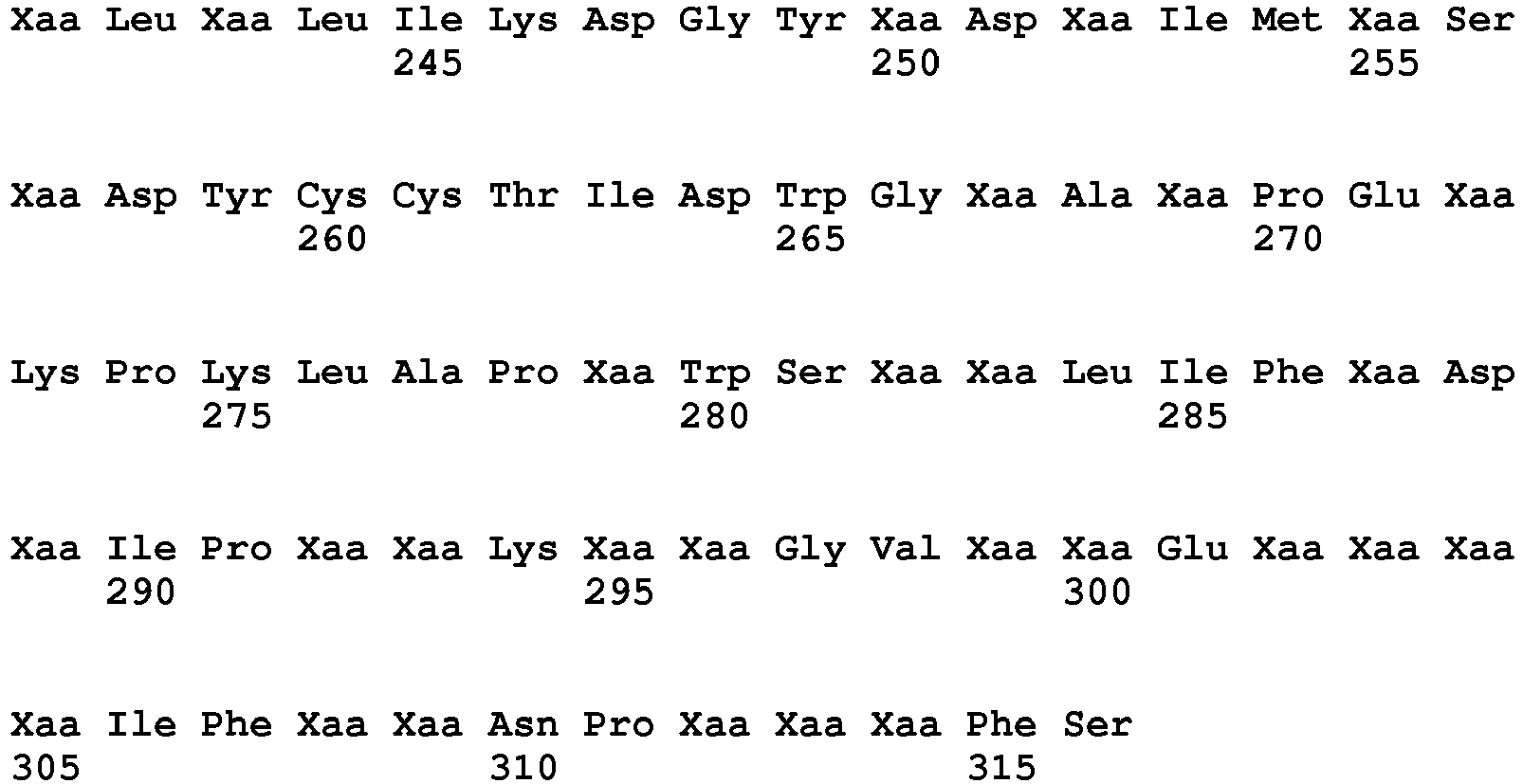
- <210> 2
<211> 945
<212> DNA
<213> Sulfolobus solfataricus - <400> 2

- <210> 3
<211> 314
<212> PRT
<213> Sulfolobus solfataricus - <400> 3


- <210> 4
<211> 948
<212> DNA
<213> Sulfolobus acidocaldarius - <400> 4

- <210> 5
<211> 315
<212> PRT
<213> Sulfolobus acidocaldarius - <400> 5


- <210> 6
<211> 945
<212> DNA
<213> Sulfolobus islandicus - <400> 6

- <210> 7
<211> 314
<212> PRT
<213> Sulfolobus islandicus - <400> 7


- <210> 8
<211> 945
<212> DNA
<213> Sulfolobus solfataricus - <400> 8

- <210> 9
<211> 314
<212> PRT
<213> Sulfolobus solfataricus - <400> 9

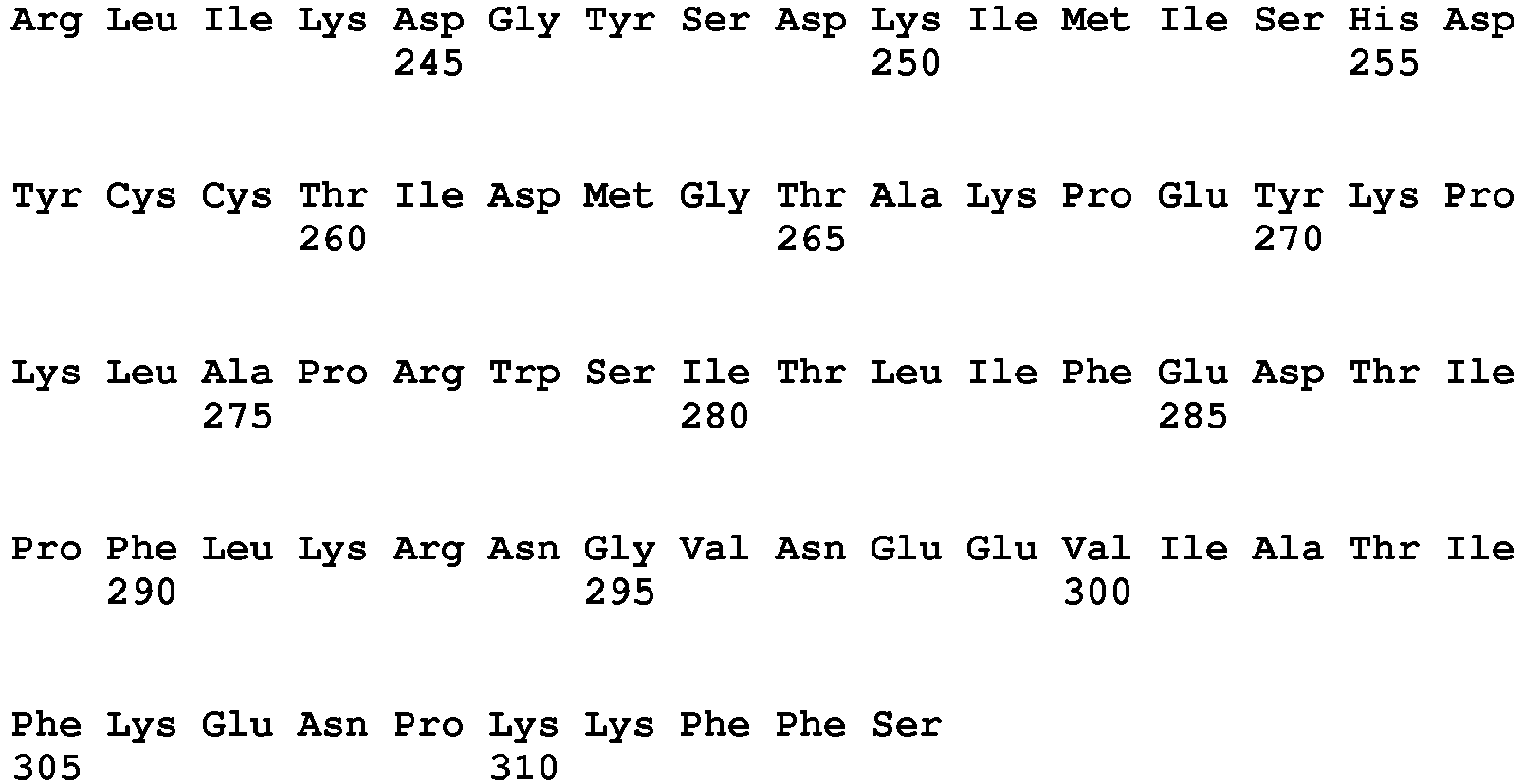
- <210> 10
<211> 945
<212> DNA
<213> Sulfolobus solfataricus - <400> 10

- <210> 11
<211> 314
<212> PRT
<213> Sulfolobus solfataricus - <400> 11


- <210> 12
<211> 945
<212> DNA
<213> Sulfolobus solfataricus - <400> 12
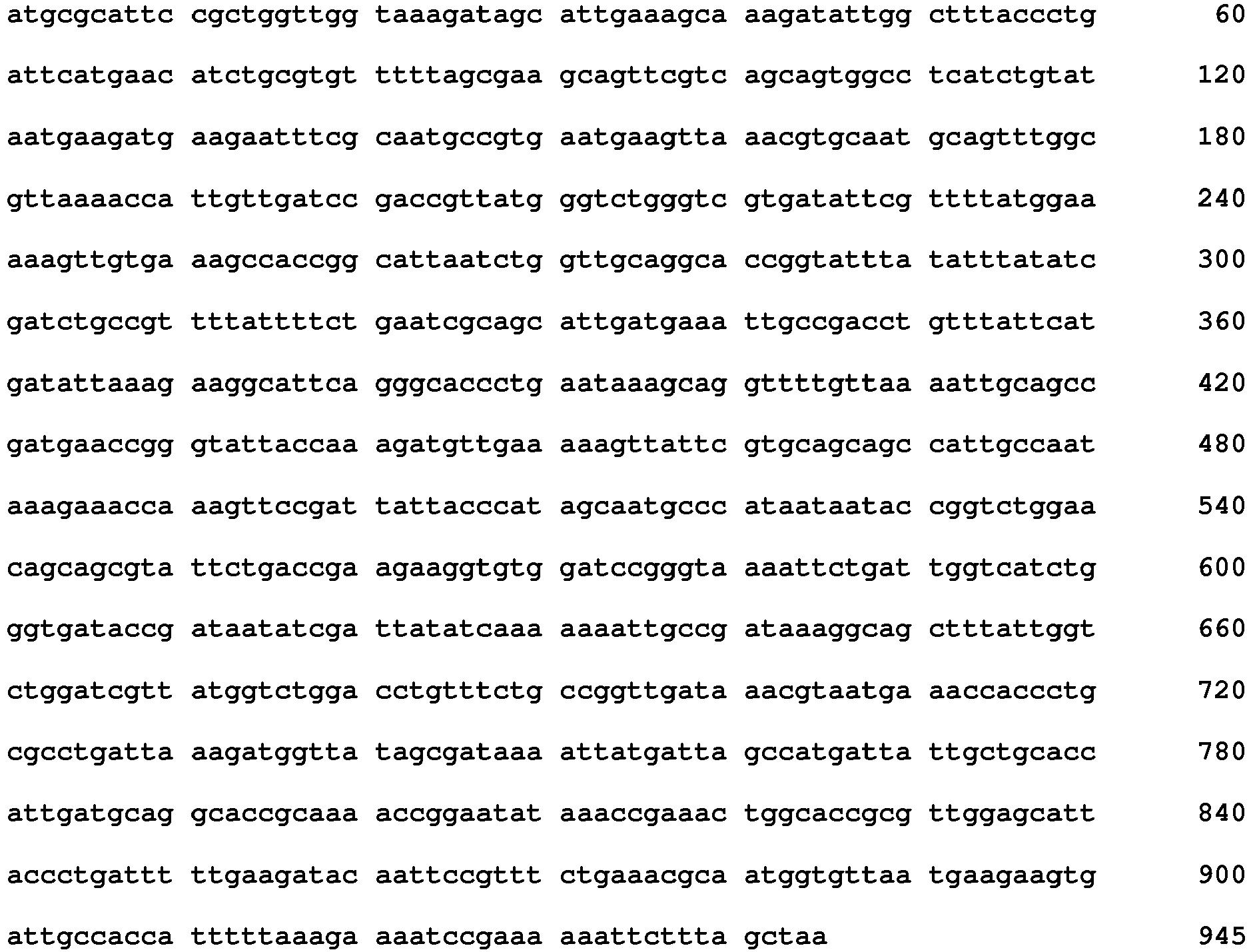
- <210> 13
<211> 314
<212> PRT
<213> Sulfolobus solfataricus - <400> 13


- <210> 14
<211> 945
<212> DNA
<213> Sulfolobus solfataricus - <400> 14

- <210> 15
<211> 314
<212> PRT
<213> Sulfolobus solfataricus - <400> 15


- <210> 16
<211> 945
<212> DNA
<213> Sulfolobus solfataricus - <400> 16

- <210> 17
<211> 314
<212> PRT
<213> Sulfolobus solfataricus - <400> 17


- <210> 18
<211> 945
<212> DNA
<213> Sulfolobus solfataricus - <400> 18

- <210> 19
<211> 314
<212> PRT
<213> Sulfolobus solfataricus - <400> 19


- <210> 20
<211> 945
<212> DNA
<213> Sulfolobus solfataricus - <400> 20

- <210> 21
<211> 314
<212> PRT
<213> Sulfolobus solfataricus - <400> 21


- <210> 22
<211> 948
<212> DNA
<213> Sulfolobus solfataricus - <400> 22

- <210> 23
<211> 314
<212> PRT
<213> Sulfolobus solfataricus - <400> 23


- <210> 24
<211> 945
<212> DNA
<213> Sulfolobus solfataricus - <400> 24

- <210> 25
<211> 314
<212> PRT
<213> Sulfolobus solfataricus - <400> 25


- <210> 26
<211> 948
<212> DNA
<213> Sulfolobus solfataricus - <400> 26

- <210> 27
<211> 314
<212> PRT
<213> Sulfolobus solfataricus - <400> 27


- <210> 28
<211> 948
<212> DNA
<213> Sulfolobus solfataricus - <400> 28

- <210> 29
<211> 314
<212> PRT
<213> Sulfolobus solfataricus - <400> 29


- <210> 30
<211> 948
<212> DNA
<213> Sulfolobus solfataricus - <400> 30

- <210> 31
<211> 314
<212> PRT
<213> Sulfolobus solfataricus - <400> 31


- <210> 32
<211> 945
<212> DNA
<213> Sulfolobus solfataricus - <400> 32

- <210> 33
<211> 314
<212> PRT
<213> Sulfolobus solfataricus - <400> 33


- <210> 34
<211> 945
<212> DNA
<213> Sulfolobus solfataricus - <400> 34

- <210> 35
<211> 314
<212> PRT
<213> Sulfolobus solfataricus - <400> 35


- <210> 36
<211> 945
<212> DNA
<213> Sulfolobus solfataricus - <400> 36

- <210> 37
<211> 314
<212> PRT
<213> Sulfolobus solfataricus - <400> 37


- <210> 38
<211> 945
<212> DNA
<213> Sulfolobus solfataricus - <400> 38

- <210> 39
<211> 314
<212> PRT
<213> Sulfolobus solfataricus - <400> 39


- <210> 40
<211> 945
<212> DNA
<213> Sulfolobus solfataricus - <400> 40

- <210> 41
<211> 314
<212> PRT
<213> Sulfolobus solfataricus - <400> 41


- <210> 42
<211> 945
<212> DNA
<213> Sulfolobus solfataricus - <400> 42

- <210> 43
<211> 314
<212> PRT
<213> Sulfolobus solfataricus - <400> 43


- <210> 44
<211> 945
<212> DNA
<213> Sulfolobus solfataricus - <400> 44

- <210> 45
<211> 314
<212> PRT
<213> Sulfolobus solfataricus - <400> 45


- <210> 46
<211> 945
<212> DNA
<213> Sulfolobus solfataricus - <400> 46

- <210> 47
<211> 314
<212> PRT
<213> Sulfolobus solfataricus - <400> 47
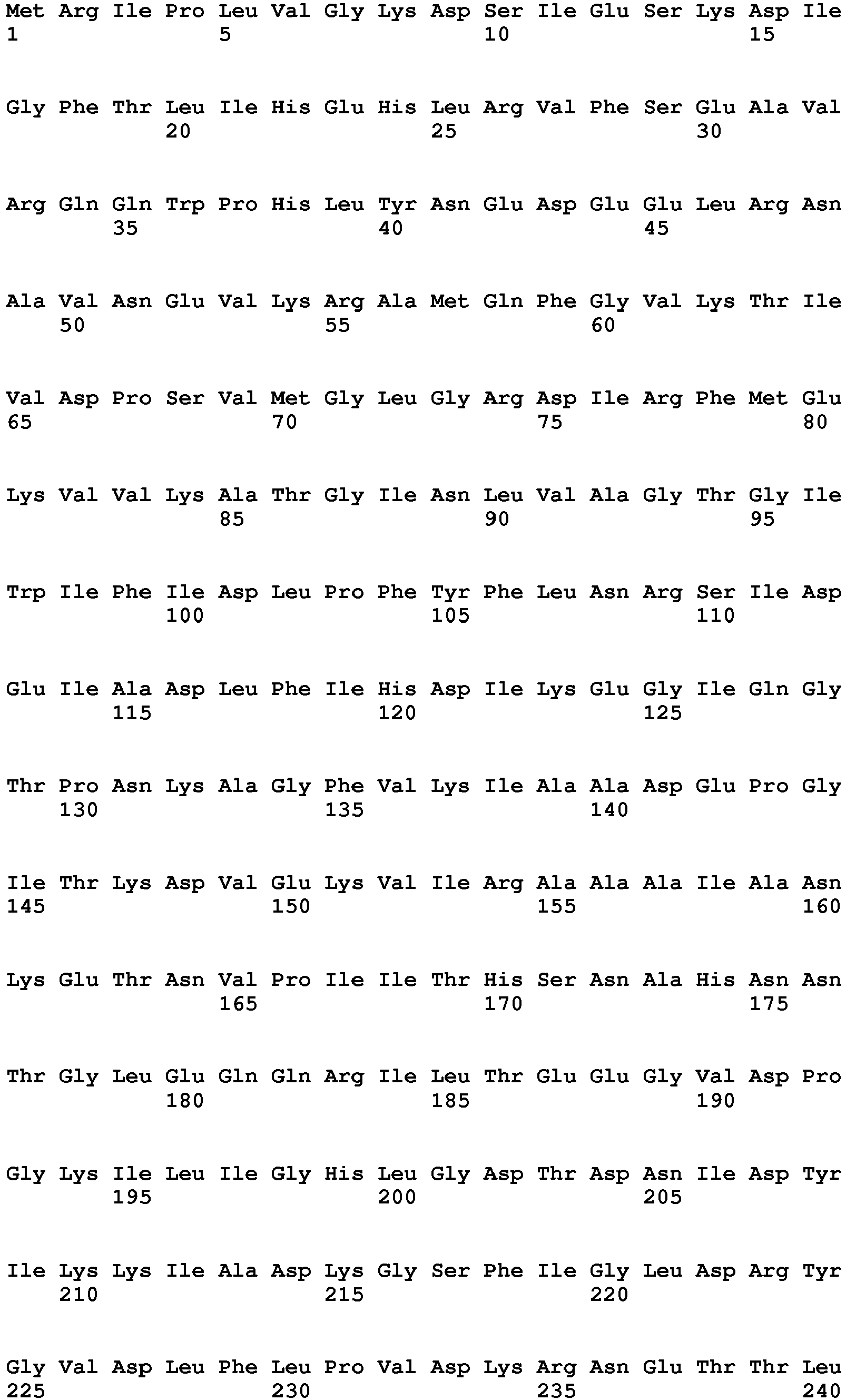

- <210> 48
<211> 945
<212> DNA
<213> Sulfolobus solfataricus - <400> 48
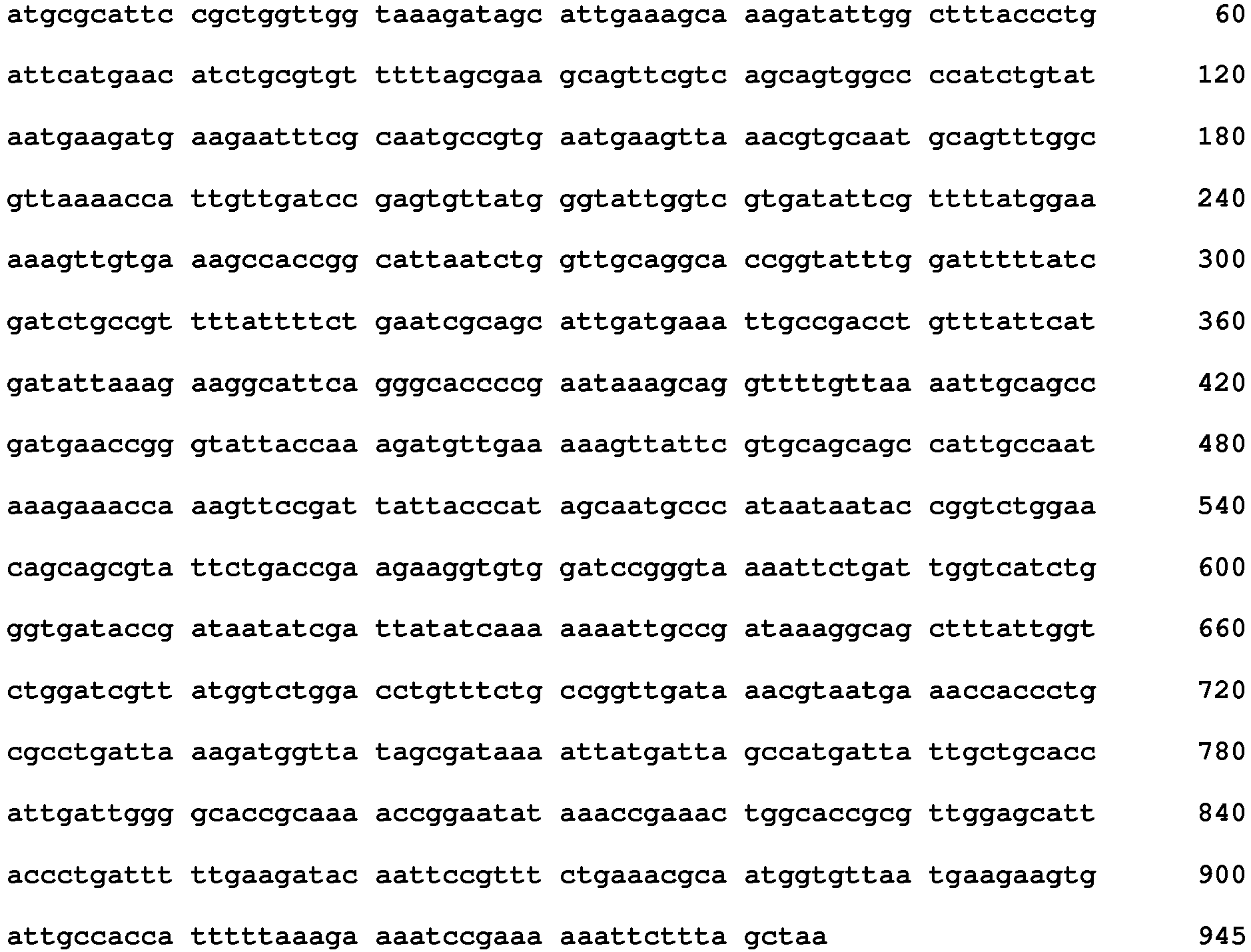
- <210> 49
<211> 314
<212> PRT
<213> Sulfolobus solfataricus - <400> 49


- <210> 50
<211> 948
<212> DNA
<213> Sulfolobus acidocaldarius - <400> 50

- <210> 51
<211> 315
<212> PRT
<213> Sulfolobus acidocaldarius - <400> 51


- <210> 52
<211> 948
<212> DNA
<213> Sulfolobus acidocaldarius - <400> 52

- <210> 53
<211> 315
<212> PRT
<213> Sulfolobus acidocaldarius - <400> 53


- <210> 54
<211> 948
<212> DNA
<213> Sulfolobus acidocaldarius - <400> 54

- <210> 55
<211> 315
<212> PRT
<213> Sulfolobus acidocaldarius - <400> 55

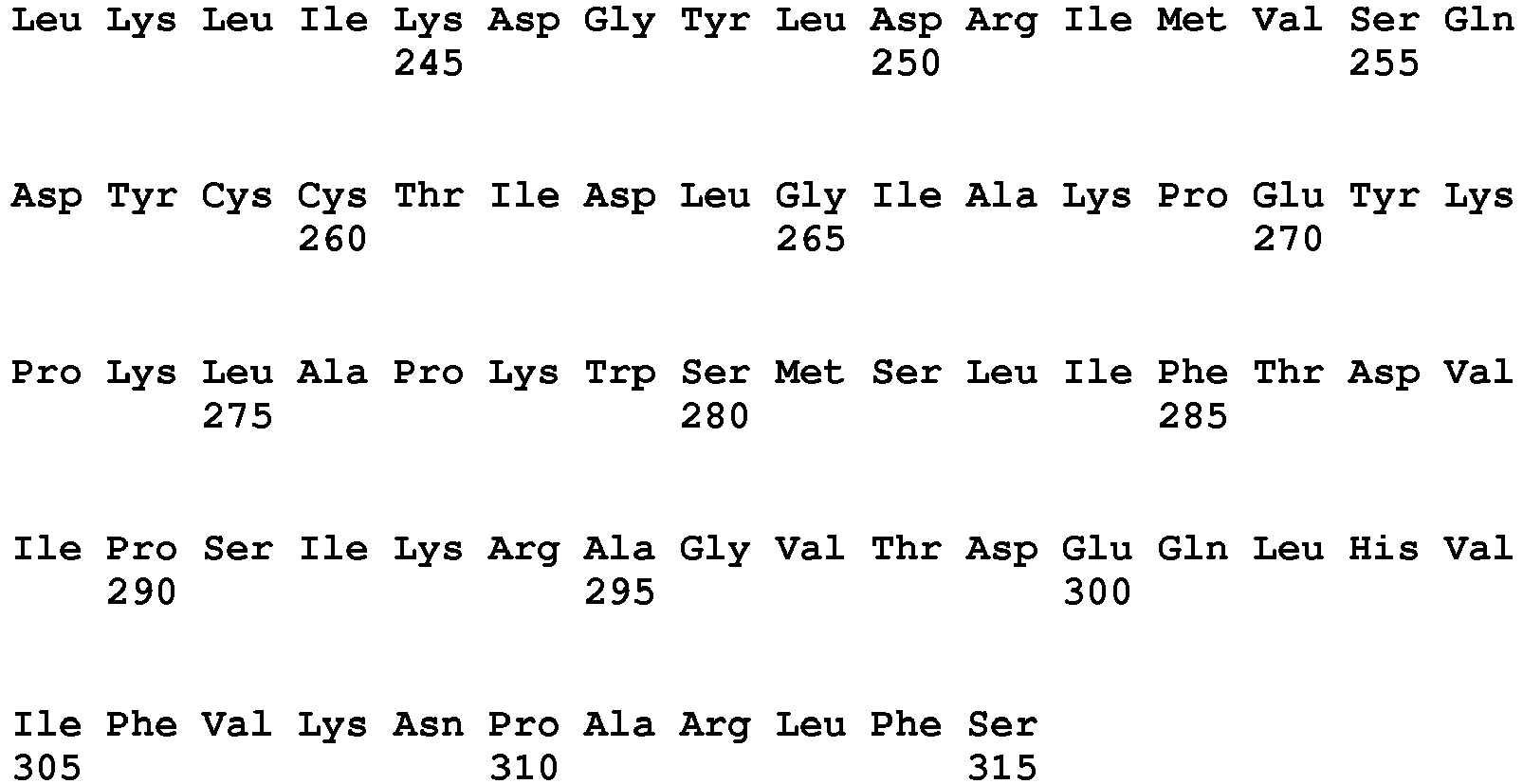
- <210> 56
<211> 948
<212> DNA
<213> Sulfolobus acidocaldarius - <400> 56

- <210> 57
<211> 315
<212> PRT
<213> Sulfolobus acidocaldarius - <400> 57
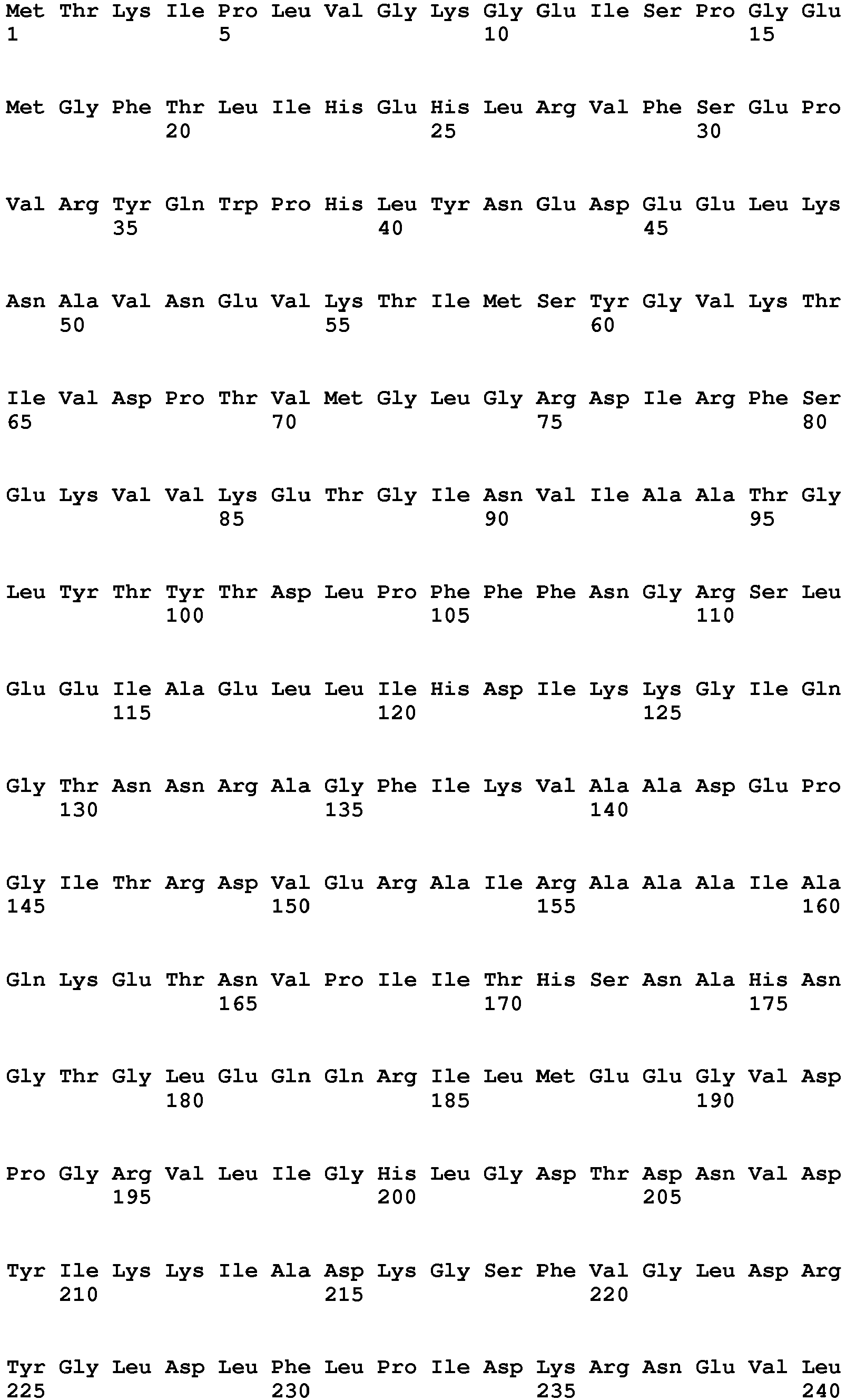

- <210> 58
<211> 948
<212> DNA
<213> Sulfolobus acidocaldarius - <400> 58

- <210> 59
<211> 315
<212> PRT
<213> Sulfolobus acidocaldarius - <400> 59


- <210> 60
<211> 948
<212> DNA
<213> Sulfolobus acidocaldarius - <400> 60

- <210> 61
<211> 315
<212> PRT
<213> Sulfolobus acidocaldarius - <400> 61


- <210> 62
<211> 948
<212> DNA
<213> Sulfolobus acidocaldarius - <400> 62

- <210> 63
<211> 315
<212> PRT
<213> Sulfolobus acidocaldarius - <400> 63


- <210> 64
<211> 951
<212> DNA
<213> Sulfolobus acidocaldarius - <400> 64

- <210> 65
<211> 315
<212> PRT
<213> Sulfolobus acidocaldarius - <400> 65


- <210> 66
<211> 951
<212> DNA
<213> Sulfolobus acidocaldarius - <400> 66

- <210> 67
<211> 315
<212> PRT
<213> Sulfolobus acidocaldarius - <400> 67


- <210> 68
<211> 951
<212> DNA
<213> Sulfolobus acidocaldarius - <400> 68

- <210> 69
<211> 315
<212> PRT
<213> Sulfolobus acidocaldarius - <400> 69


- <210> 70
<211> 951
<212> DNA
<213> Sulfolobus acidocaldarius - <400> 70

- <210> 71
<211> 315
<212> PRT
<213> Sulfolobus acidocaldarius - <400> 71


- <210> 72
<211> 951
<212> DNA
<213> Sulfolobus acidocaldarius - <400> 72

- <210> 73
<211> 315
<212> PRT
<213> Sulfolobus acidocaldarius - <400> 73


- <210> 74
<211> 951
<212> DNA
<213> Sulfolobus acidocaldarius - <400> 74

- <210> 75
<211> 315
<212> PRT
<213> Sulfolobus acidocaldarius - <400> 75


- <210> 76
<211> 951
<212> DNA
<213> Sulfolobus acidocaldarius - <400> 76

- <210> 77
<211> 315
<212> PRT
<213> Sulfolobus acidocaldarius - <400> 77


- <210> 78
<211> 951
<212> DNA
<213> Sulfolobus acidocaldarius - <400> 78

- <210> 79
<211> 315
<212> PRT
<213> Sulfolobus acidocaldarius - <400> 79


- <210> 80
<211> 951
<212> DNA
<213> Sulfolobus acidocaldarius - <400> 80

- <210> 81
<211> 315
<212> PRT
<213> Sulfolobus acidocaldarius - <400> 81

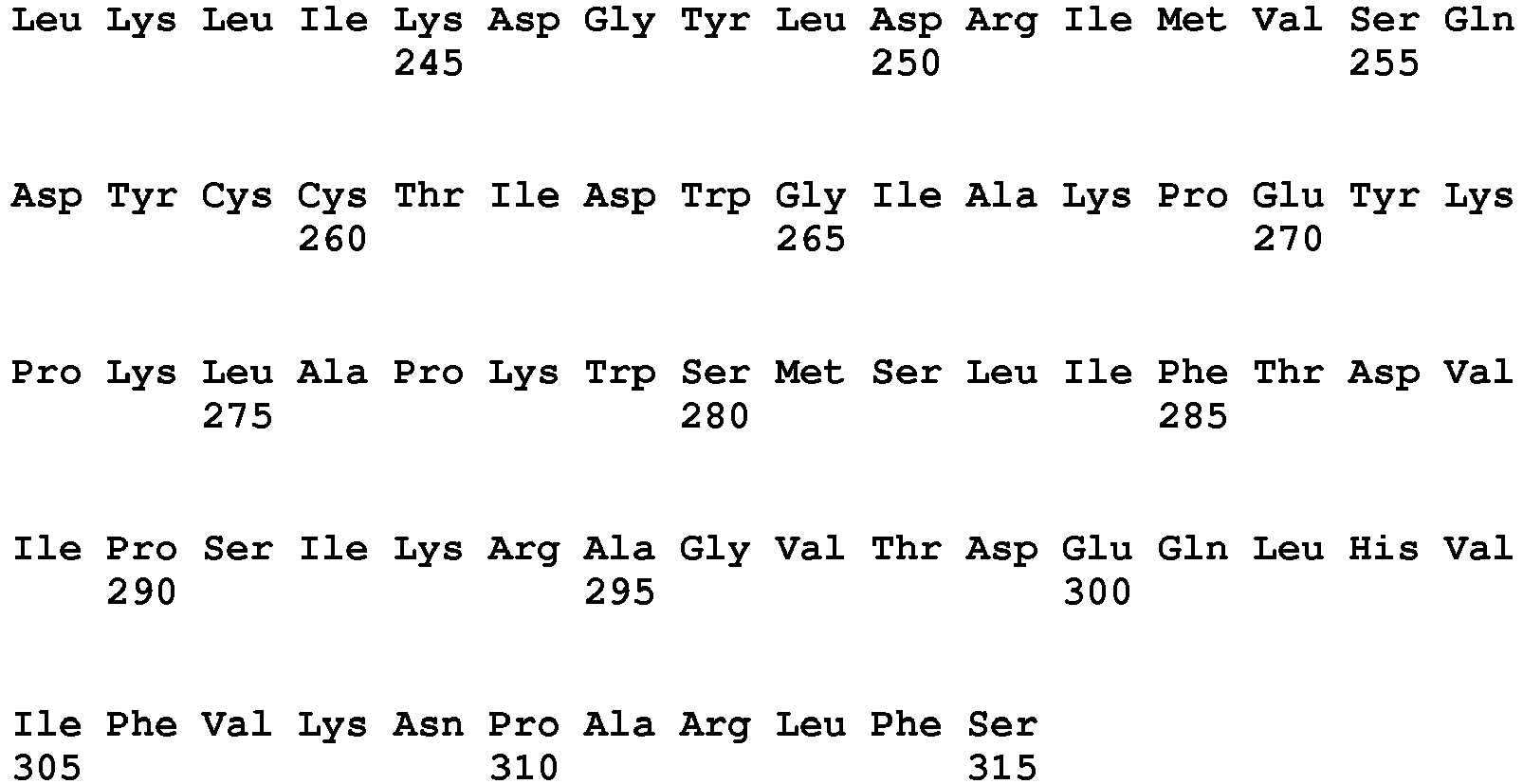
- <210> 82
<211> 950
<212> DNA
<213> Sulfolobus acidocaldarius - <400> 82

- <210> 83
<211> 315
<212> PRT
<213> Sulfolobus acidocaldarius - <400> 83


- <210> 84
<211> 951
<212> DNA
<213> Sulfolobus acidocaldarius - <400> 84

- <210> 85
<211> 315
<212> PRT
<213> Sulfolobus acidocaldarius - <400> 85
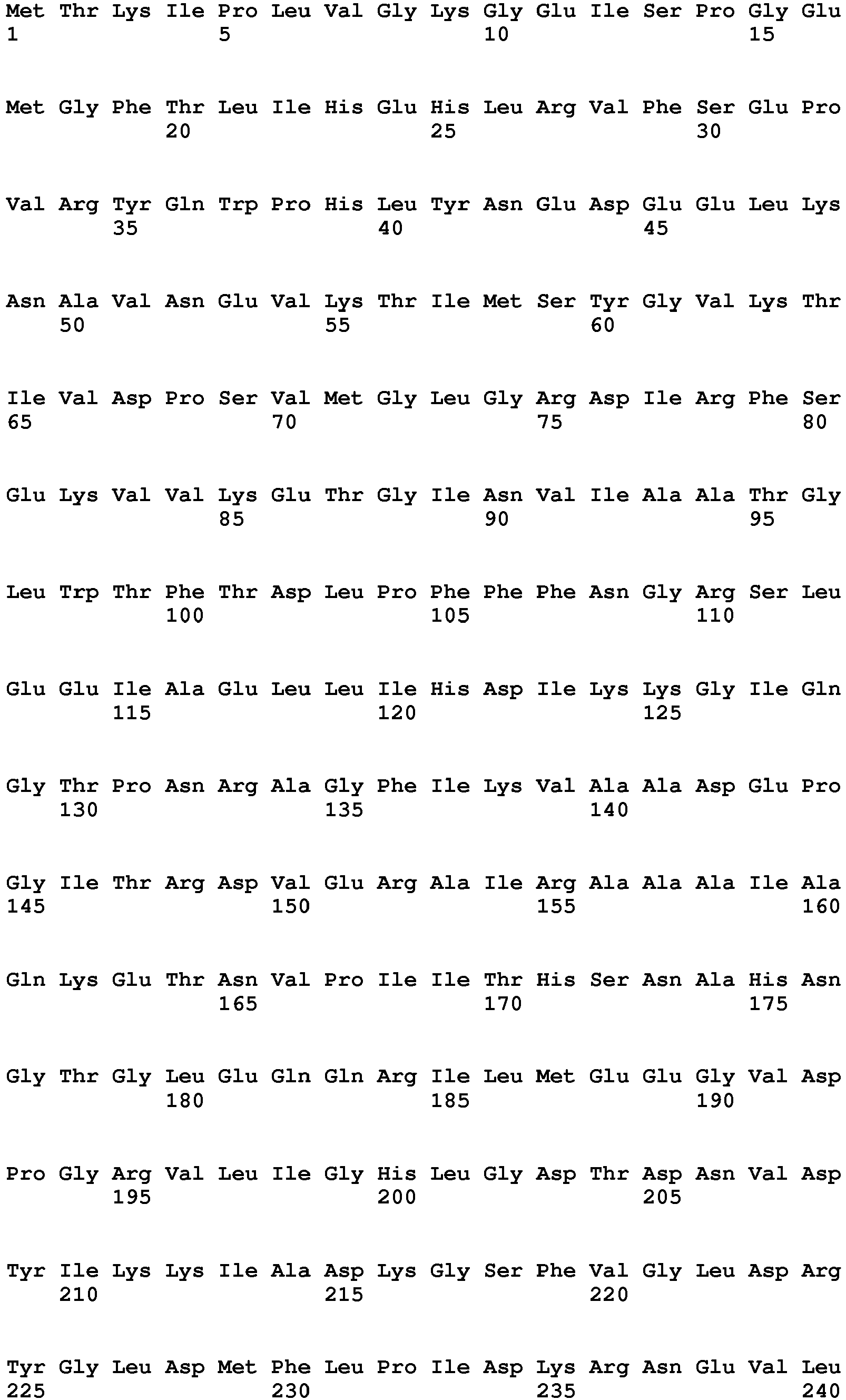

- <210> 86
<211> 951
<212> DNA
<213> Sulfolobus acidocaldarius - <400> 86

- <210> 87
<211> 315
<212> PRT
<213> Sulfolobus acidocaldarius - <400> 87


- <210> 88
<211> 951
<212> DNA
<213> Sulfolobus acidocaldarius - <400> 88

- <210> 89
<211> 315
<212> PRT
<213> Sulfolobus acidocaldarius - <400> 89


- <210> 90
<211> 951
<212> DNA
<213> Sulfolobus acidocaldarius - <400> 90

- <210> 91
<211> 315
<212> PRT
<213> Sulfolobus acidocaldarius - <400> 91


- <210> 92
<211> 951
<212> DNA
<213> Sulfolobus acidocaldarius - <400> 92

- <210> 93
<211> 315
<212> PRT
<213> Sulfolobus acidocaldarius - <400> 93


- <210> 94
<211> 945
<212> DNA
<213> Sulfolobus islandicus - <400> 94
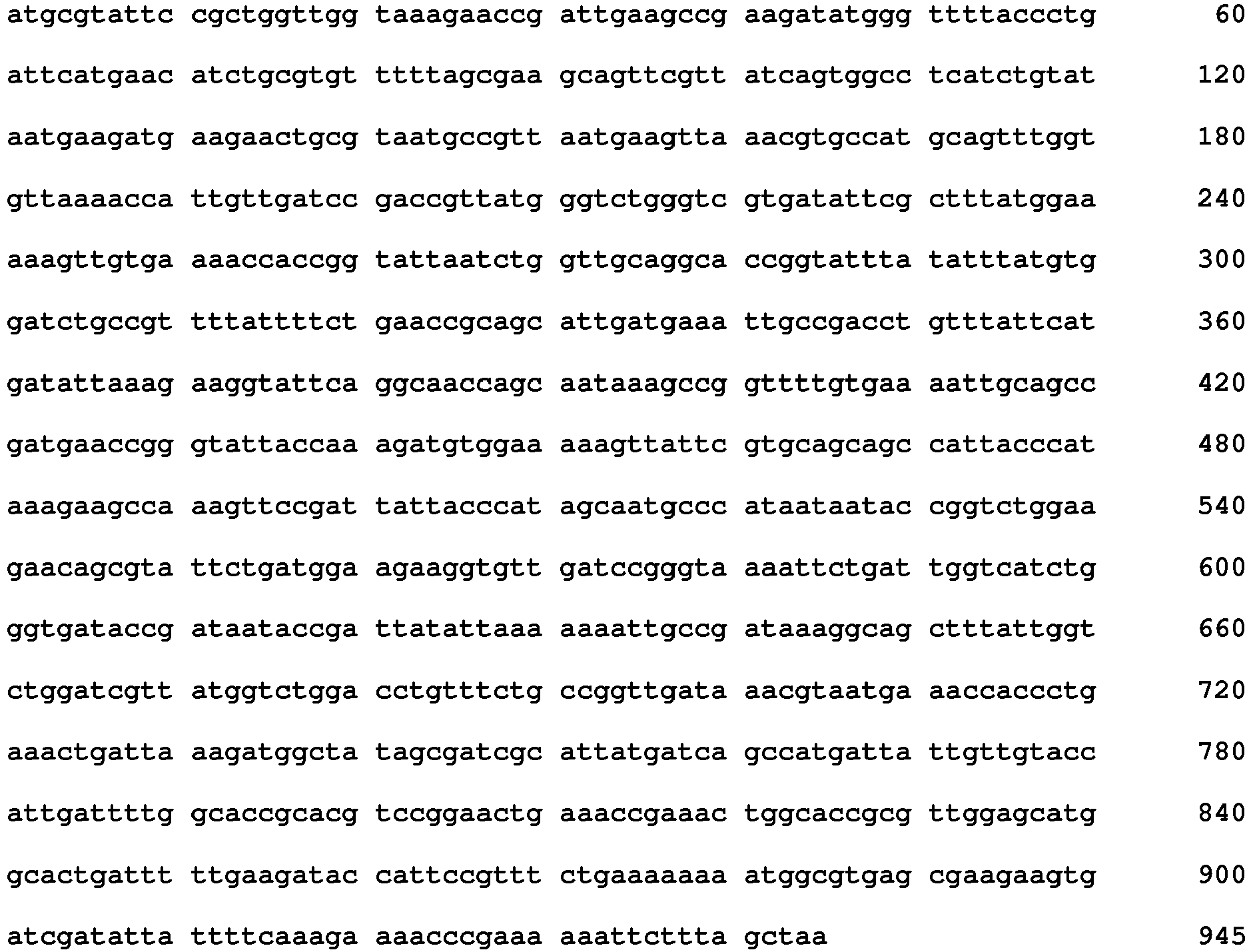
- <210> 95
<211> 314
<212> PRT
<213> Sulfolobus islandicus - <400> 95


- <210> 96
<211> 945
<212> DNA
<213> Sulfolobus islandicus - <400> 96

- <210> 97
<211> 314
<212> PRT
<213> Sulfolobus islandicus - <400> 97


- <210> 98
<211> 945
<212> DNA
<213> Sulfolobus islandicus - <400> 98

- <210> 99
<211> 314
<212> PRT
<213> Sulfolobus islandicus - <400> 99


- <210> 100
<211> 945
<212> DNA
<213> Sulfolobus islandicus - <400> 100

- <210> 101
<211> 314
<212> PRT
<213> Sulfolobus islandicus - <400> 101


- <210> 102
<211> 945
<212> DNA
<213> Sulfolobus islandicus - <400> 102

- <210> 103
<211> 314
<212> PRT
<213> Sulfolobus islandicus - <400> 103


- <210> 104
<211> 945
<212> DNA
<213> Sulfolobus islandicus - <400> 104

- <210> 105
<211> 314
<212> PRT
<213> Sulfolobus islandicus - <400> 105


- <210> 106
<211> 945
<212> DNA
<213> Sulfolobus islandicus - <400> 106

- <210> 107
<211> 314
<212> PRT
<213> Sulfolobus islandicus - <400> 107


- <210> 108
<211> 945
<212> DNA
<213> Sulfolobus islandicus - <400> 108

- <210> 109
<211> 314
<212> PRT
<213> Sulfolobus islandicus - <400> 109


- <210> 110
<211> 945
<212> DNA
<213> Sulfolobus islandicus - <400> 110

- <210> 111
<211> 314
<212> PRT
<213> Sulfolobus islandicus - <400> 111

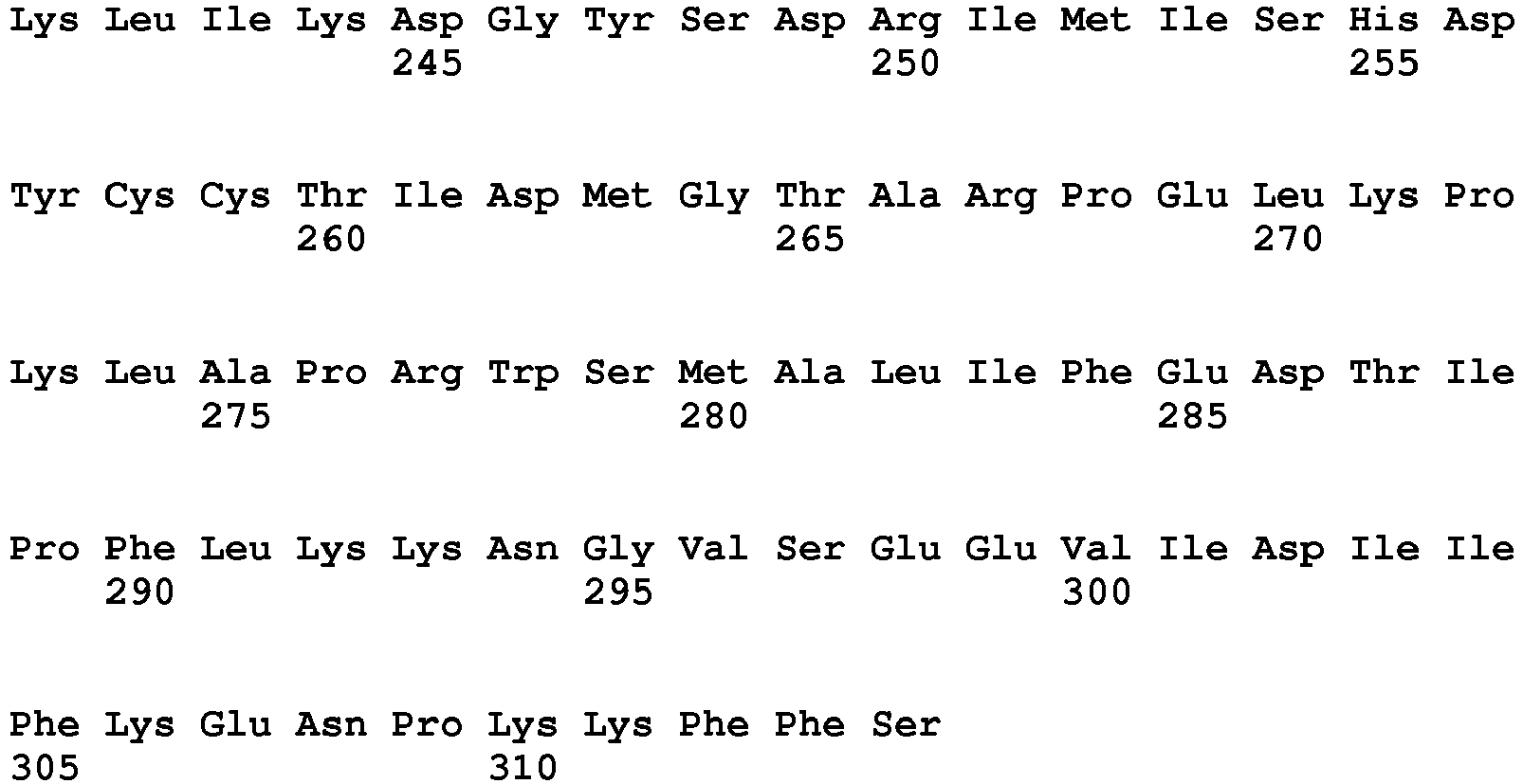
- <210> 112
<211> 945
<212> DNA
<213> Sulfolobus islandicus - <400> 112

- <210> 113
<211> 314
<212> PRT
<213> Sulfolobus islandicus - <400> 113
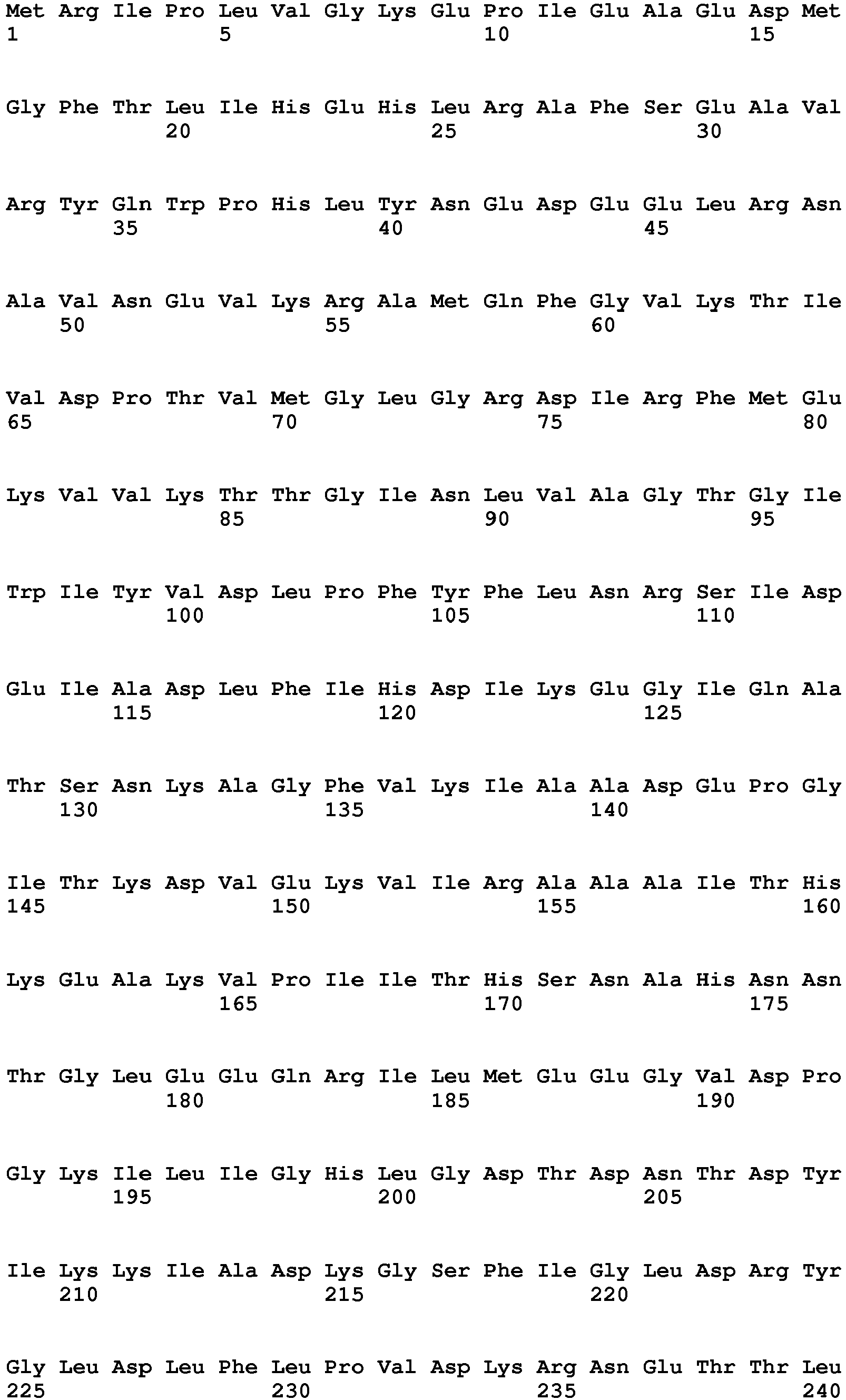

- <210> 114
<211> 945
<212> DNA
<213> Sulfolobus islandicus - <400> 114

- <210> 115
<211> 314
<212> PRT
<213> Sulfolobus islandicus - <400> 115


- <210> 116
<211> 945
<212> DNA
<213> Sulfolobus islandicus - <400> 116
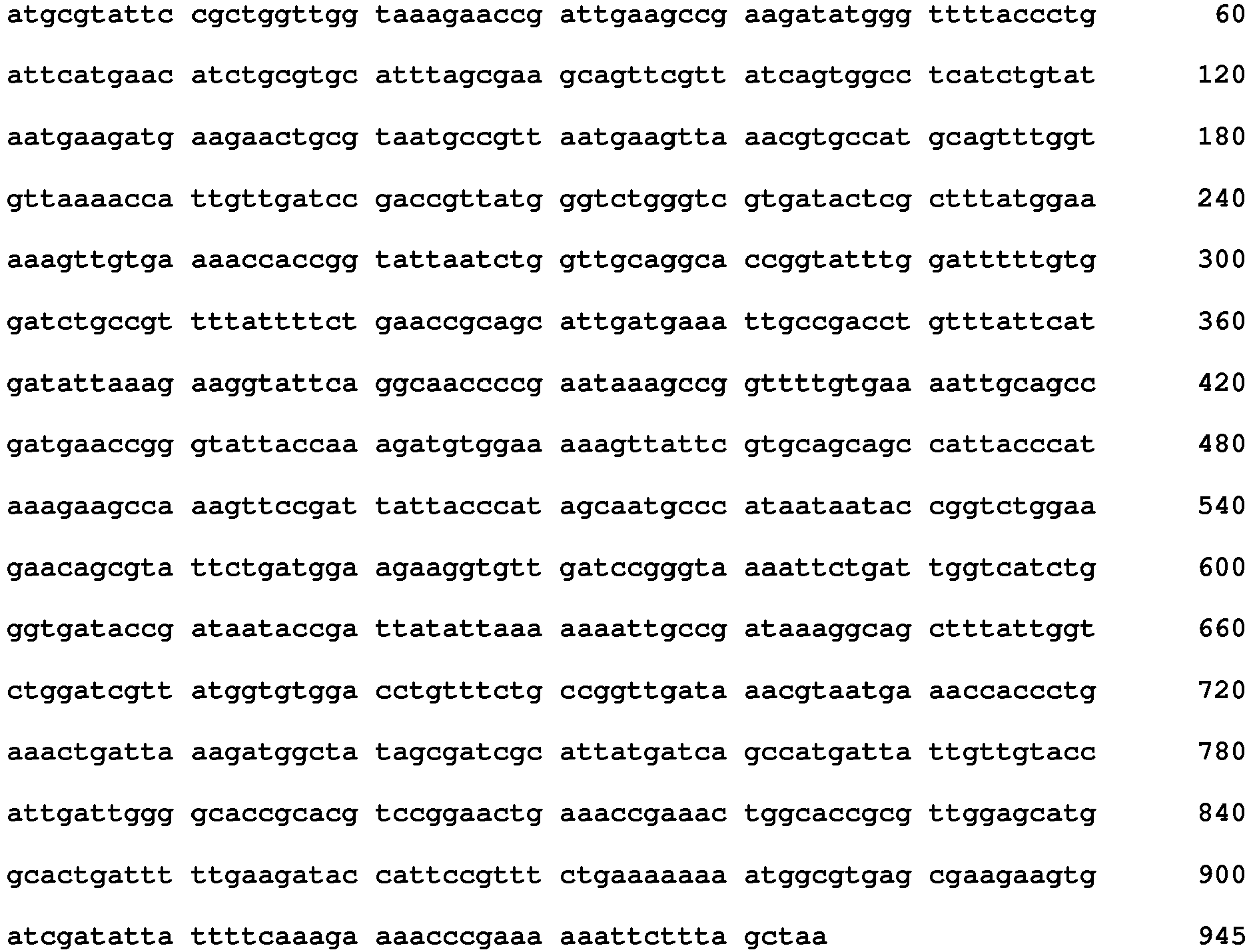
- <210> 117
<211> 314
<212> PRT
<213> Sulfolobus islandicus - <400> 117
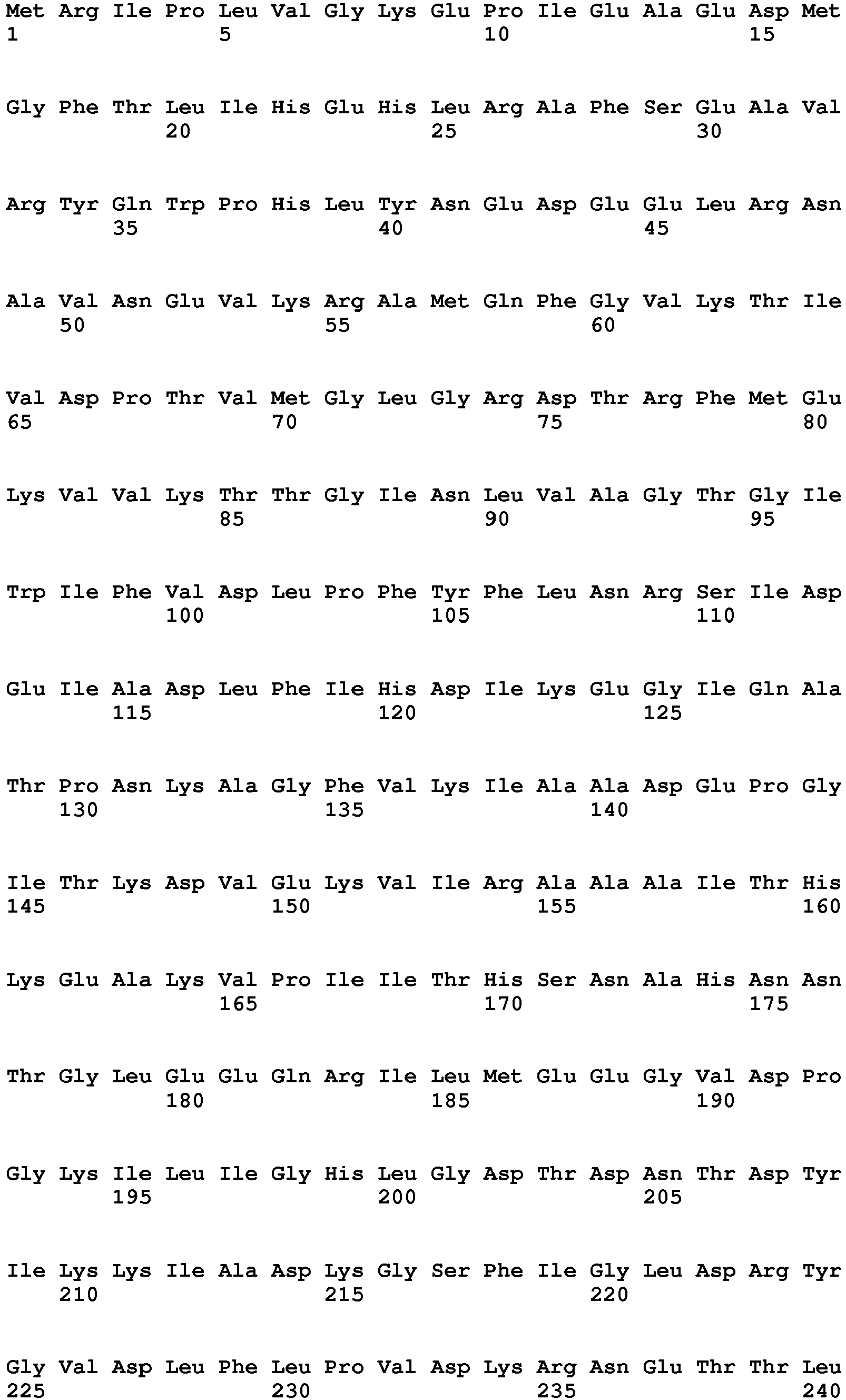

- <210> 118
<211> 945
<212> DNA
<213> Sulfolobus islandicus - <400> 118

- <210> 119
<211> 314
<212> PRT
<213> Sulfolobus islandicus - <400> 119


- <210> 120
<211> 945
<212> DNA
<213> Sulfolobus islandicus - <400> 120

- <210> 121
<211> 314
<212> PRT
<213> Sulfolobus islandicus - <400> 121


- <210> 122
<211> 945
<212> DNA
<213> Sulfolobus islandicus - <400> 122

- <210> 123
<211> 314
<212> PRT
<213> Sulfolobus islandicus - <400> 123


- <210> 124
<211> 945
<212> DNA
<213> Sulfolobus islandicus - <400> 124

- <210> 125
<211> 314
<212> PRT
<213> Sulfolobus islandicus - <400> 125


- <210> 126
<211> 945
<212> DNA
<213> Sulfolobus islandicus - <400> 126
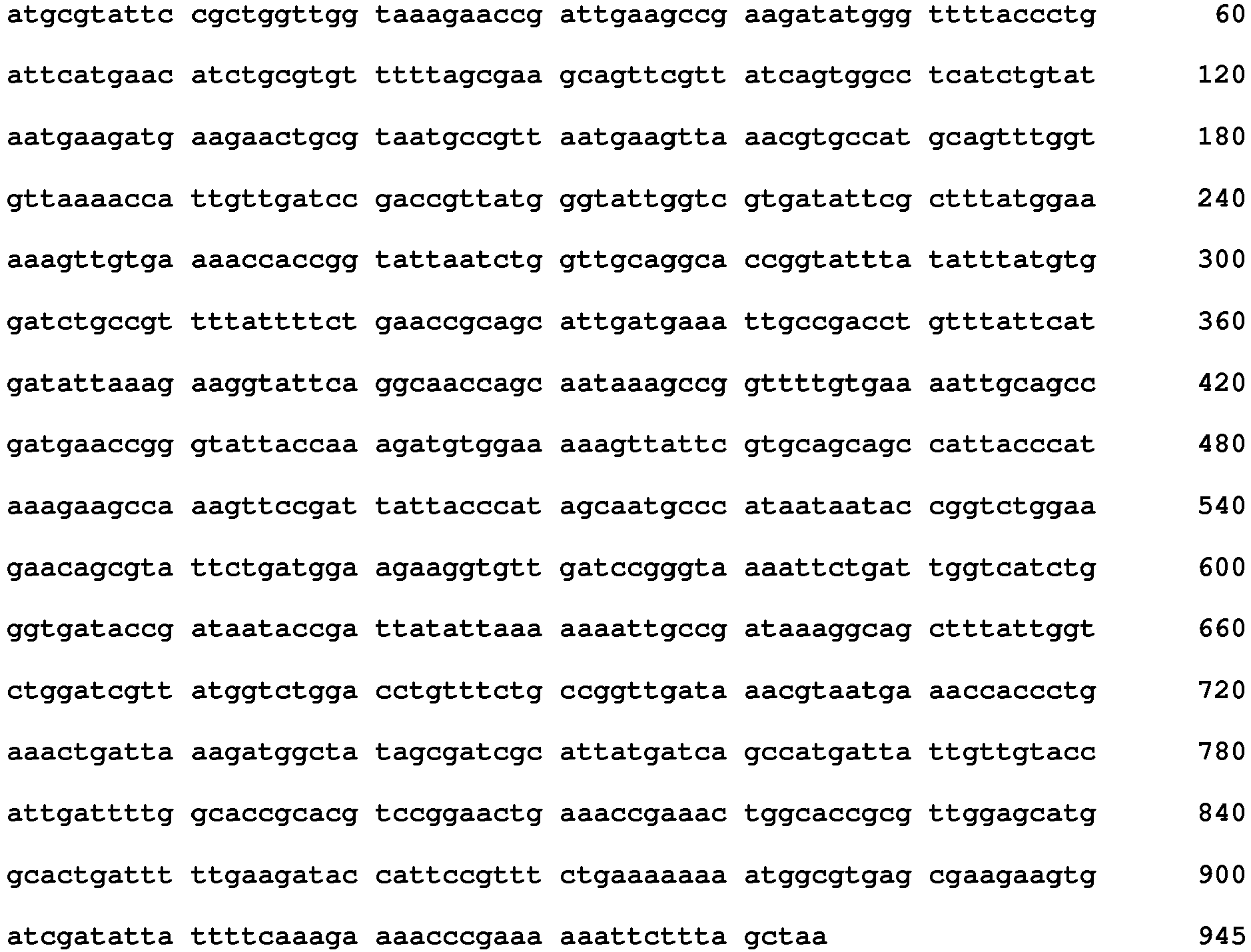
- <210> 127
<211> 314
<212> PRT
<213> Sulfolobus islandicus - <400> 127


- <210> 128
<211> 945
<212> DNA
<213> Sulfolobus islandicus - <400> 128

- <210> 129
<211> 314
<212> PRT
<213> Sulfolobus islandicus - <400> 129


- <210> 130
<211> 945
<212> DNA
<213> Sulfolobus islandicus - <400> 130

- <210> 131
<211> 314
<212> PRT
<213> Sulfolobus islandicus - <400> 131


- <210> 132
<211> 945
<212> DNA
<213> Sulfolobus islandicus - <400> 132

- <210> 133
<211> 314
<212> PRT
<213> Sulfolobus islandicus - <400> 133


- <210> 134
<211> 945
<212> DNA
<213> Sulfolobus islandicus - <400> 134

- <210> 135
<211> 314
<212> PRT
<213> Sulfolobus islandicus - <400> 135


- <210> 136
<211> 945
<212> DNA
<213> Sulfolobus islandicus - <400> 136

- <210> 137
<211> 314
<212> PRT
<213> Sulfolobus islandicus - <400> 137


- <210> 138
<211> 948
<212> DNA
<213> Sulfolobus solfataricus - <400> 138

- <210> 139
<211> 315
<212> PRT
<213> Sulfolobus solfataricus - <400> 139


- <210> 140
<211> 948
<212> DNA
<213> Sulfolobus solfataricus - <400> 140

- <210> 141
<211> 315
<212> PRT
<213> Sulfolobus solfataricus - <400> 141


- <210> 142
<211> 948
<212> DNA
<213> Sulfolobus solfataricus - <400> 142

- <210> 143
<211> 315
<212> PRT
<213> Sulfolobus solfataricus - <400> 143


- <210> 144
<211> 948
<212> DNA
<213> Sulfolobus solfataricus - <400> 144

- <210> 145
<211> 315
<212> PRT
<213> Sulfolobus solfataricus - <400> 145


- <210> 146
<211> 948
<212> DNA
<213> Sulfolobus solfataricus - <400> 146

- <210> 147
<211> 315
<212> PRT
<213> Sulfolobus solfataricus - <400> 147


- <210> 148
<211> 948
<212> DNA
<213> Sulfolobus solfataricus - <400> 148

- <210> 149
<211> 315
<212> PRT
<213> Sulfolobus solfataricus - <400> 149
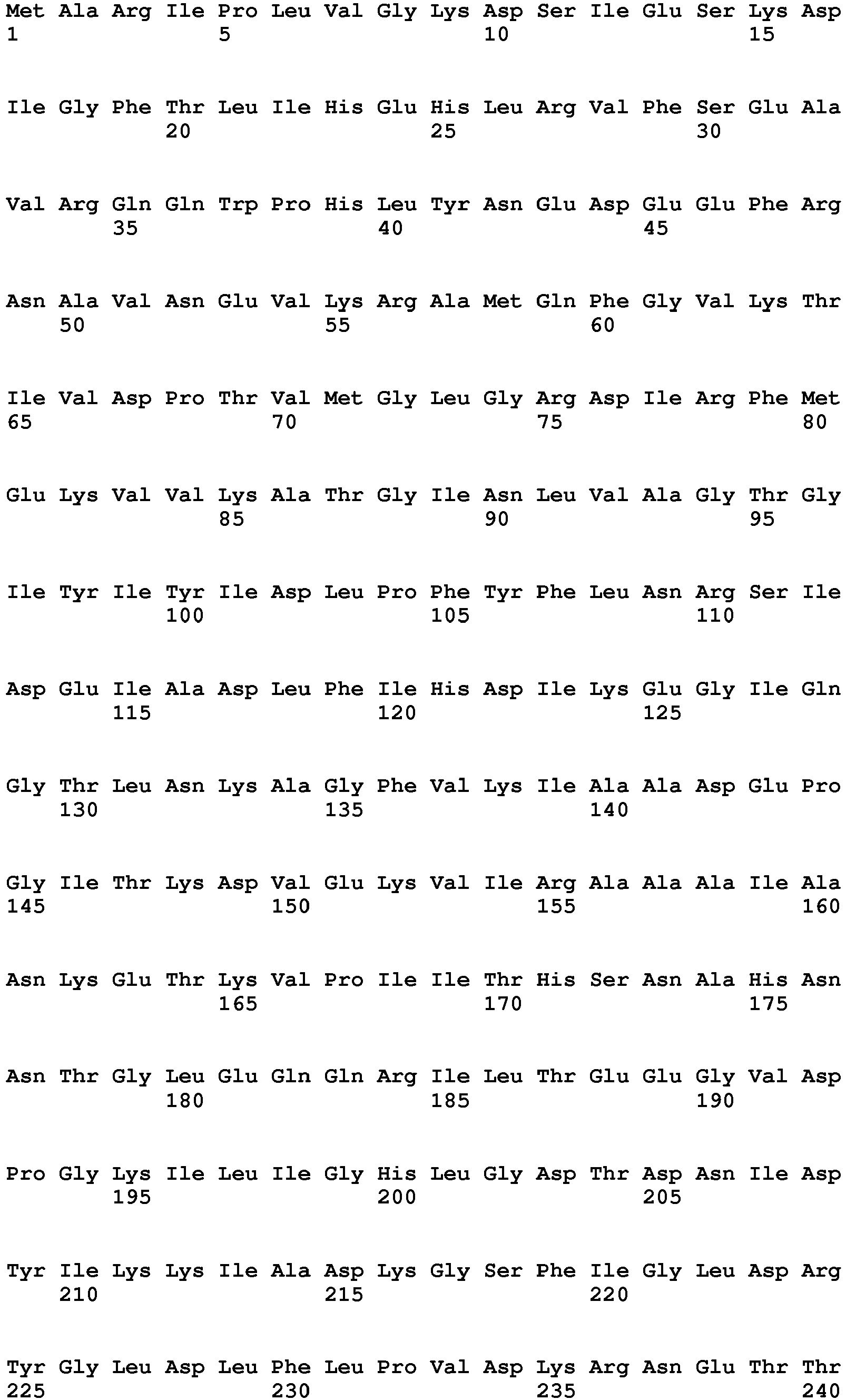

- <210> 150
<211> 948
<212> DNA
<213> Sulfolobus solfataricus - <400> 150
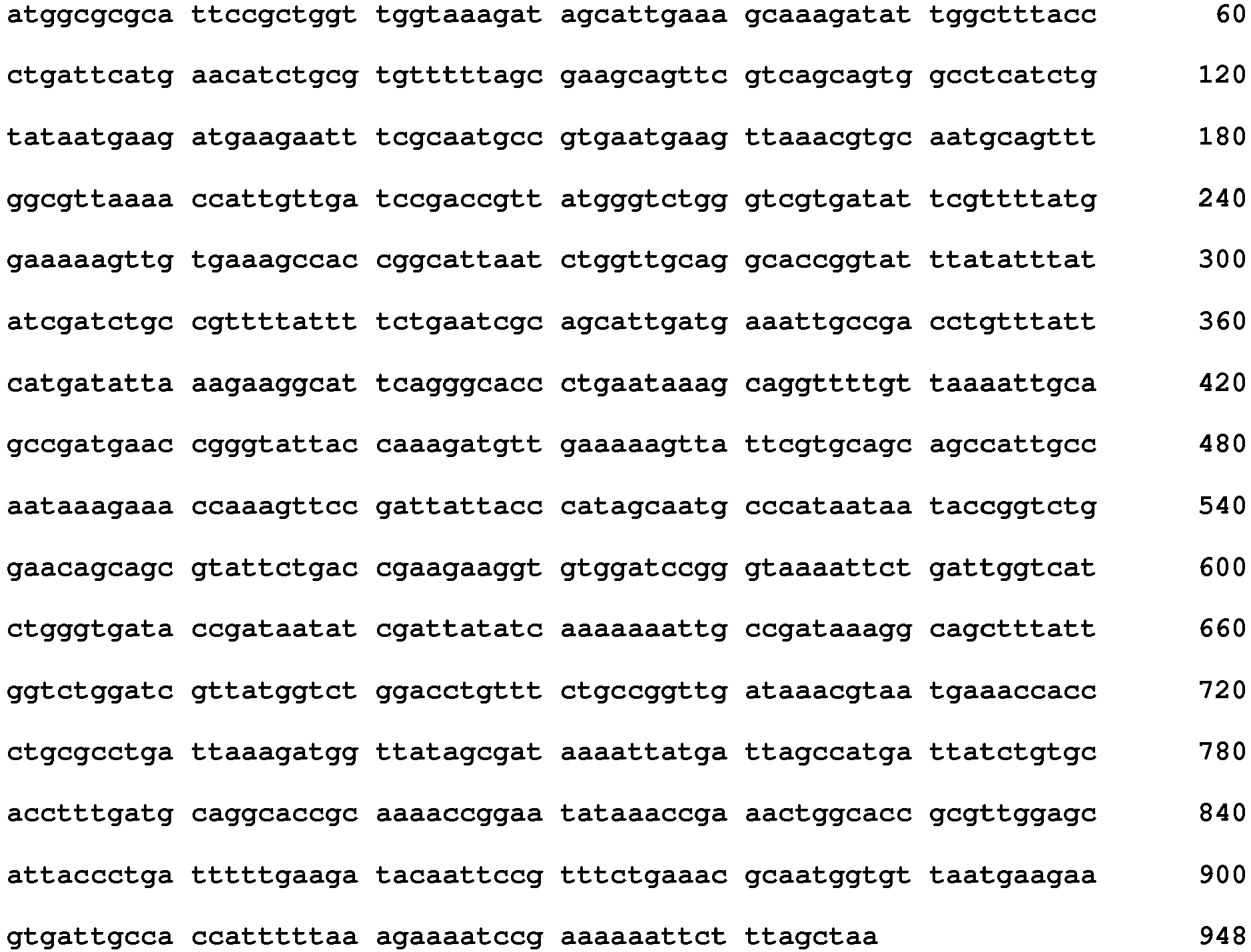
- <210> 151
<211> 315
<212> PRT
<213> Sulfolobus solfataricus - <400> 151


- <210> 152
<211> 951
<212> DNA
<213> Sulfolobus solfataricus - <400> 152

- <210> 153
<211> 315
<212> PRT
<213> Sulfolobus solfataricus - <400> 153


- <210> 154
<211> 948
<212> DNA
<213> Sulfolobus solfataricus - <400> 154

- <210> 155
<211> 315
<212> PRT
<213> Sulfolobus solfataricus - <400> 155

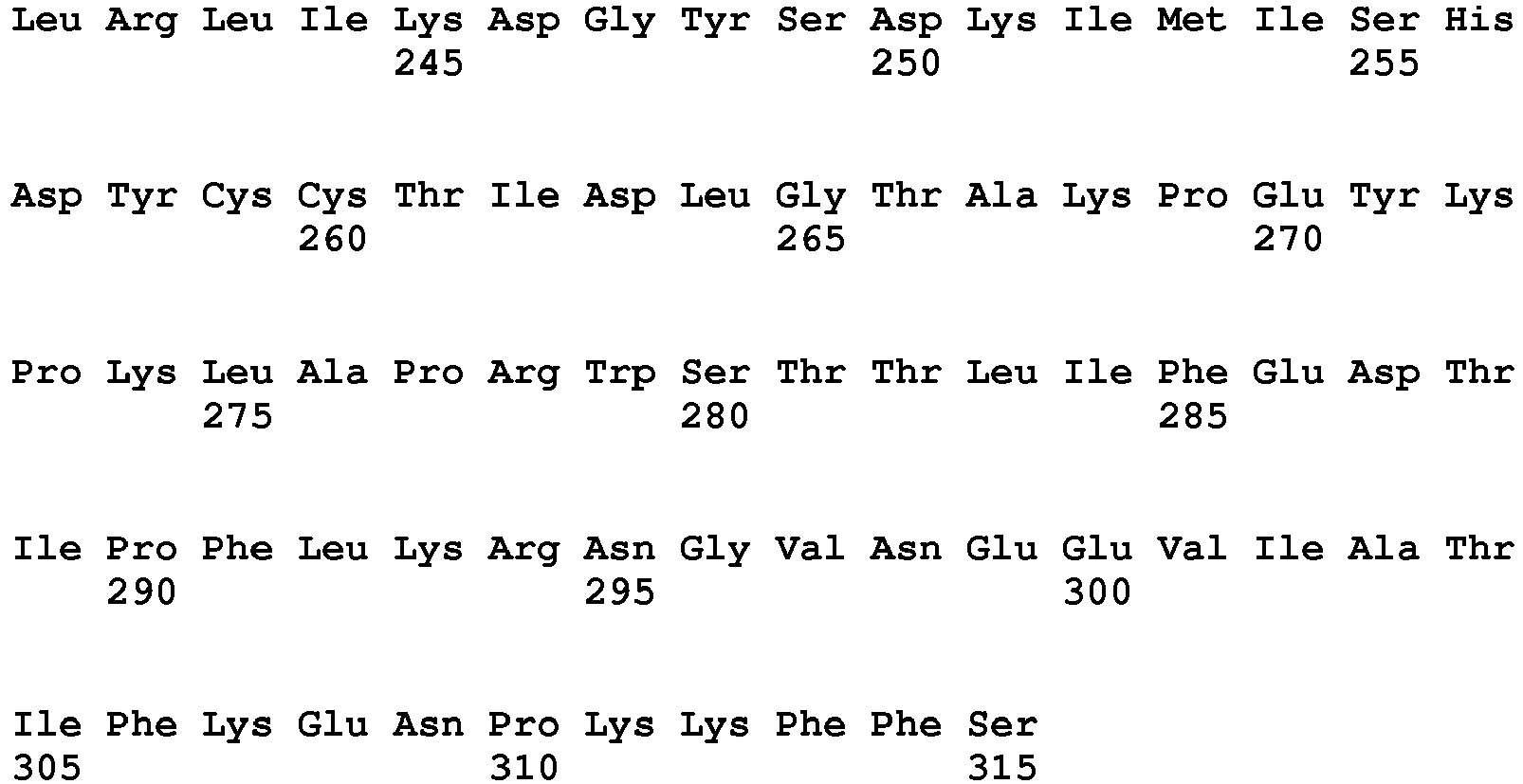
- <210> 156
<211> 951
<212> DNA
<213> Sulfolobus solfataricus - <400> 156

- <210> 157
<211> 315
<212> PRT
<213> Sulfolobus solfataricus - <400> 157


- <210> 158
<211> 951
<212> DNA
<213> Sulfolobus solfataricus - <400> 158

- <210> 159
<211> 315
<212> PRT
<213> Sulfolobus solfataricus - <400> 159
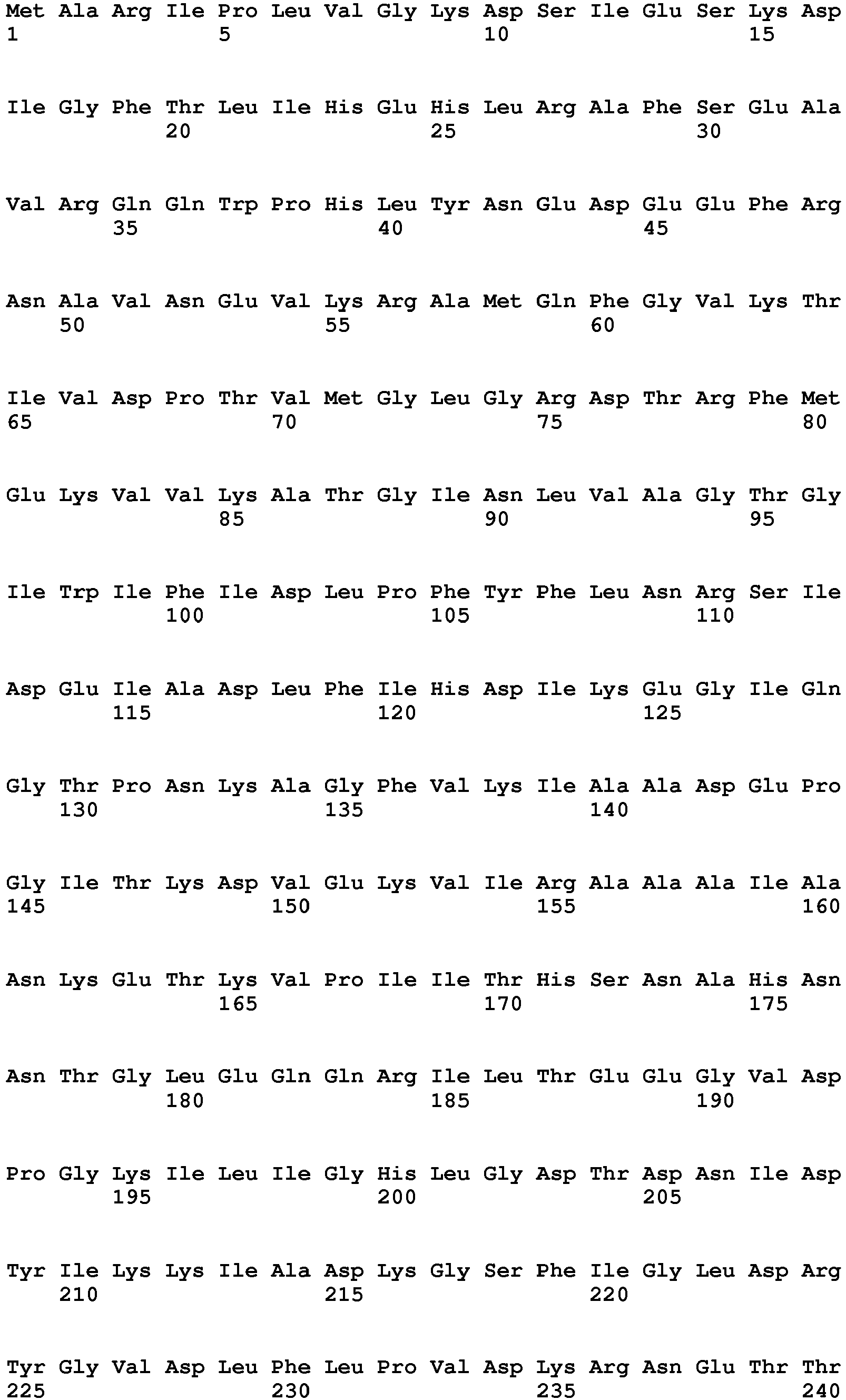

- <210> 160
<211> 951
<212> DNA
<213> Sulfolobus solfataricus - <400> 160

- <210> 161
<211> 315
<212> PRT
<213> Sulfolobus solfataricus - <400> 161


- <210> 162
<211> 948
<212> DNA
<213> Sulfolobus solfataricus - <400> 162

- <210> 163
<211> 315
<212> PRT
<213> Sulfolobus solfataricus - <400> 163

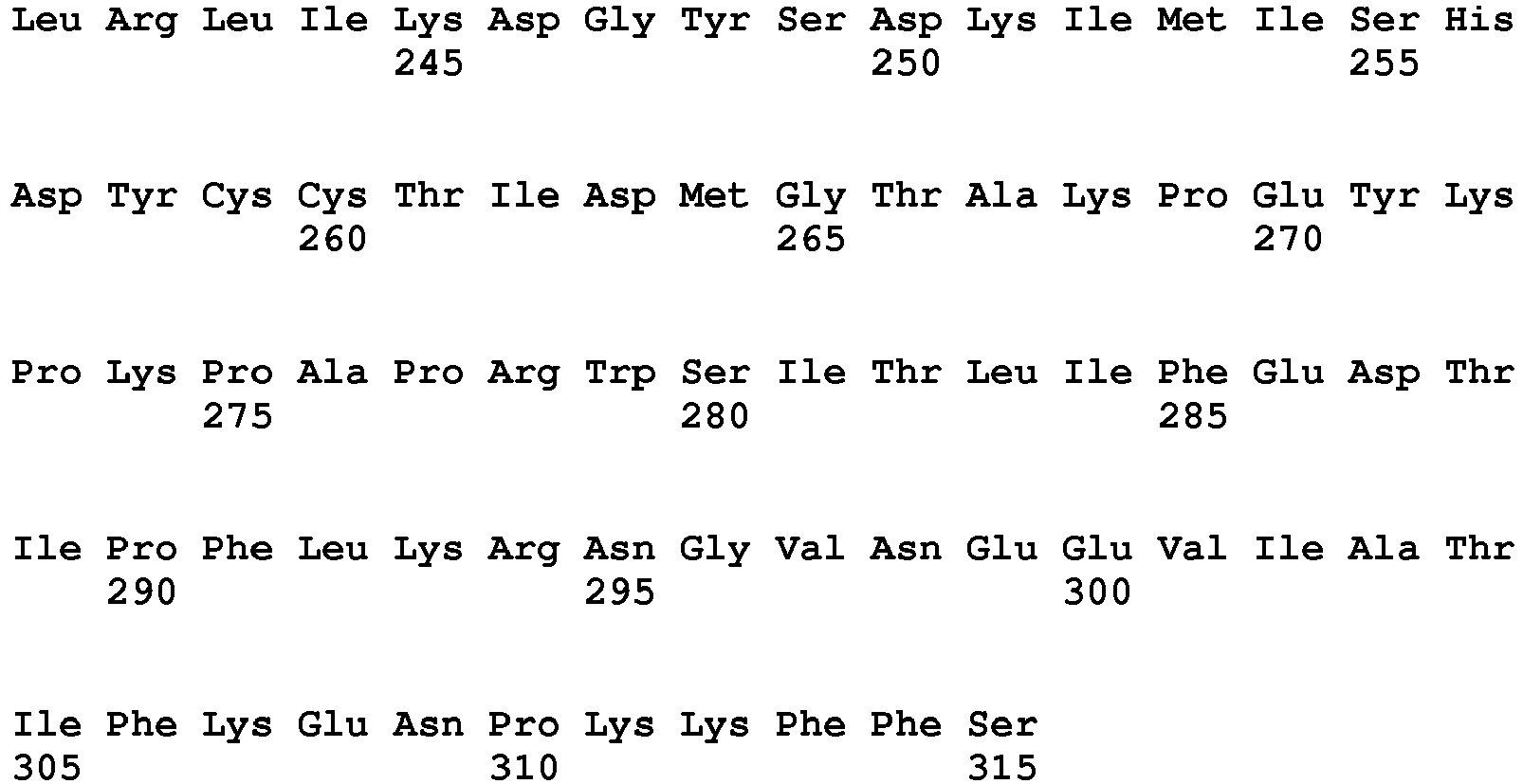
- <210> 164
<211> 948
<212> DNA
<213> Sulfolobus solfataricus - <400> 164

- <210> 165
<211> 315
<212> PRT
<213> Sulfolobus solfataricus - <400> 165


- <210> 166
<211> 948
<212> DNA
<213> Sulfolobus solfataricus - <400> 166

- <210> 167
<211> 315
<212> PRT
<213> Sulfolobus solfataricus - <400> 167

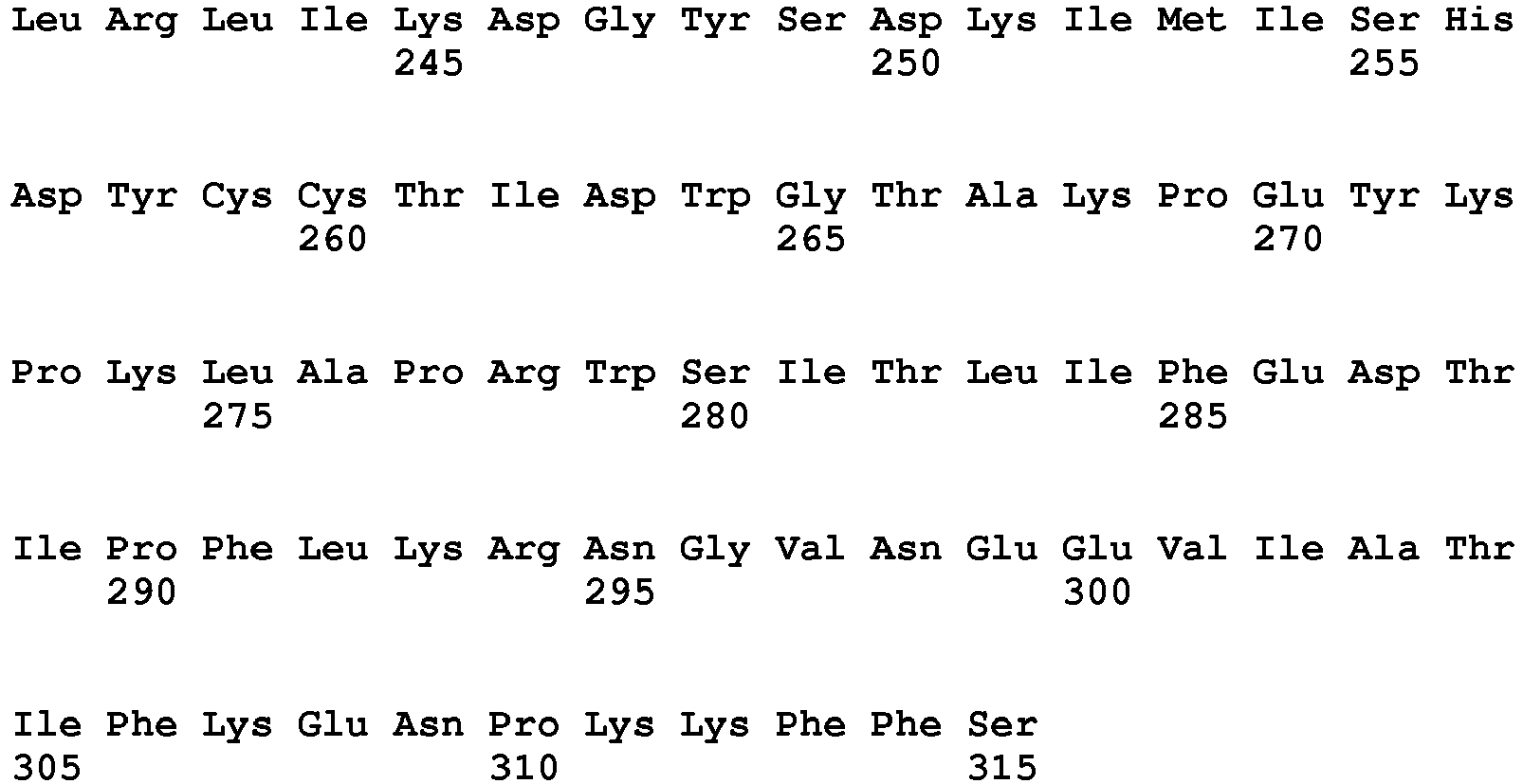
- <210> 168
<211> 948
<212> DNA
<213> Sulfolobus solfataricus - <400> 168

- <210> 169
<211> 315
<212> PRT
<213> Sulfolobus solfataricus - <400> 169


- <210> 170
<211> 948
<212> DNA
<213> Sulfolobus solfataricus - <400> 170

- <210> 171
<211> 315
<212> PRT
<213> Sulfolobus solfataricus - <400> 171
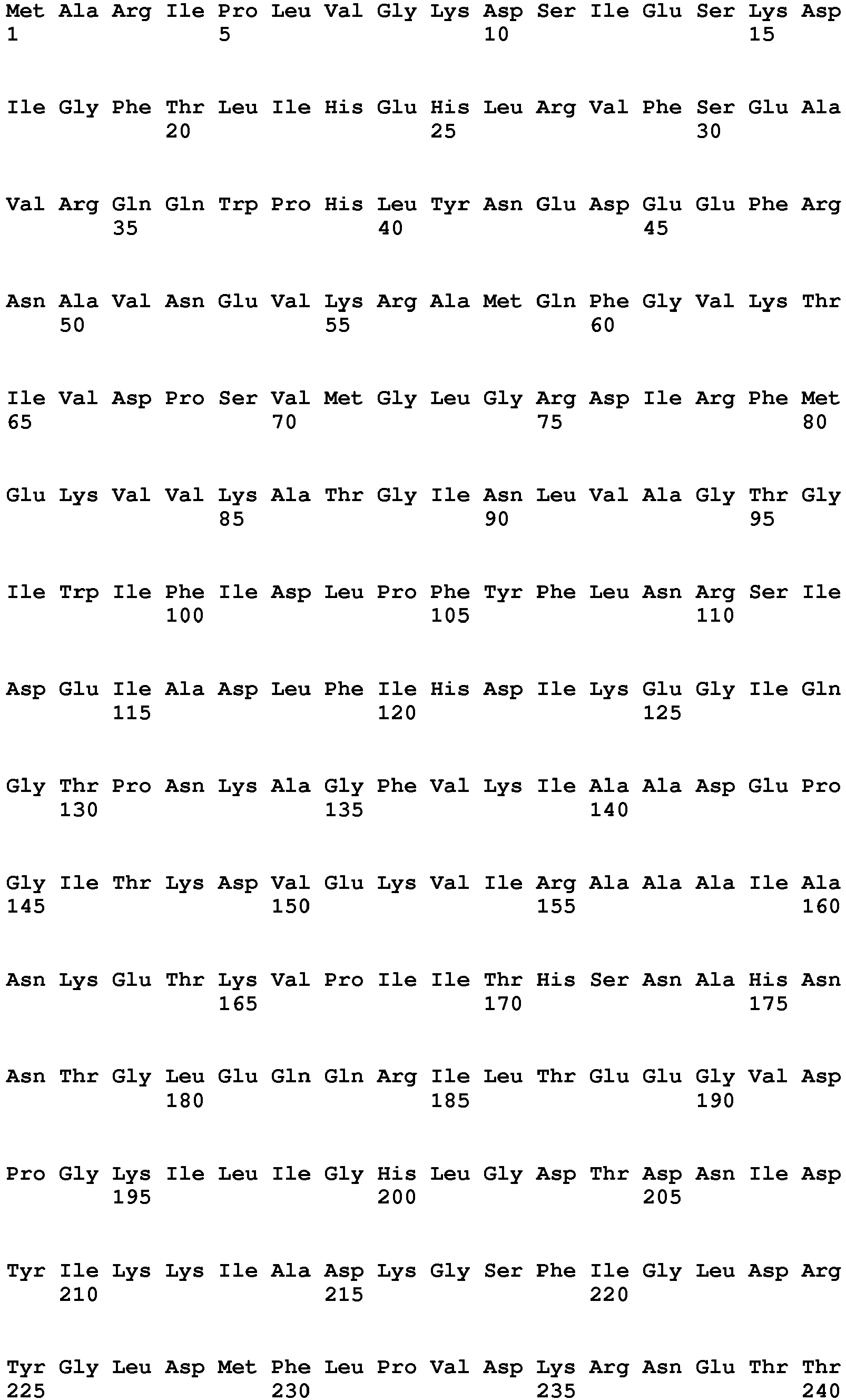

- <210> 172
<211> 948
<212> DNA
<213> Sulfolobus solfataricus - <400> 172

- <210> 173
<211> 315
<212> PRT
<213> Sulfolobus solfataricus - <400> 173


- <210> 174
<211> 948
<212> DNA
<213> Sulfolobus solfataricus - <400> 174

- <210> 175
<211> 315
<212> PRT
<213> Sulfolobus solfataricus - <400> 175


- <210> 176
<211> 948
<212> DNA
<213> Sulfolobus solfataricus - <400> 176

- <210> 177
<211> 315
<212> PRT
<213> Sulfolobus solfataricus - <400> 177


- <210> 178
<211> 948
<212> DNA
<213> Sulfolobus solfataricus - <400> 178

- <210> 179
<211> 315
<212> PRT
<213> Sulfolobus solfataricus - <400> 179


- <210> 180
<211> 951
<212> DNA
<213> Sulfolobus acidocaldarius - <400> 180

- <210> 181
<211> 316
<212> PRT
<213> Sulfolobus acidocaldarius - <400> 181


- <210> 182
<211> 951
<212> DNA
<213> Sulfolobus acidocaldarius - <400> 182

- <210> 183
<211> 316
<212> PRT
<213> Sulfolobus acidocaldarius - <400> 183


- <210> 184
<211> 951
<212> DNA
<213> Sulfolobus acidocaldarius - <400> 184

- <210> 185
<211> 316
<212> PRT
<213> Sulfolobus acidocaldarius - <400> 185


- <210> 186
<211> 951
<212> DNA
<213> Sulfolobus acidocaldarius - <400> 186

- <210> 187
<211> 316
<212> PRT
<213> Sulfolobus acidocaldarius - <400> 187


- <210> 188
<211> 951
<212> DNA
<213> Sulfolobus acidocaldarius - <400> 188

- <210> 189
<211> 316
<212> PRT
<213> Sulfolobus acidocaldarius - <400> 189


- <210> 190
<211> 951
<212> DNA
<213> Sulfolobus acidocaldarius - <400> 190

- <210> 191
<211> 316
<212> PRT
<213> Sulfolobus acidocaldarius - <400> 191


- <210> 192
<211> 951
<212> DNA
<213> Sulfolobus acidocaldarius - <400> 192

- <210> 193
<211> 316
<212> PRT
<213> Sulfolobus acidocaldarius - <400> 193


- <210> 194
<211> 954
<212> DNA
<213> Sulfolobus acidocaldarius - <400> 194

- <210> 195
<211> 316
<212> PRT
<213> Sulfolobus acidocaldarius - <400> 195


- <210> 196
<211> 954
<212> DNA
<213> Sulfolobus acidocaldarius - <400> 196

- <210> 197
<211> 316
<212> PRT
<213> Sulfolobus acidocaldarius - <400> 197


- <210> 198
<211> 954
<212> DNA
<213> Sulfolobus acidocaldarius - <400> 198

- <210> 199
<211> 316
<212> PRT
<213> Sulfolobus acidocaldarius - <400> 199


- <210> 200
<211> 954
<212> DNA
<213> Sulfolobus acidocaldarius - <400> 200

- <210> 201
<211> 316
<212> PRT
<213> Sulfolobus acidocaldarius - <400> 201


- <210> 202
<211> 954
<212> DNA
<213> Sulfolobus acidocaldarius - <400> 202

- <210> 203
<211> 316
<212> PRT
<213> Sulfolobus acidocaldarius - <400> 203


- <210> 204
<211> 954
<212> DNA
<213> Sulfolobus acidocaldarius - <400> 204

- <210> 205
<211> 316
<212> PRT
<213> Sulfolobus acidocaldarius - <400> 205


- <210> 206
<211> 954
<212> DNA
<213> Sulfolobus acidocaldarius - <400> 206

- <210> 207
<211> 316
<212> PRT
<213> Sulfolobus acidocaldarius - <400> 207


- <210> 208
<211> 954
<212> DNA
<213> Sulfolobus acidocaldarius - <400> 208

- <210> 209
<211> 316
<212> PRT
<213> Sulfolobus acidocaldarius - <400> 209


- <210> 210
<211> 954
<212> DNA
<213> Sulfolobus acidocaldarius - <400> 210

- <210> 211
<211> 316
<212> PRT
<213> Sulfolobus acidocaldarius - <400> 211

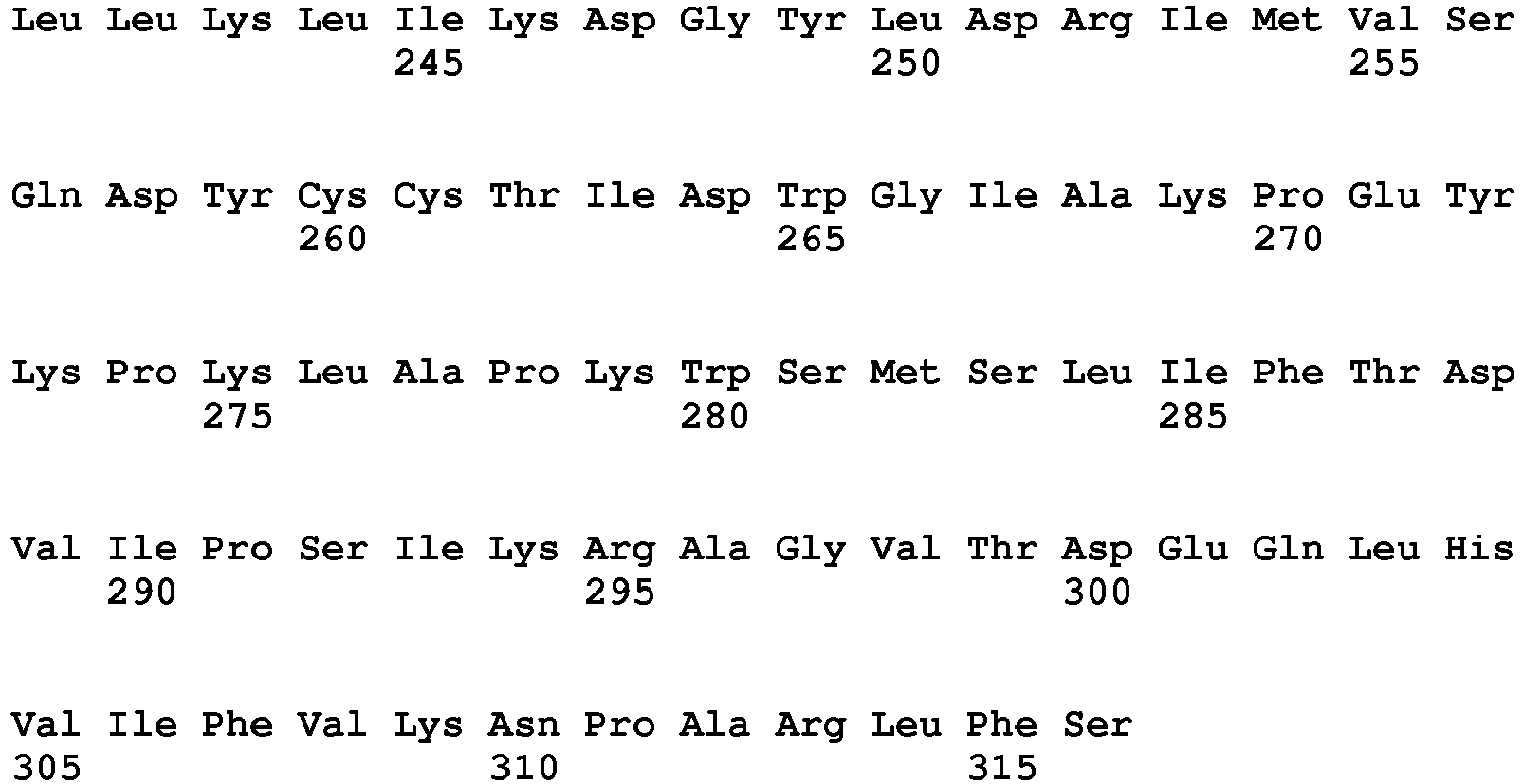
- <210> 212
<211> 953
<212> DNA
<213> Sulfolobus acidocaldarius - <400> 212

- <210> 213
<211> 316
<212> PRT
<213> Sulfolobus acidocaldarius - <400> 213


- <210> 214
<211> 954
<212> DNA
<213> Sulfolobus acidocaldarius - <400> 214

- <210> 215
<211> 316
<212> PRT
<213> Sulfolobus acidocaldarius - <400> 215


- <210> 216
<211> 954
<212> DNA
<213> Sulfolobus acidocaldarius - <400> 216

- <210> 217
<211> 316
<212> PRT
<213> Sulfolobus acidocaldarius - <400> 217


- <210> 218
<211> 954
<212> DNA
<213> Sulfolobus acidocaldarius - <400> 218

- <210> 219
<211> 316
<212> PRT
<213> Sulfolobus acidocaldarius - <400> 219

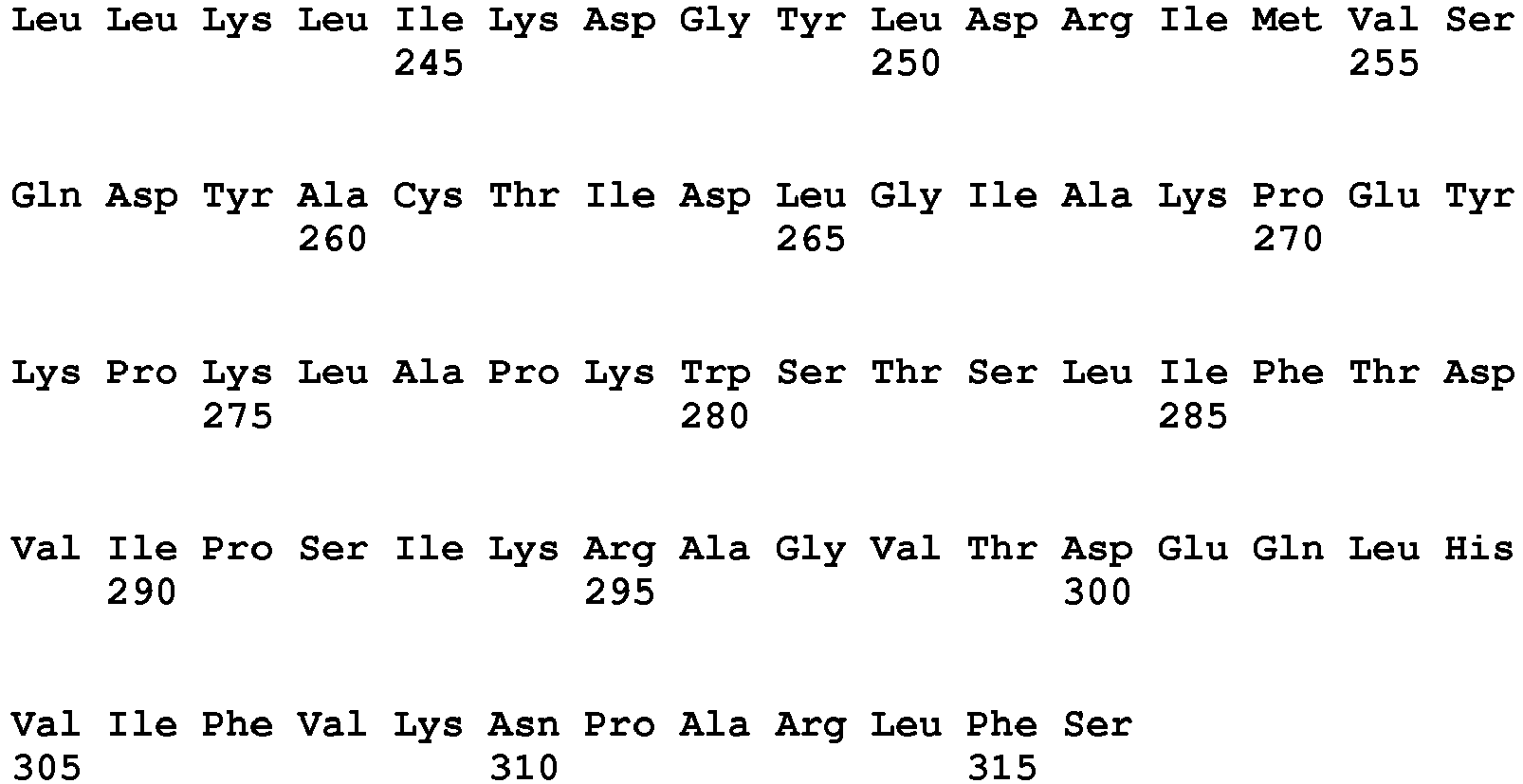
- <210> 220
<211> 954
<212> DNA
<213> Sulfolobus acidocaldarius - <400> 220

- <210> 221
<211> 316
<212> PRT
<213> Sulfolobus acidocaldarius - <400> 221


- <210> 222
<211> 954
<212> DNA
<213> Sulfolobus acidocaldarius - <400> 222

- <210> 223
<211> 316
<212> PRT
<213> Sulfolobus acidocaldarius - <400> 223


- <210> 224
<211> 948
<212> DNA
<213> Sulfolobus islandicus - <400> 224

- <210> 225
<211> 315
<212> PRT
<213> Sulfolobus islandicus - <400> 225


- <210> 226
<211> 948
<212> DNA
<213> Sulfolobus islandicus - <400> 226

- <210> 227
<211> 315
<212> PRT
<213> Sulfolobus islandicus - <400> 227


- <210> 228
<211> 948
<212> DNA
<213> Sulfolobus islandicus - <400> 228

- <210> 229
<211> 315
<212> PRT
<213> Sulfolobus islandicus - <400> 229


- <210> 230
<211> 948
<212> DNA
<213> Sulfolobus islandicus - <400> 230
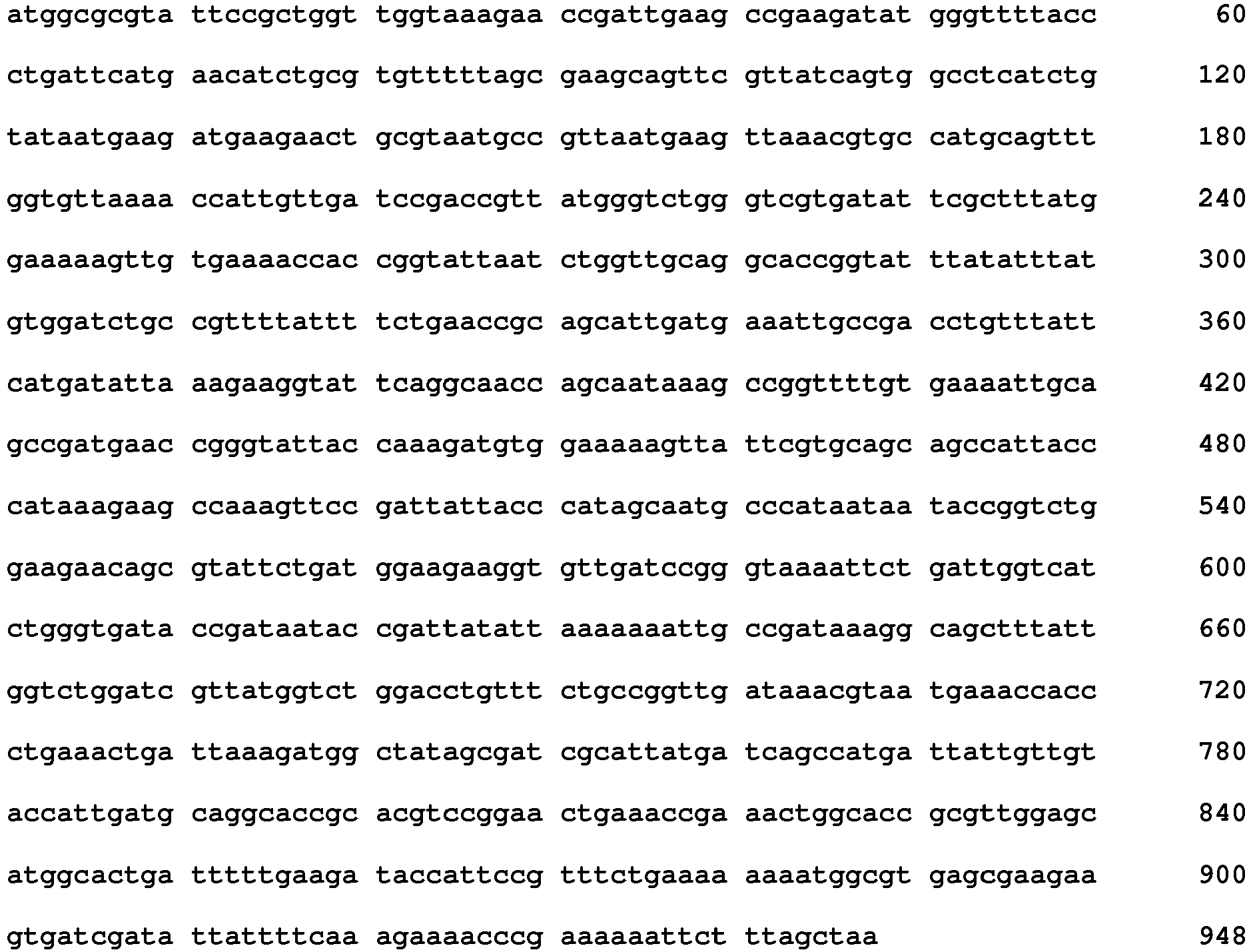
- <210> 231
<211> 315
<212> PRT
<213> Sulfolobus islandicus - <400> 231


- <210> 232
<211> 948
<212> DNA
<213> Sulfolobus islandicus - <400> 232

- <210> 233
<211> 315
<212> PRT
<213> Sulfolobus islandicus - <400> 233


- <210> 234
<211> 948
<212> DNA
<213> Sulfolobus islandicus - <400> 234

- <210> 235
<211> 315
<212> PRT
<213> Sulfolobus islandicus - <400> 235


- <210> 236
<211> 948
<212> DNA
<213> Sulfolobus islandicus - <400> 236
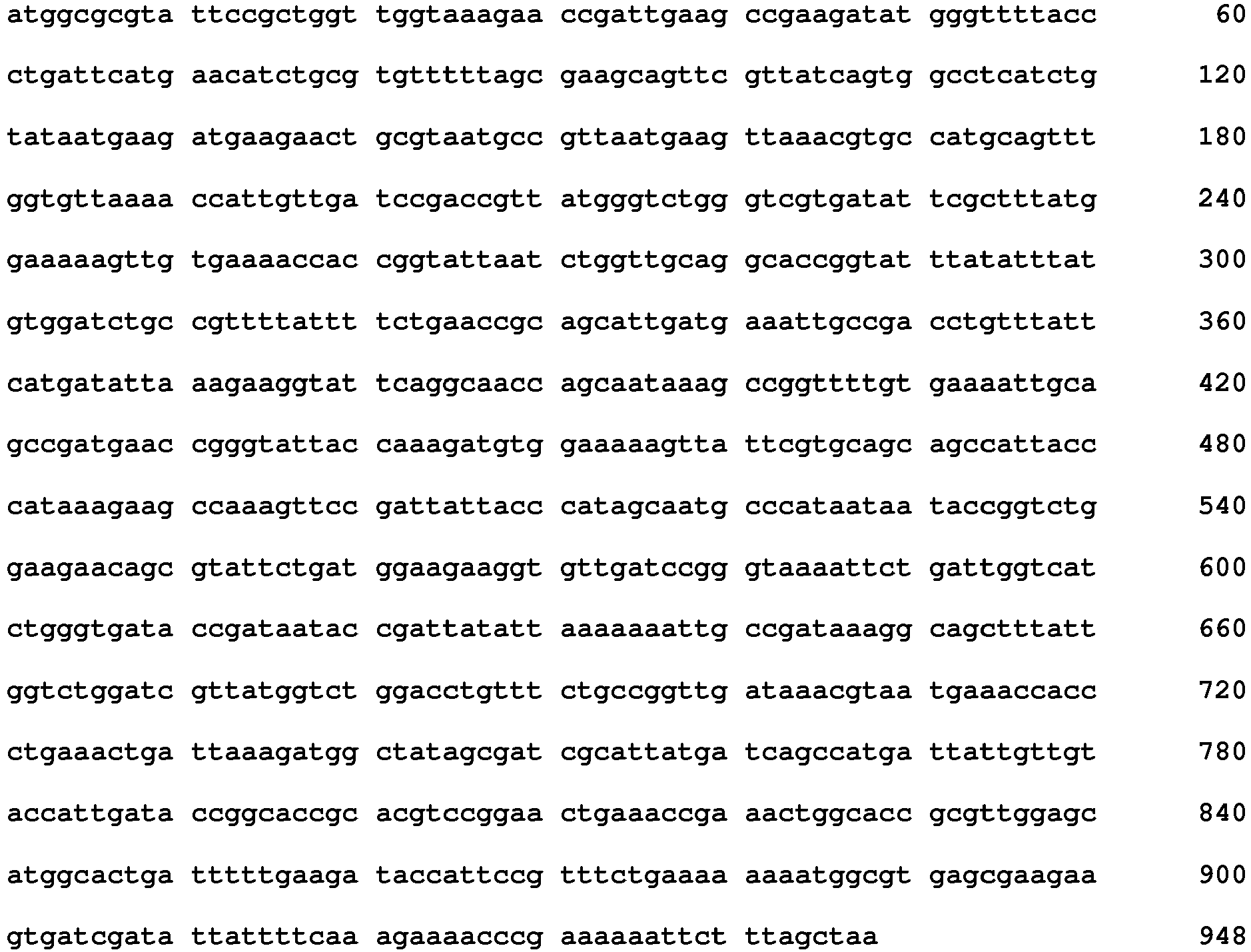
- <210> 237
<211> 315
<212> PRT
<213> Sulfolobus islandicus - <400> 237


- <210> 238
<211> 948
<212> DNA
<213> Sulfolobus islandicus - <400> 238

- <210> 239
<211> 315
<212> PRT
<213> Sulfolobus islandicus - <400> 239


- <210> 240
<211> 948
<212> DNA
<213> Sulfolobus islandicus - <400> 240

- <210> 241
<211> 315
<212> PRT
<213> Sulfolobus islandicus - <400> 241

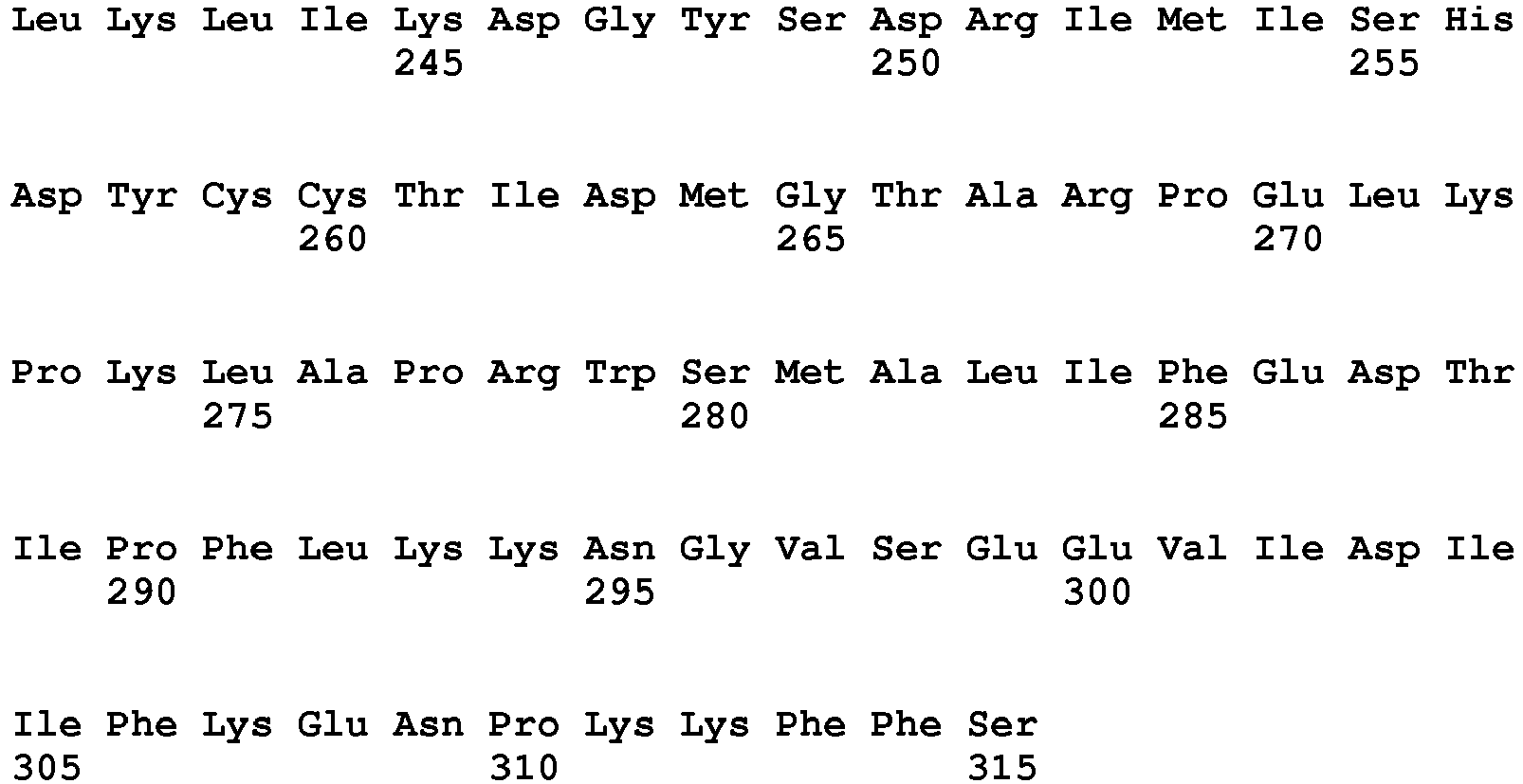
- <210> 242
<211> 948
<212> DNA
<213> Sulfolobus islandicus - <400> 242

- <210> 243
<211> 315
<212> PRT
<213> Sulfolobus islandicus - <400> 243
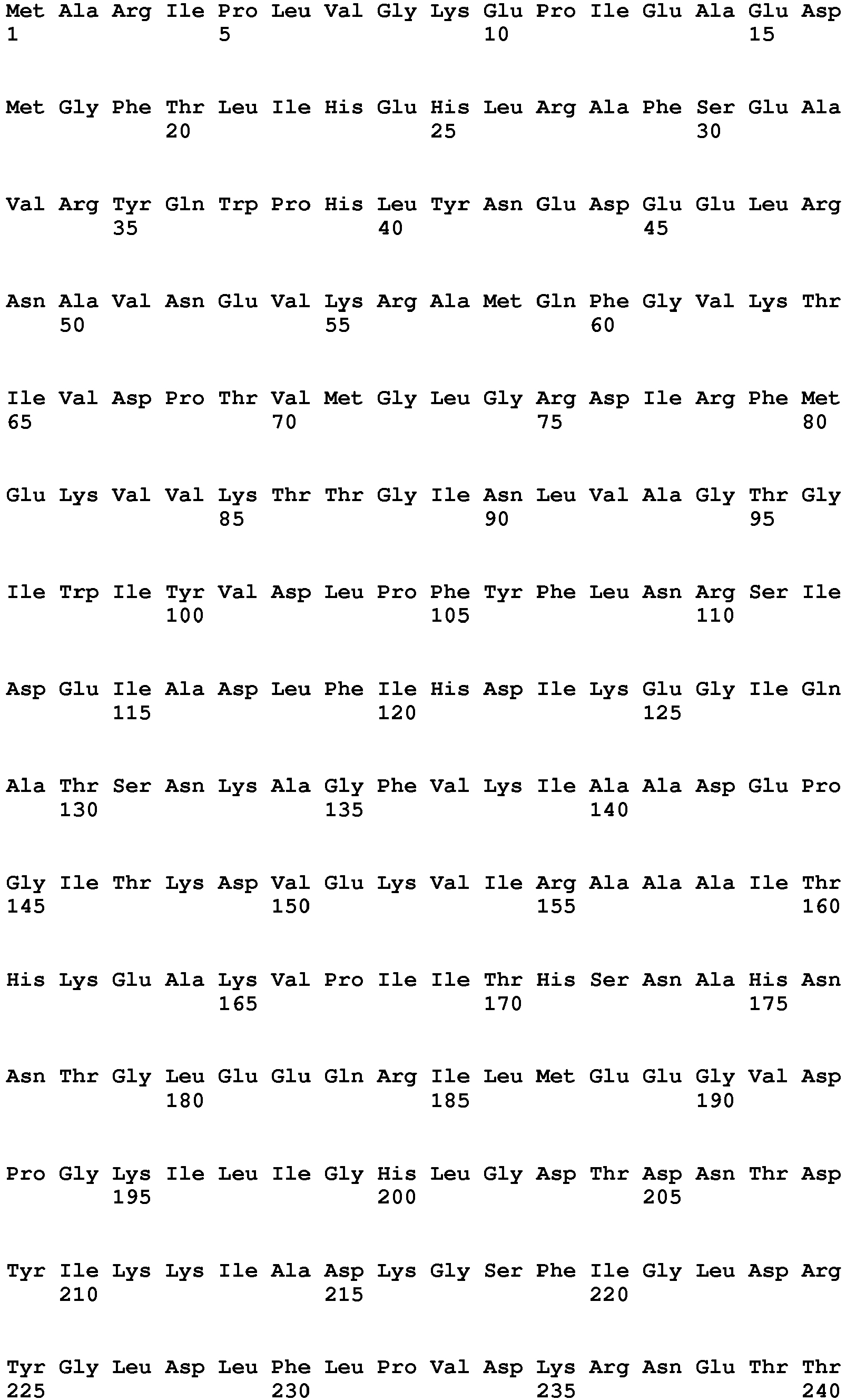
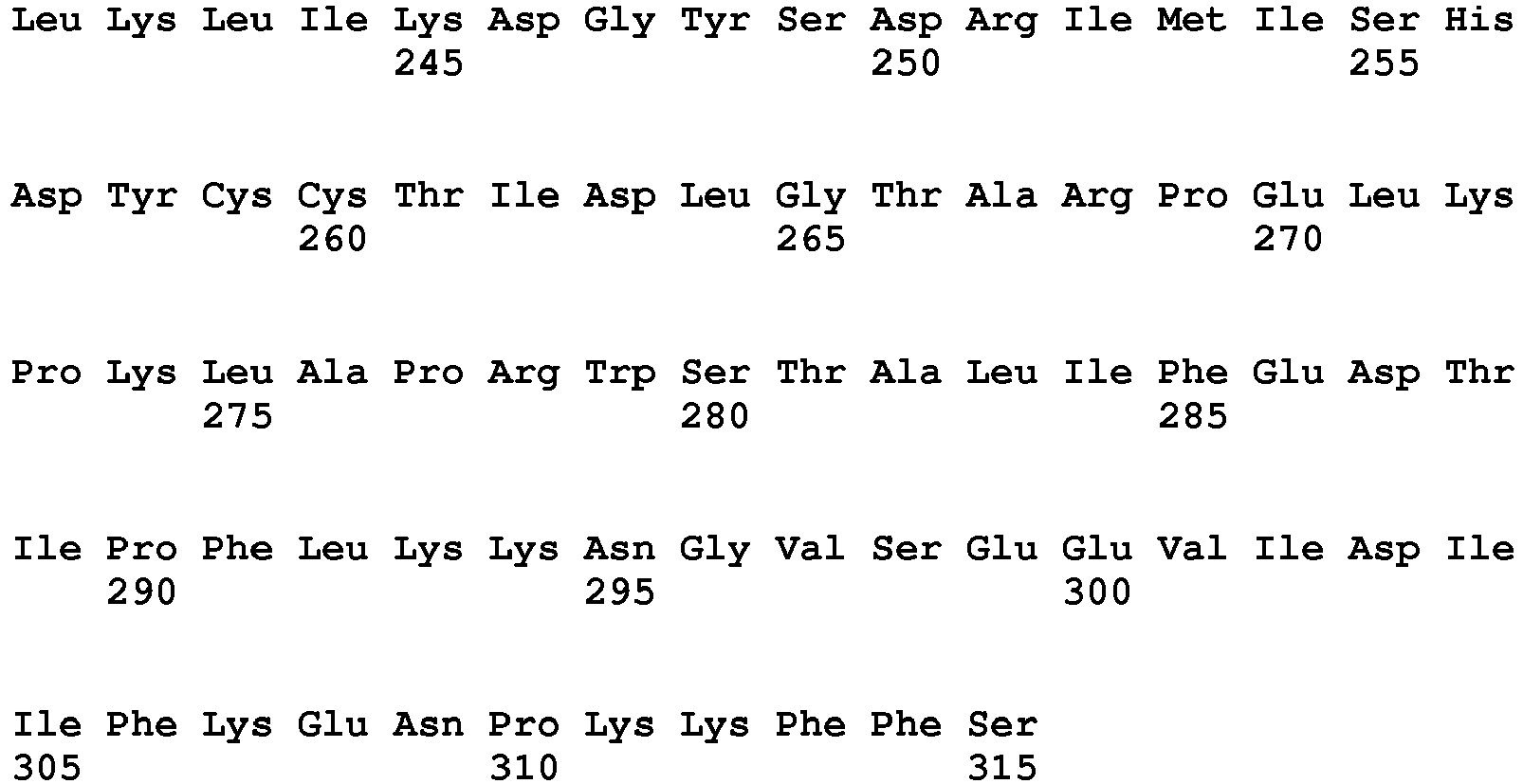
- <210> 244
<211> 948
<212> DNA
<213> Sulfolobus islandicus - <400> 244

- <210> 245
<211> 315
<212> PRT
<213> Sulfolobus islandicus - <400> 245


- <210> 246
<211> 948
<212> DNA
<213> Sulfolobus islandicus - <400> 246

- <210> 247
<211> 315
<212> PRT
<213> Sulfolobus islandicus - <400> 247


- <210> 248
<211> 948
<212> DNA
<213> Sulfolobus islandicus - <400> 248

- <210> 249
<211> 315
<212> PRT
<213> Sulfolobus islandicus - <400> 249


- <210> 250
<211> 948
<212> DNA
<213> Sulfolobus islandicus - <400> 250

- <210> 251
<211> 315
<212> PRT
<213> Sulfolobus islandicus - <400> 251


- <210> 252
<211> 948
<212> DNA
<213> Sulfolobus islandicus - <400> 252

- <210> 253
<211> 315
<212> PRT
<213> Sulfolobus islandicus - <400> 253


- <210> 254
<211> 948
<212> DNA
<213> Sulfolobus islandicus - <400> 254

- <210> 255
<211> 315
<212> PRT
<213> Sulfolobus islandicus - <400> 255


- <210> 256
<211> 948
<212> DNA
<213> Sulfolobus islandicus - <400> 256

- <210> 257
<211> 315
<212> PRT
<213> Sulfolobus islandicus - <400> 257


- <210> 258
<211> 948
<212> DNA
<213> Sulfolobus islandicus - <400> 258

- <210> 259
<211> 315
<212> PRT
<213> Sulfolobus islandicus - <400> 259


- <210> 260
<211> 948
<212> DNA
<213> Sulfolobus islandicus - <400> 260

- <210> 261
<211> 315
<212> PRT
<213> Sulfolobus islandicus - <400> 261


- <210> 262
<211> 948
<212> DNA
<213> Sulfolobus islandicus - <400> 262

- <210> 263
<211> 315
<212> PRT
<213> Sulfolobus islandicus - <400> 263


- <210> 264
<211> 948
<212> DNA
<213> Sulfolobus islandicus - <400> 264

- <210> 265
<211> 315
<212> PRT
<213> Sulfolobus islandicus - <400> 265
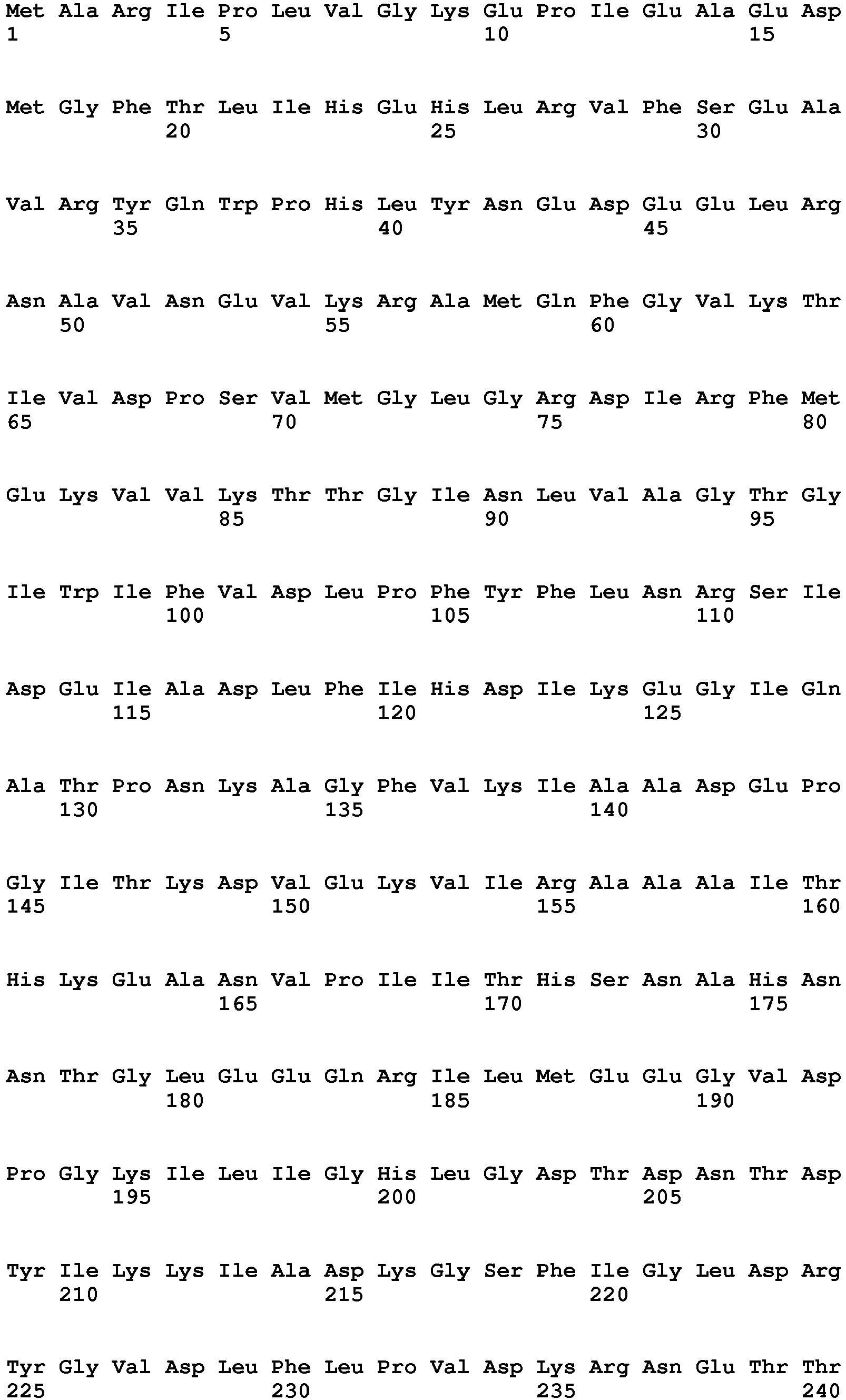

- <210> 266
<211> 948
<212> DNA
<213> Sulfolobus islandicus - <400> 266

- <210> 267
<211> 315
<212> PRT
<213> Sulfolobus islandicus - <400> 267


- <210> 268
<211> 30
<212> DNA
<213> Artificial Sequence - <220>
<223> W263M-F - <400> 268
tgcaccattg atatgggcac cgcaaaaccg 30 - <210> 269
<211> 30
<212> DNA
<213> Artificial Sequence - <220>
<223> W263M-R - <400> 269
cggttttgcg gtgcccatat caatggtgca 30 - <210> 270
<211> 30
<212> DNA
<213> Artificial Sequence - <220>
<223> W263L-F - <400> 270
tgcaccattg atctgggcac cgcaaaaccg 30 - <210> 271
<211> 30
<212> DNA
<213> Artificial Sequence - <220>
<223> W263L-R - <400> 271
cggttttgcg gtgcccagat caatggtgca 30 - <210> 272
<211> 30
<212> DNA
<213> Artificial Sequence - <220>
<223> W263A-F - <400> 272
tgcaccattg atgcaggcac cgcaaaaccg 30 - <210> 273
<211> 30
<212> DNA
<213> Artificial Sequence - <220>
<223> W263A-R - <400> 273
cggttttgcg gtgcctgcat caatggtgca 30 - <210> 274
<211> 30
<212> DNA
<213> Artificial Sequence - <220>
<223> W263I-F - <400> 274
tgcaccattg atattggcac cgcaaaaccg 30 - <210> 275
<211> 30
<212> DNA
<213> Artificial Sequence - <220>
<223> W263I-R - <400> 275
cggttttgcg gtgccaatat caatggtgca 30 - <210> 276
<211> 30
<212> DNA
<213> Artificial Sequence - <220>
<223> W263V-F - <400> 276
tgcaccattg atgttggcac cgcaaaaccg 30 - <210> 277
<211> 30
<212> DNA
<213> Artificial Sequence - <220>
<223> W263V-R - <400> 277
cggttttgcg gtgccaacat caatggtgca 30 - <210> 278
<211> 30
<212> DNA
<213> Artificial Sequence - <220>
<223> W263T-F - <400> 278
tgcaccattg ataccggcac cgcaaaaccg 30 - <210> 279
<211> 30
<212> DNA
<213> Artificial Sequence - <220>
<223> W263T-R - <400> 279
cggttttgcg gtgccggtat caatggtgca 30 - <210> 280
<211> 30
<212> DNA
<213> Artificial Sequence - <220>
<223> C258L-F - <400> 280
attagccatg attatctgtg caccattgat 30 - <210> 281
<211> 30
<212> DNA
<213> Artificial Sequence - <220>
<223> C258L-R - <400> 281
atcaatggtg cacagataat catggctaat 30 - <210> 282
<211> 30
<212> DNA
<213> Artificial Sequence - <220>
<223> I261F-F - <400> 282
gattattgct gcacctttga ttggggcacc 30 - <210> 283
<211> 30
<212> DNA
<213> Artificial Sequence - <220>
<223> I261F-R - <400> 283
ggtgccccaa tcaaaggtgc agcaataatc 30 - <210> 284
<211> 30
<212> DNA
<213> Artificial Sequence - <220>
<223> V27A-F - <400> 284
gaacatctgc gtgcatttag cgaagcagtt 30 - <210> 285
<211> 30
<212> DNA
<213> Artificial Sequence - <220>
<223> V27A-R - <400> 285
aactgcttcg ctaaatgcac gcagatgttc 30 - <210> 286
<211> 33
<212> DNA
<213> Artificial Sequence - <220>
<223> Y97W-F - <400> 286
ggcaccggta tttggattta tatcgatctg ccg 33 - <210> 287
<211> 33
<212> DNA
<213> Artificial Sequence - <220>
<223> Y97W-R - <400> 287
cggcagatcg atataaatcc aaataccggt gcc 33 - <210> 288
<211> 33
<212> DNA
<213> Artificial Sequence - <220>
<223> L228M-F - <400> 288
gatcgttatg gtctggacat gtttctgccg gtt 33 - <210> 289
<211> 33
<212> DNA
<213> Artificial Sequence - <220>
<223> L228M-R - <400> 289
aaccggcaga aacatgtcca gaccataacg atc 33 - <210> 290
<211> 31
<212> DNA
<213> Artificial Sequence - <220>
<223> I280T-F - <400> 290
gcaccgcgtt ggagcactac cctgattttt g 31 - <210> 291
<211> 31
<212> DNA
<213> Artificial Sequence - <220>
<223> I280T-R - <400> 291
caaaaatcag ggtagtgctc caacgcggtg c 31 - <210> 292
<211> 43
<212> DNA
<213> Artificial Sequence - <220>
<223> F46L-F - <400> 292
ctgtataatg aagatgaaga actgcgcaat gccgtgaatg aag 43 - <210> 293
<211> 43
<212> DNA
<213> Artificial Sequence - <220>
<223> F46L-R - <400> 293
cttcattcac ggcattgcgc agttcttcat cttcattata cag 43 - <210> 294
<211> 45
<212> DNA
<213> Artificial Sequence - <220>
<223> I76T-F - <400> 294
gttatgggtc tgggtcgtga tactcgtttt atggaaaaag ttgtg 45 - <210> 295
<211> 45
<212> DNA
<213> Artificial Sequence - <220>
<223> I76T-R - <400> 295
cacaactttt tccataaaac gagtatcacg acccagaccc ataac 45 - <210> 296
<211> 33
<212> DNA
<213> Artificial Sequence - <220>
<223> Y99F-F - <400> 296
ggcaccggta tttatatttt tatcgatctg ccg 33 - <210> 297
<211> 33
<212> DNA
<213> Artificial Sequence - <220>
<223> Y99F-R - <400> 297
cggcagatcg ataaaaatat aaataccggt gcc 33 - <210> 298
<211> 34
<212> DNA
<213> Artificial Sequence - <220>
<223> L130P-F - <400> 298
ggcattcagg gcaccccgaa taaagcaggt tttg 34 - <210> 299
<211> 34
<212> DNA
<213> Artificial Sequence - <220>
<223> L130P-R - <400> 299
caaaacctgc tttattcggg gtgccctgaa tgcc 34 - <210> 300
<211> 33
<212> DNA
<213> Artificial Sequence - <220>
<223> L226V-F - <400> 300
gatcgttatg gtgtggacct gtttctgccg gtt 33 - <210> 301
<211> 33
<212> DNA
<213> Artificial Sequence - <220>
<223> L226V-R - <400> 301
aaccggcaga aacaggtcca caccataacg atc 33 - <210> 302
<211> 30
<212> DNA
<213> Artificial Sequence - <220>
<223> L72I-F - <400> 302
gttatgggta ttggtcgtga tattcgtttt 30 - <210> 303
<211> 30
<212> DNA
<213> Artificial Sequence - <220>
<223> L72I-R - <400> 303
aaaacgaata tcacgaccaa tacccataac 30 - <210> 304
<211> 33
<212> DNA
<213> Artificial Sequence - <220>
<223> F229S-F - <400> 304
gatcgttatg gtctggacct gtctctgccg gtt 33 - <210> 305
<211> 33
<212> DNA
<213> Artificial Sequence - <220>
<223> F229S-R - <400> 305
aaccggcaga gacaggtcca gaccataacg atc 33 - <210> 306
<211> 30
<212> DNA
<213> Artificial Sequence - <220>
<223> T68S-F - <400> 306
aaaaccattg ttgatccgag tgttatgggt 30 - <210> 307
<211> 30
<212> DNA
<213> Artificial Sequence - <220>
<223> T68S-R - <400> 307
acccataaca ctcggatcaa caatggtttt 30 - <210> 308
<211> 33
<212> DNA
<213> Artificial Sequence - <220>
<223> K8E-F - <400> 308
cattccgctg gttggtgaag atagcattga aag 33 - <210> 309
<211> 33
<212> DNA
<213> Artificial Sequence - <220>
<223> K8E-R - <400> 309
ctttcaatgc tatcttcacc aaccagcgga atg 33 - <210> 310
<211> 30
<212> DNA
<213> Artificial Sequence - <220>
<223> P67S-F - <400> 310
aaaaccattg ttgattcgac cgttatgggt 30 - <210> 311
<211> 30
<212> DNA
<213> Artificial Sequence - <220>
<223> P67S-R - <400> 311
acccataacg gtcgaatcaa caatggtttt 30 - <210> 312
<211> 32
<212> DNA
<213> Artificial Sequence - <220>
<223> K164N-F - <400> 312
caataaagaa accaatgttc cgattattac cc 32 - <210> 313
<211> 32
<212> DNA
<213> Artificial Sequence - <220>
<223> K164N-R - <400> 313
gggtaataat cggaacattg gtttctttat tg 32
Claims (13)
- Use of a single mutation to increase a lactonase catalytic activity of a hyperthermophilic phosphotriesterase which has a sequence defined by the consensus sequence of SEQ ID NO : 1,
wherein the amino acid W in position 265 is substituted by an amino acid chosen in the group consisting of the amino acids isoleucine I, valine V, threonine T or alanine A,
to obtain a mutated hyperthermophilic phosphotriesterase which has an increased lactonase catalytic activity in comparison of the lactonase activity of said hyperthermophilic phosphotriesterase defined by the consensus sequence of SEQ ID NO : 1. - Use according to claim 1, wherein hydrolyzis of 3-oxo-C12 AHL by said mutated hyperthermophilic phosphotriesterase is increased by at least 2 times, preferably from 2 to 70 times, more preferably from 40 to 50 times, in comparison of hydrolyzis of 3-oxo-C12 AHL by said hyperthermophilic phosphotriesterase.
- Use according to any of claims 1 to 2, wherein said mutated hyperthermophilic phosphotriesterase has a thermostability, which is substantially similar to the thermostability of said hyperthermophilic phosphotriesterase.
- Use according to any of claims 1 to 3, wherein the amino acid in position 2 in SEQ ID NO : 1 is missing.
- Use according to any of claims 1 to 4, wherein said hyperthermophilic phosphotriesterase is chosen in the group consisting of SEQ ID NO : 3 from Sulfolobus solfataricus, SEQ ID NO : 5 from Sulfolobus acidocalaricus, or from SEQ ID NO : 7 Sulfolobus islandicus,
wherein said sequences SEQ ID NO : 3, SEQ ID NO : 5 and SEQ ID NO : 7 belong to the consensus SEQ ID NO : 1,
the amino acid in position 2 in SEQ ID NO: 1 being missing from SEQ ID NO: 5 and the amino acids in position 2 and 3 in SEQ ID NO: 1 being missing from SEQ ID NO: 3 and SEQ ID NO: 7. - Use according to any of claims 1 to 5, wherein said amino acid W in position 265 is substituted by an amino acid Isoleucine I.
- Use according to claims 1 to 5, said mutated hyperthermophilic PTE being chosen in the group consisting of : SEQ ID NO: 13, SEQ ID NO: 15, SEQ ID NO: 17, SEQ ID NO: 19, SEQ ID NO: 57, SEQ ID NO: 59, SEQ ID NO: 61, SEQ ID NO: 63, SEQ ID NO: 101, SEQ ID NO: 103, SEQ ID NO: 105 and SEQ ID NO: 107.
- Use of a mutated hyperthermophilic phosphotriesterase as defined in any of claims 1 to 7, to disrupt quorum-sensing in bacteria,
to limit the formation of biofilms, notably in boats or other sea equipments, or
to inhibit the fire blight in plants,the rotting of vegetables. - Phytosanitary composition or antibacterial composition comprising as active ingredient at least one mutated hyperthermophilic phosphotriesterase as defined in any of claims 1 to 7.
- Composition according to claim 9 comprising as active ingredient at least one mutated hyperthermophilic PTE as defined in any of claims 1 to 7 in combination with a pharmaceutically acceptable vehicle, possibly comprising at least one antibiotic selected from the group consisting of gentamycine, ciprofloxacin, ceftazidime, imipenem, tobramycine.
- Mutated hyperthermophilic phosphotriesterase as defined in any of claims 1 to 7, for its use as a medicament.
- Mutated hyperthermophilic phosphotriesterase as defined in any of claims 1 to 7, for its use in the treatment of:- bacterial infections,- pneumonia or nosocomial diseases, caused by bacteria using homoserin lactone substrates to communicate, in particular in the blood, wounds, burn, skin, biomaterial-body contact area,- dental plaque, or- eye infections or eye surface healing.
- A mutated hyperthermophilic phosphotriesterase having a lactonase activity, said mutated hyperthermophilic phosphotriesterase being defined by the consensus sequence SEQ ID NO : 1, wherein the tryptophan W in position 265 of the consensus sequence SEQ ID NO : 1 is substituted to obtain a mutated hyperthermophilic phosphotriesterase which has an increased lactonase catalytic activity in comparison of the lactonase activity of said hyperthermophilic phosphotriesterase corresponding to the consensus sequence of SEQ ID NO : 1,
wherein:- the tryptophan W in position 265 of the consensus sequence SEQ ID NO : 1 is substituted by a threonine T, an isoleucine I, a valine V or an alanine A, or- the tryptophan W in position 263 of the sequence SEQ ID NO : 3 is substituted by an isoleucine I, a valine V, a threonine T or an alanine A, the amino acids in position 2 and 3 in SEQ ID NO: 1 being missing from SEQ ID NO: 3.
Priority Applications (1)
| Application Number | Priority Date | Filing Date | Title |
|---|---|---|---|
| EP14716874.4A EP2983699B1 (en) | 2013-04-12 | 2014-04-14 | Sulfolobal phosphotriesterase-like (pll) lactonases activity having enhanced properties and the uses thereof |
Applications Claiming Priority (3)
| Application Number | Priority Date | Filing Date | Title |
|---|---|---|---|
| EP20130305483 EP2789344A1 (en) | 2013-04-12 | 2013-04-12 | Sulfolobal Phosphotriesterase-Like (PLL) lactonases activity having enhanced properties and the uses thereof |
| EP14716874.4A EP2983699B1 (en) | 2013-04-12 | 2014-04-14 | Sulfolobal phosphotriesterase-like (pll) lactonases activity having enhanced properties and the uses thereof |
| PCT/EP2014/057554 WO2014167140A1 (en) | 2013-04-12 | 2014-04-14 | Sulfolobal phosphotriesterase-like (pll) lactonases activity having enhanced properties and the uses thereof |
Publications (2)
| Publication Number | Publication Date |
|---|---|
| EP2983699A1 EP2983699A1 (en) | 2016-02-17 |
| EP2983699B1 true EP2983699B1 (en) | 2019-01-02 |
Family
ID=48190436
Family Applications (2)
| Application Number | Title | Priority Date | Filing Date |
|---|---|---|---|
| EP20130305483 Withdrawn EP2789344A1 (en) | 2013-04-12 | 2013-04-12 | Sulfolobal Phosphotriesterase-Like (PLL) lactonases activity having enhanced properties and the uses thereof |
| EP14716874.4A Active EP2983699B1 (en) | 2013-04-12 | 2014-04-14 | Sulfolobal phosphotriesterase-like (pll) lactonases activity having enhanced properties and the uses thereof |
Family Applications Before (1)
| Application Number | Title | Priority Date | Filing Date |
|---|---|---|---|
| EP20130305483 Withdrawn EP2789344A1 (en) | 2013-04-12 | 2013-04-12 | Sulfolobal Phosphotriesterase-Like (PLL) lactonases activity having enhanced properties and the uses thereof |
Country Status (5)
| Country | Link |
|---|---|
| US (2) | US10072252B2 (en) |
| EP (2) | EP2789344A1 (en) |
| CN (1) | CN105209061B (en) |
| CA (1) | CA2907976C (en) |
| WO (1) | WO2014167140A1 (en) |
Families Citing this family (8)
| Publication number | Priority date | Publication date | Assignee | Title |
|---|---|---|---|---|
| EP2789344A1 (en) * | 2013-04-12 | 2014-10-15 | Centre National De La Recherche Scientifique | Sulfolobal Phosphotriesterase-Like (PLL) lactonases activity having enhanced properties and the uses thereof |
| CA3221941A1 (en) * | 2016-03-16 | 2017-09-21 | Spogen Biotech Inc. | Methods for promoting plant health using free enzymes and microorganisms that overexpress enzymes |
| US10081800B1 (en) * | 2017-08-03 | 2018-09-25 | Fornia Biosolutions, Inc. | Lactonase enzymes and methods of using same |
| IT201700059318A1 (en) * | 2017-10-09 | 2019-04-09 | Giuseppe Manco | INTEGRATED SYSTEM FOR DETECTION AND DEGRADATION OF NERVINI AGENTS BY MEANS OF THERMO-STABILIZABLE BIOCATALIZERS |
| FR3093894B1 (en) * | 2019-03-19 | 2022-07-08 | Fond Mediterranee Infection | NEW USES OF A MUTED LACTONASE AND COMPOSITIONS |
| CA3143688A1 (en) * | 2019-06-17 | 2020-12-24 | Migal Galilee Research Institute Ltd. | Stabilized mutants of quorum quenching lactonase and use thereof in treatment of pathogens |
| US20230225332A1 (en) * | 2020-06-17 | 2023-07-20 | Migal Galilee Research Institute Ltd. | Compositions comprising aromatic dipeptides-based structures encapsulating an esterase and uses thereof |
| FR3132715A1 (en) * | 2022-02-17 | 2023-08-18 | Gene And Green Tk | NEW MUTED LACTONASE ENZYMES, COMPOSITIONS CONTAINING THEM AND THEIR USES |
Family Cites Families (3)
| Publication number | Priority date | Publication date | Assignee | Title |
|---|---|---|---|---|
| FR2915489B1 (en) | 2007-04-27 | 2009-07-31 | Univ Henri Poincare Nancy I Et | MUTANT HYPERTHERMOPHILIC PHOSPHOTRIESTERASES AND USES THEREOF |
| WO2013040501A1 (en) * | 2011-09-16 | 2013-03-21 | Pharmathene, Inc. | Compositions and combinations of organophosphorus bioscavengers and hyaluronan-degrading enzymes, and uses thereof |
| EP2789344A1 (en) * | 2013-04-12 | 2014-10-15 | Centre National De La Recherche Scientifique | Sulfolobal Phosphotriesterase-Like (PLL) lactonases activity having enhanced properties and the uses thereof |
-
2013
- 2013-04-12 EP EP20130305483 patent/EP2789344A1/en not_active Withdrawn
-
2014
- 2014-04-14 WO PCT/EP2014/057554 patent/WO2014167140A1/en not_active Ceased
- 2014-04-14 CA CA2907976A patent/CA2907976C/en active Active
- 2014-04-14 EP EP14716874.4A patent/EP2983699B1/en active Active
- 2014-04-14 CN CN201480027328.0A patent/CN105209061B/en active Active
- 2014-04-14 US US14/782,703 patent/US10072252B2/en active Active
-
2018
- 2018-08-07 US US16/057,320 patent/US20190040369A1/en not_active Abandoned
Non-Patent Citations (1)
| Title |
|---|
| None * |
Also Published As
| Publication number | Publication date |
|---|---|
| US20160115462A1 (en) | 2016-04-28 |
| EP2789344A1 (en) | 2014-10-15 |
| WO2014167140A1 (en) | 2014-10-16 |
| CN105209061A (en) | 2015-12-30 |
| US20190040369A1 (en) | 2019-02-07 |
| CN105209061B (en) | 2024-11-26 |
| US10072252B2 (en) | 2018-09-11 |
| EP2983699A1 (en) | 2016-02-17 |
| CA2907976A1 (en) | 2014-10-16 |
| CA2907976C (en) | 2023-01-03 |
Similar Documents
| Publication | Publication Date | Title |
|---|---|---|
| US10072252B2 (en) | Sulfolobal phosphotriesterase-like (PLL) lactonases activity having enhanced properties and the uses thereof | |
| CN111918960B (en) | Methods and compositions for preventing microbial infections | |
| ES2729123T3 (en) | Breaking biofilm with lysine plyss2 | |
| US11814657B2 (en) | Modified DNase and uses thereof | |
| EP3164146B1 (en) | Acinetobacter lysins | |
| US8372618B2 (en) | Mutated hyperthermophilic phosphotriesterases and their uses | |
| Subhadra et al. | Quorum sensing in Acinetobacter: with special emphasis on antibiotic resistance, biofilm formation and quorum quenching | |
| JP2001510805A (en) | Pharmaceutical composition for treating staphylococcal infections containing lysostaphin alone or in combination with antibiotics | |
| Bao et al. | Modification targeting the “Rana Box” motif of a novel nigrocin peptide from Hylarana latouchii enhances and broadens its potency against multiple bacteria | |
| EP3020814B1 (en) | Peptide with quorum-sensing inhibitory activity, polynucleotide that encodes said peptide, and the uses thereof | |
| US10202587B2 (en) | Vulcanisaetal phosphotriesterase-like lactonases (PLL) having enhanced properties and the uses thereof | |
| US20180042243A1 (en) | Reagents and methods for inhibiting or disrupting biofilm | |
| Hamdi et al. | Invasive bacteriophages between a bell and a hammer: a comprehensive review of pharmacokinetics and bacterial defense systems | |
| Osman et al. | Lytic bacteriophages as alternative to overcoming antibiotic-resistant biofilms formed by clinically significant bacteria | |
| US20240366628A1 (en) | Use of zinc porphyrin as an antimicrobial | |
| Zappia et al. | GpoA Glutathione Peroxidase Links Oxidative Stress Response, Antibiotic Persistence, and Virulence in Streptococcus pneumoniae | |
| Jervis | The effects of diketopiperazines on the virulence of Burkholderia cepacia complex species | |
| WO2021255733A1 (en) | Compositions comprising aromatic dipeptides-based structures encapsulating an esterase and uses thereof | |
| Tawfik et al. | Molecular Evolution of Human PON to Design Enhanced Catalytic Efficiency for Hydrolysis of Nerve Agents | |
| HK1237648A1 (en) | Acinetobacter lysins | |
| Jassem | Aminoglycoside susceptibility and acquired resistance in Burkholderia vietnamiensis |
Legal Events
| Date | Code | Title | Description |
|---|---|---|---|
| PUAI | Public reference made under article 153(3) epc to a published international application that has entered the european phase |
Free format text: ORIGINAL CODE: 0009012 |
|
| 17P | Request for examination filed |
Effective date: 20151030 |
|
| AK | Designated contracting states |
Kind code of ref document: A1 Designated state(s): AL AT BE BG CH CY CZ DE DK EE ES FI FR GB GR HR HU IE IS IT LI LT LU LV MC MK MT NL NO PL PT RO RS SE SI SK SM TR |
|
| AX | Request for extension of the european patent |
Extension state: BA ME |
|
| DAX | Request for extension of the european patent (deleted) | ||
| 17Q | First examination report despatched |
Effective date: 20160728 |
|
| STAA | Information on the status of an ep patent application or granted ep patent |
Free format text: STATUS: EXAMINATION IS IN PROGRESS |
|
| GRAP | Despatch of communication of intention to grant a patent |
Free format text: ORIGINAL CODE: EPIDOSNIGR1 |
|
| STAA | Information on the status of an ep patent application or granted ep patent |
Free format text: STATUS: GRANT OF PATENT IS INTENDED |
|
| INTG | Intention to grant announced |
Effective date: 20180720 |
|
| GRAS | Grant fee paid |
Free format text: ORIGINAL CODE: EPIDOSNIGR3 |
|
| GRAA | (expected) grant |
Free format text: ORIGINAL CODE: 0009210 |
|
| STAA | Information on the status of an ep patent application or granted ep patent |
Free format text: STATUS: THE PATENT HAS BEEN GRANTED |
|
| AK | Designated contracting states |
Kind code of ref document: B1 Designated state(s): AL AT BE BG CH CY CZ DE DK EE ES FI FR GB GR HR HU IE IS IT LI LT LU LV MC MK MT NL NO PL PT RO RS SE SI SK SM TR |
|
| REG | Reference to a national code |
Ref country code: GB Ref legal event code: FG4D |
|
| REG | Reference to a national code |
Ref country code: CH Ref legal event code: EP Ref country code: AT Ref legal event code: REF Ref document number: 1083527 Country of ref document: AT Kind code of ref document: T Effective date: 20190115 |
|
| REG | Reference to a national code |
Ref country code: IE Ref legal event code: FG4D |
|
| REG | Reference to a national code |
Ref country code: DE Ref legal event code: R096 Ref document number: 602014039068 Country of ref document: DE |
|
| REG | Reference to a national code |
Ref country code: NL Ref legal event code: FP |
|
| REG | Reference to a national code |
Ref country code: LT Ref legal event code: MG4D |
|
| REG | Reference to a national code |
Ref country code: AT Ref legal event code: MK05 Ref document number: 1083527 Country of ref document: AT Kind code of ref document: T Effective date: 20190102 |
|
| PG25 | Lapsed in a contracting state [announced via postgrant information from national office to epo] |
Ref country code: NO Free format text: LAPSE BECAUSE OF FAILURE TO SUBMIT A TRANSLATION OF THE DESCRIPTION OR TO PAY THE FEE WITHIN THE PRESCRIBED TIME-LIMIT Effective date: 20190402 Ref country code: PT Free format text: LAPSE BECAUSE OF FAILURE TO SUBMIT A TRANSLATION OF THE DESCRIPTION OR TO PAY THE FEE WITHIN THE PRESCRIBED TIME-LIMIT Effective date: 20190502 Ref country code: FI Free format text: LAPSE BECAUSE OF FAILURE TO SUBMIT A TRANSLATION OF THE DESCRIPTION OR TO PAY THE FEE WITHIN THE PRESCRIBED TIME-LIMIT Effective date: 20190102 Ref country code: SE Free format text: LAPSE BECAUSE OF FAILURE TO SUBMIT A TRANSLATION OF THE DESCRIPTION OR TO PAY THE FEE WITHIN THE PRESCRIBED TIME-LIMIT Effective date: 20190102 Ref country code: LT Free format text: LAPSE BECAUSE OF FAILURE TO SUBMIT A TRANSLATION OF THE DESCRIPTION OR TO PAY THE FEE WITHIN THE PRESCRIBED TIME-LIMIT Effective date: 20190102 Ref country code: PL Free format text: LAPSE BECAUSE OF FAILURE TO SUBMIT A TRANSLATION OF THE DESCRIPTION OR TO PAY THE FEE WITHIN THE PRESCRIBED TIME-LIMIT Effective date: 20190102 Ref country code: ES Free format text: LAPSE BECAUSE OF FAILURE TO SUBMIT A TRANSLATION OF THE DESCRIPTION OR TO PAY THE FEE WITHIN THE PRESCRIBED TIME-LIMIT Effective date: 20190102 |
|
| PG25 | Lapsed in a contracting state [announced via postgrant information from national office to epo] |
Ref country code: RS Free format text: LAPSE BECAUSE OF FAILURE TO SUBMIT A TRANSLATION OF THE DESCRIPTION OR TO PAY THE FEE WITHIN THE PRESCRIBED TIME-LIMIT Effective date: 20190102 Ref country code: GR Free format text: LAPSE BECAUSE OF FAILURE TO SUBMIT A TRANSLATION OF THE DESCRIPTION OR TO PAY THE FEE WITHIN THE PRESCRIBED TIME-LIMIT Effective date: 20190403 Ref country code: HR Free format text: LAPSE BECAUSE OF FAILURE TO SUBMIT A TRANSLATION OF THE DESCRIPTION OR TO PAY THE FEE WITHIN THE PRESCRIBED TIME-LIMIT Effective date: 20190102 Ref country code: LV Free format text: LAPSE BECAUSE OF FAILURE TO SUBMIT A TRANSLATION OF THE DESCRIPTION OR TO PAY THE FEE WITHIN THE PRESCRIBED TIME-LIMIT Effective date: 20190102 Ref country code: BG Free format text: LAPSE BECAUSE OF FAILURE TO SUBMIT A TRANSLATION OF THE DESCRIPTION OR TO PAY THE FEE WITHIN THE PRESCRIBED TIME-LIMIT Effective date: 20190402 Ref country code: IS Free format text: LAPSE BECAUSE OF FAILURE TO SUBMIT A TRANSLATION OF THE DESCRIPTION OR TO PAY THE FEE WITHIN THE PRESCRIBED TIME-LIMIT Effective date: 20190502 |
|
| REG | Reference to a national code |
Ref country code: DE Ref legal event code: R097 Ref document number: 602014039068 Country of ref document: DE |
|
| PG25 | Lapsed in a contracting state [announced via postgrant information from national office to epo] |
Ref country code: RO Free format text: LAPSE BECAUSE OF FAILURE TO SUBMIT A TRANSLATION OF THE DESCRIPTION OR TO PAY THE FEE WITHIN THE PRESCRIBED TIME-LIMIT Effective date: 20190102 Ref country code: AT Free format text: LAPSE BECAUSE OF FAILURE TO SUBMIT A TRANSLATION OF THE DESCRIPTION OR TO PAY THE FEE WITHIN THE PRESCRIBED TIME-LIMIT Effective date: 20190102 Ref country code: DK Free format text: LAPSE BECAUSE OF FAILURE TO SUBMIT A TRANSLATION OF THE DESCRIPTION OR TO PAY THE FEE WITHIN THE PRESCRIBED TIME-LIMIT Effective date: 20190102 Ref country code: EE Free format text: LAPSE BECAUSE OF FAILURE TO SUBMIT A TRANSLATION OF THE DESCRIPTION OR TO PAY THE FEE WITHIN THE PRESCRIBED TIME-LIMIT Effective date: 20190102 Ref country code: AL Free format text: LAPSE BECAUSE OF FAILURE TO SUBMIT A TRANSLATION OF THE DESCRIPTION OR TO PAY THE FEE WITHIN THE PRESCRIBED TIME-LIMIT Effective date: 20190102 Ref country code: CZ Free format text: LAPSE BECAUSE OF FAILURE TO SUBMIT A TRANSLATION OF THE DESCRIPTION OR TO PAY THE FEE WITHIN THE PRESCRIBED TIME-LIMIT Effective date: 20190102 Ref country code: SK Free format text: LAPSE BECAUSE OF FAILURE TO SUBMIT A TRANSLATION OF THE DESCRIPTION OR TO PAY THE FEE WITHIN THE PRESCRIBED TIME-LIMIT Effective date: 20190102 |
|
| PLBE | No opposition filed within time limit |
Free format text: ORIGINAL CODE: 0009261 |
|
| STAA | Information on the status of an ep patent application or granted ep patent |
Free format text: STATUS: NO OPPOSITION FILED WITHIN TIME LIMIT |
|
| PG25 | Lapsed in a contracting state [announced via postgrant information from national office to epo] |
Ref country code: SM Free format text: LAPSE BECAUSE OF FAILURE TO SUBMIT A TRANSLATION OF THE DESCRIPTION OR TO PAY THE FEE WITHIN THE PRESCRIBED TIME-LIMIT Effective date: 20190102 |
|
| REG | Reference to a national code |
Ref country code: CH Ref legal event code: PL |
|
| 26N | No opposition filed |
Effective date: 20191003 |
|
| REG | Reference to a national code |
Ref country code: BE Ref legal event code: MM Effective date: 20190430 |
|
| PG25 | Lapsed in a contracting state [announced via postgrant information from national office to epo] |
Ref country code: MC Free format text: LAPSE BECAUSE OF FAILURE TO SUBMIT A TRANSLATION OF THE DESCRIPTION OR TO PAY THE FEE WITHIN THE PRESCRIBED TIME-LIMIT Effective date: 20190102 Ref country code: LU Free format text: LAPSE BECAUSE OF NON-PAYMENT OF DUE FEES Effective date: 20190414 |
|
| PG25 | Lapsed in a contracting state [announced via postgrant information from national office to epo] |
Ref country code: CH Free format text: LAPSE BECAUSE OF NON-PAYMENT OF DUE FEES Effective date: 20190430 Ref country code: LI Free format text: LAPSE BECAUSE OF NON-PAYMENT OF DUE FEES Effective date: 20190430 |
|
| PG25 | Lapsed in a contracting state [announced via postgrant information from national office to epo] |
Ref country code: BE Free format text: LAPSE BECAUSE OF NON-PAYMENT OF DUE FEES Effective date: 20190430 Ref country code: SI Free format text: LAPSE BECAUSE OF FAILURE TO SUBMIT A TRANSLATION OF THE DESCRIPTION OR TO PAY THE FEE WITHIN THE PRESCRIBED TIME-LIMIT Effective date: 20190102 |
|
| PG25 | Lapsed in a contracting state [announced via postgrant information from national office to epo] |
Ref country code: TR Free format text: LAPSE BECAUSE OF FAILURE TO SUBMIT A TRANSLATION OF THE DESCRIPTION OR TO PAY THE FEE WITHIN THE PRESCRIBED TIME-LIMIT Effective date: 20190102 |
|
| PG25 | Lapsed in a contracting state [announced via postgrant information from national office to epo] |
Ref country code: IE Free format text: LAPSE BECAUSE OF NON-PAYMENT OF DUE FEES Effective date: 20190414 |
|
| PG25 | Lapsed in a contracting state [announced via postgrant information from national office to epo] |
Ref country code: CY Free format text: LAPSE BECAUSE OF FAILURE TO SUBMIT A TRANSLATION OF THE DESCRIPTION OR TO PAY THE FEE WITHIN THE PRESCRIBED TIME-LIMIT Effective date: 20190102 |
|
| PG25 | Lapsed in a contracting state [announced via postgrant information from national office to epo] |
Ref country code: MT Free format text: LAPSE BECAUSE OF FAILURE TO SUBMIT A TRANSLATION OF THE DESCRIPTION OR TO PAY THE FEE WITHIN THE PRESCRIBED TIME-LIMIT Effective date: 20190102 Ref country code: HU Free format text: LAPSE BECAUSE OF FAILURE TO SUBMIT A TRANSLATION OF THE DESCRIPTION OR TO PAY THE FEE WITHIN THE PRESCRIBED TIME-LIMIT; INVALID AB INITIO Effective date: 20140414 |
|
| PG25 | Lapsed in a contracting state [announced via postgrant information from national office to epo] |
Ref country code: MK Free format text: LAPSE BECAUSE OF FAILURE TO SUBMIT A TRANSLATION OF THE DESCRIPTION OR TO PAY THE FEE WITHIN THE PRESCRIBED TIME-LIMIT Effective date: 20190102 |
|
| REG | Reference to a national code |
Ref country code: FR Ref legal event code: PLFP Year of fee payment: 10 |
|
| PGFP | Annual fee paid to national office [announced via postgrant information from national office to epo] |
Ref country code: DE Payment date: 20250320 Year of fee payment: 12 |
|
| PGFP | Annual fee paid to national office [announced via postgrant information from national office to epo] |
Ref country code: IT Payment date: 20250429 Year of fee payment: 12 |
|
| PGFP | Annual fee paid to national office [announced via postgrant information from national office to epo] |
Ref country code: FR Payment date: 20250424 Year of fee payment: 12 |
|
| PGFP | Annual fee paid to national office [announced via postgrant information from national office to epo] |
Ref country code: NL Payment date: 20260220 Year of fee payment: 13 |
|
| PGFP | Annual fee paid to national office [announced via postgrant information from national office to epo] |
Ref country code: GB Payment date: 20260219 Year of fee payment: 13 |