EP2982733A1 - Method of recovering oleagineous compounds from hydrothermally biomass - Google Patents
Method of recovering oleagineous compounds from hydrothermally biomass Download PDFInfo
- Publication number
- EP2982733A1 EP2982733A1 EP14179904.9A EP14179904A EP2982733A1 EP 2982733 A1 EP2982733 A1 EP 2982733A1 EP 14179904 A EP14179904 A EP 14179904A EP 2982733 A1 EP2982733 A1 EP 2982733A1
- Authority
- EP
- European Patent Office
- Prior art keywords
- compounds
- oleagineous
- extraction
- product mixture
- monoaromatic
- Prior art date
- Legal status (The legal status is an assumption and is not a legal conclusion. Google has not performed a legal analysis and makes no representation as to the accuracy of the status listed.)
- Withdrawn
Links
- 150000001875 compounds Chemical class 0.000 title claims abstract description 86
- 238000000034 method Methods 0.000 title claims abstract description 38
- 239000002028 Biomass Substances 0.000 title claims abstract description 31
- 238000000605 extraction Methods 0.000 claims abstract description 89
- 239000000203 mixture Substances 0.000 claims abstract description 53
- 239000003795 chemical substances by application Substances 0.000 claims abstract description 35
- 239000012530 fluid Substances 0.000 claims abstract description 18
- 238000000926 separation method Methods 0.000 claims abstract description 17
- 238000006243 chemical reaction Methods 0.000 claims abstract description 15
- 150000002430 hydrocarbons Chemical class 0.000 claims abstract description 14
- 229930195733 hydrocarbon Natural products 0.000 claims abstract description 13
- 150000001298 alcohols Chemical class 0.000 claims abstract description 12
- 150000002170 ethers Chemical class 0.000 claims abstract description 12
- 239000000725 suspension Substances 0.000 claims abstract description 9
- 239000007791 liquid phase Substances 0.000 claims abstract description 8
- 230000035484 reaction time Effects 0.000 claims abstract description 7
- 238000012545 processing Methods 0.000 claims abstract description 5
- 239000002904 solvent Substances 0.000 claims description 88
- XLYOFNOQVPJJNP-UHFFFAOYSA-N water Substances O XLYOFNOQVPJJNP-UHFFFAOYSA-N 0.000 claims description 45
- YXFVVABEGXRONW-UHFFFAOYSA-N Toluene Chemical compound CC1=CC=CC=C1 YXFVVABEGXRONW-UHFFFAOYSA-N 0.000 claims description 39
- 239000000047 product Substances 0.000 claims description 33
- RDOXTESZEPMUJZ-UHFFFAOYSA-N anisole Chemical compound COC1=CC=CC=C1 RDOXTESZEPMUJZ-UHFFFAOYSA-N 0.000 claims description 22
- IVSZLXZYQVIEFR-UHFFFAOYSA-N m-xylene Chemical group CC1=CC=CC(C)=C1 IVSZLXZYQVIEFR-UHFFFAOYSA-N 0.000 claims description 22
- CTQNGGLPUBDAKN-UHFFFAOYSA-N O-Xylene Chemical group CC1=CC=CC=C1C CTQNGGLPUBDAKN-UHFFFAOYSA-N 0.000 claims description 18
- URLKBWYHVLBVBO-UHFFFAOYSA-N Para-Xylene Chemical group CC1=CC=C(C)C=C1 URLKBWYHVLBVBO-UHFFFAOYSA-N 0.000 claims description 18
- UZKWTJUDCOPSNM-UHFFFAOYSA-N methoxybenzene Substances CCCCOC=C UZKWTJUDCOPSNM-UHFFFAOYSA-N 0.000 claims description 11
- AUHZEENZYGFFBQ-UHFFFAOYSA-N mesitylene Substances CC1=CC(C)=CC(C)=C1 AUHZEENZYGFFBQ-UHFFFAOYSA-N 0.000 claims description 9
- 125000001827 mesitylenyl group Chemical group [H]C1=C(C(*)=C(C([H])=C1C([H])([H])[H])C([H])([H])[H])C([H])([H])[H] 0.000 claims description 9
- 229940078552 o-xylene Drugs 0.000 claims description 9
- DLRJIFUOBPOJNS-UHFFFAOYSA-N phenetole Chemical compound CCOC1=CC=CC=C1 DLRJIFUOBPOJNS-UHFFFAOYSA-N 0.000 claims description 9
- WVDDGKGOMKODPV-ZQBYOMGUSA-N phenyl(114C)methanol Chemical compound O[14CH2]C1=CC=CC=C1 WVDDGKGOMKODPV-ZQBYOMGUSA-N 0.000 claims description 7
- 239000006227 byproduct Substances 0.000 claims description 3
- 210000003608 fece Anatomy 0.000 claims description 2
- 235000013305 food Nutrition 0.000 claims description 2
- 239000010871 livestock manure Substances 0.000 claims description 2
- 239000010802 sludge Substances 0.000 claims description 2
- 239000012074 organic phase Substances 0.000 claims 3
- 238000010438 heat treatment Methods 0.000 claims 2
- 230000001580 bacterial effect Effects 0.000 claims 1
- YMWUJEATGCHHMB-UHFFFAOYSA-N Dichloromethane Chemical compound ClCCl YMWUJEATGCHHMB-UHFFFAOYSA-N 0.000 description 39
- VLKZOEOYAKHREP-UHFFFAOYSA-N n-Hexane Chemical compound CCCCCC VLKZOEOYAKHREP-UHFFFAOYSA-N 0.000 description 30
- WVDDGKGOMKODPV-UHFFFAOYSA-N Benzyl alcohol Chemical compound OCC1=CC=CC=C1 WVDDGKGOMKODPV-UHFFFAOYSA-N 0.000 description 27
- 238000011084 recovery Methods 0.000 description 17
- 239000012071 phase Substances 0.000 description 15
- XEKOWRVHYACXOJ-UHFFFAOYSA-N Ethyl acetate Chemical compound CCOC(C)=O XEKOWRVHYACXOJ-UHFFFAOYSA-N 0.000 description 12
- 241000195493 Cryptophyta Species 0.000 description 11
- WGQKYBSKWIADBV-UHFFFAOYSA-N benzylamine Chemical compound NCC1=CC=CC=C1 WGQKYBSKWIADBV-UHFFFAOYSA-N 0.000 description 10
- 235000019445 benzyl alcohol Nutrition 0.000 description 9
- 238000010586 diagram Methods 0.000 description 6
- 238000001704 evaporation Methods 0.000 description 6
- 230000008020 evaporation Effects 0.000 description 6
- 241000305506 Desmodesmus Species 0.000 description 4
- 238000009835 boiling Methods 0.000 description 4
- 239000010432 diamond Substances 0.000 description 4
- 230000000694 effects Effects 0.000 description 4
- JMMWKPVZQRWMSS-UHFFFAOYSA-N isopropanol acetate Natural products CC(C)OC(C)=O JMMWKPVZQRWMSS-UHFFFAOYSA-N 0.000 description 4
- 229940011051 isopropyl acetate Drugs 0.000 description 4
- GWYFCOCPABKNJV-UHFFFAOYSA-N isovaleric acid Chemical compound CC(C)CC(O)=O GWYFCOCPABKNJV-UHFFFAOYSA-N 0.000 description 4
- 238000004519 manufacturing process Methods 0.000 description 4
- NTIZESTWPVYFNL-UHFFFAOYSA-N Methyl isobutyl ketone Chemical compound CC(C)CC(C)=O NTIZESTWPVYFNL-UHFFFAOYSA-N 0.000 description 3
- UIHCLUNTQKBZGK-UHFFFAOYSA-N Methyl isobutyl ketone Natural products CCC(C)C(C)=O UIHCLUNTQKBZGK-UHFFFAOYSA-N 0.000 description 3
- 238000011143 downstream manufacturing Methods 0.000 description 3
- 238000005194 fractionation Methods 0.000 description 3
- 239000000446 fuel Substances 0.000 description 3
- 239000007788 liquid Substances 0.000 description 3
- 102000004169 proteins and genes Human genes 0.000 description 3
- 108090000623 proteins and genes Proteins 0.000 description 3
- 239000007787 solid Substances 0.000 description 3
- 239000000126 substance Substances 0.000 description 3
- 241000894006 Bacteria Species 0.000 description 2
- 241001474374 Blennius Species 0.000 description 2
- HEDRZPFGACZZDS-UHFFFAOYSA-N Chloroform Chemical compound ClC(Cl)Cl HEDRZPFGACZZDS-UHFFFAOYSA-N 0.000 description 2
- XDTMQSROBMDMFD-UHFFFAOYSA-N Cyclohexane Chemical compound C1CCCCC1 XDTMQSROBMDMFD-UHFFFAOYSA-N 0.000 description 2
- IMNFDUFMRHMDMM-UHFFFAOYSA-N N-Heptane Chemical compound CCCCCCC IMNFDUFMRHMDMM-UHFFFAOYSA-N 0.000 description 2
- 125000003118 aryl group Chemical group 0.000 description 2
- 235000014633 carbohydrates Nutrition 0.000 description 2
- 150000001720 carbohydrates Chemical class 0.000 description 2
- 210000004027 cell Anatomy 0.000 description 2
- 238000007796 conventional method Methods 0.000 description 2
- DIOQZVSQGTUSAI-UHFFFAOYSA-N decane Chemical compound CCCCCCCCCC DIOQZVSQGTUSAI-UHFFFAOYSA-N 0.000 description 2
- 239000000839 emulsion Substances 0.000 description 2
- 238000005265 energy consumption Methods 0.000 description 2
- 230000007613 environmental effect Effects 0.000 description 2
- 230000005484 gravity Effects 0.000 description 2
- 239000000383 hazardous chemical Substances 0.000 description 2
- DCAYPVUWAIABOU-UHFFFAOYSA-N hexadecane Chemical compound CCCCCCCCCCCCCCCC DCAYPVUWAIABOU-UHFFFAOYSA-N 0.000 description 2
- 150000002632 lipids Chemical class 0.000 description 2
- YKYONYBAUNKHLG-UHFFFAOYSA-N n-Propyl acetate Natural products CCCOC(C)=O YKYONYBAUNKHLG-UHFFFAOYSA-N 0.000 description 2
- 235000015097 nutrients Nutrition 0.000 description 2
- 239000003921 oil Substances 0.000 description 2
- 235000019198 oils Nutrition 0.000 description 2
- 239000003960 organic solvent Substances 0.000 description 2
- 229940090181 propyl acetate Drugs 0.000 description 2
- 125000001436 propyl group Chemical group [H]C([*])([H])C([H])([H])C([H])([H])[H] 0.000 description 2
- 238000004064 recycling Methods 0.000 description 2
- 238000004088 simulation Methods 0.000 description 2
- 239000002002 slurry Substances 0.000 description 2
- 241000894007 species Species 0.000 description 2
- 231100000331 toxic Toxicity 0.000 description 2
- 230000002588 toxic effect Effects 0.000 description 2
- 239000003440 toxic substance Substances 0.000 description 2
- NQPDZGIKBAWPEJ-UHFFFAOYSA-N valeric acid Chemical compound CCCCC(O)=O NQPDZGIKBAWPEJ-UHFFFAOYSA-N 0.000 description 2
- 235000015112 vegetable and seed oil Nutrition 0.000 description 2
- 239000008158 vegetable oil Substances 0.000 description 2
- 241000192542 Anabaena Species 0.000 description 1
- 241000192705 Aphanothece Species 0.000 description 1
- 235000016425 Arthrospira platensis Nutrition 0.000 description 1
- 240000002900 Arthrospira platensis Species 0.000 description 1
- 239000004215 Carbon black (E152) Substances 0.000 description 1
- 241000195585 Chlamydomonas Species 0.000 description 1
- 241000195649 Chlorella <Chlorellales> Species 0.000 description 1
- ZAMOUSCENKQFHK-UHFFFAOYSA-N Chlorine atom Chemical compound [Cl] ZAMOUSCENKQFHK-UHFFFAOYSA-N 0.000 description 1
- 241001219477 Chroococcus Species 0.000 description 1
- 241000565779 Cylindrospermum Species 0.000 description 1
- 241000195634 Dunaliella Species 0.000 description 1
- 241000168525 Haematococcus Species 0.000 description 1
- UFHFLCQGNIYNRP-UHFFFAOYSA-N Hydrogen Chemical compound [H][H] UFHFLCQGNIYNRP-UHFFFAOYSA-N 0.000 description 1
- 241000215457 Leptolyngbya Species 0.000 description 1
- 241000520876 Merismopedia Species 0.000 description 1
- 241000179980 Microcoleus Species 0.000 description 1
- 241000192701 Microcystis Species 0.000 description 1
- 241000224474 Nannochloropsis Species 0.000 description 1
- 241000192497 Oscillatoria Species 0.000 description 1
- 241000192138 Prochlorococcus Species 0.000 description 1
- 241000192144 Prochlorothrix Species 0.000 description 1
- 241000195663 Scenedesmus Species 0.000 description 1
- 241000192120 Scytonema Species 0.000 description 1
- 241000192707 Synechococcus Species 0.000 description 1
- 241000192584 Synechocystis Species 0.000 description 1
- 241000157473 Tolypothrix Species 0.000 description 1
- 241000192118 Trichodesmium Species 0.000 description 1
- 238000004364 calculation method Methods 0.000 description 1
- 125000004432 carbon atom Chemical group C* 0.000 description 1
- 239000003054 catalyst Substances 0.000 description 1
- 210000002421 cell wall Anatomy 0.000 description 1
- 239000000460 chlorine Substances 0.000 description 1
- 229910052801 chlorine Inorganic materials 0.000 description 1
- 239000004035 construction material Substances 0.000 description 1
- 239000000356 contaminant Substances 0.000 description 1
- 230000001419 dependent effect Effects 0.000 description 1
- 235000014113 dietary fatty acids Nutrition 0.000 description 1
- 238000001035 drying Methods 0.000 description 1
- 230000007717 exclusion Effects 0.000 description 1
- 230000001747 exhibiting effect Effects 0.000 description 1
- 229930195729 fatty acid Natural products 0.000 description 1
- 239000000194 fatty acid Substances 0.000 description 1
- 150000004665 fatty acids Chemical class 0.000 description 1
- 239000002803 fossil fuel Substances 0.000 description 1
- 239000013505 freshwater Substances 0.000 description 1
- 125000000524 functional group Chemical group 0.000 description 1
- 239000007789 gas Substances 0.000 description 1
- 238000003306 harvesting Methods 0.000 description 1
- 231100001261 hazardous Toxicity 0.000 description 1
- -1 hydrocarbons) Chemical class 0.000 description 1
- 239000001257 hydrogen Substances 0.000 description 1
- 229910052739 hydrogen Inorganic materials 0.000 description 1
- 230000002209 hydrophobic effect Effects 0.000 description 1
- 230000010354 integration Effects 0.000 description 1
- 230000002427 irreversible effect Effects 0.000 description 1
- 239000011159 matrix material Substances 0.000 description 1
- QJGQUHMNIGDVPM-UHFFFAOYSA-N nitrogen group Chemical group [N] QJGQUHMNIGDVPM-UHFFFAOYSA-N 0.000 description 1
- 238000005457 optimization Methods 0.000 description 1
- 230000003071 parasitic effect Effects 0.000 description 1
- 230000000704 physical effect Effects 0.000 description 1
- 231100000614 poison Toxicity 0.000 description 1
- 239000002243 precursor Substances 0.000 description 1
- 238000011165 process development Methods 0.000 description 1
- 238000012216 screening Methods 0.000 description 1
- 238000000638 solvent extraction Methods 0.000 description 1
- 229940082787 spirulina Drugs 0.000 description 1
- 238000005507 spraying Methods 0.000 description 1
- 238000003756 stirring Methods 0.000 description 1
- 235000000346 sugar Nutrition 0.000 description 1
- 150000008163 sugars Chemical class 0.000 description 1
- 238000005979 thermal decomposition reaction Methods 0.000 description 1
- 231100000419 toxicity Toxicity 0.000 description 1
- 230000001988 toxicity Effects 0.000 description 1
Images
Classifications
-
- C—CHEMISTRY; METALLURGY
- C07—ORGANIC CHEMISTRY
- C07H—SUGARS; DERIVATIVES THEREOF; NUCLEOSIDES; NUCLEOTIDES; NUCLEIC ACIDS
- C07H1/00—Processes for the preparation of sugar derivatives
- C07H1/06—Separation; Purification
-
- C—CHEMISTRY; METALLURGY
- C10—PETROLEUM, GAS OR COKE INDUSTRIES; TECHNICAL GASES CONTAINING CARBON MONOXIDE; FUELS; LUBRICANTS; PEAT
- C10G—CRACKING HYDROCARBON OILS; PRODUCTION OF LIQUID HYDROCARBON MIXTURES, e.g. BY DESTRUCTIVE HYDROGENATION, OLIGOMERISATION, POLYMERISATION; RECOVERY OF HYDROCARBON OILS FROM OIL-SHALE, OIL-SAND, OR GASES; REFINING MIXTURES MAINLY CONSISTING OF HYDROCARBONS; REFORMING OF NAPHTHA; MINERAL WAXES
- C10G21/00—Refining of hydrocarbon oils, in the absence of hydrogen, by extraction with selective solvents
- C10G21/06—Refining of hydrocarbon oils, in the absence of hydrogen, by extraction with selective solvents characterised by the solvent used
- C10G21/12—Organic compounds only
- C10G21/16—Oxygen-containing compounds
-
- C—CHEMISTRY; METALLURGY
- C07—ORGANIC CHEMISTRY
- C07K—PEPTIDES
- C07K1/00—General methods for the preparation of peptides, i.e. processes for the organic chemical preparation of peptides or proteins of any length
- C07K1/14—Extraction; Separation; Purification
- C07K1/145—Extraction; Separation; Purification by extraction or solubilisation
-
- C—CHEMISTRY; METALLURGY
- C10—PETROLEUM, GAS OR COKE INDUSTRIES; TECHNICAL GASES CONTAINING CARBON MONOXIDE; FUELS; LUBRICANTS; PEAT
- C10G—CRACKING HYDROCARBON OILS; PRODUCTION OF LIQUID HYDROCARBON MIXTURES, e.g. BY DESTRUCTIVE HYDROGENATION, OLIGOMERISATION, POLYMERISATION; RECOVERY OF HYDROCARBON OILS FROM OIL-SHALE, OIL-SAND, OR GASES; REFINING MIXTURES MAINLY CONSISTING OF HYDROCARBONS; REFORMING OF NAPHTHA; MINERAL WAXES
- C10G1/00—Production of liquid hydrocarbon mixtures from oil-shale, oil-sand, or non-melting solid carbonaceous or similar materials, e.g. wood, coal
- C10G1/002—Production of liquid hydrocarbon mixtures from oil-shale, oil-sand, or non-melting solid carbonaceous or similar materials, e.g. wood, coal in combination with oil conversion- or refining processes
-
- C—CHEMISTRY; METALLURGY
- C10—PETROLEUM, GAS OR COKE INDUSTRIES; TECHNICAL GASES CONTAINING CARBON MONOXIDE; FUELS; LUBRICANTS; PEAT
- C10G—CRACKING HYDROCARBON OILS; PRODUCTION OF LIQUID HYDROCARBON MIXTURES, e.g. BY DESTRUCTIVE HYDROGENATION, OLIGOMERISATION, POLYMERISATION; RECOVERY OF HYDROCARBON OILS FROM OIL-SHALE, OIL-SAND, OR GASES; REFINING MIXTURES MAINLY CONSISTING OF HYDROCARBONS; REFORMING OF NAPHTHA; MINERAL WAXES
- C10G1/00—Production of liquid hydrocarbon mixtures from oil-shale, oil-sand, or non-melting solid carbonaceous or similar materials, e.g. wood, coal
- C10G1/02—Production of liquid hydrocarbon mixtures from oil-shale, oil-sand, or non-melting solid carbonaceous or similar materials, e.g. wood, coal by distillation
-
- C—CHEMISTRY; METALLURGY
- C10—PETROLEUM, GAS OR COKE INDUSTRIES; TECHNICAL GASES CONTAINING CARBON MONOXIDE; FUELS; LUBRICANTS; PEAT
- C10G—CRACKING HYDROCARBON OILS; PRODUCTION OF LIQUID HYDROCARBON MIXTURES, e.g. BY DESTRUCTIVE HYDROGENATION, OLIGOMERISATION, POLYMERISATION; RECOVERY OF HYDROCARBON OILS FROM OIL-SHALE, OIL-SAND, OR GASES; REFINING MIXTURES MAINLY CONSISTING OF HYDROCARBONS; REFORMING OF NAPHTHA; MINERAL WAXES
- C10G21/00—Refining of hydrocarbon oils, in the absence of hydrogen, by extraction with selective solvents
- C10G21/06—Refining of hydrocarbon oils, in the absence of hydrogen, by extraction with selective solvents characterised by the solvent used
- C10G21/12—Organic compounds only
- C10G21/14—Hydrocarbons
-
- C—CHEMISTRY; METALLURGY
- C10—PETROLEUM, GAS OR COKE INDUSTRIES; TECHNICAL GASES CONTAINING CARBON MONOXIDE; FUELS; LUBRICANTS; PEAT
- C10G—CRACKING HYDROCARBON OILS; PRODUCTION OF LIQUID HYDROCARBON MIXTURES, e.g. BY DESTRUCTIVE HYDROGENATION, OLIGOMERISATION, POLYMERISATION; RECOVERY OF HYDROCARBON OILS FROM OIL-SHALE, OIL-SAND, OR GASES; REFINING MIXTURES MAINLY CONSISTING OF HYDROCARBONS; REFORMING OF NAPHTHA; MINERAL WAXES
- C10G3/00—Production of liquid hydrocarbon mixtures from oxygen-containing organic materials, e.g. fatty oils, fatty acids
- C10G3/40—Thermal non-catalytic treatment
-
- C—CHEMISTRY; METALLURGY
- C11—ANIMAL OR VEGETABLE OILS, FATS, FATTY SUBSTANCES OR WAXES; FATTY ACIDS THEREFROM; DETERGENTS; CANDLES
- C11B—PRODUCING, e.g. BY PRESSING RAW MATERIALS OR BY EXTRACTION FROM WASTE MATERIALS, REFINING OR PRESERVING FATS, FATTY SUBSTANCES, e.g. LANOLIN, FATTY OILS OR WAXES; ESSENTIAL OILS; PERFUMES
- C11B1/00—Production of fats or fatty oils from raw materials
- C11B1/02—Pretreatment
-
- C—CHEMISTRY; METALLURGY
- C11—ANIMAL OR VEGETABLE OILS, FATS, FATTY SUBSTANCES OR WAXES; FATTY ACIDS THEREFROM; DETERGENTS; CANDLES
- C11B—PRODUCING, e.g. BY PRESSING RAW MATERIALS OR BY EXTRACTION FROM WASTE MATERIALS, REFINING OR PRESERVING FATS, FATTY SUBSTANCES, e.g. LANOLIN, FATTY OILS OR WAXES; ESSENTIAL OILS; PERFUMES
- C11B1/00—Production of fats or fatty oils from raw materials
- C11B1/02—Pretreatment
- C11B1/04—Pretreatment of vegetable raw material
-
- C—CHEMISTRY; METALLURGY
- C11—ANIMAL OR VEGETABLE OILS, FATS, FATTY SUBSTANCES OR WAXES; FATTY ACIDS THEREFROM; DETERGENTS; CANDLES
- C11B—PRODUCING, e.g. BY PRESSING RAW MATERIALS OR BY EXTRACTION FROM WASTE MATERIALS, REFINING OR PRESERVING FATS, FATTY SUBSTANCES, e.g. LANOLIN, FATTY OILS OR WAXES; ESSENTIAL OILS; PERFUMES
- C11B1/00—Production of fats or fatty oils from raw materials
- C11B1/10—Production of fats or fatty oils from raw materials by extracting
-
- Y—GENERAL TAGGING OF NEW TECHNOLOGICAL DEVELOPMENTS; GENERAL TAGGING OF CROSS-SECTIONAL TECHNOLOGIES SPANNING OVER SEVERAL SECTIONS OF THE IPC; TECHNICAL SUBJECTS COVERED BY FORMER USPC CROSS-REFERENCE ART COLLECTIONS [XRACs] AND DIGESTS
- Y02—TECHNOLOGIES OR APPLICATIONS FOR MITIGATION OR ADAPTATION AGAINST CLIMATE CHANGE
- Y02P—CLIMATE CHANGE MITIGATION TECHNOLOGIES IN THE PRODUCTION OR PROCESSING OF GOODS
- Y02P30/00—Technologies relating to oil refining and petrochemical industry
- Y02P30/20—Technologies relating to oil refining and petrochemical industry using bio-feedstock
Definitions
- the invention relates to a method of recovering oleagineous compounds from hydrothermally treated biomass and to the use of specific extraction agents in such a method.
- Aquatic algae are capable of producing much larger amounts of biomass than terrestrial plants on the same area but do not require freshwater and/or arable land.
- algae producing oleagineous compounds are an attractive source of renewable fuels. From such algae, oleagineous compounds that are already present in the cells can be extracted. Furthermore, the partial conversion of the whole algal biomass into oleagineous compounds is also possible.
- algae After harvesting, algae are dried and their oleagineous compounds are extracted using conventional vegetable oil extraction processes with suitable organic solvents such as hexane (see R.W. Ozer, “Algae Drying and Extraction”, in: W. Farr and A. Procter, Eds.: “Green Vegetable Oil Processing", Urbana 2012, AOCS Press ).
- suitable organic solvents such as hexane
- wet algal slurries are processed directly in the wet phase at high temperatures by hydrothermal liquefaction (HTL, see D.C. Elliott et al., "Process Development for Hydrothermal Liquefaction of Algae Feedstocks in a Continuous-Flow Reactor", Algal Res. 2, 2013, 445-454 and D.C. Elliott et al., "Hydrothermal Processing of Macroalgal Feedstocks in Continuous-Flow Reactors”; ACS Sustainable Chem. Eng. 2, 2014, 207-215 ).
- HTL processes involve the reaction of biomass with high temperature water at high pressure for a defined reaction time in presence or absence of a catalyst.
- the product mixture thus obtained contains water, oleagineous compounds and solids. A fraction of the oleagineous compounds obtained is soluble in water and the other fraction may form a separate liquid phase.
- HTL is generally regarded as superior over dry extraction because it is not necessary to spend a large amount of energy to remove the water which amounts to 80 to 95% of the algal slurry.
- the mixture of oleagineous compounds in the HTL product mixture is not only produced by the oleagineous compounds present as such in the algae but also converted from other algae components containing hydrocarbon fragments like cell walls, proteins, etc.
- the present invention is explicitly not limited to algal suspensions but can also be used for other types of biomass, e.g. sludge, manure, food or feedstock byproducts and mixtures thereof.
- the invention is, however, particularly useful for recovering oleagineous compounds from hydrothermally treated pro- or eukaryotic, especially aquatic, organisms.
- Macroalgae and Microalgae usable in the present invention can include species (sp.) from the genera Desmodesmus, Chlamydomonas, Dunaliella, Haematococcus, Scenedesmus, Chlorella or Nannochloropsis.
- Bacteria can include species from the genera Synechococcus, Synechocystis, Athrospira, Prochlorococcus, Chroococcus, Gleoecapsa, Aphunocapsu, Aphanothece, Leptolyngbya, Merismopedia, Microcystis, Coelosphaeritan, Prochlorothrix, Oscillatoria, Trichodesmium, Spirulina, Microcoleus, Chroococcidiopisis, Anabaena, Aphanizamenon, Cylindindrospermopsis, Cylindrospermum, Tolypothrix or Scytonema.
- oil obtained in hydrothermal liquefaction is thus a complex mixture of compounds which mainly are derived from the lipid (e.g. hydrocarbons), the protein (e.g. nitrogen containing components) and the carbohydrate fractions (e.g. sugars) of the processed biomass, e.g. of algal cells.
- lipid e.g. hydrocarbons
- protein e.g. nitrogen containing components
- carbohydrate fractions e.g. sugars
- extraction agents in the following referred to as "extraction agents”; both terms are used synonymously
- extraction agents are especially suitable for extracting oleagineous compounds from HTL product mixtures at low solvent to water ratios, thus increasing the oleagineous compounds recovery while requiring only a small amount of solvent.
- the present invention in contrast, providing significantly higher extraction yields, combines the advantages of the HTL process, namely that there is no need to evaporate large amounts of water, with the advantages of a solvent extraction process, which allows recovering nearly all oleagineous compounds that are present in the HTL product mixture.
- monoaromatic hydrocarbon a compound comprising exactly one aromatic ring and consisting only of hydrogen and carbon atoms is to be understood.
- monoaromatic alcohols and “monoaromatic ethers” are alcohols or ethers comprising exactly one aromatic ring.
- This composition is regarded as typical for a HTL liquid mixture.
- the results underlying the present invention are considered also applicable to other organisms showing comparable compositions of olagineous compounds.
- thermodynamic methods were used and combined to predict the physical properties for the extraction process step.
- the model used for the phase equilibria calculations was a cubic equation of state for the gas phase and a modified universal quasichemical (UNIQUAC) model for the prediction of the activity coefficients in the liquid phases (solvent and water).
- UNIQUAC modified universal quasichemical functional group activity coefficient
- applicable experimental activity coefficient data were preferentially used to fit the models to the data. If reliable parameters from the modified universal quasichemical functional group activity coefficient (UNIFAC) matrix were available, these parameters were used to generate the UNIQUAC parameters.
- UNIFAC modified universal quasichemical functional group activity coefficient
- activity coefficients were calculated by the COSMOtherm software and the remaining UNIQUAC parameters were determined in this way.
- a wide range of extraction temperatures from 25 up to 100 °C
- solvent to water mass ratios from 0.004:1 to 6:1 were evaluated.
- the candidate solvents extraction agents
- the corresponding extraction results were evaluated via several criteria. Briefly, significantly lower recovery of oleagineous compounds than with the standard solvent DCM, toxicity, legal and/or environmental problems involved with the candidate solvents, and/or large amounts of the candidate solvents being lost into the water phase and vice versa led to exclusion from further consideration. For the remaining solvent candidates, studies regarding the optimum extraction conditions were performed. The results are given in the figures and discussed below.
- the current invention suggests an improved method of recovering oleagineous compounds from hydrothermally treated biomass with the use of specific extraction agents.
- the product mixture is, in a separate step, contacted with an extraction fluid comprising at least one specific solvent (extraction agent) to obtain an organic liquid phase containing the oleagineaous compounds.
- extraction fluid comprising at least one specific solvent (extraction agent) to obtain an organic liquid phase containing the oleagineaous compounds.
- the present invention shows that especially monoaromatic hydrocarbons, monoaromatic alcohols and monoaromatic ethers, especially toluene, benzyl alcohol, methoxybenzene, ethoxybenzene, o-xylene, m-xylene, p-xylene and mesitylene are especially suitable as extraction agents for the extraction of oleagineous compounds from hydrothermally treated biomass.
- the product mixture is therefore contacted with an extraction fluid comprising at least one extraction agent selected from the group consisting of monoaromatic hydrocarbons, monoaromatic alcohols and monoaromatic ethers to obtain an organic liquid phase that contains at least a part of the oleagineous compounds.
- an extraction fluid comprising at least one extraction agent selected from the group consisting of monoaromatic hydrocarbons, monoaromatic alcohols and monoaromatic ethers to obtain an organic liquid phase that contains at least a part of the oleagineous compounds.
- the specific choice between the extraction agents mentioned above will largely depend on the downstream process configuration and e.g. the composition of the oleagineous compounds mixture targeted. For instance, toluene will, as will be explained below, require less energy for evaporation, but with the penalty of recovering less oleagineous compounds out of the HTL product mixture.
- benzyl alcohol can achieve almost 100% recovery of oleagineous compounds but also has a very high boiling point requiring a large amount of energy for its total evaporation.
- this high boiling point could be used as a tool for the fractionation of the oleagineous compounds between light and heavier fractions by e.g. distilling the light oleaginous compounds together with the benzyl alcohol.
- the invention is not limited to the specific compounds mentioned above. Rather, a group of compounds showing comparable chemical characteristics is considered as being suitable for extraction according to the present invention.
- the at least one extraction agent used according to the present invention may advantageously have a molar mass between 92 and 160 g/mol.
- An extraction fluid used according to the present invention may comprise at least 75, 80 or 95 vol% of the specific extraction agent.
- the extraction agents may also be used as substantially pure substances, with the typical amounts of byproducts or contaminants of technical or analytical solvents.
- the extraction agents mentioned may be used in a much lower amount in relation to the product mixture.
- the extraction fluid can be used in an amount from 0.004:1 to 6:1 of solvent to water ratio, especially in an amount from 0.1:1 to 1:1 of solvent to water ratio.
- the exact amounts to be used depend on the intended extraction yield, which can, as explained below, increase to 90% or more with a significantly lower solvent amount than that required for hexane. For instance, only a solvent to water ratio of 0.05:1 is required with benzyl alcohol to achieve an oleagineous compounds recovery of 90% while, for hexane, a 5:1 ratio is needed to achieve that same yield.
- the separation step includes agitating the product mixture and the extraction fluid after contacting them with the extraction fluid with a specifc extraction time, i.e. by stirring, shaking and the like.
- Suitable fractionation and/or extraction devices are known to the skilled person and may e.g. include phase exchange features like trays, sieves, spraying devices and the like. By using corresponding devices, the extraction speed may be increased.
- the organic solvent phase may be at least partially evaporated to recover the oleagineous compounds.
- one of the extraction agents might be favoured as extraction fluids.
- the invention is especially useful for hydrothermally treated biomass, i.e. processes involving e.g. reaction temperatures of 175 to 450 °C, reaction pressures from 10 to 30 MPa and/or reaction times of 2 to 60 minutes.
- processes can especially be realized with continuous flow reactors as disclosed in the literature mentioned above.
- the current invention also relates to the use of at least one extraction agent in a method of recovering oleagineous compounds from hydrothermally treated biomass that is provided as aqueous biomass suspension and processed at a reaction temperature and a reaction pressure for a reaction time in a reactor to produce a product mixture.
- the at least one extraction agent is selected from the group consisting of monoaromatic hydrocarbons, monoaromatic alcohols, monoaromatic ethers and mixtures thereof and the at least one extraction agent is used in an extraction fluid which is contacted with the product mixture in a separation step to obtain an organic liquid phase that contains at least a part of the oleagineous compounds.
- the at least one extraction agent is selected from the group consisting of toluene, benzyl alcohol, methoxybenzene, ethoxybenzene, m-xylene, o-xylene, p-xylene and mesitylene.
- the at least one extraction agent is selected from the group consisting of toluene, benzyl alcohol, methoxybenzene, ethoxybenzene, m-xylene, o-xylene, p-xylene and mesitylene.
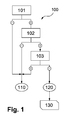
- Figure 1 a criteria scheme to find an optimum solvent or optimum solvents for use in extraction of oleagineous compounds from HTL-product mixtures is displayed and generally indicated with 100.
- step 101 of the scheme 100 which was performed after, as mentioned, thermodynamic modelling steps have already been performed by using UNIFAC, UNIQUAC and COSMOtherm simulation methods, it was examined whether the candidate solvent (extraction agent) shows a similar or higher recovery of oleagineous compounds, here oleagineous compounds from Desmodesmus sp. as mentioned above, as the standard solvent DCM.
- DCM has been widely used in the literature as it has shown to recover large amounts of oleagineous compounds when compared to solvent free separation. Consequently, in step 101 all solvents having a recovery performance significantly lower than DCM (-) were excluded as indicated with decision block 110. Solvents showing a higher or similar extraction efficiency as compared to DCM (+) were examined in a step 102.
- Step 102 legislative regulations on the usage of candidate solvents and possible environmental hazards were evaluated.
- candidate solvents that are toxic and/or dissallowed and/or that could cause large environmental damage (-) were excluded.
- DCM was only used as a standard but never chosen as a potential extraction agent because chlorinated compounds are known to be toxic and hazardous substances.
- MIBK methyl isobutyl ketone
- a step 103 the amount of solvent that dissolves into water and vice versa for the candidates left were evaluated.
- High economic implications could be caused by losing a large amount of solvent due to the high energy required to drive it off the water.
- the water has to be purified to be able to recycle it, e.g. into an algae cultivation unit. Consequently, solvents exhibiting a large solubility in water, as mentioned above, were excluded (+). Solvents with a low solubility in water and vice versa (-) were, in a decision step 120, taken as optimum solvents for the task mentioned.
- solvents are, as mentioned, monoaromatic hydrocarbons, monoaromatic alcohols and/or monoaromatic ethers such us toluene, benzyl alcohol, methoxybenzene, ethoxybenzene, o-xylene, m-xylene, p-xylene and mesitylene.
- monoaromatic hydrocarbons such as toluene, benzyl alcohol, methoxybenzene, ethoxybenzene, o-xylene, m-xylene, p-xylene and mesitylene.
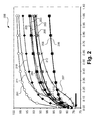
- Results are shown for benzyl alcohol 201 (empty circles), toluene 202 (diagonal crosses), DCM 203 (asterisks, dotted line), MIBK 204 (filled squares), propyl acetate 205 (empty triangles), isopropyl acetate 206 (filled triangles), ethyl acetate 207 (asterisks, solid line), hexane 208 (filled circles), cyclohexane 209 (empty squares), methoxybenzene (210, filled diamonds), benzylamine 211 (empty diamonds), m-xylene 212 (regular crosses, dotted line) and mesitylene 213 (regular crosses, solid line).
- solvents such as ethyl acetate 207, cyclohexane 209 and hexane 208 show significantly lower oleagineous compounds recovery compared to that of DCM 203. These solvents were not further investigated.
- the oleagineous compounds recovery curve had a flatter region at low solvent to water ratios (from 0.004:1 to about 0.05:1). This can be seen in Figure 2 particularly for ethyl acetate 207. This flatter region of the curve is caused by the fact that, if a small amount of solvent is added, most of it immediately dissolves into the large amount of water and therefore no solvent is left for extraction.
- benzyl alcohol 201 revealed an outstanding performance achieving almost 98 wt% oleagineous compounds recovery at comparatively low solvent to water ratios.
- the rest of the solvents exhibit superior or similar performances to DCM 203 and, therefore, were not yet excluded and went through the next step (cf. step 102 in Figure 1 ) of the criteria scheme applied for solvent optimization.
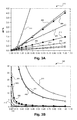
- Figures 3A and 3B show water dissolved in the solvent phase ( Figure 3A , diagram 310) and solvent dissolved into the water phase ( Figure 3B , diagram 320) in wt% on the ordninates versus increasing solvent to water ratios on the abscissas.
- the solvents are indicated with the same symbols and reference numerals as in Figure 2 .
- Benzyl alcohol 201 empty circles
- toluene 202 diagonal crosses
- propyl acetate 205 empty triangles
- isopropyl acetate 206 filled triangles
- methoxybenzene 210, filled diamonds
- benzylamine 211 empty diamonds
- m-xylene 212 regular crosses, dotted line
- mesitylene 213 regular crosses, solid line
- the best solvents for the presently studied case are monoaromatic hydrocarbons, monoaromatic alcohols and/or monoaromatic ethers such as toluene, benzyl Alcohol, methoxybenzene, ethoxybenzene, o-xylene, m-xylene, p-xylene and mesitylene.
- these solvents identified will lead to an environmentally and economically feasible HTL-process.
- benzyl alcohol 201 has shown a dramtically higher oleagineous compounds recovery when compared to the rest of the solvents, achieving almost 100% recovery. To the best of our knowledge, these solvents have never been proposed in the scientific literature or any other public report for the purpose described here.
- toluene 202 will require less energy for evaporation but with the penalty of recovering less oleagineous compounds out of the HTL product mixture.
- benzyl alcohol 201 can achieve almost 100% oleagineous compounds recovery but has also a rather high boiling point requirement with large amounts of energy for its total evaporation.
- this high boiling point could be used as a tool for the fractionation of the oleagineous compounds between e.g. light and heavy fractions.
Landscapes
- Chemical & Material Sciences (AREA)
- Oil, Petroleum & Natural Gas (AREA)
- Organic Chemistry (AREA)
- Engineering & Computer Science (AREA)
- Chemical Kinetics & Catalysis (AREA)
- Life Sciences & Earth Sciences (AREA)
- General Chemical & Material Sciences (AREA)
- Wood Science & Technology (AREA)
- Health & Medical Sciences (AREA)
- Biochemistry (AREA)
- Molecular Biology (AREA)
- General Health & Medical Sciences (AREA)
- Genetics & Genomics (AREA)
- Biophysics (AREA)
- Medicinal Chemistry (AREA)
- Proteomics, Peptides & Aminoacids (AREA)
- Analytical Chemistry (AREA)
- Biotechnology (AREA)
- Physics & Mathematics (AREA)
- Thermal Sciences (AREA)
- Organic Low-Molecular-Weight Compounds And Preparation Thereof (AREA)
Abstract
A method of recovering oleagineous compounds from hydrothermally treated biomass, including providing a biomass feedstock as an aqueous biomass suspension and processing the biomass suspension at a reaction temperature and a reaction pressure for a reaction time in a reactor to produce a product mixture is provided. In a separation step, the product mixture is contacted with an extraction fluid comprising at least one extraction agent selected from the group consisting of monoaromatic hydrocarbons, monoaromatic alcohols and monoaromatic ethers to obtain an organic liquid phase that contains at least a part of the oleagineous compounds. Use of at least one corresponding extraction agent in a method of recovering oleagineous compounds from hydrothermally treated biomass is also subject of the invention.
Description
- The invention relates to a method of recovering oleagineous compounds from hydrothermally treated biomass and to the use of specific extraction agents in such a method.
- Aquatic algae are capable of producing much larger amounts of biomass than terrestrial plants on the same area but do not require freshwater and/or arable land. Especially algae producing oleagineous compounds are an attractive source of renewable fuels. From such algae, oleagineous compounds that are already present in the cells can be extracted. Furthermore, the partial conversion of the whole algal biomass into oleagineous compounds is also possible.
- After harvesting, algae are dried and their oleagineous compounds are extracted using conventional vegetable oil extraction processes with suitable organic solvents such as hexane (see R.W. Ozer, "Algae Drying and Extraction", in: W. Farr and A. Procter, Eds.: "Green Vegetable Oil Processing", Urbana 2012, AOCS Press).
- Alternatively, wet algal slurries are processed directly in the wet phase at high temperatures by hydrothermal liquefaction (HTL, see D.C. Elliott et al., "Process Development for Hydrothermal Liquefaction of Algae Feedstocks in a Continuous-Flow Reactor", Algal Res. 2, 2013, 445-454 and D.C. Elliott et al., "Hydrothermal Processing of Macroalgal Feedstocks in Continuous-Flow Reactors"; ACS Sustainable Chem. Eng. 2, 2014, 207-215). HTL processes involve the reaction of biomass with high temperature water at high pressure for a defined reaction time in presence or absence of a catalyst. The product mixture thus obtained contains water, oleagineous compounds and solids. A fraction of the oleagineous compounds obtained is soluble in water and the other fraction may form a separate liquid phase.
- HTL is generally regarded as superior over dry extraction because it is not necessary to spend a large amount of energy to remove the water which amounts to 80 to 95% of the algal slurry. In addition, the mixture of oleagineous compounds in the HTL product mixture is not only produced by the oleagineous compounds present as such in the algae but also converted from other algae components containing hydrocarbon fragments like cell walls, proteins, etc.
- Conventional methods, relying mostly on gravity separation of water rich and oleagineous compounds rich liquid phases, do not allow for a complete recovery of the oleagineous compounds from the HTL product mixture. A considerable amount of valuable oleagineous components is thus left in the water phase and lost to successive processes. In addition, emulsions are formed between the oleagineous and the water rich phases unless appropriate measures are taken such as the removal of solids or the addition of emulsion breakers. Known solvents used in dry extraction methods are also not satisfactory either (see below).
- It is therefore an object of the present invention to provide a more effective method of recovering oleagineous compounds from hydrothermally treated biomass.
- According to the invention, a method of recovering oleagineous compounds from the HTL product mixture and the use of specific extraction agents in such a method, as defined in the independent claims, is suggested. Preferred embodiments of the invention are subject of the dependent claims and of the description that follows.
- The present invention is explicitly not limited to algal suspensions but can also be used for other types of biomass, e.g. sludge, manure, food or feedstock byproducts and mixtures thereof. The invention is, however, particularly useful for recovering oleagineous compounds from hydrothermally treated pro- or eukaryotic, especially aquatic, organisms.
- Examples fur such organisms are red, green or brown macroalgae or microalgae and bacteria. Macroalgae and Microalgae usable in the present invention can include species (sp.) from the genera Desmodesmus, Chlamydomonas, Dunaliella, Haematococcus, Scenedesmus, Chlorella or Nannochloropsis. Bacteria can include species from the genera Synechococcus, Synechocystis, Athrospira, Prochlorococcus, Chroococcus, Gleoecapsa, Aphunocapsu, Aphanothece, Leptolyngbya, Merismopedia, Microcystis, Coelosphaeritan, Prochlorothrix, Oscillatoria, Trichodesmium, Spirulina, Microcoleus, Chroococcidiopisis, Anabaena, Aphanizamenon, Cylindindrospermopsis, Cylindrospermum, Tolypothrix or Scytonema.
- In hydrothermal liquefaction, compounds derived from the lipid fraction of the biomass, e.g. of an algal suspension, but also a comparatively large amount of compounds derived from other precursor fractions, e.g. from proteins and carbohydrates, are obtained. These compounds are, however, only in part obtained in an unchanged form, i.e. were present as such in the biomass, but to a large extent underwent substantial thermal decomposition (e.g. fatty acids break into hydrocarbons, etc.).
- The so-called "oil" obtained in hydrothermal liquefaction is thus a complex mixture of compounds which mainly are derived from the lipid (e.g. hydrocarbons), the protein (e.g. nitrogen containing components) and the carbohydrate fractions (e.g. sugars) of the processed biomass, e.g. of algal cells. The term "oleaginous compounds" shall therefore, in the present application, refer to such compounds, which typically have hydrophobic characteristics.
- The invention is based on the surprising finding that specific solvents (in the following referred to as "extraction agents"; both terms are used synonymously) are especially suitable for extracting oleagineous compounds from HTL product mixtures at low solvent to water ratios, thus increasing the oleagineous compounds recovery while requiring only a small amount of solvent.
- As mentioned above, conventional methods for recovering oleagineous compounds from HTL product mixtures, relying mostly on the gravity separation of water rich and oleagineous compounds rich phases, do not allow for a complete recovery of the oleagineous compounds. Experimental work showed that, even if the solids were removed in advance, in such methods only about 30% of the biomass could be recovered as oleagineous compounds and more than 10% of the biomass that was converted into oleagineous compounds was left in the product water phase. This large amount of oleagineous compounds lost makes the HTL process nearly uneconomical, despite its general advantages.
- The present invention, in contrast, providing significantly higher extraction yields, combines the advantages of the HTL process, namely that there is no need to evaporate large amounts of water, with the advantages of a solvent extraction process, which allows recovering nearly all oleagineous compounds that are present in the HTL product mixture.
- In
US 8,192,628 B2 it is proposed to use hexane (like typically in dry oil extraction) as an extraction solvent. However, the amount of hexane needed to recover about 90% of the oleagineous compounds contained in the HTL product mixture is more than five times the amount of the HTL product mixture. As, in order to recover the oleagineous compounds from this large amount of solvent, the solvent needs to be evaporated, more energy is required for evaporation than is contained in the recovered oleagineous compounds. Therefore, the hexane extraction is not feasible based on the large amount of fossil fuel needed to recover more than 90% of the renewable oleagineous compound mixture. Dichloromethane (DCM) was also suggested as an extraction solvent. However, in refinery processing, the presence of DCM is disadvantageous because of the danger of irreversible damage to the refinery construction material, being generally sensitive to any chlorine content. Additionally, chlorinated compounds are generally considered hazardous. - The specific extraction agents proposed according to the present invention, in contrast, avoid these disadvantages and still allow recovering in an economical way the overwhelming part of the olagineous compounds that have been produced by the conversion of the biomass, especially in a HTL process.
- To arrive at the present invention, with a sophisticated and exhaustive combination of theoretical and selective experimental work, more than 1 000 possible solvents (extraction agents) were studied in different levels of detail. Based on these results, monoaromatic hydrocarbons, monoaromatic alcohols and monoaromatic ethers were found to perform better than the rest. While, in the following, results are shown for the representative compounds toluene, benzyl alcohol, methoxybenzene, ethoxybenzene, o-xylene, m-xylene, p-xylene and mesitylene, it is to be noted that monoaromatic hydrocarbons, monoaromatic alcohols and monoaromatic ethers are generally suitable for use in the present invention. Under "monoaromatic hydrocarbon", a compound comprising exactly one aromatic ring and consisting only of hydrogen and carbon atoms is to be understood. Correspondingly, "monoaromatic alcohols" and "monoaromatic ethers" are alcohols or ethers comprising exactly one aromatic ring.
- The work used a solvent screening model which is based on an experimentally identified organic composition of a HTL product mixture generated from a Desmodesmus sp. algal culture (see L. Garcia Alba, "Algae Biorefinery, an Experimental Study on Liquid Fuels Production and Nutrients Recycling", Dissertation, University of Twente, 2013). This composition is regarded as typical for a HTL liquid mixture. However, as mentioned, the results underlying the present invention are considered also applicable to other organisms showing comparable compositions of olagineous compounds.
- Several thermodynamic methods were used and combined to predict the physical properties for the extraction process step. The model used for the phase equilibria calculations was a cubic equation of state for the gas phase and a modified universal quasichemical (UNIQUAC) model for the prediction of the activity coefficients in the liquid phases (solvent and water). In general, applicable experimental activity coefficient data were preferentially used to fit the models to the data. If reliable parameters from the modified universal quasichemical functional group activity coefficient (UNIFAC) matrix were available, these parameters were used to generate the UNIQUAC parameters. Finally, when neither experimental data nor reliable UNIFAC parameters were available, activity coefficients were calculated by the COSMOtherm software and the remaining UNIQUAC parameters were determined in this way. A wide range of extraction temperatures (from 25 up to 100 °C) and solvent to water mass ratios (from 0.004:1 to 6:1) were evaluated.
- After performing the simulations, the candidate solvents (extraction agents) and the corresponding extraction results were evaluated via several criteria. Briefly, significantly lower recovery of oleagineous compounds than with the standard solvent DCM, toxicity, legal and/or environmental problems involved with the candidate solvents, and/or large amounts of the candidate solvents being lost into the water phase and vice versa led to exclusion from further consideration. For the remaining solvent candidates, studies regarding the optimum extraction conditions were performed. The results are given in the figures and discussed below.
- Based on the findings of the process as explained above, the current invention suggests an improved method of recovering oleagineous compounds from hydrothermally treated biomass with the use of specific extraction agents.
- According to the invention, the product mixture is, in a separate step, contacted with an extraction fluid comprising at least one specific solvent (extraction agent) to obtain an organic liquid phase containing the oleagineaous compounds. As mentioned before, the present invention shows that especially monoaromatic hydrocarbons, monoaromatic alcohols and monoaromatic ethers, especially toluene, benzyl alcohol, methoxybenzene, ethoxybenzene, o-xylene, m-xylene, p-xylene and mesitylene are especially suitable as extraction agents for the extraction of oleagineous compounds from hydrothermally treated biomass. According to the present invention, in a separation step the product mixture is therefore contacted with an extraction fluid comprising at least one extraction agent selected from the group consisting of monoaromatic hydrocarbons, monoaromatic alcohols and monoaromatic ethers to obtain an organic liquid phase that contains at least a part of the oleagineous compounds. The specific choice between the extraction agents mentioned above will largely depend on the downstream process configuration and e.g. the composition of the oleagineous compounds mixture targeted. For instance, toluene will, as will be explained below, require less energy for evaporation, but with the penalty of recovering less oleagineous compounds out of the HTL product mixture. In contrast, benzyl alcohol can achieve almost 100% recovery of oleagineous compounds but also has a very high boiling point requiring a large amount of energy for its total evaporation. However, rather of being a disadvantage, this high boiling point could be used as a tool for the fractionation of the oleagineous compounds between light and heavier fractions by e.g. distilling the light oleaginous compounds together with the benzyl alcohol.
- As mentioned above, the invention is not limited to the specific compounds mentioned above. Rather, a group of compounds showing comparable chemical characteristics is considered as being suitable for extraction according to the present invention. Generally, the at least one extraction agent used according to the present invention may advantageously have a molar mass between 92 and 160 g/mol.
- An extraction fluid used according to the present invention may comprise at least 75, 80 or 95 vol% of the specific extraction agent. The extraction agents may also be used as substantially pure substances, with the typical amounts of byproducts or contaminants of technical or analytical solvents.
- Especially in comparison with the use of hexane which has, as mentioned above, to be used in comparatively large amounts in relation to the product mixture from which the oleagineous compounds are to be extracted, the extraction agents mentioned may be used in a much lower amount in relation to the product mixture. For example, the extraction fluid can be used in an amount from 0.004:1 to 6:1 of solvent to water ratio, especially in an amount from 0.1:1 to 1:1 of solvent to water ratio. The exact amounts to be used depend on the intended extraction yield, which can, as explained below, increase to 90% or more with a significantly lower solvent amount than that required for hexane. For instance, only a solvent to water ratio of 0.05:1 is required with benzyl alcohol to achieve an oleagineous compounds recovery of 90% while, for hexane, a 5:1 ratio is needed to achieve that same yield.
- According to an especially preferred embodiment of the invention, the separation step includes agitating the product mixture and the extraction fluid after contacting them with the extraction fluid with a specifc extraction time, i.e. by stirring, shaking and the like.
- It can also be advantageous to contact the product mixture and the extraction fluid in a fractionating and/or extraction device in the separation step. Suitable fractionation and/or extraction devices are known to the skilled person and may e.g. include phase exchange features like trays, sieves, spraying devices and the like. By using corresponding devices, the extraction speed may be increased.
- As generally known, after this separation step the organic solvent phase may be at least partially evaporated to recover the oleagineous compounds. As mentioned, depending on the degree of evaporation and/or the downstream processing steps, one of the extraction agents might be favoured as extraction fluids.
- As mentioned, the invention is especially useful for hydrothermally treated biomass, i.e. processes involving e.g. reaction temperatures of 175 to 450 °C, reaction pressures from 10 to 30 MPa and/or reaction times of 2 to 60 minutes. Such processes can especially be realized with continuous flow reactors as disclosed in the literature mentioned above.
- The current invention also relates to the use of at least one extraction agent in a method of recovering oleagineous compounds from hydrothermally treated biomass that is provided as aqueous biomass suspension and processed at a reaction temperature and a reaction pressure for a reaction time in a reactor to produce a product mixture. According to the present invention, the at least one extraction agent is selected from the group consisting of monoaromatic hydrocarbons, monoaromatic alcohols, monoaromatic ethers and mixtures thereof and the at least one extraction agent is used in an extraction fluid which is contacted with the product mixture in a separation step to obtain an organic liquid phase that contains at least a part of the oleagineous compounds.
- Preferentially, the at least one extraction agent is selected from the group consisting of toluene, benzyl alcohol, methoxybenzene, ethoxybenzene, m-xylene, o-xylene, p-xylene and mesitylene. For specifics and specific advantages of the inventive use, it is explicitly refered to the explanations above.
- The invention and preferred embodiments of the invention will be described with reference to the appended figures, showing details of the current invention.
-
-
Figure 1 shows a criteria scheme for solvent selection according to a preferred embodiment of the invention. -
Figure 2 shows a diagram indicating the mass percentage of oleagineous compounds recovered by extraction with different extraction agents by increasing the solvent to water ratio. -
Figures 3A and 3B show water dissolved in a solvent phase and vice versa after extraction with different extraction agents at increasing solvent to water ratio. -
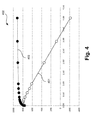
Figure 4 shows a diagram indicating the energy required to evaporate a extraction agent according to a preferred embodiment of the invention. - In
Figure 1 , a criteria scheme to find an optimum solvent or optimum solvents for use in extraction of oleagineous compounds from HTL-product mixtures is displayed and generally indicated with 100. - In a
step 101 of thescheme 100, which was performed after, as mentioned, thermodynamic modelling steps have already been performed by using UNIFAC, UNIQUAC and COSMOtherm simulation methods, it was examined whether the candidate solvent (extraction agent) shows a similar or higher recovery of oleagineous compounds, here oleagineous compounds from Desmodesmus sp. as mentioned above, as the standard solvent DCM. DCM has been widely used in the literature as it has shown to recover large amounts of oleagineous compounds when compared to solvent free separation. Consequently, instep 101 all solvents having a recovery performance significantly lower than DCM (-) were excluded as indicated withdecision block 110. Solvents showing a higher or similar extraction efficiency as compared to DCM (+) were examined in astep 102. - In
Step 102, legislative regulations on the usage of candidate solvents and possible environmental hazards were evaluated. Instep 102, candidate solvents that are toxic and/or dissallowed and/or that could cause large environmental damage (-) were excluded. It is to be noted that e.g. DCM was only used as a standard but never chosen as a potential extraction agent because chlorinated compounds are known to be toxic and hazardous substances. For similar reasons, methyl isobutyl ketone (MIBK) was excluded. - Subsequently, for the remaining candidates, in a
step 103 the amount of solvent that dissolves into water and vice versa for the candidates left were evaluated. High economic implications could be caused by losing a large amount of solvent due to the high energy required to drive it off the water. Similar, the water has to be purified to be able to recycle it, e.g. into an algae cultivation unit. Consequently, solvents exhibiting a large solubility in water, as mentioned above, were excluded (+). Solvents with a low solubility in water and vice versa (-) were, in adecision step 120, taken as optimum solvents for the task mentioned. These solvents are, as mentioned, monoaromatic hydrocarbons, monoaromatic alcohols and/or monoaromatic ethers such us toluene, benzyl alcohol, methoxybenzene, ethoxybenzene, o-xylene, m-xylene, p-xylene and mesitylene. In afurther step 130, extraction conditions were evaluated as in detail explained below. - In
Figure 2 , the recovery of the sum of all oleagineous compounds in the solvent phase from the HTL product mixture after extraction with different solvents are given in wt% on the ordinate versus increasing solvent to water ratios on the abscissa in a diagram 200. The composition of the HTL product mixture used as input was close to that of the product mixture from HTL of Desmodesmus sp. (shown in L. Garcia Alba, "Algae Biorefinery, an Experimental Study on Liquid Fuels Production and Nutrients Recycling", Dissertation, University of Twente, 2013). - Results are shown for benzyl alcohol 201 (empty circles), toluene 202 (diagonal crosses), DCM 203 (asterisks, dotted line), MIBK 204 (filled squares), propyl acetate 205 (empty triangles), isopropyl acetate 206 (filled triangles), ethyl acetate 207 (asterisks, solid line), hexane 208 (filled circles), cyclohexane 209 (empty squares), methoxybenzene (210, filled diamonds), benzylamine 211 (empty diamonds), m-xylene 212 (regular crosses, dotted line) and mesitylene 213 (regular crosses, solid line). Heptane, decane and hexadecane performed almost equal to hexane, chloroform performed almost equal to DCM, o-xylene and p-xylene performed almost equal to m-xylene and ethoxybenzene performed almost equal to methoxybenzene, therefore, results for these solvents are not shown in
Figure 2 . An arrow indicates the extraction yield without solvent. Only the results from a 100 °C extraction temperature are presented because all solvents showed to perform better at high temperature. However, depending on the downstream configuration, lower temperatures might be preferable (e.g. for a better heat integration). Yet the trends shown inFigure 2 would remain the same. - As can be seen from
Figure 2 , solvents such asethyl acetate 207,cyclohexane 209 andhexane 208 show significantly lower oleagineous compounds recovery compared to that ofDCM 203. These solvents were not further investigated. In addition, for some of the solvents, the oleagineous compounds recovery curve had a flatter region at low solvent to water ratios (from 0.004:1 to about 0.05:1). This can be seen inFigure 2 particularly forethyl acetate 207. This flatter region of the curve is caused by the fact that, if a small amount of solvent is added, most of it immediately dissolves into the large amount of water and therefore no solvent is left for extraction. The following table shows the example forethyl acetate 207. At a solvent to water ratio of 0.05:1, 92 % of the solvent dissolves into the water and therefore only 12.6 kg/h of solvent is available to extract the 100 kg/h of oleagineous compounds:Solvent to water ratio Solvent added for extraction (kg/h) Solvent that physically dissolves into the water (kg/h) Solvent left for extraction (kg/h) 0.004:1 10 9.22 0.78 0.01:1 30 27.60 2.40 0.05:1 130 117.39 12.61 - In contrast,
e.g. benzyl alcohol 201 revealed an outstanding performance achieving almost 98 wt% oleagineous compounds recovery at comparatively low solvent to water ratios. The rest of the solvents exhibit superior or similar performances toDCM 203 and, therefore, were not yet excluded and went through the next step (cf. step 102 inFigure 1 ) of the criteria scheme applied for solvent optimization. - As mentioned, legal regulations on the use of the selected solvents were evaluated and toxic substances were excluded from further studies. Only unproblematic substances were further evaluated and tested for water solubility (cf. step 103 in
Figure 1 ). -
Figures 3A and 3B show water dissolved in the solvent phase (Figure 3A , diagram 310) and solvent dissolved into the water phase (Figure 3B , diagram 320) in wt% on the ordninates versus increasing solvent to water ratios on the abscissas. The solvents are indicated with the same symbols and reference numerals as inFigure 2 . Benzyl alcohol 201 (empty circles), toluene 202 (diagonal crosses), propyl acetate 205 (empty triangles), isopropyl acetate 206 (filled triangles), methoxybenzene (210, filled diamonds), benzylamine 211 (empty diamonds), m-xylene 212 (regular crosses, dotted line) and mesitylene 213 (regular crosses, solid line) are indicated, these solvents representing the solvents still included in the study after step 102 (cf.Figure 1 ). As mentioned above, o-xylene and p-xylene performed almost equal to m-xylene and ethoxybenzene performed almost equal to methoxybenzene and no results for these solvents are shown. - The results displayed in
Figures 3A and 3B clearly show that propyl aceteate 205,isopropyl acetate 206 and benzylamine must be excluded. Especially when looking atFigure 3B , showing high amounts of propyl aceteate 205,isopropyl acetate 206 andbenzylamine 211 lost in the water phase at lower solvent to water ratios, it becomes evident that a relatively high amount of these solvents will be lost during extraction.benzylamine 211 was the solvent with best performed in terms of oleagineous compounds recovery after benzylalcohol 201. Unfortunately, its solubility in water is too high. - Consequently, the best solvents for the presently studied case are monoaromatic hydrocarbons, monoaromatic alcohols and/or monoaromatic ethers such as toluene, benzyl Alcohol, methoxybenzene, ethoxybenzene, o-xylene, m-xylene, p-xylene and mesitylene. In other words, these solvents identified will lead to an environmentally and economically feasible HTL-process. Especially,
benzyl alcohol 201 has shown a dramtically higher oleagineous compounds recovery when compared to the rest of the solvents, achieving almost 100% recovery. To the best of our knowledge, these solvents have never been proposed in the scientific literature or any other public report for the purpose described here. - Regarding the extraction conditions, higher temperatures (above 100 °C) were investigated for both solvents, but no further increase in oleagineous compounds recovery was observed. The optimum solvent to water ratio will depend on the established target for parasitic load, i.e. the maximum amount of energy that can be consumed by the process as compared to the net energy production. The net energy production is the amount of energy left after substracting the energy required mainly to evaporate the solvent (main cost driver) from the energy content of the produced oleagineous compounds mixture. An example is shown in
Figure 4 (in terms of power) for extraction with toluene at 100°C. In diagram 400 ofFigure 4 , again the solvent to water ratio is indicated on the abscissa and the energy consumption is indicated in kW on the ordinate. For simplicity, only the results for toluene are shown. Results are displayed fornet energy consumption 401 and energy content in the oleagineous compoundsmixture 402. As can be seen fromFigure 4 , above a solvent to water ratio of about three, more energy is required to evaporate the solvent than the energy content of the oleagineous compounds mixture produced. - The choice between the various solvents will depend on the downstream process configuration wanted and the composition of the oleagineous compounds mixture targeted. For instance,
toluene 202 will require less energy for evaporation but with the penalty of recovering less oleagineous compounds out of the HTL product mixture. In contrast,benzyl alcohol 201 can achieve almost 100% oleagineous compounds recovery but has also a rather high boiling point requirement with large amounts of energy for its total evaporation. However, rather of being a disadvantage, this high boiling point could be used as a tool for the fractionation of the oleagineous compounds between e.g. light and heavy fractions.
Claims (15)
- A method of recovering oleagineous compounds from hydrothermally treated biomass, including providing a biomass feedstock as an aqueous biomass suspension and processing the biomass suspension at a reaction temperature and a reaction pressure for a reaction time in a reactor to produce a product mixture, characterized in that in a separation step the product mixture is contacted with an extraction fluid comprising at least one extraction agent selected from the group consisting of monoaromatic hydrocarbons, monoaromatic alcohols and monoaromatic ethers to obtain an organic liquid phase that contains at least a part of the oleagineous compounds.
- A method according to claim 1, wherein the at least one extraction agent is selected from the group consisting of toluene, benzyl alcohol, methoxybenzene, ethoxybenzene, m-xylene, o-xylene, p-xylene and mesitylene.
- A method according to claim 1 or 2, wherein the at least one extraction agent has a molar mass between 92 and 160 g/mol.
- A method according to any one of the preceding claims, wherein the extraction fluid comprises at least 75, 80, 90 or 95 vol% of the at least one extraction agent.
- A method according to any one of the preceding claims, wherein in the separation step an amount of the product mixture and an amount of the extraction fluid is used, wherein the amount of the extraction fluid is from 0.004:1 to 6:1 of solvent to water ratio, especially in an amount from 0.1:1 to 1:1 of solvent to water ratio.
- A method according to any one of the preceding claims, wherein the separation step includes agitating the product mixture and the extraction fluid after contacting for an extraction time.
- A method according to any one of the preceding claims, wherein the separation step includes contacting the product mixture and the extraction fluid in a fractional extraction device.
- A method according to any one of the preceding claims, wherein the separation step includes heating the product mixture and the extraction fluid after contacting for a heating time.
- A method according to any one of the preceding claims, wherein after the separation step the organic phase is at least partially evaporated to recover the oleagineous compounds.
- A method according to claim 9, wherein after the separation step the organic phase is fractionated at least partially to individually recover specific oleagineous compounds.
- A method according to any one of the preceding claims, wherein the aqueous biomass suspension includes algal and/or bacterial biomass, sludge, manure, food, feedstock byproducts or mixtures thereof.
- A method according to any one of the preceding claims, wherein the reaction temperature is 175 to 450 °C, the reaction pressure is 10 to 30 MPa and/or the reaction time is 2 to 60 min.
- A method according to any one of the preceding claims, wherein the reactor is a continuous flow reactor.
- Use of at least one extraction agent in a method of recovering oleagineous compounds from hydrothermally treated biomass that is provided as aqueous biomass suspension and processed at a reaction temperature and a reaction pressure for a reaction time in a reactor to produce a product mixture, characterized in that the at least one extraction agent is selected from the group consisting of monoaromatic hydrocarbons, monoaromatic alcohols, monoaromatic ethers and mixtures thereof and in that the at least extraction agent is used in an extraction fluid which is contacted with the product mixture in a separation step to obtain an organic phase that contains at least a part of the oleagineous compounds.
- An use according to claim 14, wherein the at least one extraction agent is selected from the group consisting of toluene, benzyl alcohol, methoxybenzene, ethoxybenzene, m-xylene, o-xylene, p-xylene and mesitylene.
Priority Applications (2)
| Application Number | Priority Date | Filing Date | Title |
|---|---|---|---|
| EP14179904.9A EP2982733A1 (en) | 2014-08-05 | 2014-08-05 | Method of recovering oleagineous compounds from hydrothermally biomass |
| US14/814,539 US20160039855A1 (en) | 2014-08-05 | 2015-07-31 | Method of recovering oleagineous compounds from hydrothermally treated biomass |
Applications Claiming Priority (1)
| Application Number | Priority Date | Filing Date | Title |
|---|---|---|---|
| EP14179904.9A EP2982733A1 (en) | 2014-08-05 | 2014-08-05 | Method of recovering oleagineous compounds from hydrothermally biomass |
Publications (1)
| Publication Number | Publication Date |
|---|---|
| EP2982733A1 true EP2982733A1 (en) | 2016-02-10 |
Family
ID=51263327
Family Applications (1)
| Application Number | Title | Priority Date | Filing Date |
|---|---|---|---|
| EP14179904.9A Withdrawn EP2982733A1 (en) | 2014-08-05 | 2014-08-05 | Method of recovering oleagineous compounds from hydrothermally biomass |
Country Status (2)
| Country | Link |
|---|---|
| US (1) | US20160039855A1 (en) |
| EP (1) | EP2982733A1 (en) |
Families Citing this family (1)
| Publication number | Priority date | Publication date | Assignee | Title |
|---|---|---|---|---|
| FR3163075A1 (en) * | 2024-06-10 | 2025-12-12 | Totalenergies Onetech | PROCESS FOR PURIFYING OIL, PLASTIC AND/OR ELASTOMER COMPOSITIONS BY LIQUID-LIQUID EXTRACTION |
Citations (6)
| Publication number | Priority date | Publication date | Assignee | Title |
|---|---|---|---|---|
| WO1998028407A2 (en) * | 1996-12-20 | 1998-07-02 | Eastman Chemical Company | Method for rupturing microalgae cells |
| EP2025735A1 (en) * | 2007-08-14 | 2009-02-18 | Bergen Teknologioverforing AS | One-step conversion of solid lignin to liquid products |
| WO2010030196A1 (en) * | 2008-09-11 | 2010-03-18 | Ian James Miller | Transformation of biomass |
| WO2010030197A1 (en) * | 2008-09-11 | 2010-03-18 | Ian James Miller | Concentration of algal biomass |
| WO2011126382A1 (en) * | 2010-04-07 | 2011-10-13 | Aquaflow Bionomic Corporation Limited | Hydrothermal transformation of microalgae through metal-base catalysis |
| US20120022278A1 (en) * | 2010-07-26 | 2012-01-26 | Sapphire Energy, Inc. | Process for the recovery of oleaginous compounds from biomass |
-
2014
- 2014-08-05 EP EP14179904.9A patent/EP2982733A1/en not_active Withdrawn
-
2015
- 2015-07-31 US US14/814,539 patent/US20160039855A1/en not_active Abandoned
Patent Citations (7)
| Publication number | Priority date | Publication date | Assignee | Title |
|---|---|---|---|---|
| WO1998028407A2 (en) * | 1996-12-20 | 1998-07-02 | Eastman Chemical Company | Method for rupturing microalgae cells |
| EP2025735A1 (en) * | 2007-08-14 | 2009-02-18 | Bergen Teknologioverforing AS | One-step conversion of solid lignin to liquid products |
| WO2010030196A1 (en) * | 2008-09-11 | 2010-03-18 | Ian James Miller | Transformation of biomass |
| WO2010030197A1 (en) * | 2008-09-11 | 2010-03-18 | Ian James Miller | Concentration of algal biomass |
| WO2011126382A1 (en) * | 2010-04-07 | 2011-10-13 | Aquaflow Bionomic Corporation Limited | Hydrothermal transformation of microalgae through metal-base catalysis |
| US20120022278A1 (en) * | 2010-07-26 | 2012-01-26 | Sapphire Energy, Inc. | Process for the recovery of oleaginous compounds from biomass |
| US8192628B2 (en) | 2010-07-26 | 2012-06-05 | Sapphire Energy, Inc. | Process for the recovery of oleaginous compounds from biomass |
Non-Patent Citations (4)
| Title |
|---|
| D.C. ELLIOTT ET AL.: "Hydrothermal Processing of Macroalgal Feedstocks in Continuous-Flow Reactors", ACS SUSTAINABLE CHEM. ENG., vol. 2, 2014, pages 207 - 215 |
| D.C. ELLIOTT ET AL.: "Process Development for Hydrothermal Liquefaction of Algae Feedstocks in a Continuous-Flow Reactor", ALGAL RES., vol. 2, 2013, pages 445 - 454 |
| L. GARCIA ALBA: "Algae Biorefinery, an Experimental Study on Liquid Fuels Production and Nutrients Recycling", DISSERTATION, 2013 |
| R.W. OZER: "Green Vegetable Oil Processing", 2012, AOCS PRESS, article "Algae Drying and Extraction" |
Also Published As
| Publication number | Publication date |
|---|---|
| US20160039855A1 (en) | 2016-02-11 |
Similar Documents
| Publication | Publication Date | Title |
|---|---|---|
| Heilmann et al. | Hydrothermal carbonization of microalgae II. Fatty acid, char, and algal nutrient products | |
| Cicci et al. | Circular extraction: an innovative use of switchable solvents for the biomass biorefinery | |
| Peralta-Ruiz et al. | Evaluation of alternatives for microalgae oil extraction based on exergy analysis | |
| Chiappe et al. | Development of cost-effective biodiesel from microalgae using protic ionic liquids | |
| Chia et al. | Isolation of protein from Chlorella sorokiniana CY1 using liquid biphasic flotation assisted with sonication through sugaring-out effect | |
| JP2013523156A (en) | Selective extraction of proteins from freshwater algae | |
| McKuin et al. | Comparative life cycle assessment of marine microalgae, Nannochloropsis sp. and fishmeal for sustainable protein ingredients in aquaculture feeds | |
| KR20140014219A (en) | Extraction of neutral lipids by a two solvent method | |
| Martin | Energy requirements for wet solvent extraction of lipids from microalgal biomass | |
| CA2874710C (en) | Method for continuously enriching an oil produced by microalgae with ethyl esters of dha | |
| US8617261B2 (en) | Liquid fuel from aquatic biomass | |
| CN104087350A (en) | Process for the recovery of oleaginous compounds from biomass | |
| KR20140010972A (en) | Methods of producing biofuels, chlorophylls and carotenoids | |
| Khan et al. | Characterization of a newly isolated cyanobacterium Trichocoleus desertorum BERC08 as a potential feedstock for the algal biorefinery | |
| JP5747360B1 (en) | Nutrient recovery method of algal lipid extraction residue, algae culture method, and algae culture medium | |
| Ori et al. | Emerging co-cultivation strategies for microalgal biomass and biodiesel production | |
| US20160039855A1 (en) | Method of recovering oleagineous compounds from hydrothermally treated biomass | |
| US20140350222A1 (en) | Microalgal Extraction | |
| Khan et al. | Hydrotherma l liquefaction of chlorella SP for biocrude oil production: Comparison of experimenta l and modeling results | |
| González-Delgado et al. | Microalgae based biorefinery: evaluation of oil extraction methods in terms of efficiency, costs, toxicity and energy in lab-scale | |
| JP2011050279A (en) | Method for producing aliphatic compound | |
| KR102387853B1 (en) | Preparation method of biodiesel from wet microalgae | |
| WO2014027871A1 (en) | Method and system of algal cells disruption and isolation of bioproducts therefrom | |
| Islam et al. | An overview study of lipid extraction methods from microalgae | |
| Singh et al. | Supercritical fluids for extraction of microalgae-based products |
Legal Events
| Date | Code | Title | Description |
|---|---|---|---|
| PUAI | Public reference made under article 153(3) epc to a published international application that has entered the european phase |
Free format text: ORIGINAL CODE: 0009012 |
|
| AK | Designated contracting states |
Kind code of ref document: A1 Designated state(s): AL AT BE BG CH CY CZ DE DK EE ES FI FR GB GR HR HU IE IS IT LI LT LU LV MC MK MT NL NO PL PT RO RS SE SI SK SM TR |
|
| AX | Request for extension of the european patent |
Extension state: BA ME |
|
| STAA | Information on the status of an ep patent application or granted ep patent |
Free format text: STATUS: THE APPLICATION IS DEEMED TO BE WITHDRAWN |
|
| 18D | Application deemed to be withdrawn |
Effective date: 20160811 |