EP2981527B1 - Derivatives of luciferin. - Google Patents
Derivatives of luciferin. Download PDFInfo
- Publication number
- EP2981527B1 EP2981527B1 EP14717070.8A EP14717070A EP2981527B1 EP 2981527 B1 EP2981527 B1 EP 2981527B1 EP 14717070 A EP14717070 A EP 14717070A EP 2981527 B1 EP2981527 B1 EP 2981527B1
- Authority
- EP
- European Patent Office
- Prior art keywords
- optionally substituted
- alkyl
- group
- compound according
- hydrogen
- Prior art date
- Legal status (The legal status is an assumption and is not a legal conclusion. Google has not performed a legal analysis and makes no representation as to the accuracy of the status listed.)
- Active
Links
- 0 *N(*)c1ccc2nc(C(SC3)=N[C@]3C(O)=O)[s]c2c1 Chemical compound *N(*)c1ccc2nc(C(SC3)=N[C@]3C(O)=O)[s]c2c1 0.000 description 6
- KDPTTXCMBDDULW-DOJUMQAQSA-N CCOC([C@@H]1N=C(/C=C/c2nc(ccc(OCc3ccccc3)c3)c3[s]2)SC1)=O Chemical compound CCOC([C@@H]1N=C(/C=C/c2nc(ccc(OCc3ccccc3)c3)c3[s]2)SC1)=O KDPTTXCMBDDULW-DOJUMQAQSA-N 0.000 description 1
- SZBTXQHPRWDWNP-KZJSRBBCSA-N CN(C)c1cc2ccc(/C=C/C(SC3)=N[C@H]3C(O)=O)cc2cc1 Chemical compound CN(C)c1cc2ccc(/C=C/C(SC3)=N[C@H]3C(O)=O)cc2cc1 SZBTXQHPRWDWNP-KZJSRBBCSA-N 0.000 description 1
- CKMYRTXATOHDPN-YVARQFDVSA-N CN(C)c1ccc(CC/C=C/C(SC2)=N[C@H]2C(O)=O)cc1 Chemical compound CN(C)c1ccc(CC/C=C/C(SC2)=N[C@H]2C(O)=O)cc1 CKMYRTXATOHDPN-YVARQFDVSA-N 0.000 description 1
- RNQZRUOWTSLSLD-UHFFFAOYSA-N COc1ccc2nc(C(SC3)=NC3=O)[s]c2c1 Chemical compound COc1ccc2nc(C(SC3)=NC3=O)[s]c2c1 RNQZRUOWTSLSLD-UHFFFAOYSA-N 0.000 description 1
- CRRXQSRRFHPIFR-KTKRTIGZSA-M [O-]C(CS1)=N/C1=C(\N=C1C=C2)/SC1=CC2=O Chemical compound [O-]C(CS1)=N/C1=C(\N=C1C=C2)/SC1=CC2=O CRRXQSRRFHPIFR-KTKRTIGZSA-M 0.000 description 1
Images



Classifications
-
- C—CHEMISTRY; METALLURGY
- C07—ORGANIC CHEMISTRY
- C07D—HETEROCYCLIC COMPOUNDS
- C07D277/00—Heterocyclic compounds containing 1,3-thiazole or hydrogenated 1,3-thiazole rings
- C07D277/60—Heterocyclic compounds containing 1,3-thiazole or hydrogenated 1,3-thiazole rings condensed with carbocyclic rings or ring systems
- C07D277/62—Benzothiazoles
- C07D277/64—Benzothiazoles with only hydrocarbon or substituted hydrocarbon radicals attached in position 2
-
- C—CHEMISTRY; METALLURGY
- C12—BIOCHEMISTRY; BEER; SPIRITS; WINE; VINEGAR; MICROBIOLOGY; ENZYMOLOGY; MUTATION OR GENETIC ENGINEERING
- C12Q—MEASURING OR TESTING PROCESSES INVOLVING ENZYMES, NUCLEIC ACIDS OR MICROORGANISMS; COMPOSITIONS OR TEST PAPERS THEREFOR; PROCESSES OF PREPARING SUCH COMPOSITIONS; CONDITION-RESPONSIVE CONTROL IN MICROBIOLOGICAL OR ENZYMOLOGICAL PROCESSES
- C12Q1/00—Measuring or testing processes involving enzymes, nucleic acids or microorganisms; Compositions therefor; Processes of preparing such compositions
- C12Q1/66—Measuring or testing processes involving enzymes, nucleic acids or microorganisms; Compositions therefor; Processes of preparing such compositions involving luciferase
-
- G—PHYSICS
- G01—MEASURING; TESTING
- G01N—INVESTIGATING OR ANALYSING MATERIALS BY DETERMINING THEIR CHEMICAL OR PHYSICAL PROPERTIES
- G01N33/00—Investigating or analysing materials by specific methods not covered by groups G01N1/00 - G01N31/00
- G01N33/48—Biological material, e.g. blood, urine; Haemocytometers
- G01N33/50—Chemical analysis of biological material, e.g. blood, urine; Testing involving biospecific ligand binding methods; Immunological testing
- G01N33/58—Chemical analysis of biological material, e.g. blood, urine; Testing involving biospecific ligand binding methods; Immunological testing involving labelled substances
- G01N33/582—Chemical analysis of biological material, e.g. blood, urine; Testing involving biospecific ligand binding methods; Immunological testing involving labelled substances with fluorescent label
Definitions
- the present invention relates to compounds and their uses. In particular, though not exclusively, it concerns luminogenic compounds and their application in in vivo imaging techniques.
- a substrate e.g. luciferin
- a bioluminescence (BLI) enzyme e.g. luciferase
- luciferase a bioluminescence enzyme
- small animal bioluminescence imaging utilises emission of light by the transgenic expression, particularly of firefly luciferase (Flue), in selected tissue(s).
- Flue firefly luciferase
- This rapid, cheap and highly sensitive modality has revolutionised the use of small animal models, allowing facile longitudinal and quantitative tracking of labelled cells noninvasively.
- functionalised substrates and enzymes allow the imaging of biological events within the small animal.
- luciferases emit light (yellow-green colour) that is largely absorbed by haemoglobin. This causes scatter and differential attenuation depending on tissue density and light source depth. Shifting the emission of luciferase into the near infra-red (nIR) would therefore overcome these barriers, since even complex mammalian tissues are quite transparent at these wavelengths (in the 'optical window' between ca. 620-800 nm).
- Firefly luciferase has been heavily engineered, increasing its expression, stability and shifting its emission with natural firefly luciferin from green-yellow to red.
- current systems are near the limit of red-shifting (ca. 620nm) achievable by mutagenesis of Photinus pyralis Flue.
- Firefly luciferin (often denoted LH 2 ) is known to produce at least two colours of bioluminescence with different mutants of firefly luciferase, the natural yellow-green colour (peak wavelength - ⁇ max 557nm) and a red colour ( ⁇ max 620nm). Red mutants are useful for in vivo imaging since the attenuation of red light is less intense and variable. In addition, due to the dependence of photon scatter on wavelength (scatter is proportional to 1/wavelength 4 ), red emission is expected to allow higher resolution and deeper tissue bioluminescence imaging.
- Aminoluciferins including those with the structures illustrated below, have been reported to have a higher affinity for Flue than LH 2 (flash kinetics), lower light emission than LH 2 and lower cell permeability in in vitro studies ( Maki, J Electrochem Soc Japan, 2006, 9 ; Iwano et al., Tetrahedron 2013, http://dx.doi.org/10.1016/j.tet.2013.03.050 ; Ugarova et al., Luminescence 2002, 17, 321-30 ; Japanese patent publication JP2009184932 ).
- WO 2013/027770 , JP 2010/189359 and CN 102617536 each disclose alternative heterocyclic compounds which do not provide a significant red-shift in emission or allow multiparametric imaging.
- the compounds of formula (II) have been found to represent bioluminescent substrate analogues of luciferin which exhibit a red-shift in emission to the nIR range. Thus, they are the first examples of nIR BLI labels having true bioluminescence peaking in the nIR (i.e. not the product of resonance energy transfer or filtering). Structural features, such as the unsaturated linker group X, further allow different emission colours (have distinct emitting forms) with different mutant enzymes and/or under varying pH conditions.
- Such analogues have the potential to enable a new era in multispectral BLI, facilitating higher resolution multi-parametric imaging and enhanced depth penetration, and including the imaging of larger animals, such as dogs, cats, primates and human subjects.
- the compounds of formula (II) have been found to be active in vivo, for example when injected into mice containing systemic Raji cell-derived lymphomas. The light generated could be imaged for analytical purposes.
- the compounds therefore provide the potential to increase depth penetration and resolution of BLI by reducing haemoglobin (Hb) attenuation and scatter (a higher percentage of photons are not absorbed by Hb and also travel for longer in a straight path), as well as high sensitivity multispectral BLI when used alone, or in combination with natural luciferin or further analogues.
- Hb haemoglobin
- C 1-6 alkyl refers to a linear or branched saturated hydrocarbon group containing from x to y carbon atoms.
- C 1-6 alkyl refers to a linear or branched saturated hydrocarbon group containing from 1 to 6 carbon atoms.
- Examples of C 1-6 alkyl groups include methyl, ethyl, n-propyl, isopropyl, n-butyl, isobutyl, sec-butyl, tert-butyl, n-pentyl, isopentyl, neopentyl, hexyl, and isohexyl.
- 'C x-y alkylene' refers to a divalent hydrocarbon group obtained by removing one hydrogen atom from 'C x-y alkyl' above.
- Examples of C 1-6 alkylene groups include methylene, ethylene, propylene, butylene, pentylene, and hexylene.
- C 2-6 alkenyl groups include ethenyl, 1-propenyl, 2-propenyl, 2-methyl-1-propenyl, 1-butenyl, 2-butenyl, 3-butenyl, 3-methyl-2-butenyl, 1-pentenyl, 2-pentenyl, 3-pentenyl, 4-pentenyl, 4-methyl-3-pentenyl, 1-hexenyl, 3-hexenyl, and 5-hexenyl.
- 'C x-y alkenylene' refers to a divalent hydrocarbon group obtained by removing one hydrogen atom from 'C x-y alkenyl' above.
- Examples of C 2-6 alkenylene groups include ethenylene, propenylene, butenylene, 1,3-butadienylene, pentenylene, hexenylene, and 1,3,5-hexatrienylene.
- C x-y alkynyl' refers to a divalent hydrocarbon group containing one or more carbon-carbon triple bonds and having from x to y carbon atoms.
- Examples of C 2-6 alkynyl groups include ethynyl, propynyl, butynyl and pentynyl.
- 'C x-y alkynylene' refers to a divalent hydrocarbon group obtained by removing one hydrogen atom from 'C x-y alkynyl' above.
- Examples of C 2-6 alkynylene groups include ethynylene, propynylene, butynylene, 1,3-butadiynylene, pentynylene, hexynylene, and 1,3,5-hexatriynylene.
- C x-y alkoxy' refers to an -O-C x-y alkyl group wherein C x-y alkyl is as defined herein.
- Examples of C 1-6 alkoxy groups include methoxy, ethoxy, propoxy, iso- propoxy, butoxy, tert -butoxy, pentoxy and hexoxy.
- 'x- to y-membered hydrocarbon ring' refers to a cycloalkyl, cycloalkenyl, or aryl ring as defined below in relation to formula (II).
- 'x- to y-membered cycloalkyl' refers to a saturated monocyclic hydrocarbon ring of x to y carbon atoms.
- 3- to 6-membered cycloalkyl refers to a saturated monocyclic hydrocarbon ring of 3 to 6 carbon atoms.
- 3- to 6-membered cycloalkyl groups include cyclopropyl, cyclobutyl, cyclopentyl, and cyclohexyl.
- 'x- to y-membered cycloalkenyl' refers to a monocyclic hydrocarbon ring containing one or more carbon-carbon double bonds of x to y carbon atoms.
- C 3-6 cycloalkenyl refers to an unsaturated monocyclic hydrocarbon ring of 3- to 6-carbon atoms.
- Examples of C 3-6 cycloalkenyl groups include 2-cyclopenten-1-yl, 3-cyclopenten-1-yl, 2-cyclohexen-1-yl, and 3-cyclohexen-1-yl.
- 'aryl' refers to a 5- to 6-membered monocyclic hydrocarbon ring containing x to y carbon atoms, wherein the ring is aromatic.
- An example of such an aryl group is phenyl.
- 'C x-y aryl' as used herein refers to a monocyclic or bicyclic ring containing from x to y carbon atoms, wherein at least one ring is aromatic.
- C 6-14 aryl groups include phenyl, naphthyl, tetrahydronaphthalenyl, anthryl, phenanthryl, acenaphthylenyl, biphenylyl, anthracenyl, phenanthrenyl, and phenalenyl.
- 'arylene' refers to a divalent hydrocarbon group obtained by removing one hydrogen atom from 'C x-y aryl' above.
- An example of such an arylene group is phenylene.
- 'C x-y arylene' as used herein refers to a monocyclic or bicyclic ring containing from x to y carbon atoms, wherein at least one ring is aromatic.
- C 6-14 arylene groups include phenylene, naphthylene, tetrahydronaphthalenylene, anthrylene, phenanthrylene, acenaphthylenylene, biphenylylene, anthracenylene, phenanthrenylene, and phenalenylene.
- heteroaryl' refers to a 5- or 6-membered monocyclic aromatic ring in which the monocyclic ring contains 1 to 4 heteroatoms selected from oxygen, nitrogen, and sulphur.
- monocyclic aromatic rings include thienyl, furyl, furazanyl, pyrrolyl, triazolyl, tetrazolyl, imidazolyl, oxazolyl, thiazolyl, oxadiazolyl, isothiazolyl, isoxazolyl, thiadiazolyl, pyranyl, pyrazolyl, pyrimidyl, pyridazinyl, pyrazinyl, pyridyl, triazinyl, and tetrazinyl.
- heterocyclyl refers to a 5- or 6-membered monocyclic ring which may be saturated or partially unsaturated, in which the monocyclic ring contains 1 to 4 heteroatoms selected from oxygen, nitrogen, and sulphur.
- Examples of such monocyclic rings include aziridinyl, oxiranyl, pyrrolidinyl, azetidinyl, pyrazolidinyl, oxazolidinyl, piperidinyl, piperazinyl, morpholinyl, thiomorpholinyl, thiazolidinyl, hydantoinyl, valerolactamyl, oxiranyl, oxetanyl, dioxolanyl, dioxanyl, oxathiolanyl, oxathianyl, dithianyl, dihydrofuranyl, tetrahydrofuranyl, dihydropyranyl, tetrahydropyranyl, tetrahydropyridinyl, tetrahydropyrimidinyl, tetrahydrothiophenyl, tetrahydrothiopyranyl, diazepanyl and azepanyl.
- 'amino' refers to an organonitrogen compound with the connectivity -N(R')(R"), where R' and R" are each independently a hydrogen or an optional substituent as defined below in relation to formula (II).
- C x-y alkyl carbonyloxy' refers to an alkyl group wherein C x-y alkyl is as defined herein and at least one methylene group (i.e. -CH 2 -) is replaced with an ester group (e.g. -CO 2 -).
- ester group e.g. -CO 2 -
- Examples of C 1-6 alkyl carbonyloxy groups include ethanoate, propanoate, butanoate, pentanoate, and hexanoate.
- 'carbonyloxy' as used herein refers to a single carbonyloxy group of the formula: -CO 2 -.
- C x-y alkyl carbamoyl' refers to an alkyl group wherein C x-y alkyl is as defined herein and at least one methylene group (i.e. -CH 2 -) is replaced with an amide group (e.g. -C(O)NR-, where R is a hydrogen atom, a 5- or 6-membered heterocyclyl group, a 5- or 6-membered heteroaryl group, a 3- to 6-membered cycloalkyl group, a C 1-6 alkyl group, or a C 6-14 aryl group, preferably a hydrogen atom).
- amide group e.g. -C(O)NR-, where R is a hydrogen atom, a 5- or 6-membered heterocyclyl group, a 5- or 6-membered heteroaryl group, a 3- to 6-membered cycloalkyl group, a C 1-6 alkyl group, or a C 6-14 aryl group, preferably
- C 1-6 alkyl carbamoyl groups include ethyl carbamoyl, propyl carbamoyl, butyl carbamoyl, pentyl carbamoyl, and hexyl carbamoyl.
- the term 'carbamoyl' as used herein refers to a single carbamoyl group of the formula: -C(O)NR-, where R is as defined above.
- C x-y alkoxy carbonyl' refers to an alkyl group wherein C x-y alkyl is as defined herein and at least one methylene group (i.e. -CH 2 -) is replaced with an ester group (e.g. -OC(O)-).
- ester group e.g. -OC(O)-
- Examples of C 1-6 alkyl carbonyl groups include ethyl oxycarbonyl, propyl oxycarbonyl, butyl oxycarbonyl, pentyl oxycarbonyl, and hexyl oxycarbonyl.
- 'oxycarbonyl' as used herein refers to a single oxycarbonyl group of the formula: -OC(O)-.
- Examples of C 1-6 alkyl carbonyl groups include ethanoyl, propanoyl, butanoyl, pentanoyl, and hexanoyl.
- 'hydroxyl' refers to a group of the formula -OH. If such a group is substituted, the resulting group is an ether of the formula -O-.
- 'thiol' refers to a group of the formula -SH. If such a group is substituted, the resulting group is a thioether of the formula -S-.
- R 1 is hydrogen or an optionally substituted alkyl group.
- R 1 is hydrogen or an optionally substituted C 1-3 alkyl group.
- R 1 is preferably hydrogen.
- Each R 2 when present, is a group independently selected from optionally substituted hydroxyl, optionally substituted amino, optionally substituted thiol, optionally substituted alkyl, and optionally substituted aryl.
- R 2 when present, is a group independently selected from optionally substituted hydroxyl, optionally substituted amino, and optionally substituted alkyl.
- R 2 is preferably a group independently selected from hydroxyl and optionally substituted amino.
- R 3 is optionally substituted C 1-6 alkyl carbonyloxy or carboxyl.
- R 3 is a C 1-3 alkyl carbonyloxy group
- a more stable compound is obtained, e.g. racemisation at the ⁇ -position to the carbonyl is reduced, and without any significant adverse effects in terms of bioluminescence.
- common esterases cleave such groups in vivo to produce functional luciferin analogues having carboxyl functionality. Therefore, although R 3 is preferably hydrogen for reasons of improved resonance stability, R 3 is preferably a C 1-3 alkyl carbonyloxy group for stability and handling ex vivo with the ester group being cleaved in vivo.
- M is a group selected from O, S, and NR 4 , wherein R 4 is a group selected from hydrogen, optionally substituted alkyl, optionally substituted alkenyl, optionally substituted aryl, optionally substituted heteroaryl, and optionally substituted heterocyclyl.
- R 4 is a group selected from hydrogen, optionally substituted alkyl, optionally substituted alkenyl, optionally substituted aryl, optionally substituted heteroaryl, and optionally substituted heterocyclyl.
- M is selected from O and S.
- M is preferably O.
- compounds wherein M is O and R 1 is hydrogen are particularly stable.
- X is a group selected from optionally substituted alkenylene, optionally substituted alkynylene, and optionally substituted arylene groups, and combinations thereof, or an optionally substituted alkylene carbonyl group.
- X is a group selected from optionally substituted alkenylene, optionally substituted alkynylene, optionally substituted aralkylene, and optionally substituted alkylene carbonyl.
- a C 2-6 alkylene carbonyl group, or a group selected from C 2-6 alkenylene, C 2-6 alkynylene, C 6-14 arylene, and combinations thereof, is preferred.
- X is an optionally substituted alkenylene group.
- X provides conjugation between the two ring systems, such that resonance stabilisation is provided. Furthermore, additional conjugation provided by X, i.e. by multiple unsaturated bonds such as -C 2 H 2 -C 2 H 2 -, has been found to further red-shift the emission wavelength into the nIR.
- n The number of possible substituents, R 2 , on the phenyl ring of the compound of formula (II) is denoted n, where n is 0, 1, 2, or 3. In a preferable embodiment, n is 0, 1, or 2, even more preferably n is 0 or 1.
- R 5 is a group selected from hydrogen, optionally substituted hydroxyl, optionally substituted alkyl, and optionally substituted amino.
- R 7 is a group selected from hydrogen, optionally substituted alkyl, and optionally substituted aryl.
- V and Y are each independently selected from CR 5 and N.
- W and Z are each independently selected from NR 7 , S, and O.
- Such compounds have been shown to possess an emission wavelength in the nIR, and therefore show improved spectral properties through haemoglobin, i.e. there is less interference and/or scatter when imaging is conducted in vivo.
- the compounds exhibit an excellent quantum yield, at least comparable to those known in the art, yet also provide an additional red-shift with Flue colour mutants.
- V and Y are each N. It is also preferable that W and Z are each S.
- Each of the optionally substituted groups of the compound of formula (II) and formula (III) may be substituted by:
- the compounds of the present invention may be in any stereoisomeric form. It is preferable, nevertheless, that the compounds possess the same stereoisomeric form as natural luciferin, i.e. S -stereochemistry at the ⁇ -position to the carbonyl functionality (on the basis of a dihydrothiazole ring).
- the compound according to the invention may be selected from: and C 1-6 alkyl esters thereof, e.g. methyl, ethyl, propyl, isopropyl, butyl, isobutyl and tert- butyl (preferably methyl and ethyl).
- C 1-6 alkyl esters thereof e.g. methyl, ethyl, propyl, isopropyl, butyl, isobutyl and tert- butyl (preferably methyl and ethyl).
- a compound according to the invention may be for use in in vivo imaging, preferably in vivo bioluminescence imaging.
- any of the preferred structural variants mentioned above in relation to formulae (II)-(III) also represent preferred aspects of this embodiment as in vivo imaging agents.
- cells or animals bearing firefly luciferase may be detected using a number of common imaging devices.
- the most common form of such devices detects emitted photons using a lens focused onto a cooled charge-coupled device (CCD) with or without pre-intensification via a photomultiplier tube (e.g. IVIS imaging systems, by Perkin Elmer, MA, USA; and Photon Imager system, by Biospace Laboratories, Paris, France).
- CCD charge-coupled device
- chemiluminescence reactions involving compounds according to the invention, or bioluminescence elicited using compounds according to the invention, and firefly luciferase in in vitro or diagnostic assays may be detected with common laboratory single tube or microplate luminometers, which employ either photomultiplier tube or CCD photon detectors (e.g. those sold by Promega, WI, USA).
- composition comprising a compound according to the invention, and one or more additional ingredients.
- any of the preferred structural variants mentioned above in relation to formulae (II)-(III) also represent preferred aspects of this composition.
- the additional ingredients in the composition may include pharmaceutically acceptable diluents, excipients and carriers.
- Pharmaceutically acceptable diluents, excipients and carriers that may be used in the compositions include, but are not limited to, ion exchangers, alumina, aluminium stearate, lecithin, serum proteins, such as human serum albumin, buffer substances such as phosphates, glycine, sorbic acid, potassium sorbate, partial glyceride mixtures of saturated vegetable fatty acids, water, salts or electrolytes, such as protamine sulphate, disodium hydrogen phosphate, potassium hydrogen phosphate, sodium chloride, zinc salts, colloidal silica, magnesium trisilicate, polyvinyl pyrrolidone, coenzyme A, cellulose-based substances, polyethylene glycol, sodium carboxymethylcellulose, polyacrylates, waxes, polyethylene- polyoxypropylene-block polymers, polyethylene glycol and wool fat.
- composition of the invention may be administered orally, parenterally, by inhalation spray, topically, rectally, nasally, buccally, vaginally or via an implanted reservoir.
- the compositions are administered parenterally, more specifically by injection.
- the composition may contain any conventional non-toxic pharmaceutically-acceptable carriers, adjuvants or vehicles.
- parenteral as used herein includes intraperitoneal, subcutaneous, intracutaneous, intravenous, intramuscular, intra-articular, intrasynovial, intrasternal, intrathecal, intraocular, intraorbital, intralesional and intracranial injection or infusion techniques.
- the route of administration of the composition is intraperitoneal, intravenous or intramuscular administration (most preferably intraperitoneal).
- the composition may be in the form of a sterile injectable preparation, for example, as a sterile injectable aqueous or oleaginous suspension.
- This suspension may be formulated according to techniques known in the art using suitable dispersing or wetting agents (such as, for example, Tween 80) and suspending agents.
- the sterile injectable preparation may also be a sterile injectable solution or suspension in a non-toxic parenterally-acceptable diluent or solvent, for example, as a solution in 1,3-butanediol.
- suitable vehicles and solvents that may be employed are mannitol, water, Ringer's solution and isotonic sodium chloride solution.
- sterile, fixed oils are conventionally employed as a solvent or suspending medium.
- any bland fixed oil may be employed including synthetic mono- or diglycerides.
- Fatty acids, such as oleic acid and its glyceride derivatives are useful in the preparation of injectables, as are natural pharmaceutically-acceptable oils, such as olive oil or castor oil, especially in their polyoxyethylated versions.
- These oil solutions or suspensions may also contain a long-chain alcohol diluent or dispersant such as Ph. Helv or a similar alcohol.
- the compound of the invention has specific utility as an in vivo imaging agent
- a method of in vivo imaging comprising administering to a subject a compound according to the invention, and a luciferase enzyme or a polynucleotide encoding a luciferase enzyme, and measuring the emission resulting from the action of the luciferase enzyme on the compound.
- any of the preferred structural variants mentioned above in relation to formulae (II)-(III) also represent preferred aspects of this method.
- the method may further comprising generating an image based on the measurements obtained.
- kits comprising a compound according to the invention, and a luciferase enzyme or a polynucleotide encoding a luciferase enzyme.
- a kit comprising a compound according to the invention, and a luciferase enzyme or a polynucleotide encoding a luciferase enzyme.
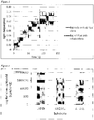
- Fluorescence spectra of compound 9 (often denoted 'infraluciferin' or 'iLH 2 ') in different pH conditions.
- the fluorescence spectra of compound 9 shows that it has redshifted absorbance, excitation and emission fluorescence spectra compared to native LH 2 .
- higher pH further red-shifted the fluorescence excitation and emission, potentially indicating deprotonation and molecular conjugation in line with the resonance charge based mechanism.
- compound 9 appeared to have emission maxima at different wavelengths dependent on the conditions.
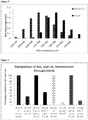
- the difference in light yield from compound 8 was seen to be only ca. 150-times less than from LH 2 ethyl ester.
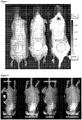
- Relative light yield of compound 12 (middle image) in vivo compared to D-LH 2 (right image) measured in an intensified CCD-based photon imager with good sensitivity to red light.
- the left image is a control with no filter and no substrate.
- the enhanced in vivo light yield compared to in vitro may be in part explained by the improved transmission of the emission of iLH 2 through blood compared to LH 2 .
- mice were inoculated with 3 x 10 6 LS174T cells expressing WT Flue and 5 days later were injected with 5mg of LH 2 ethyl ester or compound 8 and imaged for a total of 30s in a Photon imager instrument (Biospace Labs, Paris, France).
- the infrared filter used was an 830 nm long pass (830 LP).
- the fluorescence spectra showed that compound 17 was further redshifted than compound 8 in its fluorescence excitation and emission properties, and also had access to two colour forms (pH dependent).
- Experimental details as in Figure 1 .
- CSP HPLC analysis determined 65-90 % ee dependant on scale of reaction and purity of BCl 3 . Optical purity could be achieved by dissolving 8 in MeCN and concentrating in vacuo until a precipitate appeared. Filtration and concentration of the filtrate gave 8 .
- CSP HPLC analysis determined 82-92 % ee dependant on scale of reaction and purity of Tf 2 O. Optical purity could be achieved by dissolving 11 in MeCN and concentrating in vacuo until a precipitate appeared. Filtration and concentration of the filtrate gave 11.
- CSP HPLC analysis determined 80-92 % ee dependant on scale of reaction and purity of BCl 3 . Optical purity could be achieved by dissolving 12 in MeCN and concentrating in vacuo until a precipitate appeared. Filtration and concentration of the filtrate gave 12.
- a solution of 14 (118 mg, 0.350 mmol) in DMF (3.5 mL) was treated with Et 3 N (58 ⁇ L, 0.841 mmol) and cooled to 0 °C.
- the solution was treated with a solution of aminoacid (158 mg, 0.419 mmol) in DCM (1.5 mL) followed by a solution of BOP (191 mg, 0.419 mmol) in DCM (2.0 mL) and the resultant solution warmed to rt and stirred for 16 h.
- the synthesis may begin with commercially available 2-amino-6-methoxybenzothiazole.
- the amine may then be converted into the bridged thiol (1 8) using KOH following the method described by Fink et al., Bioorg & Med Chem Lett, 2006, 16, 1532 .
- the synthesis may begin with commercially available 6-methoxy-2-methylbenzothiazole.
- the methyl group may then be oxidised using SeO 2 following the method described in US patent US4826833 .
- Oxidation and deprotection of 22 may then be achieved to provide 23 , and 23 may be converted to 24 by manipulation of the nitrile group and condensation with cysteine.
- Sonagashira coupling of 2 and ethynyltrimethylsilane, and subsequent (hydolysis and reaction with phenyl cyanate may provide nitrile 25 . Ths may then be converted to 26 by manipulation of the nitrile andcondensation with cysteine.
- Bioluminescence ⁇ max values for LH 2 and compound 9 were tested with purified enzymes. Experimental details as in Figure 2 . These results show that compound 9 represents a near infrared (nIR) multiparametric luciferin analogue.
- nIR near infrared
- the kinetics of saponification in mammalian cells showed a slow rise (ca. 2min) to maximal activity.
- the apparent Km of compound 12 was seen to be the same as LH 2 indicating similar affinity for the substrate, although the Kcat was lower, possibly due to emitter quenching.
Landscapes
- Chemical & Material Sciences (AREA)
- Life Sciences & Earth Sciences (AREA)
- Organic Chemistry (AREA)
- Health & Medical Sciences (AREA)
- Engineering & Computer Science (AREA)
- Immunology (AREA)
- Molecular Biology (AREA)
- Physics & Mathematics (AREA)
- Biomedical Technology (AREA)
- Hematology (AREA)
- Urology & Nephrology (AREA)
- Zoology (AREA)
- Wood Science & Technology (AREA)
- Microbiology (AREA)
- Biotechnology (AREA)
- Analytical Chemistry (AREA)
- Biochemistry (AREA)
- General Health & Medical Sciences (AREA)
- Proteomics, Peptides & Aminoacids (AREA)
- Medicinal Chemistry (AREA)
- Pathology (AREA)
- Biophysics (AREA)
- General Physics & Mathematics (AREA)
- Food Science & Technology (AREA)
- Cell Biology (AREA)
- Bioinformatics & Cheminformatics (AREA)
- General Engineering & Computer Science (AREA)
- Genetics & Genomics (AREA)
- Nitrogen Condensed Heterocyclic Rings (AREA)
Description
- The present invention relates to compounds and their uses. In particular, though not exclusively, it concerns luminogenic compounds and their application in in vivo imaging techniques.
- Catalysis of a substrate (e.g. luciferin) by a bioluminescence (BLI) enzyme (e.g. luciferase) results in the release of light. Thus, small animal bioluminescence imaging utilises emission of light by the transgenic expression, particularly of firefly luciferase (Flue), in selected tissue(s). This rapid, cheap and highly sensitive modality has revolutionised the use of small animal models, allowing facile longitudinal and quantitative tracking of labelled cells noninvasively. Furthermore, functionalised substrates and enzymes allow the imaging of biological events within the small animal.
- However, it has proven difficult to extend this modality to allow true tomographic and multi-parametric imaging, primarily because luciferases emit light (yellow-green colour) that is largely absorbed by haemoglobin. This causes scatter and differential attenuation depending on tissue density and light source depth. Shifting the emission of luciferase into the near infra-red (nIR) would therefore overcome these barriers, since even complex mammalian tissues are quite transparent at these wavelengths (in the 'optical window' between ca. 620-800 nm).
- Despite much interest, no genetically encoded nIR BLI label currently exists. Furthermore, because BLI is currently restricted to relatively small animals, nIR emission with a respectable quantum yield would allow BLI in larger animals than is currently possible.
- Firefly luciferase (Flue) has been heavily engineered, increasing its expression, stability and shifting its emission with natural firefly luciferin from green-yellow to red. However, it is apparent that current systems are near the limit of red-shifting (ca. 620nm) achievable by mutagenesis of Photinus pyralis Flue.
- Firefly luciferin (often denoted LH2) is known to produce at least two colours of bioluminescence with different mutants of firefly luciferase, the natural yellow-green colour (peak wavelength - λmax 557nm) and a red colour (λmax 620nm). Red mutants are useful for in vivo imaging since the attenuation of red light is less intense and variable. In addition, due to the dependence of photon scatter on wavelength (scatter is proportional to 1/wavelength4), red emission is expected to allow higher resolution and deeper tissue bioluminescence imaging.
- Due to the differential attenuation of the two colours and variable attenuation of the yellow green emission (depending on depth, haemoglobin concentration and tissue density) multiparametric bioluminescence in vivo imaging has thus far been impossible. For this, the information space above 600nm (the optical window above haemoglobin absorbance) must be utilised. Therefore, emission should ideally be shifted ca. 100 nm compared to current systems, into the far red or near infrared regions. It would also be beneficial for the maximum emission to be at different wavelengths with different mutants, and to have a narrow band of emission to allow for multiparametric imaging.
- The chemical mechanism for the different colours observed with different mutant Flue and native LH2 is unknown and many studies with mutants and substrate analogues have tried to determine it without success (Navizet et al., J Am Chem Soc, 2010, 132, 706-12). One hypothesis is that the emitting product of the Flue reaction, oxyluciferin (OL) can exist in two tautomeric forms, i.e. red emitting 4-keto and yellow-green emitting 4-enolate (White et al., Bioorg Chem, 1971, 1, 92-122.); however, this theory is less probable since preadenylated 5-substituted dimethyl analogues (which cannot form an enolate) can produce green and red colours with wild-type and red mutant Flues, respectively (Branchini et al., J Am Chem Soc Comm, 2002, 124, 2112-3).
- A number of other theories exist, including one solution that the entire molecule can exist in two different resonance forms dictated by electrostatic and/or H-bond interactions in the active site (Branchini et al., Biochemistry, 2004, 43, 7255-62). Although strictly unproven, this theory is supported by quantum mechanical calculations (Nakatani et al., J Am Chem Soc, 2007, 129, 8756-65). Furthermore, the postulated mechanism that leads to emission with LH2 (chemically induced electron-exchange luminescence - CIEEL) supports the notion of electron movement from 4- to 6'- groups (Koo et al., PNAS, 1978, 75, 30-3). However, it seems probable that the limit of red-shift achievable by enzyme engineering alone has been reached (Wood, Biolum Chemilum, 1990, 5, 107-14).
- The theoretical chemical mechanisms for resonance of luciferin are as follows:
-

-

- As the limit of red-shift available by enzyme engineering is thought to have been reached, modification of the chemical structure of luciferin (LH2) is an alternative option. A number of analogues of firefly LH2 have been previously synthesised to test theories of emission, to attempt to improve light yield or to shift emission colours. However, all have shown reduced light yields compared to native LH2, and none has shifted emission sufficiently into the far red or near infrared regions. Thus, there is still a need for compounds which do not reduce the light yield too significantly, and which shift the light emission into a region that can be potentially useful outside of the window of haemoglobin absorbance.
- Aminoluciferins, including those with the structures illustrated below, have been reported to have a higher affinity for Flue than LH2 (flash kinetics), lower light emission than LH2 and lower cell permeability in in vitro studies (Maki, J Electrochem Soc Japan, 2006, 9; Iwano et al., Tetrahedron 2013, http://dx.doi.org/10.1016/j.tet.2013.03.050; Ugarova et al., Luminescence 2002, 17, 321-30; Japanese patent publication
JP2009184932 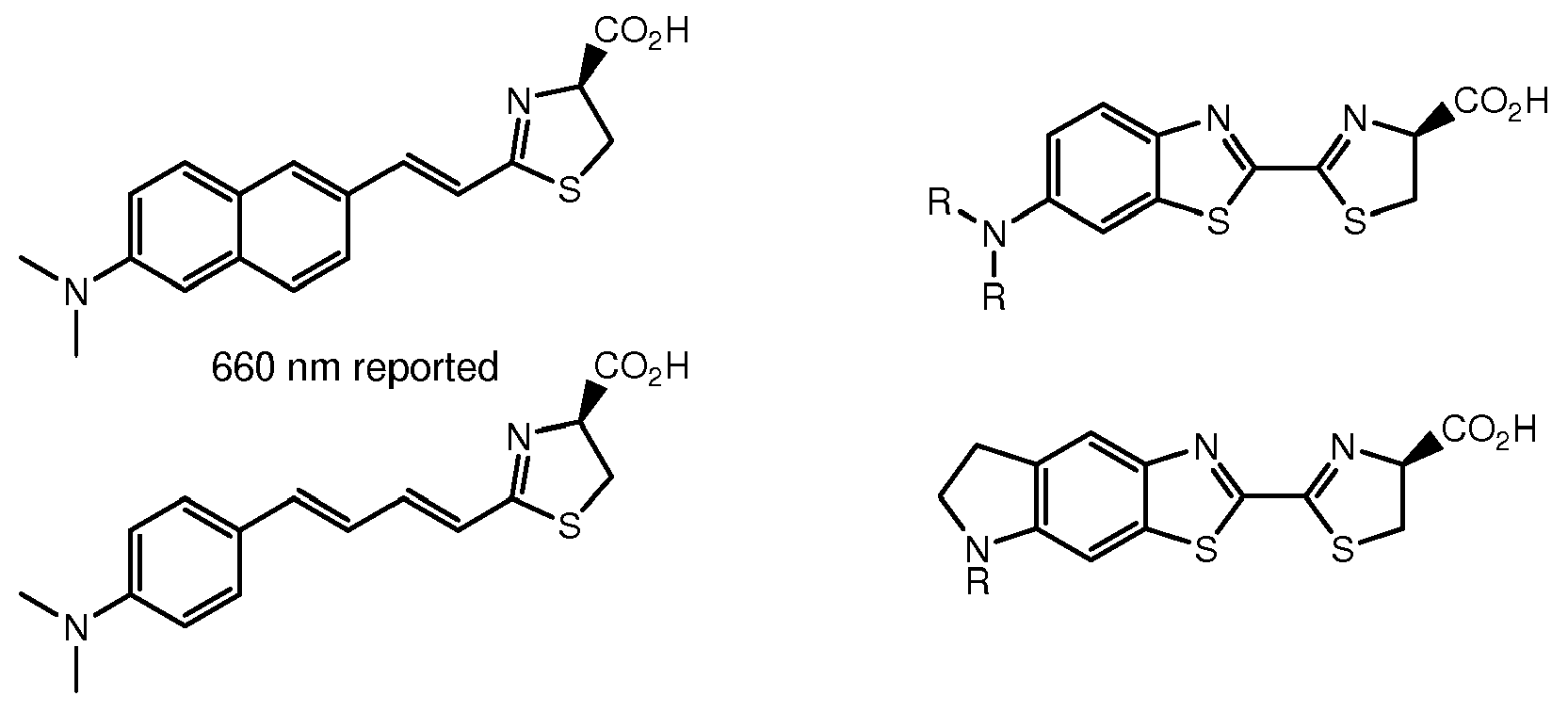
- However, no data on the effect of pH on the emission wavelength maxima, or the use of mutated Flue to change the emitted wavelength have been reported. In addition, no in vivo studies have been reported.
-
WO 2013/027770 ,JP 2010/189359 CN 102617536 each disclose alternative heterocyclic compounds which do not provide a significant red-shift in emission or allow multiparametric imaging. - Therefore, it is an object of the present invention to provide novel substrate analogues of luciferin that result in red-shifting of emission, particularly to the nIR range. Furthermore, it is desirable for such compounds to possess similar biocompatibility (e.g. good biodistribution and low toxicity) to natural luciferin, and to exhibit different emission colours (have distinct emitting forms) with different Flue mutants.
- According to the invention, there is provided a compound according to the formula (II):

- R1 is hydrogen or an optionally substituted alkyl group;
- each R2, when present, is a group independently selected from optionally substituted hydroxyl, optionally substituted amino, optionally substituted thiol, optionally substituted alkyl, and optionally substituted aryl;
- R3 is a carboxyl group or an optionally substituted C1-6 alkyl carbonyloxy group;
- M is a group selected from O, S, and NR4, wherein R4 is a group selected from hydrogen, optionally substituted alkyl, optionally substituted alkenyl, optionally substituted aryl, optionally substituted heteroaryl, and optionally substituted heterocyclyl;
- X is a group selected from optionally substituted alkenylene, optionally substituted alkynylene, optionally substituted arylene, and combinations thereof, or optionally substituted alkylene carbonyl;
- n is 0, 1, 2, or 3;
- V and Y are each independently selected from CR5 and N;
- W and Z are each independently selected from NR7, S, and O;
- R5 is a group selected from hydrogen, optionally substituted hydroxyl, optionally substituted alkyl, and optionally substituted amino; and
- R7 is a group selected from hydrogen, optionally substituted alkyl, and optionally substituted aryl.
- The compounds of formula (II) have been found to represent bioluminescent substrate analogues of luciferin which exhibit a red-shift in emission to the nIR range. Thus, they are the first examples of nIR BLI labels having true bioluminescence peaking in the nIR (i.e. not the product of resonance energy transfer or filtering). Structural features, such as the unsaturated linker group X, further allow different emission colours (have distinct emitting forms) with different mutant enzymes and/or under varying pH conditions.
- Such analogues have the potential to enable a new era in multispectral BLI, facilitating higher resolution multi-parametric imaging and enhanced depth penetration, and including the imaging of larger animals, such as dogs, cats, primates and human subjects.
- The compounds of formula (II) have been found to be active in vivo, for example when injected into mice containing systemic Raji cell-derived lymphomas. The light generated could be imaged for analytical purposes. The compounds therefore provide the potential to increase depth penetration and resolution of BLI by reducing haemoglobin (Hb) attenuation and scatter (a higher percentage of photons are not absorbed by Hb and also travel for longer in a straight path), as well as high sensitivity multispectral BLI when used alone, or in combination with natural luciferin or further analogues.
- The term 'Cx-y alkyl' as used herein refers to a linear or branched saturated hydrocarbon group containing from x to y carbon atoms. For example, C1-6 alkyl refers to a linear or branched saturated hydrocarbon group containing from 1 to 6 carbon atoms. Examples of C1-6 alkyl groups include methyl, ethyl, n-propyl, isopropyl, n-butyl, isobutyl, sec-butyl, tert-butyl, n-pentyl, isopentyl, neopentyl, hexyl, and isohexyl.
- The term 'Cx-y alkylene' as used herein refers to a divalent hydrocarbon group obtained by removing one hydrogen atom from 'Cx-y alkyl' above. Examples of C1-6 alkylene groups include methylene, ethylene, propylene, butylene, pentylene, and hexylene.
- The term 'Cx-y alkenyl' as used herein refers to a linear or branched hydrocarbon group containing one or more carbon-carbon double bonds and having from x to y carbon atoms. Examples of C2-6 alkenyl groups include ethenyl, 1-propenyl, 2-propenyl, 2-methyl-1-propenyl, 1-butenyl, 2-butenyl, 3-butenyl, 3-methyl-2-butenyl, 1-pentenyl, 2-pentenyl, 3-pentenyl, 4-pentenyl, 4-methyl-3-pentenyl, 1-hexenyl, 3-hexenyl, and 5-hexenyl.
- The term 'Cx-y alkenylene' as used herein refers to a divalent hydrocarbon group obtained by removing one hydrogen atom from 'Cx-y alkenyl' above. Examples of C2-6 alkenylene groups include ethenylene, propenylene, butenylene, 1,3-butadienylene, pentenylene, hexenylene, and 1,3,5-hexatrienylene.
- The term 'Cx-y alkynyl' as used herein refers to a divalent hydrocarbon group containing one or more carbon-carbon triple bonds and having from x to y carbon atoms. Examples of C2-6 alkynyl groups include ethynyl, propynyl, butynyl and pentynyl.
- The term 'Cx-y alkynylene' as used herein refers to a divalent hydrocarbon group obtained by removing one hydrogen atom from 'Cx-y alkynyl' above. Examples of C2-6 alkynylene groups include ethynylene, propynylene, butynylene, 1,3-butadiynylene, pentynylene, hexynylene, and 1,3,5-hexatriynylene.
- The term 'Cx-y alkoxy' as used herein refers to an -O-Cx-y alkyl group wherein Cx-y alkyl is as defined herein. Examples of C1-6 alkoxy groups include methoxy, ethoxy, propoxy, iso-propoxy, butoxy, tert-butoxy, pentoxy and hexoxy.
- The term 'x- to y-membered hydrocarbon ring' as used herein refers to a cycloalkyl, cycloalkenyl, or aryl ring as defined below in relation to formula (II).
- The term 'x- to y-membered cycloalkyl' as used herein refers to a saturated monocyclic hydrocarbon ring of x to y carbon atoms. For example, 3- to 6-membered cycloalkyl refers to a saturated monocyclic hydrocarbon ring of 3 to 6 carbon atoms. Examples of 3- to 6-membered cycloalkyl groups include cyclopropyl, cyclobutyl, cyclopentyl, and cyclohexyl.
- The term 'x- to y-membered cycloalkenyl' as used herein refers to a monocyclic hydrocarbon ring containing one or more carbon-carbon double bonds of x to y carbon atoms. For example, C3-6 cycloalkenyl refers to an unsaturated monocyclic hydrocarbon ring of 3- to 6-carbon atoms. Examples of C3-6 cycloalkenyl groups include 2-cyclopenten-1-yl, 3-cyclopenten-1-yl, 2-cyclohexen-1-yl, and 3-cyclohexen-1-yl.
- The term 'aryl' as used herein refers to a 5- to 6-membered monocyclic hydrocarbon ring containing x to y carbon atoms, wherein the ring is aromatic. An example of such an aryl group is phenyl. Alternatively, the term 'Cx-y aryl' as used herein refers to a monocyclic or bicyclic ring containing from x to y carbon atoms, wherein at least one ring is aromatic. Examples of C6-14 aryl groups include phenyl, naphthyl, tetrahydronaphthalenyl, anthryl, phenanthryl, acenaphthylenyl, biphenylyl, anthracenyl, phenanthrenyl, and phenalenyl.
- The term 'arylene' as used herein refers to a divalent hydrocarbon group obtained by removing one hydrogen atom from 'Cx-y aryl' above. An example of such an arylene group is phenylene. Alternatively, the term 'Cx-y arylene' as used herein refers to a monocyclic or bicyclic ring containing from x to y carbon atoms, wherein at least one ring is aromatic. Examples of C6-14 arylene groups include phenylene, naphthylene, tetrahydronaphthalenylene, anthrylene, phenanthrylene, acenaphthylenylene, biphenylylene, anthracenylene, phenanthrenylene, and phenalenylene.
- The term 'heteroaryl' as used herein refers to a 5- or 6-membered monocyclic aromatic ring in which the monocyclic ring contains 1 to 4 heteroatoms selected from oxygen, nitrogen, and sulphur. Examples of such monocyclic aromatic rings include thienyl, furyl, furazanyl, pyrrolyl, triazolyl, tetrazolyl, imidazolyl, oxazolyl, thiazolyl, oxadiazolyl, isothiazolyl, isoxazolyl, thiadiazolyl, pyranyl, pyrazolyl, pyrimidyl, pyridazinyl, pyrazinyl, pyridyl, triazinyl, and tetrazinyl.
- The term 'heterocyclyl' refers to a 5- or 6-membered monocyclic ring which may be saturated or partially unsaturated, in which the monocyclic ring contains 1 to 4 heteroatoms selected from oxygen, nitrogen, and sulphur. Examples of such monocyclic rings include aziridinyl, oxiranyl, pyrrolidinyl, azetidinyl, pyrazolidinyl, oxazolidinyl, piperidinyl, piperazinyl, morpholinyl, thiomorpholinyl, thiazolidinyl, hydantoinyl, valerolactamyl, oxiranyl, oxetanyl, dioxolanyl, dioxanyl, oxathiolanyl, oxathianyl, dithianyl, dihydrofuranyl, tetrahydrofuranyl, dihydropyranyl, tetrahydropyranyl, tetrahydropyridinyl, tetrahydropyrimidinyl, tetrahydrothiophenyl, tetrahydrothiopyranyl, diazepanyl and azepanyl.
- The term 'amino' as used herein refers to an organonitrogen compound with the connectivity -N(R')(R"), where R' and R" are each independently a hydrogen or an optional substituent as defined below in relation to formula (II).
- The term 'Cx-y alkyl carbonyloxy' as used herein refers to an alkyl group wherein Cx-y alkyl is as defined herein and at least one methylene group (i.e. -CH2-) is replaced with an ester group (e.g. -CO2-). Examples of C1-6 alkyl carbonyloxy groups include ethanoate, propanoate, butanoate, pentanoate, and hexanoate. The term 'carbonyloxy' as used herein refers to a single carbonyloxy group of the formula: -CO2-.
- The term 'Cx-y alkyl carbamoyl' as used herein refers to an alkyl group wherein Cx-y alkyl is as defined herein and at least one methylene group (i.e. -CH2-) is replaced with an amide group (e.g. -C(O)NR-, where R is a hydrogen atom, a 5- or 6-membered heterocyclyl group, a 5- or 6-membered heteroaryl group, a 3- to 6-membered cycloalkyl group, a C1-6 alkyl group, or a C6-14 aryl group, preferably a hydrogen atom). Examples of C1-6 alkyl carbamoyl groups include ethyl carbamoyl, propyl carbamoyl, butyl carbamoyl, pentyl carbamoyl, and hexyl carbamoyl. The term 'carbamoyl' as used herein refers to a single carbamoyl group of the formula: -C(O)NR-, where R is as defined above.
- The term 'Cx-y alkoxy carbonyl' as used herein refers to an alkyl group wherein Cx-y alkyl is as defined herein and at least one methylene group (i.e. -CH2-) is replaced with an ester group (e.g. -OC(O)-). Examples of C1-6 alkyl carbonyl groups include ethyl oxycarbonyl, propyl oxycarbonyl, butyl oxycarbonyl, pentyl oxycarbonyl, and hexyl oxycarbonyl. The term 'oxycarbonyl' as used herein refers to a single oxycarbonyl group of the formula: -OC(O)-.
- The term 'Cx-y alkyl carbonyl' as used herein refers to an alkyl group wherein Cx-y alkyl is as defined herein and at least one methylene group (i.e. -CH2-) is replaced with a carbonyl group (i.e. >C=O). Examples of C1-6 alkyl carbonyl groups include ethanoyl, propanoyl, butanoyl, pentanoyl, and hexanoyl. The term 'carbonyl' as used herein refers to a single carbonyl group of the formula: >C=O.
- The term 'hydroxyl' as used herein refers to a group of the formula -OH. If such a group is substituted, the resulting group is an ether of the formula -O-.
- The term 'thiol' as used herein refers to a group of the formula -SH. If such a group is substituted, the resulting group is a thioether of the formula -S-.
- Each symbol in formula (II) is described in detail in the following.
- R1 is hydrogen or an optionally substituted alkyl group. In a preferable embodiment, R1 is hydrogen or an optionally substituted C1-3 alkyl group. In particular, for reasons of improved resonance, and thus stability, R1 is preferably hydrogen.
- Each R2, when present, is a group independently selected from optionally substituted hydroxyl, optionally substituted amino, optionally substituted thiol, optionally substituted alkyl, and optionally substituted aryl. In a preferable embodiment, R2, when present, is a group independently selected from optionally substituted hydroxyl, optionally substituted amino, and optionally substituted alkyl. In particular, for reasons of improved resonance, R2 is preferably a group independently selected from hydroxyl and optionally substituted amino.
- R3 is optionally substituted C1-6 alkyl carbonyloxy or carboxyl. In particular, when R3 is a C1-3 alkyl carbonyloxy group, a more stable compound is obtained, e.g. racemisation at the α-position to the carbonyl is reduced, and without any significant adverse effects in terms of bioluminescence. Indeed, common esterases cleave such groups in vivo to produce functional luciferin analogues having carboxyl functionality. Therefore, although R3 is preferably hydrogen for reasons of improved resonance stability, R3 is preferably a C1-3 alkyl carbonyloxy group for stability and handling ex vivo with the ester group being cleaved in vivo.
- M is a group selected from O, S, and NR4, wherein R4 is a group selected from hydrogen, optionally substituted alkyl, optionally substituted alkenyl, optionally substituted aryl, optionally substituted heteroaryl, and optionally substituted heterocyclyl. In a preferable embodiment, M is selected from O and S. In particular, M is preferably O. Furthermore, it has been found that compounds wherein M is O and R1 is hydrogen are particularly stable.
- X is a group selected from optionally substituted alkenylene, optionally substituted alkynylene, and optionally substituted arylene groups, and combinations thereof, or an optionally substituted alkylene carbonyl group. In another preferred embodiment, X is a group selected from optionally substituted alkenylene, optionally substituted alkynylene, optionally substituted aralkylene, and optionally substituted alkylene carbonyl. In particular, a C2-6 alkylene carbonyl group, or a group selected from C2-6 alkenylene, C2-6 alkynylene, C6-14 arylene, and combinations thereof, is preferred. Most preferably, X is an optionally substituted alkenylene group. Preferably, X provides conjugation between the two ring systems, such that resonance stabilisation is provided. Furthermore, additional conjugation provided by X, i.e. by multiple unsaturated bonds such as -C2H2-C2H2-, has been found to further red-shift the emission wavelength into the nIR.
- The number of possible substituents, R2, on the phenyl ring of the compound of formula (II) is denoted n, where n is 0, 1, 2, or 3. In a preferable embodiment, n is 0, 1, or 2, even more preferably n is 0 or 1.
- R5 is a group selected from hydrogen, optionally substituted hydroxyl, optionally substituted alkyl, and optionally substituted amino. R7 is a group selected from hydrogen, optionally substituted alkyl, and optionally substituted aryl.
- V and Y are each independently selected from CR5 and N. W and Z are each independently selected from NR7, S, and O.
- Preferably, there is provided a compound of formula (II):

- R1 is hydrogen or optionally substituted alkyl (preferably hydrogen);
- R2, when present, is a group independently selected from optionally substituted hydroxyl, optionally substituted amino, and optionally substituted alkyl;
- R3 is optionally substituted C1-6 alkyl carbonyloxy or carboxyl;
- M is selected from O, S, and NR4, wherein R4 is a group selected from hydrogen, optionally substituted alkyl, and optionally substituted aryl (preferably O);
- V and Y are each independently selected from CR5 and N;
- W and Z are each independently selected from NR7, S, and O,
- wherein R5 is a group selected from hydrogen, optionally substituted hydroxyl, optionally substituted alkyl, and optionally substituted amino, and
- R7 is a group selected from hydrogen, optionally substituted alkyl, and optionally substituted aryl; and
- n is 0 or 1.
- Such compounds have been shown to possess an emission wavelength in the nIR, and therefore show improved spectral properties through haemoglobin, i.e. there is less interference and/or scatter when imaging is conducted in vivo. In addition, the compounds exhibit an excellent quantum yield, at least comparable to those known in the art, yet also provide an additional red-shift with Flue colour mutants.
- In another preferred embodiment of the invention, there is provided a compound having the formula (III):

- V and Y are each independently selected from CR5 and N;
- W and Z are each independently selected from NR7, S, and O; and
- the remaining groups are as defined above in relation to formula (II).
- In this embodiment, it is preferable that V and Y are each N. It is also preferable that W and Z are each S.
- Preferably, there is provided a compound of formula (III):
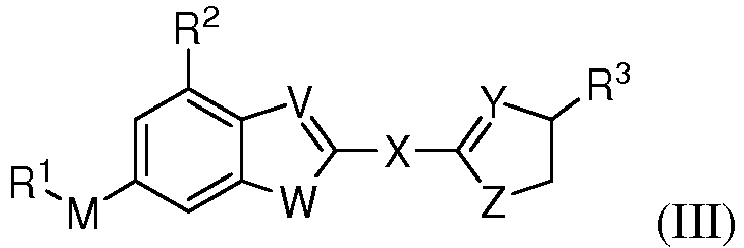
- R1 is hydrogen or optionally substituted alkyl (preferably hydrogen);
- R2 is a group independently selected from optionally substituted hydroxyl, optionally substituted amino, and optionally substituted alkyl;
- R3 is optionally substituted C1-6 alkyl carbonyloxy or carboxyl;
- M is selected from O and S (preferably O);
- V and Y are each independently selected from CR5 and N; and
- W and Z are each independently selected from NR7, S, and O,
- wherein R5 is a group selected from hydrogen, optionally substituted hydroxyl, optionally substituted alkyl, and optionally substituted amino, and
- R7 is a group selected from hydrogen, optionally substituted alkyl, and optionally substituted aryl. Such compounds have been shown to possess an emission wavelength in the nIR, and therefore show improved spectral properties through haemoglobin, i.e. there is less interference and/or scatter when imaging is conducted in vivo. In addition, the compounds exhibit an excellent quantum yield, at least comparable to those known in the art, yet also provide an additional red-shift with Flue colour mutants. Furthermore, the compounds show good bioluminescence intensity in vivo, without requiring pre-adenylation.
- Each of the optionally substituted groups of the compound of formula (II) and formula (III) may be substituted by:
- (1) a group selected from -J-aryl, -J-heteroaryl, -J-heterocyclyl and -J-C3-6 cycloalkyl, wherein J represents a bond or C1-3 alkylene, and said aryl is selected from phenyl, said heteroaryl is selected from triazolyl, thiazolyl, thienyl, pyrazolyl, pyrimidyl, pyridazinyl, pyrazinyl, and pyridyl, said heterocyclyl is selected from pyrrolidinyl, azetidinyl, pyrazolidinyl, oxazolidinyl, piperidinyl, piperazinyl, morpholinyl, and thiazolidinyl, and said C3-6 cycloalkyl is selected from cyclopropyl, cyclopentyl and cyclohexyl; or
- (2) one to three substituents selected from
- (a) C1-6 alkyl (preferably methyl, ethyl or isopropyl),
- (b) C1-3 alkenyl (preferably propenyl),
- (c) halogen (preferably Cl or Br),
- (e) haloC1-6 alkyl (preferably trifluoromethyl),
- (d) cyano,
- (e) amino, optionally mono-or di-substituted with C1-3 alkyl, tert-butoxycarbonyl or benzyl,
- (f) C1-3 alkoxy (preferably methoxy),
- (g) C1-6 alkyl carbonyl (preferably acetyl),
- (h) C1-3 alkoxy carbonyl,
- (i) C1-3 alkyl carbonyloxy, including carboxyl, and
- (j) C1-3 alkyl carbamoyl, including carbamoyl.
- The compounds of the present invention may be in any stereoisomeric form. It is preferable, nevertheless, that the compounds possess the same stereoisomeric form as natural luciferin, i.e. S-stereochemistry at the α-position to the carbonyl functionality (on the basis of a dihydrothiazole ring).
- In particular, the compound according to the invention may be selected from:



- A compound according to the invention may be for use in in vivo imaging, preferably in vivo bioluminescence imaging. Furthermore, any of the preferred structural variants mentioned above in relation to formulae (II)-(III) also represent preferred aspects of this embodiment as in vivo imaging agents.
- In particular, cells or animals bearing firefly luciferase may be detected using a number of common imaging devices. The most common form of such devices detects emitted photons using a lens focused onto a cooled charge-coupled device (CCD) with or without pre-intensification via a photomultiplier tube (e.g. IVIS imaging systems, by Perkin Elmer, MA, USA; and Photon Imager system, by Biospace Laboratories, Paris, France).
- In addition, chemiluminescence reactions involving compounds according to the invention, or bioluminescence elicited using compounds according to the invention, and firefly luciferase in in vitro or diagnostic assays may be detected with common laboratory single tube or microplate luminometers, which employ either photomultiplier tube or CCD photon detectors (e.g. those sold by Promega, WI, USA).
- In another aspect of the invention, there is provided a composition comprising a compound according to the invention, and one or more additional ingredients. Furthermore, any of the preferred structural variants mentioned above in relation to formulae (II)-(III) also represent preferred aspects of this composition.
- The additional ingredients in the composition may include pharmaceutically acceptable diluents, excipients and carriers. Pharmaceutically acceptable diluents, excipients and carriers that may be used in the compositions include, but are not limited to, ion exchangers, alumina, aluminium stearate, lecithin, serum proteins, such as human serum albumin, buffer substances such as phosphates, glycine, sorbic acid, potassium sorbate, partial glyceride mixtures of saturated vegetable fatty acids, water, salts or electrolytes, such as protamine sulphate, disodium hydrogen phosphate, potassium hydrogen phosphate, sodium chloride, zinc salts, colloidal silica, magnesium trisilicate, polyvinyl pyrrolidone, coenzyme A, cellulose-based substances, polyethylene glycol, sodium carboxymethylcellulose, polyacrylates, waxes, polyethylene- polyoxypropylene-block polymers, polyethylene glycol and wool fat.
- The composition of the invention may be administered orally, parenterally, by inhalation spray, topically, rectally, nasally, buccally, vaginally or via an implanted reservoir. Preferably, the compositions are administered parenterally, more specifically by injection. The composition may contain any conventional non-toxic pharmaceutically-acceptable carriers, adjuvants or vehicles. The term parenteral as used herein includes intraperitoneal, subcutaneous, intracutaneous, intravenous, intramuscular, intra-articular, intrasynovial, intrasternal, intrathecal, intraocular, intraorbital, intralesional and intracranial injection or infusion techniques. Preferably, the route of administration of the composition is intraperitoneal, intravenous or intramuscular administration (most preferably intraperitoneal).
- The composition may be in the form of a sterile injectable preparation, for example, as a sterile injectable aqueous or oleaginous suspension. This suspension may be formulated according to techniques known in the art using suitable dispersing or wetting agents (such as, for example, Tween 80) and suspending agents. The sterile injectable preparation may also be a sterile injectable solution or suspension in a non-toxic parenterally-acceptable diluent or solvent, for example, as a solution in 1,3-butanediol. Among the acceptable vehicles and solvents that may be employed are mannitol, water, Ringer's solution and isotonic sodium chloride solution. In addition, sterile, fixed oils are conventionally employed as a solvent or suspending medium. For this purpose, any bland fixed oil may be employed including synthetic mono- or diglycerides. Fatty acids, such as oleic acid and its glyceride derivatives are useful in the preparation of injectables, as are natural pharmaceutically-acceptable oils, such as olive oil or castor oil, especially in their polyoxyethylated versions. These oil solutions or suspensions may also contain a long-chain alcohol diluent or dispersant such as Ph. Helv or a similar alcohol.
- In another aspect of the invention, there is provided a use of the compound according to the invention as a bioluminescent marker for in vitro measurement of luciferase expression. Furthermore, any of the preferred structural variants mentioned above in relation to formulae (II)-(III) also represent preferred aspects of this use.
- Given that the compound of the invention has specific utility as an in vivo imaging agent, there is also provided a method of in vivo imaging, comprising administering to a subject a compound according to the invention, and a luciferase enzyme or a polynucleotide encoding a luciferase enzyme, and measuring the emission resulting from the action of the luciferase enzyme on the compound. Furthermore, any of the preferred structural variants mentioned above in relation to formulae (II)-(III) also represent preferred aspects of this method.
- The method may further comprising generating an image based on the measurements obtained.
- In an additional aspect of the invention, there is provided a kit comprising a compound according to the invention, and a luciferase enzyme or a polynucleotide encoding a luciferase enzyme. Furthermore, any of the preferred structural variants mentioned above in relation to formulae (II)-(III) also represent preferred aspects of this kit.
- The invention will now be described in more detail by way of example only, and with reference to the following figures.
- Fluorescence spectra of compound 9 (often denoted 'infraluciferin' or 'iLH2') in different pH conditions. The fluorescence spectra of compound 9 shows that it has redshifted absorbance, excitation and emission fluorescence spectra compared to native LH2. In addition, higher pH further red-shifted the fluorescence excitation and emission, potentially indicating deprotonation and molecular conjugation in line with the resonance charge based mechanism. Importantly, compound 9 appeared to have emission maxima at different wavelengths dependent on the conditions.
- Bioluminescence spectra of native LH2 and compound 9 ('analogue') with Flue colour mutants (x5 thermostable and x5 thermostable red). With a mutant that produces red emission with native LH2 (λmax 620 nm), compound 9 produced a colour with
λmax 700 nm, which is significantly more red-shifted than those in the art. Spectra experimental details: 50 µL of 5 µM Flue or red mutant in 100 mM tris-acetate, 10 mM magnesium sulfate and 2mM ethylenediaminetetraacetic acid (EDTA) (pH 7.8) was added to 20µL 500 µM compound 9 with 70 µL PBS. Spectra were acquired in a Luminoskan Ascent machine (Thermo scientific, Waltham, MA, USA). Conversely, luciferin analogues known in the art do not show such a red-shift with Flue colour mutants. - Light emission kinetics of
compound 8 added to Raji cells expressing thermostable Flue. The methyl (Me) ester (compound 8) was seen to be enantio-stable, and was found to be active in mammalian and bacterial cells. The kinetics of saponification in mammalian cells showed a slow rise (ca. 2min) to maximal activity. Experimental details: 20µl 1 mg/ml compound 8 in citrate buffer (pH 5) was added to 10 µl containing 1 x 10⁶ Raji cells expressing thermsotable Flue and light emission was recorded over 2 min in a Turner Designs TD20/20 instrument (Turner Designs, CA, USA). - Relative light yield of
compounds 8 and 12 in vitro compared to D-LH2 ethyl ester measured in an intensified CCD-based photon imager with good sensitivity to red light. The difference in light yield fromcompound 8 was seen to be only ca. 150-times less than from LH2 ethyl ester. Experimental details: 10 µL of ImM of the compounds was added to 50 µg pig liver esterase mixed with 5 mM ATP and 0.25 µM Flue enzymes. Light was captured in a Photon Imager machine (Biospace Lab, Paris, France). - In vitro bioluminescence spectra of luciferase mutants x5 (left series) and x5 red (right series), with compound 9. In vitro bioluminescence spectra were acquired by imaging the samples through different filter sets and confirmed the two colours of compound 9 with x5 and x5 red. It may be possible to image both separately by applying 550-600nm bandpass and 830 longpass filters, respectively. Experimental details: 10 µg purified porcine liver esterase in TEM buffer was added to 1 mL of
compound 8 dissolved in TEM buffer and incubated at 37° C for 15min before assay as per details inFigure 1 . Light emission was captured in a Photon Imager device for 30s using different bandpass filters (Biospace Labs, Paris, France). - Relative transmission of LH2 ethyl ester and compound 12 through blood with natural and red coloured Flue mutants. When Raji cells expressing x5 Flue injected into mice containing systemic Raji cell lymphomas, the produced light that was imaged was ca. 8-times less in intensity than native LH2 in the region of interest shown.
- Relative light yield of compound 12 (middle image) in vivo compared to D-LH2 (right image) measured in an intensified CCD-based photon imager with good sensitivity to red light. The left image is a control with no filter and no substrate. The enhanced in vivo light yield compared to in vitro may be in part explained by the improved transmission of the emission of iLH2 through blood compared to LH2.
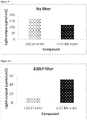
- Comparison of LH2 ethyl ester (termed 'luciferin' in the figure) and compound 8 (termed 'infraluciferin' in the figure) light emission in a subcutaneous colon carcinoma model. In a xenograft model of colon carcinoma in nude mice (MFI NuNu), light from sub cutaneously engrafted LS274T cells WT Flue expressing mice imaged with iLH2 ethyl ester was approximately 4 times less light than with
compound 8. When subsequently imaged using an 830LP filter (infrared filter), the light yield fromcompound 8 was approximately 5-fold higher than from LH2 ethyl ester. Experimental details: mice were inoculated with 3 x 10⁶ LS174T cells expressing WT Flue and 5 days later were injected with 5mg of LH2 ethyl ester orcompound 8 and imaged for a total of 30s in a Photon imager instrument (Biospace Labs, Paris, France). The infrared filter used was an 830 nm long pass (830 LP). - Quantification of LH2 ethyl ester and
compound 8 light emission in a subcutaneous colon carcinoma model - no filter. Experimental details: M3 vision software (Biospace Labs, Paris, France) was used to process the light emission. - Quantification of LH2 ethyl ester and
compound 8 light emission in a subcutaneous colon carcinoma model - 830LP filter. Experimental details: M3 vision software (Biospace Labs, Paris, France) was used to process the light emission. - In vivo spectrum of light emission from LH2 ethyl ester and
compound 8. A larger proportion of light emitted withcompound 8 in vivo was in the nIR portion of the electromagnetic spectrum than LH2 ethyl ester. Experimental details as inFigure 8 , but multiple acquisitions were acquired for 2 min each through a series of filters and corrected for light decay. - Light emission of compound 17 (denoted 'ssLH2'). This compound was found to also generate light emission with purified x5 Flue, though this was less intense than emission with
compound 8. Experimental details as inFigure 4 . - iCCD spectrum of x5 Flue with compound 17. The in vitro emission peaked between 630-680 nm. Experimental details as in
figure 5 . - Fluorescence spectra of
compound 8 against compound 17. The fluorescence spectra showed that compound 17 was further redshifted thancompound 8 in its fluorescence excitation and emission properties, and also had access to two colour forms (pH dependent). Experimental details as inFigure 1 . -

- Amino acid, D-TrtCysOMe was synthesised using an analogous method to that developed for L-cysteine by Rudolph et al., J. Med. Chem. 2001, 44, 619 and protected as the methyl ester using thionyl chloride (Mays et al., Tetrahedron Lett., 2007, 48, 4579).
-

- A solution of 1 (640 mg, 2.78 mmol) and BnBr (0.38 mL, 3.33 mmol) in acetone (50 mL) was treated with K2CO3 (1.09 g, 7.77 mmol) and stirred at rt for 16 h. After this time the reaction was filtered and concentrated in vacuo. Purification was achieved by flash column chromatography (5 % EtOAc/Pet. Ether) to give 2 (759 mg, 85 %) as a white solid, m.p. 58-60 °C; Rf = 0.61 (20 % EtOAc/Pet. Ether); IR νmax 2937 (νCH), 2873 (νCH), 1598, 1557, 1483, 1452, 1380, 1282, 1246, 1222, 1210, 1016, 946 cm-1; 1H NMR (CDCl3) δ 5.13 (2H, s, OCH2 Ar), 7.14 (1H, dd, J = 9.0, 2.6, ArH), 7.33 (1H, d, J = 2.5, ArH), 7.35-7.46 (6H, m, ArH), 7.87 (1H, d, J = 8.9, ArH); 13C NMR (CDCl3) δ 70.8 (CH2), 105.0 (CH), 116.5 (CH), 123.4 (CH), 127.5 (CH), 128.3 (CH), 128.8 (CH), 135.7 (C), 136.4 (C), 138.6 (C), 147.1 (C), 157.2 (C); m/z (ES+) 322 (100 %), 320 (100 %, M++H), 321 (18 %), 272 (7 %), 272 (7 %); HRMS C14H11BrNOS calcd. 319.9745, found 319.9730; Anal. Calcd. for C14H10BrNOS: C, 52.51; H, 3.15; N, 4.37. Found C, 52.19; H, 3.03; N, 4.33 %.
-

- A solution of 2 (120 mg, 0.374 mmol) in THF (4 mL) was cooled to -78 °C, treated with nBuLi (1.93 M, 0.22 mL, 0.412 mmol) (colour change from colourless to pale yellow) and stirred at -78 °C for 15 min. After this time DMF (0.12 mL, 1.55 mmol) was added dropwise and the resultant solution stirred at -78 °C for 1 h. The reaction was quenched with NaHCO3 (aq) (2 mL), back extracted with EtOAc (2 × 10 mL), separated and concentrated in vacuo. Purification was achieved by flash column chromatography (5-10 % EtOAc/Pet. Ether) to give 3 (98 mg, 96 %) as a white solid, m.p. 112-114 °C; Rf = 0.51 (20 % EtOAc/Pet. Ether); IR νmax 3035 (νCH), 2854 (νCH), 1677 (νCO), 1598, 1547, 1489, 1455, 1380, 1269, 1192, 1120, 999 cm-1; 1H NMR (CDCl3) δ 5.19 (2H, s, OCH 2Ar), 7.30 (1H, dd, J = 9.1, 2.5, ArH), 7.38-7.48 (7H, m, ArH), 8.12 (1H, d, J = 9.1, ArH), 10.1 (1H, s, C(O)H); 13C NMR (CDCl3) δ 70.8 (CH2), 105.0 (CH), 118.8 (CH), 126.7 (CH), 127.6 (CH), 128.5 (CH), 128.9 (CH), 136.0 (C), 138.6 (C), 148.5 (C), 159.5 (C), 163.2 (C), 185.2 (CH); m/z (ES+) 270 (100 %, M++H), 210 (6 %), 132 (14 %, M++H-C(O)H, OBn); HRMS C15H12NO2S calcd. 270.0589, found 270.0585; Anal. Calcd. for C15H11NO2S: C, 66.89; H, 4.12; N, 5.20. Found C, 66.62; H, 4.04; N, 5.10 %.
-
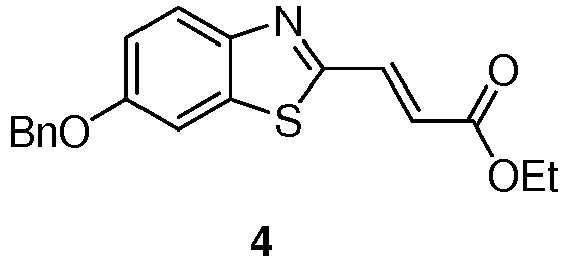
- A solution of 3 (568 mg, 2.10 mmol) in PhMe (10 mL) was treated with (carbethoxymethylene)triphenylphosphorane (2.16 g, 6.31 mmol) and heated to reflux for 3 h. After this time the reaction was cooled to rt and concentrated in vacuo. Purification was achieved by flash column chromatography (10 % EtOAc/Pet. Ether) to give 4 (660 mg, 92 %) as a pale yellow solid. m.p 79-80 °C; Rf = 0.38 (20 % EtOAc/Pet. Ether); IR νmax 3063 (νCH), 3038 (νCH), 2979 (νCH), 1703 (νCO) 1595, 1551, 1488, 1445, 1386, 1368, 1254, 1106, 1018, 958 cm-1; 1.36 (3H, t, J = 7.1, CH2CH3 ), 4.31 (2H, q, J = 7.1, CH 2CH3), 5.16 (2H, s, OCH2 Ar), 6.71 (1H, d, J = 15.9, CHC(O)OEt), 7.20 (1H, dd, J = 9.0, 2.5, ArH), 7.35-7.48 (6H, m, ArH), 7.85 (1H, d, J = 15.9, CHC(N)S), 7.96 (1H, d, J = 9.0, ArH); 13C NMR (CDCl3) δ 14.3 (CH3), 61.2 (CH2), 70.7 (CH2), 105.2 (CH), 117.3 (CH), 124.7 (CH), 125.1 (CH), 127.6 (CH), 128.3 (CH), 128.8 (CH), 136.4 (C), 136.8 (C), 137.0 (CH), 148.7 (C), 158.0 (C), 161.2 (C), 165.8 (C); m/z (ES+) 340 (100%, M++H), 339 (7%, M+), 294 (7%, M++H-OEt), 91 (7%, PhCH2); HRMS C19H18NO3S calcd. 340.1007, found 340.1003; Anal. Calcd. for C19H17NO3S: C, 67.24; H, 5.05; N, 4.13. Found C, 67.04; H, 5.02; N, 4.09 %.
-

- A suspension of 4 (500 mg, 1.47 mmol) in iPrOH (18.3 mL) was treated with NaOH (4.70 mL, 1.0 M) and stirred at rt overnight. An additional 10 mL of H2O was added so that all precipitate had dissolved and the resultant solution acidified to
pH 1 with HCl (1 M). The yellow precipitate was isolated by filtration and washed with H2O (30 mL) to give 5 (458 mg, quant.) as a fine yellow powder. m.p 174-176 °C; Rf = 0.40 (10 % MeOH/DCM); IR νmax 3031 (νCH), 2866 (νCH), 2543 (νOH), 1694 (νCO), 1599, 1558, 1497, 1451, 1312, 1259, 1205, 1051, 1013, 966 cm-1; 1H NMR (DMSO) δ 15.20 (2H, s, OCH2 Ar), 6.72 (1H, d, J = 15.9, CHC(O)OEt), 7.23 (1H, dd, J = 9.0, 2.5, ArH), 7.32-7.50 (5H, m, ArH), 7.69 (1H, d, J = 15.9, CHC(N)S), 7.83 (1H, d, J = 2.4, ArH), 7.97 (1H, d, J = 9.0, ArH); 13C NMR (DMSO) δ 69.9 (CH2), 105.8 (CH), 117.2 (CH), 124.2 (CH), 126.0 (CH), 127.9 (CH), 128.0 (CH), 128.5 (CH), 135.9 (CH), 136.6 (C), 136.6 (C), 147.9 (C), 157.4 (C), 160.8 (C), 166.4 (C); m/z (CI) 402 (26%), 312 (100%, M++H), 294 (11%, M++H-OH), 91 (5%, PhCH2); HRMS C17H14NO3S calcd. 312.0694, found 312.0691. -

- A solution of 5 (134 mg, 0.424 mmol) in DMF (4.2 mL) was treated with Et3N (70 µL, 1.02 mmol) and cooled to 0 °C. The solution was treated with a solution of aminoacid (192 mg, 0.508 mmol) in DCM (2 mL) followed by a solution of BOP (231 mg, 0.508 mmol) in DCM (2.2 mL) and the resultant solution stirred at 0 °C for 2 h. After this time the reaction mixture was quenched with saturated NaHCO3(aq) (2 mL) and taken up in EtOAc (10 mL), the aqueous layer was back extracted using EtOAc (2 × 5 mL), organics dried over MgSO4, filtered and concentrated in vacuo. Purification was achieved by flash column chromatography (20 % EtOAc/Pet. Ether) to give 6 (220 mg, 80 %) as a yellow solid. m.p. 83-86 °C; Rf = 0.28 (30 % EtOAc/Pet. Ether); [α]D +62.6 (c 0.95, CHCl3); CSP HPLC analysis (Chiracel OD-H (150 × 4.6 mm), eluent: hexane: iPrOH, 70:30, flow 0.5 mL/min, 14 bar) determined > 98 % ee [tR (minor) = 43.07 min, tR (major) = 26.59 min]; IR νmax 1741 (vco), 1662, 1627, 1596, 1488, 1446, 1346, 1319, 1260, 1196, 1051, 1001, 966 cm-1; 1H NMR (CDCl3) δ 2.73 (1H, dd, J = 12.7, 4.6, CH 2STrt), 2.82 (1H, dd, J = 12.7, 5.6, CH 2STrt), 3.76 (3H, s, OCH3 ), 4.76 (1H, dt, J = 7.8, 5.2, CHCH2), 5.17 (2H, s, OCH2 Ph), 6.09 (1H, d, J = 7.8, NH), 6.65 (1H, d, J = 15.5, CHC(O)N), 7.20-7.49 (22H, m, ArH), 7.73 (1H, d, J = 15.5, CHC(N)S), 7.96 (1H, d, J = 9.0, ArH); 13C NMR (CDCl3) δ 33.8 (CH2), 51.4 (CH), 52.9 (CH3), 67.2 (C), 70.7 (CH2), 105.2 (CH), 117.2 (CH), 124.6 (CH), 126.8 (CH), 127.1 (CH), 127.6 (CH), 128.1 (CH), 128.3 (CH), 128.8 (CH), 129.6 (CH), 134.2 (CH), 136.4 (C), 144.3 (C), 154.2 (C), 157.9 (C), 161.4 (C), 163.8 (C), 170.7 (C); m/z (ES+) 693 (96%, M++Na), 595 (9%), 244 (18%), 243 (100%, M+- STrt,CO2Me, Bn, H), 228 (8%), 165 (22%); HRMS C40H34N2O4NaS2 calcd. 693.1858, found 693.1855.
-

- A solution of Ph3PO (386 mg, 1.40 mmol) in DCM (10 mL) was cooled to 0 °C in an ice bath and treated with Tf2O (0.160 mL, 0.874 mmol) added dropwise over 5 min. The resultant solution was stirred at 0 °C for 30 min and a solution of 6 (220 mg, 0.329 mmol) in DCM (4 mL) was then added dropwise over 5 min. The reaction was stirred at 0 °C for 10 min and then quenched with phosphate buffer (4 mL). Extracted into DCM (3 × 10 mL) and separated. The organic layer was dried over MgSO4, filtered and concentrated in vacuo. Purification was achieved by flash column chromatography (20-40 % EtOAc/Pet. Ether) to give 7 (88 mg, 65 %) as a pale yellow solid. m.p. 98-100 °C; Rf = 0.32 (40 % EtOAc/Pet. Ether); IR νmax 3032, 2947 (νCH), 1726 (νCO), 1599, 1569, 1557, 1480, 1454, 1431, 1380, 1319, 1261, 1242, 1225, 1199, 1176, 1043, 1018, 946 cm-1; 1H NMR (CDCl3) δ 3.63 (1H, dd, J = 10.9, 9.3, CH 2S), 3.71 (1H, dd, J = 11.0, 9.3, CH 2S), 3.86 (3H, s, OCH3 ), 5.15 (2H, s, OCH 2Ph), 5.26 (1H, t, J = 9.3, CHCH2), 7.18 (1H, dd, J = 9.0, 2.5, ArH), 7.31-7.48 (8H, m, ArH, 2 × CHC(N)S), 7.93 (1H, d, J = 9.0, ArH); 13C NMR (CDCl3) δ 35.1 (CH2), 53.1 (CH3), 70.7 (CH2), 78.2 (CH), 105.2 (CH), 117.2 (CH), 124.6 (CH), 127.6 (CH), 128.4 (CH), 128.8 (CH), 129.0 (CH), 135.2 (CH), 136.4 (C), 136.7 (C), 148.7 (C), 158.0 (C), 162.0 (C), 169.4 (C), 170.9 (C); m/z (ES+) 474 (32%), 411 (100%, M++H), 320 (12%); HRMS C21H19N2O3S2 calcd. 411.0837, found 411.0831; Anal. Calcd. for C21H18N2O3S2: C, 61.44; H, 4.42; N, 6.82. Found C, 61.38; H, 4.34; N, 6.74 %.
- CSP HPLC analysis determined 45-95 % ee dependant on scale of reaction and purity of Tf2O. Optical purity could be achieved by dissolving 7 in MeCN and concentrating in vacuo until a precipitate appeared. Filtration and concentration of the filtrate gave 7. [α]D -28.4 (c 0.91, CHCl3); CSP HPLC analysis (Chiracel OD-H, eluent: hexane: iPrOH, 70:30, flow 0.5 mL/min, 14 bar) > 98 % ee [tR (minor) = 21.8 min, tR (major) = 30.7 min].
-
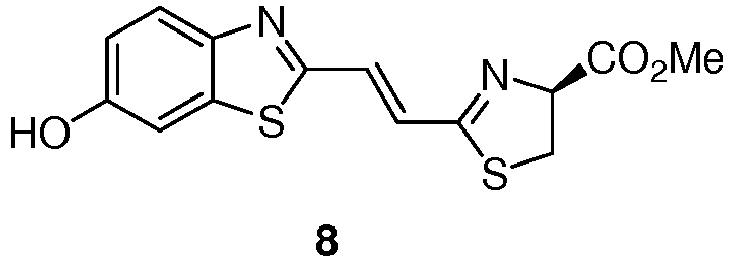
- A solution of 7 (55 mg, 0.133 mmol) in DCM (2 mL) was cooled to -78 °C in an acetone/CO2(s) bath and treated with pentamethylbenzene (110 mg, 0.580 mmol) followed by BCl3 (0.39 mL, 0.399 mmol, 1 M in DCM) added dropwise over 5 min. The reaction was stirred at -78 °C for 20 min and then quenched with phosphate buffer (2 mL). Extracted into DCM (3 × 5 mL) and separated. The organic layer was dried over MgSO4, filtered and concentrated in vacuo. Purification was achieved by flash column chromatography (40-100 % EtOAc/Pet. Ether) to give 8 (34 mg, 79 %, 98 % b.r.s.m) as a pale yellow solid. m.p. 163-165 °C; Rf = 0.13 (40 % EtOAc/Pet. Ether); IR νmax 3210 (νOH), 3043 (νCH), 2954, 1731 (νCO), 1632, 1595, 1558, 1480, 1435, 1314, 1199, 1116, 1022, 949 cm-1; 1H NMR (MeOD) δ 3.70 (1H, dd, J = 20.1, 11.2, CH 2S), 3.72 (1H, dd, J = 20.8, 11.2, CH 2S), 3.81 (3H, s, OCH3 ), 5.33 (1H, t, J = 9.0, CHCO2Me), 7.03 (1H, dd, J = 8.9, 2.5, ArH), 7.29 (1H, d, J = 16.1, CHC(N)S), 7.31 (1H, d, J = 2.3, ArH), 7.41 (1H, d, J = 16.1, CHC(N)S), 7.82 (1H, d, J = 8.9, ArH); 13C NMR (MeOD) δ 35.7 (CH2), 53.2 (CH3), 79.0 (CH), 107.4 (CH), 118.1 (CH), 125.1 (CH), 128.9 (CH), 136.0 (CH), 138.1 (C), 148.6 (C), 158.5 (C), 162.2 (C), 171.6 (C), 172.2 (C).
- CSP HPLC analysis determined 65-90 % ee dependant on scale of reaction and purity of BCl3. Optical purity could be achieved by dissolving 8 in MeCN and concentrating in vacuo until a precipitate appeared. Filtration and concentration of the filtrate gave 8. CSP HPLC analysis (Chiracel AD, eluent: hexane: iPrOH, 70:30, flow 0.5 mL/min, 23 bar) > 98 % ee [tR (major) = 6.35 min, tR (minor) = 9.90 min].
-

- A solution of 8 in phosphate buffer (1 mg/mL) was treated with PLE (5 µg per 1 mg of 8) and incubated at 37 °C for 24 h. After this time the saponified ester 9 was used directly without isolation.
-

-

- A solution of 5 (239 mg, 0.755 mmol) in DMF (7.6 mL) was treated with Et3N (0.124 mL, 1.82 mmol) and cooled to 0 °C. The solution was treated with a solution of aminoacid (354 mg, 0.908 mmol) in DCM (3 mL) followed by a solution of BOP (414 mg, 0.908 mmol) in DCM (4.6 mL) and the resultant solution stirred at 0 °C for 2 h. After this time the reaction mixture was quenched with saturated NaHCO3(aq) (5 mL) and taken up in EtOAc (20 mL), the aqueous layer was back extracted using EtOAc (2 × 10 mL), organics dried over MgSO4, filtered and concentrated in vacuo. Purification was achieved by flash column chromatography (20 % EtOAc/Pet. Ether) to give 10 (422 mg, 82 %) as an orange solid. m.p. 75-78 °C; Rf = 0.23 (30 % EtOAc/Pet. Ether); [α]D +82.0 (c 1.05, CHCl3); CSP HPLC analysis (Chiracel AD (300 × 4.6 mm), eluent: hexane: iPrOH, 60:40, flow 1 mL/min, 26 bar) determined > 99 % ee [tR (minor) = 16.52 min, tR (major) = 9.67 min]; IR νmax 1735 (νCO), 1667, 1628, 1596, 1488, 1446, 1371, 1344, 1260, 1189, 1050, 1019, 966 cm-1; 1H NMR (CDCl3) δ 1.27 (3H, t, J = 7.2, CH2CH3 ), 2.70 (1H, dd, J = 12.6, 4.5, CH 2STrt), 2.80 (1H, dd, J = 12.6, 5.5, CH 2STrt), 4.22 (2H, m, CH 2CH3), 4.75 (1H, dt, J = 7.7, 4.8, CHCH2), 5.17 (2H, s, OCH2 Ph), 6.14 (1H, d, J = 7.8, NH), 6.68 (1H, d, J = 15.5, CHC(O)N), 7.20-7.49 (22H, m, ArH), 7.74 (1H, d, J = 15.5, CHC(N)S), 7.96 (1H, d, J = 9.0, ArH); 13C NMR (CDCl3) δ 14.3 (CH3), 34.0 (CH2), 51.5 (CH), 62.2 (CH2), 67.1 (C), 70.7 (CH2), 105.2 (CH), 117.2 (CH), 124.6 (CH), 126.9 (CH), 127.1 (CH), 127.6 (CH), 128.2 (CH), 128.4 (CH), 128.9 (CH), 129.6 (CH), 134.2 (CH), 136.4 (C), 136.8 (C), 144.4 (C), 148.8 (C), 157.9 (C), 161.5 (C), 163.8 (C), 170.2 (C); m/z (ES+) 707 (100%, M++Na), 685 (5%, M++H), 338 (27%, M++H-STrt, CO2Et), 243 (100%), 228 (23%), 165 (59%); HRMS C41H36NaN2O4S2 calcd. 707.2014, found 707.2039; Anal. Calcd. for C41H36N2O4S2: C, 71.90; H, 5.30; N, 4.09. Found C, 71.43; H, 5.30; N, 3.98 %.
-
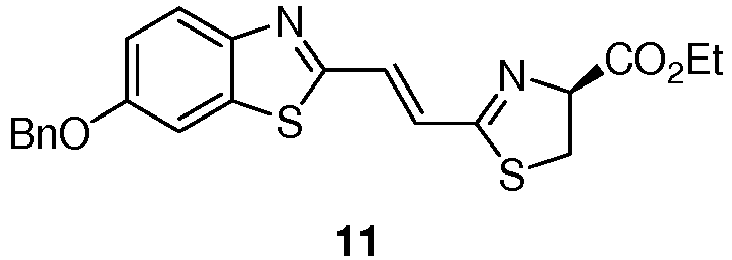
- A solution of Ph3PO (955 mg, 3.45 mmol) in DCM (26 mL) was cooled to 0 °C in an ice bath and treated with Tf2O (0.39 mL, 2.16 mmol) added dropwise over 5 min. The resultant solution was stirred at 0 °C for 30 min and a solution of 10 (544 mg, 0.797 mmol) in DCM (8 mL) was then added dropwise over 5 min. The reaction was stirred at 0 °C for 10 min and then quenched with phosphate buffer (10 mL). Extracted into DCM (3 × 15 mL) and separated. The organic layer was dried over MgSO4, filtered and concentrated in vacuo. Purification was achieved by flash column chromatography (20-40 % EtOAc/Pet. Ether) to give 11 (250 mg, 74 %) as a pale yellow solid. m.p. 114-117 °C; Rf = 0.39 (40 % EtOAc/Pet. Ether); IR νmax 2977 (νCH), 1729 (νCO), 1597, 1555, 1479, 1453, 1379, 1316, 1261, 1222, 1199, 1049, 1014, 947 cm-1; 1H NMR (CDCl3) δ 1.36 (3H, t, J = 6.6, CH2CH3 ), 3.63 (1H, dd, J = 11.0, 9.4, CH 2S), 3.68 (1H, dd, J = 11.0, 9.4, CH 2S), 4.27-4.38 (2H, m, CH2 CH3), 5.16 (2H, s, OCH2 Ar), 5.24 (1H, t, J = 9.3, CHCO2Et), 7.19 (1H, dd, J = 9.0, 2.5, ArH), 7.30-7.49 (8H, m, ArH), 7.93 (1H, d, J = 9.0, ArH); 13C NMR (CDCl3) δ 14.3 (CH3), 35.1 (CH2), 62.2 (CH2), 70.7 (CH2), 78.5 (CH), 105.2 (CH), 117.2 (CH), 124.6 (CH), 127.6 (CH), 128.4 (CH), 128.8 (CH), 129.2 (CH), 135.0 (CH), 136.4 (C), 136.6 (C), 148.7 (C), 158.0 (C), 162.1 (C), 169.2 (C), 170.5 (C); m/z (ES+) 425 (100%, M++H), 334 (25%, M+-Bn), 293 (11%); HRMS C22H21N2O3S2 calcd. 425.0994, found 425.0998.
- CSP HPLC analysis determined 82-92 % ee dependant on scale of reaction and purity of Tf2O. Optical purity could be achieved by dissolving 11 in MeCN and concentrating in vacuo until a precipitate appeared. Filtration and concentration of the filtrate gave 11. CSP HPLC analysis (Chiracel AD, eluent: hexane: iPrOH, 60:40,
flow 1 mL/min, 26 bar) determined > 98 % ee [tR (minor) = 23.60 min, tR (major) = 11.19 min]. -

- A solution of 11 (67 mg, 0.158 mmol) in DCM (2.7 mL) was cooled to -78 °C in an acetone/CO2(s) bath and treated with pentamethylbenzne (130 mg, 0.788 mmol) followed by BCl3 (0.46 mL, 0.472 mmol, 1 M in DCM) added dropwise over 5 min. The reaction was stirred at -78 °C for 20 min and then quenched with phosphate buffer (2 mL). Extracted into DCM (3 × 5 mL) and separated. The organic layer was dried over MgSO4, filtered and concentrated in vacuo. Purification was achieved by flash column chromatography (40-100 % EtOAc/Pet. Ether) to give 12 (38 mg, 72 %, 96 % b.r.s.m) as a pale yellow solid. m.p. 155-157 °C; Rf = 0.11 (40 % EtOAc/Pet. Ether); IR νmax 3377 (νOH), 2983 (νCH), 1732 (νCO) 1592, 1568, 1476, 1449, 1379, 1369, 1321, 1281, 1254, 1192, 1116, 1062, 1027, 944 cm-1; 1H NMR (CDCl3) δ 1.36 (3H, t, J = 7.1, CH2CH3 ), 3.64 (1H, dd, J = 20.5, 10.8, CH 2S), 3.68 (1H, dd, J = 20.3, 10.8, CH 2S), 4.30-4.36 (2H, m, CH2 CH3), 5.25 (1H, t, J = 9.2, CHCO2Et), 5.76 (1H, s, OH), 7.03 (1H, dd, J = 8.8, 2.4, ArH), 7.28 (1H, d, J = 16.1, CHC(N)S) 7.30 (1H, d, J = 2.4, ArH), 7.38 (1H, d, J = 16.1, CHC(N)S), 7.89 (1H, d, J= 8.8, ArH); 13C NMR (CDCl3) δ 14.3 (CH3), 35.1 (CH2), 62.3 (CH2), 78.4 (CH), 107.0 (CH), 116.7 (CH), 124.7 (CH), 129.1 (CH), 135.0 (CH), 136.7 (C), 148.6 (C), 155.0 (C), 162.0 (C), 169.5 (C), 170.6 (C); m/z (ES+) 335 (100%, M++H), 307 (12%, M++H-Et), 261 (48%, M++H-CO2Et), 203 (47 %, M++H-SCH2CHCO2Et); HRMS C15H15N2O3S2 calcd. 335.0524, found 335.0526.
- CSP HPLC analysis determined 80-92 % ee dependant on scale of reaction and purity of BCl3. Optical purity could be achieved by dissolving 12 in MeCN and concentrating in vacuo until a precipitate appeared. Filtration and concentration of the filtrate gave 12. CSP HPLC analysis (Chiracel AD, eluent: hexane: iPrOH, 70:30, flow 1.0 mL/min, 23 bar) > 98 % ee [tR (major) = 6.85 min, tR (minor) = 9.30 min].
-

-

- A solution of 3 (100 mg, 0.370 mmol) in DCM (2 mL) was treated with (triphenylphosphorarylidene)acetaldehyde (124 mg, 0.407 mmol) and stirred at rt for 2 h. The reaction was quenched with saturated NaHCO3(aq) (2 mL), separated and back extracted using DCM (2 × 5 mL). The organic layers were dried over MgSO4, filtered and concentrated in vacuo. Purification was achieved by flash column chromatography (5 % EtOAc/Pet. Ether) to give 13 (76 mg, 69 %) as a yellow solid.
m.p. 124-126 °C; Rf = 0.27 (20 % EtOAc/Pet. Ether); IR νmax 1674 (νCO), 1589, 1555, 1481, 1464, 1389, 1264, 1245, 1224, 1201, 1112, 1095, 1052, 1003, 992, 966 cm-1; 1H NMR (CDCl3) δ 5.17 (2H, s, OCH2 Ar), 6.89 (1H, dd, J = 16.0, 7.6, CHC(O)H), 7.23 (1H, dd, J = 9.0, 2.5, ArH), 7.34-7.50 (6H, m, ArH), 7.72 (1H, d, J = 16.0, CHC(N)S), 8.01 (1H, d, J = 9.0, ArH), 9.79 (1H, d, J = 7.2, C(O)H); 13C NMR (CDCl3) δ 70.8 (CH2), 105.0 (CH), 117.8 (CH), 125.2 (CH), 127.6 (CH), 128.4 (CH), 128.9 (CH), 133.5 (CH), 136.2 (C), 137.4 (C), 143.8 (CH), 148.9 (C), 158.5 (C), 160.8 (C), 192.6 (CH); m/z (CI) 296 (100%, M++H), 220 (21%, M++2H-Ph), 217 (12%, M+-H, Ph); HRMS C17H14NO2S calcd. 296.0745, found 296.0743. -

- A solution of diethylphosphonoacetic acid (80 mg, 0.411 mmol) in THF (4 mL) was cooled to 0 °C and treated with NaH (8 mg, 0.333 mmol, 95 %), gas evolution. The solution was stirred at 0 °C for 15 min and then treated with a solution of 13 (122 mg, 0.411 mmol) in THF (1 mL), added dropwise. The resultant red solution was stirred at 0 °C for 30 min and then allowed to warm to rt over 1 h. After this time the solution was concentrated, taken up in H2O, acidified (1 M HCl) and the resultant brown precipitate filtered to give give 14 (119 mg, 86 %) as a brown solid. m.p. 226-228 °C; Rf = 0.18 (5 % MeOH/DCM); IR νmax 1678 (νCO), 1610, 1594, 1553, 1482, 1449, 1362, 1321, 1269, 1241, 1208, 1181, 1149, 1058, 1021, 1002, 935 cm-1; 1H NMR (DMSO) δ 5.19 (2H, s, OCH2 Ar), 6.28 (1H, d, J = 14.9, CHC(O)OH), 7.20 (1H, dd, J = 8.9, 2.5, ArH), 7.32-7.50 (8H, m, 3×CHCH, 5×ArH), 7.79 (1H, d, J = 2.5, ArH), 8.01 (1H, d, J = 8.9, ArH); 13C NMR (DMSO) δ 69.9 (CH2), 105.9 (CH), 116.8 (CH), 123.7 (CH), 126.3 (CH), 128.0 (CH), 128.1 (CH), 128.5 (CH), 131.9 (CH), 133.9 (CH), 136.1 (C), 136.7 (C), 142.3 (CH), 148.1 (C), 157.0 (C), 162.8 (C), 167.3 (C); m/z (ES+) 338 (100%, M++H), 320 (15%, M+-OH), 247 (19%, M+-H, Ph); HRMS C19H16NO3S calcd. 338.0851, found 338.0845.
-

- A solution of 14 (118 mg, 0.350 mmol) in DMF (3.5 mL) was treated with Et3N (58 µL, 0.841 mmol) and cooled to 0 °C. The solution was treated with a solution of aminoacid (158 mg, 0.419 mmol) in DCM (1.5 mL) followed by a solution of BOP (191 mg, 0.419 mmol) in DCM (2.0 mL) and the resultant solution warmed to rt and stirred for 16 h. After this time the reaction mixture was quenched with saturated NaHCO3(aq) (5 mL), separated and the aqueous layer was back extracted using DCM (2 × 10 mL), organics dried over MgSO4, filtered and concentrated in vacuo. Purification was achieved by flash column chromatography (20 % EtOAc/Pet. Ether) to give 15 (128 mg, 53 %) as an orange oil. Rf = 0.40 (40 % EtOAc/Pet. Ether); [α]D +56.3 (c 1.00, CHCl3); IR νmax 3057 (νCH), 1734 (νCO), 1659, 1597, 1555, 1485, 1444, 1317, 1244, 1259, 1203, 1177, 1051, 996 cm-1; 1H NMR (CDCl3) δ 2.71 (1H, dd, J = 12.6, 4.7, CH 2S), 2.76 (1H, dd, J = 12.6, 5.5, CH 2S), 3.74 (3H, s, OCH3 ), 4.68 (1H, dt, J = 7.6, 5.2, CHCO2Me), 5.16 (2H, s, OCH2 Ar), 6.05 (1H, d, J = 7.7, C(O)NH), 6.09 (1H, d, J = 14.9, CHC(O)NH), 7.10-7.50 (25H, m, 3×CHCH, 22×ArH), 7.92 (1H, d, J = 8.9, ArH); 13C NMR (CDCl3) δ 33.9 (CH2), 51.3 (CH3), 52.8 (CH), 67.1 (C), 70.7 (CH2), 105.3 (CH), 116.8 (CH), 124.1 (CH), 126.9 (CH), 127.0 (CH), 127.6 (CH), 128.1 (CH), 128.3 (CH), 128.8 (CH), 129.6 (CH), 131.9 (CH0, 133.2 (CH), 136.3 (C), 136.5 (C), 139.9 (CH), 144.3 (C), 148.7 (C), 157.6 (C), 163.1 (C), 164.7 (C), 170.9 (C); m/z (ES+) 719 (100%, M++Na), 697 (12%, M++H), 643 (10%), 244 (22%, M+-Bn, C(CO2Me)(CH2STrt))), 243 (78%, M+-H, Bn, C(CO2Me)(CH2STrt))), 228 (12%, Trt), 165 (32%); HRMS C42H36N2O4NaS2 calcd. 719.2014, found 719.1990.
-

- A solution of Ph3PO (217 mg, 0.784 mmol) in DCM (6.0 mL) was cooled to 0 °C in an ice bath and treated with Tf2O (89 µL, 0.491 mmol) added dropwise over 5 min. The resultant solution was stirred at 0 °C for 30 min and a solution of 15 (127 mg, 0.182 mmol) in DCM (2.5 mL) was then added dropwise over 5 min. The reaction was stirred at 0 °C for 20 min and then quenched with phosphate buffer (10 mL). Extracted into DCM (3 × 10 mL) and separated. The organic layer was dried over MgSO4, filtered and concentrated in vacuo. Purification was achieved by flash column chromatography (20-40 % EtOAc/Pet. Ether) to give 16 (41 mg, 52 %) as a yellow solid. m.p. 104-107 °C; Rf = 0.36 (40 % EtOAc/Pet. Ether); IR νmax 3032 (νCH), 2949 (νCH), 1739 (νCO), 1596, 1560, 1484, 1448, 1260, 1232, 1204, 1173, 1053, 983cm-1; 1H NMR (CDCl3) δ 3.58 (1H, dd, J = 11.0, 9.3, CH 2S), 3.65 (1H, dd, J = 11.0, 9.3, CH 2S), 3.84 (3H, s, OCH3 ), 5.14, (2H, s, OCH2 Ar), 5.21 (1H, t, J = 9.3, 5.2, CHCO2Me), 6.78 (1H, d, J = 15.4, CHC(N)S), 6.97 (1H, dd, J = 15.4, 10.7, C CHCHC(N)S), 7.04 (1H, d, J = 15.5, CHC(N)S), 7.13-7.49 (8H, m, 1×CHCH, 7×ArH), 7.90 (1H, d, J = 8.9, ArH); 13C NMR (CDCl3) δ 34.9 (CH2), 53.1 (CH3), 70.7 (CH), 78.1 (CH2), 105.3 (CH), 116.9 (CH), 124.1 (CH), 126.9 (CH), 127.6 (CH), 128.8 (CH), 129.9 (CH), 134.0 (CH), 136.3 (C), 136.5 (C), 140.3 (CH), 148.7 (C), 157.6 (C), 163.1 (C), 169.6 (C), 171.1 (C); m/z (ES+) 459 (25%, M++Na), 437 (100%, M++H), 342 (42%, M+-Bn, 4H), 279 (93%,), 243 (39%), 196 (22%), 165 (25%); HRMS C23H21N2O3S2 calcd. 437.0994, found 437.0989.
-

- A solution of 16 (40 mg, 0.0916 mmol) in DCM (1.5 mL) was cooled to -78 °C in an acetone/CO2(s) bath and treated with pentamethylbenzne (75 mg, 0.456 mmol) followed by BCl3 (0.27 mL, 0.275 mmol, 1 M in DCM) added dropwise over 5 min. The reaction was stirred at -78 °C for 20 min and then quenched with phosphate buffer (2 mL). Extracted into DCM (3 × 5 mL) and separated. The organic layer was dried over MgSO4, filtered and concentrated in vacuo. Purification was achieved by flash column chromatography (30-60 % EtOAc/Pet. Ether) to give 17 (17 mg, 54 %, 79 % b.r.s.m) as a pale yellow solid. m.p. 156-158 °C; Rf = 0.20 (40 % EtOAc/Pet. Ether); IR νmax 3210 (νOH), 3046 (νCH), 2920, 2853, 1731 (νCO), 1631, 1595, 1557, 1480, 1435, 1314, 1199, 1116, 1022, 949 cm-1; 1H NMR (MeOD) δ 3.64 (1H, dd, J = 19.9, 11.2, CH 2S), 3.66 (1H, dd, J = 22.5, 11.2, CH 2S), 3.81 (3H, s, OCH3 ), 5.27 (1H, t, J = 9.0, CHCO2Me), 6.78 (1H, d, J = 15.4, CHC(N)S), 6.99 (1H, dd, J = 15.4, 2.4, CHCHC(N)S), 7.08-7.18 (2H, m, CHC(N)S, ArH), 7.25-7.31 (1H, m, CHC(N)S), 7.29 (1H, d, J = 2.4, ArH), 7.76 (1H, d, J = 8.9, ArH); 13C NMR (MeOD) δ 35.3 (CH2), 53.1 (CH3), 78.6 (CH), 107.4 (CH), 117.7 (CH), 124.5 (CH), 129.3 (CH), 131.9 (CH), 135.5 (CH), 142.2 (CH), 148.4 (C), 158.1 (C), 164.2 (C), 172.3 (C), 172.6 (C); m/z (ES+) 347 (100%, M++H), 279 (39%), 229 (15%), 202 (28%), 196 (58%); HRMS C16H15N2O3S2 calcd. 347.0524, found 347.0536.
-

- The synthesis may begin with commercially available 2-amino-6-methoxybenzothiazole. The amine may then be converted into the bridged thiol (18) using KOH following the method described by Fink et al., Bioorg & Med Chem Lett, 2006, 16, 1532.
-
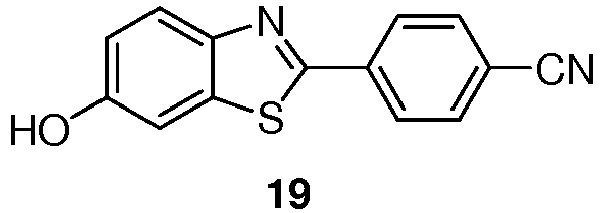
- A solution of 18 (104 mg, 0.371 mmol) and 4-cyanobenzaldehyde (99 mg, 0.757 mmol) in anhydrous DMSO (3 mL) was treated with sodium metabisulfate and heated to 140 °C for 3 h. After this time the reaction was cooled to rt and H2O added (10 mL). The resultant brown precipitate was filtered giving 19 (55 mg, 29 %) as a brown solid. Rf = 0.51 (40 % EtOAc/Pet. Ether); 1H NMR (MeOD) δ 7.04 (1H, dd, J = 10.9, 2.3, ArH), 7.36 (1H, d, J = 2.3, ArH), 7.88 (2H, d, J = 8.4, ArH), 7.88 (1H, d, ArH), 8.19 (2H, d, J = 8.4, ArH); 13C NMR (MeOD) δ 107.5 (CH), 114.7 (C), 117.9 (CH), 119.3 (C), 125.1 (CH), 128.6 (CH), 134.1 (CH), 138.2 (C), 138.9 (C), 148.9 (C), 158.1 (C), 163.6 (C).
-

- The synthesis may begin with commercially available 6-methoxy-2-methylbenzothiazole. The methyl group may then be oxidised using SeO2 following the method described in US patent
US4826833 . -

- THF (5 mL) was cooled to -78 °C using an acetone/CO2(s) bath and nBuLi (0.39 mL, 0.621 mmol, 1.6 M in hexanes) was added dropwise. The resultant solution was stirred for 5 min and then treated with MeCN (34 µL, 0.650 mmol), stirred 15 min and a solution of 21 (100 mg, 0.518 mmol) in THF (2 mL) was added dropwise. The reaction mixture was removed from the /CO2(s) bath and stirred for 2 h. After this time the reaction was quenched using saturated NaHCO3(aq) (2 mL), extracted with EtOAc (10 mL), washed H2O (5 mL), dried (MgSO4), filtered and concentrated in vacuo. Purification was achieved by flash column chromatography (50 % EtOAc/Pet. Ether) to give 22 (51 mg, 42 %) as an orange solid. m.p. 78-80 °C; Rf = 0.32 (50 % EtOAc/Pet. Ether); IR νmax 3209 (νOH), 2013 (νCN), 1605 (νCO), 1559, 1519, 1469, 1436, 1262, 1227, 1091, 1056, 1025 cm-1; 1H NMR (CDCl3) δ 3.30 (1H, dd, J = 16.8, 7.3, CH 2CN), 3.20 (1H, dd, J = 16.8, 4.4, CH 2CN), 3.70 (1H, d, J = 5.7, OH), 3.90 (3H, s, OCH3 ), 5.38 (1H, app dd, J = 5.8, 10.7, CHOH), 7.12 (1H, dd, J = 8.9, 2.5, ArH), 7.36 (1H, J = 2.4, ArH), 7.88 (1H, J = 9.0, ArH); 13C NMR (CDCl3) δ 26.8 (CH2), 56.0 (CH), 68.2 (CH), 104.2 (CH), 116.2 (CH), 116.7 (C), 123.9 (CH), 136.6 (C), 147.2 (C), 158.1 (C), 168.3 (C); m/z (EI+) 234 (27%, M+), 194 (100%, M+-CH2CN), 166 (10%, M+-CH(OH)CH2CN), 151 (29 %), 123 (14 %, M+-)Me, CCH(OH)CH2CN), 95 (7%); HRMS C11H10N2O2S calcd. 234.0458, found 234.0459.
- Oxidation and deprotection of 22 may then be achieved to provide 23, and 23 may be converted to 24 by manipulation of the nitrile group and condensation with cysteine.
-

- Sonagashira coupling of 2 and ethynyltrimethylsilane, and subsequent (hydolysis and reaction with phenyl cyanate may provide nitrile 25. Ths may then be converted to 26 by manipulation of the nitrile andcondensation with cysteine.
-
- x5 luciferase:


- x5 red:

- Table of bioluminescence emission wavelength maximum (λmax) with native LH2 and compound 9.
Name of mutant λmax with luciferin (nm) λmax with compound 9(nm) WT Flue 557 662 x5 Fluc 557 638 x5 red Flue 620 700 - Bioluminescence λmax values for LH2 and compound 9 were tested with purified enzymes. Experimental details as in
Figure 2 . These results show that compound 9 represents a near infrared (nIR) multiparametric luciferin analogue. - Apparent kinetic parameters for LH2 ethyl ester and compound 12.
Substrate Apparent Km (µM) Apparent Kcat (RLU s-1) (x 1015) Apparent Kcat/Km (s-1 µM-1) (x 1015) LH2 ethyl ester 11.9±0.6 861+206 75±18 Compound 12 11.8+1.9 17.5+9 1.5+1 - Michaelis-Menten kinetics: concentrations of each ester between 1.9mM and 0.38mM were incubated with 100µg of pig liver esterase at 37°C for 15min and allowed to come to room temperature before the initiation of light by addition of 10pmol Flue enzyme and 5.3mM ATP in 55µl reactions. Light was captured using the Photon Imager instrument (Biospace Labs, Paris, France) and the Hanes-Woolf plot was used to analyse kinetic parameters. PMT temperature varied between -9-12°C.
- The kinetics of saponification in mammalian cells showed a slow rise (ca. 2min) to maximal activity. The apparent Km of compound 12 was seen to be the same as LH2 indicating similar affinity for the substrate, although the Kcat was lower, possibly due to emitter quenching.
-
- <110> UCL Business Plc
- <120> Compounds and Their Uses
- <130> P527941PCT
- <150>
GB1306248.4
<151> 2013-04-05 - <160> 2
- <170> PatentIn version 3.5
- <210> 1
<211> 1644
<212> DNA
<213> Artificial Sequence - <220>
<223> Synthetic Construct - <400> 1


- <210> 2
<211> 1644
<212> DNA
<213> Artificial Sequence - <220>
<223> Synthetic Construct - <400> 2


Claims (12)
- A compound according to the formula (II):
 R1 is hydrogen or an optionally substituted alkyl group;each R2, when present, is a group independently selected from optionally substituted hydroxyl, optionally substituted amino, optionally substituted thiol, optionally substituted alkyl, and optionally substituted aryl;R3 is a carboxyl group or an optionally substituted C1-6 alkyl carbonyloxy group;M is a group selected from O, S, and NR4, wherein R4 is a group selected from hydrogen, optionally substituted alkyl, optionally substituted alkenyl, optionally substituted aryl, optionally substituted heteroaryl, and optionally substituted heterocyclyl;X is a group selected from optionally substituted alkenylene, optionally substituted alkynylene, optionally substituted arylene, and combinations thereof, or optionally substituted alkylene carbonyl;n is 0, 1, 2, or 3;V and Y are each independently selected from CR5 and N;W and Z are each independently selected from NR7, S, and O;R5 is a group selected from hydrogen, optionally substituted hydroxyl, optionally substituted alkyl, and optionally substituted amino; andR7 is a group selected from hydrogen, optionally substituted alkyl, and optionally substituted aryl;wherein each of the optionally substituted groups listed above is optionally substituted by:(1) a group selected from -J-aryl, -J-heteroaryl, -J-heterocyclyl and -J-C3-6 cycloalkyl, wherein J represents a bond or C1-3 alkylene, and said aryl is selected from phenyl, said heteroaryl is selected from triazolyl, thiazolyl, thienyl, pyrazolyl, pyrimidyl, pyridazinyl, pyrazinyl, and pyridyl, said heterocyclyl is selected from pyrrolidinyl, azetidinyl, pyrazolidinyl, oxazolidinyl, piperidinyl, piperazinyl, morpholinyl, and thiazolidinyl, and said C3-6 cycloalkyl is selected from cyclopropyl, cyclopentyl and cyclohexyl; or(2) one to three substituents selected from(a) C1-6 alkyl (preferably methyl, ethyl or isopropyl),(b) C1-3 alkenyl (preferably propenyl),(c) halogen (preferably Cl or Br),(e) haloC1-6 alkyl (preferably trifluoromethyl),(d) cyano,(e) amino, optionally mono-or di-substituted with C1-3 alkyl, tert-butoxycarbonyl or benzyl,(f) C1-3 alkoxy (preferably methoxy),(g) C1-6 alkyl carbonyl (preferably acetyl),(h) C1-3 alkoxy carbonyl,(i) C1-3 alkyl carbonyloxy, including carboxyl, and(j) C1-3 alkyl carbamoyl, including carbamoyl.
- A compound according to claim 1, wherein n is 0 or 1.
- A compound according to claim 1 or claim 2, having the formula (III):
 V and Y are each independently selected from CR5 and N; andW and Z are each independently selected from NR7, S, and O.
- A compound according to any preceding claim, wherein V and Y are each N, and/or wherein W and Z are each S.
- A compound according to any preceding claim, wherein R1 is hydrogen, and/or
wherein R2 is a group selected from optionally substituted hydroxyl, optionally substituted amino, and optionally substituted alkyl, and/or
wherein X is a group selected from optionally substituted alkenylene, optionally substituted alkynylene, and optionally substituted alkylene carbonyl, preferably wherein X is an optionally substituted alkenylene group; and/or wherein M is O;
wherein the optional substituents of each of the optionally substituted groups are as defined in claim 1. - A compound according to any preceding claim selected from


- A compound according to any preceding claim for use in in vivo imaging.
- A composition comprising a compound according to any one of claims 1 to 6, and one or more additional ingredients.
- Use of the compound according to any one of claims 1 to 6 as a bioluminescent marker for in vitro measurement of luciferase expression.
- A method of in vivo imaging, comprising
administering to a subject a compound according to any one of claims 1 to 6 and a luciferase enzyme or a polynucleotide encoding a luciferase enzyme, and
measuring the emission resulting from the action of the luciferase enzyme on the compound. - A method according to claim 10, further comprising generating an image based on the measurements obtained.
- A kit comprising a compound according to any one of claims 1 to 6, and a luciferase enzyme or a polynucleotide encoding a luciferase enzyme.
Applications Claiming Priority (2)
| Application Number | Priority Date | Filing Date | Title |
|---|---|---|---|
| GBGB1306248.4A GB201306248D0 (en) | 2013-04-05 | 2013-04-05 | Compounds and their uses |
| PCT/GB2014/051080 WO2014162157A1 (en) | 2013-04-05 | 2014-04-07 | Derivatives of luciferin |
Publications (2)
| Publication Number | Publication Date |
|---|---|
| EP2981527A1 EP2981527A1 (en) | 2016-02-10 |
| EP2981527B1 true EP2981527B1 (en) | 2018-10-31 |
Family
ID=48483464
Family Applications (1)
| Application Number | Title | Priority Date | Filing Date |
|---|---|---|---|
| EP14717070.8A Active EP2981527B1 (en) | 2013-04-05 | 2014-04-07 | Derivatives of luciferin. |
Country Status (5)
| Country | Link |
|---|---|
| EP (1) | EP2981527B1 (en) |
| ES (1) | ES2703514T3 (en) |
| GB (1) | GB201306248D0 (en) |
| PT (1) | PT2981527T (en) |
| WO (1) | WO2014162157A1 (en) |
Families Citing this family (3)
| Publication number | Priority date | Publication date | Assignee | Title |
|---|---|---|---|---|
| HRP20211778T1 (en) * | 2014-08-29 | 2022-03-18 | Chdi Foundation, Inc. | Probes for imaging huntingtin protein |
| CN111100089A (en) * | 2019-12-30 | 2020-05-05 | 四川大学华西医院 | A kind of bioluminescence probe for detecting sulfite and preparation method and use thereof |
| CN115745987B (en) * | 2022-08-05 | 2026-03-27 | 华东理工大学 | A luciferase substrate, its preparation method and uses |
Family Cites Families (1)
| Publication number | Priority date | Publication date | Assignee | Title |
|---|---|---|---|---|
| US8962854B2 (en) * | 2011-08-24 | 2015-02-24 | The University Of Electro-Communications | Luminescent substrate for luciferase |
-
2013
- 2013-04-05 GB GBGB1306248.4A patent/GB201306248D0/en not_active Ceased
-
2014
- 2014-04-07 EP EP14717070.8A patent/EP2981527B1/en active Active
- 2014-04-07 WO PCT/GB2014/051080 patent/WO2014162157A1/en not_active Ceased
- 2014-04-07 ES ES14717070T patent/ES2703514T3/en active Active
- 2014-04-07 PT PT14717070T patent/PT2981527T/en unknown
Non-Patent Citations (1)
| Title |
|---|
| None * |
Also Published As
| Publication number | Publication date |
|---|---|
| WO2014162157A1 (en) | 2014-10-09 |
| EP2981527A1 (en) | 2016-02-10 |
| GB201306248D0 (en) | 2013-05-22 |
| PT2981527T (en) | 2019-01-11 |
| ES2703514T3 (en) | 2019-03-11 |
Similar Documents
| Publication | Publication Date | Title |
|---|---|---|
| JP6067019B2 (en) | Compounds and methods for assessing the redox state of metabolically active cells, and methods for measuring NAD (P) / NAD (P) H | |
| McCutcheon et al. | Expedient synthesis of electronically modified luciferins for bioluminescence imaging | |
| Shinde et al. | Luciferin derivatives for enhanced in vitro and in vivo bioluminescence assays | |
| BRANCHING et al. | NAPHTHYL‐AND QUINOLYLLUCIFERIN: GREEN AND RED LIGHT EMITTING FIREFLY LUCIFERIN ANALOGUES | |
| EP3237385B1 (en) | Mutant idh1 inhibitors useful for treating cancer | |
| Love et al. | Red-shifted coumarin luciferins for improved bioluminescence imaging | |
| JP6724119B2 (en) | Redshift luciferin and method of using the same | |
| GB2567124A (en) | Imaging agents and methods | |
| JP2014525411A (en) | Hydrogen peroxide detection | |
| US20130315829A1 (en) | Compounds and Methods for Detecting Reactive Oxygen Species | |
| CN115768751A (en) | Novel Thyroid Hormone β Receptor Agonists | |
| US20240059697A1 (en) | Coelenterazine analogues | |
| CN1243545C (en) | DNA-cleaving antitumor agents | |
| EP2981527A1 (en) | Derivatives of luciferin | |
| KR20230137992A (en) | Terpyridine dione compound or salt thereof and manufacturing method and use thereof | |
| Basavaiah et al. | A simple synthesis of 2-(1-hydroxyalkyl) acrylonitriles | |
| CN110312725B (en) | Novel antibacterial compounds, their use in the treatment of mammalian infections and novel metabolic mechanisms | |
| CN114106027A (en) | Fluoroboron fluorescent dye-tetrazine fluorescent probe and preparation method and application thereof | |
| CN110724523B (en) | Water-soluble fluorescent probe with tumor targeting function, synthetic method and application thereof | |
| CN116239622B (en) | An ERβ-targeted hydrogen peroxide-responsive near-infrared fluorescent probe, its preparation method and application | |
| WHITE et al. | The chemiluminescence of amides and monoacyl hydrazides based on firefly dehydroluciferin | |
| CN113582960A (en) | Near-infrared fluorescent probe for detecting CYP 1A1 enzyme | |
| Chang | Rational Design and Synthesis of Novel Firefly Luciferin Analogues for Bioluminescence | |
| JP7255828B2 (en) | Novel heterocyclic compound and its salt, and luminescent substrate composition | |
| Lyu | Design and synthesis of chimeric fungal luciferins |
Legal Events
| Date | Code | Title | Description |
|---|---|---|---|
| PUAI | Public reference made under article 153(3) epc to a published international application that has entered the european phase |
Free format text: ORIGINAL CODE: 0009012 |
|
| 17P | Request for examination filed |
Effective date: 20151102 |
|
| AK | Designated contracting states |
Kind code of ref document: A1 Designated state(s): AL AT BE BG CH CY CZ DE DK EE ES FI FR GB GR HR HU IE IS IT LI LT LU LV MC MK MT NL NO PL PT RO RS SE SI SK SM TR |
|
| AX | Request for extension of the european patent |
Extension state: BA ME |
|
| RIN1 | Information on inventor provided before grant (corrected) |
Inventor name: PULE, MARTIN A. Inventor name: GROUNDS, HELEN Inventor name: ANDERSON, JAMES C. Inventor name: JATHOUL, AMIT P. |
|
| DAX | Request for extension of the european patent (deleted) | ||
| 17Q | First examination report despatched |
Effective date: 20160902 |
|
| RIN1 | Information on inventor provided before grant (corrected) |
Inventor name: PULE, MARTIN A. Inventor name: JATHOUL, AMIT P. Inventor name: GROUNDS, HELEN Inventor name: ANDERSON, JAMES C. |
|
| STAA | Information on the status of an ep patent application or granted ep patent |
Free format text: STATUS: EXAMINATION IS IN PROGRESS |
|
| GRAP | Despatch of communication of intention to grant a patent |
Free format text: ORIGINAL CODE: EPIDOSNIGR1 |
|
| STAA | Information on the status of an ep patent application or granted ep patent |
Free format text: STATUS: GRANT OF PATENT IS INTENDED |
|
| RAP1 | Party data changed (applicant data changed or rights of an application transferred) |
Owner name: UCL BUSINESS PLC |
|
| INTG | Intention to grant announced |
Effective date: 20171213 |
|
| GRAJ | Information related to disapproval of communication of intention to grant by the applicant or resumption of examination proceedings by the epo deleted |
Free format text: ORIGINAL CODE: EPIDOSDIGR1 |
|
| STAA | Information on the status of an ep patent application or granted ep patent |
Free format text: STATUS: EXAMINATION IS IN PROGRESS |
|
| GRAP | Despatch of communication of intention to grant a patent |
Free format text: ORIGINAL CODE: EPIDOSNIGR1 |
|
| STAA | Information on the status of an ep patent application or granted ep patent |
Free format text: STATUS: GRANT OF PATENT IS INTENDED |
|
| INTC | Intention to grant announced (deleted) | ||
| INTG | Intention to grant announced |
Effective date: 20180509 |
|
| GRAS | Grant fee paid |
Free format text: ORIGINAL CODE: EPIDOSNIGR3 |
|
| GRAA | (expected) grant |
Free format text: ORIGINAL CODE: 0009210 |
|
| STAA | Information on the status of an ep patent application or granted ep patent |
Free format text: STATUS: THE PATENT HAS BEEN GRANTED |
|
| RAP1 | Party data changed (applicant data changed or rights of an application transferred) |
Owner name: UNIVERSITY COLLEGE CARDIFF CONSULTANTS LIMITED |
|
| AK | Designated contracting states |
Kind code of ref document: B1 Designated state(s): AL AT BE BG CH CY CZ DE DK EE ES FI FR GB GR HR HU IE IS IT LI LT LU LV MC MK MT NL NO PL PT RO RS SE SI SK SM TR |
|
| REG | Reference to a national code |
Ref country code: CH Ref legal event code: EP Ref country code: GB Ref legal event code: FG4D |
|
| REG | Reference to a national code |
Ref country code: AT Ref legal event code: REF Ref document number: 1059215 Country of ref document: AT Kind code of ref document: T Effective date: 20181115 |
|
| REG | Reference to a national code |
Ref country code: DE Ref legal event code: R096 Ref document number: 602014035070 Country of ref document: DE |
|
| REG | Reference to a national code |
Ref country code: IE Ref legal event code: FG4D |
|
| REG | Reference to a national code |
Ref country code: CH Ref legal event code: NV Representative=s name: VALIPAT S.A. GEVERS SA, CH |
|
| REG | Reference to a national code |
Ref country code: PT Ref legal event code: SC4A Ref document number: 2981527 Country of ref document: PT Date of ref document: 20190111 Kind code of ref document: T Free format text: AVAILABILITY OF NATIONAL TRANSLATION Effective date: 20181227 |
|
| REG | Reference to a national code |
Ref country code: NL Ref legal event code: FP |
|
| REG | Reference to a national code |
Ref country code: ES Ref legal event code: FG2A Ref document number: 2703514 Country of ref document: ES Kind code of ref document: T3 Effective date: 20190311 |
|
| REG | Reference to a national code |
Ref country code: LT Ref legal event code: MG4D |
|
| REG | Reference to a national code |
Ref country code: CH Ref legal event code: PCAR Free format text: NEW ADDRESS: RUE DES NOYERS 11, 2000 NEUCHATEL (CH) |
|
| REG | Reference to a national code |
Ref country code: AT Ref legal event code: MK05 Ref document number: 1059215 Country of ref document: AT Kind code of ref document: T Effective date: 20181031 |
|
| PG25 | Lapsed in a contracting state [announced via postgrant information from national office to epo] |
Ref country code: IS Free format text: LAPSE BECAUSE OF FAILURE TO SUBMIT A TRANSLATION OF THE DESCRIPTION OR TO PAY THE FEE WITHIN THE PRESCRIBED TIME-LIMIT Effective date: 20190228 Ref country code: PL Free format text: LAPSE BECAUSE OF FAILURE TO SUBMIT A TRANSLATION OF THE DESCRIPTION OR TO PAY THE FEE WITHIN THE PRESCRIBED TIME-LIMIT Effective date: 20181031 Ref country code: HR Free format text: LAPSE BECAUSE OF FAILURE TO SUBMIT A TRANSLATION OF THE DESCRIPTION OR TO PAY THE FEE WITHIN THE PRESCRIBED TIME-LIMIT Effective date: 20181031 Ref country code: LV Free format text: LAPSE BECAUSE OF FAILURE TO SUBMIT A TRANSLATION OF THE DESCRIPTION OR TO PAY THE FEE WITHIN THE PRESCRIBED TIME-LIMIT Effective date: 20181031 Ref country code: FI Free format text: LAPSE BECAUSE OF FAILURE TO SUBMIT A TRANSLATION OF THE DESCRIPTION OR TO PAY THE FEE WITHIN THE PRESCRIBED TIME-LIMIT Effective date: 20181031 Ref country code: BG Free format text: LAPSE BECAUSE OF FAILURE TO SUBMIT A TRANSLATION OF THE DESCRIPTION OR TO PAY THE FEE WITHIN THE PRESCRIBED TIME-LIMIT Effective date: 20190131 Ref country code: LT Free format text: LAPSE BECAUSE OF FAILURE TO SUBMIT A TRANSLATION OF THE DESCRIPTION OR TO PAY THE FEE WITHIN THE PRESCRIBED TIME-LIMIT Effective date: 20181031 Ref country code: AT Free format text: LAPSE BECAUSE OF FAILURE TO SUBMIT A TRANSLATION OF THE DESCRIPTION OR TO PAY THE FEE WITHIN THE PRESCRIBED TIME-LIMIT Effective date: 20181031 Ref country code: NO Free format text: LAPSE BECAUSE OF FAILURE TO SUBMIT A TRANSLATION OF THE DESCRIPTION OR TO PAY THE FEE WITHIN THE PRESCRIBED TIME-LIMIT Effective date: 20190131 |
|
| PG25 | Lapsed in a contracting state [announced via postgrant information from national office to epo] |
Ref country code: GR Free format text: LAPSE BECAUSE OF FAILURE TO SUBMIT A TRANSLATION OF THE DESCRIPTION OR TO PAY THE FEE WITHIN THE PRESCRIBED TIME-LIMIT Effective date: 20190201 Ref country code: RS Free format text: LAPSE BECAUSE OF FAILURE TO SUBMIT A TRANSLATION OF THE DESCRIPTION OR TO PAY THE FEE WITHIN THE PRESCRIBED TIME-LIMIT Effective date: 20181031 Ref country code: AL Free format text: LAPSE BECAUSE OF FAILURE TO SUBMIT A TRANSLATION OF THE DESCRIPTION OR TO PAY THE FEE WITHIN THE PRESCRIBED TIME-LIMIT Effective date: 20181031 Ref country code: SE Free format text: LAPSE BECAUSE OF FAILURE TO SUBMIT A TRANSLATION OF THE DESCRIPTION OR TO PAY THE FEE WITHIN THE PRESCRIBED TIME-LIMIT Effective date: 20181031 |
|
| PG25 | Lapsed in a contracting state [announced via postgrant information from national office to epo] |
Ref country code: DK Free format text: LAPSE BECAUSE OF FAILURE TO SUBMIT A TRANSLATION OF THE DESCRIPTION OR TO PAY THE FEE WITHIN THE PRESCRIBED TIME-LIMIT Effective date: 20181031 Ref country code: CZ Free format text: LAPSE BECAUSE OF FAILURE TO SUBMIT A TRANSLATION OF THE DESCRIPTION OR TO PAY THE FEE WITHIN THE PRESCRIBED TIME-LIMIT Effective date: 20181031 |
|
| REG | Reference to a national code |
Ref country code: DE Ref legal event code: R097 Ref document number: 602014035070 Country of ref document: DE |
|
| PG25 | Lapsed in a contracting state [announced via postgrant information from national office to epo] |
Ref country code: RO Free format text: LAPSE BECAUSE OF FAILURE TO SUBMIT A TRANSLATION OF THE DESCRIPTION OR TO PAY THE FEE WITHIN THE PRESCRIBED TIME-LIMIT Effective date: 20181031 Ref country code: SK Free format text: LAPSE BECAUSE OF FAILURE TO SUBMIT A TRANSLATION OF THE DESCRIPTION OR TO PAY THE FEE WITHIN THE PRESCRIBED TIME-LIMIT Effective date: 20181031 Ref country code: SM Free format text: LAPSE BECAUSE OF FAILURE TO SUBMIT A TRANSLATION OF THE DESCRIPTION OR TO PAY THE FEE WITHIN THE PRESCRIBED TIME-LIMIT Effective date: 20181031 Ref country code: EE Free format text: LAPSE BECAUSE OF FAILURE TO SUBMIT A TRANSLATION OF THE DESCRIPTION OR TO PAY THE FEE WITHIN THE PRESCRIBED TIME-LIMIT Effective date: 20181031 |
|
| PLBE | No opposition filed within time limit |
Free format text: ORIGINAL CODE: 0009261 |
|
| STAA | Information on the status of an ep patent application or granted ep patent |
Free format text: STATUS: NO OPPOSITION FILED WITHIN TIME LIMIT |
|
| 26N | No opposition filed |
Effective date: 20190801 |
|
| PG25 | Lapsed in a contracting state [announced via postgrant information from national office to epo] |
Ref country code: SI Free format text: LAPSE BECAUSE OF FAILURE TO SUBMIT A TRANSLATION OF THE DESCRIPTION OR TO PAY THE FEE WITHIN THE PRESCRIBED TIME-LIMIT Effective date: 20181031 |
|
| PG25 | Lapsed in a contracting state [announced via postgrant information from national office to epo] |
Ref country code: MC Free format text: LAPSE BECAUSE OF FAILURE TO SUBMIT A TRANSLATION OF THE DESCRIPTION OR TO PAY THE FEE WITHIN THE PRESCRIBED TIME-LIMIT Effective date: 20181031 |
|
| PG25 | Lapsed in a contracting state [announced via postgrant information from national office to epo] |
Ref country code: TR Free format text: LAPSE BECAUSE OF FAILURE TO SUBMIT A TRANSLATION OF THE DESCRIPTION OR TO PAY THE FEE WITHIN THE PRESCRIBED TIME-LIMIT Effective date: 20181031 |
|
| PGFP | Annual fee paid to national office [announced via postgrant information from national office to epo] |
Ref country code: ES Payment date: 20200515 Year of fee payment: 7 |
|
| PG25 | Lapsed in a contracting state [announced via postgrant information from national office to epo] |
Ref country code: CY Free format text: LAPSE BECAUSE OF FAILURE TO SUBMIT A TRANSLATION OF THE DESCRIPTION OR TO PAY THE FEE WITHIN THE PRESCRIBED TIME-LIMIT Effective date: 20181031 |
|
| PG25 | Lapsed in a contracting state [announced via postgrant information from national office to epo] |
Ref country code: MT Free format text: LAPSE BECAUSE OF FAILURE TO SUBMIT A TRANSLATION OF THE DESCRIPTION OR TO PAY THE FEE WITHIN THE PRESCRIBED TIME-LIMIT Effective date: 20181031 Ref country code: HU Free format text: LAPSE BECAUSE OF FAILURE TO SUBMIT A TRANSLATION OF THE DESCRIPTION OR TO PAY THE FEE WITHIN THE PRESCRIBED TIME-LIMIT; INVALID AB INITIO Effective date: 20140407 |
|
| PGFP | Annual fee paid to national office [announced via postgrant information from national office to epo] |
Ref country code: PT Payment date: 20220323 Year of fee payment: 9 |
|
| PG25 | Lapsed in a contracting state [announced via postgrant information from national office to epo] |
Ref country code: MK Free format text: LAPSE BECAUSE OF FAILURE TO SUBMIT A TRANSLATION OF THE DESCRIPTION OR TO PAY THE FEE WITHIN THE PRESCRIBED TIME-LIMIT Effective date: 20181031 |
|
| REG | Reference to a national code |
Ref country code: ES Ref legal event code: FD2A Effective date: 20220701 |
|
| PG25 | Lapsed in a contracting state [announced via postgrant information from national office to epo] |
Ref country code: ES Free format text: LAPSE BECAUSE OF NON-PAYMENT OF DUE FEES Effective date: 20210408 |
|
| PG25 | Lapsed in a contracting state [announced via postgrant information from national office to epo] |
Ref country code: PT Free format text: LAPSE BECAUSE OF NON-PAYMENT OF DUE FEES Effective date: 20231009 |
|
| REG | Reference to a national code |
Ref country code: CH Ref legal event code: U11 Free format text: ST27 STATUS EVENT CODE: U-0-0-U10-U11 (AS PROVIDED BY THE NATIONAL OFFICE) Effective date: 20251014 |
|
| PGFP | Annual fee paid to national office [announced via postgrant information from national office to epo] |
Ref country code: LU Payment date: 20251014 Year of fee payment: 12 Ref country code: NL Payment date: 20251014 Year of fee payment: 12 |
|
| PGFP | Annual fee paid to national office [announced via postgrant information from national office to epo] |
Ref country code: DE Payment date: 20251014 Year of fee payment: 12 |
|
| PGFP | Annual fee paid to national office [announced via postgrant information from national office to epo] |
Ref country code: GB Payment date: 20251013 Year of fee payment: 12 |
|
| PGFP | Annual fee paid to national office [announced via postgrant information from national office to epo] |
Ref country code: IT Payment date: 20251023 Year of fee payment: 12 |
|
| PGFP | Annual fee paid to national office [announced via postgrant information from national office to epo] |
Ref country code: FR Payment date: 20251014 Year of fee payment: 12 |
|
| PGFP | Annual fee paid to national office [announced via postgrant information from national office to epo] |
Ref country code: BE Payment date: 20251014 Year of fee payment: 12 |
|
| PGFP | Annual fee paid to national office [announced via postgrant information from national office to epo] |
Ref country code: CH Payment date: 20251014 Year of fee payment: 12 |
|
| PGFP | Annual fee paid to national office [announced via postgrant information from national office to epo] |
Ref country code: IE Payment date: 20251013 Year of fee payment: 12 |