EP2980598A1 - System and method for finding vehicle - Google Patents
System and method for finding vehicle Download PDFInfo
- Publication number
- EP2980598A1 EP2980598A1 EP15165805.1A EP15165805A EP2980598A1 EP 2980598 A1 EP2980598 A1 EP 2980598A1 EP 15165805 A EP15165805 A EP 15165805A EP 2980598 A1 EP2980598 A1 EP 2980598A1
- Authority
- EP
- European Patent Office
- Prior art keywords
- chip key
- vehicle
- function controller
- finding
- portable device
- Prior art date
- Legal status (The legal status is an assumption and is not a legal conclusion. Google has not performed a legal analysis and makes no representation as to the accuracy of the status listed.)
- Withdrawn
Links
- 238000000034 method Methods 0.000 title claims abstract description 11
- 238000004891 communication Methods 0.000 claims description 27
- 230000006870 function Effects 0.000 description 35
- 238000005516 engineering process Methods 0.000 description 3
- 238000010586 diagram Methods 0.000 description 2
- 230000003213 activating effect Effects 0.000 description 1
- 238000010295 mobile communication Methods 0.000 description 1
Images

Classifications
-
- B—PERFORMING OPERATIONS; TRANSPORTING
- B60—VEHICLES IN GENERAL
- B60R—VEHICLES, VEHICLE FITTINGS, OR VEHICLE PARTS, NOT OTHERWISE PROVIDED FOR
- B60R25/00—Fittings or systems for preventing or indicating unauthorised use or theft of vehicles
- B60R25/20—Means to switch the anti-theft system on or off
- B60R25/24—Means to switch the anti-theft system on or off using electronic identifiers containing a code not memorised by the user
-
- B—PERFORMING OPERATIONS; TRANSPORTING
- B62—LAND VEHICLES FOR TRAVELLING OTHERWISE THAN ON RAILS
- B62D—MOTOR VEHICLES; TRAILERS
- B62D15/00—Steering not otherwise provided for
- B62D15/02—Steering position indicators ; Steering position determination; Steering aids
- B62D15/027—Parking aids, e.g. instruction means
- B62D15/0285—Parking performed automatically
-
- B—PERFORMING OPERATIONS; TRANSPORTING
- B60—VEHICLES IN GENERAL
- B60W—CONJOINT CONTROL OF VEHICLE SUB-UNITS OF DIFFERENT TYPE OR DIFFERENT FUNCTION; CONTROL SYSTEMS SPECIALLY ADAPTED FOR HYBRID VEHICLES; ROAD VEHICLE DRIVE CONTROL SYSTEMS FOR PURPOSES NOT RELATED TO THE CONTROL OF A PARTICULAR SUB-UNIT
- B60W30/00—Purposes of road vehicle drive control systems not related to the control of a particular sub-unit, e.g. of systems using conjoint control of vehicle sub-units
- B60W30/06—Automatic manoeuvring for parking
-
- G—PHYSICS
- G01—MEASURING; TESTING
- G01S—RADIO DIRECTION-FINDING; RADIO NAVIGATION; DETERMINING DISTANCE OR VELOCITY BY USE OF RADIO WAVES; LOCATING OR PRESENCE-DETECTING BY USE OF THE REFLECTION OR RERADIATION OF RADIO WAVES; ANALOGOUS ARRANGEMENTS USING OTHER WAVES
- G01S13/00—Systems using the reflection or reradiation of radio waves, e.g. radar systems; Analogous systems using reflection or reradiation of waves whose nature or wavelength is irrelevant or unspecified
- G01S13/74—Systems using reradiation of radio waves, e.g. secondary radar systems; Analogous systems
- G01S13/75—Systems using reradiation of radio waves, e.g. secondary radar systems; Analogous systems using transponders powered from received waves, e.g. using passive transponders, or using passive reflectors
- G01S13/751—Systems using reradiation of radio waves, e.g. secondary radar systems; Analogous systems using transponders powered from received waves, e.g. using passive transponders, or using passive reflectors wherein the responder or reflector radiates a coded signal
- G01S13/758—Systems using reradiation of radio waves, e.g. secondary radar systems; Analogous systems using transponders powered from received waves, e.g. using passive transponders, or using passive reflectors wherein the responder or reflector radiates a coded signal using a signal generator powered by the interrogation signal
-
- G—PHYSICS
- G01—MEASURING; TESTING
- G01S—RADIO DIRECTION-FINDING; RADIO NAVIGATION; DETERMINING DISTANCE OR VELOCITY BY USE OF RADIO WAVES; LOCATING OR PRESENCE-DETECTING BY USE OF THE REFLECTION OR RERADIATION OF RADIO WAVES; ANALOGOUS ARRANGEMENTS USING OTHER WAVES
- G01S5/00—Position-fixing by co-ordinating two or more direction or position line determinations; Position-fixing by co-ordinating two or more distance determinations
- G01S5/0009—Transmission of position information to remote stations
- G01S5/0072—Transmission between mobile stations, e.g. anti-collision systems
-
- G—PHYSICS
- G07—CHECKING-DEVICES
- G07C—TIME OR ATTENDANCE REGISTERS; REGISTERING OR INDICATING THE WORKING OF MACHINES; GENERATING RANDOM NUMBERS; VOTING OR LOTTERY APPARATUS; ARRANGEMENTS, SYSTEMS OR APPARATUS FOR CHECKING NOT PROVIDED FOR ELSEWHERE
- G07C9/00—Individual registration on entry or exit
- G07C9/00174—Electronically operated locks; Circuits therefor; Nonmechanical keys therefor, e.g. passive or active electrical keys or other data carriers without mechanical keys
- G07C9/00309—Electronically operated locks; Circuits therefor; Nonmechanical keys therefor, e.g. passive or active electrical keys or other data carriers without mechanical keys operated with bidirectional data transmission between data carrier and locks
-
- G—PHYSICS
- G05—CONTROLLING; REGULATING
- G05D—SYSTEMS FOR CONTROLLING OR REGULATING NON-ELECTRIC VARIABLES
- G05D1/00—Control of position, course, altitude or attitude of land, water, air or space vehicles, e.g. using automatic pilots
- G05D1/02—Control of position or course in two dimensions
- G05D1/021—Control of position or course in two dimensions specially adapted to land vehicles
- G05D1/0231—Control of position or course in two dimensions specially adapted to land vehicles using optical position detecting means
- G05D1/0238—Control of position or course in two dimensions specially adapted to land vehicles using optical position detecting means using obstacle or wall sensors
- G05D1/024—Control of position or course in two dimensions specially adapted to land vehicles using optical position detecting means using obstacle or wall sensors in combination with a laser
-
- G—PHYSICS
- G07—CHECKING-DEVICES
- G07C—TIME OR ATTENDANCE REGISTERS; REGISTERING OR INDICATING THE WORKING OF MACHINES; GENERATING RANDOM NUMBERS; VOTING OR LOTTERY APPARATUS; ARRANGEMENTS, SYSTEMS OR APPARATUS FOR CHECKING NOT PROVIDED FOR ELSEWHERE
- G07C2209/00—Indexing scheme relating to groups G07C9/00 - G07C9/38
- G07C2209/60—Indexing scheme relating to groups G07C9/00174 - G07C9/00944
- G07C2209/63—Comprising locating means for detecting the position of the data carrier, i.e. within the vehicle or within a certain distance from the vehicle
Definitions
- the subject matter herein generally relates to wireless communication.
- Searching for a parked automobile is a commonplace event in cities and suburban areas. Searchers often may wander about for some time until they spot the vehicle. This practice is usually frustrating, and depending on the time of day and the location, may even be dangerous. Therefore, most people try to come up with some way of remembering and identifying exactly where an automobile was parked. Further, many of the automobiles and SUV's in today's parking lots look alike, which exacerbates the difficulties of a straight forward sighting.
- a number of devices have become available, offering a solution to this common daily problem. These include various projections that are fastened to the tops of automobiles, and which may light up or emit a sound upon receiving a radioed activating signal.
- a system for finding a vehicle can include a function controller, and a chip key configured to match with and control the function controller.
- the chip key includes a first positioning module
- the function controller includes a second positioning module coupled to the first positioning module.
- the first positioning module and the second positioning module are configured to receive data regarding the distance between and respective locations of the chip key and the function controller; and a portable device is configured to match with the chip key and transmit an instruction to the chip key.
- the portable device can transmit an autopilot command to the chip key, and the chip key passes the autopilot command on to the function controller.
- the function controller receives the autopilot command, and determines how to go to the chip key.
- the vehicle automatically can move to the portable device controlled by the function controller.
- Coupled is defined as connected, whether directly or indirectly through intervening components, and is not necessarily limited to physical connections.
- the connection can be such that the objects are permanently connected or releasably connected.
- comprising when utilized, means “including, but not necessarily limited to”; it specifically indicates open-ended inclusion or membership in the so-described combination, group, series, and the like.
- the present disclosure describes a system and a method for finding vehicle.
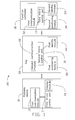
- FIG. 1 illustrates an embodiment of a system 100 for finding a vehicle.
- the system 100 can include a portable device 10, a chip key 20, and a function controller 30.
- the portable device 10 can be configured to match with the chip key 20 and transmit an instruction to the chip key 20.
- the chip key 20 can be configured to match with and control the function controller 30.
- the portable device 10 can transmit an instruction and a first identification code to the chip key 20.
- the portable device 10 can include a first micro control unit (MCU) 11, and a first communication module 12 is electrically connected to the first micro control unit 11.
- the first micro control unit 11 can provide memory and operative functions for the portable device 10.
- the first communication module 12 can be configured to broadcast the instruction and the first identification code by radio, and the first communication module 12 can be controlled by the first micro control unit 11.
- the portable device 10 can include a plurality of micro control units and a plurality of communication modules.
- the portable device 10 can include software application (APP), and the application can be configured to drive the portable device 10.
- APP software application
- the portable device 10 also include a display module 13 electrically connected to the first micro control unit 11.
- the display module 13 can have a screen, and the instruction and the first identification code which are broadcast can be shown to a user on the screen.
- the screen can be a touch screen, and the instruction can be inputted into the portable device 10 via the touch screen.
- the chip key 20 can be wirelessly connected to the portable device 10 and the function controller 30.
- the chip key 20 can include a second micro control unit 21, and a second communication module 22 electrically connected to the second micro control unit 21.
- the second micro control unit 21 can provide memory and operative functions for the chip key 20.
- the second communication module 22 can be wirelessly connected to the first communication module 12 by 2nd-Generation wireless telephone technology (2G), 3rd-generation (3G), 4th-Generation mobile communication (4G), BLUETOOTH, Wireless-Fidelity (WI-FI), or the like.
- the chip key 20 can include a plurality of micro control units and a plurality of communication modules.
- the chip key 20 also includes a first identity module 23 electrically connected to the second micro control unit 21.
- the first identity module 23 can identify the first identification code emitted by the first communication module 12 of the portable device 10. When the first identification code is validated, the chip key 20 can match with the portable device 10. Otherwise, the chip key 20 cannot match with the portable device 10.
- the second communication module 22 can transmit a second identification code and the instruction to the function controller 30. The chip key 20 can be received in the portable device 10.
- the second communication module 22 can receive the first identification code emitted by the first communication module 12, the first identification code can be transmitted to the second micro control unit 21, then to be entered into the first identity module 23.
- the chip key 20 further includes a first positioning module 24 electrically connected to the second micro control unit 21.
- the first positioning module 24 can be configured to receive a coded signal emitted by the function controller 30, and establish a signal strength and a direction of coded signal.
- the first positioning module 24 can include an antenna member configured to receive the coded signal.
- the first positioning module 24 can also include some auxiliary equipment, such as electronic compass, gyroscope, and/or accelerometer. The first positioning module 24 can measure the distance and location between the chip key 20 and the function controller 30, by the antenna member and the auxiliary equipment.
- the first positioning module 24 After the first positioning module 24 receives data regarding the distance between and respective locations of the chip key 20 and the function controller 30, and the first positioning module 24 can transmit the data to the first communication module 12. Then the data can be shown in the display module 13 of the portable device 10, and the vehicle can be found according to the data.
- the function controller 30 can determine how to go to the chip key 20 according the data, and can be configured to control the vehicle automatically moving to the portable device 10.
- the function controller 30 can include a third micro control unit 31, a third communication module 32 , and a second identity module 33.
- the third communication module 32 and the second identity module 33 can be electrically connected to the third micro control unit 31.
- the third micro control unit 31 can provide memory and operative functions for the function controller 30.
- the function controller 30 can include a plurality of micro control units and a plurality of communication modules.
- the third communication module 32 can be wirelessly connected to the second communication module 22, and can be configured to broadcast the second identification code and the instruction.
- the function controller 30 can also include a passive keyless entry (PKE) system or a remote keyless entry (RKE) system, which can add intelligence to the system 100.
- PKE passive keyless entry
- RKE remote keyless entry
- the second identity module 33 can be similar to the first identity module 23.
- the third communication module 32 can receive the second identification code emitted by the second communication module 22, and the second identification code can be transmitted to third micro control unit 31 to be entered into the second identity module 33.
- the function controller 30 further includes a second positioning module 34 coupled to the first positioning module 24, and the second positioning module 34 can be electrically connected to the third micro control unit 31.
- the first positioning module 24 and the second positioning module 34 are configured to receive data regarding the distance between and respective locations of the chip key 20 and the function controller 30.
- the second positioning module 34 can be configured to generate the coded signal.
- the first positioning module 24 can be configured to receive the coded signal, and receive data regarding the distance between and respective locations of the chip key 20 and the function controller 30, according to the signal strength and the direction of coded signal.
- the function controller 30 can further take control of an engine, a door lock, and other working parts of a vehicle.
- the portable device 10 can be a mobile phone, a notebook computer, or a tablet personal computer (Tablet PC).
- FIG. 2 illustrates a method for finding parked vehicle, which can include the following.
- the portable device 10 can send out a first identification code.
- the first identification code can be received by the chip key 20, if the first identification code is validated, the chip key 20 can match with the portable device 10.
- the chip key 20 can send out a second identification code.
- the second identification code can be received by the function controller 30. If the second identification code is validated, the function controller 30 can match with the chip key 20.
- the portable device 10 can broadcast a locating instruction to the chip key 20.
- the chip key 20 can receive the locating instruction, and a first positioning module 24 of the chip key 20 can be coupled to the second positioning module 34 of the function controller 30 to receive data regarding the distance between respective locations of the chip key 20 and the function controller 30.
- the portable device 10 can transmit an autopilot command to the chip key 20, and the chip key 20 can pass the autopilot command on to the function controller 30.
- the function controller 30 can receive the autopilot command, and determine a route to the chip key 20.
- the portable device 10 can confirm the execution of the autopilot command to the function controller 30, and the vehicle can automatically move to the portable device 10.
- the system 100 requires a pairing process to happen twice. Firstly, the portable device 10 must pair for matching with the chip key 20 and secondly, the chip key 20 must pair for matching with the function controller 30. Control of the system 100 can only be achieved if the two pairing processes take place, so safety and security of the vehicle can be improved.
Landscapes
- Engineering & Computer Science (AREA)
- Radar, Positioning & Navigation (AREA)
- Remote Sensing (AREA)
- General Physics & Mathematics (AREA)
- Physics & Mathematics (AREA)
- Mechanical Engineering (AREA)
- Computer Networks & Wireless Communication (AREA)
- Transportation (AREA)
- Combustion & Propulsion (AREA)
- Chemical & Material Sciences (AREA)
- Automation & Control Theory (AREA)
- Lock And Its Accessories (AREA)
- Traffic Control Systems (AREA)
- Control Of Position, Course, Altitude, Or Attitude Of Moving Bodies (AREA)
- Radar Systems Or Details Thereof (AREA)
Abstract
A system for finding a vehicle includes a function controller, a chip key for matching with and controlling the function controller, and a portable device. The portable device can match with the chip key and transmit an instruction to the chip key. The chip key includes a first positioning module, and the function controller includes a second positioning module coupled to the first positioning module. The first positioning module and the second positioning module can receive data as to the distance between and respective locations of the chip key and the function controller. The present disclosure also discloses a method for finding vehicle.
Description
- The subject matter herein generally relates to wireless communication.
- Searching for a parked automobile, whether in a large parking lot or in a parking garage, is a commonplace event in cities and suburban areas. Searchers often may wander about for some time until they spot the vehicle. This practice is usually frustrating, and depending on the time of day and the location, may even be dangerous. Therefore, most people try to come up with some way of remembering and identifying exactly where an automobile was parked. Further, many of the automobiles and SUV's in today's parking lots look alike, which exacerbates the difficulties of a straight forward sighting.
- A number of devices have become available, offering a solution to this common daily problem. These include various projections that are fastened to the tops of automobiles, and which may light up or emit a sound upon receiving a radioed activating signal.
- According to one aspect of the disclosure, a system for finding a vehicle can include a function controller, and a chip key configured to match with and control the function controller. The chip key includes a first positioning module, and the function controller includes a second positioning module coupled to the first positioning module. The first positioning module and the second positioning module are configured to receive data regarding the distance between and respective locations of the chip key and the function controller; and a portable device is configured to match with the chip key and transmit an instruction to the chip key. The portable device can transmit an autopilot command to the chip key, and the chip key passes the autopilot command on to the function controller. Then the function controller receives the autopilot command, and determines how to go to the chip key. Finally, the vehicle automatically can move to the portable device controlled by the function controller.
- Implementations of the present technology will now be described, by way of example only, with reference to the attached figures.
-
FIG. 1 is a block diagram of an embodiment of a system for finding a vehicle. -
FIG. 2 is a flow diagram for a method of the system for finding a vehicle. - It will be appreciated that for simplicity and clarity of illustration, where appropriate, reference numerals have been repeated among the different figures to indicate corresponding or analogous elements. In addition, numerous specific details are set forth in order to provide a thorough understanding of the embodiments described herein. However, it will be understood by those of ordinary skill in the art that the embodiments described herein can be practiced without these specific details. In other instances, methods, procedures, and components have not been described in detail so as not to obscure the related relevant feature being described. Also, the description is not to be considered as limiting the scope of the embodiments described herein.
- Several definitions that apply throughout this disclosure will now be presented.
- The term "coupled" is defined as connected, whether directly or indirectly through intervening components, and is not necessarily limited to physical connections. The connection can be such that the objects are permanently connected or releasably connected. The term "comprising", when utilized, means "including, but not necessarily limited to"; it specifically indicates open-ended inclusion or membership in the so-described combination, group, series, and the like.
- The present disclosure describes a system and a method for finding vehicle.
-
FIG. 1 illustrates an embodiment of asystem 100 for finding a vehicle. Thesystem 100 can include aportable device 10, achip key 20, and afunction controller 30. Theportable device 10 can be configured to match with thechip key 20 and transmit an instruction to thechip key 20. Thechip key 20 can be configured to match with and control thefunction controller 30. - The
portable device 10 can transmit an instruction and a first identification code to thechip key 20. Theportable device 10 can include a first micro control unit (MCU) 11, and afirst communication module 12 is electrically connected to the firstmicro control unit 11. The firstmicro control unit 11 can provide memory and operative functions for theportable device 10. Thefirst communication module 12 can be configured to broadcast the instruction and the first identification code by radio, and thefirst communication module 12 can be controlled by the firstmicro control unit 11. - In at least one embodiment, the
portable device 10 can include a plurality of micro control units and a plurality of communication modules. In operation, theportable device 10 can include software application (APP), and the application can be configured to drive theportable device 10. - The
portable device 10 also include adisplay module 13 electrically connected to the firstmicro control unit 11. Thedisplay module 13 can have a screen, and the instruction and the first identification code which are broadcast can be shown to a user on the screen. In at least one embodiment, the screen can be a touch screen, and the instruction can be inputted into theportable device 10 via the touch screen. - The
chip key 20 can be wirelessly connected to theportable device 10 and thefunction controller 30. Thechip key 20 can include a secondmicro control unit 21, and asecond communication module 22 electrically connected to the secondmicro control unit 21. The secondmicro control unit 21 can provide memory and operative functions for thechip key 20. In operation, thesecond communication module 22 can be wirelessly connected to thefirst communication module 12 by 2nd-Generation wireless telephone technology (2G), 3rd-generation (3G), 4th-Generation mobile communication (4G), BLUETOOTH, Wireless-Fidelity (WI-FI), or the like. In other embodiments, thechip key 20 can include a plurality of micro control units and a plurality of communication modules. - The
chip key 20 also includes afirst identity module 23 electrically connected to the secondmicro control unit 21. Thefirst identity module 23 can identify the first identification code emitted by thefirst communication module 12 of theportable device 10. When the first identification code is validated, thechip key 20 can match with theportable device 10. Otherwise, thechip key 20 cannot match with theportable device 10. After thechip key 20 is paired with theportable device 10, thesecond communication module 22 can transmit a second identification code and the instruction to thefunction controller 30. Thechip key 20 can be received in theportable device 10. - In operation, the
second communication module 22 can receive the first identification code emitted by thefirst communication module 12, the first identification code can be transmitted to the secondmicro control unit 21, then to be entered into thefirst identity module 23. - The
chip key 20 further includes afirst positioning module 24 electrically connected to the secondmicro control unit 21. Thefirst positioning module 24 can be configured to receive a coded signal emitted by thefunction controller 30, and establish a signal strength and a direction of coded signal. In the illustrated embodiment, thefirst positioning module 24 can include an antenna member configured to receive the coded signal. Thefirst positioning module 24 can also include some auxiliary equipment, such as electronic compass, gyroscope, and/or accelerometer. Thefirst positioning module 24 can measure the distance and location between thechip key 20 and thefunction controller 30, by the antenna member and the auxiliary equipment. - After the
first positioning module 24 receives data regarding the distance between and respective locations of thechip key 20 and thefunction controller 30, and thefirst positioning module 24 can transmit the data to thefirst communication module 12. Then the data can be shown in thedisplay module 13 of theportable device 10, and the vehicle can be found according to the data. - The
function controller 30 can determine how to go to thechip key 20 according the data, and can be configured to control the vehicle automatically moving to theportable device 10. Thefunction controller 30 can include a thirdmicro control unit 31, athird communication module 32 , and asecond identity module 33. Thethird communication module 32 and thesecond identity module 33 can be electrically connected to the thirdmicro control unit 31. The thirdmicro control unit 31 can provide memory and operative functions for thefunction controller 30. In at least one embodiment, thefunction controller 30 can include a plurality of micro control units and a plurality of communication modules. - The
third communication module 32 can be wirelessly connected to thesecond communication module 22, and can be configured to broadcast the second identification code and the instruction. In operation, thefunction controller 30 can also include a passive keyless entry (PKE) system or a remote keyless entry (RKE) system, which can add intelligence to thesystem 100. - The
second identity module 33 can be similar to thefirst identity module 23. In operation, thethird communication module 32 can receive the second identification code emitted by thesecond communication module 22, and the second identification code can be transmitted to thirdmicro control unit 31 to be entered into thesecond identity module 33. - The
function controller 30 further includes asecond positioning module 34 coupled to thefirst positioning module 24, and thesecond positioning module 34 can be electrically connected to the thirdmicro control unit 31. Thefirst positioning module 24 and thesecond positioning module 34 are configured to receive data regarding the distance between and respective locations of thechip key 20 and thefunction controller 30. In operation, thesecond positioning module 34 can be configured to generate the coded signal. Thefirst positioning module 24 can be configured to receive the coded signal, and receive data regarding the distance between and respective locations of thechip key 20 and thefunction controller 30, according to the signal strength and the direction of coded signal. - In at least one embodiment, the
function controller 30 can further take control of an engine, a door lock, and other working parts of a vehicle. Theportable device 10 can be a mobile phone, a notebook computer, or a tablet personal computer (Tablet PC). -
FIG. 2 illustrates a method for finding parked vehicle, which can include the following. - In
block 101, theportable device 10 can send out a first identification code. - In
block 102, the first identification code can be received by thechip key 20, if the first identification code is validated, the chip key 20 can match with theportable device 10. - In
block 103, the chip key 20 can send out a second identification code. - In
block 104, the second identification code can be received by thefunction controller 30. If the second identification code is validated, thefunction controller 30 can match with thechip key 20. - In
block 105, theportable device 10 can broadcast a locating instruction to thechip key 20. - In
block 106, the chip key 20 can receive the locating instruction, and afirst positioning module 24 of the chip key 20 can be coupled to thesecond positioning module 34 of thefunction controller 30 to receive data regarding the distance between respective locations of thechip key 20 and thefunction controller 30. - In block 107, the
portable device 10 can transmit an autopilot command to thechip key 20, and the chip key 20 can pass the autopilot command on to thefunction controller 30. - In
block 108, thefunction controller 30 can receive the autopilot command, and determine a route to thechip key 20. - In
block 109, theportable device 10 can confirm the execution of the autopilot command to thefunction controller 30, and the vehicle can automatically move to theportable device 10. - The
system 100 requires a pairing process to happen twice. Firstly, theportable device 10 must pair for matching with thechip key 20 and secondly, the chip key 20 must pair for matching with thefunction controller 30. Control of thesystem 100 can only be achieved if the two pairing processes take place, so safety and security of the vehicle can be improved. - The embodiments shown and described above are only examples. Many details are often found in the art such as the other features of a system and method for finding vehicle. Therefore, many such details are neither shown nor described. Even though numerous characteristics and advantages of the present technology have been set forth in the foregoing description, together with details of the structure and function of the present disclosure, the disclosure is illustrative only, and changes may be made in the detail, including in matters of shape, size, and arrangement of the parts within the principles of the present disclosure, up to and including the full extent established by the broad general meaning of the terms used in the claims. It will therefore be appreciated that the embodiments described above may be modified within the scope of the claims.
Claims (15)
- A system for finding a vehicle, the system comprising:a function controller, anda chip key configured to match with and control the function controller,wherein the chip key includes a first positioning module;the function controller includes a second positioning module coupled to the first positioning module;the first positioning module and the second positioning module are configured to receive data regarding the distance between and respective locations of the chip key and the function controller; anda portable device is configured to match with the chip key and transmit an instruction to the chip key.
- The system for finding a vehicle as claimed in claim 1, wherein the data is shown in the portable device, and the vehicle is found according to the data.
- The system for finding a vehicle as claimed in claim 1, the function controller determines how to go to the chip key according the data.
- The system for finding a vehicle as claimed in claim 1, the function controller is configured to control the vehicle automatically moving to the portable device.
- The system for finding a vehicle as claimed in claim 1, the second positioning module generates a coded signal, the first positioning module includes an antenna member configured to receive the coded signal, and the first positioning module measures the distance and location between the chip key and the function controller, by the antenna member and some auxiliary equipments.
- The system for finding a vehicle as claimed in claim 1, the portable device include a first micro control unit, and a first communication module electrically connected to the first micro control unit.
- The system for finding a vehicle as claimed in claim 6, wherein the first communication module broadcasts the instruction and a first identification code to the chip key by radio.
- The system for finding a vehicle as claimed in claim 7, wherein the chip key further include a first identity module configured to identify the first identification code emitted by the first communication module.
- The system for finding a vehicle as claimed in claim 7, wherein the portable device include a display module electrically connected to the first micro control unit.
- The system for finding a vehicle as claimed in claim 9, wherein and the display module includes a screen configured to show the instruction and the first identification code.
- The system for finding a vehicle as claimed in claim 1, wherein the chip key further includes a second micro control unit, and a second communication module electrically connected to the second micro control unit.
- The system for finding a vehicle as claimed in claim 11, wherein the second communication module sends out a second identification code and the instruction to the function controller.
- The system for finding a vehicle as claimed in claim 12, wherein the function controller further includes a second identity module configured to identify the second identification code emitted by the chip key.
- The system for finding a vehicle as claimed in claim 1, wherein the function controller further includes a third micro control unit, and a third communication module electrically connected to the third micro control unit.
- A method for finding a vehicle, comprising:a portable device sends out a first identification code;the first identification code is received by a chip key, if the first identification code is validated, the chip key matches with the portable device;the chip key sends out a second identification code;the second identification code is received by a function controller. If the second identification code is validated, the function controller matches with the chip key;the portable device broadcasts a locating instruction to the chip key;the chip key receives the locating instruction, and a first positioning module of the chip key is coupled to a second positioning module of the function controller to receive data regarding the distance between and respective locations of the chip key and the function controller;the portable device transmits an autopilot command to the chip key, and the chip key passes the autopilot command on to the function controller;the function controller receives the autopilot command, and determines how to go to the chip key; andthe vehicle automatically moves to the portable device controlled by the function controller.
Applications Claiming Priority (1)
| Application Number | Priority Date | Filing Date | Title |
|---|---|---|---|
| TW103125932A TWI630130B (en) | 2014-07-30 | 2014-07-30 | Smart car-finding system and control method for vehicle |
Publications (1)
| Publication Number | Publication Date |
|---|---|
| EP2980598A1 true EP2980598A1 (en) | 2016-02-03 |
Family
ID=53397776
Family Applications (1)
| Application Number | Title | Priority Date | Filing Date |
|---|---|---|---|
| EP15165805.1A Withdrawn EP2980598A1 (en) | 2014-07-30 | 2015-04-29 | System and method for finding vehicle |
Country Status (4)
| Country | Link |
|---|---|
| US (1) | US9358954B2 (en) |
| EP (1) | EP2980598A1 (en) |
| JP (1) | JP2016033807A (en) |
| TW (1) | TWI630130B (en) |
Cited By (2)
| Publication number | Priority date | Publication date | Assignee | Title |
|---|---|---|---|---|
| WO2017046388A1 (en) * | 2015-09-18 | 2017-03-23 | Valeo Comfort And Driving Assistance | Method for controlling a functionality of a vehicle by means of a user terminal and associated control system |
| WO2020260164A1 (en) * | 2019-06-27 | 2020-12-30 | Continental Automotive Gmbh | Method and means for remotely controlling a secure function of a motor vehicle by means of a mobile communication terminal |
Families Citing this family (5)
| Publication number | Priority date | Publication date | Assignee | Title |
|---|---|---|---|---|
| US9948333B2 (en) | 2015-07-23 | 2018-04-17 | At&T Intellectual Property I, L.P. | Method and apparatus for wireless communications to mitigate interference |
| US11279496B2 (en) * | 2018-02-21 | 2022-03-22 | Sikorsky Aircraft Corporation | System for reliable landing gear contact with identification of the surface |
| US11286058B2 (en) | 2018-12-18 | 2022-03-29 | Textron Innovations Inc. | Heliport docking system |
| CN110366116A (en) * | 2019-06-24 | 2019-10-22 | 吉利汽车研究院(宁波)有限公司 | Automatic car-finding system, automatic car-finding method, car key and vehicle |
| CN119348564A (en) * | 2024-12-24 | 2025-01-24 | 上海银基科技股份有限公司 | Vehicle control method and system based on secondary factory key |
Citations (3)
| Publication number | Priority date | Publication date | Assignee | Title |
|---|---|---|---|---|
| US20090264082A1 (en) * | 2008-04-16 | 2009-10-22 | Tieman Craig A | Vehicle locator key fob with range and bearing measurement |
| US20110257817A1 (en) * | 2007-10-10 | 2011-10-20 | Delphi Technologies, Inc. | System and method for communicating with a vehicle |
| US20120310466A1 (en) * | 2011-06-01 | 2012-12-06 | Google Inc. | Sensor field selection |
Family Cites Families (4)
| Publication number | Priority date | Publication date | Assignee | Title |
|---|---|---|---|---|
| US6420975B1 (en) * | 1999-08-25 | 2002-07-16 | Donnelly Corporation | Interior rearview mirror sound processing system |
| EP2229668B1 (en) * | 2007-12-11 | 2015-09-23 | Continental Teves AG & Co. oHG | Transmission of vehicle-relevant data of a vehicle via mobile communication |
| US20110267222A1 (en) * | 2010-04-30 | 2011-11-03 | Murray Craig | Location detection methods and systems |
| US9061102B2 (en) * | 2012-07-17 | 2015-06-23 | Elwha Llc | Unmanned device interaction methods and systems |
-
2014
- 2014-07-30 TW TW103125932A patent/TWI630130B/en active
- 2014-10-28 US US14/525,814 patent/US9358954B2/en active Active
-
2015
- 2015-02-03 JP JP2015019126A patent/JP2016033807A/en active Pending
- 2015-04-29 EP EP15165805.1A patent/EP2980598A1/en not_active Withdrawn
Patent Citations (3)
| Publication number | Priority date | Publication date | Assignee | Title |
|---|---|---|---|---|
| US20110257817A1 (en) * | 2007-10-10 | 2011-10-20 | Delphi Technologies, Inc. | System and method for communicating with a vehicle |
| US20090264082A1 (en) * | 2008-04-16 | 2009-10-22 | Tieman Craig A | Vehicle locator key fob with range and bearing measurement |
| US20120310466A1 (en) * | 2011-06-01 | 2012-12-06 | Google Inc. | Sensor field selection |
Cited By (4)
| Publication number | Priority date | Publication date | Assignee | Title |
|---|---|---|---|---|
| WO2017046388A1 (en) * | 2015-09-18 | 2017-03-23 | Valeo Comfort And Driving Assistance | Method for controlling a functionality of a vehicle by means of a user terminal and associated control system |
| FR3043964A1 (en) * | 2015-09-18 | 2017-05-26 | Valeo Comfort & Driving Assistance | METHOD FOR CONTROLLING A FUNCTIONALITY OF A VEHICLE USING A USER TERMINAL AND CONTROL SYSTEM THEREFOR |
| WO2020260164A1 (en) * | 2019-06-27 | 2020-12-30 | Continental Automotive Gmbh | Method and means for remotely controlling a secure function of a motor vehicle by means of a mobile communication terminal |
| FR3097998A1 (en) * | 2019-06-27 | 2021-01-01 | Continental Automotive | Method and means for remote control, by a mobile communication terminal, of a secure motor vehicle function |
Also Published As
| Publication number | Publication date |
|---|---|
| US9358954B2 (en) | 2016-06-07 |
| TW201604053A (en) | 2016-02-01 |
| JP2016033807A (en) | 2016-03-10 |
| US20160033636A1 (en) | 2016-02-04 |
| TWI630130B (en) | 2018-07-21 |
Similar Documents
| Publication | Publication Date | Title |
|---|---|---|
| US9358954B2 (en) | System and method for finding vehicle | |
| CN105593080B (en) | Passive entry mobile phone and method and system therefor | |
| US10739762B2 (en) | Remotely operating a movable barrier operator with auxiliary device | |
| US20170308817A1 (en) | Apparatus and method to reserve, locate and operate a vehicle from an on-demand vehicle service | |
| US10421435B2 (en) | Vehicle authentication system | |
| US20160318475A1 (en) | Bluetooth verification for vehicle access systems | |
| US10706650B2 (en) | Key unit, control system, control method, and non-transitory computer-readable storage medium having program stored therein | |
| CN106104637A (en) | Keyless entry or the mobile device of steerable system for motor vehicles | |
| KR20110139252A (en) | Information Display Method of ID-Transmitting Device | |
| EP3010002A1 (en) | System and method for remotely controlling operations of vehicle | |
| EP3884472A1 (en) | A system of seamless automated customer id verification at the hotel entrance and releasing the hotel room key | |
| US20160073253A1 (en) | Method and System for inhibiting access to a device in a moving vehicle | |
| CN103471599A (en) | Vehicle-mounted navigator, vehicle navigation system and authentication method of vehicle navigation system | |
| US20150109097A1 (en) | Electronically Controlled Locking System and Electronic Key for Controlling the Locking System | |
| CN108288334A (en) | A kind of unmanned plane burglary-resisting system | |
| JP2008285946A (en) | Keyless device | |
| KR20160063088A (en) | Smart key system interlocked with smart device for vehicles | |
| US20170330401A1 (en) | Login setting method and system for an electric lock | |
| CN105015444A (en) | Voice control system of vehicle | |
| EP2927061A1 (en) | Control system and operation method for vehicle | |
| KR102417365B1 (en) | Smart key searching method using portable terminal | |
| KR20160029605A (en) | Parking Locator App smart device using Beacon. | |
| US20210027626A1 (en) | Method for transferring a motor vehicle to an automatic parking system, automatic parking system, and motor vehicle | |
| KR20160067550A (en) | System for requesting emergency and method thereof | |
| CN105469622A (en) | Intelligent vehicle searching system and vehicle control method |
Legal Events
| Date | Code | Title | Description |
|---|---|---|---|
| PUAI | Public reference made under article 153(3) epc to a published international application that has entered the european phase |
Free format text: ORIGINAL CODE: 0009012 |
|
| AK | Designated contracting states |
Kind code of ref document: A1 Designated state(s): AL AT BE BG CH CY CZ DE DK EE ES FI FR GB GR HR HU IE IS IT LI LT LU LV MC MK MT NL NO PL PT RO RS SE SI SK SM TR |
|
| AX | Request for extension of the european patent |
Extension state: BA ME |
|
| STAA | Information on the status of an ep patent application or granted ep patent |
Free format text: STATUS: THE APPLICATION IS DEEMED TO BE WITHDRAWN |
|
| 18D | Application deemed to be withdrawn |
Effective date: 20160804 |