EP2978201A1 - Method and device for identifying telephone call - Google Patents
Method and device for identifying telephone call Download PDFInfo
- Publication number
- EP2978201A1 EP2978201A1 EP15175499.1A EP15175499A EP2978201A1 EP 2978201 A1 EP2978201 A1 EP 2978201A1 EP 15175499 A EP15175499 A EP 15175499A EP 2978201 A1 EP2978201 A1 EP 2978201A1
- Authority
- EP
- European Patent Office
- Prior art keywords
- telephone
- telephone number
- calling party
- calling
- telephone apparatus
- Prior art date
- Legal status (The legal status is an assumption and is not a legal conclusion. Google has not performed a legal analysis and makes no representation as to the accuracy of the status listed.)
- Granted
Links
Images




Classifications
-
- H—ELECTRICITY
- H04—ELECTRIC COMMUNICATION TECHNIQUE
- H04M—TELEPHONIC COMMUNICATION
- H04M3/00—Automatic or semi-automatic exchanges
- H04M3/42—Systems providing special services or facilities to subscribers
- H04M3/42025—Calling or Called party identification service
- H04M3/42034—Calling party identification service
- H04M3/42042—Notifying the called party of information on the calling party
-
- H—ELECTRICITY
- H04—ELECTRIC COMMUNICATION TECHNIQUE
- H04M—TELEPHONIC COMMUNICATION
- H04M7/00—Arrangements for interconnection between switching centres
- H04M7/006—Networks other than PSTN/ISDN providing telephone service, e.g. Voice over Internet Protocol (VoIP), including next generation networks with a packet-switched transport layer
- H04M7/0078—Security; Fraud detection; Fraud prevention
-
- H—ELECTRICITY
- H04—ELECTRIC COMMUNICATION TECHNIQUE
- H04M—TELEPHONIC COMMUNICATION
- H04M1/00—Substation equipment, e.g. for use by subscribers
- H04M1/57—Arrangements for indicating or recording the number of the calling subscriber at the called subscriber's set
- H04M1/575—Means for retrieving and displaying personal data about calling party
-
- H—ELECTRICITY
- H04—ELECTRIC COMMUNICATION TECHNIQUE
- H04W—WIRELESS COMMUNICATION NETWORKS
- H04W4/00—Services specially adapted for wireless communication networks; Facilities therefor
- H04W4/12—Messaging; Mailboxes; Announcements
-
- H—ELECTRICITY
- H04—ELECTRIC COMMUNICATION TECHNIQUE
- H04M—TELEPHONIC COMMUNICATION
- H04M1/00—Substation equipment, e.g. for use by subscribers
- H04M1/57—Arrangements for indicating or recording the number of the calling subscriber at the called subscriber's set
-
- H—ELECTRICITY
- H04—ELECTRIC COMMUNICATION TECHNIQUE
- H04M—TELEPHONIC COMMUNICATION
- H04M1/00—Substation equipment, e.g. for use by subscribers
- H04M1/66—Substation equipment, e.g. for use by subscribers with means for preventing unauthorised or fraudulent calling
- H04M1/663—Preventing unauthorised calls to a telephone set
-
- H—ELECTRICITY
- H04—ELECTRIC COMMUNICATION TECHNIQUE
- H04M—TELEPHONIC COMMUNICATION
- H04M2203/00—Aspects of automatic or semi-automatic exchanges
- H04M2203/60—Aspects of automatic or semi-automatic exchanges related to security aspects in telephonic communication systems
- H04M2203/6027—Fraud preventions
-
- H—ELECTRICITY
- H04—ELECTRIC COMMUNICATION TECHNIQUE
- H04M—TELEPHONIC COMMUNICATION
- H04M2203/00—Aspects of automatic or semi-automatic exchanges
- H04M2203/60—Aspects of automatic or semi-automatic exchanges related to security aspects in telephonic communication systems
- H04M2203/6045—Identity confirmation
-
- H—ELECTRICITY
- H04—ELECTRIC COMMUNICATION TECHNIQUE
- H04M—TELEPHONIC COMMUNICATION
- H04M3/00—Automatic or semi-automatic exchanges
- H04M3/42—Systems providing special services or facilities to subscribers
- H04M3/436—Arrangements for screening incoming calls, i.e. evaluating the characteristics of a call before deciding whether to answer it
Definitions
- the present disclosure generally relates to the communication field, and more particularly, to a method and a device for identifying a telephone call.
- a falsified-number incoming telephone call refers to a telephone call made by a criminal who, by using flaws of telecom operating systems, masquerades as any one number to call someone else to go in for fraudulent conducts.
- a common technology used by criminals comprises sending a fake identity to telecom operators such as "110" (police) using a telephone interface of Voice Over Internet Protocol (short for VOIP), so that the telecom operators directly convey the identity to the telephone called party as the incoming phone number.
- the incoming call is directly displayed as "110" to the telephone called party, which makes the telephone called party unable to determine whether the call is an authentic call or a deceptive call.
- a known technology for preventing deceptive callings comprises controlling using number coding rules. For example, a deceptive call is accessed from abroad through VOIP, and by this manner, a prefix such as "00192" may be added to the calling number during transmission.
- Known technologies may identify such prefix so as to determine whether the incoming call is a falsified-number incoming telephone call.
- an incoming call which has a prefix "00192" may be a falsified-number incoming telephone call or may be an authentic phone call from abroad
- the method for identifying a falsified-number incoming telephone call by controlling a prefix may make mistakes; and, if the falsified number used by the criminals conforms to the Chinese mainland number rule, such as "01095555" (China Merchants Bank), identifying a falsified-number incoming telephone call by controlling a prefix cannot perform determination. Therefore, the known have some limitations.
- the present disclosure provides a method and a device for identifying a telephone call.
- the technical solutions are set forth as follows.
- a method for identifying a telephone call includes:
- the determination of whether the second telephone apparatus of the assigned entity, said entity being affiliated with a telephone number of a telephone calling party, is calling the telephone number of the first telephone apparatus comprises:
- the determination of whether the second telephone apparatus of the assigned entity, said entity being affiliated with a telephone number of a telephone calling party, is calling the telephone number of the first telephone apparatus comprises:
- the method further includes:
- the method further includes: when the telephone number of the telephone calling party is not a telephone number stored in the contact list of the first telephone apparatus, determining whether a coding rule of the telephone number of the telephone calling party conforms to a preset coding rule; when the coding rule of the telephone number of the telephone calling party does not conform to the preset coding rule, outputting the prompt information.
- the determination of whether the second telephone apparatus of the assigned entity, said entity being affiliated with a telephone number of a telephone calling party, is calling the telephone number of the first telephone apparatus comprises:
- a device for identifying a telephone call includes:
- the first determining module includes:
- the first determining module includes:
- the device further includes a second determining module, the second determining module is configured to determine whether the telephone number of the telephone calling party is a telephone number stored in a contact list of the first telephone apparatus when the telephone call from the telephone calling party is received, when the telephone number of the telephone calling party is a telephone number stored in the contact list of the first telephone apparatus, it is determined that the telephone call from the telephone calling party is not a falsified-number telephone call.
- the device further includes a third determining module, the third determining module is configured to, when the telephone number of the telephone calling party is not a telephone number stored in the contact list of the first telephone apparatus, determine whether a coding rule of the telephone number of the telephone calling party conforms to a preset coding rule; when the coding rule of the telephone number of the telephone calling party does not conform to the preset coding rule, the prompt information is output.
- the third determining module is configured to, when the telephone number of the telephone calling party is not a telephone number stored in the contact list of the first telephone apparatus, determine whether a coding rule of the telephone number of the telephone calling party conforms to a preset coding rule; when the coding rule of the telephone number of the telephone calling party does not conform to the preset coding rule, the prompt information is output.
- the first determining module is further configured to, when the coding rule of the telephone number of the telephone calling party conforms to the preset coding rule, determine whether the second telephone apparatus of the assigned entity, said entity being affiliated with a telephone number of a telephone calling party, is calling the telephone number of the first telephone apparatus.
- a device for identifying a telephone call includes:
- the present invention also provides a computer program, which when executing on a processor of a terminal, performs the above method.
- This program can use any programming language and take the form of source code, object code or a code intermediate between source code and object code, such as a partially compiled form, or any other desirable form.
- the present invention also provides a recording medium readable by a computer and having recorded thereon a computer program including instructions for executing the steps of a method as defined above.
- the information medium can be any entity or device capable of storing the program.
- the support can include storage means such as a ROM, for example a CD ROM or a microelectronic circuit ROM, or magnetic storage means, for example a diskette (floppy disk) or a hard disk.
- the information medium can be an integrated circuit in which the program is incorporated, the circuit being adapted to execute the method in question or to be used in its execution.
- the technical solutions provided in the embodiments of the present disclosure may include the following advantageous effects: said entity being affiliated with a telephone number of the telephone calling party since the second telephone apparatus of the assigned entity is the authentic source of the telephone calling party, the determination result on whether the second telephone apparatus of the assigned entity is calling the called party currently is real and effective, and thereby whether the telephone call is falsified-number telephone call may be correctly identified; meanwhile, the identifying method is based on the telephone number of the telephone calling party and confirms using the aspect of assigned entity; however, the method has no relation with the coding rule of a telephone number, and thus the method is applicable in identification of all telephone numbers; furthermore, when it is identified that the telephone call is a falsified-number telephone call, a prompt is given to make the telephone called party identify the incoming call when receiving the incoming call from the telephone calling party, and thereby the telephone called party is prevented to be deceived.
- a telephone calling party (such as a telephone apparatus A) sends a telephone calling request to a server (including a switch) of a telecom operator.
- the telephone calling request includes a calling telephone number (the telephone number of the calling party) and a called telephone number (the telephone number of the telephone called party).
- the server of the operator obtains a link for arriving to the telephone called party (such as a telephone apparatus B) according to the called telephone number and transmits the telephone call from the telephone calling party to the telephone called party via the link, thereby establishing a telephone call between the telephone calling party and the telephone called party.
- the telephone apparatus includes telephones such as wired phones, wireless phones and smart phones, and the telephone apparatus also includes a VOIP apparatus such as a computer and a mobile terminal.
- a VOIP apparatus such as a computer and a mobile terminal.
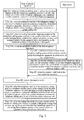
- Fig. 1 is a flow chart showing a method for identifying a telephone call according to an exemplary embodiment. This method may be applied in a first telephone apparatus, as shown in Fig. 1 , and the method includes the following steps:
- step 101 when a telephone calling party is calling a telephone number of a first telephone apparatus, it is determined whether a second telephone apparatus of an assigned entity, said entity being affiliated with a telephone number of the telephone calling party, is calling the telephone number of the first telephone apparatus.
- the telephone number of the second telephone apparatus is the telephone number of the telephone calling party.
- step 102 is performed.
- the second telephone apparatus is calling the telephone number of the first telephone apparatus, it is determined that the telephone call from the telephone calling party is not a falsified-number telephone call.
- step 102 prompt information is output.
- the prompt information is for indicating that the telephone call from the telephone calling party is a falsified-number telephone call.
- a telephone calling party when a telephone calling party is calling a telephone number of a first telephone apparatus, it is determined whether a second telephone apparatus of an assigned entity, said entity being affiliated with a telephone number of the telephone calling party, is calling the telephone number of the first telephone apparatus; the telephone number of the second telephone apparatus is the telephone number of the telephone calling party; when the second telephone apparatus is not calling the telephone number of the first telephone apparatus, prompt information is output; the prompt information is for indicating that the telephone call from the telephone calling party is a falsified-number telephone call; since the second telephone apparatus of the assigned entity is the authentic source of the telephone calling party, the determination result about whether the second telephone apparatus of the assigned entity is calling the telephone called party currently is real and effective, and thereby whether the telephone call is falsified-number telephone call may be correctly identified; meanwhile, the identifying method is based on the telephone number of the telephone calling party and confirms from the aspect of assigned entity but has no relation with the coding rule of telephone number, and thus the method is applicable in identification of all telephone numbers; furthermore,
- Fig. 2 is a flow chart showing a method for identifying a telephone call according to an exemplary embodiment, as shown in Fig. 2 , and the method may include the following steps:
- step 201 when the telephone calling party is calling the telephone number of the first telephone apparatus, the first telephone apparatus determines whether the telephone number of the telephone calling party is a telephone number stored in a contact list of the first telephone apparatus.
- step 202 When the telephone number of the calling party is not a telephone number stored in the contact list of the first telephone apparatus, step 202 is performed; when the telephone number is a telephone number stored in the contact list of the first telephone apparatus, step 209 is performed.
- the contact list stores user-trusted telephone numbers.
- the telephone number is not a telephone number stored in the contact list, it may be deemed that the telephone number is a strange telephone number, and step 202 is performed.
- step 202 the first telephone apparatus determines whether a coding rule of the telephone number of the telephone calling party conforms to a preset coding rule.
- step 203 When the coding rule of the telephone number of the telephone calling party conforms to the preset coding rule, step 203 is performed; when the coding rule of the telephone number of the telephone calling party does not conform to the preset coding rule, step 210 is performed.
- the preset coding rule may employ domestic and abroad telephone coding rules formulated by operators.
- the coding rule of the telephone number does not conform to the preset coding rule, for example, the telephone number is constituted of a series of numbers (such as "0123456789"), step 210 is performed.
- step 203 the first telephone apparatus inquires a correspondence relationship between telephone numbers and assigned entities on the assigned entity corresponding to the telephone number of the telephone calling party.
- the first telephone apparatus inquires the telephone number matching with the telephone number of the telephone calling party in the preset correspondence relationship between telephone numbers and assigned entities. Then, when the telephone number matching with the telephone number of the telephone calling party is inquired, the assigned entity corresponding to the telephone number matching with the telephone number of the telephone calling party is determined; when no telephone number matching with the telephone number of the telephone calling party is inquired, exit the flow chart.
- the correspondence relationship between telephone numbers and assigned entities encompasses telephone numbers of entities (for example, public institutions such as local police stations or courts, and famous enterprises and the like) open to public. criminals often masquerade as the telephone numbers of these entities to conduct fraudulent activities.
- entities for example, public institutions such as local police stations or courts, and famous enterprises and the like.
- the first telephone apparatus may download the correspondence relationship between telephone numbers and assigned entities from specified servers.
- a manual collecting and entry method may be used to store the correspondence relationship between telephone numbers and assigned entities in the specified servers.
- step 204 the first telephone apparatus obtains the telephone number of the first telephone apparatus.
- the first telephone apparatus may read its own telephone number from a SIM card, or may read its own telephone number by related technologies, and the present disclosure does not impose limitations on this.
- step 205 the first telephone apparatus sends the telephone number of the telephone calling party and the telephone number of the first telephone apparatus to a first server of the assigned entity.
- the first server is configured to inquire whether the second telephone apparatus is calling the telephone number of the first telephone apparatus currently.
- the telephone number of the second telephone apparatus is the telephone number of the telephone calling party.
- the first telephone apparatus After the first telephone apparatus obtains the assigned entity, it may obtain the address of the first server of the assigned entity, and may send the telephone number of the telephone calling party and the telephone number of the first telephone apparatus to the first server of the assigned entity via internet.
- the first server receives the telephone number of the telephone calling party and the telephone number of the first telephone apparatus, and inquires whether the second telephone apparatus is calling the telephone number of the first telephone apparatus currently, and obtains an inquiry result.
- the inquiry result is that the second telephone apparatus is calling the telephone number of the first telephone apparatus currently or that the second telephone apparatus is not calling the telephone number of the first telephone apparatus currently.
- the first server is configured to manage operations of all telephone apparatus in the assigned entity.
- the first server may detect, among the managed telephone apparatus, a telephone apparatus which is under a working state, and may detect whether the telephone apparatus which is under the working state are calling telephone numbers of other telephone apparatus currently.
- the term "currently” herein may refer to the time when the first server receives the telephone number of the telephone calling party and the telephone number of the first telephone apparatus.
- step 207 the first server returns the inquiry result back to the first telephone apparatus.
- the first server returns the inquiry result back to the first telephone apparatus via networks.
- step 208 the first telephone apparatus receives the inquiry result.
- step 209 is performed; when the inquiry result is that the second telephone apparatus is not calling the telephone number of the first telephone apparatus currently, step 210 is performed.
- the first telephone apparatus determines whether the second telephone apparatus of the assigned entity, said entity being affiliated with a telephone number of a telephone calling party, is calling the telephone number of the first telephone apparatus.
- step 209 the first telephone apparatus determines that the telephone call from the telephone calling party is not a falsified-number telephone call.
- step 210 the first telephone apparatus outputs the prompt information.
- the prompt information is for indicating that the telephone call from the telephone calling party is a falsified-number telephone call.
- the first telephone apparatus may prompt the user, for example by popping-up a window on the screen.
- the telephone calling party when a telephone calling party is calling a telephone number of a first telephone apparatus, whether a second telephone apparatus of an assigned entity, said entity being affiliated with a telephone number of the telephone calling party, is calling the telephone number of the first telephone apparatus is determined; the telephone number of the second telephone apparatus is the telephone number of the telephone calling party; when the second telephone apparatus is not calling the telephone number of the first telephone apparatus, prompt information is output; the prompt information is for indicating that the telephone call from the telephone calling party is a falsified-number telephone call; since the second telephone apparatus of the assigned entity is the authentic source of the telephone calling party, the determination result about whether the second telephone apparatus of the assigned entity is calling the telephone called party is real and effective, and thereby whether the telephone call is falsified-number telephone call may be correctly identified; meanwhile, the identifying method is based on the telephone number of the telephone calling party and confirms from the aspect of assigned entity but has no relation with the coding rule of telephone number, and thus the method is applicable in identification of all telephone numbers; furthermore, when it is
- Fig. 3 is a flow chart showing a method for identifying a telephone call according to an exemplary embodiment, as shown in Fig. 3 , and the method includes the following steps:
- step 301 when a telephone calling party is calling a telephone number of a first telephone apparatus, the first telephone apparatus determines whether the telephone number of the telephone calling party is a telephone number stored in the contact list of the first telephone apparatus.
- step 302 When the telephone number of the telephone calling party is not a telephone number stored in the contact list of the first telephone apparatus, step 302 is performed; when the telephone number of the telephone calling party is a telephone number stored in the contact list of the first telephone apparatus, step 311 is performed.
- Step 301 is the same as step 201, and the descriptions thereof are omitted.
- step 302 the first telephone apparatus determines whether a coding rule of the telephone number of the telephone calling party conforms to a preset coding rule.
- step 303 When the coding rule of the telephone number of the telephone calling party conforms to the preset coding rule, step 303 is performed; when the coding rule of the telephone number of the telephone calling party does not conform to the preset coding rule, step 312 is performed.
- Step 302 is the same as step 202, and the descriptions thereof are omitted.
- step 303 the first telephone apparatus obtains the telephone number of the first telephone apparatus.
- Step 303 is the same as step 204, and the descriptions thereof are omitted.
- step 304 the first telephone apparatus sends the telephone number of the telephone calling party and the telephone number of the first telephone apparatus to a second server.
- the first telephone apparatus sends the telephone number of the telephone calling party and the telephone number of the first telephone apparatus to the second server via networks.
- the second server receives the telephone number of the telephone calling party and the telephone number of the first telephone apparatus, and inquires the assigned entity corresponding to the telephone number of the telephone calling party in the preset correspondence relation between telephone numbers and assigned entities.
- the second server inquires the telephone number matching with the telephone number of the telephone calling party, then, when the telephone number matching with the telephone number of the telephone calling party is inquired, the assigned entity corresponding to the telephone number matching with the telephone number of the telephone calling party is obtained. When no telephone number matching with the telephone number of the telephone calling party is inquired, exit the flow chart.
- step 306 the second server sends the telephone number of the telephone calling party and the telephone number of the first telephone apparatus to the first server of the assigned entity.
- the second server sends the telephone number of the telephone calling party and the telephone number of the first telephone apparatus to the first server of the assigned entity via networks.
- the first server receives the telephone number of the telephone calling party and the telephone number of the first telephone apparatus, and inquires whether the second telephone apparatus is calling the telephone number of the first telephone apparatus currently, and obtains an inquiry result.
- the inquiry result is that the second telephone apparatus is calling the telephone number of the first telephone apparatus currently or that the second telephone apparatus is not calling the telephone number of the first telephone apparatus currently.
- the telephone number of the second telephone apparatus is the telephone number of the telephone calling party.
- Step 307 is the same as step 206, and the descriptions thereof are omitted.
- step 308 the first server returns the inquiry result back to the second server.
- the first server returns the inquiry result back to the second server via networks.
- step 309 the second server receives the inquiry result, and returns the inquiry result back to the first telephone apparatus.
- step 310 the first telephone apparatus receives the inquiry result.
- step 311 When the inquiry result is that the second telephone apparatus is calling the telephone number of the first telephone apparatus currently, step 311 is performed; when the inquiry result is that the second telephone apparatus is not calling the telephone number of the first telephone apparatus currently, step 312 is performed.
- steps 303-310 the determination of whether the second telephone apparatus of the assigned entity, said entity being affiliated with a telephone number of a telephone calling party, is calling the first telephone apparatus is achieved.
- step 311 the first telephone apparatus determines the telephone call from the telephone calling party is not a falsified-number telephone call.
- step 312 the first telephone apparatus outputs prompt information.
- the prompt information is for indicating that the telephone call from the telephone calling party is a falsified-number telephone call.
- the first telephone apparatus may prompt the user, for example by popping-up window on the screen.
- the telephone calling party when a telephone calling party is calling a telephone number of a first telephone apparatus, whether a second telephone apparatus of an assigned entity, said entity being affiliated with a telephone number of the telephone calling party, is calling the telephone number of the first telephone apparatus is determined; the telephone number of the second telephone apparatus is the telephone number of the telephone calling party; when the second telephone apparatus is not calling the telephone number of the first telephone apparatus, prompt information is output; the prompt information is for indicating that the telephone call from the telephone calling party is a falsified-number telephone call; since the second telephone apparatus of the assigned entity is the authentic source of the telephone calling party, the determination result about whether the second telephone apparatus of the assigned entity is calling the telephone called party is real and effective, and thereby whether the telephone call is falsified-number telephone call may be correctly identified; meanwhile, the identifying method is based on the telephone number of the telephone calling party and confirms from the aspect of assigned entity but has no relation with the coding rule of telephone number, and thus the method is applicable in identification of all telephone numbers; furthermore, when it is
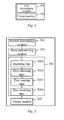
- Fig. 4 is a schematic diagram showing a device for identifying a telephone call according to an exemplary embodiment.
- the device may be mounted in the first telephone apparatus, as shown in Fig. 4 , and the device includes a first determining module 401 and an output module 402.
- the first determining module 401 is configured to determine whether a second telephone apparatus of an assigned entity, said entity being affiliated with a telephone number of the telephone calling party, is calling the telephone number of the first telephone apparatus when the telephone calling party is calling the telephone number of the first telephone apparatus; the telephone number of the second telephone apparatus is the telephone number of the telephone calling party.
- the output module is configured to, when the second telephone apparatus is not calling the telephone number of the first telephone apparatus, output prompt information for indicating that the telephone call from the telephone calling party is a falsified-number telephone call.
- the telephone calling party when a telephone calling party is calling a telephone number of a first telephone apparatus, whether a second telephone apparatus of an assigned entity, said entity being affiliated with a telephone number of the telephone calling party, is calling the telephone number of the first telephone apparatus is determined; the telephone number of the second telephone apparatus is the telephone number of the telephone calling party; when the second telephone apparatus is not calling the telephone number of the first telephone apparatus, prompt information is output; the prompt information is for indicating that the telephone call from the telephone calling party is a falsified-number telephone call; since the second telephone apparatus of the assigned entity is the authentic source of the telephone calling party, the determination result about whether the second telephone apparatus of the assigned entity is calling the telephone called party is real and effective, and thereby whether the telephone call is falsified-number telephone call may be correctly identified; meanwhile, the identifying method is based on the telephone number of the telephone calling party and confirms from the aspect of assigned entity but has no relation with the coding rule of telephone number, and thus the method is applicable in identification of all telephone numbers; furthermore, when it is
- Fig. 5 is a schematic diagram showing a device for identifying a telephone call according to an exemplary embodiment.
- the device may be mounted in the first telephone apparatus, as shown in Fig. 5 , and the device includes a first determining module 501 and an output module 502.
- the first determining module 501 is configured to determine whether a second telephone apparatus of an assigned entity, said entity being affiliated with a telephone number of a telephone calling party, is calling a telephone number of a first telephone apparatus when the telephone calling party is calling the telephone number of the first telephone apparatus; the telephone number of the second telephone apparatus is the telephone number of the telephone calling party.
- the output module 502 is configured to, when the second telephone apparatus is not calling the telephone number of the first telephone apparatus, output prompt information for indicating that the telephone call from the telephone calling party is a falsified-number telephone call.
- the first determining module 501 includes an inquiring unit 5011, a first obtaining unit 5012, a first sending unit 5013 and a first receiving unit 5014.
- the inquiring unit 5011 is configured to inquire a preset correspondence relationship between telephone numbers and assigned entities on the assigned entity corresponding to the telephone number of the telephone calling party.
- the first obtaining unit 5012 is configured to obtain the telephone number of the first telephone apparatus.
- the first sending unit 5013 is configured to send the telephone number of the telephone calling party and the telephone number of the first telephone apparatus to a first server of the assigned entity; the first server is configured to inquire whether the second telephone apparatus is calling the telephone number of the first telephone apparatus currently.
- the first receiving unit 5014 is configured to receive an inquiry result returned back by the first server.
- the inquiry result is that the second telephone apparatus is calling the telephone number of the first telephone apparatus or that the second telephone apparatus is not calling the telephone number of the first telephone apparatus.
- the device further includes a second determining module 503.
- the second determining module 503 is configured to determine whether the telephone number of the telephone calling party is a telephone number stored in a contact list of the first telephone apparatus when the telephone call from the telephone calling party is received; when the telephone number of the telephone calling party is a telephone number stored in the contact list of the first telephone apparatus, it is determined that the telephone call from the telephone calling party is not a falsified-number telephone call.
- the device further includes a third determining module 504.
- the third determining module 504 is configured to, when the telephone number of the telephone calling party is not a telephone number stored in the contact list of the first telephone apparatus, determine whether a coding rule of the telephone number of the telephone calling party conforms to a preset coding rule; when the coding rule of the telephone number of the telephone calling party does not conform to the preset coding rule, the prompt information is output.
- the first determining module 501 is further configured to, when the coding rule of the telephone number of the telephone calling party conforms to the preset coding rule, determine whether the second telephone apparatus of the assigned entity, said entity being affiliated with a telephone number of a telephone calling party, is calling the telephone number of the first telephone apparatus.
- a telephone calling party when a telephone calling party is calling a telephone number of a first telephone apparatus, it is determined whether a second telephone apparatus of an assigned entity, said entity being affiliated with a telephone number of the telephone calling party, is calling the telephone number of the first telephone apparatus; the telephone number of the second telephone apparatus is the telephone number of the telephone calling party; when the second telephone apparatus is not calling the telephone number of the first telephone apparatus, prompt information is output; the prompt information is for indicating that the telephone call from the telephone calling party is a falsified-number telephone call; since the second telephone apparatus of the assigned entity is the authentic source of the telephone calling party, the determination result about whether the second telephone apparatus of the assigned entity is calling the telephone called party is real and effective, and thereby whether the telephone call is falsified-number telephone call may be correctly identified; meanwhile, the identifying method is based on the telephone number of the telephone calling party and confirms from the aspect of assigned entity but has no relation with the coding rule of telephone number, and thus the method is applicable in identification of all telephone numbers; furthermore, when
- Fig. 6 is a schematic diagram showing a device for identifying a telephone call according to an exemplary embodiment.
- the device may be mounted in the first telephone apparatus, as shown in Fig. 6 , and the device includes a first determining module 601, an output module 602, a second determining module 603 and a third determining module 604.
- the output module 602, the second determining module 603 and the third determining module 604 of this device are of the same configuration as that of the output module 502, the second determining module 503 and the third determining module 504 in Fig. 5 , and the descriptions thereof are omitted. The differences are as follows.
- the first determining module 601 includes a second obtaining unit 6011, a second sending unit 6012 and a second receiving unit 6013.
- the second obtaining unit 6011 is configured to obtain the telephone number of the first telephone apparatus.
- the second sending unit 6012 is configured to send the telephone number of the telephone calling party and the telephone number of the first telephone apparatus to a second server; the second server is configured to determine whether the second telephone apparatus of the assigned entity, said entity being affiliated with a telephone number of a telephone calling party, is calling the telephone number of the first telephone apparatus.
- the second receiving unit 6013 is configured to receive the inquiry result returned back by the second server.
- the inquiry result is that the second telephone apparatus is calling the telephone number of the first telephone apparatus or that the second telephone apparatus is not calling the telephone number of the first telephone apparatus.
- a telephone calling party when a telephone calling party is calling a telephone number of a first telephone apparatus, it is determined whether a second telephone apparatus of an assigned entity, said entity being affiliated with a telephone number of the telephone calling party, is calling the telephone number of the first telephone apparatus; the telephone number of the second telephone apparatus is the telephone number of the telephone calling party; when the second telephone apparatus is not calling the telephone number of the first telephone apparatus, prompt information is output; the prompt information is for indicating that the telephone call from the telephone calling party is a falsified-number telephone call; since the second telephone apparatus of the assigned entity is the authentic source of the telephone calling party, the determination result about whether the second telephone apparatus of the assigned entity is calling the telephone called party is real and effective, and thereby whether the telephone call is falsified-number telephone call may be correctly identified; meanwhile, the identifying method is based on the telephone number of the telephone calling party and confirms from the aspect of assigned entity but has no relation with the coding rule of telephone number, and thus the method is applicable in identification of all telephone numbers; furthermore, when
- Fig. 7 is a block diagram illustrating a device for identifying the telephone call 800 according to an exemplary embodiment.
- the device 800 may be a telephone, a VOIP apparatus or the like.
- the device 800 may include one or more of the following components: a processing component 802, a memory 804, a power component 806, a multimedia component 808, an audio component 810, an input/output (I/O) interface 812, a sensor component 814, and a communication component 816.
- a processing component 802 a memory 804, a power component 806, a multimedia component 808, an audio component 810, an input/output (I/O) interface 812, a sensor component 814, and a communication component 816.
- the processing component 802 usually controls overall operations of the device 800, such as operations associated with display, telephone calls, data communications, camera operations and recording operations.
- the processing component 802 may include one or more processors 820 to execute instructions to perform all or a part of the steps in the above described methods.
- the processing component 802 may include one or more modules which facilitate the interaction between the processing component 802 and other components.
- the processing component 802 may include a multimedia module to facilitate the interaction between the multimedia component 808 and the processing component 802.
- the memory 804 is configured to store various types of data to support the operation of the device 800. Examples of such data include instructions for any application or method operated on the device 800, contact data, phonebook data, messages, pictures, videos, etc.
- the memory 804 may be implemented by any type of volatile or non-volatile memory device or combination thereof, such as a static random access memory (SRAM), an electrically erasable programmable read-only memory (EEPROM), an erasable programmable read-only memory (EPROM), a programmable read-only memory (PROM), a read-only memory (ROM), a magnetic memory, a flash memory, a magnetic disk or optical disk.
- SRAM static random access memory
- EEPROM electrically erasable programmable read-only memory
- EPROM erasable programmable read-only memory
- PROM programmable read-only memory
- ROM read-only memory
- magnetic memory a magnetic memory
- flash memory a flash memory
- magnetic disk or optical disk a magnetic disk or optical
- the power component 806 provides power to various components of the device 800.
- the power component 806 may include a power management system, one or more power sources, and other components associated with the generation, management, and distribution of power in the device 800.
- the multimedia component 808 includes a screen for providing an output interface between the device 800 and the user.
- the screen may include a liquid crystal display (LCD) and a touch panel (TP). If the screen includes the touch panel, the screen may be implemented as a touch screen to receive input signals from the user.
- the touch panel includes one or more touch sensors to sense touches, slips, and gestures on the touch panel. The touch sensors may not only sense a boundary of a touch or slip action, but also sense a period of time and a pressure associated with the touch or slip action.
- the multimedia component 808 includes a front camera and/or a rear camera. The front camera and/or the rear camera may receive external multimedia data while the device 800 is in an operation mode, such as a photographing mode or a video mode. Each of the front camera and the rear camera may be a fixed optical lens system or have focus and optical zoom capability.
- the audio component 810 is configured to output and/or input audio signals.
- the audio component 810 includes a microphone (MIC) configured to receive an external audio signal when the device 800 is in an operation mode, such as a call mode, a recording mode, and a voice recognition mode.
- the received audio signal may be further stored in the memory 804 or transmitted via the communication component 816.
- the audio component 810 further includes a speaker to output audio signals.
- the I/O interface 812 provides an interface between the processing component 802 and peripheral interface modules, such as a keyboard, a click wheel, a button, and the like.
- the button may include, but not limited to: a home button, a volume button, a starting button and a locking button.
- the sensor component 814 includes one or more sensors to provide status assessments of various aspects of the device 800. For instance, the sensor component 814 may detect an open/closed status of the device 800, relative position of components, e.g., the display and the keyboard, of the device 800, a change in position of the device 800 or a component of the device 800, a presence or absence of an user contact with the device 800, an orientation or an acceleration/deceleration of the device 800, and a change in temperature of the device 800.
- the sensor component 814 may include a proximity sensor configured to detect the presence of nearby objects without any physical contact.
- the sensor component 814 may further include a light sensor, such as a CMOS or CCD image sensor, for use in imaging applications.
- the sensor component 814 may further include an accelerometer sensor, a gyroscope sensor, a magnetic sensor, a pressure sensor, or a temperature sensor.
- the communication component 816 is configured to facilitate communication, in a wire or wireless manner, between the device 800 and other devices.
- the device 800 can access a wireless network based on a communication standard, such as WiFi, 2G or 3G, or a combination thereof.
- the communication component 816 receives a broadcast signal or broadcast associated information from an external broadcast management system via a broadcast channel.
- the communication component 816 further includes a near field communication (NFC) module to facilitate short-range communications.
- the NFC module may be implemented based on a radio frequency identification (RFID) technology, an infrared data association (IrDA) technology, an ultra-bandwidth (UWB) technology, a Bluetooth (BT) technology, and other technologies.
- RFID radio frequency identification
- IrDA infrared data association
- UWB ultra-bandwidth
- BT Bluetooth
- the device 800 may be implemented by one or more application specific integrated circuits (ASICs), digital signal processors (DSPs), digital signal processing devices (DSPDs), programmable logic devices (PLDs), field programmable gate arrays (FPGAs), controllers, micro-controllers, microprocessors or other electronic components, for performing the above described methods.
- ASICs application specific integrated circuits
- DSPs digital signal processors
- DSPDs digital signal processing devices
- PLDs programmable logic devices
- FPGAs field programmable gate arrays
- controllers micro-controllers, microprocessors or other electronic components, for performing the above described methods.
- non-transitory computer-readable storage medium including instructions, such as included in the memory 804, executable by the processor 820 in the device 800, for performing the above-described methods.
- the non-transitory computer-readable storage medium may be a ROM, a RAM, a CD-ROM, a magnetic tape, a floppy disc, an optical data storage device, and the like.
- a non-transitory computer readable storage medium is provided.
- the mobile terminal When the instructions in the storage medium is executed by the processor of the mobile terminal, the mobile terminal is caused to perform a method for identifying a telephone call, and the method includes:
Landscapes
- Engineering & Computer Science (AREA)
- Signal Processing (AREA)
- Computer Networks & Wireless Communication (AREA)
- Computer Security & Cryptography (AREA)
- Telephone Function (AREA)
- Telephonic Communication Services (AREA)
- Facsimile Transmission Control (AREA)
Abstract
Description
- The present disclosure generally relates to the communication field, and more particularly, to a method and a device for identifying a telephone call.
- A falsified-number incoming telephone call refers to a telephone call made by a criminal who, by using flaws of telecom operating systems, masquerades as any one number to call someone else to go in for fraudulent conducts.
- A common technology used by criminals comprises sending a fake identity to telecom operators such as "110" (police) using a telephone interface of Voice Over Internet Protocol (short for VOIP), so that the telecom operators directly convey the identity to the telephone called party as the incoming phone number. The incoming call is directly displayed as "110" to the telephone called party, which makes the telephone called party unable to determine whether the call is an authentic call or a deceptive call. Currently, a known technology for preventing deceptive callings comprises controlling using number coding rules. For example, a deceptive call is accessed from abroad through VOIP, and by this manner, a prefix such as "00192" may be added to the calling number during transmission. Known technologies may identify such prefix so as to determine whether the incoming call is a falsified-number incoming telephone call.
- In other known technologies, since an incoming call which has a prefix "00192" may be a falsified-number incoming telephone call or may be an authentic phone call from abroad, the method for identifying a falsified-number incoming telephone call by controlling a prefix may make mistakes; and, if the falsified number used by the criminals conforms to the Chinese mainland number rule, such as "01095555" (China Merchants Bank), identifying a falsified-number incoming telephone call by controlling a prefix cannot perform determination. Therefore, the known have some limitations.
- In order to solve the problems in related technologies that the method for identifying falsified-number incoming telephone call may make mistakes and have limitations, the present disclosure provides a method and a device for identifying a telephone call. The technical solutions are set forth as follows.
- According to a first aspect of embodiments of the present disclosure, a method for identifying a telephone call is provided. The method includes:
- determining whether a second telephone apparatus of an assigned entity, said entity being affiliated with a telephone number of a telephone calling party, is calling a telephone number of a first telephone apparatus, when the telephone calling party is calling the telephone number of the first telephone apparatus, wherein the telephone number of the second telephone apparatus is the telephone number of the telephone calling party; and
- when the second telephone apparatus is not calling the telephone number of the first telephone apparatus, outputting prompt information for indicating that the telephone call from the telephone calling party is a falsified-number telephone call.
- In a particular embodiment, the determination of whether the second telephone apparatus of the assigned entity, said entity being affiliated with a telephone number of a telephone calling party, is calling the telephone number of the first telephone apparatus comprises:
- inquiring a preset correspondence relationship between telephone numbers and assigned entities on the assigned entity corresponding to the telephone number of the telephone calling party;
- obtaining the telephone number of the first telephone apparatus;
- sending the telephone number of the telephone calling party and the telephone number of the first telephone apparatus to a first server of the assigned entity, wherein the first server is configured to inquire whether the second telephone apparatus is calling the telephone number of the first telephone apparatus currently;
- receiving an inquiry result returned back by the first server, wherein the inquiry result is that the second telephone apparatus is calling the telephone number of the first telephone apparatus currently or that the second telephone apparatus is not calling the telephone number of the first telephone apparatus currently.
- In a particular embodiment, the determination of whether the second telephone apparatus of the assigned entity, said entity being affiliated with a telephone number of a telephone calling party, is calling the telephone number of the first telephone apparatus comprises:
- obtaining the telephone number of the first telephone apparatus;
- sending the telephone number of the telephone calling party and the telephone number of the first telephone apparatus to a second server, wherein the second server is configured to determine whether the second telephone apparatus of the assigned entity, said entity being affiliated with a telephone number of a telephone calling party, is calling the telephone number of the first telephone apparatus;
- receiving an inquiry result returned back by the second server, wherein the inquiry result is that the second telephone apparatus is calling the telephone number of the first telephone apparatus currently or that the second telephone apparatus is not calling the telephone number of the first telephone apparatus currently.
- In a particular embodiment, the method further includes:
- determining whether the telephone number of the telephone calling party is a telephone number stored in a contact list of the first telephone apparatus when the telephone call from the telephone calling party is received;
- determining that the telephone call from the telephone calling party is not a falsified-number telephone call when the telephone number of the telephone calling party is a telephone number stored in the contact list of the first telephone apparatus.
- In a particular embodiment, the method further includes: when the telephone number of the telephone calling party is not a telephone number stored in the contact list of the first telephone apparatus, determining whether a coding rule of the telephone number of the telephone calling party conforms to a preset coding rule;
when the coding rule of the telephone number of the telephone calling party does not conform to the preset coding rule, outputting the prompt information. - In a particular embodiment, the determination of whether the second telephone apparatus of the assigned entity, said entity being affiliated with a telephone number of a telephone calling party, is calling the telephone number of the first telephone apparatus comprises:
- when the coding rule of the telephone number of the telephone calling party conforms to the preset coding rule, determining whether the second telephone apparatus of the assigned entity of the telephone number from the telephone calling party is calling the telephone number of the first telephone apparatus.
- According to a second aspect of the embodiment of the disclosure, a device for identifying a telephone call is provided. The device includes:
- a first determining module configured to determine whether a second telephone apparatus of an assigned entity, said entity being affiliated with a telephone number of a telephone calling party, is calling a telephone number of a first telephone apparatus, when the telephone calling party is calling the telephone number of the first telephone apparatus; wherein the telephone number of the second telephone apparatus is the telephone number of the telephone calling party;
- an output module configured to, when the second telephone apparatus is not calling the telephone number of the first telephone apparatus, output prompt information for indicating that the telephone call from the telephone calling party is a falsified-number telephone call.
- In a particular embodiment, the first determining module includes:
- an inquiring unit configured to inquire a preset correspondence relationship between telephone numbers and assigned entities on the assigned entity corresponding to the telephone number of the telephone calling party;
- a first obtaining unit configured to obtain the telephone number of the first telephone apparatus;
- a first sending unit configured to send the telephone number of the telephone calling party and the telephone number of the first telephone apparatus to a first server of the assigned entity, wherein the first server is configured to inquire whether the second telephone apparatus is calling the telephone number of the first telephone apparatus currently;
- a first receiving unit configured to receive an inquiry result returned back by the first server, wherein the inquiry result is that the second telephone apparatus is calling the telephone number of the first telephone apparatus currently or that the second telephone apparatus is not calling the telephone number of the first telephone apparatus currently.
- In a particular embodiment, the first determining module includes:
- a second obtaining unit configured to obtain the telephone number of the first telephone apparatus;
- a second sending unit configured to send the telephone number of the telephone calling party and the telephone number of the first telephone apparatus to a second server, wherein the second server is configured to determine whether the second telephone apparatus of the assigned entity, said entity being affiliated with a telephone number of a telephone calling party, is calling the telephone number of the first telephone apparatus;
- a second receiving unit configured to receive an inquiry result returned back by the second server, wherein the inquiry result is that the second telephone apparatus is calling the telephone number of the first telephone apparatus currently or that the second telephone apparatus is not calling the telephone number of the first telephone apparatus currently.
- In a particular embodiment, the device further includes a second determining module,
the second determining module is configured to determine whether the telephone number of the telephone calling party is a telephone number stored in a contact list of the first telephone apparatus when the telephone call from the telephone calling party is received,
when the telephone number of the telephone calling party is a telephone number stored in the contact list of the first telephone apparatus, it is determined that the telephone call from the telephone calling party is not a falsified-number telephone call. - In a particular embodiment, the device further includes a third determining module,
the third determining module is configured to, when the telephone number of the telephone calling party is not a telephone number stored in the contact list of the first telephone apparatus, determine whether a coding rule of the telephone number of the telephone calling party conforms to a preset coding rule;
when the coding rule of the telephone number of the telephone calling party does not conform to the preset coding rule, the prompt information is output. - In a particular embodiment, the first determining module is further configured to,
when the coding rule of the telephone number of the telephone calling party conforms to the preset coding rule, determine whether the second telephone apparatus of the assigned entity, said entity being affiliated with a telephone number of a telephone calling party, is calling the telephone number of the first telephone apparatus. - According to a third aspect of embodiments of the disclosure, a device for identifying a telephone call is provided. The device includes:
- a processor;
- a memory configured to store executable instructions by the processor;
- wherein the processor is configured to:
- determine whether a second telephone apparatus of an assigned entity, said entity being affiliated with a telephone number of a telephone calling party, is calling a telephone number of a first telephone apparatus when the telephone calling party is calling the telephone number of the first telephone apparatus, wherein the telephone number of the second telephone apparatus is the telephone number of the telephone calling party;
- when the second telephone apparatus is not calling the telephone number of the first telephone apparatus, output prompt information for indicating that the telephone call from the telephone calling party is a falsified-number telephone call.
- The present invention also provides a computer program, which when executing on a processor of a terminal, performs the above method.
- This program can use any programming language and take the form of source code, object code or a code intermediate between source code and object code, such as a partially compiled form, or any other desirable form.
- The present invention also provides a recording medium readable by a computer and having recorded thereon a computer program including instructions for executing the steps of a method as defined above.
- The information medium can be any entity or device capable of storing the program. For example, the support can include storage means such as a ROM, for example a CD ROM or a microelectronic circuit ROM, or magnetic storage means, for example a diskette (floppy disk) or a hard disk.
- Alternatively, the information medium can be an integrated circuit in which the program is incorporated, the circuit being adapted to execute the method in question or to be used in its execution.
- The technical solutions provided in the embodiments of the present disclosure may include the following advantageous effects: said entity being affiliated with a telephone number of the telephone calling party since the second telephone apparatus of the assigned entity is the authentic source of the telephone calling party, the determination result on whether the second telephone apparatus of the assigned entity is calling the called party currently is real and effective, and thereby whether the telephone call is falsified-number telephone call may be correctly identified; meanwhile, the identifying method is based on the telephone number of the telephone calling party and confirms using the aspect of assigned entity; however, the method has no relation with the coding rule of a telephone number, and thus the method is applicable in identification of all telephone numbers; furthermore, when it is identified that the telephone call is a falsified-number telephone call, a prompt is given to make the telephone called party identify the incoming call when receiving the incoming call from the telephone calling party, and thereby the telephone called party is prevented to be deceived.
- It is to be understood that both the foregoing general description and the following detailed description are exemplary and explanatory only and are not restrictive of the invention, as claimed.
- The accompanying drawings, which are incorporated in and constitute a part of this specification, illustrate embodiments consistent with the invention and, together with the description, serve to explain the principles of the invention.
-
Fig. 1 is a flow chart showing a method for identifying a telephone call according to an exemplary embodiment; -
Figs. 2 and3 are flow charts showing another method for identifying a telephone call according to an exemplary embodiment; -
Fig. 4 is a block diagram showing a device for identifying a telephone call according to an exemplary embodiment; -
Figs. 5 and6 are block diagrams showing another device for identifying a telephone call according to an exemplary embodiment; and -
Fig. 7 is a block diagram showing a device for identifying a telephone call according to an exemplary embodiment. - Reference will now be made in detail to exemplary embodiments, examples of which are illustrated in the accompanying drawings. The following description refers to the accompanying drawings in which the same numbers in different drawings represent the same or similar elements unless otherwise represented. The implementations set forth in the following description of exemplary embodiments do not represent all implementations consistent with the invention. Instead, they are merely examples of apparatuses and methods consistent with aspects related to the invention as recited in the appended claims.
- To facilitate understanding of the technical solutions provided by the present disclosure, a telephone call (including VOIP call) process is introduced first. A telephone calling party (such as a telephone apparatus A) sends a telephone calling request to a server (including a switch) of a telecom operator. The telephone calling request includes a calling telephone number (the telephone number of the calling party) and a called telephone number (the telephone number of the telephone called party). The server of the operator obtains a link for arriving to the telephone called party (such as a telephone apparatus B) according to the called telephone number and transmits the telephone call from the telephone calling party to the telephone called party via the link, thereby establishing a telephone call between the telephone calling party and the telephone called party.
- In the embodiment, the telephone apparatus includes telephones such as wired phones, wireless phones and smart phones, and the telephone apparatus also includes a VOIP apparatus such as a computer and a mobile terminal.
-
Fig. 1 is a flow chart showing a method for identifying a telephone call according to an exemplary embodiment. This method may be applied in a first telephone apparatus, as shown inFig. 1 , and the method includes the following steps: - In
step 101, when a telephone calling party is calling a telephone number of a first telephone apparatus, it is determined whether a second telephone apparatus of an assigned entity, said entity being affiliated with a telephone number of the telephone calling party, is calling the telephone number of the first telephone apparatus. - The telephone number of the second telephone apparatus is the telephone number of the telephone calling party.
- When the second telephone apparatus is not calling the telephone number of the first telephone apparatus,
step 102 is performed. When the second telephone apparatus is calling the telephone number of the first telephone apparatus, it is determined that the telephone call from the telephone calling party is not a falsified-number telephone call. - In
step 102, prompt information is output. - The prompt information is for indicating that the telephone call from the telephone calling party is a falsified-number telephone call.
- In the embodiment, when a telephone calling party is calling a telephone number of a first telephone apparatus, it is determined whether a second telephone apparatus of an assigned entity, said entity being affiliated with a telephone number of the telephone calling party, is calling the telephone number of the first telephone apparatus; the telephone number of the second telephone apparatus is the telephone number of the telephone calling party; when the second telephone apparatus is not calling the telephone number of the first telephone apparatus, prompt information is output; the prompt information is for indicating that the telephone call from the telephone calling party is a falsified-number telephone call; since the second telephone apparatus of the assigned entity is the authentic source of the telephone calling party, the determination result about whether the second telephone apparatus of the assigned entity is calling the telephone called party currently is real and effective, and thereby whether the telephone call is falsified-number telephone call may be correctly identified; meanwhile, the identifying method is based on the telephone number of the telephone calling party and confirms from the aspect of assigned entity but has no relation with the coding rule of telephone number, and thus the method is applicable in identification of all telephone numbers; furthermore, when it is identified that the telephone call is a falsified-number telephone call, a prompt is given to make the telephone called party identify the incoming call when receiving the incoming call from the telephone calling party, and thereby the telephone called party is prevented to be deceived.
-
Fig. 2 is a flow chart showing a method for identifying a telephone call according to an exemplary embodiment, as shown inFig. 2 , and the method may include the following steps: - In step 201, when the telephone calling party is calling the telephone number of the first telephone apparatus, the first telephone apparatus determines whether the telephone number of the telephone calling party is a telephone number stored in a contact list of the first telephone apparatus.
- When the telephone number of the calling party is not a telephone number stored in the contact list of the first telephone apparatus, step 202 is performed; when the telephone number is a telephone number stored in the contact list of the first telephone apparatus, step 209 is performed.
- The contact list stores user-trusted telephone numbers. When the telephone number is not a telephone number stored in the contact list, it may be deemed that the telephone number is a strange telephone number, and step 202 is performed.
- In step 202, the first telephone apparatus determines whether a coding rule of the telephone number of the telephone calling party conforms to a preset coding rule.
- When the coding rule of the telephone number of the telephone calling party conforms to the preset coding rule,
step 203 is performed; when the coding rule of the telephone number of the telephone calling party does not conform to the preset coding rule, step 210 is performed. - The preset coding rule may employ domestic and abroad telephone coding rules formulated by operators. When the coding rule of the telephone number does not conform to the preset coding rule, for example, the telephone number is constituted of a series of numbers (such as "0123456789"), step 210 is performed.
- In
step 203, the first telephone apparatus inquires a correspondence relationship between telephone numbers and assigned entities on the assigned entity corresponding to the telephone number of the telephone calling party. - Firstly, the first telephone apparatus inquires the telephone number matching with the telephone number of the telephone calling party in the preset correspondence relationship between telephone numbers and assigned entities. Then, when the telephone number matching with the telephone number of the telephone calling party is inquired, the assigned entity corresponding to the telephone number matching with the telephone number of the telephone calling party is determined; when no telephone number matching with the telephone number of the telephone calling party is inquired, exit the flow chart.
- The correspondence relationship between telephone numbers and assigned entities encompasses telephone numbers of entities (for example, public institutions such as local police stations or courts, and famous enterprises and the like) open to public. Criminals often masquerade as the telephone numbers of these entities to conduct fraudulent activities.
- The first telephone apparatus may download the correspondence relationship between telephone numbers and assigned entities from specified servers. A manual collecting and entry method may be used to store the correspondence relationship between telephone numbers and assigned entities in the specified servers.
- In step 204, the first telephone apparatus obtains the telephone number of the first telephone apparatus.
- The first telephone apparatus may read its own telephone number from a SIM card, or may read its own telephone number by related technologies, and the present disclosure does not impose limitations on this.
- In step 205, the first telephone apparatus sends the telephone number of the telephone calling party and the telephone number of the first telephone apparatus to a first server of the assigned entity.
- The first server is configured to inquire whether the second telephone apparatus is calling the telephone number of the first telephone apparatus currently. The telephone number of the second telephone apparatus is the telephone number of the telephone calling party.
- After the first telephone apparatus obtains the assigned entity, it may obtain the address of the first server of the assigned entity, and may send the telephone number of the telephone calling party and the telephone number of the first telephone apparatus to the first server of the assigned entity via internet.
- In step 206, the first server receives the telephone number of the telephone calling party and the telephone number of the first telephone apparatus, and inquires whether the second telephone apparatus is calling the telephone number of the first telephone apparatus currently, and obtains an inquiry result.
- The inquiry result is that the second telephone apparatus is calling the telephone number of the first telephone apparatus currently or that the second telephone apparatus is not calling the telephone number of the first telephone apparatus currently.
- The first server is configured to manage operations of all telephone apparatus in the assigned entity. The first server may detect, among the managed telephone apparatus, a telephone apparatus which is under a working state, and may detect whether the telephone apparatus which is under the working state are calling telephone numbers of other telephone apparatus currently.
- The term "currently" herein may refer to the time when the first server receives the telephone number of the telephone calling party and the telephone number of the first telephone apparatus.
- In step 207, the first server returns the inquiry result back to the first telephone apparatus.
- The first server returns the inquiry result back to the first telephone apparatus via networks.
- In
step 208, the first telephone apparatus receives the inquiry result. - When the inquiry result is that the second telephone apparatus is calling the telephone number of the first telephone apparatus currently, step 209 is performed; when the inquiry result is that the second telephone apparatus is not calling the telephone number of the first telephone apparatus currently, step 210 is performed.
- By
steps 203 to 208, it is achieved that the first telephone apparatus determines whether the second telephone apparatus of the assigned entity, said entity being affiliated with a telephone number of a telephone calling party, is calling the telephone number of the first telephone apparatus. - In step 209, the first telephone apparatus determines that the telephone call from the telephone calling party is not a falsified-number telephone call.
- In step 210, the first telephone apparatus outputs the prompt information.
- The prompt information is for indicating that the telephone call from the telephone calling party is a falsified-number telephone call. When it is determined that the telephone call is a falsified-number telephone call, the first telephone apparatus may prompt the user, for example by popping-up a window on the screen.
- In the embodiment, when a telephone calling party is calling a telephone number of a first telephone apparatus, whether a second telephone apparatus of an assigned entity, said entity being affiliated with a telephone number of the telephone calling party, is calling the telephone number of the first telephone apparatus is determined; the telephone number of the second telephone apparatus is the telephone number of the telephone calling party; when the second telephone apparatus is not calling the telephone number of the first telephone apparatus, prompt information is output; the prompt information is for indicating that the telephone call from the telephone calling party is a falsified-number telephone call; since the second telephone apparatus of the assigned entity is the authentic source of the telephone calling party, the determination result about whether the second telephone apparatus of the assigned entity is calling the telephone called party is real and effective, and thereby whether the telephone call is falsified-number telephone call may be correctly identified; meanwhile, the identifying method is based on the telephone number of the telephone calling party and confirms from the aspect of assigned entity but has no relation with the coding rule of telephone number, and thus the method is applicable in identification of all telephone numbers; furthermore, when it is identified that the telephone call is a falsified-number telephone call, a prompt is given to make the telephone called party identify the incoming call when receiving the incoming call from the telephone calling party, and thereby the telephone called party is prevented to be deceived.
-
Fig. 3 is a flow chart showing a method for identifying a telephone call according to an exemplary embodiment, as shown inFig. 3 , and the method includes the following steps: - In step 301, when a telephone calling party is calling a telephone number of a first telephone apparatus, the first telephone apparatus determines whether the telephone number of the telephone calling party is a telephone number stored in the contact list of the first telephone apparatus.
- When the telephone number of the telephone calling party is not a telephone number stored in the contact list of the first telephone apparatus, step 302 is performed; when the telephone number of the telephone calling party is a telephone number stored in the contact list of the first telephone apparatus, step 311 is performed.
- Step 301 is the same as step 201, and the descriptions thereof are omitted.
- In step 302, the first telephone apparatus determines whether a coding rule of the telephone number of the telephone calling party conforms to a preset coding rule.
- When the coding rule of the telephone number of the telephone calling party conforms to the preset coding rule, step 303 is performed; when the coding rule of the telephone number of the telephone calling party does not conform to the preset coding rule, step 312 is performed.
- Step 302 is the same as step 202, and the descriptions thereof are omitted.
- In step 303, the first telephone apparatus obtains the telephone number of the first telephone apparatus.
- Step 303 is the same as step 204, and the descriptions thereof are omitted.
- In step 304, the first telephone apparatus sends the telephone number of the telephone calling party and the telephone number of the first telephone apparatus to a second server.
- The first telephone apparatus sends the telephone number of the telephone calling party and the telephone number of the first telephone apparatus to the second server via networks.
- In step 305, the second server receives the telephone number of the telephone calling party and the telephone number of the first telephone apparatus, and inquires the assigned entity corresponding to the telephone number of the telephone calling party in the preset correspondence relation between telephone numbers and assigned entities.
- Firstly, the second server inquires the telephone number matching with the telephone number of the telephone calling party, then, when the telephone number matching with the telephone number of the telephone calling party is inquired, the assigned entity corresponding to the telephone number matching with the telephone number of the telephone calling party is obtained. When no telephone number matching with the telephone number of the telephone calling party is inquired, exit the flow chart.
- In step 306, the second server sends the telephone number of the telephone calling party and the telephone number of the first telephone apparatus to the first server of the assigned entity.
- The second server sends the telephone number of the telephone calling party and the telephone number of the first telephone apparatus to the first server of the assigned entity via networks.
- In step 307, the first server receives the telephone number of the telephone calling party and the telephone number of the first telephone apparatus, and inquires whether the second telephone apparatus is calling the telephone number of the first telephone apparatus currently, and obtains an inquiry result.
- The inquiry result is that the second telephone apparatus is calling the telephone number of the first telephone apparatus currently or that the second telephone apparatus is not calling the telephone number of the first telephone apparatus currently.
- The telephone number of the second telephone apparatus is the telephone number of the telephone calling party.
- Step 307 is the same as step 206, and the descriptions thereof are omitted.
- In
step 308, the first server returns the inquiry result back to the second server. - The first server returns the inquiry result back to the second server via networks.
- In step 309, the second server receives the inquiry result, and returns the inquiry result back to the first telephone apparatus.
- In
step 310, the first telephone apparatus receives the inquiry result. - When the inquiry result is that the second telephone apparatus is calling the telephone number of the first telephone apparatus currently, step 311 is performed; when the inquiry result is that the second telephone apparatus is not calling the telephone number of the first telephone apparatus currently, step 312 is performed.
- By steps 303-310, the determination of whether the second telephone apparatus of the assigned entity, said entity being affiliated with a telephone number of a telephone calling party, is calling the first telephone apparatus is achieved.
- In step 311, the first telephone apparatus determines the telephone call from the telephone calling party is not a falsified-number telephone call.
- In step 312, the first telephone apparatus outputs prompt information.
- The prompt information is for indicating that the telephone call from the telephone calling party is a falsified-number telephone call. When it is determined that the telephone call is a falsified-number telephone call, the first telephone apparatus may prompt the user, for example by popping-up window on the screen.
- In the embodiment, when a telephone calling party is calling a telephone number of a first telephone apparatus, whether a second telephone apparatus of an assigned entity, said entity being affiliated with a telephone number of the telephone calling party, is calling the telephone number of the first telephone apparatus is determined; the telephone number of the second telephone apparatus is the telephone number of the telephone calling party; when the second telephone apparatus is not calling the telephone number of the first telephone apparatus, prompt information is output; the prompt information is for indicating that the telephone call from the telephone calling party is a falsified-number telephone call; since the second telephone apparatus of the assigned entity is the authentic source of the telephone calling party, the determination result about whether the second telephone apparatus of the assigned entity is calling the telephone called party is real and effective, and thereby whether the telephone call is falsified-number telephone call may be correctly identified; meanwhile, the identifying method is based on the telephone number of the telephone calling party and confirms from the aspect of assigned entity but has no relation with the coding rule of telephone number, and thus the method is applicable in identification of all telephone numbers; furthermore, when it is identified that the telephone call is a falsified-number telephone call, a prompt is given to make the telephone called party identify the incoming call when receiving the incoming call from the telephone calling party, and thereby the telephone called party is prevented to be deceived.
-
Fig. 4 is a schematic diagram showing a device for identifying a telephone call according to an exemplary embodiment. The device may be mounted in the first telephone apparatus, as shown inFig. 4 , and the device includes a first determiningmodule 401 and anoutput module 402. - The first determining
module 401 is configured to determine whether a second telephone apparatus of an assigned entity, said entity being affiliated with a telephone number of the telephone calling party, is calling the telephone number of the first telephone apparatus when the telephone calling party is calling the telephone number of the first telephone apparatus; the telephone number of the second telephone apparatus is the telephone number of the telephone calling party. - The output module is configured to, when the second telephone apparatus is not calling the telephone number of the first telephone apparatus, output prompt information for indicating that the telephone call from the telephone calling party is a falsified-number telephone call.
- In the embodiment, when a telephone calling party is calling a telephone number of a first telephone apparatus, whether a second telephone apparatus of an assigned entity, said entity being affiliated with a telephone number of the telephone calling party, is calling the telephone number of the first telephone apparatus is determined; the telephone number of the second telephone apparatus is the telephone number of the telephone calling party; when the second telephone apparatus is not calling the telephone number of the first telephone apparatus, prompt information is output; the prompt information is for indicating that the telephone call from the telephone calling party is a falsified-number telephone call; since the second telephone apparatus of the assigned entity is the authentic source of the telephone calling party, the determination result about whether the second telephone apparatus of the assigned entity is calling the telephone called party is real and effective, and thereby whether the telephone call is falsified-number telephone call may be correctly identified; meanwhile, the identifying method is based on the telephone number of the telephone calling party and confirms from the aspect of assigned entity but has no relation with the coding rule of telephone number, and thus the method is applicable in identification of all telephone numbers; furthermore, when it is identified that the telephone call is a falsified-number telephone call, a prompt is given to make the telephone called party identify the incoming call when receiving the incoming call from the telephone calling party, and thereby the telephone called party is prevented to be deceived.
-
Fig. 5 is a schematic diagram showing a device for identifying a telephone call according to an exemplary embodiment. The device may be mounted in the first telephone apparatus, as shown inFig. 5 , and the device includes a first determiningmodule 501 and anoutput module 502. - The first determining
module 501 is configured to determine whether a second telephone apparatus of an assigned entity, said entity being affiliated with a telephone number of a telephone calling party, is calling a telephone number of a first telephone apparatus when the telephone calling party is calling the telephone number of the first telephone apparatus; the telephone number of the second telephone apparatus is the telephone number of the telephone calling party. - The
output module 502 is configured to, when the second telephone apparatus is not calling the telephone number of the first telephone apparatus, output prompt information for indicating that the telephone call from the telephone calling party is a falsified-number telephone call. - In a first implementation of the embodiment, the first determining
module 501 includes an inquiringunit 5011, a first obtainingunit 5012, afirst sending unit 5013 and afirst receiving unit 5014. - The inquiring
unit 5011 is configured to inquire a preset correspondence relationship between telephone numbers and assigned entities on the assigned entity corresponding to the telephone number of the telephone calling party. - The first obtaining
unit 5012 is configured to obtain the telephone number of the first telephone apparatus. - The
first sending unit 5013 is configured to send the telephone number of the telephone calling party and the telephone number of the first telephone apparatus to a first server of the assigned entity; the first server is configured to inquire whether the second telephone apparatus is calling the telephone number of the first telephone apparatus currently. - The
first receiving unit 5014 is configured to receive an inquiry result returned back by the first server. The inquiry result is that the second telephone apparatus is calling the telephone number of the first telephone apparatus or that the second telephone apparatus is not calling the telephone number of the first telephone apparatus. - In a second implementation of the embodiment, the device further includes a second determining
module 503. - The second determining
module 503 is configured to determine whether the telephone number of the telephone calling party is a telephone number stored in a contact list of the first telephone apparatus when the telephone call from the telephone calling party is received; when the telephone number of the telephone calling party is a telephone number stored in the contact list of the first telephone apparatus, it is determined that the telephone call from the telephone calling party is not a falsified-number telephone call. - In a third implementation of the embodiment, the device further includes a third determining
module 504. - The third determining
module 504 is configured to, when the telephone number of the telephone calling party is not a telephone number stored in the contact list of the first telephone apparatus, determine whether a coding rule of the telephone number of the telephone calling party conforms to a preset coding rule; when the coding rule of the telephone number of the telephone calling party does not conform to the preset coding rule, the prompt information is output. - In a fourth implementation of the embodiment, the first determining
module 501 is further configured to, when the coding rule of the telephone number of the telephone calling party conforms to the preset coding rule, determine whether the second telephone apparatus of the assigned entity, said entity being affiliated with a telephone number of a telephone calling party, is calling the telephone number of the first telephone apparatus. - In the embodiment, when a telephone calling party is calling a telephone number of a first telephone apparatus, it is determined whether a second telephone apparatus of an assigned entity, said entity being affiliated with a telephone number of the telephone calling party, is calling the telephone number of the first telephone apparatus; the telephone number of the second telephone apparatus is the telephone number of the telephone calling party; when the second telephone apparatus is not calling the telephone number of the first telephone apparatus, prompt information is output; the prompt information is for indicating that the telephone call from the telephone calling party is a falsified-number telephone call; since the second telephone apparatus of the assigned entity is the authentic source of the telephone calling party, the determination result about whether the second telephone apparatus of the assigned entity is calling the telephone called party is real and effective, and thereby whether the telephone call is falsified-number telephone call may be correctly identified; meanwhile, the identifying method is based on the telephone number of the telephone calling party and confirms from the aspect of assigned entity but has no relation with the coding rule of telephone number, and thus the method is applicable in identification of all telephone numbers; furthermore, when it is identified that the telephone call is a falsified-number telephone call, a prompt is given to make the telephone called party identify the incoming call when receiving the incoming call from the telephone calling party, and thereby the telephone called party is prevented to be deceived.
-
Fig. 6 is a schematic diagram showing a device for identifying a telephone call according to an exemplary embodiment. The device may be mounted in the first telephone apparatus, as shown inFig. 6 , and the device includes a first determiningmodule 601, anoutput module 602, a second determiningmodule 603 and a third determiningmodule 604. Theoutput module 602, the second determiningmodule 603 and the third determiningmodule 604 of this device are of the same configuration as that of theoutput module 502, the second determiningmodule 503 and the third determiningmodule 504 inFig. 5 , and the descriptions thereof are omitted. The differences are as follows. - The first determining
module 601 includes a second obtainingunit 6011, asecond sending unit 6012 and asecond receiving unit 6013. - The second obtaining
unit 6011 is configured to obtain the telephone number of the first telephone apparatus. - The
second sending unit 6012 is configured to send the telephone number of the telephone calling party and the telephone number of the first telephone apparatus to a second server; the second server is configured to determine whether the second telephone apparatus of the assigned entity, said entity being affiliated with a telephone number of a telephone calling party, is calling the telephone number of the first telephone apparatus. - The
second receiving unit 6013 is configured to receive the inquiry result returned back by the second server. The inquiry result is that the second telephone apparatus is calling the telephone number of the first telephone apparatus or that the second telephone apparatus is not calling the telephone number of the first telephone apparatus. - In the embodiment, when a telephone calling party is calling a telephone number of a first telephone apparatus, it is determined whether a second telephone apparatus of an assigned entity, said entity being affiliated with a telephone number of the telephone calling party, is calling the telephone number of the first telephone apparatus; the telephone number of the second telephone apparatus is the telephone number of the telephone calling party; when the second telephone apparatus is not calling the telephone number of the first telephone apparatus, prompt information is output; the prompt information is for indicating that the telephone call from the telephone calling party is a falsified-number telephone call; since the second telephone apparatus of the assigned entity is the authentic source of the telephone calling party, the determination result about whether the second telephone apparatus of the assigned entity is calling the telephone called party is real and effective, and thereby whether the telephone call is falsified-number telephone call may be correctly identified; meanwhile, the identifying method is based on the telephone number of the telephone calling party and confirms from the aspect of assigned entity but has no relation with the coding rule of telephone number, and thus the method is applicable in identification of all telephone numbers; furthermore, when it is identified that the telephone call is a falsified-number telephone call, a prompt is given to make the telephone called party identify the incoming call when receiving the incoming call from the telephone calling party, and thereby the telephone called party is prevented to be deceived.
-
Fig. 7 is a block diagram illustrating a device for identifying thetelephone call 800 according to an exemplary embodiment. For example, thedevice 800 may be a telephone, a VOIP apparatus or the like. - Referring to
Fig. 7 , thedevice 800 may include one or more of the following components: aprocessing component 802, amemory 804, apower component 806, amultimedia component 808, anaudio component 810, an input/output (I/O)interface 812, asensor component 814, and acommunication component 816. - The
processing component 802 usually controls overall operations of thedevice 800, such as operations associated with display, telephone calls, data communications, camera operations and recording operations. Theprocessing component 802 may include one ormore processors 820 to execute instructions to perform all or a part of the steps in the above described methods. Moreover, theprocessing component 802 may include one or more modules which facilitate the interaction between theprocessing component 802 and other components. For instance, theprocessing component 802 may include a multimedia module to facilitate the interaction between themultimedia component 808 and theprocessing component 802. - The
memory 804 is configured to store various types of data to support the operation of thedevice 800. Examples of such data include instructions for any application or method operated on thedevice 800, contact data, phonebook data, messages, pictures, videos, etc. Thememory 804 may be implemented by any type of volatile or non-volatile memory device or combination thereof, such as a static random access memory (SRAM), an electrically erasable programmable read-only memory (EEPROM), an erasable programmable read-only memory (EPROM), a programmable read-only memory (PROM), a read-only memory (ROM), a magnetic memory, a flash memory, a magnetic disk or optical disk. - The
power component 806 provides power to various components of thedevice 800. Thepower component 806 may include a power management system, one or more power sources, and other components associated with the generation, management, and distribution of power in thedevice 800. - The
multimedia component 808 includes a screen for providing an output interface between thedevice 800 and the user. In some embodiments, the screen may include a liquid crystal display (LCD) and a touch panel (TP). If the screen includes the touch panel, the screen may be implemented as a touch screen to receive input signals from the user. The touch panel includes one or more touch sensors to sense touches, slips, and gestures on the touch panel. The touch sensors may not only sense a boundary of a touch or slip action, but also sense a period of time and a pressure associated with the touch or slip action. In some embodiments, themultimedia component 808 includes a front camera and/or a rear camera. The front camera and/or the rear camera may receive external multimedia data while thedevice 800 is in an operation mode, such as a photographing mode or a video mode. Each of the front camera and the rear camera may be a fixed optical lens system or have focus and optical zoom capability. - The
audio component 810 is configured to output and/or input audio signals. For example, theaudio component 810 includes a microphone (MIC) configured to receive an external audio signal when thedevice 800 is in an operation mode, such as a call mode, a recording mode, and a voice recognition mode. The received audio signal may be further stored in thememory 804 or transmitted via thecommunication component 816. In some embodiments, theaudio component 810 further includes a speaker to output audio signals. - The I/
O interface 812 provides an interface between theprocessing component 802 and peripheral interface modules, such as a keyboard, a click wheel, a button, and the like. The button may include, but not limited to: a home button, a volume button, a starting button and a locking button. - The
sensor component 814 includes one or more sensors to provide status assessments of various aspects of thedevice 800. For instance, thesensor component 814 may detect an open/closed status of thedevice 800, relative position of components, e.g., the display and the keyboard, of thedevice 800, a change in position of thedevice 800 or a component of thedevice 800, a presence or absence of an user contact with thedevice 800, an orientation or an acceleration/deceleration of thedevice 800, and a change in temperature of thedevice 800. Thesensor component 814 may include a proximity sensor configured to detect the presence of nearby objects without any physical contact. Thesensor component 814 may further include a light sensor, such as a CMOS or CCD image sensor, for use in imaging applications. In some embodiments, thesensor component 814 may further include an accelerometer sensor, a gyroscope sensor, a magnetic sensor, a pressure sensor, or a temperature sensor. - The
communication component 816 is configured to facilitate communication, in a wire or wireless manner, between thedevice 800 and other devices. Thedevice 800 can access a wireless network based on a communication standard, such as WiFi, 2G or 3G, or a combination thereof. In one exemplary embodiment, thecommunication component 816 receives a broadcast signal or broadcast associated information from an external broadcast management system via a broadcast channel. In one exemplary embodiment, thecommunication component 816 further includes a near field communication (NFC) module to facilitate short-range communications. For example, the NFC module may be implemented based on a radio frequency identification (RFID) technology, an infrared data association (IrDA) technology, an ultra-bandwidth (UWB) technology, a Bluetooth (BT) technology, and other technologies. - In exemplary embodiments, the
device 800 may be implemented by one or more application specific integrated circuits (ASICs), digital signal processors (DSPs), digital signal processing devices (DSPDs), programmable logic devices (PLDs), field programmable gate arrays (FPGAs), controllers, micro-controllers, microprocessors or other electronic components, for performing the above described methods. - In exemplary embodiments, there is also provided a non-transitory computer-readable storage medium including instructions, such as included in the
memory 804, executable by theprocessor 820 in thedevice 800, for performing the above-described methods. For example, the non-transitory computer-readable storage medium may be a ROM, a RAM, a CD-ROM, a magnetic tape, a floppy disc, an optical data storage device, and the like. - A non-transitory computer readable storage medium is provided. When the instructions in the storage medium is executed by the processor of the mobile terminal, the mobile terminal is caused to perform a method for identifying a telephone call, and the method includes:
- determining whether a second telephone apparatus of an assigned entity, said entity being affiliated with a telephone number of a telephone calling party, is calling a telephone number of a first telephone apparatus when the telephone calling party is calling the telephone number of the first telephone apparatus, wherein the telephone number of the second telephone apparatus is the telephone number of the telephone calling party;
- when the second telephone apparatus is not calling the telephone number of the first telephone apparatus, outputting prompt information for indicating that the telephone call from the telephone calling party is a falsified-number telephone call.
- Other embodiments of the invention will be apparent to those skilled in the art from consideration of the specification and practice of the invention disclosed here. This application is intended to cover any variations, uses, or adaptations of the invention following the general principles thereof and including such departures from the present disclosure as come within known or customary practice in the art. It is intended that the specification and examples be considered as exemplary only, with a true scope and spirit of the invention being indicated by the following claims.
- It will be appreciated that the present invention is not limited to the exact construction that has been described above and illustrated in the accompanying drawings, and that various modifications and changes can be made without departing from the scope thereof. It is intended that the scope of the invention only be limited by the appended claims.
Claims (15)
- A method for identifying a telephone call, characterized in that, the method comprises:determining (101) whether a second telephone apparatus of an assigned entity, said entity being affiliated with a telephone number of a telephone calling party, is calling a telephone number of a first telephone apparatus, when the telephone calling party is calling the telephone number of the first telephone apparatus, wherein the telephone number of the second telephone apparatus is the telephone number of the telephone calling party; andwhen the second telephone apparatus is not calling the telephone number of the first telephone apparatus, outputting (102) prompt information for indicating that the telephone call from the telephone calling party is a falsified-number telephone call.
- The method according to claim 1, characterized in that, the determination of whether the second telephone apparatus of the assigned entity, said entity being affiliated with a telephone number of a telephone calling party, is calling the telephone number of the first telephone apparatus comprises:inquiring a preset correspondence relationship between telephone numbers and assigned entities on the assigned entity corresponding to the telephone number of the telephone calling party;obtaining the telephone number of the first telephone apparatus;sending the telephone number of the telephone calling party and the telephone number of the first telephone apparatus to a first server of the assigned entity, wherein the first server is configured to inquire whether the second telephone apparatus is calling the telephone number of the first telephone apparatus currently; andreceiving an inquiry result returned back by the first server, wherein the inquiry result is that the second telephone apparatus is calling the telephone number of the first telephone apparatus currently or that the second telephone apparatus is not calling the telephone number of the first telephone apparatus currently.
- The method according to claim 1, characterized in that, the determination of whether the second telephone apparatus of the assigned entity, said entity being affiliated with a telephone number of a telephone calling party, is calling the telephone number of the first telephone apparatus comprises:obtaining the telephone number of the first telephone apparatus;sending the telephone number of the telephone calling party and the telephone number of the first telephone apparatus to a second server, wherein the second server is configured to determine whether the second telephone apparatus of the assigned entity, said entity being affiliated with a telephone number of a telephone calling party, is calling the telephone number of the first telephone apparatus currently; andreceiving an inquiry result returned back by the second server, wherein the inquiry result is that the second telephone apparatus is calling the telephone number of the first telephone apparatus currently or that the second telephone apparatus is not calling the telephone number of the first telephone apparatus currently.
- The method according to claim 1, characterized in that, the method further comprises:determining whether the telephone number of the telephone calling party is a telephone number stored in a contact list of the first telephone apparatus when the telephone call from the telephone calling party is received; anddetermining that the telephone call from the telephone calling party is not a falsified-number telephone call when the telephone number of the telephone calling party is a telephone number stored in the contact list of the first telephone apparatus.
- The method according to claim 4, characterized in that, the method further comprises:when the telephone number of the telephone calling party is not a telephone number stored in the contact list of the first telephone apparatus, determining whether a coding rule of the telephone number of the telephone calling party conforms to a preset coding rule;when the coding rule of the telephone number of the telephone calling party does not conform to the preset coding rule, outputting the prompt information.
- The method according to claim 5, characterized in that, the determination of whether the second telephone apparatus of the assigned entity, said entity being affiliated with a telephone number of a telephone calling party, is calling the telephone number of the first telephone apparatus comprises:when the coding rule of the telephone number of the telephone calling party conforms to the preset coding rule, determining whether the second telephone apparatus of the assigned entity, said entity being affiliated with a telephone number of a telephone calling party, is calling the telephone number of the first telephone apparatus.
- A device for identifying a telephone call, characterized in that, the device comprises:a first determining module (401) configured to determine whether a second telephone apparatus of an assigned entity, said entity being affiliated with a telephone number of a telephone calling party, is calling a telephone number of a first telephone apparatus, when the telephone calling party is calling the telephone number of the first telephone apparatus; wherein the telephone number of the second telephone apparatus is the telephone number of the telephone calling party; andan output module (402) configured to, when the second telephone apparatus is not calling the telephone number of the first telephone apparatus, output prompt information for indicating that the telephone call from the telephone calling party is a falsified-number telephone call.
- The device according to claim 7, characterized in that, the first determining module comprises:an inquiring unit configured to inquire a preset correspondence relationship between telephone numbers and assigned entities on the assigned entity corresponding to the telephone number of the telephone calling party;a first obtaining unit configured to obtain the telephone number of the first telephone apparatus;a first sending unit configured to send the telephone number of the telephone calling party and the telephone number of the first telephone apparatus to a first server of the assigned entity, wherein the first server is configured to inquire whether the second telephone apparatus is calling the telephone number of the first telephone apparatus currently; anda first receiving unit configured to receive an inquiry result returned back by the first server, wherein the inquiry result is that the second telephone apparatus is calling the telephone number of the first telephone apparatus currently or that the second telephone apparatus is not calling the telephone number of the first telephone apparatus currently.
- The device according to claim 7, characterized in that, the first determining module comprises:a second obtaining unit configured to obtain the telephone number of the first telephone apparatus;a second sending unit configured to send the telephone number of the telephone calling party and the telephone number of the first telephone apparatus to a second server, wherein the second server is configured to determine whether the second telephone apparatus of the assigned entity, said entity being affiliated with a telephone number of a telephone calling party, is calling the telephone number of the first telephone apparatus; anda second receiving unit configured to receive an inquiry result returned back by the second server, wherein the inquiry result is that the second telephone apparatus is calling the telephone number of the first telephone apparatus currently or that the second telephone apparatus is not calling the telephone number of the first telephone apparatus currently.
- The device according to claim 7, characterized in that, the device further comprises a second determining module,
the second determining module is configured to determine whether the telephone number of the telephone calling party is a telephone number stored in a contact list of the first telephone apparatus when the telephone call from the telephone calling party is received,
when the telephone number of the telephone calling party is a telephone number stored in the contact list of the first telephone apparatus, it is determined that the telephone call from the telephone calling party is not a falsified-number telephone call. - The device according to claim 10, characterized in that, the device further comprises a third determining module,
the third determining module is configured to, when the telephone number of the telephone calling party is not a telephone number stored in the contact list of the first telephone apparatus, determine whether a coding rule of the telephone number of the telephone calling party conforms to a preset coding rule;
when the coding rule of the telephone number of the telephone calling party does not conform to the preset coding rule, the prompt information is output. - The device according to claim 11, characterized in that, the first determining module is further configured to, when the coding rule of the telephone number of the telephone calling party conforms to the preset coding rule, determine whether the second telephone apparatus of the assigned entity, said entity being affiliated with a telephone number of a telephone calling party, is calling the telephone number of the first telephone apparatus.
- A device for identifying a telephone call, characterized in that, the device comprises:a processor;a memory configured to store executable instructions by the processor;wherein the processor is configured to:determine whether a second telephone apparatus of an assigned entity, said entity being affiliated with a telephone number of a telephone calling party, is calling a telephone number of a first telephone apparatus, when the telephone calling party is calling the telephone number of the first telephone apparatus, wherein the telephone number of the second telephone apparatus is the telephone number of the telephone calling party;when the second telephone apparatus is not calling the telephone number of the first telephone apparatus, output prompt information for indicating that the telephone call from the telephone calling party is a falsified-number telephone call.
- A computer program, which when executing on a processor of a terminal, performs a method according to any one of claims 1 to 6.
- A recording medium readable by a computer and having recorded thereon a computer program including instructions for executing the steps of a method according to any one of claims 1 to 6.
Applications Claiming Priority (1)
| Application Number | Priority Date | Filing Date | Title |
|---|---|---|---|
| CN201410347054.5A CN104159230B (en) | 2014-07-21 | 2014-07-21 | Call recognition methods and device |
Publications (2)
| Publication Number | Publication Date |
|---|---|
| EP2978201A1 true EP2978201A1 (en) | 2016-01-27 |
| EP2978201B1 EP2978201B1 (en) | 2023-04-26 |
Family
ID=51884616
Family Applications (1)
| Application Number | Title | Priority Date | Filing Date |
|---|---|---|---|
| EP15175499.1A Active EP2978201B1 (en) | 2014-07-21 | 2015-07-06 | Method and device for identifying telephone call |
Country Status (9)
| Country | Link |
|---|---|
| US (1) | US9521251B2 (en) |
| EP (1) | EP2978201B1 (en) |
| JP (1) | JP6126751B2 (en) |
| KR (1) | KR20160021069A (en) |
| CN (1) | CN104159230B (en) |
| BR (1) | BR112015002450A2 (en) |
| MX (1) | MX356187B (en) |
| RU (1) | RU2594755C1 (en) |
| WO (1) | WO2016011740A1 (en) |
Cited By (1)
| Publication number | Priority date | Publication date | Assignee | Title |
|---|---|---|---|---|
| US11228680B2 (en) | 2018-03-21 | 2022-01-18 | British Telecommunications Public Limited Company | Calling party validation |
Families Citing this family (9)
| Publication number | Priority date | Publication date | Assignee | Title |
|---|---|---|---|---|
| US9979818B2 (en) * | 2013-08-06 | 2018-05-22 | Verizon Patent And Licensing Inc. | Caller ID verification |
| CN104754104B (en) * | 2015-04-13 | 2018-03-30 | 广东欧珀移动通信有限公司 | Information number recognition methods and device |
| CN106303101A (en) * | 2015-06-05 | 2017-01-04 | 中国移动通信集团公司 | A kind of calling identifying method, the network equipment, terminal unit and system |
| CN105491250B (en) * | 2015-12-10 | 2019-03-15 | 小米科技有限责任公司 | Method, device and equipment for identifying authenticity of caller number |
| KR102557193B1 (en) * | 2016-06-22 | 2023-07-21 | 한국전자통신연구원 | Controlling apparatus and method of embedded device |
| CN109788471A (en) * | 2017-11-10 | 2019-05-21 | 中兴通讯股份有限公司 | A kind of information Anti-theft method, server and computer readable storage medium |
| CN108134998A (en) * | 2017-12-05 | 2018-06-08 | 南京南邮信息产业技术研究院有限公司 | Information fraud method for early warning and system based on mobile big data |
| CN108124260A (en) * | 2017-12-18 | 2018-06-05 | 北京工业大学 | A kind of method of the prevention number of the changing soft phone fraud based on the anti-inquiry mechanism of number |
| WO2020214050A1 (en) * | 2019-04-16 | 2020-10-22 | НЕЧАЕВ, Марк Александрович | Preliminary observation in an online video communication system |
Citations (4)
| Publication number | Priority date | Publication date | Assignee | Title |
|---|---|---|---|---|
| WO2007064686A2 (en) * | 2005-12-01 | 2007-06-07 | Sbc Knowledge Ventures, L.P. | System and method for detecting false caller id |
| US20080159501A1 (en) * | 2006-12-29 | 2008-07-03 | Yigang Cai | Validating caller id information to protect against caller id spoofing |
| WO2012154730A1 (en) * | 2011-05-09 | 2012-11-15 | Chen, Chung-Chin | Verification method and system for screening internet caller id spoofs and malicious phone calls |
| WO2014012398A1 (en) * | 2012-07-17 | 2014-01-23 | 中兴通讯股份有限公司 | Stranger call warning method and device and intelligent mobile terminal |
Family Cites Families (23)
| Publication number | Priority date | Publication date | Assignee | Title |
|---|---|---|---|---|
| CN1085474C (en) * | 1995-09-28 | 2002-05-22 | 成都市微通电子技术有限公司 | Method and equipment for preventing mobile telephone unauthorised and fraudulent calling |
| US5748713A (en) | 1996-09-20 | 1998-05-05 | At&T Corp | Method for automatically initiating a calling card telephone call |
| US5953399A (en) * | 1997-03-13 | 1999-09-14 | Bell Atlantic Network Services, Inc. | PBX selective caller identification authentication |
| JP2001230856A (en) * | 2000-02-18 | 2001-08-24 | Nec Corp | Mobile phone with caller acknowledgment function |
| JP2005094224A (en) * | 2003-09-16 | 2005-04-07 | Ricoh Co Ltd | Source terminal identification information notification system, incoming call device, outgoing call device, server device, registration device, terminal device, and gateway device |
| KR100661503B1 (en) | 2004-12-29 | 2006-12-27 | 엘지노텔 주식회사 | Caller ID Verification Method of Exchange |
| CN1859749A (en) * | 2005-12-21 | 2006-11-08 | 华为技术有限公司 | Method for establishing telephone user call and mobile phone short message transmitting |
| JP2007228384A (en) * | 2006-02-24 | 2007-09-06 | Fujitsu Ltd | Suspicious call discrimination program |
| DE102006062210A1 (en) * | 2006-12-22 | 2008-06-26 | Deutsche Telekom Ag | Method for detecting a woman in roaming connections in mobile communication networks |
| US9197746B2 (en) * | 2008-02-05 | 2015-11-24 | Avaya Inc. | System, method and apparatus for authenticating calls |
| CN101262520A (en) * | 2008-04-21 | 2008-09-10 | 中兴通讯股份有限公司 | A terminal with suspicious call filtering function and its filtering method |
| RU2011106288A (en) * | 2008-07-21 | 2012-08-27 | Ф-Секьюэ Ойй (Fi) | METHOD AND DEVICE FOR PREVENTING TELEPHONE FRAUD |
| US8135119B1 (en) * | 2008-11-04 | 2012-03-13 | Trend Micro Incorporated | Techniques for protecting telephone users from caller ID spoofing attacks |
| JP2010161589A (en) * | 2009-01-07 | 2010-07-22 | Neikusu:Kk | Caller's phone number acquiring device for call type fraud warning, method thereof, and call type fraud warning system |
| US20110294478A1 (en) * | 2010-05-26 | 2011-12-01 | Google Inc. | Telephone Caller Classification |
| CN102075940B (en) * | 2011-02-22 | 2013-03-27 | 中国人民解放军信息工程大学 | Internetwork call control method and device, and mobile switching end office |
| CN103634450A (en) * | 2012-08-23 | 2014-03-12 | 中国电信股份有限公司 | False caller number identification method, apparatus and system |
| KR101427754B1 (en) | 2012-12-05 | 2014-08-07 | 주식회사 나온웍스 | System and method for preventing voice phishing |
| JP2014127827A (en) * | 2012-12-26 | 2014-07-07 | Funai Electric Co Ltd | Relay device |
| CN103095690A (en) * | 2012-12-28 | 2013-05-08 | 华为技术有限公司 | Calling processing method and application server (AS) |
| CN104113466A (en) * | 2013-04-17 | 2014-10-22 | 腾讯科技(深圳)有限公司 | Harassing phone call identification method, client, server and system |
| US9386148B2 (en) * | 2013-09-23 | 2016-07-05 | Ooma, Inc. | Identifying and filtering incoming telephone calls to enhance privacy |
| US9071683B1 (en) * | 2014-04-25 | 2015-06-30 | Verizon Patent And Licensing Inc. | Methods and systems for determining whether an identity associated with a telephone call is fake |
-
2014
- 2014-07-21 CN CN201410347054.5A patent/CN104159230B/en active Active
- 2014-11-19 BR BR112015002450A patent/BR112015002450A2/en not_active IP Right Cessation
- 2014-11-19 MX MX2015001562A patent/MX356187B/en active IP Right Grant
- 2014-11-19 JP JP2016535331A patent/JP6126751B2/en active Active
- 2014-11-19 RU RU2015103188/07A patent/RU2594755C1/en active
- 2014-11-19 KR KR1020157001337A patent/KR20160021069A/en not_active Ceased
- 2014-11-19 WO PCT/CN2014/091543 patent/WO2016011740A1/en not_active Ceased
-
2015
- 2015-01-30 US US14/610,293 patent/US9521251B2/en active Active
- 2015-07-06 EP EP15175499.1A patent/EP2978201B1/en active Active
Patent Citations (5)
| Publication number | Priority date | Publication date | Assignee | Title |
|---|---|---|---|---|
| WO2007064686A2 (en) * | 2005-12-01 | 2007-06-07 | Sbc Knowledge Ventures, L.P. | System and method for detecting false caller id |
| US20080159501A1 (en) * | 2006-12-29 | 2008-07-03 | Yigang Cai | Validating caller id information to protect against caller id spoofing |
| WO2012154730A1 (en) * | 2011-05-09 | 2012-11-15 | Chen, Chung-Chin | Verification method and system for screening internet caller id spoofs and malicious phone calls |
| WO2014012398A1 (en) * | 2012-07-17 | 2014-01-23 | 中兴通讯股份有限公司 | Stranger call warning method and device and intelligent mobile terminal |
| EP2863660A1 (en) * | 2012-07-17 | 2015-04-22 | ZTE Corporation | Stranger call warning method and device and intelligent mobile terminal |
Cited By (1)
| Publication number | Priority date | Publication date | Assignee | Title |
|---|---|---|---|---|
| US11228680B2 (en) | 2018-03-21 | 2022-01-18 | British Telecommunications Public Limited Company | Calling party validation |
Also Published As
| Publication number | Publication date |
|---|---|
| CN104159230A (en) | 2014-11-19 |
| KR20160021069A (en) | 2016-02-24 |
| WO2016011740A1 (en) | 2016-01-28 |
| JP2016533111A (en) | 2016-10-20 |
| EP2978201B1 (en) | 2023-04-26 |
| MX2015001562A (en) | 2016-04-27 |
| JP6126751B2 (en) | 2017-05-10 |
| MX356187B (en) | 2018-05-16 |
| BR112015002450A2 (en) | 2017-07-04 |
| CN104159230B (en) | 2015-11-25 |
| US9521251B2 (en) | 2016-12-13 |
| RU2594755C1 (en) | 2016-08-20 |
| US20160021244A1 (en) | 2016-01-21 |
Similar Documents
| Publication | Publication Date | Title |
|---|---|---|
| EP2978201B1 (en) | Method and device for identifying telephone call | |
| EP2975821B1 (en) | Network connection method and apparatus | |
| US9769667B2 (en) | Methods for controlling smart device | |
| US9648153B2 (en) | Method and device for incoming call notification | |
| EP3057048A1 (en) | Transfer method and apparatus | |
| CN104717622B (en) | Information forwarding method and device, terminal and server | |
| CN105472771B (en) | Wireless connection method and device | |
| CN104010094A (en) | Information sending method and device in voice services | |
| CN105049219B (en) | Flow booking method and system, mobile terminal and server | |
| CN104980580A (en) | Short message checking method and short message checking device | |
| EP3048508A1 (en) | Methods, apparatuses and devices for transmitting data | |
| CN107239946A (en) | Electronic cash method, device and equipment | |
| CN107219920A (en) | The recognition methods of AR glasses, device and AR glasses based on scene | |
| CN106022114A (en) | A display method and device for an application lock unlocking interface | |
| CN110764847A (en) | User information processing method and device, electronic equipment and storage medium | |
| CN109379270A (en) | Expression information treating method and apparatus, mobile terminal, server and storage medium | |
| CN104243159A (en) | Verification method, server and terminal for service operation | |
| CN110139230B (en) | Method and device for forwarding short message and intelligent equipment | |
| CN109067959B (en) | Address book management method and device | |
| CN106462680A (en) | Abnormal information prompt method and device | |
| CN105187646A (en) | Short message intercepting method and device | |
| CN113034141A (en) | Mobile payment method, device, wearable equipment and storage medium | |
| CN106897876B (en) | Terminal payment processing method and device | |
| EP3211868B1 (en) | Method and device for processing information | |
| CN110072227A (en) | A kind of card writing method and device |
Legal Events
| Date | Code | Title | Description |
|---|---|---|---|
| PUAI | Public reference made under article 153(3) epc to a published international application that has entered the european phase |
Free format text: ORIGINAL CODE: 0009012 |
|
| AK | Designated contracting states |
Kind code of ref document: A1 Designated state(s): AL AT BE BG CH CY CZ DE DK EE ES FI FR GB GR HR HU IE IS IT LI LT LU LV MC MK MT NL NO PL PT RO RS SE SI SK SM TR |
|
| AX | Request for extension of the european patent |
Extension state: BA ME |
|
| 17P | Request for examination filed |
Effective date: 20160727 |
|
| RBV | Designated contracting states (corrected) |
Designated state(s): AL AT BE BG CH CY CZ DE DK EE ES FI FR GB GR HR HU IE IS IT LI LT LU LV MC MK MT NL NO PL PT RO RS SE SI SK SM TR |
|
| STAA | Information on the status of an ep patent application or granted ep patent |
Free format text: STATUS: EXAMINATION IS IN PROGRESS |
|
| 17Q | First examination report despatched |
Effective date: 20200227 |
|
| GRAP | Despatch of communication of intention to grant a patent |
Free format text: ORIGINAL CODE: EPIDOSNIGR1 |
|
| STAA | Information on the status of an ep patent application or granted ep patent |
Free format text: STATUS: GRANT OF PATENT IS INTENDED |
|
| INTG | Intention to grant announced |
Effective date: 20221216 |
|
| GRAS | Grant fee paid |
Free format text: ORIGINAL CODE: EPIDOSNIGR3 |
|
| GRAA | (expected) grant |
Free format text: ORIGINAL CODE: 0009210 |
|
| STAA | Information on the status of an ep patent application or granted ep patent |
Free format text: STATUS: THE PATENT HAS BEEN GRANTED |
|
| AK | Designated contracting states |
Kind code of ref document: B1 Designated state(s): AL AT BE BG CH CY CZ DE DK EE ES FI FR GB GR HR HU IE IS IT LI LT LU LV MC MK MT NL NO PL PT RO RS SE SI SK SM TR |
|
| REG | Reference to a national code |
Ref country code: GB Ref legal event code: FG4D |
|
| REG | Reference to a national code |
Ref country code: CH Ref legal event code: EP |
|
| REG | Reference to a national code |
Ref country code: DE Ref legal event code: R096 Ref document number: 602015083283 Country of ref document: DE |
|
| REG | Reference to a national code |
Ref country code: AT Ref legal event code: REF Ref document number: 1563679 Country of ref document: AT Kind code of ref document: T Effective date: 20230515 |
|
| REG | Reference to a national code |
Ref country code: IE Ref legal event code: FG4D |
|
| P01 | Opt-out of the competence of the unified patent court (upc) registered |
Effective date: 20230523 |
|
| REG | Reference to a national code |
Ref country code: LT Ref legal event code: MG9D |
|
| REG | Reference to a national code |
Ref country code: NL Ref legal event code: MP Effective date: 20230426 |
|
| REG | Reference to a national code |
Ref country code: AT Ref legal event code: MK05 Ref document number: 1563679 Country of ref document: AT Kind code of ref document: T Effective date: 20230426 |
|
| PG25 | Lapsed in a contracting state [announced via postgrant information from national office to epo] |
Ref country code: NL Free format text: LAPSE BECAUSE OF FAILURE TO SUBMIT A TRANSLATION OF THE DESCRIPTION OR TO PAY THE FEE WITHIN THE PRESCRIBED TIME-LIMIT Effective date: 20230426 |
|
| PG25 | Lapsed in a contracting state [announced via postgrant information from national office to epo] |
Ref country code: SE Free format text: LAPSE BECAUSE OF FAILURE TO SUBMIT A TRANSLATION OF THE DESCRIPTION OR TO PAY THE FEE WITHIN THE PRESCRIBED TIME-LIMIT Effective date: 20230426 Ref country code: PT Free format text: LAPSE BECAUSE OF FAILURE TO SUBMIT A TRANSLATION OF THE DESCRIPTION OR TO PAY THE FEE WITHIN THE PRESCRIBED TIME-LIMIT Effective date: 20230828 Ref country code: NO Free format text: LAPSE BECAUSE OF FAILURE TO SUBMIT A TRANSLATION OF THE DESCRIPTION OR TO PAY THE FEE WITHIN THE PRESCRIBED TIME-LIMIT Effective date: 20230726 Ref country code: ES Free format text: LAPSE BECAUSE OF FAILURE TO SUBMIT A TRANSLATION OF THE DESCRIPTION OR TO PAY THE FEE WITHIN THE PRESCRIBED TIME-LIMIT Effective date: 20230426 Ref country code: AT Free format text: LAPSE BECAUSE OF FAILURE TO SUBMIT A TRANSLATION OF THE DESCRIPTION OR TO PAY THE FEE WITHIN THE PRESCRIBED TIME-LIMIT Effective date: 20230426 |
|
| PG25 | Lapsed in a contracting state [announced via postgrant information from national office to epo] |
Ref country code: RS Free format text: LAPSE BECAUSE OF FAILURE TO SUBMIT A TRANSLATION OF THE DESCRIPTION OR TO PAY THE FEE WITHIN THE PRESCRIBED TIME-LIMIT Effective date: 20230426 Ref country code: PL Free format text: LAPSE BECAUSE OF FAILURE TO SUBMIT A TRANSLATION OF THE DESCRIPTION OR TO PAY THE FEE WITHIN THE PRESCRIBED TIME-LIMIT Effective date: 20230426 Ref country code: LV Free format text: LAPSE BECAUSE OF FAILURE TO SUBMIT A TRANSLATION OF THE DESCRIPTION OR TO PAY THE FEE WITHIN THE PRESCRIBED TIME-LIMIT Effective date: 20230426 Ref country code: LT Free format text: LAPSE BECAUSE OF FAILURE TO SUBMIT A TRANSLATION OF THE DESCRIPTION OR TO PAY THE FEE WITHIN THE PRESCRIBED TIME-LIMIT Effective date: 20230426 Ref country code: IS Free format text: LAPSE BECAUSE OF FAILURE TO SUBMIT A TRANSLATION OF THE DESCRIPTION OR TO PAY THE FEE WITHIN THE PRESCRIBED TIME-LIMIT Effective date: 20230826 Ref country code: HR Free format text: LAPSE BECAUSE OF FAILURE TO SUBMIT A TRANSLATION OF THE DESCRIPTION OR TO PAY THE FEE WITHIN THE PRESCRIBED TIME-LIMIT Effective date: 20230426 Ref country code: GR Free format text: LAPSE BECAUSE OF FAILURE TO SUBMIT A TRANSLATION OF THE DESCRIPTION OR TO PAY THE FEE WITHIN THE PRESCRIBED TIME-LIMIT Effective date: 20230727 |
|
| PG25 | Lapsed in a contracting state [announced via postgrant information from national office to epo] |
Ref country code: FI Free format text: LAPSE BECAUSE OF FAILURE TO SUBMIT A TRANSLATION OF THE DESCRIPTION OR TO PAY THE FEE WITHIN THE PRESCRIBED TIME-LIMIT Effective date: 20230426 |
|
| PG25 | Lapsed in a contracting state [announced via postgrant information from national office to epo] |
Ref country code: SK Free format text: LAPSE BECAUSE OF FAILURE TO SUBMIT A TRANSLATION OF THE DESCRIPTION OR TO PAY THE FEE WITHIN THE PRESCRIBED TIME-LIMIT Effective date: 20230426 |
|
| REG | Reference to a national code |
Ref country code: DE Ref legal event code: R097 Ref document number: 602015083283 Country of ref document: DE |
|
| PG25 | Lapsed in a contracting state [announced via postgrant information from national office to epo] |
Ref country code: SM Free format text: LAPSE BECAUSE OF FAILURE TO SUBMIT A TRANSLATION OF THE DESCRIPTION OR TO PAY THE FEE WITHIN THE PRESCRIBED TIME-LIMIT Effective date: 20230426 Ref country code: SK Free format text: LAPSE BECAUSE OF FAILURE TO SUBMIT A TRANSLATION OF THE DESCRIPTION OR TO PAY THE FEE WITHIN THE PRESCRIBED TIME-LIMIT Effective date: 20230426 Ref country code: RO Free format text: LAPSE BECAUSE OF FAILURE TO SUBMIT A TRANSLATION OF THE DESCRIPTION OR TO PAY THE FEE WITHIN THE PRESCRIBED TIME-LIMIT Effective date: 20230426 Ref country code: EE Free format text: LAPSE BECAUSE OF FAILURE TO SUBMIT A TRANSLATION OF THE DESCRIPTION OR TO PAY THE FEE WITHIN THE PRESCRIBED TIME-LIMIT Effective date: 20230426 Ref country code: DK Free format text: LAPSE BECAUSE OF FAILURE TO SUBMIT A TRANSLATION OF THE DESCRIPTION OR TO PAY THE FEE WITHIN THE PRESCRIBED TIME-LIMIT Effective date: 20230426 Ref country code: CZ Free format text: LAPSE BECAUSE OF FAILURE TO SUBMIT A TRANSLATION OF THE DESCRIPTION OR TO PAY THE FEE WITHIN THE PRESCRIBED TIME-LIMIT Effective date: 20230426 |
|
| PG25 | Lapsed in a contracting state [announced via postgrant information from national office to epo] |
Ref country code: MC Free format text: LAPSE BECAUSE OF FAILURE TO SUBMIT A TRANSLATION OF THE DESCRIPTION OR TO PAY THE FEE WITHIN THE PRESCRIBED TIME-LIMIT Effective date: 20230426 |
|
| PG25 | Lapsed in a contracting state [announced via postgrant information from national office to epo] |
Ref country code: MC Free format text: LAPSE BECAUSE OF FAILURE TO SUBMIT A TRANSLATION OF THE DESCRIPTION OR TO PAY THE FEE WITHIN THE PRESCRIBED TIME-LIMIT Effective date: 20230426 |
|
| REG | Reference to a national code |
Ref country code: CH Ref legal event code: PL |
|
| PLBE | No opposition filed within time limit |
Free format text: ORIGINAL CODE: 0009261 |
|
| STAA | Information on the status of an ep patent application or granted ep patent |
Free format text: STATUS: NO OPPOSITION FILED WITHIN TIME LIMIT |
|
| REG | Reference to a national code |
Ref country code: BE Ref legal event code: MM Effective date: 20230731 |
|
| PG25 | Lapsed in a contracting state [announced via postgrant information from national office to epo] |
Ref country code: LU Free format text: LAPSE BECAUSE OF NON-PAYMENT OF DUE FEES Effective date: 20230706 |
|
| PG25 | Lapsed in a contracting state [announced via postgrant information from national office to epo] |
Ref country code: LU Free format text: LAPSE BECAUSE OF NON-PAYMENT OF DUE FEES Effective date: 20230706 |
|
| 26N | No opposition filed |
Effective date: 20240129 |
|
| REG | Reference to a national code |
Ref country code: IE Ref legal event code: MM4A |
|
| PG25 | Lapsed in a contracting state [announced via postgrant information from national office to epo] |
Ref country code: CH Free format text: LAPSE BECAUSE OF NON-PAYMENT OF DUE FEES Effective date: 20230731 |
|
| PG25 | Lapsed in a contracting state [announced via postgrant information from national office to epo] |
Ref country code: SI Free format text: LAPSE BECAUSE OF FAILURE TO SUBMIT A TRANSLATION OF THE DESCRIPTION OR TO PAY THE FEE WITHIN THE PRESCRIBED TIME-LIMIT Effective date: 20230426 |
|
| PG25 | Lapsed in a contracting state [announced via postgrant information from national office to epo] |
Ref country code: SI Free format text: LAPSE BECAUSE OF FAILURE TO SUBMIT A TRANSLATION OF THE DESCRIPTION OR TO PAY THE FEE WITHIN THE PRESCRIBED TIME-LIMIT Effective date: 20230426 Ref country code: IT Free format text: LAPSE BECAUSE OF FAILURE TO SUBMIT A TRANSLATION OF THE DESCRIPTION OR TO PAY THE FEE WITHIN THE PRESCRIBED TIME-LIMIT Effective date: 20230426 Ref country code: BE Free format text: LAPSE BECAUSE OF NON-PAYMENT OF DUE FEES Effective date: 20230731 |
|
| PG25 | Lapsed in a contracting state [announced via postgrant information from national office to epo] |
Ref country code: IE Free format text: LAPSE BECAUSE OF NON-PAYMENT OF DUE FEES Effective date: 20230706 |
|
| PG25 | Lapsed in a contracting state [announced via postgrant information from national office to epo] |
Ref country code: IE Free format text: LAPSE BECAUSE OF NON-PAYMENT OF DUE FEES Effective date: 20230706 |
|
| PGFP | Annual fee paid to national office [announced via postgrant information from national office to epo] |
Ref country code: GB Payment date: 20240725 Year of fee payment: 10 |
|
| PGFP | Annual fee paid to national office [announced via postgrant information from national office to epo] |
Ref country code: FR Payment date: 20240730 Year of fee payment: 10 |
|
| PG25 | Lapsed in a contracting state [announced via postgrant information from national office to epo] |
Ref country code: BG Free format text: LAPSE BECAUSE OF FAILURE TO SUBMIT A TRANSLATION OF THE DESCRIPTION OR TO PAY THE FEE WITHIN THE PRESCRIBED TIME-LIMIT Effective date: 20230426 |
|
| PG25 | Lapsed in a contracting state [announced via postgrant information from national office to epo] |
Ref country code: BG Free format text: LAPSE BECAUSE OF FAILURE TO SUBMIT A TRANSLATION OF THE DESCRIPTION OR TO PAY THE FEE WITHIN THE PRESCRIBED TIME-LIMIT Effective date: 20230426 |
|
| PG25 | Lapsed in a contracting state [announced via postgrant information from national office to epo] |
Ref country code: CY Free format text: LAPSE BECAUSE OF FAILURE TO SUBMIT A TRANSLATION OF THE DESCRIPTION OR TO PAY THE FEE WITHIN THE PRESCRIBED TIME-LIMIT; INVALID AB INITIO Effective date: 20150706 |
|
| PG25 | Lapsed in a contracting state [announced via postgrant information from national office to epo] |
Ref country code: HU Free format text: LAPSE BECAUSE OF FAILURE TO SUBMIT A TRANSLATION OF THE DESCRIPTION OR TO PAY THE FEE WITHIN THE PRESCRIBED TIME-LIMIT; INVALID AB INITIO Effective date: 20150706 |
|
| PGFP | Annual fee paid to national office [announced via postgrant information from national office to epo] |
Ref country code: DE Payment date: 20250722 Year of fee payment: 11 |
|
| PG25 | Lapsed in a contracting state [announced via postgrant information from national office to epo] |
Ref country code: TR Free format text: LAPSE BECAUSE OF FAILURE TO SUBMIT A TRANSLATION OF THE DESCRIPTION OR TO PAY THE FEE WITHIN THE PRESCRIBED TIME-LIMIT Effective date: 20230426 |
|
| GBPC | Gb: european patent ceased through non-payment of renewal fee |
Effective date: 20250706 |
|
| PG25 | Lapsed in a contracting state [announced via postgrant information from national office to epo] |
Ref country code: GB Free format text: LAPSE BECAUSE OF NON-PAYMENT OF DUE FEES Effective date: 20250706 |
|
| PG25 | Lapsed in a contracting state [announced via postgrant information from national office to epo] |
Ref country code: FR Free format text: LAPSE BECAUSE OF NON-PAYMENT OF DUE FEES Effective date: 20250731 |