EP2977462A1 - In vivo production of a recombinant carotenoid-protein complex - Google Patents
In vivo production of a recombinant carotenoid-protein complex Download PDFInfo
- Publication number
- EP2977462A1 EP2977462A1 EP14306207.3A EP14306207A EP2977462A1 EP 2977462 A1 EP2977462 A1 EP 2977462A1 EP 14306207 A EP14306207 A EP 14306207A EP 2977462 A1 EP2977462 A1 EP 2977462A1
- Authority
- EP
- European Patent Office
- Prior art keywords
- carotenoid
- ocp
- gene
- apo
- seq
- Prior art date
- Legal status (The legal status is an assumption and is not a legal conclusion. Google has not performed a legal analysis and makes no representation as to the accuracy of the status listed.)
- Withdrawn
Links
- 238000004519 manufacturing process Methods 0.000 title claims abstract description 13
- 238000001727 in vivo Methods 0.000 title claims abstract description 6
- 108090000623 proteins and genes Proteins 0.000 claims abstract description 192
- 239000013612 plasmid Substances 0.000 claims abstract description 91
- 235000021466 carotenoid Nutrition 0.000 claims abstract description 88
- 150000001747 carotenoids Chemical class 0.000 claims abstract description 85
- 241000894006 Bacteria Species 0.000 claims abstract description 36
- 230000015572 biosynthetic process Effects 0.000 claims abstract description 29
- 238000003786 synthesis reaction Methods 0.000 claims abstract description 26
- 230000014509 gene expression Effects 0.000 claims abstract description 18
- 238000012258 culturing Methods 0.000 claims abstract description 5
- 230000001131 transforming effect Effects 0.000 claims abstract description 4
- 210000004027 cell Anatomy 0.000 claims description 68
- 102000004169 proteins and genes Human genes 0.000 claims description 61
- 238000012986 modification Methods 0.000 claims description 27
- 230000004048 modification Effects 0.000 claims description 27
- 238000000034 method Methods 0.000 claims description 26
- OENHQHLEOONYIE-UKMVMLAPSA-N beta-Carotene Chemical compound CC=1CCCC(C)(C)C=1/C=C/C(/C)=C/C=C/C(/C)=C/C=C/C=C(C)C=CC=C(C)C=CC1=C(C)CCCC1(C)C OENHQHLEOONYIE-UKMVMLAPSA-N 0.000 claims description 25
- 235000013734 beta-carotene Nutrition 0.000 claims description 22
- 239000011648 beta-carotene Substances 0.000 claims description 22
- TUPZEYHYWIEDIH-WAIFQNFQSA-N beta-carotene Natural products CC(=C/C=C/C=C(C)/C=C/C=C(C)/C=C/C1=C(C)CCCC1(C)C)C=CC=C(/C)C=CC2=CCCCC2(C)C TUPZEYHYWIEDIH-WAIFQNFQSA-N 0.000 claims description 22
- 229960002747 betacarotene Drugs 0.000 claims description 22
- 241000588724 Escherichia coli Species 0.000 claims description 20
- 241000192700 Cyanobacteria Species 0.000 claims description 17
- 108010080924 beta-carotene ketolase Proteins 0.000 claims description 13
- 230000001939 inductive effect Effects 0.000 claims description 12
- 230000006698 induction Effects 0.000 claims description 11
- 239000002773 nucleotide Substances 0.000 claims description 11
- 125000003729 nucleotide group Chemical group 0.000 claims description 11
- 108020004705 Codon Proteins 0.000 claims description 8
- 230000000243 photosynthetic effect Effects 0.000 claims description 8
- 241000195493 Cryptophyta Species 0.000 claims description 6
- 239000013598 vector Substances 0.000 claims description 6
- 108010083590 Apoproteins Proteins 0.000 claims description 4
- RWSXRVCMGQZWBV-WDSKDSINSA-N glutathione Chemical compound OC(=O)[C@@H](N)CCC(=O)N[C@@H](CS)C(=O)NCC(O)=O RWSXRVCMGQZWBV-WDSKDSINSA-N 0.000 claims description 4
- 230000010076 replication Effects 0.000 claims description 4
- 229960003180 glutathione Drugs 0.000 claims description 3
- 210000001236 prokaryotic cell Anatomy 0.000 claims description 3
- 108010024636 Glutathione Proteins 0.000 claims description 2
- 241000194035 Lactococcus lactis Species 0.000 claims description 2
- 235000014897 Streptococcus lactis Nutrition 0.000 claims description 2
- 235000018102 proteins Nutrition 0.000 description 55
- QXNWZXMBUKUYMD-ITUXNECMSA-N 4-keto-beta-carotene Chemical compound CC=1C(=O)CCC(C)(C)C=1/C=C/C(/C)=C/C=C/C(/C)=C/C=C/C=C(C)C=CC=C(C)C=CC1=C(C)CCCC1(C)C QXNWZXMBUKUYMD-ITUXNECMSA-N 0.000 description 46
- 241000192584 Synechocystis Species 0.000 description 33
- FDSDTBUPSURDBL-LOFNIBRQSA-N canthaxanthin Chemical compound CC=1C(=O)CCC(C)(C)C=1/C=C/C(/C)=C/C=C/C(/C)=C/C=C/C=C(C)C=CC=C(C)C=CC1=C(C)C(=O)CCC1(C)C FDSDTBUPSURDBL-LOFNIBRQSA-N 0.000 description 26
- 235000006932 echinenone Nutrition 0.000 description 23
- YXPMCBGFLULSGQ-YHEDCBSUSA-N echinenone Natural products CC(=C/C=C/C=C(C)/C=C/C=C(C)/C=C/C1=C(C)CCC(=O)C1(C)C)C=CC=C(/C)C=CC2=C(C)CCCC2(C)C YXPMCBGFLULSGQ-YHEDCBSUSA-N 0.000 description 23
- 210000004899 c-terminal region Anatomy 0.000 description 20
- 235000012682 canthaxanthin Nutrition 0.000 description 18
- 238000002703 mutagenesis Methods 0.000 description 17
- 231100000350 mutagenesis Toxicity 0.000 description 17
- 241000192542 Anabaena Species 0.000 description 16
- 241001478892 Nostoc sp. PCC 7120 Species 0.000 description 15
- 238000010791 quenching Methods 0.000 description 15
- 230000000171 quenching effect Effects 0.000 description 15
- 241001495180 Arthrospira Species 0.000 description 12
- OOUTWVMJGMVRQF-DOYZGLONSA-N Phoenicoxanthin Natural products CC(=C/C=C/C=C(C)/C=C/C=C(C)/C=C/C1=C(C)C(=O)C(O)CC1(C)C)C=CC=C(/C)C=CC2=C(C)C(=O)CCC2(C)C OOUTWVMJGMVRQF-DOYZGLONSA-N 0.000 description 12
- 239000003963 antioxidant agent Substances 0.000 description 12
- 230000003078 antioxidant effect Effects 0.000 description 12
- 235000006708 antioxidants Nutrition 0.000 description 12
- 239000001659 canthaxanthin Substances 0.000 description 12
- 229940008033 canthaxanthin Drugs 0.000 description 12
- 108010010522 Phycobilisomes Proteins 0.000 description 11
- 210000002306 phycobilisome Anatomy 0.000 description 11
- PXHVJJICTQNCMI-UHFFFAOYSA-N Nickel Chemical compound [Ni] PXHVJJICTQNCMI-UHFFFAOYSA-N 0.000 description 10
- 238000004435 EPR spectroscopy Methods 0.000 description 9
- PEDCQBHIVMGVHV-UHFFFAOYSA-N Glycerine Chemical compound OCC(O)CO PEDCQBHIVMGVHV-UHFFFAOYSA-N 0.000 description 9
- 108090000604 Hydrolases Proteins 0.000 description 9
- 102000004157 Hydrolases Human genes 0.000 description 9
- 241000192593 Synechocystis sp. PCC 6803 Species 0.000 description 9
- 238000010367 cloning Methods 0.000 description 9
- 238000003752 polymerase chain reaction Methods 0.000 description 9
- 101150028692 rcp gene Proteins 0.000 description 9
- OENHQHLEOONYIE-JLTXGRSLSA-N β-Carotene Chemical compound CC=1CCCC(C)(C)C=1\C=C\C(\C)=C\C=C\C(\C)=C\C=C\C=C(/C)\C=C\C=C(/C)\C=C\C1=C(C)CCCC1(C)C OENHQHLEOONYIE-JLTXGRSLSA-N 0.000 description 9
- RAXXELZNTBOGNW-UHFFFAOYSA-N 1H-imidazole Chemical compound C1=CNC=N1 RAXXELZNTBOGNW-UHFFFAOYSA-N 0.000 description 8
- 238000000862 absorption spectrum Methods 0.000 description 8
- MYMOFIZGZYHOMD-UHFFFAOYSA-N Dioxygen Chemical compound O=O MYMOFIZGZYHOMD-UHFFFAOYSA-N 0.000 description 7
- PYMYPHUHKUWMLA-UHFFFAOYSA-N arabinose Natural products OCC(O)C(O)C(O)C=O PYMYPHUHKUWMLA-UHFFFAOYSA-N 0.000 description 7
- SRBFZHDQGSBBOR-UHFFFAOYSA-N beta-D-Pyranose-Lyxose Natural products OC1COC(O)C(O)C1O SRBFZHDQGSBBOR-UHFFFAOYSA-N 0.000 description 7
- 101150058715 crtO gene Proteins 0.000 description 7
- 238000001228 spectrum Methods 0.000 description 7
- CSCPPACGZOOCGX-UHFFFAOYSA-N Acetone Chemical compound CC(C)=O CSCPPACGZOOCGX-UHFFFAOYSA-N 0.000 description 6
- 240000003922 Arthrospira platensis PCC 7345 Species 0.000 description 6
- 235000019089 Arthrospira platensis PCC 7345 Nutrition 0.000 description 6
- 102000004190 Enzymes Human genes 0.000 description 6
- 108090000790 Enzymes Proteins 0.000 description 6
- 101800000836 Red carotenoid-binding protein Proteins 0.000 description 6
- PYMYPHUHKUWMLA-WDCZJNDASA-N arabinose Chemical compound OC[C@@H](O)[C@@H](O)[C@H](O)C=O PYMYPHUHKUWMLA-WDCZJNDASA-N 0.000 description 6
- FDSDTBUPSURDBL-DKLMTRRASA-N canthaxanthin Chemical compound CC=1C(=O)CCC(C)(C)C=1\C=C\C(\C)=C\C=C\C(\C)=C\C=C\C=C(/C)\C=C\C=C(/C)\C=C\C1=C(C)C(=O)CCC1(C)C FDSDTBUPSURDBL-DKLMTRRASA-N 0.000 description 6
- 230000000694 effects Effects 0.000 description 6
- XLYOFNOQVPJJNP-UHFFFAOYSA-N water Substances O XLYOFNOQVPJJNP-UHFFFAOYSA-N 0.000 description 6
- JKQXZKUSFCKOGQ-JLGXGRJMSA-N (3R,3'R)-beta,beta-carotene-3,3'-diol Chemical compound C([C@H](O)CC=1C)C(C)(C)C=1/C=C/C(/C)=C/C=C/C(/C)=C/C=C/C=C(C)C=CC=C(C)C=CC1=C(C)C[C@@H](O)CC1(C)C JKQXZKUSFCKOGQ-JLGXGRJMSA-N 0.000 description 5
- 108020004414 DNA Proteins 0.000 description 5
- LFQSCWFLJHTTHZ-UHFFFAOYSA-N Ethanol Natural products CCO LFQSCWFLJHTTHZ-UHFFFAOYSA-N 0.000 description 5
- 101100114901 Streptomyces griseus crtI gene Proteins 0.000 description 5
- JKQXZKUSFCKOGQ-LQFQNGICSA-N Z-zeaxanthin Natural products C([C@H](O)CC=1C)C(C)(C)C=1C=CC(C)=CC=CC(C)=CC=CC=C(C)C=CC=C(C)C=CC1=C(C)C[C@@H](O)CC1(C)C JKQXZKUSFCKOGQ-LQFQNGICSA-N 0.000 description 5
- QOPRSMDTRDMBNK-RNUUUQFGSA-N Zeaxanthin Natural products CC(=C/C=C/C=C(C)/C=C/C=C(C)/C=C/C1=C(C)CCC(O)C1(C)C)C=CC=C(/C)C=CC2=C(C)CC(O)CC2(C)C QOPRSMDTRDMBNK-RNUUUQFGSA-N 0.000 description 5
- JKQXZKUSFCKOGQ-LOFNIBRQSA-N all-trans-Zeaxanthin Natural products CC(=C/C=C/C=C(C)/C=C/C=C(C)/C=C/C1=C(C)CC(O)CC1(C)C)C=CC=C(/C)C=CC2=C(C)CC(O)CC2(C)C JKQXZKUSFCKOGQ-LOFNIBRQSA-N 0.000 description 5
- 235000001014 amino acid Nutrition 0.000 description 5
- 150000001413 amino acids Chemical class 0.000 description 5
- 101150000046 crtE gene Proteins 0.000 description 5
- 230000007423 decrease Effects 0.000 description 5
- 238000002955 isolation Methods 0.000 description 5
- 239000012528 membrane Substances 0.000 description 5
- 229910052759 nickel Inorganic materials 0.000 description 5
- 239000003642 reactive oxygen metabolite Substances 0.000 description 5
- 108091008146 restriction endonucleases Proteins 0.000 description 5
- KBPHJBAIARWVSC-XQIHNALSSA-N trans-lutein Natural products CC(=C/C=C/C=C(C)/C=C/C=C(C)/C=C/C1=C(C)CC(O)CC1(C)C)C=CC=C(/C)C=CC2C(=CC(O)CC2(C)C)C KBPHJBAIARWVSC-XQIHNALSSA-N 0.000 description 5
- 235000010930 zeaxanthin Nutrition 0.000 description 5
- 239000001775 zeaxanthin Substances 0.000 description 5
- 229940043269 zeaxanthin Drugs 0.000 description 5
- 241000192531 Anabaena sp. Species 0.000 description 4
- 241001495183 Arthrospira sp. Species 0.000 description 4
- JEBFVOLFMLUKLF-IFPLVEIFSA-N Astaxanthin Natural products CC(=C/C=C/C(=C/C=C/C1=C(C)C(=O)C(O)CC1(C)C)/C)C=CC=C(/C)C=CC=C(/C)C=CC2=C(C)C(=O)C(O)CC2(C)C JEBFVOLFMLUKLF-IFPLVEIFSA-N 0.000 description 4
- -1 Astaxanthin carotenoid Chemical class 0.000 description 4
- 102000014914 Carrier Proteins Human genes 0.000 description 4
- 101100168661 Paracoccus sp. (strain N81106 / MBIC 01143) crtW gene Proteins 0.000 description 4
- 241000192581 Synechocystis sp. Species 0.000 description 4
- 235000013793 astaxanthin Nutrition 0.000 description 4
- 239000001168 astaxanthin Substances 0.000 description 4
- 229940022405 astaxanthin Drugs 0.000 description 4
- 108091008324 binding proteins Proteins 0.000 description 4
- 238000006243 chemical reaction Methods 0.000 description 4
- 150000001875 compounds Chemical class 0.000 description 4
- 239000010931 gold Substances 0.000 description 4
- 229910052737 gold Inorganic materials 0.000 description 4
- 238000005286 illumination Methods 0.000 description 4
- 238000000338 in vitro Methods 0.000 description 4
- 238000011534 incubation Methods 0.000 description 4
- BPHPUYQFMNQIOC-NXRLNHOXSA-N isopropyl beta-D-thiogalactopyranoside Chemical compound CC(C)S[C@@H]1O[C@H](CO)[C@H](O)[C@H](O)[C@H]1O BPHPUYQFMNQIOC-NXRLNHOXSA-N 0.000 description 4
- 230000002018 overexpression Effects 0.000 description 4
- 230000006950 reactive oxygen species formation Effects 0.000 description 4
- UCSJYZPVAKXKNQ-HZYVHMACSA-N streptomycin Chemical compound CN[C@H]1[C@H](O)[C@@H](O)[C@H](CO)O[C@H]1O[C@@H]1[C@](C=O)(O)[C@H](C)O[C@H]1O[C@@H]1[C@@H](NC(N)=N)[C@H](O)[C@@H](NC(N)=N)[C@H](O)[C@H]1O UCSJYZPVAKXKNQ-HZYVHMACSA-N 0.000 description 4
- RBTBFTRPCNLSDE-UHFFFAOYSA-N 3,7-bis(dimethylamino)phenothiazin-5-ium Chemical compound C1=CC(N(C)C)=CC2=[S+]C3=CC(N(C)C)=CC=C3N=C21 RBTBFTRPCNLSDE-UHFFFAOYSA-N 0.000 description 3
- IAZDPXIOMUYVGZ-UHFFFAOYSA-N Dimethylsulphoxide Chemical compound CS(C)=O IAZDPXIOMUYVGZ-UHFFFAOYSA-N 0.000 description 3
- 241000196324 Embryophyta Species 0.000 description 3
- 101000864743 Homo sapiens Secreted frizzled-related protein 1 Proteins 0.000 description 3
- 241001465754 Metazoa Species 0.000 description 3
- 101100061456 Streptomyces griseus crtB gene Proteins 0.000 description 3
- JWUXJYZVKZKLTJ-UHFFFAOYSA-N Triacetonamine Chemical compound CC1(C)CC(=O)CC(C)(C)N1 JWUXJYZVKZKLTJ-UHFFFAOYSA-N 0.000 description 3
- 230000003321 amplification Effects 0.000 description 3
- MQZIGYBFDRPAKN-ZWAPEEGVSA-N astaxanthin Chemical compound C([C@H](O)C(=O)C=1C)C(C)(C)C=1/C=C/C(/C)=C/C=C/C(/C)=C/C=C/C=C(C)C=CC=C(C)C=CC1=C(C)C(=O)[C@@H](O)CC1(C)C MQZIGYBFDRPAKN-ZWAPEEGVSA-N 0.000 description 3
- 239000000872 buffer Substances 0.000 description 3
- 229930002875 chlorophyll Natural products 0.000 description 3
- 235000019804 chlorophyll Nutrition 0.000 description 3
- ATNHDLDRLWWWCB-AENOIHSZSA-M chlorophyll a Chemical compound C1([C@@H](C(=O)OC)C(=O)C2=C3C)=C2N2C3=CC(C(CC)=C3C)=[N+]4C3=CC3=C(C=C)C(C)=C5N3[Mg-2]42[N+]2=C1[C@@H](CCC(=O)OC\C=C(/C)CCC[C@H](C)CCC[C@H](C)CCCC(C)C)[C@H](C)C2=C5 ATNHDLDRLWWWCB-AENOIHSZSA-M 0.000 description 3
- KRKNYBCHXYNGOX-UHFFFAOYSA-N citric acid Chemical compound OC(=O)CC(O)(C(O)=O)CC(O)=O KRKNYBCHXYNGOX-UHFFFAOYSA-N 0.000 description 3
- 238000010276 construction Methods 0.000 description 3
- 101150081158 crtB gene Proteins 0.000 description 3
- 101150011633 crtI gene Proteins 0.000 description 3
- 101150079391 crtW gene Proteins 0.000 description 3
- 101150085103 crtY gene Proteins 0.000 description 3
- RTZKZFJDLAIYFH-UHFFFAOYSA-N ether Substances CCOCC RTZKZFJDLAIYFH-UHFFFAOYSA-N 0.000 description 3
- 239000000499 gel Substances 0.000 description 3
- 238000001502 gel electrophoresis Methods 0.000 description 3
- 230000002209 hydrophobic effect Effects 0.000 description 3
- 230000001965 increasing effect Effects 0.000 description 3
- 238000005259 measurement Methods 0.000 description 3
- 229960000907 methylthioninium chloride Drugs 0.000 description 3
- 238000003199 nucleic acid amplification method Methods 0.000 description 3
- 229920002401 polyacrylamide Polymers 0.000 description 3
- 239000000047 product Substances 0.000 description 3
- 238000000746 purification Methods 0.000 description 3
- 239000006228 supernatant Substances 0.000 description 3
- 102000006410 Apoproteins Human genes 0.000 description 2
- CIWBSHSKHKDKBQ-JLAZNSOCSA-N Ascorbic acid Chemical compound OC[C@H](O)[C@H]1OC(=O)C(O)=C1O CIWBSHSKHKDKBQ-JLAZNSOCSA-N 0.000 description 2
- 101000755953 Bacillus subtilis (strain 168) Ribosome maturation factor RimP Proteins 0.000 description 2
- 101000583086 Bunodosoma granuliferum Delta-actitoxin-Bgr2b Proteins 0.000 description 2
- 241000588698 Erwinia Species 0.000 description 2
- LYCAIKOWRPUZTN-UHFFFAOYSA-N Ethylene glycol Chemical compound OCCO LYCAIKOWRPUZTN-UHFFFAOYSA-N 0.000 description 2
- MWUXSHHQAYIFBG-UHFFFAOYSA-N Nitric oxide Chemical compound O=[N] MWUXSHHQAYIFBG-UHFFFAOYSA-N 0.000 description 2
- 108010076504 Protein Sorting Signals Proteins 0.000 description 2
- 108010008281 Recombinant Fusion Proteins Proteins 0.000 description 2
- 102000007056 Recombinant Fusion Proteins Human genes 0.000 description 2
- FAPWRFPIFSIZLT-UHFFFAOYSA-M Sodium chloride Chemical compound [Na+].[Cl-] FAPWRFPIFSIZLT-UHFFFAOYSA-M 0.000 description 2
- 241000192560 Synechococcus sp. Species 0.000 description 2
- 241001313699 Thermosynechococcus elongatus Species 0.000 description 2
- 239000007983 Tris buffer Substances 0.000 description 2
- 238000002835 absorbance Methods 0.000 description 2
- 239000002253 acid Substances 0.000 description 2
- 229960000723 ampicillin Drugs 0.000 description 2
- AVKUERGKIZMTKX-NJBDSQKTSA-N ampicillin Chemical compound C1([C@@H](N)C(=O)N[C@H]2[C@H]3SC([C@@H](N3C2=O)C(O)=O)(C)C)=CC=CC=C1 AVKUERGKIZMTKX-NJBDSQKTSA-N 0.000 description 2
- 230000001580 bacterial effect Effects 0.000 description 2
- 230000008901 benefit Effects 0.000 description 2
- 238000007796 conventional method Methods 0.000 description 2
- 230000003247 decreasing effect Effects 0.000 description 2
- 238000001514 detection method Methods 0.000 description 2
- 238000001962 electrophoresis Methods 0.000 description 2
- 230000005284 excitation Effects 0.000 description 2
- 238000012215 gene cloning Methods 0.000 description 2
- 235000014304 histidine Nutrition 0.000 description 2
- 150000002411 histidines Chemical class 0.000 description 2
- 150000002632 lipids Chemical class 0.000 description 2
- 230000003647 oxidation Effects 0.000 description 2
- 238000007254 oxidation reaction Methods 0.000 description 2
- 230000005298 paramagnetic effect Effects 0.000 description 2
- 239000008188 pellet Substances 0.000 description 2
- YBYRMVIVWMBXKQ-UHFFFAOYSA-N phenylmethanesulfonyl fluoride Chemical compound FS(=O)(=O)CC1=CC=CC=C1 YBYRMVIVWMBXKQ-UHFFFAOYSA-N 0.000 description 2
- 230000003711 photoprotective effect Effects 0.000 description 2
- 239000013600 plasmid vector Substances 0.000 description 2
- 102220277134 rs776745497 Human genes 0.000 description 2
- 241000894007 species Species 0.000 description 2
- 238000013319 spin trapping Methods 0.000 description 2
- 229960005322 streptomycin Drugs 0.000 description 2
- 238000011191 terminal modification Methods 0.000 description 2
- 238000004809 thin layer chromatography Methods 0.000 description 2
- 238000012546 transfer Methods 0.000 description 2
- LENZDBCJOHFCAS-UHFFFAOYSA-N tris Chemical compound OCC(N)(CO)CO LENZDBCJOHFCAS-UHFFFAOYSA-N 0.000 description 2
- 239000013603 viral vector Substances 0.000 description 2
- 238000005406 washing Methods 0.000 description 2
- ZRCXVNZZDQGBQT-XQIHNALSSA-N (3'R)-3'-hydroxy-echinenone Natural products CC(=C/C=C/C=C(C)/C=C/C=C(C)/C=C/C1=C(C)C(=O)CCC1(C)C)C=CC=C(/C)C=CC2=C(C)CC(O)CC2(C)C ZRCXVNZZDQGBQT-XQIHNALSSA-N 0.000 description 1
- QKNYBSVHEMOAJP-UHFFFAOYSA-N 2-amino-2-(hydroxymethyl)propane-1,3-diol;hydron;chloride Chemical compound Cl.OCC(N)(CO)CO QKNYBSVHEMOAJP-UHFFFAOYSA-N 0.000 description 1
- ZRCXVNZZDQGBQT-ZMSRUZMRSA-N 3'-Hydroxyechinenone Natural products O=C1C(C)=C(/C=C/C(=C\C=C\C(=C/C=C/C=C(\C=C\C=C(/C=C/C=2C(C)(C)C[C@@H](O)CC=2C)\C)/C)\C)/C)C(C)(C)CC1 ZRCXVNZZDQGBQT-ZMSRUZMRSA-N 0.000 description 1
- ZRCXVNZZDQGBQT-BANQPSJHSA-N 3'-hydroxyechinenone Chemical compound CC=1C(=O)CCC(C)(C)C=1\C=C\C(\C)=C\C=C\C(\C)=C\C=C\C=C(/C)\C=C\C=C(/C)\C=C\C1=C(C)C[C@@H](O)CC1(C)C ZRCXVNZZDQGBQT-BANQPSJHSA-N 0.000 description 1
- FWMNVWWHGCHHJJ-SKKKGAJSSA-N 4-amino-1-[(2r)-6-amino-2-[[(2r)-2-[[(2r)-2-[[(2r)-2-amino-3-phenylpropanoyl]amino]-3-phenylpropanoyl]amino]-4-methylpentanoyl]amino]hexanoyl]piperidine-4-carboxylic acid Chemical compound C([C@H](C(=O)N[C@H](CC(C)C)C(=O)N[C@H](CCCCN)C(=O)N1CCC(N)(CC1)C(O)=O)NC(=O)[C@H](N)CC=1C=CC=CC=1)C1=CC=CC=C1 FWMNVWWHGCHHJJ-SKKKGAJSSA-N 0.000 description 1
- 240000002900 Arthrospira platensis Species 0.000 description 1
- 235000016425 Arthrospira platensis Nutrition 0.000 description 1
- 108010003118 Bacteriochlorophylls Proteins 0.000 description 1
- 238000009010 Bradford assay Methods 0.000 description 1
- 101150028535 CRTZ gene Proteins 0.000 description 1
- 241001112695 Clostridiales Species 0.000 description 1
- 102000053602 DNA Human genes 0.000 description 1
- 102000016928 DNA-directed DNA polymerase Human genes 0.000 description 1
- 108010014303 DNA-directed DNA polymerase Proteins 0.000 description 1
- OGHZCSINIMWCSB-GHIQLMQGSA-N Diadinoxanthin Chemical compound C(\[C@]12[C@@](O1)(C)C[C@@H](O)CC2(C)C)=C/C(/C)=C/C=C/C(/C)=C/C=C/C=C(\C)/C=C/C=C(\C)C#CC1=C(C)C[C@@H](O)CC1(C)C OGHZCSINIMWCSB-GHIQLMQGSA-N 0.000 description 1
- PVNVIBOWBAPFOE-UHFFFAOYSA-N Dinoxanthin Natural products CC1(O)CC(OC(=O)C)CC(C)(C)C1=C=CC(C)=CC=CC(C)=CC=CC=C(C)C=CC=C(C)C=CC1(C(CC(O)C2)(C)C)C2(C)O1 PVNVIBOWBAPFOE-UHFFFAOYSA-N 0.000 description 1
- KCXVZYZYPLLWCC-UHFFFAOYSA-N EDTA Chemical compound OC(=O)CN(CC(O)=O)CCN(CC(O)=O)CC(O)=O KCXVZYZYPLLWCC-UHFFFAOYSA-N 0.000 description 1
- 241000588699 Erwinia sp. Species 0.000 description 1
- 241001464794 Gloeobacter Species 0.000 description 1
- 102000005720 Glutathione transferase Human genes 0.000 description 1
- 108010070675 Glutathione transferase Proteins 0.000 description 1
- 108091006054 His-tagged proteins Proteins 0.000 description 1
- MHAJPDPJQMAIIY-UHFFFAOYSA-N Hydrogen peroxide Chemical compound OO MHAJPDPJQMAIIY-UHFFFAOYSA-N 0.000 description 1
- QNAYBMKLOCPYGJ-REOHCLBHSA-N L-alanine Chemical compound C[C@H](N)C(O)=O QNAYBMKLOCPYGJ-REOHCLBHSA-N 0.000 description 1
- FFEARJCKVFRZRR-BYPYZUCNSA-N L-methionine Chemical compound CSCC[C@H](N)C(O)=O FFEARJCKVFRZRR-BYPYZUCNSA-N 0.000 description 1
- 239000000232 Lipid Bilayer Substances 0.000 description 1
- 102000019298 Lipocalin Human genes 0.000 description 1
- 108050006654 Lipocalin Proteins 0.000 description 1
- 102000004895 Lipoproteins Human genes 0.000 description 1
- 108090001030 Lipoproteins Proteins 0.000 description 1
- 101100301239 Myxococcus xanthus recA1 gene Proteins 0.000 description 1
- 108091028043 Nucleic acid sequence Proteins 0.000 description 1
- 108091034117 Oligonucleotide Proteins 0.000 description 1
- 238000012408 PCR amplification Methods 0.000 description 1
- 241000588912 Pantoea agglomerans Species 0.000 description 1
- 241000588696 Pantoea ananatis Species 0.000 description 1
- 241001057811 Paracoccus <mealybug> Species 0.000 description 1
- 108010059332 Photosynthetic Reaction Center Complex Proteins Proteins 0.000 description 1
- 102000001708 Protein Isoforms Human genes 0.000 description 1
- 108010029485 Protein Isoforms Proteins 0.000 description 1
- 108020005091 Replication Origin Proteins 0.000 description 1
- 101001059240 Saccharomyces cerevisiae (strain ATCC 204508 / S288c) Site-specific recombinase Flp Proteins 0.000 description 1
- OUUQCZGPVNCOIJ-UHFFFAOYSA-M Superoxide Chemical compound [O-][O] OUUQCZGPVNCOIJ-UHFFFAOYSA-M 0.000 description 1
- 101100027897 Synechocystis sp. (strain PCC 6803 / Kazusa) slr1963 gene Proteins 0.000 description 1
- 239000004213 Violaxanthin Substances 0.000 description 1
- SZCBXWMUOPQSOX-LOFNIBRQSA-N Violaxanthin Natural products CC(=C/C=C/C=C(C)/C=C/C=C(C)/C=C/C12OC1(C)CC(O)CC2(C)C)C=CC=C(/C)C=CC34OC3(C)CC(O)CC4(C)C SZCBXWMUOPQSOX-LOFNIBRQSA-N 0.000 description 1
- JLCPHMBAVCMARE-UHFFFAOYSA-N [3-[[3-[[3-[[3-[[3-[[3-[[3-[[3-[[3-[[3-[[3-[[5-(2-amino-6-oxo-1H-purin-9-yl)-3-[[3-[[3-[[3-[[3-[[3-[[5-(2-amino-6-oxo-1H-purin-9-yl)-3-[[5-(2-amino-6-oxo-1H-purin-9-yl)-3-hydroxyoxolan-2-yl]methoxy-hydroxyphosphoryl]oxyoxolan-2-yl]methoxy-hydroxyphosphoryl]oxy-5-(5-methyl-2,4-dioxopyrimidin-1-yl)oxolan-2-yl]methoxy-hydroxyphosphoryl]oxy-5-(6-aminopurin-9-yl)oxolan-2-yl]methoxy-hydroxyphosphoryl]oxy-5-(6-aminopurin-9-yl)oxolan-2-yl]methoxy-hydroxyphosphoryl]oxy-5-(6-aminopurin-9-yl)oxolan-2-yl]methoxy-hydroxyphosphoryl]oxy-5-(6-aminopurin-9-yl)oxolan-2-yl]methoxy-hydroxyphosphoryl]oxyoxolan-2-yl]methoxy-hydroxyphosphoryl]oxy-5-(5-methyl-2,4-dioxopyrimidin-1-yl)oxolan-2-yl]methoxy-hydroxyphosphoryl]oxy-5-(4-amino-2-oxopyrimidin-1-yl)oxolan-2-yl]methoxy-hydroxyphosphoryl]oxy-5-(5-methyl-2,4-dioxopyrimidin-1-yl)oxolan-2-yl]methoxy-hydroxyphosphoryl]oxy-5-(5-methyl-2,4-dioxopyrimidin-1-yl)oxolan-2-yl]methoxy-hydroxyphosphoryl]oxy-5-(6-aminopurin-9-yl)oxolan-2-yl]methoxy-hydroxyphosphoryl]oxy-5-(6-aminopurin-9-yl)oxolan-2-yl]methoxy-hydroxyphosphoryl]oxy-5-(4-amino-2-oxopyrimidin-1-yl)oxolan-2-yl]methoxy-hydroxyphosphoryl]oxy-5-(4-amino-2-oxopyrimidin-1-yl)oxolan-2-yl]methoxy-hydroxyphosphoryl]oxy-5-(4-amino-2-oxopyrimidin-1-yl)oxolan-2-yl]methoxy-hydroxyphosphoryl]oxy-5-(6-aminopurin-9-yl)oxolan-2-yl]methoxy-hydroxyphosphoryl]oxy-5-(4-amino-2-oxopyrimidin-1-yl)oxolan-2-yl]methyl [5-(6-aminopurin-9-yl)-2-(hydroxymethyl)oxolan-3-yl] hydrogen phosphate Polymers Cc1cn(C2CC(OP(O)(=O)OCC3OC(CC3OP(O)(=O)OCC3OC(CC3O)n3cnc4c3nc(N)[nH]c4=O)n3cnc4c3nc(N)[nH]c4=O)C(COP(O)(=O)OC3CC(OC3COP(O)(=O)OC3CC(OC3COP(O)(=O)OC3CC(OC3COP(O)(=O)OC3CC(OC3COP(O)(=O)OC3CC(OC3COP(O)(=O)OC3CC(OC3COP(O)(=O)OC3CC(OC3COP(O)(=O)OC3CC(OC3COP(O)(=O)OC3CC(OC3COP(O)(=O)OC3CC(OC3COP(O)(=O)OC3CC(OC3COP(O)(=O)OC3CC(OC3COP(O)(=O)OC3CC(OC3COP(O)(=O)OC3CC(OC3COP(O)(=O)OC3CC(OC3COP(O)(=O)OC3CC(OC3COP(O)(=O)OC3CC(OC3CO)n3cnc4c(N)ncnc34)n3ccc(N)nc3=O)n3cnc4c(N)ncnc34)n3ccc(N)nc3=O)n3ccc(N)nc3=O)n3ccc(N)nc3=O)n3cnc4c(N)ncnc34)n3cnc4c(N)ncnc34)n3cc(C)c(=O)[nH]c3=O)n3cc(C)c(=O)[nH]c3=O)n3ccc(N)nc3=O)n3cc(C)c(=O)[nH]c3=O)n3cnc4c3nc(N)[nH]c4=O)n3cnc4c(N)ncnc34)n3cnc4c(N)ncnc34)n3cnc4c(N)ncnc34)n3cnc4c(N)ncnc34)O2)c(=O)[nH]c1=O JLCPHMBAVCMARE-UHFFFAOYSA-N 0.000 description 1
- 238000011481 absorbance measurement Methods 0.000 description 1
- 238000010521 absorption reaction Methods 0.000 description 1
- 238000009825 accumulation Methods 0.000 description 1
- 230000004913 activation Effects 0.000 description 1
- 235000004279 alanine Nutrition 0.000 description 1
- PGYAYSRVSAJXTE-CLONMANBSA-N all-trans-neoxanthin Chemical compound C(\[C@]12[C@@](O1)(C)C[C@@H](O)CC2(C)C)=C/C(/C)=C/C=C/C(/C)=C/C=C/C=C(\C)/C=C/C=C(\C)C=C=C1C(C)(C)C[C@H](O)C[C@@]1(C)O PGYAYSRVSAJXTE-CLONMANBSA-N 0.000 description 1
- 239000003242 anti bacterial agent Substances 0.000 description 1
- 229940088710 antibiotic agent Drugs 0.000 description 1
- 229940011019 arthrospira platensis Drugs 0.000 description 1
- 235000010323 ascorbic acid Nutrition 0.000 description 1
- 229960005070 ascorbic acid Drugs 0.000 description 1
- 239000011668 ascorbic acid Substances 0.000 description 1
- QVGXLLKOCUKJST-UHFFFAOYSA-N atomic oxygen Chemical compound [O] QVGXLLKOCUKJST-UHFFFAOYSA-N 0.000 description 1
- DSJXIQQMORJERS-AGGZHOMASA-M bacteriochlorophyll a Chemical compound C1([C@@H](C(=O)OC)C(=O)C2=C3C)=C2N2C3=CC([C@H](CC)[C@H]3C)=[N+]4C3=CC3=C(C(C)=O)C(C)=C5N3[Mg-2]42[N+]2=C1[C@@H](CCC(=O)OC\C=C(/C)CCC[C@H](C)CCC[C@H](C)CCCC(C)C)[C@H](C)C2=C5 DSJXIQQMORJERS-AGGZHOMASA-M 0.000 description 1
- PXXJHWLDUBFPOL-UHFFFAOYSA-N benzamidine Chemical compound NC(=N)C1=CC=CC=C1 PXXJHWLDUBFPOL-UHFFFAOYSA-N 0.000 description 1
- 230000003592 biomimetic effect Effects 0.000 description 1
- 235000005472 carotenones Nutrition 0.000 description 1
- 150000001749 carotenones Chemical class 0.000 description 1
- 239000000969 carrier Substances 0.000 description 1
- 238000005119 centrifugation Methods 0.000 description 1
- 238000012512 characterization method Methods 0.000 description 1
- 231100000481 chemical toxicant Toxicity 0.000 description 1
- 229960005091 chloramphenicol Drugs 0.000 description 1
- WIIZWVCIJKGZOK-RKDXNWHRSA-N chloramphenicol Chemical compound ClC(Cl)C(=O)N[C@H](CO)[C@H](O)C1=CC=C([N+]([O-])=O)C=C1 WIIZWVCIJKGZOK-RKDXNWHRSA-N 0.000 description 1
- 238000004587 chromatography analysis Methods 0.000 description 1
- 239000013611 chromosomal DNA Substances 0.000 description 1
- 235000019504 cigarettes Nutrition 0.000 description 1
- 235000015165 citric acid Nutrition 0.000 description 1
- 229960004106 citric acid Drugs 0.000 description 1
- 101150022865 crtX gene Proteins 0.000 description 1
- GVJHHUAWPYXKBD-UHFFFAOYSA-N d-alpha-tocopherol Natural products OC1=C(C)C(C)=C2OC(CCCC(C)CCCC(C)CCCC(C)C)(C)CCC2=C1C GVJHHUAWPYXKBD-UHFFFAOYSA-N 0.000 description 1
- 238000012217 deletion Methods 0.000 description 1
- 230000037430 deletion Effects 0.000 description 1
- 238000001212 derivatisation Methods 0.000 description 1
- 229930186770 diadinoxanthin Natural products 0.000 description 1
- OGHZCSINIMWCSB-WEWHBREISA-N diadinoxanthin A Natural products CC(=C/C=C/C=C(C)/C=C/C=C(C)/C#CC1=C(C)CC(O)CC1(C)C)C=CC=C(/C)C=CC23OC2(C)CC(O)CC3(C)C OGHZCSINIMWCSB-WEWHBREISA-N 0.000 description 1
- 238000001035 drying Methods 0.000 description 1
- 239000000839 emulsion Substances 0.000 description 1
- 101150012763 endA gene Proteins 0.000 description 1
- 238000005516 engineering process Methods 0.000 description 1
- 239000003344 environmental pollutant Substances 0.000 description 1
- 238000002474 experimental method Methods 0.000 description 1
- 239000013604 expression vector Substances 0.000 description 1
- SJWWTRQNNRNTPU-ABBNZJFMSA-N fucoxanthin Chemical compound C[C@@]1(O)C[C@@H](OC(=O)C)CC(C)(C)C1=C=C\C(C)=C\C=C\C(\C)=C\C=C\C=C(/C)\C=C\C=C(/C)C(=O)C[C@]1(C(C[C@H](O)C2)(C)C)[C@]2(C)O1 SJWWTRQNNRNTPU-ABBNZJFMSA-N 0.000 description 1
- AQLRNQCFQNNMJA-UHFFFAOYSA-N fucoxanthin Natural products CC(=O)OC1CC(C)(C)C(=C=CC(=CC=CC(=CC=CC=C(/C)C=CC=C(/C)C(=O)CC23OC2(C)CC(O)CC3(C)C)C)CO)C(C)(O)C1 AQLRNQCFQNNMJA-UHFFFAOYSA-N 0.000 description 1
- 230000005283 ground state Effects 0.000 description 1
- 238000003306 harvesting Methods 0.000 description 1
- 238000004128 high performance liquid chromatography Methods 0.000 description 1
- 238000000589 high-performance liquid chromatography-mass spectrometry Methods 0.000 description 1
- 101150023479 hsdS gene Proteins 0.000 description 1
- 239000000416 hydrocolloid Substances 0.000 description 1
- OUUQCZGPVNCOIJ-UHFFFAOYSA-N hydroperoxyl Chemical compound O[O] OUUQCZGPVNCOIJ-UHFFFAOYSA-N 0.000 description 1
- WGCNASOHLSPBMP-UHFFFAOYSA-N hydroxyacetaldehyde Natural products OCC=O WGCNASOHLSPBMP-UHFFFAOYSA-N 0.000 description 1
- TUJKJAMUKRIRHC-UHFFFAOYSA-N hydroxyl Chemical compound [OH] TUJKJAMUKRIRHC-UHFFFAOYSA-N 0.000 description 1
- 230000003993 interaction Effects 0.000 description 1
- 241000238565 lobster Species 0.000 description 1
- 239000000463 material Substances 0.000 description 1
- 101150023497 mcrA gene Proteins 0.000 description 1
- 230000007246 mechanism Effects 0.000 description 1
- 230000001404 mediated effect Effects 0.000 description 1
- 210000005060 membrane bound organelle Anatomy 0.000 description 1
- 238000006241 metabolic reaction Methods 0.000 description 1
- 150000001455 metallic ions Chemical class 0.000 description 1
- 229930182817 methionine Natural products 0.000 description 1
- GDOPTJXRTPNYNR-UHFFFAOYSA-N methyl-cyclopentane Natural products CC1CCCC1 GDOPTJXRTPNYNR-UHFFFAOYSA-N 0.000 description 1
- 244000005700 microbiome Species 0.000 description 1
- 210000003470 mitochondria Anatomy 0.000 description 1
- 239000000203 mixture Substances 0.000 description 1
- SQDFHQJTAWCFIB-UHFFFAOYSA-N n-methylidenehydroxylamine Chemical class ON=C SQDFHQJTAWCFIB-UHFFFAOYSA-N 0.000 description 1
- OWAAYLVMANNJOG-OAKWGMHJSA-N neoxanthin Natural products CC(=C/C=C(C)/C=C/C=C(C)/C=C=C1C(C)(C)CC(O)CC1(C)O)C=CC=C(/C)C=CC23OC2(C)CC(O)CC3(C)C OWAAYLVMANNJOG-OAKWGMHJSA-N 0.000 description 1
- 108020004707 nucleic acids Proteins 0.000 description 1
- 102000039446 nucleic acids Human genes 0.000 description 1
- 150000007523 nucleic acids Chemical class 0.000 description 1
- 235000015097 nutrients Nutrition 0.000 description 1
- 101150093139 ompT gene Proteins 0.000 description 1
- 230000036542 oxidative stress Effects 0.000 description 1
- 239000001301 oxygen Substances 0.000 description 1
- 229910052760 oxygen Inorganic materials 0.000 description 1
- 125000004430 oxygen atom Chemical group O* 0.000 description 1
- 210000001322 periplasm Anatomy 0.000 description 1
- 239000003208 petroleum Substances 0.000 description 1
- 150000003904 phospholipids Chemical class 0.000 description 1
- 239000003504 photosensitizing agent Substances 0.000 description 1
- 230000021715 photosynthesis, light harvesting Effects 0.000 description 1
- 231100000719 pollutant Toxicity 0.000 description 1
- 229920001184 polypeptide Polymers 0.000 description 1
- 230000003389 potentiating effect Effects 0.000 description 1
- 108090000765 processed proteins & peptides Proteins 0.000 description 1
- 102000004196 processed proteins & peptides Human genes 0.000 description 1
- 230000001681 protective effect Effects 0.000 description 1
- 238000011002 quantification Methods 0.000 description 1
- 230000005855 radiation Effects 0.000 description 1
- 230000009257 reactivity Effects 0.000 description 1
- 230000006798 recombination Effects 0.000 description 1
- 238000005215 recombination Methods 0.000 description 1
- 238000011084 recovery Methods 0.000 description 1
- 230000009467 reduction Effects 0.000 description 1
- 230000001105 regulatory effect Effects 0.000 description 1
- 239000011347 resin Substances 0.000 description 1
- 229920005989 resin Polymers 0.000 description 1
- 238000007127 saponification reaction Methods 0.000 description 1
- 239000000779 smoke Substances 0.000 description 1
- 239000011780 sodium chloride Substances 0.000 description 1
- 238000002415 sodium dodecyl sulfate polyacrylamide gel electrophoresis Methods 0.000 description 1
- 239000000243 solution Substances 0.000 description 1
- 239000002904 solvent Substances 0.000 description 1
- 229960000268 spectinomycin Drugs 0.000 description 1
- UNFWWIHTNXNPBV-WXKVUWSESA-N spectinomycin Chemical compound O([C@@H]1[C@@H](NC)[C@@H](O)[C@H]([C@@H]([C@H]1O1)O)NC)[C@]2(O)[C@H]1O[C@H](C)CC2=O UNFWWIHTNXNPBV-WXKVUWSESA-N 0.000 description 1
- 239000000126 substance Substances 0.000 description 1
- 239000000725 suspension Substances 0.000 description 1
- 230000002194 synthesizing effect Effects 0.000 description 1
- 235000010384 tocopherol Nutrition 0.000 description 1
- 229960001295 tocopherol Drugs 0.000 description 1
- 229930003799 tocopherol Natural products 0.000 description 1
- 239000011732 tocopherol Substances 0.000 description 1
- 239000003440 toxic substance Substances 0.000 description 1
- 238000013518 transcription Methods 0.000 description 1
- 230000035897 transcription Effects 0.000 description 1
- 238000001890 transfection Methods 0.000 description 1
- 241001515965 unidentified phage Species 0.000 description 1
- 235000019245 violaxanthin Nutrition 0.000 description 1
- SZCBXWMUOPQSOX-PSXNNQPNSA-N violaxanthin Chemical compound C(\[C@@]12[C@](O1)(C)C[C@H](O)CC2(C)C)=C/C(/C)=C/C=C/C(/C)=C/C=C/C=C(\C)/C=C/C=C(\C)/C=C/[C@]1(C(C[C@@H](O)C2)(C)C)[C@]2(C)O1 SZCBXWMUOPQSOX-PSXNNQPNSA-N 0.000 description 1
- 235000008210 xanthophylls Nutrition 0.000 description 1
- 150000003735 xanthophylls Chemical class 0.000 description 1
- GVJHHUAWPYXKBD-IEOSBIPESA-N α-tocopherol Chemical compound OC1=C(C)C(C)=C2O[C@@](CCC[C@H](C)CCC[C@H](C)CCCC(C)C)(C)CCC2=C1C GVJHHUAWPYXKBD-IEOSBIPESA-N 0.000 description 1
Images




Classifications
-
- C—CHEMISTRY; METALLURGY
- C12—BIOCHEMISTRY; BEER; SPIRITS; WINE; VINEGAR; MICROBIOLOGY; ENZYMOLOGY; MUTATION OR GENETIC ENGINEERING
- C12P—FERMENTATION OR ENZYME-USING PROCESSES TO SYNTHESISE A DESIRED CHEMICAL COMPOUND OR COMPOSITION OR TO SEPARATE OPTICAL ISOMERS FROM A RACEMIC MIXTURE
- C12P23/00—Preparation of compounds containing a cyclohexene ring having an unsaturated side chain containing at least ten carbon atoms bound by conjugated double bonds, e.g. carotenes
-
- C—CHEMISTRY; METALLURGY
- C07—ORGANIC CHEMISTRY
- C07K—PEPTIDES
- C07K14/00—Peptides having more than 20 amino acids; Gastrins; Somatostatins; Melanotropins; Derivatives thereof
- C07K14/195—Peptides having more than 20 amino acids; Gastrins; Somatostatins; Melanotropins; Derivatives thereof from bacteria
-
- C—CHEMISTRY; METALLURGY
- C12—BIOCHEMISTRY; BEER; SPIRITS; WINE; VINEGAR; MICROBIOLOGY; ENZYMOLOGY; MUTATION OR GENETIC ENGINEERING
- C12N—MICROORGANISMS OR ENZYMES; COMPOSITIONS THEREOF; PROPAGATING, PRESERVING, OR MAINTAINING MICROORGANISMS; MUTATION OR GENETIC ENGINEERING; CULTURE MEDIA
- C12N9/00—Enzymes; Proenzymes; Compositions thereof; Processes for preparing, activating, inhibiting, separating or purifying enzymes
- C12N9/0004—Oxidoreductases (1.)
- C12N9/0012—Oxidoreductases (1.) acting on nitrogen containing compounds as donors (1.4, 1.5, 1.6, 1.7)
-
- C—CHEMISTRY; METALLURGY
- C07—ORGANIC CHEMISTRY
- C07K—PEPTIDES
- C07K2319/00—Fusion polypeptide
- C07K2319/20—Fusion polypeptide containing a tag with affinity for a non-protein ligand
- C07K2319/21—Fusion polypeptide containing a tag with affinity for a non-protein ligand containing a His-tag
Definitions
- the present invention relates to the field of recombinant proteins.
- the present application relates to a method for producing in vivo a carotenoid-protein complex and to the carotenoid-protein complex such obtained.
- the present invention further relates to a modified apo-carotenoproteine genes encoding a modified carotenoid-protein complex.
- ROS reactive oxygen species
- ROS reactive oxygen species
- Physiological damage induced by ROS includes oxidation of lipids, proteins and DNA.
- carotenoids In photosynthetic organisms, carotenoids have a photoprotective role through a number of different mechanisms. By quenching chlorophyll triplet states, they prevent the energy transfer-mediated formation of singlet oxygen. Chlorophyll triplets are formed with a low but significant yield, during excitation energy transfer in light-harvesting proteins and/or after charge recombination in reaction centers. Carotenoids can additionally directly quench singlet oxygen. More recently it was shown that, in both plants and cyanobacteria, carotenoids play an essential role in regulating the amount of excitation energy reaching the reaction centers in high light environments, thus preventing damage due to overexcitation of these proteins.
- hydrophilic antioxidant For majority of applications in need of anti-oxidants, the anti-oxidant effect is expected in a water-based medium. Thus, a hydrophilic antioxidant is required.
- the most efficient antioxidant, such as carotenoids are strongly hydrophobic compounds.
- Current hydrophilic antioxidant, such as ascorbic acid, tocopherol or citric acid are 100 to 1000 fold less protective than common carotenoid (Yasuhiro et al ., 2007), so that the way to use carotenoids and other lipophilic antioxidant in aqueous environment has been long time studied.
- lipophilic antioxidants require an additional step, such as performing a hydrocolloid emulsion or saponification and micronization ( WO 2009022034 ) or derivatization with hydrophilic function. This additional step increases the cost of methods providing efficient lipophilic antioxidant in aqueous environment.
- Carotenoids are highly hydrophobic. Immersed in the hydrophobic core of the lipid bilayer the carotenoid is solvent protected by the amphiphilic nature of the phospholipids. In photosynthetic organisms, in addition to be solubilized in the membranes, the carotenoids are mostly associated to membrane chlorophyll proteins.
- Crustacyanin, present in the lobster's carapace is one example of the family of astaxanthin or echinenone carotenoprotein family common in invertebrate marine animals (Zagalsky et al., 1990).
- the purpose of the invention is to fulfill the needs of methods allowing the production of a functional carotenoid-protein complex in high quantity which makes it possible to solve in whole or part the above mentioned problems.
- the major advantage of the present invention lies in a manner to transform prokaryotic cells to be able to synthesize the apo-carotenoproteins with an attached carotenoid in high quantities.
- the invention describes a biomimetic way to obtain the full anti-oxidant effect of carotenoid in aqueous environment by using carotenoid-coupled proteins such as "natural carriers".
- the invention relate to a method for producing a carotenoid-protein complex in vivo comprising the steps of :
- cancer or "carotenoid-protein complex” refer to a protein attached to carotenoid.
- prokaryote cell refers to prokaryote cells have not a membrane bound nucleus, mitochondria, or any other membrane-bound organelles.
- the prokaryote cells are selected in the group of non-photosynthetic prokaryote cells, preferably comprising E. coli or Lactococcus lactis.
- E. coli strains BL21-Gold bought from Agilent Technologies (Santa Clara, CA95051-7201, USA) are used as host to construct E coli strains synthesizing carotenoids.
- these strains are : BL21-pßcarotene, BL21-pßcarotene, BL21echi, BL21echiBIS, BL21zea and BL21cantha (table 6 in the Examples).
- plasmid or "vector” refers to a small, circular, doublestranded DNA molecule that is distinct from a cell's chromosomal DNA and that occurs in many bacterial strains.
- the plasmids used in the present invention their characteristics and their sources are shown in the table 4 in the Examples.
- the prokaryote cells are transformed with at least one plasmid containing the genes involved in carotenoid synthesis.
- genes encoding enzymes involved in carotenoid synthesis may be obtained from any organism selected in the group of any bacteria, any algae, any plant and any animal.
- the genes encoding carotenoids synthesis may be obtained from all algae or all eubacteria comprising bacteriochlorophyll photosynthetic bacteria, cyanobacteria and non photosynthetic eubacteria. More preferably these genes are obtained from cyanobacteria strains selected in the group of Synechocystis sp., Anabaena sp. and Arthrospira sp. or from non photosynthetic eubacteria, selected in the group of Erwinia sp, Brevundinomonas spSD212, Paracoccus sp, and more preferably from Erwinia sp.
- the genes involved in the ß-carotene synthesis crtE, crtB, crtI and crtY are obtained from Erwinia.
- the prokaryote cells transformed with the plasmid containing the genes involved in ß-carotene synthesis may be transformed with a second plasmid containing the genes encoding enzymes involved in the synthesis of others carotenoids.
- the prokaryote cells transformed with the plasmid containing the genes involved in ß-carotene synthesis may be transformed with a second plasmid containing the genes encoding a ß-carotene ketolase or the genes encoding a ß-carotene hydrolase.
- Said genes encoding a ß-carotene ketolase or the genes encoding a ß-carotene hydrolase are involved in the synthesis of all xanthophylls (carotenoids containing at least one oxygen atom).
- said genes are selected in the group comprising the genes involved in the synthesis of echinenone, canthaxanthin, zeaxanthin, astaxanthin, hydroxyechinenone, neoxanthin, violaxanthin, diadinoxanthin and fucoxanthin. More preferably, said genes are selected in the group comprising the genes involved in the synthesis of echinenone, hydroxyechinenone, canthaxanthin, zeaxanthin and astaxanthin.
- the genes encoding ß-carotene ketolase are selected in the group comprising or consisting in crtO and crtW genes isolated from all algae or eubacteria, preferably from cyanobacteria, more preferably from cyanobacteria strains selected in the group comprising or consisting of Synechocystis sp., Anabaena sp. or Arthrospira sp., Thermosynechococcus elongatus, Synechococcus sp, and Gloeobacter sp
- the genes encoding a ß-carotene ketolase are CrtO from Synechocystis (SEQ ID NO: 5) and CrtW from Anabaena (SEQ ID NO: 7) which are necessary for the synthesis of echinenone and canthaxanthine respectively.
- the genes encoding ß-carotene hydrolase are selected in the group comprising or consisting of crtZ from eubacteria (SEQ ID NO: 69) and crtR from all eubacteria, algae or cyanobacteria strains, preferably selected in the group of cyanobacterial strains Synechocystis sp., Anabaena sp. or Arthrospira sp., Thermosynechococcus elongatus, and Synechococcus sp
- the gene encoding a ß-carotene hydrolase is CrtR from Synechocystis (SEQ ID NO: 6) which is necessary for the synthesis of zeaxanthin.
- sequences of primers used for cloning the genes encoding carotenoids may be synthesized by any method well known to person skilled in the art.
- sequences of primers used for cloning the genes encoding carotenoid Crt genes correspond to SEQ ID NO: 19 to SEQ ID NO: 28.
- the plasmid containing the genes involved in ß-carotene synthesis further contains the genes encoding a ß-carotene-ketolase and/or a ß-carotene-hydrolase.
- the gene expression of ketolase and hydrolase is performed under the control of inducible promoter, preferably ara promoter.
- the prokaryote cells are also transformed with a plasmid containing a apo-carotenoprotein genes.
- apo-carotenprotein or "apo-protein” refers to a protein able to attach a carotenoid.
- the apo-carotenoprotein is the protein without the carotenoid.
- the apo-carotenoprotein gene may be obtained from any organism selected in the group of any bacteria, any algae, any plant and any animal.
- the apo-carotenoprotein gene may be obtained from cyanobacteria selected from the group of strains comprising Synechocystis sp., Anabaena sp. or Arthrospira sp.
- the apo-carotenoprotein is a soluble protein.
- the apo-carotenoprotein is a soluble protein selected in the group comprising an apo-Orange Carotenoid Protein (OCP), an apo-Red Carotenoid Protein (RCP), an apo-AstaP, an apo-crustacyanin and an apo-glutathione s-transferasa like protein (GSTP1).
- OCP apo-Orange Carotenoid Protein
- RCP apo-Red Carotenoid Protein
- GSTP1 apo-AstaP
- GSTP1 apo-glutathione s-transferasa like protein
- the apo-carotenoproteins of the inventions are selected in the group consisting of apo-OCP and apo-RCP.
- the gene encoding apo-OCP is obtained from bacteria selected in the group consisting in Synechocystis, Arthrospira or Anabaena.
- the genes sequences of the apo-OCP correspond to the sequences selected from the group comprising SEQ ID NO: 1, SEQ ID NO: 2 and SEQ ID NO: 3.
- the genes sequences of the apo-RCP correspond to the sequence SEQ ID NO: 4.
- sequences of primers used for cloning the genes encoding apo-carotenoprotéine may be synthesized by any conventional method using any conventional skills.
- sequences of primers used for cloning the genes encoding apo-carotenoprotéine correspond to SEQ ID NO: 29 to SEQ ID NO: 36.
- the gene encoding apo-carotenoprotein may be modified.
- the gene encoding apo-carotenoprotein is modified by introducing or deleted 9 to 45 nucleotides, preferably 24 to 30 nucleotides just after the first ATG of 5' end or just before the stop codon of said gene.
- HisTagNter corresponding to SEQ ID NO: 17
- HisTagCter corresponding to SEQ ID NO: 18
- these gene sequences of apo-carotenoprotein are modified as shown in table 1.
- the primer's sequences used for the modification of genes encoding apo-carotenoprotein and the ones used for amplification of these genes correspond to SEQ ID NO: 37 to SEQ ID NO: 68.
- the plasmids containing genes involved in carotenoid synthesis and the plasmids containing genes involved in apo-carotenoprotein synthesis contain different replication origins and different selective pressure.
- replication origin refers to a particular sequence in a genome at which replication is initiated bidirectionally or unidirectionally.
- selective pressure refers to the presence of genes giving resistance to different antibiotics to maintain the plasmids in the prokaryote cells.
- genes encoding enzymes involved in carotenoid synthesis and genes encoding an apo-carotenoprotein must be amplified prior to prokaryote cell transfection.
- said genes are amplified by polymerase chain reaction (PCR).
- PCR polymerase chain reaction
- the primer's sequences for the amplification correspond to SEQ ID NOs: 29, 30, 31, 32, 33, 34, 35,36, 39, 40, 57, 58, 61 and 62.
- the transformed prokaryote cell are cultured in conditions allowing sequential gene expression.
- step b) of culturing the prokaryote cells comprises the following steps:
- step b2) of inducing ß- carotene ketolase genes expression is performed at 37°C and step b3) of inducing the gene expression of apo-OCP is performed at 28 ° C.
- isolating the carotenoid-protein complex in step c) may be performed by using any conventional column well in the art.
- a Nickel column is used when the protein has a Histag.
- the present invention relate to a carotenoid-protein complex (or carotenoprotein) obtained by the method of the present invention.
- said carotenoid-protein complex is a soluble carotenoid-protein complex.
- said carotenoid-protein complex is a soluble carotenoid-protein complex selected from the group comprising an orange carotenoid protein (OCP), a red carotenoid protein (RCP), AstaP, crustacyanin, glutathione s-transferasa like protein (GSTP1).
- OCP orange carotenoid protein
- RCP red carotenoid protein
- AstaP AstaP
- crustacyanin glutathione s-transferasa like protein
- said carotenoid-protein complex is a soluble protein selected from the group comprising an orange carotenoid protein (OCP), a red carotenoid protein (RCP).
- OCP orange carotenoid protein
- RCP red carotenoid protein
- the carotenoid-protein complex obtained by the method of the present invention is the OCP.
- the Orange Carotenoid Protein is a soluble protein that attaches a molecule of the ketocarotenoid 3'-hydroxy-echinenone. It is genetically encoded in many species and strains of cyanobacteria (Kirilovsky and Kerfeld, 2012). In cyanobacteria, the OCP is involved in the induction of a photoprotective mechanism that by increasing the thermal dissipation of the excess absorbed energy at the level of the phycobilisome, the cyanobacterial antenna, decreases the energy arriving at the photosynthetic reaction centers (Wilson et al., 2006)). The OCP is a photoactive protein.
- OCP also protects cyanobacteria cells from oxidative stress by directly quenching singlet oxygen (Sedoud et al., 2014).
- the invention relates to modified apo-carotenoprotein genes encoding modified carotenoid-protein complex.
- the invention relate to a modified gene encoding apo- OCP or apo-RCP characterized in that it is modified by introducing 9 to 45 nucleotides preferably 24 to 30 nucleotides just after the first ATG of 5' end and/or just before the stop codon of said gene.
- the modifications are selected in the group of sequences comprising: SEQ ID NO: 8 to SEQ ID NO: 16 and SEQ ID NO 17 and 18 corresponding to HisTAgNter and HisTAgCter respectively.
- the modified gene encodes an apo-OCP (orange carotenoid protein)
- the modifications are selected in the group of sequences comprising SEQ ID NOs: 8, 9, 10, 11, 12, 14, 15, 16, 17 and 18 (as shown on table 2).
- the modified gene encodes an apo-RCP red carotenoid protein
- the modifications are selected in the group of sequences comprising SEQ ID NOs: 9, 13 and 18 (as shown on table 2).
- the present invention relate to a vector, a plasmid or a host cell comprising a modified apo-carotenoprotein according to the invention.
- said vector according to the invention is a cloning or an expression vector.
- the vector can be viral vector such as bacteriophages or non-viral vector such as plasmid.
- the host cell according to the invention comprises a nucleic acid molecule according to the invention or vector according to the invention.
- the host cells according to the invention may be useful for synthesis of polypeptides according to the invention.
- the invention relate to modified OCP or RCP encoded by the modified apo-protein genes according to the invention.
- the ocp gene encoding the OCP from three different cyanobacteria strains (slr1963 in Synechocystis PCC 6803 (SEQ ID NO:1); NIES39_N00720 in Arthrospira platensis (SEQ ID NO:2) and all3149 in Anabaena PCC 7120 (SEQ ID NO:3)) and rcp gene (all1123) from Anabaena PCC 7120 (SEQ ID NO:4) were amplified by PCR.
- Cyanobacteria genomes and plasmids containing the different ocp genes or the rcp genes with addition of a sequence (CACCACCACCACCACCACCAC, called HisTagCter) encoding six histidines in the 3'end followed by stop codon were used as templates.
- sequences are SEQ ID NO: 1- HisTagCter; SEQ ID NO:2 - HisTagCter; SEQ ID NO:3 - HisTagCter and SEQ ID NO: 4 - HisTagCter.
- the crtO gene (slr0088) from Synechocystis PCC 6803 SEQ ID NO:5) and the crtW gene (alr3189) from Anabaena PCC 7120 (SEQ ID NO: 6), both encoding for ß-carotene ketolases and the crtR gene (sll1468) of Synechocystis PCC 6803 (SEQ ID NO: 7) encoding for the ß -carotene hydrolase were amplified by PCR using cyanobacteria genomes as template and synthetic oligonucleotides as primers(SEQ ID NOs: 19/20 and 21/22 for crtO gene, SEQ ID NOs: 25/26 for crtR gene and SEQ ID NO: 27/28 for crtW gene) .
- the iProof High Fidelity DNA Polymerase (from Bio Rad) was used to PCR amplification of the desired genes.
- the crtO, crtW and crtR genes were cloned in a modified plasmid pBAD/gIII A (from Invitrogen) which contains an arabinose inducible promoter (araBAD) and Ampicillin resistance.
- the expression of the Crt genes is thus enhanced by arabinose induction in the medium of culture.
- CrtO and CrtW catalyse the conversion of ß-carotene to echinenone and canthaxanthin respectively and CrtR catalyzes the conversion of ß-carotene to zeaxanthin.
- the plasmid pBAD/gIII A was first modified to avoid the export of the recombinant protein into the periplasmic space of the cells. To this purpose the region encoding the "gene III signal sequence" was deleted.
- the primers used for the PCR mutagenesis were pBAD/gIIIAmut (F and R) corresponding to SEQ ID NO: 23 and SEQ ID NO: 24.
- the plasmid pBAD/gIII A modified have been named pBAD.
- the Plasmid pBAD was digested with BgIII and EcoRI restriction enzymes to clone the crtO gene of Synechocystis or with Ncol and EcoRI restriction enzymes to clone the crtW gene of Anabaena PCC7120 and with Ncol and XhoI restriction enzyme to clone the crtR gene of Synechocystis.
- Primers CrtO (SEQ ID NOs: 19, 20, 21, 22), primers CrtR (SEQ ID NO: 25 and SEQ ID NO: 26) and primers CrtW (SEQ ID NO: 27 and SEQ ID NO: 28) were used to amplify crtO, crtR and crtW genes respectively.
- the resulting plasmids were named pBAD-CrtO, pBAD-CrtR and pBAD-CrtW. Theses primers and plasmids are shown on table 2 below.
- Table 2 Plasmids and primers used for mutagenesis and cloning of genes encoding ⁇ -carotene ketolases and hydrolases Plasmids/Restriction enzyme Primer's name Primers SEQ ID NO: pBADgIII-CrtO BgIII/EcoRI CrtO F 19 CrtO R 20 pBAD-CrtO 21 22 pBAD pBAD/gIIIAmut F 23 pBAD/gIIIAmut F 24 pBAD-CrtR NcoI/XhoI CrtR F 25 CrtR R 26 pBAD-CrtW NcoI/EcoRI CrtW F 27 CrtW R 28
- the ocp and rcp genes were cloned in a Plasmid pCDFDuet-1 (from Novagen).
- the plasmid pCDFDuet-1 contains T7lac promoters and Streptomycin/Spectinomycin resistance.
- the expression of the ocp and rcp genes is thus enhanced by IPTG induction in the medium of culture.
- the pCDFduet-1 plasmid was digested with EcoRI and NotI to clone the different ocp genes (from Synechosystis PCC6803, Arthrospira Platensis PCC7345 and Anabaena PCC 7120).
- the primers OCPsynHistagNter15 (F and R) corresponding to SEQ ID NO: 29 and SEQ ID NO: 30 respectively were used to amplify the Synechocystis ocp gene (1104 nucleotides) using genomic DNA of Synechocystis PCC6803 as template.
- the primers OCPanaHisTagNter15 (F and R) corresponding to SEQ ID NO: 33 and SEQ ID NO: 34 respectively were used to amplify the Anabaena ocp gene (1076 nucleotides) using genomic DNA of Anabaena PCC 7120 as template.
- the primers OCParthroHistagNter15 (F and R) corresponding to SEQ ID NO: 31 and SEQ ID NO: 32 respectively were used to amplify the Arthrospira ocp gene (1355 nucleotides) using the plasmid pOF7345 as template (plasmid constructed by (Jallet et al., 2014)).
- the resulting PCR products were introduced into pCDFDuet-1 to create the pCDF-OCPsynHistagNter15, pCDF-OCPanaHistagNter15, pCDF-OCParthroHistagNter15 and plasmids.
- pCDF-OCPsynHistagNter15 In the OCP isolated from E.coli cells carrying these plasmids, an extension of 15 amino acids will be present in the N-terminal of the OCP protein. This extension contains a His-tag of 6 His. (NpCDFduet extension corresponding to SEQ ID NO: 8). Table 3.
- Plasmids and primers used for cloning of genes encoding ocp genes Plasmids/Restriction enzymes Primer's name Primers SEQ ID NO: pCDF-OCPsynHisTagNter15 EcoRI/NotI OCPsynHistagNter15 F 29 OCPsynHistagNter15R 30 pCDF-OCParthroHisTagNter15 EcoRI/NotI OCParthroHistagNter15 F 31 OCParthroHistagNter15 R 32 pCDF-OCPanaHisTagNter15 EcoRI/NotI OCPanaHistagNter15 F 33 OCPanaHistagNter15 R 34 pCDFDuet-NC2-1123HIS NcoI/NotI RCPanaCter F 35 RCPanaCter R 36
- pCDFDuet-1 was digested with NcoI and NotI to excise the N-terminal extension containing the His-tag initially present in this plasmid.
- the ocp genes containing a C-terminal His-Tag from Synechosystis PCC6803, Arthrospira Platensis PCC7345 and Anabaena PCC 7120 were cloned in the plasmid.
- the primers OCPsynCter (F and R) corresponding to SEQ ID NO: 39 and SEQ ID NO: 40 respectively were used to amplify the ocp gene tagged in C-terminal domain from the plasmid pSK-OCPsyn-P2A-CterHisTag ⁇ FRP- A73A (Wilson et al., 2008).
- the primers OCParthroCter (F and R) corresponding to SEQ ID NO: 57 and SEQ ID NO: 58 respectively were used to amplify the ocp gene from the plasmid pOF7345His (Jallet et al, 2014) which contains the ocp gene tagged in the C-terminal domain.
- the primers OCPanaCter (F and R) corresponding to SEQ ID NO: 61 and SEQ ID NO: 62 respectively were used to amplify the ocp gene from genomic DNA of Anabaena PCC 7120, the C-terminal His-tag was then added by PCR mutagenesis.
- the resulting PCR products were introduced into pCDFDuet-1 to create the pCDF-OCPsynCter, pCDF-OCParthroCter and pCDF-OCPanaCter plasmids.
- the OCP isolated from E.coli cells containing these plasmids, will contain a His-tag in their C-terminal (HisTagCter corresponding to SEQ ID NO: 18).
- the plasmid pCDFDuet-1 was digested with NcoI and NotI to excise the N-terminal extension containing the His-tag initially present in this plasmid. Then the the rcp gene from Anabaena PCC 7120 containing a C-terminal His-Tag was cloned in the plasmid.
- the primers RCPanaCter (F and R) corresponding to SEQ ID NO: 35 and SEQ ID NO: 36 respectively were used to amplify the rcp gene tagged in the C-terminal from the plasmid pPSBA2-1123HIS (constructed by Rocio Lopez Igual in the lab).
- the resulting PCR products were introduced into pCDFDuet-1 to create the pCDFDuet-NC2-1123HIS plasmid.
- the RCP isolated from E.coli cells containing this plasmid, will contain a His-tag in its C-terminal (SEQ ID NO: 18).
- Table 4 shows the plasmids used in the present invention, their characteristics and their source. Table 4: All plasmids used in the present invention Plasmid Characteristics Source and reference pCDFDuet-1 Commercially supplied overexpression plasmid vector using T7 promoter capable to carry two genes by two multi-cloning site, (SmR) Novagen pCDF-OCPsynHisTagNter15 pCDFDuet-1 derivative, His-tag N-terminal OCP Synechocystis PCC6803 gene Performed in the present invention pPSBA2-OCP/FRPsynC-terHisTAG Plasmid constructed by Adjör Wilson, which contains the OCP and FRP genes tagged in C-terminal from Synechosystis PCC6803 Wilson et al, 2008 pCDF-OCPsynCter pCDFDuet-1 derivative, His-tag C-terminal OCP Synechocystis PCC6803 gene Performed in the present
- the modification HisTagNter3aa was also introduced to the ocp genes of Arthrospira and Anabaena using the pCDF-OCParthroHisTagNter15 and pCDF-OCPanaHisTagNter15 plasmids as templates and the primers corresponding to SEQ ID NOs: 59 and 60 and SEQ ID NOs: 63 and 64 respectively.
- NC9 and NC6 The modifications corresponding to SEQ ID NOs: 11 and 13 (called NC9 and NC6 respectively) were introduced to the rcp gene using the pCDFDuet-NC2-1123HIS plasmid as template and the primers corresponding to SEQ ID NOs: 65 and 66 and SEQ ID NOs: 67 and 68 respectively.
- Table 5 shows the modified plasmids comprising a modified ocp genes.
- Table 5 Modified plasmids comprising modified ocp genes performed and used in this invention Plasmid modified Characteristics Source and reference pCDF-OCPsynCterNterNC15 Mutagenesis using pCDF-OCPsynCter Performed in the invention pCDF-OCPsynCterNterNC11 Mutagenesis using pCDF-OCPsynCter Performed in the invention pCDF-OCPsynCterNterNC9 Mutagenesis using pCDF-OCPsynCter Performed in the invention pCDF-OCPsynCterNterNC7 Mutagenesis using pCDF-OCPsynCter Performed in the invention pCDF-OCPsynCterNterNC4 Mutagenesis using pCDF-OCPsynCter Performed in the invention pCDF-OCPsynCterN
- E.coli strains producing OCP or RCP constructed in this invention are all derivatives of E coli BL21-Gold (DE3).
- BL21 cells were transformed with the pAC-BETA, pBAD-CrtO (or pBAD-CrtW or pBAD-CrtR) and pCDF-OCP or pCDF-RCP plasmids.
- the latter plasmids contain WT or modified sequences of ocp or rcp genes (table 5).
- Table 6 Strains of E. coli producing different carotenoids created in this invention and plasmids used to create these strains used in the invention.
- Synechocystis echinenone (ECN)-OCP was obtained by following steps:
- the concentrations of protein and carotenoid are calculated in ⁇ M and the ratio will give the % of apo-OCP attached to the carotenoid molecule.
- E.coli cells were harvested by centrifugation at 14000 rpm for 1 min and washed once with water. The cell pellets were resuspended in 500 ⁇ l of acetone and incubated at room temperature for 15 min in the dark. The tubes were centrifuged at 14000 rpm for 15 min, and the supernatant containing carotenoids was transferred to a new tube.
- OCP was concentrated with centrifugal filter units (Millipore). The carotenoid was extracted by acetone. After drying carotenoid extracted was resupended in 100% di-ether/100 ⁇ l ethanol Carotenoid content was analysed by thin layer chromatography (TLC) with 90% petroleum ether/10% ethanol as mobile phase.
- TLC thin layer chromatography
- the carotenoid content of OCPs and RCPs was also analysed by High-Performance Liquid Chromatography (HPLC) and Mass spectrometry as described in (Punginelli et al., 2009).
- Fluorescence quenching and recovery were monitored with a pulse amplitude modulated fluorometer (101/102/103-PAM; Walz, Effelrich, Germany). All measurements were carried out in a stirred cuvette of 1 cm diameter. Typically, the fluorescence quenching was induced by 870 ⁇ mol photons m -2 s -1 of blue-green light (400-550 nm). All the reconstitution experiments were carried out at 23°C. The phycobilisomes are first illuminated and then redOCP (previously illuminated by strong white light) is added and the decreased of fluorescence is monitored.
- redOCP previously illuminated by strong white light
- a nitroxide radical which is a paramagnetic species arising from the interaction of TEMPD with 1 O 2 .
- EPR electrospray diffraction
- Tris-HCl 100 mM pH 8.0, TEMPD-HCl 100 mM and methylene blue (10 ⁇ M) The samples were illuminated for 3 min with strong white light (1000 ⁇ mol quanta m -2 s -1 ).
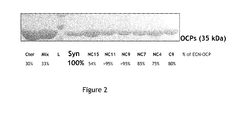
- FIG. 1 shows one example with the purification of ECN-Arthrospira OCP.
- the soluble proteins present in E coli cells and the proteins present in the different washings (15, 60 and 200 ⁇ M imidazole) of the Nickel column are shown.
- the last lane in each figure shows the purified protein, eluted with 200 ⁇ M imidazole ( figure 1 ).
- OCP- carotenoid complex obtained by the method of the present invention is shown on table 8.
- Table 8 Examples of yield of OCP obtained from E coli cells when the overexpression of the ocp gene was done at 28°C OCP produced in E.coli OCP-carotenoid (%) Average quantity of total OCP(holo + apo-OCP) (mg/L)
- the yield of apo-OCP production was lower in the absence of the N-terminal prolongation.
- the stability of the carotenoid binding depends on the sequence of these amino acids :
- the % of ECN-OCP varied from 30 to 55%.
- N-terminal extensions of 8 to 10 aa just after the first methionine gave the better % of ECN-OCP and the better yield.
- the amino acid composition of the extension had little effect.
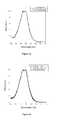
- Figure 3 shows the spectra of three OCPs isolated from E coli cells containing echinenone. The figure also shows the spectrum of the echinenone- OCP isolated from Synechocystis cells. All the spectra were identical. Moreover all the isolated OCPs isolated from E coli cells presented the same spectra independently of the modification they carried.
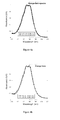
- OCPs isolated from E coli cells carrying echinenone or canthaxanthine are photoactive like the OCP isolated from Synechocystis. In darkness, they are orange and upper illumination they become red ( Figure 4 ).
- Figure 4 shows that the spectre of the OCPs carrying canthaxanthin is slightly different than those carrying the echinenone. They are slightly red shifted.
- the main activity of the OCP is the induction of excess energy dissipation as heat.
- the activated red OCP binds the phycobilisomes and thermally dissipates the energy absorbed by them. This is accompanied by a concomitant decrease of fluorescence.
- the capacity of OCPs to bind to phycobilisomes and to dissipate excess energy can be measured in vitro using a reconstitution system developed by inventor's laboratory (Gwizdala et al., 2011) using isolated Synechocystis phycobilisomes and isolated OCPs.
- the phycobilisomes were illuminated 30sec with high intensities of blue-green light and then photoactivated red OCPs were added and the decrease of fluorescence was followed in a PAM fluorometer during 300 sec. Examples of induction of fluorescence quenching by different red OCPs are shown on figure 7 .
- Figure 7 shows the decrease of fluorescence induced by binding of red OCPs to the phycobilisomes. It was observed that the different modifications on the N-terminal side of the OCP provoke slight differences in the kinetics of quenching. The modifications can accelerate or decelerate the rates of quenching. Nevertheless all the Synechocystis OCPs with the tested modifications were able to induce a large phycobilisome quenching.
- Arthrospira OCPs carrying echinenone or canthaxanthin are able to induce a very fast fluorescence quenching ( figure 7b ).
- Anabaena OCPs also induced fluorescence quenching.
- the lower capacity to induce fluorescence quenching of Anabaena OCPs is also observed in an Anabaena OCP carrying hydroxyechinenone and obtained from overexpression in Synechocystis.
- the singlet oxygen ( 1 O 2 ) quenching activity of OCPs was measured in vitro as described in Sedoud et al, 2014. Electron paramagnetic resonance (EPR) spin trapping was applied for 1 O 2 detection using TEMPD-HCl (2,2,6,6-tetramethyl-4-piperidone). When this nitrone reacts with 1 O 2 , it is converted into the stable nitroxide radical, which is paramagnetic and detectable by EPR spectroscopy. The production of 1 O 2 was induced by illumination of the photosensitizer methylene blue.
- Figure 8 shows the typical EPR signal of the nitroxide radical obtained after 3 min illumination (1000 ⁇ mol quanta m -2 s -1 ) of a solution containing methylene blue and TEMPD-HCl.
- the rcp gene was overexpressed in E coli cells at 28°C with a sequence coding 6 histidines in the 3'end with or without modifications in the 5' end.
- E coli cells producing echinenone less than 5% of the isolated RCP was attached to a carotenoid molecule. Addition of amino acids in its N-terminal did not increase the attachment of the carotenoid. Induction of the rcp gene at lower temperatures did not improve the yield.
- the rcp gene was induced in the presence of cantaxanthin, the yield of holo-RCP largely increased arriving to 15-20%.
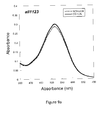
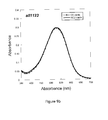
- the His-tagged protein of 20 kDa was isolated from E coli cells using a Nickel column as previously described for the isolation of the OCP. The isolated proteins were red. The spectra of the RCPs are described in Figure 9 . The spectra of the cantaxanthin RCPs were red shifted compared to those of the echinenone RCPs.
Landscapes
- Chemical & Material Sciences (AREA)
- Organic Chemistry (AREA)
- Health & Medical Sciences (AREA)
- Life Sciences & Earth Sciences (AREA)
- Zoology (AREA)
- Genetics & Genomics (AREA)
- Wood Science & Technology (AREA)
- Engineering & Computer Science (AREA)
- Biochemistry (AREA)
- General Health & Medical Sciences (AREA)
- Bioinformatics & Cheminformatics (AREA)
- Molecular Biology (AREA)
- Biotechnology (AREA)
- Microbiology (AREA)
- Medicinal Chemistry (AREA)
- General Engineering & Computer Science (AREA)
- Proteomics, Peptides & Aminoacids (AREA)
- Chemical Kinetics & Catalysis (AREA)
- General Chemical & Material Sciences (AREA)
- Biophysics (AREA)
- Gastroenterology & Hepatology (AREA)
- Biomedical Technology (AREA)
- Micro-Organisms Or Cultivation Processes Thereof (AREA)
- Preparation Of Compounds By Using Micro-Organisms (AREA)
Abstract
The present invention relates to a method for producing a carotenoid-protein complex in vivo comprising the steps of transforming of prokaryote cell with a plasmid containing genes involved in carotenoid synthesis and with a plasmid containing an apo-carotenoprotein gens; culturing said porokaryote cells such as to induce sequential genes expression, isolating and purifying the carotenoid-protein complex.
Description
- The present invention relates to the field of recombinant proteins.
- Especially, the present application relates to a method for producing in vivo a carotenoid-protein complex and to the carotenoid-protein complex such obtained.
- The present invention further relates to a modified apo-carotenoproteine genes encoding a modified carotenoid-protein complex.
- The human body is constantly exposed to external harmful factors such as ultraviolet radiation, pollution, cigarette smoke, toxic chemicals, and certain metallic ions. Many of these pollutants induce the formation of reactive oxygen species (ROS) to some extent. In addition to exogenous factors, internal factors also contribute to the formation of ROS. Metabolic reactions in all living cells are accompanied by the oxidation of nutrients while reducing oxygen to water molecules.
- The formation of reactive oxygen species (ROS) and the damage caused by their potent chemical activity on their surrounding environment is ubiquitous in nearly all physiological settings. Incomplete reduction of the oxygen molecule (3O2, the ground state of the molecule) results in the formation of ROS, including the superoxide anion (O2 •-), hydroperoxyl radical (HOO•), hydroxylradical (•OH), nitric oxide (•NO), and compounds that are not free radicals but have a big reactivity such as singlet oxygen (1O2) and hydrogen peroxide (H2O2).
- Physiological damage induced by ROS includes oxidation of lipids, proteins and DNA.
- Due to the nocive effects of ROS, there is a big interest in the production of new antioxidant molecules having better efficiency than the antioxidants currently known in the art.
- In photosynthetic organisms, carotenoids have a photoprotective role through a number of different mechanisms. By quenching chlorophyll triplet states, they prevent the energy transfer-mediated formation of singlet oxygen. Chlorophyll triplets are formed with a low but significant yield, during excitation energy transfer in light-harvesting proteins and/or after charge recombination in reaction centers. Carotenoids can additionally directly quench singlet oxygen. More recently it was shown that, in both plants and cyanobacteria, carotenoids play an essential role in regulating the amount of excitation energy reaching the reaction centers in high light environments, thus preventing damage due to overexcitation of these proteins.
- For majority of applications in need of anti-oxidants, the anti-oxidant effect is expected in a water-based medium. Thus, a hydrophilic antioxidant is required. However, the most efficient antioxidant, such as carotenoids are strongly hydrophobic compounds. Current hydrophilic antioxidant, such as ascorbic acid, tocopherol or citric acid are 100 to 1000 fold less protective than common carotenoid (Yasuhiro et al., 2007), so that the way to use carotenoids and other lipophilic antioxidant in aqueous environment has been long time studied.
- The most common way to provide such lipophilic antioxidants requires an additional step, such as performing a hydrocolloid emulsion or saponification and micronization (
WO 2009022034 ) or derivatization with hydrophilic function. This additional step increases the cost of methods providing efficient lipophilic antioxidant in aqueous environment. - Furthermore, performing such additional step usually leads to a decrease of antioxidant efficiency (especially related to the lack of disponibility of the antioxidant in suspension) and is not suitable for all applications due to the introduction of new compounds necessary to perform the additional step.
- Thus, there remains a need to provide efficient, rapid and inexpensive methods for production of a stable, water soluble and efficient anti-oxidant compound.
- Carotenoids are highly hydrophobic. Immersed in the hydrophobic core of the lipid bilayer the carotenoid is solvent protected by the amphiphilic nature of the phospholipids. In photosynthetic organisms, in addition to be solubilized in the membranes, the carotenoids are mostly associated to membrane chlorophyll proteins.
- However, there also exist water soluble carotenoid binding proteins. Only a small number of proteins of this family was described and characterized till now days: for ex: the cyanobacterial "Orange Carotenoid Protein" (OCP) ((Kerfeld et al., 2003)) binding 3'-hydroxiechinenone and the cyanobacterial "Red Carotenoid Protein" (RCP) ((Sedoud et al., 2014)); an Astaxanthin carotenoid protein (AstaP) isolated from an eukaryotic microalgae (Kawasaki et al., 2013) .
- In human, when carotenoids are transported through the plasma, they are incorporated into lipoproteins (lipocalins). Carotenoids can also assemble with lipo(glycol) proteins. Finally, there exist a pi isoform of the glutathione-S-transferase (GSTP1) specifically binding zeaxanthin (Bhosale and Bernstein, 2005). Although there are very few well characterized examples of carotenoproteins, they are likely to be much more abundant in nature and can have important roles as protectants against ROS.
- Crustacyanin, present in the lobster's carapace is one example of the family of astaxanthin or echinenone carotenoprotein family common in invertebrate marine animals (Zagalsky et al., 1990).
- To produce these carotenoproteins, the scientists over-express only the apo-carotenoprotein (protein without carotenoid) in prokaryote cell such as E coli and then once the apo-protein has been isolated, the carotenoid is attached by in vitro reconstitution (examples in Giuffra et al., 1996; Bhosale and Bernstein, 2005).
- Alternatively they isolate them from the original organisms, for example OCP and AstaP (Wilson et al., 2008; Kawasaki et al., 2013), or from Synechocystis mutants overexpressing these proteins, for example OCP and RCP (Sedoud et al., 2014). The inventors have tested the OCP yield obtained by others conventional methods well known in the art and the obtained results have shown that only 40 mg of OCP have been obtained from 30 liter of Synechocystis culture (1.33 mg per liter) after 3 weeks (2 weeks for growth cells and 4 days for the isolation of the protein).
- Not only such standard step methods are long but also the obtained carotenoproteins in the case of reconstitution in vitro are not always completely reconstituted or functional.
- Moreover, there reminds need to provide a soluble proteins (apo-carotenoproteins) able to attach the lipid soluble carotenoid with high efficiency in order to obtain very high quantity of carotenoproteins.
- The purpose of the invention is to fulfill the needs of methods allowing the production of a functional carotenoid-protein complex in high quantity which makes it possible to solve in whole or part the above mentioned problems.
- Unexpectedly, the inventors have demonstrated that to obtain a large quantity of functional carotenoproteins in vivo in the prokaryotic cells it is necessary to first inducing the expression of genes encoding the carotenoids and then, inducing the expression of genes encoding apo-carotenoprotein.
- The major advantage of the present invention lies in a manner to transform prokaryotic cells to be able to synthesize the apo-carotenoproteins with an attached carotenoid in high quantities.
- These results are surprising since contrary to the prior art methods carotenoid is attached to apo-carotenoprotein in host cell. In fact, this could be even more complicated with soluble carotenoid proteins since the isolated carotenoids are lipid-soluble and present only in membranes.
- Thus, the invention describes a biomimetic way to obtain the full anti-oxidant effect of carotenoid in aqueous environment by using carotenoid-coupled proteins such as "natural carriers".
- In one aspect the invention relate to a method for producing a carotenoid-protein complex in vivo comprising the steps of :
- a) transforming of prokaryote cells with at least one plasmid containing the genes involved in carotenoid synthesis and with a plasmid containing a apo-carotenoprotein gene, wherein said plasmids contain different replication origins and different selective pressure;
- b) culturing of transformed prokaryote cells in step a) in conditions allowing sequential gene expression,
- c) isolating and purifying the protein-carotenoid complex expressed by the prokaryote cells.
- Unless defined otherwise, all technical scientific terms used herein have the same meaning as commonly understood to one skilled in the art.
- For convenience, the meaning of certain terms and phrases employed in the specification, examples and claims are provide.
- As used herein the terms "carotenoprotein" or "carotenoid-protein complex" refer to a protein attached to carotenoid.
- As used herein the term "prokaryote cell" refers to prokaryote cells have not a membrane bound nucleus, mitochondria, or any other membrane-bound organelles.
- According to the present invention the prokaryote cells are selected in the group of non-photosynthetic prokaryote cells, preferably comprising E. coli or Lactococcus lactis.
- According to the present invention E. coli strains BL21-Gold bought from Agilent Technologies (Santa Clara, CA95051-7201, USA) are used as host to construct E coli strains synthesizing carotenoids., Preferably these strains are : BL21-pßcarotene, BL21-pßcarotene, BL21echi, BL21echiBIS, BL21zea and BL21cantha (table 6 in the Examples).
- As used herein the term "plasmid" or "vector" refers to a small, circular, doublestranded DNA molecule that is distinct from a cell's chromosomal DNA and that occurs in many bacterial strains.
- Any one of plasmids known by the skilled in the art may be used in the present application.
- Preferably the plasmids used in the present invention, their characteristics and their sources are shown in the table 4 in the Examples.
- According to one embodiment of the present application the prokaryote cells are transformed with at least one plasmid containing the genes involved in carotenoid synthesis.
- According to the present invention the genes encoding enzymes involved in carotenoid synthesis may be obtained from any organism selected in the group of any bacteria, any algae, any plant and any animal.
- Preferably, the genes encoding carotenoids synthesis may be obtained from all algae or all eubacteria comprising bacteriochlorophyll photosynthetic bacteria, cyanobacteria and non photosynthetic eubacteria. More preferably these genes are obtained from cyanobacteria strains selected in the group of Synechocystis sp., Anabaena sp. and Arthrospira sp. or from non photosynthetic eubacteria, selected in the group of Erwinia sp, Brevundinomonas spSD212, Paracoccus sp, and more preferably from Erwinia sp.
- According to the particular embodiment, the genes involved in the ß-carotene synthesis crtE, crtB, crtI and crtY are obtained from Erwinia.
- According to another embodiment of the present invention the prokaryote cells transformed with the plasmid containing the genes involved in ß-carotene synthesis may be transformed with a second plasmid containing the genes encoding enzymes involved in the synthesis of others carotenoids.
- Preferably, the prokaryote cells transformed with the plasmid containing the genes involved in ß-carotene synthesis may be transformed with a second plasmid containing the genes encoding a ß-carotene ketolase or the genes encoding a ß-carotene hydrolase.
- Said genes encoding a ß-carotene ketolase or the genes encoding a ß-carotene hydrolase are involved in the synthesis of all xanthophylls (carotenoids containing at least one oxygen atom).Preferably, said genes are selected in the group comprising the genes involved in the synthesis of echinenone, canthaxanthin, zeaxanthin, astaxanthin, hydroxyechinenone, neoxanthin, violaxanthin, diadinoxanthin and fucoxanthin. More preferably, said genes are selected in the group comprising the genes involved in the synthesis of echinenone, hydroxyechinenone, canthaxanthin, zeaxanthin and astaxanthin.
- According to the invention, the genes encoding ß-carotene ketolase are selected in the group comprising or consisting in crtO and crtW genes isolated from all algae or eubacteria, preferably from cyanobacteria, more preferably from cyanobacteria strains selected in the group comprising or consisting of Synechocystis sp., Anabaena sp. or Arthrospira sp., Thermosynechococcus elongatus, Synechococcus sp, and Gloeobacter sp
- Still more preferably, the genes encoding a ß-carotene ketolase are CrtO from Synechocystis (SEQ ID NO: 5) and CrtW from Anabaena (SEQ ID NO: 7) which are necessary for the synthesis of echinenone and canthaxanthine respectively.
- According to the invention, the genes encoding ß-carotene hydrolase are selected in the group comprising or consisting of crtZ from eubacteria (SEQ ID NO: 69) and crtR from all eubacteria, algae or cyanobacteria strains, preferably selected in the group of cyanobacterial strains Synechocystis sp., Anabaena sp. or Arthrospira sp., Thermosynechococcus elongatus, and Synechococcus sp
- More preferably, the gene encoding a ß-carotene hydrolase is CrtR from Synechocystis (SEQ ID NO: 6) which is necessary for the synthesis of zeaxanthin.
- According to the present application the sequences of primers used for cloning the genes encoding carotenoids may be synthesized by any method well known to person skilled in the art.
- Preferably the sequences of primers used for cloning the genes encoding carotenoid Crt genes correspond to SEQ ID NO: 19 to SEQ ID NO: 28.
- According to the method of the present invention the plasmid containing the genes involved in ß-carotene synthesis further contains the genes encoding a ß-carotene-ketolase and/or a ß-carotene-hydrolase. The gene expression of ketolase and hydrolase is performed under the control of inducible promoter, preferably ara promoter.
- According to the method of the present invention the prokaryote cells are also transformed with a plasmid containing a apo-carotenoprotein genes.
- As used herein the term "apo-carotenprotein" or "apo-protein" refers to a protein able to attach a carotenoid. Thus, the apo-carotenoprotein is the protein without the carotenoid.
- According to the present invention the apo-carotenoprotein gene may be obtained from any organism selected in the group of any bacteria, any algae, any plant and any animal.
- Preferably, the apo-carotenoprotein gene may be obtained from cyanobacteria selected from the group of strains comprising Synechocystis sp., Anabaena sp. or Arthrospira sp.
- According to the invention the apo-carotenoprotein is a soluble protein.
- Preferably, the apo-carotenoprotein is a soluble protein selected in the group comprising an apo-Orange Carotenoid Protein (OCP), an apo-Red Carotenoid Protein (RCP), an apo-AstaP, an apo-crustacyanin and an apo-glutathione s-transferasa like protein (GSTP1).
- More preferably, the apo-carotenoproteins of the inventions are selected in the group consisting of apo-OCP and apo-RCP.
- According to the more preferred embodiment of the present invention the gene encoding apo-OCP is obtained from bacteria selected in the group consisting in Synechocystis, Arthrospira or Anabaena.
- Preferably, the genes sequences of the apo-OCP correspond to the sequences selected from the group comprising SEQ ID NO: 1, SEQ ID NO: 2 and SEQ ID NO: 3.
- Preferably, the genes sequences of the apo-RCP correspond to the sequence SEQ ID NO: 4.
- According to the present application the sequences of primers used for cloning the genes encoding apo-carotenoprotéine may be synthesized by any conventional method using any conventional skills.
- Preferably, the sequences of primers used for cloning the genes encoding apo-carotenoprotéine correspond to SEQ ID NO: 29 to SEQ ID NO: 36.
- According to a preferred embodiment of the present application, the gene encoding apo-carotenoprotein may be modified. Usually, the gene encoding apo-carotenoprotein is modified by introducing or deleted 9 to 45 nucleotides, preferably 24 to 30 nucleotides just after the first ATG of 5' end or just before the stop codon of said gene.
- Particularly, these modifications are selected in the group of nucleotide sequences corresponding to SEQ ID NO: 8 to SEQ ID NO: 16 as shown in the sequences listing annexed herewith.
- In all apo-carotenoproteins gene sequences a HisTag on N terminal (HisTagNter corresponding to SEQ ID NO: 17) or on C terminal (HisTagCter corresponding to SEQ ID NO: 18) may be introduced.
- Preferably these gene sequences of apo-carotenoprotein are modified as shown in table 1.
Table 1: Modifications of gene sequences encoding carotenoprotein Name of modifying sequence Constructions of modified genes encoding apo-carotenoproteins NpCDFduet ATG + SEQ ID NO: 8 + SEQ ID NO: 1 or 2 or 3 + HisTagCter NC15 ATG + SEQ ID NO: 9 + SEQ ID NO: 1 + HisTagCter NC11 ATG + SEQ ID NO: 10 + SEQ ID NO: 1 + HisTagCter NC9 ATG + SEQ ID NO: 11 + SEQ ID NO: 1 or 4 + HisTagCter NC7 ATG + SEQ ID NO: 12 + SEQ ID NO: 1 + HisTagCter NC6 ATG + SEQ ID NO: 13 + SEQ ID NO: 4 + HisTagCter NC4 ATG = SEQ ID NO: 14 + SEQ ID NO: 1 + HisTagCter MIX15 ATG + SEQ ID NO: 15 + SEQ ID NO: 1 + HisTagCter C9 ATG + SEQ ID NO: 16 + SEQ ID NO: 1 + HisTagCter HisTagNter3aa (amino acid) ATG + SEQ ID NO 17 + SEQ ID NO: 1 or 2 or 3 HisTagCter ATG + SEQ ID NO: 1 or 2 or 3 or 4 + SEQ ID NO: 18 + codon STOP - According to the present invention the primer's sequences used for the modification of genes encoding apo-carotenoprotein and the ones used for amplification of these genes correspond to SEQ ID NO: 37 to SEQ ID NO: 68.
- According to the present invention, the plasmids containing genes involved in carotenoid synthesis and the plasmids containing genes involved in apo-carotenoprotein synthesis contain different replication origins and different selective pressure.
- As used in the invention the term "replication origin" refers to a particular sequence in a genome at which replication is initiated bidirectionally or unidirectionally.
- As used herein the term "selective pressure" refers to the presence of genes giving resistance to different antibiotics to maintain the plasmids in the prokaryote cells.
- According to one embodiment of the present Invention genes encoding enzymes involved in carotenoid synthesis and genes encoding an apo-carotenoprotein must be amplified prior to prokaryote cell transfection. Preferably, said genes are amplified by polymerase chain reaction (PCR). The primer's sequences for the amplification correspond to SEQ ID NOs: 29, 30, 31, 32, 33, 34, 35,36, 39, 40, 57, 58, 61 and 62.
- According to the method of the present invention the transformed prokaryote cell are cultured in conditions allowing sequential gene expression.
- To obtain a functional carotenoid-protein complex in high quantities, it is very important to cultivate the transfected prokaryote cells such as to induce in the first time the genes expression of genes encoding carotenoids and then, induce the gene expression of genes encoding apo-carotenoproteins.
- According to one embodiment of the method of the present invention step b) of culturing the prokaryote cells comprises the following steps:
- b1) expressing the genes encoding ß-carotene without specific induction;
- b2) inducing the gene expression of ß-carotene ketolase and/or ß-carotene hydrolase at temperature ranges of 33 to 40° C, preferably of 35 to 38 and more preferably about 37°C;
- b3) inducing the gene expression of apo-carotenoprotein at temperature ranges of 20 to 30°C, preferably of 22 to 28°Cand more preferably of 24 to 26°C.
- According to a preferred embodiment of the invention, to obtain Synechocystis echinenone attached OCP, the step b2) of inducing ß- carotene ketolase genes expression (CrtO) is performed at 37°C and step b3) of inducing the gene expression of apo-OCP is performed at 28 ° C.
- According to the method of the present invention isolating the carotenoid-protein complex in step c) may be performed by using any conventional column well in the art.
- In respect to used tag, the skilled artisan may determinate easily a suitable conventional column to isolate the carotenoid-protein complex.
- Preferably, to isolate the carotenoid-protein complex in step c) of the method of the present invention a Nickel column is used when the protein has a Histag.
- In one aspect, the present invention relate to a carotenoid-protein complex (or carotenoprotein) obtained by the method of the present invention.
- Preferably, said carotenoid-protein complex is a soluble carotenoid-protein complex.
- More preferably, said carotenoid-protein complex is a soluble carotenoid-protein complex selected from the group comprising an orange carotenoid protein (OCP), a red carotenoid protein (RCP), AstaP, crustacyanin, glutathione s-transferasa like protein (GSTP1).
- According to a preferred embodiment of the invention said carotenoid-protein complex is a soluble protein selected from the group comprising an orange carotenoid protein (OCP), a red carotenoid protein (RCP).
- According to more preferred embodiment, the carotenoid-protein complex obtained by the method of the present invention is the OCP.
- The Orange Carotenoid Protein (OCP) is a soluble protein that attaches a molecule of the ketocarotenoid 3'-hydroxy-echinenone. It is genetically encoded in many species and strains of cyanobacteria (Kirilovsky and Kerfeld, 2012). In cyanobacteria, the OCP is involved in the induction of a photoprotective mechanism that by increasing the thermal dissipation of the excess absorbed energy at the level of the phycobilisome, the cyanobacterial antenna, decreases the energy arriving at the photosynthetic reaction centers (Wilson et al., 2006)). The OCP is a photoactive protein. Strong light triggers the activation of the OCP inducing conformational changes in the carotenoid and the protein (Wilson et al., 2008). These changes convert the inactive dark orange OCP in the active red OCP. Only the active red OCP is able to bind the core of phycobilisomes. The bound redOCP quenches the absorbed light energy and the phycobilisome fluorescence with a high efficiency (Kirilovsky and Kerfeld, 2012). The OCP dissipates excess energy into heat.
- Recently, it was demonstrated that OCP also protects cyanobacteria cells from oxidative stress by directly quenching singlet oxygen (Sedoud et al., 2014).
- In one aspect the invention relates to modified apo-carotenoprotein genes encoding modified carotenoid-protein complex.
- Preferably, the invention relate to a modified gene encoding apo- OCP or apo-RCP characterized in that it is modified by introducing 9 to 45 nucleotides preferably 24 to 30 nucleotides just after the first ATG of 5' end and/or just before the stop codon of said gene.
- According to a preferred embodiment of the invention, the modifications are selected in the group of sequences comprising: SEQ ID NO: 8 to SEQ ID NO: 16 and SEQ ID NO 17 and 18 corresponding to HisTAgNter and HisTAgCter respectively.
- Preferably, when the modified gene encodes an apo-OCP (orange carotenoid protein), the modifications are selected in the group of sequences comprising SEQ ID NOs: 8, 9, 10, 11, 12, 14, 15, 16, 17 and 18 (as shown on table 2).
- Preferably, when the modified gene encodes an apo-RCP red carotenoid protein), the modifications are selected in the group of sequences comprising SEQ ID NOs: 9, 13 and 18 (as shown on table 2).
- In one aspect the present invention relate to a vector, a plasmid or a host cell comprising a modified apo-carotenoprotein according to the invention.
- Preferably, said vector according to the invention is a cloning or an expression vector.
- The vector can be viral vector such as bacteriophages or non-viral vector such as plasmid.
- The host cell according to the invention comprises a nucleic acid molecule according to the invention or vector according to the invention. The host cells according to the invention may be useful for synthesis of polypeptides according to the invention.
- In another aspect the invention relate to modified OCP or RCP encoded by the modified apo-protein genes according to the invention.
- The method of the present invention has the following advantages:
- allows to obtain between 10 to 30 mg carotenoprotein per liter of culture in only 4 days while in the prior art only 1.33 mg per liter after 3 weeks was obtained;
- allow to produce numerous natural protein-carotenoid complexes as well as create new ones;
- for the first time a water soluble carotenoid protein is obtained in prokaryote cell such as E coli with attached carotenoid, even with soluble carotenoid proteins wherein the isolated carotenoids are lipid-soluble and present only in membranes.
- The present invention will be illustrated by following figures and examples.
-
Figure 1 : SDS gels electrophoresis showing the proteins present in E coli cells overexpressing Arthrospira OCP and the proteins present in the different fractions during the Arthrospira OCP isolation from E.coli cells. -
Figure 2 : SDS gels electrophoresis showing the isolated Synechocystis OCPs containing different modifications in N-terminal and/or C-terminal of the protein. -
Figure 3 : shows the absorbance spectra of Synechocystis, Arthrospira and Anabaena ECN- OCPs isolated from E.coli cells (figure 3a ) containing the additional sequence NpCDFduet in the N-terminal. Comparison of the ECN-OCPs isolated from Synechocystis and E coli cells (figure 3b ). -
Figure 4 : shows the absorbance spectra of Anabaena (a) and Synechocystis (b) OCPs carrying canthaxanthin and those carrying the echinenone. -
Figure 5 : shows the absorbance spectra of the red Synechocystis OCPs isolated from E coli cells containing echinenone or canthaxanthin. -
Figure 6 : shows the kinetics of the photoconversion of different modified orange OCP from Arthospira, Anabaena and Synechocystis (figure 6a ) and different modified orange OCP only from Synechocystis (figure 6b )to red OCP. -
Figure 7 : shows the induction of fluorescence quenching by different OCPs genes from Synechocystis having N-terminal modification (figure 7a ) and by different OCP genes from Arthospira, Anabaena and Synechocystis having N-terminal modification (figure 7b ). -
Figure 8 : shows EPR (electron paramagnetic resonance) signal of TEMPO (nitroxide radical of TEMPD-HCl 2,2,6,6-tetramethylpiperidone)in the absence and presence of OCP. -
Figure 9 : shows absorbance spectra of RCPs with different modifications in the N-terminal and binding echinenone (figure 9a ) or cantaxanthin (figure 9b ) or cantaxanthin and echinenonefigure 9c ). - The ocp gene encoding the OCP from three different cyanobacteria strains (slr1963 in Synechocystis PCC 6803 (SEQ ID NO:1); NIES39_N00720 in Arthrospira platensis (SEQ ID NO:2) and all3149 in Anabaena PCC 7120 (SEQ ID NO:3)) and rcp gene (all1123) from Anabaena PCC 7120 (SEQ ID NO:4) were amplified by PCR.
- Cyanobacteria genomes and plasmids containing the different ocp genes or the rcp genes with addition of a sequence (CACCACCACCACCACCAC, called HisTagCter) encoding six histidines in the 3'end followed by stop codon were used as templates.
- For example such sequences are SEQ ID NO: 1- HisTagCter; SEQ ID NO:2 - HisTagCter; SEQ ID NO:3 - HisTagCter and SEQ ID NO: 4 - HisTagCter.
- The crtO gene (slr0088) from Synechocystis PCC 6803 SEQ ID NO:5) and the crtW gene (alr3189) from Anabaena PCC 7120 (SEQ ID NO: 6), both encoding for ß-carotene ketolases and the crtR gene (sll1468) of Synechocystis PCC 6803 (SEQ ID NO: 7) encoding for the ß -carotene hydrolase were amplified by PCR using cyanobacteria genomes as template and synthetic oligonucleotides as primers(SEQ ID NOs: 19/20 and 21/22 for crtO gene, SEQ ID NOs: 25/26 for crtR gene and SEQ ID NO: 27/28 for crtW gene) .
- The iProof High Fidelity DNA Polymerase (from Bio Rad) was used to PCR amplification of the desired genes. The primers used herein.
- Two different plasmids were used:
- 1) The construction of the Plasmid pAC-BETA, which contains the crtB, crtE, crtI and crtY genes from Erwina herbicola under the control of the promoter of crtE (gift of Prof Francis X.Cunningham) is described in (Cunningham et al., 1996).
- 2) The plasmid pACCAR16ΔcrtX containing the crtB, crtE, crtI and crtY genes from Erwina uredovora under the control of the promoter of crtE, (gift of Prof Sandmann) is described in (Misawa et al., 1995)These plasmids allow the synthesis of ß-carotene in the cell.
- The crtO, crtW and crtR genes were cloned in a modified plasmid pBAD/gIII A (from Invitrogen) which contains an arabinose inducible promoter (araBAD) and Ampicillin resistance. The expression of the Crt genes is thus enhanced by arabinose induction in the medium of culture.
- CrtO and CrtW catalyse the conversion of ß-carotene to echinenone and canthaxanthin respectively and CrtR catalyzes the conversion of ß-carotene to zeaxanthin. The plasmid pBAD/gIII A was first modified to avoid the export of the recombinant protein into the periplasmic space of the cells. To this purpose the region encoding the "gene III signal sequence" was deleted. The primers used for the PCR mutagenesis were pBAD/gIIIAmut (F and R) corresponding to SEQ ID NO: 23 and SEQ ID NO: 24.
- The plasmid pBAD/gIII A modified have been named pBAD. The Plasmid pBAD was digested with BgIII and EcoRI restriction enzymes to clone the crtO gene of Synechocystis or with Ncol and EcoRI restriction enzymes to clone the crtW gene of Anabaena PCC7120 and with Ncol and XhoI restriction enzyme to clone the crtR gene of Synechocystis. Primers CrtO (SEQ ID NOs: 19, 20, 21, 22), primers CrtR (SEQ ID NO: 25 and SEQ ID NO: 26) and primers CrtW (SEQ ID NO: 27 and SEQ ID NO: 28) were used to amplify crtO, crtR and crtW genes respectively. The resulting plasmids were named pBAD-CrtO, pBAD-CrtR and pBAD-CrtW. Theses primers and plasmids are shown on table 2 below.
Table 2 : Plasmids and primers used for mutagenesis and cloning of genes encoding β-carotene ketolases and hydrolases Plasmids/Restriction enzyme Primer's name Primers SEQ ID NO: pBADgIII-CrtO BgIII/EcoRI CrtO F 19 CrtO R 20 pBAD-CrtO 21 22 pBAD pBAD/gIIIAmut F 23 pBAD/gIIIAmut F 24 pBAD-CrtR NcoI/XhoI CrtR F 25 CrtR R 26 pBAD-CrtW NcoI/EcoRI CrtW F 27 CrtW R 28 - The ocp and rcp genes were cloned in a Plasmid pCDFDuet-1 (from Novagen). The plasmid pCDFDuet-1 contains T7lac promoters and Streptomycin/Spectinomycin resistance. The expression of the ocp and rcp genes is thus enhanced by IPTG induction in the medium of culture.
- The pCDFduet-1 plasmid was digested with EcoRI and NotI to clone the different ocp genes (from Synechosystis PCC6803, Arthrospira Platensis PCC7345 and Anabaena PCC 7120). The primers OCPsynHistagNter15 (F and R) corresponding to SEQ ID NO: 29 and SEQ ID NO: 30 respectively were used to amplify the Synechocystis ocp gene (1104 nucleotides) using genomic DNA of Synechocystis PCC6803 as template. The primers OCPanaHisTagNter15 (F and R) corresponding to SEQ ID NO: 33 and SEQ ID NO: 34 respectively were used to amplify the Anabaena ocp gene (1076 nucleotides) using genomic DNA of Anabaena PCC 7120 as template. The primers OCParthroHistagNter15 (F and R) corresponding to SEQ ID NO: 31 and SEQ ID NO: 32 respectively were used to amplify the Arthrospira ocp gene (1355 nucleotides) using the plasmid pOF7345 as template (plasmid constructed by (Jallet et al., 2014)). The resulting PCR products were introduced into pCDFDuet-1 to create the pCDF-OCPsynHistagNter15, pCDF-OCPanaHistagNter15, pCDF-OCParthroHistagNter15 and plasmids. In the OCP isolated from E.coli cells carrying these plasmids, an extension of 15 amino acids will be present in the N-terminal of the OCP protein. This extension contains a His-tag of 6 His. (NpCDFduet extension corresponding to SEQ ID NO: 8).
Table 3. Plasmids and primers used for cloning of genes encoding ocp genes Plasmids/Restriction enzymes Primer's name Primers SEQ ID NO: pCDF-OCPsynHisTagNter15 EcoRI/NotI OCPsynHistagNter15 F 29 OCPsynHistagNter15R 30 pCDF-OCParthroHisTagNter15 EcoRI/NotI OCParthroHistagNter15 F 31 OCParthroHistagNter15 R 32 pCDF-OCPanaHisTagNter15 EcoRI/ NotI OCPanaHistagNter15 F 33 OCPanaHistagNter15 R 34 pCDFDuet-NC2-1123HIS NcoI/ NotI RCPanaCter F 35 RCPanaCter R 36 - To obtain a C-terminal His-tagged Synechocystis OCP, first, the GCC sequence coding for Ala73 was mutated to GCG that also code for in alanine to abolish the Ncol site in the Synechocystis ocp gene sequence in the plasmid SK-OCPsyn-P2A-CterHisTagΔFRP (Wilson et al., 2008), to clone the OCPsyn- HisTagCter between NcoI and NotI sites.
- Then, pCDFDuet-1 was digested with NcoI and NotI to excise the N-terminal extension containing the His-tag initially present in this plasmid. The ocp genes containing a C-terminal His-Tag from Synechosystis PCC6803, Arthrospira Platensis PCC7345 and Anabaena PCC 7120 were cloned in the plasmid. The primers OCPsynCter (F and R) corresponding to SEQ ID NO: 39 and SEQ ID NO: 40 respectively were used to amplify the ocp gene tagged in C-terminal domain from the plasmid pSK-OCPsyn-P2A-CterHisTagΔFRP- A73A (Wilson et al., 2008). The primers OCParthroCter (F and R) corresponding to SEQ ID NO: 57 and SEQ ID NO: 58 respectively were used to amplify the ocp gene from the plasmid pOF7345His (Jallet et al, 2014) which contains the ocp gene tagged in the C-terminal domain. The primers OCPanaCter (F and R) corresponding to SEQ ID NO: 61 and SEQ ID NO: 62 respectively were used to amplify the ocp gene from genomic DNA of Anabaena PCC 7120, the C-terminal His-tag was then added by PCR mutagenesis. The resulting PCR products were introduced into pCDFDuet-1 to create the pCDF-OCPsynCter, pCDF-OCParthroCter and pCDF-OCPanaCter plasmids. The OCP isolated from E.coli cells containing these plasmids, will contain a His-tag in their C-terminal (HisTagCter corresponding to SEQ ID NO: 18).
- To obtain a C-terminal His-tagged RCP, the plasmid pCDFDuet-1 was digested with NcoI and NotI to excise the N-terminal extension containing the His-tag initially present in this plasmid. Then the the rcp gene from Anabaena PCC 7120 containing a C-terminal His-Tag was cloned in the plasmid. The primers RCPanaCter (F and R) corresponding to SEQ ID NO: 35 and SEQ ID NO: 36 respectively were used to amplify the rcp gene tagged in the C-terminal from the plasmid pPSBA2-1123HIS (constructed by Rocio Lopez Igual in the lab). The resulting PCR products were introduced into pCDFDuet-1 to create the pCDFDuet-NC2-1123HIS plasmid. The RCP isolated from E.coli cells containing this plasmid, will contain a His-tag in its C-terminal (SEQ ID NO: 18).
- Table 4 shows the plasmids used in the present invention, their characteristics and their source.
Table 4: All plasmids used in the present invention Plasmid Characteristics Source and reference pCDFDuet-1 Commercially supplied overexpression plasmid vector using T7 promoter capable to carry two genes by two multi-cloning site, (SmR) Novagen pCDF-OCPsynHisTagNter15 pCDFDuet-1 derivative, His-tag N-terminal OCP Synechocystis PCC6803 gene Performed in the present invention pPSBA2-OCP/FRPsynC-terHisTAG Plasmid constructed by Adjélé Wilson, which contains the OCP and FRP genes tagged in C-terminal from Synechosystis PCC6803 Wilson et al, 2008 pCDF-OCPsynCter pCDFDuet-1 derivative, His-tag C-terminal OCP Synechocystis PCC6803 gene Performed in the present invention pOF7345 Plasmid constructed by Denis Jallet, which contains the OCP and FRP genes of Arthrospira Platensis PCC7345 Jallet et al, 2014 pCDF-OCParthroHisTagNter15 pCDFDuet-1 derivative, His-tag N-terminal OCP Arthrospira Platensis PCC7345 gene Performed in the present invention pOF7345His Plasmid constructed by Denis Jallet, which contains the OCP and FRP genes tagged in C-terminal, of Arthrospira Platensis PCC7345 Jallet et al, 2014 pCDF-OCParthroCter pCDFDuet-1 derivative, His-tag C-terminal OCP Arthrospira Platensis PCC7345 gene Performed in the present invention pCDF-OCPanaHisTagNter15 pCDFDuet-1 derivative, His-tag N-terminal OCP Anabaena PCC 7120 gene Performed in the present invention pCDF-OCPanaCter pCDFDuet-1 derivative, His-tag C-terminal OCP Anabaena PCC 7120 gene Performed in the present invention pCDFDuet-NC2-1123HIS pCDFDuet-1 derivative, His-tag C-terminal RCP Anabaena PCC 7120 gene Performed in the present invention pBAD/gIII A Commercially supplied overexpression plasmid vector using araBAD promoter, (AmpR) Invitrogen pBAD pBAD/gIII A derivative, Δ geneIII signal sequence Performed in the present invention pBAD-CrtO pBAD derivative, CrtO Synechocystis PCC6803 gene Performed in the present invention pBAD-CrtR pBAD derivative, CrtR Synechocystis PCC6803 gene Performed in the present invention pBAD-CrtW pBAD derivative, CrtW Anabaena PCC7120 gene Performed in the present invention pAC-BETA P15A ori, Cm(CmR), pACYC184 derivative, E.herbicola crt genes Cunningham et al. (1996) pACCAR16□crtX P15A ori, Cm(CmR), pACYC184 derivative, E.uredovora crt genes Misawa et al, 1995 - To increase the yield of carotenoid-OCP complexes in E.coli cells, modifications were introduced in the sequence of the ocp gene. Several modifications were tested in the Synechocystis ocp gene and then the best ones were introduced in the Arthrospira and Anabaena ocp genes. Modifications were also introduced in the Anabaena rcp gene. The sequences added after the first ATG of the gene correspond to SEQ ID NOs: 9, 10, 11, 12, 14, 15 and 16 (respectively called NC15, NC11, NC9, NC7, NC4, Mix15 and C9). They were introduced by directed mutagenesis, using the pCDF-OCPSynCter plasmid as template and primers corresponding to SEQ ID NOs: (41 and 42), (45 and 46), (47 and 48), (49 and 50), (51 and 52), (43 and 44), (53 and 54) respectively The modification HisTagNter3aa was introduced by directed mutagenesis using the pCDF-OCPSynHisTagNter15 plasmid as template and primers corresponding to SEQ ID NOs: 55 and 56 causing the deletion of a part of the N-terminal prolongation. The modification HisTagNter3aa was also introduced to the ocp genes of Arthrospira and Anabaena using the pCDF-OCParthroHisTagNter15 and pCDF-OCPanaHisTagNter15 plasmids as templates and the primers corresponding to SEQ ID NOs: 59 and 60 and SEQ ID NOs: 63 and 64 respectively.
- The modifications corresponding to SEQ ID NOs: 11 and 13 (called NC9 and NC6 respectively) were introduced to the rcp gene using the pCDFDuet-NC2-1123HIS plasmid as template and the primers corresponding to SEQ ID NOs: 65 and 66 and SEQ ID NOs: 67 and 68 respectively.
- Table 5 shows the modified plasmids comprising a modified ocp genes.
Table 5: Modified plasmids comprising modified ocp genes performed and used in this invention Plasmid modified Characteristics Source and reference pCDF-OCPsynCterNterNC15 Mutagenesis using pCDF-OCPsynCter Performed in the invention pCDF-OCPsynCterNterNC11 Mutagenesis using pCDF-OCPsynCter Performed in the invention pCDF-OCPsynCterNterNC9 Mutagenesis using pCDF-OCPsynCter Performed in the invention pCDF-OCPsynCterNterNC7 Mutagenesis using pCDF-OCPsynCter Performed in the invention pCDF-OCPsynCterNterNC4 Mutagenesis using pCDF-OCPsynCter Performed in the invention pCDF-OCPsynCterNterMIX15 Mutagenesis using pCDF-OCPsynCter Performed in the invention pCDF-OCPsynCterNterC9 Mutagenesis using pCDF-OCPsynCter Performed in the invention pCDF-OCPsynNter3aa Mutagenesis using pCDF-OCPsynHisTagNter15 Performed in the invention pCDF-OCParthroNter3aa Mutagenesis using pCDF-OCParthroHisTagNter15 Performed in the invention pCDF-OCPanaNter3aa Mutagenesis using pCDF-OCPanaHisTagNter15 Performed in the invention pCDF-NC9-1123HIS Mutagenesis using pCDFDuet-NC2-1123HIS Performed in the invention pCDF-NC6-1123HIS Mutagenesis using pCDFDuet-NC2-1123HIS Performed in the invention - Two different bacterial strains were used for gene cloning and gene expression:
- 1) E.coli XL10-Gold from Agilent (TetrD(mcrA)183 D(mcrCB-hsdSMR-mrr)173 endA1 supE44 thi-1 recA1 gyrA96 relA1 lac Hte [F' proAB laclqZDM15 Tn10 (Tetr) Amy Camr]) was used for gene cloning and grown in LB medium at 37°C, and
- 2) E.coli BL21-Gold (DE3) from Agilent (F- ompT hsdS(rB - mB-) dcm+ Tetr gal λ(DE3) endA Hte) was used for OCP production.
- E.coli strains producing OCP or RCP constructed in this invention are all derivatives of E coli BL21-Gold (DE3).
- BL21 cells were transformed with the pAC-BETA, pBAD-CrtO (or pBAD-CrtW or pBAD-CrtR) and pCDF-OCP or pCDF-RCP plasmids. The latter plasmids contain WT or modified sequences of ocp or rcp genes (table 5).
Table 6: Strains of E. coli producing different carotenoids created in this invention and plasmids used to create these strains used in the invention. Strains Plasmid contents BL21-pßcarotene pAC-BETA (Francis X.Cunningham) BL21-pßcarotene pACCAR16ΔCrtX (Sandmann) pAC-BETA BL21echi pBAD-CrtO pAC-BETA BL21echiBIS pCDF-CrtO pAC-BETA BL21zea pBAD-CrtR pAC-BETA BL21cantha pBAD-CrtW Tableau 7: E coli strains containing ocp and rcp genes (obtained from different microorganisms cloned in pCDF-Duet plasmids) and containing crtO or crtW or CrtR genes cloned in pBAD plasmids. E coli containing SYNECHOCYSTIS OCP PLASMID CONTENT BL21echi-OCPsynHisTagNter15 pAC-BETA pBAD-CrtO pCDF-OCPsynHisTagNter15 BL21echi-OCPsynCter pAC-BETA pBAD-CrtO pCDF-OCPsynCter BL21echi-OCPsynNter3aa pAC-BETA pBAD-CrtO pCDF-OCPsynNter3aa BL21echi-OCPsynCterNter15 pAC-BETA pBAD-CrtO pCDF-OCPsynCterNter15 BL21echi-OCPsynCterNter11 pAC-BETA pBAD-CrtO pCDF-OCPsynCterNter11 BL21 echi-OCPsynCterNter9 pAC-BETA pBAD-CrtO pCDF-OCPsynCterNter9 BL21 echi-OCPsynCterNter7 pAC-BETA pBAD-CrtO pCDF-OCPsynCterNter7 BL21 echi-OCPsynCterNter4 pAC-BETA pBAD-CrtO pCDF-OCPsynCterNter4 pAC-BETA BL21echi-OCPsynCterC9 pBAD-CrtO pCDF-OCPsynCterNterC9 BL21echi-OCPsynCterMIX15 pAC-BETA pBAD-CrtO pCDF-OCPsynCterNterMIX15 BL21zea-OCPsynHisTagNter15 pAC-BETA pBAD-CrtR pCDF-OCPsynHisTagNter15 BL21zea-OCPsynCter pAC-BETA pBAD-CrtR pCDF-OCPsynCter BL21cantha-OCPsynCter pAC-BETA pBAD-CrtW pCDF-OCPsynCter BL21cantha-OCPsynNter3aa pAC-BETA pBAD-CrtW pCDF-OCPsynNter3aa E coli containing ANABAEANA OCP PLASMID CONTENT BL21 echi-OCPanaHisTagNter15 pAC-BETA pBAD-CrtO pCDF-OCPanaHisTagNter15 BL21 echi-OCPanaCter pAC-BETA pBAD-CrtO pCDF-OCPanaCter BL21echi-OCPanaNter3aa pAC-BETA pBAD-CrtO pCDF-OCPanaNter3aa BL21cantha-OCPanaCter pAC-BETA pBAD-CrtW pCDF-OCPanaCter BL21cantha-OCPanaNter3aa pAC-BETA pBAD-CrtW pCDF-OCPanaNter3aa E coli containing ARTHROSPIRA OCP PLASMID CONTENT BL21echi- OCParthroHisTagNter15 pAC-BETA pBAD-CrtO pCDF-OCParthroHisTagNter15 5 BL21echi-OCParthroCter pAC-BETA pBAD-CrtO pCDF-OCParthroCter BL21echi-OCParthroNter3aa pAC-BETA pBAD-CrtO pCDF-OCParthroNter3aa BL21cantha-OCParthroCter pAC-BETA pBAD-CrtW pCDF-OCParthroCter BL21cantha-OCParthroNter3aa pAC-BETA pBAD-CrtW pCDF-OCParthroNter3aa E coli containing ANABAEANA RCP PLASMID CONTENT BL21cantha-RCPanaCter pAC-BETA pBAD-CrtW pCDFDuet-NC2-1123HIS BL21cantha-RCPanaCterNterNC6 pAC-BETA pBAD-CrtW pCDF-NC6-1123HIS BL21cantha-RCPanaCterNterNC6 pAC-BETA pBAD-CrtW pCDF-NC9-1123HIS - Synechocystis echinenone (ECN)-OCP was obtained by following steps:
- 1) 1 ml of stock glycerol (600µl E coli cells + 400µl glycerol) is diluted in 200 ml TB (containing 50 µg/ml chloramphenicol, 50 µg/ml ampicillin, 50 µg/ml streptomycin)
- 2) Incubation at 37 °C for 3-4 hours until arrive to OD600= 0.8.
- 3) When the culture is at OD600= 0.8, 0.02 % Arabinose is added to induce the transcription of the CrtO gene. The culture in the presence of arabinose is incubated overnight at 37 °C.
- 4) In the next morning; 800 ml of fresh TB are added to the 200 ml E.coli culture.
- 5) The cells are incubated at 37°C in the presence of 0.02% Arabinose until OD600= 1-1.5.
- 6) Addition of IPTG to a final concentration of 0.2mM IPTG to the culture at OD higher than 1.
- 7) Incubation overnight in the presence of 0.02% arabinose and 0.2mM IPTG at 28°C. (For rcp this incubation must be done at 18-20 °C)
- 8) In the next morning the frozen pellet of cells is resuspended in the lyse buffer containing 40mM Tris pH 8, 10% glycerol and 300mM NaCl. After resupension, 1 mM [EDTA, PMSF/DMSO,caproïc acid, benzamidine acid] and Dnase were added in the lyses buffer and the cells were broken in dim light using a "French Press" (twice at 750 psi). The broken cells were centrifuged at 20000 rpm for 30 min at 4°C and the obtained supernatant was then kept for OCP purification on nickel column. The supernatant was loaded on a column of nickel Probond resin (Invitrogen). After column washing (15 and 60 mM Imidazol) the purified OCP was eluted with 200 mM Imidazol.
- Absorbance spectra and the kinetics of orange to red OCP photoconversion and dark red to orange OCP reconversion were measured in a Specord S600 (Analyticjena) spectrophotometer. The kinetics were monitored during illumination of the OCP with 5000 µmol photons m-2 s-1 of white light and after turn-off the light at 18°C.
- The concentration of proteins was measured by the Bradford method and the concentration of carotenoid was deduced from the absorbance spectrum using the absorption coefficient of echinenone A1%= 2158. The concentrations of protein and carotenoid are calculated in µM and the ratio will give the % of apo-OCP attached to the carotenoid molecule.
- The different steps of the OCP and RCP purification were followed by gel electrophoresis using SDS-PAGE on 12% polyacrylamide in a Tris/MES system (Kashino et al., 2001).
- To determine the carotenoid content of the cells, an aliquot of E.coli cells was harvested by centrifugation at 14000 rpm for 1 min and washed once with water. The cell pellets were resuspended in 500µl of acetone and incubated at room temperature for 15 min in the dark. The tubes were centrifuged at 14000 rpm for 15 min, and the supernatant containing carotenoids was transferred to a new tube.
- To determine the carotenoid content of OCP, OCP was concentrated with centrifugal filter units (Millipore). The carotenoid was extracted by acetone. After drying carotenoid extracted was resupended in 100% di-ether/100µl ethanol Carotenoid content was analysed by thin layer chromatography (TLC) with 90% petroleum ether/10% ethanol as mobile phase.
- The carotenoid content of OCPs and RCPs was also analysed by High-Performance Liquid Chromatography (HPLC) and Mass spectrometry as described in (Punginelli et al., 2009).
- Fluorescence quenching and recovery were monitored with a pulse amplitude modulated fluorometer (101/102/103-PAM; Walz, Effelrich, Germany). All measurements were carried out in a stirred cuvette of 1 cm diameter. Typically, the fluorescence quenching was induced by 870 µmol photons m-2 s-1 of blue-green light (400-550 nm). All the reconstitution experiments were carried out at 23°C. The phycobilisomes are first illuminated and then redOCP (previously illuminated by strong white light) is added and the decreased of fluorescence is monitored.
- The formation of a nitroxide radical, which is a paramagnetic species arising from the interaction of TEMPD with 1O2, was measured by EPR in the absence or presence of different amount of purified proteins in buffer Tris-
HCl 100 mM pH 8.0, TEMPD-HCl 100 mM and methylene blue (10 µM). The samples were illuminated for 3 min with strong white light (1000 µmol quanta m-2 s-1). - The OCPs were isolated using affinity Nickel-chromatography. The isolation was followed by gel electrophoresis.
Figure 1 shows one example with the purification of ECN-Arthrospira OCP. The soluble proteins present in E coli cells and the proteins present in the different washings (15, 60 and 200 µM imidazole) of the Nickel column are shown. The last lane in each figure shows the purified protein, eluted with 200 µM imidazole (figure 1 ). - The isolated Synechocystis OCPs containing different modifications in the N-terminal and/or C-terminal of the protein are shown on
Figure 2 wherein in the SDS-gel of total proteins of E coli cells a big band at 35kDa is observed corresponding to the OCP. The OCPs containing small quantities of echinenone are seen as bigger bands. In each lane was loaded the same quantity of carotenoid - The yield of OCP- carotenoid complex obtained by the method of the present invention is shown on table 8.
Table 8: Examples of yield of OCP obtained from E coli cells when the overexpression of the ocp gene was done at 28°C OCP produced in E.coli OCP-carotenoid (%) Average quantity of total OCP(holo + apo-OCP) (mg/L) OCP Synechocystis PCC 6803 OCPsynNter15-echi 30-50 18-22 OCPsynCter-echi 20-40 4-6 OCPsynNter+3aa-echi >95 30-35 OCPsynNter+3aa-cantha 75-85 8-12 OCPsynCterNterMIX15-echi 30-40 20-22 OCPsynCterNterNC15-echi 45-55 18-21 OCPsynCterNterNC11-echi >95 9-11 OCPsynCterNterNC9-echi >95 15-17 OCPsynCterNterNC7-echi 75-85 19-21 OCPsynCterNterNC4-echi 70-80 8-10 OCPsynCterNterC9-echi 75-85 20-22 OCP Arthrospira PCC 7345 OCParthroNter15-echi 30-40 18-22 OCParthroCter-echi 10-25 14-16 OCParthroCter-cantha 50-60 30-35 OCParthroNter+3aa-echi 30-40 24-26 OCParthroNter+3aa-cantha 60-65 28-30 OCP Anabaena PCC 7120 OCPanaNter15-echi 10-30 4-6 OCPanaCter-echi - - OCPanaCter-cantha 50-60 60-70 OCPanaNter+3aa-echi 50-60 50-60 OCPanaNter+3aa-cantha 40-50 60-70 - Production of OCP from modified E.coli strains with apo-OCP gene originated from several cyanobacteria has been compared. The results are shown on table 8. All the Synechocystis OCP contained an C-terminal His-tag with the exemption of the OCPsynNter+3aa-echi OCP and OCPsynNter15-echi OCP. The Synechocystis OCPs non-containing N-terminal prolongations attached very badly the carotenoid protein: only 20-35% of the isolated OCP contained a carotenoid molecule.
- In addition, the yield of apo-OCP production was lower in the absence of the N-terminal prolongation. When the N-terminal prolongation contains 15 aa, the stability of the carotenoid binding depends on the sequence of these amino acids : The % of ECN-OCP varied from 30 to 55%. N-terminal extensions of 8 to 10 aa just after the first methionine gave the better % of ECN-OCP and the better yield. The amino acid composition of the extension had little effect.
- In conclusion, modification of the apo-OCP is necessary to obtain high quantities of carotenoid-protein complexes with antioxidant activity. The protein without carotenoid has not this activity.
- The same effect was observed with Arthrospira OCP and with the Anabaena OCP. For which only 10% of the protein binds the echinenone in the absence of the N-terminal prolongation. Large quantities of Arthrospira and Anabaena OCPs binding a carotenoid were obtained in the presence of canthaxanthin. For this the E coli cells were transformed with a pBAD-CrtW plasmid.
-
Figure 3 shows the spectra of three OCPs isolated from E coli cells containing echinenone. The figure also shows the spectrum of the echinenone- OCP isolated from Synechocystis cells. All the spectra were identical. Moreover all the isolated OCPs isolated from E coli cells presented the same spectra independently of the modification they carried. - In addition, all the OCPs isolated from E coli cells carrying echinenone or canthaxanthine are photoactive like the OCP isolated from Synechocystis. In darkness, they are orange and upper illumination they become red (
Figure 4 ). -
Figure 4 shows that the spectre of the OCPs carrying canthaxanthin is slightly different than those carrying the echinenone. They are slightly red shifted. - The spectra of the red OCPs containing canthaxanthin were red shifted compared to those containing echinenone (
Figure 5 ). - The photoconversion of orange OCP to red OCP was evaluated by measuring the changes of absorbance at 550 nm (1= 100% red form; 0= 100% orange form). The increase in absorbance follows the accumulation of the red form.
- The kinetics of photoconversion are shown in
Figure 6 . Almost all of the OCPs isolated from E coli cells were converted to the red form faster than the OCP isolated from Synechocystis. The OCPs containing canthaxanthin were converted even faster (Figure 6 ). - In cyanobacteria cells, the main activity of the OCP is the induction of excess energy dissipation as heat. The activated red OCP binds the phycobilisomes and thermally dissipates the energy absorbed by them. This is accompanied by a concomitant decrease of fluorescence. The capacity of OCPs to bind to phycobilisomes and to dissipate excess energy can be measured in vitro using a reconstitution system developed by inventor's laboratory (Gwizdala et al., 2011) using isolated Synechocystis phycobilisomes and isolated OCPs.
- The phycobilisomes were illuminated 30sec with high intensities of blue-green light and then photoactivated red OCPs were added and the decrease of fluorescence was followed in a PAM fluorometer during 300 sec. Examples of induction of fluorescence quenching by different red OCPs are shown on
figure 7 . -
Figure 7 shows the decrease of fluorescence induced by binding of red OCPs to the phycobilisomes. It was observed that the different modifications on the N-terminal side of the OCP provoke slight differences in the kinetics of quenching. The modifications can accelerate or decelerate the rates of quenching. Nevertheless all the Synechocystis OCPs with the tested modifications were able to induce a large phycobilisome quenching. - Arthrospira OCPs carrying echinenone or canthaxanthin are able to induce a very fast fluorescence quenching (
figure 7b ). Anabaena OCPs also induced fluorescence quenching. The lower capacity to induce fluorescence quenching of Anabaena OCPs is also observed in an Anabaena OCP carrying hydroxyechinenone and obtained from overexpression in Synechocystis. - The singlet oxygen (1O2) quenching activity of OCPs was measured in vitro as described in Sedoud et al, 2014. Electron paramagnetic resonance (EPR) spin trapping was applied for 1O2 detection using TEMPD-HCl (2,2,6,6-tetramethyl-4-piperidone). When this nitrone reacts with 1O2, it is converted into the stable nitroxide radical, which is paramagnetic and detectable by EPR spectroscopy. The production of 1O2 was induced by illumination of the photosensitizer methylene blue.
Figure 8 shows the typical EPR signal of the nitroxide radical obtained after 3 min illumination (1000 µmol quanta m-2 s-1) of a solution containing methylene blue and TEMPD-HCl. When this incubation was realized in the presence of 4 µM OCP, almost no EPR signal was detected indicating that OCP acts as a 1O2 quencher. The concentration of OCP that decreased 50% the EPR signal (I50) was about 1-1.5 µM for all OCPs tested. - In Anabaena PCC 7120 there exist 4 genes coding only rcp genes with a high similarity to the N-terminal domain of the OCP (Sedoud et al., 2014). One of them, all1123, with different modifications in the 5' end of the gene, was overexpressed in E coli cells in the presence of echinenone or canthaxanthin.
- The rcp gene was overexpressed in E coli cells at 28°C with a sequence coding 6 histidines in the 3'end with or without modifications in the 5' end. When the gene was induced in E coli cells producing echinenone, less than 5% of the isolated RCP was attached to a carotenoid molecule. Addition of amino acids in its N-terminal did not increase the attachment of the carotenoid. Induction of the rcp gene at lower temperatures did not improve the yield. When the rcp gene was induced in the presence of cantaxanthin, the yield of holo-RCP largely increased arriving to 15-20%. In this case, the induction of the rcp gene at lower temperatures (for example, 20°C) increased even more the yield of holo-RCP (30-40%).
Table 9: shows: % of carotenoid-RCPs obtained from E coli cells at 28 and 20 °C. RCP (All1123) produites chez E.coli RCP-caroténoide (%) NC2-all1123-ECN 28°C 1-3% NC9-all1123-ECN 28°C 1-3 % C6-all1123-ECN 28°C 1-3 % C6-all1123-canta 28°C 15-20 % C6-all1123- canta 20°C 30-40 % NC2-all1123- canta 20°C 30-40 % - The absorbance spectra of the RCP proteins isolated from Synechocystis presented peaks at 498 and 530 nm and a shoulder at 470 nm because they bind mixoxanthophylls while that isolated from Anabaena binding canthaxanthin presented a large pic with a maximum at 530 nm similar to that shown in
Figure 9 . - The His-tagged protein of 20 kDa was isolated from E coli cells using a Nickel column as previously described for the isolation of the OCP. The isolated proteins were red. The spectra of the RCPs are described in
Figure 9 . The spectra of the cantaxanthin RCPs were red shifted compared to those of the echinenone RCPs. - Armstrong G (1997) Genetics of Eubacterial Carotenoid Biosynthesis: A Colorful Tale Annu Rev Microbiol 1997, 51 : 629-659
- Bhosale P, Bernstein PS (2005) Synergistic effects of zeaxanthin and its binding protein in the prevention of lipid membrane oxidation. Biochim Biophys Acta 1740: 116-121
- Cunningham FX, Jr., Pogson B, Sun Z, McDonald KA, DellaPenna D, Gantt E (1996) Functional analysis of the beta and epsilon lycopene cyclase enzymes of Arabidopsis reveals a mechanism for control of cyclic carotenoid formation. Plant Cell 8: 1613-1626
- Giuffra E, Cugini D, Croce R, Bassi R (1996) Reconstitution and pigment-binding properties of recombinant CP29. Eur J Biochem 238: 112-120
- Gwizdala M, Wilson A, Kirilovsky D (2011) In vitro reconstitution of the cyanobacterial photoprotective mechanism mediated by the Orange Carotenoid Protein in Synechocystis PCC 6803. Plant Cell 23: 2631-2643
- Jallet D, Thurotte A, Leverenz RL, Perreau F, Kerfeld CA, Kirilovsky D (2014) Specificity of the cyanobacterial orange carotenoid protein: influences of orange carotenoid protein and phycobilisome structures. Plant Physiol 164: 790-804
- Kashino Y, Koike H, Satoh K (2001) An improved sodium dodecyl sulfate-polyacrylamide gel electrophoresis system for the analysis of membrane protein complexes. Electrophoresis 22: 1004-1007
- Kawasaki S, Mizuguchi K, Sato M, Kono T, Shimizu H (2013) A novel astaxanthin-binding photooxidative stress-inducible aqueous carotenoprotein from a eukaryotic microalga isolated from asphalt in midsummer. Plant Cell Physiol 54: 1027-1040
- Kerfeld CA, Sawaya MR, Brahmandam V, Cascio D, Ho KK, Trevithick-Sutton CC, Krogmann DW, Yeates TO (2003) The crystal structure of a cyanobacterial water-soluble carotenoid binding protein. Structure 11: 55-65
- Kirilovsky D, Kerfeld CA (2012) The orange carotenoid protein in photoprotection of photosystem II in cyanobacteria. Biochim Biophys Acta 1817: 158-166
- Misawa, Nakagawa M, Kobayashi K, Yamano S, Izawa Y, Nakamura K and Harashima K, (1990) Elucidation of the Erwinia uredovora carotenoid biosynthetic pathway by functional analysis of gene products expressed in E coli. J Bacteriol, 172, 6704-6712
- Misawa N, Satomi Y, Kondo K, Yokoyama A, Kajiwara S, Saito T, Ohtani T, Miki W (1995) Structure and Functional-Analysis of a Marine Bacterial Carotenoid Biosynthesis Gene-Cluster and Astaxanthin Biosynthetic-Pathway Proposed at the Gene Level. Journal of Bacteriology 177: 6575-6584
- Punginelli C, Wilson A, Routaboul JM, Kirilovsky D (2009) Influence of zeaxanthin and echinenone binding on the activity of the Orange Carotenoid Protein. Biochim Biophys Acta 1787: 280-288
- Sedoud A, Lopez-Igual R, Ur Rehman A, Wilson A, Perreau F, Boulay C, Vass I, Krieger-Liszkay A, Kirilovsky D (2014) The Cyanobacterial Photoactive Orange Carotenoid Protein Is an Excellent Singlet Oxygen Quencher. Plant Cell 26: 1781-1791
- Wilson A, Ajlani G, Verbavatz JM, Vass I, Kerfeld CA, Kirilovsky D (2006) A soluble carotenoid protein involved in phycobilisome-related energy dissipation in cyanobacteria. Plant Cell 18: 992-1007
- Wilson A, Punginelli C, Gall A, Bonetti C, Alexandre M, Routaboul JM, Kerfeld CA, van Grondelle R, Robert B, Kennis JT, Kirilovsky D (2008) A photoactive carotenoid protein acting as light intensity sensor. Proc. Natl. Acad. Sci. U. S. A. 105: 12075-12080
- Yasuhiro N, Eiji Y, Wataru (2007), Quenching Activities of Common Hydrophilic and Lipophilic Antioxidants against Singlet Oxygen Using Chemiluminescence Detection System. Carotenoid Science, Vol.11, 2007, 16-20
- Zagalsky PF, Mummery RS, Eliopoulos EE, Findlay JBC (1990) The Quaternary Structure of the Lobster Carapace Carotenoprotein, Crustacyanin - Studies Using Cross-Linking Agents. Comparative Biochemistry and Physiology B-Biochemistry & Molecular Biology 97: 837-848.


Claims (15)
- A method for producing a carotenoid-protein complex in vivo comprising the steps of :a) transforming of prokaryote cells with at least one plasmid containing genes involved in carotenoid synthesis and with a plasmid containing an apo-carotenoprotein gene, wherein said plasmids contain different replication origins and different selective pressure;b) culturing of transformed prokaryote cells in step a) in conditions allowing sequential gene expression,c) isolating and purifying the carotenoid- protein complex expressed by the prokaryote cells.
- The method according to claim 1 wherein the at least one plasmid containing genes involved in carotenoid synthesis in step a) is a plasmid containing the genes involved in ß-carotene synthesis.
- The method according to claim 2) wherein the transforming of step a) further comprising a second plasmid containing the genes encoding a ß-carotene ketolase and/or the genes encoding a ß-carotene hydrolase.
- The method according to any one of claims 1 to 3, where in the plasmid containing the genes involved in ß-carotene synthesis further contains the genes encoding a ß-carotene ketolase and/or the genes encoding ß-carotene hydrolase under the control of an inducible promoter, preferably ara promoter.
- The method according to any one of claims 1 to 4, wherein step b) of culturing the prokaryote cells comprises the following steps:b1) expressing the genes encoding ß-carotene without specific induction;b2) inducing the gene expression of ß-carotene ketolase and/or ß-carotene hydrolase at temperature ranges of 33 to 40°C, preferably of 35 to 38 and more preferably about 37°C;b3) inducing the gene expression of apo-carotenoprotein at temperature ranges of 20 to 30°C, preferably of 22 to 28°C and more preferably of 24 to 26°C.
- The method of any one of claims 1 to 5 wherein apo-carotenoprotein gene is modified by introducing or deleting 9 to 45 nucleotides preferably 24 to 30 nucleotides just after the firs ATG of 5' end or just before the stop codon of said gene.
- The method according to any one of claims 1 to 6, wherein the carotenoid genes are obtained from any bacteria, any algae or any plant containing carotenoids, preferably from cyanobacteria and non photosynthetic eubacteria and the said apo-carotenoprotein gene is isolated from any organism, preferably from cyanobacteria.
- The method according to any claims 1 to 7, wherein the prokaryote cells are selected in the group of non-photosynthetic prokaryotic cells preferably comprising E. coli or Lactococcus lactis.
- A carotenoid-protein complex obtained by the method according to any one of claims 1 to 8.
- The carotenoid-protein complex according to claim 9 which is a protein selected in the group of soluble proteins, preferably comprising an orange carotenoid protein (OCP), a red carotenoid protein (RCP), AstaP, crustacyanin, glutathione s-transferasa like protein (GSTP1).
- A modified gene encoding apo- OCP or apo-RCP characterized in that it is modified by introducing 9 to 45 nucleotides, preferably 24 to 30 nucleotides just after the firs ATG of 5' end and/or just before the stop codon of said gene.
- A modified gene encoding apo- OCP according to claim 11 wherein the modifications just after the firs ATG of 5' end are selected from the group of sequences comprising: SEQ ID NOs: 8, 9, 10, 11, 12, 14, 15, 16, 17 and the modification just before the stop codon corresponds to SEQ ID NO: 18.
- A modified gene encoding apo-RCP according to claim 11 wherein the modifications just after the firs ATG of 5' end are selected in the group of sequences comprising: SEQ ID NOs: 11, 13, and the modification just before the stop codon corresponds to SEQ ID NO: 18.
- A vector, a plasmid or a host cell comprising a modified apo-carotenoprotein gene according to any one of claims 11 to 13.
- The modified OCP or RCP encoded by the modified apo-protein gene according to any one of claim 11 to 13.
Priority Applications (5)
| Application Number | Priority Date | Filing Date | Title |
|---|---|---|---|
| EP14306207.3A EP2977462A1 (en) | 2014-07-25 | 2014-07-25 | In vivo production of a recombinant carotenoid-protein complex |
| PCT/EP2015/067071 WO2016012618A1 (en) | 2014-07-25 | 2015-07-24 | In vivo production of a recombinant carotenoid-protein complex |
| CA2956384A CA2956384A1 (en) | 2014-07-25 | 2015-07-24 | In vivo production of a recombinant carotenoid-protein complex |
| US15/328,949 US20170211119A1 (en) | 2014-07-25 | 2015-07-24 | In vivo production of a recombinant carotenoid-protein complex |
| EP15741225.5A EP3172335A1 (en) | 2014-07-25 | 2015-07-24 | In vivo production of a recombinant carotenoid-protein complex |
Applications Claiming Priority (1)
| Application Number | Priority Date | Filing Date | Title |
|---|---|---|---|
| EP14306207.3A EP2977462A1 (en) | 2014-07-25 | 2014-07-25 | In vivo production of a recombinant carotenoid-protein complex |
Publications (1)
| Publication Number | Publication Date |
|---|---|
| EP2977462A1 true EP2977462A1 (en) | 2016-01-27 |
Family
ID=51265641
Family Applications (2)
| Application Number | Title | Priority Date | Filing Date |
|---|---|---|---|
| EP14306207.3A Withdrawn EP2977462A1 (en) | 2014-07-25 | 2014-07-25 | In vivo production of a recombinant carotenoid-protein complex |
| EP15741225.5A Withdrawn EP3172335A1 (en) | 2014-07-25 | 2015-07-24 | In vivo production of a recombinant carotenoid-protein complex |
Family Applications After (1)
| Application Number | Title | Priority Date | Filing Date |
|---|---|---|---|
| EP15741225.5A Withdrawn EP3172335A1 (en) | 2014-07-25 | 2015-07-24 | In vivo production of a recombinant carotenoid-protein complex |
Country Status (4)
| Country | Link |
|---|---|
| US (1) | US20170211119A1 (en) |
| EP (2) | EP2977462A1 (en) |
| CA (1) | CA2956384A1 (en) |
| WO (1) | WO2016012618A1 (en) |
Cited By (3)
| Publication number | Priority date | Publication date | Assignee | Title |
|---|---|---|---|---|
| CN109593120A (en) * | 2019-01-15 | 2019-04-09 | 华中农业大学 | A kind of preparation method of orange carotenoids fibroin |
| US11377675B2 (en) | 2019-01-16 | 2022-07-05 | Kuehnle Agrosystems, Inc. | Subterranean microalgae for production of microbial biomass, substances, and compositions |
| WO2024028439A1 (en) | 2022-08-03 | 2024-02-08 | Novelty For Them Gmbh | Complexed asthaxanthin undergoing a hypsochromic shift upon heating and application in food products |
Families Citing this family (1)
| Publication number | Priority date | Publication date | Assignee | Title |
|---|---|---|---|---|
| JP7504420B2 (en) | 2020-02-25 | 2024-06-24 | 学校法人東京農業大学 | Water-soluble carotenoid protein and its use |
Citations (2)
| Publication number | Priority date | Publication date | Assignee | Title |
|---|---|---|---|---|
| WO2003101184A2 (en) * | 2002-06-04 | 2003-12-11 | California Institute Of Technology | Carotenoid synthesis |
| WO2009022034A1 (en) | 2007-07-28 | 2009-02-19 | Investigaciones Químicas Y Farmacéuticas, S.A. | Water-dispersable carotenoid formulation |
-
2014
- 2014-07-25 EP EP14306207.3A patent/EP2977462A1/en not_active Withdrawn
-
2015
- 2015-07-24 WO PCT/EP2015/067071 patent/WO2016012618A1/en not_active Ceased
- 2015-07-24 EP EP15741225.5A patent/EP3172335A1/en not_active Withdrawn
- 2015-07-24 CA CA2956384A patent/CA2956384A1/en not_active Abandoned
- 2015-07-24 US US15/328,949 patent/US20170211119A1/en not_active Abandoned
Patent Citations (2)
| Publication number | Priority date | Publication date | Assignee | Title |
|---|---|---|---|---|
| WO2003101184A2 (en) * | 2002-06-04 | 2003-12-11 | California Institute Of Technology | Carotenoid synthesis |
| WO2009022034A1 (en) | 2007-07-28 | 2009-02-19 | Investigaciones Químicas Y Farmacéuticas, S.A. | Water-dispersable carotenoid formulation |
Non-Patent Citations (23)
| Title |
|---|
| A. SEDOUD ET AL: "The Cyanobacterial Photoactive Orange Carotenoid Protein Is an Excellent Singlet Oxygen Quencher", THE PLANT CELL ONLINE, vol. 26, no. 4, 1 April 2014 (2014-04-01), pages 1781 - 1791, XP055160311, ISSN: 1040-4651, DOI: 10.1105/tpc.114.123802 * |
| ARMSTRONG G: "Genetics of Eubacterial Carotenoid Biosynthesis", A COLORFUL TALE ANNU REV MICROBIOL, vol. 51, 1997, pages 629 - 659, XP001097791, DOI: doi:10.1146/annurev.micro.51.1.629 |
| AYAKO OSAWA ET AL: "Production of caloxanthin 3---glucoside, zeaxanthin 3,3---diglucoside, and nostoxanthin in a recombinantexpressing system harboring seven carotenoid biosynthesis genes, includingand", PHYTOCHEMISTRY, PERGAMON PRESS, GB, vol. 72, no. 8, 21 February 2011 (2011-02-21), pages 711 - 716, XP028190805, ISSN: 0031-9422, [retrieved on 20110225], DOI: 10.1016/J.PHYTOCHEM.2011.02.017 * |
| BHOSALE P; BERNSTEIN PS: "Synergistic effects of zeaxanthin and its binding protein in the prevention of lipid membrane oxidation", BIOCHIM BIOPHYS ACTA, vol. 1740, 2005, pages 116 - 121, XP025329207, DOI: doi:10.1016/j.bbadis.2005.02.002 |
| CUNNINGHAM FX, JR.; POGSON B; SUN Z; MCDONALD KA; DELLAPENNA D; GANTT E: "Functional analysis of the beta and epsilon lycopene cyclase enzymes of Arabidopsis reveals a mechanism for control of cyclic carotenoid formation", PLANT CELL, vol. 8, 1996, pages 1613 - 1626 |
| ELISABETTA GIUFFRA ET AL: "Reconstitution and Pigment-Binding Properties of Recombinant CP29", EUROPEAN JOURNAL OF BIOCHEMISTRY, vol. 238, no. 1, 15 May 1996 (1996-05-15), pages 112 - 120, XP055160480, ISSN: 0014-2956, DOI: 10.1111/j.1432-1033.1996.0112q.x * |
| GIUFFRA E; CUGINI D; CROCE R; BASSI R: "Reconstitution and pigment-binding properties of recombinant CP29", EUR J BIOCHEM, vol. 238, 1996, pages 112 - 120, XP055160480, DOI: doi:10.1111/j.1432-1033.1996.0112q.x |
| GWIZDALA M; WILSON A; KIRILOVSKY D: "In vitro reconstitution of the cyanobacterial photoprotective mechanism mediated by the Orange Carotenoid Protein in Synechocystis PCC 6803", PLANT CELL, vol. 23, 2011, pages 2631 - 2643 |
| JALLET D; THUROTTE A; LEVERENZ RL; PERREAU F; KERFELD CA; KIRILOVSKY D: "Specificity of the cyanobacterial orange carotenoid protein: influences of orange carotenoid protein and phycobilisome structures", PLANT PHYSIOL, vol. 164, 2014, pages 790 - 804 |
| KASHINO Y; KOIKE H; SATOH K: "An improved sodium dodecyl sulfate-polyacrylamide gel electrophoresis system for the analysis of membrane protein complexes", ELECTROPHORESIS, vol. 22, 2001, pages 1004 - 1007 |
| KAWASAKI S; MIZUGUCHI K; SATO M; KONO T; SHIMIZU H: "A novel astaxanthin-binding photooxidative stress-inducible aqueous carotenoprotein from a eukaryotic microalga isolated from asphalt in midsummer", PLANT CELL PHYSIOL, vol. 54, 2013, pages 1027 - 1040, XP055160312, DOI: doi:10.1093/pcp/pct080 |
| KERFELD CA; SAWAYA MR; BRAHMANDAM V; CASCIO D; HO KK; TREVITHICK-SUTTON CC; KROGMANN DW; YEATES TO: "The crystal structure of a cyanobacterial water-soluble carotenoid binding protein", STRUCTURE, vol. 11, 2003, pages 55 - 65 |
| KIRILOVSKY D; KERFELD CA: "The orange carotenoid protein in photoprotection of photosystem II in cyanobacteria", BIOCHIM BIOPHYS ACTA, vol. 1817, 2012, pages 158 - 166 |
| MISAWA N; SATOMI Y; KONDO K; YOKOYAMA A; KAJIWARA S; SAITO T; OHTANI T; MIKI W: "Structure and Functional-Analysis of a Marine Bacterial Carotenoid Biosynthesis Gene-Cluster and Astaxanthin Biosynthetic-Pathway Proposed at the Gene Level", JOURNAL OF BACTERIOLOGY, vol. 177, 1995, pages 6575 - 6584 |
| MISAWA, NAKAGAWA M; KOBAYASHI K; YAMANO S; IZAWA Y; NAKAMURA K; HARASHIMA K: "Elucidation of the Erwinia uredovora carotenoid biosynthetic pathway by functional analysis of gene products expressed in E coli", J BACTERIOL, vol. 172, 1990, pages 6704 - 6712, XP055190672 |
| PUNGINELLI C ET AL: "Influence of zeaxanthin and echinenone binding on the activity of the Orange Carotenoid Protein", BIOCHIMICA ET BIOPHYSICA ACTA. BIOENERGETICS, AMSTERDAM, NL, vol. 1787, no. 4, 1 April 2009 (2009-04-01), pages 280 - 288, XP026000592, ISSN: 0005-2728, [retrieved on 20090127], DOI: 10.1016/J.BBABIO.2009.01.011 * |
| PUNGINELLI C; WILSON A; ROUTABOUL JM; KIRILOVSKY D: "Influence of zeaxanthin and echinenone binding on the activity of the Orange Carotenoid Protein", BIOCHIM BIOPHYS ACTA, vol. 1787, 2009, pages 280 - 288, XP026000592, DOI: doi:10.1016/j.bbabio.2009.01.011 |
| SEDOUD A; LOPEZ-IGUAL R; UR REHMAN A; WILSON A; PERREAU F; BOULAY C; VASS I; KRIEGER-LISZKAY A; KIRILOVSKY D: "The Cyanobacterial Photoactive Orange Carotenoid Protein Is an Excellent Singlet Oxygen Quencher", PLANT CELL, vol. 26, 2014, pages 1781 - 1791, XP055160311, DOI: doi:10.1105/tpc.114.123802 |
| WILSON A; AJLANI G; VERBAVATZ JM; VASS I; KERFELD CA; KIRILOVSKY D: "A soluble carotenoid protein involved in phycobilisome-related energy dissipation in cyanobacteria", PLANT CELL, vol. 18, 2006, pages 992 - 1007, XP055073721, DOI: doi:10.1105/tpc.105.040121 |
| WILSON A; PUNGINELLI C; GALL A; BONETTI C; ALEXANDRE M; ROUTABOUL JM; KERFELD CA; VAN GRONDELLE R; ROBERT B; KENNIS JT: "A photoactive carotenoid protein acting as light intensity sensor", PROC. NATL. ACAD. SCI. U. S. A., vol. 105, 2008, pages 12075 - 12080 |
| WILSON ET AL: "Essential role of two tyrosines and two tryptophans on the photoprotection activity of the Orange Carotenoid Protein", BIOCHIMICA ET BIOPHYSICA ACTA. BIOENERGETICS, AMSTERDAM, NL, vol. 1807, no. 3, 9 December 2010 (2010-12-09), pages 293 - 301, XP028139427, ISSN: 0005-2728, [retrieved on 20101221], DOI: 10.1016/J.BBABIO.2010.12.009 * |
| YASUHIRO N; EIJI Y, WATARU: "Quenching Activities of Common Hydrophilic and Lipophilic Antioxidants against Singlet Oxygen Using Chemiluminescence Detection System", CAROTENOID SCIENCE, vol. 11, 2007, pages 16 - 20 |
| ZAGALSKY PF; MUMMERY RS; ELIOPOULOS EE; FINDLAY JBC: "The Quaternary Structure of the Lobster Carapace Carotenoprotein, Crustacyanin - Studies Using Cross-Linking Agents", COMPARATIVE BIOCHEMISTRY AND PHYSIOLOGY B-BIOCHEMISTRY & MOLECULAR BIOLOGY, vol. 97, 1990, pages 837 - 848, XP025794817, DOI: doi:10.1016/0305-0491(90)90131-C |
Cited By (4)
| Publication number | Priority date | Publication date | Assignee | Title |
|---|---|---|---|---|
| CN109593120A (en) * | 2019-01-15 | 2019-04-09 | 华中农业大学 | A kind of preparation method of orange carotenoids fibroin |
| US11377675B2 (en) | 2019-01-16 | 2022-07-05 | Kuehnle Agrosystems, Inc. | Subterranean microalgae for production of microbial biomass, substances, and compositions |
| US12180526B2 (en) | 2019-01-16 | 2024-12-31 | Kuehnle Agrosystems, Inc. | Subterranean microalgae for production of microbial biomass, substances, and compositions |
| WO2024028439A1 (en) | 2022-08-03 | 2024-02-08 | Novelty For Them Gmbh | Complexed asthaxanthin undergoing a hypsochromic shift upon heating and application in food products |
Also Published As
| Publication number | Publication date |
|---|---|
| EP3172335A1 (en) | 2017-05-31 |
| CA2956384A1 (en) | 2016-01-28 |
| US20170211119A1 (en) | 2017-07-27 |
| WO2016012618A1 (en) | 2016-01-28 |
Similar Documents
| Publication | Publication Date | Title |
|---|---|---|
| de Carbon et al. | Biosynthesis of soluble carotenoid holoproteins in Escherichia coli | |
| Bouvier et al. | Identification of neoxanthin synthase as a carotenoid cyclase paralog | |
| Lakavath et al. | Radical-based photoinactivation of fatty acid photodecarboxylases | |
| Yu et al. | Plant carotene cis-trans isomerase CRTISO: a new member of the FADred-dependent flavoproteins catalyzing non-redox reactions | |
| Ye et al. | Mutational and functional analysis of the β-carotene ketolase involved in the production of canthaxanthin and astaxanthin | |
| Sieiro et al. | Genetic basis of microbial carotenogenesis | |
| JP4460621B2 (en) | Novel carotenoid hydroxylase gene and hydroxylated carotenoid production method and novel geranylgeranyl pyrophosphate synthase gene | |
| Netzer et al. | Biosynthetic pathway for γ-cyclic sarcinaxanthin in Micrococcus luteus: Heterologous expression and evidence for diverse and multiple catalytic functions of C50 carotenoid cyclases | |
| Choi et al. | Characterization of β-Carotene Ketolases, CrtW, from Marine Bacteria by Complementation Analysis in Escherichia coli: Seon-Kang Choi et al. | |
| US20170211119A1 (en) | In vivo production of a recombinant carotenoid-protein complex | |
| Lechno‐Yossef et al. | Synthetic OCP heterodimers are photoactive and recapitulate the fusion of two primitive carotenoproteins in the evolution of cyanobacterial photoprotection | |
| Ledermann et al. | Biosynthesis of cyanobacterial light-harvesting pigments and their assembly into phycobiliproteins | |
| CN108220264A (en) | A kind of application of glycosyl transferase in biosynthesis rhodioside | |
| Zhu et al. | Isolation and characterization of phytoene desaturase cDNA involved in the β-carotene biosynthetic pathway in Dunaliella salina | |
| Xiong et al. | Synechocystis sp. PCC 6803 CruA (sll0147) encodes lycopene cyclase and requires bound chlorophyll a for activity | |
| KR100832584B1 (en) | A gene involved in biosynthesis of lycopene, a recombinant vector containing the gene, and a microorganism transformed with the recombinant vector | |
| Cordero et al. | ISOLATION AND CHARACTERIZATION OF A LYCOPENE β‐CYCLASE GENE FROM THE ASTAXANTHIN‐PRODUCING GREEN ALGA CHLORELLA ZOFINGIENSIS (CHLOROPHYTA) 1 | |
| Hattan et al. | Reconstruction of the Native Biosynthetic System of Carotenoids in E. coli─ Biosynthesis of a Series of Carotenoids Specific to Paprika Fruit | |
| EP1360313A2 (en) | Carotenoid biosynthesis | |
| Taratynova et al. | A Two‐Step Process for Converting Methane to Canthaxanthin Using Methylococcus capsulatus (Bath) Biomass and Engineered Yarrowia lipolytica | |
| US20020086380A1 (en) | Genes encoding epsilon lycopene cyclase and method for producing bicyclic carotene | |
| Arsın et al. | A refactored biosynthetic pathway for the production of glycosylated microbial sunscreens | |
| Li et al. | Optimization of expression of orange carotenoid protein in Escherichia coli | |
| Araya-Garay et al. | Cloning and functional expression of zeta-carotene desaturase, a novel carotenoid biosynthesis gene from Ficus carica | |
| Teramoto et al. | 1‐Hydroxy monocyclic carotenoid 3, 4‐dehydrogenase from a marine bacterium that produces myxol |
Legal Events
| Date | Code | Title | Description |
|---|---|---|---|
| PUAI | Public reference made under article 153(3) epc to a published international application that has entered the european phase |
Free format text: ORIGINAL CODE: 0009012 |
|
| AK | Designated contracting states |
Kind code of ref document: A1 Designated state(s): AL AT BE BG CH CY CZ DE DK EE ES FI FR GB GR HR HU IE IS IT LI LT LU LV MC MK MT NL NO PL PT RO RS SE SI SK SM TR |
|
| AX | Request for extension of the european patent |
Extension state: BA ME |
|
| STAA | Information on the status of an ep patent application or granted ep patent |
Free format text: STATUS: THE APPLICATION HAS BEEN WITHDRAWN |
|
| 18W | Application withdrawn |
Effective date: 20160121 |