EP2975674A2 - Fabrication method of battery - Google Patents
Fabrication method of battery Download PDFInfo
- Publication number
- EP2975674A2 EP2975674A2 EP15150533.6A EP15150533A EP2975674A2 EP 2975674 A2 EP2975674 A2 EP 2975674A2 EP 15150533 A EP15150533 A EP 15150533A EP 2975674 A2 EP2975674 A2 EP 2975674A2
- Authority
- EP
- European Patent Office
- Prior art keywords
- sealing film
- fixing member
- thermo
- compression
- redundant part
- Prior art date
- Legal status (The legal status is an assumption and is not a legal conclusion. Google has not performed a legal analysis and makes no representation as to the accuracy of the status listed.)
- Granted
Links
Images





Classifications
-
- H—ELECTRICITY
- H01—ELECTRIC ELEMENTS
- H01M—PROCESSES OR MEANS, e.g. BATTERIES, FOR THE DIRECT CONVERSION OF CHEMICAL ENERGY INTO ELECTRICAL ENERGY
- H01M50/00—Constructional details or processes of manufacture of the non-active parts of electrochemical cells other than fuel cells, e.g. hybrid cells
- H01M50/10—Primary casings; Jackets or wrappings
- H01M50/116—Primary casings; Jackets or wrappings characterised by the material
-
- H—ELECTRICITY
- H01—ELECTRIC ELEMENTS
- H01M—PROCESSES OR MEANS, e.g. BATTERIES, FOR THE DIRECT CONVERSION OF CHEMICAL ENERGY INTO ELECTRICAL ENERGY
- H01M10/00—Secondary cells; Manufacture thereof
- H01M10/04—Construction or manufacture in general
- H01M10/0481—Compression means other than compression means for stacks of electrodes and separators
-
- H—ELECTRICITY
- H01—ELECTRIC ELEMENTS
- H01M—PROCESSES OR MEANS, e.g. BATTERIES, FOR THE DIRECT CONVERSION OF CHEMICAL ENERGY INTO ELECTRICAL ENERGY
- H01M10/00—Secondary cells; Manufacture thereof
- H01M10/04—Construction or manufacture in general
- H01M10/049—Processes for forming or storing electrodes in the battery container
-
- H—ELECTRICITY
- H01—ELECTRIC ELEMENTS
- H01M—PROCESSES OR MEANS, e.g. BATTERIES, FOR THE DIRECT CONVERSION OF CHEMICAL ENERGY INTO ELECTRICAL ENERGY
- H01M10/00—Secondary cells; Manufacture thereof
- H01M10/05—Accumulators with non-aqueous electrolyte
- H01M10/058—Construction or manufacture
-
- Y—GENERAL TAGGING OF NEW TECHNOLOGICAL DEVELOPMENTS; GENERAL TAGGING OF CROSS-SECTIONAL TECHNOLOGIES SPANNING OVER SEVERAL SECTIONS OF THE IPC; TECHNICAL SUBJECTS COVERED BY FORMER USPC CROSS-REFERENCE ART COLLECTIONS [XRACs] AND DIGESTS
- Y02—TECHNOLOGIES OR APPLICATIONS FOR MITIGATION OR ADAPTATION AGAINST CLIMATE CHANGE
- Y02E—REDUCTION OF GREENHOUSE GAS [GHG] EMISSIONS, RELATED TO ENERGY GENERATION, TRANSMISSION OR DISTRIBUTION
- Y02E60/00—Enabling technologies; Technologies with a potential or indirect contribution to GHG emissions mitigation
- Y02E60/10—Energy storage using batteries
-
- Y—GENERAL TAGGING OF NEW TECHNOLOGICAL DEVELOPMENTS; GENERAL TAGGING OF CROSS-SECTIONAL TECHNOLOGIES SPANNING OVER SEVERAL SECTIONS OF THE IPC; TECHNICAL SUBJECTS COVERED BY FORMER USPC CROSS-REFERENCE ART COLLECTIONS [XRACs] AND DIGESTS
- Y02—TECHNOLOGIES OR APPLICATIONS FOR MITIGATION OR ADAPTATION AGAINST CLIMATE CHANGE
- Y02P—CLIMATE CHANGE MITIGATION TECHNOLOGIES IN THE PRODUCTION OR PROCESSING OF GOODS
- Y02P70/00—Climate change mitigation technologies in the production process for final industrial or consumer products
- Y02P70/50—Manufacturing or production processes characterised by the final manufactured product
-
- Y—GENERAL TAGGING OF NEW TECHNOLOGICAL DEVELOPMENTS; GENERAL TAGGING OF CROSS-SECTIONAL TECHNOLOGIES SPANNING OVER SEVERAL SECTIONS OF THE IPC; TECHNICAL SUBJECTS COVERED BY FORMER USPC CROSS-REFERENCE ART COLLECTIONS [XRACs] AND DIGESTS
- Y10—TECHNICAL SUBJECTS COVERED BY FORMER USPC
- Y10T—TECHNICAL SUBJECTS COVERED BY FORMER US CLASSIFICATION
- Y10T29/00—Metal working
- Y10T29/49—Method of mechanical manufacture
- Y10T29/49002—Electrical device making
- Y10T29/49108—Electric battery cell making
- Y10T29/49112—Electric battery cell making including laminating of indefinite length material
Definitions
- the present invention relates to a fabrication method of a battery.
- the pouch lithium-ion battery is clipped by several mechanical members (e.g. frames) or fixed by glue or adhesion. These assembling processes are complicated and have higher cost.
- the present invention discloses a fabrication method of a battery including steps of: providing an electrode group, a first sealing film and a second sealing film; bonding a part of a first surface of the first sealing film and a part of a first surface of the second sealing film by thermo-compression to form a sealed chamber, wherein at least one of the first sealing film and the second sealing film has a redundant part located outside the sealed chamber and without being bound by thermo-compression, and a part of the electrode group is disposed in the sealed chamber; and injecting an electrolyte into the sealed chamber.
- the first sealing film has the redundant part located outside the sealed chamber and without being bound by thermo-compression.
- the method further includes steps of: providing a fixing member; and bonding the first surface of the redundant part of the first sealing film to the fixing member by thermo-compression.
- both of the first sealing film and the second sealing film have the redundant part located outside the sealed chamber and without being bound by thermo-compression.
- the method further includes steps of: providing a fixing member; aligning the first surface of the redundant part of the first sealing film to be opposite to the first surface of the redundant part of the second sealing film; and covering the first sealing film and the second sealing film by the fixing member and then bonding the first sealing film, the second sealing film and the fixing member by thermo-compression.
- the method further includes a step of: folding the redundant part of the first sealing film.
- the method further includes steps of: providing a fixing member; aligning the first surface of the folded redundant part of the first sealing film and the first surface of the redundant part of the second sealing film to face the same side; and covering the first sealing film and the second sealing film by the fixing member and then bonding the first sealing film, the second sealing film and the fixing member by thermo-compression.
- the method further includes a step of: folding the redundant part of the second sealing film.
- the method further includes steps of: providing a fixing member; aligning the first surface of the folded redundant part of the first sealing film and the first surface of the folded redundant part of the second sealing film to face different sides; and covering the first sealing film and the second sealing film by the fixing member and then bonding the first sealing film, the second sealing film and the fixing member by thermo-compression.
- the first surface of the first sealing film and the first surface of the second sealing film are thermoplastic layers.
- thermoplastic layer is selected from the group substantially consisting of PVC, PE, PP or PS.
- each of the first sealing film and the second sealing film has a second surface, and the second surfaces are waterproof layers or protective layers.
- each of the first sealing film and the second sealing film further has a metal layer.
- the metal layer of the first sealing film is disposed between the first surface and the second surface of the first sealing film.
- the metal layer of the second sealing film is disposed between the first surface and the second surface of the second sealing film.
- the metal layer is made of aluminum, copper, iron or nickel.
- first sealing film and the second sealing film are integrally formed.
- the fabrication method of a battery of the invention is to bond a part of the first sealing film and a part of the second sealing film by thermo-compression and to remain at least one of the first sealing film and the second sealing film to have a redundant part without being bonded by thermo-compression. Accordingly, it is possible to bond the redundant part with other mechanical member by thermo-compression so as to fix or assemble the battery. Accordingly, it is also possible to fold the redundant part so as to fix or assemble the battery.
- FIG. 1A is a schematic diagram showing a battery according to a preferred embodiment of the invention
- FIG. 1B is an exploded view of the battery according to the preferred embodiment of the invention.
- the battery B of the embodiment is a pouch lithium-ion battery and is substantially a square structure.
- the battery B includes a first sealing film 1, a second sealing film 2 and an electrode group 3.
- the peripheries of the first sealing film 1 and the second sealing film 2 are partially bonded to form a sealed chamber S (as shown in FIG. 2 ), i.e. a confined chamber with bound outside.
- the electrode group 3 is accommodated in the sealed chamber S, and the sealed chamber S is injected with an electrolyte.
- the first sealing film 1 and the second sealing film 2 encapsulate the electrode group 3 with the electrodes 31 and at least one of the electrodes 31 being exposed from inside of the sealed chamber S.
- the arrangement of the electrodes 31 can be designed based on the requirement.
- two electrodes 31 can be respectively located at opposite sides, or adjacent sides, or both located at the same side of the battery B, and this invention is not limited thereto.
- FIG. 2 is a sectional view of the battery B of FIG. 1A along the line A-A.
- the first sealing film 1 and the second sealing film 2 have a first surface 11 and a first surface 21, respectively.
- the area of the first surface 21 of the second sealing film 2 is smaller than that of the first surface 11 of the first sealing film 1.
- the sizes of the first sealing film 1 and the second sealing film 2 are different. Accordingly, when the first sealing film 1 and the second sealing film 2 together encapsulate the electrode group3, the edge of the first sealing film 1 is protruded from the edge of the second sealing film 2.
- a part here means a redundant part of the first surface 11 of the first sealing film 1 is remained without being bonded with the first surface 21 of the second sealing film 2 by thermo-compression.
- the redundant part of the first surface 11 can be used in the following thermo-compression bonding process or mechanical folding process.
- the first sealing film 1 and the second sealing film 2 can include, for example but not limited to, a metal-based plastic film or other battery cell packing materials.
- the metal-based plastic film is a multilayer structure. That is, the first sealing film 1 can further include a metal layer 12 and a second surface 13, and the second sealing film 2 can further include a metal layer 22 and a second surface 23.
- the metal layer 12 is disposed between the first surface 11 and the second surface 13.
- the metal layer 22 is disposed between the first surface 21 and the second surface 23.
- first surfaces 11 and 21 can be thermoplastic layers, which can become flexible by heating and be solidified again by cooling.
- the material of the thermoplastic layer includes PVC, PE, PP, PS or any kind of their combinations.
- the material of the metal layers 12 and 22 can be, for example but not limited to, aluminum, copper, iron or nickel.
- the second surfaces 13 and 23 are waterproof layers or protective layers such as nylon layers.
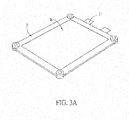
- FIG. 3A is a schematic diagram showing the combination of the battery and the fixing member
- FIG. 3B is a schematic diagram showing the assembled structure of FIG. 3A
- the first surfaces 11 and 21 of the first sealing film 1 and the second sealing film 2 are disposed opposite to each other. Accordingly, when the following thermo-compression process is performed, the thermoplastic layers of the first sealing film 1 and the second sealing film 2 can be heated and thus bonded.
- the redundant part of the first surface 11 of the first sealing film 1, which is located outside the sealed chamber S, is not bonded by thermo-compression, so this redundant part of the first surface 11 of the first sealing film 1 can be later bonded with a fixing member F by thermo-compression.
- the battery B can be fixed or assembled on the fixing member F.
- the fixing member F shown in FIGS. 3A and 3B is a frame for example.
- the fixing member F can be the casing of the battery set or any other mechanism capable of fixing the battery B, and this invention is not limited thereto.
- the redundant part of the first sealing film 1 includes all four sides of the first surface 11.
- the redundant part of the first sealing film 1 may include only one side of the first surface 11 for bonding with the fixing member F by thermo-compression.
- the redundant part of the first sealing film 1 may include two opposite sides of the first surface 11 for bonding with the fixing member F much firmly.
- the shape of the battery B can be any applicable shape such as circle, hexagon, or other geometrical shapes corresponding to the redundant part of the first surface 11, and this invention is not limited thereto.
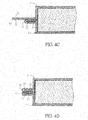
- FIGS. 4A to 4D are schematic diagrams showing different aspects of the redundant parts of the first and second sealing films.
- the redundant part of the first surface 11 of the first sealing film 1 is folded backwardly, which means the redundant part is folded in the direction away from the first surface 21 of the second sealing film 2.
- the area of the first surface 11 of the first sealing film 1 is substantially equal to that of the first surface 21 of the second sealing film 2.
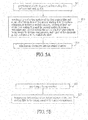
- FIG. 5A is a flow chart of a fabrication method of a battery according to a preferred embodiment of the invention. Referring to FIG. 5A , the disclosed method is for fabricating the above-mentioned battery B. The components and structure of the battery B have been described above, so the detailed description thereof will be omitted.
- the fabrication method includes the following steps of: providing an electrode group, a first sealing film and a second sealing film (S01); bonding a part of a first surface of the first sealing film and a part of a first surface of the second sealing film by thermo-compression to form a sealed chamber, wherein at least one of the first sealing film and the second sealing film has a redundant part located outside the sealed chamber and without being bound by thermo-compression, and a part of the electrode group is disposed in the sealed chamber (S02); and injecting an electrolyte into the sealed chamber (S03).
- the first sealing film 1 and the second sealing film 2 has a redundant part, which is not bound by thermo-compression and is configured for the later thermo-compression process, during the procedure for forming the sealed chamber S by thermo-compression.
- the redundant part can be provided on either the first sealing film 1 or the second sealing film 2, or both the first sealing film 1 and the second sealing film 2 have the redundant parts.
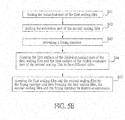
- the method further includes steps of: providing a fixing member (S11); and bonding the first surface of the redundant part of the first sealing film to the fixing member by thermo-compression (S12).
- the fixing member F can be the casing of the battery set or any other mechanism capable of fixing the battery B.
- the first surface 11 of the first sealing film 1 is bonded with the fixing member F by thermo-compression, thereby fixing or assembling the battery B on the fixing member F.
- the method further includes steps of: providing a fixing member (S21); aligning the first surface of the redundant part of the first sealing film to be opposite to the first surface of the redundant part of the second sealing film (S22); and covering the first sealing film and the second sealing film by the fixing member and then bonding the first sealing film, the second sealing film and the fixing member by thermo-compression (S23).
- the step S21 can be referred to the above-mentioned step S11, so the detailed description thereof will be omitted.
- step S22 after bonding the first surfaces 11 and 21 of the first sealing film 1 and the second sealing film 2 by thermo-compression to form a sealed chamber S, the first surface 11 is aligned opposite to the first surface 21.
- step S23 a part of the fixing member F is covered by both of the first sealing film 1 and the second sealing film 2, and a thermo-compression process is performed to fixing the battery B on the fixing member F.
- the fabrication method further includes the steps of: folding the redundant part of the first sealing film (S31); providing a fixing member (S32); aligning the first surface of the folded redundant part of the first sealing film and the first surface of the redundant part of the second sealing film to face the same side (S33); and covering the first sealing film and the second sealing film by the fixing member and then bonding the first sealing film, the second sealing film and the fixing member by thermo-compression (S34).
- the redundant part of the first sealing film 1 is substantially folded by 180 degrees (step S31), the first surface 11 of the first sealing film 1 and the first surface 21 of the second sealing film 2 will face the same side (step S33).
- the fixing member F is provided to bond with the first surfaces 11 and 21 by thermo-compression (step S34).
- the first sealing film 1 is folded to make the first surfaces 11 and 21 face the same side, so that the bonding area between the battery B and the fixing member F can be increased, thereby improving the bonding force between the battery B and the fixing member F.
- the fabrication method further includes the steps of: folding the redundant part of the first sealing film (S41); folding the redundant part of the second sealing film (S42); providing a fixing member (S43); aligning the first surface of the folded redundant part of the first sealing film and the first surface of the folded redundant part of the second sealing film to face different sides (S44); and covering the first sealing film and the second sealing film by the fixing member and then bonding the first sealing film, the second sealing film and the fixing member by thermo-compression (S45).
- this aspect can provide two different bonding directions by thermo-compression (e.g. the direction of the first surface 11 of the first sealing film 1, or the direction of the first surface 21 of the second sealing film 2) so as to increase the freedom of the thermo-compression process.
- first sealing film 1 and the second sealing film 2 can be integrated as a single structure.
- a single sealing film is folded to cover an electrode group, and the part of the sealing film without covering the electrode group is partially bonded by thermo-compression.
- the redundant part of the single sealing film which does not cover the electrode group and is not bonded by thermo-compression, can be used in the following step for bonding with the fixing member by thermo-compression.
- the fabrication method of a battery of the invention is to bond a part of the first sealing film and a part of the second sealing film by thermo-compression and to remain at least one of the first sealing film and the second sealing film to have a redundant part without being bonded by thermo-compression. Accordingly, it is possible to bond the redundant part with other mechanical member by thermo-compression so as to fix or assemble the battery. Accordingly, it is also possible to fold the redundant part so as to fix or assemble the battery.
Landscapes
- Chemical & Material Sciences (AREA)
- Chemical Kinetics & Catalysis (AREA)
- Electrochemistry (AREA)
- General Chemical & Material Sciences (AREA)
- Engineering & Computer Science (AREA)
- Manufacturing & Machinery (AREA)
- Secondary Cells (AREA)
- Sealing Battery Cases Or Jackets (AREA)
- Battery Mounting, Suspending (AREA)
- Primary Cells (AREA)
Abstract
Description
- The present invention relates to a fabrication method of a battery.
- In the conventional assembling, the pouch lithium-ion battery is clipped by several mechanical members (e.g. frames) or fixed by glue or adhesion. These assembling processes are complicated and have higher cost.
- The present invention discloses a fabrication method of a battery including steps of: providing an electrode group, a first sealing film and a second sealing film; bonding a part of a first surface of the first sealing film and a part of a first surface of the second sealing film by thermo-compression to form a sealed chamber, wherein at least one of the first sealing film and the second sealing film has a redundant part located outside the sealed chamber and without being bound by thermo-compression, and a part of the electrode group is disposed in the sealed chamber; and injecting an electrolyte into the sealed chamber.
- In one embodiment, the first sealing film has the redundant part located outside the sealed chamber and without being bound by thermo-compression.
- In one embodiment, the method further includes steps of: providing a fixing member; and bonding the first surface of the redundant part of the first sealing film to the fixing member by thermo-compression.
- In one embodiment, both of the first sealing film and the second sealing film have the redundant part located outside the sealed chamber and without being bound by thermo-compression.
- In one embodiment, the method further includes steps of: providing a fixing member; aligning the first surface of the redundant part of the first sealing film to be opposite to the first surface of the redundant part of the second sealing film; and covering the first sealing film and the second sealing film by the fixing member and then bonding the first sealing film, the second sealing film and the fixing member by thermo-compression.
- In one embodiment, the method further includes a step of: folding the redundant part of the first sealing film.
- In one embodiment, the method further includes steps of: providing a fixing member; aligning the first surface of the folded redundant part of the first sealing film and the first surface of the redundant part of the second sealing film to face the same side; and covering the first sealing film and the second sealing film by the fixing member and then bonding the first sealing film, the second sealing film and the fixing member by thermo-compression.
- In one embodiment, the method further includes a step of: folding the redundant part of the second sealing film.
- In one embodiment, the method further includes steps of: providing a fixing member; aligning the first surface of the folded redundant part of the first sealing film and the first surface of the folded redundant part of the second sealing film to face different sides; and covering the first sealing film and the second sealing film by the fixing member and then bonding the first sealing film, the second sealing film and the fixing member by thermo-compression.
- In one embodiment, the first surface of the first sealing film and the first surface of the second sealing film are thermoplastic layers.
- In one embodiment, the thermoplastic layer is selected from the group substantially consisting of PVC, PE, PP or PS.
- In one embodiment, each of the first sealing film and the second sealing film has a second surface, and the second surfaces are waterproof layers or protective layers.
- In one embodiment, each of the first sealing film and the second sealing film further has a metal layer. The metal layer of the first sealing film is disposed between the first surface and the second surface of the first sealing film. The metal layer of the second sealing film is disposed between the first surface and the second surface of the second sealing film.
- In one embodiment, the metal layer is made of aluminum, copper, iron or nickel.
- In one embodiment, the first sealing film and the second sealing film are integrally formed.
- As mentioned above, the fabrication method of a battery of the invention is to bond a part of the first sealing film and a part of the second sealing film by thermo-compression and to remain at least one of the first sealing film and the second sealing film to have a redundant part without being bonded by thermo-compression. Accordingly, it is possible to bond the redundant part with other mechanical member by thermo-compression so as to fix or assemble the battery. Accordingly, it is also possible to fold the redundant part so as to fix or assemble the battery.
- The present invention will become more fully understood from the subsequent detailed description and accompanying drawings, which are given by way of illustration only, and thus are not limitative of the present invention, and wherein:
-
FIG. 1A is a schematic diagram showing a battery according to a preferred embodiment of the invention; -
FIG. 1B is an exploded view of the battery according to the preferred embodiment of the invention; -
FIG. 2 is a sectional view of the battery ofFIG. 1A along the line A-A; -
FIG. 3A is a schematic diagram showing the combination of the battery and the fixing member; -
FIG. 3B is a schematic diagram showing the assembled structure ofFIG. 3A ; -
FIGS. 4A to 4D are schematic diagrams showing different aspects of the redundant parts of the first and second sealing films; -
FIG. 5A is a flow chart of a fabrication method of a battery according to a preferred embodiment of the invention; and -
FIGS. 5B to 5E are flow charts showing different aspects of the fabrication method of a battery. - The present invention will be apparent from the following detailed description, which proceeds with reference to the accompanying drawings, wherein the same references relate to the same elements.
-
FIG. 1A is a schematic diagram showing a battery according to a preferred embodiment of the invention, andFIG. 1B is an exploded view of the battery according to the preferred embodiment of the invention. Referring toFIGS. 1A and1B , the battery B of the embodiment is a pouch lithium-ion battery and is substantially a square structure. The battery B includes afirst sealing film 1, asecond sealing film 2 and anelectrode group 3. The peripheries of thefirst sealing film 1 and thesecond sealing film 2 are partially bonded to form a sealed chamber S (as shown inFIG. 2 ), i.e. a confined chamber with bound outside. Theelectrode group 3 is accommodated in the sealed chamber S, and the sealed chamber S is injected with an electrolyte. In other words, thefirst sealing film 1 and thesecond sealing film 2 encapsulate theelectrode group 3 with theelectrodes 31 and at least one of theelectrodes 31 being exposed from inside of the sealed chamber S. To be noted, the arrangement of theelectrodes 31 can be designed based on the requirement. For example, twoelectrodes 31 can be respectively located at opposite sides, or adjacent sides, or both located at the same side of the battery B, and this invention is not limited thereto. -
FIG. 2 is a sectional view of the battery B ofFIG. 1A along the line A-A. Referring toFIGS. 1A and2 , in this embodiment, thefirst sealing film 1 and thesecond sealing film 2 have afirst surface 11 and afirst surface 21, respectively. The area of thefirst surface 21 of thesecond sealing film 2 is smaller than that of thefirst surface 11 of thefirst sealing film 1. In other words, the sizes of thefirst sealing film 1 and thesecond sealing film 2 are different. Accordingly, when thefirst sealing film 1 and the second sealingfilm 2 together encapsulate the electrode group3, the edge of thefirst sealing film 1 is protruded from the edge of thesecond sealing film 2. After bonding thefirst surface 11 of thefirst sealing film 1 and thefirst surface 21 of thesecond sealing film 2 by thermo-compression, a part (here means a redundant part) of thefirst surface 11 of thefirst sealing film 1 is remained without being bonded with thefirst surface 21 of thesecond sealing film 2 by thermo-compression. The redundant part of thefirst surface 11 can be used in the following thermo-compression bonding process or mechanical folding process. - In specific, the
first sealing film 1 and thesecond sealing film 2 can include, for example but not limited to, a metal-based plastic film or other battery cell packing materials. For example, the metal-based plastic film is a multilayer structure. That is, thefirst sealing film 1 can further include ametal layer 12 and asecond surface 13, and thesecond sealing film 2 can further include ametal layer 22 and asecond surface 23. In thefirst sealing film 1, themetal layer 12 is disposed between thefirst surface 11 and thesecond surface 13. In thesecond sealing film 2, themetal layer 22 is disposed between thefirst surface 21 and thesecond surface 23. - Furthermore, the
first surfaces -
FIG. 3A is a schematic diagram showing the combination of the battery and the fixing member, andFIG. 3B is a schematic diagram showing the assembled structure ofFIG. 3A . Referring toFIGS. 2 ,3A and3B , in this embodiment, thefirst surfaces first sealing film 1 and thesecond sealing film 2 are disposed opposite to each other. Accordingly, when the following thermo-compression process is performed, the thermoplastic layers of thefirst sealing film 1 and thesecond sealing film 2 can be heated and thus bonded. In this embodiment, the redundant part of thefirst surface 11 of thefirst sealing film 1, which is located outside the sealed chamber S, is not bonded by thermo-compression, so this redundant part of thefirst surface 11 of thefirst sealing film 1 can be later bonded with a fixing member F by thermo-compression. As a result, the battery B can be fixed or assembled on the fixing member F. - To be noted, the fixing member F shown in
FIGS. 3A and3B is a frame for example. In practice, the fixing member F can be the casing of the battery set or any other mechanism capable of fixing the battery B, and this invention is not limited thereto. - In the battery B as shown in
FIG. 1A , the redundant part of thefirst sealing film 1 includes all four sides of thefirst surface 11. In practice, the redundant part of thefirst sealing film 1 may include only one side of thefirst surface 11 for bonding with the fixing member F by thermo-compression. Preferably, the redundant part of thefirst sealing film 1 may include two opposite sides of thefirst surface 11 for bonding with the fixing member F much firmly. Besides, the shape of the battery B can be any applicable shape such as circle, hexagon, or other geometrical shapes corresponding to the redundant part of thefirst surface 11, and this invention is not limited thereto. -
FIGS. 4A to 4D are schematic diagrams showing different aspects of the redundant parts of the first and second sealing films. In the aspect ofFIG. 4A , the redundant part of thefirst surface 11 of thefirst sealing film 1 is folded backwardly, which means the redundant part is folded in the direction away from thefirst surface 21 of thesecond sealing film 2. In the aspect ofFIG. 4B , the area of thefirst surface 11 of thefirst sealing film 1 is substantially equal to that of thefirst surface 21 of thesecond sealing film 2. When bonding thefirst sealing film 1 and thesecond sealing film 2 by thermo-compression, only the parts of thefirst sealing film 1 and thesecond sealing film 2 adjacent to theelectrode group 3 are bonded by thermo-compression, so both of thefirst sealing film 1 and thesecond sealing film 2 have redundant parts without being bonded by thermo-compression. Alternatively, as shown inFIGS. 4C and 4D , the redundant part of thefirst sealing film 1 or thesecond sealing film 2 can be folded. The detailed procedure will be discussed hereinafter with reference to the flow charts ofFIGS. 5A to 5E . -
FIG. 5A is a flow chart of a fabrication method of a battery according to a preferred embodiment of the invention. Referring toFIG. 5A , the disclosed method is for fabricating the above-mentioned battery B. The components and structure of the battery B have been described above, so the detailed description thereof will be omitted. The fabrication method includes the following steps of: providing an electrode group, a first sealing film and a second sealing film (S01); bonding a part of a first surface of the first sealing film and a part of a first surface of the second sealing film by thermo-compression to form a sealed chamber, wherein at least one of the first sealing film and the second sealing film has a redundant part located outside the sealed chamber and without being bound by thermo-compression, and a part of the electrode group is disposed in the sealed chamber (S02); and injecting an electrolyte into the sealed chamber (S03). - In the step S02, at least one of the
first sealing film 1 and thesecond sealing film 2 has a redundant part, which is not bound by thermo-compression and is configured for the later thermo-compression process, during the procedure for forming the sealed chamber S by thermo-compression. Herein, the redundant part can be provided on either thefirst sealing film 1 or thesecond sealing film 2, or both thefirst sealing film 1 and thesecond sealing film 2 have the redundant parts. - Referring to
FIG. 5B , when thefirst sealing film 1 has the redundant part located outside the sealed chamber S and without being bound by thermo-compression, the method further includes steps of: providing a fixing member (S11); and bonding the first surface of the redundant part of the first sealing film to the fixing member by thermo-compression (S12). Herein, in the step S11, the fixing member F can be the casing of the battery set or any other mechanism capable of fixing the battery B. In the step S12, thefirst surface 11 of thefirst sealing film 1 is bonded with the fixing member F by thermo-compression, thereby fixing or assembling the battery B on the fixing member F. - Referring to
FIGS. 4B and5C , when both of thefirst sealing film 1 and thesecond sealing film 2 have the redundant part located outside the sealed chamber S and without being bound by thermo-compression, the method further includes steps of: providing a fixing member (S21); aligning the first surface of the redundant part of the first sealing film to be opposite to the first surface of the redundant part of the second sealing film (S22); and covering the first sealing film and the second sealing film by the fixing member and then bonding the first sealing film, the second sealing film and the fixing member by thermo-compression (S23). The step S21 can be referred to the above-mentioned step S11, so the detailed description thereof will be omitted. In the step S22, after bonding thefirst surfaces first sealing film 1 and thesecond sealing film 2 by thermo-compression to form a sealed chamber S, thefirst surface 11 is aligned opposite to thefirst surface 21. In the step S23, a part of the fixing member F is covered by both of thefirst sealing film 1 and thesecond sealing film 2, and a thermo-compression process is performed to fixing the battery B on the fixing member F. - When the redundant parts of the
first sealing film 1 and thesecond sealing film 2 located outside the sealed chamber S are not bonded by thermo-compression, the redundant part of thefirst sealing film 1 or thesecond sealing film 2 can be folded and then be bonded by thermo-compression. With reference toFIGS. 4C and5D , the fabrication method further includes the steps of: folding the redundant part of the first sealing film (S31); providing a fixing member (S32); aligning the first surface of the folded redundant part of the first sealing film and the first surface of the redundant part of the second sealing film to face the same side (S33); and covering the first sealing film and the second sealing film by the fixing member and then bonding the first sealing film, the second sealing film and the fixing member by thermo-compression (S34). Since the redundant part of thefirst sealing film 1 is substantially folded by 180 degrees (step S31), thefirst surface 11 of thefirst sealing film 1 and thefirst surface 21 of thesecond sealing film 2 will face the same side (step S33). Afterwards, the fixing member F is provided to bond with thefirst surfaces first sealing film 1 is folded to make thefirst surfaces - Of course, the
second sealing film 2 can also be folded to change the direction of thefirst surface 21. With reference toFIGS. 4D and5E , the fabrication method further includes the steps of: folding the redundant part of the first sealing film (S41); folding the redundant part of the second sealing film (S42); providing a fixing member (S43); aligning the first surface of the folded redundant part of the first sealing film and the first surface of the folded redundant part of the second sealing film to face different sides (S44); and covering the first sealing film and the second sealing film by the fixing member and then bonding the first sealing film, the second sealing film and the fixing member by thermo-compression (S45). Since thefirst sealing film 1 and thesecond sealing film 2 are folded (steps S41 and S42), thefirst surface 11 of thefirst sealing film 1 and thefirst surface 21 of thesecond sealing film 2 will face different sides (step S44). Accordingly, this aspect can provide two different bonding directions by thermo-compression (e.g. the direction of thefirst surface 11 of thefirst sealing film 1, or the direction of thefirst surface 21 of the second sealing film 2) so as to increase the freedom of the thermo-compression process. - Besides, the
first sealing film 1 and thesecond sealing film 2 can be integrated as a single structure. For example, a single sealing film is folded to cover an electrode group, and the part of the sealing film without covering the electrode group is partially bonded by thermo-compression. Then, the redundant part of the single sealing film, which does not cover the electrode group and is not bonded by thermo-compression, can be used in the following step for bonding with the fixing member by thermo-compression. - In summary, the fabrication method of a battery of the invention is to bond a part of the first sealing film and a part of the second sealing film by thermo-compression and to remain at least one of the first sealing film and the second sealing film to have a redundant part without being bonded by thermo-compression. Accordingly, it is possible to bond the redundant part with other mechanical member by thermo-compression so as to fix or assemble the battery. Accordingly, it is also possible to fold the redundant part so as to fix or assemble the battery.
- Although the present invention has been described with reference to specific embodiments, this description is not meant to be construed in a limiting sense. Various modifications of the disclosed embodiments, as well as alternative embodiments, will be apparent to persons skilled in the art. It is, therefore, contemplated that the appended claims will cover all modifications that fall within the true scope of the present invention.
Claims (15)
- A fabrication method of a battery, comprising steps of:providing an electrode group, a first sealing film and a second sealing film;bonding a part of a first surface of the first sealing film and a part of a first surface of the second sealing film by thermocompression to form a sealed chamber, wherein at least one of the first sealing film and the second sealing film has a redundant part located outside the sealed chamber and without being bonded by thermo-compression, and a part of the electrode group is disposed in the sealed chamber; andinjecting an electrolyte into the sealed chamber.
- The method of claim 1, wherein the first sealing film has the redundant part located outside the sealed chamber and without being bound by thermo-compression.
- The method of claim 2, further comprising steps of:providing a fixing member; andbonding the first surface of the redundant part of the first sealing film to the fixing member by thermo-compression.
- The method of claim 1, wherein both of the first sealing film and the second sealing film have the redundant part located outside the sealed chamber and without being bound by thermo-compression.
- The method of claim 4, further comprising steps of:providing a fixing member;aligning the first surface of the redundant part of the first sealing film to be opposite to the first surface of the redundant part of the second sealing film; andcovering the first sealing film and the second sealing film by the fixing member and then bonding the first sealing film, the second sealing film and the fixing member by thermo-compression.
- The method of claim 4, further comprising a step of:folding the redundant part of the first sealing film.
- The method of claim 6, further comprising steps of:providing a fixing member;aligning the first surface of the folded redundant part of the first sealing film and the first surface of the redundant part of the second sealing film to face the same side; andcovering the first sealing film and the second sealing film by the fixing member and then bonding the first sealing film, the second sealing film and the fixing member by thermo-compression.
- The method of claim 6, wherein further comprising a step of:folding the redundant part of the second sealing film.
- The method of claim 8, further comprising steps of:providing a fixing member;aligning the first surface of the folded redundant part of the first sealing film and the first surface of the folded redundant part of the second sealing film to face different sides; andcovering the first sealing film and the second sealing film by the fixing member and then bonding the first sealing film, the second sealing film and the fixing member by thermo-compression.
- The method of claim 1, wherein the first surface of the first sealing film and the first surface of the second sealing film are thermoplastic layers.
- The method of claim 10, wherein the thermoplastic layer is selected from the group substantially consisting of PVC, PE, PP or PS.
- The method of claim 1, wherein each of the first sealing film and the second sealing film has a second surface, and the second surfaces are waterproof layers or protective layers.
- The method of claim 12, wherein each of the first sealing film and the second sealing film further has a metal layer, wherein the metal layer of the first sealing film is disposed between the first surface and the second surface of the first sealing film, and wherein the metal layer of the second sealing film is disposed between the first surface and the second surface of the second sealing film.
- The method of claim 13, wherein the metal layer is made of aluminum, copper, iron or nickel.
- The method of claim 1, wherein the first sealing film and the second sealing film are integrally formed.
Applications Claiming Priority (1)
| Application Number | Priority Date | Filing Date | Title |
|---|---|---|---|
| TW103121500A TWI602339B (en) | 2014-06-23 | 2014-06-23 | Fabrication method of battery cell |
Publications (3)
| Publication Number | Publication Date |
|---|---|
| EP2975674A2 true EP2975674A2 (en) | 2016-01-20 |
| EP2975674A3 EP2975674A3 (en) | 2016-01-27 |
| EP2975674B1 EP2975674B1 (en) | 2019-09-11 |
Family
ID=52354756
Family Applications (1)
| Application Number | Title | Priority Date | Filing Date |
|---|---|---|---|
| EP15150533.6A Active EP2975674B1 (en) | 2014-06-23 | 2015-01-08 | Fabrication method of battery |
Country Status (4)
| Country | Link |
|---|---|
| US (1) | US10340547B2 (en) |
| EP (1) | EP2975674B1 (en) |
| JP (1) | JP6050394B2 (en) |
| TW (1) | TWI602339B (en) |
Families Citing this family (3)
| Publication number | Priority date | Publication date | Assignee | Title |
|---|---|---|---|---|
| KR102106111B1 (en) * | 2016-12-20 | 2020-04-29 | 주식회사 엘지화학 | Method for injecting electrolyte of pouch type battery |
| CN109103493A (en) * | 2018-07-04 | 2018-12-28 | 天津力神电池股份有限公司 | A kind of polymer Li-ion battery and preparation method thereof |
| CN115133184B (en) * | 2021-03-29 | 2023-10-03 | 宁德新能源科技有限公司 | Cells, batteries and electrical equipment |
Family Cites Families (12)
| Publication number | Priority date | Publication date | Assignee | Title |
|---|---|---|---|---|
| EP1102336B1 (en) | 1999-04-08 | 2007-09-12 | Dai Nippon Printing Co., Ltd. | Lithium battery packaging laminated multilayer structure |
| JP3858689B2 (en) * | 2001-12-21 | 2006-12-20 | 日本電気株式会社 | BATTERY USING LAMINATE PACKAGE AND METHOD FOR MANUFACTURING THE SAME |
| KR20040054128A (en) * | 2002-12-17 | 2004-06-25 | 삼성에스디아이 주식회사 | Pouched-type lithium secondary battery |
| JP3922281B2 (en) | 2003-11-14 | 2007-05-30 | ソニー株式会社 | Battery pack and battery pack manufacturing method |
| KR100917736B1 (en) * | 2007-09-14 | 2009-09-15 | 삼성에스디아이 주식회사 | Battery Pouches and Pouch Type Batteries |
| US20100297494A1 (en) | 2009-05-21 | 2010-11-25 | Chin-Ming Chen | Battery module |
| DE102009037726A1 (en) | 2009-08-17 | 2011-02-24 | Li-Tec Battery Gmbh | Galvanic cell with frame and method for its production |
| KR101173867B1 (en) * | 2010-10-28 | 2012-08-14 | 삼성에스디아이 주식회사 | Rechargeable lithium battery |
| KR101304870B1 (en) | 2010-12-02 | 2013-09-06 | 주식회사 엘지화학 | Method for Manufacturing Battery Cell and Battery Cell Manufactured Thereby |
| KR101254865B1 (en) * | 2011-03-10 | 2013-04-15 | 삼성에스디아이 주식회사 | Secondary battery |
| JP2014032789A (en) | 2012-08-02 | 2014-02-20 | Nissan Motor Co Ltd | Thin battery |
| US9553343B2 (en) * | 2013-07-30 | 2017-01-24 | Johnson Controls Technology Company | Printed circuit board interconnect for cells in a battery system |
-
2014
- 2014-06-23 TW TW103121500A patent/TWI602339B/en active
- 2014-12-31 US US14/587,860 patent/US10340547B2/en active Active
-
2015
- 2015-01-08 EP EP15150533.6A patent/EP2975674B1/en active Active
- 2015-01-14 JP JP2015004807A patent/JP6050394B2/en active Active
Non-Patent Citations (1)
| Title |
|---|
| None |
Also Published As
| Publication number | Publication date |
|---|---|
| TW201601365A (en) | 2016-01-01 |
| EP2975674B1 (en) | 2019-09-11 |
| EP2975674A3 (en) | 2016-01-27 |
| US10340547B2 (en) | 2019-07-02 |
| US20150372341A1 (en) | 2015-12-24 |
| JP6050394B2 (en) | 2016-12-21 |
| JP2016009683A (en) | 2016-01-18 |
| TWI602339B (en) | 2017-10-11 |
Similar Documents
| Publication | Publication Date | Title |
|---|---|---|
| JP6068212B2 (en) | Thin battery and battery pack | |
| US10326119B2 (en) | Battery system | |
| JP5851785B2 (en) | Battery and manufacturing method thereof | |
| JP5561315B2 (en) | Film exterior electrical device | |
| CN110809809A (en) | Capacitor with a capacitor element | |
| EP2975674A2 (en) | Fabrication method of battery | |
| JP5082263B2 (en) | Method for manufacturing film-covered electrical device | |
| JP2016004731A (en) | Battery negative terminal | |
| JP6227756B2 (en) | Battery terminals and batteries | |
| JP2017228381A (en) | Battery and battery manufacturing method | |
| JP5098350B2 (en) | battery | |
| CN103972427A (en) | Battery pack and method for manufacturing the same | |
| JP2006156161A (en) | Sealed battery | |
| JP2015069962A (en) | Power storage element | |
| KR102556561B1 (en) | Storage device | |
| JP6796417B2 (en) | Laminated power storage element, manufacturing method of laminated type power storage element | |
| JP2013197267A (en) | Capacitor | |
| US20180219207A1 (en) | Battery and frame for mechanically coupling electrode tab to electrode lead in battery | |
| JP6288721B2 (en) | Assembled battery | |
| CN102640244A (en) | Electricity storage device and method for manufacturing electricity storage device | |
| JP2020024827A5 (en) | ||
| CN105186040A (en) | Method for manufacturing battery | |
| JP6868399B2 (en) | Laminated power storage element | |
| KR101818629B1 (en) | Mock-up cell that improves the ease of welding leads and method for fabricating the same | |
| JP5626858B2 (en) | Laminated film exterior type secondary battery |
Legal Events
| Date | Code | Title | Description |
|---|---|---|---|
| PUAL | Search report despatched |
Free format text: ORIGINAL CODE: 0009013 |
|
| PUAI | Public reference made under article 153(3) epc to a published international application that has entered the european phase |
Free format text: ORIGINAL CODE: 0009012 |
|
| AK | Designated contracting states |
Kind code of ref document: A2 Designated state(s): AL AT BE BG CH CY CZ DE DK EE ES FI FR GB GR HR HU IE IS IT LI LT LU LV MC MK MT NL NO PL PT RO RS SE SI SK SM TR |
|
| AX | Request for extension of the european patent |
Extension state: BA ME |
|
| AK | Designated contracting states |
Kind code of ref document: A3 Designated state(s): AL AT BE BG CH CY CZ DE DK EE ES FI FR GB GR HR HU IE IS IT LI LT LU LV MC MK MT NL NO PL PT RO RS SE SI SK SM TR |
|
| AX | Request for extension of the european patent |
Extension state: BA ME |
|
| RIC1 | Information provided on ipc code assigned before grant |
Ipc: H01M 2/02 20060101AFI20151223BHEP |
|
| 17P | Request for examination filed |
Effective date: 20160726 |
|
| RBV | Designated contracting states (corrected) |
Designated state(s): AL AT BE BG CH CY CZ DE DK EE ES FI FR GB GR HR HU IE IS IT LI LT LU LV MC MK MT NL NO PL PT RO RS SE SI SK SM TR |
|
| GRAP | Despatch of communication of intention to grant a patent |
Free format text: ORIGINAL CODE: EPIDOSNIGR1 |
|
| STAA | Information on the status of an ep patent application or granted ep patent |
Free format text: STATUS: GRANT OF PATENT IS INTENDED |
|
| RAP1 | Party data changed (applicant data changed or rights of an application transferred) |
Owner name: DELTA ELECTRONICS, INC. |
|
| INTG | Intention to grant announced |
Effective date: 20190507 |
|
| GRAS | Grant fee paid |
Free format text: ORIGINAL CODE: EPIDOSNIGR3 |
|
| GRAA | (expected) grant |
Free format text: ORIGINAL CODE: 0009210 |
|
| STAA | Information on the status of an ep patent application or granted ep patent |
Free format text: STATUS: THE PATENT HAS BEEN GRANTED |
|
| AK | Designated contracting states |
Kind code of ref document: B1 Designated state(s): AL AT BE BG CH CY CZ DE DK EE ES FI FR GB GR HR HU IE IS IT LI LT LU LV MC MK MT NL NO PL PT RO RS SE SI SK SM TR |
|
| REG | Reference to a national code |
Ref country code: GB Ref legal event code: FG4D |
|
| REG | Reference to a national code |
Ref country code: CH Ref legal event code: EP |
|
| REG | Reference to a national code |
Ref country code: AT Ref legal event code: REF Ref document number: 1179626 Country of ref document: AT Kind code of ref document: T Effective date: 20190915 |
|
| REG | Reference to a national code |
Ref country code: DE Ref legal event code: R096 Ref document number: 602015037587 Country of ref document: DE Ref country code: IE Ref legal event code: FG4D |
|
| REG | Reference to a national code |
Ref country code: NL Ref legal event code: MP Effective date: 20190911 |
|
| REG | Reference to a national code |
Ref country code: LT Ref legal event code: MG4D |
|
| PG25 | Lapsed in a contracting state [announced via postgrant information from national office to epo] |
Ref country code: NO Free format text: LAPSE BECAUSE OF FAILURE TO SUBMIT A TRANSLATION OF THE DESCRIPTION OR TO PAY THE FEE WITHIN THE PRESCRIBED TIME-LIMIT Effective date: 20191211 Ref country code: SE Free format text: LAPSE BECAUSE OF FAILURE TO SUBMIT A TRANSLATION OF THE DESCRIPTION OR TO PAY THE FEE WITHIN THE PRESCRIBED TIME-LIMIT Effective date: 20190911 Ref country code: HR Free format text: LAPSE BECAUSE OF FAILURE TO SUBMIT A TRANSLATION OF THE DESCRIPTION OR TO PAY THE FEE WITHIN THE PRESCRIBED TIME-LIMIT Effective date: 20190911 Ref country code: LT Free format text: LAPSE BECAUSE OF FAILURE TO SUBMIT A TRANSLATION OF THE DESCRIPTION OR TO PAY THE FEE WITHIN THE PRESCRIBED TIME-LIMIT Effective date: 20190911 Ref country code: FI Free format text: LAPSE BECAUSE OF FAILURE TO SUBMIT A TRANSLATION OF THE DESCRIPTION OR TO PAY THE FEE WITHIN THE PRESCRIBED TIME-LIMIT Effective date: 20190911 Ref country code: BG Free format text: LAPSE BECAUSE OF FAILURE TO SUBMIT A TRANSLATION OF THE DESCRIPTION OR TO PAY THE FEE WITHIN THE PRESCRIBED TIME-LIMIT Effective date: 20191211 |
|
| PG25 | Lapsed in a contracting state [announced via postgrant information from national office to epo] |
Ref country code: AL Free format text: LAPSE BECAUSE OF FAILURE TO SUBMIT A TRANSLATION OF THE DESCRIPTION OR TO PAY THE FEE WITHIN THE PRESCRIBED TIME-LIMIT Effective date: 20190911 Ref country code: LV Free format text: LAPSE BECAUSE OF FAILURE TO SUBMIT A TRANSLATION OF THE DESCRIPTION OR TO PAY THE FEE WITHIN THE PRESCRIBED TIME-LIMIT Effective date: 20190911 Ref country code: ES Free format text: LAPSE BECAUSE OF FAILURE TO SUBMIT A TRANSLATION OF THE DESCRIPTION OR TO PAY THE FEE WITHIN THE PRESCRIBED TIME-LIMIT Effective date: 20190911 Ref country code: RS Free format text: LAPSE BECAUSE OF FAILURE TO SUBMIT A TRANSLATION OF THE DESCRIPTION OR TO PAY THE FEE WITHIN THE PRESCRIBED TIME-LIMIT Effective date: 20190911 Ref country code: GR Free format text: LAPSE BECAUSE OF FAILURE TO SUBMIT A TRANSLATION OF THE DESCRIPTION OR TO PAY THE FEE WITHIN THE PRESCRIBED TIME-LIMIT Effective date: 20191212 |
|
| REG | Reference to a national code |
Ref country code: AT Ref legal event code: MK05 Ref document number: 1179626 Country of ref document: AT Kind code of ref document: T Effective date: 20190911 |
|
| PG25 | Lapsed in a contracting state [announced via postgrant information from national office to epo] |
Ref country code: IT Free format text: LAPSE BECAUSE OF FAILURE TO SUBMIT A TRANSLATION OF THE DESCRIPTION OR TO PAY THE FEE WITHIN THE PRESCRIBED TIME-LIMIT Effective date: 20190911 Ref country code: RO Free format text: LAPSE BECAUSE OF FAILURE TO SUBMIT A TRANSLATION OF THE DESCRIPTION OR TO PAY THE FEE WITHIN THE PRESCRIBED TIME-LIMIT Effective date: 20190911 Ref country code: PT Free format text: LAPSE BECAUSE OF FAILURE TO SUBMIT A TRANSLATION OF THE DESCRIPTION OR TO PAY THE FEE WITHIN THE PRESCRIBED TIME-LIMIT Effective date: 20200113 Ref country code: NL Free format text: LAPSE BECAUSE OF FAILURE TO SUBMIT A TRANSLATION OF THE DESCRIPTION OR TO PAY THE FEE WITHIN THE PRESCRIBED TIME-LIMIT Effective date: 20190911 Ref country code: PL Free format text: LAPSE BECAUSE OF FAILURE TO SUBMIT A TRANSLATION OF THE DESCRIPTION OR TO PAY THE FEE WITHIN THE PRESCRIBED TIME-LIMIT Effective date: 20190911 Ref country code: AT Free format text: LAPSE BECAUSE OF FAILURE TO SUBMIT A TRANSLATION OF THE DESCRIPTION OR TO PAY THE FEE WITHIN THE PRESCRIBED TIME-LIMIT Effective date: 20190911 Ref country code: EE Free format text: LAPSE BECAUSE OF FAILURE TO SUBMIT A TRANSLATION OF THE DESCRIPTION OR TO PAY THE FEE WITHIN THE PRESCRIBED TIME-LIMIT Effective date: 20190911 |
|
| PG25 | Lapsed in a contracting state [announced via postgrant information from national office to epo] |
Ref country code: IS Free format text: LAPSE BECAUSE OF FAILURE TO SUBMIT A TRANSLATION OF THE DESCRIPTION OR TO PAY THE FEE WITHIN THE PRESCRIBED TIME-LIMIT Effective date: 20200224 Ref country code: SM Free format text: LAPSE BECAUSE OF FAILURE TO SUBMIT A TRANSLATION OF THE DESCRIPTION OR TO PAY THE FEE WITHIN THE PRESCRIBED TIME-LIMIT Effective date: 20190911 Ref country code: SK Free format text: LAPSE BECAUSE OF FAILURE TO SUBMIT A TRANSLATION OF THE DESCRIPTION OR TO PAY THE FEE WITHIN THE PRESCRIBED TIME-LIMIT Effective date: 20190911 Ref country code: CZ Free format text: LAPSE BECAUSE OF FAILURE TO SUBMIT A TRANSLATION OF THE DESCRIPTION OR TO PAY THE FEE WITHIN THE PRESCRIBED TIME-LIMIT Effective date: 20190911 |
|
| REG | Reference to a national code |
Ref country code: DE Ref legal event code: R097 Ref document number: 602015037587 Country of ref document: DE |
|
| PLBE | No opposition filed within time limit |
Free format text: ORIGINAL CODE: 0009261 |
|
| STAA | Information on the status of an ep patent application or granted ep patent |
Free format text: STATUS: NO OPPOSITION FILED WITHIN TIME LIMIT |
|
| PG2D | Information on lapse in contracting state deleted |
Ref country code: IS |
|
| PG25 | Lapsed in a contracting state [announced via postgrant information from national office to epo] |
Ref country code: DK Free format text: LAPSE BECAUSE OF FAILURE TO SUBMIT A TRANSLATION OF THE DESCRIPTION OR TO PAY THE FEE WITHIN THE PRESCRIBED TIME-LIMIT Effective date: 20190911 Ref country code: IS Free format text: LAPSE BECAUSE OF FAILURE TO SUBMIT A TRANSLATION OF THE DESCRIPTION OR TO PAY THE FEE WITHIN THE PRESCRIBED TIME-LIMIT Effective date: 20200112 |
|
| 26N | No opposition filed |
Effective date: 20200615 |
|
| PG25 | Lapsed in a contracting state [announced via postgrant information from national office to epo] |
Ref country code: MC Free format text: LAPSE BECAUSE OF FAILURE TO SUBMIT A TRANSLATION OF THE DESCRIPTION OR TO PAY THE FEE WITHIN THE PRESCRIBED TIME-LIMIT Effective date: 20190911 Ref country code: SI Free format text: LAPSE BECAUSE OF FAILURE TO SUBMIT A TRANSLATION OF THE DESCRIPTION OR TO PAY THE FEE WITHIN THE PRESCRIBED TIME-LIMIT Effective date: 20190911 |
|
| REG | Reference to a national code |
Ref country code: CH Ref legal event code: PL |
|
| REG | Reference to a national code |
Ref country code: BE Ref legal event code: MM Effective date: 20200131 |
|
| PG25 | Lapsed in a contracting state [announced via postgrant information from national office to epo] |
Ref country code: LU Free format text: LAPSE BECAUSE OF NON-PAYMENT OF DUE FEES Effective date: 20200108 Ref country code: FR Free format text: LAPSE BECAUSE OF NON-PAYMENT OF DUE FEES Effective date: 20200131 |
|
| REG | Reference to a national code |
Ref country code: DE Ref legal event code: R079 Ref document number: 602015037587 Country of ref document: DE Free format text: PREVIOUS MAIN CLASS: H01M0002020000 Ipc: H01M0050100000 |
|
| PG25 | Lapsed in a contracting state [announced via postgrant information from national office to epo] |
Ref country code: CH Free format text: LAPSE BECAUSE OF NON-PAYMENT OF DUE FEES Effective date: 20200131 Ref country code: BE Free format text: LAPSE BECAUSE OF NON-PAYMENT OF DUE FEES Effective date: 20200131 Ref country code: LI Free format text: LAPSE BECAUSE OF NON-PAYMENT OF DUE FEES Effective date: 20200131 |
|
| PG25 | Lapsed in a contracting state [announced via postgrant information from national office to epo] |
Ref country code: IE Free format text: LAPSE BECAUSE OF NON-PAYMENT OF DUE FEES Effective date: 20200108 |
|
| PG25 | Lapsed in a contracting state [announced via postgrant information from national office to epo] |
Ref country code: TR Free format text: LAPSE BECAUSE OF FAILURE TO SUBMIT A TRANSLATION OF THE DESCRIPTION OR TO PAY THE FEE WITHIN THE PRESCRIBED TIME-LIMIT Effective date: 20190911 Ref country code: MT Free format text: LAPSE BECAUSE OF FAILURE TO SUBMIT A TRANSLATION OF THE DESCRIPTION OR TO PAY THE FEE WITHIN THE PRESCRIBED TIME-LIMIT Effective date: 20190911 Ref country code: CY Free format text: LAPSE BECAUSE OF FAILURE TO SUBMIT A TRANSLATION OF THE DESCRIPTION OR TO PAY THE FEE WITHIN THE PRESCRIBED TIME-LIMIT Effective date: 20190911 |
|
| PG25 | Lapsed in a contracting state [announced via postgrant information from national office to epo] |
Ref country code: MK Free format text: LAPSE BECAUSE OF FAILURE TO SUBMIT A TRANSLATION OF THE DESCRIPTION OR TO PAY THE FEE WITHIN THE PRESCRIBED TIME-LIMIT Effective date: 20190911 |
|
| PGFP | Annual fee paid to national office [announced via postgrant information from national office to epo] |
Ref country code: GB Payment date: 20260127 Year of fee payment: 12 |
|
| PGFP | Annual fee paid to national office [announced via postgrant information from national office to epo] |
Ref country code: DE Payment date: 20260128 Year of fee payment: 12 |