EP2974735A1 - Anti-inflammatory properties of a surface protein of propionibacterium freudenreichii - Google Patents
Anti-inflammatory properties of a surface protein of propionibacterium freudenreichii Download PDFInfo
- Publication number
- EP2974735A1 EP2974735A1 EP14002429.0A EP14002429A EP2974735A1 EP 2974735 A1 EP2974735 A1 EP 2974735A1 EP 14002429 A EP14002429 A EP 14002429A EP 2974735 A1 EP2974735 A1 EP 2974735A1
- Authority
- EP
- European Patent Office
- Prior art keywords
- polypeptide
- nucleic acid
- acid sequence
- vector
- inflammatory
- Prior art date
- Legal status (The legal status is an assumption and is not a legal conclusion. Google has not performed a legal analysis and makes no representation as to the accuracy of the status listed.)
- Withdrawn
Links
Images



Classifications
-
- C—CHEMISTRY; METALLURGY
- C07—ORGANIC CHEMISTRY
- C07K—PEPTIDES
- C07K14/00—Peptides having more than 20 amino acids; Gastrins; Somatostatins; Melanotropins; Derivatives thereof
- C07K14/195—Peptides having more than 20 amino acids; Gastrins; Somatostatins; Melanotropins; Derivatives thereof from bacteria
-
- A—HUMAN NECESSITIES
- A61—MEDICAL OR VETERINARY SCIENCE; HYGIENE
- A61K—PREPARATIONS FOR MEDICAL, DENTAL OR TOILETRY PURPOSES
- A61K38/00—Medicinal preparations containing peptides
- A61K38/16—Peptides having more than 20 amino acids; Gastrins; Somatostatins; Melanotropins; Derivatives thereof
- A61K38/164—Peptides having more than 20 amino acids; Gastrins; Somatostatins; Melanotropins; Derivatives thereof from bacteria
-
- A—HUMAN NECESSITIES
- A61—MEDICAL OR VETERINARY SCIENCE; HYGIENE
- A61P—SPECIFIC THERAPEUTIC ACTIVITY OF CHEMICAL COMPOUNDS OR MEDICINAL PREPARATIONS
- A61P29/00—Non-central analgesic, antipyretic or antiinflammatory agents, e.g. antirheumatic agents; Non-steroidal antiinflammatory drugs [NSAID]
-
- C—CHEMISTRY; METALLURGY
- C12—BIOCHEMISTRY; BEER; SPIRITS; WINE; VINEGAR; MICROBIOLOGY; ENZYMOLOGY; MUTATION OR GENETIC ENGINEERING
- C12Q—MEASURING OR TESTING PROCESSES INVOLVING ENZYMES, NUCLEIC ACIDS OR MICROORGANISMS; COMPOSITIONS OR TEST PAPERS THEREFOR; PROCESSES OF PREPARING SUCH COMPOSITIONS; CONDITION-RESPONSIVE CONTROL IN MICROBIOLOGICAL OR ENZYMOLOGICAL PROCESSES
- C12Q1/00—Measuring or testing processes involving enzymes, nucleic acids or microorganisms; Compositions therefor; Processes of preparing such compositions
- C12Q1/02—Measuring or testing processes involving enzymes, nucleic acids or microorganisms; Compositions therefor; Processes of preparing such compositions involving viable microorganisms
- C12Q1/04—Determining presence or kind of microorganism; Use of selective media for testing antibiotics or bacteriocides; Compositions containing a chemical indicator therefor
-
- A—HUMAN NECESSITIES
- A61—MEDICAL OR VETERINARY SCIENCE; HYGIENE
- A61K—PREPARATIONS FOR MEDICAL, DENTAL OR TOILETRY PURPOSES
- A61K38/00—Medicinal preparations containing peptides
-
- G—PHYSICS
- G01—MEASURING; TESTING
- G01N—INVESTIGATING OR ANALYSING MATERIALS BY DETERMINING THEIR CHEMICAL OR PHYSICAL PROPERTIES
- G01N2333/00—Assays involving biological materials from specific organisms or of a specific nature
- G01N2333/195—Assays involving biological materials from specific organisms or of a specific nature from bacteria
-
- G—PHYSICS
- G01—MEASURING; TESTING
- G01N—INVESTIGATING OR ANALYSING MATERIALS BY DETERMINING THEIR CHEMICAL OR PHYSICAL PROPERTIES
- G01N2550/00—Electrophoretic profiling, e.g. for proteome analysis
Definitions
- the present invention relates to the treatment of inflammatory diseases based on the discovery of a new anti-inflammatory protein.
- Inflammation is a natural biological process, which constitutes a normal part of the response to injuries or infections. This process contributes to the protection of the organism against intern or extern aggressions.
- a dysfunction of the inflammation mechanisms particularly a persistent or too abundant inflammation may cause important painful and life threatening diseases.
- Such diseases comprise skin disorders, bowel disorders, some neurological disorders, arthritis, autoimmune diseases...
- inflammatory bowel disease is a group of disorders characterized by a chronic and relapsing inflammation of the gastrointestinal tract. The most common form of this group is Crohn disease.
- the pathogenesis involves an inappropriate and ongoing activation of the mucosal immune system driven by the presence of the intestinal microbiota in a genetically predisposed patient.
- Propionibacterium freudenreichii is a beneficial bacterium used in the food industry as a vitamin producer, as a bio-preservative, as a cheese ripening starter and as a probiotic. It is known to adhere to intestinal epithelial cells and mucus and to modulate important functions of the gut mucosa, including cell proliferation and immune response.
- BGSs Propionibacterium freudenreichii produces bifidogenic growth stimulators (BGSs) among which the active component thereof was 1,4-dihydroxy-2-naphthoic acid (DHNA); said DHNA being known to have effects of promoting the growth of bifidobacteria and improving inflammatory conditions of the mucosa in IBDs as well as suppressing infiltration of activated immune cells.
- BGSs bifidogenic growth stimulators
- DHNA 1,4-dihydroxy-2-naphthoic acid
- the present invention is based on the discovery by the present inventors of the anti-inflammatory properties of a distinct component of the bacterium Propionibacterium freudenreichii.
- the present invention relates to a polypeptide comprising or consisting of the amino acid sequence SEQ ID NO:1, for use in the treatment or prevention of an inflammatory disease.
- said inflammatory disease is a bowel inflammatory disease.
- the invention further encompasses a nucleic acid sequence encoding a polypeptide of the invention, a vector comprising a nucleic acid of the invention and a host cell comprising a nucleic acid sequence and/or a vector of the invention, for use in the treatment or prevention of an inflammatory disease.
- the invention also concerns a pharmaceutical composition
- a pharmaceutical composition comprising a polypeptide, a nucleic acid sequence, a vector or a host cell of the invention and a pharmaceutically acceptable carrier, preferably for the treatment or prevention of inflammatory disease.
- the invention provides a method for preventing or treating an inflammatory disease in a patient in need thereof, said method comprising the step of administrating said patient with therapeutically effective amount of a polypeptide, a nucleic acid sequence a vector or a host cell of the invention.
- a first aspect of the invention relates to a polypeptide comprising or consisting of the amino acid sequence SEQ ID NO:1, said for use in the treatment or prevention of an inflammatory disease.
- inflammatory disease has its general meaning in the art and refers to any disease and condition associated with inflammation.
- the term may include, but is not limited to, (1) inflammatory or allergic diseases such as systemic anaphylaxis or hypersensitivity responses, drug allergies, insect sting allergies; inflammatory bowel diseases, such as Crohn disease, ulcerative colitis, pouchitis, ileitis and enteritis; vaginitis; psoriasis and inflammatory dermatoses such as dermatitis, eczema, atopic dermatitis, allergic contact dermatitis, urticaria; vasculitis; spondyloarthropathies; scleroderma; respiratory allergic diseases such as asthma, allergic rhinitis, hypersensitivity lung diseases, and the like, (2) autoimmune diseases, such as arthritis (rheumatoid and psoriatic), osteoarthritis, multiple sclerosis, systemic lupus erythematosus, diabetes mellitus, glomerulonephriti
- Atherosclerosis myositis
- inflammatory CNS disorders such as stroke and closed-head injuries
- neurodegenerative diseases Alzheimer's disease, encephalitis, meningitis, osteoporosis, gout, hepatitis, nephritis, sepsis, sarcoidosis, conjunctivitis, otitis, chronic obstructive pulmonary disease, sinusitis and Bechet's syndrome).
- said inflammatory disease is an inflammatory bowel disease, comprising Crohn disease, ulcerative colitis, ileitis, pouchitis and enteritis.
- treating means reversing, alleviating, inhibiting the progress of, or preventing the disorder or condition to which such term applies, or one or more symptoms of such disorder or condition.
- preventing refers to preventing the disease or condition from occurring in a subject which has not yet been diagnosed as having it.
- polypeptide of the invention encompasses derivatives or fragments thereof.
- the term “derivative thereof” has its general meaning in the art and corresponds to an amino acid sequence or a nucleic acid sequence having at least 90% sequence identity to the referred amino acid sequence or nucleic acid sequence respectively, particularly 95%, and preferably 99%.
- the term “percentage of identity between two amino acid sequences” or “percentage of identity between two nucleic sequences” refers to the percentage of identic nucleotides or amino acids between two compared sequences, said percentage being obtained with the best alignment of the whole sequence.
- the term “best alignment” means the alignment that permits to obtain the most elevated identity percentage.
- fragment refers to a polypeptide being a part of an amino acid sequence of interest and having a length of at least 10 amino acids, particularly at least 15 amino acids, more particularly at least 20 amino acids, preferably at least 30 amino acids, more preferably at least 40 amino acids.
- said fragment has a length of less than 450 amino acids, particularly less than 400 amino acids, preferably less than 350 amino acids.
- the term is transposable to fragments of nucleic acid sequences.
- said fragment may correspond to the amino acid 32 to 364 of SEQ id n° 1 corresponding to the N-terminal extremity of maturated slpB protein or to fragments thereof.
- said derivative and/or fragment of a polypeptide of the invention are conservative derivative or conservative fragments thereof.
- “conservative fragments” and “conservative derivatives” of a polypeptide of the invention it is respectively meant fragments and derivatives which retain the function, namely the anti-inflammatory properties, of said a polypeptide of the invention.
- a fragment or a derivative induces the secretion of IL-6 or IL-10 by PBMC.
- conservative fragments and conservative derivatives are functional equivalents of said polypeptide. They are "conservative" because they retain the biological function of the original polypeptide, more particularly because they retain an equivalent anti-inflammatory effect.
- a polypeptide of the invention or a derivative or a fragment thereof is isolated.
- polypeptide encompasses polypeptides or proteins following post-translational modifications such as glycosylation, phosphorylation or other modifications of some amino acid residues.
- the present invention thus relates to a polypeptide as described for use as an anti-inflammatory drug.
- anti-inflammatory drug refers to a drug that directly or indirectly reduces inflammation in a tissue.
- a polypeptide of the invention may be produced by conventional automated peptide synthesis methods or by recombinant expression. General principles for designing and making peptides and proteins are well known to those of skill in the art.
- a polypeptide of the invention may be synthesized in solution or on a solid support in accordance with conventional techniques. Various automatic synthesizers are commercially available and can be used in accordance with known protocols. A polypeptide of the invention may also be synthesized by solid-phase technology employing an exemplary peptide synthesizer such as a MODEL 433A from APPLIED BIOSYSTEMS INC. The purity of any given protein; generated through automated peptide synthesis or through recombinant methods may be determined using reverse phase HPLC analysis. Chemical authenticity of each peptide may be established by any method well known to those of skill in the art.
- recombinant DNA technology may be employed wherein a nucleotide sequence which encodes a protein of choice is inserted into an expression vector, transformed or transfected into an appropriate host cell and cultivated under conditions suitable for expression as described herein below. Recombinant methods are especially preferred for producing longer polypeptides.
- a variety of expression vector/host systems may be utilized to contain and express the peptide or protein coding sequence. These include but are not limited to microorganisms such as bacteria transformed with recombinant bacteriophage, plasmid or cosmid DNA expression vectors; yeast transformed with yeast expression vectors; insect cell systems infected with virus expression vectors (e.g., baculovirus); plant cell systems transfected with virus expression vectors (e.g., cauliflower mosaic virus, CaMV; tobacco mosaic virus, TMV) or transformed with bacterial expression vectors (e.g., Ti or pBR322 plasmid); or animal cell systems, including mammalian cell systems. Those of skill in the art are aware of various techniques for optimizing mammalian expression of proteins.
- microorganisms such as bacteria transformed with recombinant bacteriophage, plasmid or cosmid DNA expression vectors; yeast transformed with yeast expression vectors; insect cell systems infected with virus expression vectors (e.g., bacul
- Mammalian cells that are useful in recombinant protein productions include, but are not limited to, VERO cells, HeLa cells, Chinese hamster ovary (CHO) cell lines, COS cells (such as COS-7), W138, BHK, HepG2, Caco-2, HT29, HEK, HCT 116, 3T3, RIN, MDCK, A549, PC 12, K562 and 293 cells.
- the expression vectors include DNA encoding the given protein being operably linked to suitable transcriptional or translational regulatory sequences, such as those derived from a mammalian, microbial, viral, or insect genes. Examples of regulatory sequences include transcriptional promoters, operators, or enhancers, mRNA ribosomal binding sites, and appropriate sequences which control transcription and translation.
- promoter refers to a DNA sequence recognized by the synthetic machinery of the cell, or introduced synthetic machinery, required to initiate the specific transcription of a gene.
- Nucleotide sequences are operably linked when the regulatory sequence functionally relates to the nucleic acid sequence encoding the polypeptide of interest (i.e., a polypeptide of the invention, a derivative or fragment thereof and the like).
- a promoter nucleotide sequence is operably linked to a given DNA sequence if the promoter nucleotide sequence directs the transcription of the sequence.
- under transcriptional control means that the promoter is in the correct location and orientation in relation to the nucleic acid to control RNA polymerase initiation and expression of the gene. Any promoter that will drive the expression of the nucleic acid may be used.
- the particular promoter employed to control the expression of a nucleic acid sequence of interest is not believed to be important, so long as it is capable of directing the expression of the nucleic acid in the targeted cell.
- a human cell it is preferable to position the nucleic acid coding region adjacent to and under the control of a promoter that is capable of being expressed in a human cell.
- a promoter might include either a human or viral promoter.
- Common promoters include, e.g., the human cytomegalovirus (CMV) immediate early gene promoter, the SV40 early promoter, the Rous sarcoma virus long terminal repeat, [beta]-actin, rat insulin promoter, the phosphoglycerol kinase promoter and glyceraldehyde-3 -phosphate dehydrogenase promoter, all of which are promoters well known and readily available to those of skill in the art, can be used to obtain high-level expression of the coding sequence of interest.
- CMV human cytomegalovirus
- Another regulatory element that is used in protein expression is an enhancer. These are genetic elements that increase transcription from a promoter located at a distant position on the same molecule of nucleic acid. Where an expression construct employs a cDNA insert, one will typically desire to include a polyadenylation signal sequence to effect proper polyadenylation of the gene transcript. Any polyadenylation signal sequence recognized by cells of the selected transgenic animal species is suitable for the practice of the invention, such as human or bovine growth hormone and SV40 polyadenylation signals.
- a second object of the invention relates to a nucleic acid sequence encoding a polypeptide of the invention for use in the treatment or prevention of an inflammatory disease.
- said inflammatory disease is an inflammatory bowel disease.
- said nucleic acid sequence may be a DNA or a RNA sequence.
- said nucleic acid sequence encodes a polypeptide comprising or consisting of the nucleic acid sequence SEQ id n°:2.
- said nucleic acid sequence encompasses derivatives or fragments thereof.
- said derivatives or fragments are conservative derivatives or fragments.
- said nucleic acid sequence, derivative or fragment thereof is isolated.
- a third object of the invention relates to a vector comprising a nucleic acid sequence of the invention for use in the treatment or prevention of an inflammatory disease.
- said inflammatory disease is an inflammatory bowel disease.
- vector means the vehicle by which a nucleic acid sequence can be introduced into a host cell, so as to transform the host and promote expression (e.g. transcription and translation) of the introduced sequence.
- a nucleic acid sequence of the invention may be included in any suitable vector, such as a plasmid, cosmid, episome, artificial chromosome, phage or a viral vector.
- Such vectors may comprise regulatory elements, such as a promoter, enhancer, terminator and the like, to cause or direct expression of said polypeptide upon administration to a subject.
- regulatory elements such as a promoter, enhancer, terminator and the like.
- promoters and enhancers used in the expression vector for animal cell are well known in the art and include early promoter and enhancer of SV40, LTR promoter and enhancer of Moloney mouse leukemia virus, promoter and enhancer of immunoglobulin H chain and the like.
- any expression vector for animal cell can be used, so long as a nucleic acid sequence of the invention can be inserted and expressed.
- suitable vectors include pAGE107, pAGE103, pHSG274, pKCR, pSG1 beta d2-4 and the like.
- Plasmids include replicating plasmids comprising an origin of replication, or integrative plasmids, such as for instance pUC, pcDNA, pBR, and the like.
- viral vector examples include adenoviral, retroviral, herpes virus and AAV vectors.
- recombinant viruses may be produced by techniques known in the art, such as by transfecting packaging cells or by transient transfection with helper plasmids or viruses.
- Typical examples of virus packaging cells include PA317 cells, PsiCRIP cells, GPenv+ cells, 293 cells, etc.
- Detailed protocols for producing such replication-defective recombinant viruses may be found for instance in WO 95/14785 , WO 96/22378 , US 5,882,877 , US 6,013,516 , US 4,861,719 , US 5,278,056 and WO94/19478 .
- a fourth object of the present invention relates to a host cell which has been transfected, infected or transformed by a nucleic acid sequence and/or a vector of the invention for use in the treatment or prevention of an inflammatory disease.
- said inflammatory disease is an inflammatory bowel disease.
- transformation means the introduction of a "foreign" nucleic acid sequence to a host cell, so that the host cell will express the introduced sequence to produce a desired substance, typically a polypeptide encoded by the introduced sequence.
- host cells that may be used for the invention are well known in the art, and some of them are described above.
- said host cell may be a probiotic.
- Said probiotic is a is a host cell, generally a bacterium or yeast cell, which has been transfected, infected or transformed by a nucleic acid sequence and/or a vector of the invention.
- host cells comprise, but are not limited to, Bacillus coagulans, Bifidobacterium animalis, Bifidobacterium longum, Lactobacillus acidophilus, Lactobacillus paracasei, Lactobacillus johnsonii, Lactobacillus plantarum, Lactobacillus reuteri, Lactobacillus reuteri Protectis, Saccharomyces boulardii, Lactobacillus rhamnosus, Lactobacillus acidophilus, Lactobacillus acidophilus, Lactobacillus bulgaricus, and Streptococcus thermophilus.
- Vectors and host cells of the invention are adapted to an administration in patients, preferably humans.
- One skilled in the art can easily choose such vectors and host cells.
- the invention relates to a nucleic acid, vector or host cell of the invention for use as an anti-inflammatory drug.
- the nucleic acid sequence, vector and host cell of the invention may be used to produce a recombinant polypeptide of the invention in a suitable expression system.
- compositions and therapeutic methods of the invention are provided.
- a fifth object of the invention relates to a pharmaceutical compositions comprising a polypeptide of the invention, a nucleic acid sequence of the invention, a vector of the invention or a host cell of the invention and a pharmaceutically acceptable carrier.
- the invention relates to said pharmaceutical composition for the treatment of inflammatory disease.
- said inflammatory disease is an inflammatory bowel disease.
- pharmaceutically refers to molecular entities and compositions that do not produce an adverse, allergic or other untoward reaction when administered to a mammal, especially a human, as appropriate.
- a pharmaceutically acceptable carrier or excipient refers to a non-toxic solid, semi-solid or liquid filler, diluent, encapsulating material or formulation auxiliary of any type.
- polypeptide, nucleic acid sequence, vector or host cell of the invention may be combined with pharmaceutically acceptable excipients, and optionally sustained-release matrices, such as biodegradable polymers, to form therapeutic compositions.
- polypeptide, nucleic acid sequence, vector or host cell of the present invention will be administered as pharmaceutical formulations including those suitable for oral (including buccal and sub-lingual), rectal, nasal, topical, pulmonary, vaginal, or parenteral (including intramuscular, intraarterial, intrathecal, subcutaneous and intravenous) administration or in a form suitable for administration by inhalation or insufflation.
- oral including buccal and sub-lingual
- parenteral including intramuscular, intraarterial, intrathecal, subcutaneous and intravenous
- administration is generally oral, using a convenient daily dosage regimen which can be adjusted according to the degree of affliction.
- a polypeptide, nucleic acid sequence, vector or host cell of the present invention, together with one or more conventional adjuvants, carriers, or diluents, may be placed into the form of pharmaceutical compositions and unit dosages.
- the pharmaceutical compositions and unit dosage forms may comprise conventional ingredients in conventional proportions, with or without additional active compounds or principles, and the unit dosage forms may contain any suitable effective amount of the active ingredient commensurate with the intended daily dosage range to be employed.
- compositions may be employed as solids, such as tablets or filled capsules, semisolids, powders, sustained release formulations, or liquids such as solutions, suspensions, emulsions, elixirs, or filled capsules for oral use; or in the form of suppositories for rectal or vaginal administration; or in the form of sterile injectable solutions for parenteral use.
- Formulations containing about one (1) milligram of active ingredient or, more broadly, about 0.01 to about one hundred (100) milligrams, per tablet, are accordingly suitable representative unit dosage forms.
- the polypeptide, nucleic acid sequence, vector or host cell of the present invention may be formulated in a wide variety of oral administration dosage forms.
- the pharmaceutical compositions and dosage forms may comprise a polypeptide, nucleic acid sequence, vector or host cell of the present invention or pharmaceutically acceptable salts thereof as the active component.
- the pharmaceutically acceptable carriers may be either solid or liquid. Solid form preparations include powders, tablets, pills, capsules, cachets, suppositories, and dispersible granules.
- a solid carrier may be one or more substances which may also act as diluents, flavoring agents, solubilizers, lubricants, suspending agents, binders, preservatives, tablet disintegrating agents, or an encapsulating material.
- the carrier In powders, the carrier generally is a finely divided solid which is a mixture with the finely divided active component.
- the active component In tablets, the active component generally is mixed with the carrier having the necessary binding capacity in suitable proportions and compacted in the shape and size desired.
- the powders and tablets preferably contain from about one (1) to about seventy (70) percent of the active compound.
- Suitable carriers include but are not limited to magnesium carbonate, magnesium stearate, talc, sugar, lactose, pectin, dextrin, starch, gelatin, gum tragacanth, methylcellulose, sodium carboxymethylcellulose, a low melting wax, cocoa butter, and the like.
- preparation is intended to include the formulation of the active compound with encapsulating material as carrier, providing a capsule in which the active component, with or without carriers, is surrounded by a carrier, which is in association with it.
- carrier which is in association with it.
- cachets and lozenges are included. Tablets, powders, capsules, pills, cachets, and lozenges may be as solid forms suitable for oral administration.
- liquid form preparations including emulsions, syrups, elixirs, aqueous solutions, aqueous suspensions, or solid form preparations which are intended to be converted shortly before use to liquid form preparations.
- Emulsions may be prepared in solutions, for example, in aqueous propylene glycol solutions or may contain emulsifying agents, for example, such as lecithin, sorbitan monooleate, or acacia.
- Aqueous solutions can be prepared by dissolving the active component in water and adding suitable colorants, flavors, stabilizers, and thickening agents.
- Aqueous suspensions can be prepared by dispersing the finely divided active component in water with viscous material, such as natural or synthetic gums, resins, methylcellulose, sodium carboxymethylcellulose, and other well known suspending agents.
- Solid form preparations include solutions, suspensions, and emulsions, and may contain, in addition to the active component, colorants, flavors, stabilizers, buffers, artificial and natural sweeteners, dispersants, thickeners, solubilizing agents, and the like.
- the polypeptide, nucleic acid sequence, vector or host cell of the present invention may be formulated for parenteral administration (e.g., by injection, for example bolus injection or continuous infusion) and may be presented in unit dose form in ampoules, prefilled syringes, small volume infusion or in multi-dose containers with an added preservative.
- the compositions may take such forms as suspensions, solutions, or emulsions in oily or aqueous vehicles, for example solutions in aqueous polyethylene glycol.
- oily or nonaqueous carriers, diluents, solvents or vehicles examples include propylene glycol, polyethylene glycol, vegetable oils (e.g., olive oil), and injectable organic esters (e.g., ethyl oleate), and may contain formulatory agents such as preserving, wetting, emulsifying or suspending, stabilizing and/or dispersing agents.
- the active ingredient may be in powder form, obtained by aseptic isolation of sterile solid or by lyophilization from solution for constitution before use with a suitable vehicle, e.g., sterile, pyrogen-free water.
- a suitable vehicle e.g., sterile, pyrogen-free water.
- the polypeptide, nucleic acid sequence, vector or host cell of the present invention may be formulated for topical administration to the epidermis as ointments, creams or lotions, or as a transdermal patch.
- Ointments and creams may, for example, be formulated with an aqueous or oily base with the addition of suitable thickening and/or gelling agents.
- Lotions may be formulated with an aqueous or oily base and will in general also containing one or more emulsifying agents, stabilizing agents, dispersing agents, suspending agents, thickening agents, or coloring agents.
- Formulations suitable for topical administration in the mouth include lozenges comprising active agents in a flavored base, usually sucrose and acacia or gum tragacanth; pastilles comprising the active ingredient in an inert base such as gelatin and glycerin or sucrose and acacia; and mouthwashes comprising the active ingredient in a suitable liquid carrier.
- the polypeptide, nucleic acid sequence, vector or host cell of the present invention may be formulated for administration as suppositories.
- a low melting wax such as a mixture of fatty acid glycerides or cocoa butter is first melted and the active component is dispersed homogeneously, for example, by stirring. The molten homogeneous mixture is then poured into convenient sized molds, allowed to cool, and to solidify.
- polypeptide, nucleic acid sequence, vector or host cell of the present invention may be formulated for vaginal administration.
- the polypeptide, nucleic acid sequence, vector or host cell of the present invention may be formulated for nasal administration.
- the solutions or suspensions are applied directly to the nasal cavity by conventional means, for example, with a dropper, pipette or spray.
- the formulations may be provided in a single or multidose form. In the latter case of a dropper or pipette, this may be achieved by the patient administering an appropriate, predetermined volume of the solution or suspension. In the case of a spray, this may be achieved for example by means of a metering atomizing spray pump.
- the polypeptide, nucleic acid sequence, vector or host cell of the present invention may be formulated for aerosol administration, particularly to the respiratory tract and including intranasal administration.
- the compound will generally have a small particle size for example of the order of five (5) microns or less.
- Such a particle size may be obtained by means known in the art, for example by micronization.
- the active ingredient is provided in a pressurized pack with a suitable propellant such as a chlorofluorocarbon (CFC), for example, dichlorodifluoromethane, trichlorofluoromethane, or dichlorotetrafluoroethane, nitrogen, nitrous oxide, carbon dioxide or other suitable gas.
- CFC chlorofluorocarbon
- the aerosol may conveniently also contain a surfactant such as lecithin.
- the dose of drug may be controlled by a metered valve.
- the active ingredients may be provided in a form of a dry powder, for example a powder mix of the compound in a suitable powder base such as lactose, starch, starch derivatives such as hydroxypropylmethyl cellulose and polyvinylpyrrolidine (PVP).
- a suitable powder base such as lactose, starch, starch derivatives such as hydroxypropylmethyl cellulose and polyvinylpyrrolidine (PVP).
- the powder carrier will form a gel in the nasal cavity.
- the powder composition may be presented in unit dose form for example in capsules or cartridges of e.g., gelatin or blister packs from which the powder may be administered by means of an inhaler.
- formulations can be prepared with enteric coatings adapted for sustained or controlled release administration of the active ingredient.
- the compounds of the present invention can be formulated in transdermal or subcutaneous drug delivery devices. These delivery systems are advantageous when sustained release of the compound is necessary and when patient compliance with a treatment regimen is crucial. Compounds in transdermal delivery systems are frequently attached to a skin-adhesive solid support.
- compositions include, e.g. tablets or other solids for oral administration; time release capsules; and any other form currently used.
- Non degradable capsules, or gastro-resistant capsules may also be used.
- Such pharmaceutical forms are well known in the art.
- liposomes and/or nanoparticles are contemplated for the administration of polypeptide, nucleic acid sequence, vector or host cell of the present invention.
- Liposomes are particularly suitable for an oral administration of a hydrophobic compound.
- the formation and use of liposomes and/or nanoparticles are known to those of skill in the art.
- an oral or a rectal administration are preferred.
- gastro-resistant, non degradable and time release capsules are preferred.
- composition of the invention comprising a host cell of the invention which is a probiotic
- the composition may be used by oral administration.
- the polypeptide, nucleic acid sequence, vector or host cell of the present invention will be administered in a therapeutically effective amount by any of the accepted modes of administration for agents that serve similar utilities.
- Suitable dosage ranges are typically about 1-500 mg daily, preferably about 1-100 mg daily, and most preferably about 1-30 mg daily, depending upon numerous factors such as the severity of the disease to be treated, the age and relative health of the subject, the potency of the compound used, the route and form of administration, the indication towards which the administration is directed, and the preferences and experience of the medical practitioner involved.
- One of ordinary skill in the art of treating such diseases will be able, without undue experimentation and in reliance upon personal knowledge and the disclosure of this Application, to ascertain a therapeutically effective amount of the compounds of the present invention for a given disease.
- the pharmaceutical preparations are preferably in unit dosage forms.
- the preparation is subdivided into unit doses containing appropriate quantities of the active component.
- the unit dosage form can be a packaged preparation, the package containing discrete quantities of preparation, such as packeted tablets, capsules, and powders in vials or ampoules.
- the unit dosage form can be a capsule, tablet, cachet, or lozenge itself, or it can be the appropriate number of any of these in packaged form.
- a sixth object of the invention relates to a method for preventing or treating an inflammatory disease in a patient in need thereof, said method comprising the step of administrating said patient with therapeutically effective amount of a polypeptide, a nucleic acid sequence a vector or a host cell of the invention.
- said inflammatory disease is an inflammatory bowel disease.
- patient refers to any subject, preferably a human, afflicted with or susceptible to be afflicted with an inflammatory disease.
- an appropriate "effective" amount in any individual case may be determined by one of ordinary skill in the art using routine experimentation.
- the total daily usage of the compounds and compositions of the present invention will be decided by the attending physician within the scope of sound medical judgment.
- the specific therapeutically effective dose level for any particular patient will depend upon a variety of factors including the disorder being treated and the severity of the disorder; activity of the specific compound employed; the specific composition employed, the age, body weight, general health, sex and diet of the patient; the time of administration, route of administration, and rate of excretion of the specific compound employed; the duration of the treatment; drugs used in combination or coincidental with the specific polypeptide employed; and like factors well known in the medical arts.
- the daily dosage of the products may be varied over a wide range from 0.01 to 1,000 mg per adult per day.
- the compositions contain 0.01, 0.05, 0.1, 0.5, 1.0, 2.5, 5.0, 10.0, 15.0, 25.0, 50.0, 100, 250 and 500 mg of the active ingredient for the symptomatic adjustment of the dosage to the patient to be treated.
- a medicament typically contains from about 0.01 mg to about 500 mg of the active ingredient, preferably from 1 mg to about 100 mg of the active ingredient.
- An effective amount of the drug is ordinarily supplied at a dosage level from 0.0002 mg/kg to about 20 mg/kg of body weight per day, especially from about 0.001 mg/kg to 7 mg/kg of body weight per day.
- P. freudenreichii strain ITG P20 also called CIRM-BIA 129
- CIRM-BIA Biological Resource Center Centre International de Ressources Microbiennes-Bacteries d'Intérêt Alimentaire, INRA, Rennes, France. It was cultivated at 30°C without shaking in cow milk ultrafiltrate supplemented with 50 mM of sodium L-lactate (GALAFLOW SL60, ARNAUD) and 5 g/L of casein hydrolysate (ORGANOTECHNIE), sterilized by 0.2 ⁇ m filtration (NALGENE).
- Milk ultrafiltrate was produced using a UF pilot equipment (T.I.A) equipped with organic spiral membrane with a molecular weight cut-off of 5 kDa (KOCH INTERNATIONAL). Growth was monitored spectrophotometrically at 650 nm (OD 650 ), as well as by counting colony-forming units (CFU) in YEL medium containing 1.5% agar. 100mf of stationary phase culture of bacteria were harvested in stationary phase (76 hours, 10 9 CFU/mL) by centrifugation (6 000 x g, 10 min, 4°C), and washed in an equal volume of PBS prior to resuspension in 5M guanidine hydrochloride to a final OD 650 of 20.
- T.I.A UF pilot equipment
- ROCH INTERNATIONAL colony-forming units
- the suspension was incubated 15 min at 50°C prior to centrifugation (21 000 x g, 20 min, 30°C) to eliminate cells.
- the supernatant was then dialyzed exhaustively against 0.1 % SDS in distilled water during 24 h at 4°C using 10,000 kDa cutoff Slide-A-Lyer® Dialysis Cassette (THERMOSCIENTIFIC) prior to proteomic investigations.
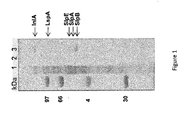
- the obtained proteins were analyzed on SDS PAGE as compared to whole-cell protein extract and to culture supernatant.
- the figure 1 shows a whole-cell protein extract (line 1), the culture supernatant (line 2) and a Guanidine hydrochloride extract (line 3) separated on 10% SDS PAGE.
- the major surface layer protein, SlpB was further characterized using LC-MS for accurate molecular mass determination. It was separated by reverse phase chromatography and the major peak (elution time 31 minutes) gave a clear MS signal. The corresponding raw MS spectrum showing a single protein charge state envelope allowed reconstruction of a deconvoluted mass spectrum. The deduced average molecular weight of this protein was 54,147 Da, with an accuracy of +- 5Da, considering the thirty most intense charge states of the protein visible on the mass spectrum. This mass did not correspond with any of the one predicted for the 5 proteins identified in this extract.
- a guanidine hydrochloride preparative extraction was performed on P. freudenreichii ITG P20.
- the immunomodulatory properties of the extract were evaluated on human PBMCs, in comparison with intact propionibacteria.
- Peripheral Blood Mononuclear Cells were isolated from blood of three healthy donors and reference bacterial strains were prepared as previously described ( FOLIGNÉ et al., World J Gastroenterol., vol.13 (2), 236-243, 2007 ).
- Propionibacteria were harvested from fermented milk ultrafiltrate and were either guanidine-extracted (as described above) or left untreated.
- Propionibacteria, extracted or not, were washed in PBS and resuspended in PBS containing 20% glycerol at the same density (turbidimetry Mc Farland unit 3, as previously described). They were then added to PBMCs at a propionibacteria-to-immune cell ratio of 5. Finally, a P.
- freudenreichii guanidine hydrochloride surface protein extract was extensively dialyzed against PBS, proteins were quantified using the Bradford Assay. Different amounts (0.5 to 50 ⁇ g, see Figure 3 ) of extracted surface proteins were then added to PBMCs. After 24-h stimulation, culture supernatants were collected, clarified by centrifugation and stored at -20°C until cytokine analysis. These were quantified by ELISA using antibodies provided by R&D systems, for IL-6 and TNF- ⁇ or by BD Pharmingen for IL-10, IL-12 and IFN- ⁇ .
- PBMCs were stimulated by the pro-inflammatory Lactococcus lactis MG1363, by the guanidine P. freudenreichii surface protein extract, or by the combination thereof
- S-layer proteins are reportedly involved in adhesion and immunomodulation in other bacteria. They are anchored to cell wall via electrostatic interactions involving SLH domains and pyruvylated cell wall polymers.
- the figure 2 shows the aminoacid sequence of slpB and surface accessibility.
- the signal sequence is underlined.
- the potent trypsin cleavage sites are indicated by dark triangles following lysine (K) and arginine residues (R).
- the peptides detected in the shaving extracellular fraction are highlighted, evidencing the surface-accessible cleavage sites.
- the 3 SLH domains detected in slpB are indicated.
- slpB gene was mutated by insertional inactivation as previously described ( DEUTSCH et al., Appl. Environ. Microbiol., vol.76 (9), 2740-2746, 2010 ). Briefly, a suicide vector was constructed by inserting a chloramphenicol resistance gene in a pUC18 plasmid. In the resulting plasmid, an internal fragment of 574-bp of the slpB (SEQ id n°3) Open Reading Frame (ORF) of the strain CIRM-BIA129 was cloned, resulting in the vector pUC:slpB:CmR.
- SEQ id n°3 Open Reading Frame
- the strains of P. freudenreichii to be tested were transformed with this vector and transformants harbouring inserted pUC:slpB:CmR were selected on YEL agar medium with chloramphenicol. The stability of the insertion was checked in YEL without chloramphenicol. Insertional inactivation of the slpB gene was verified by PCR amplification of the corresponding locus.
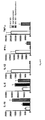
- the figure 6 shows the production of cytokines by human peripheral blood mononuclear cells (PBMCs) in response to bacteria, wild type or mutated. Cytokines were assessed by ELISA in the supernatants collected from 24 h cultures of human PBMCs. As a comparison, a strain mutated in a protein of unknown function, Pouf 4640, was also tested.
- PBMCs peripheral blood mononuclear cells
Landscapes
- Health & Medical Sciences (AREA)
- Chemical & Material Sciences (AREA)
- Life Sciences & Earth Sciences (AREA)
- Organic Chemistry (AREA)
- Proteomics, Peptides & Aminoacids (AREA)
- General Health & Medical Sciences (AREA)
- Engineering & Computer Science (AREA)
- Medicinal Chemistry (AREA)
- Immunology (AREA)
- Bioinformatics & Cheminformatics (AREA)
- Gastroenterology & Hepatology (AREA)
- Pharmacology & Pharmacy (AREA)
- Animal Behavior & Ethology (AREA)
- Public Health (AREA)
- Veterinary Medicine (AREA)
- Biochemistry (AREA)
- Biophysics (AREA)
- Genetics & Genomics (AREA)
- Zoology (AREA)
- Wood Science & Technology (AREA)
- Molecular Biology (AREA)
- Epidemiology (AREA)
- Microbiology (AREA)
- Analytical Chemistry (AREA)
- Physics & Mathematics (AREA)
- Biotechnology (AREA)
- General Engineering & Computer Science (AREA)
- Toxicology (AREA)
- Rheumatology (AREA)
- Pain & Pain Management (AREA)
- Nuclear Medicine, Radiotherapy & Molecular Imaging (AREA)
- General Chemical & Material Sciences (AREA)
- Chemical Kinetics & Catalysis (AREA)
- Medicines That Contain Protein Lipid Enzymes And Other Medicines (AREA)
- Micro-Organisms Or Cultivation Processes Thereof (AREA)
- Peptides Or Proteins (AREA)
Abstract
The present invention relates to a polypeptide comprising or consisting of the amino acid sequence SEQ id n°:1, for use in the treatment or prevention of an inflammatory disease.
The invention further encompasses a nucleic acid sequence encoding a polypeptide of the invention, a vector comprising a nucleic acid of the invention and a host cell comprising a nucleic acid sequence and/or a vector of the invention, for use in the treatment or prevention of an inflammatory disease.
The invention also concerns a pharmaceutical composition comprising a polypeptide, a nucleic acid sequence, a vector or a host cell of the invention and a pharmaceutically acceptable carrier, for the treatment of inflammatory disease.
Description
- The present invention relates to the treatment of inflammatory diseases based on the discovery of a new anti-inflammatory protein.
- Inflammation is a natural biological process, which constitutes a normal part of the response to injuries or infections. This process contributes to the protection of the organism against intern or extern aggressions. However, a dysfunction of the inflammation mechanisms, particularly a persistent or too abundant inflammation may cause important painful and life threatening diseases. Such diseases comprise skin disorders, bowel disorders, some neurological disorders, arthritis, autoimmune diseases... Among them, inflammatory bowel disease is a group of disorders characterized by a chronic and relapsing inflammation of the gastrointestinal tract. The most common form of this group is Crohn disease. The pathogenesis involves an inappropriate and ongoing activation of the mucosal immune system driven by the presence of the intestinal microbiota in a genetically predisposed patient.
- Now, several of these inflammatory diseases remain without treatment or without sufficient treatment. Thus, studying and finding new anti-inflammatory treatment strategies constitutes a major matter in medicine and biomedical research.
- Propionibacterium freudenreichii is a beneficial bacterium used in the food industry as a vitamin producer, as a bio-preservative, as a cheese ripening starter and as a probiotic. It is known to adhere to intestinal epithelial cells and mucus and to modulate important functions of the gut mucosa, including cell proliferation and immune response.
- From patent
US 8,241,684 , it was considered that Propionibacterium freudenreichii produces bifidogenic growth stimulators (BGSs) among which the active component thereof was 1,4-dihydroxy-2-naphthoic acid (DHNA); said DHNA being known to have effects of promoting the growth of bifidobacteria and improving inflammatory conditions of the mucosa in IBDs as well as suppressing infiltration of activated immune cells. - The present invention is based on the discovery by the present inventors of the anti-inflammatory properties of a distinct component of the bacterium Propionibacterium freudenreichii.
- The present invention relates to a polypeptide comprising or consisting of the amino acid sequence SEQ ID NO:1, for use in the treatment or prevention of an inflammatory disease.
- Particularly, said inflammatory disease is a bowel inflammatory disease.
- The invention further encompasses a nucleic acid sequence encoding a polypeptide of the invention, a vector comprising a nucleic acid of the invention and a host cell comprising a nucleic acid sequence and/or a vector of the invention, for use in the treatment or prevention of an inflammatory disease.
- The invention also concerns a pharmaceutical composition comprising a polypeptide, a nucleic acid sequence, a vector or a host cell of the invention and a pharmaceutically acceptable carrier, preferably for the treatment or prevention of inflammatory disease.
- Finally, the invention provides a method for preventing or treating an inflammatory disease in a patient in need thereof, said method comprising the step of administrating said patient with therapeutically effective amount of a polypeptide, a nucleic acid sequence a vector or a host cell of the invention.
-
-
Figure 1 shows a SDS PAGE gel of Guanidine hydrochloride extract of P. freudenreichii. -
Figure 2 shows the amino acid sequence of slpB protein. -
Figure 3 shows the IL-6 and IL-10 production of PBMC contacted with of Guanidine hydrochloride extract of P. freudenreichii. -
Figure 4 shows the IL-12, IFN-γ and TNF-α production of PBMC contacted with of Guanidine hydrochloride extract of P. freudenreichii. -
Figure 5 shows the IL-6, IL-10, IL-12, IFN-γ and TNF-α production of PBMC contacted with of Guanidine hydrochloride extract of P. freudenreichii in conjunction, or not, with Lactococcus lactis MG1363. -
Figure 6 shows the IL-12, IL-10 and TNF-α production of PBMC contacted with P. freudenreichii deleted or not from the slpB gene expression. - A first aspect of the invention relates to a polypeptide comprising or consisting of the amino acid sequence SEQ ID NO:1, said for use in the treatment or prevention of an inflammatory disease.
SEQ id n°:1 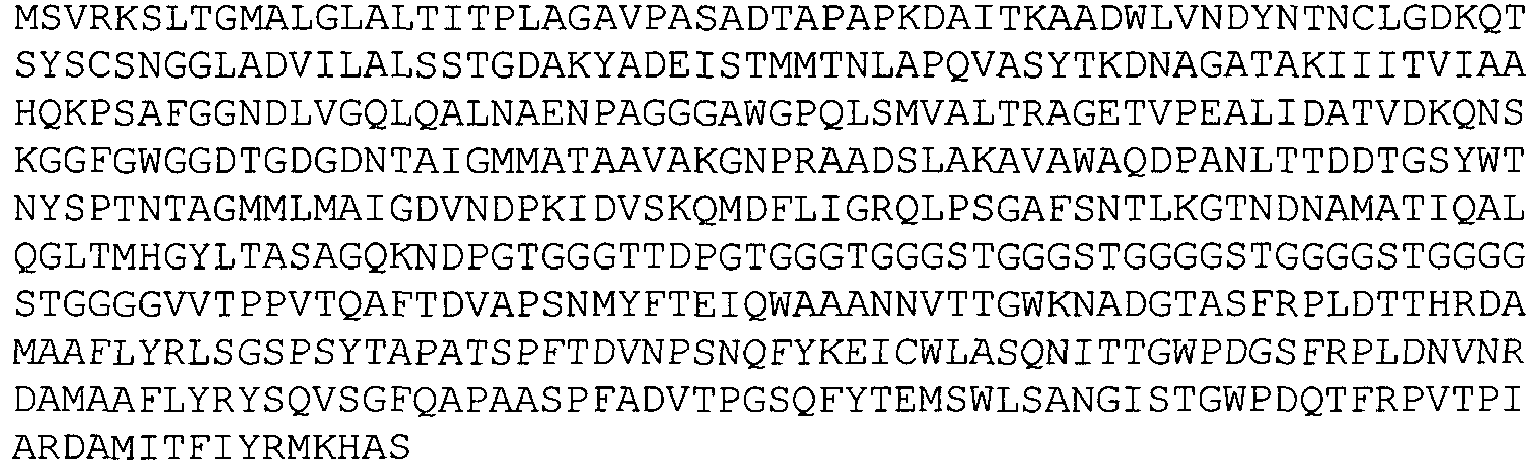
- The term "inflammatory disease" has its general meaning in the art and refers to any disease and condition associated with inflammation. The term may include, but is not limited to, (1) inflammatory or allergic diseases such as systemic anaphylaxis or hypersensitivity responses, drug allergies, insect sting allergies; inflammatory bowel diseases, such as Crohn disease, ulcerative colitis, pouchitis, ileitis and enteritis; vaginitis; psoriasis and inflammatory dermatoses such as dermatitis, eczema, atopic dermatitis, allergic contact dermatitis, urticaria; vasculitis; spondyloarthropathies; scleroderma; respiratory allergic diseases such as asthma, allergic rhinitis, hypersensitivity lung diseases, and the like, (2) autoimmune diseases, such as arthritis (rheumatoid and psoriatic), osteoarthritis, multiple sclerosis, systemic lupus erythematosus, diabetes mellitus, glomerulonephritis, and the like, (3) graft rejection (including allograft rejection and graft-v- host disease), and (4) other diseases in which undesired inflammatory responses are to be inhibited (e. g., atherosclerosis, myositis, inflammatory CNS disorders such as stroke and closed-head injuries, neurodegenerative diseases, Alzheimer's disease, encephalitis, meningitis, osteoporosis, gout, hepatitis, nephritis, sepsis, sarcoidosis, conjunctivitis, otitis, chronic obstructive pulmonary disease, sinusitis and Bechet's syndrome).
- In a particular embodiment of the invention, said inflammatory disease is an inflammatory bowel disease, comprising Crohn disease, ulcerative colitis, ileitis, pouchitis and enteritis.
- In the context of the invention, the term "treating" or "treatment" means reversing, alleviating, inhibiting the progress of, or preventing the disorder or condition to which such term applies, or one or more symptoms of such disorder or condition. The term "preventing" or "prevention" refers to preventing the disease or condition from occurring in a subject which has not yet been diagnosed as having it.
- As used herein, the polypeptide of the invention encompasses derivatives or fragments thereof.
- According to the invention, the term "derivative thereof" has its general meaning in the art and corresponds to an amino acid sequence or a nucleic acid sequence having at least 90% sequence identity to the referred amino acid sequence or nucleic acid sequence respectively, particularly 95%, and preferably 99%. The term "percentage of identity between two amino acid sequences" or "percentage of identity between two nucleic sequences" refers to the percentage of identic nucleotides or amino acids between two compared sequences, said percentage being obtained with the best alignment of the whole sequence. The term "best alignment" means the alignment that permits to obtain the most elevated identity percentage. It can be realized by using various algorithms and methods well known in the art and computer programs based on said algorithms (GAP, BESTFIT, BLAST P, BLAST N, FASTA, TFASTA, Genetics Computer Group, 575 Science Dr., Madison, WI USA). Preferably, the BLAST algorithm is used.
- According to the invention, the term "fragment" refers to a polypeptide being a part of an amino acid sequence of interest and having a length of at least 10 amino acids, particularly at least 15 amino acids, more particularly at least 20 amino acids, preferably at least 30 amino acids, more preferably at least 40 amino acids.
- Preferably, said fragment has a length of less than 450 amino acids, particularly less than 400 amino acids, preferably less than 350 amino acids. The term is transposable to fragments of nucleic acid sequences.
- As an example, said fragment may correspond to the amino acid 32 to 364 of SEQ id n° 1 corresponding to the N-terminal extremity of maturated slpB protein or to fragments thereof.
- According to the invention, said derivative and/or fragment of a polypeptide of the invention are conservative derivative or conservative fragments thereof.
- By "conservative fragments" and "conservative derivatives" of a polypeptide of the invention, it is respectively meant fragments and derivatives which retain the function, namely the anti-inflammatory properties, of said a polypeptide of the invention.
- More specifically, a fragment or a derivative induces the secretion of IL-6 or IL-10 by PBMC. Such conservative fragments and conservative derivatives are functional equivalents of said polypeptide. They are "conservative" because they retain the biological function of the original polypeptide, more particularly because they retain an equivalent anti-inflammatory effect.
- In a preferred embodiment, a polypeptide of the invention or a derivative or a fragment thereof is isolated.
- As used herein, the term polypeptide encompasses polypeptides or proteins following post-translational modifications such as glycosylation, phosphorylation or other modifications of some amino acid residues.
- The present invention thus relates to a polypeptide as described for use as an anti-inflammatory drug.
- As used herein, the term "anti-inflammatory drug" refers to a drug that directly or indirectly reduces inflammation in a tissue.
- A polypeptide of the invention may be produced by conventional automated peptide synthesis methods or by recombinant expression. General principles for designing and making peptides and proteins are well known to those of skill in the art.
- A polypeptide of the invention may be synthesized in solution or on a solid support in accordance with conventional techniques. Various automatic synthesizers are commercially available and can be used in accordance with known protocols. A polypeptide of the invention may also be synthesized by solid-phase technology employing an exemplary peptide synthesizer such as a MODEL 433A from APPLIED BIOSYSTEMS INC. The purity of any given protein; generated through automated peptide synthesis or through recombinant methods may be determined using reverse phase HPLC analysis. Chemical authenticity of each peptide may be established by any method well known to those of skill in the art.
- As an alternative to automated peptide synthesis, recombinant DNA technology may be employed wherein a nucleotide sequence which encodes a protein of choice is inserted into an expression vector, transformed or transfected into an appropriate host cell and cultivated under conditions suitable for expression as described herein below. Recombinant methods are especially preferred for producing longer polypeptides.
- A variety of expression vector/host systems may be utilized to contain and express the peptide or protein coding sequence. These include but are not limited to microorganisms such as bacteria transformed with recombinant bacteriophage, plasmid or cosmid DNA expression vectors; yeast transformed with yeast expression vectors; insect cell systems infected with virus expression vectors (e.g., baculovirus); plant cell systems transfected with virus expression vectors (e.g., cauliflower mosaic virus, CaMV; tobacco mosaic virus, TMV) or transformed with bacterial expression vectors (e.g., Ti or pBR322 plasmid); or animal cell systems, including mammalian cell systems. Those of skill in the art are aware of various techniques for optimizing mammalian expression of proteins. Mammalian cells that are useful in recombinant protein productions include, but are not limited to, VERO cells, HeLa cells, Chinese hamster ovary (CHO) cell lines, COS cells (such as COS-7), W138, BHK, HepG2, Caco-2, HT29, HEK, HCT 116, 3T3, RIN, MDCK, A549,
PC 12, K562 and 293 cells. - Exemplary protocols for the recombinant expression of the peptide substrates or fusion polypeptides in bacteria, yeast and other invertebrates are known to those of skill in the art and a briefly described herein below.
- In the recombinant production of the polypeptide of the invention, it would be necessary to employ vectors comprising a nucleic acid sequence encoding such a polypeptide. Methods of preparing such vectors as well as producing host cells transformed with such vectors are well known to those skilled in the art. The polynucleotide molecules used in such an endeavor may be joined to a vector, which generally includes a selectable marker and an origin of replication, for propagation in a host. These elements of the expression constructs are well known to those of skill in the art. Generally, the expression vectors include DNA encoding the given protein being operably linked to suitable transcriptional or translational regulatory sequences, such as those derived from a mammalian, microbial, viral, or insect genes. Examples of regulatory sequences include transcriptional promoters, operators, or enhancers, mRNA ribosomal binding sites, and appropriate sequences which control transcription and translation.
- The choice of a suitable expression vector for expression of the polypeptide of the invention will of course depend upon the specific host cell to be used, and is within the skill of the ordinary artisan.
- Expression requires that appropriate signals be provided in the vectors, such as enhancers/promoters from both viral and mammalian sources that may be used to drive expression of the nucleic acids of interest in host cells. Usually, the nucleic acid being expressed is under transcriptional control of a promoter. A "promoter" refers to a DNA sequence recognized by the synthetic machinery of the cell, or introduced synthetic machinery, required to initiate the specific transcription of a gene. Nucleotide sequences are operably linked when the regulatory sequence functionally relates to the nucleic acid sequence encoding the polypeptide of interest (i.e., a polypeptide of the invention, a derivative or fragment thereof and the like). Thus, a promoter nucleotide sequence is operably linked to a given DNA sequence if the promoter nucleotide sequence directs the transcription of the sequence.
- Similarly, the phrase "under transcriptional control" means that the promoter is in the correct location and orientation in relation to the nucleic acid to control RNA polymerase initiation and expression of the gene. Any promoter that will drive the expression of the nucleic acid may be used. The particular promoter employed to control the expression of a nucleic acid sequence of interest is not believed to be important, so long as it is capable of directing the expression of the nucleic acid in the targeted cell. Thus, where a human cell is targeted, it is preferable to position the nucleic acid coding region adjacent to and under the control of a promoter that is capable of being expressed in a human cell. Generally speaking, such a promoter might include either a human or viral promoter. Common promoters include, e.g., the human cytomegalovirus (CMV) immediate early gene promoter, the SV40 early promoter, the Rous sarcoma virus long terminal repeat, [beta]-actin, rat insulin promoter, the phosphoglycerol kinase promoter and glyceraldehyde-3 -phosphate dehydrogenase promoter, all of which are promoters well known and readily available to those of skill in the art, can be used to obtain high-level expression of the coding sequence of interest. The use of other viral or mammalian cellular or bacterial phage promoters which are well-known in the art to achieve expression of a coding sequence of interest is contemplated as well, provided that the levels of expression are sufficient to produce a recoverable yield of protein of interest. By employing a promoter with well known properties, the level and pattern of expression of the protein of interest following transfection or transformation can be optimized. Inducible promoters also may be used.
- Another regulatory element that is used in protein expression is an enhancer. These are genetic elements that increase transcription from a promoter located at a distant position on the same molecule of nucleic acid. Where an expression construct employs a cDNA insert, one will typically desire to include a polyadenylation signal sequence to effect proper polyadenylation of the gene transcript. Any polyadenylation signal sequence recognized by cells of the selected transgenic animal species is suitable for the practice of the invention, such as human or bovine growth hormone and SV40 polyadenylation signals.
- A second object of the invention relates to a nucleic acid sequence encoding a polypeptide of the invention for use in the treatment or prevention of an inflammatory disease.
- In a particular embodiment of the invention, said inflammatory disease is an inflammatory bowel disease.
- As used herein, said nucleic acid sequence may be a DNA or a RNA sequence.
- In a preferred embodiment, said nucleic acid sequence encodes a polypeptide comprising or consisting of the nucleic acid sequence SEQ id n°:2.
- As used herein, said nucleic acid sequence encompasses derivatives or fragments thereof. Preferably, said derivatives or fragments are conservative derivatives or fragments.
- In a preferred embodiment, said nucleic acid sequence, derivative or fragment thereof is isolated.
- A third object of the invention relates to a vector comprising a nucleic acid sequence of the invention for use in the treatment or prevention of an inflammatory disease.
- In a particular embodiment of the invention, said inflammatory disease is an inflammatory bowel disease.
- The term "vector" (or "cloning vector" and "expression vector") means the vehicle by which a nucleic acid sequence can be introduced into a host cell, so as to transform the host and promote expression (e.g. transcription and translation) of the introduced sequence.
- Typically, a nucleic acid sequence of the invention may be included in any suitable vector, such as a plasmid, cosmid, episome, artificial chromosome, phage or a viral vector.
- Such vectors may comprise regulatory elements, such as a promoter, enhancer, terminator and the like, to cause or direct expression of said polypeptide upon administration to a subject. Examples of promoters and enhancers used in the expression vector for animal cell are well known in the art and include early promoter and enhancer of SV40, LTR promoter and enhancer of Moloney mouse leukemia virus, promoter and enhancer of immunoglobulin H chain and the like.
- According to the invention, any expression vector for animal cell can be used, so long as a nucleic acid sequence of the invention can be inserted and expressed. Examples of suitable vectors include pAGE107, pAGE103, pHSG274, pKCR, pSG1 beta d2-4 and the like.
- Other examples of plasmids include replicating plasmids comprising an origin of replication, or integrative plasmids, such as for instance pUC, pcDNA, pBR, and the like.
- Other examples of viral vector include adenoviral, retroviral, herpes virus and AAV vectors. Such recombinant viruses may be produced by techniques known in the art, such as by transfecting packaging cells or by transient transfection with helper plasmids or viruses. Typical examples of virus packaging cells include PA317 cells, PsiCRIP cells, GPenv+ cells, 293 cells, etc. Detailed protocols for producing such replication-defective recombinant viruses may be found for instance in
WO 95/14785 WO 96/22378 US 5,882,877 ,US 6,013,516 ,US 4,861,719 ,US 5,278,056 andWO94/19478 - A fourth object of the present invention relates to a host cell which has been transfected, infected or transformed by a nucleic acid sequence and/or a vector of the invention for use in the treatment or prevention of an inflammatory disease.
- In a particular embodiment of the invention, said inflammatory disease is an inflammatory bowel disease.
- The term "transformation" means the introduction of a "foreign" nucleic acid sequence to a host cell, so that the host cell will express the introduced sequence to produce a desired substance, typically a polypeptide encoded by the introduced sequence. A host cell that receives and expresses introduced DNA or RNA bas been "transformed".
- Examples of host cells that may be used for the invention are well known in the art, and some of them are described above.
- In a particular embodiment of the invention, said host cell may be a probiotic.
- Said probiotic is a is a host cell, generally a bacterium or yeast cell, which has been transfected, infected or transformed by a nucleic acid sequence and/or a vector of the invention.
- Examples of host cells that can be used comprise, but are not limited to, Bacillus coagulans, Bifidobacterium animalis, Bifidobacterium longum, Lactobacillus acidophilus, Lactobacillus paracasei, Lactobacillus johnsonii, Lactobacillus plantarum, Lactobacillus reuteri, Lactobacillus reuteri Protectis, Saccharomyces boulardii, Lactobacillus rhamnosus, Lactobacillus acidophilus, Lactobacillus acidophilus, Lactobacillus bulgaricus, and Streptococcus thermophilus.
- Vectors and host cells of the invention are adapted to an administration in patients, preferably humans. One skilled in the art can easily choose such vectors and host cells.
- In one embodiment, the invention relates to a nucleic acid, vector or host cell of the invention for use as an anti-inflammatory drug.
- According to the invention, the nucleic acid sequence, vector and host cell of the invention may be used to produce a recombinant polypeptide of the invention in a suitable expression system.
- A fifth object of the invention relates to a pharmaceutical compositions comprising a polypeptide of the invention, a nucleic acid sequence of the invention, a vector of the invention or a host cell of the invention and a pharmaceutically acceptable carrier.
- In one embodiment, the invention relates to said pharmaceutical composition for the treatment of inflammatory disease.
- In a more particular embodiment of the invention, said inflammatory disease is an inflammatory bowel disease.
- The term "pharmaceutically" or "pharmaceutically acceptable" refers to molecular entities and compositions that do not produce an adverse, allergic or other untoward reaction when administered to a mammal, especially a human, as appropriate. A pharmaceutically acceptable carrier or excipient refers to a non-toxic solid, semi-solid or liquid filler, diluent, encapsulating material or formulation auxiliary of any type.
- The polypeptide, nucleic acid sequence, vector or host cell of the invention may be combined with pharmaceutically acceptable excipients, and optionally sustained-release matrices, such as biodegradable polymers, to form therapeutic compositions.
- In general, polypeptide, nucleic acid sequence, vector or host cell of the present invention will be administered as pharmaceutical formulations including those suitable for oral (including buccal and sub-lingual), rectal, nasal, topical, pulmonary, vaginal, or parenteral (including intramuscular, intraarterial, intrathecal, subcutaneous and intravenous) administration or in a form suitable for administration by inhalation or insufflation. The preferred manner of administration is generally oral, using a convenient daily dosage regimen which can be adjusted according to the degree of affliction.
- A polypeptide, nucleic acid sequence, vector or host cell of the present invention, together with one or more conventional adjuvants, carriers, or diluents, may be placed into the form of pharmaceutical compositions and unit dosages. The pharmaceutical compositions and unit dosage forms may comprise conventional ingredients in conventional proportions, with or without additional active compounds or principles, and the unit dosage forms may contain any suitable effective amount of the active ingredient commensurate with the intended daily dosage range to be employed. The pharmaceutical compositions may be employed as solids, such as tablets or filled capsules, semisolids, powders, sustained release formulations, or liquids such as solutions, suspensions, emulsions, elixirs, or filled capsules for oral use; or in the form of suppositories for rectal or vaginal administration; or in the form of sterile injectable solutions for parenteral use. Formulations containing about one (1) milligram of active ingredient or, more broadly, about 0.01 to about one hundred (100) milligrams, per tablet, are accordingly suitable representative unit dosage forms.
- The polypeptide, nucleic acid sequence, vector or host cell of the present invention may be formulated in a wide variety of oral administration dosage forms. The pharmaceutical compositions and dosage forms may comprise a polypeptide, nucleic acid sequence, vector or host cell of the present invention or pharmaceutically acceptable salts thereof as the active component. The pharmaceutically acceptable carriers may be either solid or liquid. Solid form preparations include powders, tablets, pills, capsules, cachets, suppositories, and dispersible granules. A solid carrier may be one or more substances which may also act as diluents, flavoring agents, solubilizers, lubricants, suspending agents, binders, preservatives, tablet disintegrating agents, or an encapsulating material. In powders, the carrier generally is a finely divided solid which is a mixture with the finely divided active component. In tablets, the active component generally is mixed with the carrier having the necessary binding capacity in suitable proportions and compacted in the shape and size desired. The powders and tablets preferably contain from about one (1) to about seventy (70) percent of the active compound. Suitable carriers include but are not limited to magnesium carbonate, magnesium stearate, talc, sugar, lactose, pectin, dextrin, starch, gelatin, gum tragacanth, methylcellulose, sodium carboxymethylcellulose, a low melting wax, cocoa butter, and the like. The term "preparation" is intended to include the formulation of the active compound with encapsulating material as carrier, providing a capsule in which the active component, with or without carriers, is surrounded by a carrier, which is in association with it. Similarly, cachets and lozenges are included. Tablets, powders, capsules, pills, cachets, and lozenges may be as solid forms suitable for oral administration.
- Other forms suitable for oral administration include liquid form preparations including emulsions, syrups, elixirs, aqueous solutions, aqueous suspensions, or solid form preparations which are intended to be converted shortly before use to liquid form preparations. Emulsions may be prepared in solutions, for example, in aqueous propylene glycol solutions or may contain emulsifying agents, for example, such as lecithin, sorbitan monooleate, or acacia. Aqueous solutions can be prepared by dissolving the active component in water and adding suitable colorants, flavors, stabilizers, and thickening agents.
- Aqueous suspensions can be prepared by dispersing the finely divided active component in water with viscous material, such as natural or synthetic gums, resins, methylcellulose, sodium carboxymethylcellulose, and other well known suspending agents. Solid form preparations include solutions, suspensions, and emulsions, and may contain, in addition to the active component, colorants, flavors, stabilizers, buffers, artificial and natural sweeteners, dispersants, thickeners, solubilizing agents, and the like.
- The polypeptide, nucleic acid sequence, vector or host cell of the present invention may be formulated for parenteral administration (e.g., by injection, for example bolus injection or continuous infusion) and may be presented in unit dose form in ampoules, prefilled syringes, small volume infusion or in multi-dose containers with an added preservative. The compositions may take such forms as suspensions, solutions, or emulsions in oily or aqueous vehicles, for example solutions in aqueous polyethylene glycol. Examples of oily or nonaqueous carriers, diluents, solvents or vehicles include propylene glycol, polyethylene glycol, vegetable oils (e.g., olive oil), and injectable organic esters (e.g., ethyl oleate), and may contain formulatory agents such as preserving, wetting, emulsifying or suspending, stabilizing and/or dispersing agents.
- Alternatively, the active ingredient may be in powder form, obtained by aseptic isolation of sterile solid or by lyophilization from solution for constitution before use with a suitable vehicle, e.g., sterile, pyrogen-free water.
- The polypeptide, nucleic acid sequence, vector or host cell of the present invention may be formulated for topical administration to the epidermis as ointments, creams or lotions, or as a transdermal patch. Ointments and creams may, for example, be formulated with an aqueous or oily base with the addition of suitable thickening and/or gelling agents. Lotions may be formulated with an aqueous or oily base and will in general also containing one or more emulsifying agents, stabilizing agents, dispersing agents, suspending agents, thickening agents, or coloring agents. Formulations suitable for topical administration in the mouth include lozenges comprising active agents in a flavored base, usually sucrose and acacia or gum tragacanth; pastilles comprising the active ingredient in an inert base such as gelatin and glycerin or sucrose and acacia; and mouthwashes comprising the active ingredient in a suitable liquid carrier.
- The polypeptide, nucleic acid sequence, vector or host cell of the present invention may be formulated for administration as suppositories. A low melting wax, such as a mixture of fatty acid glycerides or cocoa butter is first melted and the active component is dispersed homogeneously, for example, by stirring. The molten homogeneous mixture is then poured into convenient sized molds, allowed to cool, and to solidify.
- The polypeptide, nucleic acid sequence, vector or host cell of the present invention may be formulated for vaginal administration.
- Pessaries, tampons, creams, gels, pastes, foams or sprays containing in addition to the active ingredient such carriers as are known in the art to be appropriate.
- The polypeptide, nucleic acid sequence, vector or host cell of the present invention may be formulated for nasal administration. The solutions or suspensions are applied directly to the nasal cavity by conventional means, for example, with a dropper, pipette or spray. The formulations may be provided in a single or multidose form. In the latter case of a dropper or pipette, this may be achieved by the patient administering an appropriate, predetermined volume of the solution or suspension. In the case of a spray, this may be achieved for example by means of a metering atomizing spray pump.
- The polypeptide, nucleic acid sequence, vector or host cell of the present invention may be formulated for aerosol administration, particularly to the respiratory tract and including intranasal administration. The compound will generally have a small particle size for example of the order of five (5) microns or less.
- Such a particle size may be obtained by means known in the art, for example by micronization. The active ingredient is provided in a pressurized pack with a suitable propellant such as a chlorofluorocarbon (CFC), for example, dichlorodifluoromethane, trichlorofluoromethane, or dichlorotetrafluoroethane, nitrogen, nitrous oxide, carbon dioxide or other suitable gas. The aerosol may conveniently also contain a surfactant such as lecithin. The dose of drug may be controlled by a metered valve. Alternatively the active ingredients may be provided in a form of a dry powder, for example a powder mix of the compound in a suitable powder base such as lactose, starch, starch derivatives such as hydroxypropylmethyl cellulose and polyvinylpyrrolidine (PVP). The powder carrier will form a gel in the nasal cavity. The powder composition may be presented in unit dose form for example in capsules or cartridges of e.g., gelatin or blister packs from which the powder may be administered by means of an inhaler.
- When desired, formulations can be prepared with enteric coatings adapted for sustained or controlled release administration of the active ingredient. For example, the compounds of the present invention can be formulated in transdermal or subcutaneous drug delivery devices. These delivery systems are advantageous when sustained release of the compound is necessary and when patient compliance with a treatment regimen is crucial. Compounds in transdermal delivery systems are frequently attached to a skin-adhesive solid support.
- Other pharmaceutically acceptable forms include, e.g. tablets or other solids for oral administration; time release capsules; and any other form currently used. Non degradable capsules, or gastro-resistant capsules may also be used. Such pharmaceutical forms are well known in the art.
- In certain embodiments, the use of liposomes and/or nanoparticles is contemplated for the administration of polypeptide, nucleic acid sequence, vector or host cell of the present invention. Liposomes are particularly suitable for an oral administration of a hydrophobic compound. The formation and use of liposomes and/or nanoparticles are known to those of skill in the art.
- In the particular embodiment of the treatment of an inflammatory bowel disease, more particularly Crohn disease, an oral or a rectal administration are preferred. For oral administration, gastro-resistant, non degradable and time release capsules are preferred.
- In the particular embodiment of a composition of the invention comprising a host cell of the invention which is a probiotic, the composition may be used by oral administration.
- In general, the polypeptide, nucleic acid sequence, vector or host cell of the present invention will be administered in a therapeutically effective amount by any of the accepted modes of administration for agents that serve similar utilities. Suitable dosage ranges are typically about 1-500 mg daily, preferably about 1-100 mg daily, and most preferably about 1-30 mg daily, depending upon numerous factors such as the severity of the disease to be treated, the age and relative health of the subject, the potency of the compound used, the route and form of administration, the indication towards which the administration is directed, and the preferences and experience of the medical practitioner involved. One of ordinary skill in the art of treating such diseases will be able, without undue experimentation and in reliance upon personal knowledge and the disclosure of this Application, to ascertain a therapeutically effective amount of the compounds of the present invention for a given disease.
- The pharmaceutical preparations are preferably in unit dosage forms. In such form, the preparation is subdivided into unit doses containing appropriate quantities of the active component. The unit dosage form can be a packaged preparation, the package containing discrete quantities of preparation, such as packeted tablets, capsules, and powders in vials or ampoules. Also, the unit dosage form can be a capsule, tablet, cachet, or lozenge itself, or it can be the appropriate number of any of these in packaged form.
- A sixth object of the invention relates to a method for preventing or treating an inflammatory disease in a patient in need thereof, said method comprising the step of administrating said patient with therapeutically effective amount of a polypeptide, a nucleic acid sequence a vector or a host cell of the invention.
- In a particular embodiment of the invention, said inflammatory disease is an inflammatory bowel disease.
- The term "patient" refers to any subject, preferably a human, afflicted with or susceptible to be afflicted with an inflammatory disease.
- The terms "effective amount" and "therapeutically effective amount" refer to a sufficient amount of the agent to provide the desired biological result at a reasonable benefit/risk ratio applicable to any medical treatment. That result can be prevention, reduction and/or alleviation of the signs, symptoms, or causes of a disease, or any other desired alteration of a biological system having or at risk of having such signs, symptoms, or disease. An appropriate "effective" amount in any individual case may be determined by one of ordinary skill in the art using routine experimentation.
- It will be understood that the total daily usage of the compounds and compositions of the present invention will be decided by the attending physician within the scope of sound medical judgment. The specific therapeutically effective dose level for any particular patient will depend upon a variety of factors including the disorder being treated and the severity of the disorder; activity of the specific compound employed; the specific composition employed, the age, body weight, general health, sex and diet of the patient; the time of administration, route of administration, and rate of excretion of the specific compound employed; the duration of the treatment; drugs used in combination or coincidental with the specific polypeptide employed; and like factors well known in the medical arts. For example, it is well known within the skill of the art to start doses of the compound at levels lower than those required to achieve the desired therapeutic effect and to gradually increase the dosage until the desired effect is achieved. However, the daily dosage of the products may be varied over a wide range from 0.01 to 1,000 mg per adult per day. Preferably, the compositions contain 0.01, 0.05, 0.1, 0.5, 1.0, 2.5, 5.0, 10.0, 15.0, 25.0, 50.0, 100, 250 and 500 mg of the active ingredient for the symptomatic adjustment of the dosage to the patient to be treated. A medicament typically contains from about 0.01 mg to about 500 mg of the active ingredient, preferably from 1 mg to about 100 mg of the active ingredient. An effective amount of the drug is ordinarily supplied at a dosage level from 0.0002 mg/kg to about 20 mg/kg of body weight per day, especially from about 0.001 mg/kg to 7 mg/kg of body weight per day.
- The following examples describe some of the preferred modes of making and practicing the present invention. However, it should be understood that the examples are for illustrative purposes only and are not meant to limit the scope of the invention.
- Analysis of the draft genomic sequence of the P. freudenreichii ITG P20 strain revealed 2324 predicted protein-coding genes. This number is close to that in the type strain CIRM-
BIA 1T, the first publically available sequenced genome of P. freudenreichii, which contained 2439 protein-coding genes. - P. freudenreichii strain ITG P20, also called CIRM-BIA 129, was provided by the CIRM-BIA Biological Resource Center (Centre International de Ressources Microbiennes-Bacteries d'Intérêt Alimentaire, INRA, Rennes, France). It was cultivated at 30°C without shaking in cow milk ultrafiltrate supplemented with 50 mM of sodium L-lactate (GALAFLOW SL60, ARNAUD) and 5 g/L of casein hydrolysate (ORGANOTECHNIE), sterilized by 0.2 µm filtration (NALGENE). Milk ultrafiltrate was produced using a UF pilot equipment (T.I.A) equipped with organic spiral membrane with a molecular weight cut-off of 5 kDa (KOCH INTERNATIONAL). Growth was monitored spectrophotometrically at 650 nm (OD650), as well as by counting colony-forming units (CFU) in YEL medium containing 1.5% agar. 100mf of stationary phase culture of bacteria were harvested in stationary phase (76 hours, 109 CFU/mL) by centrifugation (6 000 x g, 10 min, 4°C), and washed in an equal volume of PBS prior to resuspension in 5M guanidine hydrochloride to a final OD650 of 20. The suspension was incubated 15 min at 50°C prior to centrifugation (21 000 x g, 20 min, 30°C) to eliminate cells. The supernatant was then dialyzed exhaustively against 0.1 % SDS in distilled water during 24 h at 4°C using 10,000 kDa cutoff Slide-A-Lyer® Dialysis Cassette (THERMOSCIENTIFIC) prior to proteomic investigations.
- The obtained proteins were analyzed on SDS PAGE as compared to whole-cell protein extract and to culture supernatant.
- The
figure 1 shows a whole-cell protein extract (line 1), the culture supernatant (line 2) and a Guanidine hydrochloride extract (line 3) separated on 10% SDS PAGE. - This electrophoretic analysis revealed the presence of five protein bands in the guanidine extract (
figure 1 , lane 3). Thegel lane number 3 was sliced and all the strips were subjected to in-gel trypsin digestion followed by nano-LC-MS/MS analysis. - Five proteins, indicated in the corresponding gel zones in
Figure 1 , were clearly identified by MS/MS with 3 to 34 unique peptides. These were internalin A (InlA), large surface protein A (lspA), surface protein with SLH Domain E (slpE), surface layer protein slpA and slpB. - The major surface layer protein, SlpB, was further characterized using LC-MS for accurate molecular mass determination. It was separated by reverse phase chromatography and the major peak (elution time 31 minutes) gave a clear MS signal. The corresponding raw MS spectrum showing a single protein charge state envelope allowed reconstruction of a deconvoluted mass spectrum. The deduced average molecular weight of this protein was 54,147 Da, with an accuracy of +- 5Da, considering the thirty most intense charge states of the protein visible on the mass spectrum. This mass did not correspond with any of the one predicted for the 5 proteins identified in this extract. However, a 29 residues long signal peptide was predicted using the PHOBIUS tool (Stockholm Bioinformatics Centre) in the 556 residues slpB gene sequence (See in
Figure 2 ). The resulting 527 residues processed protein had a theoretical mass of 54,145 Da, which is compatible with the 54,147 Da experimental mass, considering the accuracy of the spectrometric measure. This confirms that processed slpB is the main protein in the guanidine extract of P. freudenreichii ITG P20. - A guanidine hydrochloride preparative extraction was performed on P. freudenreichii ITG P20. The immunomodulatory properties of the extract were evaluated on human PBMCs, in comparison with intact propionibacteria.
- Peripheral Blood Mononuclear Cells were isolated from blood of three healthy donors and reference bacterial strains were prepared as previously described (FOLIGNÉ et al., World J Gastroenterol., vol.13 (2), 236-243, 2007). Propionibacteria were harvested from fermented milk ultrafiltrate and were either guanidine-extracted (as described above) or left untreated. Propionibacteria, extracted or not, were washed in PBS and resuspended in PBS containing 20% glycerol at the same density (turbidimetry
Mc Farland unit 3, as previously described). They were then added to PBMCs at a propionibacteria-to-immune cell ratio of 5. Finally, a P. freudenreichii guanidine hydrochloride surface protein extract (see above) was extensively dialyzed against PBS, proteins were quantified using the Bradford Assay. Different amounts (0.5 to 50 µg, seeFigure 3 ) of extracted surface proteins were then added to PBMCs. After 24-h stimulation, culture supernatants were collected, clarified by centrifugation and stored at -20°C until cytokine analysis. These were quantified by ELISA using antibodies provided by R&D systems, for IL-6 and TNF-α or by BD Pharmingen for IL-10, IL-12 and IFN-γ. - The
figure 3 A and B show the production of IL-10 and IL-6 respectively by human peripheral blood mononuclear cells (PBMCs) in response to stimulation with reference bacteria Bifidobacterium longum BB536 and Lactococcus lactis MG1363 (white bars), with Propionibacterium freudenreichii ITG P20, either untreated (black bars) or guanidine-treated (hatched bars), or with 0.5, 1.0, 5.0 and 50 µg of guanidine-extracted proteins (grey bars). Data are expressed in pg/ml as mean ± SEM (n = 3 healthy donors). - The
figure 4 A, B and C show the production of IL-12, IFN-γ and TNF-α respectively by human peripheral blood mononuclear cells (PBMCs) in response to stimulation with reference bacteria Bifidobacterium longum BB536 and Lactococcus lactis MG1363 (white bars), with Propionibacterium freudenreichii ITG P20, either untreated (black bars) or guanidine-treated (hatched bars), or with 0.5, 1.0, 5.0 and 50 µg of guanidine-extracted proteins (grey bars). Data are expressed in pg/ml as mean ± SEM (n = 3 healthy donors). - The results established that the guanidine surface protein extract induced release of IL-10 and IL-6, in a dose-dependent manner (
Figure 3 A & B ), with little or no effect on IL-12, TNF-α and IFN-γ (Figure 4 A to C ), in human PBMCs. As a comparison, intact P. freudenreichii ITG P20 cells induced release of the 4 cytokines, IL-10, IL-6, TNF-α and IFN-γ. However, guanidine-treated P. freudenreichii ITG P20 lost the ability to induce IL-10. This indicates that the surface extractable proteins trigger the release of the immunomodulatory cytokines IL-10 and IL-6. As a control, same amounts of bovine serum albumin were tested and induced no cytokine secretion in PBMCs (data not shown). - In a second experiment, PBMCs were stimulated by the pro-inflammatory Lactococcus lactis MG1363, by the guanidine P. freudenreichii surface protein extract, or by the combination thereof
- The
figure 5 shows the production of cytokines by human PBMCs in response to L. lactis MG1363 (white bars), 50 µg of extracted proteins (grey bars), or the combination thereof (hatched bars). Data are expressed in pg/ml as mean ± SEM (n = 3 healthy donors). - The results established that L. lactis induced secretion of the pro-inflammatory cytokines IL-12, IFN-γ and TNF-α. By contrast, the guanidine extract induced IL-10 and IL-6 secretion. Moreover, this extract, when applied in conjunction with the pro-inflammatory L. lactis, drastically reduced induction of the pro-inflammatory cytokines IL-12, IFN-γ and TNF-α by this bacterium. This confirms the immunomodulatory effect of P. freudenreichii surface proteins, with a marked anti-inflammatory profile.
- We used the peptides detected by shaving (i.e. released from bacterial cells by trypsin digestion of live P. freudenreichii cells) to specify the surface topology of splB and identify the exposed domains, most likely to interact with the host.
- S-layer proteins are reportedly involved in adhesion and immunomodulation in other bacteria. They are anchored to cell wall via electrostatic interactions involving SLH domains and pyruvylated cell wall polymers.
- The
figure 2 shows the aminoacid sequence of slpB and surface accessibility. The signal sequence is underlined. The potent trypsin cleavage sites are indicated by dark triangles following lysine (K) and arginine residues (R). The peptides detected in the shaving extracellular fraction are highlighted, evidencing the surface-accessible cleavage sites. The 3 SLH domains detected in slpB are indicated. - As indicated in
Figure 2 , extracellular released peptides covered 49% of P. freudenreichii slpB protein, showing great surface accessibility of the N-terminal part, except for the cleavable signal sequence. By contrast, the C-terminal region, containing 3 predicted SLH domains, was poorly represented. This confirms the hypothesis that slpB SLH domains are embedded in the peptidoglycan thick layer, thus not accessible to the enzyme - Data acquired using both the ITG P20 / CIRM BIA 129 strain of P. freudenreichii and the dialyzed guanidine extract strongly suggested the implication of SlpB in the immunomodulatory properties of the strain.
- To confirm this hypothese, the corresponding slpB gene was mutated by insertional inactivation as previously described (DEUTSCH et al., Appl. Environ. Microbiol., vol.76 (9), 2740-2746, 2010). Briefly, a suicide vector was constructed by inserting a chloramphenicol resistance gene in a pUC18 plasmid. In the resulting plasmid, an internal fragment of 574-bp of the slpB (SEQ id n°3) Open Reading Frame (ORF) of the strain CIRM-BIA129 was cloned, resulting in the vector pUC:slpB:CmR.
- The strains of P. freudenreichii to be tested were transformed with this vector and transformants harbouring inserted pUC:slpB:CmR were selected on YEL agar medium with chloramphenicol. The stability of the insertion was checked in YEL without chloramphenicol. Insertional inactivation of the slpB gene was verified by PCR amplification of the corresponding locus.
- The
figure 6 shows the production of cytokines by human peripheral blood mononuclear cells (PBMCs) in response to bacteria, wild type or mutated. Cytokines were assessed by ELISA in the supernatants collected from 24 h cultures of human PBMCs. As a comparison, a strain mutated in a protein of unknown function,Pouf 4640, was also tested. - The resulting mutant was compared to the wild type strain with respect to cytokine induction in human PBMCs. As shown in
Figure 6 , inactivation of the slpB gene (slpB-/-) led to drastic reduction of the level of induced cytokines. By contrast, inactivation of the Pouf 4640 (4640-/-) gene had little or no effect on the immunomodulatory properties of P. freudenreichii. - In conclusion, we have demonstrated that splB is a key factor of the immunomodulation P. freudenreichii.


Claims (9)
- A polypeptide comprising or consisting of the amino acid sequence SEQ id n°:1, a conservative derivative or fragment thereof, for use in the treatment or prevention of an inflammatory disease.
- The polypeptide for use in the treatment or prevention of an inflammatory disease according to claim 1, wherein said inflammatory disease is an inflammatory bowel disease, chosen among Crohn disease, ulcerative colitis, ileitis, pouchitis and enteritis.
- The polypeptide according to any one of claims 1 or 2, wherein said fragment consists in the amino acid 32 to 352 of SEQ id n°1.
- A nucleic acid sequence encoding a polypeptide as defined in any one of claims 1-3 for use in the treatment or prevention of an inflammatory disease.
- A vector comprising a nucleic acid sequence as defined in claim 4, for use in the treatment or prevention of an inflammatory disease.
- A host cell which has been transfected, infected or transformed by a nucleic acid sequence as defined in claim 4 and/or a vector as defined in claim 5, for use in the treatment or prevention of an inflammatory disease.
- A pharmaceutical composition comprising a polypeptide as defined in claims 1-3, a nucleic acid sequence as defined in 4, a vector as defined in claim 5 or a host cell as defined in claim 6 and a pharmaceutically acceptable carrier.
- The pharmaceutical composition of claim 7 for the treatment or prevention of an inflammatory disease.
- The pharmaceutical composition according to claim 8, wherein said inflammatory disease is an inflammatory bowel disease.
Priority Applications (6)
| Application Number | Priority Date | Filing Date | Title |
|---|---|---|---|
| EP14002429.0A EP2974735A1 (en) | 2014-07-15 | 2014-07-15 | Anti-inflammatory properties of a surface protein of propionibacterium freudenreichii |
| US15/326,759 US10287326B2 (en) | 2014-07-15 | 2015-07-07 | Anti-inflammatory properties of a surface protein of propionibacterium freudenreichii |
| ES15736194T ES2728933T3 (en) | 2014-07-15 | 2015-07-07 | Anti-inflammatory properties of a surface protein of Propionibacterium freudenreichii |
| PCT/EP2015/001379 WO2016008571A1 (en) | 2014-07-15 | 2015-07-07 | Anti-inflammatory properties of a surface protein of propionibacterium freudenreichii |
| DK15736194.0T DK3169346T3 (en) | 2014-07-15 | 2015-07-07 | ANTI-FLAMMATORY CHARACTERISTICS OF A SURFACE PROTEIN OF PROPIONY BACTERIA FREUDENREICHII |
| EP15736194.0A EP3169346B1 (en) | 2014-07-15 | 2015-07-07 | Anti-inflammatory properties of a surface protein of propionibacterium freudenreichii |
Applications Claiming Priority (1)
| Application Number | Priority Date | Filing Date | Title |
|---|---|---|---|
| EP14002429.0A EP2974735A1 (en) | 2014-07-15 | 2014-07-15 | Anti-inflammatory properties of a surface protein of propionibacterium freudenreichii |
Publications (1)
| Publication Number | Publication Date |
|---|---|
| EP2974735A1 true EP2974735A1 (en) | 2016-01-20 |
Family
ID=51210211
Family Applications (2)
| Application Number | Title | Priority Date | Filing Date |
|---|---|---|---|
| EP14002429.0A Withdrawn EP2974735A1 (en) | 2014-07-15 | 2014-07-15 | Anti-inflammatory properties of a surface protein of propionibacterium freudenreichii |
| EP15736194.0A Active EP3169346B1 (en) | 2014-07-15 | 2015-07-07 | Anti-inflammatory properties of a surface protein of propionibacterium freudenreichii |
Family Applications After (1)
| Application Number | Title | Priority Date | Filing Date |
|---|---|---|---|
| EP15736194.0A Active EP3169346B1 (en) | 2014-07-15 | 2015-07-07 | Anti-inflammatory properties of a surface protein of propionibacterium freudenreichii |
Country Status (5)
| Country | Link |
|---|---|
| US (1) | US10287326B2 (en) |
| EP (2) | EP2974735A1 (en) |
| DK (1) | DK3169346T3 (en) |
| ES (1) | ES2728933T3 (en) |
| WO (1) | WO2016008571A1 (en) |
Cited By (1)
| Publication number | Priority date | Publication date | Assignee | Title |
|---|---|---|---|---|
| US10287326B2 (en) * | 2014-07-15 | 2019-05-14 | Institut National De La Recherche Agronomique (Inra) | Anti-inflammatory properties of a surface protein of propionibacterium freudenreichii |
Families Citing this family (1)
| Publication number | Priority date | Publication date | Assignee | Title |
|---|---|---|---|---|
| WO2020219736A1 (en) * | 2019-04-26 | 2020-10-29 | University Of Florida Research Foundation, Inc. | Glycosylated large s-layer protein and methods of use |
Citations (8)
| Publication number | Priority date | Publication date | Assignee | Title |
|---|---|---|---|---|
| US4861719A (en) | 1986-04-25 | 1989-08-29 | Fred Hutchinson Cancer Research Center | DNA constructs for retrovirus packaging cell lines |
| US5278056A (en) | 1988-02-05 | 1994-01-11 | The Trustees Of Columbia University In The City Of New York | Retroviral packaging cell lines and process of using same |
| WO1994019478A1 (en) | 1993-02-22 | 1994-09-01 | The Rockefeller University | Production of high titer helper-free retroviruses by transient transfection |
| WO1995014785A1 (en) | 1993-11-23 | 1995-06-01 | Rhone-Poulenc Rorer S.A. | Composition for the in vivo production of therapeutic products |
| WO1996022378A1 (en) | 1995-01-20 | 1996-07-25 | Rhone-Poulenc Rorer S.A. | Cells for the production of recombinant adenoviruses |
| US5882877A (en) | 1992-12-03 | 1999-03-16 | Genzyme Corporation | Adenoviral vectors for gene therapy containing deletions in the adenoviral genome |
| US6013516A (en) | 1995-10-06 | 2000-01-11 | The Salk Institute For Biological Studies | Vector and method of use for nucleic acid delivery to non-dividing cells |
| EP1738761A1 (en) * | 2004-04-13 | 2007-01-03 | Meiji Dairies Corporation | Preventive and/or remedy for inflammatory bowel diseases |
Family Cites Families (6)
| Publication number | Priority date | Publication date | Assignee | Title |
|---|---|---|---|---|
| FR2960001A1 (en) * | 2010-05-12 | 2011-11-18 | Univ Rennes | RECOMBINANT VECTOR FOR THE PRODUCTION AND SECRETION OF AMINO ACID SEQUENCES OF INTEREST BY PROPIONIC BACTERIA AND ITS APPLICATIONS |
| US9476056B2 (en) * | 2010-05-12 | 2016-10-25 | Universite De Rennes 1 | Recombinant vector for producing and secreting peptide or protein of interest by propionibacteria and applications thereof |
| EP2829274A1 (en) * | 2013-07-25 | 2015-01-28 | Institut National De La Recherche Agronomique | Vectors for producing and secreting substance of interest by bacteria and applications thereof |
| EP2974735A1 (en) * | 2014-07-15 | 2016-01-20 | Institut National De La Recherche Agronomique (INRA) | Anti-inflammatory properties of a surface protein of propionibacterium freudenreichii |
| MA41020A (en) * | 2014-11-25 | 2017-10-03 | Evelo Biosciences Inc | PROBIOTIC AND PREBIOTIC COMPOSITIONS, AND THEIR METHODS OF USE FOR MODULATION OF THE MICROBIOME |
| WO2017050773A1 (en) * | 2015-09-21 | 2017-03-30 | Institut National De La Recherche Agronomique (Inra) | Method for preparing a probiotic powder using a two-in-one whey-containing nutrient medium |
-
2014
- 2014-07-15 EP EP14002429.0A patent/EP2974735A1/en not_active Withdrawn
-
2015
- 2015-07-07 ES ES15736194T patent/ES2728933T3/en active Active
- 2015-07-07 WO PCT/EP2015/001379 patent/WO2016008571A1/en not_active Ceased
- 2015-07-07 US US15/326,759 patent/US10287326B2/en active Active
- 2015-07-07 EP EP15736194.0A patent/EP3169346B1/en active Active
- 2015-07-07 DK DK15736194.0T patent/DK3169346T3/en active
Patent Citations (9)
| Publication number | Priority date | Publication date | Assignee | Title |
|---|---|---|---|---|
| US4861719A (en) | 1986-04-25 | 1989-08-29 | Fred Hutchinson Cancer Research Center | DNA constructs for retrovirus packaging cell lines |
| US5278056A (en) | 1988-02-05 | 1994-01-11 | The Trustees Of Columbia University In The City Of New York | Retroviral packaging cell lines and process of using same |
| US5882877A (en) | 1992-12-03 | 1999-03-16 | Genzyme Corporation | Adenoviral vectors for gene therapy containing deletions in the adenoviral genome |
| WO1994019478A1 (en) | 1993-02-22 | 1994-09-01 | The Rockefeller University | Production of high titer helper-free retroviruses by transient transfection |
| WO1995014785A1 (en) | 1993-11-23 | 1995-06-01 | Rhone-Poulenc Rorer S.A. | Composition for the in vivo production of therapeutic products |
| WO1996022378A1 (en) | 1995-01-20 | 1996-07-25 | Rhone-Poulenc Rorer S.A. | Cells for the production of recombinant adenoviruses |
| US6013516A (en) | 1995-10-06 | 2000-01-11 | The Salk Institute For Biological Studies | Vector and method of use for nucleic acid delivery to non-dividing cells |
| EP1738761A1 (en) * | 2004-04-13 | 2007-01-03 | Meiji Dairies Corporation | Preventive and/or remedy for inflammatory bowel diseases |
| US8241684B2 (en) | 2004-04-13 | 2012-08-14 | Meiji Co., Ltd. | Preventive and/or therapeutic agent for inflammatory bowel diseases |
Non-Patent Citations (5)
| Title |
|---|
| ANNE THIERRY ET AL: "New insights into physiology and metabolism of", INTERNATIONAL JOURNAL OF FOOD MICROBIOLOGY, vol. 149, no. 1, 8 May 2011 (2011-05-08), pages 19 - 27, XP028249371, ISSN: 0168-1605, [retrieved on 20110508], DOI: 10.1016/J.IJFOODMICRO.2011.04.026 * |
| DATABASE UniProt [Online] 1 October 2014 (2014-10-01), "SubName: Full=Surface layer protein B (S-layer protein B) {ECO:0000313|EMBL:CDP48273.1};", XP002732492, retrieved from EBI accession no. UNIPROT:A0A068VTG6 Database accession no. A0A068VTG6 * |
| DEUTSCH ET AL., APPL. ENVIRON. MICROBIOL., vol. 76, no. 9, 2010, pages 2740 - 2746 |
| FOLIGNÉ ET AL., WORLD J GASTROENTEROL., vol. 13, no. 2, 2007, pages 236 - 243 |
| HÉLÈNE FALENTIN ET AL: "The Complete Genome of Propionibacterium freudenreichii CIRM-BIA1T, a Hardy Actinobacterium with Food and Probiotic Applications", PLOS ONE, vol. 5, no. 7, 1 January 2010 (2010-01-01), pages e11748, XP055013560, ISSN: 1932-6203, DOI: 10.1371/journal.pone.0011748 * |
Cited By (1)
| Publication number | Priority date | Publication date | Assignee | Title |
|---|---|---|---|---|
| US10287326B2 (en) * | 2014-07-15 | 2019-05-14 | Institut National De La Recherche Agronomique (Inra) | Anti-inflammatory properties of a surface protein of propionibacterium freudenreichii |
Also Published As
| Publication number | Publication date |
|---|---|
| US20170204145A1 (en) | 2017-07-20 |
| EP3169346A1 (en) | 2017-05-24 |
| US10287326B2 (en) | 2019-05-14 |
| ES2728933T3 (en) | 2019-10-29 |
| EP3169346B1 (en) | 2019-03-20 |
| WO2016008571A1 (en) | 2016-01-21 |
| DK3169346T3 (en) | 2019-06-11 |
Similar Documents
| Publication | Publication Date | Title |
|---|---|---|
| EP2764090B1 (en) | Generation of psa-only producing mutant strain | |
| UA70283C2 (en) | Peptide (variants), a pharmaceutical composition cpeptide (variants), a pharmaceutical composition composed of peptide and a method for the preparatioomposed of peptide and a method for the preparation thereof (variants) n thereof (variants) | |
| EP2938353B1 (en) | Anti-inflammatory peptides | |
| EP4438049A1 (en) | Genetically modified microorganism and use thereof | |
| CN104083755A (en) | Interleukin 37 containing drug, preparation method and application thereof | |
| US11013783B2 (en) | Anti-inflammatory peptides and methods for treating inflammatory diseases | |
| EP1931762B1 (en) | Use of recombinant yeast strain producing an anti -inflammatory compound in the manufacture of a medicament to treat colitis | |
| EP2974735A1 (en) | Anti-inflammatory properties of a surface protein of propionibacterium freudenreichii | |
| JP7413629B2 (en) | Treatment of neurological diseases using DNA constructs expressing IGF-1 variants | |
| WO2009083880A1 (en) | Transglutaminases binding fusion protein, compositions comprising thereof, micro-spheres comprising thereof uses and methods | |
| CN115996943A (en) | Amuc-1100 polypeptide variants for affecting immune signaling and/or affecting intestinal barrier function and/or regulating metabolic state | |
| EP3260531B1 (en) | Transformant used for losing weight and reducing fat, construction method for transformant, and application of transformant | |
| KR20240128579A (en) | A composition for treating autoimmune diseases comprising CD38 or fragments thereof | |
| CN111518801A (en) | A kind of constitutive lactic acid bacteria promoter, recombinant vector and its recombinant bacteria and application | |
| TW200906433A (en) | Therapeutic agent for acute hepatitis or prophylactic and/or therapeutic agent for fulminant hepatitis | |
| CN114761028A (en) | Treatment of celiac disease | |
| CN115873127B (en) | Recombinant long-acting human growth hormone fusion protein, its preparation method and uses | |
| JPWO2006126682A1 (en) | Vaccine for prevention and treatment of Alzheimer's disease | |
| JP2026506584A (en) | Composition for treating autoimmune diseases containing CD38 or a fragment thereof | |
| JP2790822B2 (en) | Recombinant lymphotoxin derivative | |
| Vasiee et al. | Research Article Oral Immunotherapy Using Probiotic Ice Cream Containing Recombinant Food-Grade Lactococcus lactis Which Inhibited Allergic Responses in a BALB/c Mouse Model | |
| FI122200B (en) | New peptides and processes for their preparation | |
| from Maize | Method for Increasing the Gene Expression of Saccharose Synthase | |
| CN112680390A (en) | Recombinant microorganism, metabolite thereof and application thereof in treating or/and preventing fatty liver and cardiovascular diseases | |
| Jiehui et al. | Food & Function |
Legal Events
| Date | Code | Title | Description |
|---|---|---|---|
| PUAI | Public reference made under article 153(3) epc to a published international application that has entered the european phase |
Free format text: ORIGINAL CODE: 0009012 |
|
| AK | Designated contracting states |
Kind code of ref document: A1 Designated state(s): AL AT BE BG CH CY CZ DE DK EE ES FI FR GB GR HR HU IE IS IT LI LT LU LV MC MK MT NL NO PL PT RO RS SE SI SK SM TR |
|
| AX | Request for extension of the european patent |
Extension state: BA ME |
|
| STAA | Information on the status of an ep patent application or granted ep patent |
Free format text: STATUS: THE APPLICATION IS DEEMED TO BE WITHDRAWN |
|
| 18D | Application deemed to be withdrawn |
Effective date: 20160721 |