EP2973147B1 - Policy-based secure web boot - Google Patents
Policy-based secure web boot Download PDFInfo
- Publication number
- EP2973147B1 EP2973147B1 EP14775411.3A EP14775411A EP2973147B1 EP 2973147 B1 EP2973147 B1 EP 2973147B1 EP 14775411 A EP14775411 A EP 14775411A EP 2973147 B1 EP2973147 B1 EP 2973147B1
- Authority
- EP
- European Patent Office
- Prior art keywords
- computing device
- boot
- mobile computing
- remote
- web
- Prior art date
- Legal status (The legal status is an assumption and is not a legal conclusion. Google has not performed a legal analysis and makes no representation as to the accuracy of the status listed.)
- Active
Links
Images


Classifications
-
- H—ELECTRICITY
- H04—ELECTRIC COMMUNICATION TECHNIQUE
- H04L—TRANSMISSION OF DIGITAL INFORMATION, e.g. TELEGRAPHIC COMMUNICATION
- H04L63/00—Network architectures or network communication protocols for network security
- H04L63/20—Network architectures or network communication protocols for network security for managing network security; network security policies in general
-
- G—PHYSICS
- G06—COMPUTING OR CALCULATING; COUNTING
- G06F—ELECTRIC DIGITAL DATA PROCESSING
- G06F21/00—Security arrangements for protecting computers, components thereof, programs or data against unauthorised activity
- G06F21/50—Monitoring users, programs or devices to maintain the integrity of platforms, e.g. of processors, firmware or operating systems
- G06F21/57—Certifying or maintaining trusted computer platforms, e.g. secure boots or power-downs, version controls, system software checks, secure updates or assessing vulnerabilities
- G06F21/575—Secure boot
-
- G—PHYSICS
- G06—COMPUTING OR CALCULATING; COUNTING
- G06F—ELECTRIC DIGITAL DATA PROCESSING
- G06F9/00—Arrangements for program control, e.g. control units
- G06F9/06—Arrangements for program control, e.g. control units using stored programs, i.e. using an internal store of processing equipment to receive or retain programs
- G06F9/44—Arrangements for executing specific programs
- G06F9/4401—Bootstrapping
- G06F9/4406—Loading of operating system
- G06F9/4408—Boot device selection
-
- G—PHYSICS
- G06—COMPUTING OR CALCULATING; COUNTING
- G06F—ELECTRIC DIGITAL DATA PROCESSING
- G06F9/00—Arrangements for program control, e.g. control units
- G06F9/06—Arrangements for program control, e.g. control units using stored programs, i.e. using an internal store of processing equipment to receive or retain programs
- G06F9/44—Arrangements for executing specific programs
- G06F9/4401—Bootstrapping
- G06F9/4416—Network booting; Remote initial program loading [RIPL]
-
- H—ELECTRICITY
- H04—ELECTRIC COMMUNICATION TECHNIQUE
- H04L—TRANSMISSION OF DIGITAL INFORMATION, e.g. TELEGRAPHIC COMMUNICATION
- H04L67/00—Network arrangements or protocols for supporting network services or applications
- H04L67/01—Protocols
- H04L67/02—Protocols based on web technology, e.g. hypertext transfer protocol [HTTP]
-
- H—ELECTRICITY
- H04—ELECTRIC COMMUNICATION TECHNIQUE
- H04L—TRANSMISSION OF DIGITAL INFORMATION, e.g. TELEGRAPHIC COMMUNICATION
- H04L67/00—Network arrangements or protocols for supporting network services or applications
- H04L67/01—Protocols
- H04L67/12—Protocols specially adapted for proprietary or special-purpose networking environments, e.g. medical networks, sensor networks, networks in vehicles or remote metering networks
- H04L67/125—Protocols specially adapted for proprietary or special-purpose networking environments, e.g. medical networks, sensor networks, networks in vehicles or remote metering networks involving control of end-device applications over a network
-
- H—ELECTRICITY
- H04—ELECTRIC COMMUNICATION TECHNIQUE
- H04L—TRANSMISSION OF DIGITAL INFORMATION, e.g. TELEGRAPHIC COMMUNICATION
- H04L63/00—Network architectures or network communication protocols for network security
- H04L63/08—Network architectures or network communication protocols for network security for authentication of entities
- H04L63/0823—Network architectures or network communication protocols for network security for authentication of entities using certificates
Definitions
- Unified Extensible Firmware Interface (“UEFI") specification, published by the Unified EFI Forum.
- the UEFI specification specifies an interface between the firmware of the computing device and the operating system of the computing device.
- the UEFI specification specifies a standard model for firmware drivers and applications that execute in a pre-operating system environment. In addition to performing traditional boot and initialization tasks, such drivers and applications may perform other tasks, such as diagnostic, maintenance, or management tasks.
- Computing devices may boot from a network interface according to the Preboot Execution Environment (“PXE") specification.
- PXE Preboot Execution Environment
- Network booting with PXE generally requires the end user to have knowledge of the provisioning environment, for example, knowledge of the boot server address.
- Network booting with PXE may require a specialized boot server to provide remote boot images.
- Network booting may be accomplished over various networks, including the Internet.
- Much of the data communicated over the Internet is communicated on the so-called World Wide Web, a system of interconnected web servers on the Internet that provide content to remote clients using the hypertext transfer protocol ("HTTP").
- a web server provides content as a collection of resources, each resource being accessible by a unique address called a uniform resource locator ("URL").
- Resources of the web server may correspond to individual files stored on or accessible to the web server, or to groups of such files (e.g. directories or folders). Resources representing groups of files may include index files that contain links to the other resources of the group.
- a client issues a request to a web server for a particular resource, and in turn the web server issues a response to the client.
- HTTP responses include status messages and may include the requested content itself.
- HTTP is thus "stateless,” meaning that the protocol does not require a persistent network connection between client and server.
- HTTP is plaintext; that is, requests, responses, and content are transferred over the network without encryption
- Authenticated or encrypted HTTP communication may be provided by layering HTTP communications on top of a secure transport-level protocol.
- HTTPS HTTP Secure
- TLS/SSL specifies a standard handshake procedure used to initiate a secure connection between a client and a server.
- connection encryption the TLS/SSL connection provides authentication of the server and, optionally, the client.
- Standard HTTP requests and responses are then communicated using the secure TLS/SSL connection.
- secure HTTP refers to HTTPS, and not the similar but largely unused S-HTTP.
- US 2005/149729A1 describes methods and systems to support XML-based security and key management services in a pre-boot execution environment.
- XML console in and console out interfaces are loaded, and corresponding API's are published to enable use of the interfaces by various firmware and software components.
- a network stack is set up to enable XML content received at the network interface to be forwarded to the XML console in interface and XML content provided at the XML content out interface to be sent out via the network interface.
- Security operations may then be performed to authenticate a client system hosting the XML interfaces, to authenticate remote servers to which the client system may communicate with, and to validate boot images provided to the computer system.
- Key management services are also supported.
- US 2003/131246A1 describes that virtual media images of actual physical media resources, such as O/S boot files and software installation disks, are provided in a remote directory structure.
- the remote directory structure stores the virtual media images along with access rights of multiple authorized users, such that control is provided over the retrieval of the virtual media images and use of data/programs within the images.
- the virtual media images may be stored in blocks, or multiple sub-blocks/children, corresponding the actual media resources.
- the remote directory server may simply store virtual media pointers, or location identifiers, which point to another storage location (i.e., a remote computer) having the actual data content of the virtual media image.; Accordingly, the directory server processes a user request for a desired portion of the virtual media images by evaluating whether the user is one of the plurality of authorized users and whether the access rights of the user encompass the desired portion. If the user is authenticated and the desired portion is within the user's access rights, then the user may obtain the desired portion of the virtual media images.
- GB2442348A relates to providing security for boot image exchanges by using data tunneling to protect a boot image download to a remote boot environment of a computer system.
- An authentication channel is established between a client which implements a Preboot Execution Environment (PXE) and a remote boot server.
- PXE Preboot Execution Environment
- a remote boot image exchange then occurs between the client and the server in which the client sends a boot image request and the server responds by sending a copy of the boot image, characterised by the use of a data tunnel in the authentication channel to communicate data related to the boot image exchange.
- the data tunnel may be a type-length-value (TLV) type or attribute-value pair (AVP) type and the tunneled data may be the entire boot exchange itself and may also include credentials.
- TLV type-length-value
- AVP attribute-value pair
- US2010/153697A1 relates to methods and systems for providing embedded user authentication and/or providing computing services using an information handling system configured as flexible computing node, and which may be implemented to perform preboot authentication of users.
- the flexible computing node may also be configured to provision the appropriate work environment for a given user based on one or more user parameters (e.g. entitlements, location, network connection, and/or other parameters).
- the target computer system includes a host processor environment and a platform management coprocessor subsystem that includes a microcontroller for providing manageability of the target computer platform.
- the platform management coprocessor code employs a network access channel to retrieve the boot server name and a network address for the target computer.
- the platform management coprocessor code implements security measures to help ensure secure interaction between the boot server and the target computer.
- a mobile computing device to securely boot from a web server, as defined in appended claim 1.
- a method for secure web boot on a mobile computing device as defined in appended claim 8.
- one or more machine readable storage media as defined in appended claim 15.
- references in the specification to "one embodiment,” “an embodiment,” “an illustrative embodiment,” etc., indicate that the embodiment described may include a particular feature, structure, or characteristic, but every embodiment may or may not necessarily include that particular feature, structure, or characteristic. Moreover, such phrases are not necessarily referring to the same embodiment. Further, when a particular feature, structure, or characteristic is described in connection with an embodiment, it is submitted that it is within the knowledge of one skilled in the art to effect such feature, structure, or characteristic in connection with other embodiments whether or not explicitly described.
- the disclosed embodiments may be implemented, in some cases, in hardware, firmware, software, or any combination thereof.
- the disclosed embodiments may also be implemented as instructions carried by or stored on a transitory or non-transitory machine-readable (e.g., computer-readable) storage medium, which may be read and executed by one or more processors.
- a machine-readable storage medium may be embodied as any storage device, mechanism, or other physical structure for storing or transmitting information in a form readable by a machine (e.g., a volatile or non-volatile memory, a media disc, or other media device).
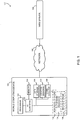
- a system 100 for policy-based secure web boot includes a mobile computing device 102 and a web server 104 in communication with each other over a network 106.
- the mobile computing device 102 is configured to open a secure HTTP connection to the web server 104, download one or more remote resources, and execute the remote resources in a pre-boot firmware environment.
- the disclosed technologies allow for policy-based network boot using standard HTTP data transfer.
- Secure HTTP allows for authentication of client and server, as well as ensuring the integrity and privacy of boot files transferred over the network 106.
- network boot may be accomplished over a public network such as the Internet.
- networks are commonly configured to accommodate secure HTTP traffic and to allow secure HTTP communication through network firewalls.
- enabling policy-based web booting may not require modifying any underlying network configuration or topology.
- web servers are in common use. Because of such common use, the configuration and maintenance of web servers is well-known. In fact, many organizations have in-house technical staff capable of publishing resources on a web server.
- the mobile computing device 102 may be embodied as any type of device for performing the functions described herein.
- the mobile computing device 102 may be embodied as, without limitation, a smart phone, a tablet computer, a laptop computer, a notebook computer, a mobile computing device, a cellular telephone, a handset, a messaging device, a vehicle telematics device, a distributed computing system, a multiprocessor system, a consumer electronic device, and/or any other computing device configured to perform policy-based secure web boot. As shown in FIG.
- the illustrative mobile computing device 102 includes a processor 120, an input/output subsystem 122, a memory 124, a data storage device 126, a communication circuit 128, a location sensor(s) 130, and a manageability engine 132.
- the mobile computing device 102 may include other or additional components, such as those commonly found in a mobile computer (e.g., various input/output devices), in other embodiments.
- one or more of the illustrative components may be incorporated in, or otherwise form a portion of, another component.
- the memory 124, or portions thereof may be incorporated in the processor 120 in some embodiments.
- the processor 120 may be embodied as any type of processor capable of performing the functions described herein.
- the processor 120 may be embodied as a single or multi-core processor(s), digital signal processor, microcontroller, or other processor or processing/controlling circuit.
- the memory 124 may be embodied as any type of volatile or non-volatile memory or data storage capable of performing the functions described herein. In operation, the memory 124 may store various data and software used during operation of the mobile computing device 102 such as operating systems, applications, programs, libraries, and drivers.
- the memory 124 is communicatively coupled to the processor 120 via the I/O subsystem 122, which may be embodied as circuitry and/or components to facilitate input/output operations with the processor 120, the memory 124, and other components of the mobile computing device 102.
- the I/O subsystem 122 may be embodied as, or otherwise include, memory controller hubs, input/output control hubs, firmware devices, communication links (i.e., point-to-point links, bus links, wires, cables, light guides, printed circuit board traces, etc.) and/or other components and subsystems to facilitate the input/output operations.
- the I/O subsystem 122 may form a portion of a system-on-a-chip (SoC) and be incorporated, along with the processor 120, the memory 124, and other components of the mobile computing device 102, on a single integrated circuit chip.
- SoC system-on-a-chip
- the data storage device 126 may be embodied as any type of device or devices configured for short-term or long-term storage of data such as, for example, memory devices and circuits, memory cards, hard disk drives, solid-state drives, or other data storage devices.
- the data storage device 126 may include a system partition that stores data and firmware code for the mobile computing device 102.
- the data storage device 126 may also include an operating system partition that stores data files and executables for an operating system of the mobile computing device 102.
- the communication circuit 128 of the mobile computing device 102 may be embodied as any communication circuit, device, or collection thereof, capable of enabling communications between the mobile computing device 102, the web server 104, and/or other remote devices.
- the communication circuit 128 may be configured to use any one or more communication technology (e.g., wireless or wired communications) and associated protocols (e.g., Ethernet, Bluetooth®, Wi-Fi®, WiMAX, etc.) to effect such communication.
- the communication circuit 128 may be embodied as a network adapter, including a wireless network adapter.
- the mobile computing device 102 includes one or more location sensor(s) 130.
- the location sensor(s) 130 may be embodied as any type of sensor capable of determining the precise or approximate position of the mobile computing device 102.
- the location sensor(s) 130 may be embodied as a global positioning system ("GPS") receiver, capable of determining the precise coordinates of the mobile computing device 102.
- GPS global positioning system
- the location sensor(s) 130 may triangulate the position of the mobile computing device 102 using distances or angles to cellular network towers with known positions, provided by the communication circuit 128.
- the location sensor(s) 130 may determine the approximate position of the mobile computing device 102 based on association to wireless networks with known positions, using the communication circuit 128.
- the manageability engine 132 is embodied as a device that provides remote configuration, control, or management of the mobile computing device 102.
- the illustrative manageability engine 132 includes an out-of-band processor 134.
- the out-of-band processor 134 is separate and distinct from the main processor 120 of the mobile computing device 102.
- the manageability engine 132 is capable of operating independently of the state of the rest of the mobile computing device 102. That is, the manageability engine 132 is capable of operating regardless of the operating state of the processor 120, including when the mobile computing device 102 is powered off, when the mobile computing device 102 is executing a pre-boot firmware environment, when an operating system of the mobile computing device 102 is active, and when the operating system is crashed or otherwise inactive.
- the manageability engine 132 is also capable of communicating using the communication circuit 128 independently of the state of the mobile computing device 102, also known as "out-of-band" communication.
- the manageability engine 132 may include a dedicated network adaptor for such out-of-band communication, in addition to, or instead of, connecting via the communications circuit 128.
- the manageability engine 132 may also include secure storage 136, which is a secure memory space of the manageability engine 132 that is not accessible by other components of the mobile computing device 102, and may optionally be a secure portion of system flash memory.
- the manageability engine 132 may be incorporated into the I/O subsystem 122.
- the web server 104 is configured to receive and respond to HTTP requests from the mobile computing device 102.
- the web server 104 may be embodied as any type of data server or similar computing device capable of performing the functions described herein.
- the web server 104 may be embodied as a server computer running a web server process such as Microsoft® Internet Information Services ("IIS") or the Apache HTTP Server.
- the web server 104 may be embodied as a standard production web server, with no modifications required particular to the system 100.
- the web server 104 may include components and features similar to the mobile computing device 102, such as a processor, I/O subsystem, memory, data storage, communication circuitry, and various peripheral devices, which are not illustrated in FIG. 1 for clarity of the present description.
- the web server 104 may be embodied as a single server computing device or a collection of servers and associated devices.
- the web server 104 is embodied as a cloud service to perform the functions described herein.
- the web server 104 may be embodied as a "virtual server" formed from multiple computing devices distributed across the network 106 and operating in a public or private cloud. Accordingly, although the web server 104 is illustrated in FIG. 1 and described below as embodied as single server computing device, it should be appreciated that the web server 104 may be embodied as multiple devices cooperating together to facilitate the functionality described below.
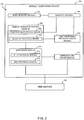
- the mobile computing device 102 establishes a firmware environment 200 during operation.
- the illustrative firmware environment 200 includes a boot manager 202, a web boot module 204, a remote resource mapping module 206, a disc file format protocol driver module 212, a web engine module 214, and a wireless UNDI driver module 220.
- the various modules of the firmware environment 200 may be embodied as hardware, firmware, software, or a combination thereof. Additionally, in some embodiments, some or all of the modules of the firmware environment 200 may be integrated with, or form part of, other modules or software/firmware structures.
- the web engine module 214 is configured to implement HTTPS and communicate with the web server 104.
- the web engine module 214 establishes an HTTPS connection to the web server 104, requests remote resources from the web server 104, and downloads the remote resources over the network 106 to the mobile computing device 102.
- the remote resources are identified by a standard uniform resource locator ("URL"), which may include a domain name and a path identifying the remote resources.
- the web engine module 214 may use the domain name system ("DNS") to convert domain names into internet protocol numbers.
- DNS domain name system
- the web engine module 214 may communicate using IPv4, IPv6, or other communication protocol. In some embodiments, those functions may be performed by sub-modules, for example by an HTTP protocol module 216 and/or a DNS protocol module 218.
- the wireless universal network driver interface (“UNDI") driver module 220 is configured to provide network communications using a wireless network adapter of the mobile computing device 102.
- UNDI is an architectural interface to network interface cards specified by the UEFI specification.
- the wireless UNDI driver module 220 implements UNDI for a wireless network adaptor of the mobile computing device 102, allowing other modules of the firmware environment 200 to communicate using the wireless network adapter.
- the web engine module 214 may open a secure connection and communicate wirelessly with the web server 104 using the wireless UNDI driver module 220.
- the wireless UNDI driver module 220 may be implemented as a UEFI driver.
- driver module 220 may be embodied as a module to implement a UEFI driver developed for a specific network adapter (i.e., a non-universal driver) such as, for example, an Intel® Pro1000 network adapter.
- a specific network adapter i.e., a non-universal driver
- the remote resource mapping module 206 is configured to map remote resources stored on the web server 104 to one or more local protocols.
- the remote resource mapping module 206 installs a protocol interface for each of the one or more local protocols into the firmware environment of the mobile computing device 102, and then accesses the remote resources of the web server 104 in response to the one or more local protocols being invoked by other firmware modules of the mobile computing device 102.
- the remote resource mapping module 206 may be an abstraction layer between the web engine module 214 and other modules of the firmware environment 200.
- the remote resource mapping module 206 may map remote resources to a local file system. Such a local file system abstracts the remote resources as a set of local files and directories.
- the remote resource mapping module 206 may map remote resources to a local block-level device.
- a block-level device abstracts the remote resources as a data storage device including a number of data blocks.
- those functions may be performed by sub-modules, for example by a file system protocol driver 208 and/or a block I/O protocol driver 210.
- the disc file format protocol driver module 212 is configured to interface with a block-level storage device formatted according to an optical disc format.
- the optical disc format may be embodied as the bootable compact disc file system ("CDFS") format specified by the "El Torito" extension of the ISO 9660 standard. Such CDFS is also known as the "ISO 9660" file system and therefore files containing CDFS images are commonly referred to as ".iso" files.
- the optical disc format may be the universal disk format ("UDF") used by DVDs.
- the disc file format protocol driver module 212 provides access to the file system stored on a CDFS- or UDF-formatted storage device.
- the disc file format protocol driver module 212 may interface with and invoke the block I/O protocol driver 210 to provide access to files and directories stored in remote resources of the web server 104.
- the web boot module 204 is configured to determine a remote boot address containing a boot image, open a secure connection to the web server 104 to download the boot image, and execute the boot image as a firmware application.
- the web boot module 204 may be embodied as a UEFI boot option.
- the remote boot address is a standard uniform resource locator ("URL") specifying the use of HTTPS and the location of the remote boot image.
- the web boot module 204 generally may determine the remote boot address based on the configuration of the mobile computing device 102, the context of the mobile computing device 102, or input from a user of the mobile computing device 102.
- the web boot module 204 supplies the remote boot address to the remote resource mapping module 206.
- the web boot module 204 accesses the downloaded boot resource through the local protocol or local protocols provided by the remote resource mapping module 206.
- the remote resource mapping module 206 in turn accesses the web server 104 using the web engine module 214.
- the web boot module 204 may call an operating system loader of the mobile computing device 102, which ends boot services provided by firmware.
- the boot manager module 202 is configured to enumerate firmware drivers, applications, and other modules of the mobile computing device 102, determine an ordering of such firmware modules, and load the firmware modules.
- the boot manager module 202 may select a boot option from several boot options available on the mobile computing device 102.
- the boot manager module 202 may select, load, and start the web boot module 204.
- the mobile computing device 102 may execute a boot process 300 according to the UEFI specification.
- the mobile computing device 102 initializes platform hardware.
- the mobile computing device 102 may initialize particular components required to process boot firmware, for example the memory 124 and the I/O subsystem 122.
- the mobile computing device 102 selects a firmware driver or a firmware application.
- the boot process 300 is under control of the boot manager 202.
- Firmware drivers and applications are binary images stored in the system partition of the data storage device 126.
- the particular drivers and applications to be loaded are platform-dependent and may be enumerated in global variables of the mobile computing device 102, for example, in non-volatile flash memory storage of the mobile computing device 102.
- the boot manager 202 may enumerate the firmware drivers and applications to be loaded and determine a required boot order. The boot order may be based on dependencies between the firmware drivers and applications.
- the mobile computing device 102 loads and starts a firmware driver or firmware application.
- Firmware drivers and applications are essentially the same, except that applications are generally unloaded from the memory 124 after returning from their entry point, and drivers generally stay resident in the memory 124 unless they return with an error code.
- Firmware drivers and applications may initialize or control hardware of the mobile computing device 102.
- Firmware drivers or applications may also install firmware protocol interfaces, which define function call interfaces and, after being installed, allow other firmware images to invoke provided services.
- the mobile computing device 102 determines whether additional firmware drivers or applications remain to be loaded. If additional firmware drivers or applications remain to be loaded, the boot process 300 loops back to block 304. If not, the boot process advances to block 310.
- the mobile computing device 102 determines a boot option.
- a boot option is a firmware application that will be loaded and started by the boot manager 202. Boot options are typically operating system loaders, although the boot option may include diagnostic, maintenance, or management applications.
- the particular boot option selected may be specified in global variables of the mobile computing device 102.
- the global variables of the mobile computing device 102 may specify several boot options, including a relative ordering of the boot options.
- the boot option may be selected by a user of the mobile computing device 102 through a menu or other means presented on the mobile computing device 102.
- the mobile computing device 102 may include a default boot option or default rules for selecting a boot option.
- the mobile computing device 102 loads and starts the selected boot option (see FIG. 4 ).
- the selected boot option may initialize and load an operating system of the mobile computing device 102.
- the mobile computing device 102 hands off control to an operating system loader.
- Such operating system loader may not be stored in the system partition of the data storage device 126.
- the boot option terminates boot services, for example by calling the function ExitBootServices(). Therefore, if such a boot option is successful, the boot process 300 is complete, the operating system is in control of the mobile computing device 102, and the boot process 300 does not proceed to block 316.
- the boot process 300 proceeds to block 316.
- the mobile computing device 102 determines whether to attempt to load another boot option.
- the global variables of the mobile computing device 102 may specify several boot options. If additional boot options remain, the mobile computing device 102 may attempt to load another boot option.
- the mobile computing device 102 may examine any error codes returned by the boot option in block 310 to determine whether to attempt to load another boot option. If the mobile computing device 102 determines to attempt to load another boot option, the boot process 300 loops back to block 310 to select the boot option. If the mobile computing device 102 determines not to load another boot option, the boot process 300 advances to block 318.
- the mobile computing device 102 experiences boot failure.
- the particular actions taken on boot failure are platform-dependent.
- the mobile computing device 102 may provide an error message to the user.
- the mobile computing device 102 may invoke platform-dependent diagnostic or maintenance applications.
- the mobile computing device 102 may simply shut off.
- the mobile computing device 102 may execute a boot option 312 for policy-based secure web boot.
- boot option 312 may be executed as part of the boot process 300 specified by the UEFI specification (i.e., as part of the process of block 312 of the boot process 300).
- the selected boot option 312 may be embodied by, or otherwise executed by, the web boot module 204.
- the mobile computing device 102 authenticates a user of the mobile computing device 102.
- the mobile computing device 102 may receive login information from the user, which may be embodied as user credentials such as a username and password or a user certificate.
- login information may be provided by a security token, such as a smart card or biometric reader.
- the mobile computing device 102 may authenticate the user by comparing the received login information to login information stored on the mobile computing device 102. In other embodiments, the mobile computing device 102 may consult a separate authentication server (not illustrated).
- the mobile computing device 102 determines the remote boot address.
- the remote boot address is illustratively embodied as a uniform resource locator ("URL") that identifies the web server 104 and specifies a particular remote resource containing a remote boot image. Selection of the remote boot address thus may allow selection of a particular boot policy.
- the remote boot address may specify the use of secure HTTP (using URL scheme name "https").
- the remote boot address is stored in the data storage 126 or in non-volatile flash memory storage of the mobile computing device 102.
- the remote boot address may be specified by the user and stored for later use, software of the mobile computing device 102 may configure a remote boot address for use upon reboot, and/or the manufacturer of the computing device 102 may pre-program a selection of one or more remote boot addresses.
- the manageability engine 132 may not be included or otherwise required in the computing device 102.
- the mobile computing device 102 receives the remote boot address from a dynamic host configuration protocol ("DHCP") server.
- DHCP dynamic host configuration protocol
- the RFC 5970 proposed standard specifies DHCPv6 options to configure a computing device for network booting.
- the mobile computing device 102 receives the remote boot address from the manageability engine 132.
- the remote boot address may be supplied to the manageability engine 132 using its out-of-band network communications capability.
- the remote boot address may be supplied by enterprise information technology staff, allowing configuration of the remote boot address without intervention by the user of the mobile computing device 102.
- the remote boot address may be stored in the secure memory space of the manageability engine 132.
- the mobile computing device 102 receives the remote boot address from console input of the mobile computing device 102.
- the console of the mobile computing device 102 may be embodied as a display and keyboard, a touch screen, or any other user interface peripheral device of the mobile computing device 102.
- the user of the mobile computing device 102 may provide the remote boot address manually.
- the mobile computing device 102 may determine the remote boot address based on the context of the mobile computing device 102, for example, based on location, mode, current user, current network, or the like.
- the mobile computing device 102 may use sensors to determine if the context is appropriate for the remote boot address; these sensors may include location (e.g., geo-fencing) as sensed by GPS in the mobile computing device 102, identity as sensed by a password entered by a user or a biometric input (e.g., voice, fingerprint, iris scan, USB dongle, near-field communication), or other criteria (e.g., date and time).
- the context of the mobile computing device 102 may include the location of the mobile computing device 102, as determined using the location sensor(s) 130. As such, the mobile computing device 102 may determine a different remote boot addresses when the mobile computing device 102 is located at the user's work and at the user's home. In some embodiments (not illustrated), the remote boot address may be the same, and boot policies-that is, selection of boot images-may be performed by the web server 104.
- the mobile computing device 102 may include context information in the request to the web server 104 as part of an HTTP POST request.
- the web server 104 may include logic to return a particular boot image based on the information received from the mobile computing device 102. Such logic may be implemented as an ordinary web application of the web server 104.
- the mobile computing device 102 opens an HTTPS connection to the web server 104.
- the HTTPS connection uses the communication circuit 128 to communicate with the web server 104, and therefore may be embodied as a wired or a wireless network connection.
- an HTTPS connection is conventional HTTP communicated over a connection encrypted using the SSL/TLS protocol.
- the HTTPS connection supports authentication and privacy.
- the mobile computing device 102 may send a client certificate to the web server 104 as part of a secure handshake protocol, for example, while establishing a TLS/SSL connection.
- the client certificate may be bound to the mobile computing device 102 or may be associated with a particular user of the mobile computing device 102.
- Sending the client certificate allows the web server 104 to verify that the mobile computing device 102 and/or the user of the mobile computing device 102 is a known entity.
- the secure connection may not be opened if the web server 104 does not verify the client certificate.
- the client certificate may be installed in, managed by, or otherwise supplied by the manageability engine 132. In some embodiments, the client certificate may be determined in response to successfully authenticating the user in block 402, described above. Thus, an unauthorized user may be prohibited from accessing the web server 104.
- web servers supporting HTTPS connections over the public Internet typically do not validate a client certificate; in such connections, the web server expects connections from numerous anonymous clients, so only the identity of the web server is important. Therefore, authenticating the client certificate may be more appropriate for embodiments of the mobile computing device 102 and the web server 104 under common control or management.
- the mobile computing device 102 validates a server certificate received from the web server 104. As discussed above, by validating the server certificate, the mobile computing device 102 confirms the identity of the web server 104. The mobile computing device 102 may validate the server certificate as part of a standard secure handshake protocol, for example, while establishing a TLS/SSL connection. After opening the secure connection, the boot option 312 proceeds to block 418.
- the mobile computing device 102 maps a resource of the web server 104 to a local protocol of the mobile computing device 102.
- the resource is specified by the remote boot address determined in block 404.
- the requested resource may be any file or directory used for booting the mobile computing device 102, and is thus sometimes called a boot resource.
- the mobile computing device 102 sends HTTP requests to the web server 104 for the requested resource, and the web server 104 sends HTTP responses including the requested resource to the mobile computing device 102.
- the mobile computing device 102 may request and download the entire resource immediately, caching the resource locally on the mobile computing device 102.
- the mobile computing device 102 may request and download the resource or parts of the resource as requested by firmware drivers or applications of the mobile computing device 102.
- the mobile computing device 102 maps the remote resource to a local block input/output protocol.
- a block I/O protocol represents a mass storage device as an array of small, uniformly sized data blocks, without higher-level abstractions like files and directories. Higher-level protocols of the firmware environment 200 may consume the block I/O protocol to provide access to file systems, including files and directories.
- the remote resource may be embodied as a single binary file formatted as an ISO 9660 compatible disk image (an .iso file).
- the block I/O protocol provides access to data of the remote disk image as an array of blocks.
- a standard compact disc file system (“CDFS") driver included in the firmware of the mobile computing device 102 consumes the block-level protocol, allowing access to files and directories stored in the remote resource.
- the remote resource may be a UDF-formatted disk image, an El Torito bootable compact disc image, or another disk image readable by a firmware driver of the mobile computing device 102.
- the block I/O protocol may download and cache the entire remote disk image, for example using an HTTP GET request, and may provide access to requested blocks from the cached disk image.
- the block I/O protocol may download requested blocks from the remote resource using an HTTP RANGE header field to download a portion of the remote resource less than its entirety.
- a block diagram 500 illustrates a driver stack that may be installed to map the remote resource to a local block input/output protocol.
- the disc file format protocol driver module 212 installs an EFI_SIMPLE_FILE_SYSTEM_PROTOCOL 502 described in the UEFI specification.
- the disc file format protocol driver module 212 depends on the block I/O protocol driver 210.
- the block I/O protocol driver 210 installs an EFI_BLOCK_IO_PROTOCOL 504 described in the UEFI specification.
- the block I/O protocol driver 210 depends on the web engine module 214.
- the web engine module 214 installs a WEB_ENGINE_PROTOCOL 506 and depends on both the HTTP protocol module 216 and the DNS protocol module 218.
- the HTTP protocol module 216 installs an HTTP_PROTOCOL 508 and the DNS protocol module 218 installs a DNS_PROTOCOL 510.
- a firmware application or driver may access files by calling functions defined by the EFI_SIMPLE_FILE_SYSTEM_PROTOCOL 502 that are handled by the disc file format protocol driver module 212. Such function calls are passed through the driver stack, ultimately resulting in HTTP interactions with the web server 104.
- the mobile computing device 102 maps the remote resource to a local file system protocol.
- a file system protocol provides access to directories and files stored on a storage device.
- the remote boot address determined in block 404 may represent the root of a directory structure stored on the web server 104.
- Each file stored on the web server 104 corresponds to a file exposed through the file system protocol.
- the mobile computing device 102 may download each file as requested using an HTTP GET request.
- the directory structure of the web server 104 also provides a mechanism for the mobile computing device 102 to enumerate the files in each directory. For example, the web server 104 may return or generate an index file listing all files stored in the directory (e.g., "index.html").
- a block diagram 600 illustrates a driver stack that may be installed to map the remote resource to a local file system protocol.
- the file system protocol driver 208 installs the EFI_SIMPLE_FILE_SYSTEM_PROTOCOL 502 and depends on the web engine module 214.
- the web engine module 214 installs the WEB_ENGINE_PROTOCOL 506 and depends on both the HTTP protocol module 216 and the DNS protocol module 218.
- the HTTP protocol module 216 installs the HTTP_PROTOCOL 508 and the DNS protocol module 218 installs the DNS_PROTOCOL 510.
- a firmware application or driver may access files through the EFI_SIMPLE_FILE_SYSTEM_PROTOCOL 502.
- function calls to the EFI_SIMPLE_FILE_SYSTEM_PROTOCOL 502 are handled by the file system protocol driver 208 and translated into HTTP interactions with the web server 104.
- the mobile computing device 102 executes a remote resource downloaded from the remote boot address as a firmware image.
- the mobile computing device 102 loads the resource into memory using protocols for loading firmware images, and then starts executing code at an entry point of the in-memory image.
- the mobile computing device 102 loads and starts the image in the same manner as a locally-stored firmware image, because the remote resource has been mapped to a local protocol.
- the mobile computing device 102 may access the remote resource using the EFI_SIMPLE_FILE_SYSTEM_PROTOCOL 502 as discussed above.
- the remote resource may be embodied as a firmware driver, firmware application, or firmware operating system loader.
- the loaded firmware image may access additional remote resources of the web server 104 using the secure web connection and the local resource mapping established in blocks 412 and 418, respectively.
- Such additional remote resources may be embodied as configuration files, data files, or additional firmware images that may be loaded and started.
- the mobile computing device 102 may verify a digital signature of the remote resource.
- the secure HTTP connection established in block 412 validates the identity of the web server 104, may validate the identity of the mobile computing device 102, and protects the remote resource from tampering or eavesdropping while being transferred over the network 106.
- the secure HTTP connection does not provide any assurance concerning the integrity or authenticity of the contents of the remote resource itself.
- the remote resource may include a digital signature, which is a hash of the remote resource encrypted with a private key.
- the mobile computing device 102 may verify the digital signature by independently computing a hash of the remote resource, decrypting the digital signature with a known public key to produce a decrypted hash value, and then comparing the computed hash value to the decrypted hash value. If the hash values match, then the mobile computing device 102 has verified that the remote resource was signed using the private key and has not been modified since being signed. If the public key is trusted, for example by being issued by a known certificate authority, then the mobile computing device 102 has verified that the remote resource was signed by a known entity. In some embodiments, the mobile computing device 102 may verify the digital signature using the secure boot logic specified in the UEFI specification.
- the remote resource may hand off control to an operating system, as illustrated by block 314.
- the firmware image may call ExitBootServices(), causing boot services firmware to be unloaded and terminated. If an operating system is not successfully started, the boot option 312 returns to its caller. In some embodiments, the boot option 312 may return a status code indicating any errors or other reasons that an operating system was not started.
- receiving user login information as described in block 402 determining the remote boot address as described in block 404, and mapping the remote resources as described in block 418 may each be embodied as firmware drivers that are loaded and stay resident prior to loading the boot option 312.
- the mobile computing device 102 has been illustrated in the FIGS. 1-6 and described above as a "mobile” computing device, it should be appreciated that the technologies described herein are equally applicable to stationary or, otherwise “non-mobile,” computing devices. As such, in some embodiments, the computing device 102 may be embodied as, for example, a desktop computer, rack-based computer, or other non-mobile computing device.
Landscapes
- Engineering & Computer Science (AREA)
- Software Systems (AREA)
- Theoretical Computer Science (AREA)
- Computer Security & Cryptography (AREA)
- General Engineering & Computer Science (AREA)
- Physics & Mathematics (AREA)
- General Physics & Mathematics (AREA)
- Computer Networks & Wireless Communication (AREA)
- Signal Processing (AREA)
- Computer Hardware Design (AREA)
- Computing Systems (AREA)
- Health & Medical Sciences (AREA)
- Medical Informatics (AREA)
- General Health & Medical Sciences (AREA)
- Stored Programmes (AREA)
Description
- Computing devices often execute a boot process according to the Unified Extensible Firmware Interface ("UEFI") specification, published by the Unified EFI Forum. The UEFI specification specifies an interface between the firmware of the computing device and the operating system of the computing device. The UEFI specification specifies a standard model for firmware drivers and applications that execute in a pre-operating system environment. In addition to performing traditional boot and initialization tasks, such drivers and applications may perform other tasks, such as diagnostic, maintenance, or management tasks.
- Computing devices may boot from a network interface according to the Preboot Execution Environment ("PXE") specification. Network booting with PXE generally requires the end user to have knowledge of the provisioning environment, for example, knowledge of the boot server address. Network booting with PXE may require a specialized boot server to provide remote boot images.
- Network booting may be accomplished over various networks, including the Internet. Much of the data communicated over the Internet is communicated on the so-called World Wide Web, a system of interconnected web servers on the Internet that provide content to remote clients using the hypertext transfer protocol ("HTTP"). A web server provides content as a collection of resources, each resource being accessible by a unique address called a uniform resource locator ("URL"). Resources of the web server may correspond to individual files stored on or accessible to the web server, or to groups of such files (e.g. directories or folders). Resources representing groups of files may include index files that contain links to the other resources of the group. A client issues a request to a web server for a particular resource, and in turn the web server issues a response to the client. HTTP responses include status messages and may include the requested content itself. HTTP is thus "stateless," meaning that the protocol does not require a persistent network connection between client and server. HTTP is plaintext; that is, requests, responses, and content are transferred over the network without encryption.
- Authenticated or encrypted HTTP communication may be provided by layering HTTP communications on top of a secure transport-level protocol. For example, the HTTP Secure ("HTTPS") protocol layers HTTP on top of a transport layer security ("TLS") or secure sockets layer ("SSL") connection. TLS/SSL specifies a standard handshake procedure used to initiate a secure connection between a client and a server. In addition to connection encryption, the TLS/SSL connection provides authentication of the server and, optionally, the client. Standard HTTP requests and responses are then communicated using the secure TLS/SSL connection. Note that the term "secure HTTP" as used herein refers to HTTPS, and not the similar but largely unused S-HTTP.
US 2005/149729A1 describes methods and systems to support XML-based security and key management services in a pre-boot execution environment. During pre-boot, XML console in and console out interfaces are loaded, and corresponding API's are published to enable use of the interfaces by various firmware and software components. A network stack is set up to enable XML content received at the network interface to be forwarded to the XML console in interface and XML content provided at the XML content out interface to be sent out via the network interface. Security operations may then be performed to authenticate a client system hosting the XML interfaces, to authenticate remote servers to which the client system may communicate with, and to validate boot images provided to the computer system. Key management services are also supported. -
US 2003/131246A1 describes that virtual media images of actual physical media resources, such as O/S boot files and software installation disks, are provided in a remote directory structure. The remote directory structure stores the virtual media images along with access rights of multiple authorized users, such that control is provided over the retrieval of the virtual media images and use of data/programs within the images. The virtual media images may be stored in blocks, or multiple sub-blocks/children, corresponding the actual media resources. Moreover, the remote directory server may simply store virtual media pointers, or location identifiers, which point to another storage location (i.e., a remote computer) having the actual data content of the virtual media image.; Accordingly, the directory server processes a user request for a desired portion of the virtual media images by evaluating whether the user is one of the plurality of authorized users and whether the access rights of the user encompass the desired portion. If the user is authenticated and the desired portion is within the user's access rights, then the user may obtain the desired portion of the virtual media images. -
GB2442348A -
US2010/153697A1 relates to methods and systems for providing embedded user authentication and/or providing computing services using an information handling system configured as flexible computing node, and which may be implemented to perform preboot authentication of users. The flexible computing node may also be configured to provision the appropriate work environment for a given user based on one or more user parameters (e.g. entitlements, location, network connection, and/or other parameters). - In
US2008/046548A1 embodiments of a system and method for enabling a target computer to download a boot image and operating system from a boot server computer over a network are described. The target computer system includes a host processor environment and a platform management coprocessor subsystem that includes a microcontroller for providing manageability of the target computer platform. During a network boot procedure, the platform management coprocessor code employs a network access channel to retrieve the boot server name and a network address for the target computer. The platform management coprocessor code implements security measures to help ensure secure interaction between the boot server and the target computer.; Once the secure association is established, the network boot process uses the BIOS code for the successive bulk downloads of the operating system to be loaded onto the target computer. Other embodiments are described and claimed. - In an aspect, there is provided a mobile computing device to securely boot from a web server, as defined in appended claim 1. In another aspect, there is provided a method for secure web boot on a mobile computing device as defined in appended claim 8. In another aspect, there is provided one or more machine readable storage media as defined in appended claim 15.
- The concepts described herein are illustrated by way of example and not by way of limitation in the accompanying figures. For simplicity and clarity of illustration, elements illustrated in the figures are not necessarily drawn to scale. Where considered appropriate, reference labels have been repeated among the figures to indicate corresponding or analogous elements.
-
FIG. 1 is a simplified block diagram of at least one embodiment of a system for policy-based secure web boot; -
FIG. 2 is a simplified block diagram of at least one embodiment of a firmware environment of a mobile computing device of the system ofFIG. 1 ; -
FIG. 3 is a simplified flow diagram of at least one embodiment of a boot process according to the UEFI specification that may be executed by the mobile computing device ofFIGS. 1 and2 ; -
FIG. 4 is a simplified flow diagram of at least one embodiment of a boot option for policy-based secure web boot that may be executed by the mobile computing device ofFIGS. 1 and2 ; -
FIG. 5 is a simplified block diagram of one embodiment of a driver stack of the firmware environment ofFIG. 2 ; and -
FIG. 6 is a simplified block diagram of another embodiment of a driver stack of the firmware environment ofFIG. 2 . - While the concepts of the present disclosure are susceptible to various modifications and alternative forms, specific embodiments thereof have been shown by way of example in the drawings and will be described herein in detail.
- References in the specification to "one embodiment," "an embodiment," "an illustrative embodiment," etc., indicate that the embodiment described may include a particular feature, structure, or characteristic, but every embodiment may or may not necessarily include that particular feature, structure, or characteristic. Moreover, such phrases are not necessarily referring to the same embodiment. Further, when a particular feature, structure, or characteristic is described in connection with an embodiment, it is submitted that it is within the knowledge of one skilled in the art to effect such feature, structure, or characteristic in connection with other embodiments whether or not explicitly described.
- The disclosed embodiments may be implemented, in some cases, in hardware, firmware, software, or any combination thereof. The disclosed embodiments may also be implemented as instructions carried by or stored on a transitory or non-transitory machine-readable (e.g., computer-readable) storage medium, which may be read and executed by one or more processors. A machine-readable storage medium may be embodied as any storage device, mechanism, or other physical structure for storing or transmitting information in a form readable by a machine (e.g., a volatile or non-volatile memory, a media disc, or other media device).
- In the drawings, some structural or method features may be shown in specific arrangements and/or orderings. However, it should be appreciated that such specific arrangements and/or orderings may not be required. Rather, in some embodiments, such features may be arranged in a different manner and/or order than shown in the illustrative figures. Additionally, the inclusion of a structural or method feature in a particular figure is not meant to imply that such feature is required in all embodiments and, in some embodiments, may not be included or may be combined with other features.
- Referring now to
FIG. 1 , in one embodiment, asystem 100 for policy-based secure web boot includes amobile computing device 102 and aweb server 104 in communication with each other over anetwork 106. In use, as discussed in more detail below, themobile computing device 102 is configured to open a secure HTTP connection to theweb server 104, download one or more remote resources, and execute the remote resources in a pre-boot firmware environment. - The disclosed technologies allow for policy-based network boot using standard HTTP data transfer. Secure HTTP allows for authentication of client and server, as well as ensuring the integrity and privacy of boot files transferred over the
network 106. By using secure HTTP, network boot may be accomplished over a public network such as the Internet. Additionally, networks are commonly configured to accommodate secure HTTP traffic and to allow secure HTTP communication through network firewalls. Thus, enabling policy-based web booting may not require modifying any underlying network configuration or topology. Further, web servers are in common use. Because of such common use, the configuration and maintenance of web servers is well-known. In fact, many organizations have in-house technical staff capable of publishing resources on a web server. - The
mobile computing device 102 may be embodied as any type of device for performing the functions described herein. For example, themobile computing device 102 may be embodied as, without limitation, a smart phone, a tablet computer, a laptop computer, a notebook computer, a mobile computing device, a cellular telephone, a handset, a messaging device, a vehicle telematics device, a distributed computing system, a multiprocessor system, a consumer electronic device, and/or any other computing device configured to perform policy-based secure web boot. As shown inFIG. 1 , the illustrativemobile computing device 102 includes aprocessor 120, an input/output subsystem 122, amemory 124, adata storage device 126, acommunication circuit 128, a location sensor(s) 130, and amanageability engine 132. Of course, themobile computing device 102 may include other or additional components, such as those commonly found in a mobile computer (e.g., various input/output devices), in other embodiments. Additionally, in some embodiments, one or more of the illustrative components may be incorporated in, or otherwise form a portion of, another component. For example, thememory 124, or portions thereof, may be incorporated in theprocessor 120 in some embodiments. - The
processor 120 may be embodied as any type of processor capable of performing the functions described herein. For example, theprocessor 120 may be embodied as a single or multi-core processor(s), digital signal processor, microcontroller, or other processor or processing/controlling circuit. Similarly, thememory 124 may be embodied as any type of volatile or non-volatile memory or data storage capable of performing the functions described herein. In operation, thememory 124 may store various data and software used during operation of themobile computing device 102 such as operating systems, applications, programs, libraries, and drivers. Thememory 124 is communicatively coupled to theprocessor 120 via the I/O subsystem 122, which may be embodied as circuitry and/or components to facilitate input/output operations with theprocessor 120, thememory 124, and other components of themobile computing device 102. For example, the I/O subsystem 122 may be embodied as, or otherwise include, memory controller hubs, input/output control hubs, firmware devices, communication links (i.e., point-to-point links, bus links, wires, cables, light guides, printed circuit board traces, etc.) and/or other components and subsystems to facilitate the input/output operations. In some embodiments, the I/O subsystem 122 may form a portion of a system-on-a-chip (SoC) and be incorporated, along with theprocessor 120, thememory 124, and other components of themobile computing device 102, on a single integrated circuit chip. - The
data storage device 126 may be embodied as any type of device or devices configured for short-term or long-term storage of data such as, for example, memory devices and circuits, memory cards, hard disk drives, solid-state drives, or other data storage devices. Thedata storage device 126 may include a system partition that stores data and firmware code for themobile computing device 102. Thedata storage device 126 may also include an operating system partition that stores data files and executables for an operating system of themobile computing device 102. - The
communication circuit 128 of themobile computing device 102 may be embodied as any communication circuit, device, or collection thereof, capable of enabling communications between themobile computing device 102, theweb server 104, and/or other remote devices. Thecommunication circuit 128 may be configured to use any one or more communication technology (e.g., wireless or wired communications) and associated protocols (e.g., Ethernet, Bluetooth®, Wi-Fi®, WiMAX, etc.) to effect such communication. Thecommunication circuit 128 may be embodied as a network adapter, including a wireless network adapter. - In the illustrative embodiment, the
mobile computing device 102 includes one or more location sensor(s) 130. The location sensor(s) 130 may be embodied as any type of sensor capable of determining the precise or approximate position of themobile computing device 102. For example, the location sensor(s) 130 may be embodied as a global positioning system ("GPS") receiver, capable of determining the precise coordinates of themobile computing device 102. In other embodiments, the location sensor(s) 130 may triangulate the position of themobile computing device 102 using distances or angles to cellular network towers with known positions, provided by thecommunication circuit 128. In other embodiments, the location sensor(s) 130 may determine the approximate position of themobile computing device 102 based on association to wireless networks with known positions, using thecommunication circuit 128. - The
manageability engine 132 is embodied as a device that provides remote configuration, control, or management of themobile computing device 102. Theillustrative manageability engine 132 includes an out-of-band processor 134. The out-of-band processor 134 is separate and distinct from themain processor 120 of themobile computing device 102. As such, themanageability engine 132 is capable of operating independently of the state of the rest of themobile computing device 102. That is, themanageability engine 132 is capable of operating regardless of the operating state of theprocessor 120, including when themobile computing device 102 is powered off, when themobile computing device 102 is executing a pre-boot firmware environment, when an operating system of themobile computing device 102 is active, and when the operating system is crashed or otherwise inactive. Themanageability engine 132 is also capable of communicating using thecommunication circuit 128 independently of the state of themobile computing device 102, also known as "out-of-band" communication. In some embodiments, themanageability engine 132 may include a dedicated network adaptor for such out-of-band communication, in addition to, or instead of, connecting via thecommunications circuit 128. Themanageability engine 132 may also includesecure storage 136, which is a secure memory space of themanageability engine 132 that is not accessible by other components of themobile computing device 102, and may optionally be a secure portion of system flash memory. In some embodiments, themanageability engine 132 may be incorporated into the I/O subsystem 122. - The
web server 104 is configured to receive and respond to HTTP requests from themobile computing device 102. Theweb server 104 may be embodied as any type of data server or similar computing device capable of performing the functions described herein. In particular, theweb server 104 may be embodied as a server computer running a web server process such as Microsoft® Internet Information Services ("IIS") or the Apache HTTP Server. Theweb server 104 may be embodied as a standard production web server, with no modifications required particular to thesystem 100. As such, theweb server 104 may include components and features similar to themobile computing device 102, such as a processor, I/O subsystem, memory, data storage, communication circuitry, and various peripheral devices, which are not illustrated inFIG. 1 for clarity of the present description. - Further, the
web server 104 may be embodied as a single server computing device or a collection of servers and associated devices. For example, in some embodiments, theweb server 104 is embodied as a cloud service to perform the functions described herein. In such embodiments, theweb server 104 may be embodied as a "virtual server" formed from multiple computing devices distributed across thenetwork 106 and operating in a public or private cloud. Accordingly, although theweb server 104 is illustrated inFIG. 1 and described below as embodied as single server computing device, it should be appreciated that theweb server 104 may be embodied as multiple devices cooperating together to facilitate the functionality described below. - Referring now to
FIG. 2 , in one embodiment, themobile computing device 102 establishes afirmware environment 200 during operation. Theillustrative firmware environment 200 includes aboot manager 202, aweb boot module 204, a remoteresource mapping module 206, a disc file formatprotocol driver module 212, aweb engine module 214, and a wirelessUNDI driver module 220. The various modules of thefirmware environment 200 may be embodied as hardware, firmware, software, or a combination thereof. Additionally, in some embodiments, some or all of the modules of thefirmware environment 200 may be integrated with, or form part of, other modules or software/firmware structures. - The
web engine module 214 is configured to implement HTTPS and communicate with theweb server 104. Theweb engine module 214 establishes an HTTPS connection to theweb server 104, requests remote resources from theweb server 104, and downloads the remote resources over thenetwork 106 to themobile computing device 102. The remote resources are identified by a standard uniform resource locator ("URL"), which may include a domain name and a path identifying the remote resources. Theweb engine module 214 may use the domain name system ("DNS") to convert domain names into internet protocol numbers. Theweb engine module 214 may communicate using IPv4, IPv6, or other communication protocol. In some embodiments, those functions may be performed by sub-modules, for example by anHTTP protocol module 216 and/or aDNS protocol module 218. - The wireless universal network driver interface ("UNDI")
driver module 220 is configured to provide network communications using a wireless network adapter of themobile computing device 102. UNDI is an architectural interface to network interface cards specified by the UEFI specification. The wirelessUNDI driver module 220 implements UNDI for a wireless network adaptor of themobile computing device 102, allowing other modules of thefirmware environment 200 to communicate using the wireless network adapter. For example, theweb engine module 214 may open a secure connection and communicate wirelessly with theweb server 104 using the wirelessUNDI driver module 220. The wirelessUNDI driver module 220 may be implemented as a UEFI driver. Of course, in other embodiments,driver module 220 may be embodied as a module to implement a UEFI driver developed for a specific network adapter (i.e., a non-universal driver) such as, for example, an Intel® Pro1000 network adapter. - The remote
resource mapping module 206 is configured to map remote resources stored on theweb server 104 to one or more local protocols. The remoteresource mapping module 206 installs a protocol interface for each of the one or more local protocols into the firmware environment of themobile computing device 102, and then accesses the remote resources of theweb server 104 in response to the one or more local protocols being invoked by other firmware modules of themobile computing device 102. In other words, the remoteresource mapping module 206 may be an abstraction layer between theweb engine module 214 and other modules of thefirmware environment 200. In some embodiments, the remoteresource mapping module 206 may map remote resources to a local file system. Such a local file system abstracts the remote resources as a set of local files and directories. In some embodiments, the remoteresource mapping module 206 may map remote resources to a local block-level device. Such a block-level device abstracts the remote resources as a data storage device including a number of data blocks. In some embodiments, those functions may be performed by sub-modules, for example by a filesystem protocol driver 208 and/or a block I/O protocol driver 210. - The disc file format
protocol driver module 212 is configured to interface with a block-level storage device formatted according to an optical disc format. In some embodiments, the optical disc format may be embodied as the bootable compact disc file system ("CDFS") format specified by the "El Torito" extension of the ISO 9660 standard. Such CDFS is also known as the "ISO 9660" file system and therefore files containing CDFS images are commonly referred to as ".iso" files. In some embodiments, the optical disc format may be the universal disk format ("UDF") used by DVDs. The disc file formatprotocol driver module 212 provides access to the file system stored on a CDFS- or UDF-formatted storage device. The disc file formatprotocol driver module 212 may interface with and invoke the block I/O protocol driver 210 to provide access to files and directories stored in remote resources of theweb server 104. - The
web boot module 204 is configured to determine a remote boot address containing a boot image, open a secure connection to theweb server 104 to download the boot image, and execute the boot image as a firmware application. Theweb boot module 204 may be embodied as a UEFI boot option. The remote boot address is a standard uniform resource locator ("URL") specifying the use of HTTPS and the location of the remote boot image. Theweb boot module 204 generally may determine the remote boot address based on the configuration of themobile computing device 102, the context of themobile computing device 102, or input from a user of themobile computing device 102. Theweb boot module 204 supplies the remote boot address to the remoteresource mapping module 206. Theweb boot module 204 accesses the downloaded boot resource through the local protocol or local protocols provided by the remoteresource mapping module 206. The remoteresource mapping module 206 in turn accesses theweb server 104 using theweb engine module 214. Theweb boot module 204 may call an operating system loader of themobile computing device 102, which ends boot services provided by firmware. - The
boot manager module 202 is configured to enumerate firmware drivers, applications, and other modules of themobile computing device 102, determine an ordering of such firmware modules, and load the firmware modules. Theboot manager module 202 may select a boot option from several boot options available on themobile computing device 102. Theboot manager module 202 may select, load, and start theweb boot module 204. - Referring now to
FIG. 3 , in use, themobile computing device 102 may execute aboot process 300 according to the UEFI specification. Inblock 302, themobile computing device 102 initializes platform hardware. For example, themobile computing device 102 may initialize particular components required to process boot firmware, for example thememory 124 and the I/O subsystem 122. - In
block 304, themobile computing device 102 selects a firmware driver or a firmware application. At this stage, theboot process 300 is under control of theboot manager 202. Firmware drivers and applications are binary images stored in the system partition of thedata storage device 126. The particular drivers and applications to be loaded are platform-dependent and may be enumerated in global variables of themobile computing device 102, for example, in non-volatile flash memory storage of themobile computing device 102. Theboot manager 202 may enumerate the firmware drivers and applications to be loaded and determine a required boot order. The boot order may be based on dependencies between the firmware drivers and applications. - In
block 306, themobile computing device 102 loads and starts a firmware driver or firmware application. Firmware drivers and applications are essentially the same, except that applications are generally unloaded from thememory 124 after returning from their entry point, and drivers generally stay resident in thememory 124 unless they return with an error code. Firmware drivers and applications may initialize or control hardware of themobile computing device 102. Firmware drivers or applications may also install firmware protocol interfaces, which define function call interfaces and, after being installed, allow other firmware images to invoke provided services. - In
block 308, themobile computing device 102 determines whether additional firmware drivers or applications remain to be loaded. If additional firmware drivers or applications remain to be loaded, theboot process 300 loops back to block 304. If not, the boot process advances to block 310. - In
block 310, themobile computing device 102 determines a boot option. A boot option is a firmware application that will be loaded and started by theboot manager 202. Boot options are typically operating system loaders, although the boot option may include diagnostic, maintenance, or management applications. The particular boot option selected may be specified in global variables of themobile computing device 102. The global variables of themobile computing device 102 may specify several boot options, including a relative ordering of the boot options. In some embodiments, the boot option may be selected by a user of themobile computing device 102 through a menu or other means presented on themobile computing device 102. In some embodiments, themobile computing device 102 may include a default boot option or default rules for selecting a boot option. - In
block 312, themobile computing device 102 loads and starts the selected boot option (seeFIG. 4 ). After being started, the selected boot option may initialize and load an operating system of themobile computing device 102. Inblock 314, themobile computing device 102 hands off control to an operating system loader. Such operating system loader may not be stored in the system partition of thedata storage device 126. As part of the handoff, the boot option terminates boot services, for example by calling the function ExitBootServices(). Therefore, if such a boot option is successful, theboot process 300 is complete, the operating system is in control of themobile computing device 102, and theboot process 300 does not proceed to block 316. - If boot services are not terminated in
block 314, theboot process 300 proceeds to block 316. Inblock 316, themobile computing device 102 determines whether to attempt to load another boot option. As discussed above, the global variables of themobile computing device 102 may specify several boot options. If additional boot options remain, themobile computing device 102 may attempt to load another boot option. In some embodiments, themobile computing device 102 may examine any error codes returned by the boot option inblock 310 to determine whether to attempt to load another boot option. If themobile computing device 102 determines to attempt to load another boot option, theboot process 300 loops back to block 310 to select the boot option. If themobile computing device 102 determines not to load another boot option, theboot process 300 advances to block 318. - In
block 318, themobile computing device 102 experiences boot failure. The particular actions taken on boot failure are platform-dependent. In some embodiments, themobile computing device 102 may provide an error message to the user. In some embodiments, themobile computing device 102 may invoke platform-dependent diagnostic or maintenance applications. In some embodiments, themobile computing device 102 may simply shut off. - Referring now to
FIG. 4 , themobile computing device 102 may execute aboot option 312 for policy-based secure web boot.Such boot option 312 may be executed as part of theboot process 300 specified by the UEFI specification (i.e., as part of the process ofblock 312 of the boot process 300). The selectedboot option 312 may be embodied by, or otherwise executed by, theweb boot module 204. Inblock 402, in some embodiments themobile computing device 102 authenticates a user of themobile computing device 102. Themobile computing device 102 may receive login information from the user, which may be embodied as user credentials such as a username and password or a user certificate. In some embodiments, login information may be provided by a security token, such as a smart card or biometric reader. Themobile computing device 102 may authenticate the user by comparing the received login information to login information stored on themobile computing device 102. In other embodiments, themobile computing device 102 may consult a separate authentication server (not illustrated). - In
block 404, themobile computing device 102 determines the remote boot address. The remote boot address is illustratively embodied as a uniform resource locator ("URL") that identifies theweb server 104 and specifies a particular remote resource containing a remote boot image. Selection of the remote boot address thus may allow selection of a particular boot policy. The remote boot address may specify the use of secure HTTP (using URL scheme name "https"). In some embodiments, the remote boot address is stored in thedata storage 126 or in non-volatile flash memory storage of themobile computing device 102. Such embodiments enable several use cases: the remote boot address may be specified by the user and stored for later use, software of themobile computing device 102 may configure a remote boot address for use upon reboot, and/or the manufacturer of thecomputing device 102 may pre-program a selection of one or more remote boot addresses. Further, in such embodiments, themanageability engine 132 may not be included or otherwise required in thecomputing device 102. In some embodiments, themobile computing device 102 receives the remote boot address from a dynamic host configuration protocol ("DHCP") server. For example, the RFC 5970 proposed standard specifies DHCPv6 options to configure a computing device for network booting. In some embodiments, inblock 406 themobile computing device 102 receives the remote boot address from themanageability engine 132. In such embodiments the remote boot address may be supplied to themanageability engine 132 using its out-of-band network communications capability. For example, the remote boot address may be supplied by enterprise information technology staff, allowing configuration of the remote boot address without intervention by the user of themobile computing device 102. In some embodiments, the remote boot address may be stored in the secure memory space of themanageability engine 132. Additionally, in some embodiments, inblock 408 themobile computing device 102 receives the remote boot address from console input of themobile computing device 102. The console of themobile computing device 102 may be embodied as a display and keyboard, a touch screen, or any other user interface peripheral device of themobile computing device 102. Thus, the user of themobile computing device 102 may provide the remote boot address manually. - In some embodiments, in
block 410 themobile computing device 102 may determine the remote boot address based on the context of themobile computing device 102, for example, based on location, mode, current user, current network, or the like. Themobile computing device 102 may use sensors to determine if the context is appropriate for the remote boot address; these sensors may include location (e.g., geo-fencing) as sensed by GPS in themobile computing device 102, identity as sensed by a password entered by a user or a biometric input (e.g., voice, fingerprint, iris scan, USB dongle, near-field communication), or other criteria (e.g., date and time). For example, in some embodiments, the context of themobile computing device 102 may include the location of themobile computing device 102, as determined using the location sensor(s) 130. As such, themobile computing device 102 may determine a different remote boot addresses when themobile computing device 102 is located at the user's work and at the user's home. In some embodiments (not illustrated), the remote boot address may be the same, and boot policies-that is, selection of boot images-may be performed by theweb server 104. For example, themobile computing device 102 may include context information in the request to theweb server 104 as part of an HTTP POST request. Theweb server 104 may include logic to return a particular boot image based on the information received from themobile computing device 102. Such logic may be implemented as an ordinary web application of theweb server 104. - In
block 412, themobile computing device 102 opens an HTTPS connection to theweb server 104. The HTTPS connection uses thecommunication circuit 128 to communicate with theweb server 104, and therefore may be embodied as a wired or a wireless network connection. As discussed above, an HTTPS connection is conventional HTTP communicated over a connection encrypted using the SSL/TLS protocol. The HTTPS connection supports authentication and privacy. In some embodiments, inblock 414 themobile computing device 102 may send a client certificate to theweb server 104 as part of a secure handshake protocol, for example, while establishing a TLS/SSL connection. The client certificate may be bound to themobile computing device 102 or may be associated with a particular user of themobile computing device 102. Sending the client certificate allows theweb server 104 to verify that themobile computing device 102 and/or the user of themobile computing device 102 is a known entity. The secure connection may not be opened if theweb server 104 does not verify the client certificate. The client certificate may be installed in, managed by, or otherwise supplied by themanageability engine 132. In some embodiments, the client certificate may be determined in response to successfully authenticating the user inblock 402, described above. Thus, an unauthorized user may be prohibited from accessing theweb server 104. Note that web servers supporting HTTPS connections over the public Internet typically do not validate a client certificate; in such connections, the web server expects connections from numerous anonymous clients, so only the identity of the web server is important. Therefore, authenticating the client certificate may be more appropriate for embodiments of themobile computing device 102 and theweb server 104 under common control or management. - In
block 416, themobile computing device 102 validates a server certificate received from theweb server 104. As discussed above, by validating the server certificate, themobile computing device 102 confirms the identity of theweb server 104. Themobile computing device 102 may validate the server certificate as part of a standard secure handshake protocol, for example, while establishing a TLS/SSL connection. After opening the secure connection, theboot option 312 proceeds to block 418. - In
block 418, themobile computing device 102 maps a resource of theweb server 104 to a local protocol of themobile computing device 102. The resource is specified by the remote boot address determined inblock 404. The requested resource may be any file or directory used for booting themobile computing device 102, and is thus sometimes called a boot resource. Themobile computing device 102 sends HTTP requests to theweb server 104 for the requested resource, and theweb server 104 sends HTTP responses including the requested resource to themobile computing device 102. In some embodiments, themobile computing device 102 may request and download the entire resource immediately, caching the resource locally on themobile computing device 102. In some embodiments, themobile computing device 102 may request and download the resource or parts of the resource as requested by firmware drivers or applications of themobile computing device 102. - In
block 420, in some embodiments, themobile computing device 102 maps the remote resource to a local block input/output protocol. A block I/O protocol represents a mass storage device as an array of small, uniformly sized data blocks, without higher-level abstractions like files and directories. Higher-level protocols of thefirmware environment 200 may consume the block I/O protocol to provide access to file systems, including files and directories. For example, the remote resource may be embodied as a single binary file formatted as an ISO 9660 compatible disk image (an .iso file). The block I/O protocol provides access to data of the remote disk image as an array of blocks. A standard compact disc file system ("CDFS") driver included in the firmware of themobile computing device 102 consumes the block-level protocol, allowing access to files and directories stored in the remote resource. In other embodiments, the remote resource may be a UDF-formatted disk image, an El Torito bootable compact disc image, or another disk image readable by a firmware driver of themobile computing device 102. As discussed above, the block I/O protocol may download and cache the entire remote disk image, for example using an HTTP GET request, and may provide access to requested blocks from the cached disk image. In other embodiments, the block I/O protocol may download requested blocks from the remote resource using an HTTP RANGE header field to download a portion of the remote resource less than its entirety. - For example, referring now to
FIG. 5 , a block diagram 500 illustrates a driver stack that may be installed to map the remote resource to a local block input/output protocol. The disc file formatprotocol driver module 212 installs anEFI_SIMPLE_FILE_SYSTEM_PROTOCOL 502 described in the UEFI specification. The disc file formatprotocol driver module 212 depends on the block I/O protocol driver 210. The block I/O protocol driver 210 installs anEFI_BLOCK_IO_PROTOCOL 504 described in the UEFI specification. The block I/O protocol driver 210 depends on theweb engine module 214. Theweb engine module 214 installs aWEB_ENGINE_PROTOCOL 506 and depends on both theHTTP protocol module 216 and theDNS protocol module 218. TheHTTP protocol module 216 installs anHTTP_PROTOCOL 508 and theDNS protocol module 218 installs aDNS_PROTOCOL 510. Thus, a firmware application or driver may access files by calling functions defined by theEFI_SIMPLE_FILE_SYSTEM_PROTOCOL 502 that are handled by the disc file formatprotocol driver module 212. Such function calls are passed through the driver stack, ultimately resulting in HTTP interactions with theweb server 104. - Referring back to
FIG. 4 , inblock 422, in some embodiments, themobile computing device 102 maps the remote resource to a local file system protocol. A file system protocol provides access to directories and files stored on a storage device. For example, the remote boot address determined inblock 404 may represent the root of a directory structure stored on theweb server 104. Each file stored on theweb server 104 corresponds to a file exposed through the file system protocol. As discussed above, themobile computing device 102 may download each file as requested using an HTTP GET request. The directory structure of theweb server 104 also provides a mechanism for themobile computing device 102 to enumerate the files in each directory. For example, theweb server 104 may return or generate an index file listing all files stored in the directory (e.g., "index.html"). - For example, referring now to
FIG. 6 , a block diagram 600 illustrates a driver stack that may be installed to map the remote resource to a local file system protocol. The filesystem protocol driver 208 installs theEFI_SIMPLE_FILE_SYSTEM_PROTOCOL 502 and depends on theweb engine module 214. As described above in relation toFIG. 5 , theweb engine module 214 installs theWEB_ENGINE_PROTOCOL 506 and depends on both theHTTP protocol module 216 and theDNS protocol module 218. Also as described above in relation toFIG. 5 , theHTTP protocol module 216 installs theHTTP_PROTOCOL 508 and theDNS protocol module 218 installs theDNS_PROTOCOL 510. As above, a firmware application or driver may access files through theEFI_SIMPLE_FILE_SYSTEM_PROTOCOL 502. In such example, function calls to theEFI_SIMPLE_FILE_SYSTEM_PROTOCOL 502 are handled by the filesystem protocol driver 208 and translated into HTTP interactions with theweb server 104. - Referring back to
FIG. 4 , inblock 424, themobile computing device 102 executes a remote resource downloaded from the remote boot address as a firmware image. To execute the resource, themobile computing device 102 loads the resource into memory using protocols for loading firmware images, and then starts executing code at an entry point of the in-memory image. Thus, themobile computing device 102 loads and starts the image in the same manner as a locally-stored firmware image, because the remote resource has been mapped to a local protocol. For example, themobile computing device 102 may access the remote resource using theEFI_SIMPLE_FILE_SYSTEM_PROTOCOL 502 as discussed above. The remote resource may be embodied as a firmware driver, firmware application, or firmware operating system loader. The loaded firmware image may access additional remote resources of theweb server 104 using the secure web connection and the local resource mapping established inblocks - In some embodiments, in
block 426, themobile computing device 102 may verify a digital signature of the remote resource. As described above, the secure HTTP connection established inblock 412 validates the identity of theweb server 104, may validate the identity of themobile computing device 102, and protects the remote resource from tampering or eavesdropping while being transferred over thenetwork 106. However, the secure HTTP connection does not provide any assurance concerning the integrity or authenticity of the contents of the remote resource itself. To allow for authenticating or verifying integrity, the remote resource may include a digital signature, which is a hash of the remote resource encrypted with a private key. Themobile computing device 102 may verify the digital signature by independently computing a hash of the remote resource, decrypting the digital signature with a known public key to produce a decrypted hash value, and then comparing the computed hash value to the decrypted hash value. If the hash values match, then themobile computing device 102 has verified that the remote resource was signed using the private key and has not been modified since being signed. If the public key is trusted, for example by being issued by a known certificate authority, then themobile computing device 102 has verified that the remote resource was signed by a known entity. In some embodiments, themobile computing device 102 may verify the digital signature using the secure boot logic specified in the UEFI specification. - While the remote resource executes as a firmware image, the remote resource may hand off control to an operating system, as illustrated by
block 314. For example, after successfully loading the operating system, the firmware image may call ExitBootServices(), causing boot services firmware to be unloaded and terminated. If an operating system is not successfully started, theboot option 312 returns to its caller. In some embodiments, theboot option 312 may return a status code indicating any errors or other reasons that an operating system was not started. - Although illustrated as occurring sequentially during execution of the
boot option 312, the functions described inFIG. 4 may be embodied in one or more firmware drivers or applications, and may be performed at different times. For example, receiving user login information as described inblock 402, determining the remote boot address as described inblock 404, and mapping the remote resources as described inblock 418 may each be embodied as firmware drivers that are loaded and stay resident prior to loading theboot option 312. - Additionally, although the
mobile computing device 102 has been illustrated in theFIGS. 1-6 and described above as a "mobile" computing device, it should be appreciated that the technologies described herein are equally applicable to stationary or, otherwise "non-mobile," computing devices. As such, in some embodiments, thecomputing device 102 may be embodied as, for example, a desktop computer, rack-based computer, or other non-mobile computing device.
Claims (15)
- A mobile computing device (102) to securely boot from a web server, the mobile computing device comprising:a web boot module (204) configured to determine a remote boot address that specifies a location of a boot resource of the web server;a web engine module (214) configured to open a secure connection from the mobile computing device to the web server; anda remote resource mapping module (206);wherein the web boot module is configured to supply the remote boot address to the remote resource mapping module, and wherein the remote resource mapping module is configured to (i) access the boot resource of the web server using the web engine module (214), (ii) install a firmware protocol interface for a local firmware protocol on the mobile computing device and (iii) map the boot resource of the web server to the local firmware protocol;wherein the firmware protocol interface is a function call interface which is invoked by the web boot module to execute the boot resource as a firmware image.
- The mobile computing device of claim 1, further comprising a manageability engine, wherein:the web boot module comprises a web boot module configured to receive the remote boot address from the manageability engine; andthe remote boot address is stored in a secure memory space of the manageability engine.
- The mobile computing device of claim 1, further comprising a location sensor, wherein the web boot module comprises a web boot module configured to determine the remote boot address based on a location of the mobile computing device determined using the location sensor.
- The mobile computing device of claim 1, wherein:the boot option module comprises a boot option module configured to authenticate a user of the mobile computing device on the mobile computing device; andthe web engine module comprises a web engine module configured to (i) send a certificate associated with the user to the web server in response to the user being authenticated and (ii) open the secure connection in response to the certificate being validated by the web server.
- The mobile computing device of any of claims 1-4, wherein the remote resource mapping module comprises a block input/output protocol driver configured to map a file system image to a local block input/output firmware protocol.
- The mobile computing device of claim 5, further comprising a disc file format protocol driver module configured to map one of a compact disc file system image or a universal disk format file system image.
- The mobile computing device of any of claims 1-4, wherein the remote resource mapping module comprises a file system protocol driver configured to map the boot resource to a local file system protocol of the mobile computing device.
- A method for secure web boot on a mobile computing device, the method comprising:determining (404), on the mobile computing device, a remote boot address that identifies a location of a boot resource of a web server;opening (412) a secure connection from the mobile computing device to the web server;mapping (418), on the mobile computing device, the boot resource of the web server to a local firmware protocol;installing on the mobile computing device a firmware protocol interface for the local firmware protocol, wherein the firmware protocol interface is a function call interface which is invoked by the mobile computing device to execute (424),on the mobile computing device, the boot resource as a firmware image.
- The method of claim 8, further comprising:receiving the remote boot address from a manageability engine of the mobile computing device; andstoring the remote boot address in a secure memory space of the manageability engine.
- The method of claim 8, wherein determining the remote boot address comprises determining the remote boot address based on a context of the mobile computing device.
- The method of claim 8, further comprising:
authenticating a user of the mobile computing device on the mobile computing device,sending a certificate associated with the user to the web server in response to authenticating the user; andopening the secure connection in response to the certificate being validated by the web server. - The method of claim 8, wherein mapping the boot resource to the local firmware protocol comprises mapping a file system image to a local block input/output firmware protocol.
- The method of claim 12, wherein mapping the file system image comprises mapping one of a compact disc file system image and a universal disk format file system image.
- The method of claim 8, wherein mapping the boot resource to the local firmware protocol comprises mapping the boot resource to a local file system protocol of the mobile computing device.
- One or more machine readable storage media storing a plurality of instructions adapted, when run on a computing device, to carry out the method of any of claims 8-14.
Applications Claiming Priority (2)
| Application Number | Priority Date | Filing Date | Title |
|---|---|---|---|
| US13/799,294 US10205750B2 (en) | 2013-03-13 | 2013-03-13 | Policy-based secure web boot |
| PCT/US2014/018670 WO2014158605A1 (en) | 2013-03-13 | 2014-02-26 | Policy-based secure web boot |
Publications (3)
| Publication Number | Publication Date |
|---|---|
| EP2973147A1 EP2973147A1 (en) | 2016-01-20 |
| EP2973147A4 EP2973147A4 (en) | 2016-10-26 |
| EP2973147B1 true EP2973147B1 (en) | 2019-03-27 |
Family
ID=51534940
Family Applications (1)
| Application Number | Title | Priority Date | Filing Date |
|---|---|---|---|
| EP14775411.3A Active EP2973147B1 (en) | 2013-03-13 | 2014-02-26 | Policy-based secure web boot |
Country Status (4)
| Country | Link |
|---|---|
| US (1) | US10205750B2 (en) |
| EP (1) | EP2973147B1 (en) |
| CN (1) | CN105393256B (en) |
| WO (1) | WO2014158605A1 (en) |
Families Citing this family (28)
| Publication number | Priority date | Publication date | Assignee | Title |
|---|---|---|---|---|
| EP2638665A4 (en) * | 2010-11-09 | 2016-04-20 | Zaplox Ab | Method and system for remote operation of an installation |
| US20160173465A1 (en) * | 2014-12-12 | 2016-06-16 | Rajesh Poornachandran | Technologies for verifying authorized operation of servers |
| US9921819B2 (en) | 2014-12-29 | 2018-03-20 | Airwatch Llc | Persistent mobile device enrollment |
| US11792198B2 (en) * | 2015-04-29 | 2023-10-17 | Ncr Corporation | Self-service terminal secure boot device order modification |
| CN107534647B (en) * | 2015-05-06 | 2020-11-03 | 慧与发展有限责任合伙企业 | Systems, computing devices, and storage media for delivering startup scripts |
| CN106487524B (en) * | 2015-08-27 | 2019-09-13 | 昆达电脑科技(昆山)有限公司 | The method of remote opening |
| JP6816152B2 (en) * | 2016-01-26 | 2021-01-20 | テレフオンアクチーボラゲット エルエム エリクソン(パブル) | Methods and equipment for configuring M2M devices |
| US10587422B2 (en) | 2016-01-28 | 2020-03-10 | Hewlett-Packard Development Company, L.P. | Thresholds on scripts executable by unified extensible firmware interface systems |
| WO2018073858A1 (en) * | 2016-10-17 | 2018-04-26 | 株式会社日立製作所 | Recovery method, terminal, and device |
| WO2018075012A1 (en) * | 2016-10-18 | 2018-04-26 | Hewlett-Packard Development Company, L.P. | Operating system installations via radio frequency identification chips |
| CN110192191B (en) | 2017-03-21 | 2023-06-20 | 惠普发展公司,有限责任合伙企业 | Operating System Retrieval |
| US10620965B2 (en) | 2017-03-22 | 2020-04-14 | Vmware, Inc. | Internet recovery of a windows configuration |
| US10740109B2 (en) | 2017-03-22 | 2020-08-11 | Vmware, Inc. | Configuring a computing device using managed operating system images |
| US10635819B2 (en) * | 2017-03-22 | 2020-04-28 | Vmware, Inc. | Persistent enrollment of a computing device based on a temporary user |
| US10409619B2 (en) | 2017-03-22 | 2019-09-10 | Vmware, Inc. | Persistent enrollment of a computing device using vendor autodsicovery |
| US10445106B2 (en) | 2017-03-22 | 2019-10-15 | Vmware, Inc. | Persistent enrollment of a computing device using a BIOS |
| IT201800006081A1 (en) * | 2018-06-06 | 2019-12-06 | PROCEDURE FOR UPLOADING SOFTWARE CODE, CORRESPONDING SYSTEM AND VEHICLE EQUIPPED WITH THIS SYSTEM | |
| US10831467B2 (en) * | 2018-10-25 | 2020-11-10 | American Megatrends International, Llc | Techniques of updating host device firmware via service processor |
| US10884759B2 (en) | 2018-10-30 | 2021-01-05 | Hewlett Packard Enterprise Development Lp | Remote deployment of operating systems |
| CN109783082B (en) * | 2019-01-02 | 2022-02-18 | 郑州云海信息技术有限公司 | Erection method of UEFI Http boot server |
| US11762666B2 (en) * | 2019-01-29 | 2023-09-19 | Walmart Apollo, Llc | Methods and apparatus for hypervisor boot up |
| DE112021001313T5 (en) * | 2020-02-28 | 2022-12-15 | Nebulon, Inc. | AUTOMATIC POPULATION OF BOOT VOLUMES VIA PROVIDED URL |
| US12541329B2 (en) | 2020-12-15 | 2026-02-03 | Nvidia Corporation | Cloud provisioned boot volumes |
| US12061911B2 (en) * | 2021-03-04 | 2024-08-13 | Dell Products L.P. | Systems and methods for resource isolation for network boot using virtual machine monitor |
| CN113360197A (en) * | 2021-06-17 | 2021-09-07 | 西安超越申泰信息科技有限公司 | Method, system, equipment and storage medium for realizing ISO9660 file system |
| US20230036407A1 (en) * | 2021-08-02 | 2023-02-02 | Dell Products L.P. | Systems and methods for adaptive baseline container image based on preboot context |
| US11995450B2 (en) * | 2022-07-15 | 2024-05-28 | Hewlett Packard Enterprise Development Lp | Cloud-based provisioning of UEFI-enabled systems |
| CN117009003B (en) * | 2023-09-28 | 2024-01-09 | 飞腾信息技术有限公司 | Safe starting method and related device |
Family Cites Families (50)
| Publication number | Priority date | Publication date | Assignee | Title |
|---|---|---|---|---|
| US5991542A (en) * | 1996-09-13 | 1999-11-23 | Apple Computer, Inc. | Storage volume handling system which utilizes disk images |
| US6266809B1 (en) * | 1997-08-15 | 2001-07-24 | International Business Machines Corporation | Methods, systems and computer program products for secure firmware updates |
| US6560706B1 (en) * | 1998-01-26 | 2003-05-06 | Intel Corporation | Interface for ensuring system boot image integrity and authenticity |
| US6842695B1 (en) * | 2001-04-17 | 2005-01-11 | Fusionone, Inc. | Mapping and addressing system for a secure remote access system |
| US6993642B2 (en) * | 2001-07-24 | 2006-01-31 | Microsoft Corporation | Method and system for creating and employing an operating system having selected functionality |
| EP1283464A1 (en) * | 2001-08-06 | 2003-02-12 | Hewlett-Packard Company | A boot process for a computer, a boot ROM and a computer having a boot ROM |
| US7076796B2 (en) | 2002-01-04 | 2006-07-11 | Reeves Drue A | Virtual media from a directory service |
| US7386711B1 (en) * | 2002-01-08 | 2008-06-10 | Cisco Technology, Inc. | Method and apparatus for redirecting the boot operations of one or more systems |
| US7395424B2 (en) | 2003-07-17 | 2008-07-01 | International Business Machines Corporation | Method and system for stepping up to certificate-based authentication without breaking an existing SSL session |
| US20050044363A1 (en) * | 2003-08-21 | 2005-02-24 | Zimmer Vincent J. | Trusted remote firmware interface |
| US20050071665A1 (en) * | 2003-09-30 | 2005-03-31 | Zimmer Vincent J. | Methods and apparatus to associate boot objects with trust credentials |
| US20050149729A1 (en) | 2003-12-24 | 2005-07-07 | Zimmer Vincent J. | Method to support XML-based security and key management services in a pre-boot execution environment |
| BRPI0506169B1 (en) * | 2004-05-05 | 2018-06-26 | Blackberry Limited | SYSTEM AND METHOD FOR SENDING SECURE MESSAGES |
| US7664834B2 (en) * | 2004-07-09 | 2010-02-16 | Maxsp Corporation | Distributed operating system management |
| US7281068B2 (en) * | 2004-07-15 | 2007-10-09 | International Business Machines Corporation | Wireless-boot diskless mobile computing |
| JP4736370B2 (en) * | 2004-07-27 | 2011-07-27 | 株式会社日立製作所 | Hosting environment construction method and computer system |
| US20060129797A1 (en) * | 2004-12-15 | 2006-06-15 | Palo Alto Research Center, Inc. | Hardware-supported secure network boot |
| EP1684151A1 (en) * | 2005-01-20 | 2006-07-26 | Grant Rothwell William | Computer protection against malware affection |
| JP4814539B2 (en) | 2005-03-10 | 2011-11-16 | 株式会社日立製作所 | Net boot method |
| US7478147B2 (en) * | 2005-07-21 | 2009-01-13 | International Business Machines Corporation | Method and apparatus for a secure network install |
| US8270947B2 (en) * | 2005-12-19 | 2012-09-18 | Motorola Solutions, Inc. | Method and apparatus for providing a supplicant access to a requested service |
| US7668945B2 (en) | 2006-08-18 | 2010-02-23 | Intel Corporation | Network booting using a platform management coprocessor |
| US20080082680A1 (en) | 2006-09-29 | 2008-04-03 | Karanvir Grewal | Method for provisioning of credentials and software images in secure network environments |
| US20080155159A1 (en) * | 2006-12-22 | 2008-06-26 | Rivas Mario A | Integrated communication and information processing system |
| US7769993B2 (en) * | 2007-03-09 | 2010-08-03 | Microsoft Corporation | Method for ensuring boot source integrity of a computing system |
| US20090204964A1 (en) * | 2007-10-12 | 2009-08-13 | Foley Peter F | Distributed trusted virtualization platform |
| US8260891B2 (en) * | 2007-10-30 | 2012-09-04 | Dell Products L.P. | System and method for the provision of secure network boot services |
| US8583908B2 (en) * | 2007-12-31 | 2013-11-12 | Intel Corporation | Enhanced network and local boot of Unified Extensible Firmware Interface images |
| JP2009176213A (en) | 2008-01-28 | 2009-08-06 | Hitachi Software Eng Co Ltd | Network boot system |
| US7865775B2 (en) * | 2008-03-27 | 2011-01-04 | Intel Corporation | Remote firmware recovery |
| US8909940B2 (en) * | 2008-06-23 | 2014-12-09 | Intel Corporation | Extensible pre-boot authentication |
| US20090327741A1 (en) * | 2008-06-30 | 2009-12-31 | Zimmer Vincent J | System and method to secure boot uefi firmware and uefi-aware operating systems on a mobile internet device (mid) |
| KR101022514B1 (en) | 2008-09-22 | 2011-03-18 | 고려대학교 산학협력단 | How to remotely boot a computer and system |
| US8041793B2 (en) * | 2008-09-24 | 2011-10-18 | Dell Products L.P. | Boot image discovery and delivery system |
| US8001581B2 (en) | 2008-12-17 | 2011-08-16 | Dell Products L.P. | Methods and systems for embedded user authentication and/or providing computing services using an information handling system configured as a flexible computing node |
| US8392895B2 (en) * | 2009-01-13 | 2013-03-05 | Mediatek Inc. | Firmware extension method and firmware builder |
| US9176761B2 (en) * | 2009-05-29 | 2015-11-03 | Red Hat, Inc. | Management of mainframe resources in pre-boot environment |
| US8214653B1 (en) * | 2009-09-04 | 2012-07-03 | Amazon Technologies, Inc. | Secured firmware updates |
| US8478997B2 (en) * | 2010-09-10 | 2013-07-02 | Raytheon Company | Multi-level security software architecture |
| US9612979B2 (en) * | 2010-10-22 | 2017-04-04 | Intel Corporation | Scalable memory protection mechanism |
| US8719389B2 (en) * | 2010-10-29 | 2014-05-06 | Dell Products L.P. | System and method for an access controller assisted boot |
| US8819708B2 (en) * | 2011-01-10 | 2014-08-26 | Dell Products, Lp | System and method to abstract hardware routing via a correlatable identifier |
| US9311107B2 (en) * | 2011-09-12 | 2016-04-12 | Microsoft Technology Licensing, Llc | Booting devices via the cloud |
| US8782387B2 (en) * | 2011-12-31 | 2014-07-15 | International Business Machines Corporation | Secure boot of a data breakout appliance with multiple subsystems at the edge of a mobile data network |
| US9183393B2 (en) * | 2012-01-12 | 2015-11-10 | Facebook, Inc. | Multiple system images for over-the-air updates |
| US9292312B2 (en) * | 2012-03-22 | 2016-03-22 | Lenovo Enterprise Solutions (Singapore) Pte. Ltd. | Simulated network boot environment for bootstrap redirection |
| US9385918B2 (en) * | 2012-04-30 | 2016-07-05 | Cisco Technology, Inc. | System and method for secure provisioning of virtualized images in a network environment |
| US8726255B2 (en) * | 2012-05-01 | 2014-05-13 | Concurix Corporation | Recompiling with generic to specific replacement |
| US10834133B2 (en) * | 2012-12-04 | 2020-11-10 | International Business Machines Corporation | Mobile device security policy based on authorized scopes |
| US9075995B2 (en) * | 2013-03-11 | 2015-07-07 | Microsoft Technology Licensing, Llc | Dynamically loaded measured environment for secure code launch |
-
2013
- 2013-03-13 US US13/799,294 patent/US10205750B2/en active Active
-
2014
- 2014-02-26 EP EP14775411.3A patent/EP2973147B1/en active Active
- 2014-02-26 CN CN201480008747.XA patent/CN105393256B/en not_active Expired - Fee Related
- 2014-02-26 WO PCT/US2014/018670 patent/WO2014158605A1/en not_active Ceased
Non-Patent Citations (1)
| Title |
|---|
| None * |
Also Published As
| Publication number | Publication date |
|---|---|
| CN105393256A (en) | 2016-03-09 |
| CN105393256B (en) | 2019-06-04 |
| EP2973147A4 (en) | 2016-10-26 |
| US10205750B2 (en) | 2019-02-12 |
| US20140282815A1 (en) | 2014-09-18 |
| WO2014158605A1 (en) | 2014-10-02 |
| EP2973147A1 (en) | 2016-01-20 |
Similar Documents
| Publication | Publication Date | Title |
|---|---|---|
| EP2973147B1 (en) | Policy-based secure web boot | |
| US11665052B2 (en) | Internet of things gateway onboarding | |
| US12406054B2 (en) | Automated persistent context-aware device provisioning | |
| US10887180B2 (en) | Internet of things device discovery and deployment | |
| EP2771783B1 (en) | A router and a virtual trusted runtime bios | |
| JP5516821B2 (en) | System and method for remote maintenance of multiple clients in an electronic network using virtualization and authentication | |
| US9177122B1 (en) | Managing secure firmware updates | |
| US12174961B2 (en) | Automated ephemeral context-aware device provisioning | |
| JP6222592B2 (en) | Mobile application identity verification for mobile application management | |
| US8201239B2 (en) | Extensible pre-boot authentication | |
| US20170003980A1 (en) | Web-Based Interface to Access a Function of a Basic Input/Output System | |
| US10489145B2 (en) | Secure update of firmware and software | |
| WO2013188179A2 (en) | Efficient data transfer for cloud storage by centralized management of access tokens | |
| KR101832535B1 (en) | Trustworthy device claims as a service | |
| US12277424B2 (en) | Cloud-based provisioning of UEFI-enabled systems | |
| JP2022522678A (en) | Secure execution guest owner environment control | |
| US10211991B1 (en) | Method for downloading preauthorized applications to desktop computer using secure connection | |
| US20200169560A1 (en) | Systems And Methods To Secure Publicly-Hosted Cloud Applications To Run Only Within The Context Of A Trusted Client Application | |
| US11714659B2 (en) | Device provisioning with manufacturer boot environment | |
| JP2022097380A (en) | Method, computer program product, and system (management of shared authentication credentials) | |
| US12182236B2 (en) | Automatic provisioning and onboarding of offline or disconnected machines | |
| JP5707760B2 (en) | Information processing system, information processing apparatus, information processing method, information processing program, and recording medium on which the program is recorded | |
| EP2533150B1 (en) | Methods and devices for controlling access to computing resources | |
| US8788681B1 (en) | Method and apparatus for autonomously managing a computer resource using a security certificate | |
| KR101351243B1 (en) | Method and system for application authentication |
Legal Events
| Date | Code | Title | Description |
|---|---|---|---|
| PUAI | Public reference made under article 153(3) epc to a published international application that has entered the european phase |
Free format text: ORIGINAL CODE: 0009012 |
|
| 17P | Request for examination filed |
Effective date: 20150807 |
|
| AK | Designated contracting states |
Kind code of ref document: A1 Designated state(s): AL AT BE BG CH CY CZ DE DK EE ES FI FR GB GR HR HU IE IS IT LI LT LU LV MC MK MT NL NO PL PT RO RS SE SI SK SM TR |
|
| AX | Request for extension of the european patent |
Extension state: BA ME |
|
| RIN1 | Information on inventor provided before grant (corrected) |
Inventor name: YAO, JIEWEN Inventor name: GAUTHIER, JACOB J. Inventor name: ZIMMER, VINCENT J. Inventor name: COCKRELL, BRIAN Inventor name: AMAYA, ELMER A. |
|
| DAX | Request for extension of the european patent (deleted) | ||
| A4 | Supplementary search report drawn up and despatched |
Effective date: 20160922 |
|
| RIC1 | Information provided on ipc code assigned before grant |
Ipc: G06F 9/44 20060101ALI20160916BHEP Ipc: G06F 21/00 20130101AFI20160916BHEP Ipc: G06F 15/16 20060101ALI20160916BHEP |
|
| GRAP | Despatch of communication of intention to grant a patent |
Free format text: ORIGINAL CODE: EPIDOSNIGR1 |
|
| STAA | Information on the status of an ep patent application or granted ep patent |
Free format text: STATUS: GRANT OF PATENT IS INTENDED |
|
| INTG | Intention to grant announced |
Effective date: 20180511 |
|
| GRAJ | Information related to disapproval of communication of intention to grant by the applicant or resumption of examination proceedings by the epo deleted |
Free format text: ORIGINAL CODE: EPIDOSDIGR1 |
|
| STAA | Information on the status of an ep patent application or granted ep patent |
Free format text: STATUS: REQUEST FOR EXAMINATION WAS MADE |
|
| GRAP | Despatch of communication of intention to grant a patent |
Free format text: ORIGINAL CODE: EPIDOSNIGR1 |
|
| STAA | Information on the status of an ep patent application or granted ep patent |
Free format text: STATUS: GRANT OF PATENT IS INTENDED |
|
| INTC | Intention to grant announced (deleted) | ||
| INTG | Intention to grant announced |
Effective date: 20180921 |
|
| GRAS | Grant fee paid |
Free format text: ORIGINAL CODE: EPIDOSNIGR3 |
|
| GRAA | (expected) grant |
Free format text: ORIGINAL CODE: 0009210 |
|
| STAA | Information on the status of an ep patent application or granted ep patent |
Free format text: STATUS: THE PATENT HAS BEEN GRANTED |
|
| AK | Designated contracting states |
Kind code of ref document: B1 Designated state(s): AL AT BE BG CH CY CZ DE DK EE ES FI FR GB GR HR HU IE IS IT LI LT LU LV MC MK MT NL NO PL PT RO RS SE SI SK SM TR |
|
| REG | Reference to a national code |
Ref country code: GB Ref legal event code: FG4D |
|
| REG | Reference to a national code |
Ref country code: CH Ref legal event code: EP |
|
| REG | Reference to a national code |
Ref country code: AT Ref legal event code: REF Ref document number: 1113904 Country of ref document: AT Kind code of ref document: T Effective date: 20190415 |
|
| REG | Reference to a national code |
Ref country code: IE Ref legal event code: FG4D |
|
| REG | Reference to a national code |
Ref country code: DE Ref legal event code: R096 Ref document number: 602014043689 Country of ref document: DE |
|
| REG | Reference to a national code |
Ref country code: NL Ref legal event code: FP |
|
| PG25 | Lapsed in a contracting state [announced via postgrant information from national office to epo] |
Ref country code: LT Free format text: LAPSE BECAUSE OF FAILURE TO SUBMIT A TRANSLATION OF THE DESCRIPTION OR TO PAY THE FEE WITHIN THE PRESCRIBED TIME-LIMIT Effective date: 20190327 Ref country code: FI Free format text: LAPSE BECAUSE OF FAILURE TO SUBMIT A TRANSLATION OF THE DESCRIPTION OR TO PAY THE FEE WITHIN THE PRESCRIBED TIME-LIMIT Effective date: 20190327 Ref country code: NO Free format text: LAPSE BECAUSE OF FAILURE TO SUBMIT A TRANSLATION OF THE DESCRIPTION OR TO PAY THE FEE WITHIN THE PRESCRIBED TIME-LIMIT Effective date: 20190627 Ref country code: SE Free format text: LAPSE BECAUSE OF FAILURE TO SUBMIT A TRANSLATION OF THE DESCRIPTION OR TO PAY THE FEE WITHIN THE PRESCRIBED TIME-LIMIT Effective date: 20190327 |
|
| PG25 | Lapsed in a contracting state [announced via postgrant information from national office to epo] |
Ref country code: RS Free format text: LAPSE BECAUSE OF FAILURE TO SUBMIT A TRANSLATION OF THE DESCRIPTION OR TO PAY THE FEE WITHIN THE PRESCRIBED TIME-LIMIT Effective date: 20190327 Ref country code: GR Free format text: LAPSE BECAUSE OF FAILURE TO SUBMIT A TRANSLATION OF THE DESCRIPTION OR TO PAY THE FEE WITHIN THE PRESCRIBED TIME-LIMIT Effective date: 20190628 Ref country code: HR Free format text: LAPSE BECAUSE OF FAILURE TO SUBMIT A TRANSLATION OF THE DESCRIPTION OR TO PAY THE FEE WITHIN THE PRESCRIBED TIME-LIMIT Effective date: 20190327 Ref country code: BG Free format text: LAPSE BECAUSE OF FAILURE TO SUBMIT A TRANSLATION OF THE DESCRIPTION OR TO PAY THE FEE WITHIN THE PRESCRIBED TIME-LIMIT Effective date: 20190627 Ref country code: LV Free format text: LAPSE BECAUSE OF FAILURE TO SUBMIT A TRANSLATION OF THE DESCRIPTION OR TO PAY THE FEE WITHIN THE PRESCRIBED TIME-LIMIT Effective date: 20190327 |
|
| REG | Reference to a national code |
Ref country code: AT Ref legal event code: MK05 Ref document number: 1113904 Country of ref document: AT Kind code of ref document: T Effective date: 20190327 |
|
| PG25 | Lapsed in a contracting state [announced via postgrant information from national office to epo] |
Ref country code: AL Free format text: LAPSE BECAUSE OF FAILURE TO SUBMIT A TRANSLATION OF THE DESCRIPTION OR TO PAY THE FEE WITHIN THE PRESCRIBED TIME-LIMIT Effective date: 20190327 Ref country code: PT Free format text: LAPSE BECAUSE OF FAILURE TO SUBMIT A TRANSLATION OF THE DESCRIPTION OR TO PAY THE FEE WITHIN THE PRESCRIBED TIME-LIMIT Effective date: 20190727 Ref country code: ES Free format text: LAPSE BECAUSE OF FAILURE TO SUBMIT A TRANSLATION OF THE DESCRIPTION OR TO PAY THE FEE WITHIN THE PRESCRIBED TIME-LIMIT Effective date: 20190327 Ref country code: CZ Free format text: LAPSE BECAUSE OF FAILURE TO SUBMIT A TRANSLATION OF THE DESCRIPTION OR TO PAY THE FEE WITHIN THE PRESCRIBED TIME-LIMIT Effective date: 20190327 Ref country code: EE Free format text: LAPSE BECAUSE OF FAILURE TO SUBMIT A TRANSLATION OF THE DESCRIPTION OR TO PAY THE FEE WITHIN THE PRESCRIBED TIME-LIMIT Effective date: 20190327 Ref country code: IT Free format text: LAPSE BECAUSE OF FAILURE TO SUBMIT A TRANSLATION OF THE DESCRIPTION OR TO PAY THE FEE WITHIN THE PRESCRIBED TIME-LIMIT Effective date: 20190327 Ref country code: SK Free format text: LAPSE BECAUSE OF FAILURE TO SUBMIT A TRANSLATION OF THE DESCRIPTION OR TO PAY THE FEE WITHIN THE PRESCRIBED TIME-LIMIT Effective date: 20190327 Ref country code: RO Free format text: LAPSE BECAUSE OF FAILURE TO SUBMIT A TRANSLATION OF THE DESCRIPTION OR TO PAY THE FEE WITHIN THE PRESCRIBED TIME-LIMIT Effective date: 20190327 |
|
| PG25 | Lapsed in a contracting state [announced via postgrant information from national office to epo] |
Ref country code: PL Free format text: LAPSE BECAUSE OF FAILURE TO SUBMIT A TRANSLATION OF THE DESCRIPTION OR TO PAY THE FEE WITHIN THE PRESCRIBED TIME-LIMIT Effective date: 20190327 Ref country code: SM Free format text: LAPSE BECAUSE OF FAILURE TO SUBMIT A TRANSLATION OF THE DESCRIPTION OR TO PAY THE FEE WITHIN THE PRESCRIBED TIME-LIMIT Effective date: 20190327 |
|
| PG25 | Lapsed in a contracting state [announced via postgrant information from national office to epo] |
Ref country code: IS Free format text: LAPSE BECAUSE OF FAILURE TO SUBMIT A TRANSLATION OF THE DESCRIPTION OR TO PAY THE FEE WITHIN THE PRESCRIBED TIME-LIMIT Effective date: 20190727 Ref country code: AT Free format text: LAPSE BECAUSE OF FAILURE TO SUBMIT A TRANSLATION OF THE DESCRIPTION OR TO PAY THE FEE WITHIN THE PRESCRIBED TIME-LIMIT Effective date: 20190327 |
|
| REG | Reference to a national code |
Ref country code: DE Ref legal event code: R097 Ref document number: 602014043689 Country of ref document: DE |
|
| PG25 | Lapsed in a contracting state [announced via postgrant information from national office to epo] |
Ref country code: DK Free format text: LAPSE BECAUSE OF FAILURE TO SUBMIT A TRANSLATION OF THE DESCRIPTION OR TO PAY THE FEE WITHIN THE PRESCRIBED TIME-LIMIT Effective date: 20190327 |
|
| PLBE | No opposition filed within time limit |
Free format text: ORIGINAL CODE: 0009261 |
|
| STAA | Information on the status of an ep patent application or granted ep patent |
Free format text: STATUS: NO OPPOSITION FILED WITHIN TIME LIMIT |
|
| PG25 | Lapsed in a contracting state [announced via postgrant information from national office to epo] |
Ref country code: SI Free format text: LAPSE BECAUSE OF FAILURE TO SUBMIT A TRANSLATION OF THE DESCRIPTION OR TO PAY THE FEE WITHIN THE PRESCRIBED TIME-LIMIT Effective date: 20190327 |
|
| 26N | No opposition filed |
Effective date: 20200103 |
|
| PG25 | Lapsed in a contracting state [announced via postgrant information from national office to epo] |
Ref country code: TR Free format text: LAPSE BECAUSE OF FAILURE TO SUBMIT A TRANSLATION OF THE DESCRIPTION OR TO PAY THE FEE WITHIN THE PRESCRIBED TIME-LIMIT Effective date: 20190327 |
|
| REG | Reference to a national code |
Ref country code: CH Ref legal event code: PL |
|
| REG | Reference to a national code |
Ref country code: BE Ref legal event code: MM Effective date: 20200229 |
|
| PG25 | Lapsed in a contracting state [announced via postgrant information from national office to epo] |
Ref country code: LU Free format text: LAPSE BECAUSE OF NON-PAYMENT OF DUE FEES Effective date: 20200226 Ref country code: MC Free format text: LAPSE BECAUSE OF FAILURE TO SUBMIT A TRANSLATION OF THE DESCRIPTION OR TO PAY THE FEE WITHIN THE PRESCRIBED TIME-LIMIT Effective date: 20190327 |
|
| PG25 | Lapsed in a contracting state [announced via postgrant information from national office to epo] |
Ref country code: CH Free format text: LAPSE BECAUSE OF NON-PAYMENT OF DUE FEES Effective date: 20200229 Ref country code: LI Free format text: LAPSE BECAUSE OF NON-PAYMENT OF DUE FEES Effective date: 20200229 |
|
| PG25 | Lapsed in a contracting state [announced via postgrant information from national office to epo] |
Ref country code: IE Free format text: LAPSE BECAUSE OF NON-PAYMENT OF DUE FEES Effective date: 20200226 |
|
| PG25 | Lapsed in a contracting state [announced via postgrant information from national office to epo] |
Ref country code: BE Free format text: LAPSE BECAUSE OF NON-PAYMENT OF DUE FEES Effective date: 20200229 |
|
| PG25 | Lapsed in a contracting state [announced via postgrant information from national office to epo] |
Ref country code: MT Free format text: LAPSE BECAUSE OF FAILURE TO SUBMIT A TRANSLATION OF THE DESCRIPTION OR TO PAY THE FEE WITHIN THE PRESCRIBED TIME-LIMIT Effective date: 20190327 Ref country code: CY Free format text: LAPSE BECAUSE OF FAILURE TO SUBMIT A TRANSLATION OF THE DESCRIPTION OR TO PAY THE FEE WITHIN THE PRESCRIBED TIME-LIMIT Effective date: 20190327 |
|
| PG25 | Lapsed in a contracting state [announced via postgrant information from national office to epo] |
Ref country code: MK Free format text: LAPSE BECAUSE OF FAILURE TO SUBMIT A TRANSLATION OF THE DESCRIPTION OR TO PAY THE FEE WITHIN THE PRESCRIBED TIME-LIMIT Effective date: 20190327 |
|
| P01 | Opt-out of the competence of the unified patent court (upc) registered |
Effective date: 20230518 |
|
| PGFP | Annual fee paid to national office [announced via postgrant information from national office to epo] |
Ref country code: NL Payment date: 20241203 Year of fee payment: 12 |
|
| PGFP | Annual fee paid to national office [announced via postgrant information from national office to epo] |
Ref country code: FR Payment date: 20241129 Year of fee payment: 12 |
|
| PGFP | Annual fee paid to national office [announced via postgrant information from national office to epo] |
Ref country code: DE Payment date: 20250121 Year of fee payment: 12 |
|
| PGFP | Annual fee paid to national office [announced via postgrant information from national office to epo] |
Ref country code: GB Payment date: 20250116 Year of fee payment: 12 |