EP2970679B1 - A process for manufacturing nanoparticles in a concentrated slurry - Google Patents
A process for manufacturing nanoparticles in a concentrated slurry Download PDFInfo
- Publication number
- EP2970679B1 EP2970679B1 EP14717457.7A EP14717457A EP2970679B1 EP 2970679 B1 EP2970679 B1 EP 2970679B1 EP 14717457 A EP14717457 A EP 14717457A EP 2970679 B1 EP2970679 B1 EP 2970679B1
- Authority
- EP
- European Patent Office
- Prior art keywords
- slurry
- aqueous solvent
- nanoparticles
- agglomerates
- calcium carbonate
- Prior art date
- Legal status (The legal status is an assumption and is not a legal conclusion. Google has not performed a legal analysis and makes no representation as to the accuracy of the status listed.)
- Active
Links
Images

Classifications
-
- C—CHEMISTRY; METALLURGY
- C09—DYES; PAINTS; POLISHES; NATURAL RESINS; ADHESIVES; COMPOSITIONS NOT OTHERWISE PROVIDED FOR; APPLICATIONS OF MATERIALS NOT OTHERWISE PROVIDED FOR
- C09D—COATING COMPOSITIONS, e.g. PAINTS, VARNISHES OR LACQUERS; FILLING PASTES; CHEMICAL PAINT OR INK REMOVERS; INKS; CORRECTING FLUIDS; WOODSTAINS; PASTES OR SOLIDS FOR COLOURING OR PRINTING; USE OF MATERIALS THEREFOR
- C09D7/00—Features of coating compositions, not provided for in group C09D5/00; Processes for incorporating ingredients in coating compositions
- C09D7/40—Additives
- C09D7/45—Anti-settling agents
-
- C—CHEMISTRY; METALLURGY
- C09—DYES; PAINTS; POLISHES; NATURAL RESINS; ADHESIVES; COMPOSITIONS NOT OTHERWISE PROVIDED FOR; APPLICATIONS OF MATERIALS NOT OTHERWISE PROVIDED FOR
- C09C—TREATMENT OF INORGANIC MATERIALS, OTHER THAN FIBROUS FILLERS, TO ENHANCE THEIR PIGMENTING OR FILLING PROPERTIES ; PREPARATION OF CARBON BLACK ; PREPARATION OF INORGANIC MATERIALS WHICH ARE NO SINGLE CHEMICAL COMPOUNDS AND WHICH ARE MAINLY USED AS PIGMENTS OR FILLERS
- C09C3/00—Treatment in general of inorganic materials, other than fibrous fillers, to enhance their pigmenting or filling properties
- C09C3/04—Physical treatment, e.g. grinding or treatment with ultrasonic vibrations
-
- C—CHEMISTRY; METALLURGY
- C09—DYES; PAINTS; POLISHES; NATURAL RESINS; ADHESIVES; COMPOSITIONS NOT OTHERWISE PROVIDED FOR; APPLICATIONS OF MATERIALS NOT OTHERWISE PROVIDED FOR
- C09C—TREATMENT OF INORGANIC MATERIALS, OTHER THAN FIBROUS FILLERS, TO ENHANCE THEIR PIGMENTING OR FILLING PROPERTIES ; PREPARATION OF CARBON BLACK ; PREPARATION OF INORGANIC MATERIALS WHICH ARE NO SINGLE CHEMICAL COMPOUNDS AND WHICH ARE MAINLY USED AS PIGMENTS OR FILLERS
- C09C1/00—Treatment of specific inorganic materials other than fibrous fillers; Preparation of carbon black
- C09C1/02—Compounds of alkaline earth metals or magnesium
- C09C1/021—Calcium carbonates
-
- C—CHEMISTRY; METALLURGY
- C09—DYES; PAINTS; POLISHES; NATURAL RESINS; ADHESIVES; COMPOSITIONS NOT OTHERWISE PROVIDED FOR; APPLICATIONS OF MATERIALS NOT OTHERWISE PROVIDED FOR
- C09C—TREATMENT OF INORGANIC MATERIALS, OTHER THAN FIBROUS FILLERS, TO ENHANCE THEIR PIGMENTING OR FILLING PROPERTIES ; PREPARATION OF CARBON BLACK ; PREPARATION OF INORGANIC MATERIALS WHICH ARE NO SINGLE CHEMICAL COMPOUNDS AND WHICH ARE MAINLY USED AS PIGMENTS OR FILLERS
- C09C1/00—Treatment of specific inorganic materials other than fibrous fillers; Preparation of carbon black
- C09C1/40—Compounds of aluminium
-
- C—CHEMISTRY; METALLURGY
- C09—DYES; PAINTS; POLISHES; NATURAL RESINS; ADHESIVES; COMPOSITIONS NOT OTHERWISE PROVIDED FOR; APPLICATIONS OF MATERIALS NOT OTHERWISE PROVIDED FOR
- C09C—TREATMENT OF INORGANIC MATERIALS, OTHER THAN FIBROUS FILLERS, TO ENHANCE THEIR PIGMENTING OR FILLING PROPERTIES ; PREPARATION OF CARBON BLACK ; PREPARATION OF INORGANIC MATERIALS WHICH ARE NO SINGLE CHEMICAL COMPOUNDS AND WHICH ARE MAINLY USED AS PIGMENTS OR FILLERS
- C09C3/00—Treatment in general of inorganic materials, other than fibrous fillers, to enhance their pigmenting or filling properties
- C09C3/006—Combinations of treatments provided for in groups C09C3/04 - C09C3/12
-
- C—CHEMISTRY; METALLURGY
- C09—DYES; PAINTS; POLISHES; NATURAL RESINS; ADHESIVES; COMPOSITIONS NOT OTHERWISE PROVIDED FOR; APPLICATIONS OF MATERIALS NOT OTHERWISE PROVIDED FOR
- C09C—TREATMENT OF INORGANIC MATERIALS, OTHER THAN FIBROUS FILLERS, TO ENHANCE THEIR PIGMENTING OR FILLING PROPERTIES ; PREPARATION OF CARBON BLACK ; PREPARATION OF INORGANIC MATERIALS WHICH ARE NO SINGLE CHEMICAL COMPOUNDS AND WHICH ARE MAINLY USED AS PIGMENTS OR FILLERS
- C09C3/00—Treatment in general of inorganic materials, other than fibrous fillers, to enhance their pigmenting or filling properties
- C09C3/04—Physical treatment, e.g. grinding or treatment with ultrasonic vibrations
- C09C3/041—Grinding
-
- C—CHEMISTRY; METALLURGY
- C09—DYES; PAINTS; POLISHES; NATURAL RESINS; ADHESIVES; COMPOSITIONS NOT OTHERWISE PROVIDED FOR; APPLICATIONS OF MATERIALS NOT OTHERWISE PROVIDED FOR
- C09D—COATING COMPOSITIONS, e.g. PAINTS, VARNISHES OR LACQUERS; FILLING PASTES; CHEMICAL PAINT OR INK REMOVERS; INKS; CORRECTING FLUIDS; WOODSTAINS; PASTES OR SOLIDS FOR COLOURING OR PRINTING; USE OF MATERIALS THEREFOR
- C09D133/00—Coating compositions based on homopolymers or copolymers of compounds having one or more unsaturated aliphatic radicals, each having only one carbon-to-carbon double bond, and at least one being terminated by only one carboxyl radical, or of salts, anhydrides, esters, amides, imides, or nitriles thereof; Coating compositions based on derivatives of such polymers
- C09D133/04—Homopolymers or copolymers of esters
- C09D133/06—Homopolymers or copolymers of esters of esters containing only carbon, hydrogen and oxygen, the oxygen atom being present only as part of the carboxyl radical
- C09D133/08—Homopolymers or copolymers of acrylic acid esters
-
- C—CHEMISTRY; METALLURGY
- C09—DYES; PAINTS; POLISHES; NATURAL RESINS; ADHESIVES; COMPOSITIONS NOT OTHERWISE PROVIDED FOR; APPLICATIONS OF MATERIALS NOT OTHERWISE PROVIDED FOR
- C09D—COATING COMPOSITIONS, e.g. PAINTS, VARNISHES OR LACQUERS; FILLING PASTES; CHEMICAL PAINT OR INK REMOVERS; INKS; CORRECTING FLUIDS; WOODSTAINS; PASTES OR SOLIDS FOR COLOURING OR PRINTING; USE OF MATERIALS THEREFOR
- C09D7/00—Features of coating compositions, not provided for in group C09D5/00; Processes for incorporating ingredients in coating compositions
- C09D7/40—Additives
- C09D7/60—Additives non-macromolecular
- C09D7/61—Additives non-macromolecular inorganic
-
- C—CHEMISTRY; METALLURGY
- C09—DYES; PAINTS; POLISHES; NATURAL RESINS; ADHESIVES; COMPOSITIONS NOT OTHERWISE PROVIDED FOR; APPLICATIONS OF MATERIALS NOT OTHERWISE PROVIDED FOR
- C09D—COATING COMPOSITIONS, e.g. PAINTS, VARNISHES OR LACQUERS; FILLING PASTES; CHEMICAL PAINT OR INK REMOVERS; INKS; CORRECTING FLUIDS; WOODSTAINS; PASTES OR SOLIDS FOR COLOURING OR PRINTING; USE OF MATERIALS THEREFOR
- C09D7/00—Features of coating compositions, not provided for in group C09D5/00; Processes for incorporating ingredients in coating compositions
- C09D7/40—Additives
- C09D7/66—Additives characterised by particle size
- C09D7/67—Particle size smaller than 100 nm
-
- C—CHEMISTRY; METALLURGY
- C09—DYES; PAINTS; POLISHES; NATURAL RESINS; ADHESIVES; COMPOSITIONS NOT OTHERWISE PROVIDED FOR; APPLICATIONS OF MATERIALS NOT OTHERWISE PROVIDED FOR
- C09D—COATING COMPOSITIONS, e.g. PAINTS, VARNISHES OR LACQUERS; FILLING PASTES; CHEMICAL PAINT OR INK REMOVERS; INKS; CORRECTING FLUIDS; WOODSTAINS; PASTES OR SOLIDS FOR COLOURING OR PRINTING; USE OF MATERIALS THEREFOR
- C09D7/00—Features of coating compositions, not provided for in group C09D5/00; Processes for incorporating ingredients in coating compositions
- C09D7/40—Additives
- C09D7/66—Additives characterised by particle size
- C09D7/68—Particle size between 100-1000 nm
-
- C—CHEMISTRY; METALLURGY
- C09—DYES; PAINTS; POLISHES; NATURAL RESINS; ADHESIVES; COMPOSITIONS NOT OTHERWISE PROVIDED FOR; APPLICATIONS OF MATERIALS NOT OTHERWISE PROVIDED FOR
- C09J—ADHESIVES; NON-MECHANICAL ASPECTS OF ADHESIVE PROCESSES IN GENERAL; ADHESIVE PROCESSES NOT PROVIDED FOR ELSEWHERE; USE OF MATERIALS AS ADHESIVES
- C09J133/00—Adhesives based on homopolymers or copolymers of compounds having one or more unsaturated aliphatic radicals, each having only one carbon-to-carbon double bond, and at least one being terminated by only one carboxyl radical, or of salts, anhydrides, esters, amides, imides, or nitriles thereof; Adhesives based on derivatives of such polymers
- C09J133/04—Homopolymers or copolymers of esters
- C09J133/06—Homopolymers or copolymers of esters of esters containing only carbon, hydrogen and oxygen, the oxygen atom being present only as part of the carboxyl radical
- C09J133/08—Homopolymers or copolymers of acrylic acid esters
-
- D—TEXTILES; PAPER
- D21—PAPER-MAKING; PRODUCTION OF CELLULOSE
- D21H—PULP COMPOSITIONS; PREPARATION THEREOF NOT COVERED BY SUBCLASSES D21C OR D21D; IMPREGNATING OR COATING OF PAPER; TREATMENT OF FINISHED PAPER NOT COVERED BY CLASS B31 OR SUBCLASS D21G; PAPER NOT OTHERWISE PROVIDED FOR
- D21H19/00—Coated paper; Coating material
- D21H19/36—Coatings with pigments
- D21H19/38—Coatings with pigments characterised by the pigments
-
- C—CHEMISTRY; METALLURGY
- C01—INORGANIC CHEMISTRY
- C01P—INDEXING SCHEME RELATING TO STRUCTURAL AND PHYSICAL ASPECTS OF SOLID INORGANIC COMPOUNDS
- C01P2004/00—Particle morphology
- C01P2004/60—Particles characterised by their size
- C01P2004/62—Submicrometer sized, i.e. from 0.1-1 micrometer
-
- C—CHEMISTRY; METALLURGY
- C01—INORGANIC CHEMISTRY
- C01P—INDEXING SCHEME RELATING TO STRUCTURAL AND PHYSICAL ASPECTS OF SOLID INORGANIC COMPOUNDS
- C01P2006/00—Physical properties of inorganic compounds
- C01P2006/60—Optical properties, e.g. expressed in CIELAB-values
-
- C—CHEMISTRY; METALLURGY
- C08—ORGANIC MACROMOLECULAR COMPOUNDS; THEIR PREPARATION OR CHEMICAL WORKING-UP; COMPOSITIONS BASED THEREON
- C08K—Use of inorganic or non-macromolecular organic substances as compounding ingredients
- C08K3/00—Use of inorganic substances as compounding ingredients
- C08K3/18—Oxygen-containing compounds, e.g. metal carbonyls
- C08K3/24—Acids; Salts thereof
- C08K3/26—Carbonates; Bicarbonates
- C08K2003/265—Calcium, strontium or barium carbonate
-
- C—CHEMISTRY; METALLURGY
- C08—ORGANIC MACROMOLECULAR COMPOUNDS; THEIR PREPARATION OR CHEMICAL WORKING-UP; COMPOSITIONS BASED THEREON
- C08K—Use of inorganic or non-macromolecular organic substances as compounding ingredients
- C08K3/00—Use of inorganic substances as compounding ingredients
- C08K3/34—Silicon-containing compounds
- C08K3/346—Clay
Definitions
- the present invention concerns a process for manufacturing nanoparticles in a concentrated aqueous slurry by dispersion of inorganic particle agglomerates. Further, the invention concerns the nanoparticle slurry obtained using said process.
- Nanoparticle research is currently an area of intense scientific interest due to a wide variety of potential applications in biomedical, optical and electronic fields. Particularly their synthetic methods are being constantly developed, with an attempt to overcome problems, such as their uncontrolled agglomeration.
- nano-sized precipitated calcium carbonate is manufactured by forming slurries of nano PCC agglomerates whereafter mixing/dispersion and dewatering is performed.
- Deagglomeration of nanoagglomerates is, however, limited and achieving a particle size below 1000 nm, is highly energy intensive.
- the deagglomeration is generally performed in low solid concentrations but this scenario is both more energy intensive and the post-processing dewatering stage becomes highly challenging.
- US 2012098163 A1 in turn, concerns the preparation of nanocomposites, which include nanoparticles in polymer matrices.
- the preparation includes a stage of mixing to improve the dispersion of the nanoparticles.
- EP 0573150 at least partially deals with some of the problems associated with the addition of supplementary components. It discloses a method for preparing a composite particulate pigmentary material comprising forming aqueous dispersions of two particulate materials, however, agglomerates are still formed in the process.
- WO 2012/113876 A1 discloses a coating composition comprising an aqueous dispersion of submicron natural ground calcium carbonate particles contained in a liquid binder.
- the resultant coating may constitute either a clear coat or a glossing and opacifying coating.
- the composition comprises, in the case of a clear coating, at least one ground natural calcium carbonate having a median diameter of between 0.05 and 0.15 ⁇ m.
- the composition comprises at least one ground natural calcium carbonate having a median diameter of between 0.05 and 0.3 ⁇ m and at least one pigment having a refractive index of greater than or equal to 2.5.
- CN 102912672 A discloses a preparation method for fluid calcium carbonate slurry with a high solid content of 50%, used for high-grade paper industry.
- US 2014/065412 A1 discloses a transparent or semi-transparent coating prepared from coating mixture containing conventional coating components mixed with a coating slurry containing dispersed inorganic nano-particles in a content of 1-70 w-% of the slurry.
- the present invention concerns a process for manufacturing nanoparticles in a concentrated slurry based on an aqueous solvent by the efficient dispersion of inorganic particle agglomerates therein.
- the present invention introduces nano-particles that can be evenly and efficiently dispersed in an aqueous slurry.
- the content of the nanoparticles i.e. their concentration in the slurry
- the content of the nanoparticles can be high during the dispersion stage, thus providing the possibility of processing (by ultrasonification) slurries with high solids contents, i.e. smaller amounts of water, compared to prior procedures.
- This obtained slurry containing dispersed particles can be used to manufacture end products, such as coatings and adhesives, with superior optical, mechanical and rheological properties, such as high gloss, durability and hardness as well as scrub and scratch resistance even at high solid loadings of these materials.
- the obtained slurry can be dried (e.g. using a spray dryer) and thereafter be used to manufacture end products, such as plastics, rubbers, coatings and adhesives
- the present invention concerns a process for manufacturing nanoparticles using a slurry based on an aqueous solvent.
- inorganic particle agglomerates are dispersed into a consistent slurry.
- said inorganic particles or their agglomerates are treated in said aqueous solvent at a solids content of 30-75w-% by adding dispersing agent(s) and by carrying out ultrasonic treatment at an intensity of 5-1000W/cm 2 on this concentrated slurry.
- the dispersing treatment is carried out on a concentrated slurry.
- the used intensity is 10 to 500W/cm 2 .
- the upper limits are set by the limitations of the current ultrasonic devices, whereas an intensity below 5W/cm 2 has been discovered to leave some undispersed agglomerates.
- the particle size of the final dispersed nanoparticles depends on the used energy of the ultrasonic treatment..
- the conditions during the dispersion treatment of the invention are preferably close to ambient conditions, with a particularly preferred temperature being 0-95°C, and a particularly preferred pressure being 0.5-50bar depending on the intensity used.
- the nanoparticles can be formed from particles of calcium carbonate, more preferably precipitated or ground calcium carbonate (PCC or GCC), and most suitably PCC. These materials can contain traces of organic compounds, which can also be transferred to the nanoparticles used in the invention. Due to the negligible contents of these organic compounds, the material of the nano-particles is still referred to as inorganic. Generally, these compounds form agglomerates in aqueous solvents.
- nano-particle is intended to include any particles having a mean particle diameter of less than 1 ⁇ m. In the present context, a particle diameter is 50-200nm.
- nanoparticles are generally obtained by the dispersion of said agglomerates to separate these into smaller particles in a slurry.
- said slurry contains dispersed inorganic nanoparticles in a content of 30-75w-%, preferably 45-65w-%, and most suitably 45-55w-%, of the slurry, during the treatment, i.e. before any dilution.
- the slurry provided by the present invention is stable and non-settling.
- Non-settling for the purposes of the present invention, means that the particles dispersed in the slurry do not settle out of the slurry. Typically less than 20 % or less of the particles , preferably 10 % or less of the particles settle out.
- the slurry is intended to include any aqueous dispersions or mixtures formed using solvents or solutions that are based on water and optionally one or more co-solvents, being either inorganic or organic solvents.
- the slurry contains additives, as the most important ones being dispersing agents. These can, however, include also conventional binders.
- the dispersing agent(s) are used to facilitate the complete dispersion of the nanoparticles into a consistent homogeneous slurry.
- the dispersing agents are selected from the group of surface-active polymers consisting of polycarboxylates, polyacrylates, polyethers and fatty-acid derivatives or a mixture thereof. Their content is generally maintained at a level of 0.1-8w-%, preferably 2-4w-%.
- the content of the dispersing agent(s) is indirectly proportional to the dry-matter content of the slurry, i.e. the higher the dry-matter content of the slurry, the lower the amount of dispersing agent is needed to stabilise the slurry, and to prevent reagglomeration and segregation.
- Said dispersion agent(s) can be added to the slurry either on-site during the treatment of the present invention, or off-site before treatment, i.e. to the agglomerates.
- an optional drying step can be carried out after the ultrasonic dispersion treatment, in order to provide the nanoparticles, as such, with a dry-matter content of 75 to 100w-%, preferably close to 100w-% (with a limitation caused by the fact that not all water can be removed from the particles).
- the final (possibly diluted) slurry, or the dried particles thereof can be used, for example, to prepare a coating for any solid substrate or to prepare a paper coating, e.g. by mixing the slurry with optional further coating components, to form a coating mixture, and applying said coating mixture onto a surface of the substrate or the paper.
- the further coating components include one or more agents selected from the group of binders, dispersing agents, wetting agents, anti-foaming agents, viscosity modifiers and coalesents (film-forming agents).
- the above described coatings can be applied on any surfaces, which generally are surfaces of solid products, such as concrete, plastic, glass or fibrous surfaces. However, it is preferred to use these coatings on fibrous solid products, such as paper, wood or furniture.
- the coating is preferably applied as a uniform coating on at least one surface of said product, whereby the coating will cover the entire surface.
- the application is then preferably followed by a step of drying to remove the solvent, or at least to remove excess solvent.
- the final (possibly diluted) slurry, or the dried particles thereof can be used, for example, to prepare an adhesive, plastic, rubber, plaster, mortar, concrete, or pharmaceutical or medical product.
- a polyacrylate dispersant was added into a content of 3w-% to the agglomerate slurry, and the slurry was subjected to ultrasonic treatment with the same specific energy input at an intensity between 50 and 300 W/cm2.
- the results of Figure 1 shows stabilized and dispersed nanoparticle slurries with an average particle size below 200 nm.
- the objective of this example was to demonstrate the difference between dispersed slurry of nano-sized calcium carbonate and ultrafine GCC. Coating was performed in a satin type of paint formulation. At reference point (PVC (Pigment volume concentration) 18 %) titanium dioxide acts as an only pigment. Amount of titanium dioxide was kept constant and amount of binder and nano PCC or ultrafine GCC were variable quantities throughout the test. After the reference point, the PVC is increased by nano PCC or ultrafine GCC.
- the objective of this example was to demonstrate the tensile strength of coatings and adhesives. Tensile strength describes both binding to substrate and cohesion of polymer/filler matrix. It was performed by applying adhesives (Table 1) between two wood blocks and measuring the required amount of strength to separate them. Ultrafine GCC is used in a reference adhesive. Adhesives A and B were manufactured by mixing definite amounts of the reference adhesive without ultrafine GCC and a dispersed nano-sized calcium carbonate slurry. Table 1 Ref. A B Water (w-%) 37,3 % 50,2 % 51,2 % CaCO 3 (w-%) 18 % 19,9 % 24,4 % Binder + additives (w-%) 44,7 % 29,9 % 24,4 %
- adhesives A and B contain much more water and less binder than reference adhesive. However, the tensile strength and elongation is still maintained or even improved in adhesive B.
- the patent is not limited to aforementioned examples.
- the range of particle size is affected by specific energy input used. Additionally, the level of gloss and mechanical properties are application specific and not restricted by the examples used.
Landscapes
- Chemical & Material Sciences (AREA)
- Organic Chemistry (AREA)
- Engineering & Computer Science (AREA)
- Life Sciences & Earth Sciences (AREA)
- Materials Engineering (AREA)
- Wood Science & Technology (AREA)
- Nanotechnology (AREA)
- Inorganic Chemistry (AREA)
- Paints Or Removers (AREA)
- Pigments, Carbon Blacks, Or Wood Stains (AREA)
- Adhesives Or Adhesive Processes (AREA)
- Compounds Of Alkaline-Earth Elements, Aluminum Or Rare-Earth Metals (AREA)
- Compositions Of Macromolecular Compounds (AREA)
- Colloid Chemistry (AREA)
Description
- The present invention concerns a process for manufacturing nanoparticles in a concentrated aqueous slurry by dispersion of inorganic particle agglomerates. Further, the invention concerns the nanoparticle slurry obtained using said process.
- Nanoparticle research is currently an area of intense scientific interest due to a wide variety of potential applications in biomedical, optical and electronic fields. Particularly their synthetic methods are being constantly developed, with an attempt to overcome problems, such as their uncontrolled agglomeration.
- For example, nano-sized precipitated calcium carbonate (nano-PCC) is manufactured by forming slurries of nano PCC agglomerates whereafter mixing/dispersion and dewatering is performed. Deagglomeration of nanoagglomerates is, however, limited and achieving a particle size below 1000 nm, is highly energy intensive. Furthermore, the deagglomeration is generally performed in low solid concentrations but this scenario is both more energy intensive and the post-processing dewatering stage becomes highly challenging.
- There is a demand for an improved procedure, since this traditionally used alternative gives a slurry that still contains non-dispersed agglomerates, and since the mixing according to this alternative requires excess intensity due to inefficient dispersion and the large amounts of water present. Further, the traditional procedures have not been feasible for concentrating particles of a size below 700nm.
-
US 2012098163 A1 , in turn, concerns the preparation of nanocomposites, which include nanoparticles in polymer matrices. The preparation includes a stage of mixing to improve the dispersion of the nanoparticles. - However, the addition of supplementary components to the slurry can make it complex and difficult to handle, which might lead to inconsistencies.
-
EP 0573150 at least partially deals with some of the problems associated with the addition of supplementary components. It discloses a method for preparing a composite particulate pigmentary material comprising forming aqueous dispersions of two particulate materials, however, agglomerates are still formed in the process. -
WO 2012/113876 A1 discloses a coating composition comprising an aqueous dispersion of submicron natural ground calcium carbonate particles contained in a liquid binder. The resultant coating may constitute either a clear coat or a glossing and opacifying coating. The composition comprises, in the case of a clear coating, at least one ground natural calcium carbonate having a median diameter of between 0.05 and 0.15 µm. In the case of a glossing and opacifying coating, the composition comprises at least one ground natural calcium carbonate having a median diameter of between 0.05 and 0.3 µm and at least one pigment having a refractive index of greater than or equal to 2.5. -
CN 102912672 A discloses a preparation method for fluid calcium carbonate slurry with a high solid content of 50%, used for high-grade paper industry. -
US 2014/065412 A1 discloses a transparent or semi-transparent coating prepared from coating mixture containing conventional coating components mixed with a coating slurry containing dispersed inorganic nano-particles in a content of 1-70 w-% of the slurry. - It is an object of the present invention to provide a novel process for manufacturing consistent nanoparticle slurries.
- Particularly, it is an object of the invention to provide such a process suitable for use in manufacturing concentrated and consistent slurries of nano-PCC.
- These and other objects, together with the advantages thereof over known processes, are achieved by the present invention, as hereinafter described and claimed.
- Thus, the present invention concerns a process for manufacturing nanoparticles in a concentrated slurry based on an aqueous solvent by the efficient dispersion of inorganic particle agglomerates therein.
- More specifically, the process of the present invention is characterized by what is stated in the characterizing part of Claim 1.
- Considerable advantages are obtained by means of the invention. Thus, the present invention introduces nano-particles that can be evenly and efficiently dispersed in an aqueous slurry.
- Due to this novel procedure, the content of the nanoparticles (i.e. their concentration in the slurry) can be high during the dispersion stage, thus providing the possibility of processing (by ultrasonification) slurries with high solids contents, i.e. smaller amounts of water, compared to prior procedures.
- This obtained slurry containing dispersed particles can be used to manufacture end products, such as coatings and adhesives, with superior optical, mechanical and rheological properties, such as high gloss, durability and hardness as well as scrub and scratch resistance even at high solid loadings of these materials.
- Furthermore, the obtained slurry can be dried (e.g. using a spray dryer) and thereafter be used to manufacture end products, such as plastics, rubbers, coatings and adhesives
- Next, the invention will be described more closely with reference to the attached drawings and a detailed description.
-
-
Figure 1 illustrates the intensity needed for dispersing calcium carbonate agglomerates to nanoparticles in a solid content range of 40-50w-%. -
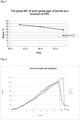
Figure 2 illustrates thegloss 60° of satin type paints as a function of the content of PVC. -
Figure 3 illustrates thegloss 60° of semi-gloss type paints as a function of the content of PVC. -
Figure 4 illustrates the tensile strength of binders with varying amounts of nano PCC and conventional binders. - The present invention concerns a process for manufacturing nanoparticles using a slurry based on an aqueous solvent. In the process, inorganic particle agglomerates are dispersed into a consistent slurry. Particularly, said inorganic particles or their agglomerates are treated in said aqueous solvent at a solids content of 30-75w-% by adding dispersing agent(s) and by carrying out ultrasonic treatment at an intensity of 5-1000W/cm2 on this concentrated slurry. Thus, the dispersing treatment is carried out on a concentrated slurry.
- The used intensity is 10 to 500W/cm2. The upper limits are set by the limitations of the current ultrasonic devices, whereas an intensity below 5W/cm2 has been discovered to leave some undispersed agglomerates. The particle size of the final dispersed nanoparticles depends on the used energy of the ultrasonic treatment..
- The conditions during the dispersion treatment of the invention are preferably close to ambient conditions, with a particularly preferred temperature being 0-95°C, and a particularly preferred pressure being 0.5-50bar depending on the intensity used.
- The nanoparticles can be formed from particles of calcium carbonate, more preferably precipitated or ground calcium carbonate (PCC or GCC), and most suitably PCC. These materials can contain traces of organic compounds, which can also be transferred to the nanoparticles used in the invention. Due to the negligible contents of these organic compounds, the material of the nano-particles is still referred to as inorganic. Generally, these compounds form agglomerates in aqueous solvents.
- The term "nano-particle" is intended to include any particles having a mean particle diameter of less than 1µm. In the present context, a particle diameter is 50-200nm.
- These nanoparticles are generally obtained by the dispersion of said agglomerates to separate these into smaller particles in a slurry. According to the present invention, said slurry contains dispersed inorganic nanoparticles in a content of 30-75w-%, preferably 45-65w-%, and most suitably 45-55w-%, of the slurry, during the treatment, i.e. before any dilution.
- The slurry provided by the present invention is stable and non-settling. Non-settling, for the purposes of the present invention, means that the particles dispersed in the slurry do not settle out of the slurry. Typically less than 20 % or less of the particles , preferably 10 % or less of the particles settle out.
- The slurry is intended to include any aqueous dispersions or mixtures formed using solvents or solutions that are based on water and optionally one or more co-solvents, being either inorganic or organic solvents.
- The slurry contains additives, as the most important ones being dispersing agents. These can, however, include also conventional binders.
- The dispersing agent(s) are used to facilitate the complete dispersion of the nanoparticles into a consistent homogeneous slurry. The dispersing agents are selected from the group of surface-active polymers consisting of polycarboxylates, polyacrylates, polyethers and fatty-acid derivatives or a mixture thereof. Their content is generally maintained at a level of 0.1-8w-%, preferably 2-4w-%. The content of the dispersing agent(s) is indirectly proportional to the dry-matter content of the slurry, i.e. the higher the dry-matter content of the slurry, the lower the amount of dispersing agent is needed to stabilise the slurry, and to prevent reagglomeration and segregation.
- Said dispersion agent(s) can be added to the slurry either on-site during the treatment of the present invention, or off-site before treatment, i.e. to the agglomerates.
- Further, an optional drying step can be carried out after the ultrasonic dispersion treatment, in order to provide the nanoparticles, as such, with a dry-matter content of 75 to 100w-%, preferably close to 100w-% (with a limitation caused by the fact that not all water can be removed from the particles).
- The final (possibly diluted) slurry, or the dried particles thereof, can be used, for example, to prepare a coating for any solid substrate or to prepare a paper coating, e.g. by mixing the slurry with optional further coating components, to form a coating mixture, and applying said coating mixture onto a surface of the substrate or the paper. The further coating components include one or more agents selected from the group of binders, dispersing agents, wetting agents, anti-foaming agents, viscosity modifiers and coalesents (film-forming agents).
- The above described coatings can be applied on any surfaces, which generally are surfaces of solid products, such as concrete, plastic, glass or fibrous surfaces. However, it is preferred to use these coatings on fibrous solid products, such as paper, wood or furniture. The coating is preferably applied as a uniform coating on at least one surface of said product, whereby the coating will cover the entire surface. The application is then preferably followed by a step of drying to remove the solvent, or at least to remove excess solvent.
- Alternatively, the final (possibly diluted) slurry, or the dried particles thereof, can be used, for example, to prepare an adhesive, plastic, rubber, plaster, mortar, concrete, or pharmaceutical or medical product.
- The following non-limiting examples are intended merely to illustrate the advantages obtained with the embodiments of the present invention.
- An aqueous slurry of PCC agglomerates (d50%=5µm) was obtained from a carbonatization plant, the agglomerates containing 40 to 50w-% of nano-sized calcium carbonate. A polyacrylate dispersant was added into a content of 3w-% to the agglomerate slurry, and the slurry was subjected to ultrasonic treatment with the same specific energy input at an intensity between 50 and 300 W/cm2. The results of
Figure 1 shows stabilized and dispersed nanoparticle slurries with an average particle size below 200 nm. - The objective of this example was to demonstrate the difference between dispersed slurry of nano-sized calcium carbonate and ultrafine GCC. Coating was performed in a satin type of paint formulation. At reference point (PVC (Pigment volume concentration) 18 %) titanium dioxide acts as an only pigment. Amount of titanium dioxide was kept constant and amount of binder and nano PCC or ultrafine GCC were variable quantities throughout the test. After the reference point, the PVC is increased by nano PCC or ultrafine GCC.
- Substances tested:
- 1. Ultrafine GCC,
average size 0,7 µm - 2. Dispersed nano calcium carbonate,
average size 200 nm - The results are shown in
Figure 2 . As may be seen from the figure with increasing PVC the gloss of nano-sized calcium carbonate coatings stay above 20 % and with ultrafine GCC gloss rapidly declines below 20 %. It is caused by the fact that with nano-sized particles surfaces of coatings stay smoother and therefore they scatter less light than with ultrafine GCC. - The same method is used in this example as in Example 2, with the exception of the coating being performed in semi-gloss type of paint formulation. The results are shown in
Figure 3 . As is evident from these results, gloss 60° maintains quite high despite of very high PVC levels. - The objective of this example was to demonstrate the tensile strength of coatings and adhesives. Tensile strength describes both binding to substrate and cohesion of polymer/filler matrix. It was performed by applying adhesives (Table 1) between two wood blocks and measuring the required amount of strength to separate them. Ultrafine GCC is used in a reference adhesive. Adhesives A and B were manufactured by mixing definite amounts of the reference adhesive without ultrafine GCC and a dispersed nano-sized calcium carbonate slurry.
Table 1 Ref. A B Water (w-%) 37,3 % 50,2 % 51,2 % CaCO3 (w-%) 18 % 19,9 % 24,4 % Binder + additives (w-%) 44,7 % 29,9 % 24,4 % - As will emerge from Table 1 and the results of
Figure 4 , adhesives A and B contain much more water and less binder than reference adhesive. However, the tensile strength and elongation is still maintained or even improved in adhesive B. - The patent is not limited to aforementioned examples. The range of particle size is affected by specific energy input used. Additionally, the level of gloss and mechanical properties are application specific and not restricted by the examples used.
Claims (6)
- A process for manufacturing nanoparticles in a concentrated slurry based on an aqueous solvent by dispersion of inorganic particle agglomerates of calcium carbonate, using water as the aqueous solvent, characterized by
treating said inorganic particles or their agglomerates in said aqueous solvent at a solids content of 30-75w-% of the slurry by adding dispersing agent(s) selected from the group of surface-active polymers consisting of polycarboxylates, polyacrylates, polyethers and fatty-acid derivatives or a mixture thereof, and by carrying out ultrasonic treatment at an intensity of 10 - 500 W/cm2, whereby a concentrated slurry is obtained, where the particle diameter is 50 - 200 nm. - The process of Claim 1, characterized by using particles of ground or precipitated calcium carbonate (GCC or PCC), most suitably PCC.
- The process of any preceding claim, characterized by treating the inorganic particles or their agglomerates in said aqueous solvent at a solids content of 45-65w-%.
- The process of any preceding claim, characterized by maintaining the conditions during the treatment close to ambient conditions, with a particularly preferred temperature being 0-95°C, and a particularly preferred pressure being 0.5-50bar.
- A slurry of inorganic nanoparticles of calcium carbonate in an aqueous solvent, where water is used as the aqueous solvent, characterized in that the slurry contains- dispersed inorganic nanoparticles in a content of 30 - 75 w-% of the slurry, wherein the particle diameter is 50 - 200 nm, and- dispersing agent(s) selected from the group of surface-active polymers consisting of polycarboxylates, polyacrylates, polyethers and fatty-acid derivatives or a mixture thereof.
- The slurry of claim 5, characterized in that the dispersed nanoparticles have a mean particle diameter of 200nm.
Applications Claiming Priority (2)
| Application Number | Priority Date | Filing Date | Title |
|---|---|---|---|
| FI20135243A FI128031B (en) | 2013-03-13 | 2013-03-13 | Process for the preparation of nanoparticles in a concentrated slurry |
| PCT/FI2014/050185 WO2014140427A1 (en) | 2013-03-13 | 2014-03-13 | A process for manufacturing nanoparticles in a concentrated slurry |
Publications (2)
| Publication Number | Publication Date |
|---|---|
| EP2970679A1 EP2970679A1 (en) | 2016-01-20 |
| EP2970679B1 true EP2970679B1 (en) | 2023-11-22 |
Family
ID=50486912
Family Applications (1)
| Application Number | Title | Priority Date | Filing Date |
|---|---|---|---|
| EP14717457.7A Active EP2970679B1 (en) | 2013-03-13 | 2014-03-13 | A process for manufacturing nanoparticles in a concentrated slurry |
Country Status (8)
| Country | Link |
|---|---|
| US (1) | US20140272098A1 (en) |
| EP (1) | EP2970679B1 (en) |
| JP (1) | JP2016517451A (en) |
| CN (1) | CN105339439A (en) |
| BR (1) | BR112015022721A2 (en) |
| FI (1) | FI128031B (en) |
| RU (1) | RU2666422C2 (en) |
| WO (1) | WO2014140427A1 (en) |
Families Citing this family (7)
| Publication number | Priority date | Publication date | Assignee | Title |
|---|---|---|---|---|
| FI128031B (en) | 2013-03-13 | 2019-08-15 | Nordkalk Oy Ab | Process for the preparation of nanoparticles in a concentrated slurry |
| FR3037801B1 (en) * | 2015-06-23 | 2017-08-11 | Jd Invest | PULVERULENT SEMI-SYNTHETIC MATERIAL, OBTAINED BY MODIFICATION OF THE COMPOSITION OF A NATURAL MARINE BIOMATERIAL, ITS MANUFACTURING PROCESS, ITS APPLICATIONS |
| KR102052719B1 (en) | 2016-06-27 | 2019-12-05 | 비아비 솔루션즈 아이엔씨. | Optical devices |
| EP3263650B1 (en) | 2016-06-27 | 2019-08-14 | Viavi Solutions Inc. | Magnetic articles |
| JP6837930B2 (en) | 2016-06-27 | 2021-03-03 | ヴァイアヴィ・ソリューションズ・インコーポレイテッドViavi Solutions Inc. | High chromaticity flakes |
| US12552939B2 (en) | 2018-06-29 | 2026-02-17 | Viavi Solutions Inc. | Optical devices with functional molecules |
| FI128907B (en) | 2019-03-07 | 2021-02-26 | Fp Pigments Oy | Transparent lacquer composition |
Citations (10)
| Publication number | Priority date | Publication date | Assignee | Title |
|---|---|---|---|---|
| JPH05344862A (en) | 1992-06-16 | 1993-12-27 | Maruo Calcium Co Ltd | Production of calcium carbonate for food additive |
| JPH07488B2 (en) | 1987-09-11 | 1995-01-11 | 雪印乳業株式会社 | Preparation method of calcium carbonate with good dispersion stability in liquid |
| US5580832A (en) | 1994-01-03 | 1996-12-03 | The United States Of America As Represented By The Secretary Of Commerce | Method for obtaining high density green ceramics from powders |
| CN101220228A (en) | 2007-04-26 | 2008-07-16 | 天津兆阳纳米科技有限公司 | Method for producing stable nano-scale water dispersible pigment dispersion with ultrasound wave |
| CN101220215A (en) | 2008-01-30 | 2008-07-16 | 上海华明高技术(集团)有限公司 | Ultra-fine light calcium carbonate slurry and production method thereof |
| US20100152326A1 (en) | 2006-07-12 | 2010-06-17 | Minusnine Technologies, Inc. | Processes for dispersing substances and preparing composite materials |
| WO2011092152A1 (en) | 2010-01-26 | 2011-08-04 | Omya Development Ag | Coating composition comprising submicron calcium carbonate |
| WO2012113876A1 (en) | 2011-02-23 | 2012-08-30 | Omya Devlopment Ag | Coating composition comprising submicron calcium carbonate-comprising particles, process to prepare same and use of submicron calcium carbonate-comprising particles in coating compositions |
| CN102912672A (en) | 2011-08-01 | 2013-02-06 | 池州学院 | Preparation method for fluid calcium carbonate slurry with high solid content of 50% used for high-grade paper industry |
| WO2014140427A1 (en) | 2013-03-13 | 2014-09-18 | Nordkalk Oy Ab | A process for manufacturing nanoparticles in a concentrated slurry |
Family Cites Families (10)
| Publication number | Priority date | Publication date | Assignee | Title |
|---|---|---|---|---|
| US5098740A (en) * | 1989-12-13 | 1992-03-24 | Norton Company | Uniformly-coated ceramic particles |
| US5229339A (en) * | 1991-11-12 | 1993-07-20 | Norton Company | Pressure casting ceramic slurries |
| GB9211822D0 (en) | 1992-06-04 | 1992-07-15 | Tioxide Group Services Ltd | Composite pigmentary material |
| JP3469281B2 (en) * | 1993-11-12 | 2003-11-25 | 丸尾カルシウム株式会社 | Method for producing calcium carbonate dispersion |
| CN1207350C (en) * | 2001-07-06 | 2005-06-22 | 韩巍 | Nano Water dispersion medium composition, its preparation method and application |
| DE102006026965A1 (en) * | 2006-06-09 | 2007-12-13 | Omya Development Ag | Composites of inorganic and / or organic microparticles and nano-calcium carbonate particles |
| SG150405A1 (en) * | 2007-08-29 | 2009-03-30 | Agency Science Tech & Res | Method of coating a particle |
| US20100125326A1 (en) * | 2008-11-20 | 2010-05-20 | Medtronic Vascular, Inc. | Braided Stent With a Shortenable Tether |
| MX2009003842A (en) | 2009-04-08 | 2010-10-13 | Nanosoluciones S A De C V | Continuous method assisted by ultrasound with a variable amplitude and frequency for the preparation of nanocompounds based on polymers and nanoparticles. |
| FI128036B (en) * | 2012-09-06 | 2019-08-15 | Nordkalk Oy Ab | Dispersed nanoparticles in transparent coatings |
-
2013
- 2013-03-13 FI FI20135243A patent/FI128031B/en active IP Right Grant
- 2013-03-14 US US13/826,849 patent/US20140272098A1/en not_active Abandoned
-
2014
- 2014-03-13 RU RU2015138445A patent/RU2666422C2/en active
- 2014-03-13 BR BR112015022721-0A patent/BR112015022721A2/en not_active IP Right Cessation
- 2014-03-13 CN CN201480014689.1A patent/CN105339439A/en active Pending
- 2014-03-13 WO PCT/FI2014/050185 patent/WO2014140427A1/en not_active Ceased
- 2014-03-13 JP JP2015562273A patent/JP2016517451A/en active Pending
- 2014-03-13 EP EP14717457.7A patent/EP2970679B1/en active Active
Patent Citations (10)
| Publication number | Priority date | Publication date | Assignee | Title |
|---|---|---|---|---|
| JPH07488B2 (en) | 1987-09-11 | 1995-01-11 | 雪印乳業株式会社 | Preparation method of calcium carbonate with good dispersion stability in liquid |
| JPH05344862A (en) | 1992-06-16 | 1993-12-27 | Maruo Calcium Co Ltd | Production of calcium carbonate for food additive |
| US5580832A (en) | 1994-01-03 | 1996-12-03 | The United States Of America As Represented By The Secretary Of Commerce | Method for obtaining high density green ceramics from powders |
| US20100152326A1 (en) | 2006-07-12 | 2010-06-17 | Minusnine Technologies, Inc. | Processes for dispersing substances and preparing composite materials |
| CN101220228A (en) | 2007-04-26 | 2008-07-16 | 天津兆阳纳米科技有限公司 | Method for producing stable nano-scale water dispersible pigment dispersion with ultrasound wave |
| CN101220215A (en) | 2008-01-30 | 2008-07-16 | 上海华明高技术(集团)有限公司 | Ultra-fine light calcium carbonate slurry and production method thereof |
| WO2011092152A1 (en) | 2010-01-26 | 2011-08-04 | Omya Development Ag | Coating composition comprising submicron calcium carbonate |
| WO2012113876A1 (en) | 2011-02-23 | 2012-08-30 | Omya Devlopment Ag | Coating composition comprising submicron calcium carbonate-comprising particles, process to prepare same and use of submicron calcium carbonate-comprising particles in coating compositions |
| CN102912672A (en) | 2011-08-01 | 2013-02-06 | 池州学院 | Preparation method for fluid calcium carbonate slurry with high solid content of 50% used for high-grade paper industry |
| WO2014140427A1 (en) | 2013-03-13 | 2014-09-18 | Nordkalk Oy Ab | A process for manufacturing nanoparticles in a concentrated slurry |
Non-Patent Citations (5)
| Title |
|---|
| "A guidebook to particle size analysis", 1 January 2010, article SCIENTIFIC HORIBA: "A guidebook to particle size analysis", pages: 1 - 34, XP055762626 |
| "Calcium carbonate: from the Cretaceous Period into the 21st century", 1 November 2001, BIRKHÄUSER VERLAG, ISBN: 3-7643-6425-4, article EBERHARD HUWALD: "3.4 Logistics - the route to the customer", pages: 193 - 194 |
| ANONYMOUS: "Product Data Sheet Omyaspace 300 - PT 73%", PRODUCT DATA SHEET OMYASPACE 300 - PT 73%, OMYA INC., 6 October 2010 (2010-10-06), pages 1 - 1, XP093210646, Retrieved from the Internet <URL:http://www.omya-na.com> |
| ANONYMOUS: "Product Introduction KQ-250DE CNC ultrasonic cleaner ", DATA SHEET, KUNSHAN ULTRASONIC INSTRUMENT CO., LTD., 1 October 2024 (2024-10-01), pages 1 - 1, XP093210632, Retrieved from the Internet <URL:https://www.instrument.com.cn/netshow/SH102659/C155440.htm> |
| FU, D. ; WU, S. ; HE, X. ; NI, J.: "Preparation and property analysis of polyacrylate dispersant for calcium carbonate", COLLOIDS AND SURFACES A : PHYSIOCHEMICAL AND ENGINEERINGS ASPECTS, ELSEVIER, AMSTERDAM, NL, vol. 326, no. 3, 1 September 2008 (2008-09-01), AMSTERDAM, NL , pages 122 - 128, XP023781514, ISSN: 0927-7757, DOI: 10.1016/j.colsurfa.2008.05.021 |
Also Published As
| Publication number | Publication date |
|---|---|
| FI20135243A7 (en) | 2014-09-14 |
| BR112015022721A2 (en) | 2018-05-08 |
| RU2015138445A (en) | 2017-04-18 |
| EP2970679A1 (en) | 2016-01-20 |
| FI128031B (en) | 2019-08-15 |
| RU2015138445A3 (en) | 2018-03-06 |
| RU2666422C2 (en) | 2018-09-07 |
| JP2016517451A (en) | 2016-06-16 |
| US20140272098A1 (en) | 2014-09-18 |
| WO2014140427A1 (en) | 2014-09-18 |
| CN105339439A (en) | 2016-02-17 |
| FI20135243L (en) | 2014-09-14 |
Similar Documents
| Publication | Publication Date | Title |
|---|---|---|
| FI128031B (en) | Process for the preparation of nanoparticles in a concentrated slurry | |
| DE69220239T2 (en) | METHOD FOR PRODUCING AN AQUEOUS DISPERSION | |
| DE69225602T2 (en) | METHOD FOR PARTICLE ABSORPTION | |
| Ioelovich et al. | Nano-cellulose and its application | |
| CN101466799B (en) | Composites of inorganic and/or organic microparticles and nano calcium carbonate particles | |
| EP2906638B1 (en) | Particulate phyllosilicate material | |
| CN104520385B (en) | Surface-modified calcium carbonate-containing minerals and uses thereof | |
| EP1084203B1 (en) | Composite compositions of co-structured or co-adsorbed organic or mineral pigments or fillers and their uses | |
| Girouard et al. | Exploiting colloidal interfaces to increase dispersion, performance, and pot-life in cellulose nanocrystal/waterborne epoxy composites | |
| Sh et al. | Dispersion and stability of carbon black nanoparticles, studied by ultraviolet–visible spectroscopy | |
| JP6082081B2 (en) | Coating composition comprising submicron calcium carbonate | |
| SK4096A3 (en) | Aqeous gloss emulsion paint and preparation method thereof | |
| EP1706449A1 (en) | Dispersion and coating preparation containing nanoscale zinc oxide | |
| DE202012012628U1 (en) | Precipitated calcium carbonate particles and use thereof | |
| Joni et al. | Dispersion of amorphous silica nanoparticles via beads milling process and their particle size analysis, hydrophobicity and anti-bacterial activity | |
| DE102007059681A1 (en) | Composites of inorganic microparticles with a phosphated surface and nano alkaline earth carbonate particles | |
| CN103391976A (en) | Coating composition comprising particles comprising submicron calcium carbonate, method for its preparation and use of particles comprising submicron calcium carbonate in coating compositions | |
| EP1680462B1 (en) | Method for producing an antistatically coated molded body | |
| KR101819444B1 (en) | Stable nanoparticular suspension and method for producing same | |
| CA2570436A1 (en) | Method for grinding mineral materials in the presence of binders, resulting aqueous suspensions and use thereof | |
| FI128036B (en) | Dispersed nanoparticles in transparent coatings | |
| CN107365525A (en) | A kind of delustring barium sulfate and preparation method thereof | |
| Zhang et al. | Water-dispersible and stable fluorescent Maya Blue-like pigments | |
| Jesionowski et al. | Modified titanium white-characteristics and application | |
| KR20210082490A (en) | Masonry Composition Comprising Chemically Treated Carbon Pigment |
Legal Events
| Date | Code | Title | Description |
|---|---|---|---|
| PUAI | Public reference made under article 153(3) epc to a published international application that has entered the european phase |
Free format text: ORIGINAL CODE: 0009012 |
|
| 17P | Request for examination filed |
Effective date: 20150907 |
|
| AK | Designated contracting states |
Kind code of ref document: A1 Designated state(s): AL AT BE BG CH CY CZ DE DK EE ES FI FR GB GR HR HU IE IS IT LI LT LU LV MC MK MT NL NO PL PT RO RS SE SI SK SM TR |
|
| AX | Request for extension of the european patent |
Extension state: BA ME |
|
| DAX | Request for extension of the european patent (deleted) | ||
| STAA | Information on the status of an ep patent application or granted ep patent |
Free format text: STATUS: EXAMINATION IS IN PROGRESS |
|
| 17Q | First examination report despatched |
Effective date: 20191126 |
|
| RIC1 | Information provided on ipc code assigned before grant |
Ipc: C08K 3/34 20060101ALI20230414BHEP Ipc: C08K 3/26 20060101ALI20230414BHEP Ipc: C09D 7/40 20180101ALI20230414BHEP Ipc: C09D 7/45 20180101ALI20230414BHEP Ipc: C09D 7/61 20180101ALI20230414BHEP Ipc: C09C 1/02 20060101ALI20230414BHEP Ipc: C09C 1/40 20060101AFI20230414BHEP |
|
| GRAP | Despatch of communication of intention to grant a patent |
Free format text: ORIGINAL CODE: EPIDOSNIGR1 |
|
| STAA | Information on the status of an ep patent application or granted ep patent |
Free format text: STATUS: GRANT OF PATENT IS INTENDED |
|
| INTG | Intention to grant announced |
Effective date: 20230615 |
|
| GRAS | Grant fee paid |
Free format text: ORIGINAL CODE: EPIDOSNIGR3 |
|
| GRAA | (expected) grant |
Free format text: ORIGINAL CODE: 0009210 |
|
| STAA | Information on the status of an ep patent application or granted ep patent |
Free format text: STATUS: THE PATENT HAS BEEN GRANTED |
|
| AK | Designated contracting states |
Kind code of ref document: B1 Designated state(s): AL AT BE BG CH CY CZ DE DK EE ES FI FR GB GR HR HU IE IS IT LI LT LU LV MC MK MT NL NO PL PT RO RS SE SI SK SM TR |
|
| REG | Reference to a national code |
Ref country code: GB Ref legal event code: FG4D |
|
| REG | Reference to a national code |
Ref country code: CH Ref legal event code: EP Ref country code: DE Ref legal event code: R096 Ref document number: 602014088933 Country of ref document: DE |
|
| REG | Reference to a national code |
Ref country code: IE Ref legal event code: FG4D |
|
| REG | Reference to a national code |
Ref country code: LT Ref legal event code: MG9D |
|
| REG | Reference to a national code |
Ref country code: NL Ref legal event code: MP Effective date: 20231122 |
|
| PG25 | Lapsed in a contracting state [announced via postgrant information from national office to epo] |
Ref country code: GR Free format text: LAPSE BECAUSE OF FAILURE TO SUBMIT A TRANSLATION OF THE DESCRIPTION OR TO PAY THE FEE WITHIN THE PRESCRIBED TIME-LIMIT Effective date: 20240223 |
|
| PG25 | Lapsed in a contracting state [announced via postgrant information from national office to epo] |
Ref country code: IS Free format text: LAPSE BECAUSE OF FAILURE TO SUBMIT A TRANSLATION OF THE DESCRIPTION OR TO PAY THE FEE WITHIN THE PRESCRIBED TIME-LIMIT Effective date: 20240322 |
|
| PG25 | Lapsed in a contracting state [announced via postgrant information from national office to epo] |
Ref country code: LT Free format text: LAPSE BECAUSE OF FAILURE TO SUBMIT A TRANSLATION OF THE DESCRIPTION OR TO PAY THE FEE WITHIN THE PRESCRIBED TIME-LIMIT Effective date: 20231122 |
|
| REG | Reference to a national code |
Ref country code: AT Ref legal event code: MK05 Ref document number: 1633826 Country of ref document: AT Kind code of ref document: T Effective date: 20231122 |
|
| PG25 | Lapsed in a contracting state [announced via postgrant information from national office to epo] |
Ref country code: NL Free format text: LAPSE BECAUSE OF FAILURE TO SUBMIT A TRANSLATION OF THE DESCRIPTION OR TO PAY THE FEE WITHIN THE PRESCRIBED TIME-LIMIT Effective date: 20231122 |
|
| PG25 | Lapsed in a contracting state [announced via postgrant information from national office to epo] |
Ref country code: AT Free format text: LAPSE BECAUSE OF FAILURE TO SUBMIT A TRANSLATION OF THE DESCRIPTION OR TO PAY THE FEE WITHIN THE PRESCRIBED TIME-LIMIT Effective date: 20231122 |
|
| PG25 | Lapsed in a contracting state [announced via postgrant information from national office to epo] |
Ref country code: ES Free format text: LAPSE BECAUSE OF FAILURE TO SUBMIT A TRANSLATION OF THE DESCRIPTION OR TO PAY THE FEE WITHIN THE PRESCRIBED TIME-LIMIT Effective date: 20231122 |
|
| PG25 | Lapsed in a contracting state [announced via postgrant information from national office to epo] |
Ref country code: NL Free format text: LAPSE BECAUSE OF FAILURE TO SUBMIT A TRANSLATION OF THE DESCRIPTION OR TO PAY THE FEE WITHIN THE PRESCRIBED TIME-LIMIT Effective date: 20231122 Ref country code: LT Free format text: LAPSE BECAUSE OF FAILURE TO SUBMIT A TRANSLATION OF THE DESCRIPTION OR TO PAY THE FEE WITHIN THE PRESCRIBED TIME-LIMIT Effective date: 20231122 Ref country code: IS Free format text: LAPSE BECAUSE OF FAILURE TO SUBMIT A TRANSLATION OF THE DESCRIPTION OR TO PAY THE FEE WITHIN THE PRESCRIBED TIME-LIMIT Effective date: 20240322 Ref country code: GR Free format text: LAPSE BECAUSE OF FAILURE TO SUBMIT A TRANSLATION OF THE DESCRIPTION OR TO PAY THE FEE WITHIN THE PRESCRIBED TIME-LIMIT Effective date: 20240223 Ref country code: ES Free format text: LAPSE BECAUSE OF FAILURE TO SUBMIT A TRANSLATION OF THE DESCRIPTION OR TO PAY THE FEE WITHIN THE PRESCRIBED TIME-LIMIT Effective date: 20231122 Ref country code: BG Free format text: LAPSE BECAUSE OF FAILURE TO SUBMIT A TRANSLATION OF THE DESCRIPTION OR TO PAY THE FEE WITHIN THE PRESCRIBED TIME-LIMIT Effective date: 20240222 Ref country code: AT Free format text: LAPSE BECAUSE OF FAILURE TO SUBMIT A TRANSLATION OF THE DESCRIPTION OR TO PAY THE FEE WITHIN THE PRESCRIBED TIME-LIMIT Effective date: 20231122 Ref country code: PT Free format text: LAPSE BECAUSE OF FAILURE TO SUBMIT A TRANSLATION OF THE DESCRIPTION OR TO PAY THE FEE WITHIN THE PRESCRIBED TIME-LIMIT Effective date: 20240322 |
|
| PG25 | Lapsed in a contracting state [announced via postgrant information from national office to epo] |
Ref country code: SE Free format text: LAPSE BECAUSE OF FAILURE TO SUBMIT A TRANSLATION OF THE DESCRIPTION OR TO PAY THE FEE WITHIN THE PRESCRIBED TIME-LIMIT Effective date: 20231122 Ref country code: RS Free format text: LAPSE BECAUSE OF FAILURE TO SUBMIT A TRANSLATION OF THE DESCRIPTION OR TO PAY THE FEE WITHIN THE PRESCRIBED TIME-LIMIT Effective date: 20231122 Ref country code: PL Free format text: LAPSE BECAUSE OF FAILURE TO SUBMIT A TRANSLATION OF THE DESCRIPTION OR TO PAY THE FEE WITHIN THE PRESCRIBED TIME-LIMIT Effective date: 20231122 Ref country code: NO Free format text: LAPSE BECAUSE OF FAILURE TO SUBMIT A TRANSLATION OF THE DESCRIPTION OR TO PAY THE FEE WITHIN THE PRESCRIBED TIME-LIMIT Effective date: 20240222 Ref country code: LV Free format text: LAPSE BECAUSE OF FAILURE TO SUBMIT A TRANSLATION OF THE DESCRIPTION OR TO PAY THE FEE WITHIN THE PRESCRIBED TIME-LIMIT Effective date: 20231122 Ref country code: HR Free format text: LAPSE BECAUSE OF FAILURE TO SUBMIT A TRANSLATION OF THE DESCRIPTION OR TO PAY THE FEE WITHIN THE PRESCRIBED TIME-LIMIT Effective date: 20231122 |
|
| PG25 | Lapsed in a contracting state [announced via postgrant information from national office to epo] |
Ref country code: DK Free format text: LAPSE BECAUSE OF FAILURE TO SUBMIT A TRANSLATION OF THE DESCRIPTION OR TO PAY THE FEE WITHIN THE PRESCRIBED TIME-LIMIT Effective date: 20231122 |
|
| PG25 | Lapsed in a contracting state [announced via postgrant information from national office to epo] |
Ref country code: CZ Free format text: LAPSE BECAUSE OF FAILURE TO SUBMIT A TRANSLATION OF THE DESCRIPTION OR TO PAY THE FEE WITHIN THE PRESCRIBED TIME-LIMIT Effective date: 20231122 |
|
| PG25 | Lapsed in a contracting state [announced via postgrant information from national office to epo] |
Ref country code: SK Free format text: LAPSE BECAUSE OF FAILURE TO SUBMIT A TRANSLATION OF THE DESCRIPTION OR TO PAY THE FEE WITHIN THE PRESCRIBED TIME-LIMIT Effective date: 20231122 |
|
| PG25 | Lapsed in a contracting state [announced via postgrant information from national office to epo] |
Ref country code: SM Free format text: LAPSE BECAUSE OF FAILURE TO SUBMIT A TRANSLATION OF THE DESCRIPTION OR TO PAY THE FEE WITHIN THE PRESCRIBED TIME-LIMIT Effective date: 20231122 Ref country code: SK Free format text: LAPSE BECAUSE OF FAILURE TO SUBMIT A TRANSLATION OF THE DESCRIPTION OR TO PAY THE FEE WITHIN THE PRESCRIBED TIME-LIMIT Effective date: 20231122 Ref country code: RO Free format text: LAPSE BECAUSE OF FAILURE TO SUBMIT A TRANSLATION OF THE DESCRIPTION OR TO PAY THE FEE WITHIN THE PRESCRIBED TIME-LIMIT Effective date: 20231122 Ref country code: IT Free format text: LAPSE BECAUSE OF FAILURE TO SUBMIT A TRANSLATION OF THE DESCRIPTION OR TO PAY THE FEE WITHIN THE PRESCRIBED TIME-LIMIT Effective date: 20231122 Ref country code: EE Free format text: LAPSE BECAUSE OF FAILURE TO SUBMIT A TRANSLATION OF THE DESCRIPTION OR TO PAY THE FEE WITHIN THE PRESCRIBED TIME-LIMIT Effective date: 20231122 Ref country code: DK Free format text: LAPSE BECAUSE OF FAILURE TO SUBMIT A TRANSLATION OF THE DESCRIPTION OR TO PAY THE FEE WITHIN THE PRESCRIBED TIME-LIMIT Effective date: 20231122 Ref country code: CZ Free format text: LAPSE BECAUSE OF FAILURE TO SUBMIT A TRANSLATION OF THE DESCRIPTION OR TO PAY THE FEE WITHIN THE PRESCRIBED TIME-LIMIT Effective date: 20231122 |
|
| REG | Reference to a national code |
Ref country code: DE Ref legal event code: R026 Ref document number: 602014088933 Country of ref document: DE |
|
| PLBI | Opposition filed |
Free format text: ORIGINAL CODE: 0009260 |
|
| PLAX | Notice of opposition and request to file observation + time limit sent |
Free format text: ORIGINAL CODE: EPIDOSNOBS2 |
|
| 26 | Opposition filed |
Opponent name: OMYA INTERNATIONAL AG Effective date: 20240822 |
|
| PG25 | Lapsed in a contracting state [announced via postgrant information from national office to epo] |
Ref country code: SI Free format text: LAPSE BECAUSE OF FAILURE TO SUBMIT A TRANSLATION OF THE DESCRIPTION OR TO PAY THE FEE WITHIN THE PRESCRIBED TIME-LIMIT Effective date: 20231122 |
|
| PG25 | Lapsed in a contracting state [announced via postgrant information from national office to epo] |
Ref country code: SI Free format text: LAPSE BECAUSE OF FAILURE TO SUBMIT A TRANSLATION OF THE DESCRIPTION OR TO PAY THE FEE WITHIN THE PRESCRIBED TIME-LIMIT Effective date: 20231122 |
|
| REG | Reference to a national code |
Ref country code: CH Ref legal event code: PL |
|
| PG25 | Lapsed in a contracting state [announced via postgrant information from national office to epo] |
Ref country code: LU Free format text: LAPSE BECAUSE OF NON-PAYMENT OF DUE FEES Effective date: 20240313 |
|
| PG25 | Lapsed in a contracting state [announced via postgrant information from national office to epo] |
Ref country code: MC Free format text: LAPSE BECAUSE OF FAILURE TO SUBMIT A TRANSLATION OF THE DESCRIPTION OR TO PAY THE FEE WITHIN THE PRESCRIBED TIME-LIMIT Effective date: 20231122 |
|
| PG25 | Lapsed in a contracting state [announced via postgrant information from national office to epo] |
Ref country code: MC Free format text: LAPSE BECAUSE OF FAILURE TO SUBMIT A TRANSLATION OF THE DESCRIPTION OR TO PAY THE FEE WITHIN THE PRESCRIBED TIME-LIMIT Effective date: 20231122 Ref country code: LU Free format text: LAPSE BECAUSE OF NON-PAYMENT OF DUE FEES Effective date: 20240313 |
|
| REG | Reference to a national code |
Ref country code: BE Ref legal event code: MM Effective date: 20240331 |
|
| PLBB | Reply of patent proprietor to notice(s) of opposition received |
Free format text: ORIGINAL CODE: EPIDOSNOBS3 |
|
| PG25 | Lapsed in a contracting state [announced via postgrant information from national office to epo] |
Ref country code: BE Free format text: LAPSE BECAUSE OF NON-PAYMENT OF DUE FEES Effective date: 20240331 |
|
| PG25 | Lapsed in a contracting state [announced via postgrant information from national office to epo] |
Ref country code: IE Free format text: LAPSE BECAUSE OF NON-PAYMENT OF DUE FEES Effective date: 20240313 |
|
| PG25 | Lapsed in a contracting state [announced via postgrant information from national office to epo] |
Ref country code: IE Free format text: LAPSE BECAUSE OF NON-PAYMENT OF DUE FEES Effective date: 20240313 Ref country code: BE Free format text: LAPSE BECAUSE OF NON-PAYMENT OF DUE FEES Effective date: 20240331 Ref country code: CH Free format text: LAPSE BECAUSE OF NON-PAYMENT OF DUE FEES Effective date: 20240331 |
|
| PG25 | Lapsed in a contracting state [announced via postgrant information from national office to epo] |
Ref country code: CY Free format text: LAPSE BECAUSE OF FAILURE TO SUBMIT A TRANSLATION OF THE DESCRIPTION OR TO PAY THE FEE WITHIN THE PRESCRIBED TIME-LIMIT; INVALID AB INITIO Effective date: 20140313 |
|
| PG25 | Lapsed in a contracting state [announced via postgrant information from national office to epo] |
Ref country code: HU Free format text: LAPSE BECAUSE OF FAILURE TO SUBMIT A TRANSLATION OF THE DESCRIPTION OR TO PAY THE FEE WITHIN THE PRESCRIBED TIME-LIMIT; INVALID AB INITIO Effective date: 20140313 |
|
| PG25 | Lapsed in a contracting state [announced via postgrant information from national office to epo] |
Ref country code: FI Free format text: LAPSE BECAUSE OF FAILURE TO SUBMIT A TRANSLATION OF THE DESCRIPTION OR TO PAY THE FEE WITHIN THE PRESCRIBED TIME-LIMIT Effective date: 20231122 |
|
| PG25 | Lapsed in a contracting state [announced via postgrant information from national office to epo] |
Ref country code: TR Free format text: LAPSE BECAUSE OF FAILURE TO SUBMIT A TRANSLATION OF THE DESCRIPTION OR TO PAY THE FEE WITHIN THE PRESCRIBED TIME-LIMIT Effective date: 20231122 |
|
| RDAF | Communication despatched that patent is revoked |
Free format text: ORIGINAL CODE: EPIDOSNREV1 |
|
| PGFP | Annual fee paid to national office [announced via postgrant information from national office to epo] |
Ref country code: GB Payment date: 20260317 Year of fee payment: 13 |
|
| PGFP | Annual fee paid to national office [announced via postgrant information from national office to epo] |
Ref country code: DE Payment date: 20260318 Year of fee payment: 13 |
|
| PGFP | Annual fee paid to national office [announced via postgrant information from national office to epo] |
Ref country code: FR Payment date: 20260317 Year of fee payment: 13 |