EP2968070B1 - Method for improving bioavailability of therapeutic compounds - Google Patents
Method for improving bioavailability of therapeutic compounds Download PDFInfo
- Publication number
- EP2968070B1 EP2968070B1 EP14762887.9A EP14762887A EP2968070B1 EP 2968070 B1 EP2968070 B1 EP 2968070B1 EP 14762887 A EP14762887 A EP 14762887A EP 2968070 B1 EP2968070 B1 EP 2968070B1
- Authority
- EP
- European Patent Office
- Prior art keywords
- target compound
- milk protein
- protein concentrate
- curcumin
- solution
- Prior art date
- Legal status (The legal status is an assumption and is not a legal conclusion. Google has not performed a legal analysis and makes no representation as to the accuracy of the status listed.)
- Revoked
Links
- 150000001875 compounds Chemical class 0.000 title claims description 75
- 238000000034 method Methods 0.000 title claims description 62
- 230000001225 therapeutic effect Effects 0.000 title description 5
- VFLDPWHFBUODDF-FCXRPNKRSA-N curcumin Chemical compound C1=C(O)C(OC)=CC(\C=C\C(=O)CC(=O)\C=C\C=2C=C(OC)C(O)=CC=2)=C1 VFLDPWHFBUODDF-FCXRPNKRSA-N 0.000 claims description 113
- 108010011756 Milk Proteins Proteins 0.000 claims description 66
- 102000014171 Milk Proteins Human genes 0.000 claims description 66
- 235000021239 milk protein Nutrition 0.000 claims description 66
- 239000012141 concentrate Substances 0.000 claims description 64
- 235000012754 curcumin Nutrition 0.000 claims description 55
- 229940109262 curcumin Drugs 0.000 claims description 54
- 239000004148 curcumin Substances 0.000 claims description 54
- VFLDPWHFBUODDF-UHFFFAOYSA-N diferuloylmethane Natural products C1=C(O)C(OC)=CC(C=CC(=O)CC(=O)C=CC=2C=C(OC)C(O)=CC=2)=C1 VFLDPWHFBUODDF-UHFFFAOYSA-N 0.000 claims description 54
- 239000000693 micelle Substances 0.000 claims description 39
- 239000005018 casein Substances 0.000 claims description 29
- BECPQYXYKAMYBN-UHFFFAOYSA-N casein, tech. Chemical compound NCCCCC(C(O)=O)N=C(O)C(CC(O)=O)N=C(O)C(CCC(O)=N)N=C(O)C(CC(C)C)N=C(O)C(CCC(O)=O)N=C(O)C(CC(O)=O)N=C(O)C(CCC(O)=O)N=C(O)C(C(C)O)N=C(O)C(CCC(O)=N)N=C(O)C(CCC(O)=N)N=C(O)C(CCC(O)=N)N=C(O)C(CCC(O)=O)N=C(O)C(CCC(O)=O)N=C(O)C(COP(O)(O)=O)N=C(O)C(CCC(O)=N)N=C(O)C(N)CC1=CC=CC=C1 BECPQYXYKAMYBN-UHFFFAOYSA-N 0.000 claims description 28
- 235000021240 caseins Nutrition 0.000 claims description 28
- 238000001816 cooling Methods 0.000 claims description 16
- 239000002245 particle Substances 0.000 claims description 14
- 235000018102 proteins Nutrition 0.000 claims description 14
- 102000004169 proteins and genes Human genes 0.000 claims description 14
- 108090000623 proteins and genes Proteins 0.000 claims description 14
- 238000010792 warming Methods 0.000 claims description 13
- 238000001035 drying Methods 0.000 claims description 6
- 150000002989 phenols Chemical class 0.000 claims description 6
- 238000001694 spray drying Methods 0.000 claims description 6
- -1 curcuminoids Chemical compound 0.000 claims description 5
- 230000002209 hydrophobic effect Effects 0.000 claims description 4
- 238000003801 milling Methods 0.000 claims description 4
- 150000007965 phenolic acids Chemical class 0.000 claims description 4
- 239000002671 adjuvant Substances 0.000 claims description 3
- 239000000843 powder Substances 0.000 claims description 3
- 229930003935 flavonoid Natural products 0.000 claims description 2
- 235000017173 flavonoids Nutrition 0.000 claims description 2
- 150000002215 flavonoids Chemical class 0.000 claims description 2
- 239000000243 solution Substances 0.000 description 35
- 239000000047 product Substances 0.000 description 21
- 210000004027 cell Anatomy 0.000 description 19
- 235000013336 milk Nutrition 0.000 description 15
- 239000008267 milk Substances 0.000 description 15
- 210000004080 milk Anatomy 0.000 description 15
- 239000000203 mixture Substances 0.000 description 10
- CWVRJTMFETXNAD-FWCWNIRPSA-N 3-O-Caffeoylquinic acid Natural products O[C@H]1[C@@H](O)C[C@@](O)(C(O)=O)C[C@H]1OC(=O)\C=C\C1=CC=C(O)C(O)=C1 CWVRJTMFETXNAD-FWCWNIRPSA-N 0.000 description 7
- PZIRUHCJZBGLDY-UHFFFAOYSA-N Caffeoylquinic acid Natural products CC(CCC(=O)C(C)C1C(=O)CC2C3CC(O)C4CC(O)CCC4(C)C3CCC12C)C(=O)O PZIRUHCJZBGLDY-UHFFFAOYSA-N 0.000 description 7
- CWVRJTMFETXNAD-KLZCAUPSSA-N Neochlorogenin-saeure Natural products O[C@H]1C[C@@](O)(C[C@@H](OC(=O)C=Cc2ccc(O)c(O)c2)[C@@H]1O)C(=O)O CWVRJTMFETXNAD-KLZCAUPSSA-N 0.000 description 7
- 235000001368 chlorogenic acid Nutrition 0.000 description 7
- CWVRJTMFETXNAD-JUHZACGLSA-N chlorogenic acid Chemical compound O[C@@H]1[C@H](O)C[C@@](O)(C(O)=O)C[C@H]1OC(=O)\C=C\C1=CC=C(O)C(O)=C1 CWVRJTMFETXNAD-JUHZACGLSA-N 0.000 description 7
- 229940074393 chlorogenic acid Drugs 0.000 description 7
- FFQSDFBBSXGVKF-KHSQJDLVSA-N chlorogenic acid Natural products O[C@@H]1C[C@](O)(C[C@@H](CC(=O)C=Cc2ccc(O)c(O)c2)[C@@H]1O)C(=O)O FFQSDFBBSXGVKF-KHSQJDLVSA-N 0.000 description 7
- BMRSEYFENKXDIS-KLZCAUPSSA-N cis-3-O-p-coumaroylquinic acid Natural products O[C@H]1C[C@@](O)(C[C@@H](OC(=O)C=Cc2ccc(O)cc2)[C@@H]1O)C(=O)O BMRSEYFENKXDIS-KLZCAUPSSA-N 0.000 description 7
- 235000013861 fat-free Nutrition 0.000 description 7
- 238000009928 pasteurization Methods 0.000 description 7
- AAWZDTNXLSGCEK-LNVDRNJUSA-N (3r,5r)-1,3,4,5-tetrahydroxycyclohexane-1-carboxylic acid Chemical compound O[C@@H]1CC(O)(C(O)=O)C[C@@H](O)C1O AAWZDTNXLSGCEK-LNVDRNJUSA-N 0.000 description 6
- AAWZDTNXLSGCEK-UHFFFAOYSA-N Cordycepinsaeure Natural products OC1CC(O)(C(O)=O)CC(O)C1O AAWZDTNXLSGCEK-UHFFFAOYSA-N 0.000 description 6
- AAWZDTNXLSGCEK-ZHQZDSKASA-N Quinic acid Natural products O[C@H]1CC(O)(C(O)=O)C[C@H](O)C1O AAWZDTNXLSGCEK-ZHQZDSKASA-N 0.000 description 6
- QAIPRVGONGVQAS-DUXPYHPUSA-N trans-caffeic acid Chemical compound OC(=O)\C=C\C1=CC=C(O)C(O)=C1 QAIPRVGONGVQAS-DUXPYHPUSA-N 0.000 description 6
- 238000005119 centrifugation Methods 0.000 description 5
- 235000013824 polyphenols Nutrition 0.000 description 5
- 230000008569 process Effects 0.000 description 5
- 239000007787 solid Substances 0.000 description 5
- 241001465754 Metazoa Species 0.000 description 4
- 206010028980 Neoplasm Diseases 0.000 description 4
- 230000008901 benefit Effects 0.000 description 4
- 201000011510 cancer Diseases 0.000 description 4
- 230000035699 permeability Effects 0.000 description 4
- 150000008442 polyphenolic compounds Chemical class 0.000 description 4
- PCMORTLOPMLEFB-ONEGZZNKSA-N sinapic acid Chemical compound COC1=CC(\C=C\C(O)=O)=CC(OC)=C1O PCMORTLOPMLEFB-ONEGZZNKSA-N 0.000 description 4
- 239000000126 substance Substances 0.000 description 4
- 239000000725 suspension Substances 0.000 description 4
- ACEAELOMUCBPJP-UHFFFAOYSA-N (E)-3,4,5-trihydroxycinnamic acid Natural products OC(=O)C=CC1=CC(O)=C(O)C(O)=C1 ACEAELOMUCBPJP-UHFFFAOYSA-N 0.000 description 3
- GUBGYTABKSRVRQ-QKKXKWKRSA-N Lactose Natural products OC[C@H]1O[C@@H](O[C@H]2[C@H](O)[C@@H](O)C(O)O[C@@H]2CO)[C@H](O)[C@@H](O)[C@H]1O GUBGYTABKSRVRQ-QKKXKWKRSA-N 0.000 description 3
- 241000700159 Rattus Species 0.000 description 3
- 108010046377 Whey Proteins Proteins 0.000 description 3
- 238000010521 absorption reaction Methods 0.000 description 3
- 235000004883 caffeic acid Nutrition 0.000 description 3
- 229940074360 caffeic acid Drugs 0.000 description 3
- 235000013985 cinnamic acid Nutrition 0.000 description 3
- QAIPRVGONGVQAS-UHFFFAOYSA-N cis-caffeic acid Natural products OC(=O)C=CC1=CC=C(O)C(O)=C1 QAIPRVGONGVQAS-UHFFFAOYSA-N 0.000 description 3
- 210000000936 intestine Anatomy 0.000 description 3
- 239000008101 lactose Substances 0.000 description 3
- 238000004519 manufacturing process Methods 0.000 description 3
- WBYWAXJHAXSJNI-UHFFFAOYSA-N methyl p-hydroxycinnamate Natural products OC(=O)C=CC1=CC=CC=C1 WBYWAXJHAXSJNI-UHFFFAOYSA-N 0.000 description 3
- 235000004252 protein component Nutrition 0.000 description 3
- 235000020183 skimmed milk Nutrition 0.000 description 3
- 238000000108 ultra-filtration Methods 0.000 description 3
- 235000021119 whey protein Nutrition 0.000 description 3
- KSEBMYQBYZTDHS-HWKANZROSA-M (E)-Ferulic acid Natural products COC1=CC(\C=C\C([O-])=O)=CC=C1O KSEBMYQBYZTDHS-HWKANZROSA-M 0.000 description 2
- WBYWAXJHAXSJNI-VOTSOKGWSA-M .beta-Phenylacrylic acid Natural products [O-]C(=O)\C=C\C1=CC=CC=C1 WBYWAXJHAXSJNI-VOTSOKGWSA-M 0.000 description 2
- 241000894006 Bacteria Species 0.000 description 2
- 241000283690 Bos taurus Species 0.000 description 2
- OYPRJOBELJOOCE-UHFFFAOYSA-N Calcium Chemical compound [Ca] OYPRJOBELJOOCE-UHFFFAOYSA-N 0.000 description 2
- 208000017667 Chronic Disease Diseases 0.000 description 2
- WBYWAXJHAXSJNI-SREVYHEPSA-N Cinnamic acid Chemical compound OC(=O)\C=C/C1=CC=CC=C1 WBYWAXJHAXSJNI-SREVYHEPSA-N 0.000 description 2
- 244000163122 Curcuma domestica Species 0.000 description 2
- 239000007983 Tris buffer Substances 0.000 description 2
- 102000007544 Whey Proteins Human genes 0.000 description 2
- 239000002253 acid Substances 0.000 description 2
- 238000007792 addition Methods 0.000 description 2
- WPYMKLBDIGXBTP-UHFFFAOYSA-N benzoic acid Chemical class OC(=O)C1=CC=CC=C1 WPYMKLBDIGXBTP-UHFFFAOYSA-N 0.000 description 2
- 230000015572 biosynthetic process Effects 0.000 description 2
- 239000000872 buffer Substances 0.000 description 2
- 239000011575 calcium Substances 0.000 description 2
- 229910052791 calcium Inorganic materials 0.000 description 2
- 229930016911 cinnamic acid Natural products 0.000 description 2
- 235000003373 curcuma longa Nutrition 0.000 description 2
- 231100000433 cytotoxic Toxicity 0.000 description 2
- 230000001472 cytotoxic effect Effects 0.000 description 2
- 235000013365 dairy product Nutrition 0.000 description 2
- 239000003599 detergent Substances 0.000 description 2
- 238000011026 diafiltration Methods 0.000 description 2
- 239000003814 drug Substances 0.000 description 2
- KSEBMYQBYZTDHS-HWKANZROSA-N ferulic acid Chemical compound COC1=CC(\C=C\C(O)=O)=CC=C1O KSEBMYQBYZTDHS-HWKANZROSA-N 0.000 description 2
- 235000001785 ferulic acid Nutrition 0.000 description 2
- 229940114124 ferulic acid Drugs 0.000 description 2
- KSEBMYQBYZTDHS-UHFFFAOYSA-N ferulic acid Natural products COC1=CC(C=CC(O)=O)=CC=C1O KSEBMYQBYZTDHS-UHFFFAOYSA-N 0.000 description 2
- 235000013305 food Nutrition 0.000 description 2
- 210000001035 gastrointestinal tract Anatomy 0.000 description 2
- 244000005709 gut microbiome Species 0.000 description 2
- 229910052500 inorganic mineral Inorganic materials 0.000 description 2
- 230000000968 intestinal effect Effects 0.000 description 2
- 239000007788 liquid Substances 0.000 description 2
- 238000004895 liquid chromatography mass spectrometry Methods 0.000 description 2
- 239000011707 mineral Substances 0.000 description 2
- 238000002156 mixing Methods 0.000 description 2
- 239000002105 nanoparticle Substances 0.000 description 2
- ISWSIDIOOBJBQZ-UHFFFAOYSA-N phenol group Chemical group C1(=CC=CC=C1)O ISWSIDIOOBJBQZ-UHFFFAOYSA-N 0.000 description 2
- 235000009048 phenolic acids Nutrition 0.000 description 2
- 238000011160 research Methods 0.000 description 2
- PCMORTLOPMLEFB-UHFFFAOYSA-N sinapinic acid Natural products COC1=CC(C=CC(O)=O)=CC(OC)=C1O PCMORTLOPMLEFB-UHFFFAOYSA-N 0.000 description 2
- QURCVMIEKCOAJU-UHFFFAOYSA-N trans-isoferulic acid Natural products COC1=CC=C(C=CC(O)=O)C=C1O QURCVMIEKCOAJU-UHFFFAOYSA-N 0.000 description 2
- LENZDBCJOHFCAS-UHFFFAOYSA-N tris Chemical compound OCC(N)(CO)CO LENZDBCJOHFCAS-UHFFFAOYSA-N 0.000 description 2
- 208000002874 Acne Vulgaris Diseases 0.000 description 1
- 208000030090 Acute Disease Diseases 0.000 description 1
- 208000024827 Alzheimer disease Diseases 0.000 description 1
- 208000023275 Autoimmune disease Diseases 0.000 description 1
- CURLTUGMZLYLDI-UHFFFAOYSA-N Carbon dioxide Chemical compound O=C=O CURLTUGMZLYLDI-UHFFFAOYSA-N 0.000 description 1
- 208000024172 Cardiovascular disease Diseases 0.000 description 1
- 235000003392 Curcuma domestica Nutrition 0.000 description 1
- 201000004624 Dermatitis Diseases 0.000 description 1
- 241000196324 Embryophyta Species 0.000 description 1
- 108010008165 Etanercept Proteins 0.000 description 1
- 208000010201 Exanthema Diseases 0.000 description 1
- 108090000386 Fibroblast Growth Factor 1 Proteins 0.000 description 1
- 102100031706 Fibroblast growth factor 1 Human genes 0.000 description 1
- 101000851181 Homo sapiens Epidermal growth factor receptor Proteins 0.000 description 1
- 101001012157 Homo sapiens Receptor tyrosine-protein kinase erbB-2 Proteins 0.000 description 1
- 206010020751 Hypersensitivity Diseases 0.000 description 1
- 239000005551 L01XE03 - Erlotinib Substances 0.000 description 1
- 208000019693 Lung disease Diseases 0.000 description 1
- 208000012902 Nervous system disease Diseases 0.000 description 1
- 208000025966 Neurological disease Diseases 0.000 description 1
- OAICVXFJPJFONN-UHFFFAOYSA-N Phosphorus Chemical compound [P] OAICVXFJPJFONN-UHFFFAOYSA-N 0.000 description 1
- 201000004681 Psoriasis Diseases 0.000 description 1
- 102100030086 Receptor tyrosine-protein kinase erbB-2 Human genes 0.000 description 1
- 108060008682 Tumor Necrosis Factor Proteins 0.000 description 1
- MECHNRXZTMCUDQ-UHFFFAOYSA-N Vitamin D2 Natural products C1CCC2(C)C(C(C)C=CC(C)C(C)C)CCC2C1=CC=C1CC(O)CCC1=C MECHNRXZTMCUDQ-UHFFFAOYSA-N 0.000 description 1
- QYSXJUFSXHHAJI-XFEUOLMDSA-N Vitamin D3 Natural products C1(/[C@@H]2CC[C@@H]([C@]2(CCC1)C)[C@H](C)CCCC(C)C)=C/C=C1\C[C@@H](O)CCC1=C QYSXJUFSXHHAJI-XFEUOLMDSA-N 0.000 description 1
- 230000002378 acidificating effect Effects 0.000 description 1
- 150000007513 acids Chemical class 0.000 description 1
- 206010000496 acne Diseases 0.000 description 1
- 230000007815 allergy Effects 0.000 description 1
- 230000000844 anti-bacterial effect Effects 0.000 description 1
- 230000003217 anti-cancerogenic effect Effects 0.000 description 1
- 230000000843 anti-fungal effect Effects 0.000 description 1
- 230000003110 anti-inflammatory effect Effects 0.000 description 1
- 230000000840 anti-viral effect Effects 0.000 description 1
- 229940121375 antifungal agent Drugs 0.000 description 1
- 239000003963 antioxidant agent Substances 0.000 description 1
- 230000003078 antioxidant effect Effects 0.000 description 1
- 235000006708 antioxidants Nutrition 0.000 description 1
- 230000006907 apoptotic process Effects 0.000 description 1
- 238000013459 approach Methods 0.000 description 1
- 239000007864 aqueous solution Substances 0.000 description 1
- 206010003246 arthritis Diseases 0.000 description 1
- 238000003556 assay Methods 0.000 description 1
- 229940120638 avastin Drugs 0.000 description 1
- 230000001580 bacterial effect Effects 0.000 description 1
- 230000009286 beneficial effect Effects 0.000 description 1
- 210000000481 breast Anatomy 0.000 description 1
- 239000012830 cancer therapeutic Substances 0.000 description 1
- 239000002775 capsule Substances 0.000 description 1
- 235000011089 carbon dioxide Nutrition 0.000 description 1
- 239000013553 cell monolayer Substances 0.000 description 1
- 230000004700 cellular uptake Effects 0.000 description 1
- 230000001684 chronic effect Effects 0.000 description 1
- 238000004040 coloring Methods 0.000 description 1
- 230000009918 complex formation Effects 0.000 description 1
- 238000010668 complexation reaction Methods 0.000 description 1
- 206010012601 diabetes mellitus Diseases 0.000 description 1
- 235000015872 dietary supplement Nutrition 0.000 description 1
- 210000002249 digestive system Anatomy 0.000 description 1
- 229940079593 drug Drugs 0.000 description 1
- 238000012377 drug delivery Methods 0.000 description 1
- 230000000694 effects Effects 0.000 description 1
- 229940073621 enbrel Drugs 0.000 description 1
- 238000005538 encapsulation Methods 0.000 description 1
- 125000002587 enol group Chemical group 0.000 description 1
- 229940082789 erbitux Drugs 0.000 description 1
- 229960002061 ergocalciferol Drugs 0.000 description 1
- AAKJLRGGTJKAMG-UHFFFAOYSA-N erlotinib Chemical compound C=12C=C(OCCOC)C(OCCOC)=CC2=NC=NC=1NC1=CC=CC(C#C)=C1 AAKJLRGGTJKAMG-UHFFFAOYSA-N 0.000 description 1
- 229960001433 erlotinib Drugs 0.000 description 1
- 150000002148 esters Chemical class 0.000 description 1
- 238000011156 evaluation Methods 0.000 description 1
- 238000001704 evaporation Methods 0.000 description 1
- 230000008020 evaporation Effects 0.000 description 1
- 201000005884 exanthem Diseases 0.000 description 1
- 238000009472 formulation Methods 0.000 description 1
- 235000013376 functional food Nutrition 0.000 description 1
- 230000002496 gastric effect Effects 0.000 description 1
- PCHJSUWPFVWCPO-UHFFFAOYSA-N gold Chemical compound [Au] PCHJSUWPFVWCPO-UHFFFAOYSA-N 0.000 description 1
- 239000010931 gold Substances 0.000 description 1
- 229910052737 gold Inorganic materials 0.000 description 1
- 230000012010 growth Effects 0.000 description 1
- 230000007407 health benefit Effects 0.000 description 1
- 230000008821 health effect Effects 0.000 description 1
- 238000010438 heat treatment Methods 0.000 description 1
- 230000002440 hepatic effect Effects 0.000 description 1
- 229940022353 herceptin Drugs 0.000 description 1
- 229940048921 humira Drugs 0.000 description 1
- 239000000017 hydrogel Substances 0.000 description 1
- 229930005346 hydroxycinnamic acid Natural products 0.000 description 1
- DEDGUGJNLNLJSR-UHFFFAOYSA-N hydroxycinnamic acid group Chemical class OC(C(=O)O)=CC1=CC=CC=C1 DEDGUGJNLNLJSR-UHFFFAOYSA-N 0.000 description 1
- 235000010359 hydroxycinnamic acids Nutrition 0.000 description 1
- 230000006872 improvement Effects 0.000 description 1
- 239000012535 impurity Substances 0.000 description 1
- 230000001939 inductive effect Effects 0.000 description 1
- 239000004615 ingredient Substances 0.000 description 1
- 229910052816 inorganic phosphate Inorganic materials 0.000 description 1
- 230000003993 interaction Effects 0.000 description 1
- 238000011835 investigation Methods 0.000 description 1
- 125000000468 ketone group Chemical group 0.000 description 1
- 150000002632 lipids Chemical class 0.000 description 1
- 239000002502 liposome Substances 0.000 description 1
- 208000019423 liver disease Diseases 0.000 description 1
- DLBFLQKQABVKGT-UHFFFAOYSA-L lucifer yellow dye Chemical compound [Li+].[Li+].[O-]S(=O)(=O)C1=CC(C(N(C(=O)NN)C2=O)=O)=C3C2=CC(S([O-])(=O)=O)=CC3=C1N DLBFLQKQABVKGT-UHFFFAOYSA-L 0.000 description 1
- 230000007246 mechanism Effects 0.000 description 1
- 208000030159 metabolic disease Diseases 0.000 description 1
- 230000004060 metabolic process Effects 0.000 description 1
- 230000000813 microbial effect Effects 0.000 description 1
- 239000002539 nanocarrier Substances 0.000 description 1
- 230000007935 neutral effect Effects 0.000 description 1
- 235000016709 nutrition Nutrition 0.000 description 1
- 230000002611 ovarian Effects 0.000 description 1
- 239000008188 pellet Substances 0.000 description 1
- 239000008194 pharmaceutical composition Substances 0.000 description 1
- 239000000546 pharmaceutical excipient Substances 0.000 description 1
- 239000011574 phosphorus Substances 0.000 description 1
- 229910052698 phosphorus Inorganic materials 0.000 description 1
- 210000002381 plasma Anatomy 0.000 description 1
- 102000004196 processed proteins & peptides Human genes 0.000 description 1
- 108090000765 processed proteins & peptides Proteins 0.000 description 1
- 230000002035 prolonged effect Effects 0.000 description 1
- 210000002307 prostate Anatomy 0.000 description 1
- 238000000746 purification Methods 0.000 description 1
- 206010037844 rash Diseases 0.000 description 1
- 229940116176 remicade Drugs 0.000 description 1
- 239000002195 soluble material Substances 0.000 description 1
- 239000007858 starting material Substances 0.000 description 1
- 239000006228 supernatant Substances 0.000 description 1
- 238000012360 testing method Methods 0.000 description 1
- 210000001519 tissue Anatomy 0.000 description 1
- 230000005748 tumor development Effects 0.000 description 1
- 102000003390 tumor necrosis factor Human genes 0.000 description 1
- 235000013976 turmeric Nutrition 0.000 description 1
- 210000003556 vascular endothelial cell Anatomy 0.000 description 1
- 239000003981 vehicle Substances 0.000 description 1
- 235000001892 vitamin D2 Nutrition 0.000 description 1
- 239000011653 vitamin D2 Substances 0.000 description 1
- MECHNRXZTMCUDQ-RKHKHRCZSA-N vitamin D2 Chemical compound C1(/[C@@H]2CC[C@@H]([C@]2(CCC1)C)[C@H](C)/C=C/[C@H](C)C(C)C)=C\C=C1\C[C@@H](O)CCC1=C MECHNRXZTMCUDQ-RKHKHRCZSA-N 0.000 description 1
- 235000005282 vitamin D3 Nutrition 0.000 description 1
- 239000011647 vitamin D3 Substances 0.000 description 1
- QYSXJUFSXHHAJI-YRZJJWOYSA-N vitamin D3 Chemical compound C1(/[C@@H]2CC[C@@H]([C@]2(CCC1)C)[C@H](C)CCCC(C)C)=C\C=C1\C[C@@H](O)CCC1=C QYSXJUFSXHHAJI-YRZJJWOYSA-N 0.000 description 1
- 229940021056 vitamin d3 Drugs 0.000 description 1
- 238000005406 washing Methods 0.000 description 1
- 239000002699 waste material Substances 0.000 description 1
- XLYOFNOQVPJJNP-UHFFFAOYSA-N water Substances O XLYOFNOQVPJJNP-UHFFFAOYSA-N 0.000 description 1
Images
Classifications
-
- A—HUMAN NECESSITIES
- A61—MEDICAL OR VETERINARY SCIENCE; HYGIENE
- A61K—PREPARATIONS FOR MEDICAL, DENTAL OR TOILETRY PURPOSES
- A61K31/00—Medicinal preparations containing organic active ingredients
- A61K31/12—Ketones
- A61K31/121—Ketones acyclic
-
- A—HUMAN NECESSITIES
- A23—FOODS OR FOODSTUFFS; TREATMENT THEREOF, NOT COVERED BY OTHER CLASSES
- A23J—PROTEIN COMPOSITIONS FOR FOODSTUFFS; WORKING-UP PROTEINS FOR FOODSTUFFS; PHOSPHATIDE COMPOSITIONS FOR FOODSTUFFS
- A23J3/00—Working-up of proteins for foodstuffs
- A23J3/04—Animal proteins
- A23J3/08—Dairy proteins
- A23J3/10—Casein
-
- A—HUMAN NECESSITIES
- A23—FOODS OR FOODSTUFFS; TREATMENT THEREOF, NOT COVERED BY OTHER CLASSES
- A23L—FOODS, FOODSTUFFS OR NON-ALCOHOLIC BEVERAGES, NOT OTHERWISE PROVIDED FOR; PREPARATION OR TREATMENT THEREOF
- A23L33/00—Modifying nutritive qualities of foods; Dietetic products; Preparation or treatment thereof
- A23L33/10—Modifying nutritive qualities of foods; Dietetic products; Preparation or treatment thereof using additives
- A23L33/105—Plant extracts, their artificial duplicates or their derivatives
-
- A—HUMAN NECESSITIES
- A23—FOODS OR FOODSTUFFS; TREATMENT THEREOF, NOT COVERED BY OTHER CLASSES
- A23L—FOODS, FOODSTUFFS OR NON-ALCOHOLIC BEVERAGES, NOT OTHERWISE PROVIDED FOR; PREPARATION OR TREATMENT THEREOF
- A23L33/00—Modifying nutritive qualities of foods; Dietetic products; Preparation or treatment thereof
- A23L33/10—Modifying nutritive qualities of foods; Dietetic products; Preparation or treatment thereof using additives
- A23L33/115—Fatty acids or derivatives thereof; Fats or oils
- A23L33/12—Fatty acids or derivatives thereof
-
- A—HUMAN NECESSITIES
- A23—FOODS OR FOODSTUFFS; TREATMENT THEREOF, NOT COVERED BY OTHER CLASSES
- A23L—FOODS, FOODSTUFFS OR NON-ALCOHOLIC BEVERAGES, NOT OTHERWISE PROVIDED FOR; PREPARATION OR TREATMENT THEREOF
- A23L33/00—Modifying nutritive qualities of foods; Dietetic products; Preparation or treatment thereof
- A23L33/10—Modifying nutritive qualities of foods; Dietetic products; Preparation or treatment thereof using additives
- A23L33/17—Amino acids, peptides or proteins
- A23L33/19—Dairy proteins
-
- A—HUMAN NECESSITIES
- A61—MEDICAL OR VETERINARY SCIENCE; HYGIENE
- A61K—PREPARATIONS FOR MEDICAL, DENTAL OR TOILETRY PURPOSES
- A61K9/00—Medicinal preparations characterised by special physical form
- A61K9/10—Dispersions; Emulsions
- A61K9/127—Synthetic bilayered vehicles, e.g. liposomes or liposomes with cholesterol as the only non-phosphatidyl surfactant
- A61K9/1276—Globules of milk; Constituents thereof
-
- A—HUMAN NECESSITIES
- A61—MEDICAL OR VETERINARY SCIENCE; HYGIENE
- A61K—PREPARATIONS FOR MEDICAL, DENTAL OR TOILETRY PURPOSES
- A61K9/00—Medicinal preparations characterised by special physical form
- A61K9/14—Particulate form, e.g. powders, Processes for size reducing of pure drugs or the resulting products, Pure drug nanoparticles
- A61K9/16—Agglomerates; Granulates; Microbeadlets ; Microspheres; Pellets; Solid products obtained by spray drying, spray freeze drying, spray congealing,(multiple) emulsion solvent evaporation or extraction
- A61K9/1605—Excipients; Inactive ingredients
- A61K9/1629—Organic macromolecular compounds
- A61K9/1658—Proteins, e.g. albumin, gelatin
-
- A—HUMAN NECESSITIES
- A61—MEDICAL OR VETERINARY SCIENCE; HYGIENE
- A61P—SPECIFIC THERAPEUTIC ACTIVITY OF CHEMICAL COMPOUNDS OR MEDICINAL PREPARATIONS
- A61P19/00—Drugs for skeletal disorders
- A61P19/02—Drugs for skeletal disorders for joint disorders, e.g. arthritis, arthrosis
-
- A—HUMAN NECESSITIES
- A61—MEDICAL OR VETERINARY SCIENCE; HYGIENE
- A61P—SPECIFIC THERAPEUTIC ACTIVITY OF CHEMICAL COMPOUNDS OR MEDICINAL PREPARATIONS
- A61P25/00—Drugs for disorders of the nervous system
- A61P25/28—Drugs for disorders of the nervous system for treating neurodegenerative disorders of the central nervous system, e.g. nootropic agents, cognition enhancers, drugs for treating Alzheimer's disease or other forms of dementia
-
- A—HUMAN NECESSITIES
- A61—MEDICAL OR VETERINARY SCIENCE; HYGIENE
- A61P—SPECIFIC THERAPEUTIC ACTIVITY OF CHEMICAL COMPOUNDS OR MEDICINAL PREPARATIONS
- A61P29/00—Non-central analgesic, antipyretic or antiinflammatory agents, e.g. antirheumatic agents; Non-steroidal antiinflammatory drugs [NSAID]
-
- A—HUMAN NECESSITIES
- A61—MEDICAL OR VETERINARY SCIENCE; HYGIENE
- A61P—SPECIFIC THERAPEUTIC ACTIVITY OF CHEMICAL COMPOUNDS OR MEDICINAL PREPARATIONS
- A61P3/00—Drugs for disorders of the metabolism
- A61P3/08—Drugs for disorders of the metabolism for glucose homeostasis
- A61P3/10—Drugs for disorders of the metabolism for glucose homeostasis for hyperglycaemia, e.g. antidiabetics
-
- A—HUMAN NECESSITIES
- A61—MEDICAL OR VETERINARY SCIENCE; HYGIENE
- A61P—SPECIFIC THERAPEUTIC ACTIVITY OF CHEMICAL COMPOUNDS OR MEDICINAL PREPARATIONS
- A61P31/00—Antiinfectives, i.e. antibiotics, antiseptics, chemotherapeutics
- A61P31/04—Antibacterial agents
-
- A—HUMAN NECESSITIES
- A61—MEDICAL OR VETERINARY SCIENCE; HYGIENE
- A61P—SPECIFIC THERAPEUTIC ACTIVITY OF CHEMICAL COMPOUNDS OR MEDICINAL PREPARATIONS
- A61P31/00—Antiinfectives, i.e. antibiotics, antiseptics, chemotherapeutics
- A61P31/10—Antimycotics
-
- A—HUMAN NECESSITIES
- A61—MEDICAL OR VETERINARY SCIENCE; HYGIENE
- A61P—SPECIFIC THERAPEUTIC ACTIVITY OF CHEMICAL COMPOUNDS OR MEDICINAL PREPARATIONS
- A61P31/00—Antiinfectives, i.e. antibiotics, antiseptics, chemotherapeutics
- A61P31/12—Antivirals
-
- A—HUMAN NECESSITIES
- A61—MEDICAL OR VETERINARY SCIENCE; HYGIENE
- A61P—SPECIFIC THERAPEUTIC ACTIVITY OF CHEMICAL COMPOUNDS OR MEDICINAL PREPARATIONS
- A61P35/00—Antineoplastic agents
-
- A—HUMAN NECESSITIES
- A61—MEDICAL OR VETERINARY SCIENCE; HYGIENE
- A61P—SPECIFIC THERAPEUTIC ACTIVITY OF CHEMICAL COMPOUNDS OR MEDICINAL PREPARATIONS
- A61P37/00—Drugs for immunological or allergic disorders
- A61P37/08—Antiallergic agents
-
- A—HUMAN NECESSITIES
- A61—MEDICAL OR VETERINARY SCIENCE; HYGIENE
- A61P—SPECIFIC THERAPEUTIC ACTIVITY OF CHEMICAL COMPOUNDS OR MEDICINAL PREPARATIONS
- A61P39/00—General protective or antinoxious agents
- A61P39/06—Free radical scavengers or antioxidants
-
- A—HUMAN NECESSITIES
- A61—MEDICAL OR VETERINARY SCIENCE; HYGIENE
- A61P—SPECIFIC THERAPEUTIC ACTIVITY OF CHEMICAL COMPOUNDS OR MEDICINAL PREPARATIONS
- A61P43/00—Drugs for specific purposes, not provided for in groups A61P1/00-A61P41/00
-
- A—HUMAN NECESSITIES
- A23—FOODS OR FOODSTUFFS; TREATMENT THEREOF, NOT COVERED BY OTHER CLASSES
- A23V—INDEXING SCHEME RELATING TO FOODS, FOODSTUFFS OR NON-ALCOHOLIC BEVERAGES AND LACTIC OR PROPIONIC ACID BACTERIA USED IN FOODSTUFFS OR FOOD PREPARATION
- A23V2002/00—Food compositions, function of food ingredients or processes for food or foodstuffs
Definitions
- the present invention relates to methods for improving the bioavailability of therapeutic compounds using carrier compositions. More specifically, the invention relates to methods for improving bioavailability of compounds, such as hydrophobic phenolic compounds, for example, using casein micelles.
- Curcumin ((1E,6E)-1,7-Bis(4-hydroxy-3-methoxyphenyl)-1,6-heptadiene-3,5-dione), a hydrophobic polyphenol derived from the Curcuma longa rhizome. Curcumin has been identified as the active component of turmeric, which has been used for many years for its beneficial health properties.
- curcumin has been suggested to have therapeutic potential for the treatment of diabetes, allergies, arthritis, Alzheimer's disease, and other chronic illnesses.
- tumor necrosis factor blockers e.g ., HUMIRA®, REMICADE®, and ENBREL®
- a vascular endothelial cell growth factor blocker e.g ., AVASTIN®
- human epidermal growth factor receptor blockers e.g ., ERBITUX®, ERLOTINIB®, and GEFTINIB®
- HER2 blocker e.g., HERCEPTIN®
- curcumin has demonstrated the ability to inhibit tumor development in cell lines including, for example, oral epithelial, breast, gastric, hepatic, pancreatic, cervical, ovarian, and prostate. Some have proposed that curcumin be further developed as a cancer therapeutic because it induces apoptosis in cancer cells without inducing cytotoxic effects in healthy cells.
- Curcumin is a bis-a, ⁇ -unsaturated ⁇ -diketone, being predominantly keto form in acidic and neutral solutions, and taking the more stable enol form in alkaline medium. It exhibits extremely low solubility in aqueous solution (2.99 x 10 -8 M) and limited bioavailability.
- Wahlstrom et al. demonstrated that oral administration of 1 g/kg of curcumin resulted in minimal levels of curcumin in blood plasma of rats, leading to the conclusion that curcumin is poorly absorbed from the gut ( Wahlstrom, B; Blennow, G. A study on the fate of curcumin in the rat. Acta Pharmacol. Toxicol. (Copenhagen) 1978, 43 (2), 86-92 ).
- Various approaches to improve curcumin solubility have included, for example, encapsulation in polymeric micelles, polymeric nanoparticles, lipid-based nanoparticles, liposomes, and hydrogels.
- the invention relates to a method for producing a more bioavailable form of at least one target compound, the method comprising the steps of: (a) cooling a solution of milk protein concentrate to a temperature of from 0°C (32 degrees Fahrenheit) to 13°C (55 degrees Fahrenheit); (b) admixing into the solution one or more target compounds (e.g., powdered) that have been milled to a particle size of from 0.1 ⁇ m to 50 ⁇ m to form a target compound/milk protein concentrate solution; (c) admixing the target compound/milk protein concentrate solution with warming to a temperature higher than that of step (a); (d) pasteurizing the target compound/milk protein concentrate solution; and (e) spray-drying the target compound/milk protein concentrate solution.
- target compounds e.g., powdered
- the target compound may be a phenolic compound.
- the milk protein concentrate may be a milk protein concentrate of at least 80% protein. In some aspects, the milk protein concentrate may be a milk protein concentrate of at least 85% protein.
- non-fat dry milk may be used instead of, or in conjunction with, milk protein concentrate.
- the phenolic target compound is a phenolic acid or a polyphenol.
- the target compound may be selected from the group consisting of curcumin, synthetic curcumin, curcumin analogues, curcuminoids, curcumin complexed with at least one adjuvant molecule, and combinations thereof.
- the target compound may be selected from the group consisting of cinnamic acid, ferulic acid, caffeic acid, sinapic acid, chlorogenic acid, and combinations thereof.
- the disclosure also relates to a method for associating one or more target compounds with casein micelles, the method comprising the steps of cooling a solution of milk protein concentrate to a temperature of from 0°C (32 degrees Fahrenheit) to 13°C (55 degrees Fahrenheit); admixing into the solution one or more target compounds having a particle size of from 0.1 ⁇ m to 50 ⁇ m to form a target compound/milk protein concentrate solution; admixing the target compound/milk protein concentrate solution with warming; pasteurizing the target compound/milk protein concentrate solution; and spray-drying the target compound/milk protein concentrate solution.
- the milk protein concentrate may be a milk protein concentrate of at least 80% protein.
- the milk protein concentrate may be a milk protein concentrate of at least 85% protein.
- non-fat dry milk may be used instead of, or in conjunction with, milk protein concentrate.
- the target compound(s) may comprise a solid or liquid form, and/or may be at least one oil.
- a particle size of from 0.1 ⁇ m to 50 ⁇ m may be achieved by milling a solid form of the one or more target compound(s).
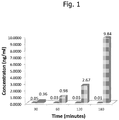
- Fig. 1 is a graph illustrating the difference in permeability in a Caco-2 cell model, an accepted model for the evaluation of curcumin bioavailability ( Wahland, B. et al. Identification of permeability-related hurdles in oral delivery of curcumin in the Caco-2 cell model. European Journal of Pharmaceutics and Biopharmaceutics (2011) 77:275-282 ).
- the first bar in each pair represents the concentration, in ng/ml, at that time point for curcumin
- the second bar in each pair represents the concentration, in ng/ml, at that time point for a micelle-associated curcumin product of the invention.
- the inventors have developed a method for associating one or more target compounds with casein micelles, improving the bioavailability of compounds which generally exhibit lower solubility and/or cellular uptake when administered via oral administration, the method comprising the steps of: (a) cooling a solution of milk protein concentrate to from 0°C (32 degrees Fahrenheit) to 13°C (55 degrees Fahrenheit); (b) admixing into the solution one or more target compounds having a particle size of from 0.1 ⁇ m to 50 ⁇ m to form a target compound/milk protein concentrate solution; (c) admixing the target compound/milk protein concentrate solution with warming to a temperature higher than that of step (a); (d) pasteurizing the target compound/milk protein concentrate solution; and (e) drying the target compound/milk protein concentrate solution.
- the milk protein concentrate may be a milk protein concentrate of at least 80% protein. In some aspects, the milk protein concentrate may be a milk protein concentrate of at least 85% protein. Furthermore, non-fat dry milk may be used instead of, or in conjunction with, milk protein concentrate.
- the target compound comprise a solid or liquid form, and may be in the form of an oil. In various aspects, a particle size of from 0.1 ⁇ m to 50 ⁇ m may be achieved by milling a solid form of the one or more target compound(s).
- these target compounds are compounds containing at least one phenol moiety, such as phenolic acids, polyphenols, phenyl carboxylic acids, etc.
- the method of the invention is not limited to use with phenolic compounds, and other hydrophobic compounds may also be made more bioavailable by being associated with milk-derived micelles by means of the method of the invention.
- the method may also be described as a method for associating one or more target compounds with at least one casein micelle (e.g., "casein micelles”) by a method comprising the steps of cooling a solution of milk protein concentrate to from 0°C (32 degrees Fahrenheit) to 13°C (55 degrees Fahrenheit); admixing into the solution one or more target compounds having a particle size of from 0.1 ⁇ m to 50 ⁇ m to form a target compound/milk protein concentrate solution; admixing the target compound/milk protein concentrate solution with warming to pasteurization temperature; and drying the target compound/milk protein concentrate solution.
- casein micelles e.g., "casein micelles”
- a “target compound” may be one, or more realistically, a large number of, molecules having a similar chemical structure, these molecules having been chemically synthesized, or isolated from plants or other natural sources, for example.
- the molecules comprising the target compounds may also be provided in forms in which other chemical compounds, or, for example, impurities, may be present.
- a target compound will generally contain a significant number of molecules having a similar and desirable chemical structure.
- Milk protein concentrates are generally concentrated milk products that contain from 40 to 90 percent milk protein.
- the inventors have used milk protein concentrate 85 (MPC 85) with particularly effective results.
- MPC 85 milk protein concentrate 85
- those of skill in the art may also utilize milk protein concentrates of lesser protein concentrations, provided that the protein concentration is sufficient to provide effective casein micelle formation. This determination may readily be made without undue experimentation by one of skill in the art, given the disclosure provided herein by the inventors.
- non-fat dry milk may also be used in the method of the invention - either as a substitute for milk protein concentrate or in conjunction with milk protein concentrate. Solutions which the inventors have used to produce excellent results have generally been from 5 to 35 percent milk protein concentrate, for example.
- step (b) of the method It is desirable to produce a homogeneous, or substantially homogeneous, mixture in step (b) of the method, and exact mixing times may vary somewhat, depending upon the milk protein concentrate used, the concentration of target compound used, the equipment used, etc. Because the cooling step is intended to "open" the casein micelles so that the target compound may be incorporated into them, one of skill in the art will appreciate that holding the target compound/milk protein concentrate mixture at the chilled/lower temperature for a period of from 1 minute to 20 hours may be more effective for producing the desired result. An even more effective time may be from about 30 minutes to 2 hours.
- the step of "cooling” may be understood to include “cooling and holding at the target temperature for a period of time.”
- cooling when cooling is provided by dry ice, for example, a product may be formed that is less thick and more easily pumped at lower temperatures. It is to be understood, however, that various forms of cooling known to those of skill in the art may readily be used in the method of the invention.
- Milled product should be understood to contain a substantial amount of product at the desired particle size, so that a sufficient amount of target compound is available at the desired particle size to be effectively captured within micelles and minimize waste. It is not necessary that one hundred percent of the product be milled to the specified size, and in commercial use, typical milling processes generally do not produce milled product wherein more than 90% of the product has been milled to the desired particle size.
- the time interval for performing the step of admixing while warming may vary, according to the method used for warming and admixing.
- the step is designed to promote closing of the casein micelles that have been opened during the cooling period, and this closing process should generally take place fairly quickly, once warming has begun. Therefore, a period of a few minutes (e.g., at least 2 minutes) may be sufficient for step (c), and continued gentle admixing and holding at a warming temperature may also be performed, so that the period of time for step (c) may be a period of from 2 minutes to 12 hours, for example, keeping in mind that prolonged holding at warming temperatures may promote unwanted microbial growth.
- pasteurization may be performed by heating the mixture and holding it at 63°C (145 degrees Fahrenheit) for 30 minutes, or at 72°C (161 degrees Fahrenheit) for 15 seconds.
- the step of drying is generally performed by a method that utilizes warming with drying, such as spray-drying, for example, which may be performed in-line, immediately after pasteurization, or the pasteurized mixture may be held for a suitable time and then spray-dried.
- warming with drying such as spray-drying, for example, which may be performed in-line, immediately after pasteurization, or the pasteurized mixture may be held for a suitable time and then spray-dried.
- Milk protein concentrate is produced from skim milk by processes that generally include steps such as ultrafiltration, diafiltration, evaporation, and spray-drying. Ultrafiltration removes lactose and minerals from skim milk, leaving behind the casein and whey proteins. Milk protein concentrate is generally considered to be made by concentrating the protein components to higher levels by the removal of non-protein components such as lactose, water, and minerals from skim milk by the ultrafiltration procedure. Generally speaking, milk protein concentrates will usually have all the fractions of milk proteins in the same ratio as they are found naturally occurring in milk. Commercially, MPCs range from 42 percent protein (MPC 42) to 85 percent protein (MPC 85).
- Lactose levels of the MPC decrease as the protein levels increase, and a diafiltration, or washing, step is usually required in order to produce a dried MPC of greater than 65 percent protein.
- the milk protein concentrate may be substituted with non-fat dry milk, or may be admixed with non-fat dry milk, for example, or one or more other milk products which provide a significant source of casein micelles.
- Casein is the major protein component of bovine milk at about 2.8 ⁇ 0.3%.
- the casein component is a complex mixture of the four most common casein phosphoproteins a s1 , a s2 , ⁇ , and ⁇ .
- a large proportion of casein in milk is in the form of casein micelles, each of which consist of casein molecules, calcium, inorganic phosphate and citrate ions.
- the casein micelle is usually thought of as a hydrated sphere, casein micelles being generally described as polydisperse, roughly spherical aggregates in milk with a mean radius of 150 nm. Their main physiological purpose is to transport calcium, proteins and phosphorus to neonates.
- the method of Sahu et al. requires purification of casein micelles by centrifugation, re-suspension of the pellet in Tris buffer, and repetition of that process five times.
- the method results in the removal of whey protein.
- the present method does not involve centrifugation, but instead involves the use of a combination of equipment and processes that are commonly used in the dairy industry - mixers, pasteurizers, spray-dryers, etc. Also, the present method does not require that the whey protein be removed.
- the present method results in the formation of more complete micellular structures, while the method utilizing centrifugation and detergent re-suspension will likely produce more incomplete micelles, such as structures commonly referred to as sub-micelles.
- the invention also relates to a micelle-associated curcumin product and/or products made by the process of the invention, the product being made by the steps of (a) cooling a solution of milk protein concentrate to from 0°C (32 degrees Fahrenheit) to 13°C (55 degrees Fahrenheit); (b) admixing into the solution a curcumin powder that has been milled to a particle size of from 0.1 ⁇ m to 50 ⁇ m to form a curcumin/milk protein concentrate solution; (c) admixing the curcumin/milk protein concentrate solution with warming to a temperature higher than that of step (a); (d) pasteurizing the curcumin/milk protein concentrate solution; and (e) spray-drying the curcumin/milk protein concentrate solution to produce a micelle-associated curcumin product.
- Products made by the method of the invention are suitable for human and/or animal consumption as food products, nutritional supplements, and/or pharmaceuticals.
- the method is suitable for improving the bioavailability of naturally-occurring curcumin as well as, for example, curcumin, synthetic curcumin, curcumin analogues, curcuminoids, curcumin complexed with at least one adjuvant molecule, and combinations thereof, etc.
- the method is also suitable for improving the bioavailability of a wide variety of other target compounds comprising phenolic compounds such as, for example, phenolic acids, polyphenols, phenyl carboxylic acids, cinnamic acids, hydroxy-cinnamic acids, flavonoids, etc.
- Examples of compounds which may be produced in a more bioavailable form using the method of the invention include, but are not limited to, cinnamic acid, ferulic acid, caffeic acid, sinapic acid, chlorogenic acid, and quinic acid.
- Products made by the method of the invention are also suitable for administration to a human and/or animal subject for a variety of uses for which curcumin has been found to be suitable, but has not been as bioavailable as generally desired.
- Such uses may include, for example, acne, psoriasis, dermatitis, and rash, as well as cancer, pulmonary diseases, neurological diseases, liver diseases, metabolic diseases, autoimmune diseases, cardiovascular diseases, and immune-related chronic and/or acute diseases.
- a curcumin product can be made by making a solution of Milk Protein Concentrate 85 (MPC 85) and bringing the temperature down to 2.2 °C (36 degrees Fahrenheit). Curcumin powder that has been milled to a particle size ranging from 0.1-50 ⁇ m is added, and once the curcumin is evenly dispersed, mixing is continued for 10 minutes and the warming of the mixture is begun. The solution/mixture is warmed to pasteurization temperature of 63°C (145 degrees Fahrenheit) for 30 minutes and, after pasteurization, the resulting product is spray-dried.
- the powdered nature of the product lends itself to the production and sale of commercial products in powdered form, in tablets, in capsules, in suspensions or solutions, etc. Additional ingredients such as excipients, flavorings, colorings, etc., can be added, provided that they do not interfere with the target compound/micelle interaction.
- Casein micelles have also been used for improving the bioavailability of non-phenolic compounds such as Vitamin D2 and Vitamin D3.
- Compounds incorporated into casein micelles by the method of the present invention may therefore include a variety of compounds, such as those that are less bioavailable to a human or animal because a significant amount of a compound is metabolized by intestinal bacteria, and therefore unavailable to the cells of the body.
- Chlorogenic acid for example, is an ester of caffeic acid and quinic acid. Both chorogenic acid and quinic acid have been reported to have significant positive therapeutic and health benefits.
- the method of the invention may produce micelle-associated chlorogenic acid and/or micelle-associated quinic acid that will be more available for absorption into the cells lining the intestine.
- Casein micelles are dissociated and generally broken into peptides in order to be metabolized by bacteria in the intestine, and are large enough not to be taken up into a bacterial cell. Incorporating chlorogenic acid and/or quinic acid into casein micelles may therefore shift the uptake of either compound more toward the intestinal cells of the human and/or animal, resulting in a more efficient uptake of either or both compounds.
- CaCo-2 permeability of a commercially-available curcumin product and a micellar-associated curcumin of the present invention were assessed at various time points. The two samples were analyzed by LC/MS to determine curcumin concentrations in each sample. CaCo-2 cells were grown in tissue culture flasks and trypsinized, suspended in medium, and then the suspensions were applied to a CaCo-2 Millipore 96 well plate. The cells were feed at 2-day intervals and allowed to grow and differentiate for three weeks.
- the test samples were added, in a known amount, to the Apical side of the well and the amount of permeated sample was determined on the Basolateral side.
- the CaCo-2 cells were incubated for 30, 60,120 and 180 minutes. In which case the receiver solution on the Basolateral side was removed and analyzed by LC/MS. To ensure properly functioning CaCo-2 cells the impermeable dye Lucifer Yellow was added on the Apical side and analyzed for on the Basolateral side. Also low and high permeability standard were used to further verify the cells. Results are shown in Fig. 1 .
Landscapes
- Health & Medical Sciences (AREA)
- Life Sciences & Earth Sciences (AREA)
- Chemical & Material Sciences (AREA)
- Pharmacology & Pharmacy (AREA)
- General Health & Medical Sciences (AREA)
- Veterinary Medicine (AREA)
- Animal Behavior & Ethology (AREA)
- Medicinal Chemistry (AREA)
- Public Health (AREA)
- Engineering & Computer Science (AREA)
- Nuclear Medicine, Radiotherapy & Molecular Imaging (AREA)
- Organic Chemistry (AREA)
- General Chemical & Material Sciences (AREA)
- Chemical Kinetics & Catalysis (AREA)
- Bioinformatics & Cheminformatics (AREA)
- Food Science & Technology (AREA)
- Polymers & Plastics (AREA)
- Nutrition Science (AREA)
- Epidemiology (AREA)
- Mycology (AREA)
- Biochemistry (AREA)
- Communicable Diseases (AREA)
- Diabetes (AREA)
- Oncology (AREA)
- Dispersion Chemistry (AREA)
- Zoology (AREA)
- Rheumatology (AREA)
- Botany (AREA)
- Biomedical Technology (AREA)
- Neurology (AREA)
- Neurosurgery (AREA)
- Immunology (AREA)
- Proteomics, Peptides & Aminoacids (AREA)
- Pulmonology (AREA)
- Emergency Medicine (AREA)
- Physical Education & Sports Medicine (AREA)
- Oil, Petroleum & Natural Gas (AREA)
- Obesity (AREA)
- Hematology (AREA)
- Toxicology (AREA)
Description
- This application claims the benefit of priority of United States Provisional Patent Application Number
61/788,200, filed March 15, 2013 - The present invention relates to methods for improving the bioavailability of therapeutic compounds using carrier compositions. More specifically, the invention relates to methods for improving bioavailability of compounds, such as hydrophobic phenolic compounds, for example, using casein micelles.
- Many compounds, including those from natural sources such as plant- derived compounds, do not provide their full benefit when consumed by a subject because they are not sufficiently soluble, not readily taken up by cells, easily degraded/broken down in the digestive system, etc. In other words, they are less bioavailable than are other types of compounds. One example of compounds like these is Curcumin ((1E,6E)-1,7-Bis(4-hydroxy-3-methoxyphenyl)-1,6-heptadiene-3,5-dione), a hydrophobic polyphenol derived from the Curcuma longa rhizome. Curcumin has been identified as the active component of turmeric, which has been used for many years for its beneficial health properties. Over the past few years, researchers have confirmed that it has provides a variety of benefits such as antioxidant, anti-inflammatory, antiviral, antibacterial, antifungal, and anticarcinogenic activities. Based upon various studies, curcumin has been suggested to have therapeutic potential for the treatment of diabetes, allergies, arthritis, Alzheimer's disease, and other chronic illnesses. One group of authors has concluded that "[c]urcumin exhibits activities similar to recently discovered tumor necrosis factor blockers (e.g., HUMIRA®, REMICADE®, and ENBREL®), a vascular endothelial cell growth factor blocker (e.g., AVASTIN®), human epidermal growth factor receptor blockers (e.g., ERBITUX®, ERLOTINIB®, and GEFTINIB®), and a HER2 blocker (e.g., HERCEPTIN®)" (Aggarwal, B.B. et al., Curcumin: the Indian solid gold. Adv Exp Med Biol. (2007) 595:1-75.).
- In preclinical studies, curcumin has demonstrated the ability to inhibit tumor development in cell lines including, for example, oral epithelial, breast, gastric, hepatic, pancreatic, cervical, ovarian, and prostate. Some have proposed that curcumin be further developed as a cancer therapeutic because it induces apoptosis in cancer cells without inducing cytotoxic effects in healthy cells.
- Curcumin is a bis-a, β-unsaturated β-diketone, being predominantly keto form in acidic and neutral solutions, and taking the more stable enol form in alkaline medium. It exhibits extremely low solubility in aqueous solution (2.99 x 10⁻⁸ M) and limited bioavailability. For example, Wahlstrom et al. demonstrated that oral administration of 1 g/kg of curcumin resulted in minimal levels of curcumin in blood plasma of rats, leading to the conclusion that curcumin is poorly absorbed from the gut (Wahlstrom, B; Blennow, G. A study on the fate of curcumin in the rat. Acta Pharmacol. Toxicol. (Copenhagen) 1978, 43 (2), 86-92). Various approaches to improve curcumin solubility have included, for example, encapsulation in polymeric micelles, polymeric nanoparticles, lipid-based nanoparticles, liposomes, and hydrogels.
- The "benefits of curcumin ... are curtailed by its low oral bioavailability. Therefore, improvement of curcumin's oral bioavailability should be addressed in functional food research" (Hailong Yu and Qingrong Huang, Investigation of the Absorption Mechanism of Solubilized Curcumin Using Caco-2 Cell Monolayers, J. Agric. Food Chem. (2011) 59: 9120-9126). What are needed are effective methods for improving the bioavailability of curcumin and other therapeutic nutritional compositions and/or pharmaceutical compositions for which bioavailability is a limiting factor. Biomolecules, 2008, 9, 2905 describes complex formation of curcumin with bovine casein micelles and its use as a vehicle for drug delivery to cancer cells.
- The invention relates to a method for producing a more bioavailable form of at least one target compound, the method comprising the steps of: (a) cooling a solution of milk protein concentrate to a temperature of from 0°C (32 degrees Fahrenheit) to 13°C (55 degrees Fahrenheit); (b) admixing into the solution one or more target compounds (e.g., powdered) that have been milled to a particle size of from 0.1 µm to 50 µm to form a target compound/milk protein concentrate solution; (c) admixing the target compound/milk protein concentrate solution with warming to a temperature higher than that of step (a); (d) pasteurizing the target compound/milk protein concentrate solution; and (e) spray-drying the target compound/milk protein concentrate solution. In various aspects, the target compound may be a phenolic compound. In various aspects, the milk protein concentrate may be a milk protein concentrate of at least 80% protein. In some aspects, the milk protein concentrate may be a milk protein concentrate of at least 85% protein. Furthermore, non-fat dry milk may be used instead of, or in conjunction with, milk protein concentrate.
- In various aspects, the phenolic target compound is a phenolic acid or a polyphenol. In some aspects, the target compound may be selected from the group consisting of curcumin, synthetic curcumin, curcumin analogues, curcuminoids, curcumin complexed with at least one adjuvant molecule, and combinations thereof. In some aspects, the target compound may be selected from the group consisting of cinnamic acid, ferulic acid, caffeic acid, sinapic acid, chlorogenic acid, and combinations thereof.
- The disclosure also relates to a method for associating one or more target compounds with casein micelles, the method comprising the steps of cooling a solution of milk protein concentrate to a temperature of from 0°C (32 degrees Fahrenheit) to 13°C (55 degrees Fahrenheit); admixing into the solution one or more target compounds having a particle size of from 0.1 µm to 50 µm to form a target compound/milk protein concentrate solution; admixing the target compound/milk protein concentrate solution with warming; pasteurizing the target compound/milk protein concentrate solution; and spray-drying the target compound/milk protein concentrate solution. In various aspects, the milk protein concentrate may be a milk protein concentrate of at least 80% protein. In some aspects, the milk protein concentrate may be a milk protein concentrate of at least 85% protein. Furthermore, non-fat dry milk may be used instead of, or in conjunction with, milk protein concentrate. The target compound(s) may comprise a solid or liquid form, and/or may be at least one oil. In various aspects, a particle size of from 0.1 µm to 50 µm may be achieved by milling a solid form of the one or more target compound(s).
-
Fig. 1 is a graph illustrating the difference in permeability in a Caco-2 cell model, an accepted model for the evaluation of curcumin bioavailability (Wahland, B. et al. Identification of permeability-related hurdles in oral delivery of curcumin in the Caco-2 cell model. European Journal of Pharmaceutics and Biopharmaceutics (2011) 77:275-282). The first bar in each pair represents the concentration, in ng/ml, at that time point for curcumin, and the second bar in each pair represents the concentration, in ng/ml, at that time point for a micelle-associated curcumin product of the invention. - The inventors have developed a method for associating one or more target compounds with casein micelles, improving the bioavailability of compounds which generally exhibit lower solubility and/or cellular uptake when administered via oral administration, the method comprising the steps of: (a) cooling a solution of milk protein concentrate to from 0°C (32 degrees Fahrenheit) to 13°C (55 degrees Fahrenheit); (b) admixing into the solution one or more target compounds having a particle size of from 0.1 µm to 50 µm to form a target compound/milk protein concentrate solution; (c) admixing the target compound/milk protein concentrate solution with warming to a temperature higher than that of step (a); (d) pasteurizing the target compound/milk protein concentrate solution; and (e) drying the target compound/milk protein concentrate solution. In various aspects, the milk protein concentrate may be a milk protein concentrate of at least 80% protein. In some aspects, the milk protein concentrate may be a milk protein concentrate of at least 85% protein. Furthermore, non-fat dry milk may be used instead of, or in conjunction with, milk protein concentrate. The target compound comprise a solid or liquid form, and may be in the form of an oil. In various aspects, a particle size of from 0.1 µm to 50 µm may be achieved by milling a solid form of the one or more target compound(s).
- Often, these target compounds are compounds containing at least one phenol moiety, such as phenolic acids, polyphenols, phenyl carboxylic acids, etc. However, the method of the invention is not limited to use with phenolic compounds, and other hydrophobic compounds may also be made more bioavailable by being associated with milk-derived micelles by means of the method of the invention.
- The method may also be described as a method for associating one or more target compounds with at least one casein micelle (e.g., "casein micelles") by a method comprising the steps of cooling a solution of milk protein concentrate to from 0°C (32 degrees Fahrenheit) to 13°C (55 degrees Fahrenheit); admixing into the solution one or more target compounds having a particle size of from 0.1 µm to 50 µm to form a target compound/milk protein concentrate solution; admixing the target compound/milk protein concentrate solution with warming to pasteurization temperature; and drying the target compound/milk protein concentrate solution. A "target compound" may be one, or more realistically, a large number of, molecules having a similar chemical structure, these molecules having been chemically synthesized, or isolated from plants or other natural sources, for example. The molecules comprising the target compounds may also be provided in forms in which other chemical compounds, or, for example, impurities, may be present. A target compound will generally contain a significant number of molecules having a similar and desirable chemical structure. The term "comprising" will be used in this specification and in the claims, and where it is used, it should be understood that the more restrictive terms "consisting of" and "consisting essentially of" may also apply, as they fall within the broader scope of the term "comprising." Where ranges are disclosed, it should be understood by one of skill in the art that sub-ranges within, and/or including the lower and/or upper limits of those stated ranges, are contemplated as part of the invention, as well.
- Milk protein concentrates are generally concentrated milk products that contain from 40 to 90 percent milk protein. The inventors have used milk protein concentrate 85 (MPC 85) with particularly effective results. However, those of skill in the art may also utilize milk protein concentrates of lesser protein concentrations, provided that the protein concentration is sufficient to provide effective casein micelle formation. This determination may readily be made without undue experimentation by one of skill in the art, given the disclosure provided herein by the inventors. Furthermore, non-fat dry milk may also be used in the method of the invention - either as a substitute for milk protein concentrate or in conjunction with milk protein concentrate. Solutions which the inventors have used to produce excellent results have generally been from 5 to 35 percent milk protein concentrate, for example.
- It is desirable to produce a homogeneous, or substantially homogeneous, mixture in step (b) of the method, and exact mixing times may vary somewhat, depending upon the milk protein concentrate used, the concentration of target compound used, the equipment used, etc. Because the cooling step is intended to "open" the casein micelles so that the target compound may be incorporated into them, one of skill in the art will appreciate that holding the target compound/milk protein concentrate mixture at the chilled/lower temperature for a period of from 1 minute to 20 hours may be more effective for producing the desired result. An even more effective time may be from about 30 minutes to 2 hours. Therefore, the step of "cooling" may be understood to include "cooling and holding at the target temperature for a period of time." During their research, the inventors noted that when cooling is provided by dry ice, for example, a product may be formed that is less thick and more easily pumped at lower temperatures. It is to be understood, however, that various forms of cooling known to those of skill in the art may readily be used in the method of the invention.
- Milled product should be understood to contain a substantial amount of product at the desired particle size, so that a sufficient amount of target compound is available at the desired particle size to be effectively captured within micelles and minimize waste. It is not necessary that one hundred percent of the product be milled to the specified size, and in commercial use, typical milling processes generally do not produce milled product wherein more than 90% of the product has been milled to the desired particle size.
- The time interval for performing the step of admixing while warming may vary, according to the method used for warming and admixing. The step is designed to promote closing of the casein micelles that have been opened during the cooling period, and this closing process should generally take place fairly quickly, once warming has begun. Therefore, a period of a few minutes (e.g., at least 2 minutes) may be sufficient for step (c), and continued gentle admixing and holding at a warming temperature may also be performed, so that the period of time for step (c) may be a period of from 2 minutes to 12 hours, for example, keeping in mind that prolonged holding at warming temperatures may promote unwanted microbial growth.
- Generally, any standard pasteurization method known to those of skill in the art may be used for the pasteurization step. For example, pasteurization may be performed by heating the mixture and holding it at 63°C (145 degrees Fahrenheit) for 30 minutes, or at 72°C (161 degrees Fahrenheit) for 15 seconds.
- The step of drying is generally performed by a method that utilizes warming with drying, such as spray-drying, for example, which may be performed in-line, immediately after pasteurization, or the pasteurized mixture may be held for a suitable time and then spray-dried.
- Milk protein concentrate (MPC) is produced from skim milk by processes that generally include steps such as ultrafiltration, diafiltration, evaporation, and spray-drying. Ultrafiltration removes lactose and minerals from skim milk, leaving behind the casein and whey proteins. Milk protein concentrate is generally considered to be made by concentrating the protein components to higher levels by the removal of non-protein components such as lactose, water, and minerals from skim milk by the ultrafiltration procedure. Generally speaking, milk protein concentrates will usually have all the fractions of milk proteins in the same ratio as they are found naturally occurring in milk. Commercially, MPCs range from 42 percent protein (MPC 42) to 85 percent protein (MPC 85). Lactose levels of the MPC decrease as the protein levels increase, and a diafiltration, or washing, step is usually required in order to produce a dried MPC of greater than 65 percent protein. In the method of the invention, the milk protein concentrate may be substituted with non-fat dry milk, or may be admixed with non-fat dry milk, for example, or one or more other milk products which provide a significant source of casein micelles.
- Casein is the major protein component of bovine milk at about 2.8 ± 0.3%. The casein component is a complex mixture of the four most common casein phosphoproteins as1, as2, β, and κ. A large proportion of casein in milk is in the form of casein micelles, each of which consist of casein molecules, calcium, inorganic phosphate and citrate ions. The casein micelle is usually thought of as a hydrated sphere, casein micelles being generally described as polydisperse, roughly spherical aggregates in milk with a mean radius of 150 nm. Their main physiological purpose is to transport calcium, proteins and phosphorus to neonates.
- In 2008, Sahu et al., complexed curcumin with casein micelles, observing that curcumin molecules interact with casein micelles by binding the low-polarity regions of the casein micelles (CM). (Sahu, A. et al. Fluorescence Study of the Curcumin-Casein Micelle Complexation and its Application as a Drug Nanocarrier to Cancer Cells. Biomacromolecules (2008) 9(10): 2905-2912.) Under physiological buffer conditions, they also observed that their CM-curcumin complexes produce a nano-formulation that exhibited similar cytotoxic effects on HeLa cells as those of an equivalent dose of free curcumin. However, the method of Sahu et al., requires purification of casein micelles by centrifugation, re-suspension of the pellet in Tris buffer, and repetition of that process five times. The method results in the removal of whey protein. The present method does not involve centrifugation, but instead involves the use of a combination of equipment and processes that are commonly used in the dairy industry - mixers, pasteurizers, spray-dryers, etc. Also, the present method does not require that the whey protein be removed. The present method results in the formation of more complete micellular structures, while the method utilizing centrifugation and detergent re-suspension will likely produce more incomplete micelles, such as structures commonly referred to as sub-micelles. By producing micelles that are more like the natural structure found in milk, the inventors believe that they have produced a curcumin product that has better bioavailability. While various methods have been described for production of casein micelles, including micelles that are associated with curcumin, those methods generally require the use of steps such as centrifugation, addition of chemicals such as detergents, acids, etc. (Sahu, for example, uses Tris HCI), and various other steps that result in methods that may generally be more costly, time-consuming, costly, etc., than the method of the invention. The present method utilizes milk protein concentrate, non-fat dry milk, or various combinations of both, as its starting material and incorporates steps common in the dairy industry in order to produce micelle-associated target compounds, reducing costly chemical additions, centrifugation steps, etc.
- The invention also relates to a micelle-associated curcumin product and/or products made by the process of the invention, the product being made by the steps of (a) cooling a solution of milk protein concentrate to from 0°C (32 degrees Fahrenheit) to 13°C (55 degrees Fahrenheit); (b) admixing into the solution a curcumin powder that has been milled to a particle size of from 0.1 µm to 50 µm to form a curcumin/milk protein concentrate solution; (c) admixing the curcumin/milk protein concentrate solution with warming to a temperature higher than that of step (a); (d) pasteurizing the curcumin/milk protein concentrate solution; and (e) spray-drying the curcumin/milk protein concentrate solution to produce a micelle-associated curcumin product.
- Products made by the method of the invention are suitable for human and/or animal consumption as food products, nutritional supplements, and/or pharmaceuticals. The method is suitable for improving the bioavailability of naturally-occurring curcumin as well as, for example, curcumin, synthetic curcumin, curcumin analogues, curcuminoids, curcumin complexed with at least one adjuvant molecule, and combinations thereof, etc. The method is also suitable for improving the bioavailability of a wide variety of other target compounds comprising phenolic compounds such as, for example, phenolic acids, polyphenols, phenyl carboxylic acids, cinnamic acids, hydroxy-cinnamic acids, flavonoids, etc. Examples of compounds which may be produced in a more bioavailable form using the method of the invention include, but are not limited to, cinnamic acid, ferulic acid, caffeic acid, sinapic acid, chlorogenic acid, and quinic acid.
- Products made by the method of the invention are also suitable for administration to a human and/or animal subject for a variety of uses for which curcumin has been found to be suitable, but has not been as bioavailable as generally desired. Such uses may include, for example, acne, psoriasis, dermatitis, and rash, as well as cancer, pulmonary diseases, neurological diseases, liver diseases, metabolic diseases, autoimmune diseases, cardiovascular diseases, and immune-related chronic and/or acute diseases.
- By way of example, a curcumin product can be made by making a solution of Milk Protein Concentrate 85 (MPC 85) and bringing the temperature down to 2.2 °C (36 degrees Fahrenheit). Curcumin powder that has been milled to a particle size ranging from 0.1-50 µm is added, and once the curcumin is evenly dispersed, mixing is continued for 10 minutes and the warming of the mixture is begun. The solution/mixture is warmed to pasteurization temperature of 63°C (145 degrees Fahrenheit) for 30 minutes and, after pasteurization, the resulting product is spray-dried. The powdered nature of the product lends itself to the production and sale of commercial products in powdered form, in tablets, in capsules, in suspensions or solutions, etc. Additional ingredients such as excipients, flavorings, colorings, etc., can be added, provided that they do not interfere with the target compound/micelle interaction.
- Casein micelles have also been used for improving the bioavailability of non-phenolic compounds such as Vitamin D2 and Vitamin D3. Compounds incorporated into casein micelles by the method of the present invention may therefore include a variety of compounds, such as those that are less bioavailable to a human or animal because a significant amount of a compound is metabolized by intestinal bacteria, and therefore unavailable to the cells of the body. Chlorogenic acid, for example, is an ester of caffeic acid and quinic acid. Both chorogenic acid and quinic acid have been reported to have significant positive therapeutic and health benefits. However, both also have been reported to be poorly absorbed in the gut, and this has been attributed largely to the fact that a significant portion of ingested chlorogenic acid or quinic acid is metabolized by the gut bacteria, and is therefore unavailable for absorption into the cells lining the intestine (Gonthier, M-P, et al., Chlorogenic Acid Bioavailability Largely Depends on Its Metabolism by the Gut Microflora in Rats. J. Nutr. (2003) 133: 1853-1859). The method of the invention may produce micelle-associated chlorogenic acid and/or micelle-associated quinic acid that will be more available for absorption into the cells lining the intestine. Casein micelles are dissociated and generally broken into peptides in order to be metabolized by bacteria in the intestine, and are large enough not to be taken up into a bacterial cell. Incorporating chlorogenic acid and/or quinic acid into casein micelles may therefore shift the uptake of either compound more toward the intestinal cells of the human and/or animal, resulting in a more efficient uptake of either or both compounds.
- CaCo-2 permeability of a commercially-available curcumin product and a micellar-associated curcumin of the present invention were assessed at various time points. The two samples were analyzed by LC/MS to determine curcumin concentrations in each sample. CaCo-2 cells were grown in tissue culture flasks and trypsinized, suspended in medium, and then the suspensions were applied to a CaCo-2 Millipore 96 well plate. The cells were feed at 2-day intervals and allowed to grow and differentiate for three weeks.
- Samples were dissolved in transport buffer, mixed rigorously and centrifuged at 2000 rpm for 5 minutes to remove non-soluble material in the samples. The resulting supernatant was used in the assay.
- The test samples were added, in a known amount, to the Apical side of the well and the amount of permeated sample was determined on the Basolateral side. The CaCo-2 cells were incubated for 30, 60,120 and 180 minutes. In which case the receiver solution on the Basolateral side was removed and analyzed by LC/MS. To ensure properly functioning CaCo-2 cells the impermeable dye Lucifer Yellow was added on the Apical side and analyzed for on the Basolateral side. Also low and high permeability standard were used to further verify the cells. Results are shown in
Fig. 1 .
Claims (14)
- A method for improving the bioavailability of at least one target compound, the method comprising:(a) cooling a solution of milk protein concentrate to from 0 °C (32 degrees Fahrenheit) to 13 °C (55 degrees Fahrenheit);(b) admixing into the solution one or more target compounds having a particle size of from 0.1 µm to 50 µm to form a target compound/milk protein concentrate solution;(c) admixing the target compound/milk protein concentrate solution with warming to a temperature higher than that of step (a);(d) pasteurizing the target compound/milk protein concentrate solution; and(e) drying the target compound/milk protein concentrate solution.
- The method of claim 1 wherein the milk protein concentrate comprises 85 percent protein.
- The method of claim 1 wherein the at least one target compound is a hydrophobic compound.
- The method of claim 1 wherein the at least one target compound is a phenolic compound.
- The method of claim 4 wherein the at least one target compound is a phenolic acid.
- The method of claim 1 wherein the at least one target compound is a flavonoid.
- The method of claim 1 wherein the at least one target compound is selected from the group consisting of curcumin, synthetic curcumin, curcumin analogues, curcuminoids, curcumin complexed with at least one adjuvant molecule, and combinations thereof.
- The method of claim 1 wherein the solution of milk protein concentrate is a 5 to 35 percent solution.
- The method of claim 1 wherein the particle size of target compound from 0.1 µm to 50 µm is produced by milling.
- The method of claim 1 wherein drying the target compound/milk protein concentrate solution comprises spray-drying.
- The method of claim 1 wherein cooling comprises cooling and holding the solution of milk protein concentrate for a period of from 1 minute to 20 hours at a temperature of from 0 °C (32 degrees Fahrenheit) to 13 °C (55 degrees Fahrenheit).
- The method of claim 1 wherein cooling comprises cooling and holding the solution of milk protein concentrate for a period of from 30 minutes to 2 hours at a temperature of from 0 °C (32 degrees Fahrenheit) to 13 °C (55 degrees Fahrenheit).
- The method according to claim 1, wherein said method is for associating at least one target compound with at least one casein micelle.
- The method according to claim 1, wherein said method is for making a micelle-associated curcumin product, said target compound is curcumin and step (b) comprises admixing into the solution a curcumin powder that has been milled to a particle size of from 0.1 µm to 50 µm to form a curcumin/milk protein concentrate solution.
Applications Claiming Priority (2)
| Application Number | Priority Date | Filing Date | Title |
|---|---|---|---|
| US201361788200P | 2013-03-15 | 2013-03-15 | |
| PCT/US2014/030685 WO2014145851A1 (en) | 2013-03-15 | 2014-03-17 | Product and method for improving bioavailability of therapeutic compounds |
Publications (3)
| Publication Number | Publication Date |
|---|---|
| EP2968070A1 EP2968070A1 (en) | 2016-01-20 |
| EP2968070A4 EP2968070A4 (en) | 2016-10-26 |
| EP2968070B1 true EP2968070B1 (en) | 2019-12-18 |
Family
ID=51530032
Family Applications (1)
| Application Number | Title | Priority Date | Filing Date |
|---|---|---|---|
| EP14762887.9A Revoked EP2968070B1 (en) | 2013-03-15 | 2014-03-17 | Method for improving bioavailability of therapeutic compounds |
Country Status (8)
| Country | Link |
|---|---|
| US (1) | US9452146B2 (en) |
| EP (1) | EP2968070B1 (en) |
| JP (2) | JP6548632B2 (en) |
| CN (1) | CN105491988A (en) |
| AU (1) | AU2014232456B2 (en) |
| CA (1) | CA2911020A1 (en) |
| NZ (1) | NZ713235A (en) |
| WO (1) | WO2014145851A1 (en) |
Families Citing this family (5)
| Publication number | Priority date | Publication date | Assignee | Title |
|---|---|---|---|---|
| NZ713235A (en) | 2013-03-15 | 2019-12-20 | Glanbia Nutritionals Ireland Ltd | Product and method for improving bioavailability of therapeutic compounds |
| CA2949069C (en) * | 2014-05-12 | 2022-07-26 | Haus Bioceuticals, Inc. | Curcumin-peptide conjugates and formulations thereof |
| US10188135B2 (en) | 2015-11-04 | 2019-01-29 | Stokley-Van Camp, Inc. | Method for inducing satiety |
| CN109419795B (en) * | 2017-08-28 | 2021-02-26 | 四川九章生物科技有限公司 | Combined medicine for treating tumor necrosis factor family related diseases |
| AU2022276114A1 (en) * | 2021-05-19 | 2023-11-16 | Arla Foods Amba | High protein, micellar casein-containing nutritional liquids enriched with catechin-compounds and method of production |
Citations (13)
| Publication number | Priority date | Publication date | Assignee | Title |
|---|---|---|---|---|
| WO2000066665A1 (en) | 1999-04-29 | 2000-11-09 | Basf Aktiengesellschaft | Stable, aqueous dispersions and stable, water-dispersible dry powders of xanthophylls, and production and use of the same |
| WO2003030872A2 (en) | 2001-10-12 | 2003-04-17 | Elan Pharma International Ltd. | Compositions having a combination of particles for immediate release and for controlled release |
| WO2007060177A1 (en) | 2005-11-22 | 2007-05-31 | Nestec S.A. | Oil-in-water emulsion and its use for the delivery of functionality |
| WO2007110422A2 (en) | 2006-03-27 | 2007-10-04 | Nestec S.A. | Whey protein vehicle for active agent delivery |
| WO2008139952A1 (en) | 2007-05-15 | 2008-11-20 | National University Corporation Nagoya University | Microtubule-disrupting agent and cancer cell proliferation inhibitor containing the same |
| JP2009040722A (en) | 2007-08-09 | 2009-02-26 | Fujifilm Corp | Casein nanoparticles composed of multiple proteins |
| WO2009101614A1 (en) | 2008-02-11 | 2009-08-20 | Technion Research & Development Foundation Ltd. | Casein particles encapsulating therapeutically active agents and uses thereof |
| WO2009101613A1 (en) | 2008-02-11 | 2009-08-20 | Yissum Research Development Company Of The Hebrew University Of Jerusalem Ltd. | Beta-casein assemblies for mucosal delivery of therapeutic bioactive agents |
| WO2009101612A2 (en) | 2008-02-11 | 2009-08-20 | Technion Research And Development Foundation Ltd. | Beta-casein assemblies for enrichment of food and beverages and methods of preparation thereof |
| US20120070469A1 (en) | 2008-02-11 | 2012-03-22 | Technion Research And Development Foundation Ltd. | Beta-casein assemblies for mucosal delivery of therapeutic bioactive agents |
| CN102512404A (en) | 2011-11-18 | 2012-06-27 | 上海交通大学 | Lung targeting preparation of curcumin class compound as well as preparation method and application thereof |
| EP2540169A1 (en) | 2010-02-26 | 2013-01-02 | Universidad de Navarra | Nanoparticles for the encapsulation of compounds, preparation thereof and use of same |
| WO2014145851A1 (en) | 2013-03-15 | 2014-09-18 | Glanbia Nutritionals (Ireland) Ltd. | Product and method for improving bioavailability of therapeutic compounds |
Family Cites Families (10)
| Publication number | Priority date | Publication date | Assignee | Title |
|---|---|---|---|---|
| DK546289D0 (en) * | 1989-11-02 | 1989-11-02 | Danochemo As | carotenoid |
| PT748591E (en) * | 1995-06-16 | 2002-04-29 | Nestle Sa | CASEINAS MICELARES FLUORADAS |
| US6923995B2 (en) * | 2002-03-27 | 2005-08-02 | Jay C. Highman | Rice protein concentrate based organic nutritional formula |
| US20080026983A1 (en) * | 2006-07-28 | 2008-01-31 | Gardiner Paul T | Compositions and methods for alleviating joint pain and improving joint flexibility |
| CN101500549A (en) * | 2006-08-09 | 2009-08-05 | 帝斯曼知识产权资产管理有限公司 | Casein complexes |
| CN101816418B (en) * | 2009-11-24 | 2012-07-18 | 北京三元食品股份有限公司 | Probiotic microcapsules and preparation method thereof |
| WO2011100983A1 (en) * | 2010-02-17 | 2011-08-25 | El-Sayed Ameen Mahmoud Rezq | Casein, a novel curcumin drug carrier system |
| CN102126938B (en) * | 2010-12-15 | 2013-03-27 | 厦门大学 | Curcumin analog and preparation method and application thereof |
| CN102600063B (en) * | 2011-06-09 | 2013-10-23 | 天津大学 | A kind of preparation method of curcumin micelles with high drug load |
| CN102743336A (en) * | 2012-07-04 | 2012-10-24 | 浙江大学 | Preparation method and application of curcumin chitosan-stearic acid graft micelle |
-
2014
- 2014-03-17 NZ NZ713235A patent/NZ713235A/en not_active IP Right Cessation
- 2014-03-17 WO PCT/US2014/030685 patent/WO2014145851A1/en not_active Ceased
- 2014-03-17 EP EP14762887.9A patent/EP2968070B1/en not_active Revoked
- 2014-03-17 US US14/217,047 patent/US9452146B2/en not_active Expired - Fee Related
- 2014-03-17 AU AU2014232456A patent/AU2014232456B2/en not_active Ceased
- 2014-03-17 JP JP2016503442A patent/JP6548632B2/en not_active Expired - Fee Related
- 2014-03-17 CN CN201480023195.XA patent/CN105491988A/en active Pending
- 2014-03-17 CA CA2911020A patent/CA2911020A1/en not_active Abandoned
-
2018
- 2018-12-28 JP JP2018246450A patent/JP2019077699A/en active Pending
Patent Citations (13)
| Publication number | Priority date | Publication date | Assignee | Title |
|---|---|---|---|---|
| WO2000066665A1 (en) | 1999-04-29 | 2000-11-09 | Basf Aktiengesellschaft | Stable, aqueous dispersions and stable, water-dispersible dry powders of xanthophylls, and production and use of the same |
| WO2003030872A2 (en) | 2001-10-12 | 2003-04-17 | Elan Pharma International Ltd. | Compositions having a combination of particles for immediate release and for controlled release |
| WO2007060177A1 (en) | 2005-11-22 | 2007-05-31 | Nestec S.A. | Oil-in-water emulsion and its use for the delivery of functionality |
| WO2007110422A2 (en) | 2006-03-27 | 2007-10-04 | Nestec S.A. | Whey protein vehicle for active agent delivery |
| WO2008139952A1 (en) | 2007-05-15 | 2008-11-20 | National University Corporation Nagoya University | Microtubule-disrupting agent and cancer cell proliferation inhibitor containing the same |
| JP2009040722A (en) | 2007-08-09 | 2009-02-26 | Fujifilm Corp | Casein nanoparticles composed of multiple proteins |
| WO2009101614A1 (en) | 2008-02-11 | 2009-08-20 | Technion Research & Development Foundation Ltd. | Casein particles encapsulating therapeutically active agents and uses thereof |
| WO2009101613A1 (en) | 2008-02-11 | 2009-08-20 | Yissum Research Development Company Of The Hebrew University Of Jerusalem Ltd. | Beta-casein assemblies for mucosal delivery of therapeutic bioactive agents |
| WO2009101612A2 (en) | 2008-02-11 | 2009-08-20 | Technion Research And Development Foundation Ltd. | Beta-casein assemblies for enrichment of food and beverages and methods of preparation thereof |
| US20120070469A1 (en) | 2008-02-11 | 2012-03-22 | Technion Research And Development Foundation Ltd. | Beta-casein assemblies for mucosal delivery of therapeutic bioactive agents |
| EP2540169A1 (en) | 2010-02-26 | 2013-01-02 | Universidad de Navarra | Nanoparticles for the encapsulation of compounds, preparation thereof and use of same |
| CN102512404A (en) | 2011-11-18 | 2012-06-27 | 上海交通大学 | Lung targeting preparation of curcumin class compound as well as preparation method and application thereof |
| WO2014145851A1 (en) | 2013-03-15 | 2014-09-18 | Glanbia Nutritionals (Ireland) Ltd. | Product and method for improving bioavailability of therapeutic compounds |
Non-Patent Citations (16)
| Title |
|---|
| AHMED O ELZOGHBY; WAEL M SAMY; NAZIK A ELGINDY: "Albumin-based nanoparticles as potential controlled release drug delivery systems", JOURNAL OF CONTROLLED RELEASE, vol. 157, 2012, pages 168 - 182, XP028442118, DOI: 10.1016/j.jconrel.2011.07.031 |
| AHMED O ELZOGHBY; WAEL M SAMY; NAZIK A ELGINDY: "Protein-based nanocarriers as promising drug and gene delivery systems", JOURNAL OF CONTROLLED RELEASE, vol. 161, 2012, pages 38 - 49, XP028493059, DOI: 10.1016/j.jconrel.2012.04.036 |
| AHMED O. ELZOGHBY, WAEL M. SAMY & NAZIK A. ELGINDY: "Novel Spray-Dried Genipin-Crosslinked Casein Nanoparticles for Prolonged Release of Alfuzosin Hydrochloride", PHARM. RES., vol. 30, 2013, pages 512 - 522, XP055738398 |
| ALINA SHAPIRA; YEHUDA G ASSARAF; DIKLA EPSTEIN; YOAV D LIVNEY: "Beta-casein Nanoparticles as an Oral Delivery System for Chemotherapeutic Drugs: Impact of Drug Structure and Properties on Co- assembly", PHARM. RES., vol. 27, 2010, pages 2175 - 2186, XP019828051 |
| EFRAT SEMO, KESSELMAN E; DANINO E; LIVNEY D; Y D: "Casein micelle as a natural nano-capsular vehicle for nutraceuticals", FOOD HYDROCOLLOIDS, vol. 21, 2007, pages 936 - 942, XP005925153, DOI: 10.1016/j.foodhyd.2006.09.006 |
| ELZOGHBY AHMED O; HELMY MAGED W; SAMY WAEL M; ELGINDY NAZIK A: "Spray-dried casein-based micelles as a vehicle for solubilization and controlled delivery of flutamide: Formulation, characterization, and in vivo pharmacokinetics", EUROPEAN JOURNAL OF PHARMACEUTICS AND BIOPHARMACEUTICS, vol. 84, 2013, pages 487 - 496, XP028568457, DOI: 10.1016/j.ejpb.2013.01.005 |
| ELZOGHBY AHMED O; SAAD NOHA I; HELMY MAGED W; SAMY WAEL M; ELGINDY NAZIK A: "lonically-crosslinked milk protein nanoparticles as flutamide carriers for effective anticancer activity in prostate cancer-bearing rats", EUROPEAN JOURNAL OF PHARMACEUTICS AND BIOPHARMACEUTICS, vol. 85, 2013, pages 444 - 451, XP028784876, DOI: 10.1016/j.ejpb.2013.07.003 |
| GUNASEKARAN S; KO S; XIAO L: "Use of whey proteins for encapsulation and controlled delivery applications", JOURNAL OF FOOD ENGINEERING, vol. 83, 2007, pages 31 - 40, XP002593915, DOI: 10.1016/j.jfoodeng.2006.11.001 |
| M.S. LATHA ET AL.: "Bioavailability of theophylline from glutaraldehyde cross-linked casein microspheres in rabbits following oral administration", JOURNAL OF CONTROLLED RELEASE, vol. 34, 1995, pages 1 - 7, XP000498917, DOI: 10.1016/0168-3659(94)00088-C |
| MAARTEN ALDERLIESTEN: "Mean Particle Diameters - Part II: Standardization of Nomenclature", PART. PART. SYST. CHARACT., vol. 8, 1991, pages 237 - 241, XP055277750 |
| MANDY H. M. LEUNG, TAKAAKI HARADA AND TAK W. KEE: "Delivery of Curcumin and Medicinal Effects of the Copper(II)-Curcumin Complexes", CURRENT PHARMACEUTICAL DESIGN, vol. 19, 2013, pages 2070 - 2083, XP055738407 |
| MANSOORE ESMAILI; MAHMOOD GHAFFARI S; ZEINAB MOOSAVI-MOVAHEDI; MALIHE SADAT ATRI; AHMAD SHARIFIZADEH; MOHAMMAD FARHADI; REZA YOUSE: "Beta casein-micelle as a nano vehicle for solubility enhancement of curcumin; food industry application", LWT - FOOD SCIENCE AND TECHNOLOGY, vol. 44, 2011, pages 2166 - 2172, XP028268005, DOI: 10.1016/j.lwt.2011.05.023 |
| MICHAL BACHAR; AMITAI MANDELBAUM; IRINA PORTNAYA; HADAS PERLSTEIN; SIMCHA EVEN-CHEN; YECHEZKEL BARENHOLZ; DGANIT DANINO: "Development and characterization of a novel drug nanocarrier for oral delivery, based on self-assembled beta-casein micelles", JOURNAL OF CONTROLLED RELEASE, vol. 160, 2012, pages 164 - 171, XP028512648, DOI: 10.1016/j.jconrel.2012.01.004 |
| MICHAL HAHAM, ISH-SHALOM SOPHIA, NODELMAN MARINA, DUEK IRIT, SEGAL ELENA, KUSTANOVICH MARINA, LIVNEY YOAV D.: "Stability and bioavailability of vitamin D nanoencapsulated in casein micelles", FOOD & FUNCTION, vol. 3, 2012, pages 737 - 744, XP055738400 |
| PATRICIA ZIMET; DINA ROSENBERG; YOAV D LIVNEY: "Re-assembled casein micelles and casein nanoparticles as nano- vehicles for omega-3 polyunsaturated fatty acids", FOOD HYDROCOLLOIDS, vol. 25, 2011, pages 1270 - 1276, XP028163275, DOI: 10.1016/j.foodhyd.2010.11.025 |
| YOAV D. LIVNEY: "Milk proteins as vehicles for bioactives", CURRENT OPINION IN COLLOID & INTERFACE SCIENCE, vol. 15, 2010, pages 73 - 83, XP026896481, DOI: 10.1016/j.cocis.2009.11.002 |
Also Published As
| Publication number | Publication date |
|---|---|
| EP2968070A1 (en) | 2016-01-20 |
| US9452146B2 (en) | 2016-09-27 |
| JP2019077699A (en) | 2019-05-23 |
| JP6548632B2 (en) | 2019-07-24 |
| CN105491988A (en) | 2016-04-13 |
| AU2014232456A1 (en) | 2015-11-05 |
| WO2014145851A1 (en) | 2014-09-18 |
| EP2968070A4 (en) | 2016-10-26 |
| NZ713235A (en) | 2019-12-20 |
| JP2016515535A (en) | 2016-05-30 |
| CA2911020A1 (en) | 2014-09-18 |
| AU2014232456B2 (en) | 2018-11-15 |
| US20140275283A1 (en) | 2014-09-18 |
Similar Documents
| Publication | Publication Date | Title |
|---|---|---|
| Haratifar et al. | Interactions between tea catechins and casein micelles and their impact on renneting functionality | |
| US8207131B2 (en) | Peptide | |
| US9452146B2 (en) | Product and method for improving bioavailability of therapeutic compounds | |
| CN101522204B (en) | Kiwi extract | |
| Rashidinejad et al. | Effect of liposomal encapsulation on the recovery and antioxidant properties of green tea catechins incorporated into a hard low-fat cheese following in vitro simulated gastrointestinal digestion | |
| Durmus et al. | Activity and bioaccessibility of antioxidants in yoghurt enriched with black mulberry as affected by fermentation and stage of fruit addition | |
| EP2049091B1 (en) | Casein complexes | |
| JP5461349B2 (en) | Method for producing polyphenol-containing protein | |
| Perna et al. | Effect of αS1-casein genotype on phenolic compounds and antioxidant activity in goat milk yogurt fortified with Rhus coriaria leaf powder | |
| Wijegunawardhana et al. | Process-induced molecular-level protein–carbohydrate–polyphenol interactions in milk–tea blends: A review | |
| Gupta et al. | Preparation of milk protein-vitamin A complexes and their evaluation for vitamin A binding ability | |
| Tang et al. | Potential use of waste cinnamon leaves in stirred yogurt fortification | |
| KR20100108557A (en) | Liver function-protecting agent | |
| Muthusamy | Milk fat globular membrane: composition, structure, isolation, technological significance and health benefits | |
| Ibrahim et al. | Functional ricotta cheese with Dunaliella salina algae emulsion | |
| WO2006114840A1 (en) | Iron composition containing milk protein | |
| CN117461846A (en) | Preparation method and application of mineral element-polyphenol@protein compound | |
| KR101640890B1 (en) | Composition of infant liquid formula including goat milk | |
| KR102050578B1 (en) | Composition of infant liquid formula including goat milk | |
| TWI703931B (en) | Composition of infant liquid formula including goat milk and method for manufacturing the same | |
| Nabilah et al. | The Effect of Nano-Polyphenols Cocoa Whey Protein as Functional Fortification Materials in Terms of Antioxidant Activity and Physicochemical Properties | |
| Ibrahim | Effect of Adding some Phenolic Compounds on the Heat Stability and Gelling Properties of Camel Milk | |
| US20210361714A1 (en) | Hydrolysed protein debittering composition and product, preparation, and application thereof | |
| PL240850B1 (en) | Method of obtaining a pro-health protein preparation | |
| Lignitto | Characterization and bioactivity of oligopeptides in Asiago d'Allevo Cheese |
Legal Events
| Date | Code | Title | Description |
|---|---|---|---|
| PUAI | Public reference made under article 153(3) epc to a published international application that has entered the european phase |
Free format text: ORIGINAL CODE: 0009012 |
|
| 17P | Request for examination filed |
Effective date: 20151008 |
|
| AK | Designated contracting states |
Kind code of ref document: A1 Designated state(s): AL AT BE BG CH CY CZ DE DK EE ES FI FR GB GR HR HU IE IS IT LI LT LU LV MC MK MT NL NO PL PT RO RS SE SI SK SM TR |
|
| AX | Request for extension of the european patent |
Extension state: BA ME |
|
| DAX | Request for extension of the european patent (deleted) | ||
| A4 | Supplementary search report drawn up and despatched |
Effective date: 20160923 |
|
| RIC1 | Information provided on ipc code assigned before grant |
Ipc: A61J 3/00 20060101AFI20160919BHEP |
|
| STAA | Information on the status of an ep patent application or granted ep patent |
Free format text: STATUS: EXAMINATION IS IN PROGRESS |
|
| 17Q | First examination report despatched |
Effective date: 20181129 |
|
| GRAP | Despatch of communication of intention to grant a patent |
Free format text: ORIGINAL CODE: EPIDOSNIGR1 |
|
| STAA | Information on the status of an ep patent application or granted ep patent |
Free format text: STATUS: GRANT OF PATENT IS INTENDED |
|
| INTG | Intention to grant announced |
Effective date: 20190708 |
|
| GRAS | Grant fee paid |
Free format text: ORIGINAL CODE: EPIDOSNIGR3 |
|
| GRAA | (expected) grant |
Free format text: ORIGINAL CODE: 0009210 |
|
| STAA | Information on the status of an ep patent application or granted ep patent |
Free format text: STATUS: THE PATENT HAS BEEN GRANTED |
|
| AK | Designated contracting states |
Kind code of ref document: B1 Designated state(s): AL AT BE BG CH CY CZ DE DK EE ES FI FR GB GR HR HU IE IS IT LI LT LU LV MC MK MT NL NO PL PT RO RS SE SI SK SM TR |
|
| REG | Reference to a national code |
Ref country code: CH Ref legal event code: EP |
|
| REG | Reference to a national code |
Ref country code: IE Ref legal event code: FG4D |
|
| REG | Reference to a national code |
Ref country code: DE Ref legal event code: R096 Ref document number: 602014058594 Country of ref document: DE |
|
| REG | Reference to a national code |
Ref country code: AT Ref legal event code: REF Ref document number: 1213775 Country of ref document: AT Kind code of ref document: T Effective date: 20200115 |
|
| REG | Reference to a national code |
Ref country code: NL Ref legal event code: MP Effective date: 20191218 |
|
| PG25 | Lapsed in a contracting state [announced via postgrant information from national office to epo] |
Ref country code: FI Free format text: LAPSE BECAUSE OF FAILURE TO SUBMIT A TRANSLATION OF THE DESCRIPTION OR TO PAY THE FEE WITHIN THE PRESCRIBED TIME-LIMIT Effective date: 20191218 Ref country code: BG Free format text: LAPSE BECAUSE OF FAILURE TO SUBMIT A TRANSLATION OF THE DESCRIPTION OR TO PAY THE FEE WITHIN THE PRESCRIBED TIME-LIMIT Effective date: 20200318 Ref country code: LV Free format text: LAPSE BECAUSE OF FAILURE TO SUBMIT A TRANSLATION OF THE DESCRIPTION OR TO PAY THE FEE WITHIN THE PRESCRIBED TIME-LIMIT Effective date: 20191218 Ref country code: SE Free format text: LAPSE BECAUSE OF FAILURE TO SUBMIT A TRANSLATION OF THE DESCRIPTION OR TO PAY THE FEE WITHIN THE PRESCRIBED TIME-LIMIT Effective date: 20191218 Ref country code: LT Free format text: LAPSE BECAUSE OF FAILURE TO SUBMIT A TRANSLATION OF THE DESCRIPTION OR TO PAY THE FEE WITHIN THE PRESCRIBED TIME-LIMIT Effective date: 20191218 Ref country code: NO Free format text: LAPSE BECAUSE OF FAILURE TO SUBMIT A TRANSLATION OF THE DESCRIPTION OR TO PAY THE FEE WITHIN THE PRESCRIBED TIME-LIMIT Effective date: 20200318 Ref country code: GR Free format text: LAPSE BECAUSE OF FAILURE TO SUBMIT A TRANSLATION OF THE DESCRIPTION OR TO PAY THE FEE WITHIN THE PRESCRIBED TIME-LIMIT Effective date: 20200319 |
|
| PGFP | Annual fee paid to national office [announced via postgrant information from national office to epo] |
Ref country code: GB Payment date: 20200317 Year of fee payment: 7 Ref country code: IE Payment date: 20200317 Year of fee payment: 7 |
|
| REG | Reference to a national code |
Ref country code: LT Ref legal event code: MG4D |
|
| PG25 | Lapsed in a contracting state [announced via postgrant information from national office to epo] |
Ref country code: HR Free format text: LAPSE BECAUSE OF FAILURE TO SUBMIT A TRANSLATION OF THE DESCRIPTION OR TO PAY THE FEE WITHIN THE PRESCRIBED TIME-LIMIT Effective date: 20191218 Ref country code: RS Free format text: LAPSE BECAUSE OF FAILURE TO SUBMIT A TRANSLATION OF THE DESCRIPTION OR TO PAY THE FEE WITHIN THE PRESCRIBED TIME-LIMIT Effective date: 20191218 |
|
| PG25 | Lapsed in a contracting state [announced via postgrant information from national office to epo] |
Ref country code: AL Free format text: LAPSE BECAUSE OF FAILURE TO SUBMIT A TRANSLATION OF THE DESCRIPTION OR TO PAY THE FEE WITHIN THE PRESCRIBED TIME-LIMIT Effective date: 20191218 |
|
| PG25 | Lapsed in a contracting state [announced via postgrant information from national office to epo] |
Ref country code: NL Free format text: LAPSE BECAUSE OF FAILURE TO SUBMIT A TRANSLATION OF THE DESCRIPTION OR TO PAY THE FEE WITHIN THE PRESCRIBED TIME-LIMIT Effective date: 20191218 Ref country code: RO Free format text: LAPSE BECAUSE OF FAILURE TO SUBMIT A TRANSLATION OF THE DESCRIPTION OR TO PAY THE FEE WITHIN THE PRESCRIBED TIME-LIMIT Effective date: 20191218 Ref country code: EE Free format text: LAPSE BECAUSE OF FAILURE TO SUBMIT A TRANSLATION OF THE DESCRIPTION OR TO PAY THE FEE WITHIN THE PRESCRIBED TIME-LIMIT Effective date: 20191218 Ref country code: PT Free format text: LAPSE BECAUSE OF FAILURE TO SUBMIT A TRANSLATION OF THE DESCRIPTION OR TO PAY THE FEE WITHIN THE PRESCRIBED TIME-LIMIT Effective date: 20200513 Ref country code: CZ Free format text: LAPSE BECAUSE OF FAILURE TO SUBMIT A TRANSLATION OF THE DESCRIPTION OR TO PAY THE FEE WITHIN THE PRESCRIBED TIME-LIMIT Effective date: 20191218 |
|
| PG25 | Lapsed in a contracting state [announced via postgrant information from national office to epo] |
Ref country code: SM Free format text: LAPSE BECAUSE OF FAILURE TO SUBMIT A TRANSLATION OF THE DESCRIPTION OR TO PAY THE FEE WITHIN THE PRESCRIBED TIME-LIMIT Effective date: 20191218 Ref country code: SK Free format text: LAPSE BECAUSE OF FAILURE TO SUBMIT A TRANSLATION OF THE DESCRIPTION OR TO PAY THE FEE WITHIN THE PRESCRIBED TIME-LIMIT Effective date: 20191218 Ref country code: IS Free format text: LAPSE BECAUSE OF FAILURE TO SUBMIT A TRANSLATION OF THE DESCRIPTION OR TO PAY THE FEE WITHIN THE PRESCRIBED TIME-LIMIT Effective date: 20200418 |
|
| REG | Reference to a national code |
Ref country code: DE Ref legal event code: R026 Ref document number: 602014058594 Country of ref document: DE |
|
| PLBI | Opposition filed |
Free format text: ORIGINAL CODE: 0009260 |
|
| PLAX | Notice of opposition and request to file observation + time limit sent |
Free format text: ORIGINAL CODE: EPIDOSNOBS2 |
|
| REG | Reference to a national code |
Ref country code: DE Ref legal event code: R119 Ref document number: 602014058594 Country of ref document: DE |
|
| REG | Reference to a national code |
Ref country code: AT Ref legal event code: MK05 Ref document number: 1213775 Country of ref document: AT Kind code of ref document: T Effective date: 20191218 |
|
| 26 | Opposition filed |
Opponent name: DSM NUTRITIONAL PRODUCTS AG Effective date: 20200918 |
|
| PG25 | Lapsed in a contracting state [announced via postgrant information from national office to epo] |
Ref country code: MC Free format text: LAPSE BECAUSE OF FAILURE TO SUBMIT A TRANSLATION OF THE DESCRIPTION OR TO PAY THE FEE WITHIN THE PRESCRIBED TIME-LIMIT Effective date: 20191218 Ref country code: DK Free format text: LAPSE BECAUSE OF FAILURE TO SUBMIT A TRANSLATION OF THE DESCRIPTION OR TO PAY THE FEE WITHIN THE PRESCRIBED TIME-LIMIT Effective date: 20191218 Ref country code: ES Free format text: LAPSE BECAUSE OF FAILURE TO SUBMIT A TRANSLATION OF THE DESCRIPTION OR TO PAY THE FEE WITHIN THE PRESCRIBED TIME-LIMIT Effective date: 20191218 |
|
| REG | Reference to a national code |
Ref country code: CH Ref legal event code: PL |
|
| PG25 | Lapsed in a contracting state [announced via postgrant information from national office to epo] |
Ref country code: AT Free format text: LAPSE BECAUSE OF FAILURE TO SUBMIT A TRANSLATION OF THE DESCRIPTION OR TO PAY THE FEE WITHIN THE PRESCRIBED TIME-LIMIT Effective date: 20191218 Ref country code: SI Free format text: LAPSE BECAUSE OF FAILURE TO SUBMIT A TRANSLATION OF THE DESCRIPTION OR TO PAY THE FEE WITHIN THE PRESCRIBED TIME-LIMIT Effective date: 20191218 |
|
| REG | Reference to a national code |
Ref country code: BE Ref legal event code: MM Effective date: 20200331 |
|
| PG25 | Lapsed in a contracting state [announced via postgrant information from national office to epo] |
Ref country code: LU Free format text: LAPSE BECAUSE OF NON-PAYMENT OF DUE FEES Effective date: 20200317 |
|
| PG25 | Lapsed in a contracting state [announced via postgrant information from national office to epo] |
Ref country code: CH Free format text: LAPSE BECAUSE OF NON-PAYMENT OF DUE FEES Effective date: 20200331 Ref country code: DE Free format text: LAPSE BECAUSE OF NON-PAYMENT OF DUE FEES Effective date: 20201001 Ref country code: IT Free format text: LAPSE BECAUSE OF FAILURE TO SUBMIT A TRANSLATION OF THE DESCRIPTION OR TO PAY THE FEE WITHIN THE PRESCRIBED TIME-LIMIT Effective date: 20191218 Ref country code: LI Free format text: LAPSE BECAUSE OF NON-PAYMENT OF DUE FEES Effective date: 20200331 Ref country code: FR Free format text: LAPSE BECAUSE OF NON-PAYMENT OF DUE FEES Effective date: 20200331 |
|
| RDAF | Communication despatched that patent is revoked |
Free format text: ORIGINAL CODE: EPIDOSNREV1 |
|
| REG | Reference to a national code |
Ref country code: DE Ref legal event code: R064 Ref document number: 602014058594 Country of ref document: DE Ref country code: DE Ref legal event code: R103 Ref document number: 602014058594 Country of ref document: DE |
|
| PG25 | Lapsed in a contracting state [announced via postgrant information from national office to epo] |
Ref country code: BE Free format text: LAPSE BECAUSE OF NON-PAYMENT OF DUE FEES Effective date: 20200331 Ref country code: PL Free format text: LAPSE BECAUSE OF FAILURE TO SUBMIT A TRANSLATION OF THE DESCRIPTION OR TO PAY THE FEE WITHIN THE PRESCRIBED TIME-LIMIT Effective date: 20191218 |
|
| RDAG | Patent revoked |
Free format text: ORIGINAL CODE: 0009271 |
|
| STAA | Information on the status of an ep patent application or granted ep patent |
Free format text: STATUS: PATENT REVOKED |
|
| REG | Reference to a national code |
Ref country code: FI Ref legal event code: MGE |
|
| 27W | Patent revoked |
Effective date: 20210215 |
|
| GBPR | Gb: patent revoked under art. 102 of the ep convention designating the uk as contracting state |
Effective date: 20210215 |
|
| PG25 | Lapsed in a contracting state [announced via postgrant information from national office to epo] |
Ref country code: TR Free format text: LAPSE BECAUSE OF FAILURE TO SUBMIT A TRANSLATION OF THE DESCRIPTION OR TO PAY THE FEE WITHIN THE PRESCRIBED TIME-LIMIT Effective date: 20191218 |
|
| PG25 | Lapsed in a contracting state [announced via postgrant information from national office to epo] |
Ref country code: CY Free format text: LAPSE BECAUSE OF FAILURE TO SUBMIT A TRANSLATION OF THE DESCRIPTION OR TO PAY THE FEE WITHIN THE PRESCRIBED TIME-LIMIT Effective date: 20191218 |
|
| PG25 | Lapsed in a contracting state [announced via postgrant information from national office to epo] |
Ref country code: MT Free format text: LAPSE BECAUSE OF FAILURE TO SUBMIT A TRANSLATION OF THE DESCRIPTION OR TO PAY THE FEE WITHIN THE PRESCRIBED TIME-LIMIT Effective date: 20191218 |