EP2966642A2 - Method for increasing the awareness of headphone users, using selective audio - Google Patents
Method for increasing the awareness of headphone users, using selective audio Download PDFInfo
- Publication number
- EP2966642A2 EP2966642A2 EP15176299.4A EP15176299A EP2966642A2 EP 2966642 A2 EP2966642 A2 EP 2966642A2 EP 15176299 A EP15176299 A EP 15176299A EP 2966642 A2 EP2966642 A2 EP 2966642A2
- Authority
- EP
- European Patent Office
- Prior art keywords
- sounds
- user
- environment
- mobile device
- headphones
- Prior art date
- Legal status (The legal status is an assumption and is not a legal conclusion. Google has not performed a legal analysis and makes no representation as to the accuracy of the status listed.)
- Granted
Links
Images

Classifications
-
- H—ELECTRICITY
- H04—ELECTRIC COMMUNICATION TECHNIQUE
- H04R—LOUDSPEAKERS, MICROPHONES, GRAMOPHONE PICK-UPS OR LIKE ACOUSTIC ELECTROMECHANICAL TRANSDUCERS; ELECTRIC HEARING AIDS; PUBLIC ADDRESS SYSTEMS
- H04R1/00—Details of transducers, loudspeakers or microphones
- H04R1/10—Earpieces; Attachments therefor ; Earphones; Monophonic headphones
- H04R1/1091—Details not provided for in groups H04R1/1008 - H04R1/1083
-
- G—PHYSICS
- G10—MUSICAL INSTRUMENTS; ACOUSTICS
- G10K—SOUND-PRODUCING DEVICES; METHODS OR DEVICES FOR PROTECTING AGAINST, OR FOR DAMPING, NOISE OR OTHER ACOUSTIC WAVES IN GENERAL; ACOUSTICS NOT OTHERWISE PROVIDED FOR
- G10K11/00—Methods or devices for transmitting, conducting or directing sound in general; Methods or devices for protecting against, or for damping, noise or other acoustic waves in general
- G10K11/16—Methods or devices for protecting against, or for damping, noise or other acoustic waves in general
- G10K11/175—Methods or devices for protecting against, or for damping, noise or other acoustic waves in general using interference effects; Masking sound
-
- G—PHYSICS
- G08—SIGNALLING
- G08B—SIGNALLING SYSTEMS, e.g. PERSONAL CALLING SYSTEMS; ORDER TELEGRAPHS; ALARM SYSTEMS
- G08B21/00—Alarms responsive to a single specified undesired or abnormal condition and not otherwise provided for
- G08B21/02—Alarms for ensuring the safety of persons
-
- G—PHYSICS
- G08—SIGNALLING
- G08B—SIGNALLING SYSTEMS, e.g. PERSONAL CALLING SYSTEMS; ORDER TELEGRAPHS; ALARM SYSTEMS
- G08B3/00—Audible signalling systems, e.g. audible personal calling systems
- G08B3/10—Audible signalling systems, e.g. audible personal calling systems using electric transmission; using electromagnetic transmission
-
- G—PHYSICS
- G10—MUSICAL INSTRUMENTS; ACOUSTICS
- G10K—SOUND-PRODUCING DEVICES; METHODS OR DEVICES FOR PROTECTING AGAINST, OR FOR DAMPING, NOISE OR OTHER ACOUSTIC WAVES IN GENERAL; ACOUSTICS NOT OTHERWISE PROVIDED FOR
- G10K11/00—Methods or devices for transmitting, conducting or directing sound in general; Methods or devices for protecting against, or for damping, noise or other acoustic waves in general
- G10K11/16—Methods or devices for protecting against, or for damping, noise or other acoustic waves in general
- G10K11/175—Methods or devices for protecting against, or for damping, noise or other acoustic waves in general using interference effects; Masking sound
- G10K11/178—Methods or devices for protecting against, or for damping, noise or other acoustic waves in general using interference effects; Masking sound by electro-acoustically regenerating the original acoustic waves in anti-phase
- G10K11/1783—Methods or devices for protecting against, or for damping, noise or other acoustic waves in general using interference effects; Masking sound by electro-acoustically regenerating the original acoustic waves in anti-phase handling or detecting of non-standard events or conditions, e.g. changing operating modes under specific operating conditions
- G10K11/17837—Methods or devices for protecting against, or for damping, noise or other acoustic waves in general using interference effects; Masking sound by electro-acoustically regenerating the original acoustic waves in anti-phase handling or detecting of non-standard events or conditions, e.g. changing operating modes under specific operating conditions by retaining part of the ambient acoustic environment, e.g. speech or alarm signals that the user needs to hear
-
- G—PHYSICS
- G10—MUSICAL INSTRUMENTS; ACOUSTICS
- G10K—SOUND-PRODUCING DEVICES; METHODS OR DEVICES FOR PROTECTING AGAINST, OR FOR DAMPING, NOISE OR OTHER ACOUSTIC WAVES IN GENERAL; ACOUSTICS NOT OTHERWISE PROVIDED FOR
- G10K2210/00—Details of active noise control [ANC] covered by G10K11/178 but not provided for in any of its subgroups
- G10K2210/10—Applications
- G10K2210/108—Communication systems, e.g. where useful sound is kept and noise is cancelled
- G10K2210/1081—Earphones, e.g. for telephones, ear protectors or headsets
-
- H—ELECTRICITY
- H04—ELECTRIC COMMUNICATION TECHNIQUE
- H04R—LOUDSPEAKERS, MICROPHONES, GRAMOPHONE PICK-UPS OR LIKE ACOUSTIC ELECTROMECHANICAL TRANSDUCERS; ELECTRIC HEARING AIDS; PUBLIC ADDRESS SYSTEMS
- H04R1/00—Details of transducers, loudspeakers or microphones
- H04R1/10—Earpieces; Attachments therefor ; Earphones; Monophonic headphones
- H04R1/1041—Mechanical or electronic switches, or control elements
-
- H—ELECTRICITY
- H04—ELECTRIC COMMUNICATION TECHNIQUE
- H04R—LOUDSPEAKERS, MICROPHONES, GRAMOPHONE PICK-UPS OR LIKE ACOUSTIC ELECTROMECHANICAL TRANSDUCERS; ELECTRIC HEARING AIDS; PUBLIC ADDRESS SYSTEMS
- H04R1/00—Details of transducers, loudspeakers or microphones
- H04R1/10—Earpieces; Attachments therefor ; Earphones; Monophonic headphones
- H04R1/1083—Reduction of ambient noise
Definitions
- the present invention relates to the field of monitoring systems. More particularly, the invention relates to a system and method for providing selective alerts in the form of sounds to users of isolating headphones, via their mobile devices.
- Some of the existing headphones have a built in microphone, which can be activated when the user wishes to be exposed to environmental noise by simultaneously disabling the audio channel of the cellphone.
- this requires the user's intension and active operation, which are not always possible while he is walking or jogging.
- the present invention is directed to a method for providing elected sounds to a user of a mobile device, who is isolated from sounds of the environment, to increase his awareness regarding entities or events in his vicinity.
- the user wears sound isolating headphones, which are connected to his mobile device and isolate him from sounds of the environment.
- a mobile application is installed on the mobile device, and is automatically activated when the headphones are connected to his mobile device.
- the mobile application is adapted to automatically activate the microphone of the mobile device, when the isolating headphones are plugged into the mobile device and periodically compare in real-time, sounds received from the environment, to a predefined collection of reference sounds. Sounds of the environment, which match one or more reference sounds from the collection are selectively filtered out and as long as the sounds received from the environment match the one or more reference sounds from the collection, the filtered sounds are continuously passed to the isolating headphones.
- the collection of reference sounds may be generated by the user or by an administrator and stored offline locally on in a database.
- the sounds received from the environment may be associated with surrounding threats, to which the user who wears the isolating headphones is exposed when being outdoors.
- the surrounding threats may be:
- the mobile application may also include predetermined filters that select only sounds that match predefined criteria, such that only sounds that are highly correlated with patterns of the reference sounds will be passed to the user's headphones.
- the mobile application may include one or more of the following modules:
- the mobile application may be adapted to increase or decrease the volume of the sounds that will be selected by a filter, according to the distance of the user from the environmental sounds source.
- the present invention is also directed to a system for providing elected sounds to a user of a mobile device, who is isolated from sounds of the environment, to increase his awareness regarding entities or events in his vicinity, the system comprises:
- the system and method of the present invention are capable of providing sound alerts to a user, in order increase his awareness regarding risks or entities of interest in his vicinity, of which he is unaware.
- the suggested platform filters out the important audio hazards while enabling the user enjoying the audio experience with his headphones.
- the system uses a filtering mechanism that can be tuned to provide different filtering profiles to different scenarios (e.g., avoiding a dog running after the user while jogging with headphones).
- Fig. 1 schematically illustrates some examples of surrounding threats, to which a user who wares isolating headphones is exposed when being outdoors.
- the user may encounter dynamic (moving) entities, such as moving objects along his path, people in move or animals that pass nearby the path. Any such moving entity may become a potential obstacle, into which the user may crash or by which he may be hurt, due to isolation from environmental sounds and his unawareness of moving (dynamic) entities.
- dynamic moving
- the user may also encounter passive entities 102 which are not moving, such as static objects, standing people or animals that are located along his path. Any such static entity may also become a potential obstacle, into which the user may crash, due to isolation from environmental sounds and his unawareness.
- passive entities 102 which are not moving, such as static objects, standing people or animals that are located along his path. Any such static entity may also become a potential obstacle, into which the user may crash, due to isolation from environmental sounds and his unawareness.
- Another type of potential obstacles is happening events 103, which take place in real-time along the user's movement path.
- these obstacles may be places, which become crowded due to an accident, fire, demonstration or to criminal events, which happen without any connection to the user.
- An alert that is passed to the user may cause him to change his path, in order to avoid such encounters.
- incidents 104 Another type of potential incidents is caused events 104, which take place in real-time along the user's movement path because of him.
- Such incidents may be events that are initiated by the movement of the user along his path. For example, a user who is running in a park may avoid an event of being bitten by a running dog, if he gets an alert that may cause him to change his path, in order to not to initiate such event.
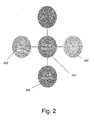
- Fig. 2 schematically illustrates the architecture of an awareness mechanism for providing appropriate alerts, according to an embodiment of the invention.
- the proposed awareness mechanism 200 is based on selectively filtering sounds of the environment, which are received in real-time by the microphone of the user's mobile device.
- the received sounds are compared in real-time to a predefined collection of reference sounds, which may be stored offline locally on in a database.
- a predefined collection may be generated by recording a characteristic sound for each potential scenario or threat, such as typical voice patterns or voice signatures of a barking dog, a moving vehicle, a moving train, a horning vehicle, crowd, siren of an ambulance or of other rescue vehicle, etc.
- This reference collection can be created by the user or by an administrator.
- the awareness mechanism 200 may be implemented by an application that will be installed on each mobile device. When activated, the application will automatically turn on the inherent microphone of the user's mobile device, and will start receiving sounds from the environment in real-time.
- the application will have predetermined filters which will select only sounds that match predefined criteria, such as typical patterns that will be pre-recorded. Only sounds that will be highly correlated with the patterns will be passed to the user's headphones, so the user will be able to hear them. All other sounds will be blocked by the application.
- the application will be able to identify and classify the received sounds, in order to compare them to the relevant patterns.
- the application may include the following modules:
- the Context Based Filtering Module 201 allows the user to select and hear sounds which are filtered from the sounds of his surrounding environment, according to his current context. Instead of filtering static sounds, the user will be able to filter only sounds that comply with his current context. For example, sounds of a barking dog are relevant for a user that is jogging in a park, but are not relevant to a user who is currently traveling on a bus or on a train.
- the Location Based Filtering Module 202 allows the user to filter sounds from the environment, only when he enters a specific location or to a predefined set of locations. This can be done with every component described above. For example, if the microphone of the mobile device receives sounds of a barking dog which is inside a yard of a house, the application will block this sound and the user will not hear it, since a dog in a yard is not a potential threat. However, if the microphone of the mobile device receives sounds of a barking dog which is on the street, the application will filter this sound from the environment and the user will hear it, since a free dog is a potential threat.
- the Friends Notification Module 203 allows the user to filter from the environment, sounds that are originated from friends of the user. This will allow the user to be aware only of the sounds that might be interesting to him and to ignore other sounds. These sounds can be voices of his friends, their sound signatures or other sounds they produce (e.g., coughing). For example, the user can receive a sound from a common friend regarding another friend that is nearby, which (according to the common friend) may be of interest to him. This is a type of filtering that is based on knowing the preferences of each user, such that filtering is tuned by fiends that have knowledge about the user.
- the application will also be adapted to increase or decrease the volume of the sounds that will be selected by a filter, according to the distance of the user from the sounds source. For example, if the user becomes closer to a barking dog, the sound's magnitude will be increased.
Landscapes
- Physics & Mathematics (AREA)
- Engineering & Computer Science (AREA)
- Acoustics & Sound (AREA)
- Multimedia (AREA)
- General Physics & Mathematics (AREA)
- Audiology, Speech & Language Pathology (AREA)
- General Health & Medical Sciences (AREA)
- Health & Medical Sciences (AREA)
- Business, Economics & Management (AREA)
- Emergency Management (AREA)
- Electromagnetism (AREA)
- Signal Processing (AREA)
- Alarm Systems (AREA)
- Headphones And Earphones (AREA)
- Measurement Of Velocity Or Position Using Acoustic Or Ultrasonic Waves (AREA)
Abstract
Description
- The present invention relates to the field of monitoring systems. More particularly, the invention relates to a system and method for providing selective alerts in the form of sounds to users of isolating headphones, via their mobile devices.
- Many users of mobile phones (or other mobile devices with a connection to cellular networks) use them for listening to content, such as music in the form of audio files stored on the mobile phone, or listening to streamed audio broadcasted from radio stations via the cellular network. In order to isolate environmental noises, most of the users use large headphones, which cover the entire auricle of each ear. This may cause safety problems, since the user cannot hear sounds that should increase his level of caution, such as approaching vehicles (if he walks on the sidewalk) or an approaching dog which may attack him while jogging in a park.
- Some of the existing headphones have a built in microphone, which can be activated when the user wishes to be exposed to environmental noise by simultaneously disabling the audio channel of the cellphone. However, this requires the user's intension and active operation, which are not always possible while he is walking or jogging.
- In addition, while being audibly isolated from the environment, the user sometimes
- It is therefore desired to provide a sound alert to the user, that increases his awareness regarding risks or entities of interest in his vicinity.
- It is an object of the present invention to provide a method and system for providing sound alerts to a user that increase his awareness regarding risks or in his vicinity.
- It is another additional object of the present invention to provide a method and system for providing selectively filtering sounds of the environment, which are relevant to his location and context.
- Other objects and advantages of the invention will become apparent as the description proceeds.
- The present invention is directed to a method for providing elected sounds to a user of a mobile device, who is isolated from sounds of the environment, to increase his awareness regarding entities or events in his vicinity. The user wears sound isolating headphones, which are connected to his mobile device and isolate him from sounds of the environment. A mobile application is installed on the mobile device, and is automatically activated when the headphones are connected to his mobile device. The mobile application is adapted to automatically activate the microphone of the mobile device, when the isolating headphones are plugged into the mobile device and periodically compare in real-time, sounds received from the environment, to a predefined collection of reference sounds. Sounds of the environment, which match one or more reference sounds from the collection are selectively filtered out and as long as the sounds received from the environment match the one or more reference sounds from the collection, the filtered sounds are continuously passed to the isolating headphones.
- The collection of reference sounds may be generated by the user or by an administrator and stored offline locally on in a database.
- The sounds received from the environment may be associated with surrounding threats, to which the user who wears the isolating headphones is exposed when being outdoors. The surrounding threats may be:
- dynamic moving entities along the user's movement path;
- static stationary entities along the user's movement path;
- happening events, which take place in real-time along the user's movement path; and
- caused events, which take place in real-time along the user's movement path, due to the movement.
- The mobile application may also include predetermined filters that select only sounds that match predefined criteria, such that only sounds that are highly correlated with patterns of the reference sounds will be passed to the user's headphones.
- The mobile application may include one or more of the following modules:
- a Context Based Filtering Module;
- a Location Based Filtering Module;
- a Friends Notification Module.
- The mobile application may be adapted to increase or decrease the volume of the sounds that will be selected by a filter, according to the distance of the user from the environmental sounds source.
- The present invention is also directed to a system for providing elected sounds to a user of a mobile device, who is isolated from sounds of the environment, to increase his awareness regarding entities or events in his vicinity, the system comprises:
- c) a plurality of mobile devices of users, each of which are being connected to sound isolating headphones adapted to be worn;
- d) a mobile application installed on the mobile devices, the mobile application is adapted to:
- b.1) automatically activate the microphone of the mobile device, when the isolating headphones are plugged into the mobile device;
- b.2) periodically compare in real-time, sounds received from the environment, to a predefined collection of reference sounds;
- b.3) selectively filter sounds out of the environment, which match one or more reference sounds from the collection; and
- b.4) as long as the sounds received from the environment match the one or more reference sounds from the collection, continuously pass the filtered sounds, to the isolating headphones.
- In the drawings:
-
Fig. 1 schematically illustrates some examples of surrounding threats, to which a user who wares isolating headphones is exposed when being outdoors; and -
Fig. 2 schematically illustrates the architecture of an awareness mechanism for providing appropriate alerts, according to an embodiment of the invention. - The system and method of the present invention are capable of providing sound alerts to a user, in order increase his awareness regarding risks or entities of interest in his vicinity, of which he is unaware. The suggested platform filters out the important audio hazards while enabling the user enjoying the audio experience with his headphones. The system uses a filtering mechanism that can be tuned to provide different filtering profiles to different scenarios (e.g., avoiding a dog running after the user while jogging with headphones).
-
Fig. 1 schematically illustrates some examples of surrounding threats, to which a user who wares isolating headphones is exposed when being outdoors. On his way, the user may encounter dynamic (moving) entities, such as moving objects along his path, people in move or animals that pass nearby the path. Any such moving entity may become a potential obstacle, into which the user may crash or by which he may be hurt, due to isolation from environmental sounds and his unawareness of moving (dynamic) entities. - The user may also encounter
passive entities 102 which are not moving, such as static objects, standing people or animals that are located along his path. Any such static entity may also become a potential obstacle, into which the user may crash, due to isolation from environmental sounds and his unawareness. - Another type of potential obstacles is happening
events 103, which take place in real-time along the user's movement path. For example, these obstacles may be places, which become crowded due to an accident, fire, demonstration or to criminal events, which happen without any connection to the user. An alert that is passed to the user may cause him to change his path, in order to avoid such encounters. - Another type of potential incidents is caused
events 104, which take place in real-time along the user's movement path because of him. Such incidents may be events that are initiated by the movement of the user along his path. For example, a user who is running in a park may avoid an event of being bitten by a running dog, if he gets an alert that may cause him to change his path, in order to not to initiate such event. -
Fig. 2 schematically illustrates the architecture of an awareness mechanism for providing appropriate alerts, according to an embodiment of the invention. The proposedawareness mechanism 200 is based on selectively filtering sounds of the environment, which are received in real-time by the microphone of the user's mobile device. The received sounds are compared in real-time to a predefined collection of reference sounds, which may be stored offline locally on in a database. For example, such a collection may be generated by recording a characteristic sound for each potential scenario or threat, such as typical voice patterns or voice signatures of a barking dog, a moving vehicle, a moving train, a horning vehicle, crowd, siren of an ambulance or of other rescue vehicle, etc. This reference collection can be created by the user or by an administrator. - The
awareness mechanism 200 may be implemented by an application that will be installed on each mobile device. When activated, the application will automatically turn on the inherent microphone of the user's mobile device, and will start receiving sounds from the environment in real-time. The application will have predetermined filters which will select only sounds that match predefined criteria, such as typical patterns that will be pre-recorded. Only sounds that will be highly correlated with the patterns will be passed to the user's headphones, so the user will be able to hear them. All other sounds will be blocked by the application. The application will be able to identify and classify the received sounds, in order to compare them to the relevant patterns. - The application may include the following modules:
- The Context
Based Filtering Module 201 allows the user to select and hear sounds which are filtered from the sounds of his surrounding environment, according to his current context. Instead of filtering static sounds, the user will be able to filter only sounds that comply with his current context. For example, sounds of a barking dog are relevant for a user that is jogging in a park, but are not relevant to a user who is currently traveling on a bus or on a train. - The Location Based
Filtering Module 202 allows the user to filter sounds from the environment, only when he enters a specific location or to a predefined set of locations. This can be done with every component described above. For example, if the microphone of the mobile device receives sounds of a barking dog which is inside a yard of a house, the application will block this sound and the user will not hear it, since a dog in a yard is not a potential threat. However, if the microphone of the mobile device receives sounds of a barking dog which is on the street, the application will filter this sound from the environment and the user will hear it, since a free dog is a potential threat. - The
Friends Notification Module 203 allows the user to filter from the environment, sounds that are originated from friends of the user. This will allow the user to be aware only of the sounds that might be interesting to him and to ignore other sounds. These sounds can be voices of his friends, their sound signatures or other sounds they produce (e.g., coughing). For example, the user can receive a sound from a common friend regarding another friend that is nearby, which (according to the common friend) may be of interest to him. This is a type of filtering that is based on knowing the preferences of each user, such that filtering is tuned by fiends that have knowledge about the user. - The application will also be adapted to increase or decrease the volume of the sounds that will be selected by a filter, according to the distance of the user from the sounds source. For example, if the user becomes closer to a barking dog, the sound's magnitude will be increased.
- While some embodiments of the invention have been described by way of illustration, it will be apparent that the invention can be carried out with many modifications, variations and adaptations, and with the use of numerous equivalents or alternative solutions that are within the scope of persons skilled in the art, without exceeding the scope of the claims.
Claims (11)
- A method for providing elected sounds to a user of a mobile device, who is isolated from sounds of the environment, to increase his awareness regarding entities or events in his vicinity, comprising the steps of:a) allowing said user to wear sound isolating headphones, which are connected to his mobile device;b) installing a mobile application on said mobile device, said mobile application is adapted to:b.1) automatically activate the microphone of said mobile device, when the isolating headphones are plugged into said mobile device;b.2) periodically compare in real-time, sounds received from the environment, to a predefined collection of reference sounds;b.3) selectively filter sounds out of the environment, which match one or more reference sounds from said collection; andb.4) as long as the sounds received from the environment match said one or more reference sounds from said collection, continuously pass the filtered sounds, to said isolating headphones.
- The method according to claim 1, wherein the collection of reference sounds are generated by the user or by an administrator and stored offline locally on in a database.
- The method according to claim 1, wherein the sounds received from the environment are associated with surrounding threats, to which the user who wears the isolating headphones is exposed when being outdoors.
- The method according to claim 1, wherein the surrounding threats are selected from the group of:- dynamic moving entities along the user's movement path;- static stationary entities along the user's movement path;- happening events, which take place in real-time along the user's movement path; and- caused events, which take place in real-time along the user's movement path, due to said movement.
- The method according to claim 1, wherein the mobile application includes predetermined filters that select only sounds that match predefined criteria, such that only sounds that are highly correlated with patterns of the reference sounds will be passed to the user's headphones.
- The method according to claim 1, wherein the mobile application includes one or more of the following modules:- a Context Based Filtering Module;- a Location Based Filtering Module;- a Friends Notification Module.
- The method according to claim 1, wherein the mobile application is adapted to increase or decrease the volume of the sounds that will be selected by a filter, according to the distance of the user from the environmental sounds source.
- A system for providing elected sounds to a user of a mobile device, who is isolated from sounds of the environment, to increase his awareness regarding entities or events in his vicinity, comprising:c) a plurality of mobile devices of users, each of which are being connected to sound isolating headphones adapted to be worn;d) a mobile application installed on said mobile devices, said mobile application is adapted to:b.1) automatically activate the microphone of said mobile device, when the isolating headphones are plugged into said mobile device;b.2) periodically compare in real-time, sounds received from the environment, to a predefined collection of reference sounds;b.3) selectively filter sounds out of the environment, which match one or more reference sounds from said collection; andb.4) as long as the sounds received from the environment match said one or more reference sounds from said collection, continuously pass the filtered sounds, to said isolating headphones.
- The system according to claim 8, wherein the mobile application includes predetermined filters that select only sounds that match predefined criteria, such that only sounds that are highly correlated with patterns of the reference sounds will be passed to the user's headphones.
- The system according to claim 8, wherein the mobile application includes one or more of the following modules:- a Context Based Filtering Module;- a Location Based Filtering Module;- a Friends Notification Module.
- The system according to claim 8, wherein the mobile application is adapted to increase or decrease the volume of the sounds that will be selected by a filter, according to the distance of the user from the environmental sounds source.
Applications Claiming Priority (1)
| Application Number | Priority Date | Filing Date | Title |
|---|---|---|---|
| IL23361614 | 2014-07-10 |
Publications (3)
| Publication Number | Publication Date |
|---|---|
| EP2966642A2 true EP2966642A2 (en) | 2016-01-13 |
| EP2966642A3 EP2966642A3 (en) | 2016-06-01 |
| EP2966642B1 EP2966642B1 (en) | 2024-08-28 |
Family
ID=53800818
Family Applications (1)
| Application Number | Title | Priority Date | Filing Date |
|---|---|---|---|
| EP15176299.4A Active EP2966642B1 (en) | 2014-07-10 | 2015-07-10 | Method for increasing the awareness of headphone users, using selective audio |
Country Status (2)
| Country | Link |
|---|---|
| US (1) | US9788101B2 (en) |
| EP (1) | EP2966642B1 (en) |
Cited By (4)
| Publication number | Priority date | Publication date | Assignee | Title |
|---|---|---|---|---|
| WO2018031171A1 (en) * | 2016-08-09 | 2018-02-15 | Qualcomm Incorporated | System and method to provide an alert using microphone activation |
| US10360771B2 (en) | 2016-12-14 | 2019-07-23 | International Business Machines Corporation | Alert processing |
| CN111901718A (en) * | 2019-05-06 | 2020-11-06 | 联发科技股份有限公司 | Signal processing apparatus and method thereof |
| WO2024010501A1 (en) * | 2022-07-05 | 2024-01-11 | Telefonaktiebolaget Lm Ericsson (Publ) | Adjusting an audio experience for a user |
Families Citing this family (13)
| Publication number | Priority date | Publication date | Assignee | Title |
|---|---|---|---|---|
| US9749766B2 (en) * | 2015-12-27 | 2017-08-29 | Philip Scott Lyren | Switching binaural sound |
| US10902866B2 (en) * | 2016-09-08 | 2021-01-26 | Huawei Technologies Co., Ltd. | Sound signal processing method, terminal, and headset |
| EP3333590A1 (en) * | 2016-12-12 | 2018-06-13 | Nxp B.V. | Apparatus and associated methods |
| US10235128B2 (en) * | 2017-05-19 | 2019-03-19 | Intel Corporation | Contextual sound filter |
| JP7172999B2 (en) * | 2017-05-22 | 2022-11-16 | ソニーグループ株式会社 | Information processing device, information processing method and program |
| US10699546B2 (en) * | 2017-06-14 | 2020-06-30 | Wipro Limited | Headphone and headphone safety device for alerting user from impending hazard, and method thereof |
| US11100767B1 (en) * | 2019-03-26 | 2021-08-24 | Halo Wearables, Llc | Group management for electronic devices |
| US11871184B2 (en) | 2020-01-07 | 2024-01-09 | Ramtrip Ventures, Llc | Hearing improvement system |
| US11983459B1 (en) * | 2020-01-13 | 2024-05-14 | Matthew MacGregor Roy | Name-recognizing mobile device for automatically adjusting earphone volume |
| US12023147B2 (en) * | 2020-03-20 | 2024-07-02 | Starkey Laboratories, Inc. | Alertness determination for non-alert detection using ear-worn electronic devices |
| WO2022081167A1 (en) | 2020-10-16 | 2022-04-21 | Hewlett-Packard Development Company, L.P. | Event detections for noise cancelling headphones |
| US11501749B1 (en) | 2021-08-09 | 2022-11-15 | International Business Machines Corporation | Selective allowance of sound in noise cancellation headset in an industrial work environment |
| CN114189790B (en) * | 2021-10-26 | 2022-11-29 | 北京荣耀终端有限公司 | Audio information processing method, electronic device, system, product and medium |
Family Cites Families (11)
| Publication number | Priority date | Publication date | Assignee | Title |
|---|---|---|---|---|
| US20010046304A1 (en) | 2000-04-24 | 2001-11-29 | Rast Rodger H. | System and method for selective control of acoustic isolation in headsets |
| US20070189544A1 (en) * | 2005-01-15 | 2007-08-16 | Outland Research, Llc | Ambient sound responsive media player |
| CN1897054A (en) | 2005-07-14 | 2007-01-17 | 松下电器产业株式会社 | Device and method for transmitting alarm according various acoustic signals |
| US7903825B1 (en) | 2006-03-03 | 2011-03-08 | Cirrus Logic, Inc. | Personal audio playback device having gain control responsive to environmental sounds |
| US20080130908A1 (en) * | 2006-12-05 | 2008-06-05 | Searete Llc, A Limited Liability Corporation Of The State Of Delaware | Selective audio/sound aspects |
| US20090232325A1 (en) | 2008-03-12 | 2009-09-17 | Johan Lundquist | Reactive headphones |
| US9105187B2 (en) | 2009-05-14 | 2015-08-11 | Woox Innovations Belgium N.V. | Method and apparatus for providing information about the source of a sound via an audio device |
| US9191744B2 (en) | 2012-08-09 | 2015-11-17 | Logitech Europe, S.A. | Intelligent ambient sound monitoring system |
| US9479872B2 (en) * | 2012-09-10 | 2016-10-25 | Sony Corporation | Audio reproducing method and apparatus |
| CN102915753B (en) * | 2012-10-23 | 2015-09-30 | 华为终端有限公司 | A kind of method of Based Intelligent Control volume of electronic equipment and implement device |
| US9357320B2 (en) * | 2014-06-24 | 2016-05-31 | Harmon International Industries, Inc. | Headphone listening apparatus |
-
2015
- 2015-07-06 US US14/791,927 patent/US9788101B2/en active Active
- 2015-07-10 EP EP15176299.4A patent/EP2966642B1/en active Active
Non-Patent Citations (1)
| Title |
|---|
| None |
Cited By (5)
| Publication number | Priority date | Publication date | Assignee | Title |
|---|---|---|---|---|
| WO2018031171A1 (en) * | 2016-08-09 | 2018-02-15 | Qualcomm Incorporated | System and method to provide an alert using microphone activation |
| US10079030B2 (en) | 2016-08-09 | 2018-09-18 | Qualcomm Incorporated | System and method to provide an alert using microphone activation |
| US10360771B2 (en) | 2016-12-14 | 2019-07-23 | International Business Machines Corporation | Alert processing |
| CN111901718A (en) * | 2019-05-06 | 2020-11-06 | 联发科技股份有限公司 | Signal processing apparatus and method thereof |
| WO2024010501A1 (en) * | 2022-07-05 | 2024-01-11 | Telefonaktiebolaget Lm Ericsson (Publ) | Adjusting an audio experience for a user |
Also Published As
| Publication number | Publication date |
|---|---|
| US9788101B2 (en) | 2017-10-10 |
| EP2966642A3 (en) | 2016-06-01 |
| EP2966642B1 (en) | 2024-08-28 |
| US20160014497A1 (en) | 2016-01-14 |
Similar Documents
| Publication | Publication Date | Title |
|---|---|---|
| US9788101B2 (en) | Method for increasing the awareness of headphone users, using selective audio | |
| US11589329B1 (en) | Information processing using a population of data acquisition devices | |
| JP6761458B2 (en) | Use of external acoustics to alert vehicle occupants of external events and mask in-vehicle conversations | |
| US8233919B2 (en) | Intelligently providing user-specific transportation-related information | |
| AU2014101406A4 (en) | A portable alerting system and a method thereof | |
| US20140191861A1 (en) | Alarm Detector and Methods of Making and Using the Same | |
| EP2691950A2 (en) | Methods and systems for searching utilizing acoustical context | |
| US20200389718A1 (en) | Annoyance Noise Suppression | |
| US20190037301A1 (en) | Annoyance Noise Suppression | |
| US20160142820A1 (en) | Personal audio system using processing parameters learned from user feedback | |
| US20150382097A1 (en) | Hearing device, method and system for automatically enabling monitoring mode within said hearing device | |
| WO2017035810A1 (en) | Method to generate and transmit role-specific audio snippets | |
| US20170142510A1 (en) | Annoyance noise suppression | |
| US12437743B2 (en) | Event detections for noise cancelling headphones | |
| CN110562177A (en) | Alarm system, method and vehicle-mounted terminal | |
| WO2023175829A1 (en) | Monitoring system, monitoring device, monitoring method, and recording medium | |
| KR102298732B1 (en) | Method of transmitting broadcast contents of broadcasting equipment | |
| CN111741405B (en) | Reminding method and device, earphone and server | |
| CN119418477A (en) | Fixed-point alarm method and device based on map information | |
| EP2919442B1 (en) | Using audio intervention for creating context awareness | |
| AU2011351935A1 (en) | Information processing using a population of data acquisition devices | |
| TR201615693A1 (en) | A TRAFFIC MANAGEMENT METHOD FOR HIGH PRIORITY VEHICLES |
Legal Events
| Date | Code | Title | Description |
|---|---|---|---|
| PUAI | Public reference made under article 153(3) epc to a published international application that has entered the european phase |
Free format text: ORIGINAL CODE: 0009012 |
|
| AK | Designated contracting states |
Kind code of ref document: A2 Designated state(s): AL AT BE BG CH CY CZ DE DK EE ES FI FR GB GR HR HU IE IS IT LI LT LU LV MC MK MT NL NO PL PT RO RS SE SI SK SM TR |
|
| AX | Request for extension of the european patent |
Extension state: BA ME |
|
| RIN1 | Information on inventor provided before grant (corrected) |
Inventor name: ROSEN, GIL Inventor name: SHAPIRA, BRACHA Inventor name: CHIZI, BARAK Inventor name: MIMRAN, DAVID DUDU |
|
| PUAL | Search report despatched |
Free format text: ORIGINAL CODE: 0009013 |
|
| AK | Designated contracting states |
Kind code of ref document: A3 Designated state(s): AL AT BE BG CH CY CZ DE DK EE ES FI FR GB GR HR HU IE IS IT LI LT LU LV MC MK MT NL NO PL PT RO RS SE SI SK SM TR |
|
| AX | Request for extension of the european patent |
Extension state: BA ME |
|
| RIC1 | Information provided on ipc code assigned before grant |
Ipc: G10K 11/175 20060101AFI20160426BHEP Ipc: G08B 21/02 20060101ALI20160426BHEP Ipc: H04R 1/10 20060101ALI20160426BHEP |
|
| STAA | Information on the status of an ep patent application or granted ep patent |
Free format text: STATUS: REQUEST FOR EXAMINATION WAS MADE |
|
| 17P | Request for examination filed |
Effective date: 20161130 |
|
| RBV | Designated contracting states (corrected) |
Designated state(s): AL AT BE BG CH CY CZ DE DK EE ES FI FR GB GR HR HU IE IS IT LI LT LU LV MC MK MT NL NO PL PT RO RS SE SI SK SM TR |
|
| STAA | Information on the status of an ep patent application or granted ep patent |
Free format text: STATUS: EXAMINATION IS IN PROGRESS |
|
| 17Q | First examination report despatched |
Effective date: 20210519 |
|
| REG | Reference to a national code |
Ref country code: DE Ref legal event code: R079 Free format text: PREVIOUS MAIN CLASS: G10K0011178000 Ipc: G10K0011175000 Ref country code: DE Ref legal event code: R079 Ref document number: 602015089660 Country of ref document: DE Free format text: PREVIOUS MAIN CLASS: G10K0011178000 Ipc: G10K0011175000 |
|
| RIC1 | Information provided on ipc code assigned before grant |
Ipc: H04R 1/10 20060101ALN20231130BHEP Ipc: G10K 11/178 20060101ALI20231130BHEP Ipc: G10K 11/175 20060101AFI20231130BHEP |
|
| RIC1 | Information provided on ipc code assigned before grant |
Ipc: H04R 1/10 20060101ALN20231218BHEP Ipc: G10K 11/178 20060101ALI20231218BHEP Ipc: G10K 11/175 20060101AFI20231218BHEP |
|
| GRAP | Despatch of communication of intention to grant a patent |
Free format text: ORIGINAL CODE: EPIDOSNIGR1 |
|
| STAA | Information on the status of an ep patent application or granted ep patent |
Free format text: STATUS: GRANT OF PATENT IS INTENDED |
|
| RIC1 | Information provided on ipc code assigned before grant |
Ipc: H04R 1/10 20060101ALN20240112BHEP Ipc: G10K 11/178 20060101ALI20240112BHEP Ipc: G10K 11/175 20060101AFI20240112BHEP |
|
| INTG | Intention to grant announced |
Effective date: 20240214 |
|
| GRAS | Grant fee paid |
Free format text: ORIGINAL CODE: EPIDOSNIGR3 |
|
| GRAA | (expected) grant |
Free format text: ORIGINAL CODE: 0009210 |
|
| STAA | Information on the status of an ep patent application or granted ep patent |
Free format text: STATUS: THE PATENT HAS BEEN GRANTED |
|
| AK | Designated contracting states |
Kind code of ref document: B1 Designated state(s): AL AT BE BG CH CY CZ DE DK EE ES FI FR GB GR HR HU IE IS IT LI LT LU LV MC MK MT NL NO PL PT RO RS SE SI SK SM TR |
|
| REG | Reference to a national code |
Ref country code: GB Ref legal event code: FG4D |
|
| REG | Reference to a national code |
Ref country code: CH Ref legal event code: EP |
|
| REG | Reference to a national code |
Ref country code: DE Ref legal event code: R096 Ref document number: 602015089660 Country of ref document: DE |
|
| REG | Reference to a national code |
Ref country code: IE Ref legal event code: FG4D |
|
| REG | Reference to a national code |
Ref country code: LT Ref legal event code: MG9D |
|
| PG25 | Lapsed in a contracting state [announced via postgrant information from national office to epo] |
Ref country code: NO Free format text: LAPSE BECAUSE OF FAILURE TO SUBMIT A TRANSLATION OF THE DESCRIPTION OR TO PAY THE FEE WITHIN THE PRESCRIBED TIME-LIMIT Effective date: 20241128 |
|
| REG | Reference to a national code |
Ref country code: AT Ref legal event code: MK05 Ref document number: 1718872 Country of ref document: AT Kind code of ref document: T Effective date: 20240828 |
|
| PG25 | Lapsed in a contracting state [announced via postgrant information from national office to epo] |
Ref country code: NL Free format text: LAPSE BECAUSE OF FAILURE TO SUBMIT A TRANSLATION OF THE DESCRIPTION OR TO PAY THE FEE WITHIN THE PRESCRIBED TIME-LIMIT Effective date: 20240828 Ref country code: GR Free format text: LAPSE BECAUSE OF FAILURE TO SUBMIT A TRANSLATION OF THE DESCRIPTION OR TO PAY THE FEE WITHIN THE PRESCRIBED TIME-LIMIT Effective date: 20241129 Ref country code: PT Free format text: LAPSE BECAUSE OF FAILURE TO SUBMIT A TRANSLATION OF THE DESCRIPTION OR TO PAY THE FEE WITHIN THE PRESCRIBED TIME-LIMIT Effective date: 20241230 Ref country code: FI Free format text: LAPSE BECAUSE OF FAILURE TO SUBMIT A TRANSLATION OF THE DESCRIPTION OR TO PAY THE FEE WITHIN THE PRESCRIBED TIME-LIMIT Effective date: 20240828 Ref country code: PL Free format text: LAPSE BECAUSE OF FAILURE TO SUBMIT A TRANSLATION OF THE DESCRIPTION OR TO PAY THE FEE WITHIN THE PRESCRIBED TIME-LIMIT Effective date: 20240828 |
|
| PG25 | Lapsed in a contracting state [announced via postgrant information from national office to epo] |
Ref country code: BG Free format text: LAPSE BECAUSE OF FAILURE TO SUBMIT A TRANSLATION OF THE DESCRIPTION OR TO PAY THE FEE WITHIN THE PRESCRIBED TIME-LIMIT Effective date: 20240828 |
|
| PG25 | Lapsed in a contracting state [announced via postgrant information from national office to epo] |
Ref country code: LV Free format text: LAPSE BECAUSE OF FAILURE TO SUBMIT A TRANSLATION OF THE DESCRIPTION OR TO PAY THE FEE WITHIN THE PRESCRIBED TIME-LIMIT Effective date: 20240828 |
|
| REG | Reference to a national code |
Ref country code: NL Ref legal event code: MP Effective date: 20240828 |
|
| PG25 | Lapsed in a contracting state [announced via postgrant information from national office to epo] |
Ref country code: IS Free format text: LAPSE BECAUSE OF FAILURE TO SUBMIT A TRANSLATION OF THE DESCRIPTION OR TO PAY THE FEE WITHIN THE PRESCRIBED TIME-LIMIT Effective date: 20241228 Ref country code: AT Free format text: LAPSE BECAUSE OF FAILURE TO SUBMIT A TRANSLATION OF THE DESCRIPTION OR TO PAY THE FEE WITHIN THE PRESCRIBED TIME-LIMIT Effective date: 20240828 |
|
| PG25 | Lapsed in a contracting state [announced via postgrant information from national office to epo] |
Ref country code: HR Free format text: LAPSE BECAUSE OF FAILURE TO SUBMIT A TRANSLATION OF THE DESCRIPTION OR TO PAY THE FEE WITHIN THE PRESCRIBED TIME-LIMIT Effective date: 20240828 |
|
| PG25 | Lapsed in a contracting state [announced via postgrant information from national office to epo] |
Ref country code: ES Free format text: LAPSE BECAUSE OF FAILURE TO SUBMIT A TRANSLATION OF THE DESCRIPTION OR TO PAY THE FEE WITHIN THE PRESCRIBED TIME-LIMIT Effective date: 20240828 Ref country code: RS Free format text: LAPSE BECAUSE OF FAILURE TO SUBMIT A TRANSLATION OF THE DESCRIPTION OR TO PAY THE FEE WITHIN THE PRESCRIBED TIME-LIMIT Effective date: 20241128 |
|
| PG25 | Lapsed in a contracting state [announced via postgrant information from national office to epo] |
Ref country code: RS Free format text: LAPSE BECAUSE OF FAILURE TO SUBMIT A TRANSLATION OF THE DESCRIPTION OR TO PAY THE FEE WITHIN THE PRESCRIBED TIME-LIMIT Effective date: 20241128 Ref country code: PT Free format text: LAPSE BECAUSE OF FAILURE TO SUBMIT A TRANSLATION OF THE DESCRIPTION OR TO PAY THE FEE WITHIN THE PRESCRIBED TIME-LIMIT Effective date: 20241230 Ref country code: PL Free format text: LAPSE BECAUSE OF FAILURE TO SUBMIT A TRANSLATION OF THE DESCRIPTION OR TO PAY THE FEE WITHIN THE PRESCRIBED TIME-LIMIT Effective date: 20240828 Ref country code: NO Free format text: LAPSE BECAUSE OF FAILURE TO SUBMIT A TRANSLATION OF THE DESCRIPTION OR TO PAY THE FEE WITHIN THE PRESCRIBED TIME-LIMIT Effective date: 20241128 Ref country code: NL Free format text: LAPSE BECAUSE OF FAILURE TO SUBMIT A TRANSLATION OF THE DESCRIPTION OR TO PAY THE FEE WITHIN THE PRESCRIBED TIME-LIMIT Effective date: 20240828 Ref country code: LV Free format text: LAPSE BECAUSE OF FAILURE TO SUBMIT A TRANSLATION OF THE DESCRIPTION OR TO PAY THE FEE WITHIN THE PRESCRIBED TIME-LIMIT Effective date: 20240828 Ref country code: IS Free format text: LAPSE BECAUSE OF FAILURE TO SUBMIT A TRANSLATION OF THE DESCRIPTION OR TO PAY THE FEE WITHIN THE PRESCRIBED TIME-LIMIT Effective date: 20241228 Ref country code: HR Free format text: LAPSE BECAUSE OF FAILURE TO SUBMIT A TRANSLATION OF THE DESCRIPTION OR TO PAY THE FEE WITHIN THE PRESCRIBED TIME-LIMIT Effective date: 20240828 Ref country code: GR Free format text: LAPSE BECAUSE OF FAILURE TO SUBMIT A TRANSLATION OF THE DESCRIPTION OR TO PAY THE FEE WITHIN THE PRESCRIBED TIME-LIMIT Effective date: 20241129 Ref country code: FI Free format text: LAPSE BECAUSE OF FAILURE TO SUBMIT A TRANSLATION OF THE DESCRIPTION OR TO PAY THE FEE WITHIN THE PRESCRIBED TIME-LIMIT Effective date: 20240828 Ref country code: ES Free format text: LAPSE BECAUSE OF FAILURE TO SUBMIT A TRANSLATION OF THE DESCRIPTION OR TO PAY THE FEE WITHIN THE PRESCRIBED TIME-LIMIT Effective date: 20240828 Ref country code: BG Free format text: LAPSE BECAUSE OF FAILURE TO SUBMIT A TRANSLATION OF THE DESCRIPTION OR TO PAY THE FEE WITHIN THE PRESCRIBED TIME-LIMIT Effective date: 20240828 Ref country code: AT Free format text: LAPSE BECAUSE OF FAILURE TO SUBMIT A TRANSLATION OF THE DESCRIPTION OR TO PAY THE FEE WITHIN THE PRESCRIBED TIME-LIMIT Effective date: 20240828 |
|
| PG25 | Lapsed in a contracting state [announced via postgrant information from national office to epo] |
Ref country code: RO Free format text: LAPSE BECAUSE OF FAILURE TO SUBMIT A TRANSLATION OF THE DESCRIPTION OR TO PAY THE FEE WITHIN THE PRESCRIBED TIME-LIMIT Effective date: 20240828 Ref country code: SM Free format text: LAPSE BECAUSE OF FAILURE TO SUBMIT A TRANSLATION OF THE DESCRIPTION OR TO PAY THE FEE WITHIN THE PRESCRIBED TIME-LIMIT Effective date: 20240828 Ref country code: DK Free format text: LAPSE BECAUSE OF FAILURE TO SUBMIT A TRANSLATION OF THE DESCRIPTION OR TO PAY THE FEE WITHIN THE PRESCRIBED TIME-LIMIT Effective date: 20240828 |
|
| PG25 | Lapsed in a contracting state [announced via postgrant information from national office to epo] |
Ref country code: EE Free format text: LAPSE BECAUSE OF FAILURE TO SUBMIT A TRANSLATION OF THE DESCRIPTION OR TO PAY THE FEE WITHIN THE PRESCRIBED TIME-LIMIT Effective date: 20240828 |
|
| PG25 | Lapsed in a contracting state [announced via postgrant information from national office to epo] |
Ref country code: CZ Free format text: LAPSE BECAUSE OF FAILURE TO SUBMIT A TRANSLATION OF THE DESCRIPTION OR TO PAY THE FEE WITHIN THE PRESCRIBED TIME-LIMIT Effective date: 20240828 |
|
| PG25 | Lapsed in a contracting state [announced via postgrant information from national office to epo] |
Ref country code: SK Free format text: LAPSE BECAUSE OF FAILURE TO SUBMIT A TRANSLATION OF THE DESCRIPTION OR TO PAY THE FEE WITHIN THE PRESCRIBED TIME-LIMIT Effective date: 20240828 Ref country code: IT Free format text: LAPSE BECAUSE OF FAILURE TO SUBMIT A TRANSLATION OF THE DESCRIPTION OR TO PAY THE FEE WITHIN THE PRESCRIBED TIME-LIMIT Effective date: 20240828 |
|
| REG | Reference to a national code |
Ref country code: DE Ref legal event code: R097 Ref document number: 602015089660 Country of ref document: DE |
|
| PLBE | No opposition filed within time limit |
Free format text: ORIGINAL CODE: 0009261 |
|
| STAA | Information on the status of an ep patent application or granted ep patent |
Free format text: STATUS: NO OPPOSITION FILED WITHIN TIME LIMIT |
|
| 26N | No opposition filed |
Effective date: 20250530 |
|
| PG25 | Lapsed in a contracting state [announced via postgrant information from national office to epo] |
Ref country code: SE Free format text: LAPSE BECAUSE OF FAILURE TO SUBMIT A TRANSLATION OF THE DESCRIPTION OR TO PAY THE FEE WITHIN THE PRESCRIBED TIME-LIMIT Effective date: 20240828 |
|
| PGFP | Annual fee paid to national office [announced via postgrant information from national office to epo] |
Ref country code: DE Payment date: 20250722 Year of fee payment: 11 |
|
| PGFP | Annual fee paid to national office [announced via postgrant information from national office to epo] |
Ref country code: GB Payment date: 20250724 Year of fee payment: 11 |
|
| PGFP | Annual fee paid to national office [announced via postgrant information from national office to epo] |
Ref country code: FR Payment date: 20250723 Year of fee payment: 11 |
|
| REG | Reference to a national code |
Ref country code: CH Ref legal event code: H13 Free format text: ST27 STATUS EVENT CODE: U-0-0-H10-H13 (AS PROVIDED BY THE NATIONAL OFFICE) Effective date: 20260224 |
|
| PG25 | Lapsed in a contracting state [announced via postgrant information from national office to epo] |
Ref country code: LU Free format text: LAPSE BECAUSE OF NON-PAYMENT OF DUE FEES Effective date: 20250710 |
|
| REG | Reference to a national code |
Ref country code: BE Ref legal event code: MM Effective date: 20250731 |
|
| PG25 | Lapsed in a contracting state [announced via postgrant information from national office to epo] |
Ref country code: BE Free format text: LAPSE BECAUSE OF NON-PAYMENT OF DUE FEES Effective date: 20250731 |
|
| PG25 | Lapsed in a contracting state [announced via postgrant information from national office to epo] |
Ref country code: CH Free format text: LAPSE BECAUSE OF NON-PAYMENT OF DUE FEES Effective date: 20250731 |
|
| PG25 | Lapsed in a contracting state [announced via postgrant information from national office to epo] |
Ref country code: LT Free format text: LAPSE BECAUSE OF FAILURE TO SUBMIT A TRANSLATION OF THE DESCRIPTION OR TO PAY THE FEE WITHIN THE PRESCRIBED TIME-LIMIT Effective date: 20240828 |
|
| PG25 | Lapsed in a contracting state [announced via postgrant information from national office to epo] |
Ref country code: IE Free format text: LAPSE BECAUSE OF NON-PAYMENT OF DUE FEES Effective date: 20250710 |
|
| PG25 | Lapsed in a contracting state [announced via postgrant information from national office to epo] |
Ref country code: MC Free format text: LAPSE BECAUSE OF FAILURE TO SUBMIT A TRANSLATION OF THE DESCRIPTION OR TO PAY THE FEE WITHIN THE PRESCRIBED TIME-LIMIT Effective date: 20240828 |
|
| PG25 | Lapsed in a contracting state [announced via postgrant information from national office to epo] |
Ref country code: CY Free format text: LAPSE BECAUSE OF FAILURE TO SUBMIT A TRANSLATION OF THE DESCRIPTION OR TO PAY THE FEE WITHIN THE PRESCRIBED TIME-LIMIT Effective date: 20240828 |