EP2966480A1 - Room entry/exit detection device, room entry/exit detection method, and computer-readable recording medium having program recorded thereon - Google Patents
Room entry/exit detection device, room entry/exit detection method, and computer-readable recording medium having program recorded thereon Download PDFInfo
- Publication number
- EP2966480A1 EP2966480A1 EP14759493.1A EP14759493A EP2966480A1 EP 2966480 A1 EP2966480 A1 EP 2966480A1 EP 14759493 A EP14759493 A EP 14759493A EP 2966480 A1 EP2966480 A1 EP 2966480A1
- Authority
- EP
- European Patent Office
- Prior art keywords
- person
- state
- open
- room
- door
- Prior art date
- Legal status (The legal status is an assumption and is not a legal conclusion. Google has not performed a legal analysis and makes no representation as to the accuracy of the status listed.)
- Withdrawn
Links
Images




Classifications
-
- G—PHYSICS
- G01—MEASURING; TESTING
- G01V—GEOPHYSICS; GRAVITATIONAL MEASUREMENTS; DETECTING MASSES OR OBJECTS; TAGS
- G01V8/00—Prospecting or detecting by optical means
- G01V8/10—Detecting, e.g. by using light barriers
-
- G—PHYSICS
- G01—MEASURING; TESTING
- G01J—MEASUREMENT OF INTENSITY, VELOCITY, SPECTRAL CONTENT, POLARISATION, PHASE OR PULSE CHARACTERISTICS OF INFRARED, VISIBLE OR ULTRAVIOLET LIGHT; COLORIMETRY; RADIATION PYROMETRY
- G01J5/00—Radiation pyrometry, e.g. infrared or optical thermometry
- G01J5/0022—Radiation pyrometry, e.g. infrared or optical thermometry for sensing the radiation of moving bodies
- G01J5/0025—Living bodies
-
- G—PHYSICS
- G01—MEASURING; TESTING
- G01J—MEASUREMENT OF INTENSITY, VELOCITY, SPECTRAL CONTENT, POLARISATION, PHASE OR PULSE CHARACTERISTICS OF INFRARED, VISIBLE OR ULTRAVIOLET LIGHT; COLORIMETRY; RADIATION PYROMETRY
- G01J5/00—Radiation pyrometry, e.g. infrared or optical thermometry
- G01J5/10—Radiation pyrometry, e.g. infrared or optical thermometry using electric radiation detectors
- G01J5/34—Radiation pyrometry, e.g. infrared or optical thermometry using electric radiation detectors using capacitors, e.g. pyroelectric capacitors
-
- G—PHYSICS
- G01—MEASURING; TESTING
- G01P—MEASURING LINEAR OR ANGULAR SPEED, ACCELERATION, DECELERATION, OR SHOCK; INDICATING PRESENCE, ABSENCE, OR DIRECTION, OF MOVEMENT
- G01P15/00—Measuring acceleration; Measuring deceleration; Measuring shock, i.e. sudden change of acceleration
-
- G—PHYSICS
- G07—CHECKING-DEVICES
- G07C—TIME OR ATTENDANCE REGISTERS; REGISTERING OR INDICATING THE WORKING OF MACHINES; GENERATING RANDOM NUMBERS; VOTING OR LOTTERY APPARATUS; ARRANGEMENTS, SYSTEMS OR APPARATUS FOR CHECKING NOT PROVIDED FOR ELSEWHERE
- G07C9/00—Individual registration on entry or exit
- G07C9/00174—Electronically operated locks; Circuits therefor; Nonmechanical keys therefor, e.g. passive or active electrical keys or other data carriers without mechanical keys
-
- G—PHYSICS
- G07—CHECKING-DEVICES
- G07C—TIME OR ATTENDANCE REGISTERS; REGISTERING OR INDICATING THE WORKING OF MACHINES; GENERATING RANDOM NUMBERS; VOTING OR LOTTERY APPARATUS; ARRANGEMENTS, SYSTEMS OR APPARATUS FOR CHECKING NOT PROVIDED FOR ELSEWHERE
- G07C2209/00—Indexing scheme relating to groups G07C9/00 - G07C9/38
- G07C2209/60—Indexing scheme relating to groups G07C9/00174 - G07C9/00944
- G07C2209/62—Comprising means for indicating the status of the lock
-
- G—PHYSICS
- G07—CHECKING-DEVICES
- G07C—TIME OR ATTENDANCE REGISTERS; REGISTERING OR INDICATING THE WORKING OF MACHINES; GENERATING RANDOM NUMBERS; VOTING OR LOTTERY APPARATUS; ARRANGEMENTS, SYSTEMS OR APPARATUS FOR CHECKING NOT PROVIDED FOR ELSEWHERE
- G07C2209/00—Indexing scheme relating to groups G07C9/00 - G07C9/38
- G07C2209/60—Indexing scheme relating to groups G07C9/00174 - G07C9/00944
- G07C2209/63—Comprising locating means for detecting the position of the data carrier, i.e. within the vehicle or within a certain distance from the vehicle
Definitions
- the present disclosure relates to a room entry and exit detection apparatus, a room entry and exit detection method, and a computer-readable recording medium having a program recorded thereon.
- Patent Literature 1 discloses an invention in which a television camera is installed to capture an image around a door and detect entry into a room and detect exit out of a room from a change in the captured image.
- a human body is detected from a captured image, and entry into and exit out of the room is detected from the direction of the passage, so that the number of people passing through the monitoring area is counted.
- Patent Literature 2 discloses a system including two person-detection sensors provided along the travelling direction of an aisle around a doorway, and detecting a person who enters into the room or exits out of the room from a time difference of detection signals detected by the two person-detection sensors. This system determines that a person (human) moves in a direction from a person-detection sensor reacted first to a person-detection sensor reacted later.
- Patent Literature 3 discloses an invention for detecting room entry and exit by using person detection sensors installed in a doorway at the inside and the outside of the room and an auxiliary sensor installed at the side of the door to detect a transition body. This invention detects a person who enters into the room or a person who exits out of the room in accordance with the order of reactions of the three sensors.
- the auxiliary sensor is used to prevent false detection caused by a movement of a person who does not pass through the door, and this invention achieves a higher level of detection of room entry and exit than the invention disclosed by Patent Literature 2.
- Patent Literatures Any of the techniques disclosed in Patent Literatures explained above has a problem in that room entry and exit cannot be detected accurately using a small number of sensors.
- Patent Literature 1 in some cases, the detection accuracy of room entry and exit may be reduced because of outside light that enters into a captured image. Therefore, in order to detect room entry and exit with a high degree of accuracy, it is necessary to, e.g., install multiple television cameras and employ a dedicated processor for image processing, which leads to the increase in the cost.
- Patent Literature 2 when the two person-detection sensors reacts to different persons, entry into or exit out of the room may be falsely detected.
- This false detection can be avoided by, for example, installing more person-detection sensors in the travelling direction, or by employing an auxiliary sensor for detecting a transition body as shown in Patent Literature 3, but the number of required sensor elements increases by one. With the increase in the number of sensor elements, there is an increase in the trouble and the cost during the installation, and in addition, there is an increase in the power consumption, and therefore, the maintenance cost also increases accordingly.
- the present disclosure is made in view of the above problems, and it is an objective of the present disclosure to provide a room entry and exit detection apparatus, a room entry and exit detection method, and a computer-readable recording medium having a program recorded thereon for accurately detecting entry and exit with a less number of sensors.
- a room entry and exit detection apparatus includes:
- a room entry and exit detection method includes:
- a computer-readable recording medium recorded with a program for causing a computer to realize:
- a room entry and exit detection apparatus a room entry and exit detection method, and a computer-readable recording medium having a program recorded thereon for accurately detecting entry and exit with a less number of sensors can be provided.
- a room entry and exit detection apparatus 100 detects a person passing through a doorway of a monitoring target and entering into a room, or detects a person passing through the doorway of the monitoring target and exiting out of the room, and notifies a monitoring person or another device of the entry into or exit out of the room.
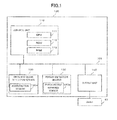
- the room entry and exit detection apparatus 100 includes a control unit 110 configured to control the entire apparatus, an open and close detection sensor 120 configured to detect whether a door of a monitoring target is in an open state (open state) or in a closed state (closed state), a person detection sensor 130 configured to detect whether there is a person in an area facing a surface of the door or not, and an output unit 140 configured to notify the device 40 of an entry into the room and an exit out of the room.
- a control unit 110 configured to control the entire apparatus
- an open and close detection sensor 120 configured to detect whether a door of a monitoring target is in an open state (open state) or in a closed state (closed state)
- a person detection sensor 130 configured to detect whether there is a person in an area facing a surface of the door or not
- an output unit 140 configured to notify the device 40 of an entry into the room and an exit out of the room.
- Each of the constituent elements provided in the room entry and exit detection apparatus 100 is connected with each other via a bus 101.
- the control unit 110 includes a CPU (Central Processing Unit) 111, a ROM (Read Only Memory) 112, and a RAM (Random Access Memory) 113.
- the CPU 111 controls operation of the entire room entry and exit detection apparatus 100 in accordance with a control program stored in the ROM 112 and the like.
- the ROM 112 stores the control program.
- the RAM 113 temporarily saves data used by the CPU 111 (for example, open-state person detection information and closed-state person detection information explained later).
- the control unit 110 transmits and receives a signal via the bus 101 to/from other constituent elements provided in the room entry and exit detection apparatus 100, thereby controlling these constituent elements.
- the open and close detection sensor 120 detects whether the state of the door of the monitoring target is in the open state or in the closed state, and provides the control unit 110 with information indicating whether the state of the door of the monitoring target is in the open state or in the closed state.
- the open and close detection sensor 120 includes an acceleration sensor 120a attached to the door of the monitoring target.
- the acceleration sensor 120a detects acceleration caused by the open and close operation.
- the open and close detection sensor 120 determines whether the acceleration detected by the acceleration sensor 120a corresponds to acceleration of an open state pattern or acceleration of a closed state pattern, and determines whether the state of the door is in the open state or the closed state on the basis of the determination result.
- the open and close detection sensor 120 provides the control unit 110 with an open signal indicating the open state while the state of the door is in the open state, and provides the control unit 110 with a closed signal indicating the closed state while the state of the door is the closed state.
- the person detection sensor 130 detects whether there is a person in the area facing one surface of the door of the monitoring target or not, and provides the control unit 110 with information indicating whether there is a person in the area facing one surface of the door of the monitoring target or not.
- One of the surfaces of the door of the monitoring target will be referred to as a "front surface”
- the other of the surfaces thereof will be referred to as a “back surface”
- the space at the front surface side of the door will be referred to as an "outside of the room”
- the space at the back surface side thereof will be an "inside of the room”
- a person moving from the outside of the room into the inside of the room will be referred to as an "entry into the room”
- a person who moves from the inside of the room to the outside of the room will be referred to as the "exit out of the room”.
- the person detection sensor 130 includes a pyroelectric infrared sensor 130a.
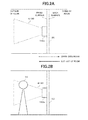
- the pyroelectric infrared sensor 130a receives infrared light form a detectable area (hereinafter referred to as an area A130) enclosed by a dotted line as shown in FIG. 2A .
- the pyroelectric infrared sensor 130a detects whether there is a person in the detectable area (the field of vision) or not from a change in the amount of received infrared light.
- the person detection sensor 130 While there is a person in the detectable area, the person detection sensor 130 provides the control unit 110 with a person detection signal indicating that there exists a person, and while there is not any person in the detectable area, the person detection sensor 130 provides the control unit 110 with a person non-detection signal indicating that there does not exist any person
- the pyroelectric infrared sensor 130a is attached to the front surface side of the door 20 of the monitoring target, and detects whether a person 30 exists in the detection target area (area A130) or not.
- the person detection sensor 130 provides the person non-detection signal to the control unit 110.
- the person detection sensor 130 provides the person detection signal to the control unit 110.
- the output unit 140 outputs, to the device 40, "information indicating presence of entry into the room” indicating that there occurs an entry into the room, or "information indicating presence of exit out of the room” indicating that there occurs an exit out of the room.
- the device 40 When the device 40 receives the information indicating presence of entry into the room or the information indicating presence of exit out of the room, the device 40 displays, on the screen, the received information indicating presence of entry into the room or the received information indicating presence of exit out of the room.
- a sound effect corresponding to the information indicating presence of entry into the room is output from the speaker
- a sound effect corresponding to the information indicating presence of exit out of the room is output from the speaker.
- the device 40 notifies the monitoring person that there occurs an entry into the room or there occurs an exit out of the room.
- the device 40 counts the number of times that each of the information indicating presence of entry into the room and the information indicating presence of exit out of the room is provided, thereby calculating the number of people who enters into the room and the number of people who exits out of the room.
- the room entry and exit detection apparatus 100 starts the room entry and exit detection processing during activation, and continues the room entry and exit detection processing until an user performs a stop operation (shut down operation and the like).
- control unit 110 waits until a signal provided from the open and close detection sensor 120 changes from the closed signal to the open signal (step S110).
- the control unit 110 When the control unit 110 detects that the signal provided from the open and close detection sensor 120 changes to the open signal (step S110: YES), the control unit 110 records the signal provided from the person detection sensor 130 at that point in time as open-state person detection information (step S120). In this case, when the signal provided from the person detection sensor 130 to the control unit 110 is a person detection signal, the control unit 110 records, to the RAM 113, the open-state person detection information indicating that the person is detected when the door 20 is opened. When the signal provided from the person detection sensor 130 to the control unit 110 is a person non-detection signal, the control unit 110 records, to the RAM 113, the open-state person detection information indicating that the person is not detected when the door 20 is opened. As described above, the control unit 110 functions as an open-state person detection information recorder for recording the content detected by the person detection sensor 130 when the door 20 of the monitoring target is opened.
- control unit 110 determines whether or not the signal provided from the open and close detection sensor 120 changes from the open signal to the closed signal (step S130).
- step S140 When the control unit 110 determines that the signal provided from the open and close detection sensor 120 changes from the open signal to the closed signal (step S130: YES), the signal provided from the person detection sensor 130 at that point in time is recorded as closed-state person detection information (step S140).
- the control unit 110 records, to the RAM 113, closed-state person detection information indicating that a person is detected when the door 20 is closed.
- the control unit 110 records, to the RAM 113, closed-state person detection information indicating that any person is not detected when the door 20 is closed.
- the control unit 110 functions as a closed-state person detection information recorder for recording the content detected by the person detection sensor 130 when the door 20 of the monitoring target is closed.
- the control unit 110 determines whether there occurs an entry into the room on the basis of the open-state person detection information and the closed-state person detection information recorded in the RAM 113 (step S150). More specifically, the control unit 110 determines whether the open-state person detection information indicates that a person is detected when the door 20 is opened, and the closed-state person detection information indicates that any person is not detected when the door 20 is closed (step S150). In the case where the open-state person detection information indicates that a person is detected when the door 20 is opened, and the closed-state person detection information indicates that any person is not detected when the door 20 is closed, the control unit 110 determines that there occurs an entry into the room (detects that there occurs an entry into the room) (step S150: YES).
- control unit 110 provides a signal indicating that there occurs an entry into the room to the output unit 140 via the bus 101 (step S151).
- An output unit 140 provides the provided signal indicating that there occurs an entry into the room to the device 40.
- step S150 the open-state person detection information indicates that any person is not detected when the door 20 is opened, or the closed-state person detection information indicates that a person is detected when the door 20 is closed
- the control unit 110 determines that there is not any entry into the room (step S150: NO). In a case where it is determined that there is not any entry into the room, the control unit 110 determines whether or not the open-state person detection information indicates that any person is not detected when the door 20 is opened, and the closed-state person detection information indicates that a person is detected when the door 20 is closed (step S160).
- control unit 110 determines that there occurs an exit out of the room (detects that there occurs an exit out of the room) (step S160: YES).
- control unit 110 provides a signal indicating that there occurs an exit out of the room to the output unit 140 via the bus 101 (step S161).
- the output unit 140 provides the provided signal indicating that indicating that there occurs an exit out of the room to the device 40.
- control unit 110 functions a room entry and exit detector for detecting that there occurs an entry into the room and an exit out of the room on the basis of the open-state person detection information and the closed-state person detection information.
- step S160 the open-state person detection information indicates that a person is detected when the door 20 is opened, or the closed-state person detection information indicates that any person is not detected when the door 20 is closed (step S160: NO)
- the control unit 110 executes the processing in step S110.
- the control unit 110 executes the processing in step S110.
- the control unit 110 repeatedly executes the processing in steps S110 to 161 until the user performs a stop operation (shut down of the room entry and exit detection apparatus 100 and the like).
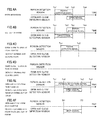
- FIG. 4A indicates a time in which the output signal of the person detection sensor 130 becomes a "person detection signal” and a time in which the output signal of the open and close detection sensor 120 becomes an "open signal” when the person enters into the room.
- FIG. 4B indicates a time in which the output signal of the person detection sensor 130 becomes a "person detection signal” and a time in which the output signal of the open and close detection sensor 120 becomes an "open signal” when the person exits out of the room.
- FIG. 4A indicates a time in which the output signal of the person detection sensor 130 becomes a "person detection signal” and a time in which the output signal of the open and close detection sensor 120 becomes an "open signal” when the person exits out of the room.
- FIG. 4C indicates a time in which the output signal of the person detection sensor 130 becomes a "person detection signal” and a time in which the output signal of the open and close detection sensor 120 becomes an "open signal” when the person comes to the front surface of the door 20 but the person does not open and close the door 20.
- FIG. 4D indicates a time in which the output signal of the person detection sensor 130 becomes a "person detection signal” and a time in which the output signal of the open and close detection sensor 120 becomes an "open signal” when the person comes to the back surface of the door 20 but the person does not open and close the door 20.
- FIG. 4E indicates a time in which the output signal of the person detection sensor 130 becomes a "person detection signal” and a time in which the output signal of the open and close detection sensor 120 becomes an "open signal” when the person only opens and closes the door 20 from the front surface but the person does not enter into the room.
- FIG. 4F indicates a time in which the output signal of the person detection sensor 130 becomes a "person detection signal” and a time in which the output signal of the open and close detection sensor 120 becomes an "open signal” when the person only opens and closes the door 20 from the back surface but the person does not exit out of the room.
- the person behaves in the following order: (1) the person stands in front of the front surface of the door 20 (this point in time is denoted as Ta1), (2) the person opens the door 20 (this point in time is denoted as Ta2), (3) the person passes through the doorway (this point in time is denoted as Ta3), and thereafter, (4) the person closes the door 20 (this point in time is denoted as Ta4).
- the time in which the output of the person detection sensor 130 becomes the "person detection signal” and the time in which the output of the open and close detection sensor 120 becomes the “open signal” are as shown in FIG. 4A . More specifically, (1) when the person is located at the front surface of the door 20 before the person enters into the room, the person detection sensor 130 detects the person, and the output of the person detection sensor 130 attains the person detection signal (point in time Ta1). Then, (2) when the person opens the door 20 in order to enter into the room, the output of the open and close detection sensor 120 attains the open signal (point in time Ta2).
- the output of the person detection sensor 130 is the "person detection signal”, and the control unit 110 records the open-state person detection information indicating that the person is detected when the door 20 is opened.
- the control unit 110 records the open-state person detection information indicating that the person is detected when the door 20 is opened.
- the output of the open and close detection sensor 120 attains the closed signal (point in time Ta4).
- the output of the person detection sensor 130 is the "person non-detection signal”
- the control unit 110 records the closed-state person detection information indicating that any person is not detected when the door 20 is closed.
- control unit 110 determines whether there occurs an entry into the room or an exit out of the room (step S150, step S160) or not.
- the control unit 110 determines that there occurs an entry into the room (detects that there occurs an entry into the room).
- the control unit 110 provides the output unit 140 with a signal indicating that there occurs an entry into the room, and the output unit 140 provides the device 40 with the provided signal indicating that there occurs an entry into the room.
- control unit 110 correctly detects that there occurs an entry into the room.
- the person passes through the doorway of the monitoring target and exits out of the room, the person stands at the back surface of the door 20, and then, the person behaves in the following order: (1) the person opens the door 20 (this point in time will be denoted as Th1), (2) the person passes through the doorway (this point in time will be denoted as Tb2), (3) the person closes the door 20 (this point in time will be denoted as Tb3), and (4) finally, the person leaves the front surface of the door 20 (this point in time will be denoted as Tb4).
- the time in which the output of the person detection sensor 130 becomes the "person detection signal” and the time in which the output of the open and close detection sensor 120 becomes the “open signal” are as shown in FIG. 4B . More specifically, at first, there is not any person in the area at the front surface side of the door 20, and therefore, the output of the person detection sensor 130 is a person non-detection signal. (1) When the person opens the door 20 in order to exit out of the room, the output of the open and close detection sensor 120 changes from a closed signal to an open signal (point in time Tb1).
- the signal which is output from the person detection sensor 130 at this point in time is a person non-detection signal, and the control unit 110 records the open-state person detection information indicating that any person is not detected when the door 20 is opened.
- the control unit 110 records the open-state person detection information indicating that any person is not detected when the door 20 is opened.
- the signal which is output from the person detection sensor 130 changes into a person detection signal (point in time Tb2).
- the signal which is output from the open and close detection sensor 120 changes from an open signal into a closed signal (point in time Tb3).
- the signal which is output from the person detection sensor 130 is a person detection signal
- the control unit 110 records the closed-state person detection information indicating that a person is detected when the door 20 is closed.
- control unit 110 determines whether there occurs an entry into the room or an exit out of the room (step S150, step S160). In this case, because the recorded open-state person detection information indicates that any person is not detected when the door 20 is opened and the recorded closed-state person detection information indicates that a person is detected when the door 20 is closed, the control unit 110 determines that there occurs an exit out of the room (detects that there occurs an exit out of the room). The control unit 110 provides the signal indicating that there occurs an exit out of the room to the output unit 140, and the output unit 140 provides the provided signal indicating that there occurs an exit out of the room to the device 40. As described above, in a case where a person passes through the doorway of the monitoring target and exits out of the room, the control unit 110 correctly detects that there occurs an exit out of the room.
- the time in which the output of the person detection sensor 130 becomes the "person detection signal” and the time in which the output of the open and close detection sensor 120 becomes the "open signal” are as shown in FIG. 4C . More specifically, when the person stands at the front surface of the door 20, the signal which is output from the person detection sensor 130 attains a person detection signal (this point in time will be denoted as Tc1), and when the person leaves the front surface of the door 20, the signal which is output from the person detection sensor 130 attains a person non-detection signal (this point in time will be denoted as Tc2).
- the control unit 110 does not record the open-state person detection information or the closed-state person detection information, and detects neither an entry into the room nor an exit out of the room.
- control unit 110 detects neither an entry into the room nor an exit out of the room. More specifically, even if a person behaves as described above, the control unit 110 does not falsely detect a room entry and exit.
- the control unit 110 does not record the open-state person detection information or the closed-state person detection information, and detects neither an entry into the room nor an exit out of the room. More specifically, even if a person behaves as described above, the control unit 110 does not falsely detect a room entry and exit.
- the person behaves in the following order: the person (1) stands at the front surface of the door 20 (this point in time will be denoted as Te1), (2) the person opens the door 20 (this point in time will be denoted as Te2), thereafter, (3) the person closes the door 20 (this point in time will be denoted as Te3), and finally, (4) the person leaves an area around the front surface of the door 20 (this point in time will be denoted as Te4).
- the time in which the output of the person detection sensor 130 becomes the "person detection signal” and the time in which the output of the open and close detection sensor 120 becomes the “open signal” are as shown in FIG. 4E . More specifically, (1) when the person is located at the front surface of the door 20, the person detection sensor 130 detects the person, and the signal which is output from the person detection sensor 130 becomes the person detection signal (point in time Te1). Then, (2) when the person opens the door 20, the signal which is output from the open and close detection sensor 120 changes to the open signal (point in time Te2).
- the signal which is provided by the person detection sensor 130 is the "person detection signal”
- the control unit 110 records the open-state person detection information indicating that the person is detected when the door 20 is opened.
- the person resides at the front surface of the door 20, and therefore the signal which is output from the person detection sensor 130 is the person detection signal, and accordingly, the control unit 110 records the closed-state person detection information indicating that a person is detected when the door 20 is closed.
- the signal which is output from the person detection sensor 130 changes to the person non-detection signal (point in time Te4).
- the control unit 110 determines whether there occurs an entry into the room or an exit out of the room (step S150, step S160).
- the recorded open-state person detection information indicates that the person is detected when the door 20 is opened
- the closed-state person detection information indicates that the person is detected when the door 20 is closed, and therefore, the control unit 110 determines that there is neither entry into the room nor an exit.
- the output unit 140 outputs neither "information indicating presence of entry into the room" indicating that a person enters into the room nor "information indicating presence of exit out of the room” indicating that a person exits.
- the control unit 110 detects neither an entry into the room nor an exit out of the room. More specifically, even if a person behaves as described above, the control unit 110 does not falsely detect a room entry and exit.
- the person stands at the back surface of the door 20, and the person behaves in the following order: (1) the person opens the door 20 (this point in time will be denoted as Tf1), and (2) thereafter, the person closes the door 20 (this point in time will be denoted as Tf2) and returns.
- the time in which the output of the person detection sensor 130 becomes the "person detection signal” and the time in which the output of the open and close detection sensor 120 becomes the “open signal” are as shown in FIG. 4F . More specifically, (1) when the person opens the door 20, the signal which is output from the open and close detection sensor 120 changes to the open signal (point in time Tf1). At this point in time, there is not any person at the front surface of the door 20, and therefore, the signal which is output from the person detection sensor 130 is the person non-detection signal, and the control unit 110 records the open-state person detection information indicating that any person is not detected when the door 20 is opened.
- the control unit 110 records the closed-state person detection information indicating that any person is not detected when the door 20 is closed.
- the control unit 110 After the control unit 110 records the closed-state person detection information (more specifically, after the point in time Tf2), the open-state person detection information indicates that any person is not detected when the door 20 is opened, and the closed-state person detection information indicates that any person is not detected when the door 20 is closed, and therefore, the control unit 110 determines that there does not occur any entry into the room or exit.
- the output unit 140 outputs neither the "information indicating presence of entry into the room” indicating that the person enters into the room nor the "information indicating presence of exit out of the room” indicating that the person exits.
- control unit 110 detects neither an entry into the room nor an exit out of the room. More specifically, even if a person behaves as described above, the control unit 110 does not falsely detect a room entry and exit.
- the room entry and exit detection apparatus 100 does not falsely output the "information indicating presence of entry into the room" and the "information indicating presence of exit out of the room".
- the room entry and exit detection apparatus 100 can prevent false detection of a room entry and exit by using a combination of two sensor elements, which are, the open and close detection sensor 120 and the person detection sensor 130. Therefore, the room entry and exit detection apparatus 100 can detect a room entry and exit with a high degree of accuracy even when the number of sensor elements is small.
- the attachment position of the pyroelectric infrared sensor 130a is not limited to a surface of the door 20 as long as the pyroelectric infrared sensor 130a can detect a person in a detection target area at a side of a surface of the door 20.
- pyroelectric infrared sensor 130a may be disposed on a ceiling above the detection target area at a side of a surface of the door 20.
- the attachment method of the pyroelectric infrared sensor 130a may be any method.
- the person detection sensor 130 has the pyroelectric infrared sensor 130a in the present embodiment, for example, a piezoelectric sensor 130b may be provided instead of this.
- the piezoelectric sensor 130b detects presence of a person on a detection surface when the internal voltage changes in a case where a pressure is applied to the detection surface.
- the piezoelectric sensor 130b is installed on a floor surface around the front surface of the door 20.
- FIG. 6B in a case where there is a person 30 on the piezoelectric sensor 130b, a pressure is applied to the detection surface of the piezoelectric sensor 130b by the weight of the person 30, and the piezoelectric sensor 130b detects a change of the internal voltage of the piezoelectric sensor 130b, thus detecting presence of the person 30 on the detection surface.
- the present disclosure can be realized even when the person detection sensor is any one of an infrared sensor, an ultrasonic sensor, a visible light sensor.
- the open and close detection sensor 120 includes the acceleration sensor 120a, but instead of this, for example, the open and close detection sensor 120 may be provided with a hole sensor and a switch using contact.
- the output unit 140 may provide information indicating presence of entry into the room or information indicating presence of exit out of the room to another device via a wired communication, or may provide them to another device via a wireless communication. Further, the output unit 140 can communicate with another device using any given communication protocol.
- the output unit 140 may display "there occurs an entry into the room” or " there occurs an exit out of the room” in a predetermined field of a display directly connected to the output unit 140.
- the output unit 140 may output, as audio, that there occurs a room entry and exit from the speaker directly connected to the output unit 140.
- a signal provided from the person detection sensor 130 to the control unit 110 may be either a digital signal or an analog signal.
- a signal provided from the open and close detection sensor 120 to the control unit 110 open signal and closed signal
- a signal provided by the output unit 140 information indicating presence of entry into the room and information indicating presence of exit out of the room
- the like may also be either a digital signal or an analog signal.
- the door of the doorway may be, for example, any one of a hinged door, a sliding door, a folding door, and an automatic door,
- a room entry and exit detection apparatus providing the same functions as the room entry and exit detection apparatus shown in the first embodiment and further reducing the power consumption will be explained.
- the room entry and exit detection apparatus 200 includes a control unit 110 configured to control the entire apparatus, an open and close detection sensor 120 configured to detect whether the state of the door is an open state or a closed state, a person detection sensor 130 configured to detect whether there is a person in a predetermined area facing a front surface of the door, an output unit 140 configured to notify the device 40 of an entry into the room and an exit out of the room, and a power saving control unit 150.
- a control unit 110 configured to control the entire apparatus
- an open and close detection sensor 120 configured to detect whether the state of the door is an open state or a closed state
- a person detection sensor 130 configured to detect whether there is a person in a predetermined area facing a front surface of the door
- an output unit 140 configured to notify the device 40 of an entry into the room and an exit out of the room
- a power saving control unit 150 Each of the constituent elements provided in the room entry and exit detection apparatus 200 is connected with each other via a bus 101. Among them, the constituent elements other than the power saving control
- the power saving control unit 150 supplies electric power to the person detection sensor 130, or stops the electric power supply, thus switching the operation state and the non-operation state of the person detection sensor 130. More specifically, when the power saving control unit 150 receives, from the control unit 110 via the bus 101, supply of a predetermined signal for causing the person detection sensor 130 to be in the operation state, the power saving control unit 150 starts electric power supply to the person detection sensor 130. Therefore, the state of the person detection sensor 130 becomes the operation state. When the power saving control unit 150 receives, from the control unit 110 via the bus 101, supply of a predetermined signal for causing the person detection sensor 130 to be in non-operation state, the power saving control unit 150 stops electric power supply to the person detection sensor 130. Therefore, the state of the person detection sensor 130 becomes the non-operation state.
- the room entry and exit detection processing as shown in FIG. 8 is different from the room entry and exit detection processing as shown in FIG. 3 in the two features, and more specifically, the room entry and exit detection processing as shown in FIG. 8 is different in that the room entry and exit detection processing as shown in FIG. 8 includes step S210 "open-state person detection processing" instead of step S120 and includes step S220 "closed-state person detection processing” instead of step S140. Explanation about the same portions as those of the room entry and exit detection processing according to the first embodiment is omitted.
- control unit 110 determines that the signal provided from the open and close detection sensor 120 changes from the closed signal to the open signal in step S110 (step S110: YES)
- the control unit 110 starts the open-state person detection processing (step S210).
- the control unit 110 causes the person detection sensor 130 to be in the operation state (step S211). More specifically, the control unit 110 provides, to the power saving control unit 150 via the bus 101, a predetermined signal for causing the person detection sensor 130 to be in the operation state.
- the power saving control unit 150 receives supply of the predetermined signal from the control unit 110, the power saving control unit 150 starts electric power supply to the person detection sensor 130, and switches the state of the person detection sensor 130 to the operation state.
- the control unit 110 records, as open-state person detection information, a signal provided from the person detection sensor 130 (step S212). More specifically, in a case where the state of the person detection sensor 130 becomes the operation state, and a person detection signal is provided to the control unit 110, the control unit 110 records, to the predetermined area of the RAM 113, the open-state person detection information indicating that a person is detected when the door 20 is opened. On the contrary, in a case where the state of the person detection sensor 130 becomes the operation state, and a person non-detection signal is provided to the control unit 110, the control unit 110 records, to the predetermined area of the RAM 113, the open-state person detection information indicating that the any person is not detected when the door 20 is opened.
- control unit 110 causes the person detection sensor 130 to be in the non-operation state (step S213). More specifically, the control unit 110 provides, to the power saving control unit 150 via the bus 101, a predetermined signal for causing the person detection sensor 130 to be in the non-operation state.
- the power saving control unit 150 receives supply of the predetermined signal from the control unit 110, and stops electric power supply to the person detection sensor 130, and switches the state of the person detection sensor 130 to the non-operation state.
- control unit 110 terminates the open-state person detection processing, and executes the processing in step S130 as shown in FIG. 8 .
- step S130 determines that the signal provided from the open and close detection sensor 120 changes from the open signal to the closed signal in step S130 (step S130: YES).
- step S220 the control unit 110 starts the closed-state person detection processing (step S220).
- the control unit 110 causes the person detection sensor 130 to be in the operation state (step S221). More specifically, the control unit 110 provides, to the power saving control unit 150 via the bus 101, a predetermined signal for causing the person detection sensor 130 to be in the operation state.
- the power saving control unit 150 receives supply of the predetermined signal from the control unit 110, the power saving control unit 150 starts electric power supply to the person detection sensor 130, and switches the state of the person detection sensor 130 to the operation state.
- the control unit 110 records, as closed-state person detection information, a signal provided from the person detection sensor 130 (step S222). More specifically, in a case where the state of the person detection sensor 130 becomes the operation state, and a person detection signal is provided to the control unit 110, the control unit 110 records, to the predetermined area of the RAM 113, the closed-state person detection information indicating that a person is detected when the door 20 is closed. On the contrary, in a case where the state of the person detection sensor 130 becomes the operation state, and a person non-detection signal is provided to the control unit 110, the control unit 110 records, to the predetermined area of the RAM 113, the closed-state person detection information indicating that the any person is not detected when the door 20 is closed.
- control unit 110 causes the person detection sensor 130 to be in the non-operation state (step S223). More specifically, the control unit 110 provides, to the power saving control unit 150, a predetermined signal for causing the person detection sensor 130 to be in the non-operation state.
- the power saving control unit 150 receives supply of the predetermined signal from the control unit 110, and stops electric power supply to the person detection sensor 130, and switches the state of the person detection sensor 130 to the non-operation state.
- Step S150 and subsequent steps are the same as those performed by the room entry and exit apparatus 100 in the first embodiment.
- the room entry and exit detection apparatus 200 when the door is opened and closed, the room entry and exit detection apparatus 200 according to the present embodiment causes the person detection sensor 130 to be in the operation state, and after the open-state person detection information or the closed-state person detection information is recorded, the room entry and exit detection apparatus 200 according to the present embodiment causes the person detection sensor 130 to be in the non-operation state again. More specifically, the room entry and exit detection apparatus 200 does not supply the electric power to the person detection sensor 130 while the door is not opened and closed, and the room entry and exit detection apparatus 200 supplies the electric power to the person detection sensor 130 only while the door is opened and closed. Therefore, the amount of electric power consumed by the room entry and exit detection apparatus 200 is less than the amount of electric power consumed by the room entry and exit detection apparatus 100 supplying electric power to the person detection sensor 130 regardless of whether the door is opened and closed.
- the open and close detection sensor 120 includes the acceleration sensor 120a, but instead of the acceleration sensor 120a, for example, any one of a contact switch, a position sensor, and a distance sensor may be provided, as long as a sensor can detect open and close of the door 20.
- the person detection sensor 130 includes the pyroelectric infrared sensor 130a, but instead of the pyroelectric infrared sensor 130a, for example, any one of a piezoelectric sensor (a mat-type sensor that reacts to weight) and a Doppler sensor for detecting motion may be provided, as long as a sensor can detect a person.
- a piezoelectric sensor a mat-type sensor that reacts to weight
- a Doppler sensor for detecting motion may be provided, as long as a sensor can detect a person.
- the room entry and exit detection apparatus includes a person detector 211, an open and close detector 212, an open-state person detection information recorder 213, a closed-state person detection information recorder 214, and a room entry and exit detector 215 as shown in FIG. 10 .
- the person detector 211 includes a pyroelectric infrared sensor and a sensor capable of detecting presence of any person such as a weight sensor, and detects a person in the detection target area at a surface of the door.
- the open and close detector 212 includes an acceleration sensor, a position sensor, a contact sensor, and the like, and detects whether the door is in an open state or closed state.
- the open-state person detection information recorder 213 records whether the person detector 211 is detecting a person.
- the closed-state person detection information recorder 214 records whether the person detector 211 is detecting a person.
- the room entry and exit detector 215 detects whether there occurs an entry into the room or an exit out of the room in accordance with, for example, the same logic as step S150, step S151, step S160, step S161 shown in FIG. 3 , on the basis of the contents recorded by the open-state person detection information recorder 213 and the closed-state person detection information recorder 214.
- the room entry and exit detector 215 outputs, to another device, the detected presence or absence of an entry into the room and an exit out of the room.
- the room entry and exit detection apparatus is not dependent on a dedicated system, and may be realized by using an ordinary computer system.
- a program for executing the above operation may be stored to a computer-readable storage medium to be distributed to a computer, and a room entry and exit detection apparatus executing the above processing may be configured by installing the program to the computer system.
- a program may be stored to a disk apparatus and the like provided in a server apparatus on the Internet, and the above functions may be realized by cooperating with the OS (Operating System) and application software.
- OS Operating System
- application software In this case, only a portion other than the OS may be stored and distributed in a medium, and, for example, the portion may be overlaid on a carrier wave and downloaded to a computer.
- Computer-readable recording media such as a USB (Universal Serial Bus) memory, a flexible disk, a CD (Compact Disc), a DVD (Digital Versatile Disc), a Blu-ray (registered trademark) Disc, an MO disk (Magneto Optical Disk), an SD (Secure Digital) card, a memory stick (registered trademark), and further, a magnetic disk, an optical disk, a magneto-optical disk, a semiconductor memory, a magnetic tape, and the like can be used as a recording medium for recording the above program.
- USB Universal Serial Bus
- CD Compact Disc
- DVD Digital Versatile Disc
- Blu-ray registered trademark
- MO disk Magnetic Optical Disk
- SD Secure Digital
- a room entry and exit detection apparatus comprising:
- the person detection sensor is configured to detect a person in an area facing a surface of a door of a room at an outside of the room
- the room entry and exit detector is configured to detect that there occurs an entry into the room in a case where the open-state person detection information recorder records that the person detection sensor has detected presence of the person
- the closed-state person detection information recorder records that the person detection sensor has not detected presence of the person
- the room entry and exit detector is configured to detect that there occurs an exit out of the room in a case where the open-state person detection information recorder records that the person detection sensor has not detected presence of the person
- the closed-state person detection information recorder records that the person detection sensor has detected presence of the person.
- the room entry and exit detection apparatus comprising a power saving control unit configured to switch an operation state and a non-operation state of the person detection sensor by controlling electric power supply to the person detection sensor, when the state of the door detected by the open and close detection sensor is switched from the closed state to the open state, the power saving control unit switches the person detection sensor into the operation state, and when the open-state person detection information recorder records whether the person detection sensor is detecting presence of the person or not at that point in time, the power saving control unit switches the person detection sensor into the non-operation state, and when the state of the door detected by the open and close detection sensor switches from the open state to the closed state, the power saving control unit switches the person detection sensor to the operation state, and when the closed-state person detection information recorder records whether the person detection sensor is detecting presence of the person or not at that point in time, the power saving control unit switches the person detection sensor into the non-operation state, the power saving control unit switches the person detection sensor into the non-operation state.
- the open and close detection sensor comprises an acceleration sensor configured to detect an acceleration of the door, and detects whether the door is in the open state or in the closed state on the basis of an acceleration of the door detected by the acceleration sensor.
- the person detection sensor comprises an infrared sensor configured to receive infrared light emitted by a human body to detect that a person enters into an area facing one surface of the door or a person exits out of the area facing the one surface of the door.
- a room entry and exit detection method comprising:
- the present invention is based on Japanese Patent Application No. 2013-43065 filed on March 5, 2013 .
- the entire specification, Claims, and drawings of Japanese Patent Application No. 2013-43065 are incorporated into this specification by reference.
- the present invention is useful in the field of marketing where it is required to find entry and exit of customers in and out of commercial facilities, and can also be used for the purpose of security to detect an intruder intruding into an intrusion prohibited area.
Landscapes
- Physics & Mathematics (AREA)
- General Physics & Mathematics (AREA)
- Spectroscopy & Molecular Physics (AREA)
- Engineering & Computer Science (AREA)
- Power Engineering (AREA)
- Life Sciences & Earth Sciences (AREA)
- General Life Sciences & Earth Sciences (AREA)
- Geophysics (AREA)
- Time Recorders, Dirve Recorders, Access Control (AREA)
- Geophysics And Detection Of Objects (AREA)
Abstract
Description
- The present disclosure relates to a room entry and exit detection apparatus, a room entry and exit detection method, and a computer-readable recording medium having a program recorded thereon.
- There exists a technique for accurately finding the number of people who enters into and exits from a building or a room.
- For example,
Patent Literature 1 discloses an invention in which a television camera is installed to capture an image around a door and detect entry into a room and detect exit out of a room from a change in the captured image. In this invention, a human body is detected from a captured image, and entry into and exit out of the room is detected from the direction of the passage, so that the number of people passing through the monitoring area is counted. - Patent Literature 2 discloses a system including two person-detection sensors provided along the travelling direction of an aisle around a doorway, and detecting a person who enters into the room or exits out of the room from a time difference of detection signals detected by the two person-detection sensors. This system determines that a person (human) moves in a direction from a person-detection sensor reacted first to a person-detection sensor reacted later.
- Patent Literature 3 discloses an invention for detecting room entry and exit by using person detection sensors installed in a doorway at the inside and the outside of the room and an auxiliary sensor installed at the side of the door to detect a transition body. This invention detects a person who enters into the room or a person who exits out of the room in accordance with the order of reactions of the three sensors. In this invention, the auxiliary sensor is used to prevent false detection caused by a movement of a person who does not pass through the door, and this invention achieves a higher level of detection of room entry and exit than the invention disclosed by Patent Literature 2.
-
- Patent Literature 1: Unexamined Japanese Patent Application Kokai Publication No.
2002-074371 - Patent Literature 2: Unexamined Japanese Patent Application Kokai Publication No.
2006-112851 - Patent Literature 3: Unexamined Japanese Patent Application Kokai Publication No.
2002-216100 - Any of the techniques disclosed in Patent Literatures explained above has a problem in that room entry and exit cannot be detected accurately using a small number of sensors.
- In the technique disclosed by
Patent Literature 1, in some cases, the detection accuracy of room entry and exit may be reduced because of outside light that enters into a captured image. Therefore, in order to detect room entry and exit with a high degree of accuracy, it is necessary to, e.g., install multiple television cameras and employ a dedicated processor for image processing, which leads to the increase in the cost. - In the technique disclosed by Patent Literature 2, for example, when the two person-detection sensors reacts to different persons, entry into or exit out of the room may be falsely detected. This false detection can be avoided by, for example, installing more person-detection sensors in the travelling direction, or by employing an auxiliary sensor for detecting a transition body as shown in Patent Literature 3, but the number of required sensor elements increases by one. With the increase in the number of sensor elements, there is an increase in the trouble and the cost during the installation, and in addition, there is an increase in the power consumption, and therefore, the maintenance cost also increases accordingly.
- The present disclosure is made in view of the above problems, and it is an objective of the present disclosure to provide a room entry and exit detection apparatus, a room entry and exit detection method, and a computer-readable recording medium having a program recorded thereon for accurately detecting entry and exit with a less number of sensors.
- In order to achieve the above objective, a room entry and exit detection apparatus according to a first aspect of the present disclosure includes:
- a person detection sensor configured to detect a person in an area facing one surface of a door;
- an open and close detection sensor configured to detect whether the door is in an open state or in a closed state;
- an open-state person detection information recorder, wherein when a state of the door detected by the open and close detection sensor switches from a closed state to an open state, the open-state person detection information recorder is configured to record whether the person detection sensor is detecting a person or not at that point in time;
- a closed-state person detection information recorder, wherein when the state of the door detected by the open and close detection sensor switches from the open state to the closed state, the closed-state person detection information recorder is configured to record whether the person detection sensor is detecting a person or not at that point in time; and
- a room entry and exit detector configured to detect that there occurs an entry into the room and there occurs an exit out of the room on the basis of a content recorded by the open-state person detection information recorder and the closed-state person detection information recorder.
- In order to achieve the above objective, a room entry and exit detection method according to a second aspect of the present disclosure includes:
- a person detection step of detecting a person in an area facing one surface of a door;
- an open and close detection step of detecting whether the door is in an open state or in a closed state;
- an open-state person detection information recording step of, when a state of the door detected in the open and close detection step switches from a closed state to an open state, recording whether a person is detected or not at that point in time in the person detection step;
- a closed-state person detection information recording step of, when the state of the door detected in the open and close detection step switches from the open state to the closed state, t recording whether a person is detected or not at that point in time in the person detection step; and
- a room entry and exit detection step of detecting that there occurs an entry into the room and there occurs an exit out of the room on the basis of a content recorded in the open-state person detection information recording step and the closed-state person detection information recording step.
- In order to achieve the above objective, a computer-readable recording medium according to a third aspect of the present disclosure, recorded with a program for causing a computer to realize:
- a person detection function configured to detect a person in an area facing one surface of a door;
- an open and close detection function configured to detect whether the door is in an open state or in a closed state;
- an open-state person detection information recording function, wherein when a state of the door detected by the open and close detection function switches from a closed state to an open state, the open-state person detection information recording function is configured to record whether the person detection function is detecting a person or not at that point in time;
- a closed-state person detection information recording function, wherein when the state of the door detected by the open and close detection function switches from the open state to the closed state, the closed-state person detection information recording function is configured to record whether the person detection function is detecting a person or not at that point in time; and
- a room entry and exit detection function configured to detect that there occurs an entry into the room and there occurs an exit out of the room on the basis of a content recorded by the open-state person detection information recording function and the closed-state person detection information recording function.
- According to the present disclosure, a room entry and exit detection apparatus, a room entry and exit detection method, and a computer-readable recording medium having a program recorded thereon for accurately detecting entry and exit with a less number of sensors can be provided.
-
-
FIG. 1 is a block diagram illustrating a room entry and exit detection apparatus according to a first embodiment; -
FIG. 2A is a figure illustrating an arrangement of a door and a pyroelectric infrared sensor according to a first embodiment; -
FIG. 2B is a figure illustrating a positional relationship of a pyroelectric infrared sensor and a person when the pyroelectric infrared sensor detects existence of a person; -
FIG. 3 is a flowchart illustrating room entry and exit detection processing according to the first embodiment; -
FIG. 4A is a figure illustrating a relationship of a time when a person enters into a room and a signal which is output from each sensor; -
FIG. 4B is a figure illustrating a relationship of a time when a person exits out of a room and a signal which is output from each sensor; -
FIG. 4C is a figure illustrating a relationship of a time when a person approaches the front surface of the door but the door is not opened and closed and a signal which is output from each sensor; -
FIG. 4D is a figure illustrating a relationship of a time when a person approaches the back surface of the door but the door is not opened and closed and a signal which is output from each sensor; -
FIG. 4E is a figure illustrating a relationship of a time when the door is opened and closed from the front surface side but no one enters into or exits out of the room and a signal which is output from each sensor; -
FIG. 4F is a figure illustrating a relationship of a time when the door is opened and closed from the back surface side but no one enters into or exits out of the room and a signal which is output from each sensor; -
FIG. 5 is a figure illustrating an arrangement of a door and a pyroelectric infrared sensor in a case where a pyroelectric infrared sensor is installed on a ceiling according to the first embodiment; -
FIG. 6A is a figure illustrating an arrangement of a door and a piezoelectric sensor according to the first embodiment; -
FIG. 6B is a figure illustrating how a person is stepping on a piezoelectric sensor arranged on a floor of a front surface side of a door; -
FIG. 7 is a block diagram illustrating a room entry and exit detection apparatus according to a second embodiment; -
FIG. 8 is a flowchart illustrating room entry and exit detection processing according to the second embodiment; -
FIG. 9A is a flowchart illustrating open-state person detection processing according to the second embodiment; -
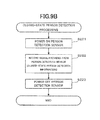
FIG. 9B is a flowchart illustrating closed-state person detection processing according to the second embodiment; and -
FIG. 10 is a figure illustrating the functions of a room entry and exit detection apparatus according to the present disclosure. - Hereinafter, a room entry and exit detection apparatus according to embodiments of the present disclosure will be explained with reference to drawings.
- A room entry and exit
detection apparatus 100 according to the first embodiment detects a person passing through a doorway of a monitoring target and entering into a room, or detects a person passing through the doorway of the monitoring target and exiting out of the room, and notifies a monitoring person or another device of the entry into or exit out of the room. - As shown in
FIG. 1 , the room entry and exitdetection apparatus 100 includes acontrol unit 110 configured to control the entire apparatus, an open andclose detection sensor 120 configured to detect whether a door of a monitoring target is in an open state (open state) or in a closed state (closed state), aperson detection sensor 130 configured to detect whether there is a person in an area facing a surface of the door or not, and anoutput unit 140 configured to notify thedevice 40 of an entry into the room and an exit out of the room. Each of the constituent elements provided in the room entry and exitdetection apparatus 100 is connected with each other via abus 101. - The
control unit 110 includes a CPU (Central Processing Unit) 111, a ROM (Read Only Memory) 112, and a RAM (Random Access Memory) 113. TheCPU 111 controls operation of the entire room entry and exitdetection apparatus 100 in accordance with a control program stored in theROM 112 and the like. TheROM 112 stores the control program. TheRAM 113 temporarily saves data used by the CPU 111 (for example, open-state person detection information and closed-state person detection information explained later). Thecontrol unit 110 transmits and receives a signal via thebus 101 to/from other constituent elements provided in the room entry and exitdetection apparatus 100, thereby controlling these constituent elements. - The open and
close detection sensor 120 detects whether the state of the door of the monitoring target is in the open state or in the closed state, and provides thecontrol unit 110 with information indicating whether the state of the door of the monitoring target is in the open state or in the closed state. - The open and
close detection sensor 120 includes anacceleration sensor 120a attached to the door of the monitoring target. When the door of the monitoring target is opened or closed, theacceleration sensor 120a detects acceleration caused by the open and close operation. The open andclose detection sensor 120 determines whether the acceleration detected by theacceleration sensor 120a corresponds to acceleration of an open state pattern or acceleration of a closed state pattern, and determines whether the state of the door is in the open state or the closed state on the basis of the determination result. - The open and
close detection sensor 120 provides thecontrol unit 110 with an open signal indicating the open state while the state of the door is in the open state, and provides thecontrol unit 110 with a closed signal indicating the closed state while the state of the door is the closed state. - The
person detection sensor 130 detects whether there is a person in the area facing one surface of the door of the monitoring target or not, and provides thecontrol unit 110 with information indicating whether there is a person in the area facing one surface of the door of the monitoring target or not. One of the surfaces of the door of the monitoring target will be referred to as a "front surface", the other of the surfaces thereof will be referred to as a "back surface", the space at the front surface side of the door will be referred to as an "outside of the room", the space at the back surface side thereof will be an "inside of the room", a person moving from the outside of the room into the inside of the room will be referred to as an "entry into the room", and a person who moves from the inside of the room to the outside of the room will be referred to as the "exit out of the room". - The
person detection sensor 130 includes a pyroelectricinfrared sensor 130a. The pyroelectricinfrared sensor 130a receives infrared light form a detectable area (hereinafter referred to as an area A130) enclosed by a dotted line as shown inFIG. 2A . The pyroelectricinfrared sensor 130a detects whether there is a person in the detectable area (the field of vision) or not from a change in the amount of received infrared light. - While there is a person in the detectable area, the
person detection sensor 130 provides thecontrol unit 110 with a person detection signal indicating that there exists a person, and while there is not any person in the detectable area, theperson detection sensor 130 provides thecontrol unit 110 with a person non-detection signal indicating that there does not exist any person - As shown in
FIGS. 2A and 2B , the pyroelectricinfrared sensor 130a is attached to the front surface side of thedoor 20 of the monitoring target, and detects whether aperson 30 exists in the detection target area (area A130) or not. - As shown in
FIG. 2A , in a case where there does not exist any person in the detection target area (area A130), theperson detection sensor 130 provides the person non-detection signal to thecontrol unit 110. As shown inFIG. 2B , in a case where there exists aperson 30 in the detection target area (area A130), theperson detection sensor 130 provides the person detection signal to thecontrol unit 110. - Under the control of the
control unit 110, theoutput unit 140 outputs, to thedevice 40, "information indicating presence of entry into the room" indicating that there occurs an entry into the room, or "information indicating presence of exit out of the room" indicating that there occurs an exit out of the room. - When the
device 40 receives the information indicating presence of entry into the room or the information indicating presence of exit out of the room, thedevice 40 displays, on the screen, the received information indicating presence of entry into the room or the received information indicating presence of exit out of the room. When thedevice 40 receives the information indicating presence of entry into the room, a sound effect corresponding to the information indicating presence of entry into the room is output from the speaker, and when thedevice 40 receives the information indicating presence of exit out of the room, a sound effect corresponding to the information indicating presence of exit out of the room is output from the speaker. As described above, thedevice 40 notifies the monitoring person that there occurs an entry into the room or there occurs an exit out of the room. Thedevice 40 counts the number of times that each of the information indicating presence of entry into the room and the information indicating presence of exit out of the room is provided, thereby calculating the number of people who enters into the room and the number of people who exits out of the room. - Hereinafter, room entry and exit detection processing executed by the room entry and exit
detection apparatus 100 will be explained with reference toFIG. 3 . The room entry and exitdetection apparatus 100 starts the room entry and exit detection processing during activation, and continues the room entry and exit detection processing until an user performs a stop operation (shut down operation and the like). - After the room entry and exit detection processing is started, the
control unit 110 waits until a signal provided from the open andclose detection sensor 120 changes from the closed signal to the open signal (step S110). - When the
control unit 110 detects that the signal provided from the open andclose detection sensor 120 changes to the open signal (step S110: YES), thecontrol unit 110 records the signal provided from theperson detection sensor 130 at that point in time as open-state person detection information (step S120). In this case, when the signal provided from theperson detection sensor 130 to thecontrol unit 110 is a person detection signal, thecontrol unit 110 records, to theRAM 113, the open-state person detection information indicating that the person is detected when thedoor 20 is opened. When the signal provided from theperson detection sensor 130 to thecontrol unit 110 is a person non-detection signal, thecontrol unit 110 records, to theRAM 113, the open-state person detection information indicating that the person is not detected when thedoor 20 is opened. As described above, thecontrol unit 110 functions as an open-state person detection information recorder for recording the content detected by theperson detection sensor 130 when thedoor 20 of the monitoring target is opened. - Subsequently, the
control unit 110 determines whether or not the signal provided from the open andclose detection sensor 120 changes from the open signal to the closed signal (step S130). - When the
control unit 110 determines that the signal provided from the open andclose detection sensor 120 changes from the open signal to the closed signal (step S130: YES), the signal provided from theperson detection sensor 130 at that point in time is recorded as closed-state person detection information (step S140). In this case, when the signal provided from theperson detection sensor 130 to thecontrol unit 110 is a person detection signal, thecontrol unit 110 records, to theRAM 113, closed-state person detection information indicating that a person is detected when thedoor 20 is closed. When the signal provided from theperson detection sensor 130 to thecontrol unit 110 is a person non-detection signal, thecontrol unit 110 records, to theRAM 113, closed-state person detection information indicating that any person is not detected when thedoor 20 is closed. As described above, thecontrol unit 110 functions as a closed-state person detection information recorder for recording the content detected by theperson detection sensor 130 when thedoor 20 of the monitoring target is closed. - Subsequently, the
control unit 110 determines whether there occurs an entry into the room on the basis of the open-state person detection information and the closed-state person detection information recorded in the RAM 113 (step S150). More specifically, thecontrol unit 110 determines whether the open-state person detection information indicates that a person is detected when thedoor 20 is opened, and the closed-state person detection information indicates that any person is not detected when thedoor 20 is closed (step S150). In the case where the open-state person detection information indicates that a person is detected when thedoor 20 is opened, and the closed-state person detection information indicates that any person is not detected when thedoor 20 is closed, thecontrol unit 110 determines that there occurs an entry into the room (detects that there occurs an entry into the room) (step S150: YES). - In a case where it is determined that there occurs an entry into the room, the
control unit 110 provides a signal indicating that there occurs an entry into the room to theoutput unit 140 via the bus 101 (step S151). Anoutput unit 140 provides the provided signal indicating that there occurs an entry into the room to thedevice 40. - In a case where, in step S150, the open-state person detection information indicates that any person is not detected when the
door 20 is opened, or the closed-state person detection information indicates that a person is detected when thedoor 20 is closed, thecontrol unit 110 determines that there is not any entry into the room (step S150: NO). In a case where it is determined that there is not any entry into the room, thecontrol unit 110 determines whether or not the open-state person detection information indicates that any person is not detected when thedoor 20 is opened, and the closed-state person detection information indicates that a person is detected when thedoor 20 is closed (step S160). Then, in a case where the open-state person detection information indicates that any person is not detected when thedoor 20 is opened, and the closed-state person detection information indicates that a person is detected when thedoor 20 is closed, thecontrol unit 110 determines that there occurs an exit out of the room (detects that there occurs an exit out of the room) (step S160: YES). - In a case where it is determined that there occurs an exit out of the room in step S160, the
control unit 110 provides a signal indicating that there occurs an exit out of the room to theoutput unit 140 via the bus 101 (step S161). Theoutput unit 140 provides the provided signal indicating that indicating that there occurs an exit out of the room to thedevice 40. - As described above, in steps S150 and S160, the
control unit 110 functions a room entry and exit detector for detecting that there occurs an entry into the room and an exit out of the room on the basis of the open-state person detection information and the closed-state person detection information. - In a case where, step S160, the open-state person detection information indicates that a person is detected when the
door 20 is opened, or the closed-state person detection information indicates that any person is not detected when thedoor 20 is closed (step S160: NO), thecontrol unit 110 executes the processing in step S110. When the processing instep S 151 or the processing in step S161 is finished, thecontrol unit 110 executes the processing in step S110. - The
control unit 110 repeatedly executes the processing in steps S110 to 161 until the user performs a stop operation (shut down of the room entry and exitdetection apparatus 100 and the like). - Hereinafter, a method for detecting that there occurs an entry into the room and there occurs an exit out of the room will be explained in details with reference to
FIGS. 4A to F. -
FIG. 4A indicates a time in which the output signal of theperson detection sensor 130 becomes a "person detection signal" and a time in which the output signal of the open andclose detection sensor 120 becomes an "open signal" when the person enters into the room.FIG. 4B indicates a time in which the output signal of theperson detection sensor 130 becomes a "person detection signal" and a time in which the output signal of the open andclose detection sensor 120 becomes an "open signal" when the person exits out of the room.FIG. 4C indicates a time in which the output signal of theperson detection sensor 130 becomes a "person detection signal" and a time in which the output signal of the open andclose detection sensor 120 becomes an "open signal" when the person comes to the front surface of thedoor 20 but the person does not open and close thedoor 20.FIG. 4D indicates a time in which the output signal of theperson detection sensor 130 becomes a "person detection signal" and a time in which the output signal of the open andclose detection sensor 120 becomes an "open signal" when the person comes to the back surface of thedoor 20 but the person does not open and close thedoor 20.FIG. 4E indicates a time in which the output signal of theperson detection sensor 130 becomes a "person detection signal" and a time in which the output signal of the open andclose detection sensor 120 becomes an "open signal" when the person only opens and closes thedoor 20 from the front surface but the person does not enter into the room.FIG. 4F indicates a time in which the output signal of theperson detection sensor 130 becomes a "person detection signal" and a time in which the output signal of the open andclose detection sensor 120 becomes an "open signal" when the person only opens and closes thedoor 20 from the back surface but the person does not exit out of the room. - First, a case where a person enters into the room will be explained.
- In a case where a person passes through the doorway of the monitoring target to enter into the room, the person behaves in the following order: (1) the person stands in front of the front surface of the door 20 (this point in time is denoted as Ta1), (2) the person opens the door 20 (this point in time is denoted as Ta2), (3) the person passes through the doorway (this point in time is denoted as Ta3), and thereafter, (4) the person closes the door 20 (this point in time is denoted as Ta4).
- When the person performs the series of behaviors (1) to (4) as described above, the time in which the output of the
person detection sensor 130 becomes the "person detection signal" and the time in which the output of the open andclose detection sensor 120 becomes the "open signal" are as shown inFIG. 4A . More specifically, (1) when the person is located at the front surface of thedoor 20 before the person enters into the room, theperson detection sensor 130 detects the person, and the output of theperson detection sensor 130 attains the person detection signal (point in time Ta1). Then, (2) when the person opens thedoor 20 in order to enter into the room, the output of the open andclose detection sensor 120 attains the open signal (point in time Ta2). At this point in time, the output of theperson detection sensor 130 is the "person detection signal", and thecontrol unit 110 records the open-state person detection information indicating that the person is detected when thedoor 20 is opened. Subsequently, (3) when the person passes through the doorway, there is no longer any person at the front surface of thedoor 20, so that the output of theperson detection sensor 130 attains the person non-detection signal (point in time Ta3). Finally, (4) when the person closes thedoor 20, the output of the open andclose detection sensor 120 attains the closed signal (point in time Ta4). At this point in time, the output of theperson detection sensor 130 is the "person non-detection signal", and thecontrol unit 110 records the closed-state person detection information indicating that any person is not detected when thedoor 20 is closed. - When the
control unit 110 records the closed-state person detection information (step S140), thecontrol unit 110 determines whether there occurs an entry into the room or an exit out of the room (step S150, step S160) or not. In this case, when the recorded open-state person detection information indicates that the person is detected when thedoor 20 is opened, and the closed-state person detection information indicates that any person is not detected when thedoor 20 is closed, and therefore, thecontrol unit 110 determines that there occurs an entry into the room (detects that there occurs an entry into the room). Thecontrol unit 110 provides theoutput unit 140 with a signal indicating that there occurs an entry into the room, and theoutput unit 140 provides thedevice 40 with the provided signal indicating that there occurs an entry into the room. - As described above, in the case where the person passes through the doorway of the monitoring target and enters into the room, the
control unit 110 correctly detects that there occurs an entry into the room. - Subsequently, a case where a person exits out of the room will be explained.
- In the case where the person passes through the doorway of the monitoring target and exits out of the room, the person stands at the back surface of the
door 20, and then, the person behaves in the following order: (1) the person opens the door 20 (this point in time will be denoted as Th1), (2) the person passes through the doorway (this point in time will be denoted as Tb2), (3) the person closes the door 20 (this point in time will be denoted as Tb3), and (4) finally, the person leaves the front surface of the door 20 (this point in time will be denoted as Tb4). - When the person performs the series of behaviors (1) to (4) as described above, the time in which the output of the
person detection sensor 130 becomes the "person detection signal" and the time in which the output of the open andclose detection sensor 120 becomes the "open signal" are as shown inFIG. 4B . More specifically, at first, there is not any person in the area at the front surface side of thedoor 20, and therefore, the output of theperson detection sensor 130 is a person non-detection signal. (1) When the person opens thedoor 20 in order to exit out of the room, the output of the open andclose detection sensor 120 changes from a closed signal to an open signal (point in time Tb1). The signal which is output from theperson detection sensor 130 at this point in time is a person non-detection signal, and thecontrol unit 110 records the open-state person detection information indicating that any person is not detected when thedoor 20 is opened. Subsequently, (2) when the person passes through the doorway and enters into a predetermined area around the front surface of thedoor 20, the signal which is output from theperson detection sensor 130 changes into a person detection signal (point in time Tb2). Subsequently, (3) when the person closes thedoor 20, the signal which is output from the open andclose detection sensor 120 changes from an open signal into a closed signal (point in time Tb3). At this point in time, the signal which is output from theperson detection sensor 130 is a person detection signal, and thecontrol unit 110 records the closed-state person detection information indicating that a person is detected when thedoor 20 is closed. Finally, (4) when the person leaves the front surface of thedoor 20, the signal which is output from theperson detection sensor 130 changes into a person non-detection signal. - When the
control unit 110 records the closed-state person detection information (step S140), thecontrol unit 110 determines whether there occurs an entry into the room or an exit out of the room (step S150, step S160). In this case, because the recorded open-state person detection information indicates that any person is not detected when thedoor 20 is opened and the recorded closed-state person detection information indicates that a person is detected when thedoor 20 is closed, thecontrol unit 110 determines that there occurs an exit out of the room (detects that there occurs an exit out of the room). Thecontrol unit 110 provides the signal indicating that there occurs an exit out of the room to theoutput unit 140, and theoutput unit 140 provides the provided signal indicating that there occurs an exit out of the room to thedevice 40. As described above, in a case where a person passes through the doorway of the monitoring target and exits out of the room, thecontrol unit 110 correctly detects that there occurs an exit out of the room. - Subsequently, a case where a person comes to an area around the front surface of the
door 20 but the person leaves thedoor 20 without opening and closing thedoor 20 will be explained. - In the case where the person stands at the front surface of the
door 20 but the person leaves the front surface of thedoor 20 without opening and closing thedoor 20, the time in which the output of theperson detection sensor 130 becomes the "person detection signal" and the time in which the output of the open andclose detection sensor 120 becomes the "open signal" are as shown inFIG. 4C . More specifically, when the person stands at the front surface of thedoor 20, the signal which is output from theperson detection sensor 130 attains a person detection signal (this point in time will be denoted as Tc1), and when the person leaves the front surface of thedoor 20, the signal which is output from theperson detection sensor 130 attains a person non-detection signal (this point in time will be denoted as Tc2). Even if the person performs this series of operation, the signal which is output from the open andclose detection sensor 120 does not change from the closed signal. In this case, thecontrol unit 110 does not record the open-state person detection information or the closed-state person detection information, and detects neither an entry into the room nor an exit out of the room. - As described above, in the case where the person comes to the front surface of the
door 20 but the person leaves the front surface of thedoor 20 without opening and closing thedoor 20, thecontrol unit 110 detects neither an entry into the room nor an exit out of the room. More specifically, even if a person behaves as described above, thecontrol unit 110 does not falsely detect a room entry and exit. - Subsequently, a case where a person comes to an area around the back surface of the
door 20 but the person leaves the back surface of thedoor 20 without opening and closing thedoor 20 will be explained. - In the case where a person stands at the back surface of the
door 20 but the person leaves the back surface of thedoor 20 without opening and closing thedoor 20, neither the signal which is output from theperson detection sensor 130 nor the signal which is output from the open andclose detection sensor 120 changes in the course of the series of operation as shown inFIG. 4D . In this case, thecontrol unit 110 does not record the open-state person detection information or the closed-state person detection information, and detects neither an entry into the room nor an exit out of the room. More specifically, even if a person behaves as described above, thecontrol unit 110 does not falsely detect a room entry and exit. - Subsequently, a case where a person comes to an area around the front surface of the
door 20 and the person opens and closes thedoor 20 but the person does not enter into the room will be explained. - In this case, the person behaves in the following order: the person (1) stands at the front surface of the door 20 (this point in time will be denoted as Te1), (2) the person opens the door 20 (this point in time will be denoted as Te2), thereafter, (3) the person closes the door 20 (this point in time will be denoted as Te3), and finally, (4) the person leaves an area around the front surface of the door 20 (this point in time will be denoted as Te4).
- When the person performs the series of behaviors (1) to (4) as described above, the time in which the output of the
person detection sensor 130 becomes the "person detection signal" and the time in which the output of the open andclose detection sensor 120 becomes the "open signal" are as shown inFIG. 4E . More specifically, (1) when the person is located at the front surface of thedoor 20, theperson detection sensor 130 detects the person, and the signal which is output from theperson detection sensor 130 becomes the person detection signal (point in time Te1). Then, (2) when the person opens thedoor 20, the signal which is output from the open andclose detection sensor 120 changes to the open signal (point in time Te2). At this point in time, the signal which is provided by theperson detection sensor 130 is the "person detection signal", and thecontrol unit 110 records the open-state person detection information indicating that the person is detected when thedoor 20 is opened. Subsequently, (3) when the person closes thedoor 20, the signal which is output from the open andclose detection sensor 120 changes to the closed signal (point in time Te3). At this point in time, the person resides at the front surface of thedoor 20, and therefore the signal which is output from theperson detection sensor 130 is the person detection signal, and accordingly, thecontrol unit 110 records the closed-state person detection information indicating that a person is detected when thedoor 20 is closed. Finally, (4) when the person leaves the front surface of thedoor 20, the signal which is output from theperson detection sensor 130 changes to the person non-detection signal (point in time Te4). - When the
control unit 110 records the closed-state person detection information (step S140), thecontrol unit 110 determines whether there occurs an entry into the room or an exit out of the room (step S150, step S160). In this case, the recorded open-state person detection information indicates that the person is detected when thedoor 20 is opened, and the closed-state person detection information indicates that the person is detected when thedoor 20 is closed, and therefore, thecontrol unit 110 determines that there is neither entry into the room nor an exit. In this case, theoutput unit 140 outputs neither "information indicating presence of entry into the room" indicating that a person enters into the room nor "information indicating presence of exit out of the room" indicating that a person exits. - As described above, in the case where a person comes to an area around the front surface of the
door 20 and the person opens and closes thedoor 20 but the person does not enter into the room, thecontrol unit 110 detects neither an entry into the room nor an exit out of the room. More specifically, even if a person behaves as described above, thecontrol unit 110 does not falsely detect a room entry and exit. - Subsequently, a case where a person comes to an area around the back surface of the
door 20 and opens and closes thedoor 20 but the person does not exit out of the room will be explained. - In this case, the person stands at the back surface of the
door 20, and the person behaves in the following order: (1) the person opens the door 20 (this point in time will be denoted as Tf1), and (2) thereafter, the person closes the door 20 (this point in time will be denoted as Tf2) and returns. - When the person performs the series of behaviors (1) and (2) as described above, the time in which the output of the
person detection sensor 130 becomes the "person detection signal" and the time in which the output of the open andclose detection sensor 120 becomes the "open signal" are as shown inFIG. 4F . More specifically, (1) when the person opens thedoor 20, the signal which is output from the open andclose detection sensor 120 changes to the open signal (point in time Tf1). At this point in time, there is not any person at the front surface of thedoor 20, and therefore, the signal which is output from theperson detection sensor 130 is the person non-detection signal, and thecontrol unit 110 records the open-state person detection information indicating that any person is not detected when thedoor 20 is opened. Subsequently, (2) when the person closes thedoor 20, the signal which is output from the open andclose detection sensor 120 changes to the closed signal (point in time Tf2). At this point in time, there is not any person at the front surface of thedoor 20, the signal which is output from theperson detection sensor 130 is the person non-detection signal, and therefore, thecontrol unit 110 records the closed-state person detection information indicating that any person is not detected when thedoor 20 is closed. - After the
control unit 110 records the closed-state person detection information (more specifically, after the point in time Tf2), the open-state person detection information indicates that any person is not detected when thedoor 20 is opened, and the closed-state person detection information indicates that any person is not detected when thedoor 20 is closed, and therefore, thecontrol unit 110 determines that there does not occur any entry into the room or exit. In this case, theoutput unit 140 outputs neither the "information indicating presence of entry into the room" indicating that the person enters into the room nor the "information indicating presence of exit out of the room" indicating that the person exits. - As described above, in the case where the person comes to an area around the back surface of the
door 20 and opens and closes thedoor 20 but the person does not enter into the room, thecontrol unit 110 detects neither an entry into the room nor an exit out of the room. More specifically, even if a person behaves as described above, thecontrol unit 110 does not falsely detect a room entry and exit. - As described above, even in a case where the open and
close detection sensor 120 and theperson detection sensor 130 individually react while there does not occur any entry into the room or exit out of the room, the room entry and exitdetection apparatus 100 according to the present embodiment does not falsely output the "information indicating presence of entry into the room" and the "information indicating presence of exit out of the room". - As described above, the room entry and exit
detection apparatus 100 according to the present embodiment can prevent false detection of a room entry and exit by using a combination of two sensor elements, which are, the open andclose detection sensor 120 and theperson detection sensor 130. Therefore, the room entry and exitdetection apparatus 100 can detect a room entry and exit with a high degree of accuracy even when the number of sensor elements is small. - The first embodiment of the present disclosure has been hereinabove explained, but the present embodiment is not limited thereto.
- The attachment position of the pyroelectric
infrared sensor 130a is not limited to a surface of thedoor 20 as long as the pyroelectricinfrared sensor 130a can detect a person in a detection target area at a side of a surface of thedoor 20. For example, as shown inFIG. 5 , pyroelectricinfrared sensor 130a may be disposed on a ceiling above the detection target area at a side of a surface of thedoor 20. The attachment method of the pyroelectricinfrared sensor 130a may be any method. - Alternatively, although the
person detection sensor 130 has the pyroelectricinfrared sensor 130a in the present embodiment, for example, apiezoelectric sensor 130b may be provided instead of this. - The
piezoelectric sensor 130b detects presence of a person on a detection surface when the internal voltage changes in a case where a pressure is applied to the detection surface. As shown inFIG. 6A , thepiezoelectric sensor 130b is installed on a floor surface around the front surface of thedoor 20. As shown inFIG. 6B , in a case where there is aperson 30 on thepiezoelectric sensor 130b, a pressure is applied to the detection surface of thepiezoelectric sensor 130b by the weight of theperson 30, and thepiezoelectric sensor 130b detects a change of the internal voltage of thepiezoelectric sensor 130b, thus detecting presence of theperson 30 on the detection surface. - In addition, there are many person detection sensors that can be applied to the present disclosure. For example, the present disclosure can be realized even when the person detection sensor is any one of an infrared sensor, an ultrasonic sensor, a visible light sensor.
- In the present embodiment, the open and
close detection sensor 120 includes theacceleration sensor 120a, but instead of this, for example, the open andclose detection sensor 120 may be provided with a hole sensor and a switch using contact. - The
output unit 140 may provide information indicating presence of entry into the room or information indicating presence of exit out of the room to another device via a wired communication, or may provide them to another device via a wireless communication. Further, theoutput unit 140 can communicate with another device using any given communication protocol. - Further, instead of providing information to another device, for example, the
output unit 140 may display "there occurs an entry into the room" or " there occurs an exit out of the room" in a predetermined field of a display directly connected to theoutput unit 140. Theoutput unit 140 may output, as audio, that there occurs a room entry and exit from the speaker directly connected to theoutput unit 140. - In the present embodiment, a signal provided from the
person detection sensor 130 to thecontrol unit 110 may be either a digital signal or an analog signal. Likewise, a signal provided from the open andclose detection sensor 120 to the control unit 110 (open signal and closed signal), a signal provided by the output unit 140 (information indicating presence of entry into the room and information indicating presence of exit out of the room), and the like may also be either a digital signal or an analog signal. - In the present embodiment, the door of the doorway may be, for example, any one of a hinged door, a sliding door, a folding door, and an automatic door,
- In the present embodiment, a room entry and exit detection apparatus providing the same functions as the room entry and exit detection apparatus shown in the first embodiment and further reducing the power consumption will be explained.
- As shown in
FIG. 7 , the room entry and exitdetection apparatus 200 according to the present embodiment includes acontrol unit 110 configured to control the entire apparatus, an open andclose detection sensor 120 configured to detect whether the state of the door is an open state or a closed state, aperson detection sensor 130 configured to detect whether there is a person in a predetermined area facing a front surface of the door, anoutput unit 140 configured to notify thedevice 40 of an entry into the room and an exit out of the room, and a powersaving control unit 150. Each of the constituent elements provided in the room entry and exitdetection apparatus 200 is connected with each other via abus 101. Among them, the constituent elements other than the power savingcontrol unit 150 are the same as those of the first embodiment, and explanation thereof is omitted. - Under the control of the
control unit 110, the power savingcontrol unit 150 supplies electric power to theperson detection sensor 130, or stops the electric power supply, thus switching the operation state and the non-operation state of theperson detection sensor 130. More specifically, when the power savingcontrol unit 150 receives, from thecontrol unit 110 via thebus 101, supply of a predetermined signal for causing theperson detection sensor 130 to be in the operation state, the power savingcontrol unit 150 starts electric power supply to theperson detection sensor 130. Therefore, the state of theperson detection sensor 130 becomes the operation state. When the power savingcontrol unit 150 receives, from thecontrol unit 110 via thebus 101, supply of a predetermined signal for causing theperson detection sensor 130 to be in non-operation state, the power savingcontrol unit 150 stops electric power supply to theperson detection sensor 130. Therefore, the state of theperson detection sensor 130 becomes the non-operation state. - Hereinafter, room entry and exit detection processing performed by the room entry and exit
detection apparatus 200 will be explained with reference toFIG. 8 . When the room entry and exit detection processing as shown inFIG. 8 is compared with the room entry and exit detection processing as shown inFIG. 3 , the room entry and exit detection processing as shown inFIG. 8 is different from the room entry and exit detection processing as shown inFIG. 3 in the two features, and more specifically, the room entry and exit detection processing as shown inFIG. 8 is different in that the room entry and exit detection processing as shown inFIG. 8 includes step S210 "open-state person detection processing" instead of step S120 and includes step S220 "closed-state person detection processing" instead of step S140. Explanation about the same portions as those of the room entry and exit detection processing according to the first embodiment is omitted. - When the
control unit 110 determines that the signal provided from the open andclose detection sensor 120 changes from the closed signal to the open signal in step S110 (step S110: YES), thecontrol unit 110 starts the open-state person detection processing (step S210). - Hereinafter, the open-state person detection processing will be explained with reference to
FIG. 9A . - At the first of the open-state person detection processing, the
control unit 110 causes theperson detection sensor 130 to be in the operation state (step S211). More specifically, thecontrol unit 110 provides, to the power savingcontrol unit 150 via thebus 101, a predetermined signal for causing theperson detection sensor 130 to be in the operation state. When the power savingcontrol unit 150 receives supply of the predetermined signal from thecontrol unit 110, the power savingcontrol unit 150 starts electric power supply to theperson detection sensor 130, and switches the state of theperson detection sensor 130 to the operation state. - Subsequently, the
control unit 110 records, as open-state person detection information, a signal provided from the person detection sensor 130 (step S212). More specifically, in a case where the state of theperson detection sensor 130 becomes the operation state, and a person detection signal is provided to thecontrol unit 110, thecontrol unit 110 records, to the predetermined area of theRAM 113, the open-state person detection information indicating that a person is detected when thedoor 20 is opened. On the contrary, in a case where the state of theperson detection sensor 130 becomes the operation state, and a person non-detection signal is provided to thecontrol unit 110, thecontrol unit 110 records, to the predetermined area of theRAM 113, the open-state person detection information indicating that the any person is not detected when thedoor 20 is opened. - Subsequently, the
control unit 110 causes theperson detection sensor 130 to be in the non-operation state (step S213). More specifically, thecontrol unit 110 provides, to the power savingcontrol unit 150 via thebus 101, a predetermined signal for causing theperson detection sensor 130 to be in the non-operation state. The powersaving control unit 150 receives supply of the predetermined signal from thecontrol unit 110, and stops electric power supply to theperson detection sensor 130, and switches the state of theperson detection sensor 130 to the non-operation state. - When the processing in step S213 is finished, the
control unit 110 terminates the open-state person detection processing, and executes the processing in step S130 as shown inFIG. 8 . - When the
control unit 110 determines that the signal provided from the open andclose detection sensor 120 changes from the open signal to the closed signal in step S130 (step S130: YES), thecontrol unit 110 starts the closed-state person detection processing (step S220). - Hereinafter, the closed-state person detection processing will be explained with reference to
FIG. 9B . - At the start of the closed-state person detection processing, the
control unit 110 causes theperson detection sensor 130 to be in the operation state (step S221). More specifically, thecontrol unit 110 provides, to the power savingcontrol unit 150 via thebus 101, a predetermined signal for causing theperson detection sensor 130 to be in the operation state. When the power savingcontrol unit 150 receives supply of the predetermined signal from thecontrol unit 110, the power savingcontrol unit 150 starts electric power supply to theperson detection sensor 130, and switches the state of theperson detection sensor 130 to the operation state. - Subsequently, the
control unit 110 records, as closed-state person detection information, a signal provided from the person detection sensor 130 (step S222). More specifically, in a case where the state of theperson detection sensor 130 becomes the operation state, and a person detection signal is provided to thecontrol unit 110, thecontrol unit 110 records, to the predetermined area of theRAM 113, the closed-state person detection information indicating that a person is detected when thedoor 20 is closed. On the contrary, in a case where the state of theperson detection sensor 130 becomes the operation state, and a person non-detection signal is provided to thecontrol unit 110, thecontrol unit 110 records, to the predetermined area of theRAM 113, the closed-state person detection information indicating that the any person is not detected when thedoor 20 is closed. - Subsequently, the
control unit 110 causes theperson detection sensor 130 to be in the non-operation state (step S223). More specifically, thecontrol unit 110 provides, to the power savingcontrol unit 150, a predetermined signal for causing theperson detection sensor 130 to be in the non-operation state. The powersaving control unit 150 receives supply of the predetermined signal from thecontrol unit 110, and stops electric power supply to theperson detection sensor 130, and switches the state of theperson detection sensor 130 to the non-operation state. - When the processing in step S223 is finished, the
control unit 110 terminates the closed-state person detection processing, and resumes the room entry and exit detection processing in step S150 and subsequent steps as shown inFIG. 8 . Step S150 and subsequent steps are the same as those performed by the room entry andexit apparatus 100 in the first embodiment. - As explained above, when the door is opened and closed, the room entry and exit
detection apparatus 200 according to the present embodiment causes theperson detection sensor 130 to be in the operation state, and after the open-state person detection information or the closed-state person detection information is recorded, the room entry and exitdetection apparatus 200 according to the present embodiment causes theperson detection sensor 130 to be in the non-operation state again. More specifically, the room entry and exitdetection apparatus 200 does not supply the electric power to theperson detection sensor 130 while the door is not opened and closed, and the room entry and exitdetection apparatus 200 supplies the electric power to theperson detection sensor 130 only while the door is opened and closed. Therefore, the amount of electric power consumed by the room entry and exitdetection apparatus 200 is less than the amount of electric power consumed by the room entry and exitdetection apparatus 100 supplying electric power to theperson detection sensor 130 regardless of whether the door is opened and closed. - The embodiments of the present disclosure have been hereinabove explained, but the present disclosure is not limited thereto.
- In the above embodiments, the open and
close detection sensor 120 includes theacceleration sensor 120a, but instead of theacceleration sensor 120a, for example, any one of a contact switch, a position sensor, and a distance sensor may be provided, as long as a sensor can detect open and close of thedoor 20. - In the above embodiments, the
person detection sensor 130 includes the pyroelectricinfrared sensor 130a, but instead of the pyroelectricinfrared sensor 130a, for example, any one of a piezoelectric sensor (a mat-type sensor that reacts to weight) and a Doppler sensor for detecting motion may be provided, as long as a sensor can detect a person. - The embodiments of the present disclosure have been hereinabove explained, but the present disclosure is not limited to the embodiments, and, for example, the present disclosure also includes aspects made by combining each embodiment as necessary, and a technical scope equivalent thereto.
- Further, the room entry and exit detection apparatus according to the embodiments of the present disclosure includes a
person detector 211, an open andclose detector 212, an open-state persondetection information recorder 213, a closed-state persondetection information recorder 214, and a room entry andexit detector 215 as shown inFIG. 10 . - The
person detector 211 includes a pyroelectric infrared sensor and a sensor capable of detecting presence of any person such as a weight sensor, and detects a person in the detection target area at a surface of the door. - The open and
close detector 212 includes an acceleration sensor, a position sensor, a contact sensor, and the like, and detects whether the door is in an open state or closed state. - When the open and
close detector 212 detects that the door is switched from the closed state to the open state, the open-state persondetection information recorder 213 records whether theperson detector 211 is detecting a person. - When the open and
close detector 212 detects that the door is switched from the open state to the closed state, the closed-state persondetection information recorder 214 records whether theperson detector 211 is detecting a person. - The room entry and
exit detector 215 detects whether there occurs an entry into the room or an exit out of the room in accordance with, for example, the same logic as step S150, step S151, step S160, step S161 shown inFIG. 3 , on the basis of the contents recorded by the open-state persondetection information recorder 213 and the closed-state persondetection information recorder 214. The room entry andexit detector 215 outputs, to another device, the detected presence or absence of an entry into the room and an exit out of the room. - According to such configuration, the problem of the present disclosure is solved, and the effects of the present disclosure can be achieved.
- It should be noted that the room entry and exit detection apparatus according to the present disclosure is not dependent on a dedicated system, and may be realized by using an ordinary computer system. For example, a program for executing the above operation may be stored to a computer-readable storage medium to be distributed to a computer, and a room entry and exit detection apparatus executing the above processing may be configured by installing the program to the computer system. Further, a program may be stored to a disk apparatus and the like provided in a server apparatus on the Internet, and the above functions may be realized by cooperating with the OS (Operating System) and application software. In this case, only a portion other than the OS may be stored and distributed in a medium, and, for example, the portion may be overlaid on a carrier wave and downloaded to a computer.
- Computer-readable recording media such as a USB (Universal Serial Bus) memory, a flexible disk, a CD (Compact Disc), a DVD (Digital Versatile Disc), a Blu-ray (registered trademark) Disc, an MO disk (Magneto Optical Disk), an SD (Secure Digital) card, a memory stick (registered trademark), and further, a magnetic disk, an optical disk, a magneto-optical disk, a semiconductor memory, a magnetic tape, and the like can be used as a recording medium for recording the above program.
- The foregoing describes some example embodiments for explanatory purposes. Although the foregoing discussion has presented specific embodiments, persons skilled in the art will recognize that changes may be made in form and detail without departing from the broader gist and scope of the invention. Accordingly, the specification and drawings are to be regarded in an illustrative rather than a restrictive sense. This detailed description, therefore, is not to be taken in a limiting sense, and the scope of the invention is defined only by the included Claims, along with the full range of equivalents to which such Claims are entitled.
- Some or all of the above embodiments may be described as shown in the following Supplementary Notes, but are not limited thereto.
- A room entry and exit detection apparatus comprising:
- a person detection sensor configured to detect a person in an area facing one surface of a door;
- an open and close detection sensor configured to detect whether the door is in an open state or in a closed state;
- an open-state person detection information recorder, wherein when a state of the door detected by the open and close detection sensor switches from a closed state to an open state, the open-state person detection information recorder is configured to record whether the person detection sensor is detecting a person or not at that point in time;
- a closed-state person detection information recorder, wherein when the state of the door detected by the open and close detection sensor switches from the open state to the closed state, the closed-state person detection information recorder is configured to record whether the person detection sensor is detecting a person or not at that point in time; and
- a room entry and exit detector configured to detect that there occurs an entry into the room and there occurs an exit out of the room on the basis of a content recorded by the open-state person detection information recorder and the closed-state person detection information recorder.
- The room entry and exit detection apparatus according to
Supplementary Note 1, wherein the person detection sensor is configured to detect a person in an area facing a surface of a door of a room at an outside of the room, and
the room entry and exit detector is configured to detect that there occurs an entry into the room in a case where the open-state person detection information recorder records that the person detection sensor has detected presence of the person, and the closed-state person detection information recorder records that the person detection sensor has not detected presence of the person, and the room entry and exit detector is configured to detect that there occurs an exit out of the room in a case where the open-state person detection information recorder records that the person detection sensor has not detected presence of the person, and the closed-state person detection information recorder records that the person detection sensor has detected presence of the person. - The room entry and exit detection apparatus according to
Supplementary Note 1 or 2 comprising a power saving control unit configured to switch an operation state and a non-operation state of the person detection sensor by controlling electric power supply to the person detection sensor,
when the state of the door detected by the open and close detection sensor is switched from the closed state to the open state, the power saving control unit switches the person detection sensor into the operation state, and when the open-state person detection information recorder records whether the person detection sensor is detecting presence of the person or not at that point in time, the power saving control unit switches the person detection sensor into the non-operation state, and
when the state of the door detected by the open and close detection sensor switches from the open state to the closed state, the power saving control unit switches the person detection sensor to the operation state, and when the closed-state person detection information recorder records whether the person detection sensor is detecting presence of the person or not at that point in time, the power saving control unit switches the person detection sensor into the non-operation state, the power saving control unit switches the person detection sensor into the non-operation state. - The room entry and exit detection apparatus according to any one of
Supplementary Notes 1 to 3, wherein the open and close detection sensor comprises an acceleration sensor configured to detect an acceleration of the door, and detects whether the door is in the open state or in the closed state on the basis of an acceleration of the door detected by the acceleration sensor. - The room entry and exit detection apparatus according to any one of
Supplementary Notes 1 to 4, wherein the person detection sensor comprises an infrared sensor configured to receive infrared light emitted by a human body to detect that a person enters into an area facing one surface of the door or a person exits out of the area facing the one surface of the door. - A room entry and exit detection method comprising:
- a person detection step of detecting a person in an area facing one surface of a door;
- an open and close detection step of detecting whether the door is in an open state or in a closed state;
- an open-state person detection information recording step of, when a state of the door detected in the open and close detection step switches from a closed state to an open state, recording whether a person is detected or not at that point in time in the person detection step;
- a closed-state person detection information recording step of, when the state of the door detected in the open and close detection step switches from the open state to the closed state, t recording whether a person is detected or not at that point in time in the person detection step; and
- a room entry and exit detection step of detecting that there occurs an entry into the room and there occurs an exit out of the room on the basis of a content recorded in the open-state person detection information recording step and the closed-state person detection information recording step.
- A computer-readable recording medium recorded with a program for causing a computer to realize:
- a person detection function configured to detect a person in an area facing one surface of a door;
- an open and close detection function configured to detect whether the door is in an open state or in a closed state;
- an open-state person detection information recording function, wherein when a state of the door detected by the open and close detection function switches from a closed state to an open state, the open-state person detection information recording function is configured to record whether the person detection function is detecting a person or not at that point in time;
- a closed-state person detection information recording function, wherein when the state of the door detected by the open and close detection function switches from the open state to the closed state, the closed-state person detection information recording function is configured to record whether the person detection function is detecting a person or not at that point in time; and
- a room entry and exit detection function configured to detect that there occurs an entry into the room and there occurs an exit out of the room on the basis of a content recorded by the open-state person detection information recording function and the closed-state person detection information recording function.
- The present invention is based on Japanese Patent Application No.
2013-43065 filed on March 5, 2013 2013-43065 - The present invention is useful in the field of marketing where it is required to find entry and exit of customers in and out of commercial facilities, and can also be used for the purpose of security to detect an intruder intruding into an intrusion prohibited area.
-
- 40
- Device
- 100,200
- Room entry and exit detection apparatus
- 110
- Control unit
- 111
- CPU
- 112
- ROM
- 113
- RAM
- 120
- Open and close detection sensor
- 120a
- Acceleration sensor
- 130
- Person detection sensor
- 130a
- Pyroelectric infrared sensor
- 130b
- Piezoelectric sensor
- 140
- Output unit
- 150
- Power saving control unit
- 211
- Person detector
- 212
- Open and close detector
- 213
- Open-state person detection information recorder
- 214
- Closed-state person detection information recorder
- 215
- Room entry and exit detector
Claims (7)
- A room entry and exit detection apparatus comprising:a person detection sensor configured to detect a person in an area facing one surface of a door;an open and close detection sensor configured to detect whether the door is in an open state or in a closed state;an open-state person detection information recorder, wherein when a state of the door detected by the open and close detection sensor switches from a closed state to an open state, the open-state person detection information recorder is configured to record whether the person detection sensor is detecting a person or not at that point in time;a closed-state person detection information recorder, wherein when the state of the door detected by the open and close detection sensor switches from the open state to the closed state, the closed-state person detection information recorder is configured to record whether the person detection sensor is detecting a person or not at that point in time; anda room entry and exit detector configured to detect that there occurs an entry into the room and there occurs an exit out of the room on the basis of a content recorded by the open-state person detection information recorder and the closed-state person detection information recorder.
- The room entry and exit detection apparatus according to Claim 1, wherein the person detection sensor is configured to detect a person in an area facing a surface of a door of a room at an outside of the room, and
the room entry and exit detector is configured to detect that there occurs an entry into the room in a case where the open-state person detection information recorder records that the person detection sensor has detected presence of the person, and the closed-state person detection information recorder records that the person detection sensor has not detected presence of the person, and the room entry and exit detector is configured to detect that there occurs an exit out of the room in a case where the open-state person detection information recorder records that the person detection sensor has not detected presence of the person, and the closed-state person detection information recorder records that the person detection sensor has detected presence of the person. - The room entry and exit detection apparatus according to Claim 1 or 2 comprising a power saving control unit configured to switch an operation state and a non-operation state of the person detection sensor by controlling electric power supply to the person detection sensor,
when the state of the door detected by the open and close detection sensor is switched from the closed state to the open state, the power saving control unit switches the person detection sensor into the operation state, and when the open-state person detection information recorder records whether the person detection sensor is detecting presence of the person or not at that point in time, the power saving control unit switches the person detection sensor into the non-operation state, and
when the state of the door detected by the open and close detection sensor switches from the open state to the closed state, the power saving control unit switches the person detection sensor to the operation state, and when the closed-state person detection information recorder records whether the person detection sensor is detecting presence of the person or not at that point in time, the power saving control unit switches the person detection sensor into the non-operation state, the power saving control unit switches the person detection sensor into the non-operation state. - The room entry and exit detection apparatus according to any one of Claims 1 to 3, wherein the open and close detection sensor comprises an acceleration sensor configured to detect an acceleration of the door, and detects whether the door is in the open state or in the closed state on the basis of an acceleration of the door detected by the acceleration sensor.
- The room entry and exit detection apparatus according to any one of Claims 1 to 4, wherein the person detection sensor comprises an infrared sensor configured to receive infrared light emitted by a human body to detect that a person enters into an area facing one surface of the door or a person exits out of the area facing the one surface of the door.
- A room entry and exit detection method comprising:a person detection step of detecting a person in an area facing one surface of a door;an open and close detection step of detecting whether the door is in an open state or in a closed state;an open-state person detection information recording step of, when a state of the door detected in the open and close detection step switches from a closed state to an open state, recording whether a person is detected or not at that point in time in the person detection step;a closed-state person detection information recording step of, when the state of the door detected in the open and close detection step switches from the open state to the closed state, t recording whether a person is detected or not at that point in time in the person detection step; anda room entry and exit detection step of detecting that there occurs an entry into the room and there occurs an exit out of the room on the basis of a content recorded in the open-state person detection information recording step and the closed-state person detection information recording step.
- A computer-readable recording medium recorded with a program for causing a computer to realize:a person detection function configured to detect a person in an area facing one surface of a door;an open and close detection function configured to detect whether the door is in an open state or in a closed state;an open-state person detection information recording function, wherein when a state of the door detected by the open and close detection function switches from a closed state to an open state, the open-state person detection information recording function is configured to record whether the person detection function is detecting a person or not at that point in time;a closed-state person detection information recording function, wherein when the state of the door detected by the open and close detection function switches from the open state to the closed state, the closed-state person detection information recording function is configured to record whether the person detection function is detecting a person or not at that point in time; anda room entry and exit detection function configured to detect that there occurs an entry into the room and there occurs an exit out of the room on the basis of a content recorded by the open-state person detection information recording function and the closed-state person detection information recording function.
Applications Claiming Priority (2)
| Application Number | Priority Date | Filing Date | Title |
|---|---|---|---|
| JP2013043065A JP5804525B2 (en) | 2013-03-05 | 2013-03-05 | Entrance / exit detection device, entrance / exit detection method and program |
| PCT/JP2014/052738 WO2014136522A1 (en) | 2013-03-05 | 2014-02-06 | Room entry/exit detection device, room entry/exit detection method, and computer-readable recording medium having program recorded thereon |
Publications (1)
| Publication Number | Publication Date |
|---|---|
| EP2966480A1 true EP2966480A1 (en) | 2016-01-13 |
Family
ID=51491047
Family Applications (1)
| Application Number | Title | Priority Date | Filing Date |
|---|---|---|---|
| EP14759493.1A Withdrawn EP2966480A1 (en) | 2013-03-05 | 2014-02-06 | Room entry/exit detection device, room entry/exit detection method, and computer-readable recording medium having program recorded thereon |
Country Status (7)
| Country | Link |
|---|---|
| US (1) | US9606261B2 (en) |
| EP (1) | EP2966480A1 (en) |
| JP (1) | JP5804525B2 (en) |
| KR (1) | KR101704333B1 (en) |
| CN (1) | CN105008965B (en) |
| HK (1) | HK1213056A1 (en) |
| WO (1) | WO2014136522A1 (en) |
Cited By (1)
| Publication number | Priority date | Publication date | Assignee | Title |
|---|---|---|---|---|
| SE1951257A1 (en) * | 2019-11-04 | 2021-05-05 | Assa Abloy Ab | Detecting people using a people detector provided by a doorway |
Families Citing this family (22)
| Publication number | Priority date | Publication date | Assignee | Title |
|---|---|---|---|---|
| US9587975B2 (en) * | 2014-03-18 | 2017-03-07 | The Boeing Company | Self charging door sensor system |
| JP6609161B2 (en) * | 2015-10-27 | 2019-11-20 | ローム株式会社 | Sensor system |
| CN108734061A (en) | 2017-04-19 | 2018-11-02 | 台达电子工业股份有限公司 | System and method for setting non-alert area of people detector |
| TWI628421B (en) * | 2017-04-19 | 2018-07-01 | 台達電子工業股份有限公司 | System for setting non-warning area of people detector and method thereof |
| TWI631317B (en) * | 2017-07-07 | 2018-08-01 | 合盈光電科技股份有限公司 | Personnel motion detection system |
| CN109425910A (en) * | 2017-08-30 | 2019-03-05 | 深圳市灵联科技有限公司 | Internet of things field vessel open and-shut mode detection technique-buckle-type bottle cap class |
| KR102111190B1 (en) * | 2017-11-30 | 2020-05-14 | 이종화 | Security module, security managing terminal, and computer-readable media that records security programs |
| CN109581536B (en) * | 2018-12-06 | 2024-05-07 | 江苏鑫长隆机电有限公司 | Power management system and power management method |
| KR102680096B1 (en) * | 2019-03-25 | 2024-07-02 | 삼성전자주식회사 | Entrance management systme and operation method thereof |
| CN110209059B (en) * | 2019-05-05 | 2022-07-12 | 深圳绿米联创科技有限公司 | Method and device for detecting existence of people, electronic equipment and system |
| KR102131352B1 (en) | 2020-02-10 | 2020-07-07 | 이영훈 | Sensor device for entrance and exit and detection system for entrance and exit comprising the same |
| CN111568379B (en) * | 2020-05-14 | 2021-04-02 | 金瑞致达(北京)科技股份有限公司 | Intelligent human body radioactivity detection and epidemic prevention and control access control system |
| CN112150672B (en) * | 2020-09-07 | 2022-02-11 | 南京莱斯网信技术研究院有限公司 | Intelligent door lock system capable of automatically judging abnormal state of door lock |
| KR102491161B1 (en) * | 2020-11-17 | 2023-01-20 | 조선대학교 산학협력단 | Presence estimation device |
| CN112767579B (en) * | 2020-12-30 | 2022-06-03 | 山东沃尔德生物技术有限公司 | Indoor personnel confirmation system and confirmation method |
| US11804121B2 (en) * | 2021-04-01 | 2023-10-31 | Lenovo (Singapore) Pte. Ltd. | Human presence detector device |
| JP7680014B2 (en) * | 2021-04-09 | 2025-05-20 | 旭光電機株式会社 | Entrance and exit management device |
| WO2023037415A1 (en) * | 2021-09-07 | 2023-03-16 | 株式会社Fuji | Behavior monitoring system and power saving method thereof |
| CN115206008A (en) * | 2022-07-05 | 2022-10-18 | 珠海格力电器股份有限公司 | Intelligent door lock control method and device, electronic equipment and storage medium |
| US20250027669A1 (en) * | 2023-07-18 | 2025-01-23 | Universal Electronics Inc. | Systems and method for providing automated heating, cooling and ventilation control |
| US20250365392A1 (en) * | 2024-05-22 | 2025-11-27 | Erik Bakke | Door peephole viewer with dual camera modules and wireless connectivity |
| CN120125403A (en) * | 2024-12-18 | 2025-06-10 | 淮安市公安局清江浦分局 | Online booking homestay room entry personnel capture system and capture method |
Family Cites Families (12)
| Publication number | Priority date | Publication date | Assignee | Title |
|---|---|---|---|---|
| JPH0793675A (en) * | 1993-09-24 | 1995-04-07 | Toshiba Corp | Access control device |
| JPH08273083A (en) * | 1995-03-31 | 1996-10-18 | Idec Izumi Corp | Mobile object detector |
| US5861806A (en) | 1997-03-19 | 1999-01-19 | James A. Bondell | Occupied room indicator |
| JP3571628B2 (en) | 2000-08-31 | 2004-09-29 | 三菱電機株式会社 | Image processing device |
| JP2002216100A (en) | 2001-01-17 | 2002-08-02 | Hitachi Building Systems Co Ltd | Automatic door entry / exit counter |
| JP4335550B2 (en) | 2003-02-27 | 2009-09-30 | 三菱電機株式会社 | Entrance / exit management system |
| JP2006112851A (en) | 2004-10-13 | 2006-04-27 | Matsushita Electric Ind Co Ltd | Human detection sensor and absence control system |
| JP4962862B2 (en) | 2007-10-18 | 2012-06-27 | Necビッグローブ株式会社 | Gate system and gate control method |
| JP2009175105A (en) | 2008-01-28 | 2009-08-06 | Panasonic Electric Works Bath & Life Co Ltd | Device for sensing human body in bathroom unit |
| JP2011186779A (en) | 2010-03-09 | 2011-09-22 | Toyota Home Kk | Room environmental control system |
| CN201773434U (en) * | 2010-08-10 | 2011-03-23 | 深圳市华儒科技有限公司 | Personnel flow monitoring and analyzing system |
| US9064394B1 (en) * | 2011-06-22 | 2015-06-23 | Alarm.Com Incorporated | Virtual sensors |
-
2013
- 2013-03-05 JP JP2013043065A patent/JP5804525B2/en active Active
-
2014
- 2014-02-06 KR KR1020157027381A patent/KR101704333B1/en not_active Expired - Fee Related
- 2014-02-06 EP EP14759493.1A patent/EP2966480A1/en not_active Withdrawn
- 2014-02-06 WO PCT/JP2014/052738 patent/WO2014136522A1/en not_active Ceased
- 2014-02-06 CN CN201480011943.2A patent/CN105008965B/en not_active Expired - Fee Related
- 2014-02-06 HK HK16101019.7A patent/HK1213056A1/en unknown
- 2014-02-06 US US14/772,985 patent/US9606261B2/en active Active
Non-Patent Citations (1)
| Title |
|---|
| See references of WO2014136522A1 * |
Cited By (7)
| Publication number | Priority date | Publication date | Assignee | Title |
|---|---|---|---|---|
| SE1951257A1 (en) * | 2019-11-04 | 2021-05-05 | Assa Abloy Ab | Detecting people using a people detector provided by a doorway |
| WO2021089571A1 (en) * | 2019-11-04 | 2021-05-14 | Assa Abloy Ab | Detecting people using a people detector provided by a doorway |
| CN114599994A (en) * | 2019-11-04 | 2022-06-07 | 亚萨合莱有限公司 | Detect people using the person detector provided by the doorway |
| SE544624C2 (en) * | 2019-11-04 | 2022-09-27 | Assa Abloy Ab | Setting a people sensor in a power save mode based on a closed signal indicating that a door of a doorway is closed |
| US20230003865A1 (en) * | 2019-11-04 | 2023-01-05 | Assa Abloy Ab | Detecting people using a people detector provided by a doorway |
| EP4055571B1 (en) * | 2019-11-04 | 2024-07-10 | Assa Abloy Ab | Detecting people using a people detector provided by a doorway |
| CN114599994B (en) * | 2019-11-04 | 2026-03-17 | 亚萨合莱有限公司 | People are detected using a human detector provided by Gateway. |
Also Published As
| Publication number | Publication date |
|---|---|
| US9606261B2 (en) | 2017-03-28 |
| KR101704333B1 (en) | 2017-02-07 |
| CN105008965B (en) | 2017-08-08 |
| US20160018560A1 (en) | 2016-01-21 |
| CN105008965A (en) | 2015-10-28 |
| HK1213056A1 (en) | 2016-06-24 |
| KR20150127646A (en) | 2015-11-17 |
| WO2014136522A1 (en) | 2014-09-12 |
| JP2014169969A (en) | 2014-09-18 |
| JP5804525B2 (en) | 2015-11-04 |
Similar Documents
| Publication | Publication Date | Title |
|---|---|---|
| US9606261B2 (en) | Room entry/exit detection apparatus, room entry/exit detection method, and computer-readable recording medium having program recorded thereon | |
| US20090195382A1 (en) | Video sensor and alarm system and method with object and event classification | |
| US20070268145A1 (en) | Automated tailgating detection via fusion of video and access control | |
| WO2001042606A3 (en) | Automatic door assembly with video imaging device | |
| EP3846144B1 (en) | Apparatus and method for monitoring an access point | |
| KR102057617B1 (en) | Method and System for Controlling Smart Door | |
| JP2003293654A (en) | Automatic door opener | |
| JP4321471B2 (en) | Rampage detection device | |
| JP5170731B2 (en) | Traffic monitoring system | |
| CN209924740U (en) | Image processing anti-clamping device for automatic door | |
| CN116902717A (en) | Abnormality diagnosis device and method for elevator, elevator system, and computer-readable storage medium | |
| CN119445695A (en) | Vehicle safety monitoring method, device, system and storage medium | |
| EP4614960A1 (en) | Suspicious person detection device and suspicious person detection method | |
| KR101257460B1 (en) | System for controlling elevator using CCTV | |
| JP2024021940A (en) | train monitoring system | |
| KR20100040465A (en) | Automatic open system for emergency exit door having security function and control method thereof | |
| KR100239889B1 (en) | Operation Method of Personal Surveillance / Security System Using Computer Screensaver and Image Processing / Compression Storage Technique | |
| US20250333993A1 (en) | Control apparatus and vehicle | |
| US20220006955A1 (en) | Control device, non-transitory storage medium, and control system | |
| JP2026004983A (en) | Monitoring control device, monitoring method, and computer program | |
| WO2026009093A1 (en) | Safety apparatus for doors | |
| WO2025203153A1 (en) | Obstacle detection system | |
| WO2025012286A1 (en) | Automatic door system and method for operating said system | |
| JP2025177383A (en) | Door control device, vehicle, door system, and program | |
| JP2025126038A (en) | Patrolling security robot |
Legal Events
| Date | Code | Title | Description |
|---|---|---|---|
| PUAI | Public reference made under article 153(3) epc to a published international application that has entered the european phase |
Free format text: ORIGINAL CODE: 0009012 |
|
| 17P | Request for examination filed |
Effective date: 20151005 |
|
| AK | Designated contracting states |
Kind code of ref document: A1 Designated state(s): AL AT BE BG CH CY CZ DE DK EE ES FI FR GB GR HR HU IE IS IT LI LT LU LV MC MK MT NL NO PL PT RO RS SE SI SK SM TR |
|
| AX | Request for extension of the european patent |
Extension state: BA ME |
|
| RIN1 | Information on inventor provided before grant (corrected) |
Inventor name: SHIMIZU HIDEYUKI Inventor name: ISHIDA KAZUO |
|
| STAA | Information on the status of an ep patent application or granted ep patent |
Free format text: STATUS: THE APPLICATION HAS BEEN WITHDRAWN |
|
| DAX | Request for extension of the european patent (deleted) | ||
| 18W | Application withdrawn |
Effective date: 20160517 |