EP2966376B1 - Management device and method for air conditioner - Google Patents
Management device and method for air conditioner Download PDFInfo
- Publication number
- EP2966376B1 EP2966376B1 EP13877308.0A EP13877308A EP2966376B1 EP 2966376 B1 EP2966376 B1 EP 2966376B1 EP 13877308 A EP13877308 A EP 13877308A EP 2966376 B1 EP2966376 B1 EP 2966376B1
- Authority
- EP
- European Patent Office
- Prior art keywords
- schedule
- air
- memory
- management apparatus
- conditioning apparatus
- Prior art date
- Legal status (The legal status is an assumption and is not a legal conclusion. Google has not performed a legal analysis and makes no representation as to the accuracy of the status listed.)
- Not-in-force
Links
Images


Classifications
-
- F—MECHANICAL ENGINEERING; LIGHTING; HEATING; WEAPONS; BLASTING
- F24—HEATING; RANGES; VENTILATING
- F24F—AIR-CONDITIONING; AIR-HUMIDIFICATION; VENTILATION; USE OF AIR CURRENTS FOR SCREENING
- F24F11/00—Control or safety arrangements
- F24F11/30—Control or safety arrangements for purposes related to the operation of the system, e.g. for safety or monitoring
- F24F11/32—Responding to malfunctions or emergencies
- F24F11/38—Failure diagnosis
-
- F—MECHANICAL ENGINEERING; LIGHTING; HEATING; WEAPONS; BLASTING
- F24—HEATING; RANGES; VENTILATING
- F24F—AIR-CONDITIONING; AIR-HUMIDIFICATION; VENTILATION; USE OF AIR CURRENTS FOR SCREENING
- F24F11/00—Control or safety arrangements
- F24F11/30—Control or safety arrangements for purposes related to the operation of the system, e.g. for safety or monitoring
-
- F—MECHANICAL ENGINEERING; LIGHTING; HEATING; WEAPONS; BLASTING
- F24—HEATING; RANGES; VENTILATING
- F24F—AIR-CONDITIONING; AIR-HUMIDIFICATION; VENTILATION; USE OF AIR CURRENTS FOR SCREENING
- F24F11/00—Control or safety arrangements
- F24F11/62—Control or safety arrangements characterised by the type of control or by internal processing, e.g. using fuzzy logic, adaptive control or estimation of values
-
- F—MECHANICAL ENGINEERING; LIGHTING; HEATING; WEAPONS; BLASTING
- F24—HEATING; RANGES; VENTILATING
- F24F—AIR-CONDITIONING; AIR-HUMIDIFICATION; VENTILATION; USE OF AIR CURRENTS FOR SCREENING
- F24F11/00—Control or safety arrangements
- F24F11/62—Control or safety arrangements characterised by the type of control or by internal processing, e.g. using fuzzy logic, adaptive control or estimation of values
- F24F11/63—Electronic processing
- F24F11/64—Electronic processing using pre-stored data
-
- F—MECHANICAL ENGINEERING; LIGHTING; HEATING; WEAPONS; BLASTING
- F24—HEATING; RANGES; VENTILATING
- F24F—AIR-CONDITIONING; AIR-HUMIDIFICATION; VENTILATION; USE OF AIR CURRENTS FOR SCREENING
- F24F11/00—Control or safety arrangements
- F24F11/89—Arrangement or mounting of control or safety devices
-
- G—PHYSICS
- G05—CONTROLLING; REGULATING
- G05B—CONTROL OR REGULATING SYSTEMS IN GENERAL; FUNCTIONAL ELEMENTS OF SUCH SYSTEMS; MONITORING OR TESTING ARRANGEMENTS FOR SUCH SYSTEMS OR ELEMENTS
- G05B15/00—Systems controlled by a computer
- G05B15/02—Systems controlled by a computer electric
-
- G—PHYSICS
- G06—COMPUTING OR CALCULATING; COUNTING
- G06F—ELECTRIC DIGITAL DATA PROCESSING
- G06F11/00—Error detection; Error correction; Monitoring
-
- G—PHYSICS
- G06—COMPUTING OR CALCULATING; COUNTING
- G06F—ELECTRIC DIGITAL DATA PROCESSING
- G06F16/00—Information retrieval; Database structures therefor; File system structures therefor
- G06F16/20—Information retrieval; Database structures therefor; File system structures therefor of structured data, e.g. relational data
- G06F16/22—Indexing; Data structures therefor; Storage structures
- G06F16/2282—Tablespace storage structures; Management thereof
-
- G—PHYSICS
- G06—COMPUTING OR CALCULATING; COUNTING
- G06F—ELECTRIC DIGITAL DATA PROCESSING
- G06F16/00—Information retrieval; Database structures therefor; File system structures therefor
- G06F16/20—Information retrieval; Database structures therefor; File system structures therefor of structured data, e.g. relational data
- G06F16/24—Querying
- G06F16/245—Query processing
- G06F16/2455—Query execution
-
- G—PHYSICS
- G06—COMPUTING OR CALCULATING; COUNTING
- G06F—ELECTRIC DIGITAL DATA PROCESSING
- G06F3/00—Input arrangements for transferring data to be processed into a form capable of being handled by the computer; Output arrangements for transferring data from processing unit to output unit, e.g. interface arrangements
- G06F3/06—Digital input from, or digital output to, record carriers, e.g. RAID, emulated record carriers or networked record carriers
- G06F3/0601—Interfaces specially adapted for storage systems
- G06F3/0602—Interfaces specially adapted for storage systems specifically adapted to achieve a particular effect
- G06F3/0614—Improving the reliability of storage systems
- G06F3/0617—Improving the reliability of storage systems in relation to availability
-
- G—PHYSICS
- G06—COMPUTING OR CALCULATING; COUNTING
- G06F—ELECTRIC DIGITAL DATA PROCESSING
- G06F3/00—Input arrangements for transferring data to be processed into a form capable of being handled by the computer; Output arrangements for transferring data from processing unit to output unit, e.g. interface arrangements
- G06F3/06—Digital input from, or digital output to, record carriers, e.g. RAID, emulated record carriers or networked record carriers
- G06F3/0601—Interfaces specially adapted for storage systems
- G06F3/0628—Interfaces specially adapted for storage systems making use of a particular technique
- G06F3/0653—Monitoring storage devices or systems
-
- G—PHYSICS
- G06—COMPUTING OR CALCULATING; COUNTING
- G06F—ELECTRIC DIGITAL DATA PROCESSING
- G06F3/00—Input arrangements for transferring data to be processed into a form capable of being handled by the computer; Output arrangements for transferring data from processing unit to output unit, e.g. interface arrangements
- G06F3/06—Digital input from, or digital output to, record carriers, e.g. RAID, emulated record carriers or networked record carriers
- G06F3/0601—Interfaces specially adapted for storage systems
- G06F3/0668—Interfaces specially adapted for storage systems adopting a particular infrastructure
- G06F3/0671—In-line storage system
- G06F3/0673—Single storage device
-
- F—MECHANICAL ENGINEERING; LIGHTING; HEATING; WEAPONS; BLASTING
- F24—HEATING; RANGES; VENTILATING
- F24F—AIR-CONDITIONING; AIR-HUMIDIFICATION; VENTILATION; USE OF AIR CURRENTS FOR SCREENING
- F24F11/00—Control or safety arrangements
- F24F11/30—Control or safety arrangements for purposes related to the operation of the system, e.g. for safety or monitoring
- F24F11/32—Responding to malfunctions or emergencies
-
- F—MECHANICAL ENGINEERING; LIGHTING; HEATING; WEAPONS; BLASTING
- F24—HEATING; RANGES; VENTILATING
- F24F—AIR-CONDITIONING; AIR-HUMIDIFICATION; VENTILATION; USE OF AIR CURRENTS FOR SCREENING
- F24F11/00—Control or safety arrangements
- F24F11/62—Control or safety arrangements characterised by the type of control or by internal processing, e.g. using fuzzy logic, adaptive control or estimation of values
- F24F11/63—Electronic processing
Definitions
- the present invention relates to a management apparatus and method of managing an operation of an air-conditioning apparatus including an indoor unit and an outdoor unit.
- a memory leak may occur due to a failure of software or other causes.
- the management apparatus may be restarted in some cases for recovery, before a remaining memory capacity becomes empty.
- Various methods have been proposed that prevent the memory leak in an apparatus that controls continuously-operating equipment (for example, see Patent Literatures 1 and 2).
- Patent Literature 1 discloses periodically storing, as time series data, a memory usage, a CPU load, and a timestamp of memory usage acquisition, predicting an arrival time when a memory reaches a usage limit based on the time series data of the memory usage, obtaining a time slot in which the CPU load is reduced immediately before the arrival time based on the time series data of the CPU load, and performing recovery processing in the time slot.
- Patent Literature 2 discloses a process management program configured to stop a predetermined process so as not to interrupt an operation of an application program when a memory usage of a process being executed reaches a specified value.
- the present invention has been made in order to overcome the above problems, and an object thereof is to provide a management apparatus for managing an air-conditioning apparatus capable of minimizing an influence on operation control of an apparatus by a recovery work from a memory leak.
- a management apparatus for managing an air-conditioning apparatus of the present invention is a management apparatus for managing an air-conditioning apparatus, the management apparatus including a memory to store data, and managing an operation of an air-conditioning apparatus including at least one indoor unit and an outdoor unit, the management apparatus comprising: remaining memory capacity acquisition means to acquire a remaining memory capacity of the memory; memory leak determination means to determine whether or not a memory leak is present in the memory based on the remaining memory capacity acquired by the remaining memory capacity acquisition means; usage limit estimation means to estimate, when the memory leak determination means determines that the memory leak is present, a usage limit period being a length of time to a point when the memory reaches a preset usage limit threshold; a schedule table storing an operation schedule of the air-conditioning apparatus and the management apparatus; schedule management means to search the schedule table for an all-stop period in which operations of all of the at least one indoor unit are stopped within the usage limit period estimated by the usage limit estimation means, and set a restart schedule for restarting the management apparatus in the schedule table in accordance with the all-stop
- the management apparatus for managing an air-conditioning apparatus when the remaining memory capacity is reduced by the memory leak, the management apparatus for managing an air-conditioning apparatus is restarted during the all-stop period before reaching the usage limit period. Accordingly, a recovery work from the memory leak can be completed within a period in which a load of monitoring or controlling the air-conditioning apparatus is small, and disadvantages on operation control of the air-conditioning apparatus caused in responding to the memory leak can be thereby minimized.
- Fig. 1 is a system configuration diagram illustrating a preferred embodiment of a management apparatus for managing an air-conditioning apparatus of the present invention.
- a management apparatus 1 for managing an air-conditioning apparatus will be described with reference to Fig. 1 .
- the management apparatus 1 for managing an air-conditioning apparatus is connected to a plurality of air-conditioning apparatuses 100 so as to enable data transmission, and performs centralized management of operations of the respective air-conditioning apparatuses 100.
- Each of the air-conditioning apparatuses 100 includes an outdoor unit 101, and one or a plurality of indoor units 102 connected to the outdoor unit 101 via a refrigerant pipe.
- the management apparatus 1 can control each of the outdoor unit 101 and the indoor units 102 in each of the air-conditioning apparatuses 100 via a transmission line.
- the management apparatus 1 for managing an air-conditioning apparatus may be connected to one air-conditioning apparatus 100, or may also manage plural, i.e., three or more air-conditioning apparatuses 100.
- the air-conditioning apparatus 100 may include the plurality of indoor units 102 as shown in Fig. 1 , or may include one indoor unit 102.
- the aforementioned management apparatus 1 for managing an air-conditioning apparatus is constituted of a microcomputer such as a DSP.
- the management apparatus 1 for managing an air-conditioning apparatus includes a central processing unit (CPU) that executes a program, and a memory (RAM) that stores various data and forms a temporary working memory area when the program is executed.
- the management apparatus 1 for managing an air-conditioning apparatus also includes input means, such as a touch panel, and an external input terminal that perform input of an operation instruction and schedule management from a user.
- the management apparatus 1 for managing an air-conditioning apparatus controls the operation of the air-conditioning apparatus 100 based on the input from a user and detection signals from various sensors.
- the program dynamically secures a memory area as a temporary working area or a data storage area.
- the program releases the memory area when it is no longer required to secure the memory area.
- a phenomenon called a memory leak is present in which memory resources of a system continue to be occupied.
- no memory area can be allocated for executing the program, resulting in a malfunction of the program.
- the memory resources are successively consumed, resulting in a drop in performance of the management apparatus 1 for managing an air-conditioning apparatus.
- the management apparatus 1 for managing an air-conditioning apparatus has a function to perform a forced restart in order to prevent a decrease in the performance or falling into an uncontrollable state due to the memory leak, and a function to perform an automatic restart before the above forced restart is performed by detecting the occurrence of the memory leak.
- the management apparatus 1 for managing an air-conditioning apparatus has a function to perform the forced restart when a memory M exceeds a usage limit threshold (for example, a memory usage rate of 90%), and a function to perform the automatic restart during a period in which an influence on the operation of the air-conditioning apparatus 100 can be minimized when it is determined that the memory leak is present.
- a usage limit threshold for example, a memory usage rate of 90%
- Fig. 2 is a functional block diagram illustrating one example of the management apparatus 1 for managing an air-conditioning apparatus in Fig. 1 .
- the management apparatus 1 for managing an air-conditioning apparatus in Fig. 2 includes remaining memory capacity acquisition means 10, memory leak determination means 20, usage limit estimation means 30, schedule management means 40, and equipment control means 50.
- the remaining memory capacity acquisition means 10 acquires a remaining memory capacity MR from the memory M in each predetermined cycle.
- the remaining memory capacity acquisition means 10 also has a function to store a date on which the remaining memory capacity MR is acquired, and the remaining memory capacity MR in association with each other in a remaining capacity database DB.
- the memory leak determination means 20 determines whether or not the memory leak is present in the memory M based on the remaining memory capacity MR and the acquisition date stored in the remaining capacity database DB by the remaining memory capacity acquisition means 10. To be more specific, the memory leak determination means 20 determines that the memory leak is present, for example, when an amount of decrease of the remaining memory capacity MR exceeds a predetermined value, and a period in which the remaining memory capacity MR continues to decrease exceeds a predetermined period.
- a method for determining the memory leak is not limited to the above method, and a known technique may be employed, for example, in which a remaining memory capacity decreasing rate per unit time of the memory M is computed from the remaining memory capacity MR decreasing in an interval between the acquisition cycles, and it is determined that the memory leak is present when the remaining memory capacity decreasing rate (or a moving average of a plurality of remaining memory capacity decreasing rates) is equal to or more than a preset threshold.
- the usage limit estimation means 30 estimates a usage limit period LP until the memory M reaches the usage limit threshold.
- the usage limit estimation means 30 computes the remaining memory capacity decreasing rate per unit time by using the remaining memory capacity MR acquired in the predetermined cycle and the acquisition date thereof in the remaining memory capacity acquisition means 10, and, when the remaining memory capacity MR is assumed to decrease at the remaining memory capacity decreasing rate, estimates a period being a length of time to a point when the memory M reaches the usage limit threshold by an approximation straight line as the usage limit period LP.
- the schedule management means 40 manages an operation schedule of the air-conditioning apparatus 100 and the management apparatus 1 for managing an air-conditioning apparatus.
- a schedule table STB stores a date on which the operation schedule is registered, a control object, an operation content, a date on which control is performed, or the like.
- the schedule management means 40 has a function to register or delete the schedule in or from the schedule table STB according to the input from a user or the like.
- the schedule management means 40 has a function to search, when it is determined that the memory leak is present, the operation schedule set in the schedule table STB, for an all-stop period SD in which the operation of the air-conditioning apparatus 100 is all stopped within the usage limit period LP estimated by the usage limit estimation means 30, and set a restart schedule RB for restarting the management apparatus 1 for managing an air-conditioning apparatus in the schedule table STB in accordance with the all-stop period SD that is searched out.
- the all-stop period means a period in which operations of all the indoor units 102 under the management of the management apparatus 1 for managing an air-conditioning apparatus are stopped.
- the all-stop period may also mean a period in which operations of both the indoor units 102 and the outdoor unit 101 are all stopped.
- the schedule management means 40 registers the restart schedule RB in the schedule table STB in accordance with the all-stop period SD.
- the schedule management means 40 changes the restart schedule RB in accordance with the change in the all-stop period SD. Accordingly, it is possible to reliably perform the restart during the all-stop period SD.
- the schedule management means 40 newly sets the all-stop period SD within the usage limit period LP in the schedule table STB.
- a method for newly setting the all-stop period SD is not limited to the above method, and various methods can be used. For example, setting conditions for setting the all-stop period SD, such as a day of a week and a time slot in which a load on the air-conditioning apparatus 100 or the management apparatus 1 is small, are previously stored in the schedule management means 40, and the schedule management means 40 may set the all-stop period SD on a date which satisfies the stored setting conditions within the usage limit period LP.
- the schedule management means 40 may automatically learn an operation pattern from operation schedule information set in the schedule table STB, and set a period in which a load on the air-conditioning apparatus 100 or the management apparatus 1 is small out of the operation pattern as the all-stop period SD.
- the schedule management means 40 may set the restart schedule RB by assuming that the all-stop period SD is started when it is detected that all the indoor units 102 under the management (or the entire air-conditioning apparatus 100) are stopped, without setting a particular date as the restart schedule RB.
- the schedule management means 40 may set and execute the restart schedule RB by detecting that substantially the same state as that in which the schedule of the all-stop period SD is executed is obtained within the usage limit period LP.
- the equipment control means 50 has a function to control the operation of the air-conditioning apparatus 100, and also control an operation of the management apparatus 1 for managing an air-conditioning apparatus. Particularly, the equipment control means 50 restarts the management apparatus 1 for managing an air-conditioning apparatus based on the restart schedule RB set in the schedule table STB. Since the restart schedule RB is set in accordance with the all-stop period SD as described above, the equipment control means 50 restarts the management apparatus 1 for managing an air-conditioning apparatus during the all-stop period SD of the air-conditioning apparatus 100. Note that the equipment control means 50 has a function to forcibly restart the management apparatus 1 for managing an air-conditioning apparatus when the memory M exceeds the usage limit threshold as described above. Since the equipment control means 50 cannot execute the program stored in the management apparatus 1 for managing an air-conditioning apparatus while the management apparatus 1 is being restarted, an operation of monitoring the air-conditioning apparatus 100 is restricted.
- the management apparatus 1 for managing an air-conditioning apparatus is restarted during the all-stop period SD of the air-conditioning apparatus 100 before the forced restart according to the usage limit threshold is performed. Accordingly, it is possible to surely prevent the management apparatus 1 for managing an air-conditioning apparatus from being restarted during a period in which the air-conditioning apparatus 100 needs to be controlled or monitored.
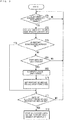
- Fig. 3 is a flowchart illustrating an operation example of the management apparatus 1 for managing an air-conditioning apparatus
- Fig. 4 is a graph illustrating one example of a transition of a memory usage with passage of time in the memory M of the management apparatus in Fig. 2 .
- the operation example of the management apparatus 1 for managing an air-conditioning apparatus will be described with reference to Figs. 1 to 4 .
- the remaining memory capacity acquisition means 10 acquires the remaining memory capacity MR at an acquisition timing of the predetermined cycle (step ST1).
- the remaining memory capacity acquisition means 10 stores the remaining memory capacity MR in the remaining capacity database DB in association with the acquisition date (step ST2).
- the schedule management means 40 determines whether or not the restart schedule RB is already set in the schedule table STB (step ST3).
- the restart schedule RB is set in the schedule table STB, the restart schedule RB is not newly set, and the remaining memory capacity MR continues to be acquired until a date of the already-set restart schedule RB (steps ST1 to ST7).
- the memory leak determination means 20 determines whether or not the memory leak is present (step ST4).
- the usage limit estimation means 30 computes the usage limit period LP until the forced restart according to the usage limit threshold is performed based on the remaining memory capacity MR and the memory decreasing rate (step ST5). After that, the schedule management means 40 sets the restart schedule RB (and the all-stop period SD) within the usage limit period LP (step ST6). Moreover, the operation of the air-conditioning apparatus 100 is continued until the date of the restart schedule RB (steps ST1 to ST7). On the date of the restart schedule RB, the management apparatus 1 is restarted by the equipment control means 50 (step ST8).
- the management apparatus 1 is restarted during the usage limit period LP before the forced restart according to the usage limit threshold is performed, and during the all-stop period SD of the air-conditioning apparatus 100, it is possible to prevent occurrence of an unfavorable situation for a user, such as a sudden stop of the operation of the air-conditioning apparatus 100, or such that the air-conditioning apparatus 100 cannot be operated, due to the restart of the management apparatus 1 for managing an air-conditioning apparatus.
- the restart schedule RB is automatically set, it is possible to restart and restore the management apparatus 1 for managing an air-conditioning apparatus without making a user aware of the stop of the air-conditioning apparatus 100.
- the schedule management means 40 sets the all-stop period SD within the usage limit period LP. It is thus possible to avoid a situation in which the forced restart is performed while a process that applies a large load to the management apparatus 1 for managing an air-conditioning apparatus, such as demand control, is being performed.
- the schedule management means 40 sets the restart schedule RB by assuming that the period in which all the indoor units 102 are stopped is the all-stop period SD based on the operation schedule in the schedule table STB, the restart can be performed in a state in which a management load on the management apparatus 1 for managing an air-conditioning apparatus is smallest, and the operation of the air-conditioning apparatus 100 can be smoothly controlled.
- the embodiment of the present invention is not limited to the above embodiment.
- the restart schedule RB may be set before a schedule of performing an operation in which monitoring or control is required at all times, such as the demand control. Accordingly, it is possible to prevent the forced restart of the management apparatus 1 for managing an air-conditioning apparatus according to the usage limit threshold while an operation in which the air-conditioning apparatus 100 needs to be controlled and monitored is being performed.
- 1 Management apparatus for an air-conditioning apparatus 10 Remaining memory capacity acquisition means, 20 Memory leak determination means, 30 Usage limit estimation means, 40 Schedule management means, 50 Equipment control means, 100 Air conditioner, 101 Outdoor unit, 102 Indoor unit, DB Remaining capacity database, LP Usage limit period, M Memory, MR Remaining memory capacity, SD All-stop period, STB Schedule table, RB Restart schedule
Landscapes
- Engineering & Computer Science (AREA)
- General Engineering & Computer Science (AREA)
- Theoretical Computer Science (AREA)
- Physics & Mathematics (AREA)
- Chemical & Material Sciences (AREA)
- Combustion & Propulsion (AREA)
- Mechanical Engineering (AREA)
- General Physics & Mathematics (AREA)
- Signal Processing (AREA)
- Mathematical Physics (AREA)
- Fuzzy Systems (AREA)
- Data Mining & Analysis (AREA)
- Databases & Information Systems (AREA)
- Human Computer Interaction (AREA)
- Health & Medical Sciences (AREA)
- Biomedical Technology (AREA)
- Software Systems (AREA)
- Computational Linguistics (AREA)
- Automation & Control Theory (AREA)
- Quality & Reliability (AREA)
- Air Conditioning Control Device (AREA)
Description
- The present invention relates to a management apparatus and method of managing an operation of an air-conditioning apparatus including an indoor unit and an outdoor unit.
- A memory leak may occur due to a failure of software or other causes. When such a memory leak is caused by a failure of management software in a management apparatus for managing an air-conditioning apparatus and a memory capacity thereof is reducing, the management apparatus may be restarted in some cases for recovery, before a remaining memory capacity becomes empty. Various methods have been proposed that prevent the memory leak in an apparatus that controls continuously-operating equipment (for example, see
Patent Literatures 1 and 2). -
Patent Literature 1 discloses periodically storing, as time series data, a memory usage, a CPU load, and a timestamp of memory usage acquisition, predicting an arrival time when a memory reaches a usage limit based on the time series data of the memory usage, obtaining a time slot in which the CPU load is reduced immediately before the arrival time based on the time series data of the CPU load, and performing recovery processing in the time slot. Patent Literature 2 discloses a process management program configured to stop a predetermined process so as not to interrupt an operation of an application program when a memory usage of a process being executed reaches a specified value. -
- Patent Literature 1: Japanese Unexamined Patent Application Publication No.
2004-5305 claims 1 and 8. - Patent Literature 2: Japanese Unexamined Patent Application Publication No.
2011-186739 - In the case of the above methods in
Patent Literatures 1 and 2, the restart or the like is performed when the remaining memory capacity is reduced regardless of a state of the equipment as a control object. Therefore, control and monitoring of the entire air-conditioning apparatus are stopped from the restart of the management apparatus until completion of the restart. Thus, a failure may occur in controlling the operation of the air-conditioning apparatus to cause disadvantages for users. - The present invention has been made in order to overcome the above problems, and an object thereof is to provide a management apparatus for managing an air-conditioning apparatus capable of minimizing an influence on operation control of an apparatus by a recovery work from a memory leak.
- A management apparatus for managing an air-conditioning apparatus of the present invention is a management apparatus for managing an air-conditioning apparatus, the management apparatus including a memory to store data, and managing an operation of an air-conditioning apparatus including at least one indoor unit and an outdoor unit, the management apparatus comprising: remaining memory capacity acquisition means to acquire a remaining memory capacity of the memory; memory leak determination means to determine whether or not a memory leak is present in the memory based on the remaining memory capacity acquired by the remaining memory capacity acquisition means; usage limit estimation means to estimate, when the memory leak determination means determines that the memory leak is present, a usage limit period being a length of time to a point when the memory reaches a preset usage limit threshold; a schedule table storing an operation schedule of the air-conditioning apparatus and the management apparatus; schedule management means to search the schedule table for an all-stop period in which operations of all of the at least one indoor unit are stopped within the usage limit period estimated by the usage limit estimation means, and set a restart schedule for restarting the management apparatus in the schedule table in accordance with the all-stop period searched out; and equipment control means to restart the management apparatus according to the restart schedule set in the schedule table by the schedule management means.
- In accordance with the management apparatus of the present invention, when the remaining memory capacity is reduced by the memory leak, the management apparatus for managing an air-conditioning apparatus is restarted during the all-stop period before reaching the usage limit period. Accordingly, a recovery work from the memory leak can be completed within a period in which a load of monitoring or controlling the air-conditioning apparatus is small, and disadvantages on operation control of the air-conditioning apparatus caused in responding to the memory leak can be thereby minimized.
-
- [
Fig. 1] Fig. 1 is a system configuration diagram illustrating a preferred embodiment of a management apparatus for managing an air-conditioning apparatus of the present invention. - [
Fig. 2] Fig. 2 is a block diagram illustrating one example of the management apparatus for managing an air-conditioning apparatus inFig. 1 . - [
Fig. 3] Fig. 3 is a flowchart illustrating an operation example of the management apparatus for managing an air-conditioning apparatus inFig. 2 . - [
Fig. 4] Fig. 4 is a graph illustrating one example of a transition of a memory usage with passage of time in a memory of the management apparatus inFig. 2 . - An embodiment of a management apparatus for managing an air-conditioning apparatus of the present invention will be described hereinafter with reference to the drawings.
Fig. 1 is a system configuration diagram illustrating a preferred embodiment of a management apparatus for managing an air-conditioning apparatus of the present invention. Amanagement apparatus 1 for managing an air-conditioning apparatus will be described with reference toFig. 1 . Themanagement apparatus 1 for managing an air-conditioning apparatus is connected to a plurality of air-conditioning apparatuses 100 so as to enable data transmission, and performs centralized management of operations of the respective air-conditioning apparatuses 100. Each of the air-conditioning apparatuses 100 includes anoutdoor unit 101, and one or a plurality ofindoor units 102 connected to theoutdoor unit 101 via a refrigerant pipe. Themanagement apparatus 1 can control each of theoutdoor unit 101 and theindoor units 102 in each of the air-conditioning apparatuses 100 via a transmission line. Although a case in which themanagement apparatus 1 for managing an air-conditioning apparatus manages two air-conditioning apparatuses 100 is illustrated inFig. 1 , themanagement apparatus 1 for managing an air-conditioning apparatus may be connected to one air-conditioning apparatus 100, or may also manage plural, i.e., three or more air-conditioning apparatuses 100. Also, the air-conditioning apparatus 100 may include the plurality ofindoor units 102 as shown inFig. 1 , or may include oneindoor unit 102. - The
aforementioned management apparatus 1 for managing an air-conditioning apparatus is constituted of a microcomputer such as a DSP. Themanagement apparatus 1 for managing an air-conditioning apparatus includes a central processing unit (CPU) that executes a program, and a memory (RAM) that stores various data and forms a temporary working memory area when the program is executed. Themanagement apparatus 1 for managing an air-conditioning apparatus also includes input means, such as a touch panel, and an external input terminal that perform input of an operation instruction and schedule management from a user. Themanagement apparatus 1 for managing an air-conditioning apparatus controls the operation of the air-conditioning apparatus 100 based on the input from a user and detection signals from various sensors. - When a predetermined program is executed in the
management apparatus 1 for managing an air-conditioning apparatus, the program dynamically secures a memory area as a temporary working area or a data storage area. The program releases the memory area when it is no longer required to secure the memory area. However, if the memory area dynamically secured by the program is not released, a phenomenon called a memory leak is present in which memory resources of a system continue to be occupied. In a case in which a new program is executed in a state in which the memory leak is present, no memory area can be allocated for executing the program, resulting in a malfunction of the program. Particularly, in a case in which the memory leak is present in a program that continuously works for a long time as in themanagement apparatus 1 for managing an air-conditioning apparatus, the memory resources are successively consumed, resulting in a drop in performance of themanagement apparatus 1 for managing an air-conditioning apparatus. - Thus, the
management apparatus 1 for managing an air-conditioning apparatus has a function to perform a forced restart in order to prevent a decrease in the performance or falling into an uncontrollable state due to the memory leak, and a function to perform an automatic restart before the above forced restart is performed by detecting the occurrence of the memory leak. To be more specific, themanagement apparatus 1 for managing an air-conditioning apparatus has a function to perform the forced restart when a memory M exceeds a usage limit threshold (for example, a memory usage rate of 90%), and a function to perform the automatic restart during a period in which an influence on the operation of the air-conditioning apparatus 100 can be minimized when it is determined that the memory leak is present. -
Fig. 2 is a functional block diagram illustrating one example of themanagement apparatus 1 for managing an air-conditioning apparatus inFig. 1 . Themanagement apparatus 1 for managing an air-conditioning apparatus inFig. 2 includes remaining memory capacity acquisition means 10, memory leak determination means 20, usage limit estimation means 30, schedule management means 40, and equipment control means 50. The remaining memory capacity acquisition means 10 acquires a remaining memory capacity MR from the memory M in each predetermined cycle. The remaining memory capacity acquisition means 10 also has a function to store a date on which the remaining memory capacity MR is acquired, and the remaining memory capacity MR in association with each other in a remaining capacity database DB. - The memory leak determination means 20 determines whether or not the memory leak is present in the memory M based on the remaining memory capacity MR and the acquisition date stored in the remaining capacity database DB by the remaining memory capacity acquisition means 10. To be more specific, the memory leak determination means 20 determines that the memory leak is present, for example, when an amount of decrease of the remaining memory capacity MR exceeds a predetermined value, and a period in which the remaining memory capacity MR continues to decrease exceeds a predetermined period. Note that a method for determining the memory leak is not limited to the above method, and a known technique may be employed, for example, in which a remaining memory capacity decreasing rate per unit time of the memory M is computed from the remaining memory capacity MR decreasing in an interval between the acquisition cycles, and it is determined that the memory leak is present when the remaining memory capacity decreasing rate (or a moving average of a plurality of remaining memory capacity decreasing rates) is equal to or more than a preset threshold.
- When the memory leak determination means 20 determines that the memory leak is present in the memory M, the usage limit estimation means 30 estimates a usage limit period LP until the memory M reaches the usage limit threshold. The usage limit estimation means 30 computes the remaining memory capacity decreasing rate per unit time by using the remaining memory capacity MR acquired in the predetermined cycle and the acquisition date thereof in the remaining memory capacity acquisition means 10, and, when the remaining memory capacity MR is assumed to decrease at the remaining memory capacity decreasing rate, estimates a period being a length of time to a point when the memory M reaches the usage limit threshold by an approximation straight line as the usage limit period LP.
- The schedule management means 40 manages an operation schedule of the air-
conditioning apparatus 100 and themanagement apparatus 1 for managing an air-conditioning apparatus. A schedule table STB stores a date on which the operation schedule is registered, a control object, an operation content, a date on which control is performed, or the like. The schedule management means 40 has a function to register or delete the schedule in or from the schedule table STB according to the input from a user or the like. - Particularly, the schedule management means 40 has a function to search, when it is determined that the memory leak is present, the operation schedule set in the schedule table STB, for an all-stop period SD in which the operation of the air-
conditioning apparatus 100 is all stopped within the usage limit period LP estimated by the usage limit estimation means 30, and set a restart schedule RB for restarting themanagement apparatus 1 for managing an air-conditioning apparatus in the schedule table STB in accordance with the all-stop period SD that is searched out. Note that the all-stop period means a period in which operations of all theindoor units 102 under the management of themanagement apparatus 1 for managing an air-conditioning apparatus are stopped. The all-stop period may also mean a period in which operations of both theindoor units 102 and theoutdoor unit 101 are all stopped. - Here, in a case in which the all-stop period SD is already set within the usage limit period LP in the schedule table STB, the schedule management means 40 registers the restart schedule RB in the schedule table STB in accordance with the all-stop period SD. When a schedule of the all-stop period SD is changed after setting the restart schedule RB, the schedule management means 40 changes the restart schedule RB in accordance with the change in the all-stop period SD. Accordingly, it is possible to reliably perform the restart during the all-stop period SD.
- On the other hand, in a case in which the all-stop period SD is not set in the schedule table STB, the schedule management means 40 newly sets the all-stop period SD within the usage limit period LP in the schedule table STB. Note that a method for newly setting the all-stop period SD is not limited to the above method, and various methods can be used. For example, setting conditions for setting the all-stop period SD, such as a day of a week and a time slot in which a load on the air-
conditioning apparatus 100 or themanagement apparatus 1 is small, are previously stored in the schedule management means 40, and the schedule management means 40 may set the all-stop period SD on a date which satisfies the stored setting conditions within the usage limit period LP. Alternatively, the schedule management means 40 may automatically learn an operation pattern from operation schedule information set in the schedule table STB, and set a period in which a load on the air-conditioning apparatus 100 or themanagement apparatus 1 is small out of the operation pattern as the all-stop period SD. - Alternatively, the schedule management means 40 may set the restart schedule RB by assuming that the all-stop period SD is started when it is detected that all the
indoor units 102 under the management (or the entire air-conditioning apparatus 100) are stopped, without setting a particular date as the restart schedule RB. In other words, the schedule management means 40 may set and execute the restart schedule RB by detecting that substantially the same state as that in which the schedule of the all-stop period SD is executed is obtained within the usage limit period LP. - The equipment control means 50 has a function to control the operation of the air-
conditioning apparatus 100, and also control an operation of themanagement apparatus 1 for managing an air-conditioning apparatus. Particularly, the equipment control means 50 restarts themanagement apparatus 1 for managing an air-conditioning apparatus based on the restart schedule RB set in the schedule table STB. Since the restart schedule RB is set in accordance with the all-stop period SD as described above, the equipment control means 50 restarts themanagement apparatus 1 for managing an air-conditioning apparatus during the all-stop period SD of the air-conditioning apparatus 100. Note that the equipment control means 50 has a function to forcibly restart themanagement apparatus 1 for managing an air-conditioning apparatus when the memory M exceeds the usage limit threshold as described above. Since the equipment control means 50 cannot execute the program stored in themanagement apparatus 1 for managing an air-conditioning apparatus while themanagement apparatus 1 is being restarted, an operation of monitoring the air-conditioning apparatus 100 is restricted. - As described above, the
management apparatus 1 for managing an air-conditioning apparatus is restarted during the all-stop period SD of the air-conditioning apparatus 100 before the forced restart according to the usage limit threshold is performed. Accordingly, it is possible to surely prevent themanagement apparatus 1 for managing an air-conditioning apparatus from being restarted during a period in which the air-conditioning apparatus 100 needs to be controlled or monitored. -
Fig. 3 is a flowchart illustrating an operation example of themanagement apparatus 1 for managing an air-conditioning apparatus, andFig. 4 is a graph illustrating one example of a transition of a memory usage with passage of time in the memory M of the management apparatus inFig. 2 . The operation example of themanagement apparatus 1 for managing an air-conditioning apparatus will be described with reference toFigs. 1 to 4 . First, the remaining memory capacity acquisition means 10 acquires the remaining memory capacity MR at an acquisition timing of the predetermined cycle (step ST1). The remaining memory capacity acquisition means 10 stores the remaining memory capacity MR in the remaining capacity database DB in association with the acquisition date (step ST2). After that, the schedule management means 40 determines whether or not the restart schedule RB is already set in the schedule table STB (step ST3). - In a case in which the restart schedule RB is set in the schedule table STB, the restart schedule RB is not newly set, and the remaining memory capacity MR continues to be acquired until a date of the already-set restart schedule RB (steps ST1 to ST7). On the other hand, in a case in which the restart schedule RB is not set, the memory leak determination means 20 determines whether or not the memory leak is present (step ST4).
- When it is determined that the memory leak possibly occurs, the usage limit estimation means 30 computes the usage limit period LP until the forced restart according to the usage limit threshold is performed based on the remaining memory capacity MR and the memory decreasing rate (step ST5). After that, the schedule management means 40 sets the restart schedule RB (and the all-stop period SD) within the usage limit period LP (step ST6). Moreover, the operation of the air-
conditioning apparatus 100 is continued until the date of the restart schedule RB (steps ST1 to ST7). On the date of the restart schedule RB, themanagement apparatus 1 is restarted by the equipment control means 50 (step ST8). - As described above, since the
management apparatus 1 is restarted during the usage limit period LP before the forced restart according to the usage limit threshold is performed, and during the all-stop period SD of the air-conditioning apparatus 100, it is possible to prevent occurrence of an unfavorable situation for a user, such as a sudden stop of the operation of the air-conditioning apparatus 100, or such that the air-conditioning apparatus 100 cannot be operated, due to the restart of themanagement apparatus 1 for managing an air-conditioning apparatus. Also, since the restart schedule RB is automatically set, it is possible to restart and restore themanagement apparatus 1 for managing an air-conditioning apparatus without making a user aware of the stop of the air-conditioning apparatus 100. - Furthermore, when the all-stop period SD does not exist within the usage limit period LP, the schedule management means 40 sets the all-stop period SD within the usage limit period LP. It is thus possible to avoid a situation in which the forced restart is performed while a process that applies a large load to the
management apparatus 1 for managing an air-conditioning apparatus, such as demand control, is being performed. Alternatively, when the schedule management means 40 sets the restart schedule RB by assuming that the period in which all theindoor units 102 are stopped is the all-stop period SD based on the operation schedule in the schedule table STB, the restart can be performed in a state in which a management load on themanagement apparatus 1 for managing an air-conditioning apparatus is smallest, and the operation of the air-conditioning apparatus 100 can be smoothly controlled. - The embodiment of the present invention is not limited to the above embodiment. For example, when the schedule management means 40 sets the restart schedule RB, the restart schedule RB may be set before a schedule of performing an operation in which monitoring or control is required at all times, such as the demand control. Accordingly, it is possible to prevent the forced restart of the
management apparatus 1 for managing an air-conditioning apparatus according to the usage limit threshold while an operation in which the air-conditioning apparatus 100 needs to be controlled and monitored is being performed. - 1 Management apparatus for an air-conditioning apparatus, 10 Remaining memory capacity acquisition means, 20 Memory leak determination means, 30 Usage limit estimation means, 40 Schedule management means, 50 Equipment control means, 100 Air conditioner, 101 Outdoor unit, 102 Indoor unit, DB Remaining capacity database, LP Usage limit period, M Memory, MR Remaining memory capacity, SD All-stop period, STB Schedule table, RB Restart schedule
Claims (8)
- A management apparatus (1) for managing an air-conditioning apparatus, the management apparatus (1) including a memory to store data, and managing an operation of an air-conditioning apparatus (100) including at least one indoor unit (102) and an outdoor unit (101), the management apparatus (1) comprising:remaining memory capacity acquisition means (10) to acquire a remaining memory capacity of the memory;memory leak determination means (20) to determine whether or not a memory leak is present in the memory based on the remaining memory capacity acquired by the remaining memory capacity acquisition means (10); characterised in that the management apparatus (1) also comprises:usage limit estimation means (30) to estimate, when the memory leak determination means (20) determines that the memory leak is present, a usage limit period (LP) being a length of time to a point when the memory reaches a preset usage limit threshold;a schedule table (STB) storing an operation schedule of the air-conditioning apparatus (100) and the management apparatus (1);schedule management means to search the schedule table (STB) for an all-stop period (SD) in which operations of all of the at least one indoor unit (102) are stopped within the usage limit period (LP) estimated by the usage limit estimation means (30), and set a restart schedule (RB) for restarting the management apparatus (1) in the schedule table (STB) in accordance with the all-stop period (SD) searched out; andequipment control means (50) to restart the management apparatus (1) according to the restart schedule (RB) set in the schedule table (STB) by the schedule management means (40).
- The management apparatus (1) for managing an air-conditioning apparatus of claim 1, wherein the memory leak determination means (20) determines that the memory leak is present when a period in which the remaining memory capacity continues to decrease exceeds a predetermined period.
- The management apparatus (1) for managing an air-conditioning apparatus of claim 1 or 2, wherein the usage limit estimation means (30) estimates the usage limit period (LP) being a length of time to a point when the memory reaches the usage limit threshold, based on a decreasing rate of the remaining memory capacity per unit time.
- The management apparatus (1) for managing an air-conditioning apparatus of any one of claims 1 to 3, wherein the equipment control means (50) restricts an operation of monitoring the air-conditioning apparatus (100) while the management apparatus (1) is being restarted.
- The management apparatus (1) for managing an air-conditioning apparatus of any one of claims 1 to 4, wherein the schedule management means (40) changes the restart schedule (RB) in accordance with a change in the all-stop period (SD) when a schedule of the all-stop period (SD) is changed after setting the restart schedule (RB).
- The management apparatus (1) for managing an air-conditioning apparatus of any one of claims 1 to 5, wherein the schedule management means (40) has a function to newly set the all-stop period (SD) within the usage limit period (LP) when the all-stop period (SD) cannot be searched within the usage limit period (LP).
- The management apparatus (1) for managing an air-conditioning apparatus of any one of claims 1 to 5, wherein the schedule management means (40) sets the restart schedule (RB) by assuming that the all-stop period (SD) is started when it is detected that all of the at least one indoor unit (102) are stopped in a case in which the all-stop period (SD) cannot be searched within the usage limit period (LP).
- A method of managing an air-conditioning apparatus, the air-conditioning apparatus (100) including a memory to store data, and managing an operation of an air-conditioning apparatus (100) including an indoor unit (102) and an outdoor unit (101), the method comprising:acquiring a remaining memory capacity of the memory;determining whether or not a memory leak is present in the memory based on the acquired remaining memory capacity; characterised in that the method also comprises:estimating a usage limit period (LP) being a length of time to a point when the memory reaches a preset usage limit threshold, when the step of determining determines that the memory leak is present;searching a schedule table (STB) that stores an operation schedule of the air-conditioning apparatus (100) and the management apparatus (1) for an all-stop period (SD) in which operations of all of the at least one indoor unit (102) are stopped within the estimated usage limit period (LP), and setting a restart schedule (RB) for restarting the management apparatus (1) in the schedule table (STB) in accordance with the all-stop period (SD) searched out; andrestarting the management apparatus (1) according to the set restart schedule (RB).
Applications Claiming Priority (1)
| Application Number | Priority Date | Filing Date | Title |
|---|---|---|---|
| PCT/JP2013/055841 WO2014136182A1 (en) | 2013-03-04 | 2013-03-04 | Management device and method for air conditioner |
Publications (3)
| Publication Number | Publication Date |
|---|---|
| EP2966376A1 EP2966376A1 (en) | 2016-01-13 |
| EP2966376A4 EP2966376A4 (en) | 2016-11-02 |
| EP2966376B1 true EP2966376B1 (en) | 2017-10-11 |
Family
ID=51490750
Family Applications (1)
| Application Number | Title | Priority Date | Filing Date |
|---|---|---|---|
| EP13877308.0A Not-in-force EP2966376B1 (en) | 2013-03-04 | 2013-03-04 | Management device and method for air conditioner |
Country Status (5)
| Country | Link |
|---|---|
| US (1) | US9671124B2 (en) |
| EP (1) | EP2966376B1 (en) |
| JP (1) | JP5881890B2 (en) |
| CN (1) | CN105008814B (en) |
| WO (1) | WO2014136182A1 (en) |
Families Citing this family (6)
| Publication number | Priority date | Publication date | Assignee | Title |
|---|---|---|---|---|
| WO2014167633A1 (en) * | 2013-04-08 | 2014-10-16 | 三菱電機株式会社 | Air conditioner management device and air conditioner management system |
| US9983887B2 (en) | 2015-06-05 | 2018-05-29 | Apple Inc. | Memory management of data processing systems |
| US20180088959A1 (en) * | 2016-09-28 | 2018-03-29 | Delphi Technologies, Inc. | Automated-vehicle resource management system |
| KR102255975B1 (en) * | 2016-11-15 | 2021-05-25 | 사누웨이브 인코포레이티드 | Distributor product programming system |
| CN114217998A (en) * | 2021-12-17 | 2022-03-22 | 杭州谐云科技有限公司 | Online service resource leakage risk avoiding method and system |
| US11816364B2 (en) * | 2022-01-13 | 2023-11-14 | Microsoft Technology Licensing, Llc | Performance evaluation of an application based on detecting degradation caused by other computing processes |
Family Cites Families (13)
| Publication number | Priority date | Publication date | Assignee | Title |
|---|---|---|---|---|
| JP4170675B2 (en) | 2002-06-03 | 2008-10-22 | 株式会社日立製作所 | Memory usage capacity monitoring method and computer system |
| CN1248114C (en) * | 2002-06-20 | 2006-03-29 | 华为技术有限公司 | Method for checking sofeware memory leak |
| US7149889B2 (en) * | 2002-12-12 | 2006-12-12 | Scientific-Atlanta, Inc. | Proactive reboot |
| US7900092B2 (en) * | 2003-07-11 | 2011-03-01 | Computer Associates Think, Inc. | Kernel-level method of flagging problems in applications |
| CN100472459C (en) * | 2005-12-08 | 2009-03-25 | 中兴通讯股份有限公司 | System for automatically releasing memory leaked by application modules in embedded systems |
| US7543192B2 (en) * | 2006-06-20 | 2009-06-02 | Sun Microsystems, Inc. | Estimating the residual life of a software system under a software-based failure mechanism |
| JP2008003945A (en) * | 2006-06-23 | 2008-01-10 | Toshiba Corp | Monitoring control system and computer management method and program thereof |
| US7793161B2 (en) * | 2007-05-29 | 2010-09-07 | International Business Machines Corporation | Method and apparatus to anticipate memory exhaustion in an open services gateway initiative environment |
| JP2010072854A (en) * | 2008-09-17 | 2010-04-02 | Canon Inc | Support device of information processing apparatus, support method, and computer program |
| JP2011027362A (en) | 2009-07-28 | 2011-02-10 | Mitsubishi Heavy Ind Ltd | Device, method and system for adaptation screen updating web air conditioning monitoring |
| JP5385804B2 (en) * | 2010-01-26 | 2014-01-08 | パナソニック株式会社 | Environmental control system |
| JP2011186739A (en) | 2010-03-08 | 2011-09-22 | Panasonic Electric Works Co Ltd | Program and apparatus for managing process |
| US10048705B2 (en) * | 2010-09-21 | 2018-08-14 | Honeywell International Inc. | HVAC schedule with designated off periods |
-
2013
- 2013-03-04 WO PCT/JP2013/055841 patent/WO2014136182A1/en not_active Ceased
- 2013-03-04 JP JP2015504024A patent/JP5881890B2/en not_active Expired - Fee Related
- 2013-03-04 CN CN201380074177.XA patent/CN105008814B/en not_active Expired - Fee Related
- 2013-03-04 EP EP13877308.0A patent/EP2966376B1/en not_active Not-in-force
- 2013-03-04 US US14/651,814 patent/US9671124B2/en not_active Expired - Fee Related
Non-Patent Citations (1)
| Title |
|---|
| None * |
Also Published As
| Publication number | Publication date |
|---|---|
| EP2966376A4 (en) | 2016-11-02 |
| JP5881890B2 (en) | 2016-03-09 |
| CN105008814A (en) | 2015-10-28 |
| CN105008814B (en) | 2017-09-29 |
| US20150377506A1 (en) | 2015-12-31 |
| JPWO2014136182A1 (en) | 2017-02-09 |
| WO2014136182A1 (en) | 2014-09-12 |
| EP2966376A1 (en) | 2016-01-13 |
| US9671124B2 (en) | 2017-06-06 |
Similar Documents
| Publication | Publication Date | Title |
|---|---|---|
| US9671124B2 (en) | Management apparatus and method of managing air-conditioning apparatus | |
| CN101464819B (en) | Hardware driven processor state storage prior to entering low power mode | |
| EP3726157B1 (en) | Air-conditioning system, remote controller, and method for saving a history of operation data of an air conditioner | |
| EP2439689A1 (en) | Complex event processing apparatus and complex event processing method | |
| JP6001480B2 (en) | Migration processing method and processing apparatus | |
| CN110659130A (en) | CPU utilization rate self-adaptive adjusting method, device, terminal and storage medium | |
| CN104516786A (en) | Information processing device, fault avoidance method, and program storage medium | |
| CN115111816B (en) | Method, device and storage medium for detecting electronic expansion valve | |
| US9910423B2 (en) | Control apparatus for giving notification of maintenance and inspection times of signal-controlled peripheral devices | |
| CN112050369A (en) | Control method and control device for defrosting of air conditioner and air conditioner | |
| CN114461323A (en) | A stuck processing method, device, electronic device and storage medium | |
| CN111947350B (en) | Defrosting control method, defrosting control system and air source heat pump device | |
| JP2004005305A (en) | Method of monitoring memory usage and computer system | |
| CN109324834A (en) | A system and method for automatic restart of distributed storage server | |
| CN100370417C (en) | Method of avoiding flush due to store queue full with a stall mechanism and no reject mechanism | |
| US20190235467A1 (en) | Machining time prediction device | |
| CN108344128A (en) | The loading method of multi-online air-conditioning system and its outdoor unit modules, managing device | |
| WO2016087002A1 (en) | Voltage regulator mechanism, electronic device, method and computer program | |
| CN113566391A (en) | Air conditioner operation control method and device and air conditioner system | |
| US9712380B2 (en) | Analytical device control system | |
| US20230289316A1 (en) | Method of transmitting data and command through rs232 serial port | |
| CN120955596B (en) | Methods, devices, and media for calculating the load rate of independently controllable DC control and protection devices | |
| AU2021220063A1 (en) | Data collection system, reception-side apparatus, and data collection method | |
| CN115870805B (en) | Automatic start-stop method, device, cutting equipment, feeding equipment and electronic equipment | |
| JP6273867B2 (en) | Job performance analysis system, job performance analysis method and program |
Legal Events
| Date | Code | Title | Description |
|---|---|---|---|
| PUAI | Public reference made under article 153(3) epc to a published international application that has entered the european phase |
Free format text: ORIGINAL CODE: 0009012 |
|
| 17P | Request for examination filed |
Effective date: 20150706 |
|
| AK | Designated contracting states |
Kind code of ref document: A1 Designated state(s): AL AT BE BG CH CY CZ DE DK EE ES FI FR GB GR HR HU IE IS IT LI LT LU LV MC MK MT NL NO PL PT RO RS SE SI SK SM TR |
|
| AX | Request for extension of the european patent |
Extension state: BA ME |
|
| DAX | Request for extension of the european patent (deleted) | ||
| A4 | Supplementary search report drawn up and despatched |
Effective date: 20161004 |
|
| RIC1 | Information provided on ipc code assigned before grant |
Ipc: G06F 11/00 20060101ALI20160927BHEP Ipc: F24F 11/00 20060101AFI20160927BHEP |
|
| REG | Reference to a national code |
Ref country code: DE Ref legal event code: R079 Ref document number: 602013027971 Country of ref document: DE Free format text: PREVIOUS MAIN CLASS: F24F0011020000 Ipc: F24F0011000000 |
|
| GRAP | Despatch of communication of intention to grant a patent |
Free format text: ORIGINAL CODE: EPIDOSNIGR1 |
|
| RIC1 | Information provided on ipc code assigned before grant |
Ipc: F24F 11/00 20060101AFI20170503BHEP Ipc: G06F 11/00 20060101ALI20170503BHEP |
|
| INTG | Intention to grant announced |
Effective date: 20170529 |
|
| GRAS | Grant fee paid |
Free format text: ORIGINAL CODE: EPIDOSNIGR3 |
|
| GRAA | (expected) grant |
Free format text: ORIGINAL CODE: 0009210 |
|
| AK | Designated contracting states |
Kind code of ref document: B1 Designated state(s): AL AT BE BG CH CY CZ DE DK EE ES FI FR GB GR HR HU IE IS IT LI LT LU LV MC MK MT NL NO PL PT RO RS SE SI SK SM TR |
|
| REG | Reference to a national code |
Ref country code: GB Ref legal event code: FG4D |
|
| REG | Reference to a national code |
Ref country code: CH Ref legal event code: EP |
|
| REG | Reference to a national code |
Ref country code: IE Ref legal event code: FG4D |
|
| REG | Reference to a national code |
Ref country code: AT Ref legal event code: REF Ref document number: 936410 Country of ref document: AT Kind code of ref document: T Effective date: 20171115 |
|
| REG | Reference to a national code |
Ref country code: DE Ref legal event code: R096 Ref document number: 602013027971 Country of ref document: DE |
|
| REG | Reference to a national code |
Ref country code: NL Ref legal event code: MP Effective date: 20171011 |
|
| REG | Reference to a national code |
Ref country code: LT Ref legal event code: MG4D |
|
| REG | Reference to a national code |
Ref country code: AT Ref legal event code: MK05 Ref document number: 936410 Country of ref document: AT Kind code of ref document: T Effective date: 20171011 |
|
| PG25 | Lapsed in a contracting state [announced via postgrant information from national office to epo] |
Ref country code: NL Free format text: LAPSE BECAUSE OF FAILURE TO SUBMIT A TRANSLATION OF THE DESCRIPTION OR TO PAY THE FEE WITHIN THE PRESCRIBED TIME-LIMIT Effective date: 20171011 |
|
| PG25 | Lapsed in a contracting state [announced via postgrant information from national office to epo] |
Ref country code: ES Free format text: LAPSE BECAUSE OF FAILURE TO SUBMIT A TRANSLATION OF THE DESCRIPTION OR TO PAY THE FEE WITHIN THE PRESCRIBED TIME-LIMIT Effective date: 20171011 Ref country code: LT Free format text: LAPSE BECAUSE OF FAILURE TO SUBMIT A TRANSLATION OF THE DESCRIPTION OR TO PAY THE FEE WITHIN THE PRESCRIBED TIME-LIMIT Effective date: 20171011 Ref country code: FI Free format text: LAPSE BECAUSE OF FAILURE TO SUBMIT A TRANSLATION OF THE DESCRIPTION OR TO PAY THE FEE WITHIN THE PRESCRIBED TIME-LIMIT Effective date: 20171011 Ref country code: SE Free format text: LAPSE BECAUSE OF FAILURE TO SUBMIT A TRANSLATION OF THE DESCRIPTION OR TO PAY THE FEE WITHIN THE PRESCRIBED TIME-LIMIT Effective date: 20171011 Ref country code: NO Free format text: LAPSE BECAUSE OF FAILURE TO SUBMIT A TRANSLATION OF THE DESCRIPTION OR TO PAY THE FEE WITHIN THE PRESCRIBED TIME-LIMIT Effective date: 20180111 |
|
| PG25 | Lapsed in a contracting state [announced via postgrant information from national office to epo] |
Ref country code: RS Free format text: LAPSE BECAUSE OF FAILURE TO SUBMIT A TRANSLATION OF THE DESCRIPTION OR TO PAY THE FEE WITHIN THE PRESCRIBED TIME-LIMIT Effective date: 20171011 Ref country code: IS Free format text: LAPSE BECAUSE OF FAILURE TO SUBMIT A TRANSLATION OF THE DESCRIPTION OR TO PAY THE FEE WITHIN THE PRESCRIBED TIME-LIMIT Effective date: 20180211 Ref country code: LV Free format text: LAPSE BECAUSE OF FAILURE TO SUBMIT A TRANSLATION OF THE DESCRIPTION OR TO PAY THE FEE WITHIN THE PRESCRIBED TIME-LIMIT Effective date: 20171011 Ref country code: GR Free format text: LAPSE BECAUSE OF FAILURE TO SUBMIT A TRANSLATION OF THE DESCRIPTION OR TO PAY THE FEE WITHIN THE PRESCRIBED TIME-LIMIT Effective date: 20180112 Ref country code: AT Free format text: LAPSE BECAUSE OF FAILURE TO SUBMIT A TRANSLATION OF THE DESCRIPTION OR TO PAY THE FEE WITHIN THE PRESCRIBED TIME-LIMIT Effective date: 20171011 Ref country code: HR Free format text: LAPSE BECAUSE OF FAILURE TO SUBMIT A TRANSLATION OF THE DESCRIPTION OR TO PAY THE FEE WITHIN THE PRESCRIBED TIME-LIMIT Effective date: 20171011 Ref country code: BG Free format text: LAPSE BECAUSE OF FAILURE TO SUBMIT A TRANSLATION OF THE DESCRIPTION OR TO PAY THE FEE WITHIN THE PRESCRIBED TIME-LIMIT Effective date: 20180111 |
|
| REG | Reference to a national code |
Ref country code: DE Ref legal event code: R097 Ref document number: 602013027971 Country of ref document: DE |
|
| PG25 | Lapsed in a contracting state [announced via postgrant information from national office to epo] |
Ref country code: EE Free format text: LAPSE BECAUSE OF FAILURE TO SUBMIT A TRANSLATION OF THE DESCRIPTION OR TO PAY THE FEE WITHIN THE PRESCRIBED TIME-LIMIT Effective date: 20171011 Ref country code: SK Free format text: LAPSE BECAUSE OF FAILURE TO SUBMIT A TRANSLATION OF THE DESCRIPTION OR TO PAY THE FEE WITHIN THE PRESCRIBED TIME-LIMIT Effective date: 20171011 Ref country code: DK Free format text: LAPSE BECAUSE OF FAILURE TO SUBMIT A TRANSLATION OF THE DESCRIPTION OR TO PAY THE FEE WITHIN THE PRESCRIBED TIME-LIMIT Effective date: 20171011 Ref country code: CZ Free format text: LAPSE BECAUSE OF FAILURE TO SUBMIT A TRANSLATION OF THE DESCRIPTION OR TO PAY THE FEE WITHIN THE PRESCRIBED TIME-LIMIT Effective date: 20171011 |
|
| PLBE | No opposition filed within time limit |
Free format text: ORIGINAL CODE: 0009261 |
|
| STAA | Information on the status of an ep patent application or granted ep patent |
Free format text: STATUS: NO OPPOSITION FILED WITHIN TIME LIMIT |
|
| PG25 | Lapsed in a contracting state [announced via postgrant information from national office to epo] |
Ref country code: PL Free format text: LAPSE BECAUSE OF FAILURE TO SUBMIT A TRANSLATION OF THE DESCRIPTION OR TO PAY THE FEE WITHIN THE PRESCRIBED TIME-LIMIT Effective date: 20171011 Ref country code: SM Free format text: LAPSE BECAUSE OF FAILURE TO SUBMIT A TRANSLATION OF THE DESCRIPTION OR TO PAY THE FEE WITHIN THE PRESCRIBED TIME-LIMIT Effective date: 20171011 Ref country code: IT Free format text: LAPSE BECAUSE OF FAILURE TO SUBMIT A TRANSLATION OF THE DESCRIPTION OR TO PAY THE FEE WITHIN THE PRESCRIBED TIME-LIMIT Effective date: 20171011 Ref country code: RO Free format text: LAPSE BECAUSE OF FAILURE TO SUBMIT A TRANSLATION OF THE DESCRIPTION OR TO PAY THE FEE WITHIN THE PRESCRIBED TIME-LIMIT Effective date: 20171011 |
|
| 26N | No opposition filed |
Effective date: 20180712 |
|
| REG | Reference to a national code |
Ref country code: CH Ref legal event code: PL |
|
| PG25 | Lapsed in a contracting state [announced via postgrant information from national office to epo] |
Ref country code: SI Free format text: LAPSE BECAUSE OF FAILURE TO SUBMIT A TRANSLATION OF THE DESCRIPTION OR TO PAY THE FEE WITHIN THE PRESCRIBED TIME-LIMIT Effective date: 20171011 Ref country code: MC Free format text: LAPSE BECAUSE OF FAILURE TO SUBMIT A TRANSLATION OF THE DESCRIPTION OR TO PAY THE FEE WITHIN THE PRESCRIBED TIME-LIMIT Effective date: 20171011 |
|
| REG | Reference to a national code |
Ref country code: BE Ref legal event code: MM Effective date: 20180331 |
|
| REG | Reference to a national code |
Ref country code: IE Ref legal event code: MM4A |
|
| PG25 | Lapsed in a contracting state [announced via postgrant information from national office to epo] |
Ref country code: LU Free format text: LAPSE BECAUSE OF NON-PAYMENT OF DUE FEES Effective date: 20180304 |
|
| PG25 | Lapsed in a contracting state [announced via postgrant information from national office to epo] |
Ref country code: IE Free format text: LAPSE BECAUSE OF NON-PAYMENT OF DUE FEES Effective date: 20180304 |
|
| PG25 | Lapsed in a contracting state [announced via postgrant information from national office to epo] |
Ref country code: CH Free format text: LAPSE BECAUSE OF NON-PAYMENT OF DUE FEES Effective date: 20180331 Ref country code: LI Free format text: LAPSE BECAUSE OF NON-PAYMENT OF DUE FEES Effective date: 20180331 Ref country code: BE Free format text: LAPSE BECAUSE OF NON-PAYMENT OF DUE FEES Effective date: 20180331 |
|
| PG25 | Lapsed in a contracting state [announced via postgrant information from national office to epo] |
Ref country code: FR Free format text: LAPSE BECAUSE OF NON-PAYMENT OF DUE FEES Effective date: 20180331 |
|
| PG25 | Lapsed in a contracting state [announced via postgrant information from national office to epo] |
Ref country code: MT Free format text: LAPSE BECAUSE OF NON-PAYMENT OF DUE FEES Effective date: 20180304 |
|
| PG25 | Lapsed in a contracting state [announced via postgrant information from national office to epo] |
Ref country code: TR Free format text: LAPSE BECAUSE OF FAILURE TO SUBMIT A TRANSLATION OF THE DESCRIPTION OR TO PAY THE FEE WITHIN THE PRESCRIBED TIME-LIMIT Effective date: 20171011 |
|
| PG25 | Lapsed in a contracting state [announced via postgrant information from national office to epo] |
Ref country code: PT Free format text: LAPSE BECAUSE OF FAILURE TO SUBMIT A TRANSLATION OF THE DESCRIPTION OR TO PAY THE FEE WITHIN THE PRESCRIBED TIME-LIMIT Effective date: 20171011 |
|
| PG25 | Lapsed in a contracting state [announced via postgrant information from national office to epo] |
Ref country code: CY Free format text: LAPSE BECAUSE OF FAILURE TO SUBMIT A TRANSLATION OF THE DESCRIPTION OR TO PAY THE FEE WITHIN THE PRESCRIBED TIME-LIMIT Effective date: 20171011 Ref country code: HU Free format text: LAPSE BECAUSE OF FAILURE TO SUBMIT A TRANSLATION OF THE DESCRIPTION OR TO PAY THE FEE WITHIN THE PRESCRIBED TIME-LIMIT; INVALID AB INITIO Effective date: 20130304 Ref country code: MK Free format text: LAPSE BECAUSE OF NON-PAYMENT OF DUE FEES Effective date: 20171011 |
|
| PG25 | Lapsed in a contracting state [announced via postgrant information from national office to epo] |
Ref country code: AL Free format text: LAPSE BECAUSE OF FAILURE TO SUBMIT A TRANSLATION OF THE DESCRIPTION OR TO PAY THE FEE WITHIN THE PRESCRIBED TIME-LIMIT Effective date: 20171011 |
|
| REG | Reference to a national code |
Ref country code: GB Ref legal event code: 746 Effective date: 20200717 |
|
| REG | Reference to a national code |
Ref country code: DE Ref legal event code: R084 Ref document number: 602013027971 Country of ref document: DE |
|
| PGFP | Annual fee paid to national office [announced via postgrant information from national office to epo] |
Ref country code: GB Payment date: 20220127 Year of fee payment: 10 Ref country code: DE Payment date: 20220203 Year of fee payment: 10 |
|
| REG | Reference to a national code |
Ref country code: DE Ref legal event code: R119 Ref document number: 602013027971 Country of ref document: DE |
|
| GBPC | Gb: european patent ceased through non-payment of renewal fee |
Effective date: 20230304 |
|
| PG25 | Lapsed in a contracting state [announced via postgrant information from national office to epo] |
Ref country code: GB Free format text: LAPSE BECAUSE OF NON-PAYMENT OF DUE FEES Effective date: 20230304 |
|
| PG25 | Lapsed in a contracting state [announced via postgrant information from national office to epo] |
Ref country code: GB Free format text: LAPSE BECAUSE OF NON-PAYMENT OF DUE FEES Effective date: 20230304 Ref country code: DE Free format text: LAPSE BECAUSE OF NON-PAYMENT OF DUE FEES Effective date: 20231003 |