EP2966178A1 - Simple detection method for rna modification, and method for detecting type-ii diabetes using said detection method - Google Patents
Simple detection method for rna modification, and method for detecting type-ii diabetes using said detection method Download PDFInfo
- Publication number
- EP2966178A1 EP2966178A1 EP14759799.1A EP14759799A EP2966178A1 EP 2966178 A1 EP2966178 A1 EP 2966178A1 EP 14759799 A EP14759799 A EP 14759799A EP 2966178 A1 EP2966178 A1 EP 2966178A1
- Authority
- EP
- European Patent Office
- Prior art keywords
- rna
- trna
- modification
- primer
- thiomethylation
- Prior art date
- Legal status (The legal status is an assumption and is not a legal conclusion. Google has not performed a legal analysis and makes no representation as to the accuracy of the status listed.)
- Withdrawn
Links
- 238000000034 method Methods 0.000 title claims abstract description 145
- 208000001072 type 2 diabetes mellitus Diseases 0.000 title claims abstract description 32
- 230000026279 RNA modification Effects 0.000 title claims description 67
- 238000001514 detection method Methods 0.000 title description 43
- 238000010839 reverse transcription Methods 0.000 claims abstract description 56
- 239000002299 complementary DNA Substances 0.000 claims abstract description 46
- 230000011987 methylation Effects 0.000 claims abstract description 8
- 238000007069 methylation reaction Methods 0.000 claims abstract description 8
- 238000003199 nucleic acid amplification method Methods 0.000 claims description 30
- OIRDTQYFTABQOQ-KQYNXXCUSA-N adenosine Chemical compound C1=NC=2C(N)=NC=NC=2N1[C@@H]1O[C@H](CO)[C@@H](O)[C@H]1O OIRDTQYFTABQOQ-KQYNXXCUSA-N 0.000 claims description 28
- 210000004369 blood Anatomy 0.000 claims description 23
- 239000008280 blood Substances 0.000 claims description 23
- 108020004707 nucleic acids Proteins 0.000 claims description 23
- 102000039446 nucleic acids Human genes 0.000 claims description 23
- 150000007523 nucleic acids Chemical class 0.000 claims description 23
- 230000003321 amplification Effects 0.000 claims description 22
- 108091034117 Oligonucleotide Proteins 0.000 claims description 20
- NOESYZHRGYRDHS-UHFFFAOYSA-N insulin Chemical compound N1C(=O)C(NC(=O)C(CCC(N)=O)NC(=O)C(CCC(O)=O)NC(=O)C(C(C)C)NC(=O)C(NC(=O)CN)C(C)CC)CSSCC(C(NC(CO)C(=O)NC(CC(C)C)C(=O)NC(CC=2C=CC(O)=CC=2)C(=O)NC(CCC(N)=O)C(=O)NC(CC(C)C)C(=O)NC(CCC(O)=O)C(=O)NC(CC(N)=O)C(=O)NC(CC=2C=CC(O)=CC=2)C(=O)NC(CSSCC(NC(=O)C(C(C)C)NC(=O)C(CC(C)C)NC(=O)C(CC=2C=CC(O)=CC=2)NC(=O)C(CC(C)C)NC(=O)C(C)NC(=O)C(CCC(O)=O)NC(=O)C(C(C)C)NC(=O)C(CC(C)C)NC(=O)C(CC=2NC=NC=2)NC(=O)C(CO)NC(=O)CNC2=O)C(=O)NCC(=O)NC(CCC(O)=O)C(=O)NC(CCCNC(N)=N)C(=O)NCC(=O)NC(CC=3C=CC=CC=3)C(=O)NC(CC=3C=CC=CC=3)C(=O)NC(CC=3C=CC(O)=CC=3)C(=O)NC(C(C)O)C(=O)N3C(CCC3)C(=O)NC(CCCCN)C(=O)NC(C)C(O)=O)C(=O)NC(CC(N)=O)C(O)=O)=O)NC(=O)C(C(C)CC)NC(=O)C(CO)NC(=O)C(C(C)O)NC(=O)C1CSSCC2NC(=O)C(CC(C)C)NC(=O)C(NC(=O)C(CCC(N)=O)NC(=O)C(CC(N)=O)NC(=O)C(NC(=O)C(N)CC=1C=CC=CC=1)C(C)C)CC1=CN=CN1 NOESYZHRGYRDHS-UHFFFAOYSA-N 0.000 claims description 20
- 210000005259 peripheral blood Anatomy 0.000 claims description 19
- 239000011886 peripheral blood Substances 0.000 claims description 19
- 238000003753 real-time PCR Methods 0.000 claims description 19
- 238000006243 chemical reaction Methods 0.000 claims description 18
- 230000000295 complement effect Effects 0.000 claims description 18
- 239000002126 C01EB10 - Adenosine Substances 0.000 claims description 14
- 229960005305 adenosine Drugs 0.000 claims description 14
- 102000004877 Insulin Human genes 0.000 claims description 10
- 108090001061 Insulin Proteins 0.000 claims description 10
- 229940125396 insulin Drugs 0.000 claims description 10
- 238000011529 RT qPCR Methods 0.000 claims description 8
- 230000003248 secreting effect Effects 0.000 claims description 8
- 238000011088 calibration curve Methods 0.000 claims description 4
- 238000003556 assay Methods 0.000 claims description 3
- 238000011144 upstream manufacturing Methods 0.000 claims description 3
- 238000002795 fluorescence method Methods 0.000 claims description 2
- 108091032973 (ribonucleotides)n+m Proteins 0.000 abstract description 102
- 230000004048 modification Effects 0.000 abstract description 100
- 238000012986 modification Methods 0.000 abstract description 100
- 239000013614 RNA sample Substances 0.000 abstract description 16
- 125000000446 sulfanediyl group Chemical group *S* 0.000 abstract 3
- 108020004566 Transfer RNA Proteins 0.000 description 108
- 239000000523 sample Substances 0.000 description 40
- 241000699670 Mus sp. Species 0.000 description 34
- KDXKERNSBIXSRK-UHFFFAOYSA-N Lysine Natural products NCCCCC(N)C(O)=O KDXKERNSBIXSRK-UHFFFAOYSA-N 0.000 description 26
- 230000000875 corresponding effect Effects 0.000 description 23
- 239000004472 Lysine Substances 0.000 description 22
- 239000002585 base Substances 0.000 description 20
- 238000004949 mass spectrometry Methods 0.000 description 17
- 101150086482 Cdk5rap1 gene Proteins 0.000 description 15
- 108700028369 Alleles Proteins 0.000 description 14
- 210000004027 cell Anatomy 0.000 description 13
- 238000012360 testing method Methods 0.000 description 11
- 201000010099 disease Diseases 0.000 description 10
- 208000037265 diseases, disorders, signs and symptoms Diseases 0.000 description 10
- 230000002438 mitochondrial effect Effects 0.000 description 10
- 210000001519 tissue Anatomy 0.000 description 10
- 238000005259 measurement Methods 0.000 description 9
- 206010012601 diabetes mellitus Diseases 0.000 description 7
- 108020004414 DNA Proteins 0.000 description 6
- 206010064571 Gene mutation Diseases 0.000 description 6
- 230000007423 decrease Effects 0.000 description 6
- 230000035772 mutation Effects 0.000 description 6
- 238000003757 reverse transcription PCR Methods 0.000 description 6
- 108020004459 Small interfering RNA Proteins 0.000 description 5
- JLCPHMBAVCMARE-UHFFFAOYSA-N [3-[[3-[[3-[[3-[[3-[[3-[[3-[[3-[[3-[[3-[[3-[[5-(2-amino-6-oxo-1H-purin-9-yl)-3-[[3-[[3-[[3-[[3-[[3-[[5-(2-amino-6-oxo-1H-purin-9-yl)-3-[[5-(2-amino-6-oxo-1H-purin-9-yl)-3-hydroxyoxolan-2-yl]methoxy-hydroxyphosphoryl]oxyoxolan-2-yl]methoxy-hydroxyphosphoryl]oxy-5-(5-methyl-2,4-dioxopyrimidin-1-yl)oxolan-2-yl]methoxy-hydroxyphosphoryl]oxy-5-(6-aminopurin-9-yl)oxolan-2-yl]methoxy-hydroxyphosphoryl]oxy-5-(6-aminopurin-9-yl)oxolan-2-yl]methoxy-hydroxyphosphoryl]oxy-5-(6-aminopurin-9-yl)oxolan-2-yl]methoxy-hydroxyphosphoryl]oxy-5-(6-aminopurin-9-yl)oxolan-2-yl]methoxy-hydroxyphosphoryl]oxyoxolan-2-yl]methoxy-hydroxyphosphoryl]oxy-5-(5-methyl-2,4-dioxopyrimidin-1-yl)oxolan-2-yl]methoxy-hydroxyphosphoryl]oxy-5-(4-amino-2-oxopyrimidin-1-yl)oxolan-2-yl]methoxy-hydroxyphosphoryl]oxy-5-(5-methyl-2,4-dioxopyrimidin-1-yl)oxolan-2-yl]methoxy-hydroxyphosphoryl]oxy-5-(5-methyl-2,4-dioxopyrimidin-1-yl)oxolan-2-yl]methoxy-hydroxyphosphoryl]oxy-5-(6-aminopurin-9-yl)oxolan-2-yl]methoxy-hydroxyphosphoryl]oxy-5-(6-aminopurin-9-yl)oxolan-2-yl]methoxy-hydroxyphosphoryl]oxy-5-(4-amino-2-oxopyrimidin-1-yl)oxolan-2-yl]methoxy-hydroxyphosphoryl]oxy-5-(4-amino-2-oxopyrimidin-1-yl)oxolan-2-yl]methoxy-hydroxyphosphoryl]oxy-5-(4-amino-2-oxopyrimidin-1-yl)oxolan-2-yl]methoxy-hydroxyphosphoryl]oxy-5-(6-aminopurin-9-yl)oxolan-2-yl]methoxy-hydroxyphosphoryl]oxy-5-(4-amino-2-oxopyrimidin-1-yl)oxolan-2-yl]methyl [5-(6-aminopurin-9-yl)-2-(hydroxymethyl)oxolan-3-yl] hydrogen phosphate Polymers Cc1cn(C2CC(OP(O)(=O)OCC3OC(CC3OP(O)(=O)OCC3OC(CC3O)n3cnc4c3nc(N)[nH]c4=O)n3cnc4c3nc(N)[nH]c4=O)C(COP(O)(=O)OC3CC(OC3COP(O)(=O)OC3CC(OC3COP(O)(=O)OC3CC(OC3COP(O)(=O)OC3CC(OC3COP(O)(=O)OC3CC(OC3COP(O)(=O)OC3CC(OC3COP(O)(=O)OC3CC(OC3COP(O)(=O)OC3CC(OC3COP(O)(=O)OC3CC(OC3COP(O)(=O)OC3CC(OC3COP(O)(=O)OC3CC(OC3COP(O)(=O)OC3CC(OC3COP(O)(=O)OC3CC(OC3COP(O)(=O)OC3CC(OC3COP(O)(=O)OC3CC(OC3COP(O)(=O)OC3CC(OC3COP(O)(=O)OC3CC(OC3CO)n3cnc4c(N)ncnc34)n3ccc(N)nc3=O)n3cnc4c(N)ncnc34)n3ccc(N)nc3=O)n3ccc(N)nc3=O)n3ccc(N)nc3=O)n3cnc4c(N)ncnc34)n3cnc4c(N)ncnc34)n3cc(C)c(=O)[nH]c3=O)n3cc(C)c(=O)[nH]c3=O)n3ccc(N)nc3=O)n3cc(C)c(=O)[nH]c3=O)n3cnc4c3nc(N)[nH]c4=O)n3cnc4c(N)ncnc34)n3cnc4c(N)ncnc34)n3cnc4c(N)ncnc34)n3cnc4c(N)ncnc34)O2)c(=O)[nH]c1=O JLCPHMBAVCMARE-UHFFFAOYSA-N 0.000 description 5
- 238000002474 experimental method Methods 0.000 description 5
- 230000002068 genetic effect Effects 0.000 description 5
- 238000011813 knockout mouse model Methods 0.000 description 5
- 210000004185 liver Anatomy 0.000 description 5
- 230000035945 sensitivity Effects 0.000 description 5
- 239000000126 substance Substances 0.000 description 5
- 230000014616 translation Effects 0.000 description 5
- XLYOFNOQVPJJNP-UHFFFAOYSA-N water Substances O XLYOFNOQVPJJNP-UHFFFAOYSA-N 0.000 description 5
- 108020005098 Anticodon Proteins 0.000 description 4
- 102000004190 Enzymes Human genes 0.000 description 4
- 108090000790 Enzymes Proteins 0.000 description 4
- 210000000265 leukocyte Anatomy 0.000 description 4
- 239000002773 nucleotide Substances 0.000 description 4
- 125000003729 nucleotide group Chemical group 0.000 description 4
- 238000013519 translation Methods 0.000 description 4
- MYUOTPIQBPUQQU-CKTDUXNWSA-N (2s,3r)-2-amino-n-[[9-[(2r,3r,4s,5r)-3,4-dihydroxy-5-(hydroxymethyl)oxolan-2-yl]-2-methylsulfanylpurin-6-yl]carbamoyl]-3-hydroxybutanamide Chemical compound C12=NC(SC)=NC(NC(=O)NC(=O)[C@@H](N)[C@@H](C)O)=C2N=CN1[C@@H]1O[C@H](CO)[C@@H](O)[C@H]1O MYUOTPIQBPUQQU-CKTDUXNWSA-N 0.000 description 3
- 229930024421 Adenine Natural products 0.000 description 3
- GFFGJBXGBJISGV-UHFFFAOYSA-N Adenine Chemical compound NC1=NC=NC2=C1N=CN2 GFFGJBXGBJISGV-UHFFFAOYSA-N 0.000 description 3
- 108020004705 Codon Proteins 0.000 description 3
- 208000034826 Genetic Predisposition to Disease Diseases 0.000 description 3
- WQZGKKKJIJFFOK-GASJEMHNSA-N Glucose Natural products OC[C@H]1OC(O)[C@H](O)[C@@H](O)[C@@H]1O WQZGKKKJIJFFOK-GASJEMHNSA-N 0.000 description 3
- 229960000643 adenine Drugs 0.000 description 3
- 230000002596 correlated effect Effects 0.000 description 3
- 239000008103 glucose Substances 0.000 description 3
- 230000003914 insulin secretion Effects 0.000 description 3
- 238000002955 isolation Methods 0.000 description 3
- 238000011160 research Methods 0.000 description 3
- 239000000243 solution Substances 0.000 description 3
- 230000014626 tRNA modification Effects 0.000 description 3
- 238000001890 transfection Methods 0.000 description 3
- VZQXUWKZDSEQRR-SDBHATRESA-N 2-methylthio-N(6)-(Delta(2)-isopentenyl)adenosine Chemical compound C12=NC(SC)=NC(NCC=C(C)C)=C2N=CN1[C@@H]1O[C@H](CO)[C@@H](O)[C@H]1O VZQXUWKZDSEQRR-SDBHATRESA-N 0.000 description 2
- FWMNVWWHGCHHJJ-SKKKGAJSSA-N 4-amino-1-[(2r)-6-amino-2-[[(2r)-2-[[(2r)-2-[[(2r)-2-amino-3-phenylpropanoyl]amino]-3-phenylpropanoyl]amino]-4-methylpentanoyl]amino]hexanoyl]piperidine-4-carboxylic acid Chemical compound C([C@H](C(=O)N[C@H](CC(C)C)C(=O)N[C@H](CCCCN)C(=O)N1CCC(N)(CC1)C(O)=O)NC(=O)[C@H](N)CC=1C=CC=CC=1)C1=CC=CC=C1 FWMNVWWHGCHHJJ-SKKKGAJSSA-N 0.000 description 2
- 210000002237 B-cell of pancreatic islet Anatomy 0.000 description 2
- HEDRZPFGACZZDS-UHFFFAOYSA-N Chloroform Chemical compound ClC(Cl)Cl HEDRZPFGACZZDS-UHFFFAOYSA-N 0.000 description 2
- 206010022489 Insulin Resistance Diseases 0.000 description 2
- 241001465754 Metazoa Species 0.000 description 2
- 241000699666 Mus <mouse, genus> Species 0.000 description 2
- 241000699660 Mus musculus Species 0.000 description 2
- 238000002123 RNA extraction Methods 0.000 description 2
- 108020004688 Small Nuclear RNA Proteins 0.000 description 2
- 102000039471 Small Nuclear RNA Human genes 0.000 description 2
- 238000000692 Student's t-test Methods 0.000 description 2
- 230000005856 abnormality Effects 0.000 description 2
- 238000004458 analytical method Methods 0.000 description 2
- 238000004364 calculation method Methods 0.000 description 2
- 238000007385 chemical modification Methods 0.000 description 2
- 230000003247 decreasing effect Effects 0.000 description 2
- 239000003814 drug Substances 0.000 description 2
- 230000002124 endocrine Effects 0.000 description 2
- 230000007613 environmental effect Effects 0.000 description 2
- 230000001771 impaired effect Effects 0.000 description 2
- 230000002687 intercalation Effects 0.000 description 2
- 238000009830 intercalation Methods 0.000 description 2
- 230000007246 mechanism Effects 0.000 description 2
- 210000000056 organ Anatomy 0.000 description 2
- 108090000623 proteins and genes Proteins 0.000 description 2
- -1 rRNA Proteins 0.000 description 2
- 230000002285 radioactive effect Effects 0.000 description 2
- 230000008685 targeting Effects 0.000 description 2
- 125000004055 thiomethyl group Chemical group [H]SC([H])([H])* 0.000 description 2
- 238000011830 transgenic mouse model Methods 0.000 description 2
- 238000011282 treatment Methods 0.000 description 2
- NAWXUBYGYWOOIX-SFHVURJKSA-N (2s)-2-[[4-[2-(2,4-diaminoquinazolin-6-yl)ethyl]benzoyl]amino]-4-methylidenepentanedioic acid Chemical compound C1=CC2=NC(N)=NC(N)=C2C=C1CCC1=CC=C(C(=O)N[C@@H](CC(=C)C(O)=O)C(O)=O)C=C1 NAWXUBYGYWOOIX-SFHVURJKSA-N 0.000 description 1
- 230000002407 ATP formation Effects 0.000 description 1
- 101150053721 Cdk5 gene Proteins 0.000 description 1
- 108010051219 Cre recombinase Proteins 0.000 description 1
- 108010014303 DNA-directed DNA polymerase Proteins 0.000 description 1
- 102000016928 DNA-directed DNA polymerase Human genes 0.000 description 1
- 102000016911 Deoxyribonucleases Human genes 0.000 description 1
- 108010053770 Deoxyribonucleases Proteins 0.000 description 1
- 239000006144 Dulbecco’s modified Eagle's medium Substances 0.000 description 1
- 108700024394 Exon Proteins 0.000 description 1
- 206010071602 Genetic polymorphism Diseases 0.000 description 1
- 241000282412 Homo Species 0.000 description 1
- 101000882884 Homo sapiens Mitochondrial tRNA methylthiotransferase CDK5RAP1 Proteins 0.000 description 1
- 206010020751 Hypersensitivity Diseases 0.000 description 1
- 206010020880 Hypertrophy Diseases 0.000 description 1
- 102100034343 Integrase Human genes 0.000 description 1
- 239000012098 Lipofectamine RNAiMAX Substances 0.000 description 1
- 102000013460 Malate Dehydrogenase Human genes 0.000 description 1
- 108010026217 Malate Dehydrogenase Proteins 0.000 description 1
- 241000124008 Mammalia Species 0.000 description 1
- 108020005196 Mitochondrial DNA Proteins 0.000 description 1
- 206010058799 Mitochondrial encephalomyopathy Diseases 0.000 description 1
- USVMJSALORZVDV-SDBHATRESA-N N(6)-(Delta(2)-isopentenyl)adenosine Chemical compound C1=NC=2C(NCC=C(C)C)=NC=NC=2N1[C@@H]1O[C@H](CO)[C@@H](O)[C@H]1O USVMJSALORZVDV-SDBHATRESA-N 0.000 description 1
- 101710163270 Nuclease Proteins 0.000 description 1
- 208000008589 Obesity Diseases 0.000 description 1
- 102000003992 Peroxidases Human genes 0.000 description 1
- ISWSIDIOOBJBQZ-UHFFFAOYSA-N Phenol Chemical compound OC1=CC=CC=C1 ISWSIDIOOBJBQZ-UHFFFAOYSA-N 0.000 description 1
- 102000045595 Phosphoprotein Phosphatases Human genes 0.000 description 1
- 108700019535 Phosphoprotein Phosphatases Proteins 0.000 description 1
- 108010092799 RNA-directed DNA polymerase Proteins 0.000 description 1
- 108020003224 Small Nucleolar RNA Proteins 0.000 description 1
- 102000042773 Small Nucleolar RNA Human genes 0.000 description 1
- 239000007984 Tris EDTA buffer Substances 0.000 description 1
- 108020004417 Untranslated RNA Proteins 0.000 description 1
- 102000039634 Untranslated RNA Human genes 0.000 description 1
- 208000010206 X-Linked Mental Retardation Diseases 0.000 description 1
- 230000002159 abnormal effect Effects 0.000 description 1
- 239000003513 alkali Substances 0.000 description 1
- 230000004075 alteration Effects 0.000 description 1
- 150000001413 amino acids Chemical class 0.000 description 1
- 238000000540 analysis of variance Methods 0.000 description 1
- 238000013459 approach Methods 0.000 description 1
- 238000003149 assay kit Methods 0.000 description 1
- 102000006995 beta-Glucosidase Human genes 0.000 description 1
- 108010047754 beta-Glucosidase Proteins 0.000 description 1
- 239000000090 biomarker Substances 0.000 description 1
- 239000000872 buffer Substances 0.000 description 1
- 150000001720 carbohydrates Chemical class 0.000 description 1
- 239000000969 carrier Substances 0.000 description 1
- 230000015556 catabolic process Effects 0.000 description 1
- 238000004113 cell culture Methods 0.000 description 1
- 238000005119 centrifugation Methods 0.000 description 1
- 239000012295 chemical reaction liquid Substances 0.000 description 1
- 239000003153 chemical reaction reagent Substances 0.000 description 1
- 239000003795 chemical substances by application Substances 0.000 description 1
- 238000004587 chromatography analysis Methods 0.000 description 1
- 239000012141 concentrate Substances 0.000 description 1
- 239000000470 constituent Substances 0.000 description 1
- 238000011109 contamination Methods 0.000 description 1
- 230000001276 controlling effect Effects 0.000 description 1
- 239000012153 distilled water Substances 0.000 description 1
- 230000000694 effects Effects 0.000 description 1
- 210000002472 endoplasmic reticulum Anatomy 0.000 description 1
- 210000003743 erythrocyte Anatomy 0.000 description 1
- GNBHRKFJIUUOQI-UHFFFAOYSA-N fluorescein Chemical compound O1C(=O)C2=CC=CC=C2C21C1=CC=C(O)C=C1OC1=CC(O)=CC=C21 GNBHRKFJIUUOQI-UHFFFAOYSA-N 0.000 description 1
- 238000003205 genotyping method Methods 0.000 description 1
- 239000001963 growth medium Substances 0.000 description 1
- ZJYYHGLJYGJLLN-UHFFFAOYSA-N guanidinium thiocyanate Chemical compound SC#N.NC(N)=N ZJYYHGLJYGJLLN-UHFFFAOYSA-N 0.000 description 1
- 125000005842 heteroatom Chemical group 0.000 description 1
- 235000009200 high fat diet Nutrition 0.000 description 1
- 102000049783 human CDK5RAP1 Human genes 0.000 description 1
- 239000000815 hypotonic solution Substances 0.000 description 1
- 230000002779 inactivation Effects 0.000 description 1
- 230000006362 insulin response pathway Effects 0.000 description 1
- 210000004153 islets of langerhan Anatomy 0.000 description 1
- 238000002372 labelling Methods 0.000 description 1
- 208000002741 leukoplakia Diseases 0.000 description 1
- 238000004811 liquid chromatography Methods 0.000 description 1
- HWYHZTIRURJOHG-UHFFFAOYSA-N luminol Chemical compound O=C1NNC(=O)C2=C1C(N)=CC=C2 HWYHZTIRURJOHG-UHFFFAOYSA-N 0.000 description 1
- 210000004962 mammalian cell Anatomy 0.000 description 1
- 230000001404 mediated effect Effects 0.000 description 1
- 108020004999 messenger RNA Proteins 0.000 description 1
- 108091070501 miRNA Proteins 0.000 description 1
- 239000002679 microRNA Substances 0.000 description 1
- 210000003470 mitochondria Anatomy 0.000 description 1
- 239000013642 negative control Substances 0.000 description 1
- 235000020824 obesity Nutrition 0.000 description 1
- 108040007629 peroxidase activity proteins Proteins 0.000 description 1
- 230000035790 physiological processes and functions Effects 0.000 description 1
- 102000054765 polymorphisms of proteins Human genes 0.000 description 1
- 229920001184 polypeptide Polymers 0.000 description 1
- 238000002203 pretreatment Methods 0.000 description 1
- 102000004196 processed proteins & peptides Human genes 0.000 description 1
- 108090000765 processed proteins & peptides Proteins 0.000 description 1
- 102000004169 proteins and genes Human genes 0.000 description 1
- 238000000746 purification Methods 0.000 description 1
- 239000011535 reaction buffer Substances 0.000 description 1
- 230000001105 regulatory effect Effects 0.000 description 1
- 238000004366 reverse phase liquid chromatography Methods 0.000 description 1
- 150000003384 small molecules Chemical class 0.000 description 1
- 241000894007 species Species 0.000 description 1
- 208000031906 susceptibility to X-linked 2 autism Diseases 0.000 description 1
- 229940124597 therapeutic agent Drugs 0.000 description 1
- 238000013518 transcription Methods 0.000 description 1
- 230000035897 transcription Effects 0.000 description 1
- 238000012546 transfer Methods 0.000 description 1
Images




Classifications
-
- C—CHEMISTRY; METALLURGY
- C12—BIOCHEMISTRY; BEER; SPIRITS; WINE; VINEGAR; MICROBIOLOGY; ENZYMOLOGY; MUTATION OR GENETIC ENGINEERING
- C12Q—MEASURING OR TESTING PROCESSES INVOLVING ENZYMES, NUCLEIC ACIDS OR MICROORGANISMS; COMPOSITIONS OR TEST PAPERS THEREFOR; PROCESSES OF PREPARING SUCH COMPOSITIONS; CONDITION-RESPONSIVE CONTROL IN MICROBIOLOGICAL OR ENZYMOLOGICAL PROCESSES
- C12Q1/00—Measuring or testing processes involving enzymes, nucleic acids or microorganisms; Compositions therefor; Processes of preparing such compositions
- C12Q1/68—Measuring or testing processes involving enzymes, nucleic acids or microorganisms; Compositions therefor; Processes of preparing such compositions involving nucleic acids
- C12Q1/6876—Nucleic acid products used in the analysis of nucleic acids, e.g. primers or probes
- C12Q1/6883—Nucleic acid products used in the analysis of nucleic acids, e.g. primers or probes for diseases caused by alterations of genetic material
-
- G—PHYSICS
- G16—INFORMATION AND COMMUNICATION TECHNOLOGY [ICT] SPECIALLY ADAPTED FOR SPECIFIC APPLICATION FIELDS
- G16B—BIOINFORMATICS, i.e. INFORMATION AND COMMUNICATION TECHNOLOGY [ICT] SPECIALLY ADAPTED FOR GENETIC OR PROTEIN-RELATED DATA PROCESSING IN COMPUTATIONAL MOLECULAR BIOLOGY
- G16B20/00—ICT specially adapted for functional genomics or proteomics, e.g. genotype-phenotype associations
-
- G—PHYSICS
- G16—INFORMATION AND COMMUNICATION TECHNOLOGY [ICT] SPECIALLY ADAPTED FOR SPECIFIC APPLICATION FIELDS
- G16B—BIOINFORMATICS, i.e. INFORMATION AND COMMUNICATION TECHNOLOGY [ICT] SPECIALLY ADAPTED FOR GENETIC OR PROTEIN-RELATED DATA PROCESSING IN COMPUTATIONAL MOLECULAR BIOLOGY
- G16B20/00—ICT specially adapted for functional genomics or proteomics, e.g. genotype-phenotype associations
- G16B20/20—Allele or variant detection, e.g. single nucleotide polymorphism [SNP] detection
-
- C—CHEMISTRY; METALLURGY
- C12—BIOCHEMISTRY; BEER; SPIRITS; WINE; VINEGAR; MICROBIOLOGY; ENZYMOLOGY; MUTATION OR GENETIC ENGINEERING
- C12Q—MEASURING OR TESTING PROCESSES INVOLVING ENZYMES, NUCLEIC ACIDS OR MICROORGANISMS; COMPOSITIONS OR TEST PAPERS THEREFOR; PROCESSES OF PREPARING SUCH COMPOSITIONS; CONDITION-RESPONSIVE CONTROL IN MICROBIOLOGICAL OR ENZYMOLOGICAL PROCESSES
- C12Q2600/00—Oligonucleotides characterized by their use
- C12Q2600/112—Disease subtyping, staging or classification
-
- C—CHEMISTRY; METALLURGY
- C12—BIOCHEMISTRY; BEER; SPIRITS; WINE; VINEGAR; MICROBIOLOGY; ENZYMOLOGY; MUTATION OR GENETIC ENGINEERING
- C12Q—MEASURING OR TESTING PROCESSES INVOLVING ENZYMES, NUCLEIC ACIDS OR MICROORGANISMS; COMPOSITIONS OR TEST PAPERS THEREFOR; PROCESSES OF PREPARING SUCH COMPOSITIONS; CONDITION-RESPONSIVE CONTROL IN MICROBIOLOGICAL OR ENZYMOLOGICAL PROCESSES
- C12Q2600/00—Oligonucleotides characterized by their use
- C12Q2600/118—Prognosis of disease development
-
- C—CHEMISTRY; METALLURGY
- C12—BIOCHEMISTRY; BEER; SPIRITS; WINE; VINEGAR; MICROBIOLOGY; ENZYMOLOGY; MUTATION OR GENETIC ENGINEERING
- C12Q—MEASURING OR TESTING PROCESSES INVOLVING ENZYMES, NUCLEIC ACIDS OR MICROORGANISMS; COMPOSITIONS OR TEST PAPERS THEREFOR; PROCESSES OF PREPARING SUCH COMPOSITIONS; CONDITION-RESPONSIVE CONTROL IN MICROBIOLOGICAL OR ENZYMOLOGICAL PROCESSES
- C12Q2600/00—Oligonucleotides characterized by their use
- C12Q2600/154—Methylation markers
-
- C—CHEMISTRY; METALLURGY
- C12—BIOCHEMISTRY; BEER; SPIRITS; WINE; VINEGAR; MICROBIOLOGY; ENZYMOLOGY; MUTATION OR GENETIC ENGINEERING
- C12Q—MEASURING OR TESTING PROCESSES INVOLVING ENZYMES, NUCLEIC ACIDS OR MICROORGANISMS; COMPOSITIONS OR TEST PAPERS THEREFOR; PROCESSES OF PREPARING SUCH COMPOSITIONS; CONDITION-RESPONSIVE CONTROL IN MICROBIOLOGICAL OR ENZYMOLOGICAL PROCESSES
- C12Q2600/00—Oligonucleotides characterized by their use
- C12Q2600/156—Polymorphic or mutational markers
Definitions
- Nonpatent Document 1 and Nonpatent Document 5 Reiter, V. et al., Nucleic Acids Res. 40, 6235-6240 (2012 )).
- the thiomethylation of tRNA has been attracting attention as a new disease biomarker.
- Nonpatent Document 6 Suzuki, T. et al., Method. Enzymol., 425, 211-229 (2007 )
- a mass spectrometry method first, tRNA is purified from tissue or cells, and then tRNA is digested with nuclease into several oligonucleotides. Subsequently, the digested oligonucleotides are purified and analyzed by reversed-phase liquid chromatography and a mass spectrometer to detect thiomethylation.
- the present invention is characterized in that a modification present on RNA in an RNA sample is detected by reverse transcription using a first primer and a second primer. More specifically, it is characterized in that cDNA is produced by reverse transcription of RNA using a first primer, and the resulting amount of cDNA is compared with the amount of cDNA produced by reverse transcription of RNA using a second primer, thereby detecting a modification present on RNA.
- RNA modifications that can be detected by the method of the present invention and diseases known to be associated with the modifications (i.e., diseases whose presence or risk can be determined using the method of the present invention) include taurination and mitochondrial encephalomyopathy, thiomethylation and diabetes, and methylation and X-linked mental retardation.
- the second primer used in the present invention is an oligonucleotide designed to complementary bind to an arbitrary region on the upstream side (3' side) from a site having the RNA modification to be detected by the detection method of the present invention (e.g., without being limited thereto, thiomethylated base).
- the length thereof is not particularly limited as long as it functions as a primer in a reverse transcription method and also in a PCR method combined therewith as necessary in the present invention, and is, for example, 10 or more bases, preferably 10 to 30 bases, and more preferably 15 to 20 bases.
- the first primer and the second primer can be designed without particular limitation as long as they satisfy the above conditions and each functions as a primer in a reverse transcription method and also in a PCR method combined therewith as necessary in the present invention.
- the length thereof is not particularly limited, but can be designed to be, for example, 10 or more bases, preferably 10 to 30 bases, and more preferably 15 to 20 bases.
- the difference between the amounts of cDNA produced by the first primer and the second primer can be further measured using the nucleic acid amplification method described above, such as real-time PCR (e.g., an intercalation method using SYBR GREEN or a TaqMan® probe method).
- real-time PCR e.g., an intercalation method using SYBR GREEN or a TaqMan® probe method.
- both a two-step RT-PCR method and a one-step RT-PCR method can be used.
- a recombinant reverse transcriptase (Transcriptor, Roche) was added to a final concentration of 0.5 units/ ⁇ l. Reverse transcription was performed in the total reaction volume of 10 ⁇ l at 55°C for 30 minute, followed by heat inactivation at 85°C for 5 minutes.
- cDNA synthesized from the first or second reverse primer was subjected to quantitative PCR using SYBR Premix Ex Taq Kit (Takara) and ABI PRISM 7300 Real-Time PCR System (Applied biosystems) in accordance with the manufacturer's protocol.
- HeLa cells were cultured in a high-glucose-content DMEM culture medium (Invitrogen) containing 10% FBS.
- the transfection of siRNA was performed as follows. HeLa cells were seeded in a 24-well plate to a density of 30%. 24 hours later, siRNA targeting human Cdk5rap1 (Dharmacon) or negative control siRNA (Ambion) were introduced into the cells using the Lipofectamine RNAiMAX reagent (Invitrogen) to a final concentration of 50 nM. Three days after transfection, whole RNA was isolated using the above method.
- L ms represents the total number of tRNA molecules with ms 2 modification
- L t6 represents the total number of tRNA molecules without ms 2 modification
- R 0 and M 0 are the amounts of cDNA produced using the primers r1 and r2, respectively.
- R 0a and M 0a are the amounts of cDNA produced by the primers r1 and r2, respectively, using a whole RNA sample having a modification rate a.
- the following mathematical formula (8) shows exponential amplification by the subsequent PCR.
- X T is the threshold number of target molecules
- CT X is the threshold cycle for target amplification
- E is the efficiency of target amplification.
- the dCT value decreased with a decrease in the ms 2 modification rate.
- the calculated modification rates of partially ms 2 -modified samples were compared with respective expected modification rates.
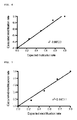
- an expected value can be precisely predicted from the calculated value ( Fig. 6 ). Accordingly, it turned out that even in the case of using whole RNA, the unknown tRNA modification rate of a sample can be measured using reference samples having known modification rates or using a standard calibration curve previously determined.
- HeLa cells having introduced therein siRNA against Cdk5rap1 (KD) and HeLa cells having introduced therein control siRNA (Control) were prepared, and crude RNA was isolated from each of the cells in accordance with the method described in Example 1. Using the isolated crude RNA, qPCR-MtR was performed using the first or second reverse primer, and the dCT r2r1 values of tRNA Trp , tRNA Phe , tRNA Ser (UCN) , and tRNA Leu (UUR) were measured. The results are shown in the following Table 8.
Landscapes
- Life Sciences & Earth Sciences (AREA)
- Chemical & Material Sciences (AREA)
- Health & Medical Sciences (AREA)
- Engineering & Computer Science (AREA)
- Proteomics, Peptides & Aminoacids (AREA)
- Bioinformatics & Cheminformatics (AREA)
- Physics & Mathematics (AREA)
- Analytical Chemistry (AREA)
- Genetics & Genomics (AREA)
- Organic Chemistry (AREA)
- Biotechnology (AREA)
- Biophysics (AREA)
- Molecular Biology (AREA)
- General Health & Medical Sciences (AREA)
- Zoology (AREA)
- Wood Science & Technology (AREA)
- Medical Informatics (AREA)
- Theoretical Computer Science (AREA)
- Spectroscopy & Molecular Physics (AREA)
- Bioinformatics & Computational Biology (AREA)
- Evolutionary Biology (AREA)
- Pathology (AREA)
- Immunology (AREA)
- Microbiology (AREA)
- Biochemistry (AREA)
- General Engineering & Computer Science (AREA)
- Measuring Or Testing Involving Enzymes Or Micro-Organisms (AREA)
Abstract
Description
- The present invention relates to a method for detecting an RNA modification using a reverse transcription method. The present invention also relates to a method for detecting a modification in RNA using a combination of a reverse transcription method and a nucleic acid amplification method, such as a PCR method, and also quantitatively determining the modification level. More specifically, the present invention relates to a method in which reverse transcription is performed using at least two kinds of primers including a primer that binds to a region including an RNA modification site and a primer that complementarily binds to a region not including an RNA modification site, followed by nucleic acid amplification, such as PCR, thereby detecting and/or quantitatively determining the modification. The present invention also relates to a method for testing for genetic susceptibility to
type 2 diabetes using the detection method. - Transfer RNA (tRNA) is an adapter molecule that decodes the information of mRNA (codon) and transfers the corresponding amino acid to a polypeptide chain being synthesized, and is a small-molecule RNA that plays a central role in protein translation. The anticodon loop of tRNA is chemically modified, which is necessary for the fidelity of translation. In particular, chemical modifications at the base at position 34, which is located in the anticodon, and the base at position 37, which is located in the vicinity of the anticodon, play an important role in controlling the accuracy of translation. In addition, it is believed that the breakdown of chemical modifications in the anticodon loop of tRNA is related to a disease.
-
Type 2 diabetes is a disease that occurs due to the combination of environmental factors and genetic factors. There are more than 200 million patients all over the world, and the number of patients is increasing in many countries.Type 2 diabetes is characterized by insulin resistance and/or abnormal insulin secretion in pancreatic β cells, but its main mechanism is still under discussion. Since 2007, large-scale genetic polymorphism epidemiological studies targeted attype 2 diabetes patients have been vigorously carried out around the world, and a large number of genetic single nucleotide polymorphisms (SNP) correlated with having diabetes have been identified. Among them, a large number of literatures have reported that SNPs of Cdkall (cdk5 regulatory associated protein 1-like 1) have the highest correlation with the onset oftype 2 diabetes. It has also been revealed that a person carrying the risk allele of the Cdkall gene has poor glucose-responsive insulin secretion, but there is no correlation with obesity or insulin resistance. In addition, this genetic risk allele is common among Asians. Considering the phenotype of risk allele carriers, it is surmised that SNPs of Cdkall are involved in the onset ofAsian type 2 diabetes. - Further, with respect to the physiological function of Cdkall, it has been revealed that it is an enzyme that thiomethylates adenine37 in tRNA corresponding to lysine into 2-methylthio-N6-threonylcarbamoyladenosine (ms2t6A) (Nonpatent Document 1: Arragain S., et al., J. Biol. Chem., 285, 28425-28433 (2010) and Nonpatent Document 2: Tomizawa et al., Uehara Kinen Seimeikagaku Zaidan Kenkyu Houkokusyo (The Research Reports of the Uehara Memorial Foundation), 25 (2011), Article No. 77). It has been shown that ms2t6A modification is necessary for accurate decoding of lysine codons (Nonpatent Document 1) and plays an important role in preventing the misreading of cognate codons, particularly in preventing misreading in the case where the translation rate is relatively high (Nonpatent Document 3: Tomizawa et al. , Endocrine Journal 2011, 58 (10), 819-825).
- It has been reported that in Cdkall knockout mice, mitochondria ATP production and first-phase insulin secretion are impaired. It has also been reported that pancreatic-β-cell-specific Cdkall knockout mice show the condition of
type 2 diabetes, are observed to have pancreatic islet hypertrophy and impaired blood glucose control, and are hypersensitive to endoplasmic reticulum stress induced by high-fat diet (Nonpatent Document 3 and Nonpatent Document 4: Wei, F. Y. et al., J. Clin. Invest., 121, 3598-3608 (2011)). - That is, the present inventors have shown the following mechanism: when the expression or activity of Cdkall decreases due to genetic or environmental factors, the thiomethylation of lysine tRNA decreases, resulting in a decrease in the accuracy of insulin translation, which leads to the onset of
type 2 diabetes. It has thus turned out that the thiomethylation of lysine tRNA is closely associated with the onset of diabetes. Meanwhile, thiomethylation is also present in mitochondrial tRNA encoded by mitochondrial DNA. It has been reported that the thiomethylation of mitochondrial tRNA is mediated by Cdk5rap1, and that a single nucleotide polymorphism mutation of the Cdk5rap1 gene is correlated with the onset of leukoplakia (Nonpatent Document 1 and Nonpatent Document 5: Reiter, V. et al., Nucleic Acids Res. 40, 6235-6240 (2012)). Like this, the thiomethylation of tRNA has been attracting attention as a new disease biomarker. - As a method for detecting the thiomethylation of tRNA, a detection method using a mass spectrometry method is generally used (Nonpatent Document 6: Suzuki, T. et al., Method. Enzymol., 425, 211-229 (2007)). In a mass spectrometry method, first, tRNA is purified from tissue or cells, and then tRNA is digested with nuclease into several oligonucleotides. Subsequently, the digested oligonucleotides are purified and analyzed by reversed-phase liquid chromatography and a mass spectrometer to detect thiomethylation. However, the detection of thiomethylation by mass spectrometry requires large amounts of RNA (in the unit of mg). Clinical samples are generally limited in amount, and it is difficult to obtain samples in the unit of mg. Accordingly, it is difficult to detect thiomethylation by mass spectrometry using clinical samples. In addition, the thiomethylation detection method by mass spectrometry requires a large number of pretreatments as described above. Therefore, there are problems in that it takes several days to detect thiomethylation, which not only makes it impossible to perform quick detection but also results in increased cost. Further, it is difficult to treat a large number of samples simultaneously. In addition, mass spectrometers are extremely expensive, and also the use thereof requires skills and experiences. Therefore, the analysis is difficult to perform in ordinary medical institutions or laboratories.
- As described above, a mass spectrometry method takes time and cost, and further it is difficult to obtain large amounts of clinical samples. Because of these problems, a mass spectrometry method cannot be clinically applied as a method for detecting the thiomethylation of RNA. Therefore, there has been a demand for a novel detection method that is capable of detecting the thiomethylation of RNA efficiently, that is, quickly at low cost, and further allows for detection using a small amount of sample.
-
- Non Patent Literature 1: Arragain S., et al. J. Biol. Chem. 285, 28425-28433 (2010)
- Non Patent Literature 2: Tomizawa et al., The Uehara Memorial Foundation, Research Report, 25, 2011, Article No.77
- Non Patent Literature 3: Tomizawa et al., Endocrine Journal 2011, 58 (10), 819-825
- Non Patent Literature 4: Wei, F. Y. et al. J. Clin. Invest. 121, 3598-3608 (2011)
- Non Patent Literature 5: Reiter, V. et al. Nucleic Acids Res. 40, 6235-6240(2012)
- Non Patent Literature 6: Suzuki, T. et al. Method. Enzymol. 425, 211-229 (2007)
- An object of the present invention is to provide a method for detecting and/or quantitatively determining a modification present in RNA using a small amount of RNA sample. Another object of the present invention is to provide a method for detecting and/or quantitatively determining a modification present in tRNA, for example, thiomethylation.
- Still another object of the present invention is to provide a method for detecting and/or quantitatively determining a modification present in RNA, thereby diagnosing a disease associated with the modification or the risk thereof. For example, an object is to provide a method for detecting and/or quantitatively determining the thiomethylation of lysine tRNA, thereby diagnosing
human type 2 diabetes or the risk thereof. - The present inventors have conducted extensive research to achieve the above objects. As a result, they have found a method for detecting a modification (e.g., thiomethylation) in RNA (e.g., tRNA) using a reverse transcription method and a nucleic acid amplification method (e.g., quantitative PCR method) in combination, and thus accomplished the present invention.
- The present invention is as follows.
- (1) A method for detecting an RNA modification present in RNA, including performing the following two steps separately or simultaneously:
- a. a step of producing cDNA by reverse transcription of the RNA using a first primer, the first primer being an oligonucleotide designed to complementarily bind to a region including a site having the RNA modification on the RNA;
- b. a step of producing cDNA by reverse transcription of the RNA using a second primer, the second primer being an oligonucleotide designed to complementarily bind to a region on the upstream side (3' side) from a site having the RNA modification on the RNA, and
measuring the difference between the amounts of cDNA produced in the respective steps, thereby detecting the RNA modification.
- (2) The method according to (1) above, wherein the steps a and b are performed separately.
- (3) The method according to (1) or (2) above, wherein the difference between the amounts of cDNA is measured by a nucleic acid amplification reaction method or a fluorescence method.
- (4) The method according to (3) above, wherein the nucleic acid amplification reaction is a quantitative PCR method or a real-time quantitative PCR method.
- (5) The method according to (4) above, wherein the difference between the amounts of cDNA is measured as a difference in the speed of nucleic acid amplification in the nucleic acid amplification reaction.
- (6) The method according to any one of (1) to (5) above, wherein the RNA is tRNA.
- (7) The method according to (6) above, wherein the RNA modification present in RNA is thiomethylation, methylation, or taurination present in tRNA.
- (8) The method according to (7) above, wherein the thiomethylation present in tRNA is the thiomethylation of adenosine37 in tRNA corresponding to Lys, tRNA corresponding to Trp, tRNA corresponding Phe, or tRNA corresponding to Ser (UCN).
- (9) The method according to (8) above, wherein the thiomethylation present in tRNA is the thiomethylation of adenosine37 in tRNA corresponding to Lys.
- (10) The method according to any one of (1) to (9) above, wherein the RNA contains RNA derived from human tissue or human blood.
- (11) The method according to (10) above, wherein the RNA contains RNA derived from human peripheral blood.
- (12) A method for measuring the RNA modification rate of a sample, including performing the method according to any one of (1) to (11) above on at least two samples having known rates of RNA modification present in RNA and a sample having an unknown RNA modification rate, and comparing a parameter indicating a difference in cDNA amount measured from each sample with one another, thereby measuring the unknown RNA modification rate.
- (13) The method according to (12) above, wherein the nucleic acid amplification reaction is a quantitative PCR method or a real-time quantitative PCR method, and the parameter is a difference in threshold cycle for amplifying target nucleic acids between using the first primer and the second primer.
- (14) A method for measuring the RNA modification rate of a sample, including performing the method according to any one of (1) to (11) above on a sample having an unknown rate of RNA modification present in RNA, and comparing a parameter indicating a difference in cDNA amount measured from the sample with a predetermined calibration curve, thereby measuring the unknown RNA modification rate.
- (15) The method according to (14) above, wherein the nucleic acid amplification reaction is a quantitative PCR method or a real-time quantitative PCR method, and the parameter is a difference in threshold cycle for amplifying target nucleic acids between using the first primer and the second primer.
- (16) A kit for detecting an RNA modification present in RNA in an RNA sample (e.g., sample derived from human tissue or human blood),
the kit including:- a first primer that is an oligonucleotide designed to complementary bind to a region including a site having the RNA modification on the RNA; and
- a second primer that is an oligonucleotide designed to complementary bind to a region on the 3' side from a site having the RNA modification on the RNA.
- (17) The kit according to (16) above, wherein the RNA is tRNA.
- (18) The kit according to (17) above, wherein the RNA modification present in RNA is thiomethylation present in tRNA.
- (19) The kit according to (18) above, wherein the thiomethylation present in tRNA is the thiomethylation of adenosine37 in tRNA corresponding to Lys, tRNA corresponding to Trp, tRNA corresponding Phe, or tRNA corresponding to Ser (UCN).
- (20) The kit according to any one of (16) to (19) above, further including another primer for performing PCR.
- (21) A method for using the method according to (9) above to determine whether a subject from which the tRNA is derived is a
type 2 diabetes patient or has the risk thereof. - (22) The method according to (21) above, wherein the tRNA is derived from the subject's tissue or blood (preferably peripheral blood).
- (23) A method for using the method according to (9) above to assay the insulin secretory capacity of a subject from which the tRNA is derived.
- (24) The method according to (23) above, wherein the tRNA is derived from the subject's tissue or blood (preferably peripheral blood).
- According to the present invention, RNA modifications, such as the thiomethylation of tRNA, can be detected quickly at low cost using a small amount of sample. Thus, it is useful as a detection method for various genetic abnormalities (e.g., without being limited thereto, genetic susceptibility to type 2 diabetes) using clinical samples (e.g., tissue or blood).
-
- [
Fig. 1 ] The left figure shows tRNA corresponding to lysine, having adenine37 thiomethylated. The right figure shows the thiomethylation reaction by Cdkall. - [
Fig. 2 ] The figure schematically shows the procedures of a reverse transcription method and a subsequent quantitative PCR method (qPCR-MtR method) in a method for detecting an RNA modification using first and second reverse primers according to one embodiment of the present invention, using lysine tRNA as a model. - [
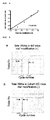
Fig. 3 ] The figure shows the results of the detection of the ms2 modification of lysine tRNA by a reverse transcription method and a quantitative PCR method using lysine tRNA purified from wild-type mice and Cdkall KO mice. - [
Fig. 4 ] The figure shows the results of using purified RNA, wherein the calculated modification rate (calculated rate) is plotted on the Y-axis, while the expected modification rate (expected rate) on the X-axis. - [
Fig. 5 ] The figure shows the results of the detection of the ms2 modification of lysine tRNA by reverse transcription and a quantitative PCR method using crude RNA isolated from wild-type mice and Cdkall KO mice. - [
Fig. 6 ] The figure shows the results of using crude RNA, wherein the calculated modification rate (calculated rate) is plotted on the Y-axis, while the expected modification rate (expected rate) on the X-axis. - [
Fig. 7 ] The figure shows the results of the detection of the ms2 modification of lysine tRNA by reverse transcription and a quantitative PCR method using crude RNA (2 ng) isolated from wild-type mice and Cdkall KO mice, wherein the calculated modification rate (calculated rate) is plotted on the Y-axis, while the expected modification rate (expected rate) on the X-axis. - [
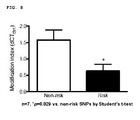
Fig. 8 ] The figure shows the results of the detection of the ms2 modification of lysine tRNA by reverse transcription and a quantitative PCR method using crude RNA from the peripheral blood of individuals carrying the Cdkall SNP (rs775840)type 2 diabetes-related risk allele (Risk group) and healthy individuals (individuals carrying no Cdkall SNP risk allele) (Non-risk group). - [
Fig. 9 ] The figure shows the results of mass spectrometry using purified RNA from the peripheral blood of individuals carrying the Cdkall SNP (rs775840)type 2 diabetes-related risk allele (Fig. 9b ) and healthy individuals (individuals carrying no Cdkall SNP risk allele) (Fig. 9a). Fig. 9c shows the percentage of non-ms2-modified lysine tRNA (t6A) in whole lysine tRNA (ms2t6A + t6A). - [
Fig. 10 ] The figure shows the results of the mass spectroscopy of the ms2 modification of A37 in mitochondrial tRNA. The upper sides show the mass chromatograms of ms2-modified oligonucleotides, while the lower sides show those of non-ms2-modified oligonucleotides. - [
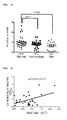
Fig. 11 ] The figure shows the level of thiomethylation modification of lysine RNA in each of groups having the Cdkall gene mutation (group homozygous for the mutation (C/C) and group heterozygous for the mutation (G/C)) and a group not having the mutation (G/G). - [
Fig. 12 ] The figure shows the correlation between the level of thiomethylation modification of lysine tRNA and insulin secretory capacity. - Hereinafter, the present invention will be described in further detail, but the present invention is not limited to these embodiments.
- The present invention is characterized in that a modification present on RNA in an RNA sample is detected by reverse transcription using a first primer and a second primer. More specifically, it is characterized in that cDNA is produced by reverse transcription of RNA using a first primer, and the resulting amount of cDNA is compared with the amount of cDNA produced by reverse transcription of RNA using a second primer, thereby detecting a modification present on RNA.
- In the detection method of the present invention, RNA is subjected to detection. Examples thereof include, but are not limited to, tRNA, rRNA, snRNA, mRNA-like ncRNA, snoRNA, and miRNA. tRNA, rRNA, and snRNA are preferable, and tRNA is more preferable.
- In addition, tRNA to be subjected to detection is not particularly limited either. Examples thereof include tRNA corresponding to Lys, tRNA corresponding to Trp, tRNA corresponding to Phe, and tRNA corresponding to Ser (UCN).
- In addition, "RNA sample" in the present invention is not particularly limited, and means a sample containing RNA regardless of the kind of RNA or its content. Examples of RNA samples include samples containing RNA derived from mammalian tissue, organ, or blood, such as RNA derived from human tissue, organ, or blood. It is preferable that the RNA sample is a sample containing RNA derived from human peripheral blood, which is easy to collect without excessive burden on the subject. The method for collecting leukocyte RNA from blood is not particularly limited. Examples thereof include a method in which whole blood is processed by Ficoll-Hypaque gradient centrifugation to concentrate leukocytes, followed by RNA extraction, and a method in which blood is collected in an RNA blood collecting tube, such as PAXgene blood collecting tube (manufactured by Nippon Becton Dickinson Company), and then, without separating leukocytes, directly used as an RNA sample according to the manufacturer's protocol.
- In the detection method of the present invention, examples of RNA modifications that can be detected include, but are not limited to, thiomethylation, methylation, and taurination. Thiomethylation and methylation are preferable, and thiomethylation is more preferable. In the case of an RNA modification that is known or assumed to be associated with a specific disease, by detecting or quantitatively determining the modification using the method of the present invention, the presence or risk of the disease can be determined. For example, as already described, the thiomethylation of adenosine37 in tRNA corresponding to lysine is associated with
type 2 diabetes. Thus, by detecting or quantitatively determining such an RNA modification, the presence or risk oftype 2 diabetes can be determined. - Examples of RNA modifications that can be detected by the method of the present invention and diseases known to be associated with the modifications (i.e., diseases whose presence or risk can be determined using the method of the present invention) include taurination and mitochondrial encephalomyopathy, thiomethylation and diabetes, and methylation and X-linked mental retardation.
- The first primer used in the present invention is an oligonucleotide designed to complementary bind to a region including a site having the RNA modification to be detected by the detection method of the present invention (e.g., without being limited thereto, thiomethylated base). The length thereof is not particularly limited as long as it functions as a primer in a reverse transcription method and also in a PCR method combined therewith as necessary in the present invention, and is, for example, 10 or more bases, preferably 10 to 30 bases, and more preferably 15 to 20 bases. The region including a site having an RNA modification used in designing the oligonucleotide (primer) is not particularly limited as long as it includes the modification site. However, it is preferably selected such that the RNA modification site is located on the 5' side (from the center) of the region. When the first primer is designed in this manner, reverse transcription can be performed without being affected or with being less affected by the site having an RNA modification.
- The second primer used in the present invention is an oligonucleotide designed to complementary bind to an arbitrary region on the upstream side (3' side) from a site having the RNA modification to be detected by the detection method of the present invention (e.g., without being limited thereto, thiomethylated base). The length thereof is not particularly limited as long as it functions as a primer in a reverse transcription method and also in a PCR method combined therewith as necessary in the present invention, and is, for example, 10 or more bases, preferably 10 to 30 bases, and more preferably 15 to 20 bases. Because the region to which the second primer complementary binds is located on the 3' side from a site having an RNA modification, in reverse transcription, the RNA modification (e.g., without being limited thereto, thiomethylation) inhibits reverse transcription. Accordingly, when reverse transcription is performed using the second primer designed as described above, an inversely proportional correlation is observed, in which the larger the amount of tRNA modified, the smaller the amount of reverse transcription product. Meanwhile, reverse transcription using the first primer produces cDNA independently of the RNA modification. Thus, the amount of cDNA produced using the second primer is smaller than the amount of cDNA produced using the first primer. The arbitrary region on the 3' side to which the second primer complementary binds is not particularly limited, and may be any region as long as reverse transcription is at least partially, preferably substantially, inhibited by the RNA modification in reverse transcription. However, it is preferable that the arbitrary region on the 3' side is designed to be not too far from or too close to the RNA modification site. For example, it is preferable that the region is designed to start about 3 to 10 bases away, preferably about 3 to 5 bases away, from the RNA modification site.
- When the first primer and the second primer are designed in the positional relationship with the RNA modification site in this manner, the difference between the amounts of cDNA produced by reverse transcription using the respective primers will be more significant.
- In addition, the first primer and/or second primer used in the present invention may be labeled with an appropriate labeling agent, such as a radioactive isotope, an enzyme, a fluorescent substance, or a luminescent substance. Examples of radioactive isotopes include 125I, 131I, 3H, and 14C. Examples of enzymes include β-glucosidase, alkali phosphatase, peroxidase, and malate dehydrogenase. Examples of fluorescent substances include fluorescein and Alex Fluor. Examples of luminescent substances include luminol.
- The first and second primers used in the present invention can be designed to complementary bind to the target regions based on the RNA to be tested and the target RNA modification (its position and kind), and they can be synthesized in the usual manner using a DNA/RNA automatic synthesizer. Such first and second primers can each be dissolved in water or an appropriate buffer (e.g., TE buffer) to an appropriate concentration and stored at about -20°C.
- For the detection of the difference between the amount of cDNA produced by the first primer and the amount of cDNA produced by the second primer, which is one of the features of the present invention, any method may be used as long as the difference can be detected. Examples thereof include nucleic acid amplification methods (nucleic acid amplification reaction) and mass spectrometry methods, and nucleic acid amplification methods are preferable. By using a nucleic acid amplification method, a difference in cDNA amount can be measured quickly at low cost. Incidentally, when fluorescently labeled nucleotides are used during reverse transcription, the subsequent detection of a difference in cDNA amount by a nucleic acid amplification method may be omitted. However, in terms of detection sensitivity and detection accuracy, it is preferable to combine a reverse transcription method and a nucleic acid amplification method.
- Examples of nucleic acid amplification reactions include quantitative PCR and real-time quantitative PCR, and it is preferable to use an intercalation method using SYBR GREEN or a TaqMan@ probe method. The use of these methods makes it possible to perform not only the detection of an RNA modification but also the comparison between measured samples and also the quantitative determination of the RNA modification. In addition, for the purpose of detection, when the first primer and the second primer are labeled with separate fluorescent substances and subjected to Multiplex analysis, the detection of an RNA modification can be performed quickly with fewer samples.
- Primers to be used in the nucleic acid amplification reaction for amplifying cDNA produced using the first primer or the second primer are not particularly limited as long as they are a pair of primers that complementary bind to the produced cDNA, which is the reverse transcription product (reverse primer and forward primer). However, it is preferable that one of the primers is the same as the first primer.
- In addition, the steps of producing cDNA by reverse transcription of RNA using the first and second primers and then amplifying the produced cDNA by real-time quantitative PCR according one embodiment of the present invention may be performed separately, or alternatively, it is also possible to perform one-step quantitative RT-PCR, in which PCR is performed using the same primer as the primer used for reverse transcription, and a reverse transcription reaction is also carried out in the real-time apparatus.
- In the detection method of the present invention that combines a PCR method, the difference between the amount of cDNA produced by the first primer and the amount of cDNA produced by the second primer may be detected by observing the amplification of DNA over time (with an increase in the number of PCR cycles) or may also be detected as a difference in DNA amount in an arbitrary number of PCR cycles.
- The RNA modification detection method that combines a reverse transcription method and a quantitative PCR method according to one embodiment of the present invention has extremely high detection sensitivity. For example, the presence of an RNA modification can be detected using only 1 ng of whole RNA, and its sensitivity is about 1000 times or more that of conventional mass spectrometry methods. In addition, because the method is a two-step RT-PCR method or a one-step RT-PCR method, where reverse transcription is followed by PCR, the detection operation can be completed within a short period of time, such as 2 to 3 hours, and it is also possible to treat a large number of samples simultaneously. Further, as compared with a mass spectrometry method, required instruments are less expensive, and also the operation is simple.
- Another embodiment of the present invention is a kit for detecting an RNA modification present in RNA in an RNA sample. The kit contains a first primer, which is an oligonucleotide designed to complementary bind to a region including a site having an RNA modification, and a second primer, which is an oligonucleotide designed to complementary bind to a region on the 3' side from a site having an RNA modification. In addition, the kit contains the first and second primers, and may also contain other constituent components necessary for detection according to the detection method. For example, it may further contain other primers for performing a PCR method (forward primer and/or reverse primer) and a reaction buffer, DNA polymerase, or the like for performing PCR.
- Still another embodiment of the present invention is a method for detecting thiomethylation present in tRNA in an RNA sample, characterized by using at least two primers that complementary bind to tRNA, that is, a first primer, which is an oligonucleotide designed to complementary bind to a region including the thiomethylated base to be detected, and an oligonucleotide designed to complementary bind to an arbitrary region on the 3' side from the thiomethylated base to be detected.
- The first primer and the second primer can be designed without particular limitation as long as they satisfy the above conditions and each functions as a primer in a reverse transcription method and also in a PCR method combined therewith as necessary in the present invention. The length thereof is not particularly limited, but can be designed to be, for example, 10 or more bases, preferably 10 to 30 bases, and more preferably 15 to 20 bases.
- The first primer is designed to complementary bind to a region including the target thiomethylated base site as described above, and is more preferably designed such that the target thiomethylated base site is corresponding almost to the center of the primer. When reverse transcription is performed using this first primer, reverse transcription occurs independently of the thiomethyl group, and the amount of reverse transcription product is correlated with the total tRNA amount. Meanwhile, the second primer is designed to bind to the 3' side from the target thiomethylated base site, and thus the thiomethyl group at the thiomethylation site inhibits the efficiency of reverse transcription. Accordingly, when reverse transcription is performed using the second primer designed as described above, there is an inversely proportional correlation in which the larger the amount of tRNA thiomethylated, the smaller the amount of reverse transcription product. As a result, in correlation with the level of thiomethylation of tRNA, the amount of cDNA produced using the second primer is smaller the amount of cDNA produced using the first primer.
- In yet another embodiment of the present invention, in the detection of thiomethylation, after reverse transcription, the difference between the amounts of cDNA produced by the first primer and the second primer can be further measured using the nucleic acid amplification method described above, such as real-time PCR (e.g., an intercalation method using SYBR GREEN or a TaqMan® probe method). In addition, as described above, both a two-step RT-PCR method and a one-step RT-PCR method can be used.
- In a further embodiment of the present invention, provided is a method for using the method for detecting the thiomethylation of tRNA described above to detect the thiomethylation of tRNA derived from a subject (thiomethylation of adenine37 in tRNA corresponding to lysine), thereby determining whether the subject is a
type 2 diabetes patient or has the risk thereof. This allows for the accurate, simple, and quick testing fortype 2 diabetes, and it is also possible to perform presymptomatic testing, risk testing, and early testing fortype 2 diabetes. - In the present invention, "subject" is not particularly limited and includes
type 2 diabetes patients, individuals susceptible to type 2 diabetes, and also healthy individuals. - In addition, by testing a sample collected from a patient who has developed
type 2 diabetes using the testing method of the present invention, it is possible to determine the presence of an abnormality in the thiomethylation of tRNA as a cause oftype 2 diabetes. - In a still further embodiment of the present invention, provided is a test kit for genetic susceptibility to type 2 diabetes. The kit contains at least a first primer, which is an oligonucleotide designed to complementary bind to a region including adenosine37 in tRNA corresponding to lysine, and a second primer, which is an oligonucleotide designed to complementary bind to an arbitrary region on the 3' side from position 37 in tRNA corresponding to lysine.
- As described above, the use of the detection method of the present invention makes it possible to detect an RNA modification (e.g., thiomethylation) within a short period of time, at low cost, and with high sensitivity. In addition, according to the present invention, it is possible to detect an RNA modification (e.g., thiomethylation of tRNA) using a small amount of RNA sample (e.g., tRNA from the peripheral blood of a test subject) to diagnose the onset risk of a disease (e.g., diabetes). Further, for patients, personalized medicine can be developed (treatments to suit the individual constitution, including the kind of therapeutic agent, the administration method, etc.).
- Hereinafter, the present invention will be described in further detail with reference to the Examples. However, the present invention is not limited thereto.
- Cdkall, whose SNPs have been confirmed to have the highest correlation with the onset of
type 2 diabetes, is an enzyme that thiomethylates adenosine37 in tRNA corresponding to lysine into 2-methylthio-N6-threonylcarbamoyladenosine (ms2t6A).Fig. 1 schematically shows thiomethyl-modified (37A (ms2)) lysine tRNA and the thiomethylation reaction by Cdkal1. -
Fig. 2 schematically shows the detection of tRNALys (UUU). Reverse transcription was performed using two reverse primers targeting the unique site of tRNALys (UUU) (thiomethylation site). The first reverse primer was designed to anneal to a specific region including the thiomethylation site (adenosine37), and while the second reverse primer was designed to anneal to a specific sequence downstream in the 3' direction from the thiomethylation site. First, tRNALys (UUU) was linearized (Step1), and then reverse-transcribed using the first or second reverse primer (Step2). Subsequently, cDNA produced by the first reverse primer or the second reverse primer was amplified by quantitative PCR (Step3). - In the reverse transcription of fully modified tRNALys (UUU), the ms2 modification of adenosine37 attenuates reverse transcription. Thus, the amount of cDNA produced by the second reverse primer is smaller than the amount of cDNA produced by the first reverse primer. Meanwhile, in the case of partially modified tRNALys (UUU), with a decrease in the modification, the amount of cDNA produced by the second reverse primer approaches the amount of cDNA produced by the first reverse primer.
- Whole RNA (crude RNA) was isolated from cells or tissue (mouse liver) by a guanidine thiocyanate/phenol/chloroform method using TRlzol reagent (Invitrogen) in accordance with the manufacturer's protocol.
- Individual tRNALys (UUU) was purified in accordance with the method described in Miyauchi, et al. Nucleic Acids Res., 35, e24 (2007) using a reciprocal circulating chromatography method (RCC).
- Whole RNA (crude RNA) was isolated from 1.5 ml of peripheral blood using QIAamp RNA Blood Mini Kit (Qiagen) in accordance with the manufacturer's protocol. Purified RNA was isolated from 50 ml of peripheral blood by adding excess hypotonic solution of QIAamp RNA Blood Mini Kit (Qiagen) to destroy erythrocytes, and then purifying whole RNA in leukocytes using TRlzol.
- Each isolated/purified tRNA (tRNALys (UUU), tRNATrp, tRNAPhe, tRNASer (UCN), and tRNALeu (UUR)) was digested into oligonucleotides and then subjected to liquid chromatography/mass spectrometry in accordance with the method described in Wei et al. (Nonpatent Document 4).
- The following Table 1 shows the primer sequences designed to measure the ms2 modification of tRNALys (forward primer sequence (SEQ ID NO: 2), first reverse primer sequence (reverse Primer r1) (SEQ ID NO: 3), and second reverse primer sequence (reverse Primer r2) (SEQ ID NO: 4)) together with the tRNALys sequence (SEQ ID NO: 1) (the ms2 modification site adenosine37 (A37) is indicated with an arrow).
[Table 1] 
HuMsLys_forward primer: GTCGGTAGAGCATCAGACTT (SEQ ID NO: 2) HuMsLys_reverse primer r1: CCTGGACCCTCAGATTAAAA (SEQ ID NO: 3) HuMsLys_reverse primer r2: GAACAGGGACTTGAACCCTG (SEQ ID NO: 4) 

- Whole RNA (crude or purified RNA) isolated from cells or tissue (e.g., liver) was prepared to 100 ng/ml with RNase-free water unless otherwise noted. In order to avoid genomic contamination, in 20 µl of the reaction liquid, 2 µl (200 ng) of whole RNA was digested with 5 units of DNaseI (Roche) at 37°C for 20 minutes and then treated at 75°C for 10 minutes to heat-inactivate DNaseI. After the DNase treatment, 2.5 µl of the digested whole RNA was mixed with 1 µl of a solution containing 20 µM of the first reverse primer or second reverse primer, heat-denatured at 65°C for 10 minutes, and then rapidly cooled on ice for at least 5 minutes. On ice, a recombinant reverse transcriptase (Transcriptor, Roche) was added to a final concentration of 0.5 units/µl. Reverse transcription was performed in the total reaction volume of 10 µl at 55°C for 30 minute, followed by heat inactivation at 85°C for 5 minutes. cDNA synthesized from the first or second reverse primer was subjected to quantitative PCR using SYBR Premix Ex Taq Kit (Takara) and ABI PRISM 7300 Real-Time PCR System (Applied biosystems) in accordance with the manufacturer's protocol.
- Cdkall knockout mice were prepared in accordance with the method described in Wei, F. Y. et al., J. Clin. Invest., 121, 3598 to 3608 (2011) (Nonpatent Document 4). In order to remove the ubiquitous expression of Cdk5rap1, transgenic
mice having exons 4 and 5 of Cdk5rap1 adjoined by the loxP sequence were interbreed with transgenic mice that express the Cre recombinase under the control of the CAG promotor. All the animal experiments were performed in accordance with the procedure manual approved by The Animal Ethics Committee of Kumamoto University (ID: B24-134, B24-132). - HeLa cells were cultured in a high-glucose-content DMEM culture medium (Invitrogen) containing 10% FBS. The transfection of siRNA was performed as follows. HeLa cells were seeded in a 24-well plate to a density of 30%. 24 hours later, siRNA targeting human Cdk5rap1 (Dharmacon) or negative control siRNA (Ambion) were introduced into the cells using the Lipofectamine RNAiMAX reagent (Invitrogen) to a final concentration of 50 nM. Three days after transfection, whole RNA was isolated using the above method.
- Using QIAamp DNA Blood Mini Kit (Qiagen), genomic DNA was purified from 200 µl of peripheral blood and prepared to 10 ng/µl with distilled water. SNP Cdkall (rs7754840) was tested using Taqman SNP Genotyping Assay Kit (Applied biosystems). Experiments using human genome samples were performed with approval of the Ethics Committee of Kumamoto University (Approval Number: Genome 159).
- In accordance with the RNA isolation method described above, tRNALys (UUU) with adenosine37 fully ms2-modified was purified from the liver of wild-type mice, and tRNALys (UUU) whose ms2 modification was completely stopped was purified from the liver of CadKall KO mice. Each purified tRNALys (UUU) was subjected to reverse transcription and then quantitative determination PCR. The results are shown in
Fig. 3. Fig. 3a shows the results of qPCR-MtR performed using tRNALys (UUU) from wild-type mice, whileFig. 3b shows the results of qPCR-MtR performed using tRNALys (UUU) from CadKall KO mice. - In the case where fully ms2-modified wild-type tRNALys (UUU) was used as the template, the threshold cycle (CT) CTr2 obtained from the second reverse primer (r2) was remarkably larger than the threshold cycle CTr1 obtained from the first reverse primer (r1) (
Fig. 3a ). Meanwhile, in the case of tRNALys (UUU) lacking ms2 modification, CTr2 was closer to CTr1. From these results, it was confirmed that in the case of using the second reverse primer, reverse transcription is reduced by the ms2 modification of adenosine37, while in the case of using the first reverse primer, reverse transcription is not affected. That is, it turned out that CTr2 reflects the level of ms2 modification, and CTr1 reflects the entire tRNA molecules in the tRNA sample. - Using a conventional ddCT method and the following calculation model, the difference between CTr1 and CTr2 in an arbitrary sample (dCTr2r1 = CTr2 - CTr1) can be used as an index of modification rate. That is, the smaller the dCTr2r1 value, the less the ms2 modification of tRNA. In addition, based on the following calculation mathematical formula, the unknown ms2 modification rate in tRNA in a test sample can be determined using two reference samples having known ms2 modification rates in tRNA.

- Lms represents the total number of tRNA molecules with ms2 modification, Lt6 represents the total number of tRNA molecules without ms2 modification, and Ltotal represents the total number of RNA molecules. Accordingly, the absolute modification rate (x) is shown by the following mathematical formula.

- During reverse transcription, tRNA with ms2 modification is transcribed with the first reverse primer (r1) or the second reverse primer (r2) at the rate RTms r1 or RTms r2. Meanwhile, tRNA without ms2 modification is transcribed with the first reverse primer (r1) or the second reverse primer (r2) at the rate RTt6 r1 or
RT t6 r2. Reverse transcription with r1 is not related to ms2 modification and thus is shown by the following mathematical formula (3), while reverse transcription with r2 is reduced by ms2 modification and thus is shown by the following mathematical formula (4).
- When reverse transcription is performed using a whole RNA sample including Lms and Lt6, the transcription can be represented as in the following mathematical formulae (5) to (7).

- Here, R0 and M0 are the amounts of cDNA produced using the primers r1 and r2, respectively. R0a and M0a are the amounts of cDNA produced by the primers r1 and r2, respectively, using a whole RNA sample having a modification rate a. The following mathematical formula (8) shows exponential amplification by the subsequent PCR.

- Here, XT is the threshold number of target molecules, CTX is the threshold cycle for target amplification, and E is the efficiency of target amplification.
- During PCR using cDNA produced by the primer r1 or r2 from an arbitrary sample having a modification rate a, the reaction can be shown by the following relational expression (9).

- M0a is divided by R0a to give the following mathematical formula (10).

- Here, CTr2a is the threshold cycle for amplification of M0a produced by the primer r2, while CTr1a is the threshold cycle for amplification of R0a produced by the primer r1.
- The comparison between samples having modification rates a and b gives the following mathematical formula (11).

- Meanwhile, from the mathematical formula (4) and the mathematical formula (7), the following mathematical formula (12) is given.

- From individuals having modification rates w, k, and s, respectively, the following mathematical formula (13) is derived.

- If the modification rates w and k are already known, the modification rate s can be determined from the mathematical formula (13). Even in the case where the modification rate w, k, and s are unknown, the relative comparison of the modification rates can be easily made using dCTr2r1 as shown by the following mathematical formula.

- Using the principle of the present invention, tRNA samples having various ms2 modification rates were subjected to measurement. Purified tRNALys (UUU) from wild-type mice and purified tRNALys (UUU) from CadKall KO mice were combined in the ratios shown in the table to prepare tRNA having various ms2 modification rates (25, 50, 75, and 100%), and they were subjected to qPCR-MtR. The ddCT value was calculated by subtracting the dCTr2r1 value of each sample from the dCTr2r1 value of
Sample 1. The calculated modification rate was calculated in accordance with the mathematical formula of Example 3. The results are shown in the following Table 4.[Table 4] Sample No. Ratio of Sample (WT:KO) ddCT 2^(-ddCT) calculated rate Expected rate 1 0 : 100 0 1.000 0.000000 0.00 2 25 : 75 0.17 0.889 0.1145437 0.25 3 50 : 50 0.67 0.629 0.3828109 0.50 4 75 : 25 1.79 0.289 0.7324833 0.75 5 100 : 0 5,08 0.030 1.000000 1.00 - The ordinary dCT value decreased with a decrease in the ms2 modification rate. In addition, using a fully ms2-modified tRNA sample (Sample No. 5) and a tRNA sample without ms2 modification (Sample No. 1) as references, the calculated modification rates of partially ms2-modified samples (Samples Nos. 2 to 4) were compared with respective expected modification rates. As a result, it turned out that an expected value can be precisely predicted from the calculated value (
Fig. 4 ). Accordingly, it turned out that the unknown tRNA modification rate of a sample can be measured using reference samples having known tRNA modification rates or using a standard calibration curve previously determined. - Using a small amount of crude RNA, ms2 modification was measured by qPCR-MtR. 200 ng of whole RNA was isolated from wild-type mice and also from CadKall KO mice and qPCR-MtR was performed using the first or second reverse primer. The results are shown in
Fig. 5. Fig. 5a shows the results of qPCR-MtR performed using crude RNA from wild-type mice, whileFig. 5b shows the results of qPCR-MtR using crude RNA from CadKall KO mice. The results agree with the results of the experiment using purified tRNALys (UUU), and the CTr2 value obtained from the whole RNA from CadKall KO mice was significantly lower than the CTr2 value obtained from the whole RNA from wild-type mice. - Further, in the same manner as in Example 4, whole RNA (crude RNA) from wild-type mice and whole RNA (crude RNA) from CadKall KO mice were combined at specific ratios to prepare RNA having various ms2 modification rates (25, 50, 75, and 100%, and they were subjected to qPCR-MtR. The dCTr2r1 value of each sample is standardized based on the dCTr2r1 value of
Sample 1 and shown as a ddCT value. The results are shown in the following Table 5.[Table 5] Sample No. Ratio of Sample (WT:KO) ddCT 2^(-ddCT) calculated rate Expected rate 1 0 : 100 0 1.000 0.000000 0.00 2 25 : 75 0.4771 0.718 0.2844918 0.25 3 50 : 50 1.1245 0.459 0.5469375 0.50 4 75 : 25 2.9289 0.131 0.8776691 0.75 5 100 : 0 6.6102 0.010 1.000000 1.00 - The dCT value decreased with a decrease in the ms2 modification rate. In addition, using a fully ms2-modified tRNA sample (Sample No. 5) and a tRNA sample without ms2 modification (Sample No. 1) as references, the calculated modification rates of partially ms2-modified samples (Samples Nos. 2 to 4) were compared with respective expected modification rates. As a result, it turned out that an expected value can be precisely predicted from the calculated value (
Fig. 6 ). Accordingly, it turned out that even in the case of using whole RNA, the unknown tRNA modification rate of a sample can be measured using reference samples having known modification rates or using a standard calibration curve previously determined. - The measurement was performed in the same manner as in Example 5. However, the amount of whole RNA used was 2 ng. Whole RNA obtained from wild-type mice and CadKall KO mice was prepared to 1 ng/µl and subjected to qPCR-MtR using the first or second reverse primer. The results are shown in Table 6 and
Fig. 7 below. It turned out that sufficient detection is possible even the amount of RNA is 2 ng.[Table 6] Sample No. Ratio of Sample (WT:KO) ddCT 2^(-ddCT) calculated rate Expected rate 1 0 : 100 0.000 1.000 0.000 0.000 2 25 : 75 0.227 0.855 0.169 0.250 3 50 : 50 0.691 0.619 0.442 0.500 4 75 : 25 1.585 0.333 0.774 0.750 5 100 : 0 2.848 0.139 1.000 1.000 - Peripheral blood was collected from individuals carrying the Cdkall SNP (rs775840)
type 2 diabetes-related risk allele and healthy individuals (individuals carrying no Cdkall SNP risk allele) and subjected to the following experiment. Using 100 ng of whole RNA (crude RNA) isolated from a peripheral blood sample, qPCR-MtR was performed using the first or second reverse primer. Because references for determining the absolute ms2 modification rate of human tRNALys (UUU) are not available, a dCTr2r1 value was used to measure the relative modification level. The dCTr2r1 values of whole RNA isolated from 1.5 ml of the peripheral blood of individuals carrying thetype 2 diabetes-related risk allele of Cdkall SNP (rs775840) (population size: 6) and healthy individuals (population size: 7) were compared as modification indexes. The results are shown inFig. 8 . The dCTr2r1 value of individuals carrying the risk allele of Cdkall SNP was significantly lower than the dCTr2r1 value of healthy individuals. This shows that ms2 modification is suppressed in individuals carrying thetype 2 diabetes-related Cdkall SNP. - The results of qPCR-MtR were confirmed by mass spectrometry. Using 50 µg of whole RNA isolated from 30 ml of the peripheral blood of individuals carrying the risk allele of Cdkall SNP and healthy individuals, tRNALys (UUU) was purified, and purified tRNALys (UUU) was subjected to mass spectrometry. The results are shown in
Fig. 9. Fig. 9b shows the results from individuals carrying the risk allele, whileFig. 9a shows the results from healthy individuals (mass chromatogram: ms2t6A (m/z459), t6A (m/z413)). The non-modification rate was standardized as the ratio of the t6A area relative to the total area of t6A and ms2t6A. The average of three experiments using whole RNA isolated from the same individuals is shown. As shown inFig. 9c , the non-ms2-modified tRNALys (UUU) in individuals carrying the risk allele was 1.47 times greater. - Mitochondrial tRNA of mammals also have 2-methylthio-N6-threonylcarbamoyladenosine (ms2t6A) modification. In mitochondrial tRNA, tRNATrp, tRNAPhe, and tRNASer (UCN) have ms2t6A modification, but tRNALeu (UUR) does not have ms2t6A modification. In mammalian cells, Cdk5rap1 converts N6-isopentenyladenosine (i6A) into ms2i6A at A37.
- The ms2i6A modification of mitochondrial tRNA in Cdk5rap1 knockout (Cdk5rap1 KO) mice was systematically examined by qPCR-MtR using the first or second reverse primer. Whole RNA (crude RNA) was prepared from wild-type mice and Cdk5rap1 KO mice, and, using the primers shown in Table 3 above, each measured for the dCTr2r1 values of tRNATrp,tRNAPhe, tRNASer (UCN), and tRNALeu (UUR).
- The results are shown in the following Table 7. The dCTr2r1 values of tRNATrp, tRNAPhe, and tRNASer (UCN) of wild-type mice (WT) were significantly higher than the dCTr2r1 values obtained from Cdk5rap1 KO mice. This shows that the ms2 modification of tRNATrp, tRNAPhe, and TRNASer (UCN) is suppressed in knockout mice. Meanwhile, the dCTr2r1 value of tRNALeu (UUR) of wild-type mice was almost the same as the dCTr2r1 value obtained from Cdk5rap1 KO mice.
[Table 7] dCt tRNATrp tRNAPhe tRNASer(UCN) tRNALeu(UUR) WT 2.053 2.466 0.620 0.369 Cdk5rap1 KO 0.252 -0.404 0.0001 0.360 p value 0.000004 0.00004 0.0005 0.097 n=3, Student's t-test was performed to examine the statistical significance. - In addition, with respect to each of mitochondrial tRNATrp, tRNAPhe, and tRNASer (UCN) isolated and purified from the liver of wild-type mice and Cdk5rap1 KO mice, ms2 modification was checked by mass spectrometry. As a result, it was observed that ms2 modification of tRNATrp, tRNAPhe, and tRNASer (UCN) had disappeared, and the results agreed with the results of qPCR-MtR. The results are shown in
Fig. 10 . - HeLa cells having introduced therein siRNA against Cdk5rap1 (KD) and HeLa cells having introduced therein control siRNA (Control) were prepared, and crude RNA was isolated from each of the cells in accordance with the method described in Example 1. Using the isolated crude RNA, qPCR-MtR was performed using the first or second reverse primer, and the dCTr2r1 values of tRNATrp, tRNAPhe, tRNASer (UCN), and tRNALeu (UUR) were measured. The results are shown in the following Table 8.
[Table 8] tRNA species tRNATrp tRNAPhe tRNASer(UCN) tRNALeu(UUR) Control (dCT) 3.733 2.702 2.175 0.333 KD (dCT) 0-233 -0.359 -1.359 0.566 p value p=0.00002 p=000186 p=0.00002 p=0.1 - Also in the results of using HeLa cells, similarly to the results of using mice, the dCTr2r1 values of tRNATrp, tRNAPhe, and tRNASer (UCN) obtained from the Control cells were significantly higher than the dCTr2r1 values obtained from the Cdk5rap1 knockdown (KD) cells. Meanwhile, the dCTr2r1 value of Control tRNALeu (UUR) was almost the same as the dCTr2r1 value of Cdk5rap1 KD.
- In accordance with Example 1, DNA and RNA were extracted from human peripheral blood. In accordance with the method of Example 1 (9), the Cdkall gene mutation related to the onset of diabetes was identified, and samples were divided into a group homozygous for the risk Cdkall gene mutation (C/C, n = 20), a group homozygous for the non-risk Cdkall gene mutation (G/G, n = 31), and a hetero group (G/C, n = 35). Next, a PCR method was performed using RNA of each group to measure the modification of tRNALys (UUU), and the relative modification rates were examined. The results are shown in
Fig. 11 . As a result, in the group having the risk Cdkall gene mutation that increases the risk of the onset of diabetes, the thiomethylation modification rate was significantly lower than in the group having the non-risk Cdkall mutation. P < 0.05 is regarded as significant. ANOVA was used for assay. - In order to examine the correlation between the thiomethylation of tRNALys (UUU) and insulin secretory capacity, carbohydrate tolerance testing was performed on humans in the usual manner. A solution containing 75 g of glucose (Trelan-G) was administered to 28 volunteers fasted overnight (Cdkall mutation genotype: C/C, n = 9; G/C, n = 12; G/G, n = 7). Blood was collected before and 30 minutes after the administration, and the insulin secretory capacity (corrected insulin response) was calculated based on the blood insulin and the blood sugar level. In addition, RNA was purified from the same blood samples. The level of thiomethylation modification was detected by a qPCR-MtR method, and the correlation between insulin secretory capacity and thiomethylation level was examined. The results are shown in
Fig. 12 . As a result, a positive correlation was observed, in which the less the thiomethylation modification, the lower the insulin secretory capacity. - The foregoing merely illustrates objects and subjects of the present invention, and does not limit the accompanying Claims. Without departing from the accompanying Claims, various modifications and alterations to the described embodiments will be apparent to those skilled in the art in view of the teachings herein.
- The use of the detection method of the present invention makes it possible to detect an RNA modification (e.g., thiomethylation) within a short period of time, at low cost, and with high sensitivity. In addition, the use of the detection method of the present invention makes it possible to detect an RNA modification (e.g., thiomethylation of tRNA) using a small amount of RNA sample (e.g., tRNA from peripheral blood) to diagnose the onset risk of a disease (e.g., diabetes).


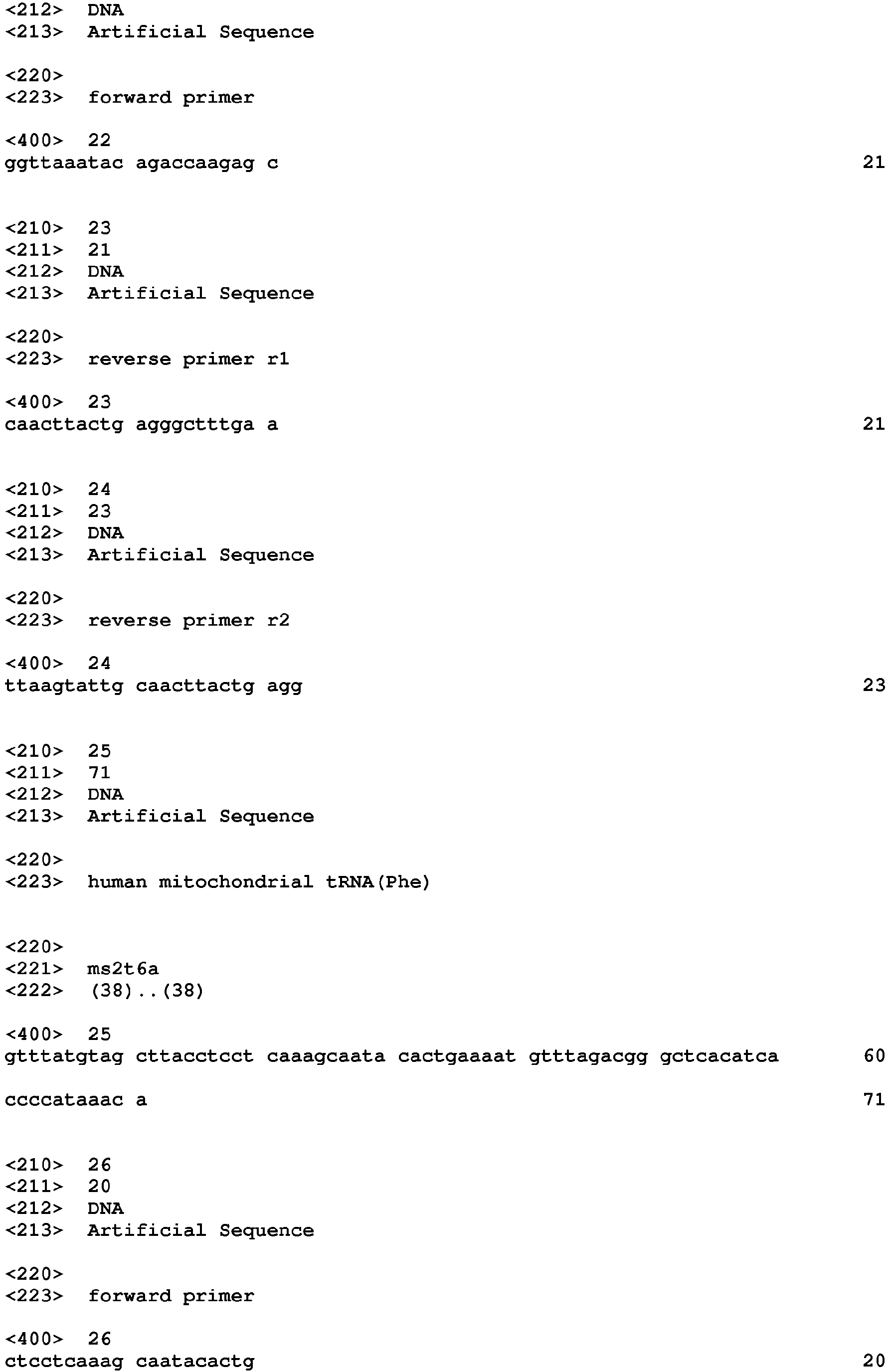


Claims (24)
- A method for detecting an RNA modification present in RNA, comprising:a. a step of producing cDNA by reverse transcription of the RNA using a first primer, the first primer being an oligonucleotide designed to complementarily bind to a region including a site having the RNA modification on the RNA;b. a step of producing cDNA by reverse transcription of the RNA using a second primer, the second primer being an oligonucleotide designed to complementarily bind to a region on the upstream side (3' side) from a site having the RNA modification on the RNA,
wherein the step a and b are performed separately or simultaneously, and
measuring the difference between the amounts of cDNA produced in the respective steps, thereby detecting the RNA modification. - The method according to claim 1, wherein the steps a and b are performed separately.
- The method according to claim 1 or 2, wherein the difference between the amounts of cDNA is measured by a nucleic acid amplification reaction method or a fluorescence method.
- The method according to claim 3, wherein the nucleic acid amplification reaction is a quantitative PCR method or a real-time quantitative PCR method.
- The method according to claim 4, wherein the difference between the amounts of cDNA is measured as a difference in the speed of nucleic acid amplification in the nucleic acid amplification reaction method.
- The method according to any one of claim 1 to 5, wherein the RNA is tRNA.
- The method according to claim 6, wherein the RNA modification present in RNA is thiomethylation, methylation, or taurination present in tRNA.
- The method according to claim 7, wherein the thiomethylation present in tRNA is the thiomethylation of adenosine37 in tRNA corresponding to Lys, tRNA corresponding to Trp, tRNA corresponding Phe, or tRNA corresponding to Ser (UCN).
- The method according to claim 8, wherein the thiomethylation present in tRNA is the thiomethylation of adenosine37 in tRNA corresponding to Lys.
- The method according to any one of claims 1 to 9, wherein the RNA contains RNA derived from human tissue or human blood.
- The method according to claim 10, wherein the RNA contains RNA derived from human peripheral blood.
- A method for measuring the RNA modification rate of a sample, including performing the method according to any one of claims 1 to 11 on at least two samples having known rates of RNA modification present in RNA and a sample having an unknown RNA modification rate, and comparing a parameter indicating a difference in cDNA amount measured from each sample with one another, thereby measuring the unknown RNA modification rate.
- The method according to claim 12, wherein the nucleic acid amplification reaction is a quantitative PCR method or a real-time quantitative PCR method, and the parameter is a difference in threshold cycle for amplifying target nucleic acids between using the first primer and the second primer.
- A method for measuring the RNA modification rate of a sample, including performing the method according to any one of claims 1 to 11 on a sample having an unknown rate of RNA modification present in RNA, and comparing a parameter indicating a difference in cDNA amount measured from the sample with a predetermined calibration curve, thereby measuring the unknown RNA modification rate.
- The method according to claim 14, wherein the nucleic acid amplification reaction is a quantitative PCR method or a real-time quantitative PCR method, and the parameter is a difference in threshold cycle for amplifying target nucleic acids between using the first primer and the second primer.
- A kit for detecting an RNA modification present in RNA in an sample,
the kit including:a first primer that is an oligonucleotide designed to complementary bind to a region including a site having the RNA modification on the RNA; anda second primer that is an oligonucleotide designed to complementary bind to a region on the 3' side from a site having the RNA modification on the RNA. - The kit according to claim 16, wherein the RNA is tRNA.
- The kit according to claim 17, wherein the RNA modification present in RNA is thiomethylation present in tRNA.
- The kit according to claim 18, wherein the thiomethylation present in tRNA is the thiomethylation of adenosine37 in tRNA corresponding to Lys, tRNA corresponding to Trp, tRNA corresponding Phe, or tRNA corresponding to Ser (UCN).
- The kit according to any one of claims 16 to 19, further including another primer for performing PCR.
- A method for using the method according to claim 9 to determine whether a subject from which the tRNA is derived is a type 2 diabetes patient or has the risk thereof.
- The method according to claim 21, wherein the tRNA is derived from the subject's tissue or blood.
- A method for using the method according to claim 9 to assay the insulin secretory capacity of a subject from which the tRNA is derived.
- The method according to claim 23, wherein the tRNA is derived from the subject's tissue or blood.
Applications Claiming Priority (3)
| Application Number | Priority Date | Filing Date | Title |
|---|---|---|---|
| JP2013047278 | 2013-03-08 | ||
| JP2013150133 | 2013-07-19 | ||
| PCT/JP2014/055758 WO2014136870A1 (en) | 2013-03-08 | 2014-03-06 | Simple detection method for rna modification, and method for detecting type-ii diabetes using said detection method |
Publications (2)
| Publication Number | Publication Date |
|---|---|
| EP2966178A1 true EP2966178A1 (en) | 2016-01-13 |
| EP2966178A4 EP2966178A4 (en) | 2017-04-05 |
Family
ID=51491378
Family Applications (1)
| Application Number | Title | Priority Date | Filing Date |
|---|---|---|---|
| EP14759799.1A Withdrawn EP2966178A4 (en) | 2013-03-08 | 2014-03-06 | Simple detection method for rna modification, and method for detecting type-ii diabetes using said detection method |
Country Status (5)
| Country | Link |
|---|---|
| US (1) | US10526654B2 (en) |
| EP (1) | EP2966178A4 (en) |
| JP (1) | JP6447829B2 (en) |
| CN (1) | CN105008551B (en) |
| WO (1) | WO2014136870A1 (en) |
Families Citing this family (8)
| Publication number | Priority date | Publication date | Assignee | Title |
|---|---|---|---|---|
| WO2017170300A1 (en) | 2016-03-26 | 2017-10-05 | 学校法人 川崎学園 | Mitochondrial biomarker reflecting aging |
| IL252188A0 (en) * | 2017-05-09 | 2017-07-31 | The Israel Institute Of Biological Res Iibr | Detection of exposure to rip ii toxins |
| WO2019163900A1 (en) * | 2018-02-22 | 2019-08-29 | 国立大学法人大阪大学 | Analysis/diagnosis method utilizing rna modification |
| US20210002670A1 (en) * | 2018-03-21 | 2021-01-07 | Sangamo Therapeutics, Inc. | Genetic modification of mitochondrial genomes |
| US20220220554A1 (en) * | 2018-09-30 | 2022-07-14 | Peking University | Single-gene single-base resolution ratio detection method for rna chemical modification |
| CN109306373B (en) * | 2018-11-02 | 2021-11-26 | 四川农业大学 | Joint, primer group and kit for detecting human genome maturation tRNA (transfer ribonucleic acid) spectrum |
| JP7678483B2 (en) * | 2021-03-10 | 2025-05-16 | 国立大学法人 熊本大学 | How to detect coronavirus infection |
| CN114836548B (en) * | 2022-06-08 | 2023-11-28 | 四川农业大学 | Quantitative qPCR (quantitative polymerase chain reaction) detection method and kit for tRNA (ribonucleic acid) aminoacylation level |
Family Cites Families (6)
| Publication number | Priority date | Publication date | Assignee | Title |
|---|---|---|---|---|
| CA2542656A1 (en) * | 2003-10-16 | 2005-05-06 | Genomic Health, Inc. | Qrt-pcr assay system for gene expression profiling |
| JP2008259425A (en) * | 2005-08-08 | 2008-10-30 | Univ Of Tokyo | Method for detecting an inosynthetic site in RNA |
| JP2007295855A (en) * | 2006-04-28 | 2007-11-15 | Toppan Printing Co Ltd | Method for producing sample nucleic acid for nucleic acid modification analysis and method for detecting nucleic acid modification using the sample nucleic acid |
| WO2008109945A1 (en) * | 2007-03-12 | 2008-09-18 | Human Genetic Signatures Pty Ltd | Analysis of ribonucleic acid |
| US8673563B2 (en) * | 2007-06-08 | 2014-03-18 | Bio-Dixam, Llc | Amplification method of methylated or unmethylated nucleic acid |
| DK2210954T3 (en) * | 2009-01-22 | 2011-10-10 | Univ Duesseldorf H Heine | Determination of DNA methylation level |
-
2014
- 2014-03-06 CN CN201480012729.9A patent/CN105008551B/en not_active Expired - Fee Related
- 2014-03-06 US US14/772,969 patent/US10526654B2/en active Active
- 2014-03-06 WO PCT/JP2014/055758 patent/WO2014136870A1/en not_active Ceased
- 2014-03-06 EP EP14759799.1A patent/EP2966178A4/en not_active Withdrawn
- 2014-03-06 JP JP2015504379A patent/JP6447829B2/en active Active
Also Published As
| Publication number | Publication date |
|---|---|
| JP6447829B2 (en) | 2019-01-09 |
| US20160060698A1 (en) | 2016-03-03 |
| JPWO2014136870A1 (en) | 2017-02-16 |
| EP2966178A4 (en) | 2017-04-05 |
| US10526654B2 (en) | 2020-01-07 |
| CN105008551A (en) | 2015-10-28 |
| CN105008551B (en) | 2020-05-05 |
| WO2014136870A1 (en) | 2014-09-12 |
Similar Documents
| Publication | Publication Date | Title |
|---|---|---|
| US10526654B2 (en) | Simple detection method for RNA modification, and method for detecting type-II diabetes using said detection method | |
| Xu et al. | MicroRNAs and target site screening reveals a pre-microRNA-30e variant associated with schizophrenia | |
| Muiños-Gimeno et al. | Human microRNAs miR-22, miR-138-2, miR-148a, and miR-488 are associated with panic disorder and regulate several anxiety candidate genes and related pathways | |
| Fukushima et al. | Assessment of plasma miRNAs in congestive heart failure | |
| Sourvinou et al. | Quantification of circulating miRNAs in plasma: effect of preanalytical and analytical parameters on their isolation and stability | |
| EP2406402B1 (en) | Method to assess human allograft status from microrna expression levels | |
| Qin et al. | Long non-coding RNA H19 is associated with polycystic ovary syndrome in Chinese women: a preliminary study | |
| Aulchenko et al. | LPIN2 is associated with type 2 diabetes, glucose metabolism, and body composition | |
| Taşdelen et al. | Determination of miR-373 and miR-204 levels in neuronal exosomes in Alzheimer? s disease | |
| Khan et al. | Importance of glucokinase-258G/A polymorphism in Asian Indians with post-transplant and type 2 diabetes mellitus | |
| SG184821A1 (en) | Means and methods for determining risk of cardiovascular disease | |
| Tekin et al. | Biomarker potential of hsa-miR-145-5p in peripheral whole blood of manic bipolar I patients | |
| Alpman et al. | Multidrug resistance 1 (MDR1) gene polymorphisms in childhood drug-resistant epilepsy | |
| Alkelai et al. | Identification of new schizophrenia susceptibility loci in an ethnically homogeneous, family‐based, Arab‐Israeli sample | |
| EP3149206B1 (en) | Dna methylation status as a biomarker of alcohol use and abstinence | |
| EP3083987B1 (en) | Determination of platelet-mirnas in alzheimer's disease | |
| Fernández et al. | Folliculin-interacting protein FNIP2 impacts on overweight and obesity through a polymorphism in a conserved 3′ untranslated region | |
| Müller et al. | SNP dependent modulation of circulating miRNAs from the miR25/93/106 cluster in patients undergoing weight loss | |
| Höffler et al. | Methylome-Wide Association Study of Obsessive-Compulsive Disorder | |
| KR101596359B1 (en) | Composition for diagnosing Moyamoya disease using CpG methylation status in promoter region of SORT1 gene and uses thereof | |
| Dallaspezia et al. | A single nucleotide polymorphism in SLC1A1 gene is associated with age of onset of obsessive-compulsive disorder | |
| JP5904501B2 (en) | Method for detecting type 2 diabetes | |
| Khan et al. | Association of non-synonymous+ 326 A> T and synonymous+ 258 G> A polymorphisms of omentin-1 gene (ITLN-1) among type 2 diabetes patients of Pakistan | |
| KR102921415B1 (en) | Markers for diagnosing inflammatory genital diseases in dogs | |
| Tian et al. | Relationship between genetic polymorphisms of DNA ligase 1 and non-small cell lung cancer susceptibility and radiosensitivity. |
Legal Events
| Date | Code | Title | Description |
|---|---|---|---|
| PUAI | Public reference made under article 153(3) epc to a published international application that has entered the european phase |
Free format text: ORIGINAL CODE: 0009012 |
|
| 17P | Request for examination filed |
Effective date: 20151006 |
|
| AK | Designated contracting states |
Kind code of ref document: A1 Designated state(s): AL AT BE BG CH CY CZ DE DK EE ES FI FR GB GR HR HU IE IS IT LI LT LU LV MC MK MT NL NO PL PT RO RS SE SI SK SM TR |
|
| AX | Request for extension of the european patent |
Extension state: BA ME |
|
| DAX | Request for extension of the european patent (deleted) | ||
| A4 | Supplementary search report drawn up and despatched |
Effective date: 20170307 |
|
| RIC1 | Information provided on ipc code assigned before grant |
Ipc: C12N 15/09 20060101ALI20170301BHEP Ipc: C12Q 1/68 20060101AFI20170301BHEP |
|
| STAA | Information on the status of an ep patent application or granted ep patent |
Free format text: STATUS: EXAMINATION IS IN PROGRESS |
|
| 17Q | First examination report despatched |
Effective date: 20171211 |
|
| STAA | Information on the status of an ep patent application or granted ep patent |
Free format text: STATUS: THE APPLICATION IS DEEMED TO BE WITHDRAWN |
|
| 18D | Application deemed to be withdrawn |
Effective date: 20180609 |