EP2966170A1 - HBV inactivation - Google Patents
HBV inactivation Download PDFInfo
- Publication number
- EP2966170A1 EP2966170A1 EP14176629.5A EP14176629A EP2966170A1 EP 2966170 A1 EP2966170 A1 EP 2966170A1 EP 14176629 A EP14176629 A EP 14176629A EP 2966170 A1 EP2966170 A1 EP 2966170A1
- Authority
- EP
- European Patent Office
- Prior art keywords
- dna
- sequence
- binding molecule
- hepatitis
- hbv
- Prior art date
- Legal status (The legal status is an assumption and is not a legal conclusion. Google has not performed a legal analysis and makes no representation as to the accuracy of the status listed.)
- Withdrawn
Links
- 230000002779 inactivation Effects 0.000 title claims description 7
- 241000700721 Hepatitis B virus Species 0.000 claims abstract description 257
- 230000004568 DNA-binding Effects 0.000 claims abstract description 180
- 125000003729 nucleotide group Chemical group 0.000 claims abstract description 93
- 239000002773 nucleotide Substances 0.000 claims abstract description 90
- 239000013598 vector Substances 0.000 claims abstract description 55
- 238000000034 method Methods 0.000 claims abstract description 48
- 208000002672 hepatitis B Diseases 0.000 claims abstract description 20
- 208000029570 hepatitis D virus infection Diseases 0.000 claims abstract description 15
- 101710163270 Nuclease Proteins 0.000 claims description 137
- 108020004414 DNA Proteins 0.000 claims description 68
- 108091033409 CRISPR Proteins 0.000 claims description 63
- 108091079001 CRISPR RNA Proteins 0.000 claims description 46
- 108091028043 Nucleic acid sequence Proteins 0.000 claims description 38
- 108091027075 5S-rRNA precursor Proteins 0.000 claims description 36
- 108091028113 Trans-activating crRNA Proteins 0.000 claims description 34
- 108010008532 Deoxyribonuclease I Proteins 0.000 claims description 33
- 102000007260 Deoxyribonuclease I Human genes 0.000 claims description 33
- 150000007523 nucleic acids Chemical group 0.000 claims description 25
- 108090000765 processed proteins & peptides Proteins 0.000 claims description 23
- 229920001184 polypeptide Polymers 0.000 claims description 22
- 102000004196 processed proteins & peptides Human genes 0.000 claims description 22
- 238000003776 cleavage reaction Methods 0.000 claims description 20
- 230000007017 scission Effects 0.000 claims description 20
- 208000037262 Hepatitis delta Diseases 0.000 claims description 19
- 241000724709 Hepatitis delta virus Species 0.000 claims description 18
- 108010073062 Transcription Activator-Like Effectors Proteins 0.000 claims description 10
- 239000012634 fragment Substances 0.000 claims description 8
- 238000000338 in vitro Methods 0.000 claims description 8
- 108010042407 Endonucleases Proteins 0.000 claims description 7
- HCHKCACWOHOZIP-UHFFFAOYSA-N Zinc Chemical compound [Zn] HCHKCACWOHOZIP-UHFFFAOYSA-N 0.000 claims description 7
- 239000011701 zinc Substances 0.000 claims description 7
- 229910052725 zinc Inorganic materials 0.000 claims description 7
- 230000005783 single-strand break Effects 0.000 claims description 6
- 108091034117 Oligonucleotide Proteins 0.000 claims description 5
- 102000004533 Endonucleases Human genes 0.000 claims description 4
- 239000008194 pharmaceutical composition Substances 0.000 claims description 4
- 108010064978 Type II Site-Specific Deoxyribonucleases Proteins 0.000 claims description 3
- 239000000203 mixture Substances 0.000 abstract description 2
- 210000004027 cell Anatomy 0.000 description 154
- 108020005004 Guide RNA Proteins 0.000 description 91
- 239000005090 green fluorescent protein Substances 0.000 description 81
- 108010043121 Green Fluorescent Proteins Proteins 0.000 description 72
- 102000004144 Green Fluorescent Proteins Human genes 0.000 description 72
- 230000000694 effects Effects 0.000 description 60
- 239000013612 plasmid Substances 0.000 description 48
- 108090000623 proteins and genes Proteins 0.000 description 48
- 238000001890 transfection Methods 0.000 description 40
- 108091027544 Subgenomic mRNA Proteins 0.000 description 33
- 230000014509 gene expression Effects 0.000 description 33
- 108010054624 red fluorescent protein Proteins 0.000 description 32
- 230000000295 complement effect Effects 0.000 description 29
- 102000004169 proteins and genes Human genes 0.000 description 29
- 208000015181 infectious disease Diseases 0.000 description 28
- 101710139375 Corneodesmosin Proteins 0.000 description 22
- 101710086987 X protein Proteins 0.000 description 20
- 102100031673 Corneodesmosin Human genes 0.000 description 19
- 238000012217 deletion Methods 0.000 description 19
- 230000037430 deletion Effects 0.000 description 19
- 239000013613 expression plasmid Substances 0.000 description 19
- 230000003612 virological effect Effects 0.000 description 19
- 238000003556 assay Methods 0.000 description 18
- 238000001514 detection method Methods 0.000 description 18
- 230000001404 mediated effect Effects 0.000 description 17
- 108091032973 (ribonucleotides)n+m Proteins 0.000 description 16
- 239000013603 viral vector Substances 0.000 description 16
- 102100027286 Fanconi anemia group C protein Human genes 0.000 description 15
- 238000011282 treatment Methods 0.000 description 15
- 208000009869 Neu-Laxova syndrome Diseases 0.000 description 13
- 108010077850 Nuclear Localization Signals Proteins 0.000 description 13
- 230000027455 binding Effects 0.000 description 13
- 230000037433 frameshift Effects 0.000 description 13
- 238000002560 therapeutic procedure Methods 0.000 description 13
- 108020004705 Codon Proteins 0.000 description 12
- 238000011002 quantification Methods 0.000 description 12
- 229940096437 Protein S Drugs 0.000 description 11
- 241000700605 Viruses Species 0.000 description 11
- 230000006780 non-homologous end joining Effects 0.000 description 11
- 108091028664 Ribonucleotide Proteins 0.000 description 10
- 230000005782 double-strand break Effects 0.000 description 10
- 108700025184 hepatitis B virus X Proteins 0.000 description 10
- 210000004185 liver Anatomy 0.000 description 10
- 231100000350 mutagenesis Toxicity 0.000 description 10
- 239000013642 negative control Substances 0.000 description 10
- 239000002336 ribonucleotide Substances 0.000 description 10
- 238000002703 mutagenesis Methods 0.000 description 9
- 239000002245 particle Substances 0.000 description 9
- 241000272168 Laridae Species 0.000 description 8
- 108010066124 Protein S Proteins 0.000 description 8
- 102000029301 Protein S Human genes 0.000 description 8
- 206010073071 hepatocellular carcinoma Diseases 0.000 description 8
- 238000003780 insertion Methods 0.000 description 8
- 230000037431 insertion Effects 0.000 description 8
- 230000035772 mutation Effects 0.000 description 8
- RXWNCPJZOCPEPQ-NVWDDTSBSA-N puromycin Chemical compound C1=CC(OC)=CC=C1C[C@H](N)C(=O)N[C@H]1[C@@H](O)[C@H](N2C3=NC=NC(=C3N=C2)N(C)C)O[C@@H]1CO RXWNCPJZOCPEPQ-NVWDDTSBSA-N 0.000 description 8
- 125000002652 ribonucleotide group Chemical group 0.000 description 8
- 230000008685 targeting Effects 0.000 description 8
- 238000010453 CRISPR/Cas method Methods 0.000 description 7
- 102000053602 DNA Human genes 0.000 description 7
- 102000006992 Interferon-alpha Human genes 0.000 description 7
- 108010047761 Interferon-alpha Proteins 0.000 description 7
- 101710173438 Late L2 mu core protein Proteins 0.000 description 7
- 101710188315 Protein X Proteins 0.000 description 7
- 238000000799 fluorescence microscopy Methods 0.000 description 7
- 231100000844 hepatocellular carcinoma Toxicity 0.000 description 7
- 102220605874 Cytosolic arginine sensor for mTORC1 subunit 2_D10A_mutation Human genes 0.000 description 6
- 150000001413 amino acids Chemical class 0.000 description 6
- 238000004458 analytical method Methods 0.000 description 6
- 238000002474 experimental method Methods 0.000 description 6
- 230000008488 polyadenylation Effects 0.000 description 6
- 230000010076 replication Effects 0.000 description 6
- 230000009870 specific binding Effects 0.000 description 6
- 108091036055 CccDNA Proteins 0.000 description 5
- 102100031780 Endonuclease Human genes 0.000 description 5
- 238000012413 Fluorescence activated cell sorting analysis Methods 0.000 description 5
- UYTPUPDQBNUYGX-UHFFFAOYSA-N Guanine Natural products O=C1NC(N)=NC2=C1N=CN2 UYTPUPDQBNUYGX-UHFFFAOYSA-N 0.000 description 5
- 230000001580 bacterial effect Effects 0.000 description 5
- 230000001684 chronic effect Effects 0.000 description 5
- 102000040430 polynucleotide Human genes 0.000 description 5
- 108091033319 polynucleotide Proteins 0.000 description 5
- 239000002157 polynucleotide Substances 0.000 description 5
- 230000008439 repair process Effects 0.000 description 5
- 206010016654 Fibrosis Diseases 0.000 description 4
- 101000834253 Gallus gallus Actin, cytoplasmic 1 Proteins 0.000 description 4
- 241000193996 Streptococcus pyogenes Species 0.000 description 4
- 206010042566 Superinfection Diseases 0.000 description 4
- JLCPHMBAVCMARE-UHFFFAOYSA-N [3-[[3-[[3-[[3-[[3-[[3-[[3-[[3-[[3-[[3-[[3-[[5-(2-amino-6-oxo-1H-purin-9-yl)-3-[[3-[[3-[[3-[[3-[[3-[[5-(2-amino-6-oxo-1H-purin-9-yl)-3-[[5-(2-amino-6-oxo-1H-purin-9-yl)-3-hydroxyoxolan-2-yl]methoxy-hydroxyphosphoryl]oxyoxolan-2-yl]methoxy-hydroxyphosphoryl]oxy-5-(5-methyl-2,4-dioxopyrimidin-1-yl)oxolan-2-yl]methoxy-hydroxyphosphoryl]oxy-5-(6-aminopurin-9-yl)oxolan-2-yl]methoxy-hydroxyphosphoryl]oxy-5-(6-aminopurin-9-yl)oxolan-2-yl]methoxy-hydroxyphosphoryl]oxy-5-(6-aminopurin-9-yl)oxolan-2-yl]methoxy-hydroxyphosphoryl]oxy-5-(6-aminopurin-9-yl)oxolan-2-yl]methoxy-hydroxyphosphoryl]oxyoxolan-2-yl]methoxy-hydroxyphosphoryl]oxy-5-(5-methyl-2,4-dioxopyrimidin-1-yl)oxolan-2-yl]methoxy-hydroxyphosphoryl]oxy-5-(4-amino-2-oxopyrimidin-1-yl)oxolan-2-yl]methoxy-hydroxyphosphoryl]oxy-5-(5-methyl-2,4-dioxopyrimidin-1-yl)oxolan-2-yl]methoxy-hydroxyphosphoryl]oxy-5-(5-methyl-2,4-dioxopyrimidin-1-yl)oxolan-2-yl]methoxy-hydroxyphosphoryl]oxy-5-(6-aminopurin-9-yl)oxolan-2-yl]methoxy-hydroxyphosphoryl]oxy-5-(6-aminopurin-9-yl)oxolan-2-yl]methoxy-hydroxyphosphoryl]oxy-5-(4-amino-2-oxopyrimidin-1-yl)oxolan-2-yl]methoxy-hydroxyphosphoryl]oxy-5-(4-amino-2-oxopyrimidin-1-yl)oxolan-2-yl]methoxy-hydroxyphosphoryl]oxy-5-(4-amino-2-oxopyrimidin-1-yl)oxolan-2-yl]methoxy-hydroxyphosphoryl]oxy-5-(6-aminopurin-9-yl)oxolan-2-yl]methoxy-hydroxyphosphoryl]oxy-5-(4-amino-2-oxopyrimidin-1-yl)oxolan-2-yl]methyl [5-(6-aminopurin-9-yl)-2-(hydroxymethyl)oxolan-3-yl] hydrogen phosphate Polymers Cc1cn(C2CC(OP(O)(=O)OCC3OC(CC3OP(O)(=O)OCC3OC(CC3O)n3cnc4c3nc(N)[nH]c4=O)n3cnc4c3nc(N)[nH]c4=O)C(COP(O)(=O)OC3CC(OC3COP(O)(=O)OC3CC(OC3COP(O)(=O)OC3CC(OC3COP(O)(=O)OC3CC(OC3COP(O)(=O)OC3CC(OC3COP(O)(=O)OC3CC(OC3COP(O)(=O)OC3CC(OC3COP(O)(=O)OC3CC(OC3COP(O)(=O)OC3CC(OC3COP(O)(=O)OC3CC(OC3COP(O)(=O)OC3CC(OC3COP(O)(=O)OC3CC(OC3COP(O)(=O)OC3CC(OC3COP(O)(=O)OC3CC(OC3COP(O)(=O)OC3CC(OC3COP(O)(=O)OC3CC(OC3COP(O)(=O)OC3CC(OC3CO)n3cnc4c(N)ncnc34)n3ccc(N)nc3=O)n3cnc4c(N)ncnc34)n3ccc(N)nc3=O)n3ccc(N)nc3=O)n3ccc(N)nc3=O)n3cnc4c(N)ncnc34)n3cnc4c(N)ncnc34)n3cc(C)c(=O)[nH]c3=O)n3cc(C)c(=O)[nH]c3=O)n3ccc(N)nc3=O)n3cc(C)c(=O)[nH]c3=O)n3cnc4c3nc(N)[nH]c4=O)n3cnc4c(N)ncnc34)n3cnc4c(N)ncnc34)n3cnc4c(N)ncnc34)n3cnc4c(N)ncnc34)O2)c(=O)[nH]c1=O JLCPHMBAVCMARE-UHFFFAOYSA-N 0.000 description 4
- 239000000427 antigen Substances 0.000 description 4
- 102000036639 antigens Human genes 0.000 description 4
- 108091007433 antigens Proteins 0.000 description 4
- 108010006025 bovine growth hormone Proteins 0.000 description 4
- 230000002759 chromosomal effect Effects 0.000 description 4
- 230000007882 cirrhosis Effects 0.000 description 4
- 208000019425 cirrhosis of liver Diseases 0.000 description 4
- 238000012761 co-transfection Methods 0.000 description 4
- 239000003814 drug Substances 0.000 description 4
- 230000002458 infectious effect Effects 0.000 description 4
- 210000004962 mammalian cell Anatomy 0.000 description 4
- 238000010369 molecular cloning Methods 0.000 description 4
- 239000013641 positive control Substances 0.000 description 4
- 230000002265 prevention Effects 0.000 description 4
- 229950010131 puromycin Drugs 0.000 description 4
- 101710132601 Capsid protein Proteins 0.000 description 3
- 241000701022 Cytomegalovirus Species 0.000 description 3
- 241000285387 HBV genotype A Species 0.000 description 3
- 206010028980 Neoplasm Diseases 0.000 description 3
- 108090001074 Nucleocapsid Proteins Proteins 0.000 description 3
- 108010031318 Vitronectin Proteins 0.000 description 3
- 101150003160 X gene Proteins 0.000 description 3
- 238000011461 current therapy Methods 0.000 description 3
- 238000013461 design Methods 0.000 description 3
- 229940079593 drug Drugs 0.000 description 3
- 230000008029 eradication Effects 0.000 description 3
- 239000013604 expression vector Substances 0.000 description 3
- 231100000221 frame shift mutation induction Toxicity 0.000 description 3
- 238000001502 gel electrophoresis Methods 0.000 description 3
- 210000003494 hepatocyte Anatomy 0.000 description 3
- 230000006801 homologous recombination Effects 0.000 description 3
- 238000002744 homologous recombination Methods 0.000 description 3
- 238000009396 hybridization Methods 0.000 description 3
- 238000001802 infusion Methods 0.000 description 3
- 230000005764 inhibitory process Effects 0.000 description 3
- 238000001990 intravenous administration Methods 0.000 description 3
- 210000005229 liver cell Anatomy 0.000 description 3
- 230000007774 longterm Effects 0.000 description 3
- 239000002777 nucleoside Substances 0.000 description 3
- 150000003833 nucleoside derivatives Chemical class 0.000 description 3
- 230000004962 physiological condition Effects 0.000 description 3
- 238000011144 upstream manufacturing Methods 0.000 description 3
- SCVJRXQHFJXZFZ-KVQBGUIXSA-N 2-amino-9-[(2r,4s,5r)-4-hydroxy-5-(hydroxymethyl)oxolan-2-yl]-3h-purine-6-thione Chemical compound C1=2NC(N)=NC(=S)C=2N=CN1[C@H]1C[C@H](O)[C@@H](CO)O1 SCVJRXQHFJXZFZ-KVQBGUIXSA-N 0.000 description 2
- 241000779745 Backhousia myrtifolia Species 0.000 description 2
- 108020004638 Circular DNA Proteins 0.000 description 2
- 101150066002 GFP gene Proteins 0.000 description 2
- 102000014450 RNA Polymerase III Human genes 0.000 description 2
- 108010078067 RNA Polymerase III Proteins 0.000 description 2
- 108010092799 RNA-directed DNA polymerase Proteins 0.000 description 2
- 101150010882 S gene Proteins 0.000 description 2
- 108091081024 Start codon Proteins 0.000 description 2
- 238000010459 TALEN Methods 0.000 description 2
- 108010043645 Transcription Activator-Like Effector Nucleases Proteins 0.000 description 2
- ISAKRJDGNUQOIC-UHFFFAOYSA-N Uracil Chemical compound O=C1C=CNC(=O)N1 ISAKRJDGNUQOIC-UHFFFAOYSA-N 0.000 description 2
- 206010058874 Viraemia Diseases 0.000 description 2
- 108010017070 Zinc Finger Nucleases Proteins 0.000 description 2
- 238000000246 agarose gel electrophoresis Methods 0.000 description 2
- 238000013459 approach Methods 0.000 description 2
- 230000015572 biosynthetic process Effects 0.000 description 2
- 239000008280 blood Substances 0.000 description 2
- 210000004369 blood Anatomy 0.000 description 2
- 230000001413 cellular effect Effects 0.000 description 2
- 210000000349 chromosome Anatomy 0.000 description 2
- 208000016350 chronic hepatitis B virus infection Diseases 0.000 description 2
- 150000001875 compounds Chemical class 0.000 description 2
- OPTASPLRGRRNAP-UHFFFAOYSA-N cytosine Chemical compound NC=1C=CNC(=O)N=1 OPTASPLRGRRNAP-UHFFFAOYSA-N 0.000 description 2
- 238000011161 development Methods 0.000 description 2
- 238000003745 diagnosis Methods 0.000 description 2
- 239000003623 enhancer Substances 0.000 description 2
- 229960000980 entecavir Drugs 0.000 description 2
- YXPVEXCTPGULBZ-WQYNNSOESA-N entecavir hydrate Chemical compound O.C1=NC=2C(=O)NC(N)=NC=2N1[C@H]1C[C@H](O)[C@@H](CO)C1=C YXPVEXCTPGULBZ-WQYNNSOESA-N 0.000 description 2
- 238000011156 evaluation Methods 0.000 description 2
- 230000004927 fusion Effects 0.000 description 2
- 230000036541 health Effects 0.000 description 2
- 230000006698 induction Effects 0.000 description 2
- 230000001524 infective effect Effects 0.000 description 2
- 239000000543 intermediate Substances 0.000 description 2
- 230000002045 lasting effect Effects 0.000 description 2
- 208000019423 liver disease Diseases 0.000 description 2
- 239000003550 marker Substances 0.000 description 2
- 210000004779 membrane envelope Anatomy 0.000 description 2
- 102000039446 nucleic acids Human genes 0.000 description 2
- 108020004707 nucleic acids Proteins 0.000 description 2
- 230000007420 reactivation Effects 0.000 description 2
- 230000001105 regulatory effect Effects 0.000 description 2
- 108091008146 restriction endonucleases Proteins 0.000 description 2
- 238000012216 screening Methods 0.000 description 2
- 238000006467 substitution reaction Methods 0.000 description 2
- 229960004556 tenofovir Drugs 0.000 description 2
- VCMJCVGFSROFHV-WZGZYPNHSA-N tenofovir disoproxil fumarate Chemical compound OC(=O)\C=C\C(O)=O.N1=CN=C2N(C[C@@H](C)OCP(=O)(OCOC(=O)OC(C)C)OCOC(=O)OC(C)C)C=NC2=C1N VCMJCVGFSROFHV-WZGZYPNHSA-N 0.000 description 2
- RWQNBRDOKXIBIV-UHFFFAOYSA-N thymine Chemical compound CC1=CNC(=O)NC1=O RWQNBRDOKXIBIV-UHFFFAOYSA-N 0.000 description 2
- 238000012546 transfer Methods 0.000 description 2
- 241000701161 unidentified adenovirus Species 0.000 description 2
- 102000040650 (ribonucleotides)n+m Human genes 0.000 description 1
- 108010085238 Actins Proteins 0.000 description 1
- 206010059193 Acute hepatitis B Diseases 0.000 description 1
- 229930024421 Adenine Natural products 0.000 description 1
- GFFGJBXGBJISGV-UHFFFAOYSA-N Adenine Chemical compound NC1=NC=NC2=C1N=CN2 GFFGJBXGBJISGV-UHFFFAOYSA-N 0.000 description 1
- 108010088751 Albumins Proteins 0.000 description 1
- 241000710929 Alphavirus Species 0.000 description 1
- 101710081722 Antitrypsin Proteins 0.000 description 1
- 229930091051 Arenine Natural products 0.000 description 1
- 208000010667 Carcinoma of liver and intrahepatic biliary tract Diseases 0.000 description 1
- 108010001857 Cell Surface Receptors Proteins 0.000 description 1
- 108091092236 Chimeric RNA Proteins 0.000 description 1
- 108091060290 Chromatid Proteins 0.000 description 1
- 108060005980 Collagenase Proteins 0.000 description 1
- 230000008265 DNA repair mechanism Effects 0.000 description 1
- 231100001074 DNA strand break Toxicity 0.000 description 1
- 108010014303 DNA-directed DNA polymerase Proteins 0.000 description 1
- 102000016928 DNA-directed DNA polymerase Human genes 0.000 description 1
- 102000016911 Deoxyribonucleases Human genes 0.000 description 1
- 108010053770 Deoxyribonucleases Proteins 0.000 description 1
- 241000702421 Dependoparvovirus Species 0.000 description 1
- 229920002307 Dextran Polymers 0.000 description 1
- 206010059866 Drug resistance Diseases 0.000 description 1
- 208000030453 Drug-Related Side Effects and Adverse reaction Diseases 0.000 description 1
- 108700028146 Genetic Enhancer Elements Proteins 0.000 description 1
- 229940123611 Genome editing Drugs 0.000 description 1
- 206010018364 Glomerulonephritis Diseases 0.000 description 1
- 241000285452 HBV genotype B Species 0.000 description 1
- 241000285424 HBV genotype C Species 0.000 description 1
- 241000285366 HBV genotype D Species 0.000 description 1
- 241000285370 HBV genotype E Species 0.000 description 1
- 108091005904 Hemoglobin subunit beta Proteins 0.000 description 1
- 108091005886 Hemoglobin subunit gamma Proteins 0.000 description 1
- 241000700739 Hepadnaviridae Species 0.000 description 1
- 206010073069 Hepatic cancer Diseases 0.000 description 1
- 241000700588 Human alphaherpesvirus 1 Species 0.000 description 1
- 102000014150 Interferons Human genes 0.000 description 1
- 108010050904 Interferons Proteins 0.000 description 1
- 241000124008 Mammalia Species 0.000 description 1
- 241000283923 Marmota monax Species 0.000 description 1
- 108090000157 Metallothionein Proteins 0.000 description 1
- 241001465754 Metazoa Species 0.000 description 1
- 241000588653 Neisseria Species 0.000 description 1
- 108010067372 Pancreatic elastase Proteins 0.000 description 1
- 208000037581 Persistent Infection Diseases 0.000 description 1
- 108091000080 Phosphotransferase Proteins 0.000 description 1
- 241000709664 Picornaviridae Species 0.000 description 1
- 208000035415 Reinfection Diseases 0.000 description 1
- 241000714474 Rous sarcoma virus Species 0.000 description 1
- 238000012300 Sequence Analysis Methods 0.000 description 1
- 108020004682 Single-Stranded DNA Proteins 0.000 description 1
- 108091027967 Small hairpin RNA Proteins 0.000 description 1
- 241000194020 Streptococcus thermophilus Species 0.000 description 1
- 101150003725 TK gene Proteins 0.000 description 1
- 101001099217 Thermotoga maritima (strain ATCC 43589 / DSM 3109 / JCM 10099 / NBRC 100826 / MSB8) Triosephosphate isomerase Proteins 0.000 description 1
- 102000003929 Transaminases Human genes 0.000 description 1
- 108090000340 Transaminases Proteins 0.000 description 1
- 108091023040 Transcription factor Proteins 0.000 description 1
- 102000040945 Transcription factor Human genes 0.000 description 1
- 241000589892 Treponema denticola Species 0.000 description 1
- 108020005202 Viral DNA Proteins 0.000 description 1
- 230000001154 acute effect Effects 0.000 description 1
- 208000037628 acute hepatitis B virus infection Diseases 0.000 description 1
- 229960000643 adenine Drugs 0.000 description 1
- 108010026331 alpha-Fetoproteins Proteins 0.000 description 1
- 230000000840 anti-viral effect Effects 0.000 description 1
- 230000004888 barrier function Effects 0.000 description 1
- 230000008901 benefit Effects 0.000 description 1
- 238000001574 biopsy Methods 0.000 description 1
- 210000001185 bone marrow Anatomy 0.000 description 1
- 229960001714 calcium phosphate Drugs 0.000 description 1
- 229910000389 calcium phosphate Inorganic materials 0.000 description 1
- 239000001506 calcium phosphate Substances 0.000 description 1
- 235000011010 calcium phosphates Nutrition 0.000 description 1
- 210000000234 capsid Anatomy 0.000 description 1
- 239000002775 capsule Substances 0.000 description 1
- 239000000969 carrier Substances 0.000 description 1
- 238000004113 cell culture Methods 0.000 description 1
- 230000007248 cellular mechanism Effects 0.000 description 1
- 238000002512 chemotherapy Methods 0.000 description 1
- 210000004756 chromatid Anatomy 0.000 description 1
- 239000013611 chromosomal DNA Substances 0.000 description 1
- 238000010367 cloning Methods 0.000 description 1
- 238000000975 co-precipitation Methods 0.000 description 1
- 108091036078 conserved sequence Proteins 0.000 description 1
- 238000010276 construction Methods 0.000 description 1
- CVSVTCORWBXHQV-UHFFFAOYSA-N creatine Chemical compound NC(=[NH2+])N(C)CC([O-])=O CVSVTCORWBXHQV-UHFFFAOYSA-N 0.000 description 1
- 229940104302 cytosine Drugs 0.000 description 1
- 230000007123 defense Effects 0.000 description 1
- 239000003085 diluting agent Substances 0.000 description 1
- 201000010099 disease Diseases 0.000 description 1
- 208000037265 diseases, disorders, signs and symptoms Diseases 0.000 description 1
- 230000008030 elimination Effects 0.000 description 1
- 238000003379 elimination reaction Methods 0.000 description 1
- 230000010502 episomal replication Effects 0.000 description 1
- 239000000284 extract Substances 0.000 description 1
- 238000001914 filtration Methods 0.000 description 1
- 238000001943 fluorescence-activated cell sorting Methods 0.000 description 1
- 102000034287 fluorescent proteins Human genes 0.000 description 1
- 108091006047 fluorescent proteins Proteins 0.000 description 1
- 125000000524 functional group Chemical group 0.000 description 1
- 108020001507 fusion proteins Proteins 0.000 description 1
- 102000037865 fusion proteins Human genes 0.000 description 1
- 230000002068 genetic effect Effects 0.000 description 1
- 230000030414 genetic transfer Effects 0.000 description 1
- 238000010362 genome editing Methods 0.000 description 1
- 239000011521 glass Substances 0.000 description 1
- 239000008187 granular material Substances 0.000 description 1
- 208000006454 hepatitis Diseases 0.000 description 1
- 239000000833 heterodimer Substances 0.000 description 1
- 210000005260 human cell Anatomy 0.000 description 1
- 230000001900 immune effect Effects 0.000 description 1
- 210000000987 immune system Anatomy 0.000 description 1
- 230000000415 inactivating effect Effects 0.000 description 1
- 201000006747 infectious mononucleosis Diseases 0.000 description 1
- 238000002347 injection Methods 0.000 description 1
- 239000007924 injection Substances 0.000 description 1
- 230000010354 integration Effects 0.000 description 1
- 230000003993 interaction Effects 0.000 description 1
- 229940079322 interferon Drugs 0.000 description 1
- 238000010253 intravenous injection Methods 0.000 description 1
- 239000003446 ligand Substances 0.000 description 1
- 238000001638 lipofection Methods 0.000 description 1
- 239000007788 liquid Substances 0.000 description 1
- 201000002250 liver carcinoma Diseases 0.000 description 1
- 208000018191 liver inflammation Diseases 0.000 description 1
- 230000005960 long-lasting response Effects 0.000 description 1
- 230000007246 mechanism Effects 0.000 description 1
- 102000006240 membrane receptors Human genes 0.000 description 1
- 108020004999 messenger RNA Proteins 0.000 description 1
- 208000030159 metabolic disease Diseases 0.000 description 1
- MYWUZJCMWCOHBA-VIFPVBQESA-N methamphetamine Chemical compound CN[C@@H](C)CC1=CC=CC=C1 MYWUZJCMWCOHBA-VIFPVBQESA-N 0.000 description 1
- 238000000386 microscopy Methods 0.000 description 1
- 230000004048 modification Effects 0.000 description 1
- 238000012986 modification Methods 0.000 description 1
- 238000012544 monitoring process Methods 0.000 description 1
- 210000003205 muscle Anatomy 0.000 description 1
- 238000007826 nucleic acid assay Methods 0.000 description 1
- 210000004940 nucleus Anatomy 0.000 description 1
- 239000000546 pharmaceutical excipient Substances 0.000 description 1
- 229920002401 polyacrylamide Polymers 0.000 description 1
- 230000001124 posttranscriptional effect Effects 0.000 description 1
- 239000000843 powder Substances 0.000 description 1
- 230000005180 public health Effects 0.000 description 1
- 238000003753 real-time PCR Methods 0.000 description 1
- 102000005962 receptors Human genes 0.000 description 1
- 230000008263 repair mechanism Effects 0.000 description 1
- 238000011160 research Methods 0.000 description 1
- 230000002441 reversible effect Effects 0.000 description 1
- 230000000630 rising effect Effects 0.000 description 1
- 238000012163 sequencing technique Methods 0.000 description 1
- 230000000405 serological effect Effects 0.000 description 1
- 230000003007 single stranded DNA break Effects 0.000 description 1
- 108010003524 sodium-bile acid cotransporter Proteins 0.000 description 1
- 230000007480 spreading Effects 0.000 description 1
- 239000000126 substance Substances 0.000 description 1
- 238000003786 synthesis reaction Methods 0.000 description 1
- 239000003826 tablet Substances 0.000 description 1
- 229940113082 thymine Drugs 0.000 description 1
- 238000013518 transcription Methods 0.000 description 1
- 230000035897 transcription Effects 0.000 description 1
- 230000005030 transcription termination Effects 0.000 description 1
- 238000013519 translation Methods 0.000 description 1
- 238000002054 transplantation Methods 0.000 description 1
- QORWJWZARLRLPR-UHFFFAOYSA-H tricalcium bis(phosphate) Chemical compound [Ca+2].[Ca+2].[Ca+2].[O-]P([O-])([O-])=O.[O-]P([O-])([O-])=O QORWJWZARLRLPR-UHFFFAOYSA-H 0.000 description 1
- 241001430294 unidentified retrovirus Species 0.000 description 1
- 229940035893 uracil Drugs 0.000 description 1
- 238000002255 vaccination Methods 0.000 description 1
- 230000029812 viral genome replication Effects 0.000 description 1
- 210000000605 viral structure Anatomy 0.000 description 1
- 210000002845 virion Anatomy 0.000 description 1
- 238000012800 visualization Methods 0.000 description 1
Images







Classifications
-
- C—CHEMISTRY; METALLURGY
- C12—BIOCHEMISTRY; BEER; SPIRITS; WINE; VINEGAR; MICROBIOLOGY; ENZYMOLOGY; MUTATION OR GENETIC ENGINEERING
- C12N—MICROORGANISMS OR ENZYMES; COMPOSITIONS THEREOF; PROPAGATING, PRESERVING, OR MAINTAINING MICROORGANISMS; MUTATION OR GENETIC ENGINEERING; CULTURE MEDIA
- C12N15/00—Mutation or genetic engineering; DNA or RNA concerning genetic engineering, vectors, e.g. plasmids, or their isolation, preparation or purification; Use of hosts therefor
- C12N15/09—Recombinant DNA-technology
- C12N15/11—DNA or RNA fragments; Modified forms thereof; Non-coding nucleic acids having a biological activity
- C12N15/113—Non-coding nucleic acids modulating the expression of genes, e.g. antisense oligonucleotides; Antisense DNA or RNA; Triplex- forming oligonucleotides; Catalytic nucleic acids, e.g. ribozymes; Nucleic acids used in co-suppression or gene silencing
- C12N15/1131—Non-coding nucleic acids modulating the expression of genes, e.g. antisense oligonucleotides; Antisense DNA or RNA; Triplex- forming oligonucleotides; Catalytic nucleic acids, e.g. ribozymes; Nucleic acids used in co-suppression or gene silencing against viruses
-
- A—HUMAN NECESSITIES
- A61—MEDICAL OR VETERINARY SCIENCE; HYGIENE
- A61P—SPECIFIC THERAPEUTIC ACTIVITY OF CHEMICAL COMPOUNDS OR MEDICINAL PREPARATIONS
- A61P31/00—Antiinfectives, i.e. antibiotics, antiseptics, chemotherapeutics
- A61P31/12—Antivirals
- A61P31/20—Antivirals for DNA viruses
Definitions
- the present invention relates to a DNA-binding molecule which is able to specifically bind to a predetermined nucleotide sequence within the hepatitis B virus genome.
- the DNA-binding molecule is suitable for use in a method of treating and/or preventing a hepatitis B and/or a hepatitis D virus infection in a patient.
- the invention also relates to a method for treating and/or preventing a hepatitis B and/or a hepatitis D virus infection in a patient which makes use of the DNA-binding molecule.
- the invention also relates to vectors, kits and compositions comprising the DNA-binding molecule.
- Hepatitis B virus is a small, enveloped DNA virus belonging to the family of the Hepadnaviridae that infects millions of patients worldwide. According to the WHO, an estimated 2 billion people have undergone HBV infection so that about 5% of the world population (350 million people) are presently chronically infected ( Medley et al., 2001, Nat Med, 7:619-24 ). More than 500,000 people die every year related to the HBV infection ( Ganem and Prince, 2004, N Engl J Med, 350: 1118-29 ; Medley et al., 2001, Nat Med, 7:619-24 ). Pronounced differences in regional distribution of HBV infections can be observed. For example, while less than 0.5% of the population in Northern Europe are chronically infected with the hepatitis B virus, up to 8% of the population in Turkey are affected.
- Chronic HBV infection is asymptomatic in many patients for long periods of time but can lead to active chronic liver disease at any point and subsequently lead to cirrhosis and hepatocellular carcinoma ( Wong and Chan, 2012, Ann Hepatol, 11:284-93 ). HBV infection is responsible for most cases of hepatocellular carcinoma worldwide with a rising incidence. In addition, there are a number of extra-hepatic manifestations of chronic HBV infection like glomerulonephritis ( Liaw and Chu, 2009, Lancet, 373:582-92 ). HBV is also a major indication for liver transplantation with the risk of re-infection of the transplanted liver. Many patients with chronic hepatitis B infection are therefore potential candidates for antiviral therapy ( Cornberg et al., 2011, Z. Gastroenterol, 49:871-930 ).
- the HBV genome consists of a circular, partially double stranded DNA, which is synthesized through an RNA intermediate, with the aid of a reverse transcriptase.
- the virus particle consists of an outer lipid envelope consisting of the hepatitis B surface antigen (HBsAg). This envelope encloses an icosahedral nucleocapsid core composed of the core antigen (HBcAg) ( Ganem and Prince, 2004, N Engl J Med, 350: 1118-29 ).
- the nucleocapsid encloses the viral DNA and a DNA polymerase that has reverse transcriptase activity.
- HBV establishes its genome in human liver cells as episomal covalently closed circular (ccc) DNA. Thus, a viral reservoir for HBV reactivation is created that makes the lasting HBV therapy extremely difficult (alter, 2008, N Engl J Med, 359:1486-500 ; Liaw and Chu, 2009, Lancet, 373:582-92 ).
- HDV hepatitis D virus
- the HDV can only assemble as an infectious virus particle when it is supplemented with the HBsAg envelope of HBV. Eradication of the HBV cccDNA reservoir would therefore also represent a new concept for the treatment of HDV infection.
- a HDV superinfection of a HBV carrier leads to an enhanced liver disease as compared to HBV mono-infection. HDV superinfection becomes chronic in about 90% of cases. It leads to an increased incidence of cirrhosis and an earlier occurrence of hepatocellular carcinoma.
- HBV therapy can induce a seroconversion and subsequent immunological control of the infection.
- the secondary aims of HBV treatment are prevention of spreading of the infection, stopping viral replication and liver inflammation and thereby at least reducing the risk of developing cirrhosis or hepatocellular carcinoma.
- nucleos(t)ide analogue therapy suppresses replication of the HBV virus by inhibition of the viral polymerase. The treatment reduces the probability for development of HCC, but does not eliminate the risk completely.
- substances with a high genetic barrier to resistance are preferred (eg, Entecavir, Tenofovir), but next to the risk of long-term drug toxicities there is still a limited risk of developing viral drug escape mutations, especially in patients with poor compliance.
- the present invention provides a highly effective and specific method of targeting the HBV cccDNA as well as integrated HBV genome, thereby introducing new possibilities to inactivate the HBV genome both in vitro and in HBV-infected patients.
- DNA-binding molecule for use in the treatment and / or prevention of HBV / HDV infection
- the invention relates to a DNA-binding molecule, and in particular an RNA molecule, which is able to specifically bind to a predetermined nucleotide sequence within the hepatitis B virus genome for use in a method of treating and/or preventing hepatitis B and/or a hepatitis D virus infection in a patient, wherein said method comprises the administration of the DNA-binding molecule and a nuclease.
- the nuclease is guided by the DNA-binding molecule of the present invention to said predetermined nucleotide sequence within the hepatitis B virus genome where it cleaves the DNA to disrupt and/or inactivate the viral genome.
- the inventors therefore found an easy and reproducible was to inactivate the HBV genome.
- the DNA-binding molecule which is able to specifically bind to a predetermined nucleotide sequence within the hepatitis B virus genome can comprise e.g. a) a DNA-binding nucleic acid sequence that is able to specifically bind to the predetermined sequence in the hepatitis B virus genome, or b) a DNA-binding polypeptide sequence that is able to specifically bind to the predetermined sequence in the hepatitis B virus genome.
- the DNA binding molecule comprises a DNA-binding nucleic acid sequence that is able to specifically bind to the predetermined sequence in the hepatitis B virus genome.
- a "specific" binding in the sense of the present invention means that the DNA-binding molecule and/or the DNA-binding nucleic acid sequence or polypeptide sequence comprised therein has an affinity to bind to the predetermined nucleotide sequence within the HBV genome that is at least 10x, 50x, 100x, 500x, 1000x, or more times higher than the affinity for binding to other nucleotide sequences, preferably non-viral sequences, and more preferably human sequences.
- the DNA-binding molecule and/or the DNA-binding nucleic acid sequence or polypeptide sequence comprised therein has a binding affinity to the predetermined nucleotide sequence within the HBV genome that is at least 100x higher than the binding affinity to other nucleotide sequences.
- the DNA-binding molecule comprises a DNA-binding nucleic acid sequence, such as an RNA sequence
- a DNA-binding nucleic acid sequence such as an RNA sequence
- specific binding will be achieved if said DNA-binding nucleic acid sequence is sufficiently complementary to the predetermined nucleotide sequence in the hepatitis B virus genome, i.e. to the "target sequence".
- the DNA-binding molecule comprises a DNA-binding nucleic acid sequence, more preferably an RNA sequence, which is at least 70%, 80%, 90% or 95% complementary to the predetermined nucleotide sequence in a sequence stretch of at least 16, 17, 18, 19 or 20 nucleotides, i.e. from 16 to 20 nucleotides.
- the DNA-binding molecule comprises a DNA-binding nucleic acid sequence that is complementary to the predetermined nucleotide sequence within the hepatitis B virus genome whereby hybridization of the DNA-binding nucleic acid sequence with the predetermined nucleotide sequence within the hepatitis B virus genome is allowed.
- the DNA-binding nucleic acid sequence in the DNA-binding molecule that is able to specifically bind to the predetermined sequence in the hepatitis B virus genome does not need to be fully complementary, but may comprise up to 0, 1, 2, 3, 4 or 5 mismatches within a sequence stretch of at least 16, 17, 18, 19 or 20 nucleotides, i.e. from 16 to 20 nucleotides, preferably less than 3, less than 2 or no mismatches, in comparison to a sequence that is complementary to the predetermined nucleotide sequence in the HBV genome.
- the DNA-binding nucleic acid sequence that is able to specifically bind to a predetermined sequence in the hepatitis B virus genome can be DNA or RNA.
- the nucleic acid sequence is RNA.
- the entire DNA-binding molecule comprising the DNA-binding nucleic acid sequence according to the invention is an oligoribonucleotide, i.e. an RNA molecule.
- the oligoribonucleotide preferably has a size of at least 70 nucleotides, preferably at least 80, 90, 100, 110, 120, 130, 140, 150, 160, 170, 180 or 190 nucleotides. It is preferred that the oligoribonucleotide of the invention comprises less than 200 nucleotides.
- the DNA-binding molecule comprises a CRISPR RNA (crRNA) or a functional variant thereof.
- CRISPR clustered regularly interspaced short palindromic repeats
- the original bacterial CRISPR/Cas systems comprise a first processed RNA transcript, that originates from a so-called CRISPR array in the bacterial genome (containing short DNA segments from invading viruses and plasmids), wherein the RNA transcript contains a crRNA comprising a guide RNA (gRNA) sequence as described elsewhere herein and a repeat; a second RNA with partial complementarity to the repeat (tracrRNA, i.e.
- gRNA guide RNA
- trans-activating crRNA and the nuclease Cas9.
- Complementary base pairing of the repeats in crRNA and tracrRNA leads to formation of a crRNA:tracrRNA duplex.
- the gRNA comprised by the crRNA is able to bind to the target DNA and the bulk of the tracrRNA binds to Cas9.
- the DNA-binding molecule of the invention comprises a crRNA sequence, wherein said crRNA sequence comprises a gRNA sequence, the latter of which provides for binding to the predetermined HBV sequence, and a repeat sequence.
- crRNAs are described in the scientific literature and the person skilled in the art is therefore readily able to design and synthesize suitable crRNAs based on the specific DNA-binding sequences herein.
- CRISPR/Cas systems commercially available from different manufacturers which allow for the construction of suitable crRNA molecules.
- the repeat part in the crRNA will be designed to be sufficiently complementary to a corresponding repeat in a tracrRNA to allow hybridization between the crRNA and the tracrRNA.
- the crRNA:tracrRNA duplex which is formed from the crRNA and the tracrRNA, can comprise a single RNA molecule or two separate RNA molecules.
- the crRNA and the tracrRNA are separate molecules which means that a crRNA molecule comprising the gRNA and the typical repeat is used in combination with a separate tracrRNA. Hybridization of the two separate RNA molecules results in the crRNA:tracrRNA duplex which enables binding of a nuclease, such as Cas9 or functional fragments or variants thereof.
- the crRNA:tracrRNA duplex comprises a single RNA molecule, i.e. a molecule that comprises both crRNA and the tracrRNA.
- the DNA-binding molecule of the invention comprises or consists of a single guide RNA (sgRNA).
- sgRNA single guide RNA
- a "single guide RNA” or “sgRNA” is an engineered chimeric RNA molecule in which a crRNA and a tracrRNA are linked by a connecting RNA sequence, such as a sequence forming a loop structure.
- sgRNA molecules which is also referred to as synthetic or short guide RNA in the literature are described, e.g.
- the sgRNA has a sequence selected from the group consisting of SEQ ID NOs:1-4, or a sequence complementary thereto. Consequently, the DNA-binding molecule comprises or consists of a sequence set forth in SEQ ID NO:1-4 or variants or complements thereof. These sgRNAs are encoded by the sequences depicted in SEQ ID NOs:5-8, respectively, or sequences complementary thereto.
- Suitable functional variants of DNA-binding molecules that comprise a crRNA in the sense of the present invention are variants that have all the identifying characteristics of the above described DNA-binding molecules that comprise a crRNA.
- Functional variants of the disclosed DNA-binding molecules that comprise a crRNA thus, comprise a crRNA sequence comprising a guide RNA (gRNA) sequence as described elsewhere herein, and are, preferably, able to bind to the Cas9 nuclease or variants of the Cas9 nuclease, such as Cas9n.
- these variants are functional variants of a sgRNA sequence selected from the group consisting of SEQ ID NOs:1-4, or a sequence complementary thereto.
- sgRNAs from other CRISPR systems than the Type II CRISPR-Cas systems e.g. from Type I or Type III CRISPR-Cas systems
- such sgRNAs could also be used as DNA-binding molecules (an overview is provided by Terns and Terns, 2014, Trends Genet, 30:3 ).
- the sgRNA is derived from a Type II CRISPR-Cas system.
- the sgRNA is derived from a CRISPR-Cas system that targets DNA.
- the gRNA provides for the specific binding of the DNA-binding molecule of the invention to the predetermined HBV sequence.
- the gRNA has a sequence selected from the group consisting of SEQ ID NOs:9-12, or variants or complements thereof.
- the gRNA has a sequence that is at least 70%, 80%, 90% or 95% identical to a sequence selected from the group consisting of SEQ ID NOs:9-12, or variants or complements thereof.
- the gRNA can have a sequence that may comprise up to 0, 1, 2, 3, 4 or 5 mismatches compared with a sequence selected from the group consisting of SEQ ID NOs:9-12, or a sequence complementary thereto, preferably less than 3, less than 2 or no mismatches. More preferably, the gRNA comprises a nucleic acid sequence that is able to specifically bind to a sequence in the hepatitis B virus genome selected from the group consisting of SEQ ID NO:13-16, or a sequence complementary thereto.
- the gRNA is followed (at its 3' end) by approximately 80 nucleotides of hybrid crRNA/tracrRNA, i.e. an RNA sequence that comprises both the crRNA and the tracrRNA ( Carroll, 2014, Annu Rev Biochem, 83:14.1-14.31 ), such as by SEQ ID NO:17 or functional variants thereof.
- the hybrid crRNA/tracrRNA binds to the nuclease Cas9.
- Functional variants of the aforementioned hybrid crRNA/tracrRNA shown in SEQ ID NO:17 are, thus, characterized in that they maintain the ability to bind Cas9 nuclease and/or functional variants of the Cas9 nuclease, such as Cas9n.
- the gRNA sequence is the nucleic acid sequence that is able to specifically bind to a sequence in the hepatitis B virus genome defined elsewhere herein.
- the gRNA sequence is be preceded by a guanine ribonucleotide (G).
- G guanine ribonucleotide
- Such a guanine ribonucleotide may be present to enhance expression of a sgRNA by RNA polymerase III (polIII) from a DNA vector.
- the sgRNA of the present invention preferably comprises the following sequence: wherein "(N) 17-20 " is the gRNA sequence having preferably a length of from 17 to 20 nucleotides.
- N can be any (ribo)nucleotide, i.e. adenine (A), guanine (G), cytosine (C) or thymine (T)/uracil (U), unknown, or other.
- nucleotides designated "N” in SEQ ID NO: 18 are independently selected from the group consisting of a, g, c or u.
- the crRNA/tracrRNA part of the sgRNA contains in itself a repeat and anti-repeat sequences that form a hairpin RNA structure; further short repeats allow the hybrid to form 3 stemloops ( Ni-shimasu, 2014, Cell, 156 (5): 935-049 ).
- the DNA-binding molecule comprises a crRNA and/or a tracrRNA sequence, preferably a crRNA/tracrRNA hybrid sequence, such as SEQ ID NO:17.
- the DNA-binding nucleic acid sequence that is able to specifically bind to a sequence in the hepatitis B virus genome has a length of at least 16, 17, 18, 19 or 20 nucleotides (nt), i.e. from 16 to 20 nucleotides.
- nt nucleotides
- said sequence has a length of at least 17 nt.
- said sequence can have a length of e.g. 17, 18, 19, or 20 nt.
- the sequence preferably has a length from 17 to 20 nt. It is known in the art that nucleotides in excess of 20 in said sequence do not significantly improve the binding. Nevertheless, sequences that are able to specifically bind to a sequence in the hepatitis B virus genome which are longer than 20 nt are allowable in the context of the present invention.
- the DNA-binding nucleic acid sequence is an oligoribonucleotide which comprises less than 200 nucleotides.
- the DNA-binding nucleic acid sequence comprised in the DNA-binding molecule has a length of 16 to 20 nucleotides.
- the guide RNA sequence can comprise 1, 2, 3, 4 or 5 ribonucleotides that are not complementary to the predetermined sequence in the HBV genome.
- the guide sequence comprises between 0-3 ribonucleotides that are not complementary to the predetermined sequence in the HBV genome.
- the mismatches are preferably located at the 5' end of the guide sequence.
- the specific binding of a nucleic acid sequence can e.g. be achieved through complementary base pairing. It is, thus, preferred that the DNA-binding molecule that is able to specifically bind to a predetermined sequence in the hepatitis B virus genome comprises a DNA-binding sequence that is complementary to the predetermined sequence in the hepatitis B virus genome.
- the DNA-binding molecule comprises preferably a DNA-binding nucleic acid sequence (such as a guide RNA sequence) that is at least 70%, at least 80%, at least 90% or 100 % identical to the complement of the predetermined sequence in the hepatitis B virus genome. More preferably, the DNA-binding molecule comprises a DNA-binding nucleic acid sequence (such as a guide RNA sequence) that is from about 85% to 100% identical to the complement of the predetermined sequence in the hepatitis B virus genome.
- the DNA-binding molecule comprises a DNA-binding polypeptide sequence, preferably a polypeptide sequence derived from a zinc finger polypeptide, or from a transcription activator-like effector and functional variants thereof.
- sequence variants may be used having one or more substitutions, insertions or deletions of amino acids relative to the sequence of a known zinc finger polypeptide, or from a transcription activator-like effector.
- polypeptide sequences derived from a zinc finger polypeptide, or from a transcription activator-like effector are characterized in that they retain the DNA-binding activity of the aforementioned polypeptide sequences.
- the specific binding of a DNA-binding polypeptide sequence in the context of the present invention is a specific binding to the nucleic acid bases in the predetermined sequence in the HBV genome. Protein structures that bind specifically to nucleotide bases and, thus, provide a base pair-like binding mode are known in the art and described herein.
- the DNA-binding polypeptide sequence that is able to specifically bind to a sequence in the hepatitis B virus genome is preferably derived from a zinc finger polypeptide, or from a transcription activator-like effector.
- the DNA-binding molecule comprises a polypeptide sequence derived from a zinc finger polypeptide, such as a zinc-finger motif.
- Zinc-finger motifs are derived from natural transcription factors.
- Each finger is relatively small ( ⁇ 30 amino acids) and has one alpha-helix and two beta-strands ( Carroll, 2014, Annu Rev Biochem, 83:14.1-14.31 ).
- a finger interacts with DNA through contacts between specific protein side chains and functional groups in the major groove. Usually, each finger binds 3 base pairs. Adequate binding specificity is provided when at least 3 consecutive fingers are used.
- the DNA-binding polypeptide sequence that is able to specifically bind to a predetermined sequence in the HBV genome comprises at least 3 zinc-finger motifs. Suitable methods for the design of specific zinc-finger motifs are known in the art (e.g. described by Carrol, ibidem).
- the DNA-binding molecule comprises a polypeptide sequence derived from a transcription activator-like effector (TALE).
- TALEs have a DNA-binding domain made up of tandem repeats of ⁇ 34 amino acids.
- sequence of TALEs is highly conserved with the exception of residues in positions 12 and 13 (repeat variable di-residues) which vary according to the base pairs in the target sequence. Suitable methods for the identification of specific TALEs are known in the art (e.g. described by Carrol, ibidem).
- the DNA-binding activity of TALEs can be combined with a nuclease, such as Fok I , by fusion of the peptide sequences of TALE and nuclease, i.e. by expression as a fusion protein.
- the predetermined sequence in the hepatitis B virus genome can be a part of the sequence encoding the X or S protein of the hepatitis B virus. Both, X and S protein are highly relevant for the generation of functional, i.e. infective, HBV particles from the HBV genome and/or the induction of tumors of the liver. Therefore, in one embodiment, the predetermined sequence in the hepatitis B virus genome is a part of the sequence encoding the X protein of the hepatitis B virus. In another embodiment, the predetermined sequence in the hepatitis B virus genome is a part of the sequence encoding the S protein of the hepatitis B virus.
- the predetermined sequence in the hepatitis B virus genome is preferably a sequence that is conserved within a hepatitis B genotype and, preferably, conserved between different hepatitis B genotypes. It is particularly preferred that the predetermined sequence in the hepatitis B virus genome is conserved within hepatitis B genotype A, more preferably between hepatitis B genotypes A and D.
- the HBV genome is subject to mutations leading to variability in the genome sequences of different HBV strains. Nevertheless, the present invention identifies regions in the HBV genome that are conserved among different HBV genotypes/strains.
- the DNA-binding molecules of the present invention allows the reliable disruption of various HBV strains and, thus, omits the step of sequencing a new strain and subsequently designing a new DNA binding molecule.
- two conserved regions in the HBV genome were identified.
- the conserved regions are in the ORF encoding the HBV S-Protein and in the ORF encoding the HBV X-Protein, and are shown in SEQ ID NOs:19 and 20, respectively.
- the conserved predetermined sequence of the hepatitis B virus genome is a part of the region spanning nucleotide positions 190 to 262 of the HBV genome (SEQ ID NO:19), i.e.
- the conserved predetermined sequence of the hepatitis B virus genome has a sequence that is at least 70%, 80%, 90% or 95% identical to a part of the region spanning nucleotide positions 190 to 262 of the HBV genome (SEQ ID NO:19), such as a sequence that comprises at least 1, 2, 3, 4, 5, 6, 7, 8, 9 or 10 mismatches relative to SEQ ID NO:19.
- the conserved predetermined sequence of the hepatitis B virus genome is a part in the region spanning nucleotide positions 1520 to 1576 of the HBV genome (SEQ ID NO:20), i.e.
- the conserved predetermined sequence of the hepatitis B virus genome has a sequence that is at least 70%, 80%, 90% or 95% identical to a part of the region spanning nucleotide positions 1520 to 1576 of the HBV genome (SEQ ID NO:20), such as a sequence that comprises at least 1, 2, 3, 4, 5, 6, 7, 8, 9 or 10 mismatches relative to SEQ ID NO:20.
- the start point of the HBV genome is considered the EcoRI restriction site, the reference sequence of the HBV genome is NCBI: GenBank: X02763.1.
- the predetermined nucleotide sequence within the hepatitis B virus genome is part of the sequence encoding the X or S protein of the hepatitis B virus.
- Preferred predetermined sequences from the conserved region in the ORF encoding the S-Protein are e.g. the sequences from position 1 to 20 of SEQ ID NOs:13 and 14 (comprising the predetermined sequence at positions 1-20 and a PAM motif at positions 21-23), or variants or complements thereof.
- Preferred predetermined sequences from the conserved region in the ORF encoding the X-Protein are e.g. the sequences from position 1 to 20 of SEQ ID NOs: 15 and 16 (comprising the predetermined sequence at positions 1-20 and a PAM motif at positions 21-23), 1-23), or variants or complements thereof.
- sequence variants may have one or more (e.g.
- the predetermined sequence consists of the sequence of SEQ ID NO:13, 14, 15 and/or 16.
- the predetermined sequence of the hepatitis B virus genome may have a length of 5-50, 8-30, 10-25 nucleotides.
- the sequence has a length of about 10, about 15, about 20, about 25 nucleotides. Most preferably, the sequence has a length of about 20 nucleotides. This includes sequences having a length of 16, 17, 18, 19, 20, 21, 22, 23, and 24 nucleotides.
- the predetermined nucleotide sequence within the hepatitis B virus genome can also comprise or consist of 17 to 20 consecutive nucleotides of positions 1-20 of any of SEQ ID NO: 13, 14, 15, or 16, or variants or complements thereof.
- Said predetermined sequence is a part of the hepatitis B virus genome.
- Infectious viral HBV particles comprise a circular DNA that is enclosed in an outer lipid envelope (containing the proteins M, S and L) and an icosahedral nucleocapsid protein core. After infection of a cell, the HBV establishes its genome as episomal covalently closed circular (ccc) DNA and occasionally integrates into the host cell chromosomes. ( Jiang, 2012, Genome Res. 22(4):593-601 ). In all of these forms, i.e. in circular, cccDNA and chromosomally integrated form and possible intermediates, the HBV genome can be disrupted by the DNA-binding molecules for use according to the present invention. Thus, the HBV genome may be in circular, episomal cccDNA and/or chromosomally integrated form.
- hepatitis B virus includes the different HBV genotypes and serotypes known in the art. There are nine different genotypes (A-I) as well as numerous subgenotypes, with different distribution in different geographic regions. The genotypes A2 and D are most predominant in Europe. Thus, HBV can have any of genotypes A through I. Genotypes E-H are rare. Therefore, it is particularly preferred that the predetermined sequence of the HBV genome is conserved in HBV genotypes A through D or I. The genomes of all presently known genotypes of HBV can be inactivated according to the present invention.
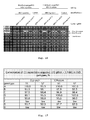
- the sequences in the X and S protein targeted in the experiments elsewhere described herein are conserved in the genotypes A, B, C and E (>95% of the strain variants contain these sequences), and in genotype D with 89% conservation for the target in protein S and 100% conservation for target in protein X ( Fig. 17 ). Therefore, it is particularly preferred that the predetermined sequence of the HBV genome is conserved in HBV genotypes A through E, more preferably in genotypes A, B, C and E. In consequence, the HBV genome is preferably a HBV genotype A, B, C, D or E, more preferably genotype A, B, C or E.
- HBV genotype A genome these targeted sequences have a conservation of >95% (protein S sequences) and 100% (protein X sequences).
- the HBV genome is a HBV genotype A genome.
- An example of a genome from a HBV isolate of genotype A is shown in SEQ ID NO:21.
- the DNA-binding molecule is for use in a method of treating and/or preventing hepatitis B and/or a hepatitis D virus infection in a patient.
- the DNA-binding molecule is for use in a method of treating and/or preventing hepatitis B virus infection in a patient.
- hepatitis D virus can only assemble as an infectious virus particle when it is supplemented with the HBsAg envelope of the HBV.
- the present invention is also useful against hepatitis D virus infection.
- the DNA-binding molecule is for use in a method of treating and/or preventing hepatitis D virus infection in a patient.
- the DNA-binding molecule can also be used in a method of simultaneously treating or preventing a hepatitis B virus and a hepatitis D virus infection in a patient.
- the patient is preferably a patient in need of anti-HBV and/or anti-HDV treatment.
- the patient usually has a HBV and/or a HDV infection.
- the present DNA-binding molecules are also suitable for use in the prevention of a HBV and/or a HDV infection. Therefore, the patient can also be from a group in the population for which the risk of a future infection is increased, such as persons working in health care, social workers, drug addicts, persons receiving (blood) transfusions, persons with a suppressed immune system and persons with a promiscuous life style.
- An infection with hepatitis B virus and/or a hepatitis D virus infection can be chronic or acute. Furthermore, the infection can also be silent.
- Methods for the diagnosis of such infections are well known in the art. For example, serological assays to detect specific HBV antigens such as the HBsAg (Hepatitis B surface antigen) and HBc (Hepatitis B Virus core antigen) in the blood, nucleic acid assays to detect and quantify HBV DNA, such as PCR and real-time PCR analysis of patients liver samples can be used in the diagnosis ( Valsamakis, 2007, Clin. Mi-crobiol. Rev. 20(3):426 ). As outlined before, HBV and HDV establish their genomes in human liver cells/hepatocytes.
- the DNA-binding molecule according to the present invention is preferably used for the treatment or prevention of hepatitis B virus and/or a hepatitis D virus infection in the liver of a patient.
- the method of treating and/or preventing hepatitis B and/or a hepatitis D virus infection comprises the administration of at least one DNA-binding molecule in combination with a nuclease.
- Administration of at least one DNA-binding molecule means that one or more than one different DNA-binding molecules, such as 1, 2, 3, 4, 5, 6, or more different DNA-binding molecules are administered.
- one DNA-binding molecule is administered.
- two different DNA-binding molecules such as two sgRNAs, are administered in combination with a nuclease. Different DNA-binding molecules are able to bind to different predetermined sequences in the HBV genome.
- the two different DNA binding molecules bind specifically to the predetermined sequences SEQ ID NO:13 and 14, respectively.
- the two different DNA binding molecules bind specifically to the predetermined sequences SEQ ID NO:15 and 16, respectively.
- two sgRNAs that are able to bind specifically to the predetermined sequences SEQ ID NO:13 and 14, respectively, are administered in combination with the nuclease Cas9n (which is described herein below). It is further preferred that two sgRNAs that are able to bind specifically to the predetermined sequences SEQ ID NO:15 and 16, respectively, are administered in combination with the nuclease Cas9n.
- the at least one DNA-binding molecule is administered in combination with a nuclease.
- Administration of DNA-binding molecule and nuclease to the patient can, thus, be at the same time or directly after one another, e.g. within a period of less than 6 hours, less than 2 hours, less than 1 hour, less than 30 min, or less than 10 min.
- the DNA-binding molecule and the nuclease are mixed before administration. Suitable routes of administration are described elsewhere herein.
- the DNA-binding molecule and/or the nuclease can also be administered in the form of a vector or vectors that encode the DNA-binding molecule and/or the nuclease. Suitable vectors are described elsewhere herein.
- DNA-binding molecule and nuclease is repeated, e.g. approximately monthly or every year.
- Administration will be in an amount of the DNA-binding molecule that is effective to reduce the amount of intact HBV genomes in the patient.
- the therapeutically effective amount of the DNA-binding molecule or the vector encoding the same to be administered will depend on several parameters, such as the mode of administration, the severity of the infection, the history of the disease, the age, height, weight, health, and physical condition of the individual to be treated, and the like.
- a therapeutically effective amount of the DNA-binding molecule or the vector encoding the same can be determined by one of ordinary skill in the art without undue experimentation given the disclosure set forth herein.
- the nuclease is a deoxyribonuclease.
- the nuclease may introduce single- or double strand breaks (such as blunt or sticky ended breaks). Double strand breaks are often repaired by the cell through homologous recombination (HR), where cells are using an unbroken sister chromatid or homologous chromosome as template. Additionally, double strand breaks can also be repaired by non-homologous end joining (NHEJ), wherein broken ends are rejoined without regard for homology and the products often contain small insertions or deletions (of up to several 100 bp), which cause shifts of the reading frame. In the absence of an editing template cells typically repair the dsDNA break by NHEJ. Should no mutation occur during repair of the break, the DNA binding molecule would again guide the nuclease to the predetermined sequence in the HBV genome.
- HR homologous recombination
- NHEJ non-homologous end joining
- the nuclease is able to cleave in or adjacent to the predetermined nucleotide sequence within the HBV genome. "Adjacent" in this context is to be understood as a distance of between 0 and 35 nt.
- the nuclease can perform cleavage of substantially any DNA sequence to which it is directed, i.e. the nuclease does not need to possess sequence-specificity.
- cleavage specificity can be achieved by the invention through the use of specific DNA-binding molecules.
- the nuclease may be selected from the group consisting of Type II restriction endonucleases, Type IIS endonucleases, such as the FokI cleavage domain, Cas protein, such as Cas9 protein, a Cas9-derived nickase (Cas9n, such as a Cas9n shown in SEQ ID NOs:22 and 24) and functional variants thereof.
- Cas protein such as Cas9 protein, a Cas9-derived nickase (Cas9n, such as a Cas9n shown in SEQ ID NOs:22 and 24) and functional variants thereof.
- the Cas protein may be from a Type II CRISPR/Cas system.
- the Cas protein is derived from a CRISPR-Cas system that targets DNA, i.e. preferably not from Type IIIB CRISPR/Cas system.
- Type II restriction endonucleases recognize a short DNA sequence and cut within it.
- Type IIS endonucleases such as the FokI cleavage domain, cut some distance from their recognition site. Both types of nucleases as are well known in the art.
- Type IIS endonucleases are comprised in zinc finger nucleases (ZFN) and in Transcription activator-like effector nucleases (TALENs).
- the nuclease may also be a variant of a Type II restriction endonuclease or a Type IIS restriction endonuclease that has been modified to introduce a single strand DNA break instead of a double strand break. Such variants are described in the art, e.g. by Carroll (2014, Annu Rev Biochem, 83:14.1-14.31 ).
- Cas9 protein is the CRISPR associated endonuclease that catalyzes blunt-ended dsDNA breaks by introducing two separate single stranded DNA nicks, mediated by HNH and RuvC nuclease domains.
- Cas9 is guided by the crRNA/tracrRNA complex and has 2 nuclease active sites, one to cleave each strand of the target DNA. It, thus, introduces a double strand break.
- the nuclease is a Cas9 nuclease or a functional variant or fragment thereof. Cas9 does not require a specific target or recognition sequence other than the PAM motif described below and is expected to cleave any DNA sequence to which it is directed.
- Cas9 requires a very short protospacer adjacent motif (PAM) in the DNA immediately downstream of the target region.
- a PAM is a targeting component that also serves as a self versus non-self recognition system to prevent the crisper locus itself from being targeted.
- a PAM is immediately downstream of (i.e. 3' of) the predetermined nucleotide sequence within the hepatitis B virus genome. "Immediately" in this context means that between the predetermined nucleotide sequence and the PAM in the HBV genome are preferably no further nucleotides.
- PAMs usually have a length from 3 to 10 nucleotides, depending on the nuclease used.
- Cas9 of Streptococcus pyogenes requires a PAM with the sequence NGG or NAG, wherein N is any nucleotide ( Mali et al., 2013, Nature Methods, 10(10):957-963 ; Terns and Terns, 2014, Trends Genet, 30(3):111-118 ).
- the nuclease is Cas9 Streptococcus pyogenes or a functional fragment or variant thereof and the PAM has the sequence NGG, wherein N is any nucleotide.
- the nuclease is Cas9 of Neisseria meningitidus or a functional variant thereof and the PAM has the sequence NNNNGA/CTT ( Hou et al., 2013, PNAS, 110:15644-49 ).
- the nuclease is Cas9 of Streptococcus thermophilus or a functional variant thereof and the PAM has the sequence NNAGAAW (Terns and Terns, ibidem).
- the nuclease is Cas9 of Treponema denticola or a functional variant thereof and the PAM has the sequence NAAAAN (Terns and Terns, ibidem).
- N is any nucleotide.
- a functional variant of the above nucleases is a nuclease that has been derived from the above nucleases by deletion, insertion or mutation of one or more amino acids in the nuclease.
- the term "variant" should be understood as a nuclease which is functionally equivalent to one of the above nucleases, e.g. has substantially the same, or improved, properties e.g. regarding its nuclease activity.
- variants which may be identified using appropriate screening techniques, are a part of the present invention.
- the term "functional variant” also includes variants that introduce a single strand break instead of a double strand break (so-called nickases).
- nickases Several groups have made derivatives of Cas9 that cut only one strand at the target (a reference to the respective publications can be found in Carroll, 2014, Annu Rev Biochem, 83:14.1-14.31 ).
- Functional variants of Cas9 which introduce a single strand break instead of a double strand break are termed Cas9 nickases (Cas9n). Obligate heterodimer modifications of the FokI cleavage domain can also be used in the context of the present invention.
- the nuclease is a Cas9-derived nickase (Cas9n), such as the Cas9n described by Mali et al. (2013, Nature Biotechnol., 31:833-38 ), by Cho et al. (2013, Genome Res, 24:132-41 or by Ran et al. (2013, Cell, 89 ).
- Cas9n either HNH or RuvC domain nuclease activity is inactivated, such as e.g. by mutating one or more amino acids in the in the nuclease domain.
- Cas9n comprises only one nuclease active site.
- the nuclease is Cas9n wherein the RuvC domain is inactivated, such as Streptococcus pyogenes Cas9 D10A mutant that is shown in SEQ ID NO:22 (described by Ran et al. ibid), e.g. encoded by SEQ ID NO:23.
- the nuclease may also be Cas9n wherein the HNH domain is inactivated, such as Streptococcus pyogenes Cas9 H840A mutant.
- nuclease is a Cas9n
- two sgRNAs are used to direct Cas9n molecules simultaneously to a pair of sequences near each other on opposite strands of the HBV genome. Both sites are nicked and the resulting double strand break induces both NHEJ and HR.
- nickases such as Cas9n
- two DNA-binding molecule/nuclease e.g. sgRNA-Cas9n
- cleavage and disruption of a DNA double strand Mali et al., 2013, Nature Methods, 10(10):957-963 . Because the majority of nicks do not result in NHEJ events, only the coordinate nicks at the targeted site will initiate genome-editing events.
- the method of the present invention comprises the administration of two DNA binding molecules in combination with a nuclease that introduces single strand breaks, such as a Cas9 derived nickase (Cas9n).
- a nuclease that introduces single strand breaks such as a Cas9 derived nickase (Cas9n).
- the two DNA binding molecules are sgRNA and the nickase is a Cas9n.
- the two DNA binding molecules are able to bind specifically to two predetermined nucleotide sequences, which are near each other on opposite strands of the hepatitis B virus genome.
- the two DNA binding molecules are able to bind specifically to the predetermined sequence shown in positions 1-20 of SEQ ID NO: 13 and SEQ ID NO: 14, respectively, or to the respective complementary sequences.
- the two DNA binding molecules are able to bind specifically to the predetermined sequence shown in position 1-20 of SEQ ID NO: 15 and SEQ ID NO: 16, respectively, or to the respective complementary sequences.
- the two DNA binding molecules can also be able to bind specifically to variants of these predetermined sequences that share at least 70%, 75%, 80%, 85%, 90%, 95% or 100 % sequence identity to any of SEQ ID NO: 13-16.
- Two sequences are considered to be "near" each other when not more than 100, 95, 90, 85, 80, 75, 70, 65, 60, 55, 50, 45, 40, 35 or 30 nucleotides are between them.
- nucleases that are human-codon-optimized such as the Cas9n protein of SEQ ID NO:22, that is e.g. encoded by SEQ ID NO:23.
- the CRISPR/Cas systems employed herein are originally bacterial defense systems. As different organisms often show particular preferences for one of the several codons that encode the same amino acid, the translation efficiency of a nuclease-encoding vector which is administered to the patient is increased when the original bacterial codons are at least partially exchanged with codons preferred in mammalian cells. Methods for the design and the cloning of codon-optimized nucleases are well known in the art.
- the nuclease comprises at least one NLS.
- NLS are well known in the art.
- An exemplary nuclease that can be used in the context of the present invention comprising a NLS at the N and at the C terminus and a His-tag at the C terminus is the NLS-His-Cas9 D10A-His nickase shown in SEQ ID NO:24, that is e.g. encoded by SEQ ID NO:25.
- the nuclease is guided by the DNA-binding molecule to said predetermined nucleotide sequence where it cleaves the DNA to disrupt the viral genome.
- the DNA-binding molecule binds or is bound to the nuclease thereby directing the nuclease to the predetermined sequence in the HBV genome to which the DNA-binding molecule is able to bind. Consequently, in a preferred embodiment, the DNA-binding molecule is bound or is able to bind to the nuclease.
- the nuclease and the at least one DNA-binding molecule may be comprised in a single molecule or in separate molecules.
- the nuclease binds or is bound to the at least one DNA-binding molecule by forces that are sufficiently strong to prevent dissimilation of the nuclease from the at least one DNA-binding molecule under physiological conditions, such as cell culture conditions or conditions in the human or animal body.
- physiological conditions such as cell culture conditions or conditions in the human or animal body.
- forces include covalent, ionic and van-der-Waals bonds and the like.
- Physiological conditions are e.g. a temperature in the range of 20-40 degrees Celsius at a pH of 6-8.
- the DNA binding molecule and nuclease are comprised in a single molecule.
- the nuclease is a Type IIS endonuclease, such as the FokI cleavage domain, and the DNA-binding molecule comprises zinc finger motives.
- the nuclease is a Type IIS endonuclease, such as the FokI cleavage domain, and the DNA-binding molecule comprises a Transcription activator-like effector (TALE).
- TALE Transcription activator-like effector
- the DNA binding molecule and nuclease are two separate molecules that are not connected by covalent bonds.
- the DNA binding molecule further comprises a nuclease binding site.
- the nuclease Cas9 or variants thereof may e.g.
- the nuclease is a CRISPR/Cas nuclease, such as Cas9 or Cas9n
- the DNA-binding molecule is a single guide RNA.
- the nuclease cleaves the DNA to disrupt the viral genome. By disruption, the viral genome is inactivated. As outlined elsewhere herein, the cleaving of the DNA can be introduction of a single or a double strand break by the nuclease.
- a HBV genome is considered to be disrupted when the generation of functional, i.e. infective, HBV particles from this genome and/or the induction of tumors of the liver is no longer possible. For example, when the S gene of HBV is disrupted no infectious HBV particles will be produced. When the X gene of HBV is disrupted the produced HBV particles will no longer be able to induce tumors of the liver due to a lack of the functional X protein.
- disruption of the viral genome is achieved by the present invention through the introduction of DNA strand breaks and thereby induced endogenous error prone DNA repair mechanisms that lead to deletions, insertions and/or frame shift mutations.
- a double strand break or two adjacent single strand breaks are introduced in opposite DNA strands.
- the generation of functional HBV particles may, e.g., be prevented by inhibition of the replication of the HBV DNA and/or the inhibition of synthesis of one or more of the functional HBV proteins.
- the disrupted genome comprises at least one deletion, insertion and/or frame shift mutation that renders at least one of the HBV proteins functionally inactive or fully prevents the expression of at least one of the HBV proteins.
- the HBV protein is preferably selected from the group consisting of X and S protein.
- the invention relates to an oligoribonucleotide comprising a sequence set forth in SEQ ID NOs:9-12 or variants or complements thereof.
- SEQ ID NOs:9-12 are gRNA sequences identified in the examples described herein below.
- a variant of a guide sequence in the sense of the present invention is a functional variant.
- a variant has been derived from the above guide sequences by deletion, insertion or mutation of one or more nucleotides.
- the term "variant of a guide sequence" should be understood as an oligoribonucleotide sequence which is functionally equivalent to one of the above sequences, e.g. has substantially the same, or improved, properties e.g. regarding its specific binding to the predetermined sequence of the HBV genome.
- Such variants which may be identified using appropriate screening techniques, are a part of the present invention.
- the oligoribonucleotide i.e. the RNA molecule
- sgRNA synthetic guide RNA
- the oligoribonucleotide can be used in a CRISPR system as described above.
- the oligoribonucleotide further comprises a crRNA and/or a tracrRNA sequence, preferably a crRNA/tracrRNA hybrid sequence as described elsewhere herein.
- the oligoribonucleotide has a length of less than 500, preferably less than 300, more preferably less than 200, more preferably less than 150 ribonucleotides.
- sgRNAs exists that are as short as 87 ribonucleotides, comprising 20 ribonucleotides guide sequence and crRNA/tracrRNA.
- the oligoribonucleotide may have a length of from 80 to 500, preferably from 85 to 300, more preferably from 87 to 160 ribonucleotides.
- the oligoribonucleotide can have a length of approximately 100 ribonucleotides, such as 103 ribonucleotides.
- the sequence that is able to bind specifically to a predetermined sequence of the hepatitis B virus genome has a length of at least at least 16, 17, 18, 19 or 20 nucleotides.
- the sequence is a guide sequence as described elsewhere herein.
- the invention relates to a vector encoding a DNA-binding molecule or an oligoribonucleotide of the present invention.
- the vector may further encode a nuclease as described herein.
- the nuclease may also be encoded on a vector that is administered separately or administered in protein form directly.
- a vector refers to a viral or polynucleotide construct (i.e. in other words, a viral or non-viral vector), wherein the polynucleotide construct is normally comprised of DNA or mRNA.
- the vector allows for the genetic transfer, replication and expression of an inserted polynucleotide in a host cell, wherein said polynucleotide is not native to said host cell, or which is native to said host cell, but has been modified.
- Replication of the vector can be achieved either by integration of the vector into the genome of the host cell, or by episomal replication (e.g. plasmids). In the latter case, the vector comprises a functional origin of replication which allows the replication of the plasmid in the respective host cell.
- the vector comprises one or more DNA sequences encoding sgRNA as described elsewhere herein, wherein the one or more DNA sequences are selected from the group consisting of SEQ ID NO:5-8.
- the vector may comprise two DNA sequences encoding sgRNAs S1 and S2 shown in SEQ ID NO:5 and 6, respectively.
- the vector may also comprise two DNA sequences encoding sgRNAs X1 and X2 shown in SEQ ID NO:7 and 8, respectively.
- said sgRNAs may be encoded by two different vectors.
- the vector comprises additionally a sequence encoding a nuclease, such as a sequence encoding a Cas9n selected from the group consisting of SEQ ID NOs: 22 and 24.
- the vector may contain further regulatory elements, such as promoters driving the expression of the encoded DNA-binding molecule, oligoribonucleotide and/or nuclease.
- the sequence encoding the DNA-binding molecule, oligoribonucleotide and/or nuclease may be operably linked to a promoter element and, optionally, to an enhancer element.
- a suitable promoter is, e.g., the immediate early promoter of the cytomegalovirus (CMV).
- CMV cytomegalovirus
- a suitable promoter is also the chicken beta-actin human codon optimized promoter (CBh).
- the promoters and enhancers may further be selected from those known in the art, such as the promoters and enhancers of the LTR of Rous sarcoma virus, the TK gene of HSV-1, the early or late promoters of SV40, the adenovirus major late promoter (MLP), phosphoglycerate kinase genes, metallothionein genes, a-1 antitrypsin genes, albumin genes, collagenase genes, elastase I genes, ⁇ -actin genes, ⁇ -globin genes, ⁇ -globin genes, ⁇ -fetoprotein genes, and muscle creatin kinase genes.
- MLP adenovirus major late promoter
- the vector may further comprise a RNA polymerase III (pol III) promoter, such as the U6 promoter, which is operably linked to the sequence encoding the sgRNA.
- the expression vector also optionally comprises transcription termination sequences and polyadenylation sequences, such as a bovine growth hormone polyadenylation signal (bGHpolyA), for improved expression of the nuclease.
- bGHpolyA bovine growth hormone polyadenylation signal
- Suitable transcription terminator and polyadenylation signals can, for example, be derived from SV40 ( Sambrook et al (1989), Molecular Cloning: A Laboratory Manual ). Any other element which is known in the art to support efficient expression may be added to the vector, such as the Woodchuck post-transcriptional regulatory element (wPRE).
- the DNA-binding polypeptide or the nuclease encoded by the vector may additionally comprise nuclear localization signals (NLS) to facilitate transport of the expression product to the nucleus.
- NLS nuclear localization signals
- the vector may further comprise genes encoding one or more markers that are coupled to the expression of DNA-binding molecule, oligoribonucleotide and/or nuclease.
- Suitable marker genes are e.g. genes encoding fluorescent proteins, such as red fluorescent protein (RFP) or (enhanced) green fluorescent protein (GFP).
- RFP can e.g. be amplified from pDSV-mRFP ( Tonelli et al., Biotechniques, 2006, 41 ).
- a marker gene such as a gene encoding GFP may be cloned 3' of the sequence encoding the DNA binding molecule, oligoribonucleotide and/or nuclease described herein, wherein the gene encoding GFP preferably lacks a start codon ATG and preferably is in another reading frame than the sequence encoding the DNA binding molecule, oligoribonucleotide and/or nuclease.
- the vector is a non-viral vector, such as a plasmid.
- Suitable non-viral vectors are known in the art.
- Examples for non viral vectors suitable for protein and RNA expression in mammalian cells comprise, for example, the vectors pEGFP-neo-GFP (Clontech), pEGFP-N1 (Clontech) and pX355.
- the vector is a pX355 plasmid comprising a pol III promoter (U6) driving expression of a sgRNA, a chicken beta-actin human codon optimized promoter (CBh), a gene encoding Cas9 nickase (human codon optimized, D10A mutant) with two nuclear localization signals (NLS) (SEQ ID NO:23) and a bovine growth hormone polyadenylation signal (bGHpolyA) ( Ran et. al., 2013, Cell ).
- U6 pol III promoter
- CBh chicken beta-actin human codon optimized promoter
- bGHpolyA bovine growth hormone polyadenylation signal
- the expression vector is a viral expression vector.
- Viral vectors for use in the present invention typically comprise a viral genome in which a portion of the native sequence has been deleted in order to introduce a heterogeneous polynucleotide without destroying the infectivity of the virus. Due to the specific interaction between virus components and host cell receptors, viral vectors are highly suitable for efficient transfer of genes into target cells. Suitable viral vectors for facilitating gene transfer into a mammalian cell are well known in the art and can be derived from different types of virus, for example, from a retrovirus, adenovirus and adeno-associated virus (AAV), orthomyxovirus, paramyxovirus, papovavirus, picornavirus, or alphavirus.
- AAV adeno-associated virus
- the vector is an adeno-associated viral vector.
- the subject to be treated is a mammal, such as a human
- the vector to be administered typically is a viral vector.
- the viral or non-viral vector may be transformed, transfected or transduced into the host cell or organism by any suitable method.
- non-viral vectors may be transferred into target cells for example by the lipofection method, calcium-phosphate co-precipitation method, DEAE-dextran method and direct DNA introduction methods using micro-glass tubes and the like, as described e.g. in Maniatis et al. 1982, Molecular Cloning, A laboratory Manual, Cold Spring Harbor Laboratory .
- viral vectors are able to infect the target cells and introduce the gene of interest into the cell.
- the viral vectors may either be endogenously able to infect the target cell or be engineered to do so.
- Such engineering may be that the viral vector contains a ligand molecule in its viral capsid and/or envelope which binds to surface molecules of the target cells.
- the DNA-binding molecule, the oligoribonucleotide or the vector of the present invention will normally be provided in the form of a pharmaceutical composition which also comprises one or more excipients, carriers and/or diluents which are suitable for the intended way of administration.
- the compound may be administered in any suitable form that does not interfere with its HBV genome-disruptive activity.
- the DNA-binding molecule, oligoribonucleotide or vector may be administered orally in the form of tablets, capsules, granule, powder, liquids, and the like.
- the DNA-binding molecule, oligoribonucleotide or vector may be formulated for being administered parenterally, e.g.
- intravenous injection or intravenous infusion Upon intravenous delivery, the DNA-binding molecule, oligoribonucleotide or vector will disperse to target sites randomly.
- target cells such as the liver cells/hepatocytes
- vectors that are engineered to preferentially bind specific cell surface receptors, such as sodium taurocholate cotransporting polypeptide, which are e.g. specific to HBV target cells ( Yan et al., 2012, elife, 1: e00049 ).
- administration is to the subject by intravenous infusion, more preferably by short-term infusion within less than 60 min, e.g. within 30 min, 20 min or 15 min.
- the pharmaceutical composition provided by the present invention may further comprise other compounds which are commonly used in the treatment of HBV or HDV infections, such as interferon alpha, pegylated interferon- ⁇ , nucleoside or nucleotide analogues.
- the invention is concerned with a kit comprising a1) at least one DNA-binding molecule which is able to specifically bind to a predetermined nucleotide sequence within the hepatitis B virus genome; or a2) at least one oligoribonucleotide comprising a sequence set forth in SEQ ID NOs:9-12 or variants or complements thereof; and b) at least one nuclease which is guided by the DNA-binding molecule to said predetermined nucleotide sequence where it cleaves the DNA to disrupt the hepatitis B virus genome.
- the at least one DNA-binding molecule or the at least one oligoribonucleotide and the at least one nuclease are bound or are able to bind to each other.
- the DNA-binding molecule, the oligoribonucleotide and the nuclease are described elsewhere herein.
- the kit may also comprise said at least one DNA-binding molecule or said at least one oligoribonucleotide; and/or said nuclease in the form of a vector as described elsewhere herein.
- the kit is preferably for use in a method of treating and/or preventing hepatitis B and/or a hepatitis D virus infection in a patient.
- the kit can of course also be used in vitro for the inactivation of a hepatitis B virus genome and/or a hepatitis D virus genome.
- the invention further comprises use of a DNA-binding molecule which is able to specifically bind to a predetermined nucleotide sequence within the hepatitis B virus genome, which DNA-binding molecule is defined herein above, for the in vitro inactivation of a hepatitis B virus genome and/or a hepatitis D virus genome.
- a nuclease is guided by the DNA-binding molecule to said predetermined nucleotide sequence where it cleaves the DNA to disrupt the hepatitis B virus genome.
- a DNA-binding molecule as defined herein is comprised by the present invention, wherein said DNA-binding molecule comprises of a sequence set forth in SEQ ID NOs:9-12 or variants or complements thereof.
- the invention in another aspect, relates to an in vitro method for the disruption of a hepatitis B virus genome and/or a hepatitis D virus genome, comprising contacting the genome with (a) at least one DNA-binding molecule which is able to specifically bind to a predetermined nucleotide sequence within the hepatitis B virus genome, and (b) at least one nuclease which is guided by the DNA-binding molecule to said predetermined nucleotide sequence where it cleaves the DNA to disrupt / inactivate the hepatitis B virus genome.
- the invention also relates to a method for treating and/or preventing hepatitis B in a patient, said method comprising administering to said patient (a) at least one DNA-binding molecule which is able to specifically bind to a predetermined nucleotide sequence within the hepatitis B virus genome; or (b) at least one nuclease which is guided by the DNA-binding molecule to said predetermined nucleotide sequence where it cleaves the DNA.
- the DNA-binding molecule and the nuclease are described elsewhere herein.
- Administration may be, for example, by direct injection or non-invasive catheter or injector methods.
- target cells that have been removed from a subject may be transfected with the DNA binding molecule, oligoribonucleotide, nuclease and/or vector construct in an ex vivo procedure.
- the cells can then be implanted or otherwise administered into a subject, preferably into the subject from whom they were obtained.
- Example 1 Identification of conserved target sites in the hepatitis B genome
- HBV genome was first analysed for the presence of a region with a length of at least 50 nucleotides in which nucleotide positions have high conservation values (more than 99.9%) according to the alignments dataset and frequencies repertoire across all genotypes and genotypes abundant in Europe. Analysis was performed with 1931 sequences of HBV isolates for genotype A and 3114 sequences of HBV isolates for genotype D.
- Two regions in the hepatitis B virus genome that are highly conserved among HBV isolates of genotype A were selected as potential targets for HBV inactivation.
- the two conserved regions were analysed for the presence of potential sgRNA target sequences with immediately adjacent PAM regions (CCN-20gRNA...20gRNA-NGG), i.e. for sequences where two PAM motifs are in reverse complementary orientation and positioned at least 40 bp away from each other.
- Individual pairs of the gRNA+PAM were analysed for the off-target potential in human genome. Only pairs for which the closest off target sequence had at least 3 mismatches in the 20 bp region were selected.
- gRNA+PAM 23 nucleotides long sequences underwent a second round of the conservation analysis, calculating the nucleotide conservation for the total 23 nucleotide sequence for each gRNA candidate. Conservation was analysed among HBV isolates of the genotype A. Conservation was calculated by extracting the probability of the nucleotide appearance at the semi-conserved position and assigning it as a conservation value for the target sequence. If more than two semi-conserved positions occurred at the same position within the 23 nucleotide sequence, the values were calculated by multiplying two probabilities and extracting square root. gRNA+PAM sequences with the overall conservation value higher than 95% were regarded as being highly conserved.
- Example 2 Molecular Cloning of reporter plasmids for detection of Cas9n nuclease activity on HBV S or X target sequences
- a reporter construct for detection of Cas9n nuclease activity on these sequences was cloned.
- the reporter constructs make use of the following cellular mechanism: Cas9n nuclease activity aided by two sgRNAs leads to a double stranded break within the target sequence (indicated by an arrow in Figure 4 ), which upon non-homologous end joining repair may lead to subtle sequence deletions or insertions and thereby frame shift of a GFP gene that is located downstream from the cleavage sites.
- the reporter construct thus, contains the gene encoding RFP (red fluorescence protein) for constitutive expression of RFP, the respective conserved S or X-protein target sequence (having 73 bp or 58 bp, i.e. SEQ ID NOs:19 and 20, respectively), and the gene encoding eGFP (enhanced green fluorescence protein) which is positioned out of the reading frame in relation to the RFP sequence ( Fig. 4 and 5 ).
- the S and X protein sequences contain two 20 bp regions necessary for gRNA binding and two PAM motifs each ( Fig. 2 and 3 ).
- RFP-GFP reporter was cloned according to Kim et al., 2011, Nature methods, 8(11): 941-943 .
- the RFP-GFP reporter was based on the pEGFP-neo-GFP plasmid (Clontech).
- mRFP was amplified from pDSV-mRFP ( Tonelli et al., Biotechniques, 2006, 41 ) using the primers mRFP-F and mRFP-R (SEQ ID NOs:26-27 , respectively), and the amplified product was cloned into the Nhe I site of pEGFP-N1 (Clontech) functionally linked to the CMV promoter.
- the ORF of the eGFP was amplified omitting the ATG as start codon using the primers eGFP-F and eGFP-R (SEQ ID NOs:28-29, respectively), and was then sequentially cloned into the Bam HI and Not I site of the plasmid.
- Oligonucleotides that contained HBV target sites (SEQ ID NOs:47-50, respectively) were synthesized (Biomers) and annealed in vitro. The annealed oligonucleotides were ligated into a vector (pEGFP-N1-RFP) digested with EcoR1 and BamH1. In-frame stop codons were avoided or reduced in the HBV target sequence by changing the orientation of the target site.
- Cas9n/sgRNA expression plasmids were constructed based on a pX355/crRNA/tracrRNA plasmid which contains a pol III promoter (U6) driving expression of the sgRNA, a chicken beta-actin human codon optimized promoter (CBh), Cas9 nickase (human codon optimized, D10A mutant) with two nuclear localization signals (NLS) (SEQ ID NO:23), bovine growth hormone polyadenylation signal (bGHpolyA) ( Ran et. al., 2013, Cell ) and a crRNA/tracrRNA part (encoding SEQ ID NO:17) ( Fig. 5 ).
- a pol III promoter U6 driving expression of the sgRNA
- CBh chicken beta-actin human codon optimized promoter
- Cas9 nickase human codon optimized, D10A mutant
- NLS nuclear localization signals
- bGHpolyA bovine growth hormone polyadenylation signal
- sgRNA sequences comprising 20 nucleotide long gRNA sequences were cloned for each gRNA target separately (DNA encoding sgRNAs shown in SEQ ID NOs:5-8).
- complementary oligonucleotides containing a guanine nucleotide necessary for the polIII driven expression and 20 nucleotides of the corresponding gRNA (SEQ ID NOs:30-37) were synthesized (Biomers) and annealed in vitro. Annealed oligonucleotides were cloned into plasmid pX355 via Bbs I sites.
- the resulting four expression plasmids contained each a Cas9 nickase and one sgRNA, i.e. a hybrid of 20 bp gRNA and crRNA/tracrRNA.
- a set of three plasmids comprising a reporter plasmid and two Cas9n/sgRNA expression plasmids was used in an assay for the detection of Cas9n activity in human cells.
- the Cas9n activity on HBV sequences was shown in HeLa Kyoto cells at 48 h post transfection ( FIG. 6 ).
- HeLa Kyoto cells were transfected with the HBV reporter (pRGS-S or pRGS-X, respectively) and two of the previously cloned expression plasmids for Cas9n/sgRNA expression each containing a different sgRNA (see above, i.e. one of SEQ ID NOs:13-16), together comprising a pair necessary to create a dsDNA break.
- the following plasmids were combined:
- Cas9n activity on the sequence encoding protein S Reporter plasmid Cas9n/sgRNA expression plasmids pRGS-S cas9n-gRNA-S1 (comprising SEQ ID NO:19) (comprising SEQ ID NO:23 and 5) cas9n-gRNA-S2 (comprising SEQ ID NO:23 and 6)
- Cas9n activity on the sequence encoding protein X Reporter plasmid Cas9n/sgRNA expression plasmids pRGS-X cas9n-gRNA-X1 (comprising SEQ ID NO:20) (comprising SEQ ID NO:23 and 7) cas9n-gRNA-X2 (comprising SEQ ID NO:23 and 8)
- HBV reporter plasmids alone (i.e. omitting Cas9n/sgRNA expression plasmids) were added to the control wells.
- Wells containing only the HBV reporter construct for protein S or protein X were RFP positive as expected, indicating the presence of the RFP-GFP reporter.
- the RFP gene was constitutively expressed from the HBV reporters.
- the GFP signal was not detected because of the out-of-frame position of the GFP gene in the intact HBV reporters.
- GFP signal was detected in the wells with plasmids expressing Cas9 nickase and sgRNAs along with the HBV reporter. This indicates that the Cas9 nickases guided by the pair of sgRNAs have cleaved the HBV reporter in the HBV target sequence.
- the Cas9n nuclease activity in HeLa Kyoto cells at 48h post transfection was quantified via FACS analysis of cells containing HBV reporter for S or X protein (pRGS-S or pRGS-X) and two Cas9n/sgRNA expression plasmids ( Fig. 7 ). Percentage of the total GFP+ population is shown. Transfection control was measured for the presence of the positive control plasmid (GFP+).
- the wells containing only HBV protein S and protein X reporter showed no or only a low amount of cells positive for GFP, i.e. 0% and 1.5% respectively ( Fig.7 ). This result is consistent with the fluorescence imaging results, indicating that the cells containing only the reporter do not express GFP or express on a basal auto-fluorescence level. However when Cas9 and sgRNAs targeting the HBV protein S were co-transfected along with the reporter, a high fluorescence level was detected in 8% of the cells. A similar result was observed for the protein X: 7.8% of the cells expressed activated GFP reporter protein due to the Cas9 nickase treatment guided by the X-specific sgRNAs. A transfection control with constitutively GFP-expressing plasmid in an amount equal to the HBV reporter showed that the majority of the cells were efficiently transfected and 83% of the cells were GFP positive.
- Cas9n activity on the HBV sequence was, further, detected and quantified in HEK293 cells at 24h post-transfection.
- HEK293 cells were transfected with the respective HBV reporter (indicated as pRGS-S or pRGS-X) and the two corresponding plasmids for Cas9n/gRNA expression essentially as described above for HeLa cells ( Fig. 8 ). Mismatched Cas9n/gRNA expression plasmids were used in negative control experiments. Transfection control was performed by transfection of the GFP fluorescence reporter in an amount equal to the HBV reporter. Cells were imaged at 24h post transfection (data not shown). GFP positive cells were visible only in the GFP control and in the wells transfected with matching reporter and Cas9n/sgRNA plasmids (i.e. Target S protein + Cas9n_S or Target X protein + Cas9n_X).
- GFP expression was successfully induced in cells transfected with the respective HBV reporter (indicated as pRGS-S or pRGS-X) and the two corresponding plasmids for Cas9n/sgRNA expression, while no GFP expression was observed in cells containing only reporter plasmid or mismatched pairs of reporter and Cas9n/sgRNA expression plasmids (e.g. pRGS-S and Cas9n-sgRNA-X1/X2).
- Example 7 Detection of Cas9n activity in human HEK293 cells with a T7 nuclease assay
- a T7 nuclease assay was carried out for the detection of Cas9 nickase-mediated mutagenesis of the HBV-derived target sequences in HBV reporter constructs ( Figure 9A ).
- total DNA chromosomal + episomal
- the PCR primers T7-RFP and T7-GFP flanked the HBV S or X sequence in the respective reporter plasmid (indicated by arrows in Fig. 9B ).
- the PCR product was denaturated and re-annealed to form heterologous dsDNA with mismatches in the position of Cas9/gRNA-mediated mutagenesis. Mismatched positions were then specifically cleaved by T7 nuclease, while wildtype PCR products remained intact. The sizes of the respective products were subsequently determined by agarose gel electrophoresis ( Figure 9C ). The relative ratio of the intact versus cleaved DNA bands represents the respective proportion of the mutagenized genomic DNA and, thus, the activity and efficiency of Cas9n/gRNA cleavage of the respective target sequence.
- the T7 assay as outlined above was additionally carried out with HEK293 cells that were sorted for GFP positive cells via FACS prior to the assay. After sorting, the cells that were RFP+ (reporter) and GFP+ (frameshift mutants) were used for the T7 assay to detect Cas9n-specific mutagenesis.
- sgRNAs S1 and S2 introduced DNA mismatches into the gene coding for the S protein
- sgRNAs X1 and X2 SEQ ID NOs:3 and 4, respectively
- Example 8 Detection and Quantification of Cas9n activity in human HEK293 cells, 72 h post-transfection
- Cas9n/gRNA activity was also determined in HEK293 cells 72h post transfection. HEK293 cells were transfected as described above. FACS analysis and T7 nuclease assay were carried out essentially as described above.
- GFP expression was successfully induced in cells transfected with the respective HBV reporter (indicated as pRGS-S or pRGS-X) and the two corresponding plasmids for Cas9n/gRNA expression ( Fig. 10A and C ), while no GFP expression was observed in cells containing mismatched pairs of reporter and Cas9n/gRNA expression plamids (e.g. pRGS-S and cas9n-gRNA-X1/X2).
- Controls were performed by quantifying GFP+ cells in wells transfected with non-specific sgRNAs for the FACS analysis. Constitutively expressing GFP plasmids were used as transfection control for the fluorescence microscopy.
- T7 nuclease assay detection of the Cas9n-specific activity on HBV reporter constructs showed wildtype and Cas9n-mutagenized DNA fragments ( Fig. 10B , arrows, 570 bp: wildtype; 380 and 190 bp: Cas9n-mutagenized DNA fragments).
- Example 9 Sequence analysis of human HEK293 cells, 72 h post-transfection with Cas9n/sgRNA and reporter plasmid
- HBV reporter DNA was isolated and subsequently sequenced. The sequences of four clones are shown in Fig. 12 (SEQ ID NOs:40-43). For comparison, the corresponding sequence in the HBV S gene is also shown in Fig.12 (SEQ ID NO:44).
- the four clones shown demonstrate the presence of Cas9n/sgRNA-induced mutations (i.e. deletions) in sorted GFP+ cells ( Fig. 12 ).
- Deletions were introduced into 3 out of four clones, i.e. clone 1, 2, and 4.
- the deletions have different lengths due to the error prone cellular NHEJ repair mechanism.
- a long span of the deletion coincides with the mechanism of the Cas9 nickase cleavage.
- Cas nickase cleaves the target sequence in one strand 3 bp upstream of the PAM region ( Fig. 12 , PAM indicated in bold letters).
- the gRNAs were designed to anneal to opposite strands and have an offset of 27 nucleotides in target S.
- the cleavage also happens on strands of the DNA opposite to each other, thus creating a single stranded 5'overhang in the protein S target.
- the 5'overhang is prone to deletion via NHEJ and therefore in observed mutated clones the deletions constitute almost the perfect sequence of the 5' overhang.
- Example 10 Generation of stable HeLa Kyoto and HEK293 cell lines containing chromosomal integrated HBV fluorescent reporter constructs.
- a red-Green (RFP-GFP) reporter construct containing either the sequence of the HBV S or X gene was stably integrated into the genome of HeLa Kyoto or HEK293 cells using the piggy-BAC (System Biosciences Inc.) targeting system ( Fig. 13 ).
- RFP-GFP reporter containing fluorescence and target sequences were subcloned into piggyBAC vector via NheI and BstBI, generating piggy-BAC-HBV-S or piggy-BAC-HBV-X.
- the piggyBAC vector comprises a puromycin resistance gene.
- Stable Hela and HEK cell lines were generated by transfecting the piggy-BAC-HBV-S or piggy-BAC-HBV-X and selecting for puromycin resistance (2 ⁇ g/ml) for 10 days. Cells were controlled for the RFP expression. Puromycin resistant cells which were constitutively expressing RFP were subsequently used for assaying Cas9n/sgRNA-mediated nuclease activity.
- the stable HBV S protein reporter HeLa cell line was cotransfected with plasmids expressing Cas9 nickase and S or X (control) protein-specific sgRNA, or negative control sgRNA (neg.) ( Fig. 14A ). Transfection of a GFP-expressing vector served as transfection control experiment. Transfected cultures were analyzed by fluorescence microscopy. Likewise, the stable HBV X protein reporter cell line was transfected with Cas9n and S (control) or X sequence-specific sgRNA vectors, or negative control sgRNA (neg.) and analyzed as described before ( Fig. 14B ).
- HBV S sequence-specific Cas9n/sgRNA-mediated nuclease activity was measured by FACs quantifying GFP+ cells ( Fig. 14C ).
- HBV X sequence-specific Cas9n/gRNA-mediated nuclease activity was quantified by FACs detection of GFP+ cells ( Fig. 14D ).
- the stable HBV S protein reporter HEK293 cell line was cotransfected with plasmids expressing Cas9 nickase (Cas9n) and S or X (control) protein-specific sgRNA, or negative control sgRNA (neg.) ( Fig. 15 ). Transfection of a GFP-expressing vector served as transfection control experiment. Transfected cultures were analyzed by fluorescence microscopy ( Fig. 15A ). Likewise, the stable HBV X protein reporter HEK293 cell line was transfected with Cas9n and S (control) or X sequence-specific sgRNA vectors, or negative control sgRNA (neg.) and analyzed as described before ( Fig. 15B ).
- HBV S sequence-specific Cas9n/gRNA-mediated nuclease activity was subsequently measured by FACs quantifying GFP+ cells ( Fig. 15C ). Further, HBV X sequence-specific Cas9n/gRNA-mediated nuclease activity was quantified by FACs detection of GFP+ cells.
- Fig. 14 The Cas9n/gRNA activity in stable HeLa Kyoto cell lines containing chromosomally integrated HBV reporter constructs at 72h post transfection is shown in Fig. 14 . It can be seen that the number of GFP expressing cells is considerably increased in samples that comprised the two plasmids for Cas9n/gRNA expression that correspond to the reporter protein that is stably expressed in the cells (e.g. cas9n-gRNA-S1 and cas9n-gRNA-S2 in HeLa Kyoto cell line that stably expresses S protein).
- Fig. 15 The Cas9n/gRNA activity in stable HEK293 cell lines containing chromosomally integrated HBV reporter constructs at 72h post transfection is shown in Fig. 15 . It can be seen that the number of GFP expressing cells is considerably increased in samples that comprised the two plasmids for Cas9n/gRNA expression that correspond to the reporter protein that is stably expressed in the cells (e.g. cas9n-gRNA-S1 and cas9n-gRNA-S2 in HeLa Kyoto cell line that stably expresses S protein).
- Example 11 Detection of Cas9n activity in HeLa Kyoto cell lines containing stable integrated HBV reporter constructs with a T7 nuclease assay
- the T7 nuclease assay for the Cas9n/gRNA-specific activity was carried out on the HeLa Kyoto cells containing stable integrated HBV reporter constructs as described above.
- Cell lines containing either the S sequence- or X sequence-specific HBV fluorescent reporter were transfected with plasmids expressing Cas9 nickase and corresponding sgRNAs.
- An arbitrary genomic locus, that was previously tested for efficient Cas9n targeting, and sgRNA specific to this region was used as positive control (sgRNA-control).
- sgRNAs S1 and S2 (SEQ ID NOs:1 and 2, respectively) introduced DNA mismatches into the gene coding for the S protein and sgRNAs X1 and X2 (SEQ ID NOs:3 and 4, respectively) introduced DNA mismatches into the gene coding for the X protein.
Landscapes
- Life Sciences & Earth Sciences (AREA)
- Health & Medical Sciences (AREA)
- Engineering & Computer Science (AREA)
- Genetics & Genomics (AREA)
- Biotechnology (AREA)
- Molecular Biology (AREA)
- Virology (AREA)
- Organic Chemistry (AREA)
- Chemical & Material Sciences (AREA)
- Biomedical Technology (AREA)
- Zoology (AREA)
- General Engineering & Computer Science (AREA)
- Bioinformatics & Cheminformatics (AREA)
- Wood Science & Technology (AREA)
- General Health & Medical Sciences (AREA)
- Pharmacology & Pharmacy (AREA)
- Biophysics (AREA)
- Public Health (AREA)
- Veterinary Medicine (AREA)
- Nuclear Medicine, Radiotherapy & Molecular Imaging (AREA)
- Medicinal Chemistry (AREA)
- Physics & Mathematics (AREA)
- Animal Behavior & Ethology (AREA)
- General Chemical & Material Sciences (AREA)
- Plant Pathology (AREA)
- Chemical Kinetics & Catalysis (AREA)
- Microbiology (AREA)
- Oncology (AREA)
- Communicable Diseases (AREA)
- Biochemistry (AREA)
- Medicines That Contain Protein Lipid Enzymes And Other Medicines (AREA)
Abstract
The present invention relates to a DNA-binding molecule which is able to specifically bind to a predetermined nucleotide sequence within the hepatitis B virus genome. The DNA-binding molecule is suitable for use in a method of treating and/or preventing a hepatitis B and/or a hepatitis D virus infection in a patient. The invention also relates to a method for treating and/or preventing a hepatitis B and/or a hepatitis D virus infection in a patient which makes use of the DNA-binding molecule. The invention also relates to vectors, kits and compositions comprising the DNA-binding molecule.
Description
- The present invention relates to a DNA-binding molecule which is able to specifically bind to a predetermined nucleotide sequence within the hepatitis B virus genome. The DNA-binding molecule is suitable for use in a method of treating and/or preventing a hepatitis B and/or a hepatitis D virus infection in a patient. The invention also relates to a method for treating and/or preventing a hepatitis B and/or a hepatitis D virus infection in a patient which makes use of the DNA-binding molecule. The invention also relates to vectors, kits and compositions comprising the DNA-binding molecule.
- Hepatitis B virus (HBV) is a small, enveloped DNA virus belonging to the family of the Hepadnaviridae that infects millions of patients worldwide. According to the WHO, an estimated 2 billion people have undergone HBV infection so that about 5% of the world population (350 million people) are presently chronically infected (Medley et al., 2001, Nat Med, 7:619-24). More than 500,000 people die every year related to the HBV infection (Ganem and Prince, 2004, N Engl J Med, 350: 1118-29; Medley et al., 2001, Nat Med, 7:619-24). Pronounced differences in regional distribution of HBV infections can be observed. For example, while less than 0.5% of the population in Northern Europe are chronically infected with the hepatitis B virus, up to 8% of the population in Turkey are affected.
- Most cases of acute hepatitis B infection in adults (>90%) resolve leading to a life-long immune control, although the virus can theoretically still reactivate in these patients, e.g. during chemotherapy. In up to 10% of acutely HBV-infected adults, about 90% of young children and 30-90% of immune-compromised persons, the infection evolves into a chronic form (Ganem and Prince, 2004, N Engl J Med, 350: 1118-29; Medley et al., 2001, Nat Med, 7:619-24). The considerable public health significance of hepatitis B primarily results from the consequences of these chronic infections, in particular the development of cirrhosis of the liver and/or hepatocellular carcinoma (HCC). Chronic HBV infection is asymptomatic in many patients for long periods of time but can lead to active chronic liver disease at any point and subsequently lead to cirrhosis and hepatocellular carcinoma (Wong and Chan, 2012, Ann Hepatol, 11:284-93). HBV infection is responsible for most cases of hepatocellular carcinoma worldwide with a rising incidence. In addition, there are a number of extra-hepatic manifestations of chronic HBV infection like glomerulonephritis (Liaw and Chu, 2009, Lancet, 373:582-92). HBV is also a major indication for liver transplantation with the risk of re-infection of the transplanted liver. Many patients with chronic hepatitis B infection are therefore potential candidates for antiviral therapy (Cornberg et al., 2011, Z. Gastroenterol, 49:871-930).
- The HBV genome consists of a circular, partially double stranded DNA, which is synthesized through an RNA intermediate, with the aid of a reverse transcriptase. The virus particle consists of an outer lipid envelope consisting of the hepatitis B surface antigen (HBsAg). This envelope encloses an icosahedral nucleocapsid core composed of the core antigen (HBcAg) (Ganem and Prince, 2004, N Engl J Med, 350: 1118-29). The nucleocapsid encloses the viral DNA and a DNA polymerase that has reverse transcriptase activity. HBV establishes its genome in human liver cells as episomal covalently closed circular (ccc) DNA. Thus, a viral reservoir for HBV reactivation is created that makes the lasting HBV therapy extremely difficult (Dienstag, 2008, N Engl J Med, 359:1486-500; Liaw and Chu, 2009, Lancet, 373:582-92).
- Moreover, simultaneous or super-infection with hepatitis D virus (HDV) can occur in HBV infected patients. The HDV can only assemble as an infectious virus particle when it is supplemented with the HBsAg envelope of HBV. Eradication of the HBV cccDNA reservoir would therefore also represent a new concept for the treatment of HDV infection. A HDV superinfection of a HBV carrier leads to an enhanced liver disease as compared to HBV mono-infection. HDV superinfection becomes chronic in about 90% of cases. It leads to an increased incidence of cirrhosis and an earlier occurrence of hepatocellular carcinoma.
- Complete elimination of the hepatitis B virus from the body in chronic hepatitis B infections is not possible by means of the current therapy principles. Vaccination is therefore at present the most important measure to prevent infection and reduce the number of individuals carrying the virus. Nevertheless, in a small minority of patients HBV therapy can induce a seroconversion and subsequent immunological control of the infection. Notably, the secondary aims of HBV treatment are prevention of spreading of the infection, stopping viral replication and liver inflammation and thereby at least reducing the risk of developing cirrhosis or hepatocellular carcinoma.
- Current therapy principles include the expensive and laborious therapy with pegylated interferon-α and a number of nucleoside and nucleotide analogues (Dienstag, 2008, N Engl J Med, 359:1486-500; Bhattacharya and Thio, 2010, Clin Infect Dis, 51:1201-8). Interferon-α or pegylated interferon-α may only be used in therapy for a limited time (Cornberg et al., 2011, Z. Gastroenterol, 49:871-930), and frequently leads to serious side-effects. Also in cases of a HDV superinfection, the only established therapy is the pegylated interferon-α therapy, which does not have good long-term success rates. Overall, only a small percentage of patients show a long lasting response (Hughes et al., 2011; Wedemeyer et al., 2011). In cases in which interferon therapy is not possible or the patient did not respond, expensive long-term nucleos(t)ide analogue therapy is used for HBV therapy (eg. with Lamivudin, Entecavir or Tenofovir) (Cornberg et al., 2011, Z. Gastroenterol, 49:871-930). Nucleos(t)ide analogue therapy suppresses replication of the HBV virus by inhibition of the viral polymerase. The treatment reduces the probability for development of HCC, but does not eliminate the risk completely. Nowadays, substances with a high genetic barrier to resistance are preferred (eg, Entecavir, Tenofovir), but next to the risk of long-term drug toxicities there is still a limited risk of developing viral drug escape mutations, especially in patients with poor compliance.
- Moreover, these drugs are still quite expensive and must be taken almost permanently (for years or even decades) (Bhattacharya and Thio, 2010, Clin Infect Dis, 51:1201-8). In most cases HBV viremia and the liver transaminases rise again after cessation of nucleos(t)ide analogue treatment, sometimes leading to the clinical picture of a HBV reactivation. Regular monitoring of the HBV DNA every 3-6 months to verify treatment success and predict drug resistance in time is therefore necessary. The ultimate therapy goal of a lasting seroconversion from HBsAg (hepatitis B surface antigen) to anti-HBs antibodies is only reached by nucleos(t)ide analogues in 5% to a maximum of 10% of the cases. Current treatment recommendations can be found in the German HBV guidelines (Cornberg et al., 2011, Z. Gastroenterol, 49:871-930).
- It can be seen from the above that current therapies employing interferon-α and/or nucleoside/nucleotide analogues can only control viremia, but are unsuitable to eliminate the viral genomic DNA. Consequently, there is a need for new therapy approaches which ultimately result in a complete inactivation and eradication of the virus from the infected patient. Such treatment would provide a cure for millions of chronically HBV infected patients worldwide.
- The present invention provides a highly effective and specific method of targeting the HBV cccDNA as well as integrated HBV genome, thereby introducing new possibilities to inactivate the HBV genome both in vitro and in HBV-infected patients.
- In a first aspect, the invention relates to a DNA-binding molecule, and in particular an RNA molecule, which is able to specifically bind to a predetermined nucleotide sequence within the hepatitis B virus genome for use in a method of treating and/or preventing hepatitis B and/or a hepatitis D virus infection in a patient, wherein said method comprises the administration of the DNA-binding molecule and a nuclease. The nuclease is guided by the DNA-binding molecule of the present invention to said predetermined nucleotide sequence within the hepatitis B virus genome where it cleaves the DNA to disrupt and/or inactivate the viral genome. The inventors therefore found an easy and reproducible was to inactivate the HBV genome.
- The DNA-binding molecule which is able to specifically bind to a predetermined nucleotide sequence within the hepatitis B virus genome can comprise e.g. a) a DNA-binding nucleic acid sequence that is able to specifically bind to the predetermined sequence in the hepatitis B virus genome, or b) a DNA-binding polypeptide sequence that is able to specifically bind to the predetermined sequence in the hepatitis B virus genome. In a preferred embodiment, the DNA binding molecule comprises a DNA-binding nucleic acid sequence that is able to specifically bind to the predetermined sequence in the hepatitis B virus genome.
- The person skilled in the art is able to determine whether the binding of two molecules to each other is specific. For example, a "specific" binding in the sense of the present invention means that the DNA-binding molecule and/or the DNA-binding nucleic acid sequence or polypeptide sequence comprised therein has an affinity to bind to the predetermined nucleotide sequence within the HBV genome that is at least 10x, 50x, 100x, 500x, 1000x, or more times higher than the affinity for binding to other nucleotide sequences, preferably non-viral sequences, and more preferably human sequences. Preferably, the DNA-binding molecule and/or the DNA-binding nucleic acid sequence or polypeptide sequence comprised therein has a binding affinity to the predetermined nucleotide sequence within the HBV genome that is at least 100x higher than the binding affinity to other nucleotide sequences.
- Where the DNA-binding molecule comprises a DNA-binding nucleic acid sequence, such as an RNA sequence, specific binding will be achieved if said DNA-binding nucleic acid sequence is sufficiently complementary to the predetermined nucleotide sequence in the hepatitis B virus genome, i.e. to the "target sequence". In a preferred aspect, the DNA-binding molecule comprises a DNA-binding nucleic acid sequence, more preferably an RNA sequence, which is at least 70%, 80%, 90% or 95% complementary to the predetermined nucleotide sequence in a sequence stretch of at least 16, 17, 18, 19 or 20 nucleotides, i.e. from 16 to 20 nucleotides. In one embodiment, the DNA-binding molecule comprises a DNA-binding nucleic acid sequence that is complementary to the predetermined nucleotide sequence within the hepatitis B virus genome whereby hybridization of the DNA-binding nucleic acid sequence with the predetermined nucleotide sequence within the hepatitis B virus genome is allowed.
- Stated differently, the DNA-binding nucleic acid sequence in the DNA-binding molecule that is able to specifically bind to the predetermined sequence in the hepatitis B virus genome does not need to be fully complementary, but may comprise up to 0, 1, 2, 3, 4 or 5 mismatches within a sequence stretch of at least 16, 17, 18, 19 or 20 nucleotides, i.e. from 16 to 20 nucleotides, preferably less than 3, less than 2 or no mismatches, in comparison to a sequence that is complementary to the predetermined nucleotide sequence in the HBV genome.
- The DNA-binding nucleic acid sequence that is able to specifically bind to a predetermined sequence in the hepatitis B virus genome can be DNA or RNA. Preferably, the nucleic acid sequence is RNA. More preferably, the entire DNA-binding molecule comprising the DNA-binding nucleic acid sequence according to the invention is an oligoribonucleotide, i.e. an RNA molecule. The oligoribonucleotide preferably has a size of at least 70 nucleotides, preferably at least 80, 90, 100, 110, 120, 130, 140, 150, 160, 170, 180 or 190 nucleotides. It is preferred that the oligoribonucleotide of the invention comprises less than 200 nucleotides.
- In one embodiment, the DNA-binding molecule comprises a CRISPR RNA (crRNA) or a functional variant thereof. CRISPR (clustered regularly interspaced short palindromic repeats) RNAs are well known in the art as part of CRISPR/Cas systems. The original bacterial CRISPR/Cas systems comprise a first processed RNA transcript, that originates from a so-called CRISPR array in the bacterial genome (containing short DNA segments from invading viruses and plasmids), wherein the RNA transcript contains a crRNA comprising a guide RNA (gRNA) sequence as described elsewhere herein and a repeat; a second RNA with partial complementarity to the repeat (tracrRNA, i.e. trans-activating crRNA), and the nuclease Cas9. Complementary base pairing of the repeats in crRNA and tracrRNA leads to formation of a crRNA:tracrRNA duplex. The gRNA comprised by the crRNA is able to bind to the target DNA and the bulk of the tracrRNA binds to Cas9.
- Accordingly, it is preferred herein that the DNA-binding molecule of the invention comprises a crRNA sequence, wherein said crRNA sequence comprises a gRNA sequence, the latter of which provides for binding to the predetermined HBV sequence, and a repeat sequence. crRNAs are described in the scientific literature and the person skilled in the art is therefore readily able to design and synthesize suitable crRNAs based on the specific DNA-binding sequences herein. In addition, there are several CRISPR/Cas systems commercially available from different manufacturers which allow for the construction of suitable crRNA molecules. The repeat part in the crRNA will be designed to be sufficiently complementary to a corresponding repeat in a tracrRNA to allow hybridization between the crRNA and the tracrRNA.
- Within HBV-infected cells the repeat part of the crRNA sequence will hybridize to the tracrRNA to form a crRNA:tracrRNA duplex. The term "Duplex" in this context is to be understood as RNA double strand. The crRNA:tracrRNA duplex, which is formed from the crRNA and the tracrRNA, can comprise a single RNA molecule or two separate RNA molecules. In one embodiment of the invention, the crRNA and the tracrRNA are separate molecules which means that a crRNA molecule comprising the gRNA and the typical repeat is used in combination with a separate tracrRNA. Hybridization of the two separate RNA molecules results in the crRNA:tracrRNA duplex which enables binding of a nuclease, such as Cas9 or functional fragments or variants thereof.
- In a preferred embodiment, the crRNA:tracrRNA duplex comprises a single RNA molecule, i.e. a molecule that comprises both crRNA and the tracrRNA. In a particularly preferred embodiment, the DNA-binding molecule of the invention comprises or consists of a single guide RNA (sgRNA). As used herein, a "single guide RNA" or "sgRNA" is an engineered chimeric RNA molecule in which a crRNA and a tracrRNA are linked by a connecting RNA sequence, such as a sequence forming a loop structure. sgRNA molecules, which is also referred to as synthetic or short guide RNA in the literature are described, e.g. in Jinek et al., 2012, Science, 337:816-21. Preferably, the sgRNA has a sequence selected from the group consisting of SEQ ID NOs:1-4, or a sequence complementary thereto. Consequently, the DNA-binding molecule comprises or consists of a sequence set forth in SEQ ID NO:1-4 or variants or complements thereof. These sgRNAs are encoded by the sequences depicted in SEQ ID NOs:5-8, respectively, or sequences complementary thereto.
- Suitable functional variants of DNA-binding molecules that comprise a crRNA in the sense of the present invention are variants that have all the identifying characteristics of the above described DNA-binding molecules that comprise a crRNA. Functional variants of the disclosed DNA-binding molecules that comprise a crRNA, thus, comprise a crRNA sequence comprising a guide RNA (gRNA) sequence as described elsewhere herein, and are, preferably, able to bind to the Cas9 nuclease or variants of the Cas9 nuclease, such as Cas9n. Preferably, these variants are functional variants of a sgRNA sequence selected from the group consisting of SEQ ID NOs:1-4, or a sequence complementary thereto.
- Designing sgRNAs from other CRISPR systems than the Type II CRISPR-Cas systems, e.g. from Type I or Type III CRISPR-Cas systems is also possible and such sgRNAs could also be used as DNA-binding molecules (an overview is provided by Terns and Terns, 2014, Trends Genet, 30:3). However, in a preferred embodiment, the sgRNA is derived from a Type II CRISPR-Cas system. The sgRNA is derived from a CRISPR-Cas system that targets DNA.
- According to the present invention, the gRNA provides for the specific binding of the DNA-binding molecule of the invention to the predetermined HBV sequence. Preferably, the gRNA has a sequence selected from the group consisting of SEQ ID NOs:9-12, or variants or complements thereof. However, it is also possible that the gRNA has a sequence that is at least 70%, 80%, 90% or 95% identical to a sequence selected from the group consisting of SEQ ID NOs:9-12, or variants or complements thereof. In other words, the gRNA can have a sequence that may comprise up to 0, 1, 2, 3, 4 or 5 mismatches compared with a sequence selected from the group consisting of SEQ ID NOs:9-12, or a sequence complementary thereto, preferably less than 3, less than 2 or no mismatches. More preferably, the gRNA comprises a nucleic acid sequence that is able to specifically bind to a sequence in the hepatitis B virus genome selected from the group consisting of SEQ ID NO:13-16, or a sequence complementary thereto.
- In a particularly preferred sgRNA, the gRNA is followed (at its 3' end) by approximately 80 nucleotides of hybrid crRNA/tracrRNA, i.e. an RNA sequence that comprises both the crRNA and the tracrRNA (Carroll, 2014, Annu Rev Biochem, 83:14.1-14.31), such as by SEQ ID NO:17 or functional variants thereof. The hybrid crRNA/tracrRNA binds to the nuclease Cas9. Functional variants of the aforementioned hybrid crRNA/tracrRNA shown in SEQ ID NO:17 are, thus, characterized in that they maintain the ability to bind Cas9 nuclease and/or functional variants of the Cas9 nuclease, such as Cas9n.

- In this embodiment, the gRNA sequence is the nucleic acid sequence that is able to specifically bind to a sequence in the hepatitis B virus genome defined elsewhere herein. Furthermore, in one embodiment the gRNA sequence is be preceded by a guanine ribonucleotide (G). Such a guanine ribonucleotide may be present to enhance expression of a sgRNA by RNA polymerase III (polIII) from a DNA vector. Thus, the sgRNA of the present invention preferably comprises the following sequence:wherein "(N)17-20" is the gRNA sequence having preferably a length of from 17 to 20 nucleotides.

- As used herein "N" or "n" can be any (ribo)nucleotide, i.e. adenine (A), guanine (G), cytosine (C) or thymine (T)/uracil (U), unknown, or other. Preferably, nucleotides designated "N" in SEQ ID NO: 18 are independently selected from the group consisting of a, g, c or u. The crRNA/tracrRNA part of the sgRNA contains in itself a repeat and anti-repeat sequences that form a hairpin RNA structure; further short repeats allow the hybrid to form 3 stemloops (Ni-shimasu, 2014, Cell, 156 (5): 935-049). Thus, in one embodiment, the DNA-binding molecule comprises a crRNA and/or a tracrRNA sequence, preferably a crRNA/tracrRNA hybrid sequence, such as SEQ ID NO:17.
- The DNA-binding nucleic acid sequence that is able to specifically bind to a sequence in the hepatitis B virus genome (e.g. the gRNA) has a length of at least 16, 17, 18, 19 or 20 nucleotides (nt), i.e. from 16 to 20 nucleotides. Preferably, said sequence has a length of at least 17 nt. Thus, said sequence can have a length of e.g. 17, 18, 19, or 20 nt. In other words, the sequence preferably has a length from 17 to 20 nt. It is known in the art that nucleotides in excess of 20 in said sequence do not significantly improve the binding. Nevertheless, sequences that are able to specifically bind to a sequence in the hepatitis B virus genome which are longer than 20 nt are allowable in the context of the present invention.
- In one embodiment, the DNA-binding nucleic acid sequence is an oligoribonucleotide which comprises less than 200 nucleotides. Preferably, the DNA-binding nucleic acid sequence comprised in the DNA-binding molecule has a length of 16 to 20 nucleotides.
- It is furthermore known in the art that extensive, but not complete complementarity between guide RNA sequences and their target sequences is necessary for targeting. The gRNAs are in general tolerant of 1-3 mismatches in their target (Mali et al., 2013, Nat Meth, 10(10):957-963). This mismatch tolerance is an advantage for the disruption of HBV sequences that could otherwise evade the treatment by mutation. Consequently, the guide RNA sequence can comprise 1, 2, 3, 4 or 5 ribonucleotides that are not complementary to the predetermined sequence in the HBV genome. Preferably, the guide sequence comprises between 0-3 ribonucleotides that are not complementary to the predetermined sequence in the HBV genome. The mismatches are preferably located at the 5' end of the guide sequence.
- The specific binding of a nucleic acid sequence can e.g. be achieved through complementary base pairing. It is, thus, preferred that the DNA-binding molecule that is able to specifically bind to a predetermined sequence in the hepatitis B virus genome comprises a DNA-binding sequence that is complementary to the predetermined sequence in the hepatitis B virus genome. The DNA-binding molecule comprises preferably a DNA-binding nucleic acid sequence (such as a guide RNA sequence) that is at least 70%, at least 80%, at least 90% or 100 % identical to the complement of the predetermined sequence in the hepatitis B virus genome. More preferably, the DNA-binding molecule comprises a DNA-binding nucleic acid sequence (such as a guide RNA sequence) that is from about 85% to 100% identical to the complement of the predetermined sequence in the hepatitis B virus genome.
- In another embodiment, the DNA-binding molecule comprises a DNA-binding polypeptide sequence, preferably a polypeptide sequence derived from a zinc finger polypeptide, or from a transcription activator-like effector and functional variants thereof. For example, sequence variants may be used having one or more substitutions, insertions or deletions of amino acids relative to the sequence of a known zinc finger polypeptide, or from a transcription activator-like effector. However, polypeptide sequences derived from a zinc finger polypeptide, or from a transcription activator-like effector are characterized in that they retain the DNA-binding activity of the aforementioned polypeptide sequences.
- The specific binding of a DNA-binding polypeptide sequence in the context of the present invention is a specific binding to the nucleic acid bases in the predetermined sequence in the HBV genome. Protein structures that bind specifically to nucleotide bases and, thus, provide a base pair-like binding mode are known in the art and described herein. The DNA-binding polypeptide sequence that is able to specifically bind to a sequence in the hepatitis B virus genome is preferably derived from a zinc finger polypeptide, or from a transcription activator-like effector.
- Thus, in one embodiment, the DNA-binding molecule comprises a polypeptide sequence derived from a zinc finger polypeptide, such as a zinc-finger motif. Zinc-finger motifs (ZFs) are derived from natural transcription factors. Each finger is relatively small (~30 amino acids) and has one alpha-helix and two beta-strands (Carroll, 2014, Annu Rev Biochem, 83:14.1-14.31). A finger interacts with DNA through contacts between specific protein side chains and functional groups in the major groove. Usually, each finger binds 3 base pairs. Adequate binding specificity is provided when at least 3 consecutive fingers are used. Thus, in this embodiment, the DNA-binding polypeptide sequence that is able to specifically bind to a predetermined sequence in the HBV genome comprises at least 3 zinc-finger motifs. Suitable methods for the design of specific zinc-finger motifs are known in the art (e.g. described by Carrol, ibidem).
- In a further embodiment, the DNA-binding molecule comprises a polypeptide sequence derived from a transcription activator-like effector (TALE). TALEs have a DNA-binding domain made up of tandem repeats of ~34 amino acids. Generally, the sequence of TALEs is highly conserved with the exception of residues in
positions 12 and 13 (repeat variable di-residues) which vary according to the base pairs in the target sequence. Suitable methods for the identification of specific TALEs are known in the art (e.g. described by Carrol, ibidem). The DNA-binding activity of TALEs can be combined with a nuclease, such as FokI, by fusion of the peptide sequences of TALE and nuclease, i.e. by expression as a fusion protein. - The predetermined sequence in the hepatitis B virus genome can be a part of the sequence encoding the X or S protein of the hepatitis B virus. Both, X and S protein are highly relevant for the generation of functional, i.e. infective, HBV particles from the HBV genome and/or the induction of tumors of the liver. Therefore, in one embodiment, the predetermined sequence in the hepatitis B virus genome is a part of the sequence encoding the X protein of the hepatitis B virus. In another embodiment, the predetermined sequence in the hepatitis B virus genome is a part of the sequence encoding the S protein of the hepatitis B virus.
- The predetermined sequence in the hepatitis B virus genome is preferably a sequence that is conserved within a hepatitis B genotype and, preferably, conserved between different hepatitis B genotypes. It is particularly preferred that the predetermined sequence in the hepatitis B virus genome is conserved within hepatitis B genotype A, more preferably between hepatitis B genotypes A and D. The HBV genome is subject to mutations leading to variability in the genome sequences of different HBV strains. Nevertheless, the present invention identifies regions in the HBV genome that are conserved among different HBV genotypes/strains. Targeting of these sequences with the DNA-binding molecules of the present invention allows the reliable disruption of various HBV strains and, thus, omits the step of sequencing a new strain and subsequently designing a new DNA binding molecule. Specifically, two conserved regions in the HBV genome were identified. The conserved regions are in the ORF encoding the HBV S-Protein and in the ORF encoding the HBV X-Protein, and are shown in SEQ ID NOs:19 and 20, respectively. In one embodiment, the conserved predetermined sequence of the hepatitis B virus genome is a part of the region spanning
nucleotide positions 190 to 262 of the HBV genome (SEQ ID NO:19), i.e. nucleotide positions 32 to 105 of the ORF encoding the HBV S-Protein. However, it is also possible that the conserved predetermined sequence of the hepatitis B virus genome has a sequence that is at least 70%, 80%, 90% or 95% identical to a part of the region spanningnucleotide positions 190 to 262 of the HBV genome (SEQ ID NO:19), such as a sequence that comprises at least 1, 2, 3, 4, 5, 6, 7, 8, 9 or 10 mismatches relative to SEQ ID NO:19. In another embodiment, the conserved predetermined sequence of the hepatitis B virus genome is a part in the region spanning nucleotide positions 1520 to 1576 of the HBV genome (SEQ ID NO:20), i.e. nucleotide positions 142 to 200 of the ORF encoding the HBV X-Protein. However, it is also possible that the conserved predetermined sequence of the hepatitis B virus genome has a sequence that is at least 70%, 80%, 90% or 95% identical to a part of the region spanning nucleotide positions 1520 to 1576 of the HBV genome (SEQ ID NO:20), such as a sequence that comprises at least 1, 2, 3, 4, 5, 6, 7, 8, 9 or 10 mismatches relative to SEQ ID NO:20. The start point of the HBV genome is considered the EcoRI restriction site, the reference sequence of the HBV genome is NCBI: GenBank: X02763.1. Thus, preferably, the predetermined nucleotide sequence within the hepatitis B virus genome is part of the sequence encoding the X or S protein of the hepatitis B virus. - Preferred predetermined sequences from the conserved region in the ORF encoding the S-Protein are e.g. the sequences from
position 1 to 20 of SEQ ID NOs:13 and 14 (comprising the predetermined sequence at positions 1-20 and a PAM motif at positions 21-23), or variants or complements thereof. Preferred predetermined sequences from the conserved region in the ORF encoding the X-Protein are e.g. the sequences fromposition 1 to 20 of SEQ ID NOs: 15 and 16 (comprising the predetermined sequence at positions 1-20 and a PAM motif at positions 21-23), 1-23), or variants or complements thereof. For example, sequence variants may have one or more (e.g. 1, 2, 3) substitutions, insertions or deletions of nucleotides relative to the sequences of SEQ ID NOs: 13-16 or their complements. The variant will have at least 85% sequence identity to the sequence of SEQ ID NOs: 13-16 or their complements, preferably at least 86, 87, 88, 89, 90, 91, 92, 93, 94, or 95% sequence identity. In a particularly preferred aspect of the invention, the predetermined sequence consists of the sequence of SEQ ID NO:13, 14, 15 and/or 16. The predetermined sequence of the hepatitis B virus genome may have a length of 5-50, 8-30, 10-25 nucleotides. Preferably, the sequence has a length of about 10, about 15, about 20, about 25 nucleotides. Most preferably, the sequence has a length of about 20 nucleotides. This includes sequences having a length of 16, 17, 18, 19, 20, 21, 22, 23, and 24 nucleotides. Thus, the predetermined nucleotide sequence within the hepatitis B virus genome can also comprise or consist of 17 to 20 consecutive nucleotides of positions 1-20 of any of SEQ ID NO: 13, 14, 15, or 16, or variants or complements thereof. - Said predetermined sequence is a part of the hepatitis B virus genome. Infectious viral HBV particles comprise a circular DNA that is enclosed in an outer lipid envelope (containing the proteins M, S and L) and an icosahedral nucleocapsid protein core. After infection of a cell, the HBV establishes its genome as episomal covalently closed circular (ccc) DNA and occasionally integrates into the host cell chromosomes. (Jiang, 2012, Genome Res. 22(4):593-601). In all of these forms, i.e. in circular, cccDNA and chromosomally integrated form and possible intermediates, the HBV genome can be disrupted by the DNA-binding molecules for use according to the present invention. Thus, the HBV genome may be in circular, episomal cccDNA and/or chromosomally integrated form.
- The term "hepatitis B virus" includes the different HBV genotypes and serotypes known in the art. There are nine different genotypes (A-I) as well as numerous subgenotypes, with different distribution in different geographic regions. The genotypes A2 and D are most predominant in Europe. Thus, HBV can have any of genotypes A through I. Genotypes E-H are rare. Therefore, it is particularly preferred that the predetermined sequence of the HBV genome is conserved in HBV genotypes A through D or I. The genomes of all presently known genotypes of HBV can be inactivated according to the present invention. The sequences in the X and S protein targeted in the experiments elsewhere described herein are conserved in the genotypes A, B, C and E (>95% of the strain variants contain these sequences), and in genotype D with 89% conservation for the target in protein S and 100% conservation for target in protein X (
Fig. 17 ). Therefore, it is particularly preferred that the predetermined sequence of the HBV genome is conserved in HBV genotypes A through E, more preferably in genotypes A, B, C and E. In consequence, the HBV genome is preferably a HBV genotype A, B, C, D or E, more preferably genotype A, B, C or E. In the HBV genotype A genome these targeted sequences have a conservation of >95% (protein S sequences) and 100% (protein X sequences). In consequence, it is particularly preferred that the HBV genome is a HBV genotype A genome. An example of a genome from a HBV isolate of genotype A is shown in SEQ ID NO:21. - The DNA-binding molecule is for use in a method of treating and/or preventing hepatitis B and/or a hepatitis D virus infection in a patient. In a preferred embodiment, the DNA-binding molecule is for use in a method of treating and/or preventing hepatitis B virus infection in a patient. As outlined above, hepatitis D virus can only assemble as an infectious virus particle when it is supplemented with the HBsAg envelope of the HBV. Thus, the present invention is also useful against hepatitis D virus infection. Thus, in another embodiment, the DNA-binding molecule is for use in a method of treating and/or preventing hepatitis D virus infection in a patient. Naturally, the DNA-binding molecule can also be used in a method of simultaneously treating or preventing a hepatitis B virus and a hepatitis D virus infection in a patient.
- The patient is preferably a patient in need of anti-HBV and/or anti-HDV treatment. Thus, the patient usually has a HBV and/or a HDV infection. Nevertheless, the present DNA-binding molecules are also suitable for use in the prevention of a HBV and/or a HDV infection. Therefore, the patient can also be from a group in the population for which the risk of a future infection is increased, such as persons working in health care, social workers, drug addicts, persons receiving (blood) transfusions, persons with a suppressed immune system and persons with a promiscuous life style.
- An infection with hepatitis B virus and/or a hepatitis D virus infection can be chronic or acute. Furthermore, the infection can also be silent. Methods for the diagnosis of such infections are well known in the art. For example, serological assays to detect specific HBV antigens such as the HBsAg (Hepatitis B surface antigen) and HBc (Hepatitis B Virus core antigen) in the blood, nucleic acid assays to detect and quantify HBV DNA, such as PCR and real-time PCR analysis of patients liver samples can be used in the diagnosis (Valsamakis, 2007, Clin. Mi-crobiol. Rev. 20(3):426). As outlined before, HBV and HDV establish their genomes in human liver cells/hepatocytes. Thus, the DNA-binding molecule according to the present invention is preferably used for the treatment or prevention of hepatitis B virus and/or a hepatitis D virus infection in the liver of a patient.
- The method of treating and/or preventing hepatitis B and/or a hepatitis D virus infection comprises the administration of at least one DNA-binding molecule in combination with a nuclease. Administration of at least one DNA-binding molecule means that one or more than one different DNA-binding molecules, such as 1, 2, 3, 4, 5, 6, or more different DNA-binding molecules are administered. In one embodiment, one DNA-binding molecule is administered. In a preferred embodiment, two different DNA-binding molecules, such as two sgRNAs, are administered in combination with a nuclease. Different DNA-binding molecules are able to bind to different predetermined sequences in the HBV genome. In a preferred embodiment, the two different DNA binding molecules bind specifically to the predetermined sequences SEQ ID NO:13 and 14, respectively. In a further preferred embodiment, the two different DNA binding molecules bind specifically to the predetermined sequences SEQ ID NO:15 and 16, respectively.
- It is particularly preferred that two sgRNAs that are able to bind specifically to the predetermined sequences SEQ ID NO:13 and 14, respectively, are administered in combination with the nuclease Cas9n (which is described herein below). It is further preferred that two sgRNAs that are able to bind specifically to the predetermined sequences SEQ ID NO:15 and 16, respectively, are administered in combination with the nuclease Cas9n.
- Thus, the at least one DNA-binding molecule is administered in combination with a nuclease. Administration of DNA-binding molecule and nuclease to the patient can, thus, be at the same time or directly after one another, e.g. within a period of less than 6 hours, less than 2 hours, less than 1 hour, less than 30 min, or less than 10 min. Preferably, the DNA-binding molecule and the nuclease are mixed before administration. Suitable routes of administration are described elsewhere herein. The DNA-binding molecule and/or the nuclease can also be administered in the form of a vector or vectors that encode the DNA-binding molecule and/or the nuclease. Suitable vectors are described elsewhere herein.
- It has been shown in the art that periodically repeated administration of anti-HBV medicaments increases the success rate of eradication of viral genomes considerably. Therefore, in one embodiment, the administration of DNA-binding molecule and nuclease is repeated, e.g. approximately monthly or every year.
- Administration will be in an amount of the DNA-binding molecule that is effective to reduce the amount of intact HBV genomes in the patient. The therapeutically effective amount of the DNA-binding molecule or the vector encoding the same to be administered will depend on several parameters, such as the mode of administration, the severity of the infection, the history of the disease, the age, height, weight, health, and physical condition of the individual to be treated, and the like. A therapeutically effective amount of the DNA-binding molecule or the vector encoding the same can be determined by one of ordinary skill in the art without undue experimentation given the disclosure set forth herein.
- As the HBV genome is a DNA genome, the nuclease is a deoxyribonuclease. The nuclease may introduce single- or double strand breaks (such as blunt or sticky ended breaks). Double strand breaks are often repaired by the cell through homologous recombination (HR), where cells are using an unbroken sister chromatid or homologous chromosome as template. Additionally, double strand breaks can also be repaired by non-homologous end joining (NHEJ), wherein broken ends are rejoined without regard for homology and the products often contain small insertions or deletions (of up to several 100 bp), which cause shifts of the reading frame. In the absence of an editing template cells typically repair the dsDNA break by NHEJ. Should no mutation occur during repair of the break, the DNA binding molecule would again guide the nuclease to the predetermined sequence in the HBV genome.
- The nuclease is able to cleave in or adjacent to the predetermined nucleotide sequence within the HBV genome. "Adjacent" in this context is to be understood as a distance of between 0 and 35 nt. Preferably, the nuclease can perform cleavage of substantially any DNA sequence to which it is directed, i.e. the nuclease does not need to possess sequence-specificity. When such a sequence unspecific nuclease is used in the context of the preset invention, cleavage specificity can be achieved by the invention through the use of specific DNA-binding molecules.
- For example, the nuclease may be selected from the group consisting of Type II restriction endonucleases, Type IIS endonucleases, such as the FokI cleavage domain, Cas protein, such as Cas9 protein, a Cas9-derived nickase (Cas9n, such as a Cas9n shown in SEQ ID NOs:22 and 24) and functional variants thereof. The Cas protein may be from a Type II CRISPR/Cas system. The Cas protein is derived from a CRISPR-Cas system that targets DNA, i.e. preferably not from Type IIIB CRISPR/Cas system.
- Type II restriction endonucleases recognize a short DNA sequence and cut within it. Type IIS endonucleases, such as the FokI cleavage domain, cut some distance from their recognition site. Both types of nucleases as are well known in the art. For example, Type IIS endonucleases are comprised in zinc finger nucleases (ZFN) and in Transcription activator-like effector nucleases (TALENs). Further, the nuclease may also be a variant of a Type II restriction endonuclease or a Type IIS restriction endonuclease that has been modified to introduce a single strand DNA break instead of a double strand break. Such variants are described in the art, e.g. by Carroll (2014, Annu Rev Biochem, 83:14.1-14.31).
- Cas9 protein is the CRISPR associated endonuclease that catalyzes blunt-ended dsDNA breaks by introducing two separate single stranded DNA nicks, mediated by HNH and RuvC nuclease domains. In the original bacterial CRISPR systems Cas9 is guided by the crRNA/tracrRNA complex and has 2 nuclease active sites, one to cleave each strand of the target DNA. It, thus, introduces a double strand break. In one embodiment of the invention, thus, the nuclease is a Cas9 nuclease or a functional variant or fragment thereof. Cas9 does not require a specific target or recognition sequence other than the PAM motif described below and is expected to cleave any DNA sequence to which it is directed.
- Cas9 requires a very short protospacer adjacent motif (PAM) in the DNA immediately downstream of the target region. A PAM is a targeting component that also serves as a self versus non-self recognition system to prevent the crisper locus itself from being targeted. Preferably, a PAM is immediately downstream of (i.e. 3' of) the predetermined nucleotide sequence within the hepatitis B virus genome. "Immediately" in this context means that between the predetermined nucleotide sequence and the PAM in the HBV genome are preferably no further nucleotides.
- Many CRISPR-Cas systems have different PAM requirements which are known in the art. PAMs usually have a length from 3 to 10 nucleotides, depending on the nuclease used. For example, Cas9 of Streptococcus pyogenes requires a PAM with the sequence NGG or NAG, wherein N is any nucleotide (Mali et al., 2013, Nature Methods, 10(10):957-963; Terns and Terns, 2014, Trends Genet, 30(3):111-118). Therefore, in one embodiment, the nuclease is Cas9 Streptococcus pyogenes or a functional fragment or variant thereof and the PAM has the sequence NGG, wherein N is any nucleotide. In another embodiment, the nuclease is Cas9 of Neisseria meningitidus or a functional variant thereof and the PAM has the sequence NNNNGA/CTT (Hou et al., 2013, PNAS, 110:15644-49). In another embodiment, the nuclease is Cas9 of Streptococcus thermophilus or a functional variant thereof and the PAM has the sequence NNAGAAW (Terns and Terns, ibidem). In another embodiment, the nuclease is Cas9 of Treponema denticola or a functional variant thereof and the PAM has the sequence NAAAAN (Terns and Terns, ibidem). N is any nucleotide.
- A functional variant of the above nucleases is a nuclease that has been derived from the above nucleases by deletion, insertion or mutation of one or more amino acids in the nuclease. In the present context, the term "variant" should be understood as a nuclease which is functionally equivalent to one of the above nucleases, e.g. has substantially the same, or improved, properties e.g. regarding its nuclease activity. Such variants, which may be identified using appropriate screening techniques, are a part of the present invention.
- In the context of the present invention, the term "functional variant" also includes variants that introduce a single strand break instead of a double strand break (so-called nickases). Several groups have made derivatives of Cas9 that cut only one strand at the target (a reference to the respective publications can be found in Carroll, 2014, Annu Rev Biochem, 83:14.1-14.31). Functional variants of Cas9 which introduce a single strand break instead of a double strand break are termed Cas9 nickases (Cas9n). Obligate heterodimer modifications of the FokI cleavage domain can also be used in the context of the present invention.
- Thus, in a further embodiment, the nuclease is a Cas9-derived nickase (Cas9n), such as the Cas9n described by Mali et al. (2013, Nature Biotechnol., 31:833-38), by Cho et al. (2013, Genome Res, 24:132-41 or by Ran et al. (2013, Cell, 89). In Cas9n either HNH or RuvC domain nuclease activity is inactivated, such as e.g. by mutating one or more amino acids in the in the nuclease domain. Thus, Cas9n comprises only one nuclease active site. The person skilled in the art is able to identify suitable inactivating mutations and to generate mutated sequences. Preferably, the nuclease is Cas9n wherein the RuvC domain is inactivated, such as Streptococcus pyogenes Cas9 D10A mutant that is shown in SEQ ID NO:22 (described by Ran et al. ibid), e.g. encoded by SEQ ID NO:23. However, the nuclease may also be Cas9n wherein the HNH domain is inactivated, such as Streptococcus pyogenes Cas9 H840A mutant.
- If the nuclease is a Cas9n, two sgRNAs are used to direct Cas9n molecules simultaneously to a pair of sequences near each other on opposite strands of the HBV genome. Both sites are nicked and the resulting double strand break induces both NHEJ and HR. This way, nickases, such as Cas9n, provide an even better specificity than the original nuclease, because two DNA-binding molecule/nuclease (e.g. sgRNA-Cas9n) complexes are required for activity, i.e. cleavage and disruption of a DNA double strand (Mali et al., 2013, Nature Methods, 10(10):957-963). Because the majority of nicks do not result in NHEJ events, only the coordinate nicks at the targeted site will initiate genome-editing events.
- Thus, in a preferred embodiment, the method of the present invention comprises the administration of two DNA binding molecules in combination with a nuclease that introduces single strand breaks, such as a Cas9 derived nickase (Cas9n). It is particularly preferred that the two DNA binding molecules are sgRNA and the nickase is a Cas9n. In this embodiment, the two DNA binding molecules are able to bind specifically to two predetermined nucleotide sequences, which are near each other on opposite strands of the hepatitis B virus genome. In one embodiment, the two DNA binding molecules are able to bind specifically to the predetermined sequence shown in positions 1-20 of SEQ ID NO: 13 and SEQ ID NO: 14, respectively, or to the respective complementary sequences. In another embodiment, the two DNA binding molecules are able to bind specifically to the predetermined sequence shown in position 1-20 of SEQ ID NO: 15 and SEQ ID NO: 16, respectively, or to the respective complementary sequences. However, the two DNA binding molecules can also be able to bind specifically to variants of these predetermined sequences that share at least 70%, 75%, 80%, 85%, 90%, 95% or 100 % sequence identity to any of SEQ ID NO: 13-16.
- Two sequences are considered to be "near" each other when not more than 100, 95, 90, 85, 80, 75, 70, 65, 60, 55, 50, 45, 40, 35 or 30 nucleotides are between them.
- Functional variants of the above cases also include nucleases that are human-codon-optimized, such as the Cas9n protein of SEQ ID NO:22, that is e.g. encoded by SEQ ID NO:23. The CRISPR/Cas systems employed herein are originally bacterial defense systems. As different organisms often show particular preferences for one of the several codons that encode the same amino acid, the translation efficiency of a nuclease-encoding vector which is administered to the patient is increased when the original bacterial codons are at least partially exchanged with codons preferred in mammalian cells. Methods for the design and the cloning of codon-optimized nucleases are well known in the art.
- It is evident that the functional variants of the nucleases described herein included proteins that comprise further useful sequence motifs, such as nuclear localization signals or tags, such as His-tags. Thus, in one embodiment, the nuclease comprises at least one NLS. NLS are well known in the art. An exemplary nuclease that can be used in the context of the present invention comprising a NLS at the N and at the C terminus and a His-tag at the C terminus is the NLS-His-Cas9 D10A-His nickase shown in SEQ ID NO:24, that is e.g. encoded by SEQ ID NO:25.
- The nuclease is guided by the DNA-binding molecule to said predetermined nucleotide sequence where it cleaves the DNA to disrupt the viral genome. For this purpose, the DNA-binding molecule binds or is bound to the nuclease thereby directing the nuclease to the predetermined sequence in the HBV genome to which the DNA-binding molecule is able to bind. Consequently, in a preferred embodiment, the DNA-binding molecule is bound or is able to bind to the nuclease. Thus, the nuclease and the at least one DNA-binding molecule may be comprised in a single molecule or in separate molecules. The nuclease binds or is bound to the at least one DNA-binding molecule by forces that are sufficiently strong to prevent dissimilation of the nuclease from the at least one DNA-binding molecule under physiological conditions, such as cell culture conditions or conditions in the human or animal body. Such forces include covalent, ionic and van-der-Waals bonds and the like. Thus, the bond between the nuclease and the at least one DNA-binding molecule is stable under physiological conditions. Physiological conditions are e.g. a temperature in the range of 20-40 degrees Celsius at a pH of 6-8. In one embodiment of the invention, the DNA binding molecule and nuclease are comprised in a single molecule. In this embodiment, for example, the nuclease is a Type IIS endonuclease, such as the FokI cleavage domain, and the DNA-binding molecule comprises zinc finger motives. Alternatively, in this embodiment, the nuclease is a Type IIS endonuclease, such as the FokI cleavage domain, and the DNA-binding molecule comprises a Transcription activator-like effector (TALE). In another embodiment of the invention, the DNA binding molecule and nuclease are two separate molecules that are not connected by covalent bonds. In this embodiment, the DNA binding molecule further comprises a nuclease binding site. For example, the nuclease Cas9 or variants thereof may e.g. be bound by the crRNA/tracrRNA hybrid section that is comprised in sgRNA. Thus, in this embodiment, for example, the nuclease is a CRISPR/Cas nuclease, such as Cas9 or Cas9n, and the DNA-binding molecule is a single guide RNA.
- The nuclease cleaves the DNA to disrupt the viral genome. By disruption, the viral genome is inactivated. As outlined elsewhere herein, the cleaving of the DNA can be introduction of a single or a double strand break by the nuclease. A HBV genome is considered to be disrupted when the generation of functional, i.e. infective, HBV particles from this genome and/or the induction of tumors of the liver is no longer possible. For example, when the S gene of HBV is disrupted no infectious HBV particles will be produced. When the X gene of HBV is disrupted the produced HBV particles will no longer be able to induce tumors of the liver due to a lack of the functional X protein. As described elsewhere herein, disruption of the viral genome is achieved by the present invention through the introduction of DNA strand breaks and thereby induced endogenous error prone DNA repair mechanisms that lead to deletions, insertions and/or frame shift mutations. According to the invention a double strand break or two adjacent single strand breaks are introduced in opposite DNA strands. The generation of functional HBV particles may, e.g., be prevented by inhibition of the replication of the HBV DNA and/or the inhibition of synthesis of one or more of the functional HBV proteins. Thus, in one embodiment, the disrupted genome comprises at least one deletion, insertion and/or frame shift mutation that renders at least one of the HBV proteins functionally inactive or fully prevents the expression of at least one of the HBV proteins. The HBV protein is preferably selected from the group consisting of X and S protein.
- In another aspect, the invention relates to an oligoribonucleotide comprising a sequence set forth in SEQ ID NOs:9-12 or variants or complements thereof. SEQ ID NOs:9-12 are gRNA sequences identified in the examples described herein below.
- A variant of a guide sequence in the sense of the present invention is a functional variant. A variant has been derived from the above guide sequences by deletion, insertion or mutation of one or more nucleotides. In the present context, the term "variant of a guide sequence" should be understood as an oligoribonucleotide sequence which is functionally equivalent to one of the above sequences, e.g. has substantially the same, or improved, properties e.g. regarding its specific binding to the predetermined sequence of the HBV genome. Such variants, which may be identified using appropriate screening techniques, are a part of the present invention.
- The oligoribonucleotide (i.e. the RNA molecule) is preferably a synthetic guide RNA (sgRNA) as described elsewhere herein. Then, the oligoribonucleotide can be used in a CRISPR system as described above. Further, in this embodiment, the oligoribonucleotide further comprises a crRNA and/or a tracrRNA sequence, preferably a crRNA/tracrRNA hybrid sequence as described elsewhere herein.
- The oligoribonucleotide has a length of less than 500, preferably less than 300, more preferably less than 200, more preferably less than 150 ribonucleotides. At present sgRNAs exists that are as short as 87 ribonucleotides, comprising 20 ribonucleotides guide sequence and crRNA/tracrRNA. Thus, the oligoribonucleotide may have a length of from 80 to 500, preferably from 85 to 300, more preferably from 87 to 160 ribonucleotides. For example, the oligoribonucleotide can have a length of approximately 100 ribonucleotides, such as 103 ribonucleotides.
- The sequence that is able to bind specifically to a predetermined sequence of the hepatitis B virus genome has a length of at least at least 16, 17, 18, 19 or 20 nucleotides. The sequence is a guide sequence as described elsewhere herein.
- In a further aspect, the invention relates to a vector encoding a DNA-binding molecule or an oligoribonucleotide of the present invention. The vector may further encode a nuclease as described herein. However, the nuclease may also be encoded on a vector that is administered separately or administered in protein form directly.
- As used herein, a vector refers to a viral or polynucleotide construct (i.e. in other words, a viral or non-viral vector), wherein the polynucleotide construct is normally comprised of DNA or mRNA. The vector allows for the genetic transfer, replication and expression of an inserted polynucleotide in a host cell, wherein said polynucleotide is not native to said host cell, or which is native to said host cell, but has been modified. Replication of the vector can be achieved either by integration of the vector into the genome of the host cell, or by episomal replication (e.g. plasmids). In the latter case, the vector comprises a functional origin of replication which allows the replication of the plasmid in the respective host cell.
- In one embodiment the vector comprises one or more DNA sequences encoding sgRNA as described elsewhere herein, wherein the one or more DNA sequences are selected from the group consisting of SEQ ID NO:5-8. For example, the vector may comprise two DNA sequences encoding sgRNAs S1 and S2 shown in SEQ ID NO:5 and 6, respectively. The vector may also comprise two DNA sequences encoding sgRNAs X1 and X2 shown in SEQ ID NO:7 and 8, respectively. Alternatively, said sgRNAs may be encoded by two different vectors. In a further embodiment, the vector comprises additionally a sequence encoding a nuclease, such as a sequence encoding a Cas9n selected from the group consisting of SEQ ID NOs: 22 and 24.
- The vector may contain further regulatory elements, such as promoters driving the expression of the encoded DNA-binding molecule, oligoribonucleotide and/or nuclease. The sequence encoding the DNA-binding molecule, oligoribonucleotide and/or nuclease may be operably linked to a promoter element and, optionally, to an enhancer element. A suitable promoter is, e.g., the immediate early promoter of the cytomegalovirus (CMV). A suitable promoter is also the chicken beta-actin human codon optimized promoter (CBh). The promoters and enhancers may further be selected from those known in the art, such as the promoters and enhancers of the LTR of Rous sarcoma virus, the TK gene of HSV-1, the early or late promoters of SV40, the adenovirus major late promoter (MLP), phosphoglycerate kinase genes, metallothionein genes, a-1 antitrypsin genes, albumin genes, collagenase genes, elastase I genes, β-actin genes, β-globin genes, γ-globin genes, α-fetoprotein genes, and muscle creatin kinase genes. When the DNA binding molecule is a sgRNA, then the vector may further comprise a RNA polymerase III (pol III) promoter, such as the U6 promoter, which is operably linked to the sequence encoding the sgRNA. The expression vector also optionally comprises transcription termination sequences and polyadenylation sequences, such as a bovine growth hormone polyadenylation signal (bGHpolyA), for improved expression of the nuclease. Suitable transcription terminator and polyadenylation signals can, for example, be derived from SV40 (Sambrook et al (1989), Molecular Cloning: A Laboratory Manual). Any other element which is known in the art to support efficient expression may be added to the vector, such as the Woodchuck post-transcriptional regulatory element (wPRE).
- The DNA-binding polypeptide or the nuclease encoded by the vector may additionally comprise nuclear localization signals (NLS) to facilitate transport of the expression product to the nucleus. Suitable NLS are well known in the art.
- The vector may further comprise genes encoding one or more markers that are coupled to the expression of DNA-binding molecule, oligoribonucleotide and/or nuclease. Suitable marker genes are e.g. genes encoding fluorescent proteins, such as red fluorescent protein (RFP) or (enhanced) green fluorescent protein (GFP). RFP can e.g. be amplified from pDSV-mRFP (Tonelli et al., Biotechniques, 2006, 41). In one embodiment a marker gene, such as a gene encoding GFP may be cloned 3' of the sequence encoding the DNA binding molecule, oligoribonucleotide and/or nuclease described herein, wherein the gene encoding GFP preferably lacks a start codon ATG and preferably is in another reading frame than the sequence encoding the DNA binding molecule, oligoribonucleotide and/or nuclease.
- In one embodiment, the vector is a non-viral vector, such as a plasmid. Suitable non-viral vectors are known in the art. Examples for non viral vectors suitable for protein and RNA expression in mammalian cells comprise, for example, the vectors pEGFP-neo-GFP (Clontech), pEGFP-N1 (Clontech) and pX355. In a preferred embodiment, the vector is a pX355 plasmid comprising a pol III promoter (U6) driving expression of a sgRNA, a chicken beta-actin human codon optimized promoter (CBh), a gene encoding Cas9 nickase (human codon optimized, D10A mutant) with two nuclear localization signals (NLS) (SEQ ID NO:23) and a bovine growth hormone polyadenylation signal (bGHpolyA) (Ran et. al., 2013, Cell).
- In a particularly preferred aspect, the expression vector is a viral expression vector. Viral vectors for use in the present invention typically comprise a viral genome in which a portion of the native sequence has been deleted in order to introduce a heterogeneous polynucleotide without destroying the infectivity of the virus. Due to the specific interaction between virus components and host cell receptors, viral vectors are highly suitable for efficient transfer of genes into target cells. Suitable viral vectors for facilitating gene transfer into a mammalian cell are well known in the art and can be derived from different types of virus, for example, from a retrovirus, adenovirus and adeno-associated virus (AAV), orthomyxovirus, paramyxovirus, papovavirus, picornavirus, or alphavirus. For an overview of the different viral vector systems, see Nienhuis et al., Hematology, Vol. 16: Viruses and Bone Marrow, N.S. Young (ed.), 353-414 (1993). Viral vectors such as AAV have been developed for delivery to the human liver and have successfully been used in human clinical trials for metabolic disorders (Nathwani et al., 2011, NEJM, 365:2357-65). Thus, in a preferred embodiment, the vector is an adeno-associated viral vector. Where the subject to be treated is a mammal, such as a human, the vector to be administered typically is a viral vector.
- The viral or non-viral vector may be transformed, transfected or transduced into the host cell or organism by any suitable method. For example, non-viral vectors may be transferred into target cells for example by the lipofection method, calcium-phosphate co-precipitation method, DEAE-dextran method and direct DNA introduction methods using micro-glass tubes and the like, as described e.g. in Maniatis et al. 1982, Molecular Cloning, A laboratory Manual, Cold Spring Harbor Laboratory.
- Typically, viral vectors are able to infect the target cells and introduce the gene of interest into the cell. The viral vectors may either be endogenously able to infect the target cell or be engineered to do so. Such engineering may be that the viral vector contains a ligand molecule in its viral capsid and/or envelope which binds to surface molecules of the target cells.
- The DNA-binding molecule, the oligoribonucleotide or the vector of the present invention will normally be provided in the form of a pharmaceutical composition which also comprises one or more excipients, carriers and/or diluents which are suitable for the intended way of administration. Generally, the compound may be administered in any suitable form that does not interfere with its HBV genome-disruptive activity. The DNA-binding molecule, oligoribonucleotide or vector may be administered orally in the form of tablets, capsules, granule, powder, liquids, and the like. Alternatively, the DNA-binding molecule, oligoribonucleotide or vector may be formulated for being administered parenterally, e.g. by intravenous injection or intravenous infusion. Upon intravenous delivery, the DNA-binding molecule, oligoribonucleotide or vector will disperse to target sites randomly. The entry into target cells such as the liver cells/hepatocytes can be ensured by utilising vectors that are engineered to preferentially bind specific cell surface receptors, such as sodium taurocholate cotransporting polypeptide, which are e.g. specific to HBV target cells (Yan et al., 2012, elife, 1: e00049). In a preferred aspect, administration is to the subject by intravenous infusion, more preferably by short-term infusion within less than 60 min, e.g. within 30 min, 20 min or 15 min.
- Apart from the DNA-binding molecule, the oligoribonucleotide or the vector, the pharmaceutical composition provided by the present invention may further comprise other compounds which are commonly used in the treatment of HBV or HDV infections, such as interferon alpha, pegylated interferon-α, nucleoside or nucleotide analogues.
- In yet another aspect, the invention is concerned with a kit comprising a1) at least one DNA-binding molecule which is able to specifically bind to a predetermined nucleotide sequence within the hepatitis B virus genome; or a2) at least one oligoribonucleotide comprising a sequence set forth in SEQ ID NOs:9-12 or variants or complements thereof; and b) at least one nuclease which is guided by the DNA-binding molecule to said predetermined nucleotide sequence where it cleaves the DNA to disrupt the hepatitis B virus genome. The at least one DNA-binding molecule or the at least one oligoribonucleotide and the at least one nuclease are bound or are able to bind to each other. The DNA-binding molecule, the oligoribonucleotide and the nuclease are described elsewhere herein. The kit may also comprise said at least one DNA-binding molecule or said at least one oligoribonucleotide; and/or said nuclease in the form of a vector as described elsewhere herein.
- The kit is preferably for use in a method of treating and/or preventing hepatitis B and/or a hepatitis D virus infection in a patient. However, the kit can of course also be used in vitro for the inactivation of a hepatitis B virus genome and/or a hepatitis D virus genome.
- The invention further comprises use of a DNA-binding molecule which is able to specifically bind to a predetermined nucleotide sequence within the hepatitis B virus genome, which DNA-binding molecule is defined herein above, for the in vitro inactivation of a hepatitis B virus genome and/or a hepatitis D virus genome. In this use, a nuclease is guided by the DNA-binding molecule to said predetermined nucleotide sequence where it cleaves the DNA to disrupt the hepatitis B virus genome. Moreover, the use of a DNA-binding molecule as defined herein is comprised by the present invention, wherein said DNA-binding molecule comprises of a sequence set forth in SEQ ID NOs:9-12 or variants or complements thereof.
- In another aspect, the invention relates to an in vitro method for the disruption of a hepatitis B virus genome and/or a hepatitis D virus genome, comprising contacting the genome with (a) at least one DNA-binding molecule which is able to specifically bind to a predetermined nucleotide sequence within the hepatitis B virus genome, and (b) at least one nuclease which is guided by the DNA-binding molecule to said predetermined nucleotide sequence where it cleaves the DNA to disrupt / inactivate the hepatitis B virus genome.
- Finally, the invention also relates to a method for treating and/or preventing hepatitis B in a patient, said method comprising administering to said patient (a) at least one DNA-binding molecule which is able to specifically bind to a predetermined nucleotide sequence within the hepatitis B virus genome; or (b) at least one nuclease which is guided by the DNA-binding molecule to said predetermined nucleotide sequence where it cleaves the DNA. The DNA-binding molecule and the nuclease are described elsewhere herein.
- Administration may be, for example, by direct injection or non-invasive catheter or injector methods. Alternatively, target cells that have been removed from a subject, for example, by a biopsy procedure, may be transfected with the DNA binding molecule, oligoribonucleotide, nuclease and/or vector construct in an ex vivo procedure. The cells can then be implanted or otherwise administered into a subject, preferably into the subject from whom they were obtained.
-
- Figure 1
- is a schematic representation of the Hepatitis B virus genome. Relaxed circular DNA (rcDNA) of the HB virion (thin continuous line), which is converted to cccDNA (thin continuous and dotted line) following hepatocyte infection, is indicated in the center of the map. The four viral transcripts of the core (C), polymerase (P), surface (S) and X proteins are shown at the outside. Regions targeted by Cas9n via guide RNA (gRNA) specific to S and X proteins are indicated by arrows.
- Figure 2
- is a schematic depiction of the CRSIPR-Cas9n approach to induce doublestranded DNA breaks utilizing Cas9-derived nickase (Cas9n) and a pair of sgRNA. Cas9n is guided for DNA binding by a pair of target-specific sgRNAs (sgRNA1 and sgRNA2) complementary to the DNA target. Cas9 D10A nickases bearing D10A mutation are employed to cleave only sequences in the strand complementary to the gRNA (target a and target b). A complex of two sgRNAs and two units of Cas9n protein enables the cleavage of the opposite strands of DNA creating a double stranded break. Target sequences are comprised of 20 bp recognized by a gRNA and NGG protospacer adjacent motif (PAM), immediately upstream of the 20 bp target.
- Figure 3
- shows the DNA sequence and sequence conservation of the targeted conserved regions within the ORFs of HBV S and X proteins (SEQ ID NOs:19 and 20, respectively). Target sequences of protein S and X are depicted, each encompassing proto-spacer adjacent motifs (PAM, bold and underlined), 2x20 nucleotides complementary to gRNA (normal letters) and offset distance between the two sequences complementary to gRNA (italic and underlined).
- Figure 4
- shows a schematic depiction of the reporter plasmid for detection of Cas9n nuclease activity on HBV S or X target sequences. RFP (red fluorescence protein); eGFP (enhanced green fluorescence protein), positioned out of frame. Each target sequence contains two 20 bp regions necessary for gRNA binding and PAM motifs. Cas9n nuclease activity aided by the pair of sgRNAs leads to two individual single stranded breaks within the target sequence (indicated by an arrow), which upon non-homologous end joining repair may lead to subtle sequence deletions and thereby frame shift of the downstream GFP.
- Figure 5
- is a schematic illustration of the reporter plasmid and two Cas9n/gRNA expression plasmids. The sgRNA expression plasmids contain a pol III promoter (U6) driving expression of the respective sgRNA, a chicken beta-actin human codon optimized promoter (CBh), Cas9 nickase (human codon optimized, D10A mutant) with two nuclear localization signals (NLS) and bovine growth hormone polyadenylation signal (bGHpolyA).
- Figure 6
- shows Cas9n activity on HBV sequence in HeLa Kyoto cells at 48 h post transfection. Transfection with HBV reporter (pRGS-S or pRGS-X, respectively) and two expression plasmids for Cas9n/gRNAs expression; or HBV reporter plasmids alone (control); or co-transfection of individual RFP, GFP and tagBFP fluorescence reporter constructs (transfection control). Arrows indicate GFP expressing cells due to Cas9n activity. Scale bar = 400 µm.
- Figure 7
- shows quantification of the Cas9n nuclease activity in HeLa Kyoto cells at 48h post transfection. Cells containing HBV reporter for S or X protein (depicted as pRGS-S or pRGS-X) and two Cas9n/gRNA expression plasmids were analyzed by FACs. Percentage of the total GFP positive (GFP+) population is shown. Transfection control: presence of the positive control plasmid (GFP+).
- Figure 8
- shows detection and quantification of Cas9n activity on HBV sequence in HEK293 cells at 24h post-transfection. HEK293 cells were transfected with the respective HBV reporter (indicated as pRGS-S or pRGS-X) and two plasmids for Cas9n/gRNA expression. Negative control: Mismatched Cas9n/gRNA expression plasmids. Transfection control: GFP fluorescence reporter in an amount equal to the HBV reporter. Cells were imaged at 24h post transfection and cells expressing GFP due to Cas9n activity were detected (data not shown). (A) Cells were analyzed by FACs for RFP fluorescence to determine the presence of the HBV reporter in the transfected cells. Y-graph numbers indicate % of RFP+ cells. (B) Target specific Cas9n/gRNA nuclease activity was detected by FACs analysis of GFP+ cells in the populations of RFP+ (reporter containing) cells. (C) Graph representation of the FACs gating of the GFP+ cells among RFP+ population (quantification shown in B).
- Figure 9
- (
Figure 9.1 shows part A;Figure 9.2 shows parts B and C) demonstrates a T7 nuclease assay for detection of Cas9-mediated mutagenesis of HBV-derived target sequences. (A) T7 assay scheme to detect Cas9n/gRNA-mediated mutagenesis in mammalian cells. Target sequences encompassing the respective Cas9/gRNA cleavage site is amplified from cellular genomic DNA by PCR with locus specific primers. The PCR product is denaturated and re-annealed to form heterologous dsDNA with mismatches in the position of Cas9/gRNA-mediated mutagenesis. Mismatched positions are specifically cleaved by T7 nuclease, while wildtype PCR products remain intact. The sizes of the respective products are determined by agarose gel electrophoresis. The relative ratio of the intact versus cleaved DNA bands represent the respective proportion of the mutagenized genomic DNA and, thus, the activity and efficiency of Cas9n/gRNA cleavage of the respective target sequence. (B) T7 assay was performed using PCR primers (indicated by arrows) flanking the HBV S or X sequence in the respective reporter plasmid. (C) Assay of chromosomal DNA obtained from transfected HEK293 cells. Cells were treated with Cas9 in combination with non-specific or specific sgRNA directed towards the S or X protein sequences. Gel electrophoresis of wildtype and mutated DNA fragments after T7 assay. - Figure 10
- shows Cas9n/gRNA activity in HEK293 cells at 72h post transfection. (A) FACs quantification of Cas9n-specific activity: Amount of the GFP+ cells, containing GFP frameshift caused by Cas9n-mutagenesis. Controls: quantifying GFP+ cells transfected with non-specific sgRNAs. (B) T7 detection of the Cas9n-specific activity on HBV reporter constructs. Arrows depict the sizes of wildtype and Cas9n-mutagenized DNA fragments. (C) Fluorescence microscopy visualization of the Cas9n/gRNA activity employing HBV reporter constructs. Green cells highlighted by arrows: cells containing HBV reporter with GFP frameshift mutagenesis upon Cas9n/gRNA treatment. Transfection control: constitutively expressing GFP plasmids.
- Figure 11
- shows a gel electrophoresis of cells that were sorted for RFP+ (reporter) and GFP+ (frameshift mutants) and subsequently used for T7 assay to detect Cas9n-specific mutagenesis.
- Figure 12
- shows Cas9n/gRNA-induced mutations (deletion) in sequences of HBV reporter DNA. The DNA was isolated from
HEK 293 cells after treatment with Cas9n/gRNA and sorting for RFP (reporter) and GFP (frameshift mutation) positive cells. The bottom sequence indicates the positioning (dark grey boxes) of the respective sgRNA in the target sequence. CC and GG PAM motifs are highlighted (light grey boxes). Arrows indicate the site of the respective Cas9n/gRNA-mediated cut. - Figure 13
- shows schematically the generation of stable HeLa Kyoto and HEK293 cell lines containing chromosomal integrated HBV fluorescent reporter constructs. Red-Green (RFP-GFP) reporter construct containing either the sequence of the HBV S or X gene was stably integrated into the genome of HeLa Kyoto or HEK293 cells utilizing the piggyBAC (System Biosciences Inc.) targeting system. Puromycin resistant cells (resistance conveyed by the piggyBAC vector) and constitutively expressing RFP were used for assaying Cas9n/gRNA-mediated nuclease activity.
- Figure 14
- (
Figure 14.1 shows part A and B;Figure 14.2 shows parts C and D) shows Cas9n/gRNA activity in HeLa Kyoto stable cell lines containing chromosomally integrated HBV reporter constructs measured at 72h post transfection. (A) The stable HBV S protein reporter cell line cotransfected with plasmids expressing Cas9 nickase and S or X (control) protein-specific sgRNA, or negative control sgRNA (neg.). Transfection control: Transfection of a GFP-expressing vector. Fluorescence microscopy. (B) The stable HBV X protein reporter cell line transfected with Cas9n and S (control) or X sequence-specific sgRNA vectors, or negative control sgRNA (neg.) and analyzed as described before. (C) HBV S sequence-specific Cas9n/sgRNA-mediated nuclease activity was measured by FACs quantifying GFP+ cells. (D) Quantification of HBV X sequence-specific Cas9n/sgRNA-mediated nuclease activity by FACs detection of GFP+ cells. - Figure 15
- (
Figure 15.1 shows part A and B;Figure 15.2 shows parts C and D) shows Cas9n/gRNA activity in HEK293 stable cell lines containing chromosomal integrated HBV reporter constructs measured at 72h post transfection. (A) The stable HBV S protein reporter cell line co-transfected with plasmids expressing Cas9n nickase and S or X (control) protein-specific sgRNA, or negative control sgRNA (neg.). Transfection control: Transfection of a GFP-expressing vector. Fluorescence microscopy. (B). The stable HBV X protein reporter cell line was transfected with Cas9n and S (control) or X sequence-specific sgRNA vectors, or negative control sgRNA (neg.) and analyzed as described before. (C) HBV S sequence-specific Cas9n/sgRNA-mediated nuclease activity was measured by FACs quantifying GFP+ cells. (D) Quantification of HBV X sequence-specific Cas9n/sgRNA-mediated nuclease activity by FACs detection of GFP+ cells. - Figure 16
- shows a gel electrophoresis of cell extracts from a T7 assay for the Cas9n/sgRNA-specific activity on stable integrated HBV reporter constructs in HeLa Kyoto cell lines. Cell lines containing either the S sequence- or X sequence-specific HBV fluorescent reporter were transfected with plasmids expressing Cas9 nickase and corresponding sgRNAs. An arbitrary genomic locus and sgRNA specific to this region was used as positive control.
- Figure 17
- shows an analysis of the conservation of the identified 23 nucleotide long (20 nt complementary to gRNA, 3 nt PAM sequence) sgRNA/Cas9 target sequences S1, S2, X1 and X2 (shown in SEQ ID NOs:13 to 16) among isolates of genotypes B, C, D, E, F and G.
- A publicly available database of the HBV isolates sequences was used for the sequence conservation analysis (Hayer J. et al., 2013, Nucleic Acids Research, 41(D1):D566-D70; Hepatitis B virus database HBVdb). HBV genome was first analysed for the presence of a region with a length of at least 50 nucleotides in which nucleotide positions have high conservation values (more than 99.9%) according to the alignments dataset and frequencies repertoire across all genotypes and genotypes abundant in Europe. Analysis was performed with 1931 sequences of HBV isolates for genotype A and 3114 sequences of HBV isolates for genotype D.
- Two regions in the hepatitis B virus genome that are highly conserved among HBV isolates of genotype A were selected as potential targets for HBV inactivation. The two conserved regions were analysed for the presence of potential sgRNA target sequences with immediately adjacent PAM regions (CCN-20gRNA...20gRNA-NGG), i.e. for sequences where two PAM motifs are in reverse complementary orientation and positioned at least 40 bp away from each other. Individual pairs of the gRNA+PAM were analysed for the off-target potential in human genome. Only pairs for which the closest off target sequence had at least 3 mismatches in the 20 bp region were selected.
- Filtered gRNA+PAM (23 nucleotides long sequences) underwent a second round of the conservation analysis, calculating the nucleotide conservation for the total 23 nucleotide sequence for each gRNA candidate. Conservation was analysed among HBV isolates of the genotype A. Conservation was calculated by extracting the probability of the nucleotide appearance at the semi-conserved position and assigning it as a conservation value for the target sequence. If more than two semi-conserved positions occurred at the same position within the 23 nucleotide sequence, the values were calculated by multiplying two probabilities and extracting square root. gRNA+PAM sequences with the overall conservation value higher than 95% were regarded as being highly conserved.
- Two conserved regions were identified within the S and X genes of the HB genome (indicated with scissors in
Fig. 1 , SEQ ID NOs:19 and 20, respectively). In both of these conserved sequences, a single pair of highly conserved sgRNA/Cas9n target sequences (gRNA target + PAM) was identified which fulfilled all the filtering criteria, i.e. showed more than 95% conservation over the full sequence of 23 nucleotides among 1931 isolates of the genotype A. The individual sgRNA/Cas9n target sequences are designated S1 (SEQ ID NO:13), S2 (SEQ ID NO:14), X1 (SEQ ID NO:15), and X2 (SEQ ID NO:16). - The possibility to utilize these conserved regions for inactivation of further genotypes was evaluated by calculating the conservation of the 23 nucleotide long sequences among isolates of genotypes B, C, D, E, F and G. Results are presented in the
figure 17 . It can be seen that the sgRNA target sequences S1, S2, X1 and X2 exhibit more than 93% conservation over the full sequence of 23 nucleotides among the analysed isolates of genotype B, C, E and more than 89% conservation over the full sequence among the analysed isolated of genotype D. - After identification of suitable target sequences, a reporter construct for detection of Cas9n nuclease activity on these sequences was cloned. The reporter constructs make use of the following cellular mechanism: Cas9n nuclease activity aided by two sgRNAs leads to a double stranded break within the target sequence (indicated by an arrow in
Figure 4 ), which upon non-homologous end joining repair may lead to subtle sequence deletions or insertions and thereby frame shift of a GFP gene that is located downstream from the cleavage sites. Because of codon triplets, 2 out of 3 "repairs" statistically result in "out of frame" and 1 out of 3 in "in frame" fusion of the eGFP to an RFP sequence that is located upstream of the cleavage site. Therefore, presence of the reporter is detected by the RFP signal, while nuclease activity can be detected by simultaneous RPF and GFP fluorescence. - The reporter construct, thus, contains the gene encoding RFP (red fluorescence protein) for constitutive expression of RFP, the respective conserved S or X-protein target sequence (having 73 bp or 58 bp, i.e. SEQ ID NOs:19 and 20, respectively), and the gene encoding eGFP (enhanced green fluorescence protein) which is positioned out of the reading frame in relation to the RFP sequence (
Fig. 4 and5 ). The S and X protein sequences contain two 20 bp regions necessary for gRNA binding and two PAM motifs each (Fig. 2 and3 ). - RFP-GFP reporter was cloned according to Kim et al., 2011, Nature methods, 8(11): 941-943. The RFP-GFP reporter was based on the pEGFP-neo-GFP plasmid (Clontech). Firstly, mRFP was amplified from pDSV-mRFP (Tonelli et al., Biotechniques, 2006, 41) using the primers mRFP-F and mRFP-R (SEQ ID NOs:26-27 , respectively), and the amplified product was cloned into the NheI site of pEGFP-N1 (Clontech) functionally linked to the CMV promoter. The ORF of the eGFP was amplified omitting the ATG as start codon using the primers eGFP-F and eGFP-R (SEQ ID NOs:28-29, respectively), and was then sequentially cloned into the BamHI and NotI site of the plasmid. Oligonucleotides that contained HBV target sites (SEQ ID NOs:47-50, respectively) were synthesized (Biomers) and annealed in vitro. The annealed oligonucleotides were ligated into a vector (pEGFP-N1-RFP) digested with EcoR1 and BamH1. In-frame stop codons were avoided or reduced in the HBV target sequence by changing the orientation of the target site.
- Cas9n/sgRNA expression plasmids were constructed based on a pX355/crRNA/tracrRNA plasmid which contains a pol III promoter (U6) driving expression of the sgRNA, a chicken beta-actin human codon optimized promoter (CBh), Cas9 nickase (human codon optimized, D10A mutant) with two nuclear localization signals (NLS) (SEQ ID NO:23), bovine growth hormone polyadenylation signal (bGHpolyA) (Ran et. al., 2013, Cell) and a crRNA/tracrRNA part (encoding SEQ ID NO:17) (
Fig. 5 ). sgRNA sequences comprising 20 nucleotide long gRNA sequences were cloned for each gRNA target separately (DNA encoding sgRNAs shown in SEQ ID NOs:5-8). For this purpose, complementary oligonucleotides containing a guanine nucleotide necessary for the polIII driven expression and 20 nucleotides of the corresponding gRNA (SEQ ID NOs:30-37) were synthesized (Biomers) and annealed in vitro. Annealed oligonucleotides were cloned into plasmid pX355 via BbsI sites. Thus, the resulting four expression plasmids contained each a Cas9 nickase and one sgRNA, i.e. a hybrid of 20 bp gRNA and crRNA/tracrRNA. - A set of three plasmids comprising a reporter plasmid and two Cas9n/sgRNA expression plasmids was used in an assay for the detection of Cas9n activity in human cells.
- The Cas9n activity on HBV sequences was shown in HeLa Kyoto cells at 48 h post transfection (
Fig. 6 ). HeLa Kyoto cells were transfected with the HBV reporter (pRGS-S or pRGS-X, respectively) and two of the previously cloned expression plasmids for Cas9n/sgRNA expression each containing a different sgRNA (see above, i.e. one of SEQ ID NOs:13-16), together comprising a pair necessary to create a dsDNA break. The following plasmids were combined: - For evaluation of Cas9n activity on the sequence encoding protein S:
Reporter plasmid Cas9n/sgRNA expression plasmids pRGS-S cas9n-gRNA-S1 (comprising SEQ ID NO:19) (comprising SEQ ID NO:23 and 5) cas9n-gRNA-S2 (comprising SEQ ID NO:23 and 6) - For evaluation of Cas9n activity on the sequence encoding protein X:
Reporter plasmid Cas9n/sgRNA expression plasmids pRGS-X cas9n-gRNA-X1 (comprising SEQ ID NO:20) (comprising SEQ ID NO:23 and 7) cas9n-gRNA-X2 (comprising SEQ ID NO:23 and 8) - HBV reporter plasmids alone (i.e. omitting Cas9n/sgRNA expression plasmids) were added to the control wells. A transfection control was performed by co-transfection of individual RFP (pDSV-mRFP (Tonelli et al., Biotechniques, 2006, 41), GFP and tagBFP fluorescence reporter constructs (Evrogen). Cells were imaged 48h post transfection (
Figure 6 ). Arrows indicate GFP expressing cells due to Cas9n activity. Scale bar = 400 µm. - Wells containing only the HBV reporter construct for protein S or protein X were RFP positive as expected, indicating the presence of the RFP-GFP reporter. The RFP gene was constitutively expressed from the HBV reporters. However, the GFP signal was not detected because of the out-of-frame position of the GFP gene in the intact HBV reporters. On the contrary, GFP signal was detected in the wells with plasmids expressing Cas9 nickase and sgRNAs along with the HBV reporter. This indicates that the Cas9 nickases guided by the pair of sgRNAs have cleaved the HBV reporter in the HBV target sequence. This, in consequence, has led to the NHEJ repair with a frame shift of the GFP relative to RFP and, in consequence, to the generation of cells expressing GFP. The control for the transfection efficiency was transfected with three independent plasmids coding for 3 fluorescence genes: RFP, GFP and tagBFP. Fluorescent microscopy revealed high transfection efficiency in all three fluorescence channels, indicating that the three plasmids are co-transfected efficiently. In consequence, co-transfection of three plasmids containing Cas9 nickase, sgRNAs and HBV reporter could be expected to be also efficient. In summary, co-transfection of the Cas9 nickase and a pair of the sgRNAs has led to the efficient cleavage of the HBV targets in the reporter in HeLa Kyoto cells.
- Subsequently, the Cas9n nuclease activity in HeLa Kyoto cells at 48h post transfection was quantified via FACS analysis of cells containing HBV reporter for S or X protein (pRGS-S or pRGS-X) and two Cas9n/sgRNA expression plasmids (
Fig. 7 ). Percentage of the total GFP+ population is shown. Transfection control was measured for the presence of the positive control plasmid (GFP+). - The wells containing only HBV protein S and protein X reporter showed no or only a low amount of cells positive for GFP, i.e. 0% and 1.5% respectively (
Fig.7 ). This result is consistent with the fluorescence imaging results, indicating that the cells containing only the reporter do not express GFP or express on a basal auto-fluorescence level. However when Cas9 and sgRNAs targeting the HBV protein S were co-transfected along with the reporter, a high fluorescence level was detected in 8% of the cells. A similar result was observed for the protein X: 7.8% of the cells expressed activated GFP reporter protein due to the Cas9 nickase treatment guided by the X-specific sgRNAs. A transfection control with constitutively GFP-expressing plasmid in an amount equal to the HBV reporter showed that the majority of the cells were efficiently transfected and 83% of the cells were GFP positive. - Importantly, only one out of three frame shifts of the GFP upon Cas9 nickase cleavage and NHEJ repair results in the GFP expression. Therefore the quantification of the GFP positive cells represents only a portion of all Cas9 cleavage events and presumably underestimates the nuclease activity. Overall, the number of GFP-positive cells was markedly increased after cotransfection of reporter plasmids and the corresponding Cas9n/sgRNA expression plasmids (
Fig. 7 ). Consequently, the Cas9n/gRNA constructs used were able to efficiently introduce deletions leading to a frameshift in the reporter constructs. - Cas9n activity on the HBV sequence was, further, detected and quantified in HEK293 cells at 24h post-transfection.
- HEK293 cells were transfected with the respective HBV reporter (indicated as pRGS-S or pRGS-X) and the two corresponding plasmids for Cas9n/gRNA expression essentially as described above for HeLa cells (
Fig. 8 ). Mismatched Cas9n/gRNA expression plasmids were used in negative control experiments. Transfection control was performed by transfection of the GFP fluorescence reporter in an amount equal to the HBV reporter. Cells were imaged at 24h post transfection (data not shown). GFP positive cells were visible only in the GFP control and in the wells transfected with matching reporter and Cas9n/sgRNA plasmids (i.e. Target S protein + Cas9n_S or Target X protein + Cas9n_X). - Cells were analyzed by FACs for RFP fluorescence to determine the presence of the HBV reporter in the transfected cells (
Fig. 8 A) . Furthermore, the target specific Cas9n/gRNA nuclease activity was detected by FACs analysis of GFP+ cells in the populations of RFP+ (reporter containing) cells. A quantification of the FACs gating of the GFP+ cells among the RFP+ population is shown inFigure 8B . - GFP expression was successfully induced in cells transfected with the respective HBV reporter (indicated as pRGS-S or pRGS-X) and the two corresponding plasmids for Cas9n/sgRNA expression, while no GFP expression was observed in cells containing only reporter plasmid or mismatched pairs of reporter and Cas9n/sgRNA expression plasmids (e.g. pRGS-S and Cas9n-sgRNA-X1/X2).
- In order to normalize to the transfection efficiency and calculate the amount of the GFP cells among cells that received the HBV reporter, cells were first sorted for the constitutively expressed reporter RFP. While the number of RFP positive cells was substantially the same in cells transfected with matching and mismatching pairs of reporter and Cas9n/gRNA expression plamids (
Fig. 8 A) , the number of RFP and GFP positive cells was substantially increased in cells transfected with matching pairs of reporter and Cas9n/gRNA expression plamids (Fig. 8B and C ). This indicated that the Cas9 nickase guided by specific sgRNAs produced efficient deletions in HBV reporter constructs in HEK cells. - A T7 nuclease assay was carried out for the detection of Cas9 nickase-mediated mutagenesis of the HBV-derived target sequences in HBV reporter constructs (
Figure 9A ). For that, total DNA (chromosomal + episomal) was obtained from HEK293 cells that were transfected with HBV reporter constructs and treated with Cas9 nickase in combination with sgRNA that was not specific or specific for the S or X protein sequences. The PCR primers T7-RFP and T7-GFP (SEQ ID NOs:38-39, respectively) flanked the HBV S or X sequence in the respective reporter plasmid (indicated by arrows inFig. 9B ). The PCR product was denaturated and re-annealed to form heterologous dsDNA with mismatches in the position of Cas9/gRNA-mediated mutagenesis. Mismatched positions were then specifically cleaved by T7 nuclease, while wildtype PCR products remained intact. The sizes of the respective products were subsequently determined by agarose gel electrophoresis (Figure 9C ). The relative ratio of the intact versus cleaved DNA bands represents the respective proportion of the mutagenized genomic DNA and, thus, the activity and efficiency of Cas9n/gRNA cleavage of the respective target sequence. - The T7 assay as outlined above was additionally carried out with HEK293 cells that were sorted for GFP positive cells via FACS prior to the assay. After sorting, the cells that were RFP+ (reporter) and GFP+ (frameshift mutants) were used for the T7 assay to detect Cas9n-specific mutagenesis.
- As can be seen from
Figure 9C , smaller bands, representing the nuclease-cleaved DNA strands into which a DNA mismatch was introduced by the Cas9n/gRNA system, were only present in cell samples that were transfected with a matching pair of reporter plasmid and Cas9n/gRNA expression plasmid (i.e. pRGS-S + Cas9n_S and pRGS-X + Cas9n_X). - The results of the experiments in HEK293 cells sorted for GFP are shown in
Figure 11 . Here, it can be seen that smaller bands, representing the nuclease-cleaved DNA strands into which a DNA mismatch was introduced by the Cas9n/gRNA system, were present to a considerable extend in cell samples that were transfected with a matching pair of reporter plasmid and Cas9n/gRNA expression plasmid (i.e. pRGS-S + Cas9n_S and pRGS-X + Cas9n_X). - In summary, it was demonstrated that the tested sgRNAs specifically targeted the HBV protein to which they were complementary, i.e. sgRNAs S1 and S2 (SEQ ID NOs:1 and 2, respectively) introduced DNA mismatches into the gene coding for the S protein and sgRNAs X1 and X2 (SEQ ID NOs:3 and 4, respectively) introduced DNA mismatches into the gene coding for the X protein.
- Cas9n/gRNA activity was also determined in HEK293 cells 72h post transfection. HEK293 cells were transfected as described above. FACS analysis and T7 nuclease assay were carried out essentially as described above.
- FACs quantification of Cas9n-specific activity showed that GFP expression was successfully induced in cells transfected with the respective HBV reporter (indicated as pRGS-S or pRGS-X) and the two corresponding plasmids for Cas9n/gRNA expression (
Fig. 10A and C ), while no GFP expression was observed in cells containing mismatched pairs of reporter and Cas9n/gRNA expression plamids (e.g. pRGS-S and cas9n-gRNA-X1/X2). Controls were performed by quantifying GFP+ cells in wells transfected with non-specific sgRNAs for the FACS analysis. Constitutively expressing GFP plasmids were used as transfection control for the fluorescence microscopy. - Moreover, T7 nuclease assay detection of the Cas9n-specific activity on HBV reporter constructs showed wildtype and Cas9n-mutagenized DNA fragments (
Fig. 10B , arrows, 570 bp: wildtype; 380 and 190 bp: Cas9n-mutagenized DNA fragments). - Asequence analysis of transfected HEK293 was carried out to determine the deletions that were induced in the genome.
-
HEK 293 cells containing HBV reporter were treated with Cas9n/sgRNA and sorted for RFP (reporter) and GFP (frameshift mutation) positive cells. HBV reporter DNA was isolated and subsequently sequenced. The sequences of four clones are shown inFig. 12 (SEQ ID NOs:40-43). For comparison, the corresponding sequence in the HBV S gene is also shown inFig.12 (SEQ ID NO:44). - The four clones shown demonstrate the presence of Cas9n/sgRNA-induced mutations (i.e. deletions) in sorted GFP+ cells (
Fig. 12 ). Deletions were introduced into 3 out of four clones, i.e.clone strand 3 bp upstream of the PAM region (Fig. 12 , PAM indicated in bold letters). The gRNAs were designed to anneal to opposite strands and have an offset of 27 nucleotides in target S. Therefore, the cleavage also happens on strands of the DNA opposite to each other, thus creating a single stranded 5'overhang in the protein S target. The 5'overhang is prone to deletion via NHEJ and therefore in observed mutated clones the deletions constitute almost the perfect sequence of the 5' overhang. - A red-Green (RFP-GFP) reporter construct containing either the sequence of the HBV S or X gene was stably integrated into the genome of HeLa Kyoto or HEK293 cells using the piggy-BAC (System Biosciences Inc.) targeting system (
Fig. 13 ). For that, a portion of the RFP-GFP reporter containing fluorescence and target sequences were subcloned into piggyBAC vector via NheI and BstBI, generating piggy-BAC-HBV-S or piggy-BAC-HBV-X. The piggyBAC vector comprises a puromycin resistance gene. - Stable Hela and HEK cell lines were generated by transfecting the piggy-BAC-HBV-S or piggy-BAC-HBV-X and selecting for puromycin resistance (2 µg/ml) for 10 days. Cells were controlled for the RFP expression. Puromycin resistant cells which were constitutively expressing RFP were subsequently used for assaying Cas9n/sgRNA-mediated nuclease activity.
- The stable HBV S protein reporter HeLa cell line was cotransfected with plasmids expressing Cas9 nickase and S or X (control) protein-specific sgRNA, or negative control sgRNA (neg.) (
Fig. 14A ). Transfection of a GFP-expressing vector served as transfection control experiment. Transfected cultures were analyzed by fluorescence microscopy. Likewise, the stable HBV X protein reporter cell line was transfected with Cas9n and S (control) or X sequence-specific sgRNA vectors, or negative control sgRNA (neg.) and analyzed as described before (Fig. 14B ). - HBV S sequence-specific Cas9n/sgRNA-mediated nuclease activity was measured by FACs quantifying GFP+ cells (
Fig. 14C ). HBV X sequence-specific Cas9n/gRNA-mediated nuclease activity was quantified by FACs detection of GFP+ cells (Fig. 14D ). - Similarly, the stable HBV S protein reporter HEK293 cell line was cotransfected with plasmids expressing Cas9 nickase (Cas9n) and S or X (control) protein-specific sgRNA, or negative control sgRNA (neg.) (
Fig. 15 ). Transfection of a GFP-expressing vector served as transfection control experiment. Transfected cultures were analyzed by fluorescence microscopy (Fig. 15A ). Likewise, the stable HBV X protein reporter HEK293 cell line was transfected with Cas9n and S (control) or X sequence-specific sgRNA vectors, or negative control sgRNA (neg.) and analyzed as described before (Fig. 15B ). - HBV S sequence-specific Cas9n/gRNA-mediated nuclease activity was subsequently measured by FACs quantifying GFP+ cells (
Fig. 15C ). Further, HBV X sequence-specific Cas9n/gRNA-mediated nuclease activity was quantified by FACs detection of GFP+ cells. - The Cas9n/gRNA activity in stable HeLa Kyoto cell lines containing chromosomally integrated HBV reporter constructs at 72h post transfection is shown in
Fig. 14 . It can be seen that the number of GFP expressing cells is considerably increased in samples that comprised the two plasmids for Cas9n/gRNA expression that correspond to the reporter protein that is stably expressed in the cells (e.g. cas9n-gRNA-S1 and cas9n-gRNA-S2 in HeLa Kyoto cell line that stably expresses S protein). - The Cas9n/gRNA activity in stable HEK293 cell lines containing chromosomally integrated HBV reporter constructs at 72h post transfection is shown in
Fig. 15 . It can be seen that the number of GFP expressing cells is considerably increased in samples that comprised the two plasmids for Cas9n/gRNA expression that correspond to the reporter protein that is stably expressed in the cells (e.g. cas9n-gRNA-S1 and cas9n-gRNA-S2 in HeLa Kyoto cell line that stably expresses S protein). - The T7 nuclease assay for the Cas9n/gRNA-specific activity was carried out on the HeLa Kyoto cells containing stable integrated HBV reporter constructs as described above.
- Cell lines containing either the S sequence- or X sequence-specific HBV fluorescent reporter were transfected with plasmids expressing Cas9 nickase and corresponding sgRNAs. An arbitrary genomic locus, that was previously tested for efficient Cas9n targeting, and sgRNA specific to this region was used as positive control (sgRNA-control).
- As can be seen from
Fig. 16 smaller bands, representing the nuclease-cleaved DNA strands into which a DNA mismatch was introduced by the Cas9/gRNA system, were only present in cell samples that were transfected with a pair of Cas9/gRNA expression plamids that matches the stably expressed protein (e.g. gRNA-S1 and gRNA-S2 in HeLa Kyoto cell line that stably expresses S protein). Thus, it was demonstrated that the tested sgRNAs specifically targeted the HBV protein to which they were complementary, i.e. sgRNAs S1 and S2 (SEQ ID NOs:1 and 2, respectively) introduced DNA mismatches into the gene coding for the S protein and sgRNAs X1 and X2 (SEQ ID NOs:3 and 4, respectively) introduced DNA mismatches into the gene coding for the X protein.






Claims (17)
- DNA-binding molecule which is able to specifically bind to a predetermined nucleotide sequence within the hepatitis B virus genome for use in a method of treating and/or preventing a hepatitis B and/or a hepatitis D virus infection in a patient, wherein said method comprises the administration of the DNA-binding molecule and a nuclease, wherein the nuclease is guided by the DNA-binding molecule to said predetermined nucleotide sequence where it cleaves the DNA to disrupt the hepatitis B virus genome.
- DNA-binding molecule for use in a method according to claim 1, wherein said DNA-binding molecule comprisesa) a DNA-binding nucleic acid sequence, such as a DNA-binding nucleic acid sequence which comprises a CRISPR RNA (crRNA); orb) a DNA-binding polypeptide sequence, such as a polypeptide sequence derived from a zinc finger polypeptide or a transcription activator-like effector polypeptide.
- DNA-binding molecule for use in a method of claims 1 to 2, wherein the nuclease is selected from the group consisting of Type II restriction endonucleases, Type IIS endonucleases, such as the FokI cleavage domain, Cas9, Cas9-derived nickase (Cas9n) and functional fragments or variants thereof.
- DNA binding molecule for use in a method of claims 1 to 3, wherein two DNA binding molecules are administered in combination with a nuclease that introduces single strand breaks, such as a Cas9 derived nickase (Cas9n).
- DNA-binding molecule for use in a method of claims 1 to 4, wherein the predetermined sequence of the hepatitis B virus genome is a sequence which is conserved within a hepatitis B virus genotype and, preferably, conserved between different hepatitis B virus genotypes.
- DNA-binding molecule for use in a method of claims 1 to 5, wherein the predetermined nucleotide sequence within the hepatitis B virus genome comprises or consists of 17 to 20 consecutive nucleotides of positions 1-20 of any of SEQ ID NO: 13, 14, 15, or 16, or variants or complements thereof.
- DNA-binding molecule for use in a method of claims 1 to 6, which is an oligoribonucleotide, wherein the oligoribonucleotide preferably comprises less than 200 nucleotides.
- DNA-binding molecule for use in a method of claim 7, wherein the DNA-binding sequence of the DNA-binding molecule has a length of 16 to 20 nucleotides.
- DNA-binding molecule for use in a method of claims 7 to 8, wherein said DNA-binding sequence of the DNA-binding molecule comprises or consists of a sequence set forth in SEQ ID NOs :9-12 or variants or complements thereof.
- DNA-binding molecule for use in a method of claims 7 to 9, wherein said DNA-binding molecule comprises a crRNA sequence, preferably a crRNA/tracrRNA hybrid sequence, such as SEQ ID NO: 17.
- DNA-binding molecule for use in a method of claims 9 to 13, wherein said DNA-binding molecule comprises or consists of a sequence set forth in SEQ ID NO: 1-4 or variants or complements thereof.
- Oligoribonucleotide which comprises a sequence set forth in SEQ ID NOs:9-12 or variants or complements thereof, wherein the oligonucleotide preferably further comprises a crRNA sequence, and more preferably a crRNA/tracrRNA hybrid sequence.
- Vector encoding a DNA-binding molecule of claims 1 to 11 or an oligoribonucleotide of claim 12, optionally further encoding a nuclease.
- Pharmaceutical composition comprising the DNA-binding molecule of claims 1-11, the oligoribonucleotide of claim12 and/or the vector of claim 13.
- Kit comprisinga1) at least one DNA-binding molecule which is able to specifically bind to a predetermined nucleotide sequence within the hepatitis B virus genome, such as the DNA-binding molecule of any of claims 1-11; ora2) at least one oligoribonucleotide comprising a sequence set forth in SEQ ID NOs:9-12 or variants or complements thereof, such as the oligoribonucleotide according claim 12; andb) at least one nuclease which is guided by the DNA-binding molecule to said predetermined nucleotide sequence where it cleaves the DNA to disrupt the hepatitis B virus genome.
- In vitro method for the disruption of a hepatitis B virus genome and/or a hepatitis D virus genome, comprising contacting the genome with(a) at least one DNA-binding molecule which is able to specifically bind to a predetermined nucleotide sequence within the hepatitis B virus genome, and(b) at least one nuclease which is guided by the DNA-binding molecule to said predetermined nucleotide sequence where it cleaves the DNA to disrupt the hepatitis B virus genome.
- Use of a kit of claim 15 or a DNA-binding molecule which is able to specifically bind to a predetermined nucleotide sequence within the hepatitis B virus genome for the in vitro inactivation of a hepatitis B virus genome and/or a hepatitis D virus genome, wherein a nuclease is guided by the DNA-binding molecule to said predetermined nucleotide sequence where it cleaves the DNA to disrupt the hepatitis B virus genome, wherein said DNA-binding molecule preferably comprises of a sequence set forth in SEQ ID NOs:9-12 or variants or complements thereof.
Priority Applications (1)
| Application Number | Priority Date | Filing Date | Title |
|---|---|---|---|
| EP14176629.5A EP2966170A1 (en) | 2014-07-10 | 2014-07-10 | HBV inactivation |
Applications Claiming Priority (1)
| Application Number | Priority Date | Filing Date | Title |
|---|---|---|---|
| EP14176629.5A EP2966170A1 (en) | 2014-07-10 | 2014-07-10 | HBV inactivation |
Publications (1)
| Publication Number | Publication Date |
|---|---|
| EP2966170A1 true EP2966170A1 (en) | 2016-01-13 |
Family
ID=51162591
Family Applications (1)
| Application Number | Title | Priority Date | Filing Date |
|---|---|---|---|
| EP14176629.5A Withdrawn EP2966170A1 (en) | 2014-07-10 | 2014-07-10 | HBV inactivation |
Country Status (1)
| Country | Link |
|---|---|
| EP (1) | EP2966170A1 (en) |
Cited By (39)
| Publication number | Priority date | Publication date | Assignee | Title |
|---|---|---|---|---|
| WO2016197132A1 (en) * | 2015-06-04 | 2016-12-08 | Protiva Biotherapeutics Inc. | Treating hepatitis b virus infection using crispr |
| US9526784B2 (en) | 2013-09-06 | 2016-12-27 | President And Fellows Of Harvard College | Delivery system for functional nucleases |
| US9840699B2 (en) | 2013-12-12 | 2017-12-12 | President And Fellows Of Harvard College | Methods for nucleic acid editing |
| US10077453B2 (en) | 2014-07-30 | 2018-09-18 | President And Fellows Of Harvard College | CAS9 proteins including ligand-dependent inteins |
| US10113163B2 (en) | 2016-08-03 | 2018-10-30 | President And Fellows Of Harvard College | Adenosine nucleobase editors and uses thereof |
| US10167457B2 (en) | 2015-10-23 | 2019-01-01 | President And Fellows Of Harvard College | Nucleobase editors and uses thereof |
| US10227581B2 (en) | 2013-08-22 | 2019-03-12 | President And Fellows Of Harvard College | Engineered transcription activator-like effector (TALE) domains and uses thereof |
| US10323236B2 (en) | 2011-07-22 | 2019-06-18 | President And Fellows Of Harvard College | Evaluation and improvement of nuclease cleavage specificity |
| US10508298B2 (en) | 2013-08-09 | 2019-12-17 | President And Fellows Of Harvard College | Methods for identifying a target site of a CAS9 nuclease |
| EP3420077A4 (en) * | 2016-02-25 | 2019-12-25 | Agenovir Corporation | TREATMENT USING VIRAL AND ONCOVIRAL NUCLEASE |
| US10597679B2 (en) | 2013-09-06 | 2020-03-24 | President And Fellows Of Harvard College | Switchable Cas9 nucleases and uses thereof |
| US10626393B2 (en) | 2015-06-04 | 2020-04-21 | Arbutus Biopharma Corporation | Delivering CRISPR therapeutics with lipid nanoparticles |
| US10745677B2 (en) | 2016-12-23 | 2020-08-18 | President And Fellows Of Harvard College | Editing of CCR5 receptor gene to protect against HIV infection |
| US10858639B2 (en) | 2013-09-06 | 2020-12-08 | President And Fellows Of Harvard College | CAS9 variants and uses thereof |
| US11021719B2 (en) | 2017-07-31 | 2021-06-01 | Regeneron Pharmaceuticals, Inc. | Methods and compositions for assessing CRISPER/Cas-mediated disruption or excision and CRISPR/Cas-induced recombination with an exogenous donor nucleic acid in vivo |
| US11130999B2 (en) | 2017-07-31 | 2021-09-28 | Regeneron Pharmaceuticals, Inc. | Cas-ready mouse embryonic stem cells and mice and uses thereof |
| US11268082B2 (en) | 2017-03-23 | 2022-03-08 | President And Fellows Of Harvard College | Nucleobase editors comprising nucleic acid programmable DNA binding proteins |
| US11306324B2 (en) | 2016-10-14 | 2022-04-19 | President And Fellows Of Harvard College | AAV delivery of nucleobase editors |
| US11319532B2 (en) | 2017-08-30 | 2022-05-03 | President And Fellows Of Harvard College | High efficiency base editors comprising Gam |
| US11447770B1 (en) | 2019-03-19 | 2022-09-20 | The Broad Institute, Inc. | Methods and compositions for prime editing nucleotide sequences |
| US11542496B2 (en) | 2017-03-10 | 2023-01-03 | President And Fellows Of Harvard College | Cytosine to guanine base editor |
| US11542509B2 (en) | 2016-08-24 | 2023-01-03 | President And Fellows Of Harvard College | Incorporation of unnatural amino acids into proteins using base editing |
| US11560566B2 (en) | 2017-05-12 | 2023-01-24 | President And Fellows Of Harvard College | Aptazyme-embedded guide RNAs for use with CRISPR-Cas9 in genome editing and transcriptional activation |
| EP3957734A4 (en) * | 2019-04-18 | 2023-03-08 | Toolgen Incorporated | COMPOSITION AND METHODS TO INHIBIT HEPATITIS B VIRUS PROLIFERATION |
| WO2023049935A1 (en) * | 2021-09-27 | 2023-03-30 | Beam Therapeutics Inc. | Compositions and methods for treating hepatitis b virus infection |
| US11661590B2 (en) | 2016-08-09 | 2023-05-30 | President And Fellows Of Harvard College | Programmable CAS9-recombinase fusion proteins and uses thereof |
| US11732274B2 (en) | 2017-07-28 | 2023-08-22 | President And Fellows Of Harvard College | Methods and compositions for evolving base editors using phage-assisted continuous evolution (PACE) |
| US11795443B2 (en) | 2017-10-16 | 2023-10-24 | The Broad Institute, Inc. | Uses of adenosine base editors |
| US11898179B2 (en) | 2017-03-09 | 2024-02-13 | President And Fellows Of Harvard College | Suppression of pain by gene editing |
| US11912985B2 (en) | 2020-05-08 | 2024-02-27 | The Broad Institute, Inc. | Methods and compositions for simultaneous editing of both strands of a target double-stranded nucleotide sequence |
| WO2024186890A1 (en) * | 2023-03-06 | 2024-09-12 | Intellia Therapeutics, Inc. | Compositions and methods for hepatitis b virus (hbv) genome editing |
| US12157760B2 (en) | 2018-05-23 | 2024-12-03 | The Broad Institute, Inc. | Base editors and uses thereof |
| US12281338B2 (en) | 2018-10-29 | 2025-04-22 | The Broad Institute, Inc. | Nucleobase editors comprising GeoCas9 and uses thereof |
| US12351837B2 (en) | 2019-01-23 | 2025-07-08 | The Broad Institute, Inc. | Supernegatively charged proteins and uses thereof |
| US12390514B2 (en) | 2017-03-09 | 2025-08-19 | President And Fellows Of Harvard College | Cancer vaccine |
| US12406749B2 (en) | 2017-12-15 | 2025-09-02 | The Broad Institute, Inc. | Systems and methods for predicting repair outcomes in genetic engineering |
| US12435330B2 (en) | 2019-10-10 | 2025-10-07 | The Broad Institute, Inc. | Methods and compositions for prime editing RNA |
| US12473543B2 (en) | 2019-04-17 | 2025-11-18 | The Broad Institute, Inc. | Adenine base editors with reduced off-target effects |
| US12522807B2 (en) | 2018-07-09 | 2026-01-13 | The Broad Institute, Inc. | RNA programmable epigenetic RNA modifiers and uses thereof |
Citations (5)
| Publication number | Priority date | Publication date | Assignee | Title |
|---|---|---|---|---|
| WO2004078181A1 (en) * | 2003-03-05 | 2004-09-16 | Capital Biochip Company, Ltd. | Rna interference based methods and compositions for inhibiting hbv gene expression |
| WO2012145697A1 (en) * | 2011-04-21 | 2012-10-26 | Isis Pharmaceuticals, Inc. | Modulation of hepatitis b virus (hbv) expression |
| WO2014093622A2 (en) * | 2012-12-12 | 2014-06-19 | The Broad Institute, Inc. | Delivery, engineering and optimization of systems, methods and compositions for sequence manipulation and therapeutic applications |
| WO2014094645A1 (en) * | 2012-12-21 | 2014-06-26 | 厦门成坤生物技术有限公司 | Rna interference preparation for curing hbv |
| CN103911376A (en) * | 2014-04-03 | 2014-07-09 | 南京大学 | CRISPR-Cas9 targeted knockout hepatitis b virus cccDNA and specific sgRNA thereof |
-
2014
- 2014-07-10 EP EP14176629.5A patent/EP2966170A1/en not_active Withdrawn
Patent Citations (5)
| Publication number | Priority date | Publication date | Assignee | Title |
|---|---|---|---|---|
| WO2004078181A1 (en) * | 2003-03-05 | 2004-09-16 | Capital Biochip Company, Ltd. | Rna interference based methods and compositions for inhibiting hbv gene expression |
| WO2012145697A1 (en) * | 2011-04-21 | 2012-10-26 | Isis Pharmaceuticals, Inc. | Modulation of hepatitis b virus (hbv) expression |
| WO2014093622A2 (en) * | 2012-12-12 | 2014-06-19 | The Broad Institute, Inc. | Delivery, engineering and optimization of systems, methods and compositions for sequence manipulation and therapeutic applications |
| WO2014094645A1 (en) * | 2012-12-21 | 2014-06-26 | 厦门成坤生物技术有限公司 | Rna interference preparation for curing hbv |
| CN103911376A (en) * | 2014-04-03 | 2014-07-09 | 南京大学 | CRISPR-Cas9 targeted knockout hepatitis b virus cccDNA and specific sgRNA thereof |
Non-Patent Citations (35)
| Title |
|---|
| BHATTACHARYA; THIO, CLIN INFECT DIS, vol. 51, 2010, pages 1201 - 8 |
| CARROLL, ANNU REV BIOCHEM, vol. 83, 2014, pages 14.1 - 14.31 |
| CHO ET AL., GENOME RES, vol. 24, 2013, pages 132 - 41 |
| CORNBERG ET AL., Z. GASTROENTERO, vol. 49, 2011, pages 871 - 930 |
| CORNBERG ET AL., Z. GASTROENTEROL, vol. 49, 2011, pages 871 - 930 |
| DIENSTAG, N ENGL J MED, vol. 359, 2008, pages 1486 - 500 |
| GANEM; PRINCE, N ENGL J MED, vol. 350, 2004, pages 1118 - 29 |
| HAYER J. ET AL., NUCLEIC ACIDS RESEARCH, vol. 41, no. D1, 2013, pages D566 - D70 |
| H-C YANG ET AL: "P174 THE CRISPR/Cas9 SYSTEM FACILITATES ELIMINATION OF THE PERSISTENT INTRAHEPATIC HBV GENOMES IN VIVO", JOURNAL OF HEPATOLOGY, vol. 60, no. Suppl. 1, April 2014 (2014-04-01), AMSTERDAM, NL, pages S124, XP055155787, ISSN: 0168-8278 * |
| HIROTAKA EBINA ET AL: "Harnessing the CRISPR/Cas9 system to disrupt latent HIV-1 provirus", SCIENTIFIC REPORTS, vol. 3, 26 August 2013 (2013-08-26), XP055110157, DOI: 10.1038/srep02510 * |
| HOU ET AL., PNAS, vol. 110, 2013, pages 15644 - 49 |
| JIANG, GENOME RES., vol. 22, no. 4, 2012, pages 593 - 601 |
| JINEK ET AL., SCIENCE, vol. 337, 2012, pages 816 - 21 |
| JOSHUA T. SCHIFFER ET AL: "Predictors of Hepatitis B Cure Using Gene Therapy to Deliver DNA Cleavage Enzymes: A Mathematical Modeling Approach", PLOS COMPUTATIONAL BIOLOGY, vol. 9, no. 7, 4 July 2013 (2013-07-04), pages e1003131, XP055155699, DOI: 10.1371/journal.pcbi.1003131 * |
| KIM ET AL., NATURE METHODS, vol. 8, no. 11, 2011, pages 941 - 943 |
| KRISTIE BLOOM ET AL: "Inactivation of Hepatitis B Virus Replication in Cultured Cells and In Vivo with Engineered Transcription Activator-Like Effector Nucleases", MOLECULAR THERAPY, vol. 21, no. 10, 20 August 2013 (2013-08-20), pages 1889 - 1897, XP055155712, ISSN: 1525-0016, DOI: 10.1038/mt.2013.170 * |
| LIAW; CHU, LANCET, vol. 373, 2009, pages 582 - 92 |
| MALI ET AL., NAT METH, vol. 10, no. 10, 2013, pages 957 - 963 |
| MALI ET AL., NATURE BIOTECHNOL., vol. 31, 2013, pages 833 - 38 |
| MALI ET AL., NATURE METHODS, vol. 10, no. 10, 2013, pages 957 - 963 |
| MANIATIS ET AL.: "Molecular Cloning, A laboratory Manual", 1982, COLD SPRING HARBOR LABORATORY |
| MEDLEY ET AL., NAT MED, vol. 7, 2001, pages 619 - 24 |
| NATHWANI ET AL., NEJM, vol. 365, 2011, pages 2357 - 65 |
| NICHOLAS D. WEBER ET AL: "AAV-Mediated Delivery of Zinc Finger Nucleases Targeting Hepatitis B Virus Inhibits Active Replication", PLOS ONE, vol. 9, no. 5, 14 May 2014 (2014-05-14), pages e97579, XP055155850, DOI: 10.1371/journal.pone.0097579 * |
| NIENHUIS ET AL.: "Hematology", vol. 16, 1993, pages: 353 - 414 |
| NI-SHIMASU, CELL, vol. 156, no. 5, 2014, pages 935 - 049 |
| RAN ET AL., CELL, vol. 89, 2013 |
| RAN, CELL, 2013 |
| REBECCA M. TERNS ET AL: "CRISPR-based technologies: prokaryotic defense weapons repurposed", TRENDS IN GENETICS, vol. 30, no. 3, 18 February 2014 (2014-02-18), pages 111 - 118, XP055155840, ISSN: 0168-9525, DOI: 10.1016/j.tig.2014.01.003 * |
| SU-RU LIN ET AL: "The CRISPR/Cas9 System Facilitates Clearance of the Intrahepatic HBV Templates In Vivo", MOLECULAR THERAPY - NUCLEIC ACIDS, vol. 3, no. 8, 19 August 2014 (2014-08-19), pages e186, XP055155697, ISSN: 2162-2531, DOI: 10.1038/mtna.2014.38 * |
| TERNS; TERNS, TRENDS GENET, vol. 30, no. 3, 2014, pages 111 - 118 |
| THOMAS J CRADICK ET AL: "Zinc-finger Nucleases as a Novel Therapeutic Strategy for Targeting Hepatitis B Virus DNAs", MOLECULAR THERAPY, vol. 18, no. 5, 16 February 2010 (2010-02-16), pages 947 - 954, XP055155849, ISSN: 1525-0016, DOI: 10.1038/mt.2010.20 * |
| TONELLI ET AL., BIOTECHNIQUES, 2006, pages 41 |
| VALSAMAKIS, CLIN. MI-CROBIOL. REV., vol. 20, no. 3, 2007, pages 426 |
| WONG; CHAN, ANN HEPATOL, vol. 11, 2012, pages 284 - 93 |
Cited By (79)
| Publication number | Priority date | Publication date | Assignee | Title |
|---|---|---|---|---|
| US10323236B2 (en) | 2011-07-22 | 2019-06-18 | President And Fellows Of Harvard College | Evaluation and improvement of nuclease cleavage specificity |
| US12006520B2 (en) | 2011-07-22 | 2024-06-11 | President And Fellows Of Harvard College | Evaluation and improvement of nuclease cleavage specificity |
| US10954548B2 (en) | 2013-08-09 | 2021-03-23 | President And Fellows Of Harvard College | Nuclease profiling system |
| US11920181B2 (en) | 2013-08-09 | 2024-03-05 | President And Fellows Of Harvard College | Nuclease profiling system |
| US10508298B2 (en) | 2013-08-09 | 2019-12-17 | President And Fellows Of Harvard College | Methods for identifying a target site of a CAS9 nuclease |
| US11046948B2 (en) | 2013-08-22 | 2021-06-29 | President And Fellows Of Harvard College | Engineered transcription activator-like effector (TALE) domains and uses thereof |
| US10227581B2 (en) | 2013-08-22 | 2019-03-12 | President And Fellows Of Harvard College | Engineered transcription activator-like effector (TALE) domains and uses thereof |
| US9526784B2 (en) | 2013-09-06 | 2016-12-27 | President And Fellows Of Harvard College | Delivery system for functional nucleases |
| US9999671B2 (en) | 2013-09-06 | 2018-06-19 | President And Fellows Of Harvard College | Delivery of negatively charged proteins using cationic lipids |
| US9737604B2 (en) | 2013-09-06 | 2017-08-22 | President And Fellows Of Harvard College | Use of cationic lipids to deliver CAS9 |
| US12584118B2 (en) | 2013-09-06 | 2026-03-24 | President And Fellows Of Harvard College | Cas9 variants and uses thereof |
| US10682410B2 (en) | 2013-09-06 | 2020-06-16 | President And Fellows Of Harvard College | Delivery system for functional nucleases |
| US12559737B2 (en) | 2013-09-06 | 2026-02-24 | President And Fellows Of Harvard College | Cas9 variants and uses thereof |
| US12473573B2 (en) | 2013-09-06 | 2025-11-18 | President And Fellows Of Harvard College | Switchable Cas9 nucleases and uses thereof |
| US11299755B2 (en) | 2013-09-06 | 2022-04-12 | President And Fellows Of Harvard College | Switchable CAS9 nucleases and uses thereof |
| US10912833B2 (en) | 2013-09-06 | 2021-02-09 | President And Fellows Of Harvard College | Delivery of negatively charged proteins using cationic lipids |
| US10597679B2 (en) | 2013-09-06 | 2020-03-24 | President And Fellows Of Harvard College | Switchable Cas9 nucleases and uses thereof |
| US10858639B2 (en) | 2013-09-06 | 2020-12-08 | President And Fellows Of Harvard College | CAS9 variants and uses thereof |
| US12215365B2 (en) | 2013-12-12 | 2025-02-04 | President And Fellows Of Harvard College | Cas variants for gene editing |
| US9840699B2 (en) | 2013-12-12 | 2017-12-12 | President And Fellows Of Harvard College | Methods for nucleic acid editing |
| US11053481B2 (en) | 2013-12-12 | 2021-07-06 | President And Fellows Of Harvard College | Fusions of Cas9 domains and nucleic acid-editing domains |
| US11124782B2 (en) | 2013-12-12 | 2021-09-21 | President And Fellows Of Harvard College | Cas variants for gene editing |
| US10465176B2 (en) | 2013-12-12 | 2019-11-05 | President And Fellows Of Harvard College | Cas variants for gene editing |
| US11578343B2 (en) | 2014-07-30 | 2023-02-14 | President And Fellows Of Harvard College | CAS9 proteins including ligand-dependent inteins |
| US10704062B2 (en) | 2014-07-30 | 2020-07-07 | President And Fellows Of Harvard College | CAS9 proteins including ligand-dependent inteins |
| US10077453B2 (en) | 2014-07-30 | 2018-09-18 | President And Fellows Of Harvard College | CAS9 proteins including ligand-dependent inteins |
| US12398406B2 (en) | 2014-07-30 | 2025-08-26 | President And Fellows Of Harvard College | CAS9 proteins including ligand-dependent inteins |
| US10626393B2 (en) | 2015-06-04 | 2020-04-21 | Arbutus Biopharma Corporation | Delivering CRISPR therapeutics with lipid nanoparticles |
| WO2016197132A1 (en) * | 2015-06-04 | 2016-12-08 | Protiva Biotherapeutics Inc. | Treating hepatitis b virus infection using crispr |
| US12344869B2 (en) | 2015-10-23 | 2025-07-01 | President And Fellows Of Harvard College | Nucleobase editors and uses thereof |
| US12043852B2 (en) | 2015-10-23 | 2024-07-23 | President And Fellows Of Harvard College | Evolved Cas9 proteins for gene editing |
| US11214780B2 (en) | 2015-10-23 | 2022-01-04 | President And Fellows Of Harvard College | Nucleobase editors and uses thereof |
| US10167457B2 (en) | 2015-10-23 | 2019-01-01 | President And Fellows Of Harvard College | Nucleobase editors and uses thereof |
| EP3420077A4 (en) * | 2016-02-25 | 2019-12-25 | Agenovir Corporation | TREATMENT USING VIRAL AND ONCOVIRAL NUCLEASE |
| US11702651B2 (en) | 2016-08-03 | 2023-07-18 | President And Fellows Of Harvard College | Adenosine nucleobase editors and uses thereof |
| US11999947B2 (en) | 2016-08-03 | 2024-06-04 | President And Fellows Of Harvard College | Adenosine nucleobase editors and uses thereof |
| US10947530B2 (en) | 2016-08-03 | 2021-03-16 | President And Fellows Of Harvard College | Adenosine nucleobase editors and uses thereof |
| US10113163B2 (en) | 2016-08-03 | 2018-10-30 | President And Fellows Of Harvard College | Adenosine nucleobase editors and uses thereof |
| US11661590B2 (en) | 2016-08-09 | 2023-05-30 | President And Fellows Of Harvard College | Programmable CAS9-recombinase fusion proteins and uses thereof |
| US12084663B2 (en) | 2016-08-24 | 2024-09-10 | President And Fellows Of Harvard College | Incorporation of unnatural amino acids into proteins using base editing |
| US11542509B2 (en) | 2016-08-24 | 2023-01-03 | President And Fellows Of Harvard College | Incorporation of unnatural amino acids into proteins using base editing |
| US11306324B2 (en) | 2016-10-14 | 2022-04-19 | President And Fellows Of Harvard College | AAV delivery of nucleobase editors |
| US11820969B2 (en) | 2016-12-23 | 2023-11-21 | President And Fellows Of Harvard College | Editing of CCR2 receptor gene to protect against HIV infection |
| US10745677B2 (en) | 2016-12-23 | 2020-08-18 | President And Fellows Of Harvard College | Editing of CCR5 receptor gene to protect against HIV infection |
| US11898179B2 (en) | 2017-03-09 | 2024-02-13 | President And Fellows Of Harvard College | Suppression of pain by gene editing |
| US12516308B2 (en) | 2017-03-09 | 2026-01-06 | President And Fellows Of Harvard College | Suppression of pain by gene editing |
| US12390514B2 (en) | 2017-03-09 | 2025-08-19 | President And Fellows Of Harvard College | Cancer vaccine |
| US12435331B2 (en) | 2017-03-10 | 2025-10-07 | President And Fellows Of Harvard College | Cytosine to guanine base editor |
| US11542496B2 (en) | 2017-03-10 | 2023-01-03 | President And Fellows Of Harvard College | Cytosine to guanine base editor |
| US11268082B2 (en) | 2017-03-23 | 2022-03-08 | President And Fellows Of Harvard College | Nucleobase editors comprising nucleic acid programmable DNA binding proteins |
| US11560566B2 (en) | 2017-05-12 | 2023-01-24 | President And Fellows Of Harvard College | Aptazyme-embedded guide RNAs for use with CRISPR-Cas9 in genome editing and transcriptional activation |
| US12359218B2 (en) | 2017-07-28 | 2025-07-15 | President And Fellows Of Harvard College | Methods and compositions for evolving base editors using phage-assisted continuous evolution (PACE) |
| US11732274B2 (en) | 2017-07-28 | 2023-08-22 | President And Fellows Of Harvard College | Methods and compositions for evolving base editors using phage-assisted continuous evolution (PACE) |
| US11866794B2 (en) | 2017-07-31 | 2024-01-09 | Regeneron Pharmaceuticals, Inc. | Cas-ready mouse embryonic stem cells and mice and uses thereof |
| US11130999B2 (en) | 2017-07-31 | 2021-09-28 | Regeneron Pharmaceuticals, Inc. | Cas-ready mouse embryonic stem cells and mice and uses thereof |
| US11021719B2 (en) | 2017-07-31 | 2021-06-01 | Regeneron Pharmaceuticals, Inc. | Methods and compositions for assessing CRISPER/Cas-mediated disruption or excision and CRISPR/Cas-induced recombination with an exogenous donor nucleic acid in vivo |
| US11319532B2 (en) | 2017-08-30 | 2022-05-03 | President And Fellows Of Harvard College | High efficiency base editors comprising Gam |
| US11932884B2 (en) | 2017-08-30 | 2024-03-19 | President And Fellows Of Harvard College | High efficiency base editors comprising Gam |
| US11795443B2 (en) | 2017-10-16 | 2023-10-24 | The Broad Institute, Inc. | Uses of adenosine base editors |
| US12406749B2 (en) | 2017-12-15 | 2025-09-02 | The Broad Institute, Inc. | Systems and methods for predicting repair outcomes in genetic engineering |
| US12157760B2 (en) | 2018-05-23 | 2024-12-03 | The Broad Institute, Inc. | Base editors and uses thereof |
| US12522807B2 (en) | 2018-07-09 | 2026-01-13 | The Broad Institute, Inc. | RNA programmable epigenetic RNA modifiers and uses thereof |
| US12281338B2 (en) | 2018-10-29 | 2025-04-22 | The Broad Institute, Inc. | Nucleobase editors comprising GeoCas9 and uses thereof |
| US12351837B2 (en) | 2019-01-23 | 2025-07-08 | The Broad Institute, Inc. | Supernegatively charged proteins and uses thereof |
| US12624353B2 (en) | 2019-03-19 | 2026-05-12 | The Broad Institute, Inc. | Methods and compositions for prime editing nucleotide sequences |
| US12624354B2 (en) | 2019-03-19 | 2026-05-12 | The Broad Institute, Inc. | Methods and compositions for prime editing nucleotide sequences |
| US11447770B1 (en) | 2019-03-19 | 2022-09-20 | The Broad Institute, Inc. | Methods and compositions for prime editing nucleotide sequences |
| US12570972B2 (en) | 2019-03-19 | 2026-03-10 | The Broad Institute, Inc. | Methods and compositions for prime editing nucleotide sequences |
| US11795452B2 (en) | 2019-03-19 | 2023-10-24 | The Broad Institute, Inc. | Methods and compositions for prime editing nucleotide sequences |
| US12281303B2 (en) | 2019-03-19 | 2025-04-22 | The Broad Institute, Inc. | Methods and compositions for prime editing nucleotide sequences |
| US11643652B2 (en) | 2019-03-19 | 2023-05-09 | The Broad Institute, Inc. | Methods and compositions for prime editing nucleotide sequences |
| US12509680B2 (en) | 2019-03-19 | 2025-12-30 | The Broad Institute, Inc. | Methods and compositions for prime editing nucleotide sequences |
| US12473543B2 (en) | 2019-04-17 | 2025-11-18 | The Broad Institute, Inc. | Adenine base editors with reduced off-target effects |
| EP3957734A4 (en) * | 2019-04-18 | 2023-03-08 | Toolgen Incorporated | COMPOSITION AND METHODS TO INHIBIT HEPATITIS B VIRUS PROLIFERATION |
| US12435330B2 (en) | 2019-10-10 | 2025-10-07 | The Broad Institute, Inc. | Methods and compositions for prime editing RNA |
| US11912985B2 (en) | 2020-05-08 | 2024-02-27 | The Broad Institute, Inc. | Methods and compositions for simultaneous editing of both strands of a target double-stranded nucleotide sequence |
| US12031126B2 (en) | 2020-05-08 | 2024-07-09 | The Broad Institute, Inc. | Methods and compositions for simultaneous editing of both strands of a target double-stranded nucleotide sequence |
| WO2023049935A1 (en) * | 2021-09-27 | 2023-03-30 | Beam Therapeutics Inc. | Compositions and methods for treating hepatitis b virus infection |
| WO2024186890A1 (en) * | 2023-03-06 | 2024-09-12 | Intellia Therapeutics, Inc. | Compositions and methods for hepatitis b virus (hbv) genome editing |
Similar Documents
| Publication | Publication Date | Title |
|---|---|---|
| US20230287401A1 (en) | Rna guided compositions for preventing and treating hepatitis b virus infections | |
| CN106754912B (en) | A class of plasmids and preparations for directed removal of HBV cccDNA in hepatocytes | |
| US12325857B2 (en) | Compositions, systems, and methods for regulation of Hepatitis b virus through targeted gene repression | |
| Freitas et al. | Relative abundance of integrant-derived viral RNAs in infected tissues harvested from chronic hepatitis B virus carriers | |
| JP2020508685A (en) | RNA targeting of mutations by suppressor tRNA and deaminase | |
| JP2025532177A (en) | Compositions and methods for epigenetic regulation of HBV gene expression | |
| Tasca et al. | Large-scale genome editing based on high-capacity adenovectors and CRISPR-Cas9 nucleases rescues full-length dystrophin synthesis in DMD muscle cells | |
| WO2020232271A1 (en) | Compositions and methods for targeting multinucleated cells | |
| Gong et al. | Double-stranded linear duck hepatitis B virus (DHBV) stably integrates at a higher frequency than wild-type DHBV in LMH chicken hepatoma cells | |
| US20250288691A1 (en) | Compositions and methods for epigenetic regulation of hbv gene expression | |
| JP2023553422A (en) | Compositions and methods for cleaving viral genomes | |
| KR20240155953A (en) | Compositions, systems and methods for eukaryotic gene editing | |
| JP2023058675A (en) | Virus infection and activity suppression method | |
| Slattery et al. | Multiplex Gene Editing Suppresses Random Integration of Hepatitis B Virus DNA in Chronically Infected Liver | |
| WO2025036482A1 (en) | Type ii cas protein, crispr-cas system and uses thereof | |
| WO2024186890A1 (en) | Compositions and methods for hepatitis b virus (hbv) genome editing | |
| WO2026060118A2 (en) | Compositions and methods for epigenetic regulation of hbv gene expression | |
| HK40128700A (en) | Compositions and methods for epigenetic regulation of hbv gene expression | |
| WO2026102011A1 (en) | Compositions and methods for epigenetic regulation of gene expression | |
| HK40102897A (en) | Targeted rna editing by leveraging endogenous adar using engineered rnas | |
| WO2026060111A1 (en) | Compositions and methods for epigenetic regulation of hbv gene expression | |
| HK40081918A (en) | Methods and compositions for editing rna | |
| WO2013113242A1 (en) | Method for screening anti-hbv compounds | |
| CN112823019A (en) | Hepatitis B virus replication inhibitor and pharmaceutical composition for treating hepatitis B comprising the same |
Legal Events
| Date | Code | Title | Description |
|---|---|---|---|
| PUAI | Public reference made under article 153(3) epc to a published international application that has entered the european phase |
Free format text: ORIGINAL CODE: 0009012 |
|
| AK | Designated contracting states |
Kind code of ref document: A1 Designated state(s): AL AT BE BG CH CY CZ DE DK EE ES FI FR GB GR HR HU IE IS IT LI LT LU LV MC MK MT NL NO PL PT RO RS SE SI SK SM TR |
|
| AX | Request for extension of the european patent |
Extension state: BA ME |
|
| STAA | Information on the status of an ep patent application or granted ep patent |
Free format text: STATUS: THE APPLICATION IS DEEMED TO BE WITHDRAWN |
|
| 18D | Application deemed to be withdrawn |
Effective date: 20160714 |