EP2966097A1 - Ultrafiltration of polyisoolefin copolymers - Google Patents
Ultrafiltration of polyisoolefin copolymers Download PDFInfo
- Publication number
- EP2966097A1 EP2966097A1 EP14175953.0A EP14175953A EP2966097A1 EP 2966097 A1 EP2966097 A1 EP 2966097A1 EP 14175953 A EP14175953 A EP 14175953A EP 2966097 A1 EP2966097 A1 EP 2966097A1
- Authority
- EP
- European Patent Office
- Prior art keywords
- polyisoolefin
- elastomer
- optionally
- solution
- organic solvent
- Prior art date
- Legal status (The legal status is an assumption and is not a legal conclusion. Google has not performed a legal analysis and makes no representation as to the accuracy of the status listed.)
- Withdrawn
Links
- 238000000108 ultra-filtration Methods 0.000 title claims abstract description 52
- 229920001577 copolymer Polymers 0.000 title claims description 9
- 229920001971 elastomer Polymers 0.000 claims abstract description 119
- 239000000806 elastomer Substances 0.000 claims abstract description 110
- 238000000034 method Methods 0.000 claims abstract description 51
- 239000012465 retentate Substances 0.000 claims abstract description 38
- 239000012528 membrane Substances 0.000 claims abstract description 37
- 239000012466 permeate Substances 0.000 claims abstract description 35
- 239000003960 organic solvent Substances 0.000 claims abstract description 28
- 239000003381 stabilizer Substances 0.000 claims abstract description 24
- 230000004907 flux Effects 0.000 claims abstract description 19
- 230000000717 retained effect Effects 0.000 claims abstract description 4
- VLKZOEOYAKHREP-UHFFFAOYSA-N n-Hexane Chemical compound CCCCCC VLKZOEOYAKHREP-UHFFFAOYSA-N 0.000 claims description 35
- 239000000178 monomer Substances 0.000 claims description 31
- 229920005549 butyl rubber Polymers 0.000 claims description 25
- 239000002253 acid Substances 0.000 claims description 23
- CJZGTCYPCWQAJB-UHFFFAOYSA-L calcium stearate Chemical compound [Ca+2].CCCCCCCCCCCCCCCCCC([O-])=O.CCCCCCCCCCCCCCCCCC([O-])=O CJZGTCYPCWQAJB-UHFFFAOYSA-L 0.000 claims description 20
- 239000008116 calcium stearate Substances 0.000 claims description 20
- 235000013539 calcium stearate Nutrition 0.000 claims description 20
- 125000004122 cyclic group Chemical group 0.000 claims description 19
- 239000000203 mixture Substances 0.000 claims description 18
- 239000002516 radical scavenger Substances 0.000 claims description 18
- HEMHJVSKTPXQMS-UHFFFAOYSA-M Sodium hydroxide Chemical compound [OH-].[Na+] HEMHJVSKTPXQMS-UHFFFAOYSA-M 0.000 claims description 15
- 229910052751 metal Inorganic materials 0.000 claims description 10
- 239000002184 metal Substances 0.000 claims description 10
- AFABGHUZZDYHJO-UHFFFAOYSA-N 2-Methylpentane Chemical compound CCCC(C)C AFABGHUZZDYHJO-UHFFFAOYSA-N 0.000 claims description 9
- 150000007942 carboxylates Chemical class 0.000 claims description 9
- 229910044991 metal oxide Inorganic materials 0.000 claims description 9
- 150000004706 metal oxides Chemical class 0.000 claims description 9
- XLYOFNOQVPJJNP-UHFFFAOYSA-N water Substances O XLYOFNOQVPJJNP-UHFFFAOYSA-N 0.000 claims description 9
- 229910000000 metal hydroxide Inorganic materials 0.000 claims description 7
- OFBQJSOFQDEBGM-UHFFFAOYSA-N Pentane Chemical compound CCCCC OFBQJSOFQDEBGM-UHFFFAOYSA-N 0.000 claims description 6
- 238000001914 filtration Methods 0.000 claims description 6
- QWTDNUCVQCZILF-UHFFFAOYSA-N isopentane Chemical compound CCC(C)C QWTDNUCVQCZILF-UHFFFAOYSA-N 0.000 claims description 6
- WTARULDDTDQWMU-RKDXNWHRSA-N (+)-β-pinene Chemical compound C1[C@H]2C(C)(C)[C@@H]1CCC2=C WTARULDDTDQWMU-RKDXNWHRSA-N 0.000 claims description 4
- WTARULDDTDQWMU-IUCAKERBSA-N (-)-Nopinene Natural products C1[C@@H]2C(C)(C)[C@H]1CCC2=C WTARULDDTDQWMU-IUCAKERBSA-N 0.000 claims description 4
- WTARULDDTDQWMU-UHFFFAOYSA-N Pseudopinene Natural products C1C2C(C)(C)C1CCC2=C WTARULDDTDQWMU-UHFFFAOYSA-N 0.000 claims description 4
- XCPQUQHBVVXMRQ-UHFFFAOYSA-N alpha-Fenchene Natural products C1CC2C(=C)CC1C2(C)C XCPQUQHBVVXMRQ-UHFFFAOYSA-N 0.000 claims description 4
- 229930006722 beta-pinene Natural products 0.000 claims description 4
- LCWMKIHBLJLORW-UHFFFAOYSA-N gamma-carene Natural products C1CC(=C)CC2C(C)(C)C21 LCWMKIHBLJLORW-UHFFFAOYSA-N 0.000 claims description 4
- 239000007788 liquid Substances 0.000 claims description 4
- 239000007787 solid Substances 0.000 claims description 4
- XLYOFNOQVPJJNP-UHFFFAOYSA-M hydroxide Chemical compound [OH-] XLYOFNOQVPJJNP-UHFFFAOYSA-M 0.000 claims description 3
- 230000003247 decreasing effect Effects 0.000 claims description 2
- 229920000642 polymer Polymers 0.000 description 49
- -1 allylic halide Chemical class 0.000 description 37
- 239000000243 solution Substances 0.000 description 30
- 125000000484 butyl group Chemical group [H]C([*])([H])C([H])([H])C([H])([H])C([H])([H])[H] 0.000 description 25
- 229920005555 halobutyl Polymers 0.000 description 16
- 239000002904 solvent Substances 0.000 description 16
- 229920000554 ionomer Polymers 0.000 description 15
- IJGRMHOSHXDMSA-UHFFFAOYSA-N Atomic nitrogen Chemical compound N#N IJGRMHOSHXDMSA-UHFFFAOYSA-N 0.000 description 14
- 125000004968 halobutyl group Chemical group 0.000 description 14
- 230000008569 process Effects 0.000 description 14
- RRHGJUQNOFWUDK-UHFFFAOYSA-N Isoprene Chemical compound CC(=C)C=C RRHGJUQNOFWUDK-UHFFFAOYSA-N 0.000 description 13
- 239000012038 nucleophile Substances 0.000 description 12
- VQTUBCCKSQIDNK-UHFFFAOYSA-N Isobutene Chemical group CC(C)=C VQTUBCCKSQIDNK-UHFFFAOYSA-N 0.000 description 9
- 238000006243 chemical reaction Methods 0.000 description 9
- 230000026030 halogenation Effects 0.000 description 9
- 238000005658 halogenation reaction Methods 0.000 description 9
- 239000005060 rubber Substances 0.000 description 9
- NINIDFKCEFEMDL-UHFFFAOYSA-N Sulfur Chemical compound [S] NINIDFKCEFEMDL-UHFFFAOYSA-N 0.000 description 8
- 125000000746 allylic group Chemical group 0.000 description 8
- 238000002474 experimental method Methods 0.000 description 8
- 239000012433 hydrogen halide Substances 0.000 description 8
- 229910000039 hydrogen halide Inorganic materials 0.000 description 8
- 229910052757 nitrogen Inorganic materials 0.000 description 8
- 239000011575 calcium Substances 0.000 description 7
- 239000000919 ceramic Substances 0.000 description 7
- 238000011035 continuous diafiltration Methods 0.000 description 7
- 239000012535 impurity Substances 0.000 description 7
- 239000011572 manganese Substances 0.000 description 7
- 229910052698 phosphorus Inorganic materials 0.000 description 7
- XLOMVQKBTHCTTD-UHFFFAOYSA-N Zinc monoxide Chemical compound [Zn]=O XLOMVQKBTHCTTD-UHFFFAOYSA-N 0.000 description 6
- 239000000945 filler Substances 0.000 description 6
- 238000004519 manufacturing process Methods 0.000 description 6
- 239000000047 product Substances 0.000 description 6
- 229910052717 sulfur Inorganic materials 0.000 description 6
- OAICVXFJPJFONN-UHFFFAOYSA-N Phosphorus Chemical compound [P] OAICVXFJPJFONN-UHFFFAOYSA-N 0.000 description 5
- 150000007513 acids Chemical class 0.000 description 5
- 150000001875 compounds Chemical class 0.000 description 5
- 238000004817 gas chromatography Methods 0.000 description 5
- 150000002924 oxiranes Chemical class 0.000 description 5
- 239000011574 phosphorus Substances 0.000 description 5
- 150000003839 salts Chemical class 0.000 description 5
- 239000011593 sulfur Substances 0.000 description 5
- KFZMGEQAYNKOFK-UHFFFAOYSA-N Isopropanol Chemical compound CC(C)O KFZMGEQAYNKOFK-UHFFFAOYSA-N 0.000 description 4
- 239000002585 base Substances 0.000 description 4
- 229910052791 calcium Inorganic materials 0.000 description 4
- 239000003054 catalyst Substances 0.000 description 4
- ZSWFCLXCOIISFI-UHFFFAOYSA-N cyclopentadiene Chemical compound C1C=CC=C1 ZSWFCLXCOIISFI-UHFFFAOYSA-N 0.000 description 4
- 230000007423 decrease Effects 0.000 description 4
- 150000001993 dienes Chemical class 0.000 description 4
- 235000014113 dietary fatty acids Nutrition 0.000 description 4
- 238000001035 drying Methods 0.000 description 4
- 239000000194 fatty acid Substances 0.000 description 4
- 229930195729 fatty acid Natural products 0.000 description 4
- 238000006317 isomerization reaction Methods 0.000 description 4
- 239000002243 precursor Substances 0.000 description 4
- 230000009467 reduction Effects 0.000 description 4
- 238000000926 separation method Methods 0.000 description 4
- 239000007790 solid phase Substances 0.000 description 4
- JLBJTVDPSNHSKJ-UHFFFAOYSA-N 4-Methylstyrene Chemical compound CC1=CC=C(C=C)C=C1 JLBJTVDPSNHSKJ-UHFFFAOYSA-N 0.000 description 3
- UHOVQNZJYSORNB-UHFFFAOYSA-N Benzene Chemical compound C1=CC=CC=C1 UHOVQNZJYSORNB-UHFFFAOYSA-N 0.000 description 3
- WKBOTKDWSSQWDR-UHFFFAOYSA-N Bromine atom Chemical compound [Br] WKBOTKDWSSQWDR-UHFFFAOYSA-N 0.000 description 3
- OYPRJOBELJOOCE-UHFFFAOYSA-N Calcium Chemical compound [Ca] OYPRJOBELJOOCE-UHFFFAOYSA-N 0.000 description 3
- YMWUJEATGCHHMB-UHFFFAOYSA-N Dichloromethane Chemical compound ClCCl YMWUJEATGCHHMB-UHFFFAOYSA-N 0.000 description 3
- WYURNTSHIVDZCO-UHFFFAOYSA-N Tetrahydrofuran Chemical compound C1CCOC1 WYURNTSHIVDZCO-UHFFFAOYSA-N 0.000 description 3
- YXFVVABEGXRONW-UHFFFAOYSA-N Toluene Chemical compound CC1=CC=CC=C1 YXFVVABEGXRONW-UHFFFAOYSA-N 0.000 description 3
- ZMANZCXQSJIPKH-UHFFFAOYSA-N Triethylamine Chemical compound CCN(CC)CC ZMANZCXQSJIPKH-UHFFFAOYSA-N 0.000 description 3
- 229910052784 alkaline earth metal Inorganic materials 0.000 description 3
- 239000008346 aqueous phase Substances 0.000 description 3
- GDTBXPJZTBHREO-UHFFFAOYSA-N bromine Substances BrBr GDTBXPJZTBHREO-UHFFFAOYSA-N 0.000 description 3
- 229910052794 bromium Inorganic materials 0.000 description 3
- 229920005557 bromobutyl Polymers 0.000 description 3
- 239000006227 byproduct Substances 0.000 description 3
- 125000004432 carbon atom Chemical group C* 0.000 description 3
- 150000004649 carbonic acid derivatives Chemical class 0.000 description 3
- 230000015556 catabolic process Effects 0.000 description 3
- 239000004568 cement Substances 0.000 description 3
- 238000012512 characterization method Methods 0.000 description 3
- 238000005345 coagulation Methods 0.000 description 3
- 230000015271 coagulation Effects 0.000 description 3
- 238000009295 crossflow filtration Methods 0.000 description 3
- 238000006731 degradation reaction Methods 0.000 description 3
- 238000011026 diafiltration Methods 0.000 description 3
- AFZSMODLJJCVPP-UHFFFAOYSA-N dibenzothiazol-2-yl disulfide Chemical compound C1=CC=C2SC(SSC=3SC4=CC=CC=C4N=3)=NC2=C1 AFZSMODLJJCVPP-UHFFFAOYSA-N 0.000 description 3
- 238000005516 engineering process Methods 0.000 description 3
- 150000004665 fatty acids Chemical class 0.000 description 3
- 239000012530 fluid Substances 0.000 description 3
- 238000004128 high performance liquid chromatography Methods 0.000 description 3
- 239000000314 lubricant Substances 0.000 description 3
- 150000004692 metal hydroxides Chemical class 0.000 description 3
- 230000001590 oxidative effect Effects 0.000 description 3
- 230000000704 physical effect Effects 0.000 description 3
- 239000011148 porous material Substances 0.000 description 3
- 238000012545 processing Methods 0.000 description 3
- 238000000746 purification Methods 0.000 description 3
- 229920005989 resin Polymers 0.000 description 3
- 239000011347 resin Substances 0.000 description 3
- 239000011734 sodium Substances 0.000 description 3
- 229910052708 sodium Inorganic materials 0.000 description 3
- 239000003549 soybean oil Substances 0.000 description 3
- 235000012424 soybean oil Nutrition 0.000 description 3
- 239000011550 stock solution Substances 0.000 description 3
- 229960002447 thiram Drugs 0.000 description 3
- 239000011787 zinc oxide Substances 0.000 description 3
- YBYIRNPNPLQARY-UHFFFAOYSA-N 1H-indene Chemical compound C1=CC=C2CC=CC2=C1 YBYIRNPNPLQARY-UHFFFAOYSA-N 0.000 description 2
- BKOOMYPCSUNDGP-UHFFFAOYSA-N 2-methylbut-2-ene Chemical compound CC=C(C)C BKOOMYPCSUNDGP-UHFFFAOYSA-N 0.000 description 2
- RCJMVGJKROQDCB-UHFFFAOYSA-N 2-methylpenta-1,3-diene Chemical compound CC=CC(C)=C RCJMVGJKROQDCB-UHFFFAOYSA-N 0.000 description 2
- WSSSPWUEQFSQQG-UHFFFAOYSA-N 4-methyl-1-pentene Chemical compound CC(C)CC=C WSSSPWUEQFSQQG-UHFFFAOYSA-N 0.000 description 2
- CSCPPACGZOOCGX-UHFFFAOYSA-N Acetone Chemical compound CC(C)=O CSCPPACGZOOCGX-UHFFFAOYSA-N 0.000 description 2
- BVKZGUZCCUSVTD-UHFFFAOYSA-M Bicarbonate Chemical class OC([O-])=O BVKZGUZCCUSVTD-UHFFFAOYSA-M 0.000 description 2
- KAKZBPTYRLMSJV-UHFFFAOYSA-N Butadiene Chemical compound C=CC=C KAKZBPTYRLMSJV-UHFFFAOYSA-N 0.000 description 2
- ODINCKMPIJJUCX-UHFFFAOYSA-N Calcium oxide Chemical compound [Ca]=O ODINCKMPIJJUCX-UHFFFAOYSA-N 0.000 description 2
- HEDRZPFGACZZDS-UHFFFAOYSA-N Chloroform Chemical compound ClC(Cl)Cl HEDRZPFGACZZDS-UHFFFAOYSA-N 0.000 description 2
- 239000005977 Ethylene Substances 0.000 description 2
- DGAQECJNVWCQMB-PUAWFVPOSA-M Ilexoside XXIX Chemical compound C[C@@H]1CC[C@@]2(CC[C@@]3(C(=CC[C@H]4[C@]3(CC[C@@H]5[C@@]4(CC[C@@H](C5(C)C)OS(=O)(=O)[O-])C)C)[C@@H]2[C@]1(C)O)C)C(=O)O[C@H]6[C@@H]([C@H]([C@@H]([C@H](O6)CO)O)O)O.[Na+] DGAQECJNVWCQMB-PUAWFVPOSA-M 0.000 description 2
- FYYHWMGAXLPEAU-UHFFFAOYSA-N Magnesium Chemical compound [Mg] FYYHWMGAXLPEAU-UHFFFAOYSA-N 0.000 description 2
- CPLXHLVBOLITMK-UHFFFAOYSA-N Magnesium oxide Chemical compound [Mg]=O CPLXHLVBOLITMK-UHFFFAOYSA-N 0.000 description 2
- PXHVJJICTQNCMI-UHFFFAOYSA-N Nickel Chemical compound [Ni] PXHVJJICTQNCMI-UHFFFAOYSA-N 0.000 description 2
- 239000004642 Polyimide Substances 0.000 description 2
- GOOHAUXETOMSMM-UHFFFAOYSA-N Propylene oxide Chemical compound CC1CO1 GOOHAUXETOMSMM-UHFFFAOYSA-N 0.000 description 2
- VYPSYNLAJGMNEJ-UHFFFAOYSA-N Silicium dioxide Chemical compound O=[Si]=O VYPSYNLAJGMNEJ-UHFFFAOYSA-N 0.000 description 2
- AWMVMTVKBNGEAK-UHFFFAOYSA-N Styrene oxide Chemical compound C1OC1C1=CC=CC=C1 AWMVMTVKBNGEAK-UHFFFAOYSA-N 0.000 description 2
- GSEJCLTVZPLZKY-UHFFFAOYSA-N Triethanolamine Chemical compound OCCN(CCO)CCO GSEJCLTVZPLZKY-UHFFFAOYSA-N 0.000 description 2
- 238000007792 addition Methods 0.000 description 2
- 239000003963 antioxidant agent Substances 0.000 description 2
- 235000006708 antioxidants Nutrition 0.000 description 2
- 229910052796 boron Inorganic materials 0.000 description 2
- 230000031709 bromination Effects 0.000 description 2
- 238000005893 bromination reaction Methods 0.000 description 2
- 239000003638 chemical reducing agent Substances 0.000 description 2
- 239000003795 chemical substances by application Substances 0.000 description 2
- MVPPADPHJFYWMZ-UHFFFAOYSA-N chlorobenzene Chemical compound ClC1=CC=CC=C1 MVPPADPHJFYWMZ-UHFFFAOYSA-N 0.000 description 2
- NEHMKBQYUWJMIP-UHFFFAOYSA-N chloromethane Chemical compound ClC NEHMKBQYUWJMIP-UHFFFAOYSA-N 0.000 description 2
- 238000011437 continuous method Methods 0.000 description 2
- MGNZXYYWBUKAII-UHFFFAOYSA-N cyclohexa-1,3-diene Chemical compound C1CC=CC=C1 MGNZXYYWBUKAII-UHFFFAOYSA-N 0.000 description 2
- SNRUBQQJIBEYMU-UHFFFAOYSA-N dodecane Chemical compound CCCCCCCCCCCC SNRUBQQJIBEYMU-UHFFFAOYSA-N 0.000 description 2
- 230000000694 effects Effects 0.000 description 2
- 150000002148 esters Chemical class 0.000 description 2
- 238000001704 evaporation Methods 0.000 description 2
- 230000008020 evaporation Effects 0.000 description 2
- 230000007717 exclusion Effects 0.000 description 2
- 239000008394 flocculating agent Substances 0.000 description 2
- 235000013305 food Nutrition 0.000 description 2
- 239000007789 gas Substances 0.000 description 2
- 238000005227 gel permeation chromatography Methods 0.000 description 2
- 238000005984 hydrogenation reaction Methods 0.000 description 2
- CBFCDTFDPHXCNY-UHFFFAOYSA-N icosane Chemical compound CCCCCCCCCCCCCCCCCCCC CBFCDTFDPHXCNY-UHFFFAOYSA-N 0.000 description 2
- 239000003999 initiator Substances 0.000 description 2
- 239000000944 linseed oil Substances 0.000 description 2
- 235000021388 linseed oil Nutrition 0.000 description 2
- 239000007791 liquid phase Substances 0.000 description 2
- 239000011777 magnesium Substances 0.000 description 2
- 229910052749 magnesium Inorganic materials 0.000 description 2
- 238000005259 measurement Methods 0.000 description 2
- NFWSQSCIDYBUOU-UHFFFAOYSA-N methylcyclopentadiene Chemical compound CC1=CC=CC1 NFWSQSCIDYBUOU-UHFFFAOYSA-N 0.000 description 2
- 239000003791 organic solvent mixture Substances 0.000 description 2
- 239000007800 oxidant agent Substances 0.000 description 2
- 230000000737 periodic effect Effects 0.000 description 2
- 239000012071 phase Substances 0.000 description 2
- 239000004417 polycarbonate Substances 0.000 description 2
- 229920001721 polyimide Polymers 0.000 description 2
- 229910052700 potassium Inorganic materials 0.000 description 2
- 238000005201 scrubbing Methods 0.000 description 2
- 229910052710 silicon Inorganic materials 0.000 description 2
- 150000003440 styrenes Chemical class 0.000 description 2
- KUAZQDVKQLNFPE-UHFFFAOYSA-N thiram Chemical compound CN(C)C(=S)SSC(=S)N(C)C KUAZQDVKQLNFPE-UHFFFAOYSA-N 0.000 description 2
- 229910052723 transition metal Inorganic materials 0.000 description 2
- 150000003624 transition metals Chemical class 0.000 description 2
- GETQZCLCWQTVFV-UHFFFAOYSA-N trimethylamine Chemical compound CN(C)C GETQZCLCWQTVFV-UHFFFAOYSA-N 0.000 description 2
- YWWDBCBWQNCYNR-UHFFFAOYSA-N trimethylphosphine Chemical compound CP(C)C YWWDBCBWQNCYNR-UHFFFAOYSA-N 0.000 description 2
- 238000004073 vulcanization Methods 0.000 description 2
- DUBNHZYBDBBJHD-UHFFFAOYSA-L ziram Chemical compound [Zn+2].CN(C)C([S-])=S.CN(C)C([S-])=S DUBNHZYBDBBJHD-UHFFFAOYSA-L 0.000 description 2
- APPOKADJQUIAHP-GGWOSOGESA-N (2e,4e)-hexa-2,4-diene Chemical compound C\C=C\C=C\C APPOKADJQUIAHP-GGWOSOGESA-N 0.000 description 1
- BOGRNZQRTNVZCZ-AATRIKPKSA-N (3e)-3-methylpenta-1,3-diene Chemical compound C\C=C(/C)C=C BOGRNZQRTNVZCZ-AATRIKPKSA-N 0.000 description 1
- 125000004178 (C1-C4) alkyl group Chemical group 0.000 description 1
- RKIRUWUUGLPTCW-UHFFFAOYSA-N 1,1,5,5-tetramethyl-2-prop-1-en-2-yl-3-(2,2,4-trimethylpentyl)cyclohexane Chemical compound CC(C)CC(C)(C)CC1CC(C)(C)CC(C)(C)C1C(C)=C RKIRUWUUGLPTCW-UHFFFAOYSA-N 0.000 description 1
- CGKUZZXPPXLFDW-UHFFFAOYSA-N 1,1,5,5-tetramethyl-2-prop-1-en-2-ylcyclohexane Chemical compound CC(=C)C1CCC(C)(C)CC1(C)C CGKUZZXPPXLFDW-UHFFFAOYSA-N 0.000 description 1
- BOGRNZQRTNVZCZ-UHFFFAOYSA-N 1,2-dimethyl-butadiene Natural products CC=C(C)C=C BOGRNZQRTNVZCZ-UHFFFAOYSA-N 0.000 description 1
- NCXUNZWLEYGQAH-UHFFFAOYSA-N 1-(dimethylamino)propan-2-ol Chemical compound CC(O)CN(C)C NCXUNZWLEYGQAH-UHFFFAOYSA-N 0.000 description 1
- JLSUFZZPRVNDIW-UHFFFAOYSA-N 1-ethenylcyclohexa-1,3-diene Chemical compound C=CC1=CC=CCC1 JLSUFZZPRVNDIW-UHFFFAOYSA-N 0.000 description 1
- XGLVDUUYFKXKPL-UHFFFAOYSA-N 2-(2-methoxyethoxy)-n,n-bis[2-(2-methoxyethoxy)ethyl]ethanamine Chemical compound COCCOCCN(CCOCCOC)CCOCCOC XGLVDUUYFKXKPL-UHFFFAOYSA-N 0.000 description 1
- IWSZDQRGNFLMJS-UHFFFAOYSA-N 2-(dibutylamino)ethanol Chemical compound CCCCN(CCO)CCCC IWSZDQRGNFLMJS-UHFFFAOYSA-N 0.000 description 1
- XRIBIDPMFSLGFS-UHFFFAOYSA-N 2-(dimethylamino)-2-methylpropan-1-ol Chemical compound CN(C)C(C)(C)CO XRIBIDPMFSLGFS-UHFFFAOYSA-N 0.000 description 1
- ALODJOVLWWLZJB-UHFFFAOYSA-N 2-(dimethylamino)ethanol;triphenylphosphane Chemical compound CN(C)CCO.C1=CC=CC=C1P(C=1C=CC=CC=1)C1=CC=CC=C1 ALODJOVLWWLZJB-UHFFFAOYSA-N 0.000 description 1
- KRNUKKZDGDAWBF-UHFFFAOYSA-N 2-(n-ethyl-n-m-toluidino)ethanol Chemical compound OCCN(CC)C1=CC=CC(C)=C1 KRNUKKZDGDAWBF-UHFFFAOYSA-N 0.000 description 1
- HYVGFUIWHXLVNV-UHFFFAOYSA-N 2-(n-ethylanilino)ethanol Chemical compound OCCN(CC)C1=CC=CC=C1 HYVGFUIWHXLVNV-UHFFFAOYSA-N 0.000 description 1
- VIIZJXNVVJKISZ-UHFFFAOYSA-N 2-(n-methylanilino)ethanol Chemical compound OCCN(C)C1=CC=CC=C1 VIIZJXNVVJKISZ-UHFFFAOYSA-N 0.000 description 1
- RILLZYSZSDGYGV-UHFFFAOYSA-N 2-(propan-2-ylamino)ethanol Chemical compound CC(C)NCCO RILLZYSZSDGYGV-UHFFFAOYSA-N 0.000 description 1
- OBETXYAYXDNJHR-UHFFFAOYSA-N 2-Ethylhexanoic acid Chemical class CCCCC(CC)C(O)=O OBETXYAYXDNJHR-UHFFFAOYSA-N 0.000 description 1
- YSAANLSYLSUVHB-UHFFFAOYSA-N 2-[2-(dimethylamino)ethoxy]ethanol Chemical compound CN(C)CCOCCO YSAANLSYLSUVHB-UHFFFAOYSA-N 0.000 description 1
- LSYBWANTZYUTGJ-UHFFFAOYSA-N 2-[2-(dimethylamino)ethyl-methylamino]ethanol Chemical compound CN(C)CCN(C)CCO LSYBWANTZYUTGJ-UHFFFAOYSA-N 0.000 description 1
- CDTPAAZQBPSVGS-UHFFFAOYSA-N 2-[4-(dimethylamino)phenyl]ethanol Chemical compound CN(C)C1=CC=C(CCO)C=C1 CDTPAAZQBPSVGS-UHFFFAOYSA-N 0.000 description 1
- WOUANPHGFPAJCA-UHFFFAOYSA-N 2-[benzyl(methyl)amino]ethanol Chemical compound OCCN(C)CC1=CC=CC=C1 WOUANPHGFPAJCA-UHFFFAOYSA-N 0.000 description 1
- GVNHOISKXMSMPX-UHFFFAOYSA-N 2-[butyl(2-hydroxyethyl)amino]ethanol Chemical compound CCCCN(CCO)CCO GVNHOISKXMSMPX-UHFFFAOYSA-N 0.000 description 1
- JUVSRZCUMWZBFK-UHFFFAOYSA-N 2-[n-(2-hydroxyethyl)-4-methylanilino]ethanol Chemical compound CC1=CC=C(N(CCO)CCO)C=C1 JUVSRZCUMWZBFK-UHFFFAOYSA-N 0.000 description 1
- OJPDDQSCZGTACX-UHFFFAOYSA-N 2-[n-(2-hydroxyethyl)anilino]ethanol Chemical compound OCCN(CCO)C1=CC=CC=C1 OJPDDQSCZGTACX-UHFFFAOYSA-N 0.000 description 1
- XHJGXOOOMKCJPP-UHFFFAOYSA-N 2-[tert-butyl(2-hydroxyethyl)amino]ethanol Chemical compound OCCN(C(C)(C)C)CCO XHJGXOOOMKCJPP-UHFFFAOYSA-N 0.000 description 1
- SBYMUDUGTIKLCR-UHFFFAOYSA-N 2-chloroethenylbenzene Chemical compound ClC=CC1=CC=CC=C1 SBYMUDUGTIKLCR-UHFFFAOYSA-N 0.000 description 1
- BFSVOASYOCHEOV-UHFFFAOYSA-N 2-diethylaminoethanol Chemical compound CCN(CC)CCO BFSVOASYOCHEOV-UHFFFAOYSA-N 0.000 description 1
- MHNNAWXXUZQSNM-UHFFFAOYSA-N 2-methylbut-1-ene Chemical compound CCC(C)=C MHNNAWXXUZQSNM-UHFFFAOYSA-N 0.000 description 1
- XNUNYHQZMMREQD-UHFFFAOYSA-N 2-methylhepta-1,6-diene Chemical compound CC(=C)CCCC=C XNUNYHQZMMREQD-UHFFFAOYSA-N 0.000 description 1
- DRWYRROCDFQZQF-UHFFFAOYSA-N 2-methylpenta-1,4-diene Chemical compound CC(=C)CC=C DRWYRROCDFQZQF-UHFFFAOYSA-N 0.000 description 1
- ZSLUVFAKFWKJRC-IGMARMGPSA-N 232Th Chemical compound [232Th] ZSLUVFAKFWKJRC-IGMARMGPSA-N 0.000 description 1
- LKOXRTJFYFGTKJ-UHFFFAOYSA-N 3-(dibenzylamino)propan-1-ol Chemical compound C=1C=CC=CC=1CN(CCCO)CC1=CC=CC=C1 LKOXRTJFYFGTKJ-UHFFFAOYSA-N 0.000 description 1
- WKCYFSZDBICRKL-UHFFFAOYSA-N 3-(diethylamino)propan-1-ol Chemical compound CCN(CC)CCCO WKCYFSZDBICRKL-UHFFFAOYSA-N 0.000 description 1
- LTACQVCHVAUOKN-UHFFFAOYSA-N 3-(diethylamino)propane-1,2-diol Chemical compound CCN(CC)CC(O)CO LTACQVCHVAUOKN-UHFFFAOYSA-N 0.000 description 1
- PYSGFFTXMUWEOT-UHFFFAOYSA-N 3-(dimethylamino)propan-1-ol Chemical compound CN(C)CCCO PYSGFFTXMUWEOT-UHFFFAOYSA-N 0.000 description 1
- YHQXBTXEYZIYOV-UHFFFAOYSA-N 3-methylbut-1-ene Chemical compound CC(C)C=C YHQXBTXEYZIYOV-UHFFFAOYSA-N 0.000 description 1
- ACGZBRWTWOZSFU-UHFFFAOYSA-N 4-(diethylamino)but-2-yn-1-ol Chemical compound CCN(CC)CC#CCO ACGZBRWTWOZSFU-UHFFFAOYSA-N 0.000 description 1
- QCTOLMMTYSGTDA-UHFFFAOYSA-N 4-(dimethylamino)butan-1-ol Chemical compound CN(C)CCCCO QCTOLMMTYSGTDA-UHFFFAOYSA-N 0.000 description 1
- AQYKIROTAGYYQK-UHFFFAOYSA-N 5,5-dimethyl-3-methylidenehex-1-ene Chemical compound CC(C)(C)CC(=C)C=C AQYKIROTAGYYQK-UHFFFAOYSA-N 0.000 description 1
- PZASAAIJIFDWSB-CKPDSHCKSA-N 8-[(1S)-1-[8-(trifluoromethyl)-7-[4-(trifluoromethyl)cyclohexyl]oxynaphthalen-2-yl]ethyl]-8-azabicyclo[3.2.1]octane-3-carboxylic acid Chemical compound FC(F)(F)C=1C2=CC([C@@H](N3C4CCC3CC(C4)C(O)=O)C)=CC=C2C=CC=1OC1CCC(C(F)(F)F)CC1 PZASAAIJIFDWSB-CKPDSHCKSA-N 0.000 description 1
- QGZKDVFQNNGYKY-UHFFFAOYSA-O Ammonium Chemical compound [NH4+] QGZKDVFQNNGYKY-UHFFFAOYSA-O 0.000 description 1
- 239000004604 Blowing Agent Substances 0.000 description 1
- ZOXJGFHDIHLPTG-UHFFFAOYSA-N Boron Chemical compound [B] ZOXJGFHDIHLPTG-UHFFFAOYSA-N 0.000 description 1
- 239000004215 Carbon black (E152) Substances 0.000 description 1
- 101100428764 Drosophila melanogaster vret gene Proteins 0.000 description 1
- 239000004606 Fillers/Extenders Substances 0.000 description 1
- 238000005727 Friedel-Crafts reaction Methods 0.000 description 1
- AKNUHUCEWALCOI-UHFFFAOYSA-N N-ethyldiethanolamine Chemical compound OCCN(CC)CCO AKNUHUCEWALCOI-UHFFFAOYSA-N 0.000 description 1
- 238000005481 NMR spectroscopy Methods 0.000 description 1
- 229920000459 Nitrile rubber Polymers 0.000 description 1
- 239000006057 Non-nutritive feed additive Substances 0.000 description 1
- CBENFWSGALASAD-UHFFFAOYSA-N Ozone Chemical compound [O-][O+]=O CBENFWSGALASAD-UHFFFAOYSA-N 0.000 description 1
- 239000004952 Polyamide Substances 0.000 description 1
- 239000004698 Polyethylene Substances 0.000 description 1
- 239000002202 Polyethylene glycol Substances 0.000 description 1
- 229920002396 Polyurea Polymers 0.000 description 1
- ZLMJMSJWJFRBEC-UHFFFAOYSA-N Potassium Chemical compound [K] ZLMJMSJWJFRBEC-UHFFFAOYSA-N 0.000 description 1
- 239000004614 Process Aid Substances 0.000 description 1
- 235000019485 Safflower oil Nutrition 0.000 description 1
- XUIMIQQOPSSXEZ-UHFFFAOYSA-N Silicon Chemical compound [Si] XUIMIQQOPSSXEZ-UHFFFAOYSA-N 0.000 description 1
- 238000000944 Soxhlet extraction Methods 0.000 description 1
- PPBRXRYQALVLMV-UHFFFAOYSA-N Styrene Natural products C=CC1=CC=CC=C1 PPBRXRYQALVLMV-UHFFFAOYSA-N 0.000 description 1
- 239000005864 Sulphur Substances 0.000 description 1
- 229910052776 Thorium Inorganic materials 0.000 description 1
- RTAQQCXQSZGOHL-UHFFFAOYSA-N Titanium Chemical compound [Ti] RTAQQCXQSZGOHL-UHFFFAOYSA-N 0.000 description 1
- 238000006887 Ullmann reaction Methods 0.000 description 1
- QCWXUUIWCKQGHC-UHFFFAOYSA-N Zirconium Chemical compound [Zr] QCWXUUIWCKQGHC-UHFFFAOYSA-N 0.000 description 1
- YTUXZVSDDHCTBZ-UHFFFAOYSA-N [3-(dimethylamino)phenyl]methanol Chemical compound CN(C)C1=CC=CC(CO)=C1 YTUXZVSDDHCTBZ-UHFFFAOYSA-N 0.000 description 1
- 230000001133 acceleration Effects 0.000 description 1
- 230000002378 acidificating effect Effects 0.000 description 1
- 239000012190 activator Substances 0.000 description 1
- 230000002411 adverse Effects 0.000 description 1
- 125000001931 aliphatic group Chemical group 0.000 description 1
- 239000003513 alkali Substances 0.000 description 1
- 229910052783 alkali metal Inorganic materials 0.000 description 1
- 150000001340 alkali metals Chemical class 0.000 description 1
- 150000001342 alkaline earth metals Chemical class 0.000 description 1
- 238000005804 alkylation reaction Methods 0.000 description 1
- XYLMUPLGERFSHI-UHFFFAOYSA-N alpha-Methylstyrene Chemical compound CC(=C)C1=CC=CC=C1 XYLMUPLGERFSHI-UHFFFAOYSA-N 0.000 description 1
- 229910052782 aluminium Inorganic materials 0.000 description 1
- XAGFODPZIPBFFR-UHFFFAOYSA-N aluminium Chemical compound [Al] XAGFODPZIPBFFR-UHFFFAOYSA-N 0.000 description 1
- 230000003712 anti-aging effect Effects 0.000 description 1
- 230000003466 anti-cipated effect Effects 0.000 description 1
- 229910052787 antimony Inorganic materials 0.000 description 1
- WATWJIUSRGPENY-UHFFFAOYSA-N antimony atom Chemical compound [Sb] WATWJIUSRGPENY-UHFFFAOYSA-N 0.000 description 1
- 239000007864 aqueous solution Substances 0.000 description 1
- 125000003118 aryl group Chemical group 0.000 description 1
- 229910052788 barium Inorganic materials 0.000 description 1
- DSAJWYNOEDNPEQ-UHFFFAOYSA-N barium atom Chemical compound [Ba] DSAJWYNOEDNPEQ-UHFFFAOYSA-N 0.000 description 1
- 230000004888 barrier function Effects 0.000 description 1
- 230000008901 benefit Effects 0.000 description 1
- 229910052790 beryllium Inorganic materials 0.000 description 1
- ATBAMAFKBVZNFJ-UHFFFAOYSA-N beryllium atom Chemical compound [Be] ATBAMAFKBVZNFJ-UHFFFAOYSA-N 0.000 description 1
- 230000015572 biosynthetic process Effects 0.000 description 1
- 229910052797 bismuth Inorganic materials 0.000 description 1
- JCXGWMGPZLAOME-UHFFFAOYSA-N bismuth atom Chemical compound [Bi] JCXGWMGPZLAOME-UHFFFAOYSA-N 0.000 description 1
- 239000008280 blood Substances 0.000 description 1
- 210000004369 blood Anatomy 0.000 description 1
- 238000009835 boiling Methods 0.000 description 1
- AXCZMVOFGPJBDE-UHFFFAOYSA-L calcium dihydroxide Chemical compound [OH-].[OH-].[Ca+2] AXCZMVOFGPJBDE-UHFFFAOYSA-L 0.000 description 1
- 239000000920 calcium hydroxide Substances 0.000 description 1
- 229910001861 calcium hydroxide Inorganic materials 0.000 description 1
- 239000000292 calcium oxide Substances 0.000 description 1
- 150000001735 carboxylic acids Chemical class 0.000 description 1
- 239000004359 castor oil Substances 0.000 description 1
- 235000019438 castor oil Nutrition 0.000 description 1
- 125000002091 cationic group Chemical group 0.000 description 1
- 229920002301 cellulose acetate Polymers 0.000 description 1
- 238000005119 centrifugation Methods 0.000 description 1
- 230000008859 change Effects 0.000 description 1
- 229940112822 chewing gum Drugs 0.000 description 1
- 235000015218 chewing gum Nutrition 0.000 description 1
- 238000005660 chlorination reaction Methods 0.000 description 1
- NEHMKBQYUWJMIP-NJFSPNSNSA-N chloro(114C)methane Chemical compound [14CH3]Cl NEHMKBQYUWJMIP-NJFSPNSNSA-N 0.000 description 1
- 239000010941 cobalt Substances 0.000 description 1
- 229910017052 cobalt Inorganic materials 0.000 description 1
- GUTLYIVDDKVIGB-UHFFFAOYSA-N cobalt atom Chemical compound [Co] GUTLYIVDDKVIGB-UHFFFAOYSA-N 0.000 description 1
- 238000013329 compounding Methods 0.000 description 1
- 238000007334 copolymerization reaction Methods 0.000 description 1
- 150000004292 cyclic ethers Chemical class 0.000 description 1
- 150000001934 cyclohexanes Chemical class 0.000 description 1
- 238000000354 decomposition reaction Methods 0.000 description 1
- 238000007872 degassing Methods 0.000 description 1
- GDVKFRBCXAPAQJ-UHFFFAOYSA-A dialuminum;hexamagnesium;carbonate;hexadecahydroxide Chemical compound [OH-].[OH-].[OH-].[OH-].[OH-].[OH-].[OH-].[OH-].[OH-].[OH-].[OH-].[OH-].[OH-].[OH-].[OH-].[OH-].[Mg+2].[Mg+2].[Mg+2].[Mg+2].[Mg+2].[Mg+2].[Al+3].[Al+3].[O-]C([O-])=O GDVKFRBCXAPAQJ-UHFFFAOYSA-A 0.000 description 1
- 239000003085 diluting agent Substances 0.000 description 1
- 238000012377 drug delivery Methods 0.000 description 1
- 239000003995 emulsifying agent Substances 0.000 description 1
- 239000012632 extractable Substances 0.000 description 1
- 239000004744 fabric Substances 0.000 description 1
- 239000000706 filtrate Substances 0.000 description 1
- 239000004088 foaming agent Substances 0.000 description 1
- 238000009472 formulation Methods 0.000 description 1
- 238000004108 freeze drying Methods 0.000 description 1
- 238000007306 functionalization reaction Methods 0.000 description 1
- 125000005456 glyceride group Chemical group 0.000 description 1
- ZEMPKEQAKRGZGQ-XOQCFJPHSA-N glycerol triricinoleate Natural products CCCCCC[C@@H](O)CC=CCCCCCCCC(=O)OC[C@@H](COC(=O)CCCCCCCC=CC[C@@H](O)CCCCCC)OC(=O)CCCCCCCC=CC[C@H](O)CCCCCC ZEMPKEQAKRGZGQ-XOQCFJPHSA-N 0.000 description 1
- 229910052735 hafnium Inorganic materials 0.000 description 1
- VBJZVLUMGGDVMO-UHFFFAOYSA-N hafnium atom Chemical compound [Hf] VBJZVLUMGGDVMO-UHFFFAOYSA-N 0.000 description 1
- 150000004820 halides Chemical class 0.000 description 1
- 239000012760 heat stabilizer Substances 0.000 description 1
- 125000005842 heteroatom Chemical group 0.000 description 1
- TZMQHOJDDMFGQX-UHFFFAOYSA-N hexane-1,1,1-triol Chemical compound CCCCCC(O)(O)O TZMQHOJDDMFGQX-UHFFFAOYSA-N 0.000 description 1
- 239000012456 homogeneous solution Substances 0.000 description 1
- 229930195733 hydrocarbon Natural products 0.000 description 1
- 229910001701 hydrotalcite Inorganic materials 0.000 description 1
- 229960001545 hydrotalcite Drugs 0.000 description 1
- 150000004679 hydroxides Chemical class 0.000 description 1
- 239000013462 industrial intermediate Substances 0.000 description 1
- 238000002329 infrared spectrum Methods 0.000 description 1
- 239000004615 ingredient Substances 0.000 description 1
- 239000003112 inhibitor Substances 0.000 description 1
- 238000002347 injection Methods 0.000 description 1
- 239000007924 injection Substances 0.000 description 1
- 229910052500 inorganic mineral Inorganic materials 0.000 description 1
- 230000003993 interaction Effects 0.000 description 1
- 238000001990 intravenous administration Methods 0.000 description 1
- 125000003010 ionic group Chemical group 0.000 description 1
- 239000003446 ligand Substances 0.000 description 1
- 239000004611 light stabiliser Substances 0.000 description 1
- 229920002521 macromolecule Polymers 0.000 description 1
- VTHJTEIRLNZDEV-UHFFFAOYSA-L magnesium dihydroxide Chemical compound [OH-].[OH-].[Mg+2] VTHJTEIRLNZDEV-UHFFFAOYSA-L 0.000 description 1
- 239000000347 magnesium hydroxide Substances 0.000 description 1
- 229910001862 magnesium hydroxide Inorganic materials 0.000 description 1
- 239000000395 magnesium oxide Substances 0.000 description 1
- WPBNNNQJVZRUHP-UHFFFAOYSA-L manganese(2+);methyl n-[[2-(methoxycarbonylcarbamothioylamino)phenyl]carbamothioyl]carbamate;n-[2-(sulfidocarbothioylamino)ethyl]carbamodithioate Chemical compound [Mn+2].[S-]C(=S)NCCNC([S-])=S.COC(=O)NC(=S)NC1=CC=CC=C1NC(=S)NC(=O)OC WPBNNNQJVZRUHP-UHFFFAOYSA-L 0.000 description 1
- 239000000463 material Substances 0.000 description 1
- 238000000409 membrane extraction Methods 0.000 description 1
- 238000005374 membrane filtration Methods 0.000 description 1
- 150000001247 metal acetylides Chemical class 0.000 description 1
- 238000005649 metathesis reaction Methods 0.000 description 1
- 229940050176 methyl chloride Drugs 0.000 description 1
- CRVGTESFCCXCTH-UHFFFAOYSA-N methyl diethanolamine Chemical compound OCCN(C)CCO CRVGTESFCCXCTH-UHFFFAOYSA-N 0.000 description 1
- 239000011707 mineral Substances 0.000 description 1
- 239000012764 mineral filler Substances 0.000 description 1
- 150000002763 monocarboxylic acids Chemical class 0.000 description 1
- 125000002950 monocyclic group Chemical group 0.000 description 1
- ZYWUVGFIXPNBDL-UHFFFAOYSA-N n,n-diisopropylaminoethanol Chemical compound CC(C)N(C(C)C)CCO ZYWUVGFIXPNBDL-UHFFFAOYSA-N 0.000 description 1
- 238000001728 nano-filtration Methods 0.000 description 1
- 239000002105 nanoparticle Substances 0.000 description 1
- 125000005608 naphthenic acid group Chemical group 0.000 description 1
- 230000007935 neutral effect Effects 0.000 description 1
- 229910052759 nickel Inorganic materials 0.000 description 1
- 150000004767 nitrides Chemical class 0.000 description 1
- 150000002825 nitriles Chemical class 0.000 description 1
- 229920001220 nitrocellulos Polymers 0.000 description 1
- 230000000269 nucleophilic effect Effects 0.000 description 1
- 238000010534 nucleophilic substitution reaction Methods 0.000 description 1
- WWZKQHOCKIZLMA-UHFFFAOYSA-N octanoic acid Chemical compound CCCCCCCC(O)=O WWZKQHOCKIZLMA-UHFFFAOYSA-N 0.000 description 1
- ZQPPMHVWECSIRJ-KTKRTIGZSA-N oleic acid group Chemical group C(CCCCCCC\C=C/CCCCCCCC)(=O)O ZQPPMHVWECSIRJ-KTKRTIGZSA-N 0.000 description 1
- 150000007524 organic acids Chemical class 0.000 description 1
- 235000005985 organic acids Nutrition 0.000 description 1
- 229910052760 oxygen Inorganic materials 0.000 description 1
- IPCSVZSSVZVIGE-UHFFFAOYSA-N palmitic acid group Chemical group C(CCCCCCCCCCCCCCC)(=O)O IPCSVZSSVZVIGE-UHFFFAOYSA-N 0.000 description 1
- 230000035699 permeability Effects 0.000 description 1
- 150000002978 peroxides Chemical class 0.000 description 1
- 239000000825 pharmaceutical preparation Substances 0.000 description 1
- 229940127557 pharmaceutical product Drugs 0.000 description 1
- 239000002530 phenolic antioxidant Substances 0.000 description 1
- 239000000049 pigment Substances 0.000 description 1
- GQIJYUMTOUBHSH-IJIVKGSJSA-N piperyline Chemical compound C=1C=C2OCOC2=CC=1/C=C/C=C/C(=O)N1CCCC1 GQIJYUMTOUBHSH-IJIVKGSJSA-N 0.000 description 1
- 239000004014 plasticizer Substances 0.000 description 1
- 230000010287 polarization Effects 0.000 description 1
- 229920001643 poly(ether ketone) Polymers 0.000 description 1
- 229920002492 poly(sulfone) Polymers 0.000 description 1
- 229920002239 polyacrylonitrile Polymers 0.000 description 1
- 229920002647 polyamide Polymers 0.000 description 1
- 229920000515 polycarbonate Polymers 0.000 description 1
- 229920000647 polyepoxide Polymers 0.000 description 1
- 229920000570 polyether Polymers 0.000 description 1
- 229920006393 polyether sulfone Polymers 0.000 description 1
- 229920000573 polyethylene Polymers 0.000 description 1
- 229920001223 polyethylene glycol Polymers 0.000 description 1
- 239000003505 polymerization initiator Substances 0.000 description 1
- 238000006116 polymerization reaction Methods 0.000 description 1
- 229920001296 polysiloxane Polymers 0.000 description 1
- 229920002635 polyurethane Polymers 0.000 description 1
- 239000004814 polyurethane Substances 0.000 description 1
- 229920002981 polyvinylidene fluoride Polymers 0.000 description 1
- 230000036619 pore blockages Effects 0.000 description 1
- 239000011591 potassium Substances 0.000 description 1
- 239000000843 powder Substances 0.000 description 1
- 239000002244 precipitate Substances 0.000 description 1
- 238000001556 precipitation Methods 0.000 description 1
- 238000002360 preparation method Methods 0.000 description 1
- 238000000425 proton nuclear magnetic resonance spectrum Methods 0.000 description 1
- 238000011002 quantification Methods 0.000 description 1
- 229920005604 random copolymer Polymers 0.000 description 1
- 239000012429 reaction media Substances 0.000 description 1
- 238000010092 rubber production Methods 0.000 description 1
- 235000005713 safflower oil Nutrition 0.000 description 1
- 239000003813 safflower oil Substances 0.000 description 1
- 229920006395 saturated elastomer Polymers 0.000 description 1
- 238000007086 side reaction Methods 0.000 description 1
- 150000004760 silicates Chemical class 0.000 description 1
- 239000010703 silicon Substances 0.000 description 1
- 239000000377 silicon dioxide Substances 0.000 description 1
- 239000002002 slurry Substances 0.000 description 1
- 239000011973 solid acid Substances 0.000 description 1
- 238000001694 spray drying Methods 0.000 description 1
- 239000000126 substance Substances 0.000 description 1
- 239000006228 supernatant Substances 0.000 description 1
- 229920003051 synthetic elastomer Polymers 0.000 description 1
- YLQBMQCUIZJEEH-UHFFFAOYSA-N tetrahydrofuran Natural products C=1C=COC=1 YLQBMQCUIZJEEH-UHFFFAOYSA-N 0.000 description 1
- 150000003558 thiocarbamic acid derivatives Chemical class 0.000 description 1
- 239000010936 titanium Substances 0.000 description 1
- 229910052719 titanium Inorganic materials 0.000 description 1
- IMFACGCPASFAPR-UHFFFAOYSA-N tributylamine Chemical compound CCCCN(CCCC)CCCC IMFACGCPASFAPR-UHFFFAOYSA-N 0.000 description 1
- TUQOTMZNTHZOKS-UHFFFAOYSA-N tributylphosphine Chemical compound CCCCP(CCCC)CCCC TUQOTMZNTHZOKS-UHFFFAOYSA-N 0.000 description 1
- RXJKFRMDXUJTEX-UHFFFAOYSA-N triethylphosphine Chemical compound CCP(CC)CC RXJKFRMDXUJTEX-UHFFFAOYSA-N 0.000 description 1
- RKBCYCFRFCNLTO-UHFFFAOYSA-N triisopropylamine Chemical compound CC(C)N(C(C)C)C(C)C RKBCYCFRFCNLTO-UHFFFAOYSA-N 0.000 description 1
- IGNTWNVBGLNYDV-UHFFFAOYSA-N triisopropylphosphine Chemical compound CC(C)P(C(C)C)C(C)C IGNTWNVBGLNYDV-UHFFFAOYSA-N 0.000 description 1
- WFKWXMTUELFFGS-UHFFFAOYSA-N tungsten Chemical compound [W] WFKWXMTUELFFGS-UHFFFAOYSA-N 0.000 description 1
- 229910052721 tungsten Inorganic materials 0.000 description 1
- 239000010937 tungsten Substances 0.000 description 1
- 235000021122 unsaturated fatty acids Nutrition 0.000 description 1
- 229920002554 vinyl polymer Polymers 0.000 description 1
- 239000001993 wax Substances 0.000 description 1
- 238000004876 x-ray fluorescence Methods 0.000 description 1
- AUMBZPPBWALQRO-UHFFFAOYSA-L zinc;n,n-dibenzylcarbamodithioate Chemical compound [Zn+2].C=1C=CC=CC=1CN(C(=S)[S-])CC1=CC=CC=C1.C=1C=CC=CC=1CN(C(=S)[S-])CC1=CC=CC=C1 AUMBZPPBWALQRO-UHFFFAOYSA-L 0.000 description 1
- 229910052726 zirconium Inorganic materials 0.000 description 1
Classifications
-
- C—CHEMISTRY; METALLURGY
- C08—ORGANIC MACROMOLECULAR COMPOUNDS; THEIR PREPARATION OR CHEMICAL WORKING-UP; COMPOSITIONS BASED THEREON
- C08C—TREATMENT OR CHEMICAL MODIFICATION OF RUBBERS
- C08C2/00—Treatment of rubber solutions
- C08C2/02—Purification
-
- B—PERFORMING OPERATIONS; TRANSPORTING
- B01—PHYSICAL OR CHEMICAL PROCESSES OR APPARATUS IN GENERAL
- B01D—SEPARATION
- B01D61/00—Processes of separation using semi-permeable membranes, e.g. dialysis, osmosis or ultrafiltration; Apparatus, accessories or auxiliary operations specially adapted therefor
- B01D61/14—Ultrafiltration; Microfiltration
- B01D61/145—Ultrafiltration
-
- C—CHEMISTRY; METALLURGY
- C08—ORGANIC MACROMOLECULAR COMPOUNDS; THEIR PREPARATION OR CHEMICAL WORKING-UP; COMPOSITIONS BASED THEREON
- C08F—MACROMOLECULAR COMPOUNDS OBTAINED BY REACTIONS ONLY INVOLVING CARBON-TO-CARBON UNSATURATED BONDS
- C08F210/00—Copolymers of unsaturated aliphatic hydrocarbons having only one carbon-to-carbon double bond
- C08F210/04—Monomers containing three or four carbon atoms
- C08F210/08—Butenes
- C08F210/10—Isobutene
- C08F210/12—Isobutene with conjugated diolefins, e.g. butyl rubber
-
- C—CHEMISTRY; METALLURGY
- C08—ORGANIC MACROMOLECULAR COMPOUNDS; THEIR PREPARATION OR CHEMICAL WORKING-UP; COMPOSITIONS BASED THEREON
- C08F—MACROMOLECULAR COMPOUNDS OBTAINED BY REACTIONS ONLY INVOLVING CARBON-TO-CARBON UNSATURATED BONDS
- C08F6/00—Post-polymerisation treatments
- C08F6/06—Treatment of polymer solutions
- C08F6/10—Removal of volatile materials, e.g. solvents
-
- C—CHEMISTRY; METALLURGY
- C08—ORGANIC MACROMOLECULAR COMPOUNDS; THEIR PREPARATION OR CHEMICAL WORKING-UP; COMPOSITIONS BASED THEREON
- C08F—MACROMOLECULAR COMPOUNDS OBTAINED BY REACTIONS ONLY INVOLVING CARBON-TO-CARBON UNSATURATED BONDS
- C08F6/00—Post-polymerisation treatments
- C08F6/06—Treatment of polymer solutions
- C08F6/12—Separation of polymers from solutions
-
- C—CHEMISTRY; METALLURGY
- C08—ORGANIC MACROMOLECULAR COMPOUNDS; THEIR PREPARATION OR CHEMICAL WORKING-UP; COMPOSITIONS BASED THEREON
- C08J—WORKING-UP; GENERAL PROCESSES OF COMPOUNDING; AFTER-TREATMENT NOT COVERED BY SUBCLASSES C08B, C08C, C08F, C08G or C08H
- C08J3/00—Processes of treating or compounding macromolecular substances
- C08J3/24—Crosslinking, e.g. vulcanising, of macromolecules
-
- C—CHEMISTRY; METALLURGY
- C08—ORGANIC MACROMOLECULAR COMPOUNDS; THEIR PREPARATION OR CHEMICAL WORKING-UP; COMPOSITIONS BASED THEREON
- C08K—Use of inorganic or non-macromolecular organic substances as compounding ingredients
- C08K5/00—Use of organic ingredients
- C08K5/04—Oxygen-containing compounds
- C08K5/09—Carboxylic acids; Metal salts thereof; Anhydrides thereof
- C08K5/098—Metal salts of carboxylic acids
-
- C—CHEMISTRY; METALLURGY
- C08—ORGANIC MACROMOLECULAR COMPOUNDS; THEIR PREPARATION OR CHEMICAL WORKING-UP; COMPOSITIONS BASED THEREON
- C08L—COMPOSITIONS OF MACROMOLECULAR COMPOUNDS
- C08L23/00—Compositions of homopolymers or copolymers of unsaturated aliphatic hydrocarbons having only one carbon-to-carbon double bond; Compositions of derivatives of such polymers
- C08L23/02—Compositions of homopolymers or copolymers of unsaturated aliphatic hydrocarbons having only one carbon-to-carbon double bond; Compositions of derivatives of such polymers not modified by chemical after-treatment
- C08L23/18—Homopolymers or copolymers of hydrocarbons having four or more carbon atoms
- C08L23/20—Homopolymers or copolymers of hydrocarbons having four or more carbon atoms having four to nine carbon atoms
- C08L23/22—Copolymers of isobutene; Butyl rubber; Homopolymers or copolymers of other iso-olefins
-
- B—PERFORMING OPERATIONS; TRANSPORTING
- B01—PHYSICAL OR CHEMICAL PROCESSES OR APPARATUS IN GENERAL
- B01D—SEPARATION
- B01D2315/00—Details relating to the membrane module operation
- B01D2315/10—Cross-flow filtration
-
- C—CHEMISTRY; METALLURGY
- C08—ORGANIC MACROMOLECULAR COMPOUNDS; THEIR PREPARATION OR CHEMICAL WORKING-UP; COMPOSITIONS BASED THEREON
- C08J—WORKING-UP; GENERAL PROCESSES OF COMPOUNDING; AFTER-TREATMENT NOT COVERED BY SUBCLASSES C08B, C08C, C08F, C08G or C08H
- C08J2323/00—Characterised by the use of homopolymers or copolymers of unsaturated aliphatic hydrocarbons having only one carbon-to-carbon double bond; Derivatives of such polymers
- C08J2323/02—Characterised by the use of homopolymers or copolymers of unsaturated aliphatic hydrocarbons having only one carbon-to-carbon double bond; Derivatives of such polymers not modified by chemical after treatment
- C08J2323/18—Homopolymers or copolymers of hydrocarbons having four or more carbon atoms
- C08J2323/20—Homopolymers or copolymers of hydrocarbons having four or more carbon atoms having four to nine carbon atoms
- C08J2323/22—Copolymers of isobutene; butyl rubber
Definitions
- This application relates to polyisoolefin copolymers, in particular to the ultrafiltration of polyisoolefin copolymers, for example butyl rubbers.
- IIR Poly(isobutylene-co-isoprene), or IIR, is a synthetic elastomer commonly known as butyl rubber which has been prepared since the 1940's through the random cationic copolymerization of isobutylene with small amounts of isoprene (1-5 mole %). As a result of its molecular structure, IIR possesses superior air impermeability, a high loss modulus, oxidative stability and extended fatigue resistance.
- Butyl rubber is understood to be a copolymer of an isoolefin and one or more, preferably conjugated, multiolefins as comonomers. Commercial butyl comprises a major portion of isoolefin and a minor amount, usually not more than 2.5 mol %, of a conjugated multiolefin. Butyl rubber or butyl polymer is generally prepared in a slurry process using methyl chloride as a diluent and a Friedel-Crafts catalyst as part of the polymerization initiator. This process is further described in U.S. Patent No. 2,356,128 and Ullmanns Encyclopedia of Industrial Chemistry, volume A 23, 1993, pages 288-295 .
- Halogenation of butyl rubber produces reactive allylic halide functionality within the elastomer.
- Conventional butyl rubber halogenation processes are described in, for example, Ullmann's Encyclopedia of Industrial Chemistry (Fifth, Completely Revised Edition, Volume A231 Editors Elvers , et al.) and/or " Rubber Technology” (Third Edition) by Maurice Morton, Chapter 10 (Van Nostrand Reinhold Company ⁇ 1987), particularly pp. 297-300 .
- allylic halide functionalities allows for nucleophilic alkylation reactions. It has been recently shown that treatment of brominated butyl rubber (BIIR) with nitrogen and/or phosphorus based nucleophiles, in the solid state, leads to the generation of IIR-based ionomers with interesting physical and chemical properties (see: Parent JS, Liskova A, Whitney RA, Resendes R. Journal of Polymer Science, Part A: Polymer Chemistry 43, 5671-5679, 2005 ; Parent JS, Liskova A, Resendes R. Polymer 45, 8091-8096, 2004 ; Parent JS, Penciu A, Guillen-Castellanos SA, Liskova A, Whitney RA.
- BIIR brominated butyl rubber
- the ionomer functionality is generated from the reaction of a nitrogen or phosphorus based nucleophile and the allylic halide sites in the halogenated butyl rubber to produce a ammonium or phosphonium ionic group respectively.
- the physical properties of these halogenated butyl based ionomers, such as green strength, modulus, filler interactions etc., are superior to those of their non-ionomeric counterpart.
- Butyl rubber production produces small amounts of cyclic oligomers as side products.
- Such cyclic oligomers may be undesirable in certain applications of butyl rubber, for example in pharmaceutical seals, closures, medical devices and food grade applications, therefore a reduction in cyclic oligomer levels in the butyl rubber may be desirable.
- such cyclic oligomers may themselves find utility in certain applications such as precursors for the production of lubricants and traction fluids, therefore obtaining the cyclic oligomers themselves may also be desirable.
- Impurities removed by these processes include emulsifiers, organic and/or inorganic salts or acids such as fatty acids and resins, water, unreacted initiator residues and/or decomposition products, stabilizers, molecular weight regulators, monomers, processing agents, such as flocculants, oligomeric components with a molecular weight of less than 2000 g/mol and transition metal catalysts for the hydrogenation or metathesis, oxidizing and/or reducing agents and/or components of these transition metal catalysts, oxidizing and/or reducing agents preferred impurities are fatty acids, fatty acid esters and Na, K, Ca salts of fatty acids, or resin acids, stabilizers, flocculants water, catalyst components, and ligands.
- a method of separating a polyisoolefin elastomer from non-polymeric components in an organic solvent comprising filtering a solution of the polyisoolefin elastomer and non-polymeric components in an organic solvent through a semipermeable ultrafiltration membrane to substantially retain the polyisoolefin elastomer in a retentate and provide the non-polymeric components in a permeate.
- the present method is particularly useful for separating a polyisoolefin copolymer (e.g. butyl rubber) from oligomers (e.g. C 13 and C 21 cyclic oligomers) produced during the production of the polyisoolefin copolymer.
- oligomers e.g. C 13 and C 21 cyclic oligomers
- the present method surprisingly results in stabilizers being retained in the retentate along with the polyisoolefin elastomer, thereby obviating the need to produce the polyisoolefin elastomer in the presence of an excess of stabilizer or to add extra stabilizer during or after the ultrafiltration.
- the polyisoolefin produced by the method has a desirably low cyclic oligomer content of less that about 400 ppm, more desirably less than about 200 ppm, even more desirably less than about 100 ppm.
- the present method results in higher permeate flux through the membrane as concentration of the polyisoolefin elastomer in the solution increases up to a concentration limit. It is normally thought that as polymer concentration increases from 0 wt.%, flux through the membrane reduces due to pore blockage.
- the purified polyisoolefin elastomer in the retentate has a molecular weight that can be substantially unchanged even when ultrafiltration is conducted at elevated temperature.
- the permeate is substantially free of polyisoolefin elastomer and useful as an industrial intermediate or in other applications.
- Unpurified polyisoolefin elastomer contains the polyisoolefin elastomer, initiator residue, oligomer side products (e.g. cyclic oligomers, for example C 13 and C 21 cyclic oligomers), optionally stabilizers (e.g. antiagglomerants and acid scavengers), optionally antioxidants and other impurities depending on the exact process used to make the polyisoolefin elastomer. Some of these components form a homogeneous solution in an organic solvent, while others stay particulate in an organic solvent.
- oligomer side products e.g. cyclic oligomers, for example C 13 and C 21 cyclic oligomers
- optionally stabilizers e.g. antiagglomerants and acid scavengers
- antioxidants e.g. antiagglomerants and acid scavengers
- the method of the present invention involves subjecting a solution of unpurified polyisoolefin elastomer in an organic solvent to ultrafiltration.
- the ultrafiltration is used to separate some of the components of the solution in the presence of dissolved elastomer.
- the elastomer contained in the solution, as well as the other components are preferably passed one or more times under pressure over a semipermeable membrane, which permits passage of the solvent, as well as homogeneously dissolved other components contained in the solvent (permeate), but retains the dissolved elastomer (retentate). In this way, the elastomer-depleted permeate may be collected separately from the elastomer-rich retentate.
- the oligomer-rich permeate may be separated from the oligomer-depleted retentate. Isolating oligomer-depleted elastomer from the retentate may be accomplished in any suitable manner, for example evaporation of the solvent, steam stripping, finishing or dry finishing.
- ultrafiltration membrane it is possible to use any semipermeable and durable size exclusion barrier known in the art of ultrafiltration or nanofiltration.
- Ultrafiltration membranes which have a highly porous outer layer (support layer) and further more finely porous inner layers (separating layer) are preferred.
- the highly porous outer layer may be a fabric or nonwoven or a ceramic substructure.
- the term "highly porous” is intended to mean an average pore diameter of the outer layer in the range of more than about 500 nm.
- the inner layers are symmetric or asymmetric membranes of suitable polymers applied to the outer layers, or a further more finely porous ceramic layer.
- the inner layers are more finely porous than their respective outer layer.
- the pore diameters of the inner layers may also become continuously smaller from the outside inwards.
- the average pore size of the inner layers, or of at least one inner layer, lies in the range of about 0.5 - 200 nm, preferably in the range of about 1 - 50 nm.
- the membrane may furthermore have a thin range of about 1 - 50 nm.
- the membrane may furthermore have a thin separating layer on the surface, which optionally contains ionic groups.
- Suitable polymeric membrane materials for both the outer layer and the inner layer of the membrane include polysulfones, polyether sulfones, polyamides, polyimides (also silicone-coated polyimides), polyether ketones, polyureas, polyurethanes, polyvinylidene difluoride, cellulose acetates, cellulose nitrates, polycarbonates, polyacrylonitrile and polyepoxides.
- Membranes based on oxides, carbonates, carbides and nitrides of the elements aluminum, antimony, barium, beryllium, bismuth, boron, hafnium, cobalt, manganese, magnesium, nickel, silicon, thorium, titanium, tungsten and zirconium, sometimes mixed, are typically used as ceramic components.
- Ultrafiltration membranes are generally provided in modules. Any commercially available type of module may be employed.
- suitable membrane modules include, for example, plate modules, coil modules, tube modules, capillary modules and multichannel modules, which may optionally be supported by integrated flow spoilers.
- the solution of unpurified polyisoolefin elastomer and other components is subjected to crossflow filtration to get high flux.
- the method may be carried out either batch or continuously.
- a continuous method is preferred.
- membrane modules may be operated in a cascade fashion. The other components may thus be removed stepwise and different concentrations of other components in the elastomer solution may be targeted.
- Pressures under which the ultrafiltration may be performed may be in a range of about 1-80 bar, preferably about 2-50 bar.
- the separated filtrate (permeate) contains the other components, and may be replaced by fresh solvent if the intention is to avoid concentrating the elastomer solution to be extracted (retentate).
- An advantage with this method is that the residual concentration of the other components in the purified elastomer can be adjusted in any desired way through the amount of solvent replaced.
- the ultrafiltration is performed at constant volume in which fresh organic solvent is added to the retentate to maintain a constant volume of retentate throughout the ultrafiltration.
- Maintaining a high flux in a crossflow filtration technique requires a high crossflow velocity.
- High elastomer concentration in the solution is desirable, but high viscosity resulting from high molecular weight polyisoolefin elastomer at high concentration is undesirable.
- Crossflow filtration at elevated temperature allows processing at high concentration and lower viscosity, thus ultrafiltration at an elevated operating temperature is preferred.
- the operating temperature is preferably at most about 150°C, more preferably in a range of about 40-130°C.
- An upper limit (increasing concentrations) may be placed on the concentration of the elastomer in the solution to be treated by ultrafiltration by the increasing viscosity. This in turn depends on the molecular weight and the monomer composition of the elastomer.
- the concentration limit of the solution to be separated is preferably in a range of about 2-40 wt.% based on total weight of the solution, more preferably about 5-20 wt.%.
- the crossflow velocity preferably provides a flow rate of the retentate past the membrane of not less than about 0.5 m/s. Slower flow rates may result in concentration polarization and a drop in permeate flux rate if there are high elastomer concentrations of more than 3 wt.%.
- a crossflow rate in a range of about 0.5-10 m/s is preferred, more preferably 0.5 to 5 m/s, even more preferably 0.5 to 2 m/s.
- Some polyisoolefin elastomers require the presence of stabilizers to prevent degradation or other microstructural or molecular weight changes. Further, certain polyisoolefin elastomers are particularly sensitive to the presence of hydrogen halide, and unwanted microstructural and/or molecular weight changes in the elastomer can be accelerated at elevated temperatures. For example, although bromination of butyl rubber at moderate temperature (e.g. room temperature, 25°C) can result in a brominated polymer with a high proportion of secondary allylic bromine, and minor amounts of tertiary, isomerization to a primary allylic structure increases at elevated temperatures, and isomerization at elevated temperature is also increased in an acidic environment. Therefore, especially when ultrafiltration is performed at elevated temperature, the presence of one or more suitable stabilizers in the retentate is desired.
- moderate temperature e.g. room temperature, 25°C
- ultrafiltration may be performed at elevated temperature in the presence of non-permeating stabilizers, resulting in an efficient ultrafiltration process in which the retentate contains purified polyisoolefin elastomer while retaining at least one of the one or more stabilizers, and the permeate is homogeneous and contains other components that were impurities to the polyisoolefin elastomer where some of the other components may be products unto themselves (e.g. cyclic oligomers).
- the one or more stabilizers are preferably acid scavengers and/or antiagglomerants.
- the stabilizers are preferably particulate solids that do not dissolve in the solution of elastomer in the organic solvent, or non-permeating liquids (e.g. pure liquids or solutions) that are immiscible with the solution of elastomer in the organic solvent.
- the one or more stabilizers is preferably retained in the retentate in an amount of about 80 wt.% or more, more preferably about 90 wt.% or more, yet more preferably about 95 wt.% or more, based on the weight of the original amount of stabilizer, thereby affording a permeate that is essentially free of the stabilizer.
- Such an acid scavenger reduces isomerization and molecular weight degradation during the ultrafiltration process at room temperature but especially at elevated temperature, for example at a temperature in a range of about 10-190°C, 40-185°C, 50-180°C, or 60-175°C, particularly about 40-150°C (for example 40-130°C), more particularly about 60-140°C, even more particularly about 70-125°C, yet more particularly about 75-115°C.
- Acid scavengers are particularly preferred stabilizers. Generally suitable is any scavenger that is capable of reacting with hydrogen halide, but does not interfere with subsequent utility of the polyisoolefin elastomer, or can be removed from the elastomer prior to eventual end use.
- Useful acid scavengers include, for example, alkali metal or alkaline earth metal carboxylates, epoxides, metal oxides, metal hydroxides inorganic salts of strong bases and weak acids or mixtures thereof.
- the metal portion of the metal carboxylate can be an alkali or alkaline earth metal.
- suitable carboxylates are those of sodium, magnesium or calcium.
- the carboxylic acid from which the carboxylate is derived can be mono- or poly-carboxylic.
- suitable mono-carboxylic acids are the C 4 to C 20 mono-carboxylic acids such as caproic, caprylic, pelargonic, myristic, palmitic, oleic, stearic and 2-ethyl hexanoic acids.
- naphthenic acid is also suitable.
- a particularly preferred metal carboxylate is calcium stearate (CaSt).
- Suitable epoxides are the products formed by epoxidizing esters and glycerides of C 8 -C 24 unsaturated fatty acids, for example esters found in soybean oil, castor oil, linseed oil, safflower oil, etc.
- Preferred specific polyethers of this class include epoxidized soybean oil (ESBO) and epoxidized linseed oil (sold under the trademarks DrapexTM 6.8 and DrapexTM 10.4, respectively).
- epoxides are monomeric low molecular weight, e.g., C 2 -C 7 , monofunctional epoxides, such as ethylene epoxide, propylene epoxide, butylene epoxide, etc.
- Preferred low molecular weight monofunctional epoxides include ethylene epoxide, propylene epoxide and butylene epoxide.
- aryl substituted alkyl epoxide for example 1,2-epoxyethylbenzene, i.e., styrene epoxide.
- Metal oxides or hydroxides suitable as scavengers include those wherein the metal is selected from Group IIA of the Periodic Table. Particularly suitable are Ca(OH) 2 , CaO, Mg(OH) 2 , MgO, and hydrotalcite (e.g. HyciteTM, DHT4A).
- Suitable examples of inorganic salts of strong bases and weak acids include carbonates and bicarbonates of sodium, potassium and calcium.
- the acid-scavenger may also be added to the retentate as non-permeating solutions that are immiscible with the solution of polymer in the organic solvent.
- Preferable solutions are aqueous solutions of compounds that produce a pH > 7 when dissolved in water, such as metal hydroxides, inorganic salts of weak acids and mixtures thereof. More preferred are metal hydroxides, carbonates and bicarbonates, wherein the metal is selected from Group IA of the periodic table.
- the acid scavenger should be present in an amount which is effective to react with the hydrogen halide by-product formed during halogenation, taking into consideration reaction kinetics, e.g., temperature in the region in which the scavenger must react, the time available for the reaction compared to the potential for the acid halide to cause an undesirable side reaction (e.g. addition or degradation or isomerization), the use of additional means to remove hydrogen halide from the process (e.g., gas scrubbing, particularly in a process for halogenation of neat polymer), etc.
- the molecular weight of the polyisoolefin polymer is relatively unchanged by the ultrafiltration process.
- the molecular weight decrease of polyisoolefin polymer following ultrafiltration is desirably less than 15%, more desirably less than 10%, even more desirably less than 5%.
- the choice of acid scavenger has been found to have an effect on molecular weight of the butyl polymer in the retentate. It is desirable to use a solid phase acid scavenger or a combination of a solid phase and liquid phase acid scavenger in order to reduce any tendency for molecular weight decrease due to ultrafiltration.
- use of a solid phase metal carboxylate has been found desirable.
- Combinations of a solid phase metal carboxylate and liquid phase metal oxide or hydroxide have been found particularly desirable.
- the unpurified polyisoolefin elastomer is provided in an organic solvent.
- the organic solvent may be the same solvent medium in which the unpurified polyisoolefin elastomer was produced, or the unpurified polyisoolefin elastomer may be separated from the original reaction medium and reconstituted in the same of different organic solvent.
- the organic solvents it is possible to use all organic solvents and/or solvent mixtures in which the polyisoolefin elastomer and other components to be removed are homogeneously dissolved at >90 wt.% under the processing conditions.
- Solvents include all hydrocarbon aromatic and/or aliphatic solvents, halogenated solvents as well as cyclic ethers. Hexane, pentane, isohexane, isopentane, toluene, benzene, chlorobenzene, chloroform, methyl chloride, methylene chloride, tetrahydrofuran or mixtures of these solvents are preferred. Hexane, pentane, isohexane, isopentane are more preferred. Hexane is most preferred.
- the solution of unpurified polyisoolefin elastomer in an organic solvent may be referred to as cement.
- concentrations of unpurified polyisoolefin elastomer in the cement may be in a range of about 1-30 wt.% of unpurified polyisoolefin elastomer in the solvent, more preferably 5-25 wt.%, yet more preferably about 10-22 wt.%, wherein 100 wt.% corresponds to the weight of elastomer and organic solvent.
- the cement may optionally contain an aqueous phase.
- the water content may be in a range of about 1-60 wt.%, wherein 100 wt.% refers to the total weight of the solution (aqueous phase, organic solvent, elastomer).
- the water content is in a range of about 1-40 wt.%, preferably about 2-20 wt.%, more preferably about 3-15 wt.%.
- the water content is in a range of about 20-60 wt.%, preferably about 40-60 wt.%, more preferably about 45-60 wt.%.
- unpurified polyisoolefin elastomers is intended to mean all polyisoolefin elastomers which can be prepared by carbocationic polymerization and optionally subsequent halogenation, or other functionalization. Elastomers which are more than 90% soluble at a concentration of more than 2 wt.% in organic solvents and/or solvent mixtures are particularly preferred.
- purified polyisoolefin elastomers is intended to mean the same groups of elastomers as for "unpurified polyisoolefin elastomers", the purified elastomers having an impurity level reduced to about 50%, preferably reduced to about 25%, more preferably reduced to about 10%, more preferably reduced to about 5% or more compared to the unpurified elastomers.
- Unpurified elastomers are generally used in a dissolved form and the purified elastomers are generally obtained in a dissolved form.
- Elastomers are preferably polyisoolefin copolymers, for example butyl polymers.
- Butyl polymers are generally derived from at least one isoolefin monomer, at least one multiolefin monomer and/or ⁇ -pinene, and optionally further copolymerizable monomers.
- the butyl polymer is not limited to a special isoolefin.
- isoolefins within the range of from 4 to 16 carbon atoms, preferably 4-7 carbon atoms, such as isobutene, 2-methyl-1-butene, 3-methyl-1-butene, 2-methyl-2-butene, 4-methyl-1-pentene and mixtures thereof are preferred. More preferred is isobutene (isobutylene).
- the butyl polymer is not limited to a special multiolefin. Every multiolefin copolymerizable with the isoolefin known by the skilled in the art can be used. However, multiolefins within the range of from 4-14 carbon atoms, such as isoprene, butadiene, 2-methylbutadiene, 2,4-dimethylbutadiene, piperyline, 3-methyl-1,3-pentadiene, 2,4-hexadiene, 2-neopentylbutadiene, 2-methly-1,5-hexadiene, 2,5-dimethly-2,4-hexadiene, 2-methyl-1,4-pentadiene, 2-methyl-1,6-heptadiene, cyclopenta-diene, methylcyclopentadiene, cyclohexadiene, 1-vinyl-cyclohexadiene and mixtures thereof, preferably conjugated dienes, are used.
- the butyl polymer useful in the present invention may include a co-monomer other than the above referenced multiolefins, such as an alkyl-substituted vinyl aromatic co-monomer, including but not limited to a C 1 -C 4 alkyl substituted styrene, for example para-methylstyrene.
- a co-monomer other than the above referenced multiolefins such as an alkyl-substituted vinyl aromatic co-monomer, including but not limited to a C 1 -C 4 alkyl substituted styrene, for example para-methylstyrene.
- any monomer copolymerizable with the isoolefins and/or dienes known by the skilled in the art can be used.
- ⁇ -methyl styrene, p-methyl styrene, chlorostyrene, cyclopentadiene and methylcyclopentadiene are preferably used.
- Indene and other styrene derivatives may also be used.
- ⁇ -pinene can also be used as a co-monomer for the isoolefin.
- the butyl polymer can include, for example, random copolymers of isobutylene, isoprene and para-methyl styrene.
- the monomer mixture comprises from about 80% to about 99% by weight of an isoolefin monomer and from about 1% to 20% by weight of a multiolefin and/or ⁇ -pinene monomer. More preferably, the monomer mixture comprises from about 85% to about 99% by weight of an isoolefin monomer and from about 1% to 15% by weight of a multiolefin monomer.
- the monomer mixture comprises the optional monomer copolymerizable with the isoolefins and/or dienes
- the monomer mixture preferably comprises from about 80% to about 99% by weight of a monomer, from about 0.5% to about 5% by weight of a multiolefin monomer and from about 0.5% to about 15% by weight of the optional monomer. More preferably, the monomer mixture comprises from about 85% to about 99% by weight of an isoolefin monomer, from about 0.5% to about 5% by weight of a multiolefin monomer and from about 0.5% to about 10% by weight of the optional monomer.
- the butyl polymer can then be subjected to a halogenation process in order to produce a halobutyl polymer.
- Bromination or chlorination can be performed according to the process known by those skilled in the art, for example, the procedures described in Rubber Technology, 3rd Ed., Edited by Maurice Morton, Kluwer Academic Publishers, pp. 297 - 300 and further documents cited therein.
- halogenation of a butyl polymer containing conjugated dienes, such as isoprene some or all of the multiolefin content of the butyl polymer is converted to allylic halides.
- the total allylic halide content of the halobutyl polymer may not exceed the starting multiolefin content of the parent butyl polymer.
- the allylic halide sites allow for reacting with and attaching a nucleophile to the halobutyl polymer.
- benzylic halides formed by halogenation of the styrenic monomer, may be reacted to form the ionomer rather than allylic halides.
- the same logic would therefore apply to benzylic halides as allylic halides; the total amount of ionomeric moieties cannot exceed the available amount of benzylic halides.
- the ultrafiltered polyisoolefin elastomer solution (retentate) produced in the method herein may be subject to degassing and spray drying or coagulation in water with subsequent drying, dry finishing, as a powder, crumbs or in bale form with an impurity level which is up to 99 wt.% less than the impurity level in relation to the unpurified elastomer.
- Other drying methods such as boiling down, film evaporation or freeze drying are also possible.
- allylic halide or benzylic halide sites of the halobutyl polymer may be reacted with at least one nitrogen or phosphorus containing nucleophile to form a butyl ionomer.
- the nitrogen or phosphorus containing nucleophile may have the following formula, wherein:
- nucleophile will contain at least one neutral nitrogen or phosphorus center which possesses a lone pair of electrons which is both electronically and sterically accessible for participation in nucleophilic substitution reactions.
- Suitable nucleophiles include trimethylamine, triethylamine, triisopropylamine, tri-n-butylamine, trimethylphosphine, triethylphosphine, triisopropylphosphine, tri-n-butylphosphine, triphenylphosphine 2-dimethylaminoethanol, 1-dimethylamino-2-propanol, 2-(isopropylamino)ethanol, 3-dimethylamino-1-propanol, N-methyldiethanolamine, 2-(diethylamino)ethanol, 2-dimethylamino-2-methyl-1-propanol, 2-[2-(dimethylamino)ethoxy]ethanol, 4-(dimethylamino)-1-butanol, N
- the amount of nucleophile reacted with the butyl polymer may be in the range of from 0.05 to 5 molar equivalents, more preferably 0.5 to 4 molar equivalents and even more preferably 1 to 3 molar equivalents based on the total molar amount of allylic or benzylic halide present in the halobutyl polymer.
- the halobutyl polymer and the nucleophile can be reacted for about 0.5 to 90 minutes.
- the reaction is preferably from 10 to 120 seconds minutes, more preferably from 20 to 60 seconds.
- the reaction is preferably from 1 to 15 minutes, more preferably from 1 to 4 minutes. In other cases, the reaction takes considerably longer, for example from greater than 15 to 90 minutes, preferably 20 to 60 minutes.
- a temperature range of 80 to 200 °C is desirable.
- the nucleophile reacts with the allylic or benzylic halide functionality of the halobutyl polymer resulting in units of ionomeric moieties where the allylic or benzylic halide functionality existed on the halobutyl polymer.
- the total content of ionomeric moiety in the butyl ionomer may not exceed the starting amount of allylic or benzylic halide in the halobutyl polymer; however, residual allylic halides, benzylic halides and/or residual multiolefins may be present.
- a butyl ionomer is formed. In embodiments where less than all the allylic or benzylic halide sites are reacted with the nucleophile, a partially halogenated butyl ionomer is formed.
- the butyl ionomer can be prepared from a halogenated butyl polymer having from 1.2 to 2.2 mol % of the multiolefin monomer. Additionally, the ionomer can be prepared from a halogenated butyl polymer having a higher multiolefin content, for example greater than 2.5 mol%, preferably greater than 3.5 mol%, more preferably greater than 4.0 mol%.
- the preparation of a suitable high multiolefin butyl polymer is described in Canadian patent application CA 2,418,884 , which is incorporated herein by reference.
- the resulting ionomers preferably possess at least 0.5 mol%, preferably at least 0.75 mol%, more preferably at least 1.0 mol%, yet more preferably at least 1.5 mol% of the ionomeric moiety.
- Residual allylic halides may be present in an amount of from 0.1 mol% up to an amount not exceeding the original allylic halide content of the halobutyl polymer used to produce the butyl ionomer.
- Residual multiolefin may be present in an amount of from 0.1 mol% up to an amount not exceeding the original multiolefin content of the butyl polymer used to produce the halobutyl polymer.
- the residual multiolefin content of the ionomer is at least 0.4 mol%, preferably at least 0.6 mol%, more preferably at least 1.0 mol%, yet more preferably at least 2.0 mol%, still more preferably at least 3.0 mol%, even more preferably at least 4.0 mol%.
- the purified polyisoolefin in the retentate may be re-inforced with a suitable filler to enhance certain desirable physical properties, such as tensile strength, viscosity, hardness, permeability, etc.
- suitable fillers are selected from those that do not impart undesirable residues or otherwise adversely affect the polyisoolefin for use in the aforementioned "clean" applications.
- suitable fillers include silica, silicates, high aspect ratio or nano-sized versions thereof, and other suitable clean fillers. The selection of filler for imparting desired physical properties while retaining clean characteristics is within the purview of persons skilled in the art.
- the purified polyisoolefin elastomer or ionomer thereof may be cured by any suitable method, for example sulfur-based curatives, peroxide-based curatives, ZnO curatives, resin cure systems or UV light.
- a typical sulfur-based curing system comprises: (i) a metal oxide, (ii) elemental sulfur and (iii) at least one sulfur-based accelerator.
- metal oxides as a component in the curing system is well known in the art.
- a suitable metal oxide is zinc oxide, which is typically used in the amount of from about 1 to about 10, preferably from about 2 to about 5, parts by weight per hundred parts by weight polymer in the composition.
- Elemental sulfur comprising component (ii) of the preferred curing system is typically used in amounts of from about 0.2 to about 10 parts by weight per hundred parts by weight polymer in the composition.
- Suitable sulfur-based accelerators (component (iii) of the preferred curing system) are typically used in amounts of from about 0.5 to about 3 parts by weight, per hundred parts by weight polymer in the composition.
- Non-limiting examples of useful sulfur-based accelerators may be selected from the thiuram sulfides such as tetramethyl thiuram disulfide (TMTD), the thiocarbamates such as zinc dimethyl dithiocarbamate (ZDC) and the thiazyl and benzothiazyl compounds such as mercaptobenzothiazyl disulfide (MBTS).
- TMTD tetramethyl thiuram disulfide
- ZDC zinc dimethyl dithiocarbamate
- MBTS mercaptobenzothiazyl disulfide
- the sulphur based accelerator is mercaptobenzothiazyl disulfide.
- the cured article may contain further auxiliary products for polymers (e.g. rubbers), such as reaction accelerators, vulcanizing accelerators, vulcanizing acceleration auxiliaries, antioxidants, foaming agents, anti-aging agents, heat stabilizers, light stabilizers, ozone stabilizers, processing aids, plasticizers, tackifiers, blowing agents, dyestuffs, pigments, waxes, extenders, organic acids, inhibitors, metal oxides, and activators such as triethanolamine, polyethylene glycol, hexanetriol, etc., which are known to the rubber industry.
- the rubber aids are used in conventional amounts that depend, inter alia, on the intended use.
- the cured article may also contain mineral and/or non-mineral fillers. Conventional amounts are from 0.1 to 50 wt%, based on rubber. Further information on vulcanization processes may be obtained in Encyclopedia of Polymer Science and Engineering, Vol. 17, s. 666 et seq. (Vulcanization).
- the purified polyisoolefin and the cured article may be used as components of pharmaceutical containers, such as closures for parenteral (I.V.) vials, closures for injection vials, closures for vials containing freeze dried pharmaceutical products, closures for blood collection tubes or other diagnostic tubes, plungers and plunger tips for syringes, discs and gaskets, intravenous drug delivery components and like applications. Additionally, purified polyisoolefin and the cured article may be used in medical devices, objects with food and drink contact, such as seals and gaskets in bottle caps, objects or components of objects used in cell and tissue culture. Further, the purified polyisoolefin may be used as an elastomer in gum base in the production of chewing gum.
- I.V. parenteral
- purified polyisoolefin and the cured article may be used as components of pharmaceutical containers, such as closures for parenteral (I.V.) vials, closures for injection vials, closure
- While one result of the present method is the purification of the polyisoolefin elastomer to reduce the content of oligomers, e.g. cyclic oligomers, therein, another important result is that the oligomers are also purified and may be subsequently used for various applications.
- C 13 (1-isopropenyl-2,2,4,4-tetramethylcyclohexane, C 13 H 24
- C 21 (1,1,5,5-tetramethyl-2-(1-methylethenyl)-3-(2,2,4-trimethylpentyl)-cyclohexane, C 21 H 40 )
- cyclic oligomers having the following structures are produced:
- cyclic oligomers are unsaturated.
- saturated substituted cyclohexane derivatives that are useful as lubricants and traction fluids may be produced via hydrogenation of respective unsaturated precursors (oligomers).
- oligomers unsaturated precursors
- These unsaturated precursors are the cyclic oligomers formed during the production of the polyisoolefin elastomers. The majority of these oligomers remain in the finished rubber product, although they do not serve a specific purpose.
- the present method is therefore also a process for the simultaneous production of oligomer-depleted high-molecular weight polyisoolefin elastomer and butyl-rubber-free oligomers that are useful as precursors for lubricants and traction fluids.
- the cyclic oligomers may also be halogenated.
- the polyisoolefin used was butyl rubber, a copolymer of isobutylene and isoprene (IIR).
- the IIR had a multiolefin content of 1.8 wt% and a Mooney viscosity (ML(1+8) @ 125°C) of 51.
- Halogenated butyl rubber comprised brominated butyl rubber (BrIIR) having a bromine content of 1.8 wt% and a Mooney viscosity (ML(1+8) @ 125°C) of 32.
- Constant volume diafiltration was performed on a membrane filtration setup acquired from Evonik - Membrane Extraction Technology.
- This setup consists of a holding tank from which a butyl rubber solution was recirculated over the filtration membranes via a gear pump.
- the retentate loop was pressurized to a selected pressure with nitrogen by a pressure regulator.
- Hexane was added to the holding tank via an HPLC pump with the same rate than permeate flow.
- the permeate line was open to atmospheric pressure. Permeate collection took place on a scale.
- the membranes used were either two cells containing disks of flat-sheet membranes, (wherein each cell had an active membrane area of 51 cm 2 with an EMET PuraMemS600TM membrane installed), or a housing for a tubular ceramic membrane (ATECH Innovation GmbH, 10 mm outer diameter, 6 mm inner diameter, 50 cm length, 5 kDa molecular weight cut-off).
- the collection scale was shielded from air flow with a transparent box and connected to a computer for data logging using the BalanceLinkTM software (Mettler Toledo).
- the amount of permeate generated is expressed as the fraction between the volume of the permeate at the end and the volume of the retentate at the beginning. This ratio is also known as the diafiltration coefficient D.
- Constant volume diafiltration was performed to separate butyl rubber from cyclic oligomers.
- a stock solution was prepared by dissolving 120 g of BrIIR in 700 g hexanes.
- Example 1 For Example 1, an aliquot of the solution was subjected to steam coagulation and mill-drying. The resulting elastomer had an oligomer content of 1690 ppm.
- Example 2 an aliquot of the stock solution (54 g BrIIR, 315 g hexane, 541 mL retentate volume at beginning) was subjected to constant volume diafiltration using a flat-sheet PuraMemS600TM membrane (102 cm 2 membrane area, permeate flow was between 0.5 to 0.6 mL/min) over 30 hours at a transmembrane pressure of 10 to 14 bar. A total of 660 g permeate (1010 mL) was collected (diafiltration coefficient of 2.1). Then the retentate solution was subjected to steam coagulation and mill-drying. The resulting elastomer had an oligomer content of 431 ppm. Table 1 shows the results. Table 1.
- Example 1 Example 2 Total oligomers 1690 431 ppm Ca 1135 1146 wt.% CaSt 2.84 2.77 wt.% ESBO 1.28 0.80 wt.% IrganoxTM 1010 0.0350 0.0020 M n [kg mol -1 ] 165 136 M w [kg mol -1 ] 498 432 M z [kg mol -1 ] 1042 888 mol% exo-Br 0.75 0.73 mol% CH 2 -Br 0.12 0.14
- Example 2 Comparing Example 1 to Example 2, it can be seen that the diafiltration resulted in a dramatic reduction in total oligomers in the butyl rubber, while maintaining almost the same levels of calcium stearate (CaSt).
- CaSt calcium stearate
- Examples 1 and 2 were used as base elastomers and used for the compounding of a typical pharmastopper formulation according to
- Example 2 MDR data (according to ASTM D5289) for these compounds at 160°C is shown in Table 3. Table 2.
- Ingredient Example 3 Example 4 Example 1 100 0 Example 2 0 100 Polyethylene AC-617A 5 5 Polyfil 80 80 80 Zinc-dibenzyl-dithiocarbamate 1.5 1.5 Zinc oxide (KADOXTM 920) Grade PC 216 3 3 Table 3.
- Example 3 Example 4 M L [dNm] 2.34 2.05 M H [dNm] 7.79 6.99 M H -M L [dNm] 5.45 4.94 t s2 [min] 1.14 1.05 t c90 [min] 2.1 1.82
- Example 4 M L for Example 4 is lower than that for Example 3. Hence improved processibility characteristics are anticipated for the compound from the lower-molecular weight elastomer.
- Examples 3 and 4 were furthermore cured at 160°C for 7 min. 3 g of the cured elastomer was then subjected to Soxhlet extractions in isopropanol (276 and 254 mL, respectively) for 9 and 10 h, respectively. The concentration of oligomers in the extract was determined from GC. These results showed that in Example 3 and 4, 315 and 106 ppm of the mass of rubber ended up as extracted oligomers in the isopropanol phase. Hence the compound prepared from the purified elastomer also shows a lower level of extractables.
- BrIIR and IIR were dissolved in hexane and subjected to constant volume diafiltration experiments using a ceramic single channel membrane with a membrane area of 89 cm 2 according to conditions summarized in Table 4 at a transmembrane pressure of 4 bar. Table 4.
- Example 5 Example 6 Starting elastomer BrIIR IIR y IIR , start [Wt.%] 11.6% 10.2% y IIR , end [Wt.%] 11.6% 10.2% D 2.06 2.94 T retentate [°C] 20 - 30 °C 20 - 30 °C Crossflow velocity m / s -0.6 ⁇ 0.6 Permeate flux, L/m 2 h 8.5 9.0 wt.% ESBO, start 1.16 n.d.
- Table 5 shows that the level of calcium stearate in dried elastomer is unaffected by the ultrafiltration, however, the level of oligomers, ESBO and IrganoxTM 1010 is decreased. Thus ESBO and IrganoxTM 1010 permeate the membrane together with solvent and oligomers. Table 5.
- Example 7 Elastomer BrIIR IIR y IIR, start [Wt.%] 6.2% 5.0% y IIR, end [Wt.%] 13.8% 11.0% wt.% CaSt, start 2.56 0.97 wt.% CaSt, end 2.57 0.95 wt.% ESBO, start 1.18 0 wt.% ESBO, end 0.62 0 wt.% Irg.1010, start 0.036 0.044 wt.% Irg. 1010, end 0.019 0.018 ppm Oligomers, start 2123 1588 ppm Oligomers, end 873 710
- Example 9 10 11 12 m (Elastomer + hexane) / g 2147 2226 2308 2025 m (aq. NaOH 1 wt.%) / g 0 0 0 87 Vret, end / V ret , 0 0.91 0.89 0.89 0.91 y IIR, start 11.5% 18.4% 20.4% 24.8% y IIR, end 12.1% 20.8% 22.5% 26.0% Calcium stearate > 90% removed > 90% removed Present Present ppm Ca, start 76 101 1170 1197 ppm Ca, end 56 102 1173 962 wt.% CaSt, start ( ⁇ 0.6 wt.%) n.d. n.d.
- Table 7 shows molecular weight and microstructure properties before and after the UF experiment.
- Example 9 10 11 12 Mn, start 140 142 134 153 Mn, end 133 132 133 152 Mn, end / Mn, start 95% 93% 99% 99% Mw, start 435 447 447 514 Mw, end 419 421 427 514 Mw, end / Mw, start 96% 94% 96% 100% Mz, start 854 884 889 1017 Mz, end 837 846 827 1014 Mz, end / Mz, start 98% 96% 93% 100% mol% exo-Br, start 0.78 0.76 0.76 0.72 mol% exo-Br, end 0.67 0.60 0.76 0.72 mol% CH2-Br, start 0.06 0.09 0.12 0.14 mol% CH2-Br, end 0.15 0.21 0.15 0.13
- Examples 9 and 10 only contained the soluble acid scavenger ESBO. In these examples a decrease in molecular weights is observed as a result of the ultrafiltration process. Also, the microstructure of the polymer changes, mol% exo-Br decreases and mol% CH 2 -Br increases, which is undesirable as this is known to increase the scorch of the elastomer. In Example 11 changes in the molecular weight and microstructure are less pronounced. This is consistent with calcium stearate providing stability during the ultrafiltration process.
- Example 12 further contains aqueous NaOH as additional acid scavenger. In Example 12 no change in molecular weight and microstructure is observed at all. Table 8.
- the flux surprisingly and unexpectedly shows a maximum at elastomer concentration of around 20 wt.%. Since surprisingly the flux increases with increasing elastomer concentration, the ultrafiltration of butyl rubber in hexane gives high values for ⁇ at high elastomer concentrations. It is further surprising, that it is possible to run the process such that the acid scavengers and process aids calcium stearate and/or aqueous sodium hydroxide do not permeate.
- the permeate was clear and single homogenous phase indicating that the aqueous phase did not permeate the membrane.
Landscapes
- Chemical & Material Sciences (AREA)
- Chemical Kinetics & Catalysis (AREA)
- Health & Medical Sciences (AREA)
- Medicinal Chemistry (AREA)
- Polymers & Plastics (AREA)
- Organic Chemistry (AREA)
- Engineering & Computer Science (AREA)
- Water Supply & Treatment (AREA)
- General Chemical & Material Sciences (AREA)
- Separation Using Semi-Permeable Membranes (AREA)
- Addition Polymer Or Copolymer, Post-Treatments, Or Chemical Modifications (AREA)
- Processes Of Treating Macromolecular Substances (AREA)
Abstract
A method of separating a polyisoolefin elastomer from non-polymeric components in an organic solvent involves ultrafiltration of a solution of the polyisoolefin elastomer and non-polymeric components in an organic solvent through a semipermeable membrane to substantially retain the polyisoolefin elastomer in a retentate and provide the non-polymeric components in a permeate. Advantageously, stabilizers for the polyisoolefin elastomer are retained in the retentate along with the polyisoolefin elastomer, permeate flux through the membrane is higher as concentration of the polyisoolefin elastomer in the solution increases up to a concentration limit, the separated polyisoolefin elastomer in the retentate has a molecular weight that can be substantially unchanged even when ultrafiltration is conducted at elevated temperature and the amount of polyisoolefin elastomer in the permeate is unmeasurable providing an oligomer-rich permeate uncontaminated by polyisoolefin elastomer.
Description
- This application relates to polyisoolefin copolymers, in particular to the ultrafiltration of polyisoolefin copolymers, for example butyl rubbers.
- Poly(isobutylene-co-isoprene), or IIR, is a synthetic elastomer commonly known as butyl rubber which has been prepared since the 1940's through the random cationic copolymerization of isobutylene with small amounts of isoprene (1-5 mole %). As a result of its molecular structure, IIR possesses superior air impermeability, a high loss modulus, oxidative stability and extended fatigue resistance.
- Butyl rubber is understood to be a copolymer of an isoolefin and one or more, preferably conjugated, multiolefins as comonomers. Commercial butyl comprises a major portion of isoolefin and a minor amount, usually not more than 2.5 mol %, of a conjugated multiolefin. Butyl rubber or butyl polymer is generally prepared in a slurry process using methyl chloride as a diluent and a Friedel-Crafts catalyst as part of the polymerization initiator. This process is further described in
U.S. Patent No. 2,356,128 and Ullmanns Encyclopedia of Industrial Chemistry, volume A 23, 1993, pages 288-295. - Halogenation of butyl rubber produces reactive allylic halide functionality within the elastomer. Conventional butyl rubber halogenation processes are described in, for example, Ullmann's Encyclopedia of Industrial Chemistry (Fifth, Completely Revised Edition, Volume A231 Editors Elvers, et al.) and/or "Rubber Technology" (Third Edition) by Maurice Morton, Chapter 10 (Van Nostrand Reinhold Company © 1987), particularly pp. 297-300.
- The presence of allylic halide functionalities allows for nucleophilic alkylation reactions. It has been recently shown that treatment of brominated butyl rubber (BIIR) with nitrogen and/or phosphorus based nucleophiles, in the solid state, leads to the generation of IIR-based ionomers with interesting physical and chemical properties (see: Parent JS, Liskova A, Whitney RA, Resendes R. Journal of Polymer Science, Part A: Polymer Chemistry 43, 5671-5679, 2005; Parent JS, Liskova A, Resendes R. Polymer 45, 8091-8096, 2004; Parent JS, Penciu A, Guillen-Castellanos SA, Liskova A, Whitney RA. Macromolecules 37, 7477-7483, 2004). The ionomer functionality is generated from the reaction of a nitrogen or phosphorus based nucleophile and the allylic halide sites in the halogenated butyl rubber to produce a ammonium or phosphonium ionic group respectively. The physical properties of these halogenated butyl based ionomers, such as green strength, modulus, filler interactions etc., are superior to those of their non-ionomeric counterpart.
- Butyl rubber production produces small amounts of cyclic oligomers as side products. Such cyclic oligomers may be undesirable in certain applications of butyl rubber, for example in pharmaceutical seals, closures, medical devices and food grade applications, therefore a reduction in cyclic oligomer levels in the butyl rubber may be desirable. Furthermore, such cyclic oligomers may themselves find utility in certain applications such as precursors for the production of lubricants and traction fluids, therefore obtaining the cyclic oligomers themselves may also be desirable.
- It is known from United States Patent
US 7,071,292 and European Patent Publication EP2610296 that solutions of nitrile rubber and other elastomers in an organic solvent may be purified by ultrafiltration methods. Impurities removed by these processes include emulsifiers, organic and/or inorganic salts or acids such as fatty acids and resins, water, unreacted initiator residues and/or decomposition products, stabilizers, molecular weight regulators, monomers, processing agents, such as flocculants, oligomeric components with a molecular weight of less than 2000 g/mol and transition metal catalysts for the hydrogenation or metathesis, oxidizing and/or reducing agents and/or components of these transition metal catalysts, oxidizing and/or reducing agents preferred impurities are fatty acids, fatty acid esters and Na, K, Ca salts of fatty acids, or resin acids, stabilizers, flocculants water, catalyst components, and ligands. - There remains a need for a method of separating polyisoolefin elastomers, especially butyl rubber, from other components of a polyisoolefin elastomer solution, preferably while retaining sufficient levels of stabilizers in the polyisoolefin elastomer.
- There is provided a method of separating a polyisoolefin elastomer from non-polymeric components in an organic solvent, the method comprising filtering a solution of the polyisoolefin elastomer and non-polymeric components in an organic solvent through a semipermeable ultrafiltration membrane to substantially retain the polyisoolefin elastomer in a retentate and provide the non-polymeric components in a permeate.
- There is further provided a permeate produced by the method.
- There is further provided a retentate produced by the method.
- The present method is particularly useful for separating a polyisoolefin copolymer (e.g. butyl rubber) from oligomers (e.g. C13 and C21 cyclic oligomers) produced during the production of the polyisoolefin copolymer. Unlike the ultrafiltration of nitrile polymers as described in
US 7,071,292 andEP 2610296 , the present method surprisingly results in stabilizers being retained in the retentate along with the polyisoolefin elastomer, thereby obviating the need to produce the polyisoolefin elastomer in the presence of an excess of stabilizer or to add extra stabilizer during or after the ultrafiltration. The polyisoolefin produced by the method has a desirably low cyclic oligomer content of less that about 400 ppm, more desirably less than about 200 ppm, even more desirably less than about 100 ppm. - Further, in contrast to commonly understood ultrafiltration processes, the present method results in higher permeate flux through the membrane as concentration of the polyisoolefin elastomer in the solution increases up to a concentration limit. It is normally thought that as polymer concentration increases from 0 wt.%, flux through the membrane reduces due to pore blockage.
- Furthermore, the purified polyisoolefin elastomer in the retentate has a molecular weight that can be substantially unchanged even when ultrafiltration is conducted at elevated temperature.
- Additionally, the permeate is substantially free of polyisoolefin elastomer and useful as an industrial intermediate or in other applications.
- Further features will be described or will become apparent in the course of the following detailed description. It should be understood that each feature described herein may be utilized in any combination with any one or more of the other described features, and that each feature does not necessarily rely on the presence of another feature except where evident to one of skill in the art.
- For clearer understanding, preferred embodiments will now be described in detail by way of example, with reference to the accompanying drawings, in which:
- Fig. 1 depicts a graph showing feed temperature as function of time during ultrafiltration (UF) experiments (Examples 9-12).
- Fig. 2 depicts a graph of parameter α as a function of crossflow velocity for Examples 9-12.
- Fig. 3 depicts a graph showing flux data points for flux measured at 2 m/s for different elastomer concentrations.
- Unpurified polyisoolefin elastomer contains the polyisoolefin elastomer, initiator residue, oligomer side products (e.g. cyclic oligomers, for example C13 and C21 cyclic oligomers), optionally stabilizers (e.g. antiagglomerants and acid scavengers), optionally antioxidants and other impurities depending on the exact process used to make the polyisoolefin elastomer. Some of these components form a homogeneous solution in an organic solvent, while others stay particulate in an organic solvent.
- The method of the present invention involves subjecting a solution of unpurified polyisoolefin elastomer in an organic solvent to ultrafiltration. The ultrafiltration is used to separate some of the components of the solution in the presence of dissolved elastomer. To this end, the elastomer contained in the solution, as well as the other components, are preferably passed one or more times under pressure over a semipermeable membrane, which permits passage of the solvent, as well as homogeneously dissolved other components contained in the solvent (permeate), but retains the dissolved elastomer (retentate). In this way, the elastomer-depleted permeate may be collected separately from the elastomer-rich retentate. Or, in another way of viewing the method, the oligomer-rich permeate may be separated from the oligomer-depleted retentate. Isolating oligomer-depleted elastomer from the retentate may be accomplished in any suitable manner, for example evaporation of the solvent, steam stripping, finishing or dry finishing.
- For the ultrafiltration membrane, it is possible to use any semipermeable and durable size exclusion barrier known in the art of ultrafiltration or nanofiltration. Ultrafiltration membranes which have a highly porous outer layer (support layer) and further more finely porous inner layers (separating layer) are preferred. The highly porous outer layer may be a fabric or nonwoven or a ceramic substructure. The term "highly porous" is intended to mean an average pore diameter of the outer layer in the range of more than about 500 nm. The inner layers are symmetric or asymmetric membranes of suitable polymers applied to the outer layers, or a further more finely porous ceramic layer. The inner layers are more finely porous than their respective outer layer. The pore diameters of the inner layers may also become continuously smaller from the outside inwards. The average pore size of the inner layers, or of at least one inner layer, lies in the range of about 0.5 - 200 nm, preferably in the range of about 1 - 50 nm. The exclusion limit of such a membrane being used, which contains outer and inner layers, therefore also lies in the range of about 0.5 - 200 nm. The membrane may furthermore have a thin range of about 1 - 50 nm. The membrane may furthermore have a thin separating layer on the surface, which optionally contains ionic groups.
- Suitable polymeric membrane materials for both the outer layer and the inner layer of the membrane include polysulfones, polyether sulfones, polyamides, polyimides (also silicone-coated polyimides), polyether ketones, polyureas, polyurethanes, polyvinylidene difluoride, cellulose acetates, cellulose nitrates, polycarbonates, polyacrylonitrile and polyepoxides. Membranes based on oxides, carbonates, carbides and nitrides of the elements aluminum, antimony, barium, beryllium, bismuth, boron, hafnium, cobalt, manganese, magnesium, nickel, silicon, thorium, titanium, tungsten and zirconium, sometimes mixed, are typically used as ceramic components.
- Ultrafiltration membranes are generally provided in modules. Any commercially available type of module may be employed. For continuous ultrafiltration methods, suitable membrane modules include, for example, plate modules, coil modules, tube modules, capillary modules and multichannel modules, which may optionally be supported by integrated flow spoilers.
- Various ultrafiltration techniques may be employed. In a preferred embodiment, the solution of unpurified polyisoolefin elastomer and other components is subjected to crossflow filtration to get high flux. The method may be carried out either batch or continuously. A continuous method is preferred. In a continuous method, membrane modules may be operated in a cascade fashion. The other components may thus be removed stepwise and different concentrations of other components in the elastomer solution may be targeted.
- Pressures under which the ultrafiltration may be performed may be in a range of about 1-80 bar, preferably about 2-50 bar. The separated filtrate (permeate) contains the other components, and may be replaced by fresh solvent if the intention is to avoid concentrating the elastomer solution to be extracted (retentate). An advantage with this method is that the residual concentration of the other components in the purified elastomer can be adjusted in any desired way through the amount of solvent replaced. Preferably, the ultrafiltration is performed at constant volume in which fresh organic solvent is added to the retentate to maintain a constant volume of retentate throughout the ultrafiltration.
- Maintaining a high flux in a crossflow filtration technique requires a high crossflow velocity. High elastomer concentration in the solution is desirable, but high viscosity resulting from high molecular weight polyisoolefin elastomer at high concentration is undesirable. Crossflow filtration at elevated temperature allows processing at high concentration and lower viscosity, thus ultrafiltration at an elevated operating temperature is preferred. The operating temperature is preferably at most about 150°C, more preferably in a range of about 40-130°C. An upper limit (increasing concentrations) may be placed on the concentration of the elastomer in the solution to be treated by ultrafiltration by the increasing viscosity. This in turn depends on the molecular weight and the monomer composition of the elastomer. In order to reduce the viscosity of the elastomer solution, it is advantageous to heat the solution. The concentration limit of the solution to be separated is preferably in a range of about 2-40 wt.% based on total weight of the solution, more preferably about 5-20 wt.%. The crossflow velocity preferably provides a flow rate of the retentate past the membrane of not less than about 0.5 m/s. Slower flow rates may result in concentration polarization and a drop in permeate flux rate if there are high elastomer concentrations of more than 3 wt.%. A crossflow rate in a range of about 0.5-10 m/s is preferred, more preferably 0.5 to 5 m/s, even more preferably 0.5 to 2 m/s.
- Some polyisoolefin elastomers require the presence of stabilizers to prevent degradation or other microstructural or molecular weight changes. Further, certain polyisoolefin elastomers are particularly sensitive to the presence of hydrogen halide, and unwanted microstructural and/or molecular weight changes in the elastomer can be accelerated at elevated temperatures. For example, although bromination of butyl rubber at moderate temperature (e.g. room temperature, 25°C) can result in a brominated polymer with a high proportion of secondary allylic bromine, and minor amounts of tertiary, isomerization to a primary allylic structure increases at elevated temperatures, and isomerization at elevated temperature is also increased in an acidic environment. Therefore, especially when ultrafiltration is performed at elevated temperature, the presence of one or more suitable stabilizers in the retentate is desired.
- Thus, it is a particularly advantageous aspect of the present method that ultrafiltration may be performed at elevated temperature in the presence of non-permeating stabilizers, resulting in an efficient ultrafiltration process in which the retentate contains purified polyisoolefin elastomer while retaining at least one of the one or more stabilizers, and the permeate is homogeneous and contains other components that were impurities to the polyisoolefin elastomer where some of the other components may be products unto themselves (e.g. cyclic oligomers).
- The one or more stabilizers are preferably acid scavengers and/or antiagglomerants. The stabilizers are preferably particulate solids that do not dissolve in the solution of elastomer in the organic solvent, or non-permeating liquids (e.g. pure liquids or solutions) that are immiscible with the solution of elastomer in the organic solvent. The one or more stabilizers is preferably retained in the retentate in an amount of about 80 wt.% or more, more preferably about 90 wt.% or more, yet more preferably about 95 wt.% or more, based on the weight of the original amount of stabilizer, thereby affording a permeate that is essentially free of the stabilizer.
- For example, in case of the ultrafiltration of halogenated polyisolefin elastomers, it is desirable to choose an acid scavenger that remains in the retentate, but does not pass over into the permeate and therefore eliminates the need for replenishment of acid scavenger or the need for a separation process to remove excess acid scavenger from the permeating solvent. Use of such an acid scavenger reduces isomerization and molecular weight degradation during the ultrafiltration process at room temperature but especially at elevated temperature, for example at a temperature in a range of about 10-190°C, 40-185°C, 50-180°C, or 60-175°C, particularly about 40-150°C (for example 40-130°C), more particularly about 60-140°C, even more particularly about 70-125°C, yet more particularly about 75-115°C.
- Acid scavengers are particularly preferred stabilizers. Generally suitable is any scavenger that is capable of reacting with hydrogen halide, but does not interfere with subsequent utility of the polyisoolefin elastomer, or can be removed from the elastomer prior to eventual end use. Useful acid scavengers include, for example, alkali metal or alkaline earth metal carboxylates, epoxides, metal oxides, metal hydroxides inorganic salts of strong bases and weak acids or mixtures thereof.
- For metal carboxylates, the metal portion of the metal carboxylate can be an alkali or alkaline earth metal. Thus, particularly suitable carboxylates are those of sodium, magnesium or calcium. The carboxylic acid from which the carboxylate is derived can be mono- or poly-carboxylic. Thus, suitable mono-carboxylic acids are the C4 to C20 mono-carboxylic acids such as caproic, caprylic, pelargonic, myristic, palmitic, oleic, stearic and 2-ethyl hexanoic acids. Also suitable is naphthenic acid. A particularly preferred metal carboxylate is calcium stearate (CaSt).
- Suitable epoxides are the products formed by epoxidizing esters and glycerides of C8-C24 unsaturated fatty acids, for example esters found in soybean oil, castor oil, linseed oil, safflower oil, etc. Preferred specific polyethers of this class include epoxidized soybean oil (ESBO) and epoxidized linseed oil (sold under the trademarks Drapex™ 6.8 and Drapex™ 10.4, respectively). Other suitable epoxides are monomeric low molecular weight, e.g., C2-C7, monofunctional epoxides, such as ethylene epoxide, propylene epoxide, butylene epoxide, etc. Preferred low molecular weight monofunctional epoxides include ethylene epoxide, propylene epoxide and butylene epoxide. Also suitable are aryl substituted alkyl epoxide, for example 1,2-epoxyethylbenzene, i.e., styrene epoxide.
- Metal oxides or hydroxides suitable as scavengers include those wherein the metal is selected from Group IIA of the Periodic Table. Particularly suitable are Ca(OH)2, CaO, Mg(OH)2, MgO, and hydrotalcite (e.g. Hycite™, DHT4A).
- Suitable examples of inorganic salts of strong bases and weak acids include carbonates and bicarbonates of sodium, potassium and calcium.
- As mentioned above, the acid-scavenger may also be added to the retentate as non-permeating solutions that are immiscible with the solution of polymer in the organic solvent. Preferable solutions are aqueous solutions of compounds that produce a pH > 7 when dissolved in water, such as metal hydroxides, inorganic salts of weak acids and mixtures thereof. More preferred are metal hydroxides, carbonates and bicarbonates, wherein the metal is selected from Group IA of the periodic table.
- The acid scavenger should be present in an amount which is effective to react with the hydrogen halide by-product formed during halogenation, taking into consideration reaction kinetics, e.g., temperature in the region in which the scavenger must react, the time available for the reaction compared to the potential for the acid halide to cause an undesirable side reaction (e.g. addition or degradation or isomerization), the use of additional means to remove hydrogen halide from the process (e.g., gas scrubbing, particularly in a process for halogenation of neat polymer), etc. Some limited experimentation, well within the skill of those in the art, will readily determine the effective amount of scavenger to be used in the particular circumstances at hand. As a general guide it will be recognized that in the absence of other means of removing hydrogen halide (e.g., gas scrubbing), one equivalent of scavenger is required at equilibrium per equivalent of hydrogen halide generated, but that as a practical matter up to about two to three times the theoretical amount can be used effectively. Where supplementary means are provided for hydrogen halide removal or where the effect of the hydrogen halide on the polymer is not particularly negative, as little as one-half or one-quarter the theoretical amount can be used effectively.
- It is desirable that the molecular weight of the polyisoolefin polymer is relatively unchanged by the ultrafiltration process. The molecular weight decrease of polyisoolefin polymer following ultrafiltration is desirably less than 15%, more desirably less than 10%, even more desirably less than 5%. The choice of acid scavenger has been found to have an effect on molecular weight of the butyl polymer in the retentate. It is desirable to use a solid phase acid scavenger or a combination of a solid phase and liquid phase acid scavenger in order to reduce any tendency for molecular weight decrease due to ultrafiltration. In particular, use of a solid phase metal carboxylate has been found desirable. Combinations of a solid phase metal carboxylate and liquid phase metal oxide or hydroxide have been found particularly desirable.
- In the ultrafiltration method, the unpurified polyisoolefin elastomer is provided in an organic solvent. The organic solvent may be the same solvent medium in which the unpurified polyisoolefin elastomer was produced, or the unpurified polyisoolefin elastomer may be separated from the original reaction medium and reconstituted in the same of different organic solvent. As choice for the organic solvents, it is possible to use all organic solvents and/or solvent mixtures in which the polyisoolefin elastomer and other components to be removed are homogeneously dissolved at >90 wt.% under the processing conditions. Solvents include all hydrocarbon aromatic and/or aliphatic solvents, halogenated solvents as well as cyclic ethers. Hexane, pentane, isohexane, isopentane, toluene, benzene, chlorobenzene, chloroform, methyl chloride, methylene chloride, tetrahydrofuran or mixtures of these solvents are preferred. Hexane, pentane, isohexane, isopentane are more preferred. Hexane is most preferred. The solution of unpurified polyisoolefin elastomer in an organic solvent may be referred to as cement.
- A person skilled in the art would be able to identify suitable concentrations of unpurified polyisoolefin elastomer in the cement. The concentration may be in a range of about 1-30 wt.% of unpurified polyisoolefin elastomer in the solvent, more preferably 5-25 wt.%, yet more preferably about 10-22 wt.%, wherein 100 wt.% corresponds to the weight of elastomer and organic solvent.
- The cement may optionally contain an aqueous phase. The water content may be in a range of about 1-60 wt.%, wherein 100 wt.% refers to the total weight of the solution (aqueous phase, organic solvent, elastomer). In one embodiment, the water content is in a range of about 1-40 wt.%, preferably about 2-20 wt.%, more preferably about 3-15 wt.%. In another embodiment the water content is in a range of about 20-60 wt.%, preferably about 40-60 wt.%, more preferably about 45-60 wt.%.
- Herein, "unpurified polyisoolefin elastomers" is intended to mean all polyisoolefin elastomers which can be prepared by carbocationic polymerization and optionally subsequent halogenation, or other functionalization. Elastomers which are more than 90% soluble at a concentration of more than 2 wt.% in organic solvents and/or solvent mixtures are particularly preferred.
- The term "purified polyisoolefin elastomers" is intended to mean the same groups of elastomers as for "unpurified polyisoolefin elastomers", the purified elastomers having an impurity level reduced to about 50%, preferably reduced to about 25%, more preferably reduced to about 10%, more preferably reduced to about 5% or more compared to the unpurified elastomers. Unpurified elastomers are generally used in a dissolved form and the purified elastomers are generally obtained in a dissolved form.
- While the terms "unpurified polyisoolefin elastomers" and "purified polyisoolefin elastomers" are used herein, one skilled in the art recognizes that other components of being separated from the polyisoolefin elastomers may possess commercial utility and are therefore also considered products of the separation. Thus, while purification of the polyisoolefin elastomers is one goal of the separation, purification of other components, for example cyclic oligomers, is also a goal of the separation method.
- Elastomers are preferably polyisoolefin copolymers, for example butyl polymers. Butyl polymers are generally derived from at least one isoolefin monomer, at least one multiolefin monomer and/or β-pinene, and optionally further copolymerizable monomers.
- The butyl polymer is not limited to a special isoolefin. However, isoolefins within the range of from 4 to 16 carbon atoms, preferably 4-7 carbon atoms, such as isobutene, 2-methyl-1-butene, 3-methyl-1-butene, 2-methyl-2-butene, 4-methyl-1-pentene and mixtures thereof are preferred. More preferred is isobutene (isobutylene).
- The butyl polymer is not limited to a special multiolefin. Every multiolefin copolymerizable with the isoolefin known by the skilled in the art can be used. However, multiolefins within the range of from 4-14 carbon atoms, such as isoprene, butadiene, 2-methylbutadiene, 2,4-dimethylbutadiene, piperyline, 3-methyl-1,3-pentadiene, 2,4-hexadiene, 2-neopentylbutadiene, 2-methly-1,5-hexadiene, 2,5-dimethly-2,4-hexadiene, 2-methyl-1,4-pentadiene, 2-methyl-1,6-heptadiene, cyclopenta-diene, methylcyclopentadiene, cyclohexadiene, 1-vinyl-cyclohexadiene and mixtures thereof, preferably conjugated dienes, are used. Isoprene is more preferably used. The butyl polymer useful in the present invention may include a co-monomer other than the above referenced multiolefins, such as an alkyl-substituted vinyl aromatic co-monomer, including but not limited to a C1-C4 alkyl substituted styrene, for example para-methylstyrene.
- As optional monomers, any monomer copolymerizable with the isoolefins and/or dienes known by the skilled in the art can be used. α-methyl styrene, p-methyl styrene, chlorostyrene, cyclopentadiene and methylcyclopentadiene are preferably used. Indene and other styrene derivatives may also be used. β-pinene can also be used as a co-monomer for the isoolefin. The butyl polymer can include, for example, random copolymers of isobutylene, isoprene and para-methyl styrene.
- Preferably, the monomer mixture comprises from about 80% to about 99% by weight of an isoolefin monomer and from about 1% to 20% by weight of a multiolefin and/or β-pinene monomer. More preferably, the monomer mixture comprises from about 85% to about 99% by weight of an isoolefin monomer and from about 1% to 15% by weight of a multiolefin monomer. If the monomer mixture comprises the optional monomer copolymerizable with the isoolefins and/or dienes, the monomer mixture preferably comprises from about 80% to about 99% by weight of a monomer, from about 0.5% to about 5% by weight of a multiolefin monomer and from about 0.5% to about 15% by weight of the optional monomer. More preferably, the monomer mixture comprises from about 85% to about 99% by weight of an isoolefin monomer, from about 0.5% to about 5% by weight of a multiolefin monomer and from about 0.5% to about 10% by weight of the optional monomer.
- The butyl polymer can then be subjected to a halogenation process in order to produce a halobutyl polymer. Bromination or chlorination can be performed according to the process known by those skilled in the art, for example, the procedures described in Rubber Technology, 3rd Ed., Edited by Maurice Morton, Kluwer Academic Publishers, pp. 297 - 300 and further documents cited therein.
- During halogenation of a butyl polymer containing conjugated dienes, such as isoprene, some or all of the multiolefin content of the butyl polymer is converted to allylic halides. The total allylic halide content of the halobutyl polymer may not exceed the starting multiolefin content of the parent butyl polymer. The allylic halide sites allow for reacting with and attaching a nucleophile to the halobutyl polymer. For halobutyl polymers containing no allylic halides, for example, halobutyl polymers derived from isobutylene and styrenic monomers, benzylic halides, formed by halogenation of the styrenic monomer, may be reacted to form the ionomer rather than allylic halides. The same logic would therefore apply to benzylic halides as allylic halides; the total amount of ionomeric moieties cannot exceed the available amount of benzylic halides.
- The ultrafiltered polyisoolefin elastomer solution (retentate) produced in the method herein may be subject to degassing and spray drying or coagulation in water with subsequent drying, dry finishing, as a powder, crumbs or in bale form with an impurity level which is up to 99 wt.% less than the impurity level in relation to the unpurified elastomer. Other drying methods such as boiling down, film evaporation or freeze drying are also possible.
- Optionally, in the case of purified halobutyl polymer, allylic halide or benzylic halide sites of the halobutyl polymer may be reacted with at least one nitrogen or phosphorus containing nucleophile to form a butyl ionomer. The nitrogen or phosphorus containing nucleophile may have the following formula,

- A is a nitrogen or phosphorus; and,
- R1, R2 and R3 are selected from the group consisting of linear or branched C1-C18 alkyl substituents, an aryl substituent which is monocyclic or composed of fused C4-C8 rings, and/or a hetero atom selected from, for example, B, N, O, Si, P, and S.
- In general, the appropriate nucleophile will contain at least one neutral nitrogen or phosphorus center which possesses a lone pair of electrons which is both electronically and sterically accessible for participation in nucleophilic substitution reactions. Suitable nucleophiles include trimethylamine, triethylamine, triisopropylamine, tri-n-butylamine, trimethylphosphine, triethylphosphine, triisopropylphosphine, tri-n-butylphosphine, triphenylphosphine 2-dimethylaminoethanol, 1-dimethylamino-2-propanol, 2-(isopropylamino)ethanol, 3-dimethylamino-1-propanol, N-methyldiethanolamine, 2-(diethylamino)ethanol, 2-dimethylamino-2-methyl-1-propanol, 2-[2-(dimethylamino)ethoxy]ethanol, 4-(dimethylamino)-1-butanol, N-ethyldiethanolamine, triethanolamine, 3-diethylamino-1-propanol, 3-(diethylamino)-1,2-propanediol, 2-{[2-(dimethylamino)ethyl]methylamino}ethanol, 4-diethylamino-2-butyn-1-ol, 2-(diisopropylamino)ethanol, N-butyldiethanolamine, N-tert-butyldiethanolamine, 2-(methylphenylamino)ethanol, 3-(dimethylamino)benzyl alcohol, 2-[4-(dimethylamino)phenyl]ethanol, 2-(N-ethylanilino)ethanol, N-benzyl-N-methylethanolamine, N-phenyldiethanolamine, 2-(dibutylamino)ethanol, 2-(N-ethyl-N-m-toluidino)ethanol, 2,2'-(4-methylphenylimino)diethanol, tris[2-(2-methoxyethoxy)ethyl]amine, and 3-(dibenzylamino)-1-propanol and mixtures thereof.
- The amount of nucleophile reacted with the butyl polymer may be in the range of from 0.05 to 5 molar equivalents, more preferably 0.5 to 4 molar equivalents and even more preferably 1 to 3 molar equivalents based on the total molar amount of allylic or benzylic halide present in the halobutyl polymer.
- The halobutyl polymer and the nucleophile can be reacted for about 0.5 to 90 minutes. When the reaction takes place in an extruder, the reaction is preferably from 10 to 120 seconds minutes, more preferably from 20 to 60 seconds. When the reaction takes place in an internal mixer, the reaction is preferably from 1 to 15 minutes, more preferably from 1 to 4 minutes. In other cases, the reaction takes considerably longer, for example from greater than 15 to 90 minutes, preferably 20 to 60 minutes. A temperature range of 80 to 200 °C is desirable.
- As stated above, the nucleophile reacts with the allylic or benzylic halide functionality of the halobutyl polymer resulting in units of ionomeric moieties where the allylic or benzylic halide functionality existed on the halobutyl polymer. The total content of ionomeric moiety in the butyl ionomer may not exceed the starting amount of allylic or benzylic halide in the halobutyl polymer; however, residual allylic halides, benzylic halides and/or residual multiolefins may be present. In embodiments of the present invention where substantially all of the allylic or benzylic halides sites are reacted with the nucleophile, a butyl ionomer is formed. In embodiments where less than all the allylic or benzylic halide sites are reacted with the nucleophile, a partially halogenated butyl ionomer is formed.
- The butyl ionomer can be prepared from a halogenated butyl polymer having from 1.2 to 2.2 mol % of the multiolefin monomer. Additionally, the ionomer can be prepared from a halogenated butyl polymer having a higher multiolefin content, for example greater than 2.5 mol%, preferably greater than 3.5 mol%, more preferably greater than 4.0 mol%. The preparation of a suitable high multiolefin butyl polymer is described in Canadian patent application
CA 2,418,884 , which is incorporated herein by reference. - The resulting ionomers preferably possess at least 0.5 mol%, preferably at least 0.75 mol%, more preferably at least 1.0 mol%, yet more preferably at least 1.5 mol% of the ionomeric moiety. Residual allylic halides may be present in an amount of from 0.1 mol% up to an amount not exceeding the original allylic halide content of the halobutyl polymer used to produce the butyl ionomer. Residual multiolefin may be present in an amount of from 0.1 mol% up to an amount not exceeding the original multiolefin content of the butyl polymer used to produce the halobutyl polymer. Typically, the residual multiolefin content of the ionomer is at least 0.4 mol%, preferably at least 0.6 mol%, more preferably at least 1.0 mol%, yet more preferably at least 2.0 mol%, still more preferably at least 3.0 mol%, even more preferably at least 4.0 mol%.
- The purified polyisoolefin in the retentate, whether or not subjected to halogenation or ionomer formation processes, may be re-inforced with a suitable filler to enhance certain desirable physical properties, such as tensile strength, viscosity, hardness, permeability, etc. Suitable fillers are selected from those that do not impart undesirable residues or otherwise adversely affect the polyisoolefin for use in the aforementioned "clean" applications. Examples of suitable fillers include silica, silicates, high aspect ratio or nano-sized versions thereof, and other suitable clean fillers. The selection of filler for imparting desired physical properties while retaining clean characteristics is within the purview of persons skilled in the art.
- In another embodiment, the purified polyisoolefin elastomer or ionomer thereof may be cured by any suitable method, for example sulfur-based curatives, peroxide-based curatives, ZnO curatives, resin cure systems or UV light. A typical sulfur-based curing system comprises: (i) a metal oxide, (ii) elemental sulfur and (iii) at least one sulfur-based accelerator. The use of metal oxides as a component in the curing system is well known in the art. A suitable metal oxide is zinc oxide, which is typically used in the amount of from about 1 to about 10, preferably from about 2 to about 5, parts by weight per hundred parts by weight polymer in the composition. Elemental sulfur, comprising component (ii) of the preferred curing system is typically used in amounts of from about 0.2 to about 10 parts by weight per hundred parts by weight polymer in the composition. Suitable sulfur-based accelerators (component (iii) of the preferred curing system) are typically used in amounts of from about 0.5 to about 3 parts by weight, per hundred parts by weight polymer in the composition. Non-limiting examples of useful sulfur-based accelerators may be selected from the thiuram sulfides such as tetramethyl thiuram disulfide (TMTD), the thiocarbamates such as zinc dimethyl dithiocarbamate (ZDC) and the thiazyl and benzothiazyl compounds such as mercaptobenzothiazyl disulfide (MBTS). Preferably, the sulphur based accelerator is mercaptobenzothiazyl disulfide.
- The cured article may contain further auxiliary products for polymers (e.g. rubbers), such as reaction accelerators, vulcanizing accelerators, vulcanizing acceleration auxiliaries, antioxidants, foaming agents, anti-aging agents, heat stabilizers, light stabilizers, ozone stabilizers, processing aids, plasticizers, tackifiers, blowing agents, dyestuffs, pigments, waxes, extenders, organic acids, inhibitors, metal oxides, and activators such as triethanolamine, polyethylene glycol, hexanetriol, etc., which are known to the rubber industry. The rubber aids are used in conventional amounts that depend, inter alia, on the intended use. The cured article may also contain mineral and/or non-mineral fillers. Conventional amounts are from 0.1 to 50 wt%, based on rubber. Further information on vulcanization processes may be obtained in Encyclopedia of Polymer Science and Engineering, Vol. 17, s. 666 et seq. (Vulcanization).
- The purified polyisoolefin and the cured article may be used as components of pharmaceutical containers, such as closures for parenteral (I.V.) vials, closures for injection vials, closures for vials containing freeze dried pharmaceutical products, closures for blood collection tubes or other diagnostic tubes, plungers and plunger tips for syringes, discs and gaskets, intravenous drug delivery components and like applications. Additionally, purified polyisoolefin and the cured article may be used in medical devices, objects with food and drink contact, such as seals and gaskets in bottle caps, objects or components of objects used in cell and tissue culture. Further, the purified polyisoolefin may be used as an elastomer in gum base in the production of chewing gum.
- While one result of the present method is the purification of the polyisoolefin elastomer to reduce the content of oligomers, e.g. cyclic oligomers, therein, another important result is that the oligomers are also purified and may be subsequently used for various applications. In the production of butyl rubber, C13 (1-isopropenyl-2,2,4,4-tetramethylcyclohexane, C13H24) and C21 (1,1,5,5-tetramethyl-2-(1-methylethenyl)-3-(2,2,4-trimethylpentyl)-cyclohexane, C21H40) cyclic oligomers having the following structures are produced:

- These cyclic oligomers are unsaturated. As described in
US 2003/0216264 , the entire contents of which is herein incorporated by reference, saturated substituted cyclohexane derivatives that are useful as lubricants and traction fluids may be produced via hydrogenation of respective unsaturated precursors (oligomers). These unsaturated precursors are the cyclic oligomers formed during the production of the polyisoolefin elastomers. The majority of these oligomers remain in the finished rubber product, although they do not serve a specific purpose. The present method is therefore also a process for the simultaneous production of oligomer-depleted high-molecular weight polyisoolefin elastomer and butyl-rubber-free oligomers that are useful as precursors for lubricants and traction fluids. The cyclic oligomers may also be halogenated. - The polyisoolefin used was butyl rubber, a copolymer of isobutylene and isoprene (IIR). The IIR had a multiolefin content of 1.8 wt% and a Mooney viscosity (ML(1+8) @ 125°C) of 51. Halogenated butyl rubber comprised brominated butyl rubber (BrIIR) having a bromine content of 1.8 wt% and a Mooney viscosity (ML(1+8) @ 125°C) of 32.
- Molecular weights were determined by gel permeation chromatography in tetrahydrofurane and reported in kg mol-1. Calcium and total bromine content was measured by X-ray fluorescence, and results are reported in ppm and wt.%, respectively. Calcium stearate (CaSt) and epoxidized soybean oil (ESBO) contents were determined from infrared spectra, and results are reported in wt.%. The content of sterically hindered phenolic anti-oxidant (Irganox™ 1010) was determined by HPLC, results are reported in wt.%. Microstructure was determined of respective signals from 1H NMR spectra of the elastomers, and results for the exo-Br and rearranged allylic halide units are reported in mol%.
- An aliquot of butyl rubber is dissolved in hexane (about 12 wt.% or less). Then acetone is added to the solution (same volume than hexane), which leads to the precipitation of the elastomer. The supernatant is then decanted from the precipitate and filtered. The oligomer concentration is then determined by gas chromatography using dodecane and eicosane as standards. The oligomer level in butyl rubber is calculated from the concentration determined by gas chromatography (GC) as ratio between total oligomer mass and total elastomer mass in a given sample and reported as parts per million (ppm) in the following.
- Constant volume diafiltration was performed on a membrane filtration setup acquired from Evonik - Membrane Extraction Technology. This setup consists of a holding tank from which a butyl rubber solution was recirculated over the filtration membranes via a gear pump. The retentate loop was pressurized to a selected pressure with nitrogen by a pressure regulator. Hexane was added to the holding tank via an HPLC pump with the same rate than permeate flow. The permeate line was open to atmospheric pressure. Permeate collection took place on a scale.
- The membranes used were either two cells containing disks of flat-sheet membranes, (wherein each cell had an active membrane area of 51 cm2 with an EMET PuraMemS600™ membrane installed), or a housing for a tubular ceramic membrane (ATECH Innovation GmbH, 10 mm outer diameter, 6 mm inner diameter, 50 cm length, 5 kDa molecular weight cut-off).
- The collection scale was shielded from air flow with a transparent box and connected to a computer for data logging using the BalanceLink™ software (Mettler Toledo).
- In constant volume diafiltration examples the amount of permeate generated is expressed as the fraction between the volume of the permeate at the end and the volume of the retentate at the beginning. This ratio is also known as the diafiltration coefficient D.
- This experiment was carried out identical to constant volume diafiltrations, however, the addition of fresh solvent was omitted leading to an increase of elastomer concentration as solvent permeates.
- Constant volume diafiltration was performed to separate butyl rubber from cyclic oligomers. For Examples 1 and 2, a stock solution was prepared by dissolving 120 g of BrIIR in 700 g hexanes.
- For Example 1, an aliquot of the solution was subjected to steam coagulation and mill-drying. The resulting elastomer had an oligomer content of 1690 ppm.
- For Example 2, an aliquot of the stock solution (54 g BrIIR, 315 g hexane, 541 mL retentate volume at beginning) was subjected to constant volume diafiltration using a flat-sheet PuraMemS600™ membrane (102 cm2 membrane area, permeate flow was between 0.5 to 0.6 mL/min) over 30 hours at a transmembrane pressure of 10 to 14 bar. A total of 660 g permeate (1010 mL) was collected (diafiltration coefficient of 2.1). Then the retentate solution was subjected to steam coagulation and mill-drying. The resulting elastomer had an oligomer content of 431 ppm. Table 1 shows the results.
Table 1. Example 1 Example 2 Total oligomers 1690 431 ppm Ca 1135 1146 wt.% CaSt 2.84 2.77 wt.% ESBO 1.28 0.80 wt.% Irganox™ 1010 0.0350 0.0020 Mn [kg mol-1] 165 136 Mw [kg mol-1] 498 432 Mz [kg mol-1] 1042 888 mol% exo-Br 0.75 0.73 mol% CH2-Br 0.12 0.14 - Comparing Example 1 to Example 2, it can be seen that the diafiltration resulted in a dramatic reduction in total oligomers in the butyl rubber, while maintaining almost the same levels of calcium stearate (CaSt).
- Examples 1 and 2 were used as base elastomers and used for the compounding of a typical pharmastopper formulation according to
- Table 2. MDR data (according to ASTM D5289) for these compounds at 160°C is shown in Table 3.
Table 2. Ingredient Example 3 Example 4 Example 1 100 0 Example 2 0 100 Polyethylene AC-617A 5 5 Polyfil 80 80 80 Zinc-dibenzyl-dithiocarbamate 1.5 1.5 Zinc oxide (KADOX™ 920) Grade PC 216 3 3 Table 3. Example 3 Example 4 ML [dNm] 2.34 2.05 MH [dNm] 7.79 6.99 MH-ML [dNm] 5.45 4.94 ts2 [min] 1.14 1.05 tc90 [min] 2.1 1.82 - M L for Example 4 is lower than that for Example 3. Hence improved processibility characteristics are anticipated for the compound from the lower-molecular weight elastomer. Examples 3 and 4 were furthermore cured at 160°C for 7 min. 3 g of the cured elastomer was then subjected to Soxhlet extractions in isopropanol (276 and 254 mL, respectively) for 9 and 10 h, respectively. The concentration of oligomers in the extract was determined from GC. These results showed that in Example 3 and 4, 315 and 106 ppm of the mass of rubber ended up as extracted oligomers in the isopropanol phase. Hence the compound prepared from the purified elastomer also shows a lower level of extractables.
- BrIIR and IIR were dissolved in hexane and subjected to constant volume diafiltration experiments using a ceramic single channel membrane with a membrane area of 89 cm2 according to conditions summarized in Table 4 at a transmembrane pressure of 4 bar.
Table 4. Example 5 Example 6 Starting elastomer BrIIR IIR yIIR, start [Wt.%] 11.6% 10.2% yIIR, end [Wt.%] 11.6% 10.2% D 2.06 2.94 T retentate [°C] 20 - 30 °C 20 - 30 °C Crossflow velocity m / s -0.6 ∼ 0.6 Permeate flux, L/m2 h 8.5 9.0 wt.% ESBO, start 1.16 n.d. wt.% ESBO, end 0.39 n.d. wt.% CaSt, start 2.51 1.12 wt.% CaSt, end 2.71 1.08 wt.% Irg.1010, start 0.0353 0.0424 wt.% Irg. 1010, end 0.0042 0.0014 ppm Oligomers, start 1827 1737 ppm Oligomers, end 259 101 Mn, start 145 165 Mn, end 146 167 Mw, start 525 618 Mw, end 491 543 Mz, start 1149 1215 Mz, end 1058 1023 - In Example 5 the oligomers were depleted from 1827 to 259 ppm, thus a reduction to 14% from the start of the experiment. Without wishing to be bound by theory, this is in excellent agreement with the theoretical level of oligomers assuming a rejection coefficient of 0, thus exp(-2.06) = 13%.
- In Example 6 the oligomers were depleted from 1737 to 101 ppm, thus a reduction to 6% from the start of the experiment. Without wishing to be bound by theory, this is in excellent agreement with the theoretical level of oligomers assuming a rejection coefficient of 0, thus exp(-2.94) = 5%.
- Solutions of BrIIR (Example 7) and IIR (Example 8) were prepared and then subjected to concentration via ultrafiltration using the ceramic membrane described above. Aliquots of the stock solution were dried and subjected to characterization via IR, HPLC, GC, GPC and NMR. Then, the retentate was concentrated until the retentate volume was reduced to 42 and 43% of the starting volume by generation of permeate at 4 bar transmembrane pressure, 20 to 35 °C retentate temperature, and a permeate flux of 9 L/m2h. The concentrated retentate was dried and also subjected to characterization. Values for calcium stearate, ESBO, Irganox™ 1010 and oligomer content of the dried elastomers are stated in Table 5. Table 5 shows that the level of calcium stearate in dried elastomer is unaffected by the ultrafiltration, however, the level of oligomers, ESBO and Irganox™ 1010 is decreased. Thus ESBO and Irganox™ 1010 permeate the membrane together with solvent and oligomers.
Table 5. Example 7 Example 8 Elastomer BrIIR IIR y IIR, start [Wt.%] 6.2% 5.0% y IIR, end [Wt.%] 13.8% 11.0% wt.% CaSt, start 2.56 0.97 wt.% CaSt, end 2.57 0.95 wt.% ESBO, start 1.18 0 wt.% ESBO, end 0.62 0 wt.% Irg.1010, start 0.036 0.044 wt.% Irg. 1010, end 0.019 0.018 ppm Oligomers, start 2123 1588 ppm Oligomers, end 873 710 - These examples were carried out on an ultrafiltration (UF) setup where the holding tank for retentate and feed can be heated. Flux measurements were performed at temperatures between 90 to 105 °C at various crossflow velocities at 6 bar transmembrane pressure. In these examples an ATECH 1/6 ceramic membrane with 5 kDa MWCO of 25 cm length was used. For Examples 9 and 10, calcium stearate was removed from the rubber stock prior to the UF experiment via centrifugation. In Example 11 aqueous sodium hydroxide was added to the retentate. Experimental parameters are summarized in Table 6. The retentate temperature during these examples is shown in Fig. 1 and ranged from 90 to 105 °C during the flux measurements.
Table 6. Example 9 10 11 12 m(Elastomer + hexane) / g 2147 2226 2308 2025 m(aq. NaOH 1 wt.%) / g 0 0 0 87 Vret, end / V ret, 0 0.91 0.89 0.89 0.91 y IIR, start 11.5% 18.4% 20.4% 24.8% y IIR, end 12.1% 20.8% 22.5% 26.0% Calcium stearate > 90% removed > 90% removed Present Present ppm Ca, start 76 101 1170 1197 ppm Ca, end 56 102 1173 962 wt.% CaSt, start (± 0.6 wt.%) n.d. n.d. 2.87 2.83 wt.% CaSt, end n.d. n.d. 2.76 3.12 wt.% ESBO, start (± 0.033 wt.%) 2.03 1.78 1.17 1.05 wt.% ESBO, end 1.70 1.32 0.92 0.85 - Table 7 shows molecular weight and microstructure properties before and after the UF experiment. Table 8 shows flux data that was measured during experiments Example 9 through Example 12. Furthermore, for each set of operating conditions (y IIR, and v CF) the unitless parameter α was calculated as a gauge for the efficiency of a specific set of process conditions in accordance with Equation 1.

- In a UF process, it is desirable to achieve operation at high concentration or at a high flux, hence the values y IIR and J are in the numerator of α. Maintaining a high crossflow velocity is undesirable, as it requires energy, hence vCF is put into the denominator. α values for each set of operating conditions is also summarized in Table 8 and Fig. 2.
Table 7. Example 9 10 11 12 Mn, start 140 142 134 153 Mn, end 133 132 133 152 Mn, end / Mn, start 95% 93% 99% 99% Mw, start 435 447 447 514 Mw, end 419 421 427 514 Mw, end / Mw, start 96% 94% 96% 100% Mz, start 854 884 889 1017 Mz, end 837 846 827 1014 Mz, end / Mz, start 98% 96% 93% 100% mol% exo-Br, start 0.78 0.76 0.76 0.72 mol% exo-Br, end 0.67 0.60 0.76 0.72 mol% CH2-Br, start 0.06 0.09 0.12 0.14 mol% CH2-Br, end 0.15 0.21 0.15 0.13 - Examples 9 and 10 only contained the soluble acid scavenger ESBO. In these examples a decrease in molecular weights is observed as a result of the ultrafiltration process. Also, the microstructure of the polymer changes, mol% exo-Br decreases and mol% CH2-Br increases, which is undesirable as this is known to increase the scorch of the elastomer. In Example 11 changes in the molecular weight and microstructure are less pronounced. This is consistent with calcium stearate providing stability during the ultrafiltration process. Example 12 further contains aqueous NaOH as additional acid scavenger. In Example 12 no change in molecular weight and microstructure is observed at all.
Table 8. Example yIIR Crossflow velocity vCF Permeate flux J α [wt.%] [m/s] [L/m2h] [10-7] 9a 11.8 ± 0.3 1.1 7.3 ± 0.2 2.2 9b 11.8 ± 0.3 2.0 10.3 ± 0.6 1.7 9c 11.8 ± 0.3 4.0 16.8 ± 0.3 1.4 9d 11.8 ± 0.3 8.0 28.0 ± 0.8 1.1 10a 19.6 ± 1.2 1.0 10.1 ± 0.0 5.5 10b 19.6 ± 1.2 2.0 18.4 ± 0.5 5.0 10c 19.6 ± 1.2 3.7 23.7 ± 0.7 3.5 10d 19.6 ± 1.2 8.0 34.7 ± 0.0 2.4 11a 21.5 ± 1.1 0.5 6.8 ± 0.1 8.0 11b 21.5 ± 1.1 2.0 18.1 ± 0.3 5.4 11c 21.5 ± 1.1 6.4 27.5 ± 0.0 2.6 12a 25.4 ± 0.6 0.5 5.7 ± 0.2 7.8 12b 25.4 ± 0.6 1.0 9.6 ± 0.0 6.8 12c 25.4 ± 0.6 2.0 12.7 ± 0.4 4.5 - It is desirable to operate an ultrafiltration process with the minimum amount of resources (i.e. solvent and energy). Thus, at high concentration and low crossflow velocities while still achieving a high flux. These conditions are summarized in the parameter α. As seen in Fig. 3, the flux surprisingly and unexpectedly shows a maximum at elastomer concentration of around 20 wt.%. Since surprisingly the flux increases with increasing elastomer concentration, the ultrafiltration of butyl rubber in hexane gives high values for α at high elastomer concentrations. It is further surprising, that it is possible to run the process such that the acid scavengers and process aids calcium stearate and/or aqueous sodium hydroxide do not permeate. For example 12a, the permeate was clear and single homogenous phase indicating that the aqueous phase did not permeate the membrane. Thus, it is possible to deplete oligomers while maintaining a constant level of a solid acid scavenger or liquid acid scavenger dissolved in water.
- The novel features will become apparent to those of skill in the art upon examination of the description. It should be understood, however, that the scope of the claims should not be limited by the embodiments, but should be given the broadest interpretation consistent with the wording of the claims and the specification as a whole.
Claims (14)
- A method of separating a polyisoolefin elastomer from non-polymeric components in an organic solvent, the method comprising filtering a solution of the polyisoolefin elastomer and non-polymeric components in an organic solvent through a semipermeable ultrafiltration membrane to substantially retain the polyisoolefin elastomer in a retentate and provide the non-polymeric components in a permeate.
- The method according to claim 1, wherein the non-polymeric components comprise C13 and C21 cyclic oligomers.
- The method according to claims 1 or 2, wherein the filtering comprises a crossflow ultrafiltration, optionally a constant volume crossflow ultrafiltration, optionally having a crossflow velocity of the solution across the ultrafiltration membrane in a range of from 0.5-10 m/s.
- The method according to claim 3, wherein crossflow velocity (v CF) of the solution across the ultrafiltration membrane, concentration (y IIR) of the polyisoolefin elastomer in the solution and permeate flux (J) through the ultrafiltration membrane are maintained to satisfy Equation 1:
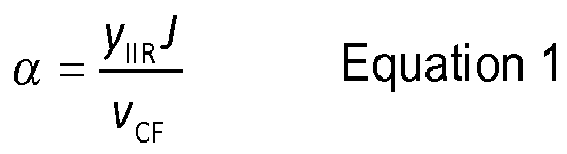
where α is a unitless quantity greater than 3 x 10⁻⁷. - The method according to any one of claims 1 to 4, wherein concentration of the polyisoolefin elastomer in the solution is maintained in a range of from 2-40 wt.% based on total weight of the solution.
- The method according to any one of claims 1 to 5, wherein the filtering is performed at a temperature of from 30-200°C, optionally 40-130°C, optionally at a pressure in a range of from 2-50 bar.
- The method according to any one of claims 1 to 6, wherein one or more stabilizers for the polyisoolefin elastomer are present in the organic solvent, the one or more stabilizers comprising particulate solids insoluble in the organic solvent, non-permeating liquids immiscible in the organic solvent, or a combination thereof, wherein at least one of the one or more stabilizers is retained in the retentate in an amount of from about 80-100 wt.% based on weight of the original amount of the at least one stabilizer in the organic solvent, optionally about 95-100 wt.%.
- The method according to claim 7, wherein the one or more stabilizers comprise an acid scavenger, optionally comprising a metal carboxylate, optionally in the form of a particulate solid, or a metal oxide or hydroxide, optionally comprising calcium stearate or sodium hydroxide, or a mixture of a metal carboxylate and a metal oxide or hydroxide.
- The method according to any one of claims 1 to 8, wherein a molecular weight of the polyisoolefin is decreased by less than about 15% during the filtering step.
- The method according to any one of claims 1 to 9, wherein the organic solvent comprises hexane, pentane, isohexane, isopentane or any mixture thereof and optionally the solution comprises water in a range of from about 1-60 wt.% based on total weight of the solution.
- The method according to any one of claims 1 to 10, wherein the polyisoolefin elastomer is a polyisoolefin copolymer derived from at least one isoolefin monomer and at least one multiolefin monomer and/or β-pinene, optionally being halogenated.
- A permeate produced by the method according to any one of claims 1 to 11.
- A retentate produced by the method according to any one of claims 1 to 11.
- A butyl rubber produced by the method of any one of claims 1 to 11 having a cyclic oligomer content of less than about 400 ppm.
Priority Applications (10)
| Application Number | Priority Date | Filing Date | Title |
|---|---|---|---|
| EP14175953.0A EP2966097A1 (en) | 2014-07-07 | 2014-07-07 | Ultrafiltration of polyisoolefin copolymers |
| EP15819182.5A EP3166979A4 (en) | 2014-07-07 | 2015-07-07 | Ultrafiltration of polyisoolefin copolymers |
| KR1020177003334A KR20170030575A (en) | 2014-07-07 | 2015-07-07 | Ultrafiltration of polyisoolefin copolymers |
| US15/324,350 US20170183423A1 (en) | 2014-07-07 | 2015-07-07 | Ultrafiltration of polyisoolefin copolymers |
| CN201580036960.6A CN106661144B (en) | 2014-07-07 | 2015-07-07 | Ultrafiltration of Polyisoolefin Copolymers |
| SG11201700080SA SG11201700080SA (en) | 2014-07-07 | 2015-07-07 | Ultrafiltration of polyisoolefin copolymers |
| PCT/CA2015/050627 WO2016004526A1 (en) | 2014-07-07 | 2015-07-07 | Ultrafiltration of polyisoolefin copolymers |
| JP2017500950A JP6898223B2 (en) | 2014-07-07 | 2015-07-07 | Ultrafiltration of polyisoolefin copolymer |
| CA2953733A CA2953733A1 (en) | 2014-07-07 | 2015-07-07 | Ultrafiltration of polyisoolefin copolymers |
| US16/788,718 US20200181294A1 (en) | 2014-07-07 | 2020-02-12 | Ultrafiltration of polyisoolefin copolymers |
Applications Claiming Priority (1)
| Application Number | Priority Date | Filing Date | Title |
|---|---|---|---|
| EP14175953.0A EP2966097A1 (en) | 2014-07-07 | 2014-07-07 | Ultrafiltration of polyisoolefin copolymers |
Publications (1)
| Publication Number | Publication Date |
|---|---|
| EP2966097A1 true EP2966097A1 (en) | 2016-01-13 |
Family
ID=51220385
Family Applications (2)
| Application Number | Title | Priority Date | Filing Date |
|---|---|---|---|
| EP14175953.0A Withdrawn EP2966097A1 (en) | 2014-07-07 | 2014-07-07 | Ultrafiltration of polyisoolefin copolymers |
| EP15819182.5A Withdrawn EP3166979A4 (en) | 2014-07-07 | 2015-07-07 | Ultrafiltration of polyisoolefin copolymers |
Family Applications After (1)
| Application Number | Title | Priority Date | Filing Date |
|---|---|---|---|
| EP15819182.5A Withdrawn EP3166979A4 (en) | 2014-07-07 | 2015-07-07 | Ultrafiltration of polyisoolefin copolymers |
Country Status (8)
| Country | Link |
|---|---|
| US (2) | US20170183423A1 (en) |
| EP (2) | EP2966097A1 (en) |
| JP (1) | JP6898223B2 (en) |
| KR (1) | KR20170030575A (en) |
| CN (1) | CN106661144B (en) |
| CA (1) | CA2953733A1 (en) |
| SG (1) | SG11201700080SA (en) |
| WO (1) | WO2016004526A1 (en) |
Cited By (6)
| Publication number | Priority date | Publication date | Assignee | Title |
|---|---|---|---|---|
| US20160347898A1 (en) * | 2015-05-29 | 2016-12-01 | Solutia Inc. | Systems and processes for making a poly(vinyl acetal) resin with enhanced particle transport and recovery |
| US20160347899A1 (en) * | 2015-05-29 | 2016-12-01 | Solutia Inc. | Systems and processes for making a poly(vinyl acetal) resin with enhanced particle transport and recovery |
| EP3233936A4 (en) * | 2014-12-19 | 2018-08-22 | Arlanxeo Singapore Pte. Ltd. | Ultrafiltration of polyisoolefin copolymers and polyisoolefin copolymers with reduced oligomer content |
| EP3902845A4 (en) * | 2018-12-27 | 2023-01-04 | Arlanxeo Singapore Pte. Ltd. | CHLORINATED BUTYL RUBBER PRODUCTION PROCESS |
| US11760815B2 (en) | 2018-12-21 | 2023-09-19 | Arlanxeo Singapore Pte. Ltd. | Halogen recovery in a process for halogenating unsaturated isoolefin copolymer |
| US12129319B2 (en) | 2018-12-17 | 2024-10-29 | Arlanxeo Singapore Pte. Ltd. | Process for the production of isoolefin polymers using a tertiary ether |
Families Citing this family (5)
| Publication number | Priority date | Publication date | Assignee | Title |
|---|---|---|---|---|
| SG11202000232RA (en) * | 2017-07-12 | 2020-02-27 | Arlanxeo Deutschland Gmbh | Process for the production of isoolefin polymers with improved initiator system preparation |
| CN110272514A (en) * | 2019-07-05 | 2019-09-24 | 黄河三角洲京博化工研究院有限公司 | A kind of brominated isobutylene-p-methylstyrene copolymer and preparation method thereof |
| CN110229254B (en) * | 2019-07-05 | 2022-04-22 | 黄河三角洲京博化工研究院有限公司 | Bromination method of butyl rubber and brominated butyl rubber |
| WO2024035941A1 (en) * | 2022-08-12 | 2024-02-15 | Axbio Inc. | Coated crossflow filter membranes and filtration systems for fractional separation of biological material |
| WO2024110485A1 (en) * | 2022-11-21 | 2024-05-30 | Katholieke Universiteit Leuven | Solvent-based plastic recycling using membranes |
Citations (6)
| Publication number | Priority date | Publication date | Assignee | Title |
|---|---|---|---|---|
| US2356128A (en) | 1939-10-20 | 1944-08-22 | Jasco Inc | Mixed olefinic polymerization process and product |
| JPS5250344A (en) * | 1975-10-20 | 1977-04-22 | Kuraray Co Ltd | Process for concentrating latexes |
| US20030216264A1 (en) | 2002-05-16 | 2003-11-20 | The Lubrizol Corporation | Cylic oligomer traction fluid |
| CA2418884A1 (en) | 2003-02-14 | 2004-08-14 | Bayer Inc. | Process for production of high-isoprene butyl rubber |
| EP1524277A1 (en) * | 2003-10-14 | 2005-04-20 | Bayer Aktiengesellschaft | Process for forming purified elastomers from solution |
| EP2610296A1 (en) | 2011-12-29 | 2013-07-03 | Lanxess Deutschland GmbH | Method for production of purified nitrile rubbers |
Family Cites Families (5)
| Publication number | Priority date | Publication date | Assignee | Title |
|---|---|---|---|---|
| US2962473A (en) * | 1957-03-05 | 1960-11-29 | Exxon Research Engineering Co | Process for stabilizing halogenated butyl rubber against gelation with magnesium oxide, and stabilized product obtained thereby |
| CA1137671A (en) * | 1976-05-19 | 1982-12-14 | Joseph Del Pico | Ultrafiltration process for the concentration of polymeric latices |
| US5290873A (en) * | 1990-04-16 | 1994-03-01 | Kanegafuchi Chemical Industry Co., Ltd. | Isobutylene polymer having unsaturated group and preparation thereof |
| US6075073A (en) * | 1998-08-20 | 2000-06-13 | Apex Medical Technologies, Inc. | Latices from emulsified hydrocarbon rubber solutions by membrane separation |
| JP6542235B2 (en) * | 2013-12-23 | 2019-07-10 | アランセオ・シンガポール・プライヴェート・リミテッド | Ultra high purity rubber |
-
2014
- 2014-07-07 EP EP14175953.0A patent/EP2966097A1/en not_active Withdrawn
-
2015
- 2015-07-07 SG SG11201700080SA patent/SG11201700080SA/en unknown
- 2015-07-07 JP JP2017500950A patent/JP6898223B2/en not_active Expired - Fee Related
- 2015-07-07 EP EP15819182.5A patent/EP3166979A4/en not_active Withdrawn
- 2015-07-07 CN CN201580036960.6A patent/CN106661144B/en not_active Expired - Fee Related
- 2015-07-07 US US15/324,350 patent/US20170183423A1/en not_active Abandoned
- 2015-07-07 KR KR1020177003334A patent/KR20170030575A/en not_active Withdrawn
- 2015-07-07 CA CA2953733A patent/CA2953733A1/en not_active Abandoned
- 2015-07-07 WO PCT/CA2015/050627 patent/WO2016004526A1/en not_active Ceased
-
2020
- 2020-02-12 US US16/788,718 patent/US20200181294A1/en not_active Abandoned
Patent Citations (7)
| Publication number | Priority date | Publication date | Assignee | Title |
|---|---|---|---|---|
| US2356128A (en) | 1939-10-20 | 1944-08-22 | Jasco Inc | Mixed olefinic polymerization process and product |
| JPS5250344A (en) * | 1975-10-20 | 1977-04-22 | Kuraray Co Ltd | Process for concentrating latexes |
| US20030216264A1 (en) | 2002-05-16 | 2003-11-20 | The Lubrizol Corporation | Cylic oligomer traction fluid |
| CA2418884A1 (en) | 2003-02-14 | 2004-08-14 | Bayer Inc. | Process for production of high-isoprene butyl rubber |
| EP1524277A1 (en) * | 2003-10-14 | 2005-04-20 | Bayer Aktiengesellschaft | Process for forming purified elastomers from solution |
| US7071292B2 (en) | 2003-10-14 | 2006-07-04 | Bayer Aktiengesellschaft | Method for the preparation of purified elastomers from solution |
| EP2610296A1 (en) | 2011-12-29 | 2013-07-03 | Lanxess Deutschland GmbH | Method for production of purified nitrile rubbers |
Non-Patent Citations (10)
| Title |
|---|
| "Encyclopedia of Polymer Science and Engineering", vol. 17, pages: 666 |
| "Rubber Technology", KLUWER ACADEMIC PUBLISHERS, pages: 297 - 300 |
| "Ullmanns Encyclopedia of Industrial Chemistry", vol. A 23, 1993, pages: 288 - 295 |
| "Ullmann's Encyclopedia of Industrial Chemistry", vol. A231 |
| DATABASE CHEMABS [online] CHEMICAL ABSTRACTS SERVICE, COLUMBUS, OHIO, US; 12 May 1984 (1984-05-12), KOYANO TAKESHI; HIRAI, KOJI; OKAMURA, TAKAYUKI: "Concentration of rubber latexes", XP002734910, Database accession no. 1977:503217 * |
| MAURICE MORTON: "Rubber Technology", 1987, VAN NOSTRAND REINHOLD COMPANY ©, pages: 297 - 300 |
| PARENT JS; LISKOVA A; RESENDES R., POLYMER, vol. 45, 2004, pages 8091 - 8096 |
| PARENT JS; LISKOVA A; WHITNEY RA; RESENDES R., JOURNAL OF POLYMER SCIENCE, PART A: POLYMER CHEMISTRY, vol. 43, 2005, pages 5671 - 5679 |
| PARENT JS; PENCIU A; GUILLEN-CASTELLANOS SA; LISKOVA A; WHITNEY RA, MACROMOLECULES, vol. 37, 2004, pages 7477 - 7483 |
| ZWIJNENBERG H J ET AL: "Important factors influencing molecular weight cut-off determination of membranes in organic solvents", JOURNAL OF MEMBRANE SCIENCE, ELSEVIER, vol. 390, 21 November 2011 (2011-11-21), pages 211 - 217, XP028356856, ISSN: 0376-7388, [retrieved on 20111130], DOI: 10.1016/J.MEMSCI.2011.11.039 * |
Cited By (9)
| Publication number | Priority date | Publication date | Assignee | Title |
|---|---|---|---|---|
| EP3233936A4 (en) * | 2014-12-19 | 2018-08-22 | Arlanxeo Singapore Pte. Ltd. | Ultrafiltration of polyisoolefin copolymers and polyisoolefin copolymers with reduced oligomer content |
| US10766974B2 (en) | 2014-12-19 | 2020-09-08 | Arlanxeo Singapore Pte. Ltd. | Ultrafiltration of polyisoolefin copolymers and polyisoolefin copolymers with reduced oligomer content |
| US20160347898A1 (en) * | 2015-05-29 | 2016-12-01 | Solutia Inc. | Systems and processes for making a poly(vinyl acetal) resin with enhanced particle transport and recovery |
| US20160347899A1 (en) * | 2015-05-29 | 2016-12-01 | Solutia Inc. | Systems and processes for making a poly(vinyl acetal) resin with enhanced particle transport and recovery |
| US12129319B2 (en) | 2018-12-17 | 2024-10-29 | Arlanxeo Singapore Pte. Ltd. | Process for the production of isoolefin polymers using a tertiary ether |
| US11760815B2 (en) | 2018-12-21 | 2023-09-19 | Arlanxeo Singapore Pte. Ltd. | Halogen recovery in a process for halogenating unsaturated isoolefin copolymer |
| EP3902845A4 (en) * | 2018-12-27 | 2023-01-04 | Arlanxeo Singapore Pte. Ltd. | CHLORINATED BUTYL RUBBER PRODUCTION PROCESS |
| US11919977B2 (en) | 2018-12-27 | 2024-03-05 | Arlanxeo Singapore Pte. Ltd. | Process for producing chlorinated butyl rubber |
| US12319754B2 (en) | 2018-12-27 | 2025-06-03 | Arlanxeo Singapore Pte. Ltd. | Chlorinated copolymers and polymer products including chlorinated copolymer |
Also Published As
| Publication number | Publication date |
|---|---|
| KR20170030575A (en) | 2017-03-17 |
| JP2017521526A (en) | 2017-08-03 |
| CN106661144B (en) | 2020-03-24 |
| CA2953733A1 (en) | 2016-01-14 |
| SG11201700080SA (en) | 2017-02-27 |
| JP6898223B2 (en) | 2021-07-07 |
| EP3166979A4 (en) | 2018-03-21 |
| US20170183423A1 (en) | 2017-06-29 |
| EP3166979A1 (en) | 2017-05-17 |
| WO2016004526A1 (en) | 2016-01-14 |
| US20200181294A1 (en) | 2020-06-11 |
| CN106661144A (en) | 2017-05-10 |
Similar Documents
| Publication | Publication Date | Title |
|---|---|---|
| US20200181294A1 (en) | Ultrafiltration of polyisoolefin copolymers | |
| EP2550303B1 (en) | Process for the production of rubber ionomers and polymer nanocomposites | |
| US11827753B2 (en) | Highly pure halogenated rubbers | |
| JP6523297B2 (en) | Rubber containing adjustable levels of metal-containing antiflocculant | |
| JP6542235B2 (en) | Ultra high purity rubber | |
| US20200223955A1 (en) | Halogenated polyisoolefins with reduced halogenated oligomers | |
| CN106029707A (en) | Process for the production of modified butyl rubber | |
| JP2019014900A (en) | Ultrapure copolymers | |
| US10766974B2 (en) | Ultrafiltration of polyisoolefin copolymers and polyisoolefin copolymers with reduced oligomer content | |
| RU2559326C2 (en) | Method of producing polymer nanocomposites |
Legal Events
| Date | Code | Title | Description |
|---|---|---|---|
| PUAI | Public reference made under article 153(3) epc to a published international application that has entered the european phase |
Free format text: ORIGINAL CODE: 0009012 |
|
| AK | Designated contracting states |
Kind code of ref document: A1 Designated state(s): AL AT BE BG CH CY CZ DE DK EE ES FI FR GB GR HR HU IE IS IT LI LT LU LV MC MK MT NL NO PL PT RO RS SE SI SK SM TR |
|
| AX | Request for extension of the european patent |
Extension state: BA ME |
|
| STAA | Information on the status of an ep patent application or granted ep patent |
Free format text: STATUS: THE APPLICATION HAS BEEN WITHDRAWN |
|
| 18W | Application withdrawn |
Effective date: 20160215 |