EP2963579A1 - Procédé de gestion de l'installation d'une application sur un dispositif électronique - Google Patents
Procédé de gestion de l'installation d'une application sur un dispositif électronique Download PDFInfo
- Publication number
- EP2963579A1 EP2963579A1 EP15169536.8A EP15169536A EP2963579A1 EP 2963579 A1 EP2963579 A1 EP 2963579A1 EP 15169536 A EP15169536 A EP 15169536A EP 2963579 A1 EP2963579 A1 EP 2963579A1
- Authority
- EP
- European Patent Office
- Prior art keywords
- key
- application
- certificate
- signature
- authentication
- Prior art date
- Legal status (The legal status is an assumption and is not a legal conclusion. Google has not performed a legal analysis and makes no representation as to the accuracy of the status listed.)
- Granted
Links
Images


Classifications
-
- H—ELECTRICITY
- H04—ELECTRIC COMMUNICATION TECHNIQUE
- H04L—TRANSMISSION OF DIGITAL INFORMATION, e.g. TELEGRAPHIC COMMUNICATION
- H04L63/00—Network architectures or network communication protocols for network security
- H04L63/08—Network architectures or network communication protocols for network security for authentication of entities
- H04L63/0823—Network architectures or network communication protocols for network security for authentication of entities using certificates
-
- G—PHYSICS
- G06—COMPUTING OR CALCULATING; COUNTING
- G06F—ELECTRIC DIGITAL DATA PROCESSING
- G06F21/00—Security arrangements for protecting computers, components thereof, programs or data against unauthorised activity
- G06F21/50—Monitoring users, programs or devices to maintain the integrity of platforms, e.g. of processors, firmware or operating systems
- G06F21/57—Certifying or maintaining trusted computer platforms, e.g. secure boots or power-downs, version controls, system software checks, secure updates or assessing vulnerabilities
-
- H—ELECTRICITY
- H04—ELECTRIC COMMUNICATION TECHNIQUE
- H04L—TRANSMISSION OF DIGITAL INFORMATION, e.g. TELEGRAPHIC COMMUNICATION
- H04L63/00—Network architectures or network communication protocols for network security
- H04L63/04—Network architectures or network communication protocols for network security for providing a confidential data exchange among entities communicating through data packet networks
- H04L63/0428—Network architectures or network communication protocols for network security for providing a confidential data exchange among entities communicating through data packet networks wherein the data content is protected, e.g. by encrypting or encapsulating the payload
- H04L63/045—Network architectures or network communication protocols for network security for providing a confidential data exchange among entities communicating through data packet networks wherein the data content is protected, e.g. by encrypting or encapsulating the payload wherein the sending and receiving network entities apply hybrid encryption, i.e. combination of symmetric and asymmetric encryption
-
- H—ELECTRICITY
- H04—ELECTRIC COMMUNICATION TECHNIQUE
- H04L—TRANSMISSION OF DIGITAL INFORMATION, e.g. TELEGRAPHIC COMMUNICATION
- H04L63/00—Network architectures or network communication protocols for network security
- H04L63/06—Network architectures or network communication protocols for network security for supporting key management in a packet data network
- H04L63/061—Network architectures or network communication protocols for network security for supporting key management in a packet data network for key exchange, e.g. in peer-to-peer networks
-
- H—ELECTRICITY
- H04—ELECTRIC COMMUNICATION TECHNIQUE
- H04L—TRANSMISSION OF DIGITAL INFORMATION, e.g. TELEGRAPHIC COMMUNICATION
- H04L9/00—Cryptographic mechanisms or cryptographic arrangements for secret or secure communications; Network security protocols
- H04L9/32—Cryptographic mechanisms or cryptographic arrangements for secret or secure communications; Network security protocols including means for verifying the identity or authority of a user of the system or for message authentication, e.g. authorization, entity authentication, data integrity or data verification, non-repudiation, key authentication or verification of credentials
- H04L9/3247—Cryptographic mechanisms or cryptographic arrangements for secret or secure communications; Network security protocols including means for verifying the identity or authority of a user of the system or for message authentication, e.g. authorization, entity authentication, data integrity or data verification, non-repudiation, key authentication or verification of credentials involving digital signatures
Definitions
- the present invention relates to a method for managing the installation of a software application on an electronic device.
- the invention also relates to a method of generating a software package and to the associated computer program product.
- the invention also relates to an electronic device.
- a programmable logic controller or a circuit breaker are two examples of such electronic devices.
- Embedded applications periodically require an update, especially when application enhancements appear or defects are fixed.
- an authorized firm an approved supplier or the manufacturer of the electronic device.
- the installation of a modified version by a malicious third party is likely to prevent the operation of the device, or worse to cause a dangerous operation of the device for the user.
- the document EP-A-2 402 879 discloses an application tool for generating an application signature comprising a code generator for producing a binary code, a certificate generator separated from the binary codes and a platform associating at least one certificate with at least one binary code to facilitate the update of embedded applications in an electronic device.
- the electronic device comprises a memory in which is stored a public application authentication key and a certificate authentication public key.
- the software package comprises a software application comprising at least one executable code.
- the software package also includes a first application authentication signature obtained by asymmetric coding using a first private encryption key.
- the software package also includes a certificate that includes information.
- the software package also includes a second authentication signature of the certificate, the second signature being a set of at least one second authentication sub-signature of the certificate, each second sub-signature being obtained by asymmetric coding each using a second respective private encryption key, at least one of the second private encryption keys being distinct from the first private encryption key.
- the method comprises a step of searching for the authenticity of the second signature using the public authentication key of the certificate, the certificate being authenticated if at least one of the second sub-signatures is considered authentic when setting implementation of the research stage.
- the method for managing the installation of a software application on an electronic device thus guarantees a secure installation, even in the case where the identification means of the electronic device are capable of identifying only electronic signatures that have become obsolete. .
- a method for generating a software package comprising a step of providing an application comprising at least one executable, a first encryption private key, a certificate containing information and at least one second private encryption key, at least one of the second private encryption keys being distinct from the first private encryption key.
- the generation method also comprises a step of generating a first authentication signature of the application using an asymmetric coding using the first private encryption key, and a step of generating a second encryption signature.
- authentication of the certificate, the second signature being a set of at least a second authentication sub-signature of the certificate, the step of generating the second signature comprising obtaining each second sub-signature using a asymmetric encryption using a second respective private encryption key.
- an electronic device comprising a memory in which is stored a public certificate authentication public key and a public application authentication key, the public authentication key of the certificate and the public authentication key of the certificate. application being distinct.
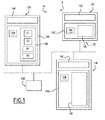
- an electric circuit breaker 8 comprises a tripping unit, not shown, and an electronic system 10.
- the tripping unit is known per se, and is not described in more detail.
- the electronic system 10 comprises four electronic devices 12A, 12B, 12C, 12D, namely a first device 12A, a second device 12B, a third device 12C and a fourth 12D, and a communication bus 13 interconnecting the electronic devices 12A , 12B, 12C, 12D.
- the electronic devices 12A, 12B, 12C, 12D are, for example, a human-machine interface device, also called FDM (English Front Display Module), a network interface device, for example a device interface with a Modbus network, also called IFM (English Modbus Interface), an interface device with the tripping unit of the circuit breaker 8, such as a device noted BCM (English Breaker Control Module) or a device noted BSCM ( in English Breaker Status Control Module).
- the electronic devices 12A, 12B, 12C, 12D are also, for example, a maintenance device, also noted UTA (in English USB Tool Adapter) or BU (English Base Unit) and an input / output device, also noted I / O Module (in English Input / Output Module).
- the first electronic device 12A is, according to the example of the figure 1 , the maintenance device UTA while the second electronic device 12B is a human-machine interface device FDM, the third electronic device 12C is a IFM network interface device and the fourth electronic device 12D is a BCM interface device with the tripping unit of the electric circuit breaker 8.
- the first electronic device 12A comprises a first module 14A for communication with one or more electronic devices 12B, 12C, 12D of the assembly.
- the first electronic device 12A also comprises a first information processing unit 16A formed for example by a first memory 18A and a first processor 20A associated with the first memory 18A.
- the second electronic device 12B respectively the third electronic device 12C and the fourth electronic device 12D, respectively, comprise the same elements as the first electronic device 12A described above, each time replacing first, second, third and fourth, respectively. for which the references are obtained by replacing the letter A by the letter B, respectively by the letter C and respectively by the letter D.
- the elements contained in the fourth electronic device 12D have not been represented for the sake of simplicity of the drawings.
- Each electronic device 12A, 12B, 12C, 12D comprises one or more hardware and / or software functions not shown.
- Each electronic component is, for example, an electronic memory adapted to store data, an input / output component, an interface component with a communication link, such as a serial link, a USB link, an Ethernet link , a Wifi connection or others.
- an electronic component is a programmable logic component, also called FPGA ( Field Programmable Gate Array ) , or a dedicated integrated circuit, also called ASIC (English Application Specific Integrated Circuit ) or any other component electronic, programmable or not.
- a software function any function implemented by a software component, whether it is a basic software (English firmware ) or software application (English software ) .
- a software function is thus broadly defined as a set of software instructions capable of implementing said software function when the software instructions are executed by a processor.
- the first electronic device 12A is more specifically considered, knowing that the proposed invention also applies to other electronic devices 12B, 12C, 12D.
- the communication bus 13 is, for example, a wired bus, internal to the circuit breaker 8 and connecting the electronic devices 12A, 12B, 12C, 12D.
- the bus 13 is adapted to allow data exchange between the electronic devices 12A, 12B, 12C, 12D.
- the communication modules 14A, 14B, 14C, 14D are then interfacing modules with the communication bus 13.
- the communication bus 13 is in the form of a data radio link, and the communication modules 14A, 14B, 14C, 14D are then radio communication modules.
- the first memory 18A is able to store a public key C1 application authentication and a first hash function H1.
- the first memory 18A is also able to store a public authentication certificate C2 and a second hash function H2.
- the public authentication key C2 of the certificate and the public key C1 of application authentication are distinct.
- the second hash function H2 is distinct from the first hash function H1. This increases the security during the installation of an application.
- the first processor 20A is, for the case of the first electronic device 12A, clean to execute a boot (English boot ) .
- a primer is able to isolate the application to install other applications already installed. This makes it possible to protect the first electronic device 12A if an application to be installed on the first electronic device 12A turns out to be a malicious application.
- the primer executed by the first processor 20A is able to authenticate an application by using the public key C1 of application authentication
- the primer executed by the first processor 20A is also capable of authenticating a certificate by using the public authentication key C2 of the certificate.
- the primer executed by the first processor 20A is also suitable to proceed with the installation of a software application.
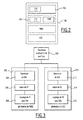
- the primer executed by the first processor 20A is thus able to manage the installation of an application forming part of a software pack 100 as schematically represented in FIG. figure 2 .
- the software pack 100 comprises an application 102, a certificate 104, a first signature FWSC (English Firmware Signature Code ) authentication application 102 and a second signature CSC (English Certificate Signature Code ) certificate authentication 104 .
- FWSC English Firmware Signature Code
- CSC English Certificate Signature Code
- the software pack 100 comprises a plurality of applications 102 and a first signature relating to certain specific applications 102.
- an extension module it is not more described in the following.
- the application 102 is a basic software.
- the application 102 is an extension module (in English add-on or plugin ) .
- the application 102 includes a set of data.
- the data of the application 102 is an execution file 110.
- the execution file 110 comprises all the executable codes ensuring the proper functioning of the application 102.
- all the data of the application 102 are not encrypted.
- all the data of the application 102 are encrypted.
- the certificate 104 also includes a set of data.
- the data of the certificate 104 is the data 112 relating to the provider of the software package 100 and a first public key FSPK.
- the first public key FSPK decrypts the first signature FWSC.
- all the data of the certificate 104 are not encrypted.
- all the data of the certificate 104 are encrypted.
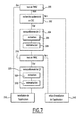
- the first FWSC signature and the second CSC signature are generated in a similar way (asymmetric encoding) but from separate private keys. To illustrate more specifically such a characteristic, reference is made to the figure 3 showing a flowchart of an exemplary implementation of an exemplary method of generating the software pack 100.
- the generation method comprises a step 200 of providing the application 102 and the certificate 104.
- the generation method comprises a first generation step 202.
- the first authentication FWSC signature of the application 102 is generated.
- the first generation step 202 comprises a first supply sub-step 204, a first calculation sub-step 206 and a first encryption sub-step 208.
- SFK Secret Firmware Key
- the first hash function H1 is applied to the application 102 to obtain a first calculation value P1.
- the first calculation value P1 obtained at the end of the first calculation sub-step 206 is encrypted using the first private key SFK provided by a key management infrastructure. .
- the set of first substeps 206 of computation and 208 of encryption makes it possible to carry out an asymmetric coding using the first private key SFK.
- the first signature FWSC is obtained by asymmetric coding using the first private key SFK.
- the first signature FWSC can be decrypted using the first public key FSPK, the first public key FSPK being associated with the first private key SFK.
- the generation method comprises a second generation step 210.
- the second generation step 210 the second authentication CSC signature of the certificate 104 is generated.
- the two generation steps 202 and 210 are implemented simultaneously.
- the second generation step 210 comprises a second sub-step 212 of provision, a second substep 214 of calculation and a second substep 216 of encryption.
- the second hash function H2 is applied to the certificate 104 to obtain a second calculation value P2.
- the second calculation value P2 obtained at the end of the second calculation sub-step 214 is encrypted using the second private key SCK provided.
- the set of second substeps 214 of computation and 216 of encryption makes it possible to carry out an asymmetric coding using the second private key SCK.
- the second CSC signature is obtained by asymmetric coding using the second private key SCK.
- a second public key FMPK associated with the second private key SCK decrypts the second signature CSC.
- the operation of the first electronic device 12A in the case of the installation of the application 102 is described with reference to the figure 4 which illustrates an exemplary implementation of the management method of the installation of the application 102 on the first electronic device 12A.
- the management method comprises a first step 300 of testing the first signature FWSC using the public key C1 application authentication.
- the first processor 20A of the first electronic device 12A extracts the first hash function H1 from the first memory 18A, then applies the first hash function H1 to the application 102.
- the first processor 20A thus obtains a first value V1.
- the first processor 20A of the first electronic device 12A also extracts the application authentication public key C1 stored in the first memory 18A. Then, the first processor 20A decrypts the first signature FWSC using the public key C1 application authentication. The first processor 20A thus obtains a second value V2.
- the first processor 20A of the first electronic device 12A therefore compares the first value V1 and the second value V2. If the two values V1, V2 are equal, the first processor 20A of the first electronic device 12A authenticates the first signature FWSC whereas if the two values V1, V2 are different, the first processor 20A of the first electronic device 12A does not authenticate the first signature.
- the origin of the application 102 is provided and the management method then comprises a step 350 of the application 102 installation.
- the management method then comprises a step 302 for searching for the authenticity of the second signature CSC using the public authentication key C2 of the certificate.
- the implementation of the search step 302 by the first processor 20A is similar to the implementation of the test step 300 and is therefore not described more specifically in what follows.
- the certificate 104 is not authenticated. This means that the certificate 104 does not come from a reliable source.
- the method includes a step 340 of refusing the installation of the application 102 to protect the first electronic device 12A.
- the certificate 104 is authenticated. This shows that the public key C1 application authentication no longer allows to authenticate the new application 102, and more specifically the first signature FWSC.
- the management method then comprises a step 304 for renewing the public key C1 of application authentication of the first electronic device 10A.
- the renewal step 304 comprises an extraction sub-step 306 and a storage sub-step 308.
- the extraction sub-step 306 the first public key FSPK contained in the data of the certificate 104 is read and then extracted.
- the sub-step 306 of extraction is implemented by the first processor 20A.
- the first public key FSPK replaces the old public key C1 application authentication.
- the management method also comprises a second step 310 of testing the authenticity of the first signature FWSC using the new public key FSPK application authentication.
- the application 102 is not authenticated. This means that the application 102 does not come from a reliable source. As a result, the step 340 of refusing the installation of the application 102 to protect the first electronic device 12A is then implemented.
- the application 102 is authenticated.
- the installation step 350 of the application 102 is then implemented.
- the management method then makes it possible to ensure that the entire software pack 100 has been generated by an authorized company (an authorized supplier or the manufacturer of the first electronic device 12A).
- the management method also ensures that the software pack 100 has not been modified by a third party.
- the management method also allows the renewal of the application authentication public key of the first electronic device 10A.
- the second private key SCK remains the same throughout the lifetime of the first electronic device 12A. Such a condition is impractical when the manufacturer of the first electronic device 12A is separate from the supplier of the software package 100.
- the second embodiment of the management method is described with reference to the figures 1 , 5 , 6 and 7 .
- the first electronic device 12A is identical in both embodiments.
- the data of the application 102 includes, in addition to the execution file 110, the second public key FSPK.
- the second CSC signature of the certificate 104 is no longer a single signature but a set of second sub-signatures generically noted CSCi, i referring to an integer greater than 1.
- the second public key FSPK is, in such a case, a key for decrypting one of the second sub-signatures CSCi.
- the generation of the second CSC signature is detailed with reference to the figure 6 showing a flowchart of an exemplary implementation of an exemplary method of generating the software pack 100 according to the second embodiment. Only the second generation step 210 is more specifically described, the other steps remaining unchanged with respect to the generation method described with reference to FIG. figure 3 .
- the second authentication CSC signature of the certificate 104 is generated.
- the second generation step 210 comprises a sub-step 220 for providing a set of private encryption keys SCKi, i referring to an integer greater than 1.
- the private encryption keys SCKi provided correspond to the set of private keys SCKi that existed for the first electronic device 12A. This means that at least one of the second private encryption keys SCKi is associated with the public authentication key C2 of the certificate 104. In the following, it is assumed that this is the second encryption key noted SCK2 which is associated with the public key C2 certificate authentication 104.
- the second generation step 210 then comprises the calculation sub-step 214 during which the second hash function H2 is applied to the certificate 104 to obtain the second calculation value P2.
- the second generation step 210 then comprises, for each second sub-signature CSCi, a substep 222i of encryption of the second calculation value P2 using the second respective private key SCKi provided to obtain the second sub-signature. CSCI.
- Each sub-step 222i is preferably implemented in parallel. This is schematically represented on the figure 6 by mentioning steps 2221, 2222 and 222i.
- the second CSC signature is obtained by asymmetric coding using all the second private keys SCKi.
- the second public key FMPK associated with one of the second private keys SCK such as the public key C2 authentication certificate 104 can decrypt at least one of the second sub-signatures CSCi.
- the second sub-signatures CSCi are ordered according to a predefined order, generally from the most recent to the oldest, but other orders are conceivable.
- the second public key FMPK is associated with the second most recent private key SCKi.
- the second public key FMPK is associated with the second private key SCKi the oldest.
- each second encryption private key SCKi is distinct from the first private encryption key SFK to ensure optimum security.
- the management method is also modified in the second embodiment as shown in FIG. figure 7 .
- the step 302 of searching for the authenticity of the second signature CSC using the public authentication key C2 of the certificate is different in the case of the second embodiment.
- a plurality of second sub-signatures CSCi are tested successively until at least a second sub-signature CSCi is authenticated.
- the second sub-signature CSC1 is discarded as considered non-authentic.
- the second sub-signature CSC2 is then tested and validated.
- the second CSC signature is not validated if none of the second CSCi sub-signatures can be validated.
- the management method then comprises a step 320 for renewing the public authentication key C2 of the certificate 104 of the first electronic device 12A.
- the renewal step 320 comprises an extraction sub-step 326 and a storage sub-step 328.
- the second public key FMPK contained in the data of the application 102 is read and then extracted.
- the sub-step 326 of extraction is implemented by the first processor 20A.
- the second public key FMPK replaces the old public key C2 for authentication of the certificate 104.
- the management method according to the second embodiment has the same advantages as the management method according to the first embodiment.
- the management method according to the second embodiment allows a more flexible use of private keys, the private keys can vary during the life cycle of the first electronic device 12A.
- management method applies to any type of electronic device that can be updated by the installation of a software application.
- the management method has been illustrated for application to the first electronic device 12A, the management method also applies to the other electronic devices 12B, 12C and 12D.
- the first electronic device 12A may be part of other systems than a circuit breaker.
- the first electronic device 12A can be part of a programmable logic controller, a variable speed drive, an inverter or an uninterruptible power supply type UPS.
Landscapes
- Engineering & Computer Science (AREA)
- Computer Security & Cryptography (AREA)
- Computer Hardware Design (AREA)
- General Engineering & Computer Science (AREA)
- Computer Networks & Wireless Communication (AREA)
- Signal Processing (AREA)
- Software Systems (AREA)
- Theoretical Computer Science (AREA)
- Computing Systems (AREA)
- Physics & Mathematics (AREA)
- General Physics & Mathematics (AREA)
- Storage Device Security (AREA)
Abstract
Description
- La présente invention concerne un procédé de gestion de l'installation d'une application logicielle sur un dispositif électronique. L'invention se rapporte également à un procédé de génération d'un pack logiciel et au produit programme d'ordinateur associé. L'invention concerne également un dispositif électronique.
- Les dispositifs électroniques ont de plus en plus fréquemment recours à des applications embarquées. Un automate programmable ou un disjoncteur sont deux exemples de tels dispositifs électroniques.
- Les applications embarquées ont besoin périodiquement d'une mise à jour, notamment lorsque des améliorations de l'application apparaissent ou que des défauts sont corrigés. Lors de l'installation d'une nouvelle version d'une application sur un dispositif électronique, il importe de vérifier que la nouvelle version convient pour le dispositif électronique considéré et que la nouvelle version a été générée par une entreprise habilitée (un fournisseur agréé ou le fabricant du dispositif électronique). En effet, l'installation d'une version modifiée par un tiers malveillant est susceptible d'empêcher le fonctionnement du dispositif, voire pire d'entraîner un fonctionnement du dispositif dangereux pour l'utilisateur.
- Il est donc souhaitable de mettre à jour les applications d'un dispositif électronique en authentifiant avec assurance la provenance de toute mise à jour.
- Pour cela, il est connu d'utiliser des signatures électroniques présentes dans la mise à jour de l'application, le dispositif électronique étant pourvu de moyens d'identification de signatures électroniques spécifiques. A titre d'exemple, le document
EP-A-2 402 879 décrit un outil applicatif permettant de générer une signature du de l'application comprenant un générateur de code pour la production d'un code binaire, un générateur de certificats séparés des codes binaires et une plateforme associant au moins un certificat à au moins un code binaire pour faciliter la mise à jour des applications embarquées dans un dispositif électronique. - Toutefois, l'industrie cherchant à minimiser les pertes d'exploitation, les dispositifs électroniques sont mis à jour peu fréquemment, par exemple pendant plusieurs années de fonctionnement. De ce fait, lorsque le dispositif électronique n'a pas été mis à jour depuis longtemps et que plusieurs versions de la signature de l'application ont été créées dans l'intervalle, les moyens d'identification du dispositif électronique sont capables d'identifier seulement des signatures électroniques qui sont devenues obsolètes. Le document précité ne permet pas de gérer efficacement une telle situation.
- Il existe donc un besoin pour un procédé de gestion de l'installation d'une application logicielle sur un dispositif électronique garantissant une installation sécurisée, y compris dans le cas où les moyens d'identification du dispositif électronique sont capables d'identifier seulement des signatures électroniques qui sont devenues obsolètes.
- A cet effet, il est proposé un procédé de gestion de l'installation d'une application logicielle sur un dispositif électronique. Le dispositif électronique comporte une mémoire dans laquelle est mémorisée une clé publique d'authentification d'application et une clé publique d'authentification de certificat. Le pack logiciel comporte une application logicielle comprenant au moins un code exécutable. Le pack logiciel comporte aussi une première signature d'authentification de l'application obtenue par un codage asymétrique utilisant une première clé privée de cryptage. Le pack logiciel comporte également un certificat comprenant des informations. Le pack logiciel comprend aussi une deuxième signature d'authentification du certificat, la deuxième signature étant un ensemble d'au moins une deuxième sous-signature d'authentification du certificat, chaque deuxième sous-signature étant obtenue par un codage asymétrique utilisant chacun une deuxième clé privée de cryptage respective, au moins une des deuxièmes clés privées de cryptage étant distincte de la première clé privée de cryptage. Le procédé comprend une étape de recherche de l'authenticité de la deuxième signature à l'aide de la clé publique d'authentification du certificat, le certificat étant authentifié si au moins une des deuxièmes sous-signatures est considérée comme authentique lors de la mise en oeuvre de l'étape de recherche.
- Le procédé de gestion de l'installation d'une application logicielle sur un dispositif électronique garantit donc une installation sécurisée, y compris dans le cas où les moyens d'identification du dispositif électronique sont capables d'identifier seulement des signatures électroniques qui sont devenues obsolètes.
- Suivant des modes de réalisation particuliers, le procédé d'installation comprend une ou plusieurs des caractéristiques suivantes, prise(s) isolément ou suivant toute combinaison techniquement possible :
- au moins une des deuxièmes clés privées de cryptage est associée à la clé publique d'authentification du certificat.
- l'étape de recherche est uniquement mise en oeuvre lorsque la première signature est considérée comme non authentique en utilisant la clé publique d'authentification d'application.
- le procédé comporte en outre l'étape de renouvellement de la clé publique d'authentification d'application du dispositif électronique et de la clé publique d'authentification du certificat du dispositif électronique.
- les informations du certificat comportent une première clé publique associée à la première clé privée de cryptage et l'application comporte une deuxième clé publique associée à une deuxième clé privée de cryptage, la nouvelle clé publique d'authentification d'application obtenue à l'issue de l'étape de renouvellement étant la première clé publique et la nouvelle clé publique d'authentification du certificat obtenue à l'issue de l'étape de renouvellement étant la deuxième clé publique.
- le procédé comporte, en outre, une étape d'authentification de l'application par vérification de l'authenticité de la première signature à l'aide de la nouvelle clé publique d'authentification d'application.
- l'installation de l'application est refusée lorsqu'au moins l'un du certificat et de l'application est considéré comme non authentique.
- Il est également proposé un procédé de génération d'un pack logiciel comprenant une étape de fourniture d'une application comprenant au moins un exécutable, d'une première clé privée de cryptage, d'un certificat comprenant des informations et d'au moins une deuxième clé privée de cryptage, au moins une des deuxièmes clés privées de cryptage étant distincte de la première clé privée de cryptage. Le procédé de génération comporte aussi une étape de génération d'une première signature d'authentification de l'application à l'aide d'un codage asymétrique utilisant la première clé privée de cryptage, et une étape de génération d'une deuxième signature d'authentification du certificat, la deuxième signature étant un ensemble d'au moins une deuxième sous-signature d'authentification du certificat, l'étape de génération de la deuxième signature comprenant l'obtention de chaque deuxième sous-signature par utilisation d'un cryptage asymétrique à l'aide d'une deuxième clé privée de cryptage respective.
- Il est également proposé un produit programme d'ordinateur comportant des instructions logicielles qui, lorsque les instructions logicielles sont exécutées par un ordinateur mettent en oeuvre un procédé de génération tel que précédemment décrit.
- Il est aussi proposé un dispositif électronique comportant une mémoire dans laquelle est mémorisée une clé publique d'authentification de certificat et une clé publique d'authentification d'application, la clé publique d'authentification du certificat et la clé publique d'authentification d'application étant distinctes.
- D'autres caractéristiques et avantages de l'invention apparaîtront à la lecture de la description qui suit de modes de réalisation de l'invention, donnée à titre d'exemple uniquement et en référence aux dessins qui sont :
-
figure 1 , une représentation schématique d'un exemple de disjoncteur comprenant une pluralité de dispositifs électroniques, -
figure 2 , une représentation schématique d'un exemple d'un pack logiciel selon un premier mode de réalisation, -
figure 3 , un organigramme d'un exemple de mise en oeuvre d'un procédé de génération permettant de générer le pack logiciel de lafigure 2 , -
figure 4 , un organigramme d'un exemple de mise en oeuvre d'un procédé d'installation selon un premier mode de réalisation, -
figure 5 , une représentation schématique d'un exemple de pack logiciel selon un deuxième mode de réalisation, -
figure 6 , un organigramme d'un exemple de mise en oeuvre d'un procédé de génération permettant de générer le pack logiciel de lafigure 5 , et -
figure 7 , un organigramme d'un exemple de mise en oeuvre d'un procédé d'installation selon un premier mode de réalisation. - Par convention, dans la suite de la description, un module s'entend au sens large, et est synonyme de moyen.
- Sur la
figure 1 , un disjoncteur électrique 8 comprend une unité de déclenchement, non représentée, et un système électronique 10. L'unité de déclenchement est connue en soi, et n'est pas décrite plus en détail. - Le système électronique 10 comprend quatre dispositifs électroniques 12A, 12B, 12C, 12D, à savoir un premier dispositif 12A, un deuxième dispositif 12B, un troisième dispositif 12C et un quatrième 12D, et un bus de communication 13 reliant entre eux les dispositifs électroniques 12A, 12B, 12C, 12D.
- Les dispositifs électroniques 12A, 12B, 12C, 12D sont, par exemple, un dispositif d'interface homme-machine, également noté FDM (en anglais Front Display Module), un dispositif d'interface réseau, par exemple un dispositif d'interface avec un réseau Modbus, également noté IFM (en anglais Interface Modbus), un dispositif d'interface avec l'unité de déclenchement du disjoncteur 8, tel qu'un dispositif noté BCM (en anglais Breaker Control Module) ou encore un dispositif noté BSCM (en anglais Breaker Status Control Module). Les dispositifs électroniques 12A, 12B, 12C, 12D sont également, par exemple, un dispositif de maintenance, également noté UTA (en anglais USB Tool Adaptator) ou BU (en anglais Base unit) et un dispositif d'entrées/sorties, également noté I/O Module (en anglais Input/Output Module).
- Le premier dispositif électronique 12A est, selon l'exemple de la
figure 1 , le dispositif de maintenance UTA tandis que le deuxième dispositif électronique 12B est un dispositif d'interface homme-machine FDM, le troisième dispositif électronique 12C est un dispositif d'interface réseau IFM et le quatrième dispositif électronique 12D est un dispositif d'interface BCM avec l'unité de déclenchement du disjoncteur électrique 8. - Le premier dispositif électronique 12A comporte un premier module 14A de communication avec un ou plusieurs dispositifs électroniques 12B, 12C, 12D de l'ensemble. Le premier dispositif électronique 12A comporte également une première unité de traitement d'informations 16A formée par exemple par une première mémoire 18A et d'un premier processeur 20A associée à la première mémoire 18A.
- Le deuxième dispositif électronique 12B, respectivement le troisième dispositif électronique 12C et respectivement le quatrième dispositif électronique 12D comportent les mêmes éléments que le premier dispositif électronique 12A décrit précédemment, en remplaçant à chaque fois premier par deuxième, respectivement par troisième et respectivement par quatrième, éléments pour lesquels les références sont obtenues en remplaçant la lettre A par la lettre B, respectivement par la lettre C et respectivement par la lettre D. Sur la
figure 1 , les éléments contenus dans le quatrième dispositif électronique 12D n'ont pas été représentés par souci de simplification des dessins. - Chaque dispositif électronique 12A, 12B, 12C, 12D comporte une ou plusieurs fonctions matérielles et/ou logicielles non représentées.
- Il est entendu par fonction matérielle, toute fonction mise en oeuvre par un composant matériel (en anglais hardware), c'est-à-dire par un composant électronique ou par un ensemble de composants électroniques. Chaque composant électronique est, par exemple, une mémoire électronique adaptée pour mémoriser des données, un composant d'entrées/sorties, un composant d'interface avec une liaison de communication, telle qu'une liaison série, une liaison USB, une liaison Ethernet, une liaison Wifi ou autres. A titre d'exemple supplémentaire, un composant électronique est un composant logique programmable, également appelé FPGA (en anglais Field Programmable Gate Array), ou encore un circuit intégré dédié, également appelé ASIC (en anglais Application Specific Integrated Circuit) ou tout autre composant électronique, programmable ou non.
- Il est entendu par fonction logicielle, toute fonction mise en oeuvre par un composant logiciel, qu'il s'agisse d'un logiciel de base (en anglais firmware) ou encore d'un logiciel applicatif (en anglais software). Une fonction logicielle s'entend ainsi au sens large comme un ensemble d'instructions logicielles aptes à mettre en oeuvre ladite fonction logicielles lorsque les instructions logicielles sont exécutées par un processeur.
- Dans la suite, le premier dispositif électronique 12A est plus spécifiquement considéré, sachant que l'invention proposée s'applique également aux autres dispositifs électroniques 12B, 12C, 12D.
- Le bus de communication 13 est, par exemple, un bus filaire, interne au disjoncteur 8 et reliant les dispositifs électroniques 12A, 12B, 12C, 12D. Le bus 13 est adapté pour permettre un échange de données entre les dispositifs électroniques 12A, 12B, 12C, 12D. Les modules de communication 14A, 14B, 14C, 14D sont alors des modules d'interfaçage avec le bus de communication 13.
- En variante, non représentée, le bus de communication 13 est en forme d'une liaison radioélectrique de données, et les modules de communication 14A, 14B, 14C, 14D sont alors des modules radioélectriques de communication.
- La première mémoire 18A est propre à mémoriser une clé publique C1 d'authentification d'application et une première fonction de hachage H1.
- La première mémoire 18A est également propre à mémoriser une clé publique C2 d'authentification de certificat et une deuxième fonction de hachage H2.
- La clé publique C2 d'authentification du certificat et la clé publique C1 d'authentification d'application sont distinctes.
- De préférence, la deuxième fonction de hachage H2 est distincte de la première fonction de hachage H1. Cela permet d'augmenter la sécurité lors de l'installation d'une application.
- Le premier processeur 20A est, pour le cas du premier dispositif électronique 12A, propre à exécuter une amorce (en anglais boot). Dans le cas où le premier dispositif électronique 12A supporte de multiples applications, une amorce est capable d'isoler l'application à installer des autres applications déjà installées. Cela permet de protéger le premier dispositif électronique 12A si une application à installer sur le premier dispositif électronique 12A s'avère être une application malveillante.
- L'amorce exécutée par le premier processeur 20A est propre à authentifier une application en utilisant la clé publique C1 d'authentification d'application
- L'amorce exécutée par le premier processeur 20A est également propre à authentifier un certificat en utilisant clé publique C2 d'authentification du certificat.
- L'amorce exécutée par le premier processeur 20A est aussi propre à procéder à l'installation d'une application logicielle. L'amorce exécutée par le premier processeur 20A est ainsi propre à gérer l'installation d'une application faisant partie d'un pack logiciel 100 tel que représenté schématiquement à la
figure 2 . - Le pack logiciel 100 comporte une application 102, un certificat 104, une première signature FWSC (en anglais Firmware Signature Code) d'authentification de l'application 102 et une deuxième signature CSC (en anglais Certificate Signature Code) d'authentification du certificat 104.
- Selon une autre variante, le pack logiciel 100 comprend une pluralité d'applications 102 et une première signature relative à certaines applications spécifiques 102. Toutefois, comme ce cas se ramène au cas d'un module d'extension, il n'est pas plus décrit dans ce qui suit.
- Selon l'exemple de la
figure 2 , l'application 102 est un logiciel de base. - En variante, l'application 102 est un module d'extension (en anglais add-on ou plugin).
- L'application 102 comporte un ensemble de données. Dans le cas illustré par la
figure 2 , les données de l'application 102 sont un fichier d'exécution 110. Le fichier d'exécution 110 comporte l'ensemble des codes exécutables assurant le bon fonctionnement de l'application 102. - Dans le cas de la
figure 2 , l'ensemble des données de l'application 102 ne sont pas cryptées. En variante, l'ensemble des données de l'application 102 sont cryptées. - Le certificat 104 comporte également un ensemble de données. Dans le cas illustré par la
figure 2 , les données du certificat 104 sont les données 112 relatives au fournisseur du pack logiciel 100 et une première clé publique FSPK. La première clé publique FSPK permet de décrypter la première signature FWSC. - Dans le cas de la
figure 2 , l'ensemble des données du certificat 104 ne sont pas cryptées. En variante, l'ensemble des données du certificat 104 sont cryptées. - La première signature FWSC et la deuxième signature CSC sont générées de manière similaire (codage asymétrique) mais à partir de clés privés distinctes. Pour illustrer plus spécifiquement une telle caractéristique, il est fait référence à la
figure 3 montrant un organigramme d'un exemple de mise en oeuvre d'un exemple de procédé de génération du pack logiciel 100. - Le procédé de génération comporte une étape 200 de fourniture de l'application 102 et du certificat 104.
- Le procédé de génération comporte une première étape 202 de génération. A la première étape 202 de génération, la première signature FWSC d'authentification de l'application 102 est générée.
- La première étape 202 de génération comporte une première sous-étape 204 de fourniture, une première sous-étape 206 de calcul et une première sous-étape 208 de cryptage.
- A la première sous-étape 204 de fourniture, il est fourni une première clé privée SFK (de l'anglais Secret Firmware Key).
- A la première sous-étape 206 de calcul, la première fonction de hachage H1 est appliquée à l'application 102 pour obtenir une première valeur de calcul P1.
- A la première sous-étape 208 de cryptage, la première valeur de calcul P1 obtenue à l'issue de la première sous-étape 206 de calcul est cryptée à l'aide de la première clé privée SFK fournie par une infrastructure de gestion de clés.
- L'ensemble des premières sous-étapes 206 de calcul et 208 de cryptage permet de réaliser un codage asymétrique utilisant la première clé privée SFK.
- Ainsi, la première signature FWSC est obtenue par un codage asymétrique utilisant la première clé privée SFK. Comme expliqué précédemment, la première signature FWSC est décryptable en utilisant la première clé publique FSPK, la première clé publique FSPK étant associée à la première clé privée SFK.
- Le procédé de génération comporte une deuxième étape 210 de génération. A la deuxième étape 210 de génération, la deuxième signature CSC d'authentification du certificat 104 est générée.
- De préférence, comme c'est le cas dans l'exemple de la
figure 3 , pour diminuer le temps de mise en oeuvre du procédé de génération, les deux étapes 202 et 210 de génération sont mises en oeuvre simultanément. - La deuxième étape 210 de génération comporte une deuxième sous-étape 212 de fourniture, une deuxième sous-étape 214 de calcul et une deuxième sous-étape 216 de cryptage.
- A la deuxième sous-étape 212 de fourniture, il est fourni une deuxième clé privée SCK (de l'anglais Secret Certificate Key).
- A la deuxième sous-étape 214 de calcul, la deuxième fonction de hachage H2 est appliquée au certificat 104 pour obtenir une deuxième valeur de calcul P2.
- A la deuxième sous-étape 216 de cryptage, la deuxième valeur de calcul P2 obtenue à l'issue de la deuxième sous-étape 214 de calcul est cryptée à l'aide de la deuxième clé privée SCK fournie.
- L'ensemble des deuxièmes sous-étapes 214 de calcul et 216 de cryptage permet de réaliser un codage asymétrique utilisant la deuxième clé privée SCK.
- Ainsi, la deuxième signature CSC est obtenue par un codage asymétrique utilisant la deuxième clé privée SCK. Une deuxième clé publique FMPK associée à la deuxième clé privée SCK permet de décrypter la deuxième signature CSC.
- Le fonctionnement du premier dispositif électronique 12A dans le cas de l'installation de l'application 102 est décrit en référence à la
figure 4 qui illustre un exemple de mise en oeuvre de procédé de gestion de l'installation de l'application 102 sur le premier dispositif électronique 12A. - Il est entendu par installation aussi bien l'ajout d'une application non présente sur le premier dispositif électronique 12A que la modification d'une ancienne version de l'application logicielle par une mise à jour.
- Le procédé de gestion comporte une première étape 300 de test de la première signature FWSC à l'aide de la clé publique C1 d'authentification d'application.
- Pour authentifier la première signature FWSC, le premier processeur 20A du premier dispositif électronique 12A extrait la première fonction de hachage H1 de la première mémoire 18A, puis applique la première fonction de hachage H1 à l'application 102. Le premier processeur 20A obtient ainsi une première valeur V1.
- Le premier processeur 20A du premier dispositif électronique 12A extrait également la clé publique C1 d'authentification d'application mémorisée dans la première mémoire 18A. Puis, le premier processeur 20A décrypte la première signature FWSC à l'aide de la clé publique C1 d'authentification d'application. Le premier processeur 20A obtient ainsi une deuxième valeur V2.
- Il est possible de démontrer que la première signature FWSC et l'application 102 sont authentiques uniquement dans le cas où la première valeur V1 et la deuxième valeur V2 sont égales.
- Le premier processeur 20A du premier dispositif électronique 12A compare donc la première valeur V1 et la deuxième valeur V2. Si les deux valeurs V1, V2 sont égales, le premier processeur 20A du premier dispositif électronique 12A authentifie la première signature FWSC alors que si les deux valeurs V1, V2 sont différentes, le premier processeur 20A du premier dispositif électronique 12A n'authentifie pas la première signature.
- Dans le cas où la première signature FWSC est authentifiée, la provenance de l'application 102 est assurée et le procédé de gestion comporte ensuite une étape 350 d'installation de l'application 102.
- Dans le cas contraire, cela montre que la clé publique C1 d'authentification d'application FSPK ne permet pas d'authentifier la nouvelle application 102.
- Le procédé de gestion comporte alors une étape 302 de recherche de l'authenticité de la deuxième signature CSC à l'aide de la clé publique C2 d'authentification du certificat.
- La mise en oeuvre de l'étape 302 de recherche par le premier processeur 20A est similaire à la mise en oeuvre de l'étape 300 de test et n'est donc pas décrite plus spécifiquement dans ce qui suit.
- Dans le cas où la deuxième signature CSC n'est pas considérée comme authentique lors de la mise en oeuvre de l'étape 302 de recherche, le certificat 104 n'est pas authentifié. Cela signifie que le certificat 104 ne provient pas d'une source sure.
- De ce fait, le procédé comporte une étape 340 de refus de l'installation de l'application 102 pour protéger le premier dispositif électronique 12A.
- Au contraire, lorsque la deuxième signature CSC est considérée comme authentique, le certificat 104 est authentifié. Cela montre que la clé publique C1 d'authentification d'application ne permet plus d'authentifier la nouvelle application 102, et plus spécifiquement la première signature FWSC.
- Le procédé de gestion comporte alors une étape 304 de renouvellement de la clé publique C1 d'authentification d'application du premier dispositif électronique 10A.
- L'étape 304 de renouvellement comporte une sous-étape 306 d'extraction et une sous-étape 308 de mémorisation.
- A la sous-étape 306 d'extraction, la première clé publique FSPK contenue dans les données du certificat 104 est lue puis extraite. La sous-étape 306 d'extraction est mise en oeuvre par le premier processeur 20A.
- Lors de la sous-étape 308 de mémorisation, la première clé publique FSPK remplace l'ancienne clé publique C1 d'authentification d'application.
- Le procédé de gestion comporte aussi une deuxième étape 310 de test de l'authenticité de la première signature FWSC à l'aide de la nouvelle clé publique FSPK d'authentification d'application.
- Dans le cas où la première signature FWSC n'est pas considérée comme authentique lors de la mise en oeuvre de la deuxième étape 310 de test, l'application 102 n'est pas authentifiée. Cela signifie que l'application 102 ne provient pas d'une source sure. De ce fait, l'étape 340 de refus de l'installation de l'application 102 pour protéger le premier dispositif électronique 12A est, ensuite, mise en oeuvre.
- Au contraire, dès que la première signature FWSC est considérée comme authentique, l'application 102 est authentifiée. L'étape 350 d'installation de l'application 102 est alors mise en oeuvre.
- Le procédé de gestion permet alors de s'assurer que l'ensemble du pack logiciel 100 a bien été généré par une entreprise habilitée (un fournisseur agréé ou le fabricant du premier dispositif électronique 12A).
- Le procédé de gestion permet également de garantir que le pack logiciel 100 n'a pas été modifié par un tiers.
- Le procédé de gestion permet également le renouvellement de la clé publique d'authentification d'application du premier dispositif électronique 10A.
- Dans un tel mode de réalisation, la deuxième clé privée SCK reste la même tout au long de la durée de vie du premier dispositif électronique 12A. Une telle condition est peu pratique lorsque le fabricant du premier dispositif électronique 12A est distinct du fournisseur du pack logiciel 100.
- Pour cela, il est également proposé un deuxième mode de réalisation permettant un changement pour la deuxième clé privée SCK.
- Le deuxième mode de réalisation du procédé de gestion est décrit en référence aux
figures 1 ,5 ,6 et7 . - Le premier dispositif électronique 12A est identique dans les deux modes de réalisation.
- Les éléments similaires entre le pack logiciel 100 selon le premier mode de réalisation et le pack logiciel 100 selon le deuxième mode de réalisation illustré par la
figure 5 ne sont pas répétés dans ce qui suit. Seules les différences sont mises en évidence. - Dans le cas de la
figure 5 , les données de l'application 102 comprennent, en plus du fichier d'exécution 110, la deuxième clé publique FSPK. - En outre, la deuxième signature CSC du certificat 104 n'est plus une signature unique mais un ensemble de deuxièmes sous-signatures notée génériquement CSCi, i faisant référence à un nombre entier supérieur à 1. La deuxième clé publique FSPK est, dans un tel cas, une clé permettant de déchiffrer une des deuxièmes sous-signatures CSCi.
- La génération de la deuxième signature CSC est détaillée en référence à la
figure 6 montrant un organigramme d'un exemple de mise en oeuvre d'un exemple de procédé de génération du pack logiciel 100 selon le deuxième mode de réalisation. Seule la deuxième étape 210 de génération est plus spécifiquement décrite, les autres étapes demeurant inchangés par rapport au procédé de génération décrit en référence à lafigure 3 . - A la deuxième étape 210 de génération, la deuxième signature CSC d'authentification du certificat 104 est générée.
- La deuxième étape 210 de génération comporte une sous-étape 220 de fourniture d'un ensemble de clés privées de cryptage SCKi, i faisant référence à un nombre entier supérieur à 1.
- Les clés privées de cryptage SCKi fournies correspondent à l'ensemble des clés privées SCKi qui ont existées pour le premier dispositif électronique 12A. Cela signifie qu'au moins une des deuxièmes clés privées de cryptage SCKi est associée à la clé publique C2 d'authentification du certificat 104. Dans la suite, il est supposé que c'est la deuxième clé de cryptage notée SCK2 qui est associée à la clé publique C2 d'authentification du certificat 104.
- La deuxième étape 210 de génération comporte ensuite la sous-étape 214 de calcul durant laquelle la deuxième fonction de hachage H2 est appliquée au certificat 104 pour obtenir la deuxième valeur de calcul P2
- La deuxième étape 210 de génération comporte alors, pour chaque deuxième sous-signature CSCi, une sous-étape 222i de cryptage de la deuxième valeur de calcul P2 à l'aide de la deuxième clé privée SCKi respective fournie pour obtenir la deuxième sous-signature CSCi.
- Chaque sous-étape 222i est, de préférence, mise en oeuvre en parallèle. Cela est représenté schématiquement sur la
figure 6 par mention des étapes 2221, 2222 et 222i. - Ainsi, la deuxième signature CSC est obtenue par un codage asymétrique utilisant l'ensemble des deuxièmes clés privées SCKi. La deuxième clé publique FMPK associée à l'une des deuxièmes clés privées SCK, comme la clé publique C2 d'authentification du certificat 104 permettent de décrypter au moins une des deuxièmes sous-signatures CSCi.
- De préférence, les deuxièmes sous-signatures CSCi sont ordonnées selon un ordre prédéfini, généralement de la plus récente à la plus ancienne mais d'autres ordres sont envisageables.
- Selon un cas particulier, la deuxième clé publique FMPK est associée à la deuxième clé privée SCKi la plus récente.
- Selon un autre cas particulier correspondant au cas d'un dispositif électronique 12A ancien, la deuxième clé publique FMPK est associée à la deuxième clé privée SCKi la plus ancienne.
- En outre, selon un mode de réalisation préféré, chaque deuxième clé privée de cryptage SCKi est distincte de la première clé privée de cryptage SFK pour garantir une sécurité optimum.
- Le procédé de gestion est également modifié dans le deuxième mode de réalisation ainsi que le montre la
figure 7 . - L'étape 302 de recherche de l'authenticité de la deuxième signature CSC à l'aide de la clé publique C2 d'authentification du certificat est différente dans le cas du deuxième mode de réalisation.
- En effet, dans le cas général, une pluralité de deuxièmes sous-signatures CSCi sont testées successivement jusqu'à ce qu'au moins une deuxième sous-signature CSCi soit authentifiée.
- En l'occurrence, par exemple, la deuxième sous-signature CSC1 est écartée car considérée comme non authentique. La deuxième sous-signature CSC2 est ensuite testée et validée.
- La deuxième signature CSC n'est pas validée si aucune des deuxièmes sous-signatures CSCi ne peut être validée.
- En outre, selon le deuxième mode de réalisation, le procédé de gestion comporte alors une étape 320 de renouvellement de la clé publique C2 d'authentification du certificat 104 du premier dispositif électronique 12A.
- L'étape 320 de renouvellement comporte une sous-étape 326 d'extraction et une sous-étape 328 de mémorisation.
- A la sous-étape 326 d'extraction, la deuxième clé publique FMPK contenue dans les données de l'application 102 est lue puis extraite. La sous-étape 326 d'extraction est mise en oeuvre par le premier processeur 20A.
- Lors de la sous-étape 328 de mémorisation, la deuxième clé publique FMPK remplace l'ancienne clé publique C2 d'authentification du certificat 104.
- Une telle mémorisation permet d'authentifier les futurs certificats.
- Le procédé de gestion selon le deuxième mode de réalisation présente les mêmes avantages que le procédé de gestion selon le premier mode de réalisation. En outre, le procédé de gestion selon le deuxième mode de réalisation permet une utilisation plus souple des clés privées, les clés privées pouvant varier au cours du cycle de vie du premier dispositif électronique 12A.
- De plus, le procédé de gestion s'applique à tout type de dispositif électronique susceptible d'être mise à jour par l'installation d'une application logicielle. Ainsi, bien que le procédé de gestion ait été illustré pour une application au premier dispositif électronique 12A, le procédé de gestion s'applique également aux autres dispositifs électroniques 12B, 12C et 12D.
- De manière additionnelle, le premier dispositif électronique 12A peut faire partie d'autres systèmes qu'un disjoncteur. Notamment, le premier dispositif électronique 12A peut faire partie d'un automate programmable, d'un variateur de vitesse, d'un onduleur ou d'une alimentation sans interruption de type UPS.
Claims (11)
- Procédé de gestion de l'installation d'une application logicielle (102) sur un dispositif électronique (12A, 12B, 12C, 12D) comportant une mémoire (18A, 18B, 18C, 18D) dans laquelle est mémorisée une clé publique d'authentification d'application (C1) et une clé publique d'authentification de certificat (C2), l'installation logicielle faisant partie d'un pack logiciel (100) comportant :- l'application (102) comprenant au moins un exécutable,- une première signature (FWSC) d'authentification de l'application (102), la première signature (FWSC) ayant été obtenue par un codage asymétrique utilisant une première clé privée (SFK) de cryptage,- un certificat (104) comprenant des informations, et- une deuxième signature (CSC) d'authentification du certificat (104), la deuxième signature étant un ensemble comprenant des deuxièmes sous-signatures (CSC, CSCi) d'authentification du certificat, chaque deuxième sous-signature (CSC, CSCi) étant obtenue par un codage asymétrique utilisant chacun une deuxième clé privée de cryptage respective (SCK, SCKi), au moins une des deuxièmes clés privées de cryptage (SCK, SCKi) étant distincte de la première clé privée (SFK) de cryptage,le procédé comprenant une étape de recherche de l'authenticité de la deuxième signature (CSC) à l'aide de la clé publique d'authentification du certificat (C2), le certificat (104) étant authentifié si au moins une des deuxièmes sous-signatures (CSC, CSCi) est considérée comme authentique lors de la mise en oeuvre de l'étape de recherche.
- Procédé de gestion selon la revendication 1, dans lequel au moins une des deuxièmes clés privées (SCK, SCKi) de cryptage est associée à la clé publique d'authentification du certificat (C2).
- Procédé de gestion selon la revendication 1 ou 2, dans lequel l'étape de recherche est uniquement mise en oeuvre lorsque la première signature (FWSC) est considérée comme non authentique en utilisant la clé publique d'authentification d'application (C1).
- Procédé de gestion selon l'une quelconque des revendications 1 à 3, dans lequel le procédé comporte, en outre, une étape de renouvellement de la clé publique d'authentification d'application (C1) du dispositif électronique (12A, 12B, 12C, 12D) et de la clé publique d'authentification du certificat (C2) du dispositif électronique (12A, 12B, 12C, 12D).
- Procédé de gestion selon la revendication 4, dans lequel les informations du certificat (104) comportent une première clé publique (FSPK) associée à la première clé privée de cryptage (SFK) et l'application (102) comporte une deuxième clé publique (FMPK) associée à une deuxième clé privée de cryptage (SCK), la nouvelle clé publique d'authentification d'application obtenue à l'issue de l'étape de renouvellement étant la première clé publique (FSPK) et la nouvelle clé publique d'authentification du certificat obtenue à l'issue de l'étape de renouvellement étant la deuxième clé publique (FMPK).
- Procédé de gestion selon la revendication 5, dans lequel le procédé comporte en outre une étape d'authentification de l'application (102) par vérification de l'authenticité de la première signature (FWSC) à l'aide de la nouvelle clé publique d'authentification d'application.
- Procédé de gestion selon la revendication 5 ou 6, dans lequel le dispositif électronique (12A, 12B, 12C, 12D) comporte un processeur (20A, 20B, 20C) propre à exécuter une amorce, le procédé de gestion étant mis en oeuvre par l'amorce.
- Procédé de gestion selon l'une quelconque des revendications 1 à 7, dans lequel l'installation de l'application (102) est refusée lorsqu'au moins l'un du certificat et de l'application (102) est considéré comme non authentique.
- Procédé de génération d'un pack logiciel (100) comprenant les étapes de :- fourniture d'une application (102) comprenant au moins un exécutable (110), d'une première clé privée (SFK) de cryptage, d'un certificat (104) comprenant des informations et d'au moins une deuxième clé privée de cryptage (SCKi), au moins une des deuxièmes clés privées de cryptage (SCK, SCKi) étant distincte de la première clé privée (SFK) de cryptage,- génération d'une première signature (FWSC) d'authentification de l'application (102) à l'aide d'un codage asymétrique utilisant la première clé privée (SFK) de cryptage, et- génération d'une deuxième signature (CSC) d'authentification du certificat (104), la deuxième signature étant un ensemble comprenant des deuxièmes sous-signatures (CSC, CSCi) d'authentification du certificat, l'étape de génération de la deuxième signature (CSC) comprenant l'obtention de chaque deuxième sous-signature (CSC, CSCi) par utilisation d'un codage asymétrique à l'aide d'une deuxième clé privée de cryptage respective (SCK, SCKi).
- Produit programme d'ordinateur comportant des instructions logicielles qui, lorsque les instructions logicielles sont exécutées par un ordinateur mettent en oeuvre un procédé de génération selon la revendication 9.
- Dispositif électronique (12A, 12B, 12C, 12D) comportant une mémoire (18A, 18B, 18C, 18D) dans laquelle est mémorisée une clé publique d'authentification de certificat (C2) et une clé publique d'authentification d'application (C1), la clé publique d'authentification du certificat (C2) et la clé publique d'authentification d'application (C1) étant distinctes.
Applications Claiming Priority (1)
| Application Number | Priority Date | Filing Date | Title |
|---|---|---|---|
| FR1456498A FR3023400A1 (fr) | 2014-07-04 | 2014-07-04 | Procede de gestion de l'installation d'une application sur un dispositif electronique |
Publications (2)
| Publication Number | Publication Date |
|---|---|
| EP2963579A1 true EP2963579A1 (fr) | 2016-01-06 |
| EP2963579B1 EP2963579B1 (fr) | 2017-09-13 |
Family
ID=52003921
Family Applications (1)
| Application Number | Title | Priority Date | Filing Date |
|---|---|---|---|
| EP15169536.8A Active EP2963579B1 (fr) | 2014-07-04 | 2015-05-28 | Procédé de gestion de l'installation d'une application sur un dispositif électronique |
Country Status (4)
| Country | Link |
|---|---|
| US (1) | US9699172B2 (fr) |
| EP (1) | EP2963579B1 (fr) |
| ES (1) | ES2651177T3 (fr) |
| FR (1) | FR3023400A1 (fr) |
Cited By (1)
| Publication number | Priority date | Publication date | Assignee | Title |
|---|---|---|---|---|
| CN109756340A (zh) * | 2018-12-03 | 2019-05-14 | 深圳市新国都支付技术有限公司 | 一种数字验签方法、装置和存储介质 |
Families Citing this family (2)
| Publication number | Priority date | Publication date | Assignee | Title |
|---|---|---|---|---|
| US10929572B2 (en) * | 2017-04-10 | 2021-02-23 | Nyquist Semiconductor Limited | Secure data storage device with security function implemented in a data security bridge |
| CN110971414B (zh) * | 2017-11-10 | 2021-05-04 | 财付通支付科技有限公司 | 生成签名的方法、装置、终端及服务器 |
Citations (2)
| Publication number | Priority date | Publication date | Assignee | Title |
|---|---|---|---|---|
| US20070055881A1 (en) * | 2005-09-02 | 2007-03-08 | Fuchs Kenneth C | Method for securely exchanging public key certificates in an electronic device |
| EP2402879A1 (fr) | 2010-07-01 | 2012-01-04 | Rockwell Automation Technologies, Inc. | Procédés de signature de micrologiciel |
Family Cites Families (3)
| Publication number | Priority date | Publication date | Assignee | Title |
|---|---|---|---|---|
| GB2413653B (en) * | 2004-04-29 | 2007-11-28 | Symbian Software Ltd | Installation of software on removable media |
| ES2902644T3 (es) * | 2011-02-11 | 2022-03-29 | Siemens Healthcare Diagnostics Inc | Sistema y método para actualización segura de software |
| CN102404706B (zh) * | 2011-11-24 | 2014-08-13 | 中兴通讯股份有限公司 | 一种管理资费安全的方法及移动终端 |
-
2014
- 2014-07-04 FR FR1456498A patent/FR3023400A1/fr active Pending
-
2015
- 2015-05-28 EP EP15169536.8A patent/EP2963579B1/fr active Active
- 2015-05-28 ES ES15169536.8T patent/ES2651177T3/es active Active
- 2015-06-26 US US14/752,266 patent/US9699172B2/en active Active
Patent Citations (2)
| Publication number | Priority date | Publication date | Assignee | Title |
|---|---|---|---|---|
| US20070055881A1 (en) * | 2005-09-02 | 2007-03-08 | Fuchs Kenneth C | Method for securely exchanging public key certificates in an electronic device |
| EP2402879A1 (fr) | 2010-07-01 | 2012-01-04 | Rockwell Automation Technologies, Inc. | Procédés de signature de micrologiciel |
Cited By (2)
| Publication number | Priority date | Publication date | Assignee | Title |
|---|---|---|---|---|
| CN109756340A (zh) * | 2018-12-03 | 2019-05-14 | 深圳市新国都支付技术有限公司 | 一种数字验签方法、装置和存储介质 |
| CN109756340B (zh) * | 2018-12-03 | 2022-10-21 | 深圳市新国都支付技术有限公司 | 一种数字验签方法、装置和存储介质 |
Also Published As
| Publication number | Publication date |
|---|---|
| US9699172B2 (en) | 2017-07-04 |
| EP2963579B1 (fr) | 2017-09-13 |
| ES2651177T3 (es) | 2018-01-24 |
| US20160006722A1 (en) | 2016-01-07 |
| FR3023400A1 (fr) | 2016-01-08 |
Similar Documents
| Publication | Publication Date | Title |
|---|---|---|
| EP1570648B1 (fr) | Méthode de sécurisation des mises à jour de logiciels | |
| EP3457620B1 (fr) | Procédé d'exécution d'un code binaire d'une fonction sécurisée par un microprocesseur | |
| FR3017725A1 (fr) | Procede de deploiement d'un ensemble d'application (s) logicielle (s) | |
| US10205747B2 (en) | Protection for computing systems from revoked system updates | |
| FR2933216A1 (fr) | Procede et systeme de validation d'une succession d'evenements vecus par un dispositif | |
| EP2963579B1 (fr) | Procédé de gestion de l'installation d'une application sur un dispositif électronique | |
| FR3019347A1 (fr) | Securisation du chargement de donnees dans une memoire non-volatile d'un element securise | |
| EP2193626B1 (fr) | Communication securisee entre une etiquette electronique et un lecteur | |
| EP2077515B1 (fr) | Dispositif, systèmes et procédé de démarrage sécurisé d'une installation informatique | |
| CN110069415A (zh) | 用于软件测试过程中的软件完整性校验及软件测试方法 | |
| FR3075423A1 (fr) | Technique de protection d'une cle cryptographique au moyen d'un mot de passe utilisateur | |
| EP2941843A1 (fr) | Procede de traitement comparatif securise | |
| EP3460664B1 (fr) | Procédé de gestion de modules logiciels embarqués pour un calculateur électronique d'un appareil électrique de coupure | |
| EP3391228A1 (fr) | Procédé d'écriture dans une mémoire non-volatile d'une entité électronique et entité électronique associée | |
| EP4328771A1 (fr) | Procédé d'exécution d'un code machine par un calculateur | |
| WO2015150689A1 (fr) | Procede de configuration securisee d'une application dans un terminal utilisateur | |
| EP2873022B1 (fr) | Procédé de traitement comparatif sécurisé | |
| EP4057169A1 (fr) | Procédé d'exécution d'un code binaire d'un programme d'ordinateur par un microprocesseur | |
| WO2012093215A1 (fr) | Dispositif et procede de tracage | |
| FR2918829A1 (fr) | Procede d'authentification de carte electronique. | |
| FR2966263A1 (fr) | Procede de controle d'un circuit integre, circuit integre et calculateur comportant un circuit integre | |
| EP4589885A1 (fr) | Protection de données | |
| EP2521984B1 (fr) | Procede de protection de contenus et de services multimedia | |
| EP2232762B1 (fr) | Procede de codage d'un secret forme par une valeur numerique | |
| EP3564841A1 (fr) | Authentification d'un circuit électronique |
Legal Events
| Date | Code | Title | Description |
|---|---|---|---|
| PUAI | Public reference made under article 153(3) epc to a published international application that has entered the european phase |
Free format text: ORIGINAL CODE: 0009012 |
|
| AK | Designated contracting states |
Kind code of ref document: A1 Designated state(s): AL AT BE BG CH CY CZ DE DK EE ES FI FR GB GR HR HU IE IS IT LI LT LU LV MC MK MT NL NO PL PT RO RS SE SI SK SM TR |
|
| AX | Request for extension of the european patent |
Extension state: BA ME |
|
| 17P | Request for examination filed |
Effective date: 20160622 |
|
| RBV | Designated contracting states (corrected) |
Designated state(s): AL AT BE BG CH CY CZ DE DK EE ES FI FR GB GR HR HU IE IS IT LI LT LU LV MC MK MT NL NO PL PT RO RS SE SI SK SM TR |
|
| 17Q | First examination report despatched |
Effective date: 20160721 |
|
| REG | Reference to a national code |
Ref country code: DE Ref legal event code: R079 Ref document number: 602015004594 Country of ref document: DE Free format text: PREVIOUS MAIN CLASS: G06F0021570000 Ipc: H04L0009320000 |
|
| GRAP | Despatch of communication of intention to grant a patent |
Free format text: ORIGINAL CODE: EPIDOSNIGR1 |
|
| RIC1 | Information provided on ipc code assigned before grant |
Ipc: H04L 9/32 20060101AFI20170317BHEP Ipc: H04L 29/06 20060101ALI20170317BHEP Ipc: G06F 21/57 20130101ALI20170317BHEP |
|
| INTG | Intention to grant announced |
Effective date: 20170411 |
|
| GRAS | Grant fee paid |
Free format text: ORIGINAL CODE: EPIDOSNIGR3 |
|
| GRAA | (expected) grant |
Free format text: ORIGINAL CODE: 0009210 |
|
| AK | Designated contracting states |
Kind code of ref document: B1 Designated state(s): AL AT BE BG CH CY CZ DE DK EE ES FI FR GB GR HR HU IE IS IT LI LT LU LV MC MK MT NL NO PL PT RO RS SE SI SK SM TR |
|
| REG | Reference to a national code |
Ref country code: GB Ref legal event code: FG4D Free format text: NOT ENGLISH |
|
| REG | Reference to a national code |
Ref country code: CH Ref legal event code: EP |
|
| REG | Reference to a national code |
Ref country code: IE Ref legal event code: FG4D Free format text: LANGUAGE OF EP DOCUMENT: FRENCH |
|
| REG | Reference to a national code |
Ref country code: AT Ref legal event code: REF Ref document number: 929149 Country of ref document: AT Kind code of ref document: T Effective date: 20171015 |
|
| REG | Reference to a national code |
Ref country code: DE Ref legal event code: R096 Ref document number: 602015004594 Country of ref document: DE |
|
| REG | Reference to a national code |
Ref country code: NL Ref legal event code: MP Effective date: 20170913 |
|
| REG | Reference to a national code |
Ref country code: ES Ref legal event code: FG2A Ref document number: 2651177 Country of ref document: ES Kind code of ref document: T3 Effective date: 20180124 |
|
| REG | Reference to a national code |
Ref country code: LT Ref legal event code: MG4D |
|
| PG25 | Lapsed in a contracting state [announced via postgrant information from national office to epo] |
Ref country code: LT Free format text: LAPSE BECAUSE OF FAILURE TO SUBMIT A TRANSLATION OF THE DESCRIPTION OR TO PAY THE FEE WITHIN THE PRESCRIBED TIME-LIMIT Effective date: 20170913 Ref country code: HR Free format text: LAPSE BECAUSE OF FAILURE TO SUBMIT A TRANSLATION OF THE DESCRIPTION OR TO PAY THE FEE WITHIN THE PRESCRIBED TIME-LIMIT Effective date: 20170913 Ref country code: SE Free format text: LAPSE BECAUSE OF FAILURE TO SUBMIT A TRANSLATION OF THE DESCRIPTION OR TO PAY THE FEE WITHIN THE PRESCRIBED TIME-LIMIT Effective date: 20170913 Ref country code: NO Free format text: LAPSE BECAUSE OF FAILURE TO SUBMIT A TRANSLATION OF THE DESCRIPTION OR TO PAY THE FEE WITHIN THE PRESCRIBED TIME-LIMIT Effective date: 20171213 Ref country code: FI Free format text: LAPSE BECAUSE OF FAILURE TO SUBMIT A TRANSLATION OF THE DESCRIPTION OR TO PAY THE FEE WITHIN THE PRESCRIBED TIME-LIMIT Effective date: 20170913 |
|
| REG | Reference to a national code |
Ref country code: AT Ref legal event code: MK05 Ref document number: 929149 Country of ref document: AT Kind code of ref document: T Effective date: 20170913 |
|
| PG25 | Lapsed in a contracting state [announced via postgrant information from national office to epo] |
Ref country code: LV Free format text: LAPSE BECAUSE OF FAILURE TO SUBMIT A TRANSLATION OF THE DESCRIPTION OR TO PAY THE FEE WITHIN THE PRESCRIBED TIME-LIMIT Effective date: 20170913 Ref country code: RS Free format text: LAPSE BECAUSE OF FAILURE TO SUBMIT A TRANSLATION OF THE DESCRIPTION OR TO PAY THE FEE WITHIN THE PRESCRIBED TIME-LIMIT Effective date: 20170913 Ref country code: GR Free format text: LAPSE BECAUSE OF FAILURE TO SUBMIT A TRANSLATION OF THE DESCRIPTION OR TO PAY THE FEE WITHIN THE PRESCRIBED TIME-LIMIT Effective date: 20171214 Ref country code: BG Free format text: LAPSE BECAUSE OF FAILURE TO SUBMIT A TRANSLATION OF THE DESCRIPTION OR TO PAY THE FEE WITHIN THE PRESCRIBED TIME-LIMIT Effective date: 20171213 |
|
| PG25 | Lapsed in a contracting state [announced via postgrant information from national office to epo] |
Ref country code: NL Free format text: LAPSE BECAUSE OF FAILURE TO SUBMIT A TRANSLATION OF THE DESCRIPTION OR TO PAY THE FEE WITHIN THE PRESCRIBED TIME-LIMIT Effective date: 20170913 |
|
| PG25 | Lapsed in a contracting state [announced via postgrant information from national office to epo] |
Ref country code: PL Free format text: LAPSE BECAUSE OF FAILURE TO SUBMIT A TRANSLATION OF THE DESCRIPTION OR TO PAY THE FEE WITHIN THE PRESCRIBED TIME-LIMIT Effective date: 20170913 Ref country code: CZ Free format text: LAPSE BECAUSE OF FAILURE TO SUBMIT A TRANSLATION OF THE DESCRIPTION OR TO PAY THE FEE WITHIN THE PRESCRIBED TIME-LIMIT Effective date: 20170913 Ref country code: RO Free format text: LAPSE BECAUSE OF FAILURE TO SUBMIT A TRANSLATION OF THE DESCRIPTION OR TO PAY THE FEE WITHIN THE PRESCRIBED TIME-LIMIT Effective date: 20170913 |
|
| REG | Reference to a national code |
Ref country code: FR Ref legal event code: PLFP Year of fee payment: 4 |
|
| PG25 | Lapsed in a contracting state [announced via postgrant information from national office to epo] |
Ref country code: EE Free format text: LAPSE BECAUSE OF FAILURE TO SUBMIT A TRANSLATION OF THE DESCRIPTION OR TO PAY THE FEE WITHIN THE PRESCRIBED TIME-LIMIT Effective date: 20170913 Ref country code: AT Free format text: LAPSE BECAUSE OF FAILURE TO SUBMIT A TRANSLATION OF THE DESCRIPTION OR TO PAY THE FEE WITHIN THE PRESCRIBED TIME-LIMIT Effective date: 20170913 Ref country code: IS Free format text: LAPSE BECAUSE OF FAILURE TO SUBMIT A TRANSLATION OF THE DESCRIPTION OR TO PAY THE FEE WITHIN THE PRESCRIBED TIME-LIMIT Effective date: 20180113 Ref country code: SM Free format text: LAPSE BECAUSE OF FAILURE TO SUBMIT A TRANSLATION OF THE DESCRIPTION OR TO PAY THE FEE WITHIN THE PRESCRIBED TIME-LIMIT Effective date: 20170913 Ref country code: SK Free format text: LAPSE BECAUSE OF FAILURE TO SUBMIT A TRANSLATION OF THE DESCRIPTION OR TO PAY THE FEE WITHIN THE PRESCRIBED TIME-LIMIT Effective date: 20170913 |
|
| REG | Reference to a national code |
Ref country code: DE Ref legal event code: R097 Ref document number: 602015004594 Country of ref document: DE |
|
| PLBE | No opposition filed within time limit |
Free format text: ORIGINAL CODE: 0009261 |
|
| STAA | Information on the status of an ep patent application or granted ep patent |
Free format text: STATUS: NO OPPOSITION FILED WITHIN TIME LIMIT |
|
| PG25 | Lapsed in a contracting state [announced via postgrant information from national office to epo] |
Ref country code: DK Free format text: LAPSE BECAUSE OF FAILURE TO SUBMIT A TRANSLATION OF THE DESCRIPTION OR TO PAY THE FEE WITHIN THE PRESCRIBED TIME-LIMIT Effective date: 20170913 |
|
| 26N | No opposition filed |
Effective date: 20180614 |
|
| PG25 | Lapsed in a contracting state [announced via postgrant information from national office to epo] |
Ref country code: MT Free format text: LAPSE BECAUSE OF FAILURE TO SUBMIT A TRANSLATION OF THE DESCRIPTION OR TO PAY THE FEE WITHIN THE PRESCRIBED TIME-LIMIT Effective date: 20170913 |
|
| PG25 | Lapsed in a contracting state [announced via postgrant information from national office to epo] |
Ref country code: SI Free format text: LAPSE BECAUSE OF FAILURE TO SUBMIT A TRANSLATION OF THE DESCRIPTION OR TO PAY THE FEE WITHIN THE PRESCRIBED TIME-LIMIT Effective date: 20170913 |
|
| REG | Reference to a national code |
Ref country code: CH Ref legal event code: PL |
|
| REG | Reference to a national code |
Ref country code: BE Ref legal event code: MM Effective date: 20180531 |
|
| PG25 | Lapsed in a contracting state [announced via postgrant information from national office to epo] |
Ref country code: MC Free format text: LAPSE BECAUSE OF FAILURE TO SUBMIT A TRANSLATION OF THE DESCRIPTION OR TO PAY THE FEE WITHIN THE PRESCRIBED TIME-LIMIT Effective date: 20170913 |
|
| REG | Reference to a national code |
Ref country code: IE Ref legal event code: MM4A |
|
| PG25 | Lapsed in a contracting state [announced via postgrant information from national office to epo] |
Ref country code: LI Free format text: LAPSE BECAUSE OF NON-PAYMENT OF DUE FEES Effective date: 20180531 Ref country code: CH Free format text: LAPSE BECAUSE OF NON-PAYMENT OF DUE FEES Effective date: 20180531 |
|
| PG25 | Lapsed in a contracting state [announced via postgrant information from national office to epo] |
Ref country code: LU Free format text: LAPSE BECAUSE OF NON-PAYMENT OF DUE FEES Effective date: 20180528 |
|
| PG25 | Lapsed in a contracting state [announced via postgrant information from national office to epo] |
Ref country code: IE Free format text: LAPSE BECAUSE OF NON-PAYMENT OF DUE FEES Effective date: 20180528 |
|
| PG25 | Lapsed in a contracting state [announced via postgrant information from national office to epo] |
Ref country code: BE Free format text: LAPSE BECAUSE OF NON-PAYMENT OF DUE FEES Effective date: 20180531 |
|
| PG25 | Lapsed in a contracting state [announced via postgrant information from national office to epo] |
Ref country code: TR Free format text: LAPSE BECAUSE OF FAILURE TO SUBMIT A TRANSLATION OF THE DESCRIPTION OR TO PAY THE FEE WITHIN THE PRESCRIBED TIME-LIMIT Effective date: 20170913 |
|
| PG25 | Lapsed in a contracting state [announced via postgrant information from national office to epo] |
Ref country code: PT Free format text: LAPSE BECAUSE OF FAILURE TO SUBMIT A TRANSLATION OF THE DESCRIPTION OR TO PAY THE FEE WITHIN THE PRESCRIBED TIME-LIMIT Effective date: 20170913 |
|
| PG25 | Lapsed in a contracting state [announced via postgrant information from national office to epo] |
Ref country code: HU Free format text: LAPSE BECAUSE OF FAILURE TO SUBMIT A TRANSLATION OF THE DESCRIPTION OR TO PAY THE FEE WITHIN THE PRESCRIBED TIME-LIMIT; INVALID AB INITIO Effective date: 20150528 Ref country code: MK Free format text: LAPSE BECAUSE OF NON-PAYMENT OF DUE FEES Effective date: 20170913 Ref country code: CY Free format text: LAPSE BECAUSE OF FAILURE TO SUBMIT A TRANSLATION OF THE DESCRIPTION OR TO PAY THE FEE WITHIN THE PRESCRIBED TIME-LIMIT Effective date: 20170913 |
|
| PG25 | Lapsed in a contracting state [announced via postgrant information from national office to epo] |
Ref country code: AL Free format text: LAPSE BECAUSE OF FAILURE TO SUBMIT A TRANSLATION OF THE DESCRIPTION OR TO PAY THE FEE WITHIN THE PRESCRIBED TIME-LIMIT Effective date: 20170913 |
|
| PGFP | Annual fee paid to national office [announced via postgrant information from national office to epo] |
Ref country code: DE Payment date: 20250528 Year of fee payment: 11 |
|
| PGFP | Annual fee paid to national office [announced via postgrant information from national office to epo] |
Ref country code: GB Payment date: 20250526 Year of fee payment: 11 Ref country code: ES Payment date: 20250611 Year of fee payment: 11 |
|
| PGFP | Annual fee paid to national office [announced via postgrant information from national office to epo] |
Ref country code: IT Payment date: 20250522 Year of fee payment: 11 |
|
| PGFP | Annual fee paid to national office [announced via postgrant information from national office to epo] |
Ref country code: FR Payment date: 20250526 Year of fee payment: 11 |