EP2961142A1 - Electronic device, incoming call answering and rejection method and digital data storage media - Google Patents
Electronic device, incoming call answering and rejection method and digital data storage media Download PDFInfo
- Publication number
- EP2961142A1 EP2961142A1 EP15172164.4A EP15172164A EP2961142A1 EP 2961142 A1 EP2961142 A1 EP 2961142A1 EP 15172164 A EP15172164 A EP 15172164A EP 2961142 A1 EP2961142 A1 EP 2961142A1
- Authority
- EP
- European Patent Office
- Prior art keywords
- area
- incoming call
- electronic device
- touch screen
- signal
- Prior art date
- Legal status (The legal status is an assumption and is not a legal conclusion. Google has not performed a legal analysis and makes no representation as to the accuracy of the status listed.)
- Granted
Links
Images

Classifications
-
- H—ELECTRICITY
- H04—ELECTRIC COMMUNICATION TECHNIQUE
- H04M—TELEPHONIC COMMUNICATION
- H04M1/00—Substation equipment, e.g. for use by subscribers
- H04M1/02—Constructional features of telephone sets
- H04M1/0202—Portable telephone sets, e.g. cordless phones, mobile phones or bar type handsets
-
- G—PHYSICS
- G06—COMPUTING OR CALCULATING; COUNTING
- G06F—ELECTRIC DIGITAL DATA PROCESSING
- G06F3/00—Input arrangements for transferring data to be processed into a form capable of being handled by the computer; Output arrangements for transferring data from processing unit to output unit, e.g. interface arrangements
- G06F3/01—Input arrangements or combined input and output arrangements for interaction between user and computer
- G06F3/048—Interaction techniques based on graphical user interfaces [GUI]
- G06F3/0487—Interaction techniques based on graphical user interfaces [GUI] using specific features provided by the input device, e.g. functions controlled by the rotation of a mouse with dual sensing arrangements, or of the nature of the input device, e.g. tap gestures based on pressure sensed by a digitiser
- G06F3/0488—Interaction techniques based on graphical user interfaces [GUI] using specific features provided by the input device, e.g. functions controlled by the rotation of a mouse with dual sensing arrangements, or of the nature of the input device, e.g. tap gestures based on pressure sensed by a digitiser using a touch-screen or digitiser, e.g. input of commands through traced gestures
- G06F3/04883—Interaction techniques based on graphical user interfaces [GUI] using specific features provided by the input device, e.g. functions controlled by the rotation of a mouse with dual sensing arrangements, or of the nature of the input device, e.g. tap gestures based on pressure sensed by a digitiser using a touch-screen or digitiser, e.g. input of commands through traced gestures for inputting data by handwriting, e.g. gesture or text
-
- H—ELECTRICITY
- H04—ELECTRIC COMMUNICATION TECHNIQUE
- H04M—TELEPHONIC COMMUNICATION
- H04M1/00—Substation equipment, e.g. for use by subscribers
- H04M1/72—Mobile telephones; Cordless telephones, i.e. devices for establishing wireless links to base stations without route selection
- H04M1/724—User interfaces specially adapted for cordless or mobile telephones
- H04M1/72469—User interfaces specially adapted for cordless or mobile telephones for operating the device by selecting functions from two or more displayed items, e.g. menus or icons
-
- H—ELECTRICITY
- H04—ELECTRIC COMMUNICATION TECHNIQUE
- H04M—TELEPHONIC COMMUNICATION
- H04M2250/00—Details of telephonic subscriber devices
- H04M2250/22—Details of telephonic subscriber devices including a touch pad, a touch sensor or a touch detector
Definitions
- the application relates in general to an incoming call answering and rejecting method, and more particularly to an incoming call answering and rejecting method for use in an electronic device having a touch screen.
- Touch screen is a touch-sensible screen that the user can directly operate elements on the screen. Due to the intuitive way of operation, touch screen has gained great popularity.
- touch screen is widely applied to many electronic devices such as a touch phone, a smartphone, or a personal digital assistance (PDA) phone.
- PDA personal digital assistance
- the application is directed to an electronic device, an incoming call answering and rejecting method, and a digital data storage media.
- the incoming call is answered or rejected according to the dragging signal generated on the touch screen, hence avoiding accidental touch errors.
- an electronic device comprising a call module, a touch screen, and a processing unit.
- the call module receives a request of an incoming call.
- the touch screen generates a dragging signal.
- the processing unit is coupled to the call module and the touch screen. When the processing unit determines that the dragging signal is an answering signal, the call is answered. When the processing unit determines that the dragging signal is a rejecting signal, the call is rejected.
- an incoming call answering and rejecting method applied to an electronic device having a touch screen has the following steps.
- a request of an incoming call is received.
- a dragging signal is generated on the touch screen.
- the dragging signal is an answering signal, the incoming call is answered.
- the dragging signal is a rejecting signal, the incoming call is rejected.
- a digital data storage media has many commands executable on an electronic device such that the electronic device executes an incoming call answering and rejecting method after executing these commands.
- the incoming call answering and rejecting method has the following steps. A request of an incoming call is received. A dragging signal is generated on the touch screen. When the dragging signal is an answering signal, the incoming call is answered. When the dragging signal is a rejecting signal, the incoming call is rejected.
- the electronic device 100 such as a touch phone, a smartphone, or a personal digital assistant (PDA) phone, comprises a call module 110, a touch screen 120, and a processing unit 130.
- the call module 110 receives a request of an incoming call "Ca.”
- the touch screen 120 is touched and dragged by a user to generate a dragging signal "Sd.”
- the processing unit 130 is coupled to the call module 110 and the touch screen 120. When the processing unit 130 determines that the dragging signal Sd is an answering signal Sa, the incoming call Ca is answered.
- the processing unit 130 determines that dragging signal Sd is a rejecting signal Sr, the incoming call Ca is rejected (ignored).
- the user answers or rejects (ignores) the incoming call Ca by generating a dragging signal on the touch screen 120, hence avoiding the touch screen 120 being touched accidentally to cause the incoming call be answered or rejected unexpectedly.
- FIG. 2 an example of a simulated diagram of the electronic device of FIG. 1 is shown.
- a caller pattern 111 is shown on the touch screen 120 to inform the user of the caller's information comprising at least one of the telephone number, the name, and the photo of the caller.
- the touch screen 120 has a first area 121, a second area 122, and an initial area 123.
- the first area 121 and the second area 122 are located at two opposite sides of the initial area 123.
- the answering signal Sa is a signal generated by dragging from the initial area 123 towards the first area 121
- the rejecting signal Sr is a signal generated by dragging from the initial area 123 towards the second area 122.
- the user can generate an answering signal Sa to answer the incoming call Ca by pressing his or her finger on the initial area 123 and dragging towards the first area 121.
- the user can generate a rejecting signal Sr to reject the incoming call Ca by pressing his or her finger on the initial area 123 and dragging towards the second area 122.
- a first reminder 124 is shown in the first area 121 of the touch screen 120 and a second reminder 125 is shown in the second area 122.
- the user is informed whether to answer the incoming call Ca by dragging from the initial area 123 towards the first area 121 or to reject the incoming call Ca by dragging from the initial area 123 towards the second area 122.
- the first reminder 124 is an answering message such as "slide to answer”
- the second reminder 125 is a rejecting message such as "slide to reject” or "slide to ignore.”
- a button 126 is shown in the initial area 123 of the touch screen 120.
- the processing unit 130 controls the button 126 to move to the first area 121 from the initial area 123.
- the processing unit 130 controls the button 126 to move the second area 122 from the initial area 123.
- the processing unit 130 controls the button 126 to dynamically move to the first area 121 or the second area 122 from the initial area 123 so as to provide the user with virtual feeling of dragging the button.
- the user may generate the answering signal Sa by dragging the button 126 towards the first area 121 from the initial area 123; and the user may generate the rejecting signal Sr by dragging the button 126 towards the second area 122 from the initial area 123.
- the user may release the button 126 after dragging the button 126 to the first area 121 or the second area 122.
- the processing unit 130 controls the button 126 to dynamically move back to the initial area 123 from the first area 121 or the second area 122 so as to provide the user with superior visual effect.
- the answering signal Sa or the rejecting signal Sr is generated by dragging from the initial area 123 towards the first area 121 or the second area 122.
- the above exemplification is not for limiting the application.
- the answering signal Sa may be generated by dragging from the first area 121 towards the initial area 123
- the rejecting signal Sr may be generated by dragging from the second area 122 towards the initial area 123.
- the answering signal Sa may be generated by drawing a first symbol previously defined on the touch screen 120
- the rejecting signal Sr is a signal generated by drawing a second symbol previously defined on the touch screen 120.
- the answering signal Sa only generated when the first symbol is substantially drawn in the first area 121
- the rejecting signal Sr only generated when the second symbol is substantially drawn in the second area 122.
- the first symbol or the second symbol for example, is a pattern comprising a tick pattern, an X pattern, an ⁇ pattern, a clockwise circle pattern, or an anti-clockwise circle pattern, a symbol, or a character.
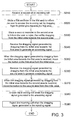
- FIG. 3 an example of the incoming call answering and rejecting method according to an embodiment of the application is shown.
- the steps of FIG. 3 are executed by an electronic device 100 of FIG. 2 , but the application is not limited thereto.
- the application is not limited thereto.
- anyone who is skilled in the technology of the application will understand that the procedures and sequences of the incoming call answering and rejecting method can be modified or adjusted according to actual needs.
- the method begins at step S310, a request of an incoming call Ca is received by a call module 110.
- step S320 a first reminder 124 is shown in the first area 121 to inform the user to answer the incoming call Ca by dragging from the initial area 123 towards the first area 121.
- the first reminder 124 is an "Answer" message for example.
- step S330 a second reminder 125 is shown in the second area 122 to inform the user to reject the call Ca by dragging from the initial area 123 towards the second area 122.
- the second reminder 125 is a "Reject" or "Ignore" message for example.
- step S340 the touch screen 120 receives the dragging signal Sd generated by dragging from the initial area 123 towards the first area 121 to generate an answering signal Sa.
- step S350 when the touch screen 120 receives the dragging signal Sd generated by dragging from the initial area 123 towards the first area 121, the processing unit 130 moves the button 126 to the first area 121 from the initial area 123.
- the button 126 is dynamically moved to the first area 121 from the initial area 123.
- step S360 the touch screen 120 receives the dragging signal Sd generated by dragging from the initial area 123 towards the second area 122 to generate a rejecting signal Sr.
- step S370 when the touch screen 120 receives the dragging signal Sd generated by dragging from the initial area 123 towards the second area 122, the processing unit 130 moves the button 126 to the second area 122 from the initial area 123.
- the button 126 is dynamically moved to the second area 121 from the initial area 123.
- step S380 when the generated dragging signal Sd is the answering signal Sa, the incoming call Ca is answered.
- step S390 when the generated dragging signal Sd is the rejecting signal Sr, the incoming call Ca is rejected.
- the first reminder 124 shown in the first area 121 may be a pattern, a symbol, or characters informing the user that he or she can answer the incoming call Ca by dragging from the first area 121 towards the initial area 123.
- the second reminder 125 shown in the second area 122 may be a pattern, a symbol, or characters informing the user that he or she can reject the incoming call Ca by dragging from the second area 123 towards the initial area 123.
- the answering signal Sa can be a signal generated by drawing a first symbol previously defined on the touch screen 120
- the rejecting signal Sr can also be a signal generated by drawing a second symbol previously defined on the touch screen 120.
- the answering signal Sa only generated when the first symbol is substantially drawn in the first area 121
- the rejecting signal Sr only generated when the second symbol is substantially drawn in the second area 122.
- the first symbol or the second symbol for example, is a pattern comprising a tick pattern, an X pattern, an ⁇ pattern, a clockwise circle pattern, or an anti-clockwise circle pattern, a symbol, or a character.
- the above incoming call answering and rejecting method may be programmed and stored in a digital data storage medium executable on the handheld electronic device 100.
- the digital data storage medium such as secure digital (SD) card, memory stick (MS), and multimedia memory card (MMC), has the above application executing function after the application executing method is executed on the handheld electronic device 100.
- SD secure digital
- MS memory stick
- MMC multimedia memory card
- the incoming call is answered or rejected according to the dragging signal received by the touch screen.
- the generated dragging signal is a previously defined answering signal
- the incoming call is answered.
- the generated dragging signal is a previously defined rejecting signal
- the incoming call is rejected.
- the answering signal and the rejecting signal can be generated according to "dragging from the initial area towards a particular area on the touch screen" or "drawing a particular pattern or symbol on the touch screen".
Landscapes
- Engineering & Computer Science (AREA)
- Human Computer Interaction (AREA)
- General Engineering & Computer Science (AREA)
- Theoretical Computer Science (AREA)
- Signal Processing (AREA)
- Physics & Mathematics (AREA)
- General Physics & Mathematics (AREA)
- Computer Networks & Wireless Communication (AREA)
- Telephone Function (AREA)
- User Interface Of Digital Computer (AREA)
Abstract
Description
- The application relates in general to an incoming call answering and rejecting method, and more particularly to an incoming call answering and rejecting method for use in an electronic device having a touch screen.
- Touch screen is a touch-sensible screen that the user can directly operate elements on the screen. Due to the intuitive way of operation, touch screen has gained great popularity. Currently, touch screen is widely applied to many electronic devices such as a touch phone, a smartphone, or a personal digital assistance (PDA) phone.
- As touch screen is activated by touch, accidental touch errors may occur easily. Let the touch phone be taken for example, when an incoming call is received, an answering button and a rejecting button are shown on the touch screen for the user to choose to answer or reject the call by click the answering button or the rejecting button, respectively. However, the answering button or the rejecting button may be accidentally touched by the user or by other objects and cause unintentionally answering or rejecting the call, and result in great inconvenience.
- The application is directed to an electronic device, an incoming call answering and rejecting method, and a digital data storage media. The incoming call is answered or rejected according to the dragging signal generated on the touch screen, hence avoiding accidental touch errors.
- According to a first aspect of the present application, an electronic device comprising a call module, a touch screen, and a processing unit is provided. The call module receives a request of an incoming call. The touch screen generates a dragging signal. The processing unit is coupled to the call module and the touch screen. When the processing unit determines that the dragging signal is an answering signal, the call is answered. When the processing unit determines that the dragging signal is a rejecting signal, the call is rejected.
- According to a second aspect of the present application, an incoming call answering and rejecting method applied to an electronic device having a touch screen is provided and has the following steps. A request of an incoming call is received. A dragging signal is generated on the touch screen. When the dragging signal is an answering signal, the incoming call is answered. When the dragging signal is a rejecting signal, the incoming call is rejected.
- According to a third aspect of the present application, a digital data storage media is provided. The digital data storage media has many commands executable on an electronic device such that the electronic device executes an incoming call answering and rejecting method after executing these commands. The incoming call answering and rejecting method has the following steps. A request of an incoming call is received. A dragging signal is generated on the touch screen. When the dragging signal is an answering signal, the incoming call is answered. When the dragging signal is a rejecting signal, the incoming call is rejected.
- The application will become apparent from the following detailed description of the preferred but non-limiting embodiments. The following description is made with reference to the accompanying drawings.
-
-
FIG. 1 shows a block diagram of an electronic device according to an embodiment of the application; -
FIG. 2 shows an example of a simulated diagram of the electronic device ofFIG. 1 ; and -
FIG. 3 shows an example of the incoming call answering and rejecting method according to an embodiment of the application. - Referring to
FIG. 1 , a block diagram of an electronic device according to an embodiment of the application is shown. Theelectronic device 100, such as a touch phone, a smartphone, or a personal digital assistant (PDA) phone, comprises acall module 110, atouch screen 120, and aprocessing unit 130. Thecall module 110 receives a request of an incoming call "Ca." Thetouch screen 120 is touched and dragged by a user to generate a dragging signal "Sd." Theprocessing unit 130 is coupled to thecall module 110 and thetouch screen 120. When theprocessing unit 130 determines that the dragging signal Sd is an answering signal Sa, the incoming call Ca is answered. When theprocessing unit 130 determines that dragging signal Sd is a rejecting signal Sr, the incoming call Ca is rejected (ignored). Thus, the user answers or rejects (ignores) the incoming call Ca by generating a dragging signal on thetouch screen 120, hence avoiding thetouch screen 120 being touched accidentally to cause the incoming call be answered or rejected unexpectedly. - Referring to
FIG. 2 , an example of a simulated diagram of the electronic device ofFIG. 1 is shown. When thecall module 110 receives a request of an incoming call Ca, acaller pattern 111 is shown on thetouch screen 120 to inform the user of the caller's information comprising at least one of the telephone number, the name, and the photo of the caller. Thetouch screen 120 has afirst area 121, asecond area 122, and aninitial area 123. Thefirst area 121 and thesecond area 122 are located at two opposite sides of theinitial area 123. The answering signal Sa is a signal generated by dragging from theinitial area 123 towards thefirst area 121, and the rejecting signal Sr is a signal generated by dragging from theinitial area 123 towards thesecond area 122. Thus, the user can generate an answering signal Sa to answer the incoming call Ca by pressing his or her finger on theinitial area 123 and dragging towards thefirst area 121. Or, the user can generate a rejecting signal Sr to reject the incoming call Ca by pressing his or her finger on theinitial area 123 and dragging towards thesecond area 122. - In one embodiment of the application, a
first reminder 124 is shown in thefirst area 121 of thetouch screen 120 and asecond reminder 125 is shown in thesecond area 122. Thus, the user is informed whether to answer the incoming call Ca by dragging from theinitial area 123 towards thefirst area 121 or to reject the incoming call Ca by dragging from theinitial area 123 towards thesecond area 122. In the present embodiment of the application, thefirst reminder 124 is an answering message such as "slide to answer", and thesecond reminder 125 is a rejecting message such as "slide to reject" or "slide to ignore." - In one embodiment of the application, a
button 126 is shown in theinitial area 123 of thetouch screen 120. When the user generates the answering signal Sa by dragging from theinitial area 123 towards thefirst area 121, theprocessing unit 130 controls thebutton 126 to move to thefirst area 121 from theinitial area 123. When the user generates the rejecting signal Sr by dragging from theinitial area 123 towards thesecond area 122, theprocessing unit 130 controls thebutton 126 to move thesecond area 122 from theinitial area 123. Thus, the user is informed whether to answer or reject the incoming call Ca. In another embodiment, theprocessing unit 130 controls thebutton 126 to dynamically move to thefirst area 121 or thesecond area 122 from theinitial area 123 so as to provide the user with virtual feeling of dragging the button. That is to say, the user may generate the answering signal Sa by dragging thebutton 126 towards thefirst area 121 from theinitial area 123; and the user may generate the rejecting signal Sr by dragging thebutton 126 towards thesecond area 122 from theinitial area 123. The user may release thebutton 126 after dragging thebutton 126 to thefirst area 121 or thesecond area 122. After the user releases thebutton 126, theprocessing unit 130 controls thebutton 126 to dynamically move back to theinitial area 123 from thefirst area 121 or thesecond area 122 so as to provide the user with superior visual effect. - In the present embodiment of the application, the answering signal Sa or the rejecting signal Sr is generated by dragging from the
initial area 123 towards thefirst area 121 or thesecond area 122. However, the above exemplification is not for limiting the application. In another embodiment of the application, the answering signal Sa may be generated by dragging from thefirst area 121 towards theinitial area 123, and the rejecting signal Sr may be generated by dragging from thesecond area 122 towards theinitial area 123. - In other embodiments of the application, the answering signal Sa may be generated by drawing a first symbol previously defined on the
touch screen 120, and the rejecting signal Sr is a signal generated by drawing a second symbol previously defined on thetouch screen 120. In one embodiment, the answering signal Sa only generated when the first symbol is substantially drawn in thefirst area 121, and the rejecting signal Sr only generated when the second symbol is substantially drawn in thesecond area 122. The first symbol or the second symbol, for example, is a pattern comprising a tick pattern, an X pattern, an α pattern, a clockwise circle pattern, or an anti-clockwise circle pattern, a symbol, or a character. - Referring to
FIG. 3 , an example of the incoming call answering and rejecting method according to an embodiment of the application is shown. In the incoming call answering and rejecting method of the present embodiment of the application, the steps ofFIG. 3 are executed by anelectronic device 100 ofFIG. 2 , but the application is not limited thereto. Anyone who is skilled in the technology of the application will understand that the procedures and sequences of the incoming call answering and rejecting method can be modified or adjusted according to actual needs. - Firstly, the method begins at step S310, a request of an incoming call Ca is received by a
call module 110. Next, the method proceeds to step S320, afirst reminder 124 is shown in thefirst area 121 to inform the user to answer the incoming call Ca by dragging from theinitial area 123 towards thefirst area 121. Thefirst reminder 124 is an "Answer" message for example. Then, the method proceeds to step S330, asecond reminder 125 is shown in thesecond area 122 to inform the user to reject the call Ca by dragging from theinitial area 123 towards thesecond area 122. Thesecond reminder 125 is a "Reject" or "Ignore" message for example. - Then, the method proceeds to step S340, the
touch screen 120 receives the dragging signal Sd generated by dragging from theinitial area 123 towards thefirst area 121 to generate an answering signal Sa. After that, the method proceeds to step S350, when thetouch screen 120 receives the dragging signal Sd generated by dragging from theinitial area 123 towards thefirst area 121, theprocessing unit 130 moves thebutton 126 to thefirst area 121 from theinitial area 123. Preferably, thebutton 126 is dynamically moved to thefirst area 121 from theinitial area 123. - Afterwards, the method proceeds to step S360, the
touch screen 120 receives the dragging signal Sd generated by dragging from theinitial area 123 towards thesecond area 122 to generate a rejecting signal Sr. Then, the method proceeds to step S370, when thetouch screen 120 receives the dragging signal Sd generated by dragging from theinitial area 123 towards thesecond area 122, theprocessing unit 130 moves thebutton 126 to thesecond area 122 from theinitial area 123. Preferably, thebutton 126 is dynamically moved to thesecond area 121 from theinitial area 123. - Then, the method proceeds to step S380, when the generated dragging signal Sd is the answering signal Sa, the incoming call Ca is answered. Lastly, the method proceeds to step S390, when the generated dragging signal Sd is the rejecting signal Sr, the incoming call Ca is rejected.
- In another embodiment, in step S320, the
first reminder 124 shown in thefirst area 121 may be a pattern, a symbol, or characters informing the user that he or she can answer the incoming call Ca by dragging from thefirst area 121 towards theinitial area 123. Likewise, in step S330, thesecond reminder 125 shown in thesecond area 122 may be a pattern, a symbol, or characters informing the user that he or she can reject the incoming call Ca by dragging from thesecond area 123 towards theinitial area 123. - In another embodiment, the answering signal Sa can be a signal generated by drawing a first symbol previously defined on the
touch screen 120, and the rejecting signal Sr can also be a signal generated by drawing a second symbol previously defined on thetouch screen 120. In one embodiment, the answering signal Sa only generated when the first symbol is substantially drawn in thefirst area 121, and the rejecting signal Sr only generated when the second symbol is substantially drawn in thesecond area 122. The first symbol or the second symbol, for example, is a pattern comprising a tick pattern, an X pattern, an α pattern, a clockwise circle pattern, or an anti-clockwise circle pattern, a symbol, or a character. - The above incoming call answering and rejecting method may be programmed and stored in a digital data storage medium executable on the handheld
electronic device 100. The digital data storage medium, such as secure digital (SD) card, memory stick (MS), and multimedia memory card (MMC), has the above application executing function after the application executing method is executed on the handheldelectronic device 100. - According to the electronic device, the incoming call answering and rejecting method, and the digital data storage media disclosed in the above embodiments of the application, the incoming call is answered or rejected according to the dragging signal received by the touch screen. When the generated dragging signal is a previously defined answering signal, the incoming call is answered. When the generated dragging signal is a previously defined rejecting signal, the incoming call is rejected. The answering signal and the rejecting signal can be generated according to "dragging from the initial area towards a particular area on the touch screen" or "drawing a particular pattern or symbol on the touch screen". Thus, the user will no more answer or reject the incoming call unintentionally caused by accidental touch and gain superior use experience.
- While the application has been described by way of example and in terms of a number of embodiments, it is to be understood that the application is not limited thereto. On the contrary, it is intended to cover various modifications and similar arrangements and procedures, and the scope of the appended claims therefore should be accorded the broadest interpretation so as to encompass all such modifications and similar arrangements and procedures.
Claims (15)
- An electronic device, comprising:a call module for receiving an incoming call; anda touch screen for detecting a movement of an object on the touch screen,wherein the incoming call is answered in response to the electronic device receiving a signal indicative of the movement of the object from a first initial area to or towards a first area of the touch screen, and the incoming call is rejected in response to the electronic device receiving a signal indicative of the movement of the object from a second initial area to or towards a second area of the touch screen.
- The electronic device of claim 1, wherein the object is a pointing device.
- The electronic device of claim 1 or 2, wherein at least one of the first initial area and the second initial area comprises a button movable to the first area or the second area.
- The electronic device of any one of claims 1 to 3, wherein the first initial area and the second initial area are the same.
- The electronic device of claim 4, wherein the first area and the second area are located opposite each other.
- The electronic device of any one of claims 1 to 3, wherein the first area and the second area are the same.
- The electronic device of claim 6, wherein the first initial area and the second initial area are located opposite each other.
- An incoming call answering and rejecting method for an electronic device, comprising:receiving an incoming call; anddetecting a movement of an object on a touch screen;wherein the incoming call is answered in response to the movement of the object from a first initial area to or towards a first area of the touch screen is detected; andwherein the incoming call is rejected in response to the movement of the object from a second initial area to or towards a second area of the touch screen is deteceted.
- The method of claim 8, wherein the object is a pointing device.
- The method of claim 8 or 9, wherein at least one of the first initial area and the second initial area comprises a button movable to the first area or the second area.
- The method of any one of claims 8 to 10, wherein the first initial area and the second initial area are the same.
- The method of claim 11, wherein the first area and the second area are located opposite each other.
- The method of any one of claim 8 to 10, wherein the first area and the second area are the same.
- The method of claim 13, wherein the first initial area and the second initial area are located opposite each other.
- A digital data storage media having a plurality of commands executable on an electronic device to execute an incoming call answering and rejecting method, wherein the method comprises:receiving an incoming call; anddetecting a movement of an object on a touch screen,wherein the incoming call is answered in response to the movement of the object from a first initial area to or towards a first area of the touch screen is detected; andwherein the incoming call is rejected in response to the movement of the object from a second initial area to or towards a second area of the touch screen is detected.
Applications Claiming Priority (2)
| Application Number | Priority Date | Filing Date | Title |
|---|---|---|---|
| TW097117543A TWI407763B (en) | 2008-05-13 | 2008-05-13 | Electronic device, imcoming call answering and rejection method and digital data storage media |
| EP09160014.8A EP2120436B1 (en) | 2008-05-13 | 2009-05-12 | Electronic device, incoming call answering and rejection method and digital data storage media |
Related Parent Applications (2)
| Application Number | Title | Priority Date | Filing Date |
|---|---|---|---|
| EP09160014.8A Division EP2120436B1 (en) | 2008-05-13 | 2009-05-12 | Electronic device, incoming call answering and rejection method and digital data storage media |
| EP09160014.8A Division-Into EP2120436B1 (en) | 2008-05-13 | 2009-05-12 | Electronic device, incoming call answering and rejection method and digital data storage media |
Publications (2)
| Publication Number | Publication Date |
|---|---|
| EP2961142A1 true EP2961142A1 (en) | 2015-12-30 |
| EP2961142B1 EP2961142B1 (en) | 2017-11-08 |
Family
ID=40872411
Family Applications (2)
| Application Number | Title | Priority Date | Filing Date |
|---|---|---|---|
| EP09160014.8A Active EP2120436B1 (en) | 2008-05-13 | 2009-05-12 | Electronic device, incoming call answering and rejection method and digital data storage media |
| EP15172164.4A Active EP2961142B1 (en) | 2008-05-13 | 2009-05-12 | Electronic device, incoming call answering and rejection method and digital data storage media |
Family Applications Before (1)
| Application Number | Title | Priority Date | Filing Date |
|---|---|---|---|
| EP09160014.8A Active EP2120436B1 (en) | 2008-05-13 | 2009-05-12 | Electronic device, incoming call answering and rejection method and digital data storage media |
Country Status (3)
| Country | Link |
|---|---|
| US (2) | US8363816B2 (en) |
| EP (2) | EP2120436B1 (en) |
| TW (1) | TWI407763B (en) |
Families Citing this family (29)
| Publication number | Priority date | Publication date | Assignee | Title |
|---|---|---|---|---|
| US8674966B2 (en) | 2001-11-02 | 2014-03-18 | Neonode Inc. | ASIC controller for light-based touch screen |
| US9164654B2 (en) | 2002-12-10 | 2015-10-20 | Neonode Inc. | User interface for mobile computer unit |
| US9778794B2 (en) | 2001-11-02 | 2017-10-03 | Neonode Inc. | Light-based touch screen |
| US8095879B2 (en) | 2002-12-10 | 2012-01-10 | Neonode Inc. | User interface for mobile handheld computer unit |
| US9052777B2 (en) | 2001-11-02 | 2015-06-09 | Neonode Inc. | Optical elements with alternating reflective lens facets |
| US8416217B1 (en) | 2002-11-04 | 2013-04-09 | Neonode Inc. | Light-based finger gesture user interface |
| TWI407763B (en) * | 2008-05-13 | 2013-09-01 | Htc Corp | Electronic device, imcoming call answering and rejection method and digital data storage media |
| KR101050642B1 (en) * | 2008-12-04 | 2011-07-19 | 삼성전자주식회사 | Watch phone and method of conducting call in watch phone |
| US8775023B2 (en) | 2009-02-15 | 2014-07-08 | Neanode Inc. | Light-based touch controls on a steering wheel and dashboard |
| KR101935038B1 (en) * | 2011-02-23 | 2019-01-03 | 엘지전자 주식회사 | Mobile terminal and method of controlling the same |
| KR101590341B1 (en) * | 2011-10-31 | 2016-02-19 | 삼성전자주식회사 | Method and apparatus controlling interrupt in portable terminal |
| KR101919853B1 (en) * | 2011-12-23 | 2018-11-19 | 삼성전자주식회사 | Display apparatus for releasing lock status and method thereof |
| CN103297930A (en) * | 2012-02-22 | 2013-09-11 | 昆山研达电脑科技有限公司 | Navigation device and personal travel answering method thereof |
| US20130222268A1 (en) * | 2012-02-27 | 2013-08-29 | Research In Motion Tat Ab | Method and Apparatus Pertaining to Processing Incoming Calls |
| EP3073717B1 (en) * | 2012-02-27 | 2019-10-23 | BlackBerry Limited | Method and apparatus pertaining to processing incoming calls |
| US9124712B2 (en) * | 2012-06-05 | 2015-09-01 | Apple Inc. | Options presented on a device other than accept and decline for an incoming call |
| CN102761665B (en) * | 2012-06-29 | 2014-12-31 | 惠州Tcl移动通信有限公司 | Incoming call processing method on basis of mobile terminal and mobile terminal |
| JP6043545B2 (en) * | 2012-08-24 | 2016-12-14 | 京セラ株式会社 | Mobile terminal device, program, and control method for mobile terminal device |
| US9104313B2 (en) * | 2012-09-14 | 2015-08-11 | Cellco Partnership | Automatic adjustment of selectable function presentation on electronic device display |
| US20140235295A1 (en) * | 2013-02-21 | 2014-08-21 | Tencent Technology (Shenzhen) Company Limited | Incoming call processing method of mobile terminal, mobile terminal and storage medium |
| CN104135555A (en) * | 2013-05-03 | 2014-11-05 | 中兴通讯股份有限公司 | Method, device and touch screen terminal suitable for processing incoming call under driving state |
| KR101646231B1 (en) * | 2014-09-29 | 2016-08-08 | 주식회사 카우치그램 | Secure One Call Button |
| JP2015144492A (en) * | 2015-04-23 | 2015-08-06 | 京セラ株式会社 | Mobile terminal, lock control program, and lock control method |
| US9585189B1 (en) | 2015-10-19 | 2017-02-28 | Microsoft Technology Licensing, Llc | Rejecting or accepting a phone call using a lag time |
| KR20170046969A (en) * | 2015-10-22 | 2017-05-04 | 엘지전자 주식회사 | Mobile device and, the method thereof |
| KR102558164B1 (en) | 2016-08-30 | 2023-07-21 | 삼성전자 주식회사 | Method for providing notification service related to the call back and an electronic device |
| KR102607562B1 (en) * | 2016-08-30 | 2023-11-30 | 삼성전자주식회사 | Method for providing visual effects according to interaction based on bezel and electronic device for the same |
| CN110045901B (en) * | 2019-04-19 | 2020-08-18 | 网易(杭州)网络有限公司 | Application message processing method, device, equipment and computer readable storage medium |
| EP4222586A4 (en) | 2020-09-30 | 2024-11-06 | Neonode Inc. | OPTICAL TOUCH SENSOR |
Citations (4)
| Publication number | Priority date | Publication date | Assignee | Title |
|---|---|---|---|---|
| DE19528734A1 (en) * | 1995-08-04 | 1997-02-06 | Siemens Ag | Transceiver handset for telecommunication device - has display, loudspeaker, microphone, and input arrangement, which is comprised of touch panel in matrix form including keys for inputting numbers |
| US20040145574A1 (en) * | 2003-01-29 | 2004-07-29 | Xin Zhen Li | Invoking applications by scribing an indicium on a touch screen |
| US20070150842A1 (en) * | 2005-12-23 | 2007-06-28 | Imran Chaudhri | Unlocking a device by performing gestures on an unlock image |
| US20080055263A1 (en) * | 2006-09-06 | 2008-03-06 | Lemay Stephen O | Incoming Telephone Call Management for a Portable Multifunction Device |
Family Cites Families (41)
| Publication number | Priority date | Publication date | Assignee | Title |
|---|---|---|---|---|
| US4782328A (en) * | 1986-10-02 | 1988-11-01 | Product Development Services, Incorporated | Ambient-light-responsive touch screen data input method and system |
| JPH01274883A (en) * | 1988-04-26 | 1989-11-02 | Yamato Scale Co Ltd | Automatic weight selector |
| US4953971A (en) * | 1988-10-17 | 1990-09-04 | Highfill Robert R | Interactive image projection apparatus |
| US5463661A (en) * | 1995-02-23 | 1995-10-31 | Motorola, Inc. | TX preemphasis filter and TX power control based high speed two wire modem |
| US6289213B1 (en) * | 1996-02-14 | 2001-09-11 | International Business Machines Corporation | Computers integrated with a cordless telephone |
| US7035384B1 (en) * | 1996-04-17 | 2006-04-25 | Convergys Cmg Utah, Inc. | Call processing system with call screening |
| FI104937B (en) * | 1997-01-27 | 2000-04-28 | Sonera Oyj | Subscriber identity module, mobile station and procedure for implementing a smart card facility |
| US6822942B1 (en) * | 1999-11-19 | 2004-11-23 | At&T Corp. | Protocol extensions for telecommunications network systems and method |
| US7526533B1 (en) * | 1999-11-30 | 2009-04-28 | Cisco Technology, Inc. | Active call context reconstruction for primary/backup resource manager servers |
| US7577247B1 (en) * | 2000-06-14 | 2009-08-18 | Marvell International Ltd. | Apparatus and method for telephone, intercom, and clock |
| US6868283B1 (en) * | 2001-01-16 | 2005-03-15 | Palm Source, Inc. | Technique allowing a status bar user response on a portable device graphic user interface |
| US7630359B1 (en) * | 2001-09-28 | 2009-12-08 | At&T Corp. | Technique for providing translation between the packet environment and the PSTN environment |
| US7231231B2 (en) * | 2003-10-14 | 2007-06-12 | Nokia Corporation | Method and apparatus for locking a mobile telephone touch screen |
| US7762470B2 (en) * | 2003-11-17 | 2010-07-27 | Dpd Patent Trust Ltd. | RFID token with multiple interface controller |
| US7978685B1 (en) * | 2003-12-02 | 2011-07-12 | Sprint Communications Company L.P. | System and method for packet-based voice telephony for use in receiving calls during dial-up internet sessions |
| US20050201534A1 (en) * | 2004-03-10 | 2005-09-15 | Ignatin Gary R. | Method for call screening in a voice mail system |
| US8532629B2 (en) * | 2004-11-24 | 2013-09-10 | Vascode Technologies Ltd. | Unstructured supplementary service data call control manager within a wireless network |
| KR100689785B1 (en) * | 2005-01-31 | 2007-03-08 | 주식회사 현대오토넷 | Internet access device and method of navigation system |
| US7848507B2 (en) * | 2005-07-25 | 2010-12-07 | At&T Intellectual Property Ii, L.P. | Method and apparatus for compositional control of end-to-end media in IP networks |
| US7603143B2 (en) * | 2005-08-26 | 2009-10-13 | Lg Electronics Inc. | Mobile telecommunication handset having touch pad |
| KR100732115B1 (en) * | 2005-10-01 | 2007-06-27 | 엘지전자 주식회사 | Mobile communication terminal having call status indication function and method thereof |
| US7480870B2 (en) * | 2005-12-23 | 2009-01-20 | Apple Inc. | Indication of progress towards satisfaction of a user input condition |
| US7813451B2 (en) * | 2006-01-11 | 2010-10-12 | Mobileaccess Networks Ltd. | Apparatus and method for frequency shifting of a wireless signal and systems using frequency shifting |
| KR101179601B1 (en) * | 2006-01-26 | 2012-09-04 | 삼성전자주식회사 | Method of controlling digital image processing apparatus for convenient movement mode, and digital image processing apparatus adopting the method |
| US20070189267A1 (en) * | 2006-02-16 | 2007-08-16 | Mdm Intellectual Property Llc | Voice Assisted Click-to-Talk |
| CN101059745A (en) | 2006-04-20 | 2007-10-24 | 宏达国际电子股份有限公司 | Multifunctional starting method and related device |
| US8135125B2 (en) * | 2006-05-10 | 2012-03-13 | Microsoft Corporation | Multi-party information analysis in a VoIP system |
| US7956849B2 (en) * | 2006-09-06 | 2011-06-07 | Apple Inc. | Video manager for portable multifunction device |
| US8014760B2 (en) * | 2006-09-06 | 2011-09-06 | Apple Inc. | Missed telephone call management for a portable multifunction device |
| KR100774927B1 (en) * | 2006-09-27 | 2007-11-09 | 엘지전자 주식회사 | Mobile terminal, menu and item selection method |
| TW200825443A (en) * | 2006-09-27 | 2008-06-16 | Tomtom Int Bv | Portable navigation device |
| US7890778B2 (en) * | 2007-01-06 | 2011-02-15 | Apple Inc. | Power-off methods for portable electronic devices |
| US8082523B2 (en) * | 2007-01-07 | 2011-12-20 | Apple Inc. | Portable electronic device with graphical user interface supporting application switching |
| KR100894146B1 (en) * | 2007-02-03 | 2009-04-22 | 엘지전자 주식회사 | Mobile communication terminal and operation control method |
| KR100832260B1 (en) * | 2007-02-03 | 2008-05-28 | 엘지전자 주식회사 | Mobile communication terminal and its control method |
| US7869792B1 (en) * | 2007-03-13 | 2011-01-11 | Sprint Spectrum L.P. | Handset based dynamic parental controls |
| EP2135155B1 (en) * | 2007-04-11 | 2013-09-18 | Next Holdings, Inc. | Touch screen system with hover and click input methods |
| US8171432B2 (en) * | 2008-01-06 | 2012-05-01 | Apple Inc. | Touch screen device, method, and graphical user interface for displaying and selecting application options |
| US8380366B1 (en) * | 2008-03-12 | 2013-02-19 | Garmin International, Inc. | Apparatus for touch screen avionic device |
| US7996571B2 (en) * | 2008-03-25 | 2011-08-09 | Nokia Corporation | Wireless coordination of apparatus interaction |
| TWI407763B (en) * | 2008-05-13 | 2013-09-01 | Htc Corp | Electronic device, imcoming call answering and rejection method and digital data storage media |
-
2008
- 2008-05-13 TW TW097117543A patent/TWI407763B/en active
-
2009
- 2009-05-11 US US12/463,485 patent/US8363816B2/en active Active
- 2009-05-12 EP EP09160014.8A patent/EP2120436B1/en active Active
- 2009-05-12 EP EP15172164.4A patent/EP2961142B1/en active Active
-
2013
- 2013-01-10 US US13/737,988 patent/US8964959B2/en active Active
Patent Citations (4)
| Publication number | Priority date | Publication date | Assignee | Title |
|---|---|---|---|---|
| DE19528734A1 (en) * | 1995-08-04 | 1997-02-06 | Siemens Ag | Transceiver handset for telecommunication device - has display, loudspeaker, microphone, and input arrangement, which is comprised of touch panel in matrix form including keys for inputting numbers |
| US20040145574A1 (en) * | 2003-01-29 | 2004-07-29 | Xin Zhen Li | Invoking applications by scribing an indicium on a touch screen |
| US20070150842A1 (en) * | 2005-12-23 | 2007-06-28 | Imran Chaudhri | Unlocking a device by performing gestures on an unlock image |
| US20080055263A1 (en) * | 2006-09-06 | 2008-03-06 | Lemay Stephen O | Incoming Telephone Call Management for a Portable Multifunction Device |
Also Published As
| Publication number | Publication date |
|---|---|
| EP2961142B1 (en) | 2017-11-08 |
| US20090285383A1 (en) | 2009-11-19 |
| TWI407763B (en) | 2013-09-01 |
| US8363816B2 (en) | 2013-01-29 |
| US8964959B2 (en) | 2015-02-24 |
| EP2120436A1 (en) | 2009-11-18 |
| EP2120436B1 (en) | 2015-07-29 |
| TW200948028A (en) | 2009-11-16 |
| US20130122965A1 (en) | 2013-05-16 |
Similar Documents
| Publication | Publication Date | Title |
|---|---|---|
| US8964959B2 (en) | Electronic device, incoming call answering and rejection method and digital data storage media | |
| JP7297044B2 (en) | Multi-participant live communication user interface | |
| KR101684704B1 (en) | Providing apparatus and method menu execution in portable terminal | |
| US9826077B2 (en) | Apparatus and method for unlocking a locking mode of portable terminal | |
| EP2736234A2 (en) | Message-based conversation operation method and mobile terminal suporting the same | |
| EP2684115B1 (en) | Method and apparatus for providing quick access to media functions from a locked screen | |
| US20100011291A1 (en) | User interface, device and method for a physically flexible device | |
| EP2712158A1 (en) | Method and Apparatus for Displaying Missed Calls on Mobile Terminal | |
| KR20110082494A (en) | Data transfer method between applications and terminal device using same | |
| JP2020501284A (en) | Message reading method and device | |
| CN105100460A (en) | Method and system for controlling intelligent terminal by use of sound | |
| CN103533135A (en) | Method and mobile terminal for shortcut operation of contacts | |
| US20070229650A1 (en) | Mobile communications terminal and method therefor | |
| CN105204713B (en) | Incoming call response method and device | |
| WO2016173307A1 (en) | Message copying method and device, and smart terminal | |
| KR102750089B1 (en) | Multi-participant live communication user interface | |
| CN106201399A (en) | A kind of split screen window display method and terminal | |
| CN104158936B (en) | Electronic device and method for connecting and rejecting calls | |
| CN101582936B (en) | Electronic device and method for connecting and rejecting calls | |
| EP1811365A2 (en) | Input unit, mobile terminal unit, and content data manipulation method in mobile terminal unit | |
| CN109213349A (en) | Exchange method and device, computer readable storage medium based on touch screen | |
| KR101968524B1 (en) | Mobile terminal and control method thereof | |
| KR20150055498A (en) | Method and apparatus for controlling a terminal by using gesture | |
| KR20090027232A (en) | Mobile communication terminal with touch screen and information input method using same | |
| CN109101170B (en) | Method and device for realizing page turning by utilizing fingerprint keys |
Legal Events
| Date | Code | Title | Description |
|---|---|---|---|
| PUAI | Public reference made under article 153(3) epc to a published international application that has entered the european phase |
Free format text: ORIGINAL CODE: 0009012 |
|
| 17P | Request for examination filed |
Effective date: 20150615 |
|
| AC | Divisional application: reference to earlier application |
Ref document number: 2120436 Country of ref document: EP Kind code of ref document: P |
|
| AK | Designated contracting states |
Kind code of ref document: A1 Designated state(s): AT BE BG CH CY CZ DE DK EE ES FI FR GB GR HR HU IE IS IT LI LT LU LV MC MK MT NL NO PL PT RO SE SI SK TR |
|
| 17Q | First examination report despatched |
Effective date: 20160203 |
|
| GRAP | Despatch of communication of intention to grant a patent |
Free format text: ORIGINAL CODE: EPIDOSNIGR1 |
|
| INTG | Intention to grant announced |
Effective date: 20170526 |
|
| GRAS | Grant fee paid |
Free format text: ORIGINAL CODE: EPIDOSNIGR3 |
|
| GRAA | (expected) grant |
Free format text: ORIGINAL CODE: 0009210 |
|
| AC | Divisional application: reference to earlier application |
Ref document number: 2120436 Country of ref document: EP Kind code of ref document: P |
|
| AK | Designated contracting states |
Kind code of ref document: B1 Designated state(s): AT BE BG CH CY CZ DE DK EE ES FI FR GB GR HR HU IE IS IT LI LT LU LV MC MK MT NL NO PL PT RO SE SI SK TR |
|
| REG | Reference to a national code |
Ref country code: GB Ref legal event code: FG4D |
|
| REG | Reference to a national code |
Ref country code: CH Ref legal event code: EP Ref country code: AT Ref legal event code: REF Ref document number: 945197 Country of ref document: AT Kind code of ref document: T Effective date: 20171115 |
|
| REG | Reference to a national code |
Ref country code: IE Ref legal event code: FG4D |
|
| REG | Reference to a national code |
Ref country code: DE Ref legal event code: R096 Ref document number: 602009049327 Country of ref document: DE |
|
| REG | Reference to a national code |
Ref country code: NL Ref legal event code: FP |
|
| REG | Reference to a national code |
Ref country code: LT Ref legal event code: MG4D |
|
| REG | Reference to a national code |
Ref country code: FR Ref legal event code: PLFP Year of fee payment: 10 |
|
| REG | Reference to a national code |
Ref country code: AT Ref legal event code: MK05 Ref document number: 945197 Country of ref document: AT Kind code of ref document: T Effective date: 20171108 |
|
| PG25 | Lapsed in a contracting state [announced via postgrant information from national office to epo] |
Ref country code: FI Free format text: LAPSE BECAUSE OF FAILURE TO SUBMIT A TRANSLATION OF THE DESCRIPTION OR TO PAY THE FEE WITHIN THE PRESCRIBED TIME-LIMIT Effective date: 20171108 Ref country code: LT Free format text: LAPSE BECAUSE OF FAILURE TO SUBMIT A TRANSLATION OF THE DESCRIPTION OR TO PAY THE FEE WITHIN THE PRESCRIBED TIME-LIMIT Effective date: 20171108 Ref country code: ES Free format text: LAPSE BECAUSE OF FAILURE TO SUBMIT A TRANSLATION OF THE DESCRIPTION OR TO PAY THE FEE WITHIN THE PRESCRIBED TIME-LIMIT Effective date: 20171108 Ref country code: SE Free format text: LAPSE BECAUSE OF FAILURE TO SUBMIT A TRANSLATION OF THE DESCRIPTION OR TO PAY THE FEE WITHIN THE PRESCRIBED TIME-LIMIT Effective date: 20171108 Ref country code: NO Free format text: LAPSE BECAUSE OF FAILURE TO SUBMIT A TRANSLATION OF THE DESCRIPTION OR TO PAY THE FEE WITHIN THE PRESCRIBED TIME-LIMIT Effective date: 20180208 |
|
| PG25 | Lapsed in a contracting state [announced via postgrant information from national office to epo] |
Ref country code: HR Free format text: LAPSE BECAUSE OF FAILURE TO SUBMIT A TRANSLATION OF THE DESCRIPTION OR TO PAY THE FEE WITHIN THE PRESCRIBED TIME-LIMIT Effective date: 20171108 Ref country code: GR Free format text: LAPSE BECAUSE OF FAILURE TO SUBMIT A TRANSLATION OF THE DESCRIPTION OR TO PAY THE FEE WITHIN THE PRESCRIBED TIME-LIMIT Effective date: 20180209 Ref country code: AT Free format text: LAPSE BECAUSE OF FAILURE TO SUBMIT A TRANSLATION OF THE DESCRIPTION OR TO PAY THE FEE WITHIN THE PRESCRIBED TIME-LIMIT Effective date: 20171108 Ref country code: IS Free format text: LAPSE BECAUSE OF FAILURE TO SUBMIT A TRANSLATION OF THE DESCRIPTION OR TO PAY THE FEE WITHIN THE PRESCRIBED TIME-LIMIT Effective date: 20180308 Ref country code: BG Free format text: LAPSE BECAUSE OF FAILURE TO SUBMIT A TRANSLATION OF THE DESCRIPTION OR TO PAY THE FEE WITHIN THE PRESCRIBED TIME-LIMIT Effective date: 20180208 Ref country code: LV Free format text: LAPSE BECAUSE OF FAILURE TO SUBMIT A TRANSLATION OF THE DESCRIPTION OR TO PAY THE FEE WITHIN THE PRESCRIBED TIME-LIMIT Effective date: 20171108 |
|
| PG25 | Lapsed in a contracting state [announced via postgrant information from national office to epo] |
Ref country code: CY Free format text: LAPSE BECAUSE OF FAILURE TO SUBMIT A TRANSLATION OF THE DESCRIPTION OR TO PAY THE FEE WITHIN THE PRESCRIBED TIME-LIMIT Effective date: 20171108 Ref country code: SK Free format text: LAPSE BECAUSE OF FAILURE TO SUBMIT A TRANSLATION OF THE DESCRIPTION OR TO PAY THE FEE WITHIN THE PRESCRIBED TIME-LIMIT Effective date: 20171108 Ref country code: EE Free format text: LAPSE BECAUSE OF FAILURE TO SUBMIT A TRANSLATION OF THE DESCRIPTION OR TO PAY THE FEE WITHIN THE PRESCRIBED TIME-LIMIT Effective date: 20171108 Ref country code: DK Free format text: LAPSE BECAUSE OF FAILURE TO SUBMIT A TRANSLATION OF THE DESCRIPTION OR TO PAY THE FEE WITHIN THE PRESCRIBED TIME-LIMIT Effective date: 20171108 Ref country code: CZ Free format text: LAPSE BECAUSE OF FAILURE TO SUBMIT A TRANSLATION OF THE DESCRIPTION OR TO PAY THE FEE WITHIN THE PRESCRIBED TIME-LIMIT Effective date: 20171108 |
|
| REG | Reference to a national code |
Ref country code: DE Ref legal event code: R097 Ref document number: 602009049327 Country of ref document: DE |
|
| PG25 | Lapsed in a contracting state [announced via postgrant information from national office to epo] |
Ref country code: IT Free format text: LAPSE BECAUSE OF FAILURE TO SUBMIT A TRANSLATION OF THE DESCRIPTION OR TO PAY THE FEE WITHIN THE PRESCRIBED TIME-LIMIT Effective date: 20171108 Ref country code: RO Free format text: LAPSE BECAUSE OF FAILURE TO SUBMIT A TRANSLATION OF THE DESCRIPTION OR TO PAY THE FEE WITHIN THE PRESCRIBED TIME-LIMIT Effective date: 20171108 Ref country code: PL Free format text: LAPSE BECAUSE OF FAILURE TO SUBMIT A TRANSLATION OF THE DESCRIPTION OR TO PAY THE FEE WITHIN THE PRESCRIBED TIME-LIMIT Effective date: 20171108 |
|
| PLBE | No opposition filed within time limit |
Free format text: ORIGINAL CODE: 0009261 |
|
| STAA | Information on the status of an ep patent application or granted ep patent |
Free format text: STATUS: NO OPPOSITION FILED WITHIN TIME LIMIT |
|
| 26N | No opposition filed |
Effective date: 20180809 |
|
| PG25 | Lapsed in a contracting state [announced via postgrant information from national office to epo] |
Ref country code: SI Free format text: LAPSE BECAUSE OF FAILURE TO SUBMIT A TRANSLATION OF THE DESCRIPTION OR TO PAY THE FEE WITHIN THE PRESCRIBED TIME-LIMIT Effective date: 20171108 |
|
| REG | Reference to a national code |
Ref country code: CH Ref legal event code: PL |
|
| REG | Reference to a national code |
Ref country code: BE Ref legal event code: MM Effective date: 20180531 |
|
| PG25 | Lapsed in a contracting state [announced via postgrant information from national office to epo] |
Ref country code: MC Free format text: LAPSE BECAUSE OF FAILURE TO SUBMIT A TRANSLATION OF THE DESCRIPTION OR TO PAY THE FEE WITHIN THE PRESCRIBED TIME-LIMIT Effective date: 20171108 |
|
| REG | Reference to a national code |
Ref country code: IE Ref legal event code: MM4A |
|
| PG25 | Lapsed in a contracting state [announced via postgrant information from national office to epo] |
Ref country code: LI Free format text: LAPSE BECAUSE OF NON-PAYMENT OF DUE FEES Effective date: 20180531 Ref country code: CH Free format text: LAPSE BECAUSE OF NON-PAYMENT OF DUE FEES Effective date: 20180531 |
|
| PG25 | Lapsed in a contracting state [announced via postgrant information from national office to epo] |
Ref country code: LU Free format text: LAPSE BECAUSE OF NON-PAYMENT OF DUE FEES Effective date: 20180512 |
|
| PG25 | Lapsed in a contracting state [announced via postgrant information from national office to epo] |
Ref country code: IE Free format text: LAPSE BECAUSE OF NON-PAYMENT OF DUE FEES Effective date: 20180512 |
|
| PG25 | Lapsed in a contracting state [announced via postgrant information from national office to epo] |
Ref country code: BE Free format text: LAPSE BECAUSE OF NON-PAYMENT OF DUE FEES Effective date: 20180531 |
|
| PG25 | Lapsed in a contracting state [announced via postgrant information from national office to epo] |
Ref country code: MT Free format text: LAPSE BECAUSE OF NON-PAYMENT OF DUE FEES Effective date: 20180512 |
|
| PG25 | Lapsed in a contracting state [announced via postgrant information from national office to epo] |
Ref country code: TR Free format text: LAPSE BECAUSE OF FAILURE TO SUBMIT A TRANSLATION OF THE DESCRIPTION OR TO PAY THE FEE WITHIN THE PRESCRIBED TIME-LIMIT Effective date: 20171108 |
|
| PG25 | Lapsed in a contracting state [announced via postgrant information from national office to epo] |
Ref country code: PT Free format text: LAPSE BECAUSE OF FAILURE TO SUBMIT A TRANSLATION OF THE DESCRIPTION OR TO PAY THE FEE WITHIN THE PRESCRIBED TIME-LIMIT Effective date: 20171108 |
|
| PG25 | Lapsed in a contracting state [announced via postgrant information from national office to epo] |
Ref country code: MK Free format text: LAPSE BECAUSE OF NON-PAYMENT OF DUE FEES Effective date: 20171108 Ref country code: HU Free format text: LAPSE BECAUSE OF FAILURE TO SUBMIT A TRANSLATION OF THE DESCRIPTION OR TO PAY THE FEE WITHIN THE PRESCRIBED TIME-LIMIT; INVALID AB INITIO Effective date: 20090512 |
|
| P01 | Opt-out of the competence of the unified patent court (upc) registered |
Effective date: 20230602 |
|
| PGFP | Annual fee paid to national office [announced via postgrant information from national office to epo] |
Ref country code: DE Payment date: 20250319 Year of fee payment: 17 |
|
| PGFP | Annual fee paid to national office [announced via postgrant information from national office to epo] |
Ref country code: GB Payment date: 20260312 Year of fee payment: 18 |
|
| PGFP | Annual fee paid to national office [announced via postgrant information from national office to epo] |
Ref country code: NL Payment date: 20260317 Year of fee payment: 18 |
|
| PGFP | Annual fee paid to national office [announced via postgrant information from national office to epo] |
Ref country code: FR Payment date: 20260309 Year of fee payment: 18 |