EP2958370A1 - System and method for providing handover to an ambiguous small cell access point in a network environment - Google Patents
System and method for providing handover to an ambiguous small cell access point in a network environment Download PDFInfo
- Publication number
- EP2958370A1 EP2958370A1 EP15170899.7A EP15170899A EP2958370A1 EP 2958370 A1 EP2958370 A1 EP 2958370A1 EP 15170899 A EP15170899 A EP 15170899A EP 2958370 A1 EP2958370 A1 EP 2958370A1
- Authority
- EP
- European Patent Office
- Prior art keywords
- small cell
- cell access
- macro
- target
- access points
- Prior art date
- Legal status (The legal status is an assumption and is not a legal conclusion. Google has not performed a legal analysis and makes no representation as to the accuracy of the status listed.)
- Granted
Links
Images




Classifications
-
- H—ELECTRICITY
- H04—ELECTRIC COMMUNICATION TECHNIQUE
- H04W—WIRELESS COMMUNICATION NETWORKS
- H04W36/00—Hand-off or reselection arrangements
- H04W36/0005—Control or signalling for completing the hand-off
- H04W36/0055—Transmission or use of information for re-establishing the radio link
- H04W36/0061—Transmission or use of information for re-establishing the radio link of neighbour cell information
-
- H—ELECTRICITY
- H04—ELECTRIC COMMUNICATION TECHNIQUE
- H04W—WIRELESS COMMUNICATION NETWORKS
- H04W36/00—Hand-off or reselection arrangements
- H04W36/0005—Control or signalling for completing the hand-off
- H04W36/0055—Transmission or use of information for re-establishing the radio link
- H04W36/0072—Transmission or use of information for re-establishing the radio link of resource information of target access point
-
- H—ELECTRICITY
- H04—ELECTRIC COMMUNICATION TECHNIQUE
- H04W—WIRELESS COMMUNICATION NETWORKS
- H04W36/00—Hand-off or reselection arrangements
- H04W36/04—Reselecting a cell layer in multi-layered cells
-
- H—ELECTRICITY
- H04—ELECTRIC COMMUNICATION TECHNIQUE
- H04W—WIRELESS COMMUNICATION NETWORKS
- H04W84/00—Network topologies
- H04W84/02—Hierarchically pre-organised networks, e.g. paging networks, cellular networks, WLAN [Wireless Local Area Network] or WLL [Wireless Local Loop]
- H04W84/04—Large scale networks; Deep hierarchical networks
- H04W84/042—Public Land Mobile systems, e.g. cellular systems
- H04W84/045—Public Land Mobile systems, e.g. cellular systems using private Base Stations, e.g. femto Base Stations, home Node B
Definitions
- This disclosure relates in general to the field of communications and, more particularly, to a system and method for providing handover to an ambiguous small cell access point in a network environment.
- Small cell access points can operate in a licensed spectrum to connect user equipment to the network, often using broadband connections.
- small cell access points can offer improvements to both coverage and capacity, which is particularly applicable to indoor networking environments where macro cell networks typically suffer coverage limitations.
- Small cell access points can also offer an alternative networking architecture to deliver the benefits of scalable small cell deployments.
- there are significant challenges in managing access to small cell access points particularly in the context of determining and preparing small cell access points to receive handover of a subscriber from a macro network.
- a method for a communication network may include receiving a request to relocate a first user equipment (UE) from a source macro radio to an ambiguous small cell access point, wherein the request includes, at least in part, a first target cell identity (ID) encoded, at least in part, with a source macro cell identifier for the source macro radio and a target sub-carrier identifier for the ambiguous small cell access point; determining a plurality of potential target small cell access points for relocation of the first UE using the using the first target cell ID, wherein each of the plurality of potential target small cell access points are within a coverage area of the source macro radio and operate using the target sub-carrier identifier; and preparing, for each of the plurality of potential target small cell access points, a common channel to receive relocation of the first UE, wherein the first UE attempts to relocate to a particular target small cell access point using the common channel prepared for the plurality of potential target small cell access points.
- ID first target cell identity
- the method can include storing, in at least one memory element, a geolocation of each of a plurality of macro radios, wherein the geolocation of each macro radio is stored in relation to a corresponding target cell ID for each macro radio; and storing a geolocation and a sub-carrier identifier for each of a plurality of small cell access points.
- the determining the plurality of potential target small cell access points further include recovering a geolocation for the source macro radio using the first target cell ID; recovering the target sub-carrier identifier for the ambiguous small cell access point using the target cell ID; and filtering, from the plurality of small cell access points, the plurality of potential target small cell access points that are located within a predetermined range from the geolocation of the macro radio and that operate using the target sub-carrier identifier.
- the method can include determining a macro neighbor list for each of a plurality of small cell access points.
- Each macro neighbor list for each of a particular small cell access point can include one or more macro cell identifiers indicating one or more macro radios that provide a coverage area that overlaps, at least in part, a coverage area for the particular small cell access point; and a corresponding sub-carrier identifier used by the particular small cell access point.
- the method can further include encoding, in at least one memory element, one or more second target cell IDs for each macro neighbor list, wherein each second target cell ID information element for each of a particular neighbor list is encoded, at least in part, with a macro cell identifier for a corresponding macro radio identified in a macro neighbor list for the particular small cell access point a corresponding sub-carrier identifier for the particular small cell access point.
- the method can include determining close range macro radios for each of a plurality of small cell access points by recovering reports of Radio Environment Measurements (REMs) performed by each of the plurality of small cell access points, wherein each REM report for each of a particular small cell access point includes one or more macro cell identifiers indicating one or more corresponding macro radios that provide a coverage area that overlaps, at least in part, a coverage area for the particular small cell access point and a corresponding sub-carrier identifier used by the particular small cell access point.
- REMs Radio Environment Measurements
- the determining the plurality of potential target small cell access points can further include receiving, by a small cell gateway, the first target cell ID; and querying the one or more second target cell IDs using the first target cell ID to filter, from the plurality of small cell access points, the potential target small cell access points within the coverage area for the source macro radio that operate using the target sub-carrier identifier.
- the method can include releasing the common channel prepared for each of the plurality of potential target small cell access points to which the UE did not relocate.
- the method can include configuring a plurality of channels for each of a plurality of small cell access points, wherein each channel can be used to receive handover for a particular UE; and maintaining a record of used and unused channels for each of the plurality of small cell access points, wherein the record is used to determine the common channel to prepare for each of the potential target small cell access points to receive relocation of the first UE.
- FIGURE 1 is a simplified block diagram illustrating a communication system 10 to facilitate providing handover to an ambiguous small cell access point in a network environment according to one embodiment of the present disclosure.
- This particular configuration may be tied to the 3rd Generation Partnership Project (3GPP) Evolved Packet System (EPS) architecture, also sometimes referred to as the Long Term Evolution (LTE) EPS architecture.
- 3GPP 3rd Generation Partnership Project
- EPS Evolved Packet System
- LTE Long Term Evolution
- the depicted architecture may be applicable to other environments equally.
- the example architecture of FIGURE 1 may include user equipment (UE) 12, small cell radio access points (APs) 20, 22, a small cell gateway (GW) 26, a small cell management system (MS) 28, a macro radio 32, an internet 40, a service provider network 50 including an Authentication, Authorization and Accounting (AAA) server 52, and a macro radio database 19.
- a 'small cell radio AP' may also be referred to interchangeably as a 'small cell', 'small cell AP', 'femtocell' or 'femto'.
- Small cell APs 20, 22, small cell GW 26, small cell MS 28, macro radio 32 and AAA server 52 may each include a respective processor 14a-14f and a respective memory element 16a-16f.
- Small cell GW 26 may include a handover management module 17 and small cell MS 28 may include a small cell database 18.
- Macro radio 32 may broadcast a macro radio coverage area 34.
- macro network 30 may include macro radio access networks (RANs) such as GSM EDGE radio access network (GERAN), UMTS terrestrial radio access network (UTRAN), generally referred to as 3G, and/or LTE access networks such as evolved UTRAN (E-UTRAN), generally referred to as 4G or LTE.
- RANs such as GSM EDGE radio access network (GERAN), UMTS terrestrial radio access network (UTRAN), generally referred to as 3G, and/or LTE access networks such as evolved UTRAN (E-UTRAN), generally referred to as 4G or LTE.
- GERAN GSM EDGE radio access network
- UTRAN UMTS terrestrial radio access network
- LTE access networks such as evolved UTRAN (E-UTRAN)
- 4G or LTE LTE access networks
- Macro radio 32 may provide a cellular/mobile macro cell 34, shown as a broadcast coverage area, within macro network 30.
- Service provider network 50 may be configured with one or more logical connections to macro radio 32.
- macro radio 32 may be a Node B (NB), which may be in communication with a radio network controller (RNC), which may provide 3G cellular/mobile coverage for one or more UE within macro network 30.
- RNC radio network controller
- a NB and an RNC may be deployed in separate network elements or a same network element.
- macro radio 32 may be an eNode B (eNB), which may provide 4G/LTE cellular/mobile coverage for one or more UE 12 within macro network 30.
- eNB eNode B
- macro network 30 can include multiple macro radios to provide 3G and/or 4G/LTE cellular/mobile coverage for the network.
- the term 'macro network' may be used interchangeably with 'macro cell network' and 'macro cell RAN.'
- Small cell APs 20, 22, small cell GW 25, and small cell MS 28 may make up a small cell RAN or small cell network, as may be referred to herein in this Specification. Although only two small cell APs 20, 22 are illustrated in FIGURE 1 , it should be understood that the small cell network can include multiple small cell APs to provide cellular/mobile coverage for one or more UE 12 to the small cell network. In various instances, the small cell network may include access networks such as GERAN, UTRAN (3G), and/or E-UTRAN (4G/LTE).
- Small cell APs 20, 22 may be configured to interface with small cell GW 26, small cell MS 28 and service provider network 50 via internet 40 using one or more interfaces, protocols, or other communication mechanisms, wired or wireless, as may be appropriate for a given implementation of communication system 10.
- Small cell GW 26 may further be configured to interface with small cell MS 28, service provider network 50, AAA server 52 and macro radio database 60 using one or more interfaces, protocols or other communication mechanisms, wired or wireless, as may be appropriate for a given implementation of communication system 10.
- Small cell MS 28 may further be configured to interface with service provider network 50, AAA server 52 and macro radio database 60 using one or more interfaces, protocols or other communication mechanisms, wired or wireless, as may be appropriate for a given implementation of communication system 10.
- any of small cell APs 20, 22 may be implemented as a Home Node B (HNB), small cell GW 26 may be implemented as an HNB gateway (HNB-GW) and small cell MS 28 may be implemented as an HNB management system (HMS) all of which may be used to provide to provide 3G cellular/mobile coverage for one or more UE 12 to the small cell network using any appropriate protocol or technique.
- HNB Home Node B
- HNB-GW HNB gateway
- HMS HNB management system
- any of small cell APs 20, 22 may be implemented as a Home eNode B (HeNB), small cell GW 26 may be implemented as an HeNB gateway (HeNB-GW) and small cell MS 28 may be implemented as an HeNB management system all of which may be used to provide to provide 4G/LTE cellular/mobile coverage for one or more UE 12 to the small cell network using any appropriate protocol or technique.
- HeNB Home eNode B
- HeNB-GW HeNB gateway
- small cell MS 28 may be implemented as an HeNB management system all of which may be used to provide to provide 4G/LTE cellular/mobile coverage for one or more UE 12 to the small cell network using any appropriate protocol or technique.
- any of small cell APs 20, 22, small cell GW 26 and small cell MS 28 may be implemented as 'dual stack' devices including components to provide cellular/mobile coverage for 3G and 4G/LTE access networks for the small cell network.
- these devices may be implemented as 'triple stack' devices to provide wireless coverage for Wi-Fi, BluetoothTM and/or WiMAX wireless communications.
- Small cell APs 20, 22 can be provisioned using the small cell MS 28 according to according to technical report 069 (TR-069) protocol using the TR-196 data model.
- Service provider network 50 may include other elements, gateways, etc. that may make up an Evolved Packet Core (EPC) for the network.
- EPC Evolved Packet Core
- these elements may include, but not be limited to, Mobility Management Entity (MME), a Home Subscriber Server/Home Location Register (HSS/HLR), one or more serving gateways (SGWs), one or more packet data network gateways (PGWs), one or more serving gateway support nodes (SGSNs) and/or a policy and charging rules function (PCRF).
- MME Mobility Management Entity
- HSS/HLR Home Subscriber Server/Home Location Register
- SGWs serving gateways
- PGWs packet data network gateways
- SGSNs serving gateway support nodes
- PCRF policy and charging rules function
- These elements may be provided in service provider network 50 to provide various UE services and/or functions, to implement QoS on packet flows and to provide connectivity for UEs to external data packet networks. These elements are not shown in service provider network 50 in order
- small cell access points e.g., HeNBs, HNBs, or more generally, femotcells, picocells, etc.
- APs small cell access points
- the following foundation is offered earnestly for teaching purposes only and, therefore should not be construed in any way to limit the broad teachings of the present disclosure.
- small cell APs can be deployed as autonomous units to improve reception in areas with poor coverage, or within buildings where coverage is reduced by the structure itself.
- small cell APs are fully featured base stations that can provide proximate coverage in a business (e.g., enterprise) and/or residential environment.
- small cell APs operate at lower radio power levels as compared to macro cell radio access networks (RANs).
- Small cell APs can be connected using a standard broadband digital subscriber line (DSL), internet or cable service into a service provider's network. Calls can be made and received, where the signals are sent (potentially encrypted) from the small cell AP via the broadband IP network to one of the service provider's main switching centers.
- DSL digital subscriber line
- Small cell APs can be provisioned to readily handle 8, 16, 32, etc. concurrent calls.
- a small cell AP e.g., HeNB, HNB, etc.
- a small cell AP generally operates as a mini tower for a proximate user.
- the terms 'user' and 'subscriber' may be used interchangeably.
- a given UE when in range of a small cell AP (e.g., in an enclosed environment such as a building, etc.), a given UE can automatically detect the small cell AP using various measurement operations to detect signal quality of neighboring cells.
- the UE can provide measurement reports including carrier information for neighboring cells to a serving macro cell radio (e.g., NB/RNC, eNB).
- a serving macro cell radio e.g., NB/RNC, eNB
- the serving macro cell radio may determine to initiate a hand-in/out operation by sending a dummy or pseudo sub-carrier identifier (ID) and an International Mobile Subscriber Identity (IMSI) of a given user associated with the UE together with a source macro cell identifier to a small cell GW via a service provider's network and the small cell GW can try to determine which small cell AP to select for the hand-in.
- ID dummy or pseudo sub-carrier identifier
- IMSI International Mobile Subscriber Identity
- the source macro cell identifier and sub-carrier identifier may be embedded in a target cell identity (ID) information element or container, which is discussed in further detail below.
- pseudo sub-carrier ID is merely a generic identifier, which the macro cell radio uses to identify a group of small cells, which may be able to receive hand-in of the UE based on their respective carrier configurations (which have been previously reported by the UE to the macro cell radio).
- the small cell GW can try to determine an appropriate small cell AP for handover of the UE.
- carrier information for small cell APs can include an UMTS terrestrial radio access (UTRA) absolute radio frequency channel number (UARFCN) and primary scrambling code (PSC).
- UTRA UMTS terrestrial radio access
- URFCN absolute radio frequency channel number
- PSC primary scrambling code
- carrier information for small cell APs can include an evolved UTRA (E-UTRA) absolute radio frequency channel number (EARFCN) and physical cell identifier (PCI).
- E-UTRA evolved UTRA
- E-UTRA absolute radio frequency channel number
- PCI physical cell identifier
- PSCs and PCIs may be generally referred to as sub-carrier identifier (ID), which can be used to generically identify small cells being broadcast within a given carrier frequency (e.g., a respective UARFCN or EARFCN, depending on access network type).
- ID sub-carrier identifier
- the small cell GW can include a capability to fan-out handover requests to a plurality of candidate target small cells when a handover request is received for an ambiguous target small cell (e.g., identified merely by a carrier frequency and a sub-carrier ID, such as PSC or PCI).
- an ambiguous target small cell e.g., identified merely by a carrier frequency and a sub-carrier ID, such as PSC or PCI.
- PSC sub-carrier ID
- PCI sub-carrier ID
- the handover request needs to be communicated to many small cell APs in the network.
- Supporting the fan-out of the handover message requires that all candidate small cells configure an identical physical channel to receive handover of the UE.
- physical channels that may be configured to receive handover for a given UE may be referred to as 'landing channels'.
- communication system 10 can overcome the aforementioned shortcomings (and others) through activities that provide for the management and coordination of the physical channel configuration for landing channels as well as through activities that provide for efficient mechanisms to determine a pool of potential target small cell APs, which can receive handover of a given UE 12 using geolocation information, neighbor information for macro cells and small cell APs and/or Radio Environment Measurements (REMs) performed by small cell APs within the system.
- REMs Radio Environment Measurements
- a first database, macro radio database 19 can be configured with a plurality of target cell ID information elements (IEs).
- IEs target cell ID information elements
- a target cell ID IE may also be referred to generally as a 'target cell ID container' or 'target cell ID'.
- each target cell ID stored in macro radio database 19 may be associated with or mapped to the geolocation of a given macro radio (e.g., macro radio 32) broadcasting a neighbor macro cell coverage area (e.g., macro radio coverage area 34) within macro network 30.
- a macro radio identifier may be associated with or mapped to a geolocation for a corresponding macro radio and stored in macro radio database 19.
- a particular target cell ID may be received in a relocation request triggered for hand-in of a given UE 12.
- the relocation request may be communicated to small cell GW 26 from service provider network 50.
- the particular target cell ID received in the relocation request, as well as the target cell IDs stored in macro radio database 19 may each be encoded with a macro cell ID that may identify a source macro radio broadcasting a neighbor macro cell through which the hand-in was triggered (e.g., macro radio 32 broadcasting macro radio coverage area 34) and may also be encoded with a sub-carrier ID, which may identify a PSC or PCI of an ambiguous target small cell AP, which can receive relocation of UE 12 within the coverage area of the macro radio (e.g., one or both of small cell APs 20, 22).
- one or more first enhanced function(s), co-located in small cell GW 26 via handover management module 17, may be operable to recover the target cell ID from the relocation request and may further be defined to query macro radio database 19 to recover the geolocation of source macro radio 32 and to recover the target sub-carrier ID for one or both of small cell APs 20, 22.
- the sub-carrier ID could match that for both small cell APs 20, 22 if both are configured to operate using the target sub-carrier ID.
- the geolocation of source macro radio 32 may be recovered using the target cell ID, the source macro cell ID contained in the target cell ID, and/or any other association of a source macro cell identifier to geolocation information for source macro radio 32.
- target sub-carrier ID does not particularly identify an ambiguous target small cell AP, rather a target sub-carrier ID may be associated to a pseudo sub-carrier ID included in a measurement report received from UE 12 for an ambiguous small cell AP in in the vicinity of UE 12.
- Macro radio 32 may encode the target cell ID with a sub-carrier ID associated with a pseudo cell ID included in a measurement report upon initiating hand-in of UE 12.
- the target sub-carrier ID may identify a PSC or PCI for one of potentially many ambiguous target small cell APs that can receive relocation of UE 12.
- a second database, small cell database 18, can be configured with the geolocation of the small cell APs stored together with their corresponding operational sub-carrier IDs (e.g., PSCs or PCIs).
- the one or more first enhanced functions may be operable to query small cell database 18 with the geolocation of source macro radio 32 and the target sub-carrier ID to determine a pool of potential target small cell APs operating at the sub-carrier ID and that may be located within a specified search range of the source of source macro radio 32 that can receive hand-in of UE 12.
- the pool could include one or both of small cell APs 20, 22 depending whether each may operate at the target sub-carrier ID and may be located within the given range of source macro radio 32.
- the architecture of communication system 10 may be operable to perform multi-level filtering of small cell APs within a small cell network. By filtering out small cell APs that are not configured with a sub-carrier ID matching the target sub-carrier ID the system can determine a first set of potential target small cell APs. This first set can then be filtered into a second set of potential target small cell APs that are located within a given range from the source macro cell geolocation.
- small cell database 18 and macro radio database 19 may be co-located in a single network element (e.g., co-located within small cell MS 28) or may be located in separate network elements.
- macro radio database 19 could also be located in AAA server 52.
- small cell database 18 can also be located in small cell GW 26.
- the query to small cell database 18 can optionally include a search range, which may indicate a distance or perimeter from the source macro radio 32 in which to search for potential target small cell APs to receive hand-in of UE 12.
- the system may further include one or more second enhanced function(s) that may also be contained within handover management module 17, which may be operable to identify a common landing channel amongst the plurality of potential target small cell AP identities that can receive hand-in of UE 12 and to prepare the common landing channel for each identified small cell AP to receive hand-in of UE 12.
- the second function(s) may maintain a record of landing channels currently reserved for hand-ins on a per small cell AP basis.
- the second function may use this information together with the list of available landing channels from a pool of available landing channels, possibly on a per-small cell AP basis, to identify a common landing channel amongst the pool of potential target small cell APs to receive hand-in of UE 12.
- a relocation request message (e.g., a radio access network application part (RANAP) relocation request message encapsulated in a RANAP user adaption (RUA) relocation request message) can be unicast by small cell GW 26 to the identified potential target small cell APs (e.g., one or both of small cell APs 20, 22) indicating preparation of channel '5' to receive hand-in of UE 12.
- RANAP radio access network application part
- ROA RANAP user adaption
- UE 12 may attempt to relocate to one of the potential target small cell APs using the common landing channel prepared for the small cell APs. Hand-in of UE 12 may be received on the common landing channel for one of the potential target small cell APs. Small cell GW 26 may detect which of the potential target small cell APs may receive hand-in of UE 12 and, based on the detection, may communicate a release of the unused landing channel to those potential target small cell APs that did not receive hand-in of UE 12. As noted, small cell GW 26 may track the use of available landing channels to receive hand-in of various UE.
- small cell GW 26 may internally free the common landing channel, e.g., channel '5' for the present example, for use in subsequent hand-in procedures of other UE. Note that until the relocation message may be received, channel '5' in the present example may be marked as 'in-use' within small cell GW 26 and may not be added back to the pool of available landing channels to receive hand-in of a UE.
- a landing channel may be a temporary channel that may be configured for a given small cell AP 20, 22 to receive hand-in of a given UE 12, in which case UE 12 may be moved to a permanent channel after relocation is completed for the UE.
- a landing channel may also be a permanent channel configured for a given small cell AP 20, 22 to both receive relocation of a given UE 12 and to provide resources to UE 12 after relocation is completed for the UE.
- a target cell ID may be encoded with a macro cell ID that may identify a source macro radio broadcasting a neighbor macro cell through which a relocation for a given UE 12 may be triggered and may also be encoded with a target sub-carrier ID, which may identify a PSC or PCI of an ambiguous target small cell AP that can receive relocation of UE 12.
- Encoding target cell IDs can be provided for by macro radios (e.g., eNBs, NB/RNCs) within macro network 30.
- target cell ID IEs may vary depending on implementation and can be set based on coverage type (e.g., 3G, 4G/LTE) and/or as desired by a service provider.
- coverage type e.g., 3G, 4G/LTE
- a target cell ID IE may be 24-bits in length.
- a macro cell ID may be associated with a source NB broadcasting a source macro radio coverage area.
- a macro cell ID for 3G RANs can be encoded to represent a full NB cell (e.g., radio) ID, typically, 16-bits; can be encoded to represent a compressed NB cell ID (e.g., less than 16-bits); or can be encoded to represent a compressed UTRAN cell ID (UCI), which typically includes a NB cell ID and a source/controlling RNC ID for the NB cell.
- NB cell e.g., radio
- UCI compressed UTRAN cell ID
- a macro cell ID may be associated with an eNB broadcasting a source macro radio coverage area.
- a macro cell ID can be encoded to represent a full eNB cell ID, typically 20-bits; can be encoded to represent a compressed eNB cell ID (e.g., less than 20-bits); or can be encoded to represent a compressed E-UTRAN cell ID, which typically includes an eNB cell ID and a PCI for a broadcast cell coverage area.
- target sub-carrier IDs within target cell ID IEs may also vary depending on implementation. Not only can target sub-carrier IDs be related to PSC for the 3G implementations or PCI for 4G/LTE implementations, but they may also be encoded as either full PSCs/PCIs or compressed PSCs/PCIs depending on a chosen method for encoding macro cell IDs within the target cell IDs. As discussed above, the length of encoded macro cell IDs can vary, and thus, the encoding of PSCs/PCIs may also vary according in various embodiments. Geolocation data for macro radios within macro network 30 can be stored and referenced in macro radio database
- the storage of macro radio geolocation data and/or sub-carrier ID data within macro radio database 19 may also vary based on what information may be included in a target cell ID.
- target cell IDs may be encoded with a macro cell ID representing a NB cell ID and a full target PSC for an ambiguous target small cell AP.
- a source/controlling RNC ID can also be recovered for a handover request message.
- macro radio geolocation data may be stored in macro radio database 19 in relation to a given macro cell ID for a given source macro radio (e.g., a NB cell ID), which can be recovered from a given target cell ID included in a relocation request, and a source/control RNC ID for the given NB cell ID. Further, since a full target PSC can be included in the target cell ID, then the target PSC can be reused and forwarded to a small cell GW with the geolocation data for the source macro radio.
- a given source macro radio e.g., a NB cell ID
- the target PSC can be reused and forwarded to a small cell GW with the geolocation data for the source macro radio.
- target cell IDs may be encoded with a macro cell ID representing a macro radio (e.g., a 20-bit length eNB cell ID) and a compressed target PCI for an ambiguous target small cell AP.
- a target cell ID IE may be 24-bits in length.
- 4-bits may be used to encode a compressed target PCI in the target cell IDs.
- PCIs are often identified using 8-bits.
- macro radio database 19 or some other database, look-up, or other dictionary system could be used, which could identify PCIs used in the system on a regional or local level.
- a similar mechanism could be used if compressed target PSCs were encoded in target cell IDs or if compressed macro cell IDs (for either NB or eNB macro radios) were encoded in target cell IDs.
- compressed target PSCs were encoded in target cell IDs or if compressed macro cell IDs (for either NB or eNB macro radios) were encoded in target cell IDs.
- These examples are just a few of the many encoding, storing, querying and/or look-up mechanisms that could be provided in communication system 10 for use of target cell IDs encoded with macro cell ID information and target PSC or PCI information.
- Virtually any other encoding, storing, querying and/or look-up mechanisms could be provided in communication system 10 for use with various databases that may incorporate target cell ID information, macro radio identifiers, macro radio geolocation information and/or small cell AP geolocation and sub-carrier information.
- small cell database 18 and macro radio database 19 can also be converged with AAA functionality provided by AAA server 52 such that when small cell GW 26 triggers an AAA procedure associated with a small cell AP registration, a list of target cell IDs (e.g., macro cells encoded in the target cell IDs) that are valid for triggering a handover to the small cell AP (e.g., one of small cell APs 20, 22) can be returned from AAA server 52, stored in the small cell GW 26 and used for determining the fan-out of macro-to-femto (M2F) handover target small cell candidates.
- M2F macro-to-femto
- the neighbor relationships can be discovered from small cell APs 20, 22 which can determine their macro cell neighbors through radio environment management (REM) scans to generate corresponding REM reports; can be configured by a service provider in small cell GW 26, small cell MS 28; or can be configured in some external database, which can be queried by small cell GW 26 and/or small cell MS 28.
- a REM report for a corresponding small cell AP can include one or more macro cell identifiers indicating one or more corresponding macro radios in close range that may provide a coverage area that overlaps, at least in part, a coverage area for the particular small cell access point and a corresponding sub-carrier identifier used by the particular small cell AP.
- UE 12 can be associated with users, employees, clients, customers, etc. wishing to initiate a flow in communication system 10 via some network.
- the terms 'user equipment', 'mobile node', 'end user', 'user', and 'subscriber' are inclusive of devices used to initiate a communication, such as a computer, a personal digital assistant (PDA), a laptop or electronic notebook, a cellular telephone, an i-PhoneTM, i-PadTM, a Google DroidTM phone, an IP phone, or any other device, component, element, or object capable of initiating voice, audio, video, media, or data exchanges within communication system 10.
- PDA personal digital assistant
- UE 12 may also be inclusive of a suitable interface to a human user such as a microphone, a display, a keyboard, or other terminal equipment.
- UE 12 may also be any device that seeks to initiate a communication on behalf of another entity or element such as a program, a database, or any other component, device, element, or object capable of initiating an exchange within communication system 10.
- Data refers to any type of numeric, voice, video, media, or script data, or any type of source or object code, or any other suitable information in any appropriate format that may be communicated from one point to another.
- UE 12 may have a bundled subscription for network access and application services (e.g., voice), etc. Once the access session is established, the user can register for application services as well, without additional authentication requirements.
- IP addresses can be assigned using dynamic host configuration protocol (DHCP), Stateless Address Auto-configuration, default bearer activation, etc., or any suitable variation thereof.
- DHCP dynamic host configuration protocol
- Stateless Address Auto-configuration default bearer activation, etc., or any suitable variation thereof.
- Small cell AP 20, 22 can offer suitable connectivity to one or more UE 12 using any appropriate protocol or technique.
- small cell AP 20, 22 represents a radio access point device that can allow UEs to connect to a wired network using Wi-Fi, BluetoothTM, WiMAX, 4G/LTE, or any other appropriate standard.
- the broad term 'radio access point' can be inclusive of a wireless access point (WAP), a femtocell, a hotspot, a picocell, a WiFi array, a wireless bridge (e.g., between networks sharing same Service Set Identifier (SSID) and radio channel), a wireless local area network (LAN), an HeNB, an HNB, or any other suitable access device, which may be capable of providing suitable connectivity to a UE.
- the access point can connect to a router (via a wired network), which can relay data between the UE and other UE of the network.
- the EPC components of service provider network 50 may be referred to generally as control nodes, control gateways or simply gateways.
- the gateways may be used to provide various UE services and/or functions and to implement QoS on packet flows.
- the services and functions may be used, for example, to provision voice over IP (VoIP) routing, enhanced services such as enhanced charging, stateful firewalls and/or traffic performance optimization (TPO).
- VoIP voice over IP
- TPO traffic performance optimization
- An MME is the primary control element for the EPC, which among other things, may provide for UE tracking and paging procedures including, for example, retransmissions, tracking area list management, idle mode UE tracking, etc.
- AAA server 52 is a network element responsible for accounting, authorization and authentication functions for UE 12.
- AAA server 52 may provide a mobile node IP address and the accounting session identification (Acct-Session-ID) and other mobile node states in appropriate messaging (e.g., via access-Request/access-Response messages).
- Authentication refers to the process where an entity's identity is authenticated, typically by providing evidence that it holds a specific digital identity such as an identifier and the corresponding credentials.
- the authorization function determines whether a particular entity is authorized to perform a given activity, typically inherited from authentication when logging on to an application or service.
- Authorization may be determined based on a range of restrictions, for example time-of-day restrictions, or physical location restrictions, or restrictions against multiple accesses by the same entity or user. Accounting refers to the tracking of network resource consumption by users for the purpose of capacity and trend analysis, cost allocation, billing, etc. In addition, it may record events such as authentication and authorization failures, and include auditing functionality, which permits verifying the correctness of procedures carried out based on accounting data.
- communication system 10 may be provisioned with other AAA services and/or AAA servers, which may provide AAA considerations for the system.
- small cell AP 20, 22, small cell GW 26, small cell MS 28, macro radio 32 and AAA server 52 include respective processors 14a-14f and respective memory elements 16a-16f. Additionally, small cell GW 26 further includes handover management module 17 and small cell MS includes small cell database 18. Macro radio database 19 is also provided in the system. Hence, appropriate software and/or hardware is being provisioned in small cell AP 20, 22, small cell GW 26, small cell MS 28, macro radio 32 and AAA server 52 in order to facilitate providing handover to an ambiguous small cell AP in the network environment. Note that in certain examples, certain databases (e.g., small cell database 18, macro radio database 19) can be consolidated with memory elements (or vice versa), or the storage can overlap/exist in any other suitable manner.
- small cell AP 20, 22, small cell GW 26, small cell MS 28, macro radio 32 and AAA server 52 are network elements, which are meant to encompass network appliances, servers, routers, switches, gateways, bridges, loadbalancers, firewalls, processors, modules, or any other suitable device, component, element, or object operable to exchange information that facilitates or otherwise helps coordinate subscriber identification activities (e.g., for networks such as those illustrated in FIGURE 1 ).
- these operations and/or features may be provided external to these elements, or included in some other network device to achieve this intended functionality.
- one or more of these elements can include software (or reciprocating software) that can coordinate in order to achieve the operations and/or features, as outlined herein.
- one or more of these devices may include any suitable algorithms, hardware, software, components, modules, interfaces, or objects that facilitate the operations thereof. This may be inclusive of appropriate algorithms and communication protocols that allow for the effective exchange of data or information.
- each of small cell AP 20, 22, small cell GW 26, small cell MS 28, macro radio 32 and AAA server 52 can include memory elements for storing information to be used in achieving the handover operations, as outlined herein. Additionally, each of these devices may include a processor that can execute software or an algorithm to perform the handover activities as discussed in this Specification. These devices may further keep information in any suitable memory element [e.g., random access memory (RAM), read only memory (ROM), an erasable programmable read only memory (EPROM), application specific integrated circuit (ASIC), etc.], software, hardware, or in any other suitable component, device, element, or object where appropriate and based on particular needs.
- RAM random access memory
- ROM read only memory
- EPROM erasable programmable read only memory
- ASIC application specific integrated circuit
- any of the memory items discussed herein should be construed as being encompassed within the broad term 'memory element'.
- the information being tracked or sent to small cell AP 20, 22, small cell GW 26, small cell MS 28, macro radio 32 and AAA server 52 could be provided in any database, register, control list, cache, or storage structure: all of which can be referenced at any suitable timeframe. Any such storage options may be included within the broad term 'memory element' as used herein.
- any of the potential processing elements, modules, and machines described herein should be construed as being encompassed within the broad term 'processor'.
- Each of the network elements and user equipment e.g., mobile nodes
- the handover functions as outlined herein may be implemented by logic encoded in one or more tangible media, which may be inclusive of non-transitory media (e.g., embedded logic provided in an ASIC, in DSP instructions, software [potentially inclusive of object code and source code] to be executed by a processor, or other similar machine, etc.).
- memory elements [as shown in FIGURE 1 ] can store data used for the operations described herein. This includes the memory elements being able to store software, logic, code, or processor instructions that are executed to carry out the activities described herein.
- a processor can execute any type of instructions associated with the data to achieve the operations detailed herein.
- the processors [as shown in FIGURE 1 ] could transform an element or an article (e.g., data) from one state or thing to another state or thing.
- the activities outlined herein may be implemented with fixed logic or programmable logic (e.g., software/computer instructions executed by a processor) and the elements identified herein could be some type of a programmable processor, programmable digital logic (e.g., a field programmable gate array (FPGA), a digital signal processor (DSP), an EPROM, EEPROM) or an ASIC that includes digital logic, software, code, electronic instructions, or any suitable combination thereof.
- FIGURE 2 is a simplified block diagram illustrating details associated with an example use case 70 of communication system 10 for providing handover of a given UE 12 to an ambiguous small cell AP, wherein the system includes macro radio coverage areas 80, 82, 84 and small cell APs 90, 92, 94, 96.
- Each macro radio coverage area 80, 82, 84 may be broadcast by a corresponding macro radio (not shown), which may be assumed to be located at or near the center of each respective macro radio coverage area 80, 82, 84.
- a sub-carrier ID '123' (e.g., a PSC or PCI, depending on 3G or 4G/LTE implementation, respectively).
- FIGURE 2 reference will be made to small cell GW 26, small cell database 18, macro radio database 19 and AAA server 52 from FIGURE 1 ; however, these elements are not shown in FIGURE 2 in order to illustrate other features of communication system 10.
- small cell APs within the system can be overlapped by multiple coverage areas.
- small cell APs 90 and 92 may be overlapped by the coverage area 80; small cell APs 92 and 94 may be overlapped by coverage area 82; and small cell APs 92 and 96 and 98 may be overlapped by coverage area 84.
- small cell AP 92 may be overlapped by both coverage areas 80, 82 and 84.
- use case 70 illustrates various potential complexities for providing handover of a given UE in communication systems that can include multiple small cell APs sharing a same sub-carrier ID and being overlapped by multiple macro radio coverage areas.
- a pair of databases can be configured for the system.
- coverage areas 80, 82, 84 may provide 3G cellular/mobile coverage for the system.
- target cell IDs may be encoded to include a macro cell ID representing NB cell ID for each NB broadcasting each coverage area 80, 82 84 and that the target cell IDs may be encoded with full PSCs.
- Macro radio database 19 can be configured with geolocation information for each macro NB radio broadcasting each macro radio coverage area 80, 82, 84.
- Small cell database 18 can be configured with geolocation information for each of small cell APs (e.g., HNBs) 90, 92, 94 and 96 as well as sub-carrier IDs (e.g., PSCs) of '123' for each small cell AP.
- small cell APs e.g., HNBs
- PSCs sub-carrier IDs
- a handover for UE 12 may be initiated including a target cell ID encoded with a source macro cell ID representing a source macro NB radio broadcasting coverage area 82 and a full target sub-carrier ID (e.g., PSC) of '123' for one of ambiguous target small cell APs 92 and 94.
- Small cell GW 26 e.g., an HNB-GW
- Macro radio database 19 can be queried using the target cell ID to recover the geolocation of the source macro NB radio and the target PSC can be recovered from the target cell ID.
- the response to the query may include the geolocation data and target PSC.
- Small cell database can then be queried using the geolocation data and the target PSC to determine small cell APs in a specified range from the macro NB radio geolocation. Assume the query may return identifiers for small cell APs 92 and 94 as potential target small cell APs to receive hand-in of UE 12. Small cell GW 26 may then determine unused landing channels for small cell APs 92 and 94 to determine a common unused landing channel for small APs 92 and 94 to receive hand-in of UE 12.
- small cell GW 26 may unicast a RUE relocation request message to small cell APs indicating the identified common channel to receive hand-in of UE 12.
- Each potential target small cell AP 92 and 94 may reconfigure the identified common channel in order to receive hand-in of UE 12. Processing for the system may continue as described above to receive hand-in of UE 12 and free the common channels after relocation is completed.
- macro neighbor list information may be stored in macro radio base 19 in place of, or in addition to macro radio geolocation information, or in another database altogether.
- macro neighbor relationships may be configured for each small cell AP 90, 92, 94, 96 (e.g., using REM scans, configured by an operator, by querying AAA server 52, etc.) and may be stored in relation to a macro cell ID indicating a dominant macro radio providing a macro radio coverage area overlapping a small cell AP.
- the indication of a 'dominant' macro radio may be arbitrary in the system and may instead be used for organizing macro cell neighbor information in macro radio database 19.
- a macro cell ID representing a macro radio broadcasting macro radio coverage area 80 may be identified as a dominant macro cell for small cell AP 90, and a macro neighbor list for small cell AP 90 can include macro cell IDs representing macro radios broadcasting coverage areas 82 and 84.
- the macro neighbor list can be an encoded set of target cell IDs.
- a first target cell ID could be encoded to include a macro cell ID representing a macro radio broadcasting macro radio coverage area 82 and a target sub-carrier ID representing the sub-carrier ID for small cell AP 90.
- a second target cell ID could be encoded to include a macro cell ID representing a macro radio broadcasting macro radio coverage area 84 and a target sub-carrier ID representing the sub-carrier ID for small cell AP 90.
- macro radios broadcasting coverage areas 82 and 84 may also be configured as neighbors for small cell AP 92; macro radios broadcasting coverage areas 80 and 84 may be configured as neighbors for small cell AP 94; and macro radios broadcasting coverage areas 80 and 82 may be configured as neighbors for small cell AP 90.
- a relocation request is received for UE 12 including a target cell ID encoded with a source macro cell ID representing the macro radio providing macro radio coverage area 82 and encoded with a sub-carrier ID matching that of small cell AP 94
- querying the neighbor list data with using the target cell ID may recover identities for potential target small cell APs to receive hand-in of UE 12 that may include small cell AP 92, 94 and 96 (e.g., small cell APs having a matching sub-carrier ID to small cell AP 94).
- target sub-carrier ID does not identify target small cell AP 94, rather the sub-carrier ID for small cell AP 94 may be an ambiguous identifier associated with a pseudo sub-carrier ID included in a measurement report received from UE 12.
- small cell AP 96 may not be included in coverage area 82, because it is included in coverage area 84, which is a neighbor of coverage area 82, then it may be included as a potential target small cell AP to receive hand-in of UE 12.
- Using neighbor lists thus, may help to alleviate missed potential target small cell APs for receiving hand-in of a given UE as opposed to relying on the coverage area for a particular source macro radio identified in a received target cell ID alone.
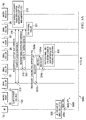
- FIGURES 3A-3B are simplified flow diagrams 300A-300B, respectively, that illustrates example flows and activities associated with providing handover to an ambiguous small cell AP (e.g., one of small cell APs 20, 22) in a network environment according to an embodiment.
- an ambiguous small cell AP e.g., one of small cell APs 20, 22
- FIGURES 3A-3B , 4A-4B and 5A-5B the flows of data and activities represented show the flow of data between the components and activities performed by certain components within communication system 10 as shown in FIGURE 1 , such as, a given UE 12, macro radio 32 (e.g., an NB/RNC or eNB), small cell AP 20, 22, small cell GW 26 (including handover management module 17), service provider network (SP NTWK) 50, small cell MS 28 and macro radio database (DB) 19.
- Small cell database (DB) 18 may be assumed to be located within small cell MS 28.
- macro radio 32 may be configured with one or more target cell IDs, each which may be encoded with a macro cell ID corresponding to the identity of macro radio 32 and a target sub-carrier ID corresponding to one or more target sub-carrier IDs for small cell APs 20, 22.
- target cell IDs each which may be encoded with a macro cell ID corresponding to the identity of macro radio 32 and a target sub-carrier ID corresponding to one or more target sub-carrier IDs for small cell APs 20, 22.
- small cell APs 20, 22 may be configured with a same sub-carrier ID; thus, macro radio 32 may only need to configure one target cell ID for use within communication system 10.
- macro radio database 19 may be configured with one or more target cell IDs (here, only one target cell ID), which may be associated to the geolocation of macro radio 32.
- macro radio database 19 may be configured with one or more look-up tables, if, for instance, a sub-carrier ID encoded in the target cell IDs may not represent a full target sub-carrier ID such that a look-up could be performed to determine a full target sub-carrier ID upon receiving a compressed sub-carrier ID.
- macro radio database 19 may be configured with a macro radio identifier and a corresponding geolocation of for macro radio 32. Other look-ups could be configured depending on other information (full or compressed), which may be encoded in target cell IDs.
- source/controlling RNC information could be stored in macro database for use with 3G macro radios.
- a particular flow may begin at 314, with a registration of the geolocation and sub-carrier ID of small cell AP 20 within small cell MS 28.
- One or more messages may be exchanged between small cell AP 20 and small cell MS 28 to register the information.
- 'N' landing channels may be configured for small cell AP 20 via small cell MS 28 for use in subsequent handover operations.
- One or more messages may be exchanged between small cell AP 20 and small cell MS 28 to configure the 'N' landing channels.
- the geolocation and sub-carrier ID of small cell AP 22 may be registered within small cell MS 28, similar to that described at flow 316 for small cell AP 20.
- 'N' landing channels may be configured for small cell AP 22 via small cell MS 28.
- small cell MS 28 may configure small cell database 18 with the information gathered from the registrations of small cell AP 20, 22.
- small cell AP 20 may communicate a small cell register request message to small cell GW 26.
- the register request may include information regarding the 'N' landing channels configured for small cell AP 20, as well as other support and/or configuration information for small cell AP 20.
- small cell GW 26 may communicate a register accept to small cell AP 20.
- a similar register request/accept exchange may be communicated between small cell AP 22 and small cell GW 26 at 324a-324b.
- small cell GW 26 may pool together small cell APs having a common sub-carrier ID for use in possible relocations at 326.
- both of small cell APs 20, 22 may be included in a same pool, however, it should be understood that small cell GW 26 may provide for storing/tracking multiple pools of small cell APs according to different sub-carrier IDs that may be provided for in communication system 10.
- macro radio 32 may communicate a measurement command to UE for a given pseudo sub-carrier ID, for example, a pseudo sub-carrier ID associated with the sub-carrier IDs for small cell APs 20, 22.
- UE 12 may communicate a measurement report to macro radio 32 for the pseudo sub-carrier ID.
- the flows and activities from FIGURE 3A may continue to flows and activities as shown in flow diagram 300B for FIGURE 3B .
- Macro radio 32 may include standard logic to trigger a serving radio network subsystem (SRNS) relocation for UE 12 based on the measurement report.
- SRNS serving radio network subsystem
- source macro radio 32 may communicate a RANAP relocation required message to service provider network 50 including the target cell ID previously encoded with the macro cell ID for source macro radio 32 and the target sub-carrier for small cell APs 20, 22.
- the RANAP relocation request may be communicated through service provider network 50 to small cell GW 26.
- small cell GW 26 may query macro radio database 19 using the target cell ID to recover the geolocation of macro radio 32 from source macro radio database 19 and to recover the target sub-carrier ID.
- the query may be performed using the one or more first enhanced functions discussed above, which may be contained in handover management module 17.
- the target sub-carrier may be recovered from the target cell ID, if a full target sub-carrier ID is encoded in the target cell ID, or may be recovered from some related mapping within macro radio database 19, if a compressed target cell ID may be encoded in the target cell ID.
- a response to the query may be returned including the geolocation for source macro radio 32 and the target sub-carrier ID.
- small cell GW 26 may query, via a target request message, small cell MS 28 using the recovered source macro radio geolocation and the target sub-carrier ID. For example, the query may be performed using the one or more first enhanced functions via handover management module 17.
- small cell MS 28 may determine, via small cell database 18, potential target small cell APs within a specified 'range' of the source macro radio geolocation and having a sub-carrier ID matching the target sub-carrier ID.
- small cell MS may perform two-level filtering to determine potential target small cell APs to receive hand-in of UE 12. For the present example, this determination may yield potential target small cell APs 20, 22 as being within the specified range and having matching sub-carrier IDs.
- a search range may optionally be included in the target request message of flow 340.
- small cell MS 28 may communicate a target response message to small cell GW 26 including IDs for identified potential target small cell APs meeting the criteria included in the target request message from flow 340.
- small cell GW 346 may determine at 346 a common unused landing channel for the identified potential target small cell APs 20, 22, which can receive hand-in of UE 12.
- small cell GW 26 may communicate respective RUA relocation request messages to small cell APs 20, 22 at 348 and 350, respectively.
- Each RUA relocation request message may include landing channel info (e.g., channel number, etc.) in addition to physical channel reconfiguration information for the identified landing channel in order to prepare the common landing channel for each small cell AP 20, 22.
- landing channel info e.g., channel number, etc.
- relocation procedure may continue for the system to complete relocation of UE 12 to one of small cell APs 20, 22.
- Various relocation procedures are discussed in further detail below.
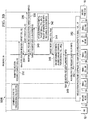
- FIGURES 4A-4B simplified flow diagrams 400A-400B, respectively, that illustrates other example flows and activities associated with providing handover to an ambiguous small cell AP (e.g., one of small cell APs 20, 22) in a network environment according to an embodiment.
- the flows and activities illustrated in FIGURES 4A-4B may be associated with using macro neighbor information to determine potential target small cell APs to receive hand-in of UE 12.
- macro radio database 19 may optionally be included in AAA server 52 and/or AAA server may be in communication with macro database 19 in order to populate macro neighbor relationship information for the database.
- macro radio 32 may be configured with one or more target cell IDs, each which may be encoded with a macro cell ID corresponding to the identity of macro radio 32 and a target sub-carrier ID corresponding to one or more target sub-carrier IDs for small cell APs 20, 22.
- target cell IDs each which may be encoded with a macro cell ID corresponding to the identity of macro radio 32 and a target sub-carrier ID corresponding to one or more target sub-carrier IDs for small cell APs 20, 22.
- small cell APs 20, 22 may be configured with a same sub-carrier ID; thus, macro radio 32 may only need to configure one target cell ID for use within communication system 10.
- macro radio database 19 may be configured with one or more target cell IDs, which may be associated with other neighbor macro radios of macro radio 32.
- macro radio database 19 may be configured with macro radio information, e.g., macro radio identifiers, geolocation information etc., which may be associated neighbor macro radios of macro radio 32.
- Neighbor relationships may be configured within macro radio database 19; the relationships can be used to cross-reference source macro radios with macro radio neighbors corresponding thereto.
- macro radio database 19 may be configured with one or more look-up tables, if, for instance, a sub-carrier ID encoded in the target cell IDs may not represent a full target sub-carrier ID such that a look-up could be performed to determine a full target sub-carrier ID upon receiving a compressed sub-carrier ID.
- Other look-ups could be configured depending on other information (full or compressed), which may be encoded in target cell IDs.
- source/controlling RNC information could be stored in macro database for use with 3G macro radios.
- source/controlling RNC information could also be stored in small cell GW 26.
- geolocation information for macro radio 32 and/or neighboring macro radios may also be stored in macro radio database 19.
- Flows 414, 416, 418 and 420 may generally be the same as flows 314, 316, 318 and 320 of FIGURE 3A for registering and/or configuring geolocation information, sub-carrier ID information and landing channel information for small cell APs 20, 22.
- small cell AP 20 may communicate a small cell register request message to small cell GW 26.
- the register request may include information regarding the 'N' landing channels configured for small cell AP 20, support and/or configuration information for small cell AP 20, and, additionally, a macro cell ID corresponding to a dominant macro radio (e.g., macro radio 32, for the present example) whose coverage area small cell AP 20 may be under.
- a dominant macro radio e.g., macro radio 32, for the present example
- small cell GW 26 may query macro radio database 19 using the received macro cell ID and the sub-carrier ID for small cell AP 20.
- a response from macro radio database 19 may include a list of neighboring macro cell IDs for macro radio 32.
- the list may be configured as a list of one or more target cell ID IEs, each encoded with a macro cell ID for a corresponding macro radio neighbor and the sub-carrier ID for small cell AP 20.
- a register accept message may be communicated from small cell GW 26 to small cell AP 20 at 422b.
- a similar exchange may occur between small cell AP 22, small cell GW 26 and macro radio database 19 to determine a list of target cell IDs for macro neighbors of small cell AP 22 through flows 428a, 430, 432 and 428b.
- small cell GW 26 may store, for each small cell AP 20, 22, a mapping in small cell database 18 that indicates which target cell IDs may be used to initiate a macro-to-femto handover for each small cell AP 20, 22.
- small cell database 18 may be assumed to be configured/located within small cell GW 26.
- macro radio 32 may communicate a measurement command to a given UE 12 for a given pseudo sub-carrier ID, for example, a pseudo sub-carrier ID associated with the sub-carrier IDs for small cell APs 20, 22.
- UE 12 may communicate a measurement report to macro radio 32 for the pseudo sub-carrier ID.
- Macro radio 32 may include standard logic to trigger a serving radio network subsystem (SRNS) relocation for UE 12 based on the measurement report.
- SRNS serving radio network subsystem
- source macro radio 32 may communicate a RANAP relocation required message to service provider network 50 including the target cell ID previously encoded with the macro cell ID for source macro radio 32 and the target sub-carrier for small cell APs 20, 22.
- the RANAP relocation request may be communicated through service provider network 50 to small cell GW 26.
- small cell GW 346 may determine at 444 potential target small cell APs that may receive handover of UE 12 by matching the received target cell ID to the stored mapping of target cell IDs, which may indicate small cell APs 20, 22 as potential target small cell APs to receive handover of UE 12. Additionally at 444, small cell GW 26 may determine a common unused landing channel for the potential target small cell APs. Thus, small cell GW 26 may provide for additional levels of filtering using neighbor data to determine potential target small cell APs to receive hand-in of UE 12. Upon determining a common unused landing channel for each small cell AP 20, 22, small cell GW 26 may communicate respective RUA relocation request messages to small cell APs 20, 22 at 448 and 450, respectively.
- Each RUA relocation request message may include landing channel info (e.g., channel number, etc.) in addition to physical channel reconfiguration information for the identified landing channel in order to prepare the common landing channel for each small cell AP 20, 22.
- landing channel info e.g., channel number, etc.
- relocation procedure may continue for the system to complete relocation of UE 12 to one of small cell APs 20, 22.
- Various relocation procedures are discussed in further detail below.
- FIGURES 5A-5B are simplified flow diagrams 500A-500B, respectively, that illustrates other example flows and activities associated with providing handover to an ambiguous small cell AP (e.g., one of small cell APs 20, 22) in a network environment according to an embodiment.
- the flows and activities illustrated in FIGURES 5A-5B may be associated with coordinating fan-out of relocation requests including landing channel information to potential target small cell APs 20, 22 and various other relocation flows and activities associated with completing relocation of a given UE 12 to one of small cell APs 20, 22.
- FIGURES 5A-5B it is assumed that various configurations, associations, recoveries, determinations, etc. have already been performed as detailed in the various flows and activities discussed for FIGURES 3A-3B and/or 4A-4B.
- This may include, but not be limited to, configuring one or more target cell ID(s) for macro radio 32, configuring macro radio database 19, configuring small cell database 18, registering/configuring small cell APs and their corresponding landing channels to receive hand-in of UE 12, etc. at 502.
- FIGURES 5A-5B may be assumed to begin at 504 wherein small cell GW 26 may determine a common unused landing channel 'Q' for an identified or determined pool of potential target small cell APs (e.g., APs 20, 22), which can receive hand-in of UE 12.
- small cell GW 26 may determine a common unused landing channel 'Q' for an identified or determined pool of potential target small cell APs (e.g., APs 20, 22), which can receive hand-in of UE 12.
- APs potential target small cell APs
- small cell GW 26 may communicate an RUA relocation request to each of small cell AP 20 and 22, respectively.
- the relocation request may identify landing channel 'Q' for receiving hand-in of UE 12 and may also include physical channel reconfiguration information for the landing channel.
- the RUA relocation request message may include a vendor extension identifying the specified landing channel (e.g., landing channel 'Q') to receive hand-in of UE 12.
- each small cell AP 20 and 22, respectively may communicate an RUA relocation request acknowledge (ACK) message to small cell GW 26.
- ACK RUA relocation request acknowledge
- Each RUA relocation request ACK message from each small cell AP 20, 22 may indicate the result of the physical channel reconfiguration corresponding to landing channel 'Q'.
- small cell GW 26 may associate all ACKs with a common ACK pool for landing channel 'Q' and, at 516, may communicate only a single RANAP relocation request ACK to service provider network 50, indicating successful physical channel reconfiguration.
- service provider network 50 may communicate a RANAP relocation command message to source macro radio 32.
- Encapsulated in the relocation command may be an RRC container IE, which may include a physical channel reconfiguration message received from one of small cell APs 20, 22 (e.g., indicating successful reconfiguration).
- source macro radio 32 may communicate an RRC physical channel reconfiguration message to UE 12 including matching physical channel configuration information as prepared for landing channel 'Q' for each of small cell APs 20, 22.
- small cell AP 20 may attempt to relocate to one of small cell APs 20, 22.
- One of small cell APs may detect an uplink (UL) sync UE 12 following its physical channel reconfiguration.
- small cell AP 20 may detect the UL sync of UE 12, however, it should be understood that in a given communication system any potential target small cell APs having a common landing channel prepared to receive hand-in of a given UE may receive hand-in of the UE.
- small cell AP 20 may communicate a RANAP relocation detect message to small cell GW 26.
- no UL sync may be detected by small cell AP 22.
- small cell GW 26 may coordinate the release of landing channel 'Q' for potential target small cell APs (e.g., small cell AP 22) that have not reported a relocation detection.
- the coordinated release may include the expiry of a timer or other similar mechanism within small cell GW 26, following which an lu release message may be communicated as shown at 528 to the potential target small cell APs for which a relocation detect has not been received (e.g., small cell AP 22).
- UE 12 may communicate an RRC physical channel reconfiguration complete message to macro radio 32.
- macro radio 32 may communicate an RUE relocation complete message to small cell GW 26 at 532.
- small cell GW 26 may determine whether to free landing channel 'Q' from its internally maintained landing channel list as being available for subsequent relocation procedures or whether to mark landing channel 'Q' as 'in-use' for its internally maintained landing channel list. The determination may depend on the type of landing channels used in the system. In one embodiment, landing channels may be configured and maintained for all small cell APs within the system as a static set of landing channels reserved for each small cell AP.
- a small cell AP may move a relocated UE from a landing channel to another channel for the small cell AP after completing the handover.
- a landing channel may be marked as free for subsequent relocations following acknowledgement from a small cell AP that relocation has completed for the UE.
- landing channels may be configured and maintained for all small cell APs as a dynamic set of landing channels, wherein each small cell AP may have different sets of landing channels.
- a landing channel receiving relocation of a given UE for a small cell AP may also be the permanent channel configured to serve the UE following relocation.
- a landing channel may be marked as 'in-use' for the small cell AP (and within the landing channel list maintained by small cell GW 26) such that the landing channel may not be reallocated for use in a subsequent relocation until the small cell AP is no longer serving the UE.
- small cell GW may communicate a RANAP relocation complete message to service provider network 50.
- a RANAP lu release command including a cause indicating successful relocation of UE 12 may be communicated from service provider network 50 to macro radio 32.
- a RANAP lu release complete response may be communicated from macro radio 32 to service provider network 50 and relocation of UE 12 to small cell AP 20 may be completed.
- communication system 10 (and its teachings) are readily scalable and can accommodate a large number of components, as well as more complicated/sophisticated arrangements and configurations. Accordingly, the examples provided should not limit the scope or inhibit the broad teachings of communication system 10 as potentially applied to a myriad of other architectures.
- An example method includes receiving a request to relocate a user equipment (UE) from a source macro radio to an ambiguous small cell access point (AP), wherein the request includes a target cell identity (ID) encoded with a source macro cell identifier for the source macro radio and a target sub-carrier identifier for the ambiguous small cell AP; determining potential target small cell APs for relocation of the first UE using the using the first target cell ID, wherein each of the potential target small cell APs are within a coverage area of the source macro radio and operate using the target sub-carrier identifier; and preparing, for each of the potential target small cell APs, a common channel to receive relocation of the first UE.
- the first UE can relocate to a particular target small cell access point using the common channel.
Landscapes
- Engineering & Computer Science (AREA)
- Computer Networks & Wireless Communication (AREA)
- Signal Processing (AREA)
- Mobile Radio Communication Systems (AREA)
Abstract
Description
- This disclosure relates in general to the field of communications and, more particularly, to a system and method for providing handover to an ambiguous small cell access point in a network environment.
- Networking architectures have grown increasingly complex in communication environments. For example, small cells have gained notoriety due to their capabilities to connect wireless devices to a network. In general terms, small cell access points can operate in a licensed spectrum to connect user equipment to the network, often using broadband connections. For a mobile operator, small cell access points can offer improvements to both coverage and capacity, which is particularly applicable to indoor networking environments where macro cell networks typically suffer coverage limitations. Small cell access points can also offer an alternative networking architecture to deliver the benefits of scalable small cell deployments. However, there are significant challenges in managing access to small cell access points, particularly in the context of determining and preparing small cell access points to receive handover of a subscriber from a macro network.
Aspects and examples of the present invention are set out in the appended claims. - To provide a more complete understanding of the present disclosure and features and advantages thereof, reference is made to the following description, taken in conjunction with the accompanying figures, wherein like reference numerals represent like parts, in which:
-
FIGURE 1 is a simplified block diagram illustrating a communication system to facilitate providing handover to an ambiguous small cell access point in a network environment according to one embodiment of the present disclosure; -
FIGURE 2 is a simplified block diagram illustrating details associated with an example use case in a particular implementation of the communication system; -
FIGURES 3A-3B are simplified flow diagrams illustrating example flows and activities associated with providing handover to an ambiguous small cell access point in a network environment in accordance with one potential embodiment of the present disclosure; -
FIGURES 4A-4B are simplified flow diagrams illustrating other example flows and activities associated with providing handover to an ambiguous small cell access point in a network environment in accordance with one potential embodiment of the present disclosure; and -
FIGURES 5A-5B are simplified flow diagrams illustrating yet other example flows and activities associated with providing handover to an ambiguous small cell access point in a network environment in accordance with one potential embodiment of the present disclosure. - A method for a communication network is provided in one example embodiment and may include receiving a request to relocate a first user equipment (UE) from a source macro radio to an ambiguous small cell access point, wherein the request includes, at least in part, a first target cell identity (ID) encoded, at least in part, with a source macro cell identifier for the source macro radio and a target sub-carrier identifier for the ambiguous small cell access point; determining a plurality of potential target small cell access points for relocation of the first UE using the using the first target cell ID, wherein each of the plurality of potential target small cell access points are within a coverage area of the source macro radio and operate using the target sub-carrier identifier; and preparing, for each of the plurality of potential target small cell access points, a common channel to receive relocation of the first UE, wherein the first UE attempts to relocate to a particular target small cell access point using the common channel prepared for the plurality of potential target small cell access points.
- In some cases the method can include storing, in at least one memory element, a geolocation of each of a plurality of macro radios, wherein the geolocation of each macro radio is stored in relation to a corresponding target cell ID for each macro radio; and storing a geolocation and a sub-carrier identifier for each of a plurality of small cell access points. In some instances, the determining the plurality of potential target small cell access points further include recovering a geolocation for the source macro radio using the first target cell ID; recovering the target sub-carrier identifier for the ambiguous small cell access point using the target cell ID; and filtering, from the plurality of small cell access points, the plurality of potential target small cell access points that are located within a predetermined range from the geolocation of the macro radio and that operate using the target sub-carrier identifier.
- In another instance, the method can include determining a macro neighbor list for each of a plurality of small cell access points. Each macro neighbor list for each of a particular small cell access point can include one or more macro cell identifiers indicating one or more macro radios that provide a coverage area that overlaps, at least in part, a coverage area for the particular small cell access point; and a corresponding sub-carrier identifier used by the particular small cell access point. In some cases, the method can further include encoding, in at least one memory element, one or more second target cell IDs for each macro neighbor list, wherein each second target cell ID information element for each of a particular neighbor list is encoded, at least in part, with a macro cell identifier for a corresponding macro radio identified in a macro neighbor list for the particular small cell access point a corresponding sub-carrier identifier for the particular small cell access point.
- In another instance, the method can include determining close range macro radios for each of a plurality of small cell access points by recovering reports of Radio Environment Measurements (REMs) performed by each of the plurality of small cell access points, wherein each REM report for each of a particular small cell access point includes one or more macro cell identifiers indicating one or more corresponding macro radios that provide a coverage area that overlaps, at least in part, a coverage area for the particular small cell access point and a corresponding sub-carrier identifier used by the particular small cell access point.
- In some instances, the determining the plurality of potential target small cell access points can further include receiving, by a small cell gateway, the first target cell ID; and querying the one or more second target cell IDs using the first target cell ID to filter, from the plurality of small cell access points, the potential target small cell access points within the coverage area for the source macro radio that operate using the target sub-carrier identifier.
- In some cases, the method can include releasing the common channel prepared for each of the plurality of potential target small cell access points to which the UE did not relocate. In yet other cases, the method can include configuring a plurality of channels for each of a plurality of small cell access points, wherein each channel can be used to receive handover for a particular UE; and maintaining a record of used and unused channels for each of the plurality of small cell access points, wherein the record is used to determine the common channel to prepare for each of the potential target small cell access points to receive relocation of the first UE.
- Turning to
FIGURE 1, FIGURE 1 is a simplified block diagram illustrating acommunication system 10 to facilitate providing handover to an ambiguous small cell access point in a network environment according to one embodiment of the present disclosure. This particular configuration may be tied to the 3rd Generation Partnership Project (3GPP) Evolved Packet System (EPS) architecture, also sometimes referred to as the Long Term Evolution (LTE) EPS architecture. Alternatively, the depicted architecture may be applicable to other environments equally. - The example architecture of
FIGURE 1 may include user equipment (UE) 12, small cell radio access points (APs) 20, 22, a small cell gateway (GW) 26, a small cell management system (MS) 28, amacro radio 32, aninternet 40, aservice provider network 50 including an Authentication, Authorization and Accounting (AAA)server 52, and amacro radio database 19. As referred to herein in this Specification, a 'small cell radio AP' may also be referred to interchangeably as a 'small cell', 'small cell AP', 'femtocell' or 'femto'.Small cell APs small cell GW 26,small cell MS 28,macro radio 32 andAAA server 52 may each include arespective processor 14a-14f and arespective memory element 16a-16f. Small cell GW 26 may include ahandover management module 17 andsmall cell MS 28 may include asmall cell database 18. Macro radio 32 may broadcast a macroradio coverage area 34. - In various instances,
macro network 30 may include macro radio access networks (RANs) such as GSM EDGE radio access network (GERAN), UMTS terrestrial radio access network (UTRAN), generally referred to as 3G, and/or LTE access networks such as evolved UTRAN (E-UTRAN), generally referred to as 4G or LTE. Macroradio 32 may provide a cellular/mobile macro cell 34, shown as a broadcast coverage area, withinmacro network 30.Service provider network 50 may be configured with one or more logical connections to macroradio 32. - In one or more embodiments,
macro radio 32 may be a Node B (NB), which may be in communication with a radio network controller (RNC), which may provide 3G cellular/mobile coverage for one or more UE withinmacro network 30. In one or more embodiments a NB and an RNC may be deployed in separate network elements or a same network element. In one or more embodiments,macro radio 32 may be an eNode B (eNB), which may provide 4G/LTE cellular/mobile coverage for one ormore UE 12 withinmacro network 30. Although only onemacro radio 32 is illustrated inFIGURE 1 , it should be understood thatmacro network 30 can include multiple macro radios to provide 3G and/or 4G/LTE cellular/mobile coverage for the network. As referred to herein in the present specification the term 'macro network' may be used interchangeably with 'macro cell network' and 'macro cell RAN.' -
Small cell APs small cell MS 28 may make up a small cell RAN or small cell network, as may be referred to herein in this Specification. Although only twosmall cell APs FIGURE 1 , it should be understood that the small cell network can include multiple small cell APs to provide cellular/mobile coverage for one ormore UE 12 to the small cell network. In various instances, the small cell network may include access networks such as GERAN, UTRAN (3G), and/or E-UTRAN (4G/LTE). -
Small cell APs small cell GW 26, small cell MS 28 andservice provider network 50 viainternet 40 using one or more interfaces, protocols, or other communication mechanisms, wired or wireless, as may be appropriate for a given implementation ofcommunication system 10. Small cell GW 26 may further be configured to interface with small cell MS 28,service provider network 50,AAA server 52 and macro radio database 60 using one or more interfaces, protocols or other communication mechanisms, wired or wireless, as may be appropriate for a given implementation ofcommunication system 10. Small cell MS 28 may further be configured to interface withservice provider network 50,AAA server 52 and macro radio database 60 using one or more interfaces, protocols or other communication mechanisms, wired or wireless, as may be appropriate for a given implementation ofcommunication system 10. - In one or more embodiments, any of
small cell APs small cell GW 26 may be implemented as an HNB gateway (HNB-GW) and small cell MS 28 may be implemented as an HNB management system (HMS) all of which may be used to provide to provide 3G cellular/mobile coverage for one or more UE 12 to the small cell network using any appropriate protocol or technique. In one or more embodiments, any ofsmall cell APs small cell APs small cell GW 26 and small cell MS 28 may be implemented as 'dual stack' devices including components to provide cellular/mobile coverage for 3G and 4G/LTE access networks for the small cell network. In other embodiments, these devices may be implemented as 'triple stack' devices to provide wireless coverage for Wi-Fi, Bluetooth™ and/or WiMAX wireless communications.Small cell APs small cell MS 28 according to according to technical report 069 (TR-069) protocol using the TR-196 data model. -
Service provider network 50 may include other elements, gateways, etc. that may make up an Evolved Packet Core (EPC) for the network. For example, these elements may include, but not be limited to, Mobility Management Entity (MME), a Home Subscriber Server/Home Location Register (HSS/HLR), one or more serving gateways (SGWs), one or more packet data network gateways (PGWs), one or more serving gateway support nodes (SGSNs) and/or a policy and charging rules function (PCRF). These elements may be provided inservice provider network 50 to provide various UE services and/or functions, to implement QoS on packet flows and to provide connectivity for UEs to external data packet networks. These elements are not shown inservice provider network 50 in order to highlight other features ofcommunication system 10. - Before detailing some of the operational aspects of
FIGURE 1 , it is important to understand common characteristics of small cell access points (APs) (e.g., HeNBs, HNBs, or more generally, femotcells, picocells, etc.) as they generally operate in commercial architectures. The following foundation is offered earnestly for teaching purposes only and, therefore should not be construed in any way to limit the broad teachings of the present disclosure. In many network architectures, small cell APs can be deployed as autonomous units to improve reception in areas with poor coverage, or within buildings where coverage is reduced by the structure itself. - Essentially, small cell APs are fully featured base stations that can provide proximate coverage in a business (e.g., enterprise) and/or residential environment. Typically, small cell APs operate at lower radio power levels as compared to macro cell radio access networks (RANs). Small cell APs can be connected using a standard broadband digital subscriber line (DSL), internet or cable service into a service provider's network. Calls can be made and received, where the signals are sent (potentially encrypted) from the small cell AP via the broadband IP network to one of the service provider's main switching centers. Small cell APs can be provisioned to readily handle 8, 16, 32, etc. concurrent calls. Thus, a small cell AP (e.g., HeNB, HNB, etc.) generally operates as a mini tower for a proximate user. As used herein in this Specification, the terms 'user' and 'subscriber' may be used interchangeably.
- In operation, when in range of a small cell AP (e.g., in an enclosed environment such as a building, etc.), a given UE can automatically detect the small cell AP using various measurement operations to detect signal quality of neighboring cells. The UE can provide measurement reports including carrier information for neighboring cells to a serving macro cell radio (e.g., NB/RNC, eNB). Based on the reports, the serving macro cell radio may determine to initiate a hand-in/out operation by sending a dummy or pseudo sub-carrier identifier (ID) and an International Mobile Subscriber Identity (IMSI) of a given user associated with the UE together with a source macro cell identifier to a small cell GW via a service provider's network and the small cell GW can try to determine which small cell AP to select for the hand-in. The source macro cell identifier and sub-carrier identifier may be embedded in a target cell identity (ID) information element or container, which is discussed in further detail below. Note the pseudo sub-carrier ID is merely a generic identifier, which the macro cell radio uses to identify a group of small cells, which may be able to receive hand-in of the UE based on their respective carrier configurations (which have been previously reported by the UE to the macro cell radio).
- Note this is a 'hand-in' operation from the neighboring small cell's perspective and a 'hand-out' from the serving macro cell radio perspective. More generally, this can be referred to as a handover (HO) between the macro cell radio and a small cell AP. As referred to herein in this Specification, the terms 'hand-in' and 'handover' may be used interchangeably. Using the pseudo cell ID, the small cell GW can try to determine an appropriate small cell AP for handover of the UE. For 3G networks, carrier information for small cell APs can include an UMTS terrestrial radio access (UTRA) absolute radio frequency channel number (UARFCN) and primary scrambling code (PSC). For 4G networks, carrier information for small cell APs can include an evolved UTRA (E-UTRA) absolute radio frequency channel number (EARFCN) and physical cell identifier (PCI). As used to herein in this Specification, PSCs and PCIs may be generally referred to as sub-carrier identifier (ID), which can be used to generically identify small cells being broadcast within a given carrier frequency (e.g., a respective UARFCN or EARFCN, depending on access network type).
- To receive handover of the UE, the small cell GW can include a capability to fan-out handover requests to a plurality of candidate target small cells when a handover request is received for an ambiguous target small cell (e.g., identified merely by a carrier frequency and a sub-carrier ID, such as PSC or PCI). In a given macro cell network there are often many small cell APs sharing a sub-carrier ID that is reused throughout the network. Thus, due to the reuse of PSC and/or PCI within the macro cell network, the handover request needs to be communicated to many small cell APs in the network. Supporting the fan-out of the handover message requires that all candidate small cells configure an identical physical channel to receive handover of the UE. As referred to herein in this Specification, physical channels that may be configured to receive handover for a given UE may be referred to as 'landing channels'.
- Communicating the fan-out to all small cells in the macro network that have a same sub-carrier ID as identified in the handover request can be burdensome on network devices and, generally, may be an inefficient use of network resources. To avoid sub-optimal usage of landing channels, and/or increased handover failures due to lack of available landing channels, a pool of landing channels should be defined, managed and coordinated across the system. One solution to these problems has been proposed by 3GPP by having UEs decode system information (SI) from neighbors, but such requires UE and macro cell radios (e.g., NB/RNC, eNB) to be upgraded to Release 9 (R9) of 3GPP standards, which can exclude application of the solution to current and/or legacy devices that will not be upgraded to R9.
- In accordance with one embodiment,
communication system 10 can overcome the aforementioned shortcomings (and others) through activities that provide for the management and coordination of the physical channel configuration for landing channels as well as through activities that provide for efficient mechanisms to determine a pool of potential target small cell APs, which can receive handover of a givenUE 12 using geolocation information, neighbor information for macro cells and small cell APs and/or Radio Environment Measurements (REMs) performed by small cell APs within the system. Thus, the solutions described herein can be used to realize optimized macro-to-HNB/HeNB mobility. - For example,
communication system 10 may provide for the definition of two logically separate RF databases. In one embodiment, a first database,macro radio database 19, can be configured with a plurality of target cell ID information elements (IEs). As referred to herein in this Specification, a target cell ID IE may also be referred to generally as a 'target cell ID container' or 'target cell ID'. In one embodiment, each target cell ID stored inmacro radio database 19 may be associated with or mapped to the geolocation of a given macro radio (e.g., macro radio 32) broadcasting a neighbor macro cell coverage area (e.g., macro radio coverage area 34) withinmacro network 30. In another embodiment, for each of one or more macro radios inmacro network 30, a macro radio identifier may be associated with or mapped to a geolocation for a corresponding macro radio and stored inmacro radio database 19. - A particular target cell ID may be received in a relocation request triggered for hand-in of a given
UE 12. The relocation request may be communicated tosmall cell GW 26 fromservice provider network 50. The particular target cell ID received in the relocation request, as well as the target cell IDs stored inmacro radio database 19 may each be encoded with a macro cell ID that may identify a source macro radio broadcasting a neighbor macro cell through which the hand-in was triggered (e.g.,macro radio 32 broadcasting macro radio coverage area 34) and may also be encoded with a sub-carrier ID, which may identify a PSC or PCI of an ambiguous target small cell AP, which can receive relocation ofUE 12 within the coverage area of the macro radio (e.g., one or both ofsmall cell APs 20, 22). - Using the particular target cell ID included in the relocation request received by
small cell GW 26, one or more first enhanced function(s), co-located insmall cell GW 26 viahandover management module 17, may be operable to recover the target cell ID from the relocation request and may further be defined to querymacro radio database 19 to recover the geolocation of sourcemacro radio 32 and to recover the target sub-carrier ID for one or both ofsmall cell APs small cell APs macro radio 32 may be recovered using the target cell ID, the source macro cell ID contained in the target cell ID, and/or any other association of a source macro cell identifier to geolocation information for sourcemacro radio 32. - Note a target sub-carrier ID does not particularly identify an ambiguous target small cell AP, rather a target sub-carrier ID may be associated to a pseudo sub-carrier ID included in a measurement report received from
UE 12 for an ambiguous small cell AP in in the vicinity ofUE 12.Macro radio 32 may encode the target cell ID with a sub-carrier ID associated with a pseudo cell ID included in a measurement report upon initiating hand-in ofUE 12. Thus, the target sub-carrier ID may identify a PSC or PCI for one of potentially many ambiguous target small cell APs that can receive relocation ofUE 12. - A second database,
small cell database 18, can be configured with the geolocation of the small cell APs stored together with their corresponding operational sub-carrier IDs (e.g., PSCs or PCIs). Using the geolocation ofmacro radio 32 and the target sub-carrier ID recovered using the target cell ID, the one or more first enhanced functions may be operable to querysmall cell database 18 with the geolocation of sourcemacro radio 32 and the target sub-carrier ID to determine a pool of potential target small cell APs operating at the sub-carrier ID and that may be located within a specified search range of the source of sourcemacro radio 32 that can receive hand-in ofUE 12. For example, the pool could include one or both ofsmall cell APs macro radio 32. - Thus, the architecture of
communication system 10 may be operable to perform multi-level filtering of small cell APs within a small cell network. By filtering out small cell APs that are not configured with a sub-carrier ID matching the target sub-carrier ID the system can determine a first set of potential target small cell APs. This first set can then be filtered into a second set of potential target small cell APs that are located within a given range from the source macro cell geolocation. In one or more embodiments,small cell database 18 andmacro radio database 19 may be co-located in a single network element (e.g., co-located within small cell MS 28) or may be located in separate network elements. In one or more embodiments,macro radio database 19 could also be located inAAA server 52. In one or more embodiments,small cell database 18 can also be located insmall cell GW 26. In one or more embodiments, the query tosmall cell database 18 can optionally include a search range, which may indicate a distance or perimeter from the sourcemacro radio 32 in which to search for potential target small cell APs to receive hand-in ofUE 12. - The system may further include one or more second enhanced function(s) that may also be contained within
handover management module 17, which may be operable to identify a common landing channel amongst the plurality of potential target small cell AP identities that can receive hand-in ofUE 12 and to prepare the common landing channel for each identified small cell AP to receive hand-in ofUE 12. The second function(s) may maintain a record of landing channels currently reserved for hand-ins on a per small cell AP basis. Upon determining the pool of potential target small cell APs using the first function, the second function may use this information together with the list of available landing channels from a pool of available landing channels, possibly on a per-small cell AP basis, to identify a common landing channel amongst the pool of potential target small cell APs to receive hand-in ofUE 12. Having identified a common landing channel, say, for example, channel '5', a relocation request message (e.g., a radio access network application part (RANAP) relocation request message encapsulated in a RANAP user adaption (RUA) relocation request message) can be unicast bysmall cell GW 26 to the identified potential target small cell APs (e.g., one or both ofsmall cell APs 20, 22) indicating preparation of channel '5' to receive hand-in ofUE 12. In turn, each potential target small cell AP may reconfigure channel '5' in order to receive hand-in ofUE 12. -
UE 12 may attempt to relocate to one of the potential target small cell APs using the common landing channel prepared for the small cell APs. Hand-in ofUE 12 may be received on the common landing channel for one of the potential target small cell APs.Small cell GW 26 may detect which of the potential target small cell APs may receive hand-in ofUE 12 and, based on the detection, may communicate a release of the unused landing channel to those potential target small cell APs that did not receive hand-in ofUE 12. As noted,small cell GW 26 may track the use of available landing channels to receive hand-in of various UE. Thus, upon receiving an indication from the small cell AP receiving hand-in ofUE 12 that the relocation has completed (e.g., RUA relocation complete message),small cell GW 26 may internally free the common landing channel, e.g., channel '5' for the present example, for use in subsequent hand-in procedures of other UE. Note that until the relocation message may be received, channel '5' in the present example may be marked as 'in-use' withinsmall cell GW 26 and may not be added back to the pool of available landing channels to receive hand-in of a UE. In one or more embodiments, a landing channel may be a temporary channel that may be configured for a givensmall cell AP UE 12, in whichcase UE 12 may be moved to a permanent channel after relocation is completed for the UE. In one or more embodiments, a landing channel may also be a permanent channel configured for a givensmall cell AP UE 12 and to provide resources toUE 12 after relocation is completed for the UE. - As discussed above, a target cell ID may be encoded with a macro cell ID that may identify a source macro radio broadcasting a neighbor macro cell through which a relocation for a given
UE 12 may be triggered and may also be encoded with a target sub-carrier ID, which may identify a PSC or PCI of an ambiguous target small cell AP that can receive relocation ofUE 12. Encoding target cell IDs can be provided for by macro radios (e.g., eNBs, NB/RNCs) withinmacro network 30. - The encoding of macro cell IDs within target cell ID IEs may vary depending on implementation and can be set based on coverage type (e.g., 3G, 4G/LTE) and/or as desired by a service provider. For example, a target cell ID IE may be 24-bits in length. For 3G deployments, a macro cell ID may be associated with a source NB broadcasting a source macro radio coverage area. In one or more embodiments, a macro cell ID for 3G RANs can be encoded to represent a full NB cell (e.g., radio) ID, typically, 16-bits; can be encoded to represent a compressed NB cell ID (e.g., less than 16-bits); or can be encoded to represent a compressed UTRAN cell ID (UCI), which typically includes a NB cell ID and a source/controlling RNC ID for the NB cell.
- For 4G/LTE deployments a macro cell ID may be associated with an eNB broadcasting a source macro radio coverage area. In one or more embodiments, a macro cell ID can be encoded to represent a full eNB cell ID, typically 20-bits; can be encoded to represent a compressed eNB cell ID (e.g., less than 20-bits); or can be encoded to represent a compressed E-UTRAN cell ID, which typically includes an eNB cell ID and a PCI for a broadcast cell coverage area.
- The encoding of target sub-carrier IDs within target cell ID IEs may also vary depending on implementation. Not only can target sub-carrier IDs be related to PSC for the 3G implementations or PCI for 4G/LTE implementations, but they may also be encoded as either full PSCs/PCIs or compressed PSCs/PCIs depending on a chosen method for encoding macro cell IDs within the target cell IDs. As discussed above, the length of encoded macro cell IDs can vary, and thus, the encoding of PSCs/PCIs may also vary according in various embodiments. Geolocation data for macro radios within
macro network 30 can be stored and referenced in macro radio database - The storage of macro radio geolocation data and/or sub-carrier ID data within
macro radio database 19 may also vary based on what information may be included in a target cell ID. Say, for example, for a 3G RAN that target cell IDs may be encoded with a macro cell ID representing a NB cell ID and a full target PSC for an ambiguous target small cell AP. Further, assume that a source/controlling RNC ID can also be recovered for a handover request message. Thus, in this instance, macro radio geolocation data may be stored inmacro radio database 19 in relation to a given macro cell ID for a given source macro radio (e.g., a NB cell ID), which can be recovered from a given target cell ID included in a relocation request, and a source/control RNC ID for the given NB cell ID. Further, since a full target PSC can be included in the target cell ID, then the target PSC can be reused and forwarded to a small cell GW with the geolocation data for the source macro radio. - However, say, for example for a 4G/LTE RAN that target cell IDs may be encoded with a macro cell ID representing a macro radio (e.g., a 20-bit length eNB cell ID) and a compressed target PCI for an ambiguous target small cell AP. Recall, a target cell ID IE may be 24-bits in length. Thus, in this example, 4-bits may be used to encode a compressed target PCI in the target cell IDs. PCIs are often identified using 8-bits. Thus, in a communication system where target cell IDs include compressed target PCIs,
macro radio database 19 or some other database, look-up, or other dictionary system could be used, which could identify PCIs used in the system on a regional or local level. A similar mechanism could be used if compressed target PSCs were encoded in target cell IDs or if compressed macro cell IDs (for either NB or eNB macro radios) were encoded in target cell IDs. These examples are just a few of the many encoding, storing, querying and/or look-up mechanisms that could be provided incommunication system 10 for use of target cell IDs encoded with macro cell ID information and target PSC or PCI information. Virtually any other encoding, storing, querying and/or look-up mechanisms could be provided incommunication system 10 for use with various databases that may incorporate target cell ID information, macro radio identifiers, macro radio geolocation information and/or small cell AP geolocation and sub-carrier information. - In one or more embodiments,
small cell database 18 andmacro radio database 19 can also be converged with AAA functionality provided byAAA server 52 such that whensmall cell GW 26 triggers an AAA procedure associated with a small cell AP registration, a list of target cell IDs (e.g., macro cells encoded in the target cell IDs) that are valid for triggering a handover to the small cell AP (e.g., one ofsmall cell APs 20, 22) can be returned fromAAA server 52, stored in thesmall cell GW 26 and used for determining the fan-out of macro-to-femto (M2F) handover target small cell candidates. In this manner, macro cell neighbor relationships may be determined and stored forsmall cell APs - In one or more embodiments, the neighbor relationships can be discovered from
small cell APs small cell GW 26,small cell MS 28; or can be configured in some external database, which can be queried bysmall cell GW 26 and/orsmall cell MS 28. In various embodiments, a REM report for a corresponding small cell AP can include one or more macro cell identifiers indicating one or more corresponding macro radios in close range that may provide a coverage area that overlaps, at least in part, a coverage area for the particular small cell access point and a corresponding sub-carrier identifier used by the particular small cell AP. - In various embodiments,
UE 12 can be associated with users, employees, clients, customers, etc. wishing to initiate a flow incommunication system 10 via some network. The terms 'user equipment', 'mobile node', 'end user', 'user', and 'subscriber' are inclusive of devices used to initiate a communication, such as a computer, a personal digital assistant (PDA), a laptop or electronic notebook, a cellular telephone, an i-Phone™, i-Pad™, a Google Droid™ phone, an IP phone, or any other device, component, element, or object capable of initiating voice, audio, video, media, or data exchanges withincommunication system 10.UE 12 may also be inclusive of a suitable interface to a human user such as a microphone, a display, a keyboard, or other terminal equipment. -
UE 12 may also be any device that seeks to initiate a communication on behalf of another entity or element such as a program, a database, or any other component, device, element, or object capable of initiating an exchange withincommunication system 10. Data, as used herein in this document, refers to any type of numeric, voice, video, media, or script data, or any type of source or object code, or any other suitable information in any appropriate format that may be communicated from one point to another. In certain embodiments,UE 12 may have a bundled subscription for network access and application services (e.g., voice), etc. Once the access session is established, the user can register for application services as well, without additional authentication requirements. There can be two different user data repositories (e.g., AAA databases, whitelist databases, etc.): one for the access user profile and one for the application user profile. IP addresses can be assigned using dynamic host configuration protocol (DHCP), Stateless Address Auto-configuration, default bearer activation, etc., or any suitable variation thereof. -
Small cell AP more UE 12 using any appropriate protocol or technique. In general terms,small cell AP - The EPC components of
service provider network 50 may be referred to generally as control nodes, control gateways or simply gateways. The gateways may be used to provide various UE services and/or functions and to implement QoS on packet flows. The services and functions may be used, for example, to provision voice over IP (VoIP) routing, enhanced services such as enhanced charging, stateful firewalls and/or traffic performance optimization (TPO). An MME is the primary control element for the EPC, which among other things, may provide for UE tracking and paging procedures including, for example, retransmissions, tracking area list management, idle mode UE tracking, etc. -
AAA server 52 is a network element responsible for accounting, authorization and authentication functions forUE 12. For AAA considerations,AAA server 52 may provide a mobile node IP address and the accounting session identification (Acct-Session-ID) and other mobile node states in appropriate messaging (e.g., via access-Request/access-Response messages). Authentication refers to the process where an entity's identity is authenticated, typically by providing evidence that it holds a specific digital identity such as an identifier and the corresponding credentials. The authorization function determines whether a particular entity is authorized to perform a given activity, typically inherited from authentication when logging on to an application or service. Authorization may be determined based on a range of restrictions, for example time-of-day restrictions, or physical location restrictions, or restrictions against multiple accesses by the same entity or user. Accounting refers to the tracking of network resource consumption by users for the purpose of capacity and trend analysis, cost allocation, billing, etc. In addition, it may record events such as authentication and authorization failures, and include auditing functionality, which permits verifying the correctness of procedures carried out based on accounting data. In various embodiments,communication system 10 may be provisioned with other AAA services and/or AAA servers, which may provide AAA considerations for the system. - As shown in
FIGURE 1 ,small cell AP small cell GW 26,small cell MS 28,macro radio 32 andAAA server 52 includerespective processors 14a-14f andrespective memory elements 16a-16f. Additionally,small cell GW 26 further includeshandover management module 17 and small cell MS includessmall cell database 18.Macro radio database 19 is also provided in the system. Hence, appropriate software and/or hardware is being provisioned insmall cell AP small cell GW 26,small cell MS 28,macro radio 32 andAAA server 52 in order to facilitate providing handover to an ambiguous small cell AP in the network environment. Note that in certain examples, certain databases (e.g.,small cell database 18, macro radio database 19) can be consolidated with memory elements (or vice versa), or the storage can overlap/exist in any other suitable manner. - In one example implementation,
small cell AP small cell GW 26,small cell MS 28,macro radio 32 andAAA server 52 are network elements, which are meant to encompass network appliances, servers, routers, switches, gateways, bridges, loadbalancers, firewalls, processors, modules, or any other suitable device, component, element, or object operable to exchange information that facilitates or otherwise helps coordinate subscriber identification activities (e.g., for networks such as those illustrated inFIGURE 1 ). In other embodiments, these operations and/or features may be provided external to these elements, or included in some other network device to achieve this intended functionality. Alternatively, one or more of these elements can include software (or reciprocating software) that can coordinate in order to achieve the operations and/or features, as outlined herein. In still other embodiments, one or more of these devices may include any suitable algorithms, hardware, software, components, modules, interfaces, or objects that facilitate the operations thereof. This may be inclusive of appropriate algorithms and communication protocols that allow for the effective exchange of data or information. - In regards to the internal structure associated with
communication system 10, each ofsmall cell AP small cell GW 26,small cell MS 28,macro radio 32 andAAA server 52 can include memory elements for storing information to be used in achieving the handover operations, as outlined herein. Additionally, each of these devices may include a processor that can execute software or an algorithm to perform the handover activities as discussed in this Specification. These devices may further keep information in any suitable memory element [e.g., random access memory (RAM), read only memory (ROM), an erasable programmable read only memory (EPROM), application specific integrated circuit (ASIC), etc.], software, hardware, or in any other suitable component, device, element, or object where appropriate and based on particular needs. Any of the memory items discussed herein should be construed as being encompassed within the broad term 'memory element'. The information being tracked or sent tosmall cell AP small cell GW 26,small cell MS 28,macro radio 32 andAAA server 52 could be provided in any database, register, control list, cache, or storage structure: all of which can be referenced at any suitable timeframe. Any such storage options may be included within the broad term 'memory element' as used herein. Similarly, any of the potential processing elements, modules, and machines described herein should be construed as being encompassed within the broad term 'processor'. Each of the network elements and user equipment (e.g., mobile nodes) can also include suitable interfaces for receiving, transmitting, and/or otherwise communicating data or information in a network environment. - Note that in certain example implementations, the handover functions as outlined herein may be implemented by logic encoded in one or more tangible media, which may be inclusive of non-transitory media (e.g., embedded logic provided in an ASIC, in DSP instructions, software [potentially inclusive of object code and source code] to be executed by a processor, or other similar machine, etc.). In some of these instances, memory elements [as shown in
FIGURE 1 ] can store data used for the operations described herein. This includes the memory elements being able to store software, logic, code, or processor instructions that are executed to carry out the activities described herein. A processor can execute any type of instructions associated with the data to achieve the operations detailed herein. In one example, the processors [as shown inFIGURE 1 ] could transform an element or an article (e.g., data) from one state or thing to another state or thing. In another example, the activities outlined herein may be implemented with fixed logic or programmable logic (e.g., software/computer instructions executed by a processor) and the elements identified herein could be some type of a programmable processor, programmable digital logic (e.g., a field programmable gate array (FPGA), a digital signal processor (DSP), an EPROM, EEPROM) or an ASIC that includes digital logic, software, code, electronic instructions, or any suitable combination thereof. - Turning to
FIGURE 2, FIGURE 2 is a simplified block diagram illustrating details associated with an example use case 70 ofcommunication system 10 for providing handover of a givenUE 12 to an ambiguous small cell AP, wherein the system includes macroradio coverage areas small cell APs radio coverage area radio coverage area small cell AP FIGURE 2 , reference will be made tosmall cell GW 26,small cell database 18,macro radio database 19 andAAA server 52 fromFIGURE 1 ; however, these elements are not shown inFIGURE 2 in order to illustrate other features ofcommunication system 10. - As illustrated in
FIGURE 2 , small cell APs within the system can be overlapped by multiple coverage areas. For example,small cell APs small cell APs coverage area 82; andsmall cell APs coverage area 84. Accordingly,small cell AP 92 may be overlapped by bothcoverage areas - As discussed above, a pair of databases can be configured for the system. For purposes of illustration only, assume for the present example that
coverage areas coverage area 80, 82 84 and that the target cell IDs may be encoded with full PSCs. Macro radio database 19) can be configured with geolocation information for each macro NB radio broadcasting each macroradio coverage area Small cell database 18 can be configured with geolocation information for each of small cell APs (e.g., HNBs) 90, 92, 94 and 96 as well as sub-carrier IDs (e.g., PSCs) of '123' for each small cell AP. In the present example, assume a handover forUE 12 may be initiated including a target cell ID encoded with a source macro cell ID representing a source macro NB radiobroadcasting coverage area 82 and a full target sub-carrier ID (e.g., PSC) of '123' for one of ambiguous targetsmall cell APs macro radio database 19 using the received target cell ID. -
Macro radio database 19 can be queried using the target cell ID to recover the geolocation of the source macro NB radio and the target PSC can be recovered from the target cell ID. The response to the query may include the geolocation data and target PSC. Small cell database can then be queried using the geolocation data and the target PSC to determine small cell APs in a specified range from the macro NB radio geolocation. Assume the query may return identifiers forsmall cell APs UE 12.Small cell GW 26 may then determine unused landing channels forsmall cell APs small APs UE 12. Upon determining the common landing channel,small cell GW 26 may unicast a RUE relocation request message to small cell APs indicating the identified common channel to receive hand-in ofUE 12. Each potential targetsmall cell AP UE 12. Processing for the system may continue as described above to receive hand-in ofUE 12 and free the common channels after relocation is completed. - In another example, assume macro neighbor list information may be stored in
macro radio base 19 in place of, or in addition to macro radio geolocation information, or in another database altogether. In this example, macro neighbor relationships may be configured for eachsmall cell AP AAA server 52, etc.) and may be stored in relation to a macro cell ID indicating a dominant macro radio providing a macro radio coverage area overlapping a small cell AP. Note, the indication of a 'dominant' macro radio may be arbitrary in the system and may instead be used for organizing macro cell neighbor information inmacro radio database 19. - For example, a macro cell ID representing a macro radio broadcasting macro radio coverage area 80 may be identified as a dominant macro cell for
small cell AP 90, and a macro neighbor list forsmall cell AP 90 can include macro cell IDs representing macro radios broadcastingcoverage areas radio coverage area 82 and a target sub-carrier ID representing the sub-carrier ID forsmall cell AP 90. A second target cell ID could be encoded to include a macro cell ID representing a macro radio broadcasting macroradio coverage area 84 and a target sub-carrier ID representing the sub-carrier ID forsmall cell AP 90. Additionally, assume, for example, that macro radios broadcastingcoverage areas small cell AP 92; macro radios broadcastingcoverage areas 80 and 84 may be configured as neighbors forsmall cell AP 94; and macro radios broadcastingcoverage areas 80 and 82 may be configured as neighbors forsmall cell AP 90. - During operation, if, for example, a relocation request is received for
UE 12 including a target cell ID encoded with a source macro cell ID representing the macro radio providing macroradio coverage area 82 and encoded with a sub-carrier ID matching that ofsmall cell AP 94, then querying the neighbor list data with using the target cell ID may recover identities for potential target small cell APs to receive hand-in ofUE 12 that may includesmall cell AP small cell AP 94, rather the sub-carrier ID forsmall cell AP 94 may be an ambiguous identifier associated with a pseudo sub-carrier ID included in a measurement report received fromUE 12. Althoughsmall cell AP 96 may not be included incoverage area 82, because it is included incoverage area 84, which is a neighbor ofcoverage area 82, then it may be included as a potential target small cell AP to receive hand-in ofUE 12. Using neighbor lists, thus, may help to alleviate missed potential target small cell APs for receiving hand-in of a given UE as opposed to relying on the coverage area for a particular source macro radio identified in a received target cell ID alone. - Referring to
FIGURES 3A-3B, FIGURES 3A-3B are simplified flow diagrams 300A-300B, respectively, that illustrates example flows and activities associated with providing handover to an ambiguous small cell AP (e.g., one ofsmall cell APs 20, 22) in a network environment according to an embodiment. InFIGURES 3A-3B ,4A-4B and5A-5B the flows of data and activities represented show the flow of data between the components and activities performed by certain components withincommunication system 10 as shown inFIGURE 1 , such as, a givenUE 12, macro radio 32 (e.g., an NB/RNC or eNB),small cell AP small cell MS 28 and macro radio database (DB) 19. Small cell database (DB) 18 may be assumed to be located withinsmall cell MS 28. - In the example flow diagram 300A shown in
FIGURE 3A , at 310,macro radio 32 may be configured with one or more target cell IDs, each which may be encoded with a macro cell ID corresponding to the identity ofmacro radio 32 and a target sub-carrier ID corresponding to one or more target sub-carrier IDs forsmall cell APs small cell APs macro radio 32 may only need to configure one target cell ID for use withincommunication system 10. At 312,macro radio database 19 may be configured with one or more target cell IDs (here, only one target cell ID), which may be associated to the geolocation ofmacro radio 32. Optionally,macro radio database 19 may be configured with one or more look-up tables, if, for instance, a sub-carrier ID encoded in the target cell IDs may not represent a full target sub-carrier ID such that a look-up could be performed to determine a full target sub-carrier ID upon receiving a compressed sub-carrier ID. In another option,macro radio database 19 may be configured with a macro radio identifier and a corresponding geolocation of formacro radio 32. Other look-ups could be configured depending on other information (full or compressed), which may be encoded in target cell IDs. Additionally, source/controlling RNC information could be stored in macro database for use with 3G macro radios. - A particular flow may begin at 314, with a registration of the geolocation and sub-carrier ID of
small cell AP 20 withinsmall cell MS 28. One or more messages may be exchanged betweensmall cell AP 20 andsmall cell MS 28 to register the information. At 316, 'N' landing channels may be configured forsmall cell AP 20 viasmall cell MS 28 for use in subsequent handover operations. One or more messages may be exchanged betweensmall cell AP 20 andsmall cell MS 28 to configure the 'N' landing channels. At 318, the geolocation and sub-carrier ID ofsmall cell AP 22 may be registered withinsmall cell MS 28, similar to that described atflow 316 forsmall cell AP 20. At 320, 'N' landing channels may be configured forsmall cell AP 22 viasmall cell MS 28. At 321,small cell MS 28 may configuresmall cell database 18 with the information gathered from the registrations ofsmall cell AP - Continuing at 322a,
small cell AP 20 may communicate a small cell register request message tosmall cell GW 26. The register request may include information regarding the 'N' landing channels configured forsmall cell AP 20, as well as other support and/or configuration information forsmall cell AP 20. At 322b,small cell GW 26 may communicate a register accept tosmall cell AP 20. A similar register request/accept exchange may be communicated betweensmall cell AP 22 andsmall cell GW 26 at 324a-324b. Upon registeringsmall cell APs small cell GW 26 may pool together small cell APs having a common sub-carrier ID for use in possible relocations at 326. In the present example, both ofsmall cell APs small cell GW 26 may provide for storing/tracking multiple pools of small cell APs according to different sub-carrier IDs that may be provided for incommunication system 10. - At 328, it is assumed for the present example that
UE 12 is in range of a coverage area provided bysmall cell AP 22. At 330a,macro radio 32 may communicate a measurement command to UE for a given pseudo sub-carrier ID, for example, a pseudo sub-carrier ID associated with the sub-carrier IDs forsmall cell APs UE 12 may communicate a measurement report tomacro radio 32 for the pseudo sub-carrier ID. The flows and activities fromFIGURE 3A may continue to flows and activities as shown in flow diagram 300B forFIGURE 3B .Macro radio 32 may include standard logic to trigger a serving radio network subsystem (SRNS) relocation forUE 12 based on the measurement report. At 332, sourcemacro radio 32 may communicate a RANAP relocation required message toservice provider network 50 including the target cell ID previously encoded with the macro cell ID for sourcemacro radio 32 and the target sub-carrier forsmall cell APs service provider network 50 tosmall cell GW 26. - At 336,
small cell GW 26 may querymacro radio database 19 using the target cell ID to recover the geolocation ofmacro radio 32 from sourcemacro radio database 19 and to recover the target sub-carrier ID. For example, the query may be performed using the one or more first enhanced functions discussed above, which may be contained inhandover management module 17. In one or more embodiments, the target sub-carrier may be recovered from the target cell ID, if a full target sub-carrier ID is encoded in the target cell ID, or may be recovered from some related mapping withinmacro radio database 19, if a compressed target cell ID may be encoded in the target cell ID. At 338, a response to the query may be returned including the geolocation for sourcemacro radio 32 and the target sub-carrier ID. - At 340,
small cell GW 26 may query, via a target request message,small cell MS 28 using the recovered source macro radio geolocation and the target sub-carrier ID. For example, the query may be performed using the one or more first enhanced functions viahandover management module 17. At 342,small cell MS 28 may determine, viasmall cell database 18, potential target small cell APs within a specified 'range' of the source macro radio geolocation and having a sub-carrier ID matching the target sub-carrier ID. Thus, small cell MS may perform two-level filtering to determine potential target small cell APs to receive hand-in ofUE 12. For the present example, this determination may yield potential targetsmall cell APs flow 340. At 344,small cell MS 28 may communicate a target response message tosmall cell GW 26 including IDs for identified potential target small cell APs meeting the criteria included in the target request message fromflow 340. - Using the returned small cell AP IDs,
small cell GW 346 may determine at 346 a common unused landing channel for the identified potential targetsmall cell APs UE 12. Upon determining a common unused landing channel for eachsmall cell AP small cell GW 26 may communicate respective RUA relocation request messages tosmall cell APs small cell AP UE 12 to one ofsmall cell APs - Referring to
FIGURES 4A-4B, FIGURES 4A-4B simplified flow diagrams 400A-400B, respectively, that illustrates other example flows and activities associated with providing handover to an ambiguous small cell AP (e.g., one ofsmall cell APs 20, 22) in a network environment according to an embodiment. Particularly, the flows and activities illustrated inFIGURES 4A-4B may be associated with using macro neighbor information to determine potential target small cell APs to receive hand-in ofUE 12. ForFIGURES 4A-4B ,macro radio database 19 may optionally be included inAAA server 52 and/or AAA server may be in communication withmacro database 19 in order to populate macro neighbor relationship information for the database. - In the example flow diagram 400A shown in
FIGURE 4A , at 410,macro radio 32 may be configured with one or more target cell IDs, each which may be encoded with a macro cell ID corresponding to the identity ofmacro radio 32 and a target sub-carrier ID corresponding to one or more target sub-carrier IDs forsmall cell APs small cell APs macro radio 32 may only need to configure one target cell ID for use withincommunication system 10. - At 412,
macro radio database 19 may be configured with one or more target cell IDs, which may be associated with other neighbor macro radios ofmacro radio 32. Optionally,macro radio database 19 may be configured with macro radio information, e.g., macro radio identifiers, geolocation information etc., which may be associated neighbor macro radios ofmacro radio 32. Neighbor relationships may be configured withinmacro radio database 19; the relationships can be used to cross-reference source macro radios with macro radio neighbors corresponding thereto. Optionally,macro radio database 19 may be configured with one or more look-up tables, if, for instance, a sub-carrier ID encoded in the target cell IDs may not represent a full target sub-carrier ID such that a look-up could be performed to determine a full target sub-carrier ID upon receiving a compressed sub-carrier ID. Other look-ups could be configured depending on other information (full or compressed), which may be encoded in target cell IDs. In one or more embodiments, source/controlling RNC information could be stored in macro database for use with 3G macro radios. In one or more embodiments, source/controlling RNC information could also be stored insmall cell GW 26. In one or more embodiments, geolocation information formacro radio 32 and/or neighboring macro radios may also be stored inmacro radio database 19. -
Flows FIGURE 3A for registering and/or configuring geolocation information, sub-carrier ID information and landing channel information forsmall cell APs small cell AP 20 may communicate a small cell register request message tosmall cell GW 26. The register request may include information regarding the 'N' landing channels configured forsmall cell AP 20, support and/or configuration information forsmall cell AP 20, and, additionally, a macro cell ID corresponding to a dominant macro radio (e.g.,macro radio 32, for the present example) whose coverage areasmall cell AP 20 may be under. At 424,small cell GW 26 may querymacro radio database 19 using the received macro cell ID and the sub-carrier ID forsmall cell AP 20. At 426, a response frommacro radio database 19 may include a list of neighboring macro cell IDs formacro radio 32. The list may be configured as a list of one or more target cell ID IEs, each encoded with a macro cell ID for a corresponding macro radio neighbor and the sub-carrier ID forsmall cell AP 20. Upon recovering the macro radio neighbors, a register accept message may be communicated fromsmall cell GW 26 tosmall cell AP 20 at 422b. A similar exchange may occur betweensmall cell AP 22,small cell GW 26 andmacro radio database 19 to determine a list of target cell IDs for macro neighbors ofsmall cell AP 22 throughflows - The flows and activities from
FIGURE 4A may continue to flows and activities as shown in flow diagram 400B forFIGURE 4B . At 434,small cell GW 26 may store, for eachsmall cell AP small cell database 18 that indicates which target cell IDs may be used to initiate a macro-to-femto handover for eachsmall cell AP small cell database 18 may be assumed to be configured/located withinsmall cell GW 26. - At 436, it is assumed for the present example that
UE 12 is in range of a coverage area provided bysmall cell AP 20. At 438a,macro radio 32 may communicate a measurement command to a givenUE 12 for a given pseudo sub-carrier ID, for example, a pseudo sub-carrier ID associated with the sub-carrier IDs forsmall cell APs UE 12 may communicate a measurement report tomacro radio 32 for the pseudo sub-carrier ID.Macro radio 32 may include standard logic to trigger a serving radio network subsystem (SRNS) relocation forUE 12 based on the measurement report. At 440, sourcemacro radio 32 may communicate a RANAP relocation required message toservice provider network 50 including the target cell ID previously encoded with the macro cell ID for sourcemacro radio 32 and the target sub-carrier forsmall cell APs service provider network 50 tosmall cell GW 26. - Using the target cell ID,
small cell GW 346 may determine at 444 potential target small cell APs that may receive handover ofUE 12 by matching the received target cell ID to the stored mapping of target cell IDs, which may indicatesmall cell APs UE 12. Additionally at 444,small cell GW 26 may determine a common unused landing channel for the potential target small cell APs. Thus,small cell GW 26 may provide for additional levels of filtering using neighbor data to determine potential target small cell APs to receive hand-in ofUE 12. Upon determining a common unused landing channel for eachsmall cell AP small cell GW 26 may communicate respective RUA relocation request messages tosmall cell APs small cell AP UE 12 to one ofsmall cell APs - Referring to
FIGURES 5A-5B, FIGURES 5A-5B are simplified flow diagrams 500A-500B, respectively, that illustrates other example flows and activities associated with providing handover to an ambiguous small cell AP (e.g., one ofsmall cell APs 20, 22) in a network environment according to an embodiment. Particularly, the flows and activities illustrated inFIGURES 5A-5B may be associated with coordinating fan-out of relocation requests including landing channel information to potential targetsmall cell APs UE 12 to one ofsmall cell APs - For
FIGURES 5A-5B , it is assumed that various configurations, associations, recoveries, determinations, etc. have already been performed as detailed in the various flows and activities discussed forFIGURES 3A-3B and/or 4A-4B. This may include, but not be limited to, configuring one or more target cell ID(s) formacro radio 32, configuringmacro radio database 19, configuringsmall cell database 18, registering/configuring small cell APs and their corresponding landing channels to receive hand-in ofUE 12, etc. at 502. The procedures and activities shown inFIGURES 5A-5B may be assumed to begin at 504 whereinsmall cell GW 26 may determine a common unused landing channel 'Q' for an identified or determined pool of potential target small cell APs (e.g.,APs 20, 22), which can receive hand-in ofUE 12. [Note 504 ofFIGURE 5A may, for example, correspond toactivity 346 forFIGURE 3B oractivity 444 forFIGURE 4B .] - At 510a and 512a,
small cell GW 26 may communicate an RUA relocation request to each ofsmall cell AP UE 12 and may also include physical channel reconfiguration information for the landing channel. In an embodiment, the RUA relocation request message may include a vendor extension identifying the specified landing channel (e.g., landing channel 'Q') to receive hand-in ofUE 12. At 510b and 512b, eachsmall cell AP small cell GW 26. Each RUA relocation request ACK message from eachsmall cell AP small cell GW 26 may associate all ACKs with a common ACK pool for landing channel 'Q' and, at 516, may communicate only a single RANAP relocation request ACK toservice provider network 50, indicating successful physical channel reconfiguration. - The flows and activities from
FIGURE 5A may continue to flows and activities as shown in flow diagram 500B forFIGURE 5B . At 518,service provider network 50 may communicate a RANAP relocation command message to sourcemacro radio 32. Encapsulated in the relocation command may be an RRC container IE, which may include a physical channel reconfiguration message received from one ofsmall cell APs 20, 22 (e.g., indicating successful reconfiguration). At 520, sourcemacro radio 32 may communicate an RRC physical channel reconfiguration message toUE 12 including matching physical channel configuration information as prepared for landing channel 'Q' for each ofsmall cell APs -
UE 12 may attempt to relocate to one ofsmall cell APs sync UE 12 following its physical channel reconfiguration. In the present example,small cell AP 20 may detect the UL sync ofUE 12, however, it should be understood that in a given communication system any potential target small cell APs having a common landing channel prepared to receive hand-in of a given UE may receive hand-in of the UE. At 522, for example,small cell AP 20 may communicate a RANAP relocation detect message tosmall cell GW 26. As shown at 524, no UL sync may be detected bysmall cell AP 22. At 526,small cell GW 26 may coordinate the release of landing channel 'Q' for potential target small cell APs (e.g., small cell AP 22) that have not reported a relocation detection. In an embodiment, the coordinated release may include the expiry of a timer or other similar mechanism withinsmall cell GW 26, following which an lu release message may be communicated as shown at 528 to the potential target small cell APs for which a relocation detect has not been received (e.g., small cell AP 22). - Continuing at 530,
UE 12 may communicate an RRC physical channel reconfiguration complete message tomacro radio 32. Upon receipt of the message,macro radio 32 may communicate an RUE relocation complete message tosmall cell GW 26 at 532. At 534,small cell GW 26 may determine whether to free landing channel 'Q' from its internally maintained landing channel list as being available for subsequent relocation procedures or whether to mark landing channel 'Q' as 'in-use' for its internally maintained landing channel list. The determination may depend on the type of landing channels used in the system. In one embodiment, landing channels may be configured and maintained for all small cell APs within the system as a static set of landing channels reserved for each small cell AP. In such an embodiment, a small cell AP may move a relocated UE from a landing channel to another channel for the small cell AP after completing the handover. Thus, a landing channel may be marked as free for subsequent relocations following acknowledgement from a small cell AP that relocation has completed for the UE. - In another embodiment, landing channels may be configured and maintained for all small cell APs as a dynamic set of landing channels, wherein each small cell AP may have different sets of landing channels. In such an embodiment, a landing channel receiving relocation of a given UE for a small cell AP may also be the permanent channel configured to serve the UE following relocation. Thus, a landing channel may be marked as 'in-use' for the small cell AP (and within the landing channel list maintained by small cell GW 26) such that the landing channel may not be reallocated for use in a subsequent relocation until the small cell AP is no longer serving the UE.
- At 536, small cell GW may communicate a RANAP relocation complete message to
service provider network 50. At 538, a RANAP lu release command including a cause indicating successful relocation ofUE 12 may be communicated fromservice provider network 50 tomacro radio 32. At 540, a RANAP lu release complete response may be communicated frommacro radio 32 toservice provider network 50 and relocation ofUE 12 tosmall cell AP 20 may be completed. - Note that with the examples provided above, as well as numerous other examples provided herein, interaction may be described in terms of two, three, or four network elements. However, this has been done for purposes of clarity and example only. In certain cases, it may be easier to describe one or more of the functionalities of a given set of flows by only referencing a limited number of network elements. It should be appreciated that communication system 10 (and its teachings) are readily scalable and can accommodate a large number of components, as well as more complicated/sophisticated arrangements and configurations. Accordingly, the examples provided should not limit the scope or inhibit the broad teachings of
communication system 10 as potentially applied to a myriad of other architectures. - An example method is provided in one example embodiment and includes receiving a request to relocate a user equipment (UE) from a source macro radio to an ambiguous small cell access point (AP), wherein the request includes a target cell identity (ID) encoded with a source macro cell identifier for the source macro radio and a target sub-carrier identifier for the ambiguous small cell AP; determining potential target small cell APs for relocation of the first UE using the using the first target cell ID, wherein each of the potential target small cell APs are within a coverage area of the source macro radio and operate using the target sub-carrier identifier; and preparing, for each of the potential target small cell APs, a common channel to receive relocation of the first UE. The first UE can relocate to a particular target small cell access point using the common channel.
- It is also important to note that the steps in the appended diagrams illustrate only some of the possible signaling scenarios and patterns that may be executed by, or within,
communication system 10. Some of these steps may be deleted or removed where appropriate, or these steps may be modified or changed considerably without departing from the scope of teachings provided herein. In addition, a number of these operations have been described as being executed concurrently with, or in parallel to, one or more additional operations. However, the timing of these operations may be altered considerably. The preceding operational flows have been offered for purposes of example and discussion. Substantial flexibility is provided bycommunication system 10 in that any suitable arrangements, chronologies, configurations, and timing mechanisms may be provided without departing from the teachings provided herein. - Numerous other changes, substitutions, variations, alterations, and modifications may be ascertained to one skilled in the art and it is intended that the present disclosure encompass all such changes, substitutions, variations, alterations, and modifications as falling within the scope of the appended claims. In order to assist the United States Patent and Trademark Office (USPTO) and, additionally, any readers of any patent issued on this application in interpreting the claims appended hereto, Applicant wishes to note that the Applicant: (a) does not intend any of the appended claims to invoke paragraph six (6) of 35 U.S.C. section 112 as it exists on the date of the filing hereof unless the words "means for" or "step for" are specifically used in the particular claims; and (b) does not intend, by any statement in the specification, to limit this disclosure in any way that is not otherwise reflected in the appended claims.
Claims (15)
- A method for a communication network comprising:receiving a request to relocate a first user equipment (UE) from a source macro radio to an ambiguous small cell access point, wherein the request includes, at least in part, a first target cell identity (ID) encoded, at least in part, with a source macro cell identifier for the source macro radio and a target sub-carrier identifier for the ambiguous small cell access point;determining a plurality of potential target small cell access points for relocation of the first UE using the using the first target cell ID, wherein each of the plurality of potential target small cell access points are within a coverage area of the source macro radio and operate using the target sub-carrier identifier; andpreparing, for each of the plurality of potential target small cell access points, a common channel to receive relocation of the first UE, wherein the first UE attempts to relocate to a particular target small cell access point using the common channel prepared for the plurality of potential target small cell access points.
- The method of Claim 1, further comprising:storing, in at least one memory element, a geolocation of each of a plurality of macro radios, wherein the geolocation of each macro radio is stored in relation to a corresponding macro cell identifier for each macro radio; andstoring a geolocation and a sub-carrier identifier for each of a plurality of small cell access points, wherein the determining the plurality of potential target small cell access points further comprises:recovering a geolocation for the source macro radio using the source macro cell identifier;recovering the target sub-carrier identifier for the ambiguous small cell access point using the first target cell ID; andfiltering, from the plurality of small cell access points, the plurality of potential target small cell access points that are located within a predetermined range from the geolocation of the macro radio and that operate using the target sub-carrier identifier.
- The method of Claim 1 or 2, further comprising:determining a macro neighbor list for each of a plurality of small cell access points, wherein each macro neighbor list for each of a particular small cell access point comprises:one or more macro cell identifiers indicating one or more macro radios that provide a coverage area that overlaps, at least in part, a coverage area for the particular small cell access point; anda corresponding sub-carrier identifier used by the particular small cell access point; andencoding, in at least one memory element, one or more second target cell IDs for each macro neighbor list, wherein each second target cell ID information element for each of a particular neighbor list is encoded, at least in part, with a macro cell identifier for a corresponding macro radio identified in a macro neighbor list for the particular small cell access point a corresponding sub-carrier identifier for the particular small cell access point, optionally wherein the determining the plurality of potential target small cell access points further comprises:receiving, by a small cell gateway, the first target cell ID; andquerying the one or more second target cell IDs using the first target cell ID to filter, from the plurality of small cell access points, the potential target small cell access points within the coverage area for the source macro radio that operate using the target sub-carrier identifier.
- The method of any preceding claim, further comprising:determining close range macro radios for each of a plurality of small cell access points by recovering reports of Radio Environment Measurements (REMs) performed by each of the plurality of small cell access points, wherein each REM report for each of a particular small cell access point includes one or more macro cell identifiers indicating one or more corresponding macro radios that provide a coverage area that overlaps, at least in part, a coverage area for the particular small cell access point and a corresponding sub-carrier identifier used by the particular small cell access point.
- The method of any preceding claim, further comprising:releasing the common channel prepared for each of the plurality of potential target small cell access points to which the UE did not relocate; and/or further comprising:configuring a plurality of channels for each of a plurality of small cell access points, wherein each channel can be used to receive handover for a particular UE; andmaintaining a record of used and unused channels for each of the plurality of small cell access points, wherein the record is used to determine the common channel to prepare for each of the potential target small cell access points to receive relocation of the first UE.
- The method of any preceding claim, wherein the target sub-carrier identifier is one of:a primary scrambling code; anda physical cell identifier.
- An apparatus, comprising:a small cell gateway;a memory element for storing data; anda processor that executes instructions associated with the data, wherein the processor and memory element cooperate such that the apparatus is configured for:receiving a request to relocate a first user equipment (UE) from a source macro radio to an ambiguous small cell access point, wherein the request includes, at least in part, a first target cell identity (ID) encoded, at least in part, with a source macro cell identifier for the source macro radio and a target sub-carrier identifier for the ambiguous small cell access point;determining a plurality of potential target small cell access points for relocation of the first UE using the using the first target cell ID, wherein each of the plurality of potential target small cell access points are within a coverage area of the source macro radio and operate using the target sub-carrier identifier; andpreparing, for each of the plurality of potential target small cell access points, a common channel to receive relocation of the first UE, wherein the first UE attempts to relocate to a particular target small cell access point using the common channel prepared for the plurality of potential target small cell access points.
- The apparatus of Claim 7, wherein the apparatus is further configured to carry out the method of any of claims 2 to 6.
- A method comprising:determining by a small cell gateway a common channel for a subset of a plurality of small cell access points to receive relocation of a particular user equipment (UE), wherein each of the plurality of small cell access points are configured with a plurality of channels, each of which can receive relocation of UE;communicating a relocation request message identifying the common channel to each of the subset of the plurality of small cell access points;receiving a relocation detection response message associated with the particular UE from a particular small cell access point; andcommunicating a relocation complete message to a service provider network upon receiving the relocation detection response message.
- The method of Claim 9, wherein the relocation is a handover operation for the particular UE from a macro radio to the particular small cell access point of the subset of the plurality of small cell access points.
- The method of Claim 9 or 10, further comprising:configuring the plurality of channels for each of the plurality of small cell access points to be used to receive relocation of UE;configuring an association for each of the plurality of small cell access points to its corresponding sub-carrier identifier and its geolocation; andpooling the plurality of small cell access points into groups, wherein each group of small cell access points has a same sub-carrier identifier,optionally wherein the sub-carrier identifier is at least one of: a primary scrambling code; and a physical cell identifier; and/oroptionally the method further comprises:determining the subset of the plurality of small cell access points to receive the relocation request message based, at least in part, on a geolocation of a macro radio serving the particular UE being near the geolocation of the subset of the plurality of small cell access points and operating using a sub-carrier identifier that is the same as the sub-carrier identifier for each of the subset of the plurality small cell access points.
- The method of any of Claims 9 to 12, further comprising: receiving a relocation request acknowledgement from each of the subset of the plurality of small cell access points; associating each relocation request acknowledgement with a common acknowledgement pool; and communicating a single radio access network application part (RANAP) relocation request acknowledgement to the service provider network for the common acknowledgement pool; and/or
further comprising: communicating a release of the common channel to each of one or more other small cell access points of the subset, which did not communicate a relocation detection response to the small cell gateway; and/or
further comprising: identifying, by the small cell gateway, that the common channel for the subset of the plurality of small cell access points is unavailable for a subsequent relocation of another UE until the particular UE is no longer connected to the particular small cell access point of the subset of the plurality of small cell access points. - An apparatus, comprising:a small cell gateway;a memory element for storing data; anda processor that executes instructions associated with the data, wherein the processor and memory element cooperate such that the apparatus is configured for:determining by the small cell gateway a common channel for a subset of a plurality of small cell access points to receive relocation of a particular user equipment (UE), wherein each of the plurality of small cell access points are configured with a plurality of channels, each of which can receive relocation of UE;communicating a relocation request message identifying the common channel to each of the subset of the plurality of small cell access points;receiving a relocation detection response message associated with the particular UE from a particular small cell access point; andcommunicating a relocation complete message to a service provider network upon receiving the relocation detection response message.
- The apparatus of Claim 13, wherein the apparatus is further configured for carrying out the method of any of claims 9 to 12.
- One or more non-transitory tangible media encoding logic that include instructions for execution that, when executed by a processor, are operable to perform the method of any preceding claim.
Applications Claiming Priority (2)
| Application Number | Priority Date | Filing Date | Title |
|---|---|---|---|
| US14/299,905 US9699696B2 (en) | 2014-06-09 | 2014-06-09 | System and method for providing handover to an ambiguous small cell access point in a network environment |
| US14/302,086 US9807652B2 (en) | 2014-06-09 | 2014-06-11 | System and method for providing handover to an ambiguous small cell access point in a network environment |
Publications (2)
| Publication Number | Publication Date |
|---|---|
| EP2958370A1 true EP2958370A1 (en) | 2015-12-23 |
| EP2958370B1 EP2958370B1 (en) | 2021-01-20 |
Family
ID=53284178
Family Applications (1)
| Application Number | Title | Priority Date | Filing Date |
|---|---|---|---|
| EP15170899.7A Active EP2958370B1 (en) | 2014-06-09 | 2015-06-05 | System and method for providing handover to an ambiguous small cell access point in a network environment |
Country Status (3)
| Country | Link |
|---|---|
| US (1) | US9807652B2 (en) |
| EP (1) | EP2958370B1 (en) |
| CN (2) | CN110225560B (en) |
Cited By (3)
| Publication number | Priority date | Publication date | Assignee | Title |
|---|---|---|---|---|
| US9699696B2 (en) | 2014-06-09 | 2017-07-04 | Cisco Technology, Inc. | System and method for providing handover to an ambiguous small cell access point in a network environment |
| US9807652B2 (en) | 2014-06-09 | 2017-10-31 | Cisco Technology, Inc. | System and method for providing handover to an ambiguous small cell access point in a network environment |
| WO2024005684A1 (en) * | 2022-07-01 | 2024-01-04 | Telefonaktiebolaget Lm Ericsson (Publ) | Operation of a confined area radio access network bridge cell |
Families Citing this family (9)
| Publication number | Priority date | Publication date | Assignee | Title |
|---|---|---|---|---|
| JP6227933B2 (en) * | 2013-08-21 | 2017-11-08 | 株式会社Nttドコモ | Mobile communication method |
| US9578567B1 (en) | 2014-08-26 | 2017-02-21 | Luminate Wireless, Inc. | Data center relocation methods and apparatus |
| KR102250991B1 (en) * | 2015-04-16 | 2021-05-12 | 한국전자통신연구원 | Controller for managing base station in heterogeneous network environment and managing method of the controller, base station managing system |
| US10993148B2 (en) * | 2016-02-18 | 2021-04-27 | Reliance Jio Infocomm Limited | Systems and methods for performing a handover in heterogeneous networks |
| CN107708161A (en) * | 2016-08-09 | 2018-02-16 | 北京信威通信技术股份有限公司 | A kind of method and apparatus of base station sounds |
| US12477406B2 (en) * | 2017-02-03 | 2025-11-18 | Parallel Wireless, Inc. | UE mobility across super-cells |
| CN108366437A (en) * | 2018-02-23 | 2018-08-03 | 奇酷互联网络科技(深圳)有限公司 | Network identification display method, device and mobile terminal |
| EP3831116A1 (en) * | 2018-08-05 | 2021-06-09 | Telefonaktiebolaget LM Ericsson (publ) | Signaling of identity for radio access networks |
| US12052626B2 (en) | 2021-12-23 | 2024-07-30 | T-Mobile Usa, Inc. | Steering non-mobile connected-mode user equipment to higher capacity radio cells |
Citations (3)
| Publication number | Priority date | Publication date | Assignee | Title |
|---|---|---|---|---|
| EP2395790A1 (en) * | 2010-06-10 | 2011-12-14 | Alcatel Lucent | A network node and a method of handover of a call connection |
| WO2013144611A1 (en) * | 2012-03-26 | 2013-10-03 | Ubiquisys Limited | Mobile communications network |
| US20140087735A1 (en) * | 2011-05-06 | 2014-03-27 | Telefonaktiebolaget L M Ericsson (Publ) | Methods in a Base Station for Handling Handover, Base Station, Computer Program and Computer Program Product |
Family Cites Families (24)
| Publication number | Priority date | Publication date | Assignee | Title |
|---|---|---|---|---|
| FR2778303B1 (en) * | 1998-05-04 | 2000-06-02 | Alsthom Cge Alcatel | METHOD FOR TRANSFERRING A COMMUNICATION BETWEEN TWO RELAYS OF A CELL OF A CELLULAR DIGITAL RADIO-COMMUNICATION SYSTEM |
| CN1247032C (en) * | 2001-12-31 | 2006-03-22 | 广达电脑股份有限公司 | Channel allocation system and method for multi-frequency wireless network |
| CN100486354C (en) * | 2005-10-08 | 2009-05-06 | 华为技术有限公司 | Method for service allocation in layered network |
| US7261667B2 (en) | 2005-10-25 | 2007-08-28 | Ford Global Technologies, Llc | System and method for reducing backlash in a planetary gear set |
| KR100860663B1 (en) | 2006-05-15 | 2008-09-26 | 삼성전자주식회사 | Apparatus and method for allocating resource in orthogonal frequency division multiple access system |
| CN101114997A (en) | 2006-07-27 | 2008-01-30 | 朗迅科技公司 | Wireless local area network and method |
| GB2452016A (en) | 2007-06-29 | 2009-02-25 | Motorola Inc | Method of handoff in a multi-layer cellular communication network |
| JP4512143B2 (en) | 2008-02-21 | 2010-07-28 | 株式会社トヨタIt開発センター | Mobile radio communication system and radio communication method |
| US20100041387A1 (en) * | 2008-08-15 | 2010-02-18 | Amit Khetawat | Method and Apparatus for Inter Home Node B Cell Update Handling |
| CN101656990B (en) | 2008-08-20 | 2014-10-22 | 三星电子株式会社 | Method for supporting switching in mobile communication system |
| US20100093354A1 (en) | 2008-10-09 | 2010-04-15 | Qualcomm Incorporated | System and method to utilize pre-assigned resources to support handoff of a mobile station from a macro base station to a femto base station |
| EP2197228B1 (en) | 2008-12-12 | 2011-10-12 | Alcatel Lucent | Method of identification of a femtocell base station as a handover target, and apparatus therefore |
| CN101442784A (en) * | 2008-12-17 | 2009-05-27 | 华为技术有限公司 | Method, system and apparatus for switching network |
| US8666417B2 (en) | 2009-03-16 | 2014-03-04 | Motorola Mobility Llc | Method and apparatus for distinguishing cells with the same physical cell identifier |
| EP2268079B1 (en) | 2009-05-07 | 2012-07-04 | Alcatel Lucent | Identifying a base station from a set of handover candidate base stations that use the same primary scrambling code |
| EP2273820A1 (en) * | 2009-06-30 | 2011-01-12 | Panasonic Corporation | Inter-VPLMN handover via a handover proxy node |
| US8121598B2 (en) | 2009-07-27 | 2012-02-21 | Cisco Technology, Inc. | Scrambling code allocation and hand-in for wireless network radio access points |
| KR101722204B1 (en) * | 2010-04-27 | 2017-04-03 | 삼성전자주식회사 | Apparatus and method for providing handover support inforamtion in mobile communication system |
| CN102404807A (en) | 2010-09-14 | 2012-04-04 | 华为技术有限公司 | A switching preparation method and device |
| US9137713B2 (en) | 2010-09-16 | 2015-09-15 | Qualcomm Incorporated | Apparatus and methods of hand-in to a femto node |
| US8977274B2 (en) | 2010-11-15 | 2015-03-10 | Qualcomm Incorporated | Geo-location aided sensing |
| KR20120122765A (en) * | 2011-04-29 | 2012-11-07 | 한국전자통신연구원 | Method and apparatus for handover, and method for decising delay parameter in wireless communication system |
| US9699696B2 (en) | 2014-06-09 | 2017-07-04 | Cisco Technology, Inc. | System and method for providing handover to an ambiguous small cell access point in a network environment |
| US9807652B2 (en) | 2014-06-09 | 2017-10-31 | Cisco Technology, Inc. | System and method for providing handover to an ambiguous small cell access point in a network environment |
-
2014
- 2014-06-11 US US14/302,086 patent/US9807652B2/en active Active
-
2015
- 2015-06-05 EP EP15170899.7A patent/EP2958370B1/en active Active
- 2015-06-08 CN CN201910434068.3A patent/CN110225560B/en active Active
- 2015-06-08 CN CN201510309053.6A patent/CN105307221B/en active Active
Patent Citations (3)
| Publication number | Priority date | Publication date | Assignee | Title |
|---|---|---|---|---|
| EP2395790A1 (en) * | 2010-06-10 | 2011-12-14 | Alcatel Lucent | A network node and a method of handover of a call connection |
| US20140087735A1 (en) * | 2011-05-06 | 2014-03-27 | Telefonaktiebolaget L M Ericsson (Publ) | Methods in a Base Station for Handling Handover, Base Station, Computer Program and Computer Program Product |
| WO2013144611A1 (en) * | 2012-03-26 | 2013-10-03 | Ubiquisys Limited | Mobile communications network |
Non-Patent Citations (1)
| Title |
|---|
| QUALCOMM INCORPORATED NOT RAPPORTEUR|: "Report for not e-mail 74#07|: TP on Macro to HNB - non CSG UE", 3GPP DRAFT; R3-120204_E-MAIL 74_07_TP_REL-11_MACRO2HNB_LEGACYUES, 3RD GENERATION PARTNERSHIP PROJECT (3GPP), MOBILE COMPETENCE CENTRE ; 650, ROUTE DES LUCIOLES ; F-06921 SOPHIA-ANTIPOLIS CEDEX ; FRANCE, vol. RAN WG3, no. Dresden, German; 20120206 - 20120210, 31 January 2012 (2012-01-31), XP050566642 * |
Cited By (3)
| Publication number | Priority date | Publication date | Assignee | Title |
|---|---|---|---|---|
| US9699696B2 (en) | 2014-06-09 | 2017-07-04 | Cisco Technology, Inc. | System and method for providing handover to an ambiguous small cell access point in a network environment |
| US9807652B2 (en) | 2014-06-09 | 2017-10-31 | Cisco Technology, Inc. | System and method for providing handover to an ambiguous small cell access point in a network environment |
| WO2024005684A1 (en) * | 2022-07-01 | 2024-01-04 | Telefonaktiebolaget Lm Ericsson (Publ) | Operation of a confined area radio access network bridge cell |
Also Published As
| Publication number | Publication date |
|---|---|
| US20150358872A1 (en) | 2015-12-10 |
| CN105307221B (en) | 2019-06-14 |
| US9807652B2 (en) | 2017-10-31 |
| CN110225560B (en) | 2021-09-14 |
| CN110225560A (en) | 2019-09-10 |
| CN105307221A (en) | 2016-02-03 |
| EP2958370B1 (en) | 2021-01-20 |
Similar Documents
| Publication | Publication Date | Title |
|---|---|---|
| EP2958370B1 (en) | System and method for providing handover to an ambiguous small cell access point in a network environment | |
| US9609618B2 (en) | System and method for hand-in disambiguation using user equipment WiFi location in a network environment | |
| EP2947903B1 (en) | System and method for identifying a subscriber in a network environment | |
| JP6920443B2 (en) | Target cell access method and device | |
| US9955391B2 (en) | Enhanced cell global identifier-based handover from an eNodeB to a home eNodeB | |
| EP3592035B1 (en) | Mobile network switching method and communication device | |
| US10080097B2 (en) | System and method for managing interference in a network environment based on user presence | |
| US9699696B2 (en) | System and method for providing handover to an ambiguous small cell access point in a network environment | |
| US9521539B2 (en) | System and method for small cell gateway core network selection in a multi-operator core network environment | |
| US9432906B2 (en) | Handling connected mode mobility from areas bounding multi-operator core network and non-multi-operator core network shared infrastructure | |
| EP2996386B1 (en) | System and method for supporting cell updates within a small cell cluster for mobility in cell paging channel mode | |
| WO2023279776A1 (en) | Multi-mode terminal access control method and apparatus, electronic device, and storage medium | |
| EP3456093B1 (en) | Communication system | |
| EP2645771A1 (en) | Method, device and system for switching neighborhood | |
| CN105007605A (en) | Cell switching method, network side device and system |
Legal Events
| Date | Code | Title | Description |
|---|---|---|---|
| PUAI | Public reference made under article 153(3) epc to a published international application that has entered the european phase |
Free format text: ORIGINAL CODE: 0009012 |
|
| AK | Designated contracting states |
Kind code of ref document: A1 Designated state(s): AL AT BE BG CH CY CZ DE DK EE ES FI FR GB GR HR HU IE IS IT LI LT LU LV MC MK MT NL NO PL PT RO RS SE SI SK SM TR |
|
| AX | Request for extension of the european patent |
Extension state: BA ME |
|
| 17P | Request for examination filed |
Effective date: 20160623 |
|
| RBV | Designated contracting states (corrected) |
Designated state(s): AL AT BE BG CH CY CZ DE DK EE ES FI FR GB GR HR HU IE IS IT LI LT LU LV MC MK MT NL NO PL PT RO RS SE SI SK SM TR |
|
| STAA | Information on the status of an ep patent application or granted ep patent |
Free format text: STATUS: EXAMINATION IS IN PROGRESS |
|
| 17Q | First examination report despatched |
Effective date: 20161111 |
|
| GRAP | Despatch of communication of intention to grant a patent |
Free format text: ORIGINAL CODE: EPIDOSNIGR1 |
|
| STAA | Information on the status of an ep patent application or granted ep patent |
Free format text: STATUS: GRANT OF PATENT IS INTENDED |
|
| RIC1 | Information provided on ipc code assigned before grant |
Ipc: H04W 84/04 20090101ALN20191128BHEP Ipc: H04W 36/00 20090101AFI20191128BHEP Ipc: H04W 36/04 20090101ALN20191128BHEP |
|
| INTG | Intention to grant announced |
Effective date: 20191220 |
|
| GRAS | Grant fee paid |
Free format text: ORIGINAL CODE: EPIDOSNIGR3 |
|
| GRAJ | Information related to disapproval of communication of intention to grant by the applicant or resumption of examination proceedings by the epo deleted |
Free format text: ORIGINAL CODE: EPIDOSDIGR1 |
|
| GRAL | Information related to payment of fee for publishing/printing deleted |
Free format text: ORIGINAL CODE: EPIDOSDIGR3 |
|
| STAA | Information on the status of an ep patent application or granted ep patent |
Free format text: STATUS: EXAMINATION IS IN PROGRESS |
|
| INTC | Intention to grant announced (deleted) | ||
| RIC1 | Information provided on ipc code assigned before grant |
Ipc: H04W 36/04 20090101ALN20200506BHEP Ipc: H04W 84/04 20090101ALN20200506BHEP Ipc: H04W 36/00 20090101AFI20200506BHEP |
|
| GRAP | Despatch of communication of intention to grant a patent |
Free format text: ORIGINAL CODE: EPIDOSNIGR1 |
|
| STAA | Information on the status of an ep patent application or granted ep patent |
Free format text: STATUS: GRANT OF PATENT IS INTENDED |
|
| RIC1 | Information provided on ipc code assigned before grant |
Ipc: H04W 36/04 20090101ALN20200513BHEP Ipc: H04W 84/04 20090101ALN20200513BHEP Ipc: H04W 36/00 20090101AFI20200513BHEP |
|
| RIC1 | Information provided on ipc code assigned before grant |
Ipc: H04W 84/04 20090101ALN20200526BHEP Ipc: H04W 36/04 20090101ALN20200526BHEP Ipc: H04W 36/00 20090101AFI20200526BHEP |
|
| INTG | Intention to grant announced |
Effective date: 20200615 |
|
| GRAJ | Information related to disapproval of communication of intention to grant by the applicant or resumption of examination proceedings by the epo deleted |
Free format text: ORIGINAL CODE: EPIDOSDIGR1 |
|
| GRAL | Information related to payment of fee for publishing/printing deleted |
Free format text: ORIGINAL CODE: EPIDOSDIGR3 |
|
| STAA | Information on the status of an ep patent application or granted ep patent |
Free format text: STATUS: EXAMINATION IS IN PROGRESS |
|
| INTC | Intention to grant announced (deleted) | ||
| RIC1 | Information provided on ipc code assigned before grant |
Ipc: H04W 84/04 20090101ALN20201105BHEP Ipc: H04W 36/04 20090101ALN20201105BHEP Ipc: H04W 36/00 20090101AFI20201105BHEP |
|
| GRAR | Information related to intention to grant a patent recorded |
Free format text: ORIGINAL CODE: EPIDOSNIGR71 |
|
| STAA | Information on the status of an ep patent application or granted ep patent |
Free format text: STATUS: GRANT OF PATENT IS INTENDED |
|
| GRAA | (expected) grant |
Free format text: ORIGINAL CODE: 0009210 |
|
| STAA | Information on the status of an ep patent application or granted ep patent |
Free format text: STATUS: THE PATENT HAS BEEN GRANTED |
|
| INTG | Intention to grant announced |
Effective date: 20201210 |
|
| RIC1 | Information provided on ipc code assigned before grant |
Ipc: H04W 36/00 20090101AFI20201210BHEP Ipc: H04W 84/04 20090101ALN20201210BHEP Ipc: H04W 36/04 20090101ALN20201210BHEP |
|
| AK | Designated contracting states |
Kind code of ref document: B1 Designated state(s): AL AT BE BG CH CY CZ DE DK EE ES FI FR GB GR HR HU IE IS IT LI LT LU LV MC MK MT NL NO PL PT RO RS SE SI SK SM TR |
|
| REG | Reference to a national code |
Ref country code: GB Ref legal event code: FG4D |
|
| REG | Reference to a national code |
Ref country code: CH Ref legal event code: EP |
|
| REG | Reference to a national code |
Ref country code: DE Ref legal event code: R096 Ref document number: 602015064895 Country of ref document: DE |
|
| REG | Reference to a national code |
Ref country code: AT Ref legal event code: REF Ref document number: 1357421 Country of ref document: AT Kind code of ref document: T Effective date: 20210215 |
|
| REG | Reference to a national code |
Ref country code: IE Ref legal event code: FG4D |
|
| REG | Reference to a national code |
Ref country code: NL Ref legal event code: MP Effective date: 20210120 |
|
| REG | Reference to a national code |
Ref country code: LT Ref legal event code: MG9D |
|
| REG | Reference to a national code |
Ref country code: AT Ref legal event code: MK05 Ref document number: 1357421 Country of ref document: AT Kind code of ref document: T Effective date: 20210120 |
|
| PG25 | Lapsed in a contracting state [announced via postgrant information from national office to epo] |
Ref country code: HR Free format text: LAPSE BECAUSE OF FAILURE TO SUBMIT A TRANSLATION OF THE DESCRIPTION OR TO PAY THE FEE WITHIN THE PRESCRIBED TIME-LIMIT Effective date: 20210120 Ref country code: FI Free format text: LAPSE BECAUSE OF FAILURE TO SUBMIT A TRANSLATION OF THE DESCRIPTION OR TO PAY THE FEE WITHIN THE PRESCRIBED TIME-LIMIT Effective date: 20210120 Ref country code: GR Free format text: LAPSE BECAUSE OF FAILURE TO SUBMIT A TRANSLATION OF THE DESCRIPTION OR TO PAY THE FEE WITHIN THE PRESCRIBED TIME-LIMIT Effective date: 20210421 Ref country code: PT Free format text: LAPSE BECAUSE OF FAILURE TO SUBMIT A TRANSLATION OF THE DESCRIPTION OR TO PAY THE FEE WITHIN THE PRESCRIBED TIME-LIMIT Effective date: 20210520 Ref country code: LT Free format text: LAPSE BECAUSE OF FAILURE TO SUBMIT A TRANSLATION OF THE DESCRIPTION OR TO PAY THE FEE WITHIN THE PRESCRIBED TIME-LIMIT Effective date: 20210120 Ref country code: NL Free format text: LAPSE BECAUSE OF FAILURE TO SUBMIT A TRANSLATION OF THE DESCRIPTION OR TO PAY THE FEE WITHIN THE PRESCRIBED TIME-LIMIT Effective date: 20210120 Ref country code: NO Free format text: LAPSE BECAUSE OF FAILURE TO SUBMIT A TRANSLATION OF THE DESCRIPTION OR TO PAY THE FEE WITHIN THE PRESCRIBED TIME-LIMIT Effective date: 20210420 Ref country code: BG Free format text: LAPSE BECAUSE OF FAILURE TO SUBMIT A TRANSLATION OF THE DESCRIPTION OR TO PAY THE FEE WITHIN THE PRESCRIBED TIME-LIMIT Effective date: 20210420 |
|
| PG25 | Lapsed in a contracting state [announced via postgrant information from national office to epo] |
Ref country code: RS Free format text: LAPSE BECAUSE OF FAILURE TO SUBMIT A TRANSLATION OF THE DESCRIPTION OR TO PAY THE FEE WITHIN THE PRESCRIBED TIME-LIMIT Effective date: 20210120 Ref country code: LV Free format text: LAPSE BECAUSE OF FAILURE TO SUBMIT A TRANSLATION OF THE DESCRIPTION OR TO PAY THE FEE WITHIN THE PRESCRIBED TIME-LIMIT Effective date: 20210120 Ref country code: PL Free format text: LAPSE BECAUSE OF FAILURE TO SUBMIT A TRANSLATION OF THE DESCRIPTION OR TO PAY THE FEE WITHIN THE PRESCRIBED TIME-LIMIT Effective date: 20210120 Ref country code: AT Free format text: LAPSE BECAUSE OF FAILURE TO SUBMIT A TRANSLATION OF THE DESCRIPTION OR TO PAY THE FEE WITHIN THE PRESCRIBED TIME-LIMIT Effective date: 20210120 Ref country code: SE Free format text: LAPSE BECAUSE OF FAILURE TO SUBMIT A TRANSLATION OF THE DESCRIPTION OR TO PAY THE FEE WITHIN THE PRESCRIBED TIME-LIMIT Effective date: 20210120 |
|
| PG25 | Lapsed in a contracting state [announced via postgrant information from national office to epo] |
Ref country code: IS Free format text: LAPSE BECAUSE OF FAILURE TO SUBMIT A TRANSLATION OF THE DESCRIPTION OR TO PAY THE FEE WITHIN THE PRESCRIBED TIME-LIMIT Effective date: 20210520 |
|
| REG | Reference to a national code |
Ref country code: DE Ref legal event code: R097 Ref document number: 602015064895 Country of ref document: DE |
|
| PG25 | Lapsed in a contracting state [announced via postgrant information from national office to epo] |
Ref country code: EE Free format text: LAPSE BECAUSE OF FAILURE TO SUBMIT A TRANSLATION OF THE DESCRIPTION OR TO PAY THE FEE WITHIN THE PRESCRIBED TIME-LIMIT Effective date: 20210120 Ref country code: CZ Free format text: LAPSE BECAUSE OF FAILURE TO SUBMIT A TRANSLATION OF THE DESCRIPTION OR TO PAY THE FEE WITHIN THE PRESCRIBED TIME-LIMIT Effective date: 20210120 Ref country code: SM Free format text: LAPSE BECAUSE OF FAILURE TO SUBMIT A TRANSLATION OF THE DESCRIPTION OR TO PAY THE FEE WITHIN THE PRESCRIBED TIME-LIMIT Effective date: 20210120 |
|
| PLBE | No opposition filed within time limit |
Free format text: ORIGINAL CODE: 0009261 |
|
| STAA | Information on the status of an ep patent application or granted ep patent |
Free format text: STATUS: NO OPPOSITION FILED WITHIN TIME LIMIT |
|
| PG25 | Lapsed in a contracting state [announced via postgrant information from national office to epo] |
Ref country code: ES Free format text: LAPSE BECAUSE OF FAILURE TO SUBMIT A TRANSLATION OF THE DESCRIPTION OR TO PAY THE FEE WITHIN THE PRESCRIBED TIME-LIMIT Effective date: 20210120 Ref country code: DK Free format text: LAPSE BECAUSE OF FAILURE TO SUBMIT A TRANSLATION OF THE DESCRIPTION OR TO PAY THE FEE WITHIN THE PRESCRIBED TIME-LIMIT Effective date: 20210120 Ref country code: SK Free format text: LAPSE BECAUSE OF FAILURE TO SUBMIT A TRANSLATION OF THE DESCRIPTION OR TO PAY THE FEE WITHIN THE PRESCRIBED TIME-LIMIT Effective date: 20210120 Ref country code: RO Free format text: LAPSE BECAUSE OF FAILURE TO SUBMIT A TRANSLATION OF THE DESCRIPTION OR TO PAY THE FEE WITHIN THE PRESCRIBED TIME-LIMIT Effective date: 20210120 |
|
| 26N | No opposition filed |
Effective date: 20211021 |
|
| PG25 | Lapsed in a contracting state [announced via postgrant information from national office to epo] |
Ref country code: AL Free format text: LAPSE BECAUSE OF FAILURE TO SUBMIT A TRANSLATION OF THE DESCRIPTION OR TO PAY THE FEE WITHIN THE PRESCRIBED TIME-LIMIT Effective date: 20210120 Ref country code: MC Free format text: LAPSE BECAUSE OF FAILURE TO SUBMIT A TRANSLATION OF THE DESCRIPTION OR TO PAY THE FEE WITHIN THE PRESCRIBED TIME-LIMIT Effective date: 20210120 |
|
| REG | Reference to a national code |
Ref country code: CH Ref legal event code: PL |
|
| PG25 | Lapsed in a contracting state [announced via postgrant information from national office to epo] |
Ref country code: SI Free format text: LAPSE BECAUSE OF FAILURE TO SUBMIT A TRANSLATION OF THE DESCRIPTION OR TO PAY THE FEE WITHIN THE PRESCRIBED TIME-LIMIT Effective date: 20210120 |
|
| REG | Reference to a national code |
Ref country code: BE Ref legal event code: MM Effective date: 20210630 |
|
| PG25 | Lapsed in a contracting state [announced via postgrant information from national office to epo] |
Ref country code: LU Free format text: LAPSE BECAUSE OF NON-PAYMENT OF DUE FEES Effective date: 20210605 |
|
| PG25 | Lapsed in a contracting state [announced via postgrant information from national office to epo] |
Ref country code: LI Free format text: LAPSE BECAUSE OF NON-PAYMENT OF DUE FEES Effective date: 20210630 Ref country code: IT Free format text: LAPSE BECAUSE OF FAILURE TO SUBMIT A TRANSLATION OF THE DESCRIPTION OR TO PAY THE FEE WITHIN THE PRESCRIBED TIME-LIMIT Effective date: 20210120 Ref country code: IE Free format text: LAPSE BECAUSE OF NON-PAYMENT OF DUE FEES Effective date: 20210605 Ref country code: CH Free format text: LAPSE BECAUSE OF NON-PAYMENT OF DUE FEES Effective date: 20210630 |
|
| PG25 | Lapsed in a contracting state [announced via postgrant information from national office to epo] |
Ref country code: IS Free format text: LAPSE BECAUSE OF FAILURE TO SUBMIT A TRANSLATION OF THE DESCRIPTION OR TO PAY THE FEE WITHIN THE PRESCRIBED TIME-LIMIT Effective date: 20210520 |
|
| PG25 | Lapsed in a contracting state [announced via postgrant information from national office to epo] |
Ref country code: BE Free format text: LAPSE BECAUSE OF NON-PAYMENT OF DUE FEES Effective date: 20210630 |
|
| PG25 | Lapsed in a contracting state [announced via postgrant information from national office to epo] |
Ref country code: HU Free format text: LAPSE BECAUSE OF FAILURE TO SUBMIT A TRANSLATION OF THE DESCRIPTION OR TO PAY THE FEE WITHIN THE PRESCRIBED TIME-LIMIT; INVALID AB INITIO Effective date: 20150605 |
|
| PG25 | Lapsed in a contracting state [announced via postgrant information from national office to epo] |
Ref country code: CY Free format text: LAPSE BECAUSE OF FAILURE TO SUBMIT A TRANSLATION OF THE DESCRIPTION OR TO PAY THE FEE WITHIN THE PRESCRIBED TIME-LIMIT Effective date: 20210120 |
|
| P01 | Opt-out of the competence of the unified patent court (upc) registered |
Effective date: 20230525 |
|
| PG25 | Lapsed in a contracting state [announced via postgrant information from national office to epo] |
Ref country code: MK Free format text: LAPSE BECAUSE OF FAILURE TO SUBMIT A TRANSLATION OF THE DESCRIPTION OR TO PAY THE FEE WITHIN THE PRESCRIBED TIME-LIMIT Effective date: 20210120 |
|
| PG25 | Lapsed in a contracting state [announced via postgrant information from national office to epo] |
Ref country code: MT Free format text: LAPSE BECAUSE OF FAILURE TO SUBMIT A TRANSLATION OF THE DESCRIPTION OR TO PAY THE FEE WITHIN THE PRESCRIBED TIME-LIMIT Effective date: 20210120 |
|
| PGFP | Annual fee paid to national office [announced via postgrant information from national office to epo] |
Ref country code: DE Payment date: 20250519 Year of fee payment: 11 |
|
| PGFP | Annual fee paid to national office [announced via postgrant information from national office to epo] |
Ref country code: GB Payment date: 20250604 Year of fee payment: 11 |
|
| PGFP | Annual fee paid to national office [announced via postgrant information from national office to epo] |
Ref country code: FR Payment date: 20250613 Year of fee payment: 11 |
|
| PG25 | Lapsed in a contracting state [announced via postgrant information from national office to epo] |
Ref country code: TR Free format text: LAPSE BECAUSE OF FAILURE TO SUBMIT A TRANSLATION OF THE DESCRIPTION OR TO PAY THE FEE WITHIN THE PRESCRIBED TIME-LIMIT Effective date: 20210120 |