EP2956203B1 - Method for making an array of micro-needles - Google Patents
Method for making an array of micro-needles Download PDFInfo
- Publication number
- EP2956203B1 EP2956203B1 EP14719204.1A EP14719204A EP2956203B1 EP 2956203 B1 EP2956203 B1 EP 2956203B1 EP 14719204 A EP14719204 A EP 14719204A EP 2956203 B1 EP2956203 B1 EP 2956203B1
- Authority
- EP
- European Patent Office
- Prior art keywords
- micro
- substrate
- needles
- temperature
- cones
- Prior art date
- Legal status (The legal status is an assumption and is not a legal conclusion. Google has not performed a legal analysis and makes no representation as to the accuracy of the status listed.)
- Not-in-force
Links
Images

Classifications
-
- A—HUMAN NECESSITIES
- A61—MEDICAL OR VETERINARY SCIENCE; HYGIENE
- A61M—DEVICES FOR INTRODUCING MEDIA INTO, OR ONTO, THE BODY; DEVICES FOR TRANSDUCING BODY MEDIA OR FOR TAKING MEDIA FROM THE BODY; DEVICES FOR PRODUCING OR ENDING SLEEP OR STUPOR
- A61M37/00—Other apparatus for introducing media into the body; Percutany, i.e. introducing medicines into the body by diffusion through the skin
- A61M37/0015—Other apparatus for introducing media into the body; Percutany, i.e. introducing medicines into the body by diffusion through the skin by using microneedles
-
- B—PERFORMING OPERATIONS; TRANSPORTING
- B29—WORKING OF PLASTICS; WORKING OF SUBSTANCES IN A PLASTIC STATE IN GENERAL
- B29C—SHAPING OR JOINING OF PLASTICS; SHAPING OF MATERIAL IN A PLASTIC STATE, NOT OTHERWISE PROVIDED FOR; AFTER-TREATMENT OF THE SHAPED PRODUCTS, e.g. REPAIRING
- B29C37/00—Component parts, details, accessories or auxiliary operations, not covered by group B29C33/00 or B29C35/00
- B29C37/0053—Moulding articles characterised by the shape of the surface, e.g. ribs, high polish
-
- B—PERFORMING OPERATIONS; TRANSPORTING
- B29—WORKING OF PLASTICS; WORKING OF SUBSTANCES IN A PLASTIC STATE IN GENERAL
- B29C—SHAPING OR JOINING OF PLASTICS; SHAPING OF MATERIAL IN A PLASTIC STATE, NOT OTHERWISE PROVIDED FOR; AFTER-TREATMENT OF THE SHAPED PRODUCTS, e.g. REPAIRING
- B29C59/00—Surface shaping of articles, e.g. embossing; Apparatus therefor
- B29C59/02—Surface shaping of articles, e.g. embossing; Apparatus therefor by mechanical means, e.g. pressing
- B29C59/022—Surface shaping of articles, e.g. embossing; Apparatus therefor by mechanical means, e.g. pressing characterised by the disposition or the configuration, e.g. dimensions, of the embossments or the shaping tools therefor
- B29C59/025—Fibrous surfaces with piles or similar fibres substantially perpendicular to the surface
-
- B—PERFORMING OPERATIONS; TRANSPORTING
- B81—MICROSTRUCTURAL TECHNOLOGY
- B81C—PROCESSES OR APPARATUS SPECIALLY ADAPTED FOR THE MANUFACTURE OR TREATMENT OF MICROSTRUCTURAL DEVICES OR SYSTEMS
- B81C1/00—Manufacture or treatment of devices or systems in or on a substrate
- B81C1/00015—Manufacture or treatment of devices or systems in or on a substrate for manufacturing microsystems
- B81C1/00023—Manufacture or treatment of devices or systems in or on a substrate for manufacturing microsystems without movable or flexible elements
- B81C1/00111—Tips, pillars, i.e. raised structures
-
- A—HUMAN NECESSITIES
- A61—MEDICAL OR VETERINARY SCIENCE; HYGIENE
- A61M—DEVICES FOR INTRODUCING MEDIA INTO, OR ONTO, THE BODY; DEVICES FOR TRANSDUCING BODY MEDIA OR FOR TAKING MEDIA FROM THE BODY; DEVICES FOR PRODUCING OR ENDING SLEEP OR STUPOR
- A61M37/00—Other apparatus for introducing media into the body; Percutany, i.e. introducing medicines into the body by diffusion through the skin
- A61M37/0015—Other apparatus for introducing media into the body; Percutany, i.e. introducing medicines into the body by diffusion through the skin by using microneedles
- A61M2037/0046—Solid microneedles
-
- A—HUMAN NECESSITIES
- A61—MEDICAL OR VETERINARY SCIENCE; HYGIENE
- A61M—DEVICES FOR INTRODUCING MEDIA INTO, OR ONTO, THE BODY; DEVICES FOR TRANSDUCING BODY MEDIA OR FOR TAKING MEDIA FROM THE BODY; DEVICES FOR PRODUCING OR ENDING SLEEP OR STUPOR
- A61M37/00—Other apparatus for introducing media into the body; Percutany, i.e. introducing medicines into the body by diffusion through the skin
- A61M37/0015—Other apparatus for introducing media into the body; Percutany, i.e. introducing medicines into the body by diffusion through the skin by using microneedles
- A61M2037/0053—Methods for producing microneedles
-
- B—PERFORMING OPERATIONS; TRANSPORTING
- B29—WORKING OF PLASTICS; WORKING OF SUBSTANCES IN A PLASTIC STATE IN GENERAL
- B29L—INDEXING SCHEME ASSOCIATED WITH SUBCLASS B29C, RELATING TO PARTICULAR ARTICLES
- B29L2031/00—Other particular articles
- B29L2031/753—Medical equipment; Accessories therefor
- B29L2031/7544—Injection needles, syringes
-
- B—PERFORMING OPERATIONS; TRANSPORTING
- B81—MICROSTRUCTURAL TECHNOLOGY
- B81B—MICROSTRUCTURAL DEVICES OR SYSTEMS, e.g. MICROMECHANICAL DEVICES
- B81B2201/00—Specific applications of microelectromechanical systems
- B81B2201/05—Microfluidics
- B81B2201/055—Microneedles
Definitions
- the present description relates to the technical field of devices for the epidermal administration of pharmaceutical products or active ingredients and/or devices for the transdermal sampling of biological fluids and in particular it relates to a method for making an array of micro-needles according to claim 1 and to an array of micro-needles according to claim 13.
- micro-needles using biodegradable materials, so that said micro-needles, if used in drug or active ingredient delivery devices, will dissolve over time in the epidermis after their penetration without leaving traces in the epidermis itself.
- Methods are known for making the arrays of micro-needles which are based on moulding, which typically comprise the following steps: making a master structure, making a three-dimensional mould with an array of recesses, filling the mould with a mixture comprising a polymer and a drug or an active ingredient, hardening the polymer, separating the array of micro-needles from the three-dimensional mould.
- the production methods described above generally have several drawbacks, such as a large number of steps and process conditions causing damage to the encapsulated drug and a possible break-up of micro-needles and also require appropriate precautions to preserve the hygiene of the mould so that it does not contaminate the micro-needles.
- Document US 2011/240201 A1 discloses a method for making an array of micro-needles in which at least one viscous composition each containing at least one active ingredient is disposed directly or indirectly on a first substrate and/ or a second substrate and the viscous composition(s) is elongated between the first and second substrates.
- a general object of the present description is to provide a process for making an array of micro-needles which does not have the drawbacks mentioned above with reference to the prior art.
- Figure 1 shows a schematic flow diagram of an embodiment of a method 1 for making an array 16 of micro-needles 13.
- Method 1 comprises a step of depositing 3 a plurality of drops 11 of a liquid substance comprising a polymer on a surface 9 of a starting substrate 10, or base substrate 10.
- the above polymer is PLGA - poly lactic glycolic acid.
- the above polymer is a biocompatible polymer of a type other than the PLGA, such as PVP (polyvinylpyrrolidone), or maltose, or PPF (Poly propylene fumarate), or CMC (carboxy methyl cellulose), or PHEMA (Poly hydroxyethyl-methacrylate), or cellulose, or dextrin or an ester-based biopolymer containing micro particles of hydrogel to improve the timing of release and allow a greater number of drugs or active substances of a hydrophilic nature as compared to the lipophilic one of esters.
- the above polymers in addition to being biocompatible, have the advantage of having an adequate mechanical strength required for the transdermal penetration.
- the above-mentioned liquid substance comprises a drug and/or an active ingredient.
- array 16 of micro-needles 13 may be part of a device for the transdermal delivery of said drug and/or said active ingredient.
- the above device is a bracelet.
- the above drug and/or active ingredient is a vaccine, but clearly there are no limitations to the type of drug and/or active ingredient that can be used in the above substance compared to drugs and/or active ingredients that a man skilled in the art knows that may be incorporated in a polymeric micro-needle and administered transdermally.
- said substance comprises a solvent provided to keep said polymer in the liquid state so that the deposition in drops of said substance on the starting substrate is possible.
- the solvent may be DCM - dichloromethane - or DMC - dymethylcarbodimmide.
- the concentration of the solvent in said solution is in the range 20%-30% and preferably is equal to 25% or to about 25%.
- the above solution has a viscosity in the range [10-1000] mm 2 /s inclusive and preferably in the range [100-200] mm 2 /s inclusive.
- said substrate 10 is flexible in order to adequately adhere to the epidermis.
- said substrate is a flexible plate-shaped substrate made of PDMS - polydimethyl-siloxane.
- the array of drops 11 deposited on the starting substrate 10 may have different shapes, an array of drops having a linear, circular, rectangular shape, etc., being for example deposited.
- the depositing step 3 may be preceded by a step of preparation of the substance, which for example comprises a step of mixing the solvent, the biodegradable polymer and the drug and/or active ingredient.
- the production method includes a step of positioning 4 a pyroelectric substrate 12 at a certain distance D from the starting substrate 10 so that drops 11 deposited on surface 9 of the starting substrate 10 are interposed between said surface 9 and a surface 14 of the pyroelectric substrate 12.
- the pyroelectric substrate 12 is a crystal of lithium niobate (LN) or lithium tantalate (LT), for example a crystal of periodically polarized lithium niobate (PPLN).
- LN lithium niobate
- LT lithium tantalate
- PPLN periodically polarized lithium niobate
- the production method 1 comprises a step of varying the temperature 5 of the pyroelectric substrate 12 or a part thereof to induce on surface 14 of the pyroelectric substrate 12 a charge density such that starting from the drops deposited 11, under the effect of an electrodynamic force, respective cones 13 are formed having a tip facing towards the pyroelectric substrate 12.
- the above-mentioned step of varying the temperature 5 comprises an operation of heating portions of the pyroelectric substrate 12 in positions corresponding to the drops deposited 11.
- This may for example be obtained by means of a heating device 18 comprising an array of tips 15 configured to contact surface 20 of the pyroelectric substrate 12 opposite to surface 14.
- the above heating device is such as to emit a collimated optical radiation beam, such as produced by laser sources, to heat substrate 12 in positions corresponding to the drops deposited 11.
- the above distancing operation takes place after the formation of cones 13 and before the final consolidation thereof and during the above operation of distancing the two substrates 10, 12, these can be made to translate with respect to each other to increase distance D.
- the above distancing operation is carried out by distancing the two substrates 10, 12 from each other substantially so as to completely annul the electrodynamic effects of the pyroelectric substrate 12 on cones 13.
- liquid substance of drops 11 contains a solvent
- an evaporation of the solvent and a progressive solidification of cones 13 take place.
- an initial step of the formation of cones 13 takes place in an atmosphere at a first temperature and step 6 of determining the consolidation takes place in an atmosphere at second temperature higher than the first temperature.
- the first temperature is the ambient temperature while the second temperature is a temperature between 35 °C and 45 °C, and preferably equal to about 40 °C. More preferably, during the step of determining the consolidation, cones 13 are kept in an atmosphere at the second temperature for about 10 minutes.
- an embodiment is advantageous wherein the steps of varying the temperature 5 and of determining the consolidation 6 are performed in such a way as to prevent said cones 13, all or most thereof, from deforming to the point of forming bridges between substrates 10, 12.
- the height of the cones obtained is preferably in the range [200 and 800] micron inclusive, and preferably in the range [400-800] micron inclusive.
- the above method of production thanks to the provision of preventing the cones from contacting the pyroelectric substrate, allows the micro-needles to be kept uncontaminated and not to expose said micro-needles at high temperatures, which could damage the drug, or the active substance encapsulated in the micro-needles. Moreover, the above method of production is particularly cost-effective.
Landscapes
- Engineering & Computer Science (AREA)
- Health & Medical Sciences (AREA)
- Manufacturing & Machinery (AREA)
- Biomedical Technology (AREA)
- Hematology (AREA)
- Mechanical Engineering (AREA)
- Veterinary Medicine (AREA)
- Dermatology (AREA)
- Medical Informatics (AREA)
- Anesthesiology (AREA)
- Public Health (AREA)
- Heart & Thoracic Surgery (AREA)
- General Health & Medical Sciences (AREA)
- Life Sciences & Earth Sciences (AREA)
- Animal Behavior & Ethology (AREA)
- Microelectronics & Electronic Packaging (AREA)
- Chemical & Material Sciences (AREA)
- Analytical Chemistry (AREA)
- Medicinal Preparation (AREA)
- Media Introduction/Drainage Providing Device (AREA)
- Infusion, Injection, And Reservoir Apparatuses (AREA)
- Shaping Of Tube Ends By Bending Or Straightening (AREA)
Description
- The present description relates to the technical field of devices for the epidermal administration of pharmaceutical products or active ingredients and/or devices for the transdermal sampling of biological fluids and in particular it relates to a method for making an array of micro-needles according to
claim 1 and to an array of micro-needles according toclaim 13. - It is known to use arrays of micro-needles for the transdermal administration of pharmaceutical products or active ingredients. Such a technique is advantageous as it allows replacing the use of hypodermic syringes with millimetric needles which, puncturing the skin, cause pain and may give rise to other problems, such as causing an infection.
- It is also known to make the above-mentioned arrays of micro-needles using biodegradable materials, so that said micro-needles, if used in drug or active ingredient delivery devices, will dissolve over time in the epidermis after their penetration without leaving traces in the epidermis itself.
- Methods are known for making the arrays of micro-needles which are based on moulding, which typically comprise the following steps: making a master structure, making a three-dimensional mould with an array of recesses, filling the mould with a mixture comprising a polymer and a drug or an active ingredient, hardening the polymer, separating the array of micro-needles from the three-dimensional mould.
- Due to the contact with the mould, the production methods described above generally have several drawbacks, such as a large number of steps and process conditions causing damage to the encapsulated drug and a possible break-up of micro-needles and also require appropriate precautions to preserve the hygiene of the mould so that it does not contaminate the micro-needles.
- Document
US 2011/240201 A1 discloses a method for making an array of micro-needles in which at least one viscous composition each containing at least one active ingredient is disposed directly or indirectly on a first substrate and/ or a second substrate and the viscous composition(s) is elongated between the first and second substrates. - A general object of the present description is to provide a process for making an array of micro-needles which does not have the drawbacks mentioned above with reference to the prior art.
- This and other objects are achieved by a method for making an array of micro-needles as defined in
claim 1 in the most general form thereof and in the dependent claims in some particular embodiments thereof. - The invention will be better understood from the following detailed description of embodiments thereof, made by way of an example and therefore in no way limiting with reference to the accompanying drawings, in which:
-
figure 1 shows a schematic flow diagram of an embodiment of a method for making an array of micro-needles; -
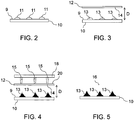
figure 2 shows a side view of a starting substrate on which an array of drops has been deposited; -
figure 3 shows a side view of the starting substrate infigure 1 and a pyroelectric substrate; -
figure 4 shows a side view of the starting substrate and a pyroelectric substrate during one of the steps of the method infigure 1 ; -
figure 5 shows a side view of an array of micro-needles obtained by the production method infigure 1 . - In the accompanying figures, elements which are equivalent or similar will be indicated by the same reference numerals.
-
Figure 1 shows a schematic flow diagram of an embodiment of amethod 1 for making anarray 16 of micro-needles 13. -
Method 1 comprises a step of depositing 3 a plurality ofdrops 11 of a liquid substance comprising a polymer on asurface 9 of astarting substrate 10, orbase substrate 10. - According to an embodiment, the above polymer is PLGA - poly lactic glycolic acid. According to alternative embodiments, the above polymer is a biocompatible polymer of a type other than the PLGA, such as PVP (polyvinylpyrrolidone), or maltose, or PPF (Poly propylene fumarate), or CMC (carboxy methyl cellulose), or PHEMA (Poly hydroxyethyl-methacrylate), or cellulose, or dextrin or an ester-based biopolymer containing micro particles of hydrogel to improve the timing of release and allow a greater number of drugs or active substances of a hydrophilic nature as compared to the lipophilic one of esters. The above polymers, in addition to being biocompatible, have the advantage of having an adequate mechanical strength required for the transdermal penetration.
- According to an embodiment, the above-mentioned liquid substance comprises a drug and/or an active ingredient. In this case,
array 16 of micro-needles 13 may be part of a device for the transdermal delivery of said drug and/or said active ingredient. For example, the above device is a bracelet. - For example, the above drug and/or active ingredient is a vaccine, but clearly there are no limitations to the type of drug and/or active ingredient that can be used in the above substance compared to drugs and/or active ingredients that a man skilled in the art knows that may be incorporated in a polymeric micro-needle and administered transdermally.
- According to an embodiment, said substance comprises a solvent provided to keep said polymer in the liquid state so that the deposition in drops of said substance on the starting substrate is possible.
- According to an embodiment, the solvent may be DCM - dichloromethane - or DMC - dymethylcarbodimmide. According to an advantageous embodiment from the point of view of the quality of the final result of the process for making
array 16 of micro-needles 13, the concentration of the solvent in said solution is in therange 20%-30% and preferably is equal to 25% or to about 25%. - According to an embodiment, the above solution has a viscosity in the range [10-1000] mm2/s inclusive and preferably in the range [100-200] mm2/s inclusive.
- As regards the
starting substrate 10, orbase substrate 10, according to an embodiment, saidsubstrate 10 is flexible in order to adequately adhere to the epidermis. According to an embodiment, said substrate is a flexible plate-shaped substrate made of PDMS - polydimethyl-siloxane. - The array of
drops 11 deposited on thestarting substrate 10 may have different shapes, an array of drops having a linear, circular, rectangular shape, etc., being for example deposited. - With reference to
figure 1 , the depositingstep 3 may be preceded by a step of preparation of the substance, which for example comprises a step of mixing the solvent, the biodegradable polymer and the drug and/or active ingredient. - With reference to
figures 1 and3 , the production method includes a step of positioning 4 apyroelectric substrate 12 at a certain distance D from thestarting substrate 10 so thatdrops 11 deposited onsurface 9 of thestarting substrate 10 are interposed between saidsurface 9 and asurface 14 of thepyroelectric substrate 12. - According to a possible embodiment, the
pyroelectric substrate 12 is a crystal of lithium niobate (LN) or lithium tantalate (LT), for example a crystal of periodically polarized lithium niobate (PPLN). - With reference to
figures 1 and4 , theproduction method 1 comprises a step of varying thetemperature 5 of thepyroelectric substrate 12 or a part thereof to induce onsurface 14 of the pyroelectric substrate 12 a charge density such that starting from the drops deposited 11, under the effect of an electrodynamic force,respective cones 13 are formed having a tip facing towards thepyroelectric substrate 12. - For example, the above-mentioned step of varying the
temperature 5, comprises an operation of heating portions of thepyroelectric substrate 12 in positions corresponding to the drops deposited 11. This may for example be obtained by means of aheating device 18 comprising an array oftips 15 configured to contactsurface 20 of thepyroelectric substrate 12 opposite tosurface 14. In an alternative embodiment, the above heating device is such as to emit a collimated optical radiation beam, such as produced by laser sources, toheat substrate 12 in positions corresponding to the drops deposited 11. - The
production method 1 further comprises a step of determining 6 a progressive consolidation ofcones 13 preventing the tip thereof 13 from contactingsurface 14 of thepyroelectric substrate 12. According to one embodiment, this can be achieved if distance D is greater than the critical distance Dc given by:
drops 11. - According to an embodiment, it is possible to provide an operation in the
production method 1 to distance the twosubstrates above step 6 of determining the consolidation. According to an advantageous embodiment, the above distancing operation takes place after the formation ofcones 13 and before the final consolidation thereof and during the above operation of distancing the twosubstrates - In an alternative embodiment, the above distancing operation is carried out by distancing the two
substrates pyroelectric substrate 12 oncones 13. - If the liquid substance of
drops 11 contains a solvent, during the forming step and during the gradual consolidation ofcones 13, an evaporation of the solvent and a progressive solidification ofcones 13 take place. - According to a more general embodiment, an initial step of the formation of
cones 13 takes place in an atmosphere at a first temperature andstep 6 of determining the consolidation takes place in an atmosphere at second temperature higher than the first temperature. According to a more particular embodiment, the first temperature is the ambient temperature while the second temperature is a temperature between 35 °C and 45 °C, and preferably equal to about 40 °C. More preferably, during the step of determining the consolidation,cones 13 are kept in an atmosphere at the second temperature for about 10 minutes. - Moreover, an embodiment is advantageous wherein the steps of varying the
temperature 5 and of determining theconsolidation 6 are performed in such a way as to preventsaid cones 13, all or most thereof, from deforming to the point of forming bridges betweensubstrates - The height of the cones obtained, in other words of the micro-needles, is preferably in the range [200 and 800] micron inclusive, and preferably in the range [400-800] micron inclusive. By controlling the volume of
drops 11 it is possible to control the size of the cones obtained 13, thus of the micro-needles. In fact, an increase in the volume of the droplets results in an increase in the height of the cones, improving the aspect-ratio. - Experimental tests have shown that a
production method 1 of the type described above allows the objects mentioned above with reference to the prior art to be achieved. Indentation tests in the epidermis were successfully carried out. - It is noted that the above method of production, thanks to the provision of preventing the cones from contacting the pyroelectric substrate, allows the micro-needles to be kept uncontaminated and not to expose said micro-needles at high temperatures, which could damage the drug, or the active substance encapsulated in the micro-needles. Moreover, the above method of production is particularly cost-effective.
- The principle of the invention being understood, the manufacturing details and the embodiments may widely vary compared to what described and illustrated by way of a non-limiting example only, without departing from the scope of the invention as defined in the accompanying claims.
Claims (15)
- Method (1) for making an array of micro-needles (16), comprising the steps of:- depositing (3) a plurality of drops (11) of a liquid substance comprising a polymer on a surface of a starting substrate (10);- positioning (4) a pyroelectric substrate (12) at a certain distance (D) from the starting substrate (10) in such a way that the drops (11) deposited are positioned between said surface (9) of the starting substrate (10) and a surface (14) of the pyroelectric substrate (12);- varying the temperature (5) of the pyroelectric substrate (12) or a part thereof to induce on said surface (14) of the pyroelectric substrate (12) a charge density such that starting from the drops deposited (11), under the effect of an electrodynamic force, respective cones (13) are formed having a tip facing towards the pyroelectric substrate (12);- determining (6) a consolidation of the cones (13), to form said micro-needles, preventing the tip of said cones (13) from contacting said surfaces (14) of the pyroelectric substrate (12).
- Method (1) according to claim 1, wherein the liquid substance contains a solvent and wherein during said formation and said consolidation of the cones (13) there is an evaporation of the solvent and a progressive solidification of the cones (13).
- Method (1) according to claim 2, wherein an initial step of said formation of the cones (13) takes place in an atmosphere at a first temperature and wherein said step (6) of determining the consolidation takes place in an atmosphere at second temperature higher than the first temperature.
- Method (1) according to claim 3, wherein the first temperature is ambient temperature and wherein the second temperature is a temperature of 35 °C to 45 °C.
- Method (1) according to claim 2, wherein said polymer is the PLGA - poly-lactic glycolic acid, or a biocompatible polymer from those listed below: PVP (polyvinylpyrrolidone), or maltose, or PPF (Poly propylene fumarate), or CMC (carboxy methyl cellulose), or PHEMA (Poly hydroxyethyl-methacrylate), or cellulose or dextrin or an ester-based biopolymer containing micro particles of hydrogel and wherein said solvent is DCM - dichloromethane or DMC-dimethyl carbon dimmide.
- Method (1) according to claim 5, wherein the concentration of the solvent in said solution is comprised in the range 20% to 30% and preferably the concentration is equal to 25%.
- Method according to any of the previous claims, wherein said solution has a viscosity in the range of [10- 1000] mm2/s inclusive and preferably in the range of [100-200] mm2/s inclusive.
- Method (1) according to any of the previous claims, wherein the starting substrate (10) is a flexible plate-shaped substrate made from PDMS - poly dimethyl siloxane.
- Method (1) according to any of the previous claims, wherein said distance (D) is a distance greater than the critical distance Dc given by:

- Method (1) according to any of the previous claims, wherein said steps of varying the temperature (5) and of determining the consolidation (6) are performed in such a way as to prevent said cones (11), all or most thereof, from deforming to the point of forming bridges between the substrates (10, 12).
- Method (1) according to any of the previous claims, further comprising an operation of distancing the substrates (10, 12) before or after said step (6) of determining the consolidation.
- Method (1) according to any of the previous claims, wherein said substance comprises a pharmaceutical product and/or an active ingredient.
- Array (16) of micro-needles characterised in that said array is obtained using a production method (1) according to any of the previous claims, and comprising said micro-needles and said substrate, wherein said micro-needles are attached to, and project from, said starting substrate.
- Transdermal release or transdermal sampling device comprising an array (16) of micro-needles according to claim 13.
- Transdermal release or transdermal sampling device according to claim 14, wherein said device is a bracelet.
Applications Claiming Priority (2)
| Application Number | Priority Date | Filing Date | Title |
|---|---|---|---|
| IT000079A ITRM20130079A1 (en) | 2013-02-12 | 2013-02-12 | METHOD FOR THE PRODUCTION OF A MICRO-NEEDLE LAYER |
| PCT/IT2014/000036 WO2014125515A2 (en) | 2013-02-12 | 2014-02-11 | Method for making an array of micro-needles |
Publications (2)
| Publication Number | Publication Date |
|---|---|
| EP2956203A2 EP2956203A2 (en) | 2015-12-23 |
| EP2956203B1 true EP2956203B1 (en) | 2017-04-19 |
Family
ID=48050144
Family Applications (1)
| Application Number | Title | Priority Date | Filing Date |
|---|---|---|---|
| EP14719204.1A Not-in-force EP2956203B1 (en) | 2013-02-12 | 2014-02-11 | Method for making an array of micro-needles |
Country Status (4)
| Country | Link |
|---|---|
| US (1) | US9561355B2 (en) |
| EP (1) | EP2956203B1 (en) |
| IT (1) | ITRM20130079A1 (en) |
| WO (1) | WO2014125515A2 (en) |
Families Citing this family (4)
| Publication number | Priority date | Publication date | Assignee | Title |
|---|---|---|---|---|
| JP6567716B1 (en) * | 2018-03-19 | 2019-08-28 | ナショナル・タイペイ・ユニバーシティ・オブ・テクノロジーNational Taipei University of Technology | Biodegradable microneedle array |
| US20210353923A1 (en) * | 2018-09-27 | 2021-11-18 | Purdue Research Foundation | Devices for intracellular and intratissue nanoinjection of biomolecules and methods of producing the same |
| CN109205551B (en) * | 2018-11-01 | 2021-04-09 | 深圳先进技术研究院 | Tapered array flexible electrode and preparation method thereof |
| CN113683052B (en) * | 2021-09-14 | 2023-09-05 | 深圳清华大学研究院 | Manufacturing and using method of super-talc ink island moving assembly |
Family Cites Families (3)
| Publication number | Priority date | Publication date | Assignee | Title |
|---|---|---|---|---|
| US7611656B2 (en) * | 2004-05-18 | 2009-11-03 | Ricoh Company, Ltd. | Method and device for fabricating plastic molded article |
| KR20090059971A (en) * | 2007-12-07 | 2009-06-11 | 인싸이토 주식회사 | Hollow Micro Needle |
| US8545741B2 (en) * | 2010-04-01 | 2013-10-01 | Nurim Wellness Co. Ltd. | Method of manufacturing microstructure |
-
2013
- 2013-02-12 IT IT000079A patent/ITRM20130079A1/en unknown
-
2014
- 2014-02-11 WO PCT/IT2014/000036 patent/WO2014125515A2/en not_active Ceased
- 2014-02-11 EP EP14719204.1A patent/EP2956203B1/en not_active Not-in-force
- 2014-02-11 US US14/767,073 patent/US9561355B2/en not_active Expired - Fee Related
Non-Patent Citations (1)
| Title |
|---|
| None * |
Also Published As
| Publication number | Publication date |
|---|---|
| WO2014125515A3 (en) | 2014-11-06 |
| EP2956203A2 (en) | 2015-12-23 |
| WO2014125515A2 (en) | 2014-08-21 |
| US9561355B2 (en) | 2017-02-07 |
| US20150374966A1 (en) | 2015-12-31 |
| ITRM20130079A1 (en) | 2014-08-13 |
Similar Documents
| Publication | Publication Date | Title |
|---|---|---|
| Tarbox et al. | An update on coating/manufacturing techniques of microneedles | |
| CN112218675B (en) | Microneedle patches for transdermal injection | |
| KR101785930B1 (en) | Manufacturing of microneedle systems for inhibition of deformation in moisture environment | |
| KR101610598B1 (en) | FLEXIBLE MICRONEEDLE FOR DENTAL MATERIAL DELIVERY AND THE MANUFACTURING METHOD Of THE SAME | |
| EP2603209B1 (en) | Structures for transdermal drug delivery | |
| CN108697882B (en) | Preparation method of microneedles using biocompatible polymers | |
| US10500386B2 (en) | Microneedle array manufacturing method | |
| CN103170055B (en) | Microneedle array applicator and the method for discharging microneedle array | |
| EP2090331A1 (en) | Microneedle array and process for production thereof | |
| US9561355B2 (en) | Method for making an array of micro-needles | |
| KR102074603B1 (en) | Manufacturing method of mold, manufacturing method of pattern sheet, manufacturing method of electroforming mold, and manufacturing method of mold using electroforming mold | |
| US20170304603A1 (en) | Transdermal administration device | |
| SG173160A1 (en) | Microneedle device | |
| US20110127690A1 (en) | Stamper For Microneedle Sheet, Production Method Thereof, And Microneedle Production Method Using Stamper | |
| CN114699361B (en) | Microneedle, microneedle patch and preparation method and application thereof | |
| JP2015116335A (en) | Transdermal drug administration system and method for manufacturing transdermal drug administration system | |
| Xiang et al. | Dense vertical SU-8 microneedles drawn from a heated mold with precisely controlled volume | |
| KR102323528B1 (en) | Micro-needle patch and micro-needle system | |
| JP6269068B2 (en) | Manufacturing method of microneedle | |
| JP2013111104A (en) | Method for manufacturing microneedle device | |
| KR101716447B1 (en) | Method for manufacturing microneedles using vibration and gravity | |
| JP6003338B2 (en) | Acicular package | |
| EP3111985B1 (en) | Hollow needle-shaped body manufacturing method and hollow needle-shaped body | |
| JPWO2019059265A1 (en) | Microneedle sheet and method for manufacturing microneedle sheet | |
| JP4804827B2 (en) | Transdermal drug delivery device and method for manufacturing needle device for transdermal drug delivery device |
Legal Events
| Date | Code | Title | Description |
|---|---|---|---|
| PUAI | Public reference made under article 153(3) epc to a published international application that has entered the european phase |
Free format text: ORIGINAL CODE: 0009012 |
|
| 17P | Request for examination filed |
Effective date: 20150806 |
|
| AK | Designated contracting states |
Kind code of ref document: A2 Designated state(s): AL AT BE BG CH CY CZ DE DK EE ES FI FR GB GR HR HU IE IS IT LI LT LU LV MC MK MT NL NO PL PT RO RS SE SI SK SM TR |
|
| AX | Request for extension of the european patent |
Extension state: BA ME |
|
| DAX | Request for extension of the european patent (deleted) | ||
| GRAP | Despatch of communication of intention to grant a patent |
Free format text: ORIGINAL CODE: EPIDOSNIGR1 |
|
| INTG | Intention to grant announced |
Effective date: 20160725 |
|
| GRAS | Grant fee paid |
Free format text: ORIGINAL CODE: EPIDOSNIGR3 |
|
| GRAA | (expected) grant |
Free format text: ORIGINAL CODE: 0009210 |
|
| AK | Designated contracting states |
Kind code of ref document: B1 Designated state(s): AL AT BE BG CH CY CZ DE DK EE ES FI FR GB GR HR HU IE IS IT LI LT LU LV MC MK MT NL NO PL PT RO RS SE SI SK SM TR |
|
| REG | Reference to a national code |
Ref country code: GB Ref legal event code: FG4D |
|
| REG | Reference to a national code |
Ref country code: CH Ref legal event code: EP |
|
| REG | Reference to a national code |
Ref country code: AT Ref legal event code: REF Ref document number: 885359 Country of ref document: AT Kind code of ref document: T Effective date: 20170515 |
|
| REG | Reference to a national code |
Ref country code: IE Ref legal event code: FG4D |
|
| REG | Reference to a national code |
Ref country code: DE Ref legal event code: R096 Ref document number: 602014008824 Country of ref document: DE |
|
| REG | Reference to a national code |
Ref country code: NL Ref legal event code: MP Effective date: 20170419 |
|
| REG | Reference to a national code |
Ref country code: LT Ref legal event code: MG4D |
|
| REG | Reference to a national code |
Ref country code: AT Ref legal event code: MK05 Ref document number: 885359 Country of ref document: AT Kind code of ref document: T Effective date: 20170419 |
|
| PG25 | Lapsed in a contracting state [announced via postgrant information from national office to epo] |
Ref country code: NL Free format text: LAPSE BECAUSE OF FAILURE TO SUBMIT A TRANSLATION OF THE DESCRIPTION OR TO PAY THE FEE WITHIN THE PRESCRIBED TIME-LIMIT Effective date: 20170419 |
|
| PG25 | Lapsed in a contracting state [announced via postgrant information from national office to epo] |
Ref country code: FI Free format text: LAPSE BECAUSE OF FAILURE TO SUBMIT A TRANSLATION OF THE DESCRIPTION OR TO PAY THE FEE WITHIN THE PRESCRIBED TIME-LIMIT Effective date: 20170419 Ref country code: AT Free format text: LAPSE BECAUSE OF FAILURE TO SUBMIT A TRANSLATION OF THE DESCRIPTION OR TO PAY THE FEE WITHIN THE PRESCRIBED TIME-LIMIT Effective date: 20170419 Ref country code: HR Free format text: LAPSE BECAUSE OF FAILURE TO SUBMIT A TRANSLATION OF THE DESCRIPTION OR TO PAY THE FEE WITHIN THE PRESCRIBED TIME-LIMIT Effective date: 20170419 Ref country code: GR Free format text: LAPSE BECAUSE OF FAILURE TO SUBMIT A TRANSLATION OF THE DESCRIPTION OR TO PAY THE FEE WITHIN THE PRESCRIBED TIME-LIMIT Effective date: 20170720 Ref country code: ES Free format text: LAPSE BECAUSE OF FAILURE TO SUBMIT A TRANSLATION OF THE DESCRIPTION OR TO PAY THE FEE WITHIN THE PRESCRIBED TIME-LIMIT Effective date: 20170419 Ref country code: NO Free format text: LAPSE BECAUSE OF FAILURE TO SUBMIT A TRANSLATION OF THE DESCRIPTION OR TO PAY THE FEE WITHIN THE PRESCRIBED TIME-LIMIT Effective date: 20170719 Ref country code: LT Free format text: LAPSE BECAUSE OF FAILURE TO SUBMIT A TRANSLATION OF THE DESCRIPTION OR TO PAY THE FEE WITHIN THE PRESCRIBED TIME-LIMIT Effective date: 20170419 |
|
| PG25 | Lapsed in a contracting state [announced via postgrant information from national office to epo] |
Ref country code: LV Free format text: LAPSE BECAUSE OF FAILURE TO SUBMIT A TRANSLATION OF THE DESCRIPTION OR TO PAY THE FEE WITHIN THE PRESCRIBED TIME-LIMIT Effective date: 20170419 Ref country code: IS Free format text: LAPSE BECAUSE OF FAILURE TO SUBMIT A TRANSLATION OF THE DESCRIPTION OR TO PAY THE FEE WITHIN THE PRESCRIBED TIME-LIMIT Effective date: 20170819 Ref country code: PL Free format text: LAPSE BECAUSE OF FAILURE TO SUBMIT A TRANSLATION OF THE DESCRIPTION OR TO PAY THE FEE WITHIN THE PRESCRIBED TIME-LIMIT Effective date: 20170419 Ref country code: SE Free format text: LAPSE BECAUSE OF FAILURE TO SUBMIT A TRANSLATION OF THE DESCRIPTION OR TO PAY THE FEE WITHIN THE PRESCRIBED TIME-LIMIT Effective date: 20170419 Ref country code: RS Free format text: LAPSE BECAUSE OF FAILURE TO SUBMIT A TRANSLATION OF THE DESCRIPTION OR TO PAY THE FEE WITHIN THE PRESCRIBED TIME-LIMIT Effective date: 20170419 Ref country code: BG Free format text: LAPSE BECAUSE OF FAILURE TO SUBMIT A TRANSLATION OF THE DESCRIPTION OR TO PAY THE FEE WITHIN THE PRESCRIBED TIME-LIMIT Effective date: 20170719 |
|
| REG | Reference to a national code |
Ref country code: DE Ref legal event code: R097 Ref document number: 602014008824 Country of ref document: DE |
|
| PG25 | Lapsed in a contracting state [announced via postgrant information from national office to epo] |
Ref country code: CZ Free format text: LAPSE BECAUSE OF FAILURE TO SUBMIT A TRANSLATION OF THE DESCRIPTION OR TO PAY THE FEE WITHIN THE PRESCRIBED TIME-LIMIT Effective date: 20170419 Ref country code: RO Free format text: LAPSE BECAUSE OF FAILURE TO SUBMIT A TRANSLATION OF THE DESCRIPTION OR TO PAY THE FEE WITHIN THE PRESCRIBED TIME-LIMIT Effective date: 20170419 Ref country code: DK Free format text: LAPSE BECAUSE OF FAILURE TO SUBMIT A TRANSLATION OF THE DESCRIPTION OR TO PAY THE FEE WITHIN THE PRESCRIBED TIME-LIMIT Effective date: 20170419 Ref country code: SK Free format text: LAPSE BECAUSE OF FAILURE TO SUBMIT A TRANSLATION OF THE DESCRIPTION OR TO PAY THE FEE WITHIN THE PRESCRIBED TIME-LIMIT Effective date: 20170419 Ref country code: EE Free format text: LAPSE BECAUSE OF FAILURE TO SUBMIT A TRANSLATION OF THE DESCRIPTION OR TO PAY THE FEE WITHIN THE PRESCRIBED TIME-LIMIT Effective date: 20170419 |
|
| PLBE | No opposition filed within time limit |
Free format text: ORIGINAL CODE: 0009261 |
|
| STAA | Information on the status of an ep patent application or granted ep patent |
Free format text: STATUS: NO OPPOSITION FILED WITHIN TIME LIMIT |
|
| PG25 | Lapsed in a contracting state [announced via postgrant information from national office to epo] |
Ref country code: SM Free format text: LAPSE BECAUSE OF FAILURE TO SUBMIT A TRANSLATION OF THE DESCRIPTION OR TO PAY THE FEE WITHIN THE PRESCRIBED TIME-LIMIT Effective date: 20170419 |
|
| REG | Reference to a national code |
Ref country code: FR Ref legal event code: PLFP Year of fee payment: 5 |
|
| 26N | No opposition filed |
Effective date: 20180122 |
|
| PG25 | Lapsed in a contracting state [announced via postgrant information from national office to epo] |
Ref country code: SI Free format text: LAPSE BECAUSE OF FAILURE TO SUBMIT A TRANSLATION OF THE DESCRIPTION OR TO PAY THE FEE WITHIN THE PRESCRIBED TIME-LIMIT Effective date: 20170419 |
|
| REG | Reference to a national code |
Ref country code: CH Ref legal event code: PL |
|
| PG25 | Lapsed in a contracting state [announced via postgrant information from national office to epo] |
Ref country code: MC Free format text: LAPSE BECAUSE OF FAILURE TO SUBMIT A TRANSLATION OF THE DESCRIPTION OR TO PAY THE FEE WITHIN THE PRESCRIBED TIME-LIMIT Effective date: 20170419 |
|
| REG | Reference to a national code |
Ref country code: IE Ref legal event code: MM4A |
|
| REG | Reference to a national code |
Ref country code: BE Ref legal event code: MM Effective date: 20180228 |
|
| PG25 | Lapsed in a contracting state [announced via postgrant information from national office to epo] |
Ref country code: LU Free format text: LAPSE BECAUSE OF NON-PAYMENT OF DUE FEES Effective date: 20180211 Ref country code: CH Free format text: LAPSE BECAUSE OF NON-PAYMENT OF DUE FEES Effective date: 20180228 Ref country code: LI Free format text: LAPSE BECAUSE OF NON-PAYMENT OF DUE FEES Effective date: 20180228 |
|
| PG25 | Lapsed in a contracting state [announced via postgrant information from national office to epo] |
Ref country code: IE Free format text: LAPSE BECAUSE OF NON-PAYMENT OF DUE FEES Effective date: 20180211 |
|
| PG25 | Lapsed in a contracting state [announced via postgrant information from national office to epo] |
Ref country code: BE Free format text: LAPSE BECAUSE OF NON-PAYMENT OF DUE FEES Effective date: 20180228 |
|
| PG25 | Lapsed in a contracting state [announced via postgrant information from national office to epo] |
Ref country code: MT Free format text: LAPSE BECAUSE OF NON-PAYMENT OF DUE FEES Effective date: 20180211 |
|
| PG25 | Lapsed in a contracting state [announced via postgrant information from national office to epo] |
Ref country code: TR Free format text: LAPSE BECAUSE OF FAILURE TO SUBMIT A TRANSLATION OF THE DESCRIPTION OR TO PAY THE FEE WITHIN THE PRESCRIBED TIME-LIMIT Effective date: 20170419 |
|
| PG25 | Lapsed in a contracting state [announced via postgrant information from national office to epo] |
Ref country code: PT Free format text: LAPSE BECAUSE OF FAILURE TO SUBMIT A TRANSLATION OF THE DESCRIPTION OR TO PAY THE FEE WITHIN THE PRESCRIBED TIME-LIMIT Effective date: 20170419 |
|
| PG25 | Lapsed in a contracting state [announced via postgrant information from national office to epo] |
Ref country code: HU Free format text: LAPSE BECAUSE OF FAILURE TO SUBMIT A TRANSLATION OF THE DESCRIPTION OR TO PAY THE FEE WITHIN THE PRESCRIBED TIME-LIMIT; INVALID AB INITIO Effective date: 20140211 Ref country code: MK Free format text: LAPSE BECAUSE OF NON-PAYMENT OF DUE FEES Effective date: 20170419 Ref country code: CY Free format text: LAPSE BECAUSE OF FAILURE TO SUBMIT A TRANSLATION OF THE DESCRIPTION OR TO PAY THE FEE WITHIN THE PRESCRIBED TIME-LIMIT Effective date: 20170419 |
|
| PG25 | Lapsed in a contracting state [announced via postgrant information from national office to epo] |
Ref country code: AL Free format text: LAPSE BECAUSE OF FAILURE TO SUBMIT A TRANSLATION OF THE DESCRIPTION OR TO PAY THE FEE WITHIN THE PRESCRIBED TIME-LIMIT Effective date: 20170419 |
|
| PGFP | Annual fee paid to national office [announced via postgrant information from national office to epo] |
Ref country code: GB Payment date: 20220223 Year of fee payment: 9 Ref country code: DE Payment date: 20220217 Year of fee payment: 9 |
|
| PGFP | Annual fee paid to national office [announced via postgrant information from national office to epo] |
Ref country code: FR Payment date: 20220228 Year of fee payment: 9 |
|
| PGFP | Annual fee paid to national office [announced via postgrant information from national office to epo] |
Ref country code: IT Payment date: 20230109 Year of fee payment: 10 |
|
| REG | Reference to a national code |
Ref country code: DE Ref legal event code: R119 Ref document number: 602014008824 Country of ref document: DE |
|
| P01 | Opt-out of the competence of the unified patent court (upc) registered |
Effective date: 20230811 |
|
| GBPC | Gb: european patent ceased through non-payment of renewal fee |
Effective date: 20230211 |
|
| PG25 | Lapsed in a contracting state [announced via postgrant information from national office to epo] |
Ref country code: GB Free format text: LAPSE BECAUSE OF NON-PAYMENT OF DUE FEES Effective date: 20230211 |
|
| PG25 | Lapsed in a contracting state [announced via postgrant information from national office to epo] |
Ref country code: GB Free format text: LAPSE BECAUSE OF NON-PAYMENT OF DUE FEES Effective date: 20230211 Ref country code: FR Free format text: LAPSE BECAUSE OF NON-PAYMENT OF DUE FEES Effective date: 20230228 Ref country code: DE Free format text: LAPSE BECAUSE OF NON-PAYMENT OF DUE FEES Effective date: 20230901 |
|
| PG25 | Lapsed in a contracting state [announced via postgrant information from national office to epo] |
Ref country code: IT Free format text: LAPSE BECAUSE OF NON-PAYMENT OF DUE FEES Effective date: 20240211 |