EP2955728A1 - Magnetic substance - Google Patents
Magnetic substance Download PDFInfo
- Publication number
- EP2955728A1 EP2955728A1 EP14749025.4A EP14749025A EP2955728A1 EP 2955728 A1 EP2955728 A1 EP 2955728A1 EP 14749025 A EP14749025 A EP 14749025A EP 2955728 A1 EP2955728 A1 EP 2955728A1
- Authority
- EP
- European Patent Office
- Prior art keywords
- metal
- metal complex
- atom
- electron donor
- compound
- Prior art date
- Legal status (The legal status is an assumption and is not a legal conclusion. Google has not performed a legal analysis and makes no representation as to the accuracy of the status listed.)
- Granted
Links
- JWIHBMIUBDOGHI-IGXZDCFTSA-N [O-][N+](/C(/C=C\CO)=C/CC=O)=O Chemical compound [O-][N+](/C(/C=C\CO)=C/CC=O)=O JWIHBMIUBDOGHI-IGXZDCFTSA-N 0.000 description 1
Images



Classifications
-
- C—CHEMISTRY; METALLURGY
- C07—ORGANIC CHEMISTRY
- C07F—ACYCLIC, CARBOCYCLIC OR HETEROCYCLIC COMPOUNDS CONTAINING ELEMENTS OTHER THAN CARBON, HYDROGEN, HALOGEN, OXYGEN, NITROGEN, SULFUR, SELENIUM OR TELLURIUM
- C07F15/00—Compounds containing elements of Groups 8, 9, 10 or 18 of the Periodic Table
- C07F15/02—Iron compounds
- C07F15/025—Iron compounds without a metal-carbon linkage
-
- C—CHEMISTRY; METALLURGY
- C07—ORGANIC CHEMISTRY
- C07F—ACYCLIC, CARBOCYCLIC OR HETEROCYCLIC COMPOUNDS CONTAINING ELEMENTS OTHER THAN CARBON, HYDROGEN, HALOGEN, OXYGEN, NITROGEN, SULFUR, SELENIUM OR TELLURIUM
- C07F15/00—Compounds containing elements of Groups 8, 9, 10 or 18 of the Periodic Table
- C07F15/02—Iron compounds
-
- H—ELECTRICITY
- H01—ELECTRIC ELEMENTS
- H01F—MAGNETS; INDUCTANCES; TRANSFORMERS; SELECTION OF MATERIALS FOR THEIR MAGNETIC PROPERTIES
- H01F1/00—Magnets or magnetic bodies characterised by the magnetic materials therefor; Selection of materials for their magnetic properties
- H01F1/42—Magnets or magnetic bodies characterised by the magnetic materials therefor; Selection of materials for their magnetic properties of organic or organo-metallic materials, e.g. graphene
-
- Y—GENERAL TAGGING OF NEW TECHNOLOGICAL DEVELOPMENTS; GENERAL TAGGING OF CROSS-SECTIONAL TECHNOLOGIES SPANNING OVER SEVERAL SECTIONS OF THE IPC; TECHNICAL SUBJECTS COVERED BY FORMER USPC CROSS-REFERENCE ART COLLECTIONS [XRACs] AND DIGESTS
- Y10—TECHNICAL SUBJECTS COVERED BY FORMER USPC
- Y10T—TECHNICAL SUBJECTS COVERED BY FORMER US CLASSIFICATION
- Y10T428/00—Stock material or miscellaneous articles
- Y10T428/29—Coated or structually defined flake, particle, cell, strand, strand portion, rod, filament, macroscopic fiber or mass thereof
- Y10T428/2982—Particulate matter [e.g., sphere, flake, etc.]
Definitions
- the metal-salen complex is magnetically guided by an external magnetic field. So, when the metal-salen complex is applied to a human or an animal, it is guided by the magnetic field outside the body to a region, to which the magnetic field is locally applied, and retained in that region, and can exhibit its originally retained medicinal effect (such as anticancer) locally in the magnetism-applied region ( WO2008/001851 ). As a result, a therapeutic drug made of the metal-salen complex has the ferromagnetic property by itself without using a magnetic carrier as mentioned above, so that it is useful in exhibiting the stable anticancer effect and reducing the occurrence of side effects.
- the metal complex organic compound having the structure in which the heterocycle molecule is bonded to the metal as an active site to exhibit the ferromagnetic property the metals of two metal complex molecules are bonded together via the electron donor having the electron pair donated to the metals and, furthermore, the bond angle which forms metal - electron donor - metal bonding is within the range from 130° to 160°, so that the stability and the ferromagnetic property of the crystal structure of the metal complex compound are balanced at a higher dimension.
- the present invention is a magnetic substance containing a metal complex compound composed of a plurality of metal complex molecules in which a heterocycle is bonded to metal, wherein the metal of the metal complex molecule is bonded to the metal of another metal complex molecule via an electron donor and a metal - electron donor - metal bond angle is from 130° to 160°, preferably from 140° to 150°, more preferably from 144° to 147°, and most preferably 146.359°.
- a coordinate bond is possible, other than a covalent bond, as bonding between the metal and the oxygen.
- An electron donating source of the electron donor may be oxygen of a water molecule.
- the metal parts of the metal complex organic molecules and the water molecule are bonded as follows. M ⁇ O(H) 2 ⁇ M (the sign " ⁇ " represents a coordinate bond.)
- Chem. 1 illustrated below represents a basic skeleton of the metal-salen complex molecule.
- M represents a center metal of the metal-salen complex.
- the center metal (M) is Fe, Cr, Mn, Co, Ni, Mo, Ru, Rh, Pd, W, Re, 0s, Ir, Pt, Nd, Sm, Eu, or Gd.
- Chem. 2 illustrated below represents a basic skeleton of the metal-salen complex - compound in which two metal-salen complex molecules described above are bonded together via the electron donor (O).
- a salen ligand (N,N'-Bis(salicylidene)ethylenediamine) and its derivative are synthesized by a dehydration condensation reaction of the corresponding salicylaldehyde and a derivative of ethylene diamine.
- the obtained ligand is formed as a phenoxide ion derivative or is made to react with a metal ion under basic conditions, and then the metal-salen complex is formed.
- a plurality of iron-salen complexes (5-6 examples) were obtained by repeatedly executing the above-mentioned steps. Crystals of the highest magnetic property were extracted from each iron-salen complex. A measured value of saturation magnetization of the crystals having the highest magnetic property was 1.25 emu/g. The measurement was conducted based on a magnetic property evaluation device MPMS7 manufactured by Kantum. The measured value of the crystals having the lowest magnetic property among those complexes was 0.02 (emu/g).
- R-factor wR and goodness of fit S are based on F ⁇ 2 ⁇
- conventional R-factors R are based on F, with F set to zero for negative F ⁇ 2 ⁇ .
- the threshold expression of F ⁇ 2 ⁇ > 2sigma(F ⁇ 2 ⁇ ) is used only for calculating R-factors(gt) etc. and is not relevant to the choice of reflections for refinement.
- R-factors based on F ⁇ 2 ⁇ are statistically about twice as large as those based on F, and R- factors based on ALL data will be even larger.
Landscapes
- Chemical & Material Sciences (AREA)
- Organic Chemistry (AREA)
- Engineering & Computer Science (AREA)
- Power Engineering (AREA)
- Hard Magnetic Materials (AREA)
- Medicines Containing Antibodies Or Antigens For Use As Internal Diagnostic Agents (AREA)
- Medicines That Contain Protein Lipid Enzymes And Other Medicines (AREA)
Abstract
Description
- The present invention relates to a magnetic substance. Particularly, the invention relates to a magnetic substance that is a compound of metal complex organic molecules, regarding which the metal complex organic molecules, such as a magnetic drug or a magnetic material, themselves do not require a magnetic carrier and are capable of exhibiting the magnetic property by themselves.
- The applicant of the present application suggested a metal-salen complex as a ferromagnetic metal complex organic molecule. Regarding this metal-salen complex, electron spins of unpaired electron pairs are oriented either up or down relative to their basic skeleton, so that the metal-salen complex itself can exhibit the ferromagnetic property without any help of a magnetic carrier.
- Then, the metal-salen complex is magnetically guided by an external magnetic field. So, when the metal-salen complex is applied to a human or an animal, it is guided by the magnetic field outside the body to a region, to which the magnetic field is locally applied, and retained in that region, and can exhibit its originally retained medicinal effect (such as anticancer) locally in the magnetism-applied region (
WO2008/001851 ). As a result, a therapeutic drug made of the metal-salen complex has the ferromagnetic property by itself without using a magnetic carrier as mentioned above, so that it is useful in exhibiting the stable anticancer effect and reducing the occurrence of side effects. - There is also a metal-salen complex described in
WO2012/086683 as the above-described metal-salen complex. When the metal-salen complex is used to make it reach an affected site by means of systemic application and remain in the affected site by the magnetic field, a crystal particle diameter of the metal-salen complex is 1 µm or less so that the metal-salen complex can pass through many capillary vessels; and it is preferable that particles whose crystal particle diameter is from 100 nm to 500 nm inclusive should occupy 70% or more of the entire metal-salen complex. If the particle diameter of the metal-salen complex exceeds 1 µm, there is a possibility that the metal-salen complex may not be able to pass through the capillary vessels. If the particle diameter of the metal-salen complex is less than 100 nm, the ferromagnetic property required for magnetic guidance would not be sufficient. -
- [PTL 1]
WO2008/001851 - [PTL 2]
WO2012/086683 - However, as a result of earnest examination by the inventors of the present application, it was found that the magnetic property of the metal-salen complex is not determined only by the crystal particle diameter, but is significantly influenced by a stereo structure of metal-salen complex molecules.
- Therefore, it is an object of the present invention to clarify the structure of a ferromagnetic metal complex and provide a magnetic substance capable of reliably exhibiting the ferromagnetic property by having that structure.
- The inventors of the present invention analyzed a crystal structure of a metal complex organic substance and analyzed the magnetic property of the metal complex organic substance from the viewpoint of its structure. As a result of such analysis, they found that the following matters are important for the metal complex organic substance to exhibit the ferromagnetic property.
-
- (1) The metal complex organic substance is structured so that a heterocyle is bonded (for example, by means of coordination) to metal as an active site to exhibit the ferromagnetic property of metal complex organic molecules.
- (2) Metals of a plurality of metal complex organic molecules are bonded to each other (by means of, for example, coordinate bonds), thereby forming a metal complex organic compound. The metals of the metal complex organic molecules can be bonded together via an electron donor (such as an oxygen atom) having an electron pair to be donated to the metals. For example, the oxygen atom derives from water. As the metal parts of the magnetic metal complex organic molecules which are respectively magnetic are bonded to each other (coordinate bonds) via the electron donor, the ferromagnetic property is exhibited. An example of the electron donor is not limited to a molecule including the oxygen atom as long as the electron donor has an electron pair that can be donated to the metal atoms of the metal complex molecules. For example, the electron donor may be an amine compound containing a nitrogen atom.
- (3) There is a trade-off relationship between the stability and the ferromagnetic property of the crystal structure of the compound in which the plurality of metal complex organic molecules are bonded together via the electron donor. When the crystal structure of the metal complex organic compound is about to be stabilized, unpaired electron density of the metal complex compound decreases due to a superexchange interaction and the magnetic property of the crystal decreases. On the other hand, if an attempt is made to increase the magnetic property of the metal complex organic compound crystal, the stability of the metal complex organic compound crystal decreases.
- As a bond angle formed by metal - electron donor - metal becomes closer to 90°, the unpaired electron density of the metal complex organic compound increases and a magnetization rate caused by the applied magnetic field increases, that is, the metal complex organic compound becomes more ferromagnetic; however, as the metal complex molecules become closer to each other, distortion of the molecule structure increases and a repulsive force between the molecules increases, thereby decreasing the stability of the crystal structure. On the other hand, as the bond angle formed by metal - electron donor - metal becomes closer to 180°, the crystal structure of the metal complex organic compound becomes stable; however, the superexchange interaction becomes predominant, the unpaired electron density decreases, and the magnetization rate decreases.
- So, as a result of examination of the metal complex compound crystal by the inventors of the present application by means of X-ray analysis, it was found that regarding the metal complex organic compound having the structure in which the heterocycle molecule is bonded to the metal as an active site to exhibit the ferromagnetic property, the metals of two metal complex molecules are bonded together via the electron donor having the electron pair donated to the metals and, furthermore, the bond angle which forms metal - electron donor - metal bonding is within the range from 130° to 160°, so that the stability and the ferromagnetic property of the crystal structure of the metal complex compound are balanced at a higher dimension.
- Therefore, the present invention is a magnetic substance containing a metal complex compound composed of a plurality of metal complex molecules in which a heterocycle is bonded to metal, wherein the metal of the metal complex molecule is bonded to the metal of another metal complex molecule via an electron donor and a metal - electron donor - metal bond angle is from 130° to 160°, preferably from 140° to 150°, more preferably from 144° to 147°, and most preferably 146.359°.
- The heterocyle of the iron-salen complex molecule is a cyclic structure formed of two nitrogen atoms and two oxygen atoms which surround an iron (metal) atom in a flat form.
- The plurality of metal complex molecules, particularly, two metal complex molecules, whose bond angle is formed within the above-mentioned range have high structural stability and high unpaired electron density and are thereby ferromagnetic. When the bond angle formed by the metal - electron donor - metal exceeds 160°, the structural stability of the crystal increases, but the unpaired electron density of the metal complex compound decreases and the magnetization rate decreases; and when the bond angle is less than 130°, the magnetization rate of the metal complex molecules increases, but the stability of the crystal decreases. Incidentally, in the latter case, the magnetization rate of the metal complex molecules increases, but the particle diameter decreases. As a result, the magnetization rate of the entire crystal decreases.
- In order for the metal complex (organic) compound to sufficiently exhibit the magnetic property, it is preferable that regarding the metal complex compound having the structure in which the heterocycle is bonded to the metal as the active sit to exhibit the ferromagnetic property, the metals of the two metal complex molecules be bonded together via the electron donor and, furthermore, the bond angle which forms the metal - electron donor - metal bonding be from 130° to 160°, and the crystal particle diameter of the metal complex compound composed of the plurality of metal complex molecules should preferably be within the range from 200 nm to 700 nm, and more preferably within the range from 300 nm to 600 nm.
- As a percentage of the metal complex compounds regarding which the metal - electron body - metal bond angle is from 130° to 160° to the entire substance is higher, magnetic strength of the magnetic substance increases. The percentage of the metal complex compounds, which constitute the magnetic substance and regarding which the metal - electron donor - metal bond angle is within the range from 130° to 160°, to the entire substance should preferably be 50 wt% or more, more preferably 80 wt% or more.
- In order to form the metal - electron donor - metal bond angle within the range from 130° to 160°, operation useful for crystallization of the metal complex compound is necessary. One example of such operation is optimization of the crystal particle diameter of the metal complex compound. If an average crystal particle diameter is less than 100 nm, distortion of the crystal structure increases and the stability decreases. On the other hand, if the average particle diameter exceeds 1 µm, the metal - electron donor - metal bond angle becomes closer to 180° and the magnetic property decreases. It is preferable that the crystal particle diameter of the metal complex compound be within the range from 200 nm to 700 nm inclusive, particularly within the range from 300 nm to 600 nm inclusive in order to form the metal - electron body - metal bond angle within the range from 130° to 160°.
- A preferred example of the metal complex is a metal-salen complex (Chem. 1 indicated below) and a preferred example of the electron donor having an electron donor group is oxygen that can donate electrons to iron. The magnetic substance composed of the metal complex organic compounds is formed by bonding of the metals of the two metal-salen complexes via oxygen as illustrated in Chem. 2 below. As the stability of the crystal structure and the unpaired electron density (magnetization rate) of the organic magnetic substance are balanced at a high dimension in the state where the metal-oxygen-metal bond angle is within the range from 130° to 160° and, furthermore, the distance between the metal and the oxygen is from 1.1 A to 1.8 A, the magnetic substance exhibits the stable ferromagnetic property. A coordinate bond is possible, other than a covalent bond, as bonding between the metal and the oxygen. An electron donating source of the electron donor may be oxygen of a water molecule. In this case, the metal parts of the metal complex organic molecules and the water molecule are bonded as follows.
M ···O(H)2···M (the sign "···" represents a coordinate bond.) - Chem. 1 illustrated below represents a basic skeleton of the metal-salen complex molecule. M represents a center metal of the metal-salen complex. The center metal (M) is Fe, Cr, Mn, Co, Ni, Mo, Ru, Rh, Pd, W, Re, 0s, Ir, Pt, Nd, Sm, Eu, or Gd. Chem. 2 illustrated below represents a basic skeleton of the metal-salen complex - compound in which two metal-salen complex molecules described above are bonded together via the electron donor (O).


- The metal complex molecule of the present invention includes derivatives of the metal-salen complex in Chem. 1 (not only molecules in which other functional groups are connected instead of hydrogens as side chains, but also a composite in which the metal-salen complex and another medicinal compound are bonded together (
WO2010/058280 ) may be included). Incidentally, the magnetic substance of the present invention is used not only for magnetic drugs (such as anti-cancer drugs) mentioned earlier, but also for known usage, for example, as magnetic materials for electric and electronic parts, such as switching elements, or as contrast media for MRI. - A magnetic substance capable of reliably exhibiting the ferromagnetic property can be provided according to the present invention.
-
- [
Fig. 1] Fig. 1 is a perspective view of an iron-salen complex compound single crystal based on structure data of the iron-salen complex compound single crystal; - [
Fig. 2] Fig. 2 is a molecular formula representing an iron atom spin orientation of a ferromagnetic substance (iron-salen complex compound); - [
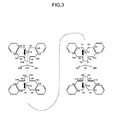
Fig. 3] Fig. 3 is a molecular formula representing an iron atom spin orientation of a diamagnetic substance 1 (iron-salen complex compound); and - [
Fig. 4] Fig. 4 is a molecular formula representing an iron atom spin orientation of a diamagnetic substance 2 (iron-salen complex compound). - Iron-salen complex molecules were manufactured by the following process.
- A salen ligand (N,N'-Bis(salicylidene)ethylenediamine) and its derivative are synthesized by a dehydration condensation reaction of the corresponding salicylaldehyde and a derivative of ethylene diamine. The obtained ligand is formed as a phenoxide ion derivative or is made to react with a metal ion under basic conditions, and then the metal-salen complex is formed. The detailed explanation will be given below.

- A mixture of 4-nitrophenol (25g, 0.18 mol), hexamethylene tetramine (25g, 0.18 mol), and polyphosphoric acid (200 ml) were stirred for one hour at the temperature of 100 degrees Celsius. Then, that mixture was introduced to 500 ml of ethyl acetate and 1 L of water and stirred until it completely dissolved. Furthermore, when 400 ml of ethyl acetate was added to that solution, the solution separated into two phases. Subsequently, an aqueous phase was removed from the solution; and the remaining compound was washed twice with a basic solvent and dried over anhydrous MgSO4. As a result, 17 g of Compound 2 (57% yield) was synthesized.

- Compound 2 (17g, 0.10 mol), Compound 2 (17g, 0.10 mol), acetic anhydride (200 ml) and H2SO4 (minimal) were stirred for one hour at room temperature. The resulting solution was mixed for 0.5 hour in iced water (2 L) to bring about hydrolysis. The resulting solution was filtered and dried in air, thereby obtaining white powder. The powder was recrystallized, using a solvent containing ethyl acetate. As a result, 24 g of Compound 3 (76% yield) was obtained in the form of white crystals.

- A mixture of carbon (2.4 g) supporting 10% palladium with Compound 3 (24 g, 77 mmol) and methanol (500 ml) was reduced over night in a 1.5 atm hydrogen reducing atmosphere. After the reduction was completed, the product was filtered, thereby allowing Compound 4 (21 g) in the form of brown oil to be synthesized.

- Compound 4 (21 g, 75 mmol) and di(tert-butyl) dicarbonate (18 g, 82 mmol) were stirred over night in anhydrous dichloromethane (DCM) (200 ml) in a nitrogen atmosphere. The resulting solution was allowed to evaporate in a vacuum and then dissolved in methanol (100 ml). Sodium hydroxide (15 g, 374 mmol) and water (50 ml) were then added and the solution was brought to reflux for 5 hours. The solution was then cooled, filtered, washed with water, and allowed to dry in a vacuum, thereby obtaining a brown compound. The resulting compound was processed twice by flash chromatography using silica gel, thereby obtaining 10 g of Compound 6 (58% yield).

- Compound 6 (10 g, 42 mmol) was introduced into 400 ml of anhydrous ethanol, the mixture was brought to reflux while heated, and several drops of ethylene diamine (1.3 g, 21 mmol) were added into 20 ml of anhydrous ethanol while stirred for 0.5 hour. The mixture was introduced into a container of ice, where it was cooled and mixed for 15 minutes. It was then washed with 200 ml of ethanol, filtered, and dried in a vacuum, thereby obtaining 8.5 g of Compound 7 (82% yield).

- Compound 7 (8.2 g, 16 mmol) and triethylamine (22 ml, 160 mmol) were introduced into dehydrated methanol (50 ml) and the obtained solution was mixed with a solution of FeCl3 (2.7g, 16 mmol) added in 10 ml methanol in a nitrogen atmosphere. The ingredients were mixed for one hour in the nitrogen atmosphere at the room temperature, thereby obtaining a brown compound. The obtained compound was heated to 80 degrees Celsius and then a quenching treatment by water cooling was applied to the compound to make the temperature of the compound become room temperature; and after that, the compound was filtered and the filtered crystals were then dried in a vacuum. The obtained crystals were washed twice with 400 ml of dichloromethane and a saline solution (tetrahydrofuran), respectively, and then filtered with a 0.22 µm filter, dried in Na2SO4, and further dried in vacuum, thereby obtaining complex A (iron-salen complex compound [in which all R's are H]). It is desirable that supersonic waves should be applied to a solution of the metal complex for a certain period of time, for example, about one hour in order to have crystal grains arranged within a proper range, that is, to make the crystal grains in an even crystal particle diameter (frequency: 2 kHz; and device name: SONIFIER 250 (BRANSON)).
- The resulting compound was recrystallized in a solution of diethyl ether and paraffin, and assay of the crystals by high-speed liquid chromatography revealed that 5.7 g of complex A (iron-salen complex compound of Chem. 1, R=H) of purity of 95% or higher was obtained (62% yield). Recrystallization was conducted under quenching conditions in the same manner as described above. Incidentally, the reaction of Step 7 may be caused while heated. In this case, it is unnecessary to heat the obtained compound. If a metal complex other than the iron-salen complex is to be used, a chloride MCl3 of the metal other than iron may be used instead of FeCl3.
- A plurality of iron-salen complexes (5-6 examples) were obtained by repeatedly executing the above-mentioned steps. Crystals of the highest magnetic property were extracted from each iron-salen complex. A measured value of saturation magnetization of the crystals having the highest magnetic property was 1.25 emu/g. The measurement was conducted based on a magnetic property evaluation device MPMS7 manufactured by Kantum. The measured value of the crystals having the lowest magnetic property among those complexes was 0.02 (emu/g).
- Next, the particle diameter of a single crystal of the salen complex having the highest ferromagnetic property was measured by using an electron microscope. A used device, conditions, and so on are as follows.
- Device: transmission electron microscope (H-7100FA manufactured by Hitachi)
Conditions: acceleration voltage 100kV
Sample adjustment: dispersion method (after the salen complex was ground with a mortar, pure water was added to the ground salen complex, which was then dispersed in a grid by TEM)
Grain size distribution measurement software: Image-Pro plus (Media ctbermetrics, MD, U.S.A.)
Measured target: traced images of the iron-salen complex in TEM photographs Number of samples: 140 - As a result, an average particle diameter was 450 nm.
- Next, the crystal structure of the single crystal of the iron-salen complex having the highest magnetic property was analyzed. The crystal structure was analyzed by using a SPring-8 microbeam line BL32XU. Measurement conditions are as follows.
-
- Wavelength (A): 0.7 Å
- Beam size: 1.0 x 1.5 (W x V) [um^2]
- Photon flux: 3.0E10 [phs/sec.]
- Total oscillation: 90 deg x 4sets
- Oscillation: width 5 deg/frame
- Reflected X-rays from the iron-salen complex were photographed with a Laue camera, thereby obtaining Laue spots. Factors of the crystal structure were found by executing respective processing for indexing of these Laue spots, integration of strength, normalization of wavelengths, and scaling. Such processing was executed by using software SHELXS (product name) for analyzing the Laue spots and determining data of the crystal structure. As a result, the following crystal structure data were obtained.
- Incidentally, the crystal data explained below are based on the format of a crystal structure database of Cambridge University in the U.K. and are registered with the registration number CCDC-906837 in the university's crystal database.
_chemical_name_common "N,N'-bis(salicylidene)ethylenediamine iron(II)" _chemical_melting_point ? _chemical_formula_moiety 'C16 H14 Fe N2 O2' _chemical_formula_sum 'C16 H14 Fe N2 O2' _chemical_formula_weight 322.14 loop_ _atom_type_symbol _atom_type_description _atom_type_scat_dispersion_real _atom_type_scat_dispersion_imag _atom_type_seat_source C C 0.0033 0.0016 'International Tables Vol C Tables 4.2.6.8 and 6.1.1.4' H H 0.0000 0.0000 'International Tables Vol C Tables 4.2.6.8 and 6.1.1.4' Fe Fe 0.3463 0.8444 'International Tables Vol C Tables 4.2.6.8 and 6.1.1.4' N N 0.0061 0.0033 'International Tables Vol C Tables 4.2.6.8 and 6.1.1.4' O O 0.0106 0.0060 'International Tables Vol C Tables 4.2.6.8 and 6.1.1.4' _symmetry_cell_setting triclinic _symmetry_space_group_name_H-M 'P -1' loop_ _symmetry_equiv_pos_as_xyz 'x, y, z' '-x, -y, -z _cell_length_a 10.748(10) _cell_length_b 10.76(2) _cell_length_c 13.768(10) _cell_angle_alpha 66.49(4) _cell_angle_beta 81.10(2) _cell_angle_gamma 73.12(5) _cell_volume 1396(3) _cell_formula_units_Z 2 _cell_measurement_temperature 100(2) _cell_measurement_reflns_used ? _cell_measurement_theta_min ? _cell_measurement_theta_max ? _exptl_crystal_description needle _exptl_crystal_colour Brown _exptl_erystal_size_max 0.04 _exptl_crystal_size_mid 0.005 _exptl_crystal_size_min 0.005 _exptl_crystal_density_meas ? _exptl_crystal_density_diffrn 0.767 _exptl_crystal_density_method 'not measured' _exptl_crystal_F_000 332 _exptl_absorpt_coefficient_mu 0.543 _exptl_absorpt_correction_type ? _exptl_absorpt_correction_T_min ? _exptl_absorpt_correction_T_max ? _exptl_absorpt_process_details ? _exptl_special_details _diffrn_ambient_temperature 100(2) _diffrn_radiation_wavelength 0.6888 _diffrn_radiation_type 'synchrotron radiation' _diffrn_radiation_source 'synchrotron radiation' _diffrn_radiation_monochromator silicon _diffrn_measurement_device_type 'KOHZU KSU' _diffrn_measurement_method ? _diffrn_detector_area_resol_mean ? _diffrn_standards_number ? _diffrn_standards_interval_count ? _diffrn_standards_interval_time ? _diffrn_standards_decay_% ? _diffrn_reflns_number 4022 _diffrn_reflns_av_R_equivalents 0.0000 _diffrn_reflns_av_sigmaI/netI 0.0525 _diffrn_reflns_limit_h_min 0 _diffrn_reflns_limit_h_max 12 _diffrn_reflns_limit_k_min -11 _diffrn_reflns_limit_k_max 12 _diffrn_reflns_limit_l_min -15 _diffrn_reflns_limit_l_max 15 _diffrn_reflns_theta_min 1.59 _diffrn_reflns_theta_max 23.76 _reflns_number_total 4022 reflns_number_gt 3236 _reflns_threshold_expression >2sigma(I) _computing_data_collection 'DENZO/SCALEPACK (Otwinowski, 1997)' _computing_cell_refinement 'DENZO/SCALEPACK (Otwinowski, 1997)' _computing_data_reduction 'DENZO/SCALEPACK (Otwinowski, 1997)' _computing_structure_solution 'SHELXS-97 (Sheldrick, 1990)' _computing_structure_refinement 'SHELXL-97 (Sheldrick, 1997)' _computing_molecular_graphics ? _computing_publication_material ? _refine_special_details Refinement of F^2^ against ALL reflections. The weighted R-factor wR and goodness of fit S are based on F^2^, conventional R-factors R are based on F, with F set to zero for negative F^2^. The threshold expression of F^2^ > 2sigma(F^2^) is used only for calculating R-factors(gt) etc. and is not relevant to the choice of reflections for refinement. R-factors based on F^2^ are statistically about twice as large as those based on F, and R- factors based on ALL data will be even larger. _refine_ls_structure_factor_coef Fsqd _refine_ls_matrix_type full _refine_ls_weighting_scheme calc _refine_ls_weighting_details 'calc w=1/[¥s^2^(Fo^2^)+(0.1000P)^2^+0.0000P] where P=(Fo^2^+2Fc^2^)/3' _atom_sites_solution_primary direct _atom_sites_solution_secondary difmap _atom_sites_solution_hydrogens geom _refine_ls_hydrogen_treatment mixed _refine_ls_extinction_method none _refine_ls_extinction_coef ? _refine_ls_number_reflns 4022 _refine_ls_number_parameters 429 _refine_ls_number_restraints 0 _reiine_ls_R_factor_all 0.0813 _refine_ls_R_factor_gt 0.0633 _refme_ls_wR_factor_ref 0.1818 _refine_ls_wR_factor_gt 0.1627 _re6ne_ls_goodness_of_fit_ref 1.335 _refine_ls_restrained_S_all 1.335 _refine_ls_shift/su_max 2.089 _refine_ls_shift/su_mean 0.005 loop_ _atom_site_label _atom_site_type_symbol _atom_site_fraet_x _atom_site_fract_y _atom_site_fract_z _atom_site_U_iso_or_equiv _atom_site_adp_type _atom_site_occupancy _atom_site_symmetry_multiplicity _atom_site_calc_flag _atom_site_refinement_flags _atom_site_disorder_assembly _atom_site_disorder_group Fe1 Fe 0.82263(7) 0.54475(7) 0.29332(5) 0.0284(3) Uani 11d... Fe2 Fe 0.86409(7) 0.78733(7) 0.04555(5) 0.0287(3) Uani 11d... O1 O 0.6682(3) 0.4905(4) 0.3660(3) 0.0345(9) Uani 11d... 02 O 1.0276(3) 0.6928(4) -0.0033(3) 0.0345(9) Uani 11d... 03 O 0.7861(4) 0.8437(4) -0.0868(3) 0.0423(10) Uani 11d... 04 O 0.8173(3) 0.6645(4) 0.3697(3) 0.0330(8) Uani 11d... 05 O 0.8022(4) 0.6599(4) 0.1559(3) 0.0356(9) Uani 11d... N1 N 0.9801(5) 0.8557(5) 0.1171(3) 0.0344(11) Uani 11d... N2 N 1.0230(4) 0.4703(5) 0.3189(3) 0.0298(10) Uani 11d... N3 N 0.7407(5) 0.9733(5) 0.0556(3) 0.0342(10) Uani 11d... N4 N 0.8731(4) 0.3571(4) 0.2668(3) 0.0311(10) Uani 11d... C1 C 1.0922(6) 0.3505(6) 0.2884(4) 0.0385(13) Uani 11d... H11 H 1.1126 0.2657 0.3512 0.031(14) Uiso 11 calc R.. H32 H 1.1731 0.3664 0.2494 0.06(2) Uiso 1 1 calc R ..C2 C 1.1405(5) 0.6356(6) 0.0413(4) 0.0300(11) Uani 11d... C3 C 0.9080(5) 0.7056(5) 0.3931(4) 0.0282(11) Uani 11d... C4 C 0.6741(5) 0.2858(6) 0.3342(4) 0.0328(12) Uani 11d... C5 C 0.6228(5) 1.0562(6) -0.1040(4) 0.0335(12) Uani 11d... C6 C 0.9110(6) 0.9775(6) 0.1464(4) 0.0346(13) Uani 11d... H23 H 0.9328 1.0618 0.0948 0.018(12) Uiso 1 1 calc R ..H24 H 0.9369 0.9631 0.2154 0.015(11) Uiso 1 1 calc R ..C7 C 0.6128(5) 0.3930(5) 0.3741(4) 0.0290(11) Uani 11d... C8 C 0.6932(6) 0.9498(6) -0.1402(4) 0.0376(13) Uani 11d... C9 C 0.4285(5) 0.2892(6) 0.4384(4) 0.0339(12) Uani 11d... H3 H 0.3476 0.2901 0.4743 0.025(13) Uiso 11 calc R .. C10 C 0.6484(5) 1.0624(6) -0.0049(4) 0.0352(13) Uani 11d... H28 H 0.6626 1.1542 -0.0229 0.36(12) Uiso 1 1 calc R ..H34 H 0.5683 1.0601 0.0385 1.2(7) Uiso 11 calc R.. C11 C 1.0423(5) 0.6352(6) 0.3917(4) 0.0315(12) Uani 11d... C12 C 1.2293(6) 0.5244(6) 0.0164(4) 0.0383(13) Uani 11d... H16 H 1.211(6) 0.488(7) -0.026(5) 0.047(18) Uiso 11d... C13 C 1.3022(6) 0.6129(6) 0.1578(4) 0.0413(14) Uani 11d... H22 H 1.3277 0.6428 0.2046 0.036(15) Uiso 1 1 calc R ..C14 C 1.0911(5) 0.5180(6) 0.3600(4) 0.0351(13) Uani 11d... H26 H 1.1632 0.5386 0.3096 0.26(8) Uiso 1 1 calc R..H33 H 1.1287 0.4397 0.4222 2.0(17) Uiso 1 1 calc R ..C15 C 1.0993(6) 0.7947(6) 0.1413(4) 0.0363(13) Uani 11d... H12 H 1.0999 0.7617 0.2180 0.5(2) Uiso 11 calc R .. H35 H 1.1456 0.8678 0.1135 0.33(11) Uiso 11 calc R .. C16 C 0.4902(5) 0.3919(6) 0.4257(4) 0.0317(12) Uani 11d... H6 H 0.4491 0.4616 0.4522 0.034(14) Uiso 111 calc R .. C17 C 1.1330(6) 0.6868(7) 0.4192(4) 0.0396(14) Uani 11d... C18 C 1.1791(5) 0.6805(6) 0.1127(4) 0.0346(12) Uani 11d... C19 C 0.6067(6) 0.1839(6) 0.3463(4) 0.0373(13) Uani 11d... H7 H 0.648(5) 0.108(6) 0.321(4) 0.037(15) Uiso 11d... C20 C 0.8734(6) 0.8237(6) 0.4208(4) 0.0343(12) Uani 11d... H2 H 0.7860 0.8703 0.4233 0.034(15) Uiso 1 1 calc R ..C21 C 1.0040(5) 0.3350(6) 0.2190(4) 0.0385(13) Uani 11d... H9 H 1.0063 0.4037 0.1474 0.043(16) Uiso 11 calc R .. H10 H 1.0325 0.2422 0.2163 0.019(12) Uiso 1 1 calc R ..C22 C 1.3463(6) 0.4595(6) 0.0623(4) 0.0432(14) Uani 11d... H29 H 1.4017 0.3850 0.0466 0.09(3) Uiso 1 1 calc R ..C23 C 0.9651(6) 0.8725(7) 0.4443(4) 0.0404(14) Uani 11d... H31 H 0.9392 0.9528 0.4602 0.06(2) Uiso 1 1 calc R ..C24 C 0.5256(6) 1.1664(6) -0.1657(5) 0.0409(13) Uani 11d... H27 H 0.4762 1.2342 -0.1398 0.07(2) Uiso 1 1 calc R ..C25 C 0.6663(6) 0.9607(6) -0.2398(5) 0.0464(15) Uani 11d... H18 H 0.7122 0.8914 -0.2654 0.07(2) Uiso 11 calc R.. C26 C 0.8028(6) 0.2718(6) 0.2828(4) 0.0366(13) Uani 11d... H8 H 0.8540 0.1792 0.3234 0.33(11) Uiso 1 1 calc R ..H25 H 0.7933 0.2715 0.2139 1.0(5) Uiso 11 calc R .. C27 C 1.0956(6) 0.8031(7) 0.4446(5) 0.0491(16) Uani 11d... H21 H 1.1572 0.8354 0.4619 0.08(2) Uiso 1 1 calc R ..C28 C 0.7665(6) 0.9929(6) 0.1494(4) 0.0397(14) Uani 11d... H5 H 0.7402 0.9230 0.2136 0.043(16) Uiso 11 calc R .. H19 H 0.7185 1.0850 0.1480 0.06(2) Uiso 11calc R .. C29 C 1.3838(6) 0.5053(7) 0.1341(5) 0.0470(15) Uani 11d... H13 H 1.4642 0.4617 0.1649 0.055(19) Uiso 1 1 calc R ..C30 C 0.5738(6) 1.0711(7) -0.3009(5) 0.0495(16) Uani 11d... H14 H 0.5586 1.0761 -0.3672 0.027(13) Uiso 1 1 calc R ..C31 C 0.5029(6) 1.1751(6) -0.2646(5) 0.0442(14) Uani 11d... H15 H 0.4405 1.2500 -0.3063 0.08(2) Uiso 1 1 calc R ..C32 C 0.4856(6) 0.1857(6) 0.3986(4) 0.0418(14) Uani 11d... H20 H 0.4432 0.1179 0.4067 0.049(18) Uiso 11 calc R .. H4 H 1.229(5) 0.634(5) 0.421(4) 0.020(12) Uiso 11d... loop_ _atom_site_aniso_label _atom_site_aniso_U_11 _atom_site_aniso_U_22 _atom_site_aniso_U_33 _atom_site_aniso_U_23 _atom_site_aniso_U_13 _atom_site_aniso_U_12 Fe1 0.0268(4) 0.0298(4) 0.0271(4) -0.0124(3) -0.0010(3) -0.0027(3) Fe2 0.0323(5) 0.0291(4) 0.0224(4) -0.0105(3) -0.0043(3) -0.0018(3) 01 0.035(2) 0.036(2) 0.035(2) -0.0189(17) 0.0053(17) -0.0085(17) 02 0.035(2) 0.037(2) 0.0305(19) -0.0166(16) -0.0056(16) 0.0004(17) 03 0.053(3) 0.037(2) 0.035(2) -0.0213(17) -0.0178(18) 0.0126(18) 04 0.031(2) 0.040(2) 0.0306(19) -0.0168(16) 0.0026(16) -0.0092(16) 05 0.036(2) 0.039(2) 0.0285(19) -0.0118(16) -0.0045(16) -0.0041(16) N1 0.046(3) 0.037(2) 0.017(2) -0.0089(19) -0.001(2) -0.009(2) N2 0.030(2) 0.035(2) 0.020(2) -0.0103(18) -0.0017(18) -0.0010(18) N3 0.039(3) 0.033(2) 0.028(2) -0.0129(19) 0.001(2) -0.004(2) N4 0.034(3) 0.033(2) 0.023(2) -0.0122(18) -0.0033(18) 0.000(2) C1 0.037(3) 0.041(3) 0.031(3) -0.013(2) 0.001(2) -0.002(2) C2 0.028(3) 0.038(3) 0.022(2) -0.009(2) -0.001(2) -0.008(2) C3 0.030(3) 0.034(3) 0.018(2) -0.007(2) -0.005(2) -0.007(2) C4 0.036(3) 0.036(3) 0.025(3) -0.014(2) -0.007(2) -0.001(2) C5 0.031(3) 0.037(3) 0.030(3) -0.014(2) 0.003(2) -0.005(2) C6 0.052(4) 0.033(3) 0.022(3) -0.012(2) -0.004(2) -0.013(3) C7 0.028(3) 0.032(3) 0.028(3) -0.013(2) -0.013(2) -0.003(2) C8 0.040(3) 0.035(3) 0.034(3) -0.014(2) -0.011(2) 0.001(2) C9 0.034(3) 0.040(3) 0.027(3) -0.011(2) -0.006(2) -0.008(2) C10 0.037(3) 0.033(3) 0.031(3) -0.012(2) 0.007(2) -0.007(2) C11 0.030(3) 0.042(3) 0.023(2) -0.009(2) -0.004(2) -0.012(2) C12 0.039(3) 0.045(3) 0.030(3) -0.017(3) 0.003(2) -0.007(3) C13 0.043(3) 0.054(4) 0.025(3) -0.009(3) 0.000(2) -0.018(3) C14 0.036(3) 0.044(3) 0.017(2) -0.008(2) 0.003(2) -0.006(2) C15 0.040(3) 0.042(3) 0.021(2) -0.002(2) -0.001(2) -0.014(3) C16 0.035(3) 0.034(3) 0.032(3) -0.020(2) -0.002(2) -0.005(2) C17 0.030(3) 0.060(4) 0.026(3) -0.014(3) -0.005(2) -0.009(3) C18 0.033(3) 0.039(3) 0.028(3) -0.009(2) 0.003(2) -0.011(2) C19 0.049(4) 0.034(3) 0.033(3) -0.016(2) -0.009(3) -0.008(3) C20 0.039(3) 0.041(3) 0.024(3) -0.013(2) -0.001(2) -0.011(3) C21 0.036(3) 0.043(3) 0.027(3) -0.015(2) 0.004(2) 0.003(2) C22 0.033(3) 0.044(3) 0.040(3) -0.012(3) 0.001(3) 0.002(3) C23 0.052(4) 0.049(3) 0.028(3) -0.015(3) -0.002(3) -0.022(3) C24 0.034(3) 0.034(3) 0.053(3) -0.019(3) -0.004(3) -0.001(2) C25 0.055(4) 0.038(3) 0.043(3) -0.024(3) -0.016(3) 0.011(3) C26 0.046(3) 0.031(3) 0.031(3) -0.014(2) -0.005(3) -0.003(3) C27 0.050(4) 0.072(4) 0.039(3) -0.023(3) -0.001(3) -0.033(4) C28 0.049(4) 0.040(3) 0.027(3) -0.016(2) 0.004(2) -0.005(3) C29 0.031(3) 0.058(4) 0.043(3) -0.012(3) -0.004(3) -0.005(3) C30 0.055(4) 0.052(4) 0.042(3) -0.023(3) -0.019(3) 0.001(3) C31 0.039(3) 0.035(3) 0.052(4) -0.011(3) -0.019(3) 0.002(3) C32 0.050(4) 0.042(3) 0.036(3) -0.009(3) -0.008(3) -0.019(3) _geom_special_details All esds (except the esd in the dihedral angle between two l.s. planes) are estimated using the full covariance matrix. The cell esds are taken into account individually in the estimation of esds in distances, angles and torsion angles; correlations between esds in cell parameters are only used when they are defined by crystal symmetry. An approximate (isotropic) treatment of cell esds is used for estimating esds involving l.s. planes. loop_ _geom_bond_atom_site_label_1 _geom_bond_atom_site_label_2 _geom_bond_distance _geom_bond_site_symmetry_2 _geom_bond_publ_flag Fe1 05 1.806(4). ? Fe1 O1 1.918(4). ? Fe1 O4 1.947(4). ? Fe1 N4 2.096(6). ? Fe1 N2 2.101(5). ? Fe2 05 1.785(4). ?Fe2 03 1.921(4). ?Fe2 02 1.929(4). ?Fe2 N3 2.098(6). ? Fe2 N1 2.134(5). ? O1 C7 1.310(7). ? O2 C2 1.313(6). ? O3 C8 1.317(6). ? O4 C3 1.307(6). ? N1 C15 1.287(7). ? N1 C6 1.482(7). ? N2 C14 1.302(7). ? N2 C1 1.473(7). ? N3 C10 1.290(7). ? N3 C28 1.468(7). ? N4 C26 1.286(7). ? N4 C21 1.453(7). ? O1 C21 1.529(8). ? C2 C12 1.423(8). ? C2 C18 1.412(8). ? C3 C20 1.403(8). ? C3 C11 1.424(8). ? C4 C19 1.425(8). ? C4 C7 1.421(8). ? C4 C26 1.449(8). ? C5 C8 1.403(8). ? C5 C24 1.404(8). ? C5 C10 1.463(8). ? C6 C28 1.509(8). ? C7 C16 1.398(7). ? C8 C25 1.398(8). ? C9 C16 1.389(8). ? C9 C32 1.380(8). ? C11 C17 1.413(8). ? C11 C14 1.428(8). ? C12 C22 1.361(8). ? C13 C29 1.356(9). ? C13 C18 1.414(8). ? C15 C18 1.439(8). ? C17 C27 1.365(9). ? C19 C32 1.386(9). ? C20 C23 1.373(8). ? C22 C29 1.417(9). ? C23 C27 1.385(9). ? C24 C31 1.383(9). ? C25 C30 1.372(8). ? C30 C31 1.384(9). ? loop_ _geom_angle_atom_site_label_1 _geom_angle_atom_site_label_2 _geom_angle_atom_site_label_3 _geom_angle _geom_angle_site_symmetry_1 _geom_angle_site_symmetry_3 _geom_angle_publ_flag O5 Fe1 O1 114.25(17) .. ? O5 Fe1 04 105.7(2) .. ?O1 Fe1 04 93.46(16) .. ?O5 Fe1 N4 96.22(19) .. ? O1 Fe1 N4 86.43(18) .. ? O4 Fe1 N4 155.83(16) .. ? O5 Fe1 N2 107.96(17) .. ? O1 Fe1 N2 135.90(17) .. ? O4 Fe1 N2 86.84(17) .. ? N4 Fe1 N2 76.74(18) .. ? 05 Fe2 03 115.43(18) .. ?05 Fe2 02 108.05(19) .. ?03 Fe2 02 92.15(16) .. ?05 Fe2 N3 100.7(2) .. ? 03 Fe2 N3 85.88(17).. ? 02 Fe2 N3 148.89(18) .. ? 05 Fe2 N1 103.36(18) .. ? 03 Fe2 N1 139.76(18) .. ? 02 Fe2 N1 85.45(19) .. ? N3 Fe2 N1 76.5(2) .. ? C7 O1 Fe1 134.2(3) .. ? C2 02 Fe2 130.0(3) .. ?C8 03 Fe2 134.9(3) .. ?C3 04 Fel 132.4(3) .. ?Fe2 05 Fel 145.3(2) .. ?C15 N1 C6 119.4(5) .. ? C15 N1 Fe2 125.1(4) .. ? C6 N1 Fe2 115.3(3) .. ? C14 N2 C1 117.2(5) .. ? C14 N2 Fel 126.7(4) .. ? C1 N2 Fel 116.1(3) .. ? C10 N3 C28 119.8(5).. ? C10 N3 Fe2 129.3(4) .. ? C28 N3 Fe2 110.8(3) .. ? C26 N4 C21 121.2(5) .. ? C26 N4 Fe1 128.5(4) .. ? C21 N4 Fe1 110.2(4) .. ? N2 C1 C21 108.1(4).. ? O2 C2 C12 119.2(5) .. ? O2 C2 C18 123.0(5) .. ? C12 C2 C18 117.9(5) .. ? O4 C3 C20 119.5(5).. ? O4 C3 C11 122.7(5) .. ? C20 C3 C11 117.8(5) .. ? C19 C4 C7 118.7(5) .. ? C19 C4 C26 117.3(5) .. ? C7 C4 C26 124.0(5).. ? C8 C5 C24 120.0(5).. ? C8 C5 C10 123.2(5).. ? C24 C5 C10 116.8(5) .. ? N1 C6 C28 108.4(4) .. ? O1 C7 C16 119.2(5) .. ? O1 C7 C4 122.4(5) .. ? C16 C7 C4 118.5(5) .. ? 03 C8 C5 123.3(5).. ? O3 C8 C25 118.8(5) .. ? C5 C8 C25 117.9(5) .. ? C16 C9 C32 120.8(5) .. ? N3 C10 C5 123.2(5) .. ? C17 C11 C3 118.5(5) .. ? C17 C11 C14 118.1(5) .. ? C3 C11 C14 123.4(5) .. ? C22 C12 C2 121.5(6) .. ? C29 C13 C18 121.3(6) .. ? N2 C14 C11 125.4(5) .. ? N1 C15 C18 124.9(5) .. ? C9 C16 C7 121.4(5) .. ? C27 C17 C11 122.0(6) .. ? C13 C18 C2 119.5(5).. ? C13 C18 C15 117.6(5).. ? C2 C18 C15 122.9(5).. ? C32 C19 C4 121.3(6).. ? C23 C20 C3 121.8(5) .. ? N4 C21 C1 106.9(4) .. ? C12 C22 C29 120.1(6).. ? C20 C23 C27 120.6(6).. ? C31 C24 C5 120.6(5) .. ? C30 C25 C8 121.7(6) .. ? N4 C26 C4 123.3(5) .. ? C17 C27 C23 119.3(5) .. ? N3 C28 C6 106.9(4) .. ? C13 C29 C22 119.8(6).. ? C25 C30 C31 120.5(6) .. ? C24 C31 C30 119.3(5) .. ? C19 C32 C9 119.3(5) .. ? _diffrn_measured_fraction_theta_max 0.901 _diffrn_reflns_theta_full 23.76 _diffrn_measured_fraction_theta_full 0.901 _refine_diff_density_max 0.625 _refine_diff_density_min -0.670 _refine_diff_density_rms 0.111 - The crystal structure was analyzed based on these crystal structure data. The software SHELXS for creating a three-dimensional structure of crystals from crystal data was used for this analysis.
Fig. 1 was drawn based on this three-dimensional structure and is a perspective view of an iron-salen complex organic compound in which two molecules of the iron-salen complex are bound together via water intercalated between them. A bond angle formed by Fe-O-Fe was 146.359. Furthermore, representative structure data of this crystal are as follows: -
- a = 10.748 Angstrom
- b = 10.759 Angstrom
- c = 13.768 Angstrom
- α=66.492°
- β=81.096°
- γ=73.125°
- Space group
- P-1
- It was verified that this crystal structure was actually stable. This verification was conducted by using Accelrys' software CASTEP. Analysis conditions are as follows.
-
- Cutoff energy: 600eV
- Brillouin zone sampling: Monkhorst-Pack method (2 x 3 x 2)
- Used pseudo-potential: ultrasoft pseudopotential (Vanderbilt)
- H atom: 1 s1
- Carbon atom: 2s2 2p2
- Nitrogen atom: 2s2 2p3
- Oxygen atom: 2s2 2p4
- Iron atom: 3d6 4s2 and partial core correction method
- Superexchange interaction: PBE (Perdew-Burke-Ernzerhof) method by GGA (generalized gradient approximation)
-
- Effective coulomb interaction approximate parameter (U): U=5eV relative to 3d orbital of iron atom
- Solution of electronic state: Ensemble Density Functional Theory (EDFT)
- Smearing parameter of Fermi energy: 0.1eV
- Crystal structure optimization method: Broyden-Fletcher-Gouldfarb-Shanno (BFGS) method
- Regarding stability of the ferromagnetic substance, iron atom spin orientations
- (Fe1 (up), Fe2 (up), Fe3 (up), Fe4 (up)) of a ferromagnetic substance (Ferromagnetic) in
Fig. 2 and iron atom spin orientations (Fe1 (up), Fe2 (down), Fe3 (up), Fe4 (down)) of an antiferromagnetic substance 1 (AF1) inFig. 3 , and iron atom spin orientations (Fe1 (down), Fe2 (up), Fe3 (down), Fe4 (up)) of an antiferromagnetic substance 2 (AF2) inFig. 4 were calculated. The results were as illustrated in Table 1 and the ferromagnetic substance (Ferromagnetics) was most stable in terms of energy and an angle formed by Fe1 atom-O-Fe2 atom and Fe3 atom-O-Fe4 atom was 146.359°.[Table 1] Differences in Entire Energy of Electron System of Ferromagnetic and Antiferromagnetics (AF1 and AF2) (unit: eV) Ferromagnetic (Ferromagnetism) Antiferromagnetic 1 (AF1) Antiferromagnetic 2 (AF2) Entire Energy of Electron System -20940.116 -20939.714 -20940.039 - When the electron spin orientations (directions indicated in
Figs. 2 to 4 ) of the respective iron-salen complex molecules are the same in the crystals of the compound composed of two iron-salen complex molecules, the ferromagnetic property of the metal complex compound is exhibited. The single crystal has a structure in which the metal complex compounds are layered. A dotted line inFig. 2 represents that the metal complex compounds are layered one over the other.
Claims (7)
- A magnetic substance containing a metal complex compound composed of a plurality of metal complex molecules in which a heterocycle is bonded to metal,
wherein the metal of the metal complex molecule is bonded to the metal of another metal complex molecule via an electron donor and a metal - electron donor - metal bond angle is from 130° to 160°. - The magnetic substance according to claim 1, wherein the electron donor includes an element with an electron pair that can be donated to a metal atom of the metal complex molecule.
- The magnetic substance according to claim 1 or 2, wherein two molecules of the metal complex are bonded together via the electron donor by forming a coordinate bond of the metal and the electron donor.
- The magnetic substance according to any one of claims 1 to 3, wherein the metal complex compound forms a single crystal whose average particle diameter is between 200 nm and 700 nm inclusive.
- The magnetic substance according to any one of claims 1 to 4, wherein the bond angle is within the range of 144° to 147°.
- The magnetic substance according to any one of claims 1 to 5, wherein the metal complex molecule is a bivalent iron-salen complex molecule.
- The magnetic substance according to claim 2, wherein the electron donor is a water molecule and an oxygen electron pair of the water molecule is coordinated to the metal atom.
Applications Claiming Priority (2)
| Application Number | Priority Date | Filing Date | Title |
|---|---|---|---|
| JP2013020939A JP6280305B2 (en) | 2013-02-05 | 2013-02-05 | Magnetic medicine |
| PCT/JP2014/052554 WO2014123115A1 (en) | 2013-02-05 | 2014-02-04 | Magnetic substance |
Publications (3)
| Publication Number | Publication Date |
|---|---|
| EP2955728A1 true EP2955728A1 (en) | 2015-12-16 |
| EP2955728A4 EP2955728A4 (en) | 2016-09-21 |
| EP2955728B1 EP2955728B1 (en) | 2018-10-03 |
Family
ID=51299709
Family Applications (1)
| Application Number | Title | Priority Date | Filing Date |
|---|---|---|---|
| EP14749025.4A Active EP2955728B1 (en) | 2013-02-05 | 2014-02-04 | Magnetic substance |
Country Status (6)
| Country | Link |
|---|---|
| US (1) | US9469668B2 (en) |
| EP (1) | EP2955728B1 (en) |
| JP (1) | JP6280305B2 (en) |
| CN (1) | CN105144313A (en) |
| SG (1) | SG11201506079SA (en) |
| WO (1) | WO2014123115A1 (en) |
Family Cites Families (8)
| Publication number | Priority date | Publication date | Assignee | Title |
|---|---|---|---|---|
| CN101578098B (en) * | 2006-06-28 | 2015-12-16 | 株式会社Ihi | Drug, drug guiding device, magnetic detection device and drug design method |
| CN103705947A (en) | 2006-06-28 | 2014-04-09 | 株式会社Ihi | Drug, drug induction device, magnetic detector and method of designing drug |
| US20090169484A1 (en) * | 2007-12-28 | 2009-07-02 | Ihi Corporation | Iron-salen complex |
| WO2010058280A1 (en) * | 2008-11-20 | 2010-05-27 | 株式会社Ihi | Auto magnetic metal salen complex compound |
| CN103517895A (en) * | 2010-12-21 | 2014-01-15 | 株式会社Ihi | Metal-salen complex compound and production method for same |
| JP2012131737A (en) * | 2010-12-21 | 2012-07-12 | Ihi Corp | Metal-salen complex compound and production method therefor |
| JP2012167067A (en) * | 2011-02-15 | 2012-09-06 | Ihi Corp | Auto-magnetic metal salen complex compound |
| JP5873656B2 (en) * | 2011-06-13 | 2016-03-01 | 株式会社Ihi | Metal salen complex compounds, local anesthetics and antineoplastic agents |
-
2013
- 2013-02-05 JP JP2013020939A patent/JP6280305B2/en active Active
-
2014
- 2014-02-04 SG SG11201506079SA patent/SG11201506079SA/en unknown
- 2014-02-04 CN CN201480006639.9A patent/CN105144313A/en active Pending
- 2014-02-04 EP EP14749025.4A patent/EP2955728B1/en active Active
- 2014-02-04 WO PCT/JP2014/052554 patent/WO2014123115A1/en not_active Ceased
-
2015
- 2015-08-05 US US14/818,907 patent/US9469668B2/en active Active
Also Published As
| Publication number | Publication date |
|---|---|
| US20150336998A1 (en) | 2015-11-26 |
| WO2014123115A1 (en) | 2014-08-14 |
| EP2955728A4 (en) | 2016-09-21 |
| JP6280305B2 (en) | 2018-02-14 |
| CN105144313A (en) | 2015-12-09 |
| US9469668B2 (en) | 2016-10-18 |
| JP2014152121A (en) | 2014-08-25 |
| EP2955728B1 (en) | 2018-10-03 |
| SG11201506079SA (en) | 2015-09-29 |
Similar Documents
| Publication | Publication Date | Title |
|---|---|---|
| Salunke-Gawali et al. | Single crystal X-ray structure of Lawsone anion: evidence for coordination of alkali metal ions and formation of naphthosemiquinone radical in basic media | |
| Comba et al. | Magnetic interactions in a series of homodinuclear lanthanide complexes | |
| Mahapatra et al. | Control of nuclearity in heterometallic Cu II–Mn II complexes derived from asymmetric Schiff bases: structures and magnetic properties | |
| Hwang et al. | Size-controlled peptide-directed synthesis of hollow spherical gold nanoparticle superstructures | |
| Yu et al. | Two Decanuclear DyIII x CoII10–x (x= 2, 4) Nanoclusters: Structure, Assembly Mechanism, and Magnetic Properties | |
| Vamvakidis et al. | Magneto-fluorescent nanocomposites: Experimental and theoretical linkage for the optimization of magnetic hyperthermia | |
| Singha et al. | Coordination polymer-derived nano-sized zinc ferrite with excellent performance in nitro-explosive detection | |
| Matos et al. | Field-induced single-ion magnets exhibiting tri-axial anisotropy in a 1D Co (ii) coordination polymer with a rigid ligand 4, 4′-(buta-1, 3-diyne-1, 4-diyl) dibenzoate | |
| Kandanapitiye et al. | Incorporation of gallium-68 into the crystal structure of Prussian blue to form K 68 Ga x Fe 1− x [Fe (CN) 6] nanoparticles: toward a novel bimodal PET/MRI imaging agent | |
| Cristóvão et al. | N, N′-bis (5-bromo-2-hydroxy-3-methoxybenzylidene)-1, 3-diaminopropane Cu–4f–Cu and Cu–4f complexes: Synthesis, crystal structures and magnetic properties | |
| Chesman et al. | Ln III 2 Mn III 2 heterobimetallic “butterfly” complexes displaying antiferromagnetic coupling (Ln= Eu, Gd, Tb, Er) | |
| Morgenstern et al. | Synthesis and characterization of vanadium (IV) complexes with cis-inositol in aqueous solution and in the solid-state | |
| EP2955728B1 (en) | Magnetic substance | |
| Afrati et al. | Copper inverse-9-metallacrown-3 compounds showing antisymmetric magnetic behaviour | |
| Boonmak et al. | Structural diversity and magnetic properties in 1D and 2D azido-bridged cobalt (II) complexes with 1, 2-bis (2-pyridyl) ethylene | |
| Akhbari et al. | Holodirected coordination sphere around lead (II) in three-dimensional polymeric structure; New precursor for preparation of lead oxide sulfate nano-structures | |
| Bai et al. | Cadmium (II) three-dimensional coordination polymers constructed from 1, 3, 5-tris (4-carboxyphenoxy) benzene: synthesis, crystal structure, fluorescence and I2 sorption characterization | |
| Guo et al. | One-step synthesis of Ag–Fe3O4 nanocomposites and their SERS properties | |
| Samulewski et al. | Supramolecular assembly of new heteropolymetalic molecules based on tetraiminodiphenolate macrocycle and hexacyanometallate anions: magnetostructural and spectroscopic properties | |
| CN102933216A (en) | Anti-brain tumor drugs | |
| Wu et al. | Sandwich-type mixed (phthalocyaninato)(porphyrinato) rare earth double-decker complexes with decreased molecular symmetry of Cs: single crystal structure and self-assembled nano-structure | |
| Gajewska et al. | Iron (III) bis (pyrazol-1-yl) acetate based decanuclear metallacycles: synthesis, structure, magnetic properties and DFT calculations | |
| Dubinina et al. | Sandwich double-decker Er (iii) and Yb (iii) complexes containing naphthalocyanine moiety: synthesis and investigation of the effect of a paramagnetic metal center | |
| Nfor et al. | Copper (II) malonate coordination frameworks with amino-1, 2, 4-triazole: Crystal structures and magnetic properties of [Cu2 (mal) 2 (datz) 2 (H2O)]· 5H2O and [Cu2 (mal) 2 (atz) 2 (H2O)]· 3H2O | |
| Hu et al. | Metal–organic coordination architectures of tetrazole heterocycle ligands bearing acetate groups: synthesis, characterization and magnetic properties |
Legal Events
| Date | Code | Title | Description |
|---|---|---|---|
| PUAI | Public reference made under article 153(3) epc to a published international application that has entered the european phase |
Free format text: ORIGINAL CODE: 0009012 |
|
| 17P | Request for examination filed |
Effective date: 20150820 |
|
| AK | Designated contracting states |
Kind code of ref document: A1 Designated state(s): AL AT BE BG CH CY CZ DE DK EE ES FI FR GB GR HR HU IE IS IT LI LT LU LV MC MK MT NL NO PL PT RO RS SE SI SK SM TR |
|
| AX | Request for extension of the european patent |
Extension state: BA ME |
|
| DAX | Request for extension of the european patent (deleted) | ||
| A4 | Supplementary search report drawn up and despatched |
Effective date: 20160819 |
|
| RIC1 | Information provided on ipc code assigned before grant |
Ipc: C07F 15/02 20060101ALI20160815BHEP Ipc: H01F 1/00 20060101AFI20160815BHEP |
|
| STAA | Information on the status of an ep patent application or granted ep patent |
Free format text: STATUS: EXAMINATION IS IN PROGRESS |
|
| 17Q | First examination report despatched |
Effective date: 20170705 |
|
| REG | Reference to a national code |
Ref country code: DE Ref legal event code: R079 Ref document number: 602014033376 Country of ref document: DE Free format text: PREVIOUS MAIN CLASS: H01F0001000000 Ipc: H01F0001420000 |
|
| GRAP | Despatch of communication of intention to grant a patent |
Free format text: ORIGINAL CODE: EPIDOSNIGR1 |
|
| STAA | Information on the status of an ep patent application or granted ep patent |
Free format text: STATUS: GRANT OF PATENT IS INTENDED |
|
| RIC1 | Information provided on ipc code assigned before grant |
Ipc: H01F 1/42 20060101AFI20180316BHEP Ipc: C07F 15/02 20060101ALI20180316BHEP |
|
| INTG | Intention to grant announced |
Effective date: 20180424 |
|
| GRAS | Grant fee paid |
Free format text: ORIGINAL CODE: EPIDOSNIGR3 |
|
| GRAA | (expected) grant |
Free format text: ORIGINAL CODE: 0009210 |
|
| STAA | Information on the status of an ep patent application or granted ep patent |
Free format text: STATUS: THE PATENT HAS BEEN GRANTED |
|
| AK | Designated contracting states |
Kind code of ref document: B1 Designated state(s): AL AT BE BG CH CY CZ DE DK EE ES FI FR GB GR HR HU IE IS IT LI LT LU LV MC MK MT NL NO PL PT RO RS SE SI SK SM TR |
|
| REG | Reference to a national code |
Ref country code: GB Ref legal event code: FG4D |
|
| REG | Reference to a national code |
Ref country code: CH Ref legal event code: EP Ref country code: AT Ref legal event code: REF Ref document number: 1049506 Country of ref document: AT Kind code of ref document: T Effective date: 20181015 |
|
| REG | Reference to a national code |
Ref country code: IE Ref legal event code: FG4D Ref country code: DE Ref legal event code: R096 Ref document number: 602014033376 Country of ref document: DE |
|
| REG | Reference to a national code |
Ref country code: CH Ref legal event code: NV Representative=s name: KELLER AND PARTNER PATENTANWAELTE AG, CH |
|
| REG | Reference to a national code |
Ref country code: NL Ref legal event code: MP Effective date: 20181003 |
|
| REG | Reference to a national code |
Ref country code: LT Ref legal event code: MG4D |
|
| REG | Reference to a national code |
Ref country code: AT Ref legal event code: MK05 Ref document number: 1049506 Country of ref document: AT Kind code of ref document: T Effective date: 20181003 |
|
| PG25 | Lapsed in a contracting state [announced via postgrant information from national office to epo] |
Ref country code: NL Free format text: LAPSE BECAUSE OF FAILURE TO SUBMIT A TRANSLATION OF THE DESCRIPTION OR TO PAY THE FEE WITHIN THE PRESCRIBED TIME-LIMIT Effective date: 20181003 |
|
| PG25 | Lapsed in a contracting state [announced via postgrant information from national office to epo] |
Ref country code: LV Free format text: LAPSE BECAUSE OF FAILURE TO SUBMIT A TRANSLATION OF THE DESCRIPTION OR TO PAY THE FEE WITHIN THE PRESCRIBED TIME-LIMIT Effective date: 20181003 Ref country code: AT Free format text: LAPSE BECAUSE OF FAILURE TO SUBMIT A TRANSLATION OF THE DESCRIPTION OR TO PAY THE FEE WITHIN THE PRESCRIBED TIME-LIMIT Effective date: 20181003 Ref country code: ES Free format text: LAPSE BECAUSE OF FAILURE TO SUBMIT A TRANSLATION OF THE DESCRIPTION OR TO PAY THE FEE WITHIN THE PRESCRIBED TIME-LIMIT Effective date: 20181003 Ref country code: LT Free format text: LAPSE BECAUSE OF FAILURE TO SUBMIT A TRANSLATION OF THE DESCRIPTION OR TO PAY THE FEE WITHIN THE PRESCRIBED TIME-LIMIT Effective date: 20181003 Ref country code: BG Free format text: LAPSE BECAUSE OF FAILURE TO SUBMIT A TRANSLATION OF THE DESCRIPTION OR TO PAY THE FEE WITHIN THE PRESCRIBED TIME-LIMIT Effective date: 20190103 Ref country code: PL Free format text: LAPSE BECAUSE OF FAILURE TO SUBMIT A TRANSLATION OF THE DESCRIPTION OR TO PAY THE FEE WITHIN THE PRESCRIBED TIME-LIMIT Effective date: 20181003 Ref country code: HR Free format text: LAPSE BECAUSE OF FAILURE TO SUBMIT A TRANSLATION OF THE DESCRIPTION OR TO PAY THE FEE WITHIN THE PRESCRIBED TIME-LIMIT Effective date: 20181003 Ref country code: IS Free format text: LAPSE BECAUSE OF FAILURE TO SUBMIT A TRANSLATION OF THE DESCRIPTION OR TO PAY THE FEE WITHIN THE PRESCRIBED TIME-LIMIT Effective date: 20190203 Ref country code: CZ Free format text: LAPSE BECAUSE OF FAILURE TO SUBMIT A TRANSLATION OF THE DESCRIPTION OR TO PAY THE FEE WITHIN THE PRESCRIBED TIME-LIMIT Effective date: 20181003 Ref country code: FI Free format text: LAPSE BECAUSE OF FAILURE TO SUBMIT A TRANSLATION OF THE DESCRIPTION OR TO PAY THE FEE WITHIN THE PRESCRIBED TIME-LIMIT Effective date: 20181003 Ref country code: NO Free format text: LAPSE BECAUSE OF FAILURE TO SUBMIT A TRANSLATION OF THE DESCRIPTION OR TO PAY THE FEE WITHIN THE PRESCRIBED TIME-LIMIT Effective date: 20190103 |
|
| PG25 | Lapsed in a contracting state [announced via postgrant information from national office to epo] |
Ref country code: RS Free format text: LAPSE BECAUSE OF FAILURE TO SUBMIT A TRANSLATION OF THE DESCRIPTION OR TO PAY THE FEE WITHIN THE PRESCRIBED TIME-LIMIT Effective date: 20181003 Ref country code: GR Free format text: LAPSE BECAUSE OF FAILURE TO SUBMIT A TRANSLATION OF THE DESCRIPTION OR TO PAY THE FEE WITHIN THE PRESCRIBED TIME-LIMIT Effective date: 20190104 Ref country code: PT Free format text: LAPSE BECAUSE OF FAILURE TO SUBMIT A TRANSLATION OF THE DESCRIPTION OR TO PAY THE FEE WITHIN THE PRESCRIBED TIME-LIMIT Effective date: 20190203 Ref country code: AL Free format text: LAPSE BECAUSE OF FAILURE TO SUBMIT A TRANSLATION OF THE DESCRIPTION OR TO PAY THE FEE WITHIN THE PRESCRIBED TIME-LIMIT Effective date: 20181003 Ref country code: SE Free format text: LAPSE BECAUSE OF FAILURE TO SUBMIT A TRANSLATION OF THE DESCRIPTION OR TO PAY THE FEE WITHIN THE PRESCRIBED TIME-LIMIT Effective date: 20181003 |
|
| REG | Reference to a national code |
Ref country code: DE Ref legal event code: R097 Ref document number: 602014033376 Country of ref document: DE |
|
| PG25 | Lapsed in a contracting state [announced via postgrant information from national office to epo] |
Ref country code: DK Free format text: LAPSE BECAUSE OF FAILURE TO SUBMIT A TRANSLATION OF THE DESCRIPTION OR TO PAY THE FEE WITHIN THE PRESCRIBED TIME-LIMIT Effective date: 20181003 Ref country code: IT Free format text: LAPSE BECAUSE OF FAILURE TO SUBMIT A TRANSLATION OF THE DESCRIPTION OR TO PAY THE FEE WITHIN THE PRESCRIBED TIME-LIMIT Effective date: 20181003 |
|
| PLBE | No opposition filed within time limit |
Free format text: ORIGINAL CODE: 0009261 |
|
| STAA | Information on the status of an ep patent application or granted ep patent |
Free format text: STATUS: NO OPPOSITION FILED WITHIN TIME LIMIT |
|
| PG25 | Lapsed in a contracting state [announced via postgrant information from national office to epo] |
Ref country code: SK Free format text: LAPSE BECAUSE OF FAILURE TO SUBMIT A TRANSLATION OF THE DESCRIPTION OR TO PAY THE FEE WITHIN THE PRESCRIBED TIME-LIMIT Effective date: 20181003 Ref country code: EE Free format text: LAPSE BECAUSE OF FAILURE TO SUBMIT A TRANSLATION OF THE DESCRIPTION OR TO PAY THE FEE WITHIN THE PRESCRIBED TIME-LIMIT Effective date: 20181003 Ref country code: SM Free format text: LAPSE BECAUSE OF FAILURE TO SUBMIT A TRANSLATION OF THE DESCRIPTION OR TO PAY THE FEE WITHIN THE PRESCRIBED TIME-LIMIT Effective date: 20181003 Ref country code: RO Free format text: LAPSE BECAUSE OF FAILURE TO SUBMIT A TRANSLATION OF THE DESCRIPTION OR TO PAY THE FEE WITHIN THE PRESCRIBED TIME-LIMIT Effective date: 20181003 |
|
| 26N | No opposition filed |
Effective date: 20190704 |
|
| PG25 | Lapsed in a contracting state [announced via postgrant information from national office to epo] |
Ref country code: MC Free format text: LAPSE BECAUSE OF FAILURE TO SUBMIT A TRANSLATION OF THE DESCRIPTION OR TO PAY THE FEE WITHIN THE PRESCRIBED TIME-LIMIT Effective date: 20181003 Ref country code: LU Free format text: LAPSE BECAUSE OF NON-PAYMENT OF DUE FEES Effective date: 20190204 Ref country code: SI Free format text: LAPSE BECAUSE OF FAILURE TO SUBMIT A TRANSLATION OF THE DESCRIPTION OR TO PAY THE FEE WITHIN THE PRESCRIBED TIME-LIMIT Effective date: 20181003 |
|
| REG | Reference to a national code |
Ref country code: BE Ref legal event code: MM Effective date: 20190228 |
|
| REG | Reference to a national code |
Ref country code: IE Ref legal event code: MM4A |
|
| PG25 | Lapsed in a contracting state [announced via postgrant information from national office to epo] |
Ref country code: IE Free format text: LAPSE BECAUSE OF NON-PAYMENT OF DUE FEES Effective date: 20190204 |
|
| PG25 | Lapsed in a contracting state [announced via postgrant information from national office to epo] |
Ref country code: BE Free format text: LAPSE BECAUSE OF NON-PAYMENT OF DUE FEES Effective date: 20190228 |
|
| PG25 | Lapsed in a contracting state [announced via postgrant information from national office to epo] |
Ref country code: TR Free format text: LAPSE BECAUSE OF FAILURE TO SUBMIT A TRANSLATION OF THE DESCRIPTION OR TO PAY THE FEE WITHIN THE PRESCRIBED TIME-LIMIT Effective date: 20181003 |
|
| PG25 | Lapsed in a contracting state [announced via postgrant information from national office to epo] |
Ref country code: MT Free format text: LAPSE BECAUSE OF NON-PAYMENT OF DUE FEES Effective date: 20190204 |
|
| REG | Reference to a national code |
Ref country code: CH Ref legal event code: PFA Owner name: ISHIKAWA, YOSHIHIRO, JP Free format text: FORMER OWNER: ISHIKAWA, YOSHIHIRO, JP |
|
| PG25 | Lapsed in a contracting state [announced via postgrant information from national office to epo] |
Ref country code: CY Free format text: LAPSE BECAUSE OF FAILURE TO SUBMIT A TRANSLATION OF THE DESCRIPTION OR TO PAY THE FEE WITHIN THE PRESCRIBED TIME-LIMIT Effective date: 20181003 |
|
| PG25 | Lapsed in a contracting state [announced via postgrant information from national office to epo] |
Ref country code: HU Free format text: LAPSE BECAUSE OF FAILURE TO SUBMIT A TRANSLATION OF THE DESCRIPTION OR TO PAY THE FEE WITHIN THE PRESCRIBED TIME-LIMIT; INVALID AB INITIO Effective date: 20140204 |
|
| PGFP | Annual fee paid to national office [announced via postgrant information from national office to epo] |
Ref country code: CH Payment date: 20220114 Year of fee payment: 9 |
|
| PG25 | Lapsed in a contracting state [announced via postgrant information from national office to epo] |
Ref country code: MK Free format text: LAPSE BECAUSE OF FAILURE TO SUBMIT A TRANSLATION OF THE DESCRIPTION OR TO PAY THE FEE WITHIN THE PRESCRIBED TIME-LIMIT Effective date: 20181003 |
|
| REG | Reference to a national code |
Ref country code: CH Ref legal event code: PL |
|
| PG25 | Lapsed in a contracting state [announced via postgrant information from national office to epo] |
Ref country code: LI Free format text: LAPSE BECAUSE OF NON-PAYMENT OF DUE FEES Effective date: 20230228 Ref country code: CH Free format text: LAPSE BECAUSE OF NON-PAYMENT OF DUE FEES Effective date: 20230228 |
|
| PGFP | Annual fee paid to national office [announced via postgrant information from national office to epo] |
Ref country code: FR Payment date: 20251231 Year of fee payment: 13 |
|
| PGFP | Annual fee paid to national office [announced via postgrant information from national office to epo] |
Ref country code: GB Payment date: 20260106 Year of fee payment: 13 |
|
| PGFP | Annual fee paid to national office [announced via postgrant information from national office to epo] |
Ref country code: DE Payment date: 20251230 Year of fee payment: 13 |