EP2953371A1 - Distinction of users of a television receiver - Google Patents
Distinction of users of a television receiver Download PDFInfo
- Publication number
- EP2953371A1 EP2953371A1 EP14305851.9A EP14305851A EP2953371A1 EP 2953371 A1 EP2953371 A1 EP 2953371A1 EP 14305851 A EP14305851 A EP 14305851A EP 2953371 A1 EP2953371 A1 EP 2953371A1
- Authority
- EP
- European Patent Office
- Prior art keywords
- biometric
- content
- television receiver
- users
- user
- Prior art date
- Legal status (The legal status is an assumption and is not a legal conclusion. Google has not performed a legal analysis and makes no representation as to the accuracy of the status listed.)
- Withdrawn
Links
Images

Classifications
-
- H—ELECTRICITY
- H04—ELECTRIC COMMUNICATION TECHNIQUE
- H04N—PICTORIAL COMMUNICATION, e.g. TELEVISION
- H04N21/00—Selective content distribution, e.g. interactive television or video on demand [VOD]
- H04N21/40—Client devices specifically adapted for the reception of or interaction with content, e.g. set-top-box [STB]; Operations thereof
- H04N21/41—Structure of client; Structure of client peripherals
- H04N21/422—Input-only peripherals, i.e. input devices connected to specially adapted client devices, e.g. global positioning system [GPS]
- H04N21/42203—Input-only peripherals, i.e. input devices connected to specially adapted client devices, e.g. global positioning system [GPS] sound input device, e.g. microphone
-
- H—ELECTRICITY
- H04—ELECTRIC COMMUNICATION TECHNIQUE
- H04N—PICTORIAL COMMUNICATION, e.g. TELEVISION
- H04N21/00—Selective content distribution, e.g. interactive television or video on demand [VOD]
- H04N21/40—Client devices specifically adapted for the reception of or interaction with content, e.g. set-top-box [STB]; Operations thereof
- H04N21/43—Processing of content or additional data, e.g. demultiplexing additional data from a digital video stream; Elementary client operations, e.g. monitoring of home network or synchronising decoder's clock; Client middleware
- H04N21/442—Monitoring of processes or resources, e.g. detecting the failure of a recording device, monitoring the downstream bandwidth, the number of times a movie has been viewed, the storage space available from the internal hard disk
- H04N21/44213—Monitoring of end-user related data
- H04N21/44222—Analytics of user selections, e.g. selection of programmes or purchase activity
- H04N21/44224—Monitoring of user activity on external systems, e.g. Internet browsing
- H04N21/44226—Monitoring of user activity on external systems, e.g. Internet browsing on social networks
-
- H—ELECTRICITY
- H04—ELECTRIC COMMUNICATION TECHNIQUE
- H04N—PICTORIAL COMMUNICATION, e.g. TELEVISION
- H04N21/00—Selective content distribution, e.g. interactive television or video on demand [VOD]
- H04N21/40—Client devices specifically adapted for the reception of or interaction with content, e.g. set-top-box [STB]; Operations thereof
- H04N21/41—Structure of client; Structure of client peripherals
- H04N21/422—Input-only peripherals, i.e. input devices connected to specially adapted client devices, e.g. global positioning system [GPS]
- H04N21/42204—User interfaces specially adapted for controlling a client device through a remote control device; Remote control devices therefor
- H04N21/42206—User interfaces specially adapted for controlling a client device through a remote control device; Remote control devices therefor characterized by hardware details
- H04N21/42222—Additional components integrated in the remote control device, e.g. timer, speaker, sensors for detecting position, direction or movement of the remote control, microphone or battery charging device
-
- H—ELECTRICITY
- H04—ELECTRIC COMMUNICATION TECHNIQUE
- H04N—PICTORIAL COMMUNICATION, e.g. TELEVISION
- H04N21/00—Selective content distribution, e.g. interactive television or video on demand [VOD]
- H04N21/40—Client devices specifically adapted for the reception of or interaction with content, e.g. set-top-box [STB]; Operations thereof
- H04N21/41—Structure of client; Structure of client peripherals
- H04N21/422—Input-only peripherals, i.e. input devices connected to specially adapted client devices, e.g. global positioning system [GPS]
- H04N21/4223—Cameras
-
- H—ELECTRICITY
- H04—ELECTRIC COMMUNICATION TECHNIQUE
- H04N—PICTORIAL COMMUNICATION, e.g. TELEVISION
- H04N21/00—Selective content distribution, e.g. interactive television or video on demand [VOD]
- H04N21/40—Client devices specifically adapted for the reception of or interaction with content, e.g. set-top-box [STB]; Operations thereof
- H04N21/43—Processing of content or additional data, e.g. demultiplexing additional data from a digital video stream; Elementary client operations, e.g. monitoring of home network or synchronising decoder's clock; Client middleware
- H04N21/441—Acquiring end-user identification, e.g. using personal code sent by the remote control or by inserting a card
-
- H—ELECTRICITY
- H04—ELECTRIC COMMUNICATION TECHNIQUE
- H04N—PICTORIAL COMMUNICATION, e.g. TELEVISION
- H04N21/00—Selective content distribution, e.g. interactive television or video on demand [VOD]
- H04N21/40—Client devices specifically adapted for the reception of or interaction with content, e.g. set-top-box [STB]; Operations thereof
- H04N21/43—Processing of content or additional data, e.g. demultiplexing additional data from a digital video stream; Elementary client operations, e.g. monitoring of home network or synchronising decoder's clock; Client middleware
- H04N21/441—Acquiring end-user identification, e.g. using personal code sent by the remote control or by inserting a card
- H04N21/4415—Acquiring end-user identification, e.g. using personal code sent by the remote control or by inserting a card using biometric characteristics of the user, e.g. by voice recognition or fingerprint scanning
-
- H—ELECTRICITY
- H04—ELECTRIC COMMUNICATION TECHNIQUE
- H04N—PICTORIAL COMMUNICATION, e.g. TELEVISION
- H04N21/00—Selective content distribution, e.g. interactive television or video on demand [VOD]
- H04N21/80—Generation or processing of content or additional data by content creator independently of the distribution process; Content per se
- H04N21/83—Generation or processing of protective or descriptive data associated with content; Content structuring
- H04N21/84—Generation or processing of descriptive data, e.g. content descriptors
Definitions
- the present invention generally relates to the field of television.
- the invention deals with the distinction between different users of a television receiver, for instance in order to offer to each of the users personalized programs relevant for said user.
- the invention concerns a method of distinction of users of a television receiver. It also concerns a corresponding distinction device and a computer program implementing the method of the invention.
- a method of viewer identification has been proposed using viewing pattern discovery, for example by analyzing preferred channels and/or viewing habits, such as channel surfing.
- a viewer profile identification system which may be installed in the headend of a television system, provides a viewing system that analyzes the content and the user actions to identify the viewer or at least some characteristics of the viewer.
- This identification method based on the channel selection and zapping pattern is however often insufficient to identify a television viewer either because the current viewer does not have an easily identifiable behavior when selecting television channels, or because the watched program does not match with a unique non ambiguous user profile. Consequently, this type of solution lacks rapidity, reliability and accuracy.
- the present invention proposes a solution for improving the situation.
- the present invention provides a method of distinction of users of a television receiver, comprising:
- the method of the present invention takes into account both the viewing history and the biometric information in order to distinguish between the users of the receiver device.
- the characterization of each user by at least one couple of viewed content type and biometric profile is used to enable a simple, anonymous and efficient identification of the user who is currently watching the TV. It is then possible to provide immediately to the user a more efficient content recommendation or to personalize a user interface or to target an advertising provided to said user.
- biometric features are monitored using a motion sensing remote control.
- these biometric features characterize the manner with which a user holds and/or moves the remote control of the television receiver.
- the biometric features are monitored using a camera and/or a microphone.
- the biometric profile of the user is based on his face and/or his voice features.
- the method further comprises monitoring external information.
- the external information comprise information provided by an external source of information, for example from a social network or a television guide or a movie database.
- the classifications of the content and of the biometric features use subspace clustering.
- subspace clustering algorithms are provided, for instance, in the document WO2013/190379 .
- the method comprises storing the couples characterizing the users of the television receiver in a database.
- the television receiver is a set-top box or a connected TV.
- One or more television displays are advantageously connected to said set-top box, for example in a home.
- the invention also provides a method of recommendation of content to a user from a plurality of users of a television receiver, comprising:
- the invention further provides a device for distinguishing users of a television receiver, comprising:
- the device is a gateway or a set-top box.
- the device is a remote server.
- the method according to the invention may be implemented in software on a programmable apparatus. It may be implemented solely in hardware or in software, or in a combination thereof.
- a carrier medium may comprise a storage medium such as a floppy disk, a CD-ROM, a hard disk drive, a magnetic tape device or a solid state memory device and the like.
- the invention thus provides computer-readable programs comprising computer-executable instructions to enable a computer to perform the distinction and recommendation methods of the invention.
- the diagrams of figures 3 and 4 illustrate examples of the general algorithms for such computer programs.
- FIG. 1 there is shown therein a television system 2 implementing an embodiment of the invention.
- a home scenario is considered wherein users, for instance family members, access to television content using a same television receiver 4, typically a set-top box.
- a television set 5 is connected to the television receiver 4.
- several television sets may be connected to the television receiver 4.
- the user, or group of users, that is currently watching the television on the television set 5, is called television viewer.
- the television viewer interacts with the television receiver 4 using a remote control 6.
- the remote control 6 comprises a motion sensor, for instance an accelerometer, able to detect accurately the manner with which the television viewer holds and shakes said remote control 6.
- a motion sensor for instance an accelerometer
- the television system 2 also comprises a distinction device 8 able to distinguish the users of the television receiver 4.
- the distinction device 8 is located in the home. It may for instance be implemented in the television receiver 4 itself. It may also be attached or connected to said television receiver 4 through a wired or a wireless communication link.
- the distinction device 8 may be a gateway.
- the distinction device 8 is located outside the home. It may be for instance implemented in a remote server of the television service provider.
- the distinction device 8 comprises a history module 10 able to monitor, during a period of time, content viewed on the television receiver 4.
- the history module 10 has access to a television guide 11, for instance an Electronic Program Guide (EPG).
- EPG Electronic Program Guide
- the history module 10 is also able to classify said content into different content types.
- these content types may include sporting events, action films, romantic comedies, children's programs, etc.
- the television guide 11 may be used to assist the history module 10 for this classification.
- the distinction device 8 also includes a biometric module 12 able to monitor, during the same period of time, biometric features of the television viewers.
- these biometric features characterize the manner with which the television viewer moves the remote control 6.
- the biometric module 12 is advantageously connected to the motion sensor within the remote control 6.
- the biometric module 12 is also able to classify the monitored biometric features into different biometric profiles representing the way each person wields the remote control. For instance, these biometric profiles may include "hesitating”, “rapid”, etc.
- the distinction device 8 comprises an association module 14 able to associate each biometric profile with at least one type of viewed content on the basis of the monitoring and classification made by the history module 10 and the biometric module 12. For instance, if during the same time interval, the history module 10 indicates that a sports event was viewed and the biometric module 12 indicates that the biometric profile is "assured", the type of content "sports" is associated with the biometric profile "assured”.
- the distinction device 8 further comprises a characterizing module 16 able to characterize each user by at least one couple of associated content type and biometric profile.
- a characterizing module 16 able to characterize each user by at least one couple of associated content type and biometric profile.
- one user in the home will be characterized by the couples (sports, assured) and (action films, assured).
- the content viewed on the television receiver 4 and biometric features of users of the television receiver 4 are monitored by the history module 10 and the biometric module 12, respectively, during a chosen time period, for instance a week. However shorter or longer time periods may be chosen by the users for this monitoring.
- the monitoring may also be done all the time, if the composition of the users changes frequently.
- the time period is split into time intervals with a constant or a variable length.
- each time interval corresponds to the duration of a different program viewed on the television receiver 4.
- each time interval and the corresponding viewed program are stored in a program history database; and each time interval and the corresponding biometric features sensed by the remote control 6 are stored in a biometric history database.
- the history module 10 classifies the different programs stored within the program history database into different content types. For this classification, the history module 10 advantageously uses a subspace clustering technique.
- the biometric module 12 classifies the biometric features of users of the television receiver into different biometric profiles. For this classification, the biometric module 12 advantageously uses a subspace clustering technique.
- the association module 14 associates each type of viewed content with a biometric profile on the basis of said monitoring. This association is performed by using the time information stored in the program and biometric history databases.
- the characterizing module 16 determines couples of associated content types and biometric profiles and stores these couples in a database 30.
- the database 30 may be located in the distinction device 8 or in any other location inside or outside the home.
- the couples stored in the database 30 relate to separate users and are advantageously used to provide suitable content recommendations to the users in an anonymous and seamless manner for said users.
- a plurality of couples stored in the database 30 may relate to only one user.
- one or more couples stored in the database 30 may relate to a group of users watching the television together, the remote control being hold by one of the users of the group, for instance a group comprising an adult and a child, the adult holding the remote control.
- the flowchart of Figure 4 details the steps of the recommendation method according to an embodiment of the present invention.
- the remote control 6 detects the biometric features of the television viewer. Then, it transmits these biometric features to the biometric module 12 which determines, at step 34, the biometric profile of the user.
- the association module 14 identifies at least one content type associated to the determined biometric profile in the database 30.
- the history module 10 checks, using the television guide 11, if there are currently programs proposed having the identified content type(s).
- the history module 10 may also advantageously check the ratings of said programs provided by other sources of information, for instance social networks or news servers.
- the history module 10 may also check the ratings given by the user to similar programs, said ratings having been collected by the history module 10 previously during the monitoring step 20.
- the history module 10 recommends to the television viewer a suitable content having the identified type.
- biometric features characterizing the manner with which a user moves the remote control of the television receiver
- other biometric features may be used separately or simultaneously such as face and voice features of the user.
Landscapes
- Engineering & Computer Science (AREA)
- Multimedia (AREA)
- Signal Processing (AREA)
- Health & Medical Sciences (AREA)
- General Health & Medical Sciences (AREA)
- Social Psychology (AREA)
- Computer Networks & Wireless Communication (AREA)
- Databases & Information Systems (AREA)
- Human Computer Interaction (AREA)
- Biomedical Technology (AREA)
- Theoretical Computer Science (AREA)
- Two-Way Televisions, Distribution Of Moving Picture Or The Like (AREA)
Abstract
Method of distinction of users of a television receiver, comprising:
monitoring (20), during a period of time, content viewed on the television receiver and classifying (22) said content into different content types;
monitoring (20), during the same period of time, biometric features of users of the television receiver and classifying (24) said biometric features into different biometric profiles;
associating (26) each biometric profile with at least one type of viewed content on the basis of said monitoring; and
characterizing (28) each user by at least one couple of associated content type and biometric profile.
monitoring (20), during a period of time, content viewed on the television receiver and classifying (22) said content into different content types;
monitoring (20), during the same period of time, biometric features of users of the television receiver and classifying (24) said biometric features into different biometric profiles;
associating (26) each biometric profile with at least one type of viewed content on the basis of said monitoring; and
characterizing (28) each user by at least one couple of associated content type and biometric profile.
Description
- The present invention generally relates to the field of television.
- More particularly, the invention deals with the distinction between different users of a television receiver, for instance in order to offer to each of the users personalized programs relevant for said user.
- Thus, the invention concerns a method of distinction of users of a television receiver. It also concerns a corresponding distinction device and a computer program implementing the method of the invention.
- The approaches described in this section could be pursued, but are not necessarily approaches that have been previously conceived or pursued. Therefore, unless otherwise indicated herein, the approaches described in this section are not prior art to the claims in this application and are not admitted to be prior art by inclusion in this section.
- The wide range of existing television channels and associated interactive services allows to cover a very large audience. Consequently, users often have difficulties to choose the relevant television programs which provide the most interesting content for them. Thus, there is a need for a personalization of the television services provided to users.
- Unfortunately, this personalization is frequently based on terminal identification rather than on the viewer himself. Since a television display is often used by multiple viewers with heterogeneous profiles, this type of personalization cannot fit to each viewer's preferences.
- Some solutions exist to identify a television viewer. These solutions comprise, for instance, the use of a smart card with a dedicated optical /electrical interface or a fingerprint reader or a personal pin code or a voice or face recognition mechanism or an identification with a sensor such as a bracelet. Other solutions use a smartphone with a Bluetooth interface or a RFID (Radio Frequency IDentification) reader. All these existing solutions require an action from the user and can consequently be perceived by said user as a constraint.
- There are also some solutions that infer the identity of a user from his behavior in a particular domain. For instance, a method of viewer identification has been proposed using viewing pattern discovery, for example by analyzing preferred channels and/or viewing habits, such as channel surfing. According to this solution, a viewer profile identification system, which may be installed in the headend of a television system, provides a viewing system that analyzes the content and the user actions to identify the viewer or at least some characteristics of the viewer.
- This identification method based on the channel selection and zapping pattern is however often insufficient to identify a television viewer either because the current viewer does not have an easily identifiable behavior when selecting television channels, or because the watched program does not match with a unique non ambiguous user profile. Consequently, this type of solution lacks rapidity, reliability and accuracy.
- The present invention proposes a solution for improving the situation.
- Accordingly, the present invention provides a method of distinction of users of a television receiver, comprising:
- monitoring, during a period of time, content viewed on the television receiver and classifying said content into different content types;
- monitoring, during the same period of time, biometric features of users of the television receiver and classifying said biometric features into different biometric profiles;
- associating each biometric profile with at least one type of viewed content on the basis of said monitoring; and
- characterizing each user by at least one couple of associated content type and biometric profile.
- Thus, the method of the present invention takes into account both the viewing history and the biometric information in order to distinguish between the users of the receiver device. The characterization of each user by at least one couple of viewed content type and biometric profile is used to enable a simple, anonymous and efficient identification of the user who is currently watching the TV. It is then possible to provide immediately to the user a more efficient content recommendation or to personalize a user interface or to target an advertising provided to said user.
- Advantageously, the biometric features are monitored using a motion sensing remote control.
- For instance, these biometric features characterize the manner with which a user holds and/or moves the remote control of the television receiver.
- Alternatively or simultaneously, the biometric features are monitored using a camera and/or a microphone.
- In this case, the biometric profile of the user is based on his face and/or his voice features.
- According to an embodiment, the method further comprises monitoring external information.
- Advantageously, the external information comprise information provided by an external source of information, for example from a social network or a television guide or a movie database.
- These information concern, for instance, television programs broadcasted on a television channel being currently viewed.
- Advantageously, the classifications of the content and of the biometric features use subspace clustering.
- Examples of subspace clustering algorithms are provided, for instance, in the document
WO2013/190379 . - Advantageously, the method comprises storing the couples characterizing the users of the television receiver in a database.
- Advantageously, the television receiver is a set-top box or a connected TV.
- One or more television displays are advantageously connected to said set-top box, for example in a home.
- The invention also provides a method of recommendation of content to a user from a plurality of users of a television receiver, comprising:
- detection of a biometric profile of the user;
- identifying, for the detected biometric profile, at least one associated content type in the database;
- recommending content of the at least one identified type to the user.
- The invention further provides a device for distinguishing users of a television receiver, comprising:
- a history module operable to monitor, during a period of time, content viewed on the television receiver and to classify said content into different content types;
- a biometric module operable to monitor, during the same period of time, biometric features of users of the television receiver and to classify said biometric features into different biometric profiles;
- an association module operable to associate each biometric profile with at least one type of viewed content on the basis of said monitoring; and
- a characterizing module operable to characterize each user by at least one couple of associated content type and biometric profile.
- According to an embodiment, the device is a gateway or a set-top box.
- According to another embodiment, the device is a remote server.
- The method according to the invention may be implemented in software on a programmable apparatus. It may be implemented solely in hardware or in software, or in a combination thereof.
- Since the present invention can be implemented in software, the present invention can be embodied as computer readable code for provision to a programmable apparatus on any suitable carrier medium. A carrier medium may comprise a storage medium such as a floppy disk, a CD-ROM, a hard disk drive, a magnetic tape device or a solid state memory device and the like.
- The invention thus provides computer-readable programs comprising computer-executable instructions to enable a computer to perform the distinction and recommendation methods of the invention. The diagrams of
figures 3 and4 illustrate examples of the general algorithms for such computer programs. - The present invention is illustrated by way of examples, and not by way of limitation, in the figures of the accompanying drawings, in which like reference numerals refer to similar elements and in which:
-
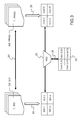
Figure 1 represents an example of a television system implementing an embodiment of the invention; -
Figure 2 represents a device able to distinguish users of the television system, according to an embodiment of the invention; -
Figure 3 is a flowchart detailing the steps of the method of distinction of users according to an embodiment of the present invention; and -
Figure 4 is a flowchart detailing the steps of the method of recommendation according to an embodiment of the present invention. - Referring to
Figure 1 , there is shown therein atelevision system 2 implementing an embodiment of the invention. - In the following description, a home scenario is considered wherein users, for instance family members, access to television content using a
same television receiver 4, typically a set-top box. Atelevision set 5 is connected to thetelevision receiver 4. - Advantageously, several television sets may be connected to the
television receiver 4. - In the following description, the user, or group of users, that is currently watching the television on the
television set 5, is called television viewer. - According to the illustrated embodiment, the television viewer interacts with the
television receiver 4 using aremote control 6. - Preferably, the
remote control 6 comprises a motion sensor, for instance an accelerometer, able to detect accurately the manner with which the television viewer holds and shakes saidremote control 6. - Furthermore, according to an embodiment of the invention, the
television system 2 also comprises adistinction device 8 able to distinguish the users of thetelevision receiver 4. According to an embodiment, thedistinction device 8 is located in the home. It may for instance be implemented in thetelevision receiver 4 itself. It may also be attached or connected to saidtelevision receiver 4 through a wired or a wireless communication link. For instance, thedistinction device 8 may be a gateway. - Alternatively, the
distinction device 8 is located outside the home. It may be for instance implemented in a remote server of the television service provider. - The structure of the
distinction device 8 is further detailed with reference toFigure 2 . - The
distinction device 8 comprises ahistory module 10 able to monitor, during a period of time, content viewed on thetelevision receiver 4. In order to perform this monitoring, thehistory module 10 has access to atelevision guide 11, for instance an Electronic Program Guide (EPG). - The
history module 10 is also able to classify said content into different content types. For instance, these content types may include sporting events, action films, romantic comedies, children's programs, etc. Thetelevision guide 11 may be used to assist thehistory module 10 for this classification. - The
distinction device 8 also includes abiometric module 12 able to monitor, during the same period of time, biometric features of the television viewers. - According to the represented embodiment, these biometric features characterize the manner with which the television viewer moves the
remote control 6. In this case thebiometric module 12 is advantageously connected to the motion sensor within theremote control 6. - The
biometric module 12 is also able to classify the monitored biometric features into different biometric profiles representing the way each person wields the remote control. For instance, these biometric profiles may include "hesitating", "rapid", etc. - As shown in the paper from Chang et al. "Inferring identity using accelerometers in television remote controls", Proceedings of 7th International Conference of Pervasive Computing, pages 151-167, Japan, May 2009, the biometric profiles of separate users, representing the hand motion pattern when using the
remote control 6, are easily distinguishable by looking at acceleration features before, during and after each button press. Features before the press roughly capture the hand motion when the remote control was picked up or held between surf actions, features during the press capture distinctiveness in the orientation of the remote control as well as the dynamics of actually pressing the buttons and features after the press capture how the remote control falls back to the arm, couch, lap, or table. - Furthermore, the
distinction device 8 comprises anassociation module 14 able to associate each biometric profile with at least one type of viewed content on the basis of the monitoring and classification made by thehistory module 10 and thebiometric module 12. For instance, if during the same time interval, thehistory module 10 indicates that a sports event was viewed and thebiometric module 12 indicates that the biometric profile is "assured", the type of content "sports" is associated with the biometric profile "assured". - The
distinction device 8 further comprises a characterizingmodule 16 able to characterize each user by at least one couple of associated content type and biometric profile. Thus, for example, one user in the home will be characterized by the couples (sports, assured) and (action films, assured). - The flowchart of
Figure 3 details the steps of the distinction method according to an embodiment of the present invention. - During a
first step 20, the content viewed on thetelevision receiver 4 and biometric features of users of thetelevision receiver 4 are monitored by thehistory module 10 and thebiometric module 12, respectively, during a chosen time period, for instance a week. However shorter or longer time periods may be chosen by the users for this monitoring. - The monitoring may also be done all the time, if the composition of the users changes frequently.
- Advantageously, the time period is split into time intervals with a constant or a variable length. Advantageously, each time interval corresponds to the duration of a different program viewed on the
television receiver 4. - According to the represented embodiment, each time interval and the corresponding viewed program are stored in a program history database; and each time interval and the corresponding biometric features sensed by the
remote control 6 are stored in a biometric history database. - At
step 22, thehistory module 10 classifies the different programs stored within the program history database into different content types. For this classification, thehistory module 10 advantageously uses a subspace clustering technique. - At
step 24, thebiometric module 12 classifies the biometric features of users of the television receiver into different biometric profiles. For this classification, thebiometric module 12 advantageously uses a subspace clustering technique. - At
step 26, theassociation module 14 associates each type of viewed content with a biometric profile on the basis of said monitoring. This association is performed by using the time information stored in the program and biometric history databases. - At
step 28, the characterizingmodule 16 determines couples of associated content types and biometric profiles and stores these couples in adatabase 30. Thedatabase 30 may be located in thedistinction device 8 or in any other location inside or outside the home. - At the level of the
television system 2, the couples stored in thedatabase 30 relate to separate users and are advantageously used to provide suitable content recommendations to the users in an anonymous and seamless manner for said users. - Of course, a plurality of couples stored in the
database 30 may relate to only one user. - Also, one or more couples stored in the
database 30 may relate to a group of users watching the television together, the remote control being hold by one of the users of the group, for instance a group comprising an adult and a child, the adult holding the remote control. - The flowchart of
Figure 4 details the steps of the recommendation method according to an embodiment of the present invention. - At
step 32, theremote control 6 detects the biometric features of the television viewer. Then, it transmits these biometric features to thebiometric module 12 which determines, atstep 34, the biometric profile of the user. - Then, at
step 36, theassociation module 14 identifies at least one content type associated to the determined biometric profile in thedatabase 30. - At
step 38, thehistory module 10 checks, using thetelevision guide 11, if there are currently programs proposed having the identified content type(s). Thehistory module 10 may also advantageously check the ratings of said programs provided by other sources of information, for instance social networks or news servers. Thehistory module 10 may also check the ratings given by the user to similar programs, said ratings having been collected by thehistory module 10 previously during themonitoring step 20. - Then, the
history module 10 recommends to the television viewer a suitable content having the identified type. - While there has been illustrated and described what are presently considered to be the preferred embodiments of the present invention, it will be understood by those skilled in the art that various other modifications may be made, and equivalents may be substituted, without departing from the true scope of the present invention. Additionally, many modifications may be made to adapt a particular situation to the teachings of the present invention without departing from the central inventive concept described herein. Furthermore, an embodiment of the present invention may not include all of the features described above. Therefore, it is intended that the present invention not be limited to the particular embodiments disclosed, but that the invention includes all embodiments falling within the scope of the appended claims.
- Expressions such as "comprise", "include", "incorporate", "contain", "is" and "have" are to be construed in a non-exclusive manner when interpreting the description and its associated claims, namely construed to allow for other items or components which are not explicitly defined also to be present. Reference to the singular is also to be construed as a reference to the plural and vice versa.
- A person skilled in the art will readily appreciate that various parameters disclosed in the description may be modified and that various embodiments disclosed and/or claimed may be combined without departing from the scope of the invention.
- Indeed, although the description above considered biometric features characterizing the manner with which a user moves the remote control of the television receiver, other biometric features may be used separately or simultaneously such as face and voice features of the user.
Claims (13)
- Method of distinction of users of a television receiver (4), comprising:monitoring (20), during a period of time, content viewed on the television receiver (4) and classifying (22) said content into different content types;monitoring (20), during the same period of time, biometric features of users of the television receiver (4) and classifying (24) said biometric features into different biometric profiles;associating (26) each biometric profile with at least one type of viewed content on the basis of said monitoring; andcharacterizing (28) each user by at least one couple of associated content type and biometric profile.
- Method of claim 1, wherein the biometric features are monitored using a motion sensing remote control (6).
- Method of claim 1 or 2, wherein the biometric features are monitored using a camera and/or a microphone.
- Method of any of claims 1 to 3, further comprising monitoring external information.
- Method of any of claims 1 to 4, wherein the classifications of the content and of the biometric features use subspace clustering.
- Method of any of claims 1 to 5, comprising storing (28) the couples characterizing the users of the television receiver (4) in a database (30).
- Method of any of claims 1 to 6, wherein the television receiver (4) is a set-top box or a connected TV.
- Method of recommendation of content to a user from a plurality of users of a television receiver (4), comprising:determination (32, 34) of a biometric profile of the user;identifying (36), for the detected biometric profile, at least one associated content type in a database (30) in which are stored couples of associated biometric profiles and content types characterizing the users of the television receiver (4);recommending (38) content of the at least one identified type to the user.
- Device (8) for distinguishing between users of a television receiver (4), comprising:a history module (10) operable to monitor, during a period of time, content viewed on the television receiver (4) and to classify said content into different content types;a biometric module (12) operable to monitor, during the same period of time, biometric features of users of the television receiver (4) and to classify said biometric features into different biometric profiles;an association module (14) operable to associate each biometric profile with at least one type of viewed content on the basis of said monitoring; anda characterizing module (16) operable to characterize each user by at least one couple of associated content type and biometric profile.
- Device of claim 9, said device (8) being a gateway or a set-top box.
- Device of claim 9, said device (8) being a remote server.
- Computer-readable program comprising computer-executable instructions to enable a computer to perform the distinction method of any of claims 1 to 7.
- Computer-readable program comprising computer-executable instructions to enable a computer to perform the recommendation method of claim 8.
Priority Applications (2)
| Application Number | Priority Date | Filing Date | Title |
|---|---|---|---|
| EP14305851.9A EP2953371A1 (en) | 2014-06-05 | 2014-06-05 | Distinction of users of a television receiver |
| PCT/EP2015/062300 WO2015185575A2 (en) | 2014-06-05 | 2015-06-02 | Distinction of users of a multimedia content receiver |
Applications Claiming Priority (1)
| Application Number | Priority Date | Filing Date | Title |
|---|---|---|---|
| EP14305851.9A EP2953371A1 (en) | 2014-06-05 | 2014-06-05 | Distinction of users of a television receiver |
Publications (1)
| Publication Number | Publication Date |
|---|---|
| EP2953371A1 true EP2953371A1 (en) | 2015-12-09 |
Family
ID=51059388
Family Applications (1)
| Application Number | Title | Priority Date | Filing Date |
|---|---|---|---|
| EP14305851.9A Withdrawn EP2953371A1 (en) | 2014-06-05 | 2014-06-05 | Distinction of users of a television receiver |
Country Status (2)
| Country | Link |
|---|---|
| EP (1) | EP2953371A1 (en) |
| WO (1) | WO2015185575A2 (en) |
Cited By (1)
| Publication number | Priority date | Publication date | Assignee | Title |
|---|---|---|---|---|
| US10178432B2 (en) | 2017-05-18 | 2019-01-08 | Sony Corporation | Identity-based face and voice recognition to regulate content rights and parental controls using consumer profiles |
Citations (2)
| Publication number | Priority date | Publication date | Assignee | Title |
|---|---|---|---|---|
| US6684194B1 (en) * | 1998-12-03 | 2004-01-27 | Expanse Network, Inc. | Subscriber identification system |
| WO2013190379A1 (en) | 2012-06-21 | 2013-12-27 | Thomson Licensing | User identification through subspace clustering |
-
2014
- 2014-06-05 EP EP14305851.9A patent/EP2953371A1/en not_active Withdrawn
-
2015
- 2015-06-02 WO PCT/EP2015/062300 patent/WO2015185575A2/en not_active Ceased
Patent Citations (2)
| Publication number | Priority date | Publication date | Assignee | Title |
|---|---|---|---|---|
| US6684194B1 (en) * | 1998-12-03 | 2004-01-27 | Expanse Network, Inc. | Subscriber identification system |
| WO2013190379A1 (en) | 2012-06-21 | 2013-12-27 | Thomson Licensing | User identification through subspace clustering |
Non-Patent Citations (2)
| Title |
|---|
| CHANG ET AL.: "Inferring identity using accelerometers in television remote controls", PROCEEDINGS OF 7 IH INTERNATIONAL CONFERENCE OF PERVASIVE COMPUTING, May 2009 (2009-05-01), pages 151 - 167, XP019117449 |
| KENG-HAO CHANG ET AL: "Inferring Identity Using Accelerometers in Television Remote Controls", 11 May 2009, PERVASIVE COMPUTING, SPRINGER BERLIN HEIDELBERG, BERLIN, HEIDELBERG, PAGE(S) 151 - 167, ISBN: 978-3-642-01515-1, XP019117449 * |
Cited By (1)
| Publication number | Priority date | Publication date | Assignee | Title |
|---|---|---|---|---|
| US10178432B2 (en) | 2017-05-18 | 2019-01-08 | Sony Corporation | Identity-based face and voice recognition to regulate content rights and parental controls using consumer profiles |
Also Published As
| Publication number | Publication date |
|---|---|
| WO2015185575A2 (en) | 2015-12-10 |
| WO2015185575A3 (en) | 2016-02-11 |
Similar Documents
| Publication | Publication Date | Title |
|---|---|---|
| US11418841B2 (en) | Inhibiting display of advertisements with age-inappropriate content | |
| US11863654B2 (en) | Detecting user interest in presented media items by observing volume change events | |
| US20220232283A1 (en) | Methods and apparatus to count people | |
| CN103414930B (en) | Identify remote control system and the method thereof of sensing user | |
| US20130124551A1 (en) | Obtaining keywords for searching | |
| CN111065988B (en) | Method and apparatus for identifying users to provide personalized guidelines, content and services, and targeted advertising without intentional user registration | |
| KR101495297B1 (en) | System, apparatus, method and computer readable recording medium for providing analyzing the log of a subscriber through the recognition of circumstantial based on the smart tv | |
| US12307936B2 (en) | Methods, systems, and media for detecting a presentation of media content on a display device | |
| CN110557671A (en) | Method and system for automatically processing unhealthy content of video | |
| CN106303699A (en) | For the method and apparatus playing TV programme | |
| CN107277620A (en) | Video playback method, electronic device, and computer-readable storage medium | |
| CN111405363B (en) | A method and device for identifying a current user of a set-top box in a home network | |
| US20200382833A1 (en) | Presence and authentication for media measurement | |
| EP3026925B1 (en) | Image display apparatus and information providing method thereof | |
| EP2882194A1 (en) | Identification of a television viewer | |
| WO2018043923A1 (en) | Display device and control method therefor | |
| WO2015185575A2 (en) | Distinction of users of a multimedia content receiver | |
| KR20180049639A (en) | Electronic Apparatus and Controlling Method thereof | |
| EP2458754A1 (en) | Identification and profiling of groups of TV viewers | |
| JP2017126160A (en) | Information providing apparatus, information providing system, information providing method, and program |
Legal Events
| Date | Code | Title | Description |
|---|---|---|---|
| PUAI | Public reference made under article 153(3) epc to a published international application that has entered the european phase |
Free format text: ORIGINAL CODE: 0009012 |
|
| AK | Designated contracting states |
Kind code of ref document: A1 Designated state(s): AL AT BE BG CH CY CZ DE DK EE ES FI FR GB GR HR HU IE IS IT LI LT LU LV MC MK MT NL NO PL PT RO RS SE SI SK SM TR |
|
| AX | Request for extension of the european patent |
Extension state: BA ME |
|
| STAA | Information on the status of an ep patent application or granted ep patent |
Free format text: STATUS: THE APPLICATION IS DEEMED TO BE WITHDRAWN |
|
| 18D | Application deemed to be withdrawn |
Effective date: 20160610 |