EP2949328B1 - Minoxidil for generating new hair follicles and treating baldness - Google Patents
Minoxidil for generating new hair follicles and treating baldness Download PDFInfo
- Publication number
- EP2949328B1 EP2949328B1 EP15165807.7A EP15165807A EP2949328B1 EP 2949328 B1 EP2949328 B1 EP 2949328B1 EP 15165807 A EP15165807 A EP 15165807A EP 2949328 B1 EP2949328 B1 EP 2949328B1
- Authority
- EP
- European Patent Office
- Prior art keywords
- days
- another embodiment
- rna
- homo sapiens
- scalp
- Prior art date
- Legal status (The legal status is an assumption and is not a legal conclusion. Google has not performed a legal analysis and makes no representation as to the accuracy of the status listed.)
- Expired - Lifetime
Links
Images














Classifications
-
- A—HUMAN NECESSITIES
- A61—MEDICAL OR VETERINARY SCIENCE; HYGIENE
- A61K—PREPARATIONS FOR MEDICAL, DENTAL OR TOILETRY PURPOSES
- A61K38/00—Medicinal preparations containing peptides
-
- A—HUMAN NECESSITIES
- A61—MEDICAL OR VETERINARY SCIENCE; HYGIENE
- A61K—PREPARATIONS FOR MEDICAL, DENTAL OR TOILETRY PURPOSES
- A61K8/00—Cosmetics or similar toiletry preparations
- A61K8/18—Cosmetics or similar toiletry preparations characterised by the composition
- A61K8/30—Cosmetics or similar toiletry preparations characterised by the composition containing organic compounds
- A61K8/49—Cosmetics or similar toiletry preparations characterised by the composition containing organic compounds containing heterocyclic compounds
- A61K8/494—Cosmetics or similar toiletry preparations characterised by the composition containing organic compounds containing heterocyclic compounds with more than one nitrogen as the only hetero atom
- A61K8/4953—Cosmetics or similar toiletry preparations characterised by the composition containing organic compounds containing heterocyclic compounds with more than one nitrogen as the only hetero atom containing pyrimidine ring derivatives, e.g. minoxidil
-
- A—HUMAN NECESSITIES
- A61—MEDICAL OR VETERINARY SCIENCE; HYGIENE
- A61K—PREPARATIONS FOR MEDICAL, DENTAL OR TOILETRY PURPOSES
- A61K31/00—Medicinal preparations containing organic active ingredients
- A61K31/33—Heterocyclic compounds
- A61K31/395—Heterocyclic compounds having nitrogen as a ring hetero atom, e.g. guanethidine or rifamycins
- A61K31/495—Heterocyclic compounds having nitrogen as a ring hetero atom, e.g. guanethidine or rifamycins having six-membered rings with two or more nitrogen atoms as the only ring heteroatoms, e.g. piperazine or tetrazines
- A61K31/505—Pyrimidines; Hydrogenated pyrimidines, e.g. trimethoprim
- A61K31/506—Pyrimidines; Hydrogenated pyrimidines, e.g. trimethoprim not condensed and containing further heterocyclic rings
-
- A—HUMAN NECESSITIES
- A61—MEDICAL OR VETERINARY SCIENCE; HYGIENE
- A61K—PREPARATIONS FOR MEDICAL, DENTAL OR TOILETRY PURPOSES
- A61K31/00—Medicinal preparations containing organic active ingredients
- A61K31/33—Heterocyclic compounds
- A61K31/395—Heterocyclic compounds having nitrogen as a ring hetero atom, e.g. guanethidine or rifamycins
- A61K31/495—Heterocyclic compounds having nitrogen as a ring hetero atom, e.g. guanethidine or rifamycins having six-membered rings with two or more nitrogen atoms as the only ring heteroatoms, e.g. piperazine or tetrazines
- A61K31/505—Pyrimidines; Hydrogenated pyrimidines, e.g. trimethoprim
- A61K31/517—Pyrimidines; Hydrogenated pyrimidines, e.g. trimethoprim ortho- or peri-condensed with carbocyclic ring systems, e.g. quinazoline, perimidine
-
- A—HUMAN NECESSITIES
- A61—MEDICAL OR VETERINARY SCIENCE; HYGIENE
- A61K—PREPARATIONS FOR MEDICAL, DENTAL OR TOILETRY PURPOSES
- A61K31/00—Medicinal preparations containing organic active ingredients
- A61K31/65—Tetracyclines
-
- A—HUMAN NECESSITIES
- A61—MEDICAL OR VETERINARY SCIENCE; HYGIENE
- A61K—PREPARATIONS FOR MEDICAL, DENTAL OR TOILETRY PURPOSES
- A61K35/00—Medicinal preparations containing materials or reaction products thereof with undetermined constitution
- A61K35/12—Materials from mammals; Compositions comprising non-specified tissues or cells; Compositions comprising non-embryonic stem cells; Genetically modified cells
- A61K35/36—Skin; Hair; Nails; Sebaceous glands; Cerumen; Epidermis; Epithelial cells; Keratinocytes; Langerhans cells; Ectodermal cells
-
- A—HUMAN NECESSITIES
- A61—MEDICAL OR VETERINARY SCIENCE; HYGIENE
- A61K—PREPARATIONS FOR MEDICAL, DENTAL OR TOILETRY PURPOSES
- A61K38/00—Medicinal preparations containing peptides
- A61K38/16—Peptides having more than 20 amino acids; Gastrins; Somatostatins; Melanotropins; Derivatives thereof
- A61K38/17—Peptides having more than 20 amino acids; Gastrins; Somatostatins; Melanotropins; Derivatives thereof from animals; from humans
- A61K38/18—Growth factors; Growth regulators
- A61K38/1825—Fibroblast growth factor [FGF]
-
- A—HUMAN NECESSITIES
- A61—MEDICAL OR VETERINARY SCIENCE; HYGIENE
- A61K—PREPARATIONS FOR MEDICAL, DENTAL OR TOILETRY PURPOSES
- A61K8/00—Cosmetics or similar toiletry preparations
- A61K8/18—Cosmetics or similar toiletry preparations characterised by the composition
- A61K8/30—Cosmetics or similar toiletry preparations characterised by the composition containing organic compounds
- A61K8/64—Proteins; Peptides; Derivatives or degradation products thereof
- A61K8/65—Collagen; Gelatin; Keratin; Derivatives or degradation products thereof
-
- A—HUMAN NECESSITIES
- A61—MEDICAL OR VETERINARY SCIENCE; HYGIENE
- A61K—PREPARATIONS FOR MEDICAL, DENTAL OR TOILETRY PURPOSES
- A61K9/00—Medicinal preparations characterised by special physical form
- A61K9/0012—Galenical forms characterised by the site of application
- A61K9/0014—Skin, i.e. galenical aspects of topical compositions
-
- A—HUMAN NECESSITIES
- A61—MEDICAL OR VETERINARY SCIENCE; HYGIENE
- A61M—DEVICES FOR INTRODUCING MEDIA INTO, OR ONTO, THE BODY; DEVICES FOR TRANSDUCING BODY MEDIA OR FOR TAKING MEDIA FROM THE BODY; DEVICES FOR PRODUCING OR ENDING SLEEP OR STUPOR
- A61M37/00—Other apparatus for introducing media into the body; Percutany, i.e. introducing medicines into the body by diffusion through the skin
-
- A—HUMAN NECESSITIES
- A61—MEDICAL OR VETERINARY SCIENCE; HYGIENE
- A61P—SPECIFIC THERAPEUTIC ACTIVITY OF CHEMICAL COMPOUNDS OR MEDICINAL PREPARATIONS
- A61P17/00—Drugs for dermatological disorders
- A61P17/02—Drugs for dermatological disorders for treating wounds, ulcers, burns, scars, keloids, or the like
-
- A—HUMAN NECESSITIES
- A61—MEDICAL OR VETERINARY SCIENCE; HYGIENE
- A61P—SPECIFIC THERAPEUTIC ACTIVITY OF CHEMICAL COMPOUNDS OR MEDICINAL PREPARATIONS
- A61P17/00—Drugs for dermatological disorders
- A61P17/14—Drugs for dermatological disorders for baldness or alopecia
-
- A—HUMAN NECESSITIES
- A61—MEDICAL OR VETERINARY SCIENCE; HYGIENE
- A61P—SPECIFIC THERAPEUTIC ACTIVITY OF CHEMICAL COMPOUNDS OR MEDICINAL PREPARATIONS
- A61P43/00—Drugs for specific purposes, not provided for in groups A61P1/00-A61P41/00
-
- A—HUMAN NECESSITIES
- A61—MEDICAL OR VETERINARY SCIENCE; HYGIENE
- A61Q—SPECIFIC USE OF COSMETICS OR SIMILAR TOILETRY PREPARATIONS
- A61Q5/00—Preparations for care of the hair
-
- A—HUMAN NECESSITIES
- A61—MEDICAL OR VETERINARY SCIENCE; HYGIENE
- A61Q—SPECIFIC USE OF COSMETICS OR SIMILAR TOILETRY PREPARATIONS
- A61Q5/00—Preparations for care of the hair
- A61Q5/10—Preparations for permanently dyeing the hair
-
- A—HUMAN NECESSITIES
- A61—MEDICAL OR VETERINARY SCIENCE; HYGIENE
- A61Q—SPECIFIC USE OF COSMETICS OR SIMILAR TOILETRY PREPARATIONS
- A61Q7/00—Preparations for affecting hair growth
-
- A—HUMAN NECESSITIES
- A61—MEDICAL OR VETERINARY SCIENCE; HYGIENE
- A61B—DIAGNOSIS; SURGERY; IDENTIFICATION
- A61B17/00—Surgical instruments, devices or methods
- A61B2017/00743—Type of operation; Specification of treatment sites
- A61B2017/00747—Dermatology
- A61B2017/00765—Decreasing the barrier function of skin tissue by radiated energy, e.g. using ultrasound, using laser for skin perforation
-
- A—HUMAN NECESSITIES
- A61—MEDICAL OR VETERINARY SCIENCE; HYGIENE
- A61B—DIAGNOSIS; SURGERY; IDENTIFICATION
- A61B18/00—Surgical instruments, devices or methods for transferring non-mechanical forms of energy to or from the body
- A61B2018/00315—Surgical instruments, devices or methods for transferring non-mechanical forms of energy to or from the body for treatment of particular body parts
- A61B2018/00452—Skin
-
- A—HUMAN NECESSITIES
- A61—MEDICAL OR VETERINARY SCIENCE; HYGIENE
- A61K—PREPARATIONS FOR MEDICAL, DENTAL OR TOILETRY PURPOSES
- A61K2800/00—Properties of cosmetic compositions or active ingredients thereof or formulation aids used therein and process related aspects
- A61K2800/74—Biological properties of particular ingredients
-
- A—HUMAN NECESSITIES
- A61—MEDICAL OR VETERINARY SCIENCE; HYGIENE
- A61K—PREPARATIONS FOR MEDICAL, DENTAL OR TOILETRY PURPOSES
- A61K2800/00—Properties of cosmetic compositions or active ingredients thereof or formulation aids used therein and process related aspects
- A61K2800/80—Process related aspects concerning the preparation of the cosmetic composition or the storage or application thereof
- A61K2800/805—Corresponding aspects not provided for by any of codes A61K2800/81 - A61K2800/95
-
- A—HUMAN NECESSITIES
- A61—MEDICAL OR VETERINARY SCIENCE; HYGIENE
- A61M—DEVICES FOR INTRODUCING MEDIA INTO, OR ONTO, THE BODY; DEVICES FOR TRANSDUCING BODY MEDIA OR FOR TAKING MEDIA FROM THE BODY; DEVICES FOR PRODUCING OR ENDING SLEEP OR STUPOR
- A61M37/00—Other apparatus for introducing media into the body; Percutany, i.e. introducing medicines into the body by diffusion through the skin
- A61M2037/0007—Other apparatus for introducing media into the body; Percutany, i.e. introducing medicines into the body by diffusion through the skin having means for enhancing the permeation of substances through the epidermis, e.g. using suction or depression, electric or magnetic fields, sound waves or chemical agents
Definitions
- the present invention provides compositions for use in treating baldness in a subject and non-therapeutic methods for generating new hair follicles.
- Follicular neogenesis is defined as the generation of new hair follicles (HF) after birth.
- Humans are born with a full complement of HF, which can change in size and growth characteristics as in early baldness or can ultimately degenerate and disappear as in late stages of baldness or in permanent scarring (cicatricial) alopecias. Therefore, the generation of new HF is desirable in the treatment of common baldness as well as less common hair loss conditions, such as discoid lupus erythematosis, congenital hypotrichosis, lichen planopilaris and other scarring alopecias.
- Argyris (The Anatomical Record, 1962, 143(3): 183-188 ) discusses the growth-promoting effects of wounds on hair follicles already stimulated by plucking.
- Kligman (Annals of the New York Academy of Sciences, 1959, 83(3): 507-511 ) discusses the neogenesis of human hair follicles.
- the present invention provides the use of minoxidil for the preparation of a pharmaceutical composition for treating baldness in a scalp, eyebrow or scarred region of a subject, wherein the treating comprises (a) disrupting an epidermis of the scalp, eyebrow or scarred region, wherein said disrupting is perforating the epidermis or epidermal layer; and (b) contacting the scalp, eyebrow or scarred region with the pharmaceutical composition.
- the present invention also provides minoxidil for use in treating baldness in a scalp, eyebrow or scarred region of a subject, wherein the treating comprises (a) disrupting an epidermis of the scalp, eyebrow or scarred region, wherein said disrupting is perforating the epidermis or epidermal layer; and (b) contacting the scalp, eyebrow or scarred region with the minoxidil.
- the subject has androgenetic alopecia (AGA) or another disease or disorder comprising balding.
- AGA androgenetic alopecia
- the present invention also provides a non-therapeutic method for generating a hair follicle in a scalp, eyebrow or scarred region of a subject, the method comprising (a) disrupting an epidermis of the scalp, eyebrow or scarred region, wherein said disrupting is perforating the epidermis or epidermal layer; and (b) contacting the scalp, eyebrow or scarred region with minoxidil, thereby generating a hair follicle in the scalp, eyebrow or scarred region of the subject.
- the disruption is performed with a tool that comprises sandpaper, a laser, such as a Fraxel laser, a CO2 laser or an excimer laser, a felt wheel, a microdermabrasion device, a light-based method, irradiation with visible light, irradiation with infrared light, irradiation with ultraviolet radiation, orthovoltage radiation, x-ray radiation, a surgical tool, a dermal biopsy punch, or wherein the disruption is performed with a burn treatment or chemical treatment.
- the disruption comprises perforating the epidermis and dermis of the area of the balding scalp.
- the disruption comprises removal of basal and supra-basal layers of epidermis with a felt wheel.
- the disrupting step is performed between 3-12 days, 4-12 days, 5-12 days, 4-11 days, 6-11 days, 6-10 days, 6-9 days, 6-8 days, 7-8 days, 5-11 days, 5- 10 days, 7- 10 days, or about 1 week prior to the contacting step.
- the treating further comprises contacting the area of the balding scalp with a precursor cell, an inductive cell, or a hair follicle or a portion thereof, or with one or more of the following compounds: finasteride, dutasteride, Fluridil ® , spironolactone, cyproterone acetate, bicalutamide, flutamide, nilutamide, an inhibitor of an androgen receptor, an androgen antagonist or an antiandrogen.
- the compound is formulated to be administered as a cream, gel, lotion, emulsion, suspension, oil, non-aqueous solution, aqueous solution, or drop, or by direct injection, or is encapsulated in a liposome.
- the disrupting step is performed between 3-12 days, 4-12 days, 5-12 days, 4-11 days, 6-11 days, 6-10 days, 6-9 days, 6-8 days, 7-8 days, 5-11 days, 5- 10 days, 7- 10 days, or about 1 week prior to the further contacting step.
- the area of the balding scalp is subjected to depilation or administration of a retinoid prior to disrupting.
- the depilation is performed by plucking, waxing, abrasion, laser, electrolysis, or administration of thioglycolic acid on the area of the balding scalp.
- the wounded area of the balding scalp is not surgically closed, or not contacted with a bandage, dressing, or ointment that facilitates wound healing for a period of time following the disrupting step.
- the period of time is within about 2 days, about 3 days, about 4 days, about 5 days, about 7 days, about 10 days, about 11 days, about 14 days, about 17 days or about 3 weeks.
- the treatment or the method results in differentiation of an uncommitted epidermal cell into a hair follicle cell.
- the present invention provides the use of minoxidil for the preparation of a pharmaceutical composition for the treatment of baldness in a scalp, eyebrow or scarred region of a subject, wherein the treatment comprises (a) disrupting an epidermis of the scalp, eyebrow or scarred region, wherein said disrupting is perforating the epidermis or epidermal layer; and (b) contacting the scalp, eyebrow or scarred region with the pharmaceutical composition.
- the present invention also provides minoxidil for use in the treatment of baldness in a scalp, eyebrow or scarred region of a subject, wherein the treatment comprises (a) disrupting an epidermis of the scalp, eyebrow or scarred region, wherein said disrupting is perforating the epidermis or epidermal layer; and (b) contacting the scalp, eyebrow or scarred region with the minoxidil.
- the present invention also provides a non-therapeutic method for generating a hair follicle in a scalp, eyebrow or scarred region of a subject, the method comprising (a) disrupting an epidermis of the scalp, eyebrow or scarred region, wherein said disrupting is perforating the epidermis or epidermal layer; and (b) contacting the scalp, eyebrow or scarred region with minoxidil, thereby generating a hair follicle in the scalp, eyebrow or scarred region of the subject.
- Contacting refers, in another embodiment, to bringing the scalp, eyebrow, into to contact with the compound, factor, cell.
- the term refers to embedding the compound, factor, cell into the scalp, eyebrow.
- the term refers to injecting the compound, factor, cell into the scalp, eyebrow.
- term refers to any other type of contacting known in the art.
- minoxidil is a compound or factor that promotes a differentiation of an uncommitted epidermal cell into a hair follicle cell.
- Promoters a differentiation refers, in another embodiment, to the act of increasing the percentage of cells that will differentiate as indicated. In another embodiment, the term refers to increasing the number of cells per unit area of skin that will differentiate. In another embodiment, the promoter of differentiation is active in the milieu of the skin.
- Uncommitted epidermal cell refers, in another embodiment, to an epidermal stem cell.
- the epidermal cell is a bulge cell.
- the epidermal cell is a bulge-derived cell.
- the epidermal cell is any other type of cell known in the art that can be induced to differentiate into an HF cell.
- the "HF cell” that results from the differentiation is, in another embodiment, an HF stem cell.
- the HF cell is a dermal papilla cell.
- the HF cell is a bulb cell.
- the HF cell is a matrix cell.
- the HF cell is a hair shaft cell.
- the HF cell is an inner root sheath cell.
- the HF cell is an outer root sheath cell.
- the HF cell is a melanocyte stem cell.
- the HF cell is a melanocyte.
- the minoxidil is administered in a solution. In another embodiment, the minoxidil is administered in a cream. In another embodiment, the minoxidil is administered in an ointment. In another embodiment, the minoxidil is administered in a slow release formulation. In another embodiment, the minoxidil is administered in a liposome encapsulated formulation. In another embodiment, the minoxidil is directly injected. In another embodiment, the minoxidil is administered by any other method known in the art.
- a compound or factor that promotes a differentiation of an uncommitted epidermal cell into a HF cell may be an inhibitor of an Epidermal Growth Factor (EGF).
- the compound or factor may be an inhibitor of an EGF receptor.
- Example 11 activating one or more pathways in which EGF is involved (by injection of EGF) blocks the formation of HF.
- antagonizing the pathway increases HF formation, as demonstrated in Example 12.
- FGF and its receptor are upregulated, under the conditions utilized herein, upon HF stem cell differentiation (Example 9). Moreover, FGF-bp1 is downregulated, under the conditions utilized herein, upon HF stem cell differentiation. Thus, it is disclosed that FGF and its receptor promote differentiation of uncommitted epidermal cells into HF cells.
- the compound or factor that promotes a differentiation of an uncommitted epidermal cell into a HF cell acts directly on the uncommitted epidermal cell. In another embodiment, the compound or factor acts on the uncommitted epidermal cell via a mesenchymal cell.
- the mesenchymal cell is a dermal condensate cell. In another embodiment, the mesenchymal cell is a DP cell. In another embodiment, the mesenchymal cell is another cell type or differentiation stage in the dermal condensate-DP lineage. In another embodiment, the mesenchymal cell is any other type of mesenchymal cell known in the art.
- the EGFR has, in another embodiment, the sequence of SEQ ID No: 277 (GenBank Accession No: NM_005228).
- the EGFR has a sequence selected from the sequences set forth in GenBank entries NM_201282, NM_201283, NM_201284, BC094761, AF288738, AY588246, AY573061, X17054, AF125253, U48722, K03193, and AY698024.
- the EGFR is encoded by a nucleic acid molecule having a sequence set forth in the one of the above GenBank entries.
- EGF has, in another embodiment, the sequence of SEQ ID No: 278 (GenBank Accession No: NM_001963). In another embodiment, the EGF has a sequence selected from the sequences set forth in GenBank entries BC093731, AY548762, and X04571. In another embodiment, the EGF is encoded by a nucleic acid molecule having a sequence set forth in the one of the above GenBank entries.
- the transcripts depicted in Table 3 (Example 8; SEQ ID No: 1-232), the proteins they encode, and the pathways in which the proteins participate contribute significantly to HF stem cell activation. Accordingly, under the conditions utilized herein, anagen can be induced by activation of these transcripts, proteins, and pathways. It is thus disclosed that activation of the transcripts, proteins, and pathways depicted in Table 3 may be a method for enhancing EDIHN or for enhancing hair growth in a subject.
- the transcripts depicted in Table 4 (Example 9; SEQ ID No: 233-257), the proteins they encode, and the pathways in which the proteins participate, contribute significantly, under the conditions utilized herein, to induction of epidermal cells to differentiate into HF stem cells. It is thus disclosed that activation of the transcripts, proteins, and pathways depicted in Table 4 may be a method for enhancing EDIHN or for enhancing hair growth in a subject.
- the transcripts depicted in Table 5 (Example 9; SEQ ID No: 258-273), the proteins they encode, and the pathways in which the proteins participate, contribute significantly, under the conditions utilized herein, to preventing induction of epidermal cells to differentiate into HF stem cells. It is thus disclosed that inhibition of the transcripts, proteins, and pathways depicted in Table 5 may be a method for enhancing EDIHN or for induction of hair growth in a subject.
- compositions comprising minoxidil is administered.
- the step of disrupting the epidermis is performed, in another embodiment, by abrading the scalp, eyebrow, or scarred region.
- the term “abrading” refers to an act of creating an abrasion.
- abrading refers to rubbing.
- abrading refers to wearing away by friction.
- epidermal abrasion causes, under the conditions utilized herein, de novo HF neo-genesis.
- the epidermal layer is disrupted.
- abrasion has the same meaning as “abrading.” In another embodiment, “abrasion” refers to an area of the scalp or skin from which the epidermis is removed. In another embodiment, “abrasion” refers to an area of the scalp or skin from which the epidermis and dermis are removed.
- epidermal disruption converts the skin back, in another embodiment, to an embryonic-like state, in which the follicle regenerates.
- a subsequent window of opportunity is created, during which the number and size of new HF in the skin can be manipulated.
- the administration of a compound or factor that promotes a differentiation of an uncommitted epidermal cell into a HF cell during this window causes regeneration of larger and more numerous HF.
- the morphology of HF in abraded skin is similar to that of embryonic HF (Example 1-2 and subsequent Examples), and the markers expressed are similar as well.
- the present application discloses stimulating hair growth in a scalp, eyebrow, or scarred region of a subject.
- EDIHN-induced HF are capable of generating hairs.
- the compositions, uses and methods of the present invention can be used to stimulate hair growth.
- EIHN refers to HF neogenesis induced by disruption of the epithelial layer.
- the term refers to HF neogenesis induced by abrasion.
- the term refers to HF neogenesis induced by wounding.
- the term refers to HF neogenesis induced by disruption of the epithelial layer, followed by administration of a compound or factor that promotes a differentiation of an uncommitted epidermal cell into a HF cell.
- excisional wounds may be created using a surgical tool.
- the surgical tool is a dermal biopsy punch (Example 2).
- the excisional wounds are induced by freezing or cryoinjury.
- freezing or cryoinjury is well known in the art, and is used, for example by dermatologists to injure skin.
- the freezing or cryoinjury results in a blister.
- the blister is used as a "chamber" to introduce drugs and or cells into the reepithelialized area.
- the excisional wounds are not surgically closed. In another embodiment, the excisional wounds are not contacted with a bandage or dressing before they heal or during a period of time after wound induction. In another embodiment, the excisional wounds are not contacted with an ointment before they heal or during a period of time after wound induction. In another embodiment, the excisional wounds are allowed to heal by secondary intention.
- the subject of the present invention is, in another embodiment, a human.
- human skin responds to EDIHN in the same manner as mouse skin.
- the subject is a male.
- the subject is a female.
- the subject is any other type of subject known in the art.
- the subject is an adult.
- “adult” refers to an age greater than about 18 years. In another embodiment, “adult” refers to an age greater than about 20 years. In another embodiment, “adult” refers to an age greater than about 25 years. In another embodiment, “adult” refers to an age greater than about 30 years. In another embodiment, “adult” refers to an age greater than about 35 years. In another embodiment, “adult” refers to an age greater than about 40 years. In another embodiment, “adult” refers to an age greater than about 45 years.
- the subject is elderly.
- “elderly” refers to an age greater than about 45 years. In another embodiment, “elderly” refers to an age greater than about 50 years. In another embodiment, “elderly” refers to an age greater than about 55 years. In another embodiment, “elderly” refers to an age greater than about 60 years. In another embodiment, “elderly” refers to an age greater than about 65 years. In another embodiment, “elderly” refers to an age greater than about 70 years.
- the subject is a laboratory animal. In another embodiment, the subject(s) is/are mice. In another embodiment, the subject(s) is/are rats. In another embodiment, the subject(s) is/are gerbils. In another embodiment, the subject(s) is/are hamsters. In another embodiment, the subject(s) is/are guinea pigs. In another embodiment, the subject(s) is/are rabbits. In another embodiment, the subject(s) is/are pigs. In another embodiment, the subject(s) is/are dogs. In another embodiment, the subject(s) is/are cats. In another embodiment, the subject(s) is/are primates. In another embodiment, the subject(s) is/are any other laboratory animal known in the art.
- the subject(s) to be treated has a disease or disorder comprising balding.
- the disease or disorder is androgenetic alopecia (AGA).
- AGA androgenetic alopecia
- the disease or disorder is a discoid lupus erythematosis.
- the disease or disorder is a congenital hypotrichosis.
- the disease or disorder is a lichen planopilaris.
- the disease or disorder is a scarring alopecia.
- the disease or disorder is any other disease or disorder comprising balding known in the art.
- the scalp, eyebrow, or scarred region(s) has a majority of HF in the telogen stage of the hair cycle.
- the findings of Examples 5-6 show that (a) EDIHN can restore hair growth to the scalp, eyebrow, or scarred region at the telogen stage; and (b) the efficiency of EDIHN at the telogen stage can be enhanced by depilation prior to abrasion or wound induction.
- the scalp, eyebrow, or scarred region(s) has more than about 60% of HF in the telogen stage of the hair cycle.
- the scalp, eyebrow, or scarred region(s) has more than about 70% of HF in the telogen stage of the hair cycle.
- the scalp, eyebrow, or scarred region(s) has more than about 80% of HF in the telogen stage of the hair cycle. In another embodiment, the scalp, eyebrow, or scarred region(s) has more than about 90% of HF in the telogen stage of the hair cycle. In another embodiment, the scalp, eyebrow, or scarred region(s) does not have a majority of HF in the telogen stage of the hair cycle.
- the first step e.g. epithelial disruption
- the second step e.g. addition of minoxidil
- the interval is 4-12 days.
- the interval is 5-12 days.
- the interval is 4-11 days.
- the interval is 6-11 days.
- the interval is 6-10 days.
- the interval is 6-9 days.
- the interval is 6-8 days.
- the interval is 7-8 days.
- the interval is 5-11 days.
- the interval is 5-10 days.
- the interval is 7-10 days. In another embodiment, the interval is about 1 week.
- the present application further discloses the step of suppressing an activity or expression of a Wnt protein in the scalp, eyebrow, or scarred region.
- suppressing Wnt activity induces pigmentation in HF generated by the compositions, uses and methods of the present invention.
- the step of suppressing Wnt activity or expression is performed within about 10 days of epidermal disruption.
- the step of suppressing Wnt activity or expression is performed prior to the second step (e.g prior to addition of minoxidil).
- the Wnt protein is Wnt1. In another embodiment, the Wnt protein is a Wnt7. In another embodiment, the Wnt protein is a Wnt7a. In another embodiment, the Wnt protein is a Wnt3. In another embodiment, the Wnt protein is a Wnt3a. In another embodiment, the Wnt protein is a Wnt10. In another embodiment, the Wnt protein is a Wnt10a. In another embodiment, the Wnt protein is any other Wnt protein known in the art.
- the present application discloses a method for inducing growth of a pigmented scalp hair or eyebrow of a subject, comprising generating a hair follicle in the scalp, eyebrow, or scarred region according to the method of the invention and suppressing expression of a Wnt protein in the hair follicle, thereby inducing a growth of a pigmented scalp hair or eyebrow of a subject.
- the step of suppressing expression of a Wnt protein comprises inducing an expression of a Dkk1 protein. In another embodiment, the step of suppressing expression of a Wnt protein comprises inducing an expression of any other Wnt inhibitor known in the art. In another embodiment, the step of suppressing expression of a Wnt protein is performed immediately or shortly after epidermal disruption. In another embodiment, the step of inducing expression of a Dkk1 protein is performed immediately or shortly after epidermal disruption. In another embodiment, the step of suppressing expression of a Wnt protein is performed at the time of epidermal disruption. In another embodiment, the step of inducing expression of a Dkk1 protein is performed at the time of epidermal disruption. In another embodiment, the step of suppressing expression of a Wnt protein is performed several days before generation of the follicle. In another embodiment, the step of inducing expression of a Dkk1 protein several days before generation of the follicle.
- the step of suppressing expression of a Wnt protein is performed for about 8 days. In another embodiment, the step of inducing expression of a Dkk1 protein is performed for about 8 days. In another embodiment, the step of suppressing expression of a Wnt protein is performed for about 9 days. In another embodiment, the step of inducing expression of a Dkk1 protein is performed for about 9 days. In another embodiment, the step of suppressing expression of a Wnt protein is performed for about 10 days. In another embodiment, the step of inducing expression of a Dkk1 protein is performed for about 10 days. In another embodiment, the step of suppressing expression of a Wnt protein is performed for about 12 days.
- the step of inducing expression of a Dkk1 protein is performed for about 12 days. In another embodiment, the step of suppressing expression of a Wnt protein is performed during the period of re-epithelialization. In another embodiment, the step of inducing expression of a Dkk1 protein is performed during the period of re-epithelialization. In another embodiment, expression of a Dkk1 protein is halted after several days. In another embodiment, halting expression of Dkk1 protein after several days induces, or enables induction of Wnt protein expression. In another embodiment, the expression of a Wnt protein is induced about 9 days after the abrading or wounding. In another embodiment, the expression of a Wnt protein is induced following the period of re-epithelialization. In another embodiment, induction of Wnt protein expression is necessary for formation of new HF.
- “several” refers to about 1 day. In another embodiment, “several” refers to about 2 days. In another embodiment, “several” refers to about 3 days. In another embodiment, “several” refers to about 5 days. In another embodiment, “several” refers to about 7 days. In another embodiment, “several” refers to about 10 days. In another embodiment, “several” refers to about 12 days.
- the step of contacting in the present invention comprises directly contacting the scalp, eyebrow, or scarred region with the relevant compound.
- the epidermal disruption in the present invention further removes dermal tissue from the scalp, eyebrow, or scarred region. In another embodiment, the epidermal disruption does not remove dermal tissue from the scalp, eyebrow, or scarred region.
- Disrupting an epidermis or epidermal layer refers, in another embodiment, to removing part of the epidermis or epidermal layer. In another embodiment, only part of the epidermal layer need be removed. In another embodiment, the entire epidermal layer is removed. In another embodiment, the term refers to abrading the epidermis or epidermal layer (Examples). In another embodiment, the term refers to wounding the epidermis or epidermal layer (Examples).
- the epidermal disruption is performed with a tool that comprises sandpaper. In another embodiment, the epidermal disruption is performed with a laser. In another embodiment, the laser is a Fraxel laser. In another embodiment, the laser is a CO 2 laser. In another embodiment, the laser is an excimer laser. In another embodiment, the laser is any other type of laser capable of inducing trans-epithelial injury. In another embodiment, the epidermal disruption is performed with a felt wheel. In another embodiment, the epidermal disruption is performed with a surgical tool. In another embodiment, the epidermal disruption is performed with any other tool known in the art that is capable of epidermal disruption. In another embodiment, the epidermal disruption comprises use of a micro-dermabrasion device. In another embodiment, the epidermal disruption comprises a burn treatment.
- the epidermal disruption comprises a disruption of a follicle of said epidermis and a disruption of an interfollicular region of said epidermis. In another embodiment, the epidermal disruption comprises a disruption of a follicle of said epidermis and does not comprise a disruption of an interfollicular region of said epidermis.
- the epidermal disruption comprises a light-based method. In another embodiment, the epidermal disruption comprises irradiation with visible light. In another embodiment, the epidermal disruption comprises irradiation with infrared light. In another embodiment, the epidermal disruption comprises irradiation with ultraviolet radiation. In another embodiment, the epidermal disruption comprises orthovoltage irradiation. In another embodiment, the epidermal disruption comprises X-ray irradiation. In another embodiment, the epidermal disruption comprises any other type of irradiation known in the art.
- the epidermal disruption is performed by mechanical means.
- mechanical means refers to abrading.
- the term refers to wounding.
- the term refers to ultrasound.
- the term refers to radio-frequency.
- the term refers to ab electrical process or the use of an electrical current.
- the term refers to electroporation.
- the term refers to excision.
- the term refers to tape-stripping.
- the term refers to microdermabrasion.
- the term refers to the use of peels.
- the term refers to any other type of mechanical means known in the art.
- the epidermal disruption comprises chemical treatment.
- the chemical is phenol.
- the chemical is trichloroacetic acid.
- the chemical is ascorbic acid.
- the chemical is any other chemical capable of epidermal disruption that is known in the art.
- epidermal trauma is utilized in the present invention.
- the epidermal disruption of the present invention creates an abrasion at least about 1-1.5 centimeters (cm) in width. In another embodiment, the abrasion is at least about 1 cm in width. In another embodiment, the abrasion is at least about 1.5 cm in width. In another embodiment, the abrasion is at least about 2 cm in width.
- the scalp, eyebrow, or scarred region is not contacted with a bandage or dressing following the epidermal disruption. In another embodiment, the scalp, eyebrow, or scarred region is not contacted with an ointment following the epidermal disruption. In another embodiment, the scalp, eyebrow, or scarred region is allowed to heal for a period of time without being contacted by any substance, device, ointment, etc., that is ordinarily administered to an abrasion or wound to facilitate healing. In another embodiment, the scalp, eyebrow, or scarred region is allowed to heal for a period of time without being contacted by any substance, device, ointment, etc., that is ordinarily administered to an abrasion or wound to prevent infection. In another embodiment, the period of time is the time it takes the epidermal disruption to heal. In another embodiment, the period of time is any time or range of times between 2 days and 3 weeks.
- following refers to a period of time of about 2 days. In another embodiment, “following” refers to a period of time of about 3 days. In another embodiment, “following” refers to a period of time of about 4 days. In another embodiment, “following” refers to a period of time of about 5 days. In another embodiment, “following” refers to a period of time of about 7 days. In another embodiment, “following” refers to a period of time of about 10 days. In another embodiment, “following” refers to a period of time of about 2 weeks. In another embodiment, “following” refers to a period of time of about 3 weeks.
- the present invention further comprises the step of depilating the scalp, eyebrow, or scarred region.
- the findings of Example 6 show that the efficiency of EDIHN can be enhanced by depilation prior to abrasion or wound induction.
- the depilation is epilation. In another embodiment, the depilation comprises the step of waxing. In another embodiment, the depilation comprises the step of plucking. In another embodiment, the depilation comprises the use of an abrasive material. In another embodiment, the depilation comprises the use of a laser. In another embodiment, the depilation comprises the use of electrolysis. In another embodiment, the depilation comprises the use of a mechanical device. In another embodiment, the depilation comprises the use of thioglycolic acid. In another embodiment, the depilation comprises the use of any other method of depilation or epilation known in the art.
- the present invention further comprises the step of administering a topical retinoid to the scalp, eyebrow, or scarred region.
- the topical retinoid induces resting (telogen) HF in the scalp, eyebrow, or scarred region to enter anagen.
- the additional step (depilation or administration of a retinoid) is performed prior to the step of disrupting the epidermis. In another embodiment, the additional step is performed following the step of disrupting the epidermis, but prior to the addition of the minoxidil. In another embodiment, the additional step is performed concurrently with the addition of the minoxidil. In another embodiment, the additional step is performed following the addition of the minoxidil.
- the additional step is performed between about two days and about three weeks before the step of abrading. In another embodiment, the additional step is performed about two days before the step of abrading. In another embodiment, the additional step is performed about three days before the step of abrading. In another embodiment, the additional step is performed about four days before the step of abrading. In another embodiment, the additional step is performed about one week before the step of abrading. In another embodiment, the additional step is performed about ten days before the step of abrading. In another embodiment, the additional step is performed about two weeks before the step of abrading. In another embodiment, the additional step is performed about three weeks before the step of abrading.
- the present invention further comprises the step of contacting the scalp, eyebrow, or scarred region with an inductive cell capable of inducing an epidermal cell to differentiate into an HF cell.
- the HF cell is an HF stem cell.
- the inductive cell is a dermal papilla cell. In another embodiment, the inductive cell is a follicular papilla cell. In another embodiment, the inductive cell is a dermal sheath cell. In another embodiment, the inductive cell is a cell that has been genetically modified; for example, with a gene encoding a factor that activates one of the proteins or pathways shown to be up-regulated in HF stem cells (Table 4). In one embodiment, the factor is hedgehog. In another embodiment, the factor is a DP cell protein. In another embodiment, the factor is wingless/ int (wnt). In another embodiment, the factor is a Noggin protein. In another embodiment, the factor is a bone morphogenic protein (BMP).
- BMP bone morphogenic protein
- the factor is a fibroblast growth factor (FGF).
- the factor is a transforming growth factor beta (TGF-beta) protein.
- the factor is sonic hedgehog protein.
- the factor is a neurotropin.
- the factor is any other factor known in the art that can contribute to induction of an epidermal cell to differentiate into an HF cell.
- the Hedgehog protein has the sequence set forth in GenBank Accession No. NM_000193. In another embodiment, the Hedgehog protein has a sequence selected from those set forth in GenBank entries L38518 and NP_000184. In another embodiment, the Hedgehog protein has any other Hedgehog sequence known in the art. In another embodiment, the Hedgehog protein has any other sonic Hedgehog sequence known in the art.
- the Wnt protein has the sequence of SEQ ID No: 280 (GenBank Accession No: BC008811). In another embodiment, the Wnt protein has a sequence selected from the sequences set forth in GenBank entries NM_004625, D83175, U53476, and NP _004616. In another embodiment, the Wnt protein is a Wnt7 protein. In another embodiment, the Wnt protein is a Wnt7a protein. In another embodiment, the Wnt protein is Wnt1 protein. In another embodiment, the Wnt protein is a Wnt3 protein. In another embodiment, the Wnt protein is a Wnt3a protein. In another embodiment, the Wnt protein is a Wnt10 protein.
- the Wnt protein is a WntlOa protein. In another embodiment, the Wnt protein is a WntlOb protein. In another embodiment, the Wnt protein is encoded by a nucleic acid molecule having a sequence set forth in the one of the above GenBank entries. In another embodiment, a biologically active fragment of a Wnt protein is utilized.
- the Noggin protein has the sequence of SEQ ID No: 276 (GenBank Accession No: NM_005450). In another embodiment, the Noggin protein has a sequence selected from the sequences set forth in GenBank entries BC034027 and U31202. In another embodiment, the Noggin protein is encoded by a nucleic acid molecule having a sequence set forth in the one of the above GenBank entries. In another embodiment, a biologically active fragment of a Noggin protein is utilized.
- TGF-beta1 protein has the sequence set forth in GenBank Accession No. BC000125. In another embodiment, TGF-beta1 protein has a sequence selected from those set forth in GenBank entries BC001180, BC022242, and NM_000660. In another embodiment, the TGF-beta1 protein has any other TGF-beta1 sequence known in the art.
- TGF-beta3 protein has the sequence set forth in GenBank Accession No. J03241. In another embodiment, TGF-beta3 protein has a sequence selected from those set forth in GenBank entries NM_003239, BC018503, BT007287 and X14149. In another embodiment, the TGF-beta3 protein has any other TGF-beta3 sequence known in the art.
- the inductive cell has been genetically modified with a gene encoding a factor that represses one of the proteins or pathways shown to be down-regulated in HF stem cells (Table 5).
- the inductive cell has been genetically modified with a gene encoding a factor that activates one of the proteins or pathways shown to be up-regulated in HF stem cells upon their activation.
- the inductive cell is an autologous cell. In another embodiment, the inductive cell is an allogenic cell.
- the inductive cell is derived from a mesenchymal stem cell. In another embodiment, the inductive cell is derived from a mesodermal progenitor cell. In another embodiment, the inductive cell is derived from a hematopoietic stem cell. In another embodiment, the inductive cell is derived from an embryonic stem cell. In another embodiment, the inductive cell is derived from an embryonic carcinoma cell. In another embodiment, the inductive cell is any other type of cell known in the art with inductive properties for an epidermal cell.
- the epidermal cell (e.g. the epidermal cell that is induced to differentiate into an HF cell) is an epidermal stem cell.
- the epidermal cell is a bulge cell.
- the epidermal cell is any other type of cell known in the art that can be induced to differentiate into an HF stem cell.
- the present invention further comprises the step of contacting the scalp, eyebrow, or scarred region with an anti-androgen compound.
- the anti-androgen compound is finasteride.
- the anti-androgen compound is Fluridil ® .
- the anti-androgen compound is dutasteride.
- the anti-androgen compound is spironolactone.
- the anti-androgen compound is cyproterone acetate.
- the anti-androgen compound is bicalutamide.
- the anti-androgen compound is flutamide.
- the anti-androgen compound is nilutamide.
- the anti-androgen compound is an inhibitor of an androgen receptor.
- the anti-androgen compound is any other anti-androgen compound known in the art.
- the present invention further comprises the step of contacting the scalp, eyebrow, or scarred region with an estrogen compound. In another embodiment, the present invention further comprises the step of contacting the scalp, eyebrow, or scarred region with an estrogen receptor agonist. In another embodiment, the present invention further comprises the step of contacting the scalp, eyebrow, or scarred region with an estrogen analogue.
- the estrogen analogue is estradiol. In another embodiment, the estrogen analogue is 17 beta-estradiol. In another embodiment, the estrogen analogue is 17 alpha-estradiol. In another embodiment, the estrogen analogue is ZYC3. In another embodiment, the estrogen compound, estrogen receptor agonist, or estrogen analogue is any other estrogen compound, estrogen receptor agonist, or estrogen analogue known in the art.
- the present invention further comprises the step of contacting the scalp, eyebrow, or scarred region with an inhibitor of an EGF protein. In another embodiment, the present invention further comprises the step of contacting the scalp, eyebrow, or scarred region with an inhibitor of an EGFR. In another embodiment, the present invention further comprises the step of contacting the scalp, eyebrow, or scarred region with a compound that reduces an expression of an EGF protein or an EGFR.
- the inhibitor of an EGF or an EGF receptor is panitumumab. In another embodiment, the inhibitor is AG1478. In another embodiment, the inhibitor is nimotuzumab. In another embodiment, the inhibitor is an antibody that binds EGF or EGFR. In another embodiment, the inhibitor is HuMax-EGFR ® (Genmab, Copenhagen, Denmark). In another embodiment, the inhibitor is cetuximab. In another embodiment, the inhibitor is IMC 11F8. In another embodiment, the inhibitor is matuzumab. In another embodiment, the inhibitor is SC 100. In another embodiment, the inhibitor is ALT 110. In another embodiment, the inhibitor is PX 1032. In another embodiment, the inhibitor is BMS 599626. In another embodiment, the inhibitor is MDX 214. In another embodiment, the inhibitor is PX 1041. In another embodiment, the inhibitor is any other inhibitor of an EGF or an EGF receptor known in the art.
- the EGF or EGFR antagonist is a carboxypeptidase inhibitor from potato (PCI) protein or a homologue, fragment or mimetic thereof.
- the EGF or EGFR antagonist is a sprouty protein or a homologue, fragment or mimetic thereof.
- the EGF or EGFR antagonist is an Argos protein or a homologue, fragment or mimetic thereof.
- the EGF or EGFR antagonist is a lefty protein or a homologue, fragment or mimetic thereof.
- the EGF or EGFR antagonist is an antibody that recognizes EGF or EGFR, or a fragment or mimetic thereof.
- the EGF or EGFR antagonist is small molecule inhibitor that binds and reduces the activity of EGF or EGFR.
- the EGF or EGFR antagonist is CRM197.
- the EGF or EGFR antagonist is IMC-C225 (ImClone Systems, New York, NY).
- the EGF or EGFR antagonist is any other antagonist of EGF or EGFR known in the art.
- the present invention further comprises the step of contacting the scalp, eyebrow, or scarred region with a Hedgehog protein. In another embodiment, the present invention further comprises the step of contacting the scalp, eyebrow, or scarred region with a nucleotide encoding a Hedgehog protein. In another embodiment, the present invention further comprises the step of contacting the scalp, eyebrow, or scarred region with an activator of a Hedgehog protein.
- the present invention further comprises the step of contacting the scalp, eyebrow, or scarred region with a lithium compound.
- the lithium compound contains a lithium ion.
- the lithium compound contains a lithium atom.
- the present invention further comprises the step of contacting the scalp, eyebrow, or scarred region with (2'Z,3'E)-6- bromoindirubin-3'-oxime (BIO).
- the present invention further comprises the step of contacting the scalp, eyebrow, or scarred region with any other compound known in the art that is capable of inducing an epidermal cell to differentiate into an HF stem cell.
- the compound is administered systemically. In another embodiment, the compound is administered topically. In another embodiment, the compound is administered to the site of the abrasion. In another embodiment, the compound is administered to the site of the wound induction. In another embodiment, the compound is administered to the site of the depilation. In another embodiment, the compound is administered during wound healing. In another embodiment, the compound is administered prior to HF neo-genesis. In another embodiment, the compound is administered during HF neo-genesis.
- the present application also discloses a kit, comprising a tools and/or a compound suitable for performing the present invention.
- the present invention comprises administering a pharmaceutical composition comprising minoxidil and a pharmaceutically acceptable carrier.
- compositions can, in another embodiment, be administered to the scalp, eyebrow or scarred region of a subject by any method known to a person skilled in the art, such as topically, parenterally, transdermally, intradermally, or subcutaneously.
- the pharmaceutical compositions are administered topically to body surfaces and are thus formulated in a form suitable for topical administration.
- suitable topical formulations include gels, ointments, creams, lotions, drops.
- the compound is prepared and applied as solutions, suspensions, or emulsions in a physiologically acceptable diluent with or without a pharmaceutical carrier.
- the pharmaceutical compositions are administered by subcutaneous implantation of a pellet.
- the pellet provides for controlled release of the compound.
- pharmaceutically acceptable carriers are, in another embodiment, aqueous or non-aqueous solutions, suspensions, emulsions or oils.
- non-aqueous solvents are propylene glycol, polyethylene glycol, and injectable organic esters such as ethyl oleate.
- Aqueous carriers include, in another embodiment, water, alcoholic/aqueous solutions, emulsions or suspensions, including saline and buffered media.
- oils are those of petroleum, animal, vegetable, or synthetic origin, for example, peanut oil, soybean oil, mineral oil, olive oil, sunflower oil, and fish-liver oil.
- the pharmaceutical compositions are controlled-release compositions, i.e. compositions in which the compound is released over a period of time after administration.
- Controlled- or sustained-release compositions include, in another embodiment, formulation in lipophilic depots (e.g. fatty acids, waxes, oils).
- the composition is an immediate-release composition, i.e. a composition in which all the compound is released immediately after administration.
- mice were anesthetized with an injection of sodium pentobarbital before the hair on the back was clipped and depilated with Nair (Carter-Wallace, New York, NY), then epidermis was removed using a rotating felt wheel as described by Argyris T, J Invest Dermatol, 75: 360-362, 1980 ). After scrubbing with 70% ethanol and drying under an incandescent lamp, the basal and supra-basal layers in an area of (1.5 cm) 2 cm of the interfollicular epidermis were removed by careful abrasion with a felt wheel mounted on a Dremel Moto-tool (Racine, WI). After abrasion, the skin was shiny and smooth, and there was no blood.
- Nair Carter-Wallace, New York, NY
- mice The backs of 21-day-old mice were depilated as described for Example 1 and sterilized with alcohol, followed by 1% iodine solution.
- Punch wounds 4 mm in diameter, were induced using a dermal biopsy punch, down to, but not through, the muscle fascia. Excisional wounds were full thickness and 1 cm in diameter; skin and panniculus carnosus was excised using fine surgical scissors.
- HF generated by wound induction were further characterized by morphological comparison to embryonic HF, following BrdU staining; a clear correspondence in morphology was observed at various stages ( Figure 7 ).
- several markers of embryonic HF development namely Lef1, wingless/ int (Wnt) 10b, and sonic hedgehog (Shh), were also induced in the epidermal disruption-induced HF neogenesis (EDIHN) ( Figure 8 ).
- wound sites contained new hairs ( Figure 11 , left and right panels, respectively). New hairs appeared to lack pigmentation, except when the wnt pathway was inhibited, using Dkk-1 (Dickkopf-1) during the first nine days after wounding (see Example 10).
- Dkk-1 Dickkopf-1
- BrdU bodyweight
- HF whole mounts were obtained by incubating fresh skin with EDTA (20mM in PBS) at 37 °C overnight, then separating the epidermis and dermis. Epidermis was then fixed in 10% formalin for 10 min, room temperature (RT). Dermis was fixed in acetone overnight, RT. After rinsing with PBS, whole mounts were stained with antibodies for immunohistochemistry (schematically depicted in Figure 12 ) and were imaged using a Leica confocal microscope.
- HF stem cells To determine whether EDIHN-induced HF contain normal levels of HF stem cells, mouse skin was examined for the presence of label-retaining cells at 21 days after wound induction. Retention of BrdU during a long chase period is, under these conditions, one of the hallmarks of HF stem cells. Normal numbers and placement of label-retaining cells (in the bulge of the HF) were observed ( Figure 13 ). To verify that the label-retaining cells were HF stem cells, K15-eGFP mice were utilized. In these mice, eGFP (enhanced green fluorescent protein) is expressed from the K15 promoter; thus, expression of eGFP identifies HF stem cells.
- eGFP enhanced green fluorescent protein
- eGFP-expressing cells were observed in in tissue sections (right side) of newly formed hair follicles 35 days following wound induction. eGFP-expressing cells were also seen in the epidermis whole mounts (bottom, far left panel) indicating the conversion of epidermal cells into cells with hair follicle stem cell characteristics, ([bottom, second from left] panel is same as [bottom, far left] panel but viewed under white light) This finding shows that the observed label-retaining cells exhibited HF stem cell properties.
- the findings of this Example show that EDIHN-induced HF contain HF stem cells, as do embryonically generated HF.
- the presence of the HF stem cells shows that EDIHN-induced HF retain the ability to enter into cyclical hair growth in the same manner as embryonically generated HF.
- the findings also show that wounding induces epidermal cells to assume a hair follicle stem cell state (expressing K15-eGFP). This model is shown schematically in Figure 15 .
- the findings of Examples 2, 3, and 4 show that EDIHN-induced HF are fully functional and thus able to restore hair growth to a subject in need.
- mice wounded at the telogen stage of the hair cycle 21-day-old mice were subjected to EDIHN using a 1-cm excisional wound, as described in Example 2. Skin was then examined by whole-mount assay for indications of new HF. As depicted in Figure 16 , after 11 days, new HF were not evident by macroscopic examination (top panel), AP staining of the dermis (bottom left panel), or K17 staining of the epidermis (bottom right panel).
- Example 5 The experiment described in Example 5 was repeated with mice of different ages, and therefore at different stages of the hair cycle. To ensure that wound scarring occurred, larger wounds were in induced in the older mice. As depicted in Table 2, adult mice at telogen, such as 8-week-old mice, exhibited lower efficiencies of HF formation by EDIHN. Table 2. Efficiency of HF formation by EDIHN in adult mice at various stages of the hair cycle.
- mice 8-week-old mice were depilated several days prior to wound induction. As depicted in Figure 19 , the wounds closed similarly whether or not they were preceded by depilation. As depicted in Figure 20A-B , the depilated mice exhibited enhanced EDIHN relative to the non-depilated mice depicted in the previous Example by a factor of 11-fold.
- K15-eGFP mice were depliated in order to induce formation of new HF.
- Activated hair follicle stem cells were isolated from K15-eGFP mice using fluorescence-activated cell sorting (FACS) two days after depilation and 5 ⁇ g (micrograms) total RNA from the cell population was isolated, reverse-transcribed and hybridized to an Affymetrix (Santa Clara, California) array MG_U74v2 chip. Scanned chip images were analyzed using Affymetrix Microarray Suite 5.0 and GeneSpring software (Silicon Genetics) to detect fold-change differences between activated HF stem cells (HFSCs) and non-activated (telogen) HFSCs. Values were normalized before computing fold-changes and differences between non-activated "bs-line” and activated (“expt”) samples.
- FACS fluorescence-activated cell sorting
- activated HF stem cells were isolated, and the gene expression patterns of the cells were analyzed to detect up-regulated transcripts.
- the transcripts depicted in Table 3 were up-regulated at least 2-fold in the activated HF stem cells relative to the cells prior to activation.
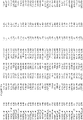
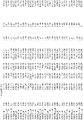
- the sequence in Table 3 is a genomic sequence that contains the sequence of the transcript. Data pertaining to the up-regulation of the transcripts and further information about them is provided in Figure 22 .
- transcripts identified in this Example the proteins they encode, and the pathways in which the proteins participate contribute significantly to HF stem cell activation. Accordingly, anagen can be induced by activation of these transcripts, proteins, and pathways.
- HF stem cells The gene expression pattern of HF stem cells was analyzed as described in Example 8 and compared to non-bulge basal keratinocytes. 157 genes were differentially expressed in the HF stem cells, as assessed by microarray analysis and quantitative polymerase chain reaction (qPCR). A group of selected genes with increased expression in HF stem cells is depicted in Table 4. A group of selected genes with decreased expression in HF stem cells is depicted in Table 5.
- the transcripts identified in this Example contribute significantly to induction of epidermal cells to differentiate into HF stem cells.
- Activation of the transcripts, proteins, and pathways depicted in Table 4 is thus a method for enhancing EDIHN.
- inhibition of the transcripts, proteins, and pathways depicted in Table 4 is thus a method for preventing EDIHN and eliminating hair follicles.
- inhibition of the transcripts, proteins, and pathways depicted in Table 5 is a method for enhancing EDIHN.
- activation of the transcripts, proteins, and pathways depicted in Table 5 is thus a method for enhancing EDIHN.
- a 1 cm 2 wound was induced on the lower back of the doubly transgenic mice at 21 days or 50 days old. Mice were placed on doxycycline-containing chow immediately after wounding to induce Dkk1 expression, and then doxycycline was discontinued after completion of the re-epithelialization at 9 days after wounding. Dkk1 expression inhibits Wnt activity, which in turn induces follicle pigmentation. At 22 days after wounding, pigmented HF were observed in the excised skin after preparing the epidermal sheet ( Figure 23A-B ). Control mice lacked pigmented HF ( Figure 24 ).
- the findings of this Example show that pigmented HF can be produced by suppressing expression of Wnt1 or by inducing expression of Dkk1 during the period of re-epithelialization, then inducing expression of Wnt1.
- the findings of this Example show that factors that inhibit neonatal hair follicle formation (e.g. Dkk1) also inhibit EDIHN, thus further supporting the notion that hair follicles formed by EDIHN are similar to normal hair follicles.
- EGF recombinant EGF (1 microgram (mcg)/microliter (mcl)
- mcg microgram
- mcl microliter
- EGF receptor inhibitors were administered as a single injection 11 days after incisional wounding (1 cm 2 ) to the middle of the wound near the skin surface. EGF receptor inhibitor administration led to generation of more and larger hair follicles compared with control mice that were wounded only ( Figure 26A ). As shown in Figure 26B , large hair follicles developed in the wounded area in the AG1478-injected mice. Left panel: epidermis stained for K17, with three large hair follicles next to each other. Right panel: dermis stained for AP with large coalescing dermal papilla areas.
- ⁇ -catenin activators leads to an increase in EDIHN.
- the findings of Examples 11-13 show that new HF can be generated by (a) disrupting the epidermis; and (b) administering a factor that promotes a differentiation of an uncommitted epidermal cell into a HF cell.
- FGF fibroblast growth factor
- fibroblast growth factor FGF
- K14-Eda-A1 transgenic mice which overexpress (ectodysplasin-A1) Eda-A1 in the epidermis, are subjected to EDIHN, then HF formation is measured 19 days after wounding as described in Example 13.
- the transgenic mice developed significantly larger numbers of HF compared to control, non-transgenic littermate mice, showing that new HF can be generated by (a) disrupting the epidermis; and (b) administering a factor that enhances signaling by ectodysplasin.
- Minoxidil administration enhances HF formation, showing that new HF can be generated by (a) disrupting the epidermis; and (b) administering a minoxidil.
- Hair-bearing regions of the epidermis of mice is abraded, as described in Example 1, then administering recombinant EGF, as described in Example 1.
- This method prevents hair re-growth in the abraded areas, showing that hair can be removed by (a) disrupting the epidermal layer; and (b) administering EGF, a nucleotide encoding EGF, or a factor that increases signaling by EGF.
Landscapes
- Health & Medical Sciences (AREA)
- Life Sciences & Earth Sciences (AREA)
- Public Health (AREA)
- Veterinary Medicine (AREA)
- Animal Behavior & Ethology (AREA)
- General Health & Medical Sciences (AREA)
- Epidemiology (AREA)
- Medicinal Chemistry (AREA)
- Chemical & Material Sciences (AREA)
- Pharmacology & Pharmacy (AREA)
- Engineering & Computer Science (AREA)
- Dermatology (AREA)
- Bioinformatics & Cheminformatics (AREA)
- Immunology (AREA)
- Birds (AREA)
- Zoology (AREA)
- Proteomics, Peptides & Aminoacids (AREA)
- General Chemical & Material Sciences (AREA)
- Nuclear Medicine, Radiotherapy & Molecular Imaging (AREA)
- Organic Chemistry (AREA)
- Chemical Kinetics & Catalysis (AREA)
- Cell Biology (AREA)
- Biomedical Technology (AREA)
- Gastroenterology & Hepatology (AREA)
- Virology (AREA)
- Biotechnology (AREA)
- Medical Informatics (AREA)
- Anesthesiology (AREA)
- Heart & Thoracic Surgery (AREA)
- Hematology (AREA)
- Developmental Biology & Embryology (AREA)
- Medicines That Contain Protein Lipid Enzymes And Other Medicines (AREA)
- Pharmaceuticals Containing Other Organic And Inorganic Compounds (AREA)
- Cosmetics (AREA)
- Medicines Containing Material From Animals Or Micro-Organisms (AREA)
- Acyclic And Carbocyclic Compounds In Medicinal Compositions (AREA)
- Medicines Containing Antibodies Or Antigens For Use As Internal Diagnostic Agents (AREA)
- Peptides Or Proteins (AREA)
- Medicinal Preparation (AREA)
Description
- The present invention provides compositions for use in treating baldness in a subject and non-therapeutic methods for generating new hair follicles.
- Follicular neogenesis is defined as the generation of new hair follicles (HF) after birth. Humans are born with a full complement of HF, which can change in size and growth characteristics as in early baldness or can ultimately degenerate and disappear as in late stages of baldness or in permanent scarring (cicatricial) alopecias. Therefore, the generation of new HF is desirable in the treatment of common baldness as well as less common hair loss conditions, such as discoid lupus erythematosis, congenital hypotrichosis, lichen planopilaris and other scarring alopecias.
- Messenger et al. (British Journal of Dematology, 2004, 150(2): 186-194) discusses the mechanism of action of minoxidil on hair growth.
- Argyris (The Anatomical Record, 1962, 143(3): 183-188) discusses the growth-promoting effects of wounds on hair follicles already stimulated by plucking.
- Argyris et al., (The Anatomical Record, 1962, 142(2): 139-145) discusses factors affecting the stimulation of hair growth during wound healing.
- Kligman (Annals of the New York Academy of Sciences, 1959, 83(3): 507-511) discusses the neogenesis of human hair follicles.
- Kligman et al., (The Journal of Investigative Dermatology, 1956, 27(1): 19-23) discusses the formation of vellus hair follicles from human adult epidermis.
- Breedis (Cancer Research, 1954, 14(8): page 17PP) discusses the regeneration of hair follicles and sebaceous glands from the epithelium of scars in the rabbit.
- The present invention provides the use of minoxidil for the preparation of a pharmaceutical composition for treating baldness in a scalp, eyebrow or scarred region of a subject, wherein the treating comprises (a) disrupting an epidermis of the scalp, eyebrow or scarred region, wherein said disrupting is perforating the epidermis or epidermal layer; and (b) contacting the scalp, eyebrow or scarred region with the pharmaceutical composition.
- The present invention also provides minoxidil for use in treating baldness in a scalp, eyebrow or scarred region of a subject, wherein the treating comprises (a) disrupting an epidermis of the scalp, eyebrow or scarred region, wherein said disrupting is perforating the epidermis or epidermal layer; and (b) contacting the scalp, eyebrow or scarred region with the minoxidil.
- In an embodiment, the subject has androgenetic alopecia (AGA) or another disease or disorder comprising balding.
- The present invention also provides a non-therapeutic method for generating a hair follicle in a scalp, eyebrow or scarred region of a subject, the method comprising (a) disrupting an epidermis of the scalp, eyebrow or scarred region, wherein said disrupting is perforating the epidermis or epidermal layer; and (b) contacting the scalp, eyebrow or scarred region with minoxidil, thereby generating a hair follicle in the scalp, eyebrow or scarred region of the subject.
- In an embodiment, the disruption is performed with a tool that comprises sandpaper, a laser, such as a Fraxel laser, a CO2 laser or an excimer laser, a felt wheel, a microdermabrasion device, a light-based method, irradiation with visible light, irradiation with infrared light, irradiation with ultraviolet radiation, orthovoltage radiation, x-ray radiation, a surgical tool, a dermal biopsy punch, or wherein the disruption is performed with a burn treatment or chemical treatment. In an embodiment, the disruption comprises perforating the epidermis and dermis of the area of the balding scalp. In an embodiment, the disruption comprises removal of basal and supra-basal layers of epidermis with a felt wheel.
- In an embodiment, the disrupting step is performed between 3-12 days, 4-12 days, 5-12 days, 4-11 days, 6-11 days, 6-10 days, 6-9 days, 6-8 days, 7-8 days, 5-11 days, 5- 10 days, 7- 10 days, or about 1 week prior to the contacting step.
- In an embodiment, the treating further comprises contacting the area of the balding scalp with a precursor cell, an inductive cell, or a hair follicle or a portion thereof, or with one or more of the following compounds: finasteride, dutasteride, Fluridil®, spironolactone, cyproterone acetate, bicalutamide, flutamide, nilutamide, an inhibitor of an androgen receptor, an androgen antagonist or an antiandrogen. In an embodiment, the compound is formulated to be administered as a cream, gel, lotion, emulsion, suspension, oil, non-aqueous solution, aqueous solution, or drop, or by direct injection, or is encapsulated in a liposome. In an embodiment, the disrupting step is performed between 3-12 days, 4-12 days, 5-12 days, 4-11 days, 6-11 days, 6-10 days, 6-9 days, 6-8 days, 7-8 days, 5-11 days, 5- 10 days, 7- 10 days, or about 1 week prior to the further contacting step.
- In an embodiment, the area of the balding scalp is subjected to depilation or administration of a retinoid prior to disrupting. In an embodiment, the depilation is performed by plucking, waxing, abrasion, laser, electrolysis, or administration of thioglycolic acid on the area of the balding scalp.
- In an embodiment, the wounded area of the balding scalp is not surgically closed, or not contacted with a bandage, dressing, or ointment that facilitates wound healing for a period of time following the disrupting step. In an embodiment, the period of time is within about 2 days, about 3 days, about 4 days, about 5 days, about 7 days, about 10 days, about 11 days, about 14 days, about 17 days or about 3 weeks.
- In an embodiment, the treatment or the method results in differentiation of an uncommitted epidermal cell into a hair follicle cell.
-
-
Figure 1 : Epidermal abrasion results in de novo hair follicle (HF) formation. HF at progressive stages of development are depicted in the left, center, and right panels. The arrow in the left panel indicates a hair germ. The dark stained cells are progeny of HF stem cells in the bulge. -
Figure 2 : BrdU labeling of HF following epidermal abrasion. HF at progressive stages of development are depicted in the left, center, and right panels. -
Figure 3 . The wound site did not contain HF immediately after re-epithelialization. Top view (left panel) and tissue section (right panel) of thesite 10 days after wound induction. -
Figure 4 . Appearance ofhair germs 12 days after wound induction. Arrow indicates hair germ. -
Figure 5 . Epidermal Disruption-Induced HF neogenesis (EDIHN)-induced hair germs express K17. Two different hair germs are depicted in the left and right panels. -
Figure 6 . EDIHN-induced hair germs contain dermal papilla (DP) cells, as evidenced by alkaline phosphatase (AP) staining. Arrows indicate DP cells. Left panel: hair germs. Right panel: HF at a further developmental stage. -
Figure 7 . Histological comparison between EDIHN-induced and embryonic HF. Top left, second from left, third from left, and right panels: Progressive stages of EDIHN-induced HF development. Bottom left, center, and right panels: Progressive stages of and embryonic HF development. -
Figure 8 . Induction of several markers of embryonic HF development, Lef1 (left panel), wingless/ int (Wnt) 10b (center panel), and sonic hedgehog (Shh; right panel), by EDIHN. HF structures are indicated by arrowheads. -
Figure 9 . Proliferative activity during EDIHN, as evidenced by BrdU pulse-labeling. Progressive stages of HF development are depicted in the left, center, and right panels. -
Figure 10 . Induction of HF markers S100A3 (left panel; tissue section parallel to HF axis) and S100A6 (right panel; cross-sectional view of follicle) by EDIHN. -
Figure 11 .New hair growth 25 days (left panel) and 45 days (right panel) after wound induction. -
Figure 12 . Schematic of whole-mount EDIHN assay. -
Figure 13 . Repopulation of stem cells in the bulge of EDIHN-induced HF, as evidenced by retention of BrdU label following a chase period. Left panel: lower magnification: 50 X. Right panel: higher magnification: 400 X. -
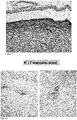
Figure 14 . A. Stem cells in EDIHN-induced HF express K15. Left top panel: Top view of wound site. Bottom, far left panel: epidermis whole mount; bottom, second from left panel: same as [bottom, far left] panel but viewed under white light; right panel: tissue sections. B. Neogenesis HF proceed to next hair cycle. -
Figure 15 . Schematic of creation of new HF by EDIHN. -
Figure 16 . No new HF are evident 11 days after wound induction in 21-day-old mice. Top panel: macroscopic examination; bottom left panel: AP staining of the dermis; bottom right panel: K17 staining of the epidermis. -
Figure 17 .14 days after wound induction, new HF have begun to form as evidenced by AP staining of the dermis (left panel) and K17 staining of the epidermis (right panel). Main panels: 10 X magnification. Inserts: 80 X magnification. -
Figure 18. 17 days after wound induction, new HF are more developed. Left panel: AP staining of the dermis; right panel: K17 staining of the epidermis. Main panels: 10 X magnification. Inserts: 80 X magnification. -
Figure 19 . Wounds closed similar in mice subjected to depilation, then wounding (left 3 mice in each panel) vs. wounding alone (right 4 mice in each panel). Left panel: immediately following wounding. Right panel: 10 days following wounding. -
Figure 20 . Anagen induction by depilation prior to wounding enhances the efficiency of EDIHN. A. Top panel: lower left panel AP staining of the dermis; lower right panel: K17 staining of the epidermis. B. Graphical representation of enhancement of EDIHN by depilation. -
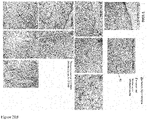
Figure 21 . A. EDIHN in human skin grafted to immunodeficient (scid) mice, seven days after induction of an excisional wound. Arrows indicate new HF. B. Dermal abrasion of human skin grafts results in EDIHN. Human adult skin (W) was grafted onto mice, abraded, and examined seven days later, by staining for S100A6 (first, second, and fourth rows) or S100A4 (third row). Hair germs (HG) and dermal papilla (DP) are indicated. Human fetal skin (F) with normal developing hair follicles is shown for comparison. Mouse skin 17d post wounding was included as a control (top left panel). -
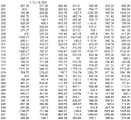
Figure 22 . Transcripts up-regulated at least 2-fold in activated HF cells, as assessed by dChip analysis. (A). Mean values and standard errors of the up-regulated transcripts in non-activated ("bs-line") and activated ("expt") samples and fold-changes and differences between non-activated and activated values are depicted. (B). Raw data for up-regulated transcripts in non-activated and activated cells. "Ctrl" denotes non-activated and "High-dep" denotes activated cells. (C). Additional information about up-regulated transcripts. -
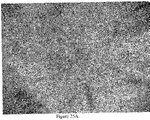
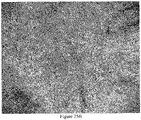
Figure 23 . Pigmented hair follicle neogenesis observed in the skin of Dkk1-expressing mice following EDIHN A. 3.2x magnification. B. 8x magnification. -
Figure 24 . Control mice lacked pigmented HF. -
Figure 25 . EGF inhibits HF formation by EDIHN. A. K17 staining of wounded skin of representative mouse treated with EGF. Magnification is 4x. B. High magnification view (10×) of skin depicted in (A). C. K17 staining of wounded skin of representative control mouse that received no EGF after wounding. Magnification is 4x. D. Higher magnification view (10×) of skin depicted in (D). -
Figure 26 . Administration of an EGF receptor inhibitor (AG1478) leads to generation of more and larger HF compared with controls. A. Top: skin of 2 control mice. Outer dashed line indicates the extent of the wounded area after contraction and healing; inner dashed line indicates the area of neogenesis. Bottom: skin of 2 treated mice, in which the wounded area and area of neogenesis largely coincide, with the exception of a small area on the left side of the encircled area in each panel. B. Large hair follicles developed in the wounded area in the AG1478-injected mice. Left panel: epidermis stained for K17, with three large hair follicles next to each other. Right panel: dermis stained for AP with large coalescing DP areas. Scale Bars: 200 µm. -
Figure 27 . A. Increased hair follicle formation in K14-Wnt7a mice. Left panel: Wnt7a transgenic mice. Right panel: control (wild-type) mice. B. Quantiation of experiment with 4 week old mice. C. Quantiation of experiment with 3 week old mice. - The present invention provides the use of minoxidil for the preparation of a pharmaceutical composition for the treatment of baldness in a scalp, eyebrow or scarred region of a subject, wherein the treatment comprises (a) disrupting an epidermis of the scalp, eyebrow or scarred region, wherein said disrupting is perforating the epidermis or epidermal layer; and (b) contacting the scalp, eyebrow or scarred region with the pharmaceutical composition.
- The present invention also provides minoxidil for use in the treatment of baldness in a scalp, eyebrow or scarred region of a subject, wherein the treatment comprises (a) disrupting an epidermis of the scalp, eyebrow or scarred region, wherein said disrupting is perforating the epidermis or epidermal layer; and (b) contacting the scalp, eyebrow or scarred region with the minoxidil.
- The present invention also provides a non-therapeutic method for generating a hair follicle in a scalp, eyebrow or scarred region of a subject, the method comprising (a) disrupting an epidermis of the scalp, eyebrow or scarred region, wherein said disrupting is perforating the epidermis or epidermal layer; and (b) contacting the scalp, eyebrow or scarred region with minoxidil, thereby generating a hair follicle in the scalp, eyebrow or scarred region of the subject.
- "Contacting" as used herein refers, in another embodiment, to bringing the scalp, eyebrow, into to contact with the compound, factor, cell. In another embodiment, the term refers to embedding the compound, factor, cell into the scalp, eyebrow. In another embodiment, the term refers to injecting the compound, factor, cell into the scalp, eyebrow. In another embodiment, term refers to any other type of contacting known in the art.
- As disclosed herein, minoxidil is a compound or factor that promotes a differentiation of an uncommitted epidermal cell into a hair follicle cell.
- "Promotes a differentiation" refers, in another embodiment, to the act of increasing the percentage of cells that will differentiate as indicated. In another embodiment, the term refers to increasing the number of cells per unit area of skin that will differentiate. In another embodiment, the promoter of differentiation is active in the milieu of the skin.
- "Uncommitted epidermal cell" refers, in another embodiment, to an epidermal stem cell. In another embodiment, the epidermal cell is a bulge cell. In another embodiment, the epidermal cell is a bulge-derived cell. In another embodiment, the epidermal cell is any other type of cell known in the art that can be induced to differentiate into an HF cell.
- The "HF cell" that results from the differentiation is, in another embodiment, an HF stem cell. In another embodiment, the HF cell is a dermal papilla cell. In another embodiment, the HF cell is a bulb cell. In another embodiment, the HF cell is a matrix cell. In another embodiment, the HF cell is a hair shaft cell. In another embodiment, the HF cell is an inner root sheath cell. In another embodiment, the HF cell is an outer root sheath cell. In another embodiment, the HF cell is a melanocyte stem cell. In another embodiment, the HF cell is a melanocyte.
- In another embodiment, the minoxidil is administered in a solution. In another embodiment, the minoxidil is administered in a cream. In another embodiment, the minoxidil is administered in an ointment. In another embodiment, the minoxidil is administered in a slow release formulation. In another embodiment, the minoxidil is administered in a liposome encapsulated formulation. In another embodiment, the minoxidil is directly injected. In another embodiment, the minoxidil is administered by any other method known in the art.
- It is disclosed herein that a compound or factor that promotes a differentiation of an uncommitted epidermal cell into a HF cell may be an inhibitor of an Epidermal Growth Factor (EGF). In another embodiment, the compound or factor may be an inhibitor of an EGF receptor.
- As provided herein (Example 11), activating one or more pathways in which EGF is involved (by injection of EGF) blocks the formation of HF. Thus, antagonizing the pathway increases HF formation, as demonstrated in Example 12.
- As provided herein, FGF and its receptor are upregulated, under the conditions utilized herein, upon HF stem cell differentiation (Example 9). Moreover, FGF-bp1 is downregulated, under the conditions utilized herein, upon HF stem cell differentiation. Thus, it is disclosed that FGF and its receptor promote differentiation of uncommitted epidermal cells into HF cells.
- In another embodiment, the compound or factor that promotes a differentiation of an uncommitted epidermal cell into a HF cell acts directly on the uncommitted epidermal cell. In another embodiment, the compound or factor acts on the uncommitted epidermal cell via a mesenchymal cell.
- In another embodiment, the mesenchymal cell is a dermal condensate cell. In another embodiment, the mesenchymal cell is a DP cell. In another embodiment, the mesenchymal cell is another cell type or differentiation stage in the dermal condensate-DP lineage. In another embodiment, the mesenchymal cell is any other type of mesenchymal cell known in the art.
- It is disclosed that the EGFR has, in another embodiment, the sequence of SEQ ID No: 277 (GenBank Accession No: NM_005228). In another embodiment, the EGFR has a sequence selected from the sequences set forth in GenBank entries NM_201282, NM_201283, NM_201284, BC094761, AF288738, AY588246, AY573061, X17054, AF125253, U48722, K03193, and AY698024. In another embodiment, the EGFR is encoded by a nucleic acid molecule having a sequence set forth in the one of the above GenBank entries.
- It is also disclosed that EGF has, in another embodiment, the sequence of SEQ ID No: 278 (GenBank Accession No: NM_001963). In another embodiment, the EGF has a sequence selected from the sequences set forth in GenBank entries BC093731, AY548762, and X04571. In another embodiment, the EGF is encoded by a nucleic acid molecule having a sequence set forth in the one of the above GenBank entries.
- As provided herein, the transcripts depicted in Table 3 (Example 8; SEQ ID No: 1-232), the proteins they encode, and the pathways in which the proteins participate contribute significantly to HF stem cell activation. Accordingly, under the conditions utilized herein, anagen can be induced by activation of these transcripts, proteins, and pathways. It is thus disclosed that activation of the transcripts, proteins, and pathways depicted in Table 3 may be a method for enhancing EDIHN or for enhancing hair growth in a subject.
- As provided herein, the transcripts depicted in Table 4 (Example 9; SEQ ID No: 233-257), the proteins they encode, and the pathways in which the proteins participate, contribute significantly, under the conditions utilized herein, to induction of epidermal cells to differentiate into HF stem cells. It is thus disclosed that activation of the transcripts, proteins, and pathways depicted in Table 4 may be a method for enhancing EDIHN or for enhancing hair growth in a subject.
- As demonstrated by findings of the present invention, the transcripts depicted in Table 5 (Example 9; SEQ ID No: 258-273), the proteins they encode, and the pathways in which the proteins participate, contribute significantly, under the conditions utilized herein, to preventing induction of epidermal cells to differentiate into HF stem cells. It is thus disclosed that inhibition of the transcripts, proteins, and pathways depicted in Table 5 may be a method for enhancing EDIHN or for induction of hair growth in a subject.
- In another embodiment of methods and compositions of the present invention, a composition comprising minoxidil is administered.
- The step of disrupting the epidermis is performed, in another embodiment, by abrading the scalp, eyebrow, or scarred region. In another embodiment, the term "abrading" refers to an act of creating an abrasion. In another embodiment, "abrading" refers to rubbing. In another embodiment, "abrading" refers to wearing away by friction. As provided herein (Example 1), epidermal abrasion causes, under the conditions utilized herein, de novo HF neo-genesis. In another embodiment, the epidermal layer is disrupted.
- In one embodiment, "abrasion" has the same meaning as "abrading." In another embodiment, "abrasion" refers to an area of the scalp or skin from which the epidermis is removed. In another embodiment, "abrasion" refers to an area of the scalp or skin from which the epidermis and dermis are removed.
- As provided herein, under the conditions utilized, epidermal disruption converts the skin back, in another embodiment, to an embryonic-like state, in which the follicle regenerates. In another embodiment, a subsequent window of opportunity is created, during which the number and size of new HF in the skin can be manipulated. In another embodiment, the administration of a compound or factor that promotes a differentiation of an uncommitted epidermal cell into a HF cell during this window causes regeneration of larger and more numerous HF. The morphology of HF in abraded skin is similar to that of embryonic HF (Example 1-2 and subsequent Examples), and the markers expressed are similar as well.
- The present application discloses stimulating hair growth in a scalp, eyebrow, or scarred region of a subject. As demonstrated in Example 3, EDIHN-induced HF are capable of generating hairs. Thus, the compositions, uses and methods of the present invention can be used to stimulate hair growth.
- "EDIHN," in another embodiment, refers to HF neogenesis induced by disruption of the epithelial layer. In another embodiment, the term refers to HF neogenesis induced by abrasion. In another embodiment, the term refers to HF neogenesis induced by wounding. In another embodiment, the term refers to HF neogenesis induced by disruption of the epithelial layer, followed by administration of a compound or factor that promotes a differentiation of an uncommitted epidermal cell into a HF cell.
- In another embodiment, excisional wounds may be created using a surgical tool. In one embodiment, the surgical tool is a dermal biopsy punch (Example 2). In another embodiment, the excisional wounds are induced by freezing or cryoinjury. The use of freezing or cryoinjury is well known in the art, and is used, for example by dermatologists to injure skin. In one embodiment, the freezing or cryoinjury results in a blister. In another embodiment, the blister is used as a "chamber" to introduce drugs and or cells into the reepithelialized area.
- In another embodiment, the excisional wounds are not surgically closed. In another embodiment, the excisional wounds are not contacted with a bandage or dressing before they heal or during a period of time after wound induction. In another embodiment, the excisional wounds are not contacted with an ointment before they heal or during a period of time after wound induction. In another embodiment, the excisional wounds are allowed to heal by secondary intention.
- The subject of the present invention, is, in another embodiment, a human. As provided herein (Example 7) human skin responds to EDIHN in the same manner as mouse skin. In another embodiment, the subject is a male. In another embodiment, the subject is a female. In another embodiment, the subject is any other type of subject known in the art.
- In another embodiment, the subject is an adult. In one embodiment, "adult" refers to an age greater than about 18 years. In another embodiment, "adult" refers to an age greater than about 20 years. In another embodiment, "adult" refers to an age greater than about 25 years. In another embodiment, "adult" refers to an age greater than about 30 years. In another embodiment, "adult" refers to an age greater than about 35 years. In another embodiment, "adult" refers to an age greater than about 40 years. In another embodiment, "adult" refers to an age greater than about 45 years.
- In another embodiment, the subject is elderly. In one embodiment, "elderly" refers to an age greater than about 45 years. In another embodiment, "elderly" refers to an age greater than about 50 years. In another embodiment, "elderly" refers to an age greater than about 55 years. In another embodiment, "elderly" refers to an age greater than about 60 years. In another embodiment, "elderly" refers to an age greater than about 65 years. In another embodiment, "elderly" refers to an age greater than about 70 years.
- In another embodiment, the subject is a laboratory animal. In another embodiment, the subject(s) is/are mice. In another embodiment, the subject(s) is/are rats. In another embodiment, the subject(s) is/are gerbils. In another embodiment, the subject(s) is/are hamsters. In another embodiment, the subject(s) is/are guinea pigs. In another embodiment, the subject(s) is/are rabbits. In another embodiment, the subject(s) is/are pigs. In another embodiment, the subject(s) is/are dogs. In another embodiment, the subject(s) is/are cats. In another embodiment, the subject(s) is/are primates. In another embodiment, the subject(s) is/are any other laboratory animal known in the art.
- In another embodiment, the subject(s) to be treated has a disease or disorder comprising balding. In another embodiment, the disease or disorder is androgenetic alopecia (AGA).In another embodiment, the disease or disorder is a discoid lupus erythematosis. In another embodiment, the disease or disorder is a congenital hypotrichosis. In another embodiment, the disease or disorder is a lichen planopilaris. In another embodiment, the disease or disorder is a scarring alopecia. In another embodiment, the disease or disorder is any other disease or disorder comprising balding known in the art.
- In another embodiment, the scalp, eyebrow, or scarred region(s) has a majority of HF in the telogen stage of the hair cycle. The findings of Examples 5-6 show that (a) EDIHN can restore hair growth to the scalp, eyebrow, or scarred region at the telogen stage; and (b) the efficiency of EDIHN at the telogen stage can be enhanced by depilation prior to abrasion or wound induction. In another embodiment, the scalp, eyebrow, or scarred region(s) has more than about 60% of HF in the telogen stage of the hair cycle. In another embodiment, the scalp, eyebrow, or scarred region(s) has more than about 70% of HF in the telogen stage of the hair cycle. In another embodiment, the scalp, eyebrow, or scarred region(s) has more than about 80% of HF in the telogen stage of the hair cycle. In another embodiment, the scalp, eyebrow, or scarred region(s) has more than about 90% of HF in the telogen stage of the hair cycle. In another embodiment, the scalp, eyebrow, or scarred region(s) does not have a majority of HF in the telogen stage of the hair cycle.
- In another embodiment of methods, uses and compositions of the present invention, the first step (e.g. epithelial disruption) is performed 3-12 days prior to the second step (e.g. addition of minoxidil). In another embodiment, the interval is 4-12 days. In another embodiment, the interval is 5-12 days. In another embodiment, the interval is 4-11 days. In another embodiment, the interval is 6-11 days. In another embodiment, the interval is 6-10 days. In another embodiment, the interval is 6-9 days. In another embodiment, the interval is 6-8 days. In another embodiment, the interval is 7-8 days. In another embodiment, the interval is 5-11 days. In another embodiment, the interval is 5-10 days. In another embodiment, the interval is 7-10 days. In another embodiment, the interval is about 1 week.
- The present application further discloses the step of suppressing an activity or expression of a Wnt protein in the scalp, eyebrow, or scarred region. As provided herein, suppressing Wnt activity induces pigmentation in HF generated by the compositions, uses and methods of the present invention. In another embodiment, the step of suppressing Wnt activity or expression is performed within about 10 days of epidermal disruption. In another embodiment, the step of suppressing Wnt activity or expression is performed prior to the second step (e.g prior to addition of minoxidil).
- In another embodiment, the Wnt protein is Wnt1. In another embodiment, the Wnt protein is a Wnt7. In another embodiment, the Wnt protein is a Wnt7a. In another embodiment, the Wnt protein is a Wnt3. In another embodiment, the Wnt protein is a Wnt3a. In another embodiment, the Wnt protein is a Wnt10. In another embodiment, the Wnt protein is a Wnt10a. In another embodiment, the Wnt protein is any other Wnt protein known in the art.
- In another embodiment, the present application discloses a method for inducing growth of a pigmented scalp hair or eyebrow of a subject, comprising generating a hair follicle in the scalp, eyebrow, or scarred region according to the method of the invention and suppressing expression of a Wnt protein in the hair follicle, thereby inducing a growth of a pigmented scalp hair or eyebrow of a subject.
- In another embodiment, the step of suppressing expression of a Wnt protein comprises inducing an expression of a Dkk1 protein. In another embodiment, the step of suppressing expression of a Wnt protein comprises inducing an expression of any other Wnt inhibitor known in the art. In another embodiment, the step of suppressing expression of a Wnt protein is performed immediately or shortly after epidermal disruption. In another embodiment, the step of inducing expression of a Dkk1 protein is performed immediately or shortly after epidermal disruption. In another embodiment, the step of suppressing expression of a Wnt protein is performed at the time of epidermal disruption. In another embodiment, the step of inducing expression of a Dkk1 protein is performed at the time of epidermal disruption. In another embodiment, the step of suppressing expression of a Wnt protein is performed several days before generation of the follicle. In another embodiment, the step of inducing expression of a Dkk1 protein several days before generation of the follicle.
- In another embodiment, the step of suppressing expression of a Wnt protein is performed for about 8 days. In another embodiment, the step of inducing expression of a Dkk1 protein is performed for about 8 days. In another embodiment, the step of suppressing expression of a Wnt protein is performed for about 9 days. In another embodiment, the step of inducing expression of a Dkk1 protein is performed for about 9 days. In another embodiment, the step of suppressing expression of a Wnt protein is performed for about 10 days. In another embodiment, the step of inducing expression of a Dkk1 protein is performed for about 10 days. In another embodiment, the step of suppressing expression of a Wnt protein is performed for about 12 days. In another embodiment, the step of inducing expression of a Dkk1 protein is performed for about 12 days. In another embodiment, the step of suppressing expression of a Wnt protein is performed during the period of re-epithelialization. In another embodiment, the step of inducing expression of a Dkk1 protein is performed during the period of re-epithelialization. In another embodiment, expression of a Dkk1 protein is halted after several days. In another embodiment, halting expression of Dkk1 protein after several days induces, or enables induction of Wnt protein expression. In another embodiment, the expression of a Wnt protein is induced about 9 days after the abrading or wounding. In another embodiment, the expression of a Wnt protein is induced following the period of re-epithelialization. In another embodiment, induction of Wnt protein expression is necessary for formation of new HF.
- In another embodiment, "several" refers to about 1 day. In another embodiment, "several" refers to about 2 days. In another embodiment, "several" refers to about 3 days. In another embodiment, "several" refers to about 5 days. In another embodiment, "several" refers to about 7 days. In another embodiment, "several" refers to about 10 days. In another embodiment, "several" refers to about 12 days.
- In another embodiment, the step of contacting in the present invention comprises directly contacting the scalp, eyebrow, or scarred region with the relevant compound.
- In another embodiment, the epidermal disruption in the present invention further removes dermal tissue from the scalp, eyebrow, or scarred region. In another embodiment, the epidermal disruption does not remove dermal tissue from the scalp, eyebrow, or scarred region.
- "Disrupting" an epidermis or epidermal layer refers, in another embodiment, to removing part of the epidermis or epidermal layer. In another embodiment, only part of the epidermal layer need be removed. In another embodiment, the entire epidermal layer is removed. In another embodiment, the term refers to abrading the epidermis or epidermal layer (Examples). In another embodiment, the term refers to wounding the epidermis or epidermal layer (Examples).
- In another embodiment, the epidermal disruption is performed with a tool that comprises sandpaper. In another embodiment, the epidermal disruption is performed with a laser. In another embodiment, the laser is a Fraxel laser. In another embodiment, the laser is a CO2 laser. In another embodiment, the laser is an excimer laser. In another embodiment, the laser is any other type of laser capable of inducing trans-epithelial injury. In another embodiment, the epidermal disruption is performed with a felt wheel. In another embodiment, the epidermal disruption is performed with a surgical tool. In another embodiment, the epidermal disruption is performed with any other tool known in the art that is capable of epidermal disruption. In another embodiment, the epidermal disruption comprises use of a micro-dermabrasion device. In another embodiment, the epidermal disruption comprises a burn treatment.
- In another embodiment, the epidermal disruption comprises a disruption of a follicle of said epidermis and a disruption of an interfollicular region of said epidermis. In another embodiment, the epidermal disruption comprises a disruption of a follicle of said epidermis and does not comprise a disruption of an interfollicular region of said epidermis.
- In another embodiment, the epidermal disruption comprises a light-based method. In another embodiment, the epidermal disruption comprises irradiation with visible light. In another embodiment, the epidermal disruption comprises irradiation with infrared light. In another embodiment, the epidermal disruption comprises irradiation with ultraviolet radiation. In another embodiment, the epidermal disruption comprises orthovoltage irradiation. In another embodiment, the epidermal disruption comprises X-ray irradiation. In another embodiment, the epidermal disruption comprises any other type of irradiation known in the art.
- In another embodiment, the epidermal disruption is performed by mechanical means. In another embodiment, "mechanical means" refers to abrading. In another embodiment, the term refers to wounding. In another embodiment, the term refers to ultrasound. In another embodiment, the term refers to radio-frequency. In another embodiment, the term refers to ab electrical process or the use of an electrical current. In another embodiment, the term refers to electroporation. In another embodiment, the term refers to excision. In another embodiment, the term refers to tape-stripping. In another embodiment, the term refers to microdermabrasion. In another embodiment, the term refers to the use of peels. In another embodiment, the term refers to any other type of mechanical means known in the art.
- In another embodiment, the epidermal disruption comprises chemical treatment. In another embodiment, the chemical is phenol. In another embodiment, the chemical is trichloroacetic acid. In another embodiment, the chemical is ascorbic acid. In another embodiment, the chemical is any other chemical capable of epidermal disruption that is known in the art.
- In another embodiment, epidermal trauma is utilized in the present invention.
- In another embodiment, the epidermal disruption of the present invention creates an abrasion at least about 1-1.5 centimeters (cm) in width. In another embodiment, the abrasion is at least about 1 cm in width. In another embodiment, the abrasion is at least about 1.5 cm in width. In another embodiment, the abrasion is at least about 2 cm in width.
- In another embodiment, the scalp, eyebrow, or scarred region is not contacted with a bandage or dressing following the epidermal disruption. In another embodiment, the scalp, eyebrow, or scarred region is not contacted with an ointment following the epidermal disruption. In another embodiment, the scalp, eyebrow, or scarred region is allowed to heal for a period of time without being contacted by any substance, device, ointment, etc., that is ordinarily administered to an abrasion or wound to facilitate healing. In another embodiment, the scalp, eyebrow, or scarred region is allowed to heal for a period of time without being contacted by any substance, device, ointment, etc., that is ordinarily administered to an abrasion or wound to prevent infection. In another embodiment, the period of time is the time it takes the epidermal disruption to heal. In another embodiment, the period of time is any time or range of times between 2 days and 3 weeks.
- In one embodiment, "following" refers to a period of time of about 2 days. In another embodiment, "following" refers to a period of time of about 3 days. In another embodiment, "following" refers to a period of time of about 4 days. In another embodiment, "following" refers to a period of time of about 5 days. In another embodiment, "following" refers to a period of time of about 7 days. In another embodiment, "following" refers to a period of time of about 10 days. In another embodiment, "following" refers to a period of time of about 2 weeks. In another embodiment, "following" refers to a period of time of about 3 weeks.
- In another embodiment, the present invention further comprises the step of depilating the scalp, eyebrow, or scarred region. As provided herein, the findings of Example 6 show that the efficiency of EDIHN can be enhanced by depilation prior to abrasion or wound induction.
- In another embodiment, the depilation is epilation. In another embodiment, the depilation comprises the step of waxing. In another embodiment, the depilation comprises the step of plucking. In another embodiment, the depilation comprises the use of an abrasive material. In another embodiment, the depilation comprises the use of a laser. In another embodiment, the depilation comprises the use of electrolysis. In another embodiment, the depilation comprises the use of a mechanical device. In another embodiment, the depilation comprises the use of thioglycolic acid. In another embodiment, the depilation comprises the use of any other method of depilation or epilation known in the art.
- In another embodiment, the present invention further comprises the step of administering a topical retinoid to the scalp, eyebrow, or scarred region. In one embodiment, the topical retinoid induces resting (telogen) HF in the scalp, eyebrow, or scarred region to enter anagen.
- In another embodiment, the additional step (depilation or administration of a retinoid) is performed prior to the step of disrupting the epidermis. In another embodiment, the additional step is performed following the step of disrupting the epidermis, but prior to the addition of the minoxidil. In another embodiment, the additional step is performed concurrently with the addition of the minoxidil. In another embodiment, the additional step is performed following the addition of the minoxidil.
- In another embodiment, the additional step is performed between about two days and about three weeks before the step of abrading. In another embodiment, the additional step is performed about two days before the step of abrading. In another embodiment, the additional step is performed about three days before the step of abrading. In another embodiment, the additional step is performed about four days before the step of abrading. In another embodiment, the additional step is performed about one week before the step of abrading. In another embodiment, the additional step is performed about ten days before the step of abrading. In another embodiment, the additional step is performed about two weeks before the step of abrading. In another embodiment, the additional step is performed about three weeks before the step of abrading.
- In another embodiment, the present invention further comprises the step of contacting the scalp, eyebrow, or scarred region with an inductive cell capable of inducing an epidermal cell to differentiate into an HF cell. In another embodiment, the HF cell is an HF stem cell.
- In another embodiment, the inductive cell is a dermal papilla cell. In another embodiment, the inductive cell is a follicular papilla cell. In another embodiment, the inductive cell is a dermal sheath cell. In another embodiment, the inductive cell is a cell that has been genetically modified; for example, with a gene encoding a factor that activates one of the proteins or pathways shown to be up-regulated in HF stem cells (Table 4). In one embodiment, the factor is hedgehog. In another embodiment, the factor is a DP cell protein. In another embodiment, the factor is wingless/ int (wnt). In another embodiment, the factor is a Noggin protein. In another embodiment, the factor is a bone morphogenic protein (BMP). In another embodiment, the factor is a fibroblast growth factor (FGF). In another embodiment, the factor is a transforming growth factor beta (TGF-beta) protein. In another embodiment, the factor is sonic hedgehog protein. In another embodiment, the factor is a neurotropin. In another embodiment, the factor is any other factor known in the art that can contribute to induction of an epidermal cell to differentiate into an HF cell.
- In an embodiment, the Hedgehog protein has the sequence set forth in GenBank Accession No. NM_000193. In another embodiment, the Hedgehog protein has a sequence selected from those set forth in GenBank entries L38518 and NP_000184. In another embodiment, the Hedgehog protein has any other Hedgehog sequence known in the art. In another embodiment, the Hedgehog protein has any other sonic Hedgehog sequence known in the art.
- In an embodiment, the Wnt protein has the sequence of SEQ ID No: 280 (GenBank Accession No: BC008811). In another embodiment, the Wnt protein has a sequence selected from the sequences set forth in GenBank entries NM_004625, D83175, U53476, and NP _004616. In another embodiment, the Wnt protein is a Wnt7 protein. In another embodiment, the Wnt protein is a Wnt7a protein. In another embodiment, the Wnt protein is Wnt1 protein. In another embodiment, the Wnt protein is a Wnt3 protein. In another embodiment, the Wnt protein is a Wnt3a protein. In another embodiment, the Wnt protein is a Wnt10 protein. In another embodiment, the Wnt protein is a WntlOa protein. In another embodiment, the Wnt protein is a WntlOb protein. In another embodiment, the Wnt protein is encoded by a nucleic acid molecule having a sequence set forth in the one of the above GenBank entries. In another embodiment, a biologically active fragment of a Wnt protein is utilized.
- In an embodiment, the Noggin protein has the sequence of SEQ ID No: 276 (GenBank Accession No: NM_005450). In another embodiment, the Noggin protein has a sequence selected from the sequences set forth in GenBank entries BC034027 and U31202. In another embodiment, the Noggin protein is encoded by a nucleic acid molecule having a sequence set forth in the one of the above GenBank entries. In another embodiment, a biologically active fragment of a Noggin protein is utilized.
- In an embodiment, TGF-beta1 protein has the sequence set forth in GenBank Accession No. BC000125. In another embodiment, TGF-beta1 protein has a sequence selected from those set forth in GenBank entries BC001180, BC022242, and NM_000660. In another embodiment, the TGF-beta1 protein has any other TGF-beta1 sequence known in the art.
- In an embodiment, TGF-beta3 protein has the sequence set forth in GenBank Accession No. J03241. In another embodiment, TGF-beta3 protein has a sequence selected from those set forth in GenBank entries NM_003239, BC018503, BT007287 and X14149. In another embodiment, the TGF-beta3 protein has any other TGF-beta3 sequence known in the art.
- In another embodiment, the inductive cell has been genetically modified with a gene encoding a factor that represses one of the proteins or pathways shown to be down-regulated in HF stem cells (Table 5). In another embodiment, the inductive cell has been genetically modified with a gene encoding a factor that activates one of the proteins or pathways shown to be up-regulated in HF stem cells upon their activation.
- In another embodiment, the inductive cell is an autologous cell. In another embodiment, the inductive cell is an allogenic cell.
- In another embodiment, the inductive cell is derived from a mesenchymal stem cell. In another embodiment, the inductive cell is derived from a mesodermal progenitor cell. In another embodiment, the inductive cell is derived from a hematopoietic stem cell. In another embodiment, the inductive cell is derived from an embryonic stem cell. In another embodiment, the inductive cell is derived from an embryonic carcinoma cell. In another embodiment, the inductive cell is any other type of cell known in the art with inductive properties for an epidermal cell.
- In another embodiment, the epidermal cell (e.g. the epidermal cell that is induced to differentiate into an HF cell) is an epidermal stem cell. In another embodiment, the epidermal cell is a bulge cell. In another embodiment, the epidermal cell is any other type of cell known in the art that can be induced to differentiate into an HF stem cell.
- In another embodiment, the present invention further comprises the step of contacting the scalp, eyebrow, or scarred region with an anti-androgen compound. In one embodiment, the anti-androgen compound is finasteride. In another embodiment, the anti-androgen compound is Fluridil®. In another embodiment, the anti-androgen compound is dutasteride. In another embodiment, the anti-androgen compound is spironolactone. In another embodiment, the anti-androgen compound is cyproterone acetate. In another embodiment, the anti-androgen compound is bicalutamide. In another embodiment, the anti-androgen compound is flutamide. In another embodiment, the anti-androgen compound is nilutamide. In another embodiment, the anti-androgen compound is an inhibitor of an androgen receptor. In another embodiment, the anti-androgen compound is any other anti-androgen compound known in the art.
- In another embodiment, the present invention further comprises the step of contacting the scalp, eyebrow, or scarred region with an estrogen compound. In another embodiment, the present invention further comprises the step of contacting the scalp, eyebrow, or scarred region with an estrogen receptor agonist. In another embodiment, the present invention further comprises the step of contacting the scalp, eyebrow, or scarred region with an estrogen analogue. In one embodiment, the estrogen analogue is estradiol. In another embodiment, the estrogen analogue is 17 beta-estradiol. In another embodiment, the estrogen analogue is 17 alpha-estradiol. In another embodiment, the estrogen analogue is ZYC3. In another embodiment, the estrogen compound, estrogen receptor agonist, or estrogen analogue is any other estrogen compound, estrogen receptor agonist, or estrogen analogue known in the art.
- In another embodiment, the present invention further comprises the step of contacting the scalp, eyebrow, or scarred region with an inhibitor of an EGF protein. In another embodiment, the present invention further comprises the step of contacting the scalp, eyebrow, or scarred region with an inhibitor of an EGFR. In another embodiment, the present invention further comprises the step of contacting the scalp, eyebrow, or scarred region with a compound that reduces an expression of an EGF protein or an EGFR.
- In an embodiment, the inhibitor of an EGF or an EGF receptor is panitumumab. In another embodiment, the inhibitor is AG1478. In another embodiment, the inhibitor is nimotuzumab. In another embodiment, the inhibitor is an antibody that binds EGF or EGFR. In another embodiment, the inhibitor is HuMax-EGFR® (Genmab, Copenhagen, Denmark). In another embodiment, the inhibitor is cetuximab. In another embodiment, the inhibitor is IMC 11F8. In another embodiment, the inhibitor is matuzumab. In another embodiment, the inhibitor is
SC 100. In another embodiment, the inhibitor isALT 110. In another embodiment, the inhibitor is PX 1032. In another embodiment, the inhibitor is BMS 599626. In another embodiment, the inhibitor isMDX 214. In another embodiment, the inhibitor is PX 1041. In another embodiment, the inhibitor is any other inhibitor of an EGF or an EGF receptor known in the art. - In another embodiment, the EGF or EGFR antagonist is a carboxypeptidase inhibitor from potato (PCI) protein or a homologue, fragment or mimetic thereof. In another embodiment, the EGF or EGFR antagonist is a sprouty protein or a homologue, fragment or mimetic thereof. In another embodiment, the EGF or EGFR antagonist is an Argos protein or a homologue, fragment or mimetic thereof. In another embodiment, the EGF or EGFR antagonist is a lefty protein or a homologue, fragment or mimetic thereof. In another embodiment, the EGF or EGFR antagonist is an antibody that recognizes EGF or EGFR, or a fragment or mimetic thereof. In another embodiment, the EGF or EGFR antagonist is small molecule inhibitor that binds and reduces the activity of EGF or EGFR. In another embodiment, the EGF or EGFR antagonist is CRM197. In another embodiment, the EGF or EGFR antagonist is IMC-C225 (ImClone Systems, New York, NY). In another embodiment, the EGF or EGFR antagonist is any other antagonist of EGF or EGFR known in the art.
- In another embodiment, the present invention further comprises the step of contacting the scalp, eyebrow, or scarred region with a Hedgehog protein. In another embodiment, the present invention further comprises the step of contacting the scalp, eyebrow, or scarred region with a nucleotide encoding a Hedgehog protein. In another embodiment, the present invention further comprises the step of contacting the scalp, eyebrow, or scarred region with an activator of a Hedgehog protein.
- In another embodiment, the present invention further comprises the step of contacting the scalp, eyebrow, or scarred region with a lithium compound. In one embodiment, the lithium compound contains a lithium ion. In another embodiment, the lithium compound contains a lithium atom.
- In another embodiment, the present invention further comprises the step of contacting the scalp, eyebrow, or scarred region with (2'Z,3'E)-6- bromoindirubin-3'-oxime (BIO). In another embodiment, the present invention further comprises the step of contacting the scalp, eyebrow, or scarred region with any other compound known in the art that is capable of inducing an epidermal cell to differentiate into an HF stem cell.
- In one embodiment, the compound is administered systemically. In another embodiment, the compound is administered topically. In another embodiment, the compound is administered to the site of the abrasion. In another embodiment, the compound is administered to the site of the wound induction. In another embodiment, the compound is administered to the site of the depilation. In another embodiment, the compound is administered during wound healing. In another embodiment, the compound is administered prior to HF neo-genesis. In another embodiment, the compound is administered during HF neo-genesis.
- The present application also discloses a kit, comprising a tools and/or a compound suitable for performing the present invention.
- In another embodiment, the present invention comprises administering a pharmaceutical composition comprising minoxidil and a pharmaceutically acceptable carrier.
- The pharmaceutical compositions can, in another embodiment, be administered to the scalp, eyebrow or scarred region of a subject by any method known to a person skilled in the art, such as topically, parenterally, transdermally, intradermally, or subcutaneously.
- In another embodiment, the pharmaceutical compositions are administered topically to body surfaces and are thus formulated in a form suitable for topical administration. Suitable topical formulations include gels, ointments, creams, lotions, drops. For topical administration, the compound is prepared and applied as solutions, suspensions, or emulsions in a physiologically acceptable diluent with or without a pharmaceutical carrier.
- In another embodiment, the pharmaceutical compositions are administered by subcutaneous implantation of a pellet. In another embodiment, the pellet provides for controlled release of the compound.
- For liquid formulations, pharmaceutically acceptable carriers are, in another embodiment, aqueous or non-aqueous solutions, suspensions, emulsions or oils. Examples of non-aqueous solvents are propylene glycol, polyethylene glycol, and injectable organic esters such as ethyl oleate. Aqueous carriers include, in another embodiment, water, alcoholic/aqueous solutions, emulsions or suspensions, including saline and buffered media. Examples of oils are those of petroleum, animal, vegetable, or synthetic origin, for example, peanut oil, soybean oil, mineral oil, olive oil, sunflower oil, and fish-liver oil.
- In one embodiment, the pharmaceutical compositions are controlled-release compositions, i.e. compositions in which the compound is released over a period of time after administration. Controlled- or sustained-release compositions include, in another embodiment, formulation in lipophilic depots (e.g. fatty acids, waxes, oils). In another embodiment, the composition is an immediate-release composition, i.e. a composition in which all the compound is released immediately after administration.
- Mice were anesthetized with an injection of sodium pentobarbital before the hair on the back was clipped and depilated with Nair (Carter-Wallace, New York, NY), then epidermis was removed using a rotating felt wheel as described by Argyris T, J Invest Dermatol, 75: 360-362, 1980). After scrubbing with 70% ethanol and drying under an incandescent lamp, the basal and supra-basal layers in an area of (1.5 cm)2 cm of the interfollicular epidermis were removed by careful abrasion with a felt wheel mounted on a Dremel Moto-tool (Racine, WI). After abrasion, the skin was shiny and smooth, and there was no blood. One day later, the abraded area was covered by a fibrin crust, which fell off after 3-7 days, exposing the newly regenerated epidermis. A group of control mice was sacrificed immediately after abrasion to confirm microscopically the complete removal of the interfollicular epidermis.
- Skin samples were fixed in PBS-buffered 10% formalin. Six-micron thick paraffin sections were cut and stained, where applicable, with antibodies.
- The protocol described by Bickenbach and colleagues (Bickenbach et al, Cell Tiss Kinet 19: 325-333, 1986; Bickenbach et al, Exp Cell Res 244, 184-195, 1998) was used. Mice were injected with 50 milligrams per kilogram (mg/kg) bodyweight 5-bromo-2'-deoxyuridine (BrdU) every 12 hours for a total of four injections.
- An area of the backs of 50-day old mice was subjected to depilation and removal of the epidermis using a rotating felt wheel. Fifteen days later, HF placodes, hair germs and other signs of follicle neogenesis were present (
Figure 1 ; arrow indicates a hair germ). Morphology of the follicles was similar to embryonic follicle development. To further characterize proliferation in the new follicles, the skin was labeled withBrdU 60 minutes before sacrifice. As depicted inFigure 2 , the proliferation pattern was similar to developing follicles in the embryo. - These findings demonstrate that (a) disruption of the epidermis causes generation of new HF, and that this generation of new HF can occur (b) in adult subjects and (c) during telogen (50-day-old mice are in the second telogen stage of the hair cycle).
- The backs of 21-day-old mice were depilated as described for Example 1 and sterilized with alcohol, followed by 1% iodine solution. Punch wounds, 4 mm in diameter, were induced using a dermal biopsy punch, down to, but not through, the muscle fascia. Excisional wounds were full thickness and 1 cm in diameter; skin and panniculus carnosus was excised using fine surgical scissors.
- To test whether wounding could induce HF formation, punch wounds or excisional wounds were induced in mice. Both types of wounds exhibited contraction and re-epithelialization following wound induction; however, unlike the mice receiving punch wounds, the mice receiving excisional wounds also exhibited scar formation within 10 days of wound induction (
Figure 3 , left panel). No follicles were evident at this time point (Figure 3 , right panel). 12 days after wound induction, hair germs, with similar morphology to fetal hair germs, were observed in the wound site, following BrdU pulse labeling (Figure 4 ). Several markers were used to verify that the observed structures were HF. The structures exhibited staining with anti-keratin 17 (K 17), an HF marker (Figure 5 ), and staining with anti-alkaline phosphatase at the 12 day time point verified that the structures had dermal papilli containing fibroblasts, as expected for HF (Figure 6 ; HF at earlier and later stages are depicted in the left and right panels, respectively). - The HF generated by wound induction were further characterized by morphological comparison to embryonic HF, following BrdU staining; a clear correspondence in morphology was observed at various stages (
Figure 7 ). In addition, several markers of embryonic HF development, namely Lef1, wingless/ int (Wnt) 10b, and sonic hedgehog (Shh), were also induced in the epidermal disruption-induced HF neogenesis (EDIHN) (Figure 8 ). Additional BrdU staining (Figure 9 ) and staining for HF markers S100A3 and S100A6 (Figure 10 ; left panel: tissue section parallel to HF axis; right panel: cross-sectional view of follicle) provided further verification that the development of the EDIHN follicles closely paralleled embryonic HF development. - These findings provide further evidence that disruption of the epidermis causes generation of new HF, and that this generation of new HF can occur (b) in adult subjects and (c) during telogen (21-day-old mice are in the first telogen stage of the hair cycle).
- At 25 and 45 days after wound induction, wound sites contained new hairs (
Figure 11 , left and right panels, respectively). New hairs appeared to lack pigmentation, except when the wnt pathway was inhibited, using Dkk-1 (Dickkopf-1) during the first nine days after wounding (see Example 10). - These findings indicate that EDIHN-induced HF function normally; i.e. are capable of generating hairs.
- 50 mg/kg bodyweight BrdU (Sigma) was injected twice per day for 3 days beginning 20 days after wounding. BrdU was detected 40 days after wounding (17 day chase).
- HF whole mounts were obtained by incubating fresh skin with EDTA (20mM in PBS) at 37 °C overnight, then separating the epidermis and dermis. Epidermis was then fixed in 10% formalin for 10 min, room temperature (RT). Dermis was fixed in acetone overnight, RT. After rinsing with PBS, whole mounts were stained with antibodies for immunohistochemistry (schematically depicted in
Figure 12 ) and were imaged using a Leica confocal microscope. - To determine whether EDIHN-induced HF contain normal levels of HF stem cells, mouse skin was examined for the presence of label-retaining cells at 21 days after wound induction. Retention of BrdU during a long chase period is, under these conditions, one of the hallmarks of HF stem cells. Normal numbers and placement of label-retaining cells (in the bulge of the HF) were observed (
Figure 13 ). To verify that the label-retaining cells were HF stem cells, K15-eGFP mice were utilized. In these mice, eGFP (enhanced green fluorescent protein) is expressed from the K15 promoter; thus, expression of eGFP identifies HF stem cells. As depicted inFigure 14A , eGFP-expressing cells were observed in in tissue sections (right side) of newly formedhair follicles 35 days following wound induction. eGFP-expressing cells were also seen in the epidermis whole mounts (bottom, far left panel) indicating the conversion of epidermal cells into cells with hair follicle stem cell characteristics, ([bottom, second from left] panel is same as [bottom, far left] panel but viewed under white light) This finding shows that the observed label-retaining cells exhibited HF stem cell properties. - To determine whether EDIHN-induced HF cycle normally, mounts were prepared from additional mice at 35, 38 and 45 days after wounding. As depicted in
Figure 14B , the EDIHN-induced HF entered the resting phase, telogen, and then re-entered a new anagen stage. - In summary, the findings of this Example show that EDIHN-induced HF contain HF stem cells, as do embryonically generated HF. The presence of the HF stem cells shows that EDIHN-induced HF retain the ability to enter into cyclical hair growth in the same manner as embryonically generated HF. The findings also show that wounding induces epidermal cells to assume a hair follicle stem cell state (expressing K15-eGFP). This model is shown schematically in
Figure 15 . The findings of Examples 2, 3, and 4 show that EDIHN-induced HF are fully functional and thus able to restore hair growth to a subject in need. - To determine whether EDIHN was induced new hair follicles in mice wounded at the telogen stage of the hair cycle, 21-day-old mice were subjected to EDIHN using a 1-cm excisional wound, as described in Example 2. Skin was then examined by whole-mount assay for indications of new HF. As depicted in
Figure 16 , after 11 days, new HF were not evident by macroscopic examination (top panel), AP staining of the dermis (bottom left panel), or K17 staining of the epidermis (bottom right panel). After 14 days, as depicted inFigure 17 , dermal papilla cells were detected in the dermis (left panel) and HF stem cells in the epidermis (right panel), demonstrating that new follicles were being formed. After 17 days, the new follicles were more developed, as shown by examination of the dermis and epidermis (Figure 18 , left and right panels, respectively). This method induced formation of an average of 49 new follicles in the wound, a number that was consistent over three separate experiments, as depicted in Table 1.Table 1. Results of three separate experiments performed on 21-day-old mice. Sample Expt 1 Expt 2Expt 31 24 70 55 2 29 52 25 3 27 85 53 4 102 25 80 5 53 27 23 Avg of expts Std dev of expts Average 47 51.8 47.2 48.67 2.71 Std dev 32.8 26.3 23.7 - The findings of this Example demonstrate that EDIHN is capable of inducing formation of new HF in mice at the telogen stage of the hair cycle, despite that fact that these mice do not contain HF at the anagen stage during wounding.
- The experiment described in Example 5 was repeated with mice of different ages, and therefore at different stages of the hair cycle. To ensure that wound scarring occurred, larger wounds were in induced in the older mice. As depicted in Table 2, adult mice at telogen, such as 8-week-old mice, exhibited lower efficiencies of HF formation by EDIHN.
Table 2. Efficiency of HF formation by EDIHN in adult mice at various stages of the hair cycle. Age Wound size Days after wound Mice exhibiting EDIHN Hair cycle 3 wk 1 cm 20 25/25 (100%) Telogen 4 wk 1 cm 20 5/5 (100%) Early anagen 5 wk 1 cm 20 1/2 (50%) Anagen 8 wk 1.5 cm 30 16/35 (46%) Telogen 14 wk 1.5 cm 30 1/2 (50%) N/ A ∗20 wk 1.5 cm 30 2/2 (100%) N/A∗ ∗ The second telogen lasts approximately 40 days in mice. Thus, 14-week-old and 20- week-old mice contained a mixture of telogen and anagen HF. - To determine whether experimental induction of anagen increased the efficiency of EDIHN, 8-week-old mice were depilated several days prior to wound induction. As depicted in
Figure 19 , the wounds closed similarly whether or not they were preceded by depilation. As depicted inFigure 20A-B , the depilated mice exhibited enhanced EDIHN relative to the non-depilated mice depicted in the previous Example by a factor of 11-fold. - The findings of this Example demonstrate that anagen induction enhances EDIHN. In addition, these findings show that EDIHN is capable of not only forming new HF, but also of activating anagen in pre-existing HF in the telogen stage.
- Discarded human adult scalp from the preauricular area obtained from plastic surgery was grafted onto immunodeficient (scid) mice. The graft was bandaged and allowed to heal, then was used in the
wound healing study 3 months after grafting. - To determine whether human skin responded to EDIHN as did mouse skin, human skin was grafted onto SCID (immuno-deficient) mice and subjected to depilation by plucking and wound induction three days later. Seven days following wound induction, formation of new HF was observed in the human skin (
Figure 21A ; arrows indicate new HF) by hematoxylin and eosin staining of paraffin embedded tissue sections. - In additional experiments, adult human skin was grafted onto mice, abraded, and examined at 7 days post-abrasion. New HF were generated in the human skin, which mimicked normal hair follicle formation during fetal development, as evidenced by staining for S100A6 or S100A4 (
Figure 21B ). - The results of this Example show that EDIHN can be used to generate hair growth in human skin as for mouse skin.
- K15-eGFP mice were depliated in order to induce formation of new HF. Activated hair follicle stem cells were isolated from K15-eGFP mice using fluorescence-activated cell sorting (FACS) two days after depilation and 5 µg (micrograms) total RNA from the cell population was isolated, reverse-transcribed and hybridized to an Affymetrix (Santa Clara, California) array MG_U74v2 chip. Scanned chip images were analyzed using Affymetrix Microarray Suite 5.0 and GeneSpring software (Silicon Genetics) to detect fold-change differences between activated HF stem cells (HFSCs) and non-activated (telogen) HFSCs. Values were normalized before computing fold-changes and differences between non-activated "bs-line" and activated ("expt") samples.
- To identify molecular pathways up-regulated during HF stem cell activation, activated HF stem cells were isolated, and the gene expression patterns of the cells were analyzed to detect up-regulated transcripts. The transcripts depicted in Table 3 were up-regulated at least 2-fold in the activated HF stem cells relative to the cells prior to activation. In some cases, the sequence in Table 3 is a genomic sequence that contains the sequence of the transcript. Data pertaining to the up-regulation of the transcripts and further information about them is provided in
Figure 22 .


- Thus, the transcripts identified in this Example, the proteins they encode, and the pathways in which the proteins participate contribute significantly to HF stem cell activation. Accordingly, anagen can be induced by activation of these transcripts, proteins, and pathways.
- The gene expression pattern of HF stem cells was analyzed as described in Example 8 and compared to non-bulge basal keratinocytes. 157 genes were differentially expressed in the HF stem cells, as assessed by microarray analysis and quantitative polymerase chain reaction (qPCR). A group of selected genes with increased expression in HF stem cells is depicted in Table 4. A group of selected genes with decreased expression in HF stem cells is depicted in Table 5.
- Table 4. Genes up-regulated in HF stem cells. Numbers in parentheses are the fold increase as determined by quantitative real time PCR.
Gene Name/ Protein name
GenBank Accession NumberFold Increase SEQ ID No. Cell surface proteins Cd34/Cd 34 antigen AI847784, AI173145 43 (189) 233 Calcium -related S100a4/S100A4 (mts) X15986 35 (144) 234 Transcription Factors and related genes Id2 helix-loop-helix protein AF077861 11 (25) 235 Id4 AJ001972 4 (12) 236 Peg3/Paternally expressed gene 3 zinc finger protein AF038939 12 237 Growth Factors, Receptors and Related genes Fz2/Frizzled 2 A W123618 9 (17) 238 Dkk3/Dickkopf 3 AJ243964 6 (22) 239 Sfrp1/Secreted frizzled-related protein 1 U88566 6 240 Dab2/Disabled homolog 2 U18869 15 241 Cktsf1b1/Gremlin, Cysteine knot superfamily 1, BMP antagonist 1 AF045801 12 (12) 242 Fgfr1/Fibroblast growth factor receptor 1 U22324 10 243 Fgf1/Fibroblast growth factor 1 M30641 10 244 Gpr49/G protein-coupled receptor 49 FEX AF110818 64 (377) 245 Igfbp5/insulin-like growth factor binding protein 5 L12447 37 246 Myoc/trabecular meshwork induced gluco-corticoid protein AF041335 111 247 Itm2a/E25 putative Integral membrane protein 2A L38971 30 248 Eps8/epidermal growth factor receptor pathway substrate 8 L21671 15 249 Fyn/Fyn proto-oncogene M27266 10 250 Structurally-related Co16a1/Procol-lagen, type VI, alpha 1 X66405 36 251 Tnc/Tenascin C AV230686, X56304 17 252 Krt2-6a/ Keratin complex 2, basic, gene 6a (keratin 6a) K02108 10 253 Channel-related Potassium channel, subfamily K, member 2 AI849601 14 254 Skd3/Suppressor of K+ transport defect 3 AI837887 4 255 Clic4/Chloride intracellular channel 4 (mito-chondrial) AI845237 3 256 Col18a1/Endostatin (alpha 1(XVIII) collagen) L22545 5 257 Table 5. Genes down-regulated in HF stem cells. Gene Name/protein
Accession NumberFold Decrease SEQ ID No. Growth Factors, Receptors and Downstream genes GNA-14 Mouse G protein alpha subunit (GNA-14) M80631 32 258 Ly6/Lympho- cyte antigen 6complex X04653 12 259 Bmp4/Bone morphogenetic protein 4L47480 11 260 IL1r2/ Inter-leukin 1 receptor, type II AV223216,X59769 11 261 Wnt3a/wing-less-related MMTV integration site 3A X56842 4 262 Il12rb2/ Interleukin 12 receptor,beta 2 U641993 263 Wnt10a/Wing-less-related MMTV integration site 10a U61969 3 264 Ifngr2/Inter-feron-gamma receptor precursor M28233 3 265 Fgfbp1/Fibroblast growth factor binding protein 1AF065441 3 266 Transcription Factors and Related Genes Klf5/Kruppel- like factor 5AA611766 5 267 Gata3/ GATA binding protein 3X55123 4 268 Stimulated by retinoic acid 14, basic-helix-loop-helix protein Y07836 3 269 Cell Cycle Related Mki67/antigen identified by monoclonal antibody Ki67 X82786 4 270 Cks2/CDC28 protein kinase regulatory subunit 2, sim to cdkregulatory subunit 2AA681998 4 271 Ccng2/ Cyclin G2 U95826 3 272 Prc1/Protein regulator of cytokinesis 1 DNA segment,Chr 7AA856349 3 273 - Thus, the transcripts identified in this Example, the proteins they encode, and the pathways in which the proteins participate, contribute significantly to induction of epidermal cells to differentiate into HF stem cells. Activation of the transcripts, proteins, and pathways depicted in Table 4 is thus a method for enhancing EDIHN. In addition, inhibition of the transcripts, proteins, and pathways depicted in Table 4 is thus a method for preventing EDIHN and eliminating hair follicles. In addition, inhibition of the transcripts, proteins, and pathways depicted in Table 5 is a method for enhancing EDIHN. In addition, activation of the transcripts, proteins, and pathways depicted in Table 5 is thus a method for enhancing EDIHN.
- In this Example, doubly transgenic mice expressing both tetO-Dkkland K5-rtTA were utilized. When these mice are fed chow formulated with 1 g/kg doxycycline (BioServ, Laurel, MD), they express Dkk1, under the control of the K5 promoter, in the basal epidermis. The control mice also received doxycycline, but they were K5-rtTA negative and thus did not express Dkk1.
- A 1 cm2 wound was induced on the lower back of the doubly transgenic mice at 21 days or 50 days old. Mice were placed on doxycycline-containing chow immediately after wounding to induce Dkk1 expression, and then doxycycline was discontinued after completion of the re-epithelialization at 9 days after wounding. Dkk1 expression inhibits Wnt activity, which in turn induces follicle pigmentation. At 22 days after wounding, pigmented HF were observed in the excised skin after preparing the epidermal sheet (
Figure 23A-B ). Control mice lacked pigmented HF (Figure 24 ). - In other experiments, continued expression of Dkk1 after the 9-day period inhibited formation of new HF.
- The findings of this Example show that pigmented HF can be produced by suppressing expression of Wnt1 or by inducing expression of Dkk1 during the period of re-epithelialization, then inducing expression of Wnt1. In addition, the findings of this Example show that factors that inhibit neonatal hair follicle formation (e.g. Dkk1) also inhibit EDIHN, thus further supporting the notion that hair follicles formed by EDIHN are similar to normal hair follicles.
- 21 day-old mice were wounded as described in previous Examples. Starting from
day 11 after wounding, a time point corresponding to the point at which the wound had recently reepithelialized, 10 µL of 1 µg/ml EGF was injected into the wound bed. EGF was injected once per day after this point for a total of 5 days. Three days later, the skin was collected, and whole-mount EDIHN assays were performed. EGF prevented HF formation as assessed by gross morphology. In addition, whole mounts of control and treated skin were analyzed with anti-K17 antibody immunostaining. All mice injected with EGF (n=4) exhibited no new HF formation (Figures 25 A-B ), while control mice (n=2) had many new HF, as expected. (Figures 25 C-D ). - In an additional experiment, recombinant EGF (1 microgram (mcg)/microliter (mcl)) was injected at
days - The findings of this Example show that EGF inhibits HF formation. Thus, inhibiting EGF, EGFR, or one of the pathways in which they participate increases EDIHN-induced HF formation.
- To determine the effect of administration of EGF receptor inhibitors on DIHN, the inhibitor AG1478 (150 µM in 10 µL volume) was administered as a
single injection 11 days after incisional wounding (1 cm2) to the middle of the wound near the skin surface. EGF receptor inhibitor administration led to generation of more and larger hair follicles compared with control mice that were wounded only (Figure 26A ). As shown inFigure 26B , large hair follicles developed in the wounded area in the AG1478-injected mice. Left panel: epidermis stained for K17, with three large hair follicles next to each other. Right panel: dermis stained for AP with large coalescing dermal papilla areas. - The findings of this Example confirm the results of the previous Example, and show that more and larger HF can be generated when EDIHN comprises, or is followed by, administration of EGFR inhibitors, or with compounds with a similar mechanism of action; e.g. Hedgehog protein and androgen antagonists.
- To determine the effect of administration of β-catenin activators on EDIHN, K14-Wnt7 transgenic mice, which overexpress the β-catenin pathway activator, Wnt7, in the epidermis, were subjected to EDIHN, then HF formation was measured 19 days after wounding. In each of 2 separate experiments, with 4 week old and 3 week old mice, the transgenic mice developed significantly larger numbers of HF compared to control, non-transgenic littermate mice (
Figure 27 A-C ). - Thus, administration of β-catenin activators leads to an increase in EDIHN. The findings of Examples 11-13 show that new HF can be generated by (a) disrupting the epidermis; and (b) administering a factor that promotes a differentiation of an uncommitted epidermal cell into a HF cell.
- To determine the effect of fibroblast growth factor (FGF) on EDIHN, recombinant FGF is administered 11 days after incisional wounding, as described in Example 11. FGF administration enhances HF formation, showing that new HF can be generated by (a) disrupting the epidermis; and (b) administering FGF, a nucleotide encoding FGF, or a factor that increases signaling by FGF.
- To determine the effect of fibroblast growth factor (FGF) on EDIHN, K14-Eda-A1 transgenic mice, which overexpress (ectodysplasin-A1) Eda-A1 in the epidermis, are subjected to EDIHN, then HF formation is measured 19 days after wounding as described in Example 13. The transgenic mice developed significantly larger numbers of HF compared to control, non-transgenic littermate mice, showing that new HF can be generated by (a) disrupting the epidermis; and (b) administering a factor that enhances signaling by ectodysplasin.
- To determine the effect of minoxidil on EDIHN, minoxidil is administered 11 days after incisional wounding, as described in Example 11. Minoxidil administration enhances HF formation, showing that new HF can be generated by (a) disrupting the epidermis; and (b) administering a minoxidil.
- Hair-bearing regions of the epidermis of mice is abraded, as described in Example 1, then administering recombinant EGF, as described in Example 1. This method prevents hair re-growth in the abraded areas, showing that hair can be removed by (a) disrupting the epidermal layer; and (b) administering EGF, a nucleotide encoding EGF, or a factor that increases signaling by EGF.
-
- <110> The Trustees of the University of Pennsylvania
- <120> METHODS FOR GENERATING NEW HAIR FOLLICLES, TREATING BALDNESS, AND HAIR REMOVAL
- <130> P-7628-EP1
- <150>
EP06748823.9
<151> 2006-03-28 - <150>
PCT/US06/11319
<151> 2006-03-28 - <150>
US60/683,293
<151> 2005-05-23 - <150>
US60/665,857
<151> 2005-03-29 - <160> 280
- <170> PatentIn version 3.5
- <210> 1
<211> 321
<212> RNA
<213> Homo sapiens - <400> 1

- <210> 2
<211> 1580
<212> RNA
<213> Homo sapiens - <400> 2


- <210> 3
<211> 1357
<212> RNA
<213> Homo sapiens - <400> 3


- <210> 4
<211> 463
<212> RNA
<213> Homo sapiens - <400> 4
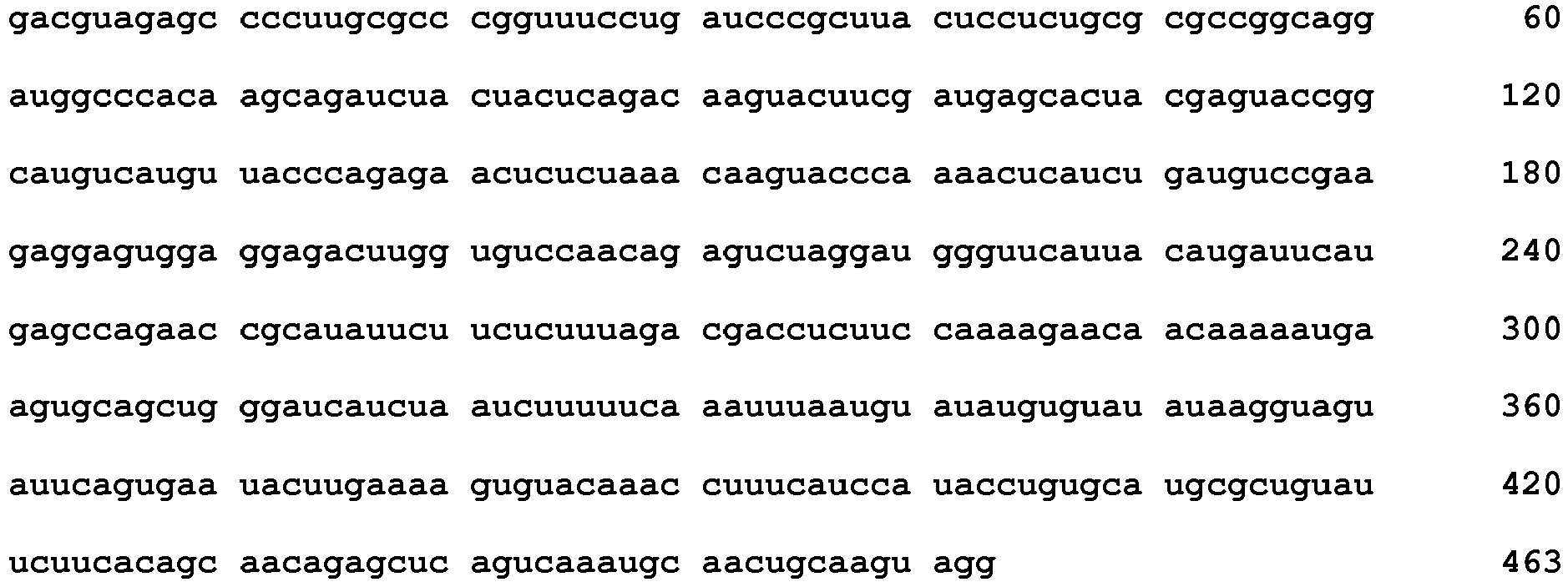
- <210> 5
<211> 1973
<212> RNA
<213> Homo sapiens - <220>
<221> misc_feature
<222> (558)..(558)
<223> n is a, c, g, or u - <220>
<221> misc_feature
<222> (569)..(569)
<223> n is a, c, g, or u - <400> 5


- <210> 6
<211> 254
<212> RNA
<213> Homo sapiens - <400> 6
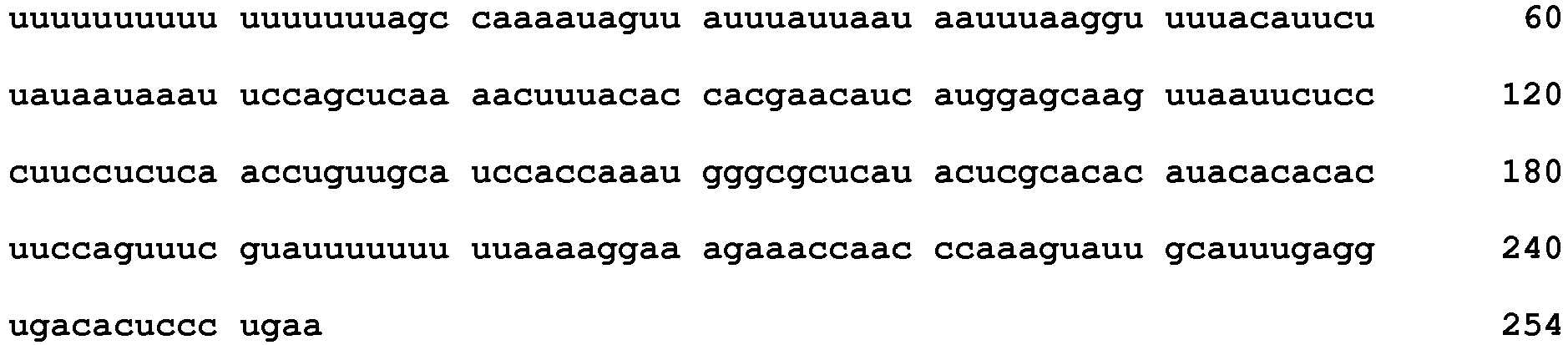
- <210> 7
<211> 137
<212> RNA
<213> Homo sapiens - <400> 7

- <210> 8
<211> 622
<212> RNA
<213> Homo sapiens - <220>
<221> misc_feature
<222> (27)..(27)
<223> n is a, c, g, or u - <220>
<221> misc_feature
<222> (30)..(30)
<223> n is a, c, g, or u - <220>
<221> misc_feature
<222> (133)..(133)
<223> n is a, c, g, or u - <400> 8

- <210> 9
<211> 613
<212> RNA
<213> Homo sapiens - <400> 9

- <210> 10
<211> 1508
<212> RNA
<213> Homo sapiens - <400> 10


- <210> 11
<211> 3660
<212> RNA
<213> Homo sapiens - <400> 11


- <210> 12
<211> 429
<212> RNA
<213> Homo sapiens - <400> 12


- <210> 13
<211> 1639
<212> RNA
<213> Homo sapiens - <220>
<221> misc_feature
<222> (1003)..(1003)
<223> n is a, c, g, or u - <220>
<221> misc_feature
<222> (1098)..(1099)
<223> n is a, c, g, or u - <220>
<221> misc_feature
<222> (1106)..(1106)
<223> n is a, c, g, or u - <220>
<221> misc_feature
<222> (1112)..(1112)
<223> n is a, c, g, or u - <220>
<221> misc_feature
<222> (1158)..(1158)
<223> n is a, c, g, or u - <220>
<221> misc_feature
<222> (1161)..(1161)
<223> n is a, c, g, or u - <220>
<221> misc_feature
<222> (1171)..(1171)
<223> n is a, c, g, or u - <220>
<221> misc_feature
<222> (1182)..(1182)
<223> n is a, c, g, or u - <220>
<221> misc_feature
<222> (1245)..(1245)
<223> n is a, c, g, or u - <220>
<221> misc_feature
<222> (1436)..(1436)
<223> n is a, c, g, or u - <220>
<221> misc_feature
<222> (1472)..(1473)
<223> n is a, c, g, or u - <400> 13


- <210> 14
<211> 1929
<212> RNA
<213> Homo sapiens - <400> 14
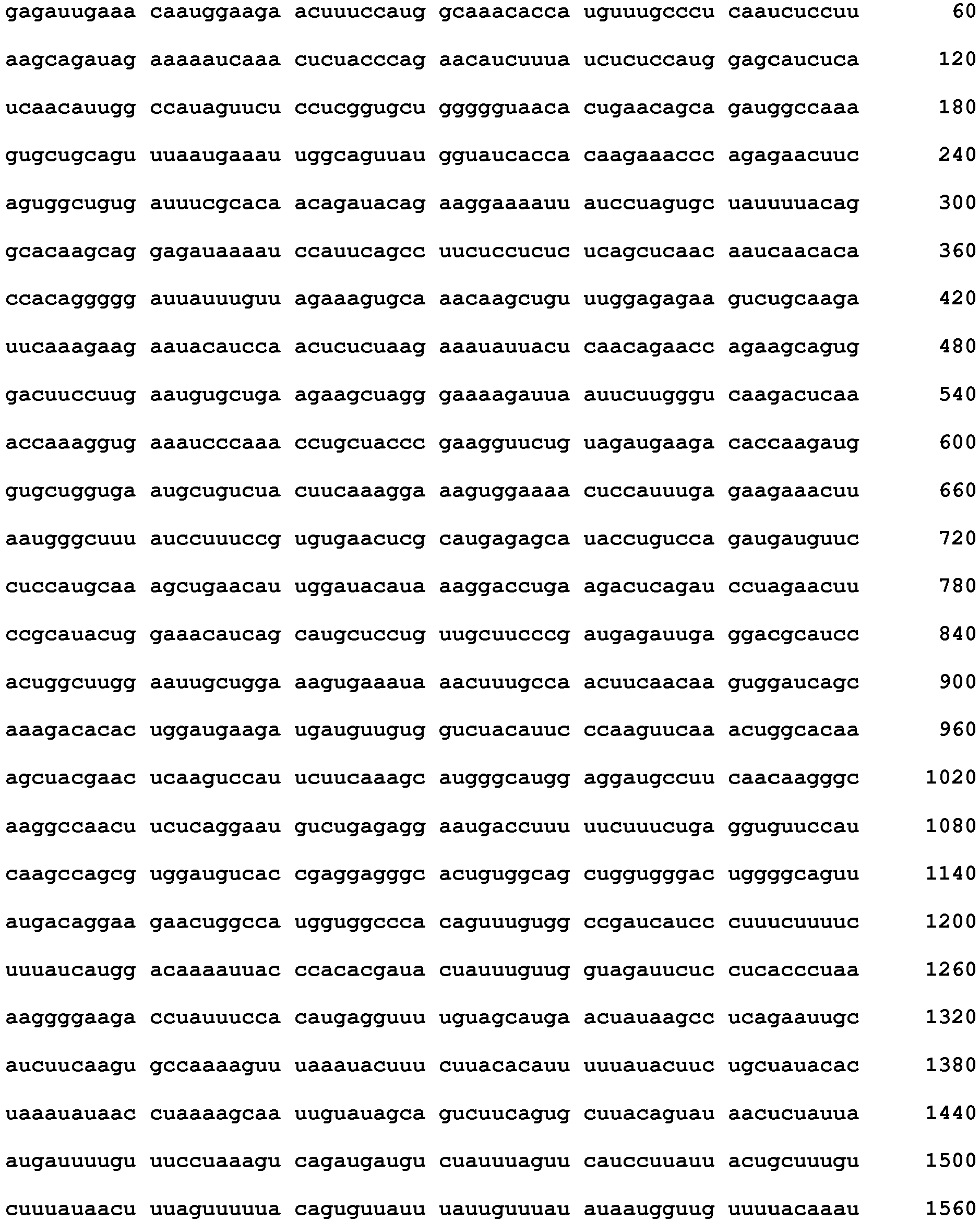

- <210> 15
<211> 284
<212> RNA
<213> Homo sapiens - <220>
<221> misc_feature
<222> (16)..(16)
<223> n is a, c, g, or u - <400> 15

- <210> 16
<211> 219
<212> RNA
<213> Homo sapiens - <220>
<221> misc_feature
<222> (70)..(70)
<223> n is a, c, g, or u - <220>
<221> misc_feature
<222> (88)..(88)
<223> n is a, c, g, or u - <220>
<221> misc_feature
<222> (132)..(132)
<223> n is a, c, g, or u - <220>
<221> misc_feature
<222> (205)..(205)
<223> n is a, c, g, or u - <400> 16

- <210> 17
<211> 4179
<212> RNA
<213> Homo sapiens - <400> 17


- <210> 18
<211> 1416
<212> RNA
<213> Homo sapiens - <400> 18


- <210> 19
<211> 566
<212> RNA
<213> Homo sapiens - <220>
<221> misc_feature
<222> (154)..(154)
<223> n is a, c, g, or u - <220>
<221> misc_feature
<222> (254)..(254)
<223> n is a, c, g, or u - <220>
<221> misc_feature
<222> (262)..(262)
<223> n is a, c, g, or u - <220>
<221> misc_feature
<222> (287)..(287)
<223> n is a, c, g, or u - <220>
<221> misc_feature
<222> (305)..(305)
<223> n is a, c, g, or u - <220>
<221> misc_feature
<222> (354)..(354)
<223> n is a, c, g, or u - <220>
<221> misc_feature
<222> (378)..(378)
<223> n is a, c, g, or u - <220>
<221> misc_feature
<222> (419)..(419)
<223> n is a, c, g, or u - <220>
<221> misc_feature
<222> (449)..(449)
<223> n is a, c, g, or u - <220>
<221> misc_feature
<222> (492)..(493)
<223> n is a, c, g, or u - <220>
<221> misc_feature
<222> (521)..(521)
<223> n is a, c, g, or u - <220>
<221> misc_feature
<222> (550)..(550)
<223> n is a, c, g, or u - <400> 19

- <210> 20
<211> 358
<212> RNA
<213> Homo sapiens - <220>
<221> misc_feature
<222> (269)..(269)
<223> n is a, c, g, or u - <400> 20


- <210> 21
<211> 2149
<212> RNA
<213> Homo sapiens - <400> 21


- <210> 22
<211> 2062
<212> RNA
<213> Homo sapiens - <400> 22


- <210> 23
<211> 230
<212> RNA
<213> Homo sapiens - <400> 23

- <210> 24
<211> 1560
<212> RNA
<213> Homo sapiens - <400> 24

- <210> 25
<211> 253
<212> RNA
<213> Homo sapiens - <400> 25


- <210> 26
<211> 3660
<212> RNA
<213> Homo sapiens - <400> 26


- <210> 27
<211> 1969
<212> RNA
<213> Homo sapiens - <400> 27


- <210> 28
<211> 1478
<212> RNA
<213> Homo sapiens - <400> 28


- <210> 29
<211> 1786
<212> RNA
<213> Homo sapiens - <400> 29


- <210> 30
<211> 1897
<212> RNA
<213> Homo sapiens - <400> 30


- <210> 31
<211> 473
<212> RNA
<213> Homo sapiens - <400> 31

- <210> 32
<211> 1680
<212> RNA
<213> Homo sapiens - <400> 32


- <210> 33
<211> 1783
<212> RNA
<213> Homo sapiens - <400> 33


- <210> 34
<211> 1786
<212> RNA
<213> Homo sapiens - <400> 34


- <210> 35
<211> 1389
<212> RNA
<213> Homo sapiens - <400> 35

- <210> 36
<211> 961
<212> RNA
<213> Homo sapiens - <400> 36


- <210> 37
<211> 2187
<212> RNA
<213> Homo sapiens - <400> 37


- <210> 38
<211> 2046
<212> RNA
<213> Homo sapiens - <400> 38


- <210> 39
<211> 423
<212> RNA
<213> Homo sapiens - <400> 39

- <210> 40
<211> 434
<212> RNA
<213> Homo sapiens - <400> 40

- <210> 41
<211> 1000
<212> RNA
<213> Homo sapiens - <400> 41


- <210> 42
<211> 1653
<212> RNA
<213> Homo sapiens - <400> 42
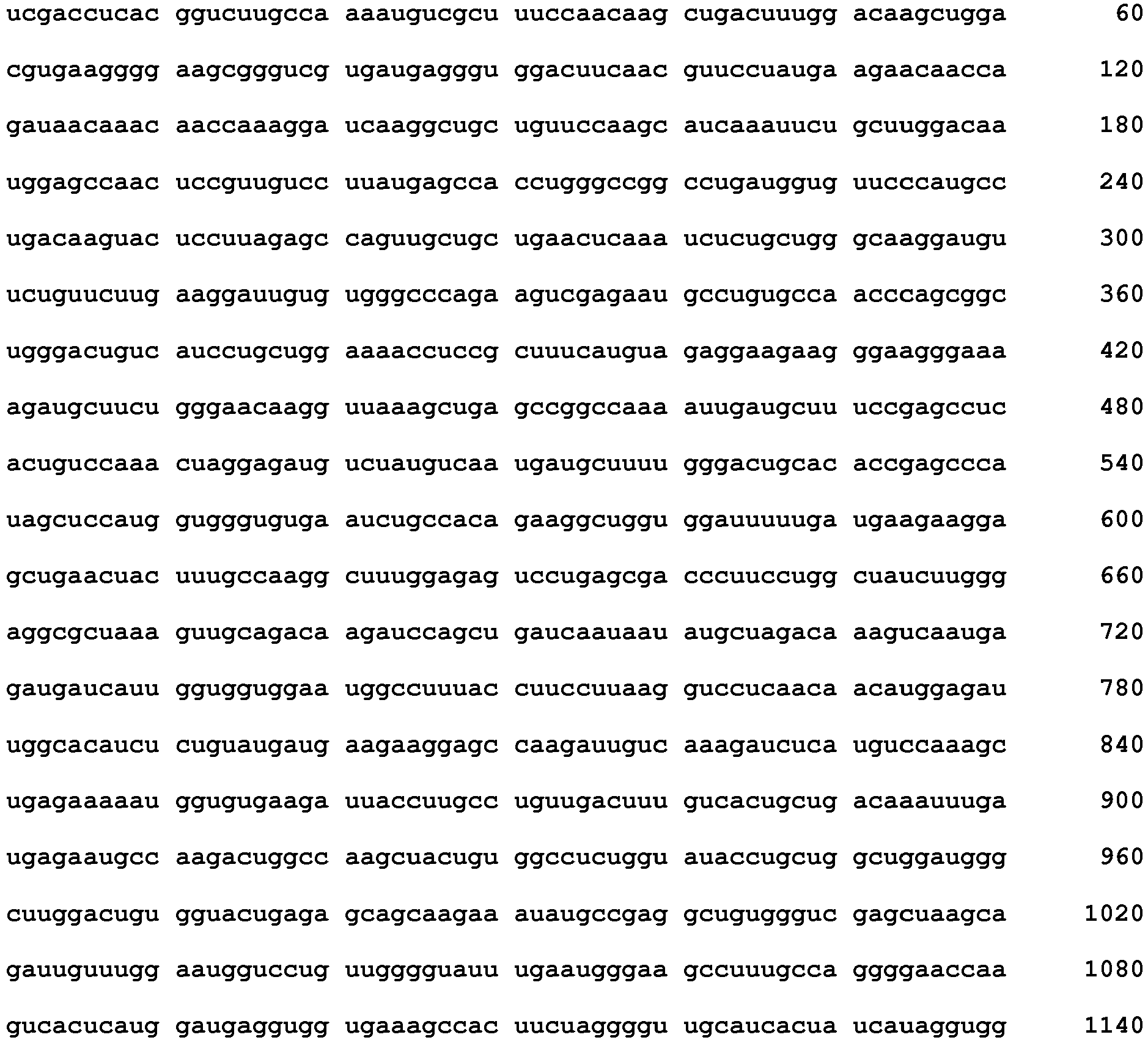
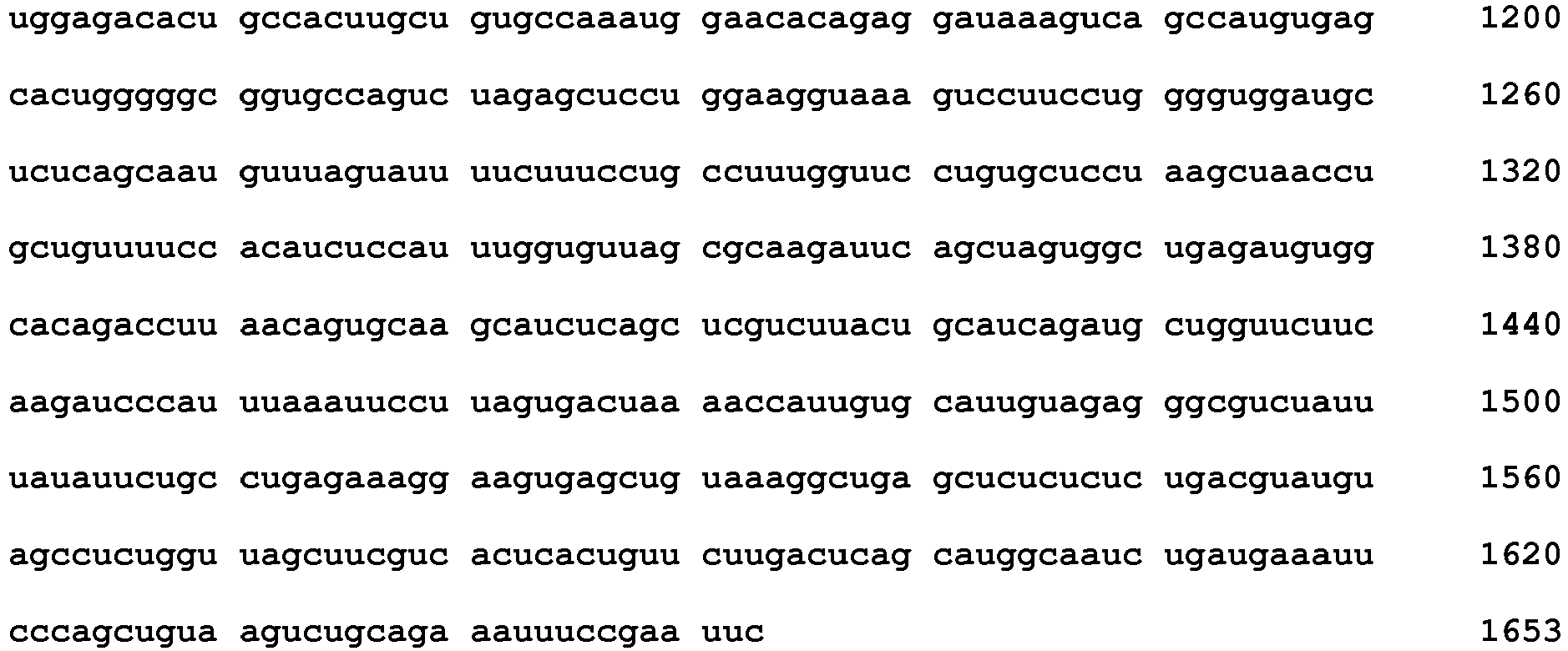
- <210> 43
<211> 485
<212> RNA
<213> Homo sapiens - <400> 43
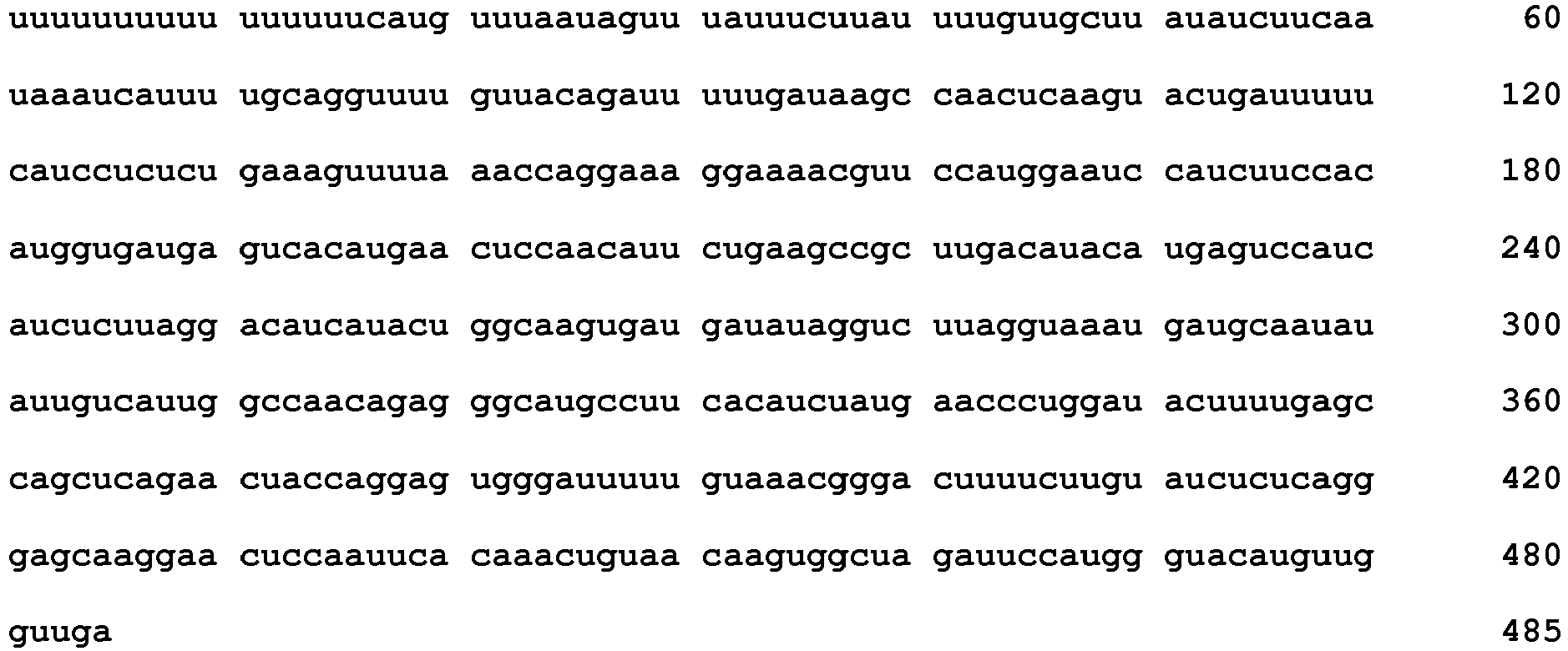
- <210> 44
<211> 3449
<212> RNA
<213> Homo sapiens - <400> 44
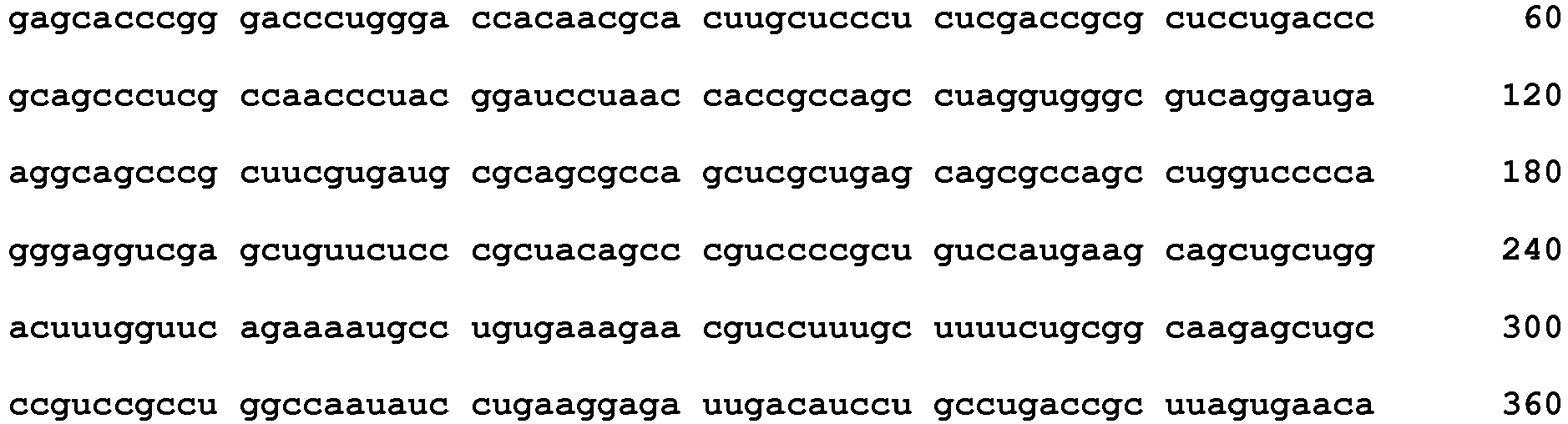


- <210> 45
<211> 226
<212> RNA
<213> Homo sapiens - <400> 45

- <210> 46
<211> 952
<212> RNA
<213> Homo sapiens - <400> 46

- <210> 47
<211> 1777
<212> RNA
<213> Homo sapiens - <400> 47


- <210> 48
<211> 175
<212> RNA
<213> Homo sapiens - <400> 48

- <210> 49
<211> 1629
<212> RNA
<213> Homo sapiens - <400> 49


- <210> 50
<211> 831
<212> RNA
<213> Homo sapiens - <400> 50


- <210> 51
<211> 3601
<212> RNA
<213> Homo sapiens - <400> 51


- <210> 52
<211> 329
<212> RNA
<213> Homo sapiens - <400> 52

- <210> 53
<211> 3671
<212> RNA
<213> Homo sapiens - <400> 53


- <210> 54
<211> 951
<212> RNA
<213> Homo sapiens - <400> 54


- <210> 55
<211> 1822
<212> RNA
<213> Homo sapiens - <400> 55


- <210> 56
<211> 2663
<212> RNA
<213> Homo sapiens - <400> 56

- <210> 57
<211> 884
<212> RNA
<213> Homo sapiens - <400> 57

- <210> 58
<211> 1310
<212> RNA
<213> Homo sapiens - <400> 58


- <210> 59
<211> 487
<212> RNA
<213> Homo sapiens - <400> 59

- <210> 60
<211> 1430
<212> RNA
<213> Homo sapiens - <400> 60


- <210> 61
<211> 268
<212> RNA
<213> Homo sapiens - <400> 61

- <210> 62
<211> 377
<212> RNA
<213> Homo sapiens - <400> 62

- <210> 63
<211> 756
<212> RNA
<213> Homo sapiens - <400> 63

- <210> 64
<211> 4701
<212> RNA
<213> Homo sapiens - <400> 64


- <210> 65
<211> 3036
<212> RNA
<213> Homo sapiens - <400> 65


- <210> 66
<211> 526
<212> RNA
<213> Homo sapiens - <220>
<221> misc_feature
<222> (7)..(7)
<223> n is a, c, g, or u - <400> 66

- <210> 67
<211> 425
<212> RNA
<213> Homo sapiens - <400> 67

- <210> 68
<211> 2282
<212> RNA
<213> Homo sapiens - <400> 68


- <210> 69
<211> 364
<212> RNA
<213> Homo sapiens - <400> 69
- <210> 70
<211> 847
<212> RNA
<213> Homo sapiens - <400> 70


- <210> 71
<211> 779
<212> RNA
<213> Homo sapiens - <400> 71

- <210> 72
<211> 2275
<212> RNA
<213> Homo sapiens - <400> 72


- <210> 73
<211> 355
<212> RNA
<213> Homo sapiens - <400> 73

- <210> 74
<211> 289
<212> RNA
<213> Homo sapiens - <400> 74

- <210> 75
<211> 2018
<212> RNA
<213> Homo sapiens - <400> 75

- <210> 76
<211> 358
<212> RNA
<213> Homo sapiens - <400> 76

- <210> 77
<211> 870
<212> RNA
<213> Homo sapiens - <400> 77

- <210> 78
<211> 4928
<212> RNA
<213> Homo sapiens - <400> 78


- <210> 79
<211> 374
<212> RNA
<213> Homo sapiens - <400> 79

- <210> 80
<211> 1285
<212> RNA
<213> Homo sapiens - <400> 80


- <210> 81
<211> 801
<212> RNA
<213> Homo sapiens - <400> 81


- <210> 82
<211> 216
<212> RNA
<213> Homo sapiens - <400> 82

- <210> 83
<211> 2901
<212> RNA
<213> Homo sapiens - <400> 83


- <210> 84
<211> 8752
<212> RNA
<213> Homo sapiens - <400> 84
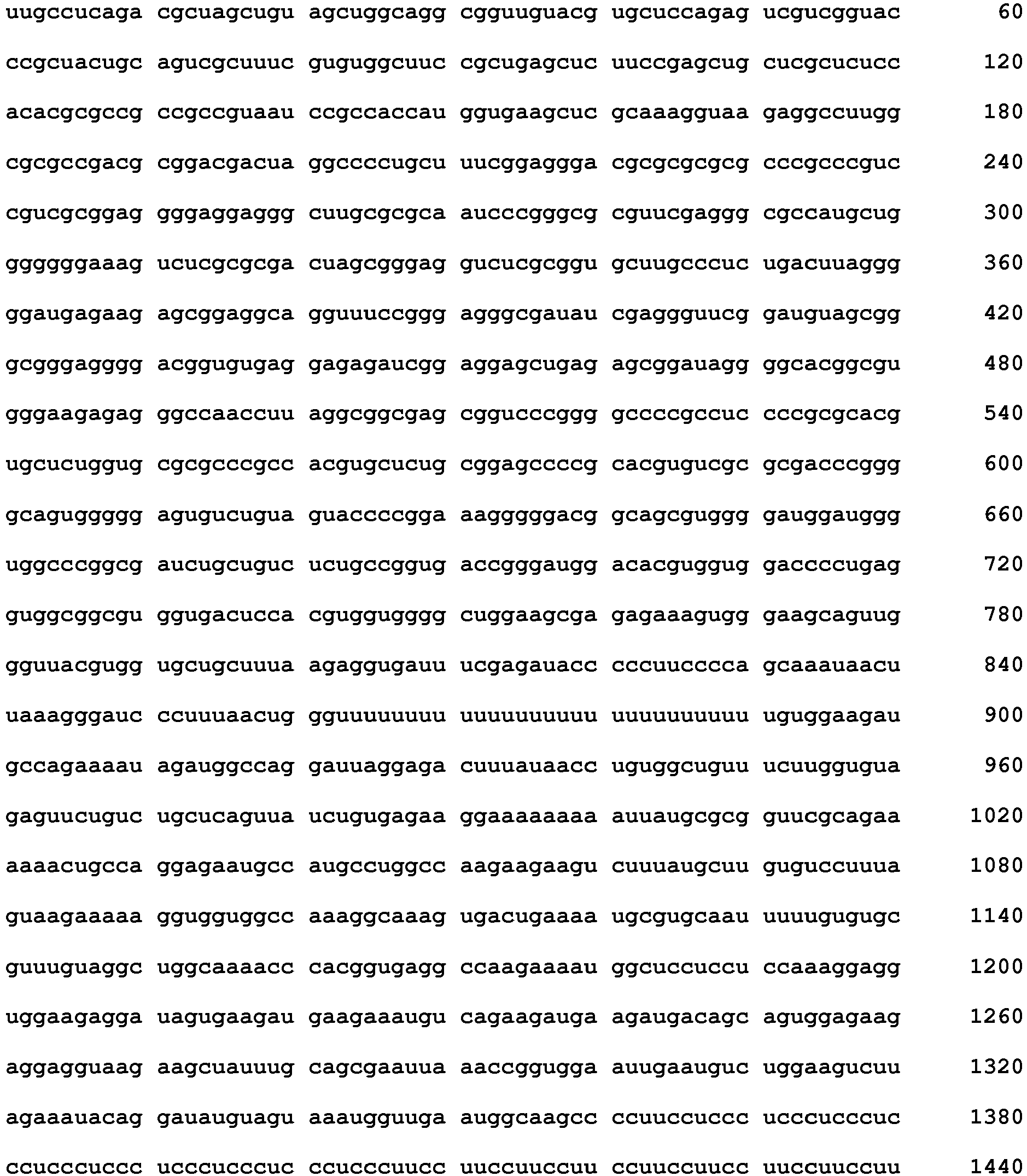


- <210> 85
<211> 3889
<212> RNA
<213> Homo sapiens - <400> 85



- <210> 86
<211> 1720
<212> RNA
<213> Homo sapiens - <400> 86


- <210> 87
<211> 367
<212> RNA
<213> Homo sapiens - <400> 87

- <210> 88
<211> 7879
<212> RNA
<213> Homo sapiens - <220>
<221> misc_feature
<222> (4457)..(4460)
<223> n is a, c, g, or u - <220>
<221> misc_feature
<222> (4471)..(4471)
<223> n is a, c, g, or u - <400> 88


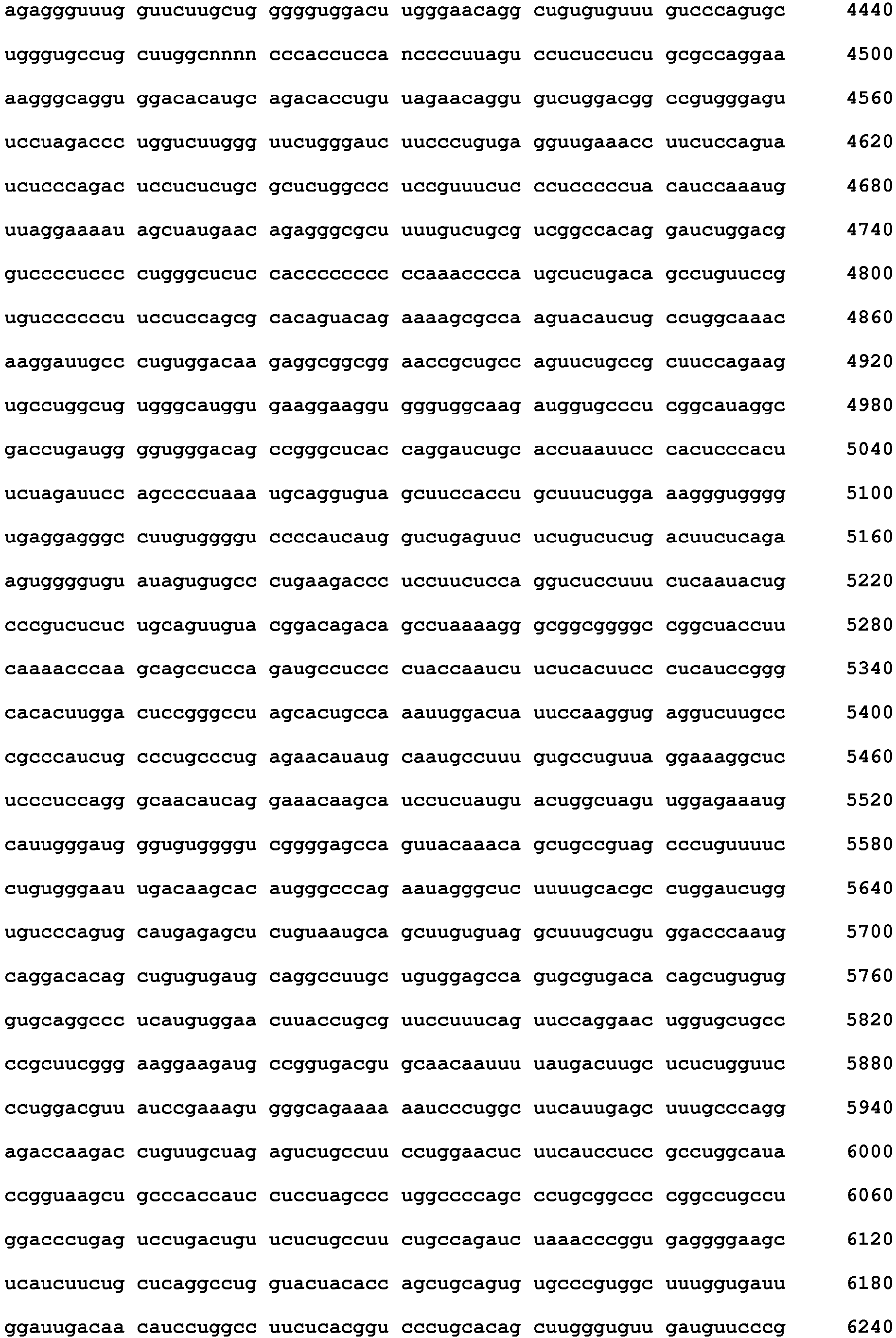

- <210> 89
<211> 586
<212> RNA
<213> Homo sapiens - <400> 89
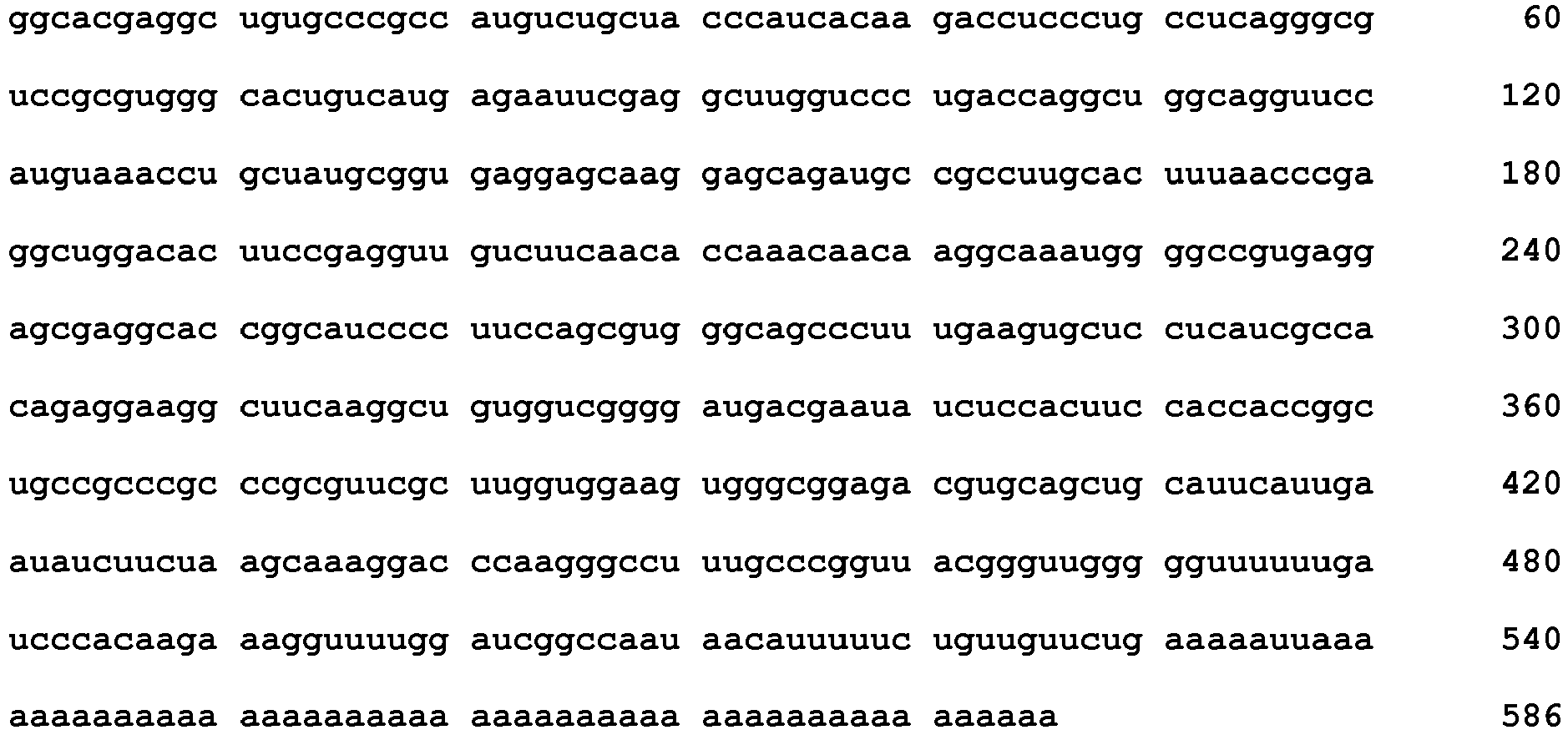
- <210> 90
<211> 540
<212> RNA
<213> Homo sapiens - <400> 90

- <210> 91
<211> 2000
<212> RNA
<213> Homo sapiens - <400> 91


- <210> 92
<211> 2649
<212> RNA
<213> Homo sapiens - <400> 92


- <210> 93
<211> 450
<212> RNA
<213> Homo sapiens - <220>
<221> misc_feature
<222> (389)..(389)
<223> n is a, c, g, or u - <400> 93

- <210> 94
<211> 929
<212> RNA
<213> Homo sapiens - <400> 94

- <210> 95
<211> 325
<212> RNA
<213> Homo sapiens - <400> 95

- <210> 96
<211> 367
<212> RNA
<213> Homo sapiens - <400> 96

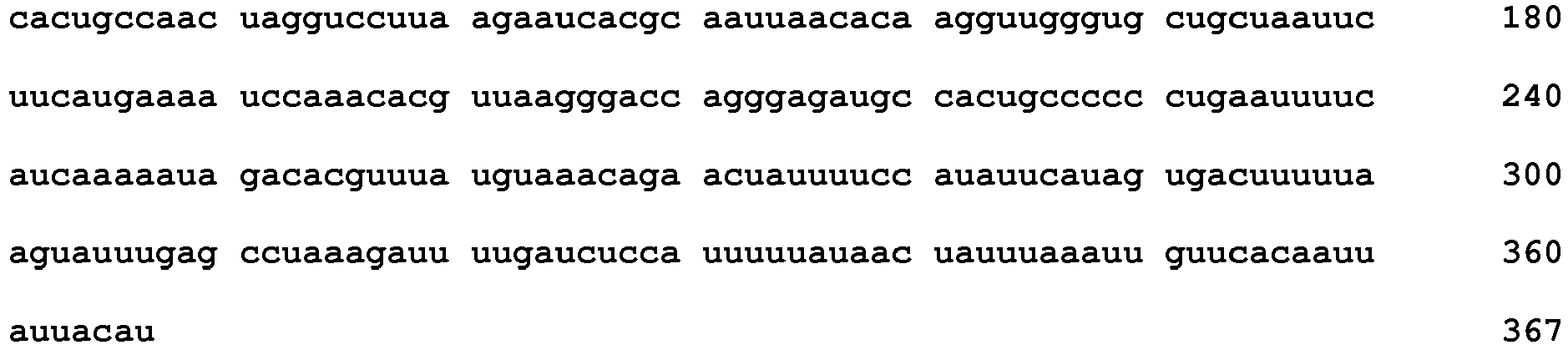
- <210> 97
<211> 418
<212> RNA
<213> Homo sapiens - <400> 97

- <210> 98
<211> 1552
<212> RNA
<213> Homo sapiens - <400> 98


- <210> 99
<211> 4043
<212> RNA
<213> Homo sapiens - <400> 99


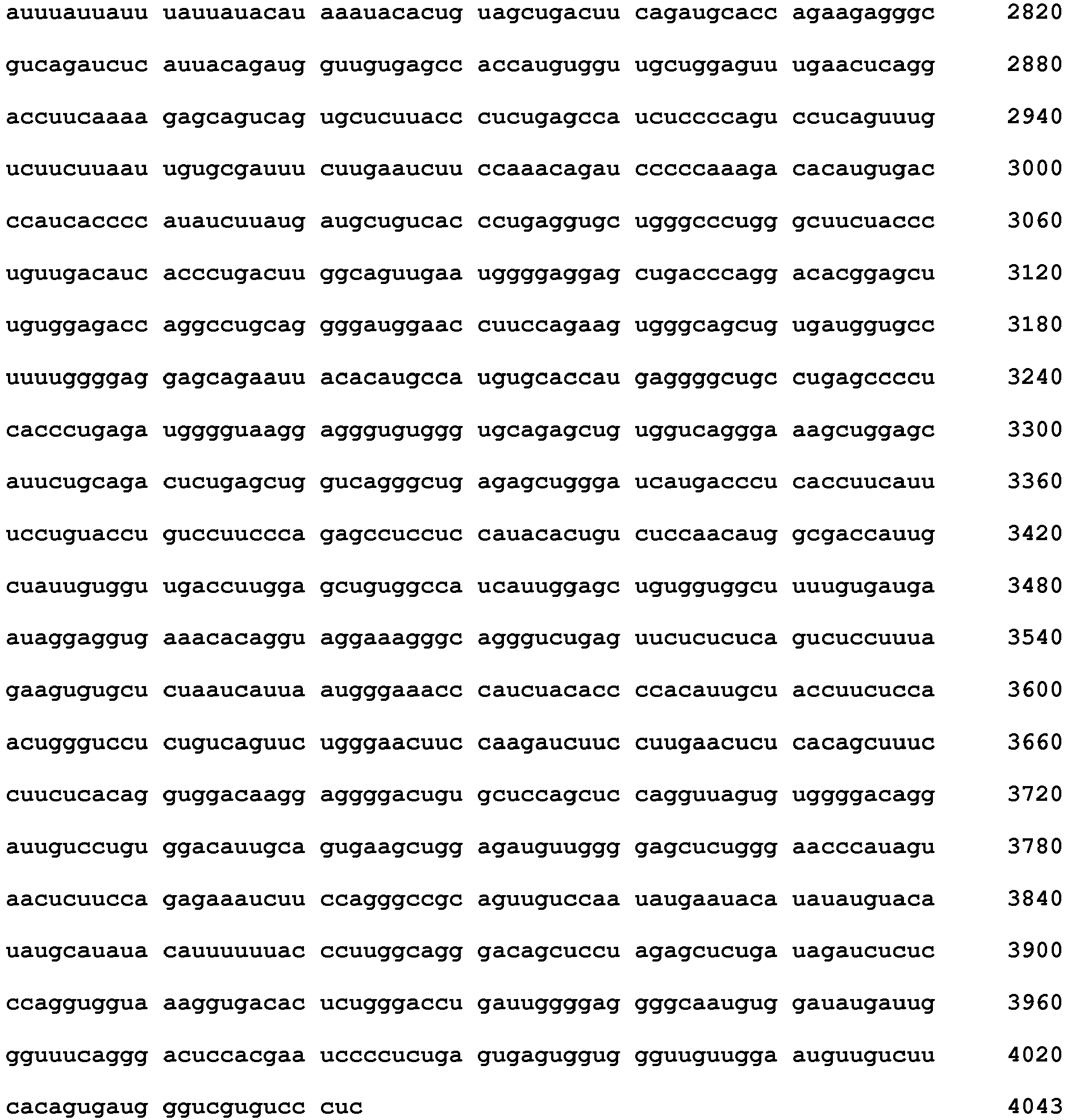
- <210> 100
<211> 211
<212> RNA
<213> Homo sapiens - <400> 100

- <210> 101
<211> 8252
<212> RNA
<213> Homo sapiens - <400> 101


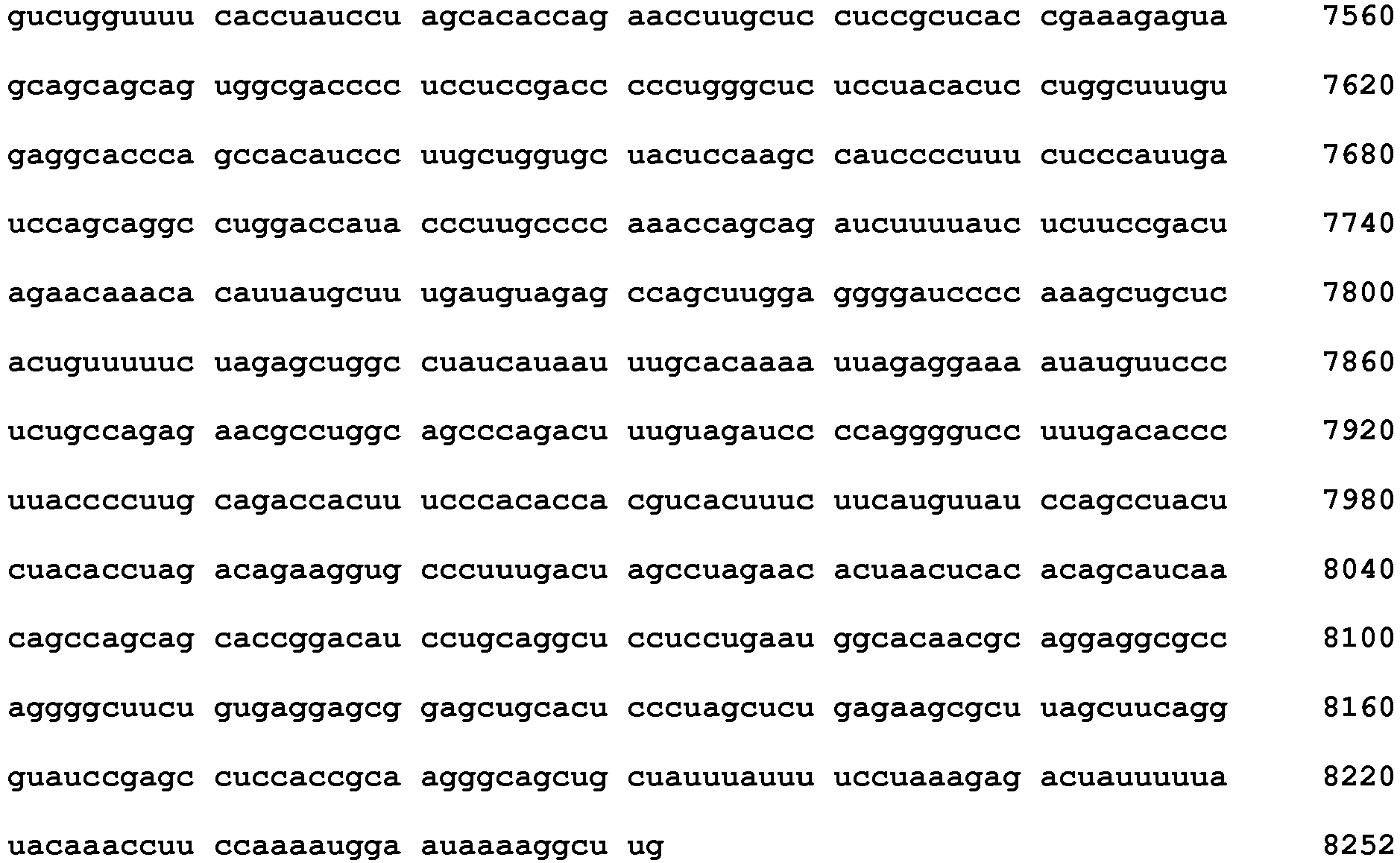
- <210> 102
<211> 1938
<212> RNA
<213> Homo sapiens - <400> 102


- <210> 103
<211> 3036
<212> RNA
<213> Homo sapiens - <400> 103
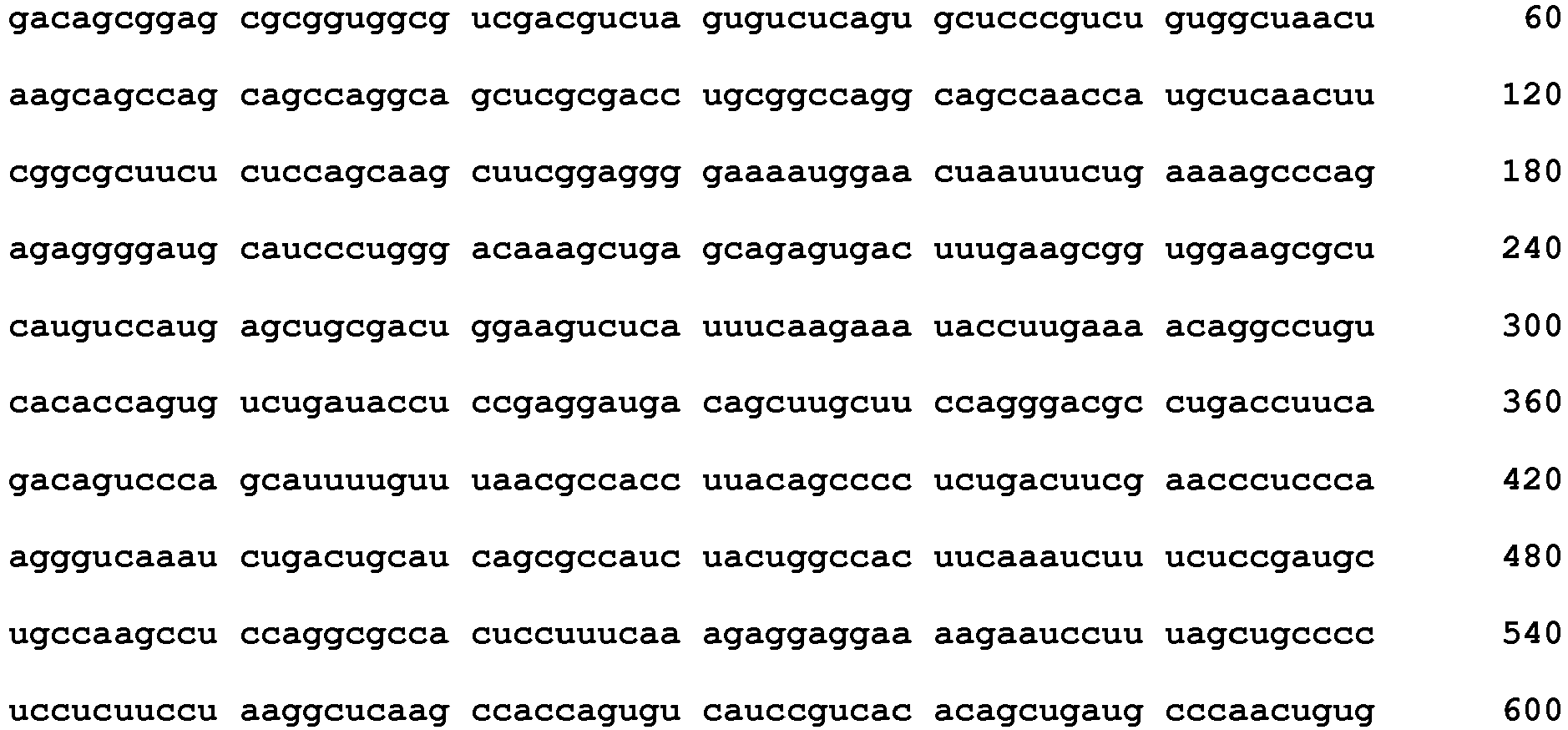
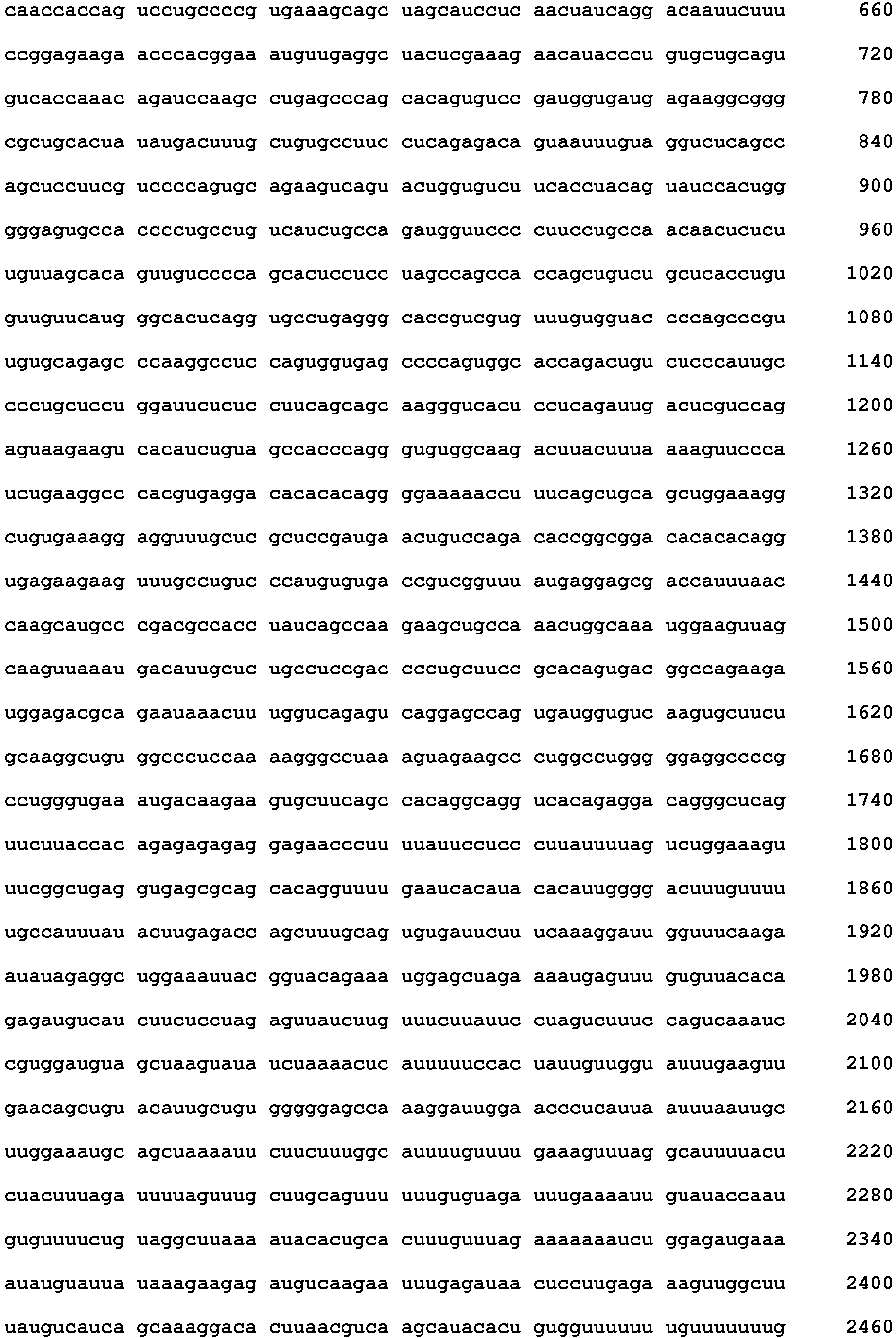

- <210> 104
<211> 279
<212> RNA
<213> Homo sapiens - <400> 104

- <210> 105
<211> 143
<212> RNA
<213> Homo sapiens - <400> 105

- <210> 106
<211> 989
<212> RNA
<213> Homo sapiens - <400> 106

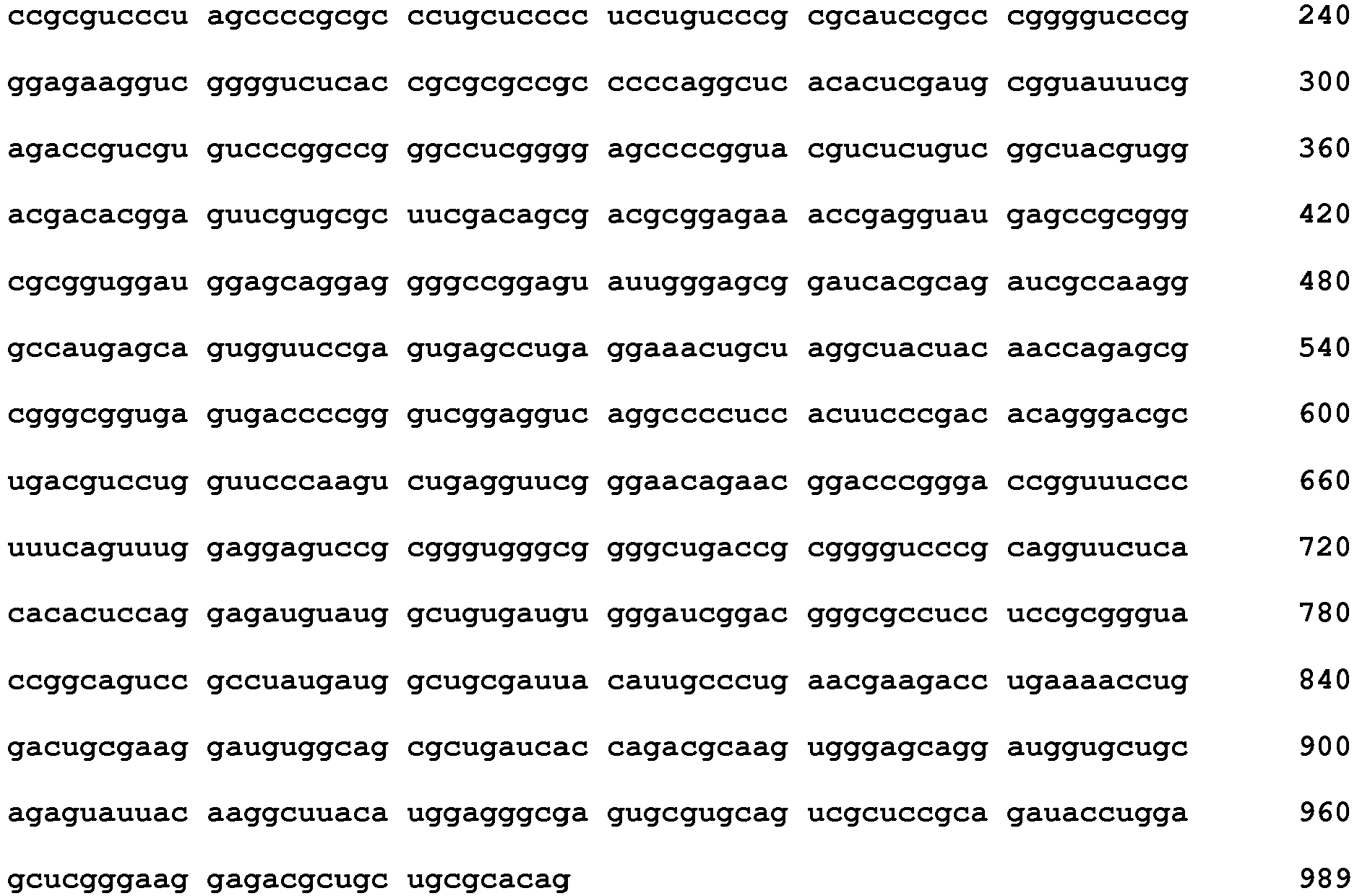
- <210> 107
<211> 4484
<212> RNA
<213> Homo sapiens - <400> 107


- <210> 108
<211> 385
<212> RNA
<213> Homo sapiens - <400> 108

- <210> 109
<211> 2247
<212> RNA
<213> Homo sapiens - <400> 109


- <210> 110
<211> 315
<212> RNA
<213> Homo sapiens - <400> 110

- <210> 111
<211> 481
<212> RNA
<213> Homo sapiens - <400> 111

- <210> 112
<211> 379
<212> RNA
<213> Homo sapiens - <400> 112

- <210> 113
<211> 3733
<212> RNA
<213> Homo sapiens - <400> 113


- <210> 114
<211> 560
<212> RNA
<213> Homo sapiens - <220>
<221> misc_feature
<222> (107)..(107)
<223> n is a, c, g, or u - <400> 114


- <210> 115
<211> 560
<212> RNA
<213> Homo sapiens - <220>
<221> misc_feature
<222> (107)..(107)
<223> n is a, c, g, or u - <400> 115
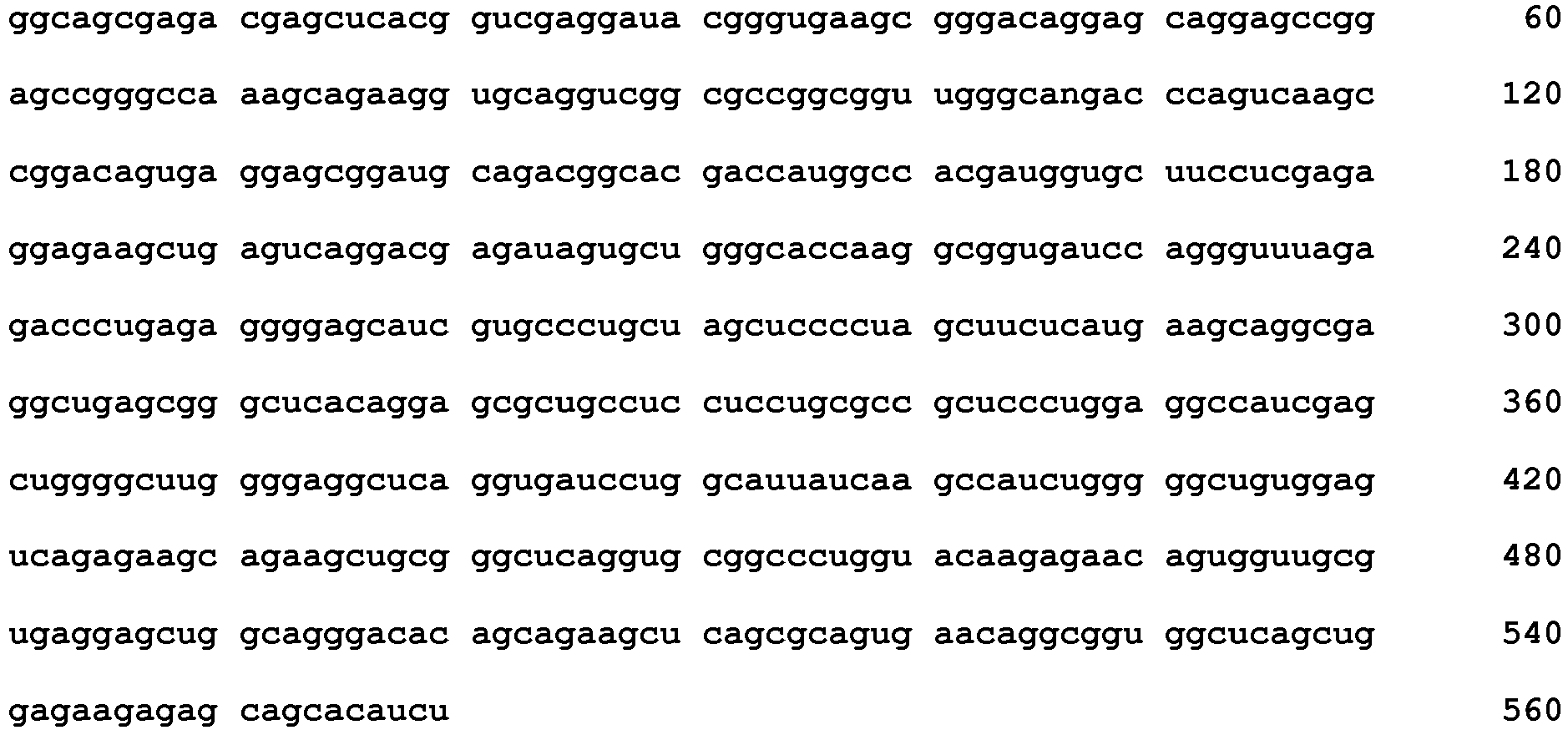
- <210> 116
<211> 1649
<212> RNA
<213> Homo sapiens - <400> 116


- <210> 117
<211> 334
<212> RNA
<213> Homo sapiens - <400> 117


- <210> 118
<211> 481
<212> RNA
<213> Homo sapiens - <400> 118

- <210> 119
<211> 481
<212> RNA
<213> Homo sapiens - <400> 119
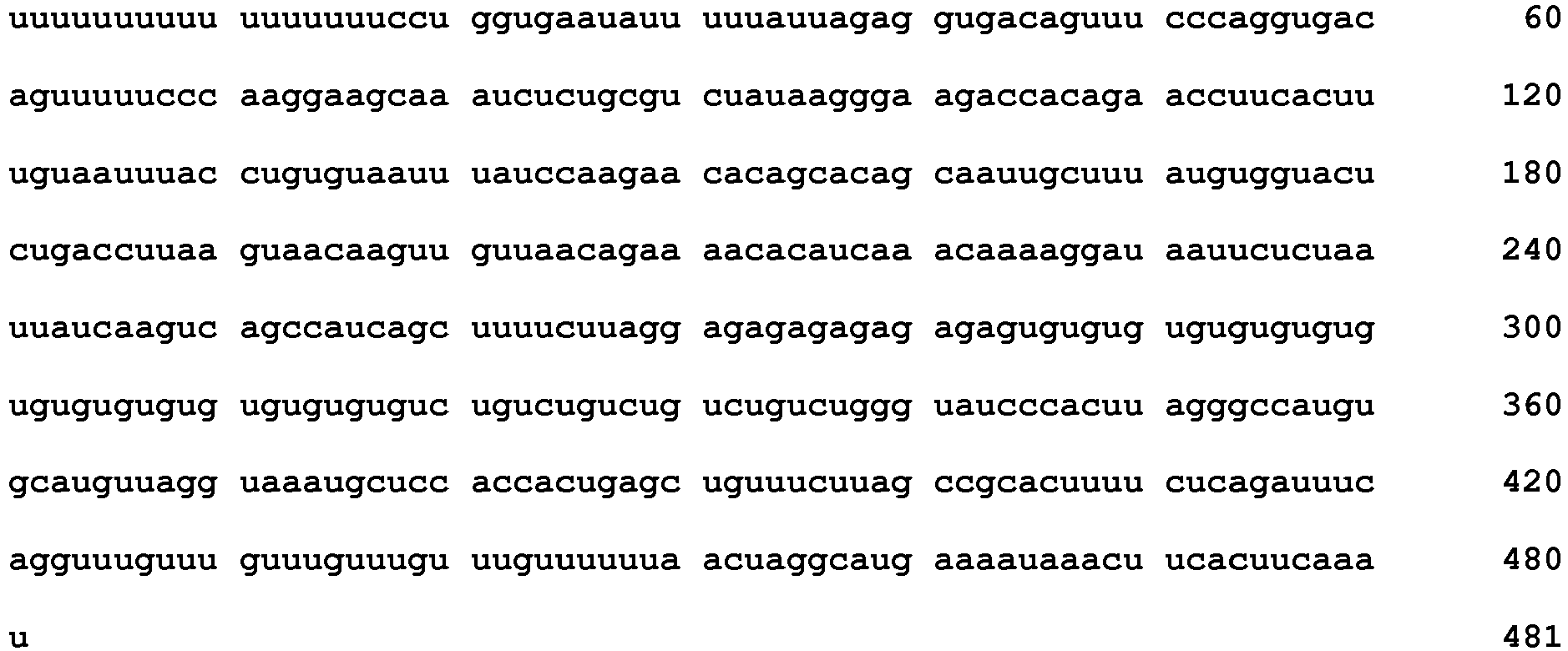
- <210> 120
<211> 302
<212> RNA
<213> Homo sapiens - <400> 120


- <210> 121
<211> 1266
<212> RNA
<213> Homo sapiens - <400> 121

- <210> 122
<211> 1266
<212> RNA
<213> Homo sapiens - <400> 122

- <210> 123
<211> 1287
<212> RNA
<213> Homo sapiens - <400> 123


- <210> 124
<211> 612
<212> RNA
<213> Homo sapiens - <400> 124


- <210> 125
<211> 529
<212> RNA
<213> Homo sapiens - <400> 125

- <210> 126
<211> 291
<212> RNA
<213> Homo sapiens - <400> 126
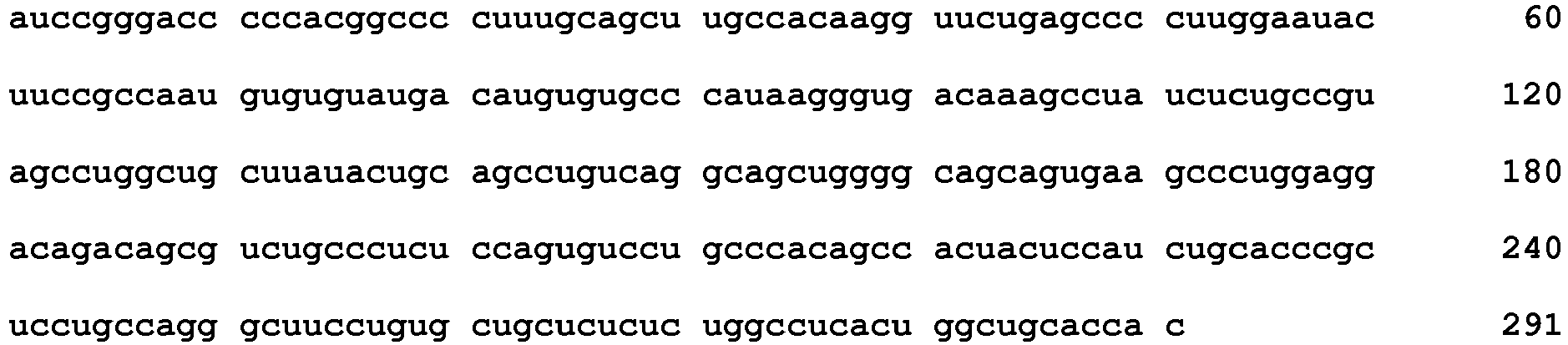
- <210> 127
<211> 3454
<212> RNA
<213> Homo sapiens - <400> 127


- <210> 128
<211> 199
<212> RNA
<213> Homo sapiens - <220>
<221> misc_feature
<222> (136)..(136)
<223> n is a, c, g, or u - <400> 128

- <210> 129
<211> 1706
<212> RNA
<213> Homo sapiens - <400> 129


- <210> 130
<211> 2175
<212> RNA
<213> Homo sapiens - <400> 130


- <210> 131
<211> 970
<212> RNA
<213> Homo sapiens - <400> 131

- <210> 132
<211> 356
<212> RNA
<213> Homo sapiens - <400> 132

- <210> 133
<211> 626
<212> RNA
<213> Homo sapiens - <400> 133

- <210> 134
<211> 495
<212> RNA
<213> Homo sapiens - <220>
<221> misc_feature
<222> (485)..(485)
<223> n is a, c, g, or u - <400> 134


- <210> 135
<211> 257
<212> RNA
<213> Homo sapiens - <220>
<221> misc_feature
<222> (254)..(254)
<223> n is a, c, g, or u - <400> 135

- <210> 136
<211> 1186
<212> RNA
<213> Homo sapiens - <400> 136

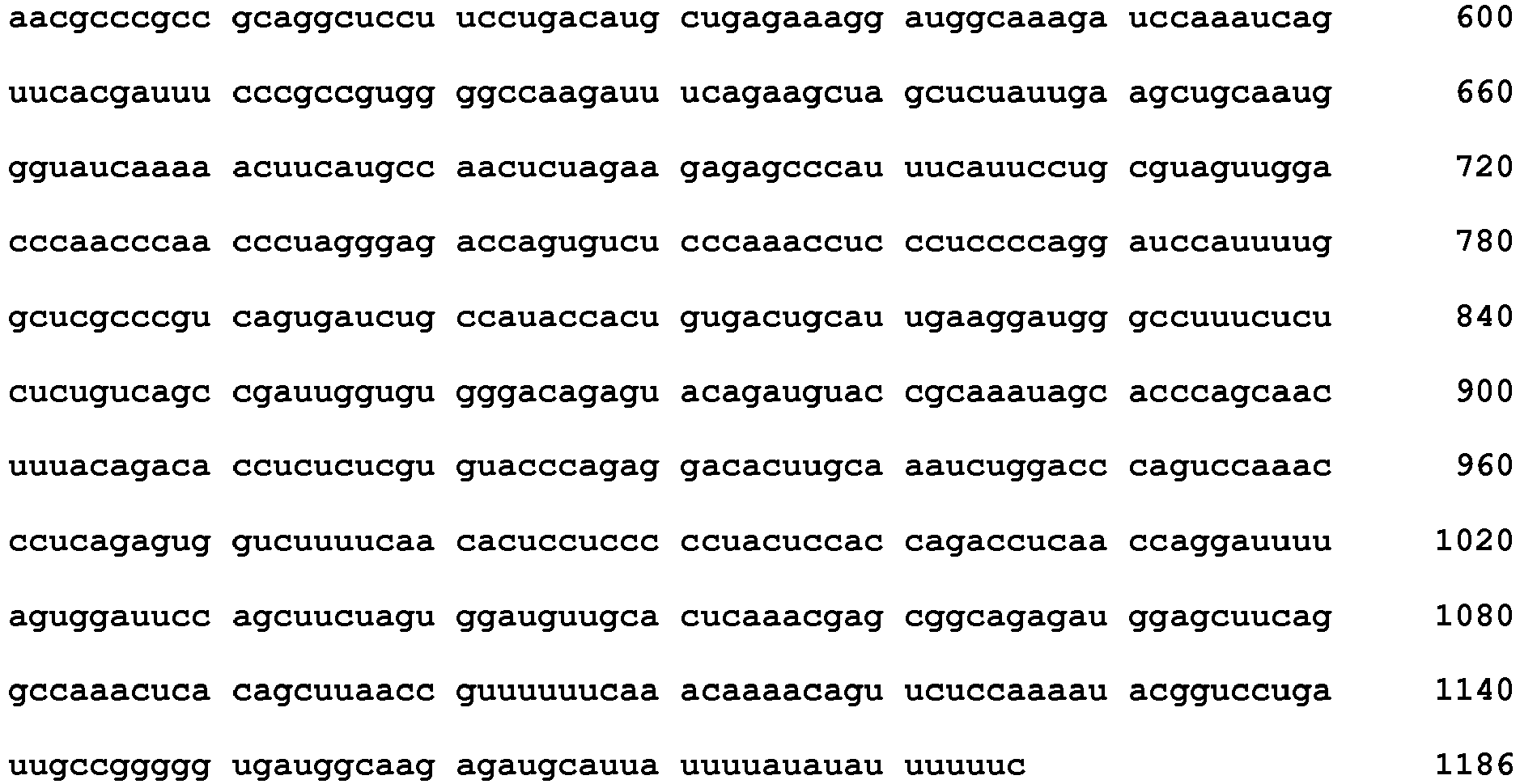
- <210> 137
<211> 455
<212> RNA
<213> Homo sapiens - <400> 137
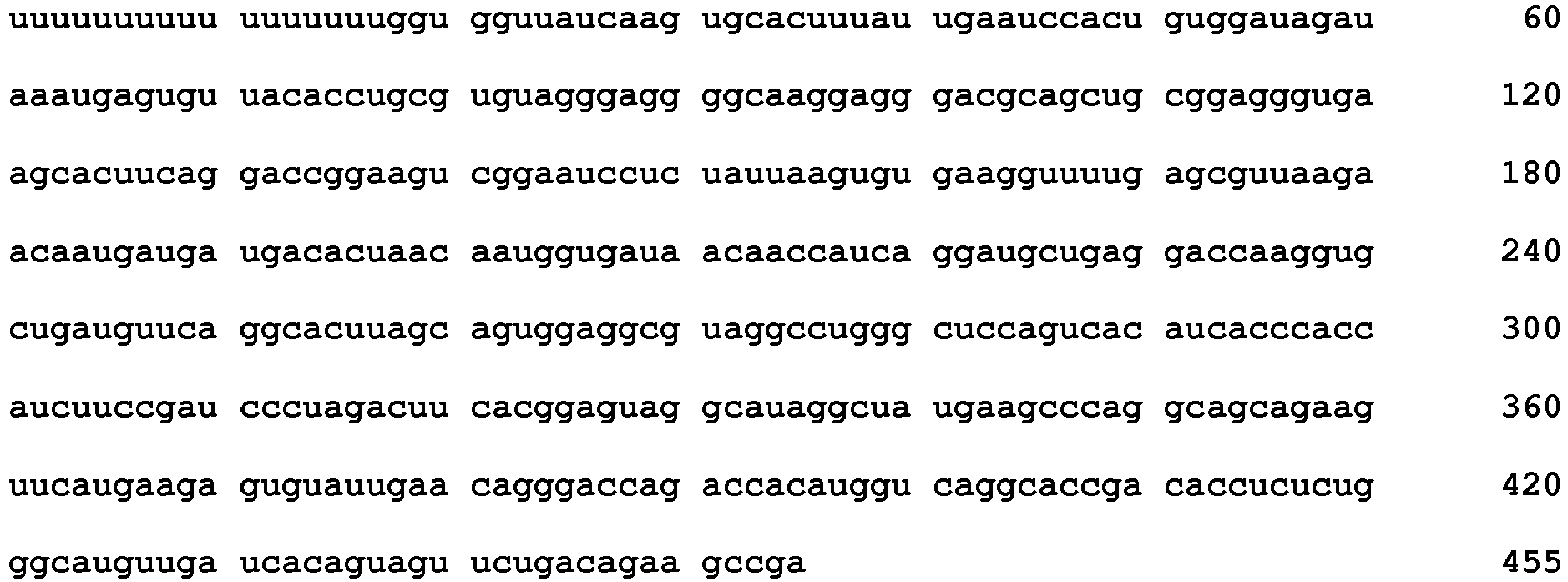
- <210> 138
<211> 1797
<212> RNA
<213> Homo sapiens - <400> 138


- <210> 139
<211> 376
<212> RNA
<213> Homo sapiens - <400> 139


- <210> 140
<211> 1068
<212> RNA
<213> Homo sapiens - <400> 140

- <210> 141
<211> 165
<212> RNA
<213> Homo sapiens - <400> 141

- <210> 142
<211> 324
<212> RNA
<213> Homo sapiens - <400> 142

- <210> 143
<211> 2473
<212> RNA
<213> Homo sapiens - <400> 143


- <210> 144
<211> 2125
<212> RNA
<213> Homo sapiens - <400> 144


- <210> 145
<211> 199
<212> RNA
<213> Homo sapiens - <400> 145

- <210> 146
<211> 412
<212> RNA
<213> Homo sapiens - <400> 146

- <210> 147
<211> 2373
<212> RNA
<213> Homo sapiens - <400> 147

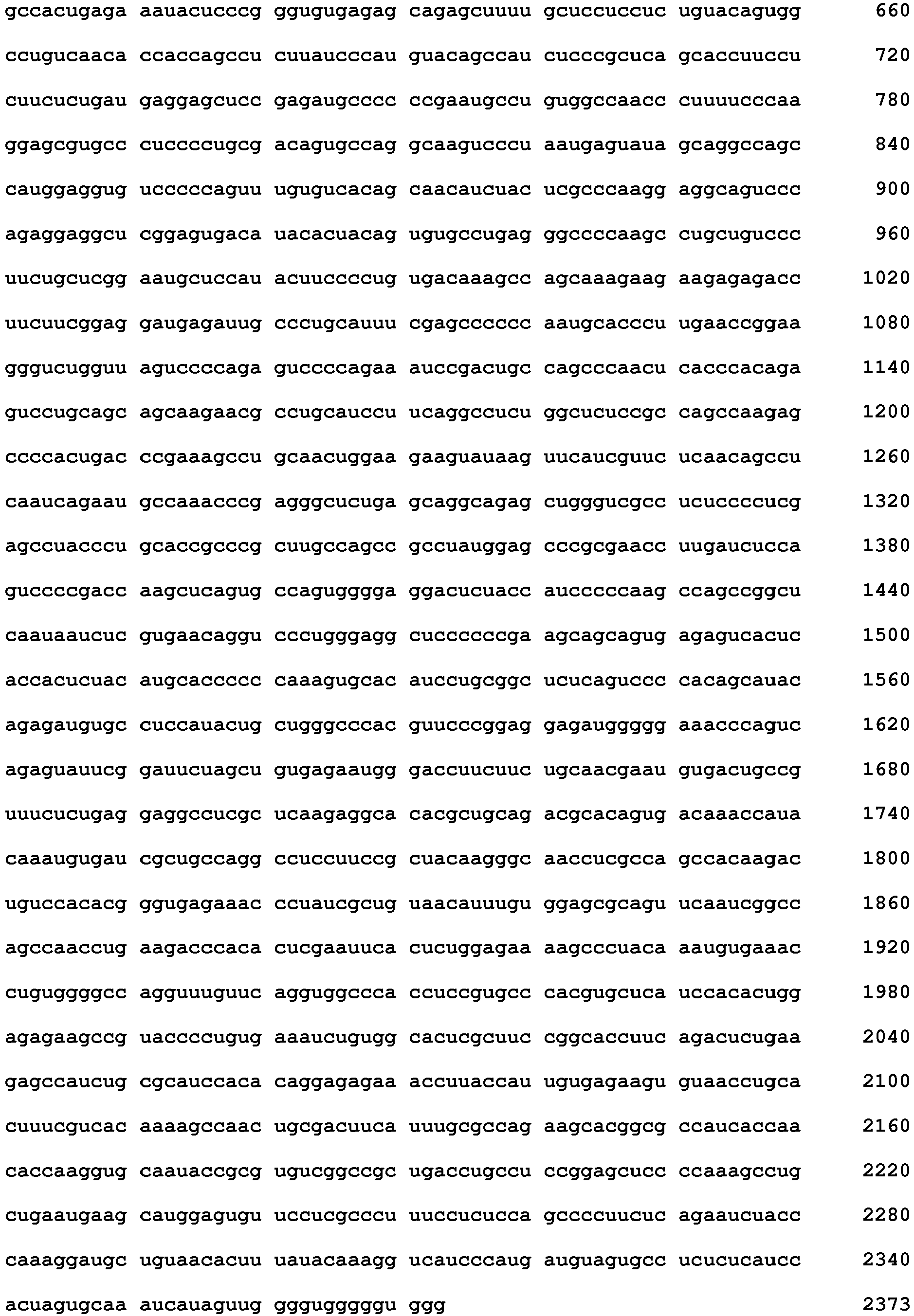
- <210> 148
<211> 989
<212> RNA
<213> Homo sapiens - <400> 148

- <210> 149
<211> 6342
<212> RNA
<213> Homo sapiens - <220>
<221> misc_feature
<222> (439)..(538)
<223> n is a, c, g, or u - <220>
<221> misc_feature
<222> (1133)..(1232)
<223> n is a, c, g, or u - <220>
<221> misc_feature
<222> (1698)..(1797)
<223> n is a, c, g, or u - <220>
<221> misc_feature
<222> (2105)..(2204)
<223> n is a, c, g, or u - <220>
<221> misc_feature
<222> (2861)..(2960)
<223> n is a, c, g, or u - <220>
<221> misc_feature
<222> (3546)..(3645)
<223> n is a, c, g, or u - <220>
<221> misc_feature
<222> (4057)..(4156)
<223> n is a, c, g, or u - <220>
<221> misc_feature
<222> (4736)..(4835)
<223> n is a, c, g, or u - <220>
<221> misc_feature
<222> (5487)..(5586)
<223> n is a, c, g, or u - <400> 149


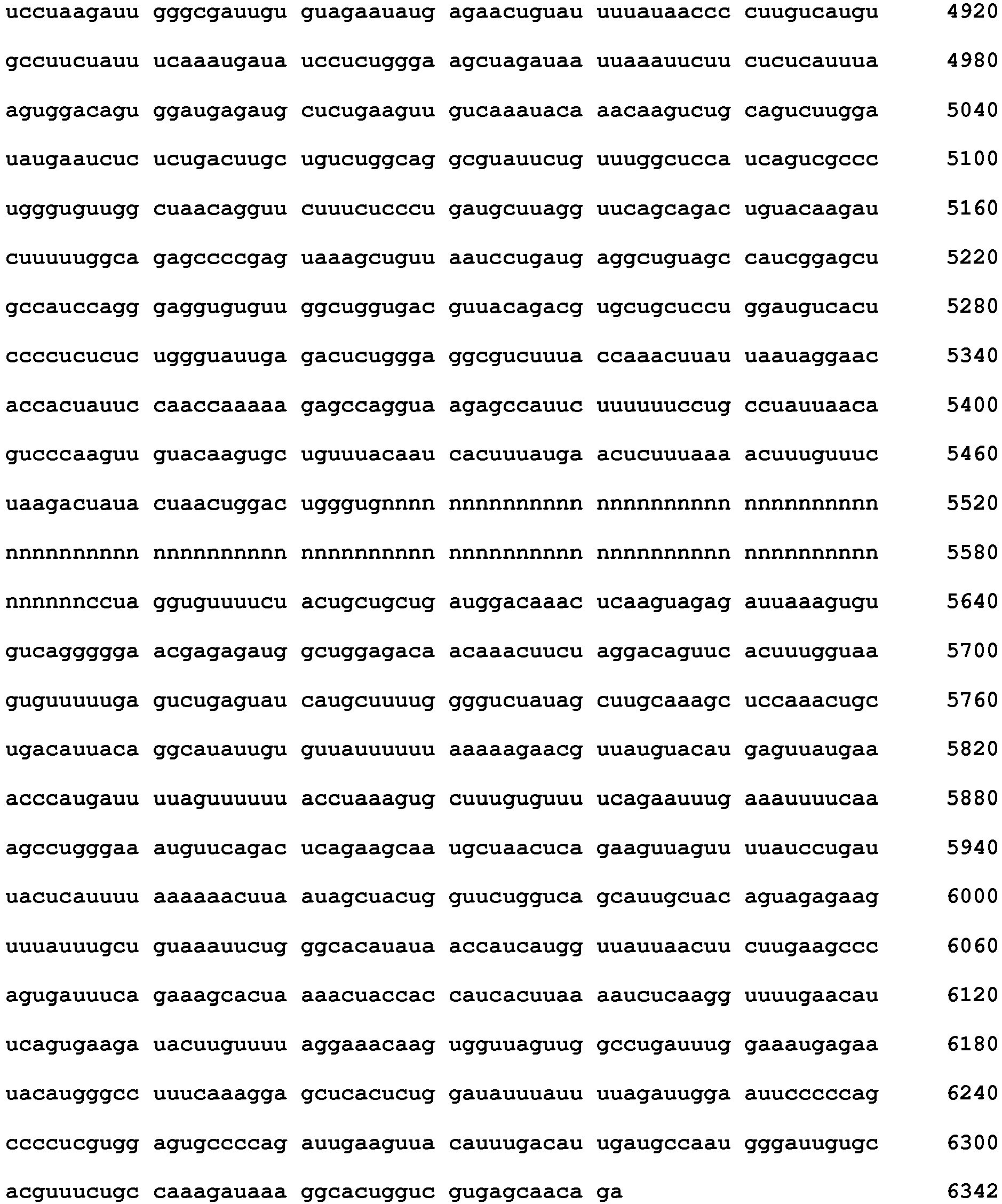
- <210> 150
<211> 4145
<212> RNA
<213> Homo sapiens - <220>
<221> misc_feature
<222> (4045)..(4045)
<223> n is a, c, g, or u - <400> 150


- <210> 151
<211> 1756
<212> RNA
<213> Homo sapiens - <400> 151


- <210> 152
<211> 1113
<212> RNA
<213> Homo sapiens - <400> 152

- <210> 153
<211> 321
<212> RNA
<213> Homo sapiens - <400> 153

- <210> 154
<211> 1720
<212> RNA
<213> Homo sapiens - <220>
<221> misc_feature
<222> (952)..(952)
<223> n is a, c, g, or u - <400> 154


- <210> 155
<211> 453
<212> RNA
<213> Homo sapiens - <400> 155

- <210> 156
<211> 361
<212> RNA
<213> Homo sapiens - <220>
<221> misc_feature
<222> (230)..(230)
<223> n is a, c, g, or u - <400> 156

- <210> 157
<211> 452
<212> RNA
<213> Homo sapiens - <400> 157

- <210> 158
<211> 392
<212> RNA
<213> Homo sapiens - <400> 158

- <210> 159
<211> 217
<212> RNA
<213> Homo sapiens - <400> 159

- <210> 160
<211> 1515
<212> RNA
<213> Homo sapiens - <400> 160


- <210> 161
<211> 801
<212> RNA
<213> Homo sapiens - <400> 161
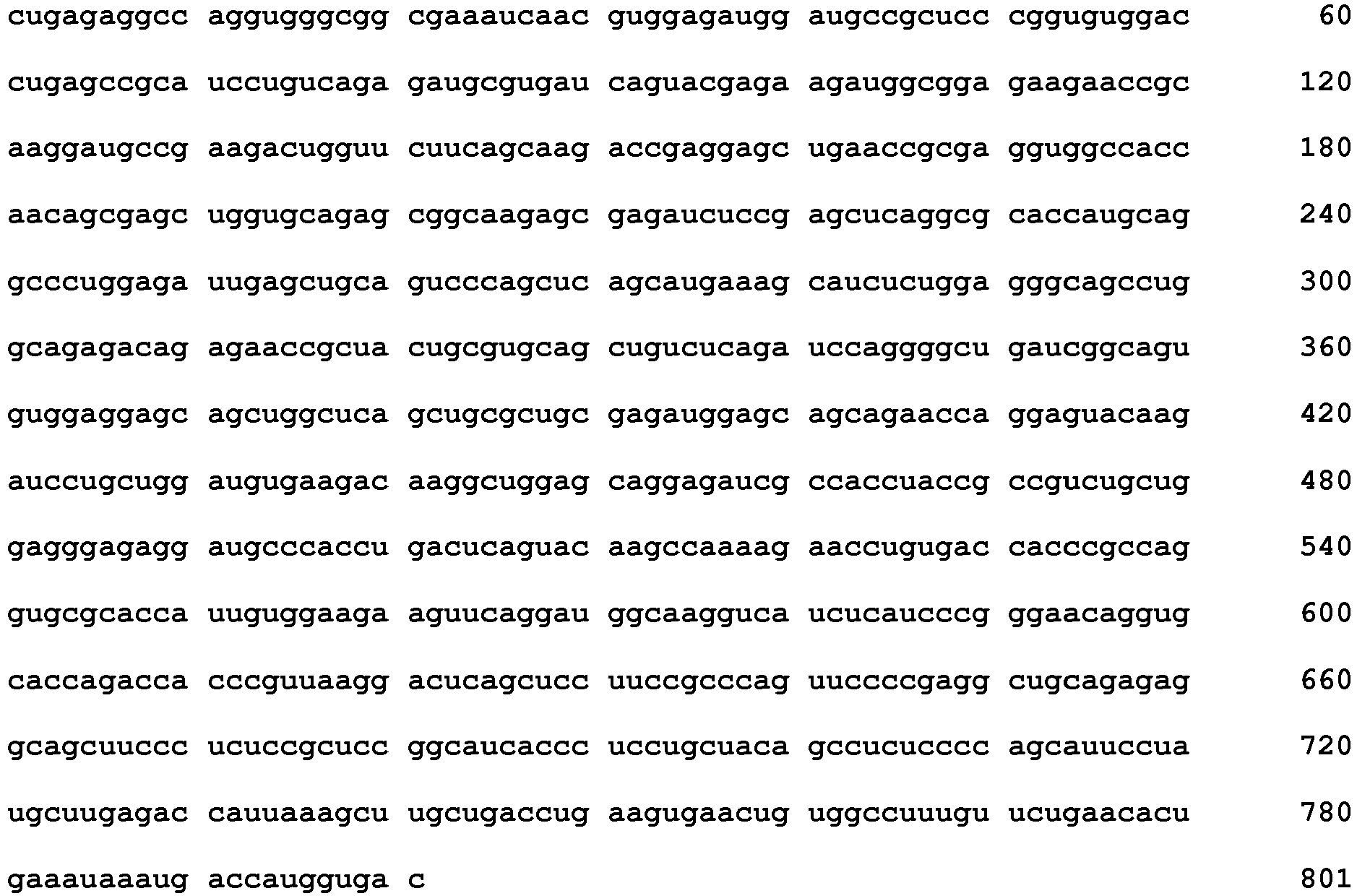
- <210> 162
<211> 447
<212> RNA
<213> Homo sapiens - <400> 162


- <210> 163
<211> 475
<212> RNA
<213> Homo sapiens - <400> 163
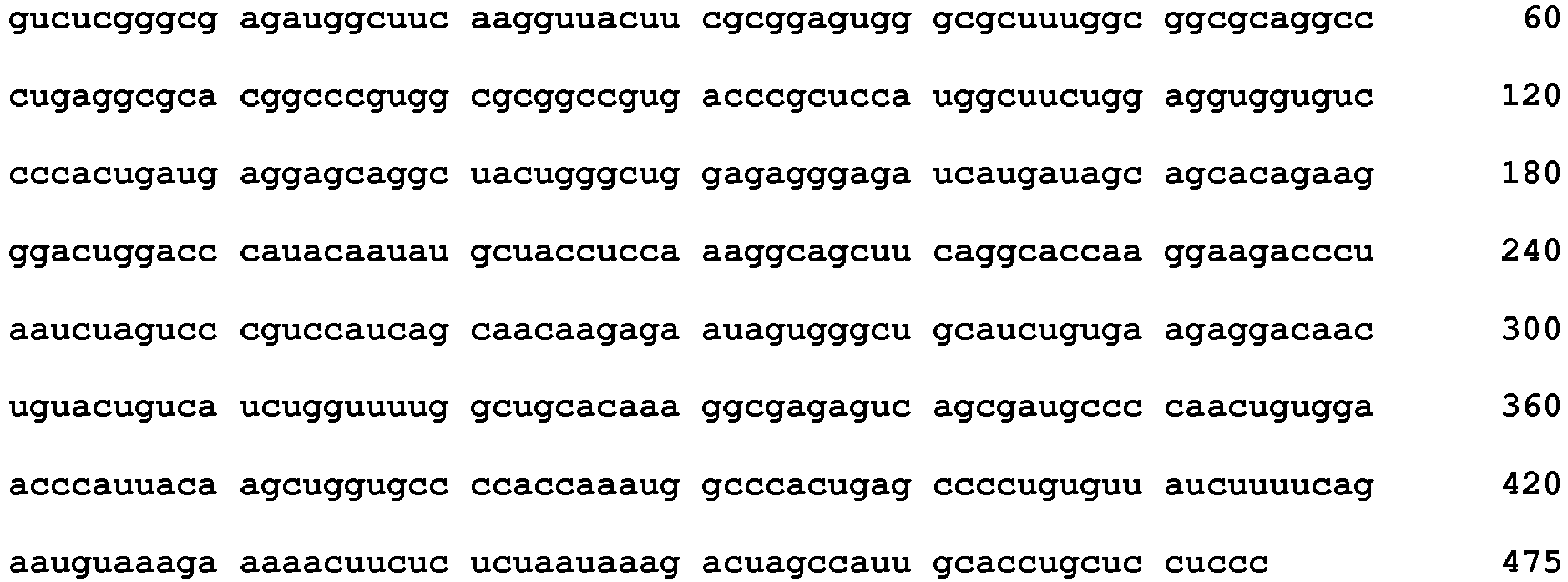
- <210> 164
<211> 1897
<212> RNA
<213> Homo sapiens - <400> 164


- <210> 165
<211> 2167
<212> RNA
<213> Homo sapiens - <400> 165


- <210> 166
<211> 897
<212> RNA
<213> Homo sapiens - <400> 166


- <210> 167
<211> 3873
<212> RNA
<213> Homo sapiens - <400> 167


- <210> 168
<211> 1591
<212> RNA
<213> Homo sapiens - <400> 168

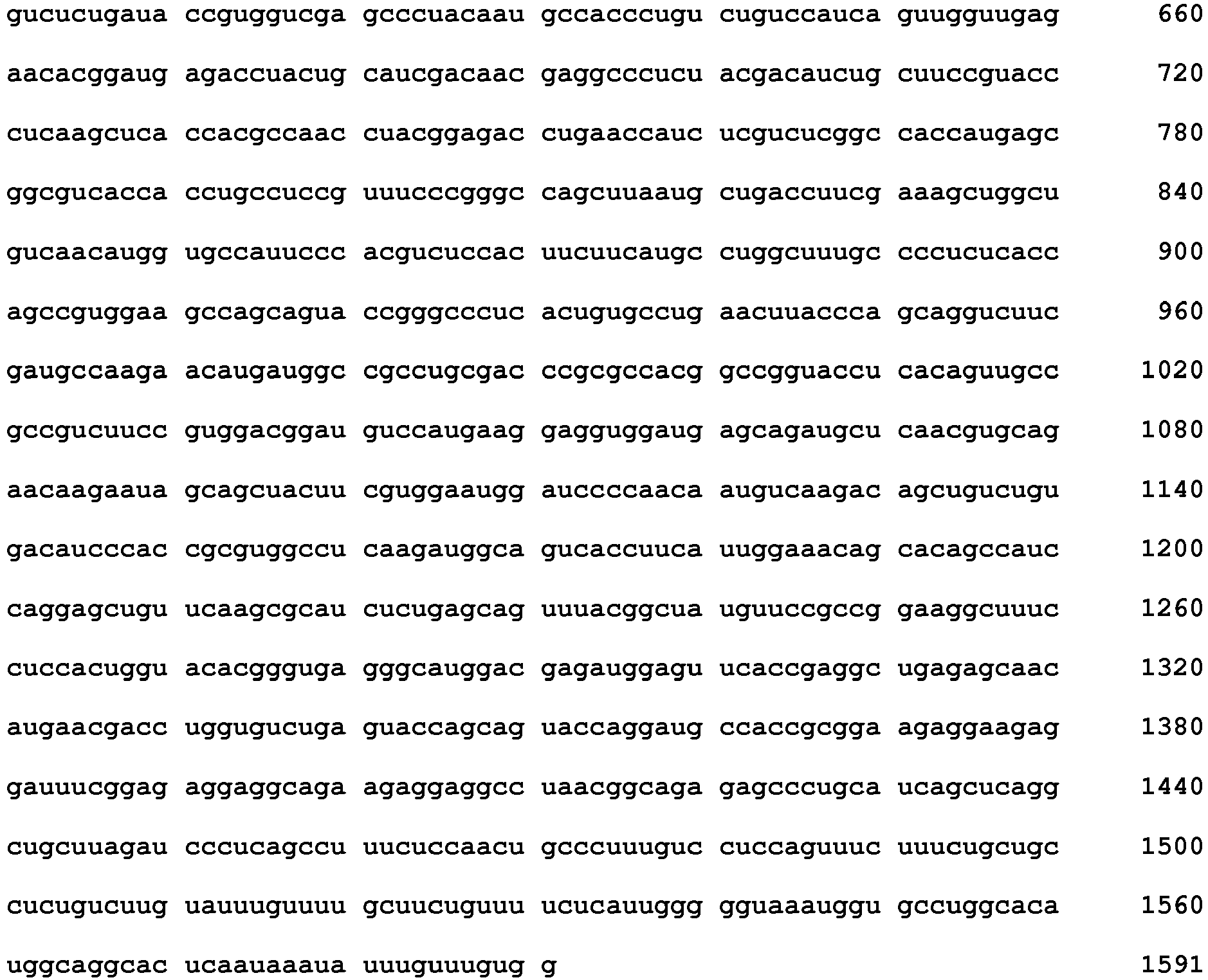
- <210> 169
<211> 1992
<212> RNA
<213> Homo sapiens - <400> 169


- <210> 170
<211> 1828
<212> RNA
<213> Homo sapiens - <400> 170


- <210> 171
<211> 2610
<212> RNA
<213> Homo sapiens - <220>
<221> misc_feature
<222> (2)..(2)
<223> n is a, c, g, or u - <220>
<221> misc_feature
<222> (11)..(11)
<223> n is a, c, g, or u - <220>
<221> misc_feature
<222> (26).. (26)
<223> n is a, c, g, or u - <220>
<221> misc_feature
<222> (41)..(41)
<223> n is a, c, g, or u - <220>
<221> misc_feature
<222> (45)..(45)
<223> n is a, c, g, or u - <220>
<221> misc_feature
<222> (56)..(56)
<223> n is a, c, g, or u - <220>
<221> misc_feature
<222> (70)..(70)
<223> n is a, c, g, or u - <220>
<221> misc_feature
<222> (2262)..(2262)
<223> n is a, c, g, or u - <220>
<221> misc_feature
<222> (2276)..(2276)
<223> n is a, c, g, or u - <220>
<221> misc_feature
<222> (2288)..(2288)
<223> n is a, c, g, or u - <220>
<221> misc_feature
<222> (2290)..(2290)
<223> n is a, c, g, or u - <220>
<221> misc_feature
<222> (2298)..(2298)
<223> n is a, c, g, or u - <220>
<221> misc_feature
<222> (2309)..(2309)
<223> n is a, c, g, or u - <220>
<221> misc_feature
<222> (2311)..(2311)
<223> n is a, c, g, or u - <220>
<221> misc_feature
<222> (2324)..(2324)
<223> n is a, c, g, or u - <220>
<221> misc_feature
<222> (2333)..(2333)
<223> n is a, c, g, or u - <220>
<221> misc_feature
<222> (2335)..(2335)
<223> n is a, c, g, or u - <220>
<221> misc_feature
<222> (2412)..(2412)
<223> n is a, c, g, or u - <220>
<221> misc_feature
<222> (2418)..(2418)
<223> n is a, c, g, or u - <220>
<221> misc_feature
<222> (2435)..(2435)
<223> n is a, c, g, or u - <220>
<221> misc_feature
<222> (2447)..(2447)
<223> n is a, c, g, or u - <220>
<221> misc_feature
<222> (2462)..(2462)
<223> n is a, c, g, or u - <220>
<221> misc_feature
<222> (2475)..(2475)
<223> n is a, c, g, or u - <220>
<221> misc_feature
<222> (2483)..(2483)
<223> n is a, c, g, or u - <220>
<221> misc_feature
<222> (2493)..(2493)
<223> n is a, c, g, or u - <220>
<221> misc_feature
<222> (2513)..(2513)
<223> n is a, c, g, or u - <220>
<221> misc_feature
<222> (2523)..(2523)
<223> n is a, c, g, or u - <220>
<221> misc_feature
<222> (2535)..(2535)
<223> n is a, c, g, or u - <220>
<221> misc_feature
<222> (2552)..(2552)
<223> n is a, c, g, or u - <220>
<221> misc_feature
<222> (2555)..(2555)
<223> n is a, c, g, or u - <220>
<221> misc_feature
<222> (2566)..(2566)
<223> n is a, c, g, or u - <220>
<221> misc_feature
<222> (2590)..(2590)
<223> n is a, c, g, or u - <400> 171


- <210> 172
<211> 3657
<212> RNA
<213> Homo sapiens - <400> 172


- <210> 173
<211> 2267
<212> RNA
<213> Homo sapiens - <400> 173


- <210> 174
<211> 2834
<212> RNA
<213> Homo sapiens - <400> 174


- <210> 175
<211> 2940
<212> RNA
<213> Homo sapiens - <400> 175


- <210> 176
<211> 1714
<212> RNA
<213> Homo sapiens - <400> 176


- <210> 177
<211> 467
<212> RNA
<213> Homo sapiens - <400> 177

- <210> 178
<211> 346
<212> RNA
<213> Homo sapiens - <400> 178

- <210> 179
<211> 4902
<212> RNA
<213> Homo sapiens - <400> 179


- <210> 180
<211> 462
<212> RNA
<213> Homo sapiens - <400> 180
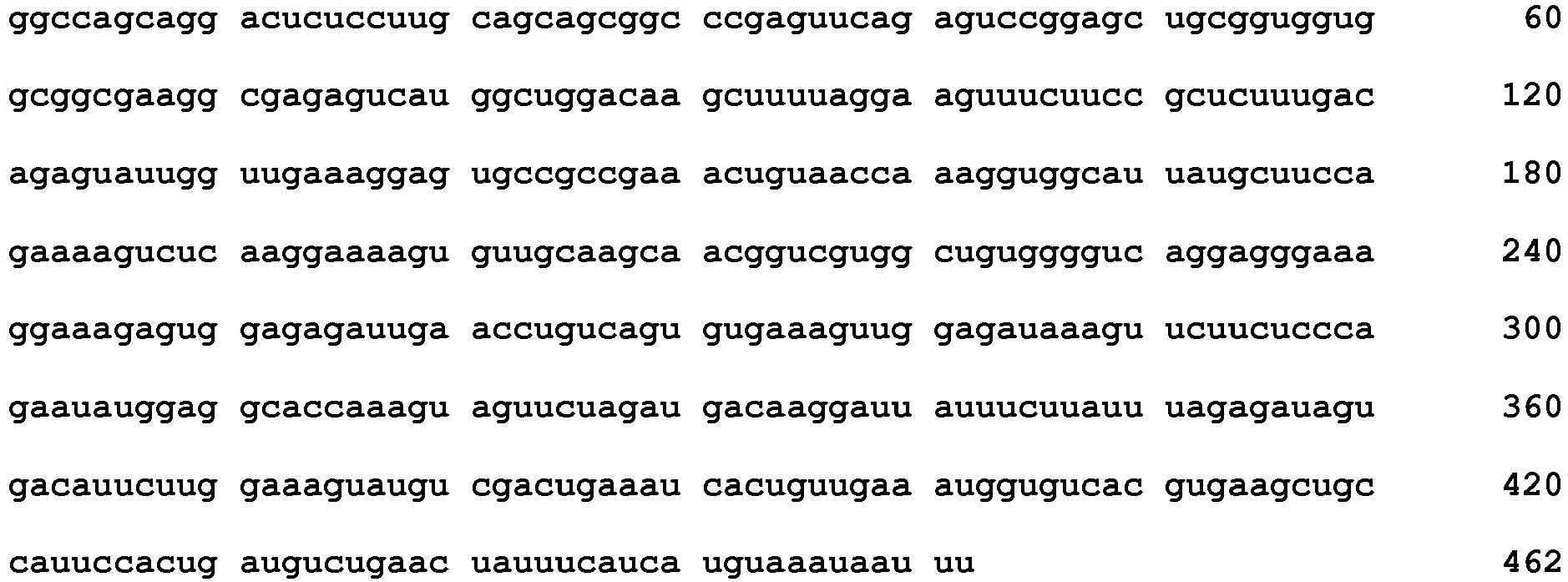
- <210> 181
<211> 417
<212> RNA
<213> Homo sapiens - <400> 181

- <210> 182
<211> 1160
<212> RNA
<213> Homo sapiens - <400> 182
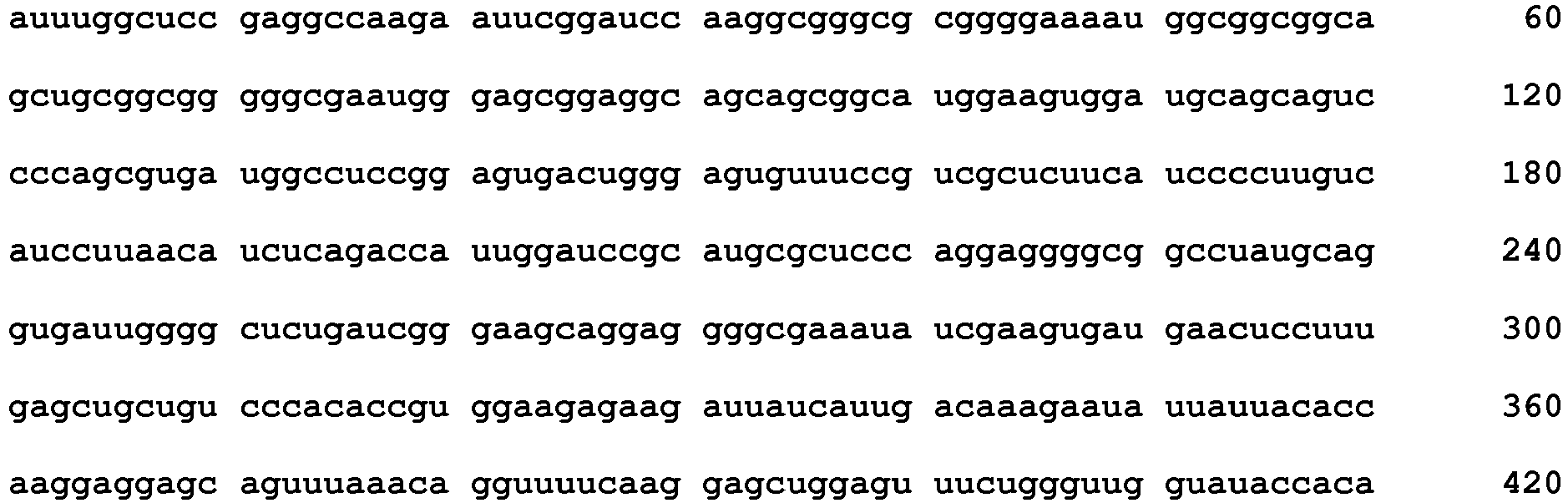

- <210> 183
<211> 8322
<212> RNA
<213> Homo sapiens - <220>
<221> misc_feature
<222> (1298)..(1397)
<223> n is a, c, g, or u - <220>
<221> misc_feature
<222> (2040)..(2139)
<223> n is a, c, g, or u - <220>
<221> misc_feature
<222> (2495)..(2594)
<223> n is a, c, g, or u - <220>
<221> misc_feature
<222> (3800)..(3899)
<223> n is a, c, g, or u - <220>
<221> misc_feature
<222> (4897)..(4897)
<223> n is a, c, g, or u - <220>
<221> misc_feature
<222> (4909)..(4909)
<223> n is a, c, g, or u - <400> 183


- <210> 184
<211> 1054
<212> RNA
<213> Homo sapiens - <400> 184


- <210> 185
<211> 4208
<212> RNA
<213> Homo sapiens - <400> 185


- <210> 186
<211> 249
<212> RNA
<213> Homo sapiens - <400> 186

- <210> 187
<211> 410
<212> RNA
<213> Homo sapiens - <400> 187


- <210> 188
<211> 382
<212> RNA
<213> Homo sapiens - <400> 188

- <210> 189
<211> 253
<212> RNA
<213> Homo sapiens - <220>
<221> misc_feature
<222> (32)..(32)
<223> n is a, c, g, or u - <220>
<221> misc_feature
<222> (41)..(41)
<223> n is a, c, g, or u - <400> 189

- <210> 190
<211> 371
<212> RNA
<213> Homo sapiens - <400> 190


- <210> 191
<211> 324
<212> RNA
<213> Homo sapiens - <400> 191

- <210> 192
<211> 2110
<212> RNA
<213> Homo sapiens - <400> 192


- <210> 193
<211> 1228
<212> RNA
<213> Homo sapiens - <400> 193


- <210> 194
<211> 723
<212> RNA
<213> Homo sapiens - <400> 194


- <210> 195
<211> 2690
<212> RNA
<213> Homo sapiens - <400> 195


- <210> 196
<211> 269
<212> RNA
<213> Homo sapiens - <400> 196

- <210> 197
<211> 1335
<212> RNA
<213> Homo sapiens - <400> 197


- <210> 198
<211> 382
<212> RNA
<213> Homo sapiens - <400> 198


- <210> 199
<211> 1992
<212> RNA
<213> Homo sapiens - <400> 199


- <210> 200
<211> 210
<212> RNA
<213> Homo sapiens - <220>
<221> misc_feature
<222> (118)..(121)
<223> n is a, c, g, or u - <400> 200

- <210> 201
<211> 677
<212> RNA
<213> Homo sapiens - <400> 201


- <210> 202
<211> 2849
<212> RNA
<213> Homo sapiens - <220>
<221> misc_feature
<222> (2158)..(2158)
<223> n is a, c, g, or u - <400> 202
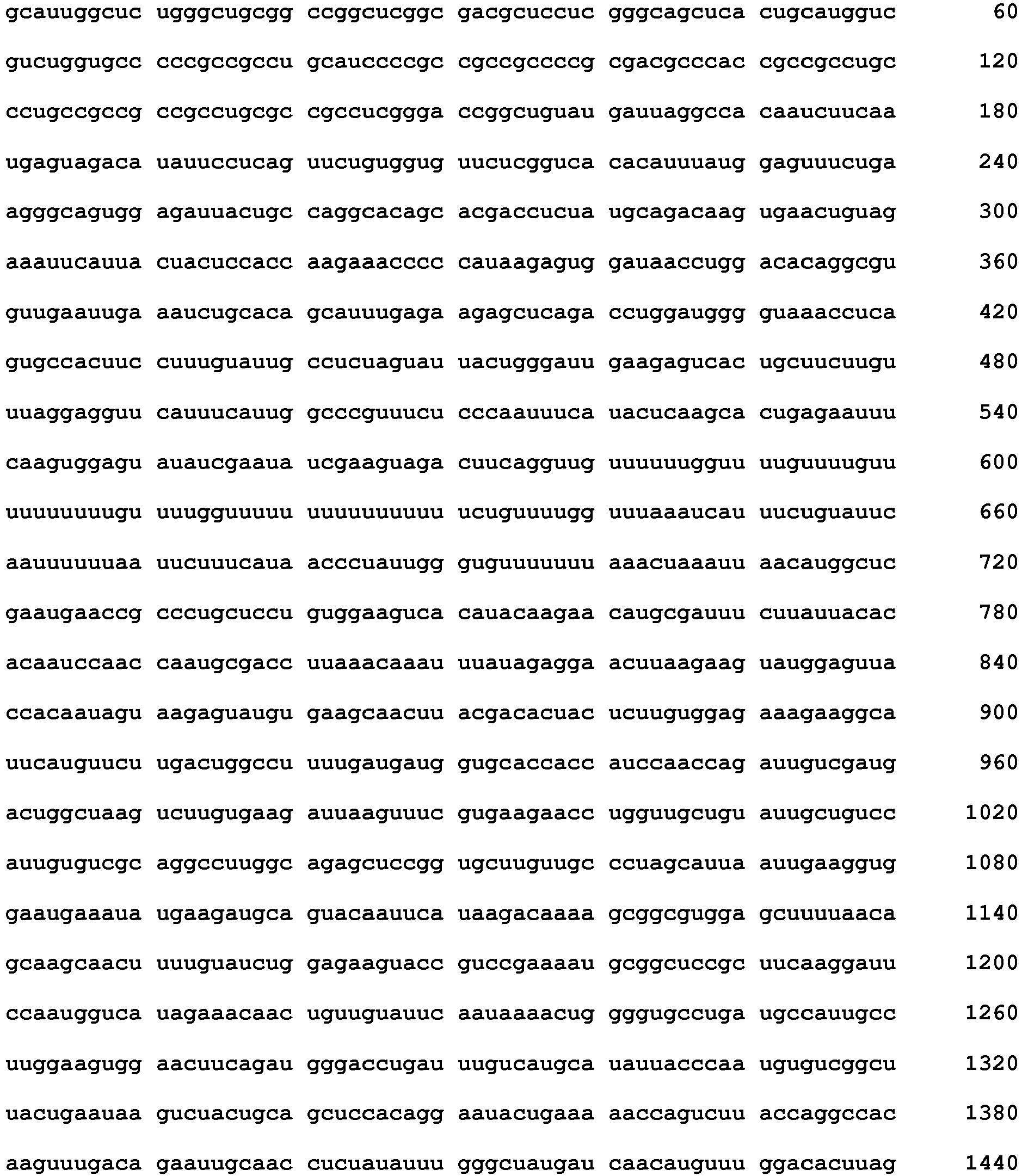

- <210> 203
<211> 3023
<212> RNA
<213> Homo sapiens - <400> 203


- <210> 204
<211> 380
<212> RNA
<213> Homo sapiens - <220>
<221> misc_feature
<222> (76).. (76)
<223> n is a, c, g, or u - <400> 204

- <210> 205
<211> 1391
<212> RNA
<213> Homo sapiens - <400> 205

- <210> 206
<211> 356
<212> RNA
<213> Homo sapiens - <400> 206


- <210> 207
<211> 413
<212> RNA
<213> Homo sapiens - <400> 207

- <210> 208
<211> 1707
<212> RNA
<213> Homo sapiens - <400> 208


- <210> 209
<211> 261
<212> RNA
<213> Homo sapiens - <400> 209

- <210> 210
<211> 173
<212> RNA
<213> Homo sapiens - <400> 210

- <210> 211
<211> 494
<212> RNA
<213> Homo sapiens - <400> 211

- <210> 212
<211> 384
<212> RNA
<213> Homo sapiens - <400> 212

- <210> 213
<211> 982
<212> RNA
<213> Homo sapiens - <400> 213


- <210> 214
<211> 424
<212> RNA
<213> Homo sapiens - <400> 214

- <210> 215
<211> 1407
<212> RNA
<213> Homo sapiens - <400> 215


- <210> 216
<211> 562
<212> RNA
<213> Homo sapiens - <400> 216

- <210> 217
<211> 1238
<212> RNA
<213> Homo sapiens - <400> 217

- <210> 218
<211> 464
<212> RNA
<213> Homo sapiens - <400> 218


- <210> 219
<211> 841
<212> RNA
<213> Homo sapiens - <400> 219

- <210> 220
<211> 136
<212> RNA
<213> Homo sapiens - <400> 220

- <210> 221
<211> 752
<212> RNA
<213> Homo sapiens - <400> 221

- <210> 222
<211> 2858
<212> RNA
<213> Homo sapiens - <400> 222


- <210> 223
<211> 420
<212> RNA
<213> Homo sapiens - <400> 223

- <210> 224
<211> 963
<212> RNA
<213> Homo sapiens - <400> 224


- <210> 225
<211> 479
<212> RNA
<213> Homo sapiens - <400> 225

- <210> 226
<211> 520
<212> RNA
<213> Homo sapiens - <400> 226

- <210> 227
<211> 468
<212> RNA
<213> Homo sapiens - <400> 227


- <210> 228
<211> 1740
<212> RNA
<213> Homo sapiens - <400> 228


- <210> 229
<211> 815
<212> RNA
<213> Homo sapiens - <400> 229

- <210> 230
<211> 287
<212> RNA
<213> Homo sapiens - <400> 230


- <210> 231
<211> 945
<212> RNA
<213> Homo sapiens - <400> 231

- <210> 232
<211> 238
<212> RNA
<213> Homo sapiens - <400> 232

- <210> 233
<211> 341
<212> RNA
<213> Homo sapiens - <400> 233

- <210> 234
<211> 495
<212> RNA
<213> Homo sapiens - <400> 234

- <210> 235
<211> 861
<212> RNA
<213> Homo sapiens - <400> 235


- <210> 236
<211> 830
<212> RNA
<213> Homo sapiens - <400> 236

- <210> 237
<211> 5560
<212> RNA
<213> Homo sapiens - <400> 237

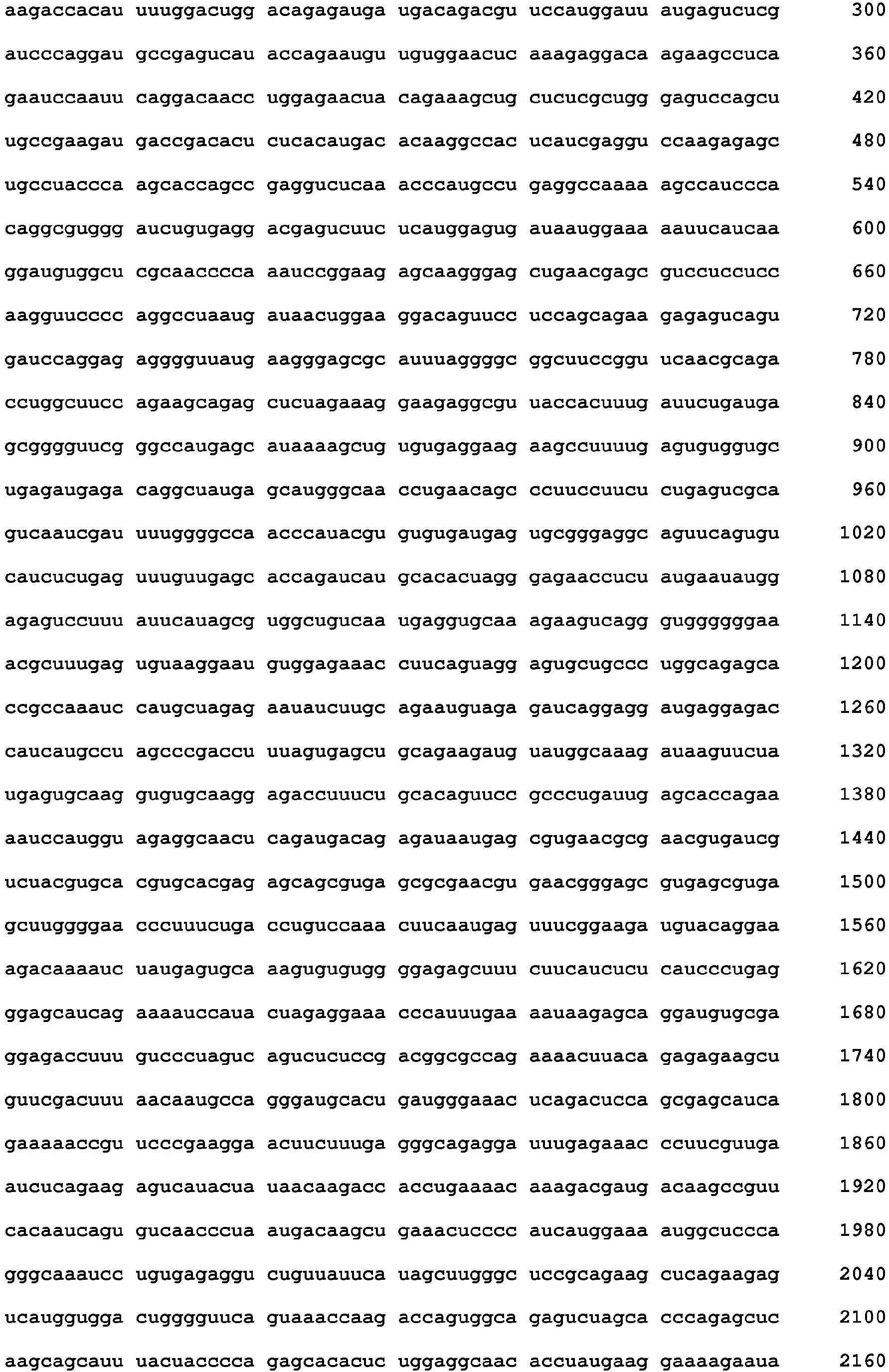


- <210> 238
<211> 416
<212> RNA
<213> Homo sapiens - <400> 238


- <210> 239
<211> 2380
<212> RNA
<213> Homo sapiens - <400> 239


- <210> 240
<211> 2659
<212> RNA
<213> Homo sapiens - <220>
<221> misc_feature
<222> (1274)..(1274)
<223> n is a, c, g, or u - <220>
<221> misc_feature
<222> (1358)..(1358)
<223> n is a, c, g, or u - <220>
<221> misc_feature
<222> (1507)..(1508)
<223> n is a, c, g, or u - <400> 240


- <210> 241
<211> 3347
<212> RNA
<213> Homo sapiens - <400> 241


- <210> 242
<211> 555
<212> RNA
<213> Homo sapiens - <400> 242

- <210> 243
<211> 2526
<212> RNA
<213> Homo sapiens - <400> 243


- <210> 244
<211> 468
<212> RNA
<213> Homo sapiens - <400> 244

- <210> 245
<211> 3115
<212> RNA
<213> Homo sapiens - <400> 245


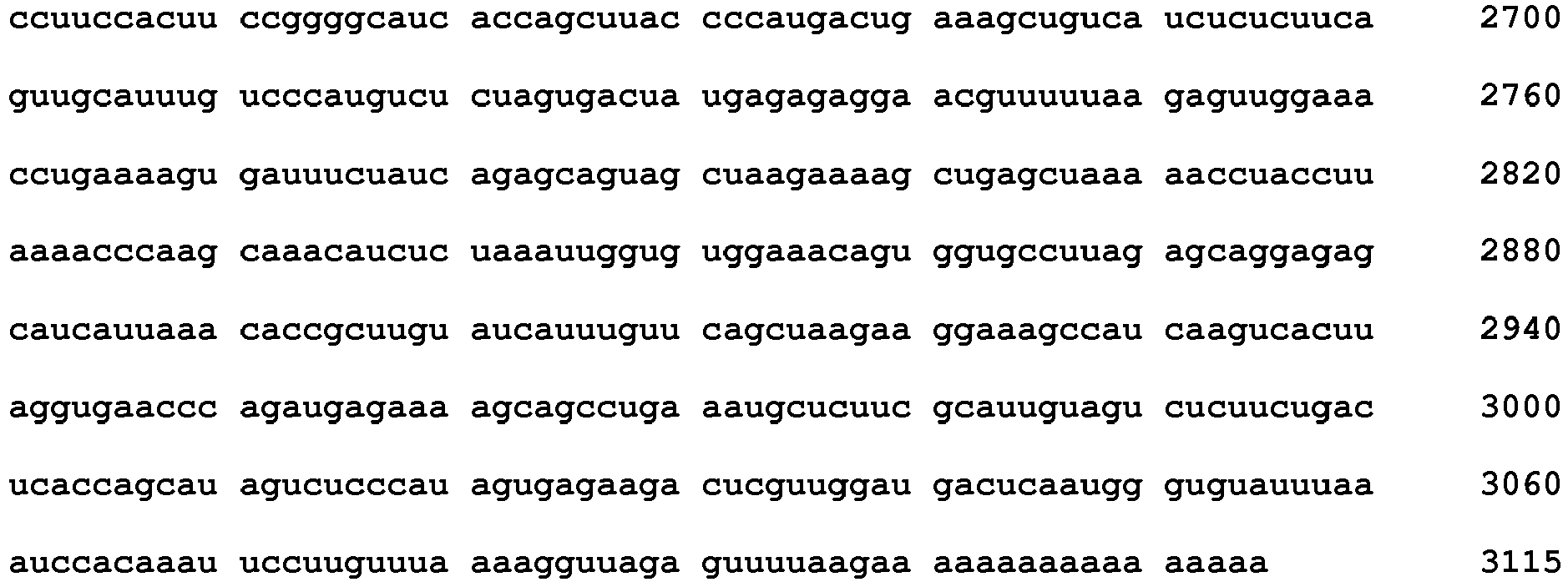
- <210> 246
<211> 5561
<212> RNA
<213> Homo sapiens - <220>
<221> misc_feature
<222> (4879)..(4879)
<223> n is a, c, g, or u - <220>
<221> misc_feature
<222> (5116)..(5116)
<223> n is a, c, g, or u - <400> 246


- <210> 247
<211> 1113
<212> RNA
<213> Homo sapiens - <400> 247


- <210> 248
<211> 1635
<212> RNA
<213> Homo sapiens - <400> 248


- <210> 249
<211> 3550
<212> RNA
<213> Homo sapiens - <400> 249


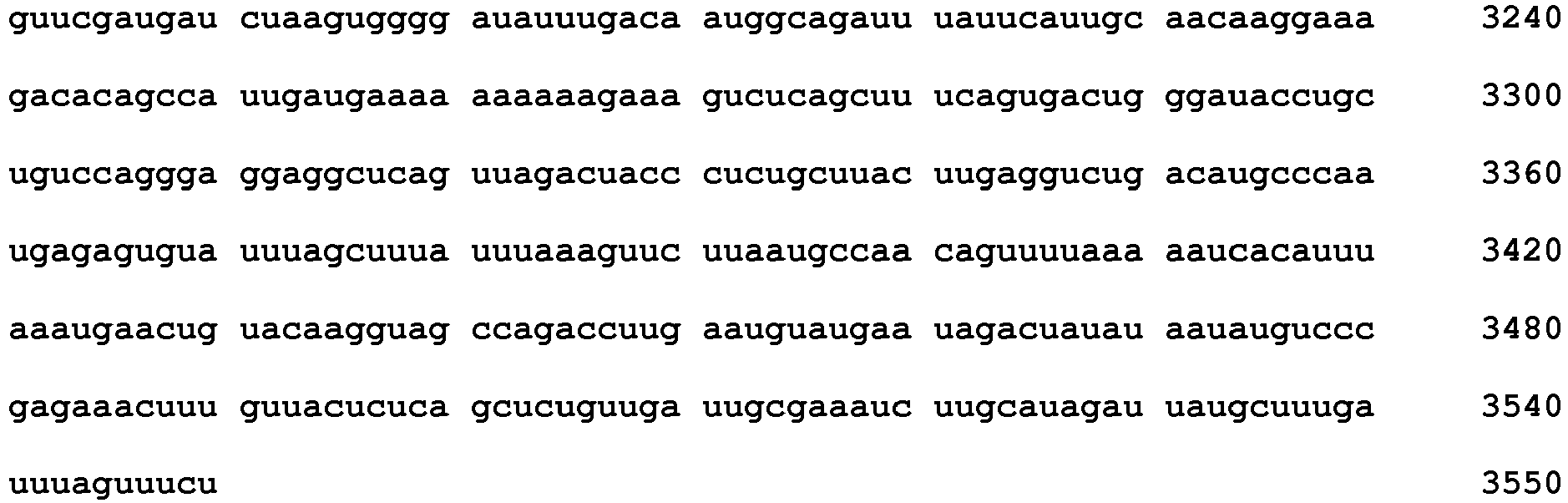
- <210> 250
<211> 2299
<212> RNA
<213> Homo sapiens - <400> 250


- <210> 251
<211> 3991
<212> RNA
<213> Homo sapiens - <400> 251


- <210> 252
<211> 235
<212> RNA
<213> Homo sapiens - <400> 252


- <210> 253
<211> 2005
<212> RNA
<213> Homo sapiens - <400> 253


- <210> 254
<211> 357
<212> RNA
<213> Homo sapiens - <400> 254

- <210> 255
<211> 271
<212> RNA
<213> Homo sapiens - <400> 255

- <210> 256
<211> 255
<212> RNA
<213> Homo sapiens - <400> 256


- <210> 257
<211> 4031
<212> RNA
<213> Homo sapiens - <400> 257


- <210> 258
<211> 1503
<212> RNA
<213> Homo sapiens - <400> 258


- <210> 259
<211> 876
<212> RNA
<213> Homo sapiens - <400> 259

- <210> 260
<211> 6929
<212> RNA
<213> Homo sapiens - <220>
<221> misc_feature
<222> (2080)..(2080)
<223> n is a, c, g, or u - <220>
<221> misc_feature
<222> (2082)..(2082)
<223> n is a, c, g, or u - <220>
<221> misc_feature
<222> (4019)..(4019)
<223> n is a, c, g, or u - <220>
<221> misc_feature
<222> (4119)..(4119)
<223> n is a, c, g, or u - <220>
<221> misc_feature
<222> (5039)..(5039)
<223> n is a, c, g, or u - <220>
<221> misc_feature
<222> (5048)..(5048)
<223> n is a, c, g, or u - <220>
<221> misc_feature
<222> (5054)..(5054)
<223> n is a, c, g, or u - <220>
<221> misc_feature
<222> (5079)..(5079)
<223> n is a, c, g, or u - <220>
<221> misc_feature
<222> (5131)..(5131)
<223> n is a, c, g, or u - <400> 260


- <210> 261
<211> 277
<212> RNA
<213> Homo sapiens - <400> 261

- <210> 262
<211> 2810
<212> RNA
<213> Homo sapiens - <400> 262


- <210> 263
<211> 2948
<212> RNA
<213> Homo sapiens - <400> 263


- <210> 264
<211> 2487
<212> RNA
<213> Homo sapiens - <400> 264


- <210> 265
<211> 2093
<212> RNA
<213> Homo sapiens - <400> 265


- <210> 266
<211> 756
<212> RNA
<213> Homo sapiens - <400> 266
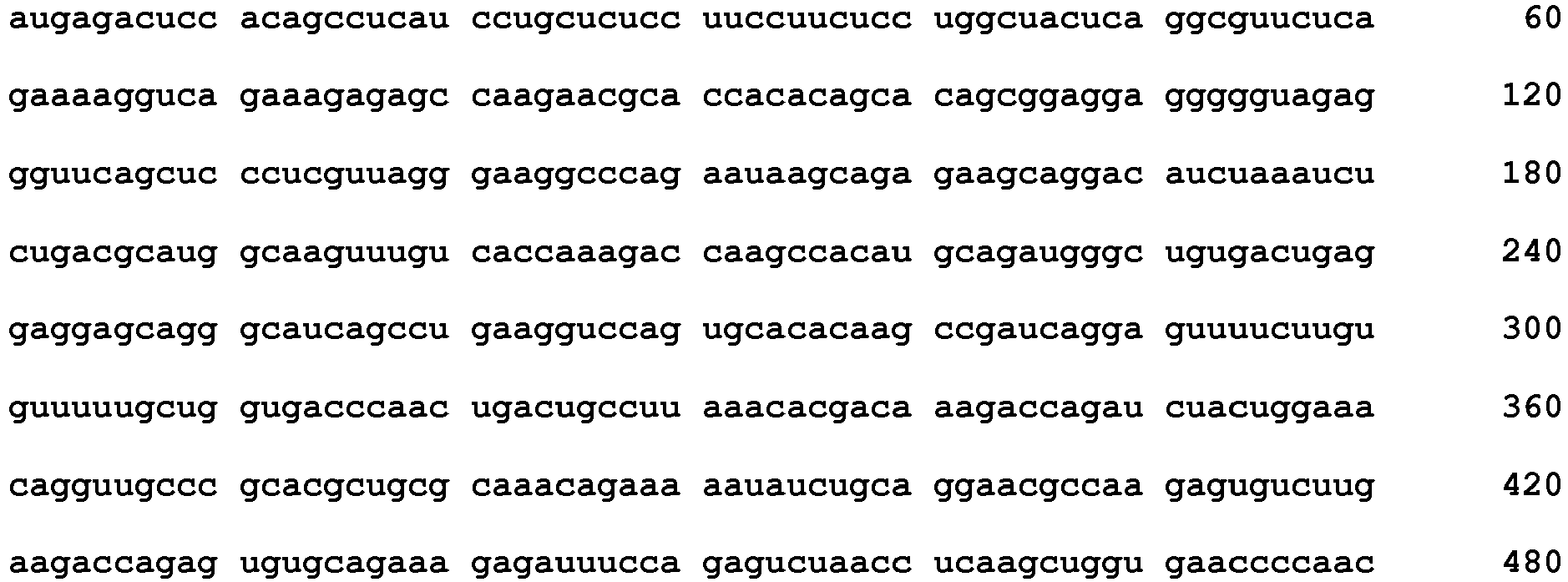

- <210> 267
<211> 181
<212> RNA
<213> Homo sapiens - <400> 267

- <210> 268
<211> 2056
<212> RNA
<213> Homo sapiens - <220>
<221> misc_feature
<222> (1942)..(1943)
<223> n is a, c, g, or u - <400> 268
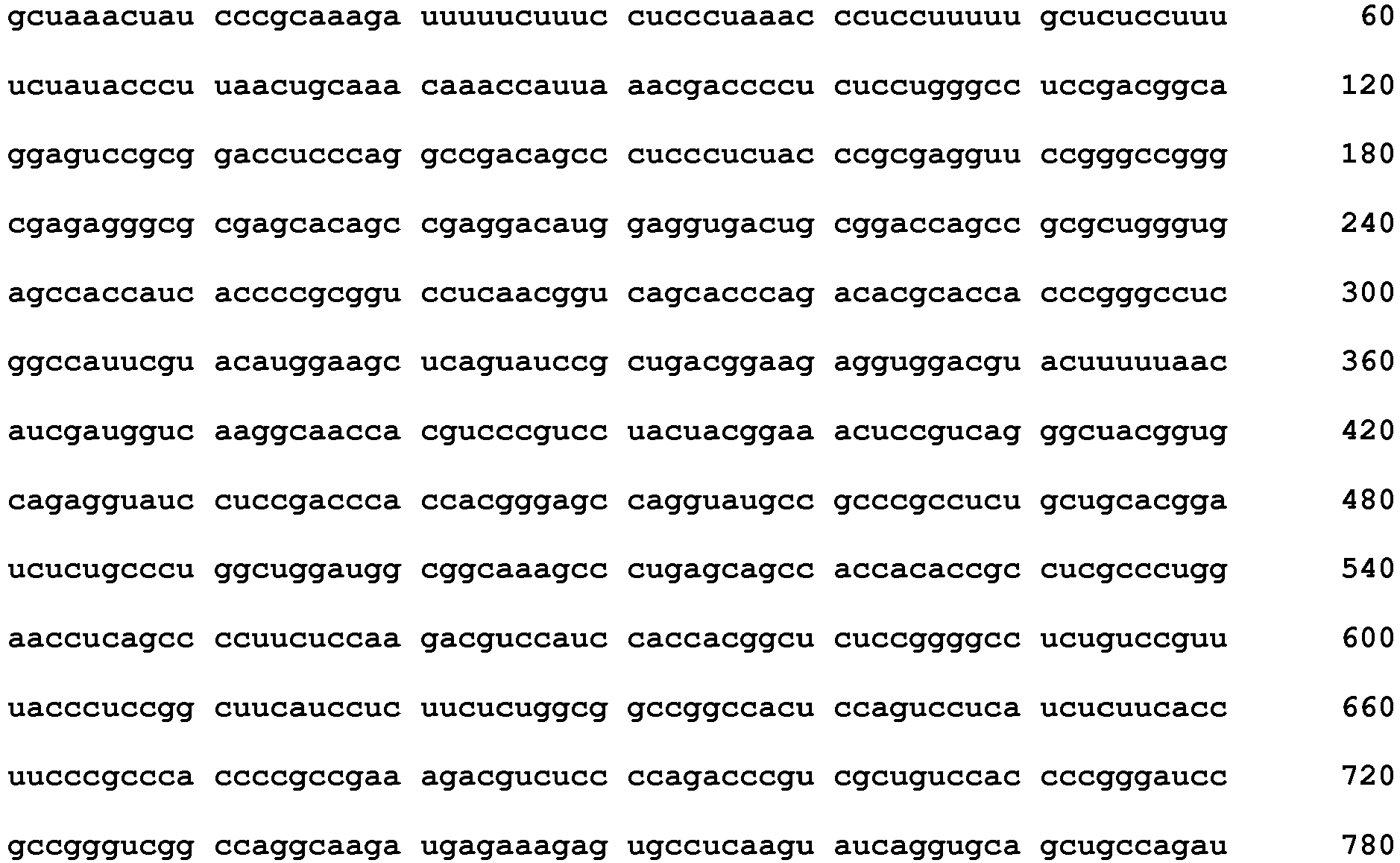

- <210> 269
<211> 1508
<212> RNA
<213> Homo sapiens - <400> 269


- <210> 270
<211> 9471
<212> RNA
<213> Homo sapiens - <220>
<221> misc_feature
<222> (121)..(121)
<223> n is a, c, g, or u - <400> 270


- <210> 271
<211> 463
<212> RNA
<213> Homo sapiens - <400> 271


- <210> 272
<211> 1280
<212> RNA
<213> Homo sapiens - <400> 272


- <210> 273
<211> 291
<212> RNA
<213> Homo sapiens - <400> 273

- <210> 274
<211> 391
<212> PRT
<213> Homo sapiens - <400> 274


- <210> 275
<211> 448
<212> PRT
<213> Homo sapiens - <400> 275


- <210> 276
<211> 232
<212> PRT
<213> Homo sapiens - <400> 276

- <210> 277
<211> 1210
<212> PRT
<213> Homo sapiens - <400> 277

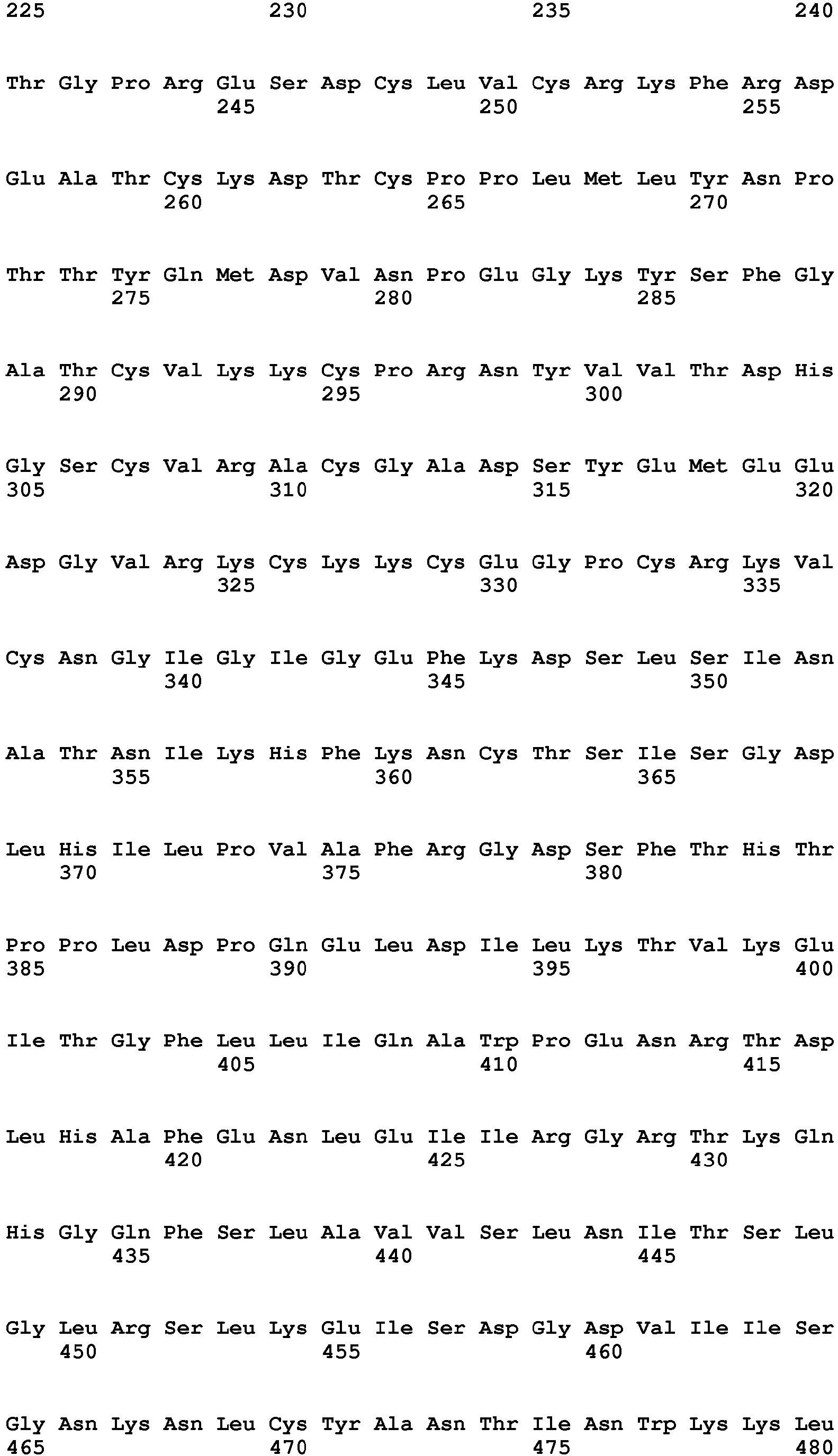


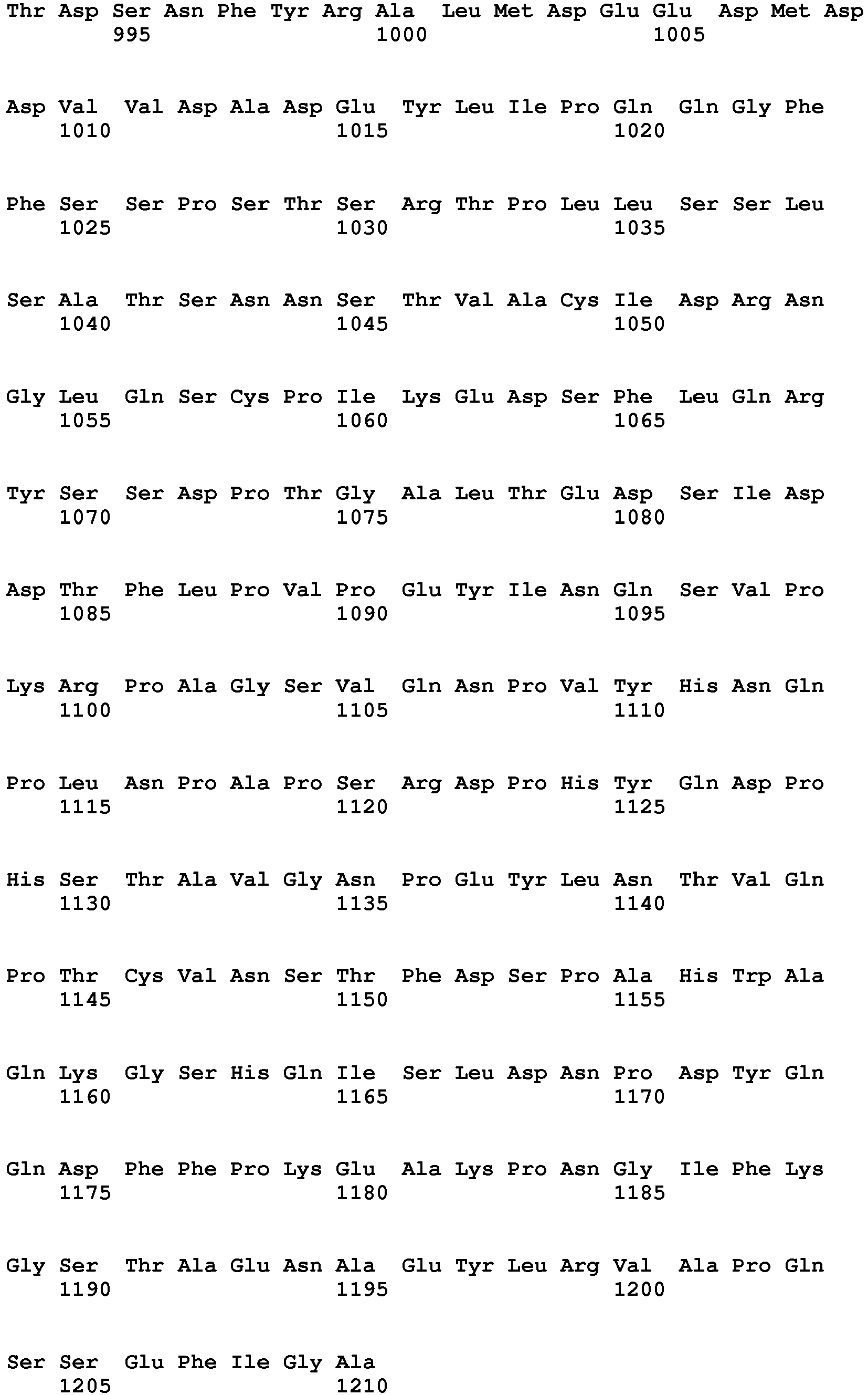
- <210> 278
<211> 1207
<212> PRT
<213> Homo sapiens - <400> 278


- <210> 279
<211> 781
<212> PRT
<213> Homo sapiens - <400> 279


- <210> 280
<211> 349
<212> PRT
<213> Homo sapiens - <400> 280


Claims (16)
- Use of minoxidil for the preparation of a pharmaceutical composition for treating baldness in a scalp, eyebrow or scarred region of a subject, wherein the treating comprises:(a) disrupting an epidermis of the scalp, eyebrow or scarred region, wherein said disrupting is perforating the epidermis or epidermal layer; and(b) contacting the scalp, eyebrow or scarred region with the pharmaceutical composition.
- Minoxidil for use in treating baldness in a scalp, eyebrow or scarred region of a subject, wherein the treating comprises:(a) disrupting an epidermis of the scalp, eyebrow or scarred region, wherein said disrupting is perforating the epidermis or epidermal layer; and(b) contacting the scalp, eyebrow or scarred region with the minoxidil.
- The use of claim 1 or the minoxidil for use according to claim 2, wherein the subject has androgenetic alopecia (AGA) or another disease or disorder comprising balding.
- A non-therapeutic method for generating a hair follicle in a scalp, eyebrow or scarred region of a subject, the method comprising:(a) disrupting an epidermis of the scalp, eyebrow or scarred region, wherein said disrupting is perforating the epidermis or epidermal layer; and(b) contacting the scalp, eyebrow or scarred region with minoxidil,thereby generating a hair follicle in the scalp, eyebrow or scarred region of the subject.
- The use of claims 1 or 3, the minoxidil for use according to claims 2 or 3, or the method of claim 4, wherein the disruption is performed with a tool that comprises sandpaper, a laser, such as a Fraxel laser, a CO2 laser or an excimer laser, a felt wheel, a microdermabrasion device, a light-based method, irradiation with visible light, irradiation with infrared light, irradiation with ultraviolet radiation, orthovoltage radiation, x-ray radiation, a surgical tool, a dermal biopsy punch, or wherein the disruption is performed with a burn treatment or chemical treatment.
- The use of claims 1 or 3, the minoxidil for use according to claims 2 or 3, or the method of claim 4, wherein the disruption comprises perforating the epidermis and dermis of the area of the balding scalp.
- The use of claims 1 or 3, the minoxidil for use according to claims 2 or 3, or the method of claim 4, wherein the disruption comprises removal of basal and supra-basal layers of epidermis with a felt wheel.
- The use of claims 1 or 3, the minoxidil for use according to claims 2 or 3, or the method of claim 4, wherein the treating further comprises contacting the area of the balding scalp with a precursor cell, an inductive cell, or a hair follicle or a portion thereof, or with one or more of the following compounds: finasteride, dutasteride, Fluridil®, spironolactone, cyproterone acetate, bicalutamide, flutamide, nilutamide, an inhibitor of an androgen receptor, an androgen antagonist or an antiandrogen.
- The use, the minoxidil for use, or the method of claim 8, wherein the compound is formulated to be administered as a cream, gel, lotion, emulsion, suspension, oil, nonaqueous solution, aqueous solution, or drop, or by direct injection, or is encapsulated in a liposome.
- The use, the minoxidil for use, or the method of claim 8, wherein the disrupting step is performed between 3-12 days, 4-12 days, 5-12 days, 4-11 days, 6-11 days, 6-10 days, 6-9 days, 6-8 days, 7-8 days, 5-11 days, 5- 10 days, 7- 10 days, or about 1 week prior to the further contacting step.
- The use of claims 1 or 3, the minoxidil for use according to claims 2 or 3, or the method of claim 4, wherein the disrupting step is performed between 3-12 days, 4-12 days, 5-12 days, 4-11 days, 6-11 days, 6-10 days, 6-9 days, 6-8 days, 7-8 days, 5-11 days, 5- 10 days, 7- 10 days, or about 1 week prior to the contacting step.
- The use of claims 1 or 3, the minoxidil for use according to claims 2 or 3, or the method of claim 4, wherein the area of the balding scalp is subjected to depilation or administration of a retinoid prior to wounding.
- The use, the minoxidil for use, or the method of claim 12, wherein the depilation is performed by plucking, waxing, abrasion, laser, electrolysis, or administration of thioglycolic acid on the area of the balding scalp.
- The use of claims 1 or 3, the minoxidil for use according to claims 2 or 3, or the method of claim 4, wherein the wounded area of the balding scalp is not surgically closed, or not contacted with a bandage, dressing, or ointment that facilitates wound healing for a period of time following the wounding step.
- The use, the minoxidil for use, or the method of claim 14, wherein the period of time is within about 2 days, about 3 days, about 4 days, about 5 days, about 7 days, about 10 days, about 11 days, about 14 days, about 17 days or about 3 weeks.
- The use of claims 1 or 3, the minoxidil for use according to claims 2 or 3, or the method of claim 4, wherein the treatment or the method results in differentiation of an uncommitted epidermal cell into a hair follicle cell.
Applications Claiming Priority (4)
| Application Number | Priority Date | Filing Date | Title |
|---|---|---|---|
| US66585705P | 2005-03-29 | 2005-03-29 | |
| US68329305P | 2005-05-23 | 2005-05-23 | |
| PCT/US2006/011319 WO2006105109A2 (en) | 2005-03-29 | 2006-03-28 | Methods for generating new hair follicles, treating baldness, and hair removal |
| EP06748823A EP1874265A4 (en) | 2005-03-29 | 2006-03-28 | METHOD OF GENERATING NEW HAIRFOLLICLES, TREATMENT OF PENCILITY AND HAIR REMOVAL |
Related Parent Applications (1)
| Application Number | Title | Priority Date | Filing Date |
|---|---|---|---|
| EP06748823A Division EP1874265A4 (en) | 2005-03-29 | 2006-03-28 | METHOD OF GENERATING NEW HAIRFOLLICLES, TREATMENT OF PENCILITY AND HAIR REMOVAL |
Publications (2)
| Publication Number | Publication Date |
|---|---|
| EP2949328A1 EP2949328A1 (en) | 2015-12-02 |
| EP2949328B1 true EP2949328B1 (en) | 2022-07-20 |
Family
ID=37054023
Family Applications (2)
| Application Number | Title | Priority Date | Filing Date |
|---|---|---|---|
| EP15165807.7A Expired - Lifetime EP2949328B1 (en) | 2005-03-29 | 2006-03-28 | Minoxidil for generating new hair follicles and treating baldness |
| EP06748823A Ceased EP1874265A4 (en) | 2005-03-29 | 2006-03-28 | METHOD OF GENERATING NEW HAIRFOLLICLES, TREATMENT OF PENCILITY AND HAIR REMOVAL |
Family Applications After (1)
| Application Number | Title | Priority Date | Filing Date |
|---|---|---|---|
| EP06748823A Ceased EP1874265A4 (en) | 2005-03-29 | 2006-03-28 | METHOD OF GENERATING NEW HAIRFOLLICLES, TREATMENT OF PENCILITY AND HAIR REMOVAL |
Country Status (9)
| Country | Link |
|---|---|
| US (6) | US20090304635A1 (en) |
| EP (2) | EP2949328B1 (en) |
| JP (5) | JP2008537940A (en) |
| KR (1) | KR20070120559A (en) |
| AU (1) | AU2006230187B2 (en) |
| CA (2) | CA2603365C (en) |
| ES (1) | ES2931949T3 (en) |
| IL (3) | IL186242A0 (en) |
| WO (1) | WO2006105109A2 (en) |
Families Citing this family (27)
| Publication number | Priority date | Publication date | Assignee | Title |
|---|---|---|---|---|
| ES2931949T3 (en) | 2005-03-29 | 2023-01-05 | Univ Pennsylvania | Minoxidil to generate new hair follicles and treat baldness |
| US20060241696A1 (en) * | 2005-04-26 | 2006-10-26 | Stjepan Krco | Method of limiting hair loss and promoting hair growth |
| HUE030850T2 (en) | 2006-06-16 | 2017-06-28 | Univ Pennsylvania | Prostaglandin d2 receptor antagonists for treating androgenetic alopecia |
| JP2010504974A (en) * | 2006-09-28 | 2010-02-18 | フォリカ,インコーポレーテッド | Methods, kits, and compositions for generating new hair follicles and growing hair |
| BRPI0811102A2 (en) * | 2007-05-15 | 2014-09-23 | Puretech Ventures | METHODS AND COMPOSITIONS FOR TREATING SKIN CONDITIONS |
| US20110086007A1 (en) * | 2007-09-21 | 2011-04-14 | Aderans Research Institute, Inc. | Epidermal stimulation to enhance hair follicle formation |
| KR20170024148A (en) * | 2008-11-12 | 2017-03-06 | 더 트러스티스 오브 더 유니버시티 오브 펜실베니아 | Fibroblast growth factor-9 promotes hair follicle regeneration after wounding |
| KR101163171B1 (en) * | 2009-01-20 | 2012-07-19 | (주)케어젠 | Noggin derived Peptides and Uses Thereof |
| KR101198918B1 (en) | 2009-09-01 | 2012-11-07 | (주)케어젠 | WNT10 Derived Peptides and Uses Thereof |
| WO2011031990A1 (en) * | 2009-09-11 | 2011-03-17 | Follica, Inc. | Intermittent and pulse lithium treatments for modulating hair growth |
| WO2012078649A1 (en) | 2010-12-06 | 2012-06-14 | Follica, Inc. | Methods for treating baldness and promoting hair growth |
| CA2830013C (en) * | 2011-04-01 | 2020-01-07 | Chugai Seiyaku Kabushiki Kaisha | Recombinant polypeptide production method |
| EP2510930A1 (en) | 2011-04-15 | 2012-10-17 | Bionanoplus, S.L. | Nanoparticles comprising half esters of poly (methyl vinyl ether-co-maleic anhydride) and uses thereof |
| KR101285263B1 (en) * | 2011-08-04 | 2013-07-11 | (주)케어젠 | EDAR Ligand Derived Peptides and Uses Thereof |
| US20150329857A1 (en) * | 2011-12-28 | 2015-11-19 | Universite Pierre Et Marie Curie (Paris 6) | Rna interference to activate stem cells |
| WO2013149191A1 (en) * | 2012-03-29 | 2013-10-03 | The Trustees Of Columbia University In The City Of New York | Methods for regulating hair growth disorders |
| KR101393813B1 (en) * | 2012-05-31 | 2014-05-12 | 주식회사 엘지생활건강 | Composition for inhibiting hair growth |
| KR101586027B1 (en) * | 2014-01-22 | 2016-01-15 | 주식회사 엘지생활건강 | Composition for inhibiting growth of body hair comprising podophyllotoxin as an effective ingredient |
| AU2015255813B2 (en) * | 2014-05-09 | 2020-02-27 | Ocusoft, Inc. | Systems, methods, and kits for cleansing an ocular region |
| EP3352853B1 (en) | 2015-09-22 | 2022-09-21 | Johnson & Johnson Consumer Inc. | Methods for enhancing topical application of a benefit agent |
| CA3043886A1 (en) * | 2016-11-16 | 2018-05-24 | Aivita Biomedical, Inc. | Use of cell membrane-bound signaling factors |
| MX390321B (en) | 2016-12-30 | 2025-03-20 | Frequency Therapeutics Inc | 1H-PYRROL-2,5-DIONE COMPOUNDS AND METHODS OF USING SAME TO INDUCE SELF-RENEWAL OF SUPPORT STEM/PROGENITOR CELLS. |
| JP7044229B2 (en) * | 2017-02-08 | 2022-03-30 | 株式会社Ito Pro | Cellular β-catenin production promoting composition |
| EP3710060A4 (en) * | 2017-11-16 | 2021-05-19 | Aivita Biomedical, Inc. | Use of cell membrane-bound signaling factors |
| EP3810144A4 (en) | 2018-06-04 | 2022-08-17 | Chemistryrx | TOPICAL COMPOSITIONS TO STIMULATE HAIR GROWTH |
| CA3189833A1 (en) * | 2020-05-12 | 2021-11-18 | Chemistry Rx | Methods for treating hair loss and compositions for same |
| AU2022405606A1 (en) * | 2021-12-09 | 2024-07-04 | The Trustees Of Indiana University | Methods of generating human cochlear hair cells |
Citations (1)
| Publication number | Priority date | Publication date | Assignee | Title |
|---|---|---|---|---|
| US20040219179A1 (en) * | 2002-09-20 | 2004-11-04 | Mcdaniel David H. | Skin abrasive agents |
Family Cites Families (41)
| Publication number | Priority date | Publication date | Assignee | Title |
|---|---|---|---|---|
| ES504434A0 (en) * | 1980-08-04 | 1983-04-16 | Commw Scient Ind Res Org | METHOD OF OBTAINING AN EPIDERMIC GROWTH FACTOR AND ANALOGS FOR DEPILATION OF ANIMALS AND SIMILAR USES. |
| GB8604360D0 (en) * | 1986-02-21 | 1986-03-26 | Univ Dundee | Stimulation of hair growth |
| WO1994017776A1 (en) * | 1993-02-09 | 1994-08-18 | Tulsa Forte Pharmacy Enterprises, Inc. | A method for stimulating hair growth with cationic derivatives of minoxidil using therapeutic iontophoresis |
| IL107167A (en) | 1993-10-03 | 2000-01-31 | Raziel Lurie | Compositions containing relaxin for treatment of alopecia and related conditions |
| US6867179B1 (en) | 1994-08-31 | 2005-03-15 | Trustees Of Boston University | Methods of inducing hair growth and coloration |
| US5767152A (en) * | 1995-05-04 | 1998-06-16 | Nielsen; Thor Bagger | Composition and methods for stimulating hair growth |
| WO1999001034A1 (en) * | 1997-07-01 | 1999-01-14 | Cooley Jerry E | Method for producing new hair growth |
| US6159950A (en) | 1998-10-16 | 2000-12-12 | Cornell Research Foundation, Inc. | Method of modulating hair growth |
| WO2000031134A1 (en) * | 1998-11-20 | 2000-06-02 | Arch Development Corporation | Regulation of hair follicle morphogenesis based on beta-catenin |
| US6936044B2 (en) * | 1998-11-30 | 2005-08-30 | Light Bioscience, Llc | Method and apparatus for the stimulation of hair growth |
| EP1156756A4 (en) | 1999-02-08 | 2006-02-01 | Aderans Res Inst Inc | Filamentary means for introducing agents into cells |
| GB9925964D0 (en) * | 1999-11-03 | 1999-12-29 | Jahoda Colin A B | Hair transplantation |
| DE10005329A1 (en) * | 2000-02-08 | 2001-09-20 | Albert Scheller | Stimulating growth of hair, e.g. on the head, eyebrows or eyelashes, by subcutaneous application of a preparation containing stem cells and/or preformed hair cells |
| US7115653B2 (en) | 2000-03-30 | 2006-10-03 | Curis, Inc. | Small organic molecule regulators of cell proliferation |
| AU2001253012B2 (en) * | 2000-03-31 | 2006-02-23 | The General Hospital Corporation | Methods of modulating hair growth |
| DE10061162A1 (en) * | 2000-11-30 | 2002-07-11 | Schering Ag | Aryl-substituted indirubin derivatives, their preparation and use |
| MXPA03006714A (en) * | 2001-01-29 | 2005-04-08 | Aderans Res Inst Inc | Hair follicle neogenesis by injection of follicle progenitor cells. |
| US7589180B2 (en) * | 2001-05-11 | 2009-09-15 | Abbott Laboratories Inc. | Specific binding proteins and uses thereof |
| CA2387198C (en) | 2001-05-31 | 2007-02-13 | Pfizer Products Inc. | Method for treating hair loss using thyromimetic compounds |
| JP2003081866A (en) * | 2001-09-13 | 2003-03-19 | Yasuhiko Tabata | Hair growth hydrogel containing cell growth factor protein |
| US7105489B2 (en) | 2002-01-22 | 2006-09-12 | Amylin Pharmaceuticals, Inc. | Methods and compositions for treating polycystic ovary syndrome |
| US20030161815A1 (en) * | 2002-02-12 | 2003-08-28 | Intercytex Limited | Cell delivery system |
| CN1652743A (en) * | 2002-04-17 | 2005-08-10 | 大正制药株式会社 | Hair growth tonic |
| US6777988B2 (en) | 2002-04-30 | 2004-08-17 | John C. Tung | 2-level series-gated current mode logic with inductive components for high-speed circuits |
| DE10224982A1 (en) | 2002-06-05 | 2003-12-24 | Rolf Hoffmann | Mesenchymal stem cells of the hair follicle and their use |
| US20040142853A1 (en) * | 2002-11-07 | 2004-07-22 | Procyte Corporation | Stimulation of hair growth by compositions containing peptide copper complexes and minoxidil |
| AU2003293555A1 (en) | 2002-12-17 | 2004-07-29 | Schering Corporation | 17 beta-hydroxysteroid dehydrogenase type 3 inhibitors for the treatment of androgen dependent diseases |
| US20040153131A1 (en) * | 2003-02-04 | 2004-08-05 | Yorke John A. | Apparatus and method for hair retention and regeneration |
| WO2004111012A1 (en) * | 2003-06-12 | 2004-12-23 | Chugai Seiyaku Kabushiki Kaisha | Imidazolidine derivative |
| NZ544797A (en) * | 2003-07-18 | 2011-04-29 | Amgen Fremont Inc | Specific antibodies that bind HGF and neutralise binding of HGF to met |
| AU2004266161A1 (en) * | 2003-08-26 | 2005-03-03 | Alza Corporation | Device and method for intradermal cell implantation |
| CN1863503A (en) | 2003-10-09 | 2006-11-15 | 株式会社阿德王骏 | Hair growth stimulant composition |
| WO2006006140A1 (en) | 2004-07-08 | 2006-01-19 | Alltracel Development Services Limited | A delivery system for control bleeding skin wounds |
| US20060073117A1 (en) | 2004-10-01 | 2006-04-06 | Stowers Institute For Medical Research | Methods and compositions for controlling hair follicle stem cell fate |
| ES2931949T3 (en) | 2005-03-29 | 2023-01-05 | Univ Pennsylvania | Minoxidil to generate new hair follicles and treat baldness |
| US20060241696A1 (en) | 2005-04-26 | 2006-10-26 | Stjepan Krco | Method of limiting hair loss and promoting hair growth |
| JP2010504974A (en) | 2006-09-28 | 2010-02-18 | フォリカ,インコーポレーテッド | Methods, kits, and compositions for generating new hair follicles and growing hair |
| WO2008057468A1 (en) | 2006-11-02 | 2008-05-15 | Curis, Inc. | Small organic molecule regulators of cell proliferation |
| WO2008057497A2 (en) | 2006-11-02 | 2008-05-15 | Curis, Inc. | Small organic molecule regulators of cell proliferation |
| US20110086007A1 (en) | 2007-09-21 | 2011-04-14 | Aderans Research Institute, Inc. | Epidermal stimulation to enhance hair follicle formation |
| KR20170024148A (en) | 2008-11-12 | 2017-03-06 | 더 트러스티스 오브 더 유니버시티 오브 펜실베니아 | Fibroblast growth factor-9 promotes hair follicle regeneration after wounding |
-
2006
- 2006-03-28 ES ES15165807T patent/ES2931949T3/en not_active Expired - Lifetime
- 2006-03-28 KR KR1020077024971A patent/KR20070120559A/en not_active Withdrawn
- 2006-03-28 EP EP15165807.7A patent/EP2949328B1/en not_active Expired - Lifetime
- 2006-03-28 JP JP2008504257A patent/JP2008537940A/en active Pending
- 2006-03-28 CA CA2603365A patent/CA2603365C/en not_active Expired - Lifetime
- 2006-03-28 US US11/887,104 patent/US20090304635A1/en not_active Abandoned
- 2006-03-28 WO PCT/US2006/011319 patent/WO2006105109A2/en not_active Ceased
- 2006-03-28 EP EP06748823A patent/EP1874265A4/en not_active Ceased
- 2006-03-28 AU AU2006230187A patent/AU2006230187B2/en not_active Expired
- 2006-03-28 CA CA2964111A patent/CA2964111A1/en not_active Abandoned
-
2007
- 2007-09-24 IL IL186242A patent/IL186242A0/en unknown
-
2010
- 2010-10-14 US US12/904,822 patent/US9700502B2/en active Active
- 2010-10-14 US US12/904,981 patent/US9642789B2/en active Active
-
2011
- 2011-12-15 US US13/327,611 patent/US9220926B2/en active Active
-
2012
- 2012-10-25 JP JP2012235675A patent/JP5985954B2/en not_active Expired - Lifetime
-
2014
- 2014-06-15 IL IL233146A patent/IL233146A/en active IP Right Grant
-
2015
- 2015-06-23 JP JP2015125788A patent/JP2015172074A/en active Pending
- 2015-11-19 US US14/946,512 patent/US20160310395A1/en not_active Abandoned
-
2017
- 2017-01-19 IL IL250188A patent/IL250188A0/en unknown
- 2017-03-14 JP JP2017048246A patent/JP6884609B2/en not_active Expired - Lifetime
-
2018
- 2018-12-17 US US16/222,705 patent/US20200101000A1/en not_active Abandoned
-
2019
- 2019-10-03 JP JP2019183119A patent/JP2019218409A/en active Pending
Patent Citations (1)
| Publication number | Priority date | Publication date | Assignee | Title |
|---|---|---|---|---|
| US20040219179A1 (en) * | 2002-09-20 | 2004-11-04 | Mcdaniel David H. | Skin abrasive agents |
Also Published As
| Publication number | Publication date |
|---|---|
| IL233146A0 (en) | 2014-08-03 |
| IL250188A0 (en) | 2017-03-30 |
| US20090304635A1 (en) | 2009-12-10 |
| IL233146A (en) | 2017-02-28 |
| JP2019218409A (en) | 2019-12-26 |
| JP5985954B2 (en) | 2016-09-06 |
| EP1874265A4 (en) | 2012-09-26 |
| KR20070120559A (en) | 2007-12-24 |
| JP2015172074A (en) | 2015-10-01 |
| US20160310395A1 (en) | 2016-10-27 |
| US20110152746A1 (en) | 2011-06-23 |
| EP2949328A1 (en) | 2015-12-02 |
| JP2017114907A (en) | 2017-06-29 |
| US20200101000A1 (en) | 2020-04-02 |
| US9700502B2 (en) | 2017-07-11 |
| US20120121693A1 (en) | 2012-05-17 |
| CA2964111A1 (en) | 2006-10-05 |
| EP1874265A2 (en) | 2008-01-09 |
| US9220926B2 (en) | 2015-12-29 |
| JP6884609B2 (en) | 2021-06-09 |
| US9642789B2 (en) | 2017-05-09 |
| AU2006230187A1 (en) | 2006-10-05 |
| CA2603365A1 (en) | 2007-09-28 |
| IL186242A0 (en) | 2008-01-20 |
| US20110092421A1 (en) | 2011-04-21 |
| JP2008537940A (en) | 2008-10-02 |
| JP2013049691A (en) | 2013-03-14 |
| CA2603365C (en) | 2017-06-06 |
| ES2931949T3 (en) | 2023-01-05 |
| WO2006105109A3 (en) | 2009-04-09 |
| AU2006230187B2 (en) | 2012-07-26 |
| WO2006105109A2 (en) | 2006-10-05 |
Similar Documents
| Publication | Publication Date | Title |
|---|---|---|
| US9220926B2 (en) | Methods for generating new hair follicles, treating baldness, and hair removal | |
| Chase | Growth of the hair | |
| US20200197488A1 (en) | Compositions and methods for treating hair loss | |
| CN110540958B (en) | Preparation of umbilical cord mesenchymal stem cell secretory factor and application thereof in hair growth | |
| Mao et al. | Cell therapy for androgenetic alopecia: elixir or trick? | |
| EP3766985A1 (en) | Identification method for dermal sheath cup cells (dscc), and method for evaluating composition for hair follicle regeneration | |
| EP1226234B1 (en) | Hair transplantation | |
| Niiyama et al. | Gene expression profiling of the intact dermal sheath cup of human hair follicles | |
| AU2015261537A1 (en) | Association of a tetrapeptide and a glyceryl ester for treating androgenic alopecia | |
| AU2012204059B2 (en) | Methods for generating new hair follicles, treating baldness and hair removal | |
| Aoki et al. | μ-Crystallin, thyroid hormone-binding protein, is expressed abundantly in the murine inner root sheath cells | |
| AU2017204081A1 (en) | Methods for Generating New Hair Follicles, Treating Baldness, and Hair Removal | |
| KR20230002711A (en) | How to determine the phenotype of hair follicles | |
| CN115997036A (en) | Molecular characterization of the common alopecia state associated with cellular junctions | |
| KR102779043B1 (en) | Peptides used in the preventive and curative treatment of alopecia | |
| Bertolino et al. | In vitro biosynthesis of mouse hair keratins under the direction of follicular RNA | |
| JP4426128B2 (en) | Method for evaluating candidate substance for hair restorer and method for producing skin external preparation for hair restorer | |
| JP2005304491A (en) | Method for prognosis of hair growth or epilation of the skin using gene group expression advancing in hair follicle in stage of growth as index, and method for screening hair restorer and/or depilatory | |
| Begum et al. | Perspectives of Alopecia behind the Regulation of Foxn1 Gene Exposes the Human Nude Phenotype | |
| Hair | The Biogenesis and Growth of | |
| Fernandes et al. | Biology of Human Hair: Know Your Hair to Control It |
Legal Events
| Date | Code | Title | Description |
|---|---|---|---|
| AC | Divisional application: reference to earlier application |
Ref document number: 1874265 Country of ref document: EP Kind code of ref document: P |
|
| AK | Designated contracting states |
Kind code of ref document: A1 Designated state(s): AT BE BG CH CY CZ DE DK EE ES FI FR GB GR HU IE IS IT LI LT LU LV MC NL PL PT RO SE SI SK TR |
|
| PUAI | Public reference made under article 153(3) epc to a published international application that has entered the european phase |
Free format text: ORIGINAL CODE: 0009012 |
|
| 17P | Request for examination filed |
Effective date: 20160601 |
|
| RBV | Designated contracting states (corrected) |
Designated state(s): AT BE BG CH CY CZ DE DK EE ES FI FR GB GR HU IE IS IT LI LT LU LV MC NL PL PT RO SE SI SK TR |
|
| STAA | Information on the status of an ep patent application or granted ep patent |
Free format text: STATUS: REQUEST FOR EXAMINATION WAS MADE |
|
| R17P | Request for examination filed (corrected) |
Effective date: 20160601 |
|
| STAA | Information on the status of an ep patent application or granted ep patent |
Free format text: STATUS: EXAMINATION IS IN PROGRESS |
|
| 17Q | First examination report despatched |
Effective date: 20171106 |
|
| RIC1 | Information provided on ipc code assigned before grant |
Ipc: A61P 43/00 20060101ALI20220325BHEP Ipc: A61P 17/02 20060101ALI20220325BHEP Ipc: A61K 38/18 20060101ALI20220325BHEP Ipc: A61Q 5/10 20060101ALI20220325BHEP Ipc: A61Q 5/00 20060101ALI20220325BHEP Ipc: A61K 8/65 20060101ALI20220325BHEP Ipc: A61P 17/14 20060101ALI20220325BHEP Ipc: A61K 31/506 20060101AFI20220325BHEP |
|
| GRAP | Despatch of communication of intention to grant a patent |
Free format text: ORIGINAL CODE: EPIDOSNIGR1 |
|
| STAA | Information on the status of an ep patent application or granted ep patent |
Free format text: STATUS: GRANT OF PATENT IS INTENDED |
|
| INTG | Intention to grant announced |
Effective date: 20220506 |
|
| RIN1 | Information on inventor provided before grant (corrected) |
Inventor name: ITO, MAYUMI Inventor name: COTSARELIS, GEORGE |
|
| GRAS | Grant fee paid |
Free format text: ORIGINAL CODE: EPIDOSNIGR3 |
|
| GRAA | (expected) grant |
Free format text: ORIGINAL CODE: 0009210 |
|
| STAA | Information on the status of an ep patent application or granted ep patent |
Free format text: STATUS: THE PATENT HAS BEEN GRANTED |
|
| AC | Divisional application: reference to earlier application |
Ref document number: 1874265 Country of ref document: EP Kind code of ref document: P |
|
| AK | Designated contracting states |
Kind code of ref document: B1 Designated state(s): AT BE BG CH CY CZ DE DK EE ES FI FR GB GR HU IE IS IT LI LT LU LV MC NL PL PT RO SE SI SK TR |
|
| RAP3 | Party data changed (applicant data changed or rights of an application transferred) |
Owner name: THE TRUSTEES OF THE UNIVERSITY OF PENNSYLVANIA |
|
| REG | Reference to a national code |
Ref country code: GB Ref legal event code: FG4D |
|
| REG | Reference to a national code |
Ref country code: CH Ref legal event code: EP |
|
| REG | Reference to a national code |
Ref country code: DE Ref legal event code: R096 Ref document number: 602006060371 Country of ref document: DE |
|
| REG | Reference to a national code |
Ref country code: AT Ref legal event code: REF Ref document number: 1505107 Country of ref document: AT Kind code of ref document: T Effective date: 20220815 |
|
| REG | Reference to a national code |
Ref country code: IE Ref legal event code: FG4D |
|
| REG | Reference to a national code |
Ref country code: LT Ref legal event code: MG9D |
|
| REG | Reference to a national code |
Ref country code: NL Ref legal event code: MP Effective date: 20220720 |
|
| REG | Reference to a national code |
Ref country code: ES Ref legal event code: FG2A Ref document number: 2931949 Country of ref document: ES Kind code of ref document: T3 Effective date: 20230105 |
|
| PG25 | Lapsed in a contracting state [announced via postgrant information from national office to epo] |
Ref country code: SE Free format text: LAPSE BECAUSE OF FAILURE TO SUBMIT A TRANSLATION OF THE DESCRIPTION OR TO PAY THE FEE WITHIN THE PRESCRIBED TIME-LIMIT Effective date: 20220720 Ref country code: PT Free format text: LAPSE BECAUSE OF FAILURE TO SUBMIT A TRANSLATION OF THE DESCRIPTION OR TO PAY THE FEE WITHIN THE PRESCRIBED TIME-LIMIT Effective date: 20221121 Ref country code: NL Free format text: LAPSE BECAUSE OF FAILURE TO SUBMIT A TRANSLATION OF THE DESCRIPTION OR TO PAY THE FEE WITHIN THE PRESCRIBED TIME-LIMIT Effective date: 20220720 Ref country code: LV Free format text: LAPSE BECAUSE OF FAILURE TO SUBMIT A TRANSLATION OF THE DESCRIPTION OR TO PAY THE FEE WITHIN THE PRESCRIBED TIME-LIMIT Effective date: 20220720 Ref country code: LT Free format text: LAPSE BECAUSE OF FAILURE TO SUBMIT A TRANSLATION OF THE DESCRIPTION OR TO PAY THE FEE WITHIN THE PRESCRIBED TIME-LIMIT Effective date: 20220720 Ref country code: FI Free format text: LAPSE BECAUSE OF FAILURE TO SUBMIT A TRANSLATION OF THE DESCRIPTION OR TO PAY THE FEE WITHIN THE PRESCRIBED TIME-LIMIT Effective date: 20220720 |
|
| REG | Reference to a national code |
Ref country code: AT Ref legal event code: MK05 Ref document number: 1505107 Country of ref document: AT Kind code of ref document: T Effective date: 20220720 |
|
| PG25 | Lapsed in a contracting state [announced via postgrant information from national office to epo] |
Ref country code: PL Free format text: LAPSE BECAUSE OF FAILURE TO SUBMIT A TRANSLATION OF THE DESCRIPTION OR TO PAY THE FEE WITHIN THE PRESCRIBED TIME-LIMIT Effective date: 20220720 Ref country code: IS Free format text: LAPSE BECAUSE OF FAILURE TO SUBMIT A TRANSLATION OF THE DESCRIPTION OR TO PAY THE FEE WITHIN THE PRESCRIBED TIME-LIMIT Effective date: 20221120 Ref country code: GR Free format text: LAPSE BECAUSE OF FAILURE TO SUBMIT A TRANSLATION OF THE DESCRIPTION OR TO PAY THE FEE WITHIN THE PRESCRIBED TIME-LIMIT Effective date: 20221021 |
|
| REG | Reference to a national code |
Ref country code: DE Ref legal event code: R097 Ref document number: 602006060371 Country of ref document: DE |
|
| PG25 | Lapsed in a contracting state [announced via postgrant information from national office to epo] |
Ref country code: RO Free format text: LAPSE BECAUSE OF FAILURE TO SUBMIT A TRANSLATION OF THE DESCRIPTION OR TO PAY THE FEE WITHIN THE PRESCRIBED TIME-LIMIT Effective date: 20220720 Ref country code: DK Free format text: LAPSE BECAUSE OF FAILURE TO SUBMIT A TRANSLATION OF THE DESCRIPTION OR TO PAY THE FEE WITHIN THE PRESCRIBED TIME-LIMIT Effective date: 20220720 Ref country code: CZ Free format text: LAPSE BECAUSE OF FAILURE TO SUBMIT A TRANSLATION OF THE DESCRIPTION OR TO PAY THE FEE WITHIN THE PRESCRIBED TIME-LIMIT Effective date: 20220720 Ref country code: AT Free format text: LAPSE BECAUSE OF FAILURE TO SUBMIT A TRANSLATION OF THE DESCRIPTION OR TO PAY THE FEE WITHIN THE PRESCRIBED TIME-LIMIT Effective date: 20220720 |
|
| PLBE | No opposition filed within time limit |
Free format text: ORIGINAL CODE: 0009261 |
|
| STAA | Information on the status of an ep patent application or granted ep patent |
Free format text: STATUS: NO OPPOSITION FILED WITHIN TIME LIMIT |
|
| PG25 | Lapsed in a contracting state [announced via postgrant information from national office to epo] |
Ref country code: SK Free format text: LAPSE BECAUSE OF FAILURE TO SUBMIT A TRANSLATION OF THE DESCRIPTION OR TO PAY THE FEE WITHIN THE PRESCRIBED TIME-LIMIT Effective date: 20220720 Ref country code: EE Free format text: LAPSE BECAUSE OF FAILURE TO SUBMIT A TRANSLATION OF THE DESCRIPTION OR TO PAY THE FEE WITHIN THE PRESCRIBED TIME-LIMIT Effective date: 20220720 |
|
| 26N | No opposition filed |
Effective date: 20230421 |
|
| P01 | Opt-out of the competence of the unified patent court (upc) registered |
Effective date: 20230525 |
|
| PG25 | Lapsed in a contracting state [announced via postgrant information from national office to epo] |
Ref country code: SI Free format text: LAPSE BECAUSE OF FAILURE TO SUBMIT A TRANSLATION OF THE DESCRIPTION OR TO PAY THE FEE WITHIN THE PRESCRIBED TIME-LIMIT Effective date: 20220720 |
|
| PG25 | Lapsed in a contracting state [announced via postgrant information from national office to epo] |
Ref country code: MC Free format text: LAPSE BECAUSE OF FAILURE TO SUBMIT A TRANSLATION OF THE DESCRIPTION OR TO PAY THE FEE WITHIN THE PRESCRIBED TIME-LIMIT Effective date: 20220720 |
|
| PG25 | Lapsed in a contracting state [announced via postgrant information from national office to epo] |
Ref country code: LU Free format text: LAPSE BECAUSE OF NON-PAYMENT OF DUE FEES Effective date: 20230328 |
|
| PG25 | Lapsed in a contracting state [announced via postgrant information from national office to epo] |
Ref country code: BG Free format text: LAPSE BECAUSE OF FAILURE TO SUBMIT A TRANSLATION OF THE DESCRIPTION OR TO PAY THE FEE WITHIN THE PRESCRIBED TIME-LIMIT Effective date: 20220720 |
|
| PG25 | Lapsed in a contracting state [announced via postgrant information from national office to epo] |
Ref country code: BG Free format text: LAPSE BECAUSE OF FAILURE TO SUBMIT A TRANSLATION OF THE DESCRIPTION OR TO PAY THE FEE WITHIN THE PRESCRIBED TIME-LIMIT Effective date: 20220720 |
|
| PGFP | Annual fee paid to national office [announced via postgrant information from national office to epo] |
Ref country code: IE Payment date: 20241231 Year of fee payment: 20 |
|
| PGFP | Annual fee paid to national office [announced via postgrant information from national office to epo] |
Ref country code: DE Payment date: 20241231 Year of fee payment: 20 |
|
| PGFP | Annual fee paid to national office [announced via postgrant information from national office to epo] |
Ref country code: BE Payment date: 20250107 Year of fee payment: 20 |
|
| PGFP | Annual fee paid to national office [announced via postgrant information from national office to epo] |
Ref country code: FR Payment date: 20250210 Year of fee payment: 20 |
|
| PGFP | Annual fee paid to national office [announced via postgrant information from national office to epo] |
Ref country code: IT Payment date: 20250211 Year of fee payment: 20 Ref country code: GB Payment date: 20250102 Year of fee payment: 20 |
|
| PGFP | Annual fee paid to national office [announced via postgrant information from national office to epo] |
Ref country code: ES Payment date: 20250414 Year of fee payment: 20 |
|
| PGFP | Annual fee paid to national office [announced via postgrant information from national office to epo] |
Ref country code: CH Payment date: 20250401 Year of fee payment: 20 |
|
| PG25 | Lapsed in a contracting state [announced via postgrant information from national office to epo] |
Ref country code: CY Free format text: LAPSE BECAUSE OF FAILURE TO SUBMIT A TRANSLATION OF THE DESCRIPTION OR TO PAY THE FEE WITHIN THE PRESCRIBED TIME-LIMIT; INVALID AB INITIO Effective date: 20060328 |
|
| PG25 | Lapsed in a contracting state [announced via postgrant information from national office to epo] |
Ref country code: HU Free format text: LAPSE BECAUSE OF FAILURE TO SUBMIT A TRANSLATION OF THE DESCRIPTION OR TO PAY THE FEE WITHIN THE PRESCRIBED TIME-LIMIT; INVALID AB INITIO Effective date: 20060328 |
|
| PG25 | Lapsed in a contracting state [announced via postgrant information from national office to epo] |
Ref country code: TR Free format text: LAPSE BECAUSE OF FAILURE TO SUBMIT A TRANSLATION OF THE DESCRIPTION OR TO PAY THE FEE WITHIN THE PRESCRIBED TIME-LIMIT Effective date: 20220720 |
|
| REG | Reference to a national code |
Ref country code: CH Ref legal event code: H14 Free format text: ST27 STATUS EVENT CODE: U-0-0-H10-H14 (AS PROVIDED BY THE NATIONAL OFFICE) Effective date: 20260328 Ref country code: DE Ref legal event code: R071 Ref document number: 602006060371 Country of ref document: DE |
|
| REG | Reference to a national code |
Ref country code: BE Ref legal event code: MK Effective date: 20260328 |
|
| REG | Reference to a national code |
Ref country code: GB Ref legal event code: PE20 Expiry date: 20260327 |