EP2947455A1 - Hydrochromic polydiacetylene composite composition, hydrochromic thin film using same, and use thereof - Google Patents
Hydrochromic polydiacetylene composite composition, hydrochromic thin film using same, and use thereof Download PDFInfo
- Publication number
- EP2947455A1 EP2947455A1 EP14741085.6A EP14741085A EP2947455A1 EP 2947455 A1 EP2947455 A1 EP 2947455A1 EP 14741085 A EP14741085 A EP 14741085A EP 2947455 A1 EP2947455 A1 EP 2947455A1
- Authority
- EP
- European Patent Office
- Prior art keywords
- diacetylene
- hydrochromic
- polydiacetylene
- composite
- chemical formula
- Prior art date
- Legal status (The legal status is an assumption and is not a legal conclusion. Google has not performed a legal analysis and makes no representation as to the accuracy of the status listed.)
- Granted
Links
Images


Classifications
-
- C—CHEMISTRY; METALLURGY
- C08—ORGANIC MACROMOLECULAR COMPOUNDS; THEIR PREPARATION OR CHEMICAL WORKING-UP; COMPOSITIONS BASED THEREON
- C08L—COMPOSITIONS OF MACROMOLECULAR COMPOUNDS
- C08L49/00—Compositions of homopolymers or copolymers of compounds having one or more carbon-to-carbon triple bonds; Compositions of derivatives of such polymers
-
- C—CHEMISTRY; METALLURGY
- C08—ORGANIC MACROMOLECULAR COMPOUNDS; THEIR PREPARATION OR CHEMICAL WORKING-UP; COMPOSITIONS BASED THEREON
- C08F—MACROMOLECULAR COMPOUNDS OBTAINED BY REACTIONS ONLY INVOLVING CARBON-TO-CARBON UNSATURATED BONDS
- C08F138/00—Homopolymers of compounds having one or more carbon-to-carbon triple bonds
- C08F138/02—Acetylene
-
- A—HUMAN NECESSITIES
- A61—MEDICAL OR VETERINARY SCIENCE; HYGIENE
- A61B—DIAGNOSIS; SURGERY; IDENTIFICATION
- A61B5/00—Measuring for diagnostic purposes; Identification of persons
- A61B5/117—Identification of persons
-
- A—HUMAN NECESSITIES
- A61—MEDICAL OR VETERINARY SCIENCE; HYGIENE
- A61B—DIAGNOSIS; SURGERY; IDENTIFICATION
- A61B5/00—Measuring for diagnostic purposes; Identification of persons
- A61B5/117—Identification of persons
- A61B5/1171—Identification of persons based on the shapes or appearances of their bodies or parts thereof
- A61B5/1172—Identification of persons based on the shapes or appearances of their bodies or parts thereof using fingerprinting
-
- A—HUMAN NECESSITIES
- A61—MEDICAL OR VETERINARY SCIENCE; HYGIENE
- A61B—DIAGNOSIS; SURGERY; IDENTIFICATION
- A61B5/00—Measuring for diagnostic purposes; Identification of persons
- A61B5/42—Detecting, measuring or recording for evaluating the gastrointestinal, the endocrine or the exocrine systems
- A61B5/4261—Evaluating exocrine secretion production
- A61B5/4266—Evaluating exocrine secretion production sweat secretion
-
- C—CHEMISTRY; METALLURGY
- C07—ORGANIC CHEMISTRY
- C07C—ACYCLIC OR CARBOCYCLIC COMPOUNDS
- C07C41/00—Preparation of ethers; Preparation of compounds having groups, groups or groups
- C07C41/01—Preparation of ethers
- C07C41/18—Preparation of ethers by reactions not forming ether-oxygen bonds
- C07C41/20—Preparation of ethers by reactions not forming ether-oxygen bonds by hydrogenation of carbon-to-carbon double or triple bonds
-
- C—CHEMISTRY; METALLURGY
- C08—ORGANIC MACROMOLECULAR COMPOUNDS; THEIR PREPARATION OR CHEMICAL WORKING-UP; COMPOSITIONS BASED THEREON
- C08F—MACROMOLECULAR COMPOUNDS OBTAINED BY REACTIONS ONLY INVOLVING CARBON-TO-CARBON UNSATURATED BONDS
- C08F138/00—Homopolymers of compounds having one or more carbon-to-carbon triple bonds
-
- C—CHEMISTRY; METALLURGY
- C08—ORGANIC MACROMOLECULAR COMPOUNDS; THEIR PREPARATION OR CHEMICAL WORKING-UP; COMPOSITIONS BASED THEREON
- C08F—MACROMOLECULAR COMPOUNDS OBTAINED BY REACTIONS ONLY INVOLVING CARBON-TO-CARBON UNSATURATED BONDS
- C08F2/00—Processes of polymerisation
- C08F2/44—Polymerisation in the presence of compounding ingredients, e.g. plasticisers, dyestuffs, fillers
-
- C—CHEMISTRY; METALLURGY
- C08—ORGANIC MACROMOLECULAR COMPOUNDS; THEIR PREPARATION OR CHEMICAL WORKING-UP; COMPOSITIONS BASED THEREON
- C08F—MACROMOLECULAR COMPOUNDS OBTAINED BY REACTIONS ONLY INVOLVING CARBON-TO-CARBON UNSATURATED BONDS
- C08F238/00—Copolymers of compounds having one or more carbon-to-carbon triple bonds
-
- C—CHEMISTRY; METALLURGY
- C08—ORGANIC MACROMOLECULAR COMPOUNDS; THEIR PREPARATION OR CHEMICAL WORKING-UP; COMPOSITIONS BASED THEREON
- C08F—MACROMOLECULAR COMPOUNDS OBTAINED BY REACTIONS ONLY INVOLVING CARBON-TO-CARBON UNSATURATED BONDS
- C08F38/00—Homopolymers and copolymers of compounds having one or more carbon-to-carbon triple bonds
-
- C—CHEMISTRY; METALLURGY
- C08—ORGANIC MACROMOLECULAR COMPOUNDS; THEIR PREPARATION OR CHEMICAL WORKING-UP; COMPOSITIONS BASED THEREON
- C08F—MACROMOLECULAR COMPOUNDS OBTAINED BY REACTIONS ONLY INVOLVING CARBON-TO-CARBON UNSATURATED BONDS
- C08F38/00—Homopolymers and copolymers of compounds having one or more carbon-to-carbon triple bonds
- C08F38/02—Acetylene
-
- C—CHEMISTRY; METALLURGY
- C08—ORGANIC MACROMOLECULAR COMPOUNDS; THEIR PREPARATION OR CHEMICAL WORKING-UP; COMPOSITIONS BASED THEREON
- C08J—WORKING-UP; GENERAL PROCESSES OF COMPOUNDING; AFTER-TREATMENT NOT COVERED BY SUBCLASSES C08B, C08C, C08F, C08G or C08H
- C08J5/00—Manufacture of articles or shaped materials containing macromolecular substances
- C08J5/18—Manufacture of films or sheets
-
- C—CHEMISTRY; METALLURGY
- C09—DYES; PAINTS; POLISHES; NATURAL RESINS; ADHESIVES; COMPOSITIONS NOT OTHERWISE PROVIDED FOR; APPLICATIONS OF MATERIALS NOT OTHERWISE PROVIDED FOR
- C09D—COATING COMPOSITIONS, e.g. PAINTS, VARNISHES OR LACQUERS; FILLING PASTES; CHEMICAL PAINT OR INK REMOVERS; INKS; CORRECTING FLUIDS; WOODSTAINS; PASTES OR SOLIDS FOR COLOURING OR PRINTING; USE OF MATERIALS THEREFOR
- C09D149/00—Coating compositions based on homopolymers or copolymers of compounds having one or more carbon-to-carbon triple bonds; Coating compositions based on derivatives of such polymers
-
- G—PHYSICS
- G01—MEASURING; TESTING
- G01N—INVESTIGATING OR ANALYSING MATERIALS BY DETERMINING THEIR CHEMICAL OR PHYSICAL PROPERTIES
- G01N21/00—Investigating or analysing materials by the use of optical means, i.e. using sub-millimetre waves, infrared, visible or ultraviolet light
- G01N21/75—Systems in which material is subjected to a chemical reaction, the progress or the result of the reaction being investigated
- G01N21/77—Systems in which material is subjected to a chemical reaction, the progress or the result of the reaction being investigated by observing the effect on a chemical indicator
- G01N21/78—Systems in which material is subjected to a chemical reaction, the progress or the result of the reaction being investigated by observing the effect on a chemical indicator producing a change of colour
-
- G—PHYSICS
- G01—MEASURING; TESTING
- G01N—INVESTIGATING OR ANALYSING MATERIALS BY DETERMINING THEIR CHEMICAL OR PHYSICAL PROPERTIES
- G01N21/00—Investigating or analysing materials by the use of optical means, i.e. using sub-millimetre waves, infrared, visible or ultraviolet light
- G01N21/75—Systems in which material is subjected to a chemical reaction, the progress or the result of the reaction being investigated
- G01N21/77—Systems in which material is subjected to a chemical reaction, the progress or the result of the reaction being investigated by observing the effect on a chemical indicator
- G01N21/78—Systems in which material is subjected to a chemical reaction, the progress or the result of the reaction being investigated by observing the effect on a chemical indicator producing a change of colour
- G01N21/81—Indicating humidity
-
- G—PHYSICS
- G01—MEASURING; TESTING
- G01N—INVESTIGATING OR ANALYSING MATERIALS BY DETERMINING THEIR CHEMICAL OR PHYSICAL PROPERTIES
- G01N31/00—Investigating or analysing non-biological materials by the use of the chemical methods specified in the subgroup; Apparatus specially adapted for such methods
- G01N31/22—Investigating or analysing non-biological materials by the use of the chemical methods specified in the subgroup; Apparatus specially adapted for such methods using chemical indicators
-
- G—PHYSICS
- G01—MEASURING; TESTING
- G01N—INVESTIGATING OR ANALYSING MATERIALS BY DETERMINING THEIR CHEMICAL OR PHYSICAL PROPERTIES
- G01N31/00—Investigating or analysing non-biological materials by the use of the chemical methods specified in the subgroup; Apparatus specially adapted for such methods
- G01N31/22—Investigating or analysing non-biological materials by the use of the chemical methods specified in the subgroup; Apparatus specially adapted for such methods using chemical indicators
- G01N31/222—Investigating or analysing non-biological materials by the use of the chemical methods specified in the subgroup; Apparatus specially adapted for such methods using chemical indicators for investigating moisture content
Definitions
- the present invention relates to a hydrochromic polydiacetylene composite composition, a hydrochromic thin film using the same, and use thereof. More particularly, the present invention relates to a hydrochromic polydiacetylene composite composition that is highly sensitive to water, a hydrochromic thin film using the same, and the use thereof in biometrics or fingerprint recognition.
- Polydiacetylenes are polymers of diacetylene monomers, with a backbone structure characterized by the alternate carbon double bond and carbon triple bond therein. When being close enough to each other to form a crystalline or semi-crystalline state, diacetylene monomers undergo polymerization under UV or gamma radiation to afford the conjugated polymers.
- An aqueous dispersion of polydiacetylene in a suitable condition or a thin film of polydiacetylene on a solid substrate appears blue with a maximum absorbance peak at about 650 nm.
- polydiacetylenes Upon exposure to external stimuli (e.g., heat, solvents, pH, molecular recognition, etc.), polydiacetylenes can change in color from blue to red with a maximum absorbance peak at about 550 nm.
- external stimuli e.g., heat, solvents, pH, molecular recognition, etc.
- polydiacetylene-based sensors As far as polydiacetylene-based sensors are concerned, reference may be made to Korean Patent No. 10-1199417 , and Journal of Materials Chemistry, 21, 2648-2655 (2011 ), which both pertain to polydiacetylene-based polymer sensor fibers, and use thereof in detecting adulterated gasoline. Nowhere has the application of polyacetyelene to fingerprint recognition been mentioned in previous documents.
- a fingerprint is an impression left by the friction ridges of a human finger. Fingerprints, the recovery of which from a crime scene is an important method of forensic science, are easily deposited on suitable surfaces by the natural secretions of sweat from the eccrine glands, epocrine glands, and sebaceous glands that are present in epidermal ridges.
- the secretions are composed mostly of water, together with a minor portion of inorganic materials such as chlorides and metal ions, and organic materials such as amino acids, urea, proteins, carbohydrates, and fatty acids. These secretions are colorless and thus invisible to the naked eye.
- polydiacetylenes are remarkably improved in chromatic transition and fluorescent change by modifying the diacetylene moieties with alkali metal ionic compounds, thereby being able to highly sense even a trace of water secreted from sweat pores in the friction ridges.
- friction ridge patterns When fingers are pressed against the thin film of the present invention, not only do friction ridge patterns appear thereon, but also a distribution of sweat pores in the ridges is distinctively shown, thus visualizing a distribution map of sweat pores.
- Each person has their own peculiar friction ridge patterns, and is also different from one to another in the distribution of sweat pores in the friction ridges. Thus, even a very small portion of the sweat pore map printed on the thin film can guarantee the intrinsic fingerprint characteristics of the fingerprint provider of interest.
- the present disclosure is to provide a hydrochromic polydiacetylene composite composition sensitively reactive to water, a hydrochromic thin film using the same, and the use thereof in biometrics or fingerprint recognition. Also, provided are respective methods for producing a hydrochromic polydiacetylene composite composition, and for fabricating a hydrochromic thin film.
- the present invention addresses a method for producing a hydrochromic polydiacetylene composite composition, comprising: dissolving an alkali metal ionic compound in water to give a first solution (step a); dissolving a diacetylene monomer in an organic solvent to give a second solution (step b); and stepwise adding a small amount of the first solution to the second solution, and mixing the first solution and the second solution together by stirring to give a diacetylene composite, followed by photopolymerization (step c).
- the alkali metal may include at least one metal selected from the group consisting of cesium, rubidium, potassium, sodium, and lithium.
- diacetylene composite refers to a compound in which a diacetylene monomer is conjugated with an alkali metal ionic compound.
- the photopolymerization of step c may be the polymerization of a self-assembled diacetylene composite under light.
- the self-assembly may be achieved by changing the solution in solubility, or applying the solution as a film onto a substrate such as glass, a PET film, an OHP film, etc.
- the diacetylene monomer may be a diacetylene molecule containing both a functional group, such as carboxylic acid, and a hydrophobic alkyl chain, as represented by the following Chemical Formula 1: [Chemical Formula 1] A-(L 1 ) d -(CH 2 ) e -C ⁇ C-C ⁇ C-(CH 2 ) f -(L 2 ) g -B wherein
- the diacetylene monomer may be a compound represented by the following Chemical Formula 2, or an mBzA compound in which a benzamide group is incorporated into a diacetylene molecule. These compounds are representative monomer moieties that can induce irreversible and reversible chromatic transition, respectively.
- [Chemical Formula 2] CH 3 -(CH 2 ) m -C ⁇ C-C ⁇ C-(CH 2 ) n -COOH wherein m+n is an integer of 2 to 50.
- a polydiacetylene undergoes an irreversible chromatic transition from a blue to a red phase if consisting of pure diacetylene monomers, but the transition may be reversible if consisting of mBzA compound because the benzamide group provides resilience for the polydiacetylene molecules. That is, the mBzA compound responds to an external stress, and recovers the original state due to the intermolecular hydrogen bonds of the amide groups after removal of the external stresses.
- the employment of the mBzA compound is advantageous in that the polymer can be repetitively used in fingerprint authentication as will be described below.
- the diacetylene monomer may be selected from the group consisting of PCDA (10,12-pentacosadiynoic acid), TCDA (10,12-tricosadiynoic acid), HCDA (8, 10-heneicosadiynoic acid), PCDA-mBzA, TCDA-mBzA, HCDA-mBzA, and a combination thereof.
- the alkali metal ionic compound responds with water and shows hygroscopicity.
- the alkali metal ionic compound used in the present invention may include at least one selected from the group consisting of lithium hydroxide, sodium hydroxide, potassium hydroxide, rubidium hydroxide, and cesium hydroxide, and preferably from among rubidium hydroxide and cesium hydroxide.
- alkali metal ionic compound with a larger metal ion radius reacts with a carboxylic acid of the diacetylene monomer moiety to form a larger ionic salt, which leads to greater repulsion to adjacent ionic salts.
- the ionic salts exhibit great repulsion to distort the molecular structure, resulting in chromatic or fluorescent transition.
- cesium has the largest ion radius of the alkali metals
- the composite composition based on the diacetylene monomers coupled with cesium hydroxide most sensitively responds to water absorption. For the condition that needs less sensitivity to water, smaller alkali ions may be employed. Considering the ion radius thereof, the amount of alkali metal ions is determined depending on the use of the diacetylene composite composition.
- the alkali metal ionic compound may be used in an amount of 0.1 to 3 moles and preferably in an amount of 0.5 to 2 moles. Given the alkali metal ionic compound within the range, the composite composition can suitably respond to water, and has improved stability. When the alkali metal ionic compound is used in an amount less than 0.1 mole, the composition may decrease in sensitivity to water. On the other hand, more than 3 moles of the alkali metal ionic compound to a mole of diacetylene monomer may increase the degree of ionization of the composition to the extent of crystallization.
- the alkali metal ions undergo an acid-base reaction with the carboxylic acid of the diacetylene monomer moiety to form an ionic salt composite.
- the diacetylene composite may be or may comprise at least one of the compounds represented by the following Chemical Formulas 3 to 7.
- Chemical Formula 3 CH 3 -(CH 2 ) m -C ⁇ C-C ⁇ C-(CH 2 ) n -COO(-)Cs(+)
- [Chemical Formula 4] CH 3 -(CH 2 ) m -C ⁇ C-C ⁇ C-(CH 2 ) n -COO(-)Rb(+)
- Chemical Formula 6 CH 3 -(CH 2 ) m -C ⁇ C-C ⁇ C-(CH 2 ) n -COO(-)Na(+)
- [Chemical Formula 7] CH 3 -(CH 2 ) m -C ⁇ C-C ⁇ C-(CH 2 )
- the polydiacetylene composite composition may be obtained by exposing the diacetylene monomers to UV or gamma radiation when they are close enough to each other to form a crystalline or semi-crystalline state.
- the organic solvent may include at least one selected from the group consisting of alcohol, acetone, dioxane, THF (tetrahydrofuran), and DMF (dimethylformamide).
- the present invention addresses a method for fabricating a hydrochromic thin film, comprising: dissolving an alkali metal ionic compound in water to give a first solution; dissolving a diacetylene monomer in an organic solvent to give a second solution; stepwise adding a small amount of the first solution to the second solution, and mixing the first solution and the second solution together by stirring to give a diacetylene composite; and coating a substrate with the diacetylene composite and photopolymerizing the diacetylene composite on the substrate.
- alkali metal ionic compound the diacetylene monomer, and the organic solvent are omitted because they are as defined above.
- the substrate may be selected from the group consisting of glass, a PET film, and an OHP film.
- the coating may be obtained using a method selected from the group consisting of spin coating, inkjet printing, a doctor blade technique, and dip-drawing.
- a powder of the diacetylene composite is added in an amount of 5 to 20 weight % to a pure organic solvent, and ultrasonicated to give a solution.
- water is added in an amount of 1 to 30 volume % based on the total volume of the solution, followed by ultrasonication to prepare a spin coating solution.
- the diacetylene composite is added to an aqueous solution containing a watersoluble organic solvent in an amount of 1 to 70 volume % based on the total volume of the aqueous solution, heated at around 70oC, and ultrasonicated.
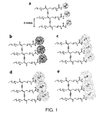
- Exposure to UV radiation causes the diacetylene composite on the substrate to polymerize into a shrunk polydiacetylene composite (see FIGS. 1 and 2 ).
- the diacetylene monomers can be polymerized into a polydiacetylene under UV and gamma radiation.
- the diacetylene composite contains ionic salts with large radii, there is repulsion between adjacent ionic salts. Because water absorbed to polymer further enlarges the repulsion, the polymer sensitively responds to water. In the presence of water, metal ions complexed with the monomer moieties further repulse adjacent ions and thus distort the molecular structure of the polymer, resulting in a change in color and fluorescence.
- the polydiacetylene composite has an amphipathic molecular structure in which the monomers, each having a hydrophilic head and a hydrophobic tail, are arranged by self-assembly, as shown in FIG. 2 .
- the hydrophilic head selectively absorbs water.
- the heads swelling due to the absorbed water undergo relatively large spatial repulsion to distort the conjugated structure of the photopolymerized polydiacetylene, resulting in hydrochromic transition from a blue to a red phase ( FIG. 4 ).
- the interchain length is 0.384 nm while alkali metals such as lithium, sodium, and potassium have an atomic diameter of approximately 0.4 nm or less.
- alkali metals such as lithium, sodium, and potassium
- the interchain length is 0.384 nm while alkali metals such as lithium, sodium, and potassium have an atomic diameter of approximately 0.4 nm or less.
- a polydiacetylene composite with a small alkali metal such as lithium or sodium may not show an instant color change because there is small interchain strain.
- a polydiacetylene composite with a large alkali metal such as cesium, rubidium, or potassium retains large interchain strain due to the large metal atom diameter (cesium 0.530 nm, rubidium 0.496 nm, potassium 0.454 nm).
- Water absorbed into the hydrophilic head gives additional strain to the polymer to cause the functional group of the polydiacetylene to undergo orbital distortion, with the instant response of hydrochromism.
- Particularly cesium cations which have the greatest atomic diameter among the alkali metals, receive the greatest strain from water, and thus respond to even a trace amount of water at a fast rate, resulting in hydrochromic transition.
- the polydiacetylene composite can be reversibly or irreversibly changed in sensitivity to water and pH-dependent color transition by regulating a molar ratio between the diacetylene monomer and the alkali metal ionic compound.
- hydrochromic thin films suitable for surrounding conditions can be fabricated.
- the concentration of the alkali metal such as cesium is adjusted so as for the polydiacetylene composite to respond to a predetermined amount of water.
- the cesium concentration may be adjusted such that the polyacetylene composite undergoes hydrochromic transition at a humidity of 5 % or higher, or at a humidity of 50 % or higher, or at a humidity of 100 %. Therefore, the hydrochromic thin film according to the present invention may be used as a humidity sensor that sensitively responds to water.
- a blue insoluble hydrochromic thin film can be obtained.
- the blue thin film turns red, emitting red fluorescence.
- the present invention is characterized by the ability to clearly visualize fingerprints impressed faintly, and even visualize a part of sweat pore distribution into amplified fluorescent patterns, which is quite different from conventional methods of fingerprint recognition. Further, even a fluorescent pattern image of the sweat pore distribution partially impressed on the hydrochromic thin film can be used to discriminate forged and genuine fingerprints with an accuracy of near 100 %.
- the present invention may be a technology for pioneering developments in the field of forensic science or fingerprint authentication.
- the present invention addresses a hydrochromic polydiacetylene composite composition
- a hydrochromic polydiacetylene composite composition comprising a polydiacetylene polymerized from diacetylene monomers that are complexed with alkali metal ions.
- the alkali metal may be selected from the group consisting of cesium, rubidium, potassium, sodium, lithium, and a combination thereof.
- the alkali metal ionic compound responds with water and shows hygroscopicity.
- An alkali metal ionic compound with a larger metal ion radius responds with a carboxylic acid of the diacetylene monomer moiety to form a larger ionic salt, which leads to greater repulsion to adjacent ionic salts, allowing the diacetylene composite to respond sensitively to water.
- cesium ions with large ion radius used the composite sensitively respond to water.
- smaller alkali ions may be employed. Considering the ion radius thereof, the amount of alkali metal ions is determined depending on the use of the diacetylene composite composition.
- the diacetylene monomer is adapted to interact with an alkali metal ionic compound to afford a composite.
- the diacetylene monomer may be a compound represented by either Chemical Formula 1 or 2, or may be an mBzA compound in which a benzamide group is incorporated into a diacetylene molecule, or may contain both of the compound of Chemical Formula 1 or 2, and the mBzA compound.
- the diacetylene monomer may be selected from the group consisting of PCDA (10,12-pentacosadiynoic acid), TCDA (10,12-tricosadiynoic acid), HCDA (8, 10-heneicosadiynoic acid), PCDA-mBzA, TCDA-mBzA, HCDA-mBzA, in which a benzamide group is incorporated into the diacetylene molecule, and a combination thereof.
- the diacetylene composite may be or may comprise any one of the compounds of Chemical Formulas 3 to 7.
- hydrochromic polydiacetylene composite composition according to the further aspect of the present invention, detailed descriptions of the alkali metal ionic compound, the diacetylene monomer, and the diacetylene composite are omitted because they are as defined above.
- the present invention addresses a hydrochromic thin film, comprising a thin film substrate; and a coating layer, formed on the thin film substrate, including a hydrochromic polydiacetylene composite composition, the hydrochromic polydiacetylene composite composition comprising a polydiacetylene polymerized from diacetylene monomers that are complexed with alkali metal ionic compounds.
- the alkali metal may include at least one selected from the group consisting of cesium, rubidium, potassium, sodium, and lithium.
- the substrate may be selected from the group consisting of glass, a PET film, and an OHP film. Descriptions on the alkali metal ionic compound, the diacetylene monomer, the diacetylene composite, and the hydrochromic polydiacetylene composite composition are omitted because they are as defined above.
- the hydrochromic thin film according to one embodiment of the present invention can be applied to biometrics or sweat gland mapping, as well as fingerprint recognition.
- sweat gland mapping refers to the manifestation of sweat pores in the form of a map.
- a sweat pore map can be readily obtained by lightly pressing a finger against the hydrochromic thin film after sebaceous secretions and oils on the finger are cleaned off.
- a trace amount of sweat is secreted from sweat pores and causes the hydrochromic thin film to change in color selectively along the sweat pores.
- a sweat pore map can be manifested wherever sweat pores are present, for example, on the sole of a foot, the face, the arms, and the hands.
- the hydrochromic thin film of the present invention can be applied to edge-cutting forensic science and fingerprint authentication.
- the present invention addresses a humidity sensor for biometrics, based on a hydrochromic polydiacetylene composite composition comprising a polyacetlyene composite prepared by polymerizing a diacetylene composite formed by complexing a diacetylene monomer with an alkali metal ionic compound.
- the alkali metal of the alkali metal ionic compound may include at least one selected from cesium, rubidium, potassium, sodium, and lithium.
- the humidity sensor for biometrics may be used as a humidity sensor for fingerprint recognition.
- the present invention addresses a method for measuring humidity, using the humidity sensor for biometrics. In this regard, humidity can be measured by taking advantage of the increasing degree of chromic transition with an increase in humidity.
- the hydrochromic polydiacetylene composite composition of the present invention can undergo chromatic transition and fluorescent change when being in contact with water. Thanks to its high sensitivity to water, the hydrochromic polydiacetylene composite composition of the present invention can sense even a trace amount of water on the friction ridges of fingers or from sweat pores distributed along the friction ridges. Hence, the hydrochromic polydiacetylene composite composition of the present invention can exhibit intrinsic fingerprints and sweat pore locations on fingerprints positions in an amplified manner of color and fluorescent transition patterns.
- the polydiacetylene composite composition of the present invention can be used to discriminate fingerprints, even if they remain highly partial, through comparison of characteristic sweat pore distribution patterns, and thus can perform fingerprint recognition with exceptionally improved accuracy.
- the hydrochromic thin film based on the polydiacetylene composite composition in accordance with the present invention can visualize fingerprints impressed faintly and even a part of sweat pore distribution into amplified fluorescent patterns, and finds applications in various fields including forensic science, biometrics, forgery prevention, humidity sensors, etc.
- the hydrochromic thin film is applied to a humidity sensor for biometrics thanks to its ability to sense even a trace amount of water.
- the present invention can be applied for a broad spectrum of commercial uses because water leakage from various facilities and constructions including water pipes, cracked structures, experimental instruments, etc. can be detected in situ by taking advantage of the color or fluorescent transition in response to water absorption.
- Example 1-2 Preparation of TCDA-Cs polydiacetylene composite composition
- a composite composition was prepared in the same manner as in Example 1-1 with the exception that TCDA (10, 12-tricosadiynoic acid) was used instead of PCDA.
- a composite composition was prepared in the same manner as in Example 1-1 with the exception that RbOH was used instead of CsOH.
- Example 1-4 Preparation of HCDA-K polydiacetylene composite composition
- a composite composition was prepared in the same manner as in Example 1-1 with the exception that K and HCDA (8,10-heneicosadiynoic acid) were used instead of CsOH and PCDA, respectively.
- Example 1-5 Preparation of TCDA-K polydiacetylene composite composition
- a composite composition was prepared in the same manner as in Example 1-1 with the exception that K and TCDA (10, 12-tr icosadiynoic acid) were used instead of CsOH and PCDA, respectively.
- Example 1-6 Preparation of TCDA-Rb polydiacetylene composite composition
- a composite composition was prepared in the same manner as in Example 1-1 with the exception that RbOH and TCDA were used instead of CsOH and PCDA, respectively.
- Example 1-7 Preparation of HCDA-Na polydiacetylene composite composition
- a composite composition was prepared in the same manner as in Example 1-1 with the exception that Na and HCDA were used instead of CsOH and PCDA, respectively.
- a solution of 0.750 g of CsOH in deionized water was dropwise added to a solution of 1.87 g of PCDA (10,12-pentacosadiynoic acid) in 9.6 mL of THF (tetrahydrofuran), and mixed together by stirring for 1 hr.
- the resulting solution composition was applied onto a PET film using a spin coater at 2,000 rpm for 1 min to give a coating 0.5 ⁇ m thick.
- the coated thin film was dried at 70oC for 1 min to give a photochromic or photopolymerizable supramolecule film, which was then exposed to 254 nm radiation from a UV lamp to afford a blue thin film.
- Example 2-2 Fabrication of TCDA-Cs thin film
- a blue thin film was fabricated in the same manner as in Example 2-1 with the exception that TCDA (10, 12-tricosadiynoic acid) was used instead of PCDA.
- a blue thin film was fabricated in the same manner as in Example 2-1 with the exception that RbOH was used instead of CsOH.
- Example 2-4 Fabrication of HCDA-K thin film
- a blue thin film was fabricated in the same manner as in Example 2-1 with the exception that K and HCDA (8,10-heneicosadiynoic acid) were used instead of CsOH and PCDA, respectively.
- Example 2-5 Fabrication of TCDA-K thin film
- a blue thin film was fabricated in the same manner as in Example 2-1 with the exception that K and TCDA (10,12-tricosadiynoic acid) were used instead of CsOH and PCDA, respectively.
- Example 2-6 Fabrication of TCDA-Rb thin film
- a blue thin film was fabricated in the same manner as in Example 2-1 with the exception that RbOH and TCDA were used instead of CsOH and PCDA, respectively.
- Example 2-7 Fabrication of HCDA-Na thin film
- a blue thin film was fabricated in the same manner as in Example 2-1 with the exception that Na and HCDA were used instead of CsOH and PCDA, respectively.
- a solution of 0.750 g of CsOH in deionized water was dropwise added to a solution of 1.87 g of PCDA (10,12-pentacosadiynoic acid) in 9.6 mL of THF (tetrahydrofuran), and mixed together by stirring for 1 hr.
- the resulting solution composition was 20-fold diluted in a solvent (dioxane/water 40% v/v), and then loaded to an inkjet cartridge mounted on an office inkjet printer.
- the dilution was printed on a PET film using the inkjet printer, and exposed to 245 nm radiation from a UV lamp to afford a thin film.
- the blue thin film of Example 2-1 was carefully picked up with a forceps.
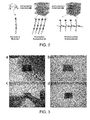
- the blue film turned red (b, d) within 1 sec after it was manually blown on by a researcher exhaling with a wide open mouth (near body temperature) (a) or after a finger was approached to the film at a distance of 0.3 mm (c).
- the blue film remained unchanged in color when the film was strongly blown on by a researcher exhaling from a narrow open mouth (lower than the body temperature due to adiabatic expansion), or when the film was sealed with a transparent wrap or tape before being breathed on or pressed by fingers.
- FIGS. 4 and 5 SEM images and XRD spectra of the thin film fabricated in Example 2-1 are given in FIGS. 4 and 5 , respectively.
- FIG. 4 shows SEM images of the surface of the polydiacetylene thin film before (upper panel) and after (lower panel) water absorption while
- FIG. 5 shows XRD spectra of the surface of the polydiacetylene thin film before (upper) and after (lower) water absorption.
- FIG. 6 is a schematic view illustrating a structural change of the thin film upon water absorption. As can be seen in FIGS. 4 to 6 , water absorption makes the thin film undergo a structural change, with the consequent color transition from a blue to a red phase.
- FIGS. 7 and 8 Properties of the thin films fabricated in Examples 2-1 and 3 were analyzed and the results are given in FIGS. 7 and 8.
- FIG. 7a shows the chromatic transition of the thin film fabricated in Example 2-1 from a blue to a red phase upon exposure to water
- FIG. 7b shows the chromatic transition of the thin film according to Example 3, and the structural change of the thin film upon water absorption.
- FIG. 7c is an image of the thin film of Example 2-1 after chromatic transition occurred along letters written on the thin film with an aqueous ballpoint pen (letters appeared red). These thin films were observed to respond to water very quickly. It generally takes ones of seconds to ones of hours for typical hydrochromic materials to respond to water.
- FIG. 8a is a graph in which red intensity is plotted against time after a water drop is applied to the thin film of Example 2-1, as measured by a high-speed camera.
- FIG. 8b shows hydrochromic properties of hydrochromic polydiacetylene composites prepared with various molar ratios of PCDA and Cs (in FIG. 8b , CR represents colorimetric response).
- a molar ratio of PCDA : Cs is preferably set to be 1:0.8 or more, and more preferably 1:1.
- FIG. 8c shows UV-Vis spectra before and after water absorption
- FIG. 8d shows emission spectra before and after water absorption. In both graphs, water absorption caused chromatic transition.
- FIGS. 9 to 11 show color changes of the thin films with relative humidity (from 25 % to 100 %). All of the thin films appeared blue at 25 % relative humidity, and turned red at 100 % relative humidity.
- FIG. 10 shows humidity sensing test results of the thin films. Color transition started at about 50 % relative humidity for Example 2-2, at about 60 % relative humidity for Example 2-1, at about 70 % relative humidity for Example 2-3, at about 80 % relative humidity for Example 2-4, and at about 90 % relative humidity for Example 2-5.
- FIG. 11 is a graph showing colors of the thin films according to humidity. As can be seen in FIGS.
- the films can respond to 50% - 100 % relative humidity according to the structure of the diacetylene composite, implying that the structural control leads to adjusting the humidity sensitivity of the thin films.
- the data obtained above indicate that the thin films of the present invention can be used as humidity sensors highly responsive to a predetermined humidity value or higher.
- Example 2-1 After sebaceous secretions and oils on a finger were cleaned off, the finger was lightly pressed against the hydrochromic thin film of Example 2-1 to obtain a sweat pore map as a trace amount of water from sweat pores made the thin film undergo chromatic transition selectively at the fingerprinted regions, and the map could be observed under a magnification glass or microscope, as shown in FIG. 12 . Fluorescence microscopy of the sweat pores gave a fluorescent image manifesting the sweat pore distribution as a more distinct image, and thus is very suitable for comparative analysis. For examining a distribution of sweat pores, fingerprints were lightly impressed on two sheets of the blue thin film fabricated in Example 2-1, and observed under a microscope. The results are shown in FIG. 12. FIG.
- FIG. 12 shows images of the hydrochromic thin films that underwent chromatic transition due to a trace amount of water from sweat pores, taken by a camera (a), a microscope (b), and a fluorescence microscope (c).
- the thin films changed in color selectively in the impressed regions (appeared as red dots) due to water from sweat pores.
- FIG. 12c the red regions (dots) are more vividly observed.
- FIG. 12d shows Raman spectra of the microscopic images. Lower and upper portions of the circles correspond to the regions that have and have not undergone chromatic transition from a blue to a red phase in FIG. 12b , respectively.
- FIG. 12b shows images of the hydrochromic thin films that underwent chromatic transition due to a trace amount of water from sweat pores, taken by a camera (a), a microscope (b), and a fluorescence microscope (c).
- the thin films changed in color selectively in the impressed regions (appeared as red dots) due to water from sweat pores.
- FIG. 12e is an image merged from an image obtained by a fingerprinting prism, showing a fingerprint and sweat glands, and the fluorescent image (c).
- FIG. 12f is a magnification of the image of FIG. 12e .
- the fluorescent results obtained from the film are consistent with the sweat pores identified by the prism.
- the thin film was observed to not change in color at some regions corresponding to sweat pores (marked by circles), implying that some sweat pores do not secrete sweat. Therefore, the thin film of the present invention can be applied to medical data on whether sweat pores secrete sweat or not, as well as fingerprint recognition.
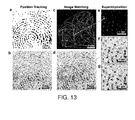
- FIG. 13a is a threshold image of sweat pores alone manifested by position tracking on the film of Example 2-1 against which a finger was lightly pressed after the finger was washed to remove sebaceous secretions and oils, and dried.
- FIG. 13b is an image of sweat pores alone manifested by position tracking from a ninhydrin fingerprint image.
- FIGS. 13c (fluorescent image of FIG. 13a) and 13d are given to comparatively analyze whether the image of FIG. 13a is consistent with that of FIG. 13b.
- FIG. 13e is a magnified image of a specific part of FIG. 13c (red dots appeared only in the printed friction ridges due to sweat from sweat pores) while FIG. 13f is a magnified image of a specific part of FIG. 13d.
- FIG. 13g is an image merged from the fluorescent image of FIG. 13e and the image of FIG. 13f . As can be seen, the two images are consistent in sweat pore positions.
- the same experiments were performed with fingerprints provided from five people, and the same results were obtained.
- a potential fingerprint of interest was successfully identified from a database of 10 fingerprints.
- the thin film of the present invention was successfully used in identifying the fingerprint providers from distorted fingerprints or even a part of a potential fingerprint. Hence, the present invention guarantees accurate fingerprinting analysis.
- FIG. 14 is a merged image of FIGS. 14a to 14c.
- FIGS. 14e to 14f are magnified images of FIG. 14d . As apparent from FIG. 14 , the three images are consistent with one another.
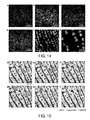
- FIGS. 15a to 15e are sweat pore maps of the fingerprints impressed at different times (in FIGS. 15a to 15e , active sweat pores are marked by red dotted shade circles while inactive sweat pores are marked by blue dotted circles).
- FIG. 15f is an image analyzing the results of FIGS. 15a to 15e . In FIG. 15f , consistently active sweat pores are marked by red shaded circles, partially active sweat pores by yellow triangles, and consistently inactive sweat pores by blue circles.
- innumerable sweat pores are on the human body, but become inactive with age. That is, many sweat pores are present in the body, but not all release sweat. The degree of inactivation is different from one sweat pore to another. According to the present invention, therefore, it is possible to examine whether sweat pores are active or inactive, which may be used as medical data. Further, an additional experiment showed that sweat pore maps can be obtained from any region of the body where sweat pores are present, like a sole of the foot, a face, an arm, etc.
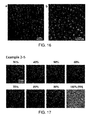
- Example 2-5 (TCDA-K) was analyzed for sweat pore mapping according to humidity by fluorescence microscopy. The results are given in FIG. 17 . As can be seen in FIG. 17 , the hydrochromic thin film allowed for sweat pore mapping even at a relative humidity of 90 % or higher, demonstrating its stability to humidity.
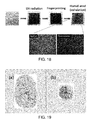
- a finger was strongly pressed against a blue thin film that was fabricated by applying a composition of the present invention onto a PET film substrate and photopolymerizing the composition.
- the fingerprint impressed on the blue thin film was not visualized with the naked eye.
- the impressed fingerprint remained blue and the other portions turned red as sebaceous secretions and oils distributed over the friction ridges acted as a protective layer against water penetration. Thus the fingerprint was manifested.
- the manifested fingerprint was compared with the fingerprint data of the fingerprint provider.
- the manifested fingerprint of the provider was analyzed for characteristics (core, delta, ridge end, bifurcation, etc.) using commercially available software, and the result is given in FIG. 19a .
- the result from the fingerprint data of the fingerprint provider obtained using a commercially available fingerprint reader is given in Fig. 19b .
- the results are correctly consistent with each other.
- the present invention can visualize even a partial sweat pore distribution as well as a fingerprint image, whether vivid or faint, into an amplified fluorescent image, thereby achieving fingerprint recognition at near 100 % accuracy. Because people have their own characteristic sweat pore distributions, even a sweat pore map containing a very small portion of sweat pore distribution can be used to identify a person of interest. In other words, results obtained by analyzing sweat pore features of a fingerprint provider using a fingerprint reader, and results obtained by manifesting fluorescent sweat pore patterns of a fingerprint using fingerprint recognition software can be combined with each other to identify the acquired fingerprints at near 100 % accuracy. Thus, the present invention can be used in edge-cutting forensic science and for developing new dermatoglyphics technology. In addition, the present invention is very advantageous in that even a part of sweat pore distribution can be useful for fingerprint recognition.
Landscapes
- Chemical & Material Sciences (AREA)
- Health & Medical Sciences (AREA)
- Life Sciences & Earth Sciences (AREA)
- Organic Chemistry (AREA)
- Chemical Kinetics & Catalysis (AREA)
- Physics & Mathematics (AREA)
- Polymers & Plastics (AREA)
- Medicinal Chemistry (AREA)
- Pathology (AREA)
- General Health & Medical Sciences (AREA)
- Engineering & Computer Science (AREA)
- Biophysics (AREA)
- Molecular Biology (AREA)
- General Physics & Mathematics (AREA)
- Immunology (AREA)
- Analytical Chemistry (AREA)
- Biochemistry (AREA)
- Surgery (AREA)
- Public Health (AREA)
- Veterinary Medicine (AREA)
- Animal Behavior & Ethology (AREA)
- Biomedical Technology (AREA)
- Heart & Thoracic Surgery (AREA)
- Medical Informatics (AREA)
- Plasma & Fusion (AREA)
- Manufacturing & Machinery (AREA)
- Materials Engineering (AREA)
- Wood Science & Technology (AREA)
- Endocrinology (AREA)
- Gastroenterology & Hepatology (AREA)
- Physiology (AREA)
- Manufacture Of Macromolecular Shaped Articles (AREA)
- Addition Polymer Or Copolymer, Post-Treatments, Or Chemical Modifications (AREA)
- Investigating Or Analysing Materials By The Use Of Chemical Reactions (AREA)
Abstract
Description
- The present invention relates to a hydrochromic polydiacetylene composite composition, a hydrochromic thin film using the same, and use thereof. More particularly, the present invention relates to a hydrochromic polydiacetylene composite composition that is highly sensitive to water, a hydrochromic thin film using the same, and the use thereof in biometrics or fingerprint recognition.
- Polydiacetylenes are polymers of diacetylene monomers, with a backbone structure characterized by the alternate carbon double bond and carbon triple bond therein. When being close enough to each other to form a crystalline or semi-crystalline state, diacetylene monomers undergo polymerization under UV or gamma radiation to afford the conjugated polymers. An aqueous dispersion of polydiacetylene in a suitable condition or a thin film of polydiacetylene on a solid substrate appears blue with a maximum absorbance peak at about 650 nm. Upon exposure to external stimuli (e.g., heat, solvents, pH, molecular recognition, etc.), polydiacetylenes can change in color from blue to red with a maximum absorbance peak at about 550 nm. This characteristic of color transition under specific conditions has recently inspired active research into the use of polydiacetylene as various sensors. As far as polydiacetylene-based sensors are concerned, reference may be made to Korean Patent No.
10-1199417 - A fingerprint is an impression left by the friction ridges of a human finger. Fingerprints, the recovery of which from a crime scene is an important method of forensic science, are easily deposited on suitable surfaces by the natural secretions of sweat from the eccrine glands, epocrine glands, and sebaceous glands that are present in epidermal ridges. The secretions are composed mostly of water, together with a minor portion of inorganic materials such as chlorides and metal ions, and organic materials such as amino acids, urea, proteins, carbohydrates, and fatty acids. These secretions are colorless and thus invisible to the naked eye. In the present invention, polydiacetylenes are remarkably improved in chromatic transition and fluorescent change by modifying the diacetylene moieties with alkali metal ionic compounds, thereby being able to highly sense even a trace of water secreted from sweat pores in the friction ridges. When fingers are pressed against the thin film of the present invention, not only do friction ridge patterns appear thereon, but also a distribution of sweat pores in the ridges is distinctively shown, thus visualizing a distribution map of sweat pores. Each person has their own peculiar friction ridge patterns, and is also different from one to another in the distribution of sweat pores in the friction ridges. Thus, even a very small portion of the sweat pore map printed on the thin film can guarantee the intrinsic fingerprint characteristics of the fingerprint provider of interest. As mentioned above, a combination of the fingerprint and the distribution map of sweat pores, obtained according to the present invention can approximate the fingerprint recognition rate to 100 %, and can be used to prevent the crime of fingerprint forgery. The present invention is an original technology because it has not been reported thus far.
[Related Art Document] Korean Patent No.10-1199417 - The present disclosure is to provide a hydrochromic polydiacetylene composite composition sensitively reactive to water, a hydrochromic thin film using the same, and the use thereof in biometrics or fingerprint recognition. Also, provided are respective methods for producing a hydrochromic polydiacetylene composite composition, and for fabricating a hydrochromic thin film.
- In accordance with an aspect thereof, the present invention addresses a method for producing a hydrochromic polydiacetylene composite composition, comprising: dissolving an alkali metal ionic compound in water to give a first solution (step a); dissolving a diacetylene monomer in an organic solvent to give a second solution (step b); and stepwise adding a small amount of the first solution to the second solution, and mixing the first solution and the second solution together by stirring to give a diacetylene composite, followed by photopolymerization (step c).
- The alkali metal may include at least one metal selected from the group consisting of cesium, rubidium, potassium, sodium, and lithium.
- As used herein, the term "diacetylene composite" refers to a compound in which a diacetylene monomer is conjugated with an alkali metal ionic compound.
- The photopolymerization of step c may be the polymerization of a self-assembled diacetylene composite under light.
- The self-assembly may be achieved by changing the solution in solubility, or applying the solution as a film onto a substrate such as glass, a PET film, an OHP film, etc.
- Adapted to interact with an alkali metal ionic compound to afford a composite, the diacetylene monomer may be a diacetylene molecule containing both a functional group, such as carboxylic acid, and a hydrophobic alkyl chain, as represented by the following Chemical Formula 1:
[Chemical Formula 1] A-(L1)d-(CH2)e-C≡C-C≡C-(CH2)f-(L2)g-B
wherein - d+g is an integer of 0, 1 or 2, e+f is an integer of 2 to 50 wherein e and f are independently integers of 1 or greater;
- A and B independently represent methyl, amine, carboxyl, hydroxy, maleimide, biotin, N-hydroxysuccinimide, benzoic acid, or activated ester, and may be in an ionized state; and
- L1 and L2, which may be the same or different, independently represent alkyl of 2 or more carbon atoms, one or more ethylene oxides, amine, amide, ester, or carbonyl.
- The diacetylene monomer may be a compound represented by the following Chemical Formula 2, or an mBzA compound in which a benzamide group is incorporated into a diacetylene molecule. These compounds are representative monomer moieties that can induce irreversible and reversible chromatic transition, respectively.
[Chemical Formula 2] CH3-(CH2)m-C≡C-C≡C-(CH2)n-COOH
wherein m+n is an integer of 2 to 50. - A polydiacetylene undergoes an irreversible chromatic transition from a blue to a red phase if consisting of pure diacetylene monomers, but the transition may be reversible if consisting of mBzA compound because the benzamide group provides resilience for the polydiacetylene molecules. That is, the mBzA compound responds to an external stress, and recovers the original state due to the intermolecular hydrogen bonds of the amide groups after removal of the external stresses. Thus, the employment of the mBzA compound is advantageous in that the polymer can be repetitively used in fingerprint authentication as will be described below.
- The diacetylene monomer may be selected from the group consisting of PCDA (10,12-pentacosadiynoic acid), TCDA (10,12-tricosadiynoic acid), HCDA (8, 10-heneicosadiynoic acid), PCDA-mBzA, TCDA-mBzA, HCDA-mBzA, and a combination thereof.
- Structures of PCDA, TCDA, and HCDA are given in
Structural Formula 1.
- For use in the preparation of the diacetylene composite, the alkali metal ionic compound responds with water and shows hygroscopicity. The alkali metal ionic compound used in the present invention may include at least one selected from the group consisting of lithium hydroxide, sodium hydroxide, potassium hydroxide, rubidium hydroxide, and cesium hydroxide, and preferably from among rubidium hydroxide and cesium hydroxide.
TABLE 1 Comparison of Atomic Diameters Atomic Diameter Van der Waals diameter Li Ion 0.304 nm 0.364 nm Na Ion 0.372 nm 0.454 nm K Ion 0.454 nm 0.496 nm Rb Ion 0.496 nm 0.606 nm Cs Ion 0.530 nm 0.686 nm - An alkali metal ionic compound with a larger metal ion radius reacts with a carboxylic acid of the diacetylene monomer moiety to form a larger ionic salt, which leads to greater repulsion to adjacent ionic salts. When absorbing water molecules, the ionic salts exhibit great repulsion to distort the molecular structure, resulting in chromatic or fluorescent transition. Since cesium has the largest ion radius of the alkali metals, the composite composition based on the diacetylene monomers coupled with cesium hydroxide most sensitively responds to water absorption. For the condition that needs less sensitivity to water, smaller alkali ions may be employed. Considering the ion radius thereof, the amount of alkali metal ions is determined depending on the use of the diacetylene composite composition.
- Based on a mole of the diacetylene monomer, the alkali metal ionic compound may be used in an amount of 0.1 to 3 moles and preferably in an amount of 0.5 to 2 moles. Given the alkali metal ionic compound within the range, the composite composition can suitably respond to water, and has improved stability. When the alkali metal ionic compound is used in an amount less than 0.1 mole, the composition may decrease in sensitivity to water. On the other hand, more than 3 moles of the alkali metal ionic compound to a mole of diacetylene monomer may increase the degree of ionization of the composition to the extent of crystallization.
- As described above, the alkali metal ions undergo an acid-base reaction with the carboxylic acid of the diacetylene monomer moiety to form an ionic salt composite.
- The diacetylene composite may be or may comprise at least one of the compounds represented by the following Chemical Formulas 3 to 7.
[Chemical Formula 3] CH3-(CH2)m-C≡C-C≡C-(CH2)n-COO(-)Cs(+)
[Chemical Formula 4] CH3-(CH2)m-C≡C-C≡C-(CH2)n-COO(-)Rb(+)
[Chemical Formula 5] CH3-(CH2)m-C≡C-C≡C-(CH2)n-COO(-)K(+)
[Chemical Formula 6] CH3-(CH2)m-C≡C-C≡C-(CH2)n-COO(-)Na(+)
[Chemical Formula 7] CH3-(CH2)m-C≡C-C≡C-(CH2)n-COO(-)Li(+)
wherein m+n is an integer of 2 to 50. - The polydiacetylene composite composition may be obtained by exposing the diacetylene monomers to UV or gamma radiation when they are close enough to each other to form a crystalline or semi-crystalline state.
- The organic solvent may include at least one selected from the group consisting of alcohol, acetone, dioxane, THF (tetrahydrofuran), and DMF (dimethylformamide).
- In accordance with another aspect thereof, the present invention addresses a method for fabricating a hydrochromic thin film, comprising: dissolving an alkali metal ionic compound in water to give a first solution; dissolving a diacetylene monomer in an organic solvent to give a second solution; stepwise adding a small amount of the first solution to the second solution, and mixing the first solution and the second solution together by stirring to give a diacetylene composite; and coating a substrate with the diacetylene composite and photopolymerizing the diacetylene composite on the substrate.
- Descriptions on the alkali metal ionic compound, the diacetylene monomer, and the organic solvent are omitted because they are as defined above.
- The substrate may be selected from the group consisting of glass, a PET film, and an OHP film. The coating may be obtained using a method selected from the group consisting of spin coating, inkjet printing, a doctor blade technique, and dip-drawing.
- For spin coating, a powder of the diacetylene composite is added in an amount of 5 to 20 weight % to a pure organic solvent, and ultrasonicated to give a solution. To this solution, water is added in an amount of 1 to 30 volume % based on the total volume of the solution, followed by ultrasonication to prepare a spin coating solution.
- For use in inkjet printing, the diacetylene composite is added to an aqueous solution containing a watersoluble organic solvent in an amount of 1 to 70 volume % based on the total volume of the aqueous solution, heated at around 70ºC, and ultrasonicated.
- Exposure to UV radiation causes the diacetylene composite on the substrate to polymerize into a shrunk polydiacetylene composite (see
FIGS. 1 and2 ). When arranged in such close contact with each other to form a crystalline or semi-crystalline structure, the diacetylene monomers can be polymerized into a polydiacetylene under UV and gamma radiation. - As described above, because the diacetylene composite contains ionic salts with large radii, there is repulsion between adjacent ionic salts. Because water absorbed to polymer further enlarges the repulsion, the polymer sensitively responds to water. In the presence of water, metal ions complexed with the monomer moieties further repulse adjacent ions and thus distort the molecular structure of the polymer, resulting in a change in color and fluorescence.
- The polydiacetylene composite has an amphipathic molecular structure in which the monomers, each having a hydrophilic head and a hydrophobic tail, are arranged by self-assembly, as shown in
FIG. 2 . When the polydiacetylene composite is brought into direct or indirect contact with a water-containing secretion in a temperature environment similar to human body temperature, the hydrophilic head selectively absorbs water. In this regard, the heads swelling due to the absorbed water undergo relatively large spatial repulsion to distort the conjugated structure of the photopolymerized polydiacetylene, resulting in hydrochromic transition from a blue to a red phase (FIG. 4 ). In the conjugated structure of the photopolymerized polydiacetylene, the interchain length is 0.384 nm while alkali metals such as lithium, sodium, and potassium have an atomic diameter of approximately 0.4 nm or less. In the presence of a small amount of water, a polydiacetylene composite with a small alkali metal such as lithium or sodium may not show an instant color change because there is small interchain strain. In contrast, a polydiacetylene composite with a large alkali metal such as cesium, rubidium, or potassium retains large interchain strain due to the large metal atom diameter (cesium 0.530 nm, rubidium 0.496 nm, potassium 0.454 nm). Water absorbed into the hydrophilic head gives additional strain to the polymer to cause the functional group of the polydiacetylene to undergo orbital distortion, with the instant response of hydrochromism. Particularly cesium cations, which have the greatest atomic diameter among the alkali metals, receive the greatest strain from water, and thus respond to even a trace amount of water at a fast rate, resulting in hydrochromic transition. Moreover, the polydiacetylene composite can be reversibly or irreversibly changed in sensitivity to water and pH-dependent color transition by regulating a molar ratio between the diacetylene monomer and the alkali metal ionic compound. Hence, hydrochromic thin films suitable for surrounding conditions can be fabricated. That is, the concentration of the alkali metal such as cesium is adjusted so as for the polydiacetylene composite to respond to a predetermined amount of water. For instance, the cesium concentration may be adjusted such that the polyacetylene composite undergoes hydrochromic transition at a humidity of 5 % or higher, or at a humidity of 50 % or higher, or at a humidity of 100 %. Therefore, the hydrochromic thin film according to the present invention may be used as a humidity sensor that sensitively responds to water. - After the photopolymerization, a blue insoluble hydrochromic thin film can be obtained. When absorbing water, the blue thin film turns red, emitting red fluorescence. This property allows the hydrochromic thin film to be used in fingerprint recognition. The present invention is characterized by the ability to clearly visualize fingerprints impressed faintly, and even visualize a part of sweat pore distribution into amplified fluorescent patterns, which is quite different from conventional methods of fingerprint recognition. Further, even a fluorescent pattern image of the sweat pore distribution partially impressed on the hydrochromic thin film can be used to discriminate forged and genuine fingerprints with an accuracy of near 100 %. Hence, the present invention may be a technology for pioneering developments in the field of forensic science or fingerprint authentication.
- In accordance with a further aspect thereof, the present invention addresses a hydrochromic polydiacetylene composite composition comprising a polydiacetylene polymerized from diacetylene monomers that are complexed with alkali metal ions.
- The alkali metal may be selected from the group consisting of cesium, rubidium, potassium, sodium, lithium, and a combination thereof. Herein, for use in the preparation of the diacetylene composite, the alkali metal ionic compound responds with water and shows hygroscopicity. An alkali metal ionic compound with a larger metal ion radius responds with a carboxylic acid of the diacetylene monomer moiety to form a larger ionic salt, which leads to greater repulsion to adjacent ionic salts, allowing the diacetylene composite to respond sensitively to water. When cesium ions with large ion radius used, the composite sensitively respond to water. However, for the condition that needs less sensitivity to water, smaller alkali ions may be employed. Considering the ion radius thereof, the amount of alkali metal ions is determined depending on the use of the diacetylene composite composition.
- Containing both a functional group, such as carboxylic acid, and a hydrophobic alkyl chain, the diacetylene monomer is adapted to interact with an alkali metal ionic compound to afford a composite. The diacetylene monomer may be a compound represented by either
Chemical Formula Chemical Formula Chemical Formulas 3 to 7. - In regard to the hydrochromic polydiacetylene composite composition according to the further aspect of the present invention, detailed descriptions of the alkali metal ionic compound, the diacetylene monomer, and the diacetylene composite are omitted because they are as defined above.
- In accordance with a further aspect thereof, the present invention addresses a hydrochromic thin film, comprising a thin film substrate; and a coating layer, formed on the thin film substrate, including a hydrochromic polydiacetylene composite composition, the hydrochromic polydiacetylene composite composition comprising a polydiacetylene polymerized from diacetylene monomers that are complexed with alkali metal ionic compounds. The alkali metal may include at least one selected from the group consisting of cesium, rubidium, potassium, sodium, and lithium. The substrate may be selected from the group consisting of glass, a PET film, and an OHP film. Descriptions on the alkali metal ionic compound, the diacetylene monomer, the diacetylene composite, and the hydrochromic polydiacetylene composite composition are omitted because they are as defined above.
- Sensitively undergoing color or fluorescent transition in instant response to water, as mentioned above, the hydrochromic thin film according to one embodiment of the present invention can be applied to biometrics or sweat gland mapping, as well as fingerprint recognition.
- Herein, the term "sweat gland mapping", as used herein, refers to the manifestation of sweat pores in the form of a map. A sweat pore map can be readily obtained by lightly pressing a finger against the hydrochromic thin film after sebaceous secretions and oils on the finger are cleaned off. When a finger or hand is in contact with the hydrochromic thin film, a trace amount of sweat is secreted from sweat pores and causes the hydrochromic thin film to change in color selectively along the sweat pores. A sweat pore map can be manifested wherever sweat pores are present, for example, on the sole of a foot, the face, the arms, and the hands.
- People are also different from each another in terms of the distribution of sweat pores in the friction ridges. Thus, because even a very small portion of the sweat pore map printed on the thin film can guarantee the intrinsic fingerprint characteristics of the fingerprint provider of interest, the hydrochromic thin film of the present invention can be applied to edge-cutting forensic science and fingerprint authentication.
- In accordance with still another aspect thereof, the present invention addresses a humidity sensor for biometrics, based on a hydrochromic polydiacetylene composite composition comprising a polyacetlyene composite prepared by polymerizing a diacetylene composite formed by complexing a diacetylene monomer with an alkali metal ionic compound. The alkali metal of the alkali metal ionic compound may include at least one selected from cesium, rubidium, potassium, sodium, and lithium. The humidity sensor for biometrics may be used as a humidity sensor for fingerprint recognition. In accordance with yet another aspect thereof, the present invention addresses a method for measuring humidity, using the humidity sensor for biometrics. In this regard, humidity can be measured by taking advantage of the increasing degree of chromic transition with an increase in humidity.
- As described hitherto, the hydrochromic polydiacetylene composite composition of the present invention can undergo chromatic transition and fluorescent change when being in contact with water. Thanks to its high sensitivity to water, the hydrochromic polydiacetylene composite composition of the present invention can sense even a trace amount of water on the friction ridges of fingers or from sweat pores distributed along the friction ridges. Hence, the hydrochromic polydiacetylene composite composition of the present invention can exhibit intrinsic fingerprints and sweat pore locations on fingerprints positions in an amplified manner of color and fluorescent transition patterns.
- Capable of recognizing the friction ridges and even a segment of sweat pores distributed along the friction ridges, the polydiacetylene composite composition of the present invention can be used to discriminate fingerprints, even if they remain highly partial, through comparison of characteristic sweat pore distribution patterns, and thus can perform fingerprint recognition with exceptionally improved accuracy.
- In addition, the hydrochromic thin film based on the polydiacetylene composite composition in accordance with the present invention can visualize fingerprints impressed faintly and even a part of sweat pore distribution into amplified fluorescent patterns, and finds applications in various fields including forensic science, biometrics, forgery prevention, humidity sensors, etc. Particularly, the hydrochromic thin film is applied to a humidity sensor for biometrics thanks to its ability to sense even a trace amount of water.
- Further, the present invention can be applied for a broad spectrum of commercial uses because water leakage from various facilities and constructions including water pipes, cracked structures, experimental instruments, etc. can be detected in situ by taking advantage of the color or fluorescent transition in response to water absorption.
-
-
FIG. 1 shows schematic views of polydiacetylene structures photopolymerized from diacetylene monomers complexed with lithium (a), sodium (b), potassium (c), rubidium (d), and cesium (e) in accordance with exemplary embodiment of the present invention. -
FIG. 2 is a schematic view illustrating a procedure of photopolymerizing diacetylene composites in accordance with an exemplary embodiment of the present invention. -
FIG. 3 illustrates the responsiveness to water of a hydrochromic thin film in accordance with an exemplary embodiment of the present invention. -
FIGS. 4 to 6 illustrate the structural change of a hydrochromic thin film in response to water absorption according to an exemplary embodiment of the present invention in SEM images (FIG. 4 ), XRD spectra (FIG. 5 ), and a schematic view (FIG. 6 ). -
FIG. 7 shows photographic images of a hydrochromic thin film that undergoes chromatic transition upon exposure to water in accordance with an exemplary embodiment of the present invention. -
FIG. 8 shows graphs illustrating properties of hydrochromic thin films according to an exemplary embodiment of the present invention: color changes are plotted against time after a water drop is applied to the thin film (a); hydrochromic properties are depicted according to a molar ratio of PCDA and Cs ions (b); UV-Vis spectra before and after water absorption (c); and emission spectra before and after water absorption (d). -
FIG. 9 shows photographic images of hydrochromic thin films that change in color with relative humidity in accordance with an exemplary embodiment of the present invention. -
FIG. 10 shows humidity sensing ability of hydrochromic thin films in accordance with an exemplary embodiment of the present invention. -
FIG. 11 is a graph showing color changes with humidity of the hydrochromic thin films according to an exemplary embodiment of the present invention. -
FIG. 12 illustrates a sweat pore mapping process using a hydrochromic thin film according to an exemplary embodiment of the present invention. -
FIGS. 13 to 15 show analysis results of sweat pore maps manifested using hydrochromic thin films according to an exemplary embodiment of the present invention. -
FIG. 16 shows fluorescence microimages of sweat pore maps manifested using hydrochromic thin films according to an exemplary embodiment of the present invention. -
FIG. 17 shows fluorescence microimages of sweat pore maps manifested at different relative humidities using hydrochromic thin films according to an exemplary embodiment of the present invention. -
FIG. 18 illustrates the manifestation of a fingerprint on a thin film according to an exemplary embodiment of the present invention. -
FIG. 19 shows analysis results after data of a potential fingerprint obtained using a fingerprint reader and a fingerprint recognition program are compared. - A better understanding of the present invention may be obtained through the following examples that are set forth to illustrate, but are not to be construed as limiting the present invention.
- A solution of 0.750 g of CsOH in deionized water was dropwise added to a solution of 1.87 g of PCDA (10,12-pentacosadiynoic acid) in 9.6 mL of THF (tetrahydrofuran), and mixed together by stirring for 1 hr. The mixed solution was left for self-assembly, and then subjected to photopolymerization under a 254 nm UV lamp to give a composite composition.
- A composite composition was prepared in the same manner as in Example 1-1 with the exception that TCDA (10, 12-tricosadiynoic acid) was used instead of PCDA.
- A composite composition was prepared in the same manner as in Example 1-1 with the exception that RbOH was used instead of CsOH.
- A composite composition was prepared in the same manner as in Example 1-1 with the exception that K and HCDA (8,10-heneicosadiynoic acid) were used instead of CsOH and PCDA, respectively.
- A composite composition was prepared in the same manner as in Example 1-1 with the exception that K and TCDA (10, 12-tr icosadiynoic acid) were used instead of CsOH and PCDA, respectively.
- A composite composition was prepared in the same manner as in Example 1-1 with the exception that RbOH and TCDA were used instead of CsOH and PCDA, respectively.
- A composite composition was prepared in the same manner as in Example 1-1 with the exception that Na and HCDA were used instead of CsOH and PCDA, respectively.
- A solution of 0.750 g of CsOH in deionized water was dropwise added to a solution of 1.87 g of PCDA (10,12-pentacosadiynoic acid) in 9.6 mL of THF (tetrahydrofuran), and mixed together by stirring for 1 hr. The resulting solution composition was applied onto a PET film using a spin coater at 2,000 rpm for 1 min to give a coating 0.5 µm thick. The coated thin film was dried at 70ºC for 1 min to give a photochromic or photopolymerizable supramolecule film, which was then exposed to 254 nm radiation from a UV lamp to afford a blue thin film.
- A blue thin film was fabricated in the same manner as in Example 2-1 with the exception that TCDA (10, 12-tricosadiynoic acid) was used instead of PCDA.
- A blue thin film was fabricated in the same manner as in Example 2-1 with the exception that RbOH was used instead of CsOH.
- A blue thin film was fabricated in the same manner as in Example 2-1 with the exception that K and HCDA (8,10-heneicosadiynoic acid) were used instead of CsOH and PCDA, respectively.
- A blue thin film was fabricated in the same manner as in Example 2-1 with the exception that K and TCDA (10,12-tricosadiynoic acid) were used instead of CsOH and PCDA, respectively.
- A blue thin film was fabricated in the same manner as in Example 2-1 with the exception that RbOH and TCDA were used instead of CsOH and PCDA, respectively.
- A blue thin film was fabricated in the same manner as in Example 2-1 with the exception that Na and HCDA were used instead of CsOH and PCDA, respectively.
- A solution of 0.750 g of CsOH in deionized water was dropwise added to a solution of 1.87 g of PCDA (10,12-pentacosadiynoic acid) in 9.6 mL of THF (tetrahydrofuran), and mixed together by stirring for 1 hr. The resulting solution composition was 20-fold diluted in a solvent (dioxane/
water 40% v/v), and then loaded to an inkjet cartridge mounted on an office inkjet printer. The dilution was printed on a PET film using the inkjet printer, and exposed to 245 nm radiation from a UV lamp to afford a thin film. - As illustrated in
FIG. 3 , the blue thin film of Example 2-1 was carefully picked up with a forceps. The blue film turned red (b, d) within 1 sec after it was manually blown on by a researcher exhaling with a wide open mouth (near body temperature) (a) or after a finger was approached to the film at a distance of 0.3 mm (c). However, the blue film remained unchanged in color when the film was strongly blown on by a researcher exhaling from a narrow open mouth (lower than the body temperature due to adiabatic expansion), or when the film was sealed with a transparent wrap or tape before being breathed on or pressed by fingers. - SEM images and XRD spectra of the thin film fabricated in Example 2-1 are given in
FIGS. 4 and5 , respectively.FIG. 4 shows SEM images of the surface of the polydiacetylene thin film before (upper panel) and after (lower panel) water absorption whileFIG. 5 shows XRD spectra of the surface of the polydiacetylene thin film before (upper) and after (lower) water absorption.FIG. 6 is a schematic view illustrating a structural change of the thin film upon water absorption. As can be seen inFIGS. 4 to 6 , water absorption makes the thin film undergo a structural change, with the consequent color transition from a blue to a red phase. - Properties of the thin films fabricated in Examples 2-1 and 3 were analyzed and the results are given in
FIGS. 7 and 8. FIG. 7a shows the chromatic transition of the thin film fabricated in Example 2-1 from a blue to a red phase upon exposure to water whileFIG. 7b shows the chromatic transition of the thin film according to Example 3, and the structural change of the thin film upon water absorption.FIG. 7c is an image of the thin film of Example 2-1 after chromatic transition occurred along letters written on the thin film with an aqueous ballpoint pen (letters appeared red). These thin films were observed to respond to water very quickly. It generally takes ones of seconds to ones of hours for typical hydrochromic materials to respond to water. In contrast, the hydrochromic polydiacetylene composite of the present invention responds to water as fast as 10 m/s.FIG. 8a is a graph in which red intensity is plotted against time after a water drop is applied to the thin film of Example 2-1, as measured by a high-speed camera.FIG. 8b shows hydrochromic properties of hydrochromic polydiacetylene composites prepared with various molar ratios of PCDA and Cs (inFIG. 8b , CR represents colorimetric response). For a desired colorimetric response to humidity, as can be seen in the graph, a molar ratio of PCDA : Cs is preferably set to be 1:0.8 or more, and more preferably 1:1.FIG. 8c shows UV-Vis spectra before and after water absorption, andFIG. 8d shows emission spectra before and after water absorption. In both graphs, water absorption caused chromatic transition. - The thin films fabricated in Examples 2-1 to 2-7 were analyzed for ability to sense water, and the results are shown in
FIGS. 9 to 11 .FIG. 9 shows color changes of the thin films with relative humidity (from 25 % to 100 %). All of the thin films appeared blue at 25 % relative humidity, and turned red at 100 % relative humidity.FIG. 10 shows humidity sensing test results of the thin films. Color transition started at about 50 % relative humidity for Example 2-2, at about 60 % relative humidity for Example 2-1, at about 70 % relative humidity for Example 2-3, at about 80 % relative humidity for Example 2-4, and at about 90 % relative humidity for Example 2-5.FIG. 11 is a graph showing colors of the thin films according to humidity. As can be seen inFIGS. 10 and11 , the films can respond to 50% - 100 % relative humidity according to the structure of the diacetylene composite, implying that the structural control leads to adjusting the humidity sensitivity of the thin films. In addition, the data obtained above indicate that the thin films of the present invention can be used as humidity sensors highly responsive to a predetermined humidity value or higher. - After sebaceous secretions and oils on a finger were cleaned off, the finger was lightly pressed against the hydrochromic thin film of Example 2-1 to obtain a sweat pore map as a trace amount of water from sweat pores made the thin film undergo chromatic transition selectively at the fingerprinted regions, and the map could be observed under a magnification glass or microscope, as shown in
FIG. 12 . Fluorescence microscopy of the sweat pores gave a fluorescent image manifesting the sweat pore distribution as a more distinct image, and thus is very suitable for comparative analysis. For examining a distribution of sweat pores, fingerprints were lightly impressed on two sheets of the blue thin film fabricated in Example 2-1, and observed under a microscope. The results are shown inFIG. 12. FIG. 12 shows images of the hydrochromic thin films that underwent chromatic transition due to a trace amount of water from sweat pores, taken by a camera (a), a microscope (b), and a fluorescence microscope (c). As can be seen inFIG. 12b , the thin films changed in color selectively in the impressed regions (appeared as red dots) due to water from sweat pores. InFIG. 12c , the red regions (dots) are more vividly observed.FIG. 12d shows Raman spectra of the microscopic images. Lower and upper portions of the circles correspond to the regions that have and have not undergone chromatic transition from a blue to a red phase inFIG. 12b , respectively. As can be seen inFIG. 12d , the diacetlyene composite was structurally transformed by water, which led to the chromatic transition.FIG. 12e is an image merged from an image obtained by a fingerprinting prism, showing a fingerprint and sweat glands, and the fluorescent image (c).FIG. 12f is a magnification of the image ofFIG. 12e . As seen inFIG. 12f , the fluorescent results obtained from the film are consistent with the sweat pores identified by the prism. InFIG. 12f , the thin film was observed to not change in color at some regions corresponding to sweat pores (marked by circles), implying that some sweat pores do not secrete sweat. Therefore, the thin film of the present invention can be applied to medical data on whether sweat pores secrete sweat or not, as well as fingerprint recognition. -
FIG. 13a is a threshold image of sweat pores alone manifested by position tracking on the film of Example 2-1 against which a finger was lightly pressed after the finger was washed to remove sebaceous secretions and oils, and dried.FIG. 13b is an image of sweat pores alone manifested by position tracking from a ninhydrin fingerprint image.FIGS. 13c (fluorescent image ofFIG. 13a) and 13d are given to comparatively analyze whether the image ofFIG. 13a is consistent with that ofFIG. 13b. FIG. 13e is a magnified image of a specific part ofFIG. 13c (red dots appeared only in the printed friction ridges due to sweat from sweat pores) whileFIG. 13f is a magnified image of a specific part ofFIG. 13d. FIG. 13g is an image merged from the fluorescent image ofFIG. 13e and the image ofFIG. 13f . As can be seen, the two images are consistent in sweat pore positions. - For additional verification, the same experiments were performed with fingerprints provided from five people, and the same results were obtained. In addition, a potential fingerprint of interest was successfully identified from a database of 10 fingerprints. Furthermore, the thin film of the present invention was successfully used in identifying the fingerprint providers from distorted fingerprints or even a part of a potential fingerprint. Hence, the present invention guarantees accurate fingerprinting analysis.
- A finger was impressed on three sheets of the thin film of Example 2-1 at regular time intervals (after the finger was washed to cleanse off sebaceous secretions and oils therefrom, and dried). Sweat pore maps were manifested and analyzed by fluorescence microscopy. The results are shown in
FIG. 14. FIGS. 14a to 14c are sweat pore maps of the fingerprints impressed at different times (all the films changed in color selective in the friction ridges impressed thereon while the sweat pores appear as red dots (a), yellow dots (b), and blue dots (c)).FIG. 14d is a merged image ofFIGS. 14a to 14c. FIGS. 14e to 14f are magnified images ofFIG. 14d . As apparent fromFIG. 14 , the three images are consistent with one another. - A finger was impressed on five sheets of the thin film of Example 2-1 at regular time intervals (after the finger was washed to cleanse off sebaceous secretions and oils therefrom, and dried). Sweat pore maps were manifested and analyzed by fluorescence microscopy. The results are shown in
FIG. 15. FIGS. 15a to 15e are sweat pore maps of the fingerprints impressed at different times (inFIGS. 15a to 15e , active sweat pores are marked by red dotted shade circles while inactive sweat pores are marked by blue dotted circles).FIG. 15f is an image analyzing the results ofFIGS. 15a to 15e . InFIG. 15f , consistently active sweat pores are marked by red shaded circles, partially active sweat pores by yellow triangles, and consistently inactive sweat pores by blue circles. As a rule, innumerable sweat pores are on the human body, but become inactive with age. That is, many sweat pores are present in the body, but not all release sweat. The degree of inactivation is different from one sweat pore to another. According to the present invention, therefore, it is possible to examine whether sweat pores are active or inactive, which may be used as medical data. Further, an additional experiment showed that sweat pore maps can be obtained from any region of the body where sweat pores are present, like a sole of the foot, a face, an arm, etc. - Images were respectively obtained by lightly pressing a finger against the films of Examples 2-3 and 2-5 after the finger was washed to remove sebaceous secretions and oils therefrom, and dried. The images were analyzed by fluorescence microscopy. The results are depicted in
FIG. 16 . As can be seen inFIG. 16 , the thin films underwent chromatic transition selectively at the friction ridges impressed, and allowed for the construction of detailed sweat maps (color changed portions represented as dots). The hydrochromic thin films of Examples 2-3 (PCDA-Rb) and 2-5 (TCDA-K) were also observed to manifest sweat pore maps. - Moreover, the hydrochromic thin film of Example 2-5 (TCDA-K) was analyzed for sweat pore mapping according to humidity by fluorescence microscopy. The results are given in
FIG. 17 . As can be seen inFIG. 17 , the hydrochromic thin film allowed for sweat pore mapping even at a relative humidity of 90 % or higher, demonstrating its stability to humidity. - As shown in
FIG. 18 , a finger was strongly pressed against a blue thin film that was fabricated by applying a composition of the present invention onto a PET film substrate and photopolymerizing the composition. In this regard, the fingerprint impressed on the blue thin film was not visualized with the naked eye. When the blue film was exhaled upon, the impressed fingerprint remained blue and the other portions turned red as sebaceous secretions and oils distributed over the friction ridges acted as a protective layer against water penetration. Thus the fingerprint was manifested. - The manifested fingerprint was compared with the fingerprint data of the fingerprint provider. The manifested fingerprint of the provider was analyzed for characteristics (core, delta, ridge end, bifurcation, etc.) using commercially available software, and the result is given in
FIG. 19a . And the result from the fingerprint data of the fingerprint provider obtained using a commercially available fingerprint reader is given inFig. 19b . As can be seen inFIG. 19 , the results are correctly consistent with each other. - The present invention can visualize even a partial sweat pore distribution as well as a fingerprint image, whether vivid or faint, into an amplified fluorescent image, thereby achieving fingerprint recognition at near 100 % accuracy. Because people have their own characteristic sweat pore distributions, even a sweat pore map containing a very small portion of sweat pore distribution can be used to identify a person of interest. In other words, results obtained by analyzing sweat pore features of a fingerprint provider using a fingerprint reader, and results obtained by manifesting fluorescent sweat pore patterns of a fingerprint using fingerprint recognition software can be combined with each other to identify the acquired fingerprints at near 100 % accuracy. Thus, the present invention can be used in edge-cutting forensic science and for developing new dermatoglyphics technology. In addition, the present invention is very advantageous in that even a part of sweat pore distribution can be useful for fingerprint recognition.
Claims (28)
- A hydrochromic polydiacetylene composite composition, comprising a polydiacetylene polymerized from diacetylene monomers that are complexed with a cesium ionic compound to give a diacetylene composite.
- A hydrochromic polydiacetylene composite composition, comprising a polydiacetylene polymerized from diacetylene monomers that are complexed with a rubidium ionic compound.
- A hydrochromic polydiacetylene composite composition, comprising a polydiacetylene polymerized from diacetylene monomers that are complexed with a potassium ionic compound.
- A hydrochromic polydiacetylene composite composition, comprising a polydiacetylene polymerized from diacetylene monomers that are complexed with a sodium ionic compound.
- A hydrochromic polydiacetylene composite composition, comprising a polydiacetylene polymerized from diacetylene monomers that are complexed with a lithium ionic compound.
- The hydrochromic polydiacetylene composite composition of any one of claims 1 to 5, wherein each of the diacetylene monomers is represented by the following Chemical Formula 1:
[Chemical Formula 1] A-(L1)d-(CH2)e-C≡C-C≡C-(CH2)f-(L2)g-B
whereind+g is an integer of 0, 1 or 2, e+f is an integer of 2 to 50 wherein e and f are independently integers of 1 or greater;A and B independently represent methyl, amine, carboxyl, hydroxy, maleimide, biotin, N-hydroxysuccinimide, benzoic acid, or activated ester, and may be in an ionized state; andL1 and L2, which may be the same or different, independently represent alkyl of 2 or more carbon atoms, one or more ethylene oxides, amine, amide, ester, or carbonyl. - The hydrochromic polydiacetylene composite composition of any one of claims 1 to 5, wherein each of the diacetylene monomers is a compound represented by the following Chemical Formula 2, or an mBzA compound in which a benzamide group is incorporated into a diacetylene molecule.
[Chemical Formula 2] CH3-(CH2)m-C≡C-C≡C-(CH2)n-COOH
wherein m+n is an integer of 2 to 50. - The hydrochromic polydiacetylene composite composition of any one of claims 1 to 5, wherein the diacetylene monomers include at least one selected from the group consisting of PCDA (10,12-pentacosadiynoic acid), TCDA (10,12-tricosadiynoic acid), HCDA (8,10-heneicosadiynoic acid), PCDA-mBzA, TCDA-mBzA and HCDA-mBzA.
- The hydrochromic polydiacetylene composite composition of claim 1, wherein the diacetylene composite includes the compound represented by the following Chemical Formula 3:
[Chemical Formula 3] CH3-(CH2)m-C≡C-C≡C-(CH2)n-COO(-)Cs(+)
wherein m+n is an integer of 2 to 50. - The hydrochromic polydiacetylene composite composition of claim 2, wherein the diacetylene composite includes the compound represented by the following Chemical Formula 4:
[Chemical Formula 4] CH3-(CH2)m-C≡C-C≡C-(CH2)n-COO(-)Rb(+)
wherein m+n is an integer of 2 to 50. - The hydrochromic polydiacetylene composite composition of claim 3, wherein the diacetylene composite includes the compound represented by the following Chemical Formula 5:
[Chemical Formula 5] CH3 -(CH2 ) m -C≡C-C≡C-(CH2 ) n -COO(-)K(+)
wherein m+n is an integer of 2 to 50. - The hydrochromic polydiacetylene composite composition of claim 4, wherein the diacetylene composite includes the compound represented by the following Chemical Formula 6:
[Chemical Formula 6] CH3-(CH2)m-C≡C-C≡C-(CH2)n-COO(-)Na(+)
wherein m+n is an integer of 2 to 50. - The hydrochromic polydiacetylene composite composition of claim 5, wherein the diacetylene composite includes the compound represented by the following Chemical Formula 7:
[Chemical Formula 7] CH3-(CH2)m-C≡C-C≡C-(CH2)n-COO(-)Li(+)
wherein m+n is an integer of 2 to 50. - A hydrochromic thin film, comprising:a thin film substrate; anda coating layer, formed on the thin film substrate, including a hydrochromic polydiacetylene composite composition,wherein the hydrochromic polydiacetylene composite composition comprises a polydiacetylene polymerized from diacetylene monomers that are complexed with a cesium ionic compound to give a diacetylene composite.
- The hydrochromic thin film of claim 14, for use in biometrics or mapping sweat glands.
- The hydrochromic thin film of claim 14, wherein the biometrics is of fingerprint recognition.
- A method for producing a hydrochromic polydiacetylene composite composition, comprising:dissolving a cesium ionic compound in water to give a first solution;dissolving a diacetylene monomer in an organic solvent to give a second solution; andstepwise adding a small amount of the first solution to the second solution, and mixing the first solution and the second solution together by stirring to give a diacetylene composite, followed by photopolymerization of self-assembled diacetylene composite.
- The method of claim 17, wherein each of the diacetylene monomers is represented by the following Chemical Formula 1:
[Chemical Formula 1] A-(L1)d-(CH2)e-C≡C-C≡C-(CH2)f-(L2)g-B
whereind+g is an integer of 0, 1 or 2, e+f is an integer of 2 to 50 wherein e and f are independently integers of 1 or greater;A and B independently represent methyl, amine, carboxyl, hydroxy, maleimide, biotin, N-hydroxysuccinimide, benzoic acid, or activated ester, and may be in an ionized state; andL1 and L2, which may be the same or different, independently represent alkyl of 2 or more carbon atoms, one or more ethylene oxides, amine, amide, ester, or carbonyl. - The method of claim 17, wherein each of the diacetylene monomers is a compound represented by the following Chemical Formula 2, or an mBzA compound in which a benzamide group is incorporated into a diacetylene molecule.
[Chemical Formula 2] CH3-(CH2)m-C≡C-C≡C-(CH2)n-COOH
wherein m+n is an integer of 2 to 50. - The method of claim 17, wherein the diacetylene monomers include at least one selected from the group consisting of PCDA (10,12-pentacosadiynoic acid), TCDA (10,12-tricosadiynoic acid), HCDA (8, 10-heneicosadiynoic acid), PCDA-mBzA, TCDA-mBzA and HCDA-mBzA.
- The method of claim 17, wherein the diacetylene composite includes the compound represented by the following Chemical Formula 3:
[Chemical Formula 3] CH3 -(CH2 ) m -C≡C-C≡C-(CH2 ) n -COO(-)Cs(+)
wherein m+n is an integer of 2 to 50. - The method of claim 17, wherein the organic solvent includes at least one selected from the group consisting of alcohol, acetone, dioxane, THF, and DMF.
- A method for fabricating a hydrochromic thin film, comprising:dissolving a cesium ionic compound in water to give a first solution;dissolving a diacetylene monomer in an organic solvent to give a second solution;stepwise adding a small amount of the first solution to the second solution, and mixing the first solution and the second solution together by stirring to give a diacetylene composite; andcoating a substrate with the diacetylene composite and photopolymerizing the diacetylene composite on the substrate.
- The method of claim 23, wherein the substrate is selected from the group consisting of a glass, a PET film, and an OHP film.
- The method of claim 23, wherein the coating is conducted with a technique selected from the group consisting of spin coating, inkjet printing, a doctor blading, and dip-drawing.
- A humidity sensor for biometrics, based on a hydrochromic polydiacetylene composite composition comprising a polyacetlyene composite prepared by polymerizing a diacetylene composite formed by complexing a diacetylene monomer with an alkali metal ionic compound.
- The humidity sensor of claim 26, wherein the alkali metal ionic compound contains cesium.
- A method for measuring humidity, using the humidity sensor for biometrics of claim 26 or 27.
Applications Claiming Priority (3)
| Application Number | Priority Date | Filing Date | Title |
|---|---|---|---|
| KR20130005923 | 2013-01-18 | ||
| KR1020140005403A KR101641665B1 (en) | 2013-01-18 | 2014-01-16 | Hydrochromic polydiacetylene composite, hydrochromic thin film using the same and use thereof |
| PCT/KR2014/000522 WO2014112829A1 (en) | 2013-01-18 | 2014-01-17 | Hydrochromic polydiacetylene composite composition, hydrochromic thin film using same, and use thereof |
Publications (3)
| Publication Number | Publication Date |
|---|---|
| EP2947455A1 true EP2947455A1 (en) | 2015-11-25 |
| EP2947455A4 EP2947455A4 (en) | 2016-07-13 |
| EP2947455B1 EP2947455B1 (en) | 2018-06-13 |
Family
ID=51739866
Family Applications (1)
| Application Number | Title | Priority Date | Filing Date |
|---|---|---|---|
| EP14741085.6A Active EP2947455B1 (en) | 2013-01-18 | 2014-01-17 | Hydrochromic polydiacetylene composite composition, hydrochromic thin film using same, and use thereof |
Country Status (4)
| Country | Link |
|---|---|
| US (2) | US20150329656A1 (en) |
| EP (1) | EP2947455B1 (en) |
| KR (3) | KR101641665B1 (en) |
| WO (1) | WO2014112829A1 (en) |
Cited By (2)
| Publication number | Priority date | Publication date | Assignee | Title |
|---|---|---|---|---|
| CN108444930A (en) * | 2018-02-12 | 2018-08-24 | 中国科学院长春应用化学研究所 | A method of differentiating wine with polybutadiene alkynes probe array |
| WO2019137589A1 (en) | 2018-01-03 | 2019-07-18 | Aarhus Universitet | Poly(diacetylene) sensor arrays for characterizing aqueous solutions |
Families Citing this family (21)
| Publication number | Priority date | Publication date | Assignee | Title |
|---|---|---|---|---|
| KR101641665B1 (en) | 2013-01-18 | 2016-07-21 | 한양대학교 산학협력단 | Hydrochromic polydiacetylene composite, hydrochromic thin film using the same and use thereof |
| US9376612B2 (en) * | 2014-08-28 | 2016-06-28 | New Jersey Institute Of Technology | TCDA/zinc oxide nanocomposites and film sensors |
| US10161876B2 (en) * | 2014-09-02 | 2018-12-25 | New Jersey Institute Of Technology | Polydiacetylene and polydiacetylene/ZnO nanocomposite sensors |
| KR101649547B1 (en) * | 2014-09-17 | 2016-08-22 | 한양대학교 산학협력단 | Method and device of identification and analysis for sweat pore mapping using dot matching |
| US10325379B2 (en) * | 2015-07-20 | 2019-06-18 | Shmuel Bukshpan | Sweat pores imaging method and device |
| US20170032202A1 (en) * | 2015-07-20 | 2017-02-02 | Uriel Halavee | Sweat Pores Imaging Method and Device |
| WO2017073926A1 (en) * | 2015-10-30 | 2017-05-04 | 한양대학교 산학협력단 | Diacetylene aqueous ink, hydrochromic polydiacetylene test paper manufactured using same, and use thereof |
| WO2017073927A1 (en) * | 2015-10-30 | 2017-05-04 | 한양대학교 산학협력단 | Hydrochromic polydiacetylene polymer patch and manufacturing method therefor |
| KR101802091B1 (en) | 2015-10-30 | 2017-11-27 | 한양대학교 산학협력단 | Hydrochromic polydiacetylene polymer patch and fabrication method thereof |
| CN106250849B (en) * | 2016-08-01 | 2019-06-04 | 京东方科技集团股份有限公司 | Fingerprint identification device, method for making the same, and display device |
| KR102008723B1 (en) | 2017-04-19 | 2019-08-12 | 한국생산기술연구원 | Discoloration sensor for detecting a decomposiion of food and its manufacturing method |
| CN107887527A (en) * | 2017-11-06 | 2018-04-06 | 京东方科技集团股份有限公司 | OLED display panel and preparation method, encapsulation part failure determination methods, display device |
| KR102590214B1 (en) * | 2018-01-26 | 2023-10-18 | 킴벌리-클라크 월드와이드, 인크. | Wet marking composition comprising amphiphilic polydiacetylene and absorbent article comprising same |
| CN111630938A (en) * | 2018-01-31 | 2020-09-04 | 堺显示器制品株式会社 | Organic EL display device and method of manufacturing the same |
| US11088348B2 (en) * | 2018-01-31 | 2021-08-10 | Sakai Display Products Corporation | Method for producing organic electroluminescent display device comprising polydiacetylene layer |
| EA202091820A1 (en) | 2018-03-29 | 2021-02-10 | Юнилевер Н.В. | METHOD FOR MAPPING THE POT |
| KR102004738B1 (en) | 2019-04-15 | 2019-07-29 | 한국생산기술연구원 | Ultraviolet detecting sensor measuring ultraviolet radiation accumulating amount and method of preparing the same |
| KR20200121477A (en) | 2019-04-16 | 2020-10-26 | 한국생산기술연구원 | Flexible uv sensor device using polydiacetylene |
| KR102251167B1 (en) | 2019-11-29 | 2021-05-11 | 충남대학교산학협력단 | Novel betaine compounds, dye compositions comprising the same and uses thereof |
| KR102760178B1 (en) | 2021-08-20 | 2025-01-24 | 한국과학기술연구원 | Perspiration mapping patch |
| CN114804652B (en) * | 2022-06-10 | 2024-01-26 | 东南大学 | A hydrochromic covalent organic framework film and its preparation method and application |
Family Cites Families (22)
| Publication number | Priority date | Publication date | Assignee | Title |
|---|---|---|---|---|
| US4373032A (en) * | 1980-06-16 | 1983-02-08 | Allied Corporation | Metal salts of polyacetylenic compounds and uses thereof as ion exchange and thermochromic polymers |
| JPS58143257A (en) * | 1982-02-22 | 1983-08-25 | Agency Of Ind Science & Technol | Humidity-sensitive element |
| US4562141A (en) * | 1982-09-29 | 1985-12-31 | Ciba Geigy Corporation | Polymerisable composition comprising conjugated diacetylenic compounds, material coated therewith and the use thereof |
| JPS6136611A (en) * | 1984-07-25 | 1986-02-21 | Kawasaki Heavy Ind Ltd | Combustion control of refuse incinerator |
| US4788151A (en) * | 1986-09-29 | 1988-11-29 | Lifelines Technology, Inc. | Metal complexed acetylenic compounds useful as environmental indicating materials |
| JPH0832743B2 (en) * | 1987-07-31 | 1996-03-29 | 三菱化学株式会社 | Method for producing molecularly oriented thin film |
| US5731112A (en) * | 1996-05-23 | 1998-03-24 | Isp Investments Inc. | Processless diacetylenic salt films capable of developing a black image |
| KR100199417B1 (en) | 1996-09-16 | 1999-06-15 | 조민호 | Antistatic polyester resin composition and polyester yarn prepared therefrom |
| US6607744B1 (en) * | 2000-06-23 | 2003-08-19 | Segan Industries | Ingestibles possessing intrinsic color change |
| US7090788B2 (en) * | 2003-04-24 | 2006-08-15 | Tda Research, Inc. | Nanoporous composites of polymerized lyotropic liquid-crystalline monomers, and hydrophobic polymers |
| US7153921B2 (en) * | 2004-02-03 | 2006-12-26 | The United States Of America As Represented By The Secretary Of The Navy | Synthesis of elastomeric carborane-siloxanes by hydrosilation reactions |
| US20110091391A1 (en) * | 2005-11-14 | 2011-04-21 | Ribi Hans O | Discrete tunable sensing elements and compositions for measuring and reporting status and/or product performance |
| US7719422B1 (en) * | 2006-08-30 | 2010-05-18 | Jay Steinmetz | Wireless internet protocol-based action-oriented system for remote wireless alerting and action |
| KR100815515B1 (en) | 2006-10-20 | 2008-03-20 | 주식회사보광화학 | Portable Fingerprinting Compressed Powder and Manufacturing Method Thereof |
| KR101007535B1 (en) | 2008-12-24 | 2011-01-14 | 경북대학교 산학협력단 | Polymer film for fingerprint detection or recognition, and fingerprint detection or recognition method using the same |
| US8633140B2 (en) * | 2009-02-27 | 2014-01-21 | The Regents Of The University Of Michigan | Functionalized polydiacetylene sensors |
| KR101079789B1 (en) | 2009-04-23 | 2011-11-03 | 충남대학교산학협력단 | New organic europium(III) complexes and a composite for latent fingerprint detector containing it as an active ingredient |
| KR101251334B1 (en) * | 2011-04-06 | 2013-04-05 | 한양대학교 산학협력단 | Polydiacetylne-magnetic nano composite, preparation thereof and use thereof |
| KR101199417B1 (en) | 2012-02-08 | 2012-11-09 | 한양대학교 산학협력단 | Adulterated gasoline detecting method using polymer sensor fibers including polydiacetylene, and polymer sensor fibers including polydiacetylene for detecting adulterated gasoline |
| KR101641665B1 (en) | 2013-01-18 | 2016-07-21 | 한양대학교 산학협력단 | Hydrochromic polydiacetylene composite, hydrochromic thin film using the same and use thereof |
| US10150133B2 (en) * | 2014-02-12 | 2018-12-11 | Irenic Solutions, LLC | Bore masking system |
| US10324072B2 (en) * | 2014-02-21 | 2019-06-18 | The Regents Of The University Of Michigan | Polydiacetylene water sensors |
-
2014
- 2014-01-16 KR KR1020140005403A patent/KR101641665B1/en active Active
- 2014-01-17 EP EP14741085.6A patent/EP2947455B1/en active Active
- 2014-01-17 WO PCT/KR2014/000522 patent/WO2014112829A1/en not_active Ceased
- 2014-01-17 US US14/761,132 patent/US20150329656A1/en not_active Abandoned
-
2015
- 2015-06-26 KR KR1020150091162A patent/KR101649480B1/en active Active
-
2016
- 2016-06-17 KR KR1020160075808A patent/KR101725972B1/en active Active
-
2017
- 2017-03-23 US US15/468,072 patent/US10479852B2/en active Active
Cited By (3)
| Publication number | Priority date | Publication date | Assignee | Title |
|---|---|---|---|---|
| WO2019137589A1 (en) | 2018-01-03 | 2019-07-18 | Aarhus Universitet | Poly(diacetylene) sensor arrays for characterizing aqueous solutions |
| CN108444930A (en) * | 2018-02-12 | 2018-08-24 | 中国科学院长春应用化学研究所 | A method of differentiating wine with polybutadiene alkynes probe array |
| CN108444930B (en) * | 2018-02-12 | 2019-08-16 | 中国科学院长春应用化学研究所 | A method for wine identification using polydiacetylene probe array |
Also Published As
| Publication number | Publication date |
|---|---|
| EP2947455B1 (en) | 2018-06-13 |
| WO2014112829A1 (en) | 2014-07-24 |
| KR101641665B1 (en) | 2016-07-21 |
| KR101725972B1 (en) | 2017-04-12 |
| US10479852B2 (en) | 2019-11-19 |
| KR101649480B1 (en) | 2016-08-19 |
| KR20140093900A (en) | 2014-07-29 |
| KR20150083814A (en) | 2015-07-20 |
| US20170190814A1 (en) | 2017-07-06 |
| EP2947455A4 (en) | 2016-07-13 |
| KR20160075466A (en) | 2016-06-29 |
| US20150329656A1 (en) | 2015-11-19 |
Similar Documents
| Publication | Publication Date | Title |
|---|---|---|
| US10479852B2 (en) | Hydrochromic polydiacetylene composite composition, hydrochromic thin film using same, and use thereof | |
| Davis et al. | Dual-mode optical sensing of organic vapors and proteins with polydiacetylene (PDA)-embedded electrospun nanofibers | |
| Elsherif et al. | Wearable contact lens biosensors for continuous glucose monitoring using smartphones | |
| Park et al. | Hydrochromic approaches to mapping human sweat pores | |
| CN106537122A (en) | Method and apparatus for carbonyl detection and quantification | |
| Mikhelson et al. | Advances and trends in ionophore-based chemical sensors | |
| Zhang et al. | Precisely sensing hydrofluoric acid by photonic crystal hydrogels | |
| CN103115912B (en) | Surface enhanced raman spectrum printing test paper for field test and preparation method thereof | |
| Wang et al. | Machine learning-assisted janus colorimetric face mask for breath ammonia analysis | |
| CA2415338A1 (en) | Detection of analytes in aqueous environments | |
| Li et al. | Highly sensitive diffraction grating of hydrogels as sensors for carbon dioxide detection | |
| Madhavan et al. | Latent fingerprint development with biosynthesized Nano rust | |
| Wang et al. | Three-dimensional photonic crystal optical gas sensor for trace detection and ultrafast response of chemical warfare agent in atmospheric humidity | |
| Bashir et al. | From invisible to visible: a concise review on conjugated polymer materials in latent fingerprint analysis | |
| Suarez et al. | Chitosan-modified cotton thread for the preconcentration and colorimetric trace determination of Co (II) | |
| An et al. | Liquid-crystal-droplet-based monitoring system for water-soluble inorganic acidic gases from the atmosphere | |
| Wang et al. | A metal-organic framework-based sensor for specific detection of tetracycline in milk | |
| Wang et al. | Easy networking enhanced quantum wires-based fiber probe for highly sensitive NH3 gas detection at room temperature | |
| Wang et al. | Dual-mode Janus Structural-Color films toward an integrated sensing device with synergistic optical and electrical outputs | |
| Li et al. | Ultrasensitive, online detection of endogenous H2S by a novel ratiometric fluorescent approach | |
| Singhal et al. | Unveiling the Power of Nanoparticles: A Comprehensive Review on Revolutionary Techniques for Development of Latent Fingerprints | |
| TWI712785B (en) | Chemical sensor | |
| Dacres et al. | Highly sensitive optical humidity probe | |
| Soudi et al. | Scalable plasmonic colorimetric sensor for on-site detection | |
| JP3277092B2 (en) | Polymer film for organic gas detection |
Legal Events
| Date | Code | Title | Description |
|---|---|---|---|
| PUAI | Public reference made under article 153(3) epc to a published international application that has entered the european phase |
Free format text: ORIGINAL CODE: 0009012 |
|
| 17P | Request for examination filed |
Effective date: 20150812 |
|
| AK | Designated contracting states |
Kind code of ref document: A1 Designated state(s): AL AT BE BG CH CY CZ DE DK EE ES FI FR GB GR HR HU IE IS IT LI LT LU LV MC MK MT NL NO PL PT RO RS SE SI SK SM TR |
|
| AX | Request for extension of the european patent |
Extension state: BA ME |
|
| RIN1 | Information on inventor provided before grant (corrected) |
Inventor name: LEE, JOOSUB Inventor name: LEE, CHAN WOO Inventor name: KIM, JONG-MAN Inventor name: PARK, DONG-HOON |
|
| DAX | Request for extension of the european patent (deleted) | ||
| A4 | Supplementary search report drawn up and despatched |
Effective date: 20160609 |
|
| RIC1 | Information provided on ipc code assigned before grant |
Ipc: G01N 31/22 20060101AFI20160603BHEP Ipc: C08L 49/00 20060101ALI20160603BHEP Ipc: G01N 21/81 20060101ALI20160603BHEP Ipc: A61B 5/117 20060101ALI20160603BHEP Ipc: B32B 27/28 20060101ALI20160603BHEP |
|
| STAA | Information on the status of an ep patent application or granted ep patent |
Free format text: STATUS: EXAMINATION IS IN PROGRESS |
|
| 17Q | First examination report despatched |
Effective date: 20170206 |
|
| GRAP | Despatch of communication of intention to grant a patent |
Free format text: ORIGINAL CODE: EPIDOSNIGR1 |
|
| STAA | Information on the status of an ep patent application or granted ep patent |
Free format text: STATUS: GRANT OF PATENT IS INTENDED |
|
| INTG | Intention to grant announced |
Effective date: 20180327 |
|
| GRAS | Grant fee paid |
Free format text: ORIGINAL CODE: EPIDOSNIGR3 |
|
| GRAA | (expected) grant |
Free format text: ORIGINAL CODE: 0009210 |
|
| STAA | Information on the status of an ep patent application or granted ep patent |
Free format text: STATUS: THE PATENT HAS BEEN GRANTED |
|
| AK | Designated contracting states |
Kind code of ref document: B1 Designated state(s): AL AT BE BG CH CY CZ DE DK EE ES FI FR GB GR HR HU IE IS IT LI LT LU LV MC MK MT NL NO PL PT RO RS SE SI SK SM TR |
|
| REG | Reference to a national code |
Ref country code: GB Ref legal event code: FG4D |
|
| REG | Reference to a national code |
Ref country code: CH Ref legal event code: EP Ref country code: AT Ref legal event code: REF Ref document number: 1009011 Country of ref document: AT Kind code of ref document: T Effective date: 20180615 |
|
| REG | Reference to a national code |
Ref country code: DE Ref legal event code: R096 Ref document number: 602014026985 Country of ref document: DE |
|
| REG | Reference to a national code |
Ref country code: IE Ref legal event code: FG4D |
|
| REG | Reference to a national code |
Ref country code: NL Ref legal event code: MP Effective date: 20180613 |
|
| REG | Reference to a national code |
Ref country code: LT Ref legal event code: MG4D |
|
| PG25 | Lapsed in a contracting state [announced via postgrant information from national office to epo] |
Ref country code: SE Free format text: LAPSE BECAUSE OF FAILURE TO SUBMIT A TRANSLATION OF THE DESCRIPTION OR TO PAY THE FEE WITHIN THE PRESCRIBED TIME-LIMIT Effective date: 20180613 Ref country code: LT Free format text: LAPSE BECAUSE OF FAILURE TO SUBMIT A TRANSLATION OF THE DESCRIPTION OR TO PAY THE FEE WITHIN THE PRESCRIBED TIME-LIMIT Effective date: 20180613 Ref country code: ES Free format text: LAPSE BECAUSE OF FAILURE TO SUBMIT A TRANSLATION OF THE DESCRIPTION OR TO PAY THE FEE WITHIN THE PRESCRIBED TIME-LIMIT Effective date: 20180613 Ref country code: CY Free format text: LAPSE BECAUSE OF FAILURE TO SUBMIT A TRANSLATION OF THE DESCRIPTION OR TO PAY THE FEE WITHIN THE PRESCRIBED TIME-LIMIT Effective date: 20180613 Ref country code: BG Free format text: LAPSE BECAUSE OF FAILURE TO SUBMIT A TRANSLATION OF THE DESCRIPTION OR TO PAY THE FEE WITHIN THE PRESCRIBED TIME-LIMIT Effective date: 20180913 Ref country code: FI Free format text: LAPSE BECAUSE OF FAILURE TO SUBMIT A TRANSLATION OF THE DESCRIPTION OR TO PAY THE FEE WITHIN THE PRESCRIBED TIME-LIMIT Effective date: 20180613 Ref country code: NO Free format text: LAPSE BECAUSE OF FAILURE TO SUBMIT A TRANSLATION OF THE DESCRIPTION OR TO PAY THE FEE WITHIN THE PRESCRIBED TIME-LIMIT Effective date: 20180913 |
|
| PG25 | Lapsed in a contracting state [announced via postgrant information from national office to epo] |
Ref country code: GR Free format text: LAPSE BECAUSE OF FAILURE TO SUBMIT A TRANSLATION OF THE DESCRIPTION OR TO PAY THE FEE WITHIN THE PRESCRIBED TIME-LIMIT Effective date: 20180914 Ref country code: LV Free format text: LAPSE BECAUSE OF FAILURE TO SUBMIT A TRANSLATION OF THE DESCRIPTION OR TO PAY THE FEE WITHIN THE PRESCRIBED TIME-LIMIT Effective date: 20180613 Ref country code: RS Free format text: LAPSE BECAUSE OF FAILURE TO SUBMIT A TRANSLATION OF THE DESCRIPTION OR TO PAY THE FEE WITHIN THE PRESCRIBED TIME-LIMIT Effective date: 20180613 Ref country code: HR Free format text: LAPSE BECAUSE OF FAILURE TO SUBMIT A TRANSLATION OF THE DESCRIPTION OR TO PAY THE FEE WITHIN THE PRESCRIBED TIME-LIMIT Effective date: 20180613 |
|
| REG | Reference to a national code |
Ref country code: AT Ref legal event code: MK05 Ref document number: 1009011 Country of ref document: AT Kind code of ref document: T Effective date: 20180613 |
|
| PG25 | Lapsed in a contracting state [announced via postgrant information from national office to epo] |
Ref country code: NL Free format text: LAPSE BECAUSE OF FAILURE TO SUBMIT A TRANSLATION OF THE DESCRIPTION OR TO PAY THE FEE WITHIN THE PRESCRIBED TIME-LIMIT Effective date: 20180613 |
|
| PG25 | Lapsed in a contracting state [announced via postgrant information from national office to epo] |
Ref country code: CZ Free format text: LAPSE BECAUSE OF FAILURE TO SUBMIT A TRANSLATION OF THE DESCRIPTION OR TO PAY THE FEE WITHIN THE PRESCRIBED TIME-LIMIT Effective date: 20180613 Ref country code: PL Free format text: LAPSE BECAUSE OF FAILURE TO SUBMIT A TRANSLATION OF THE DESCRIPTION OR TO PAY THE FEE WITHIN THE PRESCRIBED TIME-LIMIT Effective date: 20180613 Ref country code: SK Free format text: LAPSE BECAUSE OF FAILURE TO SUBMIT A TRANSLATION OF THE DESCRIPTION OR TO PAY THE FEE WITHIN THE PRESCRIBED TIME-LIMIT Effective date: 20180613 Ref country code: RO Free format text: LAPSE BECAUSE OF FAILURE TO SUBMIT A TRANSLATION OF THE DESCRIPTION OR TO PAY THE FEE WITHIN THE PRESCRIBED TIME-LIMIT Effective date: 20180613 Ref country code: IS Free format text: LAPSE BECAUSE OF FAILURE TO SUBMIT A TRANSLATION OF THE DESCRIPTION OR TO PAY THE FEE WITHIN THE PRESCRIBED TIME-LIMIT Effective date: 20181013 Ref country code: AT Free format text: LAPSE BECAUSE OF FAILURE TO SUBMIT A TRANSLATION OF THE DESCRIPTION OR TO PAY THE FEE WITHIN THE PRESCRIBED TIME-LIMIT Effective date: 20180613 Ref country code: EE Free format text: LAPSE BECAUSE OF FAILURE TO SUBMIT A TRANSLATION OF THE DESCRIPTION OR TO PAY THE FEE WITHIN THE PRESCRIBED TIME-LIMIT Effective date: 20180613 |
|
| PG25 | Lapsed in a contracting state [announced via postgrant information from national office to epo] |
Ref country code: SM Free format text: LAPSE BECAUSE OF FAILURE TO SUBMIT A TRANSLATION OF THE DESCRIPTION OR TO PAY THE FEE WITHIN THE PRESCRIBED TIME-LIMIT Effective date: 20180613 Ref country code: IT Free format text: LAPSE BECAUSE OF FAILURE TO SUBMIT A TRANSLATION OF THE DESCRIPTION OR TO PAY THE FEE WITHIN THE PRESCRIBED TIME-LIMIT Effective date: 20180613 |
|
| REG | Reference to a national code |
Ref country code: DE Ref legal event code: R097 Ref document number: 602014026985 Country of ref document: DE |
|
| PLBE | No opposition filed within time limit |
Free format text: ORIGINAL CODE: 0009261 |
|
| STAA | Information on the status of an ep patent application or granted ep patent |
Free format text: STATUS: NO OPPOSITION FILED WITHIN TIME LIMIT |
|
| 26N | No opposition filed |
Effective date: 20190314 |
|
| PG25 | Lapsed in a contracting state [announced via postgrant information from national office to epo] |
Ref country code: SI Free format text: LAPSE BECAUSE OF FAILURE TO SUBMIT A TRANSLATION OF THE DESCRIPTION OR TO PAY THE FEE WITHIN THE PRESCRIBED TIME-LIMIT Effective date: 20180613 Ref country code: DK Free format text: LAPSE BECAUSE OF FAILURE TO SUBMIT A TRANSLATION OF THE DESCRIPTION OR TO PAY THE FEE WITHIN THE PRESCRIBED TIME-LIMIT Effective date: 20180613 |
|
| PG25 | Lapsed in a contracting state [announced via postgrant information from national office to epo] |
Ref country code: MC Free format text: LAPSE BECAUSE OF FAILURE TO SUBMIT A TRANSLATION OF THE DESCRIPTION OR TO PAY THE FEE WITHIN THE PRESCRIBED TIME-LIMIT Effective date: 20180613 |
|
| REG | Reference to a national code |
Ref country code: CH Ref legal event code: PL |
|
| GBPC | Gb: european patent ceased through non-payment of renewal fee |
Effective date: 20190117 |
|
| PG25 | Lapsed in a contracting state [announced via postgrant information from national office to epo] |
Ref country code: LU Free format text: LAPSE BECAUSE OF NON-PAYMENT OF DUE FEES Effective date: 20190117 |
|
| REG | Reference to a national code |
Ref country code: BE Ref legal event code: MM Effective date: 20190131 |
|
| REG | Reference to a national code |
Ref country code: IE Ref legal event code: MM4A |
|
| PG25 | Lapsed in a contracting state [announced via postgrant information from national office to epo] |
Ref country code: AL Free format text: LAPSE BECAUSE OF FAILURE TO SUBMIT A TRANSLATION OF THE DESCRIPTION OR TO PAY THE FEE WITHIN THE PRESCRIBED TIME-LIMIT Effective date: 20180613 Ref country code: BE Free format text: LAPSE BECAUSE OF NON-PAYMENT OF DUE FEES Effective date: 20190131 |
|
| PG25 | Lapsed in a contracting state [announced via postgrant information from national office to epo] |
Ref country code: CH Free format text: LAPSE BECAUSE OF NON-PAYMENT OF DUE FEES Effective date: 20190131 Ref country code: GB Free format text: LAPSE BECAUSE OF NON-PAYMENT OF DUE FEES Effective date: 20190117 Ref country code: LI Free format text: LAPSE BECAUSE OF NON-PAYMENT OF DUE FEES Effective date: 20190131 |
|
| PG25 | Lapsed in a contracting state [announced via postgrant information from national office to epo] |
Ref country code: IE Free format text: LAPSE BECAUSE OF NON-PAYMENT OF DUE FEES Effective date: 20190117 |
|
| PG25 | Lapsed in a contracting state [announced via postgrant information from national office to epo] |
Ref country code: TR Free format text: LAPSE BECAUSE OF FAILURE TO SUBMIT A TRANSLATION OF THE DESCRIPTION OR TO PAY THE FEE WITHIN THE PRESCRIBED TIME-LIMIT Effective date: 20180613 |
|
| PG25 | Lapsed in a contracting state [announced via postgrant information from national office to epo] |
Ref country code: PT Free format text: LAPSE BECAUSE OF FAILURE TO SUBMIT A TRANSLATION OF THE DESCRIPTION OR TO PAY THE FEE WITHIN THE PRESCRIBED TIME-LIMIT Effective date: 20181015 Ref country code: MT Free format text: LAPSE BECAUSE OF NON-PAYMENT OF DUE FEES Effective date: 20190117 |
|
| PG25 | Lapsed in a contracting state [announced via postgrant information from national office to epo] |
Ref country code: HU Free format text: LAPSE BECAUSE OF FAILURE TO SUBMIT A TRANSLATION OF THE DESCRIPTION OR TO PAY THE FEE WITHIN THE PRESCRIBED TIME-LIMIT; INVALID AB INITIO Effective date: 20140117 |
|
| PG25 | Lapsed in a contracting state [announced via postgrant information from national office to epo] |
Ref country code: MK Free format text: LAPSE BECAUSE OF FAILURE TO SUBMIT A TRANSLATION OF THE DESCRIPTION OR TO PAY THE FEE WITHIN THE PRESCRIBED TIME-LIMIT Effective date: 20180613 |
|
| PGFP | Annual fee paid to national office [announced via postgrant information from national office to epo] |
Ref country code: DE Payment date: 20260105 Year of fee payment: 13 |
|
| PGFP | Annual fee paid to national office [announced via postgrant information from national office to epo] |
Ref country code: FR Payment date: 20260108 Year of fee payment: 13 |