EP2947405A1 - Refrigeration appliance and method for operating such appliance - Google Patents
Refrigeration appliance and method for operating such appliance Download PDFInfo
- Publication number
- EP2947405A1 EP2947405A1 EP14169369.7A EP14169369A EP2947405A1 EP 2947405 A1 EP2947405 A1 EP 2947405A1 EP 14169369 A EP14169369 A EP 14169369A EP 2947405 A1 EP2947405 A1 EP 2947405A1
- Authority
- EP
- European Patent Office
- Prior art keywords
- ozone
- concentration
- generating device
- cavity
- vitamin
- Prior art date
- Legal status (The legal status is an assumption and is not a legal conclusion. Google has not performed a legal analysis and makes no representation as to the accuracy of the status listed.)
- Granted
Links
Images

Classifications
-
- F—MECHANICAL ENGINEERING; LIGHTING; HEATING; WEAPONS; BLASTING
- F25—REFRIGERATION OR COOLING; COMBINED HEATING AND REFRIGERATION SYSTEMS; HEAT PUMP SYSTEMS; MANUFACTURE OR STORAGE OF ICE; LIQUEFACTION SOLIDIFICATION OF GASES
- F25D—REFRIGERATORS; COLD ROOMS; ICE-BOXES; COOLING OR FREEZING APPARATUS NOT OTHERWISE PROVIDED FOR
- F25D17/00—Arrangements for circulating cooling fluids; Arrangements for circulating gas, e.g. air, within refrigerated spaces
- F25D17/04—Arrangements for circulating cooling fluids; Arrangements for circulating gas, e.g. air, within refrigerated spaces for circulating air, e.g. by convection
- F25D17/042—Air treating means within refrigerated spaces
-
- A—HUMAN NECESSITIES
- A23—FOODS OR FOODSTUFFS; TREATMENT THEREOF, NOT COVERED BY OTHER CLASSES
- A23B—PRESERVATION OF FOODS, FOODSTUFFS OR NON-ALCOHOLIC BEVERAGES; CHEMICAL RIPENING OF FRUIT OR VEGETABLES
- A23B7/00—Preservation of fruit or vegetables; Chemical ripening of fruit or vegetables
- A23B7/04—Freezing; Subsequent thawing; Cooling
- A23B7/05—Freezing; Subsequent thawing; Cooling with addition of chemicals or treatment with chemicals other than cryogenics, before or during cooling, e.g. in the form of an ice coating or frozen block
- A23B7/055—Freezing; Subsequent thawing; Cooling with addition of chemicals or treatment with chemicals other than cryogenics, before or during cooling, e.g. in the form of an ice coating or frozen block with direct contact between the food and the chemical, e.g. liquid N2, at cryogenic temperature
-
- A—HUMAN NECESSITIES
- A23—FOODS OR FOODSTUFFS; TREATMENT THEREOF, NOT COVERED BY OTHER CLASSES
- A23B—PRESERVATION OF FOODS, FOODSTUFFS OR NON-ALCOHOLIC BEVERAGES; CHEMICAL RIPENING OF FRUIT OR VEGETABLES
- A23B7/00—Preservation of fruit or vegetables; Chemical ripening of fruit or vegetables
- A23B7/14—Preserving or ripening with chemicals not covered by group A23B7/08 or A23B7/10
- A23B7/144—Preserving or ripening with chemicals not covered by group A23B7/08 or A23B7/10 in the form of gases, e.g. fumigation; Compositions or apparatus therefor
-
- A—HUMAN NECESSITIES
- A61—MEDICAL OR VETERINARY SCIENCE; HYGIENE
- A61L—METHODS OR APPARATUS FOR STERILISING MATERIALS OR OBJECTS IN GENERAL; DISINFECTION, STERILISATION OR DEODORISATION OF AIR; CHEMICAL ASPECTS OF BANDAGES, DRESSINGS, ABSORBENT PADS OR SURGICAL ARTICLES; MATERIALS FOR BANDAGES, DRESSINGS, ABSORBENT PADS OR SURGICAL ARTICLES
- A61L2/00—Disinfection or sterilisation of materials or objects, in general; Accessories therefor
-
- A—HUMAN NECESSITIES
- A61—MEDICAL OR VETERINARY SCIENCE; HYGIENE
- A61L—METHODS OR APPARATUS FOR STERILISING MATERIALS OR OBJECTS IN GENERAL; DISINFECTION, STERILISATION OR DEODORISATION OF AIR; CHEMICAL ASPECTS OF BANDAGES, DRESSINGS, ABSORBENT PADS OR SURGICAL ARTICLES; MATERIALS FOR BANDAGES, DRESSINGS, ABSORBENT PADS OR SURGICAL ARTICLES
- A61L2/00—Disinfection or sterilisation of materials or objects, in general; Accessories therefor
- A61L2/16—Disinfection or sterilisation of materials or objects, in general; Accessories therefor using chemical substances
- A61L2/20—Gaseous substances, e.g. vapours
- A61L2/202—Ozone
-
- A—HUMAN NECESSITIES
- A61—MEDICAL OR VETERINARY SCIENCE; HYGIENE
- A61L—METHODS OR APPARATUS FOR STERILISING MATERIALS OR OBJECTS IN GENERAL; DISINFECTION, STERILISATION OR DEODORISATION OF AIR; CHEMICAL ASPECTS OF BANDAGES, DRESSINGS, ABSORBENT PADS OR SURGICAL ARTICLES; MATERIALS FOR BANDAGES, DRESSINGS, ABSORBENT PADS OR SURGICAL ARTICLES
- A61L9/00—Disinfection, sterilisation or deodorisation of air
-
- A—HUMAN NECESSITIES
- A61—MEDICAL OR VETERINARY SCIENCE; HYGIENE
- A61L—METHODS OR APPARATUS FOR STERILISING MATERIALS OR OBJECTS IN GENERAL; DISINFECTION, STERILISATION OR DEODORISATION OF AIR; CHEMICAL ASPECTS OF BANDAGES, DRESSINGS, ABSORBENT PADS OR SURGICAL ARTICLES; MATERIALS FOR BANDAGES, DRESSINGS, ABSORBENT PADS OR SURGICAL ARTICLES
- A61L9/00—Disinfection, sterilisation or deodorisation of air
- A61L9/015—Disinfection, sterilisation or deodorisation of air using gaseous or vaporous substances, e.g. ozone
-
- F—MECHANICAL ENGINEERING; LIGHTING; HEATING; WEAPONS; BLASTING
- F25—REFRIGERATION OR COOLING; COMBINED HEATING AND REFRIGERATION SYSTEMS; HEAT PUMP SYSTEMS; MANUFACTURE OR STORAGE OF ICE; LIQUEFACTION SOLIDIFICATION OF GASES
- F25D—REFRIGERATORS; COLD ROOMS; ICE-BOXES; COOLING OR FREEZING APPARATUS NOT OTHERWISE PROVIDED FOR
- F25D25/00—Charging, supporting, and discharging the articles to be cooled
- F25D25/02—Charging, supporting, and discharging the articles to be cooled by shelves
- F25D25/024—Slidable shelves
- F25D25/025—Drawers
-
- A—HUMAN NECESSITIES
- A23—FOODS OR FOODSTUFFS; TREATMENT THEREOF, NOT COVERED BY OTHER CLASSES
- A23V—INDEXING SCHEME RELATING TO FOODS, FOODSTUFFS OR NON-ALCOHOLIC BEVERAGES AND LACTIC OR PROPIONIC ACID BACTERIA USED IN FOODSTUFFS OR FOOD PREPARATION
- A23V2002/00—Food compositions, function of food ingredients or processes for food or foodstuffs
-
- A—HUMAN NECESSITIES
- A61—MEDICAL OR VETERINARY SCIENCE; HYGIENE
- A61L—METHODS OR APPARATUS FOR STERILISING MATERIALS OR OBJECTS IN GENERAL; DISINFECTION, STERILISATION OR DEODORISATION OF AIR; CHEMICAL ASPECTS OF BANDAGES, DRESSINGS, ABSORBENT PADS OR SURGICAL ARTICLES; MATERIALS FOR BANDAGES, DRESSINGS, ABSORBENT PADS OR SURGICAL ARTICLES
- A61L2209/00—Aspects relating to disinfection, sterilisation or deodorisation of air
- A61L2209/20—Method-related aspects
- A61L2209/21—Use of chemical compounds for treating air or the like
- A61L2209/212—Use of ozone, e.g. generated by UV radiation or electrical discharge
-
- F—MECHANICAL ENGINEERING; LIGHTING; HEATING; WEAPONS; BLASTING
- F25—REFRIGERATION OR COOLING; COMBINED HEATING AND REFRIGERATION SYSTEMS; HEAT PUMP SYSTEMS; MANUFACTURE OR STORAGE OF ICE; LIQUEFACTION SOLIDIFICATION OF GASES
- F25D—REFRIGERATORS; COLD ROOMS; ICE-BOXES; COOLING OR FREEZING APPARATUS NOT OTHERWISE PROVIDED FOR
- F25D2317/00—Details or arrangements for circulating cooling fluids; Details or arrangements for circulating gas, e.g. air, within refrigerated spaces, not provided for in other groups of this subclass
- F25D2317/04—Treating air flowing to refrigeration compartments
- F25D2317/041—Treating air flowing to refrigeration compartments by purification
- F25D2317/0416—Treating air flowing to refrigeration compartments by purification using an ozone generator
Definitions
- the present invention relates to a refrigeration appliance comprising a cavity in which an ozone generator is placed.
- the effectiveness of ozone against microorganisms present in food systems depends on several factors including the amount of ozone applied, the residual ozone in the medium and various environmental factors such as medium pH, temperature, relative humidity, additives and the amount of organic matter surrounding the cells.
- ozone in the processing of foods has recently come to forefront, as a result of the approval by the FDA to use ozone as an antimicrobial agent for food treatment, storage, and processing.
- ozone is used in water treatment, sanitizing, washing and disinfection of equipment, odor removal, and fruit, vegetable, meat and seafood processing as antioxidant.
- JP 06-153789 discloses a method for removing ethylene in a storehouse in which ozone is used for ethylene decomposition.
- JP 2010-054092 shows a refrigerator with a ozone generating device arranged in a vegetable compartment. This document is silent about affective ozone concentration.
- a certain ozone concentration the applicant has discovered surprising results in the maintenance of high levels of vitamin contents, particularly vitamin C content, for long storage periods in the cavity of the refrigerator.
- the solution according to the invention is preferably integrated into a dedicated compartment for fresh fruits and vegetables (without packaging) in the refrigerator.
- an ozone generating device 10 is placed in a specific sealed housing 12 and fixed on a rear wall 14 of an inner liner of a fresh food compartment A of a refrigerator.
- a consumer should not be able to remove the plastic housing 12 by hand.
- Such housing 12 is placed in the upper part of a crisper drawer D covered by a glass shelf S to permit a good mixing with the air in the drawer in the real time. If the drawer D isn't sealed by the upper shelf S the potential benefits are lower for food items inside. Ozone is therefore in direct contact on food surface.
- the ozone generating device (10) is mounted on the rear wall (14) of the liner in correspondence with a notch 13 provided in an upper rear wall of a crisper drawer (D), so that the ozone generated by the ozone generating device (10) is confined in said crisper drawer (D).
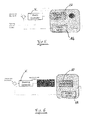
- the housing can be also equipped with an additional ozone sensor 16 ( figure 5 ) and an ethylene sensor 18 ( figure 6 ).
- the duty cycle of the ozone device 10 produces an average of ozone concentration between 0.04ppm and 0.12ppm, preferably between 0,05 ppm and 0,11 ppm, with an ideal value around 0.08ppm. At this concentration, ozone is able to act on cell membranes killing microorganisms without impact on nutritional aspects.
- strawberry samples have been selected due to their higher perishable characteristic; they have been placed in crisper bin inside the refrigerator at 5°C, 80% RH and endowed with the ozone device 10.
- Graph of figure 2 summarizes the trade-off between microbial growth, vitamin C variation and ozone concentration by a specific function F: e - Vitamin Co - Vitamin C ⁇ ⁇ 2 ⁇ ⁇ ⁇ 2 log UFC
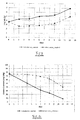
- Figure 3 presents the results for microbial growth for strawberries after 12 days of storage in the crisper bin D with and without ozone treatment.
- ozone is able to reduce 2 logarithm units of the microbial growth every day of test.
- Figure 4 shows vitamin C content in strawberries stored in crisper bin with ozone generator 10 vs. the standard one after 12 days.
- the current drawer and inner liner are modified and sensors are added in the lid S.
- Ozone sensor 16 and ethylene sensor 18 can be designed in a compact device (unique package) to save space and simplify cabling process.
- the ozone sensor 16 is able to monitor the ozone concentration and sends an input to a control system K able to modulate the ozone generation and in case to stop it when the ozone threshold is reached.
- Ozone is a powerful oxidizer that can also remove odors molecules and ethylene prolonging the storage time.
- the ethylene sensor 18 is able to monitor the ethylene production. It is preferably an electrochemical sensor for ethylene monitoring and it sends an input to switches ON the device 10 when the ethylene reaches a predetermined threshold. Besides controlling the ethylene concentration, also ozone is monitored. In case ozone level reaches a predetermined limit, the system is blocked even if the ethylene concentration is still high.
- the ozone device 10 is switched ON during storage to slow down the ripening in fruits when the ethylene sensor achieves a predetermined threshold (this can be managed by a specific algorithm that monitors the ethylene concentration).
- the user interface of the refrigerator comprises a specific button or the like to allow the user to activate the ozone control (ozone generation system), with a led light used as a feedback to show that the ozone generation is carried out.
- ozone control ozone generation system
- the ozone generator 10 has been shown as confined in the space of the crisper drawer D, it can also be associated to the entire cavity of the refrigerator or to another sub-compartment thereof.
Landscapes
- Engineering & Computer Science (AREA)
- Health & Medical Sciences (AREA)
- Life Sciences & Earth Sciences (AREA)
- Chemical & Material Sciences (AREA)
- Veterinary Medicine (AREA)
- Public Health (AREA)
- General Health & Medical Sciences (AREA)
- Animal Behavior & Ethology (AREA)
- Epidemiology (AREA)
- Physics & Mathematics (AREA)
- Combustion & Propulsion (AREA)
- Mechanical Engineering (AREA)
- Thermal Sciences (AREA)
- General Engineering & Computer Science (AREA)
- General Chemical & Material Sciences (AREA)
- Chemical Kinetics & Catalysis (AREA)
- Polymers & Plastics (AREA)
- Food Science & Technology (AREA)
- Zoology (AREA)
- Wood Science & Technology (AREA)
- Cold Air Circulating Systems And Constructional Details In Refrigerators (AREA)
- Food Preservation Except Freezing, Refrigeration, And Drying (AREA)
Abstract
Description
- The present invention relates to a refrigeration appliance comprising a cavity in which an ozone generator is placed.
- Interest in ozone has expanded in recent years in response to consumer demands for 'greener' food additives, regulatory approval and the increasing acceptance that ozone is an environmentally friendly technology. The multi functionality of ozone makes it a promising food processing agent. Excess ozone auto decomposes rapidly to produce oxygen and thus leaves no residues in foods from its decomposition. In particular, the US Food and Drug Administration (FDA)'s rulings on ozone usage in food have resulted in increased interest in potential food applications worldwide.
- The effectiveness of ozone against microorganisms present in food systems depends on several factors including the amount of ozone applied, the residual ozone in the medium and various environmental factors such as medium pH, temperature, relative humidity, additives and the amount of organic matter surrounding the cells.
- The use of ozone in the processing of foods has recently come to forefront, as a result of the approval by the FDA to use ozone as an antimicrobial agent for food treatment, storage, and processing.
- Generally ozone is used in water treatment, sanitizing, washing and disinfection of equipment, odor removal, and fruit, vegetable, meat and seafood processing as antioxidant.
- Existing solutions on the market present the ozone device applied on the whole cavity of the refrigerator to improve air quality by odor removal and reduced microbial growth. The main outcomes of such known solutions are related to control and remove the ethylene for ripening fruits through the use of ozone, sterilization, implementation design, device components, and ozone device structure.
-
JP 06-153789 -
JP 2010-054092 - It is an object of the present invention to provide a refrigeration appliance with a device able to remove or reduce the residues of pesticides and microorganisms present on the surfaces of food items during storage by the ozone emission and in the meanwhile maintain their natural quality (color, ripening, freshness, and nutritional aspects) thanks to a new specific duty cycle treatment able to manage the ozone generation to allow food treatment without impacting food sensorial and nutritional quality. By using a certain ozone concentration the applicant has discovered surprising results in the maintenance of high levels of vitamin contents, particularly vitamin C content, for long storage periods in the cavity of the refrigerator.
- The solution according to the invention is preferably integrated into a dedicated compartment for fresh fruits and vegetables (without packaging) in the refrigerator. There are other additional benefits in using a certain ozone concentration, and they are related to keep food quality by microbial reduction; improve air quality by odor removal/reduce cross contamination and delay the ripening process by ethylene oxidation, while minimizing the oxidative process causing food deterioration.
- Further advantages and features of a refrigeration appliance according to the present invention will be clear from the following detailed description, provided as a non limiting example, with reference to the attached drawings in which:
-
Figure 1 is a perspective view of a portion of a refrigerator according to the invention; -
Figure 2 is a graph showing the behavior of a function linking the ozone concentration to microbial growth and vitamin C variation; -
Figure 3 is a graph showing the results for microbial growth for strawberries in a crisper of a traditional refrigerator and in a refrigerator according to the invention; -
Figure 4 is a graph showing how the vitamin C decay in a reference fresh food (strawberries) is slowed down in a refrigerator according to the invention; -
Figure 5 shows an example of ozone generation control; and -
Figure 6 shows an example of ripening control system according to the invention. - With reference to the drawings, an
ozone generating device 10 is placed in a specific sealedhousing 12 and fixed on arear wall 14 of an inner liner of a fresh food compartment A of a refrigerator. A consumer should not be able to remove theplastic housing 12 by hand.Such housing 12 is placed in the upper part of a crisper drawer D covered by a glass shelf S to permit a good mixing with the air in the drawer in the real time. If the drawer D isn't sealed by the upper shelf S the potential benefits are lower for food items inside. Ozone is therefore in direct contact on food surface. The ozone generating device (10) is mounted on the rear wall (14) of the liner in correspondence with anotch 13 provided in an upper rear wall of a crisper drawer (D), so that the ozone generated by the ozone generating device (10) is confined in said crisper drawer (D). Besides the ozone device, the housing can be also equipped with an additional ozone sensor 16 (figure 5 ) and an ethylene sensor 18 (figure 6 ). - According to a specific feature of the invention, the duty cycle of the
ozone device 10 produces an average of ozone concentration between 0.04ppm and 0.12ppm, preferably between 0,05 ppm and 0,11 ppm, with an ideal value around 0.08ppm. At this concentration, ozone is able to act on cell membranes killing microorganisms without impact on nutritional aspects. - In tests carried out by the applicant the above concentration between 0,05 ppm and 0,11 ppm has shown to be the optimal one since it permits to reach good microbial reduction and lower vitamin C reduction.
- Lower ozone concentrations, i.e. <0.05ppm, lead to no benefits: food items show the same performances as the ones stored in standard condition, the same as in absence of ozone.
- With higher concentrations, i.e. higher than 0,1 ppm and particularly between 0.11 ppm and 4ppm, consumer perceives the ozone odor and food presents fast decay in oxidative process (vitamin C, pigments..), even if a reduced microbial growth is nevertheless assured..
- To test the benefits of the optimal concentration of the ozone, it is necessary to drive the ozone generating
device 10 with a proper duty cycle. A reference test procedure has been developed by the applicant in order to measure trade off tests on microbial and nutritional aspects considering anozone device 10 that has been placed in the upper part of the crisper drawer D as shown infigure 1 ; the ozone concentration in such tests was constantly monitored using a portable ozone detector. - To define the ozone concentration, strawberry samples have been selected due to their higher perishable characteristic; they have been placed in crisper bin inside the refrigerator at 5°C, 80% RH and endowed with the
ozone device 10. - A relevant number of tests had been performed, and in particular a specific analysis had been evaluated. Microbial growth and vitamin C variation were estimated during the course of the experiment. Four different ozone concentrations have been used: reference value (without ozone activation), 0.012ppm, 0.08ppm, 0.12ppm.
- Generally, the higher the ozone concentration, the higher the microbial growth reduction, and the higher the vitamin C variation.
- Graph of
figure 2 summarizes the trade-off between microbial growth, vitamin C variation and ozone concentration by a specific function F:
- Where:
- Vitamin Co= initial vitamin C concentration in strawberries (mg/100g sample)
- Vitamin C= vitamin concentration at the end of storage (mg/100g sample)
- Sigma= Vitamin C variation that could be tolerated in the search of the optimal value
- Log (UFC)= Unit Formant Colonies, bacterial growth
- In ideal conditions vitamin C variation is closed to zero and the ideal UFC (microbial growth) is low. The mathematical function that summarizes vitamin C variation and microbial growth is shown in
figure 2 . The above trade off is reached at about 0.08 ppm of ozone concentration. - Other tests have been carried out by the applicant to validate the trade off target. In particular strawberries and tomatoes had been evaluated with specific duty cycle that is able to generate 0.08ppm. A comparison of performances was carried out on samples stored in the crisper bin endowed with
ozone generator device 10 versus those placed into traditional crisper drawer without ozone generator. Food quality parameters have been observed for 14 days of storage in the crisper drawer. -
Figure 3 presents the results for microbial growth for strawberries after 12 days of storage in the crisper bin D with and without ozone treatment. - By applying the optimal concentration, as shown in
figure 3 , ozone is able to reduce 2 logarithm units of the microbial growth every day of test. - In samples stored in standard conditions (no ozone), it is evident from the increase of the concentration value above 10^5 UFC/g that white moulds are present. This occurs after 6 days test; the same results have been achieved in tester condition after 12 days.
- On the other hand the vitamin C variation is lower in samples stored in contact with ozone treatment.
-
Figure 4 shows vitamin C content in strawberries stored in crisper bin withozone generator 10 vs. the standard one after 12 days. - By applying the optimal concentration ozone is able to slow down the vitamin C decay.
- In samples stored in standard conditions (no ozone), it is evident a fast decay in terms of vitamin C content.
- In this way it is possible to prolong shelf life of foodstuff, reduce bacterial growth and maintain the same nutritional quality.
- According to a preferred embodiment of the invention, the current drawer and inner liner are modified and sensors are added in the lid S.
-
Ozone sensor 16 and ethylene sensor 18 (figures 5 and 6 ) can be designed in a compact device (unique package) to save space and simplify cabling process. - The
ozone sensor 16 is able to monitor the ozone concentration and sends an input to a control system K able to modulate the ozone generation and in case to stop it when the ozone threshold is reached. - There is not direct contact between the system (
ozone generator 10 andsensors ozone generator 10 is switched off automatically. - Ozone is a powerful oxidizer that can also remove odors molecules and ethylene prolonging the storage time. The
ethylene sensor 18 is able to monitor the ethylene production. It is preferably an electrochemical sensor for ethylene monitoring and it sends an input to switches ON thedevice 10 when the ethylene reaches a predetermined threshold. Besides controlling the ethylene concentration, also ozone is monitored. In case ozone level reaches a predetermined limit, the system is blocked even if the ethylene concentration is still high. - The
ozone device 10 is switched ON during storage to slow down the ripening in fruits when the ethylene sensor achieves a predetermined threshold (this can be managed by a specific algorithm that monitors the ethylene concentration). - The user interface of the refrigerator comprises a specific button or the like to allow the user to activate the ozone control (ozone generation system), with a led light used as a feedback to show that the ozone generation is carried out.
- Even if in the above description the
ozone generator 10 has been shown as confined in the space of the crisper drawer D, it can also be associated to the entire cavity of the refrigerator or to another sub-compartment thereof.
Claims (7)
- Refrigeration appliance comprising a cavity (D) in which an ozone generating device (10) is placed, characterized in that said ozone generating device (10) is configured to maintain in said cavity (D) a concentration of ozone comprised between 0,04 and 0,12 ppm.
- Refrigeration appliance according to claim 1, wherein the ozone generating device (10) is configured to maintain in the cavity (D) a concentration of ozone comprised between 0,06 and 0,1 ppm.
- Refrigeration appliance according to claim 1 or 2, wherein the ozone generating device (10) is mounted on a rear wall (14) of the cavity in correspondence with a notch 13 provided in an upper rear wall of a crisper drawer (D), so that the ozone generated by the ozone generating device (10) is confined in said crisper drawer (D).
- Refrigeration appliance according to any of the preceding claims, wherein the ozone generating device comprises an ozone sensor (16) for adjusting the ozone concentration at the desired value.
- Refrigeration device according to claim 4, wherein the ozone generating device (10) comprises an ethylene sensor (18).
- Method for controlling the microbial growth and the ethylene concentration in a cavity (D) of a refrigeration appliance, characterized in that it comprises generating ozone into said cavity (D) and maintaining an ozone concentration comprised between 0,04 and 0,12 ppm.
- Method according to claim 6, wherein the ozone concentration is maintained between 0,06 and 0,1 ppm.
Priority Applications (3)
| Application Number | Priority Date | Filing Date | Title |
|---|---|---|---|
| EP14169369.7A EP2947405B1 (en) | 2014-05-21 | 2014-05-21 | Refrigeration appliance and method for operating such appliance |
| US14/717,509 US9497977B2 (en) | 2014-05-21 | 2015-05-20 | Refrigeration appliance and method for operating such appliance |
| US15/264,961 US10900703B2 (en) | 2014-05-21 | 2016-09-14 | Refrigeration appliance and method for operating such appliance |
Applications Claiming Priority (1)
| Application Number | Priority Date | Filing Date | Title |
|---|---|---|---|
| EP14169369.7A EP2947405B1 (en) | 2014-05-21 | 2014-05-21 | Refrigeration appliance and method for operating such appliance |
Publications (2)
| Publication Number | Publication Date |
|---|---|
| EP2947405A1 true EP2947405A1 (en) | 2015-11-25 |
| EP2947405B1 EP2947405B1 (en) | 2020-04-15 |
Family
ID=50735982
Family Applications (1)
| Application Number | Title | Priority Date | Filing Date |
|---|---|---|---|
| EP14169369.7A Active EP2947405B1 (en) | 2014-05-21 | 2014-05-21 | Refrigeration appliance and method for operating such appliance |
Country Status (2)
| Country | Link |
|---|---|
| US (2) | US9497977B2 (en) |
| EP (1) | EP2947405B1 (en) |
Cited By (4)
| Publication number | Priority date | Publication date | Assignee | Title |
|---|---|---|---|---|
| WO2018063129A3 (en) * | 2016-08-31 | 2018-06-21 | Arçeli̇k Anoni̇m Şi̇rketi̇ | A cooler device |
| CN108844279A (en) * | 2018-06-28 | 2018-11-20 | 池州市若水软件开发有限公司 | A kind of ozone disinfecting refrigerator |
| WO2020052856A1 (en) * | 2018-09-13 | 2020-03-19 | Arcelik Anonim Sirketi | A refrigerator comprising an odor sensor |
| WO2020120025A1 (en) * | 2018-12-11 | 2020-06-18 | Arcelik Anonim Sirketi | A cooling appliance comprising a crisper |
Families Citing this family (5)
| Publication number | Priority date | Publication date | Assignee | Title |
|---|---|---|---|---|
| CN104521864A (en) * | 2015-01-07 | 2015-04-22 | 青岛海尔股份有限公司 | Waterless keep-alive device and refrigerating household appliance provided with waterless keep-alive device |
| CN109990525B (en) * | 2019-04-30 | 2020-09-01 | 广西壮族自治区农业科学院 | Movable fruit and vegetable air-conditioned cold store |
| US11340011B2 (en) | 2019-11-05 | 2022-05-24 | Electrolux Home Products, Inc. | Refrigerator drawer with cassette filter |
| JP2023525483A (en) | 2020-04-29 | 2023-06-16 | トゥルー マニュファクチャリング カンパニー インコーポレイテッド | disinfection cabinet system |
| US20240207782A1 (en) * | 2022-12-27 | 2024-06-27 | Scott A. Elrod | Sensor based air treatment control |
Citations (5)
| Publication number | Priority date | Publication date | Assignee | Title |
|---|---|---|---|---|
| JPH06153789A (en) | 1992-11-26 | 1994-06-03 | Mitsubishi Heavy Ind Ltd | Ethylene removing apparatus |
| US20060130498A1 (en) * | 2004-12-20 | 2006-06-22 | General Electric Company | System and method for preserving food |
| JP2010054092A (en) | 2008-08-27 | 2010-03-11 | Panasonic Corp | Refrigerator |
| US20130059047A1 (en) * | 2011-01-25 | 2013-03-07 | Vincent M. ARRIGO | Refrigerator Crisper Ozonation System and Related Method |
| WO2014070867A1 (en) * | 2012-11-05 | 2014-05-08 | Arrigo Vincent M | Refrigerator crisper ozonation system and related method |
Family Cites Families (9)
| Publication number | Priority date | Publication date | Assignee | Title |
|---|---|---|---|---|
| US3543021A (en) * | 1967-01-16 | 1970-11-24 | Frederick Scarborough Sr | Ultraviolet air sterilizer and ozone generator |
| US6967008B1 (en) * | 1999-09-10 | 2005-11-22 | Barnes Ronald L | Ozone generator and light source for enclosed spaces |
| US20020083724A1 (en) * | 2000-12-28 | 2002-07-04 | Tarlow Kenneth A. | Food storage and preservation system |
| RU2473026C2 (en) * | 2007-11-06 | 2013-01-20 | Панасоник Корпорейшн | Refrigerator |
| RU2477428C2 (en) * | 2007-11-06 | 2013-03-10 | Панасоник Корпорэйшн | Refrigerator |
| US9482459B2 (en) * | 2012-06-22 | 2016-11-01 | Lg Electronics Inc. | Refrigerator with sealed state maintaining device for drawer |
| HK1211273A1 (en) * | 2012-08-15 | 2016-05-20 | Oa-环球Ip有限公司 | An ozone unit for a shipping container |
| DE102013201589A1 (en) * | 2013-01-31 | 2014-07-31 | BSH Bosch und Siemens Hausgeräte GmbH | Refrigerating appliance with a container |
| WO2014154563A1 (en) * | 2013-03-29 | 2014-10-02 | BSH Bosch und Siemens Hausgeräte GmbH | A home appliance keeping produce as fresh for a long time and a method used in the home appliance |
-
2014
- 2014-05-21 EP EP14169369.7A patent/EP2947405B1/en active Active
-
2015
- 2015-05-20 US US14/717,509 patent/US9497977B2/en active Active
-
2016
- 2016-09-14 US US15/264,961 patent/US10900703B2/en active Active
Patent Citations (5)
| Publication number | Priority date | Publication date | Assignee | Title |
|---|---|---|---|---|
| JPH06153789A (en) | 1992-11-26 | 1994-06-03 | Mitsubishi Heavy Ind Ltd | Ethylene removing apparatus |
| US20060130498A1 (en) * | 2004-12-20 | 2006-06-22 | General Electric Company | System and method for preserving food |
| JP2010054092A (en) | 2008-08-27 | 2010-03-11 | Panasonic Corp | Refrigerator |
| US20130059047A1 (en) * | 2011-01-25 | 2013-03-07 | Vincent M. ARRIGO | Refrigerator Crisper Ozonation System and Related Method |
| WO2014070867A1 (en) * | 2012-11-05 | 2014-05-08 | Arrigo Vincent M | Refrigerator crisper ozonation system and related method |
Cited By (4)
| Publication number | Priority date | Publication date | Assignee | Title |
|---|---|---|---|---|
| WO2018063129A3 (en) * | 2016-08-31 | 2018-06-21 | Arçeli̇k Anoni̇m Şi̇rketi̇ | A cooler device |
| CN108844279A (en) * | 2018-06-28 | 2018-11-20 | 池州市若水软件开发有限公司 | A kind of ozone disinfecting refrigerator |
| WO2020052856A1 (en) * | 2018-09-13 | 2020-03-19 | Arcelik Anonim Sirketi | A refrigerator comprising an odor sensor |
| WO2020120025A1 (en) * | 2018-12-11 | 2020-06-18 | Arcelik Anonim Sirketi | A cooling appliance comprising a crisper |
Also Published As
| Publication number | Publication date |
|---|---|
| US20150335038A1 (en) | 2015-11-26 |
| US10900703B2 (en) | 2021-01-26 |
| US9497977B2 (en) | 2016-11-22 |
| EP2947405B1 (en) | 2020-04-15 |
| US20170003065A1 (en) | 2017-01-05 |
Similar Documents
| Publication | Publication Date | Title |
|---|---|---|
| EP2947405B1 (en) | Refrigeration appliance and method for operating such appliance | |
| Herianto et al. | Nonthermal plasma‐activated water: A comprehensive review of this new tool for enhanced food safety and quality | |
| López et al. | A review on non-thermal atmospheric plasma for food preservation: Mode of action, determinants of effectiveness, and applications | |
| Mir et al. | Understanding the role of plasma technology in food industry | |
| Butscher et al. | Plasma inactivation of bacterial endospores on wheat grains and polymeric model substrates in a dielectric barrier discharge | |
| Surowsky et al. | Interactions of non-thermal atmospheric pressure plasma with solid and liquid food systems: a review | |
| CN102047051B (en) | food storage | |
| Gertzou et al. | Effect of combination of ozonation and vacuum packaging on shelf life extension of fresh chicken legs during storage under refrigeration | |
| Fan et al. | Advanced oxidation process as a postharvest decontamination technology to improve microbial safety of fresh produce | |
| WO2011118223A1 (en) | Refrigerator | |
| KR101730818B1 (en) | Packing method of fresh-cut fruits using mixture gas and micro-perforation film | |
| US20130059047A1 (en) | Refrigerator Crisper Ozonation System and Related Method | |
| US9480267B2 (en) | Refrigerator crisper and ozonation system and method | |
| CN102901305A (en) | Food storage device | |
| Cho et al. | Effect of gaseous ozone exposure on the bacteria counts and oxidative properties of ground hanwoo beef at refrigeration temperature | |
| CN107334031A (en) | A kind of method of plasma-activated ice keeping fresh aquatic products | |
| Spanou et al. | In‐package cold atmospheric plasma processing for shelf‐life extension of gilthead seabream (Sparus aurata) fillets | |
| KR101575560B1 (en) | Air-Cleaner Having Steriling Function and Preserving Freshness | |
| US20160205957A1 (en) | Ion irradiation apparatus, and method in which ion irradiation apparatus is applied to food requiring storage by refrigeration | |
| Panigrahi et al. | Recent advancements in applications of ozone technology in juice and beverage processing: A review | |
| Mishra et al. | Non-equilibrium cold plasmas and their impacts on physico-chemical properties of food items | |
| KR101848789B1 (en) | Packing method of fresh-cut fruits using mixture gas and micro-perforation film | |
| JP2008131872A (en) | Function storage device and function storage method for fresh products, and fresh products | |
| KR20100136845A (en) | Combined sterilization method of fruit vegetable using chlorine disinfectant | |
| WO2014070867A1 (en) | Refrigerator crisper ozonation system and related method |
Legal Events
| Date | Code | Title | Description |
|---|---|---|---|
| PUAI | Public reference made under article 153(3) epc to a published international application that has entered the european phase |
Free format text: ORIGINAL CODE: 0009012 |
|
| AK | Designated contracting states |
Kind code of ref document: A1 Designated state(s): AL AT BE BG CH CY CZ DE DK EE ES FI FR GB GR HR HU IE IS IT LI LT LU LV MC MK MT NL NO PL PT RO RS SE SI SK SM TR |
|
| AX | Request for extension of the european patent |
Extension state: BA ME |
|
| 17P | Request for examination filed |
Effective date: 20160519 |
|
| RBV | Designated contracting states (corrected) |
Designated state(s): AL AT BE BG CH CY CZ DE DK EE ES FI FR GB GR HR HU IE IS IT LI LT LU LV MC MK MT NL NO PL PT RO RS SE SI SK SM TR |
|
| STAA | Information on the status of an ep patent application or granted ep patent |
Free format text: STATUS: EXAMINATION IS IN PROGRESS |
|
| 17Q | First examination report despatched |
Effective date: 20180903 |
|
| GRAP | Despatch of communication of intention to grant a patent |
Free format text: ORIGINAL CODE: EPIDOSNIGR1 |
|
| STAA | Information on the status of an ep patent application or granted ep patent |
Free format text: STATUS: GRANT OF PATENT IS INTENDED |
|
| INTG | Intention to grant announced |
Effective date: 20200124 |
|
| GRAS | Grant fee paid |
Free format text: ORIGINAL CODE: EPIDOSNIGR3 |
|
| GRAA | (expected) grant |
Free format text: ORIGINAL CODE: 0009210 |
|
| STAA | Information on the status of an ep patent application or granted ep patent |
Free format text: STATUS: THE PATENT HAS BEEN GRANTED |
|
| AK | Designated contracting states |
Kind code of ref document: B1 Designated state(s): AL AT BE BG CH CY CZ DE DK EE ES FI FR GB GR HR HU IE IS IT LI LT LU LV MC MK MT NL NO PL PT RO RS SE SI SK SM TR |
|
| REG | Reference to a national code |
Ref country code: CH Ref legal event code: EP |
|
| REG | Reference to a national code |
Ref country code: DE Ref legal event code: R096 Ref document number: 602014063714 Country of ref document: DE |
|
| REG | Reference to a national code |
Ref country code: IE Ref legal event code: FG4D |
|
| REG | Reference to a national code |
Ref country code: AT Ref legal event code: REF Ref document number: 1257790 Country of ref document: AT Kind code of ref document: T Effective date: 20200515 |
|
| REG | Reference to a national code |
Ref country code: NL Ref legal event code: MP Effective date: 20200415 |
|
| REG | Reference to a national code |
Ref country code: LT Ref legal event code: MG4D |
|
| PG25 | Lapsed in a contracting state [announced via postgrant information from national office to epo] |
Ref country code: FI Free format text: LAPSE BECAUSE OF FAILURE TO SUBMIT A TRANSLATION OF THE DESCRIPTION OR TO PAY THE FEE WITHIN THE PRESCRIBED TIME-LIMIT Effective date: 20200415 Ref country code: PT Free format text: LAPSE BECAUSE OF FAILURE TO SUBMIT A TRANSLATION OF THE DESCRIPTION OR TO PAY THE FEE WITHIN THE PRESCRIBED TIME-LIMIT Effective date: 20200817 Ref country code: LT Free format text: LAPSE BECAUSE OF FAILURE TO SUBMIT A TRANSLATION OF THE DESCRIPTION OR TO PAY THE FEE WITHIN THE PRESCRIBED TIME-LIMIT Effective date: 20200415 Ref country code: SE Free format text: LAPSE BECAUSE OF FAILURE TO SUBMIT A TRANSLATION OF THE DESCRIPTION OR TO PAY THE FEE WITHIN THE PRESCRIBED TIME-LIMIT Effective date: 20200415 Ref country code: NL Free format text: LAPSE BECAUSE OF FAILURE TO SUBMIT A TRANSLATION OF THE DESCRIPTION OR TO PAY THE FEE WITHIN THE PRESCRIBED TIME-LIMIT Effective date: 20200415 Ref country code: GR Free format text: LAPSE BECAUSE OF FAILURE TO SUBMIT A TRANSLATION OF THE DESCRIPTION OR TO PAY THE FEE WITHIN THE PRESCRIBED TIME-LIMIT Effective date: 20200716 Ref country code: IS Free format text: LAPSE BECAUSE OF FAILURE TO SUBMIT A TRANSLATION OF THE DESCRIPTION OR TO PAY THE FEE WITHIN THE PRESCRIBED TIME-LIMIT Effective date: 20200815 Ref country code: NO Free format text: LAPSE BECAUSE OF FAILURE TO SUBMIT A TRANSLATION OF THE DESCRIPTION OR TO PAY THE FEE WITHIN THE PRESCRIBED TIME-LIMIT Effective date: 20200715 |
|
| REG | Reference to a national code |
Ref country code: AT Ref legal event code: MK05 Ref document number: 1257790 Country of ref document: AT Kind code of ref document: T Effective date: 20200415 |
|
| PG25 | Lapsed in a contracting state [announced via postgrant information from national office to epo] |
Ref country code: BG Free format text: LAPSE BECAUSE OF FAILURE TO SUBMIT A TRANSLATION OF THE DESCRIPTION OR TO PAY THE FEE WITHIN THE PRESCRIBED TIME-LIMIT Effective date: 20200715 Ref country code: HR Free format text: LAPSE BECAUSE OF FAILURE TO SUBMIT A TRANSLATION OF THE DESCRIPTION OR TO PAY THE FEE WITHIN THE PRESCRIBED TIME-LIMIT Effective date: 20200415 Ref country code: RS Free format text: LAPSE BECAUSE OF FAILURE TO SUBMIT A TRANSLATION OF THE DESCRIPTION OR TO PAY THE FEE WITHIN THE PRESCRIBED TIME-LIMIT Effective date: 20200415 Ref country code: LV Free format text: LAPSE BECAUSE OF FAILURE TO SUBMIT A TRANSLATION OF THE DESCRIPTION OR TO PAY THE FEE WITHIN THE PRESCRIBED TIME-LIMIT Effective date: 20200415 |
|
| PG25 | Lapsed in a contracting state [announced via postgrant information from national office to epo] |
Ref country code: AL Free format text: LAPSE BECAUSE OF FAILURE TO SUBMIT A TRANSLATION OF THE DESCRIPTION OR TO PAY THE FEE WITHIN THE PRESCRIBED TIME-LIMIT Effective date: 20200415 |
|
| REG | Reference to a national code |
Ref country code: DE Ref legal event code: R097 Ref document number: 602014063714 Country of ref document: DE |
|
| PG25 | Lapsed in a contracting state [announced via postgrant information from national office to epo] |
Ref country code: AT Free format text: LAPSE BECAUSE OF FAILURE TO SUBMIT A TRANSLATION OF THE DESCRIPTION OR TO PAY THE FEE WITHIN THE PRESCRIBED TIME-LIMIT Effective date: 20200415 Ref country code: ES Free format text: LAPSE BECAUSE OF FAILURE TO SUBMIT A TRANSLATION OF THE DESCRIPTION OR TO PAY THE FEE WITHIN THE PRESCRIBED TIME-LIMIT Effective date: 20200415 Ref country code: DK Free format text: LAPSE BECAUSE OF FAILURE TO SUBMIT A TRANSLATION OF THE DESCRIPTION OR TO PAY THE FEE WITHIN THE PRESCRIBED TIME-LIMIT Effective date: 20200415 Ref country code: SM Free format text: LAPSE BECAUSE OF FAILURE TO SUBMIT A TRANSLATION OF THE DESCRIPTION OR TO PAY THE FEE WITHIN THE PRESCRIBED TIME-LIMIT Effective date: 20200415 Ref country code: EE Free format text: LAPSE BECAUSE OF FAILURE TO SUBMIT A TRANSLATION OF THE DESCRIPTION OR TO PAY THE FEE WITHIN THE PRESCRIBED TIME-LIMIT Effective date: 20200415 Ref country code: CZ Free format text: LAPSE BECAUSE OF FAILURE TO SUBMIT A TRANSLATION OF THE DESCRIPTION OR TO PAY THE FEE WITHIN THE PRESCRIBED TIME-LIMIT Effective date: 20200415 Ref country code: RO Free format text: LAPSE BECAUSE OF FAILURE TO SUBMIT A TRANSLATION OF THE DESCRIPTION OR TO PAY THE FEE WITHIN THE PRESCRIBED TIME-LIMIT Effective date: 20200415 Ref country code: MC Free format text: LAPSE BECAUSE OF FAILURE TO SUBMIT A TRANSLATION OF THE DESCRIPTION OR TO PAY THE FEE WITHIN THE PRESCRIBED TIME-LIMIT Effective date: 20200415 Ref country code: CH Free format text: LAPSE BECAUSE OF NON-PAYMENT OF DUE FEES Effective date: 20200531 Ref country code: LI Free format text: LAPSE BECAUSE OF NON-PAYMENT OF DUE FEES Effective date: 20200531 |
|
| PLBE | No opposition filed within time limit |
Free format text: ORIGINAL CODE: 0009261 |
|
| STAA | Information on the status of an ep patent application or granted ep patent |
Free format text: STATUS: NO OPPOSITION FILED WITHIN TIME LIMIT |
|
| PG25 | Lapsed in a contracting state [announced via postgrant information from national office to epo] |
Ref country code: SK Free format text: LAPSE BECAUSE OF FAILURE TO SUBMIT A TRANSLATION OF THE DESCRIPTION OR TO PAY THE FEE WITHIN THE PRESCRIBED TIME-LIMIT Effective date: 20200415 Ref country code: PL Free format text: LAPSE BECAUSE OF FAILURE TO SUBMIT A TRANSLATION OF THE DESCRIPTION OR TO PAY THE FEE WITHIN THE PRESCRIBED TIME-LIMIT Effective date: 20200415 |
|
| REG | Reference to a national code |
Ref country code: BE Ref legal event code: MM Effective date: 20200531 |
|
| 26N | No opposition filed |
Effective date: 20210118 |
|
| PG25 | Lapsed in a contracting state [announced via postgrant information from national office to epo] |
Ref country code: LU Free format text: LAPSE BECAUSE OF NON-PAYMENT OF DUE FEES Effective date: 20200521 |
|
| PG25 | Lapsed in a contracting state [announced via postgrant information from national office to epo] |
Ref country code: IE Free format text: LAPSE BECAUSE OF NON-PAYMENT OF DUE FEES Effective date: 20200521 |
|
| PG25 | Lapsed in a contracting state [announced via postgrant information from national office to epo] |
Ref country code: BE Free format text: LAPSE BECAUSE OF NON-PAYMENT OF DUE FEES Effective date: 20200531 Ref country code: SI Free format text: LAPSE BECAUSE OF FAILURE TO SUBMIT A TRANSLATION OF THE DESCRIPTION OR TO PAY THE FEE WITHIN THE PRESCRIBED TIME-LIMIT Effective date: 20200415 |
|
| PG25 | Lapsed in a contracting state [announced via postgrant information from national office to epo] |
Ref country code: TR Free format text: LAPSE BECAUSE OF FAILURE TO SUBMIT A TRANSLATION OF THE DESCRIPTION OR TO PAY THE FEE WITHIN THE PRESCRIBED TIME-LIMIT Effective date: 20200415 Ref country code: MT Free format text: LAPSE BECAUSE OF FAILURE TO SUBMIT A TRANSLATION OF THE DESCRIPTION OR TO PAY THE FEE WITHIN THE PRESCRIBED TIME-LIMIT Effective date: 20200415 Ref country code: CY Free format text: LAPSE BECAUSE OF FAILURE TO SUBMIT A TRANSLATION OF THE DESCRIPTION OR TO PAY THE FEE WITHIN THE PRESCRIBED TIME-LIMIT Effective date: 20200415 |
|
| PG25 | Lapsed in a contracting state [announced via postgrant information from national office to epo] |
Ref country code: MK Free format text: LAPSE BECAUSE OF FAILURE TO SUBMIT A TRANSLATION OF THE DESCRIPTION OR TO PAY THE FEE WITHIN THE PRESCRIBED TIME-LIMIT Effective date: 20200415 |
|
| REG | Reference to a national code |
Ref country code: FR Ref legal event code: PLFP Year of fee payment: 10 |
|
| P01 | Opt-out of the competence of the unified patent court (upc) registered |
Effective date: 20230522 |
|
| PGFP | Annual fee paid to national office [announced via postgrant information from national office to epo] |
Ref country code: GB Payment date: 20240521 Year of fee payment: 11 |
|
| PGFP | Annual fee paid to national office [announced via postgrant information from national office to epo] |
Ref country code: DE Payment date: 20240529 Year of fee payment: 11 |
|
| PGFP | Annual fee paid to national office [announced via postgrant information from national office to epo] |
Ref country code: FR Payment date: 20240527 Year of fee payment: 11 |
|
| PGFP | Annual fee paid to national office [announced via postgrant information from national office to epo] |
Ref country code: IT Payment date: 20240524 Year of fee payment: 11 |
|
| REG | Reference to a national code |
Ref country code: DE Ref legal event code: R119 Ref document number: 602014063714 Country of ref document: DE |
|
| GBPC | Gb: european patent ceased through non-payment of renewal fee |
Effective date: 20250521 |
|
| PG25 | Lapsed in a contracting state [announced via postgrant information from national office to epo] |
Ref country code: GB Free format text: LAPSE BECAUSE OF NON-PAYMENT OF DUE FEES Effective date: 20250521 |
|
| PG25 | Lapsed in a contracting state [announced via postgrant information from national office to epo] |
Ref country code: DE Free format text: LAPSE BECAUSE OF NON-PAYMENT OF DUE FEES Effective date: 20251202 |
|
| PG25 | Lapsed in a contracting state [announced via postgrant information from national office to epo] |
Ref country code: IT Free format text: LAPSE BECAUSE OF NON-PAYMENT OF DUE FEES Effective date: 20250521 |
|
| PG25 | Lapsed in a contracting state [announced via postgrant information from national office to epo] |
Ref country code: FR Free format text: LAPSE BECAUSE OF NON-PAYMENT OF DUE FEES Effective date: 20250531 |