EP2945636B1 - Substituted pyrrolopyrimidine compounds, compositions thereof, and methods of treatment therewith - Google Patents
Substituted pyrrolopyrimidine compounds, compositions thereof, and methods of treatment therewith Download PDFInfo
- Publication number
- EP2945636B1 EP2945636B1 EP14702393.1A EP14702393A EP2945636B1 EP 2945636 B1 EP2945636 B1 EP 2945636B1 EP 14702393 A EP14702393 A EP 14702393A EP 2945636 B1 EP2945636 B1 EP 2945636B1
- Authority
- EP
- European Patent Office
- Prior art keywords
- pyrrolo
- pyrimidin
- ylamino
- methoxy
- cyclopentyloxy
- Prior art date
- Legal status (The legal status is an assumption and is not a legal conclusion. Google has not performed a legal analysis and makes no representation as to the accuracy of the status listed.)
- Not-in-force
Links
- 0 C*CCCCNC Chemical compound C*CCCCNC 0.000 description 23
- BCQMDTYZLGIIBO-UHFFFAOYSA-N CC1=[I]NN=C1 Chemical compound CC1=[I]NN=C1 BCQMDTYZLGIIBO-UHFFFAOYSA-N 0.000 description 1
- UAEPNZWRGJTJPN-UHFFFAOYSA-N CC1CCCCC1 Chemical compound CC1CCCCC1 UAEPNZWRGJTJPN-UHFFFAOYSA-N 0.000 description 1
- JSLXFCHNLUWLGP-UHFFFAOYSA-N CNC(c(cc1)ccc1-c1c[nH]c2c1c(OC1CCOCC1)nc(Nc1ccn[n]1C)n2)=O Chemical compound CNC(c(cc1)ccc1-c1c[nH]c2c1c(OC1CCOCC1)nc(Nc1ccn[n]1C)n2)=O JSLXFCHNLUWLGP-UHFFFAOYSA-N 0.000 description 1
- YMYOREROCXXANC-UHFFFAOYSA-N CNC(c(cc1)ccc1-c1c[nH]c2nc(Nc(c(OC)c3)ccc3C(NC)=O)nc(OC3CCCC3)c12)=O Chemical compound CNC(c(cc1)ccc1-c1c[nH]c2nc(Nc(c(OC)c3)ccc3C(NC)=O)nc(OC3CCCC3)c12)=O YMYOREROCXXANC-UHFFFAOYSA-N 0.000 description 1
- NBBDQCZJUMQGDH-UHFFFAOYSA-N CNC(c(cc1OC)ccc1Nc1nc(OC2CCOCC2)c(c(-c2ccnc(OC)c2)c[nH]2)c2n1)=O Chemical compound CNC(c(cc1OC)ccc1Nc1nc(OC2CCOCC2)c(c(-c2ccnc(OC)c2)c[nH]2)c2n1)=O NBBDQCZJUMQGDH-UHFFFAOYSA-N 0.000 description 1
- HNMKNNOPEGTQCC-UHFFFAOYSA-N Cc1cc(C(N(C)C)=O)ccc1Nc1nc(NC2CCOCC2)c(c(-c2ccncc2)c[nH]2)c2n1 Chemical compound Cc1cc(C(N(C)C)=O)ccc1Nc1nc(NC2CCOCC2)c(c(-c2ccncc2)c[nH]2)c2n1 HNMKNNOPEGTQCC-UHFFFAOYSA-N 0.000 description 1
- XCBMTISZZSFHEB-UHFFFAOYSA-N Cc1nc(cc(cc2)-c3c[nH]c4nc(Nc(c(Cl)c5)ccc5C(N(C)C)=O)nc(OC)c34)c2[nH]1 Chemical compound Cc1nc(cc(cc2)-c3c[nH]c4nc(Nc(c(Cl)c5)ccc5C(N(C)C)=O)nc(OC)c34)c2[nH]1 XCBMTISZZSFHEB-UHFFFAOYSA-N 0.000 description 1
Classifications
-
- A—HUMAN NECESSITIES
- A61—MEDICAL OR VETERINARY SCIENCE; HYGIENE
- A61K—PREPARATIONS FOR MEDICAL, DENTAL OR TOILETRY PURPOSES
- A61K31/00—Medicinal preparations containing organic active ingredients
- A61K31/33—Heterocyclic compounds
- A61K31/395—Heterocyclic compounds having nitrogen as a ring hetero atom, e.g. guanethidine or rifamycins
- A61K31/495—Heterocyclic compounds having nitrogen as a ring hetero atom, e.g. guanethidine or rifamycins having six-membered rings with two or more nitrogen atoms as the only ring heteroatoms, e.g. piperazine or tetrazines
- A61K31/505—Pyrimidines; Hydrogenated pyrimidines, e.g. trimethoprim
- A61K31/519—Pyrimidines; Hydrogenated pyrimidines, e.g. trimethoprim ortho- or peri-condensed with heterocyclic rings
-
- A—HUMAN NECESSITIES
- A61—MEDICAL OR VETERINARY SCIENCE; HYGIENE
- A61K—PREPARATIONS FOR MEDICAL, DENTAL OR TOILETRY PURPOSES
- A61K31/00—Medicinal preparations containing organic active ingredients
- A61K31/33—Heterocyclic compounds
- A61K31/395—Heterocyclic compounds having nitrogen as a ring hetero atom, e.g. guanethidine or rifamycins
- A61K31/535—Heterocyclic compounds having nitrogen as a ring hetero atom, e.g. guanethidine or rifamycins having six-membered rings with at least one nitrogen and one oxygen as the ring hetero atoms, e.g. 1,2-oxazines
- A61K31/5375—1,4-Oxazines, e.g. morpholine
- A61K31/5377—1,4-Oxazines, e.g. morpholine not condensed and containing further heterocyclic rings, e.g. timolol
-
- A—HUMAN NECESSITIES
- A61—MEDICAL OR VETERINARY SCIENCE; HYGIENE
- A61P—SPECIFIC THERAPEUTIC ACTIVITY OF CHEMICAL COMPOUNDS OR MEDICINAL PREPARATIONS
- A61P35/00—Antineoplastic agents
-
- A—HUMAN NECESSITIES
- A61—MEDICAL OR VETERINARY SCIENCE; HYGIENE
- A61P—SPECIFIC THERAPEUTIC ACTIVITY OF CHEMICAL COMPOUNDS OR MEDICINAL PREPARATIONS
- A61P35/00—Antineoplastic agents
- A61P35/04—Antineoplastic agents specific for metastasis
-
- C—CHEMISTRY; METALLURGY
- C07—ORGANIC CHEMISTRY
- C07D—HETEROCYCLIC COMPOUNDS
- C07D471/00—Heterocyclic compounds containing nitrogen atoms as the only ring hetero atoms in the condensed system, at least one ring being a six-membered ring with one nitrogen atom, not provided for by groups C07D451/00 - C07D463/00
- C07D471/02—Heterocyclic compounds containing nitrogen atoms as the only ring hetero atoms in the condensed system, at least one ring being a six-membered ring with one nitrogen atom, not provided for by groups C07D451/00 - C07D463/00 in which the condensed system contains two hetero rings
- C07D471/04—Ortho-condensed systems
-
- C—CHEMISTRY; METALLURGY
- C07—ORGANIC CHEMISTRY
- C07D—HETEROCYCLIC COMPOUNDS
- C07D487/00—Heterocyclic compounds containing nitrogen atoms as the only ring hetero atoms in the condensed system, not provided for by groups C07D451/00 - C07D477/00
- C07D487/02—Heterocyclic compounds containing nitrogen atoms as the only ring hetero atoms in the condensed system, not provided for by groups C07D451/00 - C07D477/00 in which the condensed system contains two hetero rings
- C07D487/04—Ortho-condensed systems
Definitions
- pyrrolopyrimidine compounds Provided herein are certain pyrrolopyrimidine compounds, compositions comprising an effective amount of such compounds, and use of such compounds in methods for treating or preventing breast cancer, more particularly triple negative breast cancer, comprising administering an effective amount of such pyrrolopyrimidine compounds to a subject in need thereof.
- TNBC triple negative breast cancer
- ER estrogen receptor
- PR progesterone receptor
- HER2 human epidermal growth factor receptor 2
- TNBC tumor necrosis .
- a compound of formula (I) or a pharmaceutically acceptable salt, tautomer, stereoisomer, enantiomer, or isotopologue thereof (each being referred to herein as an "Pyrrolopyrimidine Compound”) is useful for treating or preventing breast cancer, in particular, triple negative breast cancer (TNBC).
- TNBC triple negative breast cancer
- Pyrrolopyrimidine Compounds as described in the instant disclosure such as, for example, in Table 1.
- compositions comprising an effective amount of a Pyrrolopyrimidine Compound as described herein, and a pharmaceutically acceptable carrier, excipient or vehicle.
- the pharmaceutical composition is suitable for parenteral administration.
- inventive compounds in methods for treating or preventing breast cancer, in particular triple negative breast cancer (TNBC), comprising administering to a subject in need thereof an effective amount of a Pyrrolopyrimidine Compound as described herein.
- TNBC triple negative breast cancer
- inventive compounds in methods for treating or preventing breast cancer, in particular triple negative breast cancer (TNBC), comprising administering to a subject in need thereof an effective amount of a Pyrrolopyrimidine Compound as described herein and a pharmaceutically acceptable carrier, excipient or vehicle.
- alkyl group is a saturated, partially saturated, or unsaturated straight chain or branched non-cyclic hydrocarbon having from 1 to 10 carbon atoms, typically from 1 to 8 carbons or, in some embodiments, from 1 to 6, 1 to 4, or 2 to 6 or 2 to 4 carbon atoms.
- Representative alkyl groups include -methyl, -ethyl, -n-propyl, -n-butyl, -n-pentyl and -n-hexyl; while saturated branched alkyls include -isopropyl, - sec -butyl, -isobutyl, - tert -butyl, -isopentyl, -neopentyl, tert -pentyl, -2-methylpentyl, -3-methylpentyl, -4-methylpentyl, -2,3-dimethylbutyl and the like.
- An alkyl group can be substituted or unsubstituted.
- alkyl groups described herein When the alkyl groups described herein are said to be "substituted,” they may be substituted with any substituent or substituents as those found in the exemplary compounds and embodiments disclosed herein, as well as halogen (chloro, iodo, bromo, or fluoro); alkyl; hydroxyl; alkoxy; alkoxyalkyl; amino; alkylamino; carboxy; nitro; cyano; thiol; thioether; imine; imide; amidine; guanidine; enamine; aminocarbonyl; acylamino; phosphonate; phosphine; thiocarbonyl; sulfinyl; sulfone; sulfonamide; ketone; aldehyde; ester; urea; urethane; oxime; hydroxyl amine; alkoxyamine; aralkoxyamine; N-oxide; hydrazine; hydra
- a "cycloalkyl” group is a saturated, or partially saturated cyclic alkyl group of from 3 to 10 carbon atoms having a single cyclic ring or multiple condensed or bridged rings which can be optionally substituted with from 1 to 3 alkyl groups.
- the cycloalkyl group has 3 to 8 ring members, whereas in other embodiments the number of ring carbon atoms ranges from 3 to 5, 3 to 6, or 3 to 7.
- Such cycloalkyl groups include, by way of example, single ring structures such as cyclopropyl, cyclobutyl, cyclopentyl, cyclohexyl, cycloheptyl, cyclooctyl, 1-methylcyclopropyl, 2-methylcyclopentyl, 2-methylcyclooctyl, and the like, or multiple or bridged ring structures such as 1-bicyclo[1.1.1]pentyl, bicyclo[2.1.1]hexyl, bicyclo[2.2.1]heptyl, bicyclo[2.2.2]octyl, adamantyl and the like.
- Examples of unsaturared cycloalkyl groups include cyclohexenyl, cyclopentenyl, cyclohexadienyl, butadienyl, pentadienyl, hexadienyl, among others.
- a cycloalkyl group can be substituted or unsubstituted.
- Such substituted cycloalkyl groups include, by way of example, cyclohexanol and the like.
- aryl group is an aromatic carbocyclic group of from 6 to 14 carbon atoms having a single ring ( e.g., phenyl) or multiple condensed rings (e.g., naphthyl or anthryl). In some embodiments, aryl groups contain 6-14 carbons, and in others from 6 to 12 or even 6 to 10 carbon atoms in the ring portions of the groups. Particular aryls include phenyl, biphenyl, naphthyl and the like. An aryl group can be substituted or unsubstituted. The phrase "aryl groups” also includes groups containing fused rings, such as fused aromatic-aliphatic ring systems (e.g., indanyl, tetrahydronaphthyl, and the like).
- heteroaryl group is an aryl ring system having one to four heteroatoms as ring atoms in a heteroaromatic ring system, wherein the remainder of the atoms are carbon atoms.
- heteroaryl groups contain 3 to 6 ring atoms, and in others from 6 to 9 or even 6 to 10 atoms in the ring portions of the groups. Suitable heteroatoms include oxygen, sulfur and nitrogen.
- the heteroaryl ring system is monocyclic or bicyclic.
- Non-limiting examples include but are not limited to, groups such as pyrrolyl, pyrazolyl, imidazolyl, triazolyl, tetrazolyl, oxazolyl, isoxazolyl, benzisoxazolyl (e.g., benzo[d]isoxazolyl), thiazolyl, pyrolyl, pyridazinyl, pyrimidyl, pyrazinyl, thiophenyl, benzothiophenyl, furanyl, benzofuranyl, indolyl (e.g., indolyl-2-onyl or isoindolin-1-onyl), azaindolyl (pyrrolopyridyl or 1H-pyrrolo[2,3-b]pyridyl), indazolyl, benzimidazolyl (e.g., 1H-benzo[d]imidazolyl), imidazopyridyl
- heterocyclyl is an aromatic (also referred to as heteroaryl) or non-aromatic cycloalkyl in which one to four of the ring carbon atoms are independently replaced with a heteroatom from the group consisting of O, S and N.
- heterocyclyl groups include 3 to 10 ring members, whereas other such groups have 3 to 5, 3 to 6, or 3 to 8 ring members.
- Heterocyclyls can also be bonded to other groups at any ring atom (i.e., at any carbon atom or heteroatom of the heterocyclic ring).
- a heterocycloalkyl group can be substituted or unsubstituted.
- Heterocyclyl groups encompass unsaturated, partially saturated and saturated ring systems, such as, for example, imidazolyl, imidazolinyl and imidazolidinyl (e.g., imidazolidin-4-one or imidazolidin-2,4-dionyl) groups.
- heterocyclyl includes fused ring species, including those comprising fused aromatic and non-aromatic groups, such as, for example, 1-and 2-aminotetraline, benzotriazolyl (e.g., 1H-benzo[d][1,2,3]triazolyl), benzimidazolyl (e.g., 1H-benzo[d]imidazolyl), 2,3-dihydrobenzo[1,4]dioxinyl, and benzo[1,3]dioxolyl.
- the phrase also includes bridged polycyclic ring systems containing a heteroatom such as, but not limited to, quinuclidyl.
- heterocyclyl group examples include, but are not limited to, aziridinyl, azetidinyl, azepanyl, oxetanyl, pyrrolidyl, imidazolidinyl (e.g., imidazolidin-4-onyl or imidazolidin-2,4-dionyl), pyrazolidinyl, thiazolidinyl, tetrahydrothiophenyl, tetrahydrofuranyl, dioxolyl, furanyl, thiophenyl, pyrrolyl, pyrrolinyl, imidazolyl, imidazolinyl, pyrazolyl, pyrazolinyl, triazolyl, tetrazolyl, oxazolyl, isoxazolyl, benzisoxazolyl (e.g., benzo[d]isoxazolyl), thiazolyl, thiazol
- benzimidazolyl e.g., 1H-benzo[d]imidazolyl or 1H-benzo[d]imidazol-2(3H)-onyl
- benzofuranyl benzothiophenyl, benzothiazolyl, benzoxadiazolyl, benzoxazinyl, benzodithiinyl, benzoxathiinyl, benzothiazinyl, benzoxazolyl (i.e., benzo[d]oxazolyl), benzothiazolyl, benzothiadiazolyl, benzo[1,3]dioxolyl, pyrazolopyridyl (for example, 1H-pyrazolo[3,4-b]pyridyl, 1H-pyrazolo[4,3-b]pyridyl), imidazopyridyl (e.g., azabenzimidazolyl or
- non-aromatic heterocyclyl groups do not include fused ring species that comprise a fused aromatic group.
- non-aromatic heterocyclyl groups include aziridinyl, azetidinyl, azepanyl, pyrrolidyl, imidazolidinyl (e.g., imidazolidin-4-onyl or imidazolidin-2,4-dionyl), pyrazolidinyl, thiazolidinyl, tetrahydrothiophenyl, tetrahydrofuranyl, piperidyl, piperazinyl (e.g., piperazin-2-onyl), morpholinyl, thiomorpholinyl, tetrahydropyranyl (e.g., tetrahydro-2H-pyranyl), tetrahydrothiopyranyl, oxathianyl, dithianyl, 1,4-dioxaspiro[4.5]de
- substituted heterocyclyl groups may be mono-substituted or substituted more than once, such as, but not limited to, pyridyl or morpholinyl groups, which are 2-, 3-, 4-, 5-, or 6-substituted, or disubstituted with various substituents such as those listed below.
- a "cycloalkylalkyl” group is a radical of the formula: -alkyl-cycloalkyl, wherein alkyl and cycloalkyl are as defined above. Substituted cycloalkylalkyl groups may be substituted at the alkyl, the cycloalkyl, or both the alkyl and the cycloalkyl portions of the group.
- Representative cycloalkylalkyl groups include but are not limited to methylcyclopropyl, methylcyclobutyl, methylcyclopentyl, methylcyclohexyl, ethylcyclopropyl, ethylcyclobutyl, ethylcyclopentyl, ethylcyclohexyl, propylcyclopentyl, propylcyclohexyl and the like.
- aralkyl group is a radical of the formula: -alkyl-aryl, wherein alkyl and aryl are defined above. Substituted aralkyl groups may be substituted at the alkyl, the aryl, or both the alkyl and the aryl portions of the group. Representative aralkyl groups include but are not limited to benzyl and phenethyl groups and fused (cycloalkylaryl)alkyl groups such as 4-ethyl-indanyl.
- heterocyclylalkyl is a radical of the formula: -alkyl-heterocyclyl, wherein alkyl and heterocyclyl are defined above. Substituted heterocyclylalkyl groups may be substituted at the alkyl, the heterocyclyl, or both the alkyl and the heterocyclyl portions of the group.
- Representative heterocylylalkyl groups include but are not limited to 4-ethyl-morpholinyl, 4-propylmorpholinyl, furan-2-yl methyl, furan-3-yl methyl, pyridin-3-yl methyl, tetrahydrofuran-2-yl ethyl, and indol-2-yl propyl.
- halogen is chloro, iodo, bromo, or fluoro.
- a "hydroxyalkyl” group is an alkyl group as described above substituted with one or more hydroxy groups.
- alkoxy is -O-(alkyl), wherein alkyl is defined above.
- alkoxyalkyl is -(alkyl)-O-(alkyl), wherein alkyl is defined above.
- An “amine” group is a radical of the formula: -NH 2 .
- a "hydroxyl amine” group is a radical of the formula: -N(R # )OH or -NHOH, wherein R # is a substituted or unsubstituted alkyl, cycloalkyl, aryl, aralkyl, heterocyclyl or heterocyclyl group as defined herein.
- alkoxyamine group is a radical of the formula: -N(R # )O-alkyl or -NHO-alkyl, wherein R # is as defined above.
- an “aralkoxyamine” group is a radical of the formula: -N(R # )O-aryl or -NHO-aryl, wherein R # is as defined above.
- alkylamine is a radical of the formula: -NH-alkyl or -N(alkyl) 2 , wherein each alkyl is independently as defined above.
- N-oxide group is a radical of the formula: -N + -O - .
- a “hydrazine” group is a radical of the formula: -N(R # )N(R # ) 2 , -NHN(R # ) 2 , -N(R # )NH(R # ), -N(R # )NH 2 , -NHNH(R # ) 2 , or -NHNH 2 , wherein each R # is independently as defined above.
- An “azide” group is a radical of the formula: -N 3 .
- a "cyanate” group is a radical of the formula: -OCN.
- a "thiocyanate” group is a radical of the formula: -SCN.
- a "thioether” group is a radical of the formula; -S(R # ), wherein R # is as defined above.
- a “sulfonylamino” group is a radical of the formula: -NHSO 2 (R # ) or -N(alkyl)SO 2 (R # ), wherein each alkyl and R # are defined above.
- a "phosphine” group is a radical of the formula: -P(R # ) 2 , wherein each R # is independently as defined above.
- substituents are those found in the exemplary compounds and embodiments disclosed herein, as well as halogen (chloro, iodo, bromo, or fluoro); alkyl; hydroxyl; alkoxy; alkoxyalkyl; amine; alkylamine; carboxy; nitro; cyano; thiol; thioether; imine; imide; amidine; guanidine; enamine; aminocarbonyl; acylamino; phosphonate; phosphine; thiocarbonyl; sulfinyl; sulfone; sulfonamide; ketone; aldehyde; ester; urea; urethane; oxime; hydroxyl amine; alkoxyamine; aralkoxyamine; N-oxide
- Pyrrolopyrimidine Compound refers to compounds of formula (I), as well as to further embodiments provided herein.
- a “Pyrrolopyrimidine Compound” is a compound set forth in Table 1.
- the term “Pyrrolopyrimidine Compound” includes pharmaceutically acceptable salts, tautomers, stereoisomers, enantiomers and isotopologues of the compounds provided herein.
- the term "pharmaceutically acceptable salt(s)” refers to a salt prepared from a pharmaceutically acceptable non-toxic acid or base including an inorganic acid and base and an organic acid and base.
- Suitable pharmaceutically acceptable base addition salts of the compounds of formula (I) include, but are not limited to metallic salts made from aluminum, calcium, lithium, magnesium, potassium, sodium and zinc or organic salts made from lysine, N,N'-dibenzylethylenediamine, chloroprocaine, choline, diethanolamine, ethylenediamine, meglumine (N-methyl-glucamine) and procaine.
- Suitable non-toxic acids include, but are not limited to, inorganic and organic acids such as acetic, alginic, anthranilic, benzenesulfonic, benzoic, camphorsulfonic, citric, ethenesulfonic, formic, fumaric, furoic, galacturonic, gluconic, glucuronic, glutamic, glycolic, hydrobromic, hydrochloric, isethionic, lactic, maleic, malic, mandelic, methanesulfonic, mucic, nitric, pamoic, pantothenic, phenylacetic, phosphoric, propionic, salicylic, stearic, succinic, sulfanilic, sulfuric, tartaric acid, and p-toluenesulfonic acid.
- inorganic and organic acids such as acetic, alginic, anthranilic, benzenesulfonic, benzoic, camphorsulfonic
- Non-toxic acids include hydrochloric, hydrobromic, maleic, phosphoric, sulfuric, and methanesulfonic acids.
- Examples of specific salts thus include hydrochloride and mesylate salts.
- Others are well-known in the art, see for example, Remington's Pharmaceutical Sciences, 18th eds., Mack Publishing, Easton PA (1990 ) or Remington: The Science and Practice of Pharmacy, 19th eds., Mack Publishing, Easton PA (1995 ).
- stereoisomer or “stereomerically pure” means one stereoisomer of a Pyrrolopyrimidine Compound that is substantially free of other stereoisomers of that compound.
- a stereomerically pure compound having one chiral center will be substantially free of the opposite enantiomer of the compound.
- a stereomerically pure compound having two chiral centers will be substantially free of other diastereomers of the compound.
- a typical stereomerically pure compound comprises greater than about 80% by weight of one stereoisomer of the compound and less than about 20% by weight of other stereoisomers of the compound, greater than about 90% by weight of one stereoisomer of the compound and less than about 10% by weight of the other stereoisomers of the compound, greater than about 95% by weight of one stereoisomer of the compound and less than about 5% by weight of the other stereoisomers of the compound, or greater than about 97% by weight of one stereoisomer of the compound and less than about 3% by weight of the other stereoisomers of the compound.
- the Pyrrolopyrimidine Compounds can have chiral centers and can occur as racemates, individual enantiomers or diastereomers, and mixtures thereof. All such isomeric forms are included within the embodiments disclosed herein, including mixtures thereof.
- the Pyrrolopyrimidine Compounds can include E and Z isomers, or a mixture thereof, and cis and trans isomers or a mixture thereof.
- the Pyrrolopyrimidine Compounds are isolated as either the E or Z isomer. In other embodiments, the Pyrrolopyrimidine Compounds are a mixture of the E and Z isomers.
- Tautomers refers to isomeric forms of a compound that are in equilibrium with each other. The concentrations of the isomeric forms will depend on the environment the compound is found in and may be different depending upon, for example, whether the compound is a solid or is in an organic or aqueous solution. For example, in aqueous solution, pyrazoles may exhibit the following isomeric forms, which are referred to as tautomers of each other:
- the Pyrrolopyrimidine Compounds can contain unnatural proportions of atomic isotopes at one or more of the atoms.
- the compounds may be radiolabeled with radioactive isotopes, such as for example tritium ( 3 H), iodine-125 ( 125 I), sulfur-35 ( 35 S), or carbon-14 ( 14 C), or may be isotopically enriched, such as with deuterium ( 2 H), carbon-13 ( 13 C), or nitrogen-15 ( 15 N).
- an "isotopologue” is an isotopically enriched compound.
- the term “isotopically enriched” refers to an atom having an isotopic composition other than the natural isotopic composition of that atom.
- isotopically enriched may also refer to a compound containing at least one atom having an isotopic composition other than the natural isotopic composition of that atom.
- isotopic composition refers to the amount of each isotope present for a given atom.
- Radiolabeled and isotopically encriched compounds are useful as therapeutic agents, e.g., breast cancer therapeutic agents, research reagents, e.g., binding assay reagents, and diagnostic agents, e.g., in vivo imaging agents. All isotopic variations of the Pyrrolopyrimidine Compounds as described herein, whether radioactive or not, are intended to be encompassed within the scope of the embodiments provided herein. In some embodiments, there are provided isotopologues of the Pyrrolopyrimidine Compounds, for example, the isotopologues are deuterium, carbon-13, or nitrogen-15 enriched Pyrrolopyrimidine Compounds.
- Treating means an alleviation, in whole or in part, of a disorder, disease or condition, or one or more of the symptoms associated with a disorder, disease, or condition, or slowing or halting of further progression or worsening of those symptoms, or alleviating or eradicating the cause(s) of the disorder, disease, or condition itself.
- the disorder is breast cancer, in particular, triple negative breast cancer (TNBC).
- TNBC triple negative breast cancer
- “treating” means an alleviation, in whole or in part, of breast cancer, or symptoms associated with breast cancer, in particular, triple negative breast cancer (TNBC), or a slowing, or halting of further progression or worsening of those symptoms.
- Preventing means a method of delaying and/or precluding the onset, recurrence or spread, in whole or in part, of breast cancer, in particular, triple negative breast cancer (TNBC); barring a subject from acquiring breast cancer, in particular, triple negative breast cancer (TNBC); or reducing a subject's risk of acquiring breast cancer, in particular, triple negative breast cancer (TNBC).
- TNBC triple negative breast cancer
- TNBC triple negative breast cancer
- the term "effective amount" in connection with a Pyrrolopyrimidine Compound means an amount capable of treating or preventing breast cancer, in particular, triple negative breast cancer (TNBC), or symptoms thereof, as disclosed herein.
- the effective amount of Pyrrolopyrimidine Compound for example in a pharmaceutical composition, may be at a level that will exercise the desired effect; for example, about 0.005 mg/kg of a subject's body weight to about 100 mg/kg of a patient's body weight in unit dosage for parenteral administration.
- the effective amount of a Pyrrolopyrimidine Compound disclosed herein may vary depending on the severity of the indication being treated.
- a subject includes an animal, including, but not limited to, an animal such a cow, monkey, horse, sheep, pig, chicken, turkey, quail, cat, dog, mouse, rat, rabbit or guinea pig, in one embodiment a mammal, in another embodiment a human.
- a subject is a human having or at risk for having breast cancer, in particular, triple negative breast cancer (TNBC), or symptoms thereof.
- TNBC triple negative breast cancer
- a patient is a human having histologically or cytologically-confirmed triple negative breast cancer, including subjects who have progressed on (or not been able to tolerate) standard anticancer therapy or for whom no standard anticancer therapy exists.
- breast cancer refers to or describes the physiological condition in mammals that is typically characterized by unregulated cell growth.
- examples of breast cancer include, but are not limited to, triple negative breast cancer.
- Multiple negative breast cancer as used herein, means breast cancer that does not express the proteins corresponding to the estrogen receptor (ER)- and progesterone receptor (PR), and that does not overexpress the human epidermal growth factor receptor 2 (Her2/neu) protein.
- ER estrogen receptor
- PR progesterone receptor
- Her2/neu human epidermal growth factor receptor 2
- R 1 is substituted or unsubstituted alkyl, for example, R 1 is substituted or unsubstituted methyl, ethyl, propyl, isopropyl, n-butyl, sec-butyl, tert-butyl, n-pentyl, sec-pentyl, tert-pentyl, or 2,2-dimethylpropyl. In some embodiments, R 1 is substituted or unsubstituted methyl, ethyl, isopropyl, sec-butyl, t-butyl, or 2,2-dimethylpropyl.
- R 1 is alkyl
- the alkyl is substituted with one or more -OR or -NR 2 , wherein each R is independently -H or substituted or unsubstituted (C 1-4 )alkyl.
- R 1 is -CH 2 CH 2 OH, -CH 2 CH 2 OCH 3 , or -CH 2 CH 2 NHCH 3 .
- R 1 is substituted or unsubstituted C 3-8 cycloalkyl, for example, R 1 is substituted or unsubstituted cyclopropyl, cyclobutyl, cyclopentyl, cyclohexyl, or cycloheptyl.
- the cycloalkyl is substituted with one or more -CN, halogen, -OR or a substituted or unsubstituted C 1-3 alkyl, wherein each R is independently -H or substituted or unsubstituted (C 1-4 )alkyl.
- the cycloalkyl is substituted with one or more -CN, -F, -OH, or -CH 3 .
- R 1 is substituted or unsubstituted non-aromatic heterocyclyl, for example, R 1 is substituted or unsubstituted oxetanyl, tetrahydrofuranyl, tetrahydropyranyl, or piperidinyl.
- R 1 is substituted or unsubstituted C 1-8 alkyl, wherein
- R 1 is substituted or unsubstituted methyl, ethyl, isopropyl, sec-butyl, t-butyl, or 2,2-dimethylpropyl,
- R 2 is substituted phenyl.
- R 2 is substituted or unsubstituted pyrazolyl, substituted or unsubstituted pyridyl, substituted or unsubstituted indazolyl or substituted or unsubstituted isoindolinone.
- R 2 is pyrazolyl substituted with one or more -Cl, -CH 3 , -CH 2 CH 3 , -CH(CH 3 ) 2 , -CH 2 CH 2 OCH 3 , -CH 2 C(CH 3 ) 2 OH, or tetrahydropyranyl.
- R 2 is indazolyl or isoindolinone, substituted with one or more -CH 3 .
- R 1 is substituted or unsubstituted C 1-8 alkyl, wherein
- R 3 is substituted or unsubstituted heterocyclyl, for example, substituted or unsubstituted pyrazolyl, oxazolyl, isoxazolyl, oxadiazolyl, pyridyl, pyridazinyl, pyrimidyl, pyrazinyl, benztriazolyl, indazolyl, indolyl, benzoxazolyl, benzisoxazolyl, benzthiazolyl, benzoxazolonyl, benzoxadiazolyl, benzimidazolyl, or quinolyl wherein R 3 is not pyridyl when R 2 is pyrazolyl.
- the pyrazolyl is substituted with one or more -CH 3 , or -Cl.
- the benzoxazolyl is substituted with one or more -CH 3 , -CH(CH 3 ) 2 , -F or -OCH 2 CH 3 .
- R 3 is substituted or unsubstituted aryl, for example, R 3 is substituted or unsubstituted phenyl.
- R 1 is substituted or unsubstituted C 1-8 alkyl, wherein
- the compound at a concentration of 10 ⁇ M inhibits triple negative breast cancer cell proliferation by at least about 50%.
- the compound is selected from Table 1, or a pharmaceutically acceptable salt, tautomer, stereoisomer, enantiomer, or isotopologue thereof.
- a compound from Table 1 with activity level B or a pharmaceutically acceptable salt, tautomer, stereoisomer, enantiomer, or isotopologue thereof.
- a compound from Table 1 with activity level C or a pharmaceutically acceptable salt, tautomer, stereoisomer, enantiomer, or isotopologue thereof.
- provided herein is a compound from Table 1 with activity level D, or a pharmaceutically acceptable salt, tautomer, stereoisomer, enantiomer, or isotopologue thereof.
- Pyrrolopyrimidine Compounds set forth in Table 1 were tested in breast cancer cell proliferation assays described herein and were found to have activity as anti-breast cancer agents.
- the Pyrrolopyrimidine Compound is a compound as described herein, wherein the compound at a concentration of 10 ⁇ M inhibits breast cancer cell proliferation, for example triple negative breast cancer cell proliferation, by at least about 50% or more.
- Pyrrolopyrimidine Compounds described herein can be made using conventional organic syntheses and commercially available starting materials.
- Pyrrolopyrimidine Compounds of formula (I) can be prepared as outlined in Schemes 1, 2 and 3, shown below, as well as in the examples set forth herein. It should be noted that one skilled in the art can modify the procedures set forth in the illustrative schemes and examples to arrive at the desired product.
- Hal 1 , Hal 2 and Hal 3 are each halogen (for example Hal 1 is -Cl, Hal 2 is -Cl, and Hal 3 is -I or -Br), and P N is a protecting group (for example SEM, Boc, Trityl, Tosyl, Benzyl, 4-methoxybenzyl, 2,4-dimethoxybenzyl, or THP), can be prepared as shown in Scheme 1.
- Hal 3 either I or Br
- a protecting group P N such as, for example, SEM (for example by treatment with SEM-chloride in the presence of a base such as sodium hydride in a solvent such as DMF or THF), Boc (for example by treatment with Boc-anhydride in the presence of a base such as sodium hydride, TEA, or DIEA in a solvent such as DCM, acetonitrile, THF, NMP, or DMF, optionally in the presence of DMAP), Trityl (for example by treatment with trityl chloride in the presence of a base such as sodium hydride, TEA, or DIEA in a solvent such as DCM, THF, NMP, or DMF), Tosyl (for example by treatment with tosyl chloride in the presence of a base such as sodium hydride, TEA, or DIEA in a solvent such as DCM, THF, NMP, or DMF), Tosyl (for example by treatment with tosyl chloride in the presence of
- compounds of formula (I), wherein L, R 1 , R 2 and R 3 are as defined herein, can be prepared starting from the derivatized, optionally protected (that is, the protecting group P N as defined above can be present or absent, wherein when P N is absent, it is replaced by hydrogen), pyrrolo[2,3-d]pyrimidine, prepared above, by treatment with the appropriate boronic acid or borate ester R 3 -B(OR + ) 2 (wherein R + is -H, lower alkyl, or together with the boron atom and the atoms to which they are attached, form a cyclic boronate), in the presence of a palladium catalyst (such as, for example, tetrakis(triphenylphosphine) palladium(0) or dichloro[1,1'-bis(diphenyl-phosphino)ferrocene]palladium(II) dichloromethane), in a solvent (such as 1,4-dioxan
- Typical reaction conditions and reagents can be found herein.
- the resulting compound is treated with R 1 -LH, in a solvent (for example 1,4-dioxane or DMSO), in the presence of a base (for example, sodium tert-butoxide, sodium hydride, or potassium carbonate), optionally at elevated temperature (for example, 20 °C - 90 °C.
- a solvent for example 1,4-dioxane or DMSO
- a base for example, sodium tert-butoxide, sodium hydride, or potassium carbonate
- elevated temperature for example, 20 °C - 90 °C.
- the R 2 substituent is then introduced by treatment with the amine R 2 NH 2 , in the presence of a palladium catalyst (for example, tris(dibenzylideneacetone)dipalladium(0) or palladium(II)acetate), a ligand (for example, 4,5-bis(diphenylphosphino)-9,9-dimethylxanthene, or [1,1'-binaphthalene]-2,2'-diylbis[diphenyl]-rac-2,2'-bis(diphenylphosphino)-1,1'-binaphthyl phosphine), a base (for example, cesium carbonate, sodium tert-butoxide, potassium tert-butoxide or sodium carbonate), at elevated temperature (for example, 100 °C - 150 °C).
- a palladium catalyst for example, tris(dibenzylideneacetone)dipalladium(0) or palladium(II)acetate
- P N When P N is present, deprotection affords compounds of formula (I).
- P N when P N is Boc, deprotection is achieved by, for example, treatment with an acid such TFA or HCl, in a solvent such as DCM or THF;
- P N when P N is SEM, deprotection is achieved by, for example, treatment with TFA in DCM to give the hemiaminal, then treatment with aqueous ammonium hydroxide, in a solvent, for example methanol, ethanol, or 1,4-dioxane, or treatment with tetrabutylammonium fluoride, in a solvent, for example, methanol or 1,4-dioxane;
- P N when P N is trityl, deprotection is achieved by, for example, treatment with an acid such TFA or HCl, in a solvent such as DCM or THF;
- P N when P N is tosyl, deprotection is achieved by, for example,
- the pyrrolo[2,3-d]pyrimidine boronic ester can be formed by treatment with a boronate (for example, [B(OR + ) 2 ] 2 , wherein R + together with the boron atom and the atoms to which they are attached, forms a cyclic boronate, for example, 4,4,4',4',5,5,5',5'-octamethyl-2,2'-bi(1,3,2-dioxaborolane) in the presence of a palladium catalyst (for example tetrakis(triphenylphosphine) palladium(0) or dichloro[1,1'-bis(diphenyl-phosphino)ferrocene]palladium(II) dichloromethane) and a base, such as potassium acetate in a solvent, such as 1,4-dioxane or DMF.
- a boronate for example, [B(OR + ) 2 ] 2 , wherein
- R 3 side-chain is accomplished by treatment with R 3 -Hal 4 (wherein Hal 4 is -Br, -I or -Cl) in the presence of a palladium catalyst (such as, for example, tetrakis(triphenylphosphine) palladium(0) or dichloro[1,1'-bis(diphenyl-phosphino)ferrocene]palladium(II) dichloromethane), in a solvent (such as, for example, 1,4-dioxane/water) and a base (such as sodium carbonate, potassium carbonate, or potassium phosphate), at elevated temperature (for example, 60 °C - 100 °C).
- a palladium catalyst such as, for example, tetrakis(triphenylphosphine) palladium(0) or dichloro[1,1'-bis(diphenyl-phosphino)ferrocene]palladium(II) dichloromethane
- solvent such as, for
- R 3 is introduced, as before, by treatment of the Hal 3 containing intermediate with the appropriate boronic acid or borate ester, in the presence of a palladium catalyst (such as, for example, tetrakis(triphenylphosphine) palladium(0) or dichloro[1,1'-bis(diphenyl-phosphino)ferrocene]palladium(II) dichloromethane), in a solvent (such as 1,4-dioxane/water) and a base (such as sodium carbonate, potassium carbonate, or potassium phosphate), at elevated temperature (for example, 60 °C - 100 °C).
- a palladium catalyst such as, for example, tetrakis(triphenylphosphine) palladium(0) or dichloro[1,1'-bis(diphenyl-phosphino)ferrocene]palladium(II) dichloromethane
- a solvent such as 1,4-dioxane/water
- methods for preparing a compound of formula (I) comprising deprotecting a compound of formula (Ia) by treatment with
- the acid when P N is Boc, the acid is TFA or HCl and the solvent is DCM or THF. In another embodiment, when P N is SEM, the acid is TFA and the solvent is methanol, ethanol, or 1,4-dioxane. In another embodiment, when P N is trityl, the acid is TFA or HCl, and the solvent is DCM or THF. In yet another embodiment, when P N is tosyl, the base is sodium hydroxide or potassium hydroxide, and the solvent is water or methanol. In some embodiments, when P N is benzyl, the solvent is methanol, ethanol or ethyl acetate.
- the acid when P N is 4-methoxybenzyl, the acid is TFA, and the solvent is DCM or THF. In yet other embodiments, when P N is 2,4-dimethoxybenzyl, the acid is TFA, and the solvent is DCM or THF. In other embodiments, when P N is THP, the acid is TFA or HCl, and the solvent is DCM, THF, or 1,4-dioxane.
- the methods further comprise preparing a compound of formula (Ia): the methods comprising contacting a compound of formula (Ib) wherein Hal 2 is halogen, with an amine R 2 NH 2 , in a solvent, in the presence of a catalyst, a ligand and a base, under conditions suitable to provide a compound of formula (Ia).
- Hal 2 is -Cl.
- the solvent is 1,4-dioxane.
- the catalyst is tris(dibenzylideneacetone)dipalladium(0) or palladium(II)acetate.
- the ligand is 4,5-bis(diphenylphosphino)-9,9-dimethylxanthene, or [1,1'-binaphthalene]-2,2'-diylbis[diphenyl]-rac-2,2'-bis(diphenylphosphino)-1,1'-binaphthyl phosphine.
- the base is cesium carbonate, sodium tert-butoxide, potassium tert-butoxide or sodium carbonate.
- the contacting is performed at elevated temperature, for example, between about 100 °C to about 150 °C.
- the methods further comprise preparing a compound of formula (Ib) the methods comprising contacting a compound of formula (Ic) wherein Hal 1 is a halogen, with R 1 LH, in a solvent, in the presence of a base, under conditions suitable to provide a compound of formula (Ib).
- Hal 1 is -Cl.
- the solvent is 1,4-dioxane or DMSO.
- the base is sodium tert-butoxide, sodium hydride, or potassium carbonate.
- the contacting is performed at elevated temperature, for example, between about 20 °C and about 90 °C.
- the methods further comprise preparing a compound of formula (Ic) the methods comprising contacting a compound of formula (Id) wherein Hal 3 is a halogen, with a boronic acid or borate ester R 3 -B(OR + ) 2 , wherein R + is -H, lower alkyl, or together with the boron atom and the atoms to which they are attached, form a cyclic boronate, in a solvent, in the presence of a catalyst and a base, under conditions suitable to provide a compound of formula (Ic).
- Hal 3 is -I or -Br.
- R + is -H or -(C(CH 3 ) 2 -C(CH 3 ) 2 -.
- the catalyst is tetrakis(triphenylphosphine) palladium(0) or dichloro[1,1'-bis(diphenylphosphino)ferrocene]palladium(II) dichloromethane.
- the solvent is 1,4-dioxane/water.
- the base is sodium carbonate, potassium carbonate, or potassium phosphate.
- the contacting is performed at elevated temperature, for example, between about 60 °C to about 100 °C.
- the methods further comprise preparing a compound of formula (Ib) the methods comprising contacting a compound of formula (Ie) wherein Hal 3 is a halogen, with a boronic acid or borate ester R 3 -B(OR + ) 2 , wherein R + is H, lower alkyl, or together with the boron atom and the atoms to which they are attached, form a cyclic boronate, in a solvent, in the presence of a catalyst and a base, under conditions suitable to provide a compound of formula (Ib).
- Hal 3 is -I or -Br.
- R + is -H or -(C(CH 3 ) 2 -C(CH 3 ) 2 -.
- the catalyst is tetrakis(triphenylphosphine) palladium(0) or dichloro[1,1'-bis(diphenylphosphino)ferrocene]palladium(II) dichloromethane.
- the solvent is 1,4-dioxane/water.
- the base is sodium carbonate, potassium carbonate, or potassium phosphate.
- the contacting is performed at elevated temperature, for example, between about 60 °C to about 100 °C.
- the methods further comprise preparing a compound of formula (Ie) the methods comprising contacting a compound of formula (Id) wherein Hal 1 is a halogen, with R 1 LH, in a solvent, in the presence of a base, under conditions suitable to provide a compound of formula (Ie).
- Hal 1 is -Cl.
- the solvent is 1,4-dioxane or DMSO.
- the base is sodium tert-butoxide, sodium hydride, or potassium carbonate.
- the contacting is performed at elevated temperature, for example, between about 20 °C and about 90 °C.
- the methods further comprise preparing a compound of formula (Id) the methods comprising protecting a compound of formula (If) wherein P N is a protecting group, in a solvent, in the presence of a base, under conditions suitable to provide a compound of formula (Id).
- P N is Boc
- the base is sodium hydride, TEA, or DIEA and the solvent is DCM, acetonitrile, THF, NMP, or DMF.
- P N is SEM
- protection is performed by treatment with SEM-chloride
- the base is sodium hydride and the solvent is DMF or THF.
- P N is trityl
- protection is performed by treatment with trityl chloride
- the base is sodium hydride, TEA, or DIEA and the solvent is DCM, THF, NMP, or DMF.
- P N is tosyl
- protection is performed by treatment with tosyl chloride
- the base is sodium hydride, TEA, or DIEA and the solvent is DCM, THF, NMP, or DMF.
- P N is benzyl
- protection is performed by treatment with benzyl bromide
- the base is sodium hydride, TEA, or DIEA and the solvent is DCM, THF, or DMF.
- P N is 4-methoxybenzyl
- protection is performed by treatment with 4-methoxybenzyl bromide
- the base is sodium hydride, TEA, or DIEA and the solvent is DCM, THF, or DMF.
- P N is 2,4-dimethoxybenzyl
- protection is performed by treatment with 2,4-dimethoxybenzyl bromide
- the base is sodium hydride, TEA, or DIEA and the solvent is DCM, THF, or DMF.
- the methods further comprise preparing a compound of formula (If) the method comprising contacting a compound of formula (Ig) with a N-halosuccinimide, in a solvent, in the presence of a base, under conditions suitable to provide a compound of formula (If).
- the N-halosuccinimide is iodosuccinimide or bromosuccinimide.
- the solvent is DCM.
- the methods further comprise preparing a compound of formula (Ib) the methods comprising contacting a compound of formula (Ih) wherein R + is -H, or together with the boron atom and the atoms to which they are attached, forms a cyclic boronate, with R 3 -Hal 4 , in a solvent, in the presence of a palladium catalyst and a base, under conditions suitable to provide a compound of formula (Ib).
- Hal 4 is -Br, -I or -Cl.
- R + is -H or -(C(CH 3 ) 2 -C(CH 3 ) 2 -.
- the catalyst is tetrakis(triphenylphosphine) palladium(0) or dichloro[1,1'-bis(diphenyl-phosphino)ferrocene]palladium(II) dichloromethane.
- the solvent is 1,4-dioxane/water.
- the base is sodium carbonate, potassium carbonate, or potassium phosphate.
- the contacting is performed at elevated temperature, for example, between about 60 °C to about 100 °C.
- the methods further comprise preparing a compound of formula (Ih) the methods comprising contacting a compound of formula (Ie) wherein Hal 3 is -I or -Br, and R + is -H, or together with the boron atom and the atoms to which they are attached, forms a cyclic boronate;
- Hal 4 is -Br, -I or -Cl.
- R + is -H or -(C(CH 3 ) 2 -C(CH 3 ) 2 -.
- R + is methyl.
- the strong base is n-butyl lithium.
- R + is -(C(CH 3 ) 2 -C(CH 3 ) 2 -.
- the catalyst is tetrakis(triphenylphosphine) palladium(0) or dichloro[1,1'-bis(diphenyl-phosphino)ferrocene]palladium(II) dichloromethane.
- the solvent is 1,4-dioxane/water or DMF.
- the base is potassium acetate.
- the Pyrrolopyrimidine Compounds have utility as pharmaceuticals to treat, prevent or improve breast cancer in animals or humans. Accordingly, provided herein are uses of the Pyrrolopyrimidine Compounds, including the treatment or prevention of those breast cancers set forth below.
- the invention provided herein comprises the administration of an effective amount of one or more Pyrrolopyrimidine Compound(s) to a subject in need thereof.
- inventive compounds for use in methods for treating or preventing breast cancer, comprising administering to a subject in need thereof an effective amount of a Pyrrolopyrimidine Compound, as described herein.
- the breast cancer is triple negative breast cancer.
- the Pyrrolopyrimidine Compounds can be administered to a subject parenterally in the conventional form of preparations, such as injections, suspensions, solutions and emulsions.
- Suitable vehicles that can be used to provide intravenous formulations of a Pyrrolopyrimidine Compound are well known to those skilled in the art.
- Examples include, but are not limited to: Water for Injection USP; aqueous vehicles such as, but not limited to, Sodium Chloride Injection, Ringer's Injection, Dextrose Injection, Dextrose and Sodium Chloride Injection, and Lactated Ringer's Injection; water-miscible vehicles such as, but not limited to, ethyl alcohol, polyethylene glycol, and polypropylene glycol; and non-aqueous vehicles such as, but not limited to, corn oil, cottonseed oil, peanut oil, sesame oil, ethyl oleate, isopropyl myristate, and benzyl benzoate.
- aqueous vehicles such as, but not limited to, Sodium Chloride Injection, Ringer's Injection, Dextrose Injection, Dextrose and Sodium Chloride Injection, and Lactated Ringer's Injection
- water-miscible vehicles such as, but not limited to, ethyl alcohol, polyethylene glycol
- An intravenous formulation can be prepared by reconstituting a Pyrrolopyrimidine Compound with such a suitable liquid vehicle.
- a desired concentration of the intravenous formulation can be obtained by reconstituting an appropriate amount of a Pyrrolopyrimidine Compound with an appropriate volume of liquid vehicle.
- a desired concentration of the intravenous formulation provides a therapeutically effective amount of a Pyrrolopyrimidine Compound to the patient in need of the intravenous formulation and maintains a therapeutically effective level of a Pyrrolopyrimidine Compound in the patient.
- the dose which is therapeutically effective will depend on the rate at which the intravenous formulation is delivered to the patient and the concentration of the intravenous formulation.
- the effective amount of the Pyrrolopyrimidine Compound in the pharmaceutical composition may be at a level that will exercise the desired effect; for example, about 0.005 mg/kg of a subject's body weight to about 100 mg/kg of a subject's body weight in unit dosage for parenteral administration.
- the dose of a Pyrrolopyrimidine Compound to be administered to a subject is rather widely variable and can be subject to the judgment of a health-care practitioner.
- the Pyrrolopyrimidine Compounds can be administered one to seven times a week, once every two weeks, once every three weeks or once every four weeks in a dose of about 0.005 mg/kg of a subject's body weight to about 10 mg/kg of a subject's body weight in a subject, but the above dosage may be properly varied depending on the age, body weight and medical condition of the subject and the type of administration.
- the dose is about 0.01 mg/kg of a subject's body weight to about 5 mg/kg of a subject's body weight, about 0.05 mg/kg of a subject's body weight to about 1 mg/kg of a subject's body weight, about 0.1 mg/kg of a subject's body weight to about 0.75 mg/kg of a subject's body weight or about 0.25 mg/kg of a subject's body weight to about 0.5 mg/kg of a subject's body weight.
- one dose is given per week. In others, one dose is given two, three or four times per week. In still others, one dose is given per two weeks, per three weeks or per four weeks. In any given case, the amount of the Pyrrolopyrimidine Compound administered will depend on such factors as the solubility of the active component, the formulation used and the route of administration.
- inventive compounds for use in methods for the treatment or prevention of a disease or disorder comprising the administration of about 0.375 mg/dose to about 750 mg/dose, about 0.75 mg/dose to about 375 mg/dose, about 3.75 mg/dose to about 75 mg/dose, about 7.5 mg/dose to about 55 mg/dose or about 18 mg/dose to about 37 mg/dose of a Pyrrolopyrimidine Compound to a subject in need thereof.
- inventive compounds for use in methods for the treatment or prevention of a disease or disorder comprising the administration of about 1 mg/dose to about 1200 mg/dose, about 10 mg/dose to about 1200 mg/dose, about 100 mg/dose to about 1200 mg/dose, about 400 mg/dose to about 1200 mg/dose, about 600 mg/dose to about 1200 mg/dose, about 400 mg/dose to about 800 mg/dose or about 600 mg/dose to about 800 mg/dose of a Pyrrolopyrimidine Compound to a subject in need thereof.
- the invention disclosed herein comprises the administration of 400 mg/dose, 600 mg/dose or 800 mg/dose of a Pyrrolopyrimidine Compound to a subject in need thereof.
- unit dosage formulations that comprise between about 1 mg and 200 mg, about 35 mg and about 1400 mg, about 125 mg and about 1000 mg, about 250 mg and about 1000 mg, or about 500 mg and about 1000 mg of a Pyrrolopyrimidine Compound.
- unit dosage formulations comprising about 100 mg or 400 mg of a Pyrrolopyrimidine Compound.
- unit dosage formulations that comprise 1 mg, 5 mg, 10 mg, 15 mg, 20 mg, 30 mg, 35 mg, 50 mg, 70 mg, 100 mg, 125 mg, 140 mg, 175 mg, 200 mg, 250 mg, 280 mg, 350 mg, 500 mg, 560 mg, 700 mg, 750 mg, 1000 mg or 1400 mg of a Pyrrolopyrimidine Compound.
- a Pyrrolopyrimidine Compound can be administered once, twice, three, four or more times daily.
- doses of 600 mg or less are administered as a once daily dose and doses of more than 600 mg are administered twice daily in an amount equal to one half of the total daily dose.
- compositions comprising an effective amount of a Pyrrolopyrimidine Compound and a pharmaceutically acceptable carrier or vehicle, wherein a pharmaceutically acceptable carrier or vehicle can comprise an excipient, diluent, or a mixture thereof.
- a pharmaceutically acceptable carrier or vehicle can comprise an excipient, diluent, or a mixture thereof.
- the composition is a pharmaceutical composition.
- compositions can be in the form of solutions, parenteral solutions, and suspensions and the like.
- Compositions can be formulated to contain a single dose, or a convenient fraction of a single dose, in a dosage unit, which may be a single vial or convenient volume of a liquid.
- the solutions are prepared from water-soluble salts, such as the hydrochloride salt.
- all of the compositions are prepared according to known methods in pharmaceutical chemistry.
- the effect of the Pyrrolopyrimidine Compound can be delayed or prolonged by proper formulation.
- the parenteral preparations can be made long-acting, by dissolving or suspending the Pyrrolopyrimidine Compound in oily or emulsified vehicles that allow it to disperse slowly in the serum.
- the residue was treated with an excess of methanolic ammonia (2-7 N) prior to addition of the aqueous ammonium hydroxide.
- the final product was either collected by filtration or purified using standard techniques.
- reaction mixture was heated to 130 °C for 1.5 h.
- the reaction was filtered and solvents were removed under reduced pressure.
- the reaction mixture was loaded directly onto a silica gel column and purified using 15-100% ethyl acetate in hexane, followed by 100% ethyl acetate. Fractions containing desired product were combined and volatile organic solvents were removed under reduced pressure to give the title compound (29.2% yield) as a brown oil.
- MS (ESI) m / z 603.5 [M+1] + .
- 6-(2-Chloro-4-(cyclopentyloxy)-7-((2-(trimethylsilyl)ethoxy)methyl)-7H-pyrrolo[2,3-d]pyrimidin-5-yl)-2-methylbenzo[d]oxazole A solution of 6-(2,4-dichloro-7-((2-(trimethylsilyl)ethoxy)methyl)-7H-pyrrolo[2,3-d]pyrimidin-5-yl)-2-methylbenzo[d]oxazole (1 equiv), cyclopentanol (1.1 equiv), and sodium tert-butoxide (1 equiv) in 1,4-dioxane (0.22 M) was taken in a sealable flask.
- tert-Butyl4-(4,4,5,5-tetramethyl-1,3,2-dioxaborolan-2-yl)-1,2-phenylenedicarbamate To a degassed mixture of tert-butyl 4-(4,4,5,5-tetramethyl-1,3,2-dioxaborolan-2-yl)-1,2-phenylenedicarbamate (1 equiv), 4,4,4',4',5,5,5',5'-octamethyl-2,2'-bi(1,3,2-dioxaborolane) (1.5 equiv) and potassium acetate (3 equiv) in 1,4-dioxane (0.13 M) was added [1,1'-bis(diphenylphosphino)ferrocene]palladium(II) chloride (0.1 equiv).
- N,N,3-Trimethyl-4-((5-(pyridin-4-yl)-4-((tetrahydro-2H-pyran-4-yl)amino)-7-((2-(trimethylsilyl)ethoxy)methyl)-7H-pyrrolo[2,3-d]pyrimidin-2-yl)amino)benzamide was deprotected according to general procedure A.
- reaction mixture was concentrated and extracted with ethyl acetate/H 2 O.
- the organic layers were combined, evaporated under reduced pressure and purified by silica-gel chromatography (0-50% hexane:ethyl acetate over 800 mL) followed by 5-15% (DCM:MeOH over 800 mL). Pure fractions were combined, evaporated under reduced pressure and dried under high vacuum to give the title compound (86% yield) as a yellow oil.
- N,N,3-Trimethyl-4-((5-(1-methyl-1H-pyrazol-4-yl)-4-((tetrahydro-2H-pyran-4-yl)oxy)-7-((2-(trimethylsilyl)ethoxy)methyl)-7H-pyrrolo[2,3-d]pyrimidin-2-yl)amino)benzamide was deprotected according to General Procedure A.
- the reaction mixture was quenched with saturated aqueous sodium chloride and then washed with ethyl acetate.
- the organic phase was combined and washed with saturated aqueous sodium chloride.
- the organic layer was dried (magnesium sulfate), filtered, and concentrated.
- the crude product was purified by silica gel column chromatography (0-90%) ethyl acetate (with 10% 1N ammonia in MeOH) in hexane) to give the title compound (50.5% yield) as a yellow oil.
- the reaction mixtures were heated, with microwave irradiation, in a microwave reactor at 150 °C for 2 h.
- the reaction mixture was quenched with saturated aqueous sodium chloride and then washed with ethyl acetate.
- the organic phase was combined and washed with saturated aqueous sodium chloride.
- the organic layer was dried (magnesium sulfate), filtered, and concentrated.
- the crude was purified by silica gel column chromatography (0-90%) ethyl acetate (with 10% 1N ammonia in MeOH) in hexane) to give the title compound (49.1%% yield) as yellow solid.
- 6-(2-Chloro-4-isopropoxy-7-((2-(trimethylsilyl)ethoxy)methyl)-7H-pyrrolo[2,3-d]pyrimidin-5-yl)-2-methylbenzo[d]oxazole 6-(2,4-Dichloro-7-((2-(trimethylsilyl)ethoxy)methyl)-7H-pyrrolo[2,3-d]pyrimidin-5-yl)-2-methylbenzo[d]oxazole (1 equiv), propan-2-ol (1.1 equiv), sodium tert-butoxide (1.1 equiv), and 1,4-dioxane (0.1 M) were combined and the resulting mixture was allowed to stir at 70 °C for several hours.
- the reaction was stirred at 85 °C for 15 h.
- the reaction mixture was quenched with saturated aqueous sodium chloride and then extracted with ethyl acetate.
- the organic phase was combined and washed with saturated aqueous sodium chloride.
- the organic layer was dried (magnesium sulfate), filtered, and concentrated.
- the reaction was heated, under with microwave irradiation, in a microwave reactor at 150 °C for 2 h.
- the reaction mixture was quenched with saturated aqueous sodium chloride and then washed with ethyl acetate.
- the organic phase was combined and washed with saturated aqueous sodium chloride.
- the organic layer was dried (magnesium sulfate), filtered, and concentrated.
- the crude was purified by silica gel column chromatography (20-80% ethyl acetate, with 10% 1N ammonia in MeOH in hexane). Concentration of the desired fractions afforded the title compound (63.6% yield) as a yellow solid; MS (ESI) m / z 629.4 [M+1] + .
- the reaction was heated, under microwave irradiation, in a microwave reactor at 150 °C for 2h.
- the reaction mixture was quenched with saturated aqueous sodium chloride and then washed with ethyl acetate.
- the organic phase was combined and washed with saturated aqueous sodium chloride.
- the organic layer was dried (anhydrous magnesium sulfate), filtered, and concentrated.
- the crude was purified by silica gel column chromatography (20-80% ethyl acetate (with 10% 1N ammonia in MeOH) in hexane). Concentration of the desired fractions under reduced pressure afforded the title compound (64.7% yield) as yellow solid; MS (ESI) m / z 649.6 [M+1] + .
- Tetrakis(triphenylphosphine)palladium(0) (0.1 equiv) was added and the solution was further degassed with argon for 10 min.
- the reaction mixture was heated at 75 °C overnight.
- the reaction mixture was cooled to room temperature and the solvent was evaporated under reduced pressure.
- the reaction mixture was diluted with water and the compound was extracted in ethyl acetate.
- the organic layer was separated, dried over sodium sulfate, and purified by column chromatography (neutral silica gel 100-200 mesh, 0-3% MeOH in DCM as eluent) to afford the title compound (76% yield).
- MS (ESI) m / z 489 [M+1] + .
- reaction mixture was stirred at room temperature for 30 min before a solution of 2,4-dichloro-5-iodo-7-((2-(trimethylsilyl)ethoxy)methyl)-7H-pyrrolo[2,3-d]pyrimidine (0.67 equiv) in dry THF (0.75 M) was added at 0°C. The mixture was stirred at 0°C for 1 h. The reaction was monitored by thin layer chromatography. Upon completion, the reaction mixture was quenched with water and extracted with ethyl acetate. The organic layers were combined, washed with brine, dried over sodium sulfate, filtered and concentrated.
- Example 15A 4-((4-(((1r,4r)-4-Hydroxy-4-methylcyclohexyl)oxy)-5-(2-methylbenzo[d]oxazol-6-yl)-7H-pyrrolo[2,3-d]pyrimidin-2-yl)amino)-N,3-dimethylbenzamide
- Example 15B 4-((4-(((1s,4s)-4-Hydroxy-4-methylcyclohexyl)oxy)-5-(2-methylbenzo[d]oxazol-6-yl)-7H-pyrrolo[2,3-d]pyrimidin-2-yl)amino)-N,3-dimethylbenzamide
- reaction mixture was stirred at room temperature for 30 min before a solution of 2,4-dichloro-5-iodo-7-((2-(trimethylsilyl)ethoxy)methyl)-7H-pyrrolo[2,3-d]pyrimidine (0.9 equiv,) in dry THF (0.45 M) was added. The mixture was stirred at room temperature for 2 h. The reaction was monitored by thin layer chromatography. Upon completion, the reaction mixture was quenched with water and extracted with ethyl acetate. The organic layers were combined, washed with brine (20 mL), dried over sodium sulfate, filtered and concentrated.
- Example 16 4-((4-(Cyclopentyloxy)-5-(2-methylbenzo[d]oxazol-6-yl)-7 H -pyrrolo[2,3-d]pyrimidine-2-yl)amino)-3-methoxy-N-(oxetan-3-yl)benzamide
- Example 17 Aziridin-1-yl(4-((4-(cyclopentyloxy)-5-(2-methylbenzo[d]oxazol-6-yl)-7 H- pyrrolo[2,3-d]pyrimidin-2-yl)amino)-3-methoxyphenyl)methanone
- Aziridin-1-yl(4-((4-(cyclopentyloxy)-5-(2-methylbenzo[d]oxazol-6-yl)-7-((2-(trimethylsilyl)ethoxy)methyl)-7H-pyrrolo[2,3-d]pyrimidin-2-yl)amino)-3-methoxyphenyl)methanone was deprotected according to General Procedure A.
- reaction mixture was stirred at room temperature for 30 minutes before 2,4-dichloro-5-iodo-7-((2-(trimethylsilyl)ethoxy)-methyl)-7 H -pyrrolo[2,3-d]pyrimidine (1 equiv) in dry THF (0.33 M) was added and the resulting reaction mixture was stirred at 30 °C for 1 h.
- the reaction mixture was quenched with saturated aqueous ammonium chloride solution.
- the organic solvent was removed under reduced pressure and the resulting aqueous layer was extracted with ethyl acetate.
- the combined organic layers were washed with brine, dried over anhydrous sodium sulfate and filtered. The filtrate was evaporated under reduced pressure.
- Cyclopropanol A solution of aqueous hydrogen peroxide (30%, 84 equiv) was added drop-wise to a stirring solution of cyclopropylboronic acid (1 equiv) in aqueous 10% sodium hydroxide (1 equiv) at 0 °C. The resulting mixture was stirred at 0 °C for 1 h. The reaction mixture was quenched with saturated aqueous sodium thiosulfate pentahydrate and extracted with diethyl ether. The combined organic were dried over sodium sulfate, filtered, and concentrated in vacuo at 0 °C to give cyclopropanol (43% yield) as clear oil.
- 6-(2-Chloro-4-cyclopropoxy-7-((2-(trimethylsilyl)ethoxy)methyl)-7H-pyrrolo[2,3-d]pyrimidin-5-yl)-2-methylbenzo[d]oxazole 6-(2,4-Dichloro-7-((2-(trimethylsilyl)ethoxy)methyl)-7H-pyrrolo[2,3-d]pyrimidin-5-yl)-2-methylbenzo[d]oxazole (1 equiv), cyclopropanol (2 equiv), sodium tert-butoxide (2 equiv), 1,4-dioxane (.03 M) were combined and stirred at 25 °C.
- Example 21 6-Methoxy-N-methyl-5-((5-(2-methylbenzo [d] oxazol-6-yl)-4-((tetrahydro-2H-pyran-4-yl)oxy)-7H-pyrrolo[2,3-d]pyrimidin-2-yl)amino)picolinamide.
- 6-Methoxy-N-methyl-5-nitropicolinamide The suspension of 6-methoxy-5-nitropicolinic acid (1 equiv), methylamine hydrochloride (2 equiv), sodium bicarbonate (2 equiv), HATU (2 equiv) in DMSO (1 M) was stirred at 25 °C for 15 h. The reaction mixture was quenched with saturated aqueous sodium chloride and then washed with ethyl acetate. The organic phase was combined and washed with saturated aqueous sodium bicarbonate. The organic layer was dried (anhydrous sodium sulfate), filtered, and concentrated.
- the reaction mixture was stirred at 150 °C for 2 h under microwave irradiation.
- the reaction was filtered, and concentrated.
- the crude was purified using silica gel chromatography (0-90% ethyl acetate (with 10% 1N ammonia in MeOH) in hexane) to give the title compound (82% yield) as yellow solid.
- 6-Methoxy-N-methyl-5-((5-(2-methylbenzo [d] oxazol-6-yl)-4-((tetrahydro-2H-pyran-4-yl)oxy)-7H-pyrrolo[2,3-d]pyrimidin-2-yl)amino)picolinamide 6-Methoxy-N-methyl-5-((5-(2-methylbenzo[d]oxazol-6-yl)-4-((tetrahydro-2H-pyran-4-yl)oxy)-7-((2-(trimethylsilyl)ethoxy)methyl)-7H-pyrrolo[2,3-d]pyrimidin-2-yl)amino)picolinamide was deprotected according to General Procedure A.
- N-(5-chloro-1-(2-methoxyethyl)-1 H -pyrazol-4-yl)-4-(cyclopentyloxy)-5-(2-methylbenzo[d]oxazol-6-yl)-7-((2-(trimethylsilyl)ethoxy)methyl)-7 H- pyrrolo[2,3-d]pyrimidin-2-amine was deprotected according to General Procedure A.
- N-(2-Hydroxy-1-hydroxymethyl-ethyl)-3-methoxy-4-nitrobenzamide To a mixture of 2-amino-propane-1,3-diol (1 equiv) in 1,4-dioxane (0.062 M) was added DIEA (2 equiv) and a solution of 3-methoxy-4-nitrobenzoyl chloride (1 equiv) in 1,4-dioxane (1.86 M) dropwise at room temperature. The resulting mixture was stirred at room temperature for 15 min.
- Methanesulfonic acid 1-(3-methoxy-4-nitrobenzoyl)-aziridin-2-ylmethyl ester To a stirring solution of N-(2-Hydroxy-1-hydroxymethyl-ethyl)-3-methoxy-4-nitrobenzamide (1 equiv) in THF (0.16 M) was added DIEA (3 equiv) and methanesulfonyl chloride (2.5 equiv) dropwise at 0 °C. The mixture was stirred at room temperature for 30 min. Water was added and the mixture was extracted with ethyl acetate.
- N-(5-Chloro-1-isopropyl-1H-pyrazol-4-yl)-4-(cyclopentyloxy)-5-(2-methylbenzo[d]oxazol-6-yl)-7H-pyrrolo[2,3-d]pyrimidin-2-amine N-(5 -Chloro-1 -isopropyl-1H-pyrazol-4-yl)-4-(cyclopentyloxy)-5-(2-methylbenzo[d]oxazol-6-yl)-7-((2-(trimethylsilyl)ethoxy)methyl)-7H-pyrrolo[2,3-d]pyrimidin-2-amine (1 equiv) was deprotected according to General Procedure A.
- N-(5-Chloro-1-ethyl-1H-pyrazol-4 yl)-4-(cyclopentyloxy)-5-(2-methylbenzo[d]oxazol-6-yl)-7-((2-(trimethylsilyl)ethoxy)methyl)-7H-pyrrolo[2,3-d]pyrimidin-2-amine (1 equiv) dissolved in 1 M tetrabutylammonium fluoride in THF (6.3 equiv). The mixture was stirred at 80 °C for 12 h. After cooling to room temperature, the reaction was diluted with THF (0.063 M) and cesium carbonate (5 equiv) was added.
- N-Methyl-4-(2-((1-methyl-1H-pyrazol-5-yl)amino)-4-((tetrahydro-2H-pyran-4-yl)oxy)-7-((2-(trimethylsilyl)ethoxy)methyl)-7H-pyrrolo[2,3-d]pyrimidin-5-yl)benzamide was deprotected according to General Procedure A. The crude product was purified to afford the title compound (88% yield).
- Tetrabutylammonium fluoride (5 equiv) was added to a stirred solution of 4-((4-(3,3-difluorocyclobutoxy)-5-(4-(methylcarbamoyl)phenyl)-7-((2-(trimethylsilyl)ethoxy)methyl)-7H-pyrrolo[2,3-d]pyrimidin-2-yl)amino)-3-methoxy-N-(oxetan-3-yl)benzamide (1 equiv) in THF (20 mL). The resulting mixture was capped and stirred at 50 °C for 16 h. The crude product was purified to afford the title compound (53.9% yield).
- Example 39A ( S )- N , N ,3-Trimethyl-4-((5-(2-methylbenzo[d]oxazol-6-yl)-4-((tetrahydrofuran-3-yl)oxy)-7H-pyrrolo[2,3-d]pyrimidin-2-yl)amino)benzamide
- Example 39B ( R )- N , N ,3-Trimethyl-4-((5-(2-methylbenzo[d]oxazol-6-yl)-4-((tetrahydrofuran-3-yl)oxy)-7H-pyrrolo[2,3-d]pyrimidin-2-yl)amino)benzamide
- Triple negative breast cancer cell line CAL51 was purchased from DSMZ.
- Breast cancer cell lines MDA-MB-231, MDA-MB-468, BT-474, MDA-MB-361 and ZR-75-30 cells were purchased from the American Tissue Culture Collection. Allcell lines were maintained in growth media consisting of 90% high glucose Dulbecco's Modified Eagle Medium or RPMI1640 (Invitrogen), 10% fetal bovine serum (Hyclone), and 2 mM L-glutamine (Invitrogen). All cells were cultured at 37 °C in 95% air and 5% CO 2 .
- Cells were plated at a density of 3,000 (CAL51, MDA-MB-231 and MDA-MB-468), or 10,000 (BT-474, MDA-MB-361 and ZR-75-30) cells per well in a 96-well plate in 100 ⁇ L of growth media.
- compound stock (30 mM) was diluted serially in DMSO, further diluted in growth media, and was added to each well as a 10x concentrated solution in a volume of 11 ⁇ L, mixed, and allowed to incubate with cells.
- the compound vehicle (DMSO) was maintained at a final concentration of 0.2% in all wells.
- 100 ⁇ L of Cell Titer Glo solution (Promega) was added to each well of the 96-well plate.
- Table 1 shows the effect of Pyrrolopyrimidine compounds on CAL51 cell proliferation. Certain compounds of Table 1 affect the proliferation of MDA-MB-231, MDA-MB-468, BT-474, MDA-MB-361 and/or ZR-75-30 cells with an IC 50 value ranging from 0.01 - 10 ⁇ M.
- NucView 488 Caspase 3 Apoptosis Assay Triple negative breast cancer cell line CAL51 was purchased from DSMZ.
- Breast cancer cell lines MDA-MB-231, MDA-MB-468, BT-474, MDA-MB-361 and ZR-75-30 cells were purchased from the American Tissue Culture Collection. All cell lines were maintained in growth media consisting of 90% high glucose Dulbecco's Modified Eagle Medium or RPMI1640 (Invitrogen), 10% fetal bovine serum (Hyclone), and 2 mM L-glutamine (Invitrogen). All cells were cultured at 37 °C in 95% air and 5% CO 2 .
- Cells were plated at a density of 3,000 (CAL51, MDA-MB-231 and MDA-MB-468), or 10,000 (BT-474, MDA-MB-361 and ZR-75-30) cells per well in a 96-well Flat Bottom plates (Perkin Elmer View Plate) in 100 ⁇ L of growth media. After overnight culture, compound stock (30 mM) was diluted serially in DMSO, further diluted in growth media, and was added to each well as a 10x concentrated solution in a volume of 11 ⁇ L, mixed, and allowed to incubate with cells. The compound vehicle (DMSO) was maintained at a final concentration of 0.2% in all wells.
- DMSO compound vehicle
- NucView 488 substrate Biotium was diluted 1:50 with PBS (Invitrogen) and 10 ⁇ L of the diluted substrate was added to each well. Plates were placed in the IncuCyte-FLR instrument (Essen Biosciences) and fluorecence readings were taken every 2 h, starting at 2 h post compound treatment and up to 72 h. The fold of apoptosis was calculated as the ratio of fluorescence signal between each compound treated well and DMSO treated well. For example certain compounds of Table 1 induced 2- 10 fold apoptosis in the CAL51 cell line.
- a typical efficacy study design involved administering one or more compounds at various dose levels to tumor-bearing mice. Additionally, reference chemotherapeutic agents (positive control) and negative controls were similarly administered and maintained. Routes of administration can include subcutaneous (SC), intraperitoneal (IP), intravenous (IV), intramuscular (IM) and oral (PO). Tumor measurements and body weights were taken over the course of the study and morbidity and mortality were recorded. Necropsy, histopathology, and PCR can also be performed to enhance understanding of disease and drug action.
- Some of the typical human breast cancer cell lines that were or can be used in the above xenograft models are: the MDA-MB-231, CAL-51, BT-474, MCF7, MDA-MB-435, and T-47D cell lines.
- SCID mice bearing tumors were randomized and dosed with compounds ranging from, for example, 100 mg/kg to 0.1 mg/kg with different dose scheduling, including, but not limited to, qd, q2d, q3d, q5d, q7d and bid.
- the compounds were formulated in various types of formulation.
- Some of the formulations include but not limiting to CMC-Tween (0.5% CMC/0.25% Tween), NPS (n-methylpyrrolidone, PEG, Saline), ESPS (Ethanol, PEG, Solutol, Saline), NSPS (n-metylpyrrolidone, PEG, Solutol, saline) and delivered orally, intraperitonially or intravenously.
- the mice were dosed for 2-4 weeks. Tumors were measured twice a week using calipers and tumor volumes were calculated using the formula of W 2 x L / 2.
- Example Xenograft models tested included CAL-51 and MDA-MB-231.
- Pyrrolopyrimidine Compounds have, or are expected to have, an ED 50 value of ⁇ 100 mg/kg, with some compounds having an ED 50 of ⁇ 10 mg/kg and others an ED 50 of ⁇ 1 mg/kg.
- Each of the compounds in Table 1 was tested in one or more of the cell assays and was found to have activity therein, with all of the compounds having an IC 50 below 10 ⁇ M in the assay, with some compounds having an IC 50 below 100 nM (activity level D), some an IC 50 between 100 nM and 400 nM (activity level C), some an IC 50 between 400 nM and 1 ⁇ M (activity level B), and others having an IC 50 between 1 ⁇ m and ⁇ m (activity level A).
- the following compounds in Table 1 are reference compounds: 16,36,40,69,72,74,84,85,108,202,210 to 212 and 318 to 438 Table 1.
Landscapes
- Health & Medical Sciences (AREA)
- Chemical & Material Sciences (AREA)
- Organic Chemistry (AREA)
- Life Sciences & Earth Sciences (AREA)
- General Health & Medical Sciences (AREA)
- Veterinary Medicine (AREA)
- Public Health (AREA)
- Pharmacology & Pharmacy (AREA)
- Medicinal Chemistry (AREA)
- Animal Behavior & Ethology (AREA)
- Epidemiology (AREA)
- Chemical Kinetics & Catalysis (AREA)
- General Chemical & Material Sciences (AREA)
- Nuclear Medicine, Radiotherapy & Molecular Imaging (AREA)
- Oncology (AREA)
- Pharmaceuticals Containing Other Organic And Inorganic Compounds (AREA)
- Nitrogen Condensed Heterocyclic Rings (AREA)
- Plural Heterocyclic Compounds (AREA)
Description
- Provided herein are certain pyrrolopyrimidine compounds, compositions comprising an effective amount of such compounds, and use of such compounds in methods for treating or preventing breast cancer, more particularly triple negative breast cancer, comprising administering an effective amount of such pyrrolopyrimidine compounds to a subject in need thereof.
- Each year more than 1.3 million new cases of breast cancer are diagnosed worldwide. In spite of advances in prevention, surgical resection, chemotherapy and targeted therapy in the past decade, it is estimated that approximately 450,000 women will die of this disease globally each year. Triple negative breast cancer (TNBC) is a subtype that encompasses a heterogeneous subset of tumors that share three defining characteristics: lack of estrogen receptor (ER) and progesterone receptor (PR), and lack of human epidermal growth factor receptor 2 (HER2) overexpression. The majority of TNBCs are of high histologic grade, with more than 90% of TNBC reported to be of invasive ductal histology. Those tumors also account for a large proportion of metastatic breast cancers. Currently, standard chemotherapy remains the cornerstone of treatment for patients with TNBC in the preoperative and adjuvant settings. However, TNBC tumors have a high risk of relapse, irrespective of grade and stage. Even though TNBC accounts for only 15% to 20% of breast cancer, it is responsible for a disproportionate number of breast cancer deaths, due to the lack of effective agents. Therefore, TNBC remains a major challenge to physicians and patients. The search for effective therapies for this disease is a major focus for drug discovery and development efforts.
- Citation or identification of any reference in Section 2 of this application is not to be construed as an admission that the reference is prior art to the present application.
- Provided herein are compounds having the following formula (I):

- A compound of formula (I) or a pharmaceutically acceptable salt, tautomer, stereoisomer, enantiomer, or isotopologue thereof (each being referred to herein as an "Pyrrolopyrimidine Compound") is useful for treating or preventing breast cancer, in particular, triple negative breast cancer (TNBC).
- In one aspect, provided herein are Pyrrolopyrimidine Compounds as described in the instant disclosure, such as, for example, in Table 1.
- In one aspect, provided herein are pharmaceutical compositions comprising an effective amount of a Pyrrolopyrimidine Compound as described herein, and a pharmaceutically acceptable carrier, excipient or vehicle. In some embodiments the pharmaceutical composition is suitable for parenteral administration.
- In one aspect, provided herein is the use inventive compounds in methods for treating or preventing breast cancer, in particular triple negative breast cancer (TNBC), comprising administering to a subject in need thereof an effective amount of a Pyrrolopyrimidine Compound as described herein. In another aspect, provided herein is the use of the inventive compounds in methods for treating or preventing breast cancer, in particular triple negative breast cancer (TNBC), comprising administering to a subject in need thereof an effective amount of a Pyrrolopyrimidine Compound as described herein and a pharmaceutically acceptable carrier, excipient or vehicle.
- In another aspect provided herein are methods for preparing Pyrrolopyrimidine Compounds as described herein.
- The present embodiments can be understood more fully by reference to the detailed description and examples, which are intended to exemplify non-limiting embodiments.
- An "alkyl" group is a saturated, partially saturated, or unsaturated straight chain or branched non-cyclic hydrocarbon having from 1 to 10 carbon atoms, typically from 1 to 8 carbons or, in some embodiments, from 1 to 6, 1 to 4, or 2 to 6 or 2 to 4 carbon atoms. Representative alkyl groups include -methyl, -ethyl, -n-propyl, -n-butyl, -n-pentyl and -n-hexyl; while saturated branched alkyls include -isopropyl, -sec-butyl, -isobutyl, -tert-butyl, -isopentyl, -neopentyl, tert-pentyl, -2-methylpentyl, -3-methylpentyl, -4-methylpentyl, -2,3-dimethylbutyl and the like. Examples of unsaturated alkyl groups include, but are not limited to, vinyl, allyl, -CH=CH(CH3), -CH=C(CH3)2, -C(CH3)=CH2, -C(CH3)=CH(CH3), -C(CH2CH3)=CH2, -C≡CH, -C≡C(CH3), -C≡C(CH2CH3), -CH2C≡CH, -CH2C≡C(CH3) and -CH2C≡C(CH2CH3), among others. An alkyl group can be substituted or unsubstituted. When the alkyl groups described herein are said to be "substituted," they may be substituted with any substituent or substituents as those found in the exemplary compounds and embodiments disclosed herein, as well as halogen (chloro, iodo, bromo, or fluoro); alkyl; hydroxyl; alkoxy; alkoxyalkyl; amino; alkylamino; carboxy; nitro; cyano; thiol; thioether; imine; imide; amidine; guanidine; enamine; aminocarbonyl; acylamino; phosphonate; phosphine; thiocarbonyl; sulfinyl; sulfone; sulfonamide; ketone; aldehyde; ester; urea; urethane; oxime; hydroxyl amine; alkoxyamine; aralkoxyamine; N-oxide; hydrazine; hydrazide; hydrazone; azide; isocyanate; isothiocyanate; cyanate; thiocyanate; B(OH)2, or O(alkyl)aminocarbonyl.
- A "cycloalkyl" group is a saturated, or partially saturated cyclic alkyl group of from 3 to 10 carbon atoms having a single cyclic ring or multiple condensed or bridged rings which can be optionally substituted with from 1 to 3 alkyl groups. In some embodiments, the cycloalkyl group has 3 to 8 ring members, whereas in other embodiments the number of ring carbon atoms ranges from 3 to 5, 3 to 6, or 3 to 7. Such cycloalkyl groups include, by way of example, single ring structures such as cyclopropyl, cyclobutyl, cyclopentyl, cyclohexyl, cycloheptyl, cyclooctyl, 1-methylcyclopropyl, 2-methylcyclopentyl, 2-methylcyclooctyl, and the like, or multiple or bridged ring structures such as 1-bicyclo[1.1.1]pentyl, bicyclo[2.1.1]hexyl, bicyclo[2.2.1]heptyl, bicyclo[2.2.2]octyl, adamantyl and the like. Examples of unsaturared cycloalkyl groups include cyclohexenyl, cyclopentenyl, cyclohexadienyl, butadienyl, pentadienyl, hexadienyl, among others. A cycloalkyl group can be substituted or unsubstituted. Such substituted cycloalkyl groups include, by way of example, cyclohexanol and the like.
- An "aryl" group is an aromatic carbocyclic group of from 6 to 14 carbon atoms having a single ring (e.g., phenyl) or multiple condensed rings (e.g., naphthyl or anthryl). In some embodiments, aryl groups contain 6-14 carbons, and in others from 6 to 12 or even 6 to 10 carbon atoms in the ring portions of the groups. Particular aryls include phenyl, biphenyl, naphthyl and the like. An aryl group can be substituted or unsubstituted. The phrase "aryl groups" also includes groups containing fused rings, such as fused aromatic-aliphatic ring systems (e.g., indanyl, tetrahydronaphthyl, and the like).
- A "heteroaryl" group is an aryl ring system having one to four heteroatoms as ring atoms in a heteroaromatic ring system, wherein the remainder of the atoms are carbon atoms. In some embodiments, heteroaryl groups contain 3 to 6 ring atoms, and in others from 6 to 9 or even 6 to 10 atoms in the ring portions of the groups. Suitable heteroatoms include oxygen, sulfur and nitrogen. In certain embodiments, the heteroaryl ring system is monocyclic or bicyclic. Non-limiting examples include but are not limited to, groups such as pyrrolyl, pyrazolyl, imidazolyl, triazolyl, tetrazolyl, oxazolyl, isoxazolyl, benzisoxazolyl (e.g., benzo[d]isoxazolyl), thiazolyl, pyrolyl, pyridazinyl, pyrimidyl, pyrazinyl, thiophenyl, benzothiophenyl, furanyl, benzofuranyl, indolyl (e.g., indolyl-2-onyl or isoindolin-1-onyl), azaindolyl (pyrrolopyridyl or 1H-pyrrolo[2,3-b]pyridyl), indazolyl, benzimidazolyl (e.g., 1H-benzo[d]imidazolyl), imidazopyridyl (e.g., azabenzimidazolyl or 1H-imidazo[4,5-b]pyridyl), pyrazolopyridyl, triazolopyridyl, benzotriazolyl (e.g., 1H-benzo[d][1,2,3]triazolyl), benzoxazolyl (e.g., benzo[d]oxazolyl), benzothiazolyl, benzothiadiazolyl, isoxazolopyridyl, thianaphthalenyl, purinyl, xanthinyl, adeninyl, guaninyl, quinolinyl, isoquinolinyl (e.g., 3,4-dihydroisoquinolin-1(2H)-onyl), tetrahydroquinolinyl, quinoxalinyl, and quinazolinyl groups.
- A "heterocyclyl" is an aromatic (also referred to as heteroaryl) or non-aromatic cycloalkyl in which one to four of the ring carbon atoms are independently replaced with a heteroatom from the group consisting of O, S and N. In some embodiments, heterocyclyl groups include 3 to 10 ring members, whereas other such groups have 3 to 5, 3 to 6, or 3 to 8 ring members. Heterocyclyls can also be bonded to other groups at any ring atom (i.e., at any carbon atom or heteroatom of the heterocyclic ring). A heterocycloalkyl group can be substituted or unsubstituted. Heterocyclyl groups encompass unsaturated, partially saturated and saturated ring systems, such as, for example, imidazolyl, imidazolinyl and imidazolidinyl (e.g., imidazolidin-4-one or imidazolidin-2,4-dionyl) groups. The phrase heterocyclyl includes fused ring species, including those comprising fused aromatic and non-aromatic groups, such as, for example, 1-and 2-aminotetraline, benzotriazolyl (e.g., 1H-benzo[d][1,2,3]triazolyl), benzimidazolyl (e.g., 1H-benzo[d]imidazolyl), 2,3-dihydrobenzo[1,4]dioxinyl, and benzo[1,3]dioxolyl. The phrase also includes bridged polycyclic ring systems containing a heteroatom such as, but not limited to, quinuclidyl. Representative examples of a heterocyclyl group include, but are not limited to, aziridinyl, azetidinyl, azepanyl, oxetanyl, pyrrolidyl, imidazolidinyl (e.g., imidazolidin-4-onyl or imidazolidin-2,4-dionyl), pyrazolidinyl, thiazolidinyl, tetrahydrothiophenyl, tetrahydrofuranyl, dioxolyl, furanyl, thiophenyl, pyrrolyl, pyrrolinyl, imidazolyl, imidazolinyl, pyrazolyl, pyrazolinyl, triazolyl, tetrazolyl, oxazolyl, isoxazolyl, benzisoxazolyl (e.g., benzo[d]isoxazolyl), thiazolyl, thiazolinyl, isothiazolyl, thiadiazolyl, oxadiazolyl, piperidyl, piperazinyl (e.g., piperazin-2-onyl), morpholinyl, thiomorpholinyl, tetrahydropyranyl (e.g., tetrahydro-2H-pyranyl), tetrahydrothiopyranyl, oxathianyl, dioxyl, dithianyl, pyranyl, pyridyl, pyrimidyl, pyridazinyl, pyrazinyl, triazinyl, dihydropyridyl, dihydrodithiinyl, dihydrodithionyl, 1,4-dioxaspiro[4.5]decanyl, homopiperazinyl, quinuclidyl, indolyl (e.g., indolyl-2-onyl or isoindolin-1-onyl), indolinyl, isoindolyl, isoindolinyl, azaindolyl (pyrrolopyridyl or 1H-pyrrolo[2,3-b]pyridyl), indazolyl, indolizinyl, benzotriazolyl (e.g. 1H-benzo[d][1,2,3]triazolyl), benzimidazolyl (e.g., 1H-benzo[d]imidazolyl or 1H-benzo[d]imidazol-2(3H)-onyl), benzofuranyl, benzothiophenyl, benzothiazolyl, benzoxadiazolyl, benzoxazinyl, benzodithiinyl, benzoxathiinyl, benzothiazinyl, benzoxazolyl (i.e., benzo[d]oxazolyl), benzothiazolyl, benzothiadiazolyl, benzo[1,3]dioxolyl, pyrazolopyridyl (for example, 1H-pyrazolo[3,4-b]pyridyl, 1H-pyrazolo[4,3-b]pyridyl), imidazopyridyl (e.g., azabenzimidazolyl or 1H-imidazo[4,5-b]pyridyl), triazolopyridyl, isoxazolopyridyl, purinyl, xanthinyl, adeninyl, guaninyl, quinolinyl, isoquinolinyl (e.g., 3,4-dihydroisoquinolin-1(2H)-onyl), quinolizinyl, quinoxalinyl, quinazolinyl, cinnolinyl, phthalazinyl, naphthyridinyl, pteridinyl, thianaphthalenyl, dihydrobenzothiazinyl, dihydrobenzofuranyl, dihydroindolyl, dihydrobenzodioxinyl, tetrahydroindolyl, tetrahydroindazolyl, tetrahydrobenzimidazolyl, tetrahydrobenzotriazolyl, tetrahydropyrrolopyridyl, tetrahydropyrazolopyridyl, tetrahydroimidazopyridyl, tetrahydrotriazolopyridyl, tetrahydropyrimidin-2(1H)-one and tetrahydroquinolinyl groups. Representative non-aromatic heterocyclyl groups do not include fused ring species that comprise a fused aromatic group. Examples of non-aromatic heterocyclyl groups include aziridinyl, azetidinyl, azepanyl, pyrrolidyl, imidazolidinyl (e.g., imidazolidin-4-onyl or imidazolidin-2,4-dionyl), pyrazolidinyl, thiazolidinyl, tetrahydrothiophenyl, tetrahydrofuranyl, piperidyl, piperazinyl (e.g., piperazin-2-onyl), morpholinyl, thiomorpholinyl, tetrahydropyranyl (e.g., tetrahydro-2H-pyranyl), tetrahydrothiopyranyl, oxathianyl, dithianyl, 1,4-dioxaspiro[4.5]decanyl, homopiperazinyl, quinuclidyl, or tetrahydropyrimidin-2(1H)-one. Representative substituted heterocyclyl groups may be mono-substituted or substituted more than once, such as, but not limited to, pyridyl or morpholinyl groups, which are 2-, 3-, 4-, 5-, or 6-substituted, or disubstituted with various substituents such as those listed below.
- A "cycloalkylalkyl" group is a radical of the formula: -alkyl-cycloalkyl, wherein alkyl and cycloalkyl are as defined above. Substituted cycloalkylalkyl groups may be substituted at the alkyl, the cycloalkyl, or both the alkyl and the cycloalkyl portions of the group. Representative cycloalkylalkyl groups include but are not limited to methylcyclopropyl, methylcyclobutyl, methylcyclopentyl, methylcyclohexyl, ethylcyclopropyl, ethylcyclobutyl, ethylcyclopentyl, ethylcyclohexyl, propylcyclopentyl, propylcyclohexyl and the like.
- An "aralkyl" group is a radical of the formula: -alkyl-aryl, wherein alkyl and aryl are defined above. Substituted aralkyl groups may be substituted at the alkyl, the aryl, or both the alkyl and the aryl portions of the group. Representative aralkyl groups include but are not limited to benzyl and phenethyl groups and fused (cycloalkylaryl)alkyl groups such as 4-ethyl-indanyl.
- An "heterocyclylalkyl" group is a radical of the formula: -alkyl-heterocyclyl, wherein alkyl and heterocyclyl are defined above. Substituted heterocyclylalkyl groups may be substituted at the alkyl, the heterocyclyl, or both the alkyl and the heterocyclyl portions of the group. Representative heterocylylalkyl groups include but are not limited to 4-ethyl-morpholinyl, 4-propylmorpholinyl, furan-2-yl methyl, furan-3-yl methyl, pyridin-3-yl methyl, tetrahydrofuran-2-yl ethyl, and indol-2-yl propyl.
- A "halogen" is chloro, iodo, bromo, or fluoro.
- A "hydroxyalkyl" group is an alkyl group as described above substituted with one or more hydroxy groups.
- An "alkoxy" group is -O-(alkyl), wherein alkyl is defined above.
- An "alkoxyalkyl" group is -(alkyl)-O-(alkyl), wherein alkyl is defined above.
- An "amine" group is a radical of the formula: -NH2.
- A "hydroxyl amine" group is a radical of the formula: -N(R#)OH or -NHOH, wherein R# is a substituted or unsubstituted alkyl, cycloalkyl, aryl, aralkyl, heterocyclyl or heterocyclyl group as defined herein.
- An "alkoxyamine" group is a radical of the formula: -N(R#)O-alkyl or -NHO-alkyl, wherein R# is as defined above.
- An "aralkoxyamine" group is a radical of the formula: -N(R#)O-aryl or -NHO-aryl, wherein R# is as defined above.
- An "alkylamine" group is a radical of the formula: -NH-alkyl or -N(alkyl)2, wherein each alkyl is independently as defined above.
- An "aminocarbonyl" group is a radical of the formula: -C(=O)N(R#)2, -C(=O)NH(R#) or -C(=O)NH2, wherein each R# is as defined above.
- An "acylamino" group is a radical of the formula: -NHC(=O)(R#) or -N(alkyl)C(=O)(R#), wherein each alkyl and R# are independently as defined above.
- An "O(alkyl)aminocarbonyl" group is a radical of the formula: -O(alkyl)C(=O)N(R#)2, -O(alkyl)C(=O)NH(R#) or -O(alkyl)C(=O)NH2, wherein each R# is independently as defined above.
- An "N-oxide" group is a radical of the formula: -N+-O-.
- A "carboxy" group is a radical of the formula: -C(=O)OH.
- A "ketone" group is a radical of the formula: -C(=O)(R#), wherein R# is as defined above.
- An "aldehyde" group is a radical of the formula: -CH(=O).
- An "ester" group is a radical of the formula: -C(=O)O(R#) or -OC(=O)(R#), wherein R# is as defined above.
- A "urea" group is a radical of the formula: -N(alkyl)C(=O)N(R#)2, -N(alkyl)C(=O)NH(R#), -N(alkyl)C(=O)NH2, -NHC(=O)N(R#)2, -NHC(=O)NH(R#), or -NHC(=O)NH2 #, wherein each alkyl and R# are independently as defined above.
- An "imine" group is a radical of the formula: -N=C(R#)2 or -C(R#)=N(R#), wherein each R# is independently as defined above.
- An "imide" group is a radical of the formula: -C(=O)N(R#)C(=O)(R#) or -N((C=O)(R#))2, wherein each R# is independently as defined above.
- A "urethane" group is a radical of the formula: -OC(=O)N(R#)2, -OC(=O)NH(R#), -N(R#)C(=O)O(R#), or -NHC(=O)O(R#), wherein each R# is independently as defined above.
- An "amidine" group is a radical of the formula: -C(=N(R#))N(R#)2, -C(=N(R#))NH(R#), -C(=N(R#))NH2, -C(=NH)N(R#)2, -C(=NH)NH(R#), -C(=NH)NH2, -N=C(R#)N(R#)2, -N=C(R#)NH(R#), -N=C(R#)NH2, -N(R#)C(R#)=N(R#), -NHC(R#)=N(R#), -N(R#)C(R#)=NH, or -NHC(R#)=NH, wherein each R# is independently as defined above.
- A "guanidine" group is a radical of the formula: -N(R#)C(=N(R#))N(R#)2, -NHC(=N(R#))N(R#)2, -N(R#)C(=NH)N(R#)2, -N(R#)C(=N(R#))NH(R#), -N(R#)C(=N(R#))NH2, -NHC(=NH)N(R#)2, -NHC(=N(R#))NH(R#), -NHC(=N(R#))NH2, -NHC(=NH)NH(R#), -NHC(=NH)NH2, -N=C(N(R#)2)2, -N=C(NH(R#))2, or -N=C(NH2)2, wherein each R# is independently as defined above.
- A "enamine" group is a radical of the formula: -N(R#)C(R#)=C(R#)2, -NHC(R#)=C(R#)2, -C(N(R#)2)=C(R#)2, -C(NH(R#))=C(R#)2, -C(NH2)=C(R#)2, -C(R#)=C(R#)(N(R#)2), -C(R#)=C(R#)(NH(R#)) or -C(R#)=C(R#)(NH2), wherein each R# is independently as defined above.
- An "oxime" group is a radical of the formula: -C(=NO(R#))(R#), -C(=NOH)(R#), -CH(=NO(R#)), or -CH(=NOH), wherein each R# is independently as defined above.
- A "hydrazide" group is a radical of the formula: -C(=O)N(R#)N(R#)2, -C(=O)NHN(R#)2, -C(=O)N(R#)NH(R#), -C(=O)N(R#)NH2, -C(=O)NHNH(R#)2, or -C(=O)NHNH2, wherein each R# is independently as defined above.
- A "hydrazine" group is a radical of the formula: -N(R#)N(R#)2, -NHN(R#)2, -N(R#)NH(R#), -N(R#)NH2, -NHNH(R#)2, or -NHNH2, wherein each R# is independently as defined above.
- A "hydrazone" group is a radical of the formula: -C(=N-N(R#)2)(R#)2, -C(=N-NH(R#))(R#)2, -C(=N-NH2)(R#)2, -N(R#)(N=C(R#)2), or -NH(N=C(R#)2), wherein each R# is independently as defined above.
- An "azide" group is a radical of the formula: -N3.
- An "isocyanate" group is a radical of the formula: -N=C=O.
- An "isothiocyanate" group is a radical of the formula: -N=C=S.
- A "cyanate" group is a radical of the formula: -OCN.
- A "thiocyanate" group is a radical of the formula: -SCN.
- A "thioether" group is a radical of the formula; -S(R#), wherein R# is as defined above.
- A "thiocarbonyl" group is a radical of the formula: -C(=S)(R#), wherein R# is as defined above.
- A "sulfinyl" group is a radical of the formula: -S(=O)(R#), wherein R# is as defined above.
- A "sulfone" group is a radical of the formula: -S(=O)2(R#), wherein R# is as defined above.
- A "sulfonylamino" group is a radical of the formula: -NHSO2(R#) or -N(alkyl)SO2(R#), wherein each alkyl and R# are defined above.
- A "sulfonamide" group is a radical of the formula: -S(=O)2N(R#)2, or -S(=O)2NH(R#), or -S(=O)2NH2, wherein each R# is independently as defined above.
- A "phosphonate" group is a radical of the formula: -P(=O)(O(R#))2, -P(=O)(OH)2,-OP(=O)(O(R#))(R#), or -OP(=O)(OH)(R#), wherein each R# is independently as defined above.
- A "phosphine" group is a radical of the formula: -P(R#)2, wherein each R# is independently as defined above.
- When the groups described herein, with the exception of alkyl group, are said to be "substituted," they may be substituted with any appropriate substituent or substituents. Illustrative examples of substituents are those found in the exemplary compounds and embodiments disclosed herein, as well as halogen (chloro, iodo, bromo, or fluoro); alkyl; hydroxyl; alkoxy; alkoxyalkyl; amine; alkylamine; carboxy; nitro; cyano; thiol; thioether; imine; imide; amidine; guanidine; enamine; aminocarbonyl; acylamino; phosphonate; phosphine; thiocarbonyl; sulfinyl; sulfone; sulfonamide; ketone; aldehyde; ester; urea; urethane; oxime; hydroxyl amine; alkoxyamine; aralkoxyamine; N-oxide; hydrazine; hydrazide; hydrazone; azide; isocyanate; isothiocyanate; cyanate; thiocyanate; oxygen (=O); B(OH)2, O(alkyl)aminocarbonyl; cycloalkyl, which may be monocyclic or fused or non-fused polycyclic (e.g., cyclopropyl, cyclobutyl, cyclopentyl, or cyclohexyl), or a heterocyclyl, which may be monocyclic or fused or non-fused polycyclic (e.g., pyrrolidyl, piperidyl, piperazinyl, morpholinyl, or thiazinyl); monocyclic or fused or non-fused polycyclic aryl or heteroaryl (e.g., phenyl, naphthyl, pyrrolyl, indolyl, furanyl, thiophenyl, imidazolyl, oxazolyl, isoxazolyl, thiazolyl, triazolyl, tetrazolyl, pyrazolyl, pyridyl, quinolinyl, isoquinolinyl, acridinyl, pyrazinyl, pyridazinyl, pyrimidyl, benzimidazolyl, benzothiophenyl, or benzofuranyl) aryloxy; aralkyloxy; heterocyclyloxy; and heterocyclyl alkoxy.
- As used herein, the term "Pyrrolopyrimidine Compound" refers to compounds of formula (I), as well as to further embodiments provided herein. In one embodiment, a "Pyrrolopyrimidine Compound" is a compound set forth in Table 1. The term "Pyrrolopyrimidine Compound" includes pharmaceutically acceptable salts, tautomers, stereoisomers, enantiomers and isotopologues of the compounds provided herein.
- As used herein, the term "pharmaceutically acceptable salt(s)" refers to a salt prepared from a pharmaceutically acceptable non-toxic acid or base including an inorganic acid and base and an organic acid and base. Suitable pharmaceutically acceptable base addition salts of the compounds of formula (I) include, but are not limited to metallic salts made from aluminum, calcium, lithium, magnesium, potassium, sodium and zinc or organic salts made from lysine, N,N'-dibenzylethylenediamine, chloroprocaine, choline, diethanolamine, ethylenediamine, meglumine (N-methyl-glucamine) and procaine. Suitable non-toxic acids include, but are not limited to, inorganic and organic acids such as acetic, alginic, anthranilic, benzenesulfonic, benzoic, camphorsulfonic, citric, ethenesulfonic, formic, fumaric, furoic, galacturonic, gluconic, glucuronic, glutamic, glycolic, hydrobromic, hydrochloric, isethionic, lactic, maleic, malic, mandelic, methanesulfonic, mucic, nitric, pamoic, pantothenic, phenylacetic, phosphoric, propionic, salicylic, stearic, succinic, sulfanilic, sulfuric, tartaric acid, and p-toluenesulfonic acid. Specific non-toxic acids include hydrochloric, hydrobromic, maleic, phosphoric, sulfuric, and methanesulfonic acids. Examples of specific salts thus include hydrochloride and mesylate salts. Others are well-known in the art, see for example, Remington's Pharmaceutical Sciences, 18th eds., Mack Publishing, Easton PA (1990) or Remington: The Science and Practice of Pharmacy, 19th eds., Mack Publishing, Easton PA (1995).
- As used herein and unless otherwise indicated, the term "stereoisomer" or "stereomerically pure" means one stereoisomer of a Pyrrolopyrimidine Compound that is substantially free of other stereoisomers of that compound. For example, a stereomerically pure compound having one chiral center will be substantially free of the opposite enantiomer of the compound. A stereomerically pure compound having two chiral centers will be substantially free of other diastereomers of the compound. A typical stereomerically pure compound comprises greater than about 80% by weight of one stereoisomer of the compound and less than about 20% by weight of other stereoisomers of the compound, greater than about 90% by weight of one stereoisomer of the compound and less than about 10% by weight of the other stereoisomers of the compound, greater than about 95% by weight of one stereoisomer of the compound and less than about 5% by weight of the other stereoisomers of the compound, or greater than about 97% by weight of one stereoisomer of the compound and less than about 3% by weight of the other stereoisomers of the compound. The Pyrrolopyrimidine Compounds can have chiral centers and can occur as racemates, individual enantiomers or diastereomers, and mixtures thereof. All such isomeric forms are included within the embodiments disclosed herein, including mixtures thereof.
- The use of stereomerically pure forms of such Pyrrolopyrimidine Compounds, as well as the use of mixtures of those forms, are encompassed by the embodiments disclosed herein. For example, mixtures comprising equal or unequal amounts of the enantiomers of a particular Pyrrolopyrimidine Compound may be used in methods and compositions disclosed herein. These isomers may be asymmetrically synthesized or resolved using standard techniques such as chiral columns or chiral resolving agents. See, e.g., Jacques, J., et al., Enantiomers, Racemates and Resolutions (Wiley-Interscience, New York, 1981); Wilen, S. H., et al., Tetrahedron 33:2725 (1977); Eliel, E. L., Stereochemistry of Carbon Compounds (McGraw-Hill, NY, 1962); and Wilen, S. H., Tables of Resolving Agents and Optical Resolutions p. 268 (E.L. Eliel, Ed., Univ. of Notre Dame Press, Notre Dame, IN, 1972).
- It should also be noted the Pyrrolopyrimidine Compounds can include E and Z isomers, or a mixture thereof, and cis and trans isomers or a mixture thereof. In certain embodiments, the Pyrrolopyrimidine Compounds are isolated as either the E or Z isomer. In other embodiments, the Pyrrolopyrimidine Compounds are a mixture of the E and Z isomers.
- "Tautomers" refers to isomeric forms of a compound that are in equilibrium with each other. The concentrations of the isomeric forms will depend on the environment the compound is found in and may be different depending upon, for example, whether the compound is a solid or is in an organic or aqueous solution. For example, in aqueous solution, pyrazoles may exhibit the following isomeric forms, which are referred to as tautomers of each other:

- As readily understood by one skilled in the art, a wide variety of functional groups and other stuctures may exhibit tautomerism and all tautomers of compounds of formula (I) are within the scope of the present invention.
- It should also be noted the Pyrrolopyrimidine Compounds can contain unnatural proportions of atomic isotopes at one or more of the atoms. For example, the compounds may be radiolabeled with radioactive isotopes, such as for example tritium (3H), iodine-125 (125I), sulfur-35 (35S), or carbon-14 (14C), or may be isotopically enriched, such as with deuterium (2H), carbon-13 (13C), or nitrogen-15 (15N). As used herein, an "isotopologue" is an isotopically enriched compound. The term "isotopically enriched" refers to an atom having an isotopic composition other than the natural isotopic composition of that atom. "Isotopically enriched" may also refer to a compound containing at least one atom having an isotopic composition other than the natural isotopic composition of that atom. The term "isotopic composition" refers to the amount of each isotope present for a given atom. Radiolabeled and isotopically encriched compounds are useful as therapeutic agents, e.g., breast cancer therapeutic agents, research reagents, e.g., binding assay reagents, and diagnostic agents, e.g., in vivo imaging agents. All isotopic variations of the Pyrrolopyrimidine Compounds as described herein, whether radioactive or not, are intended to be encompassed within the scope of the embodiments provided herein. In some embodiments, there are provided isotopologues of the Pyrrolopyrimidine Compounds, for example, the isotopologues are deuterium, carbon-13, or nitrogen-15 enriched Pyrrolopyrimidine Compounds.
- It should be noted that if there is a discrepancy between a depicted structure and a name for that structure, the depicted structure is to be accorded more weight.
- "Treating" as used herein, means an alleviation, in whole or in part, of a disorder, disease or condition, or one or more of the symptoms associated with a disorder, disease, or condition, or slowing or halting of further progression or worsening of those symptoms, or alleviating or eradicating the cause(s) of the disorder, disease, or condition itself. In one embodiment, the disorder is breast cancer, in particular, triple negative breast cancer (TNBC). In some embodiments, "treating" means an alleviation, in whole or in part, of breast cancer, or symptoms associated with breast cancer, in particular, triple negative breast cancer (TNBC), or a slowing, or halting of further progression or worsening of those symptoms.
- "Preventing" as used herein, means a method of delaying and/or precluding the onset, recurrence or spread, in whole or in part, of breast cancer, in particular, triple negative breast cancer (TNBC); barring a subject from acquiring breast cancer, in particular, triple negative breast cancer (TNBC); or reducing a subject's risk of acquiring breast cancer, in particular, triple negative breast cancer (TNBC).
- The term "effective amount" in connection with a Pyrrolopyrimidine Compound means an amount capable of treating or preventing breast cancer, in particular, triple negative breast cancer (TNBC), or symptoms thereof, as disclosed herein. The effective amount of Pyrrolopyrimidine Compound, for example in a pharmaceutical composition, may be at a level that will exercise the desired effect; for example, about 0.005 mg/kg of a subject's body weight to about 100 mg/kg of a patient's body weight in unit dosage for parenteral administration. As will be apparent to those skilled in the art, it is to be expected that the effective amount of a Pyrrolopyrimidine Compound disclosed herein may vary depending on the severity of the indication being treated.
- The terms "patient" and "subject" as used herein include an animal, including, but not limited to, an animal such a cow, monkey, horse, sheep, pig, chicken, turkey, quail, cat, dog, mouse, rat, rabbit or guinea pig, in one embodiment a mammal, in another embodiment a human. In one embodiment, a subject is a human having or at risk for having breast cancer, in particular, triple negative breast cancer (TNBC), or symptoms thereof. In one embodiment, a patient is a human having histologically or cytologically-confirmed triple negative breast cancer, including subjects who have progressed on (or not been able to tolerate) standard anticancer therapy or for whom no standard anticancer therapy exists.
- As used herein, and unless otherwise specified, the terms "cancer" refers to or describes the physiological condition in mammals that is typically characterized by unregulated cell growth. Examples of breast cancer include, but are not limited to, triple negative breast cancer.
- "Triple negative breast cancer" as used herein, means breast cancer that does not express the proteins corresponding to the estrogen receptor (ER)- and progesterone receptor (PR), and that does not overexpress the human epidermal growth factor receptor 2 (Her2/neu) protein.
- Provided herein are compounds having the following formula (I):

wherein: - R1 is substituted or unsubstituted C1-8 alkyl, substituted or unsubstituted C3-8 cycloalkyl, or substituted or unsubstituted non-aromatic heterocyclyl;
- R2 is substituted or unsubstituted aryl, or substituted or unsubstituted heteroaryl;
- R3 is substituted or unsubstituted heterocyclyl or substituted or unsubstituted aryl, and
- L is O;
- 4-[[trans-3-(methylamino)cyclobutyl]oxy]-N-(1-methyl-1H-pyrazol-4-yl)-5-(pyridin-3-yl)-7H-pyrrolo[2,3-d] pyrimidin-2-amine,
- N-[trans-3-[[2-[(1-methyl-1H-pyrazol-4-yl)amino]-5-(2-pyridinyl)-7H-pyrrolo[2,3-d]pyrimidin-4-yl]oxy]cyclobutyl]-2-Propenamide,
- N-methyl-N-[trans-3-[[2-[(1-methyl-1H-pyrazol-4-yl)amino]-5-(3-pyridinyl)-7H-pyrrolo[2,3-d]pyrimidin-4-yl]oxy]cyclobutyl]-2-Propenamide,
- N-[trans-3-[[2-[(1,3-dimethyl-1H-pyrazol-4-yl)amino]-5-(2-pyridinyl)-7H-pyrrolo[2,3-d]pyrimidin-4-yl]oxy]cyclobutyl]-N-methyl-2-Propenamide,
- N-methyl-N-[trans-3-[[5-(1-methyl-1H-pyrazol-3-yl)-2-[(1-methyl-1H-pyrazol-4-yl)amino]-7H-pyrrolo[2,3-d]pyrimidin-4-yl]oxy]cyclobutyl]-2-Propenamide,
- N-methyl-N-[trans-3-[[2-[(1-methyl-1H-pyrazol-4-yl)amino]-5-(2-pyridinyl)-7H-pyrrolo[2,3-d]pyrimidin-4-yl]oxy]cyclobutyl]-2-Propenamide,
- N-methyl-N-[trans-3-[[5-(1-methyl-1H-pyrazol-4-yl)-2-[(1-methyl-1H-pyrazol-4-yl)amino]-7H-pyrrolo[2,3-d]pyrimidin-4-yl]oxy]cyclobutyl]-2-Propenamide,
- N-[cis-3-[[2-[(1-methyl-1H-pyrazol-4-yl)amino]-5-(3-pyridinyl)-7H-pyrrolo[2,3-d]pyrimidin-4-yl]oxy]cyclobutyl]-2-Propenamide or
- 1-[(3R,4R)-3-methoxy-4-[[[2-[(1-methyl-1H-pyrazol-4-yl)amino]-5-(2-pyridinyl)-7H-pyrrolo[2,3-d]pyrimidin-4-yl]oxy]methyl]-1-pyrrolidinyl]-2-Propen-1-one.
- In some embodiments of compounds of formula (I), R1 is substituted or unsubstituted alkyl, for example, R1 is substituted or unsubstituted methyl, ethyl, propyl, isopropyl, n-butyl, sec-butyl, tert-butyl, n-pentyl, sec-pentyl, tert-pentyl, or 2,2-dimethylpropyl. In some embodiments, R1 is substituted or unsubstituted methyl, ethyl, isopropyl, sec-butyl, t-butyl, or 2,2-dimethylpropyl. In some embodiments of formula (I), wherein R1 is alkyl, the alkyl is substituted with one or more -OR or -NR2, wherein each R is independently -H or substituted or unsubstituted (C1-4)alkyl. For example R1 is -CH2CH2OH, -CH2CH2OCH3, or -CH2CH2NHCH3. In other embodiments of compounds of formula (I), R1 is substituted or unsubstituted C3-8 cycloalkyl, for example, R1 is substituted or unsubstituted cyclopropyl, cyclobutyl, cyclopentyl, cyclohexyl, or cycloheptyl. In some embodiments, the cycloalkyl is substituted with one or more -CN, halogen, -OR or a substituted or unsubstituted C1-3 alkyl, wherein each R is independently -H or substituted or unsubstituted (C1-4)alkyl. For example, in some embodiments the cycloalkyl is substituted with one or more -CN, -F, -OH, or -CH3. In some other embodiments of compounds of formula (I), R1 is substituted or unsubstituted non-aromatic heterocyclyl, for example, R1 is substituted or unsubstituted oxetanyl, tetrahydrofuranyl, tetrahydropyranyl, or piperidinyl.
- In some other embodiments of compounds of formula (I), R1 is substituted or unsubstituted C1-8 alkyl,


- each R' is independently -CN, halogen, -OR or C1-3 alkyl;
- R" is -H or C1-3 alkyl;
- each R is independently -H or substituted or unsubstituted (C1-4)alkyl; and n is 0-2.
- In some such embodiments, R1 is substituted or unsubstituted methyl, ethyl, isopropyl, sec-butyl, t-butyl, or 2,2-dimethylpropyl,


- and R' is -CN, -F, -OH, or -CH3;
- R" is -CH3;
- n is 0, 1 or 2; and
- q is 0 or 1.
- Also provided herein are compounds of formula (I), wherein R2 is substituted phenyl. In some such embodiments, R2 is phenyl, substituted with one or more substituted or unsubstituted C1-6 alkyl, halogen, -CN, -OR5, -C(=O)NR5 2, -C(=O)(substituted or unsubstituted heterocyclyl), -C(=O)(substituted or unsubstituted alkylheterocyclyl), -NHC(=O)R5, -SO2NR5 2, or substituted or unsubstituted heteroaryl, wherein each R5 is independently -H, substituted or unsubstituted alkyl, substituted or unsubstituted cycloalkyl, substituted or unsubstituted heterocyclyl, or substituted or unsubstituted alkylheterocyclyl. For example, R2 is phenyl, substituted with one or more -(C1-3 alkyl), -(C1-3 alkyl)NR2, -CF3, -Cl, -F, -CN, -OCH3, -OCF3, -C(=O)NR2, -C(=O)NR(substituted or unsubstituted cycloalkyl), -C(=O)NR(CH2)0-2CR2(CH2)0-2OR, -C(=O)NR(CH2)0-2CR2(CH2)0-2NR2, -C(=O)NR(CH2)0-2CR2(CH2)0-2C(=O)NR2, -C(=O)N(substituted or unsubstituted cycloalkyl)(CH2)0-2OR, -C(=O)NR(CH2)0-3(substituted or unsubstituted heterocyclyl), -C(=O)(CH2)0-3(substituted or unsubstituted heterocyclyl), -C(=NR)NR2, -NRC(=O)R, -SO2NR2, -SO2R, or substituted or unsubstituted heterocyclyl, wherein each R is independently -H or substituted or unsubstituted (C1-4)alkyl. In some such embodiments, each R is independently -H or -CH3.
- In some embodiments of compounds of formula (I), R2 is phenyl, substituted with one or more -CH3, -CH2CH3, -CH2 CH2CH3, -CH(CH3)2, -CH2NH2, -CF3, -Cl, - F, -CN, -OCH3, -OCF3, -C(=O)NH2, -C(=O)NHCH3, -C(=O)N(CH3)2, -C(=O)NC(CH3)3, -C(=O)NHCH2CH2F, -C(=O)NHCH2CHF2, -C(=O)NHCH2CF3, -C(=O)NHCH2CF2CH3, -C(=O)NHCH2CN, -C(=O)N(CH3)CH2CN, -C(=O)NHCH2CH2CN, -C(=O)N(CH3)CH2CH2CN, -C(=O)NH-cyclobutyl, -C(=O)NH-(hydroxy-cyclobutyl), -C(=O)NH-cyclopentyl, -C(=O)NH-(hydroxyl-cyclopentyl), -C(=O)NHCH2CH2OH, -C(=O)NHCH2CH2OCH3, -C(=O)N(CH3)CH2CH2OH, -C(=O)N(CH3)CH2CH2OCH3, -C(=O)NHCH2CH2CH2OH, -C(=O)N(CH3)CH2CH2CH2OH, -C(=O)N(CH3)CH2CH2CH2OCH3, -C(=O)NHCH2CH(CH3)OH, -C(=O)NHCH2C(CH3)2OH, -C(=O)NHCH(CH3)CH2OH, -C(=O)NHC(CH3)2CH2OH, -C(=O)NHCH2CH2NH2, -C(=O)NHCH2CH2NH(CH3), -C(=O)NHCH2CH2N(CH3)2, -C(=O)NHCH2C(=O)NH2, -C(=O)N(CH3)CH2C(=O)NH2, -C(=O)NHCH2CH2C(=O)NH2, -C(=O)N(CH3)CH2CH2C(=O)NH2, -C(=O)N(cyclopropyl)CH2CH2OH, -C(=O)NH-oxetanyl, -C(=O)N(CH3)-oxetanyl, -C(=O)NH-(methyl-oxetanyl), -C(=O)NH-azetidinyl, -C(=O)NH-(methylazetidinyl), -C(=O)NH-(1-acetylazetidinyl), -C(=O)NH-pyrrolidyl, -C(=O)NH-piperidyl, -C(=O)NH-tetrahydrofuranyl, -C(=O)N(CH3)-tetrahydrofuranyl, -C(=O)NH-tetrahydropyranyl, -C(=O)N(CH3)-tetrahydropyranyl, -C(=O)NHCH2-oxetanyl, -C(=O)N(CH3)CH2-oxetanyl, -C(=O)NHCH2-(methyl-oxetanyl), -C(=O)N(CH3)CH2-(methyl-oxetanyl), -C(=O)NHCH2-tetrahydrofuranyl, -C(=O)NHCH2-tetrahydropyranyl, -C(=O)NHCH2-dioxanyl, -C(=O)aziridinyl, -C(=O)(methyl-aziridinyl), -C(=O)(dimethyl-aziridinyl), -C(=O)(hydroxymethyl-aziridinyl), -C(=O)azetidinyl, -C(=O)pyrrolidinyl, -C(=O)(hydroxyl-pyrrolidinyl), -C(=O)(hydroxyl, methoxypyrrolidinyl), -C(=O)(dimethoxypyrrolidinyl), -C(=O)morpholinyl, -C(=O)piperazinyl, -C(=O)(methylpiperazinyl), -C(=O)(hydroxy-piperidyl), -C(=O)(fluoropiperidinyl), -(C=O)(methoxy-piperidyl), -C(=NH)NH2, -NHC(=O)CH3, -SO2NHCH3, -SO2CH3, or substituted or unsubstituted pyrazolyl. In some other embodiments, R2 is phenyl, substituted with one or more -CH3, -CH2CH3, -CH2 CH2CH3, -CH(CH3)2, -CH2NH2, -CF3, -Cl,- F, -CN, -OCH3, -OCF3, -C(=O)NH2, -C(=O)NHCH3, -C(=O)N(CH3)2, -C(=O)NC(CH3)3, -C(=O)NHCH2CH2F, -C(=O)NHCH2CF2CH3, -C(=O)N(CH3)CH2CN, -C(=O)N(CH3)CH2CH2CN, -C(=O)NH-(3-hydroxy-cyclobutyl), -C(=O)NH-cyclopentyl, -C(=O)NH-(2-hydroxycyclopentyl),-C(=O)NHCH2CH2OH, -C(=O)NHCH2CH2OCH3, -C(=O)N(CH3)CH2CH2OH, -C(=O)N(CH3)CH2CH2OCH3, -C(=O)NHCH2CH2CH2OH, -C(=O)N(CH3)CH2CH2CH2OH, -C(=O)NHCH2CH(CH3)OH, -C(=O)NHCH2C(CH3)2OH, -C(=O)NHCH(CH3)CH2OH, -C(=O)NHC(CH3)2CH2OH, -C(=O)NHCH2CH2NH2, -C(=O)NHCH2CH2NH(CH3), -C(=O)NHCH2CH2N(CH3)2, -C(=O)N(CH3)CH2C(=O)NH2, -C(=O)N(CH3)CH2CH2C(=O)NH2, -C(=O)N(cyclopropyl)CH2CH2OH, -C(=O)NH-oxetanyl, -C(=O)N(CH3)-oxetanyl, -C(=O)NH-(3-methyl-oxetanyl), -C(=O)NH-(1-methylazetidinyl), -C(=O)NH-(1-acetylazetidinyl), -C(=O)NH-piperidyl, -C(=O)NH-tetrahydrofuranyl, -C(=O)NH-tetrahydropyranyl, -C(=O)N(CH3)-tetrahydropyranyl, -C(=O)NHCH2-oxetanyl, -C(=O)N(CH3)CH2-(3-methyl-oxetanyl), -C(=O)NHCH2-tetrahydrofuranyl, -C(=O)NHCH2-tetrahydropyranyl, -C(=O)NHCH2-dioxanyl, -C(=O)aziridinyl, -C(=O)(2-methyl-aziridinyl), -C(=O)(2,2-dimethyl-aziridinyl), -C(=O)(2-(hydroxymethyl)aziridinyl), -C(=O)azetidinyl, -C(=O)pyrrolidinyl, -C(=O)(3-hydroxy-4-methoxypyrrolidinyl), -C(=O)(3,4-dimethoxypyrrolidinyl), -C(=O)morpholinyl, -C(=O)piperazinyl, -C(=O)(4-methylpiperazinyl), -C(=O)(4-hydroxy-piperidyl), -C(=O)(4,4-difluoropiperidinyl), -(C=O)(4-methoxy-piperidyl), -C(=NH)NH2,-NHC(=O)CH3, -SO2NHCH3, -SO2CH3, or substituted or unsubstituted pyrazolyl.
- In some embodiments of compounds of formula (I), R2 is substituted or unsubstituted pyrazolyl, substituted or unsubstituted pyridyl, substituted or unsubstituted indazolyl or substituted or unsubstituted isoindolinone. In some such embodiments, R2 is substituted with one or more halogen, substituted or unsubstituted (C1-4)alkyl, -OR, -C(=O)NR2, or substituted or unsubstituted heterocyclyl, wherein each R is independently -H or substituted or unsubstituted (C1-4)alkyl. For example, R2 is pyrazolyl substituted with one or more -Cl, -CH3, -CH2CH3, -CH(CH3)2, -CH2CH2OCH3, -CH2C(CH3)2OH, or tetrahydropyranyl. Alternatively, R2 is pyridyl, substituted with one or more -OCH3, C(=O)NHCH3, or tetrahydropyranyl. In yet other embodiments, R2 is indazolyl or isoindolinone, substituted with one or more -CH3.
- In some such embodiments of R2, R1 is substituted or unsubstituted C1-8 alkyl,


- each R' is independently -OR or C1-3 alkyl;
- R" is -H or C1-3 alkyl;
- each R is independently -H or substituted or unsubstituted (C1-4)alkyl; and
- n is 0-2.
- In yet other embodiments of compounds of formula (I), R3 is substituted or unsubstituted heterocyclyl, for example, substituted or unsubstituted pyrazolyl, oxazolyl, isoxazolyl, oxadiazolyl, pyridyl, pyridazinyl, pyrimidyl, pyrazinyl, benztriazolyl, indazolyl, indolyl, benzoxazolyl, benzisoxazolyl, benzthiazolyl, benzoxazolonyl, benzoxadiazolyl, benzimidazolyl, or quinolyl wherein R3 is not pyridyl when R2 is pyrazolyl. In some such embodiments, the heterocyclyl is substituted with one or more substituents selected from substituted or unsubstituted (C1-4)alkyl, halogen, -OR, -CN, -NR2, -C(=O)NR2, -NRC(=O)R, or substituted or unsubstituted triazolyl, wherein each R is independently -H or substituted or unsubstituted(C1-4)alkyl. For example, the heterocyclyl is substituted with one or more substituents selected from -CH3, -CH(CH3)2, -F, -Cl, -OH, -OCH3, -OCH2CH3, -CN, -NH2, -NHCH3, -N(CH3)2, -C(=O)NH(CH3), -NHC(=O)CH3, or substituted or unsubstituted triazolyl. In some such embodiments, the pyrazolyl is substituted with one or more -CH3, or -Cl. In others, the pyridyl is substituted with one or more -CH3, -F, -Cl, -OH, -OCH3, -OCH2CH3, -CN, -NH2, -NHCH3, -N(CH3)2, -C(=O)NH(CH3), or -NHC(=O)CH3. In still others, the benzoxazolyl is substituted with one or more -CH3, -CH(CH3)2, -F or -OCH2CH3.
- In other embodiments of compounds of formula (I), R3 is substituted or unsubstituted aryl, for example, R3 is substituted or unsubstituted phenyl. In some such embodiments, the phenyl is substituted with one or more substituents selected from substituted or unsubstituted C1-4 alkyl, halogen, -CN, -OR, -NR2, -NRSO2R', -NR(C=O)NR2, -NR(C=O)R', -COOR, -(C=O)NR2, -C(=NH)NR2, -SO2R', or substituted or unsubstituted heteroaryl, wherein each R is independently -H or substituted or unsubstituted (C1-4)alkyl, and R' is C1-3 alkyl. In yet other embodiments, the phenyl is substituted with one or more substituents selected from -CH3, -CH2OH, -CH(OH)CH3, -C(CH3)2OH, -CN, -F, -Cl, -OH, -OCH3, -NH2, -N(CH3)2, -NHSO2CH3, -NH(C=O)NH2, -NH(C=O)CH3, -COOCH3, -(C=O)NHCH3, -C(=N)NH2, -SO2CH3, substituted or unsubstituted triazolyl, substituted or unsubstituted pyrazolyl, or substituted or unsubstituted imidazolyl.
- In some such embodiments of R3, R1 is substituted or unsubstituted C1-8 alkyl,


- each R' is independently -OR or C1-3 alkyl;
- R" is -H or C1-3 alkyl;
- each R is independently -H or substituted or unsubstituted (C1-4)alkyl; and
- n is 0-2.
- In some such embodiments, R2 is phenyl, substituted with one or more -(C1-3 alkyl), -(C1-3 alkyl)NR2, -CF3, -Cl, -F, -CN, -OCH3, -OCF3, -C(=O)NR2, -C(=O)NR(substituted or unsubstituted cycloalkyl), -C(=O)NR(CH2)0-2CR2(CH2)0-2OR, -C(=O)NR(CH2)0-2CR2(CH2)0-2NR2, -C(=O)NR(CH2)0-2CR2(CH2)0-2C(=O)NR2, -C(=O)N(substituted or unsubstituted cycloalkyl)(CH2)0-2OR, -C(=O)NR(CH2)0-3(substituted or unsubstituted heterocyclyl), -C(=O)(CH2)0-3(substituted or unsubstituted heterocyclyl), -C(=NR)NR2, -NRC(=O)R, -SO2NR2, -SO2R, or substituted or unsubstituted heterocyclyl, wherein each R is independently -H or substituted or unsubstituted (C1-4)alkyl.
- Further embodiments provided herein include combinations of one or more of the particular embodiments set forth above.
- In other embodiments, the compound at a concentration of 10 µM inhibits triple negative breast cancer cell proliferation by at least about 50%.
- In some embodiments of compounds of formula (I), the compound is selected from Table 1, or a pharmaceutically acceptable salt, tautomer, stereoisomer, enantiomer, or isotopologue thereof. In some embodiments, provided herein is a compound from Table 1 with activity level B, or a pharmaceutically acceptable salt, tautomer, stereoisomer, enantiomer, or isotopologue thereof. In other embodiments, provided herein is a compound from Table 1 with activity level C, or a pharmaceutically acceptable salt, tautomer, stereoisomer, enantiomer, or isotopologue thereof. In yet other embodiments, provided herein is a compound from Table 1 with activity level D, or a pharmaceutically acceptable salt, tautomer, stereoisomer, enantiomer, or isotopologue thereof.
- Pyrrolopyrimidine Compounds set forth in Table 1 were tested in breast cancer cell proliferation assays described herein and were found to have activity as anti-breast cancer agents. In one embodiment, the Pyrrolopyrimidine Compound is a compound as described herein, wherein the compound at a concentration of 10 µM inhibits breast cancer cell proliferation, for example triple negative breast cancer cell proliferation, by at least about 50% or more.
- The Pyrrolopyrimidine Compounds described herein can be made using conventional organic syntheses and commercially available starting materials. By way of example and not limitation, Pyrrolopyrimidine Compounds of formula (I) can be prepared as outlined in Schemes 1, 2 and 3, shown below, as well as in the examples set forth herein. It should be noted that one skilled in the art can modify the procedures set forth in the illustrative schemes and examples to arrive at the desired product.

- Appropriately derivatized pyrrolopyrimidine starting materials, wherein Hal1, Hal2 and Hal3 are each halogen (for example Hal1 is -Cl, Hal2 is -Cl, and Hal3 is -I or -Br), and PN is a protecting group (for example SEM, Boc, Trityl, Tosyl, Benzyl, 4-methoxybenzyl, 2,4-dimethoxybenzyl, or THP), can be prepared as shown in Scheme 1. Hal3 (either I or Br) was introduced by treatment of the dihalogenated pyrrolo[2,3-d]pyrimidine with N-halosuccinimide (i.e. iodo- or bromosuccinimide, respectively) in a solvent, such as, for example, DCM. Subsequently, the pyrrole nitrogen group can optionally be protected with a protecting group PN, such as, for example, SEM (for example by treatment with SEM-chloride in the presence of a base such as sodium hydride in a solvent such as DMF or THF), Boc (for example by treatment with Boc-anhydride in the presence of a base such as sodium hydride, TEA, or DIEA in a solvent such as DCM, acetonitrile, THF, NMP, or DMF, optionally in the presence of DMAP), Trityl (for example by treatment with trityl chloride in the presence of a base such as sodium hydride, TEA, or DIEA in a solvent such as DCM, THF, NMP, or DMF), Tosyl (for example by treatment with tosyl chloride in the presence of a base such as sodium hydride, TEA, or DIEA in a solvent such as DCM, THF, NMP, or DMF), Benzyl (for example by treatment with benzyl bromide in the presence of a base such as sodium hydride, TEA, or DIEA in a solvent such as DCM, THF or DMF), 4-Methoxybenzyl (for example by treatment with 4-methoxybenzyl bromide in the presence of a base such as sodium hydride, TEA, or DIEA in a solvent such as DCM, THF or DMF), 2,4-Dimethoxybenzyl (for example by treatment with 4-methoxybenzyl bromide in the presence of a base such as sodium hydride, TEA, or DIEA in a solvent such as DCM, THF or DMF), or THP (for example by treatment with 3,4-dihydro-2H-pyran in the presence of a catalytic amount of methane sulfonic acid or p-toluene sulfonic acid in a solvent such as DCM, THF, or 1,4-dioxane).

- As shown in Scheme 2, compounds of formula (I), wherein L, R1, R2 and R3 are as defined herein, can be prepared starting from the derivatized, optionally protected (that is, the protecting group PN as defined above can be present or absent, wherein when PN is absent, it is replaced by hydrogen), pyrrolo[2,3-d]pyrimidine, prepared above, by treatment with the appropriate boronic acid or borate ester R3-B(OR+)2 (wherein R+ is -H, lower alkyl, or together with the boron atom and the atoms to which they are attached, form a cyclic boronate), in the presence of a palladium catalyst (such as, for example, tetrakis(triphenylphosphine) palladium(0) or dichloro[1,1'-bis(diphenyl-phosphino)ferrocene]palladium(II) dichloromethane), in a solvent (such as 1,4-dioxane/water) and a base (such as sodium carbonate, potassium carbonate, or potassium phosphate), at elevated temperature (for example, 60 °C - 100 °C). Typical reaction conditions and reagents can be found herein. The resulting compound is treated with R1-LH, in a solvent (for example 1,4-dioxane or DMSO), in the presence of a base (for example, sodium tert-butoxide, sodium hydride, or potassium carbonate), optionally at elevated temperature (for example, 20 °C - 90 °C. The R2 substituent is then introduced by treatment with the amine R2NH2, in the presence of a palladium catalyst (for example, tris(dibenzylideneacetone)dipalladium(0) or palladium(II)acetate), a ligand (for example, 4,5-bis(diphenylphosphino)-9,9-dimethylxanthene, or [1,1'-binaphthalene]-2,2'-diylbis[diphenyl]-rac-2,2'-bis(diphenylphosphino)-1,1'-binaphthyl phosphine), a base (for example, cesium carbonate, sodium tert-butoxide, potassium tert-butoxide or sodium carbonate), at elevated temperature (for example, 100 °C - 150 °C).
- When PN is present, deprotection affords compounds of formula (I). For example, when PN is Boc, deprotection is achieved by, for example, treatment with an acid such TFA or HCl, in a solvent such as DCM or THF; when PN is SEM, deprotection is achieved by, for example, treatment with TFA in DCM to give the hemiaminal, then treatment with aqueous ammonium hydroxide, in a solvent, for example methanol, ethanol, or 1,4-dioxane, or treatment with tetrabutylammonium fluoride, in a solvent, for example, methanol or 1,4-dioxane; when PN is trityl, deprotection is achieved by, for example, treatment with an acid such TFA or HCl, in a solvent such as DCM or THF; when PN is tosyl, deprotection is achieved by, for example, treatment with a base such as sodium hydroxide or potassium hydroxide, in a solvent such as water or methanol; when PN is benzyl, deprotection is achieved by, for example, treatment with palladium on carbon (10%) in the presence of a hydrogen atmosphere, in a solvent such as methanol, ethanol or ethyl acetate; when PN is 4-methoxybenzyl, deprotection is achieved by, for example, treatment with an acid such TFA, neat or in a solvent such as DCM or THF; when PN is 2,4-dimethoxybenzyl, deprotection is achieved by, for example, treatment with an acid such TFA, neat or in a solvent such as DCM or THF; or when PN is THP, deprotection is achieved by, for example, treatment with an acid such TFA or HCl, in a solvent such as DCM, THF, or 1,4-dioxane.
- Alternatively, the order of side-chain introduction can be changed, with incorporation of R1-L first, followed by introduction of R3 and R2, and finally deprotection, using the methods described above, to afford compounds of formula (I).

- A third approach is shown in Scheme 3. The derivatized, optionally protected (that is, the protecting group PN as defined above can be present or absent, wherein when PN is absent, it is replaced by hydrogen), pyrrolo[2,3-d]pyrimidine is, as before, treated with R1-LH, to introduce the L-R1 substituent. Subsequently, treatment with a strong base (for example, n-butyl lithium) and a borate (for example, B(OR+)3, wherein R+ is a lower alkyl such as methyl), forms the pyrrolo[2,3-d]pyrimidine boronate derivative, wherein R+ is -H. Alternatively, the pyrrolo[2,3-d]pyrimidine boronic ester can be formed by treatment with a boronate (for example, [B(OR+)2]2, wherein R+ together with the boron atom and the atoms to which they are attached, forms a cyclic boronate, for example, 4,4,4',4',5,5,5',5'-octamethyl-2,2'-bi(1,3,2-dioxaborolane) in the presence of a palladium catalyst (for example tetrakis(triphenylphosphine) palladium(0) or dichloro[1,1'-bis(diphenyl-phosphino)ferrocene]palladium(II) dichloromethane) and a base, such as potassium acetate in a solvent, such as 1,4-dioxane or DMF. Introduction of the R3 side-chain is accomplished by treatment with R3-Hal4 (wherein Hal4 is -Br, -I or -Cl) in the presence of a palladium catalyst (such as, for example, tetrakis(triphenylphosphine) palladium(0) or dichloro[1,1'-bis(diphenyl-phosphino)ferrocene]palladium(II) dichloromethane), in a solvent (such as, for example, 1,4-dioxane/water) and a base (such as sodium carbonate, potassium carbonate, or potassium phosphate), at elevated temperature (for example, 60 °C - 100 °C). Alternatively, R3 is introduced, as before, by treatment of the Hal3 containing intermediate with the appropriate boronic acid or borate ester, in the presence of a palladium catalyst (such as, for example, tetrakis(triphenylphosphine) palladium(0) or dichloro[1,1'-bis(diphenyl-phosphino)ferrocene]palladium(II) dichloromethane), in a solvent (such as 1,4-dioxane/water) and a base (such as sodium carbonate, potassium carbonate, or potassium phosphate), at elevated temperature (for example, 60 °C - 100 °C). Compounds of formula (I) are obtained as before by the methods described above, by treatment with R2-NH2 and optionally deprotection.
- In one aspect, provided herein are methods for preparing a compound of formula (I):


- a. when PN is Boc, an acid;
- b. when PN is SEM, an acid followed by ammonium hydroxide; or tetrabutylammonium fluoride;
- c. when PN is trityl, an acid;
- d. when PN is tosyl, a base;
- e. when PN is benzyl, hydrogen gas in the presence of Pd/C;
- f. when PN is 4-methoxybenzyl, an acid;
- g. when PN is 2,4-dimethoxybenzyl, an acid;
- h. when PN is THP, an acid;
- R1 is substituted or unsubstituted C1-8 alkyl, substituted or unsubstituted C3-8 cycloalkyl, or substituted or unsubstituted non-aromatic heterocyclyl;
- R2 is substituted or unsubstituted aryl, or substituted or unsubstituted heteroaryl;
- R3 is substituted or unsubstituted heterocyclyl or substituted or unsubstituted aryl, and
- L is O. Provided that the compound is not 4-[[trans-3-(methylamino)cyclobutyl]oxy]-N-(1-methyl-1H-pyrazol-4-yl)-5-(pyridin-3-yl)-7H-pyrrolo[2,3-d]pyrimidin-2-amine, N-[trans-3-[[2-[(1-methyl-1H-pyrazol-4-yl)amino]-5-(2-pyridinyl)-7H-pyrrolo[2,3-d]pyrimidin-4-yl]oxy]cyclobutyl]-2-Propenamide, N-methyl-N-[trans-3-[[2-[(1-methyl-1H-pyrazol-4-yl)amino]-5-(3-pyridinyl)-7H-pyrrolo[2,3-d]pyrimidin-4-yl]oxy]cyclobutyl]-2-Propenamide, N-[trans-3-[[2-[(1,3-dimethyl-1H-pyrazol-4-yl)amino]-5-(2-pyridinyl)-7H-pyrrolo[2,3-d]pyrimidin-4-yl]oxy]cyclobutyl]-N-methyl-2-Propenamide, N-methyl-N-[trans-3-[[5-(1-methyl-1H-pyrazol-3-yl)-2-[(1-methyl-1H-pyrazol-4-yl)amino]-7H-pyrrolo[2,3-d]pyrimidin-4-yl]oxy]cyclobutyl]-2-Propenamide, N-methyl-N-[trans-3-[[2-[(1-methyl-1H-pyrazol-4-yl)amino]-5-(2-pyridinyl)-7H-pyrrolo[2,3-d]pyrimidin-4-yl]oxy]cyclobutyl]-2-Propenamide, N-methyl-N-[trans-3-[[5-(1-methyl-1H-pyrazol-4-yl)-2-[(1-methyl-1H-pyrazol-4-yl)amino]-7H-pyrrolo[2,3-d]pyrimidin-4-yl]oxy]cyclobutyl]-2-Propenamide, N-[cis-3-[[2-[(1-methyl-1H-pyrazol-4-yl)amino]-5-(3-pyridinyl)-7H-pyrrolo[2,3-d]pyrimidin-4-yl]oxy]cyclobutyl]-2-Propenamide or 1-[(3R,4R)-3-methoxy-4-[[[2-[(1-methyl-1H-pyrazol-4-yl)amino]-5-(2-pyridinyl)-7H-pyrrolo[2,3-d]pyrimidin-4-yl]oxy]methyl]-1-pyrrolidinyl]-2-Propen-1-one.
- In one embodiment, when PN is Boc, the acid is TFA or HCl and the solvent is DCM or THF. In another embodiment, when PN is SEM, the acid is TFA and the solvent is methanol, ethanol, or 1,4-dioxane. In another embodiment, when PN is trityl, the acid is TFA or HCl, and the solvent is DCM or THF. In yet another embodiment, when PN is tosyl, the base is sodium hydroxide or potassium hydroxide, and the solvent is water or methanol. In some embodiments, when PN is benzyl, the solvent is methanol, ethanol or ethyl acetate. In other embodiments" when PN is 4-methoxybenzyl, the acid is TFA, and the solvent is DCM or THF. In yet other embodiments, when PN is 2,4-dimethoxybenzyl, the acid is TFA, and the solvent is DCM or THF. In other embodiments, when PN is THP, the acid is TFA or HCl, and the solvent is DCM, THF, or 1,4-dioxane.
- In some embodiments, the methods further comprise preparing a compound of formula (Ia):
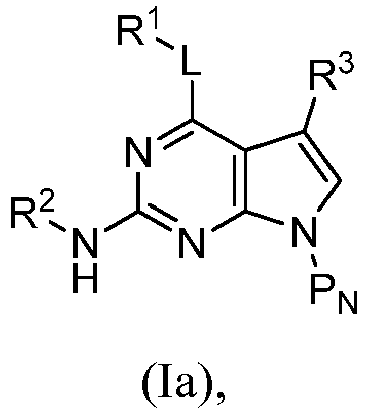

- In one embodiment, Hal2 is -Cl. In some embodiments, the solvent is 1,4-dioxane. In another embodiment, the catalyst is tris(dibenzylideneacetone)dipalladium(0) or palladium(II)acetate. In some embodiments, the ligand is 4,5-bis(diphenylphosphino)-9,9-dimethylxanthene, or [1,1'-binaphthalene]-2,2'-diylbis[diphenyl]-rac-2,2'-bis(diphenylphosphino)-1,1'-binaphthyl phosphine. In some embodiments, the base is cesium carbonate, sodium tert-butoxide, potassium tert-butoxide or sodium carbonate. In some embodiments, the contacting is performed at elevated temperature, for example, between about 100 °C to about 150 °C.
- In some embodiments, the methods further comprise preparing a compound of formula (Ib)


- In one embodiment, Hal1 is -Cl. In one embodiment, the solvent is 1,4-dioxane or DMSO. In some embodiments, the base is sodium tert-butoxide, sodium hydride, or potassium carbonate. In one embodiment, the contacting is performed at elevated temperature, for example, between about 20 °C and about 90 °C.
- In some embodiments, the methods further comprise preparing a compound of formula (Ic)


- In some embodiments, Hal3 is -I or -Br. In some embodiments of R3-B(OR+)2, R+ is -H or -(C(CH3)2-C(CH3)2-. In one embodiment, the catalyst is tetrakis(triphenylphosphine) palladium(0) or dichloro[1,1'-bis(diphenylphosphino)ferrocene]palladium(II) dichloromethane. In some embodiments, the solvent is 1,4-dioxane/water. In some other embodiments, the base is sodium carbonate, potassium carbonate, or potassium phosphate. In some embodiments, the contacting is performed at elevated temperature, for example, between about 60 °C to about 100 °C.
- In some other embodiments, the methods further comprise preparing a compound of formula (Ib)


- In some embodiments, Hal3 is -I or -Br. In some embodiments of R3-B(OR+)2, R+ is -H or -(C(CH3)2-C(CH3)2-. In one embodiment, the catalyst is tetrakis(triphenylphosphine) palladium(0) or dichloro[1,1'-bis(diphenylphosphino)ferrocene]palladium(II) dichloromethane. In some embodiments, the solvent is 1,4-dioxane/water. In some other embodiments, the base is sodium carbonate, potassium carbonate, or potassium phosphate. In some embodiments, the contacting is performed at elevated temperature, for example, between about 60 °C to about 100 °C.
- In some other embodiments, the methods further comprise preparing a compound of formula (Ie)


- In one embodiment, Hal1 is -Cl. In one embodiment, the solvent is 1,4-dioxane or DMSO. In some embodiments, the base is sodium tert-butoxide, sodium hydride, or potassium carbonate. In one embodiment, the contacting is performed at elevated temperature, for example, between about 20 °C and about 90 °C.
- In some embodiments, the methods further comprise preparing a compound of formula (Id)


- In one embodiment, wherein PN is Boc, protection is performed by treatment with Boc-anhydride, the base is sodium hydride, TEA, or DIEA and the solvent is DCM, acetonitrile, THF, NMP, or DMF. In another embodiment, wherein PN is SEM, protection is performed by treatment with SEM-chloride, the base is sodium hydride and the solvent is DMF or THF. In another embodiment, wherein PN is trityl, protection is performed by treatment with trityl chloride, the base is sodium hydride, TEA, or DIEA and the solvent is DCM, THF, NMP, or DMF. In another embodiment, wherein PN is tosyl, protection is performed by treatment with tosyl chloride, the base is sodium hydride, TEA, or DIEA and the solvent is DCM, THF, NMP, or DMF. In yet another embodiment, wherein PN is benzyl, protection is performed by treatment with benzyl bromide, the base is sodium hydride, TEA, or DIEA and the solvent is DCM, THF, or DMF. In some embodiments, wherein PN is 4-methoxybenzyl, protection is performed by treatment with 4-methoxybenzyl bromide, the base is sodium hydride, TEA, or DIEA and the solvent is DCM, THF, or DMF. In another embodiment, wherein PN is 2,4-dimethoxybenzyl, protection is performed by treatment with 2,4-dimethoxybenzyl bromide, the base is sodium hydride, TEA, or DIEA and the solvent is DCM, THF, or DMF.
- In some embodiments, the methods further comprise preparing a compound of formula (If)
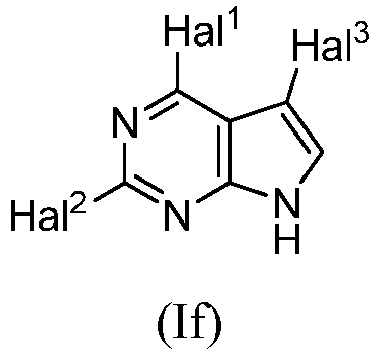

- In some embodiments, the N-halosuccinimide is iodosuccinimide or bromosuccinimide. In other embodiments, the solvent is DCM.
- In some embodiments, the methods further comprise preparing a compound of formula (Ib)


- In some embodiments, Hal4 is -Br, -I or -Cl. In some embodiments, R+ is -H or -(C(CH3)2-C(CH3)2-. In one embodiment, the catalyst is tetrakis(triphenylphosphine) palladium(0) or dichloro[1,1'-bis(diphenyl-phosphino)ferrocene]palladium(II) dichloromethane. In some embodiments, the solvent is 1,4-dioxane/water. In some other embodiments, the base is sodium carbonate, potassium carbonate, or potassium phosphate. In some embodiments, the contacting is performed at elevated temperature, for example, between about 60 °C to about 100 °C.
- In some embodiments, the methods further comprise preparing a compound of formula (Ih)


- a. with B(OR+)3, wherein R+ is a lower alkyl, in the presence of a strong base; or
- b. with [B(OR+)2]2, wherein R+ together with the boron atom and the atoms to which they are attached, forms a cyclic boronate, in the presence of a palladium catalyst and a base;
- In some embodiments, Hal4 is -Br, -I or -Cl. In some embodiments of formula (Ih), R+ is -H or -(C(CH3)2-C(CH3)2-. In some embodiments of B(OR+)3, R+ is methyl. In some such embodiments, the strong base is n-butyl lithium. In some embodiments of [B(OR+)2]2, R+ is -(C(CH3)2-C(CH3)2-. In one embodiment, the catalyst is tetrakis(triphenylphosphine) palladium(0) or dichloro[1,1'-bis(diphenyl-phosphino)ferrocene]palladium(II) dichloromethane. In some embodiments, the solvent is 1,4-dioxane/water or DMF. In some other embodiments, the base is potassium acetate.
- It should be noted that one skilled in the art would know how to modify the procedures set forth in the illustrative schemes and examples to arrive at the desired products.
- The Pyrrolopyrimidine Compounds have utility as pharmaceuticals to treat, prevent or improve breast cancer in animals or humans. Accordingly, provided herein are uses of the Pyrrolopyrimidine Compounds, including the treatment or prevention of those breast cancers set forth below. The invention provided herein comprises the administration of an effective amount of one or more Pyrrolopyrimidine Compound(s) to a subject in need thereof.
- In another aspect provided herein are the inventive compounds for use in methods for treating or preventing breast cancer, comprising administering to a subject in need thereof an effective amount of a Pyrrolopyrimidine Compound, as described herein. In some embodiments, the breast cancer is triple negative breast cancer.
- The Pyrrolopyrimidine Compounds can be administered to a subject parenterally in the conventional form of preparations, such as injections, suspensions, solutions and emulsions. Suitable vehicles that can be used to provide intravenous formulations of a Pyrrolopyrimidine Compound are well known to those skilled in the art. Examples include, but are not limited to: Water for Injection USP; aqueous vehicles such as, but not limited to, Sodium Chloride Injection, Ringer's Injection, Dextrose Injection, Dextrose and Sodium Chloride Injection, and Lactated Ringer's Injection; water-miscible vehicles such as, but not limited to, ethyl alcohol, polyethylene glycol, and polypropylene glycol; and non-aqueous vehicles such as, but not limited to, corn oil, cottonseed oil, peanut oil, sesame oil, ethyl oleate, isopropyl myristate, and benzyl benzoate. An intravenous formulation can be prepared by reconstituting a Pyrrolopyrimidine Compound with such a suitable liquid vehicle. A desired concentration of the intravenous formulation can be obtained by reconstituting an appropriate amount of a Pyrrolopyrimidine Compound with an appropriate volume of liquid vehicle. A desired concentration of the intravenous formulation provides a therapeutically effective amount of a Pyrrolopyrimidine Compound to the patient in need of the intravenous formulation and maintains a therapeutically effective level of a Pyrrolopyrimidine Compound in the patient. The dose which is therapeutically effective will depend on the rate at which the intravenous formulation is delivered to the patient and the concentration of the intravenous formulation.
- The effective amount of the Pyrrolopyrimidine Compound in the pharmaceutical composition may be at a level that will exercise the desired effect; for example, about 0.005 mg/kg of a subject's body weight to about 100 mg/kg of a subject's body weight in unit dosage for parenteral administration.
- The dose of a Pyrrolopyrimidine Compound to be administered to a subject is rather widely variable and can be subject to the judgment of a health-care practitioner. In general, the Pyrrolopyrimidine Compounds can be administered one to seven times a week, once every two weeks, once every three weeks or once every four weeks in a dose of about 0.005 mg/kg of a subject's body weight to about 10 mg/kg of a subject's body weight in a subject, but the above dosage may be properly varied depending on the age, body weight and medical condition of the subject and the type of administration. In one embodiment, the dose is about 0.01 mg/kg of a subject's body weight to about 5 mg/kg of a subject's body weight, about 0.05 mg/kg of a subject's body weight to about 1 mg/kg of a subject's body weight, about 0.1 mg/kg of a subject's body weight to about 0.75 mg/kg of a subject's body weight or about 0.25 mg/kg of a subject's body weight to about 0.5 mg/kg of a subject's body weight. In one embodiment, one dose is given per week. In others, one dose is given two, three or four times per week. In still others, one dose is given per two weeks, per three weeks or per four weeks. In any given case, the amount of the Pyrrolopyrimidine Compound administered will depend on such factors as the solubility of the active component, the formulation used and the route of administration.
- In another embodiment, provided herein are the inventive compounds for use in methods for the treatment or prevention of a disease or disorder comprising the administration of about 0.375 mg/dose to about 750 mg/dose, about 0.75 mg/dose to about 375 mg/dose, about 3.75 mg/dose to about 75 mg/dose, about 7.5 mg/dose to about 55 mg/dose or about 18 mg/dose to about 37 mg/dose of a Pyrrolopyrimidine Compound to a subject in need thereof.
- In another embodiment, provided herein are the inventive compounds for use in methods for the treatment or prevention of a disease or disorder comprising the administration of about 1 mg/dose to about 1200 mg/dose, about 10 mg/dose to about 1200 mg/dose, about 100 mg/dose to about 1200 mg/dose, about 400 mg/dose to about 1200 mg/dose, about 600 mg/dose to about 1200 mg/dose, about 400 mg/dose to about 800 mg/dose or about 600 mg/dose to about 800 mg/dose of a Pyrrolopyrimidine Compound to a subject in need thereof. In a particular embodiment, the invention disclosed herein comprises the administration of 400 mg/dose, 600 mg/dose or 800 mg/dose of a Pyrrolopyrimidine Compound to a subject in need thereof.
- In another embodiment, provided herein are unit dosage formulations that comprise between about 1 mg and 200 mg, about 35 mg and about 1400 mg, about 125 mg and about 1000 mg, about 250 mg and about 1000 mg, or about 500 mg and about 1000 mg of a Pyrrolopyrimidine Compound.
- In a particular embodiment, provided herein are unit dosage formulations comprising about 100 mg or 400 mg of a Pyrrolopyrimidine Compound.
- In another embodiment, provided herein are unit dosage formulations that comprise 1 mg, 5 mg, 10 mg, 15 mg, 20 mg, 30 mg, 35 mg, 50 mg, 70 mg, 100 mg, 125 mg, 140 mg, 175 mg, 200 mg, 250 mg, 280 mg, 350 mg, 500 mg, 560 mg, 700 mg, 750 mg, 1000 mg or 1400 mg of a Pyrrolopyrimidine Compound.
- A Pyrrolopyrimidine Compound can be administered once, twice, three, four or more times daily. In a particular embodiment, doses of 600 mg or less are administered as a once daily dose and doses of more than 600 mg are administered twice daily in an amount equal to one half of the total daily dose.
- In another embodiment, provided herein are compositions comprising an effective amount of a Pyrrolopyrimidine Compound and a pharmaceutically acceptable carrier or vehicle, wherein a pharmaceutically acceptable carrier or vehicle can comprise an excipient, diluent, or a mixture thereof. In one embodiment, the composition is a pharmaceutical composition.
- The compositions can be in the form of solutions, parenteral solutions, and suspensions and the like. Compositions can be formulated to contain a single dose, or a convenient fraction of a single dose, in a dosage unit, which may be a single vial or convenient volume of a liquid. In one embodiment, the solutions are prepared from water-soluble salts, such as the hydrochloride salt. In general, all of the compositions are prepared according to known methods in pharmaceutical chemistry.
- The effect of the Pyrrolopyrimidine Compound can be delayed or prolonged by proper formulation. The parenteral preparations can be made long-acting, by dissolving or suspending the Pyrrolopyrimidine Compound in oily or emulsified vehicles that allow it to disperse slowly in the serum.
- The following Examples are presented by way of illustration, not limitation. Compounds are named using the automatic name generating tool provided in Chemdraw Ultra 9.0 (Cambridgesoft), which generates systematic names for chemical structures, with support for the Cahn-Ingold-Prelog rules for stereochemistry. One skilled in the art can modify the procedures set forth in the illustrative examples to arrive at the desired products.
Abbreviations used: Ac Acetyl Dba Dibenzylideneacetone DCM Dichloromethane DEA Diethylamine DIEA N,N-Diisopropylethylamine DMA N,N-Dimethylacetamide DMF N,N-Dimethylformamide DMSO Dimethylsulfoxide EDC Ethyl-(N',N'-dimethylamino)propylcarbodiimide hydrochloride ESI Electrospray ionization EtOH Ethanol HATU O-(7-azabenzotriazol-1-yl)-N,N,N',N'-tetramethyluronium hexafluorophosphate HOBt 1-Hydroxybenzotriazole HPLC High performance liquid chromatography HTRF Homogeneous time resolved fluorescence LCMS Liquid chromatography mass spectrometry mCPBA Meta-chloroperoxybenzoic acid MeOH Methanol MS Mass spectrometry NMP N-methylpyrrolidone NMR Nuclear magnetic resonance Rac-BINAP [1,1'-binaphthalene]-2,2'-diylbis[diphenyl]-rac-2,2'-Bis(diphenylphosphino)-1,1'-binaphthyl phosphine SEM 2-(trimethylsilyl)ethoxymethyl SFC Supercritical fluid chromatography TBTU O-benzotriazol-1-yl-N,N,N',N'-tetra-methyluronium tetrafluoroborate TEA Triethylamine TFA Trifluoracetic acid THF Tetrahydrofuran TLC Thin layer chromatography Xantphos 4,5-Bis(diphenylphosphino)-9,9-dimethylxanthene - General Procedure A. Deprotection of SEM group. The SEM protected pyrrolo[2,3-d]pyrimidine derivative was treated with a solution of TFA (5-500 equiv) in DCM (1-5 times the volume of TFA) The mixture was stirred for 1-24 h at room temperature. The solvent was removed under reduced pressure and the residue was stirred with aqueous ammonium hydroxide (10-30% solution, 2-100 equiv) in MeOH or 1,4-dioxane (1-5 times the volume of ammonium hydroxide solution) with or without DCM (0.5-2.5 times the volume of MeOH) for 1-24 h at room temperature to 60 °C. In cases where the compound contained aqueous acid sensitive functionalities, the residue was treated with an excess of methanolic ammonia (2-7 N) prior to addition of the aqueous ammonium hydroxide. The final product was either collected by filtration or purified using standard techniques.
-

- 2,4-Dichloro-5-iodo-7H-pyrrolo[2,3-d]pyrimidine. A 50-L jacketed reactor was charged with 2,4-dichloro-7H-pyrrolo[2,3-d]pyrimidine (950 g, 5053 mmol) and DCM (16 L). The resulting tan suspension was cooled to 16 °C, and N-iodosuccinimide (1598 g, 7104 mmol) was added portionwise over 20 min. The reaction mixture was stirred at room temperature for 16 h, after which time TLC analysis (2:1 hexane/ethyl acetate) indicated complete reaction. The resulting precipitate was filtered, washed with DCM (3 × 1.5 L), and dried under reduced pressure at 40 °C for 64 h to afford 1447 g (Yield: 91 %) of target compound as a beige solid. MS (ESI) m/z 314.0 [M + 1]+.
- 2,4-Dichloro-5-iodo-7-((2-(trimethylsilyl)ethoxy)methyl)-7H-pyrrolo[2,3-d]pyrimidine. A 50-L jacketed reactor was flushed with nitrogen and charged with 2,4-dichloro-5-iodo-7H-pyrrolo[2,3-d]pyrimidine (1437 g, 4578 mmol), anhydrous DMF (5.75 L) and SEM-C1 (1145 g, 6867 mmol). The reaction solution was cooled to 0-5 °C and treated with sodium hydride (60% dispersion in mineral oil, 275 g, 6867 mmol) portion wise over 2 h. The mixture was allowed to warm to room temperature over 1 h, after which time TLC analysis indicated complete reaction. The reaction mixture was treated with saturated aqueous NH4Cl (4.5 L), diluted with water (14 L), and stirred at room temperature for 16 h to give a brown precipitate. The precipitate was filtered and washed with water (3 × 3 L) and hexane (2 × 3 L) to give 2065 g of a crude brown solid. The crude solid was dissolved in DCM (3 L), and the solution was filtered to remove insoluble material and concentrated to a solid. The solid was triturated twice from MeOH/water (4 L, 5:1) and dried under reduced pressure at 45 °C for 64 h to afford 1100 g (Yield: 54%) of the title compound as a beige solid. 1H NMR (500 MHz, DMSO-d6 ) δ ppm 8.14 (s, 1H), 5.54 (s, 2H), 3.52 (t, J= 7.94 Hz, 2H), 0.84 (t, J = 7.94 Hz, 2H), -0.08 (s, 9H). MS (ESI) m/z 443.9 [M + 1]+.
-
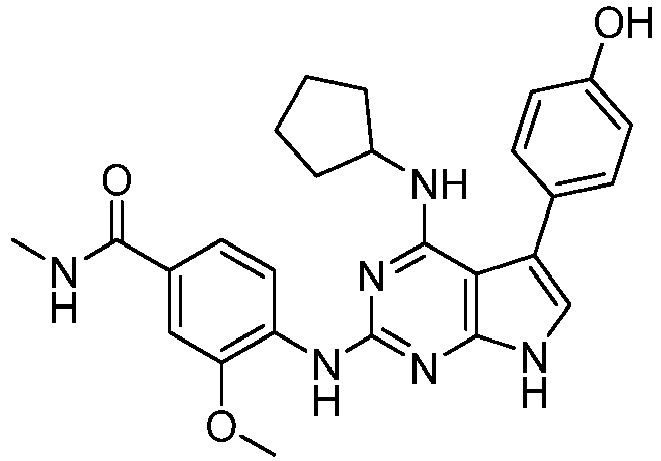
- 2-Chloro-N-cyclopentyl-5-iodo-7-((2-(trimethylsilyl)ethoxy)methyl)-7H-pyrrolo[2,3-d]pyrimidin-4-amine. 2,4-Dichloro-5-iodo-7-((2-(trimethylsilyl)ethoxy)methyl)-7H-pyrrolo[2,3-d]pyrimidine (1 equiv), cyclopentanamine (1 equiv), sodium tert-butoxide (7.5 equiv), and 1,4-dioxane (0.28 M) were combined in a sealable vessel with a stir bar. The resulting mixture was put under nitrogen atmosphere, sealed, stirred vigorously, and heated at 70 °C. After cooling to room temperature, the reaction mixture was loaded directly onto a silica gel column and purified using flash chromatography (Biotage) (0-20% ethyl acetate in hexane) to give the title compound (94% yield) as a yellow solid. MS (ESI) m/z 493.2 [M+1]+.
- 4-(2-Chloro-4-(cyclopentylamino)-7-((2-(trimethylsilyl)ethoxy)methyl)-7H-pyrrolo [2,3-d]pyrimidin-5-yl)phenol. 2-Chloro-N-cyclopentyl-5-iodo-7-((2-(trimethylsilyl)ethoxy)methyl)-7H-pyrrolo[2,3-d]pyrimidin-4-amine (1 equiv), 4-hydroxyphenylboronic acid (1 equiv), potassium carbonate (2.5 equiv) and tetrakis(triphenylphosphine)palladium(0) (0.2 equiv), suspended in 1,4-dioxane/water, and flushed with nitrogen, were stirred at 100 °C for 16 h. The reaction mixture was loaded directly onto a silica gel column and purified using 5-100% ethyl acetate in hexane. Fractions containing desired product were combined and volatile organics were removed under reduced pressure to give 4-(2-chloro-4-(cyclopentylamino)-7-((2-(trimethylsilyl)ethoxy)methyl)-7H-pyrrolo[2,3-d]pyrimidin-5-yl)phenol (32.2% yield) as a yellow solid. MS (ESI) m/z 459.3 [M+1]+.
- 4-(4-(Cyclopentylamino)-5-(4-hydroxyphenyl)-7-((2-(trimethylsilyl)ethoxy)methyl)-7H-pyrrolo[2,3-d]pyrimidin-2-ylamino)-3-methoxy-N-methylbenzamide. A mixture of 4-(2-chloro-4-(cyclopentylamino)-7-((2-(trimethylsilyl)ethoxy)methyl)-7H-pyrrolo[2,3-d]pyrimidin-5-yl)phenol (1 equiv), 4-amino-3-methoxy-N-methylbenzamide (1 equiv), potassium carbonate (2.5 equiv), (9,9-dimethyl-9H-xanthene-4,5-diyl)bis(diphenylphosphine) (0.2 equiv), and tris(dibenzylideneacetone)-dipalladium (0.2 equiv) in 1,4-dioxane (0.13 M) was purged with nitrogen and sealed. The reaction mixture was heated to 130 °C for 1.5 h. The reaction was filtered and solvents were removed under reduced pressure. The reaction mixture was loaded directly onto a silica gel column and purified using 15-100% ethyl acetate in hexane, followed by 100% ethyl acetate. Fractions containing desired product were combined and volatile organic solvents were removed under reduced pressure to give the title compound (29.2% yield) as a brown oil. MS (ESI) m/z 603.5 [M+1]+.
- 4-(4-(Cyclopentylamino)-5-(4-hydroxyphenyl)-7H-pyrrolo[2,3-d]pyrimidin-2-ylamino)-3-methoxy-N-methylbenzamide. [4-(4-(Cyclopentylamino)-5-(4-hydroxyphenyl)-7-((2-(trimethylsilyl)ethoxy)methyl)-7H-pyrrolo[2,3-d]pyrimidin-2-ylamino)-3-methoxy-N-methylbenzamide was deprotected according to General Procedure A. The solvent was removed under reduced pressure and the residue was purified to give the desired product (46.4% yield). 1H NMR (400 MHz, DMSO-d6 ) δ ppm 11.34 (d, J=2.34 Hz, 1 H) 9.54 (s, 1 H) 8.74 (d, J=8.98 Hz, 1 H) 8.28 (d, J=4.30 Hz, 1 H) 7.45 - 7.51 (m, 2 H) 7.44 (s, 1 H) 7.25 (d, J=8.20 Hz, 2 H) 6.79 - 6.93 (m, 3 H) 5.14 (d, J=7.03 Hz, 1 H) 4.32 - 4.51 (m, 1 H) 3.96 (s, 3 H) 2.79 (d, J=4.29 Hz, 3 H) 1.95 (br. s., 2 H) 1.47 - 1.67 (m, 4 H) 1.37 (d, 2 H). MS (ESI) m/z 473.2 [M+1]+.
-

- 2-Methyl-6-(4,4,5,5-tetramethyl-1,3,2-dioxaborolan-2-yl)benzo[d]oxazole. A suspension of 6-bromo-2-methylbenzo[d]oxazole (1 equiv), bis(pinacolato)diboron (2 equiv), potassium acetate (3 equiv) in 1,4-dioxane was degassed with argon for 10 min. Then, 1,1'-bis(diphenylphosphino)ferrocene palladium (II) chloride dichloromethane adduct (0.05 equiv) was added and the solution was further degassed with argon for 10 min. The reaction mixture was heated at 110 °C overnight. The reaction mixture was cooled to room temperature, the solvent was removed under reduced pressure and the crude product was purified by column chromatography (silica gel 100-200 mesh 0-10% ethyl acetate in n-hexane as eluent) to give the title compound. (Yield: 34%), MS (ESI) m/z 260 [M+1]+.
- 4-Amino-3-methoxy-N-methylbenzamide. To a solution of 4-amino-3-methoxybenzoic acid (1 equiv) in N-N-dimethylformamide (0.6 M) was added sodium bicarbonate (9.7 equiv), HATU (2 equiv) and methyl amine hydrochloride (10 equiv). The reaction mixture was stirred at room temperature overnight. The reaction mixture was poured on water and extracted with ethyl acetate. The organic layer was dried over sodium sulfate and concentrated under reduced pressure. The crude product was purified by column chromatography (silica gel 100-200 mesh, 0-10% MeOH in DCM as eluent) to give the title compound. (Yield: 63%). MS (ESI) m/z 181 [M+1]+.
- 6-(2,4-Dichloro-7-((2-(trimethylsilyl)ethoxy)methyl)-7H-pyrrolo[2,3-d]pyrimidin-5-yl)-2-methylbenzo[d]oxazole. 2-Methyl-6-(4,4,5,5-tetramethyl-1,3,2-dioxaborolan-2-yl)benzo[d]oxazole (1 equiv), 2,4-dichloro-5-iodo-7-((2-(trimethylsilyl)ethoxy)methyl)-7H-pyrrolo[2,3-d]pyrimidine (1 equiv), sodium carbonate (3 equiv) and [1,1'-bis(diphenylphosphino)ferrocene]-dichloropalladium(II) complex with dichloromethane (0.04 equiv) were combined in a 5:1 mixture of 1,4-dioxane and water (0.27 M). The mixture was heated to 85 °C for 1.5 h. The crude product was purified on silica gel (0-10% ethyl acetate in petroleum ether) to give an impure brown oil. The product was purified on silica gel (0-20% ethyl acetate in petroleum ether) to give the title compound (58% yield) as a white solid. 1H NMR (400 MHz, DMSO-d6 ) δ ppm 7.70 (d, J= 8 Hz, 1H), 7.62 (s, 1H), 7.44 (m, 2H), 5.68 (s, 2H), 3.65 (m, 2H), 2.69 (s, 3H), 0.99 (m, 2H), 0.05 (s, 9H). MS (ESI) m/z 449.0 [M+1]+.
- 6-(2-Chloro-4-(cyclopentyloxy)-7-((2-(trimethylsilyl)ethoxy)methyl)-7H-pyrrolo[2,3-d]pyrimidin-5-yl)-2-methylbenzo[d]oxazole. A solution of 6-(2,4-dichloro-7-((2-(trimethylsilyl)ethoxy)methyl)-7H-pyrrolo[2,3-d]pyrimidin-5-yl)-2-methylbenzo[d]oxazole (1 equiv), cyclopentanol (1.1 equiv), and sodium tert-butoxide (1 equiv) in 1,4-dioxane (0.22 M) was taken in a sealable flask. The reaction mixture was put under a nitrogen atmosphere, the sealable flask was sealed and the mixture was stirred at 70 °C for 3 h. The mixture was cooled to room temperature and concentrated to afford an oil, which was suspended in DCM and loaded onto a silica column (packed with hexane). The column was eluted with 0-30% ethyl acetate in hexane. The fractions containing product were combined and concentrated to dryness to give the target product as a light yellow oil (Yield: 88%) that solidified upon standing. MS (ESI) m/z 499.4 [M+1]+.
- 4-((4-(Cyclopentyloxy)-5-(2-methylbenzo[d]oxazol-6-yl)-7-((2-(trimethylsilyl)ethoxy)methyl)-7H -pyrrolo[2,3 - d]pyrimidin-2-yl)amino)-3-methoxy-N-methylbenzamide. A mixture of 6-(2-chloro-4-(cyclopentyloxy)-7-((2-(trimethylsilyl)ethoxy)methyl)-7H-pyrrolo[2,3-d]pyrimidin-5-yl)-2-methylbenzo[d]oxazole (1 equiv), 4-amino-3-methoxy-N-methylbenzamide (1 equiv), and cesium carbonate (3 equiv) in 1,4-dioxane (0.1 M) was degassed with N2 for 10 min. Then Pd(OAc)2 (0.2 equiv), and BINAP (0.4 equiv) were added to this mixture. The mixture was stirred at 110 °C for 6 h. The mixture was cooled to room temperature, filtered and concentrated to a dark residue. The residue was dissolved in DCM and loaded onto a silica column (packed with DCM). The column was eluted with 0-10% MeOH in DCM. The fractions containing product were combined and concentrated to dryness to give the target product as a light yellow solid. The orange solid was dissolved in DCM and loaded onto a silica column (packed with DCM). The column was eluted with 0-5% MeOH in DCM carefully. The fractions containing pure product were combined and concentrated to dryness to give the target compound as a light yellow solid (Yield: 61%,). MS (ESI) m/z 643.2 [M+1]+.
- 4-((4-(Cyclopentyloxy)-5-(2-methylbenzo[d]oxazol-6-yl)-7H-pyrrolo[2,3-d]pyrimidin-2-yl)amino)-3-methoxy-N-methylbenzamide. 4-((4-(Cyclopentyloxy)-5-(2-methylbenzo[d]oxazol-6-yl)-7-((2-(trimethylsilyl)ethoxy)methyl)-7H-pyrrolo[2,3-d]pyrimidin-2-yl)amino)-3-methoxy-N-methylbenzamide was deprotected according to General Procedure A. The mixture was then concentrated to dryness and the residue was purified. (Yield: 44%). 1H NMR (400 MHz, METHANOL-d4 ) δ ppm 8.73 (d, J=9.37 Hz, 1 H), 7.82 - 7.86 (m, 1 H), 7.57 - 7.63 (m, 1 H), 7.48 - 7.53 (m, 1 H), 7.41 - 7.47 (m, 2 H), 7.13 (d, J=0.78 Hz, 1 H), 5.64 - 5.71 (m, 1 H), 3.98 (s, 3 H), 2.90 (s, 3 H), 2.61 (s, 3 H), 1.96 (d, J=6.25 Hz, 2 H), 1.83 - 1.92 (m, 2 H), 1.60 - 1.77 (m, 4 H); MS (ESI) m/z 512.9 [M+1]+.
-

- 4-(2-Chloro-4-(cyclopentyloxy)-7-((2-(trimethylsilyl)ethoxy)methyl)-7H-pyrrolo[2,3-d]pyrimidin-5-yl)-N-methylbenzamide. 2-Chloro-4-(cyclopentyloxy)-5-iodo-7-((2-(trimethylsilyl)ethoxy)methyl)-7H-pyrrolo[2,3-d]pyrimidine (1 equiv) and (4-(methylcarbamoyl)phenyl)boronic acid (1.3 equiv) were combined in 1,4-dioxane (0.3 M). Sodium carbonate (3 equiv), dissolved in water (3.6 M), was added to the reaction mixture, followed by addition of [1,1'-bis(diphenylphosphino)ferrocene]-dichloropalladium(II), complex with dichloromethane (0.1 equiv). Nitrogen gas was bubbled through the reaction mixture for 2 min then reaction was heated at 90 °C for 3 h. The solvent was removed under reduced pressure and the product was purified by silica gel chromatography (Biotage, 0-80% ethyl acetate in hexane over 2.2 L). The fractions containing the desired product were combined and evaporated under reduced pressure to give the title compound (62.5% yield) as an orange solid. MS (ESI) m/z 501.4 [M+1]+.
- 4-((4-(Cyclopentyloxy)-5-(4-(methylcarbamoyl)phenyl)-7-((2-(trimethylsilyl)ethoxy)methyl)-7H-pyrrolo[2,3-d]pyrimidin-2-yl)amino)-3-methoxy-N-methylbenzamide. 4-(2-Chloro-4-(cyclopentyloxy)-7-((2-(trimethylsilyl)ethoxy)-methyl)-7H-pyrrolo[2,3-d]pyrimidin-5-yl)-N-methylbenzamide 1 equiv), 4-amino-3-methoxy-N-methylbenzamide (1.2 equiv), 2,2'-bis(diphenylphosphino)-1,1'-binaphthyl (binap) (0.2 equiv), cesium carbonate (5 equiv) and palladium(II) acetate (0.1 equiv) were combined in a sealed tube along with 1,4-dioxane (0.14 M). Nitrogen gas was bubbled through the reaction mixture for 2 min, the reaction vessel was sealed and heated in an oil bath at 110 °C for 4 h. The solvent was removed under reduced pressure and the crude material was stirred in DCM. The solids were filtered off and the filtrate was loaded directly onto a silica gel column. The product was purified by silica gel chromatography (Biotage, 20-100% ethyl acetate in hexane over 400 mL, 100% ethyl acetate for 200 mL, 0-10% MeOH in ethyl acetate over 600 mL then held at 10% MeOH in ethyl acetate for 500 mL). The fractions containing the desired product were combined and evaporated under reduced pressure to give the title compound (67.1% yield) as a tan solid. MS (ESI) m/z 645.6 [M+1]+.
- 4-((4-(Cyclopentyloxy)-5-(4-(methylcarbamoyl)phenyl)-7H-pyrrolo[2,3-d]pyrimidin-2-yl)amino)-3-methoxy-N-methylbenzamide. 4-((4-(Cyclopentyloxy)-5-(4-(methylcarbamoyl)phenyl)-7-((2-(trimethylsilyl)ethoxy)methyl)-7H-pyrrolo[2,3-d]pyrimidin-2-yl)amino)-3-methoxy-N-methylbenzamide was deprotected according to General Procedure A. The solvent was evaporated under reduced pressure and the residue was purified to give the title compound (56.3% yield). 1H NMR (400 MHz, DMSO-d6 ) δ ppm 1.60 - 1.78 (m, 4 H) 1.78 - 1.90 (m, 2 H) 1.93 - 2.07 (m, 2 H) 2.74 - 2.85 (m, 6 H) 3.97 (s, 3 H) 5.64 - 5.75 (m, 1 H) 7.46 (d, J=2.34 Hz, 1 H) 7.49 - 7.55 (m, 2 H) 7.74 (s, 1 H) 7.76 - 7.88 (m, 4 H) 8.29 - 8.35 (m, 1 H) 8.43 (q, J=4.43 Hz, 1 H) 8.63 (d, J=8.98 Hz, 1 H) 11.91 (d, J=1.95 Hz, 1 H); MS (ESI) m/z 515.0 [M+1]+.
-

- tert-Butyl4-(4,4,5,5-tetramethyl-1,3,2-dioxaborolan-2-yl)-1,2-phenylenedicarbamate. To a degassed mixture of tert-butyl 4-(4,4,5,5-tetramethyl-1,3,2-dioxaborolan-2-yl)-1,2-phenylenedicarbamate (1 equiv), 4,4,4',4',5,5,5',5'-octamethyl-2,2'-bi(1,3,2-dioxaborolane) (1.5 equiv) and potassium acetate (3 equiv) in 1,4-dioxane (0.13 M) was added [1,1'-bis(diphenylphosphino)ferrocene]palladium(II) chloride (0.1 equiv). The mixture was heated under reflux for 3 h. Filtration and concentration gave the crude product, which was purified by silica gel column chromatography (10% ethyl acetate in petroleum ether) to afford the title compound (82% yield). MS (ESI) m/z 435.2 [M+1]+.
- tert-Butyl 4-(2-chloro-4-methoxy-7-((2-(trimethylsilyl)ethoxy)methyl)-7H-pyrrolo[2,3-d]pyrimidin-5-yl)-1,2-phenylenedicarbamate. To a degassed mixture of tert-butyl 4-(4,4,5,5-tetramethyl-1,3,2-dioxaborolan-2-yl)-1,2-phenylenedicarbamate (1 equiv), 2-chloro-5-iodo-4-methoxy-7-(2-trimethylsilanyl-ethoxymethyl)-7H-pyrrolo [2,3-d]pyrimidine (1.2 equiv) and tripotassium phosphate trihydrate (3 equiv) in 1,4-dioxane and water (10:1, 0.034 M) was added tetrakis(triphenylphosphine)palladium (0.2 equiv). The mixture was heated under reflux for 3 h. Filtration and concentration gave the crude product, which was purified by silica gel column chromatography (10% ethyl acetate in petroleum ether) to afford the title compound (59% yield). MS (ESI) m/z 620.2 [M+1]+.
- 4-Amino-3-chloro-N,N-dimethylbenzamide. To a solution of 4-amino-3-chlorobenzoic acid (1 equiv) in DCM (0.12 M) was added N-(3-dimethylaminopropyl)-N'-ethylcarbodiimide hydrochloride (1.2 equiv), 1-hydroxybenzotriazole (1.2 equiv), triethylamine (4 equiv) and dimethylamine hydrochloride (2 equiv) sequentially. The mixture was stirred at room temperature overnight. After the reaction was complete, as monitored by LCMS, the mixture was diluted with a mixture of isopropanol in chloroform (30%,), washed with water and dried over anhydrous sodium sulfate. The organic phase was concentrated and the residue obtained was recrystallized in the mixture of hexane and ethyl acetate (10%,) to afford the desired product (Yield: 59.6%) as a light brown solid. MS (ESI) m/z 199.1 [M+1]+.
- tert-Butyl 4-(2-(2-chloro-4-(dimethylcarbamoyl)phenylamino)-4-methoxy-7-((2-(trimethylsilyl)ethoxy)methyl)-7H-pyrrolo [2,3-d]pyrimidin-5-yl)-1,2-phenylenedicarbamate. To a degassed mixture of tert-butyl 4-(2-chloro-4-methoxy-7-((2-(trimethylsilyl)ethoxy)methyl)-7H-pyrrolo[2,3-d]pyrimidin-5-yl)-1,2-phenylenedicarbamate (1 equiv), 4-amino-3-chloro-N,N-dimethylbenzamide (1.3 equiv) and cesium carbonate (3 equiv) in 1,4-dioxane (0.06 M) was added palladium (II) trifluoroacetate (0.3 equiv) and 4,5-bis(diphenyl phosphino)-9,9-dimethylxanthene (0.6 equiv). The resulting reaction mixture was refluxed at 90 °C overnight. The reaction mixture was filtered and concentrated; the crude product was purified by silica gel column chromatography (10% ethyl acetate in petroleum ether) to afford the title compound (33% yield). MS (ESI) m/z 782.4 [M+1]+.
- 3-Chloro-4-(5-(3,4-diaminophenyl)-4-methoxy-7-((2-(trimethylsilyl)ethoxy)methyl)-7H-pyrrolo[2,3-d]pyrimidin-2-ylamino)-N,N-dimethylbenzamide. tert-Butyl 4-(2-(2-chloro-4-(dimethylcarbamoyl)phenylamino)-4-methoxy-7-((2-(trimethylsilyl)ethoxy)methyl)-7H-pyrrolo[2,3-d]pyrimidin-5-yl)-1,2-phenylenedicarbamate (1 equiv) was dissolved in methanolic hydrochloric acid (1N, 7.8 equiv) and stirred at 0 °C overnight. After the reaction was complete, the mixture was basified at 0 °C with aqueous ammonia to pH=7-8 and the aqueous layer was extracted with DCM. The combined organic layers were washed with brine, dried over anhydrous sodium sulfate and filtered. Concentration under reduced pressure gave the crude product, which was purified by silica gel column chromatography (10% ethyl acetate in petroleum ether) to afford the title compound (78% yield). MS (ESI) m/z 582.3 [M+1]+.
- 3-Chloro-4-(4-methoxy-5-(2-methyl-1H-benzo[d]imidazol-5-yl)-7-((2-(trimethylsilyl)ethoxy)methyl)-7H-pyrrolo[2,3-d]pyrimidin-2-ylamino)-N,N-dimethylbenzamide. 3-Chloro-4-(5-(3,4-diaminophenyl)-4-methoxy-7-((2-(trimethylsilyl)ethoxy)methyl)-7H-pyrrolo[2,3-d]pyrimidin-2-ylamino)-N,N-dimethylbenzamide (1 equiv) was dissolved in acetic acid (40 equiv) and stirred at 115 °C for 3 h. After the reaction was complete, the solvent was removed under high vacuum. The residue was purified by silica gel column chromatography (10% ethyl acetate in petroleum ether) to afford the title compound (73% yield). MS (ESI) m/z 606.2[M+1]+.
- 3-Chloro-4-(4-methoxy-5-(2-methyl-1H-benzo[d]imidazol-5-yl)-7H-pyrrolo[2,3-d]pyrimidin-2-ylamino)-N,N-dimethylbenzamide. 3-Chloro-4-(4- methoxy-5-(2-methyl-1H-benzo[d]imidazol-5-yl)-7-((2-(trimethylsilyl)ethoxy)methyl)-7H-pyrrolo[2,3-d]pyrimidin-2-ylamino)-N,N-dimethylbenzamide was deprotected according to General Procedure A. Concentration and purification gave the desired product (46% yield); 1H NMR (400 MHz, METHANOL-d4 ) δ ppm 8.86 (d, J = 8.8 Hz, 1H), 7.79 (s, 1H), 7.55-7.43(m, 4H), 7.13 (s, 1H), 4.08 (s, 3H), 3.09 (s, 6H), 2.59 (s, 3H); MS (ESI) m/z 476.1 [M+1]+
-

- 2,4-Dichloro-5-(pyridin-4-yl)-7-((2-(trimethylsilyl)ethoxy)methyl)-7H-pyrrolo[2,3-d]pyrimidine. To a degassed mixture of 2,4-dichloro-5-iodo-7-((2-(trimethylsilyl)ethoxy)methyl)-7H-pyrrolo[2,3-d]pyrimidine (1 equiv), pyridin-4-ylboronic acid (1.1 equiv) and tripotassium phosphate trihydrate (3 equiv) in a 9:1 mixture of 1,4-dioxane and water (0.33 M) was added palladium 1,1-bis(diphenylphosphino)-ferrocene dichloride (0.2 equiv). The reaction mixture was stirred at 100 °C for 2 h. After the reaction was complete, the reaction mixture was cooled to room temperature and concentrated. The residue was purified by silica gel chromatography (0-30% ethyl acetate in petroleum ether) to afford the desired product (40% yield) as a red solid. MS (ESI) m/z 395.1 [M+1]+.
- 2-Chloro-5-(pyridin-4-yl)-N-(tetrahydro-2H-pyran-4-yl)-7-((2-(trimethylsilyl)ethoxy)methyl)-7H-pyrrolo[2,3-d]pyrimidin-4-amine. To a solution of 2,4-dichloro-5-(pyridin-4-yl)-7-((2-(trimethylsilyl)ethoxy)methyl)-7H-pyrrolo[2,3-d]pyrimidine (1 equiv) in 1,4-dioxane (0.4 M) in a sealable vessel was added tetrahydro-2H-pyran-4-amine hydrochloride (1.5 equiv) and triethylamine (3 equiv). The resulting mixture was heated at 120 °C for 2 h under nitrogen atmosphere. After the reaction was complete, the reaction mixture was cooled to room temperature and concentrated. The residue was purified by silica gel chromatography (0-30% ethyl acetate in petroleum ether) to afford the desired product (34% yield) as a yellow solid. MS (ESI) m/z 460.2 [M+1]+.
- N,N,3-Trimethyl-4-((5-(pyridin-4-yl)-4-((tetrahydro-2H-pyran-4-yl)amino)-7-((2-(trimethylsilyl)ethoxy)methyl)-7H-pyrrolo[2,3-d]pyrimidin-2-yl)amino)benzamide. To a degassed mixture of 2-chloro-5-(pyridin-4-yl)-N-(tetrahydro-2H-pyran-4-yl)-7-((2-(trimethylsilyl)ethoxy)methyl)-7H-pyrrolo[2,3-d]pyrimidin-4-amine (1 equiv), 4-amino-N,N,3-trimethylbenzamide (1.2 equiv) and cesium carbonate (3 equiv) in 1,4-dioxane (0.2 M) was added palladium acetate (0.3 equiv) and 2,2'-bis-diphenylphosphanyl-[1,1']binaphthalenyl (0.6 equiv). The reaction was stirred at 110 °C for 2 hours. After the reaction was complete, the reaction mixture was cooled to room temperature and concentrated. The residue was purified by silica gel chromatography (0-2% DCM in MeOH) to afford the desired product (35% yield) as a yellow solid. MS (ESI) m/z 602.3 [M+1]+.
- N,N,3-Trimethyl-4-((5-(pyridin-4-yl)-4-((tetrahydro-2H-pyran-4-yl)amino)-7H-pyrrolo[2,3-d]pyrimidin-2-yl)amino)benzamide. N,N,3-Trimethyl-4-((5-(pyridin-4-yl)-4-((tetrahydro-2H-pyran-4-yl)amino)-7-((2-(trimethylsilyl)ethoxy)methyl)-7H-pyrrolo[2,3-d]pyrimidin-2-yl)amino)benzamide was deprotected according to general procedure A. The resulting mixture was concentrated and the residue was purified to afford the title compound (40% yield). 1H NMR (400 MHz, CHLOROFORM-d1 ) δ ppm 9.28 (s, 1H), 8.67 (d, J = 5.6 Hz, 2H), 8.33 (d, J = 8.4 Hz, 1H), 7.39 (d, J = 5.6 Hz, 2H), 7.32-7.28 (m, 2H), 6.76 (s, 1H), 6.68 (s, 1H), 4.85 (d, J= 7.2 Hz, 1H), 4.40-4.30 (m, 1H), 3.97-3.92 (m, 2H), 3.58-3.52 (m, 2H), 3.06 (s, 6H), 2.38 (s, 3H), 2.07-2.02 (m, 2H), 1.51-1.42 (m, 2H); MS (ESI) m/z 472.2 [M+1]+.
-

- 2-Chloro-4-(cyclopentyloxy)-5-iodo-7-((2-(trimethylsilyl)ethoxy)methyl)-7H-pyrrolo[2,3-d]pyrimidine. To a solution of cyclopentanol (1 equiv) in anhydrous THF (0.22 M) was added sodium hydride (60% in mineral oil, 1.3 equiv) at 0 °C under nitrogen. After the resulting reaction mixture was stirred at room temperature for 30 min, 2,4-dichloro-5-iodo-7-((2-(trimethylsilyl)ethoxy)methyl)-7H-pyrrolo[2,3-d]pyrimidine (0.67 equiv) was added. The reaction was stirred at room temperature for 4 h and quenched with saturated aqueous ammonium chloride solution. The aqueous layer was extracted with ethyl acetate. The combined organic layers were washed with brine, dried over anhydrous sodium sulfate and filtered. Concentration under vacuum gave the crude product, which was purified by silica gel column chromatography (5% ethyl acetate in petroleum ether) to afford the title compound (46% yield). MS (ESI) m/z 493.2. [M+1]+.
- 6-(2-Chloro-4-(cyclopentyloxy)-7-((2-(trimethylsilyl)ethoxy)methyl)-7H-pyrrolo[2,3-d]pyrimidin-5-yl)-2-methylbenzo[d]oxazole. To a mixture of 2-chloro-4-(cyclopentyloxy)-5-iodo-7-((2-(trimethylsilyl)ethoxy)methyl)-7H-pyrrolo[2,3-d]pyrimidine (1 equiv), 2-methyl-6-(4,4,5,5-tetramethyl-[1,3,2]dioxaborolan-2-yl)-benzooxazole (1 equiv), tripotassium phosphate trihydorate (3 equiv) in 1,4-dioxane and water (8:1, 0.5 M) was added 1,1-bis(diphenylphosphion)ferrocene palladium dichloride (0.1 equiv). The mixture was refluxed at 90 °C for 2 h. Filtration and concentration gave the crude product, which was purified by silica gel column chromatography (20% ethyl acetate in petroleum ether) to afford the title compound (42% yield). MS (ESI) m/z 498.2 [M+1]+.
- 4-Amino-N-(2-hydroxyethyl)-3-methoxybenzamide. To a solution of 4-amino-3-methoxybenzoic acid (1 equiv) in anhydrous DCM (0.6 M) was added triethylamine (4 equiv), N-(3-dimethylaminopropyl)-N'-ethylcarbodiimide hydrochloride (1.2 equiv) and 2-amino-ethanol (2 equiv) portionwise. The mixture was stirred at room temperature overnight. After the reaction was complete, as monitored by LCMS, the mixture was diluted with a mixture of isopropanol in chloroform (30%), washed with water and dried over anhydrous sodium sulfate. The organic phase was concentrated and purified by silica column to give the title compound as a white solid (17% yield). 1H NMR (400 MHz, DMSO-d6 ) δ ppm 8.05-8.02 (t, J = 5.6 Hz, 1H), 7.32-7.27 (m, 1H), 6.60 (d, J= 8.0 Hz, 1H), 5.21 (brs, 2H), 4.69 (t, J = 5.6 Hz, 1H), 3.80 (s, 3H), 3.50-3.46 (m, 2H), 2.34-3.27 (m, 2H). MS (ESI) m/z 211.1 [M+1]+.
- 4-((4-(Cyclopentyloxy)-5-(2-methylbenzo[d]oxazol-6-yl)-7-((2-(trimethylsilyl)ethoxy)methyl)-7H-pyrrolo[2,3-d]pyrimidin-2-yl)amino)-N-(2-hydroxyethyl)-3-methoxybenzamide. To a degassed mixture of 6-(2-chloro-4-(cyclopentyloxy)-7-((2-(trimethylsilyl)ethoxy)methyl)-7H-pyrrolo[2,3-d]pyrimidin-5-yl)-2-methylbenzo[d]oxazole (1 equiv), 4-amino-N-(2-hydroxyethyl)-3-methoxybenzamide (1.2 equiv) and cesium carbonate (5 equiv) in 1,4-dioxane (0.14 M) were added palladium acetate (0.1 equiv) and 2,2'-bis-diphenylphosphanyl-[1,1']binaphthalenyl (0.2 equiv). The mixture was stirred at 120 °C overnight. The reaction was cooled to room temperature and filtered. The filtrate was concentrated and the residue obtained was purified by preparative thin layer chromatography (8% MeOH in DCM) to afford the title compound (30% yield). MS (ESI) m/z 673.1 [M+1]+.
- 4-((4-(Cyclopentyloxy)-5-(2-methylbenzo[d]oxazol-6-yl)-7H-pyrrolo[2,3-d]pyrimidin-2-yl)amino)-N-(2-hydroxyethyl)-3-methoxybenzamide. 4-((4-(Cyclopentyloxy)-5-(2-methylbenzo[d]oxazol-6-yl)-7-((2-(trimethylsilyl)ethoxy)methyl)-7H-pyrrolo[2,3-d]pyrimidin-2-yl)amino)-N-(2-hydroxyethyl)-3-methoxybenzamide was deprotected according to General Procedure A. The resulting mixture was concentrated and purified to afford the title compound (38% yield); 1H NMR (400 MHz, METHANOL-d4 ) δ ppm 8.76-8.74 (m, 1H), 7.855 (s, 1H),7.63-7.61 (m, 1H), 7.53-7.49 (m,3H),7.15 (s, 1H), 7.05 (s, 1H), 5.57-5.69 (brs, 1H), 4.01(s,3H),3.75-3.73 (m, 2H), 3.53-3.51(m,2H),2.64 (s, 3H), 2.01-1.87 (m, 4H), 1.77-1.65 (m, 4H); MS (ESI) m/z 543.2 [M+1]+.
-

- 2-Chloro-5-iodo-4-((tetrahydro-2H-pyran-4-yl)oxy)-7-((2-(trimethylsilyl)ethoxy)methyl)-7H-pyrrolo[2,3-d]pyrimidine. 2,4-Dichloro-5-iodo-7-((2-(trimethylsilyl)ethoxy)methyl)-7H-pyrrolo[2,3-d]pyrimidine (1 equiv), tetrahydro-2H-pyran-4-ol (1.05 equiv), sodium tert-butoxide (1.05 equiv) and 1,4-dioxane (0.56 M) were combined and heated at 70 °C for 5 h. The reaction mixture was concentrated and extracted with ethyl acetate/H2O. The organic layers were combined, evaporated under reduced pressure and purified by silica-gel chromatography (0-50% hexane:ethyl acetate over 800 mL) followed by 5-15% (DCM:MeOH over 800 mL). Pure fractions were combined, evaporated under reduced pressure and dried under high vacuum to give the title compound (86% yield) as a yellow oil. 1H NMR (400 MHz, METHANOL-d4 ) δ ppm 7.57 (s, 1 H), 5.62 - 5.70 (m, 1 H), 5.59 (s, 2 H), 4.11 - 4.19 (m, 2 H), 3.74 - 3.82 (m, 2 H), 3.62 (d, J=8.20 Hz, 2 H), 2.15 - 2.24 (m, 2 H), 1.91 - 2.01 (m, 2 H), 0.90 - 0.98 (m, 2 H), 0.00 (s, 9 H); MS (ESI) m/z 510.2 [M+1]+.
- 2-Chloro-5-(1-methyl-1H-pyrazol-4-yl)-4-((tetrahydro-2H-pyran-4-yl)oxy)-7-((2-(trimethylsilyl)ethoxy)methyl)-7H-pyrrolo[2,3-d]pyrimidine. To a degassed mixture of 2-chloro-5-iodo-4-((tetrahydro-2H-pyran-4-yl)oxy)-7-((2-(trimethylsilyl)ethoxy)methyl)-7H-pyrrolo[2,3-d]pyrimidine (1 equiv), 1-methyl-4-(4,4,5,5-tetramethyl-1,3,2-dioxaborolan-2-yl)-1H-pyrazole (1.1 equiv) and potassium phosphate tribasic trihydrate (3 equiv) in a 10:1 mixture of 1,4-dioxane and water (0.09 M)) was added palladium 1,1-bis(diphenylphosphion)ferrocene dichloride (0.2 equiv). The mixture was stirred at 110 °C for 2 h. The suspension was cooled to room temperature and filtered. The filtrate was concentrated and the residue obtained was purified by silica gel chromatography (20% ethyl acetate in petroleum ether) to afford the title compound (88% yield). MS (ESI) m/z = 464.1 [M+1]+.
- N,N,3-Trimethyl-4-((5-(1-methyl-1H-pyrazol-4-yl)-4-((tetrahydro-2H-pyran-4-yl)oxy)-7-((2-(trimethylsilyl)ethoxy)methyl)-7H-pyrrolo[2,3-d]pyrimidin-2-yl)amino)benzamide. To a degassed mixture of 2-chloro-5-(1-methyl-1H-pyrazol-4-yl)-4-((tetrahydro-2H-pyran-4-yl)oxy)-7-((2-(trimethylsilyl)ethoxy)methyl)-7H-pyrrolo[2,3-d]pyrimidine (1 equiv), 4-amino-N,N,3-trimethylbenzamide (1 equiv) and cesium carbonate (3 equiv) in 1.4-dioxane (0.086 M) were added palladium acetate (0.3 equiv) and 2,2'-bis-diphenylphosphanyl-[1,1']binaphthalenyl (0.6 equiv). The mixture was stirred at 110 °C for 2 h. The reaction was cooled to room temperature and filtered. The filtrate was concentrated and the residue obtained was purified by preparative thin layer chromatography (3.3% MeOH in DCM) to afford the title compound (76% yield). MS (ESI) m/z 606.1 [M+1]+.
- N,N,3-Trimethyl-4-((5-(1-methyl-1H-pyrazol-4-yl)-4-((tetrahydro-2H-pyran-4-yl)oxy)-7H-pyrrolo[2,3-d]pyrimidin-2-yl)amino)benzamide. N,N,3-Trimethyl-4-((5-(1-methyl-1H-pyrazol-4-yl)-4-((tetrahydro-2H-pyran-4-yl)oxy)-7-((2-(trimethylsilyl)ethoxy)methyl)-7H-pyrrolo[2,3-d]pyrimidin-2-yl)amino)benzamide was deprotected according to General Procedure A. The resulting mixture was concentrated and purified to afford the title compound (12% yield). 1H NMR (400 MHz, CHLOROFORM-d1 ) δ ppm 8.75 (s, 1H), 8.31-8.29 (d, J=8.4Hz, 1H), 7.76-7.75 (d, J=6.0Hz, 2H), 7.32-7.29 (m, 2H), 6.87-6.86 (d, J=2.4Hz, 1H), 6.69 (s, 1H), 5.52-5.48 (m, 1H), 4.02-3.97 (m, 2H), 3.94 (s, 3H), 3.66-3.60 (m, 2H), 3.07 (s, 6H), 12.37 (s, 2H), 2.21-2.16 (m, 2H), 1.96-1.87 (m, 2H); MS (ESI) m/z 476.2 [M+1]+.
-

- 2-Chloro-5-(pyridin-4-yl)-4-((tetrahydro-2H-pyran-4-yl)oxy)-7-((2-(trimethylsilyl)ethoxy)methyl)-7H-pyrrolo[2,3-d]pyrimidine. To a solution of 2-chloro-5-iodo-4-((tetrahydro-2H-pyran-4-yl)oxy)-7-((2-(trimethylsilyl)ethoxy)methyl)-7H-pyrrolo[2,3-d]pyrimidine (1 equiv), pyridin-4-ylboronic acid (1.1 equiv), tetrakis(triphenylphosphine)-palladium(0) (0.1 equiv) in a 5:1 mixture of 1,4-dioxane and water (0.17 M) was added sodium carbonate (2.1 equiv). The reaction was stirred at 75 °C for 3 h. The reaction mixture was quenched with saturated aqueous sodium chloride and then washed with ethyl acetate. The organic phase was combined and washed with saturated aqueous sodium chloride. The organic layer was dried (magnesium sulfate), filtered, and concentrated. The crude product was purified by silica gel column chromatography (0-90%) ethyl acetate (with 10% 1N ammonia in MeOH) in hexane) to give the title compound (50.5% yield) as a yellow oil. 1H NMR (400 MHz, DMSO-d6 ) δ ppm -0.06 (s, 9 H) 0.82 - 0.91 (m, 2 H) 1.74 (dtd, J=12.74, 8.37, 8.37, 3.71 Hz, 2 H) 2.01 - 2.16 (m, 2 H) 3.50 - 3.63 (m, 4 H) 3.69 - 3.83 (m, 2 H) 5.50 (tt, J=7.91, 3.81 Hz, 1 H) 5.59 (s, 2 H) 7.72 (d, J=6.25 Hz, 2 H) 8.12 (s, 1 H) 8.60 (d, J=6.25 Hz, 2 H); MS (ESI) m/z 461.0 [M+1]+.
- To a solution of 2-chloro-5-(pyridin-4-yl)-4-((tetrahydro-2H-pyran-4-yl)oxy)-7-((2-(trimethylsilyl)ethoxy)methyl)-7H-pyrrolo[2,3-d]pyrimidine (1 equiv), (9,9-dimethyl-9H-xanthene-4,5-diyl)bis(diphenylphosphine) (0.2 equiv), tris(dibenzylideneacetone)dipalladium(0) (0.1 equiv), 4-amino-3-methoxy-N-methylbenzamide (1.1 equiv) in 1,4-dioxane (0.1 M) was added cesium carbonate (3 equiv). The reaction mixtures were heated, with microwave irradiation, in a microwave reactor at 150 °C for 2 h. The reaction mixture was quenched with saturated aqueous sodium chloride and then washed with ethyl acetate. The organic phase was combined and washed with saturated aqueous sodium chloride. The organic layer was dried (magnesium sulfate), filtered, and concentrated. The crude was purified by silica gel column chromatography (0-90%) ethyl acetate (with 10% 1N ammonia in MeOH) in hexane) to give the title compound (49.1%% yield) as yellow solid. 1H NMR (400 MHz, DMSO-d6 ) δ ppm -0.11 (s, 9 H) 0.85 - 0.93 (m, 2 H) 1.68 - 1.82 (m, 2 H) 2.06 - 2.18 (m, 2 H) 2.79 (d, J=4.30 Hz, 3 H) 3.51 - 3.66 (m, 4 H) 3.77 - 3.86 (m, 2 H) 3.96 (s, 3 H) 5.47 - 5.55 (m, 1 H) 5.56 (s, 2 H) 7.50 - 7.57 (m, 2 H) 7.71 - 7.76 (m, 2 H) 7.83 (s, 1 H) 7.92 (s, 1 H) 8.34 (q, J=4.43 Hz, 1 H) 8.52 - 8.60 (m, 3 H); MS (ESI) m/z 605.6 [M+1]+.
- 3-Methoxy-N-methyl-4-((5-(pyridin-4-yl)-4-((tetrahydro-2H-pyran-4-yl)oxy)-7H-pyrrolo[2,3-d]pyrimidin-2-yl)amino)benzamide. 3-Methoxy-N-methyl-4-((5-(pyridin-4-yl)-4-((tetrahydro-2H-pyran-4-yl)oxy)-7-((2-(trimethylsilyl)ethoxy)methyl)-7H-pyrrolo[2,3-d]pyrimidin-2-yl)amino)benzamide was deprotected according to General Procedure A. The crude product was purified to afford the title compound (25.3% yield). 1H NMR (400 MHz, DMSO-d6 ) δ ppm 1.72 (dtd, J=12.84, 8.52, 8.52, 4.10 Hz, 2 H) 2.08 (d, J=10.15 Hz, 2 H) 2.75 (d, J=4.69 Hz, 3 H) 3.54 (ddd, J=11.52, 8.59, 2.93 Hz, 2 H) 3.71 - 3.84 (m, 2 H) 5.47 (dt, J=8.30, 4.25 Hz, 1 H) 7.40 - 7.52 (m, 2 H) 7.61 (d, J=2.34 Hz, 1 H) 7.66 - 7.74 (m, 2 H) 7.77 (s, 1 H) 8.29 (d, J=4.30 Hz, 1 H) 8.42 - 8.57 (m, 3 H) 12.05 (s, 1 H); MS (ESI) m/z 475.5 [M+1]+.
-

- 6-(2-Chloro-4-isopropoxy-7-((2-(trimethylsilyl)ethoxy)methyl)-7H-pyrrolo[2,3-d]pyrimidin-5-yl)-2-methylbenzo[d]oxazole. 6-(2,4-Dichloro-7-((2-(trimethylsilyl)ethoxy)methyl)-7H-pyrrolo[2,3-d]pyrimidin-5-yl)-2-methylbenzo[d]oxazole (1 equiv), propan-2-ol (1.1 equiv), sodium tert-butoxide (1.1 equiv), and 1,4-dioxane (0.1 M) were combined and the resulting mixture was allowed to stir at 70 °C for several hours. The reaction was cooled and concentrated to an oil under reduced pressure that was purified by silica gel chromatography (0-30% ethyl acetate/hexane) to afford the title compound (101% yield) that was used without further purification. MS (ESI) m/z 473.3 [M+1]+.
- 4-(4-Isopropoxy-5-(2-methylbenzo[d]oxazol-6-yl)-7-((2-(trimethylsilyl)ethoxy)methyl)-7H-pyrrolo[2,3-d]pyrimidin-2-ylamino)-3-methoxy-N-methylbenzamide. 6-(2-Chloro-4-isopropoxy-7-((2-(trimethylsilyl)ethoxy)methyl)-7H-pyrrolo[2,3-d]pyrimidin-5-yl)-2-methylbenzo[d]oxazole (1 equiv), 4-amino-3-methoxy-N-methylbenzamide (1.2 equiv), palladium acetate (0.1 equiv), 2,2'-bis(diphenylphosphino)-1,1'-binaphthalene (0.2 equiv), cesium carbonate (5 equiv), and 1,4-dioxane (0.14 M) were combined and allowed to stir at 110 °C for 4 h and then cool to ambient temperature overnight. The reaction mixture was diluted with ethyl acetate and filtered through a pre-wetted (with ethyl acetate) bed of Celite. The filtrate was concentrated to an oil under reduced pressure that was purified by silica gel chromatography (0-70% ethyl acetate with 10% MeOH/hexane) to afford the title compound (82% yield). MS (ESI) m/z 617.5 [M+1]+.
- 4-(4-Isopropoxy-5-(2-methylbenzo [d] oxazol-6-yl)-7H-pyrrolo [2,3-d]pyrimidin-2-ylamino)-3-methoxy-N-methylbenzamide. 4-((4-Isopropoxy-5-(2-methylbenzo[d]oxazol-6-yl)-7-((2-(trimethylsilyl)ethoxy)methyl)-7H-pyrrolo[2,3-d]pyrimidin-2-yl)amino)-3-methoxy-N-methylbenzamide was deprotected according to General Procedure A. The reaction mixture was concentrated and purified to afford the title (86% yield). 1H NMR (400 MHz, DMSO-d6 ) δ ppm 11.77 - 11.95 (m, 1 H), 8.53 - 8.69 (m, 1 H), 8.27 - 8.37 (m, 1 H), 7.94 - 8.00 (m, 1 H), 7.70 - 7.75 (m, 1 H), 7.65 - 7.70 (m, 1 H), 7.57 - 7.64 (m, 1 H), 7.47 - 7.55 (m, 2 H), 7.34 - 7.43 (m, 1 H), 5.46 - 5.58 (m, 1 H), 3.97 (s, 3 H), 2.75 - 2.83 (m, 3 H), 2.62 (s, 3 H), 1.38 (d, J=6.25 Hz, 6 H); MS (ESI) m/z 487.4 [M+1]+.
-

- 6-(2,4-Dichloro-7-((2-(trimethylsilyl)ethoxy)methyl)-7H-pyrrolo[2,3-d]pyrimidin-5-yl)-2-methylbenzo[d]oxazole. To a solution of 2,4-dichloro-5-iodo-7-((2-(trimethylsilyl)ethoxy)methyl)-7H-pyrrolo[2,3-d]pyrimidine (1 equiv), 2-methyl-6-(4,4,5,5-tetramethyl-1,3,2-dioxaborolan-2-yl)benzo[d]oxazole (1 equiv), [1,1'-bis(diphenylphosphino)ferrocene]dichloropalladium(II), complex with DCM (0.1 equiv) in a 3:1 mixture of 1,4-dioxane and water (0.2 M) was added sodium carbonate (3 equiv). The reaction was stirred at 85 °C for 15 h. The reaction mixture was quenched with saturated aqueous sodium chloride and then extracted with ethyl acetate. The organic phase was combined and washed with saturated aqueous sodium chloride. The organic layer was dried (magnesium sulfate), filtered, and concentrated. The crude was purified by silica gel column chromatography (0-50% ethyl acetate in hexane) to give the title compound (72.0% yield) as a brown oil 1H NMR (400 MHz, DMSO-d6 ) δ ppm -0.06 (s, 9 H) 0.83 - 0.92 (m, 2 H) 2.64 (s, 3 H) 3.55 - 3.65 (m, 2 H) 5.65 (s, 2 H) 7.47 (dd, J=8.00, 1.76 Hz, 1 H) 7.72 (d, J=8.20 Hz, 1 H) 7.79 - 7.83 (m, 1 H) 8.05 (s, 1 H); MS (ESI) m/z 449.5 [M+1]+.
- To a solution of 6-(2,4-dichloro-7-((2-(trimethylsilyl)ethoxy)methyl)-7H-pyrrolo[2,3-d]pyrimidin-5-yl)-2-methylbenzo[d]oxazole (1 equiv), (S)-tetrahydrofuran-3-ol (1.1 equiv) in 1,4-dioxane (0.2 M) was added sodium tert-butoxide (1.1 equiv). The reaction was stirred at 75 °C for 5 h. The reaction mixture was quenched with saturated aqueous sodium chloride and then washed with ethyl acetate. The organic phase was combined and washed with saturated aqueous sodium chloride. The organic layer was dried (magnesium sulfate), filtered, and concentrated. The crude was purified by silica gel column chromatography (0-90%) ethyl acetate in hexane) to give the title compound (90% yield) as yellow solid; 1H NMR (400 MHz, DMSO-d6 ) δ ppm -0.07 (s, 9 H) 0.84 - 0.90 (m, 2 H) 1.99 - 2.10 (m, 1 H) 2.26 (dtd, J=13.96, 8.25, 8.25, 6.25 Hz, 1 H) 2.63 (s, 3 H) 3.53 - 3.62 (m, 2 H) 3.73 - 3.81 (m, 2 H) 3.84 (d, J=10.54 Hz, 1 H) 3.93 (dd, J=10.54, 4.30 Hz, 1 H) 5.57 (s, 2 H) 5.72 - 5.80 (m, 1 H) 7.59 - 7.64 (m, 1 H) 7.66 (d, J=8.59 Hz, 1 H) 7.89 (s, 1 H) 7.91 (d, J=0.78 Hz, 1 H); MS (ESI) m/z 501.1 [M+1]+.
- 4-Amino-N,3-dimethylbenzamide. To a solution of 4-amino-3-methylbenzoic acid (1 equiv), N1-((ethylimino)methylene)-N3,N3-dimethylpropane-1,3-diamine hydrochloride (1.2 equiv), methanamine hydrochloride (1.2 equiv) in DMF (1.3 M) was added sodium hydrogencarbonate (2 equiv). The reaction was stirred at 25 °C for 15 h. The reaction mixture was quenched with saturated aqueous sodium chloride and then washed with ethyl acetate. The organic phase was combined and washed with saturated aqueous sodium chloride. The organic layer was dried (anhydrous magnesium sulfate), filtered, and concentrated. The crude product was purified by silica gel column chromatography (0-90% ethyl acetate (with 10% 1N ammonia in MeOH) in hexane). Concentration of the desired fractions afforded the title compound (18.4% yield) as a yellow solid. 1H NMR (400 MHz, DMSO-d6 ) δ ppm 2.06 (s, 3 H) 2.71 (d, J=4.69 Hz, 3 H) 5.33 (s, 2 H) 6.56 (d, J=8.59 Hz, 1 H) 7.41 (dd, J=8.39, 2.15 Hz, 1 H) 7.45 (s, 1 H) 7.87 - 7.99 (m, 1 H); MS (ESI) m/z 165.4 [M+1]+.
- (S)-N,3-Dimethyl-4-((5-(2-methylbenzo[d]oxazol-6-yl)-4-((tetrahydrofuran-3-yl)oxy)-7-((2-(trimethylsilyl)ethoxy)methyl)-7H-pyrrolo[2,3-d]pyrimidin-2-yl)amino)benzamide. To a solution of (S)-6-(2-chloro-4-((tetrahydrofuran-3-yl)oxy)-7-((2-(trimethylsilyl)ethoxy)methyl)-7H-pyrrolo[2,3-d]pyrimidin-5-yl)-2-methylbenzo[d]oxazole (1 equiv), 4-amino-N,3-dimethylbenzamide (1 equiv), tris(dibenzylideneacetone)dipalladium(0) (0.1 equiv), xantphos (0.2 equiv) in 1,4-dioxane (0.1 M) was added cesium carbonate (1.4 equiv). The reaction was heated, under with microwave irradiation, in a microwave reactor at 150 °C for 2 h. The reaction mixture was quenched with saturated aqueous sodium chloride and then washed with ethyl acetate. The organic phase was combined and washed with saturated aqueous sodium chloride. The organic layer was dried (magnesium sulfate), filtered, and concentrated. The crude was purified by silica gel column chromatography (20-80% ethyl acetate, with 10% 1N ammonia in MeOH in hexane). Concentration of the desired fractions afforded the title compound (63.6% yield) as a yellow solid; MS (ESI) m/z 629.4 [M+1]+.
- (S)-N,3-Dimethyl-4-((5-(2-methylbenzo[d]oxazol-6-yl)-4-((tetrahydrofuran-3-yl)oxy)-7H-pyrrolo[2,3-d]pyrimidin-2-yl)amino)benzamide. (S)-N,3-Dimethyl-4-((5-(2-methylbenzo[d]oxazol-6-yl)-4-((tetrahydrofuran-3-yl)oxy)-7-((2-(trimethylsilyl)ethoxy)methyl)-7H-pyrrolo[2,3-d]pyrimidin-2-yl)amino)benzamide was deprotected according to general procedure A. The crude product was purified to afford the title compound (41.0% yield). 1H NMR (400 MHz, DMSO-d6 ) δ ppm 1.98 - 2.10 (m, 1 H) 2.17 - 2.30 (m, 1 H) 2.33 (s, 3 H) 2.62 (s, 3 H) 2.78 (d, J=4.30 Hz, 3 H) 3.75 - 3.88 (m, 3 H) 3.90 - 3.99 (m, 1 H) 5.69 (br. s., 1 H) 7.34 (s, 1 H) 7.56 - 7.63 (m, 1 H) 7.63 - 7.69 (m, 2 H) 7.70 (s, 1 H) 7.90 (d, J=8.20 Hz, 1 H) 7.93 (s, 1 H) 8.28 (d, J=4.69 Hz, 1 H) 8.32 (s, 1 H) 11.71 (s, 1 H). mp 273-274 °C; MS (ESI) m/z 499.6 [M+1]+.
-

- 4-Amino-3-chloro-N-methylbenzamide. The solution of 4-amino-3-chlorobenzoic acid (1 equiv), EDCI (1.2 equiv), methylamine hydrochloride (1.2 equiv) in DMF (1.5 M) was added sodium bicarbonate (1 equiv). The reaction was stirred at 25 °C for 15 h. The reaction mixture was quenched with saturated aqueous sodium chloride and then extracted with ethyl acetate. The organic phase was combined and washed with saturated aqueous sodium chloride. The organic layer was dried (anhydrous magnesium sulfate), filtered, and concentrated. The crude product was purified by silica gel column chromatography (0-90% ethyl acetate (with 10% 1N ammonia in MeOH) in hexane). Concentration of the desired fractions afforded the title compound (89% yield) as colorless oil; 1H NMR (400 MHz, DMSO-d6 ) δ ppm 2.67 (d, J=4.29 Hz, 3 H) 5.81 (s, 2 H) 6.72 (d, J=8.59 Hz, 1 H) 7.49 (dd, J=8.39, 2.15 Hz, 1 H) 7.67 (d, J=1.95 Hz, 1 H) 8.08 (d, J=4.29 Hz, 1 H); MS (ESI) m/z 185.0 [M+1]+.
- (S)-3-Chloro-N-methyl-4-((5-(2-methylbenzo[d]oxazol-6-yl)-4-((tetrahydrofuran-3-yl)oxy)-7-((2-(trimethylsilyl)ethoxy)methyl)-7H-pyrrolo[2,3-d]pyrimidin-2-yl)amino)benzamide. To a solution of (S)-6-(2-chloro-4-((tetrahydrofuran-3-yl)oxy)-7-((2-(trimethylsilyl)ethoxy)-methyl)-7H-pyrrolo[2,3-d]pyrimidin-5-yl)-2-methylbenzo[d]oxazole (1 equiv), 4-amino-3-chloro-N-methylbenzamide (1.2 equiv), tris(dibenzylideneacetone)dipalladium(0) (0.1 equiv), xantphos (0.2 equiv) in 1,4 -dioxane (0.1 M) was added cesium carbonate (1.4 equiv). The reaction was heated, under microwave irradiation, in a microwave reactor at 150 °C for 2h. The reaction mixture was quenched with saturated aqueous sodium chloride and then washed with ethyl acetate. The organic phase was combined and washed with saturated aqueous sodium chloride. The organic layer was dried (anhydrous magnesium sulfate), filtered, and concentrated. The crude was purified by silica gel column chromatography (20-80% ethyl acetate (with 10% 1N ammonia in MeOH) in hexane). Concentration of the desired fractions under reduced pressure afforded the title compound (64.7% yield) as yellow solid; MS (ESI) m/z 649.6 [M+1]+.
- (S)-3-Chloro-N-methyl-4-((5-(2-methylbenzo[d]oxazol-6-yl)-4-((tetrahydrofuran-3-yl)oxy)-7H-pyrrolo[2,3-d]pyrimidin-2-yl)amino)benzamide. (S)-3-Chloro-N-methyl-4-((5-(2-methylbenzo[d]oxazol-6-yl)-4-((tetrahydrofuran-3-yl)oxy)-7-((2-(trimethylsilyl)ethoxy)methyl)-7H-pyrrolo[2,3-d]pyrimidin-2-yl)amino)benzamide was deprotected according to General Procedure A. The crude product was purified to afford the title compound (19.66% yield). 1H NMR (400 MHz, DMSO-d6 ) δ ppm 2.01 - 2.15 (m, 1 H) 2.18 - 2.33 (m, 1 H) 2.63 (s, 3 H) 2.79 (d, J=4.69 Hz, 3 H) 3.72 - 3.90 (m, 3 H) 3.92 - 4.00 (m, 1 H) 5.68 - 5.79 (m, 1 H) 7.43 (d, J=2.34 Hz, 1 H) 7.61 (d, J=8.20 Hz, 1 H) 7.66 (dd, J=8.20, 1.56 Hz, 1 H) 7.84 (dd, J=8.59, 1.95 Hz, 1 H) 7.97 (d, J=1.95 Hz, 1 H) 7.94 (d, J=1.56 Hz, 1 H) 8.25 (s, 1 H) 8.39 (d, J=8.59 Hz, 1 H) 8.46 (q, J=4.56 Hz, 1 H) 11.91 (d, J=1.95 Hz, 1 H); MS (ESI) m/z 519.5 [M+1]+.
-

- 2-Chloro-5-iodo-4-(2-methoxyethoxy)-7-((2-(trimethylsilyl)ethoxy)methyl)-7H-pyrrolo[2,3-d]pyrimidine. To a solution of 2,4-dichloro-5-iodo-7-((2-(trimethylsilyl)ethoxy)methyl)-7H-pyrrolo[2,3-d]pyrimidine (1 equiv) in 1,4-dioxane (0.08 M) 2-methoxyethanol (1 equiv) and sodium t-butoxide (1.04 equiv) were added. The resulting reaction mixture was allowed to stir at room temperature overnight. The reaction mixture was diluted with water and the compound was extracted with ethyl acetate. The organic layer was separated, dried over sodium sulfate and concentrated under reduced pressure. The crude product was purified by column chromatography (neutral silica gel 100-200 mesh, 0-1.5% MeOH in DCM as eluent) to afford the title compound (74% yield). MS (ESI) m/z 484 [M+1]+.
- 6-(2-Chloro-4-(2-methoxyethoxy)-7-((2-(trimethylsilyl)ethoxy)methyl)-7H-pyrrolo[2,3-d]pyrimidin-5-yl)-2-methylbenzo[d]oxazole. A solution of 2-chloro-5-iodo-4-(2-methoxyethoxy)-7-((2-(trimethylsilyl)ethoxy)methyl)-7H-pyrrolo[2,3-d]pyrimidine (1 equiv), 2-methyl-6-(4,4,5,5-tetramethyl-1,3,2-dioxaborolan-2-yl)benzo[d]oxazole (1 equiv) and sodium carbonate (2 equiv) in 1,4-dioxane:water (3:1, 0.05 M) was degassed with argon for 10 min. Tetrakis(triphenylphosphine)palladium(0) (0.1 equiv) was added and the solution was further degassed with argon for 10 min. The reaction mixture was heated at 75 °C overnight. The reaction mixture was cooled to room temperature and the solvent was evaporated under reduced pressure. The reaction mixture was diluted with water and the compound was extracted in ethyl acetate. The organic layer was separated, dried over sodium sulfate, and purified by column chromatography (neutral silica gel 100-200 mesh, 0-3% MeOH in DCM as eluent) to afford the title compound (76% yield). MS (ESI) m/z 489 [M+1]+.
- 3-Methoxy-4-((4-(2-methoxyethoxy)-5-(2-methylbenzo[d]oxazol-6-yl)-7-((2-(trimethylsilyl)ethoxy)methyl)-7H-pyrrolo[2,3- d]pyrimidin-2-yl)amino)-N-methylbenzamide. A mixture of 6-(2-chloro-4-(2-methoxyethoxy)-7-((2-(trimethylsilyl)ethoxy)methyl)-7H-pyrrolo[2,3-d]pyrimidin-5-yl)-2-methylbenzo[d]oxazole (1 equiv), 4-amino-3-methoxy-N-methylbenzamide (1.1 equiv), cesium carbonate (2 equiv), xantphos (0.2 equiv) in dry 1,4-dioxane (0.04 M) was degassed with argon for 15 min. Tris(dibenzylideneacetone)dipalladium(0) (0.1 equiv) was added and the solution was further degassed with argon for 10 min. The reaction mixture was heated at 150 °C for 30 min. The reaction mixture was concentrated under reduced pressure. The crude product was purified by column chromatography (neutral silica gel 100-200 mesh, 0-5% MeOH in DCM as eluent) to afford the title compound (74% yield). MS (ESI) m/z 633 [M+1]+.
- 3-Methoxy-4-((4-(2-methoxyethoxy)-5-(2-methylbenzo[d]oxazol-6-yl)-7H-pyrrolo[2,3-d ]pyrimidin-2-yl)amino)-N-methylbenzamide. 3-Methoxy-4-((4-(2-methoxyethoxy)-5-(2-methylbenzo[d]oxazol-6-yl)-7-((2-(trimethylsilyl)ethoxy)methyl)-7H-pyrrolo[2,3-d]pyrimidin-2-yl)amino)-N-methylbenzamide was deprotected according to general procedure A. The solvent was removed under reduced pressure and the residue was purified to afford the title compound (19% yield). 1H NMR (400 MHz, DMSO-d6 ) δ ppm 11.9 (s, 1H), 8.61 (d, J= 8.8 Hz, 1H), 8.30 (m, 1H), 8.03 (d, J= 1.6 Hz, 1H), 7.76 (s, 1H), 7.70 (dd, J = 8.3, 1.7 Hz, 1H), 7.59 (d, J= 8.3 Hz, 1H), 7.51 (m, 2H), 7.42 (d, J = 2.5 Hz, 1H), 4.60 (m, 2H), 3.97 (s, 3H), 3.72 (m, 2H), 3.33 (s, 3H), 2.80 (d, J = 4.5 Hz, 3H), 2.62 (s, 3H); MS (ESI) m/z 503 [M+1]+.
-

- (2-Methoxypyridin-4-yl)boronate. To a solution of 4-bromo-2-methoxypyridine (1 equiv) in anhydrous THF (0.2 M) was added a solution of butyllithium in hexane (1.1 equiv) dropwise at -78 °C. Then the solution was stirred at this temperature for 3 minutes. After that, trimethyl borate (2 equiv) was added at -78 °C. The reaction mixture was allowed to warm up to room temperature and stirred for another 10 minutes. The solution was quenched with crushed ice and the pH was adjusted with 0.5 N hydrogen chloride solution to pH=7. The solution was concentrated and the crude product was washed with water and cooled ether to give the title compound (66% yield). MS (ESI) m/z 152.1 [M-1]-.
- 2-Chloro-5-iodo-4-((tetrahydro-2H-pyran-4-yl)oxy)-7-((2-(trimethylsilyl)ethoxy)methyl)-7H-pyrrolo[2,3-d]pyrimidine. To a suspension of sodium hydride (1 equiv) in dry THF (0.42 M) under nitrogen atmosphere was added tetrahydro-2H-pyran-4-ol (1 equiv) at 0 °C. The reaction mixture was stirred at room temperature for 30 min before a solution of 2,4-dichloro-5-iodo-7-((2-(trimethylsilyl)ethoxy)methyl)-7H-pyrrolo[2,3-d]pyrimidine (0.67 equiv) in dry THF (0.75 M) was added at 0°C. The mixture was stirred at 0°C for 1 h. The reaction was monitored by thin layer chromatography. Upon completion, the reaction mixture was quenched with water and extracted with ethyl acetate. The organic layers were combined, washed with brine, dried over sodium sulfate, filtered and concentrated. The crude product was purified by silica gel flash column chromatography (5% ethyl acetate in petroleum ether) to afford the title compound as a yellowish oil (84% yield). MS (ESI) m/z 510.1 [M+1]+.
- 2-Chloro-5-(2-methoxypyridin-4-yl)-4-((tetrahydro-2H-pyran-4-yl)oxy)-7-((2-(trimethylsilyl)ethoxy)methyl)-7H-pyrrolo[2,3-d]pyrimidine. To a degassed mixture of 2-chloro-5-iodo-4-((tetrahydro-2H-pyran-4-yl)oxy)-7-((2-(trimethylsilyl)ethoxy)methyl)-7H-pyrrolo[2,3-d]pyrimidine (1 equiv), (2-methoxypyridin-4-yl)boronic acid (2 equiv) and tripotassium phosphate trihydrate (3 equiv) in a 9:1 mixture of 1,4-dioxane and water (0.1 M) was added palladium 1,1-bis(diphenylphosphion)ferrocene dichloride (0.2 equiv). The reaction mixture was stirred at 80 °C for 1.5 h. After the reaction was complete, the reaction mixture was cooled to room temperature and concentrated. The residue was purified by silica gel chromatography (15% ethyl acetate in petroleum ether) to afford the title compound (71% yield) as a white powder. MS (ESI) m/z 491.3 [M+1]+.
- 3-Methoxy-4-((5-(2-methoxypyridin-4-yl)-4-((tetrahydro-2H-pyran-4-yl)oxy)-7-((2-(trimethylsilyl)ethoxy)methyl)-7H-pyrrolo[2,3-d]pyrimidin-2-yl)amino)-N-methylbenzamide. To a degassed mixture of 2-chloro-5-(2-methoxypyridin-4-yl)-4-((tetrahydro-2H-pyran-4-yl)oxy)-7-((2-(trimethylsilyl)ethoxy)methyl)-7H-pyrrolo[2,3-d]pyrimidine (1 equiv), 4-amino-3-methoxy-N-methylbenzamide (1.1 equiv) and cesium carbonate (3 equiv) in 1,4-dioxane (0.175 M) was added palladium acetate (0.3 equiv) and 2,2'-bis-diphenylphosphanyl-[1,1']binaphthalenyl (0.6 equiv). The reaction was stirred at 100 °C for 2 h. After the reaction was complete, the reaction mixture was cooled to room temperature, filtered and concentrated to afford the crude product (95% yield, crude) as a brown solid which was used in the next step without further purification. MS (ESI) m/z 635.3 [M+1]+.
- 3-Methoxy-4-((5-(2-methoxypyridin-4-yl)-4-((tetrahydro-2H-pyran-4-yl)oxy)-7H-pyrrolo[2,3-d]pyrimidin-2-yl)amino)-N-methylbenzamide. 3-Methoxy-4-((5-(2-methoxypyridin-4-yl)-4-((tetrahydro-2H-pyran-4-yl)oxy)-7-((2-(trimethylsilyl)ethoxy)methyl)-7H-pyrrolo[2,3-d]pyrimidin-2-yl)amino)-N-methylbenzamide was deprotected according to General Procedure A. The solution was concentrated and the crude product was purified to give the title compound as a off-white powder (65.7% yield over two steps). 1H NMR (400 MHz, CHLOROFORM-d1 ) δ ppm 9.19 (s, 1H), 8.59-8.57(d, J = 8.8 Hz 1H), 8.14-8.13 (d, J= 7.2 Hz, 1H), 7.67 (s, 1H), 7.47-4.46 (d, J = 1.6 Hz, 1H), 7.28-7.27 (d, J = 1.6 Hz, 1H), 7.18-7.17 (d, J = 7.2 Hz, 1H), 7.15 (s, 1H), 7.12-7.11 (d, J = 2.0 Hz, 1H), 6.20-6.18 (m, 1H), 5.59-5.55 (m, 1H), 3.99-3.98 (d, J= 3.2 Hz, 6H), 3.98-3.91 (m, 2H), 3.70-3.64 (m, 2H), 3.02-3.00 (d, J= 4.8 Hz, 3H), 2.17-2.11 (m, 2H), 1.97-1.88 (m, 2H); MS (ESI) m/z 505.3 [M+1]+.
-

-

- 8-Methyl-1,4-dioxaspiro[4.5]decan-8-ol. To a cooled (-78 °C) solution of 1,4-dioxaspiro[4.5]decan-8-one (1 equiv) in THF (0.64 M) was added a solution of methylmagnesium bromide (1.8 equiv, 3 mol/L in ether) dropwise under nitrogen atmosphere. The resulting mixture was stirred at -78 °C for 20 minutes, then warmed to -30 °C for 30 minutes and then stirred at 0 °C for 30 minutes. After the reaction was complete, the resulting mixture was quenched with saturated aqueous ammonia chloride solution and extracted with ethyl acetate. The organic layers were combined, washed with brine, dried over sodium sulfate, filtered and concentrated to afford the title compound as a white solid (92% yield), which was used in the next step without further purification. 1H NMR (300 MHz, CHLOROFORM-d1 ) δ ppm 4.00-3.91 (m, 4H), 1.95-1.80 (m, 3H), 1.77-1.67 (m, 4H), 1.59-1.58 (m, 1H), 1.27 (s, 3H), 1.17 (s, 1H).
- 4-Hydroxy-4-methylcyclohexanone. To a solution of 8-methyl-1,4-dioxaspiro[4.5]decan-8-ol (1 equiv) in a 2:1 mixture of acetone and water (0.38 M) was added pyridinium p-toluenesulfonate (0.2 equiv). The resulting mixture was refluxed for 8 h. After the reaction was complete, the reaction mixture was cooled to room temperature and concentrated. The residue was purified by silica gel chromatography (0-30% ethyl acetate in petroleum ether) to afford the title compound (86% yield) as a yellow solid. 1H NMR (400 MHz, CHLOROFORM-d1 ) δ ppm 3.96-3.93 (m, 2H), 2.27-2.25 (m, 1H), 2.25-2.22 (m, 1H), 2.01-1.94 (m, 2H), 1.90-1.82 (m, 2H), 1.38 (s, 3H).
- 1-Methylcyclohexane-1,4-diol. To a cooled (0 °C) solution of 4-hydroxy-4-methylcyclohexanone (1 equiv) in MeOH (0.5 M) was added sodium borohydride (2 equiv). The resulting mixture was stirred at room temperature overnight. After the reaction was complete, the resulting mixture was quenched with water and extracted with ethyl acetate. The organic layers were combined, washed with brine (20 mL), dried over sodium sulfate, filtered and concentrated. The crude product was purified by silica gel flash column chromatography (0-10% DCM in MeOH) to afford the title compound as a white solid (87% yield, cis/trans mixture). 1H NMR (300 MHz, DMSO-d6 ) δ ppm 4.34-4.32 (d, J = 4.5 Hz, 1H), 4.29-4.27 (d, J = 3.6 Hz, 0.45H), 4.12-4.06 (m, 0.47H), 4.00 (s, 0.39H), 3.97 (s, 1H), 3.82 (s, 0.48H), 3.55-3.50 (m, 0.47H), 3.20-3.17 (d, J =7.5 Hz, 1H), 1.76-1.62 (m, 1H), 1.60-1.40 (m, 8H), 1.35-1.20 (m, 4H), 1.07 (s, 1.5 H), 1.05 (s, 3H).
- 4-((2-Chloro-5-iodo-7-((2-(trimethylsilyl)ethoxy)methyl)-7H-pyrrolo[2,3-d]pyrimidin-4-yl)oxy)-1-methylcyclohexanol. To a suspension of sodium hydride (60% in mineral oil, 1.36 equiv) in dry THF (0.68 M) under nitrogen atmosphere was added 1-methylcyclohexane-1,4-diol (1 equiv). The reaction mixture was stirred at room temperature for 30 min before a solution of 2,4-dichloro-5-iodo-7-((2-(trimethylsilyl)ethoxy)methyl)-7H-pyrrolo[2,3-d]pyrimidine (0.9 equiv,) in dry THF (0.45 M) was added. The mixture was stirred at room temperature for 2 h. The reaction was monitored by thin layer chromatography. Upon completion, the reaction mixture was quenched with water and extracted with ethyl acetate. The organic layers were combined, washed with brine (20 mL), dried over sodium sulfate, filtered and concentrated. The crude product was purified by silica gel flash column chromatography (0-30% ethyl acetate in petroleum ether) to afford the title compound as a white solid (78% yield). MS (ESI) m/z 538.4 [M+1]+.
- 4-((2-Chloro-5-(2-methylbenzo[d]oxazol-6-yl)-7-((2-(trimethylsilyl)ethoxy)-methyl)-7H-pyrrolo[2,3-d]pyrimidin-4-yl)oxy)-1-methylcyclohexanol. To a degassed mixture of 4-((2-chloro-5-iodo-7-((2-(trimethylsilyl)ethoxy)methyl)-7H-pyrrolo[2,3-d]pyrimidin-4-yl)oxy)-1-methylcyclohexanol (1 equiv), 2-methyl-6-(4,4,5,5-tetramethyl-1,3,2-dioxaborolan-2-yl)benzo[d]oxazole (1.2 equiv) and tripotassium phosphate trihydrate (3 equiv) in a 9:1 mixture of 1,4-dioxane and water (0.18 M) was added palladium 1,1-bis(diphenylphosphion)ferrocene dichloride (0.1 equiv). The reaction mixture was stirred at 70 °C for 3 h. After the reaction was completed, the reaction mixture was cooled to room temperature and concentrated. The residue was purified by silica gel chromatography (0-2% DCM in MeOH) to afford the title compound (95% yield) as a red oil. MS (ESI) m/z 543.2 [M+1]+.
- 4-((4-((4-Hydroxy-4-methylcyclohexyl)oxy)-5-(2-methylbenzo[d]oxazol-6-yl)-7-((2-(trimethylsilyl)ethoxy)methyl)-7H-pyrrolo[2,3-d]pyrimidin-2-yl)amino)-N,3-dimethylbenzamide. To a degassed mixture of 4-((2-chloro-5-(2-methylbenzo[d]oxazol-6-yl)-7-((2-(trimethylsilyl)ethoxy)methyl)-7H-pyrrolo[2,3-d]pyrimidin-4-yl)oxy)-1-methylcyclohexanol (1 equiv), 4-amino-N,3-dimethylbenzamide (1.1 equiv) and cesium carbonate (3 equiv) in 1,4-dioxane (0.17 M) was added palladium acetate (0.1 equiv) and 2,2'-bis-diphenylphosphanyl-[1,1']binaphthalenyl (0.2 equiv). The reaction was stirred at 100 °C for 2 h. After the reaction was complete, the reaction mixture was cooled to room temperature and concentrated. The residue was purified by silica gel chromatography (0-2% DCM in MeOH) to afford the title compound 100% yield) as a red oil. MS (ESI) m/z 671.2 [M+1]+.
- 4-((4-(((1r,4r)-4-Hydroxy-4-methylcyclohexyl)oxy)-5-(2-methylbenzo [d] oxazol-6-yl)-7H-pyrrolo[2,3-d]pyrimidin-2-yl)amino)-N,3-dimethylbenzamide and 4-((4-(((1s,4s)-4-hydroxy-4-methylcyclohexyl)oxy)-5-(2-methylbenzo [d]oxazol-6-yl)-7H-pyrrolo[2,3-d]pyrimidin-2-yl)amino)-N,3-dimethylbenzamide. 4-((4-((4-Hydroxy-4-methylcyclohexyl)oxy)-5-(2-methylbenzo[d]oxazol-6-yl)-7-((2-(trimethylsilyl)ethoxy)methyl)-7H-pyrrolo[2,3-d]pyrimidin-2-yl)amino)-N,3-dimethylbenzamide was deprotected according to General Procedure A. The resulting mixture was concentrated and the residue was purified to afford the racemic product (33% yield), which was separated by chiral HPLC (30% EtOH in hexane) to give 4-((4-(((1r,4r)-4-hydroxy-4-methylcyclohexyl)oxy)-5-(2-methylbenzo[d]oxazol-6-yl)-7H-pyrrolo[2,3-d]pyrimidin-2-yl)amino)-N,3-dimethylbenzamide (10% yield) and 4-((4-(((1s,4s)-4-hydroxy-4-methylcyclohexyl)oxy)-5-(2-methylbenzo[d]oxazol-6-yl)-7H-pyrrolo[2,3-d]pyrimidin-2-yl)amino)-N,3-dimethylbenzamide (31% yield).
- 4-((4-(((1r,4r)-4-Hydroxy-4-methylcyclohexyl)oxy)-5-(2-methylbenzo[d]oxazol-6-yl)-7H-pyrrolo[2,3-d]pyrimidin-2-yl)amino)-N,3-dimethylbenzamide. 1H NMR (400 MHz, DMSO-d6 ) δ ppm 11.63 (d, J = 2.0 Hz, 1H), 8.26-8.22 (m, 2H), 7.94-7.89 (m, 2H), 7.69-7.56 (m, 4H), 7.26 (d, J = 2.4 Hz, 1H), 5.53 (brs, 1H), 4.09 (s, 1H), 2.77 (d, J = 4.8 Hz, 3H), 2.60 (s, 3H), 2.33 (s, 3H), 1.96-1.88 (m, 2H), 1.69-1.64 (m, 2H), 1.48-1.41 (m, 2H), 1.35-1.31 (m, 2H), 0.99 (s, 3H); MS (ESI) m/z 541.2 [M+1]+; Purity: 98.3% (214 nm), 97.0% (254 nm); Conditions for Chiral HPLC: Column: Chiralpak IC, 5 µm, 0.46 cm I.D. *25 cm L; Injection: 10 µL; Mobile Phase: hexane: EtOH =70:30; Flow: 1.0 mL/min; 230 nm; T = 30 °C.
- 4-((4-(((1s,4s)-4-Hydroxy-4-methylcyclohexyl)oxy)-5-(2-methylbenzo [d] oxazol-6-yl)-7H-pyrrolo [2,3-d]pyrimidin-2-yl)amino)-N,3-dimethylbenzamide. 1H NMR (400 MHz, DMSO-d6 ) δ ppm 11.64 (d, J = 1.6 Hz, 1H), 8.26-8.24 (m, 1H), 8.18 (m, 1H), 7.97-7.95 (m, 2H), 7.70-7.58 (m, 4H), 7.31 (d, J = 2.4 Hz, 1H), 5.19-5.15 (m, 1H), 4.17 (s, 1H), 2.78 (d, J = 4.8 Hz, 3H), 2.62 (s, 3H), 2.33 (s, 3H), 1.91-1.75 (m, 4H), 1.64-1.61 (m, 2H), 1.43-1.36 (m, 2H), 1.14 (s, 3H); MS (ESI) m/z 541.2 [M+1]+; Purity: 99.2% (214 nm), 98.0% (254 nm); Conditions for Chiral HPLC: Column: Chiralpak IC, 5 µm, 0.46 cm I.D. *25 cm L; Injection: 10 µL; Mobile Phase: Hexane: EtOH =70:30; Flow: 1.0 mL/min; 230 nm; T = 30 °C.
-

- 4-Amino-3-methoxy-N-(oxetan-3-yl)benzamide. To a solution of 4-amino-3-methoxybenzoic acid (1 equiv) in DCM (0.1 M) was added HOBt (1.2 equiv), EDC (1.2 equiv) and DIEA (4 equiv). Oxetan-3-amine (1.2 equiv) was added and the reaction mixture was stirred at room temperature overnight. The mixture was extracted with ethyl acetate and the organic layer was dried over sodium sulfate. The solids were filtered off, the filtrate was concentrated and the product was purified by silica gel chromatography to afford the title compound (53% yield) as a yellow solid. MS (ESI) m/z 223.1 [M+1]+.
- 4-((4-(Cyclopentyloxy)-5-(2-methylbenzo[d]oxazol-6-yl)-7-((2-(trimethylsilyl)ethoxy)methyl)-7H-pyrrolo[2,3-d]pyrimidin-2-yl)amino)-3-methoxy-N-(oxetan-3-yl)benzamide. To a degassed mixture of 6-(2-chloro-4-(cyclopentyloxy)-7-((2-(trimethylsilyl)ethoxy)methyl)-7H-pyrrolo[2,3-d]pyrimidin-5-yl)-2-methylbenzo[d]oxazole (1 equiv), 4-amino-3-methoxy-N-(oxetan-3-yl)benzamide (1.2 equiv) and cesium carbonate (3 equiv) in 1,4-dioxane (0.1 M) was added palladium acetate (0.2 equiv) and 2,2'-bis-diphenylphosphanyl-[1,1']binaphthalenyl (0.2 equiv). The reaction was stirred at 100 °C for 2 h. The reaction mixture was cooled to room temperature, and concentrated. The residue was purified by silica gel chromatography (0-5% DCM in MeOH) to afford the title compound (crude) as a yellow solid which was used in the next step without further purification. MS (ESI) m/z 686.1 [M+1]+.
- 4-((4-(Cyclopentyloxy)-5-(2-methylbenzo[d]oxazol-6-yl)-7H-pyrrolo[2,3-d]pyrimidine-2-yl)amino)-3-methoxy-N-(oxetan-3-yl)benzamide. 4-((4-(Cyclopentyloxy)-5-(2-methylbenzo[d]oxazol-6-yl)-7-((2-(trimethylsilyl)ethoxy)methyl)-7H-pyrrolo[2,3-d]pyrimidin-2-yl)amino)-3-methoxy-N-(oxetan-3-yl)benzamide was deprotected according to General Procedure A. The solution was concentrated and the crude material was purified to give the title compound (45% over two steps). 1H NMR (400 MHz, DMSO-d6 ): δ ppm 11.88 (s, 1H), 8.69-8.67 (d, J=8.0 Hz, 1H), 7.93 (s, 1H), 7.77 (s, 1H), 7.66-7.58 (m, 2H), 7.51-7.45 (m, 2H), 7.39 (s, 1H), 5.70-5.67 (m, 1H), 4.86-4.83 (m,1H), 4.44-4.41(m,1H),4.29-4.22(m,2H), 3.96(s,3H), 3.62-3.58(m,1H), 3.48-3.42(m,1H), 2.62(s,3H), 1.98-1.95(m,2H), 1.83-1.78(m,2H), 1.75-1.63(m,4H). MS (ESI) m/z 555.3 [M+1]+.
-

- Aziridin-1-yl(3-methoxy-4-nitrophenyl)methanone. To a solution of 3-methoxy-4-nitrobenzoic acid (1 equiv) in toluene (0.21 M) was added triphenyl phosphine (1.5 equiv), carbon tetrabromide (1.6 equiv), TEA (2 equiv) and 2-aminoethanol (0.7 equiv). Then the resulting mixture was stirred at 80 °C for 1 h. The reaction mixture was filtered, the filtrate was concentrated and the crude was purified by reverse phase HPLC (10%-95% acetonitrile in water) to give the title compound (34% yield) as a yellow solid. MS (ESI) m/z 223.1 [M+1]+.
- (4-Amino-3-methoxyphenyl)(aziridin-1-yl)methanone.To a solution of aziridin-1-yl(3-methoxy-4-nitrophenyl)methanone (1 equiv) in MeOH (0.24 M) was added 10% palladium on carbon (25% by weight). The reaction mixture was stirred at 50 °C under hydrogen atmosphere (344.74 kPa (50 psi)) overnight then filtered through celite. The filtrate was concentrated and the residue was purified by silica gel chromatography (50% ethyl acetate in petroleum ether) to afford the title compound (33% yield) as a yellow solid. MS (ESI) m/z 193.1 [M+1]+.
- Aziridin-1-yl(4-((4-(cyclopentyloxy)-5-(2-methylbenzo[d]oxazol-6-yl)-7-((2-(trimethylsilyl)ethoxy)methyl)-7H -pyrrolo[2,3-d]pyrimidin-2-yl)amino)-3-methoxyphenyl)methanone. To a degassed mixture of 6-(2-chloro-4-(cyclopentyloxy)-7-((2-(trimethylsilyl)ethoxy)methyl)-7H-pyrrolo[2,3-d]pyrimidin-5-yl)-2-methylbenzo[d]oxazole (1 equiv), (4-amino-3-methoxyphenyl)(aziridin-1-yl)methanone (1.2 equiv) and cesium carbonate (3 equiv) in 1,4-dioxane (0.1 M) was added palladium acetate (0.2 equiv) and 2,2'-bis-diphenylphosphanyl-[1,1']binaphthalenyl (0.2 equiv). The reaction was stirred at 100 °C for 2 h. The reaction mixture was concentrated and the residue was purified by silica gel chromatography (0-10% DCM in MeOH) to afford the title compound (crude) as a yellow solid. The material was used in next step without further purification. MS (ESI) m/z 655.1 [M+1]+.
- Aziridin-1-yl(4-((4-(cyclopentyloxy)-5-(2-methylbenzo[d]oxazol-6-yl)-7H-pyrrolo[2,3-d]pyrimidin-2-yl)amino)-3-methoxyphenyl)methanone. Aziridin-1-yl(4-((4-(cyclopentyloxy)-5-(2-methylbenzo[d]oxazol-6-yl)-7-((2-(trimethylsilyl)ethoxy)methyl)-7H-pyrrolo[2,3-d]pyrimidin-2-yl)amino)-3-methoxyphenyl)methanone was deprotected according to General Procedure A. The solution was concentrated and the product was purified to give the title compound (18% over two steps). 1H NMR (400 MHz, DMSO-d6 ) δ ppm 8.78 (s, 1H), 8.73-8.71 (m, 1H), 7.82 (s, 1H), 7.71 (s, 1H), 7.62-7.59 (m, 3H), 7.51 (m, 1H), 6.99-6.98 (m, 1H), 5.73-5.70 (m, 1H), 4.47-4.42 (m, 2H), 4.09-4.04(m,2H), 3.99 (s, 3H), 2.66 (s, 3H), 2.00-1.91 (m, 4H), 1.76-1.63 (m, 4H); MS (ESI) m/z 525.3 [M+1]+.
-

- 2-Chloro-4-cyclobutoxy-5-iodo-7-((2-(trimethylsilyl)ethoxy)-methyl)-7H-pyrrolo[2,3-d]pyrimidine. To a suspension of sodium hydride (2 equiv, 60% in mineral oil) in dry THF (0.44 M) under nitrogen atmosphere was added a solution of cyclobutanol (1.05 equiv) in dry THF (1.4 M) at 0 °C. The reaction mixture was stirred at room temperature for 30 minutes before 2,4-dichloro-5-iodo-7-((2-(trimethylsilyl)ethoxy)-methyl)-7H-pyrrolo[2,3-d]pyrimidine (1 equiv) in dry THF (0.33 M) was added and the resulting reaction mixture was stirred at 30 °C for 1 h. The reaction mixture was quenched with saturated aqueous ammonium chloride solution. The organic solvent was removed under reduced pressure and the resulting aqueous layer was extracted with ethyl acetate. The combined organic layers were washed with brine, dried over anhydrous sodium sulfate and filtered. The filtrate was evaporated under reduced pressure. The crude obtained was purified by flash column chromatography on silica gel (5% ethyl acetate in petroleum ether) to afford the title compound (95% yield) as a white solid. MS (ESI) m/z 479.2 [M+1]+.
- 4-(2-Chloro-4-cyclobutoxy-7-((2-(trimethylsilyl)ethoxy)methyl)-7H-pyrrolo[2,3-d]pyrimidin-5-yl)-N-methylbenzamide. To a degassed mixture of 2-chloro-4-cyclobutoxy-5-iodo-7-((2-(trimethylsilyl)ethoxy)methyl)-7H-pyrrolo[2,3-d]pyrimidine (1 equiv), N-methyl-4-(4,4,5,5-tetramethyl-1,3,2-dioxaborolan-2-yl)benzamide (1.2 equiv) and tripotassium phosphate trihydrate (3 equiv) in a 9:1 mixture of 1,4-dioxane and water (0.1 M) was added palladium 1,1-bis(diphenylphosphino)ferrocene dichloride (0.1 equiv). The reaction mixture was stirred at 80 °C for 2 h. After the reaction was completed, the reaction mixture was cooled to room temperature and concentrated. The residue was purified by silica gel chromatography (0-30% ethyl acetate in petroleum ether) to afford the title compound (67% yield) as a yellow solid. MS (ESI) m/z 487.2 [M+1]+.
- 4-Amino-3-methoxy-N-(oxetan-3-yl)benzamide. To a solution of 4-amino-3-methoxybenzoic acid (1 equiv) in DCM (0.11 M) was added HOBT (1.2 equiv), EDC (1.2 equiv) and DIEA (4 equiv). Oxetan-3-amine (1.2 equiv) was added then the reaction mixture was stirred at room temperature overnight. The mixture was extracted with ethyl acetate then the organic layer was dried over sodium sulfate The solids were filtered off, the filtrate was concentrated and the product was purified by silica gel chromatography (5% DCM in MeOH) to afford the title compound (53% yield) as a yellow solid. MS (ESI) m/z 223.1 [M+1]+
- 4-((4-Cyclobutoxy-5-(4-(methylcarbamoyl)phenyl)-7-((2-(trimethylsilyl)ethoxy)methyl)-7H -pyrrolo[2,3-d]pyrimidin-2-yl)amino)-3-methoxy-N-(oxetan-3-yl)benzamide. To a degassed mixture of 4-(2-chloro-4-cyclobutoxy-7-((2-(trimethylsilyl)ethoxy)methyl)-7H-pyrrolo[2,3-d]pyrimidin-5-yl)-N-methylbenzamide (1 equiv), 4-amino-3-methoxy-N-(oxetan-3-yl)benzamide (1.1 equiv) and cesium carbonate (3 equiv) in 1,4-dioxane (0.09 M) was added palladium acetate (0.1 equiv) and 2,2'-bis-diphenylphosphanyl-[1,1']binaphthalenyl (0.3 equiv). The reaction was stirred at 100 °C for 2 h. The reaction mixture was cooled to room temperature, and concentrated. The residue was purified by silica gel chromatography (0-5% DCM in MeOH) to afford the title compound (crude) as a yellow solid which was used in the next step without further purification. MS (ESI) m/z 673.1 [M+1]+.
- 4-((4-Cyclobutoxy-5-(4-(methylcarbamoyl)phenyl)-7H-pyrrolo[2,3-d]pyrimidin-2-yl)amino)-3-methoxy-N-(oxetan-3-yl)benzamide. 4-((4-Cyclobutoxy-5-(4-(methylcarbamoyl)phenyl)-7-((2-(trimethylsilyl)ethoxy)methyl)-7H-pyrrolo[2,3-d]pyrimidin-2-yl)amino)-3-methoxy-N-(oxetan-3-yl)benzamide was deprotected according to General Procedure A. The resulting mixture was concentrated and the residue was purified to afford the title compound (40% over two steps). 1H NMR (400 MHz, DMSO-d6 ) δ ppm 11.97 (s, 1H), 8.67(d, J=8.4 Hz, 1H), 8.43 (d, J=4.4 Hz, 1H), 7.88-7.79 (m, 5H), 7.55-7.49 (m, 3H), 5.44-5.38 (m, 1H), 4.92 (s, 1H), 4.53-4.47 (m, 1H), 4.32 (s, 2H), 3.94 (s, 3H), 3.63-3.57 (m, 1H), 3.51-3.45 (m, 1H), 2.81 (d, J=4 Hz, 3H), 2.50 (s, 2H), 2.20-2.11 (m, 2H), 1.89-1.70 (m, 2H); MS (ESI) m/z 543.3 [M+1]+.
-

- Cyclopropanol. A solution of aqueous hydrogen peroxide (30%, 84 equiv) was added drop-wise to a stirring solution of cyclopropylboronic acid (1 equiv) in aqueous 10% sodium hydroxide (1 equiv) at 0 °C. The resulting mixture was stirred at 0 °C for 1 h. The reaction mixture was quenched with saturated aqueous sodium thiosulfate pentahydrate and extracted with diethyl ether. The combined organic were dried over sodium sulfate, filtered, and concentrated in vacuo at 0 °C to give cyclopropanol (43% yield) as clear oil. 1H NMR (400 MHz, CHLOROFORM-d1 ) δ ppm 3.49 - 3.53 (m, 1 H) 2.22 (br. s., 1 H) 0.52 - 0.60 (m, 2 H) 0.42 - 0.52 (m, 2 H).
- 6-(2-Chloro-4-cyclopropoxy-7-((2-(trimethylsilyl)ethoxy)methyl)-7H-pyrrolo[2,3-d]pyrimidin-5-yl)-2-methylbenzo[d]oxazole. 6-(2,4-Dichloro-7-((2-(trimethylsilyl)ethoxy)methyl)-7H-pyrrolo[2,3-d]pyrimidin-5-yl)-2-methylbenzo[d]oxazole (1 equiv), cyclopropanol (2 equiv), sodium tert-butoxide (2 equiv), 1,4-dioxane (.03 M) were combined and stirred at 25 °C. The reaction mixture was loaded directly onto a silica gel column and purified using flash chromatography (0-50% ethyl acetate in hexane) column, to give the title compound (80% yield) as clear oil. MS (ESI) m/z 471.5 [M+1]+.
- 4-(4-Cyclopropoxy-5-(2-methylbenzo[d]oxazol-6-yl)-7-((2-(trimethylsilyl)ethoxy)methyl)-7H-pyrrolo[2,3-d]pyrimidin-2-ylamino)-3-methoxy-N-methylbenzamide. A mixture of 6-(2-chloro-4-cyclopropoxy-7-((2-(trimethylsilyl)-ethoxy)methyl)-7H-pyrrolo[2,3-d]pyrimidin-5-yl)-2-methylbenzo[d]oxazole (1 equiv), 4-amino-3-methoxy-N-methylbenzamide (2 equiv), potassium carbonate (3.5 equiv), (9,9-dimethyl-9H-xanthene-4,5-diyl)bis(diphenylphosphine) (0.23 equiv), tris(dibenzylideneacetone)dipalladium (0.23 equiv) in 1,4-dioxane (0.085 M) was purged with nitrogen and sealed. The reaction mixture was heated to 140 °C for 1.5 h. After cooling to room temperature the reaction mixture was purified using flash chromatography (0-100% ethyl acetate in hexane then 0-20% MeOH in DCM) eluted with 17% MeOH in DCM to give the title compound (57.5% yield) as brown oil. MS (ESI) m/z 615.4 [M+1]+.
- 4-(4-Cyclopropoxy-5-(2-methylbenzo[d]oxazol-6-yl)-7H-pyrrolo[2,3-d]pyrimidin-2-ylamino)-3-methoxy-N-methylbenzamide. 4-(4-Cyclopropoxy-5-(2-methylbenzo[d]oxazol-6-yl)-7-((2-(trimethylsilyl)ethoxy)methyl)-7H-pyrrolo[2,3-d]pyrimidin-2-ylamino)-3-methoxy-N-methylbenzamide was deprotected according to General Procedure A. The solvent was removed under reduced pressure, and the residue was purified to afford the title compound (67.7% yield). 1H NMR (500 MHz, DMSO-d6 ) δ ppm 11.90 (s, 1 H) 8.73 (d, J=8.83 Hz, 1 H) 8.31 (d, J=4.73 Hz, 1 H) 7.85 (s, 1 H) 7.77 (s, 1 H) 7.57 - 7.64 (m, 2 H) 7.50 - 7.55 (m, 2 H) 7.41 (s, 1 H) 4.50 - 4.58 (m, J=6.19, 6.19, 3.07, 2.84 Hz, 1 H) 3.98 (s, 3 H) 2.80 (d, J=4.41 Hz, 3 H) 2.63 (s, 3 H) 0.88 (d, J=6.94 Hz, 2 H) 0.76 - 0.82 (m, 2 H). MS (ESI) m/z 485.2 [M+1]+.
-

- 2-Chloro-5-iodo-4-(tetrahydro-2H-pyran-4-yloxy)-7-((2-(trimethylsilyl)ethoxy)methyl)-7H-pyrrolo[2,3-d]pyrimidine (1 equiv), N-methyl-5-(4,4,5,5-tetramethyl-1,3,2-dioxaborolan-2-yl)picolinamide (1 equiv), 1'-bis(diphenyl-phosphino)-ferrocene]dichloropalladium(II) complex with dichloromethane (0.1 equiv), sodium carbonate (3 equiv) were suspended in a 3:1 mixture of 1,4-dioxane and water (0.09 M) were combined in a sealed reaction vessel. The resulting solution was flushed with nitrogen and stirred at 85 °C for 2 h. After cooling to room temperature the reaction mixture was loaded directly onto a silica-gel column and purified using flash chromatography (0-55% ethyl acetate in hexane). Fractions were combined, concentrated and the residue dried under high vacuum to give the title compound (61 % yield) as a brown semi solid. MS (ESI) m/z 519.1 [M+1]+.
- 5-(2-(4-(Dimethylcarbamoyl)-2-methylphenylamino)-4-(tetrahydro-2H-pyran-4-yloxy)-7H-pyrrolo[2,3-d]pyrimidin-5-yl)-N-methylpicolinamide. 5-(2-Chloro-4-(tetrahydro-2H-pyran-4-yloxy)-7-((2-(trimethylsilyl)ethoxy)methyl)-7H-pyrrolo[2,3-d]pyrimidin-5-yl)-N-methylpicolinamide (1 equiv), 4-amino-N,N,3-trimethylbenzamide (1 equiv), (9,9-dimethyl-9H-xanthene-4,5-diyl)bis(diphenylphosphine) (0.2 equiv), cesium carbonate (2 equiv), tris(dibenzylideneacetone)dipalladium(0) (0.1 equiv) and 1,4-dioxane (0.2 M) were combined in a microwave vial and irradiated heated at 150 °C for 30 min. The mixture was concentrated and purified by flash chromatography 0-55% (hexane:ethyl acetate -800 mL), followed by 5-15% B (DCM:MeOH-800 mL) in the same run. Fractions were combined, concentrated and the compound was deprotected according to General Procedure A. The reaction mixture was concentrated and purified to give the title compound (21 % yield). 1H NMR (400 MHz, METHANOL-d4 ) δ ppm 8.92 (d, J=1.95 Hz, 1 H), 8.20 (dd, J=7.81, 1.56 Hz, 1 H), 8.07 (dd, J=16.59, 8.39 Hz, 2 H), 7.22 - 7.31 (m, 3 H), 5.49 (s, 1 H), 3.78 - 3.88 (m, 2 H), 3.52 - 3.61 (m, 2 H), 3.07 (s, 6 H), 2.96 (s, 3 H), 2.35 (s, 3 H), 2.08 (d, J=13.28 Hz, 2 H), 1.73 - 1.84 (m, 2 H). MS (ESI) m/z 530.0 [M+1]+.
-

- 6-Methoxy-N-methyl-5-nitropicolinamide. The suspension of 6-methoxy-5-nitropicolinic acid (1 equiv), methylamine hydrochloride (2 equiv), sodium bicarbonate (2 equiv), HATU (2 equiv) in DMSO (1 M) was stirred at 25 °C for 15 h. The reaction mixture was quenched with saturated aqueous sodium chloride and then washed with ethyl acetate. The organic phase was combined and washed with saturated aqueous sodium bicarbonate. The organic layer was dried (anhydrous sodium sulfate), filtered, and concentrated. The crude product was purified by silica gel column chromatography (0-90% ethyl acetate (with 1% 1N ammonia in MeOH) in hexane). Concentration of the desired fractions under reduced pressure afforded the title compound (85%) as a yellow solid. 1H NMR (500 MHz, DMSO-d6 ) δ ppm 2.86 (d, J=4.73 Hz, 3 H) 4.17 (s, 3 H) 7.77 (dd, J=8.04, 0.79 Hz, 1 H) 8.54 - 8.60 (m, 1 H) 8.77 (m, J=4.10 Hz, 1 H); MS (ESI) m/z 212.2 [M+1]+.
- 5-Amino-6-methoxy-N-methylpicolinamide. The solution of 6-methoxy-N-methyl-5-nitropicolinamide (1 equiv) in MeOH (0.43 M) was stirred with palladium on carbon 10% w/w (10% by mass) under hydrogen (310.26 kPa (45 psi)) for 1 h. The reaction mixture was filtered over Celite and concentrated. The crude product was purified by silica gel column chromatography (20 - 90% ethyl acetate (with 1% 1N ammonia in MeOH) in hexane). Concentration of the desired fractions under reduced pressure afforded the title compound (97%) as a white solid. 1H NMR (400 MHz, DMSO-d6 ) δ ppm 2.73 (d, J=4.69 Hz, 3 H) 3.91 (s, 3 H) 5.49 (br. s., 2 H) 6.83 (d, J=7.81 Hz, 1 H) 7.35 (d, J=7.81 Hz, 1 H) 8.05 (q, J=4.82 Hz, 1 H); MS (ESI) m/z 182.3 [M+1]+.
- 6-Methoxy-N-methyl-5-((5-(2-methylbenzo[d] oxazol-6-yl)-4-((tetrahydro-2H-pyran-4-yl)oxy)-7-((2-(trimethylsilyl)ethoxy)methyl)-7H-pyrrolo[2,3-d]pyrimidin-2-yl)amino)picolinamide. The solution of 6-(2-chloro-4-((tetrahydro-2H-pyran-4-yl)oxy)-7-((2-(trimethylsilyl)ethoxy)methyl)-7H-pyrrolo[2,3-d]pyrimidin-5-yl)-2-methylbenzo[d]oxazole (1 equiv), 5-amino-6-methoxy-N-methylpicolinamide (1.05 equiv), xantphos (0.2 equiv), tris(dibenzylideneacetone)dipalladium(0) (0.1 equiv) in 1,4-dioxane (0.16 M) was added cesium carbonate (1.4 equiv). The reaction mixture was stirred at 150 °C for 2 h under microwave irradiation. The reaction was filtered, and concentrated. The crude was purified using silica gel chromatography (0-90% ethyl acetate (with 10% 1N ammonia in MeOH) in hexane) to give the title compound (82% yield) as yellow solid. 1H NMR (400 MHz, DMSO-d6 ) δ ppm -0.11 (s, 9 H) 0.84 - 0.93 (m, 2 H) 1.63 - 1.76 (m, 2 H) 2.03 - 2.16 (m, 2 H) 2.64 (s, 3 H) 2.84 (d, J=4.69 Hz, 3 H) 3.49 - 3.65 (m, 4 H) 3.70 - 3.80 (m, 2 H) 4.12 (s, 3 H) 5.52 - 5.55 (m, 1 H) 5.58 (s, 2 H) 7.60 (s, 1 H) 7.65 (d, J=1.17 Hz, 2 H) 7.70 (d, J=8.20 Hz, 1 H) 7.91 - 7.99 (m, 1 H) 8.03 (s, 1 H) 8.41 (q, J=4.69 Hz, 1 H) 8.91 (d, J=7.81 Hz, 1 H); MS (ESI) m/z 660.5 [M+1]+.
- 6-Methoxy-N-methyl-5-((5-(2-methylbenzo [d] oxazol-6-yl)-4-((tetrahydro-2H-pyran-4-yl)oxy)-7H-pyrrolo[2,3-d]pyrimidin-2-yl)amino)picolinamide. 6-Methoxy-N-methyl-5-((5-(2-methylbenzo[d]oxazol-6-yl)-4-((tetrahydro-2H-pyran-4-yl)oxy)-7-((2-(trimethylsilyl)ethoxy)methyl)-7H-pyrrolo[2,3-d]pyrimidin-2-yl)amino)picolinamide was deprotected according to General Procedure A. The crude product was purified to afford the title compound (38.8%). 1H NMR (400 MHz, DMSO-d6 ) δ ppm 1.70 (dtd, J=12.49, 8.20, 8.20, 3.90 Hz, 2 H) 2.02 - 2.16 (m, 2 H) 2.63 (s, 3 H) 2.84 (d, J=4.69 Hz, 3 H) 3.56 (ddd, J=11.52, 8.00, 3.12 Hz, 2 H) 3.71 - 3.81 (m, 2 H) 4.12 (s, 3 H) 5.53 (tt, J=7.76, 4.15 Hz, 1 H) 7.43 (d, J=2.34 Hz, 1 H) 7.62 (d, J=1.00 Hz, 1 H) 7.65 - 7.71 (m, 2 H) 7.92 (s, 1 H) 7.96 (dd, J=1.56, 0.78 Hz, 1 H) 8.41 (q, J=4.69 Hz, 1 H) 8.86 (d, J=8.20 Hz, 1 H) 11.95 (d, J=2.34 Hz, 1 H); MS (ESI) m/z 530.6 [M+1]+.
-

- 2-(4-Bromophenyl)-1-((2-(trimethylsilyl)ethoxy)methyl)-1H-imidazole. To a solution of 2-(4-bromophenyl)-1H-imidazole (1 equiv) in DMF (0.47 M) was added sodium hydride (3 equiv, 60% in mineral oil) at 0 °C under nitrogen. After the resulting reaction mixture was stirred at 0 °C for 15 min, (2-(chloromethoxy)-ethyl)trimethylsilane (1.1 equiv) was added. Then the mixture was stirred at room temperature for 3 h and quenched with saturated aqueous ammonium chloride solution. The aqueous layer was extracted with DCM. The combined organic layers were washed with brine, dried over anhydrous sodium sulfate and filtered. Concentration under vacuum gave the crude product, which was purified by silica gel column chromatography (25% ethyl acetate in petroleum ether) to afford the title compound (80% yield). MS (ESI) m/z 354.2 [M+1]+.
- 2-(4-(4,4,5,5-Tetramethyl-1,3,2-dioxaborolan-2-yl)phenyl)-1-((2-(trimethylsilyl)ethoxy)methyl)-1H-imidazole. To a solution of 2-(4-bromophenyl)-1-((2-(trimethylsilyl)ethoxy)methyl)-1H-imidazole (1 equiv) in 1,4-dioxane (0.33 M) were added 4,4,4',4',5,5,5',5'-octamethyl-2,2'-bi(1,3,2-dioxaborolane) (1.5 equiv), potassium acetate (3 equiv) and palladium 1,1-bis(diphenyl phosphion)ferrocene dichloride (0.15 equiv). The reaction mixture was stirred at 100 °C for 2 h. After the reaction was complete, the reaction mixture was cooled to room temperature and concentrated. The residue was purified by silica gel chromatography (0-50% ethyl acetate in petroleum ether) to afford the title compound (83% yield) as a yellow oil. MS (ESI) m/z 401.2 [M+1]+.
- 2-Chloro-5-iodo-4-isopropoxy-7-((2-(trimethylsilyl)ethoxy)methyl)-7H-pyrrolo[2,3-d]pyrimidine. To a suspension of sodium hydride (1 equiv, 60% in mineral oil) in dry THF (0.9 M) under nitrogen atmosphere was added propan-2-ol (0.52 equiv). The reaction mixture was stirred at room temperature for 30 min before a solution of 2,4-dichloro-5-iodo-7-((2-(trimethylsilyl)ethoxy)methyl)-7H-pyrrolo[2,3-d]pyrimidine (0.5 equiv) in dry THF (0.45 M) was added. The mixture was stirred at room temperature for 1 h. The reaction was monitored by thin layer chromatography. Upon completion, the reaction mixture was quenched with water and extracted with ethyl acetate. The organic layers were combined, washed with brine, dried over sodium sulfate, filtered and concentrated. The crude product was purified by silica gel flash column chromatography (0-10% ethyl acetate in petroleum ether) to afford the title compound as a yellow oil (81% yield). MS (ESI) m/z 468.2 [M+1]+.
- 2-Chloro-4-isopropoxy-7-((2-(trimethylsilyl)ethoxy)methyl)-5-(4-(1-((2-(trimethylsilyl)ethoxy)methyl)-1H-imidazol-2-yl)phenyl)-7H-pyrrolo[2,3-d]pyrimidine. To a degassed mixture of 2-chloro-5-iodo-4-isopropoxy-7-((2-(trimethylsilyl)ethoxy)methyl)-7H-pyrrolo[2,3-d]pyrimidine (1 equiv), (4,5,5-trimethyl-2-(4-(1-((2-(trimethylsilyl)ethoxy)methyl)-1H-imidazol-2-yl)phenyl)-1,3,2-dioxaborolan-4-yl)methylium (1.2 equiv) and tripotassium phosphate trihydrate (3 equiv) in a 9:1 mixture of 1,4-dioxane and water (0.09 M) was added palladium 1,1-bis(diphenylphosphion)-ferrocene dichloride (0.2 equiv). The reaction mixture was stirred at 100 °C for 2 h. After the reaction was complete, the reaction mixture was cooled to room temperature and concentrated. The residue was purified by silica gel chromatography (0-20% ethyl acetate in petroleum ether) to afford the title compound (82% yield) as a red solid. MS (ESI) m/z 614.2 [M+1]+.
- 4-((4-Isopropoxy-7-((2-(trimethylsilyl)ethoxy)methyl)-5-(4-(1-((2-(trimethylsilyl)ethoxy)methyl)-1H-imidazol-2-yl)phenyl)-7H-pyrrolo[2,3-d]pyrimidin-2-yl)amino)-3-methoxy-N-methylbenzamide. To a degassed mixture of 2-chloro-4-isopropoxy-7-((2-(trimethylsilyl)ethoxy)methyl)-5-(4-(1-((2-(trimethylsilyl)-ethoxy)methyl)-1H-imidazol-2-yl)phenyl)-7H-pyrrolo[2,3-d]pyrimidine (1 equiv), 4-amino-3-methoxybenzamide (1.2 equiv) and cesium carbonate (3.0 equiv) in 1,4-dioxane (0.07 M) was added palladium acetate (0.1 equiv) and 2,2'-bis-diphenylphosphanyl-[1,1']binaphthalenyl (0.3 equiv). The reaction was stirred at 100 °C for 3 h. After the reaction was complete, the reaction mixture was cooled to room temperature and concentrated. The residue was purified by silica gel chromatography (0-2% DCM in MeOH) to afford the crude title compound (60% yield) as a yellow solid. MS (ESI) m/z 758.2 [M+1]+.
- 4-(5-(4-(1H-imidazol-2-yl)phenyl)-4-isopropoxy-7H-pyrrolo[2,3-d]pyrimidin-2-ylamino)-3-methoxy-N-methylbenzamide. 4-((4-Isopropoxy-7-((2-(trimethylsilyl)ethoxy)methyl)-5-(4-(1-((2-(trimethylsilyl)ethoxy)methyl)-1H-imidazol-2-yl)phenyl)-7H-pyrrolo[2,3-d]pyrimidin-2-yl)amino)-3-methoxy-N-methylbenzamide was deprotected according to General Procedure A. The resulting mixture was concentrated and the residue was purified to afford the title compound (13% yield). 1H NMR (400 MHz, DMSO-d6 ) δ ppm 12.52 (brs, 1H), 11.85 (s, 1H), 8.62 (d, J = 8 Hz, 1H), 8.31 (s, 1H), 7.93 (d, J = 8 Hz, 2H), 7.80 (d, J = 12 Hz, 2H), 7.72 (s, 1H), 7.52 (d, J = 8 Hz , 2H), 7.41 (s, 1H), 7.14 (s, 1H), 5.57-5.50 (m, 1H), 3.97 (s, 3H), 2.80(d, J = 4.8 Hz, 3H), 1.41 (d, J = 8 Hz, 6H); MS (ESI) m/z 498.2 [M+1]+.
-

- 1-(2-Methoxyethyl)-4-nitro-1H-pyrazole. A mixture of 4-nitro-1H-pyrazole (1 equiv), 1-bromo-2-methoxyethane (1.05 equiv), potassium carbonate (1.5 equiv) and acetonitrile (0.44 M) was stirred and heated to 60 °C for 6 h. The resultant mixture was evaporated and the residue was purified by flash chromatography (2.5% MeOH in DCM) to afford the desired product as a yellow solid (76% yield). 1H NMR (400 MHz, CHLOROFORM-d1 ) δ ppm 8.25 (s, 1H), 8.08 (s, 1H), 4.34-4.31 (t, J = 4.8 Hz, 2H), 3.77-3.74 (t, J= 4.8 Hz, 2H), 3.37 (s, 3H).
- 5-Chloro-1-(2-methoxyethyl)-4-nitro-1H-pyrazole. To a solution of 1-(2-methoxyethyl)-4-nitro-1H-pyrazole (1 equiv) in THF (0.5 M) was added dropwise lithium bis(trimethylsilyl)amide (2.7 equiv) in THF (1.0 M) at -78 °C. The reaction was stirred at -78 °C for 30 min before the addition of hexachloroethane (1.5 equiv) in THF (1.84 M). The reaction was stirred at -78 °C for 2.5 h before warming to room temperature. The reaction was diluted with brine and extracted with ethyl acetate. The combined extracts were washed with brine, dried over sodium sulfate, filtered and concentrated. The crude product was purified by flash chromatography (10-20% ethyl acetate in petroleum ether) to afford the desired product as a yellow solid (83% yield). 1H NMR (400 MHz, CHLOROFORM-d1 ) δ ppm 8.13 (s, 1H), 8.08 (s, 1H), 4.31-4.28 (t, J = 4.2 Hz, 2H), 3.74∼3.72 (t, J = 5.36 Hz, 2H), 3.37 (s, 3H).
- 5-Chloro-1-(2-methoxyethyl)-1H-pyrazol-4-amine. To a suspension of 5-chloro-1-(2-methoxyethyl)-4-nitro-1H-pyrazole (1 equiv) and iron dust (3 equiv) in water (0.51 M) was added acetic acid (2.6 equiv). The mixture was heated to 90 °C for 1.5 h, then cooled to room temperature. The reaction was quenched by addition of solid sodium bicarbonate and treated with ethyl acetate with continuous stirring. The mixture was filtered and the solid was rinsed with ethyl acetate. The combined filtrate was dried over sodium sulfate and concentrated. The crude product was purified by silica gel chromatography (1.5% MeOH in DCM) to provide the desired product (69% yield) as a brown oil. MS (ESI) m/z 176 [M+H]+.
- N-(5-Chloro-1-(2-methoxyethyl)-1H-pyrazol-4-yl)-4-(cyclopentyloxy)-5-(2-methylbenzo[d]oxazol-6-yl)-7-((2-(trimethylsilyl)ethoxy)methyl)-7H-pyrrolo[2,3-d]pyrimidin-2-amine. To a degassed mixture of 6-(2-chloro-4-(cyclopentyloxy)-7-((2-(trimethylsilyl)ethoxy)methyl)-7H-pyrrolo[2,3-d]pyrimidin-5-yl)-2-methylbenzo[d]oxazole (1 equiv), 5-chloro-1-(2-methoxyethyl)-1H-pyrazol-4-amine (1.5 equiv) and cesium carbonate (3 equiv) in 1,4-dioxane (0.06 M) was added palladium acetate (0.1 equiv) and 2,2'-bis-diphenylphosphanyl-[1,1']binaphthalenyl (0.2 equiv). The reaction was stirred at 100 °C for 2 h. Upon completion, the reaction mixture was cooled to room temperature, and concentrated. The residue was purified by silica gel chromatography (1-2% MeOH in DCM) to afford the desired product (60% yield, crude) as a yellow solid which was used in next step without further purification. MS (ESI) m/z 638.2 [M+H]+.
- N-(5-Chloro-1-(2-methoxyethyl)-1H-pyrazol-4-yl)-4-(cyclopentyloxy)-5-(2-methylbenzo[d]oxazol-6-yl)-7H-pyrrolo[2,3-d]pyrimidin-2-amine. N-(5-chloro-1-(2-methoxyethyl)-1H-pyrazol-4-yl)-4-(cyclopentyloxy)-5-(2-methylbenzo[d]oxazol-6-yl)-7-((2-(trimethylsilyl)ethoxy)methyl)-7H-pyrrolo[2,3-d]pyrimidin-2-amine was deprotected according to General Procedure A. The crude product was purified to give the desired product (20% yield). 1H NMR (400 MHz, DMSO-d6 ) δ ppm 7.92 (s, 1H),7.77 (s, 1H), 7.53 (d, J = 8.4 Hz, 1H), 7.43 (d, J=8.0 Hz, 1H), 6.98 (s, 1H), 5.56 (s, 1H), 5.24-4.21 (t, J = 5.2 Hz, 2H), 3.68-3.66 (t, J=4.2 Hz, 1H), 3.32 (s, 3H), 2.55 (s, 3H), 1.86-1.72 (m, 4H), 1.65-1.53 (m, 4H). MS (ESI) m/z 508.2 [M+H]+.
-
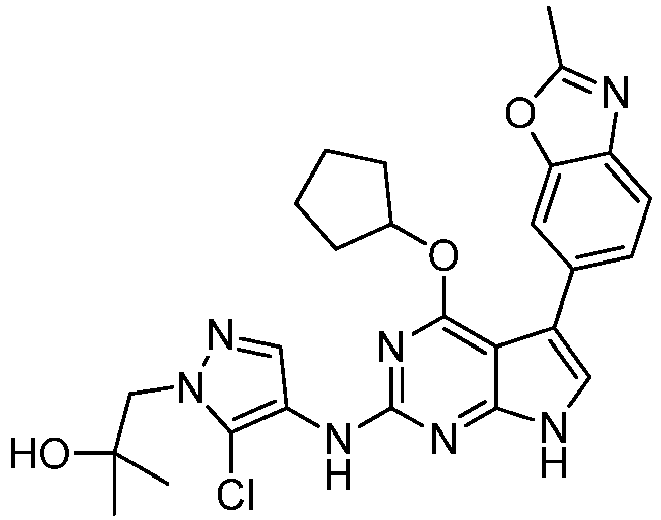
- 2-Methyl-1-(4-nitro-1H-pyrazol-1-yl)propan-2-ol. To a solution of 4-nitro-1H-pyrazole (1 equiv) in acetonitrile (1 M) was added 1,8-diazabicycloundec-7ene (2 equiv) and 1 ,2-epoxy-2-methylpropane (3.2 equiv). The reaction mixture was stirred at 60 °C for 20 h. The solvent was removed under reduced pressure and the residue was dissolved in ethyl acetate. The organic solution was washed with HCl (1 N), water and brine, dried over anhydrous sodium sulfate, filtered and concentrated in vacuo to give the title compound which was directly used in the next step without further purification (73% yield). 1H NMR (400 MHz, CHLOROFORM-d1 ) δ ppm 8.26 (s, 1H), 8.09 (s, 1H), 4.13 (s, 2H), 2.64 (s, 1H) 1.24 (s, 6H). MS (ESI) m/z 186.2 [M+H]+.
- 1-(2-Methyl-2-((trimethylsilyl)oxy)propyl)-4-nitro-1H-pyrazole. To a solution of 2-methyl-1-(4-nitro-1H-pyrazol-1-yl)propan-2-ol (1 equiv) in dry DMF (0.18 M) was added trimethylsilyl chloride (1.26 equiv) at 0 °C and imidazole (2.55 equiv) under an atmosphere of nitrogen. The resulting mixture was stirred at room temperature for 4 h and then diluted with ethyl acetate. The organic solution was washed with water and brine, dried over sodium sulfate and concentrated under reduced pressure to afford the title compound as a yellow oil (75.5% yield). 1H NMR (400 MHz, CHLOROFORM-d1 ) δ ppm (9.06 (bs, 1H), 7.91 (s, 1H), 4.13 (s, 3H), 3.79 (s, 2H), 1.70 (s, 9H), 1.68 (s, 6H). MS (ESI) m/z 258.1 [M+H]+.
- 5-Chloro-1-(2-methyl-2-((trimethylsilyl)oxy)propyl)-4-nitro-1H-pyrazole. A solution of 1-(2-methyl-2-((trimethylsilyl)oxy)propyl)-4-nitro-1H-pyrazole (1 equiv) in THF (0.41 M) was cooled into -78 °C, followed by addition of lithium bis(trimethylsilyl)amide (2.6 equiv). After 1 h, hexachloroethane (1.5 equiv) was added. The reaction mixture was stirred at -78 °C for 2 h then the mixture was quenched with saturated aqueous ammonium chloride solution. The mixture was extracted with ethyl acetate and the organic layer was dried over sodium sulfate, filtered and concentrated. The product was purified by silica gel flash chromatography (15% ethyl acetate in petroleum ether) to afford the title compound as a colorless oil (80.1% yield). 1H NMR (400 MHz, CHLOROFORM-d1 ) δ ppm 8.12 (s, 1H), 4.06 (s, 2H), 1.51 (s, 6H), 0.01 (s, 9H). MS (ESI) m/z 292.1 [M+H]+.
- 1-(4-Amino-5-chloro-1H-pyrazol-1-yl)-2-methylpropan-2-ol. To a solution of 5-chloro-1-(2-methyl-2-((trimethylsilyl)oxy)propyl)--4-nitro-1H-pyrazole (1 equiv) in EtOH (0.13 M) was added iron powder (5.2 equiv) and ammonium chloride (14.3 equiv). The mixture was heated to reflux for 24 h and then filtered through celite. The filtrate was concentrated and dissolved in ethyl acetate. The organic solution was washed with aqueous sodium bicarbonate and brine, dried over sodium sulfate, filtered and concentrated. The product was purified by reverse phase silica gel chromatography (5-95% acetonitrile in water) to afford the title compound as an oil (90% yield). 1H NMR (400 MHz, CHLOROFORM-d1 ) δ ppm 7.27 (s, 1H), 4.06 (s, 1H), 3.99 (s, 2H), 2.95 (bs, 2H), 1.67 (s, 1H), 1.77 (s, 6H). MS (ESI) m/z 190.1 [M+H]+.
- 1-(5-Chloro-4-((4-(cyclopentyloxy)-5-(2-methylbenzo[d]oxazol-6-yl)-7-((2-(trimethylsilyl)ethoxy)methyl)-7H-pyrrolo[2,3-d]pyrimidin-2-yl)amino)-1H-pyrazol-1-yl)-2-methylpropan-2-ol. To a degassed mixture of 1-(4-amino-5-chloro-1H-pyrazol-1-yl)-2-methylpropan-2-ol (1 equiv), 6-(2-chloro-4-(cyclopentyloxy)-7-((2-(trimethylsilyl)ethoxy)methyl)-7H-pyrrolo[2,3-d]pyrimidin-5-yl)-2-methylbenzo[d]oxazole (1.01 equiv) and 2,2'-bis-diphenylphosphanyl-[1,1']binaphthalenyl (0.1 equiv) in 1,4-dioxane (0.08 M) was added palladium acetate (0.1 equiv) and cesium carbonate (3 equiv). The reaction was stirred at 100 °C for 2 h. Upon completion, the reaction mixture was cooled to room temperature and concentrated to give the title compound which was used directly in next step without further purification (97% yield). MS (ESI) m/z 652.2 [M+H]+.
- 1-(5-Chloro-4-{[4-cyclopentyloxy-5-(2-methylbenzoxazol-6-yl)pyrrolo[2,3-d]pyrimidin-2-yl]amino}pyrazolyl)-2-methylpropan-2-ol. To a solution of tetra-(n-butyl)ammonium fluoride in THF (1 M, 7.8 equiv) was added 1-(5-chloro-4-((4-(cyclopentyloxy)-5-(2-methylbenzo[d]oxazol-6-yl)-7-((2-(trimethylsilyl)ethoxy)-methyl)-7H-pyrrolo[2,3-d]pyrimidin-2-yl)amino)-1H-pyrazol-1-yl)-2-methylpropan-2-ol (1 equiv). The resulting mixture was heated at 90 °C for 16 h and then quenched by addition of calcium carbonate (13.0 equiv). The mixture was filtered. The filtrate was concentrated to give the crude product which was purified to afford the title compound (15.6% yield). 1H NMR (400 MHz, METHANOL-d4 ) δ ppm 8.10 (s, 1H), 7.95 (s, 1H), 7.71-7.69 (m,1H), 7.62-7.60 (m, 1H), 7.15 (s, 1H), 5.76 (m, 1H), 4.21 (s, 2H), 2.72 (s, 3H), 2.03-1.70 (m, 8H), 1.25 (s, 6H). MS (ESI) m/z 522.3 [M+H]+.
-

- 3-Methoxy-N-(1-methylazetidin-3-yl)-4-nitrobenzamide. To a solution of 1-methylazetidin-3-amine (1 equiv) in dry DCM (0.13 M) was added triethylamine (1.8 equiv). A solution of 3-methoxy-4-nitrobenzoyl chloride (0.91 equiv) in dry DCM was added and the reaction was stirred at room temperature for 5 min. The mixture was then concentrated and purified by silica gel chromatography (5% MeOH in DCM) to afford the title compound (46.4% yield) as a yellow solid. MS (ESI) m/z 266.1 [M+H]+.
- 4-Amino-3-methoxy-N-(1-methylazetidin-3-yl)benzamide. A mixture of 3-methoxy-N-(1-methylazetidin-3-yl)-4-nitrobenzamide (1 equiv) and 10% palladium on carbon was stirred in a mixture of MeOH/THF under a hydrogen atmosphere. The mixture was stirred at 50 °C for 2 h. The reaction mixture was filtered and the filtrate was evaporated under reduced pressure to give the desired product (99% yield) as a white solid. MS (ESI) m/z 236.1 [M+H]+.
- 4-(2-Chloro-4-cyclobutoxy-7-((2-(trimethylsilyl)ethoxy)methyl)-7H-pyrrolo[2,3-d]pyrimidin-5-yl)-N-methylbenzamide. To a degassed mixture of 2-chloro-4-cyclobutoxy-5-iodo-7-((2-(trimethylsilyl)ethoxy)methyl)-7H-pyrrolo[2,3-d]pyrimidine (1 equiv), N-methyl-4-(4,4,5,5-tetramethyl-1,3,2-dioxaborolan-2-yl)benzamide (1.1 equiv) and tripotassium phosphate trihydorate (3.0 equiv) in a 9:1 mixture of 1,4-dioxane and water (0.125 M) was added palladium 1,1-bis(diphenylphosphion)ferrocene dicholoride (0.1 equiv). The reaction mixture was stirred at 80 °C for 4 h. After the reaction was completed, the reaction mixture was cooled to room temperature and concentrated. The residue was purified by silica gel chromatography (1% MeOH in DCM) to afford the desired product (65.7% yield) as a yellow solid. MS (ESI) m/z 487.2 [M+H]+.
- 4-((4-Cyclobutoxy-5-(4-(methylcarbamoyl)phenyl)-7-((2-(trimethylsilyl)ethoxy)methyl)-7H-pyrrolo[2,3-d]pyrimidin-2-yl)amino)-3-methoxy-N-(1-methylazetidin-3-yl)benzamide. To a degassed mixture of 4-(2-chloro-4-cyclobutoxy-7-((2-(trimethylsilyl)ethoxy)methyl)-7H-pyrrolo[2,3-d]pyrimidin-5-yl)-N-methylbenzamide (1 equiv), 4-amino-3-methoxy-N-(1-methylazetidin-3-yl)benzamide (1.2 equiv) and cesium carbonate (3 equiv) in 1,4-dioxane (0.1 M) was added palladium acetate (0.1 equiv) and 2,2'-bis-diphenylphosphanyl-[1,1']binaphthalenyl (0.2 equiv). The reaction was stirred at 100 °C for 2 h. After the reaction was completed, the reaction mixture was cooled to room temperature and concentrated. The residue was purified by silica gel chromatography (10% MeOH in DCM) to afford the desired product (73% yield) as a yellow solid. MS (ESI) m/z 686.4 [M+H]+.
- 4-((4-Cyclobutoxy-5-(4-(methylcarbamoyl)phenyl)-7H-pyrrolo[2,3-d]pyrimidin-2-yl)amino)-3-methoxy-N-(1-methylazetidin-3-yl)benzamide. 4-((4-Cyclobutoxy-5-(4-(methylcarbamoyl)phenyl)-7-((2-(trimethylsilyl)ethoxy)methyl)-7H-pyrrolo[2,3-d]pyrimidin-2-yl)amino)-3-methoxy-N-(1-methylazetidin-3-yl)benzamide (1 equiv) was deprotected according to General Procedure A. Standard work-up provided the title compound (52.5% yield). 1H NMR (400 MHz, DMSO-d6 ) δ ppm 11.93 (s, 1H), 8.64-8.60 (m, 2H), 8.44-8.42 (d, J=4.4 Hz, 1H), 7.87-7.82 (m, 4H), 7.75 (s, 1H), 7.58-7.48 (m 3H), 5.42-5.39 (m, 1H), 4.54-4.12 (m, 1H), 3.98(s, 3H), 3.58-3.55 (m, 2H), 3.01-2.94 (m, 2H), 2.81-2.80 (d, J=4 Hz, 3H), 2.50 (s, 2H), 2.27 (s, 3H), 2.19-2.14 (m, 2H), 1.87-1.85 (m, 1H), 1.77-1.73 (m, 1H). MS (ESI) mlz 556.3 [M+H]+.
-

- 2-Chloro-5-iodo-4-(1-methylcyclobutoxy)-7-((2-(trimethylsilyl)ethoxy)methyl)-7H-pyrrolo[2,3-d]pyrimidine. To a suspension of sodium hydride (60% in mineral oil, 2.0 equiv) in dry THF (0.45 M) under a nitrogen atmosphere was added a solution of 1-methylcyclobutanol (1.2 equiv) in dry THF (0.27 M) at 0 °C. The reaction mixture was stirred at 30 °C for 30 min before a solution of 2,4-dichloro-5-iodo-7-((2-(trimethylsilyl)ethoxy)methyl)-7H-pyrrolo[2,3-d]pyrimidine (1 equiv) in dry THF (0.23 M) was added and the resulting reaction mixture was heated at 60 °C for 2 h. After the reaction was completed, the reaction mixture was quenched with saturated aqueous ammonium chloride solution. The organic solvent was removed under vacuum and the aqueous layer was extracted with ethyl acetate. The combined organic layers were washed with brine, dried over anhydrous sodium sulfate and filtered. The filtrate was evaporated under reduced pressure. The product was purified by silica gel chromatography (2% ethyl acetate in petroleum ether) to afford the title compound (77% yield) as a yellow oil. MS (ESI) mlz 494.2 [M+H]+.
- 6-(2-Chloro-4-(1-methylcyclobutoxy)-7-((2-(trimethylsilyl)-ethoxy)methyl)-7H-pyrrolo[2,3-d]pyrimidin-5-yl)-2-methylbenzo[d]oxazole. To a degassed mixture of 2-chloro-5-iodo-4-(1-methylcyclobutoxy)-7-((2-(trimethylsilyl)ethoxy)methyl)-7H-pyrrolo[2,3-d]pyrimidine (1 equiv), 2-methyl-6-(4,4,5,5-tetramethyl-1,3,2-dioxaborolan-2-yl)benzo[d]oxazole (1.1 equiv) and tripotassium phosphate trihydorate (3.0 equiv) in a 9:1 mixture of 1,4-dioxane and water (0.45 M) was added palladium 1,1-bis(diphenylphosphion)-ferrocene dicholoride (0.1 equiv). The reaction mixture was stirred at 70 °C for 2 h. The reaction mixture was cooled to room temperature and concentrated. The residue was purified by silica gel chromatography (0-25% ethyl acetate in petroleum ether) to afford the title compound (49% yield) as a yellow solid. MS (ESI) mlz 499.2 [M+H]+.
- 3-Methoxy-4-((5-(2-methylbenzo[d]oxazol-6-yl)-4-(1-methylcyclobutoxy)-7-((2-(trimethylsilyl)ethoxy)methyl)-7H-pyrrolo[2,3-d]pyrimidin-2-yl)amino)-N-(oxetan-3-yl)benzamide. To a degassed mixture of 6-(2-chloro-4-(1-methylcyclobutoxy)-7-((2-(trimethylsilyl)ethoxy)methyl)-7H-pyrrolo[2,3-d]pyrimidin-5-yl)-2-methylbenzo[d]oxazole (1 equiv), 4-amino-3-methoxy-N-(oxetan-3-yl)benzamide (1.1 equiv) and cesium carbonate (3 equiv) in 1,4-dioxane (0.22 M) was added palladium acetate (0.1 equiv) and 2,2'-bis-diphenylphosphanyl-[1,1']binaphthalenyl (0.2 equiv). The reaction was stirred at 100 °C for 2 h. After the reaction was completed, the reaction mixture was cooled to room temperature, and concentrated. The residue was purified by silica gel chromatography (0-2% DCM in MeOH) to afford the title compound (99% yield) as a yellow solid which was used without further purification. MS (ESI) mlz 685.2 [M+H]+.
- 3-Methoxy-4-((5-(2-methylbenzo[d]oxazol-6-yl)-4-(1-methylcyclobutoxy)-7H-pyrrolo[2,3-d]pyrimidin-2-yl)amino)-N-(oxetan-3-yl)benzamide. A mixture of 3-methoxy-4-((5-(2-methylbenzo[d]oxazol-6-yl)-4-(1- methylcyclobutoxy)-7-((2-(trimethylsilyl)ethoxy)methyl)-7H-pyrrolo[2,3-d]pyrimidin-2-yl)amino)-N-(oxetan-3-yl)benzamide (1 equiv) in THF (0.1 M) in a sealed tube was added a solution of tetrabutylammonium fluoride in THF (1 M, 10 equiv). The resulting mixture was heated at 90 °C for 16 h. The reaction mixture was cooled to room temperature and concentrated. The residue was purified to afford the title compound (17% yield over two steps). 1H NMR (400 MHz, DMSO-d6 ) δ ppm 11.82 (s, 1H), 8.97 (d, J = 6.4 Hz, 1H), 8.58 (d, J = 8.0 Hz, 1H), 7.97 (d, J = 0.8 Hz, 1H), 7.68 - 7.54 (m, 5H), 7.38 (d, J = 2.4 Hz, 1H), 5.06-5.00 (m, 1H), 4.79 (t, J = 7.0 Hz, 2H), 4.62 (t, J = 6.4 Hz, 2H), 3.98 (s, 3H), 2.62 (s, 3H), 2.49 - 2.43 (m, 2H), 2.32 - 2.27 (m, 2H), 1.87-1.78 (m, 2H), 1.75 (s, 3H). MS (ESI) mlz 555.3 [M+H]+.
-

- N-(2-Hydroxy-1-hydroxymethyl-ethyl)-3-methoxy-4-nitrobenzamide. To a mixture of 2-amino-propane-1,3-diol (1 equiv) in 1,4-dioxane (0.062 M) was added DIEA (2 equiv) and a solution of 3-methoxy-4-nitrobenzoyl chloride (1 equiv) in 1,4-dioxane (1.86 M) dropwise at room temperature. The resulting mixture was stirred at room temperature for 15 min. The solution was concentrated and the crude material was triturated in a 5:1 mixture of water:DCM (0.5 M), filtered, and dried to afford the title compound the solid (85% yield) that was used in the next step without further purification. MS (ESI) m/z 271.1 [M+H]+.
- Methanesulfonic acid 1-(3-methoxy-4-nitrobenzoyl)-aziridin-2-ylmethyl ester. To a stirring solution of N-(2-Hydroxy-1-hydroxymethyl-ethyl)-3-methoxy-4-nitrobenzamide (1 equiv) in THF (0.16 M) was added DIEA (3 equiv) and methanesulfonyl chloride (2.5 equiv) dropwise at 0 °C. The mixture was stirred at room temperature for 30 min. Water was added and the mixture was extracted with ethyl acetate. The combined organic layers were dried over anhydrous sodium sulfate, filtered and concentrated to afford methanesulfonic acid 3-methanesulfonyloxy-2-(3-methoxy-4-nitro-benzoylamino)-propyl, which was used without further purification and dissolved in THF (0.23 M). To the resulting solution was added sodium hydride (2 equiv) at 0 °C. The resulting mixture was stirred at 50 °C for 2 h. The mixture was quenched with a saturated ammonium chloride and concentrated. The residue was triturated in diethyl ether (0.32 M) to afford the title compound (77% yield). MS (ESI) mlz 331.0 [M+H]+.
- (R)-(2-(Hydroxymethyl)aziridin-1-yl)-(3-methoxy-4-nitrophenyl)-methanone and (S)-(2-(Hydroxymethyl)aziridin-1-yl)-(3-methoxy-4-nitrophenyl)-methanone. To a solution of methanesulfonic acid 1-(3-methoxy-4-nitrobenzoyl)-aziridin-2-ylmethyl ester (1 equiv.) in DMSO (0.13 M) was added potassium acetate (15.8 equiv). The mixture was stirred at 100 °C for 16 h. After the reaction was completed, MeOH (0.052 M) and sodium hydroxide (2.1 equiv) were added. Then the mixture was stirred for another hour at room temperature. The resulting solution was concentrated and the residue was poured into water extracted with ethyl acetate. The combined organic layer was dried over anhydrous sodium sulfate, filtered and concentrated under reduced pressure. The title compound was purified by silica gel chromatography (2-5% MeOH in DCM) to afford the desired product (83% yield) as a yellow solid. MS (ESI) m/z 252.1 [M+H]+.
- After chiral HPLC separation, (R)-(2-(Hydroxymethyl)aziridin-1-yl)-(3-methoxy-4-nitrophenyl)-methanone (37% yield) and (S)-(2-(Hydroxymethyl)aziridin-1-yl)-(3-methoxy-4-nitrophenyl)-methanone (37% yield) were obtained. (Stereochemistry was determined by resynthesis using stereoselectively prepared intermediates)
- (R)-(4-Amino-3-methoxyphenyl)(2-(hydroxymethyl)aziridin-1-yl)methanone. To a solution of (R)-(2-(hydroxymethyl)aziridin-1-yl)(3-methoxy-4-nitrophenyl)methanone (1 equiv) in MeOH (0.12 M) was added 10% palladium on charcoal (67 weight%). The reaction mixture was stirred at 50 °C under hydrogen atmosphere (344.74 kPa (50 psi)) overnight and then filtered through celite. The filtrate was concentrated and the residue was purified by silica gel chromatography (0-10% DCM in MeOH) to afford the desired product (92% yield) as a white solid. MS (ESI) m/z 223.2 [M+H]+.
- (R)-(4-((4-(Cyclopentyloxy)-5-(2-methylbenzo[d]oxazol-6-yl)-7-((2-(trimethylsilyl)ethoxy)methyl)-7H-pyrrolo[2,3-d]pyrimidin-2-yl)amino)-3-methoxyphenyl)(2-(hydroxymethyl)aziridin-1-yl)methanone. To a degassed mixture of 6-(2-chloro-4-(cyclopentyloxy)-7-((2-(trimethylsilyl)ethoxy)methyl)-7H-pyrrolo[2,3-d]pyrimidin-5-yl)-2-methylbenzo[d]oxazole (1 equiv), (R)-(4-amino-3-methoxyphenyl)(2-(hydroxymethyl)aziridin-1-yl)methanone (1.2 equiv) and cesium carbonate (3 equiv) in 1,4-dioxane (0.15 M) was added palladium acetate (0.3 equiv) and 2,2'-bis-diphenylphosphanyl-[1,1']binaphthalenyl (0.2 equiv). The reaction was stirred at 100 °C for 1 h. After the reaction was completed, the reaction mixture was cooled to room temperature and concentrated. The residue was purified by silica gel chromatography (2% MeOH in DCM) to afford the desired product (80% yield) as a white powder. MS (ESI) mlz 685.2 [M+H]+.
- (R)-(4-((4-(Cyclopentyloxy)-5-(2-methylbenzo[d]oxazol-6-yl)-7H-pyrrolo[2,3-d]pyrimidin-2-yl)amino)-3-methoxyphenyl)(2-(hydroxymethyl)aziridin-1-yl)methanone. (R)-(4-((4-(Cyclopentyloxy)-5-(2-methylbenzo[d]oxazol-6-yl)-7-((2-(trimethylsilyl)ethoxy)methyl)-7H-pyrrolo[2,3-d]pyrimidin-2-yl)amino)-3-methoxyphenyl)(2-(hydroxymethyl)aziridin-1-yl)methanone (1 equiv) was deprotected according to General Procedure A. The crude product was purified to afford the title compound (45% yield). 1H NMR (400 MHz, CHLOROFORM-d1 ) δ ppm 9.09 (s, 1H), 8.68 (dd, J = 15.5, 8.5 Hz, 1H), 7.81 (s, 1H), 7.72 (s, 1H), 7.64 - 7.50 (m, 3H), 7.39 (s, 1H), 6.99 (d, J = 1.9 Hz, 1H), 5.75 - 5.59 (m, 1H), 4.59 - 4.28 (m, 3H), 4.11 - 4.02 (m, 1H), 3.98 - 3.87 (s, 3H), 3.69 (dd, J = 11.4, 2.9 Hz, 1H), 2.66(s,3H),2.06 - 1.82 (m, 4H), 1.80 - 1.52 (m, 4H). MS (ESI) mlz 555.3 [M+H]+.
-

- (R)-2-(3-Methoxy-4-nitrobenzamido)propyl methanesulfonate. To a solution of (R)-N-(1-hydroxypropan-2-yl)-3-methoxy-4-nitrobenzamide (1 equiv) in dry THF (0.2 M) was added trimethylamine (1.5 equiv) followed by addition of methanesulfonyl chloride (1.5 equiv). The reaction was stirred at room temperature overnight. The reaction mixture was washed with water (0.6 M) and brine (0.6 M) sequentially. The aqueous was extracted with ethyl acetate (0.23 M). The combined organic phase was dried over magnesium sulfate and filtered. The filtrate was concentrated. The crude material was purified by silica gel chromatography (20% ethyl acetate in petroleum ether) to afford the desired compound (62% yield). MS (ESI) m/z 253.1 [M+H]+.
- (R)-(3-Methoxy-4-nitrophenyl)(2-methylaziridin-1-yl)methanone. To a solution of (R)-2-(3-methoxy-4-nitrobenzamido)propyl methanesulfonate (1 equiv) in THF (0.14 M) was added sodium hydride (4 equiv, 60% in mineral oil). The mixture was stirred at 60 °C for 5 h. The reaction was quenched with aqueous ammonium chloride, diluted with ethyl acetate (0.16 M), and then washed with water (0.27 M) and brine (0.27 M). The aqueous layer was extracted with ethyl acetate (0.16 M). The combined organic phase was dried over magnesium sulfate and filtered. The filtrate was concentrated. The crude compound was purified by silica gel chromatography (15% ethyl acetate in petroleum ether) to afford the desired compound (71% yield). MS (ESI) m/z 235.1 [M+H]+.
- (R)-(4-Amino-3-methoxyphenyl)(2-methylaziridin-1-yl)methanone. To a solution of (R)-(3-methoxy-4-nitrophenyl)(2-methylaziridin-1-yl)methanone (1 equiv) in MeOH (0.22 M) was added 10% palladium on carbon (18 weight%). The reaction was stirred at room temperature for 1 h under hydrogen. The mixture was filtered through a pad of celite and concentrated to give the desired product (94% yield) as a white solid. MS (ESI) m/z 207.1 [M+H]+.
- (R)-(4-(4-(Cyclopentyloxy)-5-(2-methylbenzo[d]oxazol-6-yl)-7-((2-(trimethylsilyl)ethoxy)methyl)-7H-pyrrolo [2,3-d]pyrimidin-2-ylamino)-3-methoxyphenyl)(2-methylaziridin-1-yl)methanone. To a degassed mixture of 2-chloro-4-cyclopentyloxy-5-(2-methyl-benzooxazol-6-yl)-7-(2-trimethylsilanyl-ethoxymethyl)-7H-pyrrolo[2,3-d]pyrimidine (1 equiv), (R)-(4-amino-3-methoxyphenyl)(2-methylaziridin-1-yl)methanone (1.2 equiv) and cesium carbonate (2 equiv) in 1,4-dioxane (0.05M) were added palladium acetate (0.2 equiv) and 2,2'-bis-diphenylphosphanyl-[1,1']binaphthatenyl (0.4 equiv). The reaction mixture was refluxed at 110 °C for 1 h. The reaction mixture was filtered, concentrated under reduced pressure, and the crude product was purified by preparative thin layer chromatography (5% MeOH in DCM) to afford the desired product (75% yield). MS (ESI) m/z 669.1 [M+H]+.
- (R)-(4-(4-(Cyclopentyloxy)-5-(2-methylbenzo[d]oxazol-6-yl)-7H-pyrrolo[2,3-d]pyrimidin-2-ylamino)-3-methoxyphenyl)(2-methylaziridin-1-yl)methanone. (R)-(4-(4-(cyclopentyloxy)-5-(2-methylbenzo[d]oxazol-6-yl)-7-((2-(trimethylsilyl)ethoxy)methyl)-7H-pyrrolo[2,3-d]pyrimidin-2-ylamino)-3-methoxyphenyl)(2-methylaziridin-1-yl)methanone (1 equiv) was deprotected according to General Procedure A. The crude product was purified to afford the title compound (33% yield). 1H NMR (400 MHz, METHANOL-d4 ) 5 ppm 8.62 (d, J = 8.0 Hz, 1H), 7.74 (s, 1H), 7.52 (d, J = 8.0 Hz, 1H), 7.48-7.34 (m, 3H), 7.05 (s, 1H), 5.55 (br.s, 1H), 4.47 (d, J = 8.4 Hz, 1H), 4.36-4.18 (m, 1H), 3.93 (m, 1H), 3.89 (s, 3H), 3.25 (s, 3H), 2.55 (s, 3H), 1.89 (m, 2H), 1.84-1.74 (m, 2H), 1.62 (m, 4H), 1.26 (d, J = 6.4 Hz, 3H). MS (ESI) mlz 539.3 [M+H]+.
-

- 4-Nitro-1-(tetrahydro-2H-pyran-4-yl)-1H-pyrazole. To a stirred solution of tetrahydro-2H-pyran-4-ol (1 equiv), 4-nitro-1H-pyrazole (1 equiv) and triphenylphosphine (1.2 equiv) in THF (1.0 M) was added diisopropyl azodicarboxylate (1.5 equiv) in THF (2.0 M) at 0 °C. The mixture was stirred at room temperature overnight. The crude product was purified by silica gel chromatography (2.5% MeOH in DCM) to afford the desired product (23% yield) as a white solid. MS (ESI) m/z 198.1 [M+H]+.
- 5-Chloro-4-nitro-1-(tetrahydro-2H-pyran-4-yl)-1H-pyrazole. To a solution of 4-nitro-1-(tetrahydro-2H-pyran-4-yl)-1H-pyrazole (1 equiv) in THF (0.5 M) was added dropwise a 1.0M solution of lithium bis(trimethylsilyl)amide (14 equiv) in THF at -78 °C. The reaction was stirred at -78 °C for 30 min before hexachloroethane (1.5 equiv) in THF (1.15 M) was added. The reaction was stirred at -78 °C for 2.5 h then warmed to room temperature. The reaction was diluted with brine (0.23 M) and extracted with ethyl acetate. The combined extracts were washed with brine, dried over sodium sulfate, filtered and concentrated. The crude product was purified by silica gel chromatography (10-20% ethyl acetate in petroleum ether) to afford the desired product (81% yield) as a white solid. MS (ESI) m/z 232.1 [M+H]+.
- 5-Chloro-1-(tetrahydro-2H-pyran-4-yl)-1H-pyrazol-4-amine. To a suspension of 5-chloro-4-nitro-1-(tetrahydro-2H-pyran-4-yl)-1H-pyrazole (1 equiv) and iron dust (3 equiv) in water (0.35 M) was added acetic acid (3.54 M). The mixture was heated to 90 °C for 1.5 h then cooled to room temperature. The reaction was quenched by addition of solid sodium bicarbonate and treated with ethyl acetate (0.06M) with continuous stirring. The mixture was filtered and the filter cake was rinsed with ethyl acetate. The combined filtrate was dried over sodium sulfate and concentrated under reduced pressure. The crude product was purified by silica gel chromatography (1.5% MeOH in DCM) to provide the desired product (52% yield) as a brown oil. MS (ESI) mlz 202.1 [M+H]+.
- N-(5-Chloro-1-(tetrahydro-2H-pyran-4-yl)-1H-pyrazol-4-yl)-4-(cyclopentyloxy)-5-(2-methylbenzo[d]oxazol-6-yl)-7-((2-(trimethylsilyl)ethoxy)-methyl)-7H-pyrrolo[2,3-d]pyrimidin-2-amine. To a degassed mixture of 6-(2-chloro-4-(cyclopentyloxy)-7-((2-(trimethylsilyl)ethoxy)methyl)-7H-pyrrolo[2,3-d]pyrimidin-5-yl)-2-methylbenzo[d]oxazole (1 equiv), 5-chloro-1-(tetrahydro-2H-pyran-4-yl)-1H-pyrazol-4-amine (1.2 equiv), and cesium carbonate (2 equiv) in 1,4-dioxane (0.05M), was added palladium acetate (0.1 equiv) and 2,2'-bis-diphenyl-phosphanyl-[1,1']binaphthalenyl (0.3 equiv). The reaction was stirred at 100 °C for 2 h. Upon completion, the reaction mixture was cooled to room temperature and concentrated. The residue was purified by silica gel chromatography (1-2% MeOH in DCM) to afford the desired product as a yellow solid which was used in next step without further purification. MS (ESI) mlz 664.2 [M+H]+.
- N-(5-Chloro-1-(tetrahydro-2H-pyran-4-yl)-1H-pyrazol-4-yl)-4-(cyclopentyloxy)-5-(2-methylbenzo[d]oxazol-6-yl)-7-((2-(trimethylsilyl)ethoxy)methyl)-7H-pyrrolo[2,3-d]pyrimidin-2-amin (1 equiv) was deprotected according to General Procedure A. The product was purified to give the desired product (21% over two steps). 1H NMR (400 MHz, METHANOL-d4 ) δ ppm 7.82 (s, 1H),7.66 (s, 1H), 7.42 (d, J = 8.4 Hz, 1H), 7.32 (d, J = 8.4 Hz, 1H), 6.87 (s, 1H), 5.46-5.44 (m, 1H), 4.42-4.36 (m, 1H), 3.90-3.86 (m, 2H), 3.42-3.37 (t, J = 11.2 Hz, 2H), 2.44 (s, 3H), 2.05-1.95 (m, 2H), 1.75-1.62 (m, 6H), 1.54-1.42 (m, 4H). MS (ESI) mlz 534.3 [M+H]+.
-

- 5-Chloro-1-isopropyl-4-nitro-1H-pyrazole. To a solution of 1-isopropyl-4-nitro -1H-pyrazole (1 equiv) in THF (0.65 M) was added dropwise a 1.0 M solution of lithium bis(trimethylsilyl)amide (2.6 equiv) in THF at -78 °C. The reaction was stirred at -78 °C for 30 min before the addition of hexachloroethane (1.5 equiv) in THF (1.63 M). The reaction was stirred at -78 °C for 2.5 h then warmed to room temperature. The reaction was diluted with brine and extracted with ethyl acetate. The combined extracts were washed with brine, dried over sodium sulfate, filtered and concentrated. The crude product was purified by silica gel chromatography (10-20% ethyl acetate in petroleum ether) to afford the desired product (84% yield) as a white solid. MS (ESI) mlz 190.1 [M+H]+.
- 5-Chloro-1-isopropyl-1H-pyrazol-4-amine. To a suspension of 5-chloro-1 - isopropyl-4-nitro-1H-pyrazole (1 equiv) and iron dust (3 equiv) in EtOH (0.26 M) was added ammonium chloride (3 equiv). The mixture was heated to 80 °C for 20 h then cooled to room temperature. The reaction was quenched with solid sodium bicarbonate and treated with ethyl acetate (0.09 M) with continuous stirring. The mixture was filtered and the filter cake was rinsed with ethyl acetate. The combined filtrate was dried over sodium sulfate and concentrated under reduced pressure. The crude product was purified by silica gel chromatography (1.5% MeOH in DCM) to provide the desired product (76% yield) as a brown oil. MS (ESI) m/z 160.1 [M+H]+.
- N-(5-Chloro-l-isopropyl-1H-pyrazol-4-yl)-4-(cyclopentyloxy)-5-(2-methylbenzo[d]oxazol-6-yl)-7-((2-(trimethylsilyl)ethoxy)methyl)-7H-pyrrolo[2,3-d]pyrimidin-2-amine. To a degassed mixture of 6-(2-chloro-4-(cyclopentyloxy)-7-((2-(trimethylsilyl) ethoxy)methyl)-7H-pyrrolo[2,3-d]pyrimidin-5-yl)-2-methylbenzo[d]oxazole (1 equiv), 5-chloro-1-isopropyl-1H-pyrazol-4-amine (1.3 equiv) and cesium carbonate (3 equiv) in 1,4-dioxane (0.06 M) was added palladium acetate (0.1 equiv) and 2,2'-bis-diphenylphosphanyl-[1,1']binaphthalenyl (0.3 equiv). The reaction was stirred at 100 °C for 2 h. Upon completion, the reaction mixture was cooled to room temperature, and concentrated. The residue was purified by silica gel chromatography (1-2% MeOH in DCM) to afford the desired product as a yellow solid, which was used in next step without further purification. MS (ESI) m/z 622.2 [M+H]+.
- N-(5-Chloro-1-isopropyl-1H-pyrazol-4-yl)-4-(cyclopentyloxy)-5-(2-methylbenzo[d]oxazol-6-yl)-7H-pyrrolo[2,3-d]pyrimidin-2-amine. N-(5 -Chloro-1 -isopropyl-1H-pyrazol-4-yl)-4-(cyclopentyloxy)-5-(2-methylbenzo[d]oxazol-6-yl)-7-((2-(trimethylsilyl)ethoxy)methyl)-7H-pyrrolo[2,3-d]pyrimidin-2-amine (1 equiv) was deprotected according to General Procedure A. The product was purified to give the desired product (22% over two steps). 1H NMR (300 MHz, DMSO-d6 ) δ ppm 8.23 (s, 1H), 7.90 (s, 1H), 7.79 (s, 1H), 7.68-7.46 (m, 2H), 7.24 (s, 1H), 5.70-5.45 (m, 1H), 4.74-4.52 (m, 1H), 2.61 (s, 3H), 1.98-1.81 (m, 2H), 1.77-1.58 (m, 6H), 1.40 (d, J = 6.60 Hz, 6H). MS (ESI) m/z 492.2 [M+H]+.
-

- 5-Chloro-1-ethyl-4-nitro-1H-pyrazole. To a suspension of sodium hydride (1 equiv, 60% in mineral oil) in DMF (0.64 M) under nitrogen atmosphere was added a solution of 4-nitro-1H-pyrazole (0.83 equiv) in DMF (3.2 M) at 0 °C. The reaction mixture was stirred at room temperature for 30 min before a solution of iodoethane (1 equiv) in DMF (3.2 M) was added. The mixture was stirred at room temperature for 2 h. Saturated aqueous ammonium chloride solution (0.32 M) was added, and the solvent was removed under reduced pressure to give the crude product, which was purified by silica gel column chromatography (25% ethyl acetate in petroleum ether) to give the desire product (82.2% yield) as white solid. MS (ESI) m/z 142.0 [M+H]+.
- 1-Ethyl-4-nitro-1H-pyrazole. To a solution of 5-chloro-1-ethyl-4-nitro-1H pyrazole (1 equiv) in THF (0.6 M) was added dropwise a 1.0 M solution of lithium bis(trimethylsilyl)amide (2.6 equiv) at -78 °C. The reaction mixture was stirred at -78 °C for 30 min before the addition of hexachloroethane (1.5 equiv) in THF (1.2 M). The mixture was stirred at -78 °C for 2.5 h then warmed to room temperature. The reaction was diluted with brine (1.8 M) and extracted with ethyl acetate. The combined extracts were washed with brine, dried over sodium sulfate, filtered and concentrated. The crude product was purified by silica gel chromatography (10-15% ethyl acetate in petroleum ether) to afford the desired product as a white solid (88.2% yield). MS (ESI) m/z 176.0 [M+H]+.
- 5-Chloro-1-ethyl-1H-pyrazol-4-amine. To a suspension of 1-ethyl-4-nitro-1H pyrazole (1 equiv) and iron dust (5 equiv) in EtOH (0.285 M) was added ammonium chloride (10 equiv). The mixture was heated to 80 °C for 20 h then cooled to room temperature. The solvent was removed under reduced pressure to give crude material that was purified by silica gel chromatography (1.5% MeOH in DCM) to provide the desired product (30% yield) as a yellow oil. MS (ESI) m/z 146.0 [M+H]+.
- N-(5-Chloro-1-ethyl-1H-pyrazol-4-yl)-4-(cyclopentyloxy)-5-(2-methylbenzo[d]oxazol-6-yl)-7-((2-(trimethylsilyl)ethoxy)methyl)-7H-pyrrolo[2,3-d]pyrimidin-2-amine. To a degassed mixture of 6-(2-chloro-4-(cyclopentyloxy)-7-((2-(trimethylsilyl) thoxy)methyl)-7H-pyrrolo[2,3-d]pyrimidin-5-yl)-2-methylbenzo[d]oxazole (1 equiv), 5-chloro-1-ethyl-1H-pyrazol-4-amine (1 equiv) and cesium carbonate (3 equiv) in 1,4-dioxane (0.2 M) was added palladium acetate (0.1 equiv) and 2,2'-bis-diphenylphosphanyl-[1,1']binaphthalenyl (0.3 equiv). The reaction was stirred at 100 °C for 2 h. Upon completion, the reaction mixture was cooled to room temperature, and concentrated. The residue was purified by silica gel chromatography (15% ethyl acetate in petroleum ether) to afford the desired product (65.2% yield) as a yellow solid. MS (ESI) mlz 608.2 [M+H]+.
- N-(5-Chloro-1-ethyl-1H-pyrazol-4-yl)-4-(cyclopentyloxy)-5-(2-methylbenzo[d]oxazol-6-yl)-7H-pyrrolo[2,3-d]pyrimidin-2-amine. N-(5-Chloro-1-ethyl-1H-pyrazol-4 yl)-4-(cyclopentyloxy)-5-(2-methylbenzo[d]oxazol-6-yl)-7-((2-(trimethylsilyl)ethoxy)methyl)-7H-pyrrolo[2,3-d]pyrimidin-2-amine (1 equiv) dissolved in 1 M tetrabutylammonium fluoride in THF (6.3 equiv). The mixture was stirred at 80 °C for 12 h. After cooling to room temperature, the reaction was diluted with THF (0.063 M) and cesium carbonate (5 equiv) was added. The solids were filtered and the filtrate was dried over sodium sulfate and concentrated. The crude product was purified to give the desired compound (19.7% yield). 1H NMR (400 MHz, CHLOROFORM-d1 ) δ ppm 8.81 (br.s, 1H), 8.13 (s, 1H), 7.81 (s, 1H), 7.62-7.56 (m, 2H), 6.91 (s, 1H), 6.30 (s, 1H), 5.68-5.65 (m, 1H), 4.18 (q, J = 7.2 Hz, 2H), 2.66 (s, 3H), 1.95-1.87 (m, 4H), 1.74-1.68 (m, 2H), 1.43 (t, J = 7.2 Hz, 3H). MS (ESI) m/z 478.2 [M+H]+.
-

- 3-((2-Chloro-5-iodo-7-((2-(trimethylsilyl)ethoxy)methyl)-7H-pyrrolo[2,3-d]pyrimidin-4-yl)oxy)cyclobutanecarbonitrile. 2,4-Dichloro-5-iodo-7-((2-(trimethylsilyl)ethoxy)methyl)-7H-pyrrolo[2,3-d]pyrimidine (1 equiv), 3-hydroxycyclobutanecarbonitrile (1.1 equiv), sodium 2-methylpropan-2-olate (1.2 equiv) and 1,4-dioxane (0.14 M) were combined in a sealable vessel with a stir bar. The resulting mixture was put under nitrogen atmosphere, sealed, stirred vigorously, and heated at 70 °C for 16 h. After cooling to room temperature, the reaction mixture was purified using silica gel chromatography (0 to 50% ethyl acetate in hexane) to give the title compound (77% yield). MS (ESI) mlz 505.0 [M+H]+.
- 4-(2-Chloro-4-(3-cyanocyclobutoxy)-7-((2-(trimethylsilyl)ethoxy)-methyl)-7H-pyrrolo [2,3-d]pyrimidin-5-yl)-N-methylbenzamide. 3-((2-Chloro-5-iodo-7-((2-(trimethylsilyl)ethoxy)methyl)-7H-pyrrolo[2,3-d]pyrimidin-4-yl)oxy)cyclobutanecarbonitrile (1 equiv), N-methyl-4-(4,4,5,5-tetramethyl-1,3,2-dioxaborolan-2-yl)benzamide (1.15 equiv), sodium carbonate (3 equiv) and [1,1'-bisdiphenylphosphino)ferrocene]-dichloropalladium(II), complex with dichloromethane (0.1 equiv) suspended in 1,4-dioxane/water, and flushed with nitrogen, were stirred at 85 °C for 2 h. The reaction mixture was purified using silica gel chromatography (0 to 100% ethyl acetate in hexane) to give the title compound (50% yield). MS (ESI) m/z 512.3 [M+H]+.
- 4-((4-(3-Cyanocyclobutoxy)-5-(4-(methylcarbamoyl)phenyl)-7-((2-(trimethylsilyl)ethoxy)methyl)-7H-pyrrolo [2,3-d]pyrimidin-2-yl)amino)-3-methoxy-N-(oxetan-3-yl)benzamide. A mixture of 4-(2-chloro-4-(3-cyanocyclobutoxy)-7-((2-(trimethylsilyl)ethoxy)methyl)-7H-pyrrolo[2,3-d]pyrimidin-5-yl)-N-methylbenzamide (1 equiv), 4-amino-3-methoxy-N-(oxetan-3-yl)benzamide (1.2 equiv), 2,2'-Bis(diphenylphosphino)-1,1'-binapthalene (0.2 equiv), cesium carbonate (5 equiv), and palladium acetate (0.1 equiv) in 1,4-dioxane (0.2 M) was purged with nitrogen and sealed. The reaction mixture was heated to 110 °C for 2 h. The reaction was filtered and solvents were removed under reduced pressure. The reaction mixture was purified using silica gel chromatography (0 to 100% ethyl acetate in hexane) to give the title compound (55% yield). MS (ESI) m/z 698.4 [M+H]+.
- 4-((4-(3-Cyanocyclobutoxy)-5-(4-(methylcarbamoyl)phenyl)-7H-pyrrolo[2,3-d]pyrimidin-2-yl)amino)-3-methoxy-N-(oxetan-3-yl)benzamide. 4-((4-(3-Cyanocyclobutoxy)-5-(4-(methylcarbamoyl)phenyl)-7-((2-(trimethylsilyl)ethoxy)methyl)-7H-pyrrolo[2,3-d]pyrimidin-2-yl)amino)-3-methoxy-N-(oxetan-3-yl)benzamide was deprotected according to General Procedure A. The solvent was removed under reduced pressure and the residue was purified to give the desired product (78% yield). 1H NMR (400 MHz, DMSO-d6 ) δ ppm 2.44 - 2.46 (m, 1 H) 2.81 (br. s., 3 H) 2.97 (br. s., 2 H) 3.23 (d, J=8.78 Hz, 1 H) 3.46 (br. s., 1 H) 3.60 (br. s., 1 H) 3.95 (br. s., 3 H) 4.26 (d, J=6.59 Hz, 2 H) 4.44 (br. s., 1 H) 4.84 (br. s., 1 H) 5.32 (d, J=7.14 Hz, 1 H) 7.42 - 7.58 (m, 3 H) 7.75 - 7.92 (m, 5 H) 8.42 (br. s., 1 H) 8.59 (d, J=8.23 Hz, 1 H) 11.99 (br. s., 1 H). MS (ESI) mlz 567.9 [M+H]+.
-

- 4-Bromo-2-fluoro-6-methoxyaniline hydrobromide. A solution of 2-fluoro-6-methoxyaniline (1 equiv) in acetic acid (0.7 M) was cooled to 5 °C. A mixture of bromine (0.9 equiv) in acetic acid (0.7 M) was slowly added. The reaction mixture was stirred for 2 h at 5 °C. The resulting solid was filtered, washed with ether, and dried to give the title compound (90% yield). 1H NMR (500 MHz, DMSO-d6 ) δ ppm 3.84 (s, 3 H) 6.79 (br. s., 2 H) 6.97 (s, 1 H) 7.06 (d, J=10.09 Hz, 1 H). MS (ESI) mlz 219.9 [M+H]+.
- 2-Amino-5-bromo-3-fluorophenol. To a suspension of 4-bromo-2-fluoro-6-methoxyaniline hydrobromide (1 equiv) in DCM (0.3 M) was added boron tribromide (2 equiv) in DCM at 0 °C. The reaction mixture was stirred at room temperature for 2 h. After quenching, the reaction mixture was diluted with DCM then purified by silica gel chromatography (0 to 100% ethyl acetate in hexane) to give the title compound (92% yield). MS (ESI) m/z 205.9 [M+H]+.
- 6-Bromo-4-fluoro-2-methylbenzo[d]oxazole. A mixture of 2-amino-5-bromo-3-fluorophenol (1 equiv), ytterbium(iii) trifluoromethanesulfonate (0.01 equiv), and trimethyl orthoacetate (1.2 equiv) in EtOH (1.3 M) was heated to 90 °C for 2 h. The reaction mixture was filtered through celite and washed with EtOH. The residual filtrate was concentrated in vacuo, then saturated aqueous sodium bicarbonate added and extracted with ethyl acetate. The combined organic layers were dried over sodium sulfate, filtered, and concentrated in vacuo. The residue was purified using silica gel chromatography (0 to 60% ethyl acetate in hexane) to afford the title compound (73% yield). MS (ESI) mlz 232.2 [M+H]+.
- 6-(2-Chloro-4-(cyclopentyloxy)-7-((2-(trimethylsilyl)ethoxy)methyl)-7H-pyrrolo[2,3-d]pyrimidin-5-yl)-4-fluoro-2-methylbenzo[d]oxazole. (2-Chloro-4-(cyclopentyloxy)-7-((2-(trimethylsilyl)ethoxy)methyl)-7H-pyrrolo[2,3-d]pyrimidin-5-yl)boronic acid (1 equiv), 6-bromo-4-fluoro-2-methylbenzo[d]oxazole (1.1 equiv), sodium carbonate (3 equiv) and [1,1'-Bisdiphenylphosphino)ferrocene]-dichloropalladium(II), complex with dichloromethane (0.1 equiv) were suspended in 1,4-dioxane/water, flushed with nitrogen, and stirred at 90 °C for 2 h. The reaction mixture was purified by silica gel chromatography (0 to 60% ethyl acetate in hexane) to give the title compound (72% yield). MS (ESI) m/z 517.3 [M+H]+.
- 4-((4-(Cyclopentyloxy)-5-(4-fluoro-2-methylbenzo[d]oxazol-6-yl)-7-((2-(trimethylsilyl)ethoxy)methyl)-7H-pyrrolo[2,3-d]pyrimidin-2-yl)amino)-3-methoxy-N-methylbenzamide. A mixture of 6-(2-chloro-4-(cyclopentyloxy)-7-((2-(trimethylsilyl)ethoxy)methyl)-7H-pyrrolo[2,3-d]pyrimidin-5-yl)-4-fluoro-2-methylbenzo[d]oxazole (1 equiv), 4-amino-3-methoxy-N-methylbenzamide (1.2 equiv), brettphos (0.15 equiv), cesium carbonate (3 equiv), and dicyclohexyl(2',6'-diisopropoxy-[1,1'-biphenyl]-2-yl)phosphine (0.15 equiv) in 1,4-dioxane (0.2 M) was purged with nitrogen and sealed. The reaction mixture was heated to 110 °C for 2 h. The reaction was filtered and solvents were removed under reduced pressure. The reaction mixture was purified using silica gel chromatography (0 to 100% ethyl acetate in hexane) to give the title compound (63% yield). MS (ESI) mlz 661.5 [M+H]+.
- 4-((4-(Cyclopentyloxy)-5-(4-fluoro-2-methylbenzo[d]oxazol-6-yl)-7H-pyrrolo[2,3-d]pyrimidin-2-yl)amino)-3-methoxy-N-methylbenzamide. 4-((4-(Cyclopentyloxy)-5-(4-fluoro-2-methylbenzo[d]oxazol-6-yl)-7-((2-(trimethylsilyl)ethoxy)methyl)-7H-pyrrolo[2,3-d]pyrimidin-2-yl)amino)-3-methoxy-N-methylbenzamide was deprotected according to General Procedure A. The solvent was removed under reduced pressure and the residue was purified to give the desired product (65% yield). 1H NMR (400 MHz, DMSO-d6 ) δ ppm 1.62 - 1.77 (m, 4 H) 1.86 (br. s., 2 H) 1.96 - 2.04 (m, 2 H) 2.64 (s, 3 H) 2.80 (d, J=4.10 Hz, 3 H) 3.96 (s, 3 H) 5.70 (br. s., 1 H) 7.48 - 7.54 (m, 3 H) 7.59 (d, J=11.66 Hz, 1 H) 7.74 (s, 1 H) 7.84 (s, 1 H) 8.31 (d, J=4.41 Hz, 1 H) 8.62 (d, J=8.83 Hz, 1 H) 11.93 (br. s., 1 H); MS (ESI) mlz 531.3 [M+H]+.
-

- 4-(2,4-Dichloro-7-((2-(trimethylsilyl)ethoxy)methyl)-7H-pyrrolo[2,3-d]pyrimidin-5-yl)-N-methylbenzamide. 2,4-Dichloro-5-iodo-7-((2-(trimethylsilyl)ethoxy)methyl)-7H-pyrrolo[2,3-d]pyrimidine (1 equiv), (4-(methylcarbamoyl)phenyl)boronic acid (1.2 equiv), sodium carbonate (3 equiv) and [1,1'-bis(diphenylphosphino)ferrocene]-dichloropalladium(II) complex with dichloromethane (0.1 equiv) were combined in a 5:1 mixture of 1,4-dioxane and water (0.27 M). The mixture was heated to 90 °C for 3 h. The crude product was purified on silica gel (0-100% ethyl acetate in hexane) to give the title compound (68% yield) an orange solid. MS (ESI) m/z 451.2 [M]+.
- 4-(2-Chloro-4-((tetrahydro-2H-pyran-4-yl)oxy)-7-((2-(trimethylsilyl)ethoxy)methyl)-7H-pyrrolo[2,3-d]pyrimidin-5-yl)-N-methylbenzamide. A solution of 4-(2,4-dichloro-7-((2-(trimethylsilyl)ethoxy)methyl)-7H-pyrrolo[2,3-d]pyrimidin-5-yl)-N-methylbenzamide (1 equiv), tetrahydro-2H-pyran-4-ol (1.1 equiv), and sodium tert-butoxide (1.2 equiv) in 1,4-dioxane (0.22 M) were combined in a sealable flask. The reaction mixture was put under a nitrogen atmosphere, the sealable flask was sealed, and the mixture was stirred at 70 °C for 16 h. The mixture was cooled to room temperature and concentrated to afford an oil, which was suspended in DCM and purified using flash chromatography (0-50% ethyl acetate in hexane) to afford the desired product (89% yield) as a clear oil. MS (ESI) m/z 517.5 [M+1]+.
- A mixture of 4-(2-chloro-4-((tetrahydro-2H-pyran-4-yl)oxy)-7-((2-(trimethylsilyl)ethoxy)methyl)-7H-pyrrolo[2,3-d]pyrimidin-5-yl)-N-methylbenzamide (1 equiv), 1-methyl-1H-pyrazol-5-amine (1 equiv), and cesium carbonate (3 equiv) in 1,4-dioxane (0.1 M) was degassed with N2 for 10 min. Then (9,9-dimethyl-9H-xanthene-4,5-diyl)bis(diphenylphosphine) (0.2 equiv), tris(dibenzylideneacetone)dipalladium(0) (0.1 equiv), were added to this mixture. The mixture was stirred at 140 °C for 1.5 h. After cooling to room temperature the reaction mixture was purified using flash chromatography (0-100% ethyl acetate in hexane then 0-20% MeOH in DCM) to give the title compound (39.4% yield) as an off white solid. MS (ESI) m/z 578.5 [M+1]+.
- N-Methyl-4-(2-((1-methyl-1H-pyrazol-5-yl)amino)-4-((tetrahydro-2H-pyran-4-yl)oxy)-7H-pyrrolo[2,3-d]pyrimidin-5-yl)benzamide. N-Methyl-4-(2-((1-methyl-1H-pyrazol-5-yl)amino)-4-((tetrahydro-2H-pyran-4-yl)oxy)-7-((2-(trimethylsilyl)ethoxy)methyl)-7H-pyrrolo[2,3-d]pyrimidin-5-yl)benzamide was deprotected according to General Procedure A. The crude product was purified to afford the title compound (88% yield). 1H NMR (500 MHz, DMSO-d6 ) δ ppm 11.78 (br. s., 1 H) 8.92 (d, 1 H) 8.41 (d, 1 H) 7.85 (d, 2 H) 7.80 (d, 2 H) 7.34 (d, J=1.89 Hz, 2 H) 6.23 (s, 1 H) 5.30 - 5.56 (m, 1 H) 3.74 - 3.89 (m, 2 H) 3.69 (d, 3 H) 3.43 - 3.58 (m, 2 H) 2.81 (s, 3 H) 2.02 - 2.13 (m, 2 H) 1.70 (br. s., 2 H). MS (ESI) mlz 448.3 [M+1]+.
-

- 4-(2-Chloro-4-(3,3-difluorocyclobutoxy)-7-((2-(trimethylsilyl)ethoxy)-methyl)-7H-pyrrolo[2,3-d]pyrimidin-5-yl)-N-methylbenzamide. A solution of 4-(2,4-dichloro-7-((2-(trimethylsilyl)ethoxy)methyl)-7H-pyrrolo[2,3-d]pyrimidin-5-yl)-N-methylbenzamide (1 equiv), 3,3-difluorocyclobutan-1-ol (1.1 equiv), and sodium tert-butoxide (1.2 equiv) in 1,4-dioxane (0.22 M) were combined in a sealable flask. The reaction mixture was put under a nitrogen atmosphere, the sealable flask was sealed, and the mixture was stirred at 70 °C for 16 h. The mixture was cooled to room temperature and concentrated to afford an oil, which was suspended in DCM and purified using silica gel chromatography (0-50% ethyl acetate in hexane) to afford the title product (64.1% yield) as a clear oil. MS (ESI) m/z 523.4 [M+1]+.
- 4-((4-(3,3-Difluorocyclobutoxy)-5-(4-(methylcarbamoyl)phenyl)-7-((2-(trimethylsilyl)ethoxy)methyl)-7H-pyrrolo[2,3-d]pyrimidin-2-yl)amino)-3-methoxy-N-(oxetan-3-yl)benzamide. A mixture of 4-(2-chloro-4-(3,3-difluorocyclobutoxy)-7-((2-(trimethylsilyl)ethoxy)methyl)-7H-pyrrolo[2,3-d]pyrimidin-5-yl)-N-methylbenzamide (1 equiv), 4-amino-3-methoxy-N-(oxetan-3-yl)benzamide (1 equiv), and cesium carbonate (3 equiv) in 1,4-dioxane (0.1 M) was degassed with N2 for 10 min. Then (9,9-dimethyl-9H-xanthene-4,5-diyl)bis(diphenylphosphine) (0.2 equiv), tris(dibenzylideneacetone)dipalladium(0) (0.1 equiv), were added to this mixture. The mixture was stirred at 140 °C for 1.5 h. After cooling to room temperature, the reaction mixture was purified using silica gel chromatography (0-100% ethyl acetate in hexane then 0-20% MeOH in DCM) to afford the title compound (78.3% yield). MS (ESI) m/z 709.4 [M+1]+.
- Tetrabutylammonium fluoride (5 equiv) was added to a stirred solution of 4-((4-(3,3-difluorocyclobutoxy)-5-(4-(methylcarbamoyl)phenyl)-7-((2-(trimethylsilyl)ethoxy)methyl)-7H-pyrrolo[2,3-d]pyrimidin-2-yl)amino)-3-methoxy-N-(oxetan-3-yl)benzamide (1 equiv) in THF (20 mL). The resulting mixture was capped and stirred at 50 °C for 16 h. The crude product was purified to afford the title compound (53.9% yield). 1H NMR (500 MHz, DMSO-d6 ) δ ppm 11.99 (s, 1 H) 8.97 (d, J=6.62 Hz, 1 H) 8.57 (d, 1 H) 8.41 (d, J=4.41 Hz, 1 H) 7.87 (d, J=10.09 Hz, 2 H) 7.81 (d, 2 H) 7.60 (d, 1 H) 7.57 - 7.62 (m, 1 H) 7.50 (d, J=2.21 Hz, 1 H) 5.31 - 5.43 (m, 1 H) 4.99 - 5.09 (m, 1 H) 4.81 (t, J=6.94 Hz, 2 H) 4.63 (t, J=6.31 Hz, 2 H) 3.99 (s, 3 H) 3.25 (br. s., 2 H) 2.73 - 2.90 (m, 5 H). MS (ESI) m/z 579.0 [M+1]+.
-

- 4-(4-Cyclobutoxy-2-((1,3-dimethyl-1H-pyrazol-4-yl)amino)-7-((2-(trimethylsilyl)ethoxy)methyl)-7H-pyrrolo[2,3-d]pyrimidin-5-yl)-N-methylbenzamide. To a degassed mixture of 4-(2-chloro-4-cyclobutoxy-7-((2-(trimethylsilyl)ethoxy)methyl)-7H-pyrrolo[2,3-d]pyrimidin-5-yl)-N-methylbenzamide (1 equiv), 1,3-dimethyl-1H-pyrazol-4-amine (1 equiv) and sodium tert-butoxide_(2 equiv) in 1,4-dioxane (0.15 M) was added chloro[2-(dicyclohexylphosphino)-3,6-dimethoxy-2',4',6'-tri-i-propyl-1,1'-biphenyl][2-(2-aminoethyl)phenyl]palladium(II), (0.06 equiv) and dicyclohexyl(2',6'-diisopropoxy-[1,1'-biphenyl]-2-yl)phosphine (0.06 equiv). The reaction was stirred at 100 °C for 16 h. The reaction mixture was cooled to room temperature, and concentrated. The residue was purified by silica gel chromatography (0-5% MeOH in DCM) to afford the title compound (37% yield). MS (ESI) m/z 562.3 [M+1]+.
- 4-(4-Cyclobutoxy-2-((1,3-dimethyl-1H-pyrazol-4-yl)amino)-7H-pyrrolo[2,3-d]pyrimidin-5-yl)-N-methylbenzamide. 4-(4-Cyclobutoxy-2-((1,3-dimethyl-1H-pyrazol-4-yl)amino)-7-((2-(trimethylsilyl)ethoxy)methyl)-7H-pyrrolo[2,3-d]pyrimidin-5-yl)-N-methylbenzamide was deprotected according to General Procedure A. The resulting mixture was concentrated and the residue was purified to afford the title compound (77% yield). 1H NMR (400 MHz, DMSO-d6 ) δ ppm 11.56 (br. s., 1 H), 8.39 (d, J=4.73 Hz, 1 H), 8.12 (s, 1 H), 7.81 (q, J=8.51 Hz, 5 H), 7.28 (s, 1 H), 3.74 (s, 3 H), 2.80 (d, J=4.41 Hz, 3 H), 2.42 (br. s., 2 H), 2.06 - 2.15 (m, 5 H), 1.82 (q, J=10.09 Hz, 1 H), 1.61 - 1.71 (m, 1 H). MS (ESI) m/z 432.5 [M+1]+.
-

- 4-(2-((5-Chloro-1-methyl-1H-pyrazol-4-yl)amino)-4-cyclobutoxy-7-((2-(trimethylsilyl)ethoxy)methyl)-7H-pyrrolo[2,3-d]pyrimidin-5-yl)-N-methylbenzamide. To a degassed mixture of 4-(2-chloro-4-cyclobutoxy-7-((2-(trimethylsilyl)ethoxy)methyl)-7H-pyrrolo[2,3-d]pyrimidin-5-yl)-N-methylbenzamide (1 equiv), 5-chloro-1-methyl-1H-pyrazol-4-amine hydrochloride (1 equiv) and cesium carbonate (5 equiv) in 1,4-dioxane (0.09 M) was added tris(dibenzylideneacetone)dipalladium(0) (0.1 equiv) and (dicyclohexyl(2',4',6'-triisopropyl-[1,1'-biphenyl]-2-yl)phosphine) (0.2 equiv). The reaction was stirred at 100 °C for 16 h. The reaction mixture was cooled to room temperature, and concentrated. The residue was purified by silica gel chromatography (0-5% MeOH in DCM) to afford the title compound (23% yield). MS (ESI) m/z 582.4 [M]+.
- 4-(2-((5-Chloro-1-methyl-1H-pyrazol-4-yl)amino)-4-cyclobutoxy-7H-pyrrolo[2,3-d]pyrimidin-5-yl)-N-methylbenzamide. 4-(2-((5-Chloro-1-methyl-1H-pyrazol-4-yl)amino)-4-cyclobutoxy-7-((2-(trimethylsilyl)ethoxy)methyl)-7H-pyrrolo[2,3-d]pyrimidin-5-yl)-N-methylbenzamide was deprotected according to General Procedure A. The resulting mixture was concentrated and the residue was purified to afford the title compound (88% yield). 1H NMR (400 MHz, DMSO-d6 ) δ ppm 11.65 (s, 1 H), 8.39 (d, J=4.94 Hz, 1 H), 8.25 (s, 1 H), 7.81 - 7.85 (m, 2 H), 7.77 - 7.80 (m, 2 H), 7.72 (s, 1 H), 7.30 (d, J=2.74 Hz, 1 H), 5.25 - 5.31 (m, 1 H), 3.80 (s, 3 H), 2.80 (d, J=4.39 Hz, 3 H), 2.42 (br. s., 1 H), 2.05 - 2.14 (m, 2 H), 1.81 (d, J=10.43 Hz, 1 H), 1.60 - 1.68 (m, 1 H); MS (ESI) m/z 452.2 [M+1]+.
-

- 3-Chloro-4-((4-(cyclopentyloxy)-5-(2-methylbenzo[d]oxazol-6-yl)-7-((2-(trimethylsilyl)ethoxy)methyl)-7H-pyrrolo[2,3-d]pyrimidin-2-yl)amino)-N-methylbenzamide. To a degassed mixture of 6-(2-chloro-4-(cyclopentyloxy)-7-((2-(trimethylsilyl)ethoxy)methyl)-7H-pyrrolo[2,3-d]pyrimidin-5-yl)-2-methylbenzo[d]oxazole (1 equiv), 4-amino-3-chloro-N-methylbenzamide (1 equiv) and cesium carbonate (3 equiv) in 1,4-dioxane (0.1 M) was added palladium acetate (0.2 equiv) and 2,2'-bis-diphenylphosphanyl-[1,1']binaphthalenyl (0.2 equiv). The reaction was stirred at 100 °C for 4 h. The reaction mixture was cooled to room temperature, and concentrated. The residue was purified by silica gel chromatography (0-5% MeOH in DCM) to afford the title compound (65% yield). MS (ESI) m/z 648.2 [M+1]+.
- 3-Chloro-4-((4-(cyclopentyloxy)-5-(2-methylbenzo[d]oxazol-6-yl)-7H-pyrrolo[2,3-d]pyrimidin-2-yl)amino)-N-methylbenzamide. 3-Chloro-4-((4-(cyclopentyloxy)-5-(2-methylbenzo[d]oxazol-6-yl)-7-((2-(trimethylsilyl)ethoxy)methyl)-7H-pyrrolo[2,3-d]pyrimidin-2-yl)amino)-N-methylbenzamide was deprotected according to General Procedure A. The solution was concentrated and the crude material was purified to give the title compound (64% yield). 1H NMR (400 MHz, DMSO-d6 ) δ ppm 11.87 (s, 1 H), 8.43 - 8.50 (m, 2 H), 8.15 (s, 1 H), 7.97 (d, J=1.95 Hz, 1 H), 7.94 (d, J=1.17 Hz, 1 H), 7.83 (dd, J=8.59, 1.95 Hz, 1 H), 7.64 - 7.67 (m, 1 H), 7.58 - 7.62 (m, 1 H), 7.41 (d, J=2.34 Hz, 1 H), 5.66 (tt, J=5.52, 2.69 Hz, 1 H), 2.79 (d, J=4.30 Hz, 3 H), 2.62 (s, 3 H), 1.90 - 2.00 (m, 2 H), 1.77 - 1.86 (m, 2 H), 1.58 - 1.74 (m, 4 H). MS (ESI) m/z 517.6 [M+1]+.
-

-

- 6-(2-Chloro-4-((tetrahydrofuran-3-yl)oxy)-7-((2-(trimethylsilyl)ethoxy)-methyl)-7H-pyrrolo[2,3-d]pyrimidin-5-yl)-2-methylbenzo[d]oxazole. To a suspension of sodium hydride (1.2 equiv, 60 % by weight in mineral oil) in THF (0.3 M) under nitrogen atmosphere was added tetrahydrofuran-3-ol (1.5 equiv) in THF (0.6 M) at 0 °C. The resulting reaction mixture was stirred at 0 °C for 20 min. A solution of 6-(2,4-dichloro-7-((2-(trimethylsilyl)ethoxy)methyl)-7H-pyrrolo[2,3-d]pyrimidin-5-yl)-2-methylbenzo[d]oxazole (1 equiv) in THF (0.6 M) was added and the resulting reaction mixture was stirred at room temperature for 3 h. The reaction mixture was quenched with saturated aqueous ammonium chloride solution (0.6 M) and the organic solvents were removed under reduced pressure. The resulting residue was diluted with water and extracted with ethyl acetate. The combined organic layers were washed with brine, dried over anhydrous sodium sulfate, and filtered. The filtrate was evaporated under reduced pressure and the crude product was purified by silica gel chromatography (15 % ethyl acetate in petroleum ether) to afford the title compound (83 % yield). MS (ESI) m/z 501.1 [M+H]+.
- N,N,3-Trimethyl-4-((5-(2-methylbenzo[d]oxazol-6-yl)-4-((tetrahydrofuran-3-yl)oxy)-7-((2-(trimethylsilyl)ethoxy)methyl)-7H-pyrrolo[2,3-d]pyrimidin-2-yl)amino)benzamide. To a suspension of 6-(2-chloro-4-((tetrahydrofuran-3-yl)oxy)-7-((2-(trimethylsilyl)ethoxy)methyl)-7H-pyrrolo[2,3-d]pyrimidin-5-yl)-2-methylbenzo[d]oxazole (1 equiv) in 1,4-dioxane (0.24 M) was added 4-amino-N,N,3-trimethylbenzamide (1 equiv), cesium carbonate (3 equiv), palladium acetate (0.3 equiv) and 2,2'-bis-diphenylphosphanyl-[1,1']binaphthalene (0.6 equiv). The resulting reaction mixture was refluxed at 110 °C for 3 h. The reaction mixture was filtered and concentrated under reduced pressure. The crude product was purified by silica gel chromatography (5% MeOH in DCM) to afford the title compound (72 % yield). MS (ESI) m/z 643.1 [M+H]+.
- (R)-N,N,3-Trimethyl-4-((5-(2-methylbenzo[d]oxazol-6-yl)-4-((tetrahydrofuran-3-yl)oxy)-7H-pyrrolo[2,3-d]pyrimidin-2-yl)amino)benzamide and (S)-N,N,3-Trimethyl-4-((5-(2-methylbenzo[d]oxazol-6-yl)-4-((tetrahydrofuran-3-yl)oxy)-7H-pyrrolo[2,3-d]pyrimidin-2-yl)amino)benzamide. A solution of N,N,3-trimethyl-4-((5-(2-methylbenzo[d]oxazol-6-yl)-4-((tetrahydrofuran-3-yl)oxy)-7-((2-(trimethylsilyl)ethoxy)methyl)-7H-pyrrolo[2,3-d]pyrimidin-2-yl)amino)benzamide was deprotected according to General Procedure A. The mixture was concentrated to dryness and the residue was purified to afford the racemic products (90 % yield), which were separated by standard chiral separation methods to afford the title compounds. Stereochemistry was determined based on analytical characterization of similar compounds described herein.
- (S)-N,N,3-Trimethyl-4-((5-(2-methylbenzo[d]oxazol-6-yl)-4-((tetrahydrofuran-3-yl)oxy)-7H-pyrrolo[2,3-d]pyrimidin-2-yl)amino)benzamide. 1H NMR (400 MHz, CHLOROFORM-d1 ) δ ppm 8.99 (s, 1H), 8.30-8.23 (m, 1H), 7.79 (s, 1H), 7.60-7.54 (m, 1H), 7.33-7.32 (m, 2H), 6.93-6.92 (m, 1H), 6.73(s, 1H), 5.76-5.73 (m, 1H), 4.12-4.10 (m, 1H), 4.00-3.97(m, 1H),3.94-3.90 (m, 2H), 3.06 (m, 6H), 2.67 (s, 3H), 2.37 (s, 3H), 2.25-2.14 (m,2H), 1.88-1.83 (m, 2H). MS (ESI) m/z 513.2 [M+H]+. Conditions for Chiral HPLC: Column: CHIRALCEL OJ-H, 5 µm, 0.46 cm I.D. x 15 cm L; Injection: 2 µL; Mobile phase: MeOH : acetonitrile : diethylamine = 80 : 20 : 0.1; Flow rate: 1.0 mL/min; 254 nm; T = 30 °C. Retention time: 3.03 min. e.e = 99.9%.
- (R)-N,N,3-Trimethyl-4-((5-(2-methylbenzo[d]oxazol-6-yl)-4-((tetrahydrofuran-3-yl)oxy)-7H-pyrrolo[2,3-d]pyrimidin-2-yl)amino)benzamide. 1H NMR (400 MHz, CHLOROFORM-d1 ) δ ppm 8.90 (s, 1H), 8.30-8.28 (m, 1H), 7.79 (s,1H), 7.62-7.54 (m, 2H), 7.33-7.32 (m, 2H), 6.94 (s, 1H),6.73 (s, 1H), 5.76-5.73 (m, 1H), 4.12-4.08 (m, 1H), 4.00-3.99 (m, 1H), 3.97-3.90 (m, 2H), 3.07 (m, 6H), 2.66 (s, 3H), 2.37 (s, 3H), 2.23-2.16 (m, 2H). MS (ESI) m/z 513.2 [M+H]+. Conditions for Chiral HPLC: Column: CHIRALCEL OJ-H, 5 µm, 0.46 cm I.D. x 15 cm L; Injection: 2 µL; Mobile phase: MeOH : acetonitrile : diethylamine = 80 : 20 : 0.1; Flow rate: 1.0 mL/min; 254 nm; T = 30 °C. Retention time: 4.64 min; e.e = 100%.
- Cell Titer Glo Proliferation Assay. Triple negative breast cancer cell line CAL51 was purchased from DSMZ. Breast cancer cell lines MDA-MB-231, MDA-MB-468, BT-474, MDA-MB-361 and ZR-75-30 cells were purchased from the American Tissue Culture Collection. Allcell lines were maintained in growth media consisting of 90% high glucose Dulbecco's Modified Eagle Medium or RPMI1640 (Invitrogen), 10% fetal bovine serum (Hyclone), and 2 mM L-glutamine (Invitrogen). All cells were cultured at 37 °C in 95% air and 5% CO2. Cells were plated at a density of 3,000 (CAL51, MDA-MB-231 and MDA-MB-468), or 10,000 (BT-474, MDA-MB-361 and ZR-75-30) cells per well in a 96-well plate in 100 µL of growth media. After overnight culture, compound stock (30 mM) was diluted serially in DMSO, further diluted in growth media, and was added to each well as a 10x concentrated solution in a volume of 11 µL, mixed, and allowed to incubate with cells. The compound vehicle (DMSO) was maintained at a final concentration of 0.2% in all wells. After 72 h, 100 µL of Cell Titer Glo solution (Promega) was added to each well of the 96-well plate. The plate was placed on a shaker for 2 minutes. After 10 minutes incubation, the luminescence signal was detected with Envision microplate reader (Perkin Elmer). The IC50 values were calculated as the concentration of compound at which the level of luminescence signal was reduced to 50% of the signal window. Table 1 shows the effect of Pyrrolopyrimidine compounds on CAL51 cell proliferation. Certain compounds of Table 1 affect the proliferation of MDA-MB-231, MDA-MB-468, BT-474, MDA-MB-361 and/or ZR-75-30 cells with an IC50 value ranging from 0.01 - 10 µM.
- NucView 488 Caspase 3 Apoptosis Assay Triple negative breast cancer cell line CAL51 was purchased from DSMZ. Breast cancer cell lines MDA-MB-231, MDA-MB-468, BT-474, MDA-MB-361 and ZR-75-30 cells were purchased from the American Tissue Culture Collection. All cell lines were maintained in growth media consisting of 90% high glucose Dulbecco's Modified Eagle Medium or RPMI1640 (Invitrogen), 10% fetal bovine serum (Hyclone), and 2 mM L-glutamine (Invitrogen). All cells were cultured at 37 °C in 95% air and 5% CO2. Cells were plated at a density of 3,000 (CAL51, MDA-MB-231 and MDA-MB-468), or 10,000 (BT-474, MDA-MB-361 and ZR-75-30) cells per well in a 96-well Flat Bottom plates (Perkin Elmer View Plate) in 100 µL of growth media. After overnight culture, compound stock (30 mM) was diluted serially in DMSO, further diluted in growth media, and was added to each well as a 10x concentrated solution in a volume of 11 µL, mixed, and allowed to incubate with cells. The compound vehicle (DMSO) was maintained at a final concentration of 0.2% in all wells. Two hours after compound addition, NucView 488 substrate (Biotium) was diluted 1:50 with PBS (Invitrogen) and 10 µL of the diluted substrate was added to each well. Plates were placed in the IncuCyte-FLR instrument (Essen Biosciences) and fluorecence readings were taken every 2 h, starting at 2 h post compound treatment and up to 72 h. The fold of apoptosis was calculated as the ratio of fluorescence signal between each compound treated well and DMSO treated well. For example certain compounds of Table 1 induced 2- 10 fold apoptosis in the CAL51 cell line.
- Breast cancer xenograft model. For xenograft model studies human breast cancer cell lines were injected into SCID (severe combined immunodeficiency) mice. Breast cancer cell lines were propagated in culture in vitro. Tumor bearing animals were generated by injecting precisely determined numbers of cells into mice. Following inoculation of animals, the tumors were allowed to grow to a certain size prior to randomization. The mice bearing xenograft tumors ranging between 100 and 400 mm3 were pooled together and randomized into various treatment groups. Primary tumorgrafts were propagated in vivo. Tumor fragments from donor mice were implanted into small numbers of mice for maintenance, or larger numbers of mice for study initiation. A typical efficacy study design involved administering one or more compounds at various dose levels to tumor-bearing mice. Additionally, reference chemotherapeutic agents (positive control) and negative controls were similarly administered and maintained. Routes of administration can include subcutaneous (SC), intraperitoneal (IP), intravenous (IV), intramuscular (IM) and oral (PO). Tumor measurements and body weights were taken over the course of the study and morbidity and mortality were recorded. Necropsy, histopathology, and PCR can also be performed to enhance understanding of disease and drug action.
- Some of the typical human breast cancer cell lines that were or can be used in the above xenograft models are: the MDA-MB-231, CAL-51, BT-474, MCF7, MDA-MB-435, and T-47D cell lines.
- For a typical xenograft study, SCID mice bearing tumors were randomized and dosed with compounds ranging from, for example, 100 mg/kg to 0.1 mg/kg with different dose scheduling, including, but not limited to, qd, q2d, q3d, q5d, q7d and bid. The compounds were formulated in various types of formulation. Some of the formulations include but not limiting to CMC-Tween (0.5% CMC/0.25% Tween), NPS (n-methylpyrrolidone, PEG, Saline), ESPS (Ethanol, PEG, Solutol, Saline), NSPS (n-metylpyrrolidone, PEG, Solutol, saline) and delivered orally, intraperitonially or intravenously. The mice were dosed for 2-4 weeks. Tumors were measured twice a week using calipers and tumor volumes were calculated using the formula of W2 x L / 2. Example Xenograft models tested included CAL-51 and MDA-MB-231.
- In this breast cancer model, Pyrrolopyrimidine Compounds have, or are expected to have, an ED50 value of <100 mg/kg, with some compounds having an ED50 of <10 mg/kg and others an ED50 of <1 mg/kg.
- Each of the compounds in Table 1 was tested in one or more of the cell assays and was found to have activity therein, with all of the compounds having an IC50 below 10 µM in the assay, with some compounds having an IC50 below 100 nM (activity level D), some an IC50 between 100 nM and 400 nM (activity level C), some an IC50 between 400 nM and 1 µM (activity level B), and others having an IC50 between 1 µm and µm (activity level A). The following compounds in Table 1 are reference compounds: 16,36,40,69,72,74,84,85,108,202,210 to 212 and 318 to 438
Table 1. Cmpd No. Structure Name Obs. MH + Act. Level 1 
4-(4-(cyclopentyloxy)-5-(4-hydroxyphenyl)-7H-pyrrolo[2,3-d]pyrimidin-2-ylamino)-N-methylbenzamide 444.4 D 2 
4-(4-(cyclopentyloxy)-5-(3-hydroxyphenyl)-7H-pyrrolo[2,3-d]pyrimidin-2-ylamino)-N-methylbenzamide 444.2 D 3 
4-(4-(cyclopentyloxy)-5-(4-hydroxyphenyl)-7H-pyrrolo[2,3-d]pyrimidin-2-ylamino)-3-methoxy-N-methylbenzamide 474.2 D 4 
4-(5-(4-hydroxyphenyl)-4-methoxy-7H-pyrrolo[2,3-d]pyrimidin-2-ylamino)-N-methylbenzamide 390.1 D 5 
4-(2-(1H-indazol-5-ylamino)-4-(cyclohexyloxy)-7H-pyrrolo[2,3-d]pyrimidin-5-yl)phenol 441.1 D 6 
4-(2-(4-(1H-pyrazol-4-yl)phenylamino)-4-(cyclohexyloxy)-7H-pyrrolo[2,3-d]pyrimidin-5-yl)phenol 467.2 D 7 
4-(5-(2-chloro-4-hydroxyphenyl)-4-(cyclohexyloxy)-7H-pyrrolo[2,3-d]pyrimidin-2-ylamino)-N-methylbenzamide 492.3 C 8 
4-(2-(3-(1H-pyrazol-4-yl)phenylamino)-4-(cyclohexyloxy)-7H-pyrrolo[2,3-d]pyrimidin-5-yl)phenol 467.1 D 9 
4-(4-(cyclopentyloxy)-5-(4-hydroxyphenyl)-7H-pyrrolo[2,3-d]pyrimidin-2-ylamino)-N,3-dimethylbenzamide 458.7 D 10 
4-(4-(cyclopentyloxy)-5-(4-hydroxyphenyl)-7H-pyrrolo[2,3-d]pyrimidin-2-ylamino)-3-ethyl-N-methylbenzamide 472.7 C 11 
4-(4-(cyclopentyloxy)-5-(4-hydroxyphenyl)-7H-pyrrolo[2,3-d]pyrimidin-2-ylamino)-3-isopropyl-N-methylbenzamide 486.2 D 12 
4-(4-(cyclopentyloxy)-5-(4-fluorophenyl)-7H-pyrrolo[2,3-d]pyrimidin-2-ylamino)-3-methoxy-N-methylbenzamide 476.1 B 13 
4-(4-(cyclopentyloxy)-5-phenyl-7H-pyrrolo[2,3-d]pyrimidin-2-ylamino)-3-methoxy-N-methylbenzamide 458 B 14 
3-chloro-4-(4-(cyclopentyloxy)-5-(4-hydroxyphenyl)-7H-pyrrolo[2,3-d]pyrimidin-2-ylamino)-N-methylbenzamide 478.6 D 15 
4-(4-(cyclopentyloxy)-5-(4-hydroxyphenyl)-7H-pyrrolo[2,3-d]pyrimidin-2-ylamino)-3-fluoro-N-methylbenzamide 462.6 D 16* 
4-(4-(cyclopentylamino)-5-(4-hydroxyphenyl)-7H-pyrrolo[2,3-d]pyrimidin-2-ylamino)-3-methoxy-N-methylbenzamide 473.1 D 17 
4-(5-(4-hydroxyphenyl)-4-(tetrahydro-2H-pyran-4-yloxy)-7H-pyrrolo[2,3-d]pyrimidin-2-ylamino)-3-methoxy-N-methylbenzamide 490 D 18 
4-(5-(4-hydroxyphenyl)-4-(neopentyloxy)-7H-pyrrolo[2,3-d]pyrimidin-2-ylamino)-3-methoxy-N-methylbenzamide 476.2 D 19 
4-(5-(4-hydroxyphenyl)-4-methoxy-7H-pyrrolo[2,3-d]pyrimidin-2-ylamino)-3-methoxy-N-methylbenzamide 420.1 D 20 
4-(4-(cyclopentyloxy)-2-(1-methyl-1H-indazol-5-ylamino)-7H-pyrrolo[2,3-d]pyrimidin-5-yl)phenol 441.2 D 21 
4-(4-(cyclopentyloxy)-2-(6-methyl-1H-indazol-5-ylamino)-7H-pyrrolo[2,3-d]pyrimidin-5-yl)phenol 441.2 D 22 
4-(4-(cyclopentyloxy)-2-(4-methyl-1H-indazol-5-ylamino)-7H-pyrrolo[2,3-d]pyrimidin-5-yl)phenol 441.1 D 23 
4-(4-(cyclopentyloxy)-5-(4-(hydroxymethyl)phenyl)-7H-pyrrolo[2,3-d]pyrimidin-2-ylamino)-3-methoxy-N-methylbenzamide 488.3 C 24 
4-(5-(3-chloro-4-hydroxyphenyl)-4-(cyclopentyloxy)-7H-pyrrolo[2,3-d]pyrimidin-2-ylamino)-3-methoxy-N-methylbenzamide 508.2 D 25 
4-(4-(cyclopentyloxy)-5-(1H-indazol-6-yl)-7H-pyrrolo[2,3-d]pyrimidin-2-ylamino)-3-methoxy-N-methylbenzamide 498.2 C 26 
4-(4-(cyclopentyloxy)-5-(3-(hydroxymethyl)phenyl)-7H-pyrrolo[2,3-d]pyrimidin-2-ylamino)-3-methoxy-N-methylbenzamide 488.2 D 27 
4-(5-(1H-benzo[d][1,2,3]triazol-6-yl)-4-(cyclopentyloxy)-7H-pyrrolo[2,3-d]pyrimidin-2-ylamino)-3-methoxy-N-methylbenzamide 499.2 D 28 
4-(5-(4-(4H-1,2,4-triazol-3-yl)phenyl)-4-(cyclopentyloxy)-7H-pyrrolo[2,3-d]pyrimidin-2-ylamino)-3-methoxy-N-methylbenzamide 525.3 D 29 
3-chloro-4-(5-(4-hydroxyphenyl)-4-(tetrahydro-2H-pyran-4-yloxy)-7H-pyrrolo[2,3-d]pyrimidin-2-ylamino)-N-methylbenzamide 494.1 D 30 
4-(5-(1H-benzo[d]imidazol-6-yl)-4-(cyclopentyloxy)-7H-pyrrolo[2,3-d]pyrimidin-2-ylamino)-3-methoxy-N-methylbenzamide 498.2 D 31 
4-(4-(cyclopentyloxy)-5-(4-hydroxyphenyl)-7H-pyrrolo[2,3-d]pyrimidin-2-ylamino)-3-methoxy-N,N-dimethylbenzamide 488.2 D 32 
4-(4-(cyclopentyloxy)-5-(4-(methylsulfonamido)phenyl)-7H-pyrrolo[2,3-d]pyrimidin-2-ylamino)-3-methoxy-N-methylbenzamide 551.2 D 33 
4-(5-(3-cyano-4-hydroxyphenyl)-4-(cyclopentyloxy)-7H-pyrrolo[2,3-d]pyrimidin-2-ylamino)-3-methoxy-N-methylbenzamide 499.3 D 34 
3-chloro-4-(4-(cyclopentyloxy)-5-(5-methoxypyridin-3-yl)-7H-pyrrolo[2,3-d]pyrimidin-2-ylamino)-N-methylbenzamide 493.2 C 35 
4-(4-(cyclopentyloxy)-5-(2-methylbenzo[d]oxazol-5-yl)-7H-pyrrolo[2,3-d]pyrimidin-2-ylamino)-3-methoxy-N-methylbenzamide 513.2 A 36* 
4-(4-(cyclohexylamino)-5-(4-hydroxyphenyl)-7H-pyrrolo[2,3-d]pyrimidin-2-ylamino)-3-methoxy-N-methylbenzamide 487.3 D 37 
4-(5-(4-aminophenyl)-4-(cyclopentyloxy)-7H-pyrrolo[2,3-d]pyrimidin-2-ylamino)-3-methoxy-N-methylbenzamide 473.3 D 38 
4-(4-(cyclopentyloxy)-5-(2-methylbenzo[d]oxazol-6-yl)-7H-pyrrolo[2,3-d]pyrimidin-2-ylamino)-3-methoxy-N-methylbenzamide 513 D 39 
4-(4-(cyclopentyloxy)-5-(4-ureidophenyl)-7H-pyrrolo[2,3-d]pyrimidin-2-ylamino)-3-methoxy-N-methylbenzamide 516.2 D 40* 
4-(5-(4-hydroxyphenyl)-4-(tetrahydro-2H-pyran-4-ylamino)-7H-pyrrolo[2,3-d]pyrimidin-2-ylamino)-3-methoxy-N-methylbenzamide 489.2 D 41 
4-(5-(4-(1H-pyrazol-5-yl)phenyl)-4-(cyclopentyloxy)-7H-pyrrolo[2,3-d]pyrimidin-2-ylamino)-3-methoxy-N-methylbenzamide 524.2 C 42 
4-(4-(cyclopentyloxy)-5-(3-fluoro-4-hydroxyphenyl)-7H-pyrrolo[2,3-d]pyrimidin-2-ylamino)-3-methoxy-N-methylbenzamide 492.2 D 43 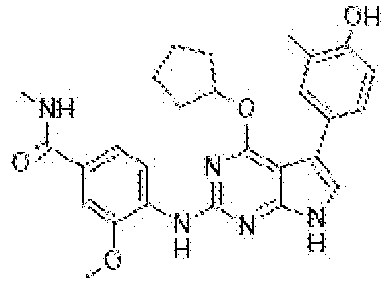
4-(4-(cyclopentyloxy)-5-(4-hydroxy-3-methylphenyl)-7H-pyrrolo[2,3-d]pyrimidin-2-ylamino)-3-methoxy-N-methylbenzamide 488.2 D 44 
4-(4-(cyclopentyloxy)-5-(4-hydroxyphenyl)-7H-pyrrolo[2,3-d]pyrimidin-2-ylamino)-3-methoxybenzamide 460.2 D 45 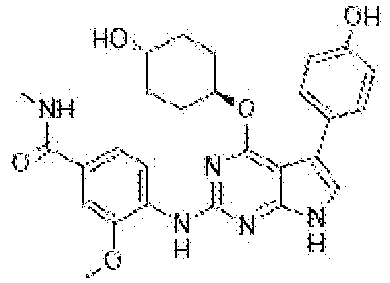
4-(4-((1r,4r)-4-hydroxycyclohexyloxy)-5-(4-hydroxyphenyl)-7H-pyrrolo[2,3-d]pyrimidin-2-ylamino)-3-methoxy-N-methylbenzamide 504.2 D 46 
4-(4-((1s,4s)-4-hydroxycyclohexyloxy)-5-(4-hydroxyphenyl)-7H-pyrrolo[2,3-d]pyrimidin-2-ylamino)-3-methoxy-N-methylbenzamide 504.2 D 47 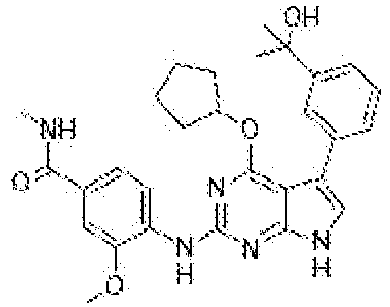
4-(4-(cyclopentyloxy)-5-(3-(2-hydroxypropan-2-yl)phenyl)-7H-pyrrolo[2,3-d]pyrimidin-2-ylamino)-3-methoxy-N-methylbenzamide 516.2 B 48 
4-(5-(4-(1H-imidazol-2-yl)phenyl)-4-(cyclopentyloxy)-7H-pyrrolo[2,3-d]pyrimidin-2-ylamino)-3-methoxy-N-methylbenzamide 524.2 D 49 
4-(4-(cyclopentyloxy)-5-(4-(2-hydroxypropan-2-yl)phenyl)-7H-pyrrolo[2,3-d]pyrimidin-2-ylamino)-3-methoxy-N-methylbenzamide 516.2 C 50 
4-(4-(cyclopentyloxy)-2-(2-methoxy-4-(1H-pyrazol-4-yl)phenylamino)-7H-pyrrolo[2,3-d]pyrimidin-5-yl)phenol 483.2 D 51 
4-(4-(cyclopentyloxy)-5-(5-hydroxypyridin-3-yl)-7H-pyrrolo[2,3-d]pyrimidin-2-ylamino)-3-methoxy-N-methylbenzamide 475.3 D 52 
4-(2-(4-(aminomethyl)-2-methoxyphenylamino)-4-(cyclopentyloxy)-7H-pyrrolo[2,3-d]pyrimidin-5-yl)phenol 446.2 C 53 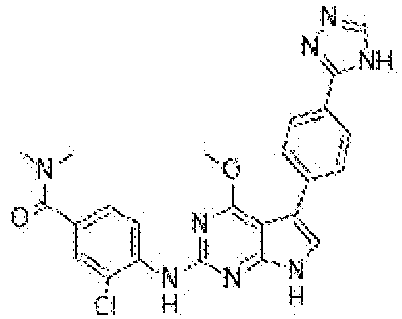
4-(5-(4-(4H-1,2,4-triazol-3-yl)phenyl)-4-methoxy-7H-pyrrolo[2,3-d]pyrimidin-2-ylamino)-3-chloro-N,N-dimethylbenzamide 489.1 C 54 
4-(4-(cyclopentyloxy)-5-(3-fluoro-4-methoxyphenyl)-7H-pyrrolo[2,3-d]pyrimidin-2-ylamino)-3-methoxy-N-methylbenzamide 506.2 C 55 
4-(4-(cyclopentyloxy)-5-(6-methoxypyridin-3-yl)-7H-pyrrolo[2,3-d]pyrimidin-2-ylamino)-3-methoxy-N-methylbenzamide 489.4 C 56 
4-(5-(3-acetamidophenyl)-4-(cyclopentyloxy)-7H-pyrrolo[2,3-d]pyrimidin-2-ylamino)-3-methoxy-N-methylbenzamide 515.2 D 57 
4-(4-(cyclopentyloxy)-5-(3-(methylsulfonamido)phenyl)-7H-pyrrolo[2,3-d]pyrimidin-2-ylamino)-3-methoxy-N-methylbenzamide 551.2 C 58 
4-(4-(cyclopentyloxy)-5-(pyridin-3-yl)-7H-pyrrolo[2,3-d]pyrimidin-2-ylamino)-3-methoxy-N-methylbenzamide 459.4 D 59 
4-(4-(cyclopentyloxy)-5-(3-(methylcarbamoyl)phenyl)-7H-pyrrolo[2,3-d]pyrimidin-2-ylamino)-3-methoxy-N-methylbenzamide 515.2 C 60 
4-(4-(cyclopentyloxy)-5-(3-methoxyphenyl)-7H-pyrrolo[2,3-d]pyrimidin-2-ylamino)-3-methoxy-N-methylbenzamide 488.4 C 61 
4-(4-(cyclopentyloxy)-5-(4-(methylsulfonyl)phenyl)-7H-pyrrolo[2,3-d]pyrimidin-2-ylamino)-3-methoxy-N-methylbenzamide 536.4 D 62 
4-(5-(4-acetamidophenyl)-4-(cyclopentyloxy)-7H-pyrrolo[2,3-d]pyrimidin-2-ylamino)-3-methoxy-N-methylbenzamide 515.2 D 63 
4-(4-(cyclopentyloxy)-5-(3-(methylsulfonyl)phenyl)-7H-pyrrolo[2,3-d]pyrimidin-2-ylamino)-3-methoxy-N-methylbenzamide 536.2 D 64 
4-(4-(cyclopentyloxy)-5-(3,4-dimethoxyphenyl)-7H-pyrrolo[2,3-d]pyrimidin-2-ylamino)-3-methoxy-N-methylbenzamide 518.4 C 65 
4-(5-(3-aminophenyl)-4-(cyclopentyloxy)-7H-pyrrolo[2,3-d]pyrimidin-2-ylamino)-3-methoxy-N-methylbenzamide 473.4 D 66 
4-(4-(cyclopentyloxy)-5-(pyridin-4-yl)-7H-pyrrolo[2,3-d]pyrimidin-2-ylamino)-3-methoxy-N-methylbenzamide 459.4 D 67 
4-(4-(cyclopentyloxy)-5-(6-ethoxypyridin-3-yl)-7H-pyrrolo[2,3-d]pyrimidin-2-ylamino)-3-methoxy-N-methylbenzamide 503.6 C 68 
(4-(5-(4-(4H-1,2,4-triazol-3-yl)phenyl)-4-methoxy-7H-pyrrolo[2,3-d]pyrimidin-2-ylamino)-3-chlorophenyl)(morpholino)-methanone 531.2 C 69* 
N,N,3-trimethyl-4-(5-(2-methylbenzo[d]oxazol-6-yl)-4-(tetrahydro-2H-pyran-4-ylamino)-7H-pyrrolo[2,3-d]pyrimidin-2-ylamino)benzamide 526.6 C 70 
N,N,3-trimethyl-4-(5-(2-methylbenzo[d]oxazol-6-yl)-4-(tetrahydro-2H-pyran-4-yloxy)-7H-pyrrolo[2,3-d]pyrimidin-2-ylamino)benzamide 527.6 C 71 
4-(5-(2-amino-1H-benzo[d]imidazol-5-yl)-4-methoxy-7H-pyrrolo[2,3-d]pyrimidin-2-ylamino)-3-chloro-N,N-dimethylbenzamide 477.1 C 72* 
4-(5-(4-(4H-1,2,4-triazol-3-yl)phenyl)-4-(methylamino)-7H-pyrrolo[2,3-d]pyrimidin-2-ylamino)-3-chloro-N,N-dimethylbenzamide 488.2 B 73 
4-(4-methoxy-5-(2-methylbenzo[d]oxazol-6-yl)-7H-pyrrolo[2,3-d]pyrimidin-2-ylamino)-N,N,3-trimethylbenzamide 457.5 A 74* 
(3-methyl-4-(5-(2-methylbenzo[d]oxazol-6-yl)-4-(tetrahydro-2H-pyran-4-ylamino)-7H-pyrrolo[2,3-d]pyrimidin-2-ylamino)phenyl)(piperazin-1-yl)methanone 567.5 C 75 
4-(4-(cyclopentyloxy)-5-(4-(dimethylamino)phenyl)-7H-pyrrolo[2,3-d]pyrimidin-2-ylamino)-3-methoxy-N-methylbenzamide 501.4 D 76 
4-(4-(cyclopentyloxy)-5-(4-methoxyphenyl)-7H-pyrrolo[2,3-d]pyrimidin-2-ylamino)-3-methoxy-N-methylbenzamide 488.4 D 77 
4-(5-(4-cyanophenyl)-4-(cyclopentyloxy)-7H-pyrrolo[2,3-d]pyrimidin-2-ylamino)-3-methoxy-N-methylbenzamide 483.2 A 78 
4-(4-(cyclopentyloxy)-5-(1-methyl-1H-indol-5-yl)-7H-pyrrolo[2,3-d]pyrimidin-2-ylamino)-3-methoxy-N-methylbenzamide 511.4 A 79 
4-(4-(cyclopentyloxy)-5-(4-(methylcarbamoyl)phenyl)-7H-pyrrolo[2,3-d]pyrimidin-2-ylamino)-3-methoxy-N-methylbenzamide 515 D 80 
4-(4-(cyclopentyloxy)-5-(1H-pyrazol-3-yl)-7H-pyrrolo[2,3-d]pyrimidin-2-ylamino)-3-methoxy-N-methylbenzamide 448.2 D 81 
4-(4-(cyclopentyloxy)-5-(1H-indol-5-yl)-7H-pyrrolo[2,3-d]pyrimidin-2-ylamino)-3-methoxy-N-methylbenzamide 497.2 B 82 
4-(4-(cyclopentyloxy)-5-(1H-pyrazol-4-yl)-7H-pyrrolo[2,3-d]pyrimidin-2-ylamino)-3-methoxy-N-methylbenzamide 448.2 D 83 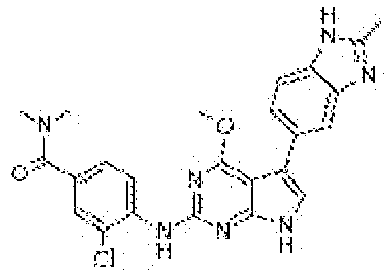
3-chloro-4-(4-methoxy-5-(2-methyl-1H-benzo[d]imidazol-5-yl)-7H-pyrrolo[2,3-d]pyrimidin-2-ylamino)-N,N-dimethylbenzamide 476.1 D 84 * 
(R)-3-chloro-4-(5-(3-(1-hydroxyethyl)phenyl)-4-(tetrahydro-2H-pyran-4-ylamino)-7H-pyrrolo[2,3-d]pyrimidin-2-ylamino)-N,N-dimethylbenzamide 535.2 C 85 * 
(S)-3-chloro-4-(5-(3-(1-hydroxyethyl)phenyl)-4-(tetrahydro-2H-pyran-4-ylamino)-7H-pyrrolo[2,3-d]pyrimidin-2-ylamino)-N,N-dimethylbenzamide 535.3 D 86 
(4-(4-(cyclopentyloxy)-5-(2-methylbenzo[d]oxazol-6-yl)-7H-pyrrolo[2,3-d]pyrimidin-2-ylamino)-3-methylphenyl)(morpholino)metha none 552.9 C 87 
N-(1H-indazol-5-yl)-4-methoxy-5-(2-methylbenzo[d]oxazol-6-yl)-7H-pyrrolo[2,3-d]pyrimidin-2-amine 412.1 C 88 
N-(4-(1H-pyrazol-4-yl)phenyl)-4-methoxy-5-(2-methylbenzo[d]oxazol-6-yl)-7H-pyrrolo[2,3-d]pyrimidin-2-amine 438.1 C 89 
4-(4-methoxy-5-(pyridin-4-yl)-7H-pyrrolo[2,3-d]pyrimidin-2-ylamino)-N,N,3-trimethylbenzamide 403.1 C 90 
3-methoxy-N-methyl-4-(5-(2-methylbenzo[d]oxazol-6-yl)-4-(tetrahydro-2H-pyran-4-yloxy)-7H-pyrrolo[2,3-d]pyrimidin-2-ylamino)benzamide 529 D 91 
4-(4-(cyclopentyloxy)-5-(2-methylbenzo[d]oxazol-6-yl)-7H-pyrrolo[2,3-d]pyrimidin-2-ylamino)-3-methoxy-N,N-dimethylbenzamide 527.5 C 92 
4-(4-((1r,4r)-4-hydroxycyclohexyloxy)-5-(2-methylbenzo[d]oxazol-6-yl)-7H-pyrrolo[2,3-d]pyrimidin-2-ylamino)-N,N,3-trimethylbenzamide 541.2 D 93 
N,N,3-trimethyl-4-(5-(pyridin-4-yl)-4-(tetrahydro-2H-pyran-4-yloxy)-7H-pyrrolo[2,3-d]pyrimidin-2-ylamino)benzamide 473.2 D 94 
4-(4-(cyclopentyloxy)-5-(2-methylbenzo[d]oxazol-6-yl)-7H-pyrrolo[2,3-d]pyrimidin-2-ylamino)-N,3-dimethylbenzamide 497 B 95 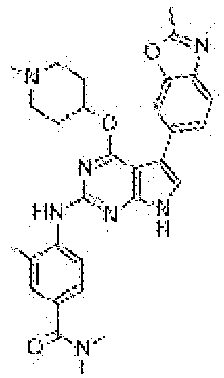
N,N,3-trimethyl-4-(5-(2-methylbenzo[d]oxazol-6-yl)-4-(1-methylpiperidin-4-yloxy)-7H-pyrrolo[2,3-d]pyrimidin-2-ylamino)benzamide 540 B 96 
(4-(4-(cyclopentyloxy)-5-(2-methylbenzo[d]oxazol-6-yl)-7H-pyrrolo[2,3-d]pyrimidin-2-ylamino)-3-methoxyphenyl)(morpholino)met hanone 569.3 B 97 
N,N,3-trimethyl-4-(5-(2-methylbenzo[d]oxazol-6-yl)-4-(piperidin-4-yloxy)-7H-pyrrolo[2,3-d]pyrimidin-2-ylamino)benzamide 525.9 A 98 
(S)-N,N,3-trimethyl-4-(5-(2-methylbenzo[d]oxazol-6-yl)-4-(tetrahydrofuran-3-yloxy)-7H-pyrrolo[2,3-d]pyrimidin-2-ylamino)benzamide 513.2 D 99 
(R)-N,N,3-trimethyl-4-(5-(2-methylbenzo[d]oxazol-6-yl)-4-(tetrahydrofuran-3-yloxy)-7H-pyrrolo[2,3-d]pyrimidin-2-ylamino)benzamide 513.2 D 100 
N-(2-aminoethyl)-4-(4-(cyclopentyloxy)-5-(2-methylbenzo[d]oxazol-6-yl)-7H-pyrrolo[2,3-d]pyrimidin-2-ylamino)-3-methoxybenzamide 542.2 D 101 
4-(4-(cyclopentyloxy)-5-(2-methylbenzo[d]oxazol-6-yl)-7H-pyrrolo[2,3-d]pyrimidin-2-ylamino)-N-(2-hydroxyethyl)-3-methoxybenzamide 543.2 D 102 
4-(5-(6-ethoxypyridin-3-yl)-4-(tetrahydro-2H-pyran-4-yloxy)-7H-pyrrolo[2,3-d]pyrimidin-2-ylamino)-3-methoxy-N-methylbenzamide 519.5 C 103 
4-(cyclopentyloxy)-N-(2-methoxyphenyl)-5-(2-methylbenzo[d]oxazol-6-yl)-7H-pyrrolo[2,3-d]pyrimidin-2-amine 456.2 C 104 
(S)-N,N,3-trimethyl-4-(5-(2-methylbenzo[d]oxazol-6-yl)-4-(tetrahydro-2H-pyran-3-yloxy)-7H-pyrrolo[2,3-d]pyrimidin-2-ylamino)benzamide 527 D 105 
N,N,3-trimethyl-4-(5-(3-(methylsulfonyl)phenyl)-4-(tetrahydro-2H-pyran-4-yloxy)-7H-pyrrolo[2,3-d]pyrimidin-2-ylamino)benzamide 550.2 D 106 
3-methoxy-N-methyl-4-(5-(3-(methylsulfonyl)phenyl)-4-(tetrahydro-2H-pyran-4-yloxy)-7H-pyrrolo[2,3-d]pyrimidin-2-ylamino)benzamide 552.2 D 107 
N,N,3-trimethyl-4-(5-(pyrimidin-5-yl)-4-(tetrahydro-2H-pyran-4-yloxy)-7H-pyrrolo[2,3-d]pyrimidin-2-ylamino)benzamide 474 C 108 * 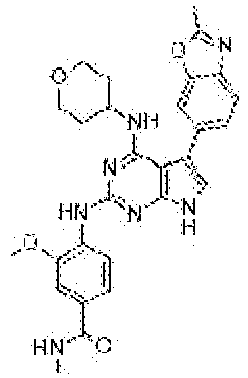
3-methoxy-N-methyl-4-(5-(2-methylbenzo[d]oxazol-6-yl)-4-(tetrahydro-2H-pyran-4-ylamino)-7H-pyrrolo[2,3-d]pyrimidin-2-ylamino)benzamide 527.8 B 109 
4-(5-(6-ethoxypyridin-3-yl)-4-(tetrahydro-2H-pyran-4-yloxy)-7H-pyrrolo[2,3-d]pyrimidin-2-ylamino)-N,N,3-trimethylbenzamide 517.3 D 110 
4-(5-(2-amino-1H-benzo[d]imidazol-6-yl)-4-(cyclopentyloxy)-7H-pyrrolo[2,3-d]pyrimidin-2-ylamino)-3-methoxy-N-methylbenzamide 513.2 D 111 
4-(5-(1,3,4-oxadiazol-2-yl)-4-(tetrahydro-2H-pyran-4-yloxy)-7H-pyrrolo[2,3-d]pyrimidin-2-ylamino)-N,N,3-trimethylbenzamide 464.2 A 112 
N,N,3-trimethyl-4-(5-(1-methyl-1H-pyrazol-4-yl)-4-(tetrahydro-2H-pyran-4-yloxy)-7H-pyrrolo[2,3-d]pyrimidin-2-ylamino)benzamide 476.2 D 113 
N,N,3-trimethyl-4-(5-(1-methyl-1H-pyrazol-3-yl)-4-(tetrahydro-2H-pyran-4-yloxy)-7H-pyrrolo[2,3-d]pyrimidin-2-ylamino)benzamide 476.2 B 114 
3-methoxy-N-methyl-4-(5-(pyridin-4-yl)-4-(tetrahydro-2H-pyran-4-yloxy)-7H-pyrrolo[2,3-d]pyrimidin-2-ylamino)benzamide 475.5 D 115 
N,N,3-trimethyl-4-(5-(oxazol-2-yl)-4-(tetrahydro-2H-pyran-4-yloxy)-7H-pyrrolo[2,3-d]pyrimidin-2-ylamino)benzamide 463.2 B 116 
4-(5-(2-amino-1H-benzo[d]imidazol-6-yl)-4-(tetrahydro-2H-pyran-4-yloxy)-7H-pyrrolo[2,3-d]pyrimidin-2-ylamino)-N,N,3-trimethylbenzamide 527.2 D 117 
N,N,3-trimethyl-4-(5-(2-methylpyridin-4-yl)-4-(tetrahydro-2H-pyran-4-yloxy)-7H-pyrrolo[2,3-d]pyrimidin-2-ylamino)benzamide 487.2 D 118 
3-methoxy-4-(4-methoxy-5-(6-methoxypyridin-3-yl)-7H-pyrrolo[2,3-d]pyrimidin-2-ylamino)-N-methylbenzamide 435.2 C 119 
3-methoxy-4-(5-(6-methoxypyridin-3-yl)-4-(tetrahydro-2H-pyran-4-yloxy)-7H-pyrrolo[2,3-d]pyrimidin-2-ylamino)-N-methylbenzamide 505.2 D 120 
3-methoxy-N-(2-methoxyethyl)-4-(5-(2-methylbenzo[d]oxazol-6-yl)-4-(tetrahydro-2H-pyran-4-yloxy)-7H-pyrrolo[2,3-d]pyrimidin-2-ylamino)benzamide 573.2 D 121 
(R)-N,N,3-trimethyl-4-(5-(2-methylbenzo[d]oxazol-6-yl)-4-(tetrahydro-2H-pyran-3-yloxy)-7H-pyrrolo[2,3-d]pyrimidin-2-ylamino)benzamide 527 22 
4-(5-(1H-pyrazol-4-yl)-4-(tetrahydro-2H-pyran-4-yloxy)-7H-pyrrolo[2,3-d]pyrimidin-2-ylamino)-3-methoxy-N-methylbenzamide 464.1 D 123 
3-methoxy-N-methyl-4-(5-(4-(methylcarbamoyl)phenyl)-4-(tetrahydro-2H-pyran-4-yloxy)-7H-pyrrolo[2,3-d]pyrimidin-2-ylamino)benzamide 531.3 D 124 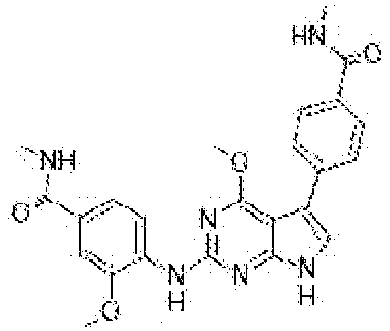
3-methoxy-4-(4-methoxy-5-(4-(methylcarbamoyl)phenyl)-7H-pyrrolo[2,3-d]pyrimidin-2-ylamino)-N-methylbenzamide 461.2 C 125 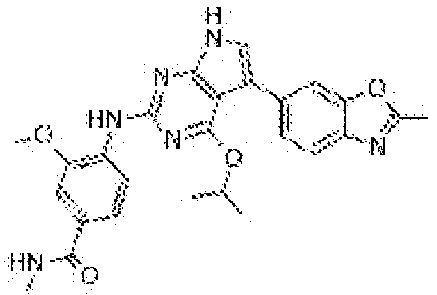
4-(4-isopropoxy-5-(2-methylbenzo[d]oxazol-6-yl)-7H-pyrrolo[2,3-d]pyrimidin-2-ylamino)-3-methoxy-N-methylbenzamide 487 D 126 
4-(5-(6-(dimethylamino)pyridin-3-yl)-4-(tetrahydro-2H-pyran-4-yloxy)-7H-pyrrolo[2,3-d]pyrimidin-2-ylamino)-3-methoxy-N-methylbenzamide 518.2 B 127 
N-(2-(dimethylamino)ethyl)-3-methoxy-4-(5-(2-methylbenzo[d]oxazol-6-yl)-4-(tetrahydro-2H-pyran-4-yloxy)-7H-pyrrolo[2,3-d]pyrimidin-2-ylamino)benzamide 586.2 D 128 
N,N,3-trimethyl-4-(5-(2-methyl-1H-benzo[d]imidazol-6-yl)-4-(tetrahydro-2H-pyran-4-yloxy)-7H-pyrrolo[2,3-d]pyrimidin-2-ylamino)benzamide 526.2 D 129 
3-methoxy-4-(4-methoxy-5-(1H-pyrazol-4-yl)-7H-pyrrolo[2,3-d]pyrimidin-2-ylamino)-N-methylbenzamide 394.1 C 130 
3-methoxy-N-(2-(methylamino)ethyl)-4-(5-(2-methylbenzo[d]oxazol-6-yl)-4-(tetrahydro-2H-pyran-4-yloxy)-7H-pyrrolo[2,3-d]pyrimidin-2-ylamino)benzamide 572.3 C 131 
4-(5-(2-(dimethylamino)pyridin-4-yl)-4-(tetrahydro-2H-pyran-4-yloxy)-7H-pyrrolo[2,3-d]pyrimidin-2-ylamino)-3-methoxy-N-methylbenzamide 518.2 D 132 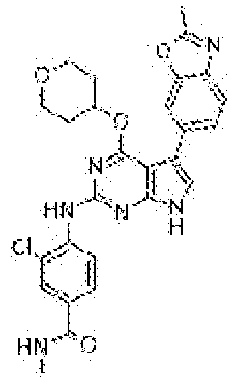
3-chloro-N-methyl-4-(5-(2-methylbenzo[d]oxazol-6-yl)-4-(tetrahydro-2H-pyran-4-yloxy)-7H-pyrrolo[2,3-d]pyrimidin-2-ylamino)benzamide 532.8 B 133 
(S)-N,3-dimethyl-4-(5-(2-methylbenzo[d]oxazol-6-yl)-4-(tetrahydrofuran-3-yloxy)-7H-pyrrolo[2,3-d]pyrimidin-2-ylamino)benzamide 499.6 D 134 
(S)-3-chloro-N-methyl-4-(5-(2-methylbenzo[d]oxazol-6-yl)-4-(tetrahydrofuran-3-yloxy)-7H-pyrrolo[2,3-d]pyrimidin-2-ylamino)benzamide 519.5 D 135 
4-(5-(2,7-dimethylbenzo[d]oxazol-6-yl)-4-(tetrahydro-2H-pyran-4-yloxy)-7H-pyrrolo[2,3-d]pyrimidin-2-ylamino)-3-methoxy-N-methylbenzamide 542.9 A 136 
4-(5-(2,5-dimethylbenzo[d]oxazol-6-yl)-4-(tetrahydro-2H-pyran-4-yloxy)-7H-pyrrolo[2,3-d]pyrimidin-2-ylamino)-3-methoxy-N-methylbenzamide 542.9 A 137 
4-(4-((1r,4r)-4-hydroxycyclohexyloxy)-5-(2-methylbenzo[d]oxazol-6-yl)-7H-pyrrolo[2,3-d]pyrimidin-2-ylamino)-3-methoxy-N-methylbenzamide 543.2 D 138 
3-methoxy-N-methyl-4-(4-(2-(methylamino)ethoxy)-5-(2-methylbenzo[d]oxazol-6-yl)-7H-pyrrolo[2,3-d]pyrimidin-2-ylamino)benzamide 502.2 A 139 
3-methoxy-4-(4-(2-methoxyethoxy)-5-(2-methylbenzo[d]oxazol-6-yl)-7H-pyrrolo[2,3-d]pyrimidin-2-ylamino)-N-methylbenzamide 503.2 D 140 
4-(5-(2-cyanopyridin-4-yl)-4-(tetrahydro-2H-pyran-4-yloxy)-7H-pyrrolo[2,3-d]pyrimidin-2-ylamino)-N,N,3-trimethylbenzamide 497.9 C 141 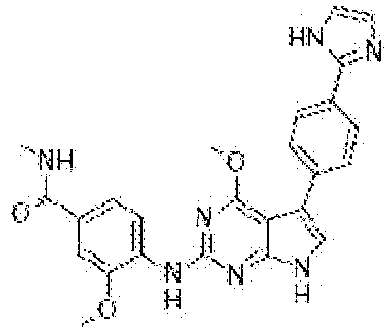
4-(5-(4-(1H-imidazol-2-yl)phenyl)-4-methoxy-7H-pyrrolo[2,3-d]pyrimidin-2-ylamino)-3-methoxy-N-methylbenzamide 470.1 C 142 
4-(5-(2-aminopyridin-4-yl)-4-(tetrahydro-2H-pyran-4-yloxy)-7H-pyrrolo[2,3-d]pyrimidin-2-ylamino)-3-methoxy-N-methylbenzamide 490.2 D 143 
3-methoxy-4-(5-(2-methoxypyridin-4-yl)-4-(tetrahydro-2H-pyran-4-yloxy)-7H-pyrrolo[2,3-d]pyrimidin-2-ylamino)-N-methylbenzamide 505.3 D 144 
N,3-dimethyl-4-(5-(3-(methylcarbamoyl)phenyl)-4-(tetrahydro-2H-pyran-4-yloxy)-7H-pyrrolo[2,3-d]pyrimidin-2-ylamino)benzamide 515.2 A 145 
N,3-dimethyl-4-(5-(2-methylbenzo[d]oxazol-6-yl)-4-(tetrahydro-2H-pyran-4-yloxy)-7H-pyrrolo[2,3-d]pyrimidin-2-ylamino)benzamide 512.9 B 146 
4-(5-(4-(1H-imidazol-2-yl)phenyl)-4-(tetrahydro-2H-pyran-4-yloxy)-7H-pyrrolo[2,3-d]pyrimidin-2-ylamino)-3-methoxy-N-methylbenzamide 540.2 D 147 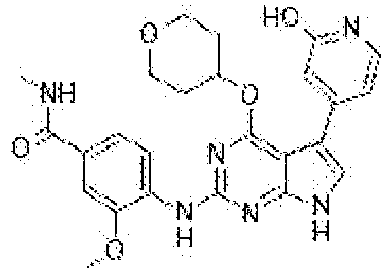
4-(5-(2-hydroxypyridin-4-yl)-4-(tetrahydro-2H-pyran-4-yloxy)-7H-pyrrolo[2,3-d]pyrimidin-2-ylamino)-3-methoxy-N-methylbenzamide 491.1 C 148 
4-(5-(1,2-dimethyl-1H-benzo[d]imidazol-6-yl)-4-(tetrahydro-2H-pyran-4-yloxy)-7H-pyrrolo[2,3-d]pyrimidin-2-ylamino)-3-methoxy-N-methylbenzamide 542.2 D 149 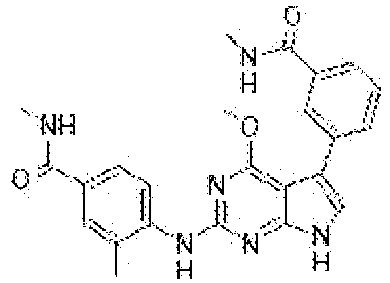
4-(4-methoxy-5-(3-(methylcarbamoyl)phenyl)-7H-pyrrolo[2,3-d]pyrimidin-2-ylamino)-N,3-dimethylbenzamide 445.2 A 150 
4-(4-((1r,4r)-4-hydroxy-4-methylcyclohexyloxy)-5-(2-methylbenzo[d]oxazol-6-yl)-7H-pyrrolo[2,3-d]pyrimidin-2-ylamino)-N,3-dimethylbenzamide 541.2 D 151 
4-(4-((1s,4s)-4-hydroxy-4-methylcyclohexyloxy)-5-(2-methylbenzo[d]oxazol-6-yl)-7H-pyrrolo[2,3-d]pyrimidin-2-ylamino)-N,3-dimethylbenzamide 541.2 D 152 
4-(4-cyclopropoxy-5-(2-methylbenzo[d]oxazol-6-yl)-7H-pyrrolo[2,3-d]pyrimidin-2-ylamino)-3-methoxy-N-methylbenzamide 485 D 153 
(S)-N,3-dimethyl-4-(5-(4-(methylcarbamoyl)phenyl)-4-(tetrahydrofuran-3-yloxy)-7H-pyrrolo[2,3-d]pyrimidin-2-ylamino)benzamide 500.9 D 154 
3-methoxy-N-methyl-4-(5-(pyrimidin-5-yl)-4-(tetrahydro-2H-pyran-4-yloxy)-7H-pyrrolo[2,3-d]pyrimidin-2-ylamino)benzamide 476.6 C 155 
3-methoxy-N-methyl-4-(5-(2-(methylamino)pyridin-4-yl)-4-(tetrahydro-2H-pyran-4-yloxy)-7H-pyrrolo[2,3-d]pyrimidin-2-ylamino)benzamide 504.2 D 156 
4-(4-methoxy-5-(pyridin-4-yl)-7H-pyrrolo[2,3-d]pyrimidin-2-ylamino)-N,3-dimethylbenzamide 389.2 C 157 
3-chloro-4-(4-methoxy-5-(pyridin-4-yl)-7H-pyrrolo[2,3-d]pyrimidin-2-ylamino)-N,N-dimethylbenzamide 423.1 C 158 
N,3-dimethyl-4-(5-(4-(methylsulfonyl)phenyl)-4-(tetrahydro-2H-pyran-4-yloxy)-7H-pyrrolo[2,3-d]pyrimidin-2-ylamino)benzamide 536.1 B 159 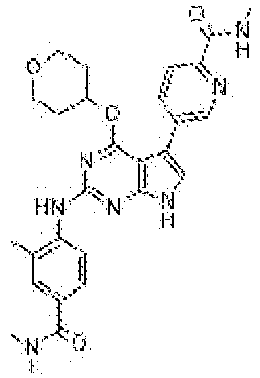
5-(2-(4-(dimethylcarbamoyl)-2-methylphenylamino)-4-(tetrahydro-2H-pyran-4-yloxy)-7H-pyrrolo[2,3-d]pyrimidin-5-yl)-N-methylpicolinamide 530 D 160 
N-(2-hydroxyethyl)-4-(4-isopropoxy-5-(2-methylbenzo[d]oxazol-6-yl)-7H-pyrrolo[2,3-d]pyrimidin-2-ylamino)-3-methoxybenzamide 516.9 D 161 
(S)-4-(5-(6-ethoxypyridin-3-yl)-4-(tetrahydrofuran-3-yloxy)-7H-pyrrolo[2,3-d]pyrimidin-2-ylamino)-3-methoxy-N-methylbenzamide 505.2 C 162 
(S)-4-(5-(6-ethoxypyridin-3-yl)-4-(tetrahydrofuran-3-yloxy)-7H-pyrrolo[2,3-d]pyrimidin-2-ylamino)-N,3-dimethylbenzamide 489.2 C 163 
3-methoxy-N-methyl-4-(5-(1-methyl-1H-pyrazol-3-yl)-4-(tetrahydro-2H-pyran-4-yloxy)-7H-pyrrolo[2,3-d]pyrimidin-2-ylamino)benzamide 478.1 D 164 
(S)-N,N,3-trimethyl-4-(5-(1-methyl-1H-pyrazol-4-yl)-4-(tetrahydrofuran-3-yloxy)-7H-pyrrolo[2,3-d]pyrimidin-2-ylamino)benzamide 462.0 5 D 165 
(S)-N,3-dimethyl-4-(5-(1-methyl-1H-pyrazol-4-yl)-4-(tetrahydrofuran-3-yloxy)-7H-pyrrolo[2,3-d]pyrimidin-2-ylamino)benzamide 448.0 5 D 166 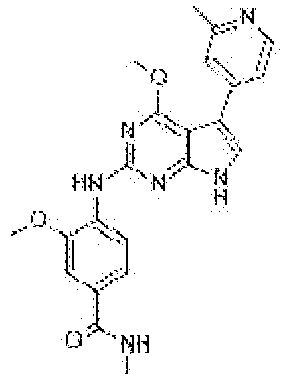
3-methoxy-4-(4-methoxy-5-(2-methylpyridin-4-yl)-7H-pyrrolo[2,3-d]pyrimidin-2-ylamino)-N-methylbenzamide 419.0 5 D 167 
3-methoxy-N-methyl-4-(5-(2-methylpyridin-4-yl)-4-(tetrahydro-2H-pyran-4-yloxy)-7H-pyrrolo[2,3-d]pyrimidin-2-ylamino)benzamide 489.1 D 168 
4-(4-(2-hydroxyethoxy)-5-(2-methylbenzo[d]oxazol-6-yl)-7H-pyrrolo[2,3-d]pyrimidin-2-ylamino)-3-methoxy-N-methylbenzamide 488.9 D 169 
(S)-3-methoxy-N-methyl-4-(5-(2-methylbenzo[d]oxazol-6-yl)-4-(tetrahydrofuran-3-yloxy)-7H-pyrrolo[2,3-d]pyrimidin-2-ylamino)benzamide 515 D 170 
4-(5-(2-isopropylbenzo[d]oxazol-6-yl)-4-(tetrahydro-2H-pyran-4-yloxy)-7H-pyrrolo[2,3-d]pyrimidin-2-ylamino)-3-methoxy-N-methylbenzamide 557.6 C 171 
3-cyano-N-methyl-4-(5-(2-methylbenzo[d]oxazol-6-yl)-4-(tetrahydro-2H-pyran-4-yloxy)-7H-pyrrolo[2,3-d]pyrimidin-2-ylamino)benzamide 524.2 D 172 
3-methoxy-N-methyl-4-(5-(1-methyl-1H-imidazol-2-yl)-4-(tetrahydro-2H-pyran-4-yloxy)-7H-pyrrolo[2,3-d]pyrimidin-2-ylamino)benzamide 478.1 A 173 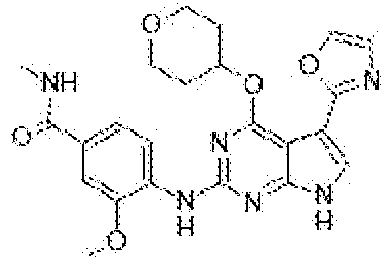
3-methoxy-N-methyl-4-(5-(oxazol-2-yl)-4-(tetrahydro-2H-pyran-4-yloxy)-7H-pyrrolo[2,3-d]pyrimidin-2-ylamino)benzamide 465.1 B 174 
4-(5-(1,3,4-oxadiazol-2-yl)-4-(tetrahydro-2H-pyran-4-yloxy)-7H-pyrrolo[2,3-d]pyrimidin-2-ylamino)-3-methoxy-N-methylbenzamide 466.2 B 175 
(S)-4-(5-(3-(1-hydroxyethyl)phenyl)-4-(tetrahydro-2H-pyran-4-yloxy)-7H-pyrrolo[2,3-d]pyrimidin-2-ylamino)-3-methoxy-N-methylbenzamide 518.2 C 176 
(S)-N,N,3-trimethyl-4-(5-(pyridin-4-yl)-4-(tetrahydrofuran-3-yloxy)-7H-pyrrolo[2,3-d]pyrimidin-2-ylamino)benzamide 549.1 C 177 
3-methoxy-4-(4-methoxy-5-(1-methyl-1H-pyrazol-4-yl)-7H-pyrrolo[2,3-d]pyrimidin-2-ylamino)-N-methylbenzamide 408.0 5 C 178 
(S)-3-methoxy-N-methyl-4-(5-(2-methylpyridin-4-yl)-4-(tetrahydrofuran-3-yloxy)-7H-pyrrolo[2,3-d]pyrimidin-2-ylamino)benzamide 475.1 D 179 
3-methoxy-N-methyl-4-(5-(2-methylbenzo[d]oxazol-6-yl)-4-(oxetan-3-yloxy)-7H-pyrrolo[2,3-d]pyrimidin-2-ylamino)benzamide 500.9 D 180 
3-(4-isopropoxy-5-(2-methylbenzo[d]oxazol-6-yl)-7H-pyrrolo[2,3-d]pyrimidin-2-ylamino)-4-methoxy-N-methylbenzamide 487.2 C 181 
4-methoxy-N-methyl-3-(5-(2-methylbenzo[d]oxazol-6-yl)-4-(tetrahydro-2H-pyran-4-yloxy)-7H-pyrrolo[2,3-d]pyrimidin-2-ylamino)benzamide 529.2 C 182 
(S)-3-methoxy-N-methyl-4-(5-(4-(methylcarbamoyl)phenyl)-4-(tetrahydrofuran-3-yloxy)-7H-pyrrolo[2,3-d]pyrimidin-2-ylamino)benzamide 517.2 D 183 
6-methoxy-N-methyl-5-(5-(2-methylbenzo[d]oxazol-6-yl)-4-(tetrahydro-2H-pyran-4-yloxy)-7H-pyrrolo[2,3-d]pyrimidin-2-ylamino)picolinamide 530.6 C 184 
3-methoxy-N-methyl-4-(5-(1-methyl-1H-pyrazol-4-yl)-4-(tetrahydro-2H-pyran-4-yloxy)-7H-pyrrolo[2,3-d]pyrimidin-2-ylamino)benzamide 478.0 5 D 185 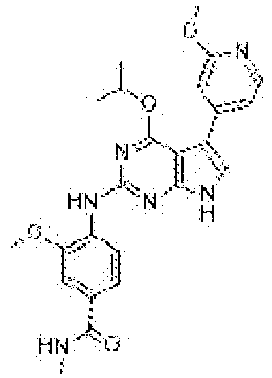
4-(4-isopropoxy-5-(2-methoxypyridin-4-yl)-7H-pyrrolo[2,3-d]pyrimidin-2-ylamino)-3-methoxy-N-methylbenzamide 463.2 D 186 
3-methoxy-N-methyl-4-(5-(pyrazin-2-yl)-4-(tetrahydro-2H-pyran-4-yloxy)-7H-pyrrolo[2,3-d]pyrimidin-2-ylamino)benzamide 476.1 C 187 
4-(4-isopropoxy-5-(3-(methylsulfonyl)phenyl)-7H-pyrrolo[2,3-d]pyrimidin-2-ylamino)-3-methoxy-N-methylbenzamide 510.2 C 188 
4-(4-isopropoxy-5-(4-(methylcarbamoyl)phenyl)-7H-pyrrolo[2,3-d]pyrimidin-2-ylamino)-3-methoxy-N-methylbenzamide 489.2 D 189 
4-(4-isopropoxy-5-(1-methyl-1H-pyrazol-4-yl)-7H-pyrrolo[2,3-d]pyrimidin-2-ylamino)-3-methoxy-N-methylbenzamide 436.2 D 190 
3-methoxy-4-(4-methoxy-5-(pyridin-4-yl)-7H-pyrrolo[2,3-d]pyrimidin-2-ylamino)-N-methylbenzamide 405.1 D 191 
N-methyl-4-(5-(2-methylbenzo[d]oxazol-6-yl)-4-(tetrahydro-2H-pyran-4-yloxy)-7H-pyrrolo[2,3-d]pyrimidin-2-ylamino)-3-(trifluoromethyl)benzamide 566.7 D 192 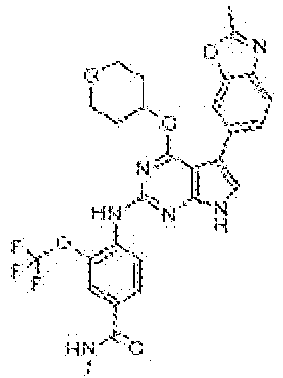
N-methyl-4-(5-(2-methylbenzo[d]oxazol-6-yl)-4-(tetrahydro-2H-pyran-4-yloxy)-7H-pyrrolo[2,3-d]pyrimidin-2-ylamino)-3-(trifluoromethoxy)benzamide 582.7 C 193 
4-(5-(4-(1H-imidazol-2-yl)phenyl)-4-isopropoxy-7H-pyrrolo[2,3-d]pyrimidin-2-ylamino)-3-methoxy-N-methylbenzamide 498.2 D 194 
4-(5-(2-aminopyridin-4-yl)-4-isopropoxy-7H-pyrrolo[2,3-d]pyrimidin-2-ylamino)-3-methoxy-N-methylbenzamide 448.2 D 195 
3-methoxy-N-methyl-4-(5-(4-(1-methyl-1H-imidazol-2-yl)phenyl)-4-(tetrahydro-2H-pyran-4-yloxy)-7H-pyrrolo[2,3-d]pyrimidin-2-ylamino)benzamide 554.3 A 196 
4-(5-(6-ethoxypyridin-3-yl)-4-isopropoxy-7H-pyrrolo[2,3-d]pyrimidin-2-ylamino)-3-methoxy-N-methylbenzamide 477.2 C 197 
4-(5-(4-(4,5-dimethyl-1H-imidazol-2-yl)phenyl)-4-(tetrahydro-2H-pyran-4-yloxy)-7H-pyrrolo[2,3-d]pyrimidin-2-ylamino)-3-methoxy-N-methylbenzamide 568.3 C 198 
4-(4-cyclobutoxy-5-(2-methylbenzo[d]oxazol-6-yl)-7H-pyrrolo[2,3-d]pyrimidin-2-ylamino)-3-methoxy-N-methylbenzamide 499.5 D 199 
4-(4-isopropoxy-5-(2-(methylamino)pyridin-4-yl)-7H-pyrrolo[2,3-d]pyrimidin-2-ylamino)-3-methoxy-N-methylbenzamide 462.2 D 200 
3-isopropyl-N-methyl-4-(5-(pyridin-4-yl)-4-(tetrahydro-2H-pyran-4-yloxy)-7H-pyrrolo[2,3-d]pyrimidin-2-ylamino)benzamide 487.2 C 201 
4-(4-isopropoxy-5-(2-methylpyridin-4-yl)-7H-pyrrolo[2,3-d]pyrimidin-2-ylamino)-3-methoxy-N-methylbenzamide 447.2 D 202 * 
4-(4-(isopropylamino)-5-(2-methylbenzo[d]oxazol-6-yl)-7H-pyrrolo[2,3-d]pyrimidin-2-ylamino)-3-methoxy-N-methylbenzamide 486.2 D 203 
(R)-4-(4-sec-butoxy-5-(2-methylbenzo[d]oxazol-6-yl)-7H-pyrrolo[2,3-d]pyrimidin-2-ylamino)-3-methoxy-N-methylbenzamide 500.9 C 204 
(S)-4-(4-sec-butoxy-5-(2-methylbenzo[d]oxazol-6-yl)-7H-pyrrolo[2,3-d]pyrimidin-2-ylamino)-3-methoxy-N-methylbenzamide 500.9 C 205 
4-(4-((1r,4r)-4-hydroxy-4-methylcyclohexyloxy)-5-(2-methylbenzo[d]oxazol-6-yl)-7H-pyrrolo[2,3-d]pyrimidin-2-ylamino)-3-methoxy-N-methylbenzamide 557.2 D 206 
4-(4-((1s,4s)-4-hydroxy-4-methylcyclohexyloxy)-5-(2-methylbenzo[d]oxazol-6-yl)-7H-pyrrolo[2,3-d]pyrimidin-2-ylamino)-3-methoxy-N-methylbenzamide 557.3 D 207 
3-methoxy-N-methyl-4-(5-(4-(4-methyl-1H-imidazol-2-yl)phenyl)-4-(tetrahydro-2H-pyran-4-yloxy)-7H-pyrrolo[2,3-d]pyrimidin-2-ylamino)benzamide 554.2 D 208 
(S)-3-isopropyl-N-methyl-4-(5-(1-methyl-1H-pyrazol-4-yl)-4-(tetrahydrofuran-3-yloxy)-7H-pyrrolo[2,3-d]pyrimidin-2-ylamino)benzamide 476.2 C 209 
(S)-3-isopropyl-N-methyl-4-(5-(2-methylbenzo[d]oxazol-6-yl)-4-(tetrahydrofuran-3-yloxy)-7H-pyrrolo[2,3-d]pyrimidin-2-ylamino)benzamide 527.3 A 210 * 
3-methoxy-N-methyl-4-(5-(1-methyl-1H-pyrazol-4-yl)-4-(tetrahydro-2H-pyran-4-ylamino)-7H-pyrrolo[2,3-d]pyrimidin-2-ylamino)benzamide 77.2 211 * 
4-(4-(cyclopropylamino)-5-(1-methyl-1 H-pyrazol-4-yl)-7H-pyrrolo[2,3-d]pyrimidin-2-ylamino)-3-methoxy-N-methylbenzamide 433.2 C 212 * 
4-(4-(cyclopropylamino)-5-(2-methylbenzo[d]oxazol-6-yl)-7H-pyrrolo[2,3-d]pyrimidin-2-ylamino)-3-methoxy-N-methylbenzamide 484.2 C 213 
N-(2-hydroxyethyl)-3-methoxy-4-(5-(2-methylbenzo[d]oxazol-6-yl)-4-(tetrahydro-2H-pyran-4-yloxy)-7H-pyrrolo[2,3-d]pyrimidin-2-ylamino)benzamide 558.9 D 214 
(R)-4-(4-(cyclopentyloxy)-5-(2-methylbenzo[d]oxazol-6-yl)-7H-pyrrolo[2,3-d]pyrimidin-2-ylamino)-N-(1-hydroxypropan-2-yl)-3-methoxybenzamide 557.6 D 215 
(S)-4-(4-(cyclopentyloxy)-5-(2-methylbenzo[d]oxazol-6-yl)-7H-pyrrolo[2,3-d]pyrimidin-2-ylamino)-N-(1-hydroxypropan-2-yl)-3-methoxybenzamide 557.6 D 216 
4-(4-cyclopropoxy-5-(2-methylbenzo[d]oxazol-6-yl)-7H-pyrrolo[2,3-d]pyrimidin-2-ylamino)-N-(2-hydroxyethyl)-3-methoxybenzamide 515 D 217 
4-(4-cyclopropoxy-5-(1-methyl-1H-pyrazol-4-yl)-7H-pyrrolo[2,3-d]pyrimidin-2-ylamino)-N-(2-hydroxyethyl)-3-methoxybenzamide 464 C 218 
4-(4-cyclopropoxy-5-(1-methyl-1H-pyrazol-3-yl)-7H-pyrrolo[2,3-d]pyrimidin-2-ylamino)-3-methoxy-N-methylbenzamide 434 A 219 
3-methoxy-N-methyl-4-(5-(2-methylbenzo[d]oxazol-6-yl)-4-(tetrahydro-2H-pyran-4-yloxy)-7H-pyrrolo[2,3-d]pyrimidin-2-ylamino)benzenesulfonamide 565.2 C 220 
4-(4-isopropoxy-5-(1-methyl-1H-pyrazol-3-yl)-7H-pyrrolo[2,3-d]pyrimidin-2-ylamino)-3-methoxy-N-methylbenzamide 436.2 A 221 
3-methoxy-4-(4-(2-methoxyethoxy)-5-(1-methyl-1H-pyrazol-4-yl)-7H-pyrrolo[2,3-d]pyrimidin-2-ylamino)-N,N-dimethylbenzamide 466.3 D 222 
(R)-3-methoxy-N,N-dimethyl-4-(5-(2-methylbenzo[d]oxazol-6-yl)-4-(tetrahydrofuran-3-yloxy)-7H-pyrrolo[2,3-d]pyrimidin-2-ylamino)benzamide 529.3 D 223 
3-methoxy-N-methyl-4-(5-(2-methylbenzo[d]thiazol-6-yl)-4-(tetrahydro-2H-pyran-4-yloxy)-7H-pyrrolo[2,3-d]pyrimidin-2-ylamino)benzamide 545.5 D 224 
N-tert-butyl-4-(4-(cyclopentyloxy)-5-(2-methylbenzo[d]oxazol-6-yl)-7H-pyrrolo[2,3-d]pyrimidin-2-ylamino)-3-methoxybenzamide 555.3 C 225 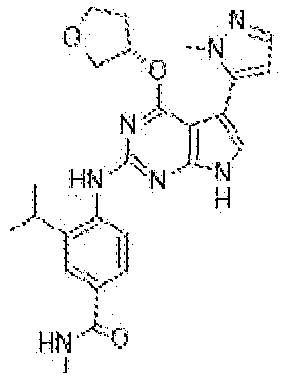
(S)-3-isopropyl-N-methyl-4-(5-(1-methyl-1H-pyrazol-5-yl)-4-(tetrahydrofuran-3-yloxy)-7H-pyrrolo[2,3-d]pyrimidin-2-ylamino)benzamide 476.3 A 226 
4-(4-isopropoxy-5-(1-methyl-1H-pyrazol-5-yl)-7H-pyrrolo[2,3-d]pyrimidin-2-ylamino)-3-methoxy-N-methylbenzamide 436.2 A 227 
4-(cyclopentyloxy)-N-(2-methoxy-4-(1-methyl-1H-pyrazol-4-yl)phenyl)-5-(2-methylbenzo[d]oxazol-6-yl)-7H-pyrrolo[2,3-d]pyrimidin-2-amine 536.3 C 228 
4-(cyclopentyloxy)-N-(2-methoxy-4-(1H-pyrazol-1-yl)phenyl)-5-(2-methylbenzo[d]oxazol-6-yl)-7H-pyrrolo[2,3-d]pyrimidin-2-amine 522.2 C 229 
N-cyclopentyl-4-(4-(cyclopentyloxy)-5-(2-methylbenzo[d]oxazol-6-yl)-7H-pyrrolo[2,3-d]pyrimidin-2-ylamino)-3-methoxybenzamide 567.3 B 230 
(R)-4-(4-(cyclopentyloxy)-5-(2-methylbenzo[d]oxazol-6-yl)-7H-pyrrolo[2,3-d]pyrimidin-2-ylamino)-N-(2-hydroxypropyl)-3-methoxybenzamide 557.3 C 231 
(4-(4-(cyclopentyloxy)-5-(2-methylbenzo[d]oxazol-6-yl)-7H-pyrrolo[2,3-d]pyrimidin-2-ylamino)-3-methoxyphenyl)(4-hydroxypiperidin-1-yl)methanone 583.3 D 232 
4-(4-(cyclopentyloxy)-5-(2-methylbenzo[d]oxazol-6-yl)-7H-pyrrolo[2,3-d]pyrimidin-2-ylamino)-N-(3-hydroxypropyl)-3-methoxybenzamide 557.3 D 233 
4-(4-(cyclopentyloxy)-5-(2-methylbenzo[d]oxazol-6-yl)-7H-pyrrolo[2,3-d]pyrimidin-2-ylamino)-N-(2-hydroxyethyl)-3-methoxy-N-methylbenzamide 557.5 D 234 
4-(4-(cyclopentyloxy)-5-(2-methylbenzo[d]oxazol-6-yl)-7H-pyrrolo[2,3-d]pyrimidin-2-ylamino)-N-(1-hydroxy-2-methylpropan-2-yl)-3-methoxybenzamide 571.6 C 235 
5-(4-(cyclopentyloxy)-5-(2-methylbenzo[d]oxazol-6-yl)-7H-pyrrolo[2,3-d]pyrimidin-2-ylamino)isoindolin-1-one 481 D 236 
4-(5-(2-acetamidopyridin-4-yl)-4-(tetrahydro-2H-pyran-4-yloxy)-7H-pyrrolo[2,3-d]pyrimidin-2-ylamino)-3-methoxy-N-methylbenzamide 532 D 237 
4-(4-(cyclopentyloxy)-5-(2-methylbenzo[d]oxazol-6-yl)-7H-pyrrolo[2,3-d]pyrimidin-2-ylamino)-2-fluoro-5-methoxy-N-methylbenzamide 530.9 C 238 
4-(4-(cyclopentyloxy)-5-(2-methylbenzo[d]oxazol-6-yl)-7H-pyrrolo[2,3-d]pyrimidin-2-ylamino)-N-((1s,3s)-3-hydroxycyclobutyl)-3-methoxybenzamide 569.3 D 239 
4-(4-(cyclopentyloxy)-5-(2-methylbenzo[d]oxazol-6-yl)-7H-pyrrolo[2,3-d]pyrimidin-2-ylamino)-N-((1r,3r)-3-hydroxycyclobutyl)-3-methoxybenzamide 569.3 D 240 
(S)-4-(4-(cyclopentyloxy)-5-(2-methylbenzo[d]oxazol-6-yl)-7H-pyrrolo[2,3-d]pyrimidin-2-ylamino)-N-(2-hydroxypropyl)-3-methoxybenzamide 557.3 C 241 
azetidin-1-yl(4-(4-(cyclopentyloxy)-5-(2-methylbenzo[d]oxazol-6-yl)-7H-pyrrolo[2,3-d]pyrimidin-2-ylamino)-3-methoxyphenyl)methanone 539.3 D 242 
(R)-4-(4-(cyclopentyloxy)-5-(2-methylbenzo[d]oxazol-6-yl)-7H-pyrrolo[2,3-d]pyrimidin-2-ylamino)-3-methoxy-N-((tetrahydrofuran-2-yl)methyl)benzamide 583.3 C 243 
4-(4-(cyclopentyloxy)-5-(2-methylbenzo[d]oxazol-6-yl)-7H-pyrrolo[2,3-d]pyrimidin-2-ylamino)-3-methoxy-N-((tetrahydro-2H-pyran-4-yl)methyl)benzamide 597.4 C 244 
5-(4-(cyclopentyloxy)-5-(2-methylbenzo[d]oxazol-6-yl)-7H-pyrrolo[2,3-d]pyrimidin-2-ylamino)-2-methylisoindolin-1-one 495.5 D 245 
4-(5-(4-carbamimidoylphenyl)-4-(cyclopentyloxy)-7H-pyrrolo[2,3-d]pyrimidin-2-ylamino)-3-methoxy-N-methylbenzamide 500 A 246 
4-(4-tert-butoxy-5-(2-methylbenzo[d]oxazol-6-yl)-7H-pyrrolo[2,3-d]pyrimidin-2-ylamino)-3-methoxy-N-methylbenzamide 501.3 D 247 
N-(4-(4-(cyclopentyloxy)-5-(2-methylbenzo[d]oxazol-6-yl)-7H-pyrrolo[2,3-d]pyrimidin-2-ylamino)-3-methoxyphenyl)acetamide 513.3 C 248 
N-(2-cyanoethyl)-4-(4-(cyclopentyloxy)-5-(2-methylbenzo[d]oxazol-6-yl)-7H-pyrrolo[2,3-d]pyrimidin-2-ylamino)-3-methoxy-N-methylbenzamide 566.3 D 249 
(4-(4-(cyclopentyloxy)-5-(2-methylbenzo[d]oxazol-6-yl)-7H-pyrrolo[2,3-d]pyrimidin-2-ylamino)-3-methoxyphenyl)(pyrrolidin-1-yl)methanone 553.3 C 250 
4-(4-(cyclopentyloxy)-5-(2-methylbenzo[d]oxazol-6-yl)-7H-pyrrolo[2,3-d]pyrimidin-2-ylamino)-3-methoxy-N-methyl-N-(tetrahydro-2H-pyran-4-yl)benzamide 597.4 C 251 
4-(4-(cyclopentyloxy)-5-(2-methylbenzo[d]oxazol-6-yl)-7H-pyrrolo[2,3-d]pyrimidin-2-ylamino)-N-cyclopropyl-N-(2-hydroxyethyl)-3-methoxybenzamide 583.3 C 252 
4-(4-(cyclopentyloxy)-5-(2-methylbenzo[d]oxazol-6-yl)-7H-pyrrolo[2,3-d]pyrimidin-2-ylamino)-3-methoxy-N-(tetrahydro-2H-pyran-4-yl)benzamide 583.3 C 253 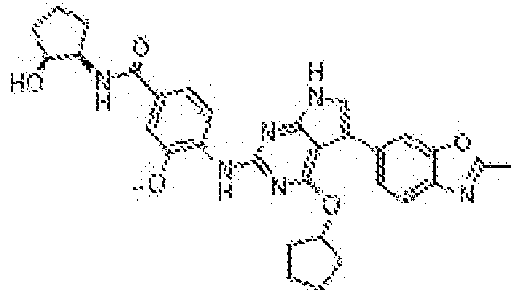
4-(4-(cyclopentyloxy)-5-(2-methylbenzo[d]oxazol-6-yl)-7H-pyrrolo[2,3-d]pyrimidin-2-ylamino)-N-((1R,2S)-2-hydroxycyclopentyl)-3-methoxybenzamide 583.3 C 254 
(S)-4-(4-(cyclopentyloxy)-5-(2-methylbenzo[d]oxazol-6-yl)-7H-pyrrolo[2,3-d]pyrimidin-2-ylamino)-3-methoxy-N-((tetrahydrofuran-2-yl)methyl)benzamide 583.3 C 255 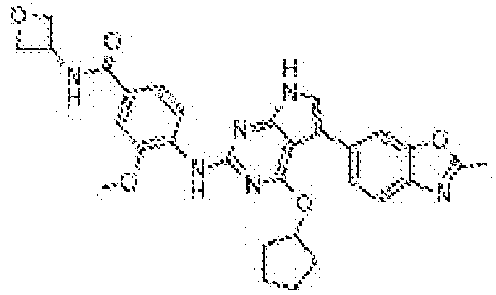
4-(4-(cyclopentyloxy)-5-(2-methylbenzo[d]oxazol-6-yl)-7H-pyrrolo[2,3-d]pyrimidin-2-ylamino)-3-methoxy-N-(oxetan-3-yl)benzamide 555.3 C 256 
4-(4-(cyclopentyloxy)-5-(2-methylbenzo[d]oxazol-6-yl)-7H-pyrrolo[2,3-d]pyrimidin-2-ylamino)-N-(2-fluoroethyl)-3-methoxybenzamide 545.3 C 257 
N-(3-amino-3-oxopropyl)-4-(4-(cyclopentyloxy)-5-(2-methylbenzo[d]oxazol-6-yl)-7H-pyrrolo[2,3-d]pyrimidin-2-ylamino)-3-methoxy-N-methylbenzamide 584.3 D 258 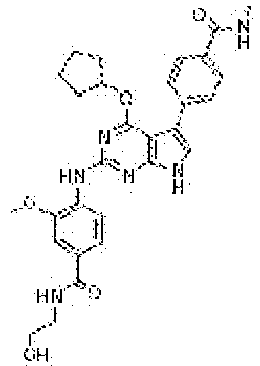
4-(4-(cyclopentyloxy)-5-(4-(methylcarbamoyl)phenyl)-7H-pyrrolo[2,3-d]pyrimidin-2-ylamino)-N-(2-hydroxyethyl)-3-methoxybenzamide 545 D 259 
(4-(4-(cyclopentyloxy)-5-(2-methylbenzo[d]oxazol-6-yl)-7H-pyrrolo[2,3-d]pyrimidin-2-ylamino)-3-methoxyphenyl)(4-methylpiperazin-1-yl)methanone 582 D 260 
4-(5-(benzo[c][1,2,5]oxadiazol-5-yl)-4-(cyclopentyloxy)-7H-pyrrolo[2,3-d]pyrimidin-2-ylamino)-3-methoxy-N-methylbenzamide 500.2 A 261 
4-(cyclopentyloxy)-N-(5-fluoro-2-methoxy-4-(methylsulfonyl)phenyl)-5-(2-methylbenzo[d]oxazol-6-yl)-7H-pyrrolo[2,3-d]pyrimidin-2-amine 552.2 C 262 
aziridin-1-yl(4-(4-(cyclopentyloxy)-5-(2-methylbenzo[d]oxazol-6-yl)-7H-pyrrolo[2,3-d]pyrimidin-2-ylamino)-3-methoxyphenyl)methanone 525.3 C 263 
N-(cyanomethyl)-4-(4-(cyclopentyloxy)-5-(2-methylbenzo[d]oxazol-6-yl)-7H-pyrrolo[2,3-d]pyrimidin-2-ylamino)-3-methoxy-N-methylbenzamide 552.2 D 264 
4-(4-(cyclopentyloxy)-5-(2-methylbenzo[d]oxazol-6-yl)-7H-pyrrolo[2,3-d]pyrimidin-2-ylamino)-N-((1S,2R)-2-hydroxycyclopentyl)-3-methoxybenzamide 583.3 C 265 
4-(4-(cyclopentyloxy)-5-(2-methylbenzo[d]oxazol-6-yl)-7H-pyrrolo[2,3-d]pyrimidin-2-ylamino)-N-((1S,2S)-2-hydroxycyclopentyl)-3-methoxybenzamide 583.3 C 266 
4-(4-(cyclopentyloxy)-5-(2-methylbenzo[d]oxazol-6-yl)-7H-pyrrolo[2,3-d]pyrimidin-2-ylamino)-N-((1R,2R)-2-hydroxycyclopentyl)-3-methoxybenzamide 583.3 C 267 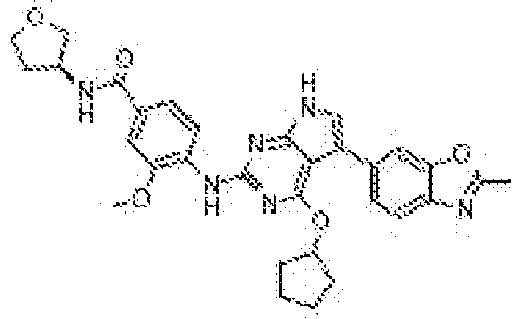
(S)-4-(4-(cyclopentyloxy)-5-(2-methylbenzo[d]oxazol-6-yl)-7H-pyrrolo[2,3-d]pyrimidin-2-ylamino)-3-methoxy-N-(tetrahydrofuran-3-yl)benzamide 569.3 C 268 
N-(2-amino-2-oxoethyl)-4-(4-(cyclopentyloxy)-5-(2-methylbenzo[d]oxazol-6-yl)-7H-pyrrolo[2,3-d]pyrimidin-2-ylamino)-3-methoxy-N-methylbenzamide 570.3 D 269 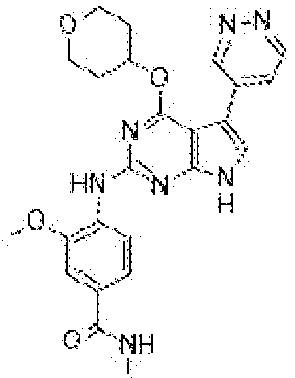
3-methoxy-N-methyl-4-(5-(pyridazin-4-yl)-4-(tetrahydro-2H-pyran-4-yloxy)-7H-pyrrolo[2,3-d]pyrimidin-2-ylamino)benzamide 476 B 270 
3-methoxy-N-methyl-4-(5-(pyrimidin-4-yl)-4-(tetrahydro-2H-pyran-4-yloxy)-7H-pyrrolo[2,3-d]pyrimidin-2-ylamino)benzamide 476.2 C 271 
4-(4-(cyclopentyloxy)-5-(2-methylbenzo[d]oxazol-6-yl)-7H-pyrrolo[2,3-d]pyrimidin-2-ylamino)-3-methoxy-N-methyl-N-((3-methyloxetan-3-yl)methyl)benzamide 597.4 D 272 
4-(4-(cyclopentyloxy)-5-(2-methylbenzo[d]oxazol-6-yl)-7H-pyrrolo[2,3-d]pyrimidin-2-ylamino)-3-methoxy-N-methyl-N-(oxetan-3-yl)benzamide 569.3 D 273 
4-(4-(cyclopentyloxy)-5-(2-methylbenzo[d]oxazol-6-yl)-7H-pyrrolo[2,3-d]pyrimidin-2-ylamino)-3-methoxy-N-(tetrahydro-2H-pyran-3-yl)benzamide 583.3 D 274 
4-(4-(cyclopentyloxy)-5-(2-methylbenzo[d]oxazol-6-yl)-7H-pyrrolo[2,3-d]pyrimidin-2-ylamino)-3-methoxy-N-(tetrahydro-2H-pyran-3-yl)benzamide 583.4 D 275 
(4-(4-(cyclopentyloxy)-5-(2-methylbenzo[d]oxazol-6-yl)-7H-pyrrolo[2,3-d]pyrimidin-2-ylamino)-3-methoxyphenyl)(4-methoxypiperidin-1-yl)methanone 597.5 D 276 
(S)-4-(4-sec-butoxy-5-(1-methyl-1H-pyrazol-4-yl)-7H-pyrrolo[2,3-d]pyrimidin-2-ylamino)-3-methoxy-N-methylbenzamide 450 D 277 
4-(4-(cyclopentyloxy)-5-(2-methylbenzo[d]oxazol-6-yl)-7H-pyrrolo[2,3-d]pyrimidin-2-ylamino)-3-methoxybenzonitrile 481 C 278 
4-(4-(cyclopentyloxy)-5-(1-methyl-1H-indazol-6-yl)-7H-pyrrolo[2,3-d]pyrimidin-2-ylamino)-3-methoxy-N-methylbenzamide 512.3 B 279 
4-(4-(cyclopentyloxy)-5-(3-methylbenzo[d]isoxazol-6-yl)-7H-pyrrolo[2,3-d]pyrimidin-2-ylamino)-3-methoxy-N-methylbenzamide 513.3 D 280 
5-(4-(cyclopentyloxy)-5-(2-methylbenzo[d]oxazol-6-yl)-7H-pyrrolo[2,3-d]pyrimidin-2-ylamino)-4-methoxy-N-methylpicolinamide 514.3 D 281 
N-((1,4-dioxan-2-yl)methyl)-4-(4-(cyclopentyloxy)-5-(2-methylbenzo[d]oxazol-6-yl)-7H-pyrrolo[2,3-d]pyrimidin-2-ylamino)-3-methoxybenzamide 599.3 C 282 
4-(4-(cyclopentyloxy)-5-(2-methylbenzo[d]oxazol-6-yl)-7H-pyrrolo[2,3-d]pyrimidin-2-ylamino)-3-methoxy-N-(oxetan-3-ylmethyl)benzamide 569.3 C 283 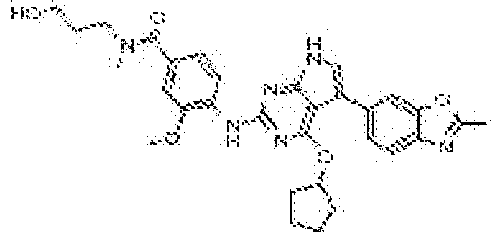
4-(4-(cyclopentyloxy)-5-(2-methylbenzo[d]oxazol-6-yl)-7H-pyrrolo[2,3-d]pyrimidin-2-ylamino)-N-(3-hydroxypropyl)-3-methoxy-N-methylbenzamide 571.3 D 284 
4-(4-(cyclopentyloxy)-5-(2-methylbenzo[d]oxazol-6-yl)-7H-pyrrolo[2,3-d]pyrimidin-2-ylamino)-3-methoxy-N-(2-methoxyethyl)-N-methylbenzamide 571.3 D 285 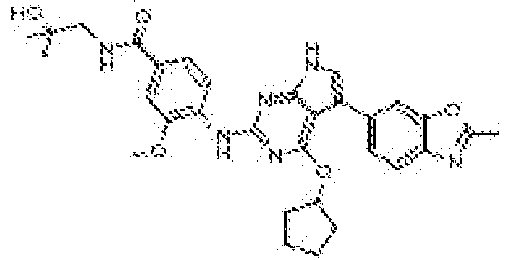
4-(4-(cyclopentyloxy)-5-(2-methylbenzo[d]oxazol-6-yl)-7H-pyrrolo[2,3-d]pyrimidin-2-ylamino)-N-(2-hydroxy-2-methylpropyl)-3-methoxybenzamide 571.3 C 286 
(S)-4-(4-sec-butoxy-5-(1-methyl-1H-pyrazol-4-yl)-7H-pyrrolo[2,3-d]pyrimidin-2-ylamino)-N-(2-hydroxyethyl)-3-methoxybenzamide 480 C 287 
4-(4-(cyclopentyloxy)-5-(2-methylbenzo[d]oxazol-6-yl)-7H-pyrrolo[2,3-d]pyrimidin-2-ylamino)-3-methoxybenzimidamide 498 A 288 
4-(2-(2-methoxy-4-(methylcarbamoyl)phenylamino)-4-(tetrahydro-2H-pyran-4-yloxy)-7H-pyrrolo[2,3-d]pyrimidin-5-yl)-N-methylpicolinamide 531.9 C 289 
(4-(4-(cyclopentyloxy)-5-(2-methylbenzo[d]oxazol-6-yl)-7H-pyrrolo[2,3-d]pyrimidin-2-ylamino)-3-methoxyphenyl)(4,4-difluoropiperidin-1-yl)methanone 602.8 C 290 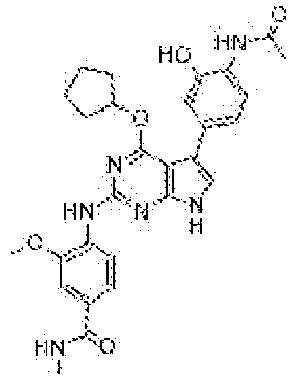
4-(5-(4-acetamido-3-hydroxyphenyl)-4-(cyclopentyloxy)-7H-pyrrolo[2,3-d]pyrimidin-2-ylamino)-3-methoxy-N-methylbenzamide 531 C 291 
(4-(4-(cyclopentyloxy)-5-(2-methylbenzo[d]oxazol-6-yl)-7H-pyrrolo[2,3-d]pyrimidin-2-ylamino)-3-methoxyphenyl)((3R,4R)-3-hydroxy-4-methoxypyrrolidin-1-yl)methanone 599.4 D 292 
4-(4-(cyclopentyloxy)-5-(2-methylbenzo[d]oxazol-6-yl)-7H-pyrrolo[2,3-d]pyrimidin-2-ylamino)-3-methoxy-N-(piperidin-1-yl)benzamide 582.4 C 293 
4-(4-(cyclopentyloxy)-5-(2-ethoxybenzo[d]oxazol-6-yl)-7H-pyrrolo[2,3-d]pyrimidin-2-ylamino)-3-methoxy-N-methylbenzamide 543.3 C 294 
4-(5-(4-amino-3-hydroxyphenyl)-4-(cyclopentyloxy)-7H-pyrrolo[2,3-d]pyrimidin-2-ylamino)-3-methoxy-N-methylbenzamide 489.2 C 295 
4-(cyclopentyloxy)-N-(1-methyl-1H-pyrazol-5-yl)-5-(2-methylbenzo[d]oxazol-6-yl)-7H-pyrrolo[2,3-d]pyrimidin-2-amine 429.9 C 296 
4-(cyclopentyloxy)-N-(1,5-dimethyl-1H-pyrazol-4-yl)-5-(2-methylbenzo[d]oxazol-6-yl)-7H-pyrrolo[2,3-d]pyrimidin-2-amine 444 D 297 
4-(cyclopentyloxy)-N-(1,4-dimethyl-1H-pyrazol-3-yl)-5-(2-methylbenzo[d]oxazol-6-yl)-7H-pyrrolo[2,3-d]pyrimidin-2-amine 444 98 
4-(4-(cyclopentyloxy)-5-(2-methylbenzo[d]oxazol-6-yl)-7H-pyrrolo[2,3-d]pyrimidin-2-ylamino)-3-methoxy-N,5-dimethylbenzamide 527.2 A 299 
4-(4-(cyclopentyloxy)-5-(2-oxo-2,3-dihydrobenzo[d]oxazol-6-yl)-7H-pyrrolo[2,3-d]pyrimidin-2-ylamino)-3-methoxy-N-methylbenzamide 515.2 C 300 
4-(4-(cyclopentyloxy)-5-(2-methylbenzo[d]oxazol-6-yl)-7H-pyrrolo[2,3-d]pyrimidin-2-ylamino)-3-methoxy-N-(1-methylazetidin-3-yl)benzamide 568.3 C 301 
4-(4-(cyclopentyloxy)-5-(2-methylbenzo[d]oxazol-6-yl)-7H-pyrrolo[2,3-d]pyrimidin-2-ylamino)-3-methoxy-N-(3-methyloxetan-3-yl)benzamide 569.3 C 302 
4-(4-cyclobutoxy-5-(1-methyl-1H-pyrazol-4-yl)-7H-pyrrolo[2,3-d]pyrimidin-2-ylamino)-3-methoxy-N-(oxetan-3-yl)benzamide 490.3 C 303 
4-(4-(cyclopentyloxy)-5-(1-methyl-1 H-pyrazol-4-yl)-7H-pyrrolo[2,3-d]pyrimidin-2-ylamino)-3-methoxy-N-(oxetan-3-yl)benzamide 504.3 D 304 
4-(4-cyclobutoxy-5-(4-(methylcarbamoyl)phenyl)-7H-pyrrolo[2,3-d]pyrimidin-2-ylamino)-3-methoxy-N-(oxetan-3-yl)benzamide 543.3 D 305 
4-(4-(cyclopentyloxy)-5-(4-(methylcarbamoyl)phenyl)-7H-pyrrolo[2,3-d]pyrimidin-2-ylamino)-3-methoxy-N-(oxetan-3-yl)benzamide 557.3 D 306 
4-(4-(cyclopentyloxy)-5-(quinolin-6-yl)-7H-pyrrolo[2,3-d]pyrimidin-2-ylamino)-3-methoxy-N-methylbenzamide 509.3 D 307 
4-(cyclopentyloxy)-N-(1,3-dimethyl-1H-pyrazol-4-yl)-5-(2-methylbenzo[d]oxazol-6-yl)-7H-pyrrolo[2,3-d]pyrimidin-2-amine 444 D 308 
N-(1-acetylazetidin-3-yl)-4-(4-(cyclopentyloxy)-5-(2-methylbenzo[d]oxazol-6-yl)-7H-pyrrolo[2,3-d]pyrimidin-2-ylamino)-3-methoxybenzamide 596.3 C 309 
4-(4-(cyclopentyloxy)-5-(2-methylbenzo[d]oxazol-6-yl)-7H-pyrrolo[2,3-d]pyrimidin-2-ylamino)-N-(2,2-difluoropropyl)-3-methoxybenzamide 577.3 C 310 
3-methoxy-4-(5-(4-(methylcarbamoyl)phenyl)-4-(tetrahydro-2H-pyran-4-yloxy)-7H-pyrrolo[2,3-d]pyrimidin-2-ylamino)-N-(oxetan-3-yl)benzamide 573.3 D 311 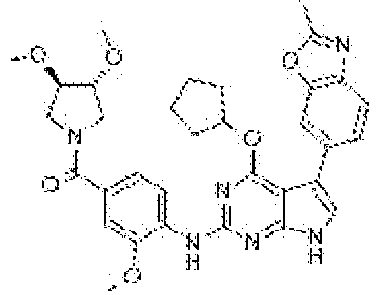
(4-(4-(cyclopentyloxy)-5-(2-methylbenzo[d]oxazol-6-yl)-7H-pyrrolo[2,3-d]pyrimidin-2-ylamino)-3-methoxyphenyl)((3R,4R)-3,4-dimethoxypyrrolidin-1-yl)methanone 613.4 D 312 
(4-(4-(cyclopentyloxy)-5-(2-methylbenzo[d]oxazol-6-yl)-7H-pyrrolo[2,3-d]pyrimidin-2-ylamino)-3-methoxyphenyl)(2,2-dimethylaziridin-1-yl)methanone 553.3 B 313 
(S)-(4-(4-(cyclopentyloxy)-5-(2-methylbenzo[d]oxazol-6-yl)-7H-pyrrolo[2,3-d]pyrimidin-2-ylamino)-3-methoxyphenyl)(2-methylaziridin-1-yl)methanone 539.3 B 314 
4-(4-((1s,4s)-4-hydroxy-4-methylcyclohexyloxy)-5-(2-methylbenzo[d]oxazol-6-yl)-7H-pyrrolo[2,3-d]pyrimidin-2-ylamino)-3-methoxy-N-(oxetan-3-yl)benzamide 599.3 D 315 
aziridin-1-yl(4-(4-((1s,4s)-4-hydroxy-4-methylcyclohexyloxy)-5-(2-methylbenzo[d]oxazol-6-yl)-7H-pyrrolo[2,3-d]pyrimidin-2-ylamino)-3-methoxyphenyl)methanone 569.3 D 316 
4-(4-(cyclopentyloxy)-2-(1-methyl-1H-pyrazol-5-ylamino)-7H-pyrrolo[2,3-d]pyrimidin-5-yl)-N-methylbenzamide 432 D 317 
N-methyl-4-(2-(1-methyl-1H-pyrazol-5-ylamino)-4-(tetrahydro-2H-pyran-4-yloxy)-7H-pyrrolo[2,3-d]pyrimidin-5-yl)benzamide 447.9 B *318 
methyl 4-(4-(cyclopentyloxy)-2-(2-methoxy-4-(methylcarbamoyl)phenylamino)-7H-pyrrolo[2,3-d]pyrimidin-5-yl)benzoate 516.2 A *319 
4-(4-(cyclopentyloxy)-5-(4-fluoro-2-methylphenyl)-7H-pyrrolo[2,3-d]pyrimidin-2-ylamino)-3-methoxy-N-methylbenzamide 490.2 A *320 
4-(4-(cyclopentyloxy)-5-(2,4-dimethoxyphenyl)-7H-pyrrolo[2,3-d]pyrimidin-2-ylamino)-3-methoxy-N-methylbenzamide 518.4 A *321 
4-(4-(cyclopentyloxy)-5-(3,5-dimethylisoxazol-4-yl)-7H-pyrrolo[2,3-d]pyrimidin-2-ylamino)-3-methoxy-N-methylbenzamide 477.4 A 322 
4-(4-(cyclopentyloxy)-5-(3-(dimethylamino)phenyl)-7H-pyrrolo[2,3-d]pyrimidin-2-ylamino)-3-methoxy-N-methylbenzamide 501.4 B 323 
4-(4-(cyclopentyloxy)-5-(3-hydroxyphenyl)-7H-pyrrolo[2,3-d]pyrimidin-2-ylamino)-3-methoxy-N-methylbenzamide 474.2 D 324 
4-(5-(3-cyanophenyl)-4-(cyclopentyloxy)-7H-pyrrolo[2,3-d]pyrimidin-2-ylamino)-3-methoxy-N-methylbenzamide 483.2 A 325 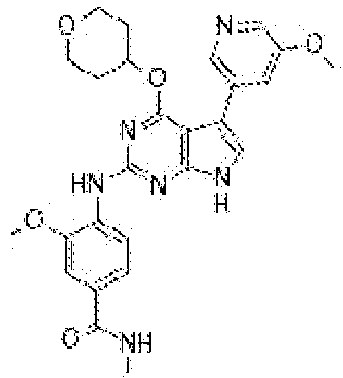
3-methoxy-4-(5-(5-methoxypyridin-3-yl)-4-(tetrahydro-2H-pyran-4-yloxy)-7H-pyrrolo[2,3-d]pyrimidin-2-ylamino)-N-methylbenzamide 504.9 5 C 326 
3-methoxy-4-(4-(2-methoxyethoxy)-5-(1-methyl-1H-pyrazol-4-yl)-7H-pyrrolo[2,3-d]pyrimidin-2-ylamino)-N-methylbenzamide 451.9 5 D 327 
N-(2-hydroxyethyl)-3-methoxy-4-(5-(1-methyl-1H-pyrazol-4-yl)-4-(tetrahydro-2H-pyran-4-yloxy)-7H-pyrrolo[2,3-d]pyrimidin-2-ylamino)benzamide 508.1 C 328 
(S)-3-methoxy-N-methyl-4-(5-(1-methyl-1H-pyrazol-4-yl)-4-(tetrahydrofuran-3-yloxy)-7H-pyrrolo[2,3-d]pyrimidin-2-ylamino)benzamide 464.1 D 329 
N-methyl-4-(2-(1-methyl-1H-pyrazol-5-ylamino)-4-(tetrahydro-2H-pyran-4-yloxy)-7H-pyrrolo[2,3-d]pyrimidin-5-yl)benzamide 448.3 B 330 
4-(4-(cyclopentyloxy)-5-(4-fluoro-2-methylbenzo[d]oxazol-6-yl)-7H-pyrrolo[2,3-d]pyrimidin-2-ylamino)-3-methoxy-N-methylbenzamide 531.3 C 331 
4-(4-cyclobutoxy-5-(4-(methylcarbamoyl)phenyl)-7H-pyrrolo[2,3-d]pyrimidin-2-ylamino)-N-(2-hydroxyethyl)-3-methoxybenzamide 531.3 C 332 
4-(4-cyclobutoxy-5-(4-(methylcarbamoyl)phenyl)-7H-pyrrolo[2,3-d]pyrimidin-2-ylamino)-3-methyl-N-(oxetan-3-yl)benzamide 527.4 D 333 
3-chloro-4-(4-cyclobutoxy-5-(4-(methylcarbamoyl)phenyl)-7H-pyrrolo[2,3-d]pyrimidin-2-ylamino)-N-(oxetan-3-yl)benzamide 547.2 D 334 
4-(4-isopropoxy-5-(4-(methylcarbamoyl)phenyl)-7H-pyrrolo[2,3-d]pyrimidin-2-ylamino)-3-methoxy-N-(oxetan-3-yl)benzamide 531 D 335 
(R)-(4-(4-(cyclopentyloxy)-5-(2-methylbenzo[d]oxazol-6-yl)-7H-pyrrolo[2,3-d]pyrimidin-2-ylamino)-3-methoxyphenyl)(2-methylaziridin-1-yl)methanone 539.3 B 336 
4-(2-(4-(aziridine-1-carbonyl)-2-methoxyphenylamino)-4-((1s,4s)-4-hydroxy-4-methylcyclohexyloxy)-7H-pyrrolo[2,3-d]pyrimidin-5-yl)-N-methylbenzamide 571.3 D 337 
4-(4-((1s,4s)-4-hydroxy-4-methylcyclohexyloxy)-5-(4-(methylcarbamoyl)phenyl)-7H-pyrrolo[2,3-d]pyrimidin-2-ylamino)-3-methoxy-N-(oxetan-3-yl)benzamide 601.4 D 338 
aziridin-1-yl(3-methoxy-4-(4-methoxy-5-(pyridin-4-yl)-7H-pyrrolo[2,3-d]pyrimidin-2-ylamino)phenyl)methanone 417.2 B 339 
4-(4-cyclobutoxy-5-(2-methylbenzo[d]oxazol-6-yl)-7H-pyrrolo[2,3-d]pyrimidin-2-ylamino)-3-methoxy-N-(oxetan-3-yl)benzamide 541.3 C 340 
4-(4-cyclobutoxy-2-(1,3-dimethyl-1H-pyrazol-4-ylamino)-7H-pyrrolo[2,3-d]pyrimidin-5-yl)-N-methylbenzamide 432.5 D 341 
4-(4-(3-cyanocyclobutoxy)-5-(4-(methylcarbamoyl)phenyl)-7H-pyrrolo[2,3-d]pyrimidin-2-ylamino)-3-methoxy-N-(oxetan-3-yl)benzamide 567.9 D 342 
4-(2-(5-chloro-1-methyl-1H-pyrazol-4-ylamino)-4-cyclobutoxy-7H-pyrrolo[2,3-d]pyrimidin-5-yl)-N-methylbenzamide 52.2 43 
(S)-3-methoxy-4-(5-(2-methylbenzo[d]oxazol-6-yl)-4-(tetrahydrofuran-3-yloxy)-7H-pyrrolo[2,3-d]pyrimidin-2-ylamino)-N-(oxetan-3-yl)benzamide 557.1 D 344 
4-(4-cyclopropoxy-5-(4-(methylcarbamoyl)phenyl)-7H-pyrrolo[2,3-d]pyrimidin-2-ylamino)-3-methoxy-N-(oxetan-3-yl)benzamide 529.1 C 345 
4-(4-(3,3-difluorocyclobutoxy)-5-(4-(methylcarbamoyl)phenyl)-7H-pyrrolo[2,3-d]pyrimidin-2-ylamino)-3-methoxy-N-(oxetan-3-yl)benzamide 579 D 346 
(R)-(4-(4-(cyclopentyloxy)-5-(2-methylbenzo[d]oxazol-6-yl)-7H-pyrrolo[2,3-d]pyrimidin-2-ylamino)-3-methoxyphenyl)(2-(hydroxymethyl)aziridin-1-yl)methanone 555.3 C 347 
3-methoxy-4-(4-methoxy-5-(pyridin-4-yl)-7H-pyrrolo[2,3-d]pyrimidin-2-ylamino)-N-(oxetan-3-yl)benzamide 447.2 C 348 
4-(4-cyclobutoxy-5-(4-(methylcarbamoyl)phenyl)-7H-pyrrolo[2,3-d]pyrimidin-2-ylamino)-3-methoxy-N-(1-methylazetidin-3-yl)benzamide 556.3 C 349 
4-(4-((1s,4s)-4-hydroxy-4-methylcyclohexyloxy)-5-(4-(methylcarbamoyl)phenyl)-7H-pyrrolo[2,3-d]pyrimidin-2-ylamino)-3-methoxy-N-(1-methylazetidin-3-yl)benzamide 614.4 C 350 
(S)-(4-(4-(cyclopentyloxy)-5-(2-methylbenzo[d]oxazol-6-yl)-7H-pyrrolo[2,3-d]pyrimidin-2-ylamino)-3-methoxyphenyl)(2-(hydroxymethyl)aziridin-1-yl)methanone 555.3 C 351 
N-(5-chloro-1-isopropyl-1H-pyrazol-4-yl)-4-(cyclopentyloxy)-5-(2-methylbenzo[d]oxazol-6-yl)-7H-pyrrolo[2,3-d]pyrimidin-2-amine 492.2 C 352 
5-(4-cyclobutoxy-2-(2-methoxy-4-(oxetan-3-ylcarbamoyl)phenylamino)-7H-pyrrolo[2,3-d]pyrimidin-5-yl)-N-methylpicolinamide 544.3 A 353 
4-(4-cyclobutoxy-2-(2-methoxy-4-(oxetan-3-ylcarbamoyl)phenylamino)-7H-pyrrolo[2,3-d]pyrimidin-5-yl)-2-fluoro-N-methylbenzamide 561.3 A 354 
4-(4-tert-butoxy-5-(2-methylbenzo[d]oxazol-6-yl)-7H-pyrrolo[2,3-d]pyrimidin-2-ylamino)-3-methoxy-N-(1-methylazetidin-3-yl)benzamide 556.3 D 355 
4-(4-tert-butoxy-5-(4-(methylcarbamoyl)phenyl)-7H-pyrrolo[2,3-d]pyrimidin-2-ylamino)-3-methoxy-N-(1-methylazetidin-3-yl)benzamide 558.4 D 356 
4-(4-isopropoxy-5-(2-methylbenzo[d]oxazol-6-yl)-7H-pyrrolo[2,3-d]pyrimidin-2-ylamino)-3-methoxy-N-(1-methylazetidin-3-yl)benzamide 542.3 D 357 
4-(4-isopropoxy-5-(4-(methylcarbamoyl)phenyl)-7H-pyrrolo[2,3-d]pyrimidin-2-ylamino)-3-methoxy-N-(1-methylazetidin-3-yl)benzamide 544.3 D 358 
4-(4-((1s,4s)-4-hydroxy-4-methylcyclohexyloxy)-5-(2-methylbenzo[d]oxazol-6-yl)-7H-pyrrolo[2,3-d]pyrimidin-2-ylamino)-3-methoxy-N-(1-methylazetidin-3-yl)benzamide 612.4 C 359 
3-methoxy-4-(5-(4-(methylcarbamoyl)phenyl)-4-(oxetan-3-yloxy)-7H-pyrrolo[2,3-d]pyrimidin-2-ylamino)-N-(oxetan-3-yl)benzamide 545.3 C 360 
4-(5-(4-(1H-imidazol-2-yl)phenyl)-4-cyclobutoxy-7H-pyrrolo[2,3-d]pyrimidin-2-ylamino)-3-methoxy-N-(oxetan-3-yl)benzamide 552.3 D 361 
4-(5-(4-(1H-imidazol-2-yl)phenyl)-4-(cyclopentyloxy)-7H-pyrrolo[2,3-d]pyrimidin-2-ylamino)-3-methoxy-N-(1-methylazetidin-3-yl)benzamide 579.4 C 362 
4-(4-isopropoxy-5-(2-methylbenzo[d]oxazol-6-yl)-7H-pyrrolo[2,3-d]pyrimidin-2-ylamino)-3-methoxy-N-(oxetan-3-yl)benzamide 529.3 C 363 
4-(4-cyclopropoxy-5-(2-methylbenzo[d]oxazol-6-yl)-7H-pyrrolo[2,3-d]pyrimidin-2-ylamino)-3-methoxy-N-(1-methylazetidin-3-yl)benzamide 540.3 D 364 
4-(4-cyclopropoxy-5-(4-(methylcarbamoyl)phenyl)-7H-pyrrolo[2,3-d]pyrimidin-2-ylamino)-3-methoxy-N-(1-methylazetidin-3-yl)benzamide 542.3 C 365 
3-methoxy-4-(4-(2-methoxyethoxy)-5-(2-methylbenzo[d]oxazol-6-yl)-7H-pyrrolo[2,3-d]pyrimidin-2-ylamino)-N-(oxetan-3-yl)benzamide 545.3 D 366 
3-methoxy-N-(1-methylazetidin-3-yl)-4-(5-(4-(methylcarbamoyl)phenyl)-4-(tetrahydro-2H-pyran-4-yloxy)-7H-pyrrolo[2,3-d]pyrimidin-2-ylamino)benzamide 586.4 C 367 
3-methoxy-N-(1-methylazetidin-3-yl)-4-(5-(2-methylbenzo[d]oxazol-6-yl)-4-(tetrahydro-2H-pyran-4-yloxy)-7H-pyrrolo[2,3-d]pyrimidin-2-ylamino)benzamide 584.4 C 368 
3-methoxy-4-(5-(2-methylbenzo[d]oxazol-6-yl)-4-(tetrahydro-2H-pyran-4-yloxy)-7H-pyrrolo[2,3-d]pyrimidin-2-ylamino)-N-(oxetan-3-yl)benzamide 571.3 D 369 
4-(4-cyclopropoxy-5-(2-methylbenzo[d]oxazol-6-yl)-7H-pyrrolo[2,3-d]pyrimidin-2-ylamino)-3-methoxy-N-(oxetan-3-yl)benzamide 527.3 C 370 
4-(4-tert-butoxy-5-(2-methylbenzo[d]oxazol-6-yl)-7H-pyrrolo[2,3-d]pyrimidin-2-ylamino)-3-methoxy-N-(oxetan-3-yl)benzamide 543.3 D 371 
1-(5-chloro-4-(4-(cyclopentyloxy)-5-(2-methylbenzo[d]oxazol-6-yl)-7H-pyrrolo[2,3-d]pyrimidin-2-ylamino)-1H-pyrazol-1-yl)-2-methylpropan-2-ol 522.3 D 372 
4-(2-(5-chloro-1-(2-hydroxy-2-methylpropyl)-1H-pyrazol-4-ylamino)-4-cyclobutoxy-7H-pyrrolo[2,3-d]pyrimidin-5-yl)-N-methylbenzamide 510.3 D 373 
3-methoxy-4-(4-(2-methoxyethoxy)-5-(4-(methylcarbamoyl)phenyl)-7H-pyrrolo[2,3-d]pyrimidin-2-ylamino)-N-(oxetan-3-yl)benzamide 547.3 C 374 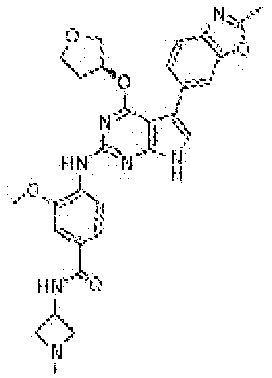
(S)-3-methoxy-N-(1-methylazetidin-3-yl)-4-(5-(2-methylbenzo[d]oxazol-6-yl)-4-(tetrahydrofuran-3-yloxy)-7H-pyrrolo[2,3-d]pyrimidin-2-ylamino)benzamide 570.3 D 375 
(S)-3-methoxy-N-(1-methylazetidin-3-yl)-4-(5-(4-(methylcarbamoyl)phenyl)-4-(tetrahydrofuran-3-yloxy)-7H-pyrrolo[2,3-d]pyrimidin-2-ylamino)benzamide 572.3 B 376 
(S)-3-methoxy-4-(5-(4-(methylcarbamoyl)phenyl)-4-(tetrahydrofuran-3-yloxy)-7H-pyrrolo[2,3-d]pyrimidin-2-ylamino)-N-(oxetan-3-yl)benzamide 559.3 D 377 
N-(5-chloro-1-(tetrahydro-2H-pyran-4-yl)-1H-pyrazol-4-yl)-4-(cyclopentyloxy)-5-(2-methylbenzo[d]oxazol-6-yl)-7H-pyrrolo[2,3-d]pyrimidin-2-amine 534.3 D 378 
N-(5-chloro-1-(2-methoxyethyl)-1H-pyrazol-4-yl)-4-(cyclopentyloxy)-5-(2-methylbenzo[d]oxazol-6-yl)-7H-pyrrolo[2,3-d]pyrimidin-2-amine 508.2 D 379 
3-methoxy-4-(5-(2-methylbenzo[d]oxazol-6-yl)-4-(1-methylcyclobutoxy)-7H-pyrrolo[2,3-d]pyrimidin-2-ylamino)-N-(oxetan-3-yl)benzamide 555.3 D 380 
3-methoxy-4-(4-methoxy-5-(3-methylbenzo[d]isoxazol-6-yl)-7H-pyrrolo[2,3-d]pyrimidin-2-ylamino)-N-(oxetan-3-yl)benzamide 501.2 C 381 
4-(5-(2-fluoropyridin-4-yl)-4-methoxy-7H-pyrrolo[2,3-d]pyrimidin-2-ylamino)-3-methoxy-N-(oxetan-3-yl)benzamide 465.2 C 382 
3-methoxy-4-(4-methoxy-5-(1-methyl-1H-pyrazol-4-yl)-7H-pyrrolo[2,3-d]pyrimidin-2-ylamino)-N-(oxetan-3-yl)benzamide 450.2 C 383 
3-methoxy-4-(4-methoxy-5-(2-methylpyridin-4-yl)-7H-pyrrolo[2,3-d]pyrimidin-2-ylamino)-N-(oxetan-3-yl)benzamide 461.2 D 384 
4-(5-(2,6-dimethylpyridin-4-yl)-4-methoxy-7H-pyrrolo[2,3-d]pyrimidin-2-ylamino)-3-methoxy-N-(oxetan-3-yl)benzamide 475.2 D 385 
N-(5-chloro-1-ethyl-1H-pyrazol-4-yl)-4-(cyclopentyloxy)-5-(2-methylbenzo[d]oxazol-6-yl)-7H-pyrrolo[2,3-d]pyrimidin-2-amine 478.2 C 386 
3-methoxy-4-(4-(2-methoxyethoxy)-5-(2-methylbenzo[d]oxazol-6-yl)-7H-pyrrolo[2,3-d]pyrimidin-2-ylamino)-N-(1-methylazetidin-3-yl)benzamide 558.3 A 387 
4-(5-(1,3-dimethyl-1H-pyrazol-4-yl)-4-methoxy-7H-pyrrolo[2,3-d]pyrimidin-2-ylamino)-3-methoxy-N-(oxetan-3-yl)benzamide 464.3 A 388 
3-methoxy-4-(4-methoxy-5-(3-methylbenzo[d]isoxazol-6-yl)-7H-pyrrolo[2,3-d]pyrimidin-2-ylamino)-N-methylbenzamide 457.2 C 389 
3-methoxy-4-(4-methoxy-5-(2-methoxypyridin-4-yl)-7H-pyrrolo[2,3-d]pyrimidin-2-ylamino)-N-(oxetan-3-yl)benzamide 477.3 D 390 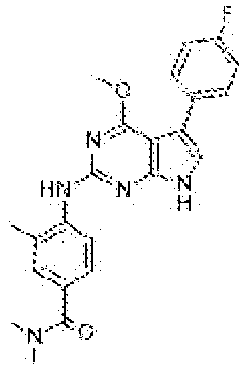
4-(5-(4-fluorophenyl)-4-methoxy-7H-pyrrolo[2,3-d]pyrimidin-2-ylamino)-N,N,3-trimethylbenzamide 420.3 A 391 
4-(4-methoxy-5-(4-methoxyphenyl)-7H-pyrrolo[2,3-d]pyrimidin-2-ylamino)-N,N,3-trimethylbenzamide 432.2 C 392 
3-methoxy-4-(4-methoxy-5-(pyridin-4-yl)-7H-pyrrolo[2,3-d]pyrimidin-2-ylamino)-N,N-dimethylbenzamide 419.1 D 393 
N-(1,3-dimethyl-1H-pyrazol-4-yl)-4-methoxy-5-(pyridin-4-yl)-7H-pyrrolo[2,3-d]pyrimidin-2-amine 336.1 C 394 
4-(5-(2-chloropyridin-4-yl)-4-methoxy-7H-pyrrolo[2,3-d]pyrimidin-2-ylamino)-3-methoxy-N-(oxetan-3-yl)benzamide 481.2 C 395 
3-methoxy-4-(4-methoxy-5-(pyrimidin-4-yl)-7H-pyrrolo[2,3-d]pyrimidin-2-ylamino)-N-(oxetan-3-yl)benzamide 448.2 A 396 
4-(4-methoxy-5-(pyridin-4-yl)-7H-pyrrolo[2,3-d]pyrimidin-2-ylamino)-3-methyl-N-(oxetan-3-yl)benzamide 431.2 C 397 
4-(5-(4-(1H-imidazol-2-yl)phenyl)-4-methoxy-7H-pyrrolo[2,3-d]pyrimidin-2-ylamino)-N,N,3-trimethylbenzamide 468.3 D 398 
4-(4-methoxy-5-(1-methyl-1H-pyrazol-4-yl)-7H-pyrrolo[2,3-d]pyrimidin-2-ylamino)-N,N,3-trimethylbenzamide 406.2 B 399 
4-(4-methoxy-5-(2-methyl-1H-benzo[d]imidazol-5-yl)-7H-pyrrolo[2,3-d]pyrimidin-2-ylamino)-N,N,3-trimethylbenzamide 456.3 D 400 
4-(4-methoxy-5-(3-methylbenzo[d]isoxazol-6-yl)-7H-pyrrolo[2,3-d]pyrimidin-2-ylamino)-N,N,3-trimethylbenzamide 457.2 D 401 
4-methoxy-N-(1-methyl-1H-pyrazol-5-yl)-5-(pyridin-4-yl)-7H-pyrrolo[2,3-d]pyrimidin-2-amine 322 A 402 
4-(5-(2-fluoropyridin-4-yl)-4-isopropoxy-7H-pyrrolo[2,3-d]pyrimidin-2-ylamino)-N,N,3-trimethylbenzamide 449.2 D 403 
4-(5-(2-fluoropyridin-4-yl)-4-isopropoxy-7H-pyrrolo[2,3-d]pyrimidin-2-ylamino)-3-methoxy-N,N-dimethylbenzamide 465.2 D 404 
3-methoxy-4-(4-methoxy-5-(2-methyl-1H-benzo[d]imidazol-5-yl)-7H-pyrrolo[2,3-d]pyrimidin-2-ylamino)-N-(oxetan-3-yl)benzamide 500.2 C 405 
3-methoxy-4-(4-methoxy-5-(pyridazin-4-yl)-7H-pyrrolo[2,3-d]pyrimidin-2-ylamino)-N-(oxetan-3-yl)benzamide 448.2 B 406 
4-(4-methoxy-5-(pyridin-4-yl)-7H-pyrrolo[2,3-d]pyrimidin-2-ylamino)-N,3-dimethyl-N-(oxetan-3-yl)benzamide 445.2 C 407 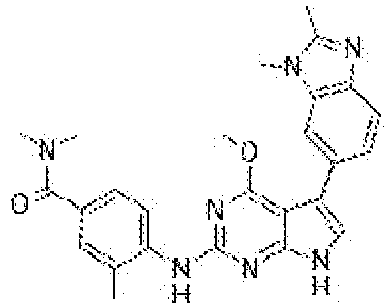
4-(5-(1,2-dimethyl-1H-benzo[d]imidazol-6-yl)-4-methoxy-7H-pyrrolo[2,3-d]pyrimidin-2-ylamino)-N,N,3-trimethylbenzamide 470.3 C 408 
3-methoxy-4-(4-methoxy-5-(3-methylbenzo[d]isoxazol-6-yl)-7H-pyrrolo[2,3-d]pyrimidin-2-ylamino)-N,N-dimethylbenzamide 473.2 C 409 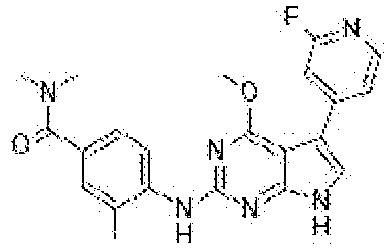
4-(5-(2-fluoropyridin-4-yl)-4-methoxy-7H-pyrrolo[2,3-d]pyrimidin-2-ylamino)-N,N,3-trimethylbenzamide 421.2 B 410 
4-(5-(1,2-dimethyl-1H-benzo[d]imidazol-5-yl)-4-methoxy-7H-pyrrolo[2,3-d]pyrimidin-2-ylamino)-N,N,3-trimethylbenzamide 470.3 A 411 
4-(4-methoxy-5-(4-(methylsulfonyl)phenyl)-7H-pyrrolo[2,3-d]pyrimidin-2-ylamino)-N,N,3-trimethylbenzamide 480.2 A 412 
4-(5-(2-fluoropyridin-4-yl)-4-methoxy-7H-pyrrolo[2,3-d]pyrimidin-2-ylamino)-3-methoxy-N,N-dimethylbenzamide 437.2 B 413 
4-(5-(2-fluoropyridin-4-yl)-4-methoxy-7H-pyrrolo[2,3-d]pyrimidin-2-ylamino)-3-methoxy-N-methyl-N-(oxetan-3-yl)benzamide 479.3 C 414 
4-methoxy-N-(4-methyl-1H-indazol-5-yl)-5-(pyridin-4-yl)-7H-pyrrolo[2,3-d]pyrimidin-2-amine 372.2 A 415 
5-(5-(2-fluoropyridin-4-yl)-4-methoxy-7H-pyrrolo[2,3-d]pyrimidin-2-ylamino)-4-methoxy-N,N-dimethylpicolinamide 438.2 B 416 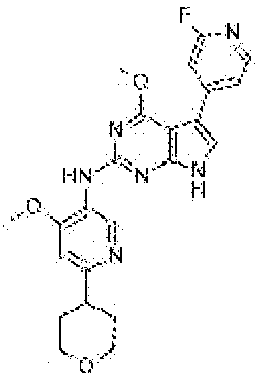
5-(2-fluoropyridin-4-yl)-4-methoxy-N-(4-methoxy-6-(tetrahydro-2H-pyran-4-yl)pyridin-3-yl)-7H-pyrrolo[2,3-d]pyrimidin-2-amine 451.2 A 417 
4-(5-(3-chloro-1-methyl-1H-pyrazol-4-yl)-4-methoxy-7H-pyrrolo[2,3-d]pyrimidin-2-ylamino)-3-methoxy-N-(oxetan-3-yl)benzamide 484.2 A 418 
4-(5-(2-fluoro-6-methylpyridin-4-yl)-4-methoxy-7H-pyrrolo[2,3-d]pyrimidin-2-ylamino)-3-methoxy-N,N-dimethylbenzamide 451.2 D 419 
N-(1,4-dimethyl-H-indazol-5-yl)-4-methoxy-5-(pyridin-4-yl)-7H-pyrrolo[2,3-d]pyrimidin-2-amine 386.2 C 420 
4-(5-(2-fluoro-6-methylpyridin-4-yl)-4-methoxy-7H-pyrrolo[2,3-d]pyrimidin-2-ylamino)-N,N,3-trimethylbenzamide 435.3 D 421 
3-chloro-N-methyl-4-(5-(4-(methylcarbamoyl)phenyl)-4-(tetrahydro-2H-pyran-4-yloxy)-7H-pyrrolo[2,3-d]pyrimidin-2-ylamino)benzamide 535.2 D 422 
3-chloro-4-(4-(cyclopentyloxy)-5-(2-methylbenzo[d]oxazol-6-yl)-7H-pyrrolo[2,3-d]pyrimidin-2-ylamino)-N-methylbenzamide 517.6 D 423 
3-chloro-N-methyl-4-(5-(1-methyl-1H-pyrazol-4-yl)-4-(tetrahydro-2H-pyran-4-yloxy)-7H-pyrrolo[2,3-d]pyrimidin-2-ylamino)benzamide 482.1 D 424 
4-(5-(2-fluoro-6-methylpyridin-4-yl)-4-methoxy-7H-pyrrolo[2,3-d]pyrimidin-2-ylamino)-3-methoxy-N-(oxetan-3-yl)benzamide 479.2 C 425 
3-chloro-4-(4-(cyclopentyloxy)-5-(4-(methylcarbamoyl)phenyl)-7H-pyrrolo[2,3-d]pyrimidin-2-ylamino)-N-methylbenzamide 519.2 D 426 
3-chloro-4-(4-isopropoxy-5-(2-methylbenzo[d]oxazol-6-yl)-7H-pyrrolo[2,3-d]pyrimidin-2-ylamino)-N-methylbenzamide 491.3 D 427 
3-chloro-4-(4-methoxy-5-(2-methylbenzo[d]oxazol-6-yl)-7H-pyrrolo[2,3-d]pyrimidin-2-ylamino)-N-methylbenzamide 463.1 D 428 
3-chloro-4-(4-methoxy-5-(4-(methylcarbamoyl)phenyl)-7H-pyrrolo[2,3-d]pyrimidin-2-ylamino)-N-methylbenzamide 465.1 D 429 
3-chloro-4-(4-((1s,4s)-4-hydroxy-4-methylcyclohexyloxy)-5-(2-methylbenzo[d]oxazol-6-yl)-7H-pyrrolo[2,3-d]pyrimidin-2-ylamino)-N-methylbenzamide 561.3 D 430 
3-chloro-N-methyl-4-(5-(2-methylbenzo[d]oxazol-6-yl)-4-(tetrahydro-2H-pyran-4-ylamino)-7H-pyrrolo[2,3-d]pyrimidin-2-ylamino)benzamide 532.2 D 431 
3-chloro-N-(2-hydroxyethyl)-4-(5-(2-methylbenzo[d]oxazol-6-yl)-4-(tetrahydro-2H-pyran-4-yloxy)-7H-pyrrolo[2,3-d]pyrimidin-2-ylamino)benzamide 563.1 D 432 
3-chloro-4-(4-isopropoxy-5-(4-(methylcarbamoyl)phenyl)-7H-pyrrolo[2,3-d]pyrimidin-2-ylamino)-N-methylbenzamide 493.2 D 433 
3-chloro-N-methyl-4-(5-(4-(methylcarbamoyl)phenyl)-4-(tetrahydro-2H-pyran-4-ylamino)-7H-pyrrolo[2,3-d]pyrimidin-2-ylamino)benzamide 534.4 D 434 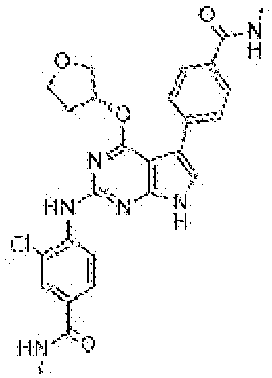
(R)-3-chloro-N-methyl-4-(5-(4-(methylcarbamoyl)phenyl)-4-(tetrahydrofuran-3-yloxy)-7H-pyrrolo[2,3-d]pyrimidin-2-ylamino)benzamide 521.2 D 435 
3-ethyl-N-methyl-4-(5-(2-methylbenzo[d]oxazol-6-yl)-4-(tetrahydro-2H-pyran-4-yloxy)-7H-pyrrolo[2,3-d]pyrimidin-2-ylamino)benzamide 527.2 D 436 
N-methyl-4-(5-(2-methylbenzo[d]oxazol-6-yl)-4-(tetrahydro-2H-pyran-4-yloxy)-7H-pyrrolo[2,3-d]pyrimidin-2-ylamino)-3-propylbenzamide 541.2 D * 437 
4-(5-(2-chloro-6-methylpyridin-4-yl)-4-methoxy-7H-pyrrolo[2,3-d]pyrimidin-2-ylamino)-3-methoxy-N-(oxetan-3-yl)benzamide 495.2 D * 438 
3-chloro-4-(5-(2-methylbenzo[d]oxazol-6-yl)-4-(tetrahydro-2H-pyran-4-yloxy)-7H-pyrrolo[2,3-d]pyrimidin-2-ylamino)-N-(oxetan-3-yl)benzamide 575.1 D * reference example
the compound is not
Claims (14)
- A compound of formula (I):

wherein:R1 is substituted or unsubstituted C1-8 alkyl, substituted or unsubstituted C3-8 cycloalkyl, or substituted or unsubstituted non-aromatic heterocyclyl;R2 is substituted or unsubstituted aryl, or substituted or unsubstituted heteroaryl;R3 is substituted or unsubstituted heterocyclyl or substituted or unsubstituted aryl, andL is O;provided
the compound is not4-[[trans-3-(methylamino)cyclobutyl]oxy]-N-(1-methyl-1H-pyrazol-4-yl)-5-(pyridin-3-yl)-7H-pyrrolo[2,3-d]pyrimidin-2-amine,N-[trans-3-[[2-[(1-methyl-1H-pyrazol-4-yl)amino]-5-(2-pyridinyl)-7H-pyrrolo[2,3-d]pyrimidin-4-yl]oxy]cyclobutyl]-2-Propenamide,N-methyl-N-[trans-3-[[2-[(1-methyl-1H-pyrazol-4-yl)amino]-5-(3-pyridinyl)-7H-pyrrolo[2,3-d]pyrimidin-4-yl]oxy]cyclobutyl]-2-Propenamide,N-[trans-3-[[2-[(1,3-dimethyl-1H-pyrazol-4-yl)amino]-5-(2-pyridinyl)-7H-pyrrolo[2,3-d]pyrimidin-4-yl]oxy]cyclobutyl]-N-methyl-2-Propenamide,N-methyl-N-[trans-3-[[5-(1-methyl-1H-pyrazol-3-yl)-2-[(1-methyl-1H-pyrazol-4-yl)amino]-7H-pyrrolo[2,3-d]pyrimidin-4-yl]oxy]cyclobutyl]-2-Propenamide,N-methyl-N-[trans-3-[[2-[(1-methyl-1H-pyrazol-4-yl)amino]-5-(2-pyridinyl)-7H-pyrrolo[2,3-d]pyrimidin-4-yl]oxy]cyclobutyl]-2-Propenamide,N-methyl-N-[trans-3-[[5-(1-methyl-1H-pyrazol-4-yl)-2-[(1-methyl-1H-pyrazol-4-yl)amino]-7H-pyrrolo[2,3-d]pyrimidin-4-yl]oxy]cyclobutyl]-2-Propenamide,N-[cis-3-[[2-[(1-methyl-1H-pyrazol-4-yl)amino]-5-(3-pyridinyl)-7H-pyrrolo[2,3-d]pyrimidin-4-yl]oxy]cyclobutyl]-2-Propenamide or1-[(3R,4R)-3-methoxy-4-[[[2-[(1-methyl-1H-pyrazol-4-yl)amino]-5-(2-pyridinyl)-7H-pyrrolo[2,3-d]pyrimidin-4-yl]oxy]methyl]-1-pyrrolidinyl]-2-Propen-1-one. - The compound of claim 1, wherein R1 is substituted or unsubstituted alkyl, optionally
wherein R1 is substituted or unsubstituted methyl, ethyl, propyl, isopropyl, n-butyl, sec-butyl, tert-butyl, n-pentyl, sec-pentyl, tert-pentyl, or 2,2-dimethylpropyl, or optionally
wherein R1 is substituted or unsubstituted methyl, ethyl, isopropyl, sec-butyl, t-butyl, or 2,2-dimethylpropyl. - The compound of claim 2, wherein the alkyl is substituted with one or more -OR or - NR2, wherein each R is independently -H or substituted or unsubstituted (C1-4)alkyl.
- The compound of claim 1, wherein R1 is substituted or unsubstituted C3-8 cycloalkyl, optionally
wherein R1 is substituted or unsubstituted cyclopropyl, cyclobutyl, cyclopentyl, cyclohexyl, or cycloheptyl. - The compound of claim 4, wherein the cycloalkyl is substituted with one or more - CN, halogen, -OR or a substituted or unsubstituted C1-3 alkyl, wherein each R is independently -H or substituted or unsubstituted (C1-4)alkyl.
- The compound of claim 1, wherein R1 is substituted or unsubstituted non-aromatic heterocyclyl, optionally
wherein R1 is substituted or unsubstituted oxetanyl, tetrahydrofuranyl, tetrahydropyranyl, or piperidinyl. - The compound of claim 1, wherein R1 is substituted or unsubstituted C1-8 alkyl,

 each R' is independently -CN, halogen, -OR or C1-3 alkyl;R" is -H or C1-3 alkyl;each R is independently -H or substituted or unsubstituted (C1-4)alkyl; andn is 0-2.
 - The compound of claim 1, wherein R2 is substituted phenyl, optionally
wherein R2 is phenyl, substituted with one or more substituted or unsubstituted C1-6 alkyl, halogen, -CN, -OR5, -C(=O)NR5 2, -C(=O)(substituted or unsubstituted heterocyclyl), - C(=O)(substituted or unsubstituted alkylheterocyclyl), -NHC(=O)R5, -SO2NR5 2, or substituted or unsubstituted heteroaryl, wherein each R5 is independently -H, substituted or unsubstituted alkyl, substituted or unsubstituted cycloalkyl, substituted or unsubstituted heterocyclyl, or substituted or unsubstituted alkylheterocyclyl, or optionally
wherein R2 is phenyl, substituted with one or more -(C1-3 alkyl), -(C1-3 alkyl)NR2' - CF3, -Cl, -F, -CN, -OCH3, -OCF3, -C(=O)NR2, -C(=O)NR(substituted or unsubstituted cycloalkyl), -C(=O)NR(CH2)0-2CR2(CH2)0-2OR, -C(=O)NR(CH2)0-2CR2(CH2)0-2NR2, -C(=O)NR(CH2)0-2CR2(CH2)0-2C(=O)NR2, -C(=O)N(substituted or unsubstituted cycloalkyl)(CH2)0-2OR, -C(=O)NR(CH2)0-3(substituted or unsubstituted heterocyclyl), -C(=O)(CH2)0-3(substituted or unsubstituted heterocyclyl), -C(=NR)NR2, -NRC(=O)R, -SO2NR2, -SO2R, or substituted or unsubstituted heterocyclyl, wherein each R is independently -H or substituted or unsubstituted (C1-4)alkyl. - The compound of claim 8, wherein each R is independently -H or -CH3, or
wherein R2 is phenyl, substituted with one or more -CH3, -CH2CH3, -CH2CH2CH3, - CH(CH3)2, -CH2NH2, -CF3, -Cl,- F, -CN, -OCH3, -OCF3, -C(=O)NH2, -C(=O)NHCH3, -C(=O)N(CH3)2, -C(=O)NC(CH3)3, -C(=O)NHCH2CH2F, -C(=O)NHCH2CHF2, -C(=O)NHCH2CF3, -C(=O)NHCH2CF2CH3, -C(=O)NHCH2CN, -C(=O)N(CH3)CH2CN, -C(=O)NHCH2CH2CN, -C(=O)N(CH3)CH2CH2CN, -C(=O)NH-cyclobutyl, -C(=O)NH-(hydroxy-cyclobutyl), -C(=O)NH-cyclopentyl, -C(=O)NH-(hydroxy-cyclopentyl), -C(=O)NHCH2CH2OH, -C(=O)NHCH2CH2OCH3, -C(=O)N(CH3)CH2CH2OH, -C(=O)N(CH3)CH2CH2OCH3, -C(=O)NHCH2CH2CH2OH, -C(=O)N(CH3)CH2CH2CH2OH, -C(=O)N(CH3)CH2CH2CH2OCH3, -C(=O)NHCH2CH(CH3)OH, -C(=O)NHCH2C(CH3)2OH, -C(=O)NHCH(CH3)CH2OH, -C(=O)NHC(CH3)2CH2OH, -C(=O)NHCH2CH2NH2, -C(=O)NHCH2CH2NH(CH3), -C(=O)NHCH2CH2N(CH3)2, -C(=O)NHCH2C(=O)NH2, -C(=O)N(CH3)CH2C(=O)NH2, -C(=O)NHCH2CH2C(=O)NH2, -C(=O)N(CH3)CH2CH2C(=O)NH2, -C(=O)N(cyclopropyl)CH2CH2OH, -C(=O)NH-oxetanyl, -C(=O)N(CH3)-oxetanyl, -C(=O)NH-(methyl-oxetanyl), -C(=O)NH-azetidinyl, -C(=O)NH-(methylazetidinyl), -C(=O)NH-(1-acetylazetidinyl), -C(=O)NH-pyrrolidyl, -C(=O)NH-piperidyl, -C(=O)NH-tetrahydrofuranyl, -C(=O)N(CH3)-tetrahydrofuranyl, -C(=O)NH-tetrahydropyranyl, -C(=O)N(CH3)-tetrahydropyranyl, -C(=O)NHCH2-oxetanyl, -C(=O)N(CH3)CH2-oxetanyl, -C(=O)NHCH2-(methyl-oxetanyl), -C(=O)N(CH3)CH2-(methyl-oxetanyl), -C(=O)NHCH2-tetrahydrofuranyl, -C(=O)NHCH2-tetrahydropyranyl, -C(=O)NHCH2-dioxanyl, -C(=O)aziridinyl, -C(=O)(methyl-aziridinyl), -C(=O)(dimethyl-aziridinyl), -C(=O)(hydroxymethyl-aziridinyl), -C(=O)azetidinyl, -C(=O)pyrrolidinyl, -C(=O)(hydroxyl-pyrrolidinyl), -C(=O)(hydroxyl,methoxypyrrolidinyl), -C(=O)(dimethoxypyrrolidinyl), -C(=O)morpholinyl, -C(=O)piperazinyl, -C(=O)(methylpiperazinyl), -C(=O)(hydroxy-piperidyl), -C(=O)(fluoropiperidinyl), -(C=O)(methoxy-piperidyl), -C(=NH)NH2, -NHC(=O)CH3, -SO2NHCH3, -SO2CH3, or substituted or unsubstituted pyrazolyl, or
wherein R2 is phenyl, substituted with one or more -CH3, -CH2CH3, -CH2CH2CH3, - CH(CH3)2, -CH2NH2, -CF3, -Cl,- F, -CN, -OCH3, -OCF3, -C(=O)NH2, -C(=O)NHCH3, -C(=O)N(CH3)2, -C(=O)NC(CH3)3, -C(=O)NHCH2CH2F, -C(=O)NHCH2CF2CH3, -C(=O)N(CH3)CH2CN, -C(=O)N(CH3)CH2CH2CN, -C(=O)NH-(3-hydroxy-cyclobutyl), -C(=O)NH-cyclopentyl, -C(=O)NH-(2-hydroxycyclopentyl),-C(=O)NHCH2CH2OH, -C(=O)NHCH2CH2OCH3, -C(=O)N(CH3)CH2CH2OH, -C(=O)N(CH3)CH2CH2OCH3, -C(=O)NHCH2CH2CH2O-C(=O)N(CH3)CH2CH2CH2OH, -C(=O)NHCH2CH(CH3)OH,-C(=O)NHCH2C(CH3)2OH, -C(=O)NHCH(CH3)CH2OH, -C(=O)NHC(CH3)2CH2OH, -C(=O)NHCH2CH2NH2, -C(=O)NHCH2CH2NH(CH3), -C(=O)NHCH2CH2N(CH3)2, -C(=O)N(CH3)CH2C(=O)NH2, -C(=O)N(CH3)CH2CH2C(=O)NH2, -C(=O)N(cyclopropyl)CH2CH2OH, -C(=O)NH-oxetanyl, -C(=O)N(CH3)-oxetanyl, -C(=O)NH-(3-methyl-oxetanyl), -C(=O)NH-(1-methylazetidinyl), -C(=O)NH-(1-acetylazetidinyl), -C(=O)NH-piperidyl, -C(=O)NH-tetrahydrofuranyl, -C(=O)NH-tetrahydropyranyl, -C(=O)N(CH3)-tetrahydropyranyl, -C(=O)NHCH2-oxetanyl, -C(=O)N(CH3)CH2-(3-methyl-oxetanyl), -C(=O)NHCH2-tetrahydrofuranyl, -C(=O)NHCH2-tetrahydropyranyl, -C(=O)NHCH2-dioxanyl, -C(=O)aziridinyl, -C(=O)(2-methyl-aziridinyl), -C(=O)(2,2-dimethyl-aziridinyl),-C(=O)(2-(hydroxymethyl)aziridinyl), -C(=O)azetidinyl, -C(=O)pyrrolidinyl, -C(=O)(3-hydroxy-4-methoxypyrrolidinyl), -C(=O)(3,4-dimethoxypyrrolidinyl), -C(=O)morpholinyl, -C(=O)piperazinyl, -C(=O)(4-methylpiperazinyl), -C(=O)(4-hydroxy-piperidyl), -C(=O)(4,4-difluoropiperidinyl), -(C=O)(4-methoxy-piperidyl), -C(=NH)NH2,-NHC(=O)CH3, -SO2NHCH3, -SO2CH3, or substituted or unsubstituted pyrazolyl. - The compound of claim 1, wherein R2 is substituted or unsubstituted pyrazolyl, substituted or unsubstituted pyridyl, substituted or unsubstituted indazolyl or substituted or unsubstituted isoindolinone, optionally
wherein R2 is substituted with one or more halogen, substituted or unsubstituted (C1-4)alkyl, -OR, -C(=O)NR2, or substituted or unsubstituted heterocyclyl, wherein each R is independently -H or substituted or unsubstituted (C1-4)alkyl; or
wherein R3 is substituted or unsubstituted heterocyclyl, optionally
wherein the heterocyclyl is substituted or unsubstituted pyrazolyl, oxazolyl, isoxazolyl, oxadiazolyl, pyridyl, pyridazinyl, pyrimidyl, pyrazinyl, benztriazolyl, indazolyl, indolyl, benzoxazolyl, benzisoxazolyl, benzthiazolyl, benzoxazolonyl, benzoxadiazolyl, benzimidazolyl, or quinolyl, or optionally
wherein the heterocyclyl is substituted with one or more substituents selected from substituted or unsubstituted (C1-4)alkyl, halogen, -OR, -CN, -NR2, -C(=O)NR2, -NRC(=O)R, or substituted or unsubstituted triazolyl, wherein each R is independently -H or substituted or unsubstituted (C1-4)alkyl, or optionally
wherein the heterocyclyl is substituted with one or more substituents selected from - CH3, -CH(CH3)2, -F, -Cl, -OH, -OCH3, -OCH2CH3, -CN, -NH2, -NHCH3, -N(CH3)2, - C(=O)NH(CH3), -NHC(=O)CH3, or substituted or unsubstituted triazolyl; or
wherein R3 is substituted or unsubstituted aryl; or
wherein R3 is substituted or unsubstituted phenyl, optionally
wherein the phenyl is substituted with one or more substituents selected from substituted or unsubstituted C1-4 alkyl, halogen, -CN, -OR, -NR2, -NRSO2R', -NR(C=O)NR2, -NR(C=O)R', -COOR, -(C=O)NR2, -C(=N)NR2, -SO2R', or substituted or unsubstituted heteroaryl, wherein each R is independently -H or substituted or unsubstituted (C1-4)alkyl, and R' is C1-3 alkyl, or optionally
wherein the phenyl is substituted with one or more substituents selected from -CH3,-CH2OH, -CH(OH)CH3, -C(CH3)2OH, -CN, -F, -Cl, -OH, -OCH3, -NH2, -N(CH3)2, - NHSO2CH3, -NH(C=O)NH2, -NH(C=O)CH3, -COOCH3, -(C=O)NHCH3, -C(=NH)NH2, - SO2CH3, substituted or unsubstituted triazolyl, substituted or unsubstituted pyrazolyl, or substituted or unsubstituted imidazolyl. - The compound of claim 1, wherein the compound is a compound selected from:4-(4-(cyclopentyloxy)-5-(4-hydroxyphenyl)-7H-pyrrolo[2,3-d]pyrimidin-2-ylamino)-N-methylbenzamide;4-(4-(cyclopentyloxy)-5-(3-hydroxyphenyl)-7H-pyrrolo[2,3-d]pyrimidin-2-ylamino)-N-methylbenzamide;4-(4-(cyclopentyloxy)-5-(4-hydroxyphenyl)-7H-pyrrolo[2,3-d]pyrimidin-2-ylamino)-3-methoxy-N-methylbenzamide;4-(5-(4-hydroxyphenyl)-4-methoxy-7H-pyrrolo[2,3-d]pyrimidin-2-ylamino)-N-methylbenzamide;4-(2-(1H-indazol-5-ylamino)-4-(cyclohexyloxy)-7H-pyrrolo[2,3-d]pyrimidin-5-yl)phenol;4-(2-(4-(1H-pyrazol-4-yl)phenylamino)-4-(cyclohexyloxy)-7H-pyrrolo[2,3-d]pyrimidin-5-yl)phenol;4-(5-(2-chloro-4-hydroxyphenyl)-4-(cyclohexyloxy)-7H-pyrrolo[2,3-d]pyrimidin-2-ylamino)-N-methylbenzamide;4-(2-(3-(1H-pyrazol-4-yl)phenylamino)-4-(cyclohexyloxy)-7H-pyrrolo[2,3-d]pyrimidin-5-yl)phenol;4-(4-(cyclopentyloxy)-5-(4-hydroxyphenyl)-7H-pyrrolo[2,3-d]pyrimidin-2-ylamino)-N,3-dimethylbenzamide;4-(4-(cyclopentyloxy)-5-(4-hydroxyphenyl)-7H-pyrrolo[2,3-d]pyrimidin-2-ylamino)-3-ethyl-N-methylbenzamide;4-(4-(cyclopentyloxy)-5-(4-hydroxyphenyl)-7H-pyrrolo[2,3-d]pyrimidin-2-ylamino)-3-isopropyl-N-methylbenzamide;4-(4-(cyclopentyloxy)-5-(4-fluorophenyl)-7H-pyrrolo[2,3-d]pyrimidin-2-ylamino)-3-methoxy-N-methylbenzamide;4-(4-(cyclopentyloxy)-5-phenyl-7H-pyrrolo[2,3-d]pyrimidin-2-ylamino)-3-methoxy-N-methylbenzamide;3-chloro-4-(4-(cyclopentyloxy)-5-(4-hydroxyphenyl)-7H-pyrrolo[2,3-d]pyrimidin-2-ylamino)-N-methylbenzamide;4-(4-(cyclopentyloxy)-5-(4-hydroxyphenyl)-7H-pyrrolo[2,3-d]pyrimidin-2-ylamino)-3-fluoro-N-methylbenzamide;4-(5-(4-hydroxyphenyl)-4-(tetrahydro-2H-pyran-4-yloxy)-7H-pyrrolo[2,3-d]pyrimidin-2-ylamino)-3-methoxy-N-methylbenzamide;4-(5-(4-hydroxyphenyl)-4-(neopentyloxy)-7H-pyrrolo[2,3-d]pyrimidin-2-ylamino)-3-methoxy-N-methylbenzamide;4-(5-(4-hydroxyphenyl)-4-methoxy-7H-pyrrolo[2,3-d]pyrimidin-2-ylamino)-3-methoxy-N-methylbenzamide;4-(4-(cyclopentyloxy)-2-(1-methyl-1H-indazol-5-ylamino)-7H-pyrrolo[2,3-d]pyrimidin-5-yl)phenol;4-(4-(cyclopentyloxy)-2-(6-methyl-1H-indazol-5-ylamino)-7H-pyrrolo[2,3-d]pyrimidin-5-yl)phenol;4-(4-(cyclopentyloxy)-2-(4-methyl-1H-indazol-5-ylamino)-7H-pyrrolo[2,3-d]pyrimidin-5-yl)phenol;4-(4-(cyclopentyloxy)-5-(4-(hydroxymethyl)phenyl)-7H-pyrrolo[2,3-d]pyrimidin-2-ylamino)-3-methoxy-N-methylbenzamide;4-(5-(3-chloro-4-hydroxyphenyl)-4-(cyclopentyloxy)-7H-pyrrolo[2,3-d]pyrimidin-2-ylamino)-3-methoxy-N-methylbenzamide;4-(4-(cyclopentyloxy)-5-(1H-indazol-6-yl)-7H-pyrrolo[2,3-d]pyrimidin-2-ylamino)-3-methoxy-N-methylbenzamide;4-(4-(cyclopentyloxy)-5-(3-(hydroxymethyl)phenyl)-7H-pyrrolo[2,3-d]pyrimidin-2-ylamino)-3-methoxy-N-methylbenzamide;4-(5-(1H-benzo[d][1,2,3]triazol-6-yl)-4-(cyclopentyloxy)-7H-pyrrolo[2,3-d]pyrimidin-2-ylamino)-3-methoxy-N-methylbenzamide;4-(5-(4-(4H-1,2,4-triazol-3-yl)phenyl)-4-(cyclopentyloxy)-7H-pyrrolo[2,3-d]pyrimidin-2-ylamino)-3-methoxy-N-methylbenzamide;3-chloro-4-(5-(4-hydroxyphenyl)-4-(tetrahydro-2H-pyran-4-yloxy)-7H-pyrrolo[2,3-d]pyrimidin-2-ylamino)-N-methylbenzamide;4-(5-(1H-benzo[d]imidazol-6-yl)-4-(cyclopentyloxy)-7H-pyrrolo[2,3-d]pyrimidin-2-ylamino)-3-methoxy-N-methylbenzamide;4-(4-(cyclopentyloxy)-5-(4-hydroxyphenyl)-7H-pyrrolo[2,3-d]pyrimidin-2-ylamino)-3-methoxy-N,N-dimethylbenzamide;4-(4-(cyclopentyloxy)-5-(4-(methylsulfonamido)phenyl)-7H-pyrrolo[2,3-d]pyrimidin-2-ylamino)-3-methoxy-N-methylbenzamide;4-(5-(3-cyano-4-hydroxyphenyl)-4-(cyclopentyloxy)-7H-pyrrolo[2,3-d]pyrimidin-2-ylamino)-3-methoxy-N-methylbenzamide;3-chloro-4-(4-(cyclopentyloxy)-5-(5-methoxypyridin-3-yl)-7H-pyrrolo[2,3-d]pyrimidin-2-ylamino)-N-methylbenzamide;4-(4-(cyclopentyloxy)-5-(2-methylbenzo[d]oxazol-5-yl)-7H-pyrrolo[2,3-d]pyrimidin-2-ylamino)-3-methoxy-N-methylbenzamide;4-(5-(4-aminophenyl)-4-(cyclopentyloxy)-7H-pyrrolo[2,3-d]pyrimidin-2-ylamino)-3-methoxy-N-methylbenzamide;4-(4-(cyclopentyloxy)-5-(2-methylbenzo[d]oxazol-6-yl)-7H-pyrrolo[2,3-d]pyrimidin-2-ylamino)-3-methoxy-N-methylbenzamide;4-(4-(cyclopentyloxy)-5-(4-ureidophenyl)-7H-pyrrolo[2,3-d]pyrimidin-2-ylamino)-3-methoxy-N-methylbenzamide;4-(5-(4-(1H-pyrazol-5-yl)phenyl)-4-(cyclopentyloxy)-7H-pyrrolo[2,3-d]pyrimidin-2-ylamino)-3-methoxy-N-methylbenzamide;4-(4-(cyclopentyloxy)-5-(3-fluoro-4-hydroxyphenyl)-7H-pyrrolo[2,3-d]pyrimidin-2-ylamino)-3-methoxy-N-methylbenzamide;4-(4-(cyclopentyloxy)-5-(4-hydroxy-3-methylphenyl)-7H-pyrrolo[2,3-d]pyrimidin-2-ylamino)-3-methoxy-N-methylbenzamide;4-(4-(cyclopentyloxy)-5-(4-hydroxyphenyl)-7H-pyrrolo[2,3-d]pyrimidin-2-ylamino)-3-methoxybenzamide;4-(4-((1r,4r)-4-hydroxycyclohexyloxy)-5-(4-hydroxyphenyl)-7H-pyrrolo[2,3-d]pyrimidin-2-ylamino)-3-methoxy-N-methylbenzamide;4-(4-((1s,4s)-4-hydroxycyclohexyloxy)-5-(4-hydroxyphenyl)-7H-pyrrolo[2,3-d]pyrimidin-2-ylamino)-3-methoxy-N-methylbenzamide;4-(4-(cyclopentyloxy)-5-(3-(2-hydroxypropan-2-yl)phenyl)-7H-pyrrolo[2,3-d]pyrimidin-2-ylamino)-3-methoxy-N-methylbenzamide;4-(5-(4-(1H-imidazol-2-yl)phenyl)-4-(cyclopentyloxy)-7H-pyrrolo[2,3-d]pyrimidin-2-ylamino)-3-methoxy-N-methylbenzamide;4-(4-(cyclopentyloxy)-5-(4-(2-hydroxypropan-2-yl)phenyl)-7H-pyrrolo[2,3-d]pyrimidin-2-ylamino)-3-methoxy-N-methylbenzamide;4-(4-(cyclopentyloxy)-2-(2-methoxy-4-(lH-pyrazol-4-yl)phenylamino)-7H-pyrrolo[2,3-d]pyrimidin-5-yl)phenol;4-(4-(cyclopentyloxy)-5-(5-hydroxypyridin-3-yl)-7H-pyrrolo[2,3-d]pyrimidin-2-ylamino)-3-methoxy-N-methylbenzamide;4-(2-(4-(aminomethyl)-2-methoxyphenylamino)-4-(cyclopentyloxy)-7H-pyrrolo[2,3-d]pyrimidin-5-yl)phenol;4-(5-(4-(4H-1,2,4-triazol-3-yl)phenyl)-4-methoxy-7H-pyrrolo[2,3-d]pyrimidin-2-ylamino)-3-chloro-N,N-dimethylbenzamide;4-(4-(cyclopentyloxy)-5-(3-fluoro-4-methoxyphenyl)-7H-pyrrolo[2,3-d]pyrimidin-2-ylamino)-3-methoxy-N-methylbenzamide;4-(4-(cyclopentyloxy)-5-(6-methoxypyridin-3-yl)-7H-pyrrolo[2,3-d]pyrimidin-2-ylamino)-3-methoxy-N-methylbenzamide;4-(5-(3-acetamidophenyl)-4-(cyclopentyloxy)-7H-pyrrolo[2,3-d]pyrimidin-2-ylamino)-3-methoxy-N-methylbenzamide;4-(4-(cyclopentyloxy)-5-(3-(methylsulfonamido)phenyl)-7H-pyrrolo[2,3-d]pyrimidin-2-ylamino)-3-methoxy-N-methylbenzamide;4-(4-(cyclopentyloxy)-5-(pyridin-3-yl)-7H-pyrrolo[2,3-d]pyrimidin-2-ylamino)-3-methoxy-N-methylbenzamide;4-(4-(cyclopentyloxy)-5-(3-(methylcarbamoyl)phenyl)-7H-pyrrolo[2,3-d]pyrimidin-2-ylamino)-3-methoxy-N-methylbenzamide;4-(4-(cyclopentyloxy)-5-(3-methoxyphenyl)-7H-pyrrolo[2,3-d]pyrimidin-2-ylamino)-3-methoxy-N-methylbenzamide;4-(4-(cyclopentyloxy)-5-(4-(methylsulfonyl)phenyl)-7H-pyrrolo[2,3-d]pyrimidin-2-ylamino)-3-methoxy-N-methylbenzamide;4-(5-(4-acetamidophenyl)-4-(cyclopentyloxy)-7H-pyrrolo[2,3-d]pyrimidin-2-ylamino)-3-methoxy-N-methylbenzamide;4-(4-(cyclopentyloxy)-5-(3-(methylsulfonyl)phenyl)-7H-pyrrolo[2,3-d]pyrimidin-2-ylamino)-3-methoxy-N-methylbenzamide;4-(4-(cyclopentyloxy)-5-(3,4-dimethoxyphenyl)-7H-pyrrolo[2,3-d]pyrimidin-2-ylamino)-3-methoxy-N-methylbenzamide;4-(5-(3-aminophenyl)-4-(cyclopentyloxy)-7H-pyrrolo[2,3-d]pyrimidin-2-ylamino)-3-methoxy-N-methylbenzamide;4-(4-(cyclopentyloxy)-5-(pyridin-4-yl)-7H-pyrrolo[2,3-d]pyrimidin-2-ylamino)-3-methoxy-N-methylbenzamide;4-(4-(cyclopentyloxy)-5-(6-ethoxypyridin-3-yl)-7H-pyrrolo[2,3-d]pyrimidin-2-ylamino)-3-methoxy-N-methylbenzamide;(4-(5-(4-(4H-1,2,4-triazol-3-yl)phenyl)-4-methoxy-7H-pyrrolo[2,3-d]pyrimidin-2-ylamino)-3-chlorophenyl)(morpholino)-methanone;N,N,3-trimethyl-4-(5-(2-methylbenzo[d]oxazol-6-yl)-4-(tetrahydro-2H-pyran-4-yloxy)-7H-pyrrolo[2,3-d]pyrimidin-2-ylamino)benzamide;4-(5-(2-amino-1H-benzo[d]imidazol-5-yl)-4-methoxy-7H-pyrrolo[2,3-d]pyrimidin-2-ylamino)-3-chloro-N,N-dimethylbenzamide;4-(4-methoxy-5-(2-methylbenzo[d]oxazol-6-yl)-7H-pyrrolo[2,3-d]pyrimidin-2-ylamino)-N,N,3-trimethylbenzamide;4-(4-(cyclopentyloxy)-5-(4-(dimethylamino)phenyl)-7H-pyrrolo[2,3-d]pyrimidin-2-ylamino)-3-methoxy-N-methylbenzamide;4-(4-(cyclopentyloxy)-5-(4-methoxyphenyl)-7H-pyrrolo[2,3-d]pyrimidin-2-ylamino)-3-methoxy-N-methylbenzamide;4-(5-(4-cyanophenyl)-4-(cyclopentyloxy)-7H-pyrrolo[2,3-d]pyrimidin-2-ylamino)-3-methoxy-N-methylbenzamide;4-(4-(cyclopentyloxy)-5-(1-methyl-1H-indol-5-yl)-7H-pyrrolo[2,3-d]pyrimidin-2-ylamino)-3-methoxy-N-methylbenzamide;4-(4-(cyclopentyloxy)-5-(4-(methylcarbamoyl)phenyl)-7H-pyrrolo[2,3-d]pyrimidin-2-ylamino)-3-methoxy-N-methylbenzamide;4-(4-(cyclopentyloxy)-5-(1H-pyrazol-3-yl)-7H-pyrrolo[2,3-d]pyrimidin-2-ylamino)-3-methoxy-N-methylbenzamide;4-(4-(cyclopentyloxy)-5-(1H-indol-5-yl)-7H-pyrrolo[2,3-d]pyrimidin-2-ylamino)-3-methoxy-N-methylbenzamide;4-(4-(cyclopentyloxy)-5-(1H-pyrazol-4-yl)-7H-pyrrolo[2,3-d]pyrimidin-2-ylamino)-3-methoxy-N-methylbenzamide;3-chloro-4-(4-methoxy-5-(2-methyl-1H-benzo[d]imidazol-5-yl)-7H-pyrrolo[2,3-d]pyrimidin-2-ylamino)-N,N-dimethylbenzamide;(4-(4-(cyclopentyloxy)-5-(2-methylbenzo[d]oxazol-6-yl)-7H-pyrrolo[2,3-d]pyrimidin-2-ylamino)-3-methylphenyl)(morpholino)methanone;N-(1H-indazol-5-yl)-4-methoxy-5-(2-methylbenzo[d]oxazol-6-yl)-7H-pyrrolo[2,3-d]pyrimidin-2-amine;N-(4-(1H-pyrazol-4-yl)phenyl)-4-methoxy-5-(2-methylbenzo[d]oxazol-6-yl)-7H-pyrrolo[2,3-d]pyrimidin-2-amine;4-(4-methoxy-5-(pyridin-4-yl)-7H-pyrrolo[2,3-d]pyrimidin-2-ylamino)-N,N,3-trimethylbenzamide;3-methoxy-N-methyl-4-(5-(2-methylbenzo[d]oxazol-6-yl)-4-(tetrahydro-2H-pyran-4-yloxy)-7H-pyrrolo[2,3-d]pyrimidin-2-ylamino)benzamide;4-(4-(cyclopentyloxy)-5-(2-methylbenzo[d]oxazol-6-yl)-7H-pyrrolo[2,3-d]pyrimidin-2-ylamino)-3-methoxy-N,N-dimethylbenzamide;4-(4-((1r,4r)-4-hydroxycyclohexyloxy)-5-(2-methylbenzo[d]oxazol-6-yl)-7H-pyrrolo[2,3-d]pyrimidin-2-ylamino)-N,N,3-trimethylbenzamide;N,N,3-trimethyl-4-(5-(pyridin-4-yl)-4-(tetrahydro-2H-pyran-4-yloxy)-7H-pyrrolo[2,3-d]pyrimidin-2-ylamino)benzamide;4-(4-(cyclopentyloxy)-5-(2-methylbenzo[d]oxazol-6-yl)-7H-pyrrolo[2,3-d]pyrimidin-2-ylamino)-N,3-dimethylbenzamide;N,N,3-trimethyl-4-(5-(2-methylbenzo[d]oxazol-6-yl)-4-(1-methylpiperidin-4-yloxy)-7H-pyrrolo[2,3-d]pyrimidin-2-ylamino)benzamide;(4-(4-(cyclopentyloxy)-5-(2-methylbenzo[d]oxazol-6-yl)-7H-pyrrolo[2,3-d]pyrimidin-2-ylamino)-3-methoxyphenyl)(morpholino)methanone;N,N,3-trimethyl-4-(5-(2-methylbenzo[d]oxazol-6-yl)-4-(piperidin-4-yloxy)-7H-pyrrolo[2,3-d]pyrimidin-2-ylamino)benzamide;(S)-N,N,3-trimethyl-4-(5-(2-methylbenzo[d]oxazol-6-yl)-4-(tetrahydrofuran-3-yloxy)-7H-pyrrolo[2,3-d]pyrimidin-2-ylamino)benzamide;(R)-N,N,3-trimethyl-4-(5-(2-methylbenzo[d]oxazol-6-yl)-4-(tetrahydrofuran-3-yloxy)-7H-pyrrolo[2,3-d]pyrimidin-2-ylamino)benzamide;N-(2-aminoethyl)-4-(4-(cyclopentyloxy)-5-(2-methylbenzo[d]oxazol-6-yl)-7H-pyrrolo[2,3-d]pyrimidin-2-ylamino)-3-methoxybenzamide;4-(4-(cyclopentyloxy)-5-(2-methylbenzo[d]oxazol-6-yl)-7H-pyrrolo[2,3-d]pyrimidin-2-ylamino)-N-(2-hydroxyethyl)-3-methoxybenzamide;4-(5-(6-ethoxypyridin-3-yl)-4-(tetrahydro-2H-pyran-4-yloxy)-7H-pyrrolo[2,3-d]pyrimidin-2-ylamino)-3-methoxy-N-methylbenzamide;4-(cyclopentyloxy)-N-(2-methoxyphenyl)-5-(2-methylbenzo[d]oxazol-6-yl)-7H-pyrrolo[2,3-d]pyrimidin-2-amine;(S)-N,N,3-trimethyl-4-(5-(2-methylbenzo[d]oxazol-6-yl)-4-(tetrahydro-2H-pyran-3-yloxy)-7H-pyrrolo[2,3-d]pyrimidin-2-ylamino)benzamide;N,N,3-trimethyl-4-(5-(3-(methylsulfonyl)phenyl)-4-(tetrahydro-2H-pyran-4-yloxy)-7H-pyrrolo[2,3-d]pyrimidin-2-ylamino)benzamide;3-methoxy-N-methyl-4-(5-(3-(methylsulfonyl)phenyl)-4-(tetrahydro-2H-pyran-4-yloxy)-7H-pyrrolo[2,3-d]pyrimidin-2-ylamino)benzamide;N,N,3-trimethyl-4-(5-(pyrimidin-5-yl)-4-(tetrahydro-2H-pyran-4-yloxy)-7H-pyrrolo[2,3-d]pyrimidin-2-ylamino)benzamide;4-(5-(6-ethoxypyridin-3-yl)-4-(tetrahydro-2H-pyran-4-yloxy)-7H-pyrrolo[2,3-d]pyrimidin-2-ylamino)-N,N,3-trimethylbenzamide;4-(5-(2-amino-1H-benzo[d]imidazol-6-yl)-4-(cyclopentyloxy)-7H-pyrrolo[2,3-d]pyrimidin-2-ylamino)-3-methoxy-N-methylbenzamide;4-(5-(1,3,4-oxadiazol-2-yl)-4-(tetrahydro-2H-pyran-4-yloxy)-7H-pyrrolo[2,3-d]pyrimidin-2-ylamino)-N,N,3-trimethylbenzamide;N,N,3-trimethyl-4-(5-(1-methyl-1H-pyrazol-4-yl)-4-(tetrahydro-2H-pyran-4-yloxy)-7H-pyrrolo[2,3-d]pyrimidin-2-ylamino)benzamide;N,N,3-trimethyl-4-(5-(1-methyl-1H-pyrazol-3-yl)-4-(tetrahydro-2H-pyran-4-yloxy)-7H-pyrrolo[2,3-d]pyrimidin-2-ylamino)benzamide;3-methoxy-N-methyl-4-(5-(pyridin-4-yl)-4-(tetrahydro-2H-pyran-4-yloxy)-7H-pyrrolo[2,3-d]pyrimidin-2-ylamino)benzamide;N,N,3-trimethyl-4-(5-(oxazol-2-yl)-4-(tetrahydro-2H-pyran-4-yloxy)-7H-pyrrolo[2,3-d]pyrimidin-2-ylamino)benzamide;4-(5-(2-amino-1H-benzo[d]imidazol-6-yl)-4-(tetrahydro-2H-pyran-4-yloxy)-7H-pyrrolo[2,3-d]pyrimidin-2-ylamino)-N,N,3-trimethylbenzamide;N,N,3-trimethyl-4-(5-(2-methylpyridin-4-yl)-4-(tetrahydro-2H-pyran-4-yloxy)-7H-pyrrolo[2,3-d]pyrimidin-2-ylamino)benzamide;3-methoxy-4-(4-methoxy-5-(6-methoxypyridin-3-yl)-7H-pyrrolo[2,3-d]pyrimidin-2-ylamino)-N-methylbenzamide;3-methoxy-4-(5-(6-methoxypyridin-3-yl)-4-(tetrahydro-2H-pyran-4-yloxy)-7H-pyrrolo[2,3-d]pyrimidin-2-ylamino)-N-methylbenzamide;3-methoxy-N-(2-methoxyethyl)-4-(5-(2-methylbenzo[d]oxazol-6-yl)-4-(tetrahydro-2H-pyran-4-yloxy)-7H-pyrrolo[2,3-d]pyrimidin-2-ylamino)benzamide;(R)-N,N,3-trimethyl-4-(5-(2-methylbenzo[d]oxazol-6-yl)-4-(tetrahydro-2H-pyran-3-yloxy)-7H-pyrrolo[2,3-d]pyrimidin-2-ylamino)benzamide;4-(5-(1H-pyrazol-4-yl)-4-(tetrahydro-2H-pyran-4-yloxy)-7H-pyrrolo[2,3-d]pyrimidin-2-ylamino)-3-methoxy-N-methylbenzamide;3-methoxy-N-methyl-4-(5-(4-(methylcarbamoyl)phenyl)-4-(tetrahydro-2H-pyran-4-yloxy)-7H-pyrrolo[2,3-d]pyrimidin-2-ylamino)benzamide;3-methoxy-4-(4-methoxy-5-(4-(methylcarbamoyl)phenyl)-7H-pyrrolo[2,3-d]pyrimidin-2-ylamino)-N-methylbenzamide;4-(4-isopropoxy-5-(2-methylbenzo[d]oxazol-6-yl)-7H-pyrrolo[2,3-d]pyrimidin-2-ylamino)-3-methoxy-N-methylbenzamide;4-(5-(6-(dimethylamino)pyridin-3-yl)-4-(tetrahydro-2H-pyran-4-yloxy)-7H-pyrrolo[2,3-d]pyrimidin-2-ylamino)-3-methoxy-N-methylbenzamide;N-(2-(dimethylamino)ethyl)-3-methoxy-4-(5-(2-methylbenzo[d]oxazol-6-yl)-4-(tetrahydro-2H-pyran-4-yloxy)-7H-pyrrolo[2,3-d]pyrimidin-2-ylamino)benzamide;N,N,3-trimethyl-4-(5-(2-methyl-1H-benzo[d]imidazol-6-yl)-4-(tetrahydro-2H-pyran-4-yloxy)-7H-pyrrolo[2,3-d]pyrimidin-2-ylamino)benzamide;3-methoxy-4-(4-methoxy-5-(1H-pyrazol-4-yl)-7H-pyrrolo[2,3-d]pyrimidin-2-ylamino)-N-methylbenzamide;3-methoxy-N-(2-(methylamino)ethyl)-4-(5-(2-methylbenzo[d]oxazol-6-yl)-4-(tetrahydro-2H-pyran-4-yloxy)-7H-pyrrolo[2,3-d]pyrimidin-2-ylamino)benzamide;4-(5-(2-(dimethylamino)pyridin-4-yl)-4-(tetrahydro-2H-pyran-4-yloxy)-7H-pyrrolo[2,3-d]pyrimidin-2-ylamino)-3-methoxy-N-methylbenzamide;3-chloro-N-methyl-4-(5-(2-methylbenzo[d]oxazol-6-yl)-4-(tetrahydro-2H-pyran-4-yloxy)-7H-pyrrolo[2,3-d]pyrimidin-2-ylamino)benzamide;(S)-N,3-dimethyl-4-(5-(2-methylbenzo[d]oxazol-6-yl)-4-(tetrahydrofuran-3-yloxy)-7H-pyrrolo[2,3-d]pyrimidin-2-ylamino)benzamide;(S)-3-chloro-N-methyl-4-(5-(2-methylbenzo[d]oxazol-6-yl)-4-(tetrahydrofuran-3-yloxy)-7H-pyrrolo[2,3-d]pyrimidin-2-ylamino)benzamide;4-(5-(2,7-dimethylbenzo[d]oxazol-6-yl)-4-(tetrahydro-2H-pyran-4-yloxy)-7H-pyrrolo[2,3-d]pyrimidin-2-ylamino)-3-methoxy-N-methylbenzamide;4-(5-(2,5-dimethylbenzo[d]oxazol-6-yl)-4-(tetrahydro-2H-pyran-4-yloxy)-7H-pyrrolo[2,3-d]pyrimidin-2-ylamino)-3-methoxy-N-methylbenzamide;4-(4-((1r,4r)-4-hydroxycyclohexyloxy)-5-(2-methylbenzo[d]oxazol-6-yl)-7H-pyrrolo[2,3-d]pyrimidin-2-ylamino)-3-methoxy-N-methylbenzamide;3-methoxy-N-methyl-4-(4-(2-(methylamino)ethoxy)-5-(2-methylbenzo[d]oxazol-6-yl)-7H-pyrrolo[2,3-d]pyrimidin-2-ylamino)benzamide;3-methoxy-4-(4-(2-methoxyethoxy)-5-(2-methylbenzo[d]oxazol-6-yl)-7H-pyrrolo[2,3-d]pyrimidin-2-ylamino)-N-methylbenzamide;4-(5-(2-cyanopyridin-4-yl)-4-(tetrahydro-2H-pyran-4-yloxy)-7H-pyrrolo[2,3-d]pyrimidin-2-ylamino)-N,N,3-trimethylbenzamide;4-(5-(4-(1H-imidazol-2-yl)phenyl)-4-methoxy-7H-pyrrolo[2,3-d]pyrimidin-2-ylamino)-3-methoxy-N-methylbenzamide;4-(5-(2-aminopyridin-4-yl)-4-(tetrahydro-2H-pyran-4-yloxy)-7H-pyrrolo[2,3-d]pyrimidin-2-ylamino)-3-methoxy-N-methylbenzamide;3-methoxy-4-(5-(2-methoxypyridin-4-yl)-4-(tetrahydro-2H-pyran-4-yloxy)-7H-pyrrolo[2,3-d]pyrimidin-2-ylamino)-N-methylbenzamide;N,3-dimethyl-4-(5-(3-(methylcarbamoyl)phenyl)-4-(tetrahydro-2H-pyran-4-yloxy)-7H-pyrrolo[2,3-d]pyrimidin-2-ylamino)benzamide;N,3-dimethyl-4-(5-(2-methylbenzo[d]oxazol-6-yl)-4-(tetrahydro-2H-pyran-4-yloxy)-7H-pyrrolo[2,3-d]pyrimidin-2-ylamino)benzamide;4-(5-(4-(1H-imidazol-2-yl)phenyl)-4-(tetrahydro-2H-pyran-4-yloxy)-7H-pyrrolo[2,3-d]pyrimidin-2-ylamino)-3-methoxy-N-methylbenzamide;4-(5-(2-hydroxypyridin-4-yl)-4-(tetrahydro-2H-pyran-4-yloxy)-7H-pyrrolo[2,3-d]pyrimidin-2-ylamino)-3-methoxy-N-methylbenzamide;4-(5-(1,2-dimethyl-1H-benzo[d]imidazol-6-yl)-4-(tetrahydro-2H-pyran-4-yloxy)-7H-pyrrolo[2,3-d]pyrimidin-2-ylamino)-3-methoxy-N-methylbenzamide;4-(4-methoxy-5-(3-(methylcarbamoyl)phenyl)-7H-pyrrolo[2,3-d]pyrimidin-2-ylamino)-N,3-dimethylbenzamide;4-(4-((1r,4r)-4-hydroxy-4-methylcyclohexyloxy)-5-(2-methylbenzo[d]oxazol-6-yl)-7H-pyrrolo[2,3-d]pyrimidin-2-ylamino)-N,3-dimethylbenzamide;4-(4-((1s,4s)-4-hydroxy-4-methylcyclohexyloxy)-5-(2-methylbenzo[d]oxazol-6-yl)-7H-pyrrolo[2,3-d]pyrimidin-2-ylamino)-N,3-dimethylbenzamide;4-(4-cyclopropoxy-5-(2-methylbenzo[d]oxazol-6-yl)-7H-pyrrolo[2,3-d]pyrimidin-2-ylamino)-3-methoxy-N-methylbenzamide;(S)-N,3-dimethyl-4-(5-(4-(methylcarbamoyl)phenyl)-4-(tetrahydrofuran-3-yloxy)-7H-pyrrolo[2,3-d]pyrimidin-2-ylamino)benzamide;3-methoxy-N-methyl-4-(5-(pyrimidin-5-yl)-4-(tetrahydro-2H-pyran-4-yloxy)-7H-pyrrolo[2,3-d]pyrimidin-2-ylamino)benzamide;3-methoxy-N-methyl-4-(5-(2-(methylamino)pyridin-4-yl)-4-(tetrahydro-2H-pyran-4-yloxy)-7H-pyrrolo[2,3-d]pyrimidin-2-ylamino)benzamide;4-(4-methoxy-5-(pyridin-4-yl)-7H-pyrrolo[2,3-d]pyrimidin-2-ylamino)-N,3-dimethylbenzamide;3-chloro-4-(4-methoxy-5-(pyridin-4-yl)-7H-pyrrolo[2,3-d]pyrimidin-2-ylamino)-N,N-dimethylbenzamide;N,3-dimethyl-4-(5-(4-(methylsulfonyl)phenyl)-4-(tetrahydro-2H-pyran-4-yloxy)-7H-pyrrolo[2,3-d]pyrimidin-2-ylamino)benzamide;5-(2-(4-(dimethylcarbamoyl)-2-methylphenylamino)-4-(tetrahydro-2H-pyran-4-yloxy)-7H-pyrrolo[2,3-d]pyrimidin-5-yl)-N-methylpicolinamide;N-(2-hydroxyethyl)-4-(4-isopropoxy-5-(2-methylbenzo[d]oxazol-6-yl)-7H-pyrrolo[2,3-d]pyrimidin-2-ylamino)-3-methoxybenzamide;(S)-4-(5-(6-ethoxypyridin-3-yl)-4-(tetrahydrofuran-3-yloxy)-7H-pyrrolo[2,3-d]pyrimidin-2-ylamino)-3-methoxy-N-methylbenzamide;(S)-4-(5-(6-ethoxypyridin-3-yl)-4-(tetrahydrofuran-3-yloxy)-7H-pyrrolo[2,3-d]pyrimidin-2-ylamino)-N,3-dimethylbenzamide;3-methoxy-N-methyl-4-(5-(1-methyl-1H-pyrazol-3-yl)-4-(tetrahydro-2H-pyran-4-yloxy)-7H-pyrrolo[2,3-d]pyrimidin-2-ylamino)benzamide;(S)-N,N,3-trimethyl-4-(5-(1-methyl-1H-pyrazol-4-yl)-4-(tetrahydrofuran-3-yloxy)-7H-pyrrolo[2,3-d]pyrimidin-2-ylamino)benzamide;(S)-N,3-dimethyl-4-(5-(1-methyl-1H-pyrazol-4-yl)-4-(tetrahydrofuran-3-yloxy)-7H-pyrrolo[2,3-d]pyrimidin-2-ylamino)benzamide;3-methoxy-4-(4-methoxy-5-(2-methylpyridin-4-yl)-7H-pyrrolo[2,3-d]pyrimidin-2-ylamino)-N-methylbenzamide;3-methoxy-N-methyl-4-(5-(2-methylpyridin-4-yl)-4-(tetrahydro-2H-pyran-4-yloxy)-7H-pyrrolo[2,3-d]pyrimidin-2-ylamino)benzamide;4-(4-(2-hydroxyethoxy)-5-(2-methylbenzo[d]oxazol-6-yl)-7H-pyrrolo[2,3-d]pyrimidin-2-ylamino)-3-methoxy-N-methylbenzamide;(S)-3-methoxy-N-methyl-4-(5-(2-methylbenzo[d]oxazol-6-yl)-4-(tetrahydrofuran-3-yloxy)-7H-pyrrolo[2,3-d]pyrimidin-2-ylamino)benzamide;4-(5-(2-isopropylbenzo[d]oxazol-6-yl)-4-(tetrahydro-2H-pyran-4-yloxy)-7H-pyrrolo[2,3-d]pyrimidin-2-ylamino)-3-methoxy-N-methylbenzamide;3-cyano-N-methyl-4-(5-(2-methylbenzo[d]oxazol-6-yl)-4-(tetrahydro-2H-pyran-4-yloxy)-7H-pyrrolo[2,3-d]pyrimidin-2-ylamino)benzamide;3-methoxy-N-methyl-4-(5-(1-methyl-1H-imidazol-2-yl)-4-(tetrahydro-2H-pyran-4-yloxy)-7H-pyrrolo[2,3-d]pyrimidin-2-ylamino)benzamide;3-methoxy-N-methyl-4-(5-(oxazol-2-yl)-4-(tetrahydro-2H-pyran-4-yloxy)-7H-pyrrolo[2,3-d]pyrimidin-2-ylamino)benzamide;4-(5-(1,3,4-oxadiazol-2-yl)-4-(tetrahydro-2H-pyran-4-yloxy)-7H-pyrrolo[2,3-d]pyrimidin-2-ylamino)-3-methoxy-N-methylbenzamide;(S)-4-(5-(3-(1-hydroxyethyl)phenyl)-4-(tetrahydro-2H-pyran-4-yloxy)-7H-pyrrolo[2,3-d]pyrimidin-2-ylamino)-3-methoxy-N-methylbenzamide;(S)-N,N,3-trimethyl-4-(5-(pyridin-4-yl)-4-(tetrahydrofuran-3-yloxy)-7H-pyrrolo[2,3-d]pyrimidin-2-ylamino)benzamide;3-methoxy-4-(4-methoxy-5-(1-methyl-1H-pyrazol-4-yl)-7H-pyrrolo[2,3-d]pyrimidin-2-ylamino)-N-methylbenzamide;(S)-3-methoxy-N-methyl-4-(5-(2-methylpyridin-4-yl)-4-(tetrahydrofuran-3-yloxy)-7H-pyrrolo[2,3-d]pyrimidin-2-ylamino)benzamide;3-methoxy-N-methyl-4-(5-(2-methylbenzo[d]oxazol-6-yl)-4-(oxetan-3-yloxy)-7H-pyrrolo[2,3-d]pyrimidin-2-ylamino)benzamide;3-(4-isopropoxy-5-(2-methylbenzo[d]oxazol-6-yl)-7H-pyrrolo[2,3-d]pyrimidin-2-ylamino)-4-methoxy-N-methylbenzamide;4-methoxy-N-methyl-3-(5-(2-methylbenzo[d]oxazol-6-yl)-4-(tetrahydro-2H-pyran-4-yloxy)-7H-pyrrolo[2,3-d]pyrimidin-2-ylamino)benzamide;(S)-3-methoxy-N-methyl-4-(5-(4-(methylcarbamoyl)phenyl)-4-(tetrahydrofuran-3-yloxy)-7H-pyrrolo[2,3-d]pyrimidin-2-ylamino)benzamide;6-methoxy-N-methyl-5-(5-(2-methylbenzo[d]oxazol-6-yl)-4-(tetrahydro-2H-pyran-4-yloxy)-7H-pyrrolo[2,3-d]pyrimidin-2-ylamino)picolinamide;3-methoxy-N-methyl-4-(5-(1-methyl-1H-pyrazol-4-yl)-4-(tetrahydro-2H-pyran-4-yloxy)-7H-pyrrolo[2,3-d]pyrimidin-2-ylamino)benzamide;4-(4-isopropoxy-5-(2-methoxypyridin-4-yl)-7H-pyrrolo[2,3-d]pyrimidin-2-ylamino)-3-methoxy-N-methylbenzamide;3-methoxy-N-methyl-4-(5-(pyrazin-2-yl)-4-(tetrahydro-2H-pyran-4-yloxy)-7H-pyrrolo[2,3-d]pyrimidin-2-ylamino)benzamide;4-(4-isopropoxy-5-(3-(methylsulfonyl)phenyl)-7H-pyrrolo[2,3-d]pyrimidin-2-ylamino)-3-methoxy-N-methylbenzamide;4-(4-isopropoxy-5-(4-(methylcarbamoyl)phenyl)-7H-pyrrolo[2,3-d]pyrimidin-2-ylamino)-3-methoxy-N-methylbenzamide;4-(4-isopropoxy-5-(1-methyl-1H-pyrazol-4-yl)-7H-pyrrolo[2,3-d]pyrimidin-2-ylamino)-3-methoxy-N-methylbenzamide;3-methoxy-4-(4-methoxy-5-(pyridin-4-yl)-7H-pyrrolo[2,3-d]pyrimidin-2-ylamino)-N-methylbenzamide;N-methyl-4-(5-(2-methylbenzo[d]oxazol-6-yl)-4-(tetrahydro-2H-pyran-4-yloxy)-7H-pyrrolo[2,3-d]pyrimidin-2-ylamino)-3-(trifluoromethyl)benzamide;N-methyl-4-(5-(2-methylbenzo[d]oxazol-6-yl)-4-(tetrahydro-2H-pyran-4-yloxy)-7H-pyrrolo[2,3-d]pyrimidin-2-ylamino)-3-(trifluoromethoxy)benzamide;4-(5-(4-(1H-imidazol-2-yl)phenyl)-4-isopropoxy-7H-pyrrolo[2,3-d]pyrimidin-2-ylamino)-3-methoxy-N-methylbenzamide;4-(5-(2-aminopyridin-4-yl)-4-isopropoxy-7H-pyrrolo[2,3-d]pyrimidin-2-ylamino)-3-methoxy-N-methylbenzamide;3-methoxy-N-methyl-4-(5-(4-(1-methyl-1H-imidazol-2-yl)phenyl)-4-(tetrahydro-2H-pyran-4-yloxy)-7H-pyrrolo[2,3-d]pyrimidin-2-ylamino)benzamide;4-(5-(6-ethoxypyridin-3-yl)-4-isopropoxy-7H-pyrrolo[2,3-d]pyrimidin-2-ylamino)-3-methoxy-N-methylbenzamide;4-(5-(4-(4,5-dimethyl-1H-imidazol-2-yl)phenyl)-4-(tetrahydro-2H-pyran-4-yloxy)-7H-pyrrolo[2,3-d]pyrimidin-2-ylamino)-3-methoxy-N-methylbenzamide;4-(4-cyclobutoxy-5-(2-methylbenzo[d]oxazol-6-yl)-7H-pyrrolo[2,3-d]pyrimidin-2-ylamino)-3-methoxy-N-methylbenzamide;4-(4-isopropoxy-5-(2-(methylamino)pyridin-4-yl)-7H-pyrrolo[2,3-d]pyrimidin-2-ylamino)-3-methoxy-N-methylbenzamide;3-isopropyl-N-methyl-4-(5-(pyridin-4-yl)-4-(tetrahydro-2H-pyran-4-yloxy)-7H-pyrrolo[2,3-d]pyrimidin-2-ylamino)benzamide;4-(4-isopropoxy-5-(2-methylpyridin-4-yl)-7H-pyrrolo[2,3-d]pyrimidin-2-ylamino)-3-methoxy-N-methylbenzamide;(R)-4-(4-sec-butoxy-5-(2-methylbenzo[d]oxazol-6-yl)-7H-pyrrolo[2,3-d]pyrimidin-2-ylamino)-3-methoxy-N-methylbenzamide;(S)-4-(4-sec-butoxy-5-(2-methylbenzo[d]oxazol-6-yl)-7H-pyrrolo[2,3-d]pyrimidin-2-ylamino)-3-methoxy-N-methylbenzamide;4-(4-((1r,4r)-4-hydroxy-4-methylcyclohexyloxy)-5-(2-methylbenzo[d]oxazol-6-yl)-7H-pyrrolo[2,3-d]pyrimidin-2-ylamino)-3-methoxy-N-methylbenzamide;4-(4-((1s,4s)-4-hydroxy-4-methylcyclohexyloxy)-5-(2-methylbenzo[d]oxazol-6-yl)-7H-pyrrolo[2,3-d]pyrimidin-2-ylamino)-3-methoxy-N-methylbenzamide;3-methoxy-N-methyl-4-(5-(4-(4-methyl-1H-imidazol-2-yl)phenyl)-4-(tetrahydro-2H-pyran-4-yloxy)-7H-pyrrolo[2,3-d]pyrimidin-2-ylamino)benzamide;(S)-3-isopropyl-N-methyl-4-(5-(1-methyl-1H-pyrazol-4-yl)-4-(tetrahydrofuran-3-yloxy)-7H-pyrrolo[2,3-d]pyrimidin-2-ylamino)benzamide;(S)-3-isopropyl-N-methyl-4-(5-(2-methylbenzo[d]oxazol-6-yl)-4-(tetrahydrofuran-3-yloxy)-7H-pyrrolo[2,3-d]pyrimidin-2-ylamino)benzamide;N-(2-hydroxyethyl)-3-methoxy-4-(5-(2-methylbenzo[d]oxazol-6-yl)-4-(tetrahydro-2H-pyran-4-yloxy)-7H-pyrrolo[2,3-d]pyrimidin-2-ylamino)benzamide;(R)-4-(4-(cyclopentyloxy)-5-(2-methylbenzo[d]oxazol-6-yl)-7H-pyrrolo[2,3-d]pyrimidin-2-ylamino)-N-(1-hydroxypropan-2-yl)-3-methoxybenzamide;(S)-4-(4-(cyclopentyloxy)-5-(2-methylbenzo[d]oxazol-6-yl)-7H-pyrrolo[2,3-d]pyrimidin-2-ylamino)-N-(1-hydroxypropan-2-yl)-3-methoxybenzamide;4-(4-cyclopropoxy-5-(2-methylbenzo[d]oxazol-6-yl)-7H-pyrrolo[2,3-d]pyrimidin-2-ylamino)-N-(2-hydroxyethyl)-3-methoxybenzamide;4-(4-cyclopropoxy-5-(1-methyl-1H-pyrazol-4-yl)-7H-pyrrolo[2,3-d]pyrimidin-2-ylamino)-N-(2-hydroxyethyl)-3-methoxybenzamide;4-(4-cyclopropoxy-5-(1-methyl-1H-pyrazol-3-yl)-7H-pyrrolo[2,3-d]pyrimidin-2-ylamino)-3-methoxy-N-methylbenzamide;3-methoxy-N-methyl-4-(5-(2-methylbenzo[d]oxazol-6-yl)-4-(tetrahydro-2H-pyran-4-yloxy)-7H-pyrrolo[2,3-d]pyrimidin-2-ylamino)benzenesulfonamide;4-(4-isopropoxy-5-(1-methyl-1H-pyrazol-3-yl)-7H-pyrrolo[2,3-d]pyrimidin-2-ylamino)-3-methoxy-N-methylbenzamide;3-methoxy-4-(4-(2-methoxyethoxy)-5-(1-methyl-1H-pyrazol-4-yl)-7H-pyrrolo[2,3-d]pyrimidin-2-ylamino)-N,N-dimethylbenzamide;(R)-3-methoxy-N,N-dimethyl-4-(5-(2-methylbenzo[d]oxazol-6-yl)-4-(tetrahydrofuran-3-yloxy)-7H-pyrrolo[2,3-d]pyrimidin-2-ylamino)benzamide;3-methoxy-N-methyl-4-(5-(2-methylbenzo[d]thiazol-6-yl)-4-(tetrahydro-2H-pyran-4-yloxy)-7H-pyrrolo[2,3-d]pyrimidin-2-ylamino)benzamide;N-tert-butyl-4-(4-(cyclopentyloxy)-5-(2-methylbenzo[d]oxazol-6-yl)-7H-pyrrolo[2,3-d]pyrimidin-2-ylamino)-3-methoxybenzamide;(S)-3-isopropyl-N-methyl-4-(5-(1-methyl-1H-pyrazol-5-yl)-4-(tetrahydrofuran-3-yloxy)-7H-pyrrolo[2,3-d]pyrimidin-2-ylamino)benzamide;4-(4-isopropoxy-5-(1-methyl-1H-pyrazol-5-yl)-7H-pyrrolo[2,3-d]pyrimidin-2-ylamino)-3-methoxy-N-methylbenzamide;4-(cyclopentyloxy)-N-(2-methoxy-4-(1-methyl-1H-pyrazol-4-yl)phenyl)-5-(2-methylbenzo[d]oxazol-6-yl)-7H-pyrrolo[2,3-d]pyrimidin-2-amine;4-(cyclopentyloxy)-N-(2-methoxy-4-(1H-pyrazol-1-yl)phenyl)-5-(2-methylbenzo[d]oxazol-6-yl)-7H-pyrrolo[2,3-d]pyrimidin-2-amine;N-cyclopentyl-4-(4-(cyclopentyloxy)-5-(2-methylbenzo[d]oxazol-6-yl)-7H-pyrrolo[2,3-d]pyrimidin-2-ylamino)-3-methoxybenzamide;(R)-4-(4-(cyclopentyloxy)-5-(2-methylbenzo[d]oxazol-6-yl)-7H-pyrrolo[2,3-d]pyrimidin-2-ylamino)-N-(2-hydroxypropyl)-3-methoxybenzamide;(4-(4-(cyclopentyloxy)-5-(2-methylbenzo[d]oxazol-6-yl)-7H-pyrrolo[2,3-d]pyrimidin-2-ylamino)-3-methoxyphenyl)(4-hydroxypiperidin-1-yl)methanone;4-(4-(cyclopentyloxy)-5-(2-methylbenzo[d]oxazol-6-yl)-7H-pyrrolo[2,3-d]pyrimidin-2-ylamino)-N-(3-hydroxypropyl)-3-methoxybenzamide;4-(4-(cyclopentyloxy)-5-(2-methylbenzo[d]oxazol-6-yl)-7H-pyrrolo[2,3-d]pyrimidin-2-ylamino)-N-(2-hydroxyethyl)-3-methoxy-N-methylbenzamide;4-(4-(cyclopentyloxy)-5-(2-methylbenzo[d]oxazol-6-yl)-7H-pyrrolo[2,3-d]pyrimidin-2-ylamino)-N-(1-hydroxy-2-methylpropan-2-yl)-3-methoxybenzamide;5-(4-(cyclopentyloxy)-5-(2-methylbenzo[d]oxazol-6-yl)-7H-pyrrolo[2,3-d]pyrimidin-2-ylamino)isoindolin-1-one;4-(5-(2-acetamidopyridin-4-yl)-4-(tetrahydro-2H-pyran-4-yloxy)-7H-pyrrolo[2,3-d]pyrimidin-2-ylamino)-3-methoxy-N-methylbenzamide;4-(4-(cyclopentyloxy)-5-(2-methylbenzo[d]oxazol-6-yl)-7H-pyrrolo[2,3-d]pyrimidin-2-ylamino)-2-fluoro-5-methoxy-N-methylbenzamide;4-(4-(cyclopentyloxy)-5-(2-methylbenzo[d]oxazol-6-yl)-7H-pyrrolo[2,3-d]pyrimidin-2-ylamino)-N-((1s,3s)-3-hydroxycyclobutyl)-3-methoxybenzamide;4-(4-(cyclopentyloxy)-5-(2-methylbenzo[d]oxazol-6-yl)-7H-pyrrolo[2,3-d]pyrimidin-2-ylamino)-N-((1r,3r)-3-hydroxycyclobutyl)-3-methoxybenzamide;(S)-4-(4-(cyclopentyloxy)-5-(2-methylbenzo[d]oxazol-6-yl)-7H-pyrrolo[2,3-d]pyrimidin-2-ylamino)-N-(2-hydroxypropyl)-3-methoxybenzamide;azetidin-1-yl(4-(4-(cyclopentyloxy)-5-(2-methylbenzo[d]oxazol-6-yl)-7H-pyrrolo[2,3-d]pyrimidin-2-ylamino)-3-methoxyphenyl)methanone;(R)-4-(4-(cyclopentyloxy)-5-(2-methylbenzo[d]oxazol-6-yl)-7H-pyrrolo[2,3-d]pyrimidin-2-ylamino)-3-methoxy-N-((tetrahydrofuran-2-yl)methyl)benzamide;4-(4-(cyclopentyloxy)-5-(2-methylbenzo[d]oxazol-6-yl)-7H-pyrrolo[2,3-d]pyrimidin-2-ylamino)-3-methoxy-N-((tetrahydro-2H-pyran-4-yl)methyl)benzamide;5-(4-(cyclopentyloxy)-5-(2-methylbenzo[d]oxazol-6-yl)-7H-pyrrolo[2,3-d]pyrimidin-2-ylamino)-2-methylisoindolin-1-one;4-(5-(4-carbamimidoylphenyl)-4-(cyclopentyloxy)-7H-pyrrolo[2,3-d]pyrimidin-2-ylamino)-3-methoxy-N-methylbenzamide;4-(4-tert-butoxy-5-(2-methylbenzo[d]oxazol-6-yl)-7H-pyrrolo[2,3-d]pyrimidin-2-ylamino)-3-methoxy-N-methylbenzamide;N-(4-(4-(cyclopentyloxy)-5-(2-methylbenzo[d]oxazol-6-yl)-7H-pyrrolo[2,3-d]pyrimidin-2-ylamino)-3-methoxyphenyl)acetamide;N-(2-cyanoethyl)-4-(4-(cyclopentyloxy)-5-(2-methylbenzo[d]oxazol-6-yl)-7H-pyrrolo[2,3-d]pyrimidin-2-ylamino)-3-methoxy-N-methylbenzamide;(4-(4-(cyclopentyloxy)-5-(2-methylbenzo[d]oxazol-6-yl)-7H-pyrrolo[2,3-d]pyrimidin-2-ylamino)-3-methoxyphenyl)(pyrrolidin-1-yl)methanone;4-(4-(cyclopentyloxy)-5-(2-methylbenzo[d]oxazol-6-yl)-7H-pyrrolo[2,3-d]pyrimidin-2-ylamino)-3-methoxy-N-methyl-N-(tetrahydro-2H-pyran-4-yl)benzamide;4-(4-(cyclopentyloxy)-5-(2-methylbenzo[d]oxazol-6-yl)-7H-pyrrolo[2,3-d]pyrimidin-2-ylamino)-N-cyclopropyl-N-(2-hydroxyethyl)-3-methoxybenzamide;4-(4-(cyclopentyloxy)-5-(2-methylbenzo[d]oxazol-6-yl)-7H-pyrrolo[2,3-d]pyrimidin-2-ylamino)-3-methoxy-N-(tetrahydro-2H-pyran-4-yl)benzamide;4-(4-(cyclopentyloxy)-5-(2-methylbenzo[d]oxazol-6-yl)-7H-pyrrolo[2,3-d]pyrimidin-2-ylamino)-N-((1R,2S)-2-hydroxycyclopentyl)-3-methoxybenzamide;(S)-4-(4-(cyclopentyloxy)-5-(2-methylbenzo[d]oxazol-6-yl)-7H-pyrrolo[2,3-d]pyrimidin-2-ylamino)-3-methoxy-N-((tetrahydrofuran-2-yl)methyl)benzamide;4-(4-(cyclopentyloxy)-5-(2-methylbenzo[d]oxazol-6-yl)-7H-pyrrolo[2,3-d]pyrimidin-2-ylamino)-3-methoxy-N-(oxetan-3-yl)benzamide;4-(4-(cyclopentyloxy)-5-(2-methylbenzo[d]oxazol-6-yl)-7H-pyrrolo[2,3-d]pyrimidin-2-ylamino)-N-(2-fluoroethyl)-3-methoxybenzamide;N-(3-amino-3-oxopropyl)-4-(4-(cyclopentyloxy)-5-(2-methylbenzo[d]oxazol-6-yl)-7H-pyrrolo[2,3-d]pyrimidin-2-ylamino)-3-methoxy-N-methylbenzamide;4-(4-(cyclopentyloxy)-5-(4-(methylcarbamoyl)phenyl)-7H-pyrrolo[2,3-d]pyrimidin-2-ylamino)-N-(2-hydroxyethyl)-3-methoxybenzamide;(4-(4-(cyclopentyloxy)-5-(2-methylbenzo[d]oxazol-6-yl)-7H-pyrrolo[2,3-d]pyrimidin-2-ylamino)-3-methoxyphenyl)(4-methylpiperazin-1-yl)methanone;4-(5-(benzo[c][1,2,5]oxadiazol-5-yl)-4-(cyclopentyloxy)-7H-pyrrolo[2,3-d]pyrimidin-2-ylamino)-3-methoxy-N-methylbenzamide;4-(cyclopentyloxy)-N-(5-fluoro-2-methoxy-4-(methylsulfonyl)phenyl)-5-(2-methylbenzo[d]oxazol-6-yl)-7H-pyrrolo[2,3-d]pyrimidin-2-amine;aziridin-1-yl(4-(4-(cyclopentyloxy)-5-(2-methylbenzo[d]oxazol-6-yl)-7H-pyrrolo[2,3-d]pyrimidin-2-ylamino)-3-methoxyphenyl)methanone;N-(cyanomethyl)-4-(4-(cyclopentyloxy)-5-(2-methylbenzo[d]oxazol-6-yl)-7H-pyrrolo[2,3-d]pyrimidin-2-ylamino)-3-methoxy-N-methylbenzamide;4-(4-(cyclopentyloxy)-5-(2-methylbenzo[d]oxazol-6-yl)-7H-pyrrolo[2,3-d]pyrimidin-2-ylamino)-N-((1S,2R)-2-hydroxycyclopentyl)-3-methoxybenzamide;4-(4-(cyclopentyloxy)-5-(2-methylbenzo[d]oxazol-6-yl)-7H-pyrrolo[2,3-d]pyrimidin-2-ylamino)-N-((1S,2S)-2-hydroxycyclopentyl)-3-methoxybenzamide;4-(4-(cyclopentyloxy)-5-(2-methylbenzo[d]oxazol-6-yl)-7H-pyrrolo[2,3-d]pyrimidin-2-ylamino)-N-((1R,2R)-2-hydroxycyclopentyl)-3-methoxybenzamide;(S)-4-(4-(cyclopentyloxy)-5-(2-methylbenzo[d]oxazol-6-yl)-7H-pyrrolo[2,3-d]pyrimidin-2-ylamino)-3-methoxy-N-(tetrahydrofuran-3-yl)benzamide;N-(2-amino-2-oxoethyl)-4-(4-(cyclopentyloxy)-5-(2-methylbenzo[d]oxazol-6-yl)-7H-pyrrolo[2,3-d]pyrimidin-2-ylamino)-3-methoxy-N-methylbenzamide;3-methoxy-N-methyl-4-(5-(pyridazin-4-yl)-4-(tetrahydro-2H-pyran-4-yloxy)-7H-pyrrolo[2,3-d]pyrimidin-2-ylamino)benzamide;3-methoxy-N-methyl-4-(5-(pyrimidin-4-yl)-4-(tetrahydro-2H-pyran-4-yloxy)-7H-pyrrolo[2,3-d]pyrimidin-2-ylamino)benzamide;4-(4-(cyclopentyloxy)-5-(2-methylbenzo[d]oxazol-6-yl)-7H-pyrrolo[2,3-d]pyrimidin-2-ylamino)-3-methoxy-N-methyl-N-((3-methyloxetan-3-yl)methyl)benzamide;4-(4-(cyclopentyloxy)-5-(2-methylbenzo[d]oxazol-6-yl)-7H-pyrrolo[2,3-d]pyrimidin-2-ylamino)-3-methoxy-N-methyl-N-(oxetan-3-yl)benzamide;4-(4-(cyclopentyloxy)-5-(2-methylbenzo[d]oxazol-6-yl)-7H-pyrrolo[2,3-d]pyrimidin-2-ylamino)-3-methoxy-N-(tetrahydro-2H-pyran-3-yl)benzamide;(4-(4-(cyclopentyloxy)-5-(2-methylbenzo[d]oxazol-6-yl)-7H-pyrrolo[2,3-d]pyrimidin-2-ylamino)-3-methoxyphenyl)(4-methoxypiperidin-1-yl)methanone;(S)-4-(4-sec-butoxy-5-(1-methyl-1H-pyrazol-4-yl)-7H-pyrrolo[2,3-d]pyrimidin-2-ylamino)-3-methoxy-N-methylbenzamide;4-(4-(cyclopentyloxy)-5-(2-methylbenzo[d]oxazol-6-yl)-7H-pyrrolo[2,3-d]pyrimidin-2-ylamino)-3-methoxybenzonitrile;4-(4-(cyclopentyloxy)-5-(1-methyl-1H-indazol-6-yl)-7H-pyrrolo[2,3-d]pyrimidin-2-ylamino)-3-methoxy-N-methylbenzamide;4-(4-(cyclopentyloxy)-5-(3-methylbenzo[d]isoxazol-6-yl)-7H-pyrrolo[2,3-d]pyrimidin-2-ylamino)-3-methoxy-N-methylbenzamide;5-(4-(cyclopentyloxy)-5-(2-methylbenzo[d]oxazol-6-yl)-7H-pyrrolo[2,3-d]pyrimidin-2-ylamino)-4-methoxy-N-methylpicolinamide;N-((1,4-dioxan-2-yl)methyl)-4-(4-(cyclopentyloxy)-5-(2-methylbenzo[d]oxazol-6-yl)-7H-pyrrolo[2,3-d]pyrimidin-2-ylamino)-3-methoxybenzamide;4-(4-(cyclopentyloxy)-5-(2-methylbenzo[d]oxazol-6-yl)-7H-pyrrolo[2,3-d]pyrimidin-2-ylamino)-3-methoxy-N-(oxetan-3-ylmethyl)benzamide;4-(4-(cyclopentyloxy)-5-(2-methylbenzo[d]oxazol-6-yl)-7H-pyrrolo[2,3-d]pyrimidin-2-ylamino)-N-(3-hydroxypropyl)-3-methoxy-N-methylbenzamide;4-(4-(cyclopentyloxy)-5-(2-methylbenzo[d]oxazol-6-yl)-7H-pyrrolo[2,3-d]pyrimidin-2-ylamino)-3-methoxy-N-(2-methoxyethyl)-N-methylbenzamide;4-(4-(cyclopentyloxy)-5-(2-methylbenzo[d]oxazol-6-yl)-7H-pyrrolo[2,3-d]pyrimidin-2-ylamino)-N-(2-hydroxy-2-methylpropyl)-3-methoxybenzamide;(S)-4-(4-sec-butoxy-5-(1-methyl-1H-pyrazol-4-yl)-7H-pyrrolo[2,3-d]pyrimidin-2-ylamino)-N-(2-hydroxyethyl)-3-methoxybenzamide;4-(4-(cyclopentyloxy)-5-(2-methylbenzo[d]oxazol-6-yl)-7H-pyrrolo[2,3-d]pyrimidin-2-ylamino)-3-methoxybenzimidamide;4-(2-(2-methoxy-4-(methylcarbamoyl)phenylamino)-4-(tetrahydro-2H-pyran-4-yloxy)-7H-pyrrolo[2,3-d]pyrimidin-5-yl)-N-methylpicolinamide;(4-(4-(cyclopentyloxy)-5-(2-methylbenzo[d]oxazol-6-yl)-7H-pyrrolo[2,3-d]pyrimidin-2-ylamino)-3-methoxyphenyl)(4,4-difluoropiperidin-1-yl)methanone;4-(5-(4-acetamido-3-hydroxyphenyl)-4-(cyclopentyloxy)-7H-pyrrolo[2,3-d]pyrimidin-2-ylamino)-3-methoxy-N-methylbenzamide;(4-(4-(cyclopentyloxy)-5-(2-methylbenzo[d]oxazol-6-yl)-7H-pyrrolo[2,3-d]pyrimidin-2-ylamino)-3-methoxyphenyl)((3R,4R)-3-hydroxy-4-methoxypyrrolidin-1-yl)methanone;4-(4-(cyclopentyloxy)-5-(2-methylbenzo[d]oxazol-6-yl)-7H-pyrrolo[2,3-d]pyrimidin-2-ylamino)-3-methoxy-N-(piperidin-1-yl)benzamide;4-(4-(cyclopentyloxy)-5-(2-ethoxybenzo[d]oxazol-6-yl)-7H-pyrrolo[2,3-d]pyrimidin-2-ylamino)-3-methoxy-N-methylbenzamide;4-(5-(4-amino-3-hydroxyphenyl)-4-(cyclopentyloxy)-7H-pyrrolo[2,3-d]pyrimidin-2-ylamino)-3-methoxy-N-methylbenzamide;4-(cyclopentyloxy)-N-(1-methyl-1H-pyrazol-5-yl)-5-(2-methylbenzo[d]oxazol-6-yl)-7H-pyrrolo[2,3-d]pyrimidin-2-amine;4-(cyclopentyloxy)-N-(1,5-dimethyl-1H-pyrazol-4-yl)-5-(2-methylbenzo[d]oxazol-6-yl)-7H-pyrrolo[2,3-d]pyrimidin-2-amine;4-(cyclopentyloxy)-N-(1,4-dimethyl-1H-pyrazol-3-yl)-5-(2-methylbenzo[d]oxazol-6-yl)-7H-pyrrolo[2,3-d]pyrimidin-2-amine;4-(4-(cyclopentyloxy)-5-(2-methylbenzo[d]oxazol-6-yl)-7H-pyrrolo[2,3-d]pyrimidin-2-ylamino)-3-methoxy-N,5-dimethylbenzamide;4-(4-(cyclopentyloxy)-5-(2-oxo-2,3-dihydrobenzo[d]oxazol-6-yl)-7H-pyrrolo[2,3-d]pyrimidin-2-ylamino)-3-methoxy-N-methylbenzamide;4-(4-(cyclopentyloxy)-5-(2-methylbenzo[d]oxazol-6-yl)-7H-pyrrolo[2,3-d]pyrimidin-2-ylamino)-3-methoxy-N-(1-methylazetidin-3-yl)benzamide;4-(4-(cyclopentyloxy)-5-(2-methylbenzo[d]oxazol-6-yl)-7H-pyrrolo[2,3-d]pyrimidin-2-ylamino)-3-methoxy-N-(3-methyloxetan-3-yl)benzamide;4-(4-cyclobutoxy-5-(1-methyl-1H-pyrazol-4-yl)-7H-pyrrolo[2,3-d]pyrimidin-2-ylamino)-3-methoxy-N-(oxetan-3-yl)benzamide;4-(4-(cyclopentyloxy)-5-(1-methyl-1H-pyrazol-4-yl)-7H-pyrrolo[2,3-d]pyrimidin-2-ylamino)-3-methoxy-N-(oxetan-3-yl)benzamide;4-(4-cyclobutoxy-5-(4-(methylcarbamoyl)phenyl)-7H-pyrrolo[2,3-d]pyrimidin-2-ylamino)-3-methoxy-N-(oxetan-3-yl)benzamide;4-(4-(cyclopentyloxy)-5-(4-(methylcarbamoyl)phenyl)-7H-pyrrolo[2,3-d]pyrimidin-2-ylamino)-3-methoxy-N-(oxetan-3-yl)benzamide;4-(4-(cyclopentyloxy)-5-(quinolin-6-yl)-7H-pyrrolo[2,3-d]pyrimidin-2-ylamino)-3-methoxy-N-methylbenzamide;4-(cyclopentyloxy)-N-(1,3-dimethyl-1H-pyrazol-4-yl)-5-(2-methylbenzo[d]oxazol-6-yl)-7H-pyrrolo[2,3-d]pyrimidin-2-amine;N-(1-acetylazetidin-3-yl)-4-(4-(cyclopentyloxy)-5-(2-methylbenzo[d]oxazol-6-yl)-7H-pyrrolo[2,3-d]pyrimidin-2-ylamino)-3-methoxybenzamide;4-(4-(cyclopentyloxy)-5-(2-methylbenzo[d]oxazol-6-yl)-7H-pyrrolo[2,3-d]pyrimidin-2-ylamino)-N-(2,2-difluoropropyl)-3-methoxybenzamide;3-methoxy-4-(5-(4-(methylcarbamoyl)phenyl)-4-(tetrahydro-2H-pyran-4-yloxy)-7H-pyrrolo[2,3-d]pyrimidin-2-ylamino)-N-(oxetan-3-yl)benzamide;(4-(4-(cyclopentyloxy)-5-(2-methylbenzo[d]oxazol-6-yl)-7H-pyrrolo[2,3-d]pyrimidin-2-ylamino)-3-methoxyphenyl)((3R,4R)-3,4-dimethoxypyrrolidin-1-yl)methanone;(4-(4-(cyclopentyloxy)-5-(2-methylbenzo[d]oxazol-6-yl)-7H-pyrrolo[2,3-d]pyrimidin-2-ylamino)-3-methoxyphenyl)(2,2-dimethylaziridin-1-yl)methanone;(S)-(4-(4-(cyclopentyloxy)-5-(2-methylbenzo[d]oxazol-6-yl)-7H-pyrrolo[2,3-d]pyrimidin-2-ylamino)-3-methoxyphenyl)(2-methylaziridin-1-yl)methanone;4-(4-((1s,4s)-4-hydroxy-4-methylcyclohexyloxy)-5-(2-methylbenzo[d]oxazol-6-yl)-7H-pyrrolo[2,3-d]pyrimidin-2-ylamino)-3-methoxy-N-(oxetan-3-yl)benzamide;aziridin-1-yl(4-(4-((1s,4s)-4-hydroxy-4-methylcyclohexyloxy)-5-(2-methylbenzo[d]oxazol-6-yl)-7H-pyrrolo[2,3-d]pyrimidin-2-ylamino)-3-methoxyphenyl)methanone;4-(4-(cyclopentyloxy)-2-(1-methyl-1H-pyrazol-5-ylamino)-7H-pyrrolo[2,3-d]pyrimidin-5-yl)-N-methylbenzamide;N-methyl-4-(2-(1-methyl-1H-pyrazol-5-ylamino)-4-(tetrahydro-2H-pyran-4-yloxy)-7H-pyrrolo[2,3-d]pyrimidin-5-yl)benzamide;or a pharmaceutically acceptable salt, tautomer, stereoisomer, enantiomer, or isotopologue thereof.
- The compound of claim 1 or claim 11, wherein the compound at a concentration of 10 µM inhibits triple negative breast cancer cell proliferation by at least about 50%.
- A pharmaceutical composition comprising an effective amount of a compound of claim 1 or claim 11, or a pharmaceutically acceptable salt, tautomer, stereoisomer, enantiomer, or isotopologue thereof, and a pharmaceutically acceptable carrier, excipient or vehicle.
- A compound of claim 1 or claim 11, or a pharmaceutical composition of claim 13 for use in a method for the treatment or prevention of breast cancer.
Priority Applications (1)
| Application Number | Priority Date | Filing Date | Title |
|---|---|---|---|
| EP17152166.9A EP3202403A1 (en) | 2013-01-16 | 2014-01-15 | Substituted pyrrolopyrimidine compounds, compositions thereof, and methods of treatment therewith |
Applications Claiming Priority (2)
| Application Number | Priority Date | Filing Date | Title |
|---|---|---|---|
| US201361753259P | 2013-01-16 | 2013-01-16 | |
| PCT/US2014/011612 WO2014113429A2 (en) | 2013-01-16 | 2014-01-15 | Substituted pyrrolopyrimidine compounds, compositions thereof, and methods of treatment therewith |
Related Child Applications (2)
| Application Number | Title | Priority Date | Filing Date |
|---|---|---|---|
| EP17152166.9A Division-Into EP3202403A1 (en) | 2013-01-16 | 2014-01-15 | Substituted pyrrolopyrimidine compounds, compositions thereof, and methods of treatment therewith |
| EP17152166.9A Division EP3202403A1 (en) | 2013-01-16 | 2014-01-15 | Substituted pyrrolopyrimidine compounds, compositions thereof, and methods of treatment therewith |
Publications (2)
| Publication Number | Publication Date |
|---|---|
| EP2945636A2 EP2945636A2 (en) | 2015-11-25 |
| EP2945636B1 true EP2945636B1 (en) | 2017-06-28 |
Family
ID=50031611
Family Applications (2)
| Application Number | Title | Priority Date | Filing Date |
|---|---|---|---|
| EP14702393.1A Not-in-force EP2945636B1 (en) | 2013-01-16 | 2014-01-15 | Substituted pyrrolopyrimidine compounds, compositions thereof, and methods of treatment therewith |
| EP17152166.9A Withdrawn EP3202403A1 (en) | 2013-01-16 | 2014-01-15 | Substituted pyrrolopyrimidine compounds, compositions thereof, and methods of treatment therewith |
Family Applications After (1)
| Application Number | Title | Priority Date | Filing Date |
|---|---|---|---|
| EP17152166.9A Withdrawn EP3202403A1 (en) | 2013-01-16 | 2014-01-15 | Substituted pyrrolopyrimidine compounds, compositions thereof, and methods of treatment therewith |
Country Status (24)
| Country | Link |
|---|---|
| US (3) | US9346812B2 (en) |
| EP (2) | EP2945636B1 (en) |
| JP (1) | JP2016505041A (en) |
| KR (1) | KR20150108389A (en) |
| CN (1) | CN105188704B (en) |
| AR (1) | AR094494A1 (en) |
| AU (1) | AU2014207641A1 (en) |
| BR (1) | BR112015016997A2 (en) |
| CA (1) | CA2897985A1 (en) |
| CL (1) | CL2015001990A1 (en) |
| EA (1) | EA201591327A1 (en) |
| EC (1) | ECSP15030799A (en) |
| ES (1) | ES2638179T3 (en) |
| HK (1) | HK1212207A1 (en) |
| IL (1) | IL239901A0 (en) |
| MX (1) | MX2015009209A (en) |
| NI (1) | NI201500094A (en) |
| NZ (1) | NZ630467A (en) |
| PE (1) | PE20151995A1 (en) |
| PH (1) | PH12015501576A1 (en) |
| SG (1) | SG11201505446WA (en) |
| TW (1) | TW201441227A (en) |
| WO (1) | WO2014113429A2 (en) |
| ZA (1) | ZA201505011B (en) |
Families Citing this family (26)
| Publication number | Priority date | Publication date | Assignee | Title |
|---|---|---|---|---|
| PH12017500997A1 (en) | 2012-04-04 | 2018-02-19 | Samumed Llc | Indazole inhibitors of the wnt signal pathway and therapeutic uses thereof |
| MX2015009209A (en) | 2013-01-16 | 2016-03-17 | Signal Pharm Llc | Substituted pyrrolopyrimidine compounds, compositions thereof, and methods of treatment therewith. |
| EA201790189A1 (en) * | 2014-07-14 | 2017-11-30 | СИГНАЛ ФАРМАСЬЮТИКАЛЗ, ЭлЭлСи | METHODS OF TREATING MALIGNANT NUMER FORMATION USING SUBSTITUTED PYRROPYRYMIDIN COMPOUNDS, COMPOSITIONS ON THEIR BASIS |
| NZ629796A (en) * | 2014-07-14 | 2015-12-24 | Signal Pharm Llc | Amorphous form of 4-((4-(cyclopentyloxy)-5-(2-methylbenzo[d]oxazol-6-yl)-7h-pyrrolo[2,3-d]pyrimidin-2-yl)amino)-3-methoxy-n-methylbenzamide, compositions thereof and methods of their use |
| US10611765B2 (en) | 2014-11-06 | 2020-04-07 | Ohio State Innovation Foundation | Pyrrolopyrimidine derivatives as Mps1/TTK kinase inhibitors |
| EP3778605A3 (en) | 2015-02-13 | 2021-03-10 | Dana Farber Cancer Institute, Inc. | Lrrk2 inhibitors and methods of making and using the same |
| CN105906630B (en) * | 2015-04-06 | 2018-10-23 | 四川百利药业有限责任公司 | Two substitutional amine-group compounds of N- (1H- pyrazoles -5- bases) pyrimido pyrazoles -4,6- as FGFR inhibitor |
| KR20180015160A (en) * | 2015-06-22 | 2018-02-12 | 오노 야꾸힝 고교 가부시키가이샤 | Brk inhibiting compounds |
| WO2017011720A1 (en) * | 2015-07-16 | 2017-01-19 | Signal Pharmaceuticals, Llc | Solod forms 4-((4-(cyclopentyloxy)-5-(2-methylbenzo[d] oxazol-6-yl)17h-pyrrolo[2,3-d]pyrimidin-2-yl)amino)-3-methoxy-n-methylbenzamide, compositions thereof and methods of their use |
| CN107531710B (en) * | 2015-08-13 | 2020-02-14 | 北京韩美药品有限公司 | IRAK4 inhibitor and application thereof |
| JP2018538241A (en) * | 2015-10-13 | 2018-12-27 | ザ スクリプス リサーチ インスティテュート | Therapeutic targeting of casein kinase 1δ in breast cancer |
| CN108473491A (en) | 2015-11-06 | 2018-08-31 | 萨穆梅德有限公司 | 2- (1H- indazole -3- bases) -3H- imidazos [4,5-C] pyridines and its antiphlogistic use |
| CN105646496B (en) * | 2016-01-20 | 2018-07-20 | 华侨大学 | A kind of 7H- pyrrolo-es [2,3-d] pyrimidine derivatives, its synthetic method and application |
| AR108325A1 (en) | 2016-04-27 | 2018-08-08 | Samumed Llc | ISOQUINOLIN-3-IL CARBOXAMIDS AND PREPARATION AND USE OF THE SAME |
| DK3464285T3 (en) | 2016-06-01 | 2022-12-19 | Biosplice Therapeutics Inc | PROCEDURE FOR THE PREPARATION OF N-(5-(3-(7-(3-FLUORPHENYL)-3H-IMIDAZO[4,5-C]PYRIDIN-2-YL)-1H-INDAZOL-5-YL)PYRIDIN-3- YL)-3-METHYLBUTANAMIDE |
| CN108727400B (en) * | 2017-05-24 | 2021-07-09 | 四川晶华生物科技有限公司 | Compound for treating tumor |
| EP3700907B1 (en) * | 2017-10-27 | 2022-03-09 | Bayer Aktiengesellschaft | Novel pyrazolo-pyrrolo-pyrimidine-dione derivatives as p2x3 inhibitors |
| PL3733673T3 (en) | 2017-12-28 | 2022-09-26 | Daewoong Pharmaceutical Co., Ltd. | Oxy-fluoropiperidine derivative as kinase inhibitor |
| EP3731845A4 (en) * | 2017-12-28 | 2021-10-06 | Development Center for Biotechnology | HETEROCYCLIC COMPOUNDS AS TYRO3, AXL AND MERTK (TAM) FAMILY OF RECEPTOR TYROSINKINASE INHIBITORS |
| KR102577242B1 (en) | 2017-12-28 | 2023-09-11 | 주식회사 대웅제약 | Amino-methylpiperidine derivatives as kinase inhibitor |
| AU2019270089B2 (en) * | 2018-05-15 | 2022-11-10 | University Of Tennessee Research Foundation | Compounds for treatment of triple negative breast cancer and ovarian cancer |
| WO2020150552A2 (en) | 2019-01-17 | 2020-07-23 | Samumed, Llc | Methods of treating cartilage disorders through inhibition of clk and dyrk |
| IL301964A (en) | 2020-10-08 | 2023-06-01 | Redona Therapeutics Inc | Benzo[h]quinazolin-4-amine and thieno[3,2-h]quinazolin-4-amine derivatives for the treatment of cancer |
| EP4332104A4 (en) * | 2021-04-30 | 2025-04-16 | Wigen Biomedicine Technology (Shanghai) Co., Ltd. | Fused ring compound as wee-1 inhibitor, and preparation method therefor and use thereof |
| JP7840066B2 (en) * | 2021-05-03 | 2026-04-03 | ジェービーケーラボ カンパニー リミテッド | A pharmaceutical composition for the prevention, mitigation, or treatment of cancer, containing 2,6-dichloro-4-(4-(4-hydroxycyclohexylamino)-7H-pyrrolo[2,3-D]pyrimidine-5-yl)phenol as an active ingredient. |
| CA3234937A1 (en) * | 2021-10-12 | 2023-04-20 | Biosplice Therapeutics, Inc. | 7h-pyrrolo[2,3-d]pyrimidines and preparation as dyrk1a inhibitors |
Family Cites Families (74)
| Publication number | Priority date | Publication date | Assignee | Title |
|---|---|---|---|---|
| US3507866A (en) | 1967-08-08 | 1970-04-21 | Merck & Co Inc | 1h - imidazo(4,5-b)pyrazin - 2 - one and processes for their preparation |
| US3567725A (en) | 1968-11-20 | 1971-03-02 | Merck & Co Inc | Process for preparation of 1h-imidazo-(4,5-b)pyrazin-2-ones |
| US4294836A (en) | 1980-03-24 | 1981-10-13 | Sterling Drug Inc. | 1,3-Dihydro-6-(pyridinyl)-2H-imidazo[4,5-b]pyridin-2-ones and -imidazo[4,5-b]-pyridine-2-thiones and their cardiotonic use |
| US4294837A (en) | 1980-03-28 | 1981-10-13 | Sterling Drug Inc. | 1,3-Dihydro-6-(pyridinyl)-2H-imidazo[4,5-b]pyridin-2-ones and -imidazo[4,5-b]pyridine-2-thiones and their cardiotonic use |
| US4317909A (en) | 1980-03-24 | 1982-03-02 | Sterling Drug Inc. | Preparation of 1,3-dihydro-5-(pyridinyl)-2H-imidazo[4,5-b]pyridin-2-ones |
| US4309537A (en) | 1980-03-28 | 1982-01-05 | Sterling Drug Inc. | Production of imidazo[4,5-b]pyridin-2-ones or thiones |
| GB8709448D0 (en) | 1987-04-21 | 1987-05-28 | Pfizer Ltd | Heterobicyclic quinoline derivatives |
| JPS63275582A (en) | 1987-05-02 | 1988-11-14 | Naade Kenkyusho:Kk | Production of 1-aminoimidazo(4,5-b)pyridine derivative |
| DD262026A1 (en) | 1987-07-10 | 1988-11-16 | Akad Wissenschaften Ddr | PROCESS FOR PREPARING 4-SUBSTITUTED 6- (PYRID-4-YL) -2,4-DIHYDRO-1H-IMIDAZO [4,5-B] PYRID-2-ONEN |
| FR2643903A1 (en) | 1989-03-03 | 1990-09-07 | Union Pharma Scient Appl | NOVEL BENZIMIDAZOLE DERIVATIVES, PROCESSES FOR PREPARING SAME, SYNTHESIS INTERMEDIATES, PHARMACEUTICAL COMPOSITIONS CONTAINING SAME, IN PARTICULAR FOR THE TREATMENT OF CARDIOVASCULAR DISEASES, AND DUODENIAL ULCERS |
| US4963561A (en) | 1990-02-28 | 1990-10-16 | Sterling Drug Inc. | Imidazopyridines, their preparation and use |
| TW274550B (en) | 1992-09-26 | 1996-04-21 | Hoechst Ag | |
| DE19601627A1 (en) | 1996-01-18 | 1997-07-24 | Bayer Ag | Cyclopentanopyridyl oxazolidinones containing heteroatoms |
| US6031105A (en) | 1996-04-09 | 2000-02-29 | Pfizer Inc | Substituted pyridines |
| CA2305370C (en) | 1997-09-26 | 2006-11-28 | Zentaris Gmbh | Azabenzimidazole-based compounds for modulating serine/threonine protein kinase function |
| ZA9810490B (en) | 1997-12-03 | 1999-05-20 | Dainippon Pharmaceutical Co | 2-Aryl-8-oxodihydropurine derivative process for the preparation thereof pharmaceutical composition containing the same and intermediate therefor |
| JP2003146987A (en) | 1999-05-31 | 2003-05-21 | Dainippon Pharmaceut Co Ltd | 2-arylpurine-9-acetamide derivatives |
| JP3814125B2 (en) | 1999-06-02 | 2006-08-23 | 大日本住友製薬株式会社 | Pharmaceutical comprising 2-aryl-8-oxodihydropurine derivative |
| JP2002100363A (en) | 2000-09-25 | 2002-04-05 | Mitsubishi Chemicals Corp | Positive electrode material for lithium secondary battery, positive electrode for lithium secondary battery, and lithium secondary battery |
| JP2002167387A (en) | 2000-11-29 | 2002-06-11 | Dainippon Pharmaceut Co Ltd | 2- (7,8-dihydro-8-oxo-9H-purin-9-yl) acetic acid derivative |
| EP1347982B1 (en) | 2000-12-12 | 2005-11-16 | Neurogen Corporation | Spiro isobenzofuran-1,4'-piperidin]-3-ones and 3h-spiroisobenzofuran-1,4'-piperidines |
| WO2002076954A1 (en) | 2001-03-23 | 2002-10-03 | Smithkline Beecham Corporation | Compounds useful as kinase inhibitors for the treatment of hyperproliferative diseases |
| EA007062B1 (en) | 2001-09-04 | 2006-06-30 | Бёрингер Ингельхайм Фарма Гмбх Унд Ко. Кг | Novel dihydropteridinones, method for producing the same and the use thereof as medicaments |
| JP2005506350A (en) | 2001-10-18 | 2005-03-03 | ベーリンガー インゲルハイム ファーマシューティカルズ インコーポレイテッド | 1,4-Disubstituted benzo-condensed urea compounds as cytokine inhibitors |
| US7247621B2 (en) | 2002-04-30 | 2007-07-24 | Valeant Research & Development | Antiviral phosphonate compounds and methods therefor |
| KR20050006221A (en) | 2002-05-06 | 2005-01-15 | 제네랩스 테크놀로지스, 인코포레이티드 | Nucleoside derivatives for treating hepatitis c virus infection |
| WO2004042002A2 (en) | 2002-08-05 | 2004-05-21 | University Of Massachusetts | Compounds for modulating rna interference |
| AU2003270701B2 (en) | 2002-10-31 | 2009-11-12 | Amgen Inc. | Antiinflammation agents |
| MXPA05007503A (en) | 2003-01-17 | 2005-09-21 | Warner Lambert Co | 2-aminopyridine substituted heterocycles as inhibitors of cellular proliferation. |
| CA2517020C (en) | 2003-02-26 | 2012-06-26 | Boehringer Ingelheim Pharma Gmbh & Co. Kg | Dihydropteridinones, method for the production and use thereof in the form of drugs |
| GB2400101A (en) | 2003-03-28 | 2004-10-06 | Biofocus Discovery Ltd | Compounds capable of binding to the active site of protein kinases |
| EP1615669A2 (en) | 2003-04-23 | 2006-01-18 | Wyeth Holdings Corporation | Peg-wortmannin conjugates |
| BRPI0419345B8 (en) | 2003-05-30 | 2021-05-25 | Gilead Pharmasset Llc | use of (2'r)-2'-deoxy-2'-fluor-2'-c-methyl nucleoside and a pharmaceutical composition comprising it |
| WO2005013894A2 (en) | 2003-06-26 | 2005-02-17 | Merck & Co., Inc. | Benzodiazepine cgrp receptor antagonists |
| WO2005120511A1 (en) | 2004-06-04 | 2005-12-22 | Icos Corporation | Methods for treating mast cell disorders |
| DE102004029784A1 (en) | 2004-06-21 | 2006-01-05 | Boehringer Ingelheim Pharma Gmbh & Co. Kg | Novel 2-Benzylaminodihydropteridinones, process for their preparation and their use as medicaments |
| WO2006001266A1 (en) | 2004-06-23 | 2006-01-05 | Banyu Pharmaceutical Co., Ltd. | Method for producing 2-arylpurine derivative |
| GB0420719D0 (en) | 2004-09-17 | 2004-10-20 | Addex Pharmaceuticals Sa | Novel allosteric modulators |
| WO2006036883A2 (en) | 2004-09-24 | 2006-04-06 | Janssen Pharmaceutica, N.V. | Imidazo{4,5-b}pyrazinone inhibitors of protein kinases |
| US8153640B2 (en) | 2004-10-29 | 2012-04-10 | Tibotec Pharmaceuticals Ltd. | HIV inhibiting bicyclic pyrimdine derivatives |
| US7855205B2 (en) | 2004-10-29 | 2010-12-21 | Janssen Pharmaceutica Nv | Pyrimidinyl substituted fused-pyrrolyl compounds useful in treating kinase disorders |
| SE0403006D0 (en) | 2004-12-09 | 2004-12-09 | Biovitrum Ab | New compounds |
| EP1828186A1 (en) | 2004-12-13 | 2007-09-05 | Sunesis Pharmaceuticals, Inc. | Pyrido pyrimidinones, dihydro pyrimido pyrimidinones and pteridinones useful as raf kinase inhibitors |
| PT1853588E (en) | 2005-02-16 | 2008-08-25 | Astrazeneca Ab | Chemical compounds |
| WO2006091737A1 (en) | 2005-02-24 | 2006-08-31 | Kemia, Inc. | Modulators of gsk-3 activity |
| WO2006108103A1 (en) | 2005-04-05 | 2006-10-12 | Pharmacopeia, Inc. | Purine and imidazopyridine derivatives for immunosuppression |
| US20090281075A1 (en) | 2006-02-17 | 2009-11-12 | Pharmacopeia, Inc. | Isomeric purinones and 1h-imidazopyridinones as pkc-theta inhibitors |
| DK2069352T5 (en) | 2006-08-02 | 2017-04-03 | Cytokinetics Inc | SPECIFIC CHEMICAL UNITS, COMPOSITIONS AND PROCEDURES |
| US20100144738A1 (en) | 2006-09-05 | 2010-06-10 | William Bornmann | Inhibitors of c-met and uses thereof |
| EP2471529A3 (en) | 2006-09-05 | 2012-10-10 | Emory University | Kinase Inhibitors for Preventing or Treating Pathogen Infection and Method of Use Thereof |
| CL2007002866A1 (en) | 2006-10-04 | 2008-07-04 | Pharmacopeia Inc | COMPOUNDS DERIVED FROM 6-SUBSTITUTES-2- (BENCIMIDAZOLIL) PURINA AND PURINONA; PHARMACEUTICAL COMPOSITION THAT INCLUDES SUCH COMPOUND; AND USE OF THE COMPOUND IN THE TREATMENT OF AUTOIMMUNE DISEASES, INFLAMMATORY DISEASE, DISEASE MEDIATED BY M |
| US7902187B2 (en) | 2006-10-04 | 2011-03-08 | Wyeth Llc | 6-substituted 2-(benzimidazolyl)purine and purinone derivatives for immunosuppression |
| US7981893B2 (en) | 2006-10-19 | 2011-07-19 | Signal Pharmaceuticals, Llc | Heteroaryl compounds, compositions thereof, and methods of treatment therewith |
| ES2383370T3 (en) | 2006-10-19 | 2012-06-20 | Signal Pharmaceuticals Llc | Heteroaryl compounds, their compositions and use thereof as protein kinase inhibitors |
| US8642660B2 (en) | 2007-12-21 | 2014-02-04 | The University Of Rochester | Method for altering the lifespan of eukaryotic organisms |
| JP2011516580A (en) | 2008-04-11 | 2011-05-26 | バイオノボ・インコーポレーテッド | Anti-cancer method using an extract of the red beet GLEDITSIASINENSISLAM |
| JP2011518219A (en) * | 2008-04-22 | 2011-06-23 | ポートラ ファーマシューティカルズ, インコーポレイテッド | Inhibitors of protein kinases |
| US8110578B2 (en) | 2008-10-27 | 2012-02-07 | Signal Pharmaceuticals, Llc | Pyrazino[2,3-b]pyrazine mTOR kinase inhibitors for oncology indications and diseases associated with the mTOR/PI3K/Akt pathway |
| AU2009324894B2 (en) | 2008-11-25 | 2015-04-09 | University Of Rochester | MLK inhibitors and methods of use |
| NZ618135A (en) | 2009-10-26 | 2015-05-29 | Signal Pharm Llc | Methods of synthesis and purification of heteroaryl compounds |
| SG183155A1 (en) | 2010-02-03 | 2012-09-27 | Signal Pharm Llc | Identification of lkb1 mutation as a predictive biomarker for sensitivity to tor kinase inhibitors |
| US20120028972A1 (en) | 2010-07-30 | 2012-02-02 | Lilly Wong | Biomarker assays for detecting or measuring inhibition of tor kinase activity |
| US20130158023A1 (en) | 2011-08-03 | 2013-06-20 | Signal Pharmaceuticals, Llc | Identification of gene expression as a predictive biomarker for lkb1 status |
| ES2575710T3 (en) | 2011-09-22 | 2016-06-30 | Pfizer Inc | Pyrrolopyrimidine and purine derivatives |
| KR101978537B1 (en) | 2011-10-19 | 2019-05-14 | 시그날 파마소티칼 엘엘씨 | Treatment of cancer with tor kinase inhibitors |
| US9403829B2 (en) | 2011-12-02 | 2016-08-02 | Signal Pharmaceuticals, Llc | Pharmaceutical compositions of 7-(6-(2-hydroxypropan-2-yl)pyridin-3-yl)-1-((trans)-4-methoxycyclohexyl)-3,4-dihydropyrazino [2,3-b]pyrazin-2(1H)-one, a solid form thereof and methods of their use |
| JP6114317B2 (en) | 2012-02-24 | 2017-04-12 | シグナル ファーマシューティカルズ,エルエルシー | Method of treating non-small cell lung cancer using combination therapy of TOR kinase inhibitors |
| WO2013138557A1 (en) | 2012-03-15 | 2013-09-19 | Signal Pharmaceuticals, Llc | Treatment of cancer with tor kinase inhibitors |
| MY198666A (en) | 2012-03-15 | 2023-09-14 | Signal Pharm Llc | Treatment of cancer with tor kinase inhibitors |
| CN107137402A (en) | 2012-03-15 | 2017-09-08 | 西格诺药品有限公司 | With TOR kinase inhibitor for treating cancers |
| ES2733576T3 (en) | 2012-08-06 | 2019-12-02 | Acea Therapeutics Inc | New pyrrolopyrimidine compounds as protein kinase inhibitors |
| AU2013203714B2 (en) | 2012-10-18 | 2015-12-03 | Signal Pharmaceuticals, Llc | Inhibition of phosphorylation of PRAS40, GSK3-beta or P70S6K1 as a marker for TOR kinase inhibitory activity |
| AU2013202768B2 (en) | 2012-10-18 | 2015-11-05 | Signal Pharmaceuticals, Llc | Treatment of cancer with TOR kinase inhibitors |
| MX2015009209A (en) | 2013-01-16 | 2016-03-17 | Signal Pharm Llc | Substituted pyrrolopyrimidine compounds, compositions thereof, and methods of treatment therewith. |
-
2014
- 2014-01-15 MX MX2015009209A patent/MX2015009209A/en unknown
- 2014-01-15 BR BR112015016997A patent/BR112015016997A2/en not_active IP Right Cessation
- 2014-01-15 AR ARP140100151A patent/AR094494A1/en unknown
- 2014-01-15 EP EP14702393.1A patent/EP2945636B1/en not_active Not-in-force
- 2014-01-15 PE PE2015001346A patent/PE20151995A1/en not_active Application Discontinuation
- 2014-01-15 WO PCT/US2014/011612 patent/WO2014113429A2/en not_active Ceased
- 2014-01-15 TW TW103101537A patent/TW201441227A/en unknown
- 2014-01-15 CN CN201480015876.1A patent/CN105188704B/en not_active Expired - Fee Related
- 2014-01-15 JP JP2015553794A patent/JP2016505041A/en active Pending
- 2014-01-15 AU AU2014207641A patent/AU2014207641A1/en not_active Abandoned
- 2014-01-15 KR KR1020157022134A patent/KR20150108389A/en not_active Withdrawn
- 2014-01-15 US US14/155,498 patent/US9346812B2/en active Active
- 2014-01-15 SG SG11201505446WA patent/SG11201505446WA/en unknown
- 2014-01-15 NZ NZ630467A patent/NZ630467A/en not_active IP Right Cessation
- 2014-01-15 EP EP17152166.9A patent/EP3202403A1/en not_active Withdrawn
- 2014-01-15 US US14/155,485 patent/US9428509B2/en active Active
- 2014-01-15 ES ES14702393T patent/ES2638179T3/en active Active
- 2014-01-15 EA EA201591327A patent/EA201591327A1/en unknown
- 2014-01-15 CA CA2897985A patent/CA2897985A1/en not_active Abandoned
- 2014-01-15 HK HK16100005.5A patent/HK1212207A1/en unknown
-
2015
- 2015-07-12 IL IL239901A patent/IL239901A0/en unknown
- 2015-07-13 ZA ZA2015/05011A patent/ZA201505011B/en unknown
- 2015-07-15 CL CL2015001990A patent/CL2015001990A1/en unknown
- 2015-07-15 PH PH12015501576A patent/PH12015501576A1/en unknown
- 2015-07-15 NI NI201500094AA patent/NI201500094A/en unknown
- 2015-07-16 EC ECIEPI201530799A patent/ECSP15030799A/en unknown
-
2016
- 2016-07-21 US US15/215,728 patent/US9795607B2/en active Active
Non-Patent Citations (1)
| Title |
|---|
| None * |
Also Published As
| Publication number | Publication date |
|---|---|
| CL2015001990A1 (en) | 2016-01-22 |
| KR20150108389A (en) | 2015-09-25 |
| ZA201505011B (en) | 2016-11-30 |
| CN105188704A (en) | 2015-12-23 |
| EP2945636A2 (en) | 2015-11-25 |
| AU2014207641A1 (en) | 2015-08-06 |
| US20140200206A1 (en) | 2014-07-17 |
| US20140200207A1 (en) | 2014-07-17 |
| US9795607B2 (en) | 2017-10-24 |
| PE20151995A1 (en) | 2016-01-13 |
| TW201441227A (en) | 2014-11-01 |
| MX2015009209A (en) | 2016-03-17 |
| SG11201505446WA (en) | 2015-08-28 |
| WO2014113429A3 (en) | 2014-10-09 |
| PH12015501576A1 (en) | 2016-02-01 |
| CA2897985A1 (en) | 2014-07-24 |
| WO2014113429A2 (en) | 2014-07-24 |
| US9346812B2 (en) | 2016-05-24 |
| JP2016505041A (en) | 2016-02-18 |
| IL239901A0 (en) | 2015-08-31 |
| US20160324861A1 (en) | 2016-11-10 |
| NI201500094A (en) | 2015-09-21 |
| ES2638179T3 (en) | 2017-10-19 |
| HK1212207A1 (en) | 2016-06-10 |
| EP3202403A1 (en) | 2017-08-09 |
| NZ630467A (en) | 2017-02-24 |
| CN105188704B (en) | 2017-09-19 |
| ECSP15030799A (en) | 2015-11-30 |
| BR112015016997A2 (en) | 2017-07-11 |
| EA201591327A1 (en) | 2015-12-30 |
| US9428509B2 (en) | 2016-08-30 |
| AR094494A1 (en) | 2015-08-05 |
Similar Documents
| Publication | Publication Date | Title |
|---|---|---|
| US9795607B2 (en) | Substituted pyrrolopyrimidine compounds, compositions thereof, and methods of treatment therewith | |
| ES2575710T3 (en) | Pyrrolopyrimidine and purine derivatives | |
| ES2773321T3 (en) | Therapeutically active compounds and their methods of use | |
| EP2855459B1 (en) | Aminoquinazoline and pyridopyrimidine derivatives | |
| AU2015239098B2 (en) | Macrocylic pyrimidine derivatives | |
| CA2907751C (en) | 3-(2-aminopyrimidin-4-yl)-5-(3-hydroxypropynyl)-1h-pyrrolo[2,3-c]pyridine derivatives as nik inhibitors for the treatment of cancer | |
| CA3056970A1 (en) | 2-methyl-quinazolines | |
| BR122019020716B1 (en) | heterocyclylamines as pi3k inhibitors and pharmaceutical composition comprising them | |
| US20210017174A1 (en) | Identification and use of erk5 inhibitor | |
| EP3390387B1 (en) | Heteroarylbenzimidazole compounds | |
| JP2019518059A (en) | Azabenzimidazole derivatives as PI3K beta inhibitors | |
| US11040981B2 (en) | Pyrrolotriazine compounds and methods of inhibiting TAM kinases | |
| BR112020008122B1 (en) | PYRAZOLE-PIRROLO-PYRIMIDINE-DIONE DERIVATIVES AS P2X3 INHIBITORS, THEIR USE, AND PHARMACEUTICAL COMPOSITION | |
| AU2020318710B2 (en) | 4-(imidazo[1,2-a]pyridin-3-yl) -pyrimidine derivatives | |
| WO2017207534A1 (en) | Substituted heteroarylbenzimidazole compounds | |
| WO2026047509A1 (en) | Substituted triazine compound derivatives and their pharmaceutical use | |
| CN121752567A (en) | Pyrazolopyrimidinone compounds for use in methods of inhibiting WEE 1A kinase | |
| HK1226736B (en) | 2,6-substituted purine derivatives and their use in the treatment of proliferative disorders | |
| HK1226736A1 (en) | 2,6-substituted purine derivatives and their use in the treatment of proliferative disorders |
Legal Events
| Date | Code | Title | Description |
|---|---|---|---|
| PUAI | Public reference made under article 153(3) epc to a published international application that has entered the european phase |
Free format text: ORIGINAL CODE: 0009012 |
|
| 17P | Request for examination filed |
Effective date: 20150716 |
|
| AK | Designated contracting states |
Kind code of ref document: A2 Designated state(s): AL AT BE BG CH CY CZ DE DK EE ES FI FR GB GR HR HU IE IS IT LI LT LU LV MC MK MT NL NO PL PT RO RS SE SI SK SM TR |
|
| AX | Request for extension of the european patent |
Extension state: BA ME |
|
| RIN1 | Information on inventor provided before grant (corrected) |
Inventor name: TRAN, TAM, MINH Inventor name: TEHRANI, LIDA Inventor name: JEFFY, BRANDON DAVID Inventor name: ZHU, DAN Inventor name: ROBINSON, DALE Inventor name: HARRIS, ROY, L. Inventor name: NAGY, MARK, A. Inventor name: RAHEJA, RAJ, KUMAR Inventor name: NARLA, RAMA, K. Inventor name: HUANG, DEHUA Inventor name: ERDMAN, PAUL Inventor name: ELSNER, JAN Inventor name: NING, YUHONG Inventor name: XU, SHUICHAN Inventor name: BOYLAN, JOHN FREDERICK Inventor name: RIGGS, JENNIFER R. Inventor name: CALABRESE, ANDREW ANTONY |
|
| DAX | Request for extension of the european patent (deleted) | ||
| REG | Reference to a national code |
Ref country code: HK Ref legal event code: DE Ref document number: 1212207 Country of ref document: HK |
|
| 17Q | First examination report despatched |
Effective date: 20160928 |
|
| STAA | Information on the status of an ep patent application or granted ep patent |
Free format text: STATUS: EXAMINATION IS IN PROGRESS |
|
| GRAP | Despatch of communication of intention to grant a patent |
Free format text: ORIGINAL CODE: EPIDOSNIGR1 |
|
| STAA | Information on the status of an ep patent application or granted ep patent |
Free format text: STATUS: GRANT OF PATENT IS INTENDED |
|
| INTG | Intention to grant announced |
Effective date: 20161223 |
|
| GRAS | Grant fee paid |
Free format text: ORIGINAL CODE: EPIDOSNIGR3 |
|
| GRAJ | Information related to disapproval of communication of intention to grant by the applicant or resumption of examination proceedings by the epo deleted |
Free format text: ORIGINAL CODE: EPIDOSDIGR1 |
|
| GRAL | Information related to payment of fee for publishing/printing deleted |
Free format text: ORIGINAL CODE: EPIDOSDIGR3 |
|
| STAA | Information on the status of an ep patent application or granted ep patent |
Free format text: STATUS: EXAMINATION IS IN PROGRESS |
|
| GRAR | Information related to intention to grant a patent recorded |
Free format text: ORIGINAL CODE: EPIDOSNIGR71 |
|
| STAA | Information on the status of an ep patent application or granted ep patent |
Free format text: STATUS: GRANT OF PATENT IS INTENDED |
|
| GRAA | (expected) grant |
Free format text: ORIGINAL CODE: 0009210 |
|
| STAA | Information on the status of an ep patent application or granted ep patent |
Free format text: STATUS: THE PATENT HAS BEEN GRANTED |
|
| INTC | Intention to grant announced (deleted) | ||
| AK | Designated contracting states |
Kind code of ref document: B1 Designated state(s): AL AT BE BG CH CY CZ DE DK EE ES FI FR GB GR HR HU IE IS IT LI LT LU LV MC MK MT NL NO PL PT RO RS SE SI SK SM TR |
|
| INTG | Intention to grant announced |
Effective date: 20170523 |
|
| REG | Reference to a national code |
Ref country code: GB Ref legal event code: FG4D |
|
| REG | Reference to a national code |
Ref country code: CH Ref legal event code: EP |
|
| REG | Reference to a national code |
Ref country code: AT Ref legal event code: REF Ref document number: 904268 Country of ref document: AT Kind code of ref document: T Effective date: 20170715 |
|
| REG | Reference to a national code |
Ref country code: IE Ref legal event code: FG4D |
|
| REG | Reference to a national code |
Ref country code: DE Ref legal event code: R096 Ref document number: 602014011201 Country of ref document: DE |
|
| REG | Reference to a national code |
Ref country code: ES Ref legal event code: FG2A Ref document number: 2638179 Country of ref document: ES Kind code of ref document: T3 Effective date: 20171019 |
|
| PG25 | Lapsed in a contracting state [announced via postgrant information from national office to epo] |
Ref country code: NO Free format text: LAPSE BECAUSE OF FAILURE TO SUBMIT A TRANSLATION OF THE DESCRIPTION OR TO PAY THE FEE WITHIN THE PRESCRIBED TIME-LIMIT Effective date: 20170928 Ref country code: LT Free format text: LAPSE BECAUSE OF FAILURE TO SUBMIT A TRANSLATION OF THE DESCRIPTION OR TO PAY THE FEE WITHIN THE PRESCRIBED TIME-LIMIT Effective date: 20170628 Ref country code: FI Free format text: LAPSE BECAUSE OF FAILURE TO SUBMIT A TRANSLATION OF THE DESCRIPTION OR TO PAY THE FEE WITHIN THE PRESCRIBED TIME-LIMIT Effective date: 20170628 Ref country code: HR Free format text: LAPSE BECAUSE OF FAILURE TO SUBMIT A TRANSLATION OF THE DESCRIPTION OR TO PAY THE FEE WITHIN THE PRESCRIBED TIME-LIMIT Effective date: 20170628 Ref country code: GR Free format text: LAPSE BECAUSE OF FAILURE TO SUBMIT A TRANSLATION OF THE DESCRIPTION OR TO PAY THE FEE WITHIN THE PRESCRIBED TIME-LIMIT Effective date: 20170929 |
|
| REG | Reference to a national code |
Ref country code: NL Ref legal event code: MP Effective date: 20170628 |
|
| REG | Reference to a national code |
Ref country code: LT Ref legal event code: MG4D |
|
| REG | Reference to a national code |
Ref country code: AT Ref legal event code: MK05 Ref document number: 904268 Country of ref document: AT Kind code of ref document: T Effective date: 20170628 |
|
| PG25 | Lapsed in a contracting state [announced via postgrant information from national office to epo] |
Ref country code: NL Free format text: LAPSE BECAUSE OF FAILURE TO SUBMIT A TRANSLATION OF THE DESCRIPTION OR TO PAY THE FEE WITHIN THE PRESCRIBED TIME-LIMIT Effective date: 20170628 Ref country code: BG Free format text: LAPSE BECAUSE OF FAILURE TO SUBMIT A TRANSLATION OF THE DESCRIPTION OR TO PAY THE FEE WITHIN THE PRESCRIBED TIME-LIMIT Effective date: 20170928 Ref country code: RS Free format text: LAPSE BECAUSE OF FAILURE TO SUBMIT A TRANSLATION OF THE DESCRIPTION OR TO PAY THE FEE WITHIN THE PRESCRIBED TIME-LIMIT Effective date: 20170628 Ref country code: LV Free format text: LAPSE BECAUSE OF FAILURE TO SUBMIT A TRANSLATION OF THE DESCRIPTION OR TO PAY THE FEE WITHIN THE PRESCRIBED TIME-LIMIT Effective date: 20170628 Ref country code: SE Free format text: LAPSE BECAUSE OF FAILURE TO SUBMIT A TRANSLATION OF THE DESCRIPTION OR TO PAY THE FEE WITHIN THE PRESCRIBED TIME-LIMIT Effective date: 20170628 |
|
| REG | Reference to a national code |
Ref country code: FR Ref legal event code: PLFP Year of fee payment: 5 |
|
| PG25 | Lapsed in a contracting state [announced via postgrant information from national office to epo] |
Ref country code: EE Free format text: LAPSE BECAUSE OF FAILURE TO SUBMIT A TRANSLATION OF THE DESCRIPTION OR TO PAY THE FEE WITHIN THE PRESCRIBED TIME-LIMIT Effective date: 20170628 Ref country code: AT Free format text: LAPSE BECAUSE OF FAILURE TO SUBMIT A TRANSLATION OF THE DESCRIPTION OR TO PAY THE FEE WITHIN THE PRESCRIBED TIME-LIMIT Effective date: 20170628 Ref country code: SK Free format text: LAPSE BECAUSE OF FAILURE TO SUBMIT A TRANSLATION OF THE DESCRIPTION OR TO PAY THE FEE WITHIN THE PRESCRIBED TIME-LIMIT Effective date: 20170628 Ref country code: CZ Free format text: LAPSE BECAUSE OF FAILURE TO SUBMIT A TRANSLATION OF THE DESCRIPTION OR TO PAY THE FEE WITHIN THE PRESCRIBED TIME-LIMIT Effective date: 20170628 Ref country code: RO Free format text: LAPSE BECAUSE OF FAILURE TO SUBMIT A TRANSLATION OF THE DESCRIPTION OR TO PAY THE FEE WITHIN THE PRESCRIBED TIME-LIMIT Effective date: 20170628 |
|
| PG25 | Lapsed in a contracting state [announced via postgrant information from national office to epo] |
Ref country code: PL Free format text: LAPSE BECAUSE OF FAILURE TO SUBMIT A TRANSLATION OF THE DESCRIPTION OR TO PAY THE FEE WITHIN THE PRESCRIBED TIME-LIMIT Effective date: 20170628 Ref country code: IS Free format text: LAPSE BECAUSE OF FAILURE TO SUBMIT A TRANSLATION OF THE DESCRIPTION OR TO PAY THE FEE WITHIN THE PRESCRIBED TIME-LIMIT Effective date: 20171028 Ref country code: SM Free format text: LAPSE BECAUSE OF FAILURE TO SUBMIT A TRANSLATION OF THE DESCRIPTION OR TO PAY THE FEE WITHIN THE PRESCRIBED TIME-LIMIT Effective date: 20170628 |
|
| REG | Reference to a national code |
Ref country code: DE Ref legal event code: R097 Ref document number: 602014011201 Country of ref document: DE |
|
| PG25 | Lapsed in a contracting state [announced via postgrant information from national office to epo] |
Ref country code: DK Free format text: LAPSE BECAUSE OF FAILURE TO SUBMIT A TRANSLATION OF THE DESCRIPTION OR TO PAY THE FEE WITHIN THE PRESCRIBED TIME-LIMIT Effective date: 20170628 |
|
| PGFP | Annual fee paid to national office [announced via postgrant information from national office to epo] |
Ref country code: DE Payment date: 20170830 Year of fee payment: 5 Ref country code: ES Payment date: 20180201 Year of fee payment: 5 Ref country code: GB Payment date: 20180129 Year of fee payment: 5 Ref country code: CH Payment date: 20180109 Year of fee payment: 5 |
|
| PLBE | No opposition filed within time limit |
Free format text: ORIGINAL CODE: 0009261 |
|
| STAA | Information on the status of an ep patent application or granted ep patent |
Free format text: STATUS: NO OPPOSITION FILED WITHIN TIME LIMIT |
|
| PGFP | Annual fee paid to national office [announced via postgrant information from national office to epo] |
Ref country code: FR Payment date: 20180125 Year of fee payment: 5 Ref country code: IT Payment date: 20180122 Year of fee payment: 5 |
|
| 26N | No opposition filed |
Effective date: 20180329 |
|
| PG25 | Lapsed in a contracting state [announced via postgrant information from national office to epo] |
Ref country code: SI Free format text: LAPSE BECAUSE OF FAILURE TO SUBMIT A TRANSLATION OF THE DESCRIPTION OR TO PAY THE FEE WITHIN THE PRESCRIBED TIME-LIMIT Effective date: 20170628 |
|
| PG25 | Lapsed in a contracting state [announced via postgrant information from national office to epo] |
Ref country code: LU Free format text: LAPSE BECAUSE OF NON-PAYMENT OF DUE FEES Effective date: 20180115 |
|
| REG | Reference to a national code |
Ref country code: IE Ref legal event code: MM4A |
|
| REG | Reference to a national code |
Ref country code: BE Ref legal event code: MM Effective date: 20180131 |
|
| PG25 | Lapsed in a contracting state [announced via postgrant information from national office to epo] |
Ref country code: BE Free format text: LAPSE BECAUSE OF NON-PAYMENT OF DUE FEES Effective date: 20180131 |
|
| PG25 | Lapsed in a contracting state [announced via postgrant information from national office to epo] |
Ref country code: IE Free format text: LAPSE BECAUSE OF NON-PAYMENT OF DUE FEES Effective date: 20180115 |
|
| PG25 | Lapsed in a contracting state [announced via postgrant information from national office to epo] |
Ref country code: MC Free format text: LAPSE BECAUSE OF FAILURE TO SUBMIT A TRANSLATION OF THE DESCRIPTION OR TO PAY THE FEE WITHIN THE PRESCRIBED TIME-LIMIT Effective date: 20170628 |
|
| REG | Reference to a national code |
Ref country code: DE Ref legal event code: R119 Ref document number: 602014011201 Country of ref document: DE |
|
| REG | Reference to a national code |
Ref country code: CH Ref legal event code: PL |
|
| GBPC | Gb: european patent ceased through non-payment of renewal fee |
Effective date: 20190115 |
|
| PG25 | Lapsed in a contracting state [announced via postgrant information from national office to epo] |
Ref country code: DE Free format text: LAPSE BECAUSE OF NON-PAYMENT OF DUE FEES Effective date: 20190801 Ref country code: FR Free format text: LAPSE BECAUSE OF NON-PAYMENT OF DUE FEES Effective date: 20190131 |
|
| PG25 | Lapsed in a contracting state [announced via postgrant information from national office to epo] |
Ref country code: LI Free format text: LAPSE BECAUSE OF NON-PAYMENT OF DUE FEES Effective date: 20190131 Ref country code: CH Free format text: LAPSE BECAUSE OF NON-PAYMENT OF DUE FEES Effective date: 20190131 Ref country code: GB Free format text: LAPSE BECAUSE OF NON-PAYMENT OF DUE FEES Effective date: 20190115 |
|
| PG25 | Lapsed in a contracting state [announced via postgrant information from national office to epo] |
Ref country code: MT Free format text: LAPSE BECAUSE OF NON-PAYMENT OF DUE FEES Effective date: 20180115 |
|
| PG25 | Lapsed in a contracting state [announced via postgrant information from national office to epo] |
Ref country code: IT Free format text: LAPSE BECAUSE OF NON-PAYMENT OF DUE FEES Effective date: 20190115 |
|
| REG | Reference to a national code |
Ref country code: ES Ref legal event code: FD2A Effective date: 20200309 |
|
| PG25 | Lapsed in a contracting state [announced via postgrant information from national office to epo] |
Ref country code: TR Free format text: LAPSE BECAUSE OF FAILURE TO SUBMIT A TRANSLATION OF THE DESCRIPTION OR TO PAY THE FEE WITHIN THE PRESCRIBED TIME-LIMIT Effective date: 20170628 |
|
| PG25 | Lapsed in a contracting state [announced via postgrant information from national office to epo] |
Ref country code: ES Free format text: LAPSE BECAUSE OF NON-PAYMENT OF DUE FEES Effective date: 20190116 |
|
| PG25 | Lapsed in a contracting state [announced via postgrant information from national office to epo] |
Ref country code: PT Free format text: LAPSE BECAUSE OF FAILURE TO SUBMIT A TRANSLATION OF THE DESCRIPTION OR TO PAY THE FEE WITHIN THE PRESCRIBED TIME-LIMIT Effective date: 20170628 |
|
| PG25 | Lapsed in a contracting state [announced via postgrant information from national office to epo] |
Ref country code: HU Free format text: LAPSE BECAUSE OF FAILURE TO SUBMIT A TRANSLATION OF THE DESCRIPTION OR TO PAY THE FEE WITHIN THE PRESCRIBED TIME-LIMIT; INVALID AB INITIO Effective date: 20140115 Ref country code: MK Free format text: LAPSE BECAUSE OF NON-PAYMENT OF DUE FEES Effective date: 20170628 Ref country code: CY Free format text: LAPSE BECAUSE OF FAILURE TO SUBMIT A TRANSLATION OF THE DESCRIPTION OR TO PAY THE FEE WITHIN THE PRESCRIBED TIME-LIMIT Effective date: 20170628 |
|
| PG25 | Lapsed in a contracting state [announced via postgrant information from national office to epo] |
Ref country code: AL Free format text: LAPSE BECAUSE OF FAILURE TO SUBMIT A TRANSLATION OF THE DESCRIPTION OR TO PAY THE FEE WITHIN THE PRESCRIBED TIME-LIMIT Effective date: 20170628 |
|
| REG | Reference to a national code |
Ref country code: HK Ref legal event code: WD Ref document number: 1212207 Country of ref document: HK |
|
| P01 | Opt-out of the competence of the unified patent court (upc) registered |
Effective date: 20230520 |