EP2945633B1 - Use of alpha 7 nicotinic acetylcholine receptor agonists - Google Patents
Use of alpha 7 nicotinic acetylcholine receptor agonists Download PDFInfo
- Publication number
- EP2945633B1 EP2945633B1 EP14703426.8A EP14703426A EP2945633B1 EP 2945633 B1 EP2945633 B1 EP 2945633B1 EP 14703426 A EP14703426 A EP 14703426A EP 2945633 B1 EP2945633 B1 EP 2945633B1
- Authority
- EP
- European Patent Office
- Prior art keywords
- alpha
- nicotinic acetylcholine
- acetylcholine receptor
- agonist
- receptor agonist
- Prior art date
- Legal status (The legal status is an assumption and is not a legal conclusion. Google has not performed a legal analysis and makes no representation as to the accuracy of the status listed.)
- Active
Links
- 0 CC(*)OC(NC)=O Chemical compound CC(*)OC(NC)=O 0.000 description 2
Images
Classifications
-
- A—HUMAN NECESSITIES
- A61—MEDICAL OR VETERINARY SCIENCE; HYGIENE
- A61K—PREPARATIONS FOR MEDICAL, DENTAL OR TOILETRY PURPOSES
- A61K31/00—Medicinal preparations containing organic active ingredients
- A61K31/33—Heterocyclic compounds
- A61K31/395—Heterocyclic compounds having nitrogen as a ring hetero atom, e.g. guanethidine or rifamycins
- A61K31/435—Heterocyclic compounds having nitrogen as a ring hetero atom, e.g. guanethidine or rifamycins having six-membered rings with one nitrogen as the only ring hetero atom
- A61K31/44—Non condensed pyridines; Hydrogenated derivatives thereof
- A61K31/445—Non condensed piperidines, e.g. piperocaine
- A61K31/4523—Non condensed piperidines, e.g. piperocaine containing further heterocyclic ring systems
- A61K31/4545—Non condensed piperidines, e.g. piperocaine containing further heterocyclic ring systems containing a six-membered ring with nitrogen as a ring hetero atom, e.g. pipamperone, anabasine
-
- A—HUMAN NECESSITIES
- A61—MEDICAL OR VETERINARY SCIENCE; HYGIENE
- A61K—PREPARATIONS FOR MEDICAL, DENTAL OR TOILETRY PURPOSES
- A61K31/00—Medicinal preparations containing organic active ingredients
- A61K31/33—Heterocyclic compounds
- A61K31/395—Heterocyclic compounds having nitrogen as a ring hetero atom, e.g. guanethidine or rifamycins
- A61K31/495—Heterocyclic compounds having nitrogen as a ring hetero atom, e.g. guanethidine or rifamycins having six-membered rings with two or more nitrogen atoms as the only ring heteroatoms, e.g. piperazine or tetrazines
- A61K31/50—Pyridazines; Hydrogenated pyridazines
- A61K31/501—Pyridazines; Hydrogenated pyridazines not condensed and containing further heterocyclic rings
-
- A—HUMAN NECESSITIES
- A61—MEDICAL OR VETERINARY SCIENCE; HYGIENE
- A61K—PREPARATIONS FOR MEDICAL, DENTAL OR TOILETRY PURPOSES
- A61K31/00—Medicinal preparations containing organic active ingredients
- A61K31/33—Heterocyclic compounds
- A61K31/395—Heterocyclic compounds having nitrogen as a ring hetero atom, e.g. guanethidine or rifamycins
- A61K31/495—Heterocyclic compounds having nitrogen as a ring hetero atom, e.g. guanethidine or rifamycins having six-membered rings with two or more nitrogen atoms as the only ring heteroatoms, e.g. piperazine or tetrazines
- A61K31/505—Pyrimidines; Hydrogenated pyrimidines, e.g. trimethoprim
- A61K31/506—Pyrimidines; Hydrogenated pyrimidines, e.g. trimethoprim not condensed and containing further heterocyclic rings
-
- A—HUMAN NECESSITIES
- A61—MEDICAL OR VETERINARY SCIENCE; HYGIENE
- A61K—PREPARATIONS FOR MEDICAL, DENTAL OR TOILETRY PURPOSES
- A61K31/00—Medicinal preparations containing organic active ingredients
- A61K31/33—Heterocyclic compounds
- A61K31/395—Heterocyclic compounds having nitrogen as a ring hetero atom, e.g. guanethidine or rifamycins
- A61K31/55—Heterocyclic compounds having nitrogen as a ring hetero atom, e.g. guanethidine or rifamycins having seven-membered rings, e.g. azelastine, pentylenetetrazole
-
- A—HUMAN NECESSITIES
- A61—MEDICAL OR VETERINARY SCIENCE; HYGIENE
- A61P—SPECIFIC THERAPEUTIC ACTIVITY OF CHEMICAL COMPOUNDS OR MEDICINAL PREPARATIONS
- A61P25/00—Drugs for disorders of the nervous system
- A61P25/26—Psychostimulants, e.g. nicotine, cocaine
-
- A—HUMAN NECESSITIES
- A61—MEDICAL OR VETERINARY SCIENCE; HYGIENE
- A61P—SPECIFIC THERAPEUTIC ACTIVITY OF CHEMICAL COMPOUNDS OR MEDICINAL PREPARATIONS
- A61P43/00—Drugs for specific purposes, not provided for in groups A61P1/00-A61P41/00
Definitions
- the present invention relates to medical uses of alpha 7 nicotinic acetylcholine receptor ( ⁇ 7 nAChR) agonists.
- General anesthesia can be regarded as a reversible loss of consciousness caused by general anesthetics.
- General anesthesia is characterized by three periods: the induction period, the maintenance period, and the emergence period.
- the induction period the subject loses consciousness. Said loss of consciousness is maintained during the maintenance period.
- the emergence period the subject regains consciousness. Emergence from anesthesia is complete when the subject is (i) conscious, (ii) able to answer simple questions, (iii) able to make voluntary movements, (iv) maintains adequate ventilation and (v) is able to protect his airways.
- Induction/maintenance of general anesthesia is an active process, wherein loss of consciousness is caused/maintained by treatment of patients with general anesthetics.
- emergence from general anesthesia is a passive process whereby general anestethics are merely discontinued, typically at the end of surgery.
- muscle relaxants e.g. sugammadex reversing the action of rocuronium
- opioids e.g. naloxone as reversing agent
- Time for emergence from general anesthesia can be unpredictable as it depends on many factors related to the patient, the type of anesthetic given and the length of surgery. Depending on circumstances, this passive emergence from general anesthesia may take hours.
- Causes for slow emergence from anesthesia may include overdose; duration and type of anesthetic given; and potentiation by other drugs.
- An overdose can be caused by e.g. delayed drug metabolism such as in renal or hepatic failure, and/or increased sensitivity to particular agents.
- the disclosure concerns the use of an ⁇ 7 nAChR agonist for the facilitation of emergence from general anesthesia; wherein said ⁇ 7 nAChR agonist is
- the invention relates to an ⁇ 7 nAchR agonist which is (R)-3-(6-p-tolyl-pyridin-3-yloxy)-1-aza-bicyclo[2.2.2]octane in free base form or in acid addition salt form for use in a method for facilitation of emergence from general anesthesia in a subject treated with an general anesthetic agent which comprises administering to said subject an effective amount of the ⁇ 7 nAChR agonist of the invention.
- a further aspect of the invention relates to the use of the ⁇ 7 nAChR agonist of the invention for the preparation of a medicament for the facilitation of emergence from general anesthesia.
- a further aspect of the invention relates to a pharmaceutical composition comprising the ⁇ 7 nAChR agonist of the invention for intravenous administration.
- an " ⁇ 7 nAChR agonist” is a compound that binds to a receptor comprising an ⁇ 7 nAChR subunit in vivo and in vitro and is activating the receptor. Activation can be measured by the method disclosed in WO2001/85727 , i.e. a functional affinity assay at the homomeric ⁇ 7 nAChR carried out with a rat pituitary cell line stably expressing the ⁇ 7 nAChR. As read out, the calcium influx upon stimulation of the receptor compared to epibatidine is used.
- " ⁇ 7 nAChR agonists of the invention” according to the invention typically induce calcium influx of at least 50% of the maximal influx evoked by epibatidine with an EC 50 value of at least 1 ⁇ M.
- the ⁇ 7 nAchR agonist may be selective for a receptor comprising a nicotinic acetylcholine receptor alpha 7 subunit, since such an agonist would be expected to cause fewer side effects than a non-selective agonist to a treated subject.
- An agonist being selective for a receptor comprising a nicotinic acetylcholine receptor alpha 7 subunit has a functional affinity to such a receptor to a much higher degree, e.g. at least 10-fold affinity difference in EC 50 value, preferably at least 20-fold, more preferably at least 50-fold, compared to any other nicotinic acetylcholine receptor.
- ⁇ 7 nAChR agonists and their use as pharmaceuticals are known, for example, from WO2001/85727 , WO2004/022556 , WO2005/118535 , WO2005/123732 , WO2006/005608 , WO2007/045478 , WO2007/068476 and WO2007/068475 .
- alkyl part of "halogenalkyl” shall have the same meaning as described in the above-mentioned definition of “alkyl”, especially regarding linearity and preferential size.
- a substituent being substituted "once or more than once", for example as defined for A 1 is preferably substituted by one to three substituents.
- Halogen is generally fluorine, chlorine, bromine or iodine; preferably fluorine, chlorine or bromine.
- Halogenalkyl groups preferably have a chain length of 1 to 4 carbon atoms and are, for example, fluoromethyl, difluoromethyl, trifluoromethyl, chloromethyl, dichloromethyl, trichloromethyl, 2,2,2-trifluoroethyl, 2-fluoroethyl, 2-chloroethyl, pentafluoroethyl, 1,1-difluoro-2,2,2-trichloroethyl, 2,2,2-trichloroethyl, 1,1,2,2-tetrafluoroethyl, 2,2,3,3-tetrafluoropropyl, 2,2,3,3,3-pentafluoropropyl or 2,2,3,4,4,4-hexafluorobutyl; preferably -CF 3 , -CHF 2 , -CH 2 F, - CHF
- a 1 or A 3 as a "five- to ten-membered monocyclic or fused polycyclic aromatic ring system" encompasses a C 6 - or C 10 -aromatic
- the acid addition salt forms of the ⁇ 7 nAChR agonist of the invention are preferably pharmaceutically acceptable salt forms.
- Such salts are known in the field (e.g. S.M. Berge, et al, "Pharmaceutical Salts", J. Pharm. Sd., 1977, 66:1-19 ; and " Handbook of Pharmaceutical Salts, Properties, Selection, and Use", Stahl, RH., Wermuth, C.G., Eds.; Wiley-VCH and VHCA: Zurich, 2002 ).
- a "pharmaceutically acceptable salt form” is intended to mean a salt form that is not toxic, biologically intolerable, or otherwise biologically undesirable.
- the ⁇ 7 nAChR agonist is a compound selected from Group P1 in free base form or in acid addition salt form, wherein Group P1 is the group consisting of
- the ⁇ 7 nAChR agonist is a compound selected from Group P2 in free base form or in acid addition salt form, wherein Group P2 is the group consisting of
- the ⁇ 7 nAChR agonist is compound A-1 in free base form or in acid addition salt form.
- the ⁇ 7 nAChR agonist is a compound selected from the group consisting of compound B-1, B-2, B-3 and B-4; wherein each of said compound is in free base form or in acid addition salt form.
- the ⁇ 7 nAChR agonist of the invention is a compound B-1 in free base form or in acid addition salt form.
- the ⁇ 7-nAChR agonist of the invention is compound B-1, which is in fumarate salt form.
- the ⁇ 7-nAChR agonist of the invention is the mono-fumarate salt of compound B-1.
- the ⁇ 7 nAChR agonist is a compound selected from the group consisting of compound C-1, C-2, C-3, C-4 and C-5; wherein each of said compound is in free base form or in acid addition salt form.
- the ⁇ 7 nAChR agonist is a compound selected from the group consisting of compound D-1, D-1a, D-1b, D-1c, D-1d, D-4, D-4a and D-9; wherein each of said compound is in free base form or in acid addition salt form.
- the ⁇ 7 nAChR agonist is a compound selected from Group P3;
- Group P3 is the group consisting of compounds A-1, B-1, B-2, B-3, B-4, C-1, C-2, C-3, C-4, C-5, D-1, D-1a, D-1b, D-1c, D-1d, D-4, D-4a and D-9; wherein each of said compound is in free base form or in acid addition salt form.
- the compounds of formula (I) (e.g. compounds A-1, B-1 to B-4 and C-1 to C-5) and their manufacture are known from WO2001/85727 , WO2004/022556 , WO2005/123732 , WO2006/005608 , WO2007/045478 , WO2007/068476 and WO2007/068475 , or can be prepared analogously to said references.
- Compounds D-1 and D-1a can be prepared according to WO2008/058096 .
- Compounds D-2, D-2a, D-2b, D-3, D-3a and D-3b can be prepared according to WO2004/029050 and/or WO2010/043515 .
- Compounds D-4 and D-4a can be prepared according to WO2004/076449 and/or WO2009/018505 ;
- Compounds D-5, D-5a to D-5e can be prepared according to WO2004/076449 and/or WO2010/085724 and/or WO2010/056622 ;
- Compound D-8, D-8a and D-8b are described in WO2007/133155 and/or WO2009/066107 .
- Compound D-9 is described in WO2003/055878 .
- Compound D-11 (AZD-0328) is described in Haydar et al, Current Topics in Medicinal Chemistry, 2010, 10, 144-152 .
- Compound D-12 (SSR-190771) is described Horenstein et al, Mol Pharmacol, 2008, 74, 1496-1511 .
- Compound D-13 (ABT-107) can be prepared according to WO2006/065233 and/or WO2007/018738 .
- General anesthesia can be regarded as a reversible loss of consciousness actively induced and maintained by treatment of patients with general anesthetics.
- General anesthetics when administered to subjects, cause general anesthesia.
- General anesthetics include intravenous anesthetics and inhalation anesthetics (gas anesthetics).
- Intravenous anesthetics once injected, quickly reach the brain and cause loss of consciousness. Intravenous anesthetics are divided into short-acting and long-acting anesthetics. Widely used intravenous anesthetics are propofol; etomidate; barbiturates (e.g. methohexital, thiamylal and thiopental); benzodiazepines (e.g. midazolam); and ketamine. Propofol is one of the most commonly used intravenous anesthetics employed to induce and maintain general anesthesia.
- Inhalation anesthetics are generally volatile and have the advantage of being absorbed and discarded by the lungs. Said anesthetics are usually delivered using an anesthesia machine. Such a machine allows the user to (i) mix inhalation anesthetics, oxygen and ambient air; (ii) administer said mixture to the patient and (iii) monitor patient and machine parameters. Liquid inhalation anesthetics are vaporized in the machine. Widely used inhalation anesthetics are e.g. halogenated ethers (e.g.
- inhalation anesthetics have a common characteristic of typically prompt induction of and emergence from general anesthesia. However, inhalation anesthetics have respiratory and cardiovascular side effects and may lead to coughing and laryngospasm.
- intravenous anesthetics or inhalation anesthetics
- intravenous anesthetics and inhalation anesthetics are used in combination.
- an intravenous anesthetic is administered to induce general anesthesia and an inhalation anesthetic is administered for maintainance.
- general anesthetic agent refers to the agent causing general anesthesia in the subject to which the method of facilitation of emergence from general anesthesia is applied.
- Said general anesthetic agent may be a single general anesthetic or a plurality of different general anesthetics, e.g. two general anesthetics.
- the different general anesthetics may be used in different periods of general anesthesia, e.g. one general anesthetic for the induction period and another general anesthetic for the maintenance period.
- the invention relates to facilitation of emergence from general anesthesia in a subject treated with a general anesthetic agent.
- the general anesthetic agent is selected from an intravenous anesthetic and an inhalation anesthetic, or a combination thereof.
- the general anesthetic agent is selected from propofol; etomidate; a barbiturate; a benzodiazepine; ketamine, a halogenated ether, alone or combined with nitrous oxide; halothane; and xenon; or a combination thereof.
- the general anesthetic agent is a combination of ketamine for the induction period and sevoflurane for the maintenance period.
- a muscle relaxant e.g. rocuronium
- an opioid which is used as analgesic agent.
- Opioids can be used to relieve pain of patients before, during or after surgery. The following opioids are frequently used during general anesthesia: alfentanil, fentanyl, remifentanil and sufentanil.
- ECG electrocardiography
- ECG electrocardiography
- blood pressure blood pressure
- inspired and expired gases oxygen saturation of the blood
- temperature temperature
- Emergence from general anesthesia occurs after cessation of administration of the general anesthetic agent at doses causing general anesthesia. Emergence from general anesthesia is characterized by restoration of consciousness in the subject, restoration of ability to answer simple questions, restoration of mobility, and restoration of ability to maintain adequate ventilation/protect airways. First signs of awakening typically are the transition of the subject from apnea or machine-controlled breathing to irregular breathing and then to regular breathing. Emergence from general anesthesia may be associated with complications, e.g. anesthesia-caused delirium and/or POCD. Both complications may continue after emergence from anesthesia.
- “Anesthesia-caused delirium” may be emergence delirium or hypoactive emergence delirium which are described in Radtke et al (Minerva Anestiol 2010, 76(6), 394-403 ). Delirium is disturbance of consciousness and a change in cognition or a perception of mental dissociation that can include hallucinations, psychomotor agitation and delusions, and can include restlessness, incoherence, irritability, screaming and involuntary activity, as well as belligerent behaviours and disorientation.
- Delirium can be quantitated using the Ryker sedation-agitated scale ( Lepouse et al, J Anesthesia, 2006, 96, 747-753 ), and includes assessment of eye contact, purposeful actions, awareness of surroundings, restlessness and inconsolability and the like. Emergence delirium may also referred to as emergence agitation which is a phenomenon occurring in children and adults in the immediate postoperative period. In children, emergence delirium is defined as a dissociated state of consciousness in which the child is inconsolable, irritable, uncompromising or uncooperative, typically trashing, crying, moaning or incoherent. Although generally self limiting (5-15 minutes), emergence delirium can be severe and may result in physical harm to the child and particularly the site of surgery.
- Emergence delirium can occur after most inhalational agents, e.g. desflurane and sevoflurane, and intravenous agents, e.g. midazolam, remifentanil and propofol.
- inhalational agents e.g. desflurane and sevoflurane
- intravenous agents e.g. midazolam, remifentanil and propofol.
- Physiological causes of emergence delirium include age, hypoxemia, hypercapnia, hyponatremia, hypoglycemia, intracranial injury, sepsis, alcohol withdrawal, airway obstruction, gastric dilatation, full bladder, pain, hypothermia, sensory overload, sensory deprivation and electrolyte disturbances.
- Pharmacological causes of emergence delirium include rapid emergence, ketamine, droperidol, benzodiazepines, metoclopramide, atropine, scopolamine, volatile anesthetics, central anticholinergic syndrome, neuroleptics, digoxin, beta-blockers, steroids, anticonvulsants and oral hypoglycemic.
- Risk factors for emergence delirium are known, e.g. age (e.g. ages 2-5 are most vulnerable), underlying medical condition, medication, CNS disorders, electrolyte disturbances, temperament, surgery type and anesthesia type.
- POCD Postoperative Cognitive Dysfunction
- a decline in cognitive function typically for weeks or months after surgery.
- 30-50% of patients have POCD, with no difference by age.
- POCD is basically limited to the elderly ( G Crosby and DJ Culley, Anesthesia and Analgesia, 2011, 112(5), 999-1001 ).
- POCD is common after cardiac surgery; also exists after major non-cardiac surgery - although at a lower incidence ( LS Rasmussen, Best practice & research in clinical anaesthesiology, 2006, 20(2), 315-330 ).
- Patients with POCD are at an increased risk of death in the first year after surgery.
- the relevance of POCD is increasing, especially as more elderly patients are able to undergo successful minor and major surgeries.
- subject refers to a human being, especially to a patient, e.g. a perioperative patient.
- the subject is a perioperative patient under general anesthesia.
- an ⁇ 7 nAChR agonist of the invention typically refers to an ⁇ 7 nAChR agonist of the invention amount which, when administered to a subject, is sufficient to provide facilitation of emergence from general anesthesia, i.e. is sufficient to measurably facilitate emergence of a subject from general anesthesia-induced unconsciousness; e.g. cause a measurable decrease in time to regain consciousness as compared to in the absence of the ⁇ 7 nAChR agonist of the invention; and/or decreases anesthesia-caused delirium, and/or decreases the time period until the subject is able to answer simple questions.
- Effective amounts will vary depending e.g. on the severity, duration and type of anesthesia; the medical condition of the subject; on the nature and/or duration of the surgery and the age and/or physical condition of the subject.
- Effective amounts can further be detected by physiological effects, e.g. transition from apnea to irregular breathing or to regular breathing, time to righting (e.g. righting responses); time to emergence from anesthesia-induced unconsciousness; monitoring changes in electroencephalograms (e.g. when the subject shifts from low frequencies to higher frequencies in EEG power spectrum, the latter being the dominat pattern seen in the awakening state).
- physiological effects e.g. transition from apnea to irregular breathing or to regular breathing, time to righting (e.g. righting responses); time to emergence from anesthesia-induced unconsciousness; monitoring changes in electroencephalograms (e.g. when the subject shifts from low frequencies to higher frequencies in EEG power spectrum, the latter being the dominat pattern seen in the awakening state).
- Relevant assays to measure such effects include electroencephalogram, observation, spectrograms, arterial blood gas and hemodynamic recordings, measurements of respiratory rate, mean arterial blood pressure and heart rate.
- facilitation should have a minimal adverse effect on the patient.
- facilitation may disturb nocturnal sleep in many patients.
- Highly relevant would be e.g. an agent that can be used to facilitate emergence from general anesthesia while producing only little or substantially no side effects.
- Further highly relevant for the facilitation of emergence from general anesthesia in elderly would be an agent that has a positive effect on POCD which may occur e.g. in elderly patients.
- Agents facilitating emergence from general anesthesia preferably shorten the period to full cognitive function after general anesthesia-induced unconsciousness and substantially do not affect the effectiveness of the surgery, post-surgery recovery period or long term cognitive function of the subject.
- the ⁇ 7 nAChR agonist of the invention is typically administered to the subject after administration of the general anesthetic agent.
- the subject when the ⁇ 7 nAChR agonist of the invention is administered, the subject is no longer being treated with the general anesthetic agent.
- the ⁇ 7 nAChR agonist of the invention is administered to the subject immediately upon cessation of administration of the general anesthetic agent, such that as soon as the general anesthetic agent is stopped being administered, the ⁇ 7 nAChR agonist of the invention is administered to the subject.
- the ⁇ 7 nAChR agonist of the invention is administered to the subject prior to cessation of treatment with the general anesthetic agent, e.g. immediately prior and/or in the last 10% of the surgery.
- the dose of the general anesthetic agent can be reduced with an inverse relationship to the increasing dose of the ⁇ 7 nAChR agonist of the invention, so that, for example, the dose of the general anesthetic agent is reduced concurrently with an increase in the dose of the ⁇ 7 nAChR agonist of the invention.
- the methods for emerging a subject from general anesthesia further comprises administering to the subject at least one other therapeutic agent with the ⁇ 7 nAChR agonist of the invention, wherein the other therapeutic agent can be selected from the group consisting of an analgesic, pain medication and anti-inflammatory agent.
- the ⁇ 7 nAChR agonist of the invention may be administered to a subject suffering from one or more symptoms of the anesthesia-caused delirium upon awakening. Furthermore, the ⁇ 7 nAChR agonist of the invention can also be administered to an unconscious subject who is inadvertently or accidently oversedated with an general anesthetic agent.
- the ⁇ 7 nAChR agonist of the invention is administered by intravenous or intraarterial administration.
- the ⁇ 7 nAChR agonist of the invention is administered by intravenous administration.
- the ⁇ 7 nAChR agonist of the invention is administered by intravenous administration when the subject is no longer being treated with a general anesthetic agent. In one embodiment, the ⁇ 7 nAChR agonist of the invention is administered to a subject by intravenous administration, immediately after or just before stopping the administration of the general anesthetic agent.
- the ⁇ 7 nAChR agonist of the invention is administered by intravenous administration continuously, e.g. over the whole period the subject is regaining consciousness.
- the ⁇ 7 nAChR agonist of the invention is administered by continuous intravenous infusion.
- the continuous intravenous infusion is by an infusion pump or by gravity drip.
- An infusion pump allows precise control over the flow rate and total amount delivered.
- the drip is often left to flow simply by placing the bag above the level of the patient and using the clamp to regulate the rate; this is the so-called "gravity drip”.
- the continuous intravenous infusion is by a rapid infuser.
- a rapid infuser can be used if the patient requires a high flow rate and the IV access device is of a large enough diameter to accommodate it. This is either an inflatable cuff placed around the fluid bag to force the fluid into the patient or a similar electrical device that may also heat the fluid being infused.
- the ⁇ 7 nAChR agonist of the invention is administered by multiple, e.g. two or more than two, continuous intravenous infusions which are separated by times of no infusion of the ⁇ 7 nAChR agonist of the invention.
- the ⁇ 7 nAChR agonist of the invention is administered by intermittent intravenous infusion.
- Intermittent infusion is used when a patient requires medications only at certain times, and does not require additional fluid. It can use the same techniques as an intravenous drip (pump or gravity drip), but after the complete dose of medication has been given, the tubing is disconnected from the IV access device. Some medications are also given by IV push or bolus, meaning that a syringe is connected to the IV access device and the medication is injected directly (slowly, if it might irritate the vein or cause a too-rapid effect). Once a medicine has been injected into the fluid stream of the IV tubing there must be some means of ensuring that it gets from the tubing to the patient. Usually this is accomplished by allowing the fluid stream to flow normally and thereby carry the medicine into the bloodstream; however, a second fluid injection is sometimes used, a "flush", following the injection to push the medicine into the bloodstream more quickly.
- the ⁇ 7 nAChR agonist of the invention is administered by bolus injection.
- the ⁇ 7 nAChR agonist of the invention may be administered as a bolus injection immediately after surgery and then injected sequentially over time (episodically), e.g. every hour, until the subject regained consciousness.
- the appropriate dosage will vary depending upon, for example, the compound employed, the host and the nature and severity of the anesthesia for which emergence is facilitated.
- dose refers to the dosage of the ⁇ 7 nAChR agonist of the invention administered to a subject within 24 hours.
- a daily dosage of the ⁇ 7 nAChR agonist of the invention from 1 to 100 mg/kg body weight may be used, e.g from 1 to 50 mg/kg body weight, e.g. about 10 mg/kg.
- an indicated daily dosage may be in the range from 0.5 to 500 mg, e.g. from 1 to 200 mg, e.g. from 10 to 100 mg, e.g. about 75mg of an ⁇ 7 nAChR agonist of the invention.
- the ⁇ 7 nAChR agonist of the invention is administered by continuous intravenous infusion within 5 to 60 minutes, e.g. 10 to 60 minutes.
- the ⁇ 7 nAChR agonist of the invention is administered by continuous intravenous infusion within 10 to 30 minutes, e.g. 10 to 20 minutes.
- the ⁇ 7 nAChR agonist of the invention is administered by continuous intravenous infusion lasting at least 5 minutes.
- the ⁇ 7 nAChR agonist of the invention is administered by continuous intravenous infusion lasting maximal 60 minutes.
- the ⁇ 7 nAChR agonist of the invention is administered at a dose of 1 to 200 mg by continuous intravenous infusion within 10 to 60 minutes.
- the ⁇ 7 nAChR agonist of the invention is administered at a dose of 10 to 100 mg by continuous intravenous infusion within 10 to 20 minutes.
- the ⁇ 7 nAChR agonist of the invention is administered at a dose of about 75 mg by continuous intravenous infusion within 10 to 60 minutes.
- the ⁇ 7 nAChR agonist of the invention is administered at a dose of about 75 mg by continuous intravenous infusion within 10 to 20 minutes.
- the ⁇ 7 nAChR agonist of the invention may be administered for facilitation of emergence from general anesthesia by intravenous administration and after emergence by the same or another route of administration, e.g. by oral administration.
- the present invention provides a pharmaceutical composition for the facilitation of emergence from general anesthesia comprising an ⁇ 7 nAChR agonist of the invention and at least one pharmaceutically acceptable excipient.
- Unit dosage forms may contain, for example, from about 0.5 to about 50 mg, e.g. from about 2.5 to about 25 mg, of one or more of the ⁇ 7 nAChR agonists of the invention.
- the ⁇ 7 nAChR agonist of the invention may be administered as single active agent or in combination with other active agents.
- the administration of the composition comprising an ⁇ 7 nAChR agonist of the invention is carried out in single or multiple doses.
- composition comprising an ⁇ 7 nAChR agonist of the invention is administered intravenously in an effective dosage.
- the dose of the active ingredient depends on the species of warm-blooded animal, body weight, age and individual condition and individual pharmacokinetic data.
- compositions are preferably in the form of an aqueous solution, for example, in unit dose form. Such compositions are preferably contained in ampoules or vials.
- compositions of the present invention are prepared according to standard process for sterile products comprising the steps of compounding, dissolution, pH-adjustment, mixing, filtration, filling and antimicrobial treatment.
- the present invention provides a pharmaceutical composition for intravenous administration comprising an alpha 7 nicotinic acetylcholine receptor agonist of the invention; and at least one pharmaceutically acceptable excipient.
- said composition is in the form of an aqueous solution.
- said composition comprises from 0.5 to 50 mg, e.g. from 2.5 to 25 mg, of the alpha 7 nicotinic acetylcholine receptor agonist of the invention.
- said composition comprises (R)-3-(6-p-tolyl-pyridin-3-yloxy)-1-aza-bicyclo[2.2.2]octane in free base form or in acid addition salt form as alpha 7 nicotinic acetylcholine receptor agonist of the invention.
- the present invention provides a pharmaceutical composition in the form of an aqueous solution for intravenous administration comprising from 0.5 to 50 mg of (R)-3-(6-p-tolyl-pyridin-3-yloxy)-1-aza-bicyclo[2.2.2]octane in free base form or in acid addition salt form; and at least one pharmaceutically acceptable excipient.
- the present invention provides a pharmaceutical composition in the form of an aqueous solution for intravenous administration comprising from 0.5 to 50 mg of (R)-3-(6-p-tolyl-pyridin-3-yloxy)-1-aza-bicyclo[2.2.2]octane in free base form or in acid addition salt form; and sodium chloride.
- the present invention provides a pharmaceutical composition in the form of an aqueous solution for intravenous administration comprising from 0.5 to 50 mg of (R)-3-(6-p-tolyl-pyridin-3-yloxy)-1-aza-bicyclo[2.2.2]octane in free base form or in acid addition salt form; sodium chloride; and a pH adjustment agent.
- the pH adjustment agent is sodium hydroxide.
- the pH adjustment agent is hydrochloric acide.
- Embodiment 1 An alpha 7 nicotinic acetylcholine receptor agonist for use in the facilitation of emergence from general anesthesia; wherein said alpha 7 nicotinic acetylcholine receptor agonist is
- Embodiment 2 An alpha 7 nicotinic acetylcholine receptor agonist according to embodiment 1 for use in the facilitation of emergence from general anesthesia in a subject treated with a general anesthetic agent.
- Embodiment 3 An alpha 7 nicotinic acetylcholine receptor agonist according to embodiment 2, wherein the general anesthetic agent is selected from an intravenous anesthetic and an inhalation anesthetic, or a combination thereof.
- Embodiment 4 An alpha 7 nicotinic acetylcholine receptor agonist according to embodiment 2, wherein the general anesthetic agent is selected from propofol; etomidate; a barbiturate; a benzodiazepine; ketamine, a halogenated ether, alone or combined with nitrous oxide; halothane; and xenon; or a combination thereof.
- the general anesthetic agent is selected from propofol; etomidate; a barbiturate; a benzodiazepine; ketamine, a halogenated ether, alone or combined with nitrous oxide; halothane; and xenon; or a combination thereof.
- Embodiment 5 An alpha 7 nicotinic acetylcholine receptor agonist according to embodiment 2, wherein the general anesthetic agent is a combination of ketamine for the induction period and sevoflurane for the maintenance period.
- the general anesthetic agent is a combination of ketamine for the induction period and sevoflurane for the maintenance period.
- Embodiment 6 An alpha 7 nicotinic acetylcholine receptor agonist according to embodiment 2, wherein the subject is a perioperative patient.
- Embodiment 7 An alpha 7 nicotinic acetylcholine receptor agonist according to embodiment 2, wherein the agonist is administered by intravenous administration.
- Embodiment 8 An alpha 7 nicotinic acetylcholine receptor agonist according to embodiment 2, wherein the agonist is administered by intravenous administration when the subject is no longer being treated with the general anesthetic agent.
- Embodiment 9 An alpha 7 nicotinic acetylcholine receptor agonist according to embodiment 7, wherein the administration is continuous intravenous infusion within 10 to 60 minutes.
- Embodiment 10 An alpha 7 nicotinic acetylcholine receptor agonist according to embodiment 7, wherein the administration is continuous intravenous infusion within 10 to 20 minutes.
- Embodiment 11 An alpha 7 nicotinic acetylcholine receptor agonist according to embodiment 7, wherein the daily dosage of the agonist is from 1 to 200 mg.
- Embodiment 12 An alpha 7 nicotinic acetylcholine receptor agonist according to embodiment 7, wherein the daily dosage of the agonist is from 10 to 100 mg.
- Embodiment 13 An alpha 7 nicotinic acetylcholine receptor agonist according to embodiment 7, wherein the administration is continuous intravenous infusion of 1 to 200 mg of the agonist within 10 to 60 minutes.
- Embodiment 14 An alpha 7 nicotinic acetylcholine receptor agonist according to embodiment 1, wherein the agonist is (R)-3-(6-p-tolyl-pyridin-3-yloxy)-1-aza-bicyclo[2.2.2]octane in free base form or in acid addition salt form.
- Embodiment 15 An alpha 7 nicotinic acetylcholine receptor agonist according to embodiment 1 for use in the facilitation of emergence from general anesthesia in a subject treated with a general anesthetic agent; wherein the general anesthetic agent is selected from propofol; etomidate; a barbiturate; a benzodiazepine; ketamine, a halogenated ether, alone or combined with nitrous oxide; halothane; and xenon; or a combination thereof; wherein the subject is a perioperative patient; and wherein the administration is continuous intravenous infusion within 10 to 60 minutes.
- the general anesthetic agent is selected from propofol; etomidate; a barbiturate; a benzodiazepine; ketamine, a halogenated ether, alone or combined with nitrous oxide; halothane; and xenon; or a combination thereof; wherein the subject is a peri
- Embodiment 16 An alpha 7 nicotinic acetylcholine receptor agonist according to embodiment 15, wherein the agonist is (R)-3-(6-p-tolyl-pyridin-3-yloxy)-1-aza-bicyclo[2.2.2]octane in free base form or in acid addition salt form.
- Embodiment 17 An alpha 7 nicotinic acetylcholine receptor agonist according to embodiment 16, wherein the administration is continuous intravenous infusion of 1 to 200 mg of the agonist within 10 to 60 minutes.
- Embodiment 18 Use of an alpha 7 nicotinic acetylcholine receptor agonist as defined in embodiment 1 for the facilitation of emergence from general anesthesia.
- Embodiment 19 A method of facilitation of emergence from general anesthesia in a subject treated with an general anesthetic agent which comprises administering to said subject an effective amount of an alpha 7 nicotinic acetylcholine receptor agonist as defined in embodiment 1.
- Embodiment 20 Use of an alpha 7 nicotinic acetylcholine receptor agonist as defined in embodiment 1 for the preparation of a medicament for the facilitation of emergence from general anesthesia.
- Embodiment 21 A kit comprising an alpha 7 nicotinic acetylcholine receptor agonist as defined in embodiment 1 and instructions for using the agonist in the facilitation of emergence from general anesthesia in a subject treated with an general anesthetic agent.
- Embodiment 22 A pharmaceutical composition for intravenous administration comprising an alpha 7 nicotinic acetylcholine receptor agonist as defined in embodiment 1; and at least one pharmaceutically acceptable excipient.
- Embodiment 23 A pharmaceutical composition in the form of an aqueous solution for intravenous administration comprising an alpha 7 nicotinic acetylcholine receptor agonist as defined in embodiment 1; and at least one pharmaceutically acceptable excipient.
- Embodiment 24 A pharmaceutical composition in the form of an aqueous solution for intravenous administration comprising from 0.5 to 50 mg of an alpha 7 nicotinic acetylcholine receptor agonist as defined in embodiment 1; and at least one pharmaceutically acceptable excipient.
- composition comprising an alpha 7 nicotinic acetylcholine receptor agonist of the invention for intravenous administration.
- ⁇ 7 nAChR agonist of the invention 2.5 mg 25 mg NaCl 18 mg 15 mg 0.01 N NaOH or HCI for pH adjustment q.s. q.s. Water for injection up to 2.0 ml 2.0 ml
- mice with a knockout of the orexin peptide gene Male transgenic mice with a knockout of the orexin peptide gene are used. Orexin-deficient mice express a phenotype with cataplexy events (observed as 'behavioral arrests') and a disrupted sleep pattern including fragmented sleep and sleepiness in their active period.
- mice are observed and videotaped via infrared cameras during the first hours of the lights-off period which is the active phase of nocturnal rodents like mice.
- orexin-deficient mice show the most 'behavioral arrests'.
- the number of these events can be furthermore increased by presenting a new environment. For this purpose, new saw dust, a running wheel, marbles and tunnels are placed in the test environment. The number of 'behavioral arrests' are offline counted by the experimenter for each hour of recording.
- Behavioral arrests were defined by phases of total inactivity outside the next box, which last longer than 10 second, preceded and followed by robust locomotor activity (see also Scammell et al., 2009, Sleep 32(1): 111-116 ).
- Some of the animals have temporal skull EEG electrodes implanted which are connected to transmitters. The EEG is recorded via a receiver and stored on a PC for further analysis. EEG is used to assess and to quantify sleep behavior and vigilance stage.
- a cross-over design is used because of the high inter- and intra-individual variability of the
- the animals are only tested once per week in the test environment. During the remaining days, the animals are in their homecage.
- mice are put into the test environment 3 hours before lights-off.
- the first experimental session (week 1) is used to get a baseline (without treatment).
- the second and third sessions (weeks 2+3) are used for treatment (vehicle & compound, cross-over design, administration 5 minutes before lights-off).
- the fourth and last experimental session is again without treatment to evaluate a post-treatment baseline.
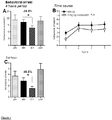
- Figure 1 depicts the effects of 3 mg/kg compound B-4, orally administered directly before lights-off, on the number of narcoleptic episodes (behavioral arrests) in orexin-deficient mice.
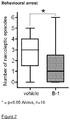
- Figure 2 depicts the effects of 10 mg/kg compound B-1, orally administered directly before lights-off, on the number of narcoleptic episodes (behavioral arrests) in orexin-deficient mice.
- Compound B-1 significantly decreased the number of narcoleptic episodes during the first hour of the observation period by ca. 66 % (p ⁇ 0.05 Anova).
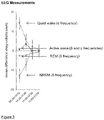
- Animals have temporal skull EEG electrodes implanted which are connected to transmitters. Animals were group-housed (2 - 4) per cage at a constant temperature of 22 ⁇ 1 °C, on a 12:12 light-dark schedule. The EEG is recorded via a receiver and stored on a PC for further analysis. EEG is used to assess and to quantify sleep behavior and vigilance stage.
- Assessment period shown is 3 hours.
- Compound B-1 causes a decline of NREM sleep and increases the time spent in quiet wake.
- the numerical assessment of figure 3 is given in table 1.
- Table 1 Mean difference drug-vehicle (min) assessed at time point 9:30 10:30 11:30 12:30 Quiet wake ( ⁇ frequency) 14.3 6.1 -1.8 -0.9 Active wake ( ⁇ and ⁇ frequencies) 0.9 3.6 0.1 0.3 REM ( ⁇ frequency) -2.2 -2.1 -0.9 -0.2 NREM ( ⁇ frequency) -12.4 -7.1 2.1 -0.1
- HA Histamine
- tMHA tele-methylhistamine
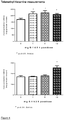
- Figure 4 depicts the effects of different doses of compound B1 and A-1, orally administered to mice, 30 minutes after administration on brain tMHA levels. tMHA levels are significantly elevated for compound B-1 at all doses tested. For compound A-1, a significant elevation is seen for the 10 mg/kg dose.
- Clinical testing of the ⁇ 7 nAChR agonist of the invention may be conducted, for example, in the following study design.
- the skilled physician may look at a number of aspects of patient behaviors and abilities. He will realize that such study is considered as guidelines and the certain aspects of the study may be modified and redefined depending on the circumstance and environment, for example.
- Elective surgery patients requiring general anesthesia e.g. total intravenous anesthesia, and/or use of inhalation anesthetics
- an ⁇ 7 nAChR agonist of the invention i.v..
- Different aspects may be analyzed after administration of the ⁇ 7 nAChR agonist of the invention such as time to emerge from anesthesia (e.g. when the subject is (i) conscious, (ii) able to answer simple questions, (iii) able to make voluntary movements, (iv) maintains adequate ventilation and (v) is able to protect his airways) and/or incidence of complications.
- complicantions include e.g. laryngospasm, respiratory depression, hemodynamic instability, anesthesia-related delirium, agitation (especially in children), vomiting, aspiration pneumonia and postoperative Cognitive Dysfunction (POCD).
- the patients are tested against placebo and/or standard of care and the results are compared and analyzed.
- provided herein are methods for increasing the amount of consciousness or mental cognitive functioning of an unconscious subject wherein the subject is unconscious by general anesthesia, comprising administering to the subject the ⁇ 7 nAChR agonist of the invention.
- the invention also provides a kit comprising the ⁇ 7 nAChR agonist of the invention and
Landscapes
- Health & Medical Sciences (AREA)
- General Health & Medical Sciences (AREA)
- Life Sciences & Earth Sciences (AREA)
- Chemical & Material Sciences (AREA)
- Public Health (AREA)
- Veterinary Medicine (AREA)
- Medicinal Chemistry (AREA)
- Animal Behavior & Ethology (AREA)
- Pharmacology & Pharmacy (AREA)
- Epidemiology (AREA)
- General Chemical & Material Sciences (AREA)
- Organic Chemistry (AREA)
- Engineering & Computer Science (AREA)
- Bioinformatics & Cheminformatics (AREA)
- Nuclear Medicine, Radiotherapy & Molecular Imaging (AREA)
- Chemical Kinetics & Catalysis (AREA)
- Pharmaceuticals Containing Other Organic And Inorganic Compounds (AREA)
- Biomedical Technology (AREA)
- Neurology (AREA)
- Neurosurgery (AREA)
- Psychiatry (AREA)
- Acyclic And Carbocyclic Compounds In Medicinal Compositions (AREA)
- Pyridine Compounds (AREA)
- Emergency Medicine (AREA)
- Medicinal Preparation (AREA)
- Medicines That Contain Protein Lipid Enzymes And Other Medicines (AREA)
Description
- The present invention relates to medical uses of alpha 7 nicotinic acetylcholine receptor (α7 nAChR) agonists.
- Before surgical operations (in the perioperative period), patients are put under anesthesia; said anesthesia is maintained during surgical operations. There are two general types of anesthesia: general anesthesia and regional anesthesia. General anesthesia is typically performed during relatively large, complicated surgeries. In USA alone, nearly 60'000 patients per day receive general anesthesia for surgery (Brown EL et al, New England Journal of Medicine, 2010, 363, 2638-2650).
- E. Tassonyi et al., Brain Res. Bull. ,2002, vol. 57, no. 2, 15, pages 133-150 discloses the role of nicotinic acetylcholine receptors in the mechanisms of anesthesia. T. Suzuki et al., Anesthesia and Analgesia, 2003, vol. 96, no. 2, pages 443-448 discloses that N2O and Xe reversibly inhibited the ACh-induced currents of the α7-nACh receptor in a concentration-dependent manner at clinically relevant concentrations. K.M. Coates et al., Anesthesia and Analgesia, 2001, vol. 92, no. 4, pages 930-933 discloses the activity of thiopental as a competitive inhibitor at the human α7 nACh receptor.
- General anesthesia can be regarded as a reversible loss of consciousness caused by general anesthetics. General anesthesia is characterized by three periods: the induction period, the maintenance period, and the emergence period. In the induction period, the subject loses consciousness. Said loss of consciousness is maintained during the maintenance period. In the emergence period, the subject regains consciousness. Emergence from anesthesia is complete when the subject is (i) conscious, (ii) able to answer simple questions, (iii) able to make voluntary movements, (iv) maintains adequate ventilation and (v) is able to protect his airways.
- Induction/maintenance of general anesthesia is an active process, wherein loss of consciousness is caused/maintained by treatment of patients with general anesthetics. In contrast, emergence from general anesthesia is a passive process whereby general anestethics are merely discontinued, typically at the end of surgery.
- Although the actions of many other drugs used in anesthesiology are pharmacologically reversed when no longer desired; e.g. muscle relaxants (e.g. sugammadex reversing the action of rocuronium) and opioids (e.g. naloxone as reversing agent); this is not the case for loss of consciousness induced by general anesthetics.
- This current clinical practice of passive emergence can be dangerous because patients may be susceptible to potentially severe complications, e.g. laryngospasm, respiratory depression, hemodynamic instability, anesthesia-related delirium and postoperative cognitive dysfunction (POCD).
- In addition, significant time and labor are spent by hospitals on the care of patients under general anesthesia in operating rooms/intensive care units.
- Time for emergence from general anesthesia can be unpredictable as it depends on many factors related to the patient, the type of anesthetic given and the length of surgery. Depending on circumstances, this passive emergence from general anesthesia may take hours. Causes for slow emergence from anesthesia may include overdose; duration and type of anesthetic given; and potentiation by other drugs.
An overdose can be caused by e.g. delayed drug metabolism such as in renal or hepatic failure, and/or increased sensitivity to particular agents.
Duration and type of anesthetic given: for inhalational anesthetics the speed of emergence is directly related to alveolar ventilation. Therefore hypoventilation is a frequent cause of delayed emergence. For intravenous anaesthetic agents, immediate recovery depends mainly on redistribution from blood and brain into muscle and fat. Patients given propofol for induction and/or maintenance recover faster than those receiving other agents because propofol is rapidly metabolised by the liver and possibly also at other extrahepatic sites. Elimination half-life is relatively fast (10 to 70 minutes), and it does not accumulate.
With thiopentone however, whilst the initial drug effect is terminated by redistribution within 5 to 15 minutes, elimination is by oxidative metabolism in the liver at a rate of 15% per hour. It therefore has a long elimination half-life of 3.4 to 22 hours and as much as 30% of the dose may remain in the body at 24 hours. Cumulative effects may therefore become apparent when more than one dose is given. For most other intravenous anaesthetic drugs the termination of drug action depends on the time required to metabolise or excrete the drug (elimination or metabolic half-life) and in this situation, advanced age or renal or hepatic disease can prolong drug action.
Potentiation by other drugs: prior ingestion of sedative premedication such as benzodiazepines, or alcohol, may potentiate the central nervous system depressant effects of anaesthetic and analgesic drugs, and may delay emergence from anaesthesia. - For these reasons, there is a need to provide agents useful for the facilitation of emergence from general anesthesia.
- It has been found that certain α7 nAChR agonists may be used for the facilitation of emergence from general anesthesia.
- The invention is defined by the appended claims. It concerns an alpha 7 nicotinic acetylcholine receptor agonist for use in the facilitation of emergence from general anesthesia; wherein said alpha 7 nicotinic acetylcholine receptor agonist is (R)-3-(6-p-tolyl-pyridin-3-yloxy)-1-aza-bicyclo[2.2.2]octanein free base form or in acid addition salt form.
- The disclosure concerns the use of an α7 nAChR agonist for the facilitation of emergence from general anesthesia;
wherein said α7 nAChR agonist is - (i) a compound of formula (I)

- L1 is -CH2-; L2 is -CH2-CH2-; and L3 is -CH2- or -CH(CH3)-; or
- L1 is -CH2-CH2-; L2 is -CH2-; and L3 is -CH2-CH2-;
- L4 is a group selected from

- wherein the bond marked with the asterisk is attached to the azabicycloalkyl moiety;
- R1 is methyl;
- X1 is -O- or-NH-;
- A2 is selected from

- wherein the bond marked with the asterisk is attached to X1;
- A1 is phenyl, indole or 1,3-dihydro-indol-2-one, which may be substituted once or more than once by R2, each R2 independently is C1-6alkyl, C1-6halogenalkyl or halogen; or
- (ii) a compound selected from the group consisting of
- 4-(5-phenyl-1,3,4-thiadiazol-2-yloxy)-1azatricyclo[3.3.1.13,7]decane;
- (4S)-4-(5-phenyl-1,3,4-thiadiazol-2-yloxy)-1azatricyclo[3.3.1.13,7]decane;
- 4-(6-(1 H-indol-5-yl)-pyridazin-3-yloxy)-1azatricyclo[3.3.1.13,7]decane;
- 4-(6-(1H-indol-5-yl)-pyridin-3-yloxy)-1azatricyclo[3.3.1.13,7]decane;
- 4-(5-(1H-indol-5-yl)-pyrimidin-2-yloxy)-1azatricyclo[3.3.1.13,7]decane;
- N-(1-azabicyclo[2.2.2]oct-3-yl)-1H-indazole-3-carboxamide;
- N-((3R)-1-azabicyclo[2.2.2]oct-3-yl)-1H-indazole-3-carboxamide
- N-((3S)-1-azabicyclo[2.2.2]oct-3-yl)-1H-indazole-3-carboxamide
- N-(1-azabicyclo[2.2.2]oct-3-yl)-5-(trifluoromethoxy)-1H-indazole-3-carboxamide;
- N-((3R)-1-azabicyclo[2.2.2]oct-3-yl)-5-(trifluoromethoxy)-1H-indazole-3-carboxamide;
- N-((3S)-1-azabicyclo[2.2.2]oct-3-yl)-5-(trifluoromethoxy)-1H-indazole-3-carboxamide;
- N-(2-((3-pyridinyl)methyl)-1-azabicyclo[2.2.2]oct-3-yl)benzofuran-2-carboxamide;
- (2S,3R)-N-(2-((3-pyridinyl)methyl)-1-azabicyclo[2.2.2]oct-3-yl)benzofuran-2-carboxamide;
- N-(2-((3-pyridinyl)methyl)-1-azabicyclo[2.2.2]oct-3-yl)-3,5-difluorobenzamide;
- (2S,3R)-N-(2-((3-pyridinyl)methyl)-1-azabicyclo[2.2.2]oct-3-yl)-3,5-difluorobenzamide;
- N-(2-((3-pyridinyl)methyl)-1-azabicyclo[2.2.2]oct-3-yl)-5-methylthiophene-2-carboxamide;
- (2S,3R)-N-(2-((3-pyridinyl)methyl)-1-azabicyclo[2.2.2]oct-3-yl)-5-methylthiophene-2-carboxamide;
- N-(2-((3-pyridinyl)methyl)-1-azabicyclo[2.2.2]oct-3-yl)-5-(2-pyridinyl)thiophene-2-carboxamide;
- (2S,3R)-N-(2-((3-pyridinyl)methyl)-1-azabicyclo[2.2.2]oct-3-yl)-5-(2-pyridinyl)thiophene-2-carboxamide;
- 7,8,9,10-tetrahydro-6,10-methano-6H-pyrazino-(2,3-h)(3)-benzazepine;
- 3-[1-(2,4-Dimethoxy-phenyl)-meth-(E)-ylidene]-3,4,5,6-tetrahydro-[2,3']bipyridinyl;
- N-methyl-1-{5-[3'H-spiro[4-azabicyclo[2.2.2]octane-2,2'-furo[2,3-b]pyridin]-5'-yl]-2-thienyl}methanamine;
- N-methyl-1-{5-[(2R)-3'H-spiro[4-azabicyclo[2.2.2]octane-2,2'-furo[2,3-b]pyridin]-5'-yl]-2-thienyl}methanamine;
- N-methyl-1-{5-[(2S)-3'H-spiro[4-azabicyclo[2.2.2]octane-2,2'-furo[2,3-b]pyridin]-5'-yl]-2-thienyl}methanamine;
- (R)-7-chloro-N-(quinuclidin-3-yl)benzo[b]thiophene-2-carboxamide;
- 5-{5-[(endo)-8-azabicyclo[3.2.1]octan-3-yloxy]pyridin-2-yl}-1 H-indole;
- 5-{5-[(exo)-8-azabicyclo[3.2.1]octan-3-yloxy]pyridin-2-yl}-1 H-indole;
- 5-{5-[(endo)-8-methyl-8-aza-bicyclo[3.2.1]oct-3-yloxy]pyridin-2-yl}-1 H-indole;
- 5-{5-[(exo)-8-methyl-8-aza-bicyclo[3.2.1]oct-3-yloxy]pyridin-2-yl}-1 H-indole;
- 4-{5-[(exo)-8-methyl-8-aza-bicyclo[3.2.1]oct-3-yloxy]pyridin-2-yl}-1H-indole;
- 5-{6-[(exo)-8-methyl-8-aza-bicyclo[3.2.1]oct-3-yloxy]pyridin-3-yl}-1H-indole;
- (2'R)-spiro-[1-azabicyclo[2.2.2]octane-3,2'(3'H)-furo[2,3-b]pyridine];
- 1,4-Diaza-bicyclo[3.2.2]nonane-4-carboxylic acid 4-bromo-phenyl ester; and
- 5-{6-[1-azabicyclo[2.2.2]oct-3-yloxy]pyridazin-3-yl}-1H-indole;
- The invention relates to an α7 nAchR agonist which is (R)-3-(6-p-tolyl-pyridin-3-yloxy)-1-aza-bicyclo[2.2.2]octane in free base form or in acid addition salt form for use in a method for facilitation of emergence from general anesthesia in a subject treated with an general anesthetic agent which comprises administering to said subject an effective amount of the α7 nAChR agonist of the invention.
- A further aspect of the invention relates to the use of the α7 nAChR agonist of the invention for the preparation of a medicament for the facilitation of emergence from general anesthesia.
- A further aspect of the invention relates to a pharmaceutical composition comprising the α7 nAChR agonist of the invention for intravenous administration.
- As used herein an "α7 nAChR agonist" is a compound that binds to a receptor comprising an α7 nAChR subunit in vivo and in vitro and is activating the receptor. Activation can be measured by the method disclosed in
WO2001/85727 - The α7 nAchR agonist may be selective for a receptor comprising a nicotinic acetylcholine receptor alpha 7 subunit, since such an agonist would be expected to cause fewer side effects than a non-selective agonist to a treated subject. An agonist being selective for a receptor comprising a nicotinic acetylcholine receptor alpha 7 subunit has a functional affinity to such a receptor to a much higher degree, e.g. at least 10-fold affinity difference in EC50 value, preferably at least 20-fold, more preferably at least 50-fold, compared to any other nicotinic acetylcholine receptor. To assess the affinity of the α7 nAChR agonists of the invention on other nicotinic acetylcholine receptors, the method disclosed in
WO2001/85727 - In the last 15 years much effort has been focused on developing selective α7 nAChR agonists leading to the discovery of many different chemotypes displaying said selective activity. These efforts are summarized the review from Horenstein et al (Mol Pharmacol, 2008, 74, 1496-1511, which describes no less than 9 different families of α7 nAChR agonists, in most of which selective agonists have been found. Some compounds are disclosed in
figure 1 of said review. In fact, several drug candidates having an α7 nAChR agonist mode of action entered pre-clinical or even clinical testing (for review: Broad et al, Drugs of the Future, 2007, 32(2), 161-170; Romanelli et al, Expert Opin Ther Patents, 2007, 17(11), 1365-1377). Examples of such compounds - again belonging to a diversity of chemotypes - are MEM3454, MEM63908, SSR180711, GTS21, EVP6124, ABT107 and TC-5619. Further α7 nAChR agonists and their use as pharmaceuticals are known, for example, fromWO2001/85727 WO2004/022556 ,WO2005/118535 ,WO2005/123732 ,WO2006/005608 ,WO2007/045478 ,WO2007/068476 andWO2007/068475 . - The "α7 nAChR agonist disclosed herein" is
- (i) a compound of formula (I)

- L1 is -CH2-; L2 is -CH2-CH2-; and L3 is -CH2- or -CH(CH3)-; or
- L1 is -CH2-CH2-; L2 is -CH2-; and L3 is -CH2-CH2-;
- L4 is a group selected from

- wherein the bond marked with the asterisk is attached to the azabicycloalkyl moiety;
- R1 is methyl;
- X1 is -O- or-NH-;
- A2 is selected from

- wherein the bond marked with the asterisk is attached to X1;
- A1 is phenyl, indole or 1,3-dihydro-indol-2-one, which may be substituted once or more than once by R2, each R2 independently is C1-6alkyl, C1-6halogenalkyl or halogen; or
- (ii) a compound selected from the group consisting of
- 4-(5-phenyl-1,3,4-thiadiazol-2-yloxy)-1azatricyclo[3.3.1.13,7]decane;
- (4S)-4-(5-phenyl-1,3,4-thiadiazol-2-yloxy)-1azatricyclo[3.3.1.13,7]decane;
- 4-(6-(1 H-indol-5-yl)-pyridazin-3-yloxy)-1azatricyclo[3.3.1.13,7]decane;
- 4-(6-(1 H-indol-5-yl)-pyridin-3-yloxy)-1azatricyclo[3.3.1.13,7]decane;
- 4-(5-(1H-indol-5-yl)-pyrimidin-2-yloxy)-1azatricyclo[3.3.1.13,7]decane;
- N-(1-azabicyclo[2.2.2]oct-3-yl)-1H-indazole-3-carboxamide;
- N-((3R)-1-azabicyclo[2.2.2]oct-3-yl)-1H-indazole-3-carboxamide
- N-((3S)-1-azabicyclo[2.2.2]oct-3-yl)-1H-indazole-3-carboxamide
- N-(1-azabicyclo[2.2.2]oct-3-yl)-5-(trifluoromethoxy)-1H-indazole-3-carboxamide;
- N-((3R)-1-azabicyclo[2.2.2]oct-3-yl)-5-(trifluoromethoxy)-1H-indazole-3-carboxamide;
- N-((3S)-1-azabicyclo[2.2.2]oct-3-yl)-5-(trifluoromethoxy)-1H-indazole-3-carboxamide;
- N-(2-((3-pyridinyl)methyl)-1-azabicyclo[2.2.2]oct-3-yl)benzofuran-2-carboxamide;
- (2S,3R)-N-(2-((3-pyridinyl)methyl)-1-azabicyclo[2.2.2]oct-3-yl)benzofuran-2-carboxamide;
- N-(2-((3-pyridinyl)methyl)-1-azabicyclo[2.2.2]oct-3-yl)-3,5-difluorobenzamide;
- (2S,3R)-N-(2-((3-pyridinyl)methyl)-1-azabicyclo[2.2.2]oct-3-yl)-3,5-difluorobenzamide;
- N-(2-((3-pyridinyl)methyl)-1-azabicyclo[2.2.2]oct-3-yl)-5-methylthiophene-2-carboxamide;
- (2S,3R)-N-(2-((3-pyridinyl)methyl)-1-azabicyclo[2.2.2]oct-3-yl)-5-methylthiophene-2-carboxamide;
- N-(2-((3-pyridinyl)methyl)-1-azabicyclo[2.2.2]oct-3-yl)-5-(2-pyridinyl)thiophene-2-carboxamide;
- (2S,3R)-N-(2-((3-pyridinyl)methyl)-1-azabicyclo[2.2.2]oct-3-yl)-5-(2-pyridinyl)thiophene-2-carboxamide;
- 7,8,9,10-tetrahydro-6,10-methano-6H-pyrazino-(2,3-h)(3)-benzazepine;
- 3-[1-(2,4-Dimethoxy-phenyl)-meth-(E)-ylidene]-3,4,5,6-tetrahydro-[2,3']bipyridinyl;
- N-methyl-1-{5-[3'H-spiro[4-azabicyclo[2.2.2]octane-2,2'-furo[2,3-b]pyridin]-5'-yl]-2-thienyl}methanamine;
- N-methyl-1-{5-[(2R)-3'H-spiro[4-azabicyclo[2.2.2]octane-2,2'-furo[2,3-b]pyridin]-5'-yl]-2-thienyl}methanamine;
- N-methyl-1-{5-[(2S)-3'H-spiro[4-azabicyclo[2.2.2]octane-2,2'-furo[2,3-b]pyridin]-5'-yl]-2-thienyl}methanamine;
- (R)-7-chloro-N-(quinuclidin-3-yl)benzo[b]thiophene-2-carboxamide;
- 5-{5-[(endo)-8-azabicyclo[3.2.1]octan-3-yloxy]pyridin-2-yl}-1 H-indole;
- 5-{5-[(exo)-8-azabicyclo[3.2.1]octan-3-yloxy]pyridin-2-yl}-1 H-indole;
- 5-{5-[(endo)-8-methyl-8-aza-bicyclo[3.2.1]oct-3-yloxy]pyridin-2-yl}-1 H-indole;
- 5-{5-[(exo)-8-methyl-8-aza-bicyclo[3.2.1]oct-3-yloxy]pyridin-2-yl}-1H-indole;
- 4-{5-[(exo)-8-methyl-8-aza-bicyclo[3.2.1]oct-3-yloxy]pyridin-2-yl}-1H-indole;
- 5-{6-[(exo)-8-methyl-8-aza-bicyclo[3.2.1]oct-3-yloxy]pyridin-3-yl}-1H-indole;
- (2'R)-spiro-[1-azabicyclo[2.2.2]octane-3,2'(3'H)-furo[2,3-b]pyridine];
- 1,4-Diaza-bicyclo[3.2.2]nonane-4-carboxylic acid 4-bromo-phenyl ester; and
- 5-{6-[1-azabicyclo[2.2.2]oct-3-yloxy]pyridazin-3-yl}-1H-indole;
- Unless indicated otherwise, the expressions used have the following meaning:
"Alkyl" represents a straight-chain or branched-chain alkyl group, for example, methyl, ethyl, n- or iso-propyl, n-, iso-, sec- or tert-butyl, n-pentyl, n-hexyl; C1-6alkyl preferably represents a straight-chain or branched-chain C1-4alkyl with particular preference given to methyl, ethyl, n-propyl, iso-propyl and tert-butyl. - The alkyl part of "halogenalkyl" and shall have the same meaning as described in the above-mentioned definition of "alkyl", especially regarding linearity and preferential size.
- A substituent being substituted "once or more than once", for example as defined for A1, is preferably substituted by one to three substituents.
- Halogen is generally fluorine, chlorine, bromine or iodine; preferably fluorine, chlorine or bromine. Halogenalkyl groups preferably have a chain length of 1 to 4 carbon atoms and are, for example, fluoromethyl, difluoromethyl, trifluoromethyl, chloromethyl, dichloromethyl, trichloromethyl, 2,2,2-trifluoroethyl, 2-fluoroethyl, 2-chloroethyl, pentafluoroethyl, 1,1-difluoro-2,2,2-trichloroethyl, 2,2,2-trichloroethyl, 1,1,2,2-tetrafluoroethyl, 2,2,3,3-tetrafluoropropyl, 2,2,3,3,3-pentafluoropropyl or 2,2,3,4,4,4-hexafluorobutyl; preferably -CF3, -CHF2, -CH2F, - CHF-CH3, -CF2CH3, or -CH2CF3.
- In the context of the disclosure, the definition of A1 or A3 as a "five- to ten-membered monocyclic or fused polycyclic aromatic ring system" encompasses a C6- or C10-aromatic
- The acid addition salt forms of the α7 nAChR agonist of the invention are preferably pharmaceutically acceptable salt forms. Such salts are known in the field (e.g. S.M. Berge, et al, "Pharmaceutical Salts", J. Pharm. Sd., 1977, 66:1-19; and "Handbook of Pharmaceutical Salts, Properties, Selection, and Use", Stahl, RH., Wermuth, C.G., Eds.; Wiley-VCH and VHCA: Zurich, 2002). A "pharmaceutically acceptable salt form" is intended to mean a salt form that is not toxic, biologically intolerable, or otherwise biologically undesirable.
- On account of asymmetrical carbon atom(s) that may be present in the compounds of formula (I), unless stated otherwise, the compounds may exist in optically active form or in form of mixtures of optical isomers, e.g. in form of racemic mixtures or diastereomeric mixtures. Unless stated otherwise, all optical isomers and their mixtures, including racemic mixtures, are part of the present invention.
- In aspect, the α7 nAchR agonist is a compound of formula (I)

- L1 is -CH2-; L2 is -CH2-CH2-; and L3 is -CH2-;
- L4 is L4b;
- A2 is selected from
- wherein the bond marked with the asterisk is attached to X1;
- A1 is phenyl, which may be substituted once or more than once by R2, each R2 independently is C1-6alkyl, C1-6halogenalkyl or halogen;
- in free base form or in acid addition salt form.
- In one disclosure, the α7 nAChR agonist is a compound selected from Group P1 in free base form or in acid addition salt form, wherein Group P1 is the group consisting of
- A-1: (S)-(1-aza-bicyclo[2.2.2]oct-3-yl)-carbamic acid (S)-1-(2-fluoro-phenyl)-ethyl ester;
- B-1: (R)-3-(6-p-tolyl-pyridin-3-yloxy)-1-aza-bicyclo[2.2.2]octane;
- B-2: (R)-3-[6-(2-fluoro-4-methyl-phenyl)-pyridazin-3-yloxy]-1-aza-bicyclo[2.2.2]octane;
- B-3: (R)-3-[6-(2,5-difluoro-4-methyl-phenyl)-pyridazin-3-yloxy]-1-aza-bicyclo[2.2.2]octane;
- B-4: (2S,3R)-3-[6-(1H-indol-5-yl)-pyridazin-3-yloxy]-2-methyl-1-aza-bicyclo[2.2.2]octane;
- C-1: (4S,5R)-4-[5-(1H-indol-5-yl)-pyrimidin-2-yloxy]-1-aza-bicyclo[3.3.1]nonane;
- C-2: 5-{2-[(4S,5R)-(1-aza-bicyclo[3.3.1]non-4-yl)oxy]-pyrimidin-5-yl}-1,3-dihydro-indol-2-one;
- C-3: (4S,5R)-4-[6-(1H-indol-5-yl)-pyridazin-3-yloxy]-1-aza-bicyclo[3.3.1]nonane;
- C-4: 5-{6-[(4S,5R)-(1-aza-bicyclo[3.3.1]non-4-yl)oxy]-pyridazin-3-yl}-1,3-dihydro-indol-2-one; and
- C-5: (1-aza-bicyclo[3.3.1]non-4-yl)-[5-(1H-indol-5-yl)-pyrimidin-2-yl]-amine.
- In one disclosure, the α7 nAChR agonist is a compound selected from Group P2 in free base form or in acid addition salt form, wherein Group P2 is the group consisting of
- D-1: 4-(5-phenyl-1,3,4-thiadiazol-2-yloxy)-1azatricyclo[3.3.1.13,7]decane having the formula

- D-1a: (4S)-4-(5-phenyl-1,3,4-thiadiazol-2-yloxy)-1azatricyclo[3.3.1.13,7]decane;
- D-1b: 4-(6-(1H-indol-5-yl)-pyridazin-3-yloxy)-1azatricyclo[3.3.1.13,7]decane;
- D-1c: 4-(6-(1H-indol-5-yl)-pyridin-3-yloxy)-1azatricyclo[3.3.1.13,7]decane;
- D-1d: 4-(5-(1 H-indol-5-yl)-pyrimidin-2-yloxy)-1azatricyclo[3.3.1.13,7]decane;
- D-2: N-(1-azabicyclo[2.2.2]oct-3-yl)-1H-indazole-3-carboxamide;
- D-2a: N-((3R)-1-azabicyclo[2.2.2]oct-3-yl)-1H-indazole-3-carboxamide
- D-2b: N-((3S)-1-azabicyclo[2.2.2]oct-3-yl)-1H-indazole-3-carboxamide
- D-3: N-(1-azabicyclo[2.2.2]oct-3-yl)-5-(trifluoromethoxy)-1H-indazole-3-carboxamide;
- D-3a: N-((3R)-1-azabicyclo[2.2.2]oct-3-yl)-5-(trifluoromethoxy)-1H-indazole-3-carboxamide;
- D-3b: N-((3S)-1-azabicyclo[2.2.2]oct-3-yl)-5-(trifluoromethoxy)-1H-indazole-3-carboxamide;
- D-4: N-(2-((3-pyridinyl)methyl)-1-azabicyclo[2.2.2]oct-3-yl)benzofuran-2-carboxamide;
- D-4a: (2S,3R)-N-(2-((3-pyridinyl)methyl)-1-azabicyclo[2.2.2]oct-3-yl)benzofuran-2-carboxamide;
- D-5: N-(2-((3-pyridinyl)methyl)-1-azabicyclo[2.2.2]oct-3-yl)-3,5-difluorobenzamide;
- D-5a: (2S,3R)-N-(2-((3-pyridinyl)methyl)-1-azabicyclo[2.2.2]oct-3-yl)-3,5-difluorobenzamide;
- D-5b: N-(2-((3-pyridinyl)methyl)-1-azabicyclo[2.2.2]oct-3-yl)-5-methylthiophene-2-carboxamide;
- D-5c: (2S,3R)-N-(2-((3-pyridinyl)methyl)-1-azabicyclo[2.2.2]oct-3-yl)-5-methylthiophene-2-carboxamide;
- D-5d: N-(2-((3-pyridinyl)methyl)-1-azabicyclo[2.2.2]oct-3-yl)-5-(2-pyridinyl)thiophene-2-carboxamide;
- D-5e: (2S,3R)-N-(2-((3-pyridinyl)methyl)-1-azabicyclo[2.2.2]oct-3-yl)-5-(2-pyridinyl)thiophene-2-carboxamide;
- D-6: 7,8,9,10-tetrahydro-6,10-methano-6H-pyrazino-(2,3-h)(3)-benzazepine;
- D-7: 3-[1-(2,4-Dimethoxy-phenyl)-meth-(E)-ylidene]-3,4,5,6-tetrahydro-[2,3']bipyridinyl;
- D-8: N-methyl-1-{5-[3'H-spiro[4-azabicyclo[2.2.2]octane-2,2'-furo[2,3-b]pyridin]-5'-yl]-2-thienyl}methanamine having the formula

- D-8a: N-methyl-1-{5-[(2R)-3'H-spiro[4-azabicyclo[2.2.2]octane-2,2'-furo[2,3-b]pyridin]-5'-yl]-2-thienyl}methanamine;
- D-8b: N-methyl-1-{5-[(2S)-3'H-spiro[4-azabicyclo[2.2.2]octane-2,2'-furo[2,3-b]pyridin]-5'-yl]-2-thienyl}methanamine;
- D-9: (R)-7-chloro-N-(quinuclidin-3-yl)benzo[b]thiophene-2-carboxamide;
- D-10a: 5-{5-[(endo)-8-azabicyclo[3.2.1]octan-3-yloxy]pyridin-2-yl}-1H-indole;
- D-10b: 5-{5-[(exo)-8-azabicyclo[3.2.1]octan-3-yloxy]pyridin-2-yl}-1 H-indole;
- D-10c: 5-{5-[(endo)-8-methyl-8-aza-bicyclo[3.2.1]oct-3-yloxy]pyridin-2-yl}-1 H-indole;
- D-10d: 5-{5-[(exo)-8-methyl-8-aza-bicyclo[3.2.1]oct-3-yloxy]pyridin-2-yl}-1H-indole;
- D-10e: 4-{5-[(exo)-8-methyl-8-aza-bicyclo[3.2.1]oct-3-yloxy]pyridin-2-yl}-1H-indole;
- D-10f: 5-{6-[(exo)-8-methyl-8-aza-bicyclo[3.2.1]oct-3-yloxy]pyridin-3-yl}-1 H-indole;
- D-11: (2'R)-spiro-[1-azabicyclo[2.2.2]octane-3,2'(3'H)-furo[2,3-b]pyridine];
- D-12: 1,4-Diaza-bicyclo[3.2.2]nonane-4-carboxylic acid 4-bromo-phenyl ester; and
- D-13: 5-{6-[1-azabicyclo[2.2.2]oct-3-yloxy]pyridazin-3-yl}-1H-indole.
- In one disclosure, the α7 nAChR agonist is compound A-1 in free base form or in acid addition salt form.
- In one disclosure, the α7 nAChR agonist is a compound selected from the group consisting of compound B-1, B-2, B-3 and B-4; wherein each of said compound is in free base form or in acid addition salt form.
- In one embodiment, the α7 nAChR agonist of the invention is a compound B-1 in free base form or in acid addition salt form. In another embodiment, the α7-nAChR agonist of the invention is compound B-1, which is in fumarate salt form. In yet another embodiment, the α7-nAChR agonist of the invention is the mono-fumarate salt of compound B-1.
- In one disclosure, the α7 nAChR agonist is a compound selected from the group consisting of compound C-1, C-2, C-3, C-4 and C-5; wherein each of said compound is in free base form or in acid addition salt form.
- In one disclosure, the α7 nAChR agonist is a compound selected from the group consisting of compound D-1, D-1a, D-1b, D-1c, D-1d, D-4, D-4a and D-9; wherein each of said compound is in free base form or in acid addition salt form.
- In one disclosure the α7 nAChR agonist is a compound selected from Group P3; Group P3 is the group consisting of compounds A-1, B-1, B-2, B-3, B-4, C-1, C-2, C-3, C-4, C-5, D-1, D-1a, D-1b, D-1c, D-1d, D-4, D-4a and D-9; wherein each of said compound is in free base form or in acid addition salt form.
- The compounds of formula (I) (e.g. compounds A-1, B-1 to B-4 and C-1 to C-5) and their manufacture are known from
WO2001/85727 WO2004/022556 ,WO2005/123732 ,WO2006/005608 ,WO2007/045478 ,WO2007/068476 andWO2007/068475 , or can be prepared analogously to said references. - Compounds D-1 and D-1a can be prepared according to
WO2008/058096 . - Compounds D-2, D-2a, D-2b, D-3, D-3a and D-3b can be prepared according to
WO2004/029050 and/orWO2010/043515 . - Compounds D-4 and D-4a can be prepared according to
WO2004/076449 and/orWO2009/018505 ; - Compounds D-5, D-5a to D-5e can be prepared according to
WO2004/076449 and/orWO2010/085724 and/orWO2010/056622 ; - Compound D-6 (varenicline) is described in O'Donnell et al, J Med Chem, 2010, 53, 1222-1237.
- Compound D-7 (GTS-21) is described in Haydar et al, Current Topics in Medicinal Chemistry, 2010, 10, 144-152.
- Compound D-8, D-8a and D-8b are described in
WO2007/133155 and/orWO2009/066107 . Compound D-9 is described inWO2003/055878 . - Compounds D-10a to D-10f are described in
WO2007/137030 . - Compound D-11 (AZD-0328) is described in Haydar et al, Current Topics in Medicinal Chemistry, 2010, 10, 144-152.
- Compound D-12 (SSR-190771) is described Horenstein et al, Mol Pharmacol, 2008, 74, 1496-1511.
- Compound D-13 (ABT-107) can be prepared according to
WO2006/065233 and/orWO2007/018738 . - General anesthesia can be regarded as a reversible loss of consciousness actively induced and maintained by treatment of patients with general anesthetics.
- General anesthetics, when administered to subjects, cause general anesthesia. General anesthetics include intravenous anesthetics and inhalation anesthetics (gas anesthetics).
- Intravenous anesthetics, once injected, quickly reach the brain and cause loss of consciousness. Intravenous anesthetics are divided into short-acting and long-acting anesthetics. Widely used intravenous anesthetics are propofol; etomidate; barbiturates (e.g. methohexital, thiamylal and thiopental); benzodiazepines (e.g. midazolam); and ketamine. Propofol is one of the most commonly used intravenous anesthetics employed to induce and maintain general anesthesia.
- Inhalation anesthetics are generally volatile and have the advantage of being absorbed and discarded by the lungs. Said anesthetics are usually delivered using an anesthesia machine. Such a machine allows the user to (i) mix inhalation anesthetics, oxygen and ambient air; (ii) administer said mixture to the patient and (iii) monitor patient and machine parameters. Liquid inhalation anesthetics are vaporized in the machine. Widely used inhalation anesthetics are e.g. halogenated ethers (e.g. desflurane, isoflurane, sevoflurane, enflurane and/or methoxyflurane) which are often combined with nitrous oxide; halothane; and xenon. Inhalation anesthetics have a common characteristic of typically prompt induction of and emergence from general anesthesia. However, inhalation anesthetics have respiratory and cardiovascular side effects and may lead to coughing and laryngospasm.
- Although it is possible to induce and maintain general anesthesia solely by intravenous anesthetics or inhalation anesthetics, most commonly intravenous anesthetics and inhalation anesthetics are used in combination. Typically, an intravenous anesthetic is administered to induce general anesthesia and an inhalation anesthetic is administered for maintainance.
- The term "general anesthetic agent" as used herein refers to the agent causing general anesthesia in the subject to which the method of facilitation of emergence from general anesthesia is applied. Said general anesthetic agent may be a single general anesthetic or a plurality of different general anesthetics, e.g. two general anesthetics. In case of a plurality of different general anesthetics, the different general anesthetics may be used in different periods of general anesthesia, e.g. one general anesthetic for the induction period and another general anesthetic for the maintenance period.
- In one embodiment, the invention relates to facilitation of emergence from general anesthesia in a subject treated with a general anesthetic agent.
- In one embodiment, the general anesthetic agent is selected from an intravenous anesthetic and an inhalation anesthetic, or a combination thereof.
- In one embodiment, the general anesthetic agent is selected from propofol; etomidate; a barbiturate; a benzodiazepine; ketamine, a halogenated ether, alone or combined with nitrous oxide; halothane; and xenon; or a combination thereof.
- In one embodiment, the general anesthetic agent is a combination of ketamine for the induction period and sevoflurane for the maintenance period.
- In general anesthesia, commonly further drugs are used. One example is a muscle relaxant, e.g. rocuronium, which facilitate intubation and/or surgery by paralyzing the skeletal muscle. Another example is an opioid which is used as analgesic agent. Opioids can be used to relieve pain of patients before, during or after surgery. The following opioids are frequently used during general anesthesia: alfentanil, fentanyl, remifentanil and sufentanil.
- During general anesthesia, arousal of the subject is not possible, the subject is unconscious and unresponsive. Furthermore, the subject is commonly under apnea and ventilation of the subject is mechanically controlled (normally by intubation). Subjects under general anesthesia must undergo continuous physiological monitoring to ensure safety. Typical monitored parameters are electrocardiography (ECG), heart rate, blood pressure, inspired and expired gases, oxygen saturation of the blood (pulse oximetry) and temperature.
- "Emergence from general anesthesia" occurs after cessation of administration of the general anesthetic agent at doses causing general anesthesia. Emergence from general anesthesia is characterized by restoration of consciousness in the subject, restoration of ability to answer simple questions, restoration of mobility, and restoration of ability to maintain adequate ventilation/protect airways. First signs of awakening typically are the transition of the subject from apnea or machine-controlled breathing to irregular breathing and then to regular breathing. Emergence from general anesthesia may be associated with complications, e.g. anesthesia-caused delirium and/or POCD. Both complications may continue after emergence from anesthesia.
- "Anesthesia-caused delirium" may be emergence delirium or hypoactive emergence delirium which are described in Radtke et al (Minerva Anestiol 2010, 76(6), 394-403). Delirium is disturbance of consciousness and a change in cognition or a perception of mental dissociation that can include hallucinations, psychomotor agitation and delusions, and can include restlessness, incoherence, irritability, screaming and involuntary activity, as well as belligerent behaviours and disorientation. Delirium can be quantitated using the Ryker sedation-agitated scale (Lepouse et al, J Anesthesia, 2006, 96, 747-753), and includes assessment of eye contact, purposeful actions, awareness of surroundings, restlessness and inconsolability and the like. Emergence delirium may also referred to as emergence agitation which is a phenomenon occurring in children and adults in the immediate postoperative period. In children, emergence delirium is defined as a dissociated state of consciousness in which the child is inconsolable, irritable, uncompromising or uncooperative, typically trashing, crying, moaning or incoherent. Although generally self limiting (5-15 minutes), emergence delirium can be severe and may result in physical harm to the child and particularly the site of surgery.
- Signs and symptoms of anesthesia-caused delirium include excitement and alternating periods of lethargy followed by excitement and disorientation. Inappropriate behavior such as screaming and kicking and use of profanities may also occur. Also, the patients may not respond appropriately to commands. Anesthesia-caused delirium has the risk of injury to patient and/or hospital staff.
- Emergence delirium can occur after most inhalational agents, e.g. desflurane and sevoflurane, and intravenous agents, e.g. midazolam, remifentanil and propofol.
- Physiological causes of emergence delirium include age, hypoxemia, hypercapnia, hyponatremia, hypoglycemia, intracranial injury, sepsis, alcohol withdrawal, airway obstruction, gastric dilatation, full bladder, pain, hypothermia, sensory overload, sensory deprivation and electrolyte disturbances. Pharmacological causes of emergence delirium include rapid emergence, ketamine, droperidol, benzodiazepines, metoclopramide, atropine, scopolamine, volatile anesthetics, central anticholinergic syndrome, neuroleptics, digoxin, beta-blockers, steroids, anticonvulsants and oral hypoglycemic.
- Risk factors for emergence delirium are known, e.g. age (e.g. ages 2-5 are most vulnerable), underlying medical condition, medication, CNS disorders, electrolyte disturbances, temperament, surgery type and anesthesia type.
- Postoperative Cognitive Dysfunction (POCD) relates to a decline in cognitive function, typically for weeks or months after surgery. Within the first week after surgery, 30-50% of patients have POCD, with no difference by age. At 3 months after surgery about 10-15% of patients have POCD, but at this time point, POCD is basically limited to the elderly (G Crosby and DJ Culley, Anesthesia and Analgesia, 2011, 112(5), 999-1001). POCD is common after cardiac surgery; also exists after major non-cardiac surgery - although at a lower incidence (LS Rasmussen, Best practice & research in clinical anaesthesiology, 2006, 20(2), 315-330). Patients with POCD are at an increased risk of death in the first year after surgery. The relevance of POCD is increasing, especially as more elderly patients are able to undergo successful minor and major surgeries.
- The term "subject" as used herein refers to a human being, especially to a patient, e.g. a perioperative patient.
- In one embodiment, the subject is a perioperative patient under general anesthesia.
- The term "facilitation of emergence from general anesthesia" as used herein refers to improving the speed and/or the quality of emergence from general anesthesia.
- The term "effective amount" as used herein typically refers to an α7 nAChR agonist of the invention amount which, when administered to a subject, is sufficient to provide facilitation of emergence from general anesthesia, i.e. is sufficient to measurably facilitate emergence of a subject from general anesthesia-induced unconsciousness; e.g. cause a measurable decrease in time to regain consciousness as compared to in the absence of the α7 nAChR agonist of the invention; and/or decreases anesthesia-caused delirium, and/or decreases the time period until the subject is able to answer simple questions.
- Effective amounts will vary depending e.g. on the severity, duration and type of anesthesia; the medical condition of the subject; on the nature and/or duration of the surgery and the age and/or physical condition of the subject.
- Effective amounts can further be detected by physiological effects, e.g. transition from apnea to irregular breathing or to regular breathing, time to righting (e.g. righting responses); time to emergence from anesthesia-induced unconsciousness; monitoring changes in electroencephalograms (e.g. when the subject shifts from low frequencies to higher frequencies in EEG power spectrum, the latter being the dominat pattern seen in the awakening state). Relevant assays to measure such effects include electroencephalogram, observation, spectrograms, arterial blood gas and hemodynamic recordings, measurements of respiratory rate, mean arterial blood pressure and heart rate.
- One aspect of the facilitation of emergence from general anesthesia is that said facilitation should have a minimal adverse effect on the patient. For example, facilitation may disturb nocturnal sleep in many patients. Highly relevant would be e.g. an agent that can be used to facilitate emergence from general anesthesia while producing only little or substantially no side effects. Further highly relevant for the facilitation of emergence from general anesthesia in elderly would be an agent that has a positive effect on POCD which may occur e.g. in elderly patients.
- Agents facilitating emergence from general anesthesia preferably shorten the period to full cognitive function after general anesthesia-induced unconsciousness and substantially do not affect the effectiveness of the surgery, post-surgery recovery period or long term cognitive function of the subject.
- The α7 nAChR agonist of the invention is typically administered to the subject after administration of the general anesthetic agent.
- In some embodiments, when the α7 nAChR agonist of the invention is administered, the subject is no longer being treated with the general anesthetic agent. In some of said embodiments, the α7 nAChR agonist of the invention is administered to the subject immediately upon cessation of administration of the general anesthetic agent, such that as soon as the general anesthetic agent is stopped being administered, the α7 nAChR agonist of the invention is administered to the subject.
- In alternative embodiments, the α7 nAChR agonist of the invention is administered to the subject prior to cessation of treatment with the general anesthetic agent, e.g. immediately prior and/or in the last 10% of the surgery. In such embodiments, the dose of the general anesthetic agent can be reduced with an inverse relationship to the increasing dose of the α 7 nAChR agonist of the invention, so that, for example, the dose of the general anesthetic agent is reduced concurrently with an increase in the dose of the α7 nAChR agonist of the invention.
- In some embodiments, the methods for emerging a subject from general anesthesia further comprises administering to the subject at least one other therapeutic agent with the α7 nAChR agonist of the invention, wherein the other therapeutic agent can be selected from the group consisting of an analgesic, pain medication and anti-inflammatory agent.
- Furthermore, the α7 nAChR agonist of the invention may be administered to a subject suffering from one or more symptoms of the anesthesia-caused delirium upon awakening. Furthermore, the α7 nAChR agonist of the invention can also be administered to an unconscious subject who is inadvertently or accidently oversedated with an general anesthetic agent.
- In one embodiment, the α7 nAChR agonist of the invention is administered by intravenous or intraarterial administration.
- In one embodiment, the α7 nAChR agonist of the invention is administered by intravenous administration.
- In one embodiment, the α7 nAChR agonist of the invention is administered by intravenous administration when the subject is no longer being treated with a general anesthetic agent. In one embodiment, the α7 nAChR agonist of the invention is administered to a subject by intravenous administration, immediately after or just before stopping the administration of the general anesthetic agent.
- In one embodiment, the α7 nAChR agonist of the invention is administered by intravenous administration continuously, e.g. over the whole period the subject is regaining consciousness.
- In one embodiment, the α7 nAChR agonist of the invention is administered by continuous intravenous infusion.
- In one embodiment, the continuous intravenous infusion is by an infusion pump or by gravity drip. An infusion pump allows precise control over the flow rate and total amount delivered. However, in cases where a change in the flow rate would not have serious consequences, or if pumps are not available, the drip is often left to flow simply by placing the bag above the level of the patient and using the clamp to regulate the rate; this is the so-called "gravity drip".
- In one embodiment, the continuous intravenous infusion is by a rapid infuser. A rapid infuser can be used if the patient requires a high flow rate and the IV access device is of a large enough diameter to accommodate it. This is either an inflatable cuff placed around the fluid bag to force the fluid into the patient or a similar electrical device that may also heat the fluid being infused.
- In one embodiment, the α7 nAChR agonist of the invention is administered by multiple, e.g. two or more than two, continuous intravenous infusions which are separated by times of no infusion of the α7 nAChR agonist of the invention.
- In one embodiment, the α7 nAChR agonist of the invention is administered by intermittent intravenous infusion.
- Intermittent infusion is used when a patient requires medications only at certain times, and does not require additional fluid. It can use the same techniques as an intravenous drip (pump or gravity drip), but after the complete dose of medication has been given, the tubing is disconnected from the IV access device. Some medications are also given by IV push or bolus, meaning that a syringe is connected to the IV access device and the medication is injected directly (slowly, if it might irritate the vein or cause a too-rapid effect). Once a medicine has been injected into the fluid stream of the IV tubing there must be some means of ensuring that it gets from the tubing to the patient. Usually this is accomplished by allowing the fluid stream to flow normally and thereby carry the medicine into the bloodstream; however, a second fluid injection is sometimes used, a "flush", following the injection to push the medicine into the bloodstream more quickly.
- In one embodiment, the α7 nAChR agonist of the invention is administered by bolus injection. The α7 nAChR agonist of the invention may be administered as a bolus injection immediately after surgery and then injected sequentially over time (episodically), e.g. every hour, until the subject regained consciousness.
- For the above-mentioned facilitation method the appropriate dosage will vary depending upon, for example, the compound employed, the host and the nature and severity of the anesthesia for which emergence is facilitated.
- The term "daily dosage" as used herein, unless stated otherwise, refers to the dosage of the α7 nAChR agonist of the invention administered to a subject within 24 hours.
- For example, in animals a daily dosage of the α7 nAChR agonist of the invention from 1 to 100 mg/kg body weight may be used, e.g from 1 to 50 mg/kg body weight, e.g. about 10 mg/kg. In larger mammals, for example humans, an indicated daily dosage may be in the range from 0.5 to 500 mg, e.g. from 1 to 200 mg, e.g. from 10 to 100 mg, e.g. about 75mg of an α7 nAChR agonist of the invention.
- In one embodiment, the α7 nAChR agonist of the invention is administered by continuous intravenous infusion within 5 to 60 minutes, e.g. 10 to 60 minutes.
- In one embodiment, the α7 nAChR agonist of the invention is administered by continuous intravenous infusion within 10 to 30 minutes, e.g. 10 to 20 minutes.
- In one embodiment, the α7 nAChR agonist of the invention is administered by continuous intravenous infusion lasting at least 5 minutes.
- In one embodiment, the α7 nAChR agonist of the invention is administered by continuous intravenous infusion lasting maximal 60 minutes.
- In one embodiment, the α7 nAChR agonist of the invention is administered at a dose of 1 to 200 mg by continuous intravenous infusion within 10 to 60 minutes.
- In one embodiment, the α7 nAChR agonist of the invention is administered at a dose of 10 to 100 mg by continuous intravenous infusion within 10 to 20 minutes.
- In one embodiment, the α7 nAChR agonist of the invention is administered at a dose of about 75 mg by continuous intravenous infusion within 10 to 60 minutes.
- In one embodiment, the α7 nAChR agonist of the invention is administered at a dose of about 75 mg by continuous intravenous infusion within 10 to 20 minutes.
- Patients may continue to receive the α7 nAChR agonist of the invention even after emergence has occurred, this may be particularly relevant for subjects facing/being at risk for POCD. In such situations, the α7 nAChR agonist of the invention may be administered for facilitation of emergence from general anesthesia by intravenous administration and after emergence by the same or another route of administration, e.g. by oral administration.
- The present invention provides a pharmaceutical composition for the facilitation of emergence from general anesthesia comprising an α7 nAChR agonist of the invention and at least one pharmaceutically acceptable excipient.
- Such compositions may be manufactured in conventional manner. Unit dosage forms may contain, for example, from about 0.5 to about 50 mg, e.g. from about 2.5 to about 25 mg, of one or more of the α7 nAChR agonists of the invention.
- For use according to the invention, the α7 nAChR agonist of the invention may be administered as single active agent or in combination with other active agents.
- In one embodiment, the administration of the composition comprising an α7 nAChR agonist of the invention is carried out in single or multiple doses.
- In one embodiment, the composition comprising an α7 nAChR agonist of the invention is administered intravenously in an effective dosage.
- The dose of the active ingredient depends on the species of warm-blooded animal, body weight, age and individual condition and individual pharmacokinetic data.
- The pharmaceutical compositions are preferably in the form of an aqueous solution, for example, in unit dose form. Such compositions are preferably contained in ampoules or vials.
- The pharmaceutical compositions of the present invention are prepared according to standard process for sterile products comprising the steps of compounding, dissolution, pH-adjustment, mixing, filtration, filling and antimicrobial treatment.
- The present invention provides a pharmaceutical composition for intravenous administration comprising an alpha 7 nicotinic acetylcholine receptor agonist of the invention; and at least one pharmaceutically acceptable excipient.
In one embodiment, said composition is in the form of an aqueous solution. In one embodiment, said composition comprises from 0.5 to 50 mg, e.g. from 2.5 to 25 mg, of the alpha 7 nicotinic acetylcholine receptor agonist of the invention. In one embodiment, said composition comprises (R)-3-(6-p-tolyl-pyridin-3-yloxy)-1-aza-bicyclo[2.2.2]octane in free base form or in acid addition salt form as alpha 7 nicotinic acetylcholine receptor agonist of the invention. - The present invention provides a pharmaceutical composition in the form of an aqueous solution for intravenous administration comprising from 0.5 to 50 mg of (R)-3-(6-p-tolyl-pyridin-3-yloxy)-1-aza-bicyclo[2.2.2]octane in free base form or in acid addition salt form; and
at least one pharmaceutically acceptable excipient. - The present invention provides a pharmaceutical composition in the form of an aqueous solution for intravenous administration comprising from 0.5 to 50 mg of (R)-3-(6-p-tolyl-pyridin-3-yloxy)-1-aza-bicyclo[2.2.2]octane in free base form or in acid addition salt form; and
sodium chloride. - The present invention provides a pharmaceutical composition in the form of an aqueous solution for intravenous administration comprising
from 0.5 to 50 mg of (R)-3-(6-p-tolyl-pyridin-3-yloxy)-1-aza-bicyclo[2.2.2]octane in free base form or in acid addition salt form;
sodium chloride; and
a pH adjustment agent. - In one embodiment, the pH adjustment agent is sodium hydroxide.
- In one embodiment, the pH adjustment agent is hydrochloric acide.
- The following are further embodiments of the invention.
- Embodiment 1: An alpha 7 nicotinic acetylcholine receptor agonist for use in the facilitation of emergence from general anesthesia; wherein said alpha 7 nicotinic acetylcholine receptor agonist is
- (R)-3-(6-p-tolyl-pyridin-3-yloxy)-1-aza-bicyclo[2.2.2]octane in free base form or in acid addition salt form.
- Embodiment 2: An alpha 7 nicotinic acetylcholine receptor agonist according to
embodiment 1 for use in the facilitation of emergence from general anesthesia in a subject treated with a general anesthetic agent. - Embodiment 3: An alpha 7 nicotinic acetylcholine receptor agonist according to
embodiment 2, wherein the general anesthetic agent is selected from an intravenous anesthetic and an inhalation anesthetic, or a combination thereof. - Embodiment 4: An alpha 7 nicotinic acetylcholine receptor agonist according to
embodiment 2, wherein the general anesthetic agent is selected from propofol; etomidate; a barbiturate; a benzodiazepine; ketamine, a halogenated ether, alone or combined with nitrous oxide; halothane; and xenon; or a combination thereof. - Embodiment 5: An alpha 7 nicotinic acetylcholine receptor agonist according to
embodiment 2, wherein the general anesthetic agent is a combination of ketamine for the induction period and sevoflurane for the maintenance period. - Embodiment 6: An alpha 7 nicotinic acetylcholine receptor agonist according to
embodiment 2, wherein the subject is a perioperative patient. - Embodiment 7: An alpha 7 nicotinic acetylcholine receptor agonist according to
embodiment 2, wherein the agonist is administered by intravenous administration. - Embodiment 8: An alpha 7 nicotinic acetylcholine receptor agonist according to
embodiment 2, wherein the agonist is administered by intravenous administration when the subject is no longer being treated with the general anesthetic agent. - Embodiment 9: An alpha 7 nicotinic acetylcholine receptor agonist according to embodiment 7, wherein the administration is continuous intravenous infusion within 10 to 60 minutes.
- Embodiment 10: An alpha 7 nicotinic acetylcholine receptor agonist according to embodiment 7, wherein the administration is continuous intravenous infusion within 10 to 20 minutes.
- Embodiment 11: An alpha 7 nicotinic acetylcholine receptor agonist according to embodiment 7, wherein the daily dosage of the agonist is from 1 to 200 mg.
- Embodiment 12: An alpha 7 nicotinic acetylcholine receptor agonist according to embodiment 7, wherein the daily dosage of the agonist is from 10 to 100 mg.
- Embodiment 13: An alpha 7 nicotinic acetylcholine receptor agonist according to embodiment 7, wherein the administration is continuous intravenous infusion of 1 to 200 mg of the agonist within 10 to 60 minutes.
- Embodiment 14: An alpha 7 nicotinic acetylcholine receptor agonist according to
embodiment 1, wherein the agonist is (R)-3-(6-p-tolyl-pyridin-3-yloxy)-1-aza-bicyclo[2.2.2]octane in free base form or in acid addition salt form. - Embodiment 15: An alpha 7 nicotinic acetylcholine receptor agonist according to
embodiment 1 for use in the facilitation of emergence from general anesthesia in a subject treated with a general anesthetic agent;
wherein the general anesthetic agent is selected from propofol; etomidate; a barbiturate; a benzodiazepine; ketamine, a halogenated ether, alone or combined with nitrous oxide; halothane; and xenon; or a combination thereof;
wherein the subject is a perioperative patient; and
wherein the administration is continuous intravenous infusion within 10 to 60 minutes. - Embodiment 16: An alpha 7 nicotinic acetylcholine receptor agonist according to
embodiment 15, wherein the agonist is (R)-3-(6-p-tolyl-pyridin-3-yloxy)-1-aza-bicyclo[2.2.2]octane in free base form or in acid addition salt form. - Embodiment 17: An alpha 7 nicotinic acetylcholine receptor agonist according to embodiment 16, wherein the administration is continuous intravenous infusion of 1 to 200 mg of the agonist within 10 to 60 minutes.
- Embodiment 18: Use of an alpha 7 nicotinic acetylcholine receptor agonist as defined in
embodiment 1 for the facilitation of emergence from general anesthesia. - Embodiment 19: A method of facilitation of emergence from general anesthesia in a subject treated with an general anesthetic agent which comprises administering to said subject an effective amount of an alpha 7 nicotinic acetylcholine receptor agonist as defined in
embodiment 1. - Embodiment 20: Use of an alpha 7 nicotinic acetylcholine receptor agonist as defined in
embodiment 1 for the preparation of a medicament for the facilitation of emergence from general anesthesia. - Embodiment 21: A kit comprising an alpha 7 nicotinic acetylcholine receptor agonist as defined in
embodiment 1 and instructions for using the agonist in the facilitation of emergence from general anesthesia in a subject treated with an general anesthetic agent. - Embodiment 22: A pharmaceutical composition for intravenous administration comprising an alpha 7 nicotinic acetylcholine receptor agonist as defined in
embodiment 1; and at least one pharmaceutically acceptable excipient. - Embodiment 23: A pharmaceutical composition in the form of an aqueous solution for intravenous administration comprising an alpha 7 nicotinic acetylcholine receptor agonist as defined in
embodiment 1; and at least one pharmaceutically acceptable excipient. - Embodiment 24: A pharmaceutical composition in the form of an aqueous solution for intravenous administration comprising
from 0.5 to 50 mg of an alpha 7 nicotinic acetylcholine receptor agonist as defined inembodiment 1; and
at least one pharmaceutically acceptable excipient. - The following non-limiting examples are illustrative of the disclosure.
- The below is an example of a pharmaceutical composition comprising an alpha 7 nicotinic acetylcholine receptor agonist of the invention for intravenous administration.
α7 nAChR agonist of the invention 2.5 mg 25 mg NaCl 18 mg 15 mg 0.01 N NaOH or HCI for pH adjustment q.s. q.s. Water for injection up to 2.0 ml 2.0 ml - The usefulness of α7 nAChR agonists of the invention in the facilitation of emergence from general anesthesia can be confirmed in a range of standard tests including those indicated below.
- Male transgenic mice with a knockout of the orexin peptide gene are used. Orexin-deficient mice express a phenotype with cataplexy events (observed as 'behavioral arrests') and a disrupted sleep pattern including fragmented sleep and sleepiness in their active period.
- The animals are observed and videotaped via infrared cameras during the first hours of the lights-off period which is the active phase of nocturnal rodents like mice. At this time, orexin-deficient mice show the most 'behavioral arrests'. The number of these events can be furthermore increased by presenting a new environment. For this purpose, new saw dust, a running wheel, marbles and tunnels are placed in the test environment. The number of 'behavioral arrests' are offline counted by the experimenter for each hour of recording.
- Behavioral arrests were defined by phases of total inactivity outside the next box, which last longer than 10 second, preceded and followed by robust locomotor activity (see also Scammell et al., 2009, Sleep 32(1): 111-116). Some of the animals have temporal skull EEG electrodes implanted which are connected to transmitters. The EEG is recorded via a receiver and stored on a PC for further analysis. EEG is used to assess and to quantify sleep behavior and vigilance stage.
- A cross-over design is used because of the high inter- and intra-individual variability of the
- behaviors to be observed. Furthermore, to avoid habituation to the test environment, the animals are only tested once per week in the test environment. During the remaining days, the animals are in their homecage.
- For each experimental session, 3-4 mice are put into the
test environment 3 hours before lights-off. The first experimental session (week 1) is used to get a baseline (without treatment). The second and third sessions (weeks 2+3) are used for treatment (vehicle & compound, cross-over design, administration 5 minutes before lights-off). The fourth and last experimental session is again without treatment to evaluate a post-treatment baseline. -
Figure 1 depicts the effects of 3 mg/kg compound B-4, orally administered directly before lights-off, on the number of narcoleptic episodes (behavioral arrests) in orexin-deficient mice. Compound B-4 decreased the number of narcoleptic episodes during the whole 4 hours observation period by ca. 25 % (Paired t-test: t14 = 2.48, p = 0.03;Figure 1A +B). The reduction was more pronounced during the first hour (ca. 47%; t14 = 2.32, p = 0.04;Figure 1C ). -
Figure 2 depicts the effects of 10 mg/kg compound B-1, orally administered directly before lights-off, on the number of narcoleptic episodes (behavioral arrests) in orexin-deficient mice. Compound B-1 significantly decreased the number of narcoleptic episodes during the first hour of the observation period by ca. 66 % (p<0.05 Anova). - Animals have temporal skull EEG electrodes implanted which are connected to transmitters. Animals were group-housed (2 - 4) per cage at a constant temperature of 22 ± 1 °C, on a 12:12 light-dark schedule. The EEG is recorded via a receiver and stored on a PC for further analysis. EEG is used to assess and to quantify sleep behavior and vigilance stage.
- Animals were given a 1-day period of acclimatization in the recording cages with recording cables connected. On the 1st day of the experiment, EEG recordings were made continuously during a 22-hours period beginning at 11 A.M., 15 min after vehicle administration. On the second day of the experiment, EEG recordings were carried out in the same way, but 15 minutes after drug administration. In this way, each animal served as its own control. 10 animals were recorded from simultaneously in each experiment. Automatic evaluation of the nycthemeral cycle (REM sleep, classical sleep, wakefulness and an awake non-vigilant state termed "drowsiness") was performed as described (Vigouret et al., 1978 Pharmacology 16 Suppl 1:156-73). In the present context, "quiet wake" and "active wake", describe conscious animals in a resting and an active state, respectively, while "REM" and "NREM" represent sleep states.
-
Figure 3 depicts the effects of 30 mg/kg compound B-1, orally administered 6 h after lights on (9:00) in mice (n=10) on quiet wake (α frequency, 9.5-12.5 Hz), active wake (β frequency, 12.5-30.5 Hz; and γ frequency, >30.5 Hz), REM sleep (θ frequency, 4.5-9.5 Hz) and NREM sleep (δ frequency, <4.5 Hz). Assessment period shown is 3 hours. Compound B-1 causes a decline of NREM sleep and increases the time spent in quiet wake. The numerical assessment offigure 3 is given in table 1.Table 1: Mean difference drug-vehicle (min) assessed at time point 9:30 10:30 11:30 12:30 Quiet wake (α frequency) 14.3 6.1 -1.8 -0.9 Active wake (β and γ frequencies) 0.9 3.6 0.1 0.3 REM (θ frequency) -2.2 -2.1 -0.9 -0.2 NREM (δ frequency) -12.4 -7.1 2.1 -0.1 - Histamine (HA) is released all over the brain by tuberomammillary nucleus neurons. Evidence indicates that histaminergic neurons have a major role in wakefulness control. HA is metabolized by histamine-N-methyltransferase to tele-methylhistamine (tMHA) in some tissues, including brain.
- Mice (n=8) were treated during the first hour of the lights-on period and sacrificed 30 min later. Brain tissue was collected and subjected to LC-MS analysis (Croyal et al. Analytical Biochemistry, 2011, 409:28-36) to determine t-MHA levels.
-
Figure 4 depicts the effects of different doses of compound B1 and A-1, orally administered to mice, 30 minutes after administration on brain tMHA levels. tMHA levels are significantly elevated for compound B-1 at all doses tested. For compound A-1, a significant elevation is seen for the 10 mg/kg dose. - Clear signs for emergence from general anesthesia after administration of an α7 nAChR agonist of the invention at a therapeutically relevant dose were seen in a positron emission tomography (PET) experiment otherwise unrelated to this disclosure. Said experiment was performed on the α7 nAChR in the non-human primate (NHP) brain. Said experiment resulted in relevant data on the effect of compound A-1 in non-human primates anesthesized with ketamine/sevoflurane.
- An animal (Cynomolgus monkey, male, 5.8 kg) was anesthesized for the entire duration of the PET experiment, i.e. for approximately 7.5 hours. Due to the nature of these experiments, it is crucial that anesthesia is maintained.
- General anesthesia was induced by i.m. injection of ketamine hydrochloride (10 mg/kg, Ketaminol, Intervet AB). The animal was intubated and general anesthesia was maintained by inhalational administration of sevoflurane (1.5-8%, Abbott Scandinavia AB). Body temperature was maintained by Bair Hugger Model 505 (Arizant Healthcare Inc., Eden Prairie, MN, USA). ECG, pulse, blood pressure, respiration rate, oxygen saturation and tidal CO2 level were monitored continuously during the experiment. Ventilation of the animal (breathing frequency and volume) was controlled by machine during the general anesthesia. The animal underwent two consecutive PET scans. The PET ligand was administered i.v. at doses too low to have a pharmacodynamic effect (i.e. total dose of 0.16 and 0.25 µg). Before the start of the second PET scan, 10 mg/kg of compound A-1 was administered to the animal using an oral gavage tube.
- No remarkable observations were made before/during/after administration of the PET ligand and during the PET scan. By completion of the first scan, anesthesia had successfully been maintained for about three hours by administration of 2.6-2.9% sevoflurane.
- Fifteen minutes after administration of compound A-1, surprisingly, shallow breathing was observed in the NHP, indicating that the animal did not accept the controlled breathing, but was trying to breath spontaneously in a potentially irregular pattern. This change in breathing behavior is a clear sign for emergence from general anesthesia.
- As it was crucial to maintain anesthesia, the dose of sevoflurane was immediately increased 1.7-fold (from 2.9% to 5%). The breathing behavior reverted directly to machine-controlled breathing with no shallow breathing, i.e. an anesthesia-like breathing behaviour.
- As a few minutes later a drop in blood pressure was observed. Hypotension is a known adverse event with sevoflurane in humans. Therefore, the dose of sevoflurane was decreased (from 5% to 3.7%). Shortly afterwards these changes in vitals spontaneously reverted and no further intervention was necessary. For the rest of the experiment (about two hours) anesthesia was successfully maintained, however higher doses of sevoflurane (3.0-3.7%) were necessary than during the first half of the experiment.
- In-life observations indicated awakening of the animal form anesthesia shortly after the administration of compound A-1, which indicates that compound A-1 may cause emergence from general anesthesia.
- Clinical testing of the α7 nAChR agonist of the invention may be conducted, for example, in the following study design. The skilled physician may look at a number of aspects of patient behaviors and abilities. He will realize that such study is considered as guidelines and the certain aspects of the study may be modified and redefined depending on the circumstance and environment, for example.
- Elective surgery patients requiring general anesthesia (e.g. total intravenous anesthesia, and/or use of inhalation anesthetics) are dosed with an α7 nAChR agonist of the invention i.v..
- Different aspects may be analyzed after administration of the α7 nAChR agonist of the invention such as time to emerge from anesthesia (e.g. when the subject is (i) conscious, (ii) able to answer simple questions, (iii) able to make voluntary movements, (iv) maintains adequate ventilation and (v) is able to protect his airways) and/or incidence of complications. Examples of complicantions include e.g. laryngospasm, respiratory depression, hemodynamic instability, anesthesia-related delirium, agitation (especially in children), vomiting, aspiration pneumonia and postoperative Cognitive Dysfunction (POCD).
- The patients are tested against placebo and/or standard of care and the results are compared and analyzed.
-
-
Figure 1 : Behavioral arrest, compound B-4 (for reference) -
Figure 2 : Behavioral arrest, compound B-1 -
Figure 3 : EEG Measurements, compound B-1 -
Figure 4 : Telemethyl histamine measurements, compounds B-1 and A-1 (for reference) Z - In some embodiments, provided herein are methods for increasing the amount of consciousness or mental cognitive functioning of an unconscious subject wherein the subject is unconscious by general anesthesia, comprising administering to the subject the α7 nAChR agonist of the invention.
- The invention also provides a kit comprising the α7 nAChR agonist of the invention and
- instructions for using the agonist in the facilitation of emergence from general anesthesia in a subject treated with an general anesthetic agent.

Claims (12)
- An alpha 7 nicotinic acetylcholine receptor agonist for use in the facilitation of emergence from general anesthesia;
wherein said alpha 7 nicotinic acetylcholine receptor agonist is (R)-3-(6-p-tolyl-pyridin-3-yloxy)-1-aza-bicyclo[2.2.2]octane in free base form or in acid addition salt form. - An alpha 7 nicotinic acetylcholine receptor agonist for use according to claim 1 for use in the facilitation of emergence from general anesthesia in a subject treated with a general anesthetic agent.
- An alpha 7 nicotinic acetylcholine receptor agonist for use according to claim 2, wherein the general anesthetic agent is selected from an intravenous anesthetic and an inhalation anesthetic, or a combination thereof.
- An alpha 7 nicotinic acetylcholine receptor agonist for use according to claim 2, wherein the general anesthetic agent is selected from propofol; etomidate; a barbiturate; a benzodiazepine; ketamine, a halogenated ether, alone or combined with nitrous oxide; halothane; and xenon; or a combination thereof.
- An alpha 7 nicotinic acetylcholine receptor agonist for use according to claim 2, wherein the general anesthetic agent is a combination of ketamine for the induction period and sevoflurane for the maintenance period.
- An alpha 7 nicotinic acetylcholine receptor agonist for use according to claim 2, wherein the subject is a perioperative patient.
- An alpha 7 nicotinic acetylcholine receptor agonist for use according to claim 2, wherein the agonist is administered by intravenous administration.
- An alpha 7 nicotinic acetylcholine receptor agonist for use according to claim 2, wherein the agonist is administered by intravenous administration when the subject is no longer being treated with the general anesthetic agent.
- An alpha 7 nicotinic acetylcholine receptor agonist for use according to claim 7, wherein the administration is continuous intravenous infusion within 10 to 60 minutes.
- An alpha 7 nicotinic acetylcholine receptor agonist for use according to claim 7, wherein the daily dosage of the agonist is from 1 to 200 mg.
- An alpha 7 nicotinic acetylcholine receptor agonist for use according to claim 7, wherein the administration is continuous intravenous infusion of 1 to 200 mg of the agonist within 10 to 60 minutes.
- A pharmaceutical composition comprising an alpha 7 nicotinic acetylcholine receptor agonist as defined in claim 1; and at least one pharmaceutically acceptable excipient for use in facilitating emergence from general anesthesia wherein the pharmaceutical composition is in the form of an aqueous solution and is provided by intravenous administration.
Applications Claiming Priority (2)
| Application Number | Priority Date | Filing Date | Title |
|---|---|---|---|
| US201361752772P | 2013-01-15 | 2013-01-15 | |
| PCT/IB2014/058225 WO2014111838A1 (en) | 2013-01-15 | 2014-01-13 | Use of alpha 7 nicotinic acetylcholine receptor agonists |
Publications (2)
| Publication Number | Publication Date |
|---|---|
| EP2945633A1 EP2945633A1 (en) | 2015-11-25 |
| EP2945633B1 true EP2945633B1 (en) | 2021-06-30 |
Family
ID=50070639
Family Applications (1)
| Application Number | Title | Priority Date | Filing Date |
|---|---|---|---|
| EP14703426.8A Active EP2945633B1 (en) | 2013-01-15 | 2014-01-13 | Use of alpha 7 nicotinic acetylcholine receptor agonists |
Country Status (10)
| Country | Link |
|---|---|
| EP (1) | EP2945633B1 (en) |
| JP (1) | JP6338223B2 (en) |
| KR (1) | KR101879920B1 (en) |
| CN (1) | CN105263495B (en) |
| BR (1) | BR112015016995B8 (en) |
| CA (1) | CA2898080C (en) |
| ES (1) | ES2883232T3 (en) |
| MX (1) | MX378251B (en) |
| TW (1) | TWI633886B (en) |
| WO (1) | WO2014111838A1 (en) |
Families Citing this family (8)
| Publication number | Priority date | Publication date | Assignee | Title |
|---|---|---|---|---|
| MX2020001425A (en) | 2017-08-04 | 2020-08-06 | Skyhawk Therapeutics Inc | Methods and compositions for modulating splicing. |
| EP3713574A4 (en) * | 2017-11-22 | 2021-08-04 | The Governors of the University of Alberta | METHOD FOR COUNTERFEATING RESPIRATORY DEPRESSION BY ACTIVATING NEURONAL HETEROMERIC NICOTINE ACETYLCHOLINE RECEPTORS |
| WO2020163248A1 (en) | 2019-02-04 | 2020-08-13 | Skyhawk Therapeutics, Inc. | Methods and compositions for modulating splicing |
| WO2020163541A1 (en) | 2019-02-05 | 2020-08-13 | Skyhawk Therapeutics, Inc. | Methods and compositions for modulating splicing |
| KR102913697B1 (en) | 2019-02-05 | 2026-01-15 | 스카이호크 테라퓨틱스, 인코포레이티드 | Methods and compositions for regulating splicing |
| KR102925385B1 (en) | 2019-02-06 | 2026-02-11 | 스카이호크 테라퓨틱스, 인코포레이티드 | Methods and compositions for regulating splicing |
| JP7603594B2 (en) | 2019-02-06 | 2024-12-20 | スカイホーク・セラピューティクス・インコーポレーテッド | Methods and compositions for modulating splicing |
| CN115192558B (en) * | 2021-04-02 | 2023-12-29 | 四川大学华西医院 | Use of a cyclic ketone compound |
Family Cites Families (26)
| Publication number | Priority date | Publication date | Assignee | Title |
|---|---|---|---|---|
| US6953855B2 (en) | 1998-12-11 | 2005-10-11 | Targacept, Inc. | 3-substituted-2(arylalkyl)-1-azabicycloalkanes and methods of use thereof |
| GB0010955D0 (en) | 2000-05-05 | 2000-06-28 | Novartis Ag | Organic compounds |
| DE10164139A1 (en) | 2001-12-27 | 2003-07-10 | Bayer Ag | 2-heteroaryl carboxamides |
| GB0220581D0 (en) * | 2002-09-04 | 2002-10-09 | Novartis Ag | Organic Compound |
| CA2499128C (en) | 2002-09-25 | 2012-07-31 | Memory Pharmaceuticals Corporation | Indazoles, benzothiazoles, and benzoisothiazoles, and preparation and uses thereof |
| WO2006065233A1 (en) | 2004-12-10 | 2006-06-22 | Abbott Laboratories | Fused bicycloheterocycle substituted quinuclidine derivatives |
| US20050245531A1 (en) | 2003-12-22 | 2005-11-03 | Abbott Laboratories | Fused bicycloheterocycle substituted quinuclidine derivatives |
| GB0412019D0 (en) | 2004-05-28 | 2004-06-30 | Novartis Ag | Organic compounds |
| PE20060437A1 (en) | 2004-06-18 | 2006-06-08 | Novartis Ag | AZA-BICYCLONONE COMPOUNDS AS CHOLINERGIC LINKS OF nAChR |
| GB0415746D0 (en) * | 2004-07-14 | 2004-08-18 | Novartis Ag | Organic compounds |
| GB0521508D0 (en) | 2005-10-21 | 2005-11-30 | Novartis Ag | Organic compounds |
| GB0525672D0 (en) | 2005-12-16 | 2006-01-25 | Novartis Ag | Organic compounds |
| GB0525673D0 (en) | 2005-12-16 | 2006-01-25 | Novartis Ag | Organic compounds |
| TW200813067A (en) | 2006-05-17 | 2008-03-16 | Astrazeneca Ab | Nicotinic acetylcholine receptor ligands |
| NZ573735A (en) | 2006-05-19 | 2011-10-28 | Abbott Lab | Cns active fused bicycloheterocycle substituted azabicyclic alkane derivatives |
| US8314119B2 (en) | 2006-11-06 | 2012-11-20 | Abbvie Inc. | Azaadamantane derivatives and methods of use |
| CN100448468C (en) * | 2006-11-14 | 2009-01-07 | 赵玉民 | Orally administered medicinal powder for treating gastric diseases |
| SA08290475B1 (en) | 2007-08-02 | 2013-06-22 | Targacept Inc | (2S,3R)-N-(2-((3-pyrdinyl)methyl)-1-aza bicyclo[2,2,2]oct-3-yl)benzofuran-2-carboxamide, its new salt forms and methods of use |
| WO2009066107A1 (en) | 2007-11-21 | 2009-05-28 | Astrazeneca Ab | Use of a nicotinic receptor agonist |
| WO2010043515A1 (en) | 2008-10-13 | 2010-04-22 | F. Hoffmann-La Roche Ag | Diazonium-free method to make an indazole intermediate in the synthesis of bicyclic 5-(trifluormethoxy)-1h-3-indazolecarboxylic acid amides |
| CN102209540A (en) * | 2008-11-11 | 2011-10-05 | 塔加西普特公司 | Treatment with alpha a7-selective ligands |
| TW201031664A (en) | 2009-01-26 | 2010-09-01 | Targacept Inc | Preparation and therapeutic applications of (2S,3R)-N-2-((3-pyridinyl)methyl)-1-azabicyclo[2.2.2]oct-3-yl)-3,5-difluorobenzamide |
| TWI558398B (en) * | 2009-09-22 | 2016-11-21 | 諾華公司 | Use of nicotinic acetylcholine receptor α7 activator |
| HRP20150560T2 (en) * | 2010-11-10 | 2015-11-20 | H. Lundbeck A/S | Radiolabelled phenylimidazole-based ligands |
| US20140171448A1 (en) * | 2011-01-27 | 2014-06-19 | Novartis Ag | Use of nicotinic acetylcholine receptor alpha 7 activators |
| CN103619354A (en) * | 2011-06-30 | 2014-03-05 | 东丽株式会社 | Antipruritic agent |
-
2014
- 2014-01-13 EP EP14703426.8A patent/EP2945633B1/en active Active
- 2014-01-13 KR KR1020157021931A patent/KR101879920B1/en active Active
- 2014-01-13 CA CA2898080A patent/CA2898080C/en active Active
- 2014-01-13 ES ES14703426T patent/ES2883232T3/en active Active
- 2014-01-13 MX MX2015009155A patent/MX378251B/en unknown
- 2014-01-13 JP JP2015552186A patent/JP6338223B2/en active Active
- 2014-01-13 BR BR112015016995A patent/BR112015016995B8/en active IP Right Grant
- 2014-01-13 CN CN201480014741.3A patent/CN105263495B/en active Active
- 2014-01-13 WO PCT/IB2014/058225 patent/WO2014111838A1/en not_active Ceased
- 2014-01-14 TW TW103101309A patent/TWI633886B/en active
Non-Patent Citations (1)
| Title |
|---|
| None * |
Also Published As
| Publication number | Publication date |
|---|---|
| WO2014111838A1 (en) | 2014-07-24 |
| BR112015016995B1 (en) | 2022-02-01 |
| EP2945633A1 (en) | 2015-11-25 |
| TW201440766A (en) | 2014-11-01 |
| BR112015016995B8 (en) | 2022-07-26 |
| CA2898080C (en) | 2018-01-09 |
| JP6338223B2 (en) | 2018-06-06 |
| CN105263495B (en) | 2019-05-14 |
| JP2016509595A (en) | 2016-03-31 |
| MX378251B (en) | 2025-03-10 |
| ES2883232T3 (en) | 2021-12-07 |
| KR20150105469A (en) | 2015-09-16 |
| BR112015016995A8 (en) | 2018-01-23 |
| CN105263495A (en) | 2016-01-20 |
| MX2015009155A (en) | 2016-03-04 |
| TWI633886B (en) | 2018-09-01 |
| BR112015016995A2 (en) | 2017-07-11 |
| CA2898080A1 (en) | 2014-07-24 |
| KR101879920B1 (en) | 2018-07-18 |
Similar Documents
| Publication | Publication Date | Title |
|---|---|---|
| CA2898080C (en) | Use of alpha 7 nicotinic acetylcholine receptor agonists | |
| Battershill et al. | Remifentanil: a review of its analgesic and sedative use in the intensive care unit | |
| Gan | Pharmacokinetic and pharmacodynamic characteristics of medications used for moderate sedation | |
| Sakai et al. | Inhalation anesthesiology and volatile liquid anesthetics: focus on isoflurane, desflurane, and sevoflurane | |
| WO2012054813A1 (en) | Novel methods for treating breathing disorders or diseases | |
| Kaye et al. | Pharmacologic considerations of anesthetic agents in pediatric patients: a comprehensive review | |
| Abdelmageed et al. | Analgesic properties of a dexmedetomidine infusion after uvulopalatopharyngoplasty in patients with obstructive sleep apnea | |
| Lee et al. | Anesthesiologist's satisfaction using between cisatracurium and rocuronium for the intubation in the anesthesia induced by remifentanil and propofol | |
| KR101879921B1 (en) | Use of alpha 7 nicotinic acetylcholine receptor agonists for the treatment of narcolepsy | |
| Bae et al. | The effects of midazolam administered postoperatively on emergence agitation in pediatric strabismus surgery | |
| US11311525B2 (en) | Use of alpha 7 nicotinic acetylcholine receptor agonists | |
| Jones et al. | Anaesthesia in the elderly: special considerations | |
| Shallik et al. | Pharmacology of the most common anesthesia drugs | |
| Koshy et al. | Thiopentone–midazolam mixture as an induction agent for general anasthesia on ‘in-patients’ | |
| Mirski et al. | Sedation and pain management in acute neurological disease | |
| Kwon et al. | Hypercapnia does not shorten emergence time from propofol anesthesia: a pilot randomized clinical study | |
| Alam et al. | Intrathecal tramadol may cause respiratory depression | |
| Mushin | Administration of drugs before anaesthesia | |
| Pawlowski et al. | Anesthesia for bronchoscopy | |
| Alhammad et al. | Pharmacology of the Most Common Anesthesia Drugs | |
| Booker et al. | Paediatric applications of concentration-orientated anaesthesia | |
| Padnos et al. | Anesthetic Agents in Pediatric | |
| Danyal et al. | Epidural levobupivacaine versus levobupivacaine-morphine in postoperative analgesia for paediatric patients | |
| Glauser et al. | Procedural sedation: general principles and specific pharmacotherapeutic strategies-part 1 | |
| Nystrom et al. | Sedation, Analgesia, and Anesthesia for Airway Procedures |
Legal Events
| Date | Code | Title | Description |
|---|---|---|---|
| PUAI | Public reference made under article 153(3) epc to a published international application that has entered the european phase |
Free format text: ORIGINAL CODE: 0009012 |
|
| 17P | Request for examination filed |
Effective date: 20150730 |
|
| AK | Designated contracting states |
Kind code of ref document: A1 Designated state(s): AL AT BE BG CH CY CZ DE DK EE ES FI FR GB GR HR HU IE IS IT LI LT LU LV MC MK MT NL NO PL PT RO RS SE SI SK SM TR |
|
| AX | Request for extension of the european patent |
Extension state: BA ME |
|
| DAX | Request for extension of the european patent (deleted) | ||
| STAA | Information on the status of an ep patent application or granted ep patent |
Free format text: STATUS: EXAMINATION IS IN PROGRESS |
|
| 17Q | First examination report despatched |
Effective date: 20200124 |
|
| RIC1 | Information provided on ipc code assigned before grant |
Ipc: A61K 31/4545 20060101ALI20201216BHEP Ipc: A61P 25/26 20060101ALI20201216BHEP Ipc: A61K 31/501 20060101AFI20201216BHEP Ipc: A61P 43/00 20060101ALI20201216BHEP Ipc: A61K 31/506 20060101ALI20201216BHEP Ipc: A61K 31/55 20060101ALI20201216BHEP |
|
| GRAP | Despatch of communication of intention to grant a patent |
Free format text: ORIGINAL CODE: EPIDOSNIGR1 |
|
| STAA | Information on the status of an ep patent application or granted ep patent |
Free format text: STATUS: GRANT OF PATENT IS INTENDED |
|
| INTG | Intention to grant announced |
Effective date: 20210128 |
|
| GRAS | Grant fee paid |
Free format text: ORIGINAL CODE: EPIDOSNIGR3 |
|
| GRAA | (expected) grant |
Free format text: ORIGINAL CODE: 0009210 |
|
| STAA | Information on the status of an ep patent application or granted ep patent |
Free format text: STATUS: THE PATENT HAS BEEN GRANTED |
|
| AK | Designated contracting states |
Kind code of ref document: B1 Designated state(s): AL AT BE BG CH CY CZ DE DK EE ES FI FR GB GR HR HU IE IS IT LI LT LU LV MC MK MT NL NO PL PT RO RS SE SI SK SM TR |
|
| REG | Reference to a national code |
Ref country code: GB Ref legal event code: FG4D Ref country code: CH Ref legal event code: EP |
|
| REG | Reference to a national code |
Ref country code: AT Ref legal event code: REF Ref document number: 1405710 Country of ref document: AT Kind code of ref document: T Effective date: 20210715 |
|
| REG | Reference to a national code |
Ref country code: DE Ref legal event code: R096 Ref document number: 602014078413 Country of ref document: DE |
|
| REG | Reference to a national code |
Ref country code: IE Ref legal event code: FG4D |
|
| REG | Reference to a national code |
Ref country code: LT Ref legal event code: MG9D |
|
| PG25 | Lapsed in a contracting state [announced via postgrant information from national office to epo] |
Ref country code: FI Free format text: LAPSE BECAUSE OF FAILURE TO SUBMIT A TRANSLATION OF THE DESCRIPTION OR TO PAY THE FEE WITHIN THE PRESCRIBED TIME-LIMIT Effective date: 20210630 Ref country code: BG Free format text: LAPSE BECAUSE OF FAILURE TO SUBMIT A TRANSLATION OF THE DESCRIPTION OR TO PAY THE FEE WITHIN THE PRESCRIBED TIME-LIMIT Effective date: 20210930 Ref country code: HR Free format text: LAPSE BECAUSE OF FAILURE TO SUBMIT A TRANSLATION OF THE DESCRIPTION OR TO PAY THE FEE WITHIN THE PRESCRIBED TIME-LIMIT Effective date: 20210630 |
|
| REG | Reference to a national code |
Ref country code: NL Ref legal event code: MP Effective date: 20210630 |
|
| REG | Reference to a national code |
Ref country code: AT Ref legal event code: MK05 Ref document number: 1405710 Country of ref document: AT Kind code of ref document: T Effective date: 20210630 |
|
| PG25 | Lapsed in a contracting state [announced via postgrant information from national office to epo] |
Ref country code: NO Free format text: LAPSE BECAUSE OF FAILURE TO SUBMIT A TRANSLATION OF THE DESCRIPTION OR TO PAY THE FEE WITHIN THE PRESCRIBED TIME-LIMIT Effective date: 20210930 Ref country code: RS Free format text: LAPSE BECAUSE OF FAILURE TO SUBMIT A TRANSLATION OF THE DESCRIPTION OR TO PAY THE FEE WITHIN THE PRESCRIBED TIME-LIMIT Effective date: 20210630 Ref country code: SE Free format text: LAPSE BECAUSE OF FAILURE TO SUBMIT A TRANSLATION OF THE DESCRIPTION OR TO PAY THE FEE WITHIN THE PRESCRIBED TIME-LIMIT Effective date: 20210630 Ref country code: LV Free format text: LAPSE BECAUSE OF FAILURE TO SUBMIT A TRANSLATION OF THE DESCRIPTION OR TO PAY THE FEE WITHIN THE PRESCRIBED TIME-LIMIT Effective date: 20210630 Ref country code: GR Free format text: LAPSE BECAUSE OF FAILURE TO SUBMIT A TRANSLATION OF THE DESCRIPTION OR TO PAY THE FEE WITHIN THE PRESCRIBED TIME-LIMIT Effective date: 20211001 |
|
| REG | Reference to a national code |
Ref country code: ES Ref legal event code: FG2A Ref document number: 2883232 Country of ref document: ES Kind code of ref document: T3 Effective date: 20211207 |
|
| PG25 | Lapsed in a contracting state [announced via postgrant information from national office to epo] |
Ref country code: NL Free format text: LAPSE BECAUSE OF FAILURE TO SUBMIT A TRANSLATION OF THE DESCRIPTION OR TO PAY THE FEE WITHIN THE PRESCRIBED TIME-LIMIT Effective date: 20210630 Ref country code: PT Free format text: LAPSE BECAUSE OF FAILURE TO SUBMIT A TRANSLATION OF THE DESCRIPTION OR TO PAY THE FEE WITHIN THE PRESCRIBED TIME-LIMIT Effective date: 20211102 Ref country code: RO Free format text: LAPSE BECAUSE OF FAILURE TO SUBMIT A TRANSLATION OF THE DESCRIPTION OR TO PAY THE FEE WITHIN THE PRESCRIBED TIME-LIMIT Effective date: 20210630 Ref country code: AT Free format text: LAPSE BECAUSE OF FAILURE TO SUBMIT A TRANSLATION OF THE DESCRIPTION OR TO PAY THE FEE WITHIN THE PRESCRIBED TIME-LIMIT Effective date: 20210630 Ref country code: SM Free format text: LAPSE BECAUSE OF FAILURE TO SUBMIT A TRANSLATION OF THE DESCRIPTION OR TO PAY THE FEE WITHIN THE PRESCRIBED TIME-LIMIT Effective date: 20210630 Ref country code: SK Free format text: LAPSE BECAUSE OF FAILURE TO SUBMIT A TRANSLATION OF THE DESCRIPTION OR TO PAY THE FEE WITHIN THE PRESCRIBED TIME-LIMIT Effective date: 20210630 Ref country code: EE Free format text: LAPSE BECAUSE OF FAILURE TO SUBMIT A TRANSLATION OF THE DESCRIPTION OR TO PAY THE FEE WITHIN THE PRESCRIBED TIME-LIMIT Effective date: 20210630 Ref country code: CZ Free format text: LAPSE BECAUSE OF FAILURE TO SUBMIT A TRANSLATION OF THE DESCRIPTION OR TO PAY THE FEE WITHIN THE PRESCRIBED TIME-LIMIT Effective date: 20210630 |
|
| PG25 | Lapsed in a contracting state [announced via postgrant information from national office to epo] |
Ref country code: PL Free format text: LAPSE BECAUSE OF FAILURE TO SUBMIT A TRANSLATION OF THE DESCRIPTION OR TO PAY THE FEE WITHIN THE PRESCRIBED TIME-LIMIT Effective date: 20210630 |
|
| REG | Reference to a national code |
Ref country code: DE Ref legal event code: R097 Ref document number: 602014078413 Country of ref document: DE |
|
| PG25 | Lapsed in a contracting state [announced via postgrant information from national office to epo] |
Ref country code: DK Free format text: LAPSE BECAUSE OF FAILURE TO SUBMIT A TRANSLATION OF THE DESCRIPTION OR TO PAY THE FEE WITHIN THE PRESCRIBED TIME-LIMIT Effective date: 20210630 |
|
| PLBE | No opposition filed within time limit |
Free format text: ORIGINAL CODE: 0009261 |
|
| STAA | Information on the status of an ep patent application or granted ep patent |
Free format text: STATUS: NO OPPOSITION FILED WITHIN TIME LIMIT |
|
| PG25 | Lapsed in a contracting state [announced via postgrant information from national office to epo] |
Ref country code: AL Free format text: LAPSE BECAUSE OF FAILURE TO SUBMIT A TRANSLATION OF THE DESCRIPTION OR TO PAY THE FEE WITHIN THE PRESCRIBED TIME-LIMIT Effective date: 20210630 |
|
| 26N | No opposition filed |
Effective date: 20220331 |
|
| PG25 | Lapsed in a contracting state [announced via postgrant information from national office to epo] |
Ref country code: MC Free format text: LAPSE BECAUSE OF FAILURE TO SUBMIT A TRANSLATION OF THE DESCRIPTION OR TO PAY THE FEE WITHIN THE PRESCRIBED TIME-LIMIT Effective date: 20210630 |
|
| REG | Reference to a national code |
Ref country code: CH Ref legal event code: PL |
|
| REG | Reference to a national code |
Ref country code: BE Ref legal event code: MM Effective date: 20220131 |
|
| PG25 | Lapsed in a contracting state [announced via postgrant information from national office to epo] |
Ref country code: LU Free format text: LAPSE BECAUSE OF NON-PAYMENT OF DUE FEES Effective date: 20220113 |
|
| PG25 | Lapsed in a contracting state [announced via postgrant information from national office to epo] |
Ref country code: BE Free format text: LAPSE BECAUSE OF NON-PAYMENT OF DUE FEES Effective date: 20220131 |
|
| PG25 | Lapsed in a contracting state [announced via postgrant information from national office to epo] |
Ref country code: LI Free format text: LAPSE BECAUSE OF NON-PAYMENT OF DUE FEES Effective date: 20220131 Ref country code: CH Free format text: LAPSE BECAUSE OF NON-PAYMENT OF DUE FEES Effective date: 20220131 |
|
| PG25 | Lapsed in a contracting state [announced via postgrant information from national office to epo] |
Ref country code: IE Free format text: LAPSE BECAUSE OF NON-PAYMENT OF DUE FEES Effective date: 20220113 |
|
| PG25 | Lapsed in a contracting state [announced via postgrant information from national office to epo] |
Ref country code: LT Free format text: LAPSE BECAUSE OF FAILURE TO SUBMIT A TRANSLATION OF THE DESCRIPTION OR TO PAY THE FEE WITHIN THE PRESCRIBED TIME-LIMIT Effective date: 20210630 |
|
| P01 | Opt-out of the competence of the unified patent court (upc) registered |
Effective date: 20230514 |
|
| PG25 | Lapsed in a contracting state [announced via postgrant information from national office to epo] |
Ref country code: HU Free format text: LAPSE BECAUSE OF FAILURE TO SUBMIT A TRANSLATION OF THE DESCRIPTION OR TO PAY THE FEE WITHIN THE PRESCRIBED TIME-LIMIT; INVALID AB INITIO Effective date: 20140113 |
|
| PG25 | Lapsed in a contracting state [announced via postgrant information from national office to epo] |
Ref country code: MK Free format text: LAPSE BECAUSE OF FAILURE TO SUBMIT A TRANSLATION OF THE DESCRIPTION OR TO PAY THE FEE WITHIN THE PRESCRIBED TIME-LIMIT Effective date: 20210630 Ref country code: CY Free format text: LAPSE BECAUSE OF FAILURE TO SUBMIT A TRANSLATION OF THE DESCRIPTION OR TO PAY THE FEE WITHIN THE PRESCRIBED TIME-LIMIT Effective date: 20210630 |
|
| PG25 | Lapsed in a contracting state [announced via postgrant information from national office to epo] |
Ref country code: MT Free format text: LAPSE BECAUSE OF FAILURE TO SUBMIT A TRANSLATION OF THE DESCRIPTION OR TO PAY THE FEE WITHIN THE PRESCRIBED TIME-LIMIT Effective date: 20210630 |
|
| PG25 | Lapsed in a contracting state [announced via postgrant information from national office to epo] |
Ref country code: TR Free format text: LAPSE BECAUSE OF FAILURE TO SUBMIT A TRANSLATION OF THE DESCRIPTION OR TO PAY THE FEE WITHIN THE PRESCRIBED TIME-LIMIT Effective date: 20210630 |
|
| PGFP | Annual fee paid to national office [announced via postgrant information from national office to epo] |
Ref country code: GB Payment date: 20260127 Year of fee payment: 13 |
|
| PGFP | Annual fee paid to national office [announced via postgrant information from national office to epo] |
Ref country code: ES Payment date: 20260202 Year of fee payment: 13 |
|
| PGFP | Annual fee paid to national office [announced via postgrant information from national office to epo] |
Ref country code: DE Payment date: 20260128 Year of fee payment: 13 |
|
| PGFP | Annual fee paid to national office [announced via postgrant information from national office to epo] |
Ref country code: IT Payment date: 20260121 Year of fee payment: 13 |
|
| PGFP | Annual fee paid to national office [announced via postgrant information from national office to epo] |
Ref country code: FR Payment date: 20260126 Year of fee payment: 13 |