EP2945248A1 - Apparatus and method for design of high voltage direct current transmission system - Google Patents
Apparatus and method for design of high voltage direct current transmission system Download PDFInfo
- Publication number
- EP2945248A1 EP2945248A1 EP15165302.9A EP15165302A EP2945248A1 EP 2945248 A1 EP2945248 A1 EP 2945248A1 EP 15165302 A EP15165302 A EP 15165302A EP 2945248 A1 EP2945248 A1 EP 2945248A1
- Authority
- EP
- European Patent Office
- Prior art keywords
- transmission system
- hvdc transmission
- design
- former
- insulation
- Prior art date
- Legal status (The legal status is an assumption and is not a legal conclusion. Google has not performed a legal analysis and makes no representation as to the accuracy of the status listed.)
- Granted
Links
Images




Classifications
-
- H—ELECTRICITY
- H02—GENERATION; CONVERSION OR DISTRIBUTION OF ELECTRIC POWER
- H02M—APPARATUS FOR CONVERSION BETWEEN AC AND AC, BETWEEN AC AND DC, OR BETWEEN DC AND DC, AND FOR USE WITH MAINS OR SIMILAR POWER SUPPLY SYSTEMS; CONVERSION OF DC OR AC INPUT POWER INTO SURGE OUTPUT POWER; CONTROL OR REGULATION THEREOF
- H02M5/00—Conversion of AC power input into AC power output, e.g. for change of voltage, for change of frequency, for change of number of phases
- H02M5/40—Conversion of AC power input into AC power output, e.g. for change of voltage, for change of frequency, for change of number of phases with intermediate conversion into DC
- H02M5/42—Conversion of AC power input into AC power output, e.g. for change of voltage, for change of frequency, for change of number of phases with intermediate conversion into DC by static converters
- H02M5/44—Conversion of AC power input into AC power output, e.g. for change of voltage, for change of frequency, for change of number of phases with intermediate conversion into DC by static converters using discharge tubes or semiconductor devices to convert the intermediate DC into AC
-
- G—PHYSICS
- G06—COMPUTING OR CALCULATING; COUNTING
- G06F—ELECTRIC DIGITAL DATA PROCESSING
- G06F30/00—Computer-aided design [CAD]
-
- H—ELECTRICITY
- H02—GENERATION; CONVERSION OR DISTRIBUTION OF ELECTRIC POWER
- H02J—ELECTRIC POWER NETWORKS; CIRCUIT ARRANGEMENTS OR SYSTEMS FOR SUPPLYING OR DISTRIBUTING ELECTRIC POWER; SYSTEMS FOR STORING ELECTRIC ENERGY
- H02J3/00—Circuit arrangements for AC mains or AC distribution networks
- H02J3/36—Arrangements for transfer of electric power between AC networks via high-voltage DC [HVDC] links; Arrangements for transfer of electric power between generators and networks via HVDC links
-
- H—ELECTRICITY
- H02—GENERATION; CONVERSION OR DISTRIBUTION OF ELECTRIC POWER
- H02J—ELECTRIC POWER NETWORKS; CIRCUIT ARRANGEMENTS OR SYSTEMS FOR SUPPLYING OR DISTRIBUTING ELECTRIC POWER; SYSTEMS FOR STORING ELECTRIC ENERGY
- H02J2103/00—Details of circuit arrangements for mains or AC distribution networks
- H02J2103/30—Simulating, planning, modelling, reliability check or computer assisted design [CAD] of electric power networks
-
- H—ELECTRICITY
- H02—GENERATION; CONVERSION OR DISTRIBUTION OF ELECTRIC POWER
- H02J—ELECTRIC POWER NETWORKS; CIRCUIT ARRANGEMENTS OR SYSTEMS FOR SUPPLYING OR DISTRIBUTING ELECTRIC POWER; SYSTEMS FOR STORING ELECTRIC ENERGY
- H02J3/00—Circuit arrangements for AC mains or AC distribution networks
-
- Y—GENERAL TAGGING OF NEW TECHNOLOGICAL DEVELOPMENTS; GENERAL TAGGING OF CROSS-SECTIONAL TECHNOLOGIES SPANNING OVER SEVERAL SECTIONS OF THE IPC; TECHNICAL SUBJECTS COVERED BY FORMER USPC CROSS-REFERENCE ART COLLECTIONS [XRACs] AND DIGESTS
- Y02—TECHNOLOGIES OR APPLICATIONS FOR MITIGATION OR ADAPTATION AGAINST CLIMATE CHANGE
- Y02E—REDUCTION OF GREENHOUSE GAS [GHG] EMISSIONS, RELATED TO ENERGY GENERATION, TRANSMISSION OR DISTRIBUTION
- Y02E60/00—Enabling technologies; Technologies with a potential or indirect contribution to GHG emissions mitigation
-
- Y—GENERAL TAGGING OF NEW TECHNOLOGICAL DEVELOPMENTS; GENERAL TAGGING OF CROSS-SECTIONAL TECHNOLOGIES SPANNING OVER SEVERAL SECTIONS OF THE IPC; TECHNICAL SUBJECTS COVERED BY FORMER USPC CROSS-REFERENCE ART COLLECTIONS [XRACs] AND DIGESTS
- Y02—TECHNOLOGIES OR APPLICATIONS FOR MITIGATION OR ADAPTATION AGAINST CLIMATE CHANGE
- Y02E—REDUCTION OF GREENHOUSE GAS [GHG] EMISSIONS, RELATED TO ENERGY GENERATION, TRANSMISSION OR DISTRIBUTION
- Y02E60/00—Enabling technologies; Technologies with a potential or indirect contribution to GHG emissions mitigation
- Y02E60/60—Arrangements for transfer of electric power between AC networks or generators via a high voltage DC link [HVCD]
-
- Y—GENERAL TAGGING OF NEW TECHNOLOGICAL DEVELOPMENTS; GENERAL TAGGING OF CROSS-SECTIONAL TECHNOLOGIES SPANNING OVER SEVERAL SECTIONS OF THE IPC; TECHNICAL SUBJECTS COVERED BY FORMER USPC CROSS-REFERENCE ART COLLECTIONS [XRACs] AND DIGESTS
- Y04—INFORMATION OR COMMUNICATION TECHNOLOGIES HAVING AN IMPACT ON OTHER TECHNOLOGY AREAS
- Y04S—SYSTEMS INTEGRATING TECHNOLOGIES RELATED TO POWER NETWORK OPERATION, COMMUNICATION OR INFORMATION TECHNOLOGIES FOR IMPROVING THE ELECTRICAL POWER GENERATION, TRANSMISSION, DISTRIBUTION, MANAGEMENT OR USAGE, i.e. SMART GRIDS
- Y04S40/00—Systems for electrical power generation, transmission, distribution or end-user application management characterised by the use of communication or information technologies, or communication or information technology specific aspects supporting them
- Y04S40/20—Information technology specific aspects, e.g. CAD, simulation, modelling, system security
Definitions
- the present disclosure relates to a high voltage direct current (HVDC) transmission system. Particularly, the present disclosure relates to an apparatus and method for a design of a HVDC transmission system.
- HVDC high voltage direct current
- the HVDC transmission system may convey electricity to a far distance through high voltage DC.
- the HVDC transmission system may transmit electricity by using an overhead line or submarine cable.
- the HVDC transmission system is being widely used due to advantages such as less investment costs, unlimited cable length, and less power transmission loss.
- an expert designs the system according to implicit and qualitative determination on the basis of his own experiences.
- Embodiments provide an apparatus and method for design of an HVDC transmission system, which is capable of reflecting a history on an operation of an existing HVDC transmission system and enabling a standardized design.
- an apparatus for an insulation design which performs the insulation design of a high voltage direct current (HVDC) transmission system, includes: an HVDC transmission system operation information acquisition unit acquiring operation information of a former HVDC transmission system from a control part of the former HVDC transmission system; a design specification acquisition unit acquiring a design specification of the former HVDC transmission system; a design requirement acquisition unit acquiring a design requirement of a present HVDC transmission system; and an HVDC transmission system design unit designing the present HVDC transmission system on the basis of the design specification of the former HVDC transmission system, the operation information of the former HVDC transmission system, and the design requirement of the present HVDC transmission system.
- HVDC transmission system operation information acquisition unit acquiring operation information of a former HVDC transmission system from a control part of the former HVDC transmission system
- a design specification acquisition unit acquiring a design specification of the former HVDC transmission system
- a design requirement acquisition unit acquiring a design requirement of a present HVDC transmission system
- Fig. 1 is a view of a high voltage direct current (HVDC) transmission system according to an embodiment.
- HVDC high voltage direct current
- an HVDC transmission system 100 includes a power generation part 101, a transmission-side alternating current (AC) part 110, a transmission-side transformation part 103, a direct current (DC) power transmission part 140, a customer-side DC transformation part 105, a customer-side AC part 170, a customer part 180, and a control part 190.
- the transmission-side DC transformation part 103 includes a transmission-side transformer part 120, and a transmission-side AC-DC converter part 130.
- the customer-side DC transformation part 105 includes a customer-side DC-AC converter part 150, and a customer-side transformer part 160.
- the power generation part 101 generates a three-phase AC power.
- the power generation part 101 may include a plurality of power generating plants.
- the transmission-side AC part 110 transmits the three-phase AC power generated by the generation part 101 to a DC power transformation substation including the transmission-side transformer part 120 and the transmission-side AC-DC converter part 130.
- the transmission-side transformer part 110 isolates the transmission-side AC part 110 from the transmission-side AC-DC converter part 130 and the DC power transmission part 140.
- the transmission-side AC-DC converter part 130 converts the three-phase AC power corresponding to an output of the transmission-side transformer part 120 into a DC power.
- the DC power transmission part 140 transfers the transmission-side DC power to a customer-side.
- the customer-side DC-AC converter part 150 converts the DC power transmitted by the DC power transmission part 140 into a three-phase AC power.
- the customer-side transformer part 160 isolates the customer-side AC part 170 from the customer-side DC-AC converter part 150 and the DC power transmission part 140.
- the customer-side AC part 170 provides the three-phase AC power corresponding to an output of the customer-side transformer part 160 to the customer part 180.
- the control part 190 controls at least one of the power generation part 101, the transmission-side AC part 110, the transmission-side DC transformation part 103, the DC power transmission part 140, the customer-side DC transformation part 105, the customer-side AC part 170, the customer part 180, the transmission-side AC-DC converter part 130, and the customer-side DC-AC converter part 150.
- the control part 190 may control turn-on and turn-off timings of a plurality of valves within the transmission-side AC-DC converter part 130 and the customer-side DC-AC converter part 150.
- each of the valves may be a thyristor or an insulated gate bipolar transistor (IGBT).
- Fig. 2 is a view of a monopolar-type HVDC transmission system according to an embodiment.
- Fig. 2 illustrates a system that transmits a DC power having a single pole.
- the single pole is a positive pole, but is not limited thereto.
- the transmission-side AC part 110 includes an AC transmission line 111 and an AC filter 113.
- the AC power transmission line 111 transmits the three-phase AC power generated by the generation part 101 to the transmission-side DC transformation part 103.
- the AC filter 113 removes remaining frequency components except for a frequency component that is used by the DC transformation part 103 from the transferred three-phase AC power.
- the transmission-side transformer part 120 includes at least one transformer 121 for the positive pole.
- the transmission-side AC-DC converter part 130 includes an AC-positive pole DC converter 131 that generates a positive pole DC power, and the AC-positive pole DC converter 131 includes at least one three-phase valve bridge 131a corresponding to the at least one transformer 121.
- the AC-positive pole DC converter 131 may generate a positive pole DC power having 6 pulses by using the AC power.
- a primary coil and a secondary coil of one transformer 121 may have Y-Y connection or Y- ⁇ connection.
- the AC-positive pole DC converter 131 may generate a positive pole DC power having 12 pulses by using the AC power.
- a primary coil and a secondary coil of one of the two transformers 121 may have Y-Y connection
- a primary coil and a secondary coil of the other of the two transformers 121 may have Y- ⁇ connection.
- the AC-positive pole DC converter 131 may generate a positive pole DC power having 18 pulses by using the AC power. The more the number of pulses of the positive pole DC power increases, the more a filter price may decrease.
- the DC power transmission part 140 includes a transmission-side positive pole DC filter 141, a positive pole DC power transmission line 143, and a customer-side positive pole DC filter 145.
- the transmission-side positive pole DC filter 141 includes an inductor L1 and a capacitor C1 and performs DC filtering on the positive pole DC power output by the AC-positive pole DC converter 131.
- the positive pole DC power transmission line 143 has one DC line for transmitting the positive pole DC power, and the earth may be used as a current feedback path. At least one switch may be disposed on the DC line.
- the customer-side negative pole DC filter 145 includes an inductor L2 and a capacitor C2 and performs DC filtering on the positive pole DC power transferred through the positive pole DC power transmission line 143.
- the customer-side DC-AC converter part 150 includes a positive pole DC-AC converter 151 and at least one three-phase valve bridge 151a.
- the customer-side transformer part 160 includes, for the positive pole, at least one transformer 161 corresponding to at least one three-phase valve bridge 151a.
- the positive pole DC-AC converter 151 may generate an AC power having 6 pulses by using the positive pole DC power.
- a primary coil and a secondary coil of one transformer 161 may have Y-Y connection or Y- ⁇ connection.
- the positive pole DC-AC converter 151 may generate an AC power having 12 pulses by using the positive pole DC power.
- a primary coil and a secondary coil of one of the two transformers 161 may have Y-Y connection
- a primary coil and a secondary coil of the other of the two transformers 161 may have Y- ⁇ connection.
- the positive pole DC-AC converter 151 may generate an AC power having 18 pulses by using the positive pole DC power. The more the number of pulses of the AC power increases, the more the filter price may decrease.
- the customer-side AC part 170 includes an AC filter 171 and an AC power transmission line 173.
- the AC filter 171 removes remaining frequency components except for a frequency component (for example, 60Hz) used by the customer part 180 from the AC power generated by the customer-side DC transformation part 105.
- a frequency component for example, 60Hz
- the AC power transmission line 173 transmits the filtered AC power to the customer part 180.
- Fig. 3 is a view of a bipolar-type HVDC transmission system according to an embodiment.
- Fig. 3 illustrates a system that transmits a DC power having two poles.
- the two poles are a positive pole and a negative pole, but is not limited thereto.
- the transmission-side AC part 110 includes an AC transmission line 111 and an AC filter 113.
- the AC power transmission line 111 transmits the three-phase AC power generated by the generation part 101 to the transmission-side transformation part 103.
- the AC filter 113 removes remaining frequency components except for a frequency component used by the transformation part 103 from the transferred three-phase AC power.
- the transmission-side transformer part 120 includes at least one transformer 121 for the positive pole and at least one transformer 122 for the negative pole.
- the transmission-side AC-DC converter part 130 includes an AC-positive pole DC converter 131 that generates a positive pole DC power and an AC-negative pole DC converter 132 that generates a negative pole DC power.
- the AC-positive pole DC converter 131 includes at least one three-phase valve bridge 131a corresponding to the at least one transformer 121 for the positive pole.
- the AC-negative pole DC converter 132 includes at least one three-phase valve bridge 132a corresponding to the at least one transformer 122 for the negative pole.
- the AC-positive pole DC converter 131 may generate a positive pole DC power having 6 pulses by using the AC power.
- a primary coil and a secondary coil of one transformer 121 may have Y-Y connection or Y- ⁇ connection.
- the AC-positive pole DC converter 131 may generate a positive pole DC power having 12 pulses by using the AC power.
- a primary coil and a secondary coil of one of the two transformers 121 may have Y-Y connection
- a primary coil and a secondary coil of the other of the two transformers 121 may have Y- ⁇ connection.
- the AC-positive pole DC converter 131 may generate a positive pole DC power having 18 pulses by using the AC power. The more the number of pulses of the positive pole DC power increases, the more the filter price may decrease.
- the AC-negative pole DC converter 132 may generate a negative pole DC power having 6 pulses.
- a primary coil and a secondary coil of one transformer 122 may have Y-Y connection or Y- ⁇ connection.
- the AC-negative pole DC converter 132 may generate a negative pole DC power having 12 pulses.
- a primary coil and a secondary coil of one of the two transformers 122 may have Y-Y connection
- a primary coil and a secondary coil of the other of the two transformers 122 may have Y- ⁇ connection.
- the AC-negative pole DC converter 132 may generate a negative pole DC power having 18 pulses. The more the number of pulses of the negative pole DC power increases, the more the filter price may decrease.
- the DC power transmission part 140 includes a transmission-side positive pole DC filter 141, a transmission-side negative pole DC filter 142, a positive pole DC power transmission line 143, a negative pole DC power transmission line 144, a customer-side positive pole DC filter 145, and a customer-side negative pole DC filter 146.
- the transmission-side positive pole DC filter 141 includes an inductor L1 and a capacitor C1 and performs DC filtering on the positive pole DC power output by the AC-positive pole DC converter 131.
- the transmission-side negative pole DC filter 142 includes an inductor L3 and a capacitor C3 and performs DC filtering on the negative pole DC power output by the AC-negative pole DC converter 132.
- the positive pole DC power transmission line 143 has one DC line for transmitting the negative pole DC power, and the earth may be used as a current feedback path. At least one switch may be disposed on the DC line.
- the negative pole DC power transmission line 144 has one DC line for transmitting the negative pole DC power, and the earth may be used as a current feedback path. At least one switch may be disposed on the DC line.
- the customer-side negative pole DC filter 145 includes an inductor L2 and a capacitor C2 and performs DC filtering on the positive pole DC power transferred through the positive pole DC power transmission line 143.
- the customer-side negative pole DC filter 146 includes an inductor L4 and a capacitor C4 and performs DC filtering on the negative pole DC power transferred through the negative pole DC power transmission line 144.
- the customer-side DC-AC converter part 150 includes a positive pole DC-AC converter 151 and a negative pole DC-AC converter 152.
- the positive pole DC-AC converter 151 includes at least one three-phase valve bridge 151a
- the negative pole DC-AC converter 152 includes at least one three-phase valve bridge 152a.
- the customer-side transformer part 160 includes, for the positive pole, at least one transformer 161 corresponding to the at least one three-phase valve bridge 151a and, for the negative pole, at least one transformer 162 corresponding to the at least one three-phase valve bridge 152a.
- the positive pole DC-AC converter 151 may generate an AC power having 6 pulses by using the positive pole DC power.
- a primary coil and a secondary coil of one transformer 161 may have Y-Y connection or Y- ⁇ connection.
- the positive pole DC-AC converter 151 may generate an AC power having 12 pulses by using the positive pole DC power.
- a primary coil and a secondary coil of one of the two transformers 161 may have Y-Y connection
- a primary coil and a secondary coil of the other of the two transformers 161 may have Y- ⁇ connection.
- the positive pole DC-AC converter 151 may generate an AC power having 18 pulses by using the positive pole DC power. The more the number of pulses of the AC power increases, the more the filter price may decrease.
- the negative pole DC-AC converter 152 may generate an AC power having 6 pulses by using the negative pole DC power.
- a primary coil and a secondary coil of one transformer 162 may have Y-Y connection or Y- ⁇ connection.
- the negative pole DC-AC converter 152 may generate an AC power having 12 pulses by using the negative pole DC power.
- a primary coil and a secondary coil of one of the two transformers 162 may have Y-Y connection
- a primary coil and a secondary coil of the other of the two transformers 162 may have Y- ⁇ connection.
- the negative pole DC-AC converter 152 may generate an AC power having 18 pulses by using the negative pole DC power. The more the number of pulses of the AC power increases, the more the filter price may decrease.
- the customer-side AC part 170 includes an AC filter 171 and an AC power transmission line 173.
- the AC filter 171 removes remaining frequency components except for a frequency component (for example, 60Hz) used by the customer part 180 from the AC power generated by the customer-side DC transformation part 105.
- a frequency component for example, 60Hz
- the AC power transmission line 173 transmits the filtered AC power to the customer part 180.
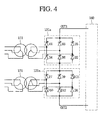
- Fig. 4 is a view illustrating connection between the transformer and the three-phase valve bridge according to an embodiment.
- Fig. 4 illustrates the connection between the two transformers 121 for the positive pole and the two three-phase valve bridges 131a for the positive pole. Since the connection between the two transformers 122 for the negative pole and the two three-phase valve bridges 132a for the negative pole, the connection between the two transformers 161 for the positive pole and the two three-phase valve bridges 151a for the positive pole, the connection between the two transformers 162 for the negative pole and the two three-phase valve bridges 152a for the negative pole, the connection between the one transformer 121 for the positive pole and the one three-phase valve bridge 131a for the positive pole, and the connection between the one transformer 161 for the positive pole and the one three-phase valve bridge 151a for the positive pole could be easily derived from the embodiment of Fig. 4 , their drawings and descriptions thereof will be omitted.
- the transformer 121 having the Y-Y connection is called an upper transformer
- the transformer 121 having the Y- ⁇ connection is called a lower transformer
- the three-phase valve bridge 131a connected to the upper transformer is called an upper three-phase valve bridges
- the three-phase valve bridges 131a connected to the lower transformer is called a lower three-phase valve bridges.
- the upper three-phase valve bridges and the lower three-phase valve bridges have two output terminals outputting a DC power, i.e., a first output terminal OUT1 and a second output terminal OUT2.
- the upper three-phase valve bridge includes six valves
- D1 to D6 and the lower three-phase valve bridges include six valves D7 to D12.
- the valve D1 has a cathode connected to the first output terminal OUT1 and an anode connected to a second terminal of the secondary coil of the upper transformer.
- the valve D2 has a cathode connected to the anode of the valve D5 and an anode connected to the anode of the valve D6.
- the valve D3 has a cathode connected to the first output terminal OUT1 and an anode connected to a second terminal of the secondary coil of the upper transformer.
- the valve D4 has a cathode connected to the anode of the valve D1 and an anode connected to the anode of the valve D6.
- the valve D5 has a cathode connected to the first output terminal OUT1 and an anode connected to a third terminal of the secondary coil of the upper transformer.
- the valve D6 has a cathode connected to the anode of the valve D3.
- the valve D7 has a cathode connected to the anode of the valve D6 and an anode connected to a first terminal of the secondary coil of the lower transformer.
- the valve D8 has a cathode connected to the anode of the valve D11 and an anode connected to a second output terminal OUT2.
- the valve D9 has a cathode connected to the anode of the valve D6 and an anode connected to a second terminal of the secondary coil of the lower transformer.
- the valve D10 has a cathode connected to the anode of the valve D7 and an anode connected to the second output terminal OUT2.
- the valve D11 has a cathode connected to the anode of the valve D6 and an anode connected to a third terminal of the secondary coil of the lower transformer.
- the valve D12 has a cathode connected to the anode of the valve D9 and an anode connected to the second output terminal OUT2.
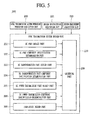
- Fig. 5 is a block diagram of an apparatus for a design of the HVDC transmission system according to an embodiment.
- An apparatus 200 for a design of the HVDC transmission system includes an HVDC transmission system operation information acquisition unit 210, a design specification acquisition unit 221, a design requirement acquisition unit 223, and an HVDC transmission system design unit 230.
- the HVDC transmission system design unit 230 includes an AC transformation part design part 231, an AC part component specification determination part 232, a DC part design part 233, a DC transformation part component specification determination part 234, a DC power transmission part design part 235, a DC power transmission part component specification determination part 236, an insulation design part 300, and a gathering part 239.
- the HVDC transmission system operation information acquisition unit 210 acquires operation information of a former HVDC transmission system from a control part 190 of the former HVDC transmission system.
- the design specification acquisition unit 221 acquires a design specification of the former HVDC transmission system.
- the design requirement acquisition unit 223 acquires a design requirement of the present HVDC transmission system.
- the HVDC transmission system design unit 230 designs the present HVDC transmission system on the basis of the design specification of the former HVDC transmission system, the operation information of the former HVDC transmission system, and the design requirement of the present HVDC transmission system.
- the AC transformation part design part 231 designs structures of the AC parts 110 and 170 of the present HVDC transmission system on the basis of the operation information of the former HVDC transmission system and the design requirement of the present HVDC transmission system.
- the AC part component specification determination part 232 determines specifications of the components within the AC parts 110 and 170 of the present HVDC transmission system on the basis of the operation information of the former HVDC transmission system and the design requirement of the present HVDC transmission system.
- the DC transformation part design part 233 designs structures of DC transformation parts 103 and 105 of the present HVDC transmission system on the basis of the operation information of the former HVDC transmission system and the design requirement of the present HVDC transmission system.
- the DC transformation part component specification determination part 234 determines specifications of components within the DC transformation parts 103 and 105 of the present HVDC transmission system on the basis of the operation information of the former HVDC transmission system and the design requirement of the present HVDC transmission system.
- the DC power transmission part design part 235 designs structures of a DC power transmission part 140 of the present HVDC transmission system on the basis of the operation information of the former HVDC transmission system and the design requirement of the present HVDC transmission system.
- the DC power transmission part component specification determination part 236 determines specifications of components within a DC power transmission part 140 of the present HVDC transmission system on the basis of the operation information of the former HVDC transmission system and the design requirement of the present HVDC transmission system.
- the insulation design part 300 performs an insulation design of the present HVDC transmission system on the basis of the operation information of the former HVDC transmission system and the design requirement of the present HVDC transmission system.
- the gathering part 239 gathers the structures of the AC parts 110 and 170, the specifications of the components within the AC parts 110 and 170, the structures of the DC transformation parts 103 and 105, the specifications of the components within the DC transformation parts 103 and 105, the structure of the DC power transmission part 140, the specifications of the components within the DC power transmission part 140, and the insulation design of the present HVDC transmission system to design the present HVDC transmission system.
- Fig. 6 is a block diagram of a method for the design of the HVDC transmission system according to an embodiment.
- a control part 190 of a former HVDC transmission system collects operation information of the former HVDC transmission system.
- the operation information may include information with respect to an operation state and operation state cause information with respect to causes that have an influence on the operation state.
- the operation state information may include information with respect to an available rate, information with respect to an operation time, and information with respect to a lifecycle of the former HVDC transmission system.
- the operation state cause information may include information with respect to a type of breakdown, information with respect to a cause of the breakdown, information with respect to a cause that has an influence on the available rate, and information with respect to a cause that has an influence on the lifecycle.
- the HVDC transmission system operation information acquisition unit 210 acquires operation information of a former HVDC transmission system from a control part 190 of the former HVDC transmission system.
- the design specification acquisition unit 221 acquires a design specification of the former HVDC transmission system.
- the design specification of the former HVDC transmission system may include a design structure of the AC part of the former HVDC transmission system, a component specification of the AC part of the former HVDC transmission system, a design structure of the DC transformation part of the former HVDC transmission system, a component specification of the DC transformation part of the former HVDC transmission system, a design structure of the DC power transmission part of the former HVDC transmission system, and a component specification of the DC power transmission part of the former HVDC transmission system.
- the design requirement acquisition unit 223 acquires a design requirement of the present HVDC transmission system.
- the design requirement of the present HVDC transmission system may include information with respect to an available rate, information with respect to an operation time, and information with respect to a lifecycle of the present HVDC transmission system.
- the HVDC transmission system design unit 230 compares the operation state of the former HVDC transmission system to the design requirement of the present HVDC transmission system.
- the HVDC transmission system design unit 230 corrects the design specification of the former HVDC transmission system in relation to the cause that has an influence on the operation state on the basis of the compared result to write a design specification that is adequate for the design requirement of the present HVDC transmission system.
- the HVDC transmission system design unit 230 may increase the design specification of the former HVDC transmission system in relation to the operation state cause by a difference between the design requirement of the current HVDC transmission system and the operation state of the former HVDC transmission system to write a design specification that is adequate for the design requirement of the present HVDC transmission system.
- the HVDC transmission system design unit 230 may decrease the design specification of the former HVDC transmission system in relation to the operation state cause by a difference between the design requirement of the current HVDC transmission system and the operation state of the former HVDC transmission system to write a design specification that is adequate for the design requirement of the present HVDC transmission system.
- the HVDC transmission system design unit 230 may write the design specification of the present HVDC transmission system so that the current HVDC transmission system includes three DC power transmission paths or increase the specifications of the components in the two DC power transmission path.
- Fig. 7 is a flowchart illustrating an operation of an HVDC transmission system design unit of the apparatus for the design of the HVDC transmission system according to an embodiment.
- the AC transformation part design part 231 designs structures of the AC parts 110 and 170 of the present HVDC transmission system on the basis of the operation information of the former HVDC transmission system and the design requirement of the present HVDC transmission system.
- the AC transformation part design part 231 may correct the design structure of the AC part of the former HVDC transmission system in relation to the cause that has an influence on the operation state on the basis of the comparison between the operation state information of the former HVDC transmission system and the design requirement of the present HVDC transmission system to write a design specification with respect to the structures of the AC parts 110 and 170 of the present HVDC transmission system.
- the AC part component specification determination part 232 determines specifications of the components within the AC parts 110 and 170 of the present HVDC transmission system on the basis of the operation information of the former HVDC transmission system and the design requirement of the present HVDC transmission system.
- the AC part component specification determination part 232 may correct the component specification of the AC part of the former HVDC transmission system in relation to the cause that has an influence on the operation state on the basis of the comparison between the operation state information of the former HVDC transmission system and the design requirement of the present HVDC transmission system to write specifications of the components within the AC parts 110 and 170 of the present HVDC transmission system.
- the DC transformation part design part 233 designs structures of DC transformation parts 103 and 105 of the present HVDC transmission system on the basis of the operation information of the former HVDC transmission system and the design requirement of the present HVDC transmission system.
- the DC transformation part design part 233 may correct the design structure of the DC transformation part of the former HVDC transmission system in relation to the cause that has an influence on the operation state on the basis of the comparison between the operation state information of the former HVDC transmission system and the design requirement of the present HVDC transmission system to write a design specification with respect to the structures of the DC transformation parts 103 and 105 of the present HVDC transmission system.
- the DC transformation part component specification determination part 234 determines specifications of components within the DC transformation parts 103 and 105 of the present HVDC transmission system on the basis of the operation information of the former HVDC transmission system and the design requirement of the present HVDC transmission system.
- the DC transformation part component specification determination part 234 may correct the component specification of the DC transformation part of the former HVDC transmission system in relation to the cause that has an influence on the operation state on the basis of the comparison between the operation state information of the former HVDC transmission system and the design requirement of the present HVDC transmission system to write specifications of the components within the DC transformation parts 103 and 105 of the present HVDC transmission system.
- the DC power transmission part design part 235 designs structures of a DC power transmission part 140 of the present HVDC transmission system on the basis of the operation information of the former HVDC transmission system and the design requirement of the present HVDC transmission system.
- the DC power transmission part design part 235 may correct the design structure of the DC power transmission part of the former HVDC transmission system in relation to the cause that has an influence on the operation state on the basis of the comparison between the operation state information of the former HVDC transmission system and the design requirement of the present HVDC transmission system to write a design specification with respect to the structures of the DC power transmission part 140 of the present HVDC transmission system.
- the DC power transmission part component specification determination part 236 determines specifications of components within a DC power transmission part 140 of the present HVDC transmission system on the basis of the operation information of the former HVDC transmission system and the design requirement of the present HVDC transmission system.
- the DC power transmission part component specification determination part 236 may correct the component specification of the DC power transmission part of the former HVDC transmission system in relation to the cause that has an influence on the operation state on the basis of the comparison between the operation state information of the former HVDC transmission system and the design requirement of the present HVDC transmission system to write specifications of the components within the DC power transmission part 140 of the present HVDC transmission system.
- the insulation design part 300 performs an insulation design of the present HVDC transmission system on the basis of the operation information of the former HVDC transmission system and the design requirement of the present HVDC transmission system.
- the insulation design part 300 performs an insulation design of the present HVDC transmission system on the basis of the operation information of the former HVDC transmission system and the design requirement of the present HVDC transmission system.
- the gathering part 239 gathers the structures of the AC parts 110 and 170, the specifications of the components within the AC parts 110 and 170, the structures of the DC transformation parts 103 and 105, the specifications of the components within the DC transformation parts 103 and 105, the structure of the DC power transmission part 140, the specifications of the components within the DC power transmission part 140, and the insulation design of the present HVDC transmission system to design the present HVDC transmission system.
- Fig. 8 is a block diagram illustrating an apparatus for an insulation design of the HVDC transmission system according to an embodiment.
- an insulation design part 300 of the HVDC transmission system 100 includes a system analysis unit 310, a first insulation modeling unit 320, an insulation level calculation unit 330, a second insulation modeling unit 340, a required withstanding voltage calculation unit 350, a reference withstanding voltage calculation unit 360, a rated insulation level calculation unit 370, a third insulation modeling unit 380, and an insulation verification unit 390.
- the system analysis unit 310 analyzes the HVDC transmission system 100 in operation S101 to calculate an overvoltage and rated voltage of the HVDC transmission system 100.
- the first insulation modeling unit 320 may model the HVDC transmission system 100 on the basis of the calculated overvoltage and rated voltage to generate an insulation basis model of the HVDC transmission system 100.
- the insulation level calculation unit 330 performs insulation calculation of the insulation basic model of the HVDC transmission system 100 in operation S104 to determine an insulation cooperation withstanding voltage that is adequate for performing a function of the insulation basic model of the HVDC transmission system 100.
- the second insulation modeling unit 340 applies a difference between an actual operation state of the HVDC transmission system 100 and a state of the insulation basic model of the HVDC transmission system 100 to the insulation basic model of the HVDC transmission system 100 in operation S106 to correct the insulation basic model of the HVDC transmission system 100, thereby generating an insulation model of the HVDC transmission system 100.
- the required withstanding voltage calculation unit 350 calculates a required withstanding voltage of the insulation model of the HVDC transmission system 100.
- the reference withstanding voltage calculation unit 360 calculates a reference withstanding voltage of the insulation model of the HVDC transmission system 100 from the required withstanding voltage of the insulation model of the HVDC transmission system 100.
- the rated insulation level calculation unit 370 calculates a rated insulation level that satisfies the reference withstanding voltage of the insulation model of the HVDC transmission system 100.
- the third insulation modeling unit 380 corrects the insulation model of the HVDC transmission system 100 on the basis of a variation in impedance in a divided section of the HVDC transmission system 100 to generate a corrected insulation model.
- the insulation verification unit 390 verifies whether the corrected insulation model of the HVDC transmission system 100 satisfies the required withstanding voltage.
- Fig. 9 is a flowchart illustrating an operation method of the insulation design apparatus of the HVDC transmission system according to an embodiment.
- the system analysis unit 310 analyzes the HVDC transmission system 100 in operation S101 to calculate an overvoltage and rated voltage in operation S102.
- the system analysis unit 310 may analyze the HVDC transmission system 100 to calculate the overvoltage and rated voltage on the basis of at least one of a classified stress voltage, a calculated overvoltage protection level, and an insulation property.
- the first insulation modeling unit 320 models the HVDC transmission system 100 on the calculated overvoltage and rated voltage to generate an insulation basis model of the HVDC transmission system 100 in operation S103.
- the insulation level calculation unit 330 performs insulation calculation of the insulation basic model of the HVDC transmission system 100 in operation S104 to determine an insulation cooperation withstanding voltage that is adequate for performing a function of the insulation basic model of the HVDC transmission system 100 in operation S105.
- the insulation level calculation unit 330 performs insulation calculation of the insulation basic model of the HVDC transmission system 100 on the basis of at least one of an insulation property of the insulation basic model of the HVDC transmission system 100, a function of the insulation basic model of the HVDC transmission system 100, a statistical distribution of data of the insulation basic model of the HVDC transmission system 100, inaccuracy of input data of the insulation basic model of the HVDC transmission system 100, and a factor having an influence on an combination of components of the insulation basic model of the HVDC transmission system 100 to determine the insulation cooperation withstanding voltage that is adequate for performing the function of the insulation basis model of the HVDC transmission system 100.
- the second insulation modeling unit 340 applies a difference between an actual operation state of the HVDC transmission system 100 and a state of the insulation basic model of the HVDC transmission system 100 to the insulation basic model of the HVDC transmission system 100 in operation S106 to correct the insulation basic model of the HVDC transmission system 100, thereby generating an insulation model of the HVDC transmission system 100 in operation S107.
- the second insulation modeling unit 340 may correct the insulation basic model of the HVDC transmission system 100 on the basis of a difference between an actual operation state of the HVDC transmission system 100 and the state of the insulation basic model of the HVDC transmission system 100 and the insulation cooperation withstanding voltage to generate an insulation model of the HVDC transmission system 100.
- the difference between the actual operation state of the HVDC transmission system 100 and the state of the insulation basis model may include at least one of a difference in environment factor of the HVDC transmission system 100, a difference in test of the components of the HVDC transmission system 100, a deviation of a product characteristic of the HVDC transmission system 100, a difference in installation state of the HVDC transmission system 100, a difference in operation lifecycle of the HVDC transmission system 100, and a safety factor that has to be considered for safety of the HVDC transmission system 100.
- the insulation model of the HVDC transmission system 100 may be an insulation model that considers the environment factor and the pollution level.
- the required withstanding voltage calculation unit 350 calculates a required withstanding voltage of the insulation model of the HVDC transmission system 100 in operation S109.
- the reference withstanding voltage calculation unit 360 calculates a reference withstanding voltage of the insulation model of the HVDC transmission system 100 from the required withstanding voltage of the insulation model of the HVDC transmission system 100 in operation S111.
- the reference withstanding voltage calculation unit 360 may calculate a reference withstanding voltage of the insulation model of the HVDC transmission system 100 from the required withstanding voltage of the insulation model of the HVDC transmission system 100 on the basis of at least one of a test state, a test conversion factor, and a voltage range.
- the rated insulation level calculation unit 370 calculates a rated insulation level that satisfies the reference withstanding voltage of the insulation model of the HVDC transmission system 100 in operation S113.
- the rated insulation level may include a voltage value and distance value at at least one position of the HVDC transmission system 100.
- the third insulation modeling unit 380 corrects the insulation model of the HVDC transmission system 100 on the basis of a variation in impedance in a divided section of the HVDC transmission system 100 to generate a corrected insulation model in operation S115.
- the divided section may include at least one of a transmission-side AC part 110, a transmission-side transformation part 103, a DC power transmission part 140, a customer-side transformation part 105, a customer-side AC part 170, a transmission-side transformer part 120, a transmission-side AC-DC converter part 130, a customer-side DC-AC converter part 150, and a customer-side transformer part 160.
- the insulation verification unit 390 verifies whether the corrected insulation model of the HVDC transmission system 100 satisfies the required withstanding voltage in operation S117.
- the above-described method can also be embodied as processor readable codes on a processor readable recording medium.
- processor readable recording medium include read-only memory (ROM), random-access memory (RAM), CD-ROMs, magnetic tapes, floppy disks, optical data storage devices, and carrier waves (such as data transmission through the Internet).
Landscapes
- Engineering & Computer Science (AREA)
- Power Engineering (AREA)
- Physics & Mathematics (AREA)
- Theoretical Computer Science (AREA)
- Computer Hardware Design (AREA)
- Evolutionary Computation (AREA)
- Geometry (AREA)
- General Engineering & Computer Science (AREA)
- General Physics & Mathematics (AREA)
- Direct Current Feeding And Distribution (AREA)
- Supply And Distribution Of Alternating Current (AREA)
- Inverter Devices (AREA)
Abstract
Description
- The present disclosure relates to a high voltage direct current (HVDC) transmission system. Particularly, the present disclosure relates to an apparatus and method for a design of a HVDC transmission system.
- The HVDC transmission system may convey electricity to a far distance through high voltage DC.
- In general, the HVDC transmission system may transmit electricity by using an overhead line or submarine cable.
- The HVDC transmission system is being widely used due to advantages such as less investment costs, unlimited cable length, and less power transmission loss.
- According to the method for the design of the existing HVDC transmission, an expert designs the system according to implicit and qualitative determination on the basis of his own experiences.
- However, since the HVDC transmission system is designed by the arbitrary determination of the export, a history on the operation of the existing HVDC transmission system has not been reflected, and a standardized design has not been performed.
- Embodiments provide an apparatus and method for design of an HVDC transmission system, which is capable of reflecting a history on an operation of an existing HVDC transmission system and enabling a standardized design.
- In one embodiment, an apparatus for an insulation design, which performs the insulation design of a high voltage direct current (HVDC) transmission system, includes: an HVDC transmission system operation information acquisition unit acquiring operation information of a former HVDC transmission system from a control part of the former HVDC transmission system; a design specification acquisition unit acquiring a design specification of the former HVDC transmission system; a design requirement acquisition unit acquiring a design requirement of a present HVDC transmission system; and an HVDC transmission system design unit designing the present HVDC transmission system on the basis of the design specification of the former HVDC transmission system, the operation information of the former HVDC transmission system, and the design requirement of the present HVDC transmission system.
- The details of one or more embodiments are set forth in the accompanying drawings and the description below. Other features will be apparent from the description and drawings, and from the claims.
-
-
Fig. 1 is a view of a high voltage direct current (HVDC) transmission system according to an embodiment. -
Fig. 2 is a view of a monopolar-type HVDC transmission system according to an embodiment. -
Fig. 3 is a view of a bipolar-type HVDC transmission system according to an embodiment. -
Fig. 4 is a view illustrating connection between a transformer and a three-phase valve bridge according to an embodiment. -
Fig. 5 is a block diagram of an apparatus for a design of the HVDC transmission system according to an embodiment. -
Fig. 6 is a block diagram of a method for the design of the HVDC transmission system according to an embodiment. -
Fig. 7 is a flowchart illustrating an operation of an HVDC transmission system design unit of the apparatus for the design of the HVDC transmission system according to an embodiment. -
Fig. 8 is a block diagram illustrating an apparatus for an insulation design of the HVDC transmission system according to an embodiment. -
Fig. 9 is a flowchart illustrating an operation method of the insulation design apparatus of the HVDC transmission system according to an embodiment. - Reference will now be made in detail to the embodiments of the present disclosure, examples of which are illustrated in the accompanying drawings.
- An electric device for an electric vehicle according to an embodiment will be described in detail with reference to the accompanying drawings. The invention may, however, be embodied in many different forms and should not be construed as being limited to the embodiments set forth herein; rather, that alternate embodiments included in other retrogressive inventions or falling within the spirit and scope of the present disclosure can easily be derived through adding, altering, and changing, and will fully convey the concept of the invention to those skilled in the art.
- Hereinafter, embodiments of the present disclosure will be described in more detail with reference to the accompanying drawings. Furthermore, terms, such as a "part", a "module" ad a "unit", are used for convenience of description, and they do not have different meanings or functions in themselves.
-
Fig. 1 is a view of a high voltage direct current (HVDC) transmission system according to an embodiment. - Referring to
Fig. 1 , anHVDC transmission system 100 according to ar_ embodiment includes apower generation part 101, a transmission-side alternating current (AC)part 110, a transmission-side transformation part 103, a direct current (DC)power transmission part 140, a customer-sideDC transformation part 105, a customer-side AC part 170, acustomer part 180, and acontrol part 190. The transmission-sideDC transformation part 103 includes a transmission-side transformer part 120, and a transmission-side AC-DC converter part 130. The customer-sideDC transformation part 105 includes a customer-side DC-AC converter part 150, and a customer-side transformer part 160. - The
power generation part 101 generates a three-phase AC power. Thepower generation part 101 may include a plurality of power generating plants. - The transmission-
side AC part 110 transmits the three-phase AC power generated by thegeneration part 101 to a DC power transformation substation including the transmission-side transformer part 120 and the transmission-side AC-DC converter part 130. - The transmission-
side transformer part 110 isolates the transmission-side AC part 110 from the transmission-side AC-DC converter part 130 and the DCpower transmission part 140. - The transmission-side AC-
DC converter part 130 converts the three-phase AC power corresponding to an output of the transmission-side transformer part 120 into a DC power. - The DC
power transmission part 140 transfers the transmission-side DC power to a customer-side. - The customer-side DC-
AC converter part 150 converts the DC power transmitted by the DCpower transmission part 140 into a three-phase AC power. - The customer-
side transformer part 160 isolates the customer-side AC part 170 from the customer-side DC-AC converter part 150 and the DCpower transmission part 140. - The customer-
side AC part 170 provides the three-phase AC power corresponding to an output of the customer-side transformer part 160 to thecustomer part 180. - The
control part 190 controls at least one of thepower generation part 101, the transmission-side AC part 110, the transmission-sideDC transformation part 103, the DCpower transmission part 140, the customer-sideDC transformation part 105, the customer-side AC part 170, thecustomer part 180, the transmission-side AC-DC converter part 130, and the customer-side DC-AC converter part 150. Particularly, thecontrol part 190 may control turn-on and turn-off timings of a plurality of valves within the transmission-side AC-DC converter part 130 and the customer-side DC-AC converter part 150. Here, each of the valves may be a thyristor or an insulated gate bipolar transistor (IGBT). -
Fig. 2 is a view of a monopolar-type HVDC transmission system according to an embodiment. - Particularly,
Fig. 2 illustrates a system that transmits a DC power having a single pole. Hereinafter, it is assumed that the single pole is a positive pole, but is not limited thereto. - The transmission-
side AC part 110 includes anAC transmission line 111 and anAC filter 113. - The AC
power transmission line 111 transmits the three-phase AC power generated by thegeneration part 101 to the transmission-sideDC transformation part 103. - The
AC filter 113 removes remaining frequency components except for a frequency component that is used by theDC transformation part 103 from the transferred three-phase AC power. - The transmission-
side transformer part 120 includes at least onetransformer 121 for the positive pole. For the positive pole, the transmission-side AC-DC converter part 130 includes an AC-positivepole DC converter 131 that generates a positive pole DC power, and the AC-positivepole DC converter 131 includes at least one three-phase valve bridge 131a corresponding to the at least onetransformer 121. - When one three-
phase valve bridge 131a is used for the positive pole, the AC-positivepole DC converter 131 may generate a positive pole DC power having 6 pulses by using the AC power. Here, a primary coil and a secondary coil of onetransformer 121 may have Y-Y connection or Y-Δ connection. - When two three-
phase valve bridges 131a are used, the AC-positivepole DC converter 131 may generate a positive pole DC power having 12 pulses by using the AC power. Here, a primary coil and a secondary coil of one of the twotransformers 121 may have Y-Y connection, and a primary coil and a secondary coil of the other of the twotransformers 121 may have Y-Δ connection. - When three three-
phase valve bridges 131a are used, the AC-positivepole DC converter 131 may generate a positive pole DC power having 18 pulses by using the AC power. The more the number of pulses of the positive pole DC power increases, the more a filter price may decrease. - The DC
power transmission part 140 includes a transmission-side positivepole DC filter 141, a positive pole DCpower transmission line 143, and a customer-side positivepole DC filter 145. - The transmission-side positive
pole DC filter 141 includes an inductor L1 and a capacitor C1 and performs DC filtering on the positive pole DC power output by the AC-positivepole DC converter 131. - The positive pole DC
power transmission line 143 has one DC line for transmitting the positive pole DC power, and the earth may be used as a current feedback path. At least one switch may be disposed on the DC line. - The customer-side negative
pole DC filter 145 includes an inductor L2 and a capacitor C2 and performs DC filtering on the positive pole DC power transferred through the positive pole DCpower transmission line 143. - The customer-side DC-
AC converter part 150 includes a positive pole DC-AC converter 151 and at least one three-phase valve bridge 151a. - The customer-
side transformer part 160 includes, for the positive pole, at least onetransformer 161 corresponding to at least one three-phase valve bridge 151a. - When one three-
phase valve bridge 151a is used, the positive pole DC-AC converter 151 may generate an AC power having 6 pulses by using the positive pole DC power. Here, a primary coil and a secondary coil of onetransformer 161 may have Y-Y connection or Y-Δ connection. - When two three-
phase valve bridges 151a are used, the positive pole DC-AC converter 151 may generate an AC power having 12 pulses by using the positive pole DC power. Here, a primary coil and a secondary coil of one of the twotransformers 161 may have Y-Y connection, and a primary coil and a secondary coil of the other of the twotransformers 161 may have Y-Δ connection. - When three three-
phase valve bridges 151a are used, the positive pole DC-AC converter 151 may generate an AC power having 18 pulses by using the positive pole DC power. The more the number of pulses of the AC power increases, the more the filter price may decrease. - The customer-
side AC part 170 includes anAC filter 171 and an ACpower transmission line 173. - The
AC filter 171 removes remaining frequency components except for a frequency component (for example, 60Hz) used by thecustomer part 180 from the AC power generated by the customer-sideDC transformation part 105. - The AC
power transmission line 173 transmits the filtered AC power to thecustomer part 180. -
Fig. 3 is a view of a bipolar-type HVDC transmission system according to an embodiment. - Particularly,
Fig. 3 illustrates a system that transmits a DC power having two poles. Hereinafter, it is assumed that the two poles are a positive pole and a negative pole, but is not limited thereto. - The transmission-
side AC part 110 includes anAC transmission line 111 and anAC filter 113. - The AC
power transmission line 111 transmits the three-phase AC power generated by thegeneration part 101 to the transmission-side transformation part 103. - The
AC filter 113 removes remaining frequency components except for a frequency component used by thetransformation part 103 from the transferred three-phase AC power. - The transmission-
side transformer part 120 includes at least onetransformer 121 for the positive pole and at least onetransformer 122 for the negative pole. The transmission-side AC-DC converter part 130 includes an AC-positivepole DC converter 131 that generates a positive pole DC power and an AC-negativepole DC converter 132 that generates a negative pole DC power. The AC-positivepole DC converter 131 includes at least one three-phase valve bridge 131a corresponding to the at least onetransformer 121 for the positive pole. The AC-negativepole DC converter 132 includes at least one three-phase valve bridge 132a corresponding to the at least onetransformer 122 for the negative pole. - When one three-
phase valve bridge 131a is used for the positive pole, the AC-positivepole DC converter 131 may generate a positive pole DC power having 6 pulses by using the AC power. Here, a primary coil and a secondary coil of onetransformer 121 may have Y-Y connection or Y-Δ connection. - When two three-
phase valve bridges 131a are used for the positive pole, the AC-positivepole DC converter 131 may generate a positive pole DC power having 12 pulses by using the AC power. Here, a primary coil and a secondary coil of one of the twotransformers 121 may have Y-Y connection, and a primary coil and a secondary coil of the other of the twotransformers 121 may have Y-Δ connection. - When three three-
phase valve bridges 131a are used for the positive pole, the AC-positivepole DC converter 131 may generate a positive pole DC power having 18 pulses by using the AC power. The more the number of pulses of the positive pole DC power increases, the more the filter price may decrease. - When one three-
phase valve bridge 132a is used for the negative pole, the AC-negativepole DC converter 132 may generate a negative pole DC power having 6 pulses. Here, a primary coil and a secondary coil of onetransformer 122 may have Y-Y connection or Y-Δ connection. - When two three-
phase valve bridges 132a are used for the negative pole, the AC-negativepole DC converter 132 may generate a negative pole DC power having 12 pulses. Here, a primary coil and a secondary coil of one of the twotransformers 122 may have Y-Y connection, and a primary coil and a secondary coil of the other of the twotransformers 122 may have Y-Δ connection. - When three three-
phase valve bridges 132a are used for the negative pole, the AC-negativepole DC converter 132 may generate a negative pole DC power having 18 pulses. The more the number of pulses of the negative pole DC power increases, the more the filter price may decrease. - The DC
power transmission part 140 includes a transmission-side positivepole DC filter 141, a transmission-side negativepole DC filter 142, a positive pole DCpower transmission line 143, a negative pole DCpower transmission line 144, a customer-side positivepole DC filter 145, and a customer-side negativepole DC filter 146. - The transmission-side positive
pole DC filter 141 includes an inductor L1 and a capacitor C1 and performs DC filtering on the positive pole DC power output by the AC-positivepole DC converter 131. - The transmission-side negative
pole DC filter 142 includes an inductor L3 and a capacitor C3 and performs DC filtering on the negative pole DC power output by the AC-negativepole DC converter 132. - The positive pole DC
power transmission line 143 has one DC line for transmitting the negative pole DC power, and the earth may be used as a current feedback path. At least one switch may be disposed on the DC line. - The negative pole DC
power transmission line 144 has one DC line for transmitting the negative pole DC power, and the earth may be used as a current feedback path. At least one switch may be disposed on the DC line. - The customer-side negative
pole DC filter 145 includes an inductor L2 and a capacitor C2 and performs DC filtering on the positive pole DC power transferred through the positive pole DCpower transmission line 143. - The customer-side negative
pole DC filter 146 includes an inductor L4 and a capacitor C4 and performs DC filtering on the negative pole DC power transferred through the negative pole DCpower transmission line 144. - The customer-side DC-
AC converter part 150 includes a positive pole DC-AC converter 151 and a negative pole DC-AC converter 152. The positive pole DC-AC converter 151 includes at least one three-phase valve bridge 151a, and the negative pole DC-AC converter 152 includes at least one three-phase valve bridge 152a. - The customer-
side transformer part 160 includes, for the positive pole, at least onetransformer 161 corresponding to the at least one three-phase valve bridge 151a and, for the negative pole, at least onetransformer 162 corresponding to the at least one three-phase valve bridge 152a. - When one three-
phase valve bridge 151a is used for the positive pole, the positive pole DC-AC converter 151 may generate an AC power having 6 pulses by using the positive pole DC power. Here, a primary coil and a secondary coil of onetransformer 161 may have Y-Y connection or Y-Δ connection. - When two three-
phase valve bridges 151a are used for the positive pole, the positive pole DC-AC converter 151 may generate an AC power having 12 pulses by using the positive pole DC power. Here, a primary coil and a secondary coil of one of the twotransformers 161 may have Y-Y connection, and a primary coil and a secondary coil of the other of the twotransformers 161 may have Y-Δ connection. - When three three-
phase valve bridges 151a are used for the positive pole, the positive pole DC-AC converter 151 may generate an AC power having 18 pulses by using the positive pole DC power. The more the number of pulses of the AC power increases, the more the filter price may decrease. - When one three-
phase valve bridge 152a is used for the negative pole, the negative pole DC-AC converter 152 may generate an AC power having 6 pulses by using the negative pole DC power. Here, a primary coil and a secondary coil of onetransformer 162 may have Y-Y connection or Y-Δ connection. - When two three-
phase valve bridges 152a is used for the negative pole, the negative pole DC-AC converter 152 may generate an AC power having 12 pulses by using the negative pole DC power. Here, a primary coil and a secondary coil of one of the twotransformers 162 may have Y-Y connection, and a primary coil and a secondary coil of the other of the twotransformers 162 may have Y-Δ connection. - When three three-
phase valve bridges 152a is used for the negative pole, the negative pole DC-AC converter 152 may generate an AC power having 18 pulses by using the negative pole DC power. The more the number of pulses of the AC power increases, the more the filter price may decrease. - The customer-
side AC part 170 includes anAC filter 171 and an ACpower transmission line 173. - The
AC filter 171 removes remaining frequency components except for a frequency component (for example, 60Hz) used by thecustomer part 180 from the AC power generated by the customer-sideDC transformation part 105. - The AC
power transmission line 173 transmits the filtered AC power to thecustomer part 180. -
Fig. 4 is a view illustrating connection between the transformer and the three-phase valve bridge according to an embodiment. - Particularly,
Fig. 4 illustrates the connection between the twotransformers 121 for the positive pole and the two three-phase valve bridges 131a for the positive pole. Since the connection between the twotransformers 122 for the negative pole and the two three-phase valve bridges 132a for the negative pole, the connection between the twotransformers 161 for the positive pole and the two three-phase valve bridges 151a for the positive pole, the connection between the twotransformers 162 for the negative pole and the two three-phase valve bridges 152a for the negative pole, the connection between the onetransformer 121 for the positive pole and the one three-phase valve bridge 131a for the positive pole, and the connection between the onetransformer 161 for the positive pole and the one three-phase valve bridge 151a for the positive pole could be easily derived from the embodiment ofFig. 4 , their drawings and descriptions thereof will be omitted. - In
Fig. 4 , thetransformer 121 having the Y-Y connection is called an upper transformer, thetransformer 121 having the Y-Δ connection is called a lower transformer, the three-phase valve bridge 131a connected to the upper transformer is called an upper three-phase valve bridges, and the three-phase valve bridges 131a connected to the lower transformer is called a lower three-phase valve bridges. - The upper three-phase valve bridges and the lower three-phase valve bridges have two output terminals outputting a DC power, i.e., a first output terminal OUT1 and a second output terminal OUT2.
- The upper three-phase valve bridge includes six valves
- D1 to D6, and the lower three-phase valve bridges include six valves D7 to D12.
- The valve D1 has a cathode connected to the first output terminal OUT1 and an anode connected to a second terminal of the secondary coil of the upper transformer.
- The valve D2 has a cathode connected to the anode of the valve D5 and an anode connected to the anode of the valve D6.
- The valve D3 has a cathode connected to the first output terminal OUT1 and an anode connected to a second terminal of the secondary coil of the upper transformer.
- The valve D4 has a cathode connected to the anode of the valve D1 and an anode connected to the anode of the valve D6.
- The valve D5 has a cathode connected to the first output terminal OUT1 and an anode connected to a third terminal of the secondary coil of the upper transformer.
- The valve D6 has a cathode connected to the anode of the valve D3.
- The valve D7 has a cathode connected to the anode of the valve D6 and an anode connected to a first terminal of the secondary coil of the lower transformer.
- The valve D8 has a cathode connected to the anode of the valve D11 and an anode connected to a second output terminal OUT2.
- The valve D9 has a cathode connected to the anode of the valve D6 and an anode connected to a second terminal of the secondary coil of the lower transformer.
- The valve D10 has a cathode connected to the anode of the valve D7 and an anode connected to the second output terminal OUT2.
- The valve D11 has a cathode connected to the anode of the valve D6 and an anode connected to a third terminal of the secondary coil of the lower transformer.
- The valve D12 has a cathode connected to the anode of the valve D9 and an anode connected to the second output terminal OUT2.
- An apparatus for a design of the HVDC transmission system will now be described with reference to
Figs. 5 and6 . -
Fig. 5 is a block diagram of an apparatus for a design of the HVDC transmission system according to an embodiment. - An
apparatus 200 for a design of the HVDC transmission system according to an embodiment includes an HVDC transmission system operationinformation acquisition unit 210, a designspecification acquisition unit 221, a designrequirement acquisition unit 223, and an HVDC transmissionsystem design unit 230. The HVDC transmissionsystem design unit 230 includes an AC transformationpart design part 231, an AC part componentspecification determination part 232, a DCpart design part 233, a DC transformation part componentspecification determination part 234, a DC power transmissionpart design part 235, a DC power transmission part componentspecification determination part 236, aninsulation design part 300, and agathering part 239. - The HVDC transmission system operation
information acquisition unit 210 acquires operation information of a former HVDC transmission system from acontrol part 190 of the former HVDC transmission system. - The design
specification acquisition unit 221 acquires a design specification of the former HVDC transmission system. - The design
requirement acquisition unit 223 acquires a design requirement of the present HVDC transmission system. - The HVDC transmission
system design unit 230 designs the present HVDC transmission system on the basis of the design specification of the former HVDC transmission system, the operation information of the former HVDC transmission system, and the design requirement of the present HVDC transmission system. - The AC transformation
part design part 231 designs structures of theAC parts - The AC part component
specification determination part 232 determines specifications of the components within theAC parts - The DC transformation
part design part 233 designs structures ofDC transformation parts - The DC transformation part component
specification determination part 234 determines specifications of components within theDC transformation parts - The DC power transmission
part design part 235 designs structures of a DCpower transmission part 140 of the present HVDC transmission system on the basis of the operation information of the former HVDC transmission system and the design requirement of the present HVDC transmission system. - The DC power transmission part component
specification determination part 236 determines specifications of components within a DCpower transmission part 140 of the present HVDC transmission system on the basis of the operation information of the former HVDC transmission system and the design requirement of the present HVDC transmission system. - The
insulation design part 300 performs an insulation design of the present HVDC transmission system on the basis of the operation information of the former HVDC transmission system and the design requirement of the present HVDC transmission system. - The
gathering part 239 gathers the structures of theAC parts AC parts DC transformation parts DC transformation parts power transmission part 140, the specifications of the components within the DCpower transmission part 140, and the insulation design of the present HVDC transmission system to design the present HVDC transmission system. -
Fig. 6 is a block diagram of a method for the design of the HVDC transmission system according to an embodiment. - In operation S11, a
control part 190 of a former HVDC transmission system collects operation information of the former HVDC transmission system. Here, the operation information may include information with respect to an operation state and operation state cause information with respect to causes that have an influence on the operation state. The operation state information may include information with respect to an available rate, information with respect to an operation time, and information with respect to a lifecycle of the former HVDC transmission system. The operation state cause information may include information with respect to a type of breakdown, information with respect to a cause of the breakdown, information with respect to a cause that has an influence on the available rate, and information with respect to a cause that has an influence on the lifecycle. - In operation S12, the HVDC transmission system operation
information acquisition unit 210 acquires operation information of a former HVDC transmission system from acontrol part 190 of the former HVDC transmission system. - In operation S13, the design
specification acquisition unit 221 acquires a design specification of the former HVDC transmission system. Here, the design specification of the former HVDC transmission system may include a design structure of the AC part of the former HVDC transmission system, a component specification of the AC part of the former HVDC transmission system, a design structure of the DC transformation part of the former HVDC transmission system, a component specification of the DC transformation part of the former HVDC transmission system, a design structure of the DC power transmission part of the former HVDC transmission system, and a component specification of the DC power transmission part of the former HVDC transmission system. - In operation S14, the design
requirement acquisition unit 223 acquires a design requirement of the present HVDC transmission system. Here, the design requirement of the present HVDC transmission system may include information with respect to an available rate, information with respect to an operation time, and information with respect to a lifecycle of the present HVDC transmission system. - In operation S15, the HVDC transmission
system design unit 230 compares the operation state of the former HVDC transmission system to the design requirement of the present HVDC transmission system. - The HVDC transmission
system design unit 230 corrects the design specification of the former HVDC transmission system in relation to the cause that has an influence on the operation state on the basis of the compared result to write a design specification that is adequate for the design requirement of the present HVDC transmission system. - Particularly, if the design requirement of the present HVDC transmission system requires a requirement that is higher than the operation state of the former HVDC transmission system, the HVDC transmission
system design unit 230 may increase the design specification of the former HVDC transmission system in relation to the operation state cause by a difference between the design requirement of the current HVDC transmission system and the operation state of the former HVDC transmission system to write a design specification that is adequate for the design requirement of the present HVDC transmission system. - Particularly, if the design requirement of the present HVDC transmission system requires a requirement that is lower than the operation state of the former HVDC transmission system, the HVDC transmission
system design unit 230 may decrease the design specification of the former HVDC transmission system in relation to the operation state cause by a difference between the design requirement of the current HVDC transmission system and the operation state of the former HVDC transmission system to write a design specification that is adequate for the design requirement of the present HVDC transmission system. - For example, if the design specification of the former HVDC transmission system has two DC power transmission paths, the operation state of the former HVDC transmission system has an available rate of about 98%, the operation analysis information indicates an error of the DC power transmission path that is a main cause of decreasing of the available rate, and the design requirement of the present HVDC transmission system requires a n available rate of about 99%, the HVDC transmission
system design unit 230 may write the design specification of the present HVDC transmission system so that the current HVDC transmission system includes three DC power transmission paths or increase the specifications of the components in the two DC power transmission path. -
Fig. 7 is a flowchart illustrating an operation of an HVDC transmission system design unit of the apparatus for the design of the HVDC transmission system according to an embodiment. - In operation S31, the AC transformation
part design part 231 designs structures of theAC parts part design part 231 may correct the design structure of the AC part of the former HVDC transmission system in relation to the cause that has an influence on the operation state on the basis of the comparison between the operation state information of the former HVDC transmission system and the design requirement of the present HVDC transmission system to write a design specification with respect to the structures of theAC parts - In operation S32, the AC part component
specification determination part 232 determines specifications of the components within theAC parts specification determination part 232 may correct the component specification of the AC part of the former HVDC transmission system in relation to the cause that has an influence on the operation state on the basis of the comparison between the operation state information of the former HVDC transmission system and the design requirement of the present HVDC transmission system to write specifications of the components within theAC parts - In operation S33, the DC transformation
part design part 233 designs structures ofDC transformation parts part design part 233 may correct the design structure of the DC transformation part of the former HVDC transmission system in relation to the cause that has an influence on the operation state on the basis of the comparison between the operation state information of the former HVDC transmission system and the design requirement of the present HVDC transmission system to write a design specification with respect to the structures of theDC transformation parts - In operation S34, the DC transformation part component
specification determination part 234 determines specifications of components within theDC transformation parts specification determination part 234 may correct the component specification of the DC transformation part of the former HVDC transmission system in relation to the cause that has an influence on the operation state on the basis of the comparison between the operation state information of the former HVDC transmission system and the design requirement of the present HVDC transmission system to write specifications of the components within theDC transformation parts - In operation S35, the DC power transmission
part design part 235 designs structures of a DCpower transmission part 140 of the present HVDC transmission system on the basis of the operation information of the former HVDC transmission system and the design requirement of the present HVDC transmission system. The DC power transmissionpart design part 235 may correct the design structure of the DC power transmission part of the former HVDC transmission system in relation to the cause that has an influence on the operation state on the basis of the comparison between the operation state information of the former HVDC transmission system and the design requirement of the present HVDC transmission system to write a design specification with respect to the structures of the DCpower transmission part 140 of the present HVDC transmission system. - In operation S36, the DC power transmission part component
specification determination part 236 determines specifications of components within a DCpower transmission part 140 of the present HVDC transmission system on the basis of the operation information of the former HVDC transmission system and the design requirement of the present HVDC transmission system. The DC power transmission part componentspecification determination part 236 may correct the component specification of the DC power transmission part of the former HVDC transmission system in relation to the cause that has an influence on the operation state on the basis of the comparison between the operation state information of the former HVDC transmission system and the design requirement of the present HVDC transmission system to write specifications of the components within the DCpower transmission part 140 of the present HVDC transmission system. - In operation S37, the
insulation design part 300 performs an insulation design of the present HVDC transmission system on the basis of the operation information of the former HVDC transmission system and the design requirement of the present HVDC transmission system. - The
insulation design part 300 performs an insulation design of the present HVDC transmission system on the basis of the operation information of the former HVDC transmission system and the design requirement of the present HVDC transmission system. - In operation S38, the
gathering part 239 gathers the structures of theAC parts AC parts DC transformation parts DC transformation parts power transmission part 140, the specifications of the components within the DCpower transmission part 140, and the insulation design of the present HVDC transmission system to design the present HVDC transmission system. - A method for an insulation design of the HVDC transmission system will be described with reference to
Figs. 8 and9 . -
Fig. 8 is a block diagram illustrating an apparatus for an insulation design of the HVDC transmission system according to an embodiment. - Referring to
Fig. 8 , aninsulation design part 300 of theHVDC transmission system 100 according to an embodiment includes asystem analysis unit 310, a firstinsulation modeling unit 320, an insulationlevel calculation unit 330, a secondinsulation modeling unit 340, a required withstandingvoltage calculation unit 350, a reference withstandingvoltage calculation unit 360, a rated insulationlevel calculation unit 370, a thirdinsulation modeling unit 380, and aninsulation verification unit 390. - The
system analysis unit 310 analyzes theHVDC transmission system 100 in operation S101 to calculate an overvoltage and rated voltage of theHVDC transmission system 100. - The first
insulation modeling unit 320 may model theHVDC transmission system 100 on the basis of the calculated overvoltage and rated voltage to generate an insulation basis model of theHVDC transmission system 100. - The insulation
level calculation unit 330 performs insulation calculation of the insulation basic model of theHVDC transmission system 100 in operation S104 to determine an insulation cooperation withstanding voltage that is adequate for performing a function of the insulation basic model of theHVDC transmission system 100. - The second
insulation modeling unit 340 applies a difference between an actual operation state of theHVDC transmission system 100 and a state of the insulation basic model of theHVDC transmission system 100 to the insulation basic model of theHVDC transmission system 100 in operation S106 to correct the insulation basic model of theHVDC transmission system 100, thereby generating an insulation model of theHVDC transmission system 100. - The required withstanding
voltage calculation unit 350 calculates a required withstanding voltage of the insulation model of theHVDC transmission system 100. - The reference withstanding
voltage calculation unit 360 calculates a reference withstanding voltage of the insulation model of theHVDC transmission system 100 from the required withstanding voltage of the insulation model of theHVDC transmission system 100. - The rated insulation
level calculation unit 370 calculates a rated insulation level that satisfies the reference withstanding voltage of the insulation model of theHVDC transmission system 100. - The third
insulation modeling unit 380 corrects the insulation model of theHVDC transmission system 100 on the basis of a variation in impedance in a divided section of theHVDC transmission system 100 to generate a corrected insulation model. - The
insulation verification unit 390 verifies whether the corrected insulation model of theHVDC transmission system 100 satisfies the required withstanding voltage. -
Fig. 9 is a flowchart illustrating an operation method of the insulation design apparatus of the HVDC transmission system according to an embodiment. - The
system analysis unit 310 analyzes theHVDC transmission system 100 in operation S101 to calculate an overvoltage and rated voltage in operation S102. Thesystem analysis unit 310 may analyze theHVDC transmission system 100 to calculate the overvoltage and rated voltage on the basis of at least one of a classified stress voltage, a calculated overvoltage protection level, and an insulation property. - The first
insulation modeling unit 320 models theHVDC transmission system 100 on the calculated overvoltage and rated voltage to generate an insulation basis model of theHVDC transmission system 100 in operation S103. - The insulation
level calculation unit 330 performs insulation calculation of the insulation basic model of theHVDC transmission system 100 in operation S104 to determine an insulation cooperation withstanding voltage that is adequate for performing a function of the insulation basic model of theHVDC transmission system 100 in operation S105. Here, the insulationlevel calculation unit 330 performs insulation calculation of the insulation basic model of theHVDC transmission system 100 on the basis of at least one of an insulation property of the insulation basic model of theHVDC transmission system 100, a function of the insulation basic model of theHVDC transmission system 100, a statistical distribution of data of the insulation basic model of theHVDC transmission system 100, inaccuracy of input data of the insulation basic model of theHVDC transmission system 100, and a factor having an influence on an combination of components of the insulation basic model of theHVDC transmission system 100 to determine the insulation cooperation withstanding voltage that is adequate for performing the function of the insulation basis model of theHVDC transmission system 100. - The second
insulation modeling unit 340 applies a difference between an actual operation state of theHVDC transmission system 100 and a state of the insulation basic model of theHVDC transmission system 100 to the insulation basic model of theHVDC transmission system 100 in operation S106 to correct the insulation basic model of theHVDC transmission system 100, thereby generating an insulation model of theHVDC transmission system 100 in operation S107. The secondinsulation modeling unit 340 may correct the insulation basic model of theHVDC transmission system 100 on the basis of a difference between an actual operation state of theHVDC transmission system 100 and the state of the insulation basic model of theHVDC transmission system 100 and the insulation cooperation withstanding voltage to generate an insulation model of theHVDC transmission system 100. Here, the difference between the actual operation state of theHVDC transmission system 100 and the state of the insulation basis model may include at least one of a difference in environment factor of theHVDC transmission system 100, a difference in test of the components of theHVDC transmission system 100, a deviation of a product characteristic of theHVDC transmission system 100, a difference in installation state of theHVDC transmission system 100, a difference in operation lifecycle of theHVDC transmission system 100, and a safety factor that has to be considered for safety of theHVDC transmission system 100. The insulation model of theHVDC transmission system 100 may be an insulation model that considers the environment factor and the pollution level. - The required withstanding
voltage calculation unit 350 calculates a required withstanding voltage of the insulation model of theHVDC transmission system 100 in operation S109. - The reference withstanding
voltage calculation unit 360 calculates a reference withstanding voltage of the insulation model of theHVDC transmission system 100 from the required withstanding voltage of the insulation model of theHVDC transmission system 100 in operation S111. The reference withstandingvoltage calculation unit 360 may calculate a reference withstanding voltage of the insulation model of theHVDC transmission system 100 from the required withstanding voltage of the insulation model of theHVDC transmission system 100 on the basis of at least one of a test state, a test conversion factor, and a voltage range. - The rated insulation
level calculation unit 370 calculates a rated insulation level that satisfies the reference withstanding voltage of the insulation model of theHVDC transmission system 100 in operation S113. Here, the rated insulation level may include a voltage value and distance value at at least one position of theHVDC transmission system 100. - The third
insulation modeling unit 380 corrects the insulation model of theHVDC transmission system 100 on the basis of a variation in impedance in a divided section of theHVDC transmission system 100 to generate a corrected insulation model in operation S115. Here, the divided section may include at least one of a transmission-side AC part 110, a transmission-side transformation part 103, a DCpower transmission part 140, a customer-side transformation part 105, a customer-side AC part 170, a transmission-side transformer part 120, a transmission-side AC-DC converter part 130, a customer-side DC-AC converter part 150, and a customer-side transformer part 160. - The
insulation verification unit 390 verifies whether the corrected insulation model of theHVDC transmission system 100 satisfies the required withstanding voltage in operation S117. - According to the embodiment, the above-described method can also be embodied as processor readable codes on a processor readable recording medium. Examples of the processor readable recording medium include read-only memory (ROM), random-access memory (RAM), CD-ROMs, magnetic tapes, floppy disks, optical data storage devices, and carrier waves (such as data transmission through the Internet).
- Also, the embodiments set forth therein is not so limitedly, but all or part of the embodiments can be selectively combined so as to derive many variations.
- Although embodiments have been described with reference to a number of illustrative embodiments thereof, it should be understood that numerous other modifications and embodiments can be devised by those skilled in the art that will fall within the spirit and scope of the principles of this disclosure. More particularly, various variations and modifications are possible in the component parts and/or arrangements of the subject combination arrangement within the scope of the disclosure, the drawings and the appended claims. In addition to variations and modifications in the component parts and/or arrangements, alternative uses will also be apparent to those skilled in the art.
Claims (10)
- An apparatus for an insulation design, which performs the insulation design of a high voltage direct current (HVDC) transmission system, the apparatus comprising:an HVDC transmission system operation information acquisition unit (210) acquiring operation information of a former HVDC transmission system from a control part of the former HVDC transmission system;a design specification acquisition unit (221) acquiring a design specification of the former HVDC transmission system;a design requirement acquisition unit (223) acquiring a design requirement of a present HVDC transmission system; andan HVDC transmission system design unit (230) designing the present HVDC transmission system on the basis of the design specification of the former HVDC transmission system, the operation information of the former HVDC transmission system, and the design requirement of the present HVDC transmission system.
- The apparatus according to claim 1, wherein the operation information of the former HVDC transmission system comprises information with respect to an operation state of the former HVDC transmission system, and
the HVDC transmission system design unit (230) compares the operation state of the former HVDC transmission system to the design requirement of the present HVDC transmission system to correct the design specification of the former HVDC transmission system on the basis of the compared result and write a design specification that is adequate for the design requirement of the present HVDC transmission system. - The apparatus according to claim 2, wherein the operation information of the former HVDC transmission system comprises information with respect to an operation state cause that has an influence on the operation state of the former HVDC transmission system, and
the HVDC transmission system design unit (230) corrects the design specification of the former HVDC transmission system in relation to the operation state cause on the basis of the compared result and writes a design specification that is adequate for the design requirement of the present HVDC transmission system - The apparatus according to claim 3, wherein, if the design requirement of the present HVDC transmission system requires a requirement that is higher than the operation state of the former HVDC transmission system, the HVDC transmission system design unit increases the design specification of the former HVDC transmission system in relation to the operation state cause by a difference between the design requirement of the current HVDC transmission system and the operation state of the former HVDC transmission system to write a design specification that is adequate for the design requirement of the present HVDC transmission system, and
if the design requirement of the present HVDC transmission system requires a requirement that is lower than the operation state of the former HVDC transmission system, the HVDC transmission system design unit (230) decreases the design specification of the former HVDC transmission system in relation to the operation state cause by a difference between the design requirement of the current HVDC transmission system and the operation state of the former HVDC transmission system to write a design specification that is adequate for the design requirement of the present HVDC transmission system. - The apparatus according to claim 1, wherein the HVDC transmission system design unit (230) comprises an insulation design part that performs an insulation design of the present HVDC transmission system on the basis of the operation information of the former HVDC transmission system and the design requirement of the present HVDC transmission system.
- The apparatus according to claim 5, wherein the insulation design part (230) comprises:a first insulation modeling unit (320) modeling the present HVDC transmission system on the basis of an overvoltage and rated voltage of the present HVDC transmission system to generate an insulation basis model of the HVDC transmission system;an insulation level calculation unit (330) performing insulation calculation of the insulation basic model to determine an insulation cooperation withstanding voltage that is adequate for performing a function of the insulation basis model of the present HVDC transmission system;a second insulation modeling unit (340) correcting the insulation basis model of the present HVDC transmission system on the basis of the insulation cooperation withstanding voltage to generate an insulation model of the present HVDC transmission system; anda rated insulation level calculation unit (370) calculating a rated insulation level that satisfies a reference withstanding voltage of the insulation model of the present HVDC transmission system.
- The apparatus according to claim 6, further comprising:a third insulation modeling unit (380) correcting the insulation model of the present HVDC transmission system on the basis of a variation in impedance in a divided section of the present HVDC transmission system to generate a corrected insulation model; andan insulation verification unit (390) verifying whether the corrected insulation model of the present HVDC transmission system satisfies the required withstanding voltage.
- The apparatus according to claim 1, wherein the HVDC transmission system design unit comprises:a DC transformation part design part (233) designing a structure of a DC transformation part of the present HVDC transmission system on the basis of the operation information of the former HVDC transmission system and the design requirement of the present HVDC transmission system; anda DC transformation part component specification determination part (234) determining specifications of components within the DC transmission part of the present HVDC transmission system on the basis of the operation information of the former HVDC transmission system and the design requirement of the present HVDC transmission system.
- The apparatus according to claim 1, wherein the HVDC transmission system design unit (230) comprises:a DC power transmission part design part (235) designing a structure of a DC power transmission part of the present HVDC transmission system on the basis of the operation information of the former HVDC transmission system and the design requirement of the present HVDC transmission system; anda DC power transmission part component specification determination part (234) determining specifications of components within the DC power transmission part of the present HVDC transmission system on the basis of the operation information of the former HVDC transmission system and the design requirement of the present HVDC transmission system.
- The apparatus according to claim 1, wherein the HVDC transmission system design unit (230) comprises:an AC part design part (231) designing a structure of an AC part of the present HVDC transmission system on the basis of the operation information of the former HVDC transmission system and the design requirement of the present HVDC transmission system; andan AC part component specification determination part (232) determining specifications of components within the AC part of the present HVDC transmission system on the basis of the operation information of the former HVDC transmission system and the design requirement of the present HVDC transmission system.
Applications Claiming Priority (1)
| Application Number | Priority Date | Filing Date | Title |
|---|---|---|---|
| KR1020140057377A KR101639863B1 (en) | 2014-05-13 | 2014-05-13 | Apparatus and method for design of high voltage direct current transmission system |
Publications (2)
| Publication Number | Publication Date |
|---|---|
| EP2945248A1 true EP2945248A1 (en) | 2015-11-18 |
| EP2945248B1 EP2945248B1 (en) | 2019-12-25 |
Family
ID=53002606
Family Applications (1)
| Application Number | Title | Priority Date | Filing Date |
|---|---|---|---|
| EP15165302.9A Active EP2945248B1 (en) | 2014-05-13 | 2015-04-28 | Apparatus and method for design of high voltage direct current transmission system |
Country Status (6)
| Country | Link |
|---|---|
| US (1) | US20150333644A1 (en) |
| EP (1) | EP2945248B1 (en) |
| JP (1) | JP6092932B2 (en) |
| KR (1) | KR101639863B1 (en) |
| CN (1) | CN105098819B (en) |
| ES (1) | ES2776443T3 (en) |
Cited By (1)
| Publication number | Priority date | Publication date | Assignee | Title |
|---|---|---|---|---|
| CN106998073A (en) * | 2016-01-26 | 2017-08-01 | Ls产电株式会社 | Control device and its operating method in HVDC systems |
Families Citing this family (3)
| Publication number | Priority date | Publication date | Assignee | Title |
|---|---|---|---|---|
| CN105914739B (en) * | 2016-06-22 | 2018-07-17 | 华南理工大学 | A kind of drop point selection method under direct current split pole access module based on Equivalent Network |
| KR102715681B1 (en) | 2020-09-18 | 2024-10-10 | 한국전기연구원 | Method, system and computer program for designing modular multilevel converter based high voltage direct current transmission system |
| CN113343456A (en) * | 2021-05-31 | 2021-09-03 | 南方电网科学研究院有限责任公司 | High-precision closed-loop dynamic phasor simulation calculation and verification method and device for HVDC system |
Citations (5)
| Publication number | Priority date | Publication date | Assignee | Title |
|---|---|---|---|---|
| CN101694939A (en) * | 2009-10-16 | 2010-04-14 | 南方电网技术研究中心 | Converter station insulating co-operating design method of high-pressure direct-current power transmission system |
| KR101129158B1 (en) * | 2011-04-14 | 2012-03-23 | 엘에스산전 주식회사 | Method for designing basic insulation level of smoothing reactor in hvdc system |
| KR101146885B1 (en) * | 2011-03-18 | 2012-05-16 | 엘에스산전 주식회사 | Method for designing basic insulation level of return-side in hvdc system |
| US20130041520A1 (en) * | 2010-02-04 | 2013-02-14 | University Of Kwazulu-Natal | Method and system for facilitating design of a high voltage (hvdc) control system, an hvdc system and a method for optimising an hvdc system |
| KR101292856B1 (en) * | 2012-04-13 | 2013-08-02 | 엘에스산전 주식회사 | Method for designing insulation level of hvdc system |
Family Cites Families (12)
| Publication number | Priority date | Publication date | Assignee | Title |
|---|---|---|---|---|
| JP2002034151A (en) * | 2000-07-18 | 2002-01-31 | Mitsubishi Electric Corp | System evaluating device and optimal system configuration determining device |
| JP2003099483A (en) * | 2001-09-26 | 2003-04-04 | Toshiba Eng Co Ltd | Drawing management system |
| JP2004030381A (en) * | 2002-06-27 | 2004-01-29 | Hitachi Ltd | Business support system |
| JP2004094626A (en) * | 2002-08-30 | 2004-03-25 | Toshiba Corp | Plant equipment design support equipment |
| US8248740B2 (en) * | 2008-09-19 | 2012-08-21 | Advanced Fusion Systems, Llc | High speed current shunt |
| JP5398271B2 (en) * | 2009-01-09 | 2014-01-29 | 株式会社東芝 | Design evaluation support system and design evaluation support method for substation equipment system |
| JP2010166702A (en) * | 2009-01-15 | 2010-07-29 | Toshiba Corp | Power supply risk evaluation system of power facility |
| JP2012018647A (en) * | 2010-07-09 | 2012-01-26 | Toshiba Corp | Configuration designing system and configuration designing method of hardware constituting power system monitoring control apparatus |
| CN102185307A (en) * | 2011-04-08 | 2011-09-14 | 中国电力科学研究院 | Insulating configuration method for flexible direct-current transmission system of modularized multi-level transducer |
| KR101622463B1 (en) * | 2014-05-13 | 2016-05-18 | 엘에스산전 주식회사 | Apparatus and method for insulation design of high voltage direct current transmission system |
| KR101622462B1 (en) * | 2014-05-13 | 2016-05-18 | 엘에스산전 주식회사 | Apparatus and method for insulation design of high voltage direct current transmission system |
| KR102121932B1 (en) * | 2014-11-26 | 2020-06-11 | 엘에스일렉트릭(주) | Apparatus for insulation design of high voltage direct current transmission system |
-
2014
- 2014-05-13 KR KR1020140057377A patent/KR101639863B1/en not_active Expired - Fee Related
-
2015
- 2015-04-22 US US14/693,669 patent/US20150333644A1/en not_active Abandoned
- 2015-04-28 EP EP15165302.9A patent/EP2945248B1/en active Active
- 2015-04-28 ES ES15165302T patent/ES2776443T3/en active Active
- 2015-05-12 JP JP2015097018A patent/JP6092932B2/en not_active Expired - Fee Related
- 2015-05-13 CN CN201510242694.4A patent/CN105098819B/en not_active Expired - Fee Related
Patent Citations (5)
| Publication number | Priority date | Publication date | Assignee | Title |
|---|---|---|---|---|
| CN101694939A (en) * | 2009-10-16 | 2010-04-14 | 南方电网技术研究中心 | Converter station insulating co-operating design method of high-pressure direct-current power transmission system |
| US20130041520A1 (en) * | 2010-02-04 | 2013-02-14 | University Of Kwazulu-Natal | Method and system for facilitating design of a high voltage (hvdc) control system, an hvdc system and a method for optimising an hvdc system |
| KR101146885B1 (en) * | 2011-03-18 | 2012-05-16 | 엘에스산전 주식회사 | Method for designing basic insulation level of return-side in hvdc system |
| KR101129158B1 (en) * | 2011-04-14 | 2012-03-23 | 엘에스산전 주식회사 | Method for designing basic insulation level of smoothing reactor in hvdc system |
| KR101292856B1 (en) * | 2012-04-13 | 2013-08-02 | 엘에스산전 주식회사 | Method for designing insulation level of hvdc system |
Cited By (3)
| Publication number | Priority date | Publication date | Assignee | Title |
|---|---|---|---|---|
| CN106998073A (en) * | 2016-01-26 | 2017-08-01 | Ls产电株式会社 | Control device and its operating method in HVDC systems |
| EP3200306A1 (en) * | 2016-01-26 | 2017-08-02 | LSIS Co., Ltd. | Control device in hvdc system and operating method of thereof |
| US9954458B2 (en) | 2016-01-26 | 2018-04-24 | Lsis Co., Ltd. | Control device in HVDC system and operating method of thereof |
Also Published As
| Publication number | Publication date |
|---|---|
| KR101639863B1 (en) | 2016-07-14 |
| KR20150130158A (en) | 2015-11-23 |
| JP2015220983A (en) | 2015-12-07 |
| CN105098819B (en) | 2018-02-27 |
| EP2945248B1 (en) | 2019-12-25 |
| CN105098819A (en) | 2015-11-25 |
| US20150333644A1 (en) | 2015-11-19 |
| JP6092932B2 (en) | 2017-03-08 |
| ES2776443T3 (en) | 2020-07-30 |
Similar Documents
| Publication | Publication Date | Title |
|---|---|---|
| EP2945247A1 (en) | Apparatus and method for verifying lightning arrester of high voltage direct current transmission system | |
| EP2947742A1 (en) | Apparatus and method for insulation design of high voltage direct current transmission system | |
| KR101604906B1 (en) | High voltage direct current transmission system | |
| EP2945248B1 (en) | Apparatus and method for design of high voltage direct current transmission system | |
| JP2015220459A (en) | Deviation compensation method for instrument transformer | |
| KR102121932B1 (en) | Apparatus for insulation design of high voltage direct current transmission system | |
| JP2015220460A (en) | Deviation compensation method for instrument transformer | |
| EP2945251A1 (en) | Apparatus and method for insulation design of high voltage direct current transmission system | |
| CN105870954A (en) | Method for measuring electric power in HVDC system | |
| KR101659157B1 (en) | Hvdc system | |
| KR101622458B1 (en) | Hvdc converter and controlling method thereof | |
| KR101677801B1 (en) | Hvdc converter and controlling method thereof | |
| KR20150130161A (en) | High voltage direct current transmission system and controlling method thereof |
Legal Events
| Date | Code | Title | Description |
|---|---|---|---|
| PUAI | Public reference made under article 153(3) epc to a published international application that has entered the european phase |
Free format text: ORIGINAL CODE: 0009012 |
|
| AK | Designated contracting states |
Kind code of ref document: A1 Designated state(s): AL AT BE BG CH CY CZ DE DK EE ES FI FR GB GR HR HU IE IS IT LI LT LU LV MC MK MT NL NO PL PT RO RS SE SI SK SM TR |
|
| AX | Request for extension of the european patent |
Extension state: BA ME |
|
| 17P | Request for examination filed |
Effective date: 20160517 |
|
| RBV | Designated contracting states (corrected) |
Designated state(s): AL AT BE BG CH CY CZ DE DK EE ES FI FR GB GR HR HU IE IS IT LI LT LU LV MC MK MT NL NO PL PT RO RS SE SI SK SM TR |
|
| STAA | Information on the status of an ep patent application or granted ep patent |
Free format text: STATUS: EXAMINATION IS IN PROGRESS |
|
| 17Q | First examination report despatched |
Effective date: 20180605 |
|
| GRAP | Despatch of communication of intention to grant a patent |
Free format text: ORIGINAL CODE: EPIDOSNIGR1 |
|
| STAA | Information on the status of an ep patent application or granted ep patent |
Free format text: STATUS: GRANT OF PATENT IS INTENDED |
|
| RIC1 | Information provided on ipc code assigned before grant |
Ipc: H02J 3/00 20060101ALN20190726BHEP Ipc: H02J 3/36 20060101AFI20190726BHEP |
|
| INTG | Intention to grant announced |
Effective date: 20190823 |
|
| RIC1 | Information provided on ipc code assigned before grant |
Ipc: H02J 3/36 20060101AFI20190813BHEP Ipc: H02J 3/00 20060101ALN20190813BHEP |
|
| RIN1 | Information on inventor provided before grant (corrected) |
Inventor name: CHOI, YONG KIL |
|
| GRAS | Grant fee paid |
Free format text: ORIGINAL CODE: EPIDOSNIGR3 |
|
| GRAA | (expected) grant |
Free format text: ORIGINAL CODE: 0009210 |
|
| STAA | Information on the status of an ep patent application or granted ep patent |
Free format text: STATUS: THE PATENT HAS BEEN GRANTED |
|
| AK | Designated contracting states |
Kind code of ref document: B1 Designated state(s): AL AT BE BG CH CY CZ DE DK EE ES FI FR GB GR HR HU IE IS IT LI LT LU LV MC MK MT NL NO PL PT RO RS SE SI SK SM TR |
|
| REG | Reference to a national code |
Ref country code: GB Ref legal event code: FG4D |
|
| REG | Reference to a national code |
Ref country code: CH Ref legal event code: EP |
|
| REG | Reference to a national code |
Ref country code: AT Ref legal event code: REF Ref document number: 1218192 Country of ref document: AT Kind code of ref document: T Effective date: 20200115 |
|
| REG | Reference to a national code |
Ref country code: DE Ref legal event code: R096 Ref document number: 602015044148 Country of ref document: DE |
|
| REG | Reference to a national code |
Ref country code: IE Ref legal event code: FG4D |
|
| REG | Reference to a national code |
Ref country code: NL Ref legal event code: MP Effective date: 20191225 |
|
| PG25 | Lapsed in a contracting state [announced via postgrant information from national office to epo] |
Ref country code: FI Free format text: LAPSE BECAUSE OF FAILURE TO SUBMIT A TRANSLATION OF THE DESCRIPTION OR TO PAY THE FEE WITHIN THE PRESCRIBED TIME-LIMIT Effective date: 20191225 Ref country code: GR Free format text: LAPSE BECAUSE OF FAILURE TO SUBMIT A TRANSLATION OF THE DESCRIPTION OR TO PAY THE FEE WITHIN THE PRESCRIBED TIME-LIMIT Effective date: 20200326 Ref country code: NO Free format text: LAPSE BECAUSE OF FAILURE TO SUBMIT A TRANSLATION OF THE DESCRIPTION OR TO PAY THE FEE WITHIN THE PRESCRIBED TIME-LIMIT Effective date: 20200325 Ref country code: LV Free format text: LAPSE BECAUSE OF FAILURE TO SUBMIT A TRANSLATION OF THE DESCRIPTION OR TO PAY THE FEE WITHIN THE PRESCRIBED TIME-LIMIT Effective date: 20191225 Ref country code: SE Free format text: LAPSE BECAUSE OF FAILURE TO SUBMIT A TRANSLATION OF THE DESCRIPTION OR TO PAY THE FEE WITHIN THE PRESCRIBED TIME-LIMIT Effective date: 20191225 Ref country code: LT Free format text: LAPSE BECAUSE OF FAILURE TO SUBMIT A TRANSLATION OF THE DESCRIPTION OR TO PAY THE FEE WITHIN THE PRESCRIBED TIME-LIMIT Effective date: 20191225 Ref country code: BG Free format text: LAPSE BECAUSE OF FAILURE TO SUBMIT A TRANSLATION OF THE DESCRIPTION OR TO PAY THE FEE WITHIN THE PRESCRIBED TIME-LIMIT Effective date: 20200325 |
|
| PGFP | Annual fee paid to national office [announced via postgrant information from national office to epo] |
Ref country code: GB Payment date: 20200306 Year of fee payment: 6 |
|
| REG | Reference to a national code |
Ref country code: LT Ref legal event code: MG4D |
|
| PG25 | Lapsed in a contracting state [announced via postgrant information from national office to epo] |
Ref country code: HR Free format text: LAPSE BECAUSE OF FAILURE TO SUBMIT A TRANSLATION OF THE DESCRIPTION OR TO PAY THE FEE WITHIN THE PRESCRIBED TIME-LIMIT Effective date: 20191225 Ref country code: RS Free format text: LAPSE BECAUSE OF FAILURE TO SUBMIT A TRANSLATION OF THE DESCRIPTION OR TO PAY THE FEE WITHIN THE PRESCRIBED TIME-LIMIT Effective date: 20191225 |
|
| PG25 | Lapsed in a contracting state [announced via postgrant information from national office to epo] |
Ref country code: AL Free format text: LAPSE BECAUSE OF FAILURE TO SUBMIT A TRANSLATION OF THE DESCRIPTION OR TO PAY THE FEE WITHIN THE PRESCRIBED TIME-LIMIT Effective date: 20191225 |
|
| PGFP | Annual fee paid to national office [announced via postgrant information from national office to epo] |
Ref country code: FR Payment date: 20200306 Year of fee payment: 6 |
|
| REG | Reference to a national code |
Ref country code: ES Ref legal event code: FG2A Ref document number: 2776443 Country of ref document: ES Kind code of ref document: T3 Effective date: 20200730 |
|
| PG25 | Lapsed in a contracting state [announced via postgrant information from national office to epo] |
Ref country code: EE Free format text: LAPSE BECAUSE OF FAILURE TO SUBMIT A TRANSLATION OF THE DESCRIPTION OR TO PAY THE FEE WITHIN THE PRESCRIBED TIME-LIMIT Effective date: 20191225 Ref country code: NL Free format text: LAPSE BECAUSE OF FAILURE TO SUBMIT A TRANSLATION OF THE DESCRIPTION OR TO PAY THE FEE WITHIN THE PRESCRIBED TIME-LIMIT Effective date: 20191225 Ref country code: PT Free format text: LAPSE BECAUSE OF FAILURE TO SUBMIT A TRANSLATION OF THE DESCRIPTION OR TO PAY THE FEE WITHIN THE PRESCRIBED TIME-LIMIT Effective date: 20200520 Ref country code: CZ Free format text: LAPSE BECAUSE OF FAILURE TO SUBMIT A TRANSLATION OF THE DESCRIPTION OR TO PAY THE FEE WITHIN THE PRESCRIBED TIME-LIMIT Effective date: 20191225 Ref country code: RO Free format text: LAPSE BECAUSE OF FAILURE TO SUBMIT A TRANSLATION OF THE DESCRIPTION OR TO PAY THE FEE WITHIN THE PRESCRIBED TIME-LIMIT Effective date: 20191225 |
|
| PGFP | Annual fee paid to national office [announced via postgrant information from national office to epo] |
Ref country code: ES Payment date: 20200511 Year of fee payment: 6 Ref country code: DE Payment date: 20200305 Year of fee payment: 6 |
|
| PG25 | Lapsed in a contracting state [announced via postgrant information from national office to epo] |
Ref country code: SM Free format text: LAPSE BECAUSE OF FAILURE TO SUBMIT A TRANSLATION OF THE DESCRIPTION OR TO PAY THE FEE WITHIN THE PRESCRIBED TIME-LIMIT Effective date: 20191225 Ref country code: IS Free format text: LAPSE BECAUSE OF FAILURE TO SUBMIT A TRANSLATION OF THE DESCRIPTION OR TO PAY THE FEE WITHIN THE PRESCRIBED TIME-LIMIT Effective date: 20200425 Ref country code: SK Free format text: LAPSE BECAUSE OF FAILURE TO SUBMIT A TRANSLATION OF THE DESCRIPTION OR TO PAY THE FEE WITHIN THE PRESCRIBED TIME-LIMIT Effective date: 20191225 |
|
| PGFP | Annual fee paid to national office [announced via postgrant information from national office to epo] |
Ref country code: IT Payment date: 20200416 Year of fee payment: 6 |
|
| REG | Reference to a national code |
Ref country code: DE Ref legal event code: R097 Ref document number: 602015044148 Country of ref document: DE |
|
| PG25 | Lapsed in a contracting state [announced via postgrant information from national office to epo] |
Ref country code: DK Free format text: LAPSE BECAUSE OF FAILURE TO SUBMIT A TRANSLATION OF THE DESCRIPTION OR TO PAY THE FEE WITHIN THE PRESCRIBED TIME-LIMIT Effective date: 20191225 |
|
| PLBE | No opposition filed within time limit |
Free format text: ORIGINAL CODE: 0009261 |
|
| STAA | Information on the status of an ep patent application or granted ep patent |
Free format text: STATUS: NO OPPOSITION FILED WITHIN TIME LIMIT |
|
| REG | Reference to a national code |
Ref country code: AT Ref legal event code: MK05 Ref document number: 1218192 Country of ref document: AT Kind code of ref document: T Effective date: 20191225 |
|
| PG25 | Lapsed in a contracting state [announced via postgrant information from national office to epo] |
Ref country code: MC Free format text: LAPSE BECAUSE OF FAILURE TO SUBMIT A TRANSLATION OF THE DESCRIPTION OR TO PAY THE FEE WITHIN THE PRESCRIBED TIME-LIMIT Effective date: 20191225 Ref country code: SI Free format text: LAPSE BECAUSE OF FAILURE TO SUBMIT A TRANSLATION OF THE DESCRIPTION OR TO PAY THE FEE WITHIN THE PRESCRIBED TIME-LIMIT Effective date: 20191225 |
|
| REG | Reference to a national code |
Ref country code: CH Ref legal event code: PL |
|
| 26N | No opposition filed |
Effective date: 20200928 |
|
| PG25 | Lapsed in a contracting state [announced via postgrant information from national office to epo] |
Ref country code: LI Free format text: LAPSE BECAUSE OF NON-PAYMENT OF DUE FEES Effective date: 20200430 Ref country code: AT Free format text: LAPSE BECAUSE OF FAILURE TO SUBMIT A TRANSLATION OF THE DESCRIPTION OR TO PAY THE FEE WITHIN THE PRESCRIBED TIME-LIMIT Effective date: 20191225 Ref country code: LU Free format text: LAPSE BECAUSE OF NON-PAYMENT OF DUE FEES Effective date: 20200428 Ref country code: CH Free format text: LAPSE BECAUSE OF NON-PAYMENT OF DUE FEES Effective date: 20200430 |
|
| REG | Reference to a national code |
Ref country code: BE Ref legal event code: MM Effective date: 20200430 |
|
| PG25 | Lapsed in a contracting state [announced via postgrant information from national office to epo] |
Ref country code: PL Free format text: LAPSE BECAUSE OF FAILURE TO SUBMIT A TRANSLATION OF THE DESCRIPTION OR TO PAY THE FEE WITHIN THE PRESCRIBED TIME-LIMIT Effective date: 20191225 Ref country code: BE Free format text: LAPSE BECAUSE OF NON-PAYMENT OF DUE FEES Effective date: 20200430 |
|
| PG25 | Lapsed in a contracting state [announced via postgrant information from national office to epo] |
Ref country code: IE Free format text: LAPSE BECAUSE OF NON-PAYMENT OF DUE FEES Effective date: 20200428 |
|
| REG | Reference to a national code |
Ref country code: DE Ref legal event code: R119 Ref document number: 602015044148 Country of ref document: DE |
|
| GBPC | Gb: european patent ceased through non-payment of renewal fee |
Effective date: 20210428 |
|
| PG25 | Lapsed in a contracting state [announced via postgrant information from national office to epo] |
Ref country code: FR Free format text: LAPSE BECAUSE OF NON-PAYMENT OF DUE FEES Effective date: 20210430 Ref country code: GB Free format text: LAPSE BECAUSE OF NON-PAYMENT OF DUE FEES Effective date: 20210428 Ref country code: DE Free format text: LAPSE BECAUSE OF NON-PAYMENT OF DUE FEES Effective date: 20211103 |
|
| PG25 | Lapsed in a contracting state [announced via postgrant information from national office to epo] |
Ref country code: TR Free format text: LAPSE BECAUSE OF FAILURE TO SUBMIT A TRANSLATION OF THE DESCRIPTION OR TO PAY THE FEE WITHIN THE PRESCRIBED TIME-LIMIT Effective date: 20191225 Ref country code: MT Free format text: LAPSE BECAUSE OF FAILURE TO SUBMIT A TRANSLATION OF THE DESCRIPTION OR TO PAY THE FEE WITHIN THE PRESCRIBED TIME-LIMIT Effective date: 20191225 Ref country code: CY Free format text: LAPSE BECAUSE OF FAILURE TO SUBMIT A TRANSLATION OF THE DESCRIPTION OR TO PAY THE FEE WITHIN THE PRESCRIBED TIME-LIMIT Effective date: 20191225 |
|
| PG25 | Lapsed in a contracting state [announced via postgrant information from national office to epo] |
Ref country code: MK Free format text: LAPSE BECAUSE OF FAILURE TO SUBMIT A TRANSLATION OF THE DESCRIPTION OR TO PAY THE FEE WITHIN THE PRESCRIBED TIME-LIMIT Effective date: 20191225 |
|
| REG | Reference to a national code |
Ref country code: ES Ref legal event code: FD2A Effective date: 20220706 |
|
| PG25 | Lapsed in a contracting state [announced via postgrant information from national office to epo] |
Ref country code: ES Free format text: LAPSE BECAUSE OF NON-PAYMENT OF DUE FEES Effective date: 20210429 |
|
| PG25 | Lapsed in a contracting state [announced via postgrant information from national office to epo] |
Ref country code: IT Free format text: LAPSE BECAUSE OF NON-PAYMENT OF DUE FEES Effective date: 20200428 |
|
| PG25 | Lapsed in a contracting state [announced via postgrant information from national office to epo] |
Ref country code: IT Free format text: LAPSE BECAUSE OF NON-PAYMENT OF DUE FEES Effective date: 20210428 |