EP2945101A1 - Recognition method and recognition device for sheet-type medium - Google Patents
Recognition method and recognition device for sheet-type medium Download PDFInfo
- Publication number
- EP2945101A1 EP2945101A1 EP13871250.0A EP13871250A EP2945101A1 EP 2945101 A1 EP2945101 A1 EP 2945101A1 EP 13871250 A EP13871250 A EP 13871250A EP 2945101 A1 EP2945101 A1 EP 2945101A1
- Authority
- EP
- European Patent Office
- Prior art keywords
- image
- feature
- recognition
- reconstructed
- sheet
- Prior art date
- Legal status (The legal status is an assumption and is not a legal conclusion. Google has not performed a legal analysis and makes no representation as to the accuracy of the status listed.)
- Ceased
Links
Images


Classifications
-
- G—PHYSICS
- G06—COMPUTING OR CALCULATING; COUNTING
- G06V—IMAGE OR VIDEO RECOGNITION OR UNDERSTANDING
- G06V30/00—Character recognition; Recognising digital ink; Document-oriented image-based pattern recognition
- G06V30/10—Character recognition
- G06V30/16—Image preprocessing
- G06V30/164—Noise filtering
-
- G—PHYSICS
- G06—COMPUTING OR CALCULATING; COUNTING
- G06T—IMAGE DATA PROCESSING OR GENERATION, IN GENERAL
- G06T3/00—Geometric image transformations in the plane of the image
- G06T3/40—Scaling of whole images or parts thereof, e.g. expanding or contracting
- G06T3/4007—Scaling of whole images or parts thereof, e.g. expanding or contracting based on interpolation, e.g. bilinear interpolation
-
- G—PHYSICS
- G06—COMPUTING OR CALCULATING; COUNTING
- G06V—IMAGE OR VIDEO RECOGNITION OR UNDERSTANDING
- G06V20/00—Scenes; Scene-specific elements
- G06V20/50—Context or environment of the image
- G06V20/56—Context or environment of the image exterior to a vehicle by using sensors mounted on the vehicle
-
- G—PHYSICS
- G06—COMPUTING OR CALCULATING; COUNTING
- G06V—IMAGE OR VIDEO RECOGNITION OR UNDERSTANDING
- G06V30/00—Character recognition; Recognising digital ink; Document-oriented image-based pattern recognition
- G06V30/40—Document-oriented image-based pattern recognition
- G06V30/41—Analysis of document content
- G06V30/414—Extracting the geometrical structure, e.g. layout tree; Block segmentation, e.g. bounding boxes for graphics or text
-
- G—PHYSICS
- G06—COMPUTING OR CALCULATING; COUNTING
- G06V—IMAGE OR VIDEO RECOGNITION OR UNDERSTANDING
- G06V30/00—Character recognition; Recognising digital ink; Document-oriented image-based pattern recognition
- G06V30/10—Character recognition
Definitions
- the disclosure relates to pattern recognition technology based on image information, and in particular to a method and a device for recognizing a sheet-medium according to image information.
- the disclosure is to provide a sheet-medium recognition method to distinguish and classify sheet-media or valuable documents such as banknotes, etc, and to implement accurate recognition among confusing objects in case of poor image resolution.
- a sheet-medium recognition device is also provided according to the disclosure to implement accurate recognition for a sheet-medium through executing the foregoing recognition method.
- the sheet medium recognition method includes: step 1, collecting image information; step 2, separating image information of an object to be recognized out of the collected image information; step 3, reconstructing image data of a feature region, and extracting a feature from the reconstructed image data to form an eigenvector; and step 4, inputting the eigenvector into a classifier trained through standard data to acquire a recognition result.
- Reconstructing image data of the feature region in step 3 includes:
- the sheet-medium recognition device includes an image collection unit, configured to acquire image information of a sheet medium to be recognized; an image separation unit configured to implement adaptive separation on the image of the sheet medium; a feature region reconstruction unit, configured to implement image reconstruction for a feature region, and store the reconstructed image data of the feature region into a designated position; a feature extraction unit, configured to extract a feature from the reconstructed image data of the feature region to form an eigenvector; a data storage unit, configured to store position information of preset feature regions and standard template data; a recognition unit, configured to classify and recognize an input eigenvector; and a recognition result outputting unit, configured to output a result for the classification and recognition which is acquired by the recognition unit.
- an image is reconstructed according to priori information of feature regions to improve quality of the image, which is beneficial for improving recognition accuracy. Since the reconstruction is performed only in the regions for which features are to be extracted, storage space consumption is reduced, thereby not only saving a lot of storage space and time, improving resource utilization rate, but also effectively improving recognition accuracy, and reaching a balance between resource and efficiency.
- a banknote having a denomination of RMB 50 yuan is taken as an object to be recognized, to illustrate a sheet-medium recognition method and a sheet-medium recognition device.
- the sheet medium recognition method includes following steps.
- Reconstructing the image data of the feature region in step 3 includes:
- extracting the feature in step 3 includes:
- image of feature regions are reconstructed with the image reconstruction method in this embodiment by utilizing priori coordinate information of the feature regions, so as to improve signal to noise ratio and improve recognition accuracy without modifying hardware resource.
- the sheet-medium recognition device includes:
- an image is reconstructed according to priori information of feature regions to improve quality of the image, which is beneficial for improving recognition accuracy. Since the reconstruction is performed only in the regions for which features are to be extracted, storage space consumption is reduced, thereby not only saving a lot of storage space and time, improving resource utilization rate, but also effectively improving recognition accuracy, and reaching a good balance between resource and efficiency.
- the sheet-medium recognition device provides hardware and algorithm supports for the recognition method.
Landscapes
- Engineering & Computer Science (AREA)
- Physics & Mathematics (AREA)
- General Physics & Mathematics (AREA)
- Theoretical Computer Science (AREA)
- Multimedia (AREA)
- Computer Vision & Pattern Recognition (AREA)
- Computer Graphics (AREA)
- Geometry (AREA)
- Artificial Intelligence (AREA)
- Image Analysis (AREA)
Abstract
Description
- The present application claims the priority Chinese Patent Application No.
201310012084.6 - The disclosure relates to pattern recognition technology based on image information, and in particular to a method and a device for recognizing a sheet-medium according to image information.
- In the field of image-based pattern recognition, an image to be recognized is collected by a sensor, and if the image has poor resolution, accuracy of recognition results greatly decreases, particularly for recognition among confusing recognition objects, such as "O" and "D", etc, in character recognition. Though computer technology is developing rapidly, in consideration of cost, a hardware platform only satisfying actual need instead of a high-end hardware platform may be selected. In this case, in practical manufacturing process, due to differences of hardware and diversity of recognition space, a lot of recognition errors for confusing objects may occur.
- There are usually two existing solutions. One is to update hardware devices to improve image resolution, and the other one is to improve a recognition algorithm to improve recognition accuracy. In the first solution, the problem of recognition errors for confusing objects can be completely solved, but in this way resolution of the entire image is improved and accordingly information collecting device, storage device and processor, etc, need to be updated, which greatly increases production cost and weakens product competitiveness. In the second solution, signal reconstruction technology is used for processing the collected signal, to improve a ratio between useful signal data volume to noise data volume and improve signal quality. However, in the actually collected signal, the useful signal data volume is much larger than the noise data volume, and in this case reconstructing all collected signals causes large amount of data processing and slow algorithm processing speed. Therefore, this solution is not ideal even though the recognition accuracy may be improved to certain extent.
- Hence, it is very important to provide an image-based character recognition method with fast processing speed and high recognition accuracy in the technical field of sheet-medium recognition and classification.
- The disclosure is to provide a sheet-medium recognition method to distinguish and classify sheet-media or valuable documents such as banknotes, etc, and to implement accurate recognition among confusing objects in case of poor image resolution.
- A sheet-medium recognition device is also provided according to the disclosure to implement accurate recognition for a sheet-medium through executing the foregoing recognition method.
- The sheet medium recognition method includes:
step 1, collecting image information;step 2, separating image information of an object to be recognized out of the collected image information;step 3, reconstructing image data of a feature region, and extracting a feature from the reconstructed image data to form an eigenvector; andstep 4, inputting the eigenvector into a classifier trained through standard data to acquire a recognition result. - Reconstructing image data of the feature region in
step 3 includes: - assuming that image information of the object to be recognized is A, A is a m×n image, and f(h, w) represents a gray value of an element in row h and column w of the image A, where h =1, 2, ···,m and w = 1, 2, ···, n ; and assuming that a m 1 × n 1 image B with a higher resolution is to be reconstructed, and g(i, j) represents a gray value of an element in row i and column j of the image B, where i = 1,2,...,m 1, and j = 1,2,···,n 1;
- assuming that

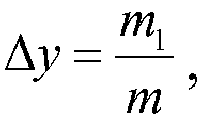


- if x and y are both integers, then g(i, j) = f(y, x).
- if x is non-integer, y is integer, and x is rounded down to wx , then

- if x is integer, y is non-integer, and y is rounded down to hy, then

- if x is non-integer, y is non-integer, x is rounded down to wx and y is rounded down to hy , then

- In addition, extracting the feature in
step 3 includes:step 31, assuming that a matrix
step 32, acquiring data
step 33, reconstructing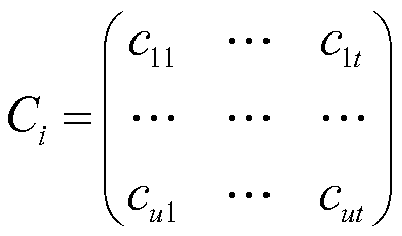
step 34, determining whether all feature regions are reconstructed, executingstep 35 if all feature regions are reconstructed, and repeatingstep 31 tostep 33 to acquire a group of image regions C 1,C 2,···,Cn if not all feature regions are reconstructed; andstep 35, extracting needed features from the image regions C 1 , C 2,···, Cn to form eigenvectors β 1, β 2,···, βn - The sheet-medium recognition device includes an image collection unit, configured to acquire image information of a sheet medium to be recognized; an image separation unit configured to implement adaptive separation on the image of the sheet medium; a feature region reconstruction unit, configured to implement image reconstruction for a feature region, and store the reconstructed image data of the feature region into a designated position; a feature extraction unit, configured to extract a feature from the reconstructed image data of the feature region to form an eigenvector; a data storage unit, configured to store position information of preset feature regions and standard template data; a recognition unit, configured to classify and recognize an input eigenvector; and a recognition result outputting unit, configured to output a result for the classification and recognition which is acquired by the recognition unit.
- In the sheet-medium recognition method according to the disclosure, an image is reconstructed according to priori information of feature regions to improve quality of the image, which is beneficial for improving recognition accuracy. Since the reconstruction is performed only in the regions for which features are to be extracted, storage space consumption is reduced, thereby not only saving a lot of storage space and time, improving resource utilization rate, but also effectively improving recognition accuracy, and reaching a balance between resource and efficiency.
-
-
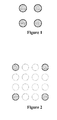
Figure 1 is a schematic diagram of image data to be reconstructed; -
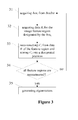
Figure 2 is a schematic diagram of reconstructed image data; -
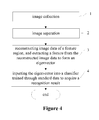
Figure 3 is a flow chart showing image reconstruction of a feature region; -
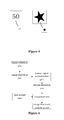
Figure 4 is a flow chart of a sheet-medium recognition method; -
Figure 5 shows effect for image reconstruction of a feature region; -
Figure 6 is a structural diagram of a sheet-medium recognition device; -
Figure 7 is a schematic diagram of a sheet-medium signal collected by a sheet-medium recognition device; -
Figure 8 is a schematic diagram of a sheet-medium separated from background; and -
Figure 9 is a comparison diagram for sheet-medium signals which are respectively collected before and after hardware update. - Technical solutions of the embodiments of the present disclosure are described completely and clearly with the drawings of the embodiments of the disclosure. Apparently, the described embodiments are merely a few rather than all of the embodiments of the present disclosure. Any other embodiments obtained by persons of ordinary skill in the art based on the embodiments of the present disclosure without creative efforts shall fall within the protection scope of the present disclosure.
- In this embodiment, a banknote having a denomination of RMB 50 yuan is taken as an object to be recognized, to illustrate a sheet-medium recognition method and a sheet-medium recognition device. Referring to
Figure 4 , the sheet medium recognition method includes following steps. -
Step 1 includes: collecting image information, where the collected image information is shown inFigure 7 . -
Step 2 includes: separating image information of an object to be recognized out of the collected image information, as shown inFigure 8 . -
Step 3 includes: reconstructing image data of a feature region as shown inFigure 5 , and extracting a feature from the reconstructed image data to form an eigenvector. -
Step 4 includes: inputting the eigenvector into a classifier trained through standard data to acquire a recognition result. - Step 5, ending the process.
- Reconstructing the image data of the feature region in
step 3 includes: - assuming that image information of the object to be recognized is A, A is a m×n image, and f(h, w) represents a gray value of an element in row h and column w of the image A, where h = 1,2,···,m, and w =1, 2,···,n ; and assuming that a m 1 × n 1 image B with a higher resolution is to be reconstructed, and g(i, j) represents a gray value of an element in row i and column j of the image B, where i = 1,2,···,m 1, and j = 1, 2,···, n 1;
- assuming that


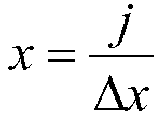

- if x and y are both integers, then g(i, j) = f (y, x);
- if x is non-integer, y is integer, and x is rounded down to wx , then

- if x is integer, y is non-integer, and y is rounded down to hy , then

- if x is non-integer, y is non-integer, x is rounded down to wx and y is rounded down to hy , then

- In this way, an image as shown in
Figure 2 is reconstructed from an image as shown inFigure 1 . - Referring to
Figure 3 , extracting the feature instep 3 includes: -
Step 31, assuming that a matri
-
Step 32, acquiring data
-
Step 33, reconstructing
-
Step 34, determining whether all feature regions are reconstructed, executingstep 35 if all feature regions are reconstructed, and repeatingstep 31 to step 33 to acquire a group of image regions C 1, C 2,···, Cn if not all feature regions are reconstructed; and -
Step 35, extracting needed features from the image regions C 1, C 2,···, Cn to form eigenvectors β 1, β 2,···βn . - According to the embodiment, during the sheet-medium recognition, image of feature regions are reconstructed with the image reconstruction method in this embodiment by utilizing priori coordinate information of the feature regions, so as to improve signal to noise ratio and improve recognition accuracy without modifying hardware resource.
- Referring to
Figure 6 , the sheet-medium recognition device according to the embodiment includes: - an image collection unit, configured to acquire image information of a sheet-medium to be recognized;
- an image separation unit configured to implement adaptive separation on the image of the sheet medium;
- a feature region reconstruction unit, configured to implement image reconstruction for a feature region, and store the reconstructed image data of the feature region into a designated position;
- a feature extraction unit, configured to extract a feature from the reconstructed image data of the feature region to form an eigenvector;
- a data storage unit, configured to store position information of preset feature regions, standard template data, and other necessary data information needed for the recognition;
- a recognition unit, configured to classify and recognize an input eigenvector; and
- a recognition result outputting unit, configured to output a result for the classification and recognition which is acquired by the recognition unit.
- In the sheet-medium recognition method according to the disclosure, an image is reconstructed according to priori information of feature regions to improve quality of the image, which is beneficial for improving recognition accuracy. Since the reconstruction is performed only in the regions for which features are to be extracted, storage space consumption is reduced, thereby not only saving a lot of storage space and time, improving resource utilization rate, but also effectively improving recognition accuracy, and reaching a good balance between resource and efficiency. The sheet-medium recognition device provides hardware and algorithm supports for the recognition method.
- The foregoing embodiments are only preferred embodiments of the disclosure and are not meant to limit the disclosure, any equivalent change made according to the specification and the drawings of the disclosure shall fall in the scope of the claims of the disclosure.
Claims (4)
- A sheet-medium recognition method comprising:step 1, collecting image information;step 2, separating image information of an object to be recognized out of the collected image information;step 3, reconstructing image data of a feature region, and extracting a feature from the reconstructed image data to form an eigenvector; andstep 4, inputting the eigenvector into a classifier trained through standard data to acquire a recognition result.
- The sheet-medium recognition method according to claim 1, wherein reconstructing the image data of the feature region in step 3 comprises:assuming that image information of the object to be recognized is A, A is a m×n image, and f(h, w) represents a gray value of an element in row h and column w of the image A, wherein h =1,2,···,m and w = 1,2,···,n ; and assuming that a m 1×n 1 image B with a higher resolution is to be reconstructed, and g(i, j) represents a gray value of an element in row i and column j of the image B, wherein i =1, 2,···, m 1, and j = 1,2,···,n 1;assuming that


 if x and y are both integers, then g(i, j) = f(y, x) ;if x is non-integer, y is integer, and x is rounded down to wx , then
 if x is integer, y is non-integer, and y is rounded down to hy , then
 if x is non-integer, y is non-integer, x is rounded down to wx and y is rounded down to hy , then
- The sheet-medium recognition method according to claim 1, wherein extracting the feature in step 3 comprises:step 31, assuming that a matri
 step 32, acquiring data
 step 33, reconstructing
 step 34, determining whether all feature regions are reconstructed, executing step 35 if all feature regions are reconstructed, and repeating step 31 to step 33 to acquire a group of image regions C 1, C 2,···, Cn if not all feature regions are reconstructed; andstep 35, extracting needed features from the image regions C 1,C 2,···,Cn to form eigenvectors β 1,β 2,···,βn .
 - A sheet-medium recognition device comprising:an image collection unit, configured to acquire image information of a sheet medium to be recognized;an image separation unit configured to implement adaptive separation on the image of the sheet medium;a feature region reconstruction unit, configured to implement image reconstruction for a feature region, and store the reconstructed image data of the feature region into a designated position;a feature extraction unit, configured to extract a feature from the reconstructed image data of the feature region to form an eigenvector;a data storage unit, configured to store position information of preset feature regions and standard template data;a recognition unit, configured to classify and recognize an input eigenvector; anda recognition result outputting unit, configured to output a result for the classification and recognition which is acquired by the recognition unit.
Applications Claiming Priority (2)
| Application Number | Priority Date | Filing Date | Title |
|---|---|---|---|
| CN201310012084.6A CN103106412B (en) | 2013-01-11 | 2013-01-11 | Flaky medium recognition methods and recognition device |
| PCT/CN2013/078914 WO2014107947A1 (en) | 2013-01-11 | 2013-07-05 | Recognition method and recognition device for sheet-type medium |
Publications (2)
| Publication Number | Publication Date |
|---|---|
| EP2945101A1 true EP2945101A1 (en) | 2015-11-18 |
| EP2945101A4 EP2945101A4 (en) | 2016-09-28 |
Family
ID=48314260
Family Applications (1)
| Application Number | Title | Priority Date | Filing Date |
|---|---|---|---|
| EP13871250.0A Ceased EP2945101A4 (en) | 2013-01-11 | 2013-07-05 | Recognition method and recognition device for sheet-type medium |
Country Status (7)
| Country | Link |
|---|---|
| US (1) | US9378415B2 (en) |
| EP (1) | EP2945101A4 (en) |
| CN (1) | CN103106412B (en) |
| AU (1) | AU2013372620B2 (en) |
| CL (1) | CL2015000525A1 (en) |
| WO (1) | WO2014107947A1 (en) |
| ZA (1) | ZA201500892B (en) |
Families Citing this family (5)
| Publication number | Priority date | Publication date | Assignee | Title |
|---|---|---|---|---|
| CN103106412B (en) * | 2013-01-11 | 2016-04-20 | 广州广电运通金融电子股份有限公司 | Flaky medium recognition methods and recognition device |
| CN106097360A (en) * | 2016-06-17 | 2016-11-09 | 中南大学 | A kind of strip steel surface defect identification method and device |
| CN110826467B (en) * | 2019-11-22 | 2023-09-29 | 中南大学湘雅三医院 | Electron microscope image reconstruction system and method thereof |
| CN115099239B (en) * | 2022-06-16 | 2023-10-31 | 北京百度网讯科技有限公司 | A resource identification method, device, equipment and storage medium |
| CN115690132B (en) * | 2022-10-20 | 2025-07-08 | 北京霍里思特科技有限公司 | Image processing method and system |
Family Cites Families (6)
| Publication number | Priority date | Publication date | Assignee | Title |
|---|---|---|---|---|
| US20070140551A1 (en) * | 2005-12-16 | 2007-06-21 | Chao He | Banknote validation |
| DE102008041944A1 (en) * | 2008-09-10 | 2010-03-11 | Bundesdruckerei Gmbh | Data processing method for generation of data file and for testing authenticity of e.g. passport, involves inputting value set and associated information to learning module, and outputting classifier by learning module |
| CN101908241B (en) * | 2010-08-03 | 2012-05-16 | 广州广电运通金融电子股份有限公司 | Valuable document identification method and its identification system |
| CN102034108B (en) * | 2010-12-06 | 2012-06-27 | 哈尔滨工业大学 | Multi-resolution network characteristic registration-based method for sorting face values and face directions of notes in sorter |
| CN102722708B (en) * | 2012-05-16 | 2015-04-15 | 广州广电运通金融电子股份有限公司 | Method and device for classifying sheet media |
| CN103106412B (en) * | 2013-01-11 | 2016-04-20 | 广州广电运通金融电子股份有限公司 | Flaky medium recognition methods and recognition device |
-
2013
- 2013-01-11 CN CN201310012084.6A patent/CN103106412B/en not_active Expired - Fee Related
- 2013-07-05 WO PCT/CN2013/078914 patent/WO2014107947A1/en not_active Ceased
- 2013-07-05 US US14/416,621 patent/US9378415B2/en not_active Expired - Fee Related
- 2013-07-05 AU AU2013372620A patent/AU2013372620B2/en not_active Ceased
- 2013-07-05 EP EP13871250.0A patent/EP2945101A4/en not_active Ceased
-
2015
- 2015-02-06 ZA ZA2015/00892A patent/ZA201500892B/en unknown
- 2015-03-04 CL CL2015000525A patent/CL2015000525A1/en unknown
Also Published As
| Publication number | Publication date |
|---|---|
| US20150178560A1 (en) | 2015-06-25 |
| EP2945101A4 (en) | 2016-09-28 |
| WO2014107947A1 (en) | 2014-07-17 |
| US9378415B2 (en) | 2016-06-28 |
| ZA201500892B (en) | 2016-01-27 |
| CN103106412A (en) | 2013-05-15 |
| CN103106412B (en) | 2016-04-20 |
| AU2013372620B2 (en) | 2015-12-17 |
| CL2015000525A1 (en) | 2015-06-19 |
| AU2013372620A1 (en) | 2015-02-05 |
Similar Documents
| Publication | Publication Date | Title |
|---|---|---|
| EP3422254B1 (en) | Method and apparatus for separating text and figures in document images | |
| Nanni et al. | A reliable method for cell phenotype image classification | |
| EP2945101A1 (en) | Recognition method and recognition device for sheet-type medium | |
| Aggarwal et al. | Use of gradient technique for extracting features from handwritten Gurmukhi characters and numerals | |
| CN103345631B (en) | Image characteristics extraction, training, detection method and module, device, system | |
| EP2450850B1 (en) | System and method for extracting representative feature | |
| CN103235947B (en) | A kind of Handwritten Numeral Recognition Method and device | |
| CN103761515A (en) | Human face feature extracting method and device based on LBP | |
| JP2020017136A (en) | Object detection and recognition apparatus, method, and program | |
| Macwan et al. | Classification of offline Gujarati handwritten characters | |
| CN114898376A (en) | Formula identification method, device, equipment and medium | |
| KR101232683B1 (en) | Method for recognizing denomination of banknotes using Bayesian approach | |
| AlKhateeb et al. | Multiclass classification of unconstrained handwritten Arabic words using machine learning approaches | |
| CN104240187A (en) | Image denoising device and image denoising method | |
| CN103793714B (en) | Many Classification and Identification device generating means and its method, data identification means and its method | |
| US11080551B2 (en) | Proposal region filter for digital image processing | |
| CN120673099A (en) | Multi-view clustering method and device | |
| Amor et al. | Multifont Arabic Characters Recognition Using HoughTransform and HMM/ANN Classification. | |
| CN104077604B (en) | Text-content-irrelevant wrinkle Chinese handwriting identification method | |
| CN104166981B (en) | Human body movement learning method based on multigraph expression | |
| Amor et al. | Multifont Arabic character recognition using Hough transform and hidden Markov models | |
| Ghosh et al. | A comparison between support vector machine (svm) and bootstrap aggregating technique for recognizing bangla handwritten characters | |
| Amor et al. | Combining a hybrid approach for features selection and hidden Markov models in multifont Arabic characters recognition | |
| Naeimizaghiani et al. | Character recognition based on global feature extraction | |
| Zhong et al. | Image patches analysis for text block identification |
Legal Events
| Date | Code | Title | Description |
|---|---|---|---|
| PUAI | Public reference made under article 153(3) epc to a published international application that has entered the european phase |
Free format text: ORIGINAL CODE: 0009012 |
|
| 17P | Request for examination filed |
Effective date: 20150129 |
|
| AK | Designated contracting states |
Kind code of ref document: A1 Designated state(s): AL AT BE BG CH CY CZ DE DK EE ES FI FR GB GR HR HU IE IS IT LI LT LU LV MC MK MT NL NO PL PT RO RS SE SI SK SM TR |
|
| AX | Request for extension of the european patent |
Extension state: BA ME |
|
| DAX | Request for extension of the european patent (deleted) | ||
| A4 | Supplementary search report drawn up and despatched |
Effective date: 20160825 |
|
| RIC1 | Information provided on ipc code assigned before grant |
Ipc: G06T 3/40 20060101ALI20160819BHEP Ipc: G06K 9/62 20060101AFI20160819BHEP Ipc: G06K 9/00 20060101ALI20160819BHEP Ipc: G06K 9/54 20060101ALI20160819BHEP Ipc: G06K 9/40 20060101ALI20160819BHEP |
|
| STAA | Information on the status of an ep patent application or granted ep patent |
Free format text: STATUS: EXAMINATION IS IN PROGRESS |
|
| 17Q | First examination report despatched |
Effective date: 20171016 |
|
| REG | Reference to a national code |
Ref country code: DE Ref legal event code: R003 |
|
| STAA | Information on the status of an ep patent application or granted ep patent |
Free format text: STATUS: THE APPLICATION HAS BEEN REFUSED |
|
| 18R | Application refused |
Effective date: 20200220 |