EP2942978A1 - Improved wireless streaming to hearing assistance devices - Google Patents
Improved wireless streaming to hearing assistance devices Download PDFInfo
- Publication number
- EP2942978A1 EP2942978A1 EP15166849.8A EP15166849A EP2942978A1 EP 2942978 A1 EP2942978 A1 EP 2942978A1 EP 15166849 A EP15166849 A EP 15166849A EP 2942978 A1 EP2942978 A1 EP 2942978A1
- Authority
- EP
- European Patent Office
- Prior art keywords
- wireless link
- hearing assistance
- wireless
- streaming audio
- streaming
- Prior art date
- Legal status (The legal status is an assumption and is not a legal conclusion. Google has not performed a legal analysis and makes no representation as to the accuracy of the status listed.)
- Granted
Links
Images



Classifications
-
- H—ELECTRICITY
- H04—ELECTRIC COMMUNICATION TECHNIQUE
- H04R—LOUDSPEAKERS, MICROPHONES, GRAMOPHONE PICK-UPS OR LIKE ACOUSTIC ELECTROMECHANICAL TRANSDUCERS; ELECTRIC HEARING AIDS; PUBLIC ADDRESS SYSTEMS
- H04R25/00—Electric hearing aids
- H04R25/55—Electric hearing aids using an external connection, either wireless or wired
- H04R25/554—Electric hearing aids using an external connection, either wireless or wired using a wireless connection, e.g. between microphone and amplifier or using Tcoils
-
- H—ELECTRICITY
- H04—ELECTRIC COMMUNICATION TECHNIQUE
- H04B—TRANSMISSION
- H04B7/00—Radio transmission systems, i.e. using radiation field
- H04B7/02—Diversity systems; Multi-antenna system, i.e. transmission or reception using multiple antennas
- H04B7/04—Diversity systems; Multi-antenna system, i.e. transmission or reception using multiple antennas using two or more spaced independent antennas
- H04B7/06—Diversity systems; Multi-antenna system, i.e. transmission or reception using multiple antennas using two or more spaced independent antennas at the transmitting station
- H04B7/0613—Diversity systems; Multi-antenna system, i.e. transmission or reception using multiple antennas using two or more spaced independent antennas at the transmitting station using simultaneous transmission
-
- H—ELECTRICITY
- H04—ELECTRIC COMMUNICATION TECHNIQUE
- H04B—TRANSMISSION
- H04B7/00—Radio transmission systems, i.e. using radiation field
- H04B7/02—Diversity systems; Multi-antenna system, i.e. transmission or reception using multiple antennas
- H04B7/10—Polarisation diversity; Directional diversity
-
- H—ELECTRICITY
- H04—ELECTRIC COMMUNICATION TECHNIQUE
- H04R—LOUDSPEAKERS, MICROPHONES, GRAMOPHONE PICK-UPS OR LIKE ACOUSTIC ELECTROMECHANICAL TRANSDUCERS; ELECTRIC HEARING AIDS; PUBLIC ADDRESS SYSTEMS
- H04R2225/00—Details of deaf aids covered by H04R25/00, not provided for in any of its subgroups
- H04R2225/55—Communication between hearing aids and external devices via a network for data exchange
-
- H—ELECTRICITY
- H04—ELECTRIC COMMUNICATION TECHNIQUE
- H04R—LOUDSPEAKERS, MICROPHONES, GRAMOPHONE PICK-UPS OR LIKE ACOUSTIC ELECTROMECHANICAL TRANSDUCERS; ELECTRIC HEARING AIDS; PUBLIC ADDRESS SYSTEMS
- H04R25/00—Electric hearing aids
- H04R25/55—Electric hearing aids using an external connection, either wireless or wired
- H04R25/552—Binaural
Definitions
- Modern hearing assistance devices may offer advanced features, such as the ability to play an audio stream wirelessly received from a streaming source on the hearing assistance devices audio reproduction circuitry (e.g., the speaker).
- Example streaming sources may include televisions, computers, MP3 players, cell phones, and the like. These features allow individuals with a hearing disability to better enjoy activities such as listening to television or music, exploring the internet, talking on a cellular phone, and the like.
- FIG. 1 shows one example schematic of a system 1000 for wirelessly streaming audio to one or more hearing assistance devices according to some examples of the present disclosure.
- Streaming audio is audio that is constantly received by and presented to an end-user, e.g., user 1100.
- Various audio streaming sources such as mobile phone (e.g., a smartphone) 1010, mobile computing devices 1020 (e.g., a laptop computer), a television 1030, or the like, are capable of communicating streaming audio to one or more hearing assistance devices 1080-1090 wirelessly.
- the audio may be directly streamed by the devices 1010-1030, but in other examples, an audio output of the device (e.g., device 1030) may be connected to a streaming transmitter 1040, which may convert the audio output into a form suitable for wireless transmission, and transmit the streaming audio wirelessly to hearing assistance devices (such as hearing assistance devices 1080-1090).
- the streaming transmitter 1040 may convert analog audio to digital (if necessary), packetize the audio, compress the audio, or the like.
- any device capable of streaming to a hearing assistance device may be described as a streaming audio source.
- devices 1010, 1020 are streaming audio sources, and the combination of devices 1030 and 1040 provides a streaming audio source.
- the streaming audio may be broadcast, multicast, unicast, or the like. In examples in which the streaming audio is broadcast, it may be received by any number of hearing assistance devices within range of the wireless transmission in addition to hearing assistance devices 1080 and 1090. In examples in which the streaming audio is multicast or unicast, hearing assistance devices (e.g., hearing assistance devices 1080 and 1090) may register to receive the transmissions from the devices 1010-1040.
- the streaming audio may be stereo streaming audio with a channel for a right hearing assistance device and a left hearing assistance device.
- Hearing assistance devices 1080 and 1090 may be a pair of hearing assistance devices for user 1100.
- hearing assistance devices 1080 and 1090 may communicate with each other wirelessly.
- Streaming audio received by hearing assistance devices 1080 and 1090 from one or more of the devices 1010-1040 may be played through the speaker (or other audio reproduction techniques, such as cochlear stimulation) in the hearing assistance devices 1080 and 1090.
- only one streaming source may be received and played through the speaker, but in other examples, a variety of different streaming sources may be simultaneously received and blended by onboard processing of the hearing assistance devices 1080-1090.
- System 1000 may allow users 1100 of hearing assistance devices 1080-1090 to better hear a television, a phone call, music, videos, and the like, which may increase the quality and enjoyment of their lives.
- Multipath is a radio wave propagation phenomenon that results in multiple radio signals from the same transmission reaching the receiver by two or more paths and at two or more times. In some instances, multipath effects cause destructive interference and ultimately fading and degradation of the streaming audio signal.
- Disclosed in some examples are methods, systems, apparatus, and machine readable mediums which mitigate multipath fading and extend the robustness and the useable range of the wireless link between a streaming device and one or more hearing assistance devices. In some examples, this may be accomplished by sending multiple copies of the streaming audio to the hearing assistance devices. To prevent interference between each copy, at least one transmission parameter may be varied between the various transmissions of the streaming audio (e.g., frequency, channel, time, coding, or the like).
- the streaming transmitter may transmit the same streaming audio on two or more different wireless channels.
- the hearing assistance devices may choose the channel that allows for the best reception of the streaming audio.
- the hearing assistance devices may cooperate amongst themselves to ensure proper reception. For example, one hearing assistance devices of a pair may wirelessly transmit correctly received streaming audio to a second hearing assistance device of the pair if the second hearing assistance device did not properly receive the streaming audio.
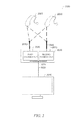
- FIG. 2 shows an example schematic of a dual transmission streaming audio system 2000 according to some examples of the present disclosure.
- an audio source 2010 e.g., a television
- Link 2030 may be any wired or wireless link which is capable of conveying streaming audio to streaming transmitter 2020.
- streaming transmitters 1040, 2020, and 3020 may be part of the audio source (e.g., 2010 of FIG. 2 , 1010 - 1030 of FIG. 1 , 3010 of FIG. 3 ).
- Streaming transmitter 2020 may have circuitry that allows for transmission of the same audio information conveyed through link 2030 in a redundant fashion.
- streaming transmitter 2020 may have a first and a second transmitter circuitry 2060 and 2070.
- First and second transmitters 2060 and 2070 may transmit the same streaming audio information conveyed through link 2030 over wireless links to one or more hearing assistance devices 2080 and 2090.
- Streaming audio conveyed through link 2030 may enter the streaming device at audio input port 2025.
- Audio input port 2025 may connect streaming transmitter to the audio source via analog or digital connections, and may include physical connectors and other hardware to perform this task.
- Example connections include HDMI connections, S/PDIF connections, TOSLINK connections, Radio Corporation of America (RCA) connections, phone connections (e.g., stereo plug, mini-jack, mini-stereo connection), and the like.
- Audio input port 2025 may also include circuitry to manage one or more communication protocols (either wired or wireless) with the streaming audio sources. For example, circuitry to manage the HDMI protocols, S/PDIF protocols, Toslink protocols and the like. Audio input port 2025 may allow for the transmission of streaming audio to the first and second transmitter circuitry 2060 and 2070. Audio input port 2025 may also include circuitry for converting analog streaming audio to digital streaming audio for transmission.
- Hearing assistance devices 2080 and 2090 may be a left and a right hearing aid for the same wearer. In other examples, hearing assistance devices 2080 and 2090 may be for different wearers. Any number of hearing assistance devices 2080 and 2090 may receive the streaming transmissions as the wireless links may be broadcast.
- the streaming transmitter 2020 shown in FIG. 2 includes two different transmitter circuits 2060 and 2070, in other examples, the system may utilize two different streaming transmitters, each with a single transmitter circuit.
- the link 2030 may be split to carry the audio to each of the separate streaming transmitters. It will be appreciated that other various combinations of streaming transmitters and transmitter circuits are contemplated.
- a single transmitter circuit may provide both signals to antennas 2040 and 2050.
- FIG. 2 shows two different wireless links, additional links may be utilized.
- each transmitter 2060 and 2070 may transmit the streaming audio on a different wireless channel.
- a wireless channel may be defined as a specific radio frequency band, or pair of radio frequency bands (e.g., oftentimes paired as an uplink and downlink band).
- WiFi Wireless Fidelity
- IEEE Institute for Electrical and Electronics Engineers
- transmitter 2060 may transmit the streaming audio from source 2010 on channel 1 and transmitter 2070 may transmit the streaming audio from source 2010 on channel 2.
- Hearing assistance devices 2080 and 2090 may receive each channel with slightly different signal qualities due to differing multipath effects on each channel. This is due to the differences in frequencies of the channels (different frequencies have different multipath effects), the differing physical locations of the hearing assistance devices, and the spatial diversity gained by antennas 2040 and 2050 being spatially separated. Each hearing assistance device 2080 and 2090 may choose the channel that offers the best reception for that particular device. This choice may be based on one or more signal quality metrics. For example, a Received Signal Strength Indicator (RSSI), a Signal to Noise ratio (SiNR) or the like.
- RSSI Received Signal Strength Indicator
- SiNR Signal to Noise ratio
- the hearing assistance devices 2080 and 2090 may switch channels dynamically as streaming audio is being received if necessary to improve reception.
- hearing assistance device 2080 may initially receive the transmission from first transmitter 2060, but then switch to receiving the transmission from the second transmitter 2070 during reception of the streaming audio.
- the hearing assistance devices 2080 and 2090 may compare one or more signal quality metrics of the channel which is currently being received with one or more signal quality metrics of the other channels which are broadcasting the streaming audio.
- the signal quality metrics of other channels may be measured by the hearing assistance devices 2080 and 2090 periodically.
- the hearing assistance devices 2080-2090 may measure the signal quality metrics of other transmissions in response to the signal quality metrics of the currently received streaming audio falling below a predetermined threshold.
- Changing channels may allow for continued error-free streaming if either the hearing assistance devices 2080 and 2090 or the streaming transmitter 2020 is moving or the wireless conditions change (e.g., a device nearby may begin operation which may interfere with one of the channels).
- streaming transmitter 2020 utilizes two antennas in FIG. 2 in an effort to utilize spatial diversity to change the multipath characteristics of the signal, both wireless links could be transmitted from the same antenna. While the spatial diversity benefits may no longer apply, this system may still be effective at countering multipath effects as different frequencies typically have different multipath profiles.
- transmitters 2060 and 2070 may transmit on the same channel, but the two transmissions may be separated by a controlled and small frequency difference.
- one transmission may be -50Hz from the center frequency of the channel and the other transmission may be +50Hz from the center frequency of the channel, leading to a total of 100Hz separation.
- one or more transmitters may transmit multiple signals on exactly the same frequency (e.g. using a GPS frequency reference, or ultra-stable reference oscillator for the frequency synthesizer) using spatially separated antennas.
- the redundant transmissions may create a "beat tone" (in some examples, this may be done intentionally. For example, when the two transmissions are spaced 100 Hz apart) amplitude envelope on the received signal. The detrimental effects of this beat tone could be minimized.
- the beat tone could be optimized for the protocol to allow the streaming information to be communicated during each peak of the amplitude envelope. This could be done by ensuring the protocol allows a transmit frame to occur wholly between the beat-tone (e.g. able to be within temporal peaks in the envelope).
- the length of the TX frame and the beat-tone period (inverse of the frequency difference between the two transmitters) could be non-synchronously/harmonically related, to ensure that redundant packets have at least one valid reception.
- any artificially created multipath from two transmitters on exactly the same frequency would be very short in duration (propagation theory shows that the steeper the null, the less time the null will exist. Thus the stronger the nulling signals, the arbitrarily shorter the temporal duration of the null).
- This multipath "artifact" from simultaneous same-frequency, multiple transmitter/antenna propagation may be designed to be short enough to be able to be mitigated by forward error correction (FEC), or error concealment techniques for streaming audio.
- FEC forward error correction
- the two transmitters may transmit on the same channel, but may utilize a different orthogonal encoding (e.g., as in Direct Sequence Spread Spectrum (DSSS) systems).
- the codes for both redundant streams may be known to hearing assistant devices 2080 and 2090.
- the hearing assistance device may choose the stream that has the best quality by switching the codes used to decode the signals. Since the transmissions are separated by the distance between the antennas 2040 and 2050, each signal will have a different multipath propagation pattern. One signal may have better reception at hearing assistance device 2080 than hearing assistance device 2090 and vice versa.
- the hearing assistance devices may be powerful enough to decode both streams simultaneously. This may allow for the hearing assistance devices to determine which stream to utilize on a packet-by-packet basis.
- this concept may use a narrower bandwidth than used on a typical DSSS system. Spatial diversity achieved through use of two antennas may combat multipath effects. Alternatively, a more typical DSSS spread spectrum transmission may be utilized where the signal is spread across a wider bandwidth than other non-DSSS systems. By spreading the signal across a range of frequencies, the effects of multipath in these examples are naturally mitigated. In these examples, only one transmission location (e.g., one antenna) may be necessary.
- the system may utilize a time-division scheme where the first transmitter 2060 may transmit the streaming information in a first timeslot and the second transmitter 2070 may transmit the streaming information in a second timeslot.
- the different transmissions may have different reception quality on the hearing assistance devices (e.g., hearing assistance device 2080 and 2090) because of the slightly different positioning on the antennas.
- the hearing assistance device may choose the stream that has the best quality by switching the timeslots on which the hearing assistance devices listen in on.
- the streaming transmitter unit 2020 in FIG. 2 was shown with two transmitter units 2060 and 2070, in other examples, two different streaming transmitter units may be utilized, each with one or more transmitter circuits.
- the audio output 2030 may be split to each of the different streaming transmitter units.
- Coaxial or other cable may be utilized to allow placement of the streaming transmitter units at various coverage locations.
- multipath may also be mitigated by having antennas 2040 and 2050 cross-polarized (e.g., horizontal and vertical polarizations).
- the signals from cross polarized antennas 2040 and 2050 may propagate differently and produce different multipath.
- these polarization enhancements may be utilized alone, that is, each transmitter will send the same streaming audio to hearing assistance devices 2080 and 2090 on the same channel, frequency, DSS code, and the like, with the only difference being the polarization differences between antenna 2040 and 2050.
- these polarization enhancements may be utilized in addition to the techniques mentioned above.
- first transmitter 2060 may broadcast on a different channel than second transmitter 2070 and the signal broadcast by antenna 2050 may be cross polarized with the signal transmitted by second transmitter 2070.
- the antenna polarization may be considered one component in the definition of a wireless link.
- the system may utilize communications between two different hearing assistance devices to provide redundancy.
- the differing locations of the receiving antennae may provide different reception characteristics of a received streaming audio channel. If, for example, the right hearing assistance device receives the channel better than the left hearing assistance device, the right hearing assistance device may retransmit the streaming audio to the left hearing assistance device using ear-to-ear communications. In some examples, this could be done in stereo, with each hearing aid receiving both the left and the right audio and only retransmitting the audio the other hearing aid would be interested in receiving (e.g., the right hearing aid would retransmit only the left audio information and vice versa).
- FIG. 3 shows an example schematic of an ear-to-ear redundant streaming system 3000 according to some examples of the present disclosure.
- Audio source 3010 (shown as a television) may provide streaming audio to streaming transmitter 3020.
- Streaming transmitter 3020 may have transmission circuitry 3030 which transmits the streaming audio using antenna 3040 to one or more hearing assistance devices 3050 and 3060.
- Hearing assistance devices 3050 and 3060 may be left and right hearing assistance devices for use on a single user.
- Hearing assistance devices 3050 and 3060 may communicate with each other using wireless ear-to-ear communications.
- Ear-to-ear communications 3070 may utilize the same wireless protocol utilized by transmitter 3030 to transmit the streaming audio information, or may utilize a different wireless protocol.
- these solutions may utilize a time division scheme to transmit the different audio streams (e.g., the initial transmission(s) and the ear-to-ear retransmissions).
- the streaming transmitter 3020 may broadcast a single stream on a first timeslot.
- the left and right hearing assistance devices 3050 and 3060 may both receive this stream.
- a right hearing instrument 3060 may receive the stream and rebroadcast it on a second timeslot.
- a left hearing instrument 3050 may receive the stream and rebroadcast it on a third timeslot.
- the right hearing instrument 3060 may compare signal quality metrics for the stream received on the first and the third timeslots (e.g., compare the originally received stream with the retransmission received from the left hearing instrument 3050) and pick the stream (e.g., use the audio from the stream) which has the best signal quality.
- the left hearing instrument 3050 may compare signal quality metrics for the stream received on the first and the second timeslots (e.g., compare the originally received stream with the retransmission received from the right hearing instrument 3060) and pick the stream which has the best signal quality.
- decisions may be done dynamically on a packet-by-packet basis, periodically (e.g., every 10ms, 20ms, or the like), or may be re-evaluated only if signal quality metrics on the chosen timeslot diminishes past a threshold point. In some examples the decisions may be made based upon multiple factors (e.g., periodically, and in response to an event such as signal quality degrading past a threshold).
- only two timeslots may be utilized.
- the first timeslot would be for receiving the streaming audio at the hearing assistance devices 3050 and 3060 and the second timeslot would be utilized by both the left and right hearing assistance devices 3050 and 3060 to retransmit the received streaming audio.
- the left and/or right hearing assistance devices 3050 and 3060 would transmit to the other hearing assistance device the received streaming audio only if it was successfully decoded and the signal quality metrics of the received audio were above a predetermined threshold.
- the first hearing assistance device would not transmit it to the other hearing assistance device. Instead, the first hearing assistance device would listen for the audio from the second hearing assistance device (who presumably decoded it properly). If both properly decode it, then both transmit it (the dual transmission will interfere, but since it was properly decoded in the first place by both hearing assistance devices, this does not matter).
- the ear-to-ear transmissions may be turned on and off by the hearing assistance devices. For example, if the signal quality metrics of the streaming audio received by the left and right hearing assistance devices are above a predetermined threshold, the ear-to-ear communications may not be utilized. If the signal quality of streaming audio received by the left or the right hearing assistance device falls below a predetermined threshold, the hearing assistance devices may engage in signaling to begin the ear-to-ear retransmissions. This selective ear-to-ear retransmission may increase battery life by retransmitting only when necessary.
- hearing assistance devices 3050 and 3060 are described as left and right hearing assistance devices, hearing assistance devices 3050 and 3060 may be worn by different persons.
- hearing assistance devices 3050 and 3060 may be from different persons and may negotiate with each other to provide redundant streaming audio links. In this way, a mesh-network of hearing assistance devices may be formed which may share streamed audio and/or other information.
- the ear-to-ear redundancy may utilize a orthogonal coding scheme, for example, each hearing assistance device 3050 and 3060 could utilize a different orthogonal code for the ear to ear communication link 3060 (e.g., as in direct sequence spread spectrum DSSS).
- the transmission on the ear to ear link may be slightly delayed by processing and retransmission delays.
- the hearing assistance device may be able to simultaneously decode both orthogonal codes, which allows the hearing assistance device to continuously, on a packet-by-packet basis, select the best transmission source.
- the ear-to-ear redundancy may utilize different channels, for example, each hearing assistance device 3050 and 3060 could utilize a different wireless channel for the ear to ear communication link 3060. Note that the transmission on the ear to ear link may be slightly delayed by processing and retransmission delays.
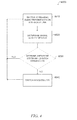
- the hearing assistance device may receive a streaming audio transmission from a streaming source on a wireless link.
- a wireless link may be defined by a number of wireless characteristics, such as frequency, time (e.g., a timeslot), orthogonal code, and streaming source.
- the hearing assistance device may switch to a second stream broadcast by a streaming source on a different channel.
- the hearing assistance device may determine one or more signal quality metrics of the currently received wireless link, one or more alternative wireless links, or both the currently received wireless link and the one or more alternative wireless links.
- the signal quality metrics include a measure of how many decoding errors of the streaming audio have occurred recently, a received signal strength (RSSI), a data rate (typically the lower the signal quality the lower the data rate that may be sent), a jitter rate, a latency, or the like.
- the signal quality metrics may be evaluated constantly (e.g., as an inherent function of receiving the wireless transmissions), periodically, or in response to an event (e.g., when the quality of the current wireless link drops below a threshold).
- the signal quality metrics for the currently received wireless link and the one or more alternative wireless links may be evaluated at different times.
- the hearing assistance device continues to receive streaming audio on the same wireless link at operation 4010.
- the system may do so at operation 4040.
- the system may switch wireless links if the signal quality metrics indicates an alternative wireless link may provide better signal quality.
- a predetermined threshold may be utilized such that the alternative wireless link may have to be better than the current wireless link by the amount of the predetermined threshold.
- Switching wireless links at operation 4040 may include switching to an alternative frequency, listening in at a different timeslot, utilizing a different orthogonal code, or the like.
- the hearing assistance device may switch to receiving the streaming audio from a second hearing assistance device (e.g., the other hearing assistance device in a pair of hearing assistance devices).
- the system begins to receive the streaming audio transmission (on the new wireless link) at operation 4010.
- the system may continue to monitor the signal quality metrics at operations 4020 and make changes as necessary at operations 4030 and operations 4040 throughout the reception of the streaming audio.
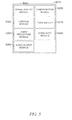
- FIG. 5 shows an example logical schematic of a portion of hearing assistance device 5010 according to some examples of the present disclosure.
- Hearing assistance device may include a signal quality module 5020.
- Signal quality module may assess the signal quality of one or more wireless links.
- the signal quality metrics include one or more of: a measure of how many decoding errors of the streaming audio have occurred, a received signal strength (RSSI), a data rate (typically the lower the signal quality the lower the data rate that may be sent), a jitter rate, a latency, or the like.
- the signal quality metrics may be evaluated constantly (e.g., as an inherent function of receiving the wireless transmissions), or periodically.
- the signal quality module 5020 may evaluate the wireless link on which streaming audio is currently being received, one or more alternative wireless links, or both the current wireless link and the one or more alternative wireless links.
- Configuration module 5030 may interface with programming devices (e.g., fitting devices) which may setup hearing assistance device 5010 or change various parameters such as various signal processing parameters which tune the device to compensate for a particular wearer's hearing loss. Other parameters may include setting or changing the various signal quality thresholds which may prompt hearing assistance device 5010 to switch to a different wireless link to receive streaming information. Still more parameters may include information on available wireless links - for example, the programming procedure may pair the hearing assistance device with one or more streaming sources. Pairing is a process in which the hearing assistance devices and one or more streaming sources are configured to properly communicate over one or more wireless links. Pairing may configure parameters such as security settings, frequencies, protocol versions, channel bandwidth parameters, orthogonal codes, timeslots, and the like.
- programming devices e.g., fitting devices
- Other parameters may include setting or changing the various signal quality thresholds which may prompt hearing assistance device 5010 to switch to a different wireless link to receive streaming information.
- Still more parameters may include information on available wireless links - for example, the programming procedure may pair the hearing assistance
- the configuration module 5030 may allow the hearing assistance devices to be pre-programmed with many of the streaming source's transmissions, in other examples, these parameters may be discoverable at use time. For example, the hearing aids and the streaming sources may pair at a later time. In other examples, the streaming sources may select their own channels that are frequency diverse. Each unit could send out advertisements on a special discovery channel periodically. The hearing assistance devices may determine the transmission parameters based upon these advertisements. The rates at which the streaming sources transmit their announcements may be coordinated amongst all available streaming sources and wireless links to prevent any overlap.
- Transmission and reception module (TX/RX Module) 5070 may transmit and receive signals over one or more wireless links according to one or more defined wireless protocols.
- Example wireless protocols may include protocols operating according to an 802.11 family of standards (e.g., Wireless Fidelity (WiFi)), a Bluetooth family of standards (e.g., Bluetooth Low Energy), a Shockburst family of standards (such as that developed by Nordic Semiconductor), a Long Term Evolution (LTE) family of standards or the like.
- WiFi Wireless Fidelity
- Bluetooth family of standards e.g., Bluetooth Low Energy
- Shockburst family of standards such as that developed by Nordic Semiconductor
- LTE Long Term Evolution
- Transmission and reception module 5070 may receive the streaming audio from the streaming transmitter and pass the streaming audio to control module 5040 for processing. Transmission and reception module 5070 may also interface with signal quality module 5020 to allow signal quality module 5020 to assess the signal quality metrics of the wireless link. Control module 5040 may interface with the signal quality module 5020, configuration module 5030, and transmission and reception module 5070 to initiate streaming audio reception, chose a wireless link, determine whether the signal quality metrics indicate that the hearing assistance device should try a different wireless link, and responsive to determining that the signal quality metrics indicate that the hearing assistance device should try a different wireless link, instructing the transmission and reception module 5070 to switch to a different wireless link and begin receiving the streaming audio on the different wireless link. In addition, in examples in which multiple wireless links may be received at the same time, the control module 5040, the transmission and reception module 5070, or both may determine which streaming audio packet is sent to the audio output module 5060.
- Audio input module 5080 may input audio from a microphone or other audio input source.
- the audio may be processed by control module 5040 and output by the audio output module 5060.
- the processing may be tailored such that it compensates for the specific hearing deficiencies of the wearer. For example, certain audio frequency ranges may be amplified, certain audio frequency ranges may be left alone, and certain audio frequency ranges may have the volume lowered.
- Audio output module 5060 may output audio received from control module 5040, audio input module 5080, transmission and reception module 5070, or all three.
- the audio may be processed first by control module 5040.
- Such processing may include amplification of certain frequency bands, blending of multiple audio sources (e.g., one or more streaming audio sources and audio from audio input module 5080 (e.g., a microphone)) and the like.
- the processing may be applied to both the audio received from the audio input module 5080 and the streaming audio.
- the processing may be customized based upon the audio source.
- streaming audio may also be processed to compensate for a wearer's individualized hearing loss.
- FIG. 6 illustrates a block diagram of an example machine 6000 upon which any one or more of the techniques (e.g., methodologies) discussed herein may be performed.
- the machine 6000 may operate as a standalone device or may be connected (e.g., networked) to other machines. In a networked deployment, the machine 6000 may operate in the capacity of a server machine, a client machine, or both in server-client network environments. In an example, the machine 6000 may act as a peer machine in peer-to-peer (P2P) (or other distributed) network environment.
- P2P peer-to-peer
- the machine 6000 may be a hearing assistance device, a streaming audio source (e.g., an audio source, a streaming transmitter, or an audio source with streaming transmission capabilities), personal computer (PC), a tablet PC, a set-top box (STB), a personal digital assistant (PDA), a mobile telephone, a smart phone, a web appliance, a network router, switch or bridge, or any machine capable of executing instructions (sequential or otherwise) that specify actions to be taken by that machine.
- a streaming audio source e.g., an audio source, a streaming transmitter, or an audio source with streaming transmission capabilities
- PC personal computer
- PDA personal digital assistant
- machine shall also be taken to include any collection of machines that individually or jointly execute a set (or multiple sets) of instructions to perform any one or more of the methodologies discussed herein, such as cloud computing, software as a service (SaaS), other computer cluster configurations.
- cloud computing software as a service
- SaaS software as a service
- Examples, as described herein, may include, or may operate on, logic or a number of components, modules, or mechanisms.
- Modules are tangible entities (e.g., hardware) capable of performing specified operations and may be configured or arranged in a certain manner.
- circuits may be arranged (e.g., internally or with respect to external entities such as other circuits) in a specified manner as a module.
- the whole or part of one or more computer systems e.g., a standalone, client or server computer system
- one or more hardware processors may be configured by firmware or software (e.g., instructions, an application portion, or an application) as a module that operates to perform specified operations.
- the software may reside on a machine readable medium.
- the software when executed by the underlying hardware of the module, causes the hardware to perform the specified operations.
- module is understood to encompass a tangible entity, be that an entity that is physically constructed, specifically configured (e.g., hardwired), or temporarily (e.g., transitorily) configured (e.g., programmed) to operate in a specified manner or to perform part or all of any operation described herein.
- each of the modules need not be instantiated at any one moment in time.
- the modules comprise a general-purpose hardware processor configured using software
- the general-purpose hardware processor may be configured as respective different modules at different times.
- Software may accordingly configure a hardware processor, for example, to constitute a particular module at one instance of time and to constitute a different module at a different instance of time.
- Machine (e.g., computer system) 6000 may include a hardware processor 6002 (e.g., a central processing unit (CPU), a graphics processing unit (GPU), a hardware processor core, a Digital Signal Processor (DSP), or any combination thereof), a main memory 6004 and a static memory 6006, some or all of which may communicate with each other via an interlink (e.g., bus) 6008.
- the machine 6000 may further include a video display 6010, an alphanumeric input device 6012 (e.g., a keyboard), and a user interface (UI) navigation device 6014 (e.g., a mouse).
- the video display 6010, input device 6012 and UI navigation device 6014 may be a touch screen display.
- the machine 6000 may additionally include a storage device (e.g., drive unit) 6016, a signal generation device 6018 (e.g., a speaker), a network interface device 6020, and one or more sensors 6021, such as a global positioning system (GPS) sensor, compass, accelerometer, or other sensor.
- the machine 6000 may include an output controller 6028, such as a serial (e.g., universal serial bus (USB), parallel, or other wired or wireless (e.g., infrared(IR), near field communication (NFC), etc.) connection to communicate or control one or more peripheral devices (e.g., a printer, card reader, etc.).
- a serial e.g., universal serial bus (USB), parallel, or other wired or wireless (e.g., infrared(IR), near field communication (NFC), etc.) connection to communicate or control one or more peripheral devices (e.g., a printer, card reader, etc.).
- USB universal serial bus
- NFC
- the storage device 6016 may include a machine readable medium 6022 on which is stored one or more sets of data structures or instructions 6024 (e.g., software) embodying or utilized by any one or more of the techniques or functions described herein.
- the instructions 6024 may also reside, completely or at least partially, within the main memory 6004, within static memory 6006, or within the hardware processor 6002 during execution thereof by the machine 6000.
- one or any combination of the hardware processor 6002, the main memory 6004, the static memory 6006, or the storage device 6016 may constitute machine readable media.
- machine readable medium 6022 is illustrated as a single medium, the term “machine readable medium” may include a single medium or multiple media (e.g., a centralized or distributed database, and/or associated caches and servers) configured to store the one or more instructions 6024.
- machine readable medium may include a single medium or multiple media (e.g., a centralized or distributed database, and/or associated caches and servers) configured to store the one or more instructions 6024.
- machine readable medium may include any medium that is capable of storing, encoding, or carrying instructions for execution by the machine 6000 and that cause the machine 6000 to perform any one or more of the techniques of the present disclosure, or that is capable of storing, encoding or carrying data structures used by or associated with such instructions.
- Non-limiting machine readable medium examples may include solid-state memories, and optical and magnetic media.
- machine readable media may include: volatile or non-volatile memory, such as semiconductor memory devices (e.g., Electrically Programmable Read-Only Memory (EPROM), Electrically Erasable Programmable Read-Only Memory (EEPROM)) and flash memory devices; magnetic disks, such as internal hard disks and removable disks; magneto-optical disks; Random Access Memory (RAM); Solid State Drives (SSD); and CD-ROM and DVD-ROM disks.
- EPROM Electrically Programmable Read-Only Memory
- EEPROM Electrically Erasable Programmable Read-Only Memory
- flash memory devices e.g., Electrically Programmable Read-Only Memory (EPROM), Electrically Erasable Programmable Read-Only Memory (EEPROM)
- flash memory devices e.g., Electrically Programmable Read-Only Memory (EPROM), Electrically Erasable Programmable Read-Only Memory (EEPROM)
- flash memory devices e.g., Electrically Erasable Programmable Read-Only Memory (EEPROM)
- the instructions 6024 may further be transmitted or received over a communications network 6026 using a transmission medium via the network interface device 6020.
- the machine 6000 may communicate with one or more other machines utilizing any one of a number of transfer protocols (e.g., frame relay, internet protocol (IP), transmission control protocol (TCP), user datagram protocol
- transfer protocols e.g., frame relay, internet protocol (IP), transmission control protocol (TCP), user datagram protocol
- Example communication networks may include a local area network (LAN), a wide area network (WAN), a packet data network (e.g., the Internet), mobile telephone networks (e.g., cellular networks), Plain Old Telephone (POTS) networks, and wireless data networks (e.g., Institute of Electrical and Electronics Engineers (IEEE) 802.11 family of standards known as Wi-Fi®, IEEE 802.16 family of standards known as WiMax®), IEEE 802.15.4 family of standards, a Bluetooth family of standards, a Long Term Evolution (LTE) family of standards, a Universal Mobile Telecommunications System (UMTS) family of standards, peer-to-peer (P2P) networks, among others.
- LAN local area network
- WAN wide area network
- POTS Plain Old Telephone
- wireless data networks e.g., Institute of Electrical and Electronics Engineers (IEEE) 802.11 family of standards known as Wi-Fi®, IEEE 802.16 family of standards known as WiMax®
- IEEE 802.15.4 family of standards e.g., Institute of Electrical and
- the network interface device 6020 may include one or more physical jacks (e.g., Ethernet, coaxial, or phone jacks) or one or more antennas to connect to the communications network 6026.
- the network interface device 6020 may include a plurality of antennas to wirelessly communicate using at least one of single-input multiple-output (SIMO), multiple-input multiple-output (MIMO), or multiple-input single-output (MISO) techniques.
- SIMO single-input multiple-output
- MIMO multiple-input multiple-output
- MISO multiple-input single-output
- the network interface device 6020 may wirelessly communicate using Multiple User MIMO techniques.
- the wireless communications can include standard or nonstandard communications.
- standard wireless communications include link protocols including, but not limited to, BluetoothTM, IEEE 802.11(wireless LANs), 802.15 (WPANs), 802.16 (WiMAX), cellular protocols including, but not limited to CDMA and GSM, ZigBee, and ultra-wideband (UWB) technologies.
- Such protocols support radio frequency communications and some support infrared communications.
- the present system is demonstrated as a radio system, it is possible that other forms of wireless communications can be used such as ultrasonic, optical, and others.
- the standards which can be used include past and present standards. It is also contemplated that future versions of these standards and new future standards may be employed without departing from the scope of the present subject matter.
- the wireless communications support a connection from other devices.
- Such connections include, but are not limited to, one or more mono or stereo connections or digital connections having link protocols including, but not limited to 802.3 (Ethernet), 802.4, 802.5, USB, ATM, Fibre-channel, Firewire or 1394, InfiniBand, or a native streaming interface.
- link protocols including, but not limited to 802.3 (Ethernet), 802.4, 802.5, USB, ATM, Fibre-channel, Firewire or 1394, InfiniBand, or a native streaming interface.
- link protocols including, but not limited to 802.3 (Ethernet), 802.4, 802.5, USB, ATM, Fibre-channel, Firewire or 1394, InfiniBand, or a native streaming interface.
- such connections include all past and present link protocols. It is also contemplated that future versions of these protocols and new future standards may be employed without departing from the scope of the present subject matter.
- Hearing assistance devices typically include an enclosure or housing, a microphone, hearing assistance device electronics including processing electronics, and a speaker or receiver. It is understood that in various embodiments the microphone is optional. It is understood that in various embodiments the receiver is optional. Antenna configurations may vary and may be included within an enclosure for the electronics or be external to an enclosure for the electronics. Thus, the examples set forth herein are intended to be demonstrative and not a limiting or exhaustive depiction of variations.
- any hearing assistance device may be used without departing from the scope and the devices depicted in the figures are intended to demonstrate the subject matter, but not in a limited, exhaustive, or exclusive sense. It is also understood that the present subject matter can be used with a device designed for use in the right ear or the left ear or both ears of the wearer.
- the hearing assistance devices e.g., hearing aids
- the processor may be a digital signal processor (DSP), microprocessor, microcontroller, other digital logic, or combinations thereof.
- DSP digital signal processor
- the processing of signals referenced in this application can be performed using the processor. Processing may be done in the digital domain, the analog domain, or combinations thereof. Processing may be done using sub band processing techniques. Processing may be done with frequency domain or time domain approaches. Some processing may involve both frequency and time domain aspects. For brevity, in some examples drawings may omit certain blocks that perform frequency synthesis, frequency analysis, analog-to-digital conversion, digital-to-analog conversion, amplification, and certain types of filtering and processing.
- the processor is adapted to perform instructions stored in memory which may or may not be explicitly shown.
- Various types of memory may be used, including volatile and nonvolatile forms of memory.
- instructions are performed by the processor to perform a number of signal processing tasks.
- analog components are in communication with the processor to perform signal tasks, such as microphone reception, or receiver sound embodiments (i.e., in applications where such transducers are used).
- signal tasks such as microphone reception, or receiver sound embodiments (i.e., in applications where such transducers are used).
- different realizations of the block diagrams, circuits, and processes set forth herein may occur without departing from the scope of the present subject matter.
- hearing assistance devices including hearing aids, including but not limited to, behind-the-ear (BTE), in-the-ear (ITE), in-the-canal (ITC), receiver-in-canal (RIC), or completely-in-the-canal (CIC) type hearing aids.
- BTE behind-the-ear
- ITE in-the-ear
- ITC in-the-canal
- RIC receiver-in-canal
- CIC completely-in-the-canal
- hearing assistance devices including but not limited to, behind-the-ear (BTE), in-the-ear (ITE), in-the-canal (ITC), receiver-in-canal (RIC), or completely-in-the-canal (CIC) type hearing aids.
- BTE behind-the-ear
- ITE in-the-ear
- ITC in-the-canal
- RIC receiver-in-canal
- CIC completely-in-the-canal
- hearing assistance devices including but not limited to, behind-the-ear (BTE), in
- the present subject matter can also be used in hearing assistance devices generally, such as cochlear implant type hearing devices and such as deep insertion devices having a transducer, such as a receiver or microphone, whether custom fitted, standard, open fitted or occlusive fitted. It is understood that other hearing assistance devices not expressly stated herein may be used in conjunction with the present subject matter.
- Example 1 includes subject matter (such as a method, means for performing acts, non-transitory machine readable medium including instructions that, when performed by a machine cause the machine to perform acts, or an apparatus configured to perform) for receiving streaming audio at a hearing assistance device comprising: receiving streaming audio from a streaming audio source over a first wireless link; determining that quality metrics corresponding to the first wireless link are below a quality threshold; responsive to determining that the quality metrics corresponding to the first wireless link are below a quality threshold, discontinuing the reception of the streaming audio over the first wireless link and begin reception of the streaming audio over a second wireless link, wherein the streaming audio is simultaneously available on both the first and second wireless links and wherein the streaming audio is stereo audio
- example 2 the subject matter of example 1 may optionally include wherein the first wireless link is on a first wireless channel and the second wireless link is on a second wireless channel.
- any one or more of examples 1-2 may optionally include wherein the streaming audio on the second wireless link is sent by the streaming audio source.
- any one or more of examples 1-3 may optionally include wherein the first wireless link is on a first wireless timeslot and the second wireless link is on a second wireless timeslot.
- any one or more of examples 1-4 may optionally include wherein the first wireless link uses a first orthogonal code and the second wireless link uses a second orthogonal code.
- any one or more of examples 1-5 may optionally include wherein the streaming audio on the second wireless link is sent by a second hearing assistance device.
- any one or more of examples 1-6 may optionally include playing the streaming audio through a speaker integrated into the hearing assistance device.
- any one or more of examples 1-7 may optionally include wherein the threshold is a signal quality measured for the second wireless link.
- Example 9 includes or may optionally be combined with the subject matter of any one of examples 1-8 to include subject matter (such as a hearing assistance device, an apparatus, a system, or machine) comprising: transmission and reception circuitry configured to: receive streaming audio from a streaming audio source over a first wireless link; determine that quality metrics corresponding to the first wireless link are below a quality threshold; and control circuitry configured to: discontinue receiving the streaming audio over the first wireless link and begin receiving the streaming audio over a second wireless link responsive to a determination that the quality metrics corresponding to the first wireless link are below a quality threshold, wherein the streaming audio is simultaneously available on both the first and second wireless links and wherein the streaming audio is stereo audio.
- subject matter such as a hearing assistance device, an apparatus, a system, or machine
- transmission and reception circuitry configured to: receive streaming audio from a streaming audio source over a first wireless link; determine that quality metrics corresponding to the first wireless link are below a quality threshold
- control circuitry configured to: discontinue receiving the streaming audio over the first wireless link and begin receiving the
- any one or more of examples 1-9 may optionally include wherein the first wireless link is on a first wireless channel and the second wireless link is on a second wireless channel.
- any one or more of examples 1-10 may optionally include wherein the streaming audio on the second wireless link is sent by the streaming audio source.
- any one or more of examples 1-11 may optionally include wherein the first wireless link is on a first wireless timeslot and the second wireless link is on a second wireless timeslot.
- any one or more of examples 1-12 may optionally include wherein the first wireless link uses a first orthogonal code and the second wireless link uses a second orthogonal code.
- any one or more of examples 1-13 may optionally include wherein the streaming audio on the second wireless link is sent by a second hearing assistance device.
- control circuitry is configured to: cause the streaming audio to be played through a speaker integrated into the hearing assistance device.
- any one or more of examples 1-15 may optionally include wherein the threshold is a signal quality measured for the second wireless link.
- Example 17 includes or may optionally be combined with the subject matter of any one of examples 1-16 to include subject matter (such as a hearing assistance device, a streaming transmitter, an apparatus, a system, or machine) comprising: a hearing assistance device comprising:
- any one or more of examples 1-17 may optionally include wherein the first wireless link is on a first wireless channel and the second wireless link is on a second wireless channel.
- any one or more of examples 1-18 may optionally include wherein the first wireless link is on a first wireless timeslot and the second wireless link is on a second wireless timeslot.
- any one or more of examples 1-19 may optionally include wherein the first wireless link uses a first orthogonal code and the second wireless link uses a second orthogonal code.
- any one or more of examples 1-20 may optionally include wherein the control circuitry of the hearing assistance device is configured to: cause the streaming audio to be played through a speaker integrated into the hearing assistance device.
- any one or more of examples 1-21 may optionally include wherein the threshold is a signal quality measured for the second wireless link.
- any one or more of examples 1-22 may optionally include wherein the first and second antennae are cross polarized.
Landscapes
- Engineering & Computer Science (AREA)
- Computer Networks & Wireless Communication (AREA)
- Signal Processing (AREA)
- Health & Medical Sciences (AREA)
- General Health & Medical Sciences (AREA)
- Neurosurgery (AREA)
- Otolaryngology (AREA)
- Physics & Mathematics (AREA)
- Acoustics & Sound (AREA)
- Circuit For Audible Band Transducer (AREA)
Abstract
Description
- Modern hearing assistance devices may offer advanced features, such as the ability to play an audio stream wirelessly received from a streaming source on the hearing assistance devices audio reproduction circuitry (e.g., the speaker). Example streaming sources may include televisions, computers, MP3 players, cell phones, and the like. These features allow individuals with a hearing disability to better enjoy activities such as listening to television or music, exploring the internet, talking on a cellular phone, and the like.
- In the drawings, which are not necessarily drawn to scale, like numerals may describe similar components in different views. Like numerals having different letter suffixes may represent different instances of similar components. The drawings illustrate generally, by way of example, but not by way of limitation, various embodiments discussed in the present document.
-
FIG. 1 shows one example schematic of a system for wirelessly streaming audio to one or more hearing assistance devices according to some examples of the present disclosure. -
FIG. 2 shows an example schematic of a dual transmission streaming audio system according to some examples of the present disclosure. -
FIG. 3 shows an example schematic of an ear-to-ear redundant streaming system according to some examples of the present disclosure. -
FIG. 4 shows an example flowchart of a method of a hearing assistance device receiving streaming audio according to some examples of the present disclosure is shown. -
FIG. 5 shows a logical schematic of a hearing assistance device according to some examples of the present disclosure. -
FIG. 6 shows a block diagram of an example machine upon which any one or more of the techniques discussed herein may be performed according to some examples of the present disclosure. -
FIG. 1 shows one example schematic of asystem 1000 for wirelessly streaming audio to one or more hearing assistance devices according to some examples of the present disclosure. Streaming audio is audio that is constantly received by and presented to an end-user, e.g.,user 1100. Various audio streaming sources such as mobile phone (e.g., a smartphone) 1010, mobile computing devices 1020 (e.g., a laptop computer), atelevision 1030, or the like, are capable of communicating streaming audio to one or more hearing assistance devices 1080-1090 wirelessly. In some examples, the audio may be directly streamed by the devices 1010-1030, but in other examples, an audio output of the device (e.g., device 1030) may be connected to astreaming transmitter 1040, which may convert the audio output into a form suitable for wireless transmission, and transmit the streaming audio wirelessly to hearing assistance devices (such as hearing assistance devices 1080-1090). For example, thestreaming transmitter 1040 may convert analog audio to digital (if necessary), packetize the audio, compress the audio, or the like. For convenience of description, any device capable of streaming to a hearing assistance device may be described as a streaming audio source. Thusdevices devices - In some examples, the streaming audio may be broadcast, multicast, unicast, or the like. In examples in which the streaming audio is broadcast, it may be received by any number of hearing assistance devices within range of the wireless transmission in addition to
hearing assistance devices hearing assistance devices 1080 and 1090) may register to receive the transmissions from the devices 1010-1040. The streaming audio may be stereo streaming audio with a channel for a right hearing assistance device and a left hearing assistance device. -
Hearing assistance devices user 1100. In some examples,hearing assistance devices hearing assistance devices hearing assistance devices System 1000 may allowusers 1100 of hearing assistance devices 1080-1090 to better hear a television, a phone call, music, videos, and the like, which may increase the quality and enjoyment of their lives. - While
system 1000 offers great potential to improve the quality of life for users such asuser 1100, the wireless links used by these devices often suffer from relatively low range. To increase the range, one possible solution is to simply increase the transmission power of the streaming source. While this will increase the range, a side effect of this is that the streaming link will have significant and periodic drop outs due to radio frequency multipath issues. Multipath is a radio wave propagation phenomenon that results in multiple radio signals from the same transmission reaching the receiver by two or more paths and at two or more times. In some instances, multipath effects cause destructive interference and ultimately fading and degradation of the streaming audio signal. - Disclosed in some examples are methods, systems, apparatus, and machine readable mediums which mitigate multipath fading and extend the robustness and the useable range of the wireless link between a streaming device and one or more hearing assistance devices. In some examples, this may be accomplished by sending multiple copies of the streaming audio to the hearing assistance devices. To prevent interference between each copy, at least one transmission parameter may be varied between the various transmissions of the streaming audio (e.g., frequency, channel, time, coding, or the like).
- For example, the streaming transmitter may transmit the same streaming audio on two or more different wireless channels. The hearing assistance devices may choose the channel that allows for the best reception of the streaming audio. In other examples, the hearing assistance devices may cooperate amongst themselves to ensure proper reception. For example, one hearing assistance devices of a pair may wirelessly transmit correctly received streaming audio to a second hearing assistance device of the pair if the second hearing assistance device did not properly receive the streaming audio.
- In a first example, two or more transmitters at the streaming source may be utilized, each transmitter may transmit identical streaming audio content, but using different wireless transmission parameters (e.g., frequency, channel, timeslot, DSS code, antenna polarization, or the like) to form a different wireless link.
FIG. 2 shows an example schematic of a dual transmissionstreaming audio system 2000 according to some examples of the present disclosure. InFIG. 2 an audio source 2010 (e.g., a television) is connected tostreaming transmitter 2020 using link 2030 to form a streaming audio source. Link 2030 may be any wired or wireless link which is capable of conveying streaming audio tostreaming transmitter 2020. While a separate streaming transmitters may be shown in the Figures, it will be understood by one of ordinary skill in the art with the benefit of Applicants' disclosure that the functionality described for the streaming transmitters shown in the Figures (e.g.,streaming transmitters FIG. 2 , 1010 - 1030 ofFIG. 1 , 3010 ofFIG. 3 ). -
Streaming transmitter 2020 may have circuitry that allows for transmission of the same audio information conveyed through link 2030 in a redundant fashion. For example,streaming transmitter 2020 may have a first and asecond transmitter circuitry first antenna 2050 andsecond antenna 2040. First andsecond transmitters hearing assistance devices audio input port 2025.Audio input port 2025 may connect streaming transmitter to the audio source via analog or digital connections, and may include physical connectors and other hardware to perform this task. Example connections include HDMI connections, S/PDIF connections, TOSLINK connections, Radio Corporation of America (RCA) connections, phone connections (e.g., stereo plug, mini-jack, mini-stereo connection), and the like.Audio input port 2025 may also include circuitry to manage one or more communication protocols (either wired or wireless) with the streaming audio sources. For example, circuitry to manage the HDMI protocols, S/PDIF protocols, Toslink protocols and the like.Audio input port 2025 may allow for the transmission of streaming audio to the first andsecond transmitter circuitry Audio input port 2025 may also include circuitry for converting analog streaming audio to digital streaming audio for transmission. - Hearing
assistance devices hearing assistance devices hearing assistance devices - While the
streaming transmitter 2020 shown inFIG. 2 includes twodifferent transmitter circuits antennas FIG. 2 shows two different wireless links, additional links may be utilized. - In some examples, each
transmitter transmitter 2060 may transmit the streaming audio fromsource 2010 on channel 1 andtransmitter 2070 may transmit the streaming audio fromsource 2010 on channel 2. -
Hearing assistance devices antennas hearing assistance device - In some examples, the
hearing assistance devices assistance device 2080 may initially receive the transmission fromfirst transmitter 2060, but then switch to receiving the transmission from thesecond transmitter 2070 during reception of the streaming audio. In some examples, to trigger this switch, thehearing assistance devices hearing assistance devices - Changing channels may allow for continued error-free streaming if either the
hearing assistance devices streaming transmitter 2020 is moving or the wireless conditions change (e.g., a device nearby may begin operation which may interfere with one of the channels). - While the
streaming transmitter 2020 utilizes two antennas inFIG. 2 in an effort to utilize spatial diversity to change the multipath characteristics of the signal, both wireless links could be transmitted from the same antenna. While the spatial diversity benefits may no longer apply, this system may still be effective at countering multipath effects as different frequencies typically have different multipath profiles. - In other examples, instead of two
transmitters transmitters first transmitter 2060, it would be statistically unlikely that thesecond transmitter 2070 would also simultaneously be at a multipath null at that same hearing assistance device (e.g., hearingassistance devices 2080 or 2090) location. - At worst, the redundant transmissions may create a "beat tone" (in some examples, this may be done intentionally. For example, when the two transmissions are spaced 100 Hz apart) amplitude envelope on the received signal. The detrimental effects of this beat tone could be minimized. In some examples, the beat tone could be optimized for the protocol to allow the streaming information to be communicated during each peak of the amplitude envelope. This could be done by ensuring the protocol allows a transmit frame to occur wholly between the beat-tone (e.g. able to be within temporal peaks in the envelope). The length of the TX frame and the beat-tone period (inverse of the frequency difference between the two transmitters) could be non-synchronously/harmonically related, to ensure that redundant packets have at least one valid reception.
- In this scenario, it would be highly unlikely to have a multipath null for both transmitters due to the fact that the hearing assistance devices at any location would be relatively near a transmitter and thus have a strong signal. Additionally, any artificially created multipath from two transmitters on exactly the same frequency, would be very short in duration (propagation theory shows that the steeper the null, the less time the null will exist. Thus the stronger the nulling signals, the arbitrarily shorter the temporal duration of the null). This multipath "artifact" from simultaneous same-frequency, multiple transmitter/antenna propagation may be designed to be short enough to be able to be mitigated by forward error correction (FEC), or error concealment techniques for streaming audio.
- In yet other examples, the two transmitters may transmit on the same channel, but may utilize a different orthogonal encoding (e.g., as in Direct Sequence Spread Spectrum (DSSS) systems). The codes for both redundant streams may be known to hearing
assistant devices antennas assistance device 2080 than hearingassistance device 2090 and vice versa. In some examples, the hearing assistance devices may be powerful enough to decode both streams simultaneously. This may allow for the hearing assistance devices to determine which stream to utilize on a packet-by-packet basis. In some examples, this concept may use a narrower bandwidth than used on a typical DSSS system. Spatial diversity achieved through use of two antennas may combat multipath effects. Alternatively, a more typical DSSS spread spectrum transmission may be utilized where the signal is spread across a wider bandwidth than other non-DSSS systems. By spreading the signal across a range of frequencies, the effects of multipath in these examples are naturally mitigated. In these examples, only one transmission location (e.g., one antenna) may be necessary. - In still other examples, the system may utilize a time-division scheme where the
first transmitter 2060 may transmit the streaming information in a first timeslot and thesecond transmitter 2070 may transmit the streaming information in a second timeslot. Again, the different transmissions may have different reception quality on the hearing assistance devices (e.g., hearingassistance device 2080 and 2090) because of the slightly different positioning on the antennas. The hearing assistance device may choose the stream that has the best quality by switching the timeslots on which the hearing assistance devices listen in on. - As already noted, while the
streaming transmitter unit 2020 inFIG. 2 was shown with twotransmitter units - In some examples, in addition to, or instead of, the previously described methods, multipath may also be mitigated by having
antennas polarized antennas assistance devices antenna first transmitter 2060 may broadcast on a different channel thansecond transmitter 2070 and the signal broadcast byantenna 2050 may be cross polarized with the signal transmitted bysecond transmitter 2070. In these examples, the antenna polarization may be considered one component in the definition of a wireless link. - In other examples, instead of, or in addition to providing multiple redundant transmissions from the streaming source, the system may utilize communications between two different hearing assistance devices to provide redundancy. In these examples, the differing locations of the receiving antennae (one for each ear) may provide different reception characteristics of a received streaming audio channel. If, for example, the right hearing assistance device receives the channel better than the left hearing assistance device, the right hearing assistance device may retransmit the streaming audio to the left hearing assistance device using ear-to-ear communications. In some examples, this could be done in stereo, with each hearing aid receiving both the left and the right audio and only retransmitting the audio the other hearing aid would be interested in receiving (e.g., the right hearing aid would retransmit only the left audio information and vice versa).
-
FIG. 3 shows an example schematic of an ear-to-earredundant streaming system 3000 according to some examples of the present disclosure. Audio source 3010 (shown as a television) may provide streaming audio to streamingtransmitter 3020.Streaming transmitter 3020 may havetransmission circuitry 3030 which transmits the streamingaudio using antenna 3040 to one or morehearing assistance devices Hearing assistance devices Hearing assistance devices ear communications 3070 may utilize the same wireless protocol utilized bytransmitter 3030 to transmit the streaming audio information, or may utilize a different wireless protocol. - In some examples, these solutions may utilize a time division scheme to transmit the different audio streams (e.g., the initial transmission(s) and the ear-to-ear retransmissions). For example, the
streaming transmitter 3020 may broadcast a single stream on a first timeslot. The left and righthearing assistance devices right hearing instrument 3060 may receive the stream and rebroadcast it on a second timeslot. Aleft hearing instrument 3050 may receive the stream and rebroadcast it on a third timeslot. Theright hearing instrument 3060 may compare signal quality metrics for the stream received on the first and the third timeslots (e.g., compare the originally received stream with the retransmission received from the left hearing instrument 3050) and pick the stream (e.g., use the audio from the stream) which has the best signal quality. Similarly, theleft hearing instrument 3050 may compare signal quality metrics for the stream received on the first and the second timeslots (e.g., compare the originally received stream with the retransmission received from the right hearing instrument 3060) and pick the stream which has the best signal quality. These decisions may be done dynamically on a packet-by-packet basis, periodically (e.g., every 10ms, 20ms, or the like), or may be re-evaluated only if signal quality metrics on the chosen timeslot diminishes past a threshold point. In some examples the decisions may be made based upon multiple factors (e.g., periodically, and in response to an event such as signal quality degrading past a threshold). - In yet other examples, only two timeslots may be utilized. The first timeslot would be for receiving the streaming audio at the
hearing assistance devices hearing assistance devices hearing assistance devices - In some examples, the ear-to-ear transmissions may be turned on and off by the hearing assistance devices. For example, if the signal quality metrics of the streaming audio received by the left and right hearing assistance devices are above a predetermined threshold, the ear-to-ear communications may not be utilized. If the signal quality of streaming audio received by the left or the right hearing assistance device falls below a predetermined threshold, the hearing assistance devices may engage in signaling to begin the ear-to-ear retransmissions. This selective ear-to-ear retransmission may increase battery life by retransmitting only when necessary.
- While hearing
assistance devices assistance devices assistance devices - In other examples, rather than use a time division scheme, the ear-to-ear redundancy may utilize a orthogonal coding scheme, for example, each
hearing assistance device - In still other examples, the ear-to-ear redundancy may utilize different channels, for example, each
hearing assistance device ear communication link 3060. Note that the transmission on the ear to ear link may be slightly delayed by processing and retransmission delays. - Turning now to
FIG. 4 , an example flowchart of amethod 4000 of a hearing assistance device receiving streaming audio according to some examples of the present disclosure is shown. Atoperation 4010 the hearing assistance device may receive a streaming audio transmission from a streaming source on a wireless link. A wireless link may be defined by a number of wireless characteristics, such as frequency, time (e.g., a timeslot), orthogonal code, and streaming source. For example, the hearing assistance device may switch to a second stream broadcast by a streaming source on a different channel. - At
operation 4020, the hearing assistance device may determine one or more signal quality metrics of the currently received wireless link, one or more alternative wireless links, or both the currently received wireless link and the one or more alternative wireless links. The signal quality metrics include a measure of how many decoding errors of the streaming audio have occurred recently, a received signal strength (RSSI), a data rate (typically the lower the signal quality the lower the data rate that may be sent), a jitter rate, a latency, or the like. The signal quality metrics may be evaluated constantly (e.g., as an inherent function of receiving the wireless transmissions), periodically, or in response to an event (e.g., when the quality of the current wireless link drops below a threshold). In some examples, the signal quality metrics for the currently received wireless link and the one or more alternative wireless links may be evaluated at different times. - If at
operation 4030 the signal quality metrics are adequate, or there are no better alternative wireless links, then the hearing assistance device continues to receive streaming audio on the same wireless link atoperation 4010. In contrast, if atoperation 4030 it is determined that the system should switch wireless links, the system may do so atoperation 4040. In some examples, the system may switch wireless links if the signal quality metrics indicates an alternative wireless link may provide better signal quality. To prevent constant switching amongst two channels that are similar in signal quality a predetermined threshold may be utilized such that the alternative wireless link may have to be better than the current wireless link by the amount of the predetermined threshold. - Switching wireless links at
operation 4040 may include switching to an alternative frequency, listening in at a different timeslot, utilizing a different orthogonal code, or the like. In other examples, the hearing assistance device may switch to receiving the streaming audio from a second hearing assistance device (e.g., the other hearing assistance device in a pair of hearing assistance devices). - Once the link has been switched, the system begins to receive the streaming audio transmission (on the new wireless link) at
operation 4010. The system may continue to monitor the signal quality metrics atoperations 4020 and make changes as necessary atoperations 4030 andoperations 4040 throughout the reception of the streaming audio. -
FIG. 5 shows an example logical schematic of a portion of hearingassistance device 5010 according to some examples of the present disclosure. Hearing assistance device may include asignal quality module 5020. Signal quality module may assess the signal quality of one or more wireless links. The signal quality metrics include one or more of: a measure of how many decoding errors of the streaming audio have occurred, a received signal strength (RSSI), a data rate (typically the lower the signal quality the lower the data rate that may be sent), a jitter rate, a latency, or the like. The signal quality metrics may be evaluated constantly (e.g., as an inherent function of receiving the wireless transmissions), or periodically. Thesignal quality module 5020 may evaluate the wireless link on which streaming audio is currently being received, one or more alternative wireless links, or both the current wireless link and the one or more alternative wireless links. -
Configuration module 5030 may interface with programming devices (e.g., fitting devices) which may setup hearingassistance device 5010 or change various parameters such as various signal processing parameters which tune the device to compensate for a particular wearer's hearing loss. Other parameters may include setting or changing the various signal quality thresholds which may prompthearing assistance device 5010 to switch to a different wireless link to receive streaming information. Still more parameters may include information on available wireless links - for example, the programming procedure may pair the hearing assistance device with one or more streaming sources. Pairing is a process in which the hearing assistance devices and one or more streaming sources are configured to properly communicate over one or more wireless links. Pairing may configure parameters such as security settings, frequencies, protocol versions, channel bandwidth parameters, orthogonal codes, timeslots, and the like. - While the
configuration module 5030 may allow the hearing assistance devices to be pre-programmed with many of the streaming source's transmissions, in other examples, these parameters may be discoverable at use time. For example, the hearing aids and the streaming sources may pair at a later time. In other examples, the streaming sources may select their own channels that are frequency diverse. Each unit could send out advertisements on a special discovery channel periodically. The hearing assistance devices may determine the transmission parameters based upon these advertisements. The rates at which the streaming sources transmit their announcements may be coordinated amongst all available streaming sources and wireless links to prevent any overlap. - Transmission and reception module (TX/RX Module) 5070 may transmit and receive signals over one or more wireless links according to one or more defined wireless protocols. Example wireless protocols may include protocols operating according to an 802.11 family of standards (e.g., Wireless Fidelity (WiFi)), a Bluetooth family of standards (e.g., Bluetooth Low Energy), a Shockburst family of standards (such as that developed by Nordic Semiconductor), a Long Term Evolution (LTE) family of standards or the like.
- Transmission and
reception module 5070 may receive the streaming audio from the streaming transmitter and pass the streaming audio to controlmodule 5040 for processing. Transmission andreception module 5070 may also interface withsignal quality module 5020 to allowsignal quality module 5020 to assess the signal quality metrics of the wireless link.Control module 5040 may interface with thesignal quality module 5020,configuration module 5030, and transmission andreception module 5070 to initiate streaming audio reception, chose a wireless link, determine whether the signal quality metrics indicate that the hearing assistance device should try a different wireless link, and responsive to determining that the signal quality metrics indicate that the hearing assistance device should try a different wireless link, instructing the transmission andreception module 5070 to switch to a different wireless link and begin receiving the streaming audio on the different wireless link. In addition, in examples in which multiple wireless links may be received at the same time, thecontrol module 5040, the transmission andreception module 5070, or both may determine which streaming audio packet is sent to theaudio output module 5060. -
Audio input module 5080 may input audio from a microphone or other audio input source. The audio may be processed bycontrol module 5040 and output by theaudio output module 5060. The processing may be tailored such that it compensates for the specific hearing deficiencies of the wearer. For example, certain audio frequency ranges may be amplified, certain audio frequency ranges may be left alone, and certain audio frequency ranges may have the volume lowered. -
Audio output module 5060 may output audio received fromcontrol module 5040,audio input module 5080, transmission andreception module 5070, or all three. The audio may be processed first bycontrol module 5040. Such processing may include amplification of certain frequency bands, blending of multiple audio sources (e.g., one or more streaming audio sources and audio from audio input module 5080 (e.g., a microphone)) and the like. The processing may be applied to both the audio received from theaudio input module 5080 and the streaming audio. The processing may be customized based upon the audio source. Thus streaming audio may also be processed to compensate for a wearer's individualized hearing loss. - While in some of the examples described above, two different wireless links were described, one of ordinary skill in the art with the benefit of Applicants' disclosure will appreciate that more than two wireless streams may be utilized in a similar fashion as described herein.
-
FIG. 6 illustrates a block diagram of anexample machine 6000 upon which any one or more of the techniques (e.g., methodologies) discussed herein may be performed. In alternative embodiments, themachine 6000 may operate as a standalone device or may be connected (e.g., networked) to other machines. In a networked deployment, themachine 6000 may operate in the capacity of a server machine, a client machine, or both in server-client network environments. In an example, themachine 6000 may act as a peer machine in peer-to-peer (P2P) (or other distributed) network environment. Themachine 6000 may be a hearing assistance device, a streaming audio source (e.g., an audio source, a streaming transmitter, or an audio source with streaming transmission capabilities), personal computer (PC), a tablet PC, a set-top box (STB), a personal digital assistant (PDA), a mobile telephone, a smart phone, a web appliance, a network router, switch or bridge, or any machine capable of executing instructions (sequential or otherwise) that specify actions to be taken by that machine. Further, while only a single machine is illustrated, the term "machine" shall also be taken to include any collection of machines that individually or jointly execute a set (or multiple sets) of instructions to perform any one or more of the methodologies discussed herein, such as cloud computing, software as a service (SaaS), other computer cluster configurations. - Examples, as described herein, may include, or may operate on, logic or a number of components, modules, or mechanisms. Modules are tangible entities (e.g., hardware) capable of performing specified operations and may be configured or arranged in a certain manner. In an example, circuits may be arranged (e.g., internally or with respect to external entities such as other circuits) in a specified manner as a module. In an example, the whole or part of one or more computer systems (e.g., a standalone, client or server computer system) or one or more hardware processors may be configured by firmware or software (e.g., instructions, an application portion, or an application) as a module that operates to perform specified operations. In an example, the software may reside on a machine readable medium. In an example, the software, when executed by the underlying hardware of the module, causes the hardware to perform the specified operations.
- Accordingly, the term "module" is understood to encompass a tangible entity, be that an entity that is physically constructed, specifically configured (e.g., hardwired), or temporarily (e.g., transitorily) configured (e.g., programmed) to operate in a specified manner or to perform part or all of any operation described herein. Considering examples in which modules are temporarily configured, each of the modules need not be instantiated at any one moment in time. For example, where the modules comprise a general-purpose hardware processor configured using software, the general-purpose hardware processor may be configured as respective different modules at different times. Software may accordingly configure a hardware processor, for example, to constitute a particular module at one instance of time and to constitute a different module at a different instance of time.
- Machine (e.g., computer system) 6000 may include a hardware processor 6002 (e.g., a central processing unit (CPU), a graphics processing unit (GPU), a hardware processor core, a Digital Signal Processor (DSP), or any combination thereof), a
main memory 6004 and astatic memory 6006, some or all of which may communicate with each other via an interlink (e.g., bus) 6008. Themachine 6000 may further include avideo display 6010, an alphanumeric input device 6012 (e.g., a keyboard), and a user interface (UI) navigation device 6014 (e.g., a mouse). In an example, thevideo display 6010,input device 6012 andUI navigation device 6014 may be a touch screen display. Themachine 6000 may additionally include a storage device (e.g., drive unit) 6016, a signal generation device 6018 (e.g., a speaker), anetwork interface device 6020, and one ormore sensors 6021, such as a global positioning system (GPS) sensor, compass, accelerometer, or other sensor. Themachine 6000 may include anoutput controller 6028, such as a serial (e.g., universal serial bus (USB), parallel, or other wired or wireless (e.g., infrared(IR), near field communication (NFC), etc.) connection to communicate or control one or more peripheral devices (e.g., a printer, card reader, etc.). - The
storage device 6016 may include a machine readable medium 6022 on which is stored one or more sets of data structures or instructions 6024 (e.g., software) embodying or utilized by any one or more of the techniques or functions described herein. Theinstructions 6024 may also reside, completely or at least partially, within themain memory 6004, withinstatic memory 6006, or within thehardware processor 6002 during execution thereof by themachine 6000. In an example, one or any combination of thehardware processor 6002, themain memory 6004, thestatic memory 6006, or thestorage device 6016 may constitute machine readable media. - While the machine readable medium 6022 is illustrated as a single medium, the term "machine readable medium" may include a single medium or multiple media (e.g., a centralized or distributed database, and/or associated caches and servers) configured to store the one or
more instructions 6024. - The term "machine readable medium" may include any medium that is capable of storing, encoding, or carrying instructions for execution by the
machine 6000 and that cause themachine 6000 to perform any one or more of the techniques of the present disclosure, or that is capable of storing, encoding or carrying data structures used by or associated with such instructions. Non-limiting machine readable medium examples may include solid-state memories, and optical and magnetic media. Specific examples of machine readable media may include: volatile or non-volatile memory, such as semiconductor memory devices (e.g., Electrically Programmable Read-Only Memory (EPROM), Electrically Erasable Programmable Read-Only Memory (EEPROM)) and flash memory devices; magnetic disks, such as internal hard disks and removable disks; magneto-optical disks; Random Access Memory (RAM); Solid State Drives (SSD); and CD-ROM and DVD-ROM disks. In some examples, machine readable media may include non-transitory machine readable media. In some examples, machine readable media may include machine readable media that is not a transitory propagating signal. - The
instructions 6024 may further be transmitted or received over acommunications network 6026 using a transmission medium via thenetwork interface device 6020. Themachine 6000 may communicate with one or more other machines utilizing any one of a number of transfer protocols (e.g., frame relay, internet protocol (IP), transmission control protocol (TCP), user datagram protocol - (UDP), hypertext transfer protocol (HTTP), etc.). Example communication networks may include a local area network (LAN), a wide area network (WAN), a packet data network (e.g., the Internet), mobile telephone networks (e.g., cellular networks), Plain Old Telephone (POTS) networks, and wireless data networks (e.g., Institute of Electrical and Electronics Engineers (IEEE) 802.11 family of standards known as Wi-Fi®, IEEE 802.16 family of standards known as WiMax®), IEEE 802.15.4 family of standards, a Bluetooth family of standards, a Long Term Evolution (LTE) family of standards, a Universal Mobile Telecommunications System (UMTS) family of standards, peer-to-peer (P2P) networks, among others. In an example, the
network interface device 6020 may include one or more physical jacks (e.g., Ethernet, coaxial, or phone jacks) or one or more antennas to connect to thecommunications network 6026. In an example, thenetwork interface device 6020 may include a plurality of antennas to wirelessly communicate using at least one of single-input multiple-output (SIMO), multiple-input multiple-output (MIMO), or multiple-input single-output (MISO) techniques. In some examples, thenetwork interface device 6020 may wirelessly communicate using Multiple User MIMO techniques. - Various embodiments of the present subject matter support wireless communications with a hearing assistance device. In various embodiments the wireless communications can include standard or nonstandard communications. Some examples of standard wireless communications include link protocols including, but not limited to, Bluetooth™, IEEE 802.11(wireless LANs), 802.15 (WPANs), 802.16 (WiMAX), cellular protocols including, but not limited to CDMA and GSM, ZigBee, and ultra-wideband (UWB) technologies. Such protocols support radio frequency communications and some support infrared communications. Although the present system is demonstrated as a radio system, it is possible that other forms of wireless communications can be used such as ultrasonic, optical, and others. It is understood that the standards which can be used include past and present standards. It is also contemplated that future versions of these standards and new future standards may be employed without departing from the scope of the present subject matter.
- The wireless communications support a connection from other devices. Such connections include, but are not limited to, one or more mono or stereo connections or digital connections having link protocols including, but not limited to 802.3 (Ethernet), 802.4, 802.5, USB, ATM, Fibre-channel, Firewire or 1394, InfiniBand, or a native streaming interface. In various embodiments, such connections include all past and present link protocols. It is also contemplated that future versions of these protocols and new future standards may be employed without departing from the scope of the present subject matter.
- It is understood that variations in communications protocols, antenna configurations, and combinations of components may be employed without departing from the scope of the present subject matter. Hearing assistance devices typically include an enclosure or housing, a microphone, hearing assistance device electronics including processing electronics, and a speaker or receiver. It is understood that in various embodiments the microphone is optional. It is understood that in various embodiments the receiver is optional. Antenna configurations may vary and may be included within an enclosure for the electronics or be external to an enclosure for the electronics. Thus, the examples set forth herein are intended to be demonstrative and not a limiting or exhaustive depiction of variations.
- It is further understood that any hearing assistance device may be used without departing from the scope and the devices depicted in the figures are intended to demonstrate the subject matter, but not in a limited, exhaustive, or exclusive sense. It is also understood that the present subject matter can be used with a device designed for use in the right ear or the left ear or both ears of the wearer.
- It is understood that, and as already noted, the hearing assistance devices (e.g., hearing aids) referenced in this patent application include a processor. The processor may be a digital signal processor (DSP), microprocessor, microcontroller, other digital logic, or combinations thereof. The processing of signals referenced in this application can be performed using the processor. Processing may be done in the digital domain, the analog domain, or combinations thereof. Processing may be done using sub band processing techniques. Processing may be done with frequency domain or time domain approaches. Some processing may involve both frequency and time domain aspects. For brevity, in some examples drawings may omit certain blocks that perform frequency synthesis, frequency analysis, analog-to-digital conversion, digital-to-analog conversion, amplification, and certain types of filtering and processing. In various embodiments the processor is adapted to perform instructions stored in memory which may or may not be explicitly shown. Various types of memory may be used, including volatile and nonvolatile forms of memory. In various embodiments, instructions are performed by the processor to perform a number of signal processing tasks. In such embodiments, analog components are in communication with the processor to perform signal tasks, such as microphone reception, or receiver sound embodiments (i.e., in applications where such transducers are used). In various embodiments, different realizations of the block diagrams, circuits, and processes set forth herein may occur without departing from the scope of the present subject matter.
- The present subject matter is demonstrated for hearing assistance devices, including hearing aids, including but not limited to, behind-the-ear (BTE), in-the-ear (ITE), in-the-canal (ITC), receiver-in-canal (RIC), or completely-in-the-canal (CIC) type hearing aids. It is understood that behind-the-ear type hearing aids may include devices that reside substantially behind the ear or over the ear. Such devices may include hearing aids with receivers associated with the electronics portion of the behind-the-ear device, or hearing aids of the type having receivers in the ear canal of the user, including but not limited to receiver-in-canal (RIC) or receiver-in-the-ear (RITE) designs. The present subject matter can also be used in hearing assistance devices generally, such as cochlear implant type hearing devices and such as deep insertion devices having a transducer, such as a receiver or microphone, whether custom fitted, standard, open fitted or occlusive fitted. It is understood that other hearing assistance devices not expressly stated herein may be used in conjunction with the present subject matter.
- This application is intended to cover adaptations or variations of the present subject matter. It is to be understood that the above description is intended to be illustrative, and not restrictive. The scope of the present subject matter should be determined with reference to the appended claims, along with the full scope of legal equivalents to which such claims are entitled.
- The following is a list of non-limiting example embodiments.
- Example 1 includes subject matter (such as a method, means for performing acts, non-transitory machine readable medium including instructions that, when performed by a machine cause the machine to perform acts, or an apparatus configured to perform) for receiving streaming audio at a hearing assistance device comprising: receiving streaming audio from a streaming audio source over a first wireless link; determining that quality metrics corresponding to the first wireless link are below a quality threshold; responsive to determining that the quality metrics corresponding to the first wireless link are below a quality threshold, discontinuing the reception of the streaming audio over the first wireless link and begin reception of the streaming audio over a second wireless link, wherein the streaming audio is simultaneously available on both the first and second wireless links and wherein the streaming audio is stereo audio
- In example 2, the subject matter of example 1 may optionally include wherein the first wireless link is on a first wireless channel and the second wireless link is on a second wireless channel.
- In example 3, the subject matter of any one or more of examples 1-2 may optionally include wherein the streaming audio on the second wireless link is sent by the streaming audio source.
- In example 4, the subject matter of any one or more of examples 1-3 may optionally include wherein the first wireless link is on a first wireless timeslot and the second wireless link is on a second wireless timeslot.
- In example 5, the subject matter of any one or more of examples 1-4 may optionally include wherein the first wireless link uses a first orthogonal code and the second wireless link uses a second orthogonal code.
- In example 6, the subject matter of any one or more of examples 1-5 may optionally include wherein the streaming audio on the second wireless link is sent by a second hearing assistance device.
- In example 7, the subject matter of any one or more of examples 1-6 may optionally include playing the streaming audio through a speaker integrated into the hearing assistance device.
- In example 8, the subject matter of any one or more of examples 1-7 may optionally include wherein the threshold is a signal quality measured for the second wireless link.
- Example 9 includes or may optionally be combined with the subject matter of any one of examples 1-8 to include subject matter (such as a hearing assistance device, an apparatus, a system, or machine) comprising: transmission and reception circuitry configured to: receive streaming audio from a streaming audio source over a first wireless link; determine that quality metrics corresponding to the first wireless link are below a quality threshold; and control circuitry configured to: discontinue receiving the streaming audio over the first wireless link and begin receiving the streaming audio over a second wireless link responsive to a determination that the quality metrics corresponding to the first wireless link are below a quality threshold, wherein the streaming audio is simultaneously available on both the first and second wireless links and wherein the streaming audio is stereo audio.
- In example 10, the subject matter of any one or more of examples 1-9 may optionally include wherein the first wireless link is on a first wireless channel and the second wireless link is on a second wireless channel.
- In example 11, the subject matter of any one or more of examples 1-10 may optionally include wherein the streaming audio on the second wireless link is sent by the streaming audio source.
- In example 12, the subject matter of any one or more of examples 1-11 may optionally include wherein the first wireless link is on a first wireless timeslot and the second wireless link is on a second wireless timeslot.
- In example 13, the subject matter of any one or more of examples 1-12 may optionally include wherein the first wireless link uses a first orthogonal code and the second wireless link uses a second orthogonal code.
- In example 14, the subject matter of any one or more of examples 1-13 may optionally include wherein the streaming audio on the second wireless link is sent by a second hearing assistance device.
- In example 15, the subject matter of any one or more of examples 1-14 may optionally include wherein the control circuitry is configured to: cause the streaming audio to be played through a speaker integrated into the hearing assistance device.
- In example 16, the subject matter of any one or more of examples 1-15 may optionally include wherein the threshold is a signal quality measured for the second wireless link.
- Example 17 includes or may optionally be combined with the subject matter of any one of examples 1-16 to include subject matter (such as a hearing assistance device, a streaming transmitter, an apparatus, a system, or machine) comprising: a hearing assistance device comprising:
- transmission and reception circuitry configured to: receive streaming audio from a streaming audio source over a first wireless link; determine that quality metrics corresponding to the first wireless link are below a quality threshold; and control circuitry configured to: discontinue receiving the streaming audio over the first wireless link and begin receiving the streaming audio over a second wireless link responsive to a determination that the quality metrics corresponding to the first wireless link are below a quality threshold; and a streaming transmitter comprising:
- first and second spatially separated antennae; an audio input port configured to receive the streaming audio; and at least one transmitter configured to simultaneously transmit the streaming audio to the hearing assistance device over the first and second antennae using the first and second wireless links.
- In example 18, the subject matter of any one or more of examples 1-17 may optionally include wherein the first wireless link is on a first wireless channel and the second wireless link is on a second wireless channel.
- In example 19, the subject matter of any one or more of examples 1-18 may optionally include wherein the first wireless link is on a first wireless timeslot and the second wireless link is on a second wireless timeslot.
- In example 20, the subject matter of any one or more of examples 1-19 may optionally include wherein the first wireless link uses a first orthogonal code and the second wireless link uses a second orthogonal code.
- In example 21, the subject matter of any one or more of examples 1-20 may optionally include wherein the control circuitry of the hearing assistance device is configured to: cause the streaming audio to be played through a speaker integrated into the hearing assistance device.
- In example 22, the subject matter of any one or more of examples 1-21 may optionally include wherein the threshold is a signal quality measured for the second wireless link.
- In example 23, the subject matter of any one or more of examples 1-22 may optionally include wherein the first and second antennae are cross polarized.
Claims (15)
- A method for receiving streaming audio at a hearing assistance device, the method comprising:receiving streaming audio from a streaming audio source over a first wireless link;determining that quality metrics corresponding to the first wireless link are below a quality threshold; andresponsive to determining that the quality metrics corresponding to the first wireless link are below a quality threshold, discontinuing the reception of the streaming audio over the first wireless link and beginning reception of the streaming audio over a second wireless link, wherein the streaming audio is simultaneously available on both the first and second wireless links and wherein the streaming audio is stereo audio.
- The method of claim 1, wherein the first wireless link is on a first wireless channel and the second wireless link is on a second wireless channel.
- The method of claim 2, wherein the streaming audio on the second wireless link is sent by a streaming audio device.
- The method of claim 1, wherein the first wireless link is on a first wireless timeslot and the second wireless link is on a second wireless timeslot.
- The method of claim 1, wherein the first wireless link uses a first orthogonal code and the second wireless link uses a second orthogonal code.
- The method of claim 1, wherein the streaming audio on the second wireless link is sent by a second hearing assistance device.
- The method of claim 1, wherein the threshold is a signal quality measured for the second wireless link.
- A machine-readable medium, comprising instructions, which when performed by the machine, causes the machine to perform the operations of any one of claims 1-7.
- A hearing assistance device comprising:transmission and reception circuitry configured to:receive streaming audio from a streaming audio source over a first wireless link;determine that quality metrics corresponding to the first wireless link are below a quality threshold; andcontrol circuitry configured to:discontinue receiving the streaming audio over the first wireless link and cause the transmission and reception circuitry to begin receiving the streaming audio over a second wireless link responsive to a determination that the quality metrics corresponding to the first wireless link are below a quality threshold, wherein the streaming audio is simultaneously available on both the first and second wireless links and wherein the streaming audio is stereo audio.
- The hearing assistance device of claim 9, wherein the first wireless link is on a first wireless channel and the second wireless link is on a second wireless channel.
- The hearing assistance device of claim 10, wherein the streaming audio on the second wireless link is sent by the streaming audio source.
- The hearing assistance device of claim 9, wherein the first wireless link is on a first wireless timeslot and the second wireless link is on a second wireless timeslot.
- The hearing assistance device of claim 9, wherein the first wireless link uses a first orthogonal code and the second wireless link uses a second orthogonal code.
- The hearing assistance device of claim 9, wherein the streaming audio on the second wireless link is sent by a second hearing assistance device.
- The hearing assistance device of claim 9, wherein the threshold is a signal quality measured for the second wireless link.
Applications Claiming Priority (1)
| Application Number | Priority Date | Filing Date | Title |
|---|---|---|---|
| US14/274,381 US9544699B2 (en) | 2014-05-09 | 2014-05-09 | Wireless streaming to hearing assistance devices |
Publications (2)
| Publication Number | Publication Date |
|---|---|
| EP2942978A1 true EP2942978A1 (en) | 2015-11-11 |
| EP2942978B1 EP2942978B1 (en) | 2021-04-21 |
Family
ID=53054948
Family Applications (1)
| Application Number | Title | Priority Date | Filing Date |
|---|---|---|---|
| EP15166849.8A Active EP2942978B1 (en) | 2014-05-09 | 2015-05-07 | Improved wireless streaming to hearing assistance devices |
Country Status (2)
| Country | Link |
|---|---|
| US (1) | US9544699B2 (en) |
| EP (1) | EP2942978B1 (en) |
Cited By (5)
| Publication number | Priority date | Publication date | Assignee | Title |
|---|---|---|---|---|
| WO2018177839A1 (en) * | 2017-03-28 | 2018-10-04 | Widex A/S | A binaural hearing aid system and a method of operating a binaural hearing aid system |
| CN109769326A (en) * | 2017-11-09 | 2019-05-17 | 杭州海康威视数字技术股份有限公司 | One kind is followed spot method, device and equipment |
| EP3514977A1 (en) * | 2018-01-30 | 2019-07-24 | Nxp B.V. | Wireless network device |
| EP3570564A3 (en) * | 2018-05-16 | 2019-12-11 | Widex A/S | An audio streaming system comprising an audio streamer and at least one ear worn device |
| WO2021087522A1 (en) * | 2019-10-30 | 2021-05-06 | Starkey Laboratories, Inc. | Beam-steering antenna array audio accessory device |
Families Citing this family (13)
| Publication number | Priority date | Publication date | Assignee | Title |
|---|---|---|---|---|
| WO2015144249A1 (en) * | 2014-03-28 | 2015-10-01 | Bellman & Symfon Europe AB | Alerting system for deaf or hard of hearing people and application software to be implemented in an electronic device |
| US9712930B2 (en) * | 2015-09-15 | 2017-07-18 | Starkey Laboratories, Inc. | Packet loss concealment for bidirectional ear-to-ear streaming |
| KR102582600B1 (en) * | 2015-12-07 | 2023-09-25 | 삼성전자주식회사 | Electronic device and operating method thereof |
| EP3229495B1 (en) * | 2016-04-08 | 2020-12-09 | Oticon A/s | Multiple transmission network |
| CN111247814B (en) * | 2017-10-25 | 2022-05-27 | 科利耳有限公司 | Wireless stream sound processing unit |
| CN108053065B (en) * | 2017-12-11 | 2021-08-03 | 武汉大学 | A semi-discrete optimal transmission method and system based on GPU rendering |
| US11122354B2 (en) * | 2018-05-22 | 2021-09-14 | Staton Techiya, Llc | Hearing sensitivity acquisition methods and devices |
| WO2020117403A1 (en) * | 2018-12-06 | 2020-06-11 | Amazon Technologies, Inc. | Wireless device connection handover |
| US11083031B1 (en) | 2020-01-10 | 2021-08-03 | Sonova Ag | Bluetooth audio exchange with transmission diversity |
| US11134350B2 (en) * | 2020-01-10 | 2021-09-28 | Sonova Ag | Dual wireless audio streams transmission allowing for spatial diversity or own voice pickup (OVPU) |
| WO2023120757A1 (en) * | 2021-12-21 | 2023-06-29 | 엘지전자 주식회사 | Wireless audio reception apparatus, wireless audio transmission apparatus, and wireless audio output system comprising same |
| US12520088B2 (en) * | 2021-12-23 | 2026-01-06 | Intel Corporation | Communication device, terminal hearing device and method to operate a hearing aid system |
| US20240396991A1 (en) * | 2023-05-24 | 2024-11-28 | T-Mobile Innovations Llc | Smart phone network for hearing impaired |
Citations (4)
| Publication number | Priority date | Publication date | Assignee | Title |
|---|---|---|---|---|
| US20100054512A1 (en) * | 2008-09-03 | 2010-03-04 | Starkey Laboratories, Inc. | Systems and methods for managing wireless communication links for hearing assistance devices |
| EP2442456A1 (en) * | 2010-10-14 | 2012-04-18 | Nxp B.V. | Antenna diversity for magnetic induction radio |
| EP2498514A1 (en) * | 2011-03-08 | 2012-09-12 | Nxp B.V. | A hearing device and methods of operating a hearing device |
| US20120314890A1 (en) * | 2010-02-12 | 2012-12-13 | Phonak Ag | Wireless hearing assistance system and method |
Family Cites Families (46)
| Publication number | Priority date | Publication date | Assignee | Title |
|---|---|---|---|---|
| US5614914A (en) | 1994-09-06 | 1997-03-25 | Interdigital Technology Corporation | Wireless telephone distribution system with time and space diversity transmission for determining receiver location |
| US6058197A (en) | 1996-10-11 | 2000-05-02 | Etymotic Research | Multi-mode portable programming device for programmable auditory prostheses |
| AU3720000A (en) | 1999-03-05 | 2000-09-21 | Etymotic Research, Inc. | Directional microphone array system |
| US6694034B2 (en) | 2000-01-07 | 2004-02-17 | Etymotic Research, Inc. | Transmission detection and switch system for hearing improvement applications |
| US6981157B2 (en) | 2000-08-30 | 2005-12-27 | Lucent Technologies Inc. | Method and apparatus for ensuring security of users of short range wireless enable devices |
| US20030004821A1 (en) | 2001-06-29 | 2003-01-02 | International Business Machines Corporation | Method and system for interactively negotiating an item price in a physical store while shopping |
| US7778432B2 (en) | 2003-06-06 | 2010-08-17 | Gn Resound A/S | Hearing aid wireless network |
| EP1531650A3 (en) | 2003-11-12 | 2008-07-09 | Gennum Corporation | Hearing instrument having a wireless base unit |
| CN101124849B (en) | 2005-01-17 | 2012-07-04 | 唯听助听器公司 | Device and method for operating hearing aid |
| DK2582158T3 (en) | 2005-06-05 | 2016-11-28 | Starkey Labs Inc | Communication system for wireless audio devices |
| US8041066B2 (en) * | 2007-01-03 | 2011-10-18 | Starkey Laboratories, Inc. | Wireless system for hearing communication devices providing wireless stereo reception modes |
| US7620429B1 (en) | 2005-10-07 | 2009-11-17 | At&T Mobility Ii Llc | Hearing assistive system with low power interface |
| US8229146B2 (en) | 2006-03-16 | 2012-07-24 | Gn Resound A/S | Hearing aid with adaptive data reception timing |
| US20070249288A1 (en) | 2006-04-14 | 2007-10-25 | Kamran Moallemi | Distance-based security |
| US8886125B2 (en) | 2006-04-14 | 2014-11-11 | Qualcomm Incorporated | Distance-based association |
| US8041227B2 (en) | 2006-11-16 | 2011-10-18 | Silicon Laboratories Inc. | Apparatus and method for near-field communication |
| US8027639B2 (en) | 2006-12-19 | 2011-09-27 | Broadcom Corporation | System and method for secure short-range communication |
| US8837724B2 (en) | 2007-03-27 | 2014-09-16 | Qualcomm Incorporated | Synchronization test for device authentication |
| WO2008151624A1 (en) | 2007-06-13 | 2008-12-18 | Widex A/S | Hearing aid system establishing a conversation group among hearing aids used by different users |
| US8180078B2 (en) | 2007-12-13 | 2012-05-15 | At&T Intellectual Property I, Lp | Systems and methods employing multiple individual wireless earbuds for a common audio source |
| US8041051B2 (en) * | 2008-03-24 | 2011-10-18 | Broadcom Corporation | Dual streaming with exchange of FEC streams by audio sinks |
| KR101130441B1 (en) | 2008-04-07 | 2012-03-27 | 코스 코퍼레이션 | Wireless earphone that transitions between wireless networks |
| EP2129088A1 (en) | 2008-05-30 | 2009-12-02 | Oticon A/S | A hearing aid system with a low power wireless link between a hearing instrument and a telephone |
| AU2008363225A1 (en) | 2008-10-22 | 2010-04-29 | Oticon A/S | Embedded RFID recorder in short-range wireless devices |
| US8194902B2 (en) | 2008-12-22 | 2012-06-05 | Gn Resound A/S | Wireless network protocol for a hearing system |
| US8265099B2 (en) | 2008-12-22 | 2012-09-11 | Gn Resound A/S | Error correction scheme in a hearing system wireless network |
| EP2534854B1 (en) | 2010-02-12 | 2017-08-09 | Sonova AG | Wireless sound transmission system and method |
| US8811639B2 (en) | 2010-04-13 | 2014-08-19 | Starkey Laboratories, Inc. | Range control for wireless hearing assistance device systems |
| US9842327B2 (en) | 2010-04-15 | 2017-12-12 | Hand Held Products, Inc. | Mobile device discovery and information distribution system for an indicia reader system at retail establishment |
| US9432780B2 (en) | 2010-07-03 | 2016-08-30 | Starkey Laboratories, Inc. | Multi-mode radio for hearing assistance devices |
| EP2947899B1 (en) * | 2010-10-08 | 2017-12-13 | Oticon A/s | Wireless binaural hearing device |
| US8712083B2 (en) | 2010-10-11 | 2014-04-29 | Starkey Laboratories, Inc. | Method and apparatus for monitoring wireless communication in hearing assistance systems |
| EP3125578B1 (en) | 2010-11-17 | 2020-01-29 | Oticon A/s | Wireless binaural hearing system |
| EP2692152B1 (en) | 2011-03-30 | 2016-07-13 | Sonova AG | Wireless sound transmission system and method |
| US8817725B2 (en) | 2012-01-13 | 2014-08-26 | Blackberry Limited | Scheduling transmission of traffic treated less preferentially despite timing requirements |
| US20140023216A1 (en) | 2012-07-17 | 2014-01-23 | Starkey Laboratories, Inc. | Hearing assistance device with wireless communication for on- and off- body accessories |
| US9794701B2 (en) | 2012-08-31 | 2017-10-17 | Starkey Laboratories, Inc. | Gateway for a wireless hearing assistance device |
| US9107069B2 (en) | 2012-10-11 | 2015-08-11 | Nordic Semiconductor Asa | Addressable radio device |
| DK2926574T3 (en) | 2012-12-03 | 2019-02-18 | Sonova Ag | WIRELESS STREAMING OF A SOUND SIGNAL FOR SEVERAL SOUND RECEIVERS APPLIANCES |
| US9210520B2 (en) | 2012-12-17 | 2015-12-08 | Starkey Laboratories, Inc. | Ear to ear communication using wireless low energy transport |
| US10321244B2 (en) | 2013-01-10 | 2019-06-11 | Starkey Laboratories, Inc. | Hearing assistance device eavesdropping on a bluetooth data stream |
| US20140193007A1 (en) | 2013-01-10 | 2014-07-10 | Starkey Laboratories, Inc. | System and method for obtaining an audio stream based on proximity and direction |
| DK3008923T3 (en) * | 2013-06-14 | 2018-10-08 | Widex As | A METHOD OF OPERATING A BINAURAL HEARING SYSTEM AND A BINAURAL HEARING SYSTEM |
| US9131322B2 (en) | 2013-07-08 | 2015-09-08 | Starkey Laboratories, Inc. | Method and apparatus for communication between hearing assistance devices in a bluetooth network |
| EP2871857B1 (en) * | 2013-11-07 | 2020-06-17 | Oticon A/s | A binaural hearing assistance system comprising two wireless interfaces |
| US10003379B2 (en) | 2014-05-06 | 2018-06-19 | Starkey Laboratories, Inc. | Wireless communication with probing bandwidth |
-
2014
- 2014-05-09 US US14/274,381 patent/US9544699B2/en active Active
-
2015
- 2015-05-07 EP EP15166849.8A patent/EP2942978B1/en active Active
Patent Citations (4)
| Publication number | Priority date | Publication date | Assignee | Title |
|---|---|---|---|---|
| US20100054512A1 (en) * | 2008-09-03 | 2010-03-04 | Starkey Laboratories, Inc. | Systems and methods for managing wireless communication links for hearing assistance devices |
| US20120314890A1 (en) * | 2010-02-12 | 2012-12-13 | Phonak Ag | Wireless hearing assistance system and method |
| EP2442456A1 (en) * | 2010-10-14 | 2012-04-18 | Nxp B.V. | Antenna diversity for magnetic induction radio |
| EP2498514A1 (en) * | 2011-03-08 | 2012-09-12 | Nxp B.V. | A hearing device and methods of operating a hearing device |
Cited By (9)
| Publication number | Priority date | Publication date | Assignee | Title |
|---|---|---|---|---|
| WO2018177839A1 (en) * | 2017-03-28 | 2018-10-04 | Widex A/S | A binaural hearing aid system and a method of operating a binaural hearing aid system |
| US11006226B2 (en) | 2017-03-28 | 2021-05-11 | Widex A/S | Binaural hearing aid system and a method of operating a binaural hearing aid system |
| CN109769326A (en) * | 2017-11-09 | 2019-05-17 | 杭州海康威视数字技术股份有限公司 | One kind is followed spot method, device and equipment |
| CN109769326B (en) * | 2017-11-09 | 2020-09-04 | 杭州海康威视数字技术股份有限公司 | A method, device and equipment for chasing light |
| EP3514977A1 (en) * | 2018-01-30 | 2019-07-24 | Nxp B.V. | Wireless network device |
| CN110098848A (en) * | 2018-01-30 | 2019-08-06 | 恩智浦有限公司 | Radio network device |
| EP3570564A3 (en) * | 2018-05-16 | 2019-12-11 | Widex A/S | An audio streaming system comprising an audio streamer and at least one ear worn device |
| US11026028B2 (en) * | 2018-05-16 | 2021-06-01 | Widex A/S | Audio streaming system comprising an audio streamer and at least one ear worn device |
| WO2021087522A1 (en) * | 2019-10-30 | 2021-05-06 | Starkey Laboratories, Inc. | Beam-steering antenna array audio accessory device |
Also Published As
| Publication number | Publication date |
|---|---|
| US20150326984A1 (en) | 2015-11-12 |
| US9544699B2 (en) | 2017-01-10 |
| EP2942978B1 (en) | 2021-04-21 |
Similar Documents
| Publication | Publication Date | Title |
|---|---|---|
| US9544699B2 (en) | Wireless streaming to hearing assistance devices | |
| US12177136B2 (en) | Wireless communication device for communicating with multiple external devices via a wireless communication unit | |
| US11159896B2 (en) | Hearing assistance device using unencoded advertisement for eavesdropping on Bluetooth master device | |
| CN110913375B (en) | A wireless communication system and device | |
| EP3691296B1 (en) | Hearing assistance system and method | |
| US9924281B2 (en) | Binaural hearing assistance system comprising two wireless interfaces | |
| US8942396B2 (en) | Wireless binaural hearing system | |
| US20230054769A1 (en) | Stereo reception of audio streams in single endpoint wireless systems | |
| US11134350B2 (en) | Dual wireless audio streams transmission allowing for spatial diversity or own voice pickup (OVPU) | |
| US12574693B2 (en) | Person-to-person voice communication via ear-wearable devices | |
| US20210219360A1 (en) | Bluetooth audio exchange with transmission diversity | |
| CN110931026A (en) | Audio data communication method, equipment and system | |
| US20200382880A1 (en) | A binaural hearing aid system and a method of operating a binaural hearing aid system | |
| EP4475566A1 (en) | Conversation bridge for ear-wearable devices | |
| US20220368394A1 (en) | Beam-steering antenna array audio accessory device | |
| EP3890356B1 (en) | Bluetooth audio exchange with transmission diversity |
Legal Events
| Date | Code | Title | Description |
|---|---|---|---|
| PUAI | Public reference made under article 153(3) epc to a published international application that has entered the european phase |
Free format text: ORIGINAL CODE: 0009012 |
|
| 17P | Request for examination filed |
Effective date: 20150507 |
|
| AK | Designated contracting states |
Kind code of ref document: A1 Designated state(s): AL AT BE BG CH CY CZ DE DK EE ES FI FR GB GR HR HU IE IS IT LI LT LU LV MC MK MT NL NO PL PT RO RS SE SI SK SM TR |
|
| AX | Request for extension of the european patent |
Extension state: BA ME |
|
| STAA | Information on the status of an ep patent application or granted ep patent |
Free format text: STATUS: EXAMINATION IS IN PROGRESS |
|
| 17Q | First examination report despatched |
Effective date: 20171201 |
|
| GRAP | Despatch of communication of intention to grant a patent |
Free format text: ORIGINAL CODE: EPIDOSNIGR1 |
|
| STAA | Information on the status of an ep patent application or granted ep patent |
Free format text: STATUS: GRANT OF PATENT IS INTENDED |
|
| RIC1 | Information provided on ipc code assigned before grant |
Ipc: H04B 7/10 20170101ALN20201028BHEP Ipc: H04R 25/00 20060101AFI20201028BHEP Ipc: H04B 7/06 20060101ALI20201028BHEP |
|
| RIC1 | Information provided on ipc code assigned before grant |
Ipc: H04B 7/06 20060101ALI20201103BHEP Ipc: H04R 25/00 20060101AFI20201103BHEP Ipc: H04B 7/10 20170101ALN20201103BHEP |
|
| INTG | Intention to grant announced |
Effective date: 20201118 |
|
| GRAS | Grant fee paid |
Free format text: ORIGINAL CODE: EPIDOSNIGR3 |
|
| GRAA | (expected) grant |
Free format text: ORIGINAL CODE: 0009210 |
|
| STAA | Information on the status of an ep patent application or granted ep patent |
Free format text: STATUS: THE PATENT HAS BEEN GRANTED |
|
| AK | Designated contracting states |
Kind code of ref document: B1 Designated state(s): AL AT BE BG CH CY CZ DE DK EE ES FI FR GB GR HR HU IE IS IT LI LT LU LV MC MK MT NL NO PL PT RO RS SE SI SK SM TR |
|
| REG | Reference to a national code |
Ref country code: GB Ref legal event code: FG4D |
|
| REG | Reference to a national code |
Ref country code: CH Ref legal event code: EP |
|
| REG | Reference to a national code |
Ref country code: DE Ref legal event code: R096 Ref document number: 602015068286 Country of ref document: DE |
|
| REG | Reference to a national code |
Ref country code: IE Ref legal event code: FG4D |
|
| REG | Reference to a national code |
Ref country code: AT Ref legal event code: REF Ref document number: 1385883 Country of ref document: AT Kind code of ref document: T Effective date: 20210515 |
|
| REG | Reference to a national code |
Ref country code: LT Ref legal event code: MG9D |
|
| REG | Reference to a national code |
Ref country code: AT Ref legal event code: MK05 Ref document number: 1385883 Country of ref document: AT Kind code of ref document: T Effective date: 20210421 |
|
| REG | Reference to a national code |
Ref country code: NL Ref legal event code: MP Effective date: 20210421 |
|
| PG25 | Lapsed in a contracting state [announced via postgrant information from national office to epo] |
Ref country code: LT Free format text: LAPSE BECAUSE OF FAILURE TO SUBMIT A TRANSLATION OF THE DESCRIPTION OR TO PAY THE FEE WITHIN THE PRESCRIBED TIME-LIMIT Effective date: 20210421 Ref country code: NL Free format text: LAPSE BECAUSE OF FAILURE TO SUBMIT A TRANSLATION OF THE DESCRIPTION OR TO PAY THE FEE WITHIN THE PRESCRIBED TIME-LIMIT Effective date: 20210421 Ref country code: FI Free format text: LAPSE BECAUSE OF FAILURE TO SUBMIT A TRANSLATION OF THE DESCRIPTION OR TO PAY THE FEE WITHIN THE PRESCRIBED TIME-LIMIT Effective date: 20210421 Ref country code: AT Free format text: LAPSE BECAUSE OF FAILURE TO SUBMIT A TRANSLATION OF THE DESCRIPTION OR TO PAY THE FEE WITHIN THE PRESCRIBED TIME-LIMIT Effective date: 20210421 Ref country code: BG Free format text: LAPSE BECAUSE OF FAILURE TO SUBMIT A TRANSLATION OF THE DESCRIPTION OR TO PAY THE FEE WITHIN THE PRESCRIBED TIME-LIMIT Effective date: 20210721 Ref country code: HR Free format text: LAPSE BECAUSE OF FAILURE TO SUBMIT A TRANSLATION OF THE DESCRIPTION OR TO PAY THE FEE WITHIN THE PRESCRIBED TIME-LIMIT Effective date: 20210421 |
|
| PG25 | Lapsed in a contracting state [announced via postgrant information from national office to epo] |
Ref country code: LV Free format text: LAPSE BECAUSE OF FAILURE TO SUBMIT A TRANSLATION OF THE DESCRIPTION OR TO PAY THE FEE WITHIN THE PRESCRIBED TIME-LIMIT Effective date: 20210421 Ref country code: IS Free format text: LAPSE BECAUSE OF FAILURE TO SUBMIT A TRANSLATION OF THE DESCRIPTION OR TO PAY THE FEE WITHIN THE PRESCRIBED TIME-LIMIT Effective date: 20210821 Ref country code: GR Free format text: LAPSE BECAUSE OF FAILURE TO SUBMIT A TRANSLATION OF THE DESCRIPTION OR TO PAY THE FEE WITHIN THE PRESCRIBED TIME-LIMIT Effective date: 20210722 Ref country code: SE Free format text: LAPSE BECAUSE OF FAILURE TO SUBMIT A TRANSLATION OF THE DESCRIPTION OR TO PAY THE FEE WITHIN THE PRESCRIBED TIME-LIMIT Effective date: 20210421 Ref country code: RS Free format text: LAPSE BECAUSE OF FAILURE TO SUBMIT A TRANSLATION OF THE DESCRIPTION OR TO PAY THE FEE WITHIN THE PRESCRIBED TIME-LIMIT Effective date: 20210421 Ref country code: PT Free format text: LAPSE BECAUSE OF FAILURE TO SUBMIT A TRANSLATION OF THE DESCRIPTION OR TO PAY THE FEE WITHIN THE PRESCRIBED TIME-LIMIT Effective date: 20210823 Ref country code: NO Free format text: LAPSE BECAUSE OF FAILURE TO SUBMIT A TRANSLATION OF THE DESCRIPTION OR TO PAY THE FEE WITHIN THE PRESCRIBED TIME-LIMIT Effective date: 20210721 Ref country code: PL Free format text: LAPSE BECAUSE OF FAILURE TO SUBMIT A TRANSLATION OF THE DESCRIPTION OR TO PAY THE FEE WITHIN THE PRESCRIBED TIME-LIMIT Effective date: 20210421 Ref country code: ES Free format text: LAPSE BECAUSE OF FAILURE TO SUBMIT A TRANSLATION OF THE DESCRIPTION OR TO PAY THE FEE WITHIN THE PRESCRIBED TIME-LIMIT Effective date: 20210421 |
|
| REG | Reference to a national code |
Ref country code: CH Ref legal event code: PL |
|
| REG | Reference to a national code |
Ref country code: DE Ref legal event code: R097 Ref document number: 602015068286 Country of ref document: DE |
|
| PG25 | Lapsed in a contracting state [announced via postgrant information from national office to epo] |
Ref country code: SM Free format text: LAPSE BECAUSE OF FAILURE TO SUBMIT A TRANSLATION OF THE DESCRIPTION OR TO PAY THE FEE WITHIN THE PRESCRIBED TIME-LIMIT Effective date: 20210421 Ref country code: SK Free format text: LAPSE BECAUSE OF FAILURE TO SUBMIT A TRANSLATION OF THE DESCRIPTION OR TO PAY THE FEE WITHIN THE PRESCRIBED TIME-LIMIT Effective date: 20210421 Ref country code: EE Free format text: LAPSE BECAUSE OF FAILURE TO SUBMIT A TRANSLATION OF THE DESCRIPTION OR TO PAY THE FEE WITHIN THE PRESCRIBED TIME-LIMIT Effective date: 20210421 Ref country code: CZ Free format text: LAPSE BECAUSE OF FAILURE TO SUBMIT A TRANSLATION OF THE DESCRIPTION OR TO PAY THE FEE WITHIN THE PRESCRIBED TIME-LIMIT Effective date: 20210421 Ref country code: DK Free format text: LAPSE BECAUSE OF FAILURE TO SUBMIT A TRANSLATION OF THE DESCRIPTION OR TO PAY THE FEE WITHIN THE PRESCRIBED TIME-LIMIT Effective date: 20210421 Ref country code: RO Free format text: LAPSE BECAUSE OF FAILURE TO SUBMIT A TRANSLATION OF THE DESCRIPTION OR TO PAY THE FEE WITHIN THE PRESCRIBED TIME-LIMIT Effective date: 20210421 Ref country code: CH Free format text: LAPSE BECAUSE OF NON-PAYMENT OF DUE FEES Effective date: 20210531 Ref country code: LU Free format text: LAPSE BECAUSE OF NON-PAYMENT OF DUE FEES Effective date: 20210507 Ref country code: LI Free format text: LAPSE BECAUSE OF NON-PAYMENT OF DUE FEES Effective date: 20210531 Ref country code: MC Free format text: LAPSE BECAUSE OF FAILURE TO SUBMIT A TRANSLATION OF THE DESCRIPTION OR TO PAY THE FEE WITHIN THE PRESCRIBED TIME-LIMIT Effective date: 20210421 |
|
| REG | Reference to a national code |
Ref country code: BE Ref legal event code: MM Effective date: 20210531 |
|
| PLBE | No opposition filed within time limit |
Free format text: ORIGINAL CODE: 0009261 |
|
| STAA | Information on the status of an ep patent application or granted ep patent |
Free format text: STATUS: NO OPPOSITION FILED WITHIN TIME LIMIT |
|
| 26N | No opposition filed |
Effective date: 20220124 |
|
| PG25 | Lapsed in a contracting state [announced via postgrant information from national office to epo] |
Ref country code: IE Free format text: LAPSE BECAUSE OF NON-PAYMENT OF DUE FEES Effective date: 20210507 |
|
| PG25 | Lapsed in a contracting state [announced via postgrant information from national office to epo] |
Ref country code: IS Free format text: LAPSE BECAUSE OF FAILURE TO SUBMIT A TRANSLATION OF THE DESCRIPTION OR TO PAY THE FEE WITHIN THE PRESCRIBED TIME-LIMIT Effective date: 20210821 Ref country code: AL Free format text: LAPSE BECAUSE OF FAILURE TO SUBMIT A TRANSLATION OF THE DESCRIPTION OR TO PAY THE FEE WITHIN THE PRESCRIBED TIME-LIMIT Effective date: 20210421 |
|
| PG25 | Lapsed in a contracting state [announced via postgrant information from national office to epo] |
Ref country code: IT Free format text: LAPSE BECAUSE OF FAILURE TO SUBMIT A TRANSLATION OF THE DESCRIPTION OR TO PAY THE FEE WITHIN THE PRESCRIBED TIME-LIMIT Effective date: 20210421 Ref country code: BE Free format text: LAPSE BECAUSE OF NON-PAYMENT OF DUE FEES Effective date: 20210531 |
|
| PG25 | Lapsed in a contracting state [announced via postgrant information from national office to epo] |
Ref country code: HU Free format text: LAPSE BECAUSE OF FAILURE TO SUBMIT A TRANSLATION OF THE DESCRIPTION OR TO PAY THE FEE WITHIN THE PRESCRIBED TIME-LIMIT; INVALID AB INITIO Effective date: 20150507 |
|
| PG25 | Lapsed in a contracting state [announced via postgrant information from national office to epo] |
Ref country code: CY Free format text: LAPSE BECAUSE OF FAILURE TO SUBMIT A TRANSLATION OF THE DESCRIPTION OR TO PAY THE FEE WITHIN THE PRESCRIBED TIME-LIMIT Effective date: 20210421 |
|
| P01 | Opt-out of the competence of the unified patent court (upc) registered |
Effective date: 20230610 |
|
| PGFP | Annual fee paid to national office [announced via postgrant information from national office to epo] |
Ref country code: GB Payment date: 20230405 Year of fee payment: 9 |
|
| PG25 | Lapsed in a contracting state [announced via postgrant information from national office to epo] |
Ref country code: MK Free format text: LAPSE BECAUSE OF FAILURE TO SUBMIT A TRANSLATION OF THE DESCRIPTION OR TO PAY THE FEE WITHIN THE PRESCRIBED TIME-LIMIT Effective date: 20210421 |
|
| PG25 | Lapsed in a contracting state [announced via postgrant information from national office to epo] |
Ref country code: MT Free format text: LAPSE BECAUSE OF FAILURE TO SUBMIT A TRANSLATION OF THE DESCRIPTION OR TO PAY THE FEE WITHIN THE PRESCRIBED TIME-LIMIT Effective date: 20210421 |
|
| GBPC | Gb: european patent ceased through non-payment of renewal fee |
Effective date: 20240507 |
|
| PG25 | Lapsed in a contracting state [announced via postgrant information from national office to epo] |
Ref country code: GB Free format text: LAPSE BECAUSE OF NON-PAYMENT OF DUE FEES Effective date: 20240507 |
|
| PGFP | Annual fee paid to national office [announced via postgrant information from national office to epo] |
Ref country code: DE Payment date: 20250409 Year of fee payment: 11 |
|
| PGFP | Annual fee paid to national office [announced via postgrant information from national office to epo] |
Ref country code: FR Payment date: 20250414 Year of fee payment: 11 |
|
| PG25 | Lapsed in a contracting state [announced via postgrant information from national office to epo] |
Ref country code: TR Free format text: LAPSE BECAUSE OF FAILURE TO SUBMIT A TRANSLATION OF THE DESCRIPTION OR TO PAY THE FEE WITHIN THE PRESCRIBED TIME-LIMIT Effective date: 20210421 |