EP2942748A1 - Method and device for obtaining customer traffic distribution - Google Patents
Method and device for obtaining customer traffic distribution Download PDFInfo
- Publication number
- EP2942748A1 EP2942748A1 EP14200122.1A EP14200122A EP2942748A1 EP 2942748 A1 EP2942748 A1 EP 2942748A1 EP 14200122 A EP14200122 A EP 14200122A EP 2942748 A1 EP2942748 A1 EP 2942748A1
- Authority
- EP
- European Patent Office
- Prior art keywords
- user
- moving
- determining
- unknown
- users
- Prior art date
- Legal status (The legal status is an assumption and is not a legal conclusion. Google has not performed a legal analysis and makes no representation as to the accuracy of the status listed.)
- Withdrawn
Links
Images

Classifications
-
- G—PHYSICS
- G06—COMPUTING OR CALCULATING; COUNTING
- G06Q—INFORMATION AND COMMUNICATION TECHNOLOGY [ICT] SPECIALLY ADAPTED FOR ADMINISTRATIVE, COMMERCIAL, FINANCIAL, MANAGERIAL OR SUPERVISORY PURPOSES; SYSTEMS OR METHODS SPECIALLY ADAPTED FOR ADMINISTRATIVE, COMMERCIAL, FINANCIAL, MANAGERIAL OR SUPERVISORY PURPOSES, NOT OTHERWISE PROVIDED FOR
- G06Q30/00—Commerce
- G06Q30/02—Marketing; Price estimation or determination; Fundraising
- G06Q30/0201—Market modelling; Market analysis; Collecting market data
- G06Q30/0204—Market segmentation
- G06Q30/0205—Market segmentation based on location or geographical consideration
-
- G—PHYSICS
- G06—COMPUTING OR CALCULATING; COUNTING
- G06Q—INFORMATION AND COMMUNICATION TECHNOLOGY [ICT] SPECIALLY ADAPTED FOR ADMINISTRATIVE, COMMERCIAL, FINANCIAL, MANAGERIAL OR SUPERVISORY PURPOSES; SYSTEMS OR METHODS SPECIALLY ADAPTED FOR ADMINISTRATIVE, COMMERCIAL, FINANCIAL, MANAGERIAL OR SUPERVISORY PURPOSES, NOT OTHERWISE PROVIDED FOR
- G06Q30/00—Commerce
- G06Q30/02—Marketing; Price estimation or determination; Fundraising
- G06Q30/0201—Market modelling; Market analysis; Collecting market data
-
- G—PHYSICS
- G06—COMPUTING OR CALCULATING; COUNTING
- G06F—ELECTRIC DIGITAL DATA PROCESSING
- G06F16/00—Information retrieval; Database structures therefor; File system structures therefor
- G06F16/20—Information retrieval; Database structures therefor; File system structures therefor of structured data, e.g. relational data
- G06F16/29—Geographical information databases
-
- G—PHYSICS
- G06—COMPUTING OR CALCULATING; COUNTING
- G06F—ELECTRIC DIGITAL DATA PROCESSING
- G06F17/00—Digital computing or data processing equipment or methods, specially adapted for specific functions
-
- H—ELECTRICITY
- H04—ELECTRIC COMMUNICATION TECHNIQUE
- H04W—WIRELESS COMMUNICATION NETWORKS
- H04W4/00—Services specially adapted for wireless communication networks; Facilities therefor
- H04W4/02—Services making use of location information
- H04W4/023—Services making use of location information using mutual or relative location information between multiple location based services [LBS] targets or of distance thresholds
-
- H—ELECTRICITY
- H04—ELECTRIC COMMUNICATION TECHNIQUE
- H04W—WIRELESS COMMUNICATION NETWORKS
- H04W4/00—Services specially adapted for wireless communication networks; Facilities therefor
- H04W4/02—Services making use of location information
- H04W4/025—Services making use of location information using location based information parameters
- H04W4/027—Services making use of location information using location based information parameters using movement velocity, acceleration information
Definitions
- Embodiments of the present disclosure generally relate to a search technology field, and more particularly to a method for obtaining a customer traffic distribution, a device for obtaining a customer traffic distribution and a computer readable storage medium.
- Customer traffic distribution is always significant to commercial operations. However, it is often difficult to obtain an accurate and efficient customer traffic distribution as the customer traffic distribution is unfixed and repeatable. At present, the customer traffic distribution nearby a business district is mainly obtained through following two methods.
- the first method is obtaining a number of customers entering a shopping mall and a number of customers exiting the shopping mall by human observation, in which only the traffic flow but not the customer traffic distribution is obtained, only a limited area of the business district is covered and human cost is high.
- the second method is obtaining the custom traffic distribution of the business district through analyzing a video image of the customer traffic taken by an image collection device like a camera, in which only a limited area of the business district (i.e. areas recordable by the camera) is covered, and the recorded result is not visual enough. Therefore, the result needs to be organized manually later.
- Embodiments of the present disclosure seek to solve at least one of the problems existing in the prior art to at least some extent.
- One objective of the present disclosure is to provide a method for obtaining a customer traffic distribution, which can obtain a customer traffic distribution without manually recording, thus reducing the cost, and the obtained customer traffic distribution is combined with a geographical location, thus being more visual and accurate.
- Another objective of the present disclosure is to provide a device for obtaining a customer traffic distribution.
- a method for obtaining a customer traffic distribution comprises steps of: obtaining position information of mobile terminals; determining at least one cluster center in a preset range and a heat value of each cluster center according to the position information; and generating the customer traffic distribution according to the at least one cluster center and the heat value of each cluster center.
- the position information of the mobile terminals is obtained, the at least one cluster center in the preset range and the heat value of each cluster center are determined according to the position information, and thus a customer traffic distribution of cluster centers in the preset range is determined and a corresponding customer traffic distribution result is generated without manually recording. Therefore, the cost is reduced. Further, the obtained customer traffic distribution result is combined with a geographical location, which is more visual and accurate, thus improving a user experience.
- a device for obtaining a customer traffic distribution comprises: an obtaining module configured to obtain position information of mobile terminals; a determining module configured to determine at least one cluster center in a preset range and a heat value of each cluster center according to the position information; and a generating module configured to generate the customer traffic distribution according to the at least one cluster center and the heat value of each cluster center.
- the position information of the mobile terminals is obtained, the at least one cluster center in the preset range and the heat value of each cluster center are determined according to the position information, thus a customer traffic distribution of cluster centers in the preset range is determined and a customer traffic distribution result of the preset range is generated without manually recording. Therefore, the cost is reduced. Further, the obtained customer traffic distribution result is combined with a geographical location, which is more visual and accurate, thus improving a user experience.
- a computer readable storage medium includes a computer program for executing the above-identified method for obtaining a customer traffic distribution, when running on a computer.
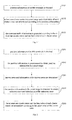
- Fig. 1 is a flow chart of a method for obtaining customer traffic distribution according to an embodiment of the present disclosure. As shown in Fig. 1 , the method comprises the following steps.
- step S101 position information of mobile terminals is obtained.
- the position information of the mobile terminals can be obtained through a Global Positioning System (GPS), position data of a mobile terminal accessing a map client, communication signals of the mobile terminals or other conventional or possible future positioning approaches.
- GPS Global Positioning System
- the position information includes all position information and relevant information of users of the mobile terminals, such as a user identity, and position data, a moving speed, a moving direction and a position confidence radius corresponding to the user identity, etc.
- At step S102 at least one cluster center in a preset range and a heat value of each cluster center are determined according to the position information.
- a plurality of cluster centers in the preset range and heat values of the cluster centers are determined according to the position information.
- the preset range may be a business district divided in advance or other preset districts whose customer traffic distribution needs to be obtained.
- the size of the preset range is determined according a demand of a user, which is not limited in embodiments of the present disclosure.
- the position information is denoised according to the position data to obtain the position information in the preset range.
- position data of users in the preset range is determined according to the position information in the preset range, and the cluster centers in a preset range are determined according to position distribution densities of users in the preset range.
- the heat values of cluster centers are determined according to position distribution densities of users in a range of each cluster center respectively, thus a customer traffic distribution density in the range of each cluster center is visually reflected.
- the customer traffic distribution is generated according to the at least one cluster center and the heat value of each cluster center.
- the customer traffic distribution is generated according to a plurality of cluster centers and the heat values of the cluster centers.
- the cluster centers and the heat values of cluster centers may be displayed on a map in different ways (such as displayed on a heat map) to generate the customer traffic distribution.
- the position information of the mobile terminals is obtained, the at least one cluster center in the preset range and the heat value of each cluster center are determined according to the position information, thus a customer traffic distribution of cluster centers in the preset range is determined and a customer traffic distribution result of the preset range is generated without manually recording. Therefore, the cost is reduced. Further, the obtained customer traffic distribution result is combined with a geographical location, which is more visual and accurate, thus improving a user experience.
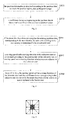
- Fig. 2 is a flow chart of a method for obtaining customer traffic distribution according to another embodiment of the present disclosure. As shown in Fig. 2 , the method comprises the following steps.
- step S201 position information of mobile terminals is obtained.
- the position information of the mobile terminals can be obtained through a Global Positioning System (GPS), position data of a mobile terminal accessing a map client, communication signals of the mobile terminals or other conventional or possible future positioning approaches.
- GPS Global Positioning System
- the position information is preprocessed to obtain position information in a preset range.
- the position information may include position data, a position confidence radius, etc.
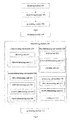
- Fig. 3 is a flow chart of preprocessing position information to obtain position information in a preset range (i.e. step S202) according to an embodiment of the present disclosure. As shown in Fig. 3 , the step S202 comprises the following detailed steps.
- the position information is denoised according to the position data to obtain the position information in the preset range.
- the position data includes position coordinates of users at the present moment, thus position data in the preset range is filtered out according to the position coordinates.
- a confidence factor corresponding to the position data is determined according to the position confidence radius.
- the confidence factor corresponding to the position data may be defined as 1. If the position confidence radius is larger than 20m and less than 50m, which represents a less credible positioning result, the confidence factor corresponding to the position data may be defined as 0.8. If the position confidence radius is larger than 50m, which represents a biased positioning result, the confidence factor corresponding to the position data may be defined as 0.6.
- step S203 known users and information of the known users are determined.
- the position information further includes a user identity configured to identify a user identification corresponding to each piece of position information, in which each mobile terminal corresponds to one user identity.
- whether a preset data base comprises an existing position data corresponding to the user identity is judged according to the user identity.
- the position information of the mobile terminals can be obtained at regular intervals, and the position information corresponding to each user identity is stored in a preset data base. After the latest position data is obtained, the preset data base is searched according to the user identity in the position information, so as to judge whether a user corresponding to the latest position information is a known user or an unknown user.
- the preset data base comprises the existing position data corresponding to the user identity
- a user corresponding to the user identity is determined to be a known user
- a moving speed and a moving direction of the known user are determined according to the position data and the existing position data of the known user.
- the existing position data is updated with the position data of the known user in the preset data base, and the position data, the confidence factor corresponding to the known user, the moving speed and the moving direction of the known user are stored in the preset data base.
- step S204 the position information in the preset range is processed to obtain unknown users and information of the unknown users.
- data in the preset data base is read out at regular intervals to be processed in combination with the latest position information to obtain the unknown users and the information of the unknown users.
- Fig. 4 is a flow chart of processing the position information in the preset range to obtain unknown users and information of the unknown users (i.e. step S204) according to an embodiment of the present disclosure.
- the step S204 comprises the following detailed steps.
- step S2041 if the preset data base does not comprise the existing position data corresponding to the user identity, the user corresponding to the user identity is determined to be an unknown user.
- a moving speed and a moving direction of the unknown user are determined according to the position data of the unknown user, a moving speed and a moving direction of a known user adjacent to the unknown user.
- the unknown users are divided into vehicle users and walking users, because it is crowded nearby a business district with a great customer traffic flow and complex user types.
- a character of the walking users is that there is a comfortable moving area (such as a range having a size of 0.4m x 0.4m) for the users to avoid a collision between adjacent users, and the user may go ahead following a forward crowd going in a same direction and having a relatively larger user number.
- the moving speed and the moving direction of the unknown user may be predicted by following steps.
- the preset range is divided into grids of preset size respectively.
- a business district with a preset range of 10m x 10m for instance, is divided into 625 adjacent grids each having a size of 0.4m x 0.4m.
- a grid the unknown user located in is determined according to the position data of the unknown user, and moving speeds and moving directions of known users in grids adjacent to the grid the unknown user located in are obtained.
- a user collision grid is shown in Fig. 5 , which includes 9 grids each having a size of 0.4m x 0.4m.
- Moving directions of the users include eight directions: up, down, left, right, upper left, lower left, upper right and lower right.
- the unknown user is in a central grid, and other eight grids adjacent to the central grid represent the above eight directions respectively.
- a moving speed of a known user in one of the grids adjacent to the grid the unknown user located in is larger than a maximum speed of walking
- the known user in the one of the grids adjacent to the grid the unknown user located in may be defined as a vehicle user
- the unknown user and the known user in the one of the grids adjacent to the grid the unknown user located in may be defined as moving by taking a same vehicle.
- the moving speed and the moving direction of the known user in the one of the grids adjacent to the grid the unknown user located in are determined to be the moving speed and the moving direction of the unknown user respectively.
- the moving speed and the moving direction of the known users may be determined to be the moving speed and the moving direction of the unknown user.
- the unknown user may be defined as a walking user.
- a movable direction of the unknown user is determined according to the position data of the known users in the grids adjacent to the grid the unknown user located in.
- a direction that the one grid represents may not be the moving direction of the unknown user, while grids adjacent to the grid the unknown user located in and having no user therein may represent movable directions of the unknown user.
- a gray grid in the center has the unknown user therein, 4 dark gray grids have 4 known users adjacent to the unknown user therein respectively, and 4 white grids have no user therein.
- Directions corresponding to the 4 white grids may be defined as the movable directions of the unknown user, while directions corresponding to the 4 dark gray grids are not the moving direction of the unknown user.
- the moving speed and the moving direction of the unknown user is determined according to the movable direction, moving speeds and moving directions of the known users in the preset range.
- the movable direction is one direction
- the movable direction is determined to be the moving direction of the unknown user
- an average speed is calculated according to speeds of known users with a same moving direction with the movable direction in the preset range, and the average speed is determined to be the moving speed of the unknown user.
- the movable direction includes at least two (for example, two) directions
- a number of known users in each movable direction in the preset range is determined, a movable direction corresponding to a largest number of known users is obtained, the movable direction corresponding to the largest number of known users is determined to be the moving direction of the unknown user, an average speed according to speeds of the largest number of known users is calculated, and the average speed is determined to be the moving speed of the unknown user.
- step S2043 the position data, the moving speed and the moving direction of the unknown user and the confidence factor corresponding to the unknown user are stored in the preset data base and the unknown user is updated to the known user.
- the at least one cluster center and the heat value of each cluster center are determined according to the information of the known users.
- a plurality of cluster centers and the heat values of the cluster centers are determined according to the information of the known users.
- users in the preset range are clustered according to the information of the known users (which has been updated according to a latest result) to obtain the cluster centers.
- the heat values of the cluster centers may be calculated, in which the heat value represents a heat degree of one position, which visually reflects information such as a customer traffic flow, customer density and the like.
- the at least one cluster center is determined according to the position data of the known users.
- the position data of the known users can be clustered according to a geographical location by algorithms (such as a single-pass algorithm) to obtain cluster center points which represent corresponding cluster centers respectively.
- the single-pass algorithm is an conventional algorithm mainly including the following steps.
- a linked list of the positioning point and a linked list of the cluster center point are built according to the location data of users in a data base.
- step B the linked list of the positioning point and the linked list of the cluster center point are traversed.
- step C if the linked list of cluster center point is not empty and a distance between a coordinate of a cluster center point being currently traversed (center_x, center_y) and a current positioning point coordinate (x, y) is less than a preset distance (such as 100 meters), the current positioning point (x, y) is clustered into a cluster corresponding to the cluster center point being currently traversed, a position number of the cluster is increased by 1, and the cluster center point coordinate (center_x', center_y') of the cluster is calculated according to coordinates of all positioning points in the cluster.
- a preset distance such as 100 meters
- step D if the linked list of cluster center point is empty, a positioning point being currently traversed is defined as a new cluster center point, a coordinate of the cluster center point is recorded as (x, y), and a position number of a cluster corresponding to the cluster center point is defined as 1.
- step E if a cluster center point of the current positioning point in the preset range has not been obtained after the linked list of the cluster center point is traversed, the current positioning point is defined as a new cluster center point, a coordinate of the cluster center point is recorded as (x, y), and a position number of a cluster corresponding to the cluster center point is defined as 1.
- cluster centers in the preset range are finally obtained after a preset number of cluster center point calculations. It should be understood that ways for determining cluster centers according to embodiments of the preset disclosure include, but are not limited to the single-pass algorithm in the present disclosure.
- central counts of cluster centers are determined according to confidence factors corresponding to users in a range of each cluster center respectively.
- the confidence factors corresponding to users in a range of one cluster center are added up to obtain the central count of the cluster center (recorded as "count").
- moving speeds of the cluster centers are determined according to an average speed of users in the range of each cluster center respectively.
- the average speed of users in the range of one cluster center is the moving speed of the cluster center (recorded as "V").
- a customer traffic distribution is generated according to the at least one cluster center and the heat value of each cluster center.
- the customer traffic distribution is generated according to a plurality of cluster centers and heat values of the cluster centers.
- the cluster centers and the heat values of the cluster centers may be displayed on a map in different ways to generate the customer traffic distribution. For example, different customer intensities are displayed in different colors and/or in different color shades on a map to generate a heat map.
- Fig.7 is a schematic diagram of a heat map of customer traffic distribution of Wanfujing district, Beijing, China, obtained by using a method for obtaining a customer traffic distribution according to an embodiment of the present disclosure.
- area 1 represents a high customer density
- area 2 represents a low customer density
- area 3 represents a customer density between the high customer density and the low customer density.
- the heat map in Fig. 7 is only a possible way for displaying a customer traffic distribution in an embodiment of the present disclosure. There may be some other ways for displaying the customer traffic distribution, such as displaying in different colors (not shown) or displaying in different color shades, without particular limits in the present disclosure.
- the position information, the moving speeds, the moving directions, the moving states and other information of the users in the preset range are obtained according to the position information of the mobile terminals, and the at least one cluster center in the preset range and thenheat value of each cluster center are determined according to position distribution of the users, thus a customer traffic distribution of cluster centers in the preset range is determined and a customer traffic distribution result of the preset range is generated without manually recording. Therefore, the cost is reduced. Further, the obtained customer traffic distribution result is combined with a geographical location, which is more visual and accurate, thus improving a user experience.
- Embodiments of the present disclosure further provide a device for obtaining customer traffic distribution.
- Fig. 8 is a block diagram of a device for obtaining customer traffic distribution according to an embodiment of the present disclosure. As shown in Fig. 8 , the device comprises an obtaining module 100, a determining module 200 and a generating module 300.
- the obtaining module 100 is configured to obtain position information of mobile terminals.
- the obtaining module 100 can obtain the position information of the mobile terminals through a Global Positioning System (GPS), position data of a mobile terminal accessing a map client, communication signals of the mobile terminals or other conventional or possible future positioning approaches.
- GPS Global Positioning System
- the obtaining module 100 can obtain the position information of the mobile terminals through a Global Positioning System (GPS), position data of a mobile terminal accessing a map client, communication signals of the mobile terminals or other conventional or possible future positioning approaches.
- GPS Global Positioning System
- the position information includes all position information and relevant information of users of the mobile terminals, such as a user identity, and position data, a moving speed, a moving direction and a position confidence radius corresponding to the user identity, etc.
- the determining module 200 is configured to determine at least one cluster center in a preset range and a heat value of each cluster center according to the position information. In some embodiments, the determining module 200 may determine a plurality of cluster centers in a preset range and heat values of the cluster centers according to the position information.
- the preset range may be a business district divided in advance or other preset districts whose customer traffic distribution needs to be obtained.
- the size of the preset range is determined according a demand of a user, which is not limited in embodiments of the present disclosure.
- the determining module 200 may denoise the position information according to the position data to obtain the position information in the preset range, determine position data of users in the preset range according to the position information in the preset range, and determine the cluster centers in a preset range according to position distribution densities of users in the preset range, and finally determine the heat values of the cluster centers according to position distribution densities of users in a range of each cluster center respectively.
- the position distribution density of users in the range of each cluster center may be visually reflected.
- the generating module 300 is configured to generate the customer traffic distribution according to the at least one cluster center and the heat value of each cluster center. For example, the generating module 300 may generate the customer traffic distribution according to the plurality of cluster centers and heat values of the cluster centers.
- the generating module 300 may display the cluster centers and the heat values of cluster centers on a map in different ways (such as display on a heat map) to generate the customer traffic distribution. For example, the generating module 300 displays different customer densities in different colors and/or in different color shades on a map to generate a heat map.
- Fig.7 is a schematic diagram of a heat map of a customer traffic distribution of Wanfujing district, Beijing, China, obtained by using a method for obtaining a customer traffic distribution according to an embodiment of the present disclosure.
- area 1 represents a high customer density
- area 2 represents a low customer density
- area 3 represents a customer density between the high customer density and the low customer density.
- the heat map in Fig. 7 is only a possible way for displaying a customer traffic distribution in an embodiment of the present disclosure. There may be some other ways for displaying the customer traffic distribution, such as displaying in different colors (not shown) or displaying in different color shades, without particular limits in the present disclosure.
- the position information of the mobile terminals is obtained, the at least one cluster center in the preset range and the heat value of each cluster center are determined according to the position information, thus a customer traffic distribution of cluster centers in the preset range is determined and a customer traffic distribution result of the preset range is generated without manually recording. Therefore, the cost is reduced. Further, the obtained customer traffic distribution result is combined with a geographical location, which is more visual and accurate, thus improving a user experience.
- Fig. 9 is a block diagram of a device for obtaining a customer traffic distribution according to another embodiment of the present disclosure.
- the device comprises an obtaining module 100, a determining module 200, a preprocessing sub module 210, a denosing unit 211, a first determining unit 212, a first determining sub module 220, a judging unit 221, a second determining unit 222, an updating unit 223, a processing sub module 230, a third determining unit 231, a fourth determining unit 232, a storing unit 233, a second determining sub module 240, a fifth determining unit 241, a sixth determining unit 242, a seventh determining unit 243, an eighth determining unit 244 and a generating module 300.
- the determining module 200 comprises the preprocessing sub module 210, the first determining sub module 220, the processing sub module 230 and the second determining sub module 240.
- the preprocessing sub module 210 comprises the denosing unit 211 and the first determining unit 212.
- the first determining sub module 220 comprises the judging unit 221, the second determining unit 222 and the updating unit 223.
- the processing sub module 230 comprises the third determining unit 231, the fourth determining unit 232 and the storing unit 233.
- the second determining sub module 240 comprises the fifth determining unit 241, the sixth determining unit 242, the seventh determining unit 243 and the eighth determining unit 244.
- the preprocessing sub module 210 is configured to preprocess the position information to obtain position information in a preset range.
- the position information may include position data, a position confidence radius, etc.
- the preprocessing sub module 210 comprises the denosing unit 211 and the first determining unit 212.
- the denosing unit 211 is configured to denoise the position information according to the position data to obtain the position information in the preset range.
- the position data includes position coordinates of users at the present moment, thus the denosing unit 211 can filter out position data in the preset range according to the position coordinates.
- the first determining unit 212 is configured to determine a confidence factor corresponding to the position data according to the position confidence radius.
- the first determining unit 212 may define the confidence factor corresponding to the position data as 1. If the position confidence radius is larger than 20m and less than 50m, which represents a less credible positioning result, the first determining unit 212 may define the confidence factor corresponding to the position data as 0.8. If the position confidence radius is larger than 50m, which represents a biased positioning result, the first determining unit 212 may define the confidence factor corresponding to the position data as 0.6.
- the first determining sub module 220 is configured to determine known users and information of the known users.
- the position information further includes a user identity configured to identify a user identification corresponding to each piece of position information, in which each mobile terminal corresponds to one user identity.
- the first determining sub module 220 comprises the judging unit 221, second determining unit 222 and the updating unit 223.
- the judging unit 221 is configured to judge whether a preset data base comprises an existing position data corresponding to the user identity.
- the position information the mobile terminals can be obtained at regular intervals, and the position information corresponding to each user identity is stored in a preset data base. After a latest position information is obtained, the judging unit 221 may search the preset data base to judge whether a user corresponding to the latest position information is a known user or an unknown user.
- the second determining unit 222 may determine a user corresponding to the user identity to be a known user, and may determine a moving speed and a moving direction of the known user according to the position data and the existing position data of the known user. Then the updating unit 223 may update the existing position data with the position data of the known user in the preset data base, and stores the position data, the confidence factor corresponding to the known user, the moving speed and the moving direction of the known user in the preset data base.
- the processing sub module 230 is configured to process the position information in the preset range to obtain unknown users and information of the unknown users. In some embodiments, the processing sub module 230 reads out data in the preset data base at regular intervals to obtain a read data and processes the read data in combination with the latest position information, so as to obtain the unknown users and the information of the unknown users.
- the processing sub module 230 comprises the third determining unit 231, the fourth determining unit 232 and the storing unit 233.
- the third determining unit 231 is configured to determine the user corresponding to the user identity to be an unknown user if the preset data base does not comprise the existing position data corresponding to the user identity.
- the fourth determining unit 232 is configured to determine a moving speed and a moving direction of the unknown user according to the position data of the unknown user, a moving speed and a moving direction of a known user adjacent to the unknown user.
- the fourth determining unit 232 divides the unknown users are into vehicle users and walking users, because it is crowded nearby a business district with a great customer traffic flow and complex user types.
- a character of the walking users is that there is a comfortable moving area (such as a range having a size 0.4m x 0.4m) for the users to avoid a collision between adjacent users, and the user may go ahead following a forward crowd going in a same direction and having a relatively larger user umber.
- the fourth determining unit 232 may predict the moving speed and the moving direction of the unknown user with following steps.
- the preset range is divided into grids of preset size respectively.
- a business district with a preset range of 10m x 10m for instance, is divided into 625 adjacent grids each having a size of 0.4m x 0.4m.
- a grid the unknown user located in is determined according to the position data of the unknown user, and moving speeds and moving directions of known users in grids adjacent to the grid the unknown user located in are obtained.
- a user collision grid is shown in Fig. 5 , which includes 9 grids each having a size of 0.4m x 0.4m.
- Moving directions of the users include eight directions: up, down, left, right, upper left, lower left, upper right and lower right.
- the unknown user is in a central grid, and other eight grids adjacent to the central grid represent the above eight directions respectively.
- the known user in the one of the grids adjacent to the grid the unknown user located in may be defined as a rider, and the unknown user and the known user in the one of the grids adjacent to the grid the unknown user located in may be defined as moving by taking a same vehicle.
- the fourth determining unit 232 may determine the moving speed and the moving direction of the known user in the one of the grids adjacent to the grid the unknown user located in to be the moving speed and the moving direction of the unknown user.
- the fourth determining unit 232 may determine the moving speed and the moving direction of the known users to be the moving speed and the moving direction of the unknown user.
- the unknown user may be defined as a walking user.
- the fourth determining unit 232 may determine a movable direction of the unknown user according to the position data of the known users in the grids adjacent to the grid the unknown user located in.
- a direction that the one grid represents may not be the moving direction of the unknown user, while grids adjacent to the grid the unknown user located in and having no user therein may represent movable directions of the unknown user.
- a gray grid in the center has the unknown user therein, 4 dark gray grids have 4 known users adjacent to the unknown user therein respectively, and 4 white grids have no user therein.
- Directions corresponding to the 4 white grids may be defined as the movable directions of the unknown user, while directions corresponding to the 4 dark gray grids are not the moving direction of the unknown user.
- the fourth determining unit 232 may determine the moving speed and the moving direction of the unknown user according to the movable direction, moving speeds and moving directions of the known users in the preset range.
- the fourth determining unit 232 is further configured to determine the movable direction to be the moving direction of the unknown user, to calculate an average speed according to speeds of known users with a same moving direction with the movable direction in the preset range, and to determine the average speed to be the moving speed of the unknown user.
- the fourth determining unit 232 is further configured to determine a number of known users in each movable direction in the preset range, to obtain a movable direction corresponding to a largest number of known users, to determine the movable direction corresponding to the largest number of known users to be the moving direction of the unknown user, to calculate an average speed according to speeds of the largest number of known users, and to determine the average speed to be the moving speed of the unknown user.
- the storing unit 233 is configured to store the position data, the moving speed and the moving direction of the unknown user and the confidence factor corresponding to the unknown user in the preset data base.
- the second determining sub module 240 is configured to determine the at least one cluster center and the heat value of each cluster center according to the information of the known users. For example, the second determining sub module 240 may determine a plurality of cluster centers and heat values of the cluster centers according to the information of the known users.
- the second determining sub module 240 clusters users in the preset range according to the information of the known users (which has been updated according to a latest result) to obtain the cluster centers, then calculates the heat values of the cluster centers, in which the heat value represents a heat degree of one position, which visually reflects information such as a customer traffic flow, customer density and the like.
- the fifth determining unit 241 is configured to determine the at least one cluster center according to the position data of the known users. For example, the fifth determining unit 241 may determine a plurality of cluster centers according to the position data of the known users.
- the fifth determining unit 241 can cluster the position data of the known users according to geographical location to obtain cluster center points which represent the cluster centers respectively.
- the fifth determining unit 241 can cluster the position data of the known users by algorithms (such as a single-pass algorithm).
- the single-pass algorithm is a conventional algorithm mainly including the following steps.
- a linked list of the positioning point and a linked list of the cluster center point are built according to the location data of users in a data base.
- step B the linked list of the positioning point and the linked list of the cluster center point are traversed.
- step C if the linked list of cluster center point is not empty and a distance between a coordinate of a cluster center point being currently traversed (center_x, center_y) and a current positioning point coordinate (x, y) is less than a preset distance (such as 100 meters), the current positioning point (x, y) is clustered into a cluster corresponding to the cluster center point being currently traversed, a position number of the cluster is increased by 1, and the cluster center point coordinate (center_x', center_y') of the cluster is calculated according to coordinates of all positioning points in the cluster.
- a preset distance such as 100 meters
- step D if the linked list of cluster center point is empty, a positioning point being currently traversed is defined as a new cluster center point, a coordinate of the cluster center point is recorded as (x, y), and a position number of a cluster corresponding to the cluster center point is defined as 1.
- step E if a cluster center point of the current positioning point in the preset range has not been obtained after the linked list of the cluster center point is traversed, the current positioning point is defined as a new cluster center point, a coordinate of the cluster center point is recorded as (x, y), and a position number of a cluster corresponding to the cluster center point is defined as 1.
- the cluster centers in the preset range are finally obtained after a preset number of cluster center point calculations.
- the sixth determining unit 242 is configured to determine central counts of cluster centers according to confidence factors corresponding to users in a range of each cluster center respectively.
- the confidence factors corresponding to users in a range of a cluster center are added up to obtain the central count of the cluster center (recorded as "count").
- the seventh determining unit 243 may determine moving speeds of the cluster centers according to an average speed of users in the range of each cluster center respectively.
- the average speed of users in the range of one cluster center is the moving speed of the cluster center (recorded as V).
- the position information , the moving speeds, the moving directions, the moving states and other information of the users in the preset range are obtained according to the position information of the mobile terminals, and the at least one cluster center in the preset range and the heat value of each cluster center are determined according to position distribution of the users, thus a customer traffic distribution of cluster centers in the preset range is determined and a customer traffic distribution result of the preset range is generated without manually recording. Therefore, the cost is reduced. Further, the obtained customer traffic distribution result is combined with a geographical location, which is more visual and accurate, thus improving a user experience.
- Embodiments of the present disclosure further provide a computer readable storage medium.
- the computer readable storage medium includes a computer program for executing the above-identified method for obtaining a customer traffic distribution, when running on a computer.
- Any procedure or method described in the flow charts or described in any other way herein may be understood to comprise one or more modules, portions or parts for storing executable codes that realize particular logic functions or procedures.
- advantageous embodiments of the present disclosure comprises other implementations in which the order of execution is different from that which is depicted or discussed, including executing functions in a substantially simultaneous manner or in an opposite order according to the related functions. This should be understood by those skilled in the art which embodiments of the present disclosure belong to.
- each part of the present disclosure may be realized by the hardware, software, firmware or their combination.
- a plurality of steps or methods may be realized by the software or firmware stored in the memory and executed by the appropriate instruction execution system.
- the steps or methods may be realized by one or a combination of the following techniques known in the art: a discrete logic circuit having a logic gate circuit for realizing a logic function of a data signal, an application-specific integrated circuit having an appropriate combination logic gate circuit, a programmable gate array (PGA), a field programmable gate array (FPGA), etc.
- each function cell of the embodiments of the present disclosure may be integrated in a processing module, or these cells may be separate physical existence, or two or more cells are integrated in a processing module.
- the integrated module may be realized in a form of hardware or in a form of software function modules. When the integrated module is realized in a form of software function module and is sold or used as a standalone product, the integrated module may be stored in a computer readable storage medium.
- the storage medium mentioned above may be read-only memories, magnetic disks or CD, etc.
- phraseology and terminology used herein are only used to simplify description of the present invention, and do not indicate or imply that the device or element referred to must have or operated in a particular orientation. They cannot be seen as limits to the present disclosure.
- linkage and “connection” shall be understood broadly, for example, it could be mechanical connection or electrical connection; it could be direct linkage, indirect linkage via intermediate medium.
- connection shall be understood broadly, for example, it could be mechanical connection or electrical connection; it could be direct linkage, indirect linkage via intermediate medium.
Landscapes
- Engineering & Computer Science (AREA)
- Business, Economics & Management (AREA)
- Finance (AREA)
- Accounting & Taxation (AREA)
- Development Economics (AREA)
- Strategic Management (AREA)
- Entrepreneurship & Innovation (AREA)
- Theoretical Computer Science (AREA)
- Physics & Mathematics (AREA)
- Data Mining & Analysis (AREA)
- General Physics & Mathematics (AREA)
- Signal Processing (AREA)
- Computer Networks & Wireless Communication (AREA)
- General Business, Economics & Management (AREA)
- Marketing (AREA)
- Economics (AREA)
- Game Theory and Decision Science (AREA)
- Databases & Information Systems (AREA)
- General Engineering & Computer Science (AREA)
- Mathematical Physics (AREA)
- Software Systems (AREA)
- Traffic Control Systems (AREA)
- Remote Sensing (AREA)
- Management, Administration, Business Operations System, And Electronic Commerce (AREA)
- Navigation (AREA)
Abstract
Description
- Embodiments of the present disclosure generally relate to a search technology field, and more particularly to a method for obtaining a customer traffic distribution, a device for obtaining a customer traffic distribution and a computer readable storage medium.
- Customer traffic distribution is always significant to commercial operations. However, it is often difficult to obtain an accurate and efficient customer traffic distribution as the customer traffic distribution is unfixed and repeatable. At present, the customer traffic distribution nearby a business district is mainly obtained through following two methods.
- The first method is obtaining a number of customers entering a shopping mall and a number of customers exiting the shopping mall by human observation, in which only the traffic flow but not the customer traffic distribution is obtained, only a limited area of the business district is covered and human cost is high.
- The second method is obtaining the custom traffic distribution of the business district through analyzing a video image of the customer traffic taken by an image collection device like a camera, in which only a limited area of the business district (i.e. areas recordable by the camera) is covered, and the recorded result is not visual enough. Therefore, the result needs to be organized manually later.
- Above all, results of customer traffic distribution obtained through both above two methods are undesired, as an integral customer traffic distribution could not been obtained, the obtained customer traffic distribution could not be treated in detail according to customer traffic features of the district and the operating cost is high.
- Embodiments of the present disclosure seek to solve at least one of the problems existing in the prior art to at least some extent.
- One objective of the present disclosure is to provide a method for obtaining a customer traffic distribution, which can obtain a customer traffic distribution without manually recording, thus reducing the cost, and the obtained customer traffic distribution is combined with a geographical location, thus being more visual and accurate.
- Another objective of the present disclosure is to provide a device for obtaining a customer traffic distribution.
- According to embodiments of the present disclosure, a method for obtaining a customer traffic distribution is provided. The method comprises steps of: obtaining position information of mobile terminals; determining at least one cluster center in a preset range and a heat value of each cluster center according to the position information; and generating the customer traffic distribution according to the at least one cluster center and the heat value of each cluster center.
- With the method according to embodiments of the present disclosure, the position information of the mobile terminals is obtained, the at least one cluster center in the preset range and the heat value of each cluster center are determined according to the position information, and thus a customer traffic distribution of cluster centers in the preset range is determined and a corresponding customer traffic distribution result is generated without manually recording. Therefore, the cost is reduced. Further, the obtained customer traffic distribution result is combined with a geographical location, which is more visual and accurate, thus improving a user experience.
- According to embodiments of the present disclosure, a device for obtaining a customer traffic distribution is provided. The device comprises: an obtaining module configured to obtain position information of mobile terminals; a determining module configured to determine at least one cluster center in a preset range and a heat value of each cluster center according to the position information; and a generating module configured to generate the customer traffic distribution according to the at least one cluster center and the heat value of each cluster center.
- With the device according to embodiments of the present disclosure, the position information of the mobile terminals is obtained, the at least one cluster center in the preset range and the heat value of each cluster center are determined according to the position information, thus a customer traffic distribution of cluster centers in the preset range is determined and a customer traffic distribution result of the preset range is generated without manually recording. Therefore, the cost is reduced. Further, the obtained customer traffic distribution result is combined with a geographical location, which is more visual and accurate, thus improving a user experience.
- According to embodiments of the present disclosure, a computer readable storage medium is provided. The computer readable storage medium includes a computer program for executing the above-identified method for obtaining a customer traffic distribution, when running on a computer.
- Additional aspects and advantages of embodiments of present disclosure will be given in part in the following descriptions, become apparent in part from the following descriptions, or be learned from the practice of the embodiments of the present disclosure.
- These and other aspects and advantages of embodiments of the present disclosure will become apparent and more readily appreciated from the following descriptions made with reference to the accompanying drawings, in which:
-
Fig. 1 is a flow chart of a method for obtaining customer traffic distribution according to an embodiment of the present disclosure; -
Fig. 2 is a flow chart of a method for obtaining customer traffic distribution according to another embodiment of the present disclosure; -
Fig. 3 is a flow chart of preprocessing position information to obtain position information in a preset range according to an embodiment of the present disclosure; -
Fig. 4 is a flow chart of processing the position information in the preset range to obtain unknown users and information of the unknown users according to an embodiment of the present disclosure; -
Fig. 5 is a schematic diagram of a user collision grid according to an embodiment of the present disclosure; -
Fig. 6 is a schematic diagram of determining a movable direction of the unknown user according to an embodiment of the present disclosure; -
Fig. 7 is a schematic diagram of a heat map of customer traffic distribution of Wanfujing district, Beijing, China, obtained by using a method for obtaining a customer traffic distribution according to an embodiment of the present disclosure; -
Fig. 8 is a block diagram of a device for obtaining customer traffic distribution according to an embodiment of the present disclosure; and -
Fig. 9 is a block diagram of a device for obtaining customer traffic distribution according to another embodiment of the present disclosure. - Embodiments of the present disclosure will be described in detail in the following descriptions, examples of which are shown in the accompanying drawings, in which the same or similar elements and elements having same or similar functions are denoted by like reference numerals throughout the descriptions. The embodiments described herein with reference to the accompanying drawings are explanatory and illustrative, which are used to generally understand the present disclosure. The embodiments shall not be construed to limit the present disclosure. Contrarily, embodiments of the present disclosure include all the variations, modifications and equivalents within the spirit and scope of the appended claims.
- In the following, a method and a device for obtaining customer traffic distribution according to embodiments of the present disclosure will be described in detail with reference to drawings.
-
Fig. 1 is a flow chart of a method for obtaining customer traffic distribution according to an embodiment of the present disclosure. As shown inFig. 1 , the method comprises the following steps. - At step S101, position information of mobile terminals is obtained.
- In some embodiments, the position information of the mobile terminals can be obtained through a Global Positioning System (GPS), position data of a mobile terminal accessing a map client, communication signals of the mobile terminals or other conventional or possible future positioning approaches.
- The position information includes all position information and relevant information of users of the mobile terminals, such as a user identity, and position data, a moving speed, a moving direction and a position confidence radius corresponding to the user identity, etc.
- At step S102, at least one cluster center in a preset range and a heat value of each cluster center are determined according to the position information.
- In some embodiments, a plurality of cluster centers in the preset range and heat values of the cluster centers are determined according to the position information.
- The preset range may be a business district divided in advance or other preset districts whose customer traffic distribution needs to be obtained. The size of the preset range is determined according a demand of a user, which is not limited in embodiments of the present disclosure.
- In some embodiments, firstly, the position information is denoised according to the position data to obtain the position information in the preset range. Secondly, position data of users in the preset range is determined according to the position information in the preset range, and the cluster centers in a preset range are determined according to position distribution densities of users in the preset range. Finally, the heat values of cluster centers are determined according to position distribution densities of users in a range of each cluster center respectively, thus a customer traffic distribution density in the range of each cluster center is visually reflected. An implementation of the step S102 will be described in detail in following embodiments.
- At step S103, the customer traffic distribution is generated according to the at least one cluster center and the heat value of each cluster center.
- In some embodiments, the customer traffic distribution is generated according to a plurality of cluster centers and the heat values of the cluster centers.
- In embodiments of the present disclosure, the cluster centers and the heat values of cluster centers may be displayed on a map in different ways (such as displayed on a heat map) to generate the customer traffic distribution.
- With the method according to embodiments of the present disclosure, the position information of the mobile terminals is obtained, the at least one cluster center in the preset range and the heat value of each cluster center are determined according to the position information, thus a customer traffic distribution of cluster centers in the preset range is determined and a customer traffic distribution result of the preset range is generated without manually recording. Therefore, the cost is reduced. Further, the obtained customer traffic distribution result is combined with a geographical location, which is more visual and accurate, thus improving a user experience.
-
Fig. 2 is a flow chart of a method for obtaining customer traffic distribution according to another embodiment of the present disclosure. As shown inFig. 2 , the method comprises the following steps. - At step S201, position information of mobile terminals is obtained.
- In some embodiments, the position information of the mobile terminals can be obtained through a Global Positioning System (GPS), position data of a mobile terminal accessing a map client, communication signals of the mobile terminals or other conventional or possible future positioning approaches.
- At step S202, the position information is preprocessed to obtain position information in a preset range.
- The position information may include position data, a position confidence radius, etc.
-
Fig. 3 is a flow chart of preprocessing position information to obtain position information in a preset range (i.e. step S202) according to an embodiment of the present disclosure. As shown inFig. 3 , the step S202 comprises the following detailed steps. - At step S2021, the position information is denoised according to the position data to obtain the position information in the preset range.
- In some embodiments, the position data includes position coordinates of users at the present moment, thus position data in the preset range is filtered out according to the position coordinates.
- At step S2022, a confidence factor corresponding to the position data is determined according to the position confidence radius.
- For instance, if the position confidence radius is less than 20m, which represents a high positioning accuracy and a credible positioning result, the confidence factor corresponding to the position data may be defined as 1. If the position confidence radius is larger than 20m and less than 50m, which represents a less credible positioning result, the confidence factor corresponding to the position data may be defined as 0.8. If the position confidence radius is larger than 50m, which represents a biased positioning result, the confidence factor corresponding to the position data may be defined as 0.6.
- At step S203, known users and information of the known users are determined.
- In embodiments of the present disclosure, the position information further includes a user identity configured to identify a user identification corresponding to each piece of position information, in which each mobile terminal corresponds to one user identity.
- In some embodiments, whether a preset data base comprises an existing position data corresponding to the user identity is judged according to the user identity. In one embodiment of the present disclosure, the position information of the mobile terminals can be obtained at regular intervals, and the position information corresponding to each user identity is stored in a preset data base. After the latest position data is obtained, the preset data base is searched according to the user identity in the position information, so as to judge whether a user corresponding to the latest position information is a known user or an unknown user.
- In some embodiments, if the preset data base comprises the existing position data corresponding to the user identity, a user corresponding to the user identity is determined to be a known user, and a moving speed and a moving direction of the known user are determined according to the position data and the existing position data of the known user.
- In some embodiments, the existing position data is updated with the position data of the known user in the preset data base, and the position data, the confidence factor corresponding to the known user, the moving speed and the moving direction of the known user are stored in the preset data base.
- At step S204, the position information in the preset range is processed to obtain unknown users and information of the unknown users.
- In some embodiments, data in the preset data base is read out at regular intervals to be processed in combination with the latest position information to obtain the unknown users and the information of the unknown users.
-
Fig. 4 is a flow chart of processing the position information in the preset range to obtain unknown users and information of the unknown users (i.e. step S204) according to an embodiment of the present disclosure. In some embodiments, as shown inFig. 4 , the step S204 comprises the following detailed steps. - At step S2041, if the preset data base does not comprise the existing position data corresponding to the user identity, the user corresponding to the user identity is determined to be an unknown user.
- At step S2042, a moving speed and a moving direction of the unknown user are determined according to the position data of the unknown user, a moving speed and a moving direction of a known user adjacent to the unknown user.
- In some embodiments, the unknown users are divided into vehicle users and walking users, because it is crowded nearby a business district with a great customer traffic flow and complex user types. A character of the walking users is that there is a comfortable moving area (such as a range having a size of 0.4m x 0.4m) for the users to avoid a collision between adjacent users, and the user may go ahead following a forward crowd going in a same direction and having a relatively larger user number. Thus the moving speed and the moving direction of the unknown user may be predicted by following steps.
- In some embodiments, the preset range is divided into grids of preset size respectively. In an embodiment of the present disclosure, a business district with a preset range of 10m x 10m, for instance, is divided into 625 adjacent grids each having a size of 0.4m x 0.4m.
- In some embodiments, a grid the unknown user located in is determined according to the position data of the unknown user, and moving speeds and moving directions of known users in grids adjacent to the grid the unknown user located in are obtained.
- In an embodiment of the present disclosure, a user collision grid is shown in
Fig. 5 , which includes 9 grids each having a size of 0.4m x 0.4m. Moving directions of the users include eight directions: up, down, left, right, upper left, lower left, upper right and lower right. The unknown user is in a central grid, and other eight grids adjacent to the central grid represent the above eight directions respectively. - It should be noticed that, the preset range may be divided in other ways, which is not limited in embodiments of the present disclosure.
- More In some embodiments, if a moving speed of a known user in one of the grids adjacent to the grid the unknown user located in is larger than a maximum speed of walking, the known user in the one of the grids adjacent to the grid the unknown user located in may be defined as a vehicle user, and the unknown user and the known user in the one of the grids adjacent to the grid the unknown user located in may be defined as moving by taking a same vehicle. Thus the moving speed and the moving direction of the known user in the one of the grids adjacent to the grid the unknown user located in are determined to be the moving speed and the moving direction of the unknown user respectively. In some embodiments, if there is more than one known user having a moving speed larger than the maximum speed of walking in the grids adjacent to the grid the unknown user located in and these known users have a same moving speed and a same moving direction, the moving speed and the moving direction of the known users may be determined to be the moving speed and the moving direction of the unknown user.
- In some embodiments, if none of the moving speeds of the known users in the grids adjacent to the grid the unknown user located in is larger than the maximum speed of walking, the unknown user may be defined as a walking user. Thus a movable direction of the unknown user is determined according to the position data of the known users in the grids adjacent to the grid the unknown user located in. In some embodiments, if a known user is located in one of the grids adjacent to the grid the unknown user located in, a direction that the one grid represents may not be the moving direction of the unknown user, while grids adjacent to the grid the unknown user located in and having no user therein may represent movable directions of the unknown user. In an embodiment, as shown in
Fig. 6 , a gray grid in the center has the unknown user therein, 4 dark gray grids have 4 known users adjacent to the unknown user therein respectively, and 4 white grids have no user therein. Directions corresponding to the 4 white grids may be defined as the movable directions of the unknown user, while directions corresponding to the 4 dark gray grids are not the moving direction of the unknown user. - In some embodiments, the moving speed and the moving direction of the unknown user is determined according to the movable direction, moving speeds and moving directions of the known users in the preset range.
- In some embodiments, if the movable direction is one direction, the movable direction is determined to be the moving direction of the unknown user, an average speed is calculated according to speeds of known users with a same moving direction with the movable direction in the preset range, and the average speed is determined to be the moving speed of the unknown user.
- In some embodiments, if the movable direction includes at least two (for example, two) directions, a number of known users in each movable direction in the preset range is determined, a movable direction corresponding to a largest number of known users is obtained, the movable direction corresponding to the largest number of known users is determined to be the moving direction of the unknown user, an average speed according to speeds of the largest number of known users is calculated, and the average speed is determined to be the moving speed of the unknown user.
- At step S2043, the position data, the moving speed and the moving direction of the unknown user and the confidence factor corresponding to the unknown user are stored in the preset data base and the unknown user is updated to the known user.
- At step S205, the at least one cluster center and the heat value of each cluster center are determined according to the information of the known users.
- In some embodiments, a plurality of cluster centers and the heat values of the cluster centers are determined according to the information of the known users.
- In some embodiments, firstly, users in the preset range are clustered according to the information of the known users (which has been updated according to a latest result) to obtain the cluster centers. Then the heat values of the cluster centers may be calculated, in which the heat value represents a heat degree of one position, which visually reflects information such as a customer traffic flow, customer density and the like.
- In an embodiment of the present disclosure, the at least one cluster center is determined according to the position data of the known users.
- For instance, the position data of the known users can be clustered according to a geographical location by algorithms (such as a single-pass algorithm) to obtain cluster center points which represent corresponding cluster centers respectively. The single-pass algorithm is an conventional algorithm mainly including the following steps.
- At step A, a linked list of the positioning point and a linked list of the cluster center point are built according to the location data of users in a data base.
- At step B, the linked list of the positioning point and the linked list of the cluster center point are traversed.
- At step C, if the linked list of cluster center point is not empty and a distance between a coordinate of a cluster center point being currently traversed (center_x, center_y) and a current positioning point coordinate (x, y) is less than a preset distance (such as 100 meters), the current positioning point (x, y) is clustered into a cluster corresponding to the cluster center point being currently traversed, a position number of the cluster is increased by 1, and the cluster center point coordinate (center_x', center_y') of the cluster is calculated according to coordinates of all positioning points in the cluster.
- At step D, if the linked list of cluster center point is empty, a positioning point being currently traversed is defined as a new cluster center point, a coordinate of the cluster center point is recorded as (x, y), and a position number of a cluster corresponding to the cluster center point is defined as 1.
- At step E, if a cluster center point of the current positioning point in the preset range has not been obtained after the linked list of the cluster center point is traversed, the current positioning point is defined as a new cluster center point, a coordinate of the cluster center point is recorded as (x, y), and a position number of a cluster corresponding to the cluster center point is defined as 1.
- With above steps, the cluster centers in the preset range are finally obtained after a preset number of cluster center point calculations. It should be understood that ways for determining cluster centers according to embodiments of the preset disclosure include, but are not limited to the single-pass algorithm in the present disclosure.
- In some embodiments, central counts of cluster centers are determined according to confidence factors corresponding to users in a range of each cluster center respectively. In an embodiment of the present disclosure, the confidence factors corresponding to users in a range of one cluster center are added up to obtain the central count of the cluster center (recorded as "count").
- In some embodiments, moving speeds of the cluster centers are determined according to an average speed of users in the range of each cluster center respectively. The average speed of users in the range of one cluster center is the moving speed of the cluster center (recorded as "V").
- In some embodiments, the heat value (recorded as "HOT") of each cluster center are determined according to the central count of each cluster center (recorded as "count") and the moving speed of each cluster center (recorded as "V"), reference of which may be made with the following formula:


and
in which V_max is the maximum speed of walking, and "Factor" is a weight adjusting factor. - At step S206, a customer traffic distribution is generated according to the at least one cluster center and the heat value of each cluster center.
- In some embodiments, the customer traffic distribution is generated according to a plurality of cluster centers and heat values of the cluster centers.
- In some embodiments of the present disclosure, the cluster centers and the heat values of the cluster centers may be displayed on a map in different ways to generate the customer traffic distribution. For example, different customer intensities are displayed in different colors and/or in different color shades on a map to generate a heat map.
- For instance,
Fig.7 is a schematic diagram of a heat map of customer traffic distribution of Wanfujing district, Beijing, China, obtained by using a method for obtaining a customer traffic distribution according to an embodiment of the present disclosure. As shown inFig. 7 ,area 1 represents a high customer density,area 2 represents a low customer density, andarea 3 represents a customer density between the high customer density and the low customer density. It should be understood that, thearea 1,area 2 andarea 3 are only explanatory in the embodiments, while other implementing manners may be also be used in the present disclosure. The heat map inFig. 7 is only a possible way for displaying a customer traffic distribution in an embodiment of the present disclosure. There may be some other ways for displaying the customer traffic distribution, such as displaying in different colors (not shown) or displaying in different color shades, without particular limits in the present disclosure. - With the method according to embodiments of the present disclosure, the position information, the moving speeds, the moving directions, the moving states and other information of the users in the preset range are obtained according to the position information of the mobile terminals, and the at least one cluster center in the preset range and thenheat value of each cluster center are determined according to position distribution of the users, thus a customer traffic distribution of cluster centers in the preset range is determined and a customer traffic distribution result of the preset range is generated without manually recording. Therefore, the cost is reduced. Further, the obtained customer traffic distribution result is combined with a geographical location, which is more visual and accurate, thus improving a user experience..
- Embodiments of the present disclosure further provide a device for obtaining customer traffic distribution.
-
Fig. 8 is a block diagram of a device for obtaining customer traffic distribution according to an embodiment of the present disclosure. As shown inFig. 8 , the device comprises an obtainingmodule 100, a determiningmodule 200 and agenerating module 300. - In some embodiments, the obtaining
module 100 is configured to obtain position information of mobile terminals. - In some embodiments, the obtaining
module 100 can obtain the position information of the mobile terminals through a Global Positioning System (GPS), position data of a mobile terminal accessing a map client, communication signals of the mobile terminals or other conventional or possible future positioning approaches. - In some embodiments, the position information includes all position information and relevant information of users of the mobile terminals, such as a user identity, and position data, a moving speed, a moving direction and a position confidence radius corresponding to the user identity, etc.
- The determining
module 200 is configured to determine at least one cluster center in a preset range and a heat value of each cluster center according to the position information. In some embodiments, the determiningmodule 200 may determine a plurality of cluster centers in a preset range and heat values of the cluster centers according to the position information. - The preset range may be a business district divided in advance or other preset districts whose customer traffic distribution needs to be obtained. The size of the preset range is determined according a demand of a user, which is not limited in embodiments of the present disclosure.
- The determining
module 200 may denoise the position information according to the position data to obtain the position information in the preset range, determine position data of users in the preset range according to the position information in the preset range, and determine the cluster centers in a preset range according to position distribution densities of users in the preset range, and finally determine the heat values of the cluster centers according to position distribution densities of users in a range of each cluster center respectively. Thus, the position distribution density of users in the range of each cluster center may be visually reflected. - The
generating module 300 is configured to generate the customer traffic distribution according to the at least one cluster center and the heat value of each cluster center. For example, thegenerating module 300 may generate the customer traffic distribution according to the plurality of cluster centers and heat values of the cluster centers. - In some embodiments of the present disclosure, the
generating module 300 may display the cluster centers and the heat values of cluster centers on a map in different ways (such as display on a heat map) to generate the customer traffic distribution. For example, thegenerating module 300 displays different customer densities in different colors and/or in different color shades on a map to generate a heat map. - For instance,
Fig.7 is a schematic diagram of a heat map of a customer traffic distribution of Wanfujing district, Beijing, China, obtained by using a method for obtaining a customer traffic distribution according to an embodiment of the present disclosure. As shown inFig. 7 ,area 1 represents a high customer density,area 2 represents a low customer density, andarea 3 represents a customer density between the high customer density and the low customer density. It should be understood that thearea 1,area 2 andarea 3 are only explanatory in the embodiments, while other implementing manners may be also be used in the present disclosure. The heat map inFig. 7 is only a possible way for displaying a customer traffic distribution in an embodiment of the present disclosure. There may be some other ways for displaying the customer traffic distribution, such as displaying in different colors (not shown) or displaying in different color shades, without particular limits in the present disclosure. - With the device according to embodiments of the present disclosure, the position information of the mobile terminals is obtained, the at least one cluster center in the preset range and the heat value of each cluster center are determined according to the position information, thus a customer traffic distribution of cluster centers in the preset range is determined and a customer traffic distribution result of the preset range is generated without manually recording. Therefore, the cost is reduced. Further, the obtained customer traffic distribution result is combined with a geographical location, which is more visual and accurate, thus improving a user experience.
-
Fig. 9 is a block diagram of a device for obtaining a customer traffic distribution according to another embodiment of the present disclosure. As shown inFig. 9 , the device comprises an obtainingmodule 100, a determiningmodule 200, apreprocessing sub module 210, adenosing unit 211, a first determiningunit 212, a first determiningsub module 220, a judgingunit 221, a second determiningunit 222, an updatingunit 223, aprocessing sub module 230, a third determiningunit 231, a fourth determiningunit 232, astoring unit 233, a second determiningsub module 240, a fifth determiningunit 241, a sixth determiningunit 242, a seventh determiningunit 243, an eighth determiningunit 244 and agenerating module 300. In some embodiments, the determiningmodule 200 comprises thepreprocessing sub module 210, the first determiningsub module 220, theprocessing sub module 230 and the second determiningsub module 240. In some embodiments, thepreprocessing sub module 210 comprises thedenosing unit 211 and the first determiningunit 212. In some embodiments, the first determiningsub module 220 comprises the judgingunit 221, the second determiningunit 222 and the updatingunit 223. In some embodiments, theprocessing sub module 230 comprises the third determiningunit 231, the fourth determiningunit 232 and thestoring unit 233. In some embodiments, the second determiningsub module 240 comprises the fifth determiningunit 241, the sixth determiningunit 242, the seventh determiningunit 243 and the eighth determiningunit 244. - In some embodiments, the
preprocessing sub module 210 is configured to preprocess the position information to obtain position information in a preset range. The position information may include position data, a position confidence radius, etc. - In some embodiments, the
preprocessing sub module 210 comprises thedenosing unit 211 and the first determiningunit 212. - The
denosing unit 211 is configured to denoise the position information according to the position data to obtain the position information in the preset range. The position data includes position coordinates of users at the present moment, thus thedenosing unit 211 can filter out position data in the preset range according to the position coordinates. - The first determining
unit 212 is configured to determine a confidence factor corresponding to the position data according to the position confidence radius. - For instance, if the position confidence radius is less than 20m, which represents a high positioning accuracy and a credible positioning result, the first determining
unit 212 may define the confidence factor corresponding to the position data as 1. If the position confidence radius is larger than 20m and less than 50m, which represents a less credible positioning result, the first determiningunit 212 may define the confidence factor corresponding to the position data as 0.8. If the position confidence radius is larger than 50m, which represents a biased positioning result, the first determiningunit 212 may define the confidence factor corresponding to the position data as 0.6. - The first determining
sub module 220 is configured to determine known users and information of the known users. - In some embodiments of the present disclosure, the position information further includes a user identity configured to identify a user identification corresponding to each piece of position information, in which each mobile terminal corresponds to one user identity.
- In some embodiments, the first determining
sub module 220 comprises the judgingunit 221, second determiningunit 222 and the updatingunit 223. - The judging
unit 221 is configured to judge whether a preset data base comprises an existing position data corresponding to the user identity. In one embodiment of the present disclosure, the position information the mobile terminals can be obtained at regular intervals, and the position information corresponding to each user identity is stored in a preset data base. After a latest position information is obtained, the judgingunit 221 may search the preset data base to judge whether a user corresponding to the latest position information is a known user or an unknown user. - If the preset data base comprises the existing position data corresponding to the user identity, the second determining
unit 222 may determine a user corresponding to the user identity to be a known user, and may determine a moving speed and a moving direction of the known user according to the position data and the existing position data of the known user. Then the updatingunit 223 may update the existing position data with the position data of the known user in the preset data base, and stores the position data, the confidence factor corresponding to the known user, the moving speed and the moving direction of the known user in the preset data base. - The
processing sub module 230 is configured to process the position information in the preset range to obtain unknown users and information of the unknown users. In some embodiments, theprocessing sub module 230 reads out data in the preset data base at regular intervals to obtain a read data and processes the read data in combination with the latest position information, so as to obtain the unknown users and the information of the unknown users. Theprocessing sub module 230 comprises the third determiningunit 231, the fourth determiningunit 232 and thestoring unit 233. - The third determining
unit 231 is configured to determine the user corresponding to the user identity to be an unknown user if the preset data base does not comprise the existing position data corresponding to the user identity. - The fourth determining
unit 232 is configured to determine a moving speed and a moving direction of the unknown user according to the position data of the unknown user, a moving speed and a moving direction of a known user adjacent to the unknown user. - In some embodiments, the fourth determining
unit 232 divides the unknown users are into vehicle users and walking users, because it is crowded nearby a business district with a great customer traffic flow and complex user types. A character of the walking users is that there is a comfortable moving area (such as a range having a size 0.4m x 0.4m) for the users to avoid a collision between adjacent users, and the user may go ahead following a forward crowd going in a same direction and having a relatively larger user umber. Thus the fourth determiningunit 232 may predict the moving speed and the moving direction of the unknown user with following steps. - In some embodiments, the preset range is divided into grids of preset size respectively. In an embodiment of the present disclosure, a business district with a preset range of 10m x 10m, for instance, is divided into 625 adjacent grids each having a size of 0.4m x 0.4m.
- In some embodiments, a grid the unknown user located in is determined according to the position data of the unknown user, and moving speeds and moving directions of known users in grids adjacent to the grid the unknown user located in are obtained.
- In an embodiment of the present disclosure, a user collision grid is shown in
Fig. 5 , which includes 9 grids each having a size of 0.4m x 0.4m. Moving directions of the users include eight directions: up, down, left, right, upper left, lower left, upper right and lower right. The unknown user is in a central grid, and other eight grids adjacent to the central grid represent the above eight directions respectively. - It should be noticed that, the preset range may be divided in other ways, which is not limited in embodiments according to the present disclosure.
- In some embodiments, if a moving speed of a known user in one of the grids adjacent to the grid the unknown user located in is larger than a maximum speed of walking, the known user in the one of the grids adjacent to the grid the unknown user located in may be defined as a rider, and the unknown user and the known user in the one of the grids adjacent to the grid the unknown user located in may be defined as moving by taking a same vehicle. Thus the fourth determining
unit 232 may determine the moving speed and the moving direction of the known user in the one of the grids adjacent to the grid the unknown user located in to be the moving speed and the moving direction of the unknown user. In some embodiments, if there is more than one known user having a moving speed larger than the maximum speed of walking in the grids adjacent to the grid the unknown user located in and these known users have a same moving speed and a same moving direction, the fourth determiningunit 232 may determine the moving speed and the moving direction of the known users to be the moving speed and the moving direction of the unknown user. - In some embodiments, if none of the moving speeds of the known users in the grids adjacent to the grid the unknown user located in is larger than the maximum speed of walking, the unknown user may be defined as a walking user. Thus the fourth determining
unit 232 may determine a movable direction of the unknown user according to the position data of the known users in the grids adjacent to the grid the unknown user located in. In some embodiments, if a known user is located in one of the grids adjacent to the grid the unknown user located in, a direction that the one grid represents may not be the moving direction of the unknown user, while grids adjacent to the grid the unknown user located in and having no user therein may represent movable directions of the unknown user. In an embodiment, as shown inFig. 6 , a gray grid in the center has the unknown user therein, 4 dark gray grids have 4 known users adjacent to the unknown user therein respectively, and 4 white grids have no user therein. Directions corresponding to the 4 white grids may be defined as the movable directions of the unknown user, while directions corresponding to the 4 dark gray grids are not the moving direction of the unknown user. - In some embodiments, the fourth determining
unit 232 may determine the moving speed and the moving direction of the unknown user according to the movable direction, moving speeds and moving directions of the known users in the preset range. - In some embodiments, if the movable direction is one direction, the fourth determining
unit 232 is further configured to determine the movable direction to be the moving direction of the unknown user, to calculate an average speed according to speeds of known users with a same moving direction with the movable direction in the preset range, and to determine the average speed to be the moving speed of the unknown user. - In some embodiments, if the movable direction includes at least two (for example, two) directions, the fourth determining
unit 232 is further configured to determine a number of known users in each movable direction in the preset range, to obtain a movable direction corresponding to a largest number of known users, to determine the movable direction corresponding to the largest number of known users to be the moving direction of the unknown user, to calculate an average speed according to speeds of the largest number of known users, and to determine the average speed to be the moving speed of the unknown user. - The storing
unit 233 is configured to store the position data, the moving speed and the moving direction of the unknown user and the confidence factor corresponding to the unknown user in the preset data base. - The second determining
sub module 240 is configured to determine the at least one cluster center and the heat value of each cluster center according to the information of the known users. For example, the second determiningsub module 240 may determine a plurality of cluster centers and heat values of the cluster centers according to the information of the known users. - In some embodiments, the second determining
sub module 240 clusters users in the preset range according to the information of the known users (which has been updated according to a latest result) to obtain the cluster centers, then calculates the heat values of the cluster centers, in which the heat value represents a heat degree of one position, which visually reflects information such as a customer traffic flow, customer density and the like. - The fifth determining
unit 241 is configured to determine the at least one cluster center according to the position data of the known users. For example, the fifth determiningunit 241 may determine a plurality of cluster centers according to the position data of the known users. - In an embodiment of the present disclosure, the fifth determining
unit 241 can cluster the position data of the known users according to geographical location to obtain cluster center points which represent the cluster centers respectively. For instance, the fifth determiningunit 241 can cluster the position data of the known users by algorithms (such as a single-pass algorithm). The single-pass algorithm is a conventional algorithm mainly including the following steps. - At step A, a linked list of the positioning point and a linked list of the cluster center point are built according to the location data of users in a data base.
- At step B, the linked list of the positioning point and the linked list of the cluster center point are traversed.
- At step C, if the linked list of cluster center point is not empty and a distance between a coordinate of a cluster center point being currently traversed (center_x, center_y) and a current positioning point coordinate (x, y) is less than a preset distance (such as 100 meters), the current positioning point (x, y) is clustered into a cluster corresponding to the cluster center point being currently traversed, a position number of the cluster is increased by 1, and the cluster center point coordinate (center_x', center_y') of the cluster is calculated according to coordinates of all positioning points in the cluster.
- At step D, if the linked list of cluster center point is empty, a positioning point being currently traversed is defined as a new cluster center point, a coordinate of the cluster center point is recorded as (x, y), and a position number of a cluster corresponding to the cluster center point is defined as 1.
- At step E, if a cluster center point of the current positioning point in the preset range has not been obtained after the linked list of the cluster center point is traversed, the current positioning point is defined as a new cluster center point, a coordinate of the cluster center point is recorded as (x, y), and a position number of a cluster corresponding to the cluster center point is defined as 1.
- With above steps, the cluster centers in the preset range are finally obtained after a preset number of cluster center point calculations.
- The sixth determining
unit 242 is configured to determine central counts of cluster centers according to confidence factors corresponding to users in a range of each cluster center respectively. In an embodiment of the present disclosure, the confidence factors corresponding to users in a range of a cluster center are added up to obtain the central count of the cluster center (recorded as "count"). Then the seventh determiningunit 243 may determine moving speeds of the cluster centers according to an average speed of users in the range of each cluster center respectively. The average speed of users in the range of one cluster center is the moving speed of the cluster center (recorded as V). - The eighth determining
unit 244 is configured to determine the heat value of each cluster center (recorded as "HOT") according to central count of each cluster center (recorded as "count") and the moving speed of each cluster center (recorded as "V"), reference of which may be made with the following formula:

and
in which V_max is the maximum speed of walking, and "Factor" is a weight adjusting factor. - With the device according to embodiments of the present disclosure, the position information , the moving speeds, the moving directions, the moving states and other information of the users in the preset range are obtained according to the position information of the mobile terminals, and the at least one cluster center in the preset range and the heat value of each cluster center are determined according to position distribution of the users, thus a customer traffic distribution of cluster centers in the preset range is determined and a customer traffic distribution result of the preset range is generated without manually recording. Therefore, the cost is reduced. Further, the obtained customer traffic distribution result is combined with a geographical location, which is more visual and accurate, thus improving a user experience.
- Embodiments of the present disclosure further provide a computer readable storage medium. The computer readable storage medium includes a computer program for executing the above-identified method for obtaining a customer traffic distribution, when running on a computer.
- It is to be understood that, in the description of the present disclosure, terms of "first" and "second" are only used for description and cannot be seen as indicating or implying relative importance. Furthermore, unless otherwise explained, it is to be understood that a term of "a plurality of" refers to two or more.
- Any procedure or method described in the flow charts or described in any other way herein may be understood to comprise one or more modules, portions or parts for storing executable codes that realize particular logic functions or procedures. Moreover, advantageous embodiments of the present disclosure comprises other implementations in which the order of execution is different from that which is depicted or discussed, including executing functions in a substantially simultaneous manner or in an opposite order according to the related functions. This should be understood by those skilled in the art which embodiments of the present disclosure belong to.
- It is understood that each part of the present disclosure may be realized by the hardware, software, firmware or their combination. In the above embodiments, a plurality of steps or methods may be realized by the software or firmware stored in the memory and executed by the appropriate instruction execution system. For example, if it is realized by the hardware, likewise in another embodiment, the steps or methods may be realized by one or a combination of the following techniques known in the art: a discrete logic circuit having a logic gate circuit for realizing a logic function of a data signal, an application-specific integrated circuit having an appropriate combination logic gate circuit, a programmable gate array (PGA), a field programmable gate array (FPGA), etc.
- Those skilled in the art shall understand that all or parts of the steps in the above exemplifying method of the present disclosure may be achieved by commanding the related hardware with programs. The programs may be stored in a computer readable storage medium, and the programs comprise one or a combination of the steps in the method embodiments of the present disclosure when run on a computer.
- In addition, each function cell of the embodiments of the present disclosure may be integrated in a processing module, or these cells may be separate physical existence, or two or more cells are integrated in a processing module. The integrated module may be realized in a form of hardware or in a form of software function modules. When the integrated module is realized in a form of software function module and is sold or used as a standalone product, the integrated module may be stored in a computer readable storage medium.
- The storage medium mentioned above may be read-only memories, magnetic disks or CD, etc.
- Reference throughout this specification to "an embodiment," "some embodiments," "an example," "a specific example," or "some examples," means that a particular feature, structure, material, or characteristic described in connection with the embodiment or example is included in at least one embodiment or example of the present disclosure. The appearances of the phrases throughout this specification are not necessarily referring to the same embodiment or example of the present disclosure. Furthermore, the particular features, structures, materials, or characteristics may be combined in any suitable manner in one or more embodiments or examples.
- It is to be understood that phraseology and terminology used herein (such as, terms like "center", "longitudinal", "lateral", "length", "width", "thickness", "up", "down", "front", "rear", "left", "right", "top", "bottom", "inside", "outside", "vertical", "horizontal", "clockwise" and "counterclockwise") are only used to simplify description of the present invention, and do not indicate or imply that the device or element referred to must have or operated in a particular orientation. They cannot be seen as limits to the present disclosure.
- Unless otherwise stipulated and restricted, it is to be explained that terms of "linkage" and "connection" shall be understood broadly, for example, it could be mechanical connection or electrical connection; it could be direct linkage, indirect linkage via intermediate medium. Those skilled in the art shall understand the concrete notations of the terms mentioned above according to specific circumstances.
- Although explanatory embodiments have been shown and described, it would be appreciated by those skilled in the art that the above embodiments cannot be construed to limit the present disclosure, and changes, alternatives, and modifications can be made in the embodiments without departing from spirit, principles and scope of the present disclosure.
Claims (15)
- A method for obtaining a customer traffic distribution, comprising steps of:obtaining position information of mobile terminals;determining at least one cluster center in a preset range and a heat value of each cluster center according to the position information; andgenerating the customer traffic distribution according to the at least one cluster center and the heat value of each cluster center.
- The method of claim 1, wherein determining at least one cluster center in a preset range and a heat value of each cluster center according to the position information comprises:preprocessing the position information to obtain position information in the preset range, and determining known users and information of the known users;processing the position information in the preset range to obtain unknown users and information of the unknown users; anddetermining the at least one cluster center and the heat value of each cluster center according to the information of the known users.
- The method of claim 2, wherein the position information comprises position data, a position confidence radius, and preprocessing the position information to obtain position information in the preset range comprises:denoising the position information according to the position data to obtain the position information in the preset range; anddetermining a confidence factor corresponding to the position data according to the position confidence radius.
- The method of claim 3, wherein
the position information further comprises a user identity, and determining known users and information of the known users comprises:judging whether a preset data base comprises an existing position data corresponding to the user identity;if the preset data base comprises the existing position data corresponding to the user identity, determining a user corresponding to the user identity to be a known user, and determining a moving speed and a moving direction of the known user according to the position data and the existing position data of the known user; andupdating the existing position data with the position data of the known user in the preset data base, and storing the position data, the confidence factor corresponding to the known user, the moving speed and the moving direction of the known user in the preset data base, and/ordetermining the at least one cluster center and the heat value of each cluster center according to the information of the known users comprises:determining the at least one cluster center according to the position data of the known users;determining central counts of cluster centers according to confidence factors corresponding to users in a range of each cluster center respectively;determining moving speeds of the cluster centers according to an average speed of users in the range of each cluster center respectively; anddetermining the heat value of each cluster center according to the central counts and the moving speeds of the cluster centers respectively. - The method of claim 3 or 4, wherein processing the position information in the preset range to obtain unknown users and information of the unknown users comprises:if the preset data base does not comprise the existing position data corresponding to the user identity, determining the user corresponding to the user identity to be an unknown user;determining a moving speed and a moving direction of the unknown user according to the position data of the unknown user, a moving speed and a moving direction of a known user adjacent to the unknown user; andstoring the position data, the moving speed and the moving direction of the unknown user and the confidence factor corresponding to the unknown user in the preset data base and updating the unknown user to the known user.
- The method of claim 5, wherein determining a moving speed and a moving direction of the unknown user according to the position data of the unknown user, a moving speed and a moving direction of a known user adjacent to the unknown user comprises:dividing the preset range into grids of preset size respectively;determining a grid the unknown user located in according to the position data of the unknown user, and obtaining moving speeds and moving directions of known users in grids adjacent to the grid the unknown user located in; andif a moving speed of a known user in one of the grids adjacent to the grid the unknown user located in is larger than a maximum speed of walking, determining the moving speed and the moving direction of the known user in the one of the grids adjacent to the grid the unknown user located in to be the moving speed and the moving direction of the unknown user.
- The method of claim 6, wherein
determining a moving speed and a moving direction of the unknown user according to the position data of the unknown user, a moving speed and a moving direction of a known user adjacent to the unknown user further comprises:if none of the moving speeds of the known users in the grids adjacent to the grid the unknown user located in is larger than the maximum speed of walking, determining a movable direction of the unknown user according to the position data of the known users in the grids adjacent to the grid the unknown user located in; anddetermining the moving speed and the moving direction of the unknown user according to the movable direction, moving speeds and moving directions of the known users in the preset range, and/ordetermining the moving speed and the moving direction of the unknown user according to the movable direction, moving speeds and moving directions of the known users in the preset range comprises:if the movable direction is one direction, determining the movable direction to be the moving direction of the unknown user, calculating an average speed according to speeds of known users with a same moving direction with the movable direction in the preset range, and determining the average speed to be the moving speed of the unknown user; orif the movable direction is at least two directions, determining a number of known users in each movable direction in the preset range, obtaining a movable direction corresponding to a largest number of known users, determining the movable direction corresponding to the largest number of known users to be the moving direction of the unknown user, calculating an average speed according to speeds of the largest number of known users, and determining the average speed to be the moving speed of the unknown user. - A device for obtaining customer traffic distribution, comprising:an obtaining module, configured to obtain position information of mobile terminals;a determining module, configured to determine at least one cluster center in a preset range and a heat value of each cluster center according to the position information; anda generating module, configured to generate the customer traffic distribution according to the at least one cluster center and the heat value of each cluster center.
- The device of claim 8, wherein the determining module comprises:a preprocessing sub module, configured to preprocess the position information to obtain position information in the preset range;a first determining sub module, configured to determine known users and information of the known users;a processing sub module, configured to process the position information in the preset range to obtain unknown users and information of the unknown users; anda second determining sub module, configured to determine the at least one cluster center and the heat value of each cluster center according to the information of the known users.
- The device of claim 9, wherein the position information comprises position data, a position confidence radius, and the preprocessing sub module comprises:a denosing unit, configured to denoise the position information according to the position data to obtain the position information in the preset range; anda first determining unit, configured to determine a confidence factor corresponding to the position data according to the position confidence radius.
- The device of claim 10, wherein
the position information further comprises a user identity, and the first determining sub module comprises:a judging unit, configured to judge whether a preset data base comprises an existing position data corresponding to the user identity;a second determining unit, configured to determine a user corresponding to the user identity to be a known user, and to determine a moving speed and a moving direction of the known user according to the position data and the existing position data of the known user if the preset data base comprises the existing position data corresponding to the user identity; andan updating unit, configured to update the existing position data with the position data of the known user in the preset data base, and to store the position data, the confidence factor corresponding to the known user, the moving speed and the moving direction of the known user in the preset data base, and/orthe second determining sub module comprises:a fifth determining unit, configured to determine the at least one cluster center according to the position data of the known users;a sixth determining unit, configured to determine central counts of cluster centers according to confidence factors corresponding to users in a range of each cluster center respectively;a seventh determining unit, configured to determine moving speeds of the cluster centers according to an average speed of users in the range of each cluster center respectively; andan eighth determining unit, configured to determine the heat value of each cluster center according to the central counts and the moving speeds of the cluster centers respectively. - The device of claim 10 or 11, wherein the processing sub module comprises:a third determining unit, configured to determine the user corresponding to the user identity to be an unknown user if the preset data base does not comprise the existing position data corresponding to the user identity;a fourth determining unit, configured to determine a moving speed and a moving direction of the unknown user according to the position data of the unknown user, a moving speed and a moving direction of a known user adjacent to the unknown user; anda storing unit, configured to store the position data, the moving speed and the moving direction of the unknown user and the confidence factor corresponding to the unknown user in the preset data base.
- The device of claim 12, wherein the fourth determining unit is configured to:divide the preset range into grids of preset size respectively;determine a grid the unknown user located in according to the position data of the unknown user, and obtain moving speeds and moving directions of known users in grids adjacent to the grid the unknown user located in; andif a moving speed of a known user in one of the grids adjacent to the grid the unknown user located in is larger than a maximum speed of walking, determine the moving speed and the moving direction of the known user in the one of the grids adjacent to the grid the unknown user located in to be the moving speed and the moving direction of the unknown user.
- The device of claim 13, wherein
the fourth determining unit is further configured to:if none of the moving speeds of the known users in the grids adjacent to the grid the unknown user located in is larger than the maximum speed of walking, determine a movable direction of the unknown user according to the position data of the known users in the grids adjacent to the grid the unknown user located in; anddetermine the moving speed and the moving direction of the unknown user according to the movable direction, moving speeds and moving directions of the known users in the preset range, and/orthe fourth determining unit is further configured to:if the movable direction is one direction, determine the movable direction to be the moving direction of the unknown user, calculate an average speed according to speeds of known users with a same moving direction with the movable direction in the preset range, and determine the average speed to be the moving speed of the unknown user; orif the movable direction is at least two directions, determine a number of known users in each movable direction in the preset range, obtain a movable direction corresponding to a largest number of known users, determine the movable direction corresponding to the largest number of known users to be the moving direction of the unknown user, calculate an average speed according to speeds of the largest number of known users, and determine the average speed to be the moving speed of the unknown user. - A computer readable storage medium, comprising a computer program for executing steps of:obtaining position information of mobile terminals;determining at least one cluster center in a preset range and a heat value of each cluster center according to the position information; andgenerating the customer traffic distribution according to the at least one cluster center and the heat value of each cluster center,when running on a computer.
Applications Claiming Priority (1)
| Application Number | Priority Date | Filing Date | Title |
|---|---|---|---|
| CN201410194179.9A CN103996068B (en) | 2014-05-08 | 2014-05-08 | Statistical method and device for passenger flow distribution |
Publications (1)
| Publication Number | Publication Date |
|---|---|
| EP2942748A1 true EP2942748A1 (en) | 2015-11-11 |
Family
ID=51310228
Family Applications (1)
| Application Number | Title | Priority Date | Filing Date |
|---|---|---|---|
| EP14200122.1A Withdrawn EP2942748A1 (en) | 2014-05-08 | 2014-12-23 | Method and device for obtaining customer traffic distribution |
Country Status (5)
| Country | Link |
|---|---|
| US (1) | US9805379B2 (en) |
| EP (1) | EP2942748A1 (en) |
| JP (1) | JP5946516B2 (en) |
| KR (2) | KR20150128537A (en) |
| CN (1) | CN103996068B (en) |
Cited By (4)
| Publication number | Priority date | Publication date | Assignee | Title |
|---|---|---|---|---|
| CN105491525A (en) * | 2015-12-11 | 2016-04-13 | 上海斐讯数据通信技术有限公司 | Scenic spot passenger flow volume real-time statistic system and method based on cloud AC platform |
| WO2020260731A1 (en) | 2019-06-28 | 2020-12-30 | Cubelizer S.L. | Method for analysing the behaviour of people in physical spaces and system for said method |
| CN112347214A (en) * | 2020-11-06 | 2021-02-09 | 平安科技(深圳)有限公司 | Target area dividing method and device, electronic equipment and storage medium |
| US11232470B2 (en) | 2018-08-31 | 2022-01-25 | Boe Technology Group Co., Ltd. | Customer flow line and customer flow hot zone determining method and apparatus |
Families Citing this family (23)
| Publication number | Priority date | Publication date | Assignee | Title |
|---|---|---|---|---|
| US9955359B2 (en) * | 2015-05-19 | 2018-04-24 | Cisco Technology, Inc. | Location services with multiple devices |
| CN105389979B (en) * | 2015-09-22 | 2018-03-13 | 东南大学 | A kind of comprehensive passenger transport hub passenger flow method of real-time based on mobile phone location data |
| CN106557829B (en) * | 2015-09-30 | 2021-07-27 | 百度在线网络技术(北京)有限公司 | Method and device for obtaining areas where demand and transport capacity do not match in car-use business |
| WO2017063144A1 (en) | 2015-10-13 | 2017-04-20 | 华为技术有限公司 | Data visualization method and apparatus |
| KR101810169B1 (en) | 2016-05-17 | 2017-12-19 | 김명락 | Method and device for predicting future number of customers coming into the store based on pattern information of floating population |
| CN105809967A (en) * | 2016-05-25 | 2016-07-27 | 浙江宇视科技有限公司 | Traffic flow displaying method and device |
| CN107038426B (en) * | 2017-04-25 | 2020-04-10 | 广东兆邦智能科技有限公司 | Heat map generation method |
| CN107426689A (en) * | 2017-05-10 | 2017-12-01 | 京信通信技术(广州)有限公司 | Localization method and system based on increment management |
| CN109150934B (en) * | 2017-06-16 | 2021-12-17 | 上海优扬新媒信息技术有限公司 | Information pushing method and device |
| CN107389078B (en) * | 2017-06-23 | 2019-07-02 | 咪咕互动娱乐有限公司 | Route recommendation method, device and computer-readable storage medium |
| JP6944531B2 (en) * | 2017-09-27 | 2021-10-06 | 楽天グループ株式会社 | Information processing equipment, information processing methods, programs, storage media |
| CN108875032B (en) * | 2018-06-25 | 2022-02-25 | 讯飞智元信息科技有限公司 | Region type determination method and device |
| CN109697652A (en) * | 2018-06-29 | 2019-04-30 | 京东方科技集团股份有限公司 | A kind of Method of Commodity Recommendation and server in market |
| CN108985843A (en) * | 2018-07-18 | 2018-12-11 | 天津璧合信息技术有限公司 | A kind of method and device of determining Trip distribution situation |
| CN111831760B (en) * | 2019-04-23 | 2023-08-18 | 腾讯科技(深圳)有限公司 | Method for processing location data, corresponding device, and computer-readable storage medium |
| CN110337063B (en) * | 2019-05-31 | 2021-01-08 | 口碑(上海)信息技术有限公司 | Target user terminal identification method, device, storage medium and computer equipment |
| CN112446406A (en) * | 2019-09-05 | 2021-03-05 | 中移信息技术有限公司 | Emergency point determination method and device and storage medium |
| JP7420262B2 (en) * | 2020-08-11 | 2024-01-23 | 日本電信電話株式会社 | Waypoint setting device, waypoint setting method, and waypoint setting program |
| CN112699188A (en) * | 2021-01-13 | 2021-04-23 | 树根互联技术有限公司 | Construction thermodynamic diagram generation method and device and electronic equipment |
| GB2623915A (en) * | 2021-08-10 | 2024-05-01 | Lewis Woolcott Pty Ltd | Intelligent resource monitoring and tracking system |
| CN115278529A (en) * | 2022-06-24 | 2022-11-01 | 中国电信股份有限公司 | Mobile terminal distribution visualization method and device |
| CN115563609B (en) * | 2022-10-10 | 2023-11-14 | 深圳掌酷软件有限公司 | User type judging method, device, equipment and storage medium |
| JP2025079027A (en) * | 2023-11-09 | 2025-05-21 | 富士通株式会社 | Information processing program, information processing method, and information processing device |
Citations (3)
| Publication number | Priority date | Publication date | Assignee | Title |
|---|---|---|---|---|
| US20120115505A1 (en) * | 2010-11-09 | 2012-05-10 | Motoharu Miyake | System and method for population tracking, counting, and movement estimation using mobile operational data and/or geographic information in mobile network |
| US20130226655A1 (en) * | 2012-02-29 | 2013-08-29 | BVI Networks, Inc. | Method and system for statistical analysis of customer movement and integration with other data |
| US20140122040A1 (en) * | 2012-10-30 | 2014-05-01 | Apple Inc. | Venue based real time crowd modeling and forecasting |
Family Cites Families (18)
| Publication number | Priority date | Publication date | Assignee | Title |
|---|---|---|---|---|
| KR100524180B1 (en) | 2003-01-24 | 2005-10-25 | 햄펙스 주식회사 | Position tracking method of a mobile phone using cell position and receiving/pre-measured radio wave characteristic information |
| KR100546480B1 (en) | 2003-03-28 | 2006-01-26 | 에스케이 텔레콤주식회사 | Method for obtaining traffic information by using call data record of mobile |
| JP4858400B2 (en) | 2007-10-17 | 2012-01-18 | ソニー株式会社 | Information providing system, information providing apparatus, and information providing method |
| CN201142139Y (en) * | 2007-12-25 | 2008-10-29 | 厦门雅迅网络股份有限公司 | Mobile Terminal in Bus Monitoring System |
| US7800541B2 (en) * | 2008-03-31 | 2010-09-21 | Golba Llc | Methods and systems for determining the location of an electronic device |
| JP2010271778A (en) | 2009-05-19 | 2010-12-02 | Ntt Docomo Inc | Geographic distribution amount calculation system and geographical distribution amount calculation method |
| CN101615207A (en) * | 2009-07-10 | 2009-12-30 | 重庆大学 | A method for obtaining boarding stations for passengers with bus IC cards |
| CN102238584B (en) * | 2010-05-04 | 2014-03-12 | 中国移动通信集团安徽有限公司 | Device, system and method for monitoring regional passenger flow |
| CN102063753A (en) * | 2011-01-18 | 2011-05-18 | 王芳 | Method for identification and statistic of visitors based on Internet of things |
| JP5628065B2 (en) | 2011-02-24 | 2014-11-19 | 株式会社Nttドコモ | Group detection device, group detection program, and group detection method |
| CN102682041B (en) | 2011-03-18 | 2014-06-04 | 日电(中国)有限公司 | User behavior identification equipment and method |
| JP5150744B2 (en) | 2011-03-25 | 2013-02-27 | 株式会社東芝 | Information distribution apparatus, system, and information display apparatus |
| KR20130015336A (en) | 2011-08-03 | 2013-02-14 | 에스케이텔레콤 주식회사 | System, apparatus, method and terminal thereof for providing commercial area information |
| JP2013121073A (en) | 2011-12-07 | 2013-06-17 | Ntt Docomo Inc | Position information analysis device and position information analysis method |
| JP5638047B2 (en) | 2012-09-27 | 2014-12-10 | ソフトバンクモバイル株式会社 | Information distribution apparatus, information distribution system, program, and method |
| GB201222625D0 (en) * | 2012-12-14 | 2013-01-30 | Omarco Network Solutions Ltd | Improvements relating to tracking moving objects |
| US8898010B2 (en) * | 2013-01-11 | 2014-11-25 | Here Global B.V. | Deviation detection in mobile transit systems |
| US9860578B2 (en) * | 2014-06-25 | 2018-01-02 | Google Inc. | Methods, systems, and media for recommending collaborators of media content based on authenticated media content input |
-
2014
- 2014-05-08 CN CN201410194179.9A patent/CN103996068B/en not_active Expired - Fee Related
- 2014-12-23 EP EP14200122.1A patent/EP2942748A1/en not_active Withdrawn
- 2014-12-24 US US14/583,019 patent/US9805379B2/en active Active
- 2014-12-25 JP JP2014262903A patent/JP5946516B2/en not_active Expired - Fee Related
- 2014-12-30 KR KR1020140193478A patent/KR20150128537A/en not_active Ceased
-
2016
- 2016-10-17 KR KR1020160134470A patent/KR101754041B1/en not_active Expired - Fee Related
Patent Citations (3)
| Publication number | Priority date | Publication date | Assignee | Title |
|---|---|---|---|---|
| US20120115505A1 (en) * | 2010-11-09 | 2012-05-10 | Motoharu Miyake | System and method for population tracking, counting, and movement estimation using mobile operational data and/or geographic information in mobile network |
| US20130226655A1 (en) * | 2012-02-29 | 2013-08-29 | BVI Networks, Inc. | Method and system for statistical analysis of customer movement and integration with other data |
| US20140122040A1 (en) * | 2012-10-30 | 2014-05-01 | Apple Inc. | Venue based real time crowd modeling and forecasting |
Cited By (6)
| Publication number | Priority date | Publication date | Assignee | Title |
|---|---|---|---|---|
| CN105491525A (en) * | 2015-12-11 | 2016-04-13 | 上海斐讯数据通信技术有限公司 | Scenic spot passenger flow volume real-time statistic system and method based on cloud AC platform |
| CN105491525B (en) * | 2015-12-11 | 2019-07-12 | 上海斐讯数据通信技术有限公司 | Scenic spot volume of the flow of passengers real-time statistics system and method based on cloud AC platform |
| US11232470B2 (en) | 2018-08-31 | 2022-01-25 | Boe Technology Group Co., Ltd. | Customer flow line and customer flow hot zone determining method and apparatus |
| WO2020260731A1 (en) | 2019-06-28 | 2020-12-30 | Cubelizer S.L. | Method for analysing the behaviour of people in physical spaces and system for said method |
| CN112347214A (en) * | 2020-11-06 | 2021-02-09 | 平安科技(深圳)有限公司 | Target area dividing method and device, electronic equipment and storage medium |
| WO2022095351A1 (en) * | 2020-11-06 | 2022-05-12 | 平安科技(深圳)有限公司 | Target area division method and apparatus, and electronic device and storage medium |
Also Published As
| Publication number | Publication date |
|---|---|
| US20150324812A1 (en) | 2015-11-12 |
| US9805379B2 (en) | 2017-10-31 |
| JP5946516B2 (en) | 2016-07-06 |
| KR20160124061A (en) | 2016-10-26 |
| KR101754041B1 (en) | 2017-07-19 |
| CN103996068A (en) | 2014-08-20 |
| CN103996068B (en) | 2017-01-25 |
| JP2015215867A (en) | 2015-12-03 |
| KR20150128537A (en) | 2015-11-18 |
Similar Documents
| Publication | Publication Date | Title |
|---|---|---|
| US9805379B2 (en) | Method and device for obtaining customer traffic distribution | |
| CN110850439B (en) | High-precision three-dimensional point cloud map construction method | |
| JP6141393B2 (en) | Method and apparatus for determining a target position | |
| CN110675177A (en) | Store site selection method and device | |
| CN109872530B (en) | Road condition information generation method, vehicle-mounted terminal and server | |
| CN114022760B (en) | Railway tunnel barrier monitoring and early warning method, system, equipment and storage medium | |
| JP2015132539A (en) | Sunshine quantity calculating apparatus, route proposing apparatus, and sunshine quantity calculating method | |
| JP2020042793A (en) | Obstacle distribution simulation method, apparatus and terminal based on probability plot | |
| EP4275013A1 (en) | Method, data processing apparatus and computer program product for generating map data | |
| CN114612034B (en) | Warehouse determination method, device and equipment | |
| CN114581464B (en) | Boundary detection method, device, electronic device and computer-readable storage medium | |
| CN111161545B (en) | Statistical method of traffic parameters in intersection area based on video | |
| CN115731560A (en) | Slot line identification method and device based on deep learning, storage medium and terminal | |
| Kanav et al. | Measuring urban expansion and land use/land cover changes using remote sensing and landscape metrics: a case of Rewari city, India | |
| CN113496182A (en) | Road extraction method and device based on remote sensing image, storage medium and equipment | |
| US20170176203A1 (en) | Traffic information output system and traffic information output method | |
| JP7680340B2 (en) | Work area management method, work area management system, and work area management program | |
| JP4067999B2 (en) | Lightning observation system | |
| JP3229566B2 (en) | Lightning prediction device | |
| CN109612467B (en) | Trajectory simplification method, system and trajectory visualization system | |
| CN115453545B (en) | Target object detection method, device, removable device and storage medium | |
| CN117496439A (en) | A transmission line anti-breakage identification method, storage medium and electronic equipment | |
| CN117495692A (en) | Image data enhancement method and device based on 3D drivable area | |
| CN115376093A (en) | Object prediction method and device in intelligent driving and electronic equipment | |
| CN119916391A (en) | Obstacle determination method, device, electronic device and storage medium |
Legal Events
| Date | Code | Title | Description |
|---|---|---|---|
| PUAI | Public reference made under article 153(3) epc to a published international application that has entered the european phase |
Free format text: ORIGINAL CODE: 0009012 |
|
| 17P | Request for examination filed |
Effective date: 20141223 |
|
| AK | Designated contracting states |
Kind code of ref document: A1 Designated state(s): AL AT BE BG CH CY CZ DE DK EE ES FI FR GB GR HR HU IE IS IT LI LT LU LV MC MK MT NL NO PL PT RO RS SE SI SK SM TR |
|
| AX | Request for extension of the european patent |
Extension state: BA ME |
|
| RBV | Designated contracting states (corrected) |
Designated state(s): AL AT BE BG CH CY CZ DE DK EE ES FI FR GB GR HR HU IE IS IT LI LT LU LV MC MK MT NL NO PL PT RO RS SE SI SK SM TR |
|
| STAA | Information on the status of an ep patent application or granted ep patent |
Free format text: STATUS: EXAMINATION IS IN PROGRESS |
|
| 17Q | First examination report despatched |
Effective date: 20170313 |
|
| STAA | Information on the status of an ep patent application or granted ep patent |
Free format text: STATUS: THE APPLICATION HAS BEEN WITHDRAWN |
|
| 18W | Application withdrawn |
Effective date: 20180703 |