EP2942399A1 - Method for the diagnosis of breast cancer - Google Patents
Method for the diagnosis of breast cancer Download PDFInfo
- Publication number
- EP2942399A1 EP2942399A1 EP14167498.6A EP14167498A EP2942399A1 EP 2942399 A1 EP2942399 A1 EP 2942399A1 EP 14167498 A EP14167498 A EP 14167498A EP 2942399 A1 EP2942399 A1 EP 2942399A1
- Authority
- EP
- European Patent Office
- Prior art keywords
- mir
- breast cancer
- micrornas
- subject
- expression level
- Prior art date
- Legal status (The legal status is an assumption and is not a legal conclusion. Google has not performed a legal analysis and makes no representation as to the accuracy of the status listed.)
- Granted
Links
Images


Classifications
-
- C—CHEMISTRY; METALLURGY
- C12—BIOCHEMISTRY; BEER; SPIRITS; WINE; VINEGAR; MICROBIOLOGY; ENZYMOLOGY; MUTATION OR GENETIC ENGINEERING
- C12Q—MEASURING OR TESTING PROCESSES INVOLVING ENZYMES, NUCLEIC ACIDS OR MICROORGANISMS; COMPOSITIONS OR TEST PAPERS THEREFOR; PROCESSES OF PREPARING SUCH COMPOSITIONS; CONDITION-RESPONSIVE CONTROL IN MICROBIOLOGICAL OR ENZYMOLOGICAL PROCESSES
- C12Q1/00—Measuring or testing processes involving enzymes, nucleic acids or microorganisms; Compositions therefor; Processes of preparing such compositions
- C12Q1/68—Measuring or testing processes involving enzymes, nucleic acids or microorganisms; Compositions therefor; Processes of preparing such compositions involving nucleic acids
- C12Q1/6876—Nucleic acid products used in the analysis of nucleic acids, e.g. primers or probes
- C12Q1/6883—Nucleic acid products used in the analysis of nucleic acids, e.g. primers or probes for diseases caused by alterations of genetic material
- C12Q1/6886—Nucleic acid products used in the analysis of nucleic acids, e.g. primers or probes for diseases caused by alterations of genetic material for cancer
-
- C—CHEMISTRY; METALLURGY
- C12—BIOCHEMISTRY; BEER; SPIRITS; WINE; VINEGAR; MICROBIOLOGY; ENZYMOLOGY; MUTATION OR GENETIC ENGINEERING
- C12Q—MEASURING OR TESTING PROCESSES INVOLVING ENZYMES, NUCLEIC ACIDS OR MICROORGANISMS; COMPOSITIONS OR TEST PAPERS THEREFOR; PROCESSES OF PREPARING SUCH COMPOSITIONS; CONDITION-RESPONSIVE CONTROL IN MICROBIOLOGICAL OR ENZYMOLOGICAL PROCESSES
- C12Q2600/00—Oligonucleotides characterized by their use
- C12Q2600/158—Expression markers
-
- C—CHEMISTRY; METALLURGY
- C12—BIOCHEMISTRY; BEER; SPIRITS; WINE; VINEGAR; MICROBIOLOGY; ENZYMOLOGY; MUTATION OR GENETIC ENGINEERING
- C12Q—MEASURING OR TESTING PROCESSES INVOLVING ENZYMES, NUCLEIC ACIDS OR MICROORGANISMS; COMPOSITIONS OR TEST PAPERS THEREFOR; PROCESSES OF PREPARING SUCH COMPOSITIONS; CONDITION-RESPONSIVE CONTROL IN MICROBIOLOGICAL OR ENZYMOLOGICAL PROCESSES
- C12Q2600/00—Oligonucleotides characterized by their use
- C12Q2600/178—Oligonucleotides characterized by their use miRNA, siRNA or ncRNA
Definitions
- the present invention relates to an in vitro method of diagnosing whether a subject has, or is at risk for developing, breast cancer.
- the invention also relates to methods of monitoring the progress of breast cancer and of treatment of breast cancer in a subject.
- the present invention further relates to a kit for use in said methods.
- X-ray radiations from mammograms may be one of those factors that can actually trigger breast cancer in high-risk women, e.g. women carrying a mutation in the BRCA1 or BRCA2 genes.
- MicroRNAs are noncoding small RNAs that are synthesized inside the cell, and act as negative regulators of gene expression by binding to the 3'-untranslated region (3'-UTR) within target messenger RNAs (mRNAs).
- Circulating microRNAs have the advantage of being protected from degradation by lipoprotein vesicles, called exosomes, and their presence remains highly stable compared to other RNA molecules. Circulating microRNAs are therefore easily accessible and can be used as diagnostic markers in multiple cancers.
- WO2011/110644 discloses a blood-based diagnostic method of breast cancer based on the measurement of a 4 microRNA signature exhibiting an AUC (Area Under the Curve, a measure of diagnosis accuracy) of 0.932. The accuracy of this method is thus far from being fully effective.
- WO2011/110644 discloses the use of one endogenous miRNA, miR-16, for normalization.
- miR-16 is predominantly derived from erythrocytes and has been shown to be prone to artificial elevation by hemolysis, as high as 30 folds ( Leidner et al, PLoS ONE 2013, 8(3): e57841 ), which is a problem for accurate normalization of miRNAs expression levels.
- the use of blood cells-derived housekeeping microRNAs, such as miR-16, for normalization may be moreover problematic in case of anemia, a condition often occurring in breast cancer patients.
- WO2013107459 teaches the use of the mean expression level of the 120 most expressed microRNAs in blood samples for normalization, and Mestdagh et al (Genome Biol 2009, 10:R64) discloses the use of the mean expression value of all commonly expressed microRNAs in a given sample as normalization factor.
- Mestdagh et al discloses the use of the mean expression value of all commonly expressed microRNAs in a given sample as normalization factor.
- the invention hence provides the following embodiments.
- the invention relates to an in vitro method of diagnosing whether a subject has, or is at risk for developing, breast cancer, comprising the steps:
- an in vitro method of diagnosing whether a subject has, or is at risk for developing, breast cancer comprising the steps:
- a down-regulation of the expression level of miR-122, miR-33a, miR-199a-3p, let-7i*, miR-10a, miR-423-5p and miR-151-5p and an up-regulation of the expression level of mir-221 is indicative of the subject either having, or being at risk for developing, breast cancer.
- a down-regulation of the expression level of miR-122, miR-199a-3p, let-7i*, miR-22*, miR-335 and miR-151-5p and an up-regulation of the expression level of mir-221 and miR-152 is indicative of the subject either having, or being at risk for developing, breast cancer.
- a down-regulation of the expression level of miR-29c, let-7d, let-7i*, miR-22* and miR-335 and an up-regulation of the expression level of miR-152 and miR-221 is indicative of the subject either having, or being at risk for developing, breast cancer.
- a down-regulation of the expression level of miR-29c, miR-33a, miR-199a-3p, let-7i*, miR-22*, miR-10a and miR-423-5p and an up-regulation of the expression level of miR-221 is indicative of the subject either having, or being at risk for developing, breast cancer.
- a down-regulation of the expression level of miR-29c, miR-33a, miR-199a-3p, let-7d, let-7i*, miR-335 and miR-423-5p and an up-regulation of the expression level of miR-221 and miR-324-3p is indicative of the subject either having, or being at risk for developing, breast cancer.
- the measuring of the expression level of the following eight microRNAs may be replaced by the measuring of the expression level of any one of the following: eight microRNAs: “miR-122, miR-33a, miR-199a-3p, let-7i*, miR-10a, miR-423-5p, miR-151-5p, miR-221"; eight microRNAs: "miR-122, miR-199a-3p, let-7i*, miR-22*, miR-335, miR-152, miR-151-5p, miR-221"; seven microRNAs: “miR-29c, let-7d, let-7i*, miR-22*, miR-335, miR-152, miR-221"; eight microRNAs:
- a biological fluid refers to one or more than one biological fluid.
- the term "subject” can be any mammal.
- the term “mammal” refers to all mammals, including, but not limited to, humans, dogs, cats, rabbits, ferrets, guinea pigs, mice, rats, hamsters, gerbils, horses, cows and hedgehogs. Preferred mammals are humans. Most preferred mammals are women.
- the expression "subject at risk for developing breast cancer” refers to subject exhibiting risk factors for breast cancer.
- Risk factors for breast cancer include, but are not limited to, age, sex, heredity (such as, but not limited to, BRCA1 and BRCA2 mutations), alcohol, fat intake, deregulation in some hormone production, environmental factors, etc.
- age sex
- heredity such as, but not limited to, BRCA1 and BRCA2 mutations
- alcohol such as, but not limited to, BRCA1 and BRCA2 mutations
- deregulation in some hormone production environmental factors, etc.
- the skilled person is aware of the fact that several different risk factors for breast cancer are disclosed in the art.
- microRNA miRNA or miR are used herein interchangeably, and refer to 19-25 nucleotides mature non-coding RNAs or precursors thereof, or fragments thereof, derived from endogenous genes of living organisms such as animals. Mature microRNAs are processed from longer hairpin-like precursors termed pre-microRNAs (pre-miRs) having a length of approximately 75 nucleotides. MicroRNAs are known from the scientific literature and public databases such as the miRBase database (http://www.mirbase.org). A further property of microRNAs is their presence, in a stable, resistant form, in blood (whole blood, blood serum, blood plasma or blood cells) and in various other biological fluids.
- microRNAs of interest in the present application are incorporated in table 1 below as an example.
- the skilled person is well aware that microRNAs may be referred to by different names, or synonyms.
- Table 1 microRNA Sequence SEQ ID NO let-7b UGAGGUAGUAGGUUGUGUGGUU 1 let-7d AGAGGUAGUAGGUUGCAUAGUU 2 let-7f UGAGGUAGUAGAUUGUAUAGUU 3 let-7g UGAGGUAGUAGUUUGUACAGUU 4 let-7i UGAGGUAGUAGUUUGUGCUGUU 5 let-7i* CUGCGCAAGCUACUGCCUUGCU 6 miR-101 UACAGUACUGUGAUAACUGAA 7 miR-103 AGCAGCAUUGUACAGGGCUAUGA 8 miR-106a AAAAGUGCUUACAGUGCAGGUAG 9 miR-107 AGCAGCAUUGUACAGGGCUAUCA 10 miR-10a UACCCUGUAGAUCCGAAUUUGUG 11 miR-122 UGGAGUGUGACAAUGGUGU
- expression level is any measure for the degree to which the microRNA is produced.
- the "expression level” may be determined by measuring the amount of microRNA present in the biological fluid.
- the expression level of the microRNA can be determined, for example, with an assay for global gene expression in a biological fluid (e.g. using a microarray assay for microRNA expression profiling analysis, or a ready-to-use microRNA qPCR plate), or by specific detection assays, for example, but not limited to, quantitative PCR, quantitative reverse-transcription (real-time) PCR (qRT-PCR), locked nucleic acid (LNA) real-time PCR, or northern blotting. All such assays are well known to those skilled in the art.
- the measurement of the expression level of a microRNA in a biological fluid may be carried out with an oligonucleotide probe specific for the detection of said microRNA.
- Said oligonucleotide probe may bind directly and specifically to the microRNA, or may specifically reverse transcribe said microRNA.
- said oligonucleotide probe may bind a cDNA obtained from said microRNA.
- Said oligonucleotide probe may also amplify a cDNA obtained from said microRNA.
- biological fluid refers to a whole blood sample, an urine sample, a milk sample or a saliva sample. It can also refer to a sample derived from whole blood, such as, but not limited to, blood serum, blood plasma or blood cells.
- biological fluid does not refer solely to a liquid sample, but can also refer to a liquid sample that has been dried. Hence, for example, biological fluid can refer to dried blood.
- Blood samples may be obtained from a subject by various techniques, for example, by using a needle to aspirate a blood sample.
- the sample is obtained in a non-invasive or minimally invasive manner.
- blood components for example blood plasma, blood serum or blood cells.
- an alteration in the expression level of a microRNA in a test biological fluid generally occurs if the difference of this expression level to the reference value is statistically significant.
- an alteration can refer to a down-regulation of the expression level or an up-regulation of the expression level. If the difference is not considered statistically significant, the expression level is considered unchanged. The difference may be considered to be statistically significant if its absolute value exceeds a predetermined threshold value.
- This threshold value can, for example, be the standard deviation of the expression level found in biological fluids from a population of healthy subjects as indicated in the table below: Expression level in breast cancer patients (2 - ⁇ Ct ) Expression level in healthy subjects (2 - ⁇ Ct ) miR-122 0,15 ⁇ 0,02 0,27 ⁇ 0,06 miR-29c 0,2 ⁇ 0,01 0,29 ⁇ 0,02 miR-33a 0,16 ⁇ 0,02 0,33 ⁇ 0,08 miR-199a-3p 0,31 ⁇ 0,01 0,42 ⁇ 0,02 miR-324-3p 0,088 ⁇ 0,033 0,06 ⁇ 0,01 let-7d 0,085 ⁇ 0,045 0,12 ⁇ 0,008 miR-181c 0,08 ⁇ 0,05 0,12 ⁇ 0,009 miR-221 1,03 ⁇ 0,46 0,73 ⁇ 0,03
- the reference value is the expression level of the same eight microRNAs in a control biological fluid.
- control biological fluid is for example a biological fluid from a subject of the same species not affected by breast cancer, and preferably with no reported history of breast cancer.
- the reference value may be a previous value for the expression level of a microRNA obtained from a specific subject. This kind of reference value may be used if the method is to be used to monitor the progress of breast cancer, or to monitor the response of a subject to a particular treatment.
- the reference value is the average expression level of the same microRNA found in biological fluids from a population of subjects of the same species not affected by breast cancer.
- said average expression level found in biological fluids from a population of subjects of the same species is determined once and then stored in a database for reference.
- the reference value is measured in biological fluids obtained from one or more subjects of the same species and the same sex and age group as the subject, in which breast cancer is to be diagnosed.
- a down-regulation of the expression level of miR-122, miR-29c, miR-33a, miR-199a-3p and let-7d and an up-regulation of the expression level of miR-324-3p, miR-181 c and mir-221 is indicative of the subject either having, or being at risk for developing, breast cancer.
- the expression level of the microRNAs is measured by performing a quantitative reverse-transcription real-time polymerase chain reaction (qRT-PCR).
- qRT-PCR quantitative reverse-transcription real-time polymerase chain reaction
- the expression level in the test or control biological fluid is normalized with a mean expression level of the fifty most expressed microRNAs in said test or control biological fluid.
- normalized or normalization refers to the comparison of the expression level to one or several control(s) to remove as much variation as possible between biological fluids except for that difference that is a consequence of the breast cancer itself.
- the expression level is normalized with a mean expression level of the fifty most expressed microRNAs in biological fluids.
- Many assays are available in the art to determine the most expressed microRNAs in a biological fluid, for example, but non-limited to, using a microarray assay for microRNA expression profiling analysis, or ready-to-use microRNA qPCR plates.
- Normalization with a mean expression level of the fifty most expressed microRNAs in the biological fluids has the advantage of avoiding biases occurring when blood cells-derived housekeeping microRNAs, such as miR-16, are used for normalization.
- biases are due to artificial elevation of these blood cells-derived microRNAs caused by hemolysis. Moreover use of blood cells-derived housekeeping microRNAs for normalization may also biases measures in case of anemia, a condition often occurring in breast cancer patients.
- said most expressed microRNAs in the test and control biological fluid are the same.
- said most expressed microRNAs are selected from the group comprising miR-484, miR-652, miR-148b, miR-106a, miR-425, let-7g, miR-30b, miR-126, miR-103, miR-146a, miR-93, miR-24, miR-18b, miR-151-5p, miR-423-3p, miR-223, miR-15a, miR-142-3p, miR-26b, miR-15b, miR-191, let-7i, let-7f, miR-21, miR-126*, miR-125a-5p, miR-181a, miR-23a, miR-222, miR-23b, miR-30c, miR-101, miR-29c, miR-320a, miR-26a, miR-145, miR-486-5p, miR-16, miR-199a-5p, miR-107, miR-27a, miR-19b, miR-142-5p, miR-22
- the biological fluid is selected from the group comprising whole blood, blood serum, blood plasma, blood cells, urine, milk or saliva.
- Preferred biological fluid is blood plasma.
- Blood plasma has the advantage of being a cell-free sample, so its microRNA content is not artificially elevated by hemolysis of blood cells, the number of which may be furthermore modified in breast cancer patients.
- breast cancer is primary or metastatic breast cancer.
- a primary breast cancer refers to a breast tumor growing at the anatomical site where tumor progression began, namely the breast, and proceeded to yield a cancerous mass.
- Metastatic breast cancer may be a complication of primary breast cancer. It refers to a stage of breast cancer where the disease has spread to distant sites. It is also referred to as, but not limited to, metastases, advanced breast cancer, secondary tumors, secondary or stage 4 breast cancer. Metastatic breast cancer may occur several years after the primary breast cancer, or sometimes may be diagnosed at the same time as the primary breast cancer, or before the primary breast cancer has been diagnosed.
- the present invention further relates to an in vitro method of monitoring the progress of breast cancer in a subject comprising the steps of:
- the present invention also relates to a diagnostic kit for use in an in vitro method of diagnosing whether a subject has, or is at risk for developing, breast cancer, or of monitoring the progress of breast cancer in a subject, wherein the kit comprises at least eight oligonucleotide probes specific for the detection of the following eight microRNAs selected from the group consisting of: miR-199a-3p, miR-122, miR-29c, miR-33a, miR-324-3p, let-7d, miR-181c or miR-221.
- kit refers to any combination of reagents or apparatus that can be used to perform a method of the invention.
- the kit may also comprise instructions for use to diagnose whether a subject has, or is at risk for developing, breast cancer, or of monitoring the progress of breast cancer in a subject.
- oligonucleotide probe refers to a short sequence of nucleotides that match a specific region of a microRNA or a cDNA obtained from said microRNA, or fragments thereof, and then used as a molecular probe to detect said microRNA or cDNA sequence.
- an oligonucleotide probe "specific for the detection of a microRNA” refers to an oligonucleotide probe that bind directly and specifically to a microRNA or a fragment thereof, or specifically reverse transcribe said microRNA.
- said oligonucleotide probe may bind specifically to a cDNA obtained from said microRNA.
- Said oligonucleotide probe may also specifically amplify a cDNA obtained from said microRNA.
- the kit further comprises oligonucleotide probes that may be used for normalization purposes.
- Said oligonucleotides probes are specific for the detection of microRNAs selected from the group comprising miR-484, miR-652, miR-148b, miR-106a, miR-425, let-7g, miR-30b, miR-126, miR-103, miR-146a, miR-93, miR-24, miR-18b, miR-151-5p, miR-423-3p, miR-223, miR-15a, miR-142-3p, miR-26b, miR-15b, miR-191, let-7i, let-7f, miR-21, miR-126*, miR-125a-5p, miR-181a, miR-23a, miR-222, miR-23b, miR-30c, miR-101, miR-29c, miR-320a, miR-26a, miR-145, miR-486-5p
- oligonucleotide probes are specific for the detection of cDNAs obtained from said microRNAs.
- a “cDNA” or “complement DNA” refers to a complementary DNA produced by reverse transcription of an RNA template, such as a microRNA, using a reverse transcriptase enzyme.
- reverse transcriptase are reverse transcriptases derived from moloney murine leukemia virus (M-MuLV) reverse transcriptase, avian myeloblastosis virus (AMV) reverse transcriptase, bovine leukemia virus (BLV) reverse transcriptase, Rous sarcoma virus (RSV) reverse transcriptase or human immunodeficiency virus (HIV) reverse transcriptase.
- M-MuLV moloney murine leukemia virus
- AMV avian myeloblastosis virus
- BLV bovine leukemia virus
- RSV Rous sarcoma virus
- HAV human immunodeficiency virus
- the kit is adapted for performance of an assay selected from a quantitative reverse-transcription real-time polymerase chain reaction (qRT-PCR), a northern blotting or a micro-array assay.
- qRT-PCR quantitative reverse-transcription real-time polymerase chain reaction
- a northern blotting or a micro-array assay.
- the present invention further relates to the use of the kit described above for diagnosing whether a subject has, or is at risk for developing, breast cancer, or for monitoring the progress of breast cancer in a subject, preferably by performing the methods according to the invention.
- the present invention even further relates to a method of treatment of breast cancer in a subject, comprising the steps of:
- treatment encompasses both the therapeutic treatment of an already developed breast cancer, as well as prophylactic or preventative measures, wherein the aim is to prevent or lessen the chances of incidence of breast cancer.
- beneficial or desired clinical results may include, without limitation, alleviation of one or more symptoms or one or more biological markers, such as, but not limited to, the microRNAs according to the present invention, diminishment of extent of disease, stabilised (i.e., not worsening) state of disease, delay or slowing of disease progression, amelioration or palliation of the disease state, and the like.
- Treatment or “treating” can also mean prolonging survival as compared to expected survival if not receiving treatment.
- hormone therapy refers to the therapeutic use of hormones, for example, but not limited to, the administration of hormones to increase diminished levels in the body, also referred as hormone replacement therapy, or therapy involving the use of drugs or surgical procedures or any other suitable composition or procedure to suppress the production of or inhibit the effects of a hormone.
- hormone replacement therapy include, but are not limited to, the use of selective estrogen receptor modulators (such as tamoxifen), aromatase inhibitors or luteinizing hormone releasing hormone analogues (such as goserelin).
- biological treatment refers to the use of living organisms, or substances derived from living organisms, or synthetic versions of such substances to treat breast cancer.
- biological treatments include, but are not limited to, antibodies, such as anti-HER2 antibodies, antibody-drug conjugates, antibody fragments, cytokines, therapeutic vaccines, cancer-killing viruses, gene therapy or adoptive T-cell transfer.
- the reference value is the expression level of the same eight microRNAs in a control biological fluid.
- a down-regulation of the expression level of miR-122, miR-29c, miR-33a, miR-199a-3p and let-7d and an up-regulation of the expression level of miR-324-3p, miR-181c and mir-221 is indicative of the subject either having, or being at risk for developing, breast cancer.
- the expression level in the test or control biological fluid is normalized with a mean expression level of the fifty most expressed microRNAs in said test or control biological fluid.
- said most expressed microRNAs in the test and control biological fluid are the same.
- said most expressed microRNAs are selected from the group comprising miR-484, miR-652, miR-148b, miR-106a, miR-425, let-7g, miR-30b, miR-126, miR-103, miR-146a, miR-93, miR-24, miR-18b, miR-151-5p, miR-423-3p, miR-223, miR-15a, miR-142-3p, miR-26b, miR-15b, miR-191, let-7i, let-7f, miR-21, miR-126*, miR-125a-5p, miR-181a, miR-23a, miR-222, miR-23b, miR-30c, miR-101, miR-29c, miR-320a, miR-26a, miR-145, miR-486-5p, miR-16, miR-199a-5p, miR-107, miR-27a, miR-19b, miR-142-5p, miR-22
- the present invention also relates to a kit for use in a method of treatment of breast cancer in a subject, wherein the kit comprises at least eight oligonucleotide probes specific for the detection of the following eight microRNAs selected from the group consisting of: miR-199a-3p, miR-122, miR-29c, miR-33a, miR-324-3p, let-7d, miR-181 c or miR-221.
- Ethical approval was obtained from the institutional board. Patients with new diagnosis of primary or metastatic breast cancer were recruited prospectively at Stanford University Hospital from 7/2011 to 7/2013 and have signed a written informed consent. 101 patients have been included in the study. Blood samples were withdrawn in 2 ml EDTA tubes. Plasma was prepared within 1 hour by retaining supernatant after double centrifugation at 4°C (10 min at 815 g and 10 min at 2500 g) and was stored at -80°C.
- Control plasma samples were obtained from 20 healthy female volunteers of similar mean age (51 ⁇ 10 years) without history of cancer.
- the microRNAs were chosen on the base of a previous pilot study (data not shown).
- Circulating microRNAs were purified from 100 ⁇ l of plasma with the miRNeasy mini kit (Qiagen, Germany) according to the manufacturer's protocol. The standard protocol was adapted on the basis of Kroh's recommendations ( Kroh et al, Methods 2010, 50:298-301 ), MS2 (Roche, Belgium) was added to the samples as carrier, and cel-miR-39 as spike-in. RNA was eluted in 50 ⁇ l RNase-free water at the end of the procedure.
- Reverse transcription was performed by using miRCURY LNATM Universal RT microRNA PCR, polyadenylation and cDNA synthesis kit (Exiqon, Denmark). Quantitative PCR were realized according to the manufacturer's instructions on custom panels of 188 selected microRNAs (Pick-&-Mix microRNA PCR Panels). Controls include reference genes described in the text, inter-plate calibrators (in triplicate) and negative controls.
- a gene expression normalization factor can be calculated based on the geometric mean of a user-defined number of reference genes.
- the M-value threshold for stability of a gene according to GeNorm is 1.5.
- Table 3 GeNorm analysis of the 50 most expressed microRNAs each taken alone, the mean of the 50 most expressed microRNAs (GM50), the mean of the 120 most expressed microRNAs (GM120) and the mean of all the microRNAs tested (GM188).
- the present invention provides a new diagnostic model, based on 8 microRNAs measured in plasma of 71 breast cancer patients and 14 healthy women. The validity of this classification model has been confirmed on an independent cohort of 30 patients and 6 controls.
- ntree parameter of the randomForest function of the R package has been determined through a specific approach. For incremental values of ntree, a Random forest model is computed, and a ranking for all microRNAs based on both importance metrics, the mean decrease in accuracy (MDA) and the mean decrease in Gini (MDG), is obtained. As soon as these rankings stabilize, we consider the minimal value of ntree to be attained. A conservative value of 3000 for ntree is chosen for all steps of the construction of Random forests models of our methodology. Through this approach, the observation that the rankings of several microRNAs interchange along iterations can be done.
- MDA mean decrease in accuracy
- MDG mean decrease in Gini
- m try number of miRNAs has been chosen.
- microRNAs When comparing 188 microRNAs profile of 78 newly diagnosed primary breast cancers to 20 control women, 61 microRNAs are founded significantly deregulated. miR-221 and miR-29c are respectively the most significantly upregulated and downregulated microRNA. A global downregulation of microRNAs is observed in primary breast cancer patients plasma compared to healthy women (0.8 ⁇ 0.3 fold change).
- microRNAs profile from 23 plasma of patients with newly diagnosed metastatic breast cancer were compared to those of 20 healthy women.
- 68 microRNAs are found significantly deregulated.
- the most significantly upregulated microRNA is miR-378 and the most significantly downregulated microRNA is miR-199a-3p.
- miR-199a-3p As seen in primary breast cancers samples, a global downregulation of microRNAs is observed when compared to healthy subjects (0.9 ⁇ 0.5 fold-change).
- the Random forests method illustrated in Figure 1 allowed the inventors to design a diagnostic method based on the expression of 8 circulating microRNAs, namely miR-199a-3p, miR-122, miR-29c, miR-33a, miR-324-3p, let-7d, miR-181c and miR-221.
- This combination of 8 microRNAs yielded an AUC of 0.96, when using ten-fold cross-validation on the profiling cohort.
- the model has then been validated on an independent cohort, giving here an AUC of 0.95 ( Figure 2 ).
- Exact values for sensitivity and specificity can be computed by picking a specific threshold at which the predicted class is chosen. For example, with a threshold of 0.3, a sensitivity of 0.9 and a specificity of 0.83 were obtained.
- the rankings, importance metrics and plasma expression of the 8 diagnostic microRNAs are shown in Figure 2 .
- the microRNAs which have the best ranking following the MDA or the MDG are not always the bests in terms of the t-test P-value. This can be explained by the fact that the MDA or the MDG are metrics based on the whole model (ie. they incorporate inter-features relationships).
- the MDA is a class-specific measure, while the MDG is related to the decrease of the Gini index (it is equal to the sum of all decreases of information in the forest due to a given variable, normalized by the number of trees).
- the classification model based on accurate biomarkers, may be very useful to help clinicians to identify patients with high probability of breast cancer without the need of invasive procedures.
Landscapes
- Chemical & Material Sciences (AREA)
- Life Sciences & Earth Sciences (AREA)
- Health & Medical Sciences (AREA)
- Organic Chemistry (AREA)
- Proteomics, Peptides & Aminoacids (AREA)
- Engineering & Computer Science (AREA)
- Immunology (AREA)
- Pathology (AREA)
- Analytical Chemistry (AREA)
- Zoology (AREA)
- Genetics & Genomics (AREA)
- Wood Science & Technology (AREA)
- Physics & Mathematics (AREA)
- Biotechnology (AREA)
- Microbiology (AREA)
- Molecular Biology (AREA)
- Hospice & Palliative Care (AREA)
- Biophysics (AREA)
- Oncology (AREA)
- Biochemistry (AREA)
- Bioinformatics & Cheminformatics (AREA)
- General Engineering & Computer Science (AREA)
- General Health & Medical Sciences (AREA)
- Measuring Or Testing Involving Enzymes Or Micro-Organisms (AREA)
Abstract
Description
- The present invention relates to an in vitro method of diagnosing whether a subject has, or is at risk for developing, breast cancer. The invention also relates to methods of monitoring the progress of breast cancer and of treatment of breast cancer in a subject. The present invention further relates to a kit for use in said methods.
- Breast cancer is the most frequently diagnosed cancer worldwide with 1.38 million cases recorded in 2008 and the leading cause of cancer death in women.
- Early diagnosis of breast cancer is currently possible by mammography followed by invasive core needle biopsy in case of suspected malignancy. However, overdiagnosis rate of screening mammography is evaluated up to 19%, increasing health care costs, and exposing women to harmful anti-cancer therapies, thereby affecting their quality of life. Moreover, X-ray radiations from mammograms may be one of those factors that can actually trigger breast cancer in high-risk women, e.g. women carrying a mutation in the BRCA1 or BRCA2 genes.
- MicroRNAs (miRNAs) are noncoding small RNAs that are synthesized inside the cell, and act as negative regulators of gene expression by binding to the 3'-untranslated region (3'-UTR) within target messenger RNAs (mRNAs).
- Several studies have revealed that microRNAs expression was deregulated in breast cancer tissues, as well as in the circulation of breast cancer patients. Circulating microRNAs have the advantage of being protected from degradation by lipoprotein vesicles, called exosomes, and their presence remains highly stable compared to other RNA molecules. Circulating microRNAs are therefore easily accessible and can be used as diagnostic markers in multiple cancers.
- In breast cancer, it is well known that circulating microRNAs do not reflect the abundance of microRNAs in the tumor of origin (Pigati et al, PLoS ONE 2010, 5(10): e13515; Cookson et al, Cell Oncol (Dordr) 2012 35(4): 301-8). Hence, the principle that the abundance of microRNAs in biological fluids reflects their abundance in the abnormal cell causing cancer is erroneous. Furthermore blood cells are also major contributors to circulating microRNA in cancer patients (Pritchard et al, Cancer Prev Res (Phila) 2012 5(3): 492-7).
- Diagnostic methods measuring circulating microRNAs as biomarkers for minimally invasive breast cancer detection have been disclosed in the art.
WO2011/110644 discloses a blood-based diagnostic method of breast cancer based on the measurement of a 4 microRNA signature exhibiting an AUC (Area Under the Curve, a measure of diagnosis accuracy) of 0.932. The accuracy of this method is thus far from being fully effective. - Another limitation of diagnostic methods based on circulating microRNAs measurement is normalization of circulating microRNAs expression level, because a universal housekeeping endogenous microRNA has yet to be identified in the circulation.
WO2011/110644 discloses the use of one endogenous miRNA, miR-16, for normalization. However it is well-known that miR-16 is predominantly derived from erythrocytes and has been shown to be prone to artificial elevation by hemolysis, as high as 30 folds (Leidner et al, PLoS ONE 2013, 8(3): e57841), which is a problem for accurate normalization of miRNAs expression levels. The use of blood cells-derived housekeeping microRNAs, such as miR-16, for normalization may be moreover problematic in case of anemia, a condition often occurring in breast cancer patients. - On the other hand,
WO2013107459 teaches the use of the mean expression level of the 120 most expressed microRNAs in blood samples for normalization, and Mestdagh et al (Genome Biol 2009, 10:R64) discloses the use of the mean expression value of all commonly expressed microRNAs in a given sample as normalization factor. However, these two approaches are constraining, costly and unsuitable for routine diagnostic testing. - From the above, it is clear that new methods based on circulating microRNAs measurement for breast cancer diagnosis are needed. Ideally they should be minimally invasive, have a higher accuracy to avoid misdiagnosis, and further allow proper normalization of microRNA expression levels for the correct interpretation of results.
- We have now invented a minimally invasive and highly accurate in vitro method of diagnosing whether a subject has, or is at risk for developing, breast cancer, or of monitoring the progress of breast cancer based on the measurement of a combination of 8 circulating microRNAs, namely miR-199a-3p, miR-122, miR-29c, miR-33a, miR-324-3p, let-7d, miR-181c and miR-221 in a biological fluid.
- The invention hence provides the following embodiments.
- In a first embodiment, the invention relates to an in vitro method of diagnosing whether a subject has, or is at risk for developing, breast cancer, comprising the steps:
- a. measuring the expression level of the following eight microRNAs selected from the group consisting of: miR-199a-3p, miR-122, miR-29c, miR-33a, miR-324-3p, let-7d, miR-181c or miR-221 in a test biological fluid from said subject;
- b. comparing the expression level obtained in step a to a reference value;
- This combination of 8 microRNAs surprisingly yielded an AUC of 0.96, when using ten-fold cross-validation on a profiling cohort of 71 breast cancer patients and 14 healthy women. The validity of this classification model has been confirmed on an independent cohort of 30 patients and 6 controls, giving here an AUC of 0.95.
- In alternative embodiments of the present invention is provided an in vitro method of diagnosing whether a subject has, or is at risk for developing, breast cancer, comprising the steps:
- a. measuring the expression level of microRNAs in a test biological fluid from said subject;
- b. comparing the expression level obtained in step a to a reference value;
wherein an alteration in the expression level of said microRNAs is indicative of the subject either having, or being at risk for developing, breast cancer;
wherein said microRNAs are selected from the group comprising:- the following eight microRNAs selected from the group consisting of: miR-122, miR-33a, miR-199a-3p, let-7i*, miR-10a, miR-423-5p, miR-151-5p, miR-221 ;
- the following eight microRNAs selected from the group consisting of: miR-122, miR-199a-3p, let-7i*, miR-22*, miR-335, miR-152, miR-151-5p, miR-221 ;
- the following seven microRNAs selected from the group consisting of: miR-29c, let-7d, let-7i*, miR-22*, miR-335, miR-152, miR-221 ;
- the following eight microRNAs selected from the group consisting of: miR-29c, miR-33a, miR-199a-3p, let-7i*, miR-22*, miR-10a, miR-423-5p, miR-221 ;
- or the following nine microRNAs selected from the group consisting of: miR-29c, miR-33a, miR-199a-3p, miR-324-3p, let-7d, let-7i*, miR-335, miR-423-5p, miR-221.
- In a preferred alternative embodiment of the method of the present invention, a down-regulation of the expression level of miR-122, miR-33a, miR-199a-3p, let-7i*, miR-10a, miR-423-5p and miR-151-5p and an up-regulation of the expression level of mir-221 is indicative of the subject either having, or being at risk for developing, breast cancer.
- In another preferred alternative embodiment of the method of the present invention, a down-regulation of the expression level of miR-122, miR-199a-3p, let-7i*, miR-22*, miR-335 and miR-151-5p and an up-regulation of the expression level of mir-221 and miR-152 is indicative of the subject either having, or being at risk for developing, breast cancer.
- In further preferred alternative embodiment of the method of the present invention, a down-regulation of the expression level of miR-29c, let-7d, let-7i*, miR-22* and miR-335 and an up-regulation of the expression level of miR-152 and miR-221 is indicative of the subject either having, or being at risk for developing, breast cancer.
- In another further preferred alternative embodiment of the method of the present invention, a down-regulation of the expression level of miR-29c, miR-33a, miR-199a-3p, let-7i*, miR-22*, miR-10a and miR-423-5p and an up-regulation of the expression level of miR-221 is indicative of the subject either having, or being at risk for developing, breast cancer.
- In an even another further preferred alternative embodiment of the method of the present invention, a down-regulation of the expression level of miR-29c, miR-33a, miR-199a-3p, let-7d, let-7i*, miR-335 and miR-423-5p and an up-regulation of the expression level of miR-221 and miR-324-3p is indicative of the subject either having, or being at risk for developing, breast cancer.
- That is, in each of the preferred embodiments of the methods and kit described in this application the measuring of the expression level of the following eight microRNAs "miR-199a-3p, miR-122, miR-29c, miR-33a, miR-324-3p, let-7d, miR-181c or miR-221" may be replaced by the measuring of the expression level of any one of the following: eight microRNAs: "miR-122, miR-33a, miR-199a-3p, let-7i*, miR-10a, miR-423-5p, miR-151-5p, miR-221"; eight microRNAs: "miR-122, miR-199a-3p, let-7i*, miR-22*, miR-335, miR-152, miR-151-5p, miR-221"; seven microRNAs: "miR-29c, let-7d, let-7i*, miR-22*, miR-335, miR-152, miR-221"; eight microRNAs: "miR-29c, miR-33a, miR-199a-3p, let-7i*, miR-22*, miR-10a, miR-423-5p, miR-221 "; or nine microRNAs: "miR-29c, miR-33a, miR-199a-3p, miR-324-3p, let-7d, let-7i*, miR-335, miR-423-5p, miR-221".
- As used herein, the singular forms "a", "an", and "the" include both singular and plural referents unless the context clearly dictates otherwise. By way of example, "a biological fluid" refers to one or more than one biological fluid.
- As used herein, the term "subject" can be any mammal. The term "mammal" refers to all mammals, including, but not limited to, humans, dogs, cats, rabbits, ferrets, guinea pigs, mice, rats, hamsters, gerbils, horses, cows and hedgehogs. Preferred mammals are humans. Most preferred mammals are women.
- As used herein, the expression "subject at risk for developing breast cancer" refers to subject exhibiting risk factors for breast cancer. Risk factors for breast cancer include, but are not limited to, age, sex, heredity (such as, but not limited to, BRCA1 and BRCA2 mutations), alcohol, fat intake, deregulation in some hormone production, environmental factors, etc. The skilled person is aware of the fact that several different risk factors for breast cancer are disclosed in the art.
- The terms microRNA, miRNA or miR are used herein interchangeably, and refer to 19-25 nucleotides mature non-coding RNAs or precursors thereof, or fragments thereof, derived from endogenous genes of living organisms such as animals. Mature microRNAs are processed from longer hairpin-like precursors termed pre-microRNAs (pre-miRs) having a length of approximately 75 nucleotides. MicroRNAs are known from the scientific literature and public databases such as the miRBase database (http://www.mirbase.org). A further property of microRNAs is their presence, in a stable, resistant form, in blood (whole blood, blood serum, blood plasma or blood cells) and in various other biological fluids.
- The microRNAs of interest in the present application are incorporated in table 1 below as an example. The skilled person is well aware that microRNAs may be referred to by different names, or synonyms.
Table 1. microRNA Sequence SEQ ID NO let-7b UGAGGUAGUAGGUUGUGUGGUU 1 let-7d AGAGGUAGUAGGUUGCAUAGUU 2 let-7f UGAGGUAGUAGAUUGUAUAGUU 3 let-7g UGAGGUAGUAGUUUGUACAGUU 4 let-7i UGAGGUAGUAGUUUGUGCUGUU 5 let-7i* CUGCGCAAGCUACUGCCUUGCU 6 miR-101 UACAGUACUGUGAUAACUGAA 7 miR-103 AGCAGCAUUGUACAGGGCUAUGA 8 miR-106a AAAAGUGCUUACAGUGCAGGUAG 9 miR-107 AGCAGCAUUGUACAGGGCUAUCA 10 miR-10a UACCCUGUAGAUCCGAAUUUGUG 11 miR-122 UGGAGUGUGACAAUGGUGUUUG 12 miR-125a-5p UCCCUGAGACCCUUUAACCUGUGA 13 miR-126 UCGUACCGUGAGUAAUAAUGCG 14 miR-126* CAUUAUUACUUUUGGUACGCG 15 miR-142-3p UGUAGUGUUUCCUACUUUAUGGA 16 miR-142-5p CAUAAAGUAGAAAGCACUACU 17 miR-145 GUCCAGUUUUCCCAGGAAUCCCU 18 miR-146a UGAGAACUGAAUUCCAUGGGUU 19 miR-148b UCAGUGCAUCACAGAACUUUGU 20 miR-151-5p UCGAGGAGCUCACAGUCUAGU 21 miR-152 UCAGUGCAUGACAGAACUUGG 22 miR-15a UAGCAGCACAUAAUGGUUUGUG 23 miR-15b UAGCAGCACAUCAUGGUUUACA 24 miR-16 UAGCAGCACGUAAAUAUUGGCG 25 miR-181a AACAUUCAACGCUGUCGGUGAGU 26 miR-181c AACAUUCAACCUGUCGGUGAGU 27 miR-18b UAAGGUGCAUCUAGUGCAGUUAG 28 miR-191 CAACGGAAUCCCAAAAGCAGCUG 29 miR-199a-3p ACAGUAGUCUGCACAUUGGUUA 30 miR-199a-5p CCCAGUGUUCAGACUACCUGUUC 31 miR-19a UGUGCAAAUCUAUGCAAAACUGA 32 miR-19b UGUGCAAAUCCAUGCAAAACUGA 33 miR-20a UAAAGUGCUUAUAGUGCAGGUAG 34 miR-21 UAGCUUAUCAGACUGAUGUUGA 35 miR-22* AGUUCUUCAGUGGCAAGCUUUA 36 miR-221 AGCUACAUUGUCUGCUGGGUUUC 37 miR-222 AGCUACAUCUGGCUACUGGGU 38 miR-223 UGUCAGUUUGUCAAAUACCCCA 39 miR-23a AUCACAUUGCCAGGGAUUUCC 40 miR-23b AUCACAUUGCCAGGGAUUACC 41 miR-24 UGGCUCAGUUCAGCAGGAACAG 42 miR-26a UUCAAGUAAUCCAGGAUAGGCU 43 miR-26b UUCAAGUAAUUCAGGAUAGGU 44 miR-27a UUCACAGUGGCUAAGUUCCGC 45 miR-27b UUCACAGUGGCUAAGUUCUGC 46 miR-29c UAGCACCAUUUGAAAUCGGUUA 47 miR-30b UGUAAACAUCCUACACUCAGCU 48 miR-30c UGUAAACAUCCUACACUCUCAGC 49 miR-320a AAAAGCUGGGUUGAGAGGGCGA 50 miR-324-3p ACUGCCCCAGGUGCUGCUGG 51 miR-335 UCAAGAGCAAUAACGAAAAAUGU 52 miR-33a GUGCAUUGUAGUUGCAUUGCA 53 miR-423-3p AGCUCGGUCUGAGGCCCCUCAGU 54 miR-423-5p UGAGGGGCAGAGAGCGAGACUUU 55 miR-425 AAUGACACGAUCACUCCCGUUGA 56 miR-451 AAACCGUUACCAUUACUGAGUU 57 miR-484 UCAGGCUCAGUCCCCUCCCGAU 58 miR-486-5p UCCUGUACUGAGCUGCCCCGAG 59 miR-652 AAUGGCGCCACUAGGGUUGUG 60 miR-92a UAUUGCACUUGUCCCGGCCUGU 61 miR-93 CAAAGUGCUGUUCGUGCAGGUAG 62 - The term "expression level" is any measure for the degree to which the microRNA is produced.
- The "expression level" may be determined by measuring the amount of microRNA present in the biological fluid. The expression level of the microRNA can be determined, for example, with an assay for global gene expression in a biological fluid (e.g. using a microarray assay for microRNA expression profiling analysis, or a ready-to-use microRNA qPCR plate), or by specific detection assays, for example, but not limited to, quantitative PCR, quantitative reverse-transcription (real-time) PCR (qRT-PCR), locked nucleic acid (LNA) real-time PCR, or northern blotting. All such assays are well known to those skilled in the art. In particular, the measurement of the expression level of a microRNA in a biological fluid may be carried out with an oligonucleotide probe specific for the detection of said microRNA. Said oligonucleotide probe may bind directly and specifically to the microRNA, or may specifically reverse transcribe said microRNA. Alternatively, said oligonucleotide probe may bind a cDNA obtained from said microRNA. Said oligonucleotide probe may also amplify a cDNA obtained from said microRNA.
- The term "biological fluid" refers to a whole blood sample, an urine sample, a milk sample or a saliva sample. It can also refer to a sample derived from whole blood, such as, but not limited to, blood serum, blood plasma or blood cells. The term "biological fluid" does not refer solely to a liquid sample, but can also refer to a liquid sample that has been dried. Hence, for example, biological fluid can refer to dried blood.
- Blood samples may be obtained from a subject by various techniques, for example, by using a needle to aspirate a blood sample. Preferably, the sample is obtained in a non-invasive or minimally invasive manner.
- The skilled person is well aware as how to isolate blood components, for example blood plasma, blood serum or blood cells.
- An alteration in the expression level of a microRNA in a test biological fluid generally occurs if the difference of this expression level to the reference value is statistically significant. For example, an alteration can refer to a down-regulation of the expression level or an up-regulation of the expression level. If the difference is not considered statistically significant, the expression level is considered unchanged. The difference may be considered to be statistically significant if its absolute value exceeds a predetermined threshold value. This threshold value can, for example, be the standard deviation of the expression level found in biological fluids from a population of healthy subjects as indicated in the table below:
Expression level in breast cancer patients (2-ΔCt) Expression level in healthy subjects (2-ΔCt) miR-122 0,15 ± 0,02 0,27 ± 0,06 miR- 29c 0,2 ± 0,01 0,29 ± 0,02 miR-33a 0,16 ± 0,02 0,33 ± 0,08 miR-199a-3p 0,31 ± 0,01 0,42 ± 0,02 miR-324-3p 0,088 ± 0,033 0,06 ± 0,01 let-7d 0,085 ± 0,045 0,12 ± 0,008 miR-181c 0,08 ± 0,05 0,12 ± 0,009 miR-221 1,03 ± 0,46 0,73 ± 0,03 - In a preferred embodiment of the method of the present invention, the reference value is the expression level of the same eight microRNAs in a control biological fluid.
- A "control biological fluid" is for example a biological fluid from a subject of the same species not affected by breast cancer, and preferably with no reported history of breast cancer. Alternatively, the reference value may be a previous value for the expression level of a microRNA obtained from a specific subject. This kind of reference value may be used if the method is to be used to monitor the progress of breast cancer, or to monitor the response of a subject to a particular treatment. Preferably, the reference value is the average expression level of the same microRNA found in biological fluids from a population of subjects of the same species not affected by breast cancer. Preferably, said average expression level found in biological fluids from a population of subjects of the same species is determined once and then stored in a database for reference. Preferably, the reference value is measured in biological fluids obtained from one or more subjects of the same species and the same sex and age group as the subject, in which breast cancer is to be diagnosed.
- In another preferred embodiment of the method of the present invention, a down-regulation of the expression level of miR-122, miR-29c, miR-33a, miR-199a-3p and let-7d and an up-regulation of the expression level of miR-324-3p, miR-181 c and mir-221 is indicative of the subject either having, or being at risk for developing, breast cancer.
- In a further preferred embodiment of the method of the present invention, the expression level of the microRNAs is measured by performing a quantitative reverse-transcription real-time polymerase chain reaction (qRT-PCR).
- In a yet another preferred embodiment of the method of the present invention, the expression level in the test or control biological fluid is normalized with a mean expression level of the fifty most expressed microRNAs in said test or control biological fluid.
- The term "normalized or "normalization" refers to the comparison of the expression level to one or several control(s) to remove as much variation as possible between biological fluids except for that difference that is a consequence of the breast cancer itself. In the context of the present invention, the expression level is normalized with a mean expression level of the fifty most expressed microRNAs in biological fluids. Many assays are available in the art to determine the most expressed microRNAs in a biological fluid, for example, but non-limited to, using a microarray assay for microRNA expression profiling analysis, or ready-to-use microRNA qPCR plates.
- Normalization with a mean expression level of the fifty most expressed microRNAs in the biological fluids has the advantage of avoiding biases occurring when blood cells-derived housekeeping microRNAs, such as miR-16, are used for normalization.
- These biases are due to artificial elevation of these blood cells-derived microRNAs caused by hemolysis. Moreover use of blood cells-derived housekeeping microRNAs for normalization may also biases measures in case of anemia, a condition often occurring in breast cancer patients.
- Preferably, said most expressed microRNAs in the test and control biological fluid are the same.
- More preferably, said most expressed microRNAs are selected from the group comprising miR-484, miR-652, miR-148b, miR-106a, miR-425, let-7g, miR-30b, miR-126, miR-103, miR-146a, miR-93, miR-24, miR-18b, miR-151-5p, miR-423-3p, miR-223, miR-15a, miR-142-3p, miR-26b, miR-15b, miR-191, let-7i, let-7f, miR-21, miR-126*, miR-125a-5p, miR-181a, miR-23a, miR-222, miR-23b, miR-30c, miR-101, miR-29c, miR-320a, miR-26a, miR-145, miR-486-5p, miR-16, miR-199a-5p, miR-107, miR-27a, miR-19b, miR-142-5p, miR-221, let-7b, miR-92a, miR-27b, miR-451, miR-20a or miR-19a.
- In a yet another preferred embodiment of the method of the present invention, the biological fluid is selected from the group comprising whole blood, blood serum, blood plasma, blood cells, urine, milk or saliva.
- Preferred biological fluid is blood plasma.
- Blood plasma has the advantage of being a cell-free sample, so its microRNA content is not artificially elevated by hemolysis of blood cells, the number of which may be furthermore modified in breast cancer patients.
- In a further preferred embodiment of the method of the present invention, breast cancer is primary or metastatic breast cancer.
- A primary breast cancer refers to a breast tumor growing at the anatomical site where tumor progression began, namely the breast, and proceeded to yield a cancerous mass.
- Metastatic breast cancer may be a complication of primary breast cancer. It refers to a stage of breast cancer where the disease has spread to distant sites. It is also referred to as, but not limited to, metastases, advanced breast cancer, secondary tumors, secondary or
stage 4 breast cancer. Metastatic breast cancer may occur several years after the primary breast cancer, or sometimes may be diagnosed at the same time as the primary breast cancer, or before the primary breast cancer has been diagnosed. - The present invention further relates to an in vitro method of monitoring the progress of breast cancer in a subject comprising the steps of:
- a. measuring the expression level of the following eight microRNAs selected from the group consisting of: miR-199a-3p, miR-122, miR-29c, miR-33a, miR-324-3p, let-7d, miR-181c or miR-221 in two or more test biological fluids from said subject, taken at different time intervals.
- b. determining the progress of breast cancer by comparing the expression levels of said eight microRNAs in the measured biological fluids over time.
- The present invention also relates to a diagnostic kit for use in an in vitro method of diagnosing whether a subject has, or is at risk for developing, breast cancer, or of monitoring the progress of breast cancer in a subject, wherein the kit comprises at least eight oligonucleotide probes specific for the detection of the following eight microRNAs selected from the group consisting of: miR-199a-3p, miR-122, miR-29c, miR-33a, miR-324-3p, let-7d, miR-181c or miR-221.
- The term "kit" as used herein refers to any combination of reagents or apparatus that can be used to perform a method of the invention.
- The kit may also comprise instructions for use to diagnose whether a subject has, or is at risk for developing, breast cancer, or of monitoring the progress of breast cancer in a subject.
- The term "oligonucleotide probe" refers to a short sequence of nucleotides that match a specific region of a microRNA or a cDNA obtained from said microRNA, or fragments thereof, and then used as a molecular probe to detect said microRNA or cDNA sequence.
- In the context of the present invention, an oligonucleotide probe "specific for the detection of a microRNA" for example refers to an oligonucleotide probe that bind directly and specifically to a microRNA or a fragment thereof, or specifically reverse transcribe said microRNA. Alternatively, said oligonucleotide probe may bind specifically to a cDNA obtained from said microRNA. Said oligonucleotide probe may also specifically amplify a cDNA obtained from said microRNA.
- In a preferred embodiment, the kit further comprises oligonucleotide probes that may be used for normalization purposes. Said oligonucleotides probes are specific for the detection of microRNAs selected from the group comprising miR-484, miR-652, miR-148b, miR-106a, miR-425, let-7g, miR-30b, miR-126, miR-103, miR-146a, miR-93, miR-24, miR-18b, miR-151-5p, miR-423-3p, miR-223, miR-15a, miR-142-3p, miR-26b, miR-15b, miR-191, let-7i, let-7f, miR-21, miR-126*, miR-125a-5p, miR-181a, miR-23a, miR-222, miR-23b, miR-30c, miR-101, miR-29c, miR-320a, miR-26a, miR-145, miR-486-5p, miR-16, miR-199a-5p, miR-107, miR-27a, miR-19b, miR-142-5p, miR-221, let-7b, miR-92a, miR-27b, miR-451, miR-20a or miR-19a.
- Preferably, oligonucleotide probes are specific for the detection of cDNAs obtained from said microRNAs.
- A "cDNA" or "complement DNA" refers to a complementary DNA produced by reverse transcription of an RNA template, such as a microRNA, using a reverse transcriptase enzyme. Examples of reverse transcriptase are reverse transcriptases derived from moloney murine leukemia virus (M-MuLV) reverse transcriptase, avian myeloblastosis virus (AMV) reverse transcriptase, bovine leukemia virus (BLV) reverse transcriptase, Rous sarcoma virus (RSV) reverse transcriptase or human immunodeficiency virus (HIV) reverse transcriptase.
- In another preferred embodiment, the kit is adapted for performance of an assay selected from a quantitative reverse-transcription real-time polymerase chain reaction (qRT-PCR), a northern blotting or a micro-array assay.
- All such assays are well known to those skilled in the art.
- The present invention further relates to the use of the kit described above for diagnosing whether a subject has, or is at risk for developing, breast cancer, or for monitoring the progress of breast cancer in a subject, preferably by performing the methods according to the invention.
- The present invention even further relates to a method of treatment of breast cancer in a subject, comprising the steps of:
- a. determining whether the subject is in need of receiving breast cancer treatment comprising:
- a1. measuring the expression level of the following eight microRNAs selected from the group consisting of: miR-199a-3p, miR-122, miR-29c, miR-33a, miR-324-3p, let-7d, miR-181c or miR-221 in a test biological fluid from said subject;
- a2. comparing the expression level obtained in step a to a reference value;
wherein an alteration in the expression level of said eight microRNAs is indicative of the subject either having, or being at risk for developing, breast cancer.
- b. treating the patient diagnosed in step a as being in need of breast cancer treatment with a treatment selected from the group consisting of: surgery, radiotherapy, chemotherapy, hormonal therapy or biological treatment.
- The terms "treatment" or "treating" encompasses both the therapeutic treatment of an already developed breast cancer, as well as prophylactic or preventative measures, wherein the aim is to prevent or lessen the chances of incidence of breast cancer. Beneficial or desired clinical results may include, without limitation, alleviation of one or more symptoms or one or more biological markers, such as, but not limited to, the microRNAs according to the present invention, diminishment of extent of disease, stabilised (i.e., not worsening) state of disease, delay or slowing of disease progression, amelioration or palliation of the disease state, and the like. "Treatment" or "treating" can also mean prolonging survival as compared to expected survival if not receiving treatment.
- As used herein, the term "hormonal therapy" refers to the therapeutic use of hormones, for example, but not limited to, the administration of hormones to increase diminished levels in the body, also referred as hormone replacement therapy, or therapy involving the use of drugs or surgical procedures or any other suitable composition or procedure to suppress the production of or inhibit the effects of a hormone. Examples of hormonal therapy include, but are not limited to, the use of selective estrogen receptor modulators (such as tamoxifen), aromatase inhibitors or luteinizing hormone releasing hormone analogues (such as goserelin).
- As used herein, the term "biological treatment" refers to the use of living organisms, or substances derived from living organisms, or synthetic versions of such substances to treat breast cancer. Examples of biological treatments include, but are not limited to, antibodies, such as anti-HER2 antibodies, antibody-drug conjugates, antibody fragments, cytokines, therapeutic vaccines, cancer-killing viruses, gene therapy or adoptive T-cell transfer.
- In a preferred embodiment of the method of treatment of the invention, the reference value is the expression level of the same eight microRNAs in a control biological fluid.
- In another preferred embodiment of the method of treatment of the invention, a down-regulation of the expression level of miR-122, miR-29c, miR-33a, miR-199a-3p and let-7d and an up-regulation of the expression level of miR-324-3p, miR-181c and mir-221 is indicative of the subject either having, or being at risk for developing, breast cancer.
- In a further preferred embodiment of the method of treatment of the invention, the expression level in the test or control biological fluid is normalized with a mean expression level of the fifty most expressed microRNAs in said test or control biological fluid.
- Preferably, said most expressed microRNAs in the test and control biological fluid are the same.
- More preferably, said most expressed microRNAs are selected from the group comprising miR-484, miR-652, miR-148b, miR-106a, miR-425, let-7g, miR-30b, miR-126, miR-103, miR-146a, miR-93, miR-24, miR-18b, miR-151-5p, miR-423-3p, miR-223, miR-15a, miR-142-3p, miR-26b, miR-15b, miR-191, let-7i, let-7f, miR-21, miR-126*, miR-125a-5p, miR-181a, miR-23a, miR-222, miR-23b, miR-30c, miR-101, miR-29c, miR-320a, miR-26a, miR-145, miR-486-5p, miR-16, miR-199a-5p, miR-107, miR-27a, miR-19b, miR-142-5p, miR-221, let-7b, miR-92a, miR-27b, miR-451, miR-20a or miR-19a.
- The present invention also relates to a kit for use in a method of treatment of breast cancer in a subject, wherein the kit comprises at least eight oligonucleotide probes specific for the detection of the following eight microRNAs selected from the group consisting of: miR-199a-3p, miR-122, miR-29c, miR-33a, miR-324-3p, let-7d, miR-181 c or miR-221.
- The present invention is illustrated by the following figures which are to be considered for illustrative purposes only and in no way limit the invention to the embodiments disclosed therein:
-
Figure 1 : represents the methodology of the Random forest's algorithm. Step 1: after computing a model on all samples of the profiling cohort (71 patients and 14 controls), with all 188 microRNAs, a ranking of these microRNAs based on 2 importance metrics is obtained (MDA and MDG). 15 different microRNAs were then selected, which were all ranked among the 20 first microRNAs of both rankings. Step 2: based on these 15 microRNAs, 32767 combinations of 2 to 15 microRNAs have been generated. A Random forests based model was built for each of these combinations, and assessed its performance by carrying out a ten-fold cross-validation. This allowed to pick the best performing combination of microRNAs, which are presented inFig. 2 . Step 3: this combination of 8 microRNAs yielded an AUC of 0.96, when using ten-fold cross-validation. -
Figure 2 : represents circulating microRNAs selected for the diagnostic method. (A) 8 microRNAs giving the best performance when combined in a Random forests based model. Performance was assessed by computing the AUC on a ten-fold cross-validation. The rankings of the microRNAs following the two metrics are shown. (B) Expression levels of miR-122 (**, P<0.01), miR-29c (****, P<0.0001), miR-33a (***, P<0.001), miR-199a-3p (***, P<0.001), miR-324-3p (**, P<0.01), let-7d (**, P<0.01), miR-181c (****, P<0.0001) and miR-221 (**, P<0.01) vary significantly in the plasma of 101 breast cancer patients compared to 20 healthy female volunteers. MicroRNAs expression was determined by qRT-PCR. Relative expressions shown are normalized to mean expression value of the 50 most expressed microRNAs. The statistical significance between controls and breast cancer patients were determined by Mann-Whitney U test. Data are expressed as mean ± SEM. (C) ROC Curve obtained by validating the 8-microRNAs signature on the independent cohort (AUC = 0.95; sensitivity = 0.9; specificity = 0.83; threshold = 0.3). - The present invention is further illustrated by the following examples, which do not limit the scope of the invention in any way.
- For general methods relating to the invention, reference is made to well-known textbooks, including, e.g. "Current Protocols in Molecular Biology and Short Protocols in Molecular Biology, 3rd Ed." (F. M. Ausubel et al., eds., 1987 & 1995); "MicroRNA Protocols", series: Methods in Molecular Biology, Vol. 936 Ying, Shao-Yao (Ed.) 2nd ed. 2013, XI; "MicroRNA and Cancer, Methods and Protocols", series: Methods in Molecular Biology, Vol. 676 Wu, Wei (Ed.), incorporated by reference herein.
- For further elaboration of general techniques useful in the practice of this invention, the practitioner can refer to standard textbooks and reviews in microRNA detection and blood fractionation. Included are "MicroRNA Expression Detection Methods", Wang Zhiguo, Yang Baofeng, 2010, XX; "Circulating MicroRNAs Methods and Protocols", series: Methods in Molecular Biology, Vol. 1024 Ochiya, Takahiro (Ed.) 2013; "Blood separation and plasma fractionation", James R. Harris Wiley-Liss ed., 1991, incorporated by reference herein.
- Ethical approval was obtained from the institutional board. Patients with new diagnosis of primary or metastatic breast cancer were recruited prospectively at Liege University Hospital from 7/2011 to 7/2013 and have signed a written informed consent. 101 patients have been included in the study. Blood samples were withdrawn in 2 ml EDTA tubes. Plasma was prepared within 1 hour by retaining supernatant after double centrifugation at 4°C (10 min at 815 g and 10 min at 2500 g) and was stored at -80°C.
- Plasma were also collected from 23 metastatic breast cancer patients before starting treatments.
- Control plasma samples were obtained from 20 healthy female volunteers of similar mean age (51 ± 10 years) without history of cancer.
- All patients and tumor characteristics are summarized in Table 2.
Table 2. Patients and tumors characteristics. Characteristics Primary breast cancer patients with NAC (n = 36) Primary breast cancer patients with AC (n = 24) Primary breast cancer patients without CT (n = 28) Metastatic breast cancer patients (n = 23) Age (mean ± SD) (y) 49 ± 14 52 ± 10 63 ± 13 59 ± 11 Estrogen receptor [n (%)] 21 (58) 20 (83) 27 (96) 19 (83) Progesterone receptor [n (%)] 17 (47) 15 (63) 26 (93) 10 (43) HER2 [n (%)] 15 (42) 7 (29) 2 (7) 5 (22) KI-67 (mean ± SD) (%) 38±21 27 ± 19 8 ± 7 22 ± 22 Molecular subtype [n (%)] NA 0 (0) 0 (0) 0 (0) 4 (17) Luminal A 1 (3) 3 (12) 23 (82) 9 (39) Luminal B 20 (55) 17 (71) 4 (14) 5 (22) HER2-enriched 5 (14) 0 (0) 1 (4) 2 (9) ER-negative 10 (28) 4 (17) 0 (0) 3 (13) Initial T staging [n (%)] NA 0 (0) 0 (0) 0 (0) 23 (100) 1 1 (3) 12 (50) 23 (82) 0 (0) 2 21 (58) 9 (38) 5 (18) 0 (0) 3 5 (14) 3 (12) 0 (0) 0 (0) 4 9 (25) 0 (0) 0 (0) 0 (0) Size (mean ± SD) (mm) 48 ± 26 27±21 16 ± 9 NA PosttreatmentypT staging [n (%)] NA 0 (0) 24 (100) 28 (100) 23 (100) 0 0 (0) 0 (0) 0 (0) 1 0 (0) 0 (0) 0 (0) 2 0 (0) 0 (0) 0 (0) 3 0 (0) 0 (0) 0 (0) 4 0 (0) 0 (0) 0 (0) Initial N staging [n (%)] NA 2 (5) 0 (0) 0 (0) 23 (100) 0 11 (31) 12 (50) 22 (79) 0 (0) 1 20 (56) 8 (33) 6 (21) 0 (0) 2 1 (3) 3 (13) 0 (0) 0 (0) 3 2 (5) 1 (4) 0 (0) 0 (0) PosttreatmentypN staging [n (%)] NA 24 (100) 28 (100) 23 (100) 0 0 (0) 0 (0) 0 (0) 1 0 (0) 0 (0) 0 (0) 2 0 (0) 0 (0) 0 (0) 3 0 (0) 0 (0) 0 (0) Scarff-Bloom-Richardson grading system [n (%)] NA 0 (0) 0 (0) 0 (0) 22 (96) 1 0 (0) 0 (0) 3 (11) 0 (0) 2 15 (42) 10 (42) 24 (86) 1 (4) 3 21 (58) 14 (58) 1 (3) 0 (0) Histologic subtype [n (%)] NA 0 (0) 0 (0) 0 (0) 0 (0) IDC 35 (97) 19 (79) 19 (68) 17 (74) ILC 1 (3) 4 (17) 7 (25) 5 (22) Others 0 (0) 1 (4) 2 (7) 1 (4) Lymphovascular invasion [n (%)] 7 (19) 7 (29) 3 (11) NA Trastuzumab [n (%)] 16 (44) 7 (29) 0 (0) 3 (13) Radiotherapy [n (%)] 35 (97) 21 (88) 22 (79) 9 (39) Hormonotherapy [n (%)] SERM 9 (38) 20 (71) 13 (57) AI 11 (46) 7 (25) 5 (22) - The study consists in measuring 188 microRNAs levels in plasma in 36 patients with NAC (= neoadjuvant chemotherapy); 15 with AC (= adjuvant chemotherapy) ; 27 without CT (= chemotherapy) ; 20 healthy women and 23 metastatic breast cancer patients before starting therapies. The microRNAs were chosen on the base of a previous pilot study (data not shown).
- Circulating microRNAs were purified from 100 µl of plasma with the miRNeasy mini kit (Qiagen, Germany) according to the manufacturer's protocol. The standard protocol was adapted on the basis of Kroh's recommendations (Kroh et al, Methods 2010, 50:298-301), MS2 (Roche, Belgium) was added to the samples as carrier, and cel-miR-39 as spike-in. RNA was eluted in 50 µl RNase-free water at the end of the procedure.
- Reverse transcription was performed by using miRCURY LNA™ Universal RT microRNA PCR, polyadenylation and cDNA synthesis kit (Exiqon, Denmark). Quantitative PCR were realized according to the manufacturer's instructions on custom panels of 188 selected microRNAs (Pick-&-Mix microRNA PCR Panels). Controls include reference genes described in the text, inter-plate calibrators (in triplicate) and negative controls.
- All PCR reactions were performed on an Applied Biosystems 7900HT Real-Time PCR System (Applied Biosystems). MicroRNAs were considered for analyses with a cycle threshold (Ct) value < 36.
- Analyses were conducted by the 2-ΔCt method (ΔCt = Ctsample - Ctreference gene) for each sample to obtain normalized expression value.
- The reference genes were chosen as following:
- Data were normalized using ΔCt method as recommended by Mestdagh et al. (2009). The mean Ct of the 50 most expressed microRNAs was used for normalization, as it was the most stable reference gene according to GeNorm software. The analysis with the GeNorm software reveals the best reference gene for accurate normalization in an experimental system by ranking the candidate reference genes according to their expression stability. A gene expression normalization factor (M value) can be calculated based on the geometric mean of a user-defined number of reference genes. The M-value threshold for stability of a gene according to GeNorm is 1.5. As reference gene set, we defined the following combination and compared their M values : all microRNA tested, each taken alone; the global mean of expression values obtained for each microRNA ; the mean of the expression values of the 50 most expressed genes obtained for each microRNA. The last combination has given the best (meaning smaller) M value (table 3). Once the combination of reference genes has been defined, the mean of expression value of those 50 microRNAs is calculated and this mean is used as reference to apply the ΔCt method.
- Results of GeNorm analysis are available in table 3.
Table 3: GeNorm analysis of the 50 most expressed microRNAs each taken alone, the mean of the 50 most expressed microRNAs (GM50), the mean of the 120 most expressed microRNAs (GM120) and the mean of all the microRNAs tested (GM188). Reference genes M value GM50 0.761 GM120 0.767 GM188 0.784 miR-93 0.854 miR-223 0.860 miR-425 0.886 miR-103 0.893 miR-126 0.899 let-7g 0.901 miR-423-3p 0.901 miR-142-3p 0.922 let-7d* 0.924 miR-222 0.924 miR-484 0.926 miR-126* 0.926 miR-26b 0.945 miR-101 0.951 miR-15b 0.957 miR-146a 0.962 miR-30b 0.963 miR-191 0.987 miR-15a 0.990 miR-652 1.013 miR-18b 1.017 miR-21 1.034 miR-30c 1.035 miR-148b 1.042 let-7f 1.046 miR-125a-5p 1.058 miR-23b 1.086 miR-26a 1.091 miR-145 1.092 miR-92a 1.140 miR-221 1.141 let-7b 1.143 miR-27a 1.152 miR-20a 1.156 miR-486-5p 1.161 miR-181a 1.168 miR-19b 1.184 miR-16 1.191 miR-23a 1.209 miR-151-5p 1.221 miR-320a 1.251 miR-24 1.291 miR-199a-5p 1.325 miR-27b 1.487 miR-451 1.511 miR-150 1.637 miR-199a-3p 1.720 miR-19a 1.808 miR-106a 1.844 miR-107 1.940 - Statistical analyses were performed with GraphPad Prism software, version 6.00 (GraphPad Software, USA). Normal distribution of values was evaluated with D'Agastino-Pearson omnibus and Shapiro-Wilk tests. To compare microRNAs levels, Student's t-test (paired or unpaired, two-tailed) and non-parametric tests (Wilcoxon or Mann-Whitney tests, two-sided) were used. Statistical significance was set as P<0.05 (*), P<0.01 (**), P<0.001 (***) or P<0.0001 (****) (Pigati et al, 2010).
- In short, the present invention provides a new diagnostic model, based on 8 microRNAs measured in plasma of 71 breast cancer patients and 14 healthy women. The validity of this classification model has been confirmed on an independent cohort of 30 patients and 6 controls.
- In particular, the inventors collected the initial expression of the 188 selected microRNAs in breast cancer patients (both primary and metastatic, n = 101) and healthy women (n = 20). All individuals were then separated into 2 independent cohorts: an initial diagnostic cohort (profiling cohort, n = 85) and a confirmation cohort (validation cohort, n = 36). Based on the expression of these 188 microRNAs in the profiling cohort, a diagnostic tool has been designed using a supervised classification algorithm called Random forests. Random forests are an ensemble tree-based supervised learning method that operates by building a large number of decision trees where the chosen features are randomly selected (hence the name, Random forests) (Breiman et al, Machine Learning 2001, 45:5-32). A methodology somewhat similar to Geurts et al. has been used (Geurts et al, Bioinformatics 2005, 21:3138-3145) and is explained in
Figure 1 . Shortly, a model is built and cross-validated using all of the 188 microRNAs, allowing us to rank the microRNAs in terms of their importance in said model (step 1). Then, based on this ranking, a selection of microRNAs is made (step 2), and a new model is built and cross-validated using only a subset of the 188 microRNAs (step 3). This final model is then validated on an independent cohort. This allowed us to pick the best performing combination of microRNAs, which are presented inFigure 2 . - An R implementation of Breiman's original Random forests algorithm (Breiman et al, 2001) has been used, provided in the R package randomForest. The number of trees used in the model (ntree parameter of the randomForest function of the R package) has been determined through a specific approach. For incremental values of ntree, a Random forest model is computed, and a ranking for all microRNAs based on both importance metrics, the mean decrease in accuracy (MDA) and the mean decrease in Gini (MDG), is obtained. As soon as these rankings stabilize, we consider the minimal value of ntree to be attained. A conservative value of 3000 for ntree is chosen for all steps of the construction of Random forests models of our methodology. Through this approach, the observation that the rankings of several microRNAs interchange along iterations can be done.
- The same approach has been tried to select an appropriate value for mtry , but no significant performance change has been seen for values of mtry going from 1 to n, where n is the total number of microRNAs. Performance was measured here by either the out-of-bag error rate, or the AUC obtained by plotting a ROC curve when doing a cross-validation on the model.
- A default value of

- For the cross-validations performed in
step Figure 1 ), we chose to carry out ten-fold cross validations, as to avoid possible selection bias. - When comparing 188 microRNAs profile of 78 newly diagnosed primary breast cancers to 20 control women, 61 microRNAs are founded significantly deregulated. miR-221 and miR-29c are respectively the most significantly upregulated and downregulated microRNA. A global downregulation of microRNAs is observed in primary breast cancer patients plasma compared to healthy women (0.8 ± 0.3 fold change).
- In a second analysis, 188 microRNAs profile from 23 plasma of patients with newly diagnosed metastatic breast cancer were compared to those of 20 healthy women. 68 microRNAs are found significantly deregulated. The most significantly upregulated microRNA is miR-378 and the most significantly downregulated microRNA is miR-199a-3p. As seen in primary breast cancers samples, a global downregulation of microRNAs is observed when compared to healthy subjects (0.9 ± 0.5 fold-change).
- Results of statistical analyses for selected microRNAs are summarized in Table 4.
- Statistical analyses were also performed to compare both primary and metastatic breast cancer patients to healthy women. 13 microRNAs are significantly modified amoung the 3 groups and these microRNAs are always deregulated in the same way in primary and metastatic breast cancer patients (Table 4).
Table 4. Results of statistical analyses for selected plasma microRNAs. Comparisons between breast cancer patients (both primary and metastatic) and healthy women were performed using Mann-Whitney U test. Wilcoxon matched-pairs signed rank test was used to compare microRNAs profiling before and after NAC. NA = not accessed; ns = non significant. Primary breast cancer patients (n = 78) vs. healthy women (n = 20) Metastatic breast cancer patients (n = 23) vs. healthy women (n = 20) Before vs.after NAC (n = 25) microRNAs P-value Fold-change P-value Fold-change P-value Fold-change let-7d <0,05 0,7 <0,05 0,7 ns NA let-7i* <0,01 0,7 <0,01 0,6 ns NA miR-106a ns NA <0,05 0,3 <0,05 1,4 miR-122 <0,01 0,5 ns NA <0,01 1,9 miR-139-5p ns NA <0,001 1,4 <0,001 1,5 miR-150 <0,01 0,8 <0,05 0,7 <0,05 0,5 miR-181c <0,001 0,7 <0,001 0,6 ns NA miR-199a-3p <0,05 0,8 <0,0001 0,5 <0,01 1,4 miR-221 <0,001 1,5 ns NA ns NA miR-23a <0,01 1,2 <0,01 1,3 ns NA miR-23b <0,05 1,5 <0,01 1,5 ns NA miR-29b <0,05 0,8 <0,0001 0,4 ns NA miR-29c <0,001 0,7 <0,0001 0,4 <0,05 0,8 miR-324-3p <0,01 1,6 ns NA <0,05 0,6 miR-33a <0,01 0,5 <0,01 0,3 ns NA miR-34a <0,05 0,8 ns NA <0,0001 2,5 miR-378 ns NA <0,0001 2,1 ns NA miR-409-3p <0,05 1,5 ns NA <0,01 0,7 miR-409-5p <0,05 0,8 <0,01 0,7 ns NA miR-423-5p <0,01 0,8 <0,01 0,6 ns NA miR-451 ns NA <0,01 0,5 <0,01 0,5 miR-484 <0,001 1,4 ns NA ns NA miR-496 <0,01 0,6 <0,01 0,6 ns NA miR-503 ns NA ns NA <0,01 1,6 - The Random forests method illustrated in
Figure 1 allowed the inventors to design a diagnostic method based on the expression of 8 circulating microRNAs, namely miR-199a-3p, miR-122, miR-29c, miR-33a, miR-324-3p, let-7d, miR-181c and miR-221. This combination of 8 microRNAs yielded an AUC of 0.96, when using ten-fold cross-validation on the profiling cohort. The model has then been validated on an independent cohort, giving here an AUC of 0.95 (Figure 2 ). - Exact values for sensitivity and specificity can be computed by picking a specific threshold at which the predicted class is chosen. For example, with a threshold of 0.3, a sensitivity of 0.9 and a specificity of 0.83 were obtained. The rankings, importance metrics and plasma expression of the 8 diagnostic microRNAs are shown in
Figure 2 . One can see that the microRNAs which have the best ranking following the MDA or the MDG are not always the bests in terms of the t-test P-value. This can be explained by the fact that the MDA or the MDG are metrics based on the whole model (ie. they incorporate inter-features relationships). The MDA is a class-specific measure, while the MDG is related to the decrease of the Gini index (it is equal to the sum of all decreases of information in the forest due to a given variable, normalized by the number of trees). - Thus the method of the present invention allows diagnosing primary and metastatic breast cancer with a high accuracy (AUC of at least 0.95; sensitivity = 0.9; specificity = 0.83; threshold = 0.3) compared to methods available in the art. In consequence, the classification model, based on accurate biomarkers, may be very useful to help clinicians to identify patients with high probability of breast cancer without the need of invasive procedures.
-
- 3'-UTR = 3'-untranslated region
- AUC = area under the curve
- Ct = cycle threshold
- DNA = deoxyribonucleic acid
- MDA = mean decrease accuracy
- MDG = mean decrease Gini
- miRNAs = microRNAs
- NA = not accessed
- NAC = neoadjuvant chemotherapy
- Ns = non significant
- RNA = ribonucleic acid
- SEM = standard error of the mean
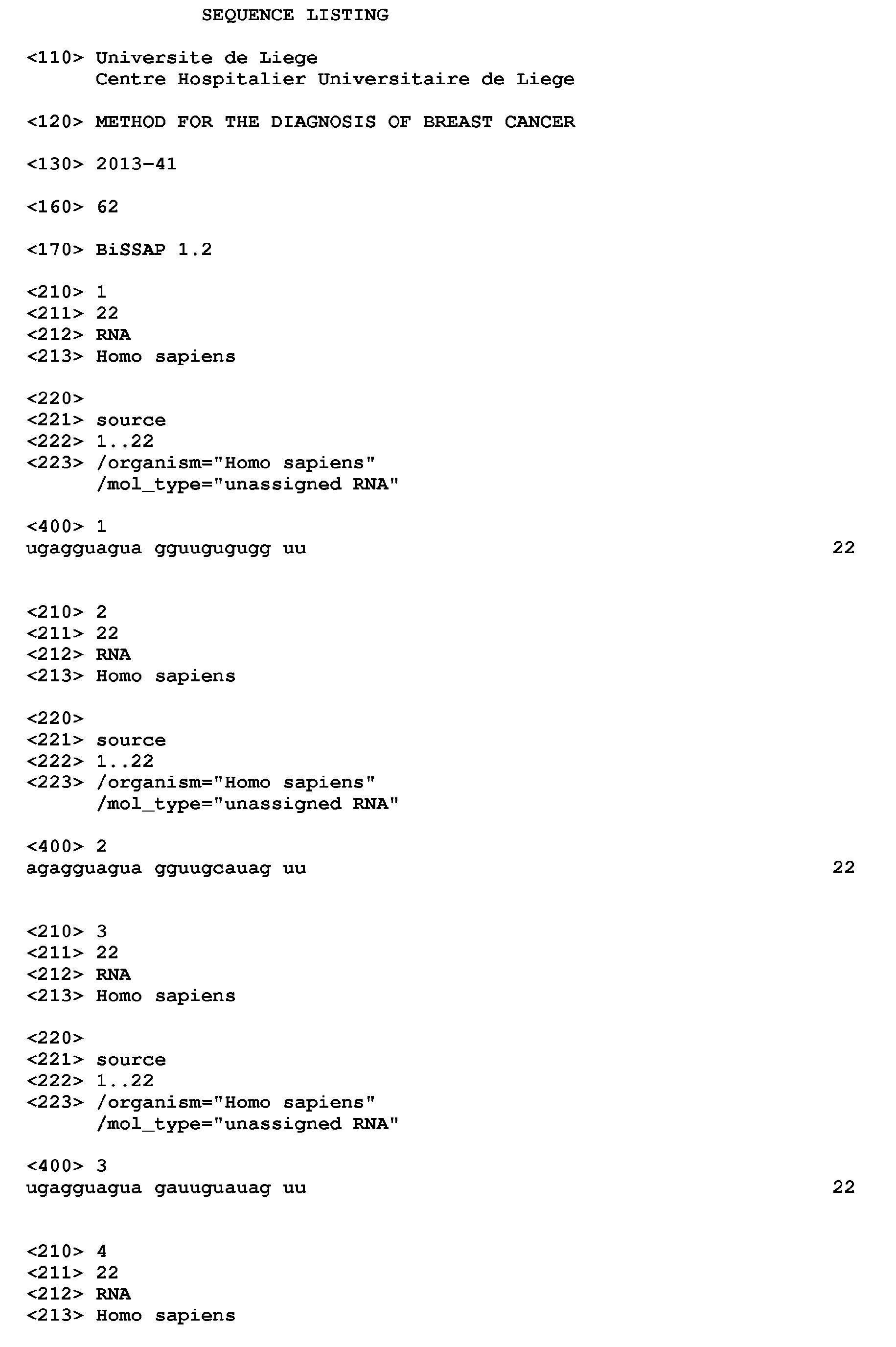


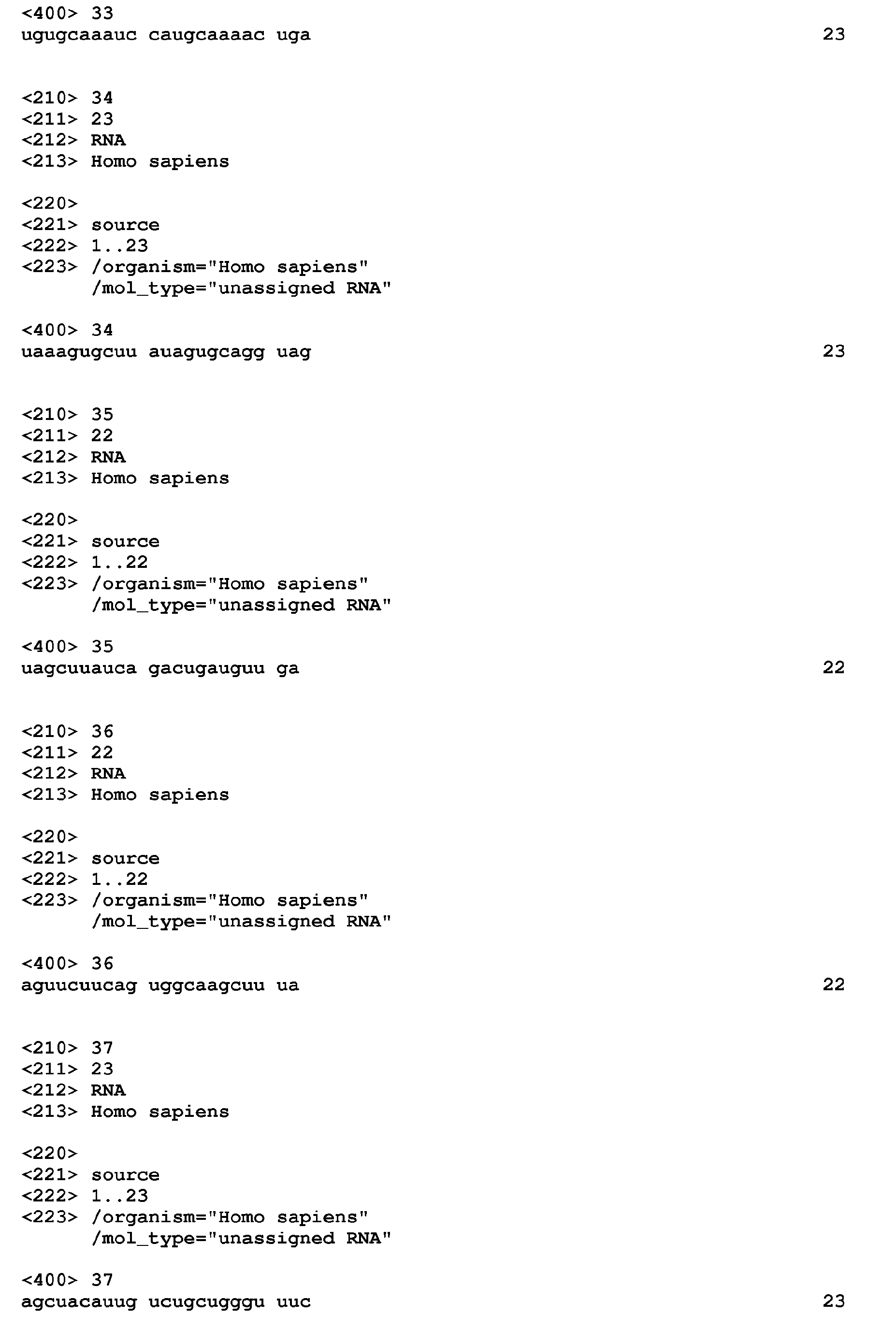
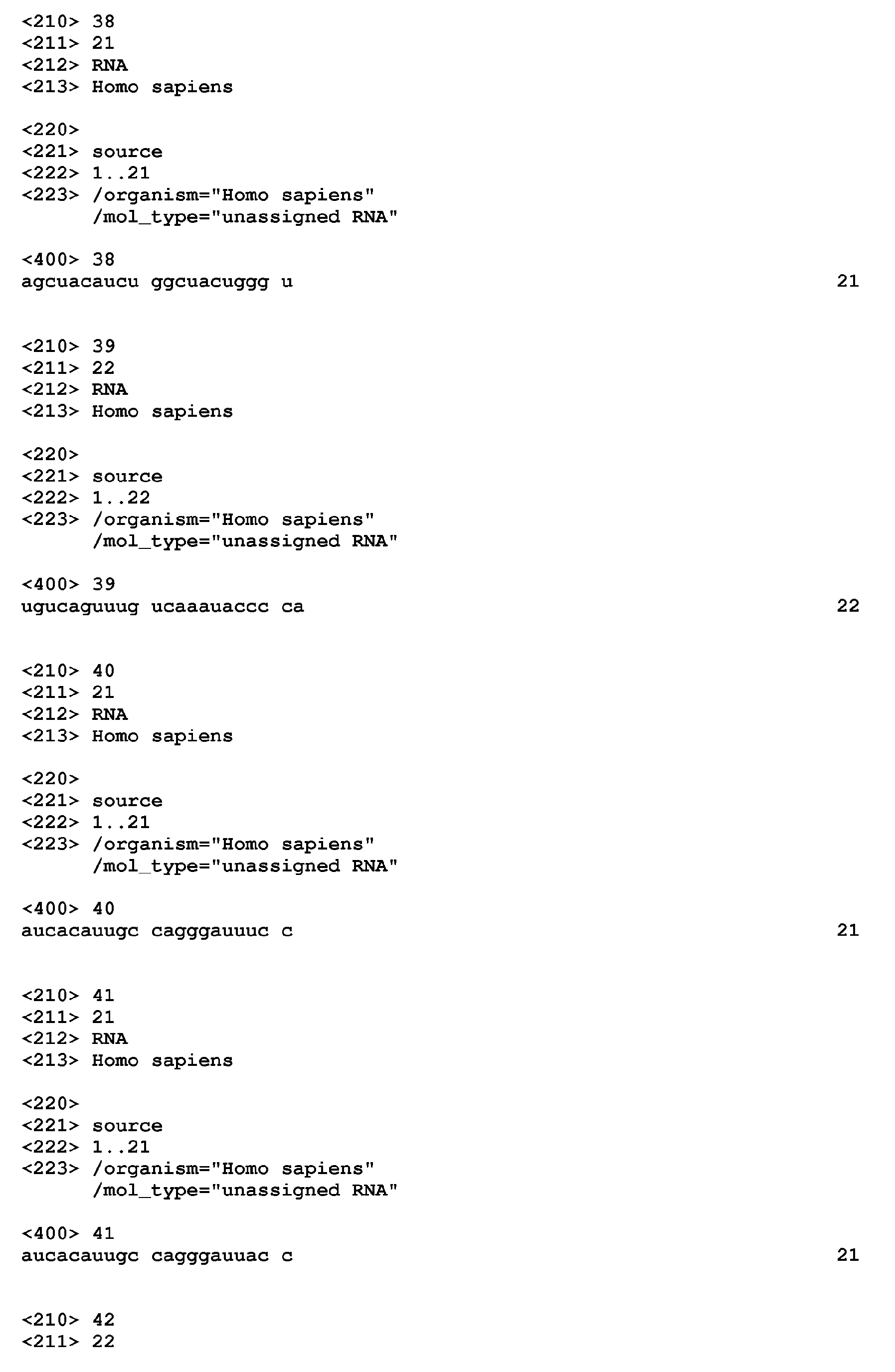


Claims (16)
- An in vitro method of diagnosing whether a subject has, or is at risk for developing, breast cancer, comprising the steps:a. measuring the expression level of the following eight microRNAs selected from the group consisting of: miR-199a-3p, miR-122, miR-29c, miR-33a, miR-324-3p, let-7d, miR-181c or miR-221 in a test biological fluid from said subject;b. comparing the expression level obtained in step a to a reference value;
wherein an alteration in the expression level of said eight microRNAs is indicative of the subject either having, or being at risk for developing, breast cancer. - The in vitro method according to claim 1, wherein said reference value is the expression level of the same eight microRNAs in a control biological fluid.
- The in vitro method according to any of claims 1 or 2, wherein a down-regulation of the expression level of miR-122, miR-29c, miR-33a, miR-199a-3p and let-7d and an up-regulation of the expression level of miR-324-3p, miR-181c and mir-221 is indicative of the subject either having, or being at risk for developing, breast cancer.
- The in vitro method according to any of claims 1 to 3, wherein said expression level is measured by performing a quantitative reverse-transcription real-time polymerase chain reaction (qRT-PCR).
- The in vitro method according to any of claims 1 to 4, wherein said expression level in the test or control biological fluid is normalized with a mean expression level of the fifty most expressed microRNAs in said test or control biological fluid.
- The in vitro method according to claim 5, wherein said most expressed microRNAs in the test and control biological fluid are the same.
- The in vitro method according to claims 5 or 6, wherein said most expressed microRNAs are selected from the group comprising miR-484, miR-652, miR-148b, miR-106a, miR-425, let-7g, miR-30b, miR-126, miR-103, miR-146a, miR-93, miR-24, miR-18b, miR-151-5p, miR-423-3p, miR-223, miR-15a, miR-142-3p, miR-26b, miR-15b, miR-191, let-7i, let-7f, miR-21, miR-126*, miR-125a-5p, miR-181a, miR-23a, miR-222, miR-23b, miR-30c, miR-101, miR-29c, miR-320a, miR-26a, miR-145, miR-486-5p, miR-16, miR-199a-5p, miR-107, miR-27a, miR-19b, miR-142-5p, miR-221, let-7b, miR-92a, miR-27b, miR-451, miR-20a or miR-19a.
- The in vitro method according to any of claims 1 to 7, wherein the biological fluid is selected from the group comprising whole blood, blood serum, blood plasma, blood cells, urine, milk or saliva.
- The in vitro method according to any of claims 1 to 8, wherein breast cancer is primary or metastatic breast cancer.
- An in vitro method of monitoring the progress of breast cancer in a subject comprising the steps of:a. measuring the expression level of the following eight microRNAs selected from the group consisting of: miR-199a-3p, miR-122, miR-29c, miR-33a, miR-324-3p, let-7d, miR-181c or miR-221 in two or more test biological fluids from said subject, taken at different time intervals.b. determining the progress of breast cancer by comparing the expression levels of said eight microRNAs in the measured biological fluids over time.
- A kit for use in an in vitro method of diagnosing whether a subject has, or is at risk for developing, breast cancer, or of monitoring the progress of breast cancer in a subject, wherein the kit comprises at least eight oligonucleotide probes specific for the detection of the following eight microRNAs selected from the group consisting of: miR-199a-3p, miR-122, miR-29c, miR-33a, miR-324-3p, let-7d, miR-181c or miR-221.
- The kit according to claim 11, further comprising oligonucleotide probes specific for the detection of microRNAs selected from the group comprising miR-484, miR-652, miR-148b, miR-106a, miR-425, let-7g, miR-30b, miR-126, miR-103, miR-146a, miR-93, miR-24, miR-18b, miR-151-5p, miR-423-3p, miR-223, miR-15a, miR-142-3p, miR-26b, miR-15b, miR-191, let-7i, let-7f, miR-21, miR-126*, miR-125a-5p, miR-181a, miR-23a, miR-222, miR-23b, miR-30c, miR-101, miR-29c, miR-320a, miR-26a, miR-145, miR-486-5p, miR-16, miR-199a-5p, miR-107, miR-27a, miR-19b, miR-142-5p, miR-221, let-7b, miR-92a, miR-27b, miR-451, miR-20a or miR-19a.
- The kit according to any of claims 11 or 12, wherein said oligonucleotide probes are specific for the detection of cDNAs obtained from said microRNAs.
- The kit according to any of claims 11 to 13, adapted for performance of an assay selected from a quantitative reverse-transcription real-time polymerase chain reaction (qRT-PCR), a northern blotting or a micro-array assay.
- Use of a kit according to any of claims 11 to 14 for diagnosing whether a subject has, or is at risk for developing, breast cancer, preferably by performing the method according to any of claims 1 to 9, or for monitoring the progress of breast cancer in a subject, preferably by performing the method according to claim 10.
- A method of treatment of breast cancer in a subject, comprising the steps of:a. determining whether the subject is in need of receiving breast cancer treatment comprising:a1. measuring the expression level of the following eight microRNAs selected from the group consisting of: miR-199a-3p, miR-122, miR-29c, miR-33a, miR-324-3p, let-7d, miR-181c or miR-221 in a test biological fluid from said subject;a2. comparing the expression level obtained in step a to a reference value;wherein an alteration in the expression level of said eight microRNAs is indicative of the subject either having, or being at risk for developing, breast cancer.b. treating the patient diagnosed in step a as being in need of breast cancer treatment with a treatment selected from the group consisting of: surgery, radiotherapy, chemotherapy, hormonal therapy or biological treatment.
Priority Applications (1)
| Application Number | Priority Date | Filing Date | Title |
|---|---|---|---|
| EP14167498.6A EP2942399B1 (en) | 2014-05-08 | 2014-05-08 | Method for the diagnosis of breast cancer |
Applications Claiming Priority (1)
| Application Number | Priority Date | Filing Date | Title |
|---|---|---|---|
| EP14167498.6A EP2942399B1 (en) | 2014-05-08 | 2014-05-08 | Method for the diagnosis of breast cancer |
Publications (2)
| Publication Number | Publication Date |
|---|---|
| EP2942399A1 true EP2942399A1 (en) | 2015-11-11 |
| EP2942399B1 EP2942399B1 (en) | 2017-03-08 |
Family
ID=50721584
Family Applications (1)
| Application Number | Title | Priority Date | Filing Date |
|---|---|---|---|
| EP14167498.6A Not-in-force EP2942399B1 (en) | 2014-05-08 | 2014-05-08 | Method for the diagnosis of breast cancer |
Country Status (1)
| Country | Link |
|---|---|
| EP (1) | EP2942399B1 (en) |
Cited By (3)
| Publication number | Priority date | Publication date | Assignee | Title |
|---|---|---|---|---|
| CN108474033A (en) * | 2016-02-22 | 2018-08-31 | 东丽株式会社 | From the evaluation method of the quality of the miRNA of body fluid |
| WO2019117257A1 (en) * | 2017-12-13 | 2019-06-20 | 国立大学法人広島大学 | Method for assisting in detection of breast cancer |
| CN111394460A (en) * | 2020-04-02 | 2020-07-10 | 安徽科技学院 | A colloidal gold lateral chromatography test strip for breast cancer detection and a colloidal gold lateral chromatography test strip for simultaneous detection of breast cancer and cervical cancer |
Citations (4)
| Publication number | Priority date | Publication date | Assignee | Title |
|---|---|---|---|---|
| EP2341145A1 (en) * | 2009-12-30 | 2011-07-06 | febit holding GmbH | miRNA fingerprint in the diagnosis of diseases |
| WO2011110644A1 (en) | 2010-03-11 | 2011-09-15 | National University Of Ireland, Galway | Detection and quantification of micrornas in the circulation and the use of circulating micrornas as biomarkers for cancer |
| WO2012115885A1 (en) * | 2011-02-22 | 2012-08-30 | Caris Life Sciences Luxembourg Holdings, S.A.R.L. | Circulating biomarkers |
| WO2013107459A2 (en) | 2012-01-16 | 2013-07-25 | Herlev Hospital | Microrna for diagnosis of pancreatic cancer and/or prognosis of patients with pancreatic cancer by blood samples |
-
2014
- 2014-05-08 EP EP14167498.6A patent/EP2942399B1/en not_active Not-in-force
Patent Citations (4)
| Publication number | Priority date | Publication date | Assignee | Title |
|---|---|---|---|---|
| EP2341145A1 (en) * | 2009-12-30 | 2011-07-06 | febit holding GmbH | miRNA fingerprint in the diagnosis of diseases |
| WO2011110644A1 (en) | 2010-03-11 | 2011-09-15 | National University Of Ireland, Galway | Detection and quantification of micrornas in the circulation and the use of circulating micrornas as biomarkers for cancer |
| WO2012115885A1 (en) * | 2011-02-22 | 2012-08-30 | Caris Life Sciences Luxembourg Holdings, S.A.R.L. | Circulating biomarkers |
| WO2013107459A2 (en) | 2012-01-16 | 2013-07-25 | Herlev Hospital | Microrna for diagnosis of pancreatic cancer and/or prognosis of patients with pancreatic cancer by blood samples |
Non-Patent Citations (15)
| Title |
|---|
| "Current Protocols in Molecular Biology and Short Protocols in Molecular Biology, 3rd Ed.", 1987 |
| "Methods in Molecular Biology", vol. 1024, 2013, article "Circulating MicroRNAs Methods and Protocols" |
| "Methods in Molecular Biology", vol. 676, article "MicroRNA and Cancer, Methods and Protocols" |
| "Methods in Molecular Biology", vol. 936, 2013 |
| BREIMAN ET AL., MACHINE LEARNING, vol. 45, 2001, pages 5 - 32 |
| COOKSON ET AL., CELL ONCOL (DORDR, vol. 35, no. 4, 2012, pages 301 - 8 |
| GEURTS ET AL., BIOINFORMATICS, vol. 21, 2005, pages 3138 - 3145 |
| IORIO MARILENA V ET AL: "MicroRNA gene expression deregulation in human breast cancer", CANCER RESEARCH, AMERICAN ASSOCIATION FOR CANCER RESEARCH, US, vol. 65, no. 16, 15 August 2005 (2005-08-15), pages 7065 - 7070, XP002603432, ISSN: 0008-5472, DOI: 10.1158/0008-5472.CAN-05-1783 * |
| JAMES R. HARRIS: "Blood separation and plasma fractionation", 1991, WILEY-LISS |
| KROH ET AL., METHODS, vol. 50, 2010, pages 298 - 301 |
| LEIDNER ET AL., PLOS ONE, vol. 8, no. 3, 2013, pages E57841 |
| MESTDAGH ET AL., GENOME BIOL, vol. 10, 2009, pages R64 |
| PIGATI ET AL., PLOS ONE, vol. 5, no. 10, 2010, pages E13515 |
| PRITCHARD ET AL., CANCER PREV RES (PHILA, vol. 5, no. 3, 2012, pages 492 - 7 |
| WANG ZHIGUO; YANG BAOFENG, MICRORNA EXPRESSION DETECTION METHODS, 2010 |
Cited By (10)
| Publication number | Priority date | Publication date | Assignee | Title |
|---|---|---|---|---|
| CN108474033A (en) * | 2016-02-22 | 2018-08-31 | 东丽株式会社 | From the evaluation method of the quality of the miRNA of body fluid |
| JPWO2017146033A1 (en) * | 2016-02-22 | 2018-12-13 | 東レ株式会社 | Method for evaluating the quality of body fluid-derived miRNA |
| EP3421610A4 (en) * | 2016-02-22 | 2019-10-30 | Toray Industries, Inc. | METHOD FOR ASSESSING THE QUALITY OF MIARN DERIVED FROM A BODILY FLUID |
| CN108474033B (en) * | 2016-02-22 | 2022-07-08 | 东丽株式会社 | Method for evaluating quality of miRNA derived from body fluid |
| US11408027B2 (en) | 2016-02-22 | 2022-08-09 | Toray Industries, Inc. | Method of evaluating quality of miRNA derived from body fluid |
| WO2019117257A1 (en) * | 2017-12-13 | 2019-06-20 | 国立大学法人広島大学 | Method for assisting in detection of breast cancer |
| JPWO2019117257A1 (en) * | 2017-12-13 | 2020-12-24 | 国立大学法人広島大学 | How to help detect breast cancer |
| JP2023113881A (en) * | 2017-12-13 | 2023-08-16 | 国立大学法人広島大学 | Methods to Aid in Breast Cancer Detection |
| CN111394460A (en) * | 2020-04-02 | 2020-07-10 | 安徽科技学院 | A colloidal gold lateral chromatography test strip for breast cancer detection and a colloidal gold lateral chromatography test strip for simultaneous detection of breast cancer and cervical cancer |
| CN111394460B (en) * | 2020-04-02 | 2023-01-06 | 安徽科技学院 | Colloidal gold lateral chromatography test strip for breast cancer detection and colloidal gold lateral chromatography test strip for simultaneous detection of breast cancer and cervical cancer |
Also Published As
| Publication number | Publication date |
|---|---|
| EP2942399B1 (en) | 2017-03-08 |
Similar Documents
| Publication | Publication Date | Title |
|---|---|---|
| EP3268494B1 (en) | Method of determining the risk of developing breast cancer by detecting the expression levels of micrornas (mirnas) | |
| EP2559772B1 (en) | Methods for determining a hepatocellular carcinoma subtype | |
| Zhao et al. | microRNA expression profile and identification of miR-29 as a prognostic marker and pathogenetic factor by targeting CDK6 in mantle cell lymphoma | |
| KR101912731B1 (en) | Plasma MicroRNAs for The Detection of Early Colorectal Cancer | |
| EP3124625B1 (en) | miRNA fingerprint in the diagnosis of prostate cancer | |
| EP3369826B1 (en) | Biomarker microrna for prediction of prognosis of head and neck cancer | |
| AU2018202963B2 (en) | Biomarkers useful for detection of types, grades and stages of human breast cancer | |
| WO2013066678A1 (en) | Microrna expression profiling of thyroid cancer | |
| EP2734636B1 (en) | Micro-rna biomarkers for identifying risk of and/or for diagnosing lung tumour | |
| EP3122905B1 (en) | Circulating micrornas as biomarkers for endometriosis | |
| WO2016150475A1 (en) | Circulating micrornas for the diagnosis of breast cancer | |
| EP2942399B1 (en) | Method for the diagnosis of breast cancer | |
| CN110139936A (en) | Biomarkers for oral, pharyngeal, and laryngeal cancers | |
| HK40053634A (en) | Method of determining the risk of developing breast cancer | |
| HK1249555B (en) | Method of determining the risk of developing breast cancer by detecting the expression levels of micrornas (mirnas) | |
| Visani | MicroRNAs expression analysis in high grade gliomas |
Legal Events
| Date | Code | Title | Description |
|---|---|---|---|
| PUAI | Public reference made under article 153(3) epc to a published international application that has entered the european phase |
Free format text: ORIGINAL CODE: 0009012 |
|
| AK | Designated contracting states |
Kind code of ref document: A1 Designated state(s): AL AT BE BG CH CY CZ DE DK EE ES FI FR GB GR HR HU IE IS IT LI LT LU LV MC MK MT NL NO PL PT RO RS SE SI SK SM TR |
|
| AX | Request for extension of the european patent |
Extension state: BA ME |
|
| 17P | Request for examination filed |
Effective date: 20151120 |
|
| RBV | Designated contracting states (corrected) |
Designated state(s): AL AT BE BG CH CY CZ DE DK EE ES FI FR GB GR HR HU IE IS IT LI LT LU LV MC MK MT NL NO PL PT RO RS SE SI SK SM TR |
|
| GRAP | Despatch of communication of intention to grant a patent |
Free format text: ORIGINAL CODE: EPIDOSNIGR1 |
|
| INTG | Intention to grant announced |
Effective date: 20161205 |
|
| GRAS | Grant fee paid |
Free format text: ORIGINAL CODE: EPIDOSNIGR3 |
|
| GRAA | (expected) grant |
Free format text: ORIGINAL CODE: 0009210 |
|
| AK | Designated contracting states |
Kind code of ref document: B1 Designated state(s): AL AT BE BG CH CY CZ DE DK EE ES FI FR GB GR HR HU IE IS IT LI LT LU LV MC MK MT NL NO PL PT RO RS SE SI SK SM TR |
|
| REG | Reference to a national code |
Ref country code: GB Ref legal event code: FG4D |
|
| REG | Reference to a national code |
Ref country code: CH Ref legal event code: EP Ref country code: AT Ref legal event code: REF Ref document number: 873581 Country of ref document: AT Kind code of ref document: T Effective date: 20170315 |
|
| REG | Reference to a national code |
Ref country code: IE Ref legal event code: FG4D |
|
| REG | Reference to a national code |
Ref country code: DE Ref legal event code: R096 Ref document number: 602014007298 Country of ref document: DE |
|
| REG | Reference to a national code |
Ref country code: LT Ref legal event code: MG4D |
|
| REG | Reference to a national code |
Ref country code: NL Ref legal event code: MP Effective date: 20170308 |
|
| PG25 | Lapsed in a contracting state [announced via postgrant information from national office to epo] |
Ref country code: LT Free format text: LAPSE BECAUSE OF FAILURE TO SUBMIT A TRANSLATION OF THE DESCRIPTION OR TO PAY THE FEE WITHIN THE PRESCRIBED TIME-LIMIT Effective date: 20170308 Ref country code: NO Free format text: LAPSE BECAUSE OF FAILURE TO SUBMIT A TRANSLATION OF THE DESCRIPTION OR TO PAY THE FEE WITHIN THE PRESCRIBED TIME-LIMIT Effective date: 20170608 Ref country code: FI Free format text: LAPSE BECAUSE OF FAILURE TO SUBMIT A TRANSLATION OF THE DESCRIPTION OR TO PAY THE FEE WITHIN THE PRESCRIBED TIME-LIMIT Effective date: 20170308 Ref country code: HR Free format text: LAPSE BECAUSE OF FAILURE TO SUBMIT A TRANSLATION OF THE DESCRIPTION OR TO PAY THE FEE WITHIN THE PRESCRIBED TIME-LIMIT Effective date: 20170308 Ref country code: GR Free format text: LAPSE BECAUSE OF FAILURE TO SUBMIT A TRANSLATION OF THE DESCRIPTION OR TO PAY THE FEE WITHIN THE PRESCRIBED TIME-LIMIT Effective date: 20170609 |
|
| REG | Reference to a national code |
Ref country code: AT Ref legal event code: MK05 Ref document number: 873581 Country of ref document: AT Kind code of ref document: T Effective date: 20170308 |
|
| PG25 | Lapsed in a contracting state [announced via postgrant information from national office to epo] |
Ref country code: LU Free format text: LAPSE BECAUSE OF NON-PAYMENT OF DUE FEES Effective date: 20170531 Ref country code: RS Free format text: LAPSE BECAUSE OF FAILURE TO SUBMIT A TRANSLATION OF THE DESCRIPTION OR TO PAY THE FEE WITHIN THE PRESCRIBED TIME-LIMIT Effective date: 20170308 Ref country code: ES Free format text: LAPSE BECAUSE OF FAILURE TO SUBMIT A TRANSLATION OF THE DESCRIPTION OR TO PAY THE FEE WITHIN THE PRESCRIBED TIME-LIMIT Effective date: 20170308 Ref country code: SE Free format text: LAPSE BECAUSE OF FAILURE TO SUBMIT A TRANSLATION OF THE DESCRIPTION OR TO PAY THE FEE WITHIN THE PRESCRIBED TIME-LIMIT Effective date: 20170308 Ref country code: BG Free format text: LAPSE BECAUSE OF FAILURE TO SUBMIT A TRANSLATION OF THE DESCRIPTION OR TO PAY THE FEE WITHIN THE PRESCRIBED TIME-LIMIT Effective date: 20170608 Ref country code: LV Free format text: LAPSE BECAUSE OF FAILURE TO SUBMIT A TRANSLATION OF THE DESCRIPTION OR TO PAY THE FEE WITHIN THE PRESCRIBED TIME-LIMIT Effective date: 20170308 |
|
| PG25 | Lapsed in a contracting state [announced via postgrant information from national office to epo] |
Ref country code: NL Free format text: LAPSE BECAUSE OF FAILURE TO SUBMIT A TRANSLATION OF THE DESCRIPTION OR TO PAY THE FEE WITHIN THE PRESCRIBED TIME-LIMIT Effective date: 20170308 |
|
| PG25 | Lapsed in a contracting state [announced via postgrant information from national office to epo] |
Ref country code: IT Free format text: LAPSE BECAUSE OF FAILURE TO SUBMIT A TRANSLATION OF THE DESCRIPTION OR TO PAY THE FEE WITHIN THE PRESCRIBED TIME-LIMIT Effective date: 20170308 Ref country code: EE Free format text: LAPSE BECAUSE OF FAILURE TO SUBMIT A TRANSLATION OF THE DESCRIPTION OR TO PAY THE FEE WITHIN THE PRESCRIBED TIME-LIMIT Effective date: 20170308 Ref country code: AT Free format text: LAPSE BECAUSE OF FAILURE TO SUBMIT A TRANSLATION OF THE DESCRIPTION OR TO PAY THE FEE WITHIN THE PRESCRIBED TIME-LIMIT Effective date: 20170308 Ref country code: RO Free format text: LAPSE BECAUSE OF FAILURE TO SUBMIT A TRANSLATION OF THE DESCRIPTION OR TO PAY THE FEE WITHIN THE PRESCRIBED TIME-LIMIT Effective date: 20170308 Ref country code: CZ Free format text: LAPSE BECAUSE OF FAILURE TO SUBMIT A TRANSLATION OF THE DESCRIPTION OR TO PAY THE FEE WITHIN THE PRESCRIBED TIME-LIMIT Effective date: 20170308 Ref country code: SK Free format text: LAPSE BECAUSE OF FAILURE TO SUBMIT A TRANSLATION OF THE DESCRIPTION OR TO PAY THE FEE WITHIN THE PRESCRIBED TIME-LIMIT Effective date: 20170308 |
|
| PG25 | Lapsed in a contracting state [announced via postgrant information from national office to epo] |
Ref country code: IS Free format text: LAPSE BECAUSE OF FAILURE TO SUBMIT A TRANSLATION OF THE DESCRIPTION OR TO PAY THE FEE WITHIN THE PRESCRIBED TIME-LIMIT Effective date: 20170708 Ref country code: PL Free format text: LAPSE BECAUSE OF FAILURE TO SUBMIT A TRANSLATION OF THE DESCRIPTION OR TO PAY THE FEE WITHIN THE PRESCRIBED TIME-LIMIT Effective date: 20170308 Ref country code: PT Free format text: LAPSE BECAUSE OF FAILURE TO SUBMIT A TRANSLATION OF THE DESCRIPTION OR TO PAY THE FEE WITHIN THE PRESCRIBED TIME-LIMIT Effective date: 20170710 Ref country code: SM Free format text: LAPSE BECAUSE OF FAILURE TO SUBMIT A TRANSLATION OF THE DESCRIPTION OR TO PAY THE FEE WITHIN THE PRESCRIBED TIME-LIMIT Effective date: 20170308 |
|
| PGFP | Annual fee paid to national office [announced via postgrant information from national office to epo] |
Ref country code: BE Payment date: 20170711 Year of fee payment: 4 |
|
| REG | Reference to a national code |
Ref country code: DE Ref legal event code: R119 Ref document number: 602014007298 Country of ref document: DE |
|
| REG | Reference to a national code |
Ref country code: CH Ref legal event code: PL |
|
| PLBE | No opposition filed within time limit |
Free format text: ORIGINAL CODE: 0009261 |
|
| STAA | Information on the status of an ep patent application or granted ep patent |
Free format text: STATUS: NO OPPOSITION FILED WITHIN TIME LIMIT |
|
| PG25 | Lapsed in a contracting state [announced via postgrant information from national office to epo] |
Ref country code: MC Free format text: LAPSE BECAUSE OF FAILURE TO SUBMIT A TRANSLATION OF THE DESCRIPTION OR TO PAY THE FEE WITHIN THE PRESCRIBED TIME-LIMIT Effective date: 20170308 Ref country code: DK Free format text: LAPSE BECAUSE OF FAILURE TO SUBMIT A TRANSLATION OF THE DESCRIPTION OR TO PAY THE FEE WITHIN THE PRESCRIBED TIME-LIMIT Effective date: 20170308 |
|
| 26N | No opposition filed |
Effective date: 20171211 |
|
| REG | Reference to a national code |
Ref country code: IE Ref legal event code: MM4A |
|
| PG25 | Lapsed in a contracting state [announced via postgrant information from national office to epo] |
Ref country code: SI Free format text: LAPSE BECAUSE OF FAILURE TO SUBMIT A TRANSLATION OF THE DESCRIPTION OR TO PAY THE FEE WITHIN THE PRESCRIBED TIME-LIMIT Effective date: 20170308 Ref country code: LI Free format text: LAPSE BECAUSE OF NON-PAYMENT OF DUE FEES Effective date: 20170531 Ref country code: CH Free format text: LAPSE BECAUSE OF NON-PAYMENT OF DUE FEES Effective date: 20170531 |
|
| REG | Reference to a national code |
Ref country code: FR Ref legal event code: ST Effective date: 20180131 |
|
| PG25 | Lapsed in a contracting state [announced via postgrant information from national office to epo] |
Ref country code: LU Free format text: LAPSE BECAUSE OF NON-PAYMENT OF DUE FEES Effective date: 20170508 |
|
| PG25 | Lapsed in a contracting state [announced via postgrant information from national office to epo] |
Ref country code: IE Free format text: LAPSE BECAUSE OF NON-PAYMENT OF DUE FEES Effective date: 20170508 Ref country code: DE Free format text: LAPSE BECAUSE OF NON-PAYMENT OF DUE FEES Effective date: 20171201 |
|
| PG25 | Lapsed in a contracting state [announced via postgrant information from national office to epo] |
Ref country code: FR Free format text: LAPSE BECAUSE OF NON-PAYMENT OF DUE FEES Effective date: 20170531 |
|
| PG25 | Lapsed in a contracting state [announced via postgrant information from national office to epo] |
Ref country code: MT Free format text: LAPSE BECAUSE OF NON-PAYMENT OF DUE FEES Effective date: 20170508 |
|
| GBPC | Gb: european patent ceased through non-payment of renewal fee |
Effective date: 20180508 |
|
| REG | Reference to a national code |
Ref country code: BE Ref legal event code: MM Effective date: 20180531 |
|
| PG25 | Lapsed in a contracting state [announced via postgrant information from national office to epo] |
Ref country code: GB Free format text: LAPSE BECAUSE OF NON-PAYMENT OF DUE FEES Effective date: 20180508 |
|
| PG25 | Lapsed in a contracting state [announced via postgrant information from national office to epo] |
Ref country code: BE Free format text: LAPSE BECAUSE OF NON-PAYMENT OF DUE FEES Effective date: 20180531 |
|
| PG25 | Lapsed in a contracting state [announced via postgrant information from national office to epo] |
Ref country code: HU Free format text: LAPSE BECAUSE OF FAILURE TO SUBMIT A TRANSLATION OF THE DESCRIPTION OR TO PAY THE FEE WITHIN THE PRESCRIBED TIME-LIMIT; INVALID AB INITIO Effective date: 20140508 |
|
| PG25 | Lapsed in a contracting state [announced via postgrant information from national office to epo] |
Ref country code: CY Free format text: LAPSE BECAUSE OF FAILURE TO SUBMIT A TRANSLATION OF THE DESCRIPTION OR TO PAY THE FEE WITHIN THE PRESCRIBED TIME-LIMIT Effective date: 20170308 |
|
| PG25 | Lapsed in a contracting state [announced via postgrant information from national office to epo] |
Ref country code: MK Free format text: LAPSE BECAUSE OF FAILURE TO SUBMIT A TRANSLATION OF THE DESCRIPTION OR TO PAY THE FEE WITHIN THE PRESCRIBED TIME-LIMIT Effective date: 20170308 |
|
| PG25 | Lapsed in a contracting state [announced via postgrant information from national office to epo] |
Ref country code: TR Free format text: LAPSE BECAUSE OF FAILURE TO SUBMIT A TRANSLATION OF THE DESCRIPTION OR TO PAY THE FEE WITHIN THE PRESCRIBED TIME-LIMIT Effective date: 20170308 |
|
| PG25 | Lapsed in a contracting state [announced via postgrant information from national office to epo] |
Ref country code: AL Free format text: LAPSE BECAUSE OF FAILURE TO SUBMIT A TRANSLATION OF THE DESCRIPTION OR TO PAY THE FEE WITHIN THE PRESCRIBED TIME-LIMIT Effective date: 20170308 |