EP2942389A1 - Vaccine against Acinetobacter baumannii based on lipopolysaccharide-deficient cellular components - Google Patents
Vaccine against Acinetobacter baumannii based on lipopolysaccharide-deficient cellular components Download PDFInfo
- Publication number
- EP2942389A1 EP2942389A1 EP14382164.3A EP14382164A EP2942389A1 EP 2942389 A1 EP2942389 A1 EP 2942389A1 EP 14382164 A EP14382164 A EP 14382164A EP 2942389 A1 EP2942389 A1 EP 2942389A1
- Authority
- EP
- European Patent Office
- Prior art keywords
- seq
- composition
- baumannii
- lps
- composition according
- Prior art date
- Legal status (The legal status is an assumption and is not a legal conclusion. Google has not performed a legal analysis and makes no representation as to the accuracy of the status listed.)
- Withdrawn
Links
Images


Classifications
-
- A—HUMAN NECESSITIES
- A61—MEDICAL OR VETERINARY SCIENCE; HYGIENE
- A61K—PREPARATIONS FOR MEDICAL, DENTAL OR TOILETRY PURPOSES
- A61K39/00—Medicinal preparations containing antigens or antibodies
- A61K39/02—Bacterial antigens
- A61K39/104—Pseudomonadales, e.g. Pseudomonas
-
- A—HUMAN NECESSITIES
- A61—MEDICAL OR VETERINARY SCIENCE; HYGIENE
- A61K—PREPARATIONS FOR MEDICAL, DENTAL OR TOILETRY PURPOSES
- A61K35/00—Medicinal preparations containing materials or reaction products thereof with undetermined constitution
- A61K35/66—Microorganisms or materials therefrom
- A61K35/74—Bacteria
-
- A—HUMAN NECESSITIES
- A61—MEDICAL OR VETERINARY SCIENCE; HYGIENE
- A61P—SPECIFIC THERAPEUTIC ACTIVITY OF CHEMICAL COMPOUNDS OR MEDICINAL PREPARATIONS
- A61P31/00—Antiinfectives, i.e. antibiotics, antiseptics, chemotherapeutics
- A61P31/04—Antibacterial agents
-
- C—CHEMISTRY; METALLURGY
- C07—ORGANIC CHEMISTRY
- C07K—PEPTIDES
- C07K14/00—Peptides having more than 20 amino acids; Gastrins; Somatostatins; Melanotropins; Derivatives thereof
- C07K14/195—Peptides having more than 20 amino acids; Gastrins; Somatostatins; Melanotropins; Derivatives thereof from bacteria
- C07K14/21—Peptides having more than 20 amino acids; Gastrins; Somatostatins; Melanotropins; Derivatives thereof from bacteria from Pseudomonadaceae (F)
- C07K14/212—Moraxellaceae, e.g. Acinetobacter, Moraxella, Oligella, Psychrobacter
-
- C—CHEMISTRY; METALLURGY
- C07—ORGANIC CHEMISTRY
- C07K—PEPTIDES
- C07K16/00—Immunoglobulins [IG], e.g. monoclonal or polyclonal antibodies
- C07K16/12—Immunoglobulins [IG], e.g. monoclonal or polyclonal antibodies against material from bacteria
- C07K16/1203—Gram-negative bacteria
-
- C—CHEMISTRY; METALLURGY
- C07—ORGANIC CHEMISTRY
- C07K—PEPTIDES
- C07K16/00—Immunoglobulins [IG], e.g. monoclonal or polyclonal antibodies
- C07K16/12—Immunoglobulins [IG], e.g. monoclonal or polyclonal antibodies against material from bacteria
- C07K16/1203—Gram-negative bacteria
- C07K16/1217—Neisseriaceae (F)
-
- C—CHEMISTRY; METALLURGY
- C12—BIOCHEMISTRY; BEER; SPIRITS; WINE; VINEGAR; MICROBIOLOGY; ENZYMOLOGY; MUTATION OR GENETIC ENGINEERING
- C12N—MICROORGANISMS OR ENZYMES; COMPOSITIONS THEREOF; PROPAGATING, PRESERVING, OR MAINTAINING MICROORGANISMS; MUTATION OR GENETIC ENGINEERING; CULTURE MEDIA
- C12N9/00—Enzymes; Proenzymes; Compositions thereof; Processes for preparing, activating, inhibiting, separating or purifying enzymes
- C12N9/10—Transferases (2.)
- C12N9/1025—Acyltransferases (2.3)
-
- C—CHEMISTRY; METALLURGY
- C12—BIOCHEMISTRY; BEER; SPIRITS; WINE; VINEGAR; MICROBIOLOGY; ENZYMOLOGY; MUTATION OR GENETIC ENGINEERING
- C12N—MICROORGANISMS OR ENZYMES; COMPOSITIONS THEREOF; PROPAGATING, PRESERVING, OR MAINTAINING MICROORGANISMS; MUTATION OR GENETIC ENGINEERING; CULTURE MEDIA
- C12N9/00—Enzymes; Proenzymes; Compositions thereof; Processes for preparing, activating, inhibiting, separating or purifying enzymes
- C12N9/10—Transferases (2.)
- C12N9/1048—Glycosyltransferases (2.4)
-
- C—CHEMISTRY; METALLURGY
- C12—BIOCHEMISTRY; BEER; SPIRITS; WINE; VINEGAR; MICROBIOLOGY; ENZYMOLOGY; MUTATION OR GENETIC ENGINEERING
- C12N—MICROORGANISMS OR ENZYMES; COMPOSITIONS THEREOF; PROPAGATING, PRESERVING, OR MAINTAINING MICROORGANISMS; MUTATION OR GENETIC ENGINEERING; CULTURE MEDIA
- C12N9/00—Enzymes; Proenzymes; Compositions thereof; Processes for preparing, activating, inhibiting, separating or purifying enzymes
- C12N9/14—Hydrolases (3)
- C12N9/78—Hydrolases (3) acting on carbon to nitrogen bonds other than peptide bonds (3.5)
-
- A—HUMAN NECESSITIES
- A61—MEDICAL OR VETERINARY SCIENCE; HYGIENE
- A61K—PREPARATIONS FOR MEDICAL, DENTAL OR TOILETRY PURPOSES
- A61K39/00—Medicinal preparations containing antigens or antibodies
- A61K2039/505—Medicinal preparations containing antigens or antibodies comprising antibodies
-
- A—HUMAN NECESSITIES
- A61—MEDICAL OR VETERINARY SCIENCE; HYGIENE
- A61K—PREPARATIONS FOR MEDICAL, DENTAL OR TOILETRY PURPOSES
- A61K39/00—Medicinal preparations containing antigens or antibodies
- A61K2039/51—Medicinal preparations containing antigens or antibodies comprising whole cells, viruses or DNA/RNA
- A61K2039/52—Bacterial cells; Fungal cells; Protozoal cells
- A61K2039/521—Bacterial cells; Fungal cells; Protozoal cells inactivated (killed)
-
- A—HUMAN NECESSITIES
- A61—MEDICAL OR VETERINARY SCIENCE; HYGIENE
- A61K—PREPARATIONS FOR MEDICAL, DENTAL OR TOILETRY PURPOSES
- A61K39/00—Medicinal preparations containing antigens or antibodies
- A61K2039/57—Medicinal preparations containing antigens or antibodies characterised by the type of response, e.g. Th1, Th2
- A61K2039/575—Medicinal preparations containing antigens or antibodies characterised by the type of response, e.g. Th1, Th2 humoral response
-
- C—CHEMISTRY; METALLURGY
- C07—ORGANIC CHEMISTRY
- C07K—PEPTIDES
- C07K2319/00—Fusion polypeptide
Definitions
- the present invention refers in general to the field of pharmacology and immunology, and, in particular, to agents and appropriate compositions for the administration to a host, thus immunizing the host and conferring protection against infection.
- Acinetobacter baumannii is a Gram-negative coccabacillus with clinical importance in the hospital environment. This organism is highly distributed in soil and environmental water sources ( Baumann, P. 1968. J. Bacteriol. 96, 39-42 ), and can different types of infections as a nosocomial pathogen such as pneumonia, bacteremia, meningitis and skin and soft tissue infection, among others ( Garc ⁇ a-Quintanilla et al., 2013. Curr. Pharm. Biotechnol. In press ). This pathogen typically infects patients receiving mechanical ventilation and patients sustaining burn injury ( Mu ⁇ oz-Price y Weinstein. 2008. N. Engl. J. Med. 358, 1271-1281 ).
- the experimental vaccines that have been described for A . baumannii can be classified into two broad groups, bacines that consist of a single purified antigen, and multicomponent vaccines.
- the outer membrane protein OmpA Luo et al., 2012. PLoS One 7, e29446
- the biofilm associated protein Bap Fattahian et al., 2011. Microb. Pathog. 51, 402-406
- the membrane transporter Ata Bentancor et al., 2012. Infect. Immun. 80, 3381-3388
- the suface polysaccharide poly-N-acetyl- ⁇ -(1-6)-glucosamine Bentancor et al., 2012.
- Infect Immun 80, 651-656 have been described as good candidates due to their capacity to elicit a specific immune response. However, the experiments testing survival after active immunization have only demonstrated that OmpA provides partial protection, and that the expression of Bap has not been clearly demonstrated in strains that do no form biofilm.
- the approaches that employ multicomponent vaccines include outer membrane complexes( McConnell et al., 2011. Infect. Immun. 79, 518-526 ), outer membrane vesicles ( outer membrane vesicles; McConnell et al., 2011. Vaccine 29,5705-5710 ) and inactivated whole cells ( McConnell y Pachón, 2010. Vaccine 29: 1-5 ).
- LPS is formed by the O antigen, a core polysaccharide and lipd A, which is responsible for the endotoxin activity of LPS.
- Escherichia coli demonstrated that the production of LPS was essential for bacterial viability ( Raetz, 1990. Annu. Rev Biochem. 59, 129-170 ).
- certain bacterial species such as Neisseria meningitidis y Moraxella catarrhalis, were viable after mutation of the genes encoding enzymes involved in LPS biosynthesis, resulting in strains completely lacking LPS ( Peng et al., 2005. Infect. Immun. 73, 7569-7577 ; Steeghs et al., 1999. Infect. Immun.
- A. baumannii can acquire resistance to the antibiotic colistin through mutation of the genes involved in LPS biosynthesis IpxA, IpxC and IpxD ( Moffatt et al., 2010. Antimicrob. Agents Chemother. 54, 4971-4977 ), living rise to strains completely deficient in LPS. This results indicate that A. baumannii is also viable in the absence of LPS, raising the possibility of developing vaccines based on these strains.
- Outer membrane vesicles are vesicles derived from the bacterial outer membrane that are secreted from numerous Gram-negative bacteria ( Kulp et al., 2010. Annu. Rev. Microbiol. 64, 163-184 ). OMVs are spherical vesicles of approximately 20-200 nm that are composed of outer membrane proteins, periplasmic proteins and LPS ( Kuehn et al., 2005. Genes Dev. 19, 2645-2655 ; Mashburn et al., 2005. Nature. 437, 422-425 ).
- OMVs have been shown to participate in the detection of quorum sensing, the transport of virulence factors and the transfer of genes, indicating that they play a role in bacterial patogénesis. It has also been demonstrated that OMVs can deliver proteins to the interior of host cells through fusion with lipid rafts, suggesting that OMVs can be used to transport bacterial products over large distances ( Kesty et al., 2004. Embo J. 23, 4538-4549 ). A recent study by Kwon et al demonstrated that a clincal isolate of A . baumannii secreted OMVs during growth in vitro ( Kwon et al., 2009. FEMS Microbiol. Lett. 297, 150-156 ). A proteomic analysis of the OMVs demonstrated that they contain multiple virulence factors and immunomodulating proteins, suggesting that OMVs play an important role in the pathogenesis of A. baumannii.
- OMVs are non-living vesicles that contain multiple antigenic proteins form the bacterial outer membrane, which makes them attractive for use as antigens in vaccines.
- vaccines based on OMVs have been developed for various Gram-negative bacteria including Neisseria meningitidis, Helicobacter pylori, and Vibrio cholerae ( Bjune et al., 1991. NIPH Ann. 14, 125-130 ; Keenan et al., 2003. FEMS Immunol. Med. Microbiol. 36, 199-205 ; Bishop et al., 2012. J. Infect. Dis. 205, 412-21 ).
- OMVs Immunization with OMVs has been shown to induce antibodies against multiple bacterial antigens, and the capacity to provide protective immunity in animal models of infection.
- OMVs isoalted form N. meningitids serogroup B have been shown to be safe and immunogenic in humans, and have been used to control an outbreak of meningococcus meningitis in New Zealand ( Nokleby et al., 2007. Vaccine. 25, 3080-84 ).
- the objective of the present study was to develop a vaccine against the cell wall of the LPS deficient A . baumannii and to characterize the immune response to vaccination and efficacy in a mouse model. It is demonstrate that the cell wall deficient in LPS produces a robust antibody response and is able to decrease the post-infection bacterial loads in tissues and provide protection in a mouse model of infection.
- a first aspect of the present invention refers to a Acinetobacter cell that is deficient in LPS, hereinafter cell of the invention.
- the deficiency in LPS is achieved through complete or partial inactivation of one or various cellular nucleic acid molecules that encode endogenous genes producing LPS subunits.
- the endogenous LPS genes are selected form IpxA, IpxB and/or IpxC, or any of their combinations.
- the Acinetobacter cell deficient in LPS is obtained through deletions or insertions of one or various nucleotides en nucleic acid sequences encoding the genes.
- the cell of the invention is an attenuated cell of A. baumannii.
- composition of the invention comprising:
- the nucleic acid is recombinant, and/or the polypeptide is recombinant.
- polypeptide is selected from
- composition of the invention comprises the amino acid sequence SEQ ID NO: 28 and the amino acid sequence SEQ ID NO: 27.
- composition of the invention comprises a fusion protein that consists of at least 2, preferably 3, more preferably 4, amino acid sequences form the list: SEQ ID NO: 1 to SEQ ID NO: 23 or a variant of these sequences having at least 85% sequence identity with the sequences SEQ ID NO: 1 to SEQ ID NO: 23.
- the fusion protein comprises the amino acid sequence SEQ ID NO: 24 or the amino acid sequence SEQ ID NO: 25.
- the composition of the invention comprises a nucleotide sequence, hereinafter nucleotide sequence of the invention, capable of transcribing an amino acid sequence described in the invention. More preferably, the nucleotide sequence is SEQ ID NO: 26.
- composition of the invention comprises an expression vector (hereinafter expression vector of the invention), comprising a nucleotide sequence of the invention.
- composition of the invention also comprises outer membrane vesicles, hereinafter outer membrane vesicles of the invention, deficient in LPS.
- the cells of the invention, or the outer membrane vesicles of the invention can be designed to produce the recombinant proteins of the invention, and/or can comprise the nucleotide or nucleic acids of the invention.
- the composition of the invention is a pharmaceutical composition, more preferably comprising also an acceptable pharmaceutical vehicle, and more preferably still, also comprising another active ingredient.
- a further embodiment refers to the composition of the invention further comprising an adjuvant.
- the composition of the invention is a vaccine.
- a third aspect of the invention refers to a nucleotide sequence, hereinafter second nucleotide sequence of the invention, which encodes the fusion protein of the invention. More preferably, the nucleotide sequence is SEQ ID NO: 26.
- a fourth aspect of the invention refers to an expression vector, hereinafter expression vector of the invention, comprising a nucleotide or nucleic acid of the invention.
- a fifth aspect of the invention refers to an outer membrane vesicle that is deficient in LPS.
- the outer membrane vesicle is obtained from the cell of the invention.
- a sixth aspect refers to the composition of the invention for the use as a medicament, or alternatively, the use of the composition of the invention for the manufacture of a medicament.
- a seventh aspect of the invention refers to the composition of the invention for the prevention, the improvement or the treatment of an infection caused by A . baumannii, in a mammal, or alternatively, the use of the composition of the invention for the manufacture of a medicament for the prevention, improvement or treatment of an infection caused by A . baumannii in a mammal.
- An eighth aspect of the invention refers to the composition of the invention for conferring protection against an infection caused by A . baumannii in a mammal, or alternatively, the use of the composition of the invention for the manufacture of a medicament for conferring protection against an infection caused by A. baumannii in a mammal.
- a ninth aspect of the invention refers to an antibody or an active fragment thereof obtained by immunization of a mammal with the composition of the first or second aspect of the invention, or with the fusion protein of the invention, preferably said antibody or active fragment is comprised in a composition wherein preferably said composition is a pharmaceutical composition and said pharmaceutical composition is used in therapy, particularly for the treatment or prevention of an infection caused by A . baumannii.
- the present invention refers to compositions and vaccines that consist of whole cells deficient in LPS and/or outer membrane vesicles of Acientobacter baumannii (A. baumannii) capable of conferring protection against infection caused by infectious pathogens.
- the authors of the present invention demonstrate that inactivated cells of A. baumannii deficient in LPS and/or outer membrane vesicles form A. baumannii, upon being inoculated produce immunization, which provides protection against posterior infection by said bacteria, which demonstrates the utility of these cells as prophylactic vaccines against infections caused by A. baumannii.
- a first aspect of the present invention refers to a Acinetobacter cell that is deficient in LPS, hereinafter cell of the invention.
- cells of the Acinetobacter baumannii in the present invention are those cells pertaining to the domain Bacteria, phylum Proteobacteria, class Gammaproteobacteria, order Pseudomonadales, family Moraxellaceae, genus Acinetobacer, species Acinetobacter baumannii.
- Acinetobacter are strictly aerobic non-fermenting and non-motile bacilli that are oxidase negative and appear in pairs by microscopy. They are distributed widely in nature, and are important in soil and contribute to its mineralization.
- inactivated cell in the present invention is a cell that does not have the ability to replicate but that conserves its immunogenic capacity.
- the cells of the present invention are inactivated prior to their inoculation to prevent their replication in the host, and therefore prevent invention produced by their administration.
- the inactivation of the cells of the invention can be performed using diverse methods known in the state of the art for example, although not limited to, adsorption, heat, ultraviolet light, ionizing radiation, ultrasound, phenol, formol, formaldehyde, crystal violet, glyceraldehyde, ethylene oxide, propiolactone, ethylenamina, bromoethyleneamina or formalin.
- the cells of the invention are inactivating with formalin.
- the cells of the invention are from the species Acinetobacter baumannii and they are inactivated with formalin.
- the bacterial cell of the invention is an Acinetobacter cell.
- the deficiency in LPS can be achieved by partial or compete inactivation of one or various cellular molecules of nucleic acids that encode the endogenous genes for the LPS subunits, particularly IpxA, IpxB and/or IpxC of LPS.
- the sequences of IpxA, IpxB y IpxC is from Acinetobacters, particularly A . baumannii.
- the endogenous genes of LPS are selected from IpxA, IpxB and/or IpxC, or any combination of these gene.
- the cell of Acinetobacter deficient in LPS is obtained by deletions and/or insertions of one or various nucleotides in nucleic acid sequences encoding the gene involved in the biosynthesis of LPS and/or the sequences that control their expression.
- the deletions and/or insertions can be generation by homologous recombination, insertion of transposons, or other adequate methods known in the state of the art.
- the sequence is inactivated e.g by construction of a suicide vector that contains the gene IpxA, IpxB, IpxC, IpxD, IpxK, IpxL and/or IpxM or any of their combination, or interrupting with a marker gene for selection, transforming the target cells with the vector and screening for positive cells that are negative for LPS expression.
- the cell of the invention is preferably an A . baumannii cell, particularly an attenuated A . baumannii cell or other Acinetobacters; Acinetobacter baylyi, A . beijerinckii, A . bereziniae, A . boissieri, A . bouvetii, A . brisouii, A . calcoaceticus, A.gerneri, A . guillouiae, A . grimontii, A . gyllenbergii, A . haemolyticus, A . indicus, A . johnsonii, A . junii, A.Iwoffii, A .
- Acinetobacter refers to the kingdom Bacteria, phylum Proteobacteria, class Gammaproteobacteria, order Pseudomonadales, family
- LPS lipopolysaccharide
- lipooligosaccharide is a component that is found on the external membrane of various Gram-negative bacteria.
- LPS is used often and interchangeably with "endotoxin", due to its history of discovery.
- LPS consists of a polysaccharide chain and the rest is lipid, known as lipid A, which is responsible for the endotoxin activity.
- the polysaccharide chain is variable between different bacterias and determines the serotype.
- Endotoxin is of approximately 10 kDa in size, but can form large aggregates of up to 1000 kDa. Humans are able to produce antibodies against LPS, but in general these antibodies can only protect against bacteria of a specific serotype.
- Endotoxin is responsible for many of the clinical manifestations of infections caused by Gram-negative bacteria such as Neisseria meningitidis and Acinetobacter baumannii.
- composition of the invention comprising:
- the nucleic acid is recombinant, and/or the polypeptide is recombinant.
- polypeptide is selected from
- composition of the invention comprises the amino acid sequence SEQ ID NO: 28 and the amino acid sequence SEQ ID NO: 27.
- composition of the invention comprises a fusion protein that consists of at least 2, preferably 3, more preferably 4, amino acid sequences form the list: SEQ ID NO: 1 to SEQ ID NO: 23 or a variant of these sequences having at least 85% identity with the sequences SEQ ID NO: 1 to SEQ ID NO: 23.
- the fusion protein comprises the amino acid sequence SEQ ID NO: 24 or the amino acid sequence SEQ ID NO: 25.
- the composition of the invention comprises a nucleotide sequence, hereinafter nucleotide sequence of the invention, capable of transcribing an amino acid sequence described in the invention. More preferably, the nucleotide sequence is SEQ ID NO: 26.
- the fragments described previously differ in amino acid sequence by at least one amino acid.
- the most preferred variations are those having at least 85%, or more, including 90%, 93% or more, and preferably 95% or more, 96% or more, 97% or more, 98% or more, 99% or more of sequence identity with any of the polypeptides shown in SEQ ID NO:1 to SEQ ID NO:28.
- the invention refers to a sequence variant characterize by at least one (at least two, at least three, at least four) mutation(s) in relation to any of the polypeptides SEO ID NO:1 to SEC ID NO:28.
- mutation can refer to any mutation selected by insertion(s), deletion(s), and substitution(s).
- substitution(s) can refer to any mutation selected by insertion(s), deletion(s), and substitution(s).
- substitution(s) can refer to any mutation selected by insertion(s), deletion(s), and substitution(s).
- substitution(s) can refer to any mutation selected by insertion(s), deletion(s), and
- composition of the invention comprises an expression vector (hereinafter expression vector of the invention), comprising a nucleotide sequence of the invention.
- composition of the invention also comprises outer membrane vesicles, hereinafter outer membrane vesicles of the invention, deficient in LPS.
- the cells of the invention, or the outer membrane vesicles of the invention can be designed to produce the recombinant proteins of the invention, and/or can comprise the nucleotide or nucleic acids of the invention.
- the composition of the invention also comprises at least one or the proteins purified from the membrane of A . baumanni with amino acid sequence SEQ ID NO: 29, SEQ ID NO: 30, SEQ ID NO: 31, SEQ ID NO: 32, SEQ ID NO: 33, SEQ ID NO: 34, SEQ ID NO: 35, SEQ ID NO: 36, SEQ ID NO: 37, SEQ ID NO: 38, SEQ ID NO: 39, SEQ ID NO: 40, SEQ ID NO: 41, SEQ ID NO: 42, SEQ ID NO: 43, SEQ ID NO: 44, SEQ ID NO: 45, SEQ ID NO: 46; SEQ ID NO: 47; SEQ ID NO: 48; SEQ ID NO: 49; SEQ ID NO: 50; SEQ ID NO: 51; SEQ ID NO: 52; SEQ ID NO: 53; SEQ ID NO: 54; SEQ ID NO: 55; SEQ ID NO: 56; SEQ ID NO: 57; SEQ ID NO: 58; SEQ ID NO: 59; SEQ ID NO
- At least one of the proteins of the outer membrane of A. baumannii is obtained by a process comprising:
- the composition of the invention that comprises a cell of a cell of the invention.
- it also comprises a nucleotide or recombinant protein of the invention, more preferably a fusion protein of the invention, preferably an expression vector of the invention, and still more preferably, at least one outer membrane vesicle of the invention.
- the composition of the invention is a pharmaceutical composition, more preferably also comprises an acceptable pharmaceutical vehicle, and still more preferably, also comprises another active ingredient.
- composition of the invention also comprises an adjuvant.
- composition of the invention is a vaccine.
- the term "vaccine” refers to an antigenic preparation employed for inducing an immune response to a disease. They are prepared from antigens that, once inside the host, provoke an immune response through the production of antibodies, and generate immunologic memory producing transient or permanent immunity.
- a third aspect of the invention refers to a nucleotide sequence, hereinafter second nucleotide sequence of the invention, which encodes the fusion protein of the invention. More preferably, the nucleotide sequence is SEQ ID NO: 26.
- a fourth aspect of the invention refers to an expression vector, hereinafter expression vector of the invention, comprising a nucleotide or nucleic acid of the invention.
- the cell of the invention comprises the expression vector of the invention.
- the nucleic acid can be localized in a recombinant vector.
- the recombinant vector is a prokaryotic vector, that is a vector that contains elements for replication and/or integration into the genome of prokaryotic cells.
- the recombinant vector contains the nucleic acid molecule of the present invention operatively linked to an expression control sequence.
- the control sequence is preferably a sequence controlling the active expression in Acinetobacter, particularly in A . baumannii.
- the vector can be an extrachromosomic vector adequate for integration in the chromosome. Examples of such as vectors are known by experts in the field, for example in Sambrook et al. supra.
- a fifth aspect of the invention refers to an outer membrane vesicle that is deficient in LPS.
- the outer membrane vesicle is obtained from the cell of the invention.
- a sixth aspect refers to the composition of the invention for the use as a medicament, or alternatively, to the use of the composition of the invention for the manufacture of a medicament.
- the term "medicament” as used in this report, makes reference to any substance used for the prevention, alleviation, treatment or cure of a disease in man or animals.
- the context of the present invention refers to a composition comprising the composition of the invention.
- This composition of the invention comprises inactivated cells of the genus Acinetobacter and/or outer membrane vesicles of the same in a quantity therapeutically effective, that is able to inducer an immune response in the organism in which they are administered against an organism of the genus Acinetobacter.
- the term “medicament” therefore is known as a vaccine.
- the dosing for obtaining the effective therapeutic quantity depends on a varitey of factors such as for example, age, weight, sex, tolerante,... of the mammal.
- the "effective therapeutic quantity” refers to the quantity of inactive cells of the genus Acinetobacter and/or outer membrane vesicles that produce the desired effect, and in general are determined by the therapeutic effect that is desired.
- a seventh aspect of the invention refers to the composition of the invention for the prevention, the improvement or the treatment of an infection caused by A . baumannii, en a mammal, or alternatively, to the use of the composition of the invention in the elaboration of a medicament for the prevention, improvement or treatment of an infection caused by A . baumannii in a mammal.
- diseases produced by organisms of the genus Acientobacter those diseases in which the causal agent of the pathology is from the genus Acinetobacter, or any of its metabolic products.
- the genus Acinetobcter produces diverse pathologies for example but not limited to, bacteremia, meningitis, urinary tract infections, skin and soft tissue infections, surgical site infections and pneumonia.
- diseases produced by organisms of the genus Acinetobacter are selected from a list that consists of bacteremia, meningitis, urinary tract infections, skin and soft tissue infections, surgical site infections and pneumonia
- the medicaments and compositions of the invention can be used alone or in combination with other medicaments or compositions for the treatment of diseases produced by organisms from the genus Acinetobacter.
- Both the medicaments and the compositions of the invention can also include pharmaceutically acceptable vehicles or excipients
- the medicaments and compositions of the invention may be used either alone or in combination with other medicaments or compositions for the treatment or prevention of diseases caused by organisms of the genus Acinetobacter.
- excipient makes reference to a substance that helps in the absorption of the elements of the composition of the medicaments of the invention, stabilizing said elements, activating or helping the preparation of the medicament such that it provides consistency or flavours that make it more palatable.
- the excipeints can maintain the ingredients together, like for example is the case with starches, sugars, cellulose, sweetners, coloring agents, the function of protecting the medicament, for example isolating it form air and/or humidity, the function of filling the pill, capsule or any other form of presentation, for example, the case of dibasic calcium phosphate, the function for facilitating dissolution of the components and their absorption in the intestine, without excluding other types of excipients described in this paragraph.
- the vehicle in the same way as the excipient, is a substance that is used in the medicament to dilute any of the components of the present invention to a desired volume or weight.
- the pharmaceutically acceptable vehicle is an inert substance or of similar action to any of the elements of the present invention.
- the function of the vehicle is to facilitate the incorporation of other elements, permit better dosing and administration and give consistency and form to the medicament.
- the pharmaceutically acceptable vehicle is the diluent.
- the adjuvants and pharmaceutically acceptable vehicle that can be used in the composition of the invention are those vehicles known by experts in the field.
- the term "adjuvant” refers to any agent that does not poses antigenic activity in and of itself, that can be used to stimulate the immune system to increase the response to a vaccine.
- adjuvants for example but not limited to, aluminium phosphate, aluminium hydroxide, toll-like receptor agonists, cytokines, squaline, Freunds incomplete and complete adjuvants.
- the adjuvant is selected for a list that consists of aluminium phosphate, aluminium hydroxide, toll-like receptor agonists, cytokines, squaline, Freunds incomplete and complete adjuvants.
- the adjuvant is aluminium phosphate.
- active ingredient refers to any component that potentially provides pharmacological activity or other different effect in the diagnosis, cure, alleviation, treatment or prevention of a disease or that affects the structure or function of the human or animal body.
- the term includes those components that promote a chemical change in the elaboration of the drug and are present in the same and a modified form that provides specific activity or the effect.
- An eighth aspect of the invention refers to the composition of the invention for conferring protection against an infection caused by A . baumannii en a mammal, or alternatively, the use of the composition of the invention in the elaboration of a medicament for conferring protection against an infection caused by A. baumannii in a mammal.
- Another aspect of the invention refers to the fusion protein or peptide of the invention or the composition of the first or second aspect of the invention or the pharmaceutical composition of the invention that can be administered once or various, such as two, three, four, five, six, seven, eight, nine or ten or more times. There are no particular limitations relative to the quantity of the active ingredient per dose.
- An additional aspect of the present invention refers to a composition that consists o fan antibody or fragment thereof that is capable of binding to SEQ ID NO: 27 or SEQ ID NO: 28 or a fusion protein as defined in the second aspect or the fusion protein of the invention, wherein preferably said composition is a pharmaceutical composition, preferably a vaccine, and wherein said pharmaceutical composition is used in the treatment or prevention of an infection caused by A . baumannii.
- a ninth aspect of the invention refers to an antibody or an active fragment thereof obtainable by immunization of a mammal with the composition of the first or second aspect of the invention or with the fusion protein of the invention, preferably said antibody or active fragment consists of a composition in which preferably said composition is a pharmaceutical composition and said pharmaceutical composition is used as a therapy, particularly for the treatment of infections caused by A . baumannii
- a tenth aspect of the invention refers to a method for preparing a cell of A . baumannii as described above.
- this method consists of the stops to (i) provide a bacterial cell deficient in LPS, particularly a cell of Acinetobacter, (ii) insert a recombinant nucleic acid molecule in said bacterial cell, encoding said nucleic acid molecule a fusion peptide that consists of (a) at least on domain of the polypeptide wherein said domain is capable of producing an immune response in mammal and (b) a domain of escape for the phagolysosome, and (iii) culture the obtained cell in agreement with step (ii) in adequate conditions.
- a cell capable of expressing said nucleic acid is obtained. More preferably, the cell is a cell of A. baumannii.
- this method consists of step of (i) providing a bacterial cell deficient in LPS, particularly an Acinetobacter cell, (ii) inserting a recombinant nucleic acid molecule in said bacteria, encoding said nucleic acid molecule a peptide or polypeptide for escape from the phagolysosome, and (iii) culture the obtained cell in agreement with step (ii) in adequate conditions.
- the method of the present invention consists of inserting at least one recombinant nucleic acid molecule in the bacterial cell, said molecule encoding a peptide or polypeptide capable of producing an immune response in mammals.
- infection in the present invention is that pathology generated by the invasion or colonization of any host tissue by any organisms of the genus Acinetobacter, preferably Acinetobacter baumannii.
- soft tissue in the present invention, is all non-bony tissue of an organism.
- prevention as understood in the present invention consists of avoiding the appearance of damage whose cause is cells of the genus Acinetobacter, or any derivative or metabolic product of the same.
- antigen in the report refers to a molecule (generally a protein or polysaccharide) that can induce the formation of antibodies.
- a molecule generally a protein or polysaccharide
- antigens There many different types of molecules that can act as antigens, such as proteins, peptides, polysaccharides, and more rarely other molecules such as nucleic acids.
- resistance refers to any mechanism of defense developed by bacteria against a drug.
- the mechanisms of resistance acquired and transmitted by bacteria are the most important and consist primarily of: the production of enzymes that inactivate antibiotics, appearance of modifications that impede the arrival of the drug to its target and/or alteration of the target itself.
- One bacterial strain can develop various resistance mechanisms against one or many antibiotics and in the same way an antibiotic can be inactivated by distinct mechanisms from diverse bacterial species.
- polynucleotide and “nucleic acid” are used interchangeably, referring to polymeric forms of nucleotides of any length, both of DNA and RNA
- amino acid sequence refers to a polymeric form of amino acids of any length that can be chemically or biochemically modified.
- A. baumannii ATCC 19606 is an antibiotic susceptible reference strain.
- An LPS-deficient derivative of ATCC 19606 was obtained by plating an overnight culture of ATCC 19606 on Mueller Hinton agar containing 10 mg/l of colistin, as described previously (Clinical Laboratory Standards Institute 2013)
- Strains with mutations in the genes involved in LPS biosynthesis were identified by sequencing the IpxA, IpxC and IpxD genes of the colistin resistant mutants that were present after overnight growth at 37 °C.
- a strain with a large deletion in the IpxD gene was identified and designated IB010. Resistance to colistin was confirmed by broth microdilution according to Clinical Laboratory Standard Institute guidelines [23].
- LPS Limulus Amebocyte Assay
- the IWC vaccines (both LPS-containing and LPS-deficient) were prepared as described based on a previously described method ( Moffatt et al., 2010. Antimicrob. Agents Chemother. 54, 4971-4977 ). Briefly, the ATCC 19606 and IB010 strains were grown in Mueller- Hinton broth to OD 600 of 0.8. In the case of IB010, 10 ⁇ g/ml of colistin were added to the culture. In order to confirm that no reversion to wild type occurred during growth of IB010, three independent cultures of ATCC 19606 and IB010 were grown, and genomic DNA was isolated from each culture using the QIAmp DNA Mini Kit (Qiagen).
- the IpxD specific primers 5' GCTAATTGGTGAAGGTAGTC 3' and 5' GACGAATCGTTTGAATCTGC 3' were used to amplify genomic DNA from the cultures in order to confirm that the deletion in IpxD of IB010 was present after growth.
- bacteria were washed extensively in phosphate buffer saline before inactivation in 0.5 M formalin for 18 h with shaking at room temperature. Complete inactivation of the bacteria was confirmed by plating on blood agar. The concentration of inactivated cells was adjusted to 1x10 10 cells/ml and combined 1:1 (v/v) with the aluminium-based adjuvant, Alhydrogel 2% (w/v) (InvivoGen). Vaccination was carried out in 6 to 8-week-old, female C57BL/6 mice by intramuscular injection of 100 ⁇ l of the vaccine into each quadriceps muscle on days 0 and 14. Control mice were injected similarly with a mixture of phosphate buffer saline and adjuvant.
- Mouse model of A. baumannii infection A mouse model of sepsis previously developed by our group and used for the evaluation of vaccines against A. baumannii was used to characterize the efficacy of the ( Batson et al., 1950. J. Exp. Med. 91, 219-229 ; Rodr ⁇ guez-Hernández et al., 2000. J. Antimicrob. Chemother. 45, 493-501 ).
- This model produces a disseminated infection after intraperitoneal instillation of the inoculum, typically resulting in death within 24 to 48 hours.
- baumannii strains were grown for 18 h at 37°C in Mueller-Hinton broth cultures and adjusted to the appropriated concentration in physiological saline as described previously ( Moffatt et al., 2010. Antimicrob. Agents Chemother. 54, 4971-4977 ; Martin et al., 1998. J. Immunol. Methods 212, 187-192 ).
- Bacterial concentrations of the inocula were determined by plating on blood agar. Mice were infected on day 21 (one week after the second immunization) by intraperitoneal injection with 0.5 ml of the bacterial suspension and survival was monitored for 7 days.
- Spleen bacterial loads and serum cytokine levels were determined in vaccinated and control mice 12 h after infection. Mice were euthanized with an overdose of thiopental and after collection of blood samples from the retro-orbital sinus, spleens were aseptically removed, weighed and homogenized in 2 ml of physiological saline. Serial log dilutions were plated on blood agar plates for bacterial quantification. Serum levels of interleukin-1 ⁇ (IL-1 ⁇ ), tumor necrosis factor alpha (TNF- ⁇ ), and interleukin-6 (IL-6) were determined in mice at 12 h post-infection using BD OptEIA mouse kits (BD Biosciences).
- IL-1 ⁇ interleukin-1 ⁇
- TNF- ⁇ tumor necrosis factor alpha
- IL-6 interleukin-6
- Enzyme-linked immunosorbent assays For indirect enzyme-linked immunosorbent assays (ELISAs), 96-well plates were coated with 5 x 10 7 bacterial cells/well in phosphate buffer saline by incubating at 4 °C overnight. ELISAs were performed using sera collected on days 0, 7 and 21 as described previously [28]. Antibody titers were measured against the strain which was used to immunize the mouse, and were defined as the dilution in which spectrophotometric readings were at least 0.1 units above background wells (wells containing no serum).
- genomic DNA from three independent cultures of ATCC 19606 and IB010 were amplified with lpxD- specific primers to confirm that the deletion was present.
- Antibody response to the LPS-deficient IWC vaccine Formalin treatment of ATCC 19606 and IB010 resulted in no viable bacteria, indicating complete bacterial inactivation.
- indirect ELISAs were performed using sera collected from negative control mice (immunized with PBS and adjuvant) and mice vaccinated with 1 x 10 9 inactivated IB010 cells.
- a positive control one group of mice was immunized with 1 x 10 9 inactivated ATCC 19606 cells on the basis that we have previously shown that immunization with these cells induces a robust immune response and produces protective immunity against experimental infection ( McConnell y Pachón, 2010.
- Vaccinated and control mice were infected with 2.0 x10 6 cfu (300 x LD 50 ) of the ATCC 19606 strain, and 12 hours after infection spleen bacterial loads were determined ( Figure 3 ).
- IB010 vaccination reduced the number of bacteria in spleens approximately 1000-fold compared to control mice (p ⁇ 0.05; Mann-Whitney U test). Spleen bacterial loads in IB010 vaccinated mice were not significantly different than in mice immunized with inactivated ATCC 19606 cells.
- Vaccine efficacy was tested by infecting immunized and control mice with 2.25 x 10 6 cfu (340.9 x LD 50 ) of the ATCC 19606 strain seven days after the second immunization, and survival was monitored over seven days ( Figure 5 ). All mice vaccinated with the IB010 vaccine were protected from challenge, whereas all control mice died within 48 hours (P ⁇ 0.001; log-rank test). As expected, all mice immunized with the ATCC 19606 strain survived challenge, similar to results that were previously reported ( McConnell et al., 2011. Infect. Immun. 79, 518-526 ; McConnell et al., 2011. Vaccine 29: 5705-5710 ; McConnell y Pachón , 2010.
- This example relates to the development of a vaccine against A. baumannii based on OMVS purified from said cultures of mutants without LPS.
- the strains ATCC 19606T and its mutant without LPS IB010 which was generated in our laboratory from the ATCC 19606T strain and contains a deletion of 462 nucleotides between positions 103 and 565 of the gene IpxD.
- the pellet is resuspended in PBS and the absence of viable bacteria is confirmed by plating.
- the OMVs are stored at -80°C
- OMVs were purified form the LPS mutant of a clinical isolate of A. baumannii Ab-167 which contains an ISAba1 insertion in the lpxC gene. Proteins were quantified and visualized on acrylamide gels by Coomassie staining. And proteins were quantified by Bradford and 2D Quant kit.
- A. baumannii ATCC 19606 was grown in 1 liter of Mueller-Hinton broth to an optical density at 600 nm (OD600) of 0.6, and pelleted bacteria were resuspended in 10 ml of 10 mM phosphate buffer, pH 7.2, and lysed by sonication. Unlysed cells were removed by centrifugation at 4,000 x g for 5min, and the supernatant was centrifuged at 20,000 _ g for 1 h to pellet cell envelopes. Inner membranes were selectively solubilized with 5 ml of 2% N -laurylsarcosinateby incubation at 37°C for 30 min. The insoluble fraction was pelleted by centrifugation at 20,000 _ g for 1 h and then washed with 2 ml of 62.5 mM Tris-Cl, pH 6.8.
- Endotoxin was extracted from the preparation by use of a cold detergent wash step in which proteins were resuspended in 5% SDS and incubated at 4°C for 10 min. SDS and endotoxin were subsequently removed by precipitating in methanol chloroform and resuspended in PBS.
- the purified proteins at a concentration of 500 mcg/ml were mixed with aluminum phosphate adjuvant at a 1:1 ration.
Landscapes
- Health & Medical Sciences (AREA)
- Chemical & Material Sciences (AREA)
- Life Sciences & Earth Sciences (AREA)
- Organic Chemistry (AREA)
- Genetics & Genomics (AREA)
- Medicinal Chemistry (AREA)
- General Health & Medical Sciences (AREA)
- Zoology (AREA)
- Wood Science & Technology (AREA)
- Engineering & Computer Science (AREA)
- Bioinformatics & Cheminformatics (AREA)
- Molecular Biology (AREA)
- Microbiology (AREA)
- Biochemistry (AREA)
- General Engineering & Computer Science (AREA)
- Biomedical Technology (AREA)
- Biotechnology (AREA)
- Animal Behavior & Ethology (AREA)
- Veterinary Medicine (AREA)
- Public Health (AREA)
- Pharmacology & Pharmacy (AREA)
- Epidemiology (AREA)
- Mycology (AREA)
- Proteomics, Peptides & Aminoacids (AREA)
- Biophysics (AREA)
- Immunology (AREA)
- Gastroenterology & Hepatology (AREA)
- Chemical Kinetics & Catalysis (AREA)
- Oncology (AREA)
- General Chemical & Material Sciences (AREA)
- Nuclear Medicine, Radiotherapy & Molecular Imaging (AREA)
- Communicable Diseases (AREA)
- Medicines Containing Antibodies Or Antigens For Use As Internal Diagnostic Agents (AREA)
- Medicines Containing Material From Animals Or Micro-Organisms (AREA)
- Peptides Or Proteins (AREA)
- Micro-Organisms Or Cultivation Processes Thereof (AREA)
- Medicines That Contain Protein Lipid Enzymes And Other Medicines (AREA)
- Preparation Of Compounds By Using Micro-Organisms (AREA)
- Pharmaceuticals Containing Other Organic And Inorganic Compounds (AREA)
Abstract
The invention refers to a composition comprising inactivated cells deficient in LPS from the genus Acinetobacter and/or outer membrane vesicles form the same and their use for the manufacture of a medicament, preferably a vaccine, for the prevention of diseases produced by organisms of the genus Acinetobacter.
Description
- The present invention refers in general to the field of pharmacology and immunology, and, in particular, to agents and appropriate compositions for the administration to a host, thus immunizing the host and conferring protection against infection.
- The increasing clinical importance of infections caused by multidrug resistant A. baumannii warrants the development of novel approaches for the prevention and treatment of infections caused by this pathogen. In this context, immunization of certain patient populations could contribute to reducing the morbidity and mortality caused by this pathogen. Vaccines against Gram-negative bacteria based on inactivated whole bacterial cells are highly immunogenic and have been shown to produce protective immunity against a number of bacterial species. However, the high levels of endotoxin, due to the presence of lipopolysaccharide, in these vaccines complicate their use in humans.
- Acinetobacter baumannii is a Gram-negative coccabacillus with clinical importance in the hospital environment. This organism is highly distributed in soil and environmental water sources (Baumann, P. 1968. J. Bacteriol. 96, 39-42), and can different types of infections as a nosocomial pathogen such as pneumonia, bacteremia, meningitis and skin and soft tissue infection, among others (García-Quintanilla et al., 2013. Curr. Pharm. Biotechnol. In press ). This pathogen typically infects patients receiving mechanical ventilation and patients sustaining burn injury (Muñoz-Price y Weinstein. 2008. N. Engl. J. Med. 358, 1271-1281). However, it has also been isolated in cases of community-acquired pneumonia (Ho et al., 2009. Chest. 136, 1119-1127; Ong et al.,2009. Respirology 14, 1200-1205) and in military personnel sustaining war-related trauma in Vietnam, Iraq, Kuwait and Afghanistan (Jones et al., 2006. Lancet Infect. Dis. 6, 317-318; Tong, 1972. JAMA 219, 1044-1047). The crude mortality rates associated with infection by A. baumannii are between 35% and 70% for nosocomial infections (Vila y Pachón, 2008. Expert Opin. Pharmacother. 9, 587-599). Due to the ability of A. baumannii to acquire resistance to antibiotics, the number of multidrug resistant strains has increased dramatically over the preceding years (Tasbakan et al., 2009. Mikrobiyol Bul. 43, 61-70; Valencia et al., 2009. Infect. Control Hosp. Epidemiol. 30: 257-263). The appearance of these highly resistant strains has complicated the clinical Management of infections caused by A. baumannii. En this context the development of a vaccine against A. baumannii could reduce the morbidity and mortality caused by this pathogen (Pachón y McConnell, 2014. Vaccine, In press ).
- The experimental vaccines that have been described for A. baumannii can be classified into two broad groups, bacines that consist of a single purified antigen, and multicomponent vaccines. Within the first group, the outer membrane protein OmpA (Luo et al., 2012. PLoS One 7, e29446), the biofilm associated protein Bap (Fattahian et al., 2011. Microb. Pathog. 51, 402-406), the membrane transporter Ata (Bentancor et al., 2012. Infect. Immun. 80, 3381-3388), and the suface polysaccharide poly-N-acetyl-β-(1-6)-glucosamine (Bentancor et al., 2012. Infect Immun 80, 651-656) have been described as good candidates due to their capacity to elicit a specific immune response. However, the experiments testing survival after active immunization have only demonstrated that OmpA provides partial protection, and that the expression of Bap has not been clearly demonstrated in strains that do no form biofilm. The approaches that employ multicomponent vaccines include outer membrane complexes(McConnell et al., 2011. Infect. Immun. 79, 518-526), outer membrane vesicles (outer membrane vesicles; McConnell et al., 2011. Vaccine 29,5705-5710) and inactivated whole cells (McConnell y Pachón, 2010. Vaccine 29: 1-5). Each of these vaccines induces a strong immune response and is able to elicit high levels of protection against infection in a murine model using the ATCC 19606 strain and clinical isolates. However, in spite of these promising results, the use of these vaccines en humans is complicated for the high levels of endotoxin in these vaccines due to the high amounts of lipopolysaccharide (LPS) present in these preparations.
- LPS is formed by the O antigen, a core polysaccharide and lipd A, which is responsible for the endotoxin activity of LPS. The first studies that employed Escherichia coli demonstrated that the production of LPS was essential for bacterial viability (Raetz, 1990. Annu. Rev Biochem. 59, 129-170). However, subsequent work demonstrated that certain bacterial species, such as Neisseria meningitidis y Moraxella catarrhalis, were viable after mutation of the genes encoding enzymes involved in LPS biosynthesis, resulting in strains completely lacking LPS (Peng et al., 2005. Infect. Immun. 73, 7569-7577; Steeghs et al., 1999. Infect. Immun. 67, 4988-4993). A recent study demonstrated that A. baumannii can acquire resistance to the antibiotic colistin through mutation of the genes involved in LPS biosynthesis IpxA, IpxC and IpxD (Moffatt et al., 2010. Antimicrob. Agents Chemother. 54, 4971-4977), living rise to strains completely deficient in LPS. This results indicate that A. baumannii is also viable in the absence of LPS, raising the possibility of developing vaccines based on these strains.
- Outer membrane vesicles (OMVs) are vesicles derived from the bacterial outer membrane that are secreted from numerous Gram-negative bacteria (Kulp et al., 2010. Annu. Rev. Microbiol. 64, 163-184). OMVs are spherical vesicles of approximately 20-200 nm that are composed of outer membrane proteins, periplasmic proteins and LPS (Kuehn et al., 2005. Genes Dev. 19, 2645-2655; Mashburn et al., 2005. Nature. 437, 422-425). Secreted OMVs have been shown to participate in the detection of quorum sensing, the transport of virulence factors and the transfer of genes, indicating that they play a role in bacterial patogénesis. It has also been demonstrated that OMVs can deliver proteins to the interior of host cells through fusion with lipid rafts, suggesting that OMVs can be used to transport bacterial products over large distances (Kesty et al., 2004. Embo J. 23, 4538-4549). A recent study by Kwon et al demonstrated that a clincal isolate of A. baumannii secreted OMVs during growth in vitro (Kwon et al., 2009. FEMS Microbiol. Lett. 297, 150-156). A proteomic analysis of the OMVs demonstrated that they contain multiple virulence factors and immunomodulating proteins, suggesting that OMVs play an important role in the pathogenesis of A. baumannii.
- OMVs are non-living vesicles that contain multiple antigenic proteins form the bacterial outer membrane, which makes them attractive for use as antigens in vaccines. For these reasons, vaccines based on OMVs have been developed for various Gram-negative bacteria including Neisseria meningitidis, Helicobacter pylori, and Vibrio cholerae (Bjune et al., 1991. NIPH Ann. 14, 125-130; Keenan et al., 2003. FEMS Immunol. Med. Microbiol. 36, 199-205; Bishop et al., 2012. J. Infect. Dis. 205, 412-21). Immunization with OMVs has been shown to induce antibodies against multiple bacterial antigens, and the capacity to provide protective immunity in animal models of infection. In addition, the OMVs isoalted form N. meningitids serogroup B have been shown to be safe and immunogenic in humans, and have been used to control an outbreak of meningococcus meningitis in New Zealand (Nokleby et al., 2007. Vaccine. 25, 3080-84).
- The infections caused by A. baumannii often occur in outbreaks caused by a single clone. For this reason, a vaccine based on OMVs could be more effective if the OMVs are isolated form the causative clone. The purification of OMVs from bacterial cultures is rapid and simple, requiring only filtering of the culture supernatant and concentration of the OMVs. This is in contrast to vaccines based on recombinant antigens, which require complex purification and refolding procedures for their production. The use OMVs as antigens could therefore be of an advantage in situations where the rapid production of a clone specific vaccine in the context of an outbreak of A. baumannii.
- The objective of the present study was to develop a vaccine against the cell wall of the LPS deficient A. baumannii and to characterize the immune response to vaccination and efficacy in a mouse model. It is demonstrate that the cell wall deficient in LPS produces a robust antibody response and is able to decrease the post-infection bacterial loads in tissues and provide protection in a mouse model of infection.
- A first aspect of the present invention refers to a Acinetobacter cell that is deficient in LPS, hereinafter cell of the invention.
- In a preferred embodiment of this aspect of the invention, the deficiency in LPS is achieved through complete or partial inactivation of one or various cellular nucleic acid molecules that encode endogenous genes producing LPS subunits.
- In another preferred embodiment of the invention, the endogenous LPS genes are selected form IpxA, IpxB and/or IpxC, or any of their combinations.
- In another preferred embodiment of the invention, the Acinetobacter cell deficient in LPS is obtained through deletions or insertions of one or various nucleotides en nucleic acid sequences encoding the genes. In another preferred form of the invention, the cell of the invention is an attenuated cell of A. baumannii.
- A second aspect of the invention refers to a composition, hereinafter composition of the invention, comprising:
- a) a cell of the invention, and
- b) a sequence of nucleotides and/or amino acids (a polypeptide).
- In a more preferred embodiment of this aspect of the invention, the nucleic acid is recombinant, and/or the polypeptide is recombinant.
- In a still more preferred embodiment, the polypeptide is selected from
- I) the peptide sequence SEQ ID NO: 27 (putative ferric siderophore receptor (A. baumannii ATCC 17978; accession number YP_001084684)) or a fragment thereof, wherein the fragments are biologically active fragments, and preferably selected from the list consisting of SEQ ID NO: 1 to SEQ ID NO: 11, or any of its combinations, or sequences having at least 85% sequence identity with peptide sequences SEQ ID NO: 1 to SEQ ID NO: 11, and/or
- II) the peptide sequence SEQ ID NO: 28 (putative ferric hydroximate siderophore receptor (A. baumannii ATCC 17978; accesión number YP_001084696)) or a fragment thereof, wherein the fragments are biologically active fragments, and preferably selected from the list consisting of SEQ ID NO: 12 to SEQ ID NO: 23, or any of its combinations, or sequences having at least 85% sequence identity with peptide sequences SEQ ID NO: 12 to SEC ID NO: 23.
- In a still more preferred embodiment, the composition of the invention comprises the amino acid sequence SEQ ID NO: 28 and the amino acid sequence SEQ ID NO: 27.
- In another preferred embodiment, the composition of the invention comprises a fusion protein that consists of at least 2, preferably 3, more preferably 4, amino acid sequences form the list: SEQ ID NO: 1 to SEQ ID NO: 23 or a variant of these sequences having at least 85% sequence identity with the sequences SEQ ID NO: 1 to SEQ ID NO: 23.
- In another preferred embodiment, the fusion protein comprises the amino acid sequence SEQ ID NO: 24 or the amino acid sequence SEQ ID NO: 25.
- In another preferred embodiment, the composition of the invention comprises a nucleotide sequence, hereinafter nucleotide sequence of the invention, capable of transcribing an amino acid sequence described in the invention. More preferably, the nucleotide sequence is SEQ ID NO: 26.
- In another preferred embodiment, the composition of the invention comprises an expression vector (hereinafter expression vector of the invention), comprising a nucleotide sequence of the invention.
- In another preferred embodiment, the composition of the invention also comprises outer membrane vesicles, hereinafter outer membrane vesicles of the invention, deficient in LPS.
- The cells of the invention, or the outer membrane vesicles of the invention, can be designed to produce the recombinant proteins of the invention, and/or can comprise the nucleotide or nucleic acids of the invention.
- In another preferred embodiment of the invention, the composition of the invention is a pharmaceutical composition, more preferably comprising also an acceptable pharmaceutical vehicle, and more preferably still, also comprising another active ingredient.
- A further embodiment refers to the composition of the invention further comprising an adjuvant. In another preferred form, the composition of the invention is a vaccine.
- A third aspect of the invention refers to a nucleotide sequence, hereinafter second nucleotide sequence of the invention, which encodes the fusion protein of the invention. More preferably, the nucleotide sequence is SEQ ID NO: 26.
- A fourth aspect of the invention refers to an expression vector, hereinafter expression vector of the invention, comprising a nucleotide or nucleic acid of the invention.
- A fifth aspect of the invention refers to an outer membrane vesicle that is deficient in LPS. In a preferred embodiment of this aspect, the outer membrane vesicle is obtained from the cell of the invention.
- A sixth aspect refers to the composition of the invention for the use as a medicament, or alternatively, the use of the composition of the invention for the manufacture of a medicament.
- A seventh aspect of the invention refers to the composition of the invention for the prevention, the improvement or the treatment of an infection caused by A. baumannii, in a mammal, or alternatively, the use of the composition of the invention for the manufacture of a medicament for the prevention, improvement or treatment of an infection caused by A. baumannii in a mammal.
- An eighth aspect of the invention refers to the composition of the invention for conferring protection against an infection caused by A. baumannii in a mammal, or alternatively, the use of the composition of the invention for the manufacture of a medicament for conferring protection against an infection caused by A. baumannii in a mammal.
- A ninth aspect of the invention refers to an antibody or an active fragment thereof obtained by immunization of a mammal with the composition of the first or second aspect of the invention, or with the fusion protein of the invention, preferably said antibody or active fragment is comprised in a composition wherein preferably said composition is a pharmaceutical composition and said pharmaceutical composition is used in therapy, particularly for the treatment or prevention of an infection caused by A. baumannii.
- The present invention refers to compositions and vaccines that consist of whole cells deficient in LPS and/or outer membrane vesicles of Acientobacter baumannii (A. baumannii) capable of conferring protection against infection caused by infectious pathogens.
- The authors of the present invention demonstrate that inactivated cells of A. baumannii deficient in LPS and/or outer membrane vesicles form A. baumannii, upon being inoculated produce immunization, which provides protection against posterior infection by said bacteria, which demonstrates the utility of these cells as prophylactic vaccines against infections caused by A. baumannii.
- A first aspect of the present invention refers to a Acinetobacter cell that is deficient in LPS, hereinafter cell of the invention.
- It is understood that "cells of the Acinetobacter baumannii" in the present invention are those cells pertaining to the domain Bacteria, phylum Proteobacteria, class Gammaproteobacteria, order Pseudomonadales, family Moraxellaceae, genus Acinetobacer, species Acinetobacter baumannii.
- The species of Acinetobacter are strictly aerobic non-fermenting and non-motile bacilli that are oxidase negative and appear in pairs by microscopy. They are distributed widely in nature, and are important in soil and contribute to its mineralization.
- It is understood that "inactivated cell" in the present invention is a cell that does not have the ability to replicate but that conserves its immunogenic capacity. The cells of the present invention are inactivated prior to their inoculation to prevent their replication in the host, and therefore prevent invention produced by their administration. The inactivation of the cells of the invention can be performed using diverse methods known in the state of the art for example, although not limited to, adsorption, heat, ultraviolet light, ionizing radiation, ultrasound, phenol, formol, formaldehyde, crystal violet, glyceraldehyde, ethylene oxide, propiolactone, ethylenamina, bromoethyleneamina or formalin. In a preferred form the cells of the invention are inactivating with formalin. In another preferred form the cells of the invention are from the species Acinetobacter baumannii and they are inactivated with formalin.
- The bacterial cell of the invention is an Acinetobacter cell. In a preferred form of this aspect of the invention, the deficiency in LPS can be achieved by partial or compete inactivation of one or various cellular molecules of nucleic acids that encode the endogenous genes for the LPS subunits, particularly IpxA, IpxB and/or IpxC of LPS. The sequences of IpxA, IpxB y IpxC is from Acinetobacters, particularly A. baumannii.
- In a preferred embodiment of the invention, the endogenous genes of LPS are selected from IpxA, IpxB and/or IpxC, or any combination of these gene.
- In another preferred embodiment of the invention, the cell of Acinetobacter deficient in LPS is obtained by deletions and/or insertions of one or various nucleotides in nucleic acid sequences encoding the gene involved in the biosynthesis of LPS and/or the sequences that control their expression. The deletions and/or insertions can be generation by homologous recombination, insertion of transposons, or other adequate methods known in the state of the art.
- In preferred embodiment of the invention, the sequence is inactivated e.g by construction of a suicide vector that contains the gene IpxA, IpxB, IpxC, IpxD, IpxK, IpxL and/or IpxM or any of their combination, or interrupting with a marker gene for selection, transforming the target cells with the vector and screening for positive cells that are negative for LPS expression.
- In another preferred embodiment of the invention, the cell of the invention is preferably an A. baumannii cell, particularly an attenuated A. baumannii cell or other Acinetobacters; Acinetobacter baylyi, A. beijerinckii, A. bereziniae, A. boissieri, A. bouvetii, A. brisouii, A. calcoaceticus, A.gerneri, A. guillouiae, A. grimontii, A. gyllenbergii, A. haemolyticus, A. indicus, A. johnsonii, A. junii, A.Iwoffii, A. nectaris, A. nosocomialis, A. parvus, A. pittii, A. puyangensis, A. radioresistens, A. rudis, A. schindleri, A. soli, A. tandoii, A. tjernbergiae, A. towneri, A. ursingii or A. venetianus.
- In this report, it is understood that Acinetobacter refers to the kingdom Bacteria, phylum Proteobacteria, class Gammaproteobacteria, order Pseudomonadales, family
- Moraxellaceae.
- It is understood that "lipopolysaccharide (LPS) or lipooligosaccharide" is a component that is found on the external membrane of various Gram-negative bacteria. The term LPS is used often and interchangeably with "endotoxin", due to its history of discovery. LPS consists of a polysaccharide chain and the rest is lipid, known as lipid A, which is responsible for the endotoxin activity. The polysaccharide chain is variable between different bacterias and determines the serotype. Endotoxin is of approximately 10 kDa in size, but can form large aggregates of up to 1000 kDa. Humans are able to produce antibodies against LPS, but in general these antibodies can only protect against bacteria of a specific serotype. Endotoxin is responsible for many of the clinical manifestations of infections caused by Gram-negative bacteria such as Neisseria meningitidis and Acinetobacter baumannii.
- A second aspect of the invention refers to a composition, hereinafter composition of the invention comprising:
- a) a cell of the invention, and
- b) a sequence of nucleotides and/or amino acids.
- In a more preferred embodiment of this aspect of the invention, the nucleic acid is recombinant, and/or the polypeptide is recombinant.
- In a still more preferred embodiment, the polypeptide is selected from
- I) the peptide sequence SEQ ID NO: 27 (putative ferric siderophore receptor (A. baumannii ATCC 17978; accession number YP_001084684)) or a fragment thereof, wherein the fragments are biologically active fragments, and preferably selected from the list consisting of SEQ ID NO: 1 a SEQ ID NO: 11, or any of its combinations, or sequences having at least 85% sequence identity with the peptide sequences SEQ ID NO: 1 a SEQ ID NO: 11, and/or
- II) the peptide sequence SEQ ID No 28 (putative ferric hydroximate siderophore receptor (A. baumannii ATCC 17978; accesion number YP_001084696)) or a fragment thereof, wherein the fragments are biologically active fragments, and preferably selected from the list consisting of SEQ ID NO: 12 a SEQ ID NO: 23, or any of its combinations, or sequences having at least 85% sequence identity with the peptide sequences SEQ ID NO: 12 to SEQ ID NO: 23.
- In a still more preferred embodiment, the composition of the invention comprises the amino acid sequence SEQ ID NO: 28 and the amino acid sequence SEQ ID NO: 27.
- In another preferred embodiment, the composition of the invention comprises a fusion protein that consists of at least 2, preferably 3, more preferably 4, amino acid sequences form the list: SEQ ID NO: 1 to SEQ ID NO: 23 or a variant of these sequences having at least 85% identity with the sequences SEQ ID NO: 1 to SEQ ID NO: 23.
- In another preferred embodiment, the fusion protein comprises the amino acid sequence SEQ ID NO: 24 or the amino acid sequence SEQ ID NO: 25.
- In another preferred embodiment, the composition of the invention comprises a nucleotide sequence, hereinafter nucleotide sequence of the invention, capable of transcribing an amino acid sequence described in the invention. More preferably, the nucleotide sequence is SEQ ID NO: 26.
- The fragments described previously differ in amino acid sequence by at least one amino acid. The most preferred variations are those having at least 85%, or more, including 90%, 93% or more, and preferably 95% or more, 96% or more, 97% or more, 98% or more, 99% or more of sequence identity with any of the polypeptides shown in SEQ ID NO:1 to SEQ ID NO:28. More preferably, the invention refers to a sequence variant characterize by at least one (at least two, at least three, at least four) mutation(s) in relation to any of the polypeptides SEO ID NO:1 to SEC ID NO:28. In agreement with the invention as described in the descriptive section, mutation can refer to any mutation selected by insertion(s), deletion(s), and substitution(s). Preferably substitution(s).
- In another preferred embodiment, the composition of the invention comprises an expression vector (hereinafter expression vector of the invention), comprising a nucleotide sequence of the invention.
- In another preferred embodiment, the composition of the invention also comprises outer membrane vesicles, hereinafter outer membrane vesicles of the invention, deficient in LPS.
- The cells of the invention, or the outer membrane vesicles of the invention, can be designed to produce the recombinant proteins of the invention, and/or can comprise the nucleotide or nucleic acids of the invention.
- In another preferred embodiment, the composition of the invention also comprises at least one or the proteins purified from the membrane of A. baumanni with amino acid sequence SEQ ID NO: 29, SEQ ID NO: 30, SEQ ID NO: 31, SEQ ID NO: 32, SEQ ID NO: 33, SEQ ID NO: 34, SEQ ID NO: 35, SEQ ID NO: 36, SEQ ID NO: 37, SEQ ID NO: 38, SEQ ID NO: 39, SEQ ID NO: 40, SEQ ID NO: 41, SEQ ID NO: 42, SEQ ID NO: 43, SEQ ID NO: 44, SEQ ID NO: 45, SEQ ID NO: 46; SEQ ID NO: 47; SEQ ID NO: 48; SEQ ID NO: 49; SEQ ID NO: 50; SEQ ID NO: 51; SEQ ID NO: 52; SEQ ID NO: 53; SEQ ID NO: 54; SEQ ID NO: 55; SEQ ID NO: 56; SEQ ID NO: 57; SEQ ID NO: 58; SEQ ID NO: 59; SEQ ID NO: 60; SEQ ID NO: 61; SEQ ID NO: 62; SEQ ID NO: 63; SEQ ID NO: 64; SEQ ID NO: 65; SEQ ID NO: 66; SEQ ID NO: 67; SEQ ID NO: 68; SEQ ID NO: 69; SEQ ID NO: 70; SEQ ID NO: 71; SEQ ID NO: 72; SEQ ID NO: 73; SEQ ID NO: 74; SEQ ID NO: 75; SEQ ID NO: 76, SEQ ID NO: 77, SEQ ID NO: 78, SEQ ID NO: 79, SEQ ID NO: 80, SEQ ID NO: 81, SEQ ID NO: 82, SEQ ID NO: 83, SEQ ID NO: 84, SEQ ID NO: 85, SEQ ID NO: 86, SEQ ID NO: 87, SEQ ID NO: 88, y SEQ ID NO: 89, or any of their combinations.
- More preferably, at least one of the proteins of the outer membrane of A. baumannii is obtained by a process comprising:
- a. Inoculating one liter of Mueller-Hinton broth with a colony of A. baumannii
ATCC 19606, - b. incubating the culture until an optical density of 0.6 at 600 nm
- c. Washing bacterial cells with 30 ml of 10 mM phosphate buffer pH, 7.2
- d. Centrifuge at 6000 x g for 10 min
- e. Resuspend the
bacterial pellet sin 10 ml of 10 mM phosphate buffer pH 7.2 and lysing bysonication 5 times for 1 minute - f. Eliminate unlysed cells by centrifugation at 6000 x g for 5 minutes.
- g. Centrifuge the supernatant at 4 °C at 20000 x g for one hour
- h. Eliminate proteins of the external membrane by solubilising with 5 ml of 2% N-lauraylsarcosinante in 10 mM phosphate buffer pH 7.2 for 30 minutes at 37 °C
- i. Precipitate the insolube fraction (that contains the outer membrane proteins) by centrifuging at 4 °C at 20000 x g for one hour
- j. Wash the pellet once with 2 ml 62.5 mM Tric-HCl ph, 6.8 and centrifuge at 4 °C for one hour.
- k. Resuspend the pellet in a solution of 5% SDS and precipitate with methanol/chloroform
- l. Resuspend the pellet in sterile PBS.
- Preferably, the composition of the invention, that comprises a cell of a cell of the invention. In a preferred form, it also comprises a nucleotide or recombinant protein of the invention, more preferably a fusion protein of the invention, preferably an expression vector of the invention, and still more preferably, at least one outer membrane vesicle of the invention.
- In another preferred embodiment of the invention, the composition of the invention is a pharmaceutical composition, more preferably also comprises an acceptable pharmaceutical vehicle, and still more preferably, also comprises another active ingredient.
- In another preferred embodiment, the composition of the invention also comprises an adjuvant. In another preferred embodiment, the composition of the invention is a vaccine.
- In the context of the present invention, the term "vaccine" refers to an antigenic preparation employed for inducing an immune response to a disease. They are prepared from antigens that, once inside the host, provoke an immune response through the production of antibodies, and generate immunologic memory producing transient or permanent immunity.
- A third aspect of the invention refers to a nucleotide sequence, hereinafter second nucleotide sequence of the invention, which encodes the fusion protein of the invention. More preferably, the nucleotide sequence is SEQ ID NO: 26.
- A fourth aspect of the invention refers to an expression vector, hereinafter expression vector of the invention, comprising a nucleotide or nucleic acid of the invention.
- In a preferred embodiment of this aspect, the cell of the invention comprises the expression vector of the invention.
- The nucleic acid can be localized in a recombinant vector. Preferably, the recombinant vector is a prokaryotic vector, that is a vector that contains elements for replication and/or integration into the genome of prokaryotic cells. Preferably, the recombinant vector contains the nucleic acid molecule of the present invention operatively linked to an expression control sequence. The control sequence is preferably a sequence controlling the active expression in Acinetobacter, particularly in A. baumannii. The vector can be an extrachromosomic vector adequate for integration in the chromosome. Examples of such as vectors are known by experts in the field, for example in Sambrook et al. supra.
- A fifth aspect of the invention refers to an outer membrane vesicle that is deficient in LPS. In a preferred embodiment of this aspect, the outer membrane vesicle is obtained from the cell of the invention.
- A sixth aspect refers to the composition of the invention for the use as a medicament, or alternatively, to the use of the composition of the invention for the manufacture of a medicament.
- The term "medicament" as used in this report, makes reference to any substance used for the prevention, alleviation, treatment or cure of a disease in man or animals. The context of the present invention refers to a composition comprising the composition of the invention. This composition of the invention comprises inactivated cells of the genus Acinetobacter and/or outer membrane vesicles of the same in a quantity therapeutically effective, that is able to inducer an immune response in the organism in which they are administered against an organism of the genus Acinetobacter. The term "medicament" therefore is known as a vaccine.
- The dosing for obtaining the effective therapeutic quantity depends on a varitey of factors such as for example, age, weight, sex, tolerante,... of the mammal. As used in this description, the "effective therapeutic quantity" refers to the quantity of inactive cells of the genus Acinetobacter and/or outer membrane vesicles that produce the desired effect, and in general are determined by the therapeutic effect that is desired.
- A seventh aspect of the invention refers to the composition of the invention for the prevention, the improvement or the treatment of an infection caused by A. baumannii, en a mammal, or alternatively, to the use of the composition of the invention in the elaboration of a medicament for the prevention, improvement or treatment of an infection caused by A. baumannii in a mammal.
- It is understood by "disease produced by organisms of the genus Acientobacter" those diseases in which the causal agent of the pathology is from the genus Acinetobacter, or any of its metabolic products. The genus Acinetobcter produces diverse pathologies for example but not limited to, bacteremia, meningitis, urinary tract infections, skin and soft tissue infections, surgical site infections and pneumonia. For these reasons, one of the more preferred forms, diseases produced by organisms of the genus Acinetobacter are selected from a list that consists of bacteremia, meningitis, urinary tract infections, skin and soft tissue infections, surgical site infections and pneumonia
- The medicaments and compositions of the invention can be used alone or in combination with other medicaments or compositions for the treatment of diseases produced by organisms from the genus Acinetobacter.
- Both the medicaments and the compositions of the invention can also include pharmaceutically acceptable vehicles or excipients
- The medicaments and compositions of the invention may be used either alone or in combination with other medicaments or compositions for the treatment or prevention of diseases caused by organisms of the genus Acinetobacter.
- The term "excipient" makes reference to a substance that helps in the absorption of the elements of the composition of the medicaments of the invention, stabilizing said elements, activating or helping the preparation of the medicament such that it provides consistency or flavours that make it more palatable. The excipeints can maintain the ingredients together, like for example is the case with starches, sugars, cellulose, sweetners, coloring agents, the function of protecting the medicament, for example isolating it form air and/or humidity, the function of filling the pill, capsule or any other form of presentation, for example, the case of dibasic calcium phosphate, the function for facilitating dissolution of the components and their absorption in the intestine, without excluding other types of excipients described in this paragraph.
- The vehicle, in the same way as the excipient, is a substance that is used in the medicament to dilute any of the components of the present invention to a desired volume or weight. The pharmaceutically acceptable vehicle is an inert substance or of similar action to any of the elements of the present invention. The function of the vehicle is to facilitate the incorporation of other elements, permit better dosing and administration and give consistency and form to the medicament. When the form of presentation is liquid, the pharmaceutically acceptable vehicle is the diluent.
- The adjuvants and pharmaceutically acceptable vehicle that can be used in the composition of the invention are those vehicles known by experts in the field.
- In this report, the term "adjuvant" refers to any agent that does not poses antigenic activity in and of itself, that can be used to stimulate the immune system to increase the response to a vaccine. There are many adjuvants, for example but not limited to, aluminium phosphate, aluminium hydroxide, toll-like receptor agonists, cytokines, squaline, Freunds incomplete and complete adjuvants. In a preferred form of this aspect of the invention, the adjuvant is selected for a list that consists of aluminium phosphate, aluminium hydroxide, toll-like receptor agonists, cytokines, squaline, Freunds incomplete and complete adjuvants. In a still more preferred form of this aspect of the invention, the adjuvant is aluminium phosphate.
- As used here, the term "active ingredient", "active substance" or "pharmaceutically active substance" or "pharmaceutically active ingredient" refers to any component that potentially provides pharmacological activity or other different effect in the diagnosis, cure, alleviation, treatment or prevention of a disease or that affects the structure or function of the human or animal body. The term includes those components that promote a chemical change in the elaboration of the drug and are present in the same and a modified form that provides specific activity or the effect.
- An eighth aspect of the invention refers to the composition of the invention for conferring protection against an infection caused by A. baumannii en a mammal, or alternatively, the use of the composition of the invention in the elaboration of a medicament for conferring protection against an infection caused by A. baumannii in a mammal.
- Another aspect of the invention refers to the fusion protein or peptide of the invention or the composition of the first or second aspect of the invention or the pharmaceutical composition of the invention that can be administered once or various, such as two, three, four, five, six, seven, eight, nine or ten or more times. There are no particular limitations relative to the quantity of the active ingredient per dose.
- An additional aspect of the present invention refers to a composition that consists o fan antibody or fragment thereof that is capable of binding to SEQ ID NO: 27 or SEQ ID NO: 28 or a fusion protein as defined in the second aspect or the fusion protein of the invention, wherein preferably said composition is a pharmaceutical composition, preferably a vaccine, and wherein said pharmaceutical composition is used in the treatment or prevention of an infection caused by A. baumannii.
- A ninth aspect of the invention refers to an antibody or an active fragment thereof obtainable by immunization of a mammal with the composition of the first or second aspect of the invention or with the fusion protein of the invention, preferably said antibody or active fragment consists of a composition in which preferably said composition is a pharmaceutical composition and said pharmaceutical composition is used as a therapy, particularly for the treatment of infections caused by A. baumannii
- A tenth aspect of the invention refers to a method for preparing a cell of A. baumannii as described above.
- In agreement with this aspect, this method consists of the stops to (i) provide a bacterial cell deficient in LPS, particularly a cell of Acinetobacter, (ii) insert a recombinant nucleic acid molecule in said bacterial cell, encoding said nucleic acid molecule a fusion peptide that consists of (a) at least on domain of the polypeptide wherein said domain is capable of producing an immune response in mammal and (b) a domain of escape for the phagolysosome, and (iii) culture the obtained cell in agreement with step (ii) in adequate conditions. Preferably, a cell capable of expressing said nucleic acid is obtained. More preferably, the cell is a cell of A. baumannii.
- In agreement with the additional aspect, this method consists of step of (i) providing a bacterial cell deficient in LPS, particularly an Acinetobacter cell, (ii) inserting a recombinant nucleic acid molecule in said bacteria, encoding said nucleic acid molecule a peptide or polypeptide for escape from the phagolysosome, and (iii) culture the obtained cell in agreement with step (ii) in adequate conditions.
- If desired, the method of the present invention consists of inserting at least one recombinant nucleic acid molecule in the bacterial cell, said molecule encoding a peptide or polypeptide capable of producing an immune response in mammals.
- It is understood that "infection" in the present invention is that pathology generated by the invasion or colonization of any host tissue by any organisms of the genus Acinetobacter, preferably Acinetobacter baumannii.
- It is understood that "soft tissue" in the present invention, is all non-bony tissue of an organism.
- The term "prevention" as understood in the present invention consists of avoiding the appearance of damage whose cause is cells of the genus Acinetobacter, or any derivative or metabolic product of the same.
- The term "antigen" in the report refers to a molecule (generally a protein or polysaccharide) that can induce the formation of antibodies. There many different types of molecules that can act as antigens, such as proteins, peptides, polysaccharides, and more rarely other molecules such as nucleic acids.
- The term "resistance" refers to any mechanism of defense developed by bacteria against a drug. The mechanisms of resistance acquired and transmitted by bacteria are the most important and consist primarily of: the production of enzymes that inactivate antibiotics, appearance of modifications that impede the arrival of the drug to its target and/or alteration of the target itself. One bacterial strain can develop various resistance mechanisms against one or many antibiotics and in the same way an antibiotic can be inactivated by distinct mechanisms from diverse bacterial species.
- The terms "polynucleotide" and "nucleic acid" are used interchangeably, referring to polymeric forms of nucleotides of any length, both of DNA and RNA
- The terms "amino acid sequence", "peptide", "oligopeptide", "polypeptide" and "protein" are used interchangeably, and refer to a polymeric form of amino acids of any length that can be chemically or biochemically modified.
- During the description of the claims, the word "comprising" and its variants does not intend to exclude other technical characteristics, additives, components or steps. For those expert in the state of the art, other objects, advantages and characteristics of the invention are released in the section of the description and practice of the invention. The following examples and drawings are provided as illustrations, and are not intended to limit the present invention.
-
-
Figure 1 . Stability and endotoxin content of IB010. (A) Genomic DNA from three independent cultures ofATCC 19606 and IB010 was extracted and amplified using primers specific for the IpxD gene. The band corresponding to approximately 1000 Kb corresponds to the intact IpxD gene, whereas the faster migrating band corresponds to the IpxD gene with a deletion of 462 nucleotides. (B) Endotoxin levels ofATCC 19606 and IB010 determined by the Limulus Amebocyte Assay. Bars represent the median values of three independent cultures, and error bars represent the standard error of the mean. EU; endotoxin units. -
Figure 2 . Antibody response to immunization with IB010. Serum samples were collected fromATCC 19606 vaccinated, IB010 vaccinated and control mice before vaccination (Day 0) and atday - IgG1 (C) and IgG2c (D) levels were measured in 21-day serum were measured by ELISA in
ATCC 19606 vaccinated, IB010 vaccinated and control mice. In all panels box and whisker plots represent the interquartile ranges and ranges, respectively, and - horizontal lines represent median values. * p < 0.05 compared to levels in control mice at the same time point, # p < 0.05 compared to 7-day samples from the same experimental group, t p < 0.05 compared to 21-day samples in
ATCC 19606 vaccinated mice. -
Figure 3 . Effect of vaccination on tissue bacterial loads. Immunized and control mice were infected with 2.0 x 10⁶ cfu (300 x LD50) of theATCC 19606 strain and spleen bacterial loads were determined 12 hours post-infection (n = 8 mice/group). Data points represent bacterial loads from individual mice, and horizontal lines represent median values from groups of mice. * p < 0.05 compared to control mice. -
Figure 4 . Effect of vaccination on post-infection pro-inflammatory cytokine levels. Immunized and control mice were infected with 2.0 x 10⁶ cfu (300 x LD50) of theATCC 19606 strain and serum levels of IL-1β, TNF-α, and IL-6 were determined (n = 8 mice/group). Data points represent cytokine levels from individual mice, and horizontal lines represent median values from groups of mice. * p < 0.05 compared to control mice, # p < 0.05 compared toATCC 19606 vaccinated mice. -
Figure 5 . Effect of vaccination on survival in a mouse model of disseminated A. baumannii infection. Vaccinated and control mice were infected with 2.25 x 10⁶ cfu (340.9 x LD50) of theATCC 19606 strain (A) or 1.05 x 10⁶ cfu (2.18 x LD50) of the A. baumannii clinical isolate Ab-154 (B), and survival was monitored over the following 7 days (n=8 mice/group). * p < 0.05 compared to control mice. -
Figure 6 . Protein profile of the A. baumannii OMVs without LPS. Thestrains ATCC 19606 and IB010 for the production of OMVs after culturing 24, 48 and 72 hours. - After the purification of OMVs the amount of protein was quantified using Bradford method and 10 mcg of the protein was visualized in a 10% polyacrylamide gel with Coomassie stain.
-
Figure 7 . Effect of 2,2 Bipyridyl, iron chelator, in the protein profile of OMVs. Thestrains ATCC 19606 and IB010 were used to analyze the effect of 2,2 bypiridyl (BIP) on the protein profile of th eOMVs after culturing for 24 hours. In the case of theATCC 19606 strain a concentration of 200 mcM was used while in the case ofIB010 -
Figure 8 . Effect of 2,2 Bipyridyl, iron chelator, on the production of OMVs. Thestrains ATCC 19606 and IB010 were used to analyze the effect of 2,2 bypiridyl (BIP) on the production of the OMVs after culturing for 24 hours. In the figure the total protein content of the OMVs is shown after treatment with Bip and measuring the concentration with Bradford. -
Figure 9 . Visualization of OMVs. OMVs purifiedform ATCC 19606 were fixed using glutaraldehyde at 1.6% and stained with osmium tetroxide and lead and uranium and visualized by electron microscopy. -
Figure 10 . Visualizatio of purified OMVs. OMVs purified form IB010 were fixed using glutaraldehyde at 1.6% and stained with osmium tetroxide and lead and uranium and visualized by electron microscopy. -
Figure 11 . Protein profile of OMVs without LPS. The strains IB010 and 167R were used to produce OMVs and the amount of protein was quantified from each sample. Ten mcg of the protein was visualized in a 10% polyacrylamide gel with Coomassie stain. - All experiments involving the use of animals were approved by the University Hospital Virgen del Rocío Committee on Ethics and Experimentation (Evaluation code: 2013PI/296). In all experiments, efforts were made to minimize suffering, and any animals appearing moribund during the course of experimentation were immediately euthanized using thiopental.
- Bacterial strains. A. baumannii
ATCC 19606 is an antibiotic susceptible reference strain. An LPS-deficient derivative ofATCC 19606 was obtained by plating an overnight culture ofATCC 19606 on Mueller Hinton agar containing 10 mg/l of colistin, as described previously (Clinical Laboratory Standards Institute 2013) Strains with mutations in the genes involved in LPS biosynthesis were identified by sequencing the IpxA, IpxC and IpxD genes of the colistin resistant mutants that were present after overnight growth at 37 °C. A strain with a large deletion in the IpxD gene was identified and designated IB010. Resistance to colistin was confirmed by broth microdilution according to Clinical Laboratory Standard Institute guidelines [23]. Absence of LPS was confirmed by measuring the endotoxin levels of three independent cultures of each strain using the QCL-1000 Limulus Amebocyte Assay (Lonza) according to the manufacturer's instructions. The Ab-154 strain is a previously characterized A. baumannii clinical isolate (Gautom, 1997. J. Clin. Microbiol. 35, 2977-2980). - Vaccine preparation and mouse immunization. The IWC vaccines (both LPS-containing and LPS-deficient) were prepared as described based on a previously described method (Moffatt et al., 2010. Antimicrob. Agents Chemother. 54, 4971-4977). Briefly, the
ATCC 19606 and IB010 strains were grown in Mueller- Hinton broth to OD600 of 0.8. In the case of IB010, 10 µg/ml of colistin were added to the culture. In order to confirm that no reversion to wild type occurred during growth of IB010, three independent cultures ofATCC 19606 and IB010 were grown, and genomic DNA was isolated from each culture using the QIAmp DNA Mini Kit (Qiagen). The IpxD specific primers 5' GCTAATTGGTGAAGGTAGTC 3' and 5' GACGAATCGTTTGAATCTGC 3' were used to amplify genomic DNA from the cultures in order to confirm that the deletion in IpxD of IB010 was present after growth. - For vaccine preparation, bacteria were washed extensively in phosphate buffer saline before inactivation in 0.5 M formalin for 18 h with shaking at room temperature. Complete inactivation of the bacteria was confirmed by plating on blood agar. The concentration of inactivated cells was adjusted to 1x10¹⁰ cells/ml and combined 1:1 (v/v) with the aluminium-based adjuvant,
Alhydrogel 2% (w/v) (InvivoGen). Vaccination was carried out in 6 to 8-week-old, female C57BL/6 mice by intramuscular injection of 100 µl of the vaccine into each quadriceps muscle ondays 0 and 14. Control mice were injected similarly with a mixture of phosphate buffer saline and adjuvant. - Mouse model of A. baumannii infection. A mouse model of sepsis previously developed by our group and used for the evaluation of vaccines against A. baumannii was used to characterize the efficacy of the (Batson et al., 1950. J. Exp. Med. 91, 219-229; Rodríguez-Hernández et al., 2000. J. Antimicrob. Chemother. 45, 493-501). This model produces a disseminated infection after intraperitoneal instillation of the inoculum, typically resulting in death within 24 to 48 hours. For preparation of the inocula, A. baumannii strains were grown for 18 h at 37°C in Mueller-Hinton broth cultures and adjusted to the appropriated concentration in physiological saline as described previously (Moffatt et al., 2010. Antimicrob. Agents Chemother. 54, 4971-4977; Martin et al., 1998. J. Immunol. Methods 212, 187-192). Bacterial concentrations of the inocula were determined by plating on blood agar. Mice were infected on day 21 (one week after the second immunization) by intraperitoneal injection with 0.5 ml of the bacterial suspension and survival was monitored for 7 days.
- Spleen bacterial loads and serum cytokine levels. Post-infection bacterial loads were determined in vaccinated and control mice 12 h after infection. Mice were euthanized with an overdose of thiopental and after collection of blood samples from the retro-orbital sinus, spleens were aseptically removed, weighed and homogenized in 2 ml of physiological saline. Serial log dilutions were plated on blood agar plates for bacterial quantification. Serum levels of interleukin-1β (IL-1β), tumor necrosis factor alpha (TNF-α), and interleukin-6 (IL-6) were determined in mice at 12 h post-infection using BD OptEIA mouse kits (BD Biosciences).
- Enzyme-linked immunosorbent assays (ELISAs). For indirect enzyme-linked immunosorbent assays (ELISAs), 96-well plates were coated with 5 x 10⁷ bacterial cells/well in phosphate buffer saline by incubating at 4 °C overnight. ELISAs were performed using sera collected on
days - Statistical analysis. Antibody titers, bacterial loads, and cytokine levels were compared using the Kruskal-Wallis H test and the Mann-Whitney U test for independent samples, and the Friedmann and Wilcoxon tests for dependent samples. The Bonferroni correction was applied when appropriate. Survival data were compared using the log-rank test. All statistics were performed using SPSS version 15.0 software (SPSS Inc.), and a p value of ≤ 0.05 was considered significant.
- Selection of an LPS-deficient strain for vaccine development. Growth of
ATCC 19606 in the presence of 10 µg/ml colistin resulted in numerous colistin-resistant derivatives with mutations in the lpxA, lpxC and IpxD genes (data not shown). One of these strains, IB010, contained a large deletion of 462 nucleotides in the lpxD (nucleotides 104-565) gene and was chosen for further use in vaccine studies. We reasoned that on the basis that the strain contained a large deletion, this strain would be less likely to revert to wild type during growth than strains containing single nucleotide changes or small deletions in the LPS biosynthesis genes. Broth microdilution experiments demonstrated that the minimum inhibitory concentration of theATCC 19606 strain was ≤ 0.25 µg/ml and >128 µg/ml for IB010, demonstrating that, similar to results described previously, mutations in IpxD can result in resistance to colistin (Moffatt et al., 2010. Antimicrob. Agents Chemother. 54, 4971-4977). In order to ensure that the IB010 was genetically stable during growth, genomic DNA from three independent cultures ofATCC 19606 and IB010 were amplified with lpxD-specific primers to confirm that the deletion was present. As shown inFigure 1A , a band corresponding to the mutated IpxD gene of IB010 containing a deletion of 462 nucleotides was present after amplification from all IB010 cultures indicating that no reversion had occurred. Phenotypic loss of LPS and reduction in endotoxin levels were characterized by the Limulus Amebocyte Assay forATCC 19606 and IB010, and demonstrated that mutation in the IpxD gene resulted in a dramatic reduction in endotoxin levels to > 1 EU per 106 cells (Figure 1 B) . - Antibody response to the LPS-deficient IWC vaccine. Formalin treatment of
ATCC 19606 and IB010 resulted in no viable bacteria, indicating complete bacterial inactivation. In order to quantify the antibody response produced by immunization with inactivated IB010, indirect ELISAs were performed using sera collected from negative control mice (immunized with PBS and adjuvant) and mice vaccinated with 1 x 10⁹ inactivated IB010 cells. As a positive control, one group of mice was immunized with 1 x 10⁹ inactivatedATCC 19606 cells on the basis that we have previously shown that immunization with these cells induces a robust immune response and produces protective immunity against experimental infection (McConnell y Pachón, 2010. Vaccine 29, 1-5).. As shown inFigure 2A , immunization with inactivated IB010 elicited detectable levels of antigen-specific total IgG in all mice seven days after a single intramuscular administration, and these antibody levels were significantly increased upon boosting with a second administration of the vaccine (p = 0.03 Wilcoxon test). Total IgG titers in mice receiving two administrations of inactivated IB010 vaccine were similar to titers in mice receiving the vaccine containing inactivated wild type cells (p = 0.726 Mann Whitney U test). Control mice had no detectable antigen-specific IgG at any point. In contrast, IgM levels were similar between mice immunized with the inactivated IB010 vaccine and mice receiving inactivated wild type cells seven days after a single administration (p = 0.186 Mann Whitney U test), however seven days after a second immunization there was no detectable antigen-specific IgM in IB010-vaccinated mice whereas all mice immunized with inactivated wild type cells had detectable levels of IgM (Figure 2B ). - Levels of the IgG subtypes IgG1 and IgG2c, the IgG2a homolog in C57BL/6 (Martin et al., 1998. J. Immunol. Methods 212: 187-192), were determined in 21-day serum (
Figure 2C and D ). Both groups of mice receiving the inactivated vaccines had significant levels of IgG1 and IgG2c compared to control mice (p < 0.001; Mann-Whitney U test). Interestingly, IgG1 titers were significantly higher in IB010-vaccinated mice compared to ATCC 19606-vaccinated mice (p = 0.003; Mann-Whitney U test), whereas IgG2c titers were similar between these groups. These results indicate that both Th1 and Th2 responses are elicited by the inactivated IB010 vaccine similar to what was previously shown for theinactivated ATCC 19606 vaccine (McConnell y Pachón , 2010. Vaccine 29, 1-5). - Effect of vaccination on post-infection bacterial loads. In order to characterize the effect of vaccination on post-infection tissue bacterial loads, we employed a mouse model previously developed by our group for the characterization of vaccine for preventing infection by A. baumannii (McConnell et al., 2011. Infect. Immun. 79, 518-526; McConnell et al., 2011. Vaccine 29: 5705-5710; McConnell y Pachón , 2010. Vaccine 29, 1-5).. This model rapidly produces a disseminated infection in which bacteria are detected in distal organs as soon as one hour post-infection [16]. Vaccinated and control mice were infected with 2.0 x10⁶ cfu (300 x LD50) of the
ATCC 19606 strain, and 12 hours after infection spleen bacterial loads were determined (Figure 3 ). IB010 vaccination reduced the number of bacteria in spleens approximately 1000-fold compared to control mice (p < 0.05; Mann-Whitney U test). Spleen bacterial loads in IB010 vaccinated mice were not significantly different than in mice immunized withinactivated ATCC 19606 cells. - Effect of vaccination on post-infection serum cytokine levels and survival. In order to characterize the effect of immunization with the inactivated LPS deficient vaccine on cytokine levels, sera were collected from vaccinated and control mice 12 h post-infection and the levels of IL-1β, IL-6 and TNF-α were determined (
Figure 4 ). Levels of all three cytokines were significantly lower in both groups of vaccinated mice than in control mice (p = 0.003 for IL-1β, IL-6 and TNF-α; Mann-Whitney U test), suggesting that vaccinated mice did not experience the pro-inflammatory cytokine release associated with the development of septic shock. - Vaccine efficacy was tested by infecting immunized and control mice with 2.25 x 10⁶ cfu (340.9 x LD50) of the
ATCC 19606 strain seven days after the second immunization, and survival was monitored over seven days (Figure 5 ). All mice vaccinated with the IB010 vaccine were protected from challenge, whereas all control mice died within 48 hours (P<0.001; log-rank test). As expected, all mice immunized with theATCC 19606 strain survived challenge, similar to results that were previously reported (McConnell et al., 2011. Infect. Immun. 79, 518-526; McConnell et al., 2011. Vaccine 29: 5705-5710; McConnell y Pachón , 2010. Vaccine 29, 1-5).. In order to determine if vaccination with IB010 could protect against heterologous challenge with an unrelated strain, immunized and control mice were infected with 1.05 x 10⁶ cfu (2.18 x LD50) of the previously characterized A. baumannii clinical isolate Ab-154 [29]. Once again, all immunized mice survived challenge whereas control mice succumbed to infection within 48 hours (p < 0.001; log-rank test), indicating that immunization with IB010 can provide cross protection against challenge with a heterologous strain. - In conclusion, these results provide important information regarding the development of a vaccine for the prevention of infections caused by A. baumannii based on whole bacterial cells lacking LPS. These results may also provide insights into the possibility of developing vaccines for other bacterial species based on strains lacking LPS.
- This example relates to the development of a vaccine against A. baumannii based on OMVS purified from said cultures of mutants without LPS.
- To carry out this objective, the strains ATCC 19606T and its mutant without LPS IB010, which was generated in our laboratory from the ATCC 19606T strain and contains a deletion of 462 nucleotides between
positions 103 and 565 of the gene IpxD. - Upon realizing the purification of the OMVs of said strains the following protocol was used:
- Strains are refreshed on blood agar or MHBII plates with colistin at 10 mcg/ml and grown overnight at 37 °C.
- A liquid culture is used to
growth ATCC 19606 or IB010. They are cultured with aeration at 180 rpm at 37 °C overnight. - The next day cultures of 50 or 100 ml or 1 L in MHB are made and incubated overnight at 37 °C with aeration (180 rpm)
- After incubation, the cells are centrifuged at 4000 rpm during 30 min at 4 °C
- Next, the supernatant is filtered with a 0.22 micron filter.
- Afterwards, the OMVs are precipitated by ultracentrifugation for 90 minutes at 30000 rpm at 4 °C
- Finally, the pellet is resuspended in PBS and the absence of viable bacteria is confirmed by plating. The OMVs are stored at -80°C
- Using the previous protocol different purifications of OMVs have been performed.
- Purifications of OMVs of the
strains ATCC 19606 and IB010 for the production of OMVs after culturing 24, 48 and 72 hours. After the purification of OMVs the amount of protein was quantified using Bradford method and 10 mcg of the protein was visualized in a 10% polyacrylamide gel with Coomassie stain. - In addition, purification have been performed with OMVs from the
strain ATCC 19606 and IB010 in the presence and absence of Bip, which is an iron chelator, with the objective of verifying if the presence of the chelator resulted in the increased expression of proteins related with iron metabolism, for example, siderophore receptors. In this case, OMVs were purified for the quantification of proteins and for Coomassie staining of acrylamide gels and for the visualization of OMVs by electron microscopy. - Finally, OMVs were purified form the LPS mutant of a clinical isolate of A. baumannii Ab-167 which contains an ISAba1 insertion in the lpxC gene. Proteins were quantified and visualized on acrylamide gels by Coomassie staining. And proteins were quantified by Bradford and 2D Quant kit.
- A. baumannii
ATCC 19606 was grown in 1 liter of Mueller-Hinton broth to an optical density at 600 nm (OD600) of 0.6, and pelleted bacteria were resuspended in 10 ml of 10 mM phosphate buffer, pH 7.2, and lysed by sonication. Unlysed cells were removed by centrifugation at 4,000 x g for 5min, and the supernatant was centrifuged at 20,000 _ g for 1 h to pellet cell envelopes. Inner membranes were selectively solubilized with 5 ml of 2% N-laurylsarcosinateby incubation at 37°C for 30 min. The insoluble fraction was pelleted by centrifugation at 20,000 _g for 1 h and then washed with 2 ml of 62.5 mM Tris-Cl, pH 6.8. - Endotoxin was extracted from the preparation by use of a cold detergent wash step in which proteins were resuspended in 5% SDS and incubated at 4°C for 10 min. SDS and endotoxin were subsequently removed by precipitating in methanol chloroform and resuspended in PBS.
- The purified proteins at a concentration of 500 mcg/ml were mixed with aluminum phosphate adjuvant at a 1:1 ration.
-
- 1. An Acinetobacter cell deficient in LPS.
- 2. The Acinetobacter cell according to the preceding claim, obtained through partial or complete inactivation of one or various of the nucleic acids encoding the endogenous LPS biosynthesis genes.
- 3. The Acinetobacter cell according to the preceding claim, wherein the genes are selected from IpxA, IpxB and/or lpxC, or any combination thereof.
- 4. The Acinetobacter cell according to any one of the preceding claims, wherein the cell is obtained by deletions, and/or insertions of one or various nucleotides in the coding sequences of the genes.
- 5. The Acinetobacter cell according to any one of the preceding claims, wherein the cell is an attenuated Acinetobacter cell.
- 6. A composition comprising:
- a) a cell according to any one of claims 1- 2 , and
- b) a nucleic acid molecule, and/or a polypeptide.
- 7. The composition according to the preceding claim, wherein the nucleic acid molecule is recombinant and the polypeptide is recombinant.
- 8. The composition according to any one of claims 6-7, wherein the polypeptide is selected from:
- I) the peptide sequence SEQ ID NO: 27 (putative ferric siderophore receptor (A. baumannii ATCC 17978; accession number YP_001084684)) or a fragment thereof, wherein the fragments are biologically active fragments, and preferably selected from the list consisting of SEQ ID NO: 1 to SEQ ID NO: 11, or any of its combinations, or sequences having at least 85% sequence identity with peptide sequences SEQ ID NO: 1 to SEQ ID NO: 11, and/or
- II) the peptide sequence SEQ ID NO: 28 (putative ferric hydroximate siderophore receptor (A. baumannii ATCC 17978; accesión number YP_001084696)) or a fragment thereof, where the fragments are biologically active fragments, and preferably selected from the list consisting of SEQ ID NO: 12 to SEQ ID NO: 23, or any of its combinations, or sequences having at least 85% sequence identity with peptide sequences SEQ ID NO: 12 to SEQ ID NO: 23.
- 9.The composition according to any one of claims 6-8, further comprising the amino acid sequence SEQ ID NO: 28 and the amino acid sequence SEQ ID NO: 27.
- 10. The composition according to any one of claims 6-9 further comprising a fusion protein comprising at least 2, preferably 3, more preferably 4 amino acid sequences form the list SEQ ID NO: 1 to SEQ ID NO: 23 or a variant of these sequences having at least 85% sequence identity with SEQ ID NO. 1 to SEQ ID NO: 23.
- 11. The composition according to
claim 10, wherein the fusion protein further comprises the amino acid sequence SEQ ID NO: 24 or the amino acid sequence SEQ ID NO: 25. - 12. The composition according to any one of claims 6-11, wherein the composition comprises a nucleotide sequence capable of transcribing an amino acid sequence as described in any one of claims 8-11.
- 13. The composition according to claim 12, wherein the nucleotide sequence is the SEQ ID NO: 26.
- 14. The composition according to any one of claims 6-13, further comprising an expression vector comprising the nucleotide sequence according to any one of claims 12-13
- 15. The composition according to any one of claims 6-14, further comprising outer membrane vesicles deficient in LPS, or cells according to any one of
claims 1 to 5. - 16. The composition according to any one of claims 6-14, further comprising at least one of the purified outer membrane proteins of A. baumannii with amino acid sequence SEQ ID NO: 29, SEQ ID NO: 30, SEQ ID NO: 31, SEQ ID NO: 32, SEQ ID NO: 33, SEQ ID NO: 34, SEQ ID NO: 35, SEQ ID NO: 36, SEQ ID NO: 37, SEQ ID NO: 38, SEQ ID NO: 39, SEQ ID NO: 40, SEQ ID NO: 41, SEQ ID NO: 42, SEQ ID NO: 43, SEQ ID NO: 44, SEQ ID NO: 45, SEQ ID NO: 46; SEQ ID NO: 47; SEQ ID NO: 48; SEQ ID NO: 49; SEQ ID NO: 50; SEQ ID NO: 51; SEQ ID NO: 52; SEQ ID NO: 53; SEQ ID NO: 54; SEQ ID NO: 55; SEQ ID NO: 56; SEQ ID NO: 57; SEQ ID NO: 58; SEQ ID NO: 59; SEQ ID NO: 60; SEQ ID NO: 61; SEQ ID NO: 62; SEQ ID NO: 63; SEQ ID NO: 64; SEQ ID NO: 65; SEQ ID NO: 66; SEQ ID NO: 67; SEQ ID NO: 68; SEQ ID NO: 69; SEQ ID NO: 70; SEQ ID NO: 71; SEQ ID NO: 72; SEQ ID NO: 73; SEQ ID NO: 74; SEQ ID NO: 75; SEQ ID NO: 76, SEQ ID NO: 77, SEQ ID NO: 78, SEQ ID NO: 79, SEQ ID NO: 80, SEQ ID NO: 81, SEQ ID NO: 82, SEQ ID NO: 83, SEQ ID NO: 84, SEQ ID NO: 85, SEQ ID NO: 86, SEQ ID NO: 87, SEQ ID NO: 88, SEQ ID NO: 89, SEQ ID NO: 90, SEQ ID NO: 91, SEQ ID NO: 92, SEQ ID NO: 93, SEQ ID NO: 94, SEQ ID NO: 95, SEQ ID NO: 96, SEQ ID NO: 97, SEQ ID NO: 98, y SEQ ID NO: 99, or combinations thereof.
- 17. An outer membrane vesicle that is deficient in LPS.
- 18. The outer membrane vesicle according to claim 17, obtained from a cell according to any one of claims 1-5.
- 19. The composition according to any one of claims 6-15, wherein the cells or the outer membrane vesicles are designed to produce the amino acid sequences according to any one of claims 8-11 or 16 and/or comprising the nucleotides or nucleic acids according to any one of claims 12-13.
- 20. A nucleotide sequence capable of transcribing any fusion protein according to any one of claims 10-11.
- 21. An expression vector comprising a nucleotide or a nucleic acid according to any one of claims 12-13.
- 22. The composition according to any one of
claims 7 to 16 and 19 that is a pharmaceutical composition. - 23. The composition according to claim 22, further comprising a pharmaceutically acceptable vehicle.
- 24. The composition according to any one of claims 22 or 23, further comprising another active ingredient.
- 25. The composition according to any one of claims 22-24, further comprising an adjuvant.
- 26. The composition according to any one of
claims 7 to 16, 19 to 22 and 25, wherein the composition is a vaccine. - 27. The composition according to any one of
claims 7 to 16, 19 to 22, and 25 for use as a medicament. - 28. The composition according to any one of
claims 7 to 16, 19 to 22, and 25 for the prevention, improvement or the treatment of an infection caused by A. baumannii in un mammal. - 29. The composition according to any one of
claims 7 to 16, 19 to 22, and 25 for conferring protection against infection caused by A. baumannii in a mammal. - 30. An antibody or active fragment thereof obtained by immunization of a mammal with the composition according to any one of
claims 7 to 16, 19 to 22 and 25. - 31. The antibody or fragment thereof of the previous claim, wherein the composition is a pharmaceutical composition and wherein said composition is used in therapy, particularly for the treatment and prevention of infection caused by A. baumannii.
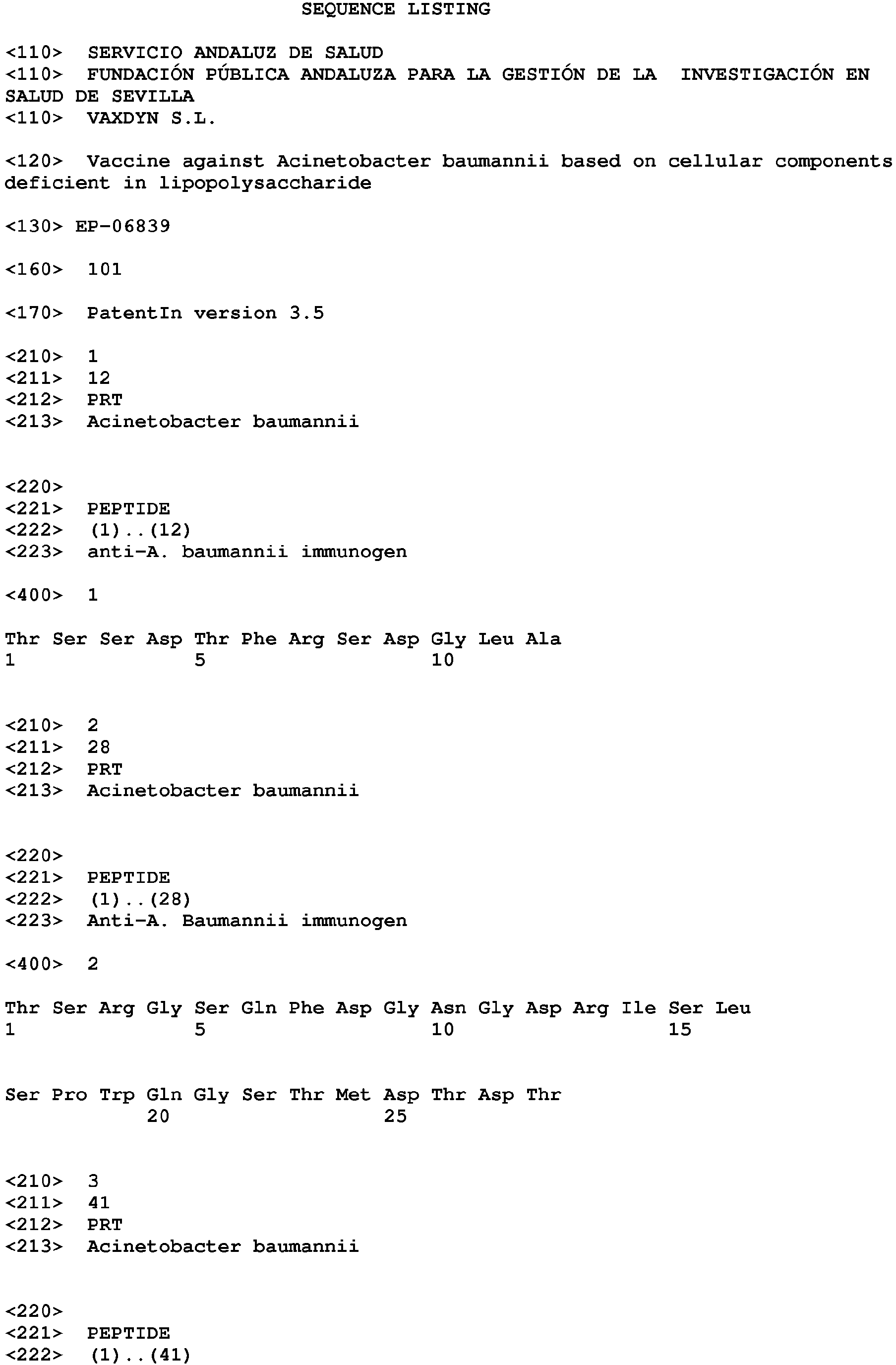


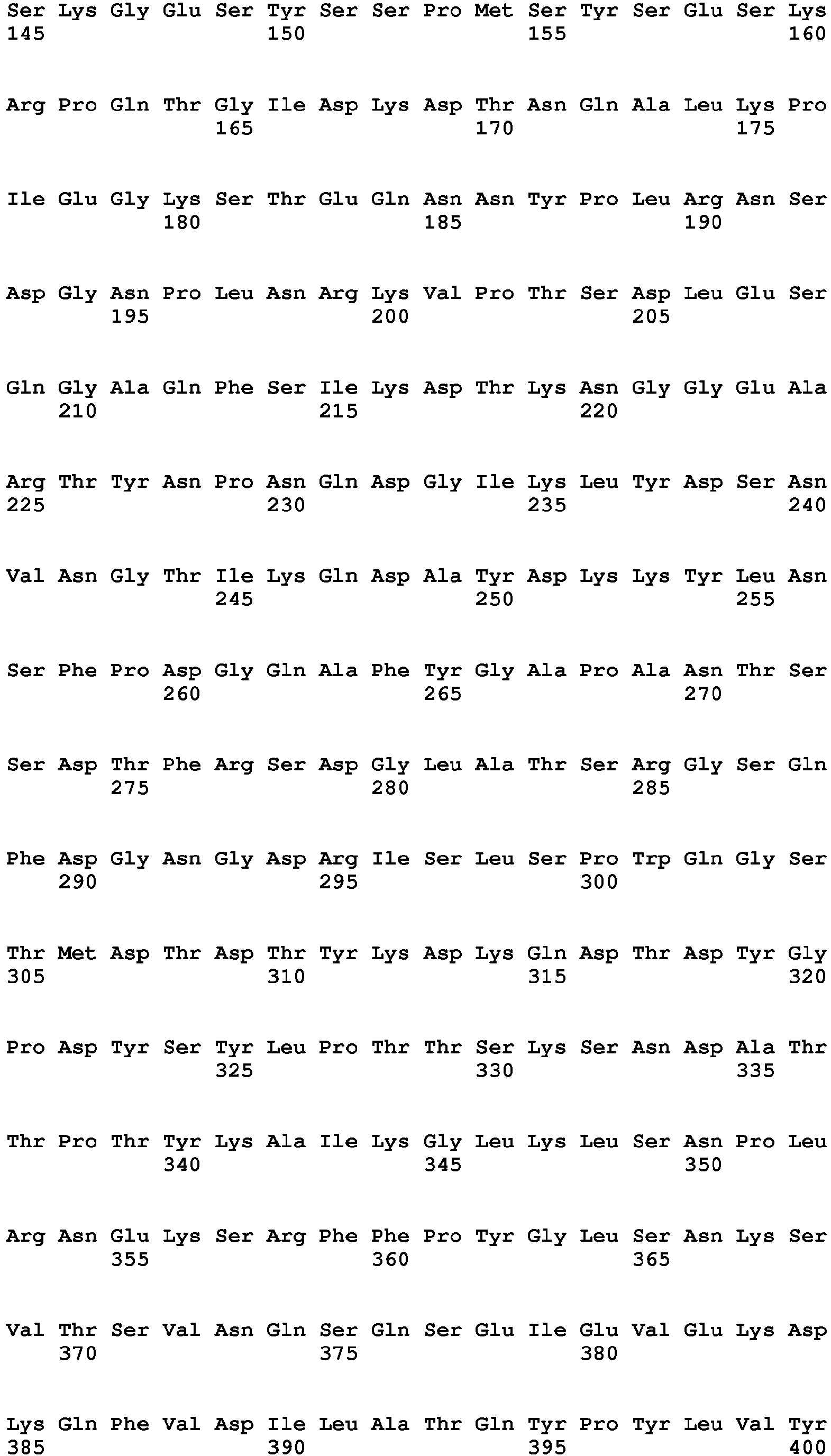


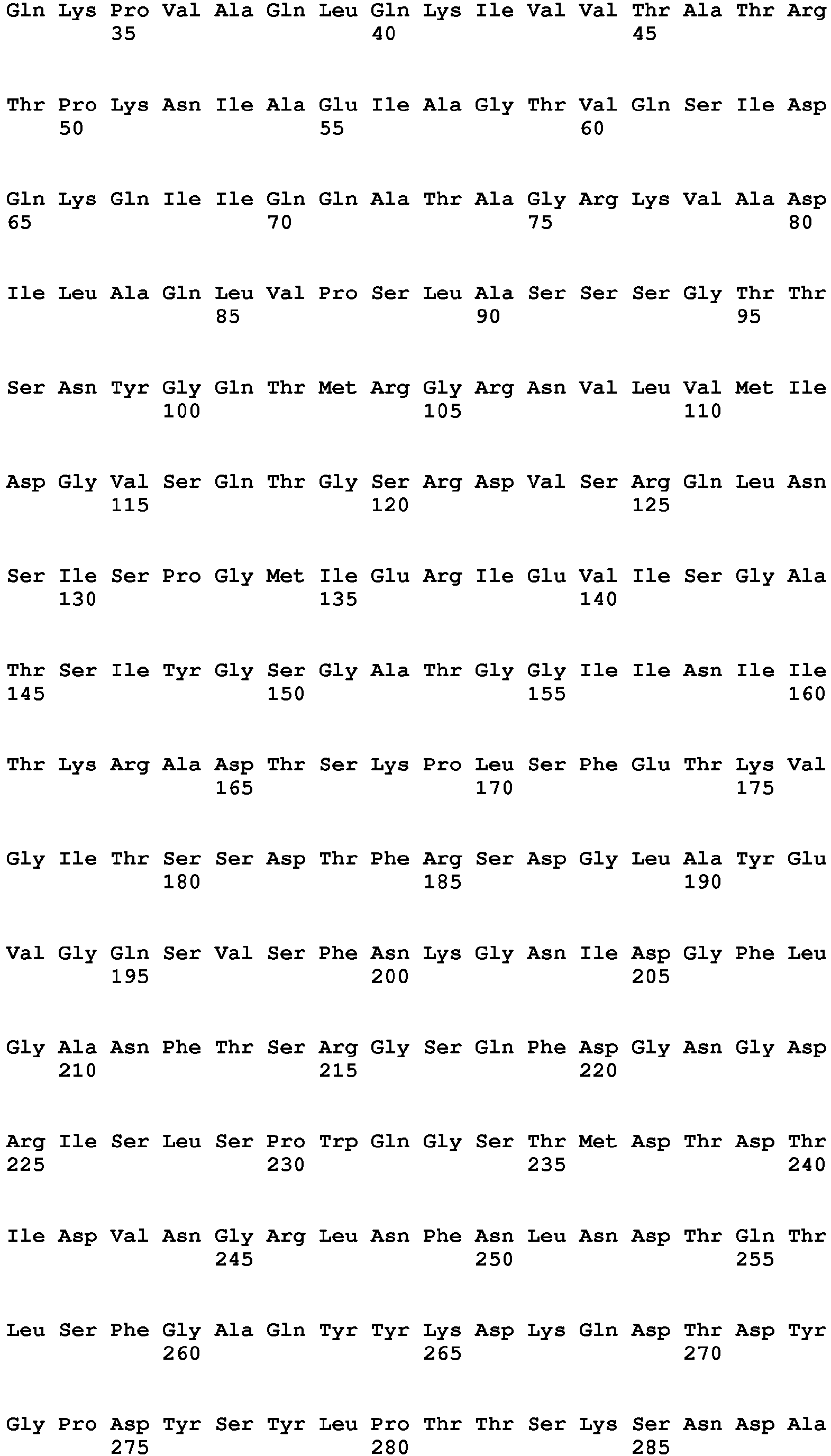


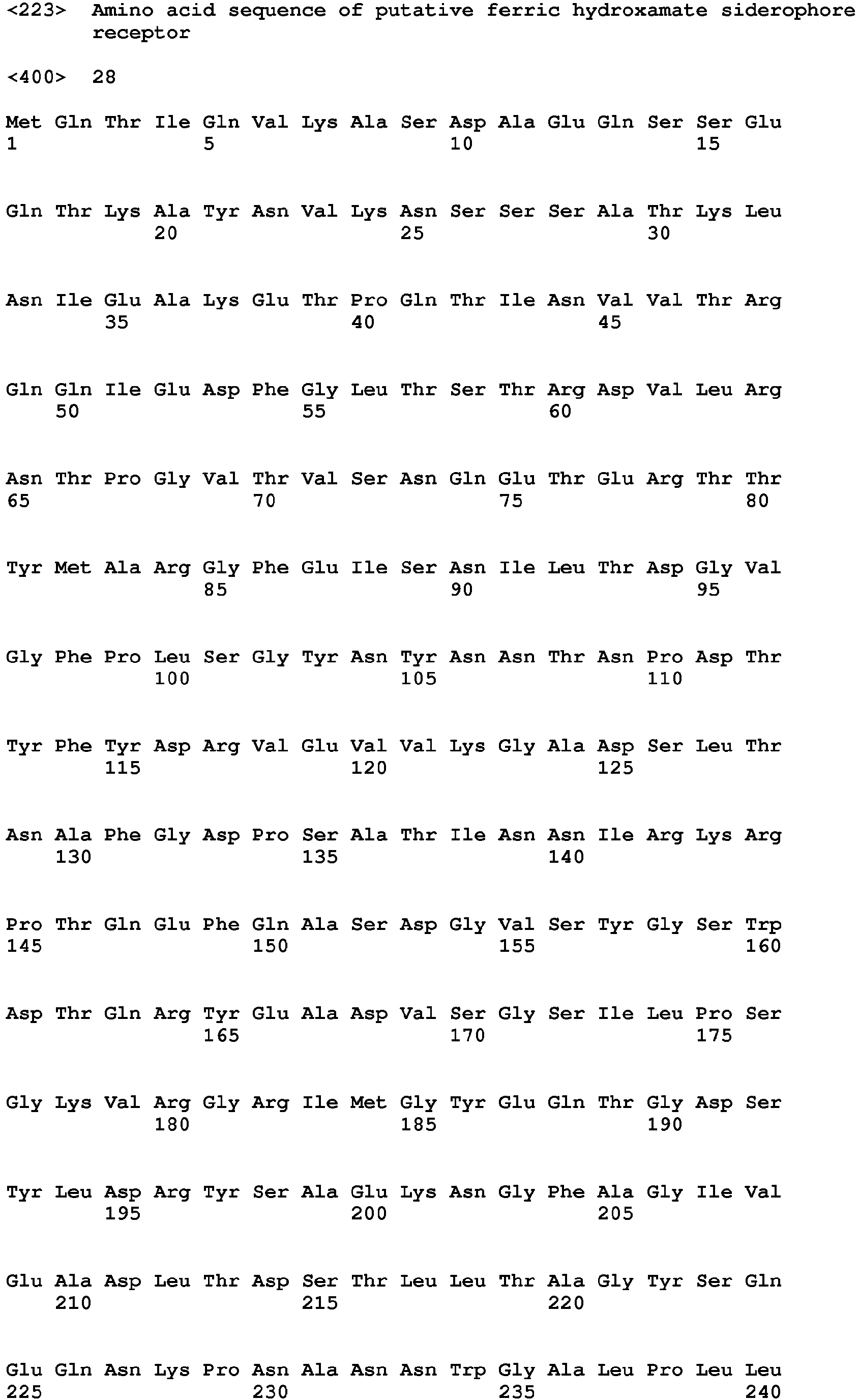
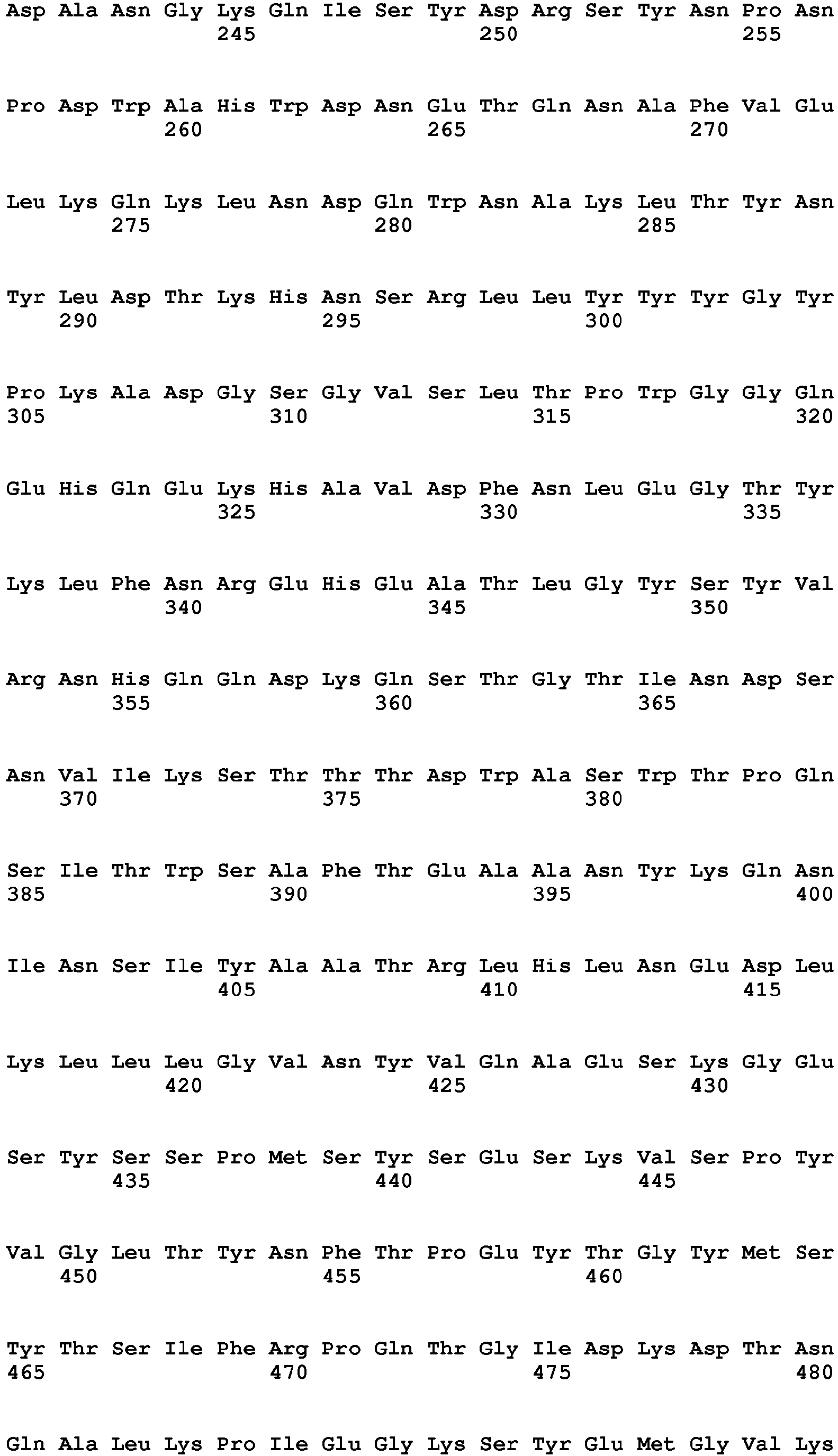


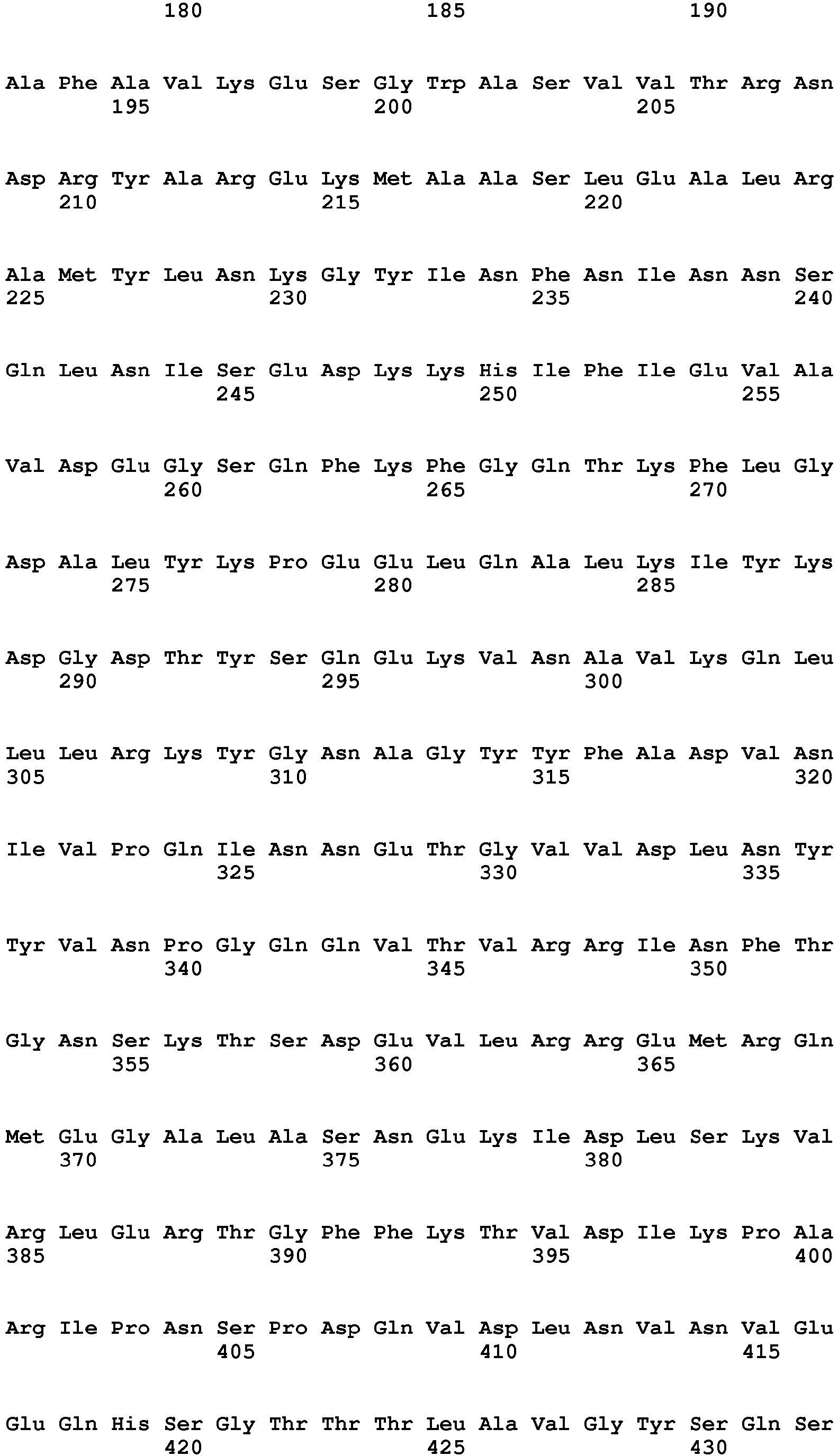
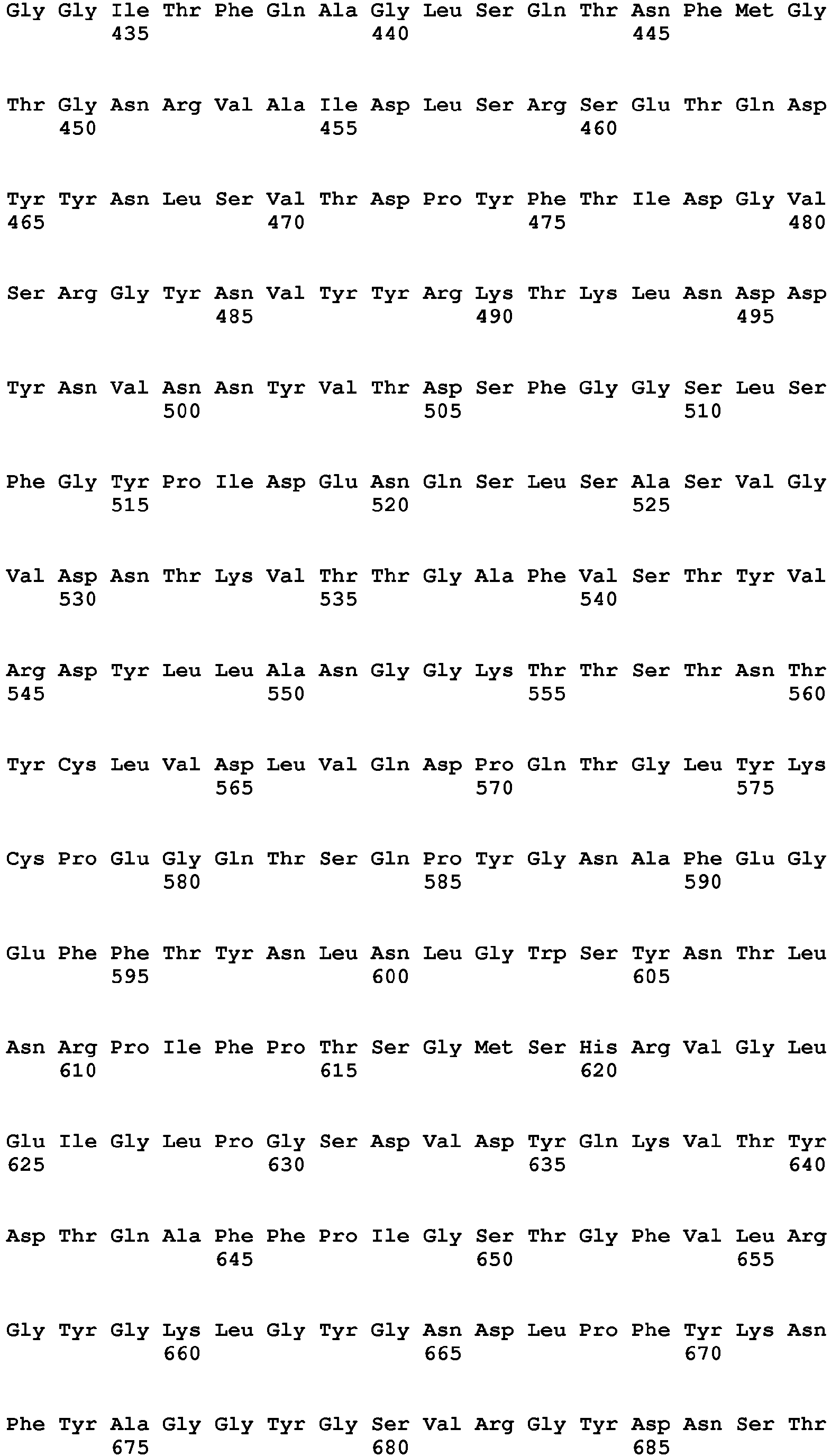
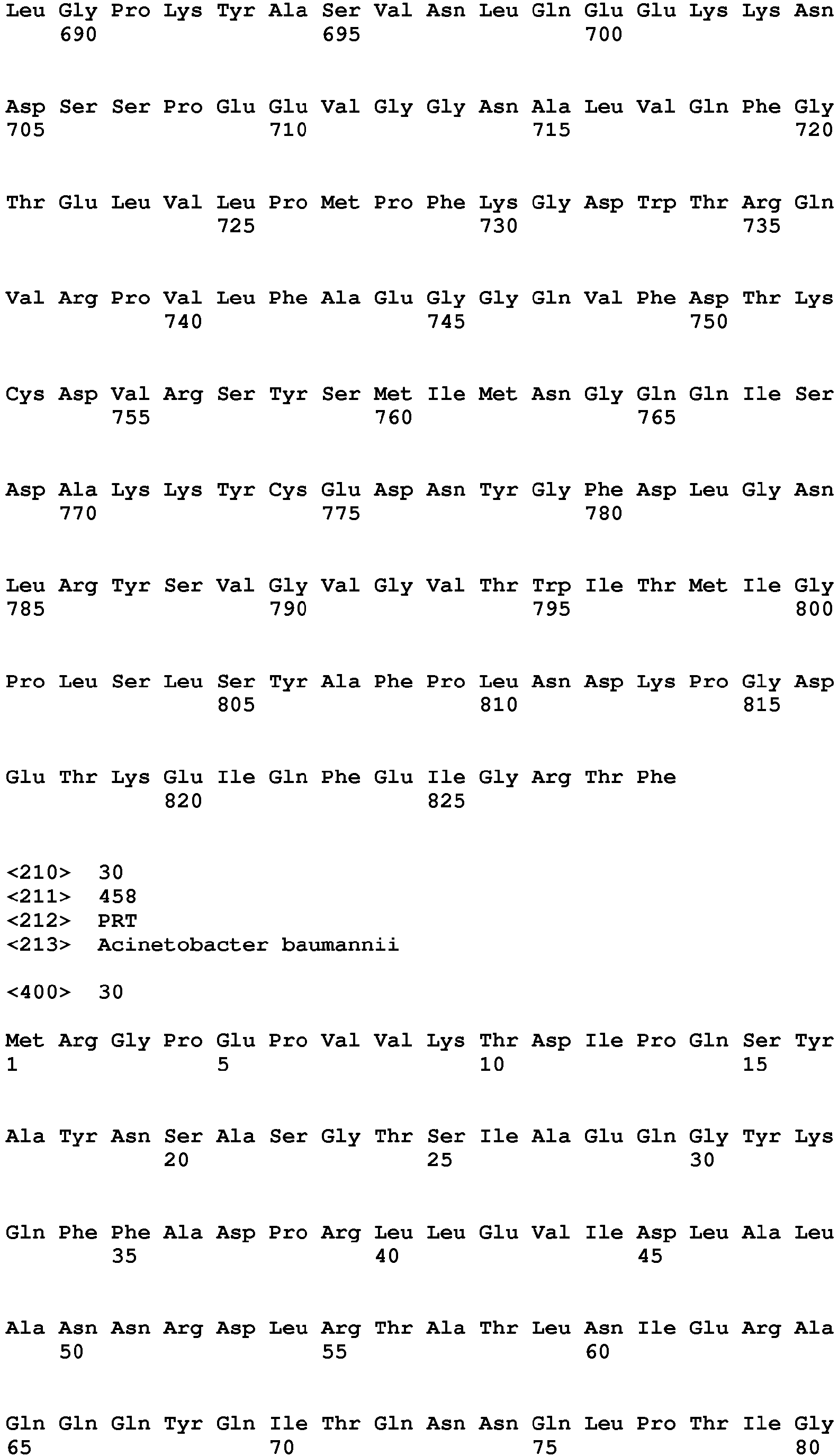
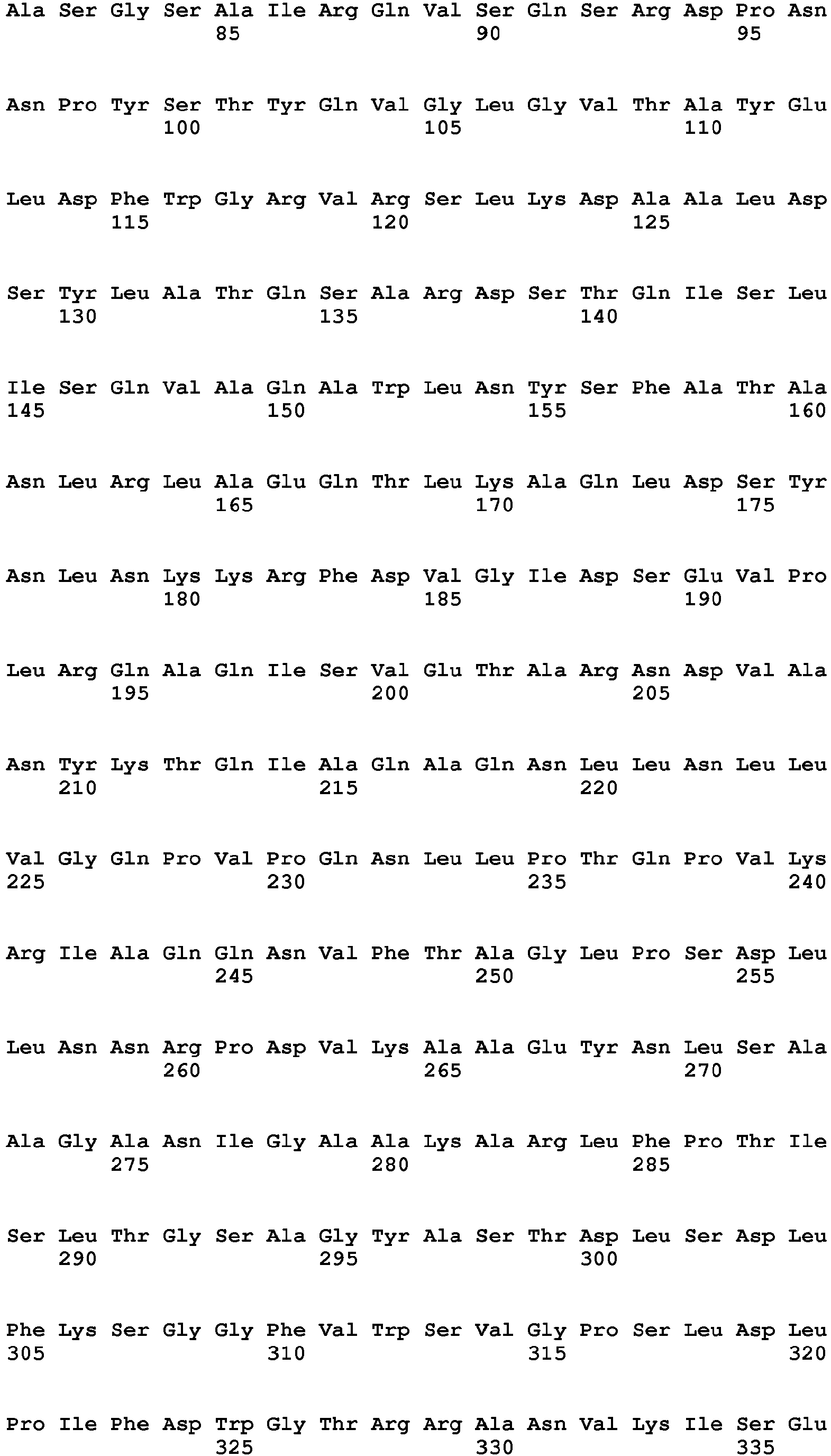


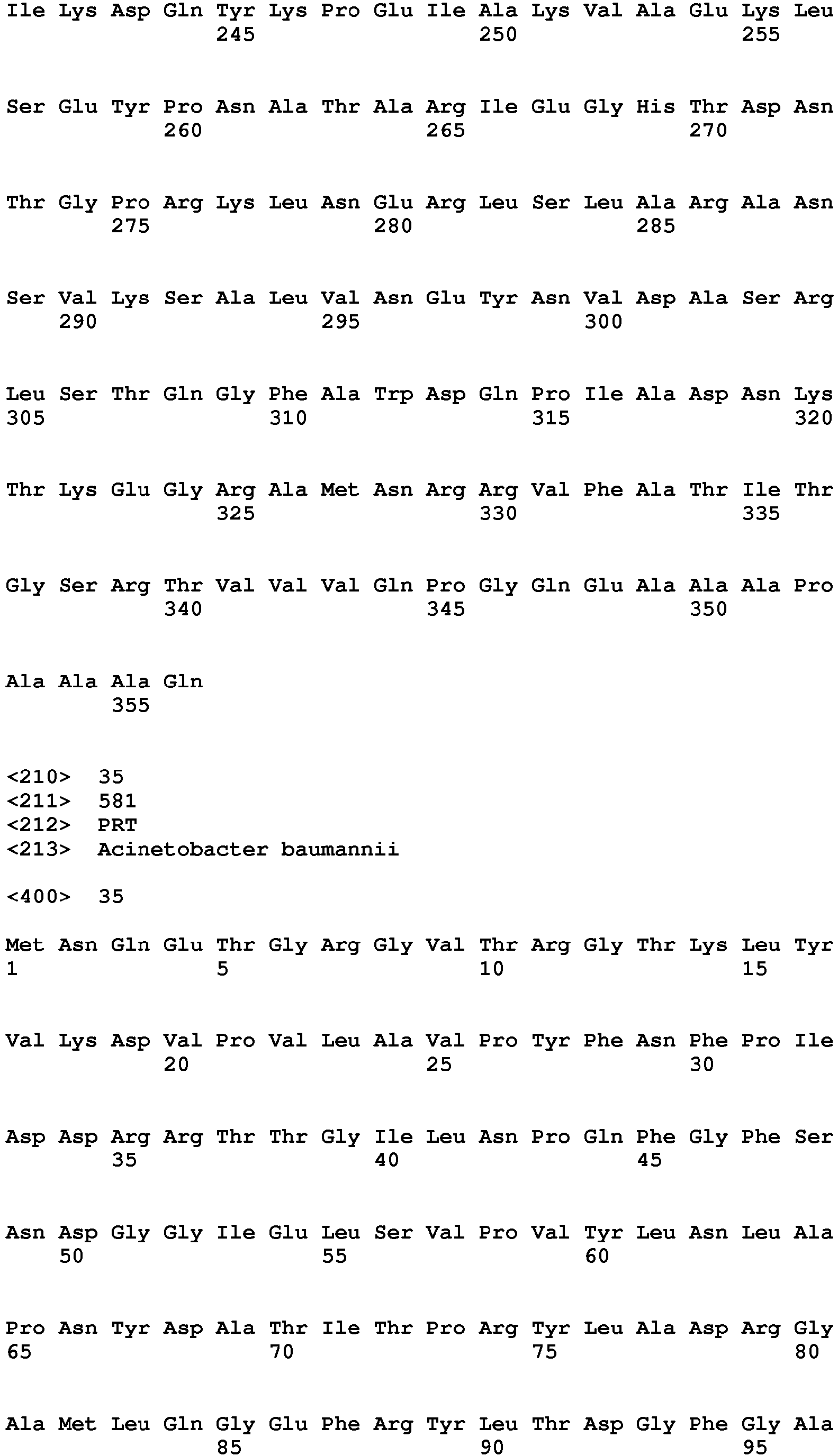


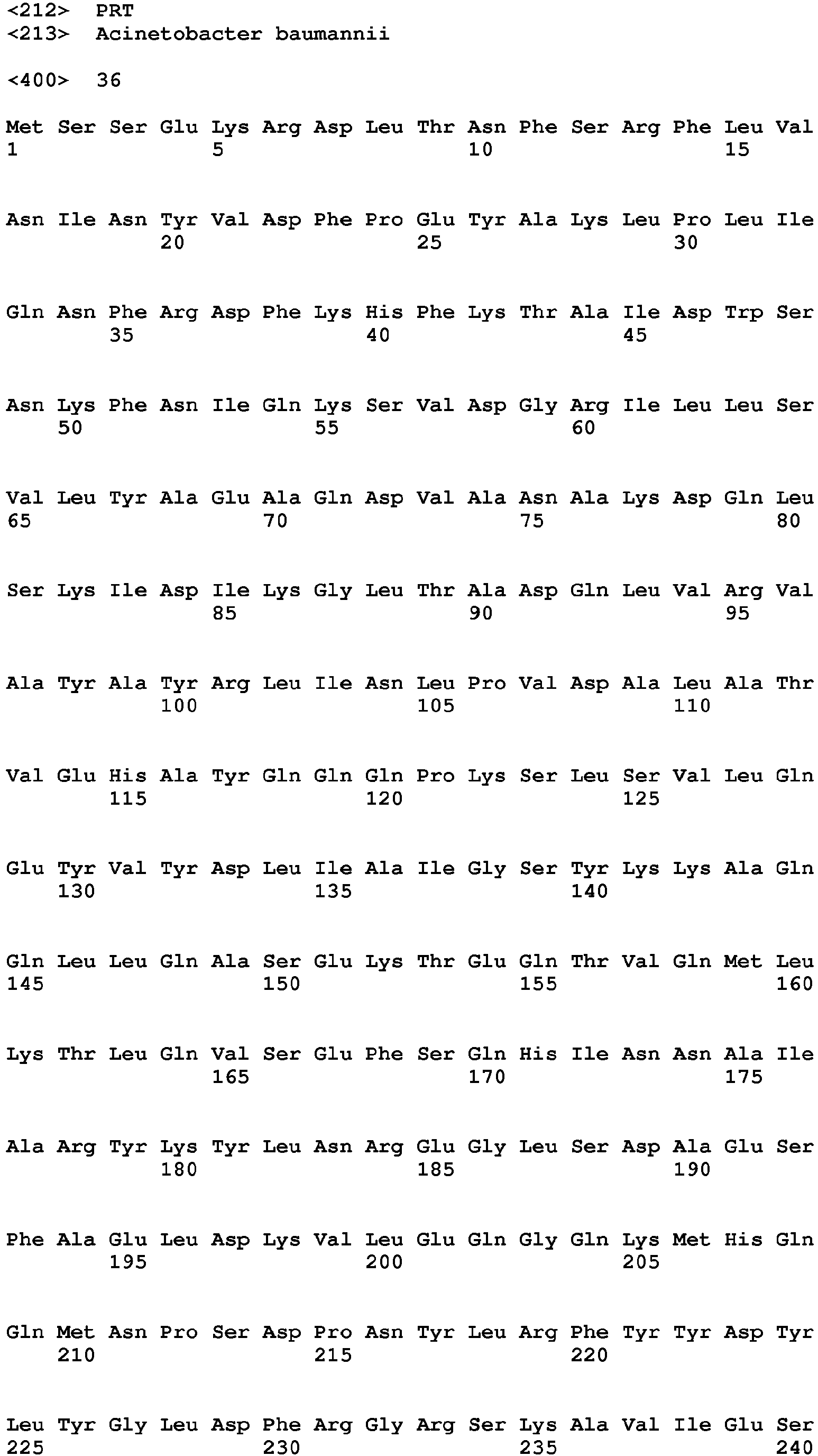
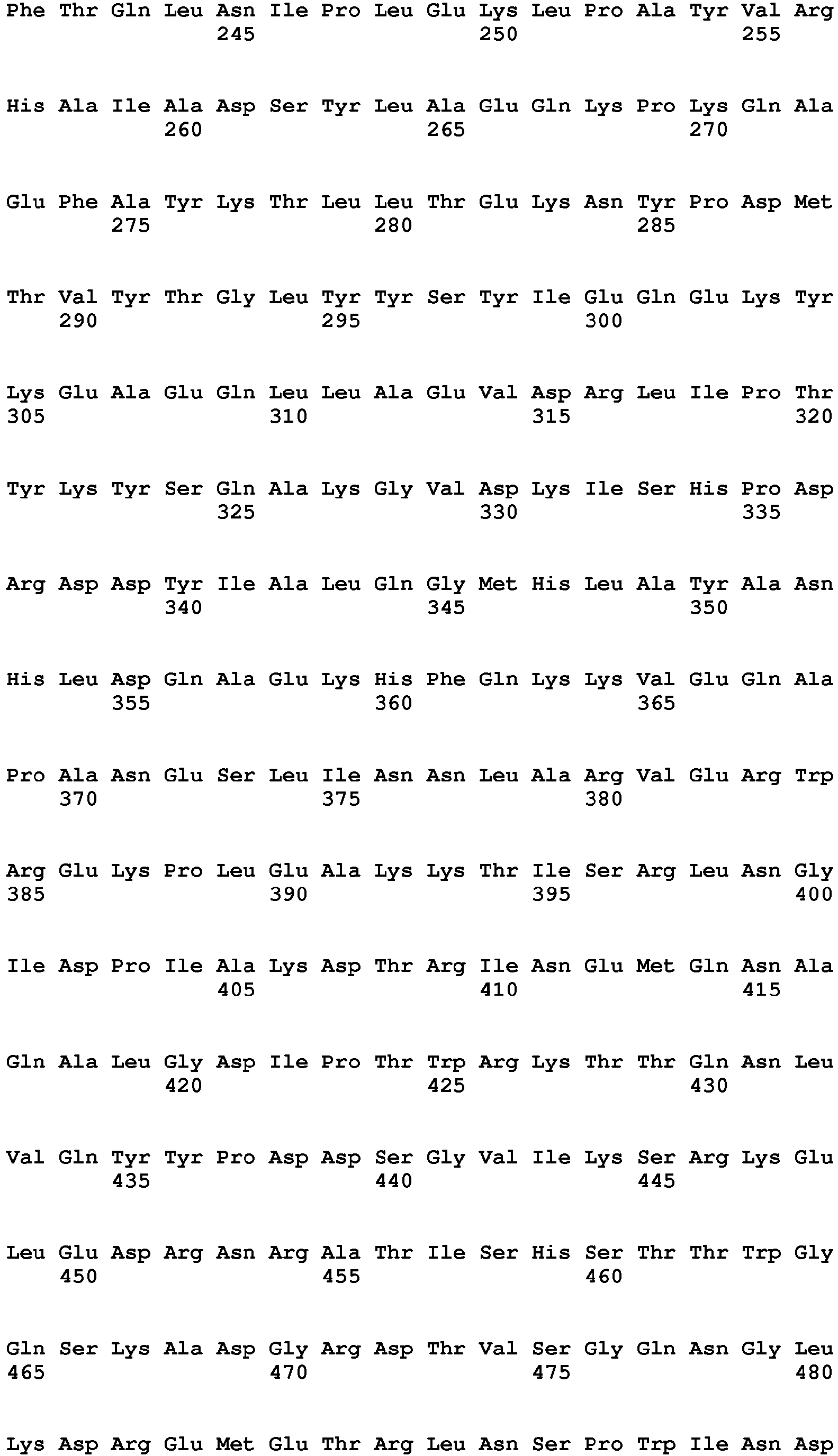


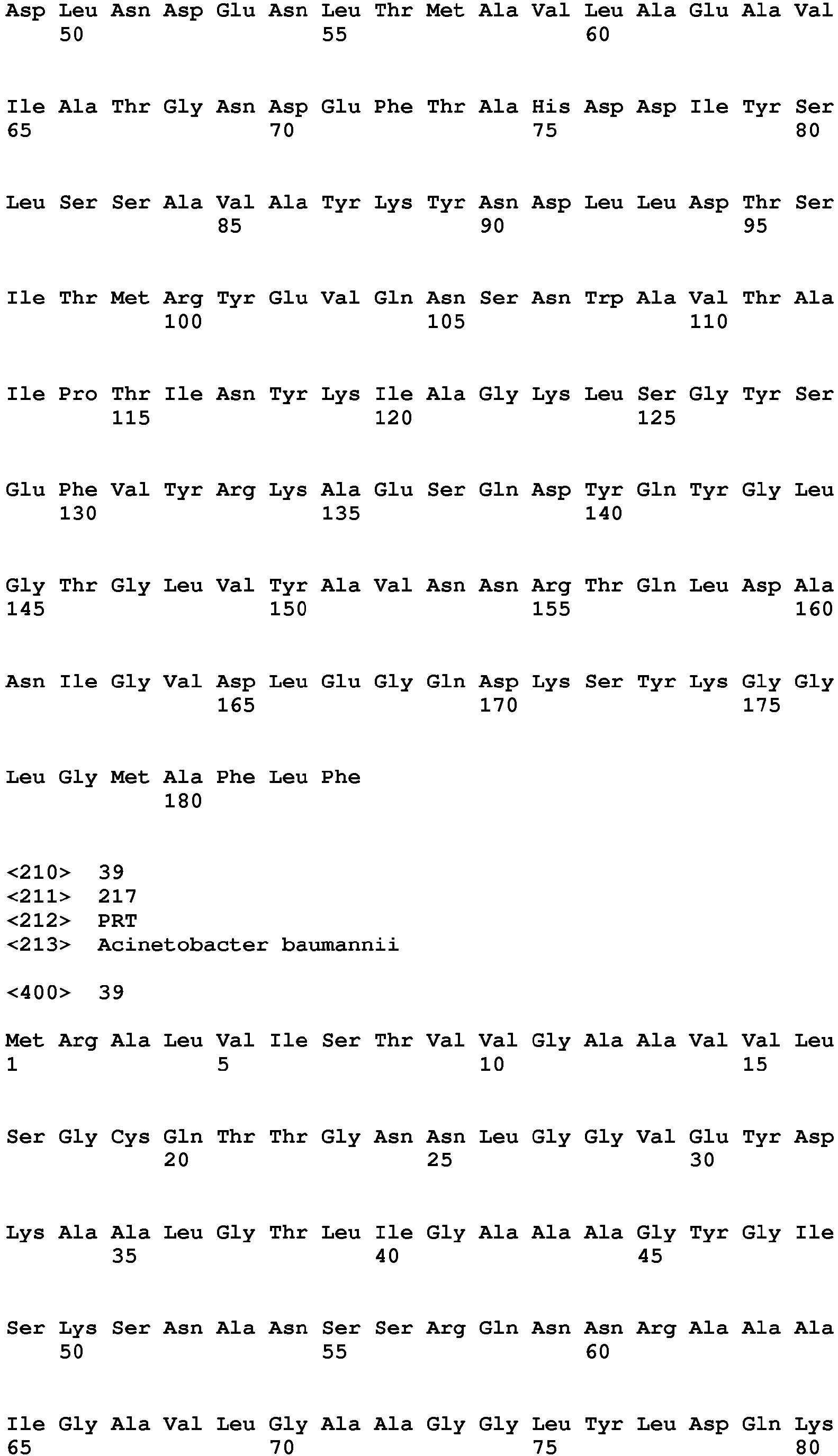

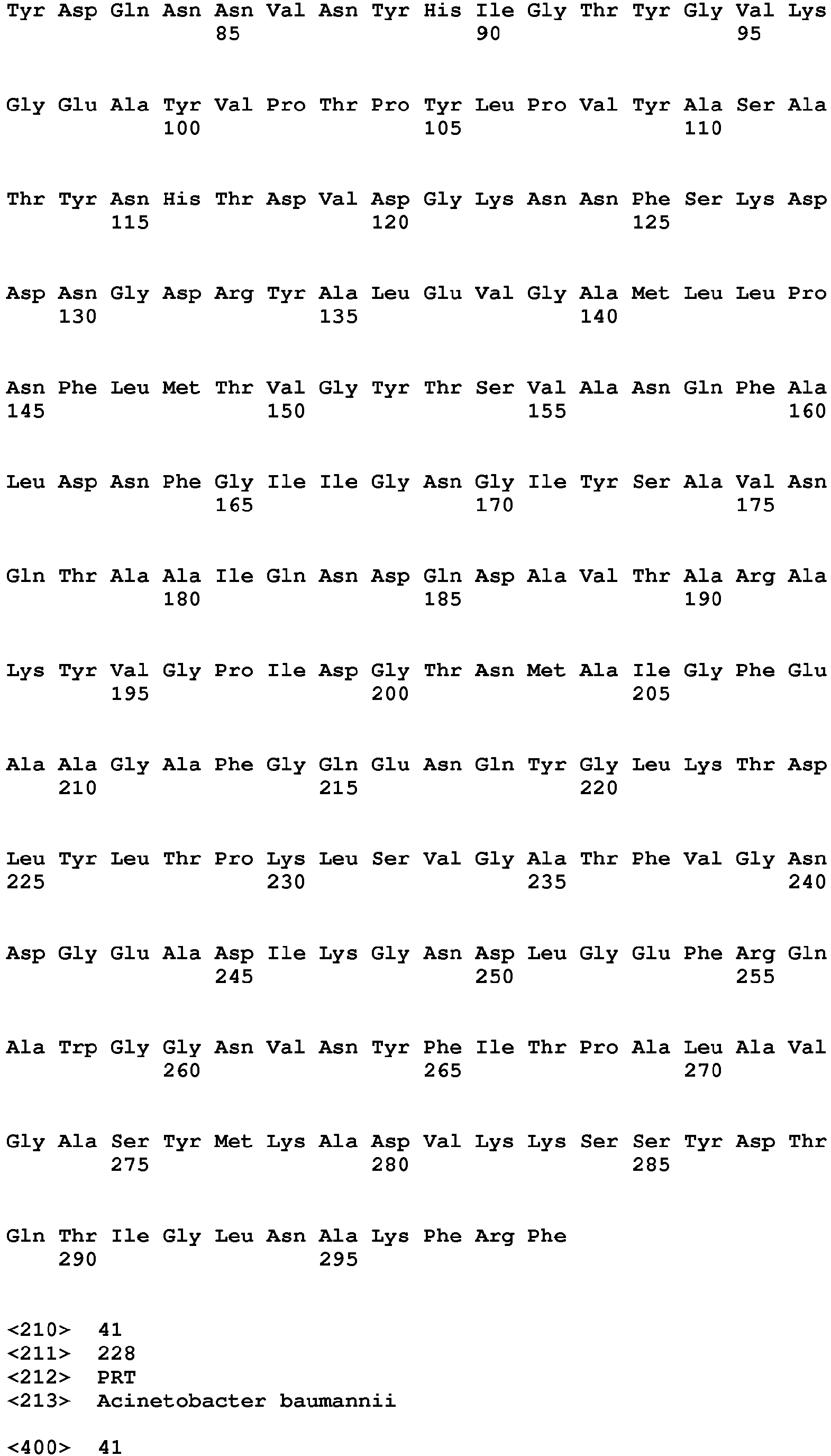


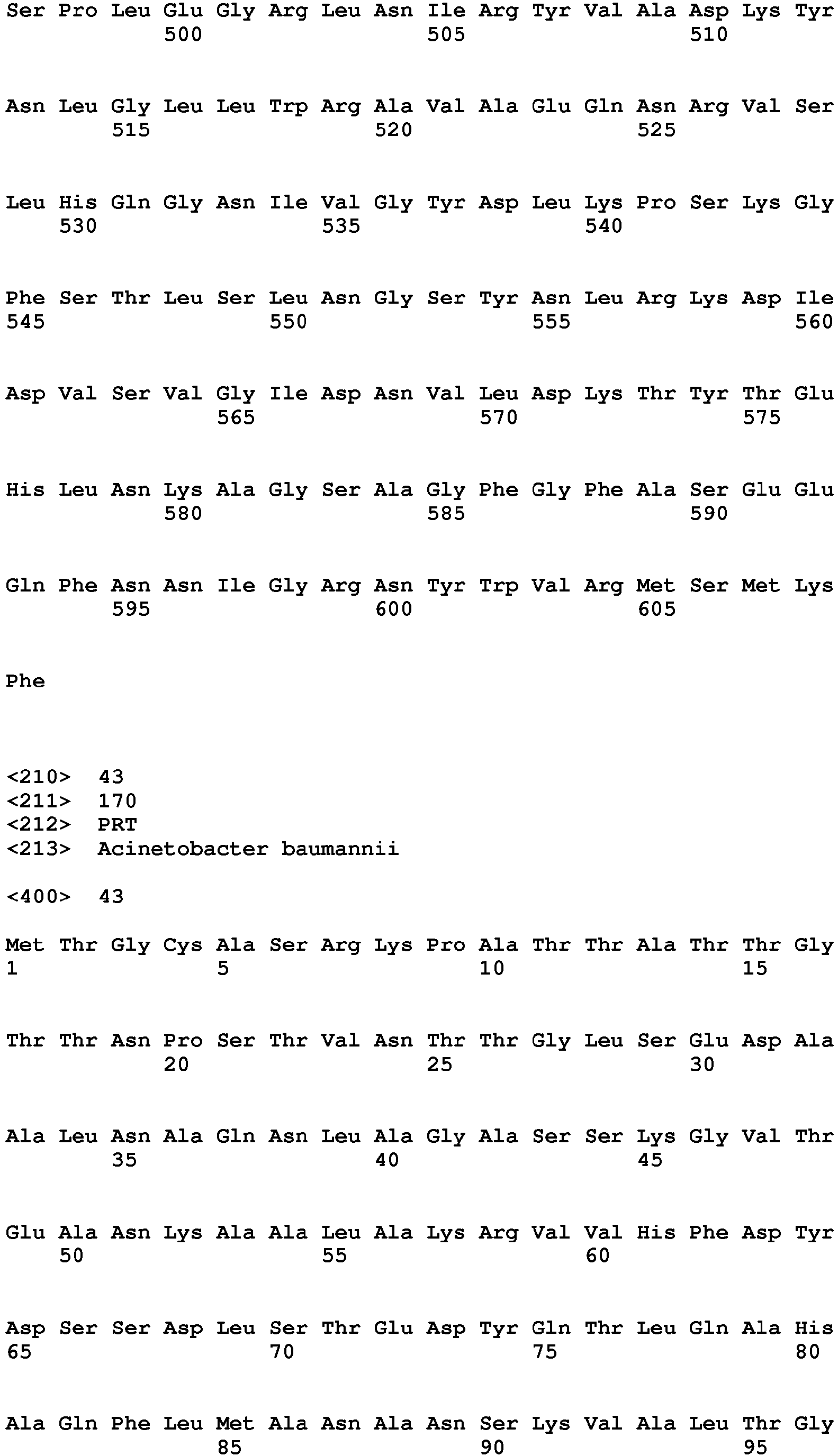


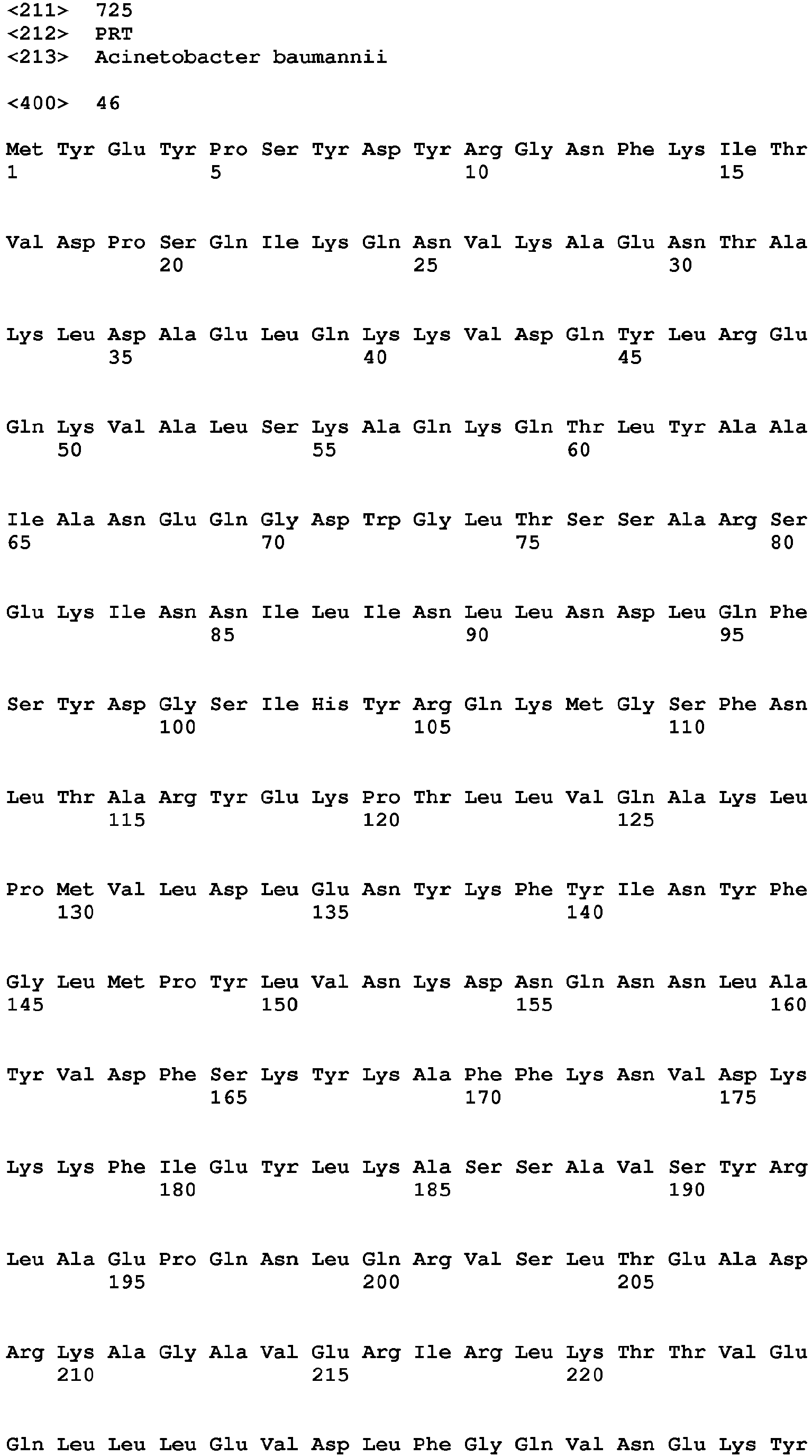


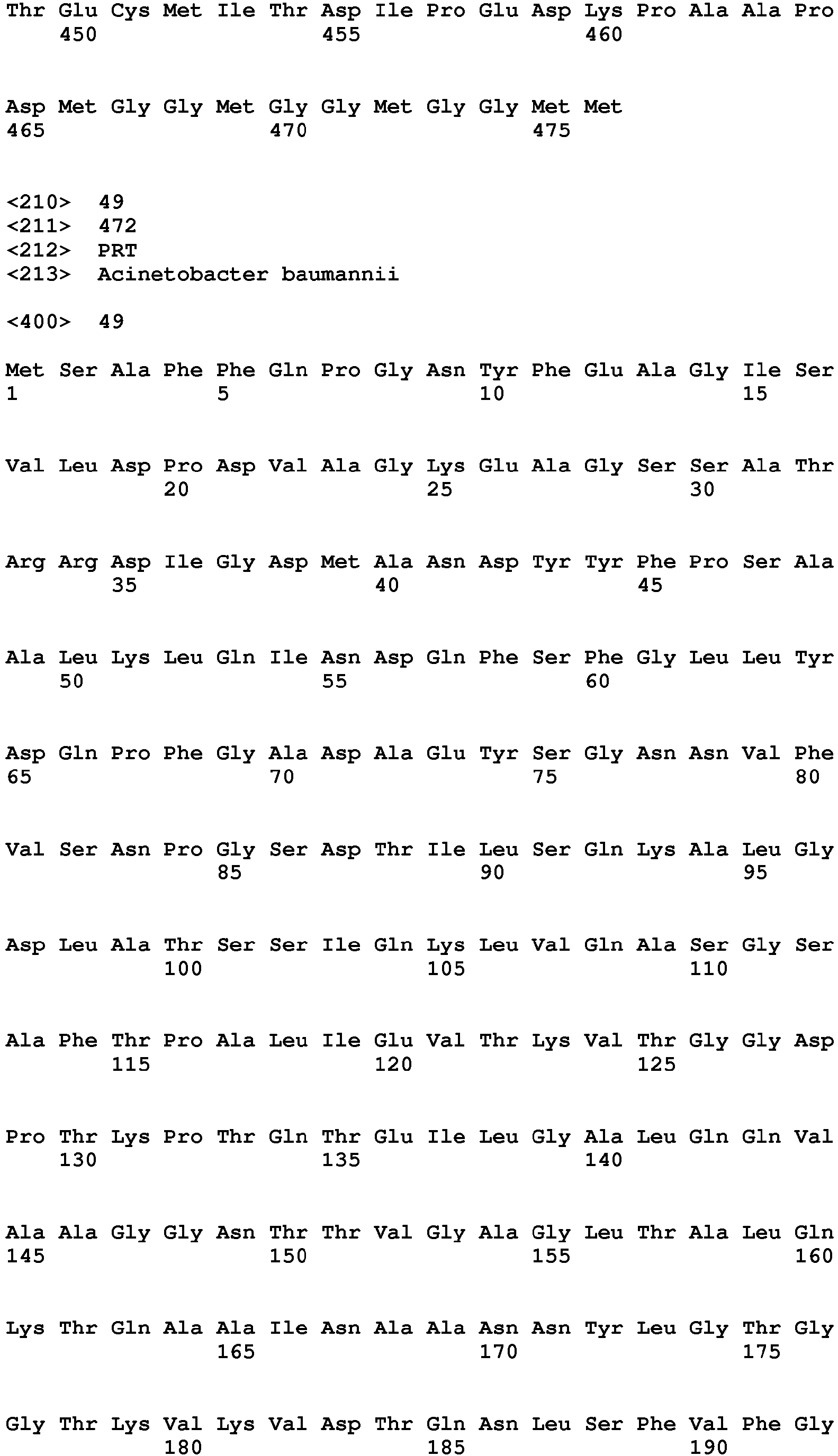

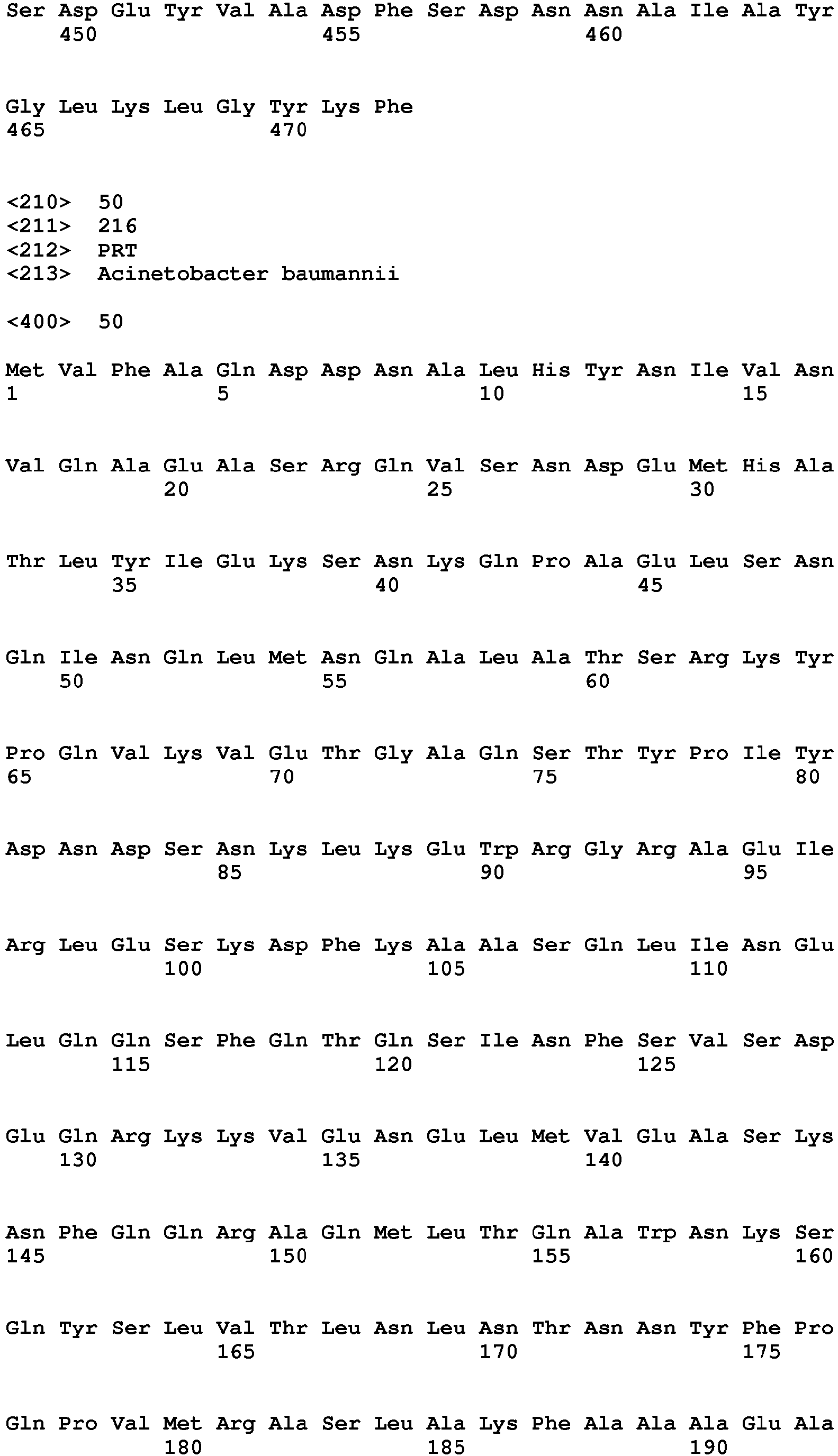


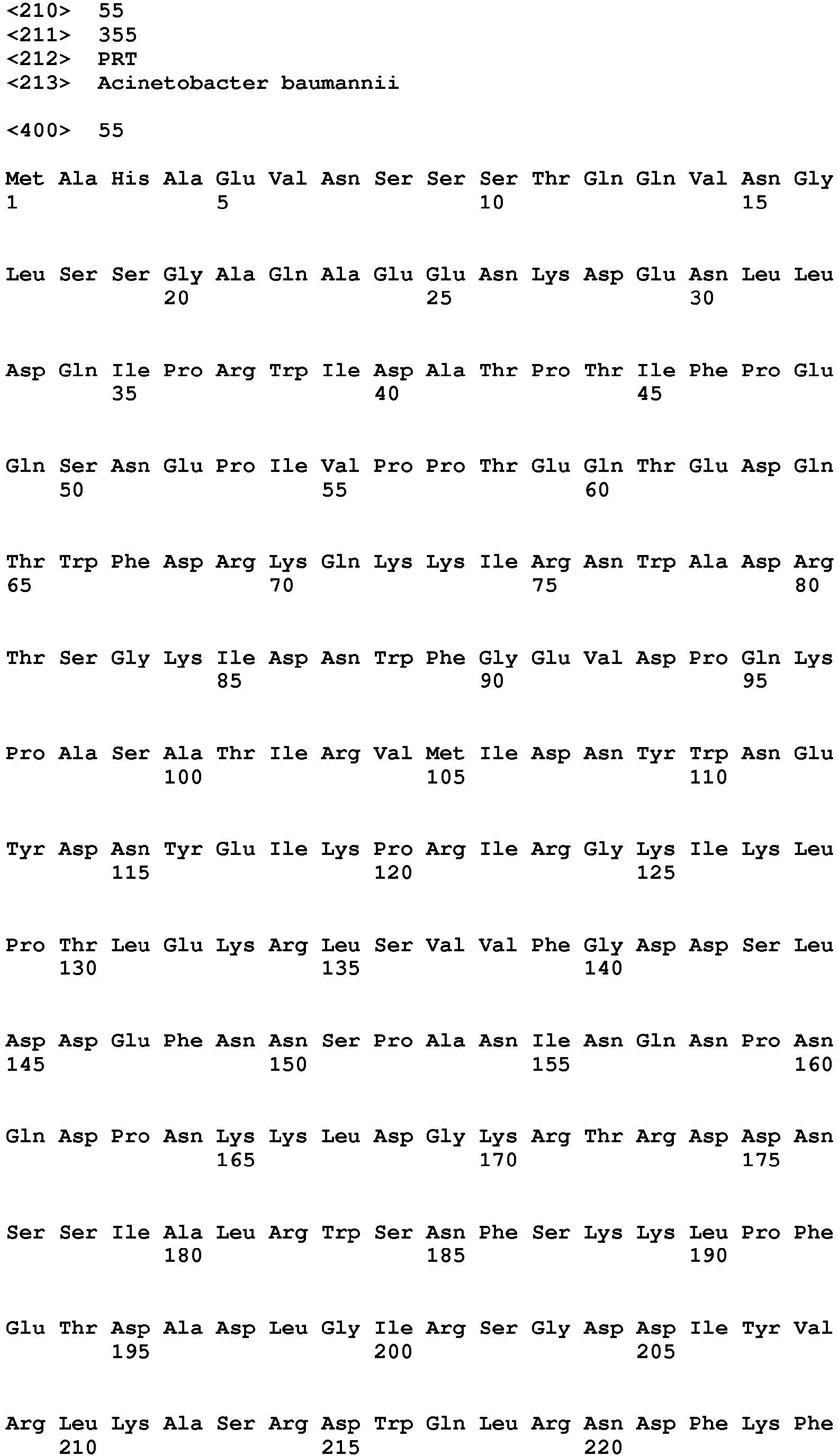


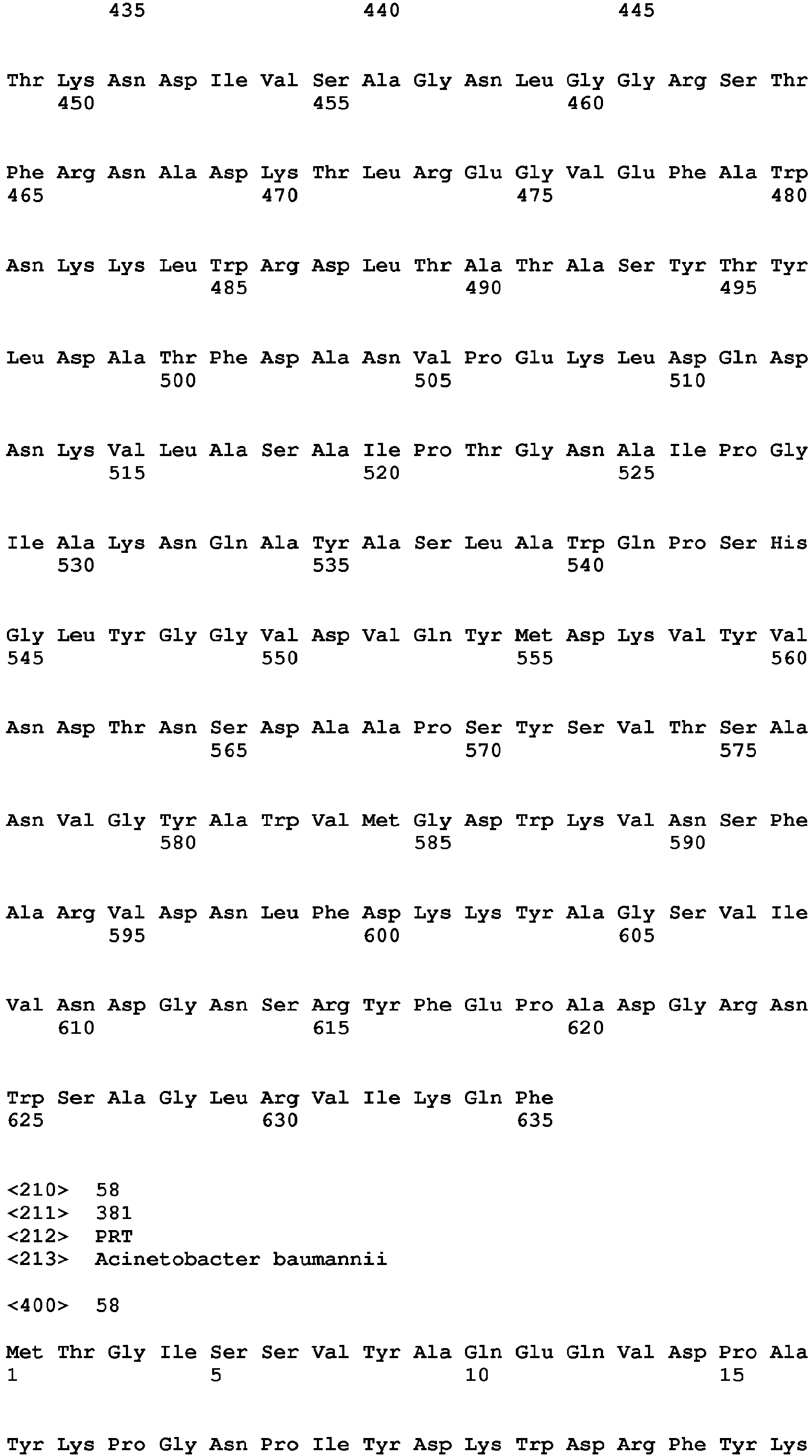


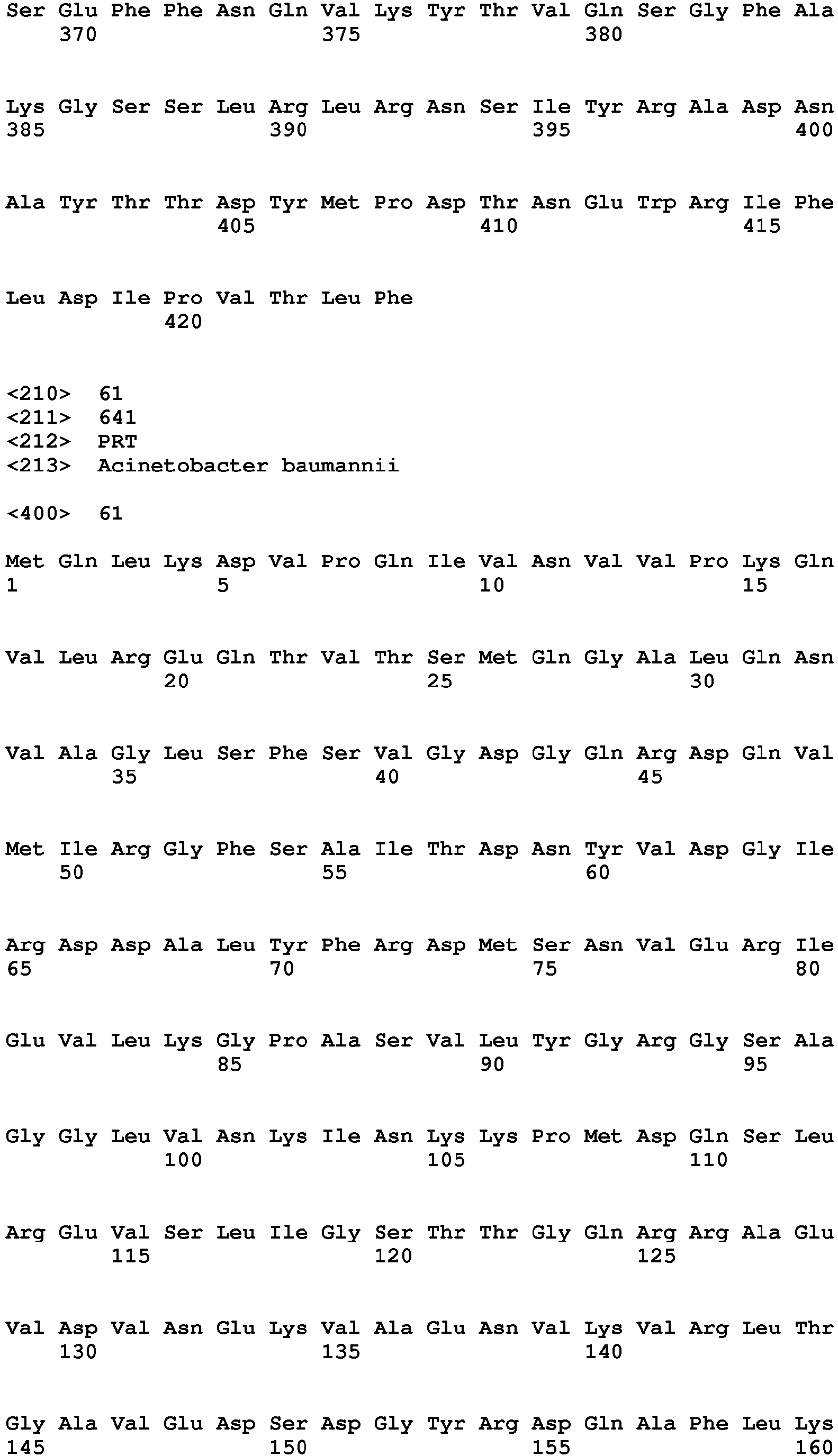
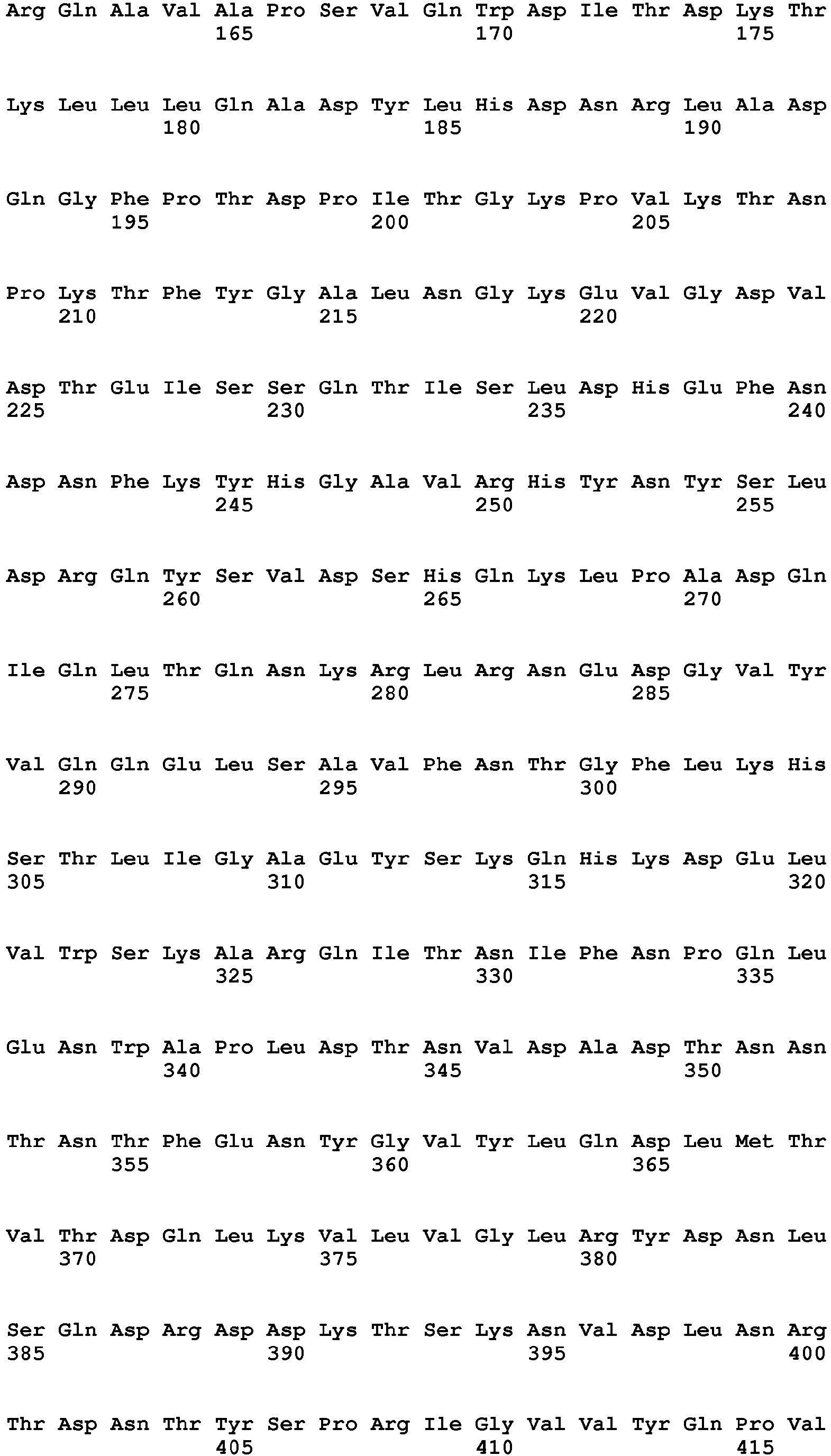
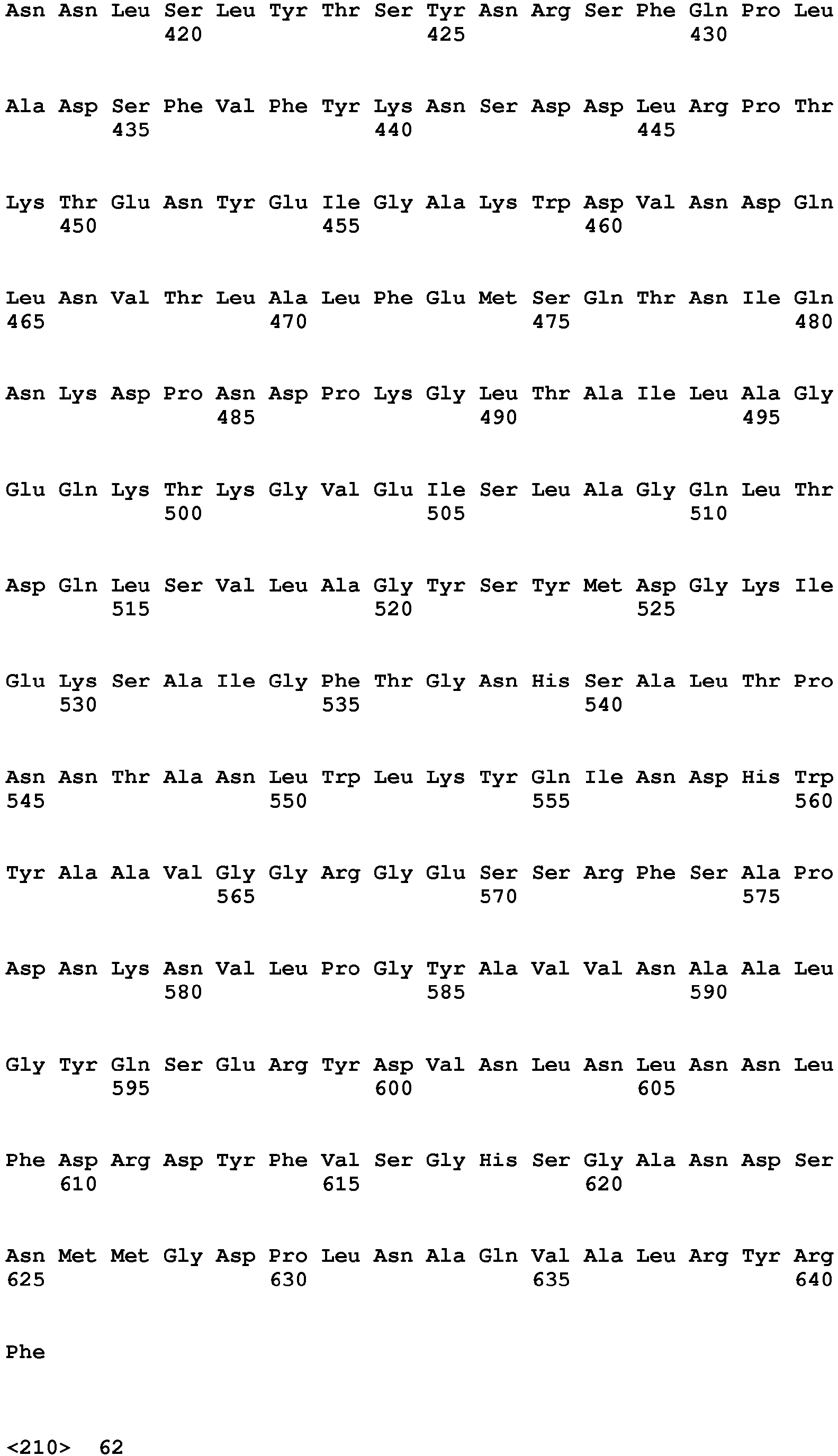


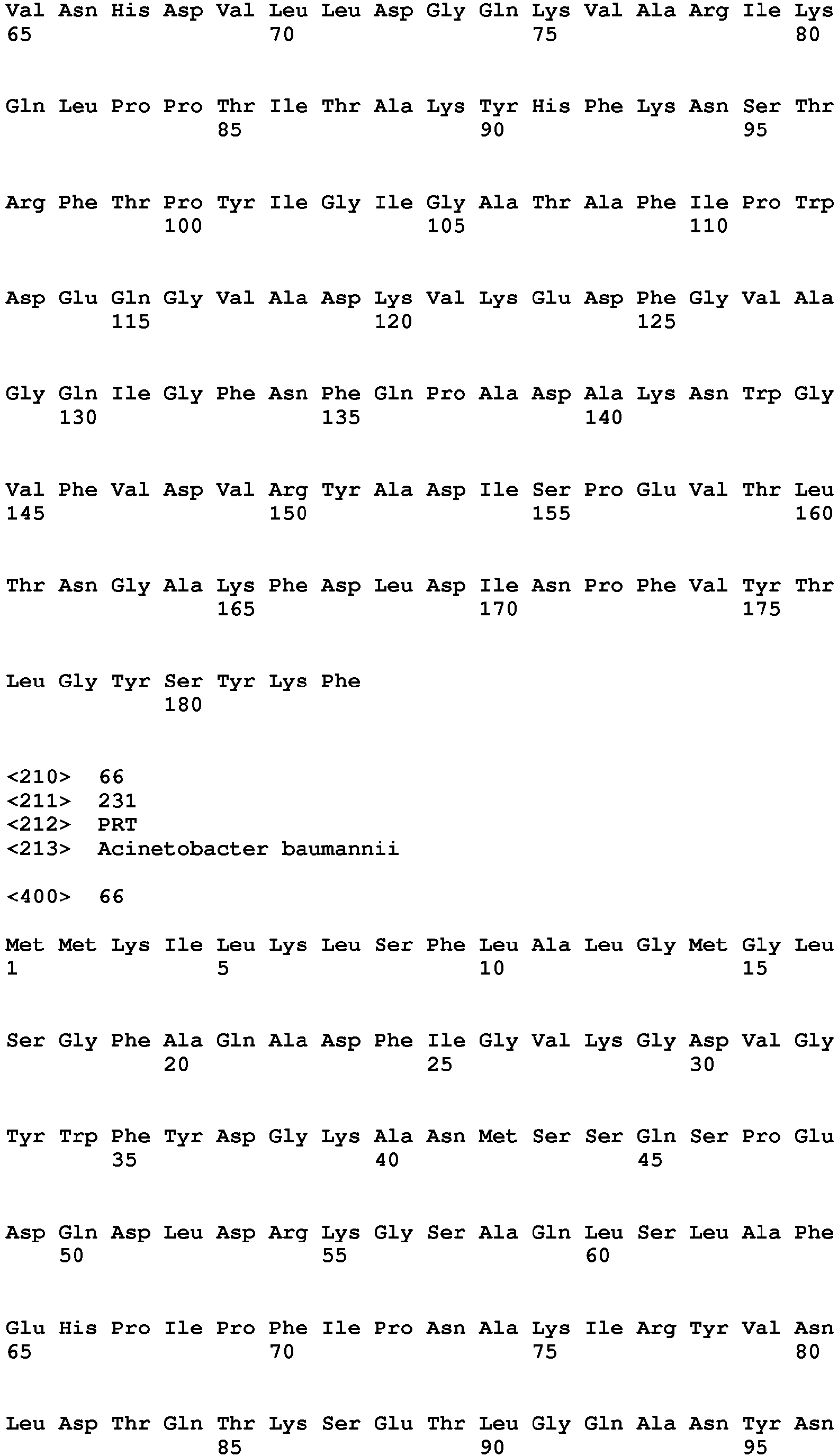


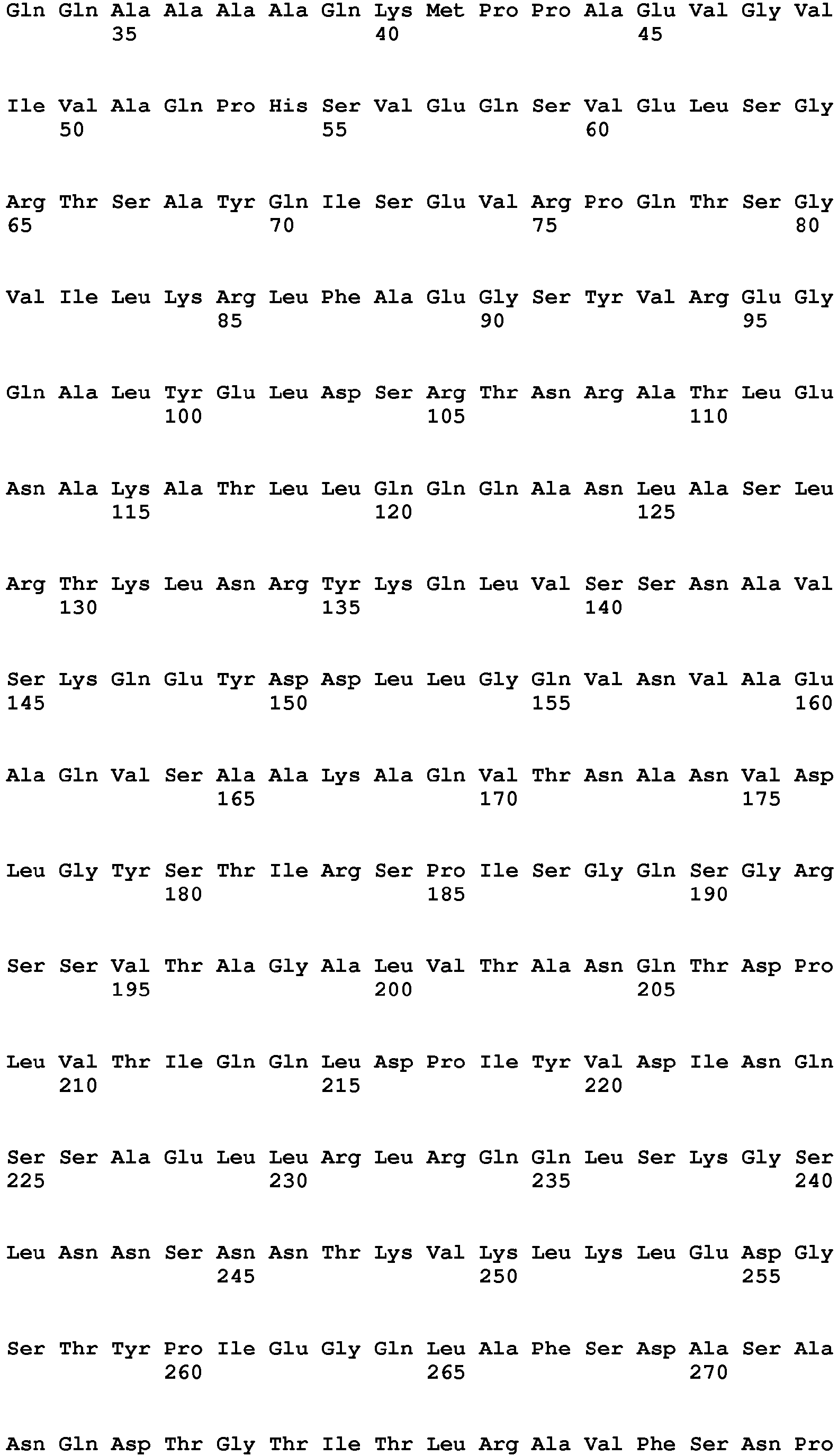
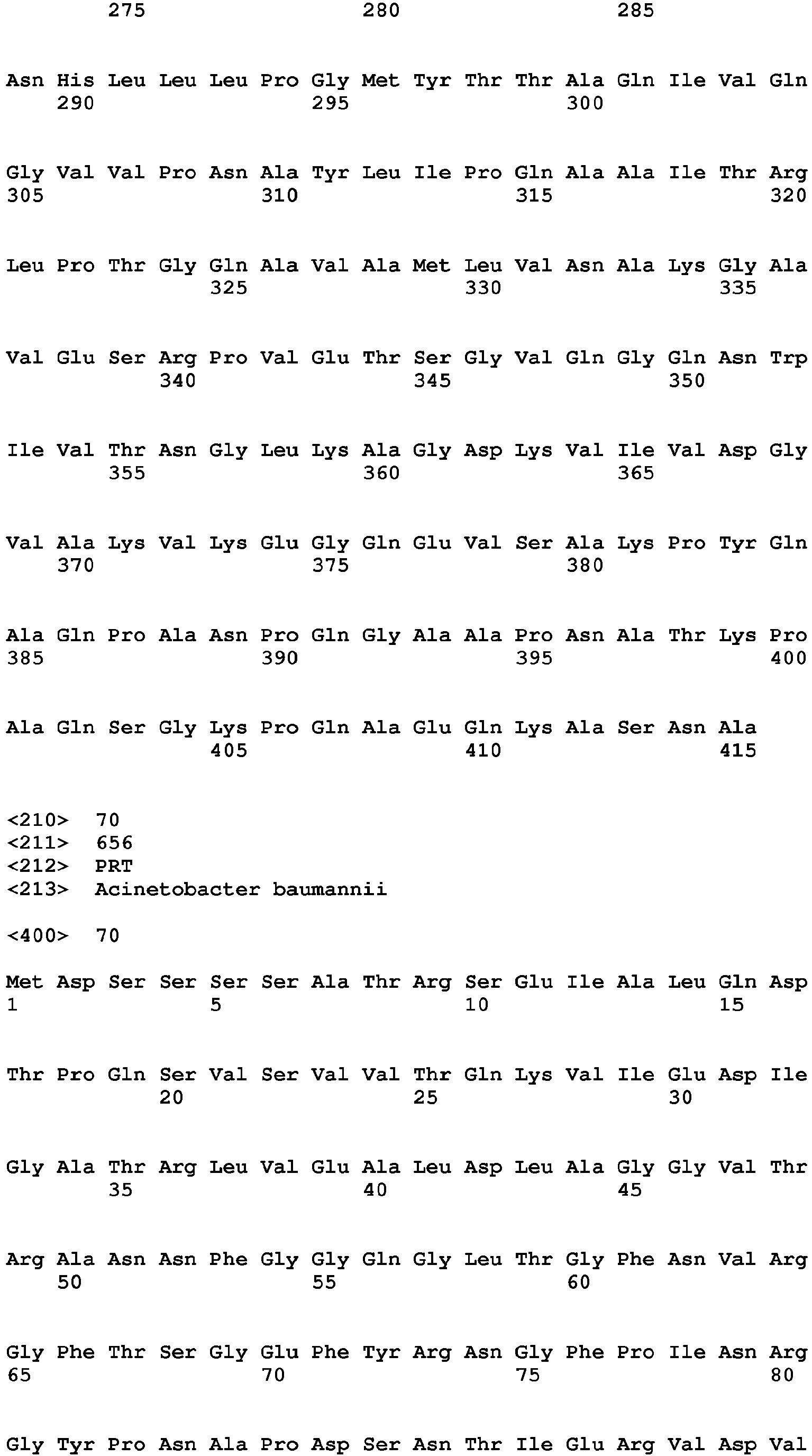


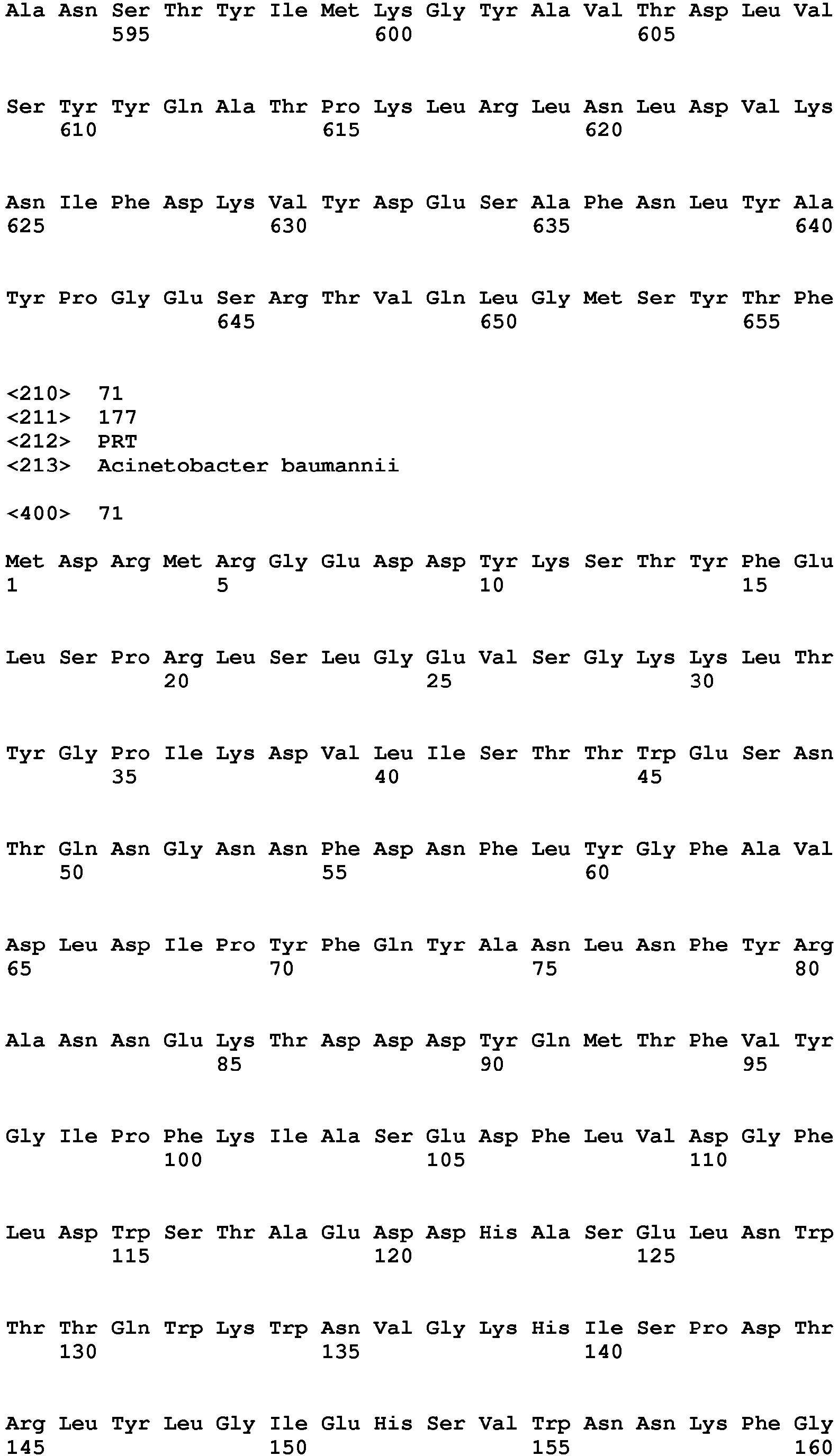


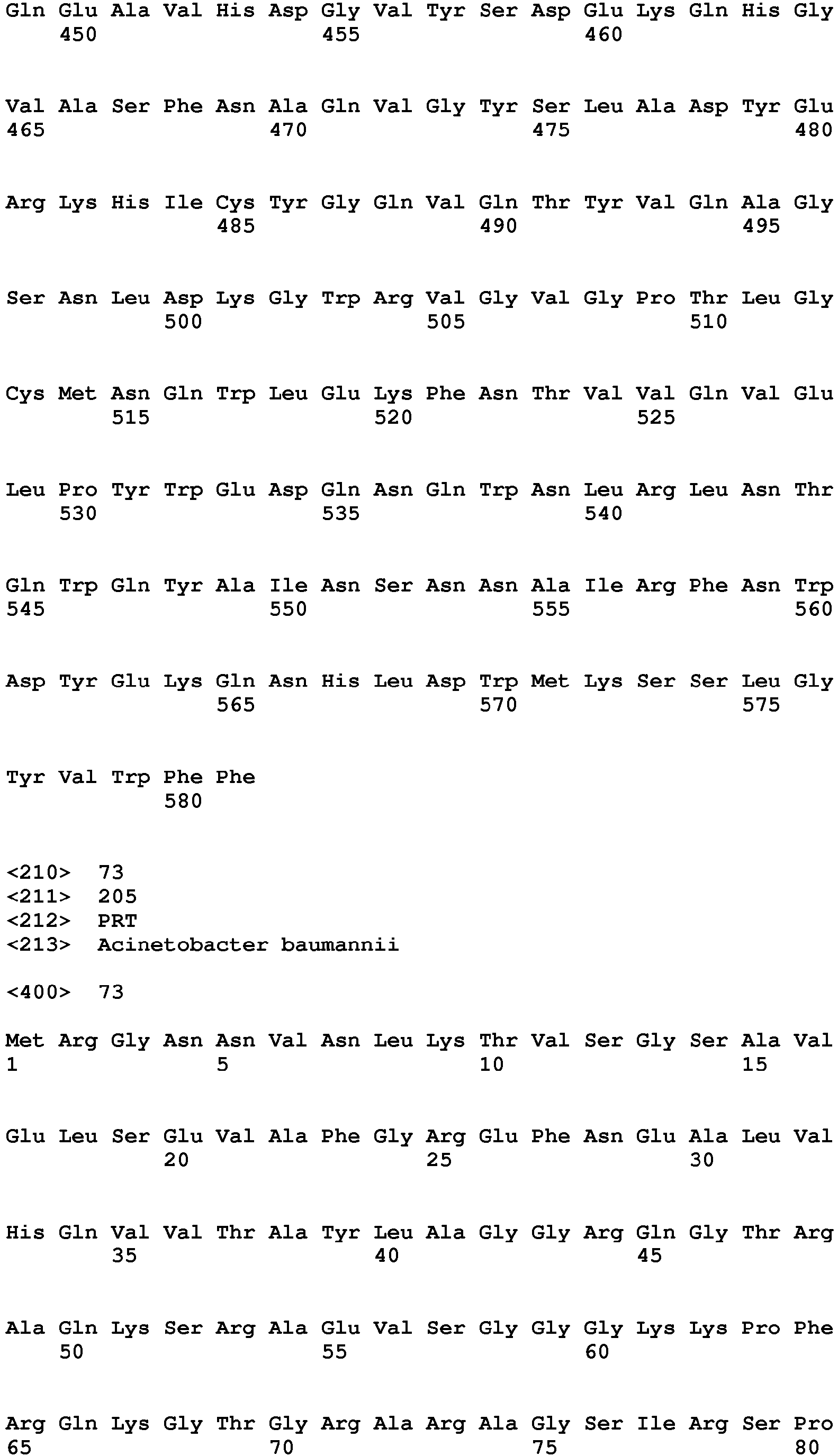

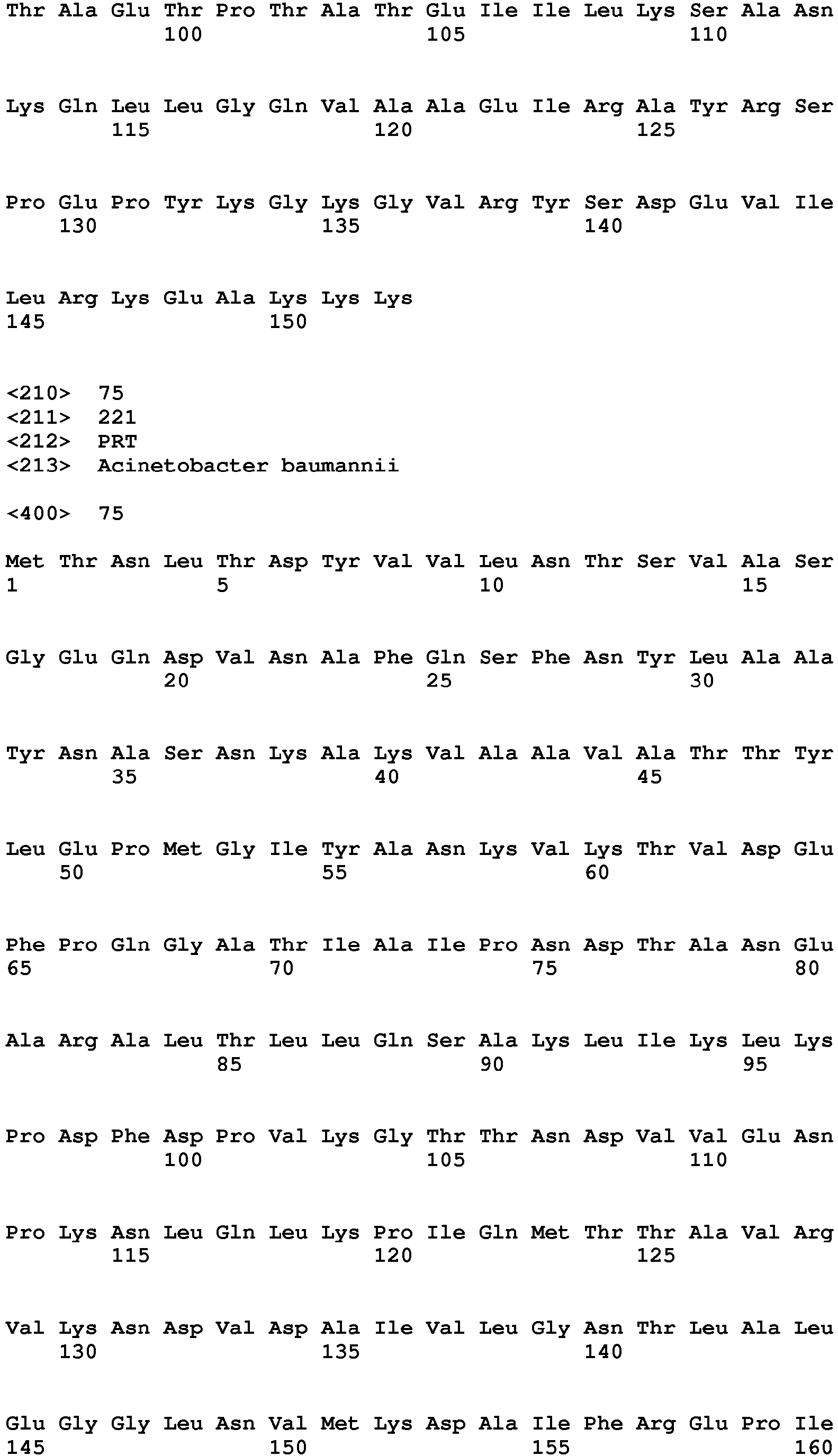
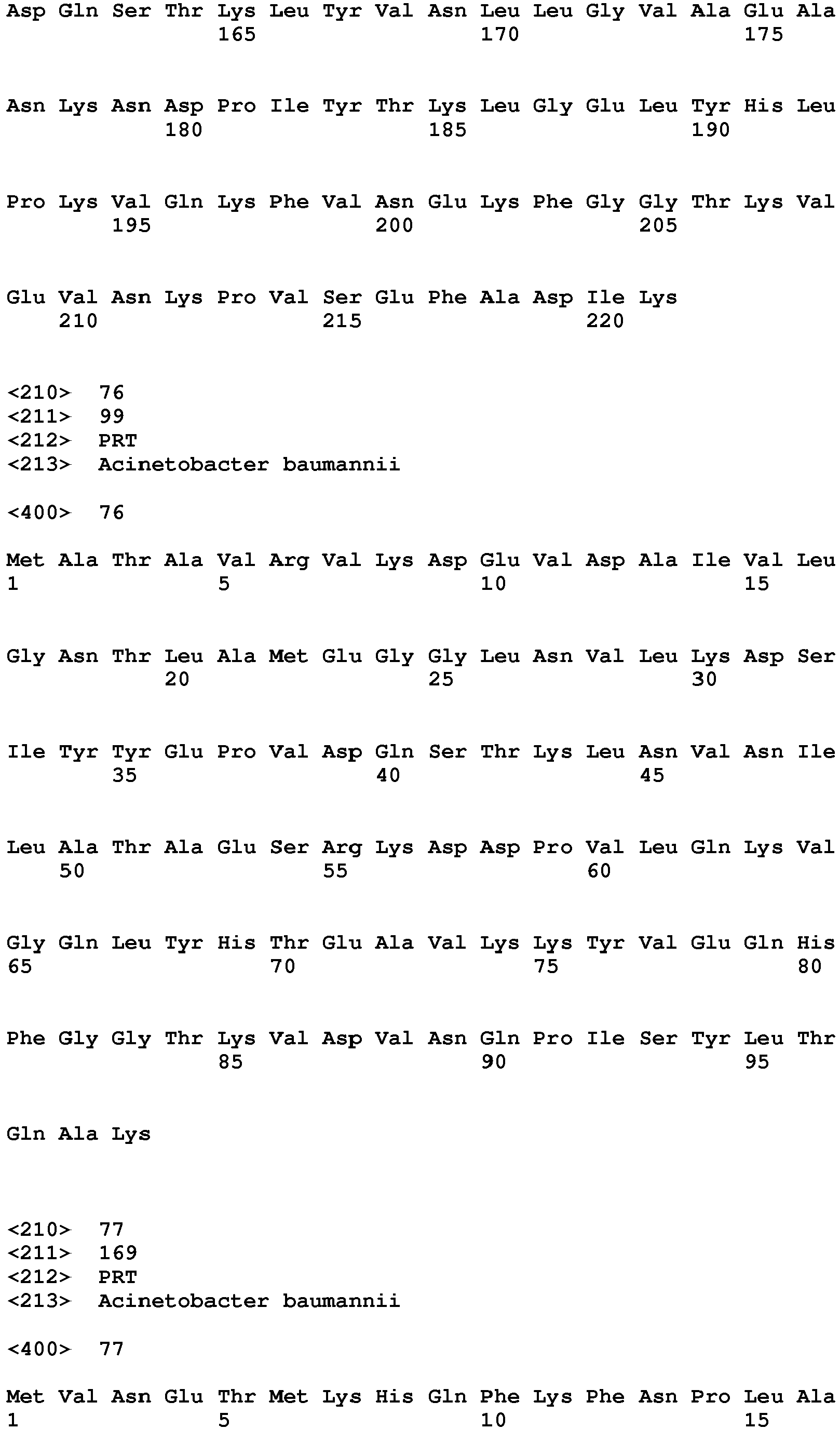


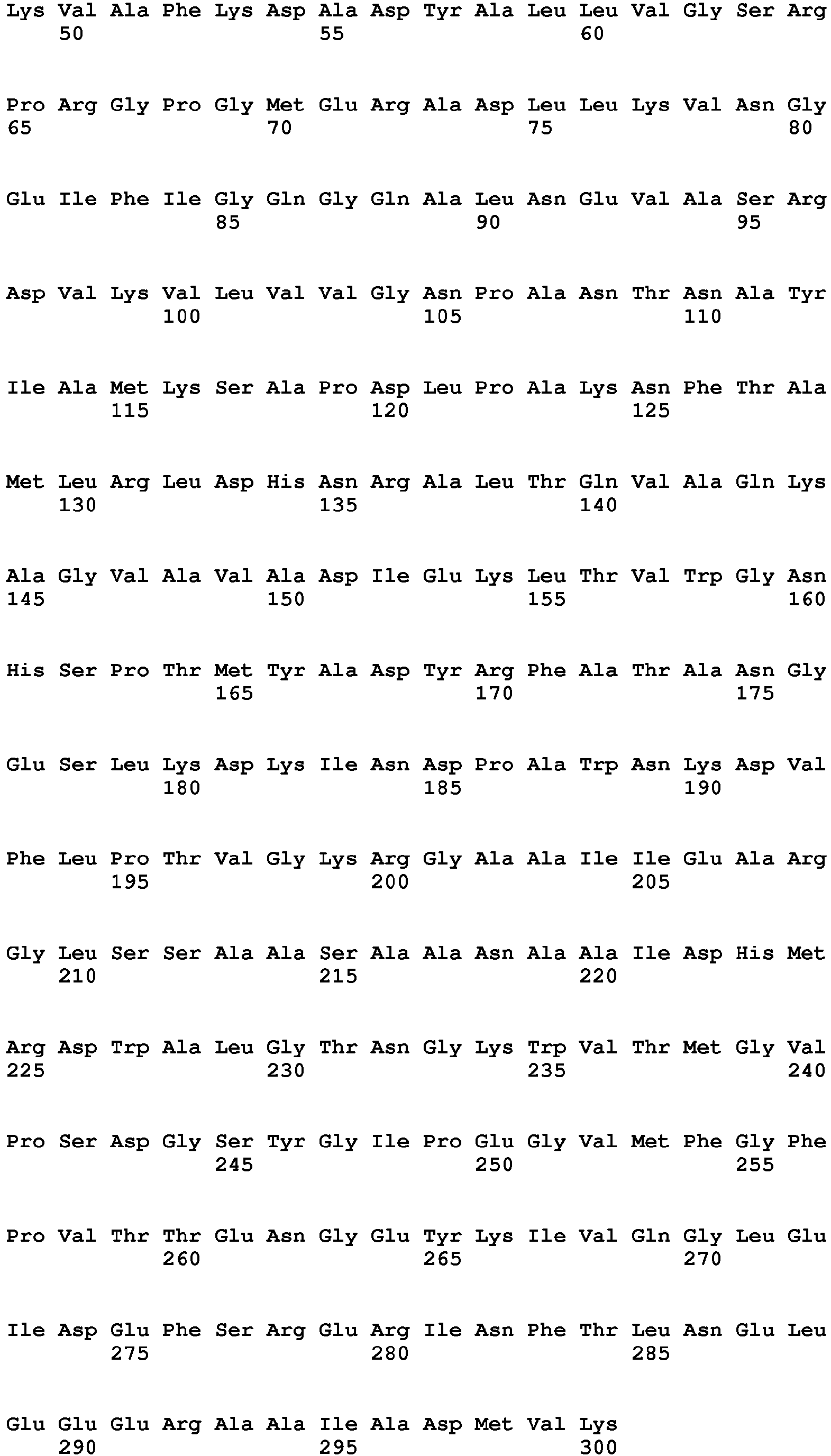


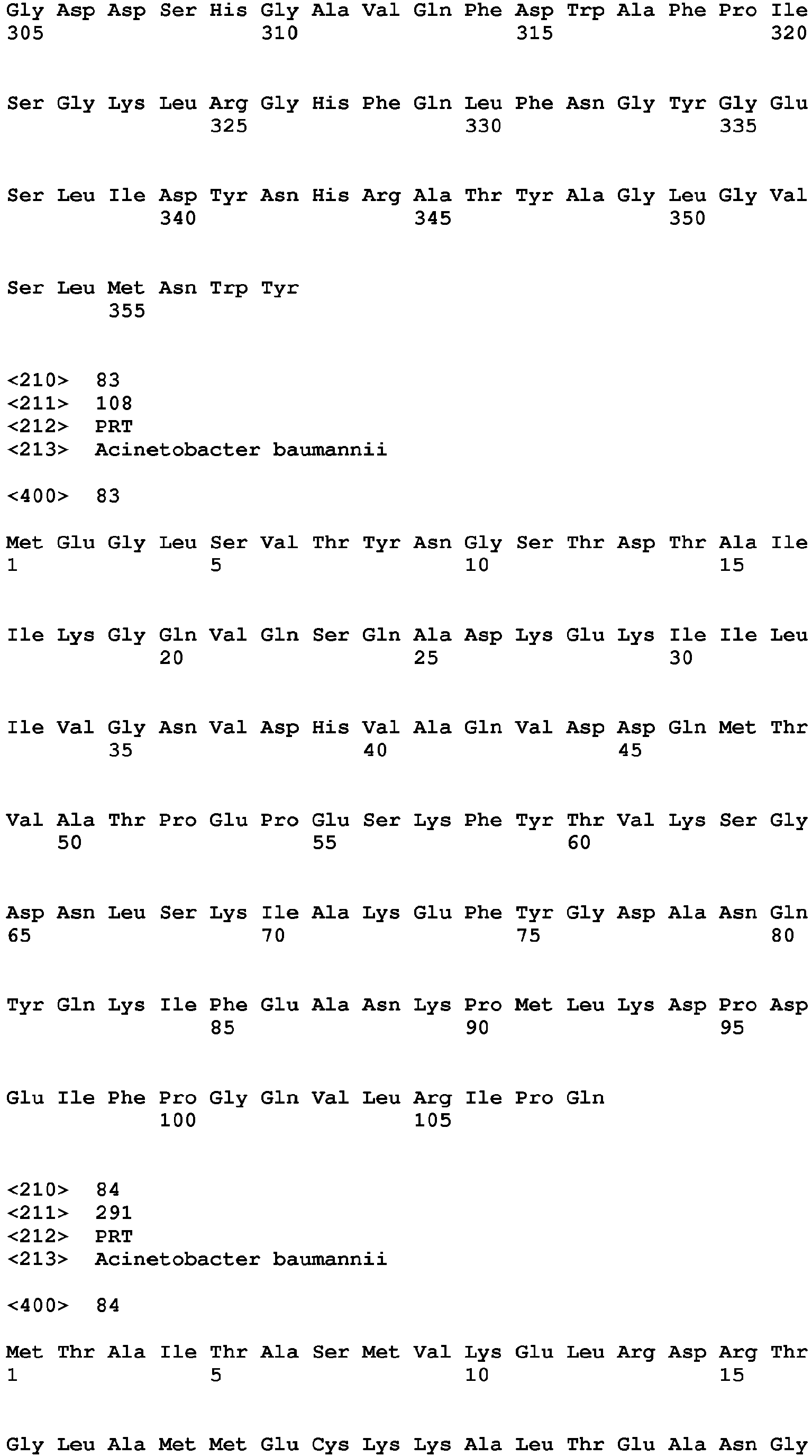


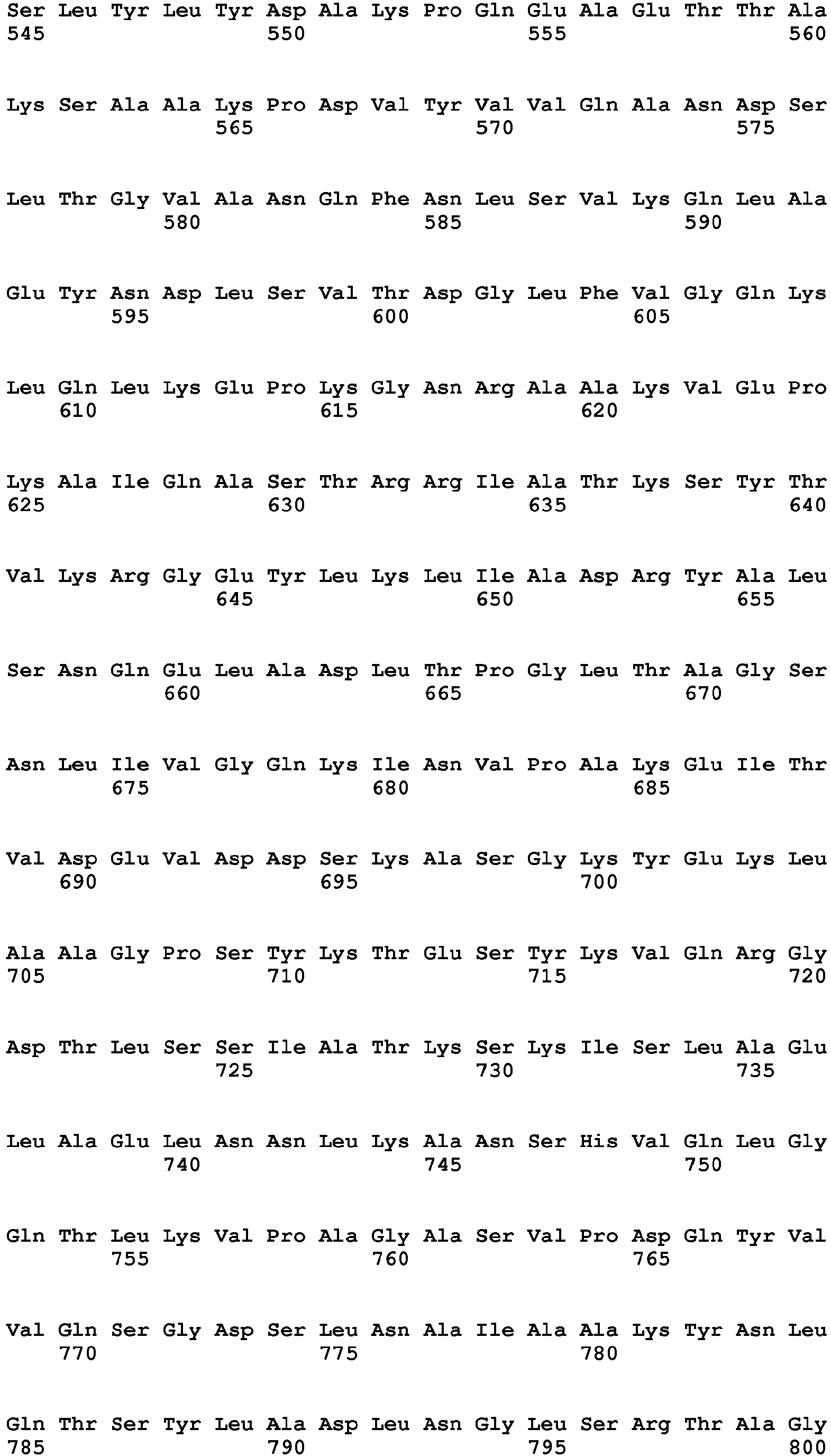


Claims (15)
- An Acinetobacter cell deficient in LPS obtained by partial or complete inactivation of one or various cellular nucleic acid molecules that encode endogenous LPS biosynthesis genes.
- The Acinetobacter cell according to the preceding claim, wherein the genes are selected from IpxA, IpxB and/or lpxC, or any of their combinations.
- A composition comprising:a) a cell according to any one of claims 1- 2 , andb) a recombinant nucleic acid molecule, and/or a recombinant polypeptide.
- The composition according to claim 3, wherein the polypeptide is selected from:I) the peptide sequence SEQ ID NO: 27 (putative ferric siderophore receptor (A. baumannii ATCC 17978; accession number YP_001084684)) or a fragment thereof, wherein the fragments are biologically active fragments, and preferably selected from the list consisting of SEQ ID NO: 1 to SEQ ID NO: 11, or any of its combinations, or sequences having at least 85% sequence identity with peptide sequences SEQ ID NO: 1 to SEQ ID NO: 11, and/orII) the peptide sequence SEQ ID NO: 28 (putative ferric hydroximate siderophore receptor (A. baumannii ATCC 17978; accesión number YP_001084696)) or a fragment thereof, where the fragments are biologically active fragments, and preferably selected from the list consisting of SEQ ID NO: 12 to SEQ ID NO: 23, or any of its combinations, or sequences having at least 85% sequence identity with peptide sequences SEQ ID NO: 12 to SEC ID NO: 23.
- The composition according to any one of claims 3-4, wherein the composition comprises a nucleotide sequence capable of transcribing an amino acid sequence described in claim 4, preferably SEQ ID NO: 26.
- The composition according to any one of claims 3-5, further comprising an outer membrane vesicle deficient in LPS, or cells according to any one of claims 1 and 2.
- The composition according to any one of claims 3-6, further comprising at least one of the proteins purified from the outer membrane of A. baumannii SEQ ID NO: 29, SEQ ID NO: 30, SEQ ID NO: 31, SEQ ID NO: 32, SEQ ID NO: 33, SEQ ID NO: 34, SEQ ID NO: 35, SEQ ID NO: 36, SEQ ID NO: 37, SEQ ID NO: 38, SEQ ID NO: 39, SEQ ID NO: 40, SEQ ID NO: 41, SEQ ID NO: 42, SEQ ID NO: 43, SEQ ID NO: 44, SEQ ID NO:45,SEQ ID NO: 46; SEO ID NO: 47; SEQ ID NO: 48; SEQ ID NO: 49; SEQ ID NO: 50; SEO ID NO: 51; SEQ ID NO: 52; SEQ ID NO: 53; SEQ ID NO: 54; SEQ ID NO: 55; SEQ ID NO: 56; SEQ ID NO: 57; SEQ ID NO: 58; SEQ ID NO: 59; SEQ ID NO: 60; SEQ ID NO: 61; SEQ ID NO: 62; SEQ ID NO: 63; SEQ ID NO: 64; SEQ ID NO: 65; SEQ ID NO: 66; SEQ ID NO: 67; SEQ ID NO: 68; SEQ ID NO: 69; SEQ ID NO: 70; SEQ ID NO: 71; SEQ ID NO: 72; SEQ ID NO: 73; SEQ ID NO: 74; SEQ ID NO: 75; SEQ ID NO: 76, SEQ ID NO: 77, SEQ ID NO: 78, SEQ ID NO: 79, SEQ ID NO: 80, SEQ ID NO: 81, SEQ ID NO: 82, SEQ ID NO: 83, SEQ ID NO: 84, SEQ ID NO: 85, SEQ ID NO: 86, SEQ ID NO: 87, SEQ ID NO: 88, SEQ ID NO: 89, SEQ ID NO: 90, SEQ ID NO: 91, SEQ ID NO: 92, SEQ ID NO: 93, SEQ ID NO: 94, SEQ ID NO: 95, SEQ ID NO: 96, SEQ ID NO: 97, SEQ ID NO: 98, y SEQ ID NO: 99, or any combination thereof.
- An outer membrane vesicle deficient in LPS.
- The outer membrane vesicle according to claim 8, obtained from a cell as described in any one of claims 1-2.
- The composition according to any one of claims 3-7, wherein the cells or the outer membrane vesicles are designed to produce the polypeptide sequences according to any one of claims 4 and 7, and/or comprising the nucleic acid sequences of claim 5.
- The composition according to any one of claims 3-7 and 10, wherein the composition is a pharmaceutical composition.
- The composition according to any one of claims 3-7, 10 and 11 for use as a medicament.
- The composition according to any one of claims 3-7, 10 and 11 for use in the prevention, improvement or treatment of an infection caused by A. baumannii in a mammal.
- An antibody or active fragment thereof obtained by immunization of a mammal with the composition according to any one of claims 3 to 7, 10 and 11.
- The antibody or the active fragment thereof according to the preceding claim, wherein the composition is a pharmaceutical composition, and where said composition is used in therapy, particularly for the treatment or prevention of an infection caused by A. baumannii.
Priority Applications (12)
| Application Number | Priority Date | Filing Date | Title |
|---|---|---|---|
| EP14382164.3A EP2942389A1 (en) | 2014-05-05 | 2014-05-05 | Vaccine against Acinetobacter baumannii based on lipopolysaccharide-deficient cellular components |
| DK15728758.2T DK3140391T3 (en) | 2014-05-05 | 2015-05-05 | VACCINE AGAINST ACINETOBACTER BAUMANNII BASED ON CELLULAR COMPONENTS WITH LACK OF LIPOPOLYSACCHARID |
| CN201580036683.9A CN107073095B (en) | 2014-05-05 | 2015-05-05 | Acinetobacter baumannii vaccine based on lipopolysaccharide-deleted cell components |
| PCT/EP2015/059870 WO2015169809A1 (en) | 2014-05-05 | 2015-05-05 | Vaccine against acinetobacter baumannii based on cellular components deficient in lipopolysaccharide |
| MX2016014564A MX375274B (en) | 2014-05-05 | 2015-05-05 | VACCINE AGAINST ACINETOBACTER BAUMANNII OBTAINED FROM CELLULAR COMPONENTS LACKING LIPOPOLYSACCHARIDE. |
| PT157287582T PT3140391T (en) | 2014-05-05 | 2015-05-05 | Vaccine against acinetobacter baumannii based on cellular components deficient in lipopolysaccharide |
| US15/308,899 US20170065700A1 (en) | 2014-05-05 | 2015-05-05 | Vaccine against acinetobacter baumannii based on cellular components deficient in lipopolysaccharide |
| JP2016566927A JP6775424B2 (en) | 2014-05-05 | 2015-05-05 | Acinetobacter baumanni vaccine based on cell components deficient in lipopolysaccharide |
| ES15728758T ES2848066T3 (en) | 2014-05-05 | 2015-05-05 | Acinetobacter baumannii vaccine based on lipopolysaccharide deficient cellular components |
| EP15728758.2A EP3140391B1 (en) | 2014-05-05 | 2015-05-05 | Vaccine against acinetobacter baumannii based on cellular components deficient in lipopolysaccharide |
| US15/878,491 US11160856B2 (en) | 2014-05-05 | 2018-01-24 | Vaccine against Acinetobacter baumannii based on cellular components deficient in lipopolysaccharide |
| US17/488,545 US20220152184A1 (en) | 2014-05-05 | 2021-09-29 | Vaccine against acinetobacter baumannii based on cellular components deficient in lipopolysaccharide |
Applications Claiming Priority (1)
| Application Number | Priority Date | Filing Date | Title |
|---|---|---|---|
| EP14382164.3A EP2942389A1 (en) | 2014-05-05 | 2014-05-05 | Vaccine against Acinetobacter baumannii based on lipopolysaccharide-deficient cellular components |
Publications (1)
| Publication Number | Publication Date |
|---|---|
| EP2942389A1 true EP2942389A1 (en) | 2015-11-11 |
Family
ID=51059396
Family Applications (2)
| Application Number | Title | Priority Date | Filing Date |
|---|---|---|---|
| EP14382164.3A Withdrawn EP2942389A1 (en) | 2014-05-05 | 2014-05-05 | Vaccine against Acinetobacter baumannii based on lipopolysaccharide-deficient cellular components |
| EP15728758.2A Active EP3140391B1 (en) | 2014-05-05 | 2015-05-05 | Vaccine against acinetobacter baumannii based on cellular components deficient in lipopolysaccharide |
Family Applications After (1)
| Application Number | Title | Priority Date | Filing Date |
|---|---|---|---|
| EP15728758.2A Active EP3140391B1 (en) | 2014-05-05 | 2015-05-05 | Vaccine against acinetobacter baumannii based on cellular components deficient in lipopolysaccharide |
Country Status (9)
| Country | Link |
|---|---|
| US (3) | US20170065700A1 (en) |
| EP (2) | EP2942389A1 (en) |
| JP (1) | JP6775424B2 (en) |
| CN (1) | CN107073095B (en) |
| DK (1) | DK3140391T3 (en) |
| ES (1) | ES2848066T3 (en) |
| MX (1) | MX375274B (en) |
| PT (1) | PT3140391T (en) |
| WO (1) | WO2015169809A1 (en) |
Cited By (2)
| Publication number | Priority date | Publication date | Assignee | Title |
|---|---|---|---|---|
| EP4169529A1 (en) | 2021-10-20 | 2023-04-26 | Vaxdyn S.L. | Lipopolysaccharide (lps) deficient acinetobacter baumannii multivalent vaccine |
| WO2026093750A3 (en) * | 2024-10-31 | 2026-07-02 | Ucl Business Ltd | Acinetobacter baumannii polypeptides |
Families Citing this family (18)
| Publication number | Priority date | Publication date | Assignee | Title |
|---|---|---|---|---|
| EP2942389A1 (en) | 2014-05-05 | 2015-11-11 | Servicio Andaluz De Salud | Vaccine against Acinetobacter baumannii based on lipopolysaccharide-deficient cellular components |
| CA3076594A1 (en) | 2017-09-20 | 2019-03-28 | Emory University | Bacterial protein compositions and uses thereof |
| CA3096849A1 (en) * | 2018-04-10 | 2019-10-17 | The Administrators Of The Tulane Educational Fund | Burkholderia pseudomallei complex outer membrane vesicles as adjuvants |
| US11819532B2 (en) * | 2018-04-23 | 2023-11-21 | Hoffmann-La Roche Inc. | Peptide macrocycles against Acinetobacter baumannii |
| CN110283745B (en) * | 2019-06-27 | 2021-05-11 | 浙江工业大学 | Acinetobacter hospital FK2 and application thereof in degrading organic pollutants |
| CN110746496B (en) * | 2019-09-30 | 2023-07-07 | 四川大学华西医院 | PAL recombinant protein of Acinetobacter baumannii, encoding gene thereof and application of PAL recombinant protein and encoding gene |
| US20240042001A1 (en) * | 2020-12-22 | 2024-02-08 | Biological Mimetics, Inc. | Irradiated whole-cell immunogens of acinetobacter baumannii |
| CN116917454A (en) * | 2021-01-25 | 2023-10-20 | 阿威尔斯医疗公司 | Apparatus, systems and methods for preparing output samples by aeration |
| WO2022159989A1 (en) * | 2021-01-25 | 2022-07-28 | Avails Medical, Inc. | Apparatus, systems, and methods for preparing an output sample with aeration |
| CN113234625B (en) * | 2021-05-08 | 2022-05-24 | 哈尔滨师范大学 | Acinetobacter pittericus and application thereof |
| CN116855475B (en) * | 2023-05-08 | 2025-12-23 | 中国农业科学院农产品加工研究所 | Detoxication enzyme Novel porin and preparation method and application thereof |
| CN116462743B (en) * | 2023-06-14 | 2023-09-19 | 四川大学华西医院 | Acinetobacter baumannii translation elongation factor recombinant protein, preparation method and application |
| CN116478953B (en) * | 2023-06-14 | 2023-09-12 | 四川大学华西医院 | Acinetobacter baumannii DlaT recombinant protein, preparation method and application |
| CN117510597A (en) * | 2023-11-17 | 2024-02-06 | 成都欧林生物科技股份有限公司 | A modified OmpW structure, expression preparation and its application in the preparation of Acinetobacter baumannii vaccine |
| CN117603319B (en) * | 2023-11-21 | 2025-08-15 | 南京市江宁医院 | Acinetobacter baumannii multi-epitope polypeptide rOmpW and its application |
| CN118178352A (en) * | 2024-04-10 | 2024-06-14 | 广东云曌医疗科技有限公司 | Antibacterial drug nano material and preparation method and application thereof |
| CN118978577B (en) * | 2024-10-22 | 2025-03-11 | 四川大学华西医院 | Recombinant protein antigen of Acinetobacter baumannii BA71_01558, preparation method and application thereof |
| CN119709810A (en) * | 2024-11-03 | 2025-03-28 | 浙江大学 | Method and application of knocking out capsule-related genes of Acinetobacter baumannii |
Citations (3)
| Publication number | Priority date | Publication date | Assignee | Title |
|---|---|---|---|---|
| ES2366735A1 (en) * | 2009-10-08 | 2011-10-25 | Fundación Pública Andaluza Para La Gestión De La Investigación En Salud De Sevilla | Vaccine in front of acinetobacter baumannii. (Machine-translation by Google Translate, not legally binding) |
| WO2013040478A2 (en) * | 2011-09-14 | 2013-03-21 | Los Angeles Biomedical Research Institute At Harbor-Ucla Medical Center | Hyr1-derived compositions and methods of treatment using same |
| WO2014048976A1 (en) * | 2012-09-25 | 2014-04-03 | Vaxdyn Sl | Anti-acinetobacter baumannii immunogens |
Family Cites Families (3)
| Publication number | Priority date | Publication date | Assignee | Title |
|---|---|---|---|---|
| CN101575587B (en) * | 2009-06-03 | 2011-01-05 | 中国农业大学 | Abortus Brucella vaccine recombinant strain and application thereof in preparing vaccine |
| CN102977208B (en) * | 2012-12-12 | 2015-04-08 | 大连医科大学 | Preparation method, application and medicine composition and preparation of specific egg yolk immunoglobulin (IgY) and acinetobacter baumannii, as well as preparation and kit |
| EP2942389A1 (en) | 2014-05-05 | 2015-11-11 | Servicio Andaluz De Salud | Vaccine against Acinetobacter baumannii based on lipopolysaccharide-deficient cellular components |
-
2014
- 2014-05-05 EP EP14382164.3A patent/EP2942389A1/en not_active Withdrawn
-
2015
- 2015-05-05 ES ES15728758T patent/ES2848066T3/en active Active
- 2015-05-05 JP JP2016566927A patent/JP6775424B2/en active Active
- 2015-05-05 WO PCT/EP2015/059870 patent/WO2015169809A1/en not_active Ceased
- 2015-05-05 PT PT157287582T patent/PT3140391T/en unknown
- 2015-05-05 MX MX2016014564A patent/MX375274B/en active IP Right Grant
- 2015-05-05 DK DK15728758.2T patent/DK3140391T3/en active
- 2015-05-05 CN CN201580036683.9A patent/CN107073095B/en active Active
- 2015-05-05 EP EP15728758.2A patent/EP3140391B1/en active Active
- 2015-05-05 US US15/308,899 patent/US20170065700A1/en not_active Abandoned
-
2018
- 2018-01-24 US US15/878,491 patent/US11160856B2/en active Active
-
2021
- 2021-09-29 US US17/488,545 patent/US20220152184A1/en active Pending
Patent Citations (3)
| Publication number | Priority date | Publication date | Assignee | Title |
|---|---|---|---|---|
| ES2366735A1 (en) * | 2009-10-08 | 2011-10-25 | Fundación Pública Andaluza Para La Gestión De La Investigación En Salud De Sevilla | Vaccine in front of acinetobacter baumannii. (Machine-translation by Google Translate, not legally binding) |
| WO2013040478A2 (en) * | 2011-09-14 | 2013-03-21 | Los Angeles Biomedical Research Institute At Harbor-Ucla Medical Center | Hyr1-derived compositions and methods of treatment using same |
| WO2014048976A1 (en) * | 2012-09-25 | 2014-04-03 | Vaxdyn Sl | Anti-acinetobacter baumannii immunogens |
Non-Patent Citations (48)
| Title |
|---|
| A. BECEIRO ET AL: "Biological Cost of Different Mechanisms of Colistin Resistance and Their Impact on Virulence in Acinetobacter baumannii", ANTIMICROBIAL AGENTS AND CHEMOTHERAPY, vol. 58, no. 1, 4 November 2013 (2013-11-04), pages 518 - 526, XP055150489, ISSN: 0066-4804, DOI: 10.1128/AAC.01597-13 * |
| BATSON ET AL., J. EXP. MED., vol. 91, 1950, pages 219 - 229 |
| BAUMANN, P., J. BACTERIOL., vol. 96, 1968, pages 39 - 42 |
| BENTANCOR ET AL., INFECT IMMUN, vol. 80, 2012, pages 651 - 656 |
| BENTANCOR ET AL., INFECT. IMMUN., vol. 80, 2012, pages 3381 - 3388 |
| BISHOP ET AL., J. INFECT. DIS., vol. 205, 2012, pages 412 - 21 |
| BJUNE ET AL., NIPH ANN., vol. 14, 1991, pages 125 - 130 |
| FATTAHIAN ET AL., MICROB. PATHOG., vol. 51, 2011, pages 402 - 406 |
| GARCIA-QUINTANILLA ET AL., CURR. PHARM. BIOTECHNOL. IN PRESS, 2013 |
| GAUTOM, J. CLIN. MICROBIOL., vol. 35, 1997, pages 2977 - 2980 |
| GOEL VIKAS KUMAR ET AL: "Monoclonal antibodies against the iron regulated outer membrane Proteins of Acinetobacter baumannii are bactericidal", BMC MICROBIOLOGY, BIOMED CENTRAL LTD, GB, vol. 1, no. 1, 9 August 2001 (2001-08-09), pages 16, XP021014761, ISSN: 1471-2180, DOI: 10.1186/1471-2180-1-16 * |
| GUANPINGSHEN LUO ET AL: "Active and Passive Immunization Protects against Lethal, Extreme Drug Resistant-Acinetobacter baumannii Infection", PLOS ONE, vol. 7, no. 1, 10 January 2012 (2012-01-10), pages e29446, XP055150177, DOI: 10.1371/journal.pone.0029446 * |
| HO ET AL., CHEST, vol. 136, 2009, pages 1119 - 1127 |
| J. H. MOFFATT ET AL: "Colistin Resistance in Acinetobacter baumannii Is Mediated by Complete Loss of Lipopolysaccharide Production", ANTIMICROBIAL AGENTS AND CHEMOTHERAPY, vol. 54, no. 12, 20 September 2010 (2010-09-20), pages 4971 - 4977, XP055150102, ISSN: 0066-4804, DOI: 10.1128/AAC.00834-10 * |
| J. H. MOFFATT ET AL: "Insertion Sequence ISAba11 Is Involved in Colistin Resistance and Loss of Lipopolysaccharide in Acinetobacter baumannii", ANTIMICROBIAL AGENTS AND CHEMOTHERAPY, vol. 55, no. 6, 14 March 2011 (2011-03-14), pages 3022 - 3024, XP055150769, ISSN: 0066-4804, DOI: 10.1128/AAC.01732-10 * |
| JONES ET AL., LANCET INFECT. DIS., vol. 6, 2006, pages 317 - 318 |
| KEENAN ET AL., FEMS IMMUNOL. MED. MICROBIOL., vol. 36, 2003, pages 199 - 205 |
| KESTY ET AL., EMBO J., vol. 23, 2004, pages 4538 - 4549 |
| KUEHN ET AL., GENES DEV., vol. 19, 2005, pages 2645 - 2655 |
| KULP ET AL., ANNU. REV. MICROBIOL., vol. 64, 2010, pages 163 - 184 |
| KWON ET AL., FEMS MICROBIOL. LETT., vol. 297, 2009, pages 150 - 156 |
| L. V. BENTANCOR ET AL: "Evaluation of the Trimeric Autotransporter Ata as a Vaccine Candidate against Acinetobacter baumannii Infections", INFECTION AND IMMUNITY, vol. 80, no. 10, 23 July 2012 (2012-07-23), pages 3381 - 3388, XP055150770, ISSN: 0019-9567, DOI: 10.1128/IAI.06096-11 * |
| LUO ET AL., PLOS ONE, vol. 7, 2012, pages E29446 |
| MARTIN ET AL., J. IMMUNOL. METHODS, vol. 212, 1998, pages 187 - 192 |
| MASHBURN ET AL., NATURE, vol. 437, 2005, pages 422 - 425 |
| MCCONNELL ET AL., INFECT. IMMUN., vol. 79, 2011, pages 518 - 526 |
| MCCONNELL ET AL., VACCINE, vol. 29, 2011, pages 5705 - 5710 |
| MCCONNELL M J ET AL: "Vaccination with outer membrane complexes elicits rapid protective immunity to multidrug-resistant Acinetobacter baumannii", INFECTION AND IMMUNITY, AMERICAN SOCIETY FOR MICROBIOLOGY, US, vol. 79, no. 1, 25 October 2010 (2010-10-25), pages 518 - 526, XP002717880, ISSN: 0019-9567, [retrieved on 20101025], DOI: 10.1128/IAI.00741-10 * |
| MCCONNELL Y PACH6N, VACCINE, vol. 29, 2010, pages 1 - 5 |
| MCCONNELL Y PACHON, VACCINE, vol. 29, 2010, pages 1 - 5 |
| MERITXELL GARCÍA-QUINTANILLA ET AL: "Emerging therapies for multidrug resistant Acinetobacter baumannii", TRENDS IN MICROBIOLOGY, vol. 21, no. 3, 1 March 2013 (2013-03-01), pages 157 - 163, XP055150162, ISSN: 0966-842X, DOI: 10.1016/j.tim.2012.12.002 * |
| MICHAEL J MCCONNELL ET AL: "Outer membrane vesicles as an acellular vaccine against", VACCINE, ELSEVIER LTD, GB, vol. 29, no. 34, 14 June 2011 (2011-06-14), pages 5705 - 5710, XP028243920, ISSN: 0264-410X, [retrieved on 20110606], DOI: 10.1016/J.VACCINE.2011.06.001 * |
| MICHAEL J. MCCONNELL ET AL: "Acinetobacter baumannii: human infections, factors contributing to pathogenesis and animal models", FEMS MICROBIOLOGY REVIEWS, 1 June 2012 (2012-06-01), pages n/a - n/a, XP055150121, ISSN: 0168-6445, DOI: 10.1111/j.1574-6976.2012.00344.x * |
| MOFFATT ET AL., ANTIMICROB. AGENTS CHEMOTHER., vol. 54, 2010, pages 4971 - 4977 |
| MOFFATT; ANTIMICROB ET AL., AGENTS CHEMOTHER., vol. 54, 2010, pages 4971 - 4977 |
| MUNOZ-PRICE Y WEINSTEIN, N. ENGL. J. MED., vol. 358, 2008, pages 1271 - 1281 |
| NOKLEBY ET AL., VACCINE, vol. 25, 2007, pages 3080 - 84 |
| ONG, RESPIROLOGY, vol. 14, 2009, pages 1200 - 1205 |
| PACHON Y MCCONNELL, VACCINE, 2014 |
| PENG ET AL., INFECT. IMMUN., vol. 73, 2005, pages 7569 - 7577 |
| RAETZ, ANNU. REV BIOCHEM., vol. 59, 1990, pages 129 - 170 |
| RODRFGUEZ-HERNANDEZ ET AL., J. ANTIMICROB. CHEMOTHER., vol. 45, 2000, pages 493 - 501 |
| STEEGHS ET AL., INFECT. IMMUN., vol. 67, 1999, pages 4988 - 4993 |
| TASBAKAN ET AL., MIKROBIYOL BUL., vol. 43, 2009, pages 61 - 70 |
| TONG, JAMA, vol. 219, 1972, pages 1044 - 1047 |
| V. DAVENPORT ET AL: "Evidence for Naturally Acquired T Cell-Mediated Mucosal Immunity to Neisseria meningitidis", THE JOURNAL OF IMMUNOLOGY, vol. 171, no. 8, 6 October 2003 (2003-10-06), pages 4263 - 4270, XP055150933, ISSN: 0022-1767, DOI: 10.4049/jimmunol.171.8.4263 * |
| VALENCIA ET AL., INFECT. CONTROL HOSP. EPIDEMIOL., vol. 30, 2009, pages 257 - 263 |
| VILA Y PACHON, EXPERT OPIN. PHARMACOTHER., vol. 9, 2008, pages 587 - 599 |
Cited By (3)
| Publication number | Priority date | Publication date | Assignee | Title |
|---|---|---|---|---|
| EP4169529A1 (en) | 2021-10-20 | 2023-04-26 | Vaxdyn S.L. | Lipopolysaccharide (lps) deficient acinetobacter baumannii multivalent vaccine |
| WO2023067118A1 (en) | 2021-10-20 | 2023-04-27 | Vaxdyn S.l. | Lipopolysaccharide (lps) deficient acinetobacter baumannii multivalent vaccine. |
| WO2026093750A3 (en) * | 2024-10-31 | 2026-07-02 | Ucl Business Ltd | Acinetobacter baumannii polypeptides |
Also Published As
| Publication number | Publication date |
|---|---|
| JP2017514873A (en) | 2017-06-08 |
| EP3140391B1 (en) | 2020-10-07 |
| DK3140391T3 (en) | 2021-01-11 |
| PT3140391T (en) | 2021-01-06 |
| US20180256700A1 (en) | 2018-09-13 |
| MX2016014564A (en) | 2017-05-30 |
| US20170065700A1 (en) | 2017-03-09 |
| MX375274B (en) | 2025-03-06 |
| CN107073095A (en) | 2017-08-18 |
| ES2848066T3 (en) | 2021-08-05 |
| EP3140391A1 (en) | 2017-03-15 |
| CN107073095B (en) | 2022-04-19 |
| WO2015169809A1 (en) | 2015-11-12 |
| US20220152184A1 (en) | 2022-05-19 |
| JP6775424B2 (en) | 2020-10-28 |
| US11160856B2 (en) | 2021-11-02 |
Similar Documents
| Publication | Publication Date | Title |
|---|---|---|
| EP3140391B1 (en) | Vaccine against acinetobacter baumannii based on cellular components deficient in lipopolysaccharide | |
| Hsieh et al. | Lipopolysaccharide O1 antigen contributes to the virulence in Klebsiella pneumoniae causing pyogenic liver abscess | |
| JP2640525B2 (en) | Non-toxic microorganisms and their use | |
| US8778655B2 (en) | Modified gram-negative bacteria for use as vaccines | |
| KR20020018193A (en) | Attenuated microorganisms for the treatment of infection | |
| EP4169529A1 (en) | Lipopolysaccharide (lps) deficient acinetobacter baumannii multivalent vaccine | |
| Ozberk et al. | A Glycolipidated-liposomal peptide vaccine confers long-term mucosal protection against Streptococcus pyogenes via IL-17, macrophages and neutrophils | |
| Zhao et al. | Vaccine development targeting lipopolysaccharide structure modification | |
| Liao et al. | A rational designed multi-epitope vaccine elicited robust protective efficacy against Klebsiella pneumoniae lung infection | |
| Bertot et al. | Nasal immunization with Burkholderia multivorans outer membrane proteins and the mucosal adjuvant adamantylamide dipeptide confers efficient protection against experimental lung infections with B. multivorans and B. cenocepacia | |
| CN105316252B (en) | A kind of five gene-deleted strain of streptococcus suis 2-type and application | |
| ES2366735A1 (en) | Vaccine in front of acinetobacter baumannii. (Machine-translation by Google Translate, not legally binding) | |
| Xinxin et al. | Immunization with the glutathione S-transferase Sj26GST with Chi-CpG NP against Schistosoma japonicum in mice | |
| Wu et al. | Construction and protective immunogenicity of DNA vaccine pNMB0315 against Neisseria meningitidis serogroup B | |
| Koley et al. | A story of Shigella vaccine development in ICMR-NICED involving multidimensional approaches | |
| Zhou et al. | Salmonella-derived OMVs as a vaccine platform for Riemerella anatipestifer outer membrane proteins to prevent infection in ducks | |
| ES2753369T3 (en) | Campylobacter vaccine | |
| Neill et al. | Pneumolysin | |
| AU2004296394A1 (en) | Orally-administered live bacterial vaccines for plague | |
| Cano Castaño | Lipopolysaccharide as a central target for combating multidrug resistant Acinetobacter baumannii and Klebsiella pneumoniae infections | |
| Ali et al. | Production of Local Pseudomonas aeruginosa Ghosts Vaccine by Using the Sponge-Like Reduced Protocol and Evaluation of their Immunogenicity in a Mice Model | |
| Nie et al. | vaccine induces strong mucosal and systemic immune responses | |
| WO2026068728A1 (en) | A klebsiella pneumoniae vaccine | |
| do Amaral | Evaluation of a new vaccine based on pDNA and recombinant protein against Helicobacter pylori | |
| Van Tonder | Development of an oral vaccine against the ostrich-specific mycoplasma, Mycoplasma struthionis |
Legal Events
| Date | Code | Title | Description |
|---|---|---|---|
| PUAI | Public reference made under article 153(3) epc to a published international application that has entered the european phase |
Free format text: ORIGINAL CODE: 0009012 |
|
| AK | Designated contracting states |
Kind code of ref document: A1 Designated state(s): AL AT BE BG CH CY CZ DE DK EE ES FI FR GB GR HR HU IE IS IT LI LT LU LV MC MK MT NL NO PL PT RO RS SE SI SK SM TR |
|
| AX | Request for extension of the european patent |
Extension state: BA ME |
|
| STAA | Information on the status of an ep patent application or granted ep patent |
Free format text: STATUS: THE APPLICATION IS DEEMED TO BE WITHDRAWN |
|
| 18D | Application deemed to be withdrawn |
Effective date: 20160512 |